Article

Analysis of Pressure Relief Effect of Coal Seam Slot Cutting by Diamond Beaded Wire Saw

School of Resources & Environment and Safety Engineering, Hunan University of Science and Technology, Xiangtan 411201, China
*
Authors to whom correspondence should be addressed.
Appl. Sci. 2026, 16(6), 2634; https://doi.org/10.3390/app16062634
Submission received: 30 January 2026 / Revised: 1 March 2026 / Accepted: 4 March 2026 / Published: 10 March 2026

Abstract

Deep underground coal mines are severely threatened by dynamic coal rock disasters such as mine pressure bumps and coal and gas outbursts, and coal seam pressure relief technology is widely recognized as the key measure for mitigating these hazards. To investigate the pressure relief effect of coal seam slot cutting using a diamond beaded wire saw, a combined strategy integrating physical similarity simulation and numerical simulation was applied. The stress distribution characteristics of the coal and rock mass during the wire saw cutting procedure were evaluated, and the influence of beaded wire saw diameter on pressure relief efficiency was further examined. (1) Wire saw cutting can substantially decrease the vertical stress within the coal seam; the average pressure relief rate above the slot can reach as high as 61.70%, and the pressure relief effect is clearly stronger than that below the slot. (2) After slot cutting along the roadway, the fully pressure-relieved zone displays an annular spatial pattern; the pressure relief effect at both ends of the slot and around the roadway is particularly evident, whereas the pressure relief degree in the middle part is comparatively low because of the closure effect. (3) Slot closure causes notable changes in the pressure relief state. Before closure, the pressure relief effect above the slot remains satisfactory; after closure, stress recovery appears in the middle part, but the overall pressure relief rate still stays above 10%, and the pressure relief rate at both ends of the slot and near the roadway exceeds 50%, with the fully pressure-relieved zone still maintaining an annular distribution. (4) A positive correlation exists between the wire saw diameter and the height of the fully pressure-relieved zone. For every 0.5 cm increase in diameter, the height of the fully pressure-relieved zone rises by an average of 0.6 m. When the wire saw diameter reaches 3 cm, the full-thickness and adequate pressure relief of a 3 m thick coal seam can be realized.

1. Introduction

Coal rock dynamic disasters, typically represented by mine pressure bumps and coal and gas outbursts, pose severe and persistent threats to the safety of deep underground coal mining operations worldwide. Despite continuous advancements in mining technology, the frequency and severity of such catastrophic incidents over the past decade remain critical challenges for the global coal mining industry. In China alone, a total of 84 coal and gas outburst accidents and 26 rock burst accidents were officially recorded nationwide from 2009 to 2023 [1]. Importantly, these coal-rock dynamic disasters are not unique to China but are common and pervasive challenges facing global coal mining. Major coal-producing countries, including the United States, Russia, and Poland, have been severely affected by such disasters [2,3,4]. Therefore, coal-rock dynamic disasters remain a major technical bottleneck restricting the exploitation of coal resources, whereas pressure relief technology is widely regarded as the key technology for extracting coal from difficult-to-mine seams. Moreover, pressure relief technology can not only address coal-rock dynamic disasters but also increase the efficiency of coal-rock degassing [5]. At present, hydraulic slotting and diamond beaded wire saw slotting have drawn extensive attention in coal seam pressure relief and permeability enhancement, and substantial research progress has been achieved in hydraulic slotting. Liu et al. [6] combined numerical simulation with field engineering practice to investigate the influence laws of slotting radius, spacing, and scope on the pressure relief effect, confirming that increasing slotting radius or reducing spacing can reduce the average stress and elastic energy density of the coal mass, thereby promoting effective transfer of high stress around roadways. Hou et al. [7] integrated theoretical analysis, numerical simulation, laboratory experiments, and field validation to study the damage mechanism of water jets with different deflection angles (0°, 30°, 45°, 60°) on coal mass, indicating that angle variations modify damage characteristics by influencing jet velocity decomposition and the water accumulation effect. Both simulation and experimental results showed that the damage depth decreases as the angle increases, while the damage width increases, and the coal fragmentation volume reaches its maximum at 45°, which is considered the optimal angle for balancing fragmentation depth and influence range. Zou et al. [8] focused on the permeability evolution law of coal seams driven by gas pressure, established a coal seam gas flow gas solid coupling model twice, and quantitatively clarified the influence mechanism of slotting parameters on gas migration behavior. The developed neural network prediction model allows the accurate prediction of gas extraction performance, gradually improving the theoretical framework of hydraulic slotting for permeability enhancement. Li et al. [9,10] optimized the high-pressure hydraulic slotting process for coal seams under different occurrence conditions and proposed a coordinated layout scheme for slotting boreholes and conventional boreholes. Field test results demonstrated that the slotting radius can reach 1.60–2.21 m, coal seam permeability is increased by 25 times, gas extraction efficiency is greatly improved, borehole engineering quantity and extraction compliance time are substantially reduced, and coal roadway excavation efficiency is effectively enhanced. Ge et al. [11] explored the action mechanism of conventional process parameters under specific geological conditions through numerical simulation and experimental testing, showing that jet impact can induce stress concentration in coal cleats and then trigger crack initiation and propagation. By optimizing the angle between boreholes and coal seam strike (20–45°) and jointly adjusting jet pressure and rotation speed, fracture development at the slot ends can be strengthened while avoiding borehole blockage, increasing the gas extraction flow rate by 30% compared with conventional processes. Zhao et al. [12,13] established a multi-field coupling model integrating stress field, damage field, and gas flow field based on the anisotropic characteristics of coal mass structure, and validated it using field measured data from Guhanshan Coal Mine and Yangliu Coal Mine. The study revealed the influence laws of geological and fluid parameters on gas extraction effect, and identified 8 m as a reasonable borehole spacing. Zou et al. [14] investigated the weakening mechanism of slot parameters on coal mechanical properties through coal sample mechanical experiments, finding that the compressive strength, elastic modulus, and Poisson’s ratio of the coal mass follow Boltzmann function, logistic function, and quadratic function relationships, respectively, with the slot inclination angle. In addition, small-inclination slots are dominated by tensile crack development, showing a more pronounced mechanical weakening effect on the coal mass. Zhang and Zou [15] addressed the problems of low prediction accuracy of hydraulic slotting depth and the empirical dependence of borehole layout parameters, and constructed a slotting depth prediction model based on the law of conservation of momentum and the Mohr–Coulomb strength criterion. Field validation results indicated that the maximum error between theoretical calculated values and measured values is less than 10%. Lu and Ji [16] conducted an ultra-high-pressure hydraulic slotting test for cross-cut coal uncovering with the engineering background of Xinji No. 1 Coal Mine in Anhui Province. After application, the equivalent radius of the coal uncovering area was increased by 31.9 times, and the coal uncovering time was shortened by 50%. Liu et al. [17] clarified the action mechanism of hydraulic slotting for permeability enhancement and outburst elimination from a microscopic perspective; field monitoring confirmed that the gas flow rate and concentration of slotting boreholes are clearly higher than those of conventional boreholes, and the outburst elimination compliance time is shortened by 72.41%. Although hydraulic slotting technology is relatively mature, it still has limitations, such as high water consumption and environmental pollution risks, and can only create discontinuous slots in the coal seam. Therefore, diamond beaded wire saw slotting technology has become very promising because it can realize continuous slotting inside coal seams and achieve large-area pressure relief. In addition, mechanized longwall mining of thin coal seams in coal mines is limited by technical conditions; the adoption of precise coal seam cutting technology using a diamond beaded wire saw can effectively reduce the degree of surface subsidence and the ash content of the mined coal by flexibly adjusting the layout of the wire saw transmission device [18]. Tang et al. [19] carried out technical exploration and numerical simulation research on pressure relief induced by wire saw slotting, based on a residual coal pillar pressure relief engineering case in the Kailuan Mining Area, confirming that both the slotting efficiency and cutting depth of the wire saw are superior to those of hydraulic slotting. Additionally, a stress concentration zone forms in front of the coal cutting face, whereas a stress reduction zone and a stress recovery zone appear behind it, with the pressure relief range showing an evolutionary trend of “first increasing and then decreasing” during the cutting process. Lv et al. [20] focused on the key issue of unclear damage characteristics at the slot ends during wire saw cutting, established an evolution model of the slot-end damage zone, and combined a similarity simulation test with PFC-FLAC coupled numerical analysis to demonstrate that crack propagation exhibits a two-stage evolutionary feature of “acceleration-stabilization” as slot length increases. The study further revealed the regulatory effects of burial depth, coal hardness, coal seam thickness, and slotting parameters on crack development. Zhang et al. [21] pointed out, based on analyses using superposed beam and contact surface mechanical models, that increasing the coal seam inclination angle, working face length, and advancing distance can improve the pressure relief effect, and this pattern is especially evident in soft coal formations. Wang et al. [22] revealed, through numerical simulation, that the coal seam pressure relief mechanism is dominated by tangential slip, and proposed that the optimal pressure relief effect occurs when the slotting direction forms a 45° angle with the maximum principal stress. Li et al. [23] preliminarily confirmed, through similarity simulation and numerical simulation, that this technology can effectively release stress, generate pressure relief zones, and enhance local permeability.
However, existing research still shows deficiencies in its understanding of the pressure relief mechanism of wire saw cutting. First, the vertical stress distribution gradient and the quantitative correlation of coal mass above and below the slot remain unclear. Second, the evolutionary law of the pressure relief effect of coal mass above and below the slot during the pressure relief process, particularly the constraint mechanism of slot closure on the pressure relief effect, lacks in-depth investigation. Third, the quantitative relationship and stage-specific laws between wire saw diameter and maximum pressure relief height have not yet been clarified. To explicitly illustrate the advancements made in this study, Table 1 summarizes the methodologies, main focus, and limitations of previous studies on wire saw slotting.
Based on the above analysis, this study adopts a method combining similarity simulation and numerical simulation to investigate the vertical stress evolution and spatial distribution law of the pressure relief effect in coal seams during wire saw cutting, clarify the differences in mechanical response of coal mass above and below the slot, and reveal the vertical non-uniform pressure relief mechanism of coal seams under slotting-induced pressure relief. It also aims to determine the regulatory law of slot closure on the pressure relief effect, as well as the quantitative influence law of wire saw diameter on pressure relief height.

2. Similarity Simulation Test on Slotting of Coal Seam Under Roof Using a Diamond Beaded Wire Saw

2.1. Similarity Criteria and Material Ratio

This experiment took the geometric similarity constant as the core design basis and neglected the time effect. By selecting length (l), density (ρ), and gravitational acceleration (g) as the basic dimensions, the similarity ratios of physical quantities such as stress and density can be expressed as power functions of the basic similarity ratios. According to the principle of dimensional homogeneity, the similarity relationships between the model (subscript m) and the prototype (subscript p) are derived as follows:
C l   =   l m / l p , C ϱ   =   ρ m / ρ p , C g   =   g m / g p , C σ   =   C ϱ · C g · C l
In the formula, lm, ρm, gm, lp, ρp, and gp represent the geometric length (m), density (kg/m3), and gravitational acceleration g of the model and prototype, respectively, while Cl, Cρ, Cg, and Cσ denote the geometric similarity ratio, density similarity ratio, gravitational acceleration similarity ratio, and stress similarity ratio.
Considering the engineering background of this experiment and the size limitation of the test bench, the geometric similarity ratio Cl is determined as 1:10 and the density similarity ratio Cρ as 1:1.5. Since gravitational acceleration is difficult to adjust in the experiment, Cg is set as 1. By substituting the above parameters into the formula, both the stress similarity ratio and the elastic modulus similarity ratio can be obtained as follows:
C σ   =   C E   =   C ϱ · C g · C l   =   1 : 15
Based on the Buckingham π Theorem, the similarity relationships were established. The similarity constants between the model and the prototype are listed in Table 2.

2.2. Test Scheme

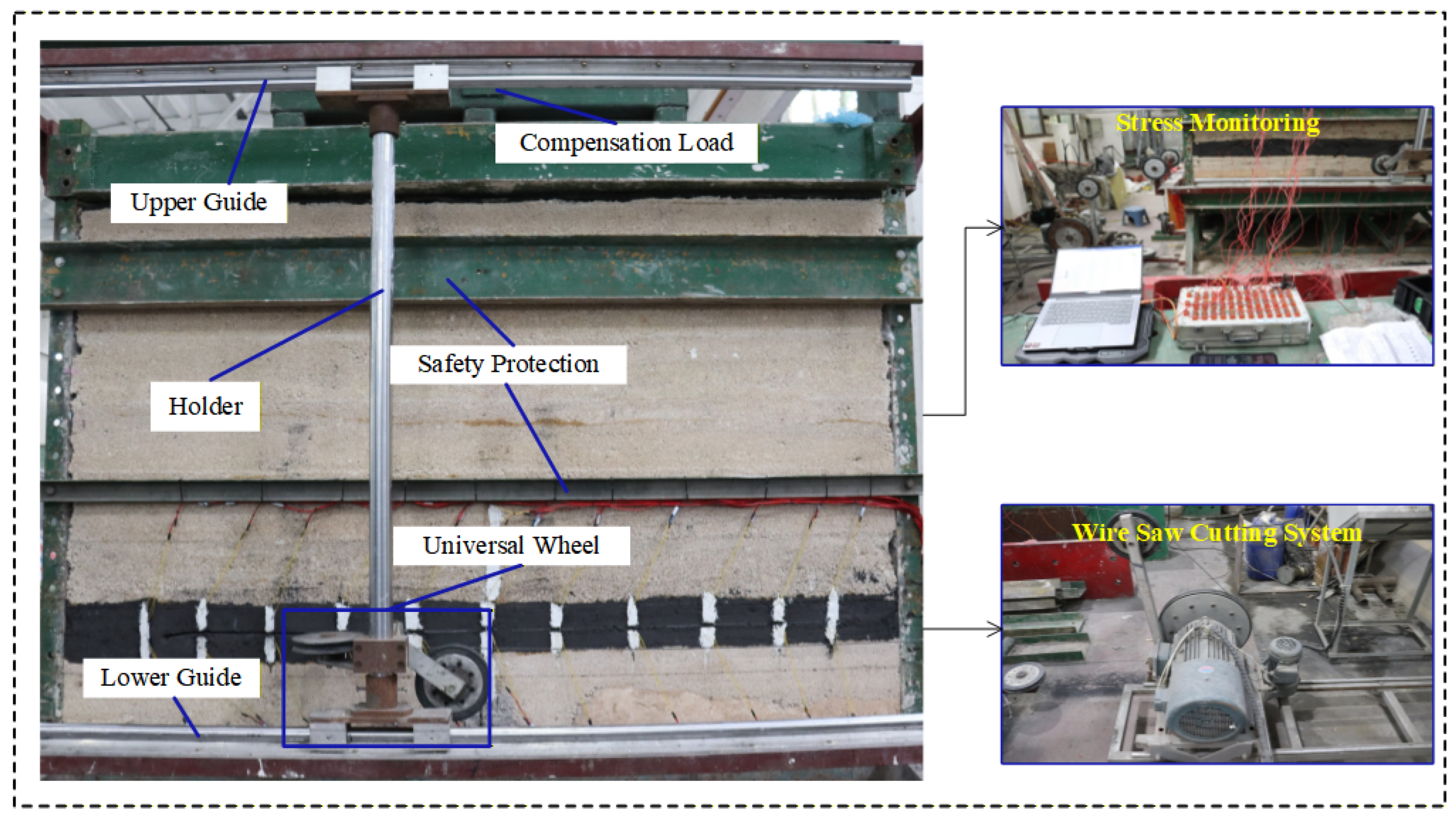
The lithological sequence and basic mechanical ratios of the physical model were derived from Coal Seam No. 5 in the Tangshan Coal Mine, Kailuan Group [24], serving as a representative geological framework. The experiment utilized a two-dimensional physical similarity simulation test bench with overall dimensions of 250 cm (length) × 20 cm (width) × 200 cm (height). Accordingly, the effective length and height of the constructed model were 2.5 m and 1.8 m, respectively, as shown in Figure 1.
To ensure strict simulation reliability, the model materials were proportioned on the basis of the predefined similarity constants (Table 3 and Table 4). The proportioning scheme of the similarity materials was based on a validated research framework [24] and further optimized using an orthogonal experimental design. Standard cylindrical samples were prepared and subjected to uniaxial compression tests to strictly calibrate the core mechanical parameters before formal construction. Quartz sand and coal powder were selected as the aggregates, whereas lime and gypsum served as the cementing materials. The specific mass ratios for each stratum are detailed in Table 5.
The model was constructed using a layer-by-layer paving technique. The raw materials were precisely weighed, mixed with a defined amount of water, and thoroughly blended. The mixture was then poured into the test bench and compacted layer by layer using heavy weights to ensure structural uniformity and compliance with the similarity design requirements. To simulate natural bedding planes, 120–200 mesh mica powder was uniformly sprinkled between adjacent layers.
To control the potential influence of microcracks formed during the drying process, the molding environment, curing procedure, and loading conditions of the similarity simulation model were kept strictly identical to those of the preparation process of the standard similarity specimens. This approach effectively eliminated the potential influence of newly generated microcracks on the model during the diamond beaded wire saw slotting process.
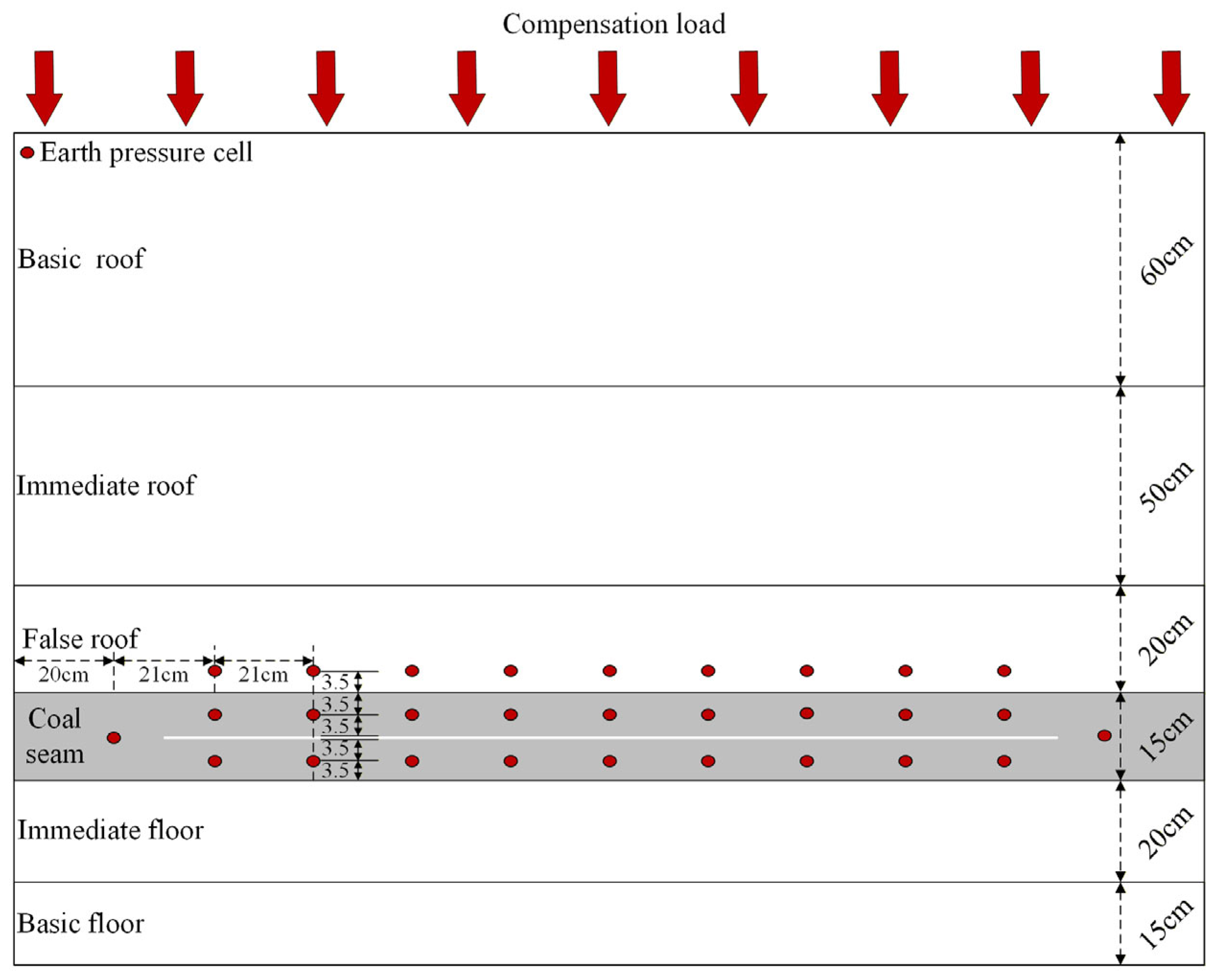
To monitor the real-time stress evolution within the coal rock mass, a BW miniature soil stress gauge strain sensor (measurement range: 0–0.1 MPa; accuracy: 0.05% FS) was employed. As shown in Figure 2, these sensors were precisely embedded synchronously with the layer-by-layer paving process. Throughout the paving procedure, rigid steel plates were installed on both the front and rear sides of the model to provide strict lateral constraints. This ensured the overall structural stability of the model during its formation and effectively prevented any displacement deviation of the sensors. Furthermore, the selected sensors are inherently insensitive to temperature variations, rendering any thermal effects on the monitoring results negligible.
A lever-arm mechanical loading system was subsequently employed to apply a compensatory load of 5.3 kN to the similarity simulation model. The total vertical stress acting on the coal seam, combining the overlying strata load and the compensatory load, reached 0.0334 MPa. On the basis of the predefined similarity ratio, this stress corresponds to an equivalent overlying pressure of 0.5 MPa on the idealized prototype coal seam. Structurally, the loading indenter is independent of the test bench frame and maintains rigid contact exclusively with the uniform loading plate on the top surface of the model. Consequently, the vertical load remains essentially unaffected by external interference. Prior to the slotting test, all the pressure sensors were thoroughly zeroed. After a sufficient stabilization period, the sensor readings exhibited negligible changes, confirming that the load applied to the model remained fundamentally stable throughout the experiment.
After the load on the top of the model became stable, the diamond beaded wire saw cutting test was carried out. The slot was arranged at the midpoint of the coal seam, with a designed slot height of 4 mm and a total cutting length of 1.89 m. Cutting was completed in 9 stages, with a 40 min interval between two successive cutting passes. To eliminate potential errors caused by boundary edge effects, air cushions were filled, and lubricating oil was applied at the contact positions between the coal-rock layers of the model and the steel plates on both sides of the test bench to simulate rolling boundaries, and a 0.305 m-wide uncut coal pillar was reserved on each side of the model. Stress data at the monitoring points were recorded after each cutting stage reached a stable state.

3. Analysis of Stress Evolution Characteristics

Based on the similarity ratio, the stress analysis was performed in combination with the prototype size of the test. According to the pressure relief theory, the tensile stress zone was normalized, and the pressure relief rates under different slotting lengths were finally obtained. To quantify the pressure relief effect of diamond beaded wire saw cutting, the pressure relief rate (η) was selected as the main evaluation index [25], and its calculation formula is as follows:
η = σ 0 σ i / σ 0 × 100 %
In the formula, σ0 is the initial vertical stress of coal and rock mass before cutting (MPa); σi is the vertical stress after cutting (MPa). When η > 10%, the coal and rock mass begins to show a pressure relief effect [26]. When η > 50%, the pressure relief effect is obvious and meets the requirements of sufficient pressure relief [27,28,29].
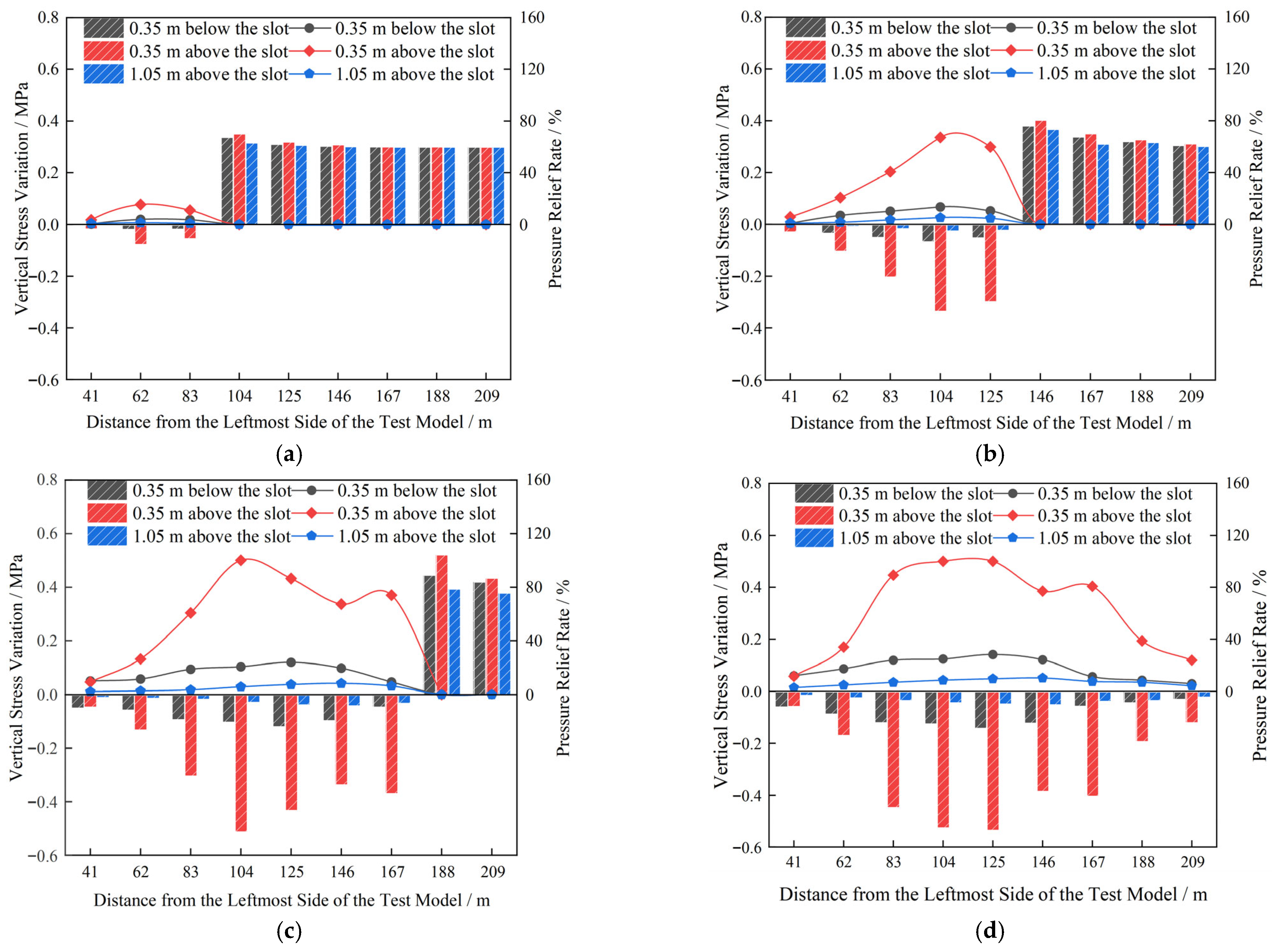
Figure 3 shows the curves of vertical stress variation and pressure relief rate at different distances during coal seam cutting using a diamond beaded wire saw. The data demonstrated that at a slot length of 6.3 m, the average vertical stress reductions at monitoring points 0.35 m below/above the slot and 1.05 m above the slot were 0.0129 MPa, 0.0499 MPa, and 0.0047 MPa, respectively. At 10.5 m, these values increased to 0.0415 MPa, 0.1938 MPa, and 0.0157 MPa. At a cutting length of 14.7 m, the average stress reduction values increase to 0.0813 MPa, 0.3048 MPa, and 0.0259 MPa, respectively. When the slot length reaches 18.9 m, the values further rise to 0.0872 MPa, 0.3152 MPa, and 0.0348 MPa, respectively. The analysis shows that the stress variation in the coal mass above the slot is larger than that of the coal mass below the slot, and the closer the distance is to the slot, the greater the vertical stress variation in the coal mass. Along the strike direction of the slot, the vertical stress variation in the coal mass shows a distribution feature of being higher in the middle and gradually weakening toward both ends. In addition, the stress reduction in the coal seam is noticeably greater than that in the false roof stratum.
When the pressure relief degree of the coal and rock mass was compared under different slot lengths, at a slot length of 6.3 m, the average pressure relief rates of the coal mass below the slot, the coal mass above the slot, and the false roof were 2.59%, 9.98%, and 0.95%, respectively. When the slot length increased to 10.5 m, these three indicators rose simultaneously to 8.30%, 38.76%, and 3.14%. With a slot length of 14.7 m, they further increased to 16.26%, 60.61%, and 5.17%. When the slot length reached 18.9 m, the pressure relief rates of the three components became relatively stable at 17.44%, 61.70%, and 6.96%, respectively. Based on the pressure relief evaluation criteria, when the slot length was ≥10.5 m, the average pressure relief rate of the coal mass above the slot exceeded 10%. When the slot length is ≥14.7 m, the average pressure relief rate of the coal mass below the slot is higher than 10%, whereas that of the coal mass above the slot exceeds 50%.
Overall, diamond beaded wire saw slotting can effectively release the vertical stress of coal seams, and the pressure relief effect gradually strengthens with increasing slot length. The pressure relief effect of the coal mass above the slot is consistently stronger than that of the coal mass below the slot. Under different slot lengths, the average pressure relief rate of the upper coal mass is 3.85 times (6.3 m), 4.66 times (10.5 m), 3.72 times (14.7 m), and 3.54 times (18.9 m) that of the lower coal mass, maintaining an overall ratio of more than 3.5 times. Furthermore, the closer the area is to the slot, the more pronounced the pressure relief effect becomes.

4. Numerical Simulation of Coal Seam Cutting Using a Diamond Beaded Wire Saw

4.1. Model Establishment

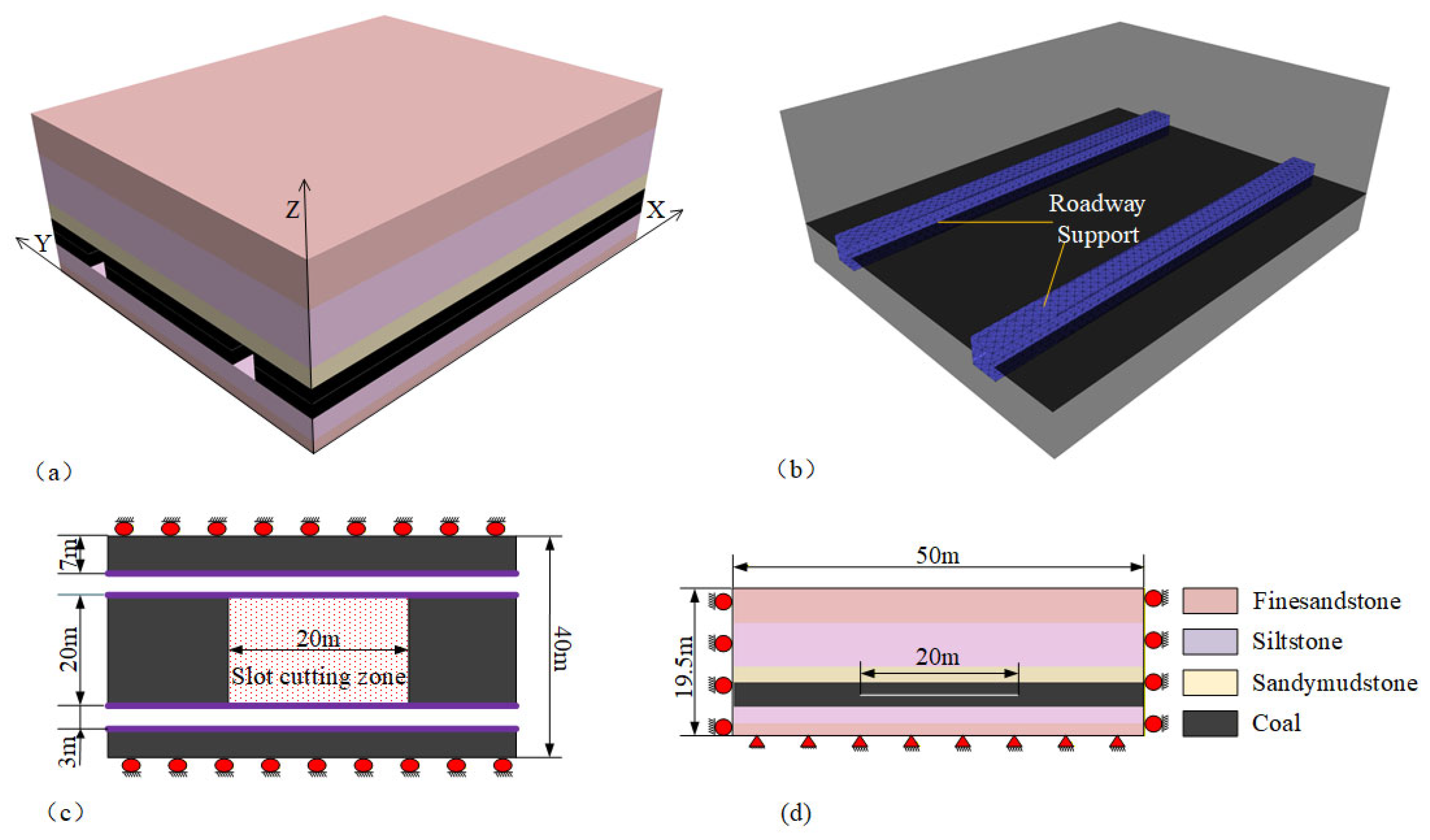
Limited by the size and loading pressure, similarity simulation tests mainly reflect the stress variation and distribution characteristics during the unclosed stage of slots formed by diamond beaded wire saw cutting in coal seams. To further study the more complete mechanical response mechanism of coal seam cutting using a diamond beaded wire saw and its influence on the pressure relief effect, and to examine the impact of cutting with diamond beaded wire saws of different diameters (i.e., slot heights) on slot pressure relief, the FLAC3D 6.0 simulation software was used to establish a three-dimensional numerical model. By using its ratio function and domain decomposition method, a 3D model containing dense, transitional, and sparse grid regions was constructed. The model dimensions are 50 m (length) × 40 m (width) × 19.5 m (height), as shown in Figure 4. From top to bottom, the model includes the main roof (6 m), immediate roof (5 m), false roof (2 m), coal seam (3 m), immediate floor (2 m), and main floor (1.5 m). The physical and mechanical parameters of each rock stratum are listed in Table 3.
The Mohr–Coulomb model was adopted as the constitutive model. To extend the findings of the physical model to actual deep mining conditions, a uniformly distributed vertical downward load of 14 MPa was applied on the top of the numerical model. Roller boundary conditions were used for the front, rear, left, and right boundaries, whereas fixed boundary conditions were applied at the bottom boundary. Each roadway has a width and height of 3 m, and cutting was conducted along the roadway strike, with the slot arranged at the middle of the coal seam. However, because the support system has a significant effect on the stress distribution in the surrounding rock, its role was compensated by applying an equivalent constant external supporting pressure to the contour of the roadway. As proposed and validated by Sakhno et al. [30], this surface-pressure compensation method can effectively restrict abnormal deformation and accurately replicate the stress-bearing confinement of the actual support system. Diamond beaded wire saws with diameters of 1, 1.5, 2, 2.5, 3, and 4 cm were adopted for cutting, respectively. Cutting was performed in 10 stages, with 2 m cut per stage, resulting in a total slot length of 20 m. To obtain the spatial distribution and evolution law of vertical stress, horizontal monitoring planes at different elevations (Z = 3.5, 4, 4.5, 5.5, 6, and 6.5 m) were separately arranged above and below the slot.

4.2. Results and Analysis

4.2.1. Evolution of Vertical Stress and Pressure Relief Law

To clarify the spatial evolution law of vertical stress in coal seams during diamond beaded wire saw cutting, this study selects coal seam cutting with a 4 cm diameter diamond beaded wire saw as the research object. Based on two horizontal monitoring planes located 1.5 m above and below the slot, the variation characteristics of vertical stress at different cutting stages were analyzed.
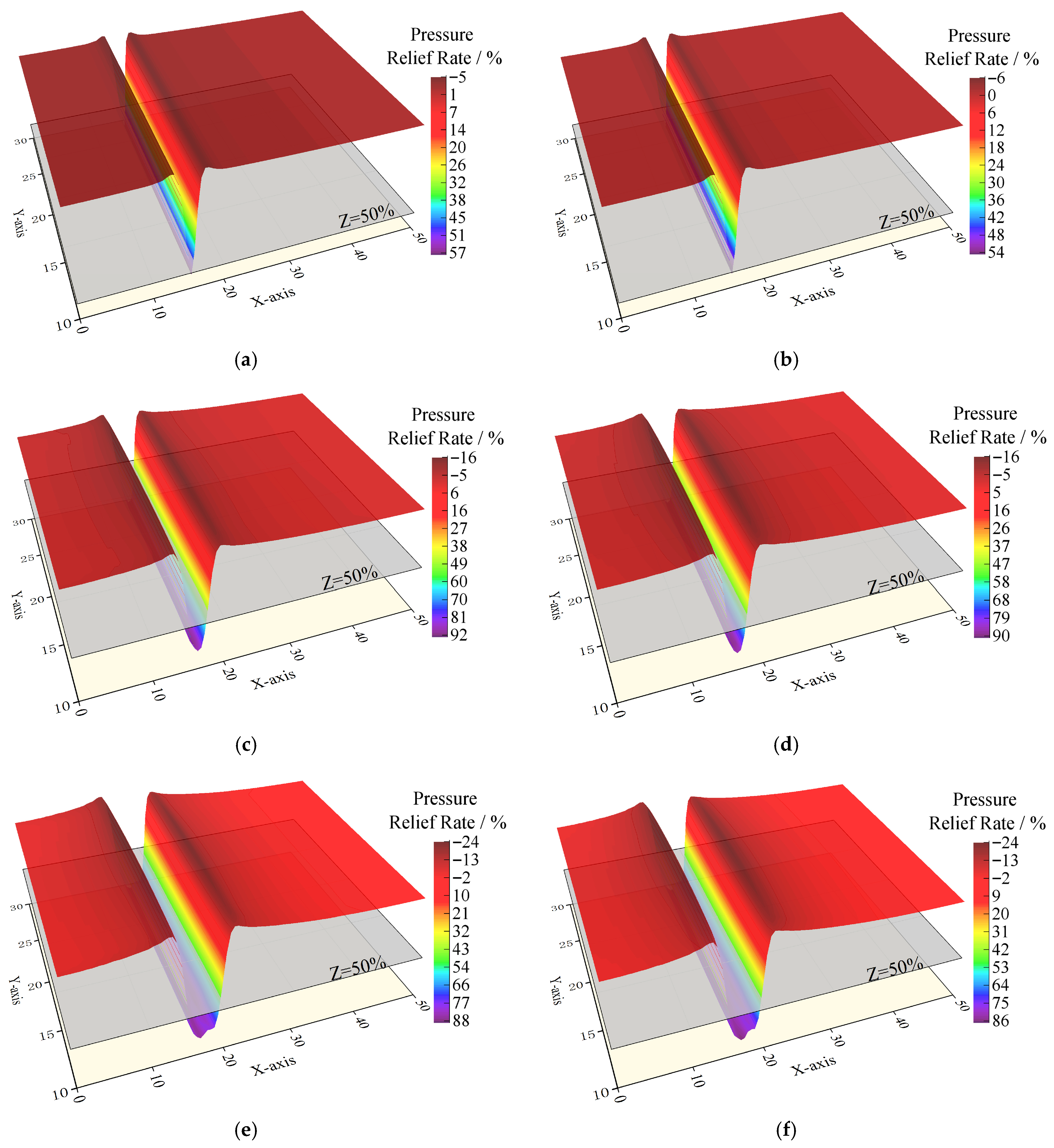
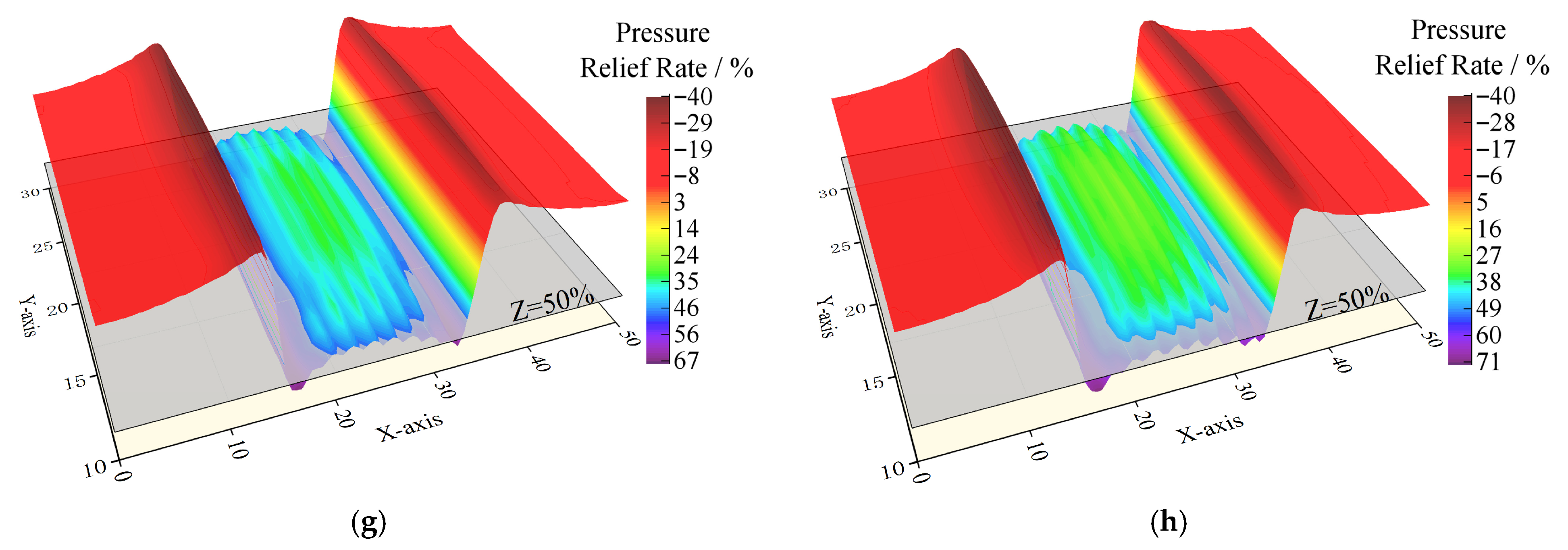
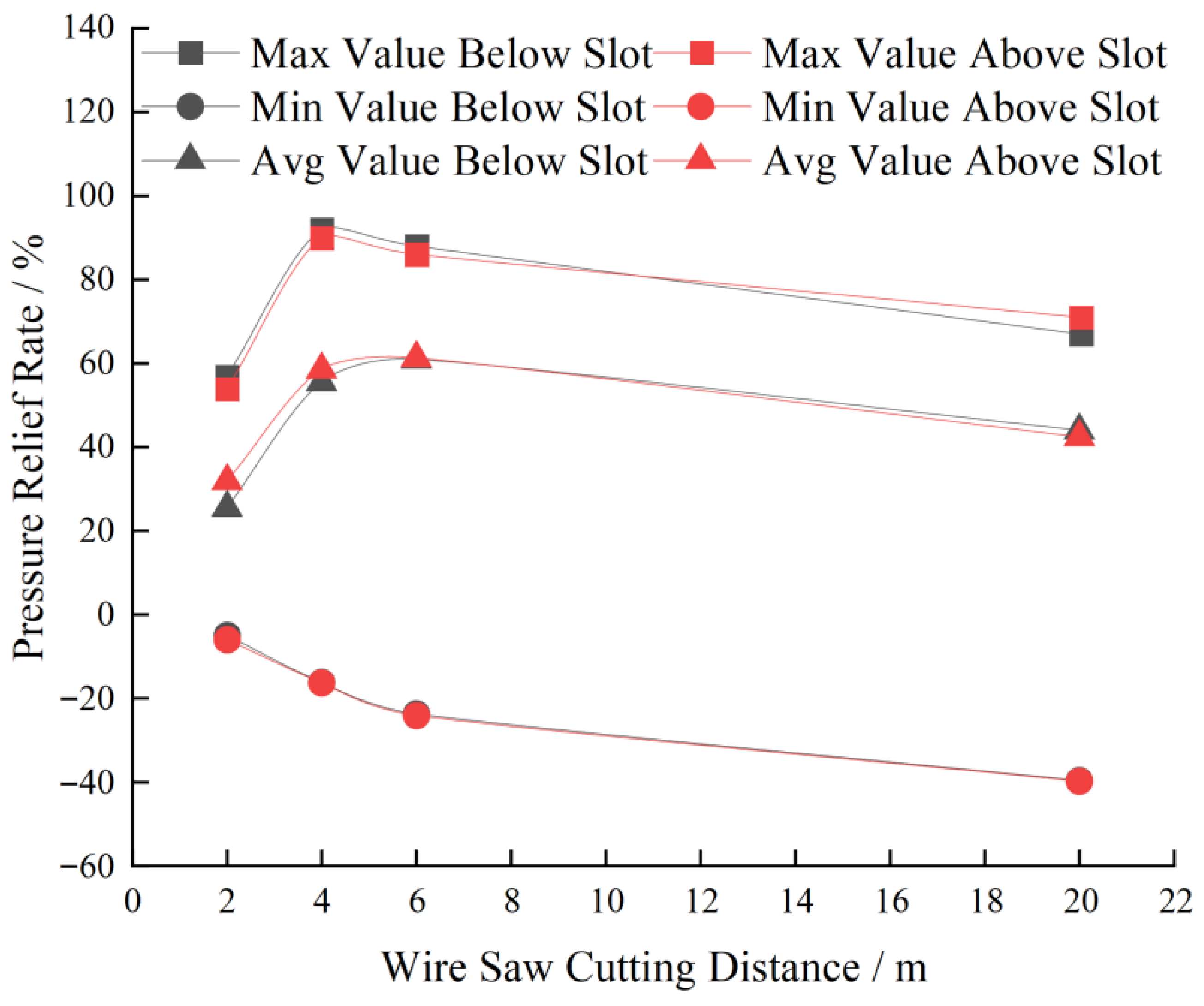
As shown in Figure 5, at a cutting length of 2 m, the maximum pressure relief rates at 1.5 m below and above the slot are 57% and 54%, respectively. Combined with the data in Figure 6, the average pressure relief rates in the corresponding monitoring areas are 26% and 32%, respectively, both higher than 10%, indicating the onset of the pressure relief effect. At this stage, the average pressure relief rate above the slot is higher than that below, showing a better pressure relief performance. When the cutting length reaches 4 m, the maximum pressure relief rates at 1.5 m below and above the slot increase to 92% and 90%, respectively, and the average pressure relief rates in the corresponding monitoring areas rise to 55% and 58%, both meeting the 50% threshold for sufficient pressure relief. Although the pressure relief effect above the slot is still better at this stage, the difference becomes much smaller than that in the initial cutting stage. At a cutting length of 6 m, the maximum pressure relief rates at 1.5 m below and above the slot are 88% and 86%, respectively, and their average pressure relief rates reach 60% and 61%, both remaining above the standard for sufficient pressure relief. When the cutting length reaches 20 m, the maximum pressure relief rates at 1.5 m below and above the slot further decrease to 61% and 71%, respectively, and the average pressure relief rates in the corresponding monitoring areas stabilize at 42–43%, which is below 50% but still above 10%.
From the analysis of the pressure relief effect, the vertical stress disturbance of the coal mass becomes stronger as the distance to the slot center decreases. Obvious stress concentration occurs at both ends of the slot, while large-scale stress recovery appears in the central region. Stress recovery in the middle of the slot, caused by slot closure, tends to approach the original stress state, resulting in a pressure relief effect that is clearly weaker than that at both ends of the slot. In addition, limited by the support structures, the pressure relief rate around the roadway remains above 50%, consistent with the criterion that a pressure relief degree greater than 50% indicates effective pressure relief for coal seams. At this stage, the fully pressure-relieved areas (pressure relief rate ≥50%) are distributed along the X-axis strike in the ranges of 15–19.5 m and 30–35 m, with a cumulative length of 9.5 m. This length, which exceeds the 3 m coal seam thickness, accounts for 47.5% of the total slot length. The stress recovery areas (pressure relief rate ≤50%) are distributed in the range of 19.5–30 m, with a length of 10.5 m.
The above analysis indicates that during the diamond beaded wire saw cutting process, as the cutting distance increases, the coal mass above the slot experiences a staged evolution of “free-face exposure (2–4 m cutting length)—local floor contact (6 m cutting length)—large-scale floor contact (20 m cutting length)”. The pressure relief rate shows a trend of increasing first and then decreasing, but it remains consistently above 10%. Overall, the pressure relief effect of the coal mass above the slot is better than that below, and this difference is especially evident before slot closure. In the horizontal direction, stress is continuously transferred and redistributed to the surrounding coal mass. Although the influence of slot closure is mainly concentrated in the central region, leading to a lower local pressure relief rate, the areas at both ends of the slot and around the roadway are less affected by support constraints, maintaining a pressure relief rate above 50%. The fully pressure-relieved areas show an overall annular distribution pattern.
A comparison of the stress data from the numerical simulation before slot closure with the experimental data from similar simulation tests reveals that, prior to complete slot closure, the maximum average pressure relief rate of the coal mass above the slot in the similar simulation test model reaches 61.70%. In contrast, the average pressure relief rate of the coal mass above the slot in the numerical simulation before slot closure is 71% (when the wire saw cutting distance is 6 m). Thus, the numerical simulation results are consistent with those of similar simulation tests.

4.2.2. Influence Law of Diamond Beaded Wire Saw Diameter on Coal Seam Pressure Relief Height and Effect

To clarify how diamond beaded wire saws with different diameters affect the maximum pressure relief height of the coal mass above and below the slot, this study analyzes the stress distribution law and pressure relief characteristics of coal seams after cutting is completed (slot length of 20 m) when the wire saw diameters are 1, 1.5, 2, 2.5, and 3 cm, respectively, based on the previous cutting condition using a 4 cm diameter diamond beaded wire saw.
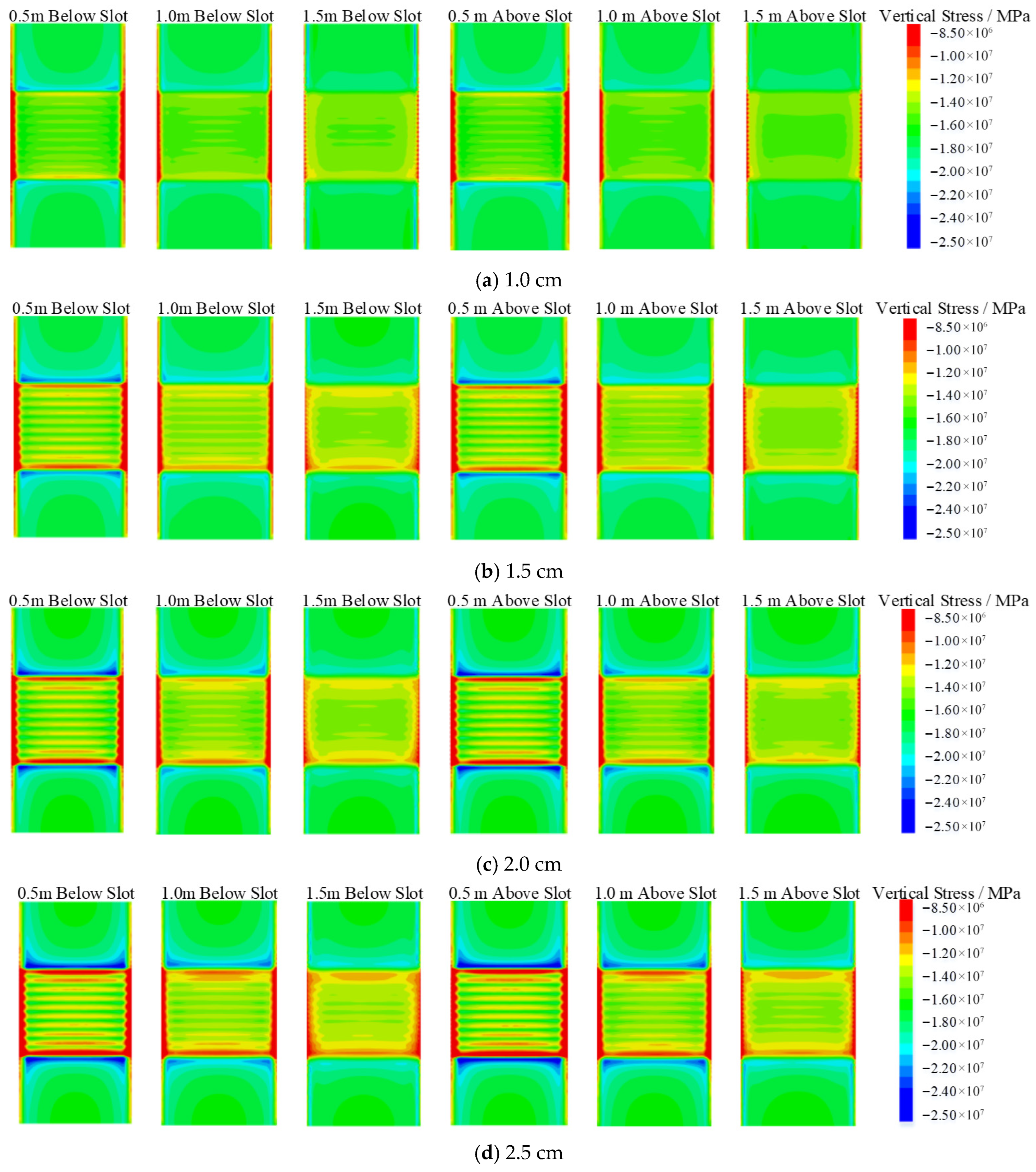
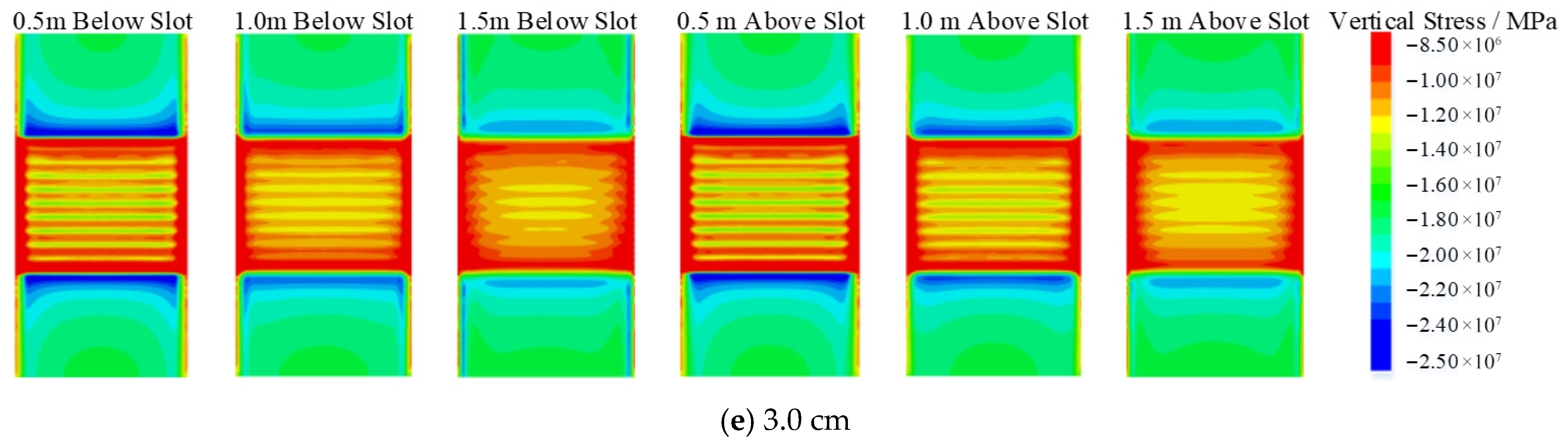
Figure 7 shows the contour plots of stress distribution at different positions above and below the slot after 20 m of cutting using diamond beaded wire saws with different diameters. The distribution patterns indicate that after slot cutting, the vertical stress of the coal mass above and below the slot is reduced to varying degrees. A comparison of stress differences at different heights shows that the closer the location is to the slot, the larger the stress variation becomes. As the diameter of the diamond beaded wire saw increases, the stress reduction effect of coal seam cutting becomes more evident.
Figure 7a shows the cloud maps of stress variation at different positions above and below the slot center after 20 m of cutting with a 1 cm diameter diamond beaded wire saw. Under this condition, the sufficient pressure relief height of the coal seam is 0.4 m, meaning that the distance from the slot center to the coal mass above and below the slot is 0.2 m on both sides. The fully pressure-relieved area is only distributed within the 0.2 m range adjacent to the roadway at the two corners of the slot, accounting for only 1% of the total length. The stress recovery area is distributed along the X-axis strike in the interval of 15.2–34.8 m, with a length of 19.6 m. For a diamond beaded wire saw with a diameter of 1.5 cm (Figure 7b), the maximum sufficient pressure relief height of the coal seam increases to 1.2 m, and the distance from the slot center to the coal mass above and below the slot increases synchronously to 0.6 m. The fully pressure-relieved area is distributed along the X-axis strike within the intervals of 15–15.9 m and 34–35 m, with a total length of 1.9 m, representing an increased proportion of 9.5%. The stress recovery area is located in the interval of 15.9–34 m, with a length of 18.1 m. When the diameter of the diamond beaded wire saw is 2 cm (Figure 7c), the sufficient pressure relief height of the coal seam reaches 1.9 m, with distances from the slot center of 1.0 m to the coal mass above the slot and 0.9 m to the coal mass below. At this stage, vertical differences in pressure relief begin to appear, and the pressure relief performance of the upper coal mass is stronger than that of the lower coal mass. The fully pressure-relieved area is distributed along the X-axis strike in the ranges of 15–16 m and 33.9–35 m, with a cumulative length of 2.1 m, accounting for 10.5% of the total strike length. The stress recovery area extends from 16 to 33.9 m, with a length of 17.9 m.
For a diamond beaded wire saw with a diameter of 2.5 cm (Figure 7d), the sufficient pressure relief height further increases to 2.4 m, and the distances from the slot center to both the upper and lower coal mass are 1.2 m. The pressure relief zone continues to enlarge, and the vertical non-uniformity becomes more evident. The fully pressure-relieved area is distributed along the X-axis strike in the intervals of 15–16.3 m and 33.7–35 m, with a total length of 2.6 m, accounting for 13% of the total length. The stress recovery area is distributed in the interval of 16.3–33.7 m, with a length of 17.4 m.
When the diamond beaded wire saw diameter increases to 3 cm (Figure 7e), the maximum sufficient pressure relief height of the coal seam reaches 3 m, and the distances from the slot center to the coal mass above and below both exceed 1.5 m. This range can fully cover the 3 m-thick coal seam, enabling full-height pressure relief. As explicitly depicted by the vertical stress profile in Figure 7e, the effective pressure relief zone continuously covers the entire 3 m vertical section, confirming a full-thickness stress release mechanism. The fully pressure-relieved area is distributed along the X-axis strike within the intervals of 15–17.5 m and 32.1–35 m, with a cumulative length of 5.4 m, accounting for 27% of the total length. The stress recovery area is located in the interval of 17.5–32.1 m, with a length of 14.6 m.
Overall, for a 1 cm diameter saw, the sufficient pressure relief height of the coal seam is 0.4 m. When the saw diameter increases to 1.5 cm, 2 cm, and 2.5 cm, the sufficient pressure relief height rises stepwise to 1.2 m, 1.9 m, and 2.4 m, respectively. For each 0.5 cm increase in saw diameter, the sufficient pressure relief height increases by approximately 0.5–0.7 m. When the diamond beaded wire saw diameter exceeds 3 cm, the coal mass both above and below the slot satisfies the pressure relief requirement.
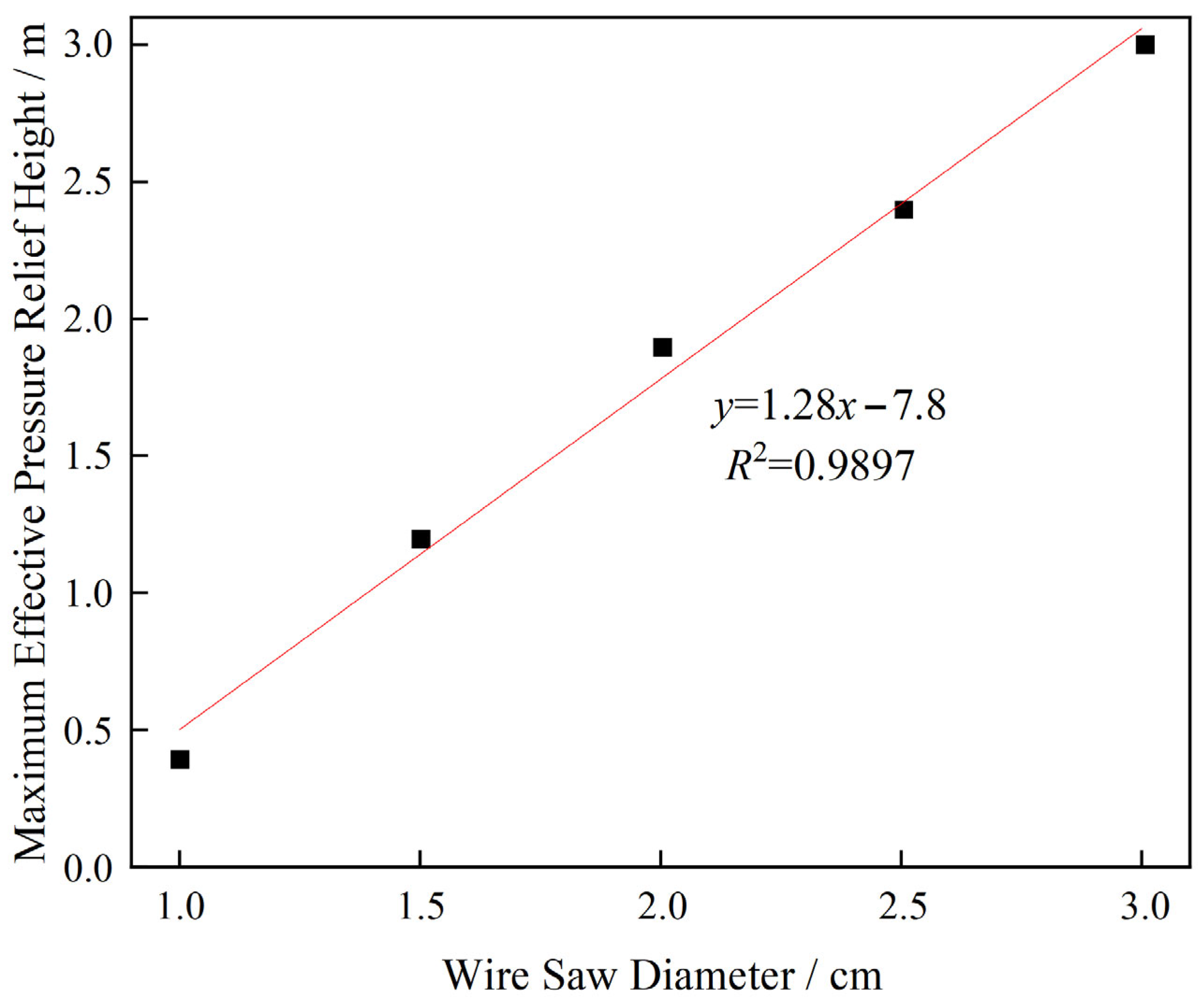
With respect to the algorithmic and engineering recommendations, the simulation results reveal a robust linear correlation (R2 = 0.9897) between the wire saw diameter (d, cm) and the maximum effective pressure relief height (H, m), as illustrated in Figure 8. The linear fitting equation is empirically established as H = 1.28d − 0.78. To facilitate field engineering design, this relationship is transposed to determine the critical minimum saw diameter (dmin, cm) required to achieve full-thickness relief for a targeted coal seam thickness (H, m), which is expressed as Equation (4):
d min   =   ( H   +   0 . 78 ) / 1 . 28
Based on this quantitative algorithm, achieving full-height pressure relief in a 3 m thick coal seam necessitates a minimum saw diameter of approximately 2.95 cm. The larger the wire saw diameter, the higher the energy consumption for coal seam cutting, the higher the requirements for matched construction equipment, and the greater the sawing force borne by the wire saw, which can easily lead to wire saw fracture when the sawing force is excessive. Therefore, under these working conditions, it is necessary to simultaneously meet the full-thickness sufficient pressure relief effect of the 3 m thick coal seam, reduce energy consumption and construction cost, and ensure that the wire saw does not break. On this basis, a 3.0 cm saw represents the optimal engineering threshold to guarantee sufficient pressure relief (characterized by a stress reduction ≥ 50%) across the entire seam thickness. Ultimately, this empirical formulation provides highly actionable and scientifically rigorous guidelines for optimizing slotting parameters under comparable geological and geomechanical conditions.

5. Conclusions

In this study, we reached the following conclusions:
  • A significant reduction in the vertical stress of coal seams can be achieved by diamond beaded wire saw cutting. Similar simulation results indicate that before slot closure, the average pressure relief rate of the coal mass above the slot is more than 3.5 times that of the coal mass below, with a maximum value of 61.70%. Numerical simulation results further confirm that both before and after slot closure, the average pressure relief rates of the coal mass above and below the slot are higher than 10%, and the pressure relief effect above the slot is consistently better than that below.
  • The pressure relief effect shows clear stage characteristics and spatial differences. During the diamond beaded wire saw cutting process, the coal mass above the slot undergoes an evolutionary process of “free-face exposure—local floor contact—large-scale floor contact”, and the pressure relief rate displays a trend of first increasing and then decreasing. In the horizontal direction, the stress of the coal mass is transferred toward both sides of the slot and into the surrounding area of the roadway. Fully pressure-relieved zones are concentrated at both ends of the slot and on both sides close to the supported roadway, presenting an overall “annular” distribution characteristic. The middle region is influenced by slot closure, and the pressure relief effect is relatively weak.
  • Slot closure induces changes in the pressure relief state. Before closure, the pressure relief effect of the coal mass above the slot is more favorable. After closure, stress recovery occurs in the middle region, but the overall pressure relief rate of the coal mass remains above 10%. Due to the support structure constraints, the pressure relief rates at both ends of the slot and around the roadway are consistently above 50%, meeting the requirements for sufficient pressure relief.
  • With an increase in the diameter of the diamond beaded wire saw, the pressure relief height, depth, and horizontal range of slotting are enhanced simultaneously. In this research case, for every 0.5 cm increase in the diameter of the wire saw, the sufficient pressure relief height of the coal seam increases by about 0.6 m. Based on the critical formula dmin = (H + 0.78)/1.28, for a 3 m thick coal seam, a wire saw with a diameter of 3 cm can achieve full-thickness sufficient pressure relief. Larger diameters significantly increase energy consumption, cost and wire saw breakage risk; thus, a smaller diameter wire saw should be selected on the basis of the pressure relief requirements.

Author Contributions

Conceptualization, Y.Y. and S.L.; methodology, C.L.; software, Y.Y.; validation, X.Z., S.L. and M.Y.; formal analysis, Y.Y.; investigation, Y.Q.; resources, S.L.; data curation, Y.Y.; writing—original draft preparation, Y.Y.; writing—review and editing, Y.Y., S.L. and C.L.; visualization, Y.Y.; supervision, C.L. and S.L.; project administration, Y.Y. and S.L.; funding acquisition, Y.Y., S.L. and M.Y. All authors have read and agreed to the published version of the manuscript.

Funding

This research is supported by the National Natural Science Foundation of China [grant numbers 52474221, 51974121, 52404203], the Natural Science Foundation of Hunan Province [grant numbers 2025JJ60365], and the Key Project of Guizhou Provincial Basic Research Program (Natural Science) [grant numbers ZD [2025]029], Hunan Provincial Innovation Foundation For Postgraduate (Xiangjiao Tong [2024] No. 274; LXBZZ2024268).

Institutional Review Board Statement

Not applicable.

Informed Consent Statement

Not applicable.

Data Availability Statement

The original contributions presented in this study are included in the article. Further inquiries can be directed to the corresponding author.

Acknowledgments

We thank the anonymous reviewers for their suggestions in improving the quality of this manuscript.

Conflicts of Interest

The authors declare no conflicts of interest.

References

  1. Liu, Y.; Gao, F.; Duan, Z.; Cui, M.; Zhou, A. Statistics and occurrence regularity analysis of coal rock gas dynamic disaster accidents. Met. Mine 2025, 2, 180–188. [Google Scholar] [CrossRef]
  2. Wang, F.; Yang, Y.; Wu, L.; Meng, H.; Li, P.; Pang, L. Analysis on accident types of coal mine in global major coal producing countries. Smart Cities Adv. Technol. 2023, 1, 1–9. [Google Scholar] [CrossRef]
  3. Kaverzneva, T.; Rodionov, V.; Skripnik, I.; Zhikharev, S.; Polyukhovich, M. Determination of the miners’individual injury risk as a result of the dynamic manifestation of rock pressure. In Proceedings of the International Scientific Conference Energy Management of Municipal Facilities and Environmental Technologies (EMMFT-2023), Voronezh, Russia, 9–13 October 2023; EDP Sciences: Les Ulis, France, 2023; Volume 458, p. 08011. [Google Scholar]
  4. Nguyen, P.M.V.; Litwa, P.; Przybylski, M. Field testing of the methods for prevention and control of coal and gas outburst-a case study in Poland. Arch. Min. Sci. 2023, 68, 639–654. [Google Scholar]
  5. Brigida, V.S.; Dmitrak, Y.V.; Gabaraev, O.Z.; Golik, V.I. Use of Destressing Drilling to Ensure Safety of Donbass Gas-bearing Coal Seams Extraction. Occup. Saf. Ind. 2019, 3, 7–11. (In Russian) [Google Scholar] [CrossRef]
  6. Liu, S.; Yao, C.; Gao, D.; Wang, X. Influence factors on the energy regulation law of a coal seam after hydraulic slotting. Processes 2024, 12, 2062. [Google Scholar] [CrossRef]
  7. Hou, B.; Zhang, Z.; Ju, W.; Pan, K.; Yang, H.; Yu, T. Research on the mechanism and morphology of coal damage by water jet deflection angle. Geomech. Geophys. Geo-Energy Geo-Resour. 2025, 12, 3. [Google Scholar] [CrossRef]
  8. Zou, Q.; Liu, H.; Jiang, Z.; Wu, X. Gas flow laws in coal subjected to hydraulic slotting and a prediction model for its permeability-enhancing effect. Energy Sources Part A Recov. Util. Environ. Eff. 2025, 47, 8628–8642. [Google Scholar] [CrossRef]
  9. Li, C. Study on the application of ultra-high pressure hydraulic slotting in low permeability coal seam. IOP Conf. Ser. Earth Environ. Sci. 2020, 546, 052022. [Google Scholar] [CrossRef]
  10. Li, C. Application of high pressure hydraulic slotting in pressure relief and permeability enhancement of coal roadway. IOP Conf. Ser. Earth Environ. Sci. 2020, 526, 012159. [Google Scholar] [CrossRef]
  11. Ge, Z.; Zuo, S.; Wang, Y.; Lyu, Y.; Feng, X. Analysis of Application Parameters of Hydraulic Slotting Technology in Jointed Coal Reservoirs. Appl. Sci. 2019, 9, 5536. [Google Scholar] [CrossRef]
  12. Zhao, Y.; Lin, B.; Liu, T.; Kong, J.; Zheng, Y. Gas flow in hydraulic slotting-disturbed coal seam considering stress relief induced damage. J. Nat. Gas Sci. Eng. 2020, 75, 103160. [Google Scholar] [CrossRef]
  13. Zhao, Y.; Lin, B.; Liu, T.; Li, Q.; Kong, J. Gas flow field evolution around hydraulic slotted borehole in anisotropic coal. J. Nat. Gas Sci. Eng. 2018, 58, 189–200. [Google Scholar] [CrossRef]
  14. Zou, Q.; Liu, H.; Cheng, Z.; Zhang, T.; Lin, B. Effect of slot inclination angle and borehole-slot ratio on mechanical property of pre-cracked coal: Implications for ECBM recovery using hydraulic slotting. Nat. Resour. Res. 2020, 29, 1705–1729. [Google Scholar] [CrossRef]
  15. Zhang, Y.; Zou, Q. A prediction model for the slot depth of high pressure water jet. Results Phys. 2018, 11, 1105–1109. [Google Scholar] [CrossRef]
  16. Lu, Z.; Ji, F. Experimental study on ultra high pressure hydraulic cutting seam pressure relief and permeability enhancement of strip drilling along seam in C19 coal seam of Shiping No. 1 Coal Mine. IOP Conf. Ser. Earth Environ. Sci. 2021, 804, 022040. [Google Scholar] [CrossRef]
  17. Liu, T.; Lin, B.; Zou, Q.; Zhu, C. Microscopic mechanism for enhanced coal bed methane recovery and outburst elimination by hydraulic slotting: A case study in Yangliu mine, China. Greenh. Gases Sci. Technol. 2016, 6, 597–614. [Google Scholar] [CrossRef]
  18. Klyuev, R.V.; Brigida, V.S.; Lobkov, K.Y.; Stupina, A.A.; Tynchenko, V.V. On the issue of monitoring crack formation in natural-technical systems during earth surface displacements. MIAB. Min. Inf. Anal. Bull. 2023, 11, 292–304. (In Russian) [Google Scholar] [CrossRef]
  19. Tang, Z.; Li, S.; Huang, F.; Huang, S.; Cai, K. Exploration and practice of pressure relief by slotting coal seams with a diamond wire saw. Adv. Civ. Eng. 2021, 2021, 9961326. [Google Scholar] [CrossRef]
  20. Lv, C.; Li, S.; Yi, M.; Yang, Y.; Qian, Y.; Huang, X.; Zhao, T. Study on the damage characteristics and influencing factors of coal seam cut by diamond beaded wire saw. J. Mater. Eng. Perform. 2025. [Google Scholar] [CrossRef]
  21. Zhang, J.; Wang, X.; Ge, Z.; Wang, M.; Wang, W. Research on the pressure relief law of diamond beaded rope saw cutting seam: A numerical investigation. Geomech. Geophys. Geo-Energy Geo-Resour. 2024, 10, 77. [Google Scholar] [CrossRef]
  22. Wang, W.; Wang, X.; Li, H.; Hu, J.; Zhang, T.; Xu, C. Numerical simulation of pressure relief stress distribution of diamond beaded rope saw cutting in low permeability coal seam. Geomech. Geophys. Geo-Energy Geo-Resour. 2023, 9, 108. [Google Scholar] [CrossRef]
  23. Li, S.; Lv, C.; Huang, F.; Qian, Y.; Huang, X.; Zhao, T.; Tang, Z.; Yang, F.; Wang, C. Study on pressure relief and permeability enhancement effect of cutting coal seam with diamond-bead wire saw. J. China Coal Soc. 2024, 49, 785–800. [Google Scholar] [CrossRef]
  24. Tang, Z. Experimental Study on Pressure Relief and Permeability Enhancement of Coal Seam Cut by Diamond Beaded Wire Saw. Ph.D. Thesis, Hunan University of Science and Technology, Xiangtan, China, 2021. [Google Scholar]
  25. Kang, H.; Yi, B.; Gao, F.; Lv, H. Database and characteristics of underground in-situ stress distribution in Chinese coal mines. J. China Coal Soc. 2019, 44, 23–33. [Google Scholar] [CrossRef]
  26. Chai, J.; Liu, Y.; Wang, Z.; Lei, W.; Zhang, D.; Ouyang, Y.; Sun, K.; Weng, M.; Zhang, Y.; Ding, G. Pressure relief effect of protective layer mining and its optical fiber monitoring. J. China Coal Soc. 2022, 47, 2896–2906. [Google Scholar] [CrossRef]
  27. Chai, J.; Lan, H.; Ma, C.; Zhang, D.; Lei, W.; Zheng, Z.; Zhu, L.; Han, G.; Xie, J.; Sun, K. Identification of the degree of stress release and unloading in the underlying coal rock of protected seam mining. J. China Coal Soc. 2024, 49, 553–564. [Google Scholar] [CrossRef]
  28. Wang, J.; Wang, X.L. Seepage Characteristic and Fracture Development of Protected Seam Caused by Mining Protecting Strata. J. Min. Strat. Control Eng. 2021, 3, 62–70. [Google Scholar] [CrossRef]
  29. Wang, L.; Xia, J.L.; Wu, R.L. Theoretical Study on Stress Distinguishing Index of Gas Pressure Fully Released in Mining Seam. J. Coal Sci. Technol. 2012, 40, 1–5. [Google Scholar]
  30. Sakhno, I.; Sakhno, S.; Skyrda, A.; Popova, O. Numerical Modeling of Controlling a Floor Heave of Coal Mine Roadways with a Method of Reinforcing in Wet Soft Rock. Geofluids 2022, 2022, 3855799. [Google Scholar] [CrossRef]
Figure 1. Test model.
Applsci 16 02634 g001
Figure 2. Layout of stress monitoring points.
Applsci 16 02634 g002
Figure 3. Curves of vertical stress variation and pressure relief rate at different distances during diamond beaded wire saw cutting of coal seam. (a) Diamond beaded wire saw cutting of 6.3 m; (b) Diamond beaded wire saw cutting of 10.5 m; (c) Diamond beaded wire saw cutting of 14.7 m; (d) Diamond beaded wire saw cutting of 18.9 m.
Applsci 16 02634 g003
Figure 4. Numerical model. (a) 3D view; (b) Roadway support diagram; (c) Top sectional view at Z = 5 m; (d) Front sectional view at Y = 20 m.
Applsci 16 02634 g004
Figure 5. Contour plots of pressure relief rate at 1.5 m above and below the slot under different cutting distances. (a) Below the slot at 2 m cutting length; (b) Above the slot at 2 m cutting length; (c) Below the slot at 4 m cutting length; (d) Above the slot at 4 m cutting length; (e) Below the slot at 6 m cutting length; (f) Above the slot at 6 m cutting length; (g) Below the slot at 20 m cutting length; (h) Above the slot at 20 m cutting length.
Applsci 16 02634 g005aApplsci 16 02634 g005b
Figure 6. Statistical Characteristics of Pressure Relief Rate at 1.5 m in the Coal Mass Above and Below the Slot Under Different Diamond Beaded Wire Saw Cutting Distances.
Applsci 16 02634 g006
Figure 7. Contour plots of stress distribution at different positions above and below the slot after 20 m cutting using diamond beaded wire saws of different diameters. (a) 1.0 cm diameter diamond beaded wire saw; (b) 1.5 cm diameter diamond beaded wire saw; (c) 2.0 cm diameter diamond beaded wire saw; (d) 2.5 cm diameter diamond beaded wire saw; (e) 3.0 cm diameter diamond beaded wire saw.
Applsci 16 02634 g007aApplsci 16 02634 g007b
Figure 8. Linear Fitting Equation between Wire Saw Diameter and Maximum Effective Pressure Relief Height.
Applsci 16 02634 g008
Table 1. Comparison of previous studies on wire saw slotting pressure relief with the present study.
Reference(s)MethodologyMain Focus/StrengthsLimitations
Tang et al. [19]Field practice & Numerical simulationExplored horizontal wire saw pressure relief; identified stress reduction and recovery zones.Did not quantify the vertical stress distribution gradient and differences above and below the slot.
Lv et al. [20]PFC-FLAC simulation & Similarity testInvestigated slot-end damage characteristics and fracture propagation stages.Lacked investigation into the overall macroscopic unloading coefficients above and below the slot.
Zhang et al. [21]/Wang et al. [22]Numerical simulation & Analytical modelsAnalyzed macroscopic factors (seam inclination, friction, advancing distance) on pressure relief.Insufficient study on the internal mechanical response differences and the specific influence of wire saw diameter.
Li et al. [23]Similarity test & Numerical simulationVerified stress release and permeability enhancement characteristics using doubly clamped beam models.Remained preliminary without establishing the quantitative algorithm between saw diameter and relief height.
Current StudySimilarity test & Numerical simulationClarifies that slot closure can induce changes in the pressure relief state, and identifies the correlation between wire saw diameter and pressure relief height, pressure relief depth and horizontal pressure relief range.
Table 2. Main similarity constants of similarity simulation test.
Model Size/Length (cm) × Width (cm) × Height (cm)Similarity Constants
250 × 20 × 200Geometric RatioDensity RatioStress Ratio
1:101:1.51:15
Table 3. Physical and mechanical parameters of the in situ prototype coal and rock strata.
Rock LayerLithologyThickness (m)Density
(kg∙m−3)
Bulk Modulus
(GPa)
Shear Modulus
(GPa)
Angle of Internal Friction (°)Cohesion
(MPa)
Tensile Strength
(MPa)
Basic roofFine Sandstone6.026207.503.4634.03.655.10
Immediate RoofSiltstone5.028409.072.9635.54.192.20
False RoofSandy mudstone2.020802.711.5533.02.952.87
Coal SeamCoal1.514502.080.9731.51.720.23
Immediate FloorSiltstone2.028409.072.9635.54.192.20
Basic FloorFine Sandstone1.526207.503.4634.03.655.10
Table 4. Physical and Mechanical Parameters of the Experimental Model Materials.
Rock LayerLithologyThickness (m)Density
(kg∙m−3)
Bulk Modulus
(GPa)
Shear Modulus
(GPa)
Angle of Internal Friction (°)Cohesion
(MPa)
Tensile Strength
(MPa)
Basic roofFine Sandstone0.6017470.500.2334.00.240.34
Immediate RoofSiltstone0.5018930.600.2035.50.280.15
False RoofSandy mudstone0.2013870.180.1033.00.200.19
Coal SeamCoal0.159670.140.0631.50.110.015
Immediate FloorSiltstone0.2018930.600.2035.50.280.15
Basic FloorFine Sandstone0.1517470.50.2334.00.240.34
Table 5. Mass ratios of the similarity model materials.
Rock LayerAggregate TypeMass Ratio (Aggregate/Lime/Gypsum)
Basic roofQuartz Sand40:4:6
Immediate RoofQuartz Sand20:4:6
False RoofQuartz Sand10:4:6
Coal SeamCoal Powder30:6:4
Immediate FloorQuartz Sand20:4:6
Basic FloorQuartz Sand40:4:6
Disclaimer/Publisher’s Note: The statements, opinions and data contained in all publications are solely those of the individual author(s) and contributor(s) and not of MDPI and/or the editor(s). MDPI and/or the editor(s) disclaim responsibility for any injury to people or property resulting from any ideas, methods, instructions or products referred to in the content.