Article

Agronomic Potential of Digestates from Pig Slurry and Wine Vinasse Co-Digestion Under Temperature-Phased Anaerobic Digestion


by
Belén Cañadas
,
José Luis Millar
,
Juan José Iglesias
,
Juana Fernández-Rodríguez
* and
Montserrat Pérez
Department of Environmental Technologies, IVAGRO, Faculty of Marine and Environmental Sciences (CASEM), University of Cadiz, Avenida República Saharaui, s/n, 11510 Puerto Real, Spain
*
Author to whom correspondence should be addressed.
Appl. Sci. 2026, 16(5), 2621; https://doi.org/10.3390/app16052621
Submission received: 27 January 2026 / Revised: 3 March 2026 / Accepted: 5 March 2026 / Published: 9 March 2026

Abstract

The management of Pig Slurry (PS) and Wine Vinasse (WV) poses major environmental and economic challenges, Anaerobic co-digestion (AcoD) offers a promising approach, producing both renewable energy and nutrient-rich digestates with agronomic potential. This study evaluated digestates obtained from the AcoD of a 50:50 mixture of pig slurry and wine vinasse under Temperature-Phased Anaerobic Digestion (TPAD) conditions. The acidogenic reactor reached stability at a hydraulic retention time (HRT) of 5 days, achieving 51.34 ± 3.08% of tCOD removal and approximately 0.5 L of daily green hydrogen production, whereas the methanogenic stage reached stability at an HRT of 10 days with 89.14 ± 2.33% tCOD removal and recording daily biomethane production of up to 1 L. Digestates were tested in germination assays using Lepidium sativum (garden cress), Lactuca sativa (lettuce), and Raphanus sativus (radish) seeds to assess phytotoxicity, and pathogen analyses were conducted to confirm sanitary safety (contains 0.8 × 10³ MPN/gTS E. coli). Results showed that agronomic performance was primarily influenced by dilution level, at 10D–15D% dilutions, germination and root growth remained stable, with Germination Index (GI) values above 80%. In contrast, concentrations above 25D% led to marked inhibition, with GI values below 50%. These findings demonstrate that the TPAD system operates effectively when treating pig slurry and winery vinasse, producing digestates that are safe and effective organic amendments. Moreover, given their compliance with sanitary standards, these digestates can be classified as Class A biosolids suitable for agricultural application, provided that adequate dilution is ensured.

1. Introduction

Population growth and industrial development have increased the generation of organic waste, posing significant environmental challenges when residues are not properly managed [1,2,3]. The accumulation of livestock manure, agro-industrial by-products, and food-processing residues contributes to soil and water pollution, greenhouse gas emissions, and other environmental disturbances. Currently, the intensification of agriculture to meet global food demand has fostered heavy reliance on mineral fertilizers, with roughly 50% of the world population now dependent on them for food production [4]. Such excessive fertilizer application has reduced soil nutrient retention efficiency, with only 30–50% of nutrients remaining in the soil, thereby causing nutrient losses and further increaser fertilizer requirements [5]. Withing this context, organic waste valorization has emerged as a promising strategy to convert these residues into nutrient-rich, value-added products for agricultural use, simultaneously enhancing soil fertility, decreasing dependence on mineral fertilizers, and promoting a circular economy and sustainable development model [6].
Anaerobic Digestion (AD) is a well-established biological process whereby microbial consortia decompose organic matter under strictly anoxic conditions through four sequential stages: hydrolysis, acidogenesis, acetogenesis and methanogenesis. Each stage is driven by specialized microbial communities that progressively convert complex organic compounds into biogas and a nutrient-rich digestate [7,8]. Nevertheless, the AD of a single substrate often faces limitations due to nutrient imbalances or the accumulation of inhibitory compounds, Anaerobic co-digestion (AcoD) has been widely recognized as an effective strategy to improve process performance [9]. By combining complementary substrates, AcoD enhances the carbon-to-nitrogen ratio, dilutes inhibitory compounds and promotes microbial diversity, resulting in higher organic matter degradation rates and a more stable and efficient biogas production [10,11,12,13,14,15,16,17].
PS and WV represent two major agro-industrial waste streams produced in large volumes, with high pollution potential if not sustainably managed. Spain, as the largest pig producer in Europe, generates approximately 70 million kg of PS daily, raising serious concerns about nitrate pollution in water bodies and greenhouse gas emissions [18]. Similarly, the winemaking industry produces vast amounts of vinasse, a by-product with high organic load and acidic pH, which constitutes a major source of environmental pollution [19]. The physicochemical characteristics of these residues make them particularly suitable for AcoD, as their combination allows nutrient balancing, dilution of inhibitory compounds, and improvement of both organic matter degradation and biogas yields [20]. Several studies have highlighted the effectiveness of PS and WV AcoD in enhancing biomethane production under various operational conditions. In contrast, other investigations on the AcoD have assessed not only biomethane production and organic matter removal but also the agronomic properties of the resulting digestates [21,22]. While the energy recovery potential of PS and WV has been widely studied, comprehensive evaluations of the agronomic value of their digestates remain limited. This gap underscores the need to simultaneously evaluate both energy production and agronomic performance in PS and WV co-digestion systems.
Although substantial progress has been made in optimizing biomethane production from PS and WV, the agronomic quality of the resulting digestates remains poorly characterized. Evaluating their potential as soil amendments is therefore essential to ensure safe and sustainable agricultural application. Overreliance on mineral fertilizers has led to soil saturation, where only 30–50% of nutrients are retained while the remainder is lost to the environment, increasing both pollution and future fertilizer demand. Within this framework, organic amendments such as digestate represent a sustainable and cost-effective alternative, reducing dependence on synthetic fertilizers while promoting soil health [4,5,23]. Digestate is rich in essential macronutrients, including nitrogen, phosphorus, and potassium, and contributes to improving soil structure, holding significant potential as a biofertilizer and soil amendment [24,25,26,27,28,29,30,31,32]. Comprehensive assessment of digestates produced under different AcoD operating conditions is therefore critical, including evaluation of phytotoxicity, pathogen reduction, and stability.
In this context, the main objective of this study is to assess the agronomic properties of digestates produced from the AcoD of PS and WV operated under TPAD conditions.
Beyond the mere characterization of their physicochemical, microbiological, phytotoxic, and stability properties, this work aims to elucidate how operational variables shape digestate quality and influence its agronomic performance. Germination bioassays with sensitive indicator species and pathogen assessments were integrated to establish both the safety and functional potential of the digestates. By coupling energy recovery with digestate valorization, the study provides insights into how agro-industrial residues can be transformed into safe, nutrient-rich inputs that reduce dependence on mineral fertilizers, improve soil health, and contribute to advancing circular bioeconomy strategies and sustainable agricultural practices.

2. Materials and Methods

2.1. TPAD Process Overview

The TPAD configuration was established at laboratory scale, consisting of two sequential stages, as shown in the Figure 1. Continuous stirred tank reactors (CSTR) with a total volume of 3.00 L and a working volume of 2.70 L were employed. Each reactor was equipped with heating plates, temperature probes, feed inlet and effluent outlet ports, as well as connections for chemical dosing to maintain pH control (1 M HCl was used to acidify and 1 M NaOH to adjust toward basic values, as needed). Constant mechanical stirring at 40 rpm was applied to ensure homogenization and prevent sedimentation. The acidogenic stage was operated under thermophilic conditions (55 °C), while the methanogenic stage was maintained under mesophilic conditions (35 °C). Reactors were connected in series so that the effluent from the first stage served as influent for the second. The effluent was collected using a 100 mL syringe and transferred to a graduated cylinder to measure the volume according to the indicated HRT and was then used as influent for the second reactor. Biogas production was collected daily in 3.00 L Tedlar bags (Bentley Place Cerritos, CA 90703, USA) attached to each digester, and gas samples were extracted with airtight syringes to analyse their composition using a Shimadzu CG-2010 gas chromatograph (Shimadzu; Kyoto, Japan).
The TPAD system was operated under semi-continuous feeding, with operational parameters such as pH and temperature routinely controlled and monitored to ensure process stability, reproducibility, and reliability. To achieve this stability, different hydraulic retention time (HRT) were initially tested, and based on these evaluations, the hydrolytic/acidogenic phase was maintained at an HRT of 5 days to promote rapid hydrolysis and acidogenesis, whereas the methanogenic phase was operated at an HRT of 10 days to enable efficient conversion of volatile fatty acids (VFA) into biomethane. The organic loading rate (OLR) was standardized at 35 g COD/L across all reactors, thereby ensuring direct comparability among configurations.

2.2. Characterization of Organic Substrates

The substrates utilized in this study comprised pig slurry and wine vinasse. The PS was collected from the Montesierra S.L. PS facilities in Jerez de la Frontera (Spain), while the WV was supplied by the González Byass S.A. winery, also located in Jerez de la Frontera. Following collection, both substrates were stored at approximately 4 °C to prevent biological degradation prior to use. Before the experimental trials, the substrates were fully characterized, and their initial physicochemical properties are summarized in Table 1. Physicochemical characterization was performed according to Standard Methods APHA-AWWA-WEF [33]. Total and soluble chemical oxygen demand (CODt and CODs) were determined using a compact multiparameter photometer (HANNA HI-83399, HANNA Instruments; Limena, Italia) following APHA standard procedures [33]. The C/N ratio was determined using commercial measurement kits compatible with the same equipment. Total solids (TS) and volatile solids (VS) were analyzed according to Method 2540 G [33] using a gravimetric technique. Volatile fatty acids (VFA) were quantified using a Shimadzu GC-2010 gas chromatograph equipped with a Shimadzu AOC-20i injector (Shimadzu; Kyoto, Japan) and a flame ionization detector (FID). pH was measured directly according to Standard Method 4500-H+ (APHA-AWWA-WEF) using a SensION pH meter (Hach Company; Düsseldorf, Germany). A feedstock mixture consisting of 50:50 (v/v) PS and WV was prepared for all digestion assays, combining the buffering capacity and nitrogen contribution of PS with the easily degradable organic fraction of WV, including soluble carbohydrates and phenolic compounds, thereby providing a balanced substrate with enhanced biodegradability.

2.3. Pathogen Analysis

2.3.1. Enterococci, Total Coliforms and Escherichia coli

The enumeration of total coliforms, Escherichia coli, and enterococci was carried out using the Colilert-18/Quanti-Tray and Enterolert/Quanti-Tray methods, following the ISO 9308-2:2012 standard. Total coliforms and E. coli were analyzed using the Colilert-18 reagent, while enterococci were enumerated using the Enterolert reagent. Analyses were performed on 100 mL aliquots, which were serially diluted (1:10 and 1:100) and transferred into Quanti-Tray/2000 multi-well trays. The trays for total coliforms and E. coli were incubated for 18 h at 37 °C, while the trays for enterococci were incubated at 41 °C. After incubation, wells exhibiting a yellow color change indicated the presence of total coliforms, wells that also displayed fluorescence under UV light confirmed the presence of E. coli, and enterococci were enumerated based on the specific response in the Enterolert medium. Results were processed using the IDEXX NMP Generator software to obtain the most probable number (MPN) per 100 mL, and the concentration of microorganisms per gram of wet sample was calculated using the Equation (1).
M h = N × b × d v
where Mh is the number of coliforms per gram of wet sample, N is the results expressed as the MPN per 100 mL. b is the initial dilution factor; d is the final dilution factor and v is the inoculated volume in mL.

2.3.2. Salmonella spp.

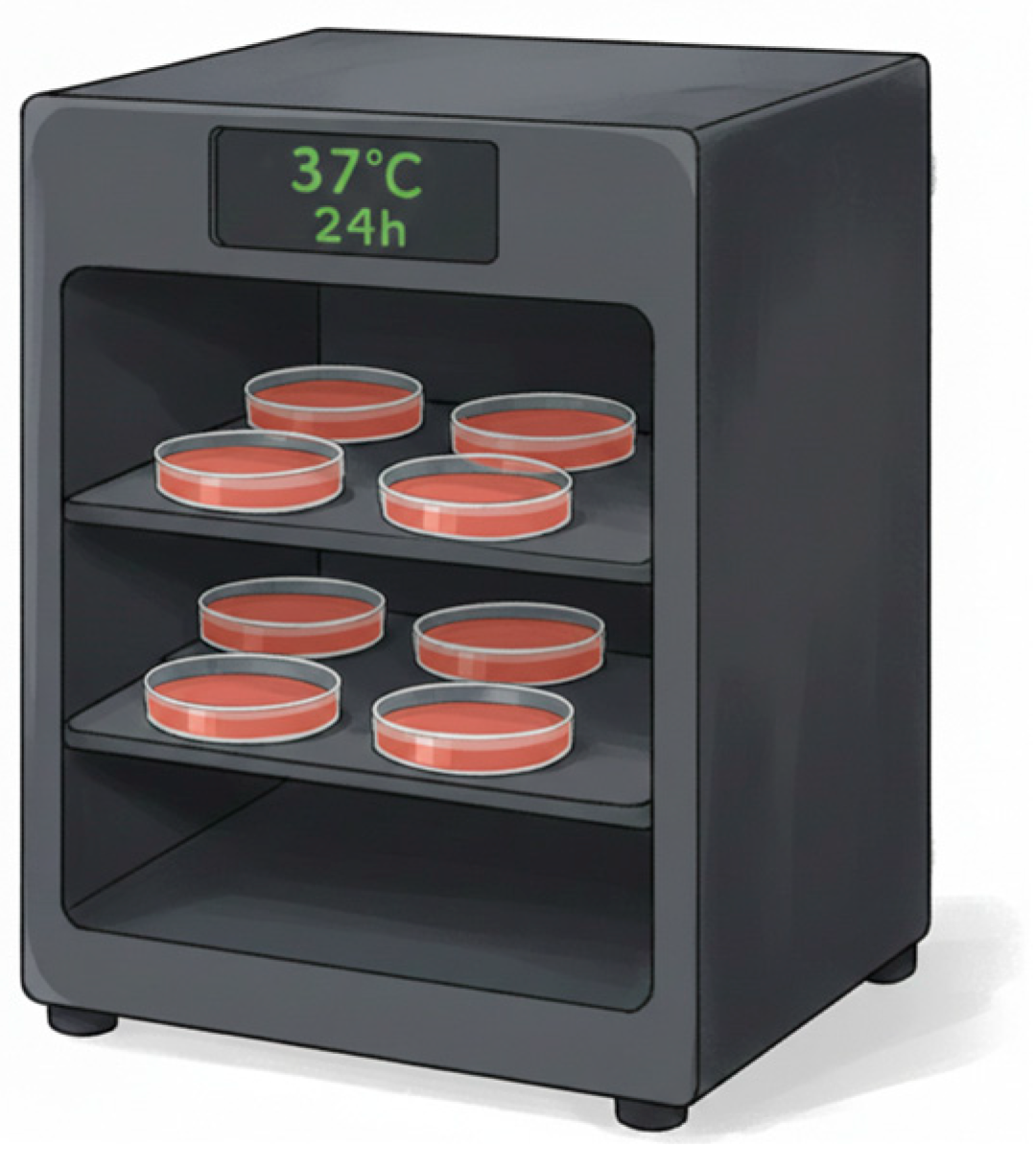
The detection of Salmonella spp. was performed following method 9260B of the APHA-AWWA-WPCF standard [33], using Xylose Lysine Deoxycholate (XLD) agar as the selective culture medium. Appropriate sample dilutions were prepared and subsequently inoculated onto solid medium plates, which were incubated in an inverted position at 37 °C for 24 h (Figure 2).
After incubation, plates were visually examined; the presence of yellowish colonies with black centers was considered indicative of Salmonella spp. Colony counts were performed directly on the positive plates.

2.4. Germination Tests

Germination bioassays were conducted to evaluate the potential phytotoxicity of the digestates. The experimental protocol was adapted from the method proposed by Zucconi et al. (1981) [34], using Lepidium sativum (garden cress), Raphanus sativus (radish) and Lactuca sativa (lettuce) as bioindicator species. These species were selected for their high sensitivity to phytotoxic compounds and their common use in this type of assessment.

2.4.1. Digestate Preparation and Experimental Setup

Viable commercial seeds of the three selected species were used. Prior to the experimental setup, seeds were surface-sterilized by immersion in 70% ethanol for 1 min, followed by rinsing with sterile distilled water to remove residual disinfectants and prevent microbial contamination during the assay. The digestate from each reactor was selectively filtered to remove large particles that could interfere with the assay, given their low abundance and limited representativeness of the liquid fraction. Subsequently, a portion of the total volume was sterilized in an autoclave (121 °C for 15 min) in order to separately assess the potential effect of the microbial fraction on germination. Seven treatments were prepared using sterile distilled water as diluent:
  • D100: 100% digestate.
  • D50-W50: 50% digestate + 50% sterile distilled water.
  • D25-W75: 25% digestate + 75% sterile distilled water.
  • D20-W80: 20% digestate + 58% sterile distilled water.
  • D15-W85: 15% digestate + 85% sterile distilled water.
  • D10-W90: 10% digestate + 90% sterile distilled water.
  • W: 100% sterile distilled water (control).
Where D refers to the digestate, W to sterile distilled water, and the associated number indicates the percentage of digestate and sterile distilled water present in each preparation.
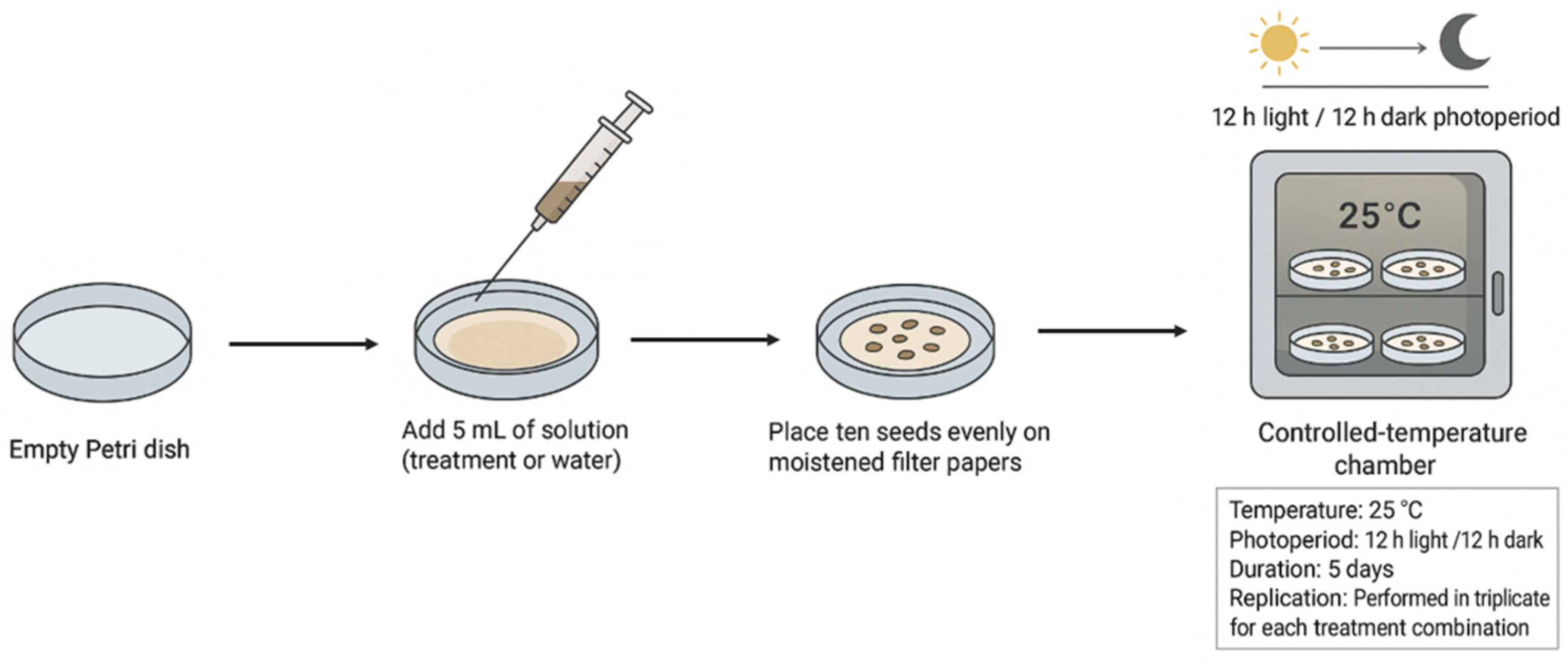
For the experimental setup, as illustrated in Figure 3, two sterile filter paper discs were placed in each sterile Petri dish and moistened with 5 mL of the corresponding treatment solution. Ten seeds of the selected species were evenly distributed on the discs to ensure homogeneous spacing, the plates were sealed with plastic film or Parafilm and incubated in a controlled-temperature chamber at 25 °C, under a 12 h light/12 h dark photoperiod, for five days. Each combination of species, dilution and sterilization condition was performed in triplicate.

2.4.2. Germination Assessment

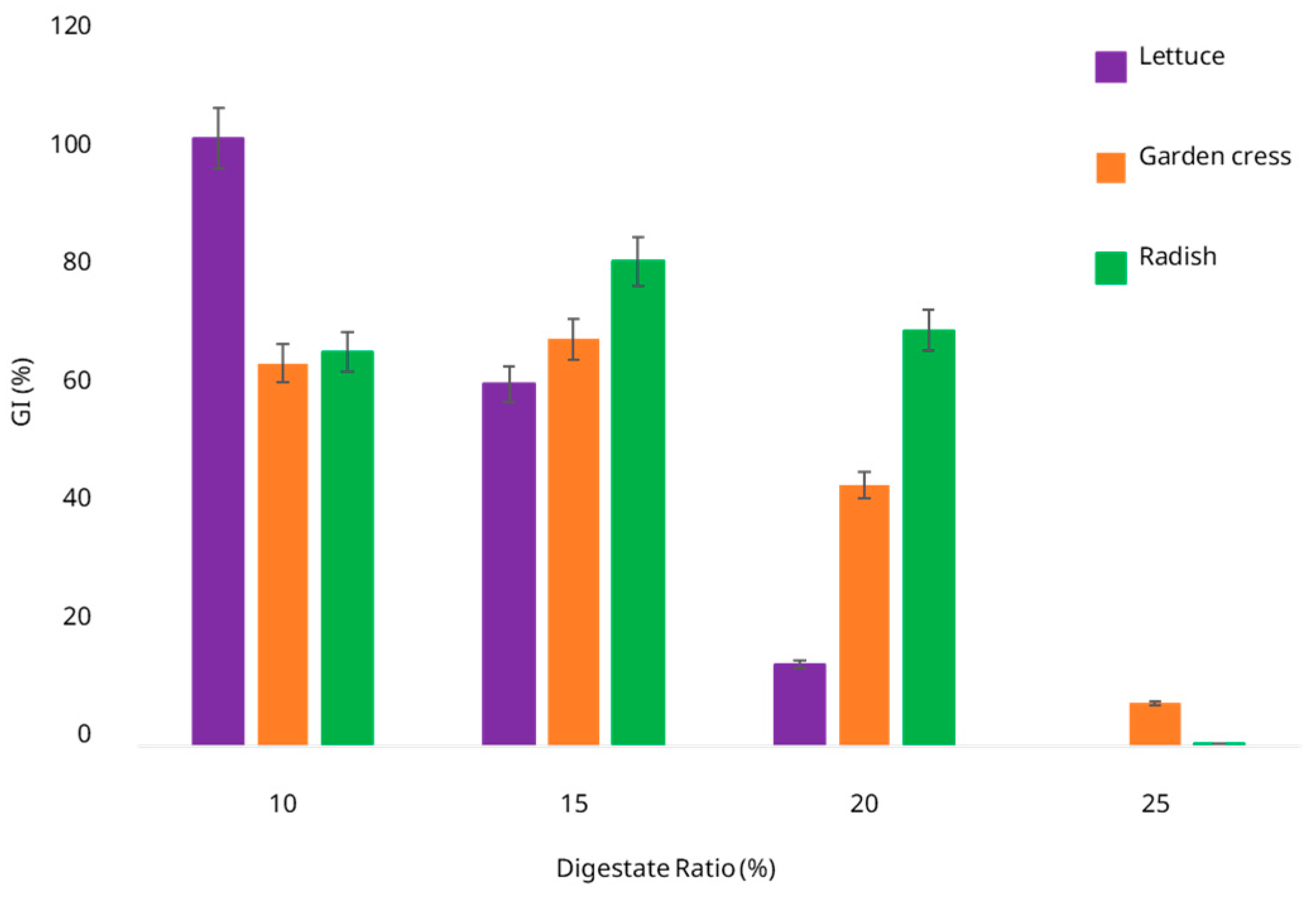
At the end of the incubation period, the number of germinated seeds per plate was recorded, considering as germinated those with a radicle length equal to or greater than 2 mm. Additionally, the mean root length of the germinated seeds was measured. Based on these data, the Germination Index (GI) was calculated, adapted from the method describing by Zucconi et al. (1981) [34], according to the Equation (2).
I ( % ) = n °   s p r o u t e d   i n   t h e   t r e a t m e n t n °   s p r o u t e d   i n   t h e   c o n t r o l × a v e r a g e   r o o t   l e n g t h   i n   t h e   t r e a t m e n t a v e r a g e   r o o t   l e n g t h   i n   t h e   c o n t r o l × 100
The GI provides a combined estimation of germination percentage and root growth relative to the control, and was interpreted according to the following thresholds:
  • GI > 80% indicates low or negligible phytotoxicity.
  • GI < 50% indicates high phytotoxicity.
Throughout the assay, constant moisture conditions were maintained within the plates, and any occurrence of fungal or bacterial contamination was recorded as additional observations.

3. Results

3.1. Optimization of TPAD System Conditions

During the experimental period, the TPAD system was operated with hydraulic retention times (HRTs) of 5 days in the thermophilic acidogenic phase (55 °C) and 10 days in the mesophilic methanogenic phase (35 °C). These operational parameters were identified as the most suitable for sustaining consistent microbial activity in both stages, which is critical to obtaining a representative digestate suitable for subsequent germination assays and agronomic evaluation. Process stability under these regimes was evidenced by the efficient removal of dissolved organic matter, steady biogas production, and the maintenance of pH values within the optimal range for each phase.
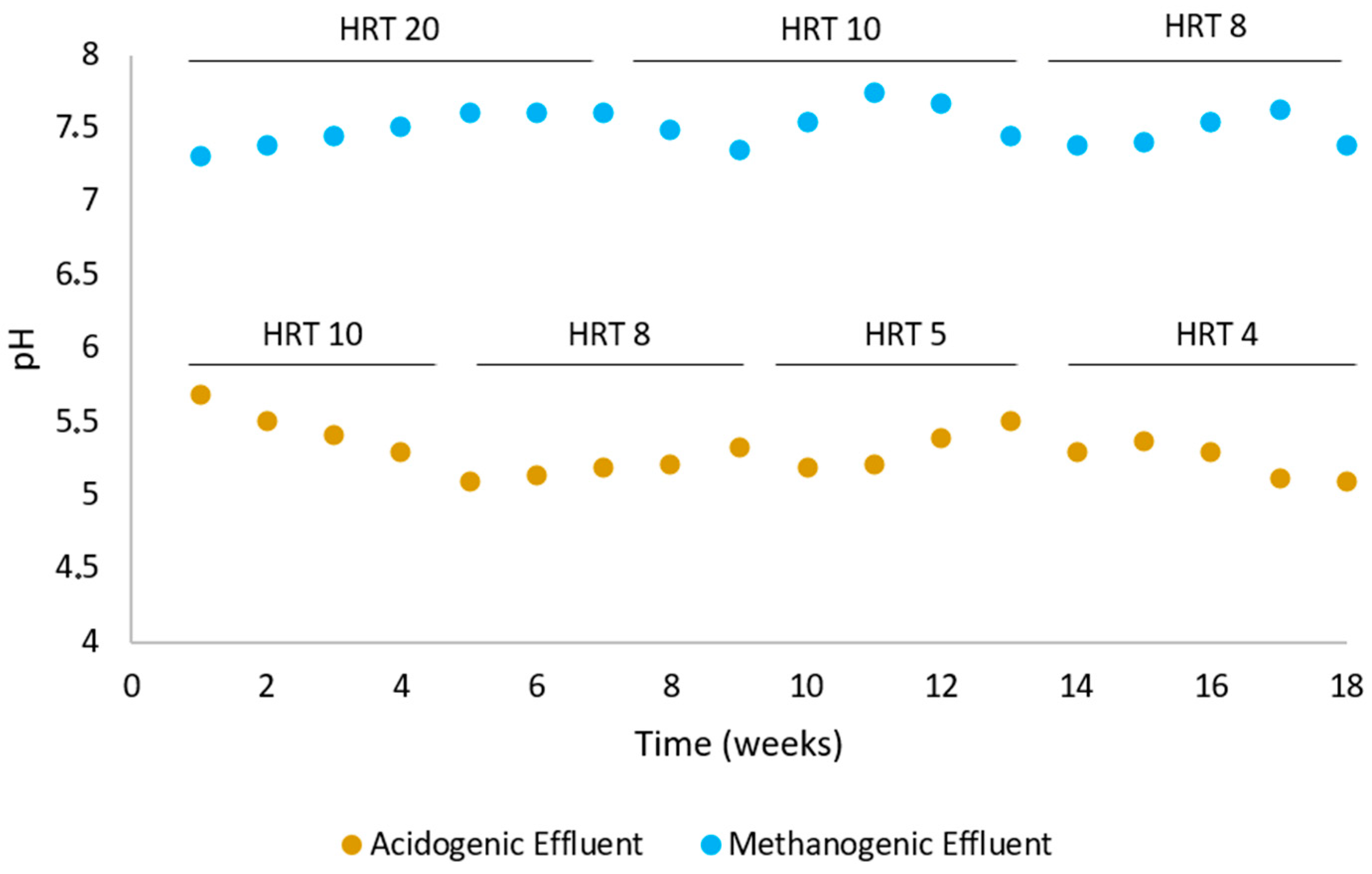
Focusing on pH, values remained stable throughout the experimental period, around 7.5 in the methanogenic reactor and approximately 5 in the acidogenic phase, showing consistency across all HRTs evaluated (Figure 4).
Therefore, pH alone cannot be considered a decisive indicator for selecting the most stable HRTs. Nonetheless, it remains a relevant parameter, as it regulates the composition and activity of the microbial population within the reactors, directly influencing digestion efficiency and the quality of the digestate intended for germination assays and agronomic characterization.
Regarding degradation efficiency, as presented in Table 2, the results confirmed that HRT exerts a strong influenced the performance of both TPAD phases. In the acidogenic reactor, an HRT of 5 days achieved the highest total chemical oxygen demand (tCOD) removal (51.21 ± 3.08%) and the greatest stabilization of solids (Total solids removal 56.15 ± 1.05%), while maintaining volatile solids (VS) degradation at 42.12 ± 2.13%. This balance indicates that 5 days was the most suitable condition for promoting hydrolysis and acidogenesis without overloading the system. In contrast, reducing the HRT to 4 days caused a sharp decline in tCOD removal (36.79 ± 2.14%) and lower solids stabilization (TS 34.23 ± 3.43%), evidencing instability and incomplete conversion. For the methanogenic phase, an HRT of 10 days provided the most favorable performance, reaching the highest tCOD removal (89.14 ± 2.33%) and efficient stabilization of both TS (53.21 ± 2.20%) and VS (71.86 ± 1.75%), thereby maximizing degradation and biomethane potential. Longer HRTs (20 days) showed slightly lower efficiency (tCOD 84.79 ± 1.68%), while shorter retention (8 days) significantly reduced tCOD removal (55.71 ± 3.12%), highlighting the importance of 10 days as the optimal condition for robust methanogenic activity. Together, these findings establish 5 and 10 days as the optimal HRTs for the acidogenic and methanogenic phases, respectively, ensuring stable and efficient overall TPAD operation.
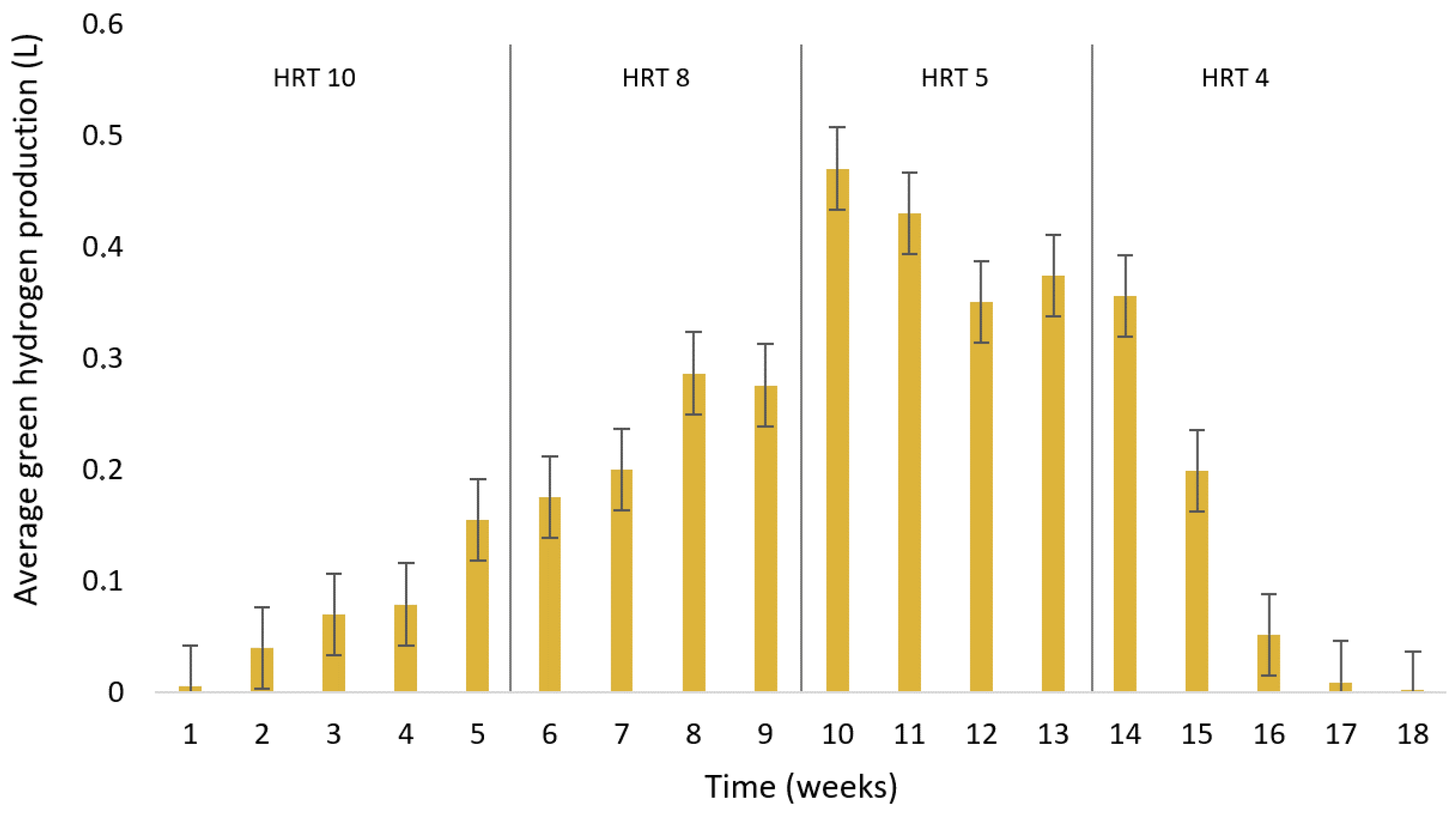
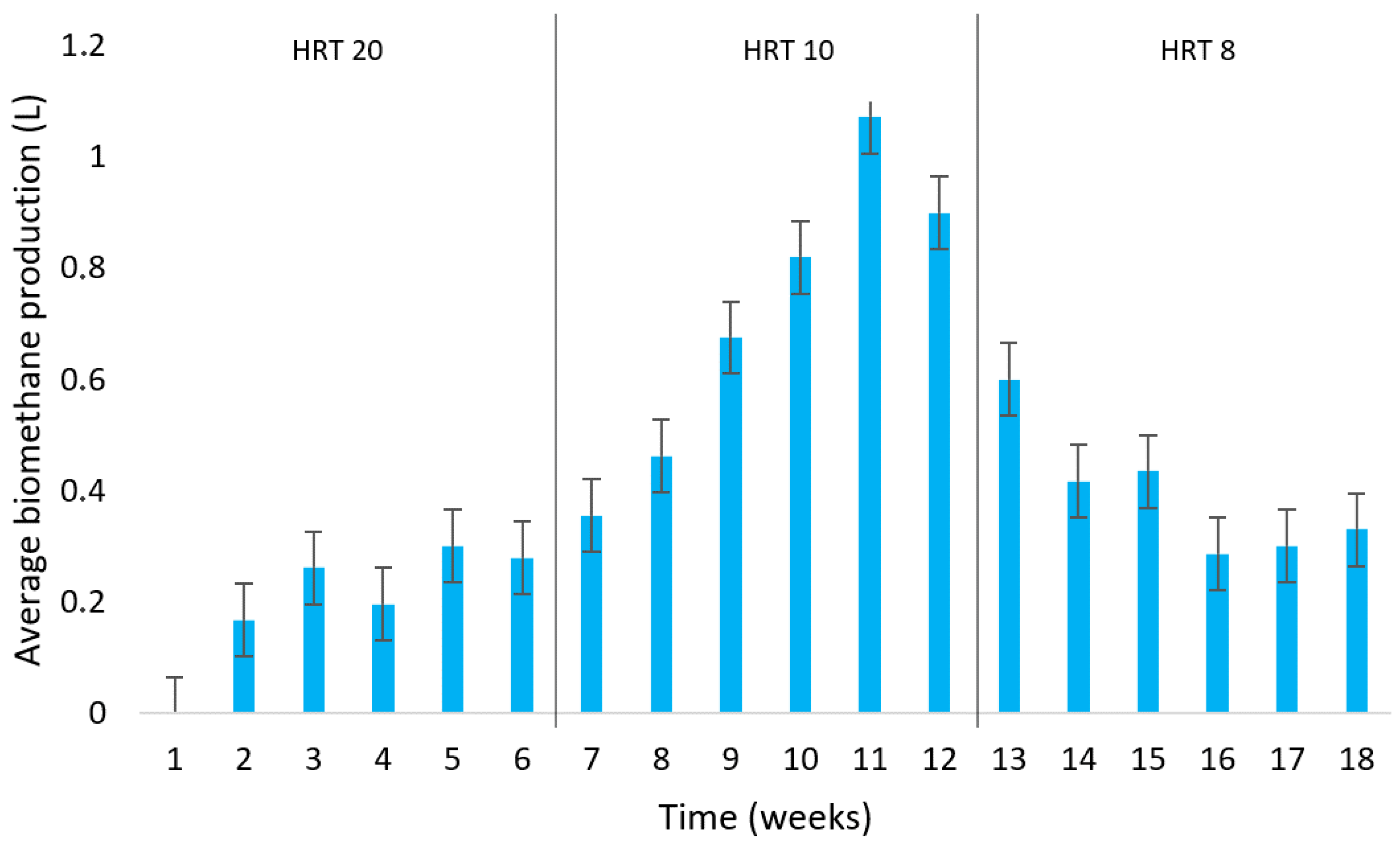
Consequently, as observed in case of degradation of efficiency, biogas production achieves its optimal performance at the previously mentioned HRTs. In the acidogenic reactor, the highest green hydrogen production was achieved at an HRT of 5 days, under conditions that simultaneously promoted hydrolysis and acidogenesis (Figure 5). A reduction to 4 days resulted in a significant decrease in production, associated with the process instability, while longer retention times did not lead to any additional biogas generation. Similarly, in the methanogenic reactor, the maximum biomethane production was observed at an HRT of 10 days, coinciding with the highest process efficiency and system stability (Figure 6). Shorter HRTs limited performance, whereas longer values did not increase productivity and even showed a slight decline, indicating that excessively long substrate retention does not improve performance. These findings confirm that HRTs of 5 and 10 days constitute the optimal conditions for green hydrogen and biomethane production, while ensuring stable and efficient operation of the TPAD system.

3.2. Effluent Characterization

Table 3 presents the physical and chemical characteristics of the effluent resulting from the application of TPAD technology to PS and WV. The pH indicates a neutral to mildly alkaline condition which favors nutrient stability and their availability for agricultural use. Additionally, an alkalinity of around 5.00 g/L provides adequate buffering capacity to maintain stable pH values during handling and application, supporting optimal conditions for crop development [35]. The organic matter content, expressed as tCOD, TS, and VS reflects the efficient degradation of organic compounds and the stabilization achieved during the anaerobic digestion process, while the total volatile fatty acids (TVFA) indicate an active but stable digestion performance. Regarding nutrient composition, the Total Ammoniacal Nitrogen (TAN) demonstrates a high potential for nitrogen availability, which gradually becomes accessible to plants through natural decomposition [27], and the presence of essential macronutrients such as phosphorus, potassium, magnesium, and calcium enhances the agronomic value of the effluent, contributing to soil structure improvement and overall plant health.
Collectively, these characteristics highlight the potential of anaerobically digested liquid biosolids as agricultural amendments. Their high nitrogen content, combined with other essential nutrients, enables a gradual release of nitrogen and phosphorus, ensuring sustained nutrient availability over time. This progressive release must be considered when designing fertilization strategies to optimize nutrient use efficiency and promote long-term soil fertility.

3.3. Pathogen Analysis

Salmonella spp. was not detected in any of the digestate samples obtained from the methanogenic reactor belonging to the TPAD system.
For total coliforms, Escherichia coli, and enterococci, analyses were performed on the digestate from the methanogenic reactor collected during stable reactor operation. The average concentrations of total coliforms, E. coli, and enterococci in the digestate samples were 2 × 10³, 0.8 × 10³, and 9.4 × 10² MPN/gTS, respectively.

3.4. Germination Test

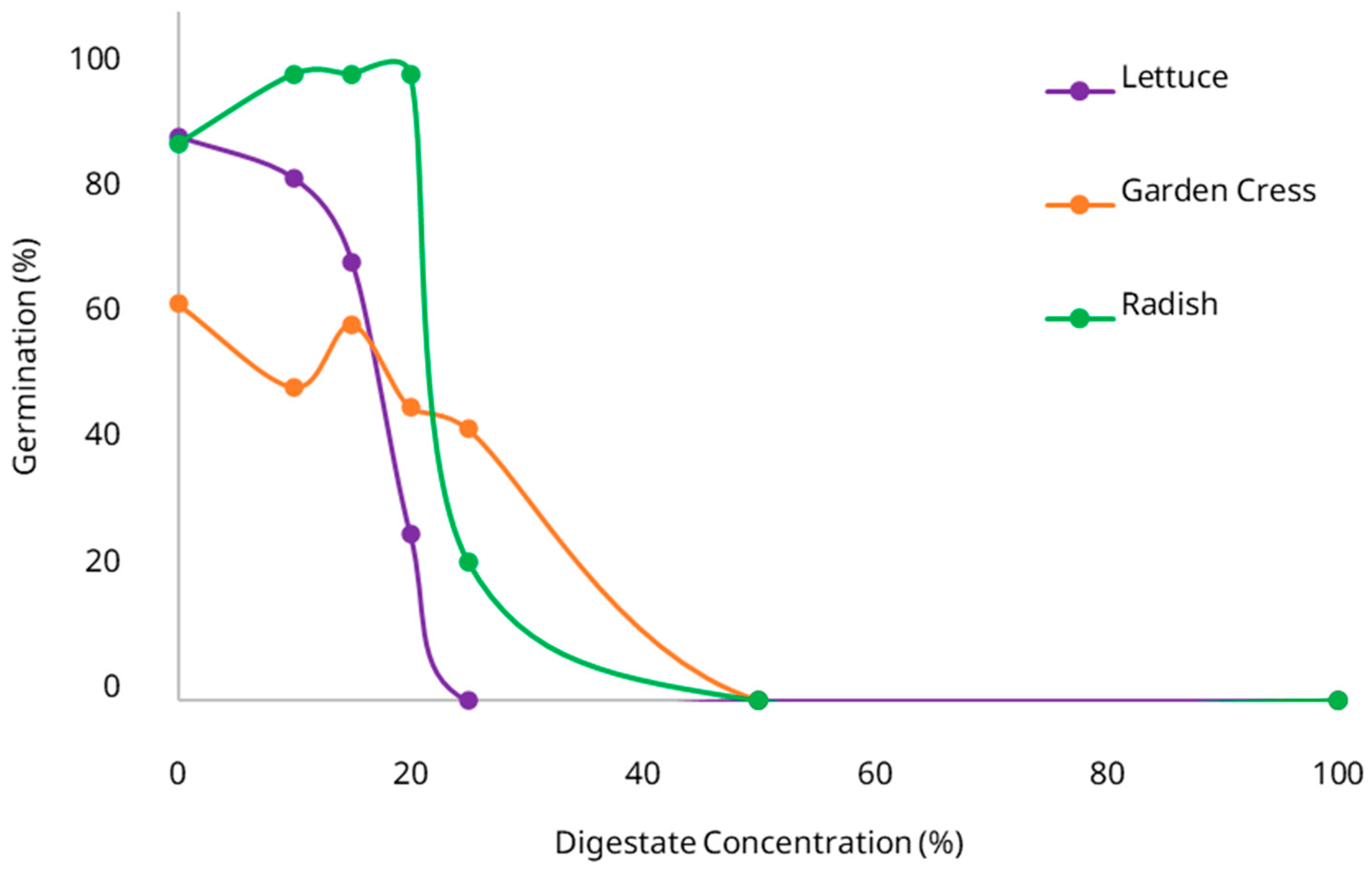
The germination assays, conducted with seeds of garden cress (Lepidium sativum), lettuce (Lactuca sativa), and radish (Raphanus sativus) were carried out using digestate obtained from the TPAD reactor in stable condition (HRT TPAD 5:10 days). The observed effects were strongly dependent on the degree of digestate dilution (Figure 7). Among the species tested, lettuce was the most sensitive species, exhibiting a progressive decrease in germination percentage as digestate concentration increased. Garden cress exhibited an intermediate level of tolerance, maintaining moderate germination values up to medium concentrations, whereas radish was the most resistant species, achieving high germination rates even at concentrations of 20D-80W%. At lower concentrations (10D–15D%), germination percentages remained high across all three species, with radish even surpassing the control values. However, from 25D-75W% onwards, a generalized inhibition of germination was observed, reaching null values in the treatments with 50D% and 100D%.
Radicle elongation followed a similar but more pronounced pattern. Lettuce showed the strongest reduction above 15D-85W%, with root growth almost completely suppressed at higher concentrations. Cress displayed a progressive decrease in radicle length as digestate concentration increased, while radish maintained longer roots at low concentrations but experienced a sharp reduction at 25D%, with values approaching complete inhibition (Table 4).
The calculation of the Germination Index (GI) corroborated these trends (Figure 8). At 10D–15D%, GI values approached or exceed 80% for radish and cress, whereas lettuce fell below this threshold at intermediate concentrations. From 25D% onwards, all species exhibited values below 50%, indicating strong inhibition of both germination and root development. Notably, these patterns were consistent regardless of the reactor from which the digestate originated, confirming that dilution level, rather than reactor configuration, was the determining factor influencing germination outcomes.

4. Discussion

The results obtained confirm that the digestate derived from the AcoD of PS and WV under the TPAD configuration exhibits high agronomic potential primarily influenced by the application dose [36,37]. The selected operational conditions (HRT 5–10 days) ensured process stability through controlled maintenance of pH and temperature, as well as through the complementarity between the high nitrogen content of pig slurry and the readily biodegradable organic matter of wine vinasse. This balance promoted efficient anaerobic digestion and the production of a mature, chemically stable digestate, minimizing the presence of potentially inhibitory intermediate compounds such as volatile fatty acids and free ammonium [37,38]. Such operational stability is essential to preserve the agronomic quality of the final product and its favorable performance in biological assays [39,40].
Regarding sanitary safety, microbiological analyses confirmed the absence of Salmonella spp., enterococci, Escherichia coli and total coliform levels below the limits established in current legislation (Regulation (EU) No. 142/2011 and Royal Decree 506/2013). These results indicate adequate material sanitization and allow its classification as a Class A biosolid, suitable for unrestricted agricultural use. This finding is consistent with previous reports, which highlighted the effectiveness of sequential thermophilic–mesophilic systems in pathogen inactivation in agro-industrial digestates [24,25,37,39]. In this context, the TPAD configuration not only improves process efficiency but also contributes to obtaining a microbiologically safe final product, an essential aspect for its agricultural valorization [39].
Germination assays formed the core of the agronomic evaluation, integrating the effects of the chemical and biological components of the digestate on plant physiology. The species tested (Lepidium sativum, Lactuca sativa, and Raphanus sativus) exhibited responses clearly dependent on digestate concentration, a pattern widely documented for anaerobic digestates from organic residues [41]. At low dilutions (10D–15D%), germination rates and root growth remained high, with GI exceeding 80%, indicating minimal phytotoxicity and an adequate degree of digestate maturation and stabilization. Similar results have been observed in well-stabilized digestates derived from agro-industrial residues and food waste [22,26,38,41,42].
Conversely, at higher concentrations 25D-75W%, pronounced inhibition of germination and root growth was observed, with GI values below 50%. This effect is associated with the accumulation of soluble salts, ammonium, and intermediate organic compounds, which at high concentrations can disrupt the osmotic balance of seeds or interfere with metabolic processes [24,35,36,37,38,39,40,41,42]. Differential responses among species were observed, with R. sativus showing greater tolerance and L. sativa higher sensitivity, consistent with their physiological characteristics and supporting the use of multiple indicator species for a more accurate assessment of phytotoxic potential [37,41].
Building on the results from germination assays and the identification of both growing-promoting nutrients and inhibitory compounds originating from the co-digested substrates, future research should also address the presence and behavior of heavy metals in PS-WV digestates. Heavy metals such as Zn, Cu, Pb and other trace elements are commonly enriched in digestates due to the concentration effects of anaerobic digestion and their affinity for solid fractions, potentially increasing their content relative to the original feedstocks after treatment [43,44]. Their monitoring is crucial for long-term soil application, particularly considering the possible accumulation of trace metals un livestock-derived substrates and the associated risks for soil quality and crop safety (e.g., metal uptake and trophic transfer) [45]. A comprehensive assessment of heavy metal concentrations, speciation, bioavailability, and potential soil–plant transfer would therefore strengthen the environmental evaluation of these digestates, ensure compliance with regulatory thresholds, and support more sustainable and safe agricultural use. Integrating such analyses in future studies will provide a more complete understanding of the environmental impacts of digestate application, complementing the insights gained here on nutrient balance, process stability and inhibitory compounds.

5. Conclusions

The digestate produced through the optimized TPAD system via co-digestion of PS and WV was effectively stabilized and demonstrated characteristics compatible with safe agronomic use. High organic matter stabilization was achieved, with total COD removal exceeding 50% during the acidogenic phase and 89% in the methanogenic phase, ensuring efficient conversion of organic substrates. The final digestate displayed a neutral pH (7.64 ± 0.36), a substantial ammoniacal nitrogen content (2.05 ± 0.36 g/L), and significant concentrations of essential macronutrients, including phosphorus, potassium, calcium, and magnesium, confirming its potential as a nutrient-rich organic amendment. From a microbiological perspective, Salmonella spp. was not detected, and total coliforms, Escherichia coli, and enterococci were present at low levels (2 × 10², 0.8 × 10³, and 9.4 × 10² MPN/gTS, respectively), demonstrating the system’s effectiveness in pathogen reduction and the suitability of the digestate for safe agricultural application. Germination assays further revealed that plant responses were highly dependent on digestate concentration: dilutions of 10D–15D% produced germination indices between 60 and 80% without signs of phytotoxicity, whereas concentrations equal to or greater than 25D-75W% led to marked inhibition of germination and root growth. Moreover, interspecies differences were observed, with radish exhibiting the highest resilience and lettuce the greatest sensitivity, underscore the importance of tailoring application rates to crop type and soil conditions. Taken together, these findings indicate that TPAD digestate represents a viable and sustainable organic amendment, capable of enhancing soil fertility, promoting nutrient cycling, and supporting resilient agricultural practices, provided that its use is guided by appropriate management strategies adapted to specific agronomic conditions.

Author Contributions

Conceptualization, B.C., J.L.M., J.J.I. and J.F.-R.; methodology, J.L.M. and J.J.I.; software, B.C., J.L.M. and J.J.I.; validation, B.C., J.L.M., J.J.I. and J.F.-R.; formal analysis, B.C., J.L.M. and J.J.I.; investigation, B.C., J.L.M. and J.J.I.; resources, J.F.-R. and M.P.; data curation, B.C., J.L.M. and J.J.I.; writing—original draft preparation, B.C.; writing—review and editing, B.C., J.F.-R. and M.P.; visualization, J.F.-R. and M.P.; supervision, J.F.-R. and M.P.; project administration J.F.-R. and M.P.; funding acquisition, J.F.-R. and M.P. All authors have read and agreed to the published version of the manuscript.

Funding

This research was funded by the Ministry of Science and Innovation and the State Research Agency, and co-funded by the European Union. This work is part of project PID2021-123174OB-I00, funded by MCIN/AEI/10.13039/25890110 EU. Additional funding was provided by the Junta de Andalucía through the project “Sustainable management of agri-food waste: Energy recovery of slurry and stillage to generate energy and biofertilizers” (File code: GOPG-CA-23-0002).

Data Availability Statement

The original contributions presented in this study are included in the article. Further inquiries can be directed to the corresponding author.

Acknowledgments

The authors wish to express their sincere gratitude to the Ministry of Science and Innovation, the State Research Agency, and the European Union for their invaluable support.

Conflicts of Interest

The authors declare no conflicts of interest.

Abbreviations

The following abbreviations are used in this manuscript:
AcoDAnaerobic Co-digestion
ADAnaerobic Digestion
CODChemical Oxygen Demand
CSTRContinuous Stirred Tank Reactors
GIGermination Index
HRTHydraulic Retention Time
MPNMost Probable Number
OLROrganic Loading Rate
PSPig Slurry
sCODSoluble Chemical Oxygen Demand
SSSewage Sludge
TANTotal Ammoniacal Nitrogen
tCODTotal Chemical Oxygen Demand
TPADTemperature-Phased Anaerobic Digestion
TSTotal Solids
VFAVolatile Fatty Acids
VSVolatile Solids
WVWine Vinasse
XLDXylose Lysine Deoxycholate

References

  1. Olatunji, K.O.; Ahmed, N.A.; Ogunkunle, O. Optimization of biogas yield from lignocellulosic materials with different pretreatment methods: A review. Biotechnol. Biofuels 2021, 14, 1–34. [Google Scholar] [CrossRef]
  2. Zahedi, S.; Sales, D.; García-Morales, J.L.; Solera, R. Obtaining green energy from dry-thermophilic anaerobic co-digestion of municipal solid waste and biodiesel waste. Biosyst. Eng. 2018, 170, 108–116. [Google Scholar] [CrossRef]
  3. Zhu, H.; Stadnyk, A.; Beland, M.; Seto, P. Co-production of hydrogen and methane from potato waste using a two-stage anaerobic digestion process. Bioresour. Technol. 2008, 99, 5078–5084. [Google Scholar] [CrossRef] [PubMed]
  4. Reyes, G.E.; Cortes, J.D. Intensity of fertilizer use in Latin America and the Caribbean (2006–2012). Bioagro 2017, 29, 45–52. [Google Scholar]
  5. Foronda-Zapata, K.; Arias-Giraldo, C.; Soto-Paz, J.; Marmolejo-Rebellon, L.F.; Torres-Lozada, P. Effect of grass star incorporation on the composting biowaste process and on the quality of the product. Rev. EIA 2020, 17, 1–11. [Google Scholar]
  6. Silva, F.M.S.; Mahler, C.F.; Oliveira, L.B.; Bassin, J.P. Hydrogen and biomethane production in a two-stage anaerobic digestion system by co-digestion of food waste, sewage sludge and glycerol. Waste Manag. 2018, 76, 339–349. [Google Scholar] [CrossRef] [PubMed]
  7. Sillero, L.; Solera, R.; Perez, M. Biochemical assays of potential biomethane to test biogas production from dark fermentation of sewage sludge and agricultural residues. Int. J. Hydrogen Energy 2022, 27, 13289–13299. [Google Scholar] [CrossRef]
  8. Bhatt, A.H.; Tao, L. Economic perspectives of biogas production via anaerobic digestion. Bioengineering 2020, 7, 74. [Google Scholar] [CrossRef]
  9. Maragkaki, A.E.; Fountoulakis, M.; Gypakis, A.; Kyriakou, A.; Lasaridi, K.; Manios, T. Pilot-scale anaerobic co-digestion of sewage sludge with agro-industrial by-products for increased biogas production of existing digesters at wastewater treatment plants. Waste Manag. 2017, 59, e362–e370. [Google Scholar] [CrossRef]
  10. Mshandete, A.; Kivaisi, A.; Rubindamayugi, M.; Mattiasson, B. Anaerobic batch co-digestion of sisal pulp and fish wastes. Bioresour. Technol. 2004, 95, e19–e24. [Google Scholar] [CrossRef]
  11. Shen, Y.; Linville, J.L.; Urgun-Demirtas, M.; Mintz, M.M.; Snyder, S.W. An overview of biogas production and utilization at full-scale wastewater treatment plants (WWTPs) in the United States: Challenges and opportunities towards energy neutral WWTPs. Renew. Sustain. Energy Rev. 2015, 50, 346–362. [Google Scholar] [CrossRef]
  12. Franchi, O.; Menin, L.; Sciubba, F. Green hydrogen production from biogas: A review on current technologies and applications. Renew. Sustain. Energy Rev. 2019, 102, 266–277. [Google Scholar]
  13. Lee, E.; Oliveira, D.S.B.L.; Oliveira, L.S.B.L.; Jimenez, E.; Kim, Y.; Wang, M.; Ergas, S.J.; Zhang, Q. Comparative environmental and economic life cycle assessment of high solids anaerobic co-digestion for biosolids and organic waste management. Water Res. 2020, 171, 115443. [Google Scholar] [CrossRef] [PubMed]
  14. Valentino, F.; Munarin, G.; Biasiolo, M.; Cavinato, C.; Bolzonella, D.; Pavan, P. Enhancing volatile fatty acids (VFA) production from food waste in a two-phases pilot-scale anaerobic digestion process. J. Environ. Chem. Eng. 2021, 9, 106062. [Google Scholar] [CrossRef]
  15. Zhao, S.; Chen, W.; Luo, W.; Fang, H.; Lv, H.; Liu, R.; Niu, Q. Anaerobic co-digestion of chicken manure and cardboard waste: Focusing on methane production, microbial community analysis and energy evaluation. Bioresour. Technol. 2021, 321, 124429. [Google Scholar] [CrossRef]
  16. Nasr, M.; Ismail, S.A.; Mostafa, A.T. Enhancement of anaerobic co-digestion of slaughterhouse wastes for biogas production: A review. J. Clean. Prod. 2020, 276, 124247. [Google Scholar]
  17. Zamanzadeh, M.; Parker, W.; Neufeld, J.D. Inhibition and recovery in anaerobic digestion of slaughterhouse waste: A kinetic study on ammonia and VFAs. Bioresour. Technol. 2021, 562, 124312. [Google Scholar]
  18. European Commission. Integrated Pig Manure Digestate Processing for a Direct Injection of Organic Liquid Fertilizer into Irrigation System. European Commission, LIFE Public Database. 2019. Available online: https://webgate.ec.europa.eu/life/publicWebsite/project/LIFE14-ENV-ES-000640/integrated-pig-manure-digestate-processing-for-direct-injection-of-organic-liquid-fertiliser-into-irrigation-systems (accessed on 25 January 2026).
  19. García-González, M.C.; Riaño, B.; Teresa, M.; Herrero, E.; Provolo, G.; Moscatelli, G.; Piccinini, S.; Bonmati, A.; Bernal, M.P.; Wisniewska, H.; et al. Treatment of swine manure: Case studies in European’s N-surplus areas. Sci. Agric. 2016, 73, 444–454. [Google Scholar] [CrossRef]
  20. Zhang, W.; Wei, Q.; Wu, S.; Qi, D.; Li, W.; Zuo, Z.; Dong, R. Batch anaerobic co-digestion of pig manure with dewatered sewage sludge under mesophilic conditions. Appl. Energy 2014, 128, 175–183. [Google Scholar] [CrossRef]
  21. Grosser, A.; Neczaj, E.; Singh, B.R.; Almås, R.; Brattebø, H.; Kacprzak, M. Anaerobic digestion of sewage sludge with grease trap sludge and municipal solid waste as co-substrates. Environ. Res. 2017, 155, 249–260. [Google Scholar] [CrossRef]
  22. Sillero, L.; Solera, R.; Perez, M. Agronomic and phytotoxicity test with biosolids from anaerobic Co-Digestion with temperature and micro-organism phase separation, based on sewage sludge, vinasse, and poultry manure. J. Environ. Manag. 2024, 354, 120146. [Google Scholar] [CrossRef] [PubMed]
  23. Ning, C.C.; Gao, P.D.; Wang, B.Q.; Lin, W.P.; Jiang, N.H.; Cai, K.Z. Impacts of chemical fertilizer reduction and organic amendments supplementation on soil nutrient, enzyme activity and heavy metal content. J. Integr. Agric. 2017, 16, 1819–1831. [Google Scholar] [CrossRef]
  24. Parra-Orobio, B.A.; Rotavisky-Sinisterra, M.P.; Pérez-Vidal, A.; Marmolejo-Rebellón, L.F.; Torres-Lozada, P. Physicochemical, microbiological characterization and phytotoxicity of digestates produced on single-stage and two-stage anaerobic digestion of food waste. Sustain. Environ. Res. 2021, 31, 11. [Google Scholar] [CrossRef]
  25. Amorim Junior, S.S.; Hwa Mazucato, V.S.; Machado, B.D.S.; De Oliveira Guilherme, D.; Brito Da Costa, R.; Correa Magalhães Filho, F.J. Agronomic potential of biosolids for a sustainable sanitation management in Brazil: Nutrient recycling, pathogens and micropollutants. J. Clean. Prod. 2021, 289, 125708. [Google Scholar] [CrossRef]
  26. Stefaniuk, M.; Bartmiński, P.; Różyło, K.; Dębicki, R.; Oleszczuk, P. Ecotoxicological assessment of residues from different biogas production plants used as fertilizer for soil. J. Hazard. Mater. 2015, 298, 195–202. [Google Scholar] [CrossRef]
  27. Guangyin, Z.; Youcai, Z. Sewage sludge generation and characteristics. In Pollution Control and Resource Recovery for Sewage Sludge; Elsevier: Amsterdam, The Netherlands, 2017; pp. 1–11. [Google Scholar] [CrossRef]
  28. Tena, M.; Perez, M.; Solera, R. Effect of hydraulic retention time on the methanogenic step of a two-stage anaerobic digestion system from sewage sludge and wine vinasse: Microbial and kinetic evaluation. Fuel 2021, 296, 120674. [Google Scholar] [CrossRef]
  29. Chynoweth, D.P.; Owens, J.M.; Legrand, R. Renewable biomethane from anaerobic digestion of biomass. Renew. Energy 2020, 22, 1–8. [Google Scholar] [CrossRef]
  30. Sillero, L.; Solera, R.; Perez, M. Anaerobic co-digestion of sewage sludge, wine vinasse and poultry manure for bio-hydrogen production. Int. J. Hydrogen Energy 2021, 47, 3667–3678. [Google Scholar] [CrossRef]
  31. Tena, M.; Buller, L.S.; Sganzerla, W.G.; Berni, M.; Forster-Carneiro, T.; Solera, R.; Perez, M. Techno-economic evaluation of bioenergy production from anaerobic digestion of byproducts from ethanol flex plants. Fuel 2022, 309, 122171. [Google Scholar] [CrossRef]
  32. Sganzerla, W.G.; Ampese, L.C.; Parisoto, T.A.C.; Forster-Carneiro, T. Process intensification for the recovery of biomethane-rich biogas from dry anaerobic digestion of açaí seeds. Biomass Convers. Biorefin. 2021, 13, 8101–8114. [Google Scholar] [CrossRef]
  33. American Public Health Association (APHA); American Water Works Association (AWWA); Water Environment Federation (WEF). Standard Methods for the Examination of Water and Wastewater, 22nd ed.; APHA: Washington, DC, USA, 2012. [Google Scholar]
  34. Zucconi, F.; Pera, A.; Forte, M.; De Bertoldi, M. Evaluating toxicity of immature compost. Biocycle 1981, 22, 54–57. [Google Scholar]
  35. Lin, R.; Deng, C.; Cheng, J.; Murphy, J.D. Low concentrations of furfural facilitate biohydrogen production in dark fermentation using Enterobacter aerogenes. Renew. Energy 2020, 150, 23–30. [Google Scholar] [CrossRef]
  36. O’Connor, J.; Mickan, B.S.; Gurung, S.K.; Siddique, K.H.M.; Leopold, M.; Bolan, N.S. Enhancing nutrient recovery from food waste anaerobic digestate. Bioresour. Technol. 2023, 390, 129869. [Google Scholar] [CrossRef] [PubMed]
  37. O’Connor, J.; Mickan, B.S.; Yusiharni, E.; Singh, G.; Gurung, S.K.; Siddique, K.H.M.; Leopold, M.; Bolan, N.S. Characterisation and agronomic evaluation of acidified food waste anaerobic digestate products. J Environ. Manag. 2024, 355, 120565. [Google Scholar] [CrossRef]
  38. Nikolaidou, C.; Mola, M.; Papakostas, S.; Aschonitis, V.G.; Monokrousos, N.; Kougias, P.G. The effect of anaerobic digestate as an organic soil fertilizer on the diversity and structure of the indigenous soil microbial and nematode communities. Environ. Sci. Pollut. Res. 2024, 32, 27683–27698. [Google Scholar] [CrossRef] [PubMed]
  39. Van Midden, C.; Harris, J.A.; Shaw, L.; Sizmur, T.; Pawlett, M. The impact of anaerobic digestate on soil life: A review. Appl. Soil Ecol. 2023, 191, 105066. [Google Scholar] [CrossRef]
  40. Martín-Sanz-Garrido, C.; Revuelta-Aramburu, M.; Santos-Montes, A.; Morales-Polo, C. A review on anaerobic digestate as a biofertilizer: Characteristics, production, and environmental impacts from a life cycle assessment perspective. Appl. Sci. 2025, 15, 8635. [Google Scholar] [CrossRef]
  41. Nikiema, M.; Somda, M.K.; Ouili, A.S.; Ouattara, A.; Compaoré, C.O.T.; Barsan, N.; Sawadogo, J.B.; Maiga, Y.; Mogmenga, I.; Ouattara, C.A.T.; et al. Assessment of the agronomic value of digestate from cashew nutshell and cow dung anaerobic digestion. Discov. Appl. Sci. 2025, 7, 290. [Google Scholar] [CrossRef]
  42. Zapata-Morales, A.L.; Moreno-Andrade, I. Valorization of digestates from organic solid waste as fertilizers, soil improvers, and agricultural prebiotics: Panorama and perspectives. Biotechnology 2025, 15, 333. [Google Scholar] [CrossRef]
  43. Czatzkowska, M.; Rolbiecki, D.; Korzeniewska, E.; Harnisz, M. Heavy Metal and Antimicrobial Residue Levels in Various Types of Digestate from Biogas Plants—A Review. Sustainability 2025, 17, 416. [Google Scholar] [CrossRef]
  44. Rashama, C.; Ijoma, G.N.; Matambo, T.S.; Riann, C. Inferences made from mineral elements characterisation of anaerobic digestion substrates: Preliminary results from avocado oil processing byproducts. Biodegradation 2025, 36, 30. [Google Scholar] [CrossRef]
  45. Baldasso, V.; Tomasino, M.P.; Sayen, S.; Guillon, E.; Frunzo, L.; Gomes, C.A.R.; Alves, M.J.; Castro, R.; Mucha, A.P.; Almeida, C.M.R. Effects of digestate soil amendment on the fate of trace metals and on the soil microbial community. Environ. Pollut. 2025, 371, 125961. [Google Scholar] [CrossRef]
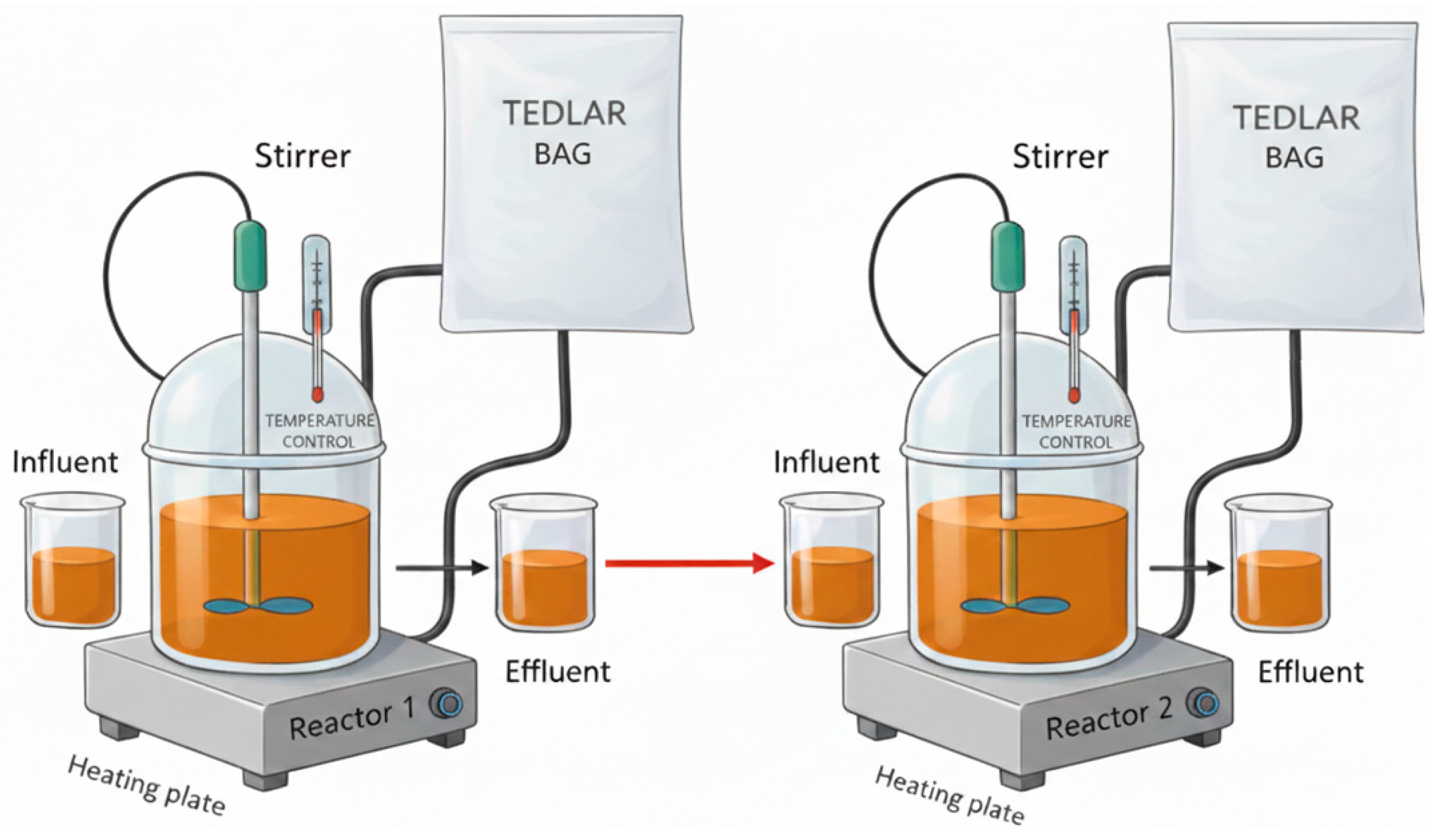
Figure 1. Schematic of the anaerobic co-digestion system with temperature and microorganism phase separation.
Applsci 16 02621 g001
Figure 2. Petri plates incubated at 37 °C for 24 h for the selective growth of Salmonella spp. on XLD agar.
Applsci 16 02621 g002
Figure 3. Experimental setup for the germination test.
Applsci 16 02621 g003
Figure 4. pH variations for the acidogenic and methanogenic phases of the TPAD system.
Applsci 16 02621 g004
Figure 5. Green hydrogen produced weekly in the acidogenic phase.
Applsci 16 02621 g005
Figure 6. Biomethane produced weekly in the methanogenic phase.
Applsci 16 02621 g006
Figure 7. Germination percentage based on the concentration of the digestate.
Applsci 16 02621 g007
Figure 8. Germination index based on the concentration of the digestate.
Applsci 16 02621 g008
Table 1. Substrates characterization.
SubstratepHtCOD (g/L)sCOD(g/L)TS (g/L)VS (g/L)TVFA (mgAcH/L)C/N
PS7.86 ± 0.3623.30 ± 0.037.39 ± 0.0520.57 ± 0.0213.92 ± 0.02192.41 ± 12.276.00 ± 0.02
WV3.00 ± 0.3650.12 ± 0.0645.11 ± 0.0515.88 ± 0.0813.81 ± 0.07973.88 ± 8.4072.97 ± 0.03
50PS:50WV5.75 ± 0.3634.95 ± 0.0628.07 ± 0.0528.39 ± 0.0411.43 ± 0.031436.21 ± 11.7552.29 ± 0.02
Table 2. Percentage of elimination of tCOD, TS and VS in TPAD system at different HRT.
ReactorHTRtCOD (%)TS (%)VS (%)
Acidogenic1043.99 ± 1.7423.51 ± 4.2038.21 ± 3.24
846.74 ± 2.2635.60 ± 2.1840.04 ± 2.48
551.21 ± 3.0856.15 ± 1.0542.12 ± 2.13
436.79 ± 2.1434.23 ± 3.4338.57 ± 2.00
Methanogenic2084.79 ± 1.6836.73 ± 2.7442.38 ± 4.08
1089.14 ± 2.3353.21 ± 2.2071.86 ± 1.75
855.71 ± 3.1266.50 ± 1.9679.29 ± 2.47
Table 3. Main parameters of the digested material used.
ParametersEffluent
pH7.64 ± 0.36
tCOD (g/L)6.65 ± 0.06
TS (g/L)18.93 ± 1.30
VS (g/L)9.83 ± 1.48
Mg2+ (g/L)0.36 ± 0.11
Ca2+ (g/L)1.36 ± 0.11
P (g/L)0.08 ± 0.11
K (g/L)0.20 ± 0.11
Alkalinity (g/L)4.84 ± 0.11
TAN (g/L)2.05 ± 0.36
TVFA (mgAcH/L)164.24 ± 1.13
Table 4. Differences in radicle elongation.
Digestate %Lettuce (cm)Garden Cress (cm)Radish (cm)
W0.99 ± 0.291.24 ± 0.198.74 ± 1.99
10D-90W1.02 ± 0.260.97 ± 1.445.83 ± 1.41
15D-85W0.73 ± 0.130.82 ± 0.147.18 ± 1.39
20D-80W0.44 ± 0.130.67 ± 0.116.16 ± 1.05
25D-75W0.00 ± 0.380.25 ± 0.200.30 ± 0.19
Disclaimer/Publisher’s Note: The statements, opinions and data contained in all publications are solely those of the individual author(s) and contributor(s) and not of MDPI and/or the editor(s). MDPI and/or the editor(s) disclaim responsibility for any injury to people or property resulting from any ideas, methods, instructions or products referred to in the content.