Plant-Derived Nanomaterials and Protein Misfolding Disorders: Green Production Approaches, Biological Interactions, and Research Trends (2015–2025)
 , , and
Abstract
1. Introduction
2. Literature Survey and Scope
3. Results
3.1. Foundational Background (Pre-2015)
3.2. Early Studies Primarily Explored Conceptual and Proof-of-Principle Aspects
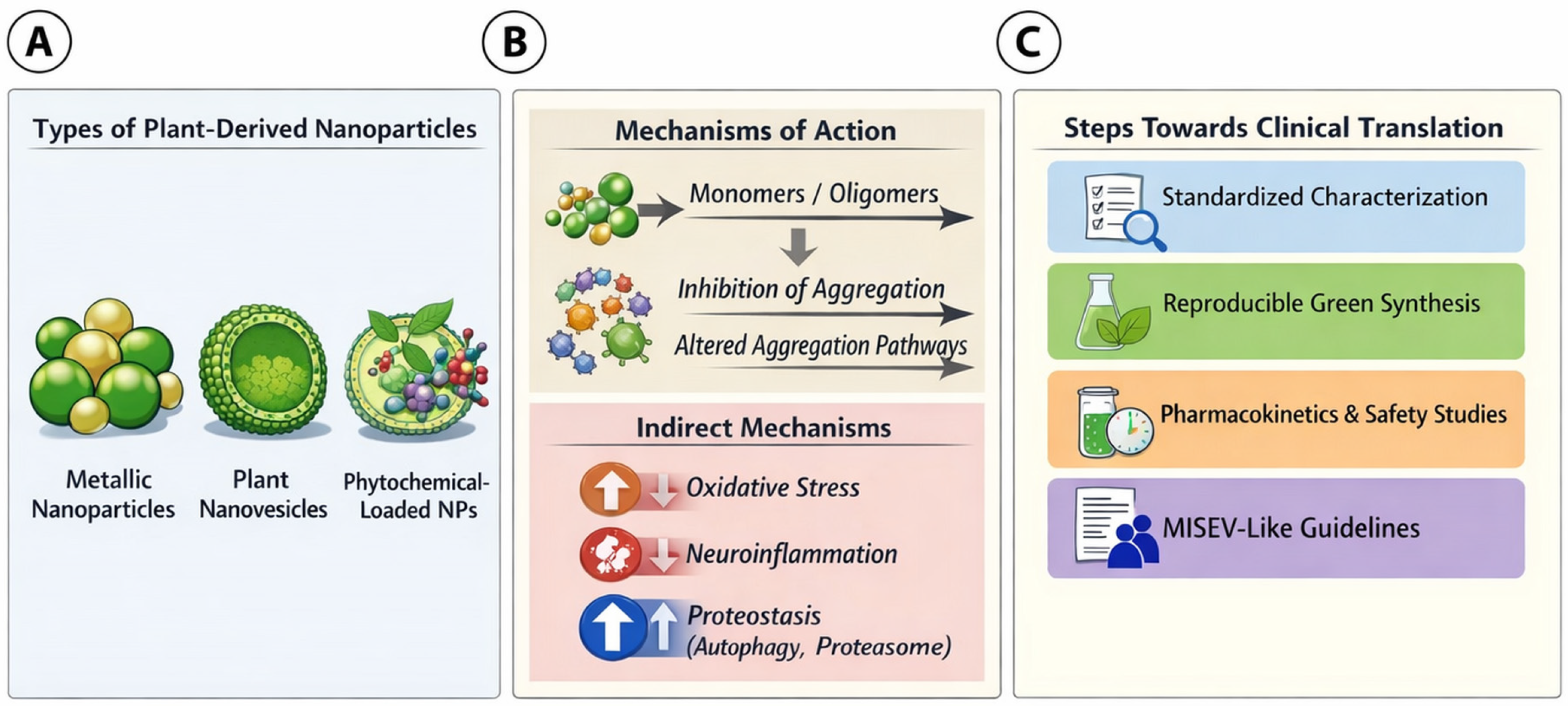
3.3. Categories of Plant-Derived Nanoparticles and Key Studies
3.3.1. Green-Synthesized Metallic Nanomaterials
3.3.2. Plant-Derived Extracellular Nanovesicles
3.3.3. Nano-Formulations of Plant-Derived Bioactive Compounds
3.3.4. Integrative Perspective
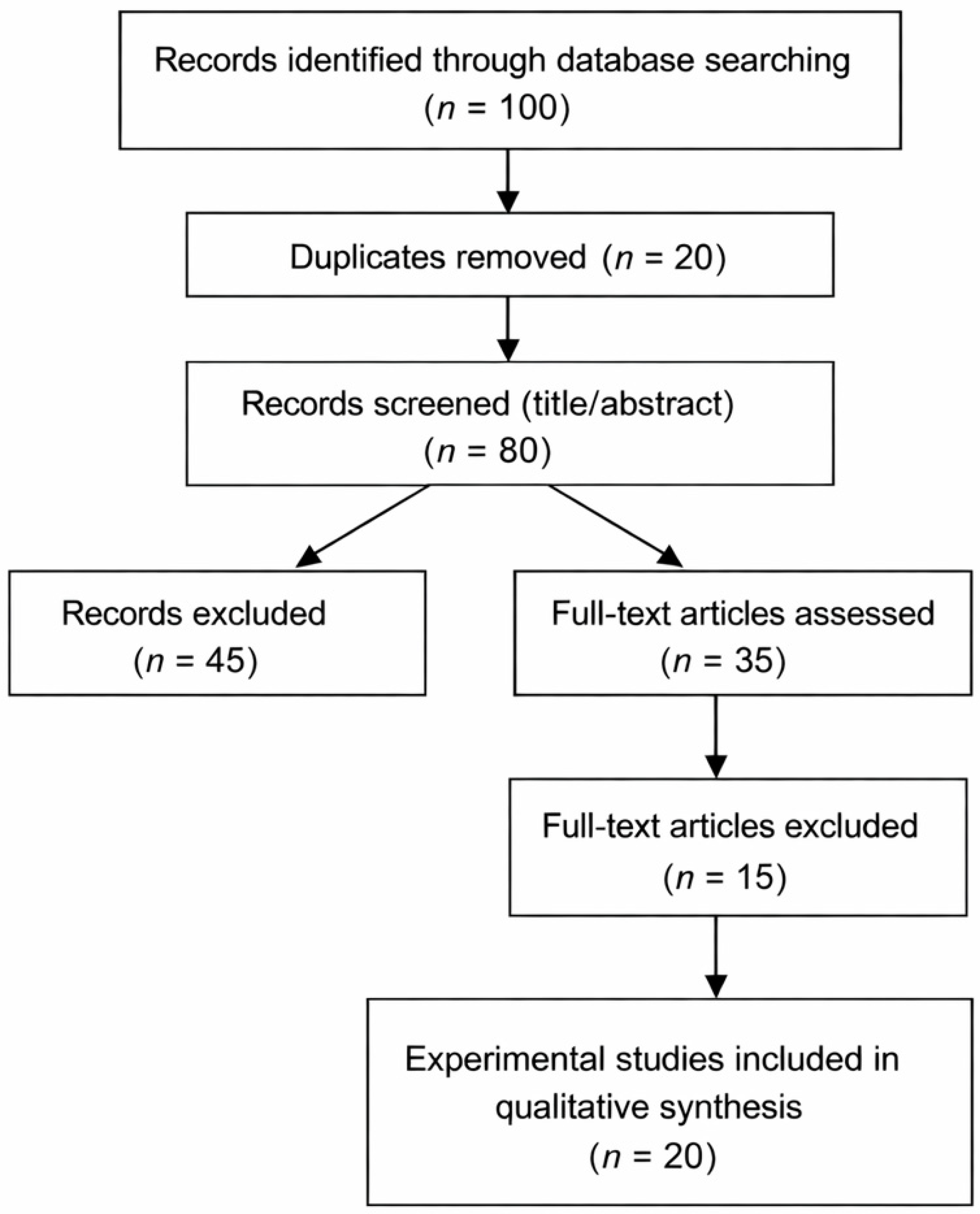
3.3.5. Study Selection and Characteristics of Included Studies
3.3.6. Assessment of Aggregation: Direct vs Indirect Evidence
3.4. Effects of Plant-Derived Nanoparticles on Protein Misfolding and Aggregation
3.4.1. Direct Modulation of Aggregation Pathways
3.4.2. Indirect Modulation via Cellular Pathways
3.4.3. Strength of Evidence and Current Limitations
3.5. Emerging Limitations and Future Perspectives
3.5.1. Methodological Standardization
3.5.2. Limited Direct Assessment of Aggregation Processes
3.5.3. Biological Model Constraints
3.5.4. Mechanistic Uncertainties
3.5.5. Translational and Manufacturing Challenges
4. Discussion
4.1. Interpretation of Current Evidence
4.2. Comparison with Conventional Therapeutic Approaches
4.3. Mechanistic Integration
4.4. Translational Considerations
4.5. Translational Readiness and Research Priorities
5. Conclusions
Author Contributions
Funding
Institutional Review Board Statement
Informed Consent Statement
Data Availability Statement
Conflicts of Interest
References
- Soto, C. Unfolding the Role of Protein Misfolding in Neurodegenerative Diseases. Nat. Rev. Neurosci. 2003, 4, 49–60. [Google Scholar] [CrossRef]
- Dobson, C.M. Protein Folding and Misfolding. Nature 2003, 426, 884–890. [Google Scholar] [CrossRef]
- Chiti, F.; Dobson, C.M. Protein Misfolding, Amyloid Formation, and Human Disease: A Summary of Progress Over the Last Decade. Annu. Rev. Biochem. 2017, 86, 27–68. [Google Scholar] [CrossRef]
- Knowles, T.P.J.; Vendruscolo, M.; Dobson, C.M. The Amyloid State and Its Association with Protein Misfolding Diseases. Nat. Rev. Mol. Cell Biol. 2014, 15, 384–396. [Google Scholar] [CrossRef]
- Selkoe, D.J.; Hardy, J. The Amyloid Hypothesis of Alzheimer’s Disease at 25 Years. EMBO Mol. Med. 2016, 8, 595–608. [Google Scholar] [CrossRef] [PubMed]
- Eisenberg, D.; Jucker, M. The Amyloid State of Proteins in Human Diseases. Cell 2012, 148, 1188–1203. [Google Scholar] [CrossRef] [PubMed]
- Kepp, K.P. Ten Challenges of the Amyloid Hypothesis of Alzheimer’s Disease. J. Alzheimers Dis. 2017, 55, 447–457. [Google Scholar] [CrossRef]
- Nixon, R.A. The Role of Autophagy in Neurodegenerative Disease. Nat. Med. 2013, 19, 983–997. [Google Scholar] [CrossRef]
- Iravani, S. Green Synthesis of Metal Nanoparticles Using Plants. Green Chem. 2011, 13, 2638. [Google Scholar] [CrossRef]
- Mittal, A.K.; Chisti, Y.; Banerjee, U.C. Synthesis of Metallic Nanoparticles Using Plant Extracts. Biotechnol. Adv. 2013, 31, 346–356. [Google Scholar] [CrossRef] [PubMed]
- Dad, H.A.; Gu, T.-W.; Zhu, A.-Q.; Huang, L.-Q.; Peng, L.-H. Plant Exosome-like Nanovesicles: Emerging Therapeutics and Drug Delivery Nanoplatforms. Mol. Ther. J. Am. Soc. Gene Ther. 2021, 29, 13–31. [Google Scholar] [CrossRef] [PubMed]
- Zhang, M.; Viennois, E.; Prasad, M.; Zhang, Y.; Wang, L.; Zhang, Z.; Han, M.K.; Xiao, B.; Xu, C.; Srinivasan, S.; et al. Edible Ginger-Derived Nanoparticles: A Novel Therapeutic Approach for the Prevention and Treatment of Inflammatory Bowel Disease and Colitis-Associated Cancer. Biomaterials 2016, 101, 321–340. [Google Scholar] [CrossRef] [PubMed]
- Izadi, R.; Bahramikia, S.; Akbari, V. Green Synthesis of Nanoparticles Using Medicinal Plants as an Eco-Friendly and Therapeutic Potential Approach for Neurodegenerative Diseases: A Comprehensive Review. Front. Neurosci. 2024, 18, 1453499. [Google Scholar] [CrossRef] [PubMed]
- Zhytniakivska, O.; Chaturvedi, T.; Thomsen, M.H. Plant-Based Inhibitors of Protein Aggregation. Biomolecules 2025, 15, 481. [Google Scholar] [CrossRef]
- National Library of Medicine PubMed. Available online: https://www.nlm.nih.gov/ (accessed on 27 January 2026).
- Clarivate Analytics Web of Science. Available online: https://clarivate.com/academia-government/scientific-and-academic-research/research-discovery-and-referencing/web-of-science/ (accessed on 27 January 2026).
- Scopus. Available online: https://www.elsevier.com/en-au/products/scopus (accessed on 27 January 2026).
- Cohen, S.I.A.; Linse, S.; Luheshi, L.M.; Hellstrand, E.; White, D.A.; Rajah, L.; Otzen, D.E.; Vendruscolo, M.; Dobson, C.M.; Knowles, T.P.J. Proliferation of Amyloid-Β42 Aggregates Occurs through a Secondary Nucleation Mechanism. Proc. Natl. Acad. Sci. USA 2013, 110, 9758–9763. [Google Scholar] [CrossRef]
- Linse, S.; Cabaleiro-Lago, C.; Xue, W.-F.; Lynch, I.; Lindman, S.; Thulin, E.; Radford, S.E.; Dawson, K.A. Nucleation of Protein Fibrillation by Nanoparticles. Proc. Natl. Acad. Sci. USA 2007, 104, 8691–8696. [Google Scholar] [CrossRef]
- Cabaleiro-Lago, C.; Quinlan-Pluck, F.; Lynch, I.; Lindman, S.; Minogue, A.M.; Thulin, E.; Walsh, D.M.; Dawson, K.A.; Linse, S. Inhibition of Amyloid Beta Protein Fibrillation by Polymeric Nanoparticles. J. Am. Chem. Soc. 2008, 130, 15437–15443. [Google Scholar] [CrossRef]
- Mahmoudi, M.; Lynch, I.; Ejtehadi, M.R.; Monopoli, M.P.; Bombelli, F.B.; Laurent, S. Protein-Nanoparticle Interactions: Opportunities and Challenges. Chem. Rev. 2011, 111, 5610–5637. [Google Scholar] [CrossRef]
- Monopoli, M.P.; Aberg, C.; Salvati, A.; Dawson, K.A. Biomolecular Coronas Provide the Biological Identity of Nanosized Materials. Nat. Nanotechnol. 2012, 7, 779–786. [Google Scholar] [CrossRef]
- John, T.; Gladytz, A.; Kubeil, C.; Martin, L.L.; Risselada, H.J.; Abel, B. Impact of Nanoparticles on Amyloid Peptide and Protein Aggregation: A Review with a Focus on Gold Nanoparticles. Nanoscale 2018, 10, 20894–20913. [Google Scholar] [CrossRef]
- Pelaz, B.; Alexiou, C.; Alvarez-Puebla, R.A.; Alves, F.; Andrews, A.M.; Ashraf, S.; Balogh, L.P.; Ballerini, L.; Bestetti, A.; Brendel, C.; et al. Diverse Applications of Nanomedicine. ACS Nano 2017, 11, 2313–2381. [Google Scholar] [CrossRef]
- Corbo, C.; Molinaro, R.; Parodi, A.; Toledano Furman, N.E.; Salvatore, F.; Tasciotti, E. The Impact of Nanoparticle Protein Corona on Cytotoxicity, Immunotoxicity and Target Drug Delivery. Nanomedicine 2016, 11, 81–100. [Google Scholar] [CrossRef] [PubMed]
- Blanco, E.; Shen, H.; Ferrari, M. Principles of Nanoparticle Design for Overcoming Biological Barriers to Drug Delivery. Nat. Biotechnol. 2015, 33, 941–951. [Google Scholar] [CrossRef] [PubMed]
- Patra, J.K.; Das, G.; Fraceto, L.F.; Campos, E.V.R.; Rodriguez-Torres, M.D.P.; Acosta-Torres, L.S.; Diaz-Torres, L.A.; Grillo, R.; Swamy, M.K.; Sharma, S.; et al. Nano Based Drug Delivery Systems: Recent Developments and Future Prospects. J. Nanobiotechnol. 2018, 16, 71. [Google Scholar] [CrossRef]
- Sharma, D.; Kanchi, S.; Bisetty, K. Biogenic Synthesis of Nanoparticles: A Review. Arab. J. Chem. 2019, 12, 3576–3600. [Google Scholar] [CrossRef]
- Spillantini, M.G.; Goedert, M. Neurodegeneration and the Ordered Assembly of α-Synuclein. Cell Tissue Res. 2018, 373, 137–148. [Google Scholar] [CrossRef]
- Dhouafli, Z.; Cuanalo-Contreras, K.; Hayouni, E.A.; Mays, C.E.; Soto, C.; Moreno-Gonzalez, I. Inhibition of Protein Misfolding and Aggregation by Natural Phenolic Compounds. Cell. Mol. Life Sci. 2018, 75, 3521–3538. [Google Scholar] [CrossRef]
- Heneka, M.T.; Carson, M.J.; El Khoury, J.; Landreth, G.E.; Brosseron, F.; Feinstein, D.L.; Jacobs, A.H.; Wyss-Coray, T.; Vitorica, J.; Ransohoff, R.M.; et al. Neuroinflammation in Alzheimer’s Disease. Lancet Neurol. 2015, 14, 388–405. [Google Scholar] [CrossRef]
- Saraiva, C.; Praça, C.; Ferreira, R.; Santos, T.; Ferreira, L.; Bernardino, L. Nanoparticle-Mediated Brain Drug Delivery: Overcoming Blood-Brain Barrier to Treat Neurodegenerative Diseases. J. Control. Release 2016, 235, 34–47. [Google Scholar] [CrossRef]
- Silva, R.F.M.; Pogačnik, L. Food, Polyphenols and Neuroprotection. Neural Regen. Res. 2017, 12, 582–583. [Google Scholar] [CrossRef] [PubMed]
- Shahidi, F.; Ambigaipalan, P. Phenolics and Polyphenolics in Foods, Beverages and Spices: Antioxidant Activity and Health Effects—A Review. J. Funct. Foods 2015, 18, 820–897. [Google Scholar] [CrossRef]
- Raimondo, S.; Giavaresi, G.; Lorico, A.; Alessandro, R. Extracellular Vesicles as Biological Shuttles for Targeted Therapies. Int. J. Mol. Sci. 2019, 20, 1848. [Google Scholar] [CrossRef]
- Grabska-Kobyłecka, I.; Szpakowski, P.; Król, A.; Książek-Winiarek, D.; Kobyłecki, A.; Głąbiński, A.; Nowak, D. Polyphenols and Their Impact on the Prevention of Neurodegenerative Diseases and Development. Nutrients 2023, 15, 3454. [Google Scholar] [CrossRef]
- Liu, R.; Luo, C.; Pang, Z.; Zhang, J.; Ruan, S.; Wu, M.; Wang, L.; Sun, T.; Li, N.; Han, L.; et al. Advances of Nanoparticles as Drug Delivery Systems for Disease Diagnosis and Treatment. Chin. Chem. Lett. 2023, 34, 107518. [Google Scholar] [CrossRef]
- Asefy, Z.; Hoseinnejhad, S.; Ceferov, Z. Nanoparticles Approaches in Neurodegenerative Diseases Diagnosis and Treatment. Neurol. Sci. 2021, 42, 2653–2660. [Google Scholar] [CrossRef] [PubMed]
- Bao, Y.; He, J.; Song, K.; Guo, J.; Zhou, X.; Liu, S. Plant-Extract-Mediated Synthesis of Metal Nanoparticles. J. Chem. 2021, 2021, 6562687. [Google Scholar] [CrossRef]
- Bieschke, J.; Russ, J.; Friedrich, R.P.; Ehrnhoefer, D.E.; Wobst, H.; Neugebauer, K.; Wanker, E.E. EGCG Remodels Mature Alpha-Synuclein and Amyloid-Beta Fibrils and Reduces Cellular Toxicity. Proc. Natl. Acad. Sci. USA 2010, 107, 7710–7715. [Google Scholar] [CrossRef]
- Mu, J.; Zhuang, X.; Wang, Q.; Jiang, H.; Deng, Z.-B.; Wang, B.; Zhang, L.; Kakar, S.; Jun, Y.; Miller, D.; et al. Interspecies Communication between Plant and Mouse Gut Host Cells through Edible Plant Derived Exosome-like Nanoparticles. Mol. Nutr. Food Res. 2014, 58, 1561–1573. [Google Scholar] [CrossRef] [PubMed]
- Ehrnhoefer, D.E.; Bieschke, J.; Boeddrich, A.; Herbst, M.; Masino, L.; Lurz, R.; Engemann, S.; Pastore, A.; Wanker, E.E. EGCG Redirects Amyloidogenic Polypeptides into Unstructured, off-Pathway Oligomers. Nat. Struct. Mol. Biol. 2008, 15, 558–566. [Google Scholar] [CrossRef] [PubMed]
- Ono, K.; Tsuji, M.; Yamasaki, T.R.; Pasinetti, G.M. Anti-Aggregation Effects of Phenolic Compounds on α-Synuclein. Molecules 2020, 25, 2444. [Google Scholar] [CrossRef]
- Etheridge, M.L.; Campbell, S.A.; Erdman, A.G.; Haynes, C.L.; Wolf, S.M.; McCullough, J. The Big Picture on Nanomedicine: The State of Investigational and Approved Nanomedicine Products. Nanomed. Nanotechnol. Biol. Med. 2013, 9, 1–14. [Google Scholar] [CrossRef]
- Nyström, A.M.; Fadeel, B. Safety Assessment of Nanomaterials: Implications for Nanomedicine. J. Control. Release 2012, 161, 403–408. [Google Scholar] [CrossRef]
- Anand, B.G.; Dubey, K.; Shekhawat, D.S.; Kar, K. Capsaicin-Coated Silver Nanoparticles Inhibit Amyloid Fibril Formation of Serum Albumin. Biochemistry 2016, 55, 3345–3348. [Google Scholar] [CrossRef]
- Dehvari, M.; Ghahghaei, A. The Effect of Green Synthesis Silver Nanoparticles (AgNPs) from Pulicaria undulata on the Amyloid Formation in α-Lactalbumin and the Chaperon Action of α-Casein. Int. J. Biol. Macromol. 2018, 108, 1128–1139. [Google Scholar] [CrossRef]
- Wang, G.; Dai, J.; Lu, X. Scutellaria barbata Leaf Extract Mediated Gold Nanoparticles for Alzheimer’s Disease Treatment by Metal-Induced Amyloid β Aggregation Inhibition. J. Clust. Sci. 2020, 31, 1269–1273. [Google Scholar] [CrossRef]
- Qi, Y.; Yi, P.; He, T.; Song, X.; Liu, Y.; Li, Q.; Zheng, J.; Song, R.; Liu, C.; Zhang, Z.; et al. Quercetin-Loaded Selenium Nanoparticles Inhibit Amyloid-β Aggregation and Exhibit Antioxidant Activity. Colloids Surf. Physicochem. Eng. Asp. 2020, 602, 125058. [Google Scholar] [CrossRef]
- Zhao, N.; Yang, X.; Calvelli, H.R.; Cao, Y.; Francis, N.L.; Chmielowski, R.A.; Joseph, L.B.; Pang, Z.P.; Uhrich, K.E.; Baum, J.; et al. Antioxidant Nanoparticles for Concerted Inhibition of α-Synuclein Fibrillization, and Attenuation of Microglial Intracellular Aggregation and Activation. Front. Bioeng. Biotechnol. 2020, 8, 112. [Google Scholar] [CrossRef] [PubMed]
- Aliakbari, F.; Mohammad-Beigi, H.; Abbasi, S.; Rezaei-Ghaleh, N.; Lermyte, F.; Parsafar, S.; Becker, S.; Tafreshi, A.P.; O’Connor, P.B.; Collingwood, J.F.; et al. Multiple Protective Roles of Nanoliposome-Incorporated Baicalein against Alpha-Synuclein Aggregates. Adv. Funct. Mater. 2021, 31, 2007765. [Google Scholar] [CrossRef]
- Halder, T.; Patel, B.; Acharya, N. Design and Optimization of Myricetin Encapsulated Nanostructured Lipid Carriers: In-Vivo Assessment against Cognitive Impairment in Amyloid Beta (1-42) Intoxicated Rats. Life Sci. 2022, 297, 120479. [Google Scholar] [CrossRef]
- Andrade, S.; Loureiro, J.A.; Pereira, M.C. Transferrin-Functionalized Liposomes for the Delivery of Gallic Acid: A Therapeutic Approach for Alzheimer’s Disease. Pharmaceutics 2022, 14, 2163. [Google Scholar] [CrossRef]
- Ruan, Y.; Xiong, Y.; Fang, W.; Yu, Q.; Mai, Y.; Cao, Z.; Wang, K.; Lei, M.; Xu, J.; Liu, Y.; et al. Highly Sensitive Curcumin-Conjugated Nanotheranostic Platform for Detecting Amyloid-Beta Plaques by Magnetic Resonance Imaging and Reversing Cognitive Deficits of Alzheimer’s Disease via NLRP3-Inhibition. J. Nanobiotechnol. 2022, 20, 322. [Google Scholar] [CrossRef]
- Andrade, S.; Pereira, M.C.; Loureiro, J.A. Caffeic Acid Loaded into Engineered Lipid Nanoparticles for Alzheimer’s Disease Therapy. Colloids Surf. B Biointerfaces 2023, 225, 113270. [Google Scholar] [CrossRef]
- Zhang, M.; Li, Y.; Han, C.; Chu, S.; Yu, P.; Cheng, W. Biosynthesis of Nanoparticles with Green Tea for Inhibition of β-Amyloid Fibrillation Coupled with Ligands Analysis. Int. J. Nanomed. 2024, 19, 4299–4317. [Google Scholar] [CrossRef]
- Mirzaei-Behbahani, B.; Meratan, A.A.; Moosakhani, B.; Mohammad-Zaheri, M.; Mousavi-Jarrahi, Z.; Nikfarjam, N.; Shahsavani, M.B.; Saboury, A.A. Efficient Inhibition of Amyloid Fibrillation and Cytotoxicity of α-Synuclein and Human Insulin Using Biosynthesized Silver Nanoparticles Decorated by Green Tea Polyphenols. Sci. Rep. 2024, 14, 3907. [Google Scholar] [CrossRef]
- Mishra, G.; Awasthi, R.; Mishra, S.K.; Singh, A.K.; Tiwari, A.K.; Singh, S.K.; Nandi, M.K. Development of Epigallocatechin and Ascorbic Acid Dual Delivery Transferosomes for Managing Alzheimer’s Disease: In vitro and in vivo Studies. ACS Omega 2024, 9, 35463–35474. [Google Scholar] [CrossRef] [PubMed]
- Zhang, X.; Yao, W.; Zhou, H.; Wang, H.; Kong, B.; Bai, F. Ginkgo biloba Extract-Loaded PLGA Microcapsules Generated from Microfluidics for Alzheimer’s Disease Treatment. Mater. Des. 2024, 238, 112735. [Google Scholar] [CrossRef]
- Andrade, S.; Ramalho, M.J.; Loureiro, J.A.; Pereira, M.C. Mucoadhesive Chitosan-Modified PLGA Nanoparticles Loaded with Green Tea Extract Inhibit Amyloid β Peptide Aggregation and Oxidative Stress. J. Mol. Liq. 2025, 437, 128650. [Google Scholar] [CrossRef]
- Keramati, S.; Ahmadi, S.; Omidi, M.; Rezaeifar, F.; Shahsavani, M.B.; Meratan, A.A. Inhibition of Cytotoxic Fibrillation of Human Insulin Using Silver Nanoparticles Capped by Aqueous Extract of Echium amoenum. Sci. Rep. 2025, 15, 38756. [Google Scholar] [CrossRef]
- Gharb, M.; Mozafari, F.; Arghavani, P.; Saboury, A.A.; Riazi, G. Photochemically Synthesized Gold Nanoparticles Conjugated with Boswellic Acid Inhibit Alpha Synuclein Aggregation and Delay Fibrillation Kinetics. Sci. Rep. 2025, 15, 25886. [Google Scholar] [CrossRef] [PubMed]
- Hassan, S.H.; Sharaf, I.A.; Mohamed, A.S.; Salama, M.; Kamel, M.A.; Hafez, H.A. Green-Synthesized Silver Nanoparticles with Nigella sativa: A Multifaceted Approach against Parkinson’s Disease in Rats via MicroRNA Modulation. ACS Chem. Neurosci. 2025, 16, 3801–3815. [Google Scholar] [CrossRef]
- Barani, M.; Zargari, F.; Mirinejad, S.; Madani, F.; Hajinezhad, M.R.; Sargazi, S. Ginsenoside Rg3-Encapsulated Pegylated Niosomes Exhibit Multimodal Therapeutic Potential in Alzheimer’s Disease. Sci. Rep. 2025, 16, 2547. [Google Scholar] [CrossRef] [PubMed]
- Shirsat, S.D.; Li, C.; Liu, Z.; Achal, V.; Habimana, O. Anti-Amyloidogenic Properties of 5-caffeoylquinic Acid-Capped Selenium Nanoparticles. Sci. Rep. 2025, 15, 19460. [Google Scholar] [CrossRef] [PubMed]
- Isik, S.; Alhelwani, S.; Sahsahi, A.; Balcilar, H.; Yeman-Kiyak, B. Plant-Derived Exosome-like Nanovesicles: Mechanisms and Molecular Understanding in Neurological Disorders with Potential Therapeutic Applications. Drug Deliv. Transl. Res. 2025, 15, 4452–4478. [Google Scholar] [CrossRef]
- Reinke, A.A.; Gestwicki, J.E. Structure-Activity Relationships of Amyloid Beta-Aggregation Inhibitors Based on Curcumin: Influence of Linker Length and Flexibility. Chem. Biol. Drug Des. 2007, 70, 206–215. [Google Scholar] [CrossRef]
- Williams, R.J.; Spencer, J.P.E.; Rice-Evans, C. Flavonoids: Antioxidants or Signalling Molecules? Free Radic. Biol. Med. 2004, 36, 838–849. [Google Scholar] [CrossRef]
- Bejarano, E.; Cuervo, A.M. Chaperone-Mediated Autophagy. Proc. Am. Thorac. Soc. 2010, 7, 29–39. [Google Scholar] [CrossRef]
- Wilhelm, S.; Tavares, A.J.; Dai, Q.; Ohta, S.; Audet, J.; Dvorak, H.F.; Chan, W.C.W. Analysis of Nanoparticle Delivery to Tumours. Nat. Rev. Mater. 2016, 1, 16014. [Google Scholar] [CrossRef]
- Docter, D.; Strieth, S.; Westmeier, D.; Hayden, O.; Gao, M.; Knauer, S.K.; Stauber, R.H. No King without a Crown—Impact of the Nanomaterial-Protein Corona on Nanobiomedicine. Nanomedicine 2015, 10, 503–519. [Google Scholar] [CrossRef]
- Joyce, P.; Allen, C.J.; Alonso, M.J.; Ashford, M.; Bradbury, M.S.; Germain, M.; Kavallaris, M.; Langer, R.; Lammers, T.; Peracchia, M.T.; et al. A Translational Framework to DELIVER Nanomedicines to the Clinic. Nat. Nanotechnol. 2024, 19, 1597–1611. [Google Scholar] [CrossRef]
- Đorđević, S.; Gonzalez, M.M.; Conejos-Sánchez, I.; Carreira, B.; Pozzi, S.; Acúrcio, R.C.; Satchi-Fainaro, R.; Florindo, H.F.; Vicent, M.J. Current Hurdles to the Translation of Nanomedicines from Bench to the Clinic. Drug Deliv. Transl. Res. 2022, 12, 500–525. [Google Scholar] [CrossRef] [PubMed]
- Hajipour, M.J.; Safavi-Sohi, R.; Sharifi, S.; Mahmoud, N.; Ashkarran, A.A.; Voke, E.; Serpooshan, V.; Ramezankhani, M.; Milani, A.S.; Landry, M.P.; et al. An Overview of Nanoparticle Protein Corona Literature. Small 2023, 19, 2301838. [Google Scholar] [CrossRef]
- Önal Acet, B.; Gül, D.; Stauber, R.H.; Odabaşı, M.; Acet, Ö. A Review for Uncovering the “Protein-Nanoparticle Alliance”: Implications of the Protein Corona for Biomedical Applications. Nanomaterials 2024, 14, 823. [Google Scholar] [CrossRef]
- Sun, Y.; Zhou, Y.; Rehman, M.; Wang, Y.-F.; Guo, S. Protein Corona of Nanoparticles: Isolation and Analysis. Chem Bio Eng. 2024, 1, 757–772. [Google Scholar] [CrossRef]
- Uversky, V.N.; Oldfield, C.J.; Dunker, A.K. Intrinsically Disordered Proteins in Human Diseases: Introducing the D2 Concept. Annu. Rev. Biophys. 2008, 37, 215–246. [Google Scholar] [CrossRef]
- Fink, A.L. The Aggregation and Fibrillation of Alpha-Synuclein. Acc. Chem. Res. 2006, 39, 628–634. [Google Scholar] [CrossRef] [PubMed]
- Desai, N.; Rana, D.; Patel, M.; Bajwa, N.; Prasad, R.; Vora, L.K. Nanoparticle Therapeutics in Clinical Perspective: Classification, Marketed Products, and Regulatory Landscape. Small 2025, 21, 2502315. [Google Scholar] [CrossRef] [PubMed]
- Gawne, P.J.; Ferreira, M.; Papaluca, M.; Grimm, J.; Decuzzi, P. New Opportunities and Old Challenges in the Clinical Translation of Nanotheranostics. Nat. Rev. Mater. 2023, 8, 783–798. [Google Scholar] [CrossRef]
- Chou, W.-C.; Lin, Z. Impact of Protein Coronas on Nanoparticle Interactions with Tissues and Targeted Delivery. Curr. Opin. Biotechnol. 2024, 85, 103046. [Google Scholar] [CrossRef]
- Guo, F.; Luo, S.; Wang, L.; Wang, M.; Wu, F.; Wang, Y.; Jiao, Y.; Du, Y.; Yang, Q.; Yang, X.; et al. Protein Corona, Influence on Drug Delivery System and Its Improvement Strategy: A Review. Int. J. Biol. Macromol. 2024, 256, 128513. [Google Scholar] [CrossRef] [PubMed]
- Radeghieri, A.; Bergese, P. The Biomolecular Corona of Extracellular Nanoparticles Holds New Promises for Advancing Clinical Molecular Diagnostics. Expert Rev. Mol. Diagn. 2023, 23, 471–474. [Google Scholar] [CrossRef]
- Zhang, X.; Chan, H.W.; Shao, Z.; Wang, Q.; Chow, S.; Chow, S.F. Navigating Translational Research in Nanomedicine: A Strategic Guide to Formulation and Manufacturing. Int. J. Pharm. 2025, 671, 125202. [Google Scholar] [CrossRef] [PubMed]
- Rodríguez-Gómez, F.D.; Monferrer, D.; Penon, O.; Rivera-Gil, P. Regulatory Pathways and Guidelines for Nanotechnology-Enabled Health Products: A Comparative Review of EU and US Frameworks. Front. Med. 2025, 12, 1544393. [Google Scholar] [CrossRef]
- Reddy, P.H.; Tripathi, R.; Troung, Q.; Tirumala, K.; Reddy, T.P.; Anekonda, V.; Shirendeb, U.P.; Calkins, M.J.; Reddy, A.P.; Mao, P.; et al. Abnormal Mitochondrial Dynamics and Synaptic Degeneration as Early Events in Alzheimer’s Disease: Implications to Mitochondria-Targeted Antioxidant Therapeutics. Biochim. Biophys. Acta 2012, 1822, 639–649. [Google Scholar] [CrossRef] [PubMed]
- Faria, M.; Björnmalm, M.; Thurecht, K.J.; Kent, S.J.; Parton, R.G.; Kavallaris, M.; Johnston, A.P.R.; Gooding, J.J.; Corrie, S.R.; Boyd, B.J.; et al. Minimum Information Reporting in Bio-Nano Experimental Literature. Nat. Nanotechnol. 2018, 13, 777–785. [Google Scholar] [CrossRef]
- Welsh, J.A.; Goberdhan, D.C.I.; O’Driscoll, L.; Buzas, E.I.; Blenkiron, C.; Bussolati, B.; Cai, H.; Di Vizio, D.; Driedonks, T.A.P.; Erdbrügger, U.; et al. Minimal Information for Studies of Extracellular Vesicles (MISEV2023): From Basic to Advanced Approaches. J. Extracell. Vesicles 2024, 13, e12404. [Google Scholar] [CrossRef]
- Jo, H.Y.; Kang, S.J.; Kim, G.; Gwak, S.; Baek, G.; Rhee, W.J. Plant-Derived Extracellular Vesicles: Current Status and Challenges for Developing a New Paradigm in Therapeutics Development. VIEW 2025, 6, 20240115. [Google Scholar] [CrossRef]
- Sall, I.M.; Flaviu, T.A. Plant and Mammalian-Derived Extracellular Vesicles: A New Therapeutic Approach for the Future. Front. Bioeng. Biotechnol. 2023, 11, 1215650. [Google Scholar] [CrossRef]
- Meisl, G.; Knowles, T.P.J.; Klenerman, D. Mechanistic Models of Protein Aggregation Across Length-Scales and Time-Scales: From the Test Tube to Neurodegenerative Disease. Front. Neurosci. 2022, 16, 909861. [Google Scholar] [CrossRef] [PubMed]


| Author (Year) | Nanomaterial Type | Plant Source/Phytochemical | Key Characterization (Reported) | Target Protein/Model | System | Aggregation Endpoints | Main Outcome |
|---|---|---|---|---|---|---|---|
| Anand (2016) [46] | Capsaicin-coated AgNPs | Capsaicin (Capsicum) | Size ~20–30 nm (reported in paper) | BSA amyloid model | In vitro | Direct | Strong suppression of BSA amyloid formation vs controls |
| Dehvari (2018) [47] | Green AgNPs | Pulicaria undulata extract | ThT/TEM/CD, etc. reported | α-Lactalbumin amyloid | In vitro | Direct (ThT, TEM, CD) | Dose-dependent inhibition of fibril formation |
| Wang/Dai/Lu (2020) [48] | Plant-extract AuNPs | Scutellaria barbata flavonoids | Standard AuNP characterization (reported) | Metal-induced Aβ aggregation | In vitro | Direct | Inhibition of metal-induced Aβ aggregation |
| Qi (2020) [49] | Quercetin-loaded SeNPs | Quercetin | Size/ζ reported | Aβ1–42 monomer aggregation | In vitro | Direct + Indirect | Inhibits Aβ aggregation + antioxidant activity |
| Zhao (2020) [50] | Antioxidant-delivery NPs (aggregation-inhibiting antioxidants) | Antioxidant cargo (plant-derived class) | NP specs reported | α-Syn aggregation + microglia activation | In vitro | Direct + Indirect | Reduced α-Syn aggregation and pro-inflammatory activation |
| Aliakbari (2021) [51] | Nanoliposome-incorporated baicalein | Baicalein (flavonoid) | Size/ζ reported | α-Syn (PD-relevant) | In vitro | Direct + Indirect | Enhanced protective effects vs free compound; aggregation/toxicity attenuation |
| Halder (2022) [52] | Myricetin-NLCs | Myricetin | Size/encapsulation reported | Aβ-induced AD rat model | In vivo | Indirect | Improved brain bioavailability and cognition in Aβ model |
| Andrade (2022) [53] | Tf-functionalized liposomes delivering polyphenol | Gallic acid (plant polyphenol) | Size/ζ/stability reported | Aβ aggregation context | In vitro | Direct | Nano-delivery designed for anti-Aβ strategy |
| Ruan (2022) [54] | Curcumin-conjugated nanotheranostic | Curcumin | Multifunctional nanomaterial characterized | Aβ plaques (APP/PS1) | In vivo | Indirect | Reduced Aβ plaque burden in APP/PS1 mice |
| Andrade (2023) [55] | Tf-functionalized liposomes (CA-loaded) | Caffeic acid | Stability + release; size reported | Aβ aggregation/fibrils | In vitro | Direct | Prevents Aβ aggregation and disaggregates mature fibrils |
| Zhang (2024) [56] | Green tea biosynthesized AuNPs (GT-AuNPs) | Green tea capping ligands (incl. EGCG, etc.) | Size/ligands reported | Aβ42 aggregation + disaggregation | In vitro | Direct | Quantified inhibition + promoted disaggregation |
| Mirzaei-Behbahani (2024) [57] | Green tea polyphenol-capped AgNPs | Green tea polyphenols | Size/ζ, etc. reported | Human insulin + α-syn fibrillation | In vitro | Direct + Indirect | Stronger inhibition vs free polyphenols; reduced cytotoxicity/ROS |
| Mishra (2024) [58] | Dual-drug nanoformulation (EGCG + AA) | EGCG + ascorbic acid | NP formulation characterized | Aβ aggregation context | In vitro | Direct/Indirect | Designed to enhance EGCG anti-aggregation potential via nanoformulation |
| Zhang (2024) [59] | GBE-loaded PLGA microcapsules | Ginkgo biloba extract | MP/NP specs reported | APP/PS1 mice | In vivo | Indirect | Reduced amyloid deposition; improved cognition |
| Andrade (2025) [60] | Chitosan-modified PLGA NPs | Green tea extract | NP specs reported | Aβ aggregation + oxidative stress | In vitro | Direct + Indirect | Inhibits Aβ aggregation and oxidative stress |
| Keramati (2025) [61] | Plant-extract-capped AgNPs | Echium amoenum extract | NP specs + capping reported | Human insulin fibrillation | In vitro | Direct + Indirect | Inhibited cytotoxic fibrillation; improved cellular readouts |
| Gharb (2025) [62] | Photochemically synthesized AuNP platform | Plant-derived bioactive (BA) enhanced | Nanoplatform characterized | α-Syn aggregation | In vitro | Direct | Inhibits α-Syn aggregation; translational framing |
| Hassan (2025) [63] | Green AgNPs | Nigella sativa | NP characterization reported | PD-like rats, α-Syn | In vivo | Indirect | Decreased α-Syn aggregation, reduced inflammation/oxidative stress, improved behavior |
| Barani (2025) [64] | PEGylated niosomes | Ginsenoside Rg3 (ginseng) | Nanoformulation characterized | AD models (Aβ pathology) | In vitro + in vivo | Indirect | Reduced Aβ production/deposition markers; improved outcomes |
| Shirsat (2025) [65] | Plant-polyphenol linked nano-system (AuNP-based) | 5-caffeoylquinic acid | Nano characterized | Aβ-related assays | In vitro | Direct/Indirect | Anti-amyloidogenic/disaggregation effects reported |
| Author (Year) | Nanoparticle Characterization | Aggregation Assessment | Biological Model Relevance |
|---|---|---|---|
| Anand (2016) [46] | Adequate | Direct | In vitro |
| Dehvari (2018) [47] | Adequate | Direct | In vitro |
| Wang/Dai/Lu (2020) [48] | Adequate | Direct | In vitro |
| Qi (2020) [49] | Adequate | Direct + Indirect | In vitro |
| Zhao (2020) [50] | Partial | Direct + Indirect | In vitro |
| Aliakbari (2021) [51] | Adequate | Direct + Indirect | In vitro |
| Halder (2022) [52] | Adequate | Indirect | In vivo |
| Andrade (2022) [53] | Adequate | Direct | In vitro |
| Ruan (2022) [54] | Adequate | Indirect | In vivo |
| Andrade (2023) [55] | Adequate | Direct | In vitro |
| Zhang (2024) [56] | Adequate | Direct | In vitro |
| Mirzaei-Behbahani (2024) [57] | Adequate | Direct + Indirect | In vitro |
| Mishra (2024) [58] | Partial | Direct + Indirect | In vitro |
| Zhang (2024) [59] | Adequate | Indirect | In vivo |
| Andrade (2025) [60] | Adequate | Direct + Indirect | In vitro |
| Keramati (2025) [61] | Adequate | Direct + Indirect | In vitro |
| Gharb (2025) [62] | Adequate | Direct | In vitro |
| Hassan (2025) [63] | Adequate | Indirect | In vivo |
| Barani (2025) [64] | Adequate | Indirect | In vitro + In vivo |
| Shirsat (2025) [65] | Adequate | Direct + Indirect | In vitro |
Disclaimer/Publisher’s Note: The statements, opinions and data contained in all publications are solely those of the individual author(s) and contributor(s) and not of MDPI and/or the editor(s). MDPI and/or the editor(s) disclaim responsibility for any injury to people or property resulting from any ideas, methods, instructions or products referred to in the content. |
© 2026 by the authors. Licensee MDPI, Basel, Switzerland. This article is an open access article distributed under the terms and conditions of the Creative Commons Attribution (CC BY) license.
Share and Cite
Toderescu, C.D.; Cresneac, I.; Oancea, A.; Trifunschi, S.; Munteanu, M.F.; Boru, C. Plant-Derived Nanomaterials and Protein Misfolding Disorders: Green Production Approaches, Biological Interactions, and Research Trends (2015–2025). Appl. Sci. 2026, 16, 2620. https://doi.org/10.3390/app16052620
Toderescu CD, Cresneac I, Oancea A, Trifunschi S, Munteanu MF, Boru C. Plant-Derived Nanomaterials and Protein Misfolding Disorders: Green Production Approaches, Biological Interactions, and Research Trends (2015–2025). Applied Sciences. 2026; 16(5):2620. https://doi.org/10.3390/app16052620
Chicago/Turabian StyleToderescu, Corina Dalia, Iulia Cresneac, Alexandru Oancea, Svetlana Trifunschi, Melania Florina Munteanu, and Casiana Boru. 2026. "Plant-Derived Nanomaterials and Protein Misfolding Disorders: Green Production Approaches, Biological Interactions, and Research Trends (2015–2025)" Applied Sciences 16, no. 5: 2620. https://doi.org/10.3390/app16052620
APA StyleToderescu, C. D., Cresneac, I., Oancea, A., Trifunschi, S., Munteanu, M. F., & Boru, C. (2026). Plant-Derived Nanomaterials and Protein Misfolding Disorders: Green Production Approaches, Biological Interactions, and Research Trends (2015–2025). Applied Sciences, 16(5), 2620. https://doi.org/10.3390/app16052620