1. Introduction
Manual wheelchair propulsion is the primary means of mobility for many individuals with spinal cord injury (SCI), particularly for those who retain sufficient upper-limb function for independent mobility in daily life [
1,
2]. While essential for independence and participation in society, long-term reliance on conventional pushrim propulsion is strongly associated with upper-limb overuse injuries, especially involving the shoulder complex, due to repetitive loading and high mechanical demands [
3,
4,
5,
6,
7]. Previous studies have consistently reported a high prevalence of shoulder pain, rotator cuff pathology, and joint degeneration among long-term manual wheelchair users with SCI, underscoring the need for propulsion strategies that mitigate cumulative musculoskeletal stress [
4,
5,
6,
7,
8,
9].
From a rehabilitation engineering perspective, manual wheelchair propulsion systems function not only as mobility aids but also as complex human–machine interfaces that directly influence upper-limb biomechanics, movement symmetry, and mechanical loading patterns [
1,
8,
10]. For people with SCI, preservation of upper-limb function is particularly critical, as the upper extremities serve as the primary means for mobility, transfers, and activities of daily living throughout the lifespan [
6,
11]. Consequently, propulsion system design must account for biomechanical constraints, repetitive load exposure, and long-term usability rather than focusing solely on short-term propulsion efficiency [
9,
12].
To address the biomechanical limitations of conventional pushrim propulsion, a range of alternative and assistive wheelchair propulsion systems have been proposed, including lever-driven mechanisms, crank-based systems, and power-assisted wheelchairs [
13,
14,
15]. Several studies have shown that these systems may reduce peak joint loads or alter muscle activation patterns compared with traditional pushrim propulsion [
13,
16]. However, many of these approaches introduce increased mechanical complexity, limited compatibility with standard manual wheelchair frames, or dependence on powered actuation, which may restrict their feasibility for everyday use by manual wheelchair users with SCI [
15,
17].
More recently, bidirectional propulsion concepts incorporating both pushing and pulling actions have attracted attention as a potential strategy to engage a broader range of upper-limb musculature and distribute mechanical loads more evenly across propulsion phases [
16,
18]. Experimental and modeling studies have suggested that push–pull or pull-assisted propulsion strategies may influence muscle coordination and reduce localized loading of the shoulder joint compared with unidirectional pushrim propulsion [
12,
18]. Despite these potential advantages, most existing bidirectional or assistive propulsion systems are permanently integrated into the wheelchair structure or developed as specialized devices, rather than modular add-on mechanisms compatible with standard manual wheelchairs [
15,
19]. Furthermore, previous research has predominantly emphasized biomechanical or physiological outcomes, with comparatively limited attention devoted to the engineering design rationale governing system architecture, modularity, and mechanical feasibility.
As a result, a clear design gap remains in the development of bidirectional wheelchair propulsion systems for manual wheelchair users with SCI. In particular, there is a lack of transparent, design-driven engineering studies that systematically describe how bidirectional propulsion mechanisms can be integrated into existing manual wheelchairs without permanent structural modification, while accounting for biomechanical constraints, controllability, and mechanical simplicity [
1,
15,
20]. The absence of explicit design frameworks and engineering justification limits reproducibility, comparability across systems, and the ability to build upon prior developments in rehabilitation engineering research.
To address this gap, the present study presents a design- and development-focused biomedical engineering investigation of a universal bidirectional wheelchair propulsion system intended for manual wheelchair users with spinal cord injury. This study emphasizes the mechanical architecture, design rationale, and feasibility of a detachable bidirectional propulsion mechanism that can be mounted on standard manual wheelchairs without permanent modification. The proposed system enables both pushing and pulling propulsion actions through a modular, detachable mechanism, with design considerations informed by upper-limb biomechanics, mechanical simplicity, and compatibility with existing wheelchair configurations [
1,
13,
15]. By explicitly documenting the engineering design framework and system configuration, this work aims to provide a transparent foundation for future experimental validation and user-centered evaluation of bidirectional propulsion systems in rehabilitation engineering contexts.
2. Materials and Methods
2.1. Study Design and Scope
This study was designed as an engineering-focused investigation to develop a detachable bidirectional propulsion system for manual wheelchair users with spinal cord injury (SCI). The primary objective was to establish and document the mechanical architecture, propulsion logic, and feasibility of integration of a non-powered bidirectional propulsion mechanism, rather than to evaluate clinical effectiveness or physiological outcomes. Accordingly, the scope was limited to design rationale, system configuration, and mechanical feasibility analysis. This work provides a reproducible engineering foundation for subsequent experimental validation and user-centered investigations. By clearly articulating the engineering framework underlying the proposed system, this study seeks to provide a reproducible foundation for subsequent experimental validation and user-centered investigations.
2.2. Design Requirements and Constraints
The design requirements were derived from prior research on manual wheelchair propulsion, characteristics of individuals with SCI, and established principles in rehabilitation engineering. Particular emphasis was placed on preserving upper-limb function, as individuals with SCI rely predominantly on their upper extremities for mobility, transfers, and activities of daily living throughout their lifespan. Consequently, the propulsion system was required to support alternative propulsion strategies while maintaining compatibility with existing manual wheelchair use patterns.
Key constraints included the need for compatibility with commercially available manual wheelchairs without permanent structural modification, the use of a fully mechanical configuration without powered actuation, and the ability to accommodate both pushing and pulling actions as propulsion inputs. In addition, the system was required to maintain mechanical simplicity, controllability, and ease of installation and removal. These requirements collectively guided the overall system architecture, transmission design, and interface configuration.
2.3. Conceptual Design of the Bidirectional Propulsion Mechanism
The proposed bidirectional propulsion system was conceptually designed by separating propulsion input direction from wheelchair movement direction and enabling a selectable relationship between the two. In conventional manual wheelchairs, propulsion input and movement direction are rigidly coupled: pushing the pushrim results in forward motion, while pulling produces backward motion. In contrast, the present system retains this conventional relationship as a default mode while introducing an alternative mode in which the input–output relationship can be mechanically reversed.
Within this conceptual framework, bidirectional propulsion does not imply that both pushing and pulling inputs simultaneously produce forward motion. Rather, it refers to the capacity of the system to utilize both pushing and pulling actions as valid propulsion inputs, depending on the selected mechanical configuration. This conceptual distinction was central to the system design and served as the basis for subsequent development of the transmission and mode-switching mechanisms.
2.4. Lever-Based Mode Switching Mechanism
Propulsion mode selection is achieved through a lever-based switching mechanism that allows the user to explicitly determine the relationship between propulsion input direction and wheelchair movement direction. In the default configuration, the system operates identically to a conventional manual wheelchair, such that pushing results in forward motion and pulling results in backward motion. When the lever is engaged to switch modes, this relationship is mechanically reversed, enabling pulling actions to produce forward motion and pushing actions to produce backward motion.
Importantly, the mode-switching mechanism is entirely mechanical and does not rely on electronic control, powered actuation, or automatic detection. The selected mode remains fixed until the user manually changes the lever position, thereby ensuring predictable and transparent system behavior. This design approach prioritizes user control, mechanical reliability, and operational clarity.
2.5. Mechanical Transmission and Directional Logic
The mechanical transmission system was designed to convert user-applied push or pull forces into wheel rotation, depending on the selected propulsion mode. The directional logic embedded in the transmission ensures that the same input force can produce different wheel rotation directions depending on the lever position. As a result, propulsion direction is not determined by the input action alone, but by the combination of input action and selected mechanical configuration.
In the default mode, pushing produces forward wheel rotation, whereas pulling produces backward rotation, replicating conventional manual wheelchair behavior. In the alternate mode, the transmission reverses this relationship, such that pulling produces forward rotation and pushing produces backward rotation. This configuration allows users to employ pushing or pulling strategies during both forward and backward movement, depending on preference or task demands. The system, therefore, enables bidirectional input across both directions of wheelchair travel, rather than enforcing a single propulsion strategy.
2.6. Detachable Mounting Interface and Wheelchair Integration
The bidirectional propulsion system was developed as a fully detachable add-on device that can be mounted onto existing manual wheelchairs without altering the original frame, wheels, or pushrim components. A clamp-based mounting interface was employed to secure the system to the wheelchair frame, enabling installation and removal with standard tools. The interface was designed to maintain alignment with the wheel axis and to distribute mechanical loads without imposing excessive stress on localized components.
When the system is detached, the wheelchair retains its original functionality, including conventional pushrim propulsion, steering, and braking. This design ensures that the proposed mechanism does not compromise baseline wheelchair performance and allows users to selectively adopt the bidirectional propulsion system as needed.
2.7. Design Evaluation and Feasibility Considerations
Evaluation within this study focused on design feasibility rather than performance outcomes. Key considerations included mechanical stability under repeated push–pull cycles, controllability during propulsion-mode transitions, and practical aspects of installation, removal, and maintenance. These factors were examined iteratively throughout the design process to ensure that the final configuration remained mechanically robust while preserving usability and simplicity.
Feasibility was assessed through systematic examination of component interactions, transmission pathways, and structural integration. This approach aligns with the study’s design-driven objective and supports subsequent evaluation of biomechanical and functional outcomes.
2.8. Ethical Considerations
This study was limited to mechanical system design and development and did not involve human participants, biological data, or personal information. As a result, institutional review board approval and informed consent procedures were not required.
2.9. Preliminary Mechanical Validation
2.9.1. Theoretical Torque Transmission Analysis
The theoretical peak input torque was estimated from reported propulsion forces of 100–200 N in manual wheelchair users. Assuming an effective handrim radius of 0.30 m, peak input torque ranges from approximately 30 Nm (100 N × 0.30 m) to 60 Nm (200 N × 0.30 m).
Given this range, the transmission system was configured to operate at peak torque up to 60 Nm. In spur gear systems, transmitted torque is distributed across multiple teeth that are simultaneously engaged, thereby reducing localized contact stress and improving load-sharing stability during transient propulsion peaks.
2.9.2. Transmission Efficiency Estimation
The implemented configuration employs a spur gear-based transmission without planetary amplification. Spur gear mechanical efficiency typically ranges from 92% to 95% per stage under proper lubrication and alignment conditions.
Given the two-stage engagement structure in the reverse transmission pathway, overall efficiency is conservatively estimated as: 0.95 × 0.95 ≈ 0.90 (90%).
Thus, the overall mechanical efficiency of the propulsion system is estimated to be 85–90%, accounting for minor alignment and bearing losses.
2.9.3. Structural Durability Considerations
Structural durability was addressed through targeted reinforcement of materials. The direction-switch gears, which experience intermittent bidirectional load transfer, were redesigned with increased tooth thickness and upgraded from aluminum to stainless steel to improve resistance to cyclic loading and wear.
Primary spur gears were manufactured using POM engineering plastic, selected for its high stiffness-to-weight ratio, dimensional stability, and fatigue resistance in moderate-load mechanical applications.
Given the estimated peak torque (≤60 Nm) and the selected material properties (POM yield strength ≈ 60–70 MPa; stainless steel yield strength > 250 MPa), the structural design was configured to operate within conservative material stress limits under expected propulsion conditions.
2.10. External Dimensional Consideration
Quantitative external dimensional measurement was not conducted in the present engineering feasibility phase. The propulsion module is concentrically mounted at the rear wheel axis and integrated within the wheel plane, avoiding external lever or crank extensions beyond the lateral wheel envelope. The structural configuration was intentionally designed to minimize additional lateral protrusion. Detailed dimensional measurement and environmental clearance evaluation will be included in subsequent validation studies.
2.11. Gear Ratio Configuration
The finalized prototype implements a fixed 1:3 gear ratio configuration, providing torque amplification from the propulsion rim to the wheel. This ratio was selected to reduce required user input force while maintaining controllable propulsion cadence during bidirectional (push–pull) operation.
The 1:3 transmission ensures that one full rotation of the propulsion rim generates threefold torque transfer at the wheel interface, enhancing mechanical advantage without requiring complex planetary amplification mechanisms.
2.12. Static Structural Considerations
Finite Element Analysis (FEA) was not conducted within the scope of the present engineering feasibility study. The primary objective of this work was to establish the feasibility of the mechanical architecture and transmission rather than to perform a full structural validation.
Nevertheless, critical load-bearing components, including the clamp-based mounting interface and coupling shaft, were dimensioned based on the estimated peak torque condition (≤60 Nm). Structural reinforcement strategies included increased gear tooth thickness, substitution of stainless steel for the direction-switch gears, and simplified spur gear engagement to reduce localized stress concentrations.
These measures were implemented to ensure sufficient structural rigidity and load distribution under expected propulsion forces. Comprehensive numerical simulation and experimental structural validation will be conducted in subsequent development phases.
2.13. Compatibility Specification
The propulsion module interfaces directly with standardized rear axle receiver systems commonly used in active manual wheelchairs. The current prototype is compatible with rear axle diameters of 12 mm and 12.7 mm, which are widely adopted by major wheelchair manufacturers.
The term “universal” in this study refers to compatibility with these standardized axle receiver systems rather than unrestricted compatibility with all wheelchair frame geometries. No permanent frame modification is required for installation.
2.14. Safety Mechanisms and Operational Stability
To address potential operational risks, several passive safety considerations were incorporated into the mechanical design. First, the bidirectional transmission module employs a fixed mechanical engagement structure rather than a dynamically shifting clutch system, thereby reducing the risk of accidental locking during propulsion or sudden mode transitions.
Second, gear meshing clearance was configured within conservative tolerance limits to prevent unintended jamming under transient peak torque conditions. The 1:3 transmission assembly operates through continuous spur gear engagement, eliminating abrupt torque discontinuities.
Third, the coupling shaft and bearing interface were designed to maintain axial alignment under repetitive loading, minimizing the likelihood of off-axis rotational instability. The absence of electronic control systems further reduces failure points associated with electrical malfunction.
Collectively, these structural considerations aim to enhance operational stability and reduce the probability of loss of control during propulsion.
3. Results
3.1. Overview of the Developed Bidirectional Propulsion System
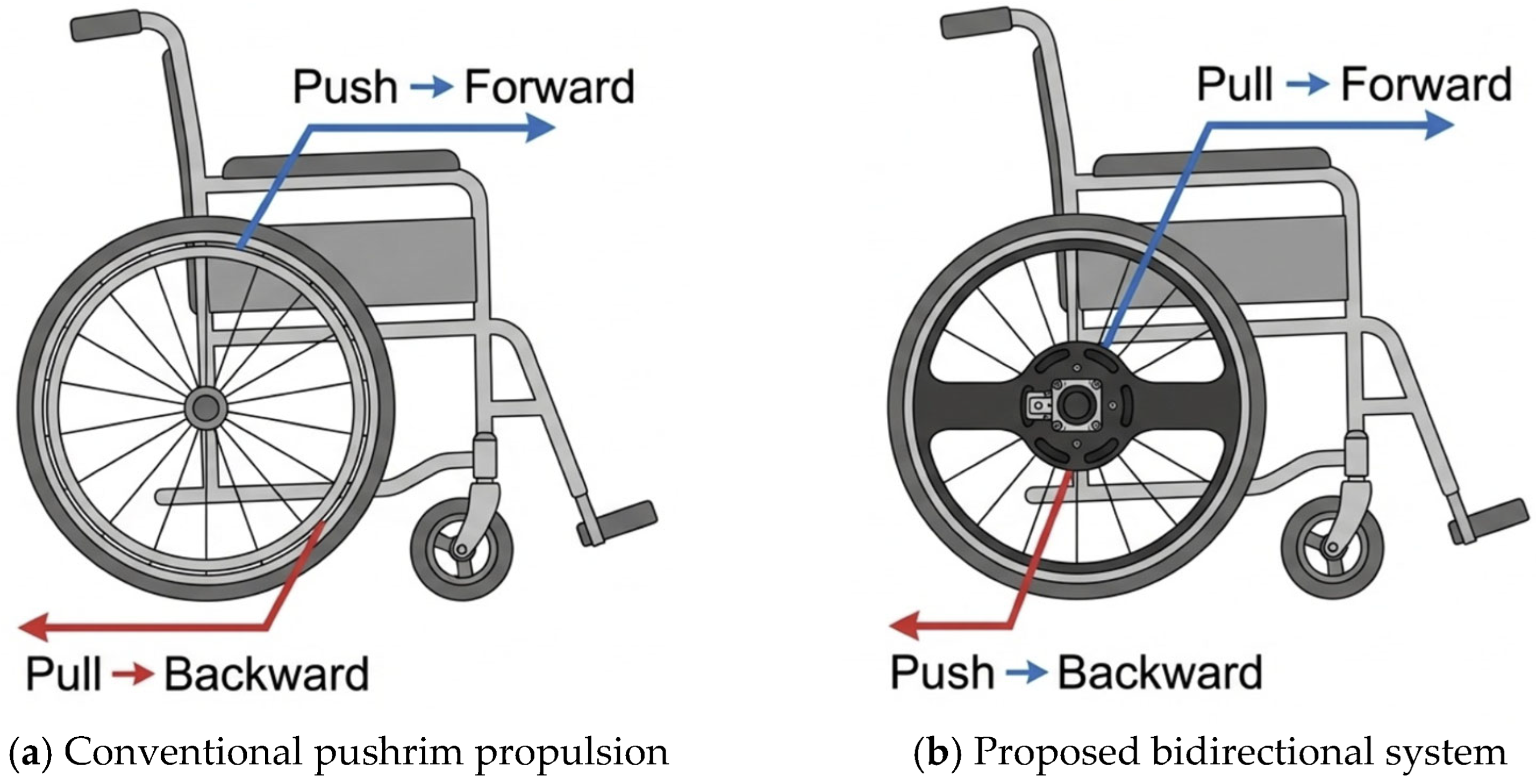
The developed system is a universal bidirectional wheelchair propulsion system designed as a detachable mechanical module for standard manual wheelchairs used by people with spinal cord injury (SCI). Unlike conventional pushrim propulsion, the proposed system permits both pushing and pulling as propulsion inputs, with the resulting wheel rotation direction determined by the selected lever mode.
As shown in
Figure 1, the handle assembly enables propulsion input during the return phase, while the direction of wheel rotation (forward or backward) depends on the selected lever mode. The system was intentionally designed as a detachable add-on module, enabling selective use of bidirectional propulsion without permanently modifying the wheelchair’s structure.
3.2. Structural Configuration and Modular Components
The propulsion system is composed of three primary modules: (1) a detachable mounting interface, (2) a bidirectional transmission mechanism, and (3) a user-operated handle assembly. These components were designed to function as an integrated system while maintaining modular independence for installation, removal, and potential future modification.
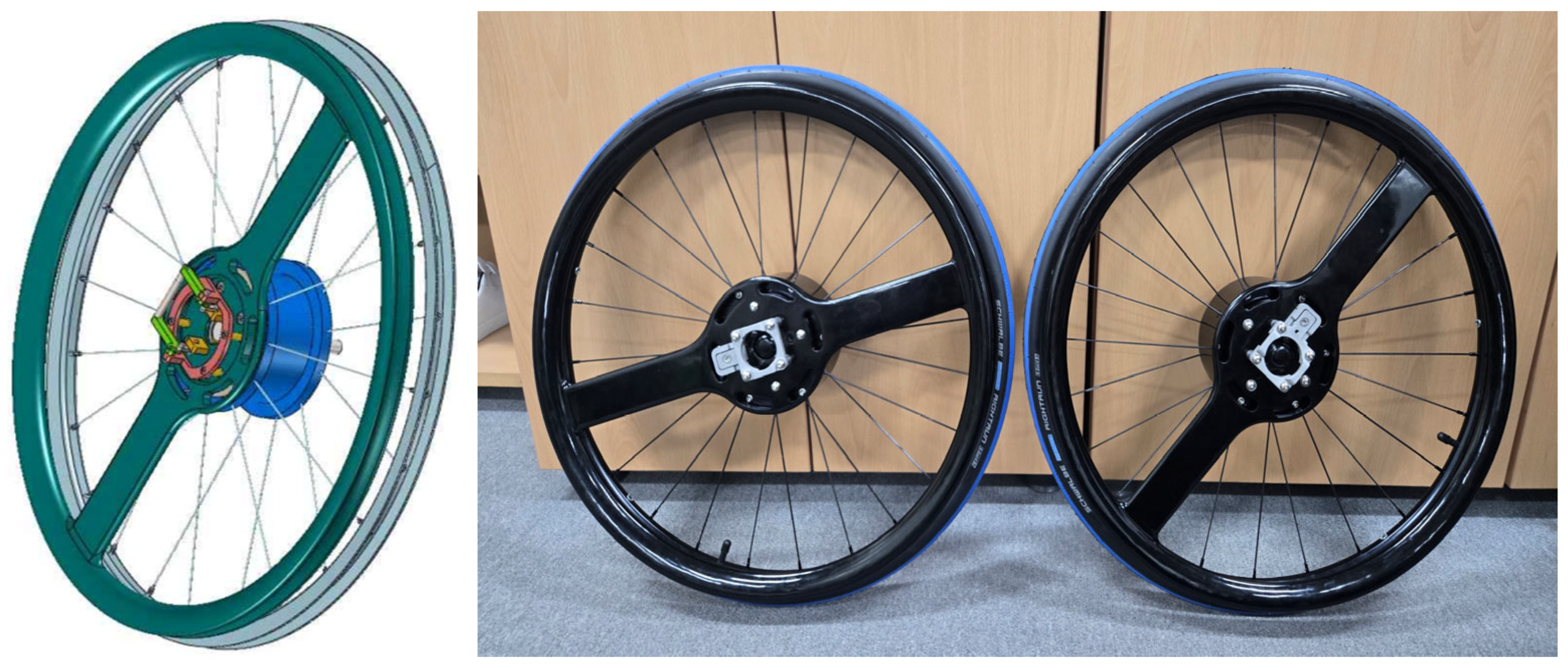
The overall architecture of the propulsion system is presented in
Figure 2, which shows the integrated configuration of the propulsion module attached to a manual wheelchair. The system interfaces with existing wheelchair components, including the wheel and frame, without altering the original pushrim structure. This design approach ensures compatibility with commercially available manual wheelchairs.
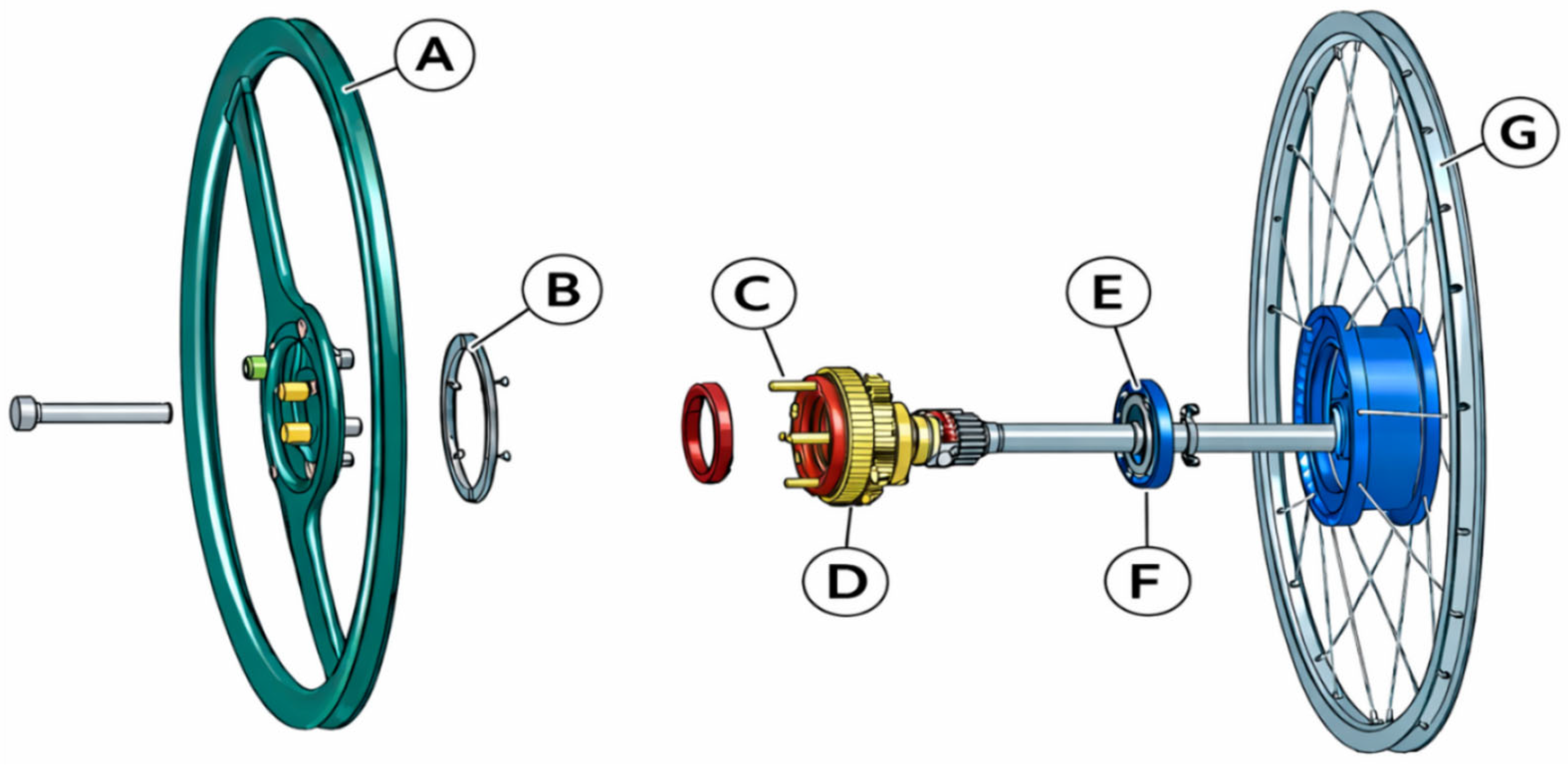
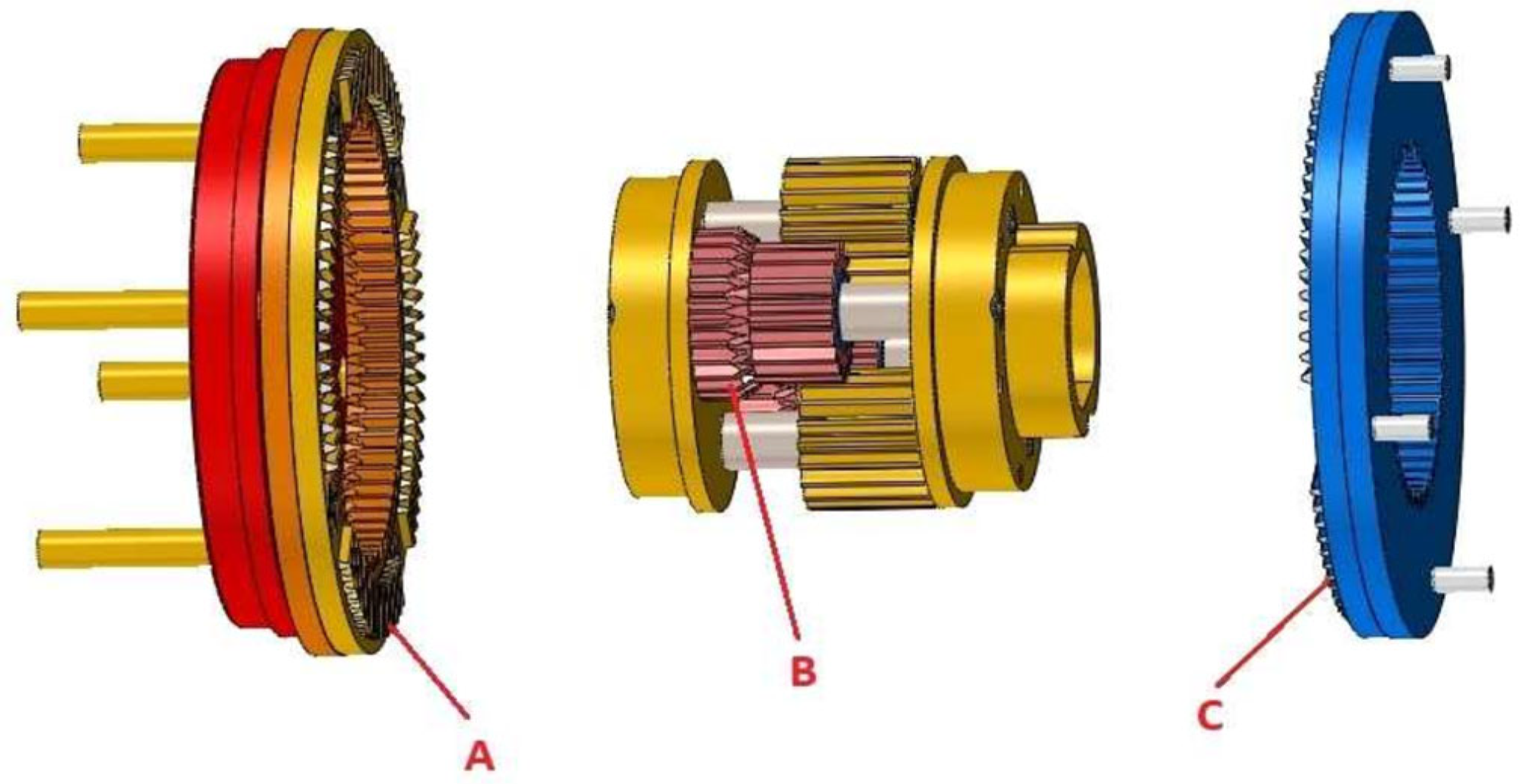
An exploded view of the propulsion system is provided in
Figure 3, illustrating the individual components and their assembly relationships. This view clarifies the structural layout of the system and highlights the modular connections between the mounting interface, transmission housing, and handle assembly. The functional roles of the major components and their implementation characteristics are summarized in
Table 1.
3.3. Bidirectional Propulsion Mechanism and Motion Pathway
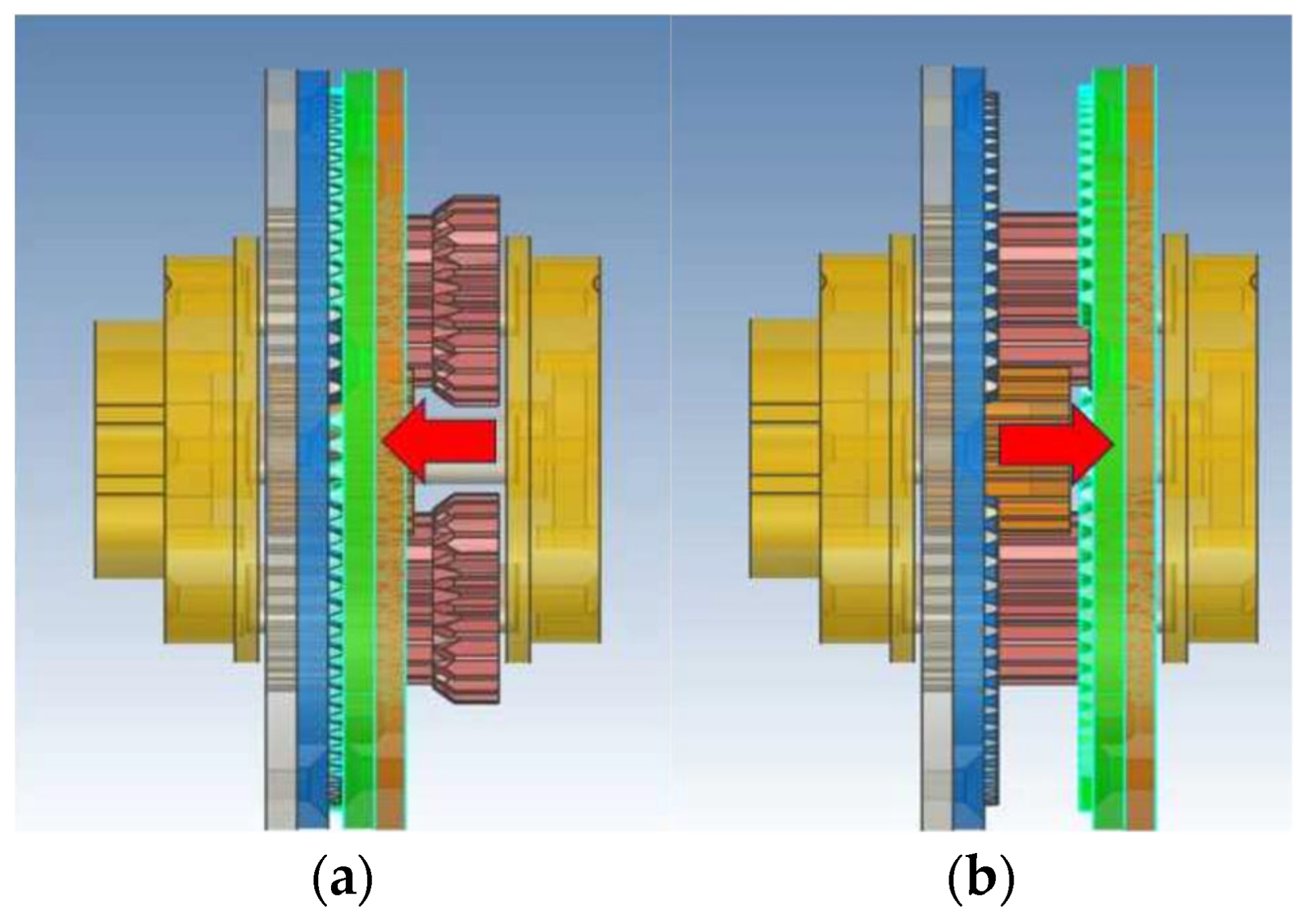
Bidirectional propulsion is achieved through a gear-based mechanical transmission that allows the input–output relationship to be inverted by lever mode switching, thereby producing mode-dependent wheel rotation from pushing and pulling actions. The operational principles of this mechanism are illustrated in
Figure 4, which depicts the force transmission pathways during the push and pull phases.
During the push phase, propulsion force is transmitted through the conventional pushrim interface, following a mechanical pathway similar to that of standard manual wheelchairs. During the pull phase, force applied to the handle assembly engages the transmission mechanism, and the resulting wheel rotation direction (forward or backward) is determined by the selected lever mode. The alternation between push and pull actions occurs naturally during upper-limb movement, whereas propulsion mode selection is explicitly controlled by the user via the lever mechanism. Importantly, pulling actions do not inherently generate forward motion; instead, the resulting wheelchair movement direction is determined by the selected propulsion mode.
This configuration increases the availability of propulsion input across a broader range of upper-limb motion while preserving the controllability and simplicity of conventional manual wheelchair operation.
3.4. Detachable Mounting Interface and Wheelchair Compatibility
A key design outcome of this study is the development of a fully detachable mounting interface that enables integration of the propulsion system with commercially available manual wheelchairs. The structural characteristics of the mounting interface are shown in
Figure 5.
The mounting mechanism employs a clamp-based structure that allows installation and removal with standard tools, without permanently modifying the wheelchair frame, wheel, or pushrim. The interface maintains alignment with the wheel axis and distributes mechanical loads across existing wheelchair components, thereby minimizing localized stress concentration.
This detachable design preserves original wheelchair functionality, including conventional pushrim propulsion, braking, and maneuverability, ensuring that the bidirectional propulsion module does not interfere with standard wheelchair use when disengaged.
3.5. Mechanical Characteristics and Design Outcomes
The final transmission configuration was selected to balance propulsion torque, mechanical efficiency, and user controllability. Rather than maximizing a single performance parameter, the design emphasizes stable mechanical engagement during both propulsion phases and minimal resistance during pushing.
The internal transmission structure and engagement characteristics are reflected in
Figure 4 and
Figure 5, which together illustrate how the mechanism enables propulsion input during the pull phase, with the resulting direction governed by the selected lever mode without introducing excessive complexity or power requirements. The alignment between predefined design requirements and implemented system features is summarized in
Table 2, which demonstrates that key requirements—such as detachability, bidirectional propulsion, non-powered operation, and compatibility with standard manual wheelchairs—are directly addressed by specific design features.
3.6. Prototype Implementation and Summary of Design Results
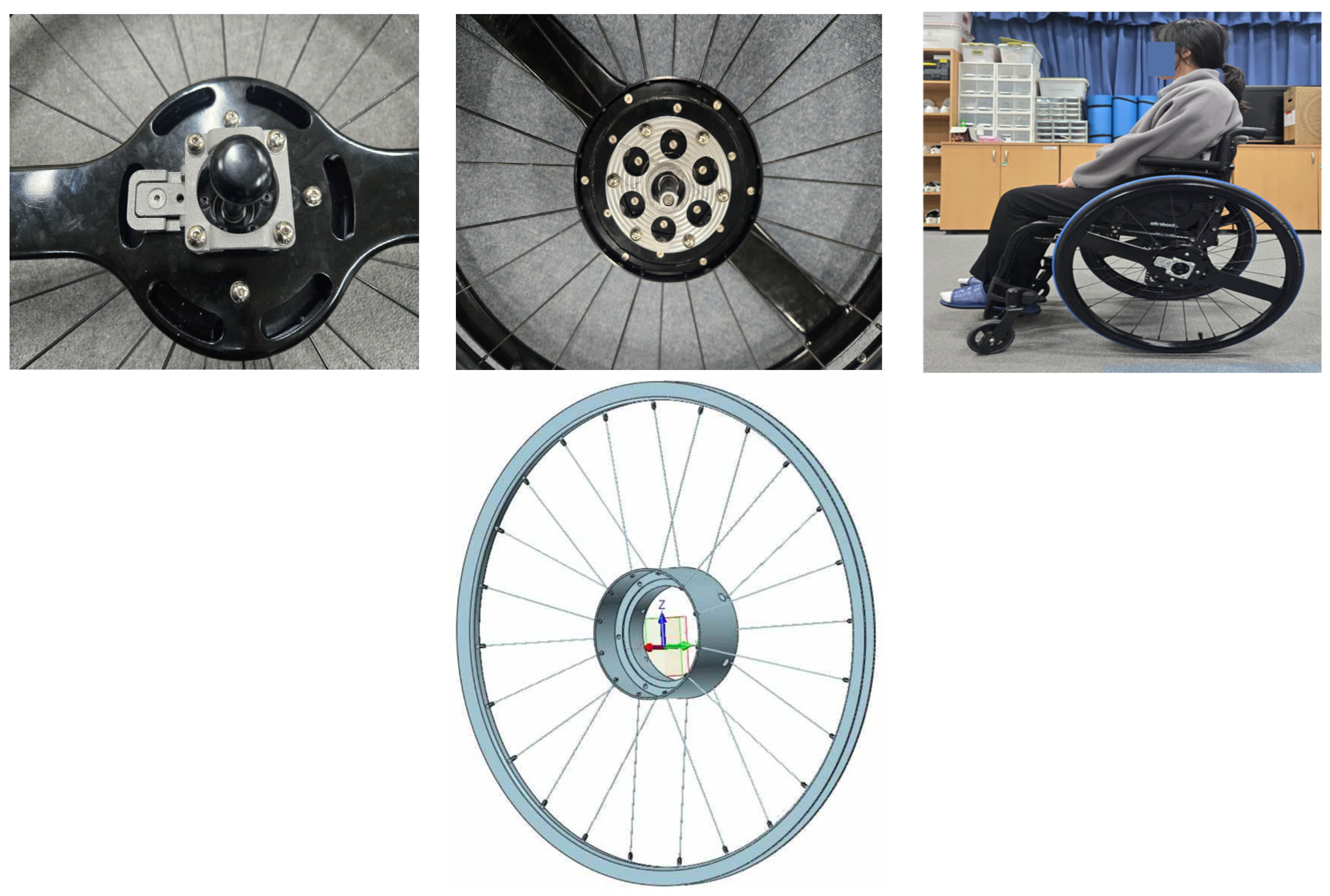
The finalized prototype configuration is shown in
Figure 6, which presents the fully assembled bidirectional propulsion system mounted on a manual wheelchair. This figure confirms the feasibility of the proposed design as a physical implementation rather than a conceptual model and demonstrates successful integration with a standard manual wheelchair.
Overall, the results demonstrate the successful development of a design-driven, detachable bidirectional wheelchair propulsion system tailored for manual wheelchair users with spinal cord injury. The presented results focus on tangible engineering outputs, including system architecture, mechanical configuration, and functional integration, and provide a reproducible foundation for future experimental validation and user-centered evaluation.
4. Discussion
The present study provides a design- and development-oriented contribution to rehabilitation engineering by detailing a detachable bidirectional propulsion system for manual wheelchair users with SCI. Unlike studies that primarily evaluate biomechanical or physiological outcomes, this work focuses on system architecture, mechanical feasibility, and integration strategy, thereby addressing an underexplored design gap in modular propulsion technologies for manual wheelchairs.
To contextualize the proposed design within the landscape of existing propulsion systems, a quantitative comparison was conducted with representative lever-driven, crank-based, and power-assisted wheelchair propulsion systems reported in previous studies [
16,
17,
20]. As summarized in
Table 3, many alternative systems introduce increased system weight (typically >4–6 kg), electrical dependency, or permanent integration into the wheelchair frame. In contrast, the present detachable bidirectional propulsion module maintains a fully mechanical configuration, estimated module weight of approximately 3 kg (prototype phase), and compatibility with standardized rear axle systems without requiring structural modification. This positioning highlights the mechanical simplicity and modular detachability of the proposed design relative to previously reported solutions.
Conventional pushrim propulsion has been widely reported as a major contributor to upper-limb overuse injuries in manual wheelchair users with SCI, particularly affecting the shoulder complex [
1,
2,
3,
4,
5,
6,
7,
8,
9]. Because the upper extremities serve as the primary means for mobility, transfers, and activities of daily living in this population, preservation of upper-limb function is a critical long-term concern [
6,
11]. From a rehabilitation engineering perspective, propulsion systems should therefore be understood as long-term human–machine interfaces that shape cumulative mechanical exposure rather than as isolated mobility solutions [
1,
8,
10].
To mitigate the biomechanical demands associated with conventional propulsion, various alternative propulsion strategies have been proposed, including lever-driven mechanisms, crank-based systems, power-assisted wheelchairs, and reverse- or bidirectional-propulsion approaches [
13,
14,
15,
16,
17]. In parallel, recent work has emphasized the importance of quantifying propulsion-related exposure and musculoskeletal disorder risk when evaluating wheelchair propulsion systems [
21]. These findings underscore that propulsion design must consider not only instantaneous mechanical performance but also cumulative loading patterns over repeated cycles of use.
Biomechanical analyses have demonstrated that propulsion mechanics are task-dependent, with distinct muscle contributions during the push and recovery phases of the propulsion cycle [
12]. Such task-level differentiation suggests that altering the distribution of mechanical work across propulsion phases may influence upper-limb loading. Consistent with this rationale, experimental studies have reported that reverse or push–pull propulsion strategies can modify muscle activation patterns and shoulder joint loading compared with conventional unidirectional pushrim propulsion [
16,
19,
20]. Together, these studies provide a biomechanical foundation supporting bidirectional propulsion as a conceptually relevant strategy for redistributing propulsion-related mechanical demands.
Despite these insights, many previously proposed propulsion systems remain limited in their real-world applicability. Permanently integrated mechanisms often require structural modifications to the wheelchair frame or drivetrain, thereby reducing compatibility with commercially available manual wheelchairs and limiting user choice [
15,
18]. In addition, power-assisted systems introduce electrical components, battery dependence, and increased system complexity, which may not align with the preferences or usage contexts of all manual wheelchair users with SCI [
17]. These constraints highlight the need for propulsion solutions that balance biomechanical relevance with mechanical simplicity and modularity.
In contrast, the detachable mounting interface presented in this study enables integration with standard manual wheelchairs without altering the original frame, wheels, or pushrim components. This design approach is consistent with evidence-based wheelchair design principles that emphasize adaptability, preservation of baseline functionality, and user-centered configurability [
18,
22]. By maintaining compatibility with existing wheelchair configurations, the proposed system supports individualized adoption without constraining user choice or long-term wheelchair use strategies.
From an engineering feasibility perspective, modular add-on systems must also account for installation burden, maintenance requirements, and robustness under daily use conditions [
23]. The clamp-based detachable interface and modular transmission architecture described in this study directly address these practical considerations, which are often underreported in propulsion system research but are critical for translation beyond laboratory environments [
24]. Explicit documentation of component interactions, motion pathways, and mechanical constraints enhances reproducibility and enables meaningful comparison across propulsion system designs.
Skill acquisition and propulsion technique can further influence the adoption and use of alternative propulsion mechanisms in practice. Previous research has shown that propulsion technique and training can affect mechanical efficiency and upper-limb loading, suggesting that system usability must be considered alongside biomechanical potential [
25]. In this context, the passive, non-powered configuration adopted in the present design reflects an intentional effort to minimize cognitive and mechanical complexity while preserving controllability during everyday use.
The present study focuses on design development and mechanical feasibility analysis of a detachable bidirectional propulsion system. Prior studies have reported biomechanical differences associated with reverse or bidirectional propulsion strategies [
16,
19,
20]; however, translation into daily-use systems requires careful consideration of user acceptance, learning effects, and long-term adaptation [
26]. The proposed architecture provides a structural framework to support such future investigations.
Several limitations should be acknowledged. First, the absence of experimental validation precludes direct comparison of biomechanical loading, energy expenditure, or propulsion efficiency between the proposed system and conventional pushrim propulsion. Second, user-centered evaluations addressing perceived usability, comfort, and long-term adoption were not conducted. Future research should integrate biomechanical assessment, electromyographic analysis, and structured user feedback to evaluate functional implications of detachable bidirectional propulsion under both controlled and real-world conditions [
11,
19,
21,
22,
23].
Despite these limitations, the present study establishes a foundational engineering framework for detachable bidirectional wheelchair propulsion. By systematically addressing mechanical architecture, feasibility, and compatibility constraints, this work provides a transparent platform for future experimental validation and user-centered optimization. Such design-driven approaches are essential for advancing manual wheelchair propulsion technologies that support sustainable mobility and long-term upper-limb health for individuals with SCI [
1,
15,
18,
24,
25,
26].
5. Conclusions
This study presented the design and development of a detachable bidirectional wheelchair propulsion system intended for manual wheelchair users with spinal cord injury. The proposed system was conceived as a modular add-on mechanism that enables both pushing and pulling propulsion actions while preserving compatibility with commercially available manual wheelchairs and avoiding permanent structural modification.
By focusing on mechanical architecture, integration strategy, and feasibility considerations, this work addressed a gap in the rehabilitation engineering literature, where bidirectional propulsion concepts have often been discussed primarily from biomechanical or physiological perspectives rather than through transparent, design-driven analyses. The clamp-based detachable interface and fully mechanical transmission architecture were developed to balance modularity, controllability, and mechanical simplicity, which are essential requirements for real-world applications.
Importantly, this study was deliberately limited to design development and feasibility analysis and did not attempt to evaluate biomechanical performance, physiological outcomes, or clinical effectiveness. Instead, it provides a clear and reproducible engineering framework that can support subsequent experimental validation, user-centered evaluation, and iterative refinement of bidirectional propulsion systems.
Future research should build upon this design foundation by incorporating biomechanical assessment, electromyographic analysis, and structured user feedback to examine propulsion mechanics, usability, and long-term adoption in both controlled and community-based settings. Through such staged investigation, detachable bidirectional propulsion systems may contribute to the advancement of manual wheelchair technologies that support sustainable mobility and long-term upper-limb health in individuals with spinal cord injury.