

Review

The Influence of Music on Fetal and Neonatal Development: A Bibliometric Review

by
Daniel Kaczmarski
1,*,
Katarzyna Bogucka-Pięta
2,
Marcin Bonar
1 and
Paweł Pięta
1,*
1
Faculty of Electrical Engineering, Automatic Control and Computer Science, Kielce University of Technology, 7 Tysiąclecia Państwa Polskiego Ave., 25-314 Kielce, Poland
2
Independent Researcher, 25-322 Kielce, Poland
*
Authors to whom correspondence should be addressed.
Appl. Sci. 2026, 16(5), 2468; https://doi.org/10.3390/app16052468
Submission received: 19 November 2025 / Revised: 23 February 2026 / Accepted: 2 March 2026 / Published: 4 March 2026
(This article belongs to the Special Issue Musical Acoustics and Sound Perception)

Abstract

Over the years, the impact of music on the prenatal and neonatal stages of human life has gained significant scientific attention. This study provides a comprehensive bibliometric review of research investigating how music influences fetal and newborn development. Using the Scopus and Web of Science databases, a search of relevant studies published in English between January 2006 and July 2025 was conducted, whose basic criterion was the use of the following keywords: “music” and “fetus” or “fetal”. Additional terms such as “fetus development”, “fetus heart rate”, “fetus movement”, “mother–fetus relationship”, “newborn”, etc., were also utilized. In result, 75 publications were selected, and their bibliographic data and full sources were retrieved. The included studies were grouped according to two perspectives that consider the impact of music (1) on the development of the fetus and the newborn, and (2) on maternal health and mother–fetus bonding. Using VOSviewer, bibliometric mapping was performed, which allowed to obtain keyword co-occurrence network and co-authorship network. The chosen literature was then quantitatively and qualitatively analyzed. The analysis revealed a sharp upward trend in publications starting in 2015, with a temporary decline in 2020 due to the COVID-19 pandemic. The highest number of publications were from Iran. The most investigated topics were related to the fetus heart and maternal health. The most common publication type and research methodology were, respectively, article and experiment. While the key authors Lordier, L., Filippa, M., Grandjean, D., and Monaci, M.G. lead the field, the co-authorship network remains fragmented into isolated and relatively small research groups. The Journal of Maternal–Fetal and Neonatal Medicine emerged as the leading publication outlet, while the study by Graven et al. entitled “Auditory Development in the Fetus and Infant” remains the most cited work. The keyword co-occurrence network allowed the identification of three main thematic clusters indicating the physiological, clinical, and therapeutic aspects of the impact of music on fetal and neonatal development. A qualitative analysis revealed that music plays a vital role in early human development and maternal well-being, demonstrating positive effects of auditory stimuli on fetal and newborn physiology, as well as on the mother–fetus relationship, while being a non-invasive and non-pharmacological method of intervention. However, the lack of a fully connected global research community and standardized protocols for, e.g., choosing the musical repertoire, sound administration, and the duration of exposure suggests the need for increased international collaboration to further integrate music therapy into standard clinical practices for prenatal and neonatal care.

1. Introduction

One of the main factors responsible for the proper development of many of the skills of a child, including speech, reading, and writing, is auditory perception. For a child to learn to speak correctly, it is necessary for both the auditory analyzer, which enables the reception of sounds from the environment, to function properly and for the development of hearing to be skillfully stimulated. This is because sounds heard by a child, especially words, leave auditory traces in the brain that enable the future identification of similar-sounding signals and form the basis for acquiring the ability to distinguish the components of spoken language [1].
Due to the fact that auditory perception is an extremely complex process, it seems necessary to distinguish between the following concepts related to the issue in question: sensation, reception, auditory perception, auditory analyzer, physical hearing, phonemic hearing, and musical hearing, as well as auditory analysis and synthesis, and auditory memory of words. All the functions mentioned above (physiological, phonemic, and musical hearing) and processes such as brain mobility, memory capacity, and proper functioning of the peripheral nervous system are necessary for a child to develop speech, the ability to understand it, and the ability to write from hearing and read written text [2].
One of the fundamental and basic functions of the central nervous system is to receive and respond appropriately to stimuli from the external and internal environment of the body. The anatomy literature indicates that these processes can occur via the reflex arc through the conduction of nerve impulses from receptors to effectors or from receptors to centers where higher-order sensory neurons are concentrated, whose stimulation is the basis of sensation and perception. The sensation of a stimulus is a simple sensory impression that arises as a result of the stimulation of one type of receptor and consists of its subjective evaluation. In the case of the reception of sound stimuli, also known as teleceptive sensation and perception, it occurs through the stimulation of a sensory organ (teleceptor) called the vestibulocochlear organ. This organ is located in the temporal bone [3]. The term teleceptive sensation is associated with the concept of sound reception. It is also often referred to as physiological hearing. This phenomenon involves perceiving the effect of an auditory stimulus or the fact that its activity has ceased. The effect of sound reception is the creation of so-called auditory sensations. In the case of a disorder of this function, it is not possible to develop auditory abilities such as sound discrimination, auditory memory, or the ability to associate auditory patterns with specific objects and phenomena [4].
A much more complex concept is the phenomenon of auditory perception. Generally speaking, perception (from Latin perceptio, meaning grasping) is the perceiveness and conscious reaction of a sensory organ to an external stimulus [5]. In turn, Gołąb and Traczyk [3] state that perception is a complex sensory impression that involves several types of sensation at the same time, making it possible to better recognize the stimuli themselves and their source. The development of proper perception requires sensory organs, in which the most important roles are played by receptors responding to specific types of stimuli, as well as appropriate brain functions [6]. Due to the presence of many different receptors in humans, we distinguish between visual, tactile, olfactory, and auditory perception. The latter involves not only receiving and recognizing sounds and acoustic stimuli, but also differentiating and interpreting them by referring to previous experiences [7].
When discussing the phenomenon of auditory reception and perception, it is impossible not to mention that a properly functioning auditory analyzer is a prerequisite for both processes to proceed correctly [8]. It consists of the following components: a receptor that receives auditory sensations, an auditory pathway that conducts nerve impulses to the brain, and the central (cortical) part of the analyzer [9].
The receptor (ear) receives auditory stimuli and converts them into nerve impulses [10]. Subsequently, the acoustic information encoded in the impulses is transmitted through the auditory pathway (afferent nerves), which forms the conductive part of the analyzer [11]. It allows the impulses to reach the central (cortical) part of the analyzer, i.e., the brain, where the analysis and synthesis of sound stimuli take place in the temporal lobes. The appropriately processed impulses are then transmitted from the brain to specific articulatory organs [12].
When discussing the functions of the auditory analyzer, it should be noted that its efficiency is essential not only for the proper development of simple auditory observations, i.e., the correct identification and differentiation of auditory stimuli, but also for the perception of human speech. Any defects in the analyzer, both anatomical and functional, disrupt not only the child’s reception of acoustic stimuli, but also the process of receiving and understanding complex verbal messages, which in turn hinders the acquisition of basic verbal communication skills and the assimilation of school knowledge [12].
According to Bogdanowicz and Adryjanek [13], auditory perception involves three types of hearing: physical hearing, phonemic hearing, and musical hearing, as well as processes such as auditory analysis and synthesis, and auditory memory. Physical hearing, also known as physiological hearing, is defined as sensitivity to sound waves produced by vibrations from a sound source. The main feature of physical hearing is hearing acuity, which classifies people as hearing, hard of hearing, and deaf. Hearing is an ability not only of humans but also of other higher biological species, but only in humans did it provide the basis for the development of other types of hearing [14].
Musical hearing develops on the basis of physiological hearing. In the literature, it is defined as the ability to distinguish sounds in terms of pitch [15]. Musically gifted individuals show remarkable sensitivity to even the slightest differences in the pitch of individual sounds [14]. At the same time, it should be noted that this is not only the ability to perceive the correct pitch and intensity of the tones and intervals (distances) between them, but also the assessment of rhythm and auditory memory [16]. The development of proper musical hearing (pitch) is preceded by the development of rhythmic hearing. Experts point out that children up to the age of three react to sounds and melodies, but especially to the rhythmic layer of songs. This manifest itself in rhythmic body movements and attempts to perform simple melodies with the voice, in which the rhythm is reproduced more accurately than the melody. The intensive development of pitch (melodic) hearing begins at the age of six [17].
Therefore, it can be concluded that there is a close correlation between musical hearing and physical hearing. According to current research, musical hearing develops on the basis of physical hearing, but at the same time, the development of musical hearing also influences the development of physical hearing. This is because the cortical analyzers responsible for both types of hearing are located in close anatomical proximity. For that reason, the stimulation of one analyzer is transferred to the neighboring analyzer [17].
Without physiological hearing, it would also be impossible to develop phonemic hearing. As neurobiological research shows, the sounds of speech that we hear leave traces in the auditory center of the brain. These traces are also called stereotypes or auditory patterns of phones. It is on the basis of these fixed traces that phonemic hearing gradually begins to develop. Its main function is to distinguish between phonemes, i.e., the smallest components of words [18]. The inability to differentiate between phonemes causes significant disturbances in linguistic communication, both in the reception of information and in its transmission. According to Sachajska [14], speech perception depends on the following abilities: (1) to differentiate between opposing phones (e.g., voiced and unvoiced), (2) to perform a phonetic analysis of a text in order to extract its components (phones, the acoustic equivalents of phonemes), and (3) to perform auditory synthesis which enables the understanding of speech. In other words, phonemic hearing refers to speech comprehension. It forms the basis for more complex operations, i.e., conscious auditory analysis and synthesis, which are an essential component of the mechanisms of reading and writing [12].
Auditory analysis is defined as the ability to extract sentences from speech, words from sentences, syllables from words, and phones from syllables while maintaining their order. This ability is particularly useful for developing the skill of writing from hearing [8]. On the other hand, the auditory synthesis processes take place in reverse order. They consist of combining phones, syllables, and words into specific, complex auditory patterns [13]. In these skills, it is important to maintain the correct order of the components of the perceived words, i.e., phones. The ability to perform auditory synthesis is essential for learning to read [19]. It is also worth noting that in both the auditory analysis and synthesis processes, operations such as distinguishing between phones with similar physical characteristics and assigning meanings to integrated words and sentences also play an important role [12].
An important component of auditory perception is also auditory memory. It is the ability to store and recall sound information. In other words, it is the ability to remember auditory observations. The literature distinguishes between two types of auditory memory: immediate memory, called fresh memory, and long-term memory. Auditory memory is extremely helpful for rapidly acquiring knowledge. People with a high level of auditory memory are often referred to as auditory learners [13].
To sum up the topics discussed above, it should be noted that auditory perception plays an extremely important role in developing skills such as speech, the ability to understand it, or the ability to write from hearing and read written text. The most common difficulties observed in preschool and early school age children are problems in the initial stages of learning to read and write. These are usually caused by various types of abnormalities in phonemic hearing and auditory analysis and synthesis processes, which are acquired rather than innate skills [20]. They develop in parallel with speech throughout childhood under the influence of linguistic stimuli from people in the immediate environment [21]. However, the roots of phonemic hearing date back to the prenatal period. This is when intensive development of auditory reception and perception takes place.
Between 18 and 20 weeks of gestation, the human fetus exhibits its first cochlear reactions. At 24 and 26 weeks, motor and cardiovascular responses to acoustic stimuli are observed, respectively. At this time, the eyelid reflex and changes in heart rate in reaction to sound stimuli also appear. Doctors have found that these responses are caused by changes in both the intensity and frequency of the sound. The body of a fetus in the womb receives both internal sounds (related to the mother’s circulation and digestion) and external sounds that penetrate the abdominal wall [22]. Among the external sounds, the mother’s voice dominates and plays an important role in stimulating the auditory development of the fetus. The fetus eagerly perceives the sounds made by the mother, not only because it hears them most often, but also because of the high frequencies of her voice, which are easier for fetuses to absorb. Infants also react more vividly to women’s voices than to men’s, preferring high-pitched sounds to low-pitched ones. The same is true for infant reactions to high-pitched sounds of toys [23].
In the second half of pregnancy, the fetus’s auditory reception develops intensively. This period also marks the beginning of sound differentiation and auditory memory. The occurrence of these processes is confirmed by studies on newborn babies, during which the sucking and attention span responses were verified, and heart rates were assessed. Newborns whose mothers read a rhyming book very loud twice a day during the last two months of pregnancy preferred these texts to others they had not heard before or differed in rhythm [23].
Long-term observations have also shown that fetal motor activity is influenced and shaped by sounds received by the fetus during pregnancy. In the first days after birth, newborns exhibit movements consistent with the rhythmic structures of adult speech [22]. Research on phonemic hearing shows that hearing development is closely related to the process of speech development, which largely determines the correct reception and transmission of linguistic messages. The analysis of the development of phonemic hearing therefore requires tracing the individual phases of speech development throughout infancy and childhood [18]. The literature distinguishes four stages of this process, namely the periods of melody, word, sentence, and idiosyncratic speech [24]. The melody stage coincides with the infancy period, as it occurs during the first year of life. This implies that speech, and therefore phonemic hearing, develops from the moment an infant is born [24].
Initially, a newborn must adapt to new living conditions, that is, outside the mother’s body. The first act of speech of the newborn, which is also a reaction to the new environment, is crying. Gradually, as the infant develops, it learns to use this act as a signaling function—in this way, it draws the attention of adults to its needs [18]. At this time, there are simultaneous unconditioned reflexes, as an innate reaction of the body to specific stimuli, and so-called errant movements, i.e., uncoordinated body movements which are performed in response to the overall stimuli associated with the new surroundings. The cortical part of the auditory analyzer is not yet mature—it begins to develop under the influence of sound stimulation, which accelerates the process of myelination of nerve fibers [23].
Natural phonemic hearing training begins very early. A newborn’s reaction to their mother’s voice and the melody of words is an imitative reflex [24]. This relationship is unique—the newborn perceives verbal and linguistic expressions from its surroundings, but due to its lack of linguistic abilities, it sends non-verbal messages [25]. During the neonatal period (the first month of life), various reactions of the newborn to sound can be observed. A sudden ringing sound causes the Moro reflex. Loud sounds also elicit reactions such as the auricular-palpebral reflex, the cessation of crying and sucking, or the turning of the eyes and head toward the source of the sound. This means that the newborn is already beginning to locate sounds [26].
Between the second and fourth month of life, an infant begins to show its first reactions to intonation, that is, the emotional charge of the people who address it [27]. A scolding tone from an adult causes the infant to cry, while a soothing smile calms them down [14]. Although gestures and facial expressions also help them distinguish intonation, they first and foremost pay attention to changes in pitch [18].
Alongside this skill, infants develop an unconditional verbal reflex known as cooing, which prepares them to pronounce basic speech sounds. Cooing can be described as an unconscious exercise of the articulatory organs [9]. Initially, the sounds made by the infant are indistinct. However, with time, vowels can be distinguished and then phonetic groups, i.e., combinations of consonants and vowels resembling syllables. Cooing occurs in all infants, regardless of their hearing ability. Unfortunately, in deaf people, it gradually disappears and does not progress to the next phase of speech development, the babbling stage, which is important for hearing formation [28].
In the second half of the first year of life, with the onset of babbling, the second stage of the development of phonemic hearing begins. The infant begins to understand the meaning of some words spoken by adults and reacts vividly to their own name. Scientists suspect that the infant may not as much remember the sound of their own name, but rather its first syllable, spoken with a characteristic intonation. This theory is confirmed, in a way, by observations of speech development—the infant not only makes its own sounds, but also begins to imitate the sounds heard in adult speech. This phenomenon is called physiological echolalia, which consists of imitating sounds (both its own and those of the environment) immediately after hearing them. Gradually, hearing one’s own and other people’s pronunciations leaves auditory traces, which then enable the infant to identify and distinguish subsequent sounds. First, a syllable pattern develops in the infant—it is the first element of a word that is aurally distinguished and pronounced by the infant [18].
The most frequently repeated speech sounds by infants are the first syllables of words they hear. They are often incomprehensible, as if blurred, but they are an important stage in the process of training hearing, articulation organs, and perception [28]. A little later, the infant begins to combine several identical syllables and pronounce them, creating syllabic sequences. Although the infant’s vocal play at this stage is deliberate and the syllabic sequences they pronounce resemble words such as “mama”, they cannot yet be associated with conscious speech. Nevertheless, it is worth noting that babbling is a very important stage in speech development and confirms the developmental changes taking place in the infant’s brain. At this time, the infant already understands speech, i.e., when hearing names, they associate them with visual images, that is, with observed things and activities [9]. Another important sign of an infant’s development is that the sounds they gradually begin to make start to express different emotional states, such as satisfaction and joy, or pain and sadness [11].
During this period, infants also develop other basic functions, such as manual dexterity and various motor activities. These skills, similarly to speech, play a significant role in stimulating phonemic hearing. By manipulating various objects, infants learn about the acoustic properties of their environment. Infants also learn to distinguish auditory sensations from other sensory experiences (visual, tactile, etc.) [23]. At this stage, infants can distinguish sounds such as knocking, something falling on the floor, the ticking of a clock, voices on the radio, or street noises [24].
The melody stage ends after the first year of life. Although the child still speaks very little at this time, they already understand a lot [28]. This means that speech comprehension (related to the correct development of phonemic hearing) precedes active speech. In other words, the correct realization of aurally differentiated phones occurs later than the understanding of words, which requires only knowledge of their auditory patterns [8]. These are formed in the infant during the babbling period [24]. Differences in the development of hearing and speech result from the fact that speech ability requires knowledge not only of auditory patterns, but also of kinesthetic and motor patterns [18]. During this period, the child can follow simple commands, knows their name, and can point to parts of their body [28].
Disorders in phonemic hearing development are the most common cause of school-related difficulties among children starting their education. Any disturbances at this level significantly impede the development of auditory analysis and synthesis, which in turn is the basis for the acquisition of reading and writing skills. Phonemic hearing also remains in close anatomical and functional correlation with physiological and musical hearing. In addition, over the past few years, the opinion that there is a relationship between musical ability and children’s academic success has become widespread. In view of the above, it seems justified to conduct further research in this area and, if the hypothesis is confirmed, to call for an increase in the number of music education classes in schools. An example of such research was the work by Bogucka [1], which aimed to determine whether pupils attending music schools achieve better, the same, or perhaps lower results in tests of phonemic hearing than pupils attending non-music schools. The research was conducted among first-grade students at Tadeusz Kościuszko Primary School No. 15 in Kielce and among students at the Ludomir Różycki State Music School in Kielce. The overall level of phonemic hearing in children in music school was found to be higher than in those in non-music school, although the skills of paronym analysis and syllabic analysis were only moderately correlated with attending or not attending a music school. The highest level of correlation was observed for syllable synthesis and phonemic analysis skills.
Despite the fact that intensive development of melodic hearing begins only at the age of six [17], numerous studies have been conducted in recent years on the influence of musical stimuli on human development during the prenatal and neonatal periods [29,30,31,32,33,34,35]. Music has fascinated people in all sorts of way for centuries [36]. It is one of the fields of art that affects, for example, the psychological and physiological elements of man [32,34,35]. Music is still one of the most popular methods of expressing feelings and emotions by artists, who are also often idealized by their work. Different types of music affect emotions in their own particular ways, which each of us has experienced many times in our lives. From the perspective of a human being, musical pieces store memories, moments that one can return to every time they hear the sound of that particular melody. This is an incredible and transformative experience because when listening to just one composition, humans can escape with their thoughts to the moment, emotions, people or environment in which the human being was at that particular moment in life. With its sound, music evokes joy, sadness, and many other emotions that a person can experience. Musical artistic compositions allow us to find solace and understanding in a situation when a person is going through a difficult period in his/her life, as well as allow the human being to intensify the work of the imagination. It can be seen that music has an incredible impact on people’s memory and creativity [36].
In light of the above, in the last two decades, multiple studies have been carried out on how music influences fetal and neonatal development. These works resulted in obtaining the information that musical stimulation affects pregnant women and their fetus, especially in the last trimester of pregnancy. A developing fetus is already able to distinguish in this period various acoustic features and shows the ability to remember sounds that are repeated many times. Musical pieces can also affect the course of women’s childbirth in mental and physical aspects. For example, music therapy allows one to reduce stress, pain, or anxiety, and the use of motivational videos together with relaxing music can affect the result of the non-stress test (NST). The influence of music on the fetus, newborn, or pregnant woman is an interesting and socially important topic [29,30,37,38,39,40,41,42].
This review examines the scientific literature from the last two decades on the effects of music on the development of the fetus and the newborn in conjunction with the health of a mother. We have analyzed the findings of peer-reviewed research published in English from January 2006 to July 2025, with clinically relevant outcomes such as fetal and neonatal heart rate, movement, signs of development, and general well-being. By synthesizing these results, we attempt to clarify when and under what conditions musical stimulation can influence the perinatal assessment measures used during pregnancy and early postnatal life. The included studies were grouped according to two perspectives that consider the impact of music (1) on the development of the fetus and the newborn, and (2) on maternal health and its connection and influence on the aforementioned first perspective. Combining knowledge originating from multiple publications has made it possible to illustrate interesting findings concerning the significance of exposure to musical sounds during pregnancy and early infancy, demonstrating effects of music on fetal and newborn physiology, as well as on the mother–fetus relationship. By comparing the results of numerous publications and identifying important research trends and gaps, we provide a comprehensive overview of the studies in this field, highlighting potential areas for future development which, if investigated properly, might broaden our understanding of music influence on human lives. The problem addressed here is a niche: comparatively less work has been done on music in the specific context of the fetal period and early neonatal existence. Although numerous studies have been conducted in recent years in terms of prenatal and neonatal music exposure, the existing evidence is spread across clinical, psychological, and therapeutic domains. Furthermore, available review papers often focus more on intervention outcomes than offer an extensive summary of the overall structure and dynamics of studies in this field of research [31,33,34,43,44,45,46,47,48,49]. Therefore, a bibliometric analysis is considered appropriate in this case because it offers a comprehensive overview of the literature in terms of publication trends and patterns, thematic clusters, and relationships, and associations within scientific cooperation [50]. In addition, existing evidence indicates that there is still a lack of consolidated knowledge on how fetal and neonatal outcomes and maternal health are developed and influenced by musical stimuli over time, which topics are leading and which are marginal in this research domain, and how scientific cooperation is organized in terms of countries and research groups. Therefore, in order to answer all these questions and to provide a more complete overview of the overall availability of evidence in terms of clinically relevant findings, this study was conducted according to the following research questions (RQs):
  • RQ1: What trends, patterns, and dynamics can be observed in the last two decades in the field of research on the influence of music on fetal and neonatal development?
  • RQ2: What research topics and themes are the most prevalent? How, to what extent, and with what significance are the topics interrelated? What thematic clusters and relationships can be identified?
  • RQ3: How is the scientific landscape organized in this research domain? Which countries and journals lead the statistics in terms of the number of publications? Which publications are cited most frequently? What does author cooperation look like with regard to co-authorship network?
  • RQ4: To what extent do the identified topics and themes correlate with existing qualitative evidence on the impact of music on fetal and neonatal development?
  • RQ5: What research gaps or problems can be identified and what are the potential areas for future research directions?
The paper is structured as follows. Section 2 describes the methods by which the publications included in the review were selected, classified, and analyzed. Next, Section 3 conducts a quantitative analysis of the manuscripts. Then, Section 4 performs and presents a qualitative examination of the publications. This is followed by Section 5 which provides a discussion and critical analysis of the literature. The findings are accurately summarized, and the depth of the work is increased by identifying research gaps or problems. Section 6 concludes the paper and sets out further research goals.

2. Materials and Methods

This study used a bibliometric review design to quantitatively and qualitatively analyze the characteristics, trends, and patterns of the published scientific literature on the chosen topic. To select relevant studies for this review, article searches were performed using the Scopus and Web of Science electronic databases, which were used to retrieve bibliographic data. The registers were investigated from 5 July to 20 July 2025. This process included keywords related to music, prenatal, and neonatal topics, such as fetus, newborn, infant, or preterm infant. Only English-language publications from the last two decades, that is, from 2006 to 2025, were considered. The types of documents included articles, books, book chapters, data articles, database reviews, conference papers, reviews, and abstracts of published items. Additional keywords were then used, such as fetal heart rate, fetal movement, fetal development, mother–fetus relationship, infant, newborn, etc. Searching with supplementary terms allowed us to exclude manuscripts that fell outside the thematic scope of this review. Figure 1 summarizes the workflow utilized for the study selection process performed. The inclusion criteria were as follows: (1) the publication must concern fetal or neonatal development; (2) the publication must examine the impact of sound stimulation (music, singing, music therapy, etc.) on the fetus or the newborn; (3) the publication had to be published in English from January 2006 to July 2025. The exclusion criteria were as follows: (1) the publication does not address the issues listed in the inclusion criteria; (2) the full text of the publication is not readily available.
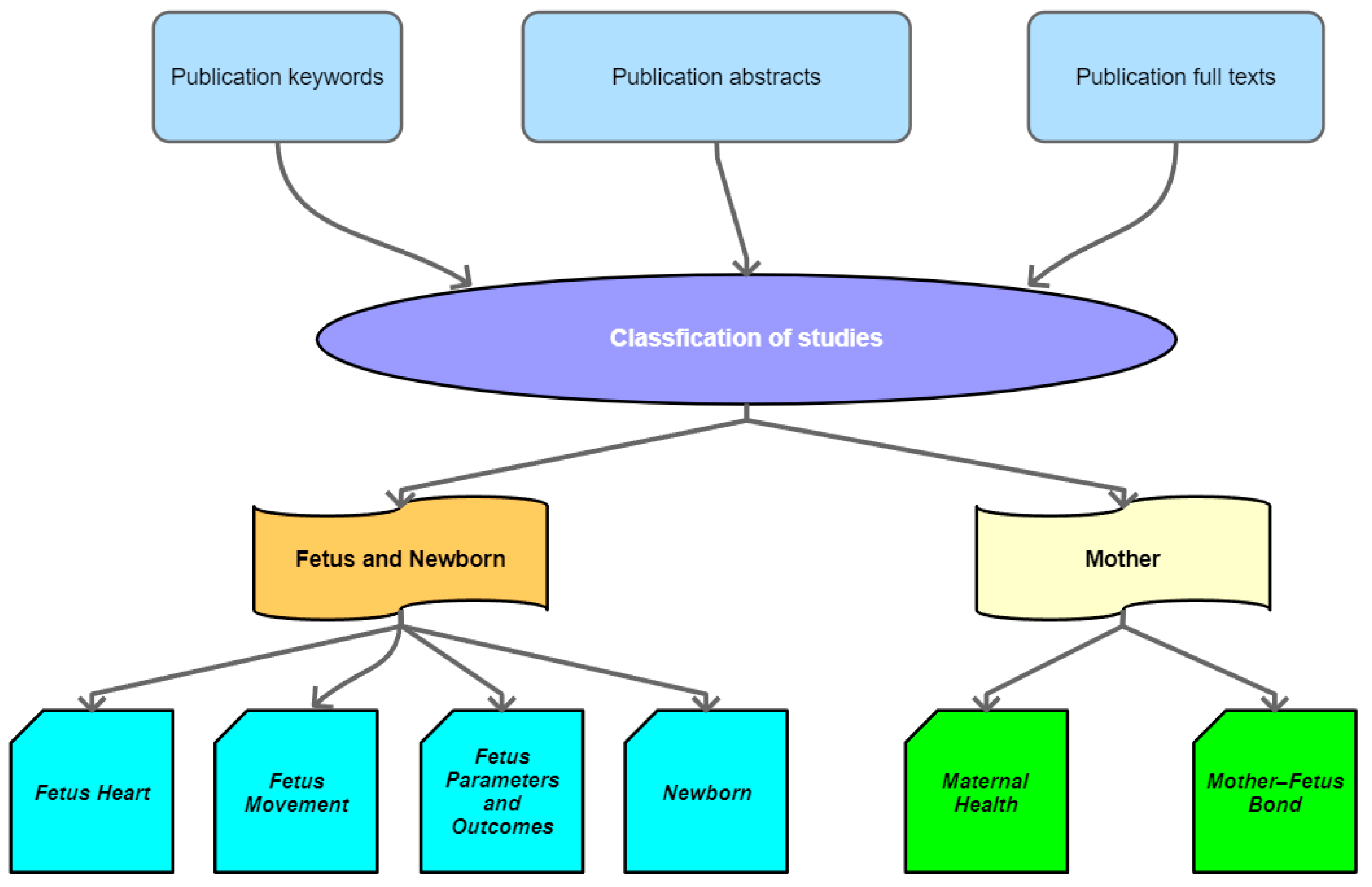
After analyzing abstracts and the full sources of the publications identified in the Scopus and Web of Science databases, the final number of studies included in this review was 75 [29,30,31,32,33,34,35,36,37,38,39,40,41,42,43,44,45,46,47,48,49,51,52,53,54,55,56,57,58,59,60,61,62,63,64,65,66,67,68,69,70,71,72,73,74,75,76,77,78,79,80,81,82,83,84,85,86,87,88,89,90,91,92,93,94,95,96,97,98,99,100,101,102,103,104]. The next step was to group the selected papers on similar topics. The analysis of keywords and manuscript abstracts led to the division of articles into two main categories: (1) Fetus and Newborn, and (2) Mother. Reading the full texts of the publications allowed for further fine-grained classification. The first main category was divided into four subcategories: (1) Fetus Heart, (2) Fetus Movement, (3) Fetus Parameters and Outcomes, and (4) Newborn. The second main category was divided into two subcategories: (1) Maternal Health and (2) Mother–Fetus Bond. Figure 2 illustrates the methodology used during this process. In addition, three auxiliary categories were defined: (1) Document Type, (2) Research Methodology, and (3) Country, as presented in Figure 3.
Two main categories determined were used in Section 3 to perform a quantitative analysis of the studies included in the review, as well as in Section 4 to examine the publications from a qualitative perspective. In Section 3 the auxiliary categories were also utilized. The significance of applied categorization in the context of the analyzed literature is explained in those sections as well. Furthermore, Section 3 uses and analyzes bibliographic data obtained using the VOSviewer 1.6.20 bibliometric tool [105]. Additionally, the qualitative review of the literature was further expanded in Section 5, where research gaps, problems, or limitations were identified and described.

Bibliometric Mapping

Bibliometric mapping was performed using VOSviewer 1.6.20 software [105]. Bibliographic information for all 75 publications included in the review was first exported from the Scopus and Web of Science databases in RIS format and then imported into VOSviewer. After the records were loaded, the software identified a total of 831 keywords derived from the manuscripts. At the first stage of selecting the keywords, it was decided to take into consideration only the keywords that occur at least three times in the database. Consequently, 152 keywords were identified. To improve terminological consistency and remove irrelevant entries, a thesaurus file was then prepared and used in the mapping process. The thesaurus allowed for the merging of synonymous terms (e.g., birth and childbirth) and the exclusion of some technical terms such as publication types (e.g., article, systematic review), or general demographic descriptors (e.g., child). After thesaurus mapping, the number of keywords identified, which occur at least three times, dropped to 115. A co-occurrence map was constructed, and a final set of 62 keywords remained, as a result of applying the default setting of VOSviewer, requiring a minimum of five occurrences for a keyword to be included in the map.
In addition to the keyword co-occurrence analysis, a co-authorship analysis was performed as a separate step. The software found 334 authors of the selected publications, of which 20 authors wrote at least two manuscripts. Hence, two collaboration maps were created: one for the entire author network and one for the most productive authors. Density visualizations were also generated for both the keyword and author analysis. The numerical parameters of the node occurrences and link strength were exported from the VOSviewer software to text files and were used for the quantitative interpretation of the results, as presented in Section 3. The minimum occurrence threshold was chosen to find a balance between the legibility of the map and the thematic representativeness of the keywords. Keyword co-occurrence analysis was chosen as the primary method because it allows for the identification of thematic clusters and conceptual relationships within the research area. The filtering strategy is widely used in bibliometric mapping to avoid visual noise and ensure the interpretability of the network structure without impacting the thematic representation of the research field.

3. Results

This section presents a quantitative analysis of 75 scientific publications in the field of the influence of music on fetal and neonatal development, selected for review as described in Section 2. All analyzed publications were in English and spanned the last two decades, from 2006 to 2025. The following Section 3.1 and Section 3.2 present, respectively, statistical and bibliometric analysis of the literature.

3.1. Statistical Analysis

Table 1 presents the assignment of the publications to the main categories of analysis defined in Section 2. The table shows how many and which publications are included in each subcategory, as well as what percentage of the total particular groups represent. The first main category, Fetus and Newborn, provides an in-depth overview of the literature focusing on fetal heart, fetal movement, fetus parameters and outcomes, and newborn-related research topics. The second main category, Mother, provides an overview of the literature addressing the mother’s health and the mother–fetus bond.
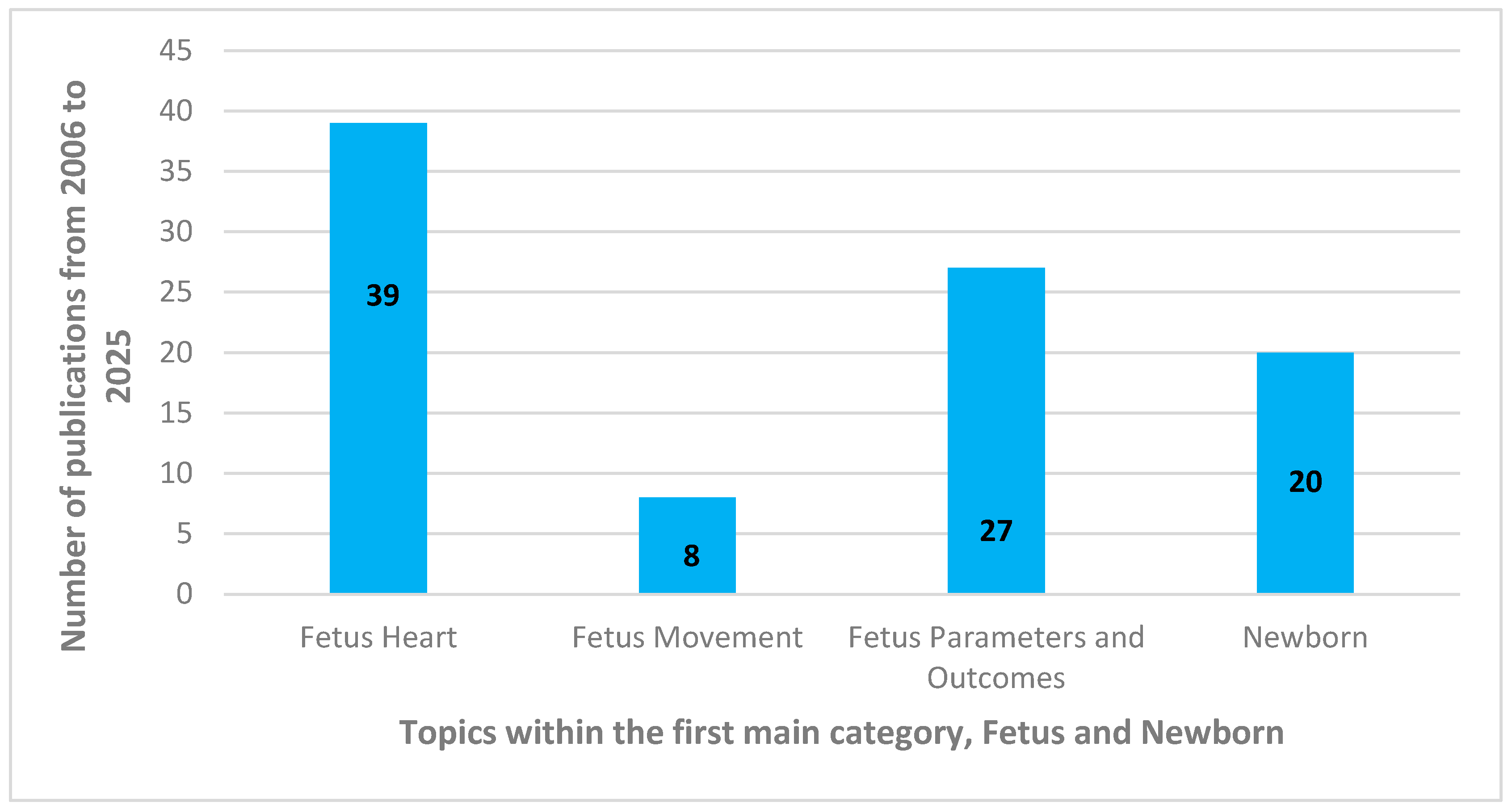
Figure 4 shows the distribution of publications under the Fetus and Newborn main category. The largest subgroup was related to the subcategory Fetus Heart, which included 39 publications (52.00% of the total 75 publications). The second largest subgroup was related to the research on the Fetus Parameters and Outcomes, which included 27 publications (36.00%), followed by newborn-related research, which included 20 publications (26.67%). The least represented subgroup was related to the subcategory Fetus Movement, which included eight publications (10.67%). The results show that physiological monitoring of the fetus, especially its heart rate, was the most investigated research direction.
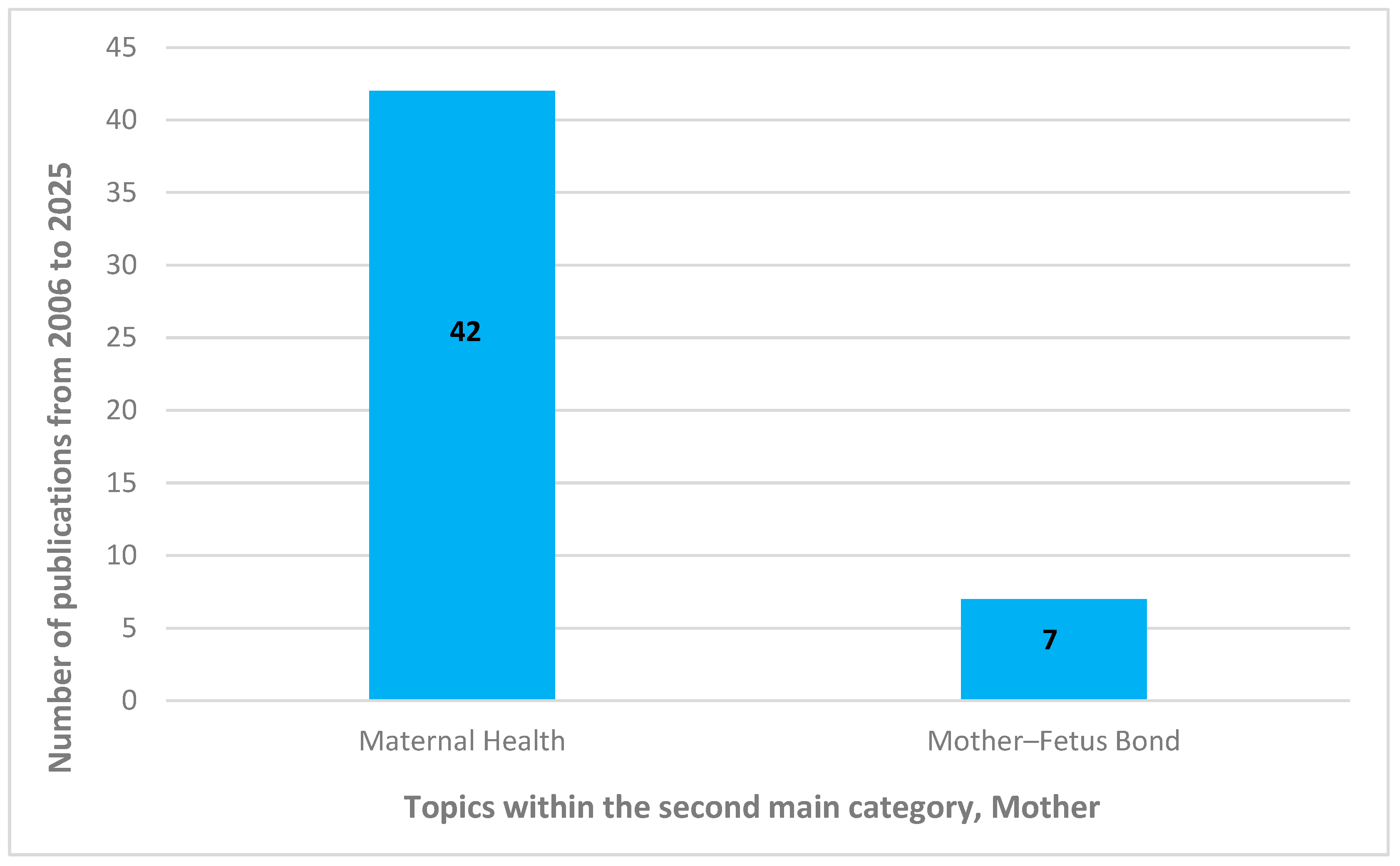
Figure 5 shows the distribution of publications under the Mother main category. Research on maternal health accounted for forty-two publications (56.00%), while research on the mother–fetus relationship accounted for seven publications (9.33%). The results show that maternal health was the main focus of research in this category.
Table 2 presents the assignment of the publications to the auxiliary categories. The table shows how many publications are included in each subcategory, as well as what percentage of the total particular groups represent. The first auxiliary category, Document Type, refers to the type of publication and includes only two self-explanatory subcategories: Article and Review Article. The second auxiliary category, Research Methodology, refers to basic research methodologies used in the literature under examination. It includes five subcategories: Experiment, Literature Analysis, Case Study, Conceptual, and Survey. These subcategories correspond to the following research methods: (1) experiment—if they conducted experiments; (2) literature analysis—if the publication was based on literature; (3) case study—if they developed and implemented something, or showed a real case; (4) conceptual—if they developed some models (e.g., they used linear regression), or developed some concept; and (5) survey—if the publication was based on surveys.
The third auxiliary category enables the presentation of the number of studies grouped by country of publication. As a result, it allows to identify which countries are leading in the studies on the impact of music on the development of the fetus and the newborn.
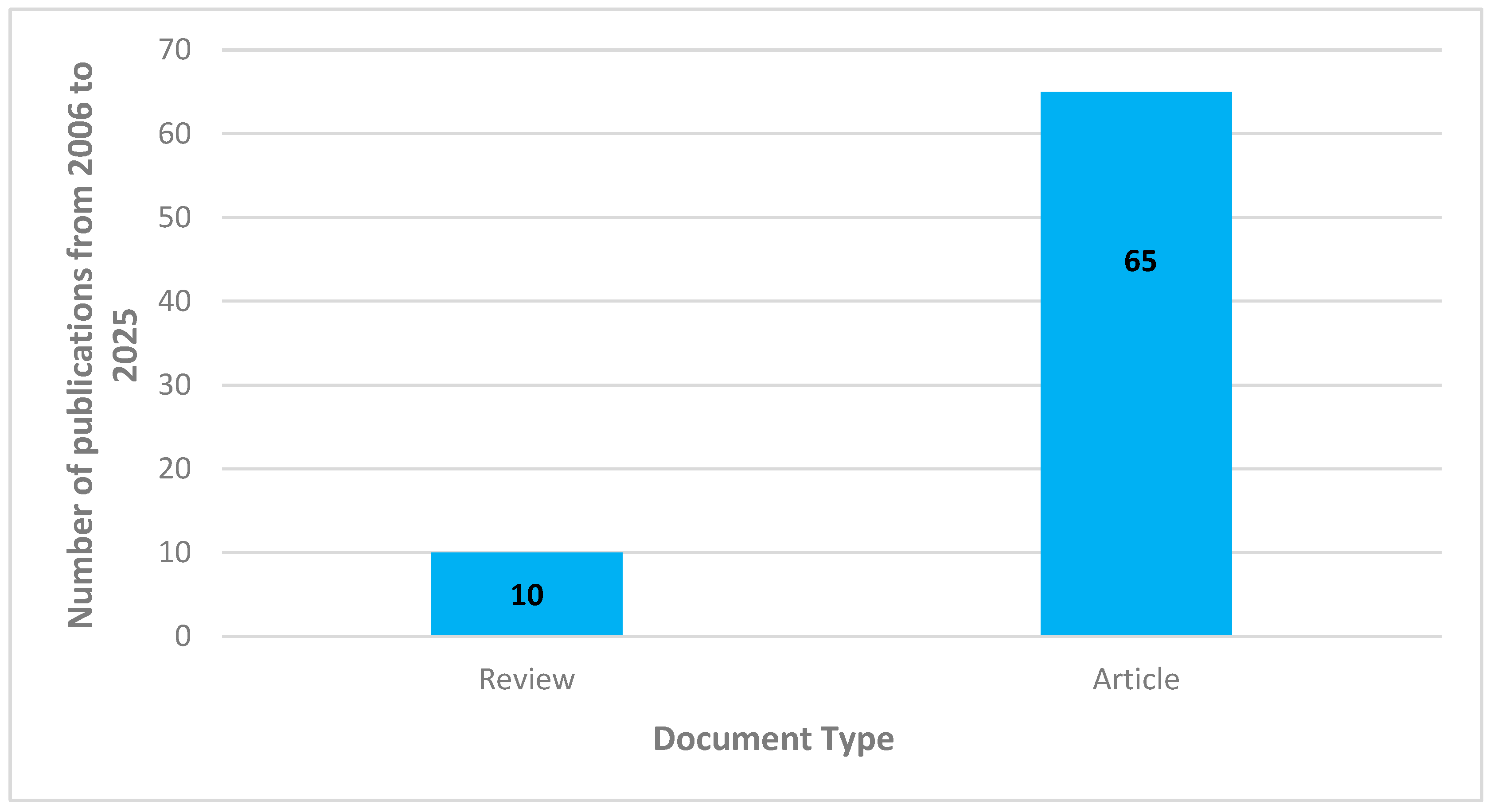
Figure 6 shows a graph presenting the number of publications grouped by Document Type auxiliary category. The study showed that the majority of publications were articles (65, 86.67%), while the rest were review articles (10, 13.33%). This indicates that the dominant form of publication in the given domain of research was the article.
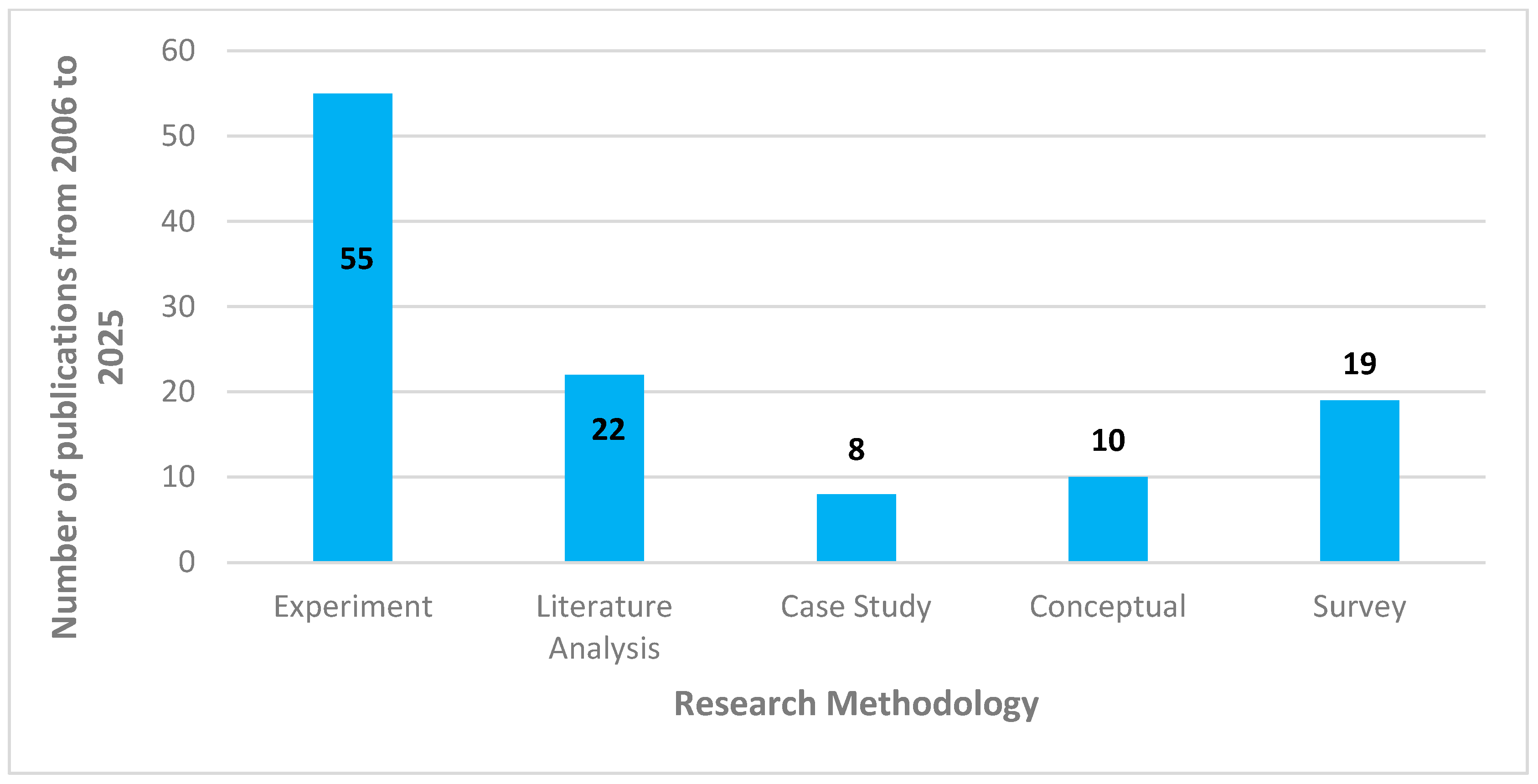
The distribution of publications based on research methodology is shown in Figure 7. The majority of publications were categorized under experimental research methodology, with 55 publications (73.33%) representing research that was based on empirical testing and physiological measurement. The literature analysis comprised twenty-two publications (29.33%), which included reviews of literature that were either narrative or systematic. The research that was based on surveying participants by collecting data through the use of questionnaires comprised nineteen publications (25.33%). Conceptual research that included research models comprised ten publications (13.33%), with eight publications (10.67%) being based on case studies.
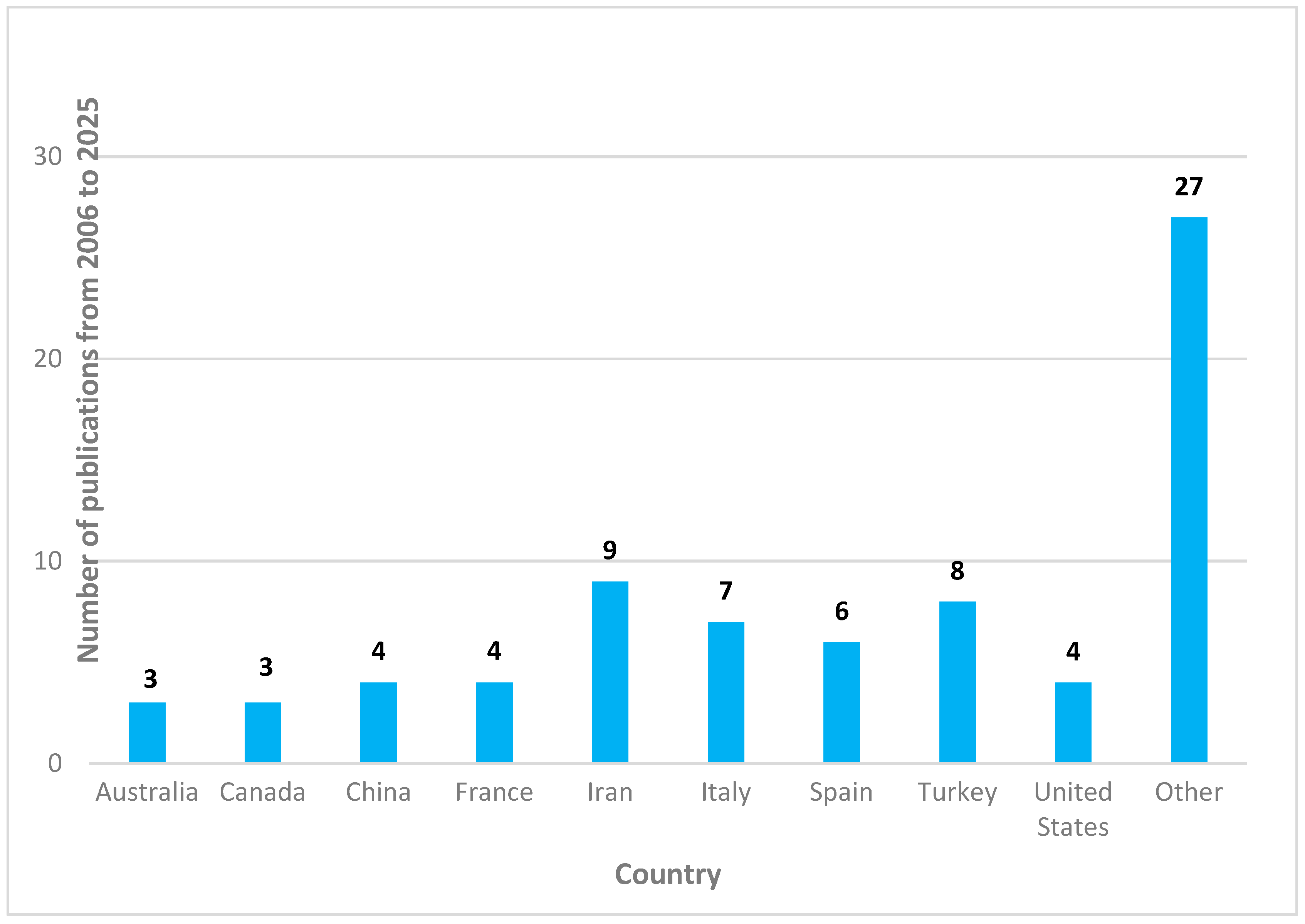
Figure 8 shows distribution of studies by country of publication. The highest number of publications were from Iran (nine publications, 12%), followed by Turkey (eight publications, 10.67%), then Italy (seven publications, 9.33%), and then Spain (six publications, 8.00%). The next countries were China, France, and USA with four publications (5.33%), followed by Australia and Canada with three publications (4%). The Other subcategory comprises twenty-seven publications (36%). It includes other countries that had either one or two publications and were grouped under this subcategory for the sake of clarity in the analysis.
Table 3 shows the number of publications from 2006 to 2025 in a given year. This makes it possible to identify in which years the authors were most productive, and which years resulted in less activity in this area of research.
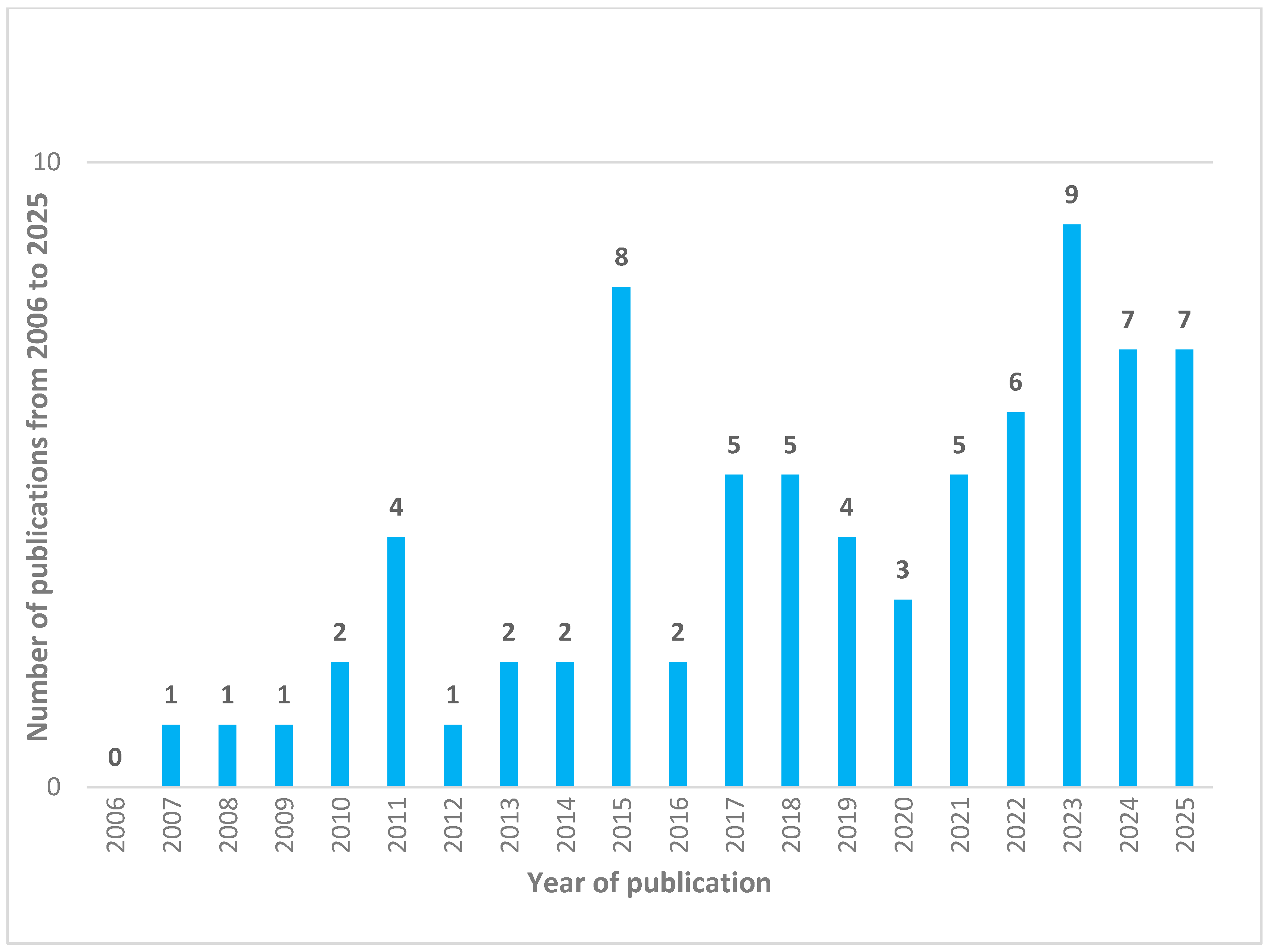
Figure 9 illustrates the patterns of author activity in this field of research from 2006 to 2025. In 2023 there were nine publications (12.00%), while 2015 had eight publications (10.67%). There is also an evident trend of increased publication activity after 2021. This shows that interest in the subject is growing over time. It is also evident that the publication activity varies over the years, which is a natural characteristic of the publication activity in many domains.
The increased interest of scientists in this topic around 2015 was not accidental. It resulted from the overlap of several key discoveries and publications that “pushed” this field into the scientific mainstream. In 2015, important scientific articles (including Pirhadi, 2015 [100]) showed that music can be used as a diagnostic tool to assess fetal well-being, which aroused the interest of gynecologists and obstetricians. Scientists began to publish papers that focused not on “intelligence”, but on the physical development of the brain structures responsible for speech and rhythm. During this period, greater emphasis was also placed on non-pharmacological methods of supporting premature infants [106]. In 2015, the intuition that music helps was met with hard data from modern equipment, which triggered a wave of publications that confirmed theses about early learning and emotional development of the classroom child while still in the school womb [107].
However, the decline in the number of publications in 2020 was a phenomenon that affected many areas of clinical research, including the impact of music on fetal and neonatal development. This was not due to a decrease in interest in the topic, but rather to logistical and ethical barriers caused by the COVID-19 pandemic [108].
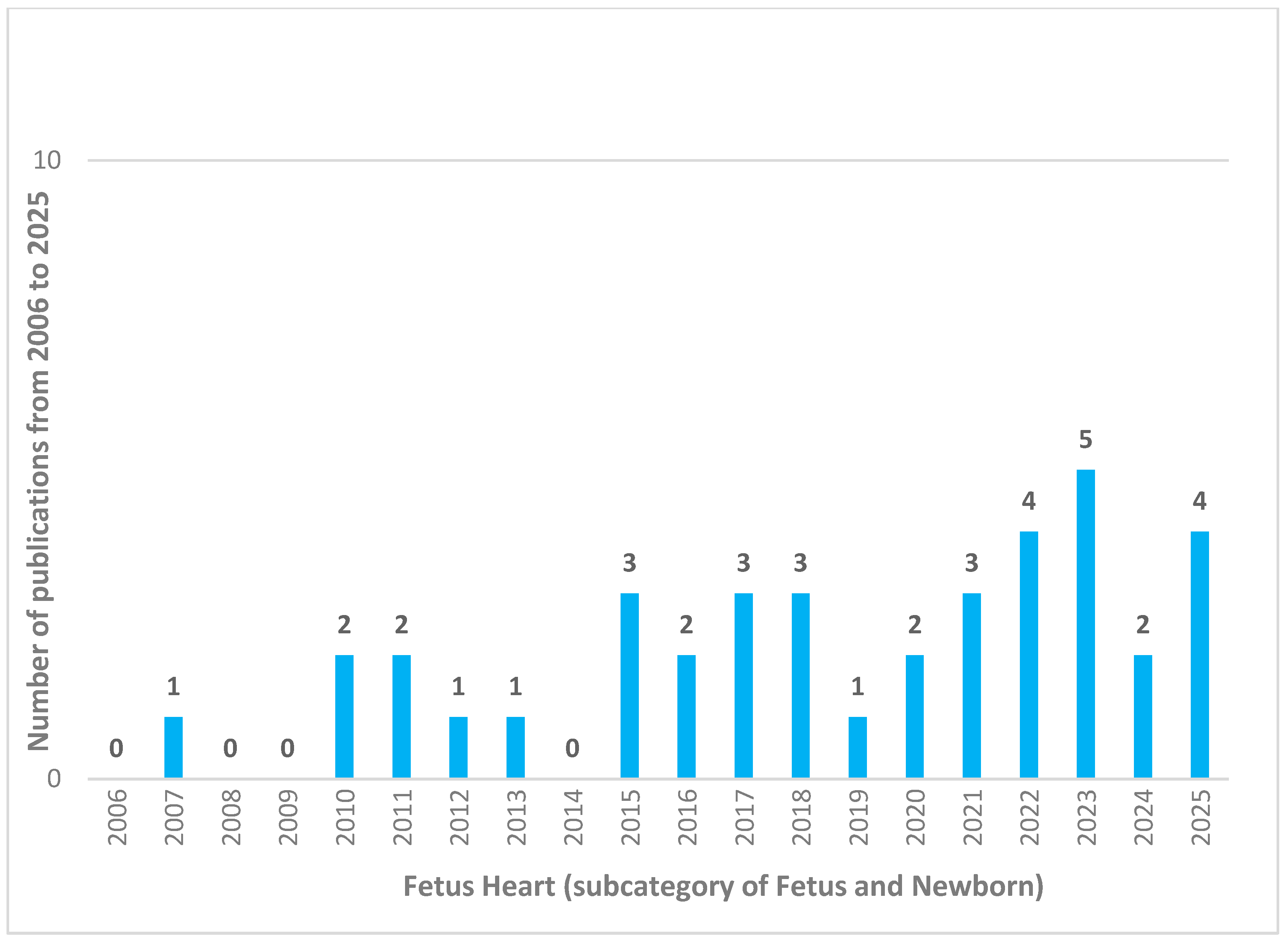
Figure 10 illustrates publication trends between 2006 and 2025 in the field of fetus heart research. It clearly shows that in the second decade there was an upward trend in publication activity. This indicates a growing interest in fetus heart research over time.
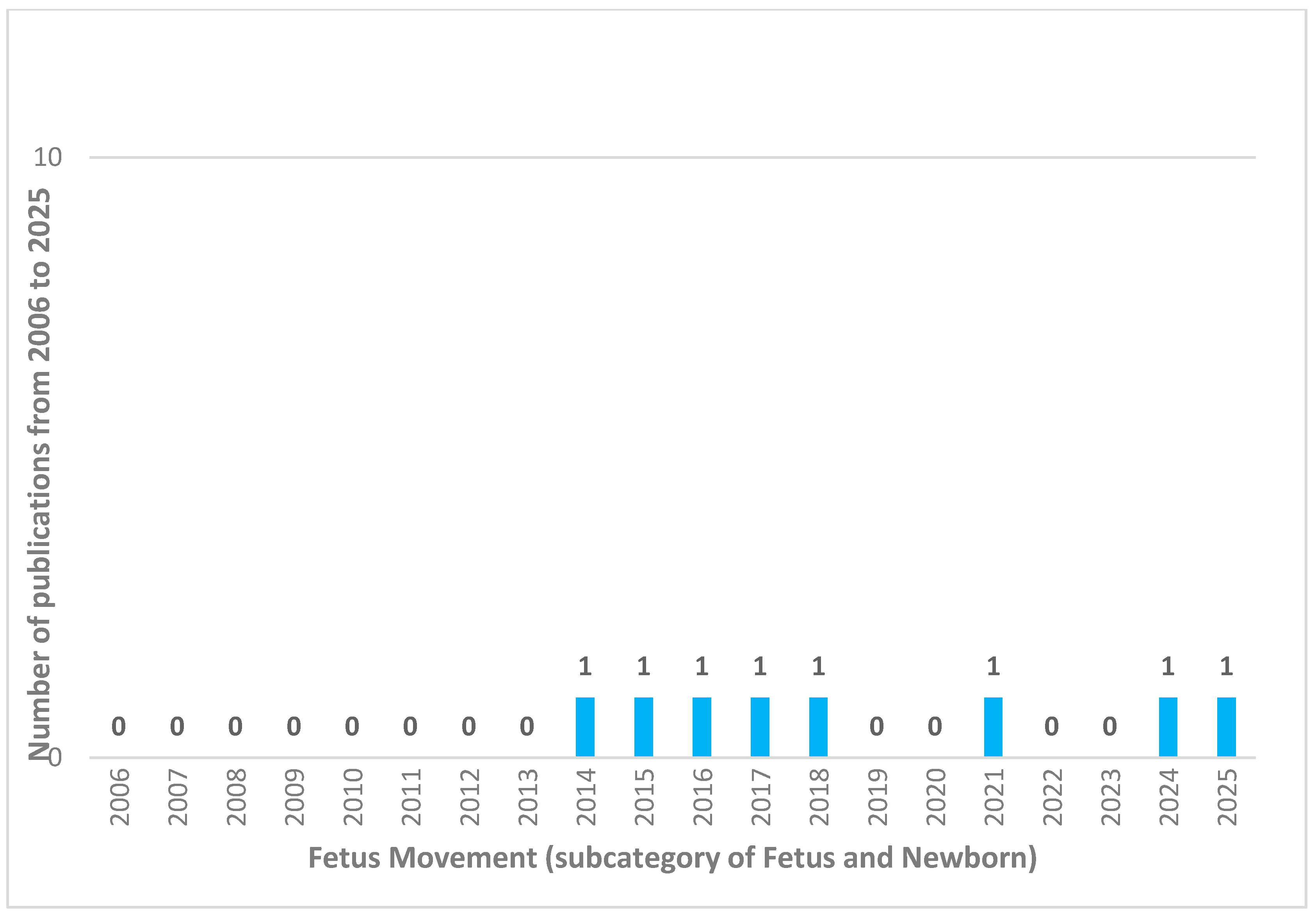
Figure 11 illustrates publication trends in the field of fetal movement research. It is clear that the publication trend in this subject has remained stable for seven years, with one publication in 2014, 2015, 2016, 2017, 2018, 2021, 2024, and 2025, while there were no publications in the remaining 13 years.
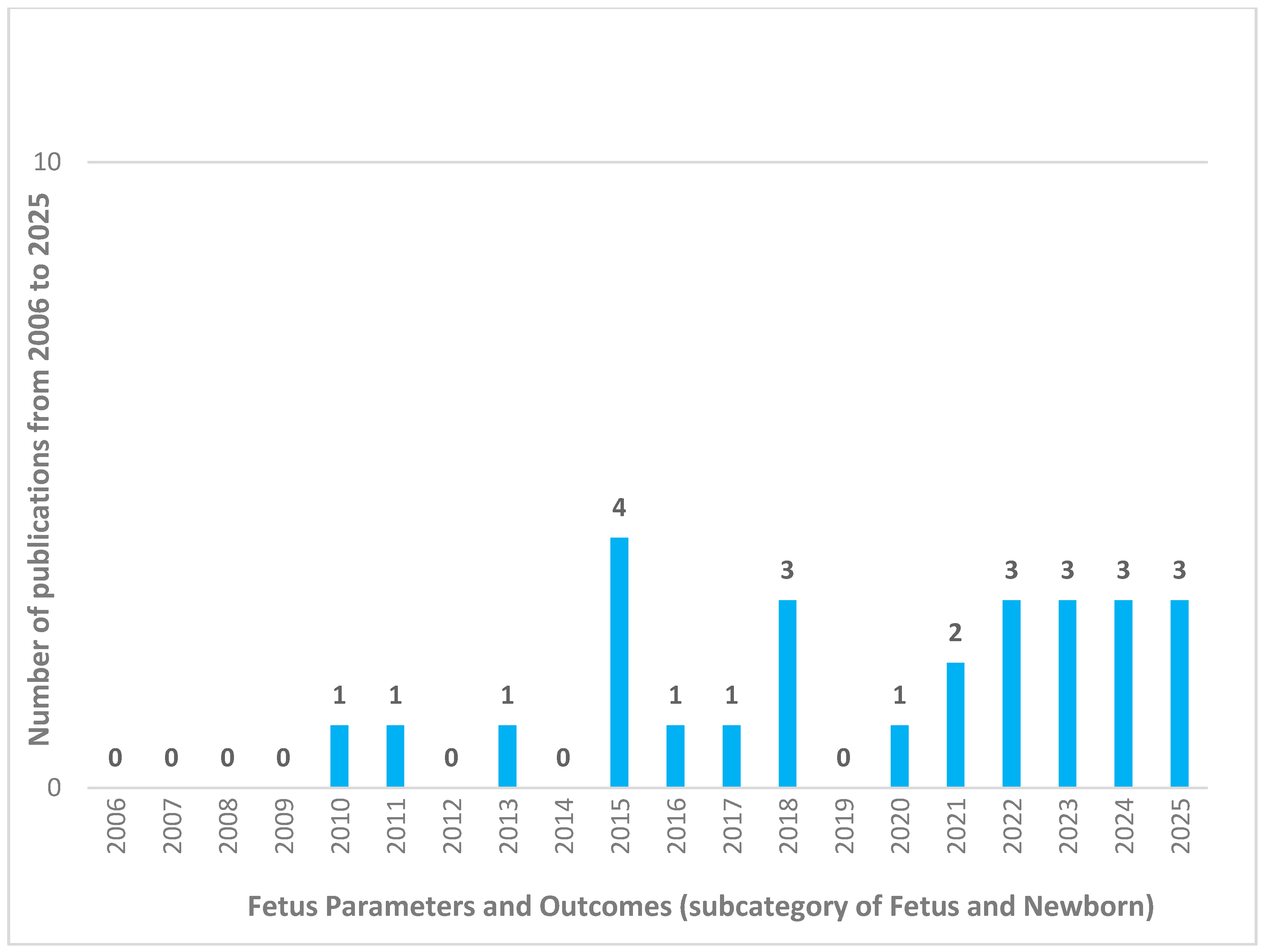
Figure 12 shows publication trends in the field of fetal parameters and outcomes. It can be seen that the highest number of publications was four in 2015. Since 2020, there has been an upward trend, and for the last four years, the publication rate has remained stable at three.
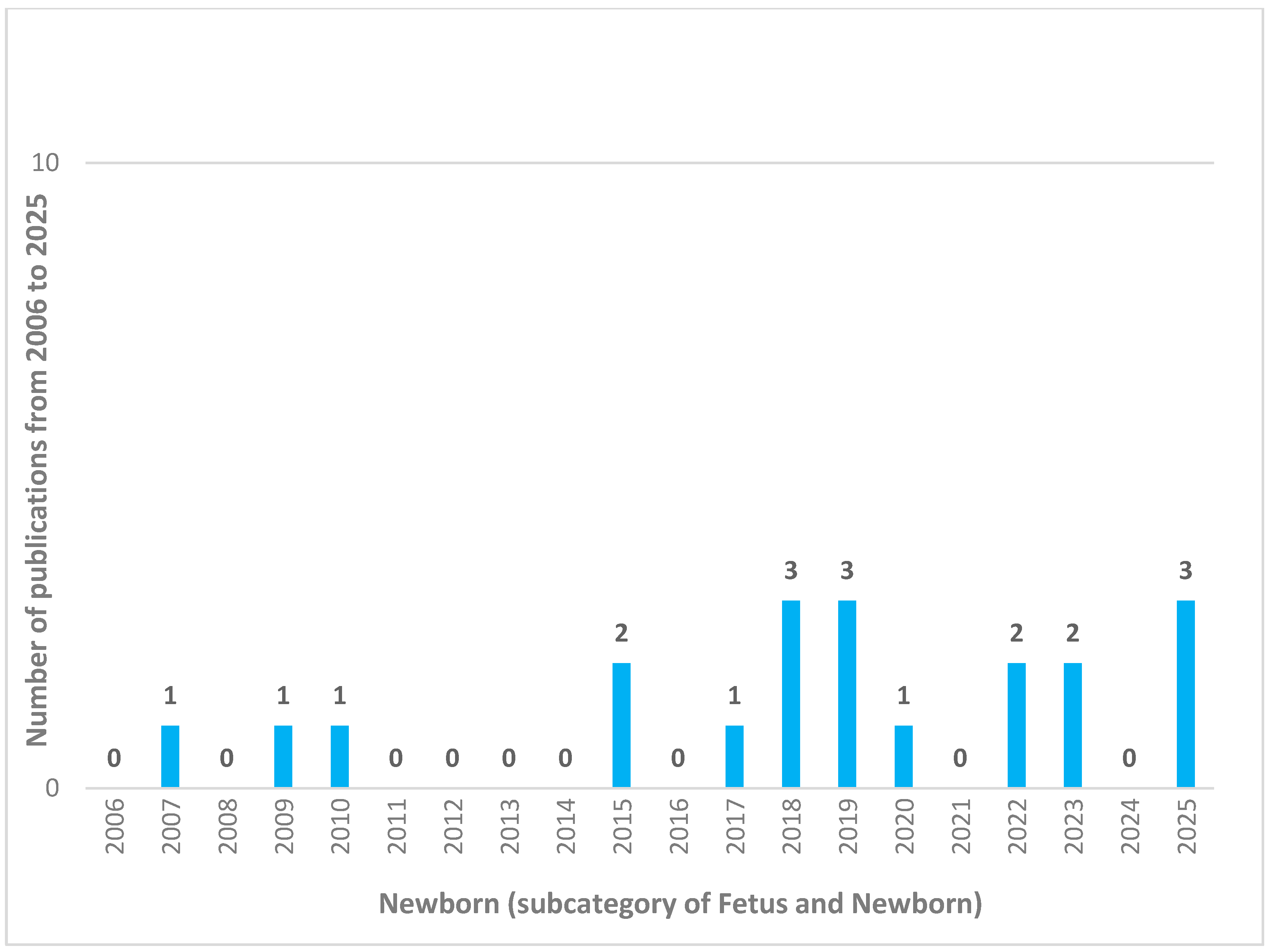
Figure 13 shows changes in publications related to newborns. The highest number of publications was in 2018, 2019, and 2025, with three each, while in 2015, 2022, and 2023 there were two each. For 5 years there was one publication, and for 9 years there were none.
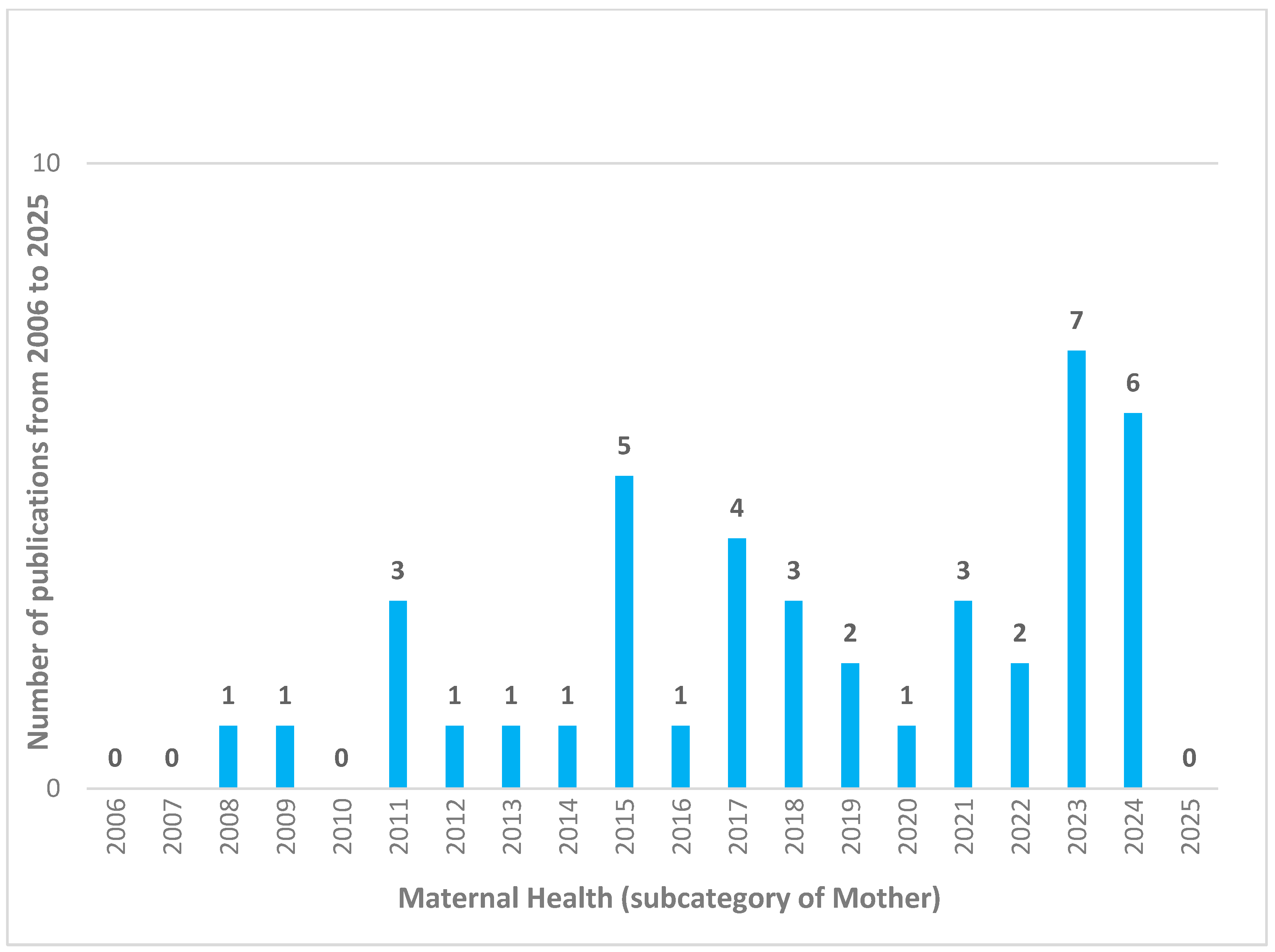
Figure 14 illustrates publication trends related to the health of pregnant women. The highest number of publications was recorded in 2023 (seven articles), followed by 2024 (six articles).
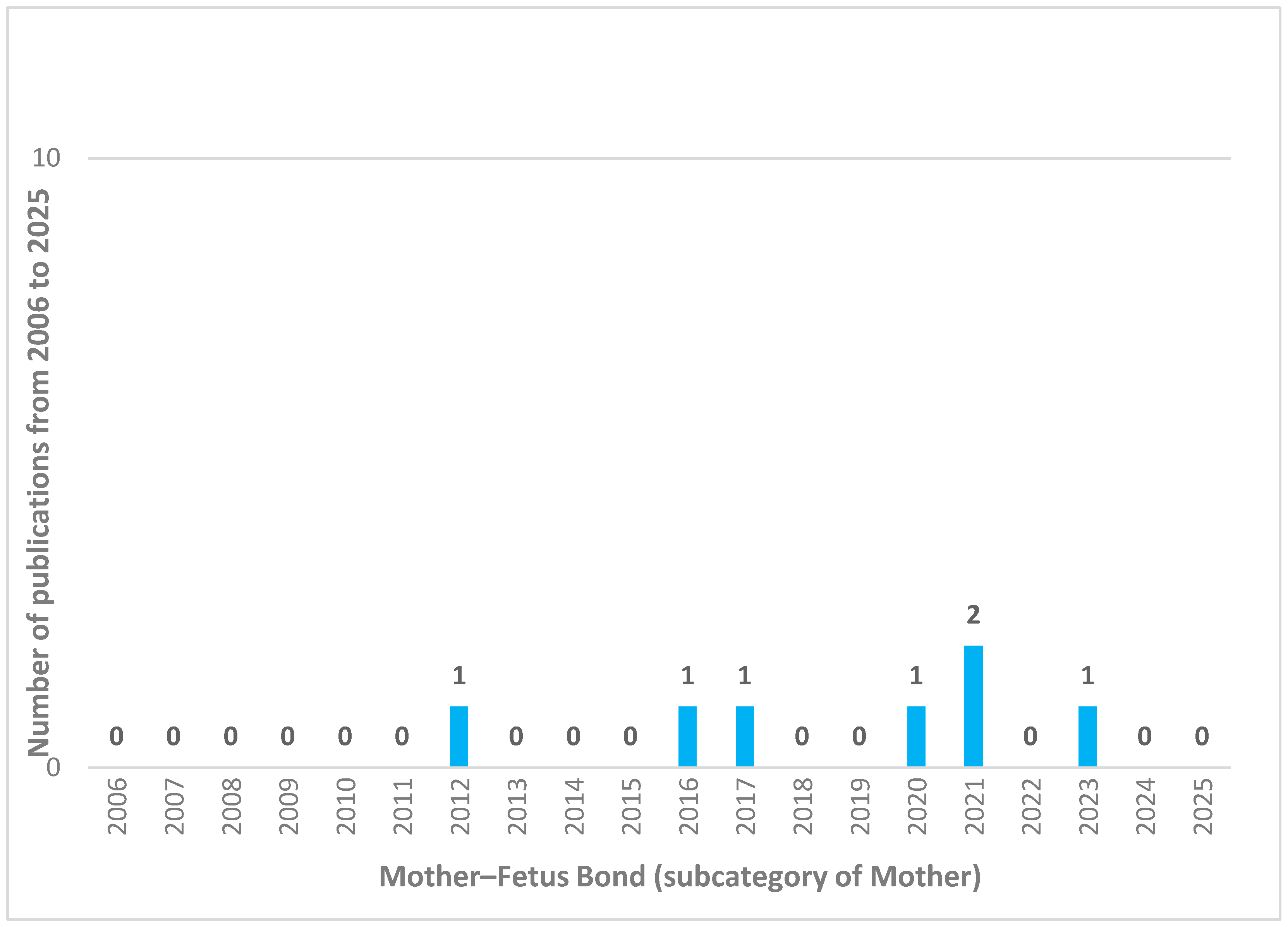
Figure 15 illustrates publication trends related to the bond between mother and fetus. The highest number of publications was recorded in 2021 (two articles), followed by one each in 2012, 2016, 2017, 2020, and 2023. In the remaining years, there were zero publications on this topic.
When analyzing statistical data on publications, it is also worth considering which journals were the most popular among authors and which studies became the most influential in this field of research. The journals in which the most publications appeared are the following: Journal of Maternal–Fetal and Neonatal Medicine (six publications), International Journal of Environmental Research and Public Health (three publications), Musicae Scientiae (three publications), and journals under the Multidisciplinary Digital Publishing Institute (three publications). The top ten most frequently cited works, thus the most influential ones, were (1) Graven et al., 2008, 171 citations [53]; (2) Filippa et al., 2013, 130 citations [71]; (3) Granier-Deferre C. et al., 2011, “A melodic…”, 110 citations [30]; (4) Persico et al., 2017, 88 citations [72]; (5) Granier-Deferre C. et al., 2011, “Near-term fetuses…”, 85 citations [83]; (6) Qiu J. et al., 2017, 78 citations [59]; (7) Mörelius et al., 2016, 64 citations [48]; (8) Kafali et al., 2011, 60 citations [60]; (9) Chang H. et al., 2015, 57 citations [101]; and (10) Krueger C. et al., 2010, 53 citations [42].

3.2. Bibliometric Analysis

This section includes the results of the bibliometric analysis, utilizing the visualizations obtained using the VOSviewer software. The analysis in this section is based on the thematic structures and collaborative networks in the literature under study. Firstly, in Section 3.2.1 the keyword co-occurrence network analysis is discussed, based on the prominent research themes in the literature. Secondly, in Section 3.2.2 the co-authorship network analysis of all the authors is discussed, based on the collaborative networks in the literature. Finally, in Section 3.2.3 the co-authorship network analysis of the top 20 most productive authors is discussed, based on the prominent research clusters in the literature.

3.2.1. Keyword Co-Occurrence Network

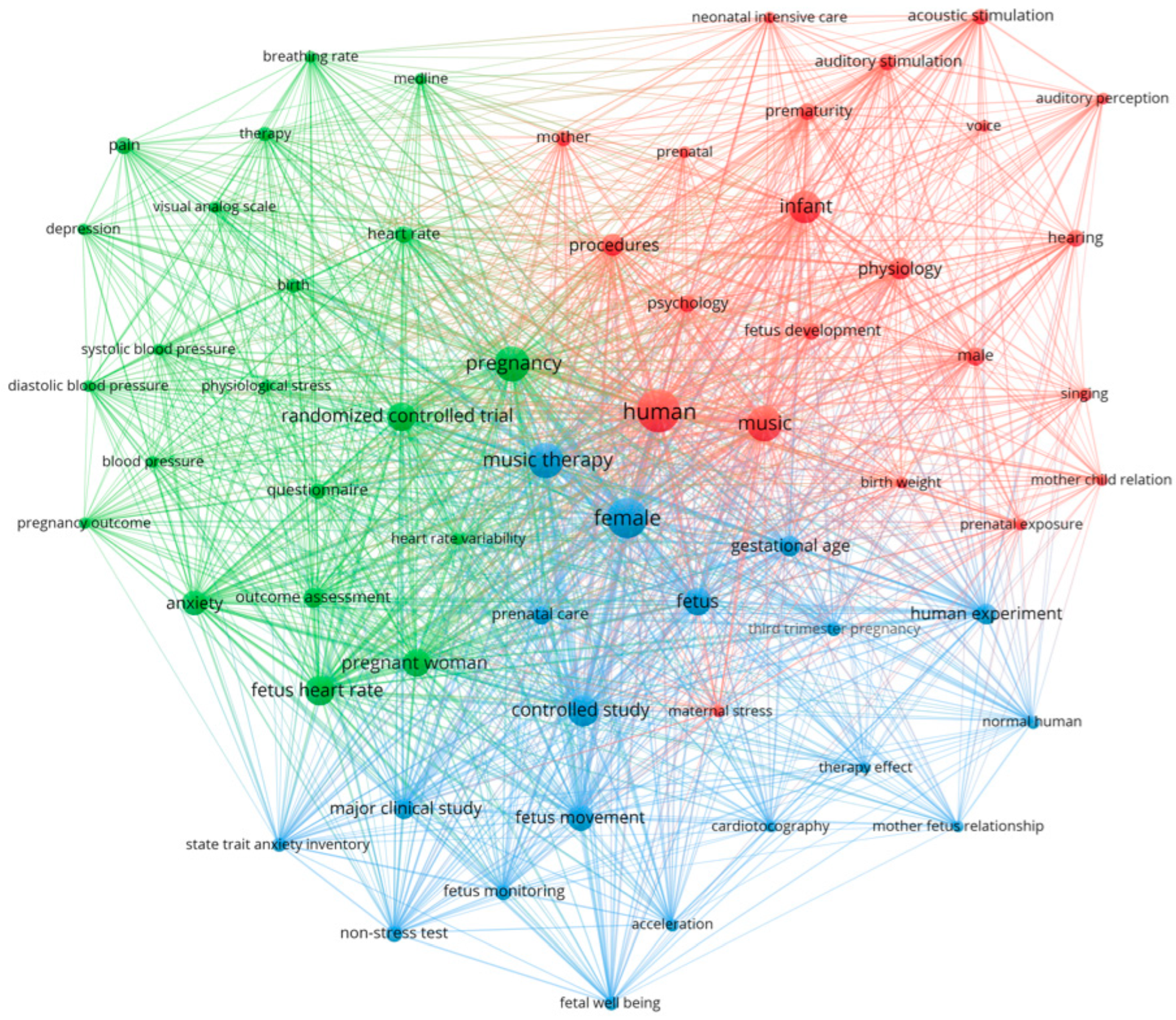
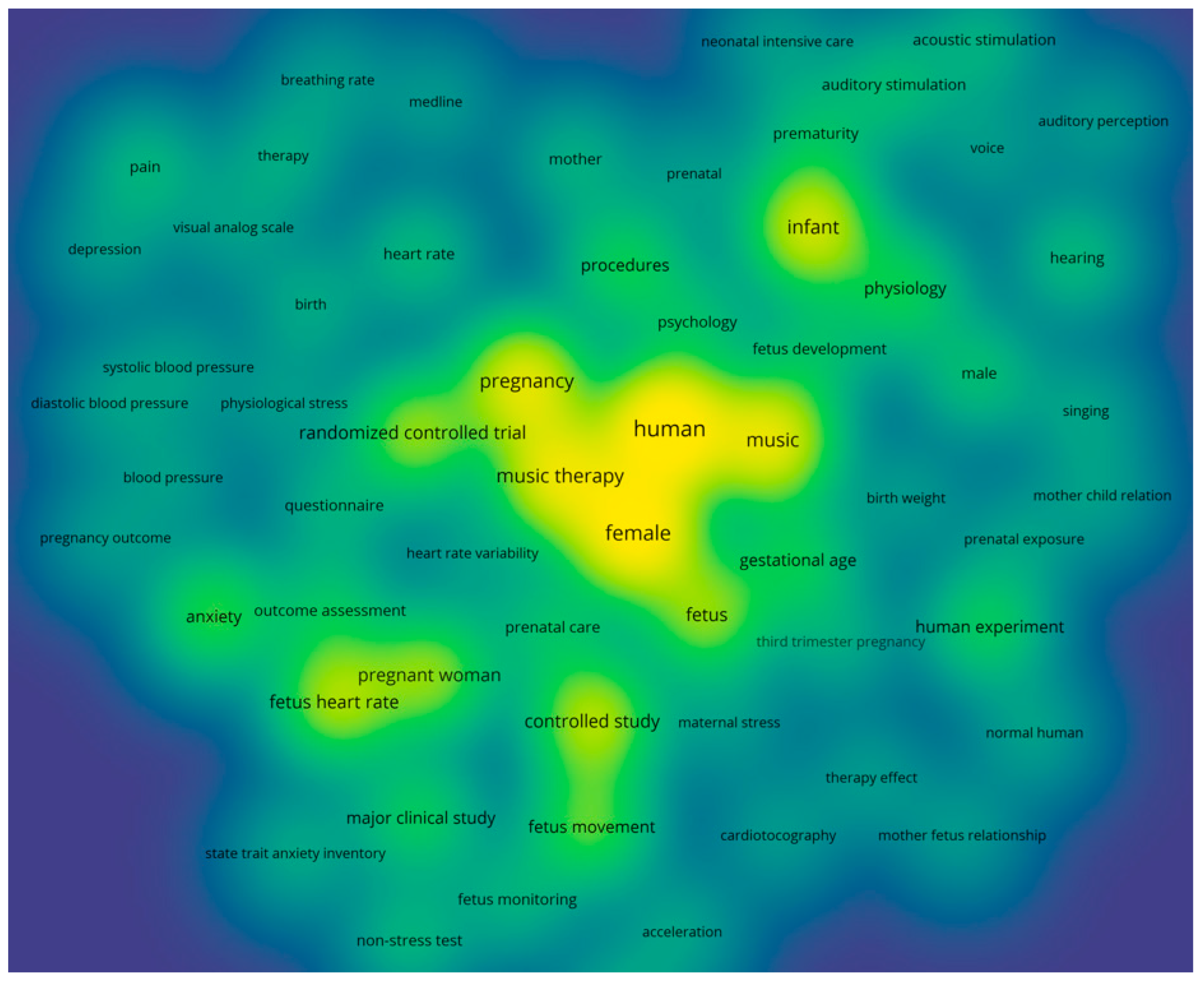
The keyword co-occurrence network generated using VOSviewer is presented in Figure 16, while the corresponding density visualization is shown in Figure 17. The density visualization reveals a prominent area of strongly interconnected nodes, indicating the common research interest underlying the analyzed literature. Three major thematic clusters are recognizable, indicating the physiological, clinical, and therapeutic aspects of the impact of music on fetal and neonatal development. The central and most prominent node of the network is the keyword “human”, which exhibits the highest total link strength (TLS = 708) and one of the highest occurrence values (58). This underlines the strongly human-centered nature of the analyzed literature, emphasizing the preponderance of clinical and experimental studies performed on humans. The strongly interconnected nodes of the keyword “human” include “music” (TLS = 444), “female” (TLS = 645), “pregnancy” (TLS = 501), “music therapy” (TLS = 510), and “infant” (TLS = 324), integrating the topic of auditory stimulation with the health of the mother, the fetus, and the infant. The ranking of the centrality measure also underlines the strongly human-centered nature of the topic, with the top five nodes including “human”, “female”, “music therapy”, “pregnancy”, and “music”.
The first thematic cluster (in red color) represents the literature focusing on the topic of auditory stimulation and the physiological responses of infants and newborns. The most prominent nodes of the first cluster include the keyword “human”, “music”, “infant”, “physiology” (TLS = 206), and “procedures” (TLS = 229). The second cluster (green) deals with clinical aspects of pregnancy and maternal health. Important nodes in this cluster include “pregnancy”, “randomized controlled trial” (TLS = 371), “pregnant woman” (TLS = 338), “fetus heart rate” (TLS = 385), and “anxiety” (TLS = 262). This cluster shows the dominant use of controlled clinical trials in assessing the efficacy of music-based interventions in reducing maternal stress and monitoring fetal health. The third cluster (blue) deals with fetal health and therapeutic interventions. Important nodes in this cluster include “female” (TLS = 645), “music therapy” (TLS = 510), “controlled study” (TLS = 411), “fetus” (TLS = 311), and “fetus movement” (TLS = 274). These nodes reiterate the dominant use of clinical interventions in assessing the efficacy of music-based interventions. Furthermore, the position of “music therapy” as an important bridging node between the two clusters shows its potential in linking maternal stress and fetal health studies. Some nodes, however, show lower TLS and are positioned on the fringes of the network. These include “voice” (TLS = 39), “auditory perception” (TLS = 61), “prenatal exposure” (TLS = 63), and “visual analog scale” (TLS = 78). These nodes may be considered as new and not well-integrated areas of research in the domain of prenatal music studies.
One interesting finding in the analysis is the keyword “maternal stress”, which is part of the red cluster but closer to nodes in the blue cluster. This shows the bridging potential of “maternal stress” between infant health studies and therapeutic interventions, which is characteristic of prenatal music studies. It should be noted that total link strength reflects structural connectivity within the network rather than the intrinsic scientific importance of individual keywords. The keyword “human” plays an important role in the co-occurrence network, and this further points to the human-centered approach taken in the literature under analysis. This, in turn, points to the fact that the literature on the effects of music during the prenatal and neonatal stages is primarily aimed at directly addressing the clinical, physiological, and psychological effects on human beings. Hence, there has been an emphasis on human-centered effects in the literature under analysis, as revealed in the following sections. This observation provides a conceptual bridge between the quantitative bibliometric analysis and the qualitative discussion of human-centered outcomes presented in Section 4.

3.2.2. Co-Authorship Network of All Authors

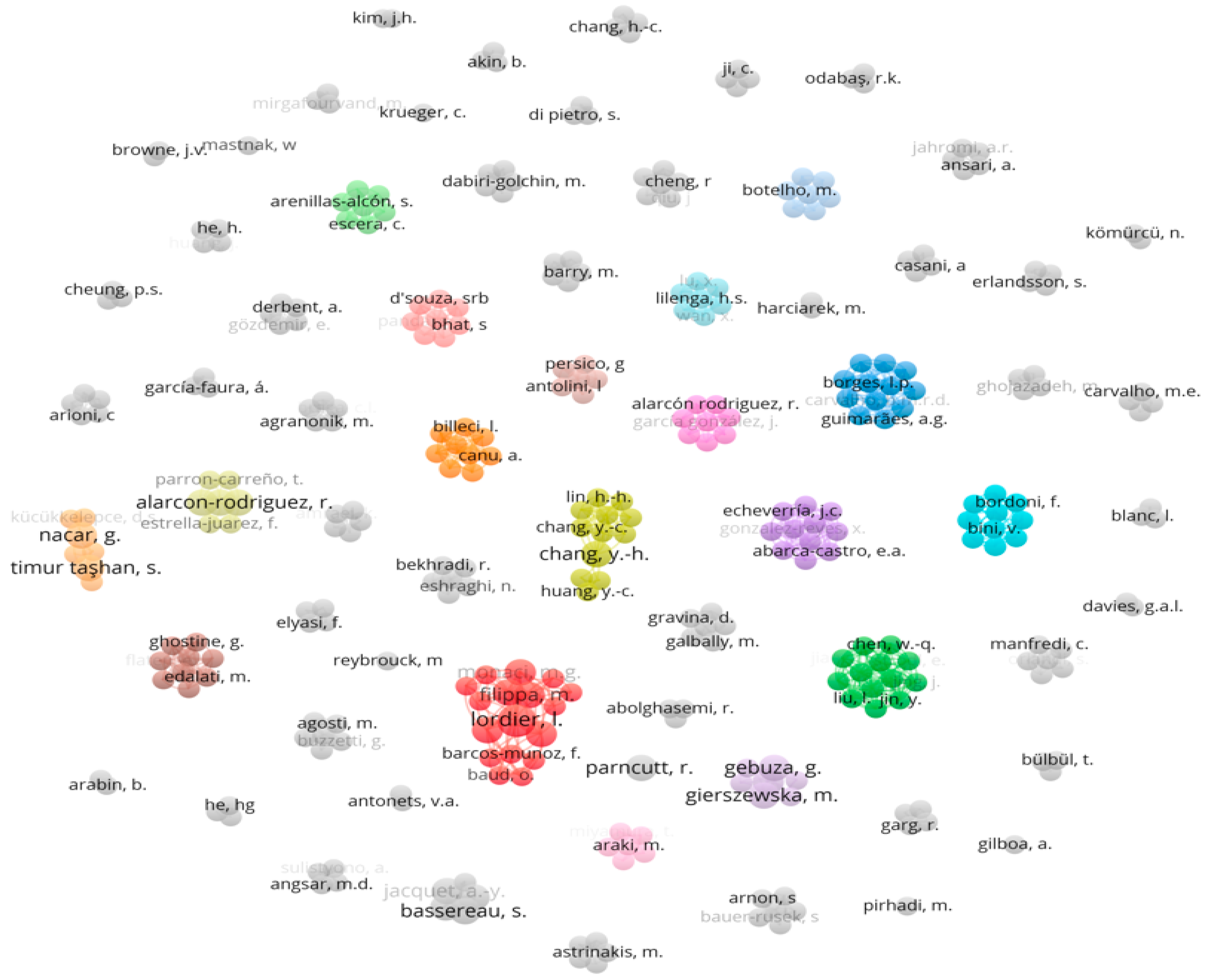
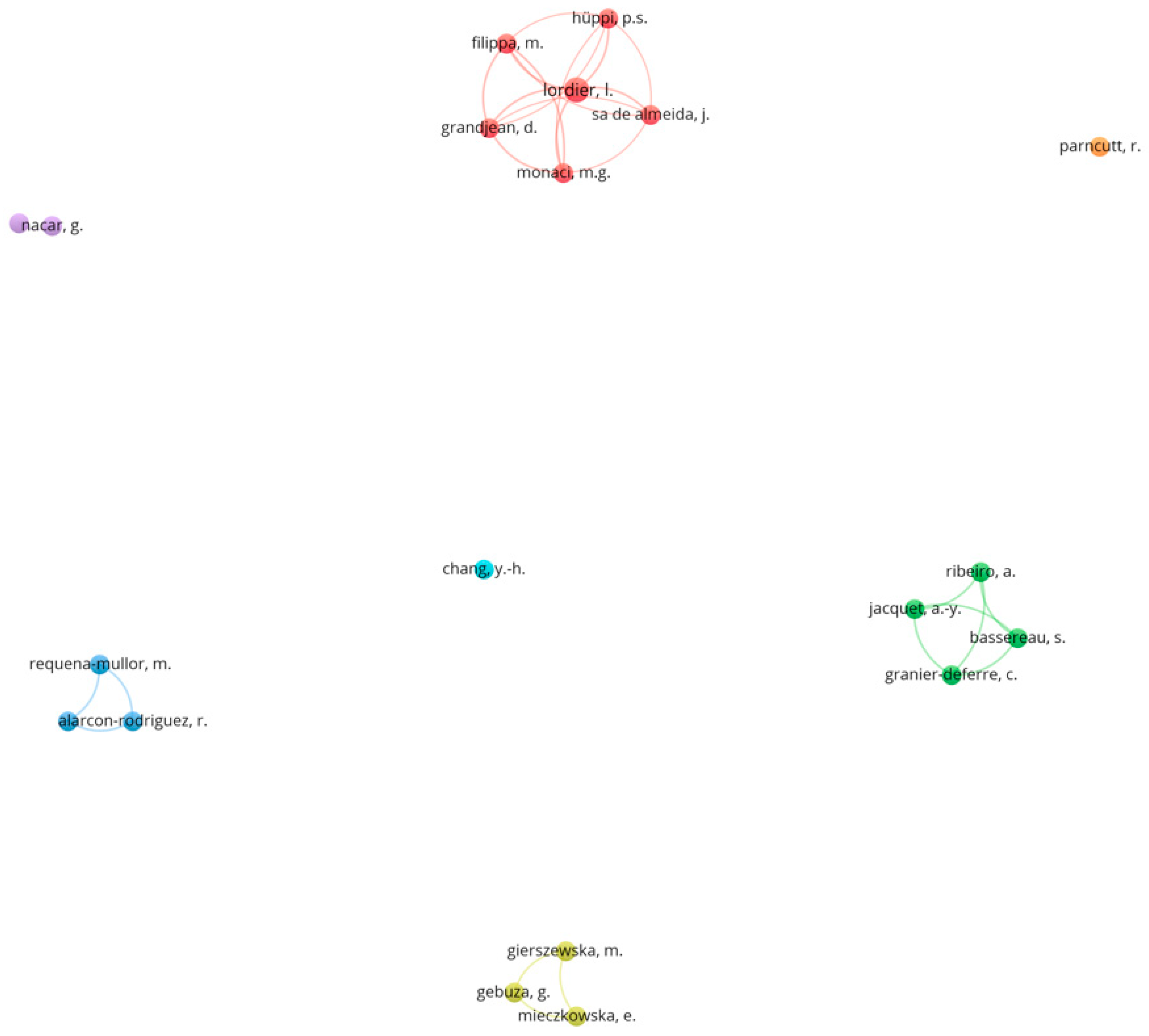
Figure 18 shows the network of co-authorship of all authors. The co-authorship network illustrates the overall structure of scientific collaboration within the analyzed research field. The co-authorship structure consists of 334 authors distributed across multiple small clusters, indicating a highly fragmented collaboration pattern. This shows a highly distributed model of cooperation. Research partnerships are usually relatively rare. This is indicated by the low number of documents and the value of the total strength of links. The vast majority of authors contributed to the creation of only one publication. Only a small number of researchers were involved in more than one study. No dominant centers were observed. There is a lack of integration between research teams and limited cross-country and cross-domain collaboration, due to the limited number of links between clusters. It is noted that this field is characterized by small research teams that work independently. A joint global research network has not yet been established, despite the growing interest in the subject.

3.2.3. Co-Authorship Network of the Most Productive Authors

Based on the network of co-authorship of the 20 most productive authors, the structure of collaboration in this field is noticeable in Figure 19. Among the most influential and largest nodes is Lordier, L., which has the largest number of three publications and the largest total link strength of 10—this indicates a central role in collaborative research within this domain. This researcher is strongly associated with Filippa, M., Hüppi, P.S., Grandjean, D., Monaci, M.G., and Sa de Almeida, J., thus forming a major collaboration cluster. The second group of cooperation consists of representatives of Bassereau, S., Granier-deferre, C., Jacquet, A.-Y., and Ribeiro, A., and thus shows another stable research team. Among the people who form smaller teams are such authors as Alarcon-Rodriguez, R. and Requena-Mullor, M., as well as Gebuza, G., Gierszewska, M., and Mieczkowska, E., which indicates less local cooperation. The limited collaborative network includes authors such as Parncutt, R., and Chang, Y.-H., who are productive researchers and are without co-author connections. The co-authorship network shows that the most productive researchers concentrate their work in small groups and the process of creating a connected community has not been observed.

4. State of the Art

The thematic areas identified through the bibliometric analysis presented in Section 3 provided the basis for structuring the qualitative review performed below. Music has served a variety of functions for centuries, including expressing emotions, spiritual support, and therapeutic applications. In recent years, there has been much discussion about the impact of music on the development of life from conception to birth and its impact on pregnant women. A growing body of research suggests that music not only influences the developing fetus, but also plays an important role in the physical and mental health of the mother during pregnancy and the postpartum period. This section focuses on presenting the current state of knowledge in this field by conducting a qualitative analysis of the publications selected for review in the context of two main categories of study classification identified in Section 2, namely, (1) Fetus and Newborn, and (2) Mother. Examining the literature within these thematic groups provided two important and unique (albeit naturally closely related) insights on the issues under consideration, namely from the perspective of (1) the developing fetus and the newborn and (2) the pregnant woman (including one month after giving birth). Section 4.1 inspects the impact of music on the fetus and the newborn. Therefore, it concerns the development during the fetal and neonatal periods. In the first moments of life, an infant is very sensitive to environmental stimuli, including musical sounds, which is why the research carried out during this period is so important. Section 4.2 is primarily devoted to the mother, and the topics discussed in it concern her mental and physical health, as well as building a bond with the fetus. It is worth considering issues such as the impact of music on the mother’s condition and the course of pregnancy, as well as the correlations between her health and fetal development. Finally, Section 4.3 provides an additional perspective on the issues discussed from the point of view of neurobiology.

4.1. Fetus and Newborn

This section describes the effects of music on both the fetus and the newborn, especially regarding their development. It is divided into four subsections, according to the subcategories defined within the first main category of study classification, namely, (1) Fetus Heart, (2) Fetus Movement, (3) Fetus Parameters and Outcomes, and (4) Newborn. Each of these subsections analyzes the literature from a different perspective. Section 4.1.1 describes the current state of knowledge in light of the influence of musical sounds on the heart of the fetus. It covers health parameters such as heart rate, whose changes may indicate stress, relaxation, or experiencing certain external stimuli. Next, Section 4.1.2 examines the effects of music and singing on the movement of the fetus. Then Section 4.1.3 discusses the parameters and outcomes of the fetus during the use of music therapy and external stimuli. Finally, Section 4.1.4 investigates the studies in the context of the influence of music on the newborn, that is, during the neonatal period of the infant’s life.

4.1.1. Fetus Heart

Granier-Deferre et al. [30] highlight the development of fetal hearing in the last trimester of pregnancy and the ability of fetuses to distinguish and remember sound characteristics. Examinations involved monitoring fetal cardiac responses. Furthermore, experiments on changes in infant heart rate after prenatal exposure to music were conducted. The experiments showed, among other things, that exposure to a specific melody affects the infant’s autonomic nervous system and causes a slowing of heart rate. He et al. [35] present research results on the effects of music on fetal heart rate and movements obtained using Doppler ultrasound. Lee et al. [93] describe a systematic review and analysis of the influence of music therapy on the fetus, particularly on fetal heart rate and movements.
The studies described in [60,70,71,75,76,95,96] demonstrate positive changes in cardiotocographic parameters, heart rate, increased fetal movements, and improved fetal heart rate variability due to the influence of music. In particular, classical compositions of Mozart and Strauss stimulated these positive changes. Such a treatment can function as non-invasive, cost-effective, and supportive prenatal therapy. The authors emphasize the role of music in improving fetal well-being and the development of a fetal nervous system.
Wan et al. [67] present the beneficial effect of listening to music on the heart response in the third trimester of pregnancy. Gebuza et al. and Poćwierz-Marciniak et al. [96,97] describe clinical studies showing that classical music and vibroacoustic stimuli have a favorable effect on cardiovascular parameters, particularly fetal heart rate variability, as well as on increased fetus movements. In addition to supporting early cognitive functions, music therapy is crucial for the mental and physical development of the fetus.
Research on the impact of music on physiological parameters, particularly in premature infants, have demonstrated that musical stimuli can enhance neurophysiological responses, mitigate stress symptoms, and stabilize the heart rhythm of fetuses and neonates. Studies have shown that music therapy in the Neonatal Intensive Care Unit (NICU) can have long-lasting positive effects on the brain and heart by positively influencing heart rate and synchronizing brain activity responsible for responding to auditory stimuli [31,33,36,46,48,61,62,79].
Methods for measuring fetal heart rate and how it changes during cardiotocography (CTG) in response to auditory stimuli are described by Kisilevsky et al. and Movalled et al. [54,102]. Music administered as prenatal stimulation induces positive changes in the fetal heart, such as better responsiveness and heart rate regulation, suggesting that it may be used as a non-invasive intervention to maintain fetal health [56,90,103].
Clinical studies in pregnant women have evaluated the effects of music on NST, which monitors the heart rate of the fetus and cardiac patterns. The results indicate that prenatal exposure to music can improve fetal heart rate and increase heart response to stimuli, suggesting ameliorated cardiac health and reduced fetus stress during labor [34,64,66,86,90,95,96]. Music, especially relaxation music, also lowers maternal stress and anxiety, which translates to more favorable parameters of fetal heart function. The fetus responds with increased stability and minimized variability of negative deviations in heart rate, e.g., with more regular heartbeats, which is beneficial for the fetus’ development and well-being [30,39,47,59,64,74,82,84]. In refs. [46,72,89,95], the focus was on the impact of music during prenatal examinations on reducing stress in women, leading to positive changes in fetal heart rhythm, demonstrated, among other things, by better CTG indicators.
Despite conflicting findings, systematic reviews looking at how music affects fetal cardiac parameters have found that music may increase positive fetal cardiac responses and stabilize heart rate. Carefully planned research is required to validate these effects and identify the best features of musical-stimuli-based therapies [31,57].

4.1.2. Fetus Movement

Studies examining the effects of music on fetus movement have shown that fetuses respond to familiar music by increasing their motor activity during listening sessions, especially when previously exposed to the same music. Increased fetus movement is associated with a positive response to acoustic stimuli and can indicate sensory learning and adaptation processes that occur prenatally [45,77].
Other publications show that music and musical interventions used during pregnancy can increase the frequency and quality of fetus movements during CTG monitoring. These movements are associated with cardiovascular responses, suggesting complex mechanisms by which music stimulates the nervous and motor systems [82,99].
The research also addresses the question of how the presence of music affects fetal education, where a Doppler fetal monitor was used to track heart rate between 30 and 38 weeks of gestation. During the analysis, it was checked what the fetal movements would look like in the case of known and unknown pieces of music. The results showed that singing to pregnant women allows their fetuses to stabilize fetal movements [95,96].
A healthy environment before birth is crucial to the psychological development of a fetus. Gilboa [91] presents a review of data in relation to classical psychological theory and the fetal response to music. The use of music therapy is important in the therapeutic process. Mastnak and Gilboa [86,91] illustrate how Mozart’s music can be delivered directly to the fetus, altering its arm movements. Mother’s health, specifically her relaxed and energized state, also contributes to this effect.

4.1.3. Fetus Parameters and Outcomes

Other studies also examined the impact of Mozart’s music on fetal development. The results showed that direct presentation of music to the fetus can affect its response and well-being to some extent, but further research is required on specific strategies for music therapy [75,93,100].
Several publications investigated the influence of vaginal music on fetal facial expressions [33,52,69]. It turned out that as early as the sixteenth week of pregnancy the fetus reacts to sounds, by moving the mouth or sticking out the tongue. As a result, it can be used for prenatal hearing tests. Various types of comparative analysis of music signals and ultrasound are used to study the reactions of the fetus.
Some articles also indicate that music affects the neurological development of premature infants and helps change fetal movements. Short daily music sessions lasting a few minutes over a period of several weeks were used [33,44,62,74].
In refs. [33,35,38,39,46,47,63,67,82], the research focused on the medical aspects of music therapy during pregnancy and childbirth. Particular emphasis was placed on methods of monitoring the fetus and recording its response to musical stimuli, such as NST, ultrasound, CTG, and diffusion-weighted magnetic resonance imaging (DW-MRI). These documents describe the use of a variety of advanced research techniques to track the effects of music on fetuses and premature infants. Ultrasonography and NSTs have shown that music improves fetal health indicators (movements, heart rate, and accelerations). CTG has been used to assess the effects of continuous exposure to music in mothers. Studies using MRI have indicated that music therapy induces positive microstructural changes in the brains of premature infants, improving their neurocognitive development.
Various types of prenatal training with the use of music and conversations have been indicated in the literature as a factor in reducing behaviors with characteristics of autism [33,52,74]. An interesting study related to this topic was conducted in China between 2014 and 2016, where the Autistic Behavior Checklist was used to assess autistic traits [52].
In refs. [34,64,86,89,95], tools and methodologies used to evaluate the effects of music on the fetus and the mother are presented. The studies focused on techniques to measure neurophysiological parameters, such as auditory brainstem response (ABR), frequency after response (FFR), CTG analysis, and questionnaires to assess anxiety and childbirth experiences. The articles include statistical analysis of the results, evaluation of randomized controlled trials (RCTs), and outcomes of clinical trials, which demonstrate the credibility of the conclusions and provide recommendations for future work in this field. Gebuza et al. [95] emphasize the importance of using standardized protocols and therapeutic programs, as well as the role of music educators in the activities. Music has a beneficial effect on fetal health, contributing to improved physiological and psychological parameters during the prenatal period and during labor. Prenatal music therapy should be utilized in research using the tools and methods described in this section [89], although more research is needed to fully realize the potential of music therapy in perinatology and obstetrics [34,86,89,95].
Saadatmehr et al. [41] presented the concept of the “dual nature of the womb,” where soothing, tension-inducing, and stress-inducing sounds encompass the fetal sound environment. It preserves the mother’s pull-cord mechanism over time, along with sounds that are memorized by the fetus. The study also discusses the issue of focusing solely on the influence of prenatal sounds [41]. Massimello et al. [79] confirmed that the fetus not only hears external sounds, but also learns to recognize positive and stressful emotional experiences of the mother. The research also presents an extension of the model that simultaneously describes calm and tension in the prenatal environment. This model is important for understanding early emotional and sensory development. Granier-Deferre et al. and Sehhatie et al. [30,98] present data on physiological reactions (e.g., heart rate change time) and statistical analyzes of the effects of various melodies on fetal and neonatal cardiac responses. The type and frequency of sounds have a significant influence on shaping physiological reactions. The results demonstrate significant changes in cardiac parameters in response to sound. These findings show a strong relationship between the sound environment and the neural development of the fetus and the newborn, as well as the impact of this environment on development in the womb.
After analyzing the literature classified in this section, it can be concluded that music has a beneficial effect on fetal health, contributing to improved physiological and psychological parameters during the prenatal and neonatal periods. Music therapy can play an important role in research using the tools and methods mentioned in the previous paragraphs, although more studies are needed to fully realize its potential.

4.1.4. Newborn

In refs. [54,65,80,82,89,90,95], the research focused on examining the impact of music and sound on the fetus during the prenatal period and then analyzing the effects of sound stimulation on the neurological development of newborns. In these manuscripts, one of the topics discussed is the non-invasive assessment of acoustic fields that act on the fetus. This involves the identification of techniques to evaluate emerging acoustic fields that arise in the uterus, e.g., as a result of the mother’s voice [82,85]. In refs. [54,80,89], it was demonstrated that prenatal exposure to music and other sounds can shape musical memory and neurological patterns in newborns, thus promoting better adaptation and development of the central nervous system (CNS). Ruan et al., Mastnak, and Movalled et al. [52,86,102] showed that prenatal sound stimulation improves memory and learning in infants, which was assessed using various methods, such as electrocardiography (ECG), electroencephalography (EEG), and behavioral tests. Differential impact profiles were identified according to sound characteristics and exposure. Similar results were confirmed by Garcia-Gonzalez et al. and Gebuza et al. [90,95], highlighting the neurophysiological changes and positive effects of classical music on the formation of functional brain networks.
The nervous system of the fetus is subjected to various types of stimuli during pregnancy, causing effects that become apparent later in the neonatal period. It turned out that exposure to prenatal sound stimulation can leave auditory traces in memory, which can affect the development of the nervous system of the newborn [95,96].
Interesting research has shown that, based on the analysis of newborn crying, it is possible to detect the relationship between melodic elements of the child’s voice and the mother tongue [31,55,58]. Physical activity is one of the key elements to ensure long-term physical and mental health for both children and adolescents. To reduce sedentary behavior, studies have also been conducted on the effects of a motion-to-music video program. Therefore, music is an element that affects human well-being.
Preterm birth is unfavorable because it can disrupt important neurodevelopmental processes. For this reason, research was carried out in premature infants on how music affects the microstructural maturation of the cerebral cortex. It turned out that the application of music therapy leads to early maturation of the microstructural brain of white matter and cortical gray matter. It can be seen that such interventions improve the adverse outcomes of infants born prematurely. The use of music also impacts physiological stabilization in premature infants. In addition, studies are being conducted on the positive influence of mother’s voice on premature infants. To conclude, it can be stated that exposure to music is an important factor that can affect the basic activity of the autonomic nervous system in the fetus and the newborn [31,36,62,76,84,86].

4.2. Mother

This section describes the effects of music on the mother during pregnancy and in the first month after giving birth. It is divided into two subsections, according to the subcategories defined within the second main category of study classification, namely, (1) Maternal Health and (2) Mother–Fetus Bond. These subsections analyze the literature from two different perspectives. First, Section 4.2.1 discusses the current state of knowledge in light of the influence of musical stimuli on the condition of the mother and the course of pregnancy. The topics discussed mainly concern their mental and physical health. Furthermore, the correlations between maternal health and fetal development are examined. Next, Section 4.2.2 addresses the issue of the mother–fetus bond, that is, how the relationship between a fetus and a mother is built and shaped, particularly under the impact of music. It also investigates feasible courses of action to ensure the best possible mother–fetus bond.

4.2.1. Maternal Health

Stress is something common and inevitable in today’s world. People try to reduce its impact on humans in all sorts of way. During pregnancy, stress is not recommended and should be reduced to a minimum. Anxiety should also be avoided, as it can affect, for example, the length of the first stage of labor or result in inaccurate readings of the electrical fetal monitoring. The presence of stressors can have negative effects on the health of a mother and a fetus. For these reasons, numerous studies are being conducted to determine and evaluate strategies to decrease stress and anxiety levels, as well as alleviate depression in expectant and postpartum women [29,30,32,33,38,39,40,45,46,49,53,64,67,68,78,82,84,88,90,91,92,93,100,104].
The research focused on the use of music to reduce stress and anxiety, as well as to support breastfeeding and improve the experience of birth, including reducing labor pain is described in [36,37,45,49,80,81,86,95]. The use of therapeutic music during pregnancy and labor has a calming effect—it minimizes restlessness and the need for pain relievers during labor. Gilboa [91] presented that music alleviates labor pain and significantly improves psychological well-being. García González et al. [29] describe the use of classical music, primarily the works of Tchaikovsky, during CTG, which reduce maternal stress and provide physiological benefits. Perinatal clinic studies demonstrate that music supports therapeutic processes, promotes fetal migration, and reduces uterine contractions [34,86,96]. From a clinical perspective, music also has a positive impact on the feeding of premature infants and reduces anxiety among mothers after delivery.
Another group of articles, refs. [31,63,86,92], indicate that musical, mindfulness, and cognitive behavioral therapies as non-pharmacological treatments significantly reduce depressive symptoms in pregnant women. These therapies have also been shown to induce a positive effect on neurocognitive development in fetuses. Various interventions were compared for their effectiveness and safety. The clinical studies conducted by Graven et al. [53] highlight the effects of music therapy as a method to support maternal mental health after childbirth.
The research on fetal responses and health of newborns after exposure to music, as well as the impact of music therapy on depression, anxiety, and stress levels in pregnant women is presented in refs. [31,32,33,36,38,43,45,86,96]. These articles describe studies that involved listening to various genres of music, such as classical, symphonic, and traditional (e.g., Turkish) by women throughout the prenatal and postnatal periods. The results showed that music reduces anxiety and postpartum depression, promotes better sleep in pregnant women, and helps increase fetal movement, which has a positive impact on the labor process.
Research findings that focus on the emotional aspects of the use of music and other methods of breathing and relaxation in the prenatal and postnatal periods are provided in refs. [31,34,36,45,49,51,73,103]. They indicate a reduction in stress and anxiety as a result of using music during pregnancy and after delivery. Music sessions were often held in the evening, further improving sleep quality. Additionally, satisfaction with childbirth was increased, as well as maternal attitude and mother–fetus bonding improved. These therapies are safe and effective in supporting mental health during pregnancy.
Another activity that can reduce stress responses is singing. Calming is one of the many ways it improves well-being. Articles investigating the impact of singing lullabies during pregnancy were among the most intriguing publications [31,72,97,103]. The pregnant women had to learn to sing several lullabies during group sessions that were also attended by musicians. Then, qualitative interviews were conducted to obtain information about the condition of the subjects. Study participants clearly indicated an increase in the sense of satisfaction, relaxation, and deepening of the bond with the fetus. Therefore, it can be said that singing lullabies is a good practice to reduce stress.
In summary, exposure to music can affect the brain of the fetus and the newborn, while being a non-pharmacological method. Music-based therapies also contribute to the reduction of perinatal stress. This is very important because exposure to long-term stress or anxiety in a pregnant woman can have negative psychological or physiological effects on the future life of the infant. The state of human health is determined by all types of events that occurred in the prenatal and early postnatal periods [44,45,81,82,86,87,97,101,103].

4.2.2. Mother–Fetus Bond

Research suggests that listening to music during the prenatal period has a positive impact on the mother–fetus bond and fetal well-being. The process of changing the fetal response to musical stimuli also depends on the mother’s mood [31,86,99].
Another interesting conducted study involved pregnant women writing songs for their fetuses [51]. The purpose of this activity was to increase the bond between the mother and the fetus. Persico et al. and Carolan et al. [72,103] showed that singing is one of the elements of forming physical contact with the fetus, promotes communication with the fetus, and can be the starting stimulus for the beginning of the musical heritage in the family. Interestingly, it is already in the mother’s womb that the first moments of experiencing rhythm appear, which come from various sources [72,97]. Similar publications [31,97] that involved singing lullabies to fetuses were discussed in the previous section. The women who participated in the study pointed without a doubt that the bond with their fetus strengthened as a result of performing such activities.

4.3. Cognitive Neurobiology of Music During the Prenatal and Neonatal Periods

Listening to music, seen from the point of view of brain neurobiologists, is a process that consists of many stages that follow one another. When a person listens to music, the first stage in this process is to receive sound through the ear, which will then be transmitted to the brainstem. It then goes to the auditory areas in the brain, which are located in the cerebral cortex and are responsible for musical sensations [52,84]. Despite the fact that the fetus and the newborn do not have a fully formed hearing aid, they still have the opportunity to react to musical sensations at such an early stage. This is noticeable, among other things, thanks to situations in which the fetus’s movements appear or there is a change in its heart rate [79,95,96,99]. Listening to music is more than just simply receiving transmitted sounds. Music affects human emotions, the level of arousal, and functioning of the human body [78,84,90]. When listening to music, different areas of the brain work at the same time, which respond to hearing, feeling pleasure, or emotions [84,97]. As a result, musical sensations can cause joy, peace, emotion, and many other feelings that a human being can experience. In addition, it also affects the change in the work of the heart of the fetus [38,79,95,96]. A number of studies show that these mechanisms take place during pregnancy and shortly after birth [32,35,62]. Significantly, physiological and behavioral reactions, including fetal or newborn heart rate and movement, can be considered as “indirect measures” of auditory perception and processing during early development and can be accompanied by affective reactions evoked by music stimulation [30,85,88].
Numerous studies have shown that the fetus’s brain responses to sound are already noticeable at the initial stages of their development [41,52,84]. Interestingly, all these reactions that occur can be measured in the cerebral cortex and in the brainstem [76,84,88]. For this purpose, special techniques are used, such as auditory brainstem responses (ABRs), frequency following responses (FFRs), and electroencephalography (EEG) [33,41,84,88]. This makes it possible to check how the brain of the fetus or newborn reacts to changes in pitch, rhythm, and tempo of music [41,83,88]. By conducting such tests, it is possible to illustrate how the auditory system of the fetus develops [33,53]. In addition, one can observe how the brain of the fetus processes and learns to perceive sounds from the initial moments of life [30,84,88].
The process of receiving the sounds of music is not only a series of electrical processes that take place in the brain. Musical experiences are also chemical processes involving various types of neurotransmitters, i.e., chemical substances whose task is to transmit information between nerve cells [84,97]. The dopaminergic system is one of the key elements during the sensation of pleasure as well as the appearance of motivation related to musical sensations [84,97]. Then, in the case of such systems as serotonergic and GABA-ergic, they are responsible for regulating the level of emotions, which in turn is the way sound perception is digested [84,97]. Additionally, the transmission of signals in the brain with the help of glutamate is very important because it affects the sphere of synaptic plasticity, and this means that the brain has the ability to change and learn empirically [76,84]. It is one of the elementary and very important elements in the initial stages of hearing development [53,84].
It is worth noting that the reception of musical sounds can have an individual character, which is conditioned by genetic factors [84,97]. This, in turn, is reflected in the action of neurotransmitters, which are responsible for rewarding and regulating the nature of emotions such as dopamine and serotonin [84,97]. Research into how genetic factors affect how we respond to auditory stimuli in the brain is still being studied, but it is known that they affect the musical experience [84]. Music soothes customs, reduces stress and anxiety, and at the same time increases the sense of pleasure and comfort [34,78,90]. In the prenatal and neonatal periods, it allows the regulation of emotions and homeostasis of the human’s body [35,43,79].
Musical elements like tempo, spectrum complexity, rhythm, and intensity can impact the activity of neurons of the auditory system in many ways [41,46,84]. Neural plasticity involves the ability of the brain to change with the influence of new experiences; that is, the more we hear something, the more our brains adapt to it [76,84]. Signaling pathways mature, and thus the nerve pathways in the brain are improved [33,84]. They are responsible for receiving stimuli such as sound, image, or touch [53,84]. As a result, it is noticeable that studies show that long-term auditory stimulation has a positive effect on the brain [33,35,62]. Regulation at the cellular and molecular level are still being studied [84]. The results so far show that already in the early stages of the life of the fetus or newborn, auditory experiences affect the formation of functional neural networks [35,76,84].
The cerebral cortex’s response to musical stimulation in the early stages of fetal or neonatal development can be studied using a safe and non-invasive electroencephalography (EEG) method [53,84]. The conducted research shows the appearance of different patterns of neural oscillations based on different pieces of music [84,97]. Changes in the activity of waves such as delta, theta, and alpha are noticeable. The indicated waves are responsible for arousal, processing various emotions, and attention [84,97]. On the basis of changes detected in the EEG of newborns and young infants, it is possible to differentiate between different auditory features such as pitch (high or low) and tempo (fast or slow) [84,88]. The patterns of brain activity can also reflect the early stages of auditory learning, such as the recognition and coding of melodies, which are related to emotional and behavioral control [30,84,97]. The above-mentioned data suggest that EEG can be used as a useful tool for the analysis of early brain responses to music and the initial stages of auditory perception [33,35,84].

5. Discussion

A qualitative analysis of the studies included in the review, which was performed and presented in Section 4, demonstrates the beneficial effects of music on the developing fetus and the newborn, as well as on the well-being of the mother. It is clear that music is an extremely important and intriguing element of human life. Research on the influence of musical stimuli on the fetus and the newborn, maternal health, and the mother–fetus bond is generating a great deal of interest, as evidenced by a large number of articles published in this field, as presented in Section 3. Studies show positive changes in fetuses with respect to cardiotocographic parameters and increased fetal movement due to exposure to music. On the other hand, the environment and emotional state of the pregnant woman also have a significant impact on the fetus. This area of research is very important and could bring enormous benefits to society, as it improves quality of life, which is an extremely important social aspect. Because the pregnant woman is highly exposed to stress and numerous other factors that can negatively affect the course of her pregnancy, the results of such studies can improve the health of both the expectant mother and her unborn child.
The summary of all the findings synthesized in the previous section by performing a qualitative analysis of the literature is as follows:
  • Music affects in a positive way the physiological parameters of the fetus and the newborn, such as fetal movement and cardiotocographic parameters (heart rate, its variability, heart rhythm, etc.). Fetus movements intensify and improve due to exposure to auditory stimulation. Music administered during pregnancy can increase the frequency and quality of fetal movement, including when performing fetal measurements, for example, during CTG monitoring. These movements suggest that complex cardiovascular mechanisms are at play, which stimulate the nervous and motor systems. Fetuses respond to familiar music by amplifying their motor activity, which can indicate that sensory learning and adaptation processes occur prenatally. Musical and vibroacoustic stimuli improve the development of a fetal nervous system, as well as positively influence fetal cardiotocographic parameters, particularly during NST. Additionally, auditory stimulation can reduce fetal stress in labor. Therefore, music may be used as a non-invasive medical intervention to maintain fetal health. Experiments also show that specific melodies can cause a slowing of the infant’s heart rate after being treated with a prenatal exposure to musical stimuli [29,30,33,34,35,37,38,40,44,45,46,47,62,68,69,71,72,73,74,77,86,89,93,94,95,96,97,99,102,103,104].
  • Since studies have shown that fetuses respond to auditory stimulation, this knowledge can be used to develop, standardize, and conduct prenatal hearing tests [30,41,45,47,52,69,71,72,74,86,89,93,96,104].
  • Research on the impact of music on premature infants indicates that musical stimuli can improve neurophysiological responses, mitigate stress symptoms, and stabilize the heart rhythm of infants who were born before the planned date, thus contributing significantly to their well-being. In particular, by inducing positive microstructural changes in their brains (maturation of the cerebral cortex), auditory stimulation affects the neurological development of preterms. Music also has a positive impact on the feeding of premature infants [36,39,42,46,51,52,54,58,62,71,78,79,80,86,89,104].
  • Studies show that not only musical stimuli, but also mother’s voice (e.g., reading, singing) can have a positive influence on the well-being of fetuses and newborns, including preterms [33,36,39,42,44,45,46,47,52,54,58,59,67,71,72,83,85,86,89,95,96,97,102,103,104].
  • Different forms of prenatal training that incorporate music and conversations are indicated in the literature as a factor in reducing autistic traits, particularly behaviors with characteristics of autism [30,31,33,52,58,65,95,96,97,102].
  • Exposure to music and other sounds during pregnancy can shape musical memory (leave auditory traces) and neurological patterns in newborns, thus promoting better adaptation and development of the central nervous system. In particular, research highlights the positive effects of classical music on the formation of functional brain networks. Furthermore, prenatal sound stimulation improves memory and learning in infants [30,31,32,34,35,44,45,47,49,52,65,84,86,96,99,102,103].
  • Musical stimuli influence women in the prenatal and postnatal periods, allowing them to reduce stress and anxiety levels, as well as alleviate depression. Music reduces restlessness and promotes better sleep in pregnant women. Therefore, music therapy can be treated as a non-invasive non-pharmacological method to support maternal mental health. Research confirms that the fetus learns to recognize positive and stressful emotional experiences of the mother. The improvement in mother’s well-being translates into more favorable indicators of fetal CTG [32,34,37,45,49,72,77,80,86,94,97,99,102].
  • Auditory stimulation increases childbirth satisfaction by calming the woman and minimizing the need for pain relievers during labor, thus easing the whole process [34,37,39,45,49,61,62,63,67,81,86,99].
  • Musical stimuli deepen the bond between the mother and the fetus by increasing the sense of relaxation and satisfaction with pregnancy. Other activities that contribute to strengthening the mother–fetus bond include singing lullabies or writing songs [32,34,38,39,41,44,45,48,51,56,61,62,67,72,76,81,86,94,96,101,103,104].
  • Classical compositions of Mozart and Strauss are popular and broadly used in the literature [34,40,47,61,72,81,86,96].
Analyzed studies show that music has a wide and varied impact on the well-being of the fetus and the newborn, as well as on women during the prenatal and postnatal periods. However, critical examination of the literature allowed us to identify several research gaps or limitations that include:
  • Uncertain impact of specific music genres or preferences of women. It is unclear whether a specific type of music (e.g., contemporary, classical, folk, etc.) exerts a greater or lesser influence on the health of the fetus and mother, as well as on their relationship. In some studies, pregnant women were given the freedom to choose the music they wanted to listen to, but no one interviewed them about their musical preferences. The question remains whether these factors could affect the research results and to what extent [32,34,40,44,49,51,59,69,76,78,87,89,92,94,96,98,104].
  • The effectiveness of music therapy in the context of the individual psychophysical characteristics of pregnant women. Personal character traits or physical parameters of women, such as stress and anxiety levels, mental state, lifestyle, or previous experiences with music, were not collected during the studies, but could be of great importance in determining the effectiveness of administering musical stimuli [32,34,36,63,64,71,76,78,81,86,94,101].
  • A small number of studies investigating the long-term effects of auditory stimulation. Most research is limited by its short duration (e.g., two weeks of listening to music), and therefore only examines the short-term influence of musical stimuli. There is a significant shortage of postnatal studies that would evaluate not only the impact of music therapy on pregnancy and childbirth, but also the emotional and cognitive development of the child, as well as the health of the mother and the mother–newborn bond [31,33,34,36,44,52,64,76,81,84,86,89,96,101,102].
  • Uncertain influence of music on perinatal and postnatal outcomes. Despite a large number of studies directed at the impact of auditory stimulation on subjective well-being of pregnant women, the question of how prenatal musical stimuli affect final clinical outcomes, such as the course of labor, the frequency of complications, or neonatal indicators, remains open due to lack of evidence [31,32,33,34,35,37,44,46,63,76,81,84,86,89,102].
  • Lack of standardization in methods for measuring the quality of the relationship between mother and fetus. There are no widely accepted tools for assessing the mother–fetus bond, which makes it difficult not only to obtain such results, but also to compare data from different studies [32,33,34,43,51,61,63,67,72,76,81,86,93,102].
  • Potential harmful impact of musical therapies contaminated with noise. The lack of research has left open the question of the potential harm that unstructured, atypical acoustic stimuli (which could be interpreted as noise) could cause to both the mother and the fetus. The issue of dangers associated with the use of common commercial sound reproduction devices whose medical safety has not been established could also be addressed [38,52,61,62,80,86,102,104].
  • Uncertainty regarding the best time to begin prenatal auditory stimulation, as well as the length of each session. Although the initial fetal responsiveness to various sound frequencies starts around 23 weeks of gestation, the optimal time to begin musical interventions during pregnancy is unknown [33,41,52,69,71,72,81,102,104].
  • Research groups consisting of a small number of participants. The smaller the sample, the less possible it is to generalize based on the research results obtained. In addition, the studies were conducted mainly in individual institutions, which also has a negative impact on the statistical repeatability of the observed results [30,33,34,38,56,63,66,76,81,87,99,102].
  • Insufficient use of randomized controlled trials (RCTs) in scientific research. RCT-based studies are intended to assess the safety or effectiveness of an intervention and attempt to reduce bias by randomly assigning participants to one of multiple research groups. Without carrying out such studies it is impossible to determine whether the effects of listening to music are the result of auditory stimulation alone, if other factors were also at play, or whether there was a synergy of several factors [32,33,34,47,49,62,90].
  • Methodological differences in existing studies resulting from the lack of standardization of the music therapy methods used. Studies on auditory stimulation varied in terms of exposure to music and measurement of the effects achieved, making it difficult to compare and interpret the results. Aspects such as sound administration method, volume, duration of exposure, and even sound frequency need to be systematized. Furthermore, there are no commonly used and clearly defined protocols for selecting the musical repertoire [32,34,35,45,47,49,61,62,63,78,80,90,102].
The research problems described will be used to indicate future research directions in Section 6.

Clinical Implications and Safety Considerations

From a clinical point of view, music interventions during pregnancy and neonatal period can bring potential benefits, among other things, in terms of reducing maternal anxiety and supporting the psychophysical condition of the fetus and newborn. Unfortunately, there are no standardized protocols for the intervention process, which could provide information on the type of music, duration, intensity, and method of its delivery. For this reason, the results carried out cannot yet be reflected in generally applicable clinical guidelines. At the moment, it is not possible to generalize the results due to the fact that they differ in terms of methodology used in studies. Consequently, musical applications should be considered as complementary measures and should not be treated as a basic therapeutic tool. In terms of safety, studies indicate that music-based interventions are generally non-invasive, mainly because they rely on low-intensity auditory stimulation. In general, this is well tolerated. However, it must be borne in mind that excessive sound levels, inappropriate machinery or equipment, or prolonged auditory sensations can all pose risks. Thus, it is to be noted that any future clinical applications must be carried out by professionals. Further clinical trials are needed to develop guidelines that are based on scientific evidence and will be standardized protocols with detailed information on the process of musical intervention. This is required before it can be disseminated in medical practice.

6. Conclusions

Music, in addition to its recreational aspects, also finds numerous applications in many different areas, such as medicine. Continuous research and an expansion of knowledge on the impact of auditory stimulation on the fetus and the newborn, as well as on women during the prenatal and postnatal periods, allow interesting conclusions to be drawn. Section 3 performed a quantitative analysis of 75 studies identified and selected for review using the Scopus and Web of Science databases. Several trends can be observed in English-language manuscripts published between 2006 and 2025 in this field of research. Frequently discussed topics are related to the fetal heart, fetal movement, the newborn, as well as maternal health and the mother–fetus bond. The number of publications is constantly growing, indicating a continued interest in these matters in the academic community. Further insights into the structural organization of this research field were gained through the bibliometric network analysis of the identified literature with the help of the VOSviewer software. The keyword co-occurrence mapping showed the presence of certain major thematic groups related to the physiological responses of the fetus, the well-being of the mother, and the neurodevelopment of the neonate, which shows the interdisciplinary nature of this research field. The co-authorship network analysis showed the fragmented nature of a collaboration network, with only a few groups of authors being highly connected, which shows that this research field is in its developing stages and lacks highly integrated research networks. These findings have been further reinforced by the trends identified in Section 3 of this report.
In Section 4 a qualitative examination of 75 studies selected for review was performed. The research described in these publications attempts to develop and present new methods to improve the well-being of the fetus, the newborn, and the mother, including strengthening their relationship. In summary, the findings from the literature review are as follows: music affects in a positive way the physiological parameters of the fetus and the newborn, such as fetal movement and cardiotocographic parameters; musical stimuli help premature infants stabilize and develop; mother’s voice can have a positive influence on the well-being of fetuses and newborns; prenatal training that incorporates music can reduce autistic traits in children; exposure to music during pregnancy can help with proper development of the central nervous system of the fetus; musical stimuli reduce stress and anxiety levels, alleviate depression, increase childbirth satisfaction, and deepen the bond between the mother and the fetus.
It is also important to emphasize a significant aspect of music therapy, namely that it is a non-invasive and non-pharmacological method of intervention. This means that auditory stimulation is perceived positively by pregnant women who are concerned about the well-being of their fetus and are therefore reluctant to use pharmacological treatments for conditions such as stress or depression, fearing side effects on the fetus. It is obvious that in such a situation women will always try to use methods that are natural and harmless to the fetus.
Future research directions should consider music therapy as a complex phenomenon. It is suggested to focus on the outcome measures, such as standardized measurements of anxiety levels, stress levels, fetal movements, newborn responses, and neurodevelopmental outcome. With respect to the design, it is suggested that large-scale multicenter RCTs should be performed, including adequate control groups. Additionally, minimum reporting standards should be set, including the requirement for detailed documentation of the parameters, sound levels, characteristics, and outcome evaluation. It is possible to analyze the impact of different musical genres, consider the individuality of participants (e.g., psychophysical characteristics of pregnant women or their preferences regarding the type of music), and extend intervention periods to investigate the long-term effects of auditory stimulation. In addition, more complex studies are needed to assess the influence of music on perinatal and postnatal outcomes, evaluate the possible harmful impact of noise-contaminated musical therapies, and determine the best time to begin prenatal auditory stimulation and the duration of each session. Another path worth considering is the standardization of research. The lack of commonly adopted and widely used methods for measuring the quality of the relationship between the mother and the fetus could be addressed. Systematization is required for elements such as the volume and frequency of the sound, the duration of exposure, and even the way the sound is administered. Moreover, there are no widely accepted and well-defined procedures for choosing the musical repertoire. Lastly, in order to be able to better generalize on the basis of the results obtained, it would be necessary to conduct studies on a larger scale with a substantial number of participants, including the use of a method based on randomized controlled trials. These research problems are discussed in more detail in Section 5.
It is clear that further and more detailed research into the effects of music therapy on humans is still needed, but the results so far indicate that music appears to be one of the potentially beneficial non-pharmacological methods of exerting a positive influence on people, in particular on the fetus, the newborn, and pregnant women. Information technology, and machine learning in particular, are increasingly influencing various aspects of human life. They are used in medicine to make personalized decisions about the best therapeutic approaches for patients and to draw conclusions about the health of a patient, both in real time and over time [109,110,111]. Collecting more systematic and structured data would allow similar research to be conducted in the context of the impact of music on the well-being of children and mothers.

Author Contributions

Conceptualization, D.K., P.P., K.B.-P. and M.B.; methodology, P.P., D.K. and K.B.-P.; software, P.P. and D.K.; validation, D.K., M.B., P.P. and K.B.-P.; formal analysis, D.K., M.B. and P.P.; investigation, D.K., M.B., K.B.-P. and P.P.; resources, D.K., M.B., K.B.-P. and P.P.; data curation, P.P. and D.K.; writing—original draft preparation, D.K., M.B., K.B.-P. and P.P.; writing—review and editing, P.P. and D.K.; visualization, D.K. and P.P.; supervision, P.P.; project administration, D.K. and P.P.; funding acquisition, D.K. and P.P. All authors have read and agreed to the published version of the manuscript.

Funding

This research received no external funding.

Institutional Review Board Statement

Not applicable.

Informed Consent Statement

Not applicable.

Data Availability Statement

Not applicable.

Conflicts of Interest

The authors declare no conflicts of interest.

References

  1. Bogucka, K. Level of Phonemic Hearing Among First-Year Students at Music and Non-Music Schools. Bachelor’s Thesis, Jan Kochanowski University, Kielce, Poland, 2010. [Google Scholar]
  2. Gunia, G. Terapia Logopedyczna Dzieci z Zaburzeniami Słuchu i Mowy: Wybrane Problemy Teorii i Praktyki Surdologopedycznej; Oficyna Wydawnicza Impuls: Cracow, Poland, 2006. [Google Scholar]
  3. Gołąb, B.; Traczyk, W.Z. Anatomia i Fizjologia Człowieka; PZWL: Warsaw, Poland, 1997. [Google Scholar]
  4. Klaczak, M. Praca z Dzieckiem z Dysfunkcją Słuchu; Pedagogical University of Cracow: Cracow, Poland, 2006. [Google Scholar]
  5. Kopaliński, W. Słownik Wyrazów Obcych; Świat Książki: Warsaw, Poland, 2000. [Google Scholar]
  6. Miłek, K.; Wiśniecka, M. Rola Zmysłów i Ich Rozwój w Zabawie Dziecka w Wieku Przedszkolnym. Kult. Wych. 2025, 26, 31–45. [Google Scholar] [CrossRef]
  7. Gulla, B. Wrażliwość Człowieka; Wydawnictwo Uniwersytetu Jagiellońskiego: Cracow, Poland, 2021. [Google Scholar]
  8. Czajkowska, I.; Herda, K. Zajęcia Korekcyjno-Kompensacyjne w Szkole; WSiP: Warsaw, Poland, 1989. [Google Scholar]
  9. Spionek, H. Zaburzenia Psychoruchowego Rozwoju Dziecka: Zagadnienia Wybrane; PZWL: Warsaw, Poland, 1965. [Google Scholar]
  10. Rocławski, B. Zarys Fonologii, Fonetyki, Fonotaktyki i Fonostatystyki Współczesnego Języka Polskiego; Wydawnictwo Uniwersytetu Gdańskiego: Gdańsk, Poland, 1976. [Google Scholar]
  11. Kubik, W. Anatomia, Fizjologia i Patologia Narządów Głosu, Mowy i Słuchu; Wydawnictwo Polskiego Związku Głuchych: Szczecin, Poland, 2005. [Google Scholar]
  12. Waszkiewicz, E. Pracuję z Sześciolatkiem: Poradnik Dla Nauczycieli i Rodziców; WSiP: Warsaw, Poland, 1996. [Google Scholar]
  13. Bogdanowicz, M.; Adryjanek, A. Uczeń z Dysleksją w Szkole. In Poradnik Nie Tylko Dla Polonistów; Operon: Gdańsk, Poland, 2004. [Google Scholar]
  14. Sachajska, E. Uczymy Poprawnej Wymowy; WSiP: Warsaw, Poland, 2004. [Google Scholar]
  15. Duch, W. Amuzja Wyobrażeniowa; Wydawnictwo Poznańskiego Towarzystwa Przyjaciół Nauk: Poznań, Poland, 2013. [Google Scholar]
  16. Taniewski, J. Zarys Audiologii; PZWL: Warsaw, Poland, 1951. [Google Scholar]
  17. Sacher, W.A. Słuchanie Muzyki i Aktywność Artystyczna Dzieci; Oficyna Wydawnicza Impuls: Cracow, Poland, 1999. [Google Scholar]
  18. Styczek, I. Badanie i Kształtowanie Słuchu Fonematycznego: (Komentarz i Tablice); WSiP: Warsaw, Poland, 1982. [Google Scholar]
  19. Orłowska-Popek, Z.; Bielenda-Mazur, E. Symultaniczno-Sekwencyjna Nauka Czytania® Na Wczesnym Etapie Edukacyjnym w Kontekście Roli Umiejętności Czytania w Rozwoju Człowieka. Poznańskie Stud. Polonistyczne. Ser. Językoznawcza 2019, 26, 163–173. [Google Scholar] [CrossRef]
  20. Skibińska, H. Praca Korekcyjno-Kompensacyjna z Dziećmi z Trudnościami w Pisaniu i Czytaniu; Wydawnictwo Akademii Bydgoskiej: Bydgoszcz, Poland, 2001. [Google Scholar]
  21. Szeląg, E.; Szymaszek, A. Test Do Badania Słuchu Fonematycznego u Dzieci i Dorosłych; Gdańskie Wydawnictwo Psychologiczne: Gdańsk, Poland, 2006. [Google Scholar]
  22. Muller-Malesińska, M.; Kurkowski, Z.; Szuchnik, J.; Kosmalowa, J. Rozwój Słuchu i Mowy–Fizjologia i Patologia; Wydawnictwo Instytutu Fizjologii i Patologii Mowy: Warsaw, Poland, 2003. [Google Scholar]
  23. Kurkowski, Z. Kształtowanie Się Zdolności Słuchowych a Rozwój Mowy. Zaburzenia Mowy. Mowa. Teoria. Praktyka Lublin 2001, 5, 267–272. Available online: https://www.poczytaj.pl/ksiazka/zaburzenia-mowy-mowa-teoria-praktyka-stanislaw-grabias-red,9573 (accessed on 18 November 2025).
  24. Demel, G. Minimum Logopedyczne Nauczyciela Przedszkola; WSiP: Warsaw, Poland, 2006. [Google Scholar]
  25. Parol, U.Z. Dziecko z Niedokształceniem Mowy: Diagnoza, Analiza, Terapia; WSiP: Warsaw, Poland, 1989. [Google Scholar]
  26. Bigos, K. Rozwój Sprawności Sensorycznych w Normie i Zaburzeniu. Analiza Porównawcza. Logop. Silesiana 2018, 7, 184–201. [Google Scholar] [CrossRef]
  27. Cieszyńska, J. Od Słowa Przeczytanego Do Wypowiedzianego: Droga Nabywania Systemu Językowego Przez Dzieci Niesłyszące w Wieku Poniemowlęcym i Przedszkolnym; Wydawnictwo Naukowe Akademii Pedagogicznej: Cracow, Poland, 2000. [Google Scholar]
  28. Kozłowska, K. Pomagajmy Dzieciom z Zaburzeniami Mowy: Podręczny Poradnik Logopedyczny; Wydawnictwo Pedagogiczne ZNP: Warsaw, Poland, 1996. [Google Scholar]
  29. García González, J.; Ventura Miranda, M.I.; Manchon García, F.; Pallarés Ruiz, T.I.; Marin Gascón, M.L.; Requena Mullor, M.; Alarcón Rodriguez, R.; Parron Carreño, T. Effects of Prenatal Music Stimulation on Fetal Cardiac State, Newborn Anthropometric Measurements and Vital Signs of Pregnant Women: A Randomized Controlled Trial. Complement. Ther. Clin. Pract. 2017, 27, 61–67. [Google Scholar] [CrossRef]
  30. Granier-Deferre, C.; Bassereau, S.; Ribeiro, A.; Jacquet, A.-Y.; DeCasper, A.J. A Melodic Contour Repeatedly Experienced by Human Near-Term Fetuses Elicits a Profound Cardiac Reaction One Month after Birth. PLoS ONE 2011, 6, e17304. [Google Scholar] [CrossRef]
  31. Filippa, M.; Lordier, L.; De Almeida, J.S.; Monaci, M.G.; Adam-Darque, A.; Grandjean, D.; Kuhn, P.; Hüppi, P.S. Early Vocal Contact and Music in the NICU: New Insights into Preventive Interventions. Pediatr. Res. 2020, 87, 249–264. [Google Scholar] [CrossRef]
  32. Dogan-Gangal, A.; Akin, B.; Kocoglu-Tanyer, D. Effect of Music-Based Interventions on Maternal and Fetal Parameters during Pregnancy: A Systematic Review. Complement. Med. Res. 2024, 31, 540–550. [Google Scholar] [CrossRef]
  33. Pino, O.; Di Pietro, S.; Poli, D. Effect of Musical Stimulation on Placental Programming and Neurodevelopment Outcome of Preterm Infants: A Systematic Review. Int. J. Environ. Res. Public Health 2023, 20, 2718. [Google Scholar] [CrossRef] [PubMed]
  34. Konsam, M.; D’Souza, S.; Praharaj, S.; Nayak, B.; Shetty, J.; Bhat, S.; Noronha, J.; Panda, S. Effectiveness of Music on Perinatal Anxiety Among Pregnant Women and Newborn Behaviors: A Systematic Review and Narrative Synthesis. Indian J. Psychol. Med. 2023, 45, 565–572. [Google Scholar] [CrossRef] [PubMed]
  35. He, H.; Huang, J.; Zhao, X.; Li, Z. The Effect of Prenatal Music Therapy on Fetal and Neonatal Status: A Systematic Review and Meta-Analysis. Complement. Ther. Med. 2021, 60, 102756. [Google Scholar] [CrossRef]
  36. Reybrouck, M. Music as Environment: An Ecological and Biosemiotic Approach. Behav. Sci. 2015, 5, 1–26. [Google Scholar] [CrossRef]
  37. Jahromi, A.R.; Rahmanian, V.; Kiani, F.; Ansari, A.; Taghipour, N. The Effects of Iranian Traditional Music on Cervical Dilation and Labor Progress in the Active Stage of Term Pregnancy: A Nonrandomized Controlled Trial. Health Sci. Rep. 2024, 7, e70051. [Google Scholar] [CrossRef]
  38. Sökmen, Y.; Odabaş, R.K.; Yazıcıoğlu, B. The Effect of Music on Nonstress Test and Pregnant Women’s Satisfaction: A Randomized Controlled Trial. Rev. Assoc. Med. Bras. 2024, 70, e20240797. [Google Scholar] [CrossRef] [PubMed]
  39. Timur Taşhan, S.; İnci Coşkun, E.; Nacar, G.; Erci, B. The Effect of Motivational Video and Nutrition on the Non-Stress Test: A Randomised Controlled Clinical Trial. J. Obstet. Gynaecol. 2022, 42, 2144–2150. [Google Scholar] [CrossRef] [PubMed]
  40. Şimşek Küçükkelepçe, D.; Timur Taşhan, S. The Effect of Music on the Results of a Non-Stress Test: A Non-Randomized Controlled Clinical Trial. Eur. J. Integr. Med. 2018, 18, 8–12. [Google Scholar] [CrossRef]
  41. Saadatmehr, B.; Edalati, M.; Wallois, F.; Ghostine, G.; Kongolo, G.; Flaten, E.; Tillmann, B.; Trainor, L.; Moghimi, S. Auditory Rhythm Encoding during the Last Trimester of Human Gestation: From Tracking the Basic Beat to Tracking Hierarchical Nested Temporal Structures. J. Neurosci. 2025, 45, e0398242024. [Google Scholar] [CrossRef]
  42. Krueger, C. Exposure to Maternal Voice in Preterm Infants: A Review. Adv. Neonatal Care 2010, 10, 13–18. [Google Scholar] [CrossRef]
  43. Mahmoudi, P.; Elyasi, F.; Nadi, A.; Shirvani, M.A. Effect of Maternal-Fetal/Neonatal Attachment Interventions on Perinatal Anxiety and Depression: A Narrative Review. J. Nurs. Midwifery Sci. 2020, 7, 126–135. [Google Scholar] [CrossRef]
  44. Arabin, B.; Jahn, M. Need for Interventional Studies on the Impact of Music in the Perinatal Period: Results of a Pilot Study on Women’s Preferences and Review of the Literature. J. Matern.-Fetal Neonatal Med. 2013, 26, 357–362. [Google Scholar] [CrossRef] [PubMed]
  45. Ji, C.; Zhao, J.; Nie, Q.; Wang, S. The Role and Outcomes of Music Therapy during Pregnancy: A Systematic Review of Randomized Controlled Trials. J. Psychosom. Obstet. Gynecol. 2024, 45, 2291635. [Google Scholar] [CrossRef] [PubMed]
  46. Provasi, J.; Blanc, L.; Carchon, I. The Importance of Rhythmic Stimulation for Preterm Infants in the NICU. Children 2021, 8, 660. [Google Scholar] [CrossRef]
  47. Abolghasemi, S.; Abolghasemi, R.; Ardalani, H. The Music Effect on Motor Skills of Healthy People, a Systematic Review. J. Bodyw. Mov. Ther. 2024, 40, 1166–1176. [Google Scholar] [CrossRef] [PubMed]
  48. Mörelius, E.; He, H.; Shorey, S. Salivary Cortisol Reactivity in Preterm Infants in Neonatal Intensive Care: An Integrative Review. Int. J. Environ. Res. Public Health 2016, 13, 337. [Google Scholar] [CrossRef] [PubMed]
  49. Hunter, A.R.; Heiderscheit, A.; Galbally, M.; Gravina, D.; Mutwalli, H.; Himmerich, H. The Effects of Music-Based Interventions for Pain and Anxiety Management during Vaginal Labour and Caesarean Delivery: A Systematic Review and Narrative Synthesis of Randomised Controlled Trials. Int. J. Environ. Res. Public Health 2023, 20, 7120. [Google Scholar] [CrossRef]
  50. Passas, I. Bibliometric Analysis: The Main Steps. Encyclopedia 2024, 4, 1014–1025. [Google Scholar] [CrossRef]
  51. O’Reilly, G.; Cheung, P.S.; McCaffrey, T. A Pilot Study of Maternal Songwriting to Support Bonding During Pregnancy: “I Could Feel Her Rise and Fall with My Breath While Singing”. J. Midwifery Women’s Health 2023, 68, 205–209. [Google Scholar] [CrossRef]
  52. Ruan, Z.-L.; Liu, L.; Strodl, E.; Fan, L.-J.; Yin, X.-N.; Wen, G.-M.; Sun, D.-L.; Xian, D.-X.; Jiang, H.; Jing, J.; et al. Antenatal Training with Music and Maternal Talk Concurrently May Reduce Autistic-like Behaviors at around 3 Years of Age. Front. Psychiatry 2018, 8, 305. [Google Scholar] [CrossRef]
  53. Graven, S.N.; Browne, J.V. Auditory Development in the Fetus and Infant. Newborn Infant Nurs. Rev. 2008, 8, 187–193. [Google Scholar] [CrossRef]
  54. Kisilevsky, B.S.; Davies, G.A.L. Auditory Processing Deficits in Growth Restricted Fetuses Affect Later Language Development. Med. Hypotheses 2007, 68, 620–628. [Google Scholar] [CrossRef]
  55. Manfredi, C.; Viellevoye, R.; Orlandi, S.; Torres-García, A.; Pieraccini, G.; Reyes-García, C.A. Automated Analysis of Newborn Cry: Relationships between Melodic Shapes and Native Language. Biomed. Signal Process. Control 2019, 53, 101561. [Google Scholar] [CrossRef]
  56. Carvalho, E.; Justo, J.; Lã, F.M.B.; Queirós, A.; Panela, R.; Botelho, M.; Roberto, M.S. Contributions of Music Therapy and of Prenatal Singing to Maternal Mental Health, Maternal Attachment, and Neonatal Behavior. Early Hum. Dev. 2025, 205, 106265. [Google Scholar] [CrossRef] [PubMed]
  57. Carvalho, M.E.; Rincón, R.; Gameiro, M.; Rodrigues, H. Creating a Prenatal Song for an Unborn Infant during a Music Therapy Program: A Longitudinal and Microanalytic Case Study from before Birth to Three Months of Age. Nord. J. Music Ther. 2022, 31, 360–379. [Google Scholar] [CrossRef]
  58. Prochnow, A.; Erlandsson, S.; Hesse, V.; Wermke, K. Does a ‘Musical’ Mother Tongue Influence Cry Melodies? A Comparative Study of Swedish and German Newborns. Music. Sci. 2019, 23, 143–156. [Google Scholar] [CrossRef]
  59. Qiu, J.; Jiang, Y.; Li, F.; Tong, Q.; Rong, H.; Cheng, R. Effect of Combined Music and Touch Intervention on Pain Response and β-Endorphin and Cortisol Concentrations in Late Preterm Infants. BMC Pediatr. 2017, 17, 38. [Google Scholar] [CrossRef]
  60. Kafali, H.; Derbent, A.; Keskin, E.; Simavli, S.; Gözdemir, E. Effect of Maternal Anxiety and Music on Fetal Movements and Fetal Heart Rate Patterns. J. Matern.-Fetal Neonatal Med. 2011, 24, 461–464. [Google Scholar] [CrossRef]
  61. Cavaiuolo, C.; Casani, A.; Di Manso, G.; Orfeo, L. Effect of Mozart Music on Heel Prick Pain in Preterm Infants: A Pilot Randomized Controlled Trial. J. Pediatr. Neonatal Individ. Med. 2015, 4, e040109. [Google Scholar] [CrossRef]
  62. Shahbazi, F.; Fattahi-Darghlou, M.; Moslehi, S.; Dabiri-Golchin, M.; Shahbazi, M. Effect of Music Therapy on Behavioral and Physiological Neonatal Outcomes: A Systematic Review and Dose-Response Meta-Analysis. PLoS ONE 2025, 20, e0316674. [Google Scholar] [CrossRef]
  63. Toker, E.; Kömürcü, N. Effect of Turkish Classical Music on Prenatal Anxiety and Satisfaction: A Randomized Controlled Trial in Pregnant Women with Pre-Eclampsia. Complement. Ther. Med. 2017, 30, 1–9. [Google Scholar] [CrossRef]
  64. Estrella-Juarez, F.; Requena-Mullor, M.; Garcia-Gonzalez, J.; Lopez-Villen, A.; Alarcon-Rodriguez, R. Effect of Virtual Reality and Music Therapy on the Physiologic Parameters of Pregnant Women and Fetuses and on Anxiety Levels: A Randomized Controlled Trial. J. Midwifery Women’s Health 2023, 68, 35–43. [Google Scholar] [CrossRef]
  65. Nascimento, J.C.; Gonçalves, V.S.D.S.; Souza, B.R.S.; Nascimento, L.D.C.; Carvalho, B.M.R.D.; Nogueira, P.C.L.; Santos, J.P.S.; Borges, L.P.; Goes, T.C.; Souza, J.B.D.; et al. Effectiveness of Aromatherapy with Sweet Orange Oil (Citrus sinensis L.) in Relieving Pain and Anxiety during Labor. Explore 2025, 21, 103081. [Google Scholar] [CrossRef]
  66. Nacar, G.; Kücükkelepce, D.S.; Özkan, T.K. Effects of Abdominal Touch, Music, and Virtual Reality Video during the Non-Stress Test on Maternal Anxiety and Fetal Parameters: A Randomized Controlled Clinical Trial. Adv. Integr. Med. 2025, 12, 100425. [Google Scholar] [CrossRef]
  67. Wan, X.; Zhai, J.; Lu, X.; Wang, X.; Lilenga, H.S.; Luo, M.; Wang, X.; Wang, X.; Zhou, Y. Effects of Maternal Posture and Cognitive-Behavioral Interventions on Labor Outcomes in Primigravidas with Abnormal Fetal Head Position: A Randomized Controlled Clinical Trial. J. Matern.-Fetal Neonatal Med. 2024, 37, 2422448. [Google Scholar] [CrossRef]
  68. Fathi, L.; Shakarami, A.; Amraei, K.; Yari, F.; Behzadvand, A. Effects of Music Therapy on the Fetal Outcomes of Non-Stress Test and Maternal Anxiety. Neuropsychiatr. Enfance Adolesc. 2023, 71, 316–319. [Google Scholar] [CrossRef]
  69. López-Teijón, M.; García-Faura, Á.; Prats-Galino, A. Fetal Facial Expression in Response to Intravaginal Music Emission. Ultrasound 2015, 23, 216–223. [Google Scholar] [CrossRef]
  70. Araki, M.; Nishitani, S.; Miyamura, T.; Masuzaki, H.; Oishi, K.; Shinohara, K. Fetal Response to Mozart’s Music. Acta Med. Nagasaki. 2010, 55, 7–13. [Google Scholar]
  71. Filippa, M.; Devouche, E.; Arioni, C.; Imberty, M.; Gratier, M. Live Maternal Speech and Singing Have Beneficial Effects on Hospitalized Preterm Infants. Acta Paediatr. 2013, 102, 1017–1020. [Google Scholar] [CrossRef] [PubMed]
  72. Persico, G.; Antolini, L.; Vergani, P.; Costantini, W.; Nardi, M.; Bellotti, L. Maternal Singing of Lullabies during Pregnancy and after Birth: Effects on Mother-Infant Bonding and on Newborns’ Behaviour. Concurrent Cohort Study. Women Birth 2017, 30, E214–E220. [Google Scholar] [CrossRef] [PubMed]
  73. Malhotra, J.; Malhotra, N.; Patil, M.; Malhotra, N.; Garg, R. Mindful Digital Program–Based Interventions and Their Role in Pregnancy and Fetal Outcomes. J. South Asian Fed. Obstet. Gynaecol. 2021, 13, 170–175. [Google Scholar] [CrossRef]
  74. Parncutt, R. Mother–Infant Attachment, Musical Idol Worship, and the Origins of Human Behaviour. Music. Sci. 2018, 22, 474–493. [Google Scholar] [CrossRef]
  75. Joewono, H.T.; Suryanti, N.W.; Angsar, M.D.; Sulistyono, A. Mozart’s Compositions during Pregnancy Increase Newborns’ Umbilical Serum Brain-Derived Neurotrophic Factors. Int. J. Pharm. Res. 2020, 12, 1418–1423. [Google Scholar] [CrossRef]
  76. Sa de Almeida, J.; Baud, O.; Fau, S.; Barcos-Munoz, F.; Courvoisier, S.; Lordier, L.; Lazeyras, F.; Hüppi, P.S. Music Impacts Brain Cortical Microstructural Maturation in Very Preterm Infants: A Longitudinal Diffusion MR Imaging Study. Dev. Cogn. Neurosci. 2023, 61, 101254. [Google Scholar] [CrossRef] [PubMed]
  77. Astrinakis, M.; Varela, P.; Nanou, C.; Vivilaki, V.; Deltsidou, A. Music Intervention during Non-Stress Test and Its Effects on Maternal Anxiety, Maternal Vital Signs and Fetal Parameters: A Quasi-Experimental Study. Eur. J. Midwifery 2025, 9, 26. [Google Scholar] [CrossRef] [PubMed]
  78. Lin, C.-J.; Chang, Y.-C.; Chang, Y.-H.; Hsiao, Y.-H.; Lin, H.-H.; Liu, S.-J.; Chao, C.-A.; Wang, H.; Yeh, T.-L. Music Interventions for Anxiety in Pregnant Women: A Systematic Review and Meta-Analysis of Randomized Controlled Trials. J. Clin. Med. 2019, 8, 1884. [Google Scholar] [CrossRef]
  79. Massimello, F.; Billeci, L.; Canu, A.; Montt-Guevara, M.M.; Impastato, G.; Varanini, M.; Giannini, A.; Simoncini, T.; Mannella, P. Music Modulates Autonomic Nervous System Activity in Human Fetuses. Front. Med. 2022, 9, 857591. [Google Scholar] [CrossRef] [PubMed]
  80. Arnon, S.; Epstein, S.; Ghetti, C.; Bauer-Rusek, S.; Taitelbaum-Swead, R.; Yakobson, D. Music Therapy Intervention in an Open Bay Neonatal Intensive Care Unit Room Is Associated with Less Noise and Higher Signal to Noise Ratios: A Case-Control Study. Children 2022, 9, 1187. [Google Scholar] [CrossRef]
  81. Shin, H.S.; Kim, J.H. Music Therapy on Anxiety, Stress and Maternal-Fetal Attachment in Pregnant Women during Transvaginal Ultrasound. Asian Nurs. Res. 2011, 5, 19–27. [Google Scholar] [CrossRef]
  82. Braga, C.L.; Farias, B.L.; Reis, R.S.; Agranonik, M.; Silveira, P.P. Musical Intervention and Food Preferences in Girls Born with Lower Birth Weight. Early Hum. Dev. 2015, 91, 731–737. [Google Scholar] [CrossRef]
  83. Granier-Deferre, C.; Ribeiro, A.; Jacquet, A.-Y.; Bassereau, S. Near-Term Fetuses Process Temporal Features of Speech. Dev. Sci. 2011, 14, 336–352. [Google Scholar] [CrossRef]
  84. Chorna, O.; Filippa, M.; Sa De Almeida, J.; Lordier, L.; Monaci, M.G.; Hüppi, P.; Grandjean, D.; Guzzetta, A. Neuroprocessing Mechanisms of Music during Fetal and Neonatal Development: A Role in Neuroplasticity and Neurodevelopment. Neural Plast. 2019, 2019, 3972918. [Google Scholar] [CrossRef]
  85. Antonets, V.A.; Kazakov, V.V. On Noninvasive Assessment of Acoustic Fields Acting on the Fetus. Acoust. Phys. 2014, 60, 342–347. [Google Scholar] [CrossRef]
  86. Mastnak, W. Perinatal Music Therapy and Antenatal Music Classes: Principles, Mechanisms, and Benefits. J. Perinat. Educ. 2016, 25, 184–192. [Google Scholar] [CrossRef]
  87. Parncutt, R. Prenatal and Infant Conditioning, the Mother Schema, and the Origins of Music and Religion. Music. Sci. 2009, 13, 119–150. [Google Scholar] [CrossRef]
  88. Arenillas-Alcón, S.; Ribas-Prats, T.; Puertollano, M.; Mondéjar-Segovia, A.; Gómez-Roig, M.D.; Costa-Faidella, J.; Escera, C. Prenatal Daily Musical Exposure Is Associated with Enhanced Neural Representation of Speech Fundamental Frequency: Evidence from Neonatal Frequency-Following Responses. Dev. Sci. 2023, 26, e13362. [Google Scholar] [CrossRef]
  89. Reyes-Lagos, J.J.; Mendieta-Zerón, H.; Martínez-Madrigal, M.; Santiago-Nuñez, J.C.; Reyes-Mendoza, L.E.; Gonzalez-Reyes, X.; Echeverría, J.C.; Abarca-Castro, E.A.; Talavera-Peña, A.K.; Avilés-Hernández, S.; et al. Response to Music on the Nonlinear Dynamics of Human Fetal Heart Rate Fluctuations: A Recurrence Plot Analysis. Chaos 2025, 35, 023121. [Google Scholar] [CrossRef]
  90. Garcia-Gonzalez, J.; Ventura-Miranda, M.I.; Requena-Mullor, M.; Parron-Carreño, T.; Alarcon-Rodriguez, R. State-Trait Anxiety Levels during Pregnancy and Foetal Parameters Following Intervention with Music Therapy. J. Affect. Disord. 2018, 232, 17–22. [Google Scholar] [CrossRef]
  91. Gilboa, A. The Dual Nature of the Womb and Its Implications for Music Therapy. Nord. J. Music Ther. 2014, 23, 242–262. [Google Scholar] [CrossRef]
  92. Rezaei, N.; Keshavarz, M.; Pezaro, S.; Sarvi, F.; Eshraghi, N.; Bekhradi, R. The Effect of Aromatherapy and Music Therapy upon Anxiety and Non-Stress Test Results during Pregnancy: A Randomized Clinical Trial. Eur. J. Integr. Med. 2024, 67, 102307. [Google Scholar] [CrossRef]
  93. Lee, L.; Chang, Y.-H.; Liang, W.-J.; Huang, Y.-C. The Effect of Music Intervention on Fetal Education via Doppler Fetal Monitor. Children 2022, 9, 918. [Google Scholar] [CrossRef] [PubMed]
  94. Soylu, N.; Bülbül, T.; Müderris, İ.İ. The Effect of Music on Fetal Well-Being and Anxiety Levels and Vital Signs of Pregnant Women during Non-Stress Test: Turkey Sample. Health Care Woman Int. 2022, 43, 499–517. [Google Scholar] [CrossRef]
  95. Gebuza, G.; Zaleska, M.; Kazmierczak, M.; Mieczkowska, E.; Gierszewska, M. The Effect of Music on the Cardiac Activity of a Fetus in a Cardiotocographic Examination. Adv. Clin. Exp. Med. 2018, 27, 615–621. [Google Scholar] [CrossRef] [PubMed]
  96. Gebuza, G.; Dombrowska, A.; Kaźmierczak, M.; Gierszewska, M.; Mieczkowska, E. The Effect of Music Therapy on the Cardiac Activity Parameters of a Fetus in a Cardiotocographic Examination. J. Matern.-Fetal Neonatal Med. 2017, 30, 2440–2445. [Google Scholar] [CrossRef] [PubMed]
  97. Poćwierz-Marciniak, I.; Harciarek, M. The Effect of Musical Stimulation and Mother’s Voice on the Early Development of Musical Abilities: A Neuropsychological Perspective. Int. J. Environ. Res. Public Health 2021, 18, 8467. [Google Scholar] [CrossRef]
  98. Sehhatie, F.; Mirgafourvand, M.; Niri, Z.V. The Effect of Non-Pharmaceutical Methods of Labor Pain Relief on Mothers’ Postpartum Depression: A Randomized Controlled Trial. Int. J. Women’s Health Reprod. Sci. 2015, 3, 48–55. [Google Scholar] [CrossRef]
  99. Brillo, E.; Tosto, V.; Ceccagnoli, A.; Nikolova, N.; Pinzaglia, V.; Bordoni, F.; Spano, F.; Bini, V.; Giardina, I.; Renzo, G.C.D. The Effect of Prenatal Exposure to Music on Fetal Movements and Fetal Heart Rate: A Pilot Study. J. Matern.-Fetal Neonatal Med. 2021, 34, 2274–2282. [Google Scholar] [CrossRef]
  100. Pirhadi, M. The Effect of Vibroacoustic Stimulation and Music on Fetal Movement. Int. J. Pediatr. 2015, 3, 903–908. [Google Scholar] [CrossRef]
  101. Chang, H.-C.; Yu, C.-H.; Chen, S.-Y.; Chen, C.-H. The Effects of Music Listening on Psychosocial Stress and Maternal-Fetal Attachment during Pregnancy. Complement. Ther. Med. 2015, 23, 509–515. [Google Scholar] [CrossRef]
  102. Movalled, K.; Sani, A.; Nikniaz, L.; Ghojazadeh, M. The Impact of Sound Stimulations during Pregnancy on Fetal Learning: A Systematic Review. BMC Pediatr. 2023, 23, 183. [Google Scholar] [CrossRef]
  103. Carolan, M.; Barry, M.; Gamble, M.; Turner, K.; Mascareñas, T. The Limerick Lullaby Project: An Intervention to Relieve Prenatal Stress. Midwifery 2012, 28, 173–180. [Google Scholar] [CrossRef]
  104. Tandoi, F.; Francescato, G.; Pagani, A.; Buzzetti, G.; Negri, E.; Agosti, M. “The Original Sound”: A New Non-Pharmacological Approach to the Postnatal Stress Management of Preterm Infants. J. Matern.-Fetal Neonatal Med. 2015, 28, 1934–1938. [Google Scholar] [CrossRef]
  105. van Eck, N.J.; Waltman, L. Software Survey: VOSviewer, a Computer Program for Bibliometric Mapping. Scientometrics 2010, 84, 523–538. [Google Scholar] [CrossRef] [PubMed]
  106. Webb, A.R.; Heller, H.T.; Benson, C.B.; Lahav, A. Mother’s Voice and Heartbeat Sounds Elicit Auditory Plasticity in the Human Brain before Full Term. Proc. Natl. Acad. Sci. USA 2015, 112, 3152–3157. [Google Scholar] [CrossRef] [PubMed]
  107. Koenig, J. The Musical Child: Using the Power of Music to Raise Confident, Happy, Helpful Children; Houghton Mifflin Harcourt: Boston, MA, USA, 2021. [Google Scholar]
  108. Mesjasz, Ł.S.; Bukowska, A. Mitigating the Impact of the Novel Coronavirus Pandemic on Music, Music Therapy, and Neuroscience Research. Wiadomości Lek. 2020, 73, 2735–2739. [Google Scholar]
  109. Bedla, M.; Pięta, P.; Kaczmarski, D.; Deniziak, S. Estimation of Gross Motor Functions in Children with Cerebral Palsy Using Zebris FDM-T Treadmill. J. Clin. Med. 2022, 11, 954. [Google Scholar] [CrossRef]
  110. Krechowicz, A.; Deniziak, S.; Kaczmarski, D. Machine Learning Approach to Gait Deviation Prediction Based on Isokinetic Data Acquired from Biometric Sensors. Gait Posture 2023, 101, 55–59. [Google Scholar] [CrossRef] [PubMed]
  111. Michno, T.; Jelonek, M. A Report on Work: Cardiac MRI CBIR for Pathologies Detection. In Proceedings of the 25th International Conference on Enterprise Information Systems, Prague, Czech Republic, 24–26 April 2023. [Google Scholar]
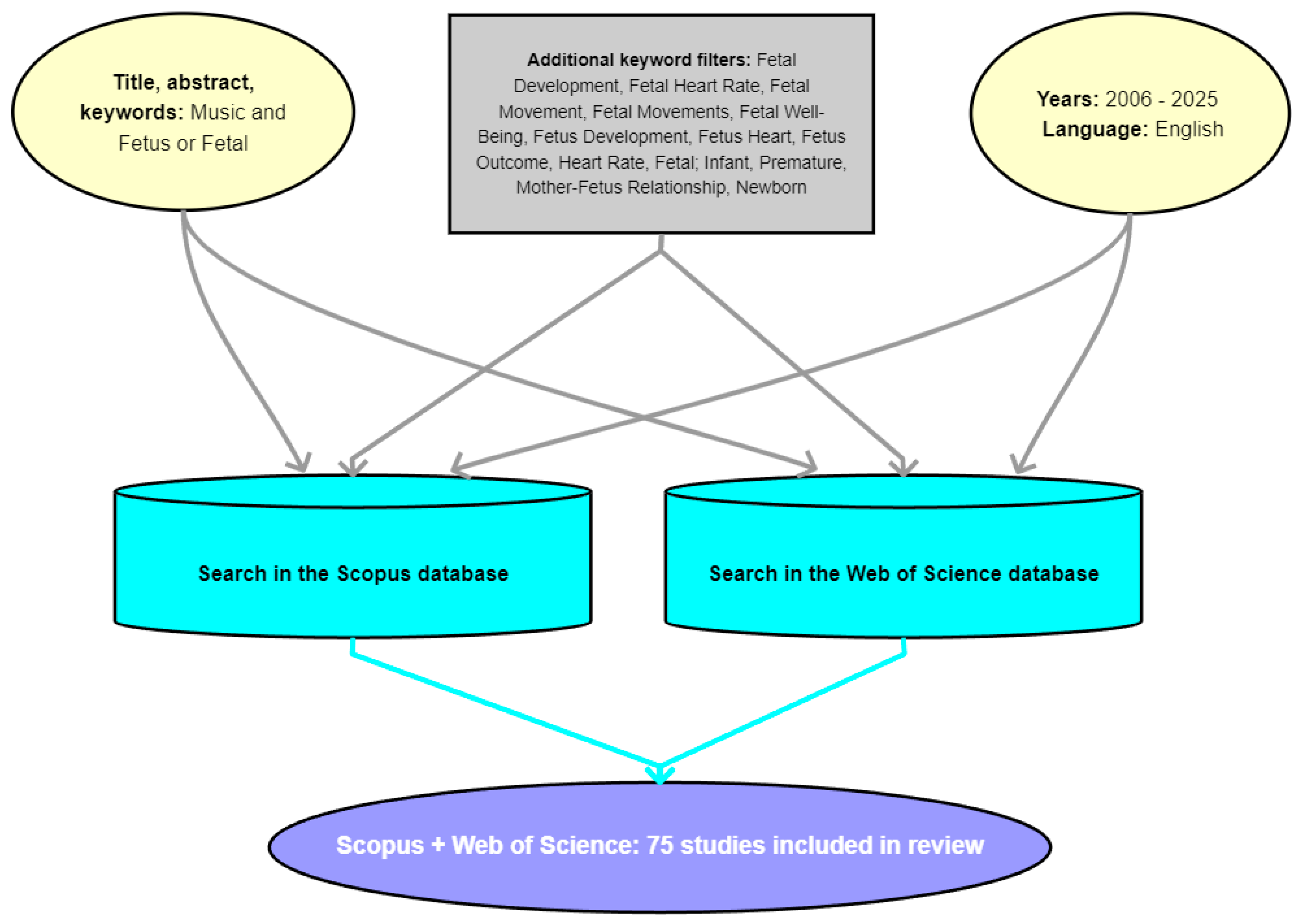
Figure 1. Workflow of the article search process in the Scopus and Web of Science databases.
Applsci 16 02468 g001
Figure 2. The process of extracting main categories based on publications selected for review.
Applsci 16 02468 g002
Figure 3. Auxiliary categories defined for the analysis of publications selected for review.
Applsci 16 02468 g003
Figure 4. Number of publications selected for review grouped by topic in relation to the first main thematic categorization, Fetus and Newborn.
Applsci 16 02468 g004
Figure 5. Number of publications selected for review grouped by topic in relation to the second main thematic categorization, Mother.
Applsci 16 02468 g005
Figure 6. Number of publications selected for review grouped by Document Type.
Applsci 16 02468 g006
Figure 7. Number of publications selected for review grouped by Research Methodology.
Applsci 16 02468 g007
Figure 8. Number of publications selected for review grouped by country of publication.
Applsci 16 02468 g008
Figure 9. Number of publications selected for review grouped by year of publication.
Applsci 16 02468 g009
Figure 10. Number of publications on the topic of Fetus Heart grouped by year of publication.
Applsci 16 02468 g010
Figure 11. Number of publications on the topic of Fetus Movement grouped by year of publication.
Applsci 16 02468 g011
Figure 12. Number of publications on the topic of Fetus Parameters and Outcomes grouped by year of publication.
Applsci 16 02468 g012
Figure 13. Number of publications on the topic of Newborn grouped by year of publication.
Applsci 16 02468 g013
Figure 14. Number of publications on the topic of Maternal Health grouped by year of publication.
Applsci 16 02468 g014
Figure 15. Number of publications on the topic of Mother–Fetus Bond grouped by year of publication.
Applsci 16 02468 g015
Figure 16. Keyword co-occurrence network obtained using VOSviewer.
Applsci 16 02468 g016
Figure 17. Density visualization of keyword co-occurrence.
Applsci 16 02468 g017
Figure 18. Co-authorship network of all authors obtained using VOSviewer.
Applsci 16 02468 g018
Figure 19. Co-authorship network of the most productive authors obtained using VOSviewer.
Applsci 16 02468 g019
Table 1. Publications selected for review in the context of the main categories of analysis.
Subcategory of
Analysis
Number of
Publications
Share in TotalPublications
First main category of analysis: Fetus & Newborn
Fetus Heart3952.00%[30,31,33,34,35,36,39,42,46,47,48,54,56,57,59,60,61,62,64,66,67,70,71,72,74,75,76,79,82,84,86,89,90,93,95,96,97,102,103]
Fetus Movement810.67%[45,77,82,86,91,95,96,99]
Fetus Parameters and Outcomes2736.00%[30,33,34,35,38,39,41,42,44,46,47,52,62,63,64,67,69,74,75,79,82,86,89,93,95,98,100]
Newborn2026.67%[31,36,42,52,55,58,62,65,76,80,82,84,85,86,89,90,95,96,102]
Second main category of analysis: Mother
Maternal Health4256.00%[29,30,31,32,33,34,36,37,40,44,45,46,49,51,53,54,63,67,68,72,73,78,80,81,82,84,86,87,88,90,91,92,93,95,96,97,100,101,103,104]
Mother–Fetus Bond79.33%[31,51,72,86,97,99,103]
Summary
Total75100.00%[29,30,31,32,33,34,35,36,37,38,39,40,41,42,43,44,45,46,47,48,49,51,52,53,54,55,56,57,58,59,60,61,62,63,64,65,66,67,68,69,70,71,72,73,74,75,76,77,78,79,80,81,82,83,84,85,86,87,88,89,90,91,92,93,94,95,96,97,98,99,100,101,102,103,104]
Table 2. Publications selected for review in the context of the auxiliary categories of analysis.
Subcategory of AnalysisNumber of PublicationsShare in Total
First auxiliary category of analysis: Document Type
Article6586.67%
Review Article1013.33%
Second auxiliary category of analysis: Research Methodology
Experiment5573.33%
Literature Analysis2229.33%
Case Study810.67%
Conceptual1013.33%
Survey1925.33%
Third auxiliary category of analysis: Country
Australia34.00%
Canada34.00%
China45.33%
France45.33%
Iran912.00%
Italy79.33%
Spain68.00%
Turkey810.67%
United States45.33%
Other2736.00%
Summary
Total75100.00%
Table 3. Number of publications in a given year.
YearPublicationsShare in Total
200600.00%
200711.33%
200811.33%
200911.33%
201022.67%
201145.33%
201211.33%
201322.67%
201422.67%
2015810.67%
201622.67%
201756.67%
201856.67%
201945.33%
202034.00%
202156.67%
202268.00%
2023912.00%
202479.33%
202579.33%
Total75100.00%
Disclaimer/Publisher’s Note: The statements, opinions and data contained in all publications are solely those of the individual author(s) and contributor(s) and not of MDPI and/or the editor(s). MDPI and/or the editor(s) disclaim responsibility for any injury to people or property resulting from any ideas, methods, instructions or products referred to in the content.