Article

Aesthetic Perception of the Facial Profile Modified According to the Sagittal Position of the Upper Central Incisor in Relation to the Barcelona Line


by
Marta Yunta-Aller
1,2,
Ana Belén Macías-Gago
1,2,
Iván Nieto-Sánchez
1,2,* and
Laura del Campo-Albendea
3
1
Facultad de Medicina, Universidad Francisco de Vitoria, Ctra. Pozuelo-Majadahonda Km 1,800, Pozuelo de Alarcón, 28223 Madrid, Spain
2
Centro Odontológico Hospital Universitario San Rafael, Concha Espina 32A, 28016 Madrid, Spain
3
Ramón y Cajal University Hospital, Francisco de Vitoria University, 28034 Madrid, Spain
*
Author to whom correspondence should be addressed.
Appl. Sci. 2026, 16(5), 2454; https://doi.org/10.3390/app16052454
Submission received: 2 January 2026 / Revised: 16 February 2026 / Accepted: 25 February 2026 / Published: 3 March 2026
(This article belongs to the Special Issue Advances in Orthodontic Treatment, 2nd Edition)

Featured Application

This article emphasizes the role of the Barcelona line for diagnostic purposes in orthodontics and orthognathic surgery.

Abstract

This study evaluates perceived facial aesthetics across different age groups (18–29 years, 30–55 years, >55 years) through a questionnaire incorporating modified profile photographs of a male and a female subject. These images were adjusted based on the position of the central incisor and the Barcelona line described by Hernández-Alfaro. Statistical analyses were primarily conducted by age group and secondarily by sex and prior studies, using the Shapiro–Wilk, Mann–Whitney U and Kruskal–Wallis tests. All analyses were performed with a significance level set at p < 0.05. Significant differences were observed in the evaluation of facial aesthetics across age groups, as well as between sexes and participants with varying level of education. Younger individuals showed greater acceptance of protrusive profiles, while women and participants with higher educational attainment tended to be more critical in their evaluations.

1. Introduction

Over the years, numerous attempts have been made to define a gold standard for facial aesthetics. However, the variability in aesthetic norms has led to the emergence of the concept of ‘dynamic facial aesthetics’. Contemporary analyses of facial aesthetics should be grounded in recent studies (from the last decade) while also recognising the need for periodic revaluation of emerging models [1,2].
The concept of an attractive and aesthetically pleasing face is inherently subjective, shaped by factors such as ethnicity, age, sex, geographic region and professional background [3,4]. Perceptions of dentofacial aesthetics are rooted in the cultural norm and societal values of a given community, which may vary significantly. Hence, it is important to understand the community-specific thresholds for acceptable dentofacial features [5].
Average faces often differ from those that are attractive, and perceptions of attractiveness are influenced by racial and ethnic backgrounds. Therefore, aesthetic criteria should be evaluated using the attractive facial profiles specific to each racial group. Without an understanding of a patient’s ethnic aesthetic characteristics, a cosmetic surgeon may struggle to comprehend the patient’s motivations, meet expectations or deliver satisfactory surgical outcomes [6].

Soft Profile Analysis

Patients and their families often judge the success of orthodontic and orthognathic surgery based on visible changes in facial appearance. Today, diagnoses in orthodontics and maxillofacial surgery invariably include specific soft tissue assessments [7,8].
Cephalometric and photographic analyses of soft tissues are widely employed in orthodontics to evaluate facial harmony and aesthetic appeal. Among these, the evaluation of soft tissue changes is critical aspect of treatment planning and outcomes [9].
However, soft tissue structures may not consistently reflect the underlying skeletal anatomy. For example, modifying the anteroposterior position of the maxilla or upper incisors to achieve an ideal nasolabial angle may inadvertently compromise the alignment of the upper incisors with adjacent facial features [10].
In 1993, Arnett proposed a set of reference values for facial aesthetics based on subnasal vertical and anteroposterior projections of the lower third of the face. This led to the development of Soft Tissue Cephalometric Analysis (STCA), which has since gained prominence in treatment planning [11].
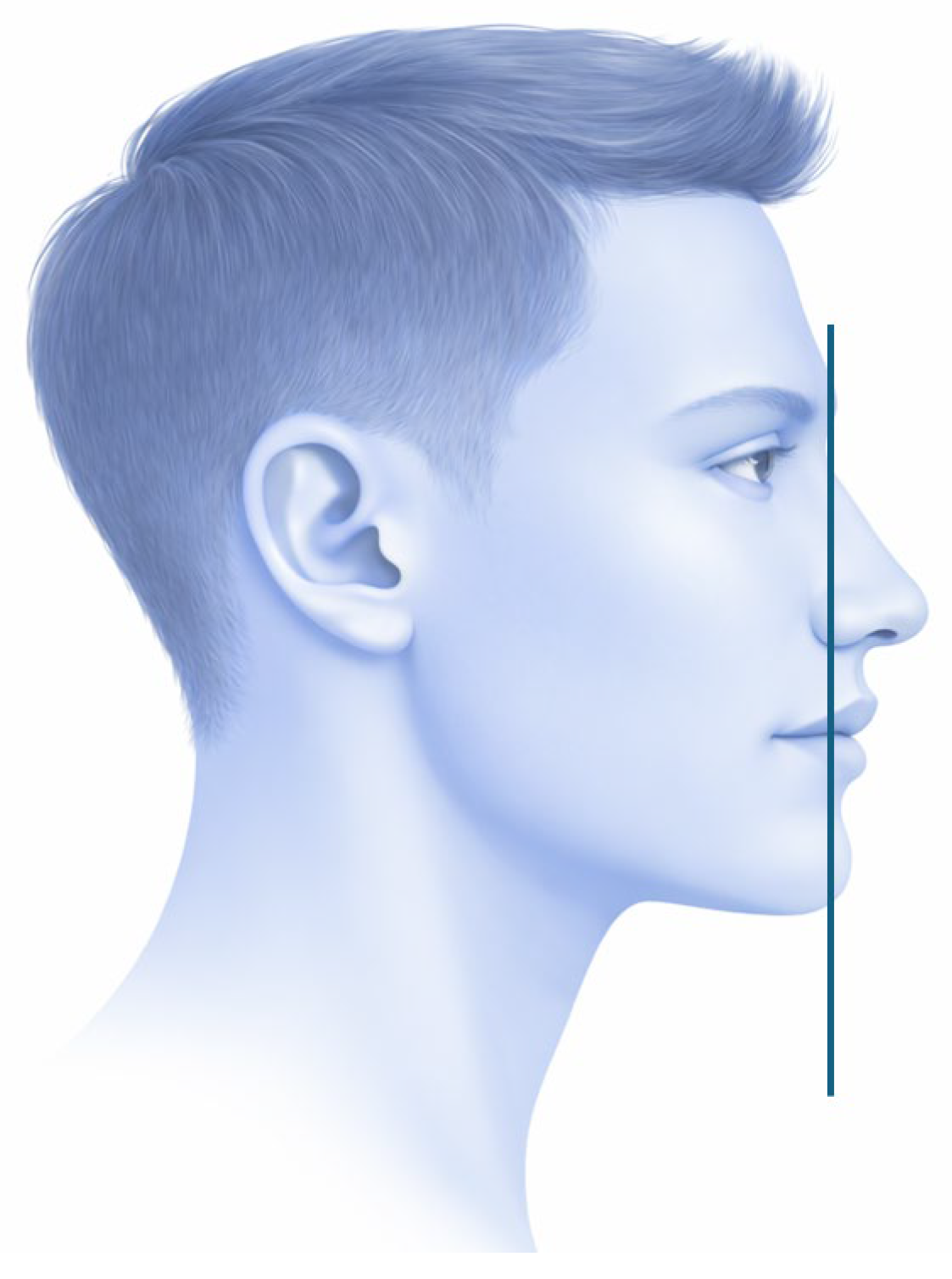
The incorporation of midfacial landmarks is crucial when evaluating upper central incisor positions, as failure to define an aesthetically optimal incisor location may indicate an underlying skeletal imbalance [12]. In a 2010 study, Hernández-Alfaro introduced a reference line known as the Soft Tissue Plane (STP)—a vertical line tangent to the soft nasion and perpendicular to the natural head position (NHP). In 2023, this reference was renamed the Barcelona line (BL), providing a more accessible term to aid in diagnosing and planning dentofacial deformities by ensuring optimal sagittal maxillomandibular positioning. In patients with good bony projection, the upper incisors should ideally be located on or slightly in front of (0–4 mm) this vertical line [5]. In 2025, Akdeniz et al. [13] showed this line is a good reference line to plan maxillary advancement in class III patients.
Further, Andrews identified key forehead landmarks and demonstrated a correlation between forehead contour and the position of the upper central incisors in aesthetically pleasing facial profiles. The use of soft tissue landmarks on the forehead and midface in incisor evaluation may contribute to the development of more reliable and generalisable guidelines for facial treatment. This approach also avoids reliance on surgically altered landmarks [14]. Additionally, this correlation allows for clinical assessment of the facial profile without the need for radiographic imaging [15].
Therefore, this study aimed to assess perceived facial aesthetics across various age groups using modified profile photographs presented within a questionnaire, with variations based on the position of the upper central incisor and the Barcelona line described by Hernández-Alfaro.

2. Materials and Methods

2.1. Study Design and Sample

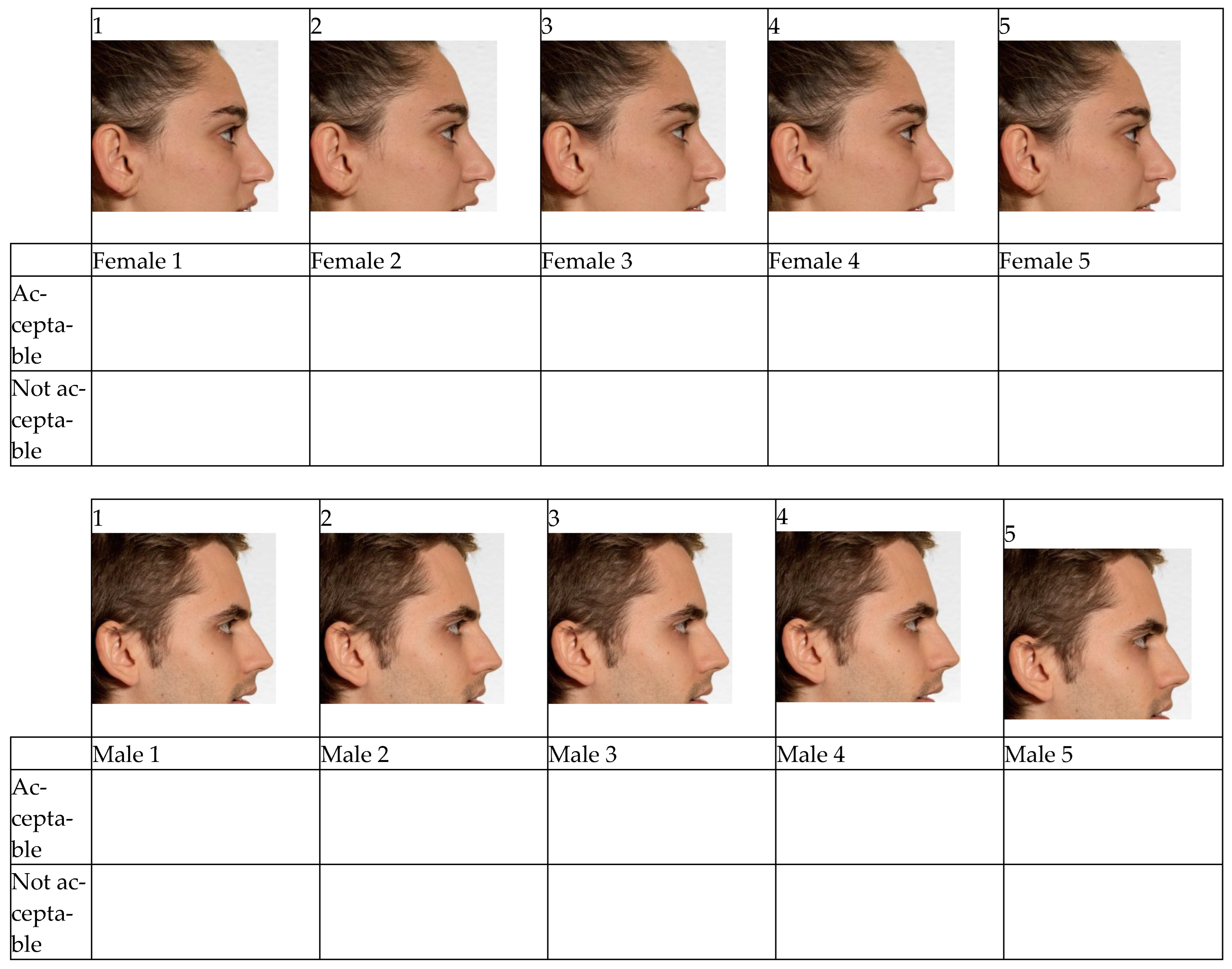
This study assessed perceived facial aesthetics across different age groups through a questionnaire incorporating digitally modified profile photographs. A male and a female profile photograph were used, both in natural head position (NHP) and with a relaxed lip posture to expose the upper central incisor. These images were digitally modified using Adobe® Photoshop® software (Adobe Inc., San Jose, CA, USA), resulting in five variations per profile, including a control image. The control image met the criteria for a neutral upper incisor position, aligned with the Barcelona line, as described by Hernández-Alfaro and considered the most aesthetically favourable position based on his study [5].
The remaining four images were derived from the control by adjusting the upper central incisor either 2 mm or 4 mm anteriorly or posteriorly relative to the Barcelona line. This resulted in five image positions: −4 mm, −2 mm, 0 mm, +2 mm, and +4 mm. The photographic records were imported with a resolution of 96 ppi (pixels per inch). In Adobe Photoshop, the images were calibrated by defining a fixed resolution of 300 ppi and setting millimetres as the unit of measurement (Preferences → Units and Rulers).
Measurement calibration enabled the use of the Ruler tool and the Transform functions with numerical input to perform controlled linear shifts. All adjustments were made without resampling to preserve the size and resolution of the image and ensure that the shifts in mm corresponded to reality. Only the incisor was moved rather than the whole premaxilla.
These images were presented in randomised order within the questionnaire (Table 1).
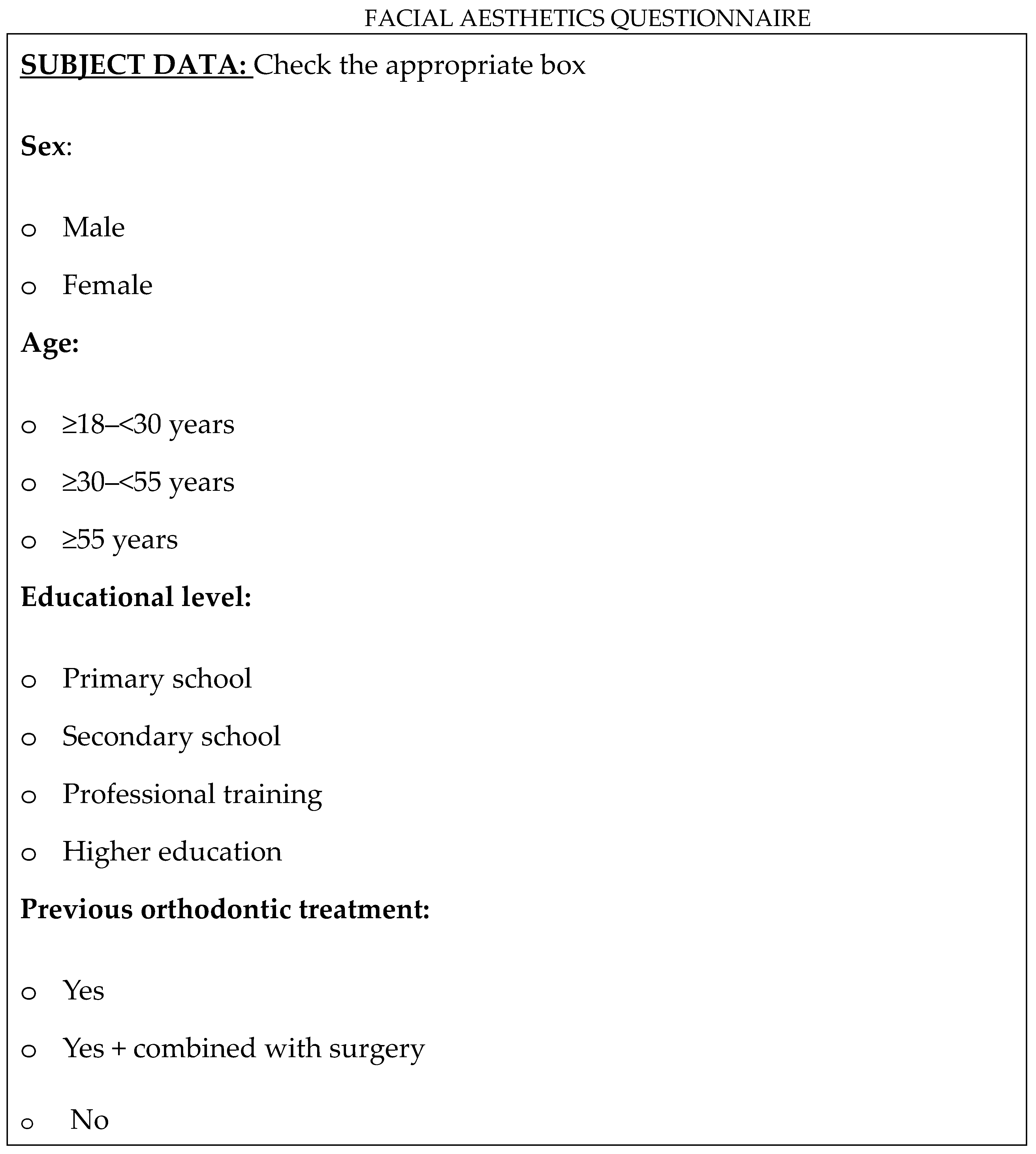
The questionnaire comprised three tests and was preceded by the collection of demographic data, including age group (18–29 years; 30–55 years; >55 years), sex (male and female) and level of education (primary, secondary, professional training or higher education) (Figure 1). In Test 1, participants ranked the male and female profiles from most to least attractive, with rank 1 denoting the most attractive and rank 5 the least. In Test 2, participants rated each image on a scale from 0 to 100, where 0 represented the least aesthetically favourable and 100 the most aesthetically favourable. In Test 3, participants classified each image as either ‘acceptable’ or ‘unacceptable’, offering insight into individual tolerance levels. This allowed for the possibility that an image ranked lowest in attractiveness could still be deemed acceptable.
To calculate the sample size, a minimum detectable difference of 1 point (representing a 20% change on the scale in Test 1) was assumed, along with a standard deviation of 1 point, a 95% confidence level (1-α) and 80% statistical power (1-β). Based on these parameters, a minimum of 16 participants per age group was required.

2.2. Data Collection

The target population included dental patients and staff from the Hospital Universitario San Rafael ascribed to University Francisco de Vitoria (Madrid, Spain), all aged over 18. Participants were provided with standardised instructions on how to complete the questionnaire but were not informed of the purpose of the study or the specific modifications made to the images.
As previously described, the questionnaire consisted of three sections, following the demographic data collection. All responses were recorded and compiled in an Excel spreadsheet for subsequent statistical analysis.

2.3. Statistical Analysis

Descriptive statistics were computed for all variables. Quantitative variables were presented as mean and standard deviation (SD) for normally distributed data and as median with interquartile range (Q1; Q3) for non-normally distributed data. Categorical variables were expressed as absolute frequencies and percentages.
Normality of the variables derived from Tests 1 and 2 of the questionnaire was tested using the Shapiro–Wilk test. Based on distribution, the Mann–Whitney U test was used for comparison between two groups, while the Kruskal–Wallis test was employed for comparisons among more than two groups. When the Kruskal–Wallis test yielded significant results, post-hoc pairwise comparisons were performed using Bonferroni correction.
The chi-square (X2) test was used to analyse associations in Test 3, where results categorized as ‘acceptable’ and ‘unacceptable’. When more than two groups were involved, the Bonferroni correction was applied to identify where significant differences lay.
All statistical analyses were performed using a significance threshold of p < 0.05. The statistical software used was R version 4.3.1 [16].

2.4. Ethical Considerations

All participants were informed of the voluntary nature of the study via an explanatory information sheet and provided written informed consent for the use of their data in scientific and epidemiological research, as well as for presentation at conferences and publication. Models of the profile pictures signed and informed consent both for the publication of the article and the making of the questionnaire.
This study adheres to the ethical principles of the Declaration of Helsinki as adopted by the 18th World Medical Assembly (Helsinki, 1964) and amended by the 29th (Tokyo, 1975), 35th (Venice, 1983) and 41st (Hong Kong, 1989) World Medical Assemblies, and in 2013. Ethical approval was granted by the Research Commission of San Juan de Dios Foundation (code P_TFM_O_2024_001), dated 20 March 2024.

3. Results

The sample analysed consisted of 94 participants. Regarding age distribution, the largest group comprised participants over 55 years old, representing 44.7% of the sample. The second largest group included individuals aged between 30 and 55, accounting for 38.3%. Finally, participants aged from 18 to 29 made up the smallest group, constituting 17.0% of the total.
Nearly half of the participants have a university education (46 individuals, 48.9%), making this the most common educational level in the sample. This is followed by those with secondary education, who account for 22 participants (23.4%). Primary education and higher vocational training (FP superior) are equally represented, with 13 participants each (13.8% in both cases).
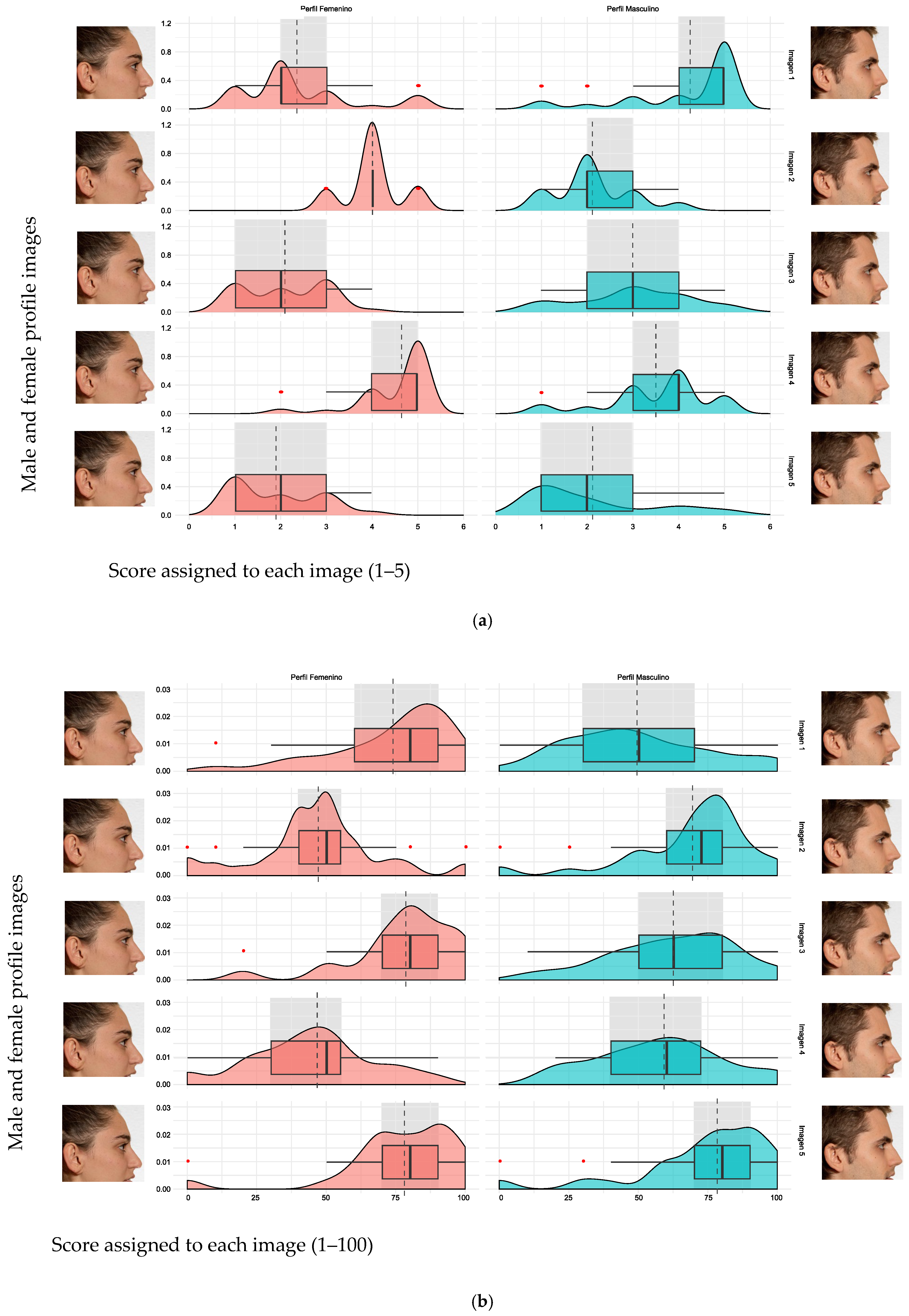
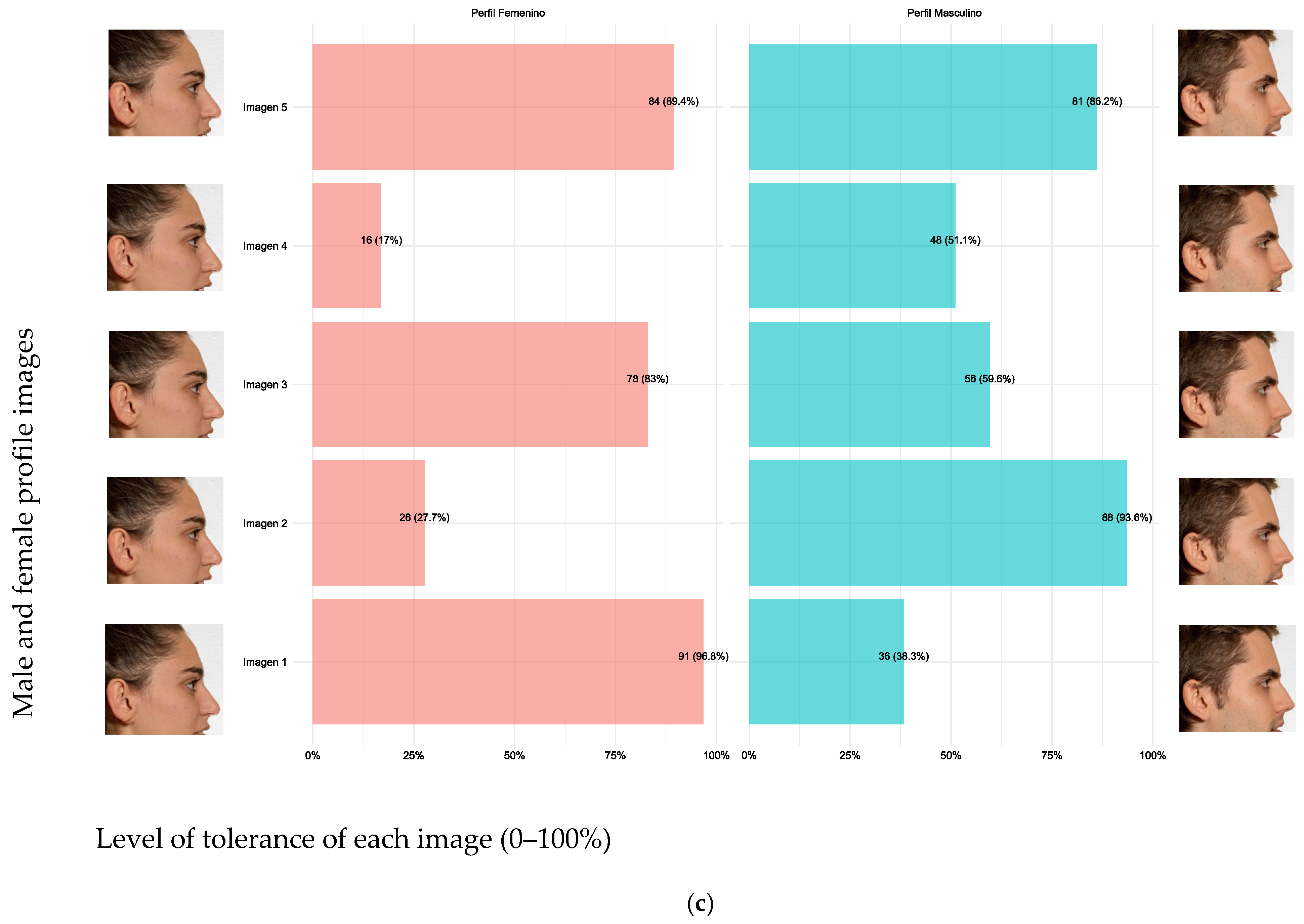
Due to the highly asymmetric distribution of the data, results are presented as mean (SD), median (Q1; Q3) and minimum and maximum values. All statistical analyses were conducted using a significance level of p < 0.05. The female profile rated as least attractive by participants—depicted in image 4, with the central incisor positioned more than 4 mm posterior to the Barcelona line—showed a significantly lower level of acceptance or tolerance compared to the least attractive male profile (image 1: central incisor positioned more than 4 mm anterior to the Barcelona line) (17% vs. 38.3%, p = 0.001). Figure A2 shows the score of each picture.

3.1. Results According to Age

The primary objective was to analyse differences in perception across age groups. Analysis revealed significant variations in the evaluation of several images in both female and male profiles (Table 2, Table 3 and Table 4). Notably, image 5 of the female profile (incisor at 0 mm from the Barcelona line), which was considered the most attractive overall, received the lowest scores from the youngest group. Scores increased progressively with age, reaching 80 points in the 30–55 age group and 90 points among those older than 55 (p < 0.001). Similarly, younger participants rated image 1 of the male profile (incisor 4 mm anterior to the Barcelona line) as more attractive (86.5 points), compared to lower scores from adults aged 30–55 (60 points) and those over 55 (50 points) (p < 0.001).

3.2. Results According to Sex

In Test 2, significant sex-based differences were found for image 5 of the male profile (upper incisor −4 mm), with females assigning higher scores than males (p < 0.001), suggesting that women perceived these profiles as more attractive. Conversely, in the third test, image 4 of the male profile (upper incisor +2 mm) exhibited the most pronounced difference (p < 0.001): 68.3% of men found this profile acceptable, compared to only 20.6% of women, indicating a lower tolerance among women (Table 5, Table 6 and Table 7).

3.3. Results According to Educational Level

Image 4 of the female profile (upper incisor −4 mm) was rated the least attractive overall (p < 0.01). However, participants with only primary education demonstrated greater tolerance for this profile than those with higher educational attainment. For image 3 of the female profile (upper incisor +2 mm), the most notable differences (p < 0.01) were observed among university students, 100% of whom found this image acceptable, in contrast with other educational groups. Similarly, image 3 of the male profile (upper incisor 0 mm) was deemed acceptable by 23.1% of participants with primary education, while 65.2% of university students rated it as acceptable (p < 0.01) (Table 8, Table 9 and Table 10).

4. Discussion

Soft tissue analysis is fundamental in the diagnosis and planning of orthodontic treatment, particularly when the primary objective is to enhance facial aesthetics. The position of the lips is a key factor in the perception of facial harmony. Various authors have proposed the forehead and the position of the upper central incisor as reference points for facial evaluation, given that these structures are not affected by surgical procedures [5].
The STP line, renamed the Barcelona line (BL), aims to identify the ideal maxillomandibular position for diagnosing and planning treatment for dentofacial deformities. It offers a simple and reproducible reference for determining the aesthetic sagittal position of the maxilla in orthognathic surgery and thereby the support of the midface soft tissues. This line is defined as a vertical line tangent to the soft tissue nasion and perpendicular to the natural head position. A profile is considered aesthetically ideal when the upper central incisor lies on or anterior to the BL [5].
In his most recent study, Hernández-Alfaro suggests that using Steiner analysis to plan bimaxillary orthognathic surgery results in reliable and less aesthetically pleasing outcomes than using the Barcelona line or the vertical line through the glabella [5]. Accordingly, the ideal sagittal maxillary position corresponds to alignment of the upper central incisor with the vertical soft tissue plane defined by the BL or the glabella line. However, forehead morphology may influence preferences regarding mandibular relationships. Andrews’ Six Elements of Orofacial Harmony further emphasize the importance of assessing forehead shape and inclination; when the forehead is flat, the ideal sagittal position of the maxillary incisors tends to align closely with both the BL and the glabella line [17].
There is broad consensus that beauty is subjective and influenced by social, cultural and ethnic factors. Therefore, ethnic-specific standards must be considered during diagnosis and treatment planning. Cephalometric norms established for Caucasian populations may not be universally applicable. Milutinovic et al. observed that while the Serbian population is Caucasian, several measurements of the lower facial third differ from established norms. Their study concluded that individuals with a straight profile, more protrusive upper lips, elevated nasal tip and a reduced lower facial third are considered the more attractive [9].
Hernández-Alfaro et al. reported that biprotrusive profiles are perceived as more youthful and aesthetically favourable than retrusive ones. Bimaxillary advancement can enhance soft tissue support, such as tightening the skin, filling the lips, elevating the labial commissures and reducing the nasolabial angle, thereby enhancing the mandibulocervical contour [5].
These results align with those obtained in our study, where image 5 of the female profile (incisor at 0 mm) was considered the most attractive in Test 1, received high scores in Test 2 and achieved a high acceptance rate in Test 3 (89.4%), demonstrating consistency across all assessments. In contrast, image 4 (incisor at −4 mm) was consistently perceived as the least attractive in Test 1, scored poorly in Test 2 and received low acceptance in Test 3, with only 17% of participants considering it acceptable. However, this pattern did not hold for the male profile: image 2 (incisor at −2 mm) was perceived as one of the most attractive in Tests 1 and 2 and had a high acceptance rate in Test 3 (93.6%).
Most of the reviewed literature reports variability in aesthetic preferences across different age groups, resulting in heterogeneous assessments when comparing facial profiles. Hernandez Alfaro and Perera et al. both observed that age significantly influenced evaluators’ perceptions [5,18]. Perera et al. suggested that retrusive lip profiles might be more acceptable to older individuals [18], while Hernández-Alfaro et al. found that younger evaluators preferred more protrusive profiles [5]. These findings are consistent with our study. For the female profile, image 5 (incisor at 0 mm) was rated as the most attractive overall; however, this result was influenced by the sample’s age distribution, where participants over 55 years represented the largest group (44.7%) compared to the 18–29 age group (17.0%). A statistically significant differences (p = 0.032) were observed for image 1 (incisor at +4 mm), which younger participants rated more positively in Test 1 than the 30–55 age group.
In the male profile, age-related differences were also notable. Image 1 (incisor at +4 mm) showed a significant difference between age groups (p < 0.001); participants aged 18–29 rated this image more favourably, whereas older participants assigned it higher (less favourable) scores in Test 1. Similarly, image 4 of the male profile (incisor at +2 mm) showed significant differences (p < 0.001); younger individuals perceived this profile as more attractive, while participants over 55 rated it lower. These trends continued in Part 2 (p < 0.001), where younger participants gave image the highest attractiveness rating (86.5 points on the VAS scale), compared to 69 points from the 30–55 age group and 50 points from participants over 55. Our sample is unevenly distributed in terms of age and gender, with a predominance of participants over 55 years of age and a higher proportion of men, which introduces sex and age bias. This should be considered for future studies, as well as studying patients with different facial biotypes and skeletal classes.
Regarding sex-based differences, Volpato et al. found that the perception of facial aesthetics was not influenced by the patient’s sex [19]. Conversely, Cassetta et al. reported that female evaluators were more critical of facial aesthetics than males [20]. These findings are reflected in our results. For example, image 4 of the male profile (incisor at +2 mm) showed the most marked difference (p < 0.001): 68.3% of male participants deemed it acceptable, compared to only 20.6% of females. Likewise, image 2 of the female profile (incisor at −2 mm) showed a significant sex-based difference (p = 0.005), being considered acceptable by 38.3% of men but only 8.8% of women—indicating that female participants were generally less tolerant of this profile.
Patients tend to be less critical in evaluating their own facial compared to professionals. Volpato et al. found that patients with different facial profiles did not perceive significant differences in their own appearance, unlike orthodontists [19]. Similarly, Cassetta et al. observed that patients did not notice minor discrepancies in mandibular protrusion, whereas orthodontists and dental students could identify differences as small as 2 mm [20]. These authors concluded that orthodontists gave lower aesthetic scores than patients and non-experts.
In our study, distinctions were made according to the level of previous studies that participants had completed, revealing significant differences in the aesthetic perception of facial profiles according to educational level, reflecting a greater demand for attractiveness among participants with higher levels of education. For the female profile, image 4 (incisor at −4 mm) was not considered acceptable by any participant with secondary education or professional education, whereas 53.8% of those with only primary education accepted it. These results must be studied in more depth in future studies and have a clinical implication, as patients with higher education have a different aesthetic point of view, and it must be the orthodontist’s job to plan the treatment to obtain not only a good occlusion but also to satisfy patients’ needs and demands when possible. It may be useful to present different smiles and/or profiles and ask patients their preferences to have a deeper understanding of patients’ point of view and expectations. Yet there is another field to be explored in future: Why do these differences exist among different educational levels? Also, it is worth exploring how the amount of time devoted to social media affect results, as social media aesthetic orientations are tightly connected to self-image and aesthetic perception [21].

5. Conclusions

Protrusive profiles are more favourably received by younger individuals and by women. Additionally, participants with higher educational levels tend to have more stringent standards when evaluating facial aesthetics.

Author Contributions

Conceptualization, A.B.M.-G. and I.N.-S.; methodology, M.Y.-A. and L.d.C.-A.; software, L.d.C.-A.; validation, A.B.M.-G. and I.N.-S.; formal analysis, A.B.M.-G., I.N.-S. and L.d.C.-A.; investigation, M.Y.-A.; data curation, M.Y.-A.; writing—original draft, M.Y.-A., A.B.M.-G., I.N.-S. and L.d.C.-A.; writing—review and editing, M.Y.-A., A.B.M.-G., I.N.-S. and L.d.C.-A.; visualization, M.Y.-A.; supervision, A.B.M.-G., I.N.-S. and L.d.C.-A.; project administration, A.B.M.-G. and I.N.-S. All authors have read and agreed to the published version of the manuscript.

Funding

This research received no external funding.

Institutional Review Board Statement

The study was conducted in accordance with the Declaration of Helsinki and approved by the Institutional Review Board of SAN JUAN DE DIOS FOUNDATION (code P_TFM_O_2024_001), dated 20 March 2024.).

Informed Consent Statement

Informed consent was obtained from all subjects involved in the study. Written informed consent has been obtained from the models of the pictures to be published this paper.

Data Availability Statement

The raw data supporting the conclusions of this article will be made available by the authors on request.

Conflicts of Interest

The authors declare no conflicts of interest.

Abbreviations

The following abbreviations are used in this manuscript:
STCSSoft Tissue Cephalometric Analysis
NHPNatural Head Position
BLBarcelona Line

Appendix A

Table A1. Test results post-hoc Dunn-Bonferroni for the age groups variable of test 1.
Image 1Image 2Image 3Image 4Image 5
Female profile
≥18–<30vs. ≥30–≤55Sig.Sig.Sig.No sig.No sig.
vs. >55No sig.Sig.No sig.Sig.Sig.
≥30–≤55vs. >55No sig.No sig.Sig.Sig.Sig.
Male profile
≥18–<30vs. ≥30–≤55Sig.No sig.Sig.No sig.Sig.
vs. >55Sig.No sig.Sig.Sig.Sig.
≥30–≤55vs. >55No sig.No sig.No sig.No sig.Sig.
Table A2. Test results post-hoc Dunn-Bonferroni for the age groups variable of test 2.
Image 1Image 2Image 3Image 4Image 5
Female profile
≥18–<30vs. ≥30–≤55No sig.No sig.No sig.No sig.Sig.
vs. >55No sig.No sig.No sig.No sig.Sig.
≥30–≤55vs. >55No sig.No sig.No sig.No sig.Sig.
Male profile
≥18–<30vs. ≥30–≤55Sig.No sig.No sig.Sig.Sig.
vs. >55Sig.No sig.No sig.Sig.Sig.
≥30–≤55vs. >55No sig.No sig.No sig.No sig.Sig.
Table A3. Test results post-hoc for the age groups variable of test 3.
Image 1Image 2Image 3Image 4Image 5
Female profile
≥18–<30vs. ≥30–≤55No sig.No sig.No sig.No sig.No sig.
vs. >55No sig.Sig.No sig.No sig.Sig.
≥30–≤55vs. >55No sig.Sig.No sig.Sig.No sig.
Male profile
≥18–<30vs. ≥30–≤55No sig.No sig.No sig.No sig.No sig.
vs. >55Sig.No sig.No sig.Sig.Sig.
≥30–≤55vs. >55Sig.No sig.No sig.Sig.Sig.
Table A4. Test results post-hoc for the variable levels of study of test 1.
Image 1Image 2Image 3Image 4Image 5
Female profile
PrimarySecondarySig.No sig.No sig.Sig.No sig.
Higher Vocational TrainingSig.No sig.No sig.No sig.No sig.
University studentsNo sig.No sig.No sig.No sig.No sig.
SecondaryHigher Vocational TrainingNo sig.Sig.No sig.Sig.No sig.
University studentsSig.No sig.Sig.No sig.No sig.
Higher Vocational TrainingUniversity studentsNo sig.Sig.Sig.No sig.No sig.
Male profile
PrimarySecondaryNo sig.No sig.No sig.No sig.No sig.
Higher Vocational TrainingNo sig.No sig.No sig.No sig.No sig.
University studentsNo sig.No sig.Sig.No sig.No sig.
SecondaryHigher Vocational TrainingNo sig.No sig.No sig.Sig.No sig.
University studentsNo sig.No sig.No sig.No sig.No sig.
Higher Vocational TrainingUniversity studentsNo sig.No sig.No sig.No sig.No sig.
Table A5. Test results post-hoc for the variable levels of study of test 2.
Image 1Image 2Image 3Image 4Image 5
Female profile
PrimarySecondaryNo sig.Sig.No sig.Sig.No sig.
Higher Vocational TrainingNo sig.No sig.No sig.No sig.No sig.
University studentsNo sig.No sig.No sig.Sig.No sig.
SecondaryHigher Vocational TrainingNo sig.Sig.No sig.No sig.No sig.
University studentsNo sig.Sig.Sig.No sig.No sig.
Higher Vocational TrainingUniversity studentsNo sig.Sig.No sig.No sig.No sig.
Male profile
PrimarySecondaryNo sig.No sig.Sig.No sig.No sig.
Higher Vocational TrainingNo sig.No sig.No sig.Sig.No sig.
University studentsNo sig.No sig.No sig.No sig.No sig.
SecondaryHigher Vocational TrainingNo sig.No sig.No sig.No sig.No sig.
University studentsNo sig.No sig.Sig.No sig.No sig.
Higher Vocational TrainingUniversity studentsNo sig.No sig.No sig.No sig.No sig.
Table A6. Test results post-hoc for the variable levels of study of test 3.
Image 1Image 2Image 3Image 4Image 5
Female profile
PrimarySecondarySig.No sig.No sig.Sig.No sig.
Higher Vocational TrainingSig.No sig.No sig.Sig.No sig.
University studentsSig.No sig.Sig.Sig.No sig.
SecondaryHigher Vocational TrainingNo sig.Sig.No sig.No sig.No sig.
University studentsNo sig.Sig.No sig.No sig.No sig.
Higher Vocational TrainingUniversity studentsNo sig.No sig.Sig.No sig.No sig.
Male profile
PrimarySecondaryNo sig.Sig.No sig.No sig.Sig.
Higher Vocational TrainingNo sig.No sig.Sig.No sig.No sig.
University studentsNo sig.No sig.Sig.No sig.No sig.
SecondaryHigher Vocational TrainingNo sig.Sig.No sig.No sig.No sig.
University studentsNo sig.Sig.No sig.No sig.Sig.
Higher Vocational TrainingUniversity studentsNo sig.No sig.No sig.Sig.No sig.
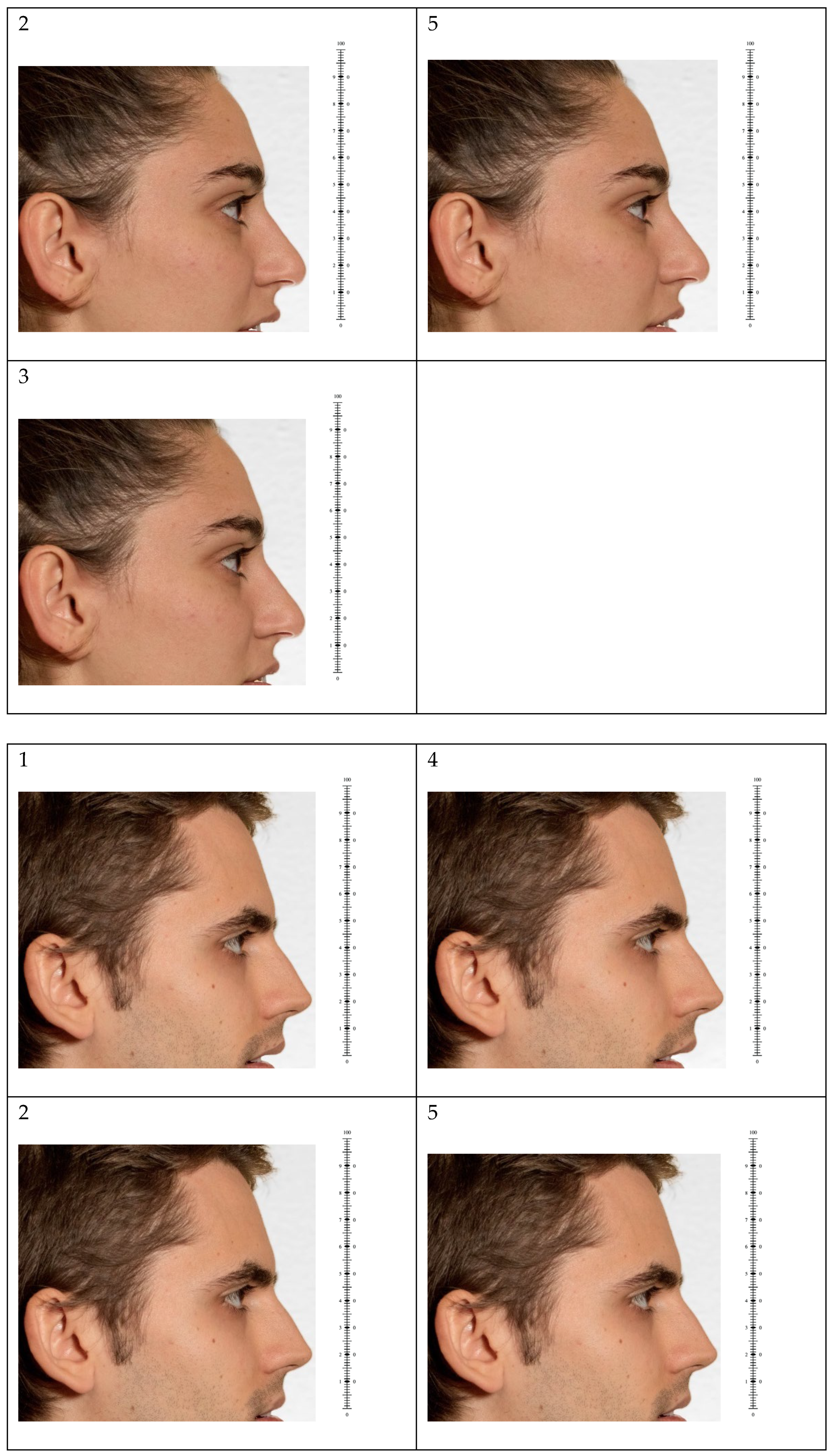
Figure A1. Questionnaire provided to participants.
Applsci 16 02454 g0a1

Appendix A.1. First Part

Sort images sequentially, from most attractive profile to least attractive. You will need to write on the dotted line the number of the most attractive profile the first and the number of the least attractive profile the last. This operation will be performed for both the male and female profiles. (Example female profile: 5-3-2-4-1. Example male profile: 4-3-2-5-1).
Applsci 16 02454 i001
Applsci 16 02454 i002

Appendix A.2. Second Part

A scale from 0 to 100 is displayed next to each of the profile pictures to be analyzed. Mark the score you consider appropriate, knowing that 0 is very unfavorable aesthetics and 100 is very favorable perceived aesthetics.
Applsci 16 02454 i003
Applsci 16 02454 i004
Applsci 16 02454 i005

Appendix A.3. Third Part

Classify the profiles into two groups: acceptable and not acceptable. According to your criteria, check the acceptable box if you consider that the analyzed photo has acceptable aesthetics. On the contrary, check the not acceptable box if you consider that the analyzed photo does not have an acceptable aesthetics. Do this operation for both male and female profiles.
Figure A2. Results obtained for each image according to its profile. 2 (a) Distribution of results obtained in Test 1 for each image according to its profile. The dashed line indicates the mean, while the median is represented in the integrated box plot. 2 (b) Distribution of results obtained in Test 2 for each image according to its profile. The dashed line indicates the mean, while the median is represented in the integrated box plot. 2 (c) Distribution of the results of Test 3 on the level of aesthetic tolerance of each image according to profile.
Applsci 16 02454 g0a2aApplsci 16 02454 g0a2bApplsci 16 02454 g0a2c

References

  1. Jacobson, A. The proportionate template as a diagnostic aid. Am. J. Orthod. 1979, 75, 156–172. [Google Scholar] [CrossRef] [PubMed]
  2. Singh, S.; Deshmukh, S.; Merani, V.; Rejintal, N. Mean values of Arnett’s soft tissue analysis in Maratha ethnic (Indian) population—A cephalometric study. J. Int. Soc. Prev. Community Dent. 2016, 6, 327–337. [Google Scholar] [CrossRef] [PubMed]
  3. Kuroda, S.; Sugahara, T.; Takabatake, S.; Taketa, H.; Ando, R.; Takano-Yamamoto, T. Influence of anteroposterior mandibular positions on facial attractiveness in Japanese adults. Am. J. Orthod. Dentofac. Orthop. 2009, 135, 73–78. [Google Scholar] [CrossRef] [PubMed]
  4. Nomura, M.; Motegi, E.; Hatch, J.P.; Gakunga, P.T.; Ng’ang’a, P.M.; Rugh, J.D.; Yamaguchi, H. Esthetic preferences of European American, Hispanic American, Japanese, and African judges for soft-tissue profiles. Am. J. Orthod. Dentofac. Orthop. 2009, 135, S87–S95. [Google Scholar] [CrossRef] [PubMed]
  5. Hernández-Alfaro, F.; Vivas-Castillo, J.; Belle de Oliveira, R.; Hass-Junior, O.; Giralt-Hernando, M.; Valls-Ontañón, A. Barcelona line: A multicentre validation study of a facial projection reference in orthognathic surgery. Br. J. Oral Maxillofac. Surg. 2023, 61, 3–11. [Google Scholar] [CrossRef] [PubMed]
  6. García-Pérez, M.A.; Alcalá-Quintana, R. Accuracy and precision of responses to visual analog scales: Inter- and intra-individual variability. Behav. Res. Methods 2023, 55, 4369–4381. [Google Scholar] [CrossRef] [PubMed]
  7. Menéndez López-Mateos, M.L.; Carreño-Carreño, J.; Palma, J.C.; Alarcón, J.A.; Menéndez López-Mateos, C.; Menéndez-Núñez, M. Three-dimensional photographic analysis of the face in European adults from southern Spain with normal occlusion: Reference anthropometric measurements. BMC Oral Health 2019, 19, 196. [Google Scholar] [CrossRef] [PubMed]
  8. Anić-Milosević, S.; Lapter-Varga, M.; Slaj, M. Analysis of the soft tissue facial profile by means of angular measurements. Eur. J. Orthod. 2008, 30, 135–140. [Google Scholar] [CrossRef] [PubMed]
  9. Milutinovic, J.; Aleksic, E.; Avramov, S.; Kalevski, K.; Gajic, M.; Pejanovic, D.; Milic, J. Esthetic preferences of orthodontists, dentists, and plastic surgeons for balanced facial profiles. J. Oral Sci. 2023, 65, 73–76. [Google Scholar] [CrossRef] [PubMed]
  10. Voutilainen, A.; Pitkäaho, T.; Kvist, T.; Vehviläinen-Julkunen, K. How to ask about patient satisfaction? The visual analogue scale is less vulnerable to confounding factors and ceiling effect than a symmetric Likert scale. J. Adv. Nurs. 2016, 72, 946–957. [Google Scholar] [CrossRef] [PubMed]
  11. Espinar-Escalona, E.; Ruiz-Navarro, M.B.; Barrera-Mora, J.M.; Llamas-Carreras, J.M.; Puigdollers-Pérez, A.; Ayala-Puente, J. True vertical validation in facial orthognathic surgery planning. J. Clin. Exp. Dent. 2013, 5, e231–e238. [Google Scholar] [CrossRef] [PubMed]
  12. Dourado, G.B.; Volpato, G.H.; de Almeida-Pedrin, R.R.; Pedron Oltramari, P.V.; Freire Fernandes, T.M.; de Castro Ferreira Conti, A.C. Likert scale vs. visual analog scale for assessing facial pleasantness. Am. J. Orthod. Dentofac. Orthop. 2021, 160, 844–852. [Google Scholar] [CrossRef] [PubMed]
  13. Akdeniz, B.S.; Ergezen Arık, E.; Öz, S.; Altıparmak, N.; Akdeniz, S.S. A comparative study of new Barcelona line and traditional method for 3D planning of orthognathic surgery. BMC Oral Health 2025, 25, 1537. [Google Scholar] [CrossRef] [PubMed]
  14. Skomina, Z.; Verdenik, M.; Hren, N.I. Effect of aging and body characteristics on facial sexual dimorphism in the Caucasian population. PLoS ONE 2020, 15, e0231983. [Google Scholar] [CrossRef] [PubMed]
  15. Cassi, D.; De Biase, C.; Tonni, I.; Gandolfini, M.; Di Blasio, A.; Piancino, M.G. Natural position of the head: Review of two-dimensional and three-dimensional methods of recording. Br. J. Oral Maxillofac. Surg. 2016, 54, 233–240. [Google Scholar] [CrossRef] [PubMed]
  16. R Core Team. R: A Language and Environment for Statistical Computing; R Foundation for Statistical Computing: Vienna, Austria, 2016; Available online: https://www.r-project.org/ (accessed on 4 January 2026).
  17. Chen, M.W.J.; Lum, J.L.; Yong, C.W.; Lai, W.M.C.; Wong, R.C.W. Placing the maxilla in the most aesthetic sagittal position: Validation of several reference lines in relation to forehead shape. Int. J. Oral Maxillofac. Surg. 2024, 53, 405–412. [Google Scholar] [CrossRef] [PubMed]
  18. Perera Vizcaíno, I.; Nieto Sánchez, I.; Romero Sánchez, J.J.; Aznar Arraiz, J.; Atienza García-Fraile, C. Relación entre plenitud labial y atractivo percibido en fotos de perfil. Ortod. Esp. 2014, 52, 5–12. [Google Scholar]
  19. Volpato, G.H.; de Almeida-Pedrin, R.R.; Oltramari, P.V.P.; Freire Fernandes, T.M.; de Almeida, M.R.; de Castro Ferreira Conti, A.C. Self-perception of facial esthetics by patients with different profiles compared with assessments of orthodontists and lay people. Am. J. Orthod. Dentofac. Orthop. 2020, 158, 840–848. [Google Scholar] [CrossRef] [PubMed]
  20. Cassetta, M.; Guarnieri, R.; Mezio, M.; Altieri, F.; Brandetti, G.; Padalino, G.; Di Giorgio, R.; Barbato, E. Comparison of profile macro-esthetic perception among orthodontists, dentistry students, orthodontic patients and surgical orthodontic patients. J. Clin. Exp. Dent. 2020, 12, e1109–e1116. [Google Scholar] [CrossRef] [PubMed]
  21. Öztunç, M.; Çötok, N.A.; Işıkgöz, M.E.; Biricik, K. Digital culture and aesthetic orientation: Associations with body perception and beauty perception on social media. BMC Psychol. 2025, 13, 1178. [Google Scholar] [PubMed]
Figure 1. Barcelona line.
Applsci 16 02454 g001
Table 1. Order of pictures shown to participants once randomized.
Female Profile Male Profile
Image 1+4 mmImage 1+4 mm
Image 2−2 mmImage 2−2 mm
Image 3+2 mmImage 30 mm
Image 4−4 mmImage 4+2 mm
Image 50 mmImage 5−4 mm
Table 2. Results of the aesthetic perception of the facial profile in Test 1 according to age groups. Results are expressed as median [Q1, Q3].
≥18–<30 Years
N = 16
≥30–≤55 Years
N = 36
>55 Years
N = 42
p-Value
Female profile
+4 mm1.5 (1; 2.25)2.5 (1.75; 4.25)2 (2; 2)0.032 *
+2 mm2.5 (1.75; 3)2 (1; 2)3 (1; 3)<0.001 ***
0 mm2.5 (1.75; 3.25)2.5 (1; 3)1 (1; 2)<0.001 ***
−2 mm4.5 (4; 5)4 (3.75; 4)4 (4; 4)0.002 **
−4 mm4.5 (3.5; 5)5 (4; 5)5 (5; 5)0.003 **
Male profile
+4 mm.2.5 (1.75; 3)5 (4; 5)5 (5; 5)<0.001 ***
+2 mm.2 (1; 3.5)4 (3; 4)4 (3; 4)0.014 *
0 mm4 (3.75; 4.25)2.5 (1.75; 4)3 (3; 3)<0.001 ***
−2 mm2 (1.75; 2.5)2 (1.75; 3)2 (2; 2)0.995
−4 mm4.5 (3.5; 5)2 (1; 3.25)1 (1; 2)<0.001 ***
* (p < 0.05), ** (p < 0.01); *** (p < 0.001).
Table 3. Results of the aesthetic perception of the facial profile in Test 2 according to age groups. Results are expressed as median [Q1, Q3]. * means statistically significant.
≥18–<30 Years
N = 16
≥30–≤55 Years
N = 36
>55 Years
N = 42
p-Value
Female profile
+4 mm85 (72.5; 91.25)70 (55; 86.25)80 (70; 90)0.070
+2 mm67.5 (42.5; 88.75)84 (78.75; 95.5)80 (70; 89)0.071
0 mm62.5 (45; 66.25)80 (70; 89.25)90 (80; 95)<0.001 ***
−2 mm55 (40; 70)40 (36; 51.25)50 (40; 50)0.095
−4 mm65 (37.5; 82.5)40 (30; 50)45 (30; 55)0.099
Male profile
+4 mm77.5 (57.5; 95)40 (30; 62.5)40 (20; 50)<0.001 ***
+2 mm70 (50; 85)63 (40; 78.5)62.5 (55; 70)0.621
0 mm.50 (22.5; 72.5)73.5 (67.5; 90)90 (80; 95)<0.001 ***
−2 mm65 (37.5; 80)70 (60; 80)80 (70; 90)0.027 *
−4 mm86.5 (64.75; 100)60 (40; 71.5)50 (40; 60)<0.001 ***
* (p < 0.05); *** (p < 0.001).
Table 4. Results of the aesthetic perception of the facial profile in Test 3 according to age groups. Results are expressed as N (%).
≥18–<30 Years
N = 16
≥30–≤55 Years
N = 36
>55 Years
N = 42
p-Value
Female profile
+4 mm16 (100%)33 (91.7%)42 (100%)0.127
−2 mm8 (50%)15 (41.7%)3 (7.1%)<0.001 ***
+2 mm12 (75%)30 (83.3%)36 (85.7%)0.624
−4 mm4 (25%)12 (33.3%)0 (0%)<0.001 ***
0 mm12 (75%)30 (83.3%)42 (100%)0.002 **
Male profile
+4 mm12 (75%)18 (50%)6 (14.3%)<0.001 ***
+2 mm12 (75%)27 (75%)9 (21.4%)<0.001 ***
0 mm8 (50%)24 (66.7%)24 (57.1%)0.481
−2 mm16 (100%)33 (91.7%)39 (92.9%)0.737
−4 mm12 (75%)27 (75%)42 (100%)<0.001 ***
** (p < 0.01); *** (p < 0.001).
Table 5. Results of the aesthetic perception of the facial profile in Test 1 considering gender. The results are expressed as median [Q1, Q3].
Men
N = 60
Women
N = 34
p-Value
Female profile
+4 mm2 (1; 3)2 (2; 2)0.844
+2 mm2 (1; 3)3 (1; 3)0.090
0 mm2 (1; 3)1 (1; 3)0.652
−2 mm4 (4; 4)4 (4; 4)0.918
−4 mm5 (4; 5)5 (4; 5)0.957
Male profile
+4 mm.5 (3.7; 5)5 (4; 5)0.369
+2 mm4 (3; 4)4 (3; 4)0.791
0 mm3 (2; 4)3 (3; 4)0.041 *
−2 mm2 (2; 3)2 (2; 2)0.368
−4 mm.1.5 (1; 4)2 (1; 2)0.614
* (p < 0.05).
Table 6. Results of the aesthetic perception of the facial profile in Test 2 considering gender. The results are expressed as median [Q1, Q3].
Men
N = 60
Women
N = 34
p-Value
Female profile
+4 mm80 (50; 90)80 (76.2; 90)0.021 *
+2 mm80 (70; 89.2)80 (70; 92)0.670
0 mm74.5 (65; 90)90 (80; 90)0.005 **
−2 mm40 (30; 55)50 (42.5; 57.5)0.116
−4 mm40 (30; 55)50 (40; 60)0.330
Male profile
+4 mm.45 (30; 75)50 (25; 60)0.419
+2 mm62.5 (40; 80)50 (40; 60)0.052 *
0 mm60 (40; 80)70 (52.5; 8)0.232
−2 mm70 (50; 80)80 (70; 87.5)0.007 **
−4 mm71 (60; 82.5)90 (80; 93.7)<0.001 ***
* (p < 0.05), ** (p < 0.01); *** (p < 0.001).
Table 7. Results of the aesthetic perception of the facial profile in Test 3 considering gender. The results are expressed as N (%).
Men
N = 60
Women
N = 34
p-Value
Female profile
+4 mm57 (95.0%)34 (100%)0.475
+2 mm47 (78.3%)31 (91.2%)0.191
0 mm.50 (83.3%)34 (100%)0.030 *
−2 mm23 (38.3%)3 (8.8%)0.005 **
−4 mm12 (20%)4 (11.8%)0.462
Male profile
+4 mm.26 (43.3%)10 (29.4%)0.266
+2 mm41 (68.3%)7 (20.6%)<0.001 ***
0 mm41 (68.3%)15 (44.1%)0.037 *
−2 mm57 (95%)31 (91.2%)0.772
−4 mm47 (78.3%)34 (100%)0.009 **
* (p < 0.05), ** (p < 0.01); *** (p < 0.001).
Table 8. Results of the aesthetic perception of the facial profile in Test 1 according to the levels of study. The results are expressed as median [Q1, Q3].
Primary
N = 13
Secondary
N = 22
Higher Vocational Training
N = 13
University Students
N = 46
p-Value
Female profile
+4 mm3 (2; 3)2 (1; 2)2 (2; 2)2 (2; 3.7)<0.001 ***
+2 mm2 (1; 3)3 (1.2; 3)3 (3; 3)2 (1; 2)<0.001 ***
0 mm1 (1; 4)2 (1.2; 2.7)1 (1; 1)2 (1; 3)0.205
−2 mm4 (4; 5)4 (4; 4)5 (4; 5)4 (3.2; 4)<0.001 ***
−4 mm3 (2; 5)5 (5; 5)4 (4; 5)5 (4; 5)<0.001 ***
Male profile
+4 mm.3 (3; 5)5 (4; 5)4 (3; 5)5 (4; 5)0.296
+2 mm4 (1; 4)3 (3; 4)5 (4; 5)4 (3; 4)0.035 *
0 mm5 (3; 5)3 (2.2; 4)4 (3; 4)3 (2; 3.7)0.010 *
−2 mm.2 (2; 2)2 (1.25; 2)2 (1; 2)2 (2; 3)0.227
−4 mm.1 (1; 4)2 (1; 4)2 (1; 2)2 (1; 3)0.347
* (p < 0.05); *** (p < 0.001).
Table 9. Results of the aesthetic perception of the facial profile in Test 2 according to the levels of study. The results are expressed median [Q1, Q3].
Primary
N = 13
Secondary
N = 22
Higher Vocational Training
N = 13
University Students
N = 46
p-Value
Female profile
+4 mm80 (80; 85)80 (72.5; 90)75 (50; 95)80 (60; 90)0.605
+2 mm80 (80; 100)70 (50; 80)70 (20; 90)85 (80; 94.2)<0.001 ***
0 mm70 (70; 90)70 (70; 87.25)89 (0; 90)80 (70; 93.75)0.479
−2 mm50 (50; 50)30 (2.5; 40)60 (55; 100)50 (40; 60)<0.001 ***
−4 mm70 (55; 90)50 (20; 50)76 (40; 80)40 (32.5; 50)0.004 **
Male profile
+4 mm50 (30; 60)70 (20; 80)50 (40; 50)40 (40; 70)0.490
+2 mm40 (40; 60)50 (25; 73)84 (50; 100)60 (50; 70)0.029 *
0 mm70 (65; 100)50 (40; 60)76 (20; 80)70 (52.5; 80)<0.001 ***
−2 mm60 (50; 70)80 (70; 87.5)25 (0; 90)75 (70; 80)0.071
−4 mm80 (80; 80)60 (60; 90)56 (30; 95)80 (72; 90)0.296
* (p < 0.05), ** (p < 0.01); *** (p < 0.001).
Table 10. Results of the aesthetic perception of the facial profile in Test 3 according to the levels of study. The results are expressed as N (%).
Primary
N = 13
Secondary
N = 22
Higher Vocational Training
N = 13
University students
N = 46
p-Value
Female profile
+4 mm10 (76.9%)22 (100.0%)13 (100.0%)46 (100.0%)0.004 **
+2 mm7 (53.8%)19 (86.4%)6 (46.2%)46 (100.0%)<0.001 ***
0 mm13 (100.0%)19 (86.4%)10 (76.9%)42 (91.3%)0.240
−2 mm3 (23.1%)0 (0.0%)4 (30.8%)19 (41.3%)0.001 **
−4 mm7 (53.8%)0 (0.0%)0 (0.0%)9 (19.6%)<0.001 ***
Male profile
+4 mm7 (53.8%)10 (45.5)4 (30.8%)15 (32.6%)0.426
+2 mm4 (30.8%)13 (59.1%)3 (23.1%)28 (60.9%)0.036 *
0 mm3 (23.1%)13 (59.1%)10 (76.9%)30 (65.2%)0.024 *
−2 mm13 (100.0%)16 (72.7%)13 (100.0%)46 (100.0%)<0.001 ***
−4 mm13 (100.0%)15 (68.2%)10 (76.9%)43 (93.5%)0.010 **
* (p < 0.05), ** (p < 0.01); *** (p < 0.001).
Disclaimer/Publisher’s Note: The statements, opinions and data contained in all publications are solely those of the individual author(s) and contributor(s) and not of MDPI and/or the editor(s). MDPI and/or the editor(s) disclaim responsibility for any injury to people or property resulting from any ideas, methods, instructions or products referred to in the content.