Article

-511C>T (rs16944) and +3953 C>T (rs1143634) Genotypes and Haplotypes of IL1B Gene and VNTR Polymorphism of IL1RN as Risk Factors for COPD

1
Department of Medical Chemistry and Biochemistry, Medical Faculty, Trakia University, 6000 Stara Zagora, Bulgaria
2
Department of Experimental and Clinical Pathology, Pomeranian Medical University, 70-111 Szczecin, Poland
3
Department of Medical Biochemistry, Faculty of Pharmacy, Medical University of Plovdiv, 4000 Plovdiv, Bulgaria
*
Author to whom correspondence should be addressed.
Appl. Sci. 2026, 16(5), 2418; https://doi.org/10.3390/app16052418
Submission received: 22 January 2026 / Revised: 27 February 2026 / Accepted: 27 February 2026 / Published: 2 March 2026

Abstract

Background: COPD is a multifactorial chronic lung disease driven by an abnormal inflammatory reaction. It is well recognized that genetic factors play a role in susceptibility to COPD. Hence, polymorphism in pro-inflammatory cytokines, including interleukin-1 (IL-1), may confer a risk for the development of COPD. Methods: We genotyped 163 patients with COPD and 174 control individuals using a TaqMan genotyping assay for IL1B -511 C>T SNP and a PCR-RFLP-based method for IL1B +3953 C>T SNP and VNTR polymorphism in IL1RN in order to elucidate their possible role as candidate risk factors of COPD in a Bulgarian population. Results: The genotypes containing at least one variant T allele of IL1B -511 C>T SNP demonstrated a 2.1-fold higher risk for COPD after adjustment for age, sex, and smoking status (p = 0.011). The genotype with at least one T allele of IL1B +3953 C>T appeared to be protective, with a 2.21-fold lower risk for COPD after adjustment for sex, age, and smoking status (p = 0.007). The IL1B T_C haplotype showed a 1.70-fold higher risk of COPD (p = 0.018) in comparison to the C_T haplotype. Carriers of the VNTR IL1RN 1*3 genotype develop COPD earlier compared to 1*1 (p = 0.099). Patients with the 2*2 genotype had slightly higher FEV1/FVC (%) in comparison to 1*2 carriers (p = 0.09). Conclusions: To our knowledge, this study is the first to provide exploratory evidence on the T_C haplotype of IL1B -511 C>T; +3953 C>T that may be a predisposing factor for COPD in Bulgarian population. We suggest that the VNTR polymorphism of the IL1RN gene does not affect the risk for COPD but may lead to early disease development.
Keywords:
IL1; COPD; polymorphism

1. Introduction

Chronic Obstructive Pulmonary Disease (COPD) is a persistent, complex lung condition that develops due to an unusual inflammatory response. This reaction is primarily mediated by immune cells like neutrophils, macrophages, and CD8+ T lymphocytes. These cells are activated when the lung tissue is exposed to harmful inhaled substances, such as cigarette smoke, fumes, particles, and noxious gases. Consequently, inflammatory mediators are proven to play a crucial and distinct role in how COPD progresses [1,2].
Interleukin-1 beta (IL-1β), a cytokine belonging to the IL-1 family, functions as a powerful pro-inflammatory (TH1) cytokine. It is produced by various cell types, such as monocytes, macrophages, natural killer cells, lymphocytes (T and B), and various tissue cells (e.g., monocytes, keratinocytes, etc.) when the body encounters injury, infection, or specific immune stimuli [3]. IL-1β exhibits extensive immune functions [3,4]. The most significant actions of IL-1 (IL-1α and IL-1β) include stimulating the production of enzymes like cyclooxygenase type 2, inducible nitric oxide synthase, and phospholipase A2. Furthermore, IL-1β triggers the expression of itself and other pro-inflammatory cytokines (tumor necrosis factor alpha—TNF α, IL-6, IL-8, etc.), various adhesion molecules, and certain matrix metalloproteinases [4,5,6,7]. All these induced molecules collectively fuel both acute and chronic inflammatory processes across the body, including within the lungs.
Within the lung tissue, IL-1β is quickly generated by monocytic phagocytes. These immune cells represent the primary cell population recovered in bronchoalveolar lavage fluid when the lungs are affected by inflammation or stimulated by microbial agents [6,8,9].
The production of IL-1 cytokines is controlled at the transcriptional level, stimulated by microbial agents and host defense proteins. It is theorized that the ultimate expression rate is influenced by the activity of the promoter and coding regions within the corresponding genes. The IL1B gene is known to exhibit a variety of single nucleotide polymorphisms (SNPs) across its coding and promoter regions, and these genetic differences have been linked to changes in cytokine production [10,11,12]. Specifically, in IL1B, twelve SNPs have been described and investigated in the promoter/enhancer region, six SNPs in introns and 5′- and 3′-UTRs, and only one in the coding (exon 5) region [10,11,13,14].
Two of the bi-allelic polymorphisms, the IL1B -511 C>T (c.-373 according to the Human Genome Variation Society (HGVS) nomenclature) (rs16944) promoter polymorphism and the +3953 C>T (c. 315 according to the HGVS nomenclature) (rs1143634) silent polymorphism in exon 5 of IL1B, have been proven to exert a functional effect on the expression of the cytokine protein. No allele differences in nuclear protein binding were evident for -511 C>T SNP; however, the -511 T allele has been shown to modestly increase the transcriptional activity when analyzed independently. It has been shown that mononuclear cells from carriers of the variant -511 T allele and carriers of the more common +3953 C allele have an elevated capacity to produce IL-1β in vitro [10,14].
In this respect several studies have been conducted to analyze the role of these two polymorphisms in the pathogenesis of COPD and the results are highly contradictory [8,15,16,17,18]. Moreover, so far, no previous study has been conducted to evaluate the possible role of IL1B c-511 C>T/+3953 C>T haplotypes as risk factors of COPD.
The IL1RN gene is responsible for encoding the interleukin-1 receptor antagonist (IL-1RA), a naturally occurring protein with anti-inflammatory properties [19]. This gene is situated on chromosome 2q12-21, specifically, within a 430-kb segment that houses the IL1 gene family cluster [20,21].
Functionally, IL-1RA binds to the IL-1 receptor but does not trigger intracellular signaling. By occupying the receptor without activating it, IL-1RA serves as a competitive inhibitor against the pro-inflammatory cytokines IL-1α and IL-1β, thereby neutralizing their biological impact [21].
A functional polymorphism known as the variable number tandem repeat (VNTR) has been identified within intron 2 of the IL1RN gene (rs2234663). This genetic variation involves an 86-base pair sequence that is repeated between two and six times. Among these variants, the allele containing four repeats (allele *1) is observed most frequently [22].
The second most common two-repeat allele (allele *2) has been related to enhanced in vitro IL-1RA and IL-1β production [23].
The relevance of this polymorphism as a predisposing factor has been explored in several chronic inflammatory diseases, including COPD and Bronchial asthma; however, the results of these studies have been inconsistent [8,16,17,18,24,25,26,27].
So far, no data are available for both the functional activity and biological relevance of the rare *3, *4, and *5 alleles of VNTR polymorphism in IL1RN in COPD.
The studies regarding the abovementioned SNPs in IL1B and IL1RN in COPD appear to be insufficient. Moreover, to our knowledge, so far, no studies have been conducted in a Bulgarian population. In this respect, the aim of this case-control study was to investigate the role of VNTR polymorphism in IL1RN, the haplotypes of the -511 C>T (rs16944) promoter polymorphism, and +3953 C>T (rs1143634) silent polymorphism (Phe105Phe) in exon 5 of IL1B as candidate risk factors of COPD in a Bulgarian population.

2. Materials and Methods

2.1. Subjects

The subjects of this study were 163 patients with COPD and 174 healthy volunteers that were not affected by COPD or other inflammatory disorders. Upon joining the study, biological material (blood) was collected from each participant. All patients and controls are from the region of Stara Zagora, Bulgaria. The recruitment of the patients and controls was carried out in the Clinic of Internal Medicine, University Hospital, Trakia University, Stara Zagora, Bulgaria, and the Medical Center “New Rehabilitation Center”, Stara Zagora, Bulgaria. All COPD individuals were managed as outpatients, undergoing routine clinical evaluations every six months. Identifying healthy control subjects over the age of 60 proved challenging, as a high proportion of age-matched males presented with various chronic comorbidities. To maintain the integrity of the control group and minimize the influence of these confounding diseases, our selection resulted in a female predominance within this cohort. The demographic and clinical characteristics of the groups are summarized in Table 1.
The lung function of the participants was assessed by applying fast spirometry using a Pony FX (Cosmed, Rome, Italy) spirometer. The inclusion criteria for COPD were as follows: age higher than 40 years; forced expiratory volume in one second (FEV1) of <80%; forced expiratory volume in one second (FEV1)/forced vital capacity (FVC) ratio of <70%; and FEV1 reversibility after inhalation of 400 µg Salbutamol of <1.
The study was conducted in accordance with the Declaration of Helsinki and was approved by the Ethics Committee at the Medical Faculty, Trakia University, Stara Zagora, Bulgaria, with [SG No. 32]; approval date: 5 December 2008. Written informed consent was obtained from all participants and controls before the study.

2.2. Isolation of DNA

Venous blood (2 mL) from the subjects was collected and the samples were stored at −80 °C until the assays. Genomic DNA was isolated from 0.2 mL of whole blood using a commercial kit for the isolation of genomic DNA from blood (GenElute™ Mammalian Genomic DNA Miniprep Kit, Sigma, St. Louis, MO, USA). The quality and quantity of the isolated total DNA was determined spectrophotometrically (NanoDrop Spectrophotometer ND-1000, Thermo Fisher Scientific—NanoDrop products, NanoDrop Technologies Inc., Wilmington, DE, USA), with the ratio λ 260/λ280 nm OD used as a measure of genomic DNA purity. The DNA concentration in ng/µL was calculated as the absorbance at λ260 nm multiplied by 50.

2.3. Genotyping

The genotyping for IL1B -511 C>\T (rs16944) SNP was performed using a TaqMan genotyping assay. The PCR reaction mix consisted of 6 µL 2× TaqMan Genotyping Master Mix (Applied Biosystems, Waltham, MA, USA), 0.3 µL 40 × SNP Genotyping Assay with VIC® and FAM™-labeled probes (ID: C___1839943_10, Applied Biosystems, Waltham, MA, USA), 1.5 µL genome DNA (about 20–30 ng/µL), and water to a final volume of 12 µL. The PCR profile was determined as follows: initiating denaturation and activation of the polymerase for 10 min at 95 °C, followed by 40 cycles of denaturation at 95 °C for 15 s and annealing and elongation at 60 °C for 60 s. Data from the fluorescent probes were detected using the 500 FAST Real-Time PCR System (Applied Biosystems, Waltham, MA, USA).
Genotyping for IL1B +3953 C>T (rs1143634) SNP was performed by following a PCR-RFLP-based method [28]. The amplification mixture contained 30–50 ng genomic DNA, 0.8 pmol/μL of each primer (IL1B-F: 5′-CTC AGG TGT CCT CGA AGA AAT CAA A-3′ and IL1B-R: 5′-GCT TTT TTG CTG TGA GTC CCG-3′), 200 µM dNTPs, 1× buffer of Dream Taq Polymerase with 2 mM MgCl2 (Fermentas Life Science, Vilnius, Lithuania), 1 U Dream Taq Polymerase (Fermentas Life Science, Vilnius, Lithuania), and bdH2O to a final volume of 12 µL The amplification protocol was as follows: pre-amplification denaturation at 95 °C for 3 min, 35 cycles of denaturation for 30 s at 94 °C, annealing for 30 s at 60 °C and elongation for 30 s at 72 °C, followed by final elongation at 72 °C for 5 min.
The restriction reaction for IL1B +3953 C>T SNP was performed in a final volume of 16 µL with 12 µL PCR product and 3 U Taq I for 16h at 65 °C. Agarose gel (3%) electrophoresis was run to discriminate between the PCR products and restriction fragments.
The genotyping for VNTR polymorphism (rs2234663) in intron 2 of IL1RN was performed by following a PCR-based method according to the method described by Cantegrel et al. [29]. The amplification mixture contained 30–50 ng genomic DNA, 0.4 pmol/μL of each primer (IL1RA-F: 5′-CTC AGC AAC ACT CCT AT-3′ and IL1RA-R: 5′-TCC TGG TCT GCA GGT AA-3′), 200 µM dTNPs, 1× buffer Bufon with 2 mM MgCl2 (Fermentas Life Science, Vilnius, Lithuania), 1 U Dream Taq Polymerase (Fermentas Life Science, Vilnius, Lithuania), and bdH2O to a final volume of 12 µL. The amplification protocol was as follows: pre-amplification denaturation at 94 °C for 4 min, 30 cycles of denaturation for 30 s at 94 °C, annealing for 30 s at 52 °C, and elongation for 30 s at 72 °C, followed by final elongation at 72 °C for 5 min.

2.4. Statistical Analyses

All statistical computations were performed via SPSS 16.0 for Windows (IBM, Chicago, IL, USA). Normality-compliant data were subjected to t-tests or ANOVA with LSD post hoc testing, whereas non-normally distributed data were analyzed using Mann–Whitney U or Kruskal–Wallis H tests. Inter-variable correlations were determined using Pearson’s test. Genotype distributions across groups were compared using a χ2 test in 2 × 2 contingency tables, with binary logistic regression applied to derive odds ratios (ORs) and 95% confidence intervals (CIs). The χ2 test was used for the calculation of the deviation from the Hardy–Weinberg equilibrium. Haldane’s correction was applied when values were zero. Haplotype frequencies were estimated using the 2LD (Two-Locus Disequilibrium) program. For the association analysis, the most prevalent haplotype in the overall population was defined as the reference category. Odds ratios (ORs) and 95% CIs were then calculated for the remaining haplotypes relative to this reference. A p-value of less than 0.05 was considered to indicate statistical significance.

3. Results

3.1. IL1B -511 C>T SNP

Neither the patient group nor the control group deviated significantly from the expected genetic balance (patients: p = 0.688; controls: p = 0.758). We found no statistically significant differences in the genotype distributions of IL1B -511 C>T between controls and COPD patients (p = 0.122, Table 2). After a stratification of the control and patient groups by smoking status, the same lack of association was found (control non-smokers vs. COPD patient non-smokers: p = 0.149; control ex-smokers vs. COPD patient ex-smokers: p = 0.574; control current smokers vs. COPD patient current smokers: p = 0.465). The genotypes containing at least one variant T allele (CT+TT) were found to be more frequent in the patient group, conferring a 2.1-fold higher risk for COPD after adjustment for age, sex, and smoking status (p = 0.011, Table 2).
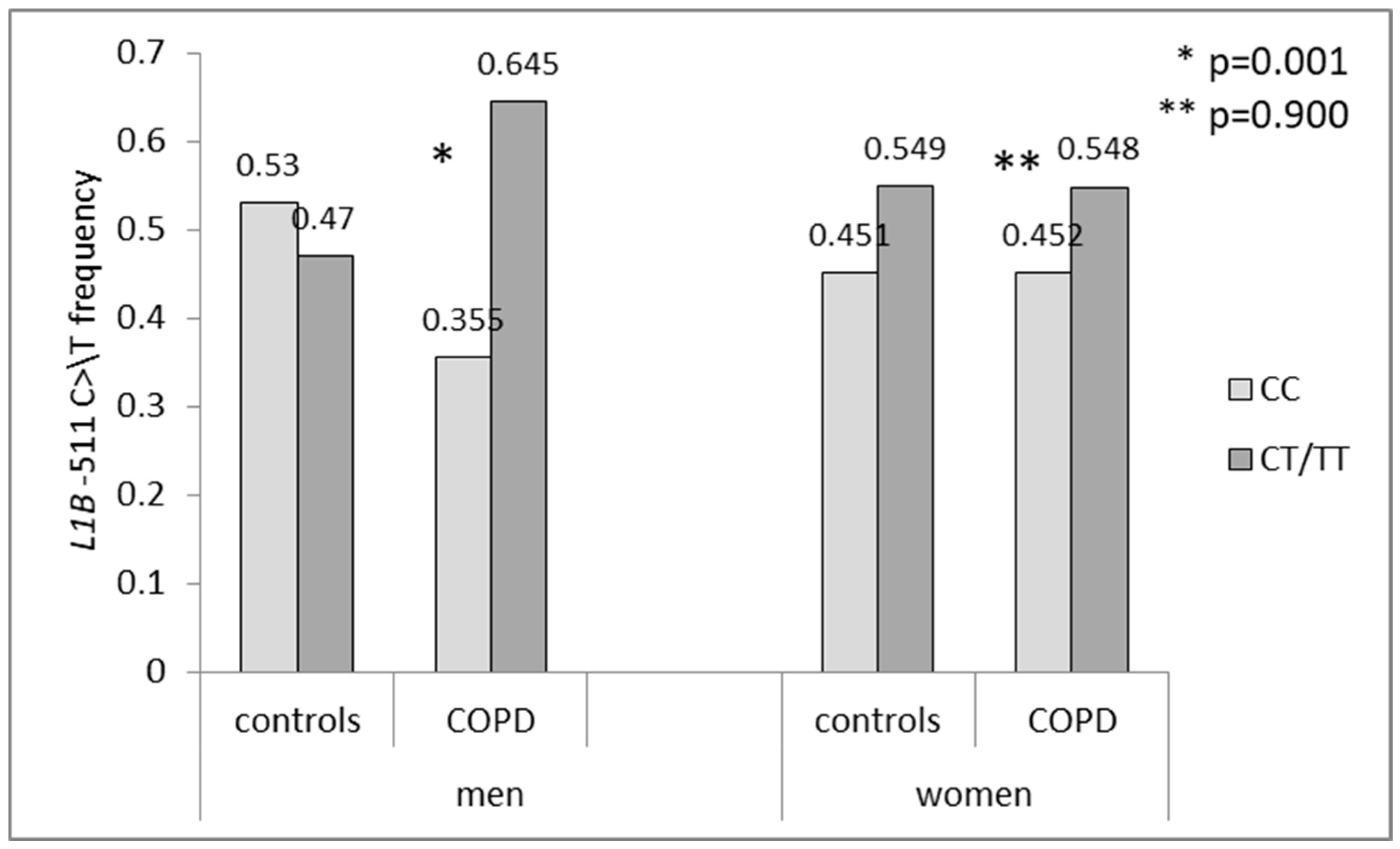
The prevalence of CT/TT genotypes was more pronounced in men (patients: 0.645 vs. controls: 0.470; OR: 3.911; CI: 1.734–8.808; p = 0.001, adjusted for age and smoking status, Figure 1) conferring a 3.91-fold higher risk for COPD. This significance was not found in women (OR: 1.057; CI: 0.445–2.508, adjusted for age and smoking status; p = 0.900, Figure 1). When analyses were stratified according to smoking habits, the CT/TT genotypes were marginally more prevalent in the patient group (0.635) compared to the controls (0.475, p = 0.052). The frequency difference was seen only in men, although it was just tendentially significant (0.724 in COPD patients vs. 0.500 in controls, p = 0.056), but not in women (p = 0.395). In the groups of ex- and current smokers, we failed to find any differences between COPD patients and controls (ex-smokes: p = 0.234; current smokers: p = 0.236). With respect to the sex in the subgroup of current smokers, male patients had a higher, but not significant, prevalence of the CT/TT genotypes than the controls (0.733 vs. 0.400, respectively, p = 0.065). In COPD patients no associations were found between genotype and GOLD stages (p = 0.650), FEV1%pred. (p = 0.254), and FEV1%/FVC (p = 0.278).
With respect to allele distribution, the T allele tended to be more frequent in COPD patients (p = 0.051, Table 2).

3.2. IL1B +3953 C>T SNP

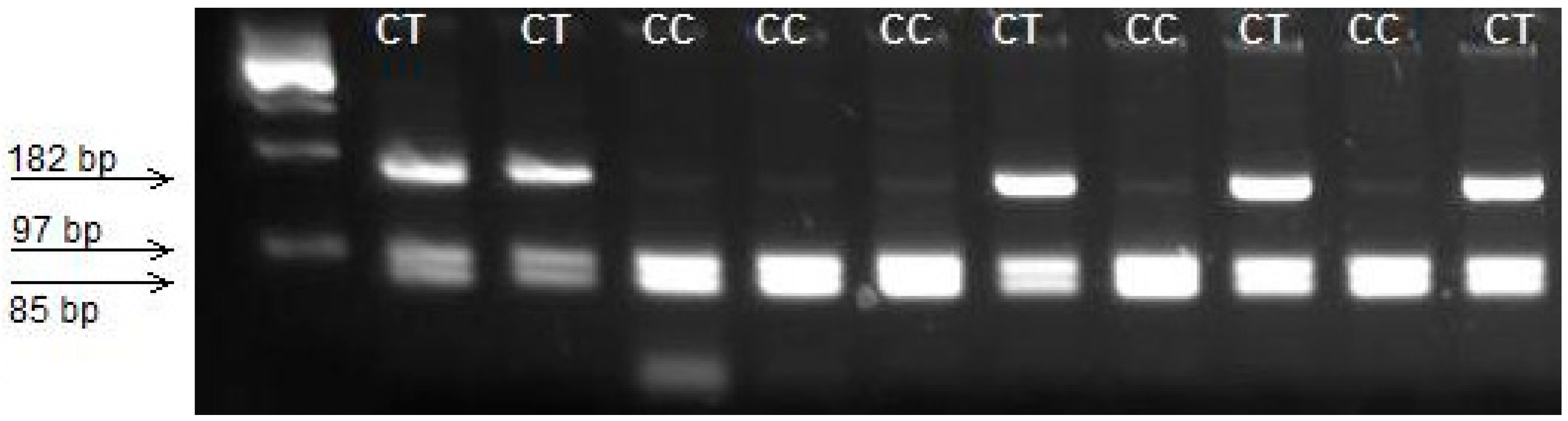
The IL1B +3953 C>T PCR product had a length of 194 bp, whereas the restriction reaction resulted in three fragments of 97 bp, 85 bp, and 12 bp for the +3953 C allele and two fragments of 182 bp and 12 bp for the +3953 T allele (Scheme 1).
The patient and control cohorts adhere to the Hardy–Weinberg Equilibrium, with p-values above the threshold for statistical significance (controls: p = 0.548; patients: p = 0.639). No significant differences were found in the genotype and allele distributions of IL1B +3953 C>T between controls and COPD patients (p = 0.244 and p = 0.143, respectively, Table 3). The genotype with at least one T allele appeared to be protective, with a 2.21-fold lower risk for COPD after adjustment for sex, age, and smoking status (p = 0.007, Table 3). When stratified according to smoking groups, a significant difference in genotype distribution was found only in non-smokers (controls: CC—0.488, CT—0.436, TT—0.050 vs. COPD: CC—0.706, CT—0.275, TT—0.020, p = 0.046). In the same subgroup the CT/TT genotypes were more frequent among controls (0.531 in controls vs. 0.294 in COPD, p = 0.011).
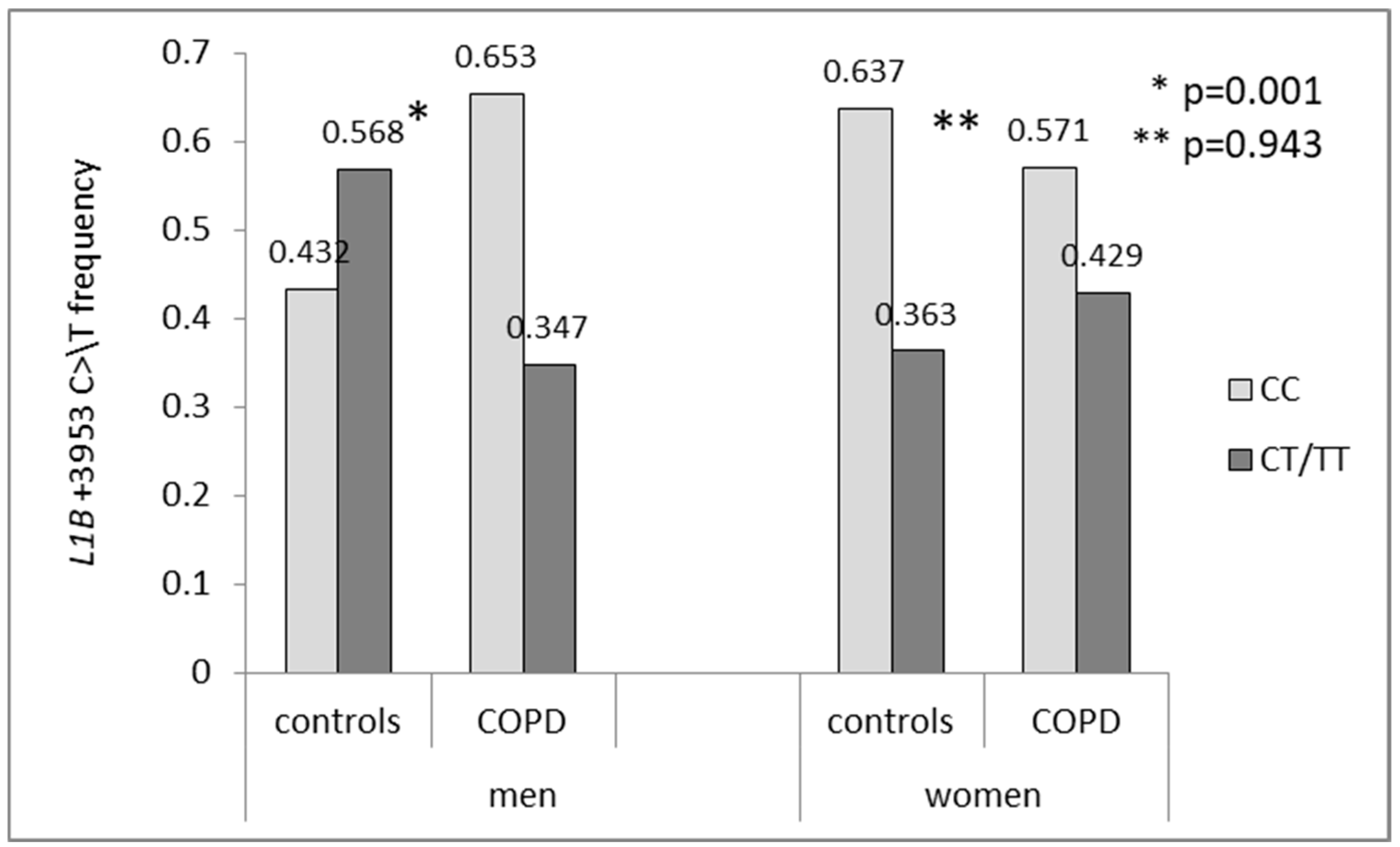
The CT+TT genotypes were found to be more frequent in male controls than in COPD males (0.568 vs. 0.347; OR: 0.247; CI: 0.111–0.547, adjusted for age and smoking status) p = 0.001, Figure 2). Such a difference was not found in women (OR: 1.033; CI: 0.430–2.482, adjusted for age and smoking status), p = 0.943, Figure 2). No correlations were found between genotype and GOLD stages (p = 0.650), FEV1%pred. (p = 0.254), and FEV1%/FVC (p = 0.278).

3.3. IL1B Haplotypes

The frequencies of the IL1B haplotypes of the two studied loci of IL1B (-511 C>T and +3953 C>T) did not differ significantly between controls and COPD patients (p = 0.099).
The frequency of the T_C haplotype, constructed by alleles found to confer an enhanced expression of IL-1β, did not differ significantly from the most common C_C haplotype (OR 1.25; 0.88–1.79; p = 0.231, Table 4). However, the same T_C haplotype conferred a 1.70-fold higher risk of COPD (95% CI, 1.10–2.64, p = 0.018, Table 4) in comparison to the C_T haplotype, which was previously associated with lower IL1B expression.

3.4. VNTR Polymorphism of IL1RN

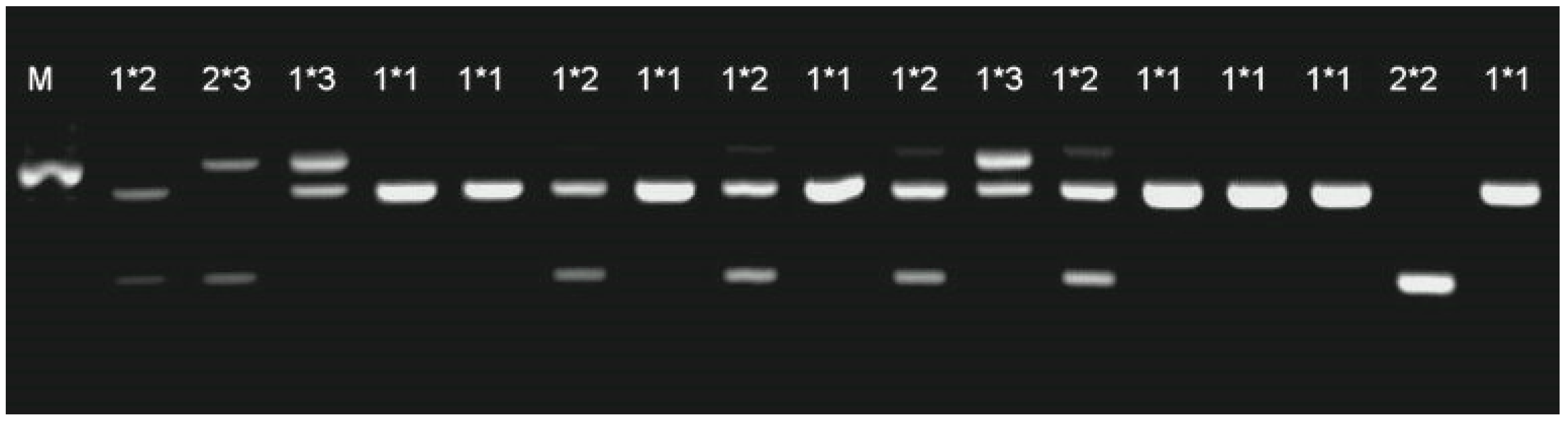
The PCR products were separated on 3% agarose gels, with those of allele *1 (four repeats) measuring 410 bp, allele *2 (two repeats)—240 bp, allele *3 (five repeats)—500 bp; allele *4 (three repeats)—325 bp, and allele *5 (six repeats)—596 bp (Scheme 2).
Neither the control group nor the patient group deviated from the Hardy–Weinberg Equilibrium (controls: p = 0.60; patients: p = 0.070). We did not observe any statistically significant differences in the genotype and allele frequencies of IL1RN polymorphism between controls and patients with COPD (p = 0.936 and p = 0.994, Table 5). We failed to find any variation in the genotype distribution between subgroups with different smoking status (control non-smokers vs. COPD non-smokers: p = 0.507; control ex-smokers vs. COPD ex-smokers: p = 0.957; and control current smokers vs. COPD current smokers: p = 0.869). In sex-stratified groups there was a lack of difference in genotype distribution as well (age and smoking status were applied as covariates).
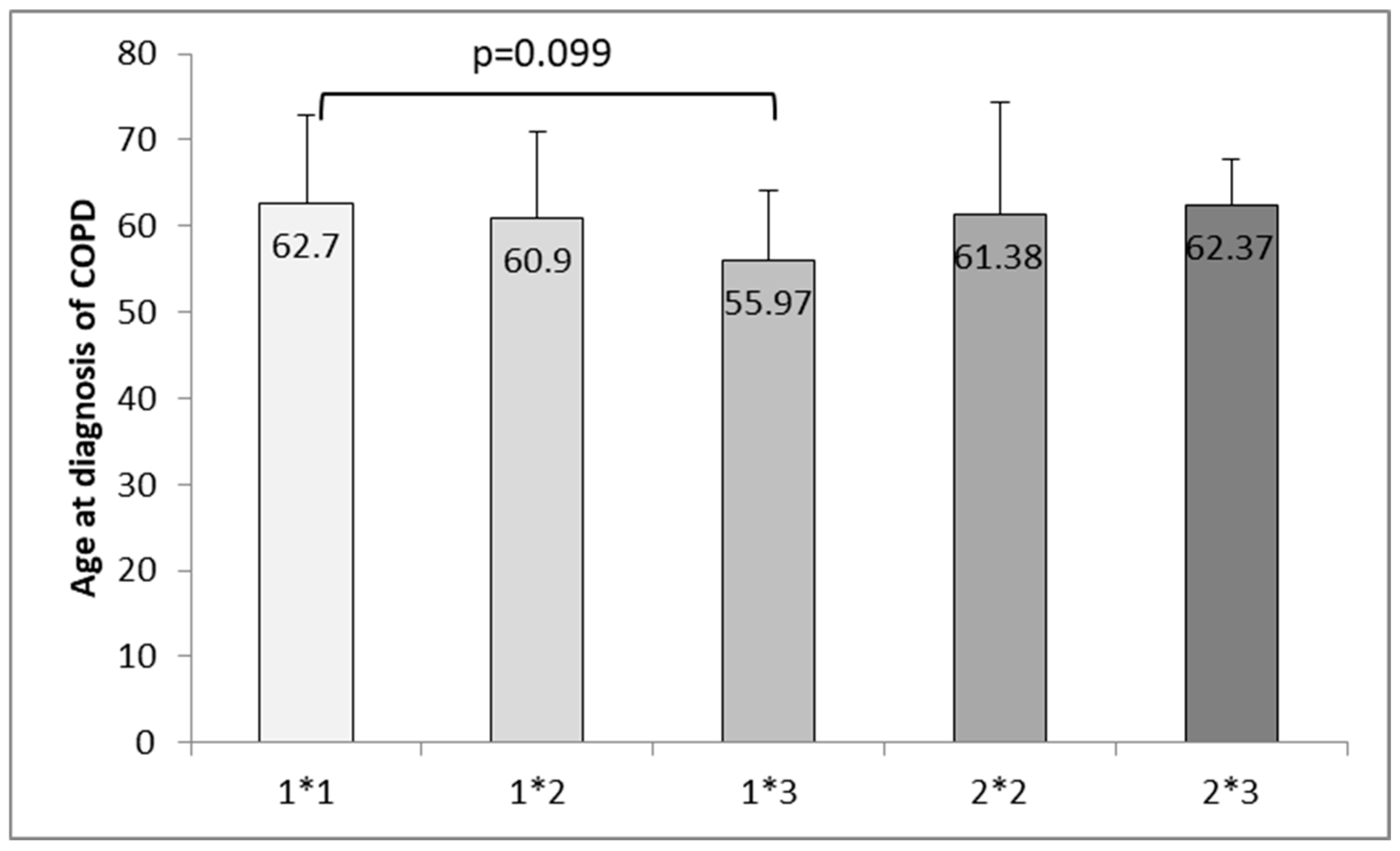
A non-significant trend for earlier COPD development in carriers of the 1*3 genotype compared to 1*1 was found (55.97 ± 8.22 years vs. 62.67 ± 10.25 years, p = 0.099, Figure 3).
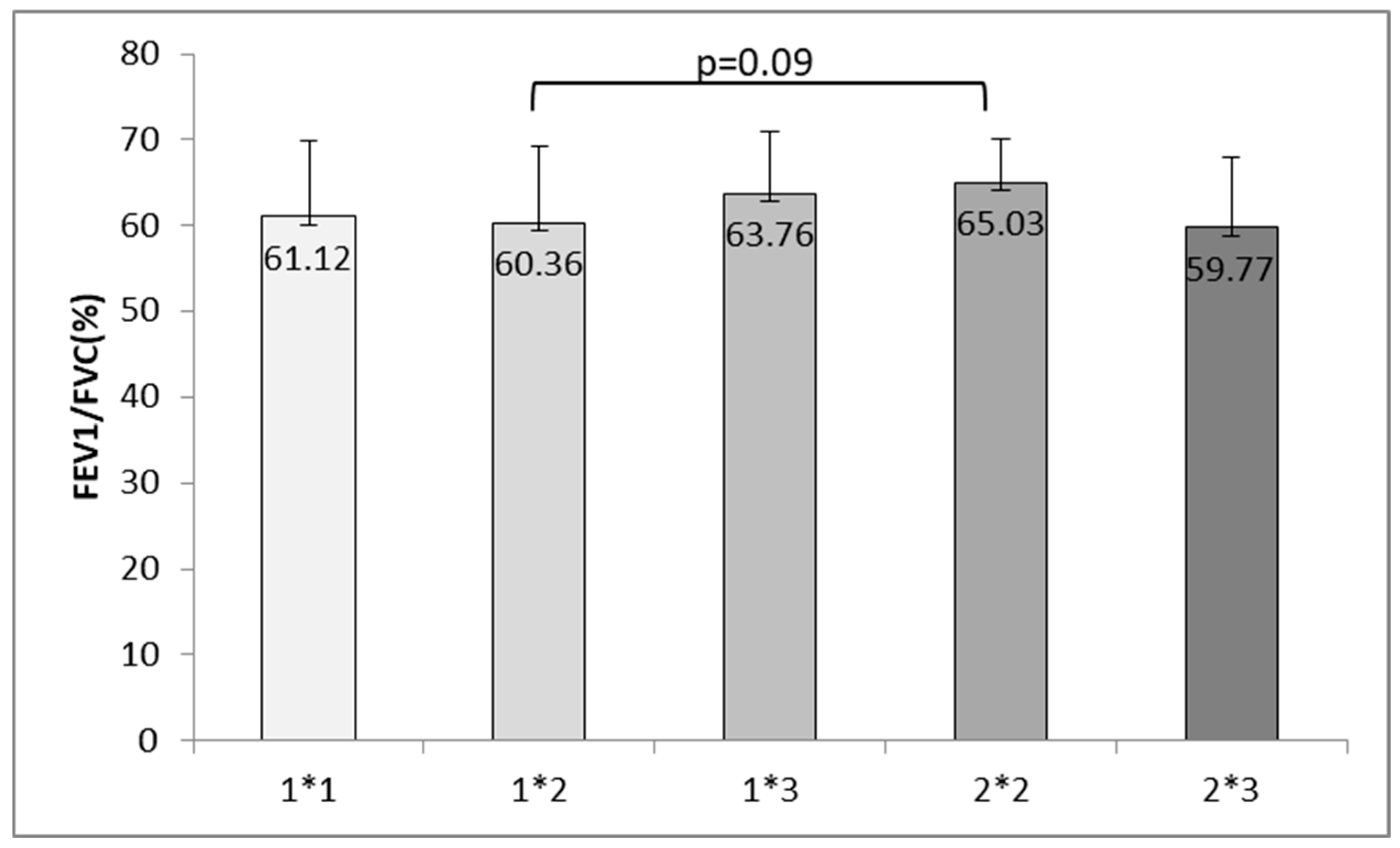
Patients with the 2*2 genotype had a higher but not significant FEV1/FVC (%) in comparison to 1*2 carriers (65.03 ± 5.05 vs. 60.36 ± 8.094, p = 0.09, Figure 4). No differences were found for the FEV1%pred. (p = 0.465) and GOLD stages (p = 0.479).

4. Discussion

COPD is characterized by persistent, often progressive, airflow limitation resulting from chronic inflammation, the subsequent destruction of lung parenchyma (emphysema), and remodeling of the small airways [30]. While cigarette smoking is the primary environmental risk factor, only a subset of heavy smokers develops clinically significant COPD, indicating that host genetic factors critically modulate the intensity and nature of the inflammatory response [27]. Inflammatory mediators, particularly cytokines, are central to driving this pathological destruction [31]. Understanding how polymorphisms in key cytokine genes influence expression and activity is essential for elucidating disease pathogenesis and variable progression rates [27].
The Interleukin-1 superfamily is fundamental to the regulation of both innate and adaptive immunity [32]. The genes responsible for key cytokines—namely, IL1A, IL1B, and the receptor antagonist IL1RN—are physically grouped on human chromosome 2 [32]. Among these, IL-1β stands out as a major pro-inflammatory driver, with elevated levels frequently detected in patients during both stable periods and acute exacerbations [30]. This signaling is naturally moderated by IL-1RA (encoded by IL1RN), which competes for receptor binding without triggering a cellular response [33]. An imbalance in this ratio, often driven by genetic variations, may predispose certain individuals to heightened inflammatory damage when exposed to irritants.
Polymorphisms situated within gene promoter regions can significantly influence the binding efficiency of transcription factors, thereby regulating the basal or inducible expression rates of the gene product. The T allele of IL1B -511 (rs16944) has been strongly associated with increased transcriptional efficiency and, consequently, higher levels of IL1B expression [34].
According to our findings the genotypes containing at least one variant T allele are more frequent in the patient group, especially in men, identifying it as a risk factor for COPD. The variant T allele of the -511C>T polymorphism is frequently identified as a risk factor for conditions characterized by chronic inflammation. In some populations, the association between this variant and disease susceptibility is explicitly sex dependent. Although the variant T allele is identified as a risk factor for chronic inflammatory disorders, the association between this variant and disease susceptibility may be sex dependent. The IL-1 cytokine network is influenced by circulating estrogen, with women typically producing much higher amounts of IL-1RA than men. In certain tissues, such as the liver, estrogen receptor alpha can prevent IL-1β from triggering gene expression through mechanisms involving coactivator competition. Consequently, the inherent pro-inflammatory risk of the IL1B -511 T allele may be modulated by a woman’s hormonal state, which fluctuates throughout the menstrual cycle and changes during menopause [35]. In studies analyzing non-pulmonary inflammatory conditions, serum IL1B levels demonstrated a dosage-dependent relationship with this genotype—patients homozygous for the TT genotype exhibited significantly higher concentrations of this cytokine [34]. Thus, the lung tissue of T carriers may react more strongly to triggers like smoke and germs, leading to more severe inflammation [30]. Although the interaction between the IL1B -511 C>T SNP and tobacco use represents a significant gene–environment interaction in the regulation of systemic and local inflammation, our findings suggest that the T allele may have an impact on COPD risk independent of smoking.
Functional data concerning IL1B +3953 C>T polymorphism are less consistent and appear context dependent. Some studies examining unrelated infectious diseases suggested that the T allele was related to low secretion of IL1B [26,36]. This potential association with reduced IL1B levels contrasts with the severe inflammatory phenotype generally characterizing COPD. Multiple meta-analyses show no association between IL1B +3953 C>T polymorphism and overall COPD risk [27]. This lack of association suggests that this polymorphism is either functionally neutral in the complex inflammatory network of COPD, or its potential mild regulatory effects are clinically overshadowed by the influence of stronger, transcriptionally active regulatory variants like IL1B -511 C>T or the IL1RN VNTR.
We found the T allele of +3953 C>T IL1B SNP to be protective in our group recruited from central Bulgaria. As in IL1B -511 C>T SNP, the T allele was more frequent in men.
Analyzing multiple polymorphisms simultaneously as haplotypes allows for the assessment of cumulative risk profiles, which are often more predictive than single variants, particularly concerning complex diseases like COPD.
The combination of IL1B SNPs into haplotypes, potentially including the highly functional IL1B -511 T allele, provides a theoretical framework for cumulative pro-inflammatory risk. The highest pro-inflammatory risk is genetically determined by the presence of the -511 T allele, which leads to robust IL-1B expression [26,36]. Therefore, the pathogenic potential of the IL1B locus hinges predominantly on the presence and regulatory activity of this promoter SNP.
In our study, the T_C haplotype, constructed by alleles found to determine enhanced expression of IL-1β, was associated with higher risk of COPD.
Our findings regarding the T_C haplotype are consistent with its previously reported role as a high-expression variant in the IL-1 family. However, it is important to note that our study did not include direct measurements of IL-1β or IL-1RA protein levels. Therefore, the pro-inflammatory implications of this haplotype remain inferred from previous functional studies rather than directly demonstrated in the current cohort. Further research incorporating cytokine quantification is necessary to confirm the biological impact of these genotypes in COPD patients.
The IL1RN gene features a variable number of tandem repeats (VNTR) in its second intron [33]. Allele 2 (*2), characterized by two repeats, has been identified as a significant risk factor. Individuals homozygous for this allele tend to produce lower levels of the anti-inflammatory IL-1RA protein. This deficit shifts the immune balance toward a pro-inflammatory state, potentially accelerating the destruction of lung parenchyma [33,37]. Individuals homozygous for IL1RN*2 (*2*2) are consequently predisposed to a more prolonged and severe pro-inflammatory immune response due to the reduced availability of the natural inhibitor, IL-1RA [33]. By changing the IL-1RA/IL-1B balance heavily toward inflammation, this inhibitory state is a potent susceptibility mechanism that facilitates the signaling necessary to drive chronic pulmonary destruction.
Research on the IL1 gene cluster has found inconsistent results in different groups around the world. These differences highlight the need to account for population structure and show that gene patterns can vary significantly between different ethnicities.
The association between IL1 gene variants and COPD is not uniform across global populations. For instance, the IL1B -511 T allele shows a much stronger correlation with COPD risk in East Asian cohorts compared to Caucasian groups. This discrepancy may be due to specific gene–environment interactions or linkage disequilibrium with other regulatory elements unique to certain ethnic backgrounds [26,38].
In contrast to the ethnically restricted association of IL1B -511, IL1RN VNTR polymorphism demonstrates a more robust and widespread association with COPD susceptibility, suggesting its influence as a universal regulatory mechanism.
The meta-analysis of IL1RN VNTR revealed a significant association with COPD risk in East Asians [31]. Specifically, the *2*2 genotype was associated with an increased risk for COPD [26]. The strong connection between IL1RN*2 homozygosity and COPD highlights that low levels of IL-1RA significantly increase the risk of the disease. This effect appears to be universal across different populations and may even be more important than other genetic factors.
The allele and genotype distribution did not differ in our studied controls and COPD patients. Interestingly, carriers of the 1*3 genotype developed COPD earlier compared to individuals with the 1*1 genotype. This confirms the fact that, other than polymorphisms, many other factors play role in the development and progression of the disease. Currently, there are no data concerning the functional activity of allele *3, but we can speculate that, analogously to two-repeat allele *2, it may affect the expression of IL1Ra, leading to the enhanced transcriptional activity of IL1RN gene. Thus, allele *3 may influence the balance of IL-1RA and IL-1B, resulting in a decrease in pro-inflammatory response.
Genetic variation within the IL1 cluster is not only associated with disease susceptibility but also with the clinical appearance of COPD. The rate of decline in FEV1 is the primary measure used to track disease progression [27]. Studies, including analyses within the Lung Health Study cohort, have previously established a significant association between IL1B and IL1RN haplotypes and the accelerated rate of decline of lung function [27]. This correlation confirms that the genetic predisposition to high IL-1 activity (high IL-1B, low IL-1RA) drives chronic lung destruction at an increased velocity. The high level of inflammation caused by these specific genes leads to a version of COPD that worsens quickly. As a result, these markers are essential tools for forecasting the long-term severity of COPD in patients.
Contrary to the findings for higher COPD risk in 2*2 carriers, we found patients with the 2*2 genotype had a higher FEV1/FVC(%) in comparison to 1*2 carriers.
The main limitation of the study is the narrow range of our groups—the subjects of the study are only from a particular region of Bulgaria. Another limitation is the small number of subjects in some subgroups in the stratified models (especially for IL1RN VNTR). The ethical and environmental factors may result in differences when comparing other regions. A gender imbalance within the control group with a female predominance is observed. This distribution was primarily driven by the challenge of recruiting disease-free male subjects over the age of 60; a significant portion of the age-matched male population presented with various chronic comorbidities. To avoid the introduction of confounding variables that could skew the results, these individuals were excluded. While this ensures a healthy control baseline, we acknowledge that the results may not be fully generalizable across genders and should be interpreted with this recruitment constraint in mind. Furthermore, it should be noted that no formal correction for multiple testing (such as Bonferroni or False Discovery Rate) was applied to the various analyses across SNPs, haplotypes, and sex-stratified models. Future studies with larger sample sizes are required to validate these exploratory associations.

5. Conclusions

Our results suggest, for the first time in a Bulgarian population, that the T_C haplotype of IL1B -511C>T/+3953C>T may represent a potential predisposing factor for COPD. This haplotype has been previously characterized in the literature as a potential determinant of enhanced IL-1β expression. Similarly, the -511C>T promoter polymorphism and the +3953C>T silent polymorphism in exon 5 appear to influence genetic susceptibility to COPD within this cohort. Specifically, the +3953T allele was associated with a potentially protective effect in males. Furthermore, carriers of alleles and haplotypes hypothesized to correlate with higher IL-1B protein levels (the -511T and +3953C alleles and the T_C haplotype) exhibited a higher susceptibility to this chronic lung disease in our study.
Additionally, according to the literature, we report the genotype and allele distributions for the IL1RN VNTR polymorphism in a Bulgarian population for the first time. Our data suggest that the VNTR polymorphism of the IL1RN gene may not significantly impact overall COPD risk, although carriers of the 1*3 genotype presented a trend toward earlier disease development. More subjects from different country regions should be investigated in order to confirm our findings.

Author Contributions

T.T.—experimental studies, data analysis, statistical analysis, literature search, and manuscript preparation; D.D.—concept, clinical studies, data acquisition, and manuscript review; M.K.—experimental studies and data analysis; E.A.—experimental studies, data analysis, statistical analysis, and literature search; H.P.—literature search; M.D.—concept, literature search, manuscript editing, and manuscript review; T.V.—concept, design, data analysis, statistical analysis, literature search, manuscript editing, and manuscript review. All authors have read and agreed to the published version of the manuscript.

Funding

This research was funded by the Infrastructural Project OUP 3/2023, by Trakia University, Stara Zagora, and by the Bulgarian Ministry of Education and Science (MES), within the framework of the Bulgarian National Recovery and Resilience Plan, Component Innovative Bulgaria, Project № BG-RRP-2.004-0006-C02, Development of research and innovation at Trakia University in service of health and sustainable well-being.

Institutional Review Board Statement

The study was conducted in accordance with the Declaration of Helsinki and was approved by the Ethics Committee at Medical Faculty, Trakia University, Stara Zagora, Bulgaria, with [SG No. 32]; approval date: 5 December 2008.

Informed Consent Statement

Written informed consent was obtained from all participants and controls involved in the study.

Data Availability Statement

All data generated during this study are included in this published article, but the files are available from the corresponding author upon reasonable request.

Acknowledgments

The authors would like to express gratitude to Mariana Rueva and Pavlina Ivanova for their assistance in collecting the blood samples of patients and controls.

Conflicts of Interest

The authors declare no conflicts of interest. The funders had no role in the design of the study; in the collection, analyses, or interpretation of data; in the writing of the manuscript; or in the decision to publish the results.

Abbreviations

The following abbreviations are used in this manuscript:
COPDChronic obstructive pulmonary disease
IL-1 (α,β)Interleukin-1 (alpha, beta)
TNF αTumor necrosis factor alpha
SNPSingle nucleotide polymorphism
HGVSHuman Genome Variation Society
IL-1RAInterleukin-1 receptor antagonist
VNTRVariable number tandem repeat
SDStandard deviation
FEV1Forced expiratory volume in one second
FVCForced vital capacity
DNADeoxyribonucleic acid
ODOptical density
PCRPolymerase chain reaction
PCR-RFLPPolymerase chain reaction-restriction fragment length polymorphism
dNTPsDeoxyribose nucleoside triphosphates
GOLDGlobal initiative for chronic obstructive lung disease

References

  1. MacNee, W. Pathogenesis of Chronic Obstructive Pulmonary Disease. Proc. Am. Thorac. Soc. 2005, 2, 258–266. [Google Scholar] [CrossRef]
  2. Global Strategy for the Diagnosis, Management, and Prevention of Chronic Obstructive Pulmonary Disease: 2025 Report. Available online: https://goldcopd.org/2025-gold-report/ (accessed on 26 February 2026).
  3. Majeed, G.S.; Glew, S.; Bidwell, J. An Association between LSIL and the High Secretor Phenotype of IL-1beta. Gynecol. Oncol. 1999, 73, 359–361. [Google Scholar] [CrossRef] [PubMed]
  4. Dinarello, C.A. The IL-1 Family and Inflammatory Diseases. Clin. Exp. Rheumatol. 2002, 20, S1–S13. [Google Scholar] [PubMed]
  5. Joos, L.; McIntyre, L.; Ruan, J.; Connett, J.E.; Anthonisen, N.R.; Weir, T.D.; Pare, P.D.; Sandford, A.J. Association of IL-1beta and IL-1 Receptor Antagonist Haplotypes with Rate of Decline in Lung Function in Smokers. Thorax 2001, 56, 863–866. [Google Scholar] [CrossRef]
  6. Chung, K.F. Cytokines as Targets in Chronic Obstructive Pulmonary Disease. Curr. Drug Targets 2006, 7, 675–681. [Google Scholar] [CrossRef]
  7. Sha, Y.; Markovic-Plese, S. A Role of IL-1R1 Signaling in the Differentiation of Th17 Cells and the Development of Autoimmune Diseases. Self Nonself 2011, 2, 35–42. [Google Scholar] [CrossRef] [PubMed]
  8. Ishii, T.; Matsuse, T.; Teramoto, S.; Matsui, H.; Miyao, M.; Hosoi, T.; Takahashi, H.; Fukuchi, Y.; Ouchi, Y. Neither IL-1beta, IL-1 Receptor Antagonist, nor TNF-Alpha Polymorphisms Are Associated with Susceptibility to COPD. Respir. Med. 2000, 94, 847–851. [Google Scholar] [CrossRef]
  9. Zhang, Y.; Cardell, L.O.; Adner, M. IL-1beta Induces Murine Airway 5-HT2A Receptor Hyperresponsiveness Via a Non-Transcriptional MAPK-Dependent Mechanism. Respir. Res. 2007, 8, 29. [Google Scholar] [CrossRef] [PubMed]
  10. Chen, H.; Wilkins, L.M.; Aziz, N.; Cannings, C.; Wyllie, D.H.; Bingle, C.; Rogus, J.; Beck, J.D.; Offenbacher, S.; Cork, M.J.; et al. Single Nucleotide Polymorphisms in the Human Interleukin-1B Gene Affect Transcription According to Haplotype Context. Hum. Mol. Genet. 2006, 15, 519–529. [Google Scholar] [CrossRef]
  11. Rogus, J.; Beck, J.D.; Offenbacher, S.; Huttner, K.; Iacoviello, L.; Latella, M.C.; Gaetano, M.; Wang, H.Y.; Kornman, K.S.; Duff, G.W. IL1B Gene Promoter Haplotype Pairs Predict Clinical Levels of Interleukin-1beta and C-Reactive Protein. Hum. Genet. 2008, 123, 387–398. [Google Scholar] [CrossRef]
  12. Al-Tahhan, M.A.; Etewa, R.L.; Behery, M.M. Association between Circulating Interleukin-1 Beta (IL-1β) Levels and IL-1β C-511T Polymorphism with Cervical Cancer Risk in Egyptian Women. Mol. Cell. Biochem. 2011, 353, 159–165. [Google Scholar] [CrossRef]
  13. Giovine, F.S.; Takhsh, E.; Blakemore, A.I.; Duff, G.W. Single Base Polymorphism at -511 in the Human Interleukin-1 Beta Gene (IL1 Beta). Hum. Mol. Genet. 1992, 1, 450. [Google Scholar] [CrossRef]
  14. Pociot, F.; Molvig, J.; Wogensen, L.; Worsaae, H.; Nerup, J. A TaqI Polymorphism in the Human Interleukin-1 Beta (IL-1 Beta) Gene Correlates with IL-1 Beta Secretion in Vitro. Eur. J. Clin. Investig. 1992, 22, 396–402. [Google Scholar] [CrossRef]
  15. Asada, M.; Yamaya, M.; Ebihara, S.; Yasuda, H.; Tomita, N.; Kubo, H.; Sasaki, H. Interleukin-1beta Gene Polymorphisms Associated with COPD. Chest 2005, 128, 1072–1073. [Google Scholar] [CrossRef]
  16. Danilko, K.V.; Korytina, G.F.; Akhmidishina, L.Z.; Ianbaeva, D.G.; Zagidullin, S.Z.; Victorova, T.V. Association of Cytokines Genes (ILL, IL1RN, TNF, LTA, IL6, IL8, ILo) Polymorphic Markers with Chronic Obstructive Pulmonary Disease. Mol. Biol. 2007, 41, 26–36. [Google Scholar] [CrossRef] [PubMed]
  17. Lee, J.M.; Kang, Y.R.; Park, S.H.; Cha, S.I.; Kim, J.S.; Kang, H.K.; Lee, W.K.; Kim, M.J.; Kim, C.H.; Kim, N.S.; et al. Polymorphisms in Interleukin-1B and Its Receptor Antagonist Genes and the Risk of Chronic Obstructive Pulmonary Disease in a Korean Population: A Case-Control Study. Respir. Med. 2008, 102, 1311–1320. [Google Scholar] [CrossRef][Green Version]
  18. Zeyrek, D.; Demir, E.; Alpman, A.; Ozkinay, F.; Gulen, F.; Tanac, R. Association of Interleukin-1beta and Interleukin-1 Receptor Antagonist Gene Polymorphisms in Turkish Children with Atopic Asthma. Allergy Asthma Proc. 2008, 29, 468–474. [Google Scholar] [CrossRef]
  19. Bird, S.; Zou, J.; Wang, T.; Munday, B.; Cunningham, C.; Secombes, C.J. Evolution of Interleukin-1beta. Cytokine Growth Factor Rev. 2002, 13, 483–502. [Google Scholar] [CrossRef]
  20. Busfield, S.J.; Comrack, C.A.; Yu, G.; Chickering, T.W.; Smutko, J.S.; Zhou, H.; Leiby, K.R.; Holmgren, L.M.; Gearing, D.P.; Pan, Y. Identification and Gene Organization of Three Novel Members of the Il-1 Family on Human Chromosome 2. Genomics 2000, 66, 213–216. [Google Scholar] [CrossRef]
  21. Garlanda, C.; Dinarello, C.A.; Mantovani, A. The Interleukin-1 Family: Back to the Future. Immunity 2013, 39, 1003–1018. [Google Scholar] [CrossRef]
  22. Tarlow, J.K.; Blakemore, A.I.; Lennard, A.; Solari, R.; Hughes, H.N.; Steinkasserer, A.; Duff, G.W. Polymorphism in Human Il-1 Receptor Antagonist Gene Intron 2 Is Caused by Variable Numbers of an 86-Bp Tandem Repeat. Hum. Genet. 1993, 91, 403–404. [Google Scholar] [CrossRef] [PubMed]
  23. Garcia-Gonzalez, M.A.; Aisa, M.A.; Strunk, M.; Benito, R.; Piazuelo, E.; Jimenez, P.; Sopena, F.; Lanas, A. Relevance of IL-1 and TNF Gene Polymorphisms on Interleukin-1beta and Tumor Necrosis Factor-Alpha Gastric Mucosal Production. Hum. Immunol. 2009, 70, 935–945. [Google Scholar] [CrossRef]
  24. Gohlke, H.; Illig, T.; Bahnweg, M.; Klopp, N.; Andre, E.; Altmuller, J.; Herbon, N.; Werner, M.; Knapp, M.; Pescollderungg, L.; et al. Association of the Interleukin-1 Receptor Antagonist Gene with Asthma. Am. J. Respir. Crit. Care Med. 2004, 169, 1217–1223. [Google Scholar] [CrossRef]
  25. Hegab, A.E.; Sakamoto, T.; Saitoh, W.; Nomura, A.; Ishii, Y.; Morishima, Y.; Iizuka, T.; Kiwamoto, T.; Matsuno, Y.; Massoud, H.H.; et al. Polymorphisms of TNFalpha, IL1beta, and IL1RN Genes in Chronic Obstructive Pulmonary Disease. Biochem. Biophys. Res. Commun. 2005, 329, 1246–1252. [Google Scholar] [CrossRef]
  26. Xie, Z.K.; Huang, Q.P.; Huang, J.; Xie, Z.F. Association between the IL1B, IL1RN Polymorphisms and COPD Risk: A Meta-Analysis. Sci. Rep. 2014, 4, srep06202. [Google Scholar] [CrossRef]
  27. Shukla, R.K.; Kant, S.; Bhattacharya, S.; Mittal, B. Association of Cytokine Gene Polymorphisms in Patients with Chronic Obstructive Pulmonary Disease. Oman Med. J. 2012, 27, 285–290. [Google Scholar] [CrossRef]
  28. Dimov, D.; Vlaykova, T.; Kurzawski, M.; Lapczuk, J.; Wajda, A.; Ilieva, V.; Koychev, A.; Prakova, G.; Maximov, V.; Drozdzik, M.; et al. Single Nucletide Polymorphisms in Gene of Il-1beta in Bronchial Asthma. Biotechnol. Biotechnol. Equip. 2012, 26, 45–51. [Google Scholar] [CrossRef][Green Version]
  29. Cantagrel, A.; Navaux, F.; Loubet-Lescoulie, P.; Nourhashemi, F.; Enault, G.; Abbal, M.; Constantin, A.; Laroche, M.; Mazieres, B. Interleukin-1beta, Interleukin-1 Receptor Antagonist, Interleukin-4, and Interleukin-10 Gene Polymorphisms: Relationship to Occurrence and Severity of Rheumatoid Arthritis. Arthritis Rheum. 1999, 42, 1093–1100. [Google Scholar] [CrossRef]
  30. Botelho, F.M.; Bauer, C.M.; Finch, D.; Nikota, J.K.; Zavitz, C.C.; Kelly, A.; Lambert, K.N.; Piper, S.; Foster, M.L.; Goldring, J.J.; et al. IL-1α/IL-1R1 Expression in Chronic Obstructive Pulmonary Disease and Mechanistic Relevance to Smoke-Induced Neutrophilia in Mice. PLoS ONE 2011, 6, e28457. [Google Scholar] [CrossRef]
  31. Hackett, T.L.; Stefanowicz, D.; Aminuddin, F.; Sin, D.D.; Connett, J.E.; Anthonisen, N.R.; Pare, P.D.; Sandford, A.J. Effect of Gene Environment Interactions on Lung Function and Cardiovascular Disease in COPD. Int. J. Chronic Obstr. Pulm. Dis. 2011, 6, 277–287. [Google Scholar] [CrossRef]
  32. Armingohar, Z.; Jorgensen, J.J.; Kristoffersen, A.K.; Schenck, K.; Dembic, Z. Polymorphisms in the Interleukin-1 Gene Locus and Chronic Periodontitis in Patients with Atherosclerotic and Aortic Aneurysmal Vascular Diseases. Scand. J. Immunol. 2014, 79, 338–345. [Google Scholar] [CrossRef] [PubMed]
  33. Witkin, S.S.; Gerber, S.; Ledger, W.J. Influence of Interleukin-1 Receptor Antagonist Gene Polymorphism on Disease. Clin. Infect. Dis. 2002, 34, 204–209. [Google Scholar] [CrossRef]
  34. Ma, X.; Sun, L.; Li, X.; Xu, Y.; Zhang, Q. Polymorphism of IL-1B rs16944 (T/C) Associated with Serum Levels of IL-1β Affects Seizure Susceptibility in Ischemic Stroke Patients. Adv. Clin. Exp. Med. 2023, 32, 23–29. [Google Scholar] [CrossRef] [PubMed]
  35. Evans, M.J.; Lai, K.; Shaw, L.J.; Harnish, D.C.; Chadwick, C.C. Estrogen receptor alpha inhibits IL-1beta induction of gene expression in the mouse liver. Endocrinology 2002, 143, 2559–2570. [Google Scholar] [CrossRef] [PubMed]
  36. Shukla, R.K.; Kant, S.; Bhattacharya, S.; Mittal, B. Association of IL-1β (-511 C>T) and IL1RN 86-bp VNTR Polymorphism Suspectibility with Chronic Obstrutive Pulomary Disease between Male and Female Patients in Northern Indian Population. Eur. Respir. J. 2014, 38, 442. [Google Scholar] [CrossRef]
  37. Reiner, A.P.; Wurfel, M.M.; Lange, L.A.; Carlson, C.S.; Nord, A.S.; Carty, C.L.; Rieder, M.J.; Desmarais, C.; Jenny, N.S.; Iribarren, C.; et al. Polymorphisms of the IL1-Receptor Antagonist Gene (IL1RN) Are Associated with Multiple Markers of Systemic Inflammation. Arter. Thromb. Vasc. Biol. 2008, 28, 1407–1412. [Google Scholar] [CrossRef]
  38. Smolonska, J.; Wijmenga, C.; Postma, D.S.; Boezen, H.M. Meta-Analyses on Suspected Chronic Obstructive Pulmonary Disease Genes: A Summary of 20 Years’ Research. Am. J. Respir. Crit. Care Med. 2009, 180, 618–631. [Google Scholar] [CrossRef] [PubMed]
Figure 1. IL1B -511 C>\T genotype frequencies according to sex. The bar chart illustrates the frequencies of the CC genotype versus the CT/TT genotypes. Statistical significance was determined using binary logistic regression with age and smoking status as covariates.
Applsci 16 02418 g001
Figure 2. IL1B +3953 C>\T genotype frequencies according to sex. The bars represent the relative frequencies of the homozygous wild-type (CC) versus the variant-carrier (CT/TT) genotypes. Statistical significance was assessed by using binary logistic regression with age and smoking status as covariates.
Applsci 16 02418 g002
Scheme 1. Agarose gel (3%) electrophoresis of PCR products and restriction fragments for IL1B +3953C>T SNP genotyping.
Applsci 16 02418 sch001
Scheme 2. Agarose gel (3%) electrophoresis for the visualization of PCR products and genotyping for IL1RN VNTR. (M- DNA ladder—500 bp).
Applsci 16 02418 sch002
Figure 3. Age at diagnosis of COPD according to the IL1RN VNTR genotype. Bars represent the mean age at diagnosis for carriers of different IL1RN VNTR genotypes (1*1, 1*2, 1*3, 2*2, and 2*3). Statistical comparisons were performed using one-way ANOVA.
Applsci 16 02418 g003
Figure 4. FEV1/FVC(%) in COPD patients according to the IL1RN VNTR genotype. The chart illustrates the mean FEV1/FVC percentage across different IL1RN VNTR genotypes. Data are presented as the mean ± standard deviation. Statistical significance was assessed using one-way ANOVA.
Applsci 16 02418 g004
Table 1. Demographic and clinical characteristics of COPD patients and controls.
CharacteristicsPatients with COPD Controls
(n) (%)(n) (%)
Gender(163)(174)
   males121 (74%)84 (48%)
   females42 (26%)90 (52%)
Age at the inclusion in the study
   mean ± SD (years)66.86 ± 9.359.93 ± 11.1
   median (range) (years)67 (40–88)61 (23–85)
Age at the diagnosis of the disease
   mean ± SD (years)61.7 ± 10.2
   median (range) (years)64 (30–86)
Duration of the disease
   mean ± SD (years)5.2 ± 5.63
   median (range) (years)4 (0–30)
Smoking(n = 156)(n = 120)
   non-smokers51 (33%)77 (64%)
   ex-smokers67 (43%)11 (9%)
   current smokers37 (24%)32 (27%)
Smoking habits (packs/year)
Mean ± SD, (range)
   ex-smokers31.0 ± 14.6 (5–70)16.4 ± 5.4 (10–25)
   current smokers 35.6 ± 12.9 (5–60)16.8 ± 12.3 (5–50)
   all smokers32.6 ± 14.1 (5–70)16.7 ± 10.9 (5–50)
FEV1% pr.
   mean ± SD (range)50.60 ± 14.1 (15–79)93.4 ± 11.9 (82–113)
FEV1/FVC %
   mean ± SD (range)61.1 ± 8.6 (37.1–70)80.4 ± 7.2 (76.3–93)
COPD staging (GOLD 2009)
   II stage (moderate)78 (47%)
   III stage (severe)75 (46%)
   IV stage (very severe)11 (7%)
SD—standard deviation.
Table 2. Genotype and allele distributions according to IL1B -511 C>\T (rs16944) in COPD patients and controls.
IL1B -511C>TPatientsControlsOR (95% CI), p-Value
(Not Adjusted)
OR (95% CI), p-Value
(Adjusted for Sex, Age, and Smoking)
nFrequencynFrequency
n = 163 n = 174
Genotype distribution
CC620.380850.4891.0 (referent)1.0 (referent)
CT790.485720.4141.504 (0.952–2.376), p = 0.0801.909(1.048–3.476), p = 0.034
TT220.135170.0981.774 (0.870–3.618), p = 0.1153.157 (1.205–8.270), p = 0.019
CT+TT1010.620890.5111.556 (1.008–2.401), p = 0.0462.104 (1.189–3.724), p = 0.011
Allele distribution
-511C2030.6232420.6951.0 (referent)
-511T1230.3771060.3051.383 (1.005–1.904), p = 0.051
Table 3. Genotype and allele distributions according to IL1B +3953 C>\T (rs1143634) in COPD patients and controls.
IL1B +3953 C>TPatientsControlsOR (95% CI), p-ValueOR (95% CI), p-Value
(Not Adjusted)(Adjusted for Sex, Age, and Smoking)
nFrequencynFrequency
n = 160 n = 172
Genotype distribution
CC1010.631930.5411.0 (referent)1.0 (referent)
CT510.319690.4010.681 (0.430–1.077), p =0.1000.448 (0.246–0.816), p = 0.09
TT80.05100.0580.737 (0.279–1.946), p = 0.5370.492 (0.136–1.790), p = 0.282
CT+TT590.369790.4590.688 (0.443–1.067), p = 0.0950.453 (0.254–0.807), p = 0.007
Allele distribution
+3953 C2530.7912550.7411.0 (referent)
+3953 T670.209890.2530.759 (0.529–1.088), p = 0.143
Table 4. IL1B haplotypes in COPD patients and controls.
IL1B -511C>T:COPDControlsOR (95% CI), p-Value
IL1B +3953C>TnFrequencynFrequency
Haplotype frequencies
n = 320 n = 344
C_C1430.4461580.4601.0 (referent)
T_C1100.344970.2811.25 (0.88–1.79), p = 0.213
C_T540.170810.2350.74 (0.45–1.11), p = 0.146
T_T130.04080.0231.80 (0.74–4.35), p = 0.203
C_T540.170810.2351.0 (referent)
T_C1100.344970.2811.70 (1.10–2.64),p = 0.018
Table 5. Genotype and allele distributions according to VNTR polymorphism of IL1RN in COPD patients and controls.
IL1RNPatientsControlsOR (95% CI), p-ValueOR (95% CI), p-Value
VNTR(Not Adjusted)(Adjusted for Sex, Age, and Smoking)
nFrequencynFrequency
n =161n =170
Genotype distribution
1*1790.491870.5121.0 (referent)1.0 (referent)
1*2590.366600.3531.083 (0.676–1.735), p = 0.7401.198 (0.653–2.197), p = 0.560
2*270.04370.0411.101 (0.370–3.279), p = 0.8621.290 (0.339–4.900), p = 0.709
1*3120.075120.0711.101 (0.468–2.593), p = 0.8251.549 (0.491–4.885), p = 0.455
2*340.02530.0181.468 (0.319–6.765), p = 0.6221.363 (0.198–9.393), p = 0.753
2*40010.0060.367 (0.015–9.176), p = 1.000 **
Allele distribution
*12290.6962460.7091.0 (referent)
*2770.27780.2591.060 (0.739–1.523), p = 0.782
*3160.034150.0291.146 (0.561–2.340), p = 0.716
*40010.0030.358 (0.015–8.790), p = 1.000 **
** Haldane’s correction was applied for the calculation of the values.
Disclaimer/Publisher’s Note: The statements, opinions and data contained in all publications are solely those of the individual author(s) and contributor(s) and not of MDPI and/or the editor(s). MDPI and/or the editor(s) disclaim responsibility for any injury to people or property resulting from any ideas, methods, instructions or products referred to in the content.