1. Introduction
Among the wide range of cosmetic products available on the market, those associated with intimate hygiene possibly have the most demanding requirements, as they must be effective cleansing agents while also meeting consumer expectations for mildness and comfort of use. Their composition should also be carefully selected to suit the specific physiological and microbiological characteristics of intimate areas. In healthy women, such locations have a complex ecology, in which physiological pH, a correctly functioning mucosal barrier and a microbiota dominated by
Lactobacillus spp. offer protection against inflammation and possible dysbiosis, which increases susceptibility to irritation and infection [
1,
2,
3,
4,
5].
Inappropriate cosmetic products and inadequate hygiene practices have been associated with greater irritation, discomfort and recurrent complaints in the intimate area. Excessive washing, the use of intensive cleansing products, particularly those with neutral or alkaline pH and lacking supportive care ingredients in their formulation, may remove protective lipids, weaken the epidermal barrier and disrupt local microbial homeostasis [
1,
2,
6,
7,
8,
9,
10].
The market for intimate hygiene and care products is segmented according to target group, i.e., adult women and teenage girls, and is subject to regular introduction of new products; this is to be expected as age and life stage have a strong influence on the hydration of the intimate area, its pH and microbiological composition, and its susceptibility to irritation. Consequently, the current range of intimate care products includes a growing share of those tailored to specific age groups and physiological conditions: products with a pH of 5.0–6.0 and the addition of soothing agents are recommended for prepubertal girls, whereas those containing prebiotics and with a pH of 3.8–4.4 are more suitable for women of reproductive age. For peri- and postmenopausal women, it is recommended to use products with a near-neutral pH (6.0–7.0) containing emollients to counteract dryness and protect against the potentially drying effects of surfactants [
3,
6].
The range of intimate hygiene products has expanded beyond traditional cleansers to include a wide range of more advanced cleansing products; these are also available in various forms including gels, liquids, emulsions and foams, and leave-in products, such as wipes and care oils. These developments reflect both changes in consumer habits and a growing differentiation of hygiene practices. A study of manufacturers’ leaflets suggests that a growing proportion of intimate hygiene products are formulated to maintain physiological pH, and many include mild surfactant systems in their composition and offer additional care and protective properties [
2,
6,
7,
8,
11,
12,
13,
14].
Contemporary intimate hygiene formulations are designed to achieve effective gentle cleansing through the appropriate selection of surfactants. These surface-active agents are amphiphilic molecules composed of a hydrophobic alkyl chain and a hydrophilic head group, capable of adsorbing at interfaces and self-assembling into micellar structures, thereby facilitating the removal of hydrophobic impurities while minimizing disruption of the skin barrier. These may be anionic, amphoteric, or nonionic, with each type characterized by distinct cleansing properties and interactions with the skin barrier. Anionic surfactants provide high cleansing efficiency due to their negatively charged hydrophilic head groups, typically based on sulfate, sulfonate, or carboxylate functionalities, which promote effective soil removal via micelle formation and electrostatic repulsion. However, they are more likely to irritate the skin as a result of stronger interactions with epidermal proteins and intercellular lipids, particularly at higher concentrations or with prolonged exposure. In contrast, amphoteric and nonionic surfactants generally exhibit a milder action while maintaining satisfactory cleansing performance and greater compatibility with the lipid barrier. Amphoteric surfactants, such as betaine derivatives, contain both cationic and anionic moieties within the same molecule, resulting in pH-dependent behavior and improved dermatological tolerability. Their ability to form mixed micellar systems with anionic surfactants contributes to a reduction in irritation potential while preserving cleansing efficacy. Nonionic surfactants, including alkyl polyglucosides and ethoxylated alcohols, are characterized by an uncharged hydrophilic head group and rely primarily on hydrogen bonding rather than electrostatic interactions. As a result, they exhibit reduced interaction with biological macromolecules and structural components of the skin barrier, as well as a lower tendency to extract intercellular lipids, which makes them particularly suitable for formulations intended for frequent use and sensitive areas. In some formulations, cationic surfactants are included as auxiliary components. These surfactants contain positively charged head groups, typically quaternary ammonium structures, and although they exhibit limited detergency, their adsorption onto negatively charged surfaces may reduce the irritating effects of anionic surfactants, providing conditioning effects and contributing to improved sensory properties [
10,
15,
16]. The surfactant system typically includes components intended to maintain an acidic pH, such as Lactic Acid, and various ingredients intended to support the microbiota, particularly prebiotics and postbiotics [
12,
13,
17,
18,
19,
20].
Prebiotics are ingredients that are selectively utilized by the microorganisms of the host, whereas postbiotics are bioactive compounds produced by these microorganisms during fermentation. These ingredients have been found to help maintain a balanced microbiota, support skin health, and provide additional protective effects. Prebiotics are intended to selectively stimulate the growth and metabolic activity of beneficial microorganisms while limiting the proliferation of potentially harmful types. By supporting microbial homeostasis, prebiotics play a role in maintaining the physiological conditions of intimate areas, particularly through the promotion of
Lactobacillus species, which are associated with acidic pH and barrier protection. In addition to supporting the growth of beneficial microflora, prebiotics such as Inulin or Alpha-Glucan Oligosaccharide also exhibit moisturizing, regenerative and soothing properties and improve skin elasticity. Their inclusion may increase tolerance to intimate cleansing formulations and intimate hygiene wipes and improve comfort [
17,
20].
The postbiotics used in some formulations, e.g.,
Saccharomyces/Rice Ferment Filtrate or
Lactobacillus Ferment, include non-viable microbial cells or their components, i.e., cell metabolites, functional proteins, wall fragments, lysates, short-chain fatty acids (SCFAs), extracellular polysaccharides (EPS), teichoic acids and muropeptides. There is no specific legal definition of a “postbiotic” in European cosmetics law (Regulation EC No. 1223/2009). According to the international consensus of experts, including ISAPP (International Scientific Association for Probiotics and Prebiotics) from 2021, a postbiotic is defined as follows: “preparation of inanimate microorganisms and/or their components that confers a health benefit on the host”. The next point of the main conclusion of the expert panel: “postbiotics are deliberately inactivated microbial cells with or without metabolites or cell components that contribute to demonstrated health benefits” [
21]. Thanks to their antimicrobial, antioxidant, anti-inflammatory, and immunomodulatory activities, they are used to support a favorable skin microbiota, improve hydration, and reinforce skin barrier function [
18,
19]. It is possible that the combination of prebiotics and postbiotics in intimate hygiene products may exert a synergistic effect by promoting a healthy microbial balance in the intimate area while also enhancing skin barrier integrity and overall tolerability.
Some intimate hygiene products also incorporate plant-derived ingredients and care substances with soothing or moisturizing properties. Plant extracts are popular choices because of their desirable antibacterial, anti-inflammatory and antioxidant activities, which are believed to improve overall comfort and reduce the risk of infection; indeed, such components are particularly valued for their soothing, regenerating, moisturizing and protective effects [
11,
22,
23]. The extracts are selected for a product according to the age group and physiological condition of the consumer, thus providing targeted benefits for intimate health.
To extend the function of intimate hygiene products to include care-oriented effects, many now incorporate moisturizing, soothing, and protective ingredients. Among the most commonly used are Glycerin, Panthenol, Allantoin, Propylene Glycol, and Urea. Glycerin is a popular choice due to its humectant properties, ability to support skin barrier function, and good tolerability in sensitive areas. Similar moisturizing and soothing effects are attributed to Panthenol, Allantoin, and Propylene Glycol. Panthenol additionally exhibits anti-inflammatory activity and supports the regeneration of minor skin damage, while allantoin provides soothing and keratolytic effects that promote skin comfort. Together, these ingredients contribute to maintaining the overall health and integrity of the skin in the intimate area [
23,
24,
25,
26].
However, no studies to date have compared the compositions of intimate hygiene products, particularly their employed surfactant systems and plant extracts, or compared products intended for different consumer groups; furthermore, the primary components of many formulations also remain unclear. Therefore, to gain a clearer insight into the composition of currently available intimate hygiene products, the aim of the present study is to identify the most common components used in their formulations based on a comprehensive survey of their INCI compositions.
3. Results
The formulations were found to include a range of components, including surfactants, plant extracts, prebiotics and postbiotics, as well as various moisturizers and emollients, and compounds with soothing properties. The components with the highest concentrations, i.e., those in the primary position of the INCI composition, were also recorded.
3.1. Surfactants
A key component of any intimate hygiene product is its surfactant, i.e., a surface-active agent. The choice of surfactants directly impacts the cleansing effectiveness, safety and the sensory properties of the formulation, as well as its comfort of use on the skin and mucous membranes. Unlike standard cleansing products, cosmetics intended for intimate areas must ensure the removal of contaminants without damaging the protective barrier or microbiological balance; as such, the cleaning agent used in the product requires particularly careful selection.
3.1.1. Survey of Surfactants in Intimate Hygiene Cleansing Products for Women—Group A (n = 150)
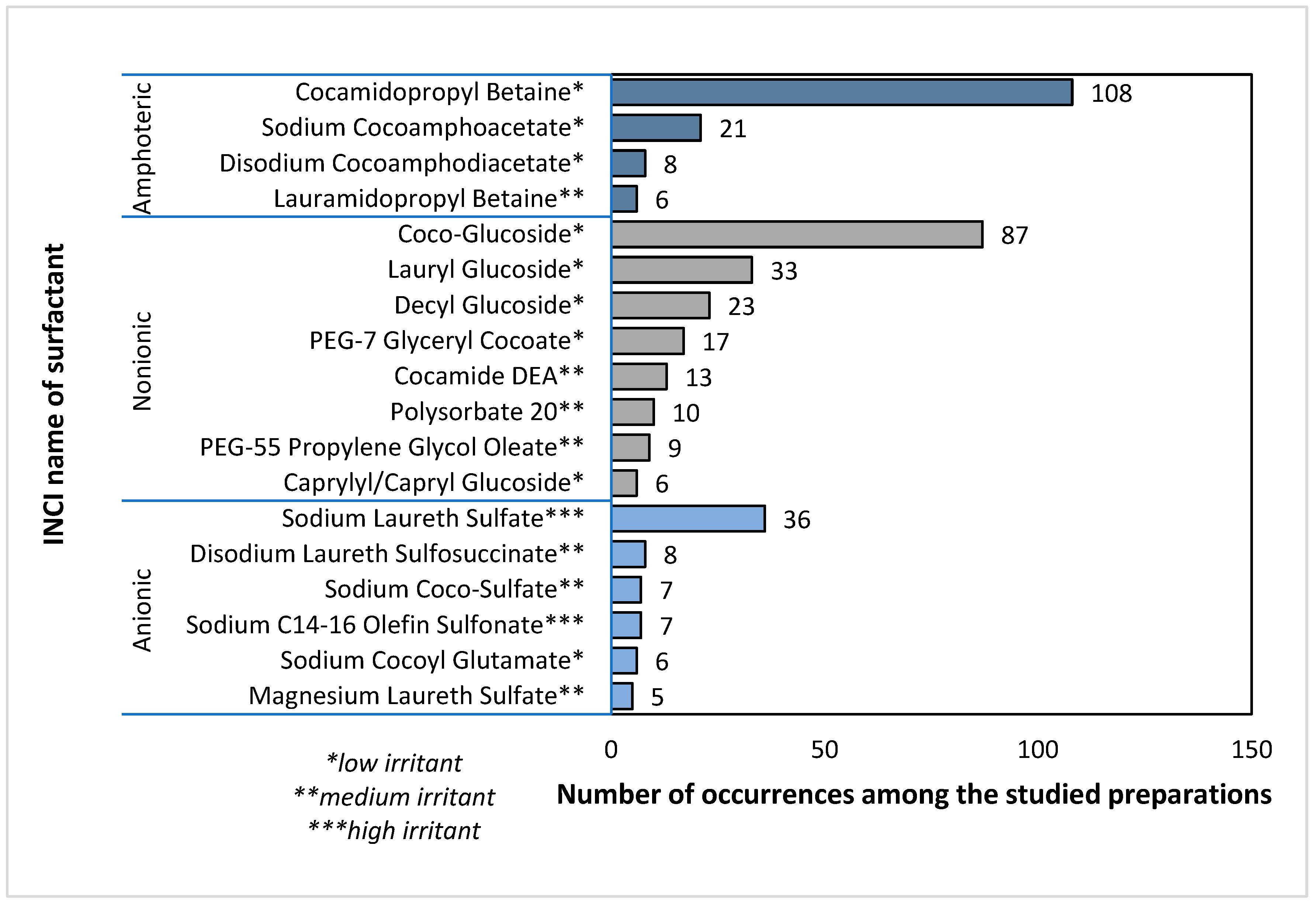
The most common surfactant was Cocamidopropyl Betaine, which was present in the vast majority of products (72%). It has a mild effect on the skin and mucous membranes, reduces the irritation potential of anionic surfactants, and improves foam stability. In contrast, Sodium Cocoamphoacetate was present in only 14% of products, Disodium Cocoamphodiacetate in 5.3%, and Lauramidopropyl Betaine in 4% (
Figure 1).
Among the non-ionic surfactants, the most popular were the alkylglucosides, such as Coco-Glucoside (found in 58% of products), Lauryl Glucoside (22%), Decyl Glucoside (15.3%) and PEG-7 Glyceryl Cocoate (11.3%). They are valued for their relatively gentle action and compatibility with other surfactants. Less popular non-ionic surfactants were Cocamide DEA (8.7%), Polysorbate 20 (6.7%), PEG-55 Propylene Glycol Oleate (6%) and Caprylyl/Capryl Glucoside (4%) (
Figure 1).
Despite the growing interest in milder cleansing systems, many products still contain classic, potentially irritating anionic surfactants, including Sodium Laureth Sulfate (present in 24% of products), Disodium Laureth Sulfosuccinate (5.3%), Sodium C14-16 Olefin Sulfonate and Sodium Coco-Sulfate (4.7% each), and Magnesium Laureth Sulfate (3.3%). Some also used slightly milder surfactants, such as Sodium Cocoyl Glutamate (4%) (
Figure 1).
The remaining surfactants, i.e., those with a frequency of use lower than 3%, were not counted in
Figure 1. Of these, PEG-200 Hydrogenated Glyceryl Palmate, Laureth-10, PEG-6 Caprylic/Capric Glycerides and Sodium Cocoyl Isethionate were each found in only four of the 150 products. Polyglyceryl-4 Caprate, Sodium Myreth Sulfate and Sodium Lauroyl Sarcosinate were each found in only three products. Polyglyceryl-6 Caprylate, Coco Betaine, Disodium Cocoyl Glutamate, Sodium Methyl Oleoyl Taurate, Sodium Sesamphoacetate and Laureth-2 were each found in only two products. PEG-40 Hydrogenated Castor Oil, Sodium Lauroyl Glutamate, Cocamidopropyl Hydroxysultaine, Sodium Olivamphoacetate, Ammonium Cocoyl Sulfate, Cocoyl Methyl Glucamide and PEG-90 Glyceryl Isostearate were each found in only a single product.
3.1.2. Survey of Surfactants in Intimate Hygiene Cleansing Products for Teenage Girls—Group B (n = 20)
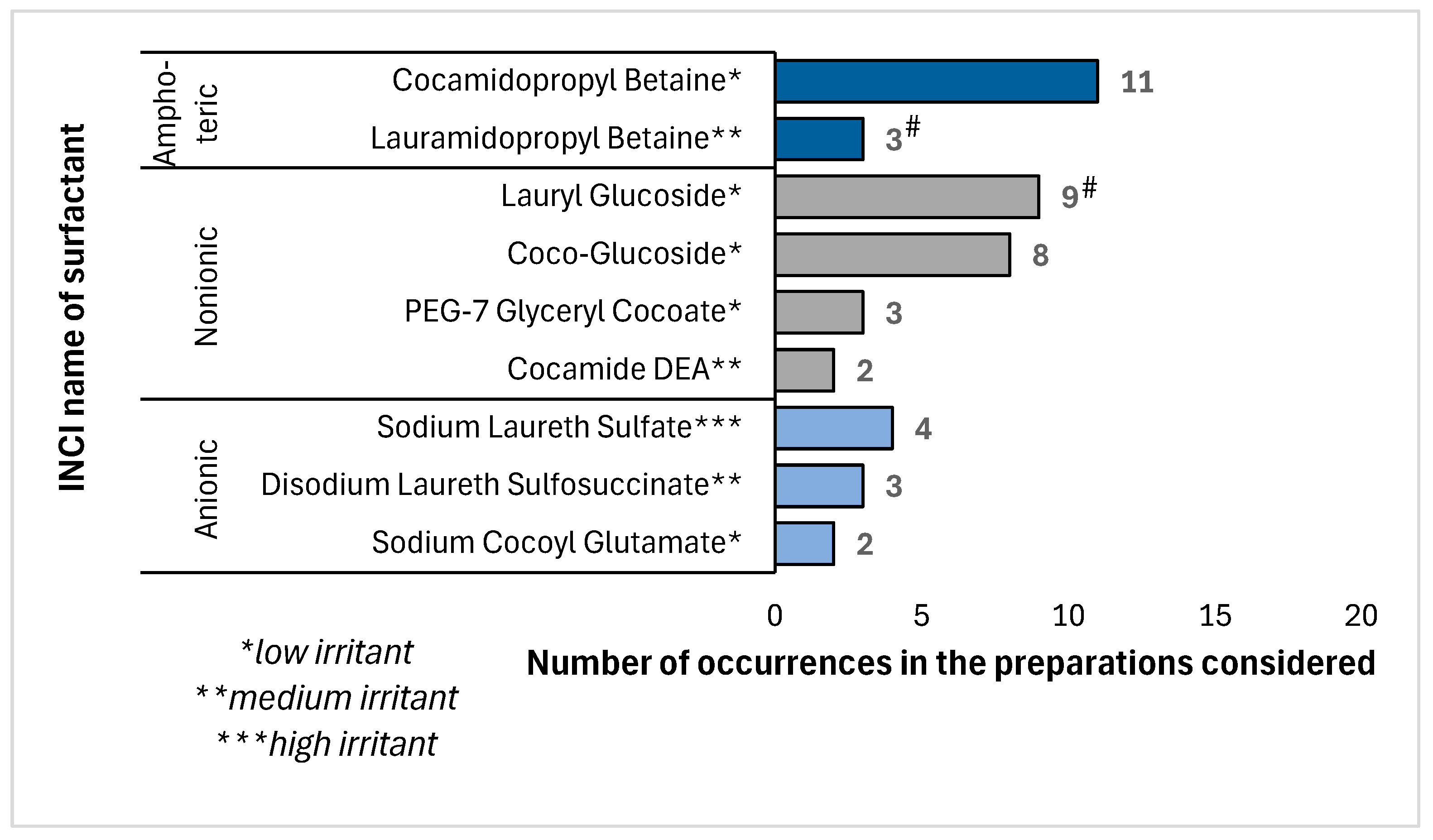
Fewer products were available for teenage girls, with only 20 preparations being identified. The most popular surfactants were Cocamidopropyl Betaine (amphoteric), present in 55% of the preparations, Lauryl Glucoside (45%) and Coco-Glucoside (non-ionic) (40%). Less popular were Sodium Laureth Sulfate (20%); Lauramidopropyl Betaine, PEG-7 Glyceryl Cocoate and Disodium Laureth Sulfosuccinate (15% each); Cocamide DEA and Sodium Cocoyl Glutamate (10% each) (
Figure 2). The prevalent surfactants present in this group of products were similar to those intended for women.
A number of other ingredients were only found in individual products: Decyl Glucoside, Sodium Cocoamphoacetate, Polysorbate 20, PEG-55 Propylene Glycol Oleate, Magnesium Laureth Sulfate, Polyglyceryl-4 Caprate, Sodium Lauroyl Sarcosinate, Polyglyceryl-6 Caprylate, Disodium Cocoyl Glutamate, Sodium Coco Sulfate and Disodium PEG-5 Laurylcitrate Sulfosuccinate.
3.1.3. Survey of Surfactants in Intimate Hygiene Wipes—Group C (n = 25)
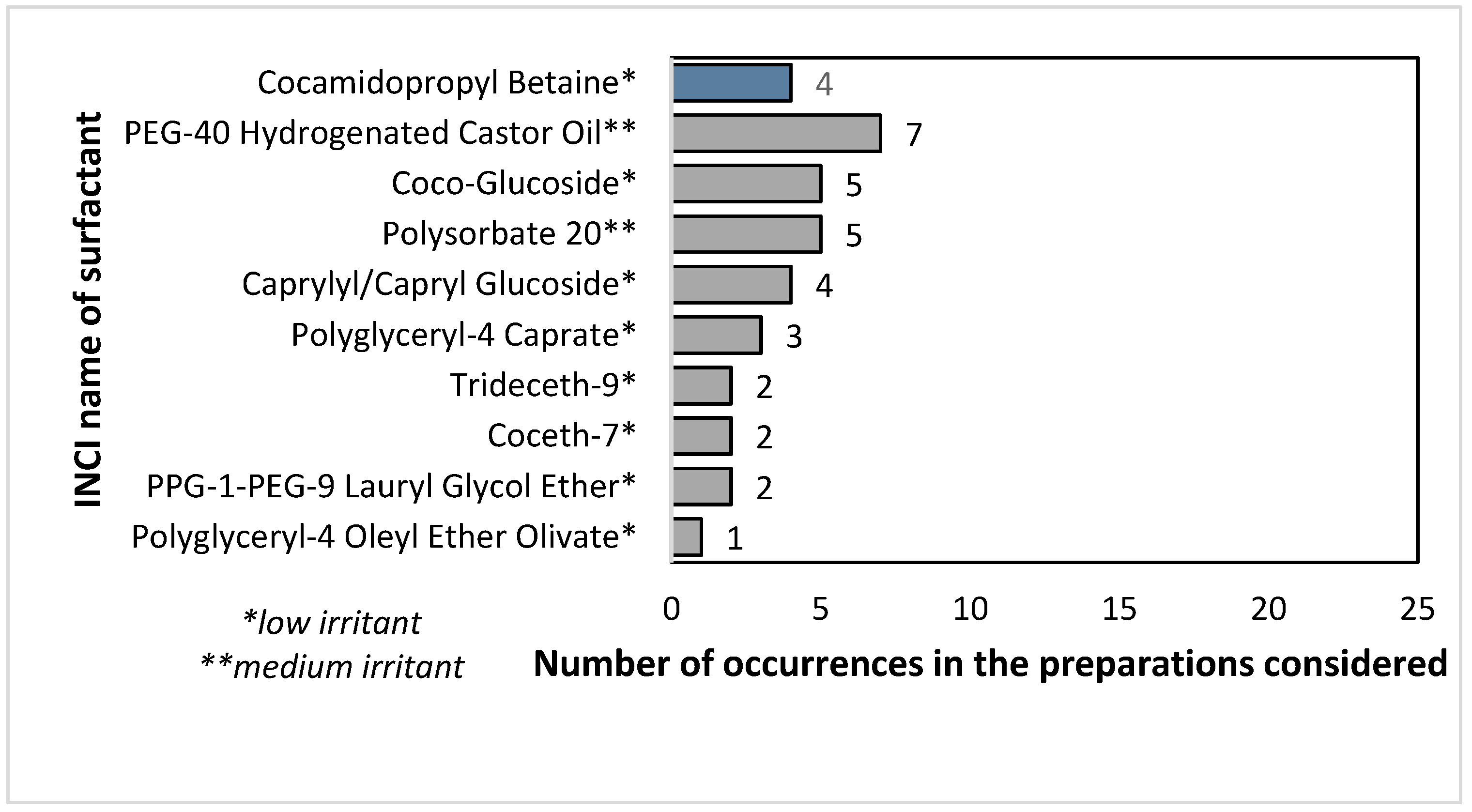
Intimate hygiene wipes are most often based on nonionic surfactants. Their resulting gentle action and low irritation potential are particularly important for leave-on products. The following compounds were identified: PEG-40 Hydrogenated Castor Oil, present in 28% of products, Coco-Glucoside and Polysorbate 20 (20% each); Caprylyl/Capryl Glucoside (16%); Polyglyceryl-4 caprate (12%); Trideceth-9, Coceth-7 and PPG-1-PEG-9 Lauryl Glycol Ether (8% each); Polyglyceryl-4 Oleyl Ether Olivate (4%). The only amphoteric surfactant applied in intimate wipes was Cocamidopropyl Betaine, identified in 16% of the analyzed formulations (
Figure 3).
Regarding the number of surfactants per single product, 15 types of wipe contained only one surfactant, six included two surfactants and two included four. Two products did not contain any surfactants.
3.1.4. Surfactant Combinations in Intimate Hygiene Cleansing Products for Women (n = 150)
The most important combinations of surfactants of the studied intimate hygiene products (n = 150), i.e., those appearing together in the top three INCI positions (second, third and fourth), are provided in
Table 1, along with the number of occurrences (NoO) of each combination. The first INCI position was omitted because it is almost always occupied by Aqua.
A diverse range of surfactant combinations was noted which consisted of surfactants from three different groups: anionic, nonionic, and amphoteric. The following surfactant combinations were found to be most popular: (Sodium Laureth Sulfate + Lauramidopropyl Betaine + Lauryl Glucoside); (Sodium Laureth Sulfate + Cocoamide DEA + Cocamidopropyl Betaine) and (Sodium Laureth Sulfate + Cocamidopropyl Betaine + Coco-Glucoside). When an anionic, irritating surfactant was in the top position, it was balanced by the presence of milder non-ionic or amphoteric surfactants in the lower positions. This subchapter will be supplemented by the next section showing the distribution of the most popular ingredients, not only from the surfactants group, in the six top positions of the INCI composition.
3.2. The Dominant Components of Intimate Hygiene Cleansing Preparations for Women, by Concentration
All components, not just surfactants, occupying positions one to six in the INCI compositions are listed in
Table 2 according to their frequency of use. Full lists of ingredients from positions 1 to 6 are provided in the
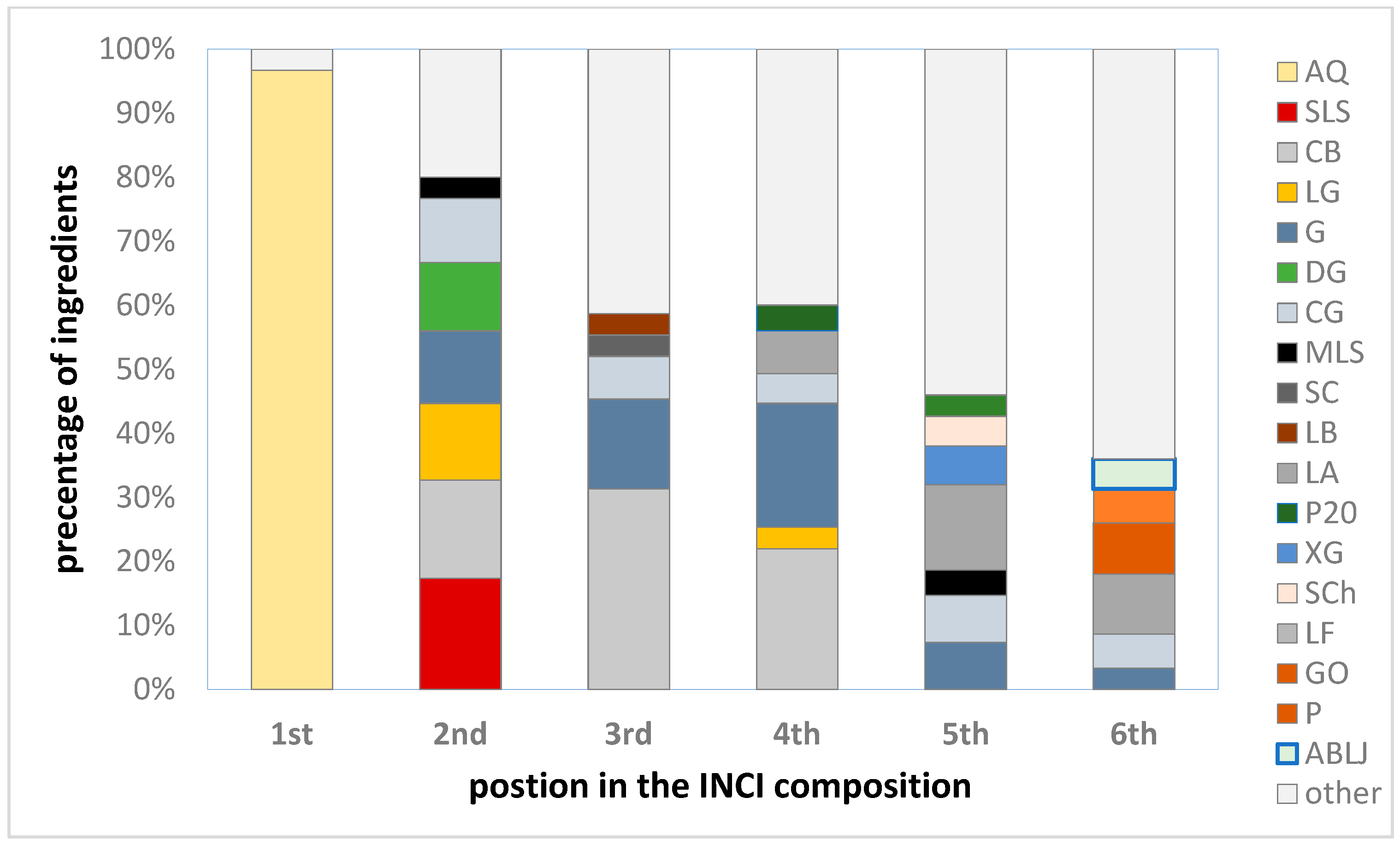
Supplementary Materials (Tables S1–S6). To begin with, in reference to the most popular surfactants from the previous subsections, the most commonly used Cocamidopropyl Betaine, present in 108 of the 150 products, appeared 103 times in the top three positions, i.e., in the second, third and fourth positions in 23, 47 and 33 products, respectively. In turn, the most important non-ionic surfactant, Coco-Glucoside, present in 87 of the 150 products, was distributed fairly evenly across the top INCI positions. It appeared in second, third, fourth, fifth and sixth positions in 15, 10, 7, 11 and 8 products, respectively. The leading anionic surfactant, Sodium Laureth Sulfate, found in 36 of the 150 products, was present only in the second position in 26 products. It did not appear in subsequent positions, from second to sixth.
Next, referring to all the ingredients of the preparations, the first component in the INCI composition was almost always Aqua (145/150 occurrences: 96.67%). However, in the remaining five substances, Aqua was replaced by another ingredient: Lactobacillus Ferment, Organic Aloe Aqua, Aqua with Infusion of Thymus Pulegioides, Glycerin or Aloe Barbadensis Leaf Juice.
The following surfactants were present at the highest concentrations in the tested preparations: Sodium Laureth Sulfate, found in 17.33% of the products, Cocamidopropyl Betaine (15.33%), Lauryl Glucoside (12.00%), Decyl Glucoside (10.67%), Coco-Glucoside (10.00%), and Magnesium Laureth Sulfate (3.33%). Glycerin was present in the second position in 11.33% of the products.
The third position was also dominated by surfactants: Cocamidopropyl Betaine (31.33%), Coco-Glucoside (6.67%), Sodium Cocoamphoacetate (3.33%), Lauramidopropyl Betaine (3.33%) and Glycerin (14.00%). The remaining ingredients accounted for 41.33% of the products; these were found in fewer than five products.
The most common agent identified in fourth place was Cocamidopropyl Betaine (22.00% of products), followed by Glycerin (19.33%), Lactic Acid (6.67%), Coco-Glucoside (4.67%), Polysorbate 20 (4.00%), and Lauryl Glucoside (3.33%).
The lower positions on the INCI list demonstrated a greater diversity of ingredients. The following were identified in fifth position: Lactic Acid (13.33%); Coco-Glucoside, Glycerin, Xanthan Gum, Sodium Chloride, Sodium Cocoamphoacetate, Lactobacillus Ferment (3.33%). The remaining ingredients, i.e., those appearing in fewer than five products, were found in 54.00% of all products. In the sixth position, the most common components were Lactic Acid (9.33%) and Glyceryl Oleate, Panthenol, Coco-Glucoside, Aloe Barbadensis Leaf Juice and Glycerin (3.33%); the remaining ingredients were noted in 64.00% of all products.
The product compositions of the six primary positions on the INCI lists are given in
Figure 4.
3.3. Plant Extracts
Plant extracts are known to have various beneficial effects on the skin and mucous membranes, thanks to their soothing, regenerating, moisturizing, anti-inflammatory and antibacterial properties. They also help maintain the correct pH of the intimate area, reduce symptoms such as itching and burning, improve overall comfort, and reduce the risk of infection. Hence, it is becoming increasingly common for them to be included in the composition of intimate hygiene products.
To obtain a clearer picture of their use, the type of plant extracts and juices included in the tested intimate hygiene products, viz. cleansing preparations for women (n = 150) and teenage girls (n = 20), and intimate hygiene wipes (n = 25), and their frequency of use were recorded. The study also noted the composition complexity of the extracts, i.e., the number of extracts present in a single product.
3.3.1. Survey of Plant Extracts in Intimate Hygiene Cleansing Products for Women (n = 150)
Most cleansing preparations were found to contain plant extracts or juices. In most cases, one or two extracts were present in a product, but some included a mixture of different extracts. More precisely, out of 150 preparations, 44 (29.3%) contained one extract, 36 (24.0%) included two extracts, and 13 included three extracts. In addition, four preparations contained four different plant extracts, two preparations included five, two preparations included six and one included seven. In addition, 45 preparations (30.0%) did not contain any plant extracts.
The most commonly included extracts among the cleansing products were
Aloe barbadensis Leaf Juice (20.0% of products),
Chamomilla recutita Flower Extract (10.0%),
Calendula officinalis Flower Extract (8.7%),
Vaccinium macrocarpon Fruit Extract (7.3%),
Gossypium herbaceum (Cotton) Seed Extract (6.0%),
Quercus robur Bark Extract (6.0%) and
Glycyrrhiza glabra Root Extract (4.7%) (
Table 3—Group A). The remaining plant extracts were present in fewer than five products (
Table 3). Some plant extracts were only present in single cleansing preparations; these are given in
Table S7, Supplementary Materials.
3.3.2. Survey of Plant Extracts in Intimate Hygiene Cleansing Products for Teenage Girls (n = 20)
Of the studied intimate hygiene products for teenage girls, all but three contained plant extracts. Nine products contained one plant extract each, five products contained two extracts each, two products contained three extracts each, and one product contained four extracts.
The most popular extract was
Aloe Barbadensis Leaf Juice, which was found in seven of the 25 studied products (35%).
Chamomilla Recutita Flower Extract and
Linum Usitatissimum Seed Extract were present in two products (10% each). The remaining extracts were identified in only one product each (
Table 3—Group B).
3.3.3. Survey of Plant Extracts in Intimate Hygiene Wipes (n = 25)
All plant extracts present in the wipes are listed in
Table 3—Group C. The most frequently used extracts were
Aloe Barbadensis Leaf Juice and
Chamomilla Recutita Flower Extract, each found in 36% of the investigated products. Slightly less popular were
Linum Usitatissimum Seed Extract and
Calendula Officinalis Flower Extract (12% each), as well as
Camelia Sinensis Leaf Extract and
Salvia Officinalis Leaf Extract (8% each).
Regarding the composition complexity, ten products contained only one extract per product, five products contained two extracts, two products contained three extracts, and one product contained four extracts. Seven of the 25 analyzed products did not contain any extracts.
3.4. Prebiotics and Postbiotics
Prebiotic ingredients support the growth of beneficial microorganisms, particularly Lactobacillus spp., without exerting any direct antimicrobial activity; this ability to strengthen natural defenses is crucial for maintaining health and preventing infections in intimate areas. Postbiotics can also benefit the local microbiota; these include various ferments and fermentation filtrates of bacterial and yeast origin, such as Lactobacillus Ferment, Saccharomyces/Rice Ferment Filtrate, Lactobacillus/Salix Purpurea Bark Ferment Extract and Lactococcus Ferment Extract.
The distribution of the identified prebiotics between products is illustrated in
Table 4. Of the 150 studied cleansing preparations for women, the most common prebiotic was Inulin, present in 33 products, followed by Alpha-Glucan Oligosaccharide (in 19 preparations), Fructose (in 17), Glucose (in 9), Xylitol (in 9) and Sodium Levulinate (in 8).
In contrast, none of the cleansing preparations for girls (n = 20) contained Inulin. Instead, the most popular prebiotics were Alpha-Glucan Oligosaccharide and Glucose, included in 25% of preparations each, followed by Fructose (10%) and Sodium Levulinate (5%).
Among the intimate hygiene wipes (n = 25), the most frequently used prebiotics were Inulin and Alpha-Glucan Oligosaccharide, identified in four preparations each.
Postbiotics were rarely identified in the surveyed hygiene cleansing preparations for women (
Table 5) or for teenage girls; among the latter,
Lactobacillus Ferment was only used in two products and
Leuconostoc/Radish Root Ferment Filtrate in one. Also,
Lactobacillus Ferment was only identified in one wipe product.
3.5. Skin Care Ingredients
Intimate hygiene formulations commonly use ingredients with caring properties. These included moisturizing (e.g., Glycerin, Propylene and Butylene Glycols, Sorbitol, Urea), alleviating (e.g., Allantoin, Bisabolol, Panthenol) and pH-buffering agents (e.g., Lactic Acid, Citric Acid, Urea). As each of these components also has regenerative, protective, strengthening and skin-conditioning properties, they are extremely desirable in intimate hygiene products; as such, they were frequently observed among the tested products. Lactic Acid—on average of 90% of cleansing products and 60% of wipes; Glycerin—on average of 79% of cleansing products and 64% of wipes; Citric Acid—on average of 39% of cleansing products and 40% of wipes; Allantoin—on average of 45% of cleansing products and 36% of wipes; Panthenol—on average in 52% of washing products and in 28% of wipes (
Table 6).
Among the skincare agents used in intimate hygiene products, emollients are becoming increasingly popular in formulations as a way of neutralizing the potentially irritating and drying effects of surfactants. Various examples were identified in cleansing products for teenage girls, including Oenothera Biennis (Evening Primrose) Seed Oil, Linum Usitatissimum (Linseed) Seed Oil and Caprate Helianthus Annuus Seed Oil. A number were also found in products for women, including Prunus Amygdalus Dulcis Oil, Glycine Soya Oil, Helianthus Annuus Seed Oil, Vitis Vinifera Seed Oil, Persea Gratissima (Avocado) Oil, Nigella Sativa Seed Oil, Macadamia Ternifolia Seed Oil and Triticum Vulgare Germ Oil.
Finally, Prunus Amygdalus Dulcis Oil, Glycine Soya Oil and Hydrogenated Castor oil were identified in intimate wipes.
4. Discussion
Intimate hygiene products are widely used and represent a dynamically developing segment of the cosmetic market. Despite their broad availability, systematic analyses of the actual composition of such products remain limited. Every effort was made to include the widest possible range of products in the present study; in total, 195 intimate hygiene products representing different categories were analyzed, including cleansing products for women (n = 150), cleansing products for teenagers (n = 20), and intimate wipes (n = 25).
This study constitutes the first such detailed review of intimate hygiene products available on the market of the European Union. Consequently, it is not possible to determine whether there is a clear upward or downward trend in the use of the investigated active ingredients.
In our study the most popular surfactants in cleansing intimate products were Cocamidopropyl Betaine, followed by Lauryl Glucoside, Coco-Glucoside and Sodium Laureth Sulfate. Żwawiak et al. reviewed various ingredients in hair care products, including surfactants. Similarly to our study, Cocamidopropyl Betaine and Sodium Laureth Sulfate were the dominant surfactants, but in the category of shampoos (n = 100). The authors of the study created the ranking list of the 25 most commonly used ingredients, based on their place in the top 10 positions of INCI list. Cocamidopropyl Betaine ranked second, after the water ingredient in first position. Sodium Laureth Sulfate, Coco-Glucoside and Lauryl Glucoside ranked third, seventh, and ninth, respectively. Cocamidopropyl Betaine’s role was to mitigate the side effects of strong anionic detergents, such as SLES, and improve the product’s foaming properties. It was most often listed third or second on the ingredient list, as in our study [
27].
The obtained results confirm that the selection and composition of surfactant systems constitute a key element in the formulation of intimate cleansing cosmetics, particularly in the context of reducing their irritation potential. As indicated by the literature, surfactants are responsible for the majority of adverse skin reactions associated with the use of cleansing products, and the extent of their effects depends on the surfactant type, chemical structure, concentration, and physical form in solution, including the proportion of monomeric species and the micelles formed from them [
28,
29].
Anionic surfactants are considered particularly important contributors to skin irritation due to their strong ability to bind proteins of the stratum corneum through electrostatic interactions. This mechanism may lead to protein denaturation, disruption of intercellular lipid organization, impairment of epidermal barrier function, and increased transepidermal water loss [
28,
29]. In contrast, nonionic and amphoteric surfactants interact with skin proteins much more weakly, mainly via hydrogen bonding, which is associated with a more favorable tolerability profile [
28]. Adverse skin reactions associated with cleansing products are most commonly related to irritant contact dermatitis (ICD), which results from repeated or prolonged exposure to detergents, their concentration, and frequency of use. In this context, anionic surfactants, particularly Sodium Laureth Sulfate (SLES), are considered key contributors due to their ability to disrupt the stratum corneum barrier through protein denaturation and lipid extraction. However, the occurrence and severity of ICD depend not only on the irritant potential of a given surfactant but also on formulation-related factors such as concentration, contact time, and incorporation into mixed surfactant systems.
Importantly, the presence of SLES in intimate hygiene products does not inherently imply a high irritation risk, as total active surfactant levels are typically low and anionic surfactants are commonly combined with amphoteric or nonionic co-surfactants, which reduces their irritation potential.
In addition to ICD, allergic contact dermatitis (ACD) should also be considered, although it occurs less frequently. ACD represents an immunologically mediated hypersensitivity reaction that is independent of surfactant concentration. Cocamidopropyl Betaine, the most prevalent surfactant identified in the present study, has been reported as a potential allergen, primarily due to residual manufacturing impurities. Nevertheless, clinically significant allergic reactions are relatively uncommon and depend on ingredient purity and formulation design [
30].
Within the context of the mechanisms described above, one of the most frequently reported approaches to reducing the adverse effects of anionic surfactants is the use of multicomponent surfactant systems. Such formulations are based on combinations of anionic surfactants with nonionic, amphoteric, or cationic surfactants. Numerous studies indicate that the formation of mixed micelles leads to reduced surface charge, increased micelle size, and a lower proportion of monomeric surfactant species, which is associated with a reduced irritation potential of the final cosmetic formulation [
29,
31,
32].
Importantly, contemporary cleansing concepts emphasize that minimizing skin barrier disruption is achieved not solely by reducing surfactant concentration, but primarily through deliberate modification of surfactant solution properties. In addition to the critical micelle concentration (CMC), key parameters governing surfactant–skin interactions include micellar surface charge, size and shape, as well as the dynamics of the monomer–micelle equilibrium. Modulation of these parameters allows for reduced penetration of surfactant species into the stratum corneum and improved preservation of skin barrier integrity [
33].
Furthermore, modification of the aqueous phase represents an effective complementary strategy. The presence of humectants, such as Glycerin or Propylene Glycol, has been shown to influence micellar organization and stability, leading to reduced surfactant-induced barrier perturbation. These effects are attributed to altered micelle hydration and steric hindrance, which limit the penetration of surfactant aggregates into the stratum corneum [
33].
In addition, the presence of plant extracts and other care-oriented ingredients has been described as a factor capable of influencing the behavior of surfactant systems and limiting their potentially irritating interactions with the skin, thereby contributing to improved product tolerability [
28,
29,
32].
Among the plant-derived ingredients identified in the analyzed formulations,
Aloe Barbadensis Leaf Juice and
Chamomilla Recutita Flower Extract were the most frequently used. Their high prevalence reflects the suitability of these raw materials for products intended for the care of sensitive skin and mucosal areas, including intimate hygiene preparations. Ingredients derived from
Aloe vera are rich in polysaccharides, particularly glucomannans, as well as vitamins, minerals, amino acids, fatty acids, and phytosterols, which collectively contribute to their moisturizing, regenerating, and skin barrier–supporting properties. In addition, these ingredients exhibit documented anti-inflammatory and antimicrobial activity, supporting the skin’s defense mechanisms and contributing to improved tolerability during regular cleansing [
6,
12,
34,
35].
Similarly,
Chamomilla Recutita Flower Extract is characterized by a high content of flavonoids, such as apigenin and luteolin, and terpenoid compounds, including bisabolol and chamazulene, which are responsible for its soothing, anti-inflammatory, and irritation-mitigating effects. Owing to these properties, chamomile is widely regarded as a suitable cosmetic ingredient for products designed for the care of sensitive and irritation-prone skin [
36].
An increasing body of literature indicates that the mitigating effect of plant extracts on surfactant-induced irritation is not limited to their biological activity but also involves physicochemical interactions within surfactant systems. Plant extracts represent complex mixtures of polyphenols, flavonoids, sugars, amino acids, and other low-molecular-weight compounds, which may be incorporated into micellar structures and modify their organization [
37]. It has been demonstrated that such interactions promote the formation of larger and more stable micelles, resulting in a reduced proportion of free surfactant monomers [
38].
From a formulation perspective, these observations provide a rational explanation for the use of plant extracts in intimate hygiene products, where high tolerability and preservation of the skin and mucosal barrier are of particular importance. Nevertheless, it should be emphasized that the magnitude of this effect is not determined solely by biological activity but also depends on the qualitative and quantitative composition of the extract, the type of surfactant system applied, and the overall formulation design [
37,
38].
The reason for using postbiotics in cosmetics is their beneficial biological properties for the skin, such as antioxidant, anti-inflammatory, antimicrobial, antiproliferative, and immunomodulatory effects and skin barrier boosting. Most postbiotics currently available on the cosmetic market are derived from lactic acid bacteria (
Lactobacillus genera) and less frequently from yeasts (
Saccharomyces cerevisiae). The frequency of postbiotic use in intimate hygiene products remains relatively low to date. In our study, the most popular uses in intimate hygiene cleansing products were
Lactobacillus Ferment (in 12 of 150 products),
Leuconostoc/Radish Root Ferment Filtrate (in 6 products),
Saccharomyces/Rice Ferment Filtrate (in 4 products) and
Lactobacillus/
Arundinaria Gigantea Ferment Filtrate (in 4 products). They were used sporadically in intimate products for teenagers and wipes. Postbiotics constitute a relatively new class of cosmetic ingredients, present on the market for only a few years. Their relatively low prevalence observed in the present study may therefore be attributed to their recent introduction into cosmetic formulations and their current role as supportive functional ingredients rather than core components of intimate hygiene products, with ongoing research and development work underway to confirm their applications [
18,
19,
39].
Literature data indicate that prebiotic ingredients used in cosmetic products may selectively support the growth of beneficial microorganisms of the skin and mucosal surfaces, contributing to the maintenance of microbiological balance [
17,
20]. For example Petrov et al. have shown that topically applied galacto-oligosaccharides can selectively modulate the skin microbiota by stimulating the growth of beneficial
Staphylococcus epidermidis while inhibiting the development of pathogenic
Staphylococcus aureus. Importantly, they predominantly remain on the skin surface, which supports their prebiotic action directed toward microorganisms residing in the superficial layers. The effectiveness of these ingredients depends on both their concentration and the type of formulation, which determines their availability to the skin microbiota [
40]. This mechanism offers a plausible explanation for the frequency of prebiotic ingredients observed in intimate hygiene products in the present study. The use of prebiotics in intimate hygiene products is more common than the use of postbiotics. In our study, the overall prevalence of prebiotics’ use reached 25%. The dominant prebiotics were Inulin, Alpha-Glucan Oligosaccharide, Fructose, and Glucose. Their frequent occurrence may be interpreted in the context of their documented ability to support beneficial microbiota, thereby contributing to microbiota balance and barrier support without direct antimicrobial action, which is considered especially important in products intended for cleansing of intimate areas [
17,
40].
Research into the composition of intimate hygiene products currently focuses on the use of natural ingredients, supporting the natural microbiome, primarily through the use of prebiotics and postbiotics, and personalization based on age and needs. The future of intimate hygiene products lies in carefully selected ingredients and formulations that not only cleanse but also actively protect and rebuild the skin’s protective barrier. Another overview like ours, which we hope will be published in a few years or a decade, will reveal the actual, not just anticipated, direction of development in intimate hygiene products.