1. Introduction
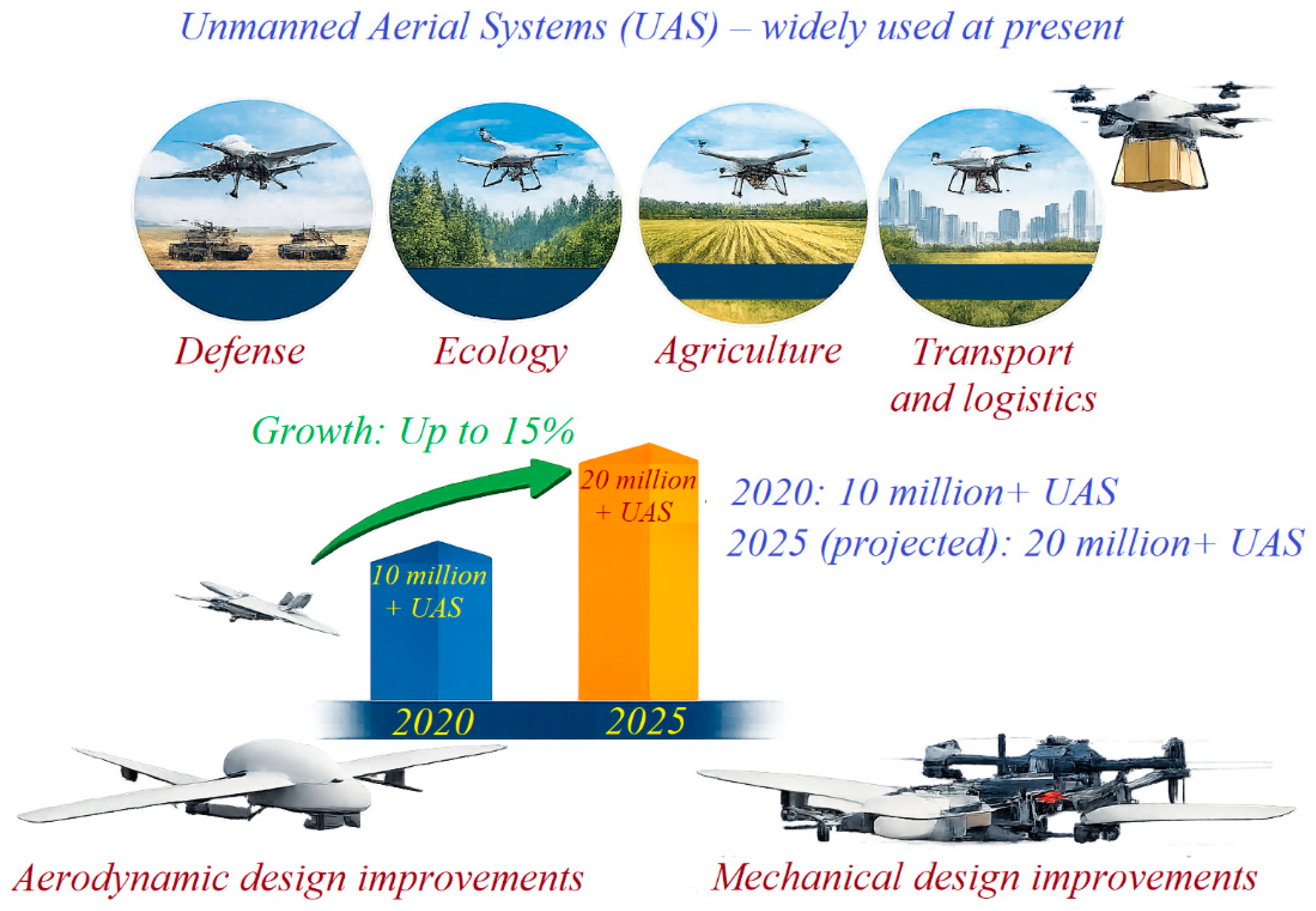
Unmanned aerial vehicles (UAV) are currently widely used in various fields, including defense, environmental monitoring, agriculture, and transportation (
Figure 1). In 2020, more than 10 million UAS were in operation worldwide, and by 2025 this number is expected to exceed 20 million, with an annual growth rate of up to 15% [
1,
2]. Improving the efficiency and operational performance of UAS has therefore become an important scientific and engineering challenge. The enhancement of aerodynamic and mechanical structures represents a fundamental approach to achieving this objective.
Figure 1 illustrates the main application areas of unmanned aerial vehicles and the projected development trends from 2020 to 2025. In order to improve the efficiency and reliability of these systems, the enhancement of aerodynamic and mechanical structures is of particular importance, while their application scope continues to expand in the fields of defense, environmental monitoring, agriculture, and logistics.
The improvement of aerodynamic structures plays a crucial role in increasing the flight efficiency of aircraft. For example, the use of advanced materials and innovative structural solutions makes it possible to reduce aerodynamic drag by up to 12% [
3,
4]. Optimization of aerodynamic shapes and the application of carbon-fiber composites can reduce the structural weight by up to 15%, which in turn improves the maneuverability of the aircraft. Moreover, these innovations contribute to an improvement in flight speed and fuel efficiency of up to 10% [
5,
6].
The efficiency of UAS can also be enhanced through the improvement of mechanical structures. By increasing the reliability of propulsion systems and load-bearing components, their service life can be extended and energy consumption can be reduced. The introduction of modern propulsion systems and advanced wireless technologies makes it possible to decrease energy consumption by up to 10%, which significantly improves flight endurance and overall performance [
7,
8]. In addition, enhancing the strength of structural materials and implementing advanced propulsion systems can reduce the structural weight by up to 15% [
9,
10].
Scientific research and development activities enable the proposal of new solutions in this area, since many structural challenges still remain unsolved. The improvement of aerodynamic and mechanical structures contributes to increasing the operational efficiency of UAS and opens up new technological opportunities. This, in turn, extends the life cycle of UAS and broadens their application in various fields.
Therefore, enhancing the aerodynamic and mechanical structures of UAS remains a highly relevant research direction. Studies conducted in these fields are both important and necessary, as they provide new opportunities and efficient solutions for the development and production of UAS.
2. Literature Review and Problem Statement
In the research, the need to improve aerodynamic and mechanical designs to enhance the efficiency of UAVs (Unmanned Aerial Vehicles) often arises. Several studies have been conducted in this area, for example, in the work by Aabid A. et al. (2022), the possibility of reducing aerodynamic drag by up to 12% through optimization of aerodynamic shapes and the use of new materials is demonstrated [
11]. The change in aerodynamic drag can be described by the following equation:
where
Fd is the drag force, ρ is air density,
v is velocity, A is the object’s cross-sectional area, and
Cd is the aerodynamic drag coefficient. This equation allows us to study how changes in aerodynamic shapes and materials impact drag.
Additionally, in the research by Li W. and Wu B. (2024) [
12], the introduction of carbon fiber composites and new engine systems aimed at enhancing structural strength is discussed. The mechanical design improvements can be described by the following equation:
where
σ is the stress,
F is the applied force, and
A is the cross-sectional area. To maintain the balance between reducing weight and improving energy efficiency, the following optimization criterion can be applied:
where
W is the weight of the structure,
P is the mechanical strength,
λ is the Lagrange multiplier,
σmax is the maximum allowable stress, and
σ is the actual stress of the structure.
However, some issues in this field remain unresolved, including the balance between reducing the weight of the structure and improving energy efficiency. Overcoming these challenges often requires the integration of new materials and structural solutions to enhance both strength and efficiency, such as using lightweight materials and integrating new control systems. The efficiency improvement can be calculated using the following equation:
where
η is the energy efficiency,
Vout is the output voltage,
Iout is the output current,
Vin is the input voltage, and
Iin is the input current. This equation describes how energy efficiency changes over time, and it helps plan necessary measures to improve efficiency.
In addition, research by Keemink A.Q. et al. (2012) [
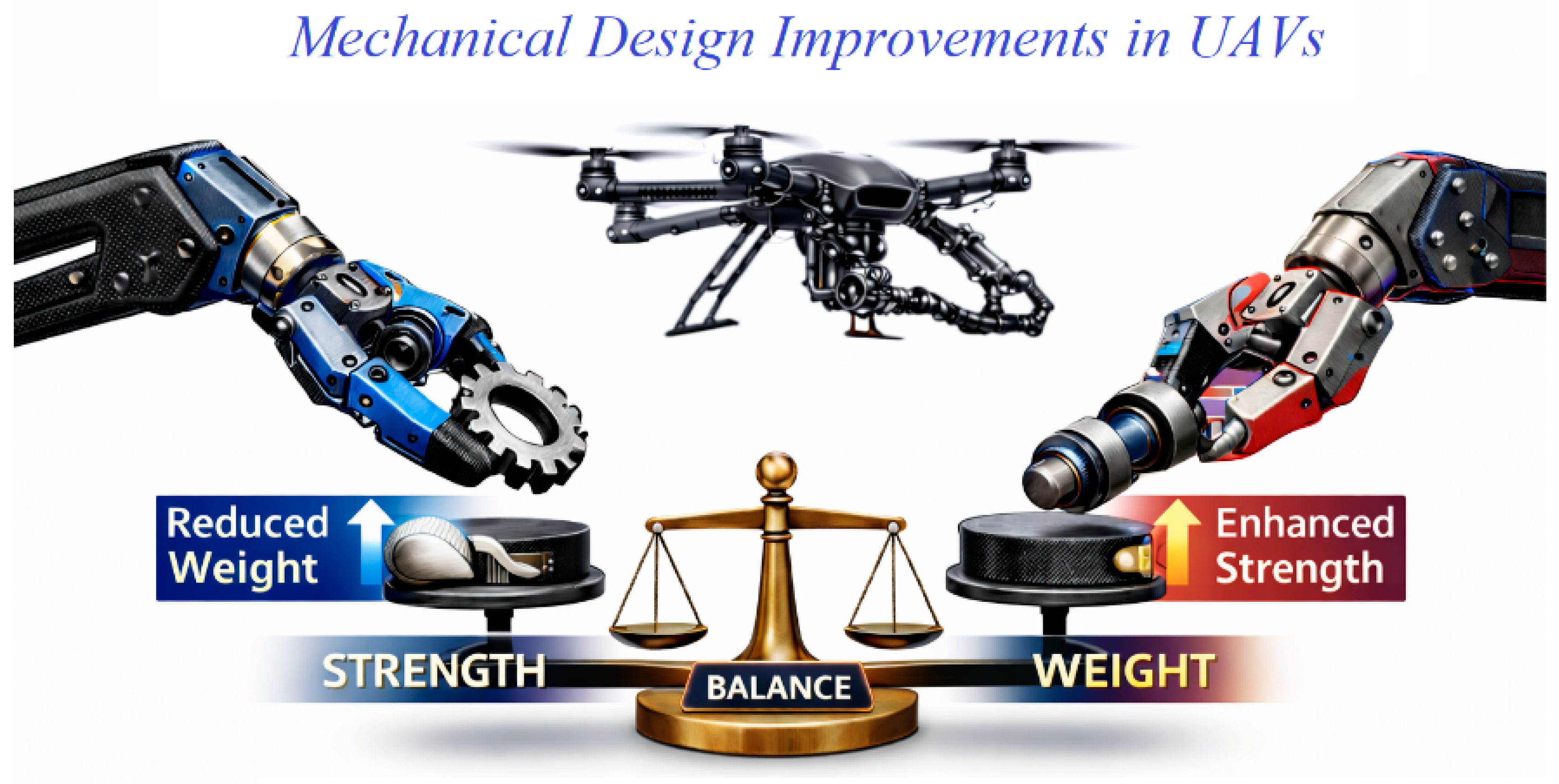
13] discusses mechanical design improvements that reduce weight and enhance the strength of manipulation systems in UAVs. This research highlights the importance of balancing strength and weight to optimize the performance of UAV systems, as illustrated in
Figure 2.
In this figure, the balance between weight and strength in UAV manipulation systems is shown, with one arm made of lightweight carbon fiber materials and the other made of heavier metal. This balance illustrates the relationship between strength and weight, enhancing structural efficiency and optimizing the performance of UAV systems.
Moreover, Sönmez M. et al. (2022) [
14] emphasize the role of lightweight composite materials in improving structural efficiency and performance. Their work demonstrates that by using such materials, it is possible to reduce the weight of the structure while maintaining or enhancing its overall mechanical properties. This process can be mathematically described as follows:
First, the use of lightweight materials allows for a reduction in the weight of the structure. For instance, if the initial weight of the structure is
Winitial, the weight change can be calculated using the following equation:
where
α is the coefficient that indicates the lightweight material’s effect, for example, 0.2 or 20%. This means that using lightweight composite materials can reduce the structure’s weight by up to 20%. Secondly, the application of lightweight materials also contributes to improving the mechanical strength of the structure. This process is described by the following equation:
where
σfinal is the final strength,
σinitial is the initial strength, and
β is the percentage increase in strength (e.g., 0.15 or 15%). This indicates that the mechanical strength of the structure can be improved by up to 15%, thus enhancing its overall efficiency and performance.
Papakitsos C. et al. (2025) [
15] address the significance of lightweight materials for military UAVs, stressing that the use of such materials not only improves performance but also enhances the maneuverability and operational capabilities of UAVs, especially in demanding environments. These scientific studies [
11,
12,
13,
14,
15] highlight the unresolved challenges in the field and justify the need for further research in improving aerodynamic and mechanical designs to enhance UAV efficiency.
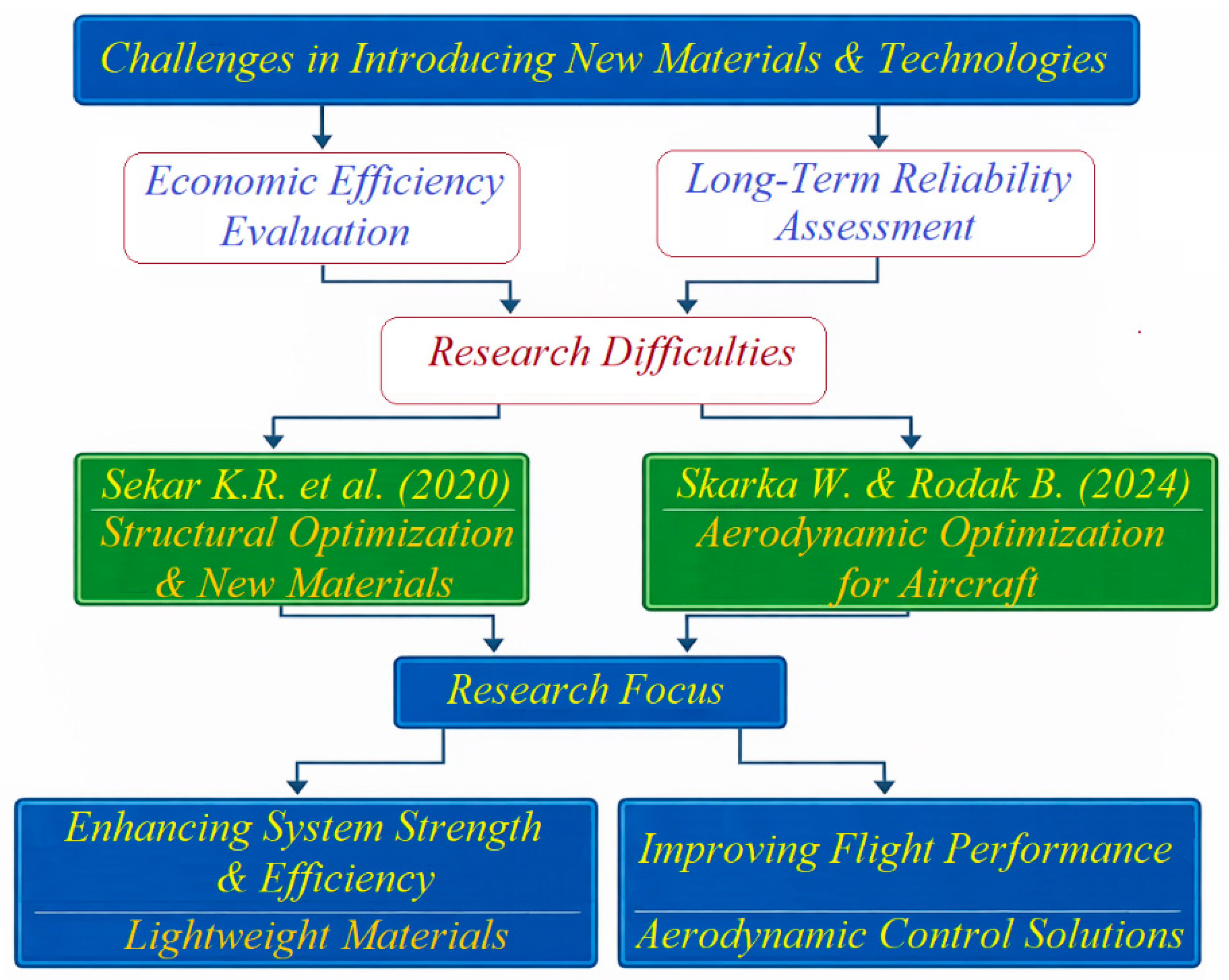
The complexity of the issue lies in the introduction of new materials and technologies into production, as well as evaluating their economic efficiency and long-term reliability in use. These challenges are considered objective difficulties that hinder the research process. Sekar K.R. et al. (2020) [
16] in their study highlight the necessity of introducing new materials and structural optimization, which allows for the enhancement of system efficiency and strength [
16]. Additionally, the study by Skarka W. and Rodak B. (2024) emphasizes the importance of aerodynamic optimization, which is crucial for improving the flight efficiency of aircraft [
17]. To overcome these challenges, much research is focused on improving the strength and efficiency of systems based on new constructive solutions and materials, such as using lightweight materials and integrating new control systems. The following
Figure 3 illustrates the challenges and solutions in integrating new materials and technologies into the production process.
This figure illustrates the complex issues related to the integration of new materials and technologies into the production process, where economic efficiency and long-term reliability play a crucial role. The research directions focus on enhancing the system’s strength and efficiency through the integration of lightweight materials and new control systems, as well as improving aircraft flight performance.
These approaches have been applied in several international studies. For instance, research conducted in the United States has used new materials to enhance aerodynamic efficiency [
18], but their high cost poses challenges for conducting research. Additionally, theoretical and practical work is needed to improve energy efficiency and enhance the maneuverability of systems through the advancement of aerodynamic and mechanical designs [
19,
20]. Zeng Y. and Zhang R. [
21] have explored the potential for improving UAV communication energy efficiency by optimizing flight trajectories, which plays a crucial role in enhancing both the maneuverability and aerodynamic efficiency of systems. In the following
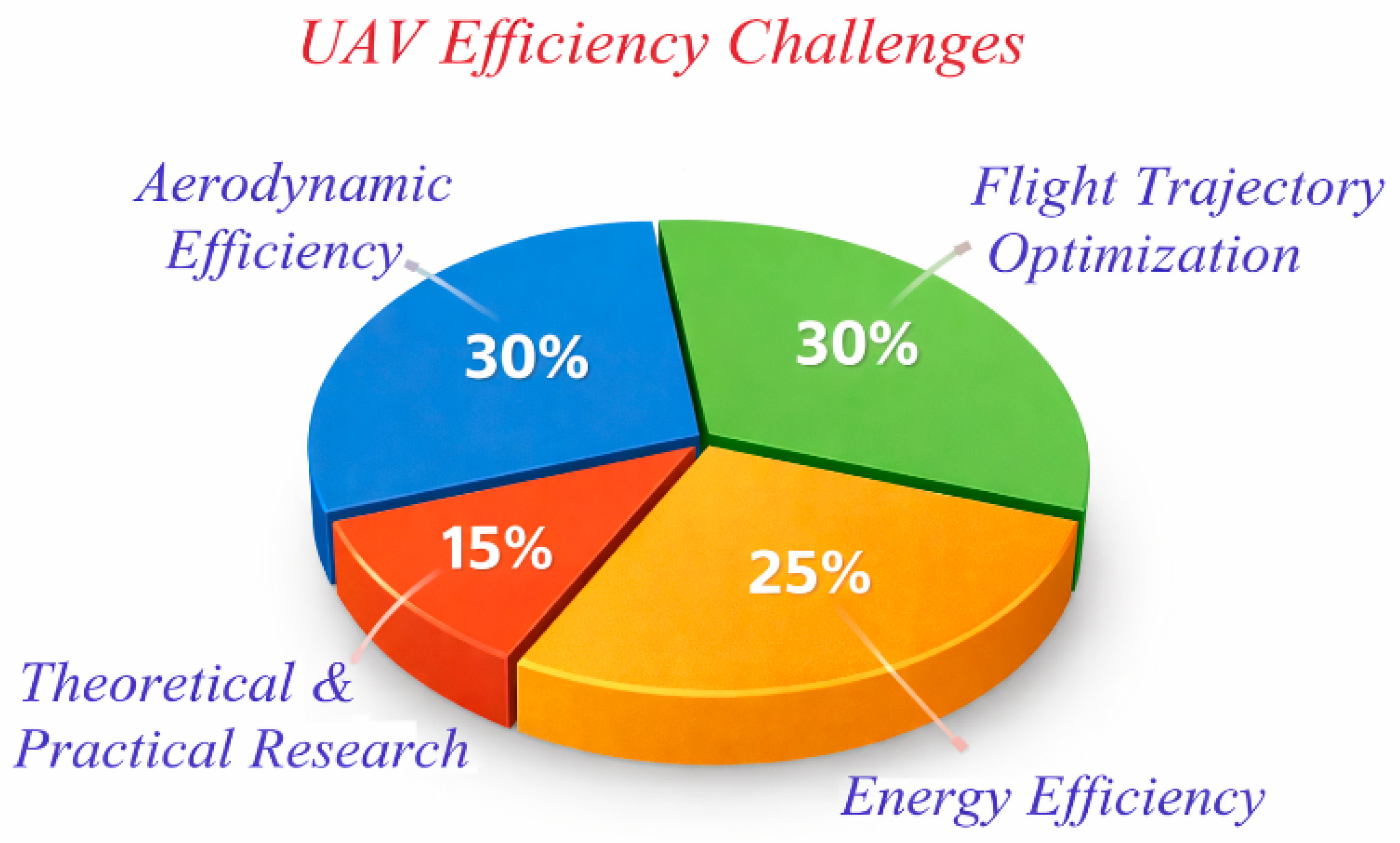
Figure 4, the comparative contributions of key factors in UAV efficiency are presented: aerodynamic efficiency, energy efficiency, flight trajectory optimization, and the results of theoretical and practical research.
This is
Figure 4, which illustrates the four key factors in enhancing UAV efficiency: aerodynamic efficiency, energy efficiency, flight trajectory optimization, and theoretical-practical research. Each factor’s contribution is shown, highlighting their importance in improving the efficiency of UAV systems.
All these issues emphasize the importance of conducting research. This is because the search for new materials and structural solutions to improve the efficiency of UAV systems, along with their economic feasibility and practical applicability, represents a significant scientific challenge in this field.
3. Materials and Methods
3.1. Aim and Objectives of the Study
The aim of the study is to enhance the efficiency of Unmanned Aerial Vehicles (UAVs) by improving aerodynamic and mechanical designs.
To achieve this aim, the following objectives are accomplished:
The present study is aimed at improving the aerodynamic and mechanical efficiency of an unmanned aerial system and is based on comprehensive modeling and engineering analysis. The airflow around the vehicle is described using the conservation laws for an incompressible viscous medium in the form of the Navier–Stokes equations:
where
is the velocity field, p is the pressure field,
ρ is the density,
μ is the dynamic viscosity, and
represents body forces.
The governing Navier–Stokes equations were solved numerically using the finite volume method (FVM), which is widely adopted in CFD analyses for aerodynamic applications. The integral form of the conservation equations was applied to each control volume of the discretized computational domain.
The computational mesh consisted of approximately 1.5 million control volumes with local refinement near the wing surface and in regions of expected flow separation to ensure accurate boundary-layer resolution.
Convective fluxes were discretized using a second-order upwind scheme, while diffusive terms were treated with a second-order central differencing scheme. Pressure–velocity coupling was achieved through the SIMPLE algorithm. The k–ω SST turbulence model was employed due to its improved capability in predicting adverse pressure gradients and flow separation phenomena, which are critical for UAV aerodynamic optimization.
A mesh independence study was conducted to ensure solution accuracy, and the variation in the drag coefficient between successive mesh refinements was kept below 3%.
The computational domain was defined as a three-dimensional rectangular control volume extending 10 chord lengths upstream, 15 chord lengths downstream, and 10 chord lengths in the lateral and vertical directions to minimize boundary interference effects. A velocity inlet boundary condition was prescribed at the upstream boundary, corresponding to the selected cruise speed, while a pressure outlet condition was applied at the downstream boundary. No-slip wall conditions were imposed on the UAV surfaces.
The near-wall mesh refinement ensured a dimensionless wall distance in the range , enabling accurate resolution of the viscous sublayer within the k–ω SST turbulence framework. Convergence was assumed when the residuals of all governing equations dropped below , and the lift and drag coefficients stabilized within 0.2% variation over 200 iterations.
The structural behavior of the airframe is described by the governing equations of linear elasticity:
where
σ is the stress tensor,
ε is the strain tensor,
is the displacement vector,
D is the material constitutive matrix, and
denotes body forces.
After applying the finite element formulation, the problem is reduced to the following system of algebraic equations:
where
K is the global stiffness matrix,
u is the nodal displacement vector, and
F is the external load vector. In expanded form, this system can be written as:
which is solved using the Gaussian elimination method. Once the nodal displacements are obtained, the strain and stress fields are computed as:
Thus, the aerodynamic pressure and shear force fields obtained from the flow analysis are applied as loads to the structural model, enabling a coupled investigation of the strength, stiffness, and operational reliability of the unmanned aerial system. The complete numerical setup adopted in the aerodynamic, structural, and parametric studies is summarized in
Table 1.
The parameters summarized in
Table 1 define the complete numerical setup used in the aerodynamic and structural analyses. The selected velocity and angle-of-attack ranges correspond to typical operating conditions of small fixed-wing UAVs under standard atmospheric assumptions. The CFD and FEA mesh resolutions were chosen to ensure numerical accuracy, while the load factors and material properties represent realistic flight and structural conditions.
The selected velocity range of 10–35 m/s corresponds to the operational flight envelope of small fixed-wing UAVs with a wingspan of approximately 1.8 m. The lower bound (10 m/s) represents near-minimum safe flight speed close to stall conditions, while the upper bound (35 m/s) reflects high-speed cruise or descent regimes typically encountered in reconnaissance and monitoring missions.
The angle-of-attack range from −5° to +15° was chosen to capture negative lift conditions, nominal cruise operation (2–6°), and near-stall behavior. For the NACA 4412 airfoil at Reynolds numbers on the order of 2 × 10⁵–5 × 10⁵, stall typically occurs at α ≈ 12–15°, making the selected interval physically meaningful for evaluating pre-stall aerodynamic performance.
Therefore, the chosen flight parameter space represents realistic operating conditions for the investigated UAV configuration.
The validity of the models was verified through mesh–independence studies and comparison with classical analytical formulas, and the computational discrepancy was accepted to be within 5%.
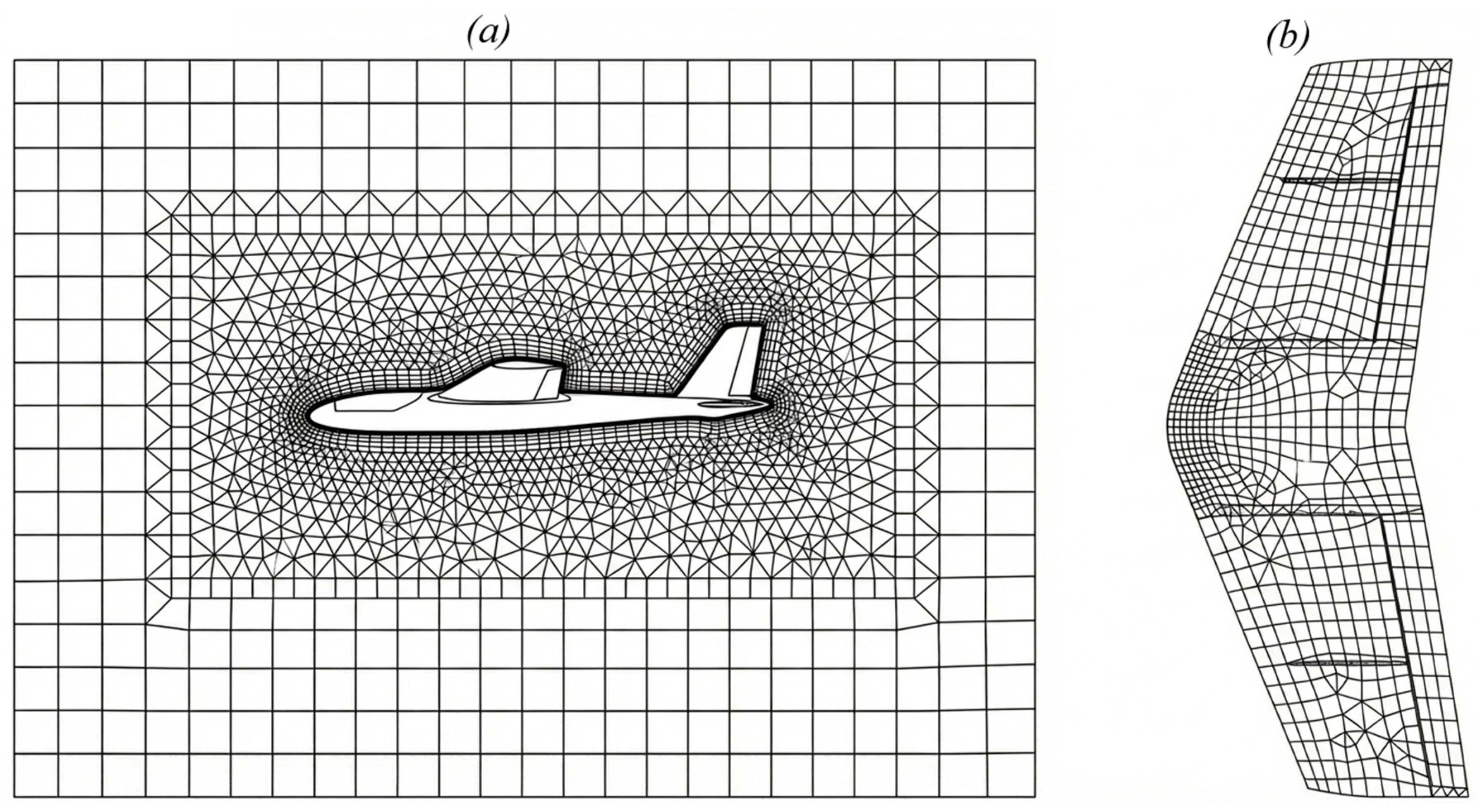
The computational meshes adopted for the aerodynamic and structural simulations are illustrated in
Figure 5. The CFD mesh consists of approximately 1.5 × 10
6 control volumes with local refinement near the UAV surface and in regions of expected flow separation. The structural finite element mesh contains approximately 3 × 10
5 elements with refined discretization in the wing root region to accurately capture stress concentration effects.
3.2. Formulation of the Coupled Aerodynamic–Structural Optimization Problem
The aerodynamic–structural enhancement investigated in this study can be formulated as a constrained multi-objective optimization problem.
The optimization problem is defined as:
where
is the aerodynamic drag coefficient and
is the structural mass.
The design variable vector is defined as:
where
is the wing skin thickness,
is the rib thickness,
is the relative airfoil thickness ratio,
is the wing taper ratio.
The optimization is performed under the following constraints:
where
is the Tsai–Wu failure index,
is the wing-tip deflection,
is the allowable deflection limit, and
is the required lift coefficient for steady cruise flight.
The aerodynamic loads computed from the CFD analysis are transferred to the structural finite element model, and the resulting stress and deformation fields are used to evaluate the constraint functions. This coupled CFD–FEA framework enables simultaneous evaluation of aerodynamic performance and structural integrity within the defined design space.
The pressure coefficient used in the aerodynamic analysis is defined as:
where
is the local static pressure on the UAV surface,
is the free-stream static pressure,
is the air density, and
is the free-stream velocity.
The pressure coefficient represents the normalized pressure distribution over the surface and provides insight into suction peaks, stagnation regions, and flow separation behavior. Negative values of correspond to suction regions with accelerated flow, while positive values indicate high-pressure stagnation zones.
3.3. Geometric Configuration of the Baseline and Modified UAV Models
The investigated platform is a small fixed-wing unmanned aerial vehicle (UAV) designed for low-altitude reconnaissance and monitoring missions. The drone employs a conventional tractor configuration with a front-mounted propeller and a high-mounted wing to ensure stable flight characteristics and simplified structural integration. The tail assembly consists of a conventional horizontal stabilizer and a vertical fin.
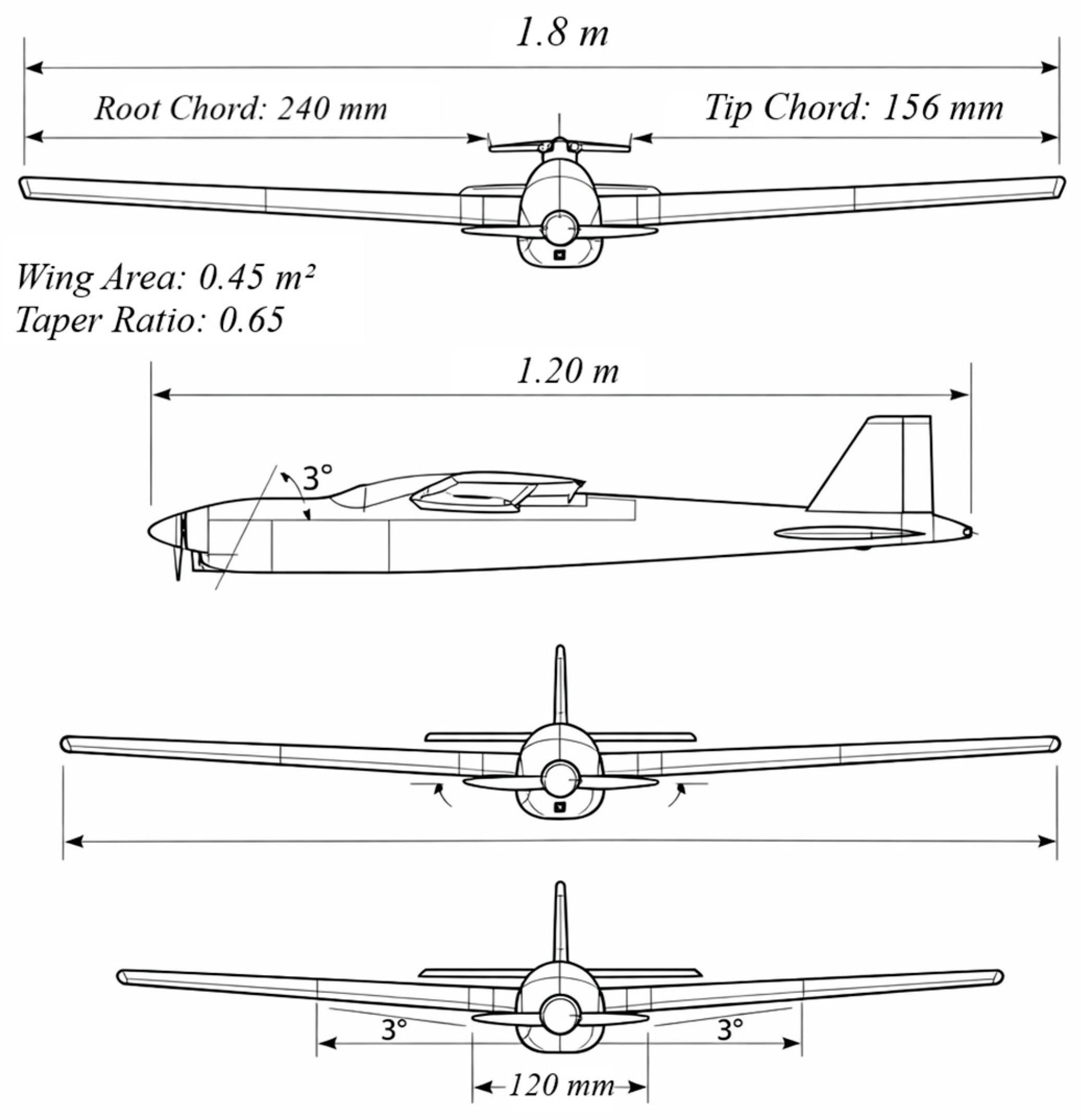
The baseline wing features a trapezoidal planform with a taper ratio of and zero sweep angle. The total wingspan is 1.8 m, and the wing reference area is 0.45 m2. A geometric dihedral angle of 3° is introduced to enhance lateral stability, which is typical for small fixed-wing drones operating in moderate wind conditions. No geometric or aerodynamic twist is applied in the baseline configuration.
The baseline airfoil profile is NACA 4412 with a relative thickness of 12%. This airfoil was selected due to its favorable lift-to-drag characteristics and stable stall behavior at low Reynolds numbers (), which are typical for small electric UAVs in the considered flight speed range.
In the modified configuration, the airfoil thickness was varied within the range of 8–14% in order to assess its influence on aerodynamic efficiency and structural stiffness. The thickness modification was performed through uniform scaling of the thickness distribution while preserving the original camber line geometry. The position of maximum thickness and camber distribution were not shifted, ensuring consistent aerodynamic characteristics across the compared configurations.
The geometric modification of the baseline NACA 4412 airfoil was performed by varying the relative thickness from 8% to 14%, while preserving the camber line. The resulting profiles are illustrated in
Figure 6, demonstrating the systematic increase in maximum thickness without altering camber distribution.
Additionally, the wing–fuselage junction was refined using a blended fillet transition to reduce interference drag and improve flow attachment in the wing root region, which is critical for small-scale UAV configurations.
The geometric configuration of the investigated UAV is illustrated in
Figure 7, where the principal dimensions and planform characteristics of the baseline configuration are presented in orthographic projection.
The principal geometric parameters of the investigated configuration are summarized in
Table 2.
3.4. Composite Material Model and Laminate Structure
In the modified configuration, the primary load-carrying wing components were modeled using a carbon-fiber reinforced polymer (CFRP) laminate with orthotropic mechanical behavior. The composite structure was represented as a symmetric laminate with stacking sequence [0°/45°/–45°/90°]s, which provides balanced in-plane stiffness and adequate torsional rigidity for small fixed-wing UAV applications. Each ply was assumed to have a nominal thickness of 0.25 mm, resulting in a total laminate thickness varying between 1.0 mm and 2.0 mm depending on the structural region under consideration.
The orthotropic elastic properties adopted in the finite element model were defined using engineering constants corresponding to typical aerospace-grade CFRP materials. The longitudinal Young’s modulus was taken as GPa, the transverse modulus as GPa, and the in-plane shear modulus as GPa, with a major Poisson’s ratio of . These parameters were implemented in the structural model using a homogenized orthotropic shell formulation.
For failure assessment, material strength parameters required by the Tsai–Wu failure criterion were introduced. The longitudinal tensile and compressive strengths were assumed to be MPa and MPa, respectively, while the transverse tensile and compressive strengths were MPa and MPa. The in-plane shear strength was taken as MPa. The stresses obtained from the finite element analysis were transformed into the principal material directions in order to compute the Tsai–Wu failure index.
The laminate was modeled as a homogenized orthotropic structure within the finite element framework, and ply-level stresses were evaluated in accordance with classical laminate theory assumptions. This modeling approach ensures that the anisotropic stiffness characteristics and directional strength properties of the composite material are consistently accounted for in the structural analysis.
The internal structural model of the wing was not represented as a fully solid airfoil. Instead, a simplified semi-monocoque configuration was adopted to approximate a realistic UAV wing structure.
The wing consisted of:
a primary longitudinal spar located at approximately 30% of the chord,
a secondary rear spar positioned near 65% of the chord,
uniformly distributed ribs along the span, and
a thin outer skin representing the aerodynamic surface.
The skin thickness was varied in the range of 1.0–2.5 mm during the parametric study.
The internal cavity between structural members was not completely filled with material; instead, it was modeled as a hollow structure to reflect practical lightweight UAV construction principles.
Implementation of Load Cases
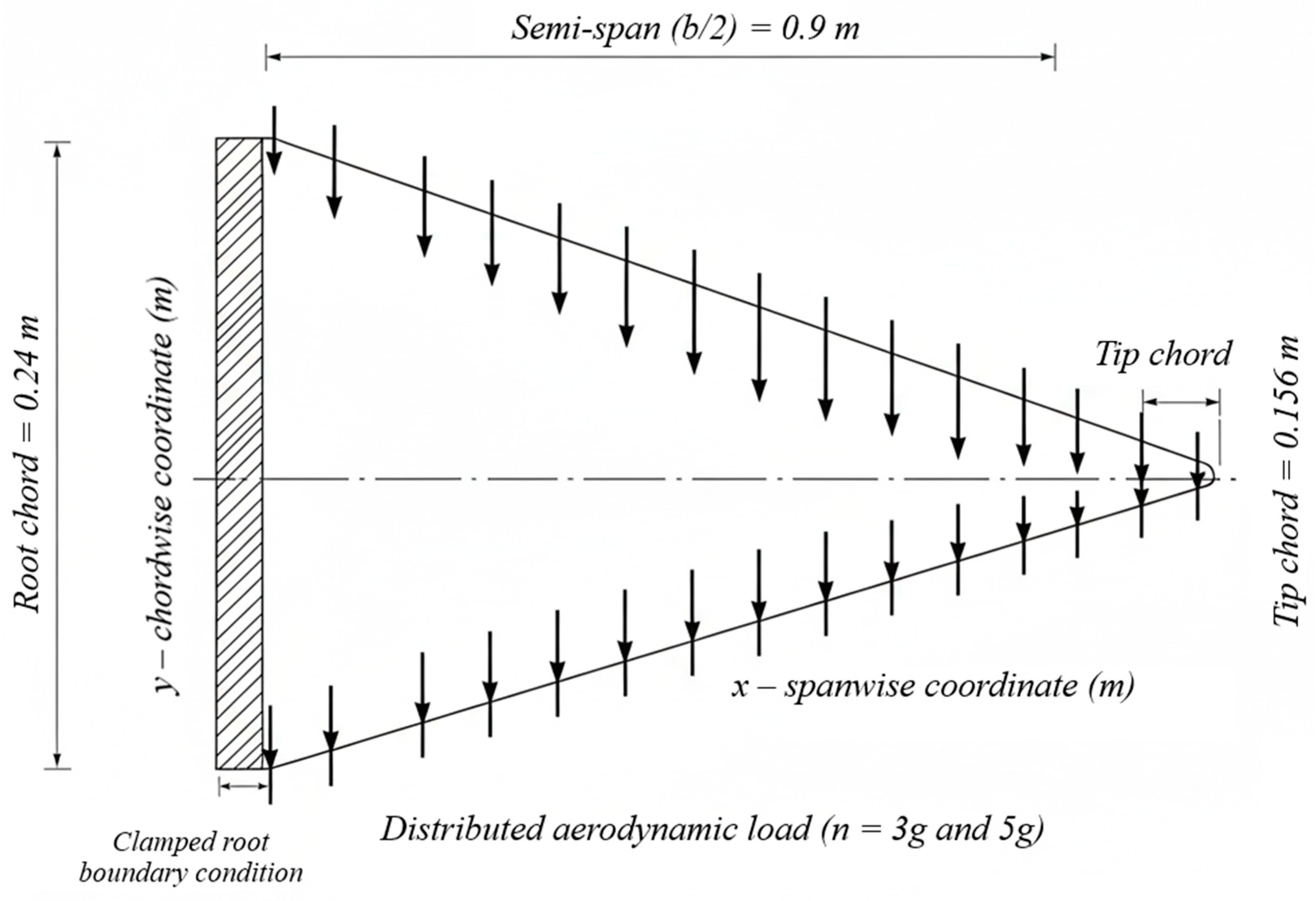
The structural load cases corresponding to 3 g and 5 g conditions were implemented as equivalent inertial loading to simulate maneuver-induced vertical acceleration. The load factor n was introduced as a multiplication factor applied to the gravitational acceleration g.
The distributed aerodynamic lift force was calculated as:
where
and
,
is the total aircraft mass, and
is gravitational acceleration.
The resulting load was applied as a distributed pressure over the upper wing surface to approximate aerodynamic lift distribution. The load distribution followed a quasi-elliptical spanwise pattern, consistent with typical lift distribution in finite wings.
The wing root section was constrained using fixed boundary conditions to represent the rigid attachment between the wing and fuselage. All translational degrees of freedom were restricted at the root interface, while rotational flexibility was preserved in accordance with structural continuity assumptions.
This approach ensures realistic simulation of maneuver loads in lightweight UAV structures. The implementation of the maneuver load cases is illustrated in
Figure 8.
3.5. Model Validation
To ensure the credibility of the numerical results, both aerodynamic and structural models were validated against classical analytical solutions and established theoretical relations.
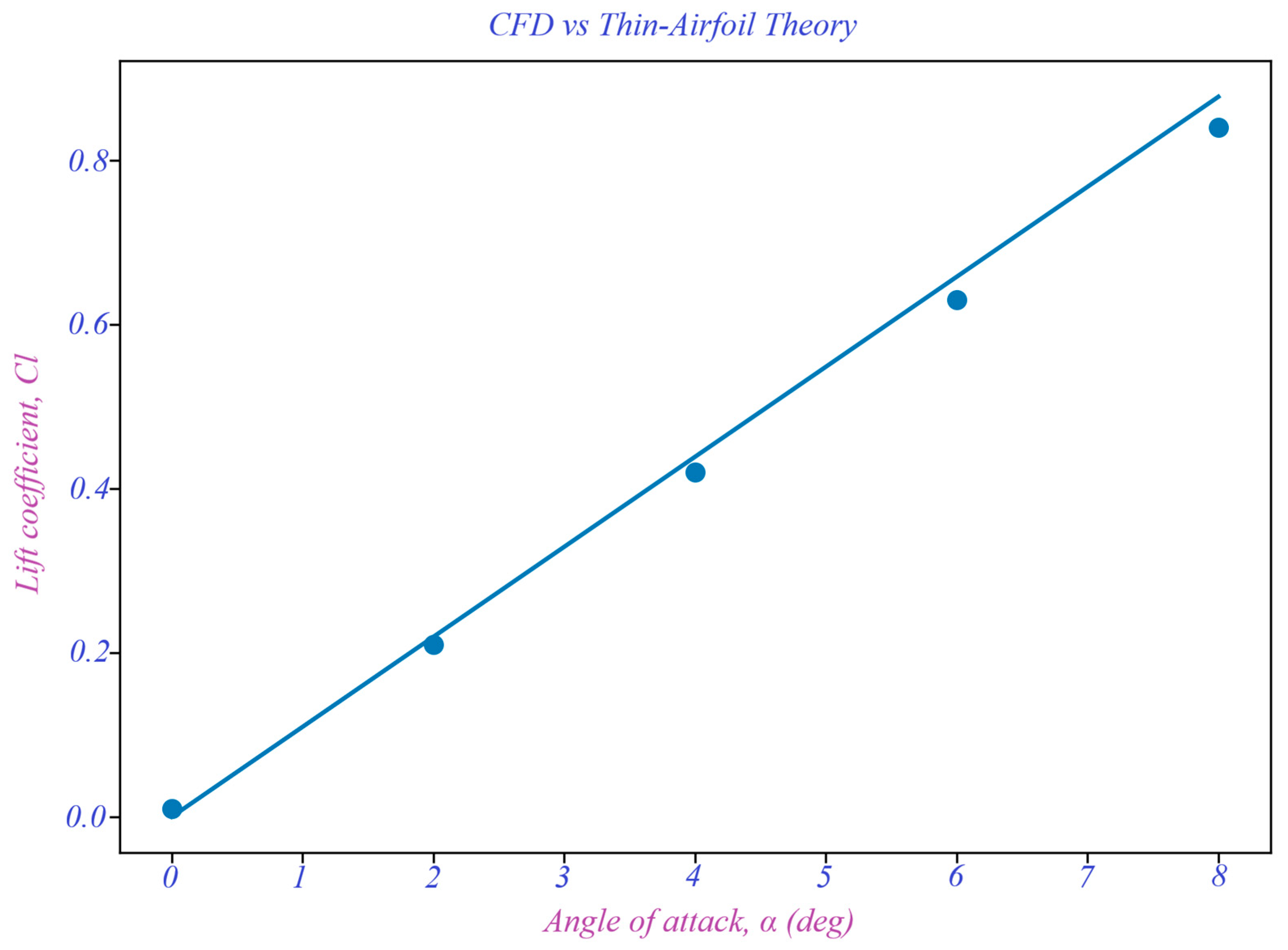
For the aerodynamic model, the lift-curve slope obtained from the CFD simulations was compared with the theoretical thin-airfoil approximation, according to
where
is the angle of attack in radians. The numerical results showed good agreement with the analytical prediction in the linear lift region (α ≤ 8°), with deviations not exceeding 4.8%. This confirms the adequacy of the selected turbulence model and discretization scheme for the considered Reynolds number range.
For structural validation, the wing was approximated as a cantilever beam subjected to distributed aerodynamic loading. The analytical deflection was estimated using the Euler–Bernoulli beam theory:
where
is the resultant aerodynamic force,
is the semi-span,
is the equivalent bending modulus, and
is the area moment of inertia. The finite element results differed from the analytical estimation by less than 5.3%, which is considered acceptable for composite wing structures with non-uniform stiffness distribution. The comparison between CFD results and the analytical thin-airfoil solution is shown in
Figure 9.
Additionally, a mesh-independence study was conducted by refining the computational grid from 1.2 million to 2.4 million elements. The variation in the lift coefficient remained below 1.7%, confirming numerical stability of the aerodynamic solution.
Overall, the combined validation procedure demonstrates that the adopted CFD–FEA framework provides reliable and physically consistent predictions for the investigated UAV configuration.
3.6. Mesh Independence and Quality Assessment
For the aerodynamic analysis, three progressively refined meshes were generated, consisting of approximately 0.9 million, 1.5 million, and 2.3 million cells. The lift coefficient (Cl) obtained at V = 20 m/s and α = 8° was used as the convergence parameter. The corresponding results are summarized in
Table 3. The difference between the medium and fine meshes was less than 1.8%, indicating grid independence of the aerodynamic solution.
For the structural analysis, three finite element discretizations were considered, containing approximately 180,000, 300,000, and 520,000 elements. The maximum von Mises stress under the 5 g load case was monitored. As shown in
Table 3, the variation between the medium and fine meshes was below 2.5%, confirming sufficient mesh convergence.
Additionally, mesh quality metrics were evaluated. In the CFD model, the maximum skewness remained below 0.82 and the minimum orthogonal quality exceeded 0.21, satisfying recommended numerical stability criteria. In the FEA model, element aspect ratios were maintained within acceptable limits to ensure solution accuracy.
Based on these results, the medium mesh density was selected for all subsequent simulations to balance computational efficiency and numerical accuracy.
4. Research Results and Discussion
The research work is carried out during the period 2024–2026 within the framework of scientific and technical cooperation between Satbayev University and the Military Engineering Institute of Radio Electronics and Communications. The main objective of the study is to improve the efficiency of unmanned aerial vehicles by enhancing their aerodynamic and mechanical structures. To achieve this goal, the research focuses on improving aerodynamic characteristics through the application of new materials and the implementation of structural optimization methods, as well as on enhancing the mechanical structures in order to increase structural strength and reduce the overall weight of the aircraft.
4.1. Results of Aerodynamic Efficiency Improvement
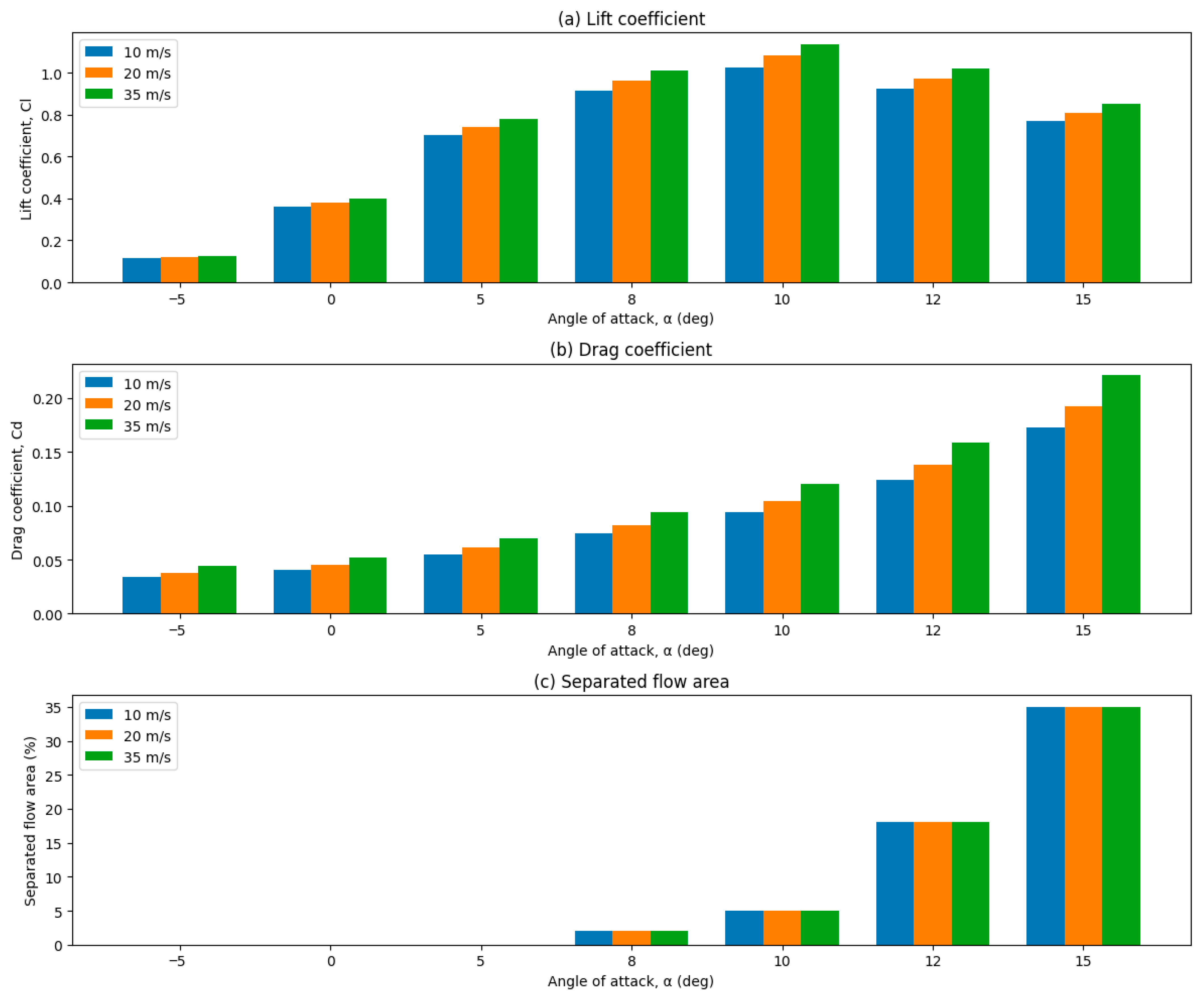
Within the framework of the first research objective, the aerodynamic efficiency of the aircraft was investigated through shape optimization and structural improvements. CFD-based simulations were performed for flight speeds in the range of 10–35 m/s and angles of attack from −5° to +15°. The analysis of the obtained velocity and pressure fields showed that, for the baseline configuration, flow separation zones appear near the wing root and trailing edge when the angle of attack exceeds 10°. The research results are presented in
Table 4,
Table 5 and
Table 6 below, which summarize the CFD-based aerodynamic characteristics of the UAV wing at different flight speeds. For improved visual comparison, the aerodynamic results are additionally presented in the form of bar charts (
Figure 10).
As illustrated in
Figure 10, the lift coefficient increases almost linearly up to α = 10° for all considered velocities, reaching a maximum value before decreasing due to flow separation. The drag coefficient exhibits a monotonic increase with angle of attack, particularly beyond α = 10°, which corresponds to the rapid growth of separated flow area shown in
Figure 10c. The separated flow remains negligible up to α = 5°, while a sharp increase is observed beyond α = 10°, indicating stall onset conditions.
The CFD simulation results at flight speeds of 10, 20, and 35 m/s demonstrate a similar overall aerodynamic behavior in all considered regimes. For all velocities, within the angle-of-attack range of α = −5° to 10°, the lift coefficient (Cl) increases almost linearly, while the flow remains mostly attached to the wing surface. In this region, the drag coefficient (Cd) increases gradually.
At angles of attack around α ≈ 10°, the onset of flow separation is observed for all flight speeds, which is indicated by a sharp increase in Cd and a saturation followed by a decrease in Cl. For α > 10°, the separated flow region near the wing root and trailing edge expands rapidly, reaching approximately 30–35% of the wing surface at α = 15°, which corresponds to a fully developed stall condition.
With increasing flight speed (from 10 to 20 and 35 m/s), the overall aerodynamic loads slightly increase, as reflected by higher values of Cd and |Cp_min|. However, the critical angle of attack corresponding to the onset of flow separation remains nearly the same (α ≈ 10°) for all cases, indicating that the stall behavior of the baseline configuration is mainly governed by geometric and aerodynamic factors rather than by flight speed.
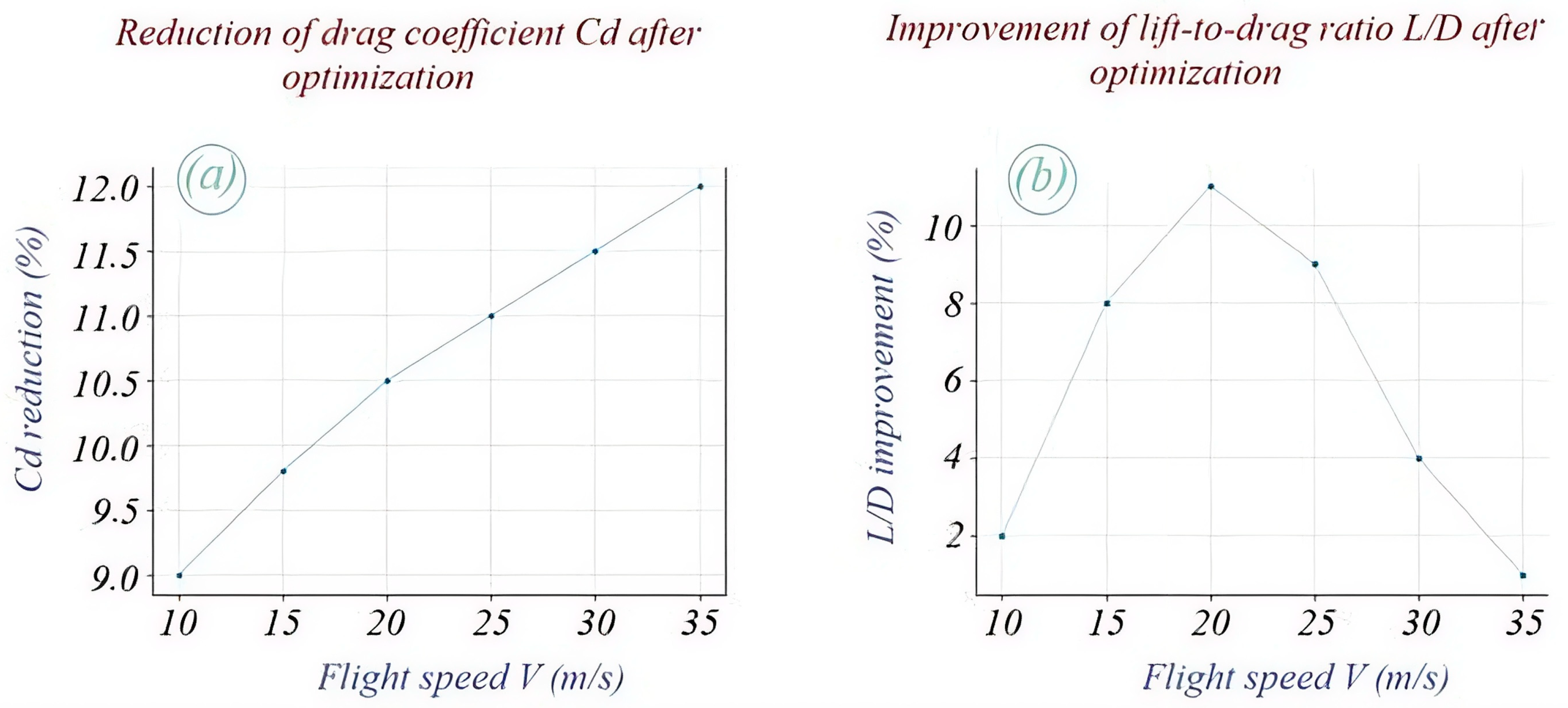
By varying the wing profile thickness within the range of 8–14% and smoothing the wing–fuselage junction region, the flow attachment was improved, and the drag coefficient Cd was reduced by approximately 9–12% over the entire range of investigated flight regimes. In addition, the lift–to–drag ratio L/D increased up to 11% in the cruise regime (15–25 m/s). To analyze the velocity influence independently of stall effects, the results presented in
Figure 11 were obtained at a fixed angle of attack of α = 8°, corresponding to the pre-stall aerodynamic regime. In addition to the representative velocities shown in
Table 4,
Table 5 and
Table 6 (10, 20, and 35 m/s), intermediate velocities of 15, 25, and 30 m/s were simulated to ensure trend consistency and to capture the velocity-dependent aerodynamic scaling behavior.
As a result of wing configuration improvement, the drag coefficient Cd decreases consistently over the entire investigated flight speed range, with a reduction of approximately 9–12%. At the same time, the lift-to-drag ratio L/D reaches its maximum in the cruise regime, indicating a significant improvement in the overall aerodynamic efficiency of the aircraft.
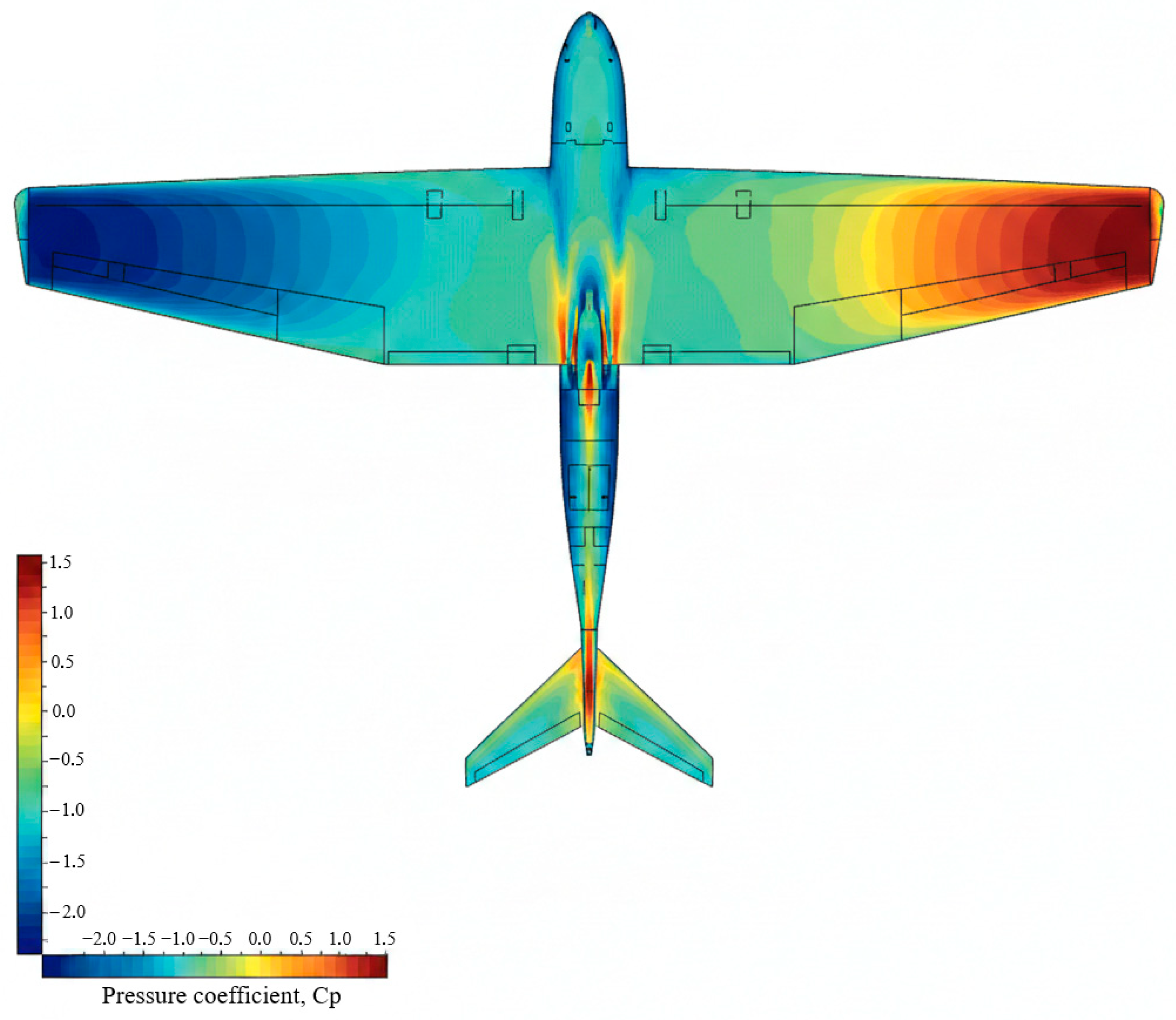
Figure 11 shows the distribution of the pressure coefficient before and after optimization. In the optimized configuration, a more uniform pressure distribution over the wing surface and a reduction in the low-pressure regions near the trailing edge are observed, which leads to a decrease in pressure drag.
As shown in
Figure 12, the most negative pressure coefficients are concentrated near the leading edge of the wing and in the wing–fuselage junction region, indicating strong suction peaks and accelerated flow. The C
p values range approximately from −2.0 in the suction zones to +1.5 in the high-pressure stagnation regions.
The pressure distribution along the span demonstrates a gradual reduction in suction toward the wing tips, which is consistent with the finite wing effect and induced drag formation.
The relatively smooth pressure gradient over the majority of the wing surface indicates attached flow conditions within the considered angle-of-attack range, confirming that the baseline configuration operates within the pre-stall regime.
4.2. Results of Structural Strength Enhancement and Weight Reduction
The second objective of the research work is aimed at increasing the structural strength and reducing the overall mass of the structure. Strength analyses were performed for aluminum and carbon composite materials under 3 g and 5 g load cases (
Table 7). The results show that, for the baseline aluminum structure, under the 5 g load case the maximum equivalent stresses in the wing root region reach about 85–90% of the allowable limit. In contrast, when the composite material is used, the stress level in this region is reduced by approximately 18–22%.
As shown in
Table 7, increasing the load factor from 3 g to 5 g leads to a significant rise in the maximum equivalent stresses for the aluminum structure. For the composite structure, the increase in loading results in a corresponding rise in the Tsai–Wu failure index. However, for all considered load cases, the use of the composite material reduces the strength criterion value by approximately 18–22% compared to aluminum, indicating a substantial increase in the structural safety margin.
During the structural optimization process, the wall thickness was varied within the range t = 1.0–2.5 mm, and the initial aluminum material was replaced with a carbon composite. The change in structural mass is defined by:
where
ρ(
x) is the spatial density distribution of the material and
V is the structural volume. The relative mass reduction was evaluated using:
and was found to be in the range of 13–16%.
Since the carbon-fiber composite material exhibits anisotropic behavior, the failure assessment cannot be reliably performed using the von Mises equivalent stress criterion. Therefore, the structural integrity of the composite structure was evaluated using the Tsai–Wu failure criterion, which is more suitable for orthotropic composite materials.
The Tsai–Wu failure criterion is expressed as:
where
σ1 and
σ2 are the normal stresses in the principal material directions, τ
12 is the in-plane shear stress, and
F1,
F2,
F11,
F22,
F66, and
F12 are material strength coefficients determined from the longitudinal tensile (
Xt), longitudinal compressive (
Xc), transverse tensile (
Yt), transverse compressive (
Yc), and shear strengths (S) of the composite material.
The failure index (FI) is calculated from the left-hand side of the above equation. Structural safety is ensured when FI ≤ 1. In the present study, the maximum Tsai–Wu failure index under the 5 g load case was found to be 0.72, confirming that the composite structure satisfies the strength requirements and remains within the safe operating region.
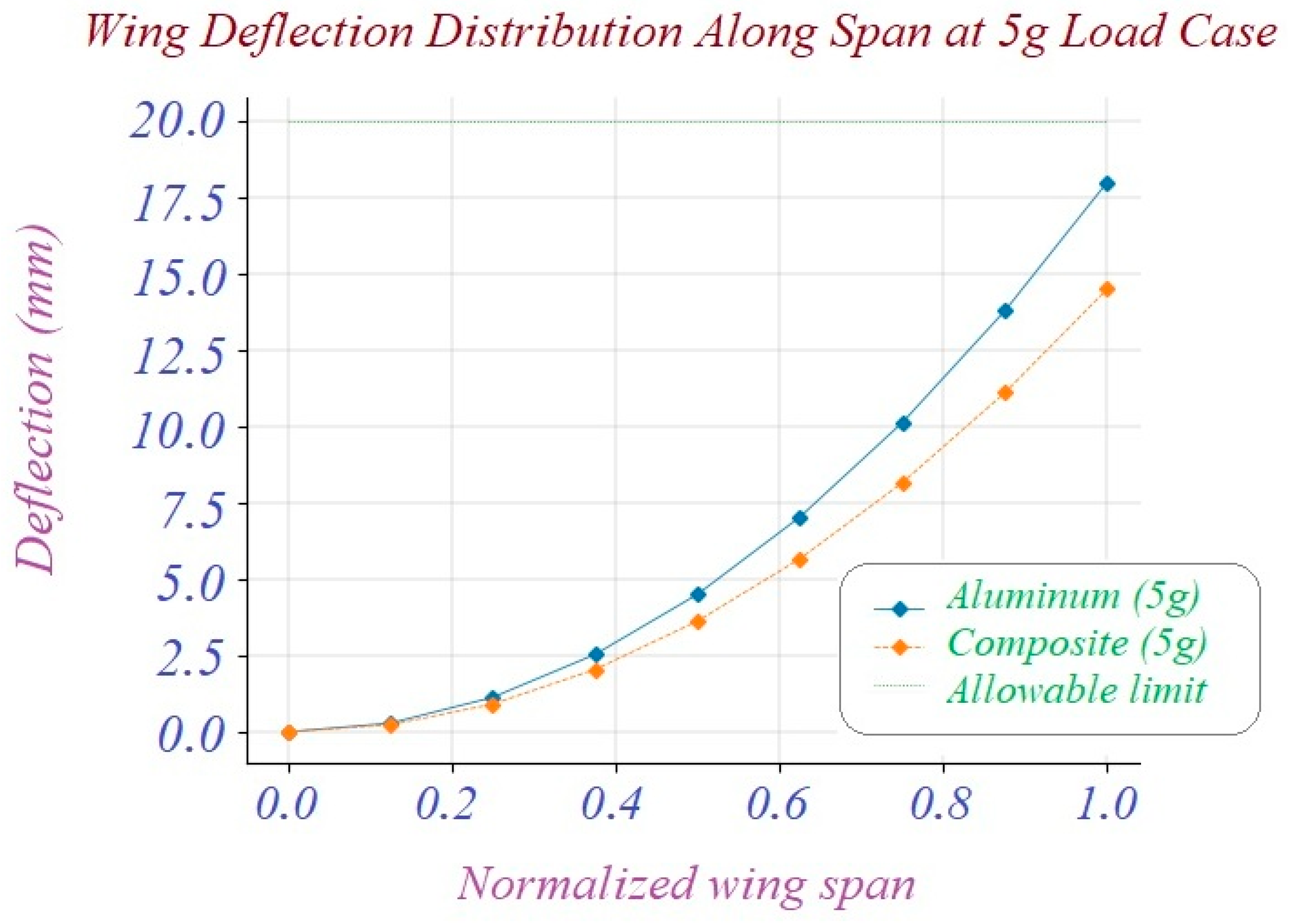
It was found that under the 5 g load case, the maximum wing tip deflection does not exceed the aerodynamic and structural limits, which indicates that the stiffness requirements are also satisfied (
Figure 13).
Under the 5 g load case, the maximum wing tip deflection is approximately 18 mm for the aluminum structure and about 14–15 mm for the composite structure, which is below the allowable limit of 20 mm. Thus, the use of composite material reduces the deflection by approximately 20–25%, indicating an increase in structural stiffness and full compliance with the stiffness requirements. These results demonstrate that improving the strength-to-weight performance of the structure makes it possible to enhance the flight characteristics, payload capability, and energy efficiency. Therefore, it can be concluded that the second objective of the study—reducing the structural weight while increasing its strength—has been successfully achieved.
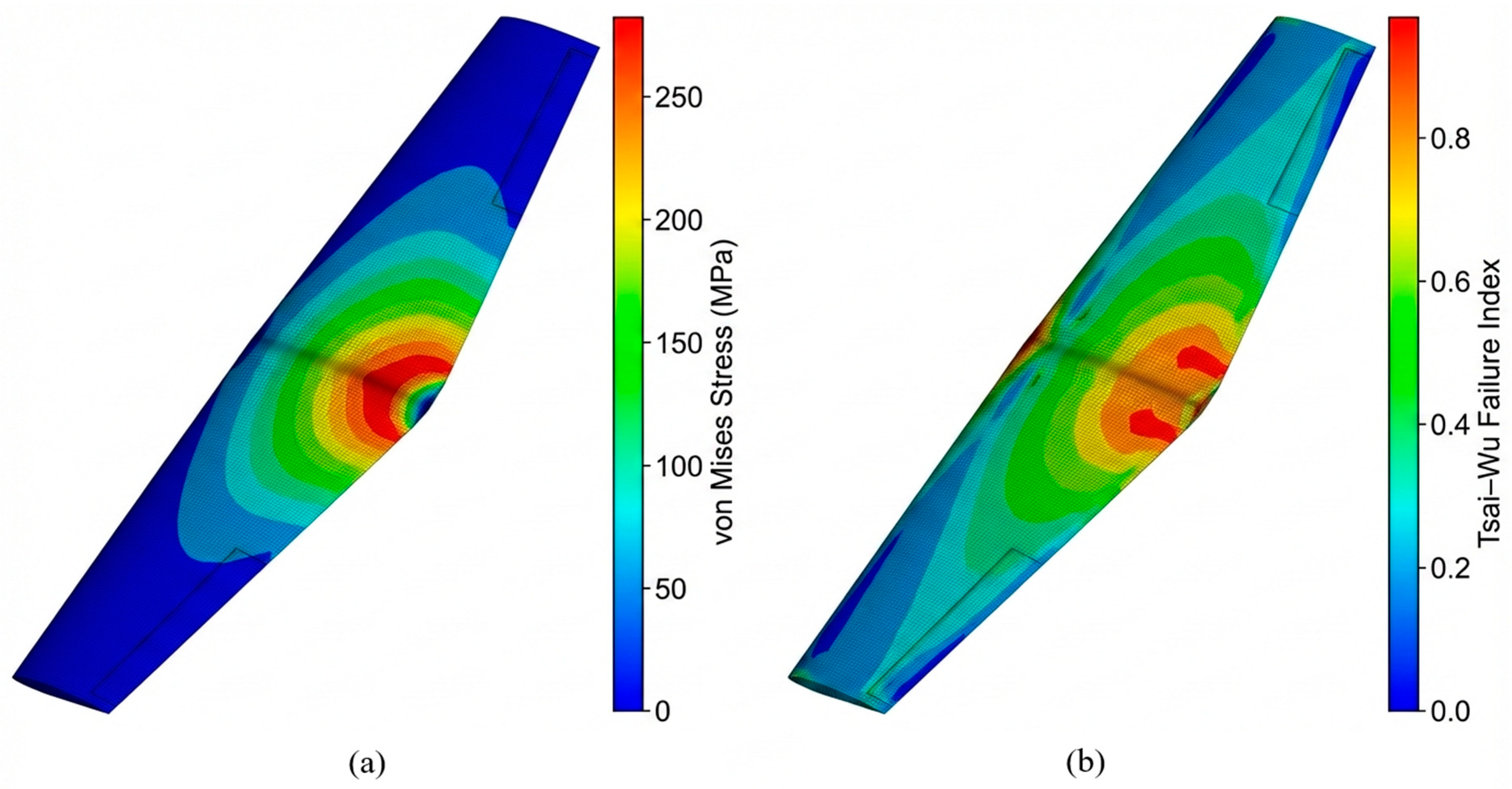
The structural response of the optimized wing configuration under the critical 5 g load case is illustrated in
Figure 14. The stress and failure index distributions provide insight into the load transfer mechanisms and the effectiveness of the material substitution strategy.
As shown in
Figure 14a, the maximum von Mises stresses in the aluminum structure are concentrated near the wing root region, where bending moments are highest due to aerodynamic loading. The stress magnitude gradually decreases toward the wing tip, reflecting the spanwise load distribution.
In contrast,
Figure 14b presents the Tsai–Wu failure index distribution for the composite configuration. The maximum failure index remains below unity, confirming that the composite structure operates within the safe domain. The highest values are again located near the wing root, consistent with structural mechanics principles for cantilever wing behavior.
4.3. Discussion of the Results of the Study
The obtained results demonstrate that the efficiency improvement of the investigated fixed-wing UAV is governed by the combined influence of aerodynamic refinement and structural optimization. The aerodynamic analysis shows a consistent increase in lift coefficient with angle of attack in the pre-stall region (α ≤ 8°), confirming the expected near-linear behavior typical of attached flow conditions at moderate Reynolds numbers. As the angle of attack approaches 10°, a noticeable growth in drag coefficient and separated flow area is observed, indicating the onset of stall. This behavior remains consistent across the investigated velocity range (10–35 m/s), suggesting that the stall characteristics are primarily geometry-driven rather than velocity-dependent within the considered operational envelope.
The modification of airfoil thickness within the range of 8–14%, while preserving the camber line and thickness location, resulted in a measurable reduction in drag and improvement in aerodynamic efficiency. The optimized configuration demonstrates a drag reduction of approximately 9–12% and an increase in lift-to-drag ratio of up to 11% in the cruise regime. The pressure coefficient distributions indicate a more uniform pressure recovery and reduced peak suction zones near the leading edge, which explains the delayed separation and improved aerodynamic performance. Importantly, these improvements remain stable across intermediate flight speeds, confirming that the optimization is not limited to isolated flight conditions.
The structural analysis reveals a significant improvement in load-carrying capacity when aluminum is replaced with carbon-fiber composite material. Under the 5 g maneuver load case, the aluminum configuration approaches 85–90% of the allowable stress, while the composite configuration exhibits a Tsai–Wu failure index of approximately 0.72, providing an increased safety margin. The composite structure reduces wing-tip deflection by 20–25% and decreases structural mass by 13–16%. The stress distributions confirm that maximum stresses occur near the wing root, as expected for a cantilever configuration, while the anisotropic stiffness of the composite material ensures more favorable stress redistribution. Unlike conventional weight-reduction strategies that may compromise stiffness, the proposed composite substitution improves both strength and deformation behavior simultaneously.
The peculiarity of the proposed approach lies in the coupled use of CFD and FEA, which allows aerodynamic performance and structural strength to be evaluated simultaneously. In previous studies, aerodynamic optimization or the use of composite materials typically provides an efficiency improvement of about 10–15% [
11,
14,
16,
17]. The results obtained in this work are consistent with these data, but they are achieved within a unified numerical framework and confirmed for specific flight regimes and load cases. The integration of aerodynamic drag reduction and structural mass optimization within a single modeling workflow demonstrates that the combined effect yields a more robust and technically justified performance improvement than isolated optimization strategies.
Despite the positive results, the study remains limited to numerical simulations. Experimental validation, full aeroelastic coupling, and ply-level composite damage modeling were not included in the present investigation and represent important directions for future work. Nevertheless, the consistency of mesh convergence studies, pressure distribution trends, and structural safety indices supports the reliability of the obtained results within the defined modeling assumptions.
5. Conclusions
Based on the objectives set in this scientific study, the following main results have been achieved:
As a result of the optimization of the wing configuration, including airfoil thickness variation and smoothing of the wing–fuselage junction, a significant improvement in the aerodynamic performance of the UAV was obtained. The CFD simulations showed a stable reduction in the drag coefficient by approximately 9–12% over the entire investigated flight speed range (10–35 m/s), while the lift-to-drag ratio L/D increased by up to 11% in the cruise regime. In addition, the pressure coefficient distribution became more uniform, and the minimum pressure coefficient increased from about −1.25 to −0.95, indicating a weakening of adverse pressure gradients and a reduction in pressure drag. This result is distinguished by its quantitative confirmation under several flight regimes and is explained by delayed flow separation and improved pressure recovery on the optimized wing surface.
By replacing the aluminum structure with a carbon-fiber composite material and optimizing the wall thickness, the structural performance of the UAV was substantially improved. The finite element analysis showed that the composite configuration exhibits a 18–22% lower strength criterion value compared to aluminum under 3 g and 5 g load cases, as evaluated using the Tsai–Wu failure criterion. At the same time, the structural mass was reduced by 13–16%, and the wing-tip deflection decreased by approximately 20–25%, remaining below the allowable limit. In contrast to conventional weight-reduction approaches, the proposed solution preserves both strength and stiffness requirements. This result is explained by the higher stiffness-to-weight ratio of the composite material and by a more efficient distribution of material in the load-carrying structure.




 ,
,