Quality Assessment of Digital 3D Models of Museum Artefacts from the Mobile LiDAR iPhone and Structured Light Scanners




Abstract
1. Introduction
2. Study Context
- Criminology;
- Architecture and construction;
- Agriculture and forestry;
- Cultural heritage and archaeology.
2.1. LiDAR in Criminology
2.2. LiDAR in Architecture and Construction
2.3. LiDAR in Agriculture and Forestry
2.4. LiDAR in Cultural Heritage and Archaeology
2.5. Applications for Data Acquisition and Postprocessing in the LiDAR iPhone System
3. Method and Materials
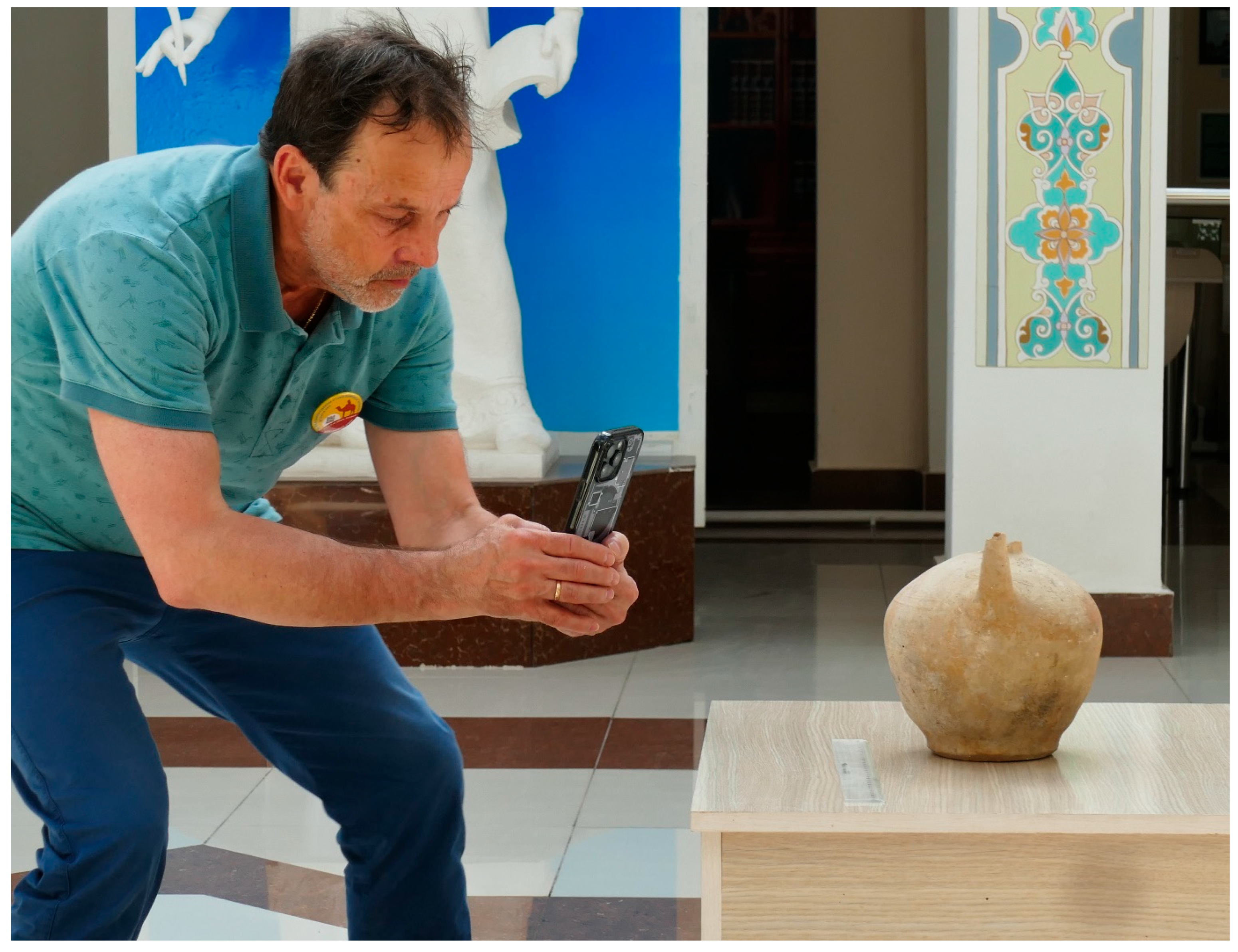
3.1. Mobile LiDAR iPhone System
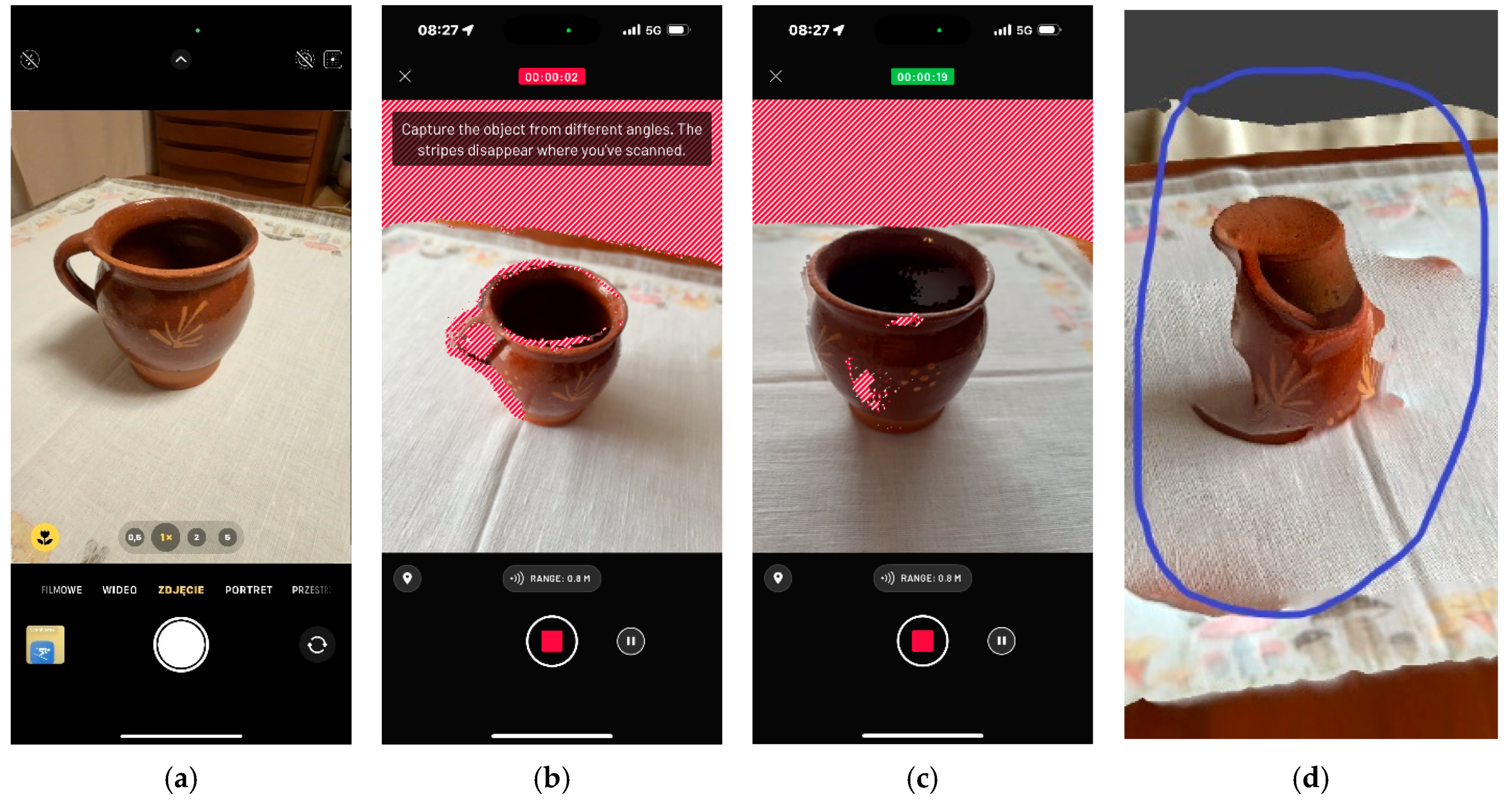
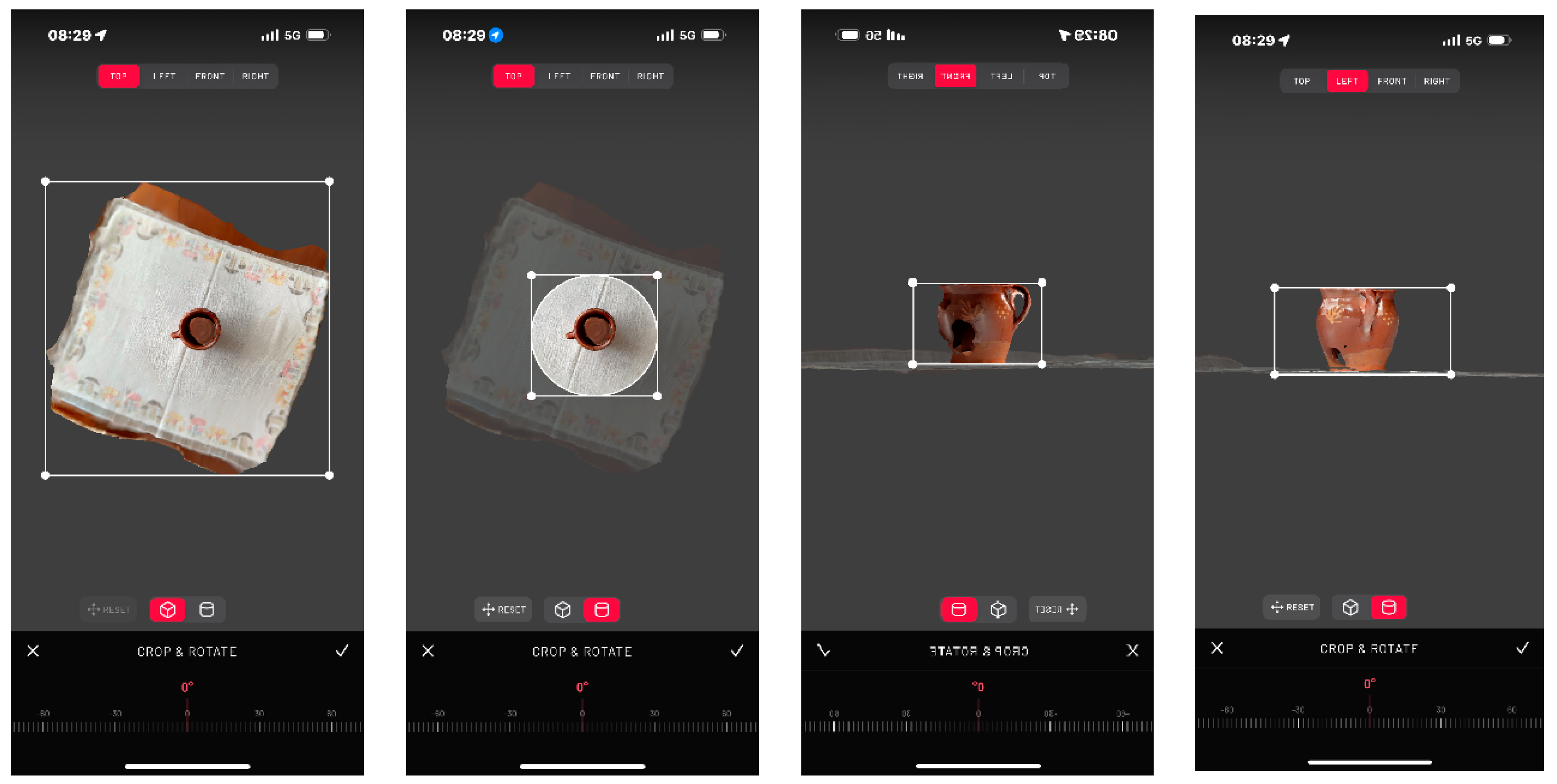
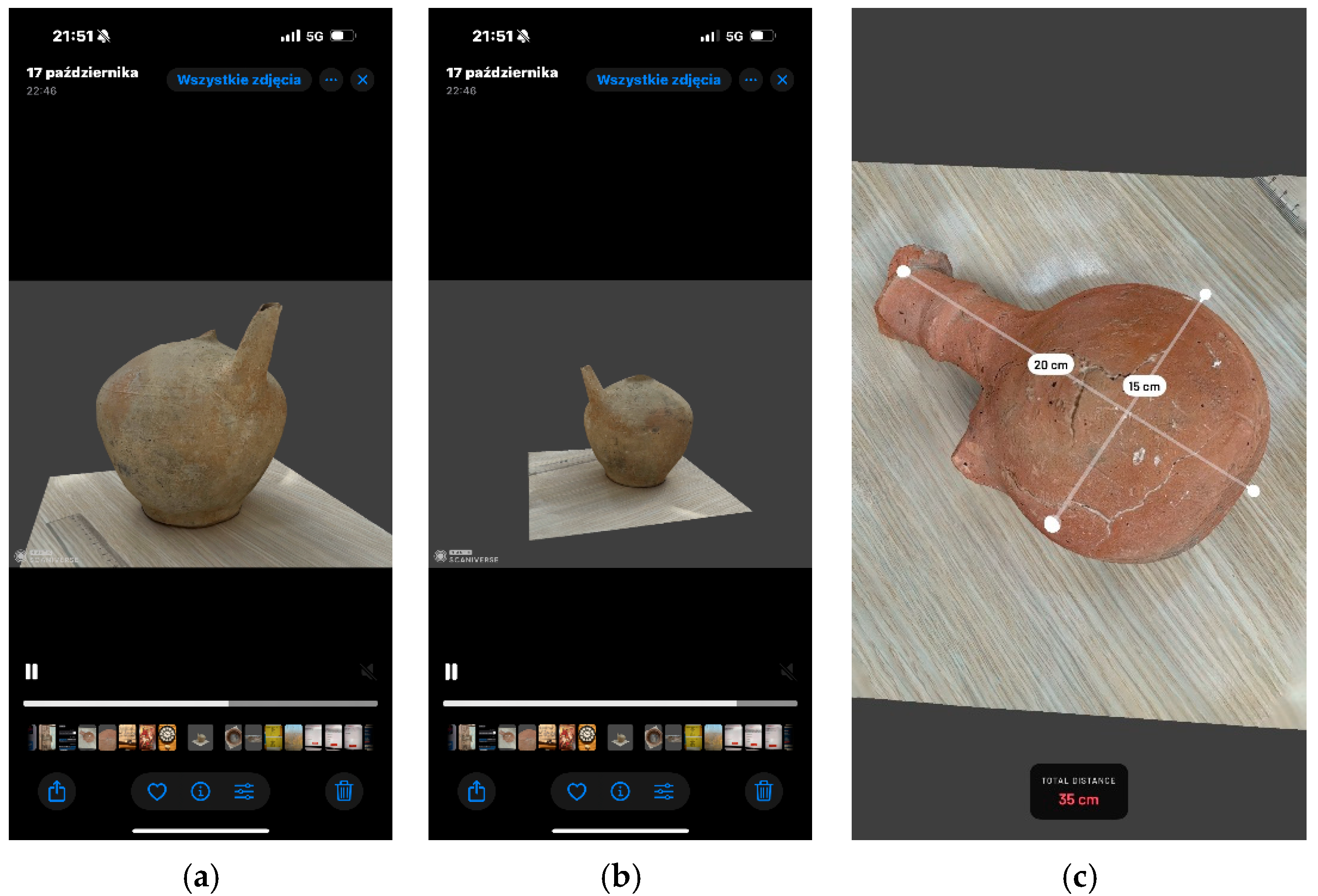
3.2. Scanning Procedure in the Scaniverse Application

| File Format | Properties |
|---|---|
| .fbx | Autodesk’s proprietary format that supports meshes, textures, materials and animations. Used widely in visualisation, AR/VR and gaming engines. Is binary-compact but not an open standard. |
| .obj | Simple, highly compatible 3D mesh format. Geometry and textures supported (through .MTL file), but no metadata or advanced scene information. General-purpose 3D interchange recommended. |
| .glb | Open standard for compact 3D asset exchange; geometry, textures and metadata supported. Highly efficient, in web and fast visualisation ready. |
| .usdz | Scene-based format developed by Pixar and Apple. Natively supported by materials, animations and textures. Optimised for AR app- and iOS-based software. |
| .stl | Geometry-only mesh format that is, for the most part, used for 3D printing as well as rapid prototyping. Does not include colour, texture or metadata. |
| .ply | Common in academic literature and in recording of cultural heritage sites. Archives of mesh or point cloud together with ancillary colour and per-vertex attributes. |
| .las | LiDAR industry standard format for point clouds. Natively supports intensity, RGB and GPS time, as well as classification metadata. |

| No of Object | Name/Description | Visualisation | Object Size (Bounding Box) in mm |
|---|---|---|---|
| 1 | Glazed ceramics. Registan. XV century. |  | 99 × 85 × 24 |
| Used to eat hot and cold dishes. | |||
| 2 | Pitcher (Flask). Ceramics. Registan. XII-XIII century. |  | 108 × 97 × 178 |
| Used to store wine and other drinks. | |||
| 3 | Ceramics. Afrasiyab. X-XI century. |  | 180 × 210 × 204 |
| Used to store and transport water and drinks. |
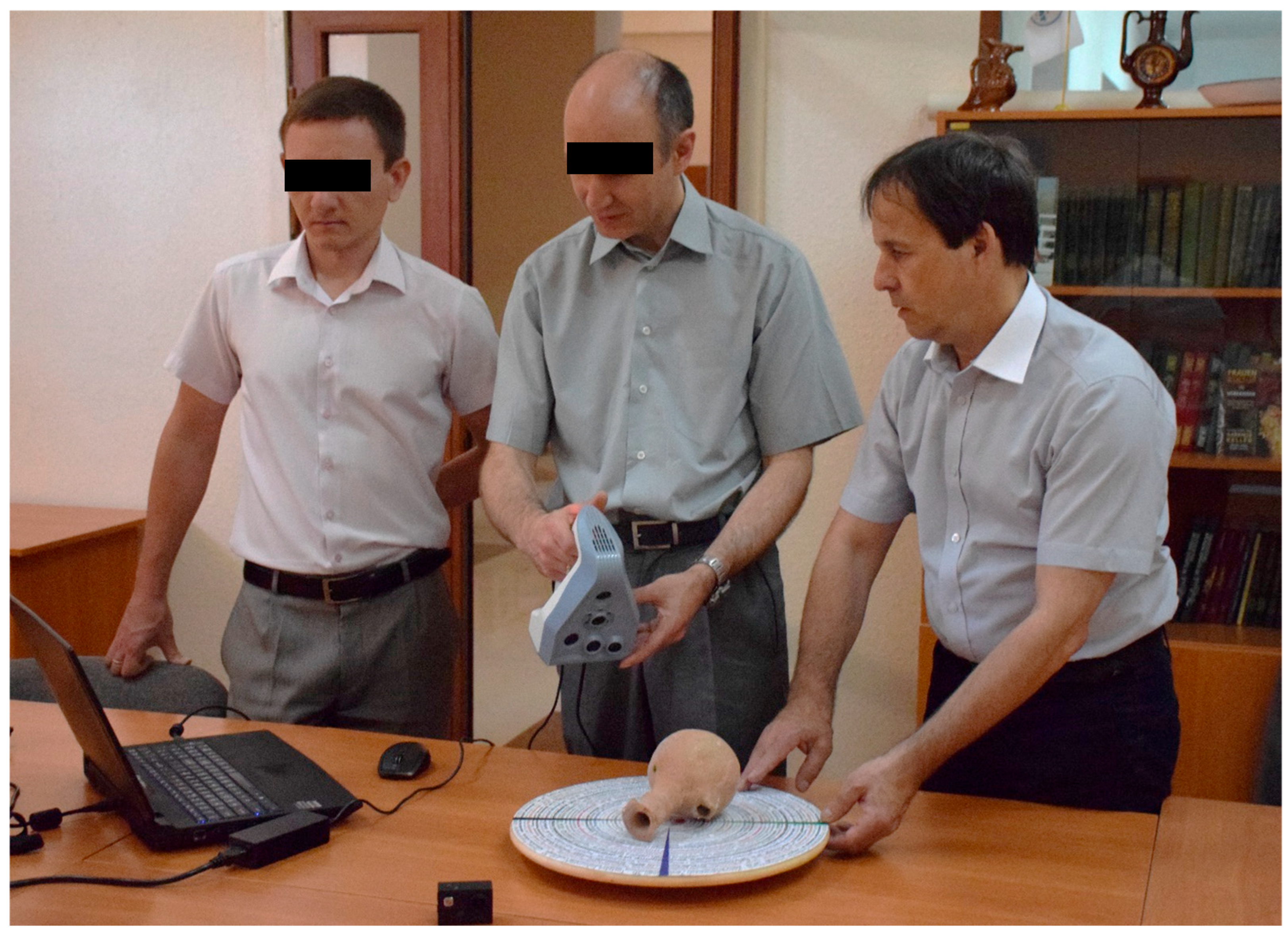
3.3. Structured-Light 3D Scanning
3.4. Description of the Objects of the Experiment
3.5. Comparison of Data Acquisition Methods and Creating 3D Models
4. Results
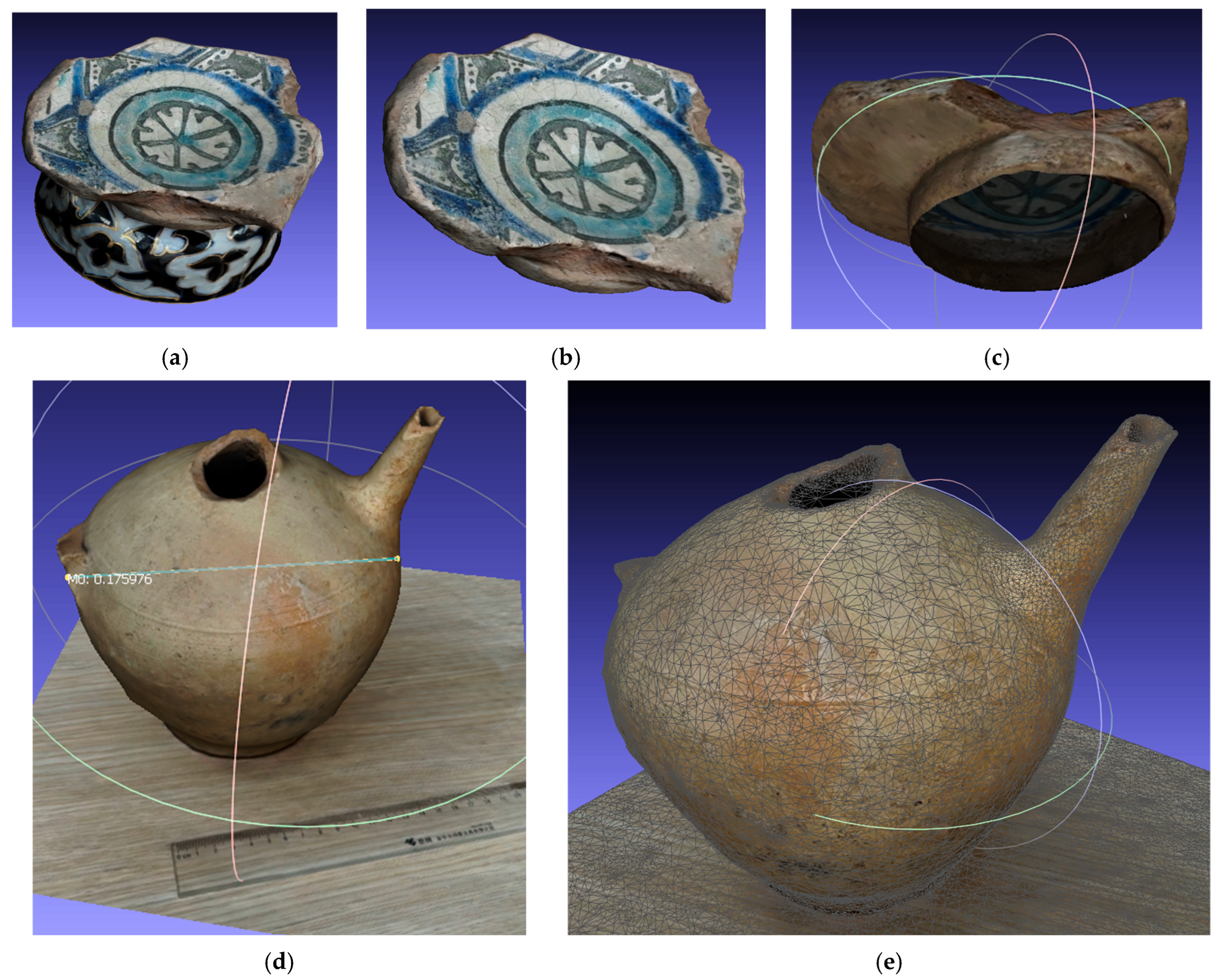
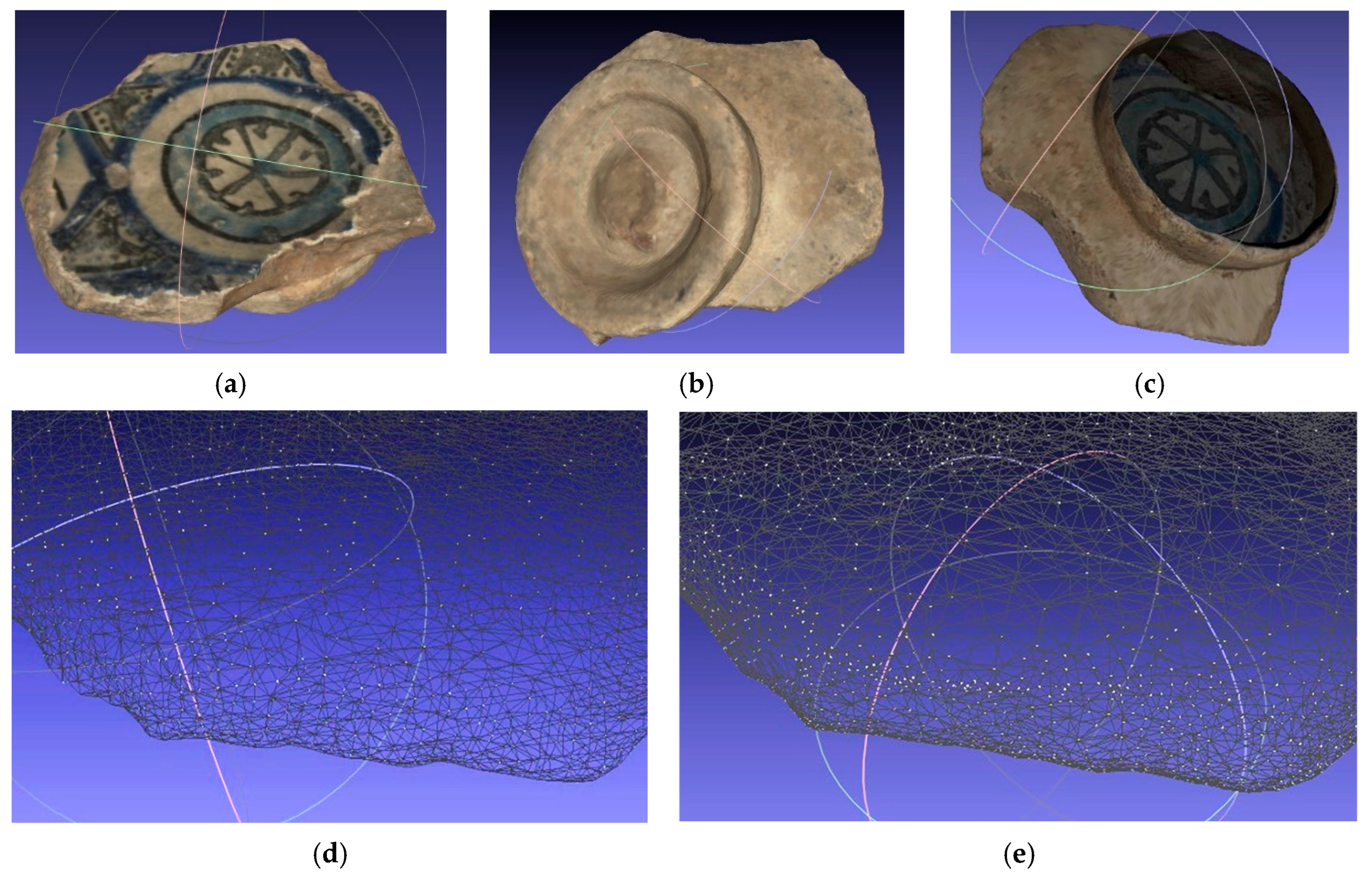
4.1. Digital 3D Models with 3D SLS and Postprocessing
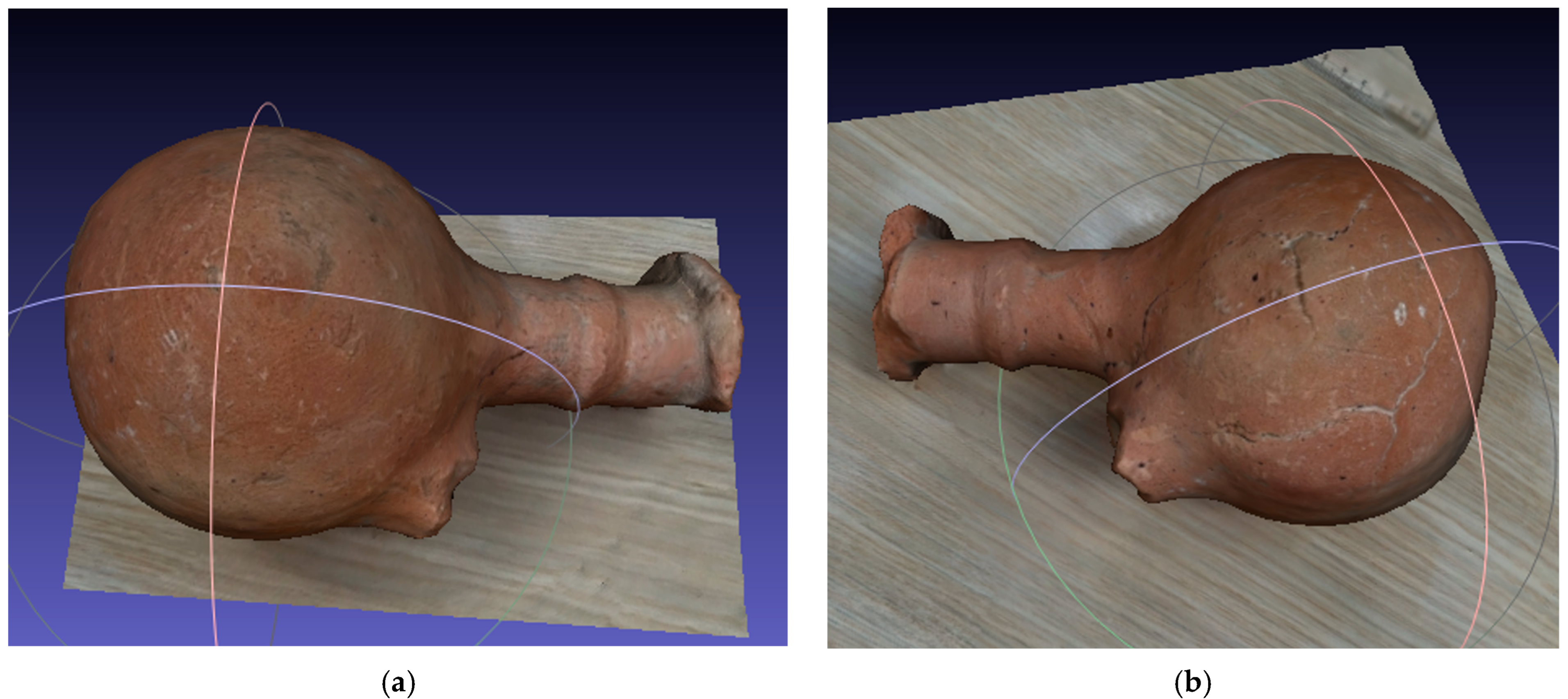
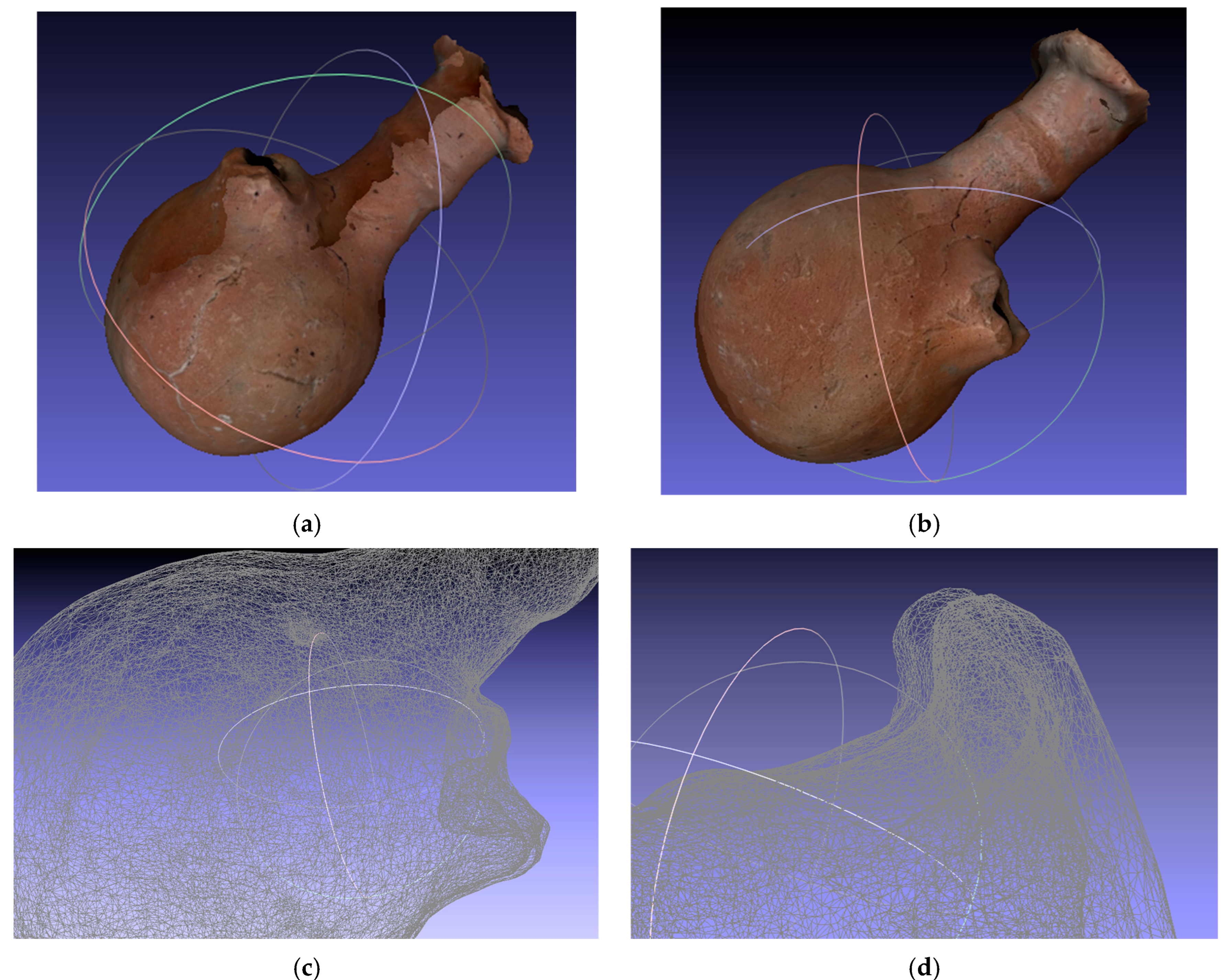
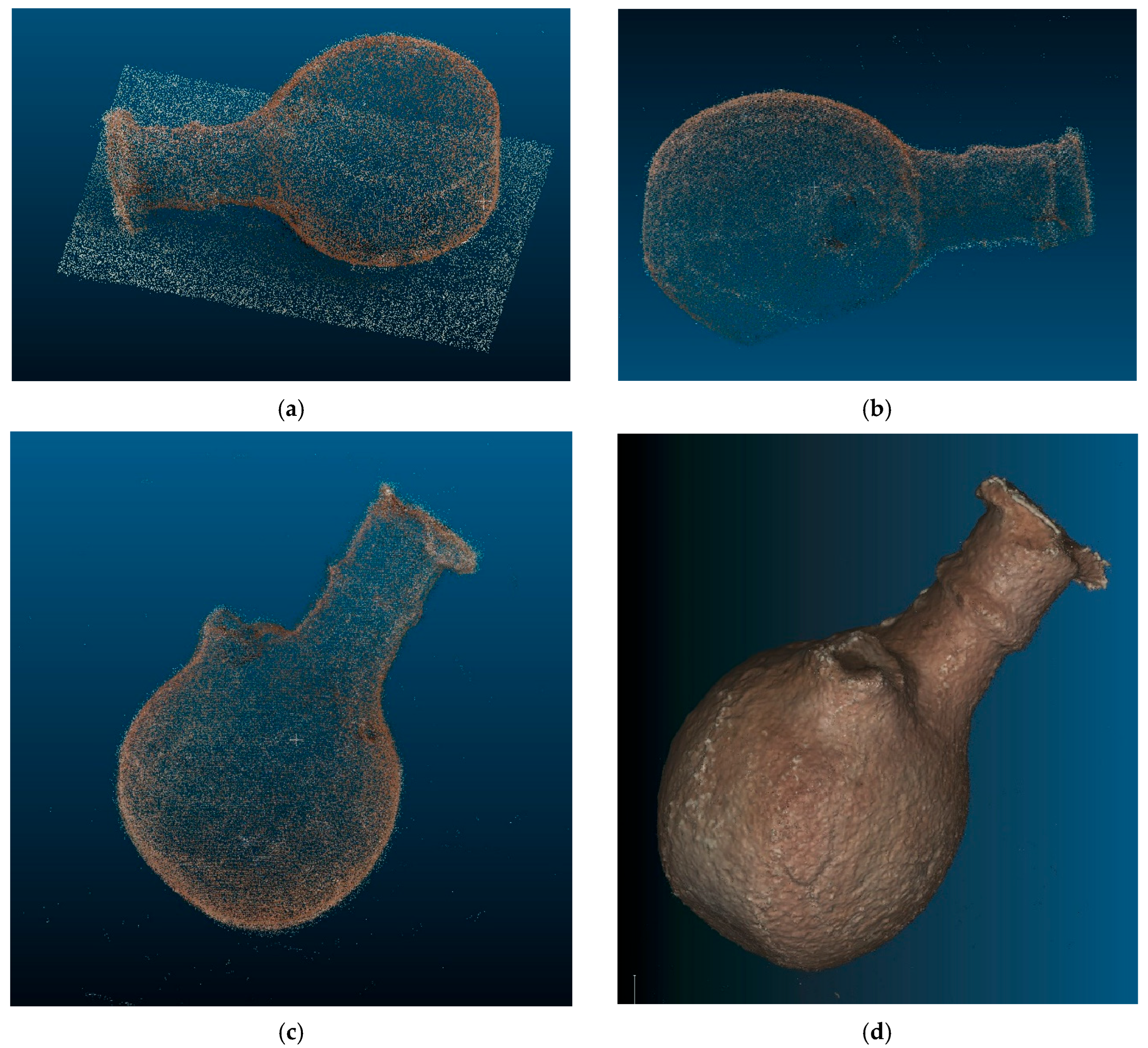
4.2. Digital 3D Models with LiDAR System
4.3. Comparison of SLS and LiDAR Technologies
5. Discussion
5.1. Three-Dimensional Model Size Comparison
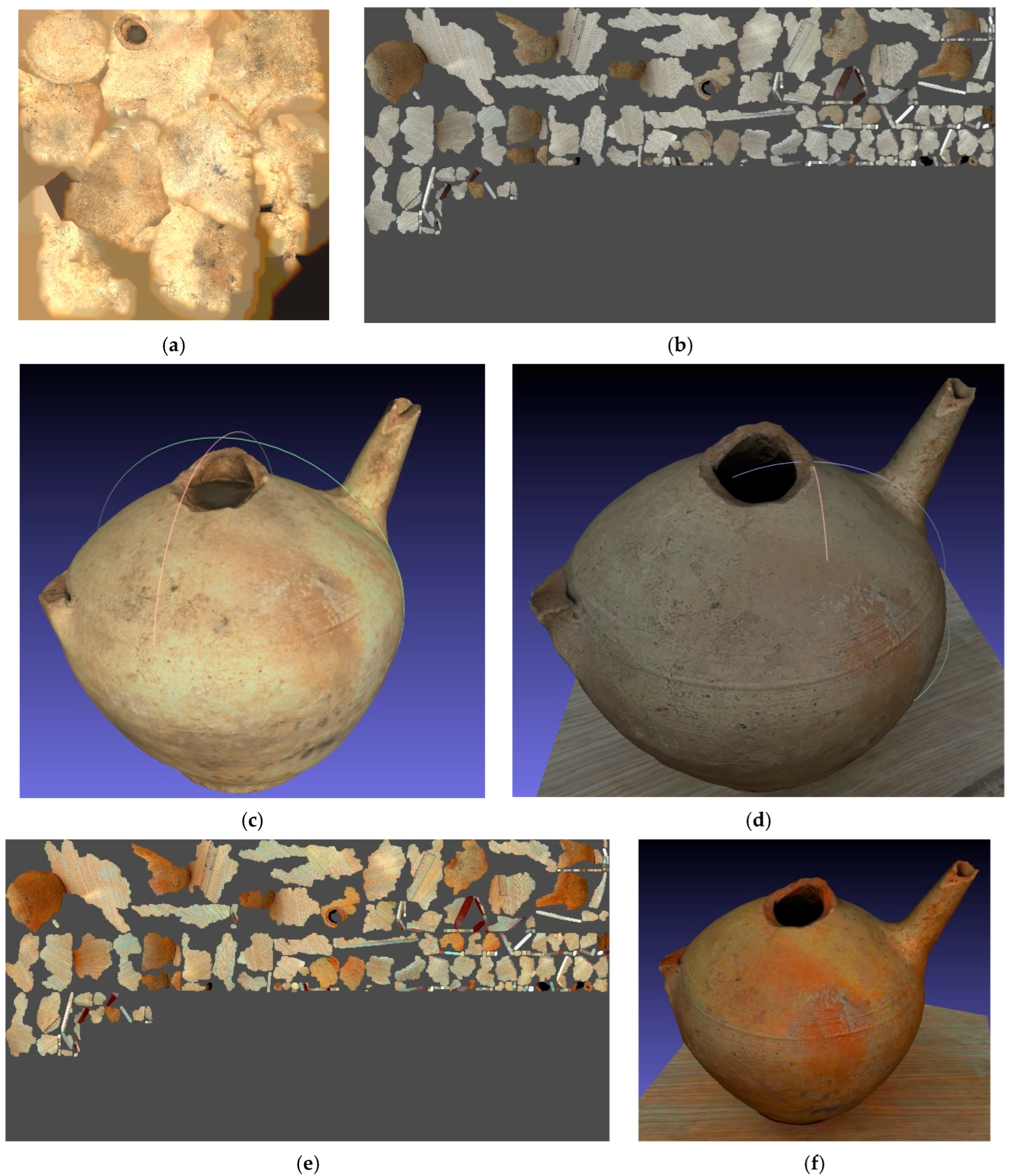
5.2. Texture Comparison
5.3. Comparison of 3D Model Meshes
5.4. Evaluating 3D Model Quality After Creating a Complete Model
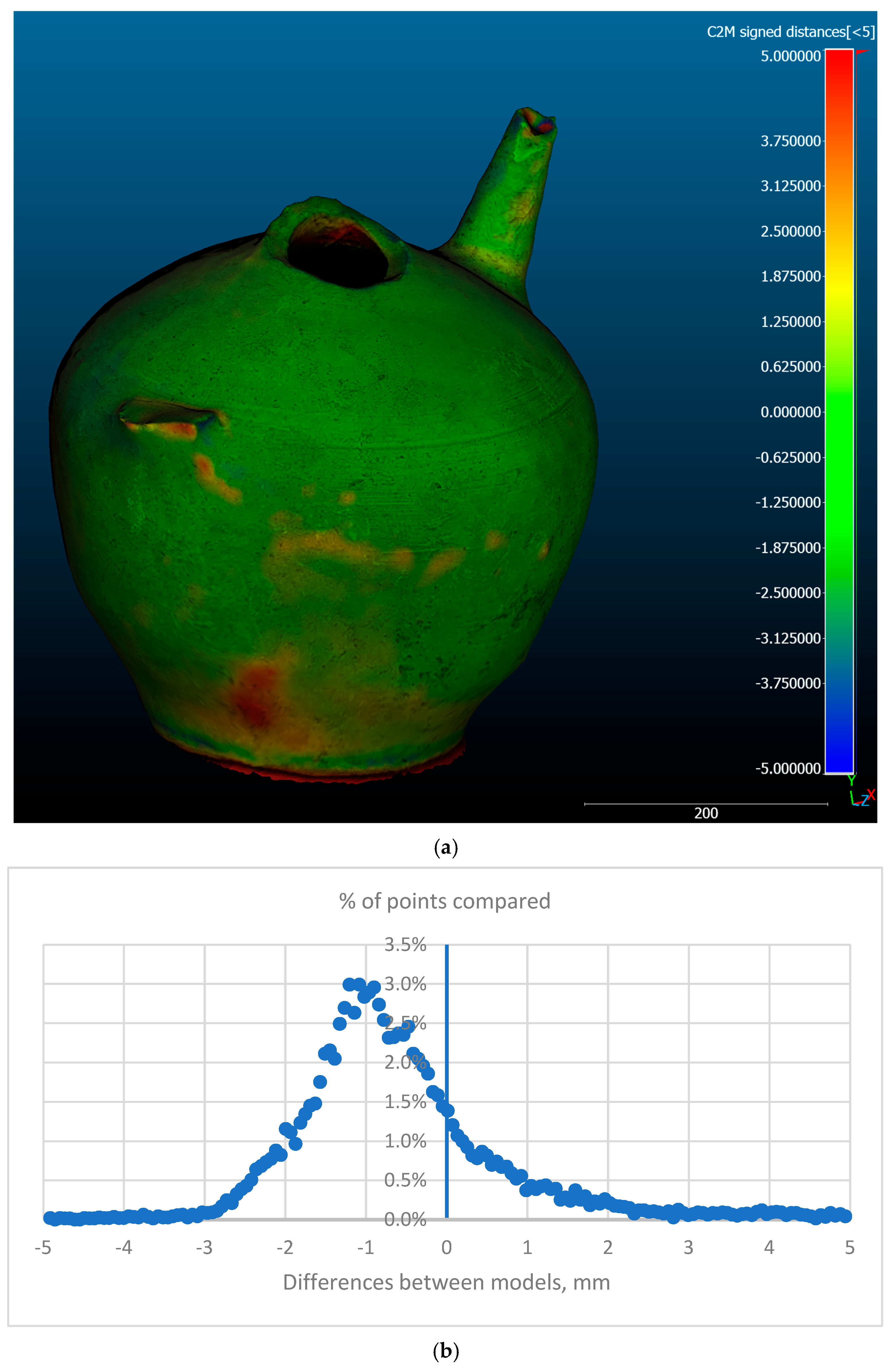
5.5. Comparison of Geometric Quality of 3D Models
- Removing unnecessary objects from the LiDAR model (typically the base on which the artifact was placed) and removing parts of the SLS model that were inaccessible in the LiDAR model (due to its incompleteness).
- Bringing both models to a common coordinate system.
- Aligning the models’ positions.
- Measuring the distances between the models.
- Visualizing and statistically processing the distances between the models.
6. Conclusions
- The iPhone LiDAR system is suitable for detailed mapping of historical museum artefacts due to its relatively affordable price and offers a good compromise between functionality (ease of use), speed (model generation time is many times shorter than with professional devices [38]), versatility (the ability to scan objects of various sizes), quality (minor differences in the surface reproduction of small museum artefacts), and price (new iPhone models cost less than USD 1500).
- The LiDAR scanning process is energy efficient, and a single smartphone charge can acquire and generate 3D mesh models of over 25 museum artefacts.
- A significant feature of this scanning technology is fast operation (60–90 s per object), which allows for immediate verification of the quality of the generated 3D model and, if unsatisfactory results are obtained, a decision to repeat the scan.
- Due to the size of the digital 3D models (approximately 5–8 MB—Table 4), they are ideal for sharing on websites and mobile devices, particularly for marketing and digital tourism purposes.
- The research conducted has shown that it is possible to generate a complete digital 3D model from digital models obtained from separate scanning processes with the iPhone LiDAR system through additional pre-processing in free, publicly available 3D graphics programs.
- The LiDAR system available on Apple smartphones and tablets enables the so-called social documentation of historical artefacts (democratisation of activities) and the rapid sharing of results with the public, both by exporting models in formats supported by free, publicly available programs, such as .obj, and by generating short videos of objects rotating along predefined motion paths. This confirms the observations made in [39].
- The social nature of the activities leads to the distributed storage of digital 3D models, which ensures that data on museum artefacts (although not fully meeting archival requirements) will be permanent and accessible not only to ordinary people but also to art historians and scientists.
- Due to the fact that the iPhone LiDAR system does not generate CD3DM models, it should be perfectly suitable for scanning mounted objects such as busts, sculptures, tombstones, bas-reliefs, or column decorations, their bases and capitals, hanging bells, as well as objects placed on exhibition stands.
- Digital 3D models generated with the iPhone 16 PRO MAX using Scaniverse LiDAR software are incomplete and therefore less versatile. They also have less accurate dimensions and lower quality (mesh density, size, and texture quality), practically eliminating their use for museum archiving purposes.
- A significant limitation of LiDAR technology using mobile phones is the inability to scan large and very large objects (including architectural ones).
Author Contributions
Funding
Institutional Review Board Statement
Informed Consent Statement
Data Availability Statement
Acknowledgments
Conflicts of Interest
References
- Barsanti, S.G.; Remondino, F.; Fenández-Palacios, B.J.; Visintini, D. Critical factors and guidelines for 3D surveying and modelling in Cultural Heritage. Int. J. Herit. Digit. Era 2014, 3, 141–158. [Google Scholar] [CrossRef]
- Munumer, E.; Lerma, J.L. Fusion of 3D data from different image-based and range-based sources for efficient heritage recording. Digit. Herit. 2015, 304, 83–86. [Google Scholar] [CrossRef]
- Parrinello, S.; Dell’Amico, A. Experience of Documentation for the Accessibility of Widespread Cultural Heritage. Heritage 2019, 2, 1032–1044. [Google Scholar] [CrossRef]
- Vacca, G.; Dessi, A. Geomatics Supporting Knowledge of Cultural Heritage Aimed at Recovery and Restoration. Int. Arch. Photogramm. Remote Sens. Spat. Inf. Sci. 2022, 43, 909–915. [Google Scholar] [CrossRef]
- Brandolini, F.; Patrucco, G. Structure-from-Motion (SFM) Photogrammetry as a Non-Invasive Methodology to Digitalize Historical Documents: A Highly Flexible and Low-Cost Approach? Heritage 2019, 2, 2124–2136. [Google Scholar] [CrossRef]
- Masciotta, M.G.; Sanchez Aparicio, L.J.; Oliveira, D.V.; Gonzalez Aguilera, D. Integration of laser scanning technologies and 360º photography for the digital documentation and management of cultural heritage buildings. Int. J. Archit. Herit. 2023, 17, 56–75. [Google Scholar] [CrossRef]
- Milosz, M.; Kęsik, J.; Abdullaev, U. 3D scanning and modeling of highly detailed and geometrically complex historical architectural objects: The example of the Juma Mosque in Khiva (Uzbekistan). Herit. Sci. 2024, 12, 1–14. [Google Scholar] [CrossRef]
- Aita, D.; Barsotti, R.; Bennati, S.; Caroti, G.; Piemonte, A. 3-Dimensional geometric survey and structural modelling of the dome of Pisa cathedral. Int. Arch. Photogramm. Remote Sens. Spat. Inf. Sci. 2017, 42, 39–46. [Google Scholar] [CrossRef]
- Milosz, M.; Kęsik, J.; Montusiewicz, J. Three-dimensional digitization of documentation and perpetual preservation of cultural heritage buildings at risk of liquidation and loss—The methodology and case study of St Adalbert’s Church in Chicago. Electronics 2024, 13, 561. [Google Scholar] [CrossRef]
- Andrianov, A.; Muradyan, G.; Andrianova, Z.; Sarvazyan, N. Bringing Stones to Life: The First Digital 3D Library of Ancient Armenian Gravestones. In Proceedings of the Eurographics Workshop on Digital Heritage, Siena, Italy, 8–13 September 2025. [Google Scholar] [CrossRef]
- Kęsik, J.; Montusiewicz, J.; Kayumov, R. An approach to computer-aided reconstruction of museum exhibits. Adv. Sci. Technol. Res. J. 2017, 11, 87–94. [Google Scholar] [CrossRef] [PubMed]
- Champiio, E.; Rahaman, H. Survey of 3D digital heritage repositories and platforms. Virtual Archaeol. Rev. 2020, 11, 1–15. [Google Scholar] [CrossRef]
- He, T.-L.; Qin, F. Exploring how the metaverse of cultural heritage (MCH) influences users’ intentions to experience offline: A two-stage SEM-ANN analysis. Herit. Sci. 2024, 12, 193. [Google Scholar] [CrossRef]
- Montusiewicz, J.; Milosz, M.; Kesik, J. Technical Aspects of Museum Exposition for Visually Impaired Preparation Using Modern 3D Technologies. In 2018 IEEE Global Engineering Education Conference (EDUCON); IEEE: Piscataway, NJ, USA, 2018; pp. 768–773. [Google Scholar] [CrossRef]
- Montusiewicz, J.; Milosz, M. Architectural Jewels of Lublin: A Modern Computerized Board Game in Cultural Heritage Education. J. Comput. Cult. Herit. 2021, 14, 1–21. [Google Scholar] [CrossRef]
- Poirier, N.; Baleux, F.; Calastrenc, C. The mapping of forested archaeological sites using UAV LiDAR. ISTE OpenScience 2020, 1–24. [Google Scholar] [CrossRef]
- Masini, N.; Abate, N.; Gizzi, F.T.; Vitale, V.; Minervino Amodio, A.; Sileo, M.; Biscione, M.; Lasaponara, R.; Bentivenga, M.; Cavalcante, F. UAV LiDAR Based Approach for Archaeological Micro Topography Under Canopy. Remote Sens. 2022, 14, 6074. [Google Scholar] [CrossRef]
- Vinci, G.; Vanzani, F.; Fontana, A.; Campana, S. LiDAR Applications in Archaeology: A Systematic Review. Archaeol. Prospect. 2024, 32, 81–101. [Google Scholar] [CrossRef]
- García-Gómez, P.; Royo, S.; Rodrigo, N.; Casas, J.R. Geometric model and calibration method for a solid-state LiDAR. Sensors 2020, 20, 2898. [Google Scholar] [CrossRef] [PubMed]
- Aijazi, A.K.; Malaterre, L.; Trassoudaine, L.; Checchin, P. Systematic evaluation of 3D solid state LiDAR sensors. Int. Arch. Photogramm. Remote Sens. Spat. Inf. Sci. 2020, 43, 199–203. [Google Scholar] [CrossRef]
- Luetzenburg, G.; Kroon, A.; Bjørk, A.A. Evaluation of the Apple iPhone 12 Pro LiDAR for an Application in Geosciences. Sci. Rep. 2021, 11, 22221. [Google Scholar] [CrossRef] [PubMed]
- Barszcz, M.; Montusiewicz, J.; Paśnikowska-Łukaszuk, M.; Sałamacha, A. Comparative Analysis of Digital Models of Objects of Cultural Heritage Obtained by the “3D SLS” and “SfM” Methods. Appl. Sci. 2021, 11, 5321. [Google Scholar] [CrossRef]
- Stevenson, S.; Liscio, E. Assessing iPhone LiDAR & Recon-3D for determining area of origin in bloodstain pattern analysis. J. Forensic Sci. 2024, 69, 1045–1060. [Google Scholar] [CrossRef]
- Abdelaal, O.; Aldahash, S.A. Realization of Impression Evidence with Reverse Engineering and Additive Manufacturing. Appl. Sci. 2024, 14, 5444. [Google Scholar] [CrossRef]
- Kędziorski, P.; Skoratko, A.; Katzer, J.; Tysiąc, P.; Jagoda, M.; Zawidzki, M. Low-cost LiDAR scanning data for geometric and volume analysis of 3D-printed concrete-plastic elements. Data Brief 2025, 61, 111799. [Google Scholar] [CrossRef] [PubMed]
- Díaz-Vilariño, L.; Tran, H.; Frías, E.; Balado, J.; Khoshelham, K. 3D mapping of indoor and outdoor environments using Apple smart devices. Int. Arch. Photogramm. Remote Sens. Spat. Inf. Sci. 2022, 43, 303–308. [Google Scholar]
- Yanchuk, O.; Shulgan, R.; Trokhymets, S.; Sheremet, N. Accuracy assessment of a three-dimensional model obtained using the LiDAR sensor of the iPhone 13 Pro Max. Geod. Cartogr. 2025, 51, 11–17. [Google Scholar] [CrossRef]
- Alijani, Z.; Meloche, J.; McLaren, A.; Lindsay, J.; Roy, A.; Berg, A. A comparison of three surface roughness characterization techniques: Photogrammetry, pin profiler, and smartphone-based LiDAR. Int. J. Digit. Earth 2022, 15, 2422–2439. [Google Scholar] [CrossRef]
- Hrdina, M.; Molina-Valero, J.A.; Kuželka, K.; Tatsumi, S.; Yamaguchi, K.; Melichová, Z.; Mokroš, M.; Surový, P. Obtaining the Highest Quality from a Low-Cost Mobile Scanner: A Comparison of Several Pipelines with a New Scanning Device. Remote Sens. 2025, 17, 2564. [Google Scholar] [CrossRef]
- Siafali, E.; Polychronos, V.; Tsioras, P.A. Fusion of Airborne, SLAM-Based, and iPhone LiDAR for Accurate Forest Road Mapping in Harvesting Areas. Land 2025, 14, 1553. [Google Scholar] [CrossRef]
- Özbay, F.; Sarıkaya, Y.Ç. Indoor Space Measurement With a Mobile Phone Integrated LIDAR Sensor: The Case of the Aizanoi Ancient City Zeus Temple Vaulted Gallery. Stud. Digit. Herit. 2024, 8, 97–109. [Google Scholar]
- De Simone, D.; Ferrari, G.W. 3D LiDAR Modeling with iPhone Pro in an Archaeo-Spelaeologic Context. Results and Prospects. Archeol. Calc. 2024, 35, 421–430. [Google Scholar] [CrossRef]
- Fiorini, A. Scansioni dinamiche in archeologia dell’architettura: Test e valutazioni metriche del sensore LiDAR di Apple. Archeol. Calc. 2022, 33, 35–54. [Google Scholar] [CrossRef]
- Ferrari, G.W. The Pozzuoli (Naples, Italy) Flavian Amphitheatre Cisterns: A Basic Experience in 3D Modelling with LiDAR. In Proceedings of the Fourth IC of Speleology in Artificial Cavities Hypogea 2023. pp. 319–324. Available online: https://anyflip.com/msnet/wici/basic/301-350 (accessed on 3 December 2025).
- Moyano, J.; Nieto-Julián, J.E.; Fernández-Alconchel, M.; Oreni, D.; Estévez-Pardal, R. Analysis and Precision of Light Detection and Ranging Sensors Integrated in Mobile Phones as a Framework for Registration of Ground Control Points for Unmanned Aerial Vehicles in the Scanning Technique for Building Information Modelling in Archaeological Sites. Drones 2023, 7, 477. [Google Scholar] [CrossRef]
- Zhang, N.; Lan, X. Everyday-Carry Equipment Mapping: A Portable and Low-Cost Method for 3D Digital Documentation of Architectural Heritage by Integrated iPhone and Microdrone. Buildings 2025, 15, 89. [Google Scholar] [CrossRef]
- Soyluoğlu, M.; Orabi, R.; Hermon, S.; Bakirtzis, N. Digitizing Challenging Heritage Sites with the Use of iPhone LiDAR and Photogrammetry: The Case-Study of Sourp Magar Monastery in Cyprus. Geomatics 2025, 5, 44. [Google Scholar] [CrossRef]
- Ulvi, A.; Hamal, S.N.G. Fusion of IPAD Pro LiDAR and SfM-Based Photogrammetry for 3D Documentation of Cultural Heritage. Iran J. Sci. Technol. Trans. Civ. Eng. 2025, 1–17. [Google Scholar] [CrossRef]
- Liu, H.; Wu, Y.; Li, A.; Deng, Y. Precision Detection and Identification Method for Apparent Damage in Timber Components of Historic Buildings Based on Portable LiDAR Equipment. J. Build. Eng. 2024, 98, 111050. [Google Scholar] [CrossRef]
- Pulat, F.; Yakar, M. Comparison of Techniques Used in Three-Dimensional Modelling of Small-Sized Objects with Mobile Phones. Mersin Photogramm. J. 2024, 6, 79–86. [Google Scholar] [CrossRef]
- Hegarty, Z.; Saari, M. A Proposal for Proactive Quality Assurance in Photogrammetry Workflows: Using Smart-Device LiDAR for Scaling. Digit. Herit. 2025. [Google Scholar] [CrossRef]
- Bocconcino, M.M.; Piras, M.; Vozzola, M.; Pavignano, M.; Gioberti, L. Giovanni Curioni’s Digital Museum (1/2): Comparative Survey Techniques for the Definition of a 3D Data Collection Procedure with Low-Cost Systems. Int. Arch. Photogramm. Remote Sens. Spatial Inf. Sci. 2023, 48, 235–242. [Google Scholar] [CrossRef]
- Teppati Losè, L.; Spreafico, A.; Chiabrando, F.; Giulio Tonolo, F. Apple LiDAR Sensor for 3D Surveying: Tests and Results in the Cultural Heritage Domain. Remote Sens. 2022, 14, 4157. [Google Scholar] [CrossRef]
- Atencio, E.; Muñoz, A.; Lozano, F.; González-Arteaga, J.; Lozano-Galant, J.A. Calibration of iPad Pro LiDAR Scanning Parameters for the Scanning of Heritage Structures Using Orthogonal Arrays. Appl. Sci. 2024, 14, 11814. [Google Scholar] [CrossRef]
- Vacca, G. 3D Survey with Apple LiDAR Sensor—Test and Assessment for Architectural and Cultural Heritage. Heritage 2023, 6, 1476–1501. [Google Scholar]
- Askar, C.; Sternberg, H. Use of Smartphone LiDAR Technology for Low-Cost 3D Building Documentation with iPhone 13 Pro: A Comparative Analysis of Mobile Scanning Applications. Geomatics 2023, 3, 563–579. [Google Scholar] [CrossRef]
- Paukkonen, N. Towards a Mobile 3D Documentation Solution. Video-Based Photogrammetry and iPhone 12 Pro as Fieldwork Documentation Tools. J. Comput. Appl. Archaeol. 2023, 6, 143–154. [Google Scholar] [CrossRef]
- Fedorov-Davydov, G.A. Archaeological Research in Central Asia of the Muslim Period. World Archaeol. 1983, 14, 393–405. [Google Scholar] [CrossRef]
- 3D Digital Silk Road Portal. 2025. Available online: https://silkroad3d.com (accessed on 3 December 2025).


| No. | Features | 3D SLS/Artec Spider | LiDAR/iPhone 16 PRO MAX | Comments |
|---|---|---|---|---|
| 1 | Shape data acquisition | 3D Scanning | Record on film | Sensors, camera |
| 2 | Number of activities | Many/depending on your needs | Only 1 * | * Once the video recording is finished, the 3D model is generated |
| 3 | Texture data acquisition | RGB information * | Video | * Selective collection |
| 4 | Digitisation of transparent objects | No | Selective * | * E.g. dark glass |
| 5 | Data format | Point cloud | Point cloud | |
| 6 | Data size | A few GB | Several hundred MB | |
| 7 | Software | Specialised, device-dedicated | Dedicated to the device, open source * | * There are many programs |
| 8 | Programs used | Artec Studio v. 12 | Scaniverse | |
| 9 | Hardware | High computing power | Smartphone processor | |
| 10 | 3D model building method | Triangulation | Triangulation | |
| 11 | How to generate a 3D model | Manual, power assisted | Completely automated * | * Creating a cloud model, mesh model and texture mapping |
| 12 | Cost | Large/very large | Medium | |
| 13 | Availability | Small | Universal | |
| 14 | Time-consuming | Small/medium * | Small | * Depends on the size of the object |
| 15 | Size of scanned objects | Only small | Small/Medium/Large * | * Declaration before starting |
| 16 | Dimension acquisition | Yes | Yes | |
| 17 | Model quality | Very good | Medium | |
| 18 | Achieving photorealism | Texture mapping | Texture mapping | |
| 19 | Possibility of exporting to standard formats | Yes | Yes | |
| 20 | Possibility of model modification | Yes | No * | * After export to external programs |
| 21 | Competence in using equipment | Specialised/High | Common/Medium | |
| 22 | IT competencies | Specialised/High | Common/Medium |
| Object No. | Artec Spider | System LiDAR iPhone 16 Pro Max | ||
|---|---|---|---|---|
| 1 | Scanning parameters | |||
| Maximal frame alignment error, mm | 0.2 | --- | ||
| Number of partial scans conducted | 2 | 1 | ||
| Scan frames count | 1193 | --- | ||
| Texturised scan frame count | 64 | --- | ||
| 3D model features | ||||
| Base version | Dissemination version | Final version | ||
| Vertex count | 23,974 | 11,988 | 12,205 | |
| Face count | 47,944 | 23,972 | 23,980 | |
| File size in MB, format .obj (model + texture) | 8.44 (2.94 + 5.5) | 2.34 (1.99 + 0.35) | 5.54 (1.37 + 4.17) | |
| Texture size in px | 4096 × 4096 | 2048 × 2048 | 8192 × 4096 | |
| 2 | Scanning parameters | |||
| Maximal frame alignment error, mm | 1.6 | --- | ||
| No of partial scans conducted | 2 | 1 | ||
| Scan frames count | 1915 | --- | ||
| Texturised scan frame count | 108 | --- | ||
| 3D model features | ||||
| Base version | Dissemination version | Final version | ||
| Vertex count | 61,010 | 30,506 | 17,732 | |
| Face count | 122,016 | 61,008 | 34,772 | |
| File size in MB, format .obj (model + texture) | 14.71 (7.68 + 7.03) | 5.81 (5.34 + 0.47) | 6.74 (2.04 + 4.7) | |
| Texture size in px | 4096 × 4096 | 2048 × 2048 | 8192 × 8192 | |
| 3 | Scanning parameters | |||
| Maximal frame alignment error, mm | 0.4 | --- | ||
| No of partial scans conducted | 2 | 1 | ||
| Scan frames count | 2497 | --- | ||
| Texturised scan frame count | 138 | --- | ||
| 3D model features | ||||
| Base version | Dissemination version | Final version | ||
| Vertex count | 12,659 | 6330 | 27,933 | |
| Face count | 25,314 | 12,656 | 54,774 | |
| File size in MB, format .obj (model + texture) | 11.02 (1.5 + 9.52) | 1.64 (1.03 + 0.61) | 7.16 (3.27 + 3.89) | |
| Texture size in px | 4096 × 4096 | 2048 × 2048 | 8192 × 4096 | |
| No | Object | Type | Format | Size MB | Number of Points/Triangles | Comments |
|---|---|---|---|---|---|---|
| 1 | Scan 1 | Point | .las | 2.04 | 82,447 pts | .las is a binary format |
| 2 | Scan 2 | Point | .las | 7.21 | 290,839 pts | Large table top |
| 3 | Scan 1cut | Point | .las | 1.36 | 53,712 pts | After cutting the table top |
| 4 | Scan 2cut | Point | .las | 2.77 | 109,104 pts | After cutting the table top |
| 5 | Complete | Point | .las | 4.13 | 162,816 pts | Sum of points from the models after cutting the table top |
| 6 | Complete | Mesh | .obj | 51.66 | 272,537 pts 538,174 Tri | .obj is a text file containing vertices, normals and faces. Saved in binary .ply format, it takes up 13.5 MB |
Disclaimer/Publisher’s Note: The statements, opinions and data contained in all publications are solely those of the individual author(s) and contributor(s) and not of MDPI and/or the editor(s). MDPI and/or the editor(s) disclaim responsibility for any injury to people or property resulting from any ideas, methods, instructions or products referred to in the content. |
© 2026 by the authors. Licensee MDPI, Basel, Switzerland. This article is an open access article distributed under the terms and conditions of the Creative Commons Attribution (CC BY) license.
Share and Cite
Montusiewicz, J.; Milosz, M.; Sarnowski, W.; Kayumov, R. Quality Assessment of Digital 3D Models of Museum Artefacts from the Mobile LiDAR iPhone and Structured Light Scanners. Appl. Sci. 2026, 16, 2100. https://doi.org/10.3390/app16042100
Montusiewicz J, Milosz M, Sarnowski W, Kayumov R. Quality Assessment of Digital 3D Models of Museum Artefacts from the Mobile LiDAR iPhone and Structured Light Scanners. Applied Sciences. 2026; 16(4):2100. https://doi.org/10.3390/app16042100
Chicago/Turabian StyleMontusiewicz, Jerzy, Marek Milosz, Wojciech Sarnowski, and Rahim Kayumov. 2026. "Quality Assessment of Digital 3D Models of Museum Artefacts from the Mobile LiDAR iPhone and Structured Light Scanners" Applied Sciences 16, no. 4: 2100. https://doi.org/10.3390/app16042100
APA StyleMontusiewicz, J., Milosz, M., Sarnowski, W., & Kayumov, R. (2026). Quality Assessment of Digital 3D Models of Museum Artefacts from the Mobile LiDAR iPhone and Structured Light Scanners. Applied Sciences, 16(4), 2100. https://doi.org/10.3390/app16042100