Article

Impact of Protein- and Polysaccharide-Based Edible Coatings and Citric Acid as a Natural Antioxidant on the Quality Parameters, and Image Analysis, of Freeze-Dried Jerusalem artichoke (Helianthus tuberosus)


by
Anna Wrzodak
1,
Justyna Szwejda-Grzybowska
1,
Ewa Ropelewska
1,
Niall J. Dickinson
1,
Jan A. Zdulski
1,
Małgorzata Sekrecka
2,
Anastasiia S. Husieva
3,
Andrzej Skwiercz
2 and
Monika Mieszczakowska-Frąc
1,*
1
Fruit and Vegetable Storage and Processing Department, The National Institute of Horticultural Research, Konstytucji 3 Maja 1/3, 96-100 Skierniewice, Poland
2
Department of Plant Protect Against Pests, The National Institute of Horticultural Research, Konstytucji 3 Maja 1/3, 96-100 Skierniewice, Poland
3
Entomology, Integrated Pest Management and Plant Quarantine, National University of Life and Environmental Sciences of Ukraine, 15 Heroiv Oborony Street, 03041 Kyiv, Ukraine
*
Author to whom correspondence should be addressed.
Appl. Sci. 2026, 16(4), 1951; https://doi.org/10.3390/app16041951
Submission received: 31 December 2025 / Revised: 8 February 2026 / Accepted: 12 February 2026 / Published: 15 February 2026

Abstract

The aim of this study was to evaluate the effects of protein-based (zein) and polysaccharide-based (carboxymethylcellulose, CMC) edible coatings and citric acid (CA) applied prior to freeze-drying on the quality parameters of Jerusalem artichoke (Helianthus tuberosus L.) slices from ‘Albik’ and ‘Rubik’ cultivars. Freeze-drying increased inulin extraction efficiency (57–61 g 100 g−1 vs. 44–45 g 100 g−1 in fresh samples). In the ‘Albik’ cv., CMC and CA coatings significantly minimized L-ascorbic acid losses, with a 10–20% reduction vs. control. For the same cultivar, enhanced polyphenol retention was observed (up to 13%) when CA coating was applied, while the use of zein reduced vitamin C content in both cultivars. Sensory analysis (PCA, 92.4% variance) revealed that CMC improved appearance, texture, and overall acceptability, while zein imparted an off-taste, odor, and fragility. Image texture analysis showed elevated parameters (e.g., HMean) post freeze-drying, with CA inducing the greatest structural changes and zein yielding samples most similar to raw material. Machine learning classification (quadratic/linear SVM, 10-fold CV) achieved 91.5% (‘Albik’) and 81.9% (‘Rubik’) accuracy, perfectly distinguishing raw slices (100%). These findings demonstrate that CMC and CA coatings optimize bioactive retention, sensory quality, and textural differentiation in freeze-dried Jerusalem artichoke, supporting their application in functional food production.

1. Introduction

Jerusalem artichoke (Helianthus tuberosus L.), also known as tuberous sunflower, is a species belonging to the family Asteraceae. Native to North America, it is now cultivated worldwide, including in Poland, where it has been gaining increasing agronomic and nutritional importance in recent years [1]. This plant is characterized by a high tolerance to adverse environmental conditions, ease of cultivation, and high fertility, which makes it an attractive raw material for agriculture, the food industry and the pharmaceutical industry [1,2].
Jerusalem artichoke tubers are a rich source of nutrients, including carbohydrates, fiber, and vitamins, as well as compounds with documented antioxidant properties (polyphenols) and numerous micro- and macroelements essential for human health [3,4,5,6,7,8]. The main polysaccharide found in Jerusalem artichoke is inulin, a polyfructose with a low glycemic index, documented prebiotic activity, and the ability to modulate the body’s carbohydrate metabolism [9,10,11,12,13,14]. The biological activity of inulin derived from Jerusalem artichoke depends on its molecular structure and degree of polymerization, as described in the literature reviews [3,15]. Many studies confirm the supportive effect of inulin on the human immune system through its beneficial effect on the gut microbiota [16,17]. Therefore, Jerusalem artichoke tubers are a valuable ingredient in functional and dietary foods [9,18,19,20,21,22].
In recent years, there has been a rapid development in technologies based on edible coatings of biological origin. Edible coatings reduce water loss, oxidation processes, and the growth of microorganisms, as well as slow down aging processes, which results in extended shelf life and better preservation of the nutritional and sensory value of plant products [23,24,25,26,27,28,29].
Among protein coatings, zein is particularly noteworthy due to its hydrophobic nature and beneficial barrier properties against oxygen and water vapor in low-humidity conditions. Its mechanical and barrier properties can be further improved through composite modifications, such as the addition of bioactive compounds, lipids, and nanofillers, making zein a promising material for stabilizing many plant products [30,31]. Carboxymethylcellulose (CMC), a commonly used polysaccharide coating material, is characterized by high water solubility, high moisture binding capacity, the formation of flexible layers, and good adhesion to plant tissues. After application to raw plant materials, CMC forms a thin polymer coating that acts as a semipermeable barrier, limiting water loss and regulating gas exchange during processing and storage. These polymer coatings reduce the intensity of oxidation reactions, preserve color and aroma, and improve the structural integrity of plant tissues by reducing surface damage and excessive fragility [32,33]. Consequently, the use of CMC-based coatings before drying or during post-harvest storage contributes to improving the physicochemical stability and overall quality of plant-based products [34]. The use of citric acid lowers the pH of the raw material surface, which effectively reduces the activity of oxidative enzymes (e.g., polyphenol oxidase) responsible for enzymatic browning and oxidation of phenolic compounds [35]. The antioxidant effect of citric acid, resulting, among other things, from its ability to chelate metal ions and lower pH, promotes the stabilization of color, aroma, and sensory quality of plant raw materials during subsequent stages of processing, and also reduces the degradation of vitamins and other bioactive compounds [23].
Freeze-drying (sublimation drying) involves freezing crushed plant material and then subjecting it to sublimation under vacuum conditions, which causes it to change from a solid to a gaseous state. This process preserves the natural cellular structure and integrity of bioactive compounds through improved rehydration properties and minimal changes in the volume of raw materials [36]. Freeze-dried products can be used both as raw materials and as ready-made functional snacks. They are characterized by low water content, high microbiological stability, and good nutrient retention [6,16]. This method is particularly suitable for raw materials rich in thermolabile compounds, such as inulin, polyphenols, and vitamin C, which are abundant in Jerusalem artichoke [5]. However, despite its numerous advantages, freeze-drying also has certain limitations. The most commonly described problems include oxidation of oxygen sensitive components, color degradation, excessive porosity of the structure leading to increased hygroscopicity, and susceptibility of the product to mechanical damage and deterioration in quality during storage [19].
In this context, there is growing interest in the possibility of modifying the properties of raw materials prior to freeze-drying by applying edible protective coatings. Protein and polysaccharide coatings applied before freeze-drying have a significant impact on the drying process and the quality of the final product [37,38]. These effects result from the ability of the coating layer to regulate moisture and gas exchange during the freezing and sublimation process. These coatings act as protective barriers, limiting moisture loss and oxygen migration, which improves the structural integrity of the plant matrix and reduces the risk of collapse or cracking of the structure during freeze-drying. At the same time, the literature reports indicate that, after freeze-drying, edible coatings may partially lose their barrier properties due to the formation of a porous product structure, which emphasizes the importance of proper formulation and application methods [38].
The aim of the study was to evaluate the impact of edible coatings based on proteins (zein) and polysaccharides (carboxymethylcellulose (CMC)) and citric acid (CA), applied before freeze-drying, on the quality parameters (including the retention of bioactive compounds, sensory quality) and structural characteristics assessed by image analysis of freeze-dried slices of Jerusalem artichoke varieties ‘Albik’ and ‘Rubik’ (Helianthus tuberosus L.) compared with control samples without coatings.
Presumably, this conducted research will have a beneficial effect on the commercialization of freeze-dried Jerusalem artichoke slices as a functional raw material for the food and pharmaceutical industries, by obtaining a product with the appropriate texture, high retention of inulin (with prebiotic properties), phenolic compounds (with antioxidant properties), and stable color.

2. Materials and Methods

2.1. Plant Material

The plant material used in this study consisted of Jerusalem artichoke tubers of the ‘Albik’ and ‘Rubik’ cultivars, originating from the collection of the Department of Plant Protect Against Pests of the National Institute of Horticultural Research, Skierniewice. Before further processing, the tubers were washed, peeled, and cut into 3 mm thick slices using a slicer (Robot Coupe CL 50, Montceau-les-Mines, France).

2.2. Experimental Organization

Three coating treatments were applied, consisting of Jerusalem artichoke slices immersed in zein, carboxymethylcellulose (CMC), and citric acid (CA) solutions (1.5% w/v) for 15 min. After immersion, samples were blotted on paper towels to remove excess surface moisture and left at room temperature for 1 h. The slices were then frozen at −28 ± 1 °C for 24 h in a Whirlpool freezer (Benton Harbor, MI, USA) and then freeze-dried.
A control treatment was also included, consisting of artichoke slices without edible coatings, subjected only to freeze-drying.

2.2.1. Methodology for Preparing an Edible Coating Solution

Zein Coating
For the protein-based coating, 73.2 g of zein (Pol-Aura, Olsztyn, Poland) was dissolved in 1.583 mL of an aqueous ethanol solution (60% v/v) at 50 °C using an electrically heated stirrer (Thermomix 31-1, Vorwerk Deutschland Stiftung & Co. KG, Berlin, Germany) and mixed at 400 rpm for 15 min.
CMC Coating
A medium-viscosity sodium carboxymethyl cellulose (CMC) salt (SIGMA-Aldrich, Poznań, Poland) was used to prepare the polysaccharide-based coating solution. The formulation consisted of 30 g of CMC, 15 g of anhydrous glycerin as a plasticizer, 7.6 g of Tween 20 as an emulsifier, and 2 L of distilled water. CMC was dissolved in water at 50 °C using an electrically heated stirrer (Thermomix 31-1, Vorwerk Deutschland Stiftung & Co. KG, Berlin, Germany) at 400 rpm, and then heated to 80 °C and mixed at 400 rpm for an additional 30 min. Afterwards, anhydrous glycerin and Tween 20 were added, and the mixture was stirred for 2 min. Following this step, the solution was homogenized using a Heidolph Diax 600 homogenizer (Heidolph Instruments, Schwabach, Germany) at 13,500 rpm for 2 min.
Citric Acid (CA) Solution
A 1.5% (w/v) citric acid (CA) solution was prepared by dissolving 1.5 g of citric acid in 1 L of distilled water, followed by stirring until complete dissolution. The prepared slices were immersed in the CA solution for 15 min to ensure uniform surface coverage. After treatment, the slices were removed from the solution and gently blotted with paper towels to eliminate excess surface moisture. The samples were then left to equilibrate at room temperature for 1 h prior to further processing (e.g., freeze-drying).

2.2.2. Freeze-Drying Conditions for Jerusalem artichoke Slices

The frozen samples were dried in a laboratory freeze-dryer (LABCONCO, Kansas City, MO, USA). The slices were arranged on trays so that they did not touch one another. The temperature in the drying chamber was initially equal to 20 °C. Freeze-drying started once the condenser reached −55 °C. The process continued for 48 h, followed by a final 1 h stage performed at a shelf temperature of 25 °C. The terminal pressure in the chamber was 0.01 kPa. All freeze-drying procedures were carried out in two technological repetitions for independent biological batches. Once drying was completed, the Jerusalem artichoke slices were subjected to image analysis, sensory analysis, and then analysis of chemical properties. Each of the treatment combinations was prepared for both cultivars. The freeze-dried Jerusalem artichoke slices intended for chemical analysis were crushed in dry carbon dioxide to obtain a homogeneous powder and stored at −20 °C for no longer than 1 week until analysis.

2.3. Chemical Composition Analysis

2.3.1. Sugar Content

The analysis of sugars (sucrose, glucose, fructose) was determined by high-performance liquid chromatography Agilent 1200 HPLC system (Agilent Technologies, Waldbronn, Germany) equipped with a differential refractometric detector (RID) using an Aminex HPX-87C (300 mm × 7.5 mm) column (Bio-Rad Laboratories, Hercules, CA, USA) with a pre-column. The isocratic flow was 0.6 mL min−1, column temperature was 80 °C and the mobile phase was 0.1 mM edetate calcium disodium (Ca-EDTA). Jerusalem artichoke was suspended in redistilled water, homogenized, and purified with a Waters SepPak PLUS C18 filter (Waters, Milford, MA, USA). The sugars were quantified by a calibration curve for sucrose, glucose and fructose (Merck Life Science, Poznan, Poland) and the results were expressed in 100 g−1 DW.

2.3.2. Inulin Content

The analysis of inulin was determined by the same analytical method as for sugars. The process for inulin extraction was as described by Brkljača et al. [39] with minor modifications. Briefly, powdered Jerusalem artichoke was suspended in redistilled water at 80 °C for 15 min (1 g in 15 mL). The supernatant was isolated after centrifugation (10,000 rpm, 6 min, 20 °C). Inulin was quantified by a calibration curve on the basis of chicory inulin (Merck Life Science, Poznan, Poland) and the results were expressed in g 100 g−1 DM.

2.3.3. Total Polyphenol Content

The total polyphenol content (TPC) was measured by a Folin–Ciocalteu method using gallic acid as a reference standard [40]. The powdered samples of Jerusalem artichoke were homogenized with 70% ethanol, and the homogenate was centrifuged for 10 min at 20,000 rpm. Then 0.4 mL of analyzed Jerusalem artichoke extracts was mixed with 1.6 mL of sodium carbonate solution (7.5%). Then, 2 mL of Folin–Ciocalteu phenol reagent was added and the mixture was shaken. The samples were incubated in the dark for 1 h at room temperature. The absorbance of the reaction mixture was measured using a UviLine 9400 spectrophotometer (SI Analytics, Hofheim am Taunus, Germany) at a wavelength of 750 nm and compared with the blank sample. The calibration curve was prepared using gallic acid and the total polyphenolic content was expressed as mg of gallic acid equivalent (GAE) (Sigma-Aldrich Chemie GmbH, Steinheim, Germany) in mg 100 g−1 DM of the analyzed slices of Jerusalem artichoke sample.

2.3.4. L-Ascorbic Acid Content

The L-ascorbic content of slices of Jerusalem artichoke was determined by high-performance liquid chromatography (Agilent Technologies, Waldbronn, Germany), equipped with a DAD detector. Separation was performed using a Supelco LC-18 column (250 mm × 4.6 mm; 5 μm) (Sigma-Aldrich Chemie GmbH, Darmstadt, Germany) with a pre-column. The determination was carried out at 30 °C using 1% phosphate-buffered solution KH2PO4, pH 2.5 (potassium phosphate, monobasic, JT Baker Chemicals, Phillipsburg, NJ, USA) as a mobile phase, and isocratic flow was 0.8 mL min−1.
The detection was carried out at a wavelength of 244 nm. Sample preparation: the powdered samples of Jerusalem artichoke were dissolved in 6% HPO3 (meta-phosphoric acid, Sigma-Aldrich Chemie GmbH, Steinheim, Germany), homogenized, and filtered. The content of L-ascorbic acid was quantified using a calibration curve for the L-ascorbic acid standard (Sigma-Aldrich Chemie GmbH, Steinheim, Germany). The results were expressed as mg·100 g−1 DM.

2.4. Sensory Analysis

Quantitative description analysis (QDA), i.e., sensory profiling, was used for sensory evaluation, in accordance with the procedure set out in EN ISO 13299:2016 [41]. This method assumes that sensory quality consists of a number of characteristics (distinguishing features) that can be assessed individually in quantitative terms. The assessment was carried out in the sensory laboratory of the National Institute of Horticultural Research, which meets the requirements specified in the PN ISO 8589:2010 [42], in individual assessment boxes. The assessment was carried out by a team of 10 expert assessors with many years of experience in sensory assessments of vegetables, fruits, and spices, who regularly participate in studies conducted in accordance with the PN ISO 8586-1:1986 [43]. A list of aroma, color, texture, and taste quality attributes, developed during a dedicated panel session, was used and comprised eight quality descriptors. Eight slices of Jerusalem artichoke from each combination were placed in coded 250 mL plastic boxes, covered with lids, and submitted for evaluation. The samples were coded with random numbers and presented in a random order. In order to neutralize the taste, water at room temperature was served between samples. The intensity of each attribute was assessed on a monitor on a continuous graphic scale corresponding to 0–10 conventional units, with edge markings. For aroma and taste attributes, the markings ranged from imperceptible to very intense; color and texture attributes depended on the characteristic; overall quality assessment ranged from poor quality to very good. The assessment was carried out in two repetitions (sessions) using ANALSENS ver. 6 to prepare the tests, record individual assessments, and statistically process the results.

2.5. Image Analysis

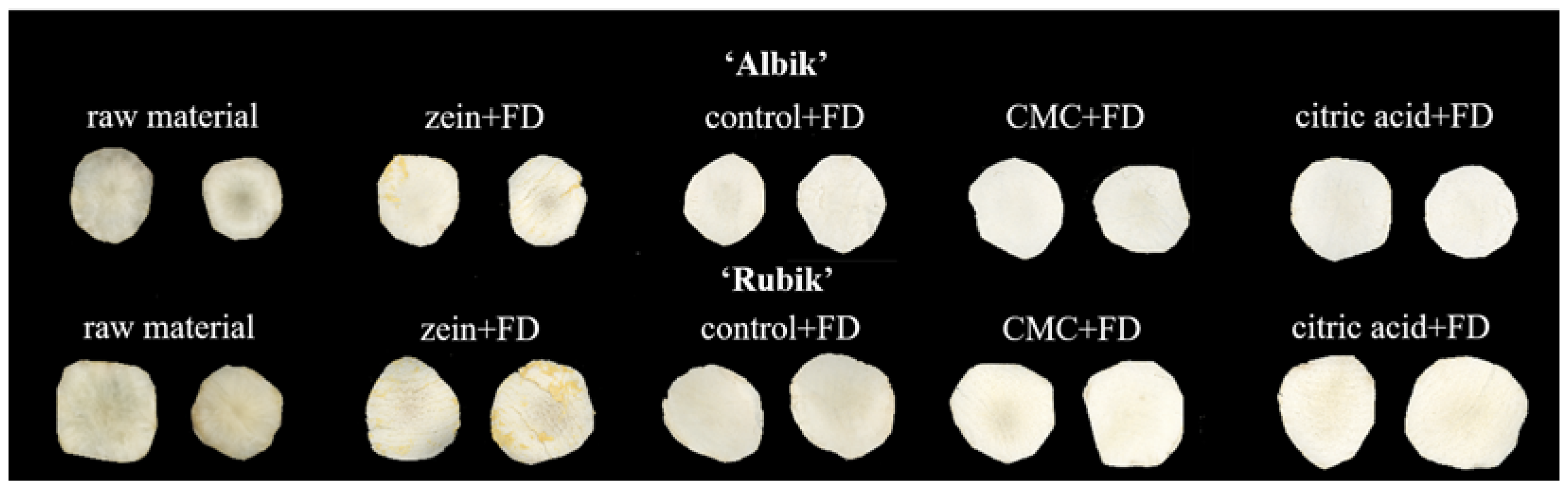
Both fresh and freeze-dried (without coating, with edible coating using zein, CMC, or citric acid) Jerusalem artichoke slices were scanned using a flatbed scanner (Epson Perfection, Epson, Suwa, Nagano, Japan) for extracting texture features. The imaging process was performed on a black background. Image acquisition was carried out in 50 repetitions for each combination. The exemplary images are presented in Figure 1. The resulting images were stored in BMP file format, enabling subsequent processing with MaZda software version 4.7 (Łódź University of Technology, Institute of Electronics, Łódź, Poland) [44,45,46]. The images were first converted to multiple color channels: R, G, B, L, a, b, X, Y, and Z. The black background facilitated segmenting the images based on brightness levels and isolating each Jerusalem artichoke slice as a distinct region of interest (ROI). For each ROI, 181 texture features were extracted across the nine color channels, employing methods such as the run length matrix, histogram analysis, co-occurrence matrix, gradient maps, Haar wavelet transforms, and autoregressive modeling, resulting in a total of 1.629 texture descriptors.

2.6. Statistical Analysis

2.6.1. Chemical Analysis

Statistical analysis of L-ascorbic acid and polyphenols was performed using STATISTICA v.13 software (StatSoft, Tulsa, OK, USA; Dell Inc., Round Rock, TX, USA) as a one-way analysis of variance for fresh tubers and Jerusalem artichoke slices treated with edible coatings, separately for each cultivar. Significant differences between means were determined at p = 0.05 based on Tukey’s HSD test. Results are presented as means of two replicates.

2.6.2. Image Texture

Pairwise mean comparisons of image textures of Jerusalem artichoke samples were performed using STATISTICA 13.3 (TIBCO Software Inc., Palo Alto, CA, USA). The variance’s homogeneity and distribution’s normality were checked, and Tukey’s test at a significance level of p < 0.05 was used for the analysis. Tukey’s test was applied separately for textures RHMean, GHMean, BHMean, LHMean, aHMean, XHMean, YHMean, and ZHMean to compare differences between analyzed Jerusalem artichoke samples.

2.6.3. Jerusalem artichoke Slice Classification

Machine learning algorithms were applied to assess the impact of freeze-drying and edible coating on the image characteristics of Jerusalem artichoke slices. Separate predictive models were created for ‘Albik’ and ‘Rubik’ cultivars. The models were built based on selected image textures. From an initial set of 1.629 texture attributes, feature selection was performed using the best-first algorithm. This stage was carried out to decrease the input data. Only selected image textures with the highest discriminative power were used in the subsequent stage to build discriminative models. Model development was carried out in MATLAB R2024a (MathWorks, Inc., Natick, MA, USA), employing a 10-fold cross-validation approach. Various classification algorithms were tested, including support vector machine (SVM), neural networks, naive Bayes, K-nearest neighbor (KNN), discriminant analysis, ensemble methods, and decision trees. The models achieving the highest classification accuracy were chosen for final analysis. Model evaluation included metrics, such as overall accuracy and confusion matrices.

2.6.4. Sensory Quality

Principal component analysis (PCA) was used for multidimensional analysis and visualization of the relationships between the sensory attributes evaluated and the samples tested. This method allows for a reduction in the number of variables while retaining as much of the total data variability as possible, which is particularly important in profile analysis (QDA) involving multiple sensory descriptors evaluated on the same scale. The analysis was performed on a correlation matrix, which allowed for the standardization of variables and a comparable assessment of the contribution of individual sensory attributes, regardless of their variance. PCA enabled the identification of the main directions of data variability and the assessment of the relationship between sensory attributes and the tested samples. The results were presented in the form of two-dimensional graphs (biplots), facilitating the interpretation of sensory profiles. The results of sensory evaluations were analyzed, taking into account the following factors of variability: evaluation sessions, evaluators, and tested samples. The calculations were performed using the STA-TISTICA 13 statistical package (Dell Inc., Round Rock, TX, USA).

3. Results

3.1. Results of Chemical Analysis

3.1.1. Sugar Analysis

The fresh Jerusalem artichoke tubers of the ‘Albik’ and ‘Rubik’ cultivars, as well as freeze-dried slices (control and edible-coated) were analyzed for sugar and inulin content (Table 1), by means of HPLC-RID. The results showed interesting differences in the sugar and inulin content of freeze-dried slices, which were found to be statistically significant. The predominant sugar found was inulin, as widely reported in the literature. Inulin was found to be between 58% and 61% by dry weight in the freeze-dried samples, between 86% and 88% of total sugars. Levels were found to be slightly lower in the fresh samples—44% and 45% dry weight basis for ‘Rubik’ and ‘Albik’ cultivars, respectively. For the ‘Rubik’ cultivar, the differences in inulin concentrations across all samples were not found to be statistically significant. In this, we can surmise that the edible coatings and citric acid treatment had no impact on inulin content compared with the control. For the ‘Albik’ cultivar, the differences in inulin values were determined to be statistically significant only between the fresh sample and the freeze-dried samples. ‘Albik’ treated with citric acid was found to have the highest concentration of inulin (60.9 g 100 g−1), while ‘Albik’ coated with zein was found to have the lowest content of inulin (57.5 g 100 g−1), 94% of that of the citric acid treated group. Thus, the edible coatings in both ‘Albik’ and ‘Rubik’ cultivars had no impact on the inulin content of the freeze-dried samples.
Among the mono- and disaccharides, sucrose was the predominant sugar in both cultivars, accounting for between 88 and 93% of total sugars and 11 and 13% of total sugars by dry weight basis. For both cultivars, the differences in sucrose content were found to be statistically significant. The ‘Albik’ freeze-dried samples and the fresh one were found to have the lowest concentration of sucrose (64.8 g kg−1 dry mass basis), while the CMC-coated sample was found to contain 93.3 g kg−1 by dry mass. Glucose was found in very small amounts (<0.1% of fresh weight), only in fresh, in good agreement with the literature [47].
Fructose was found in all samples and differences between the cultivar groups were found to be statistically significant. In all cases, amounts of fructose were found in small amounts (0.04–0.12% of total sugars), with a total percentage by dry weight basis of 0.3–1.2%. For the ‘Albik’ cultivar, the fresh material was found to have the lowest concentration of fructose (2.61 g kg−1), while ‘Albik’ treated with citric acid (10.73 g kg−1) and coated with zein (9.55 g kg−1) were found to have the highest concentrations. The fresh tubers were also found to have the lowest fructose concentration in the ‘Rubik’ cultivar (7.09 g kg−1), while ‘Rubik’ coated in CMC was found to have the highest concentration (12.00 g kg−1).

3.1.2. Results L-Ascorbic Acid

There are no data in the literature regarding the effect of edible coatings on the retention of chemical components in freeze-dried Jerusalem artichoke slices. Our research showed that the Jerusalem artichoke cultivars studied differed significantly in the content of individual components depending on the coating used.
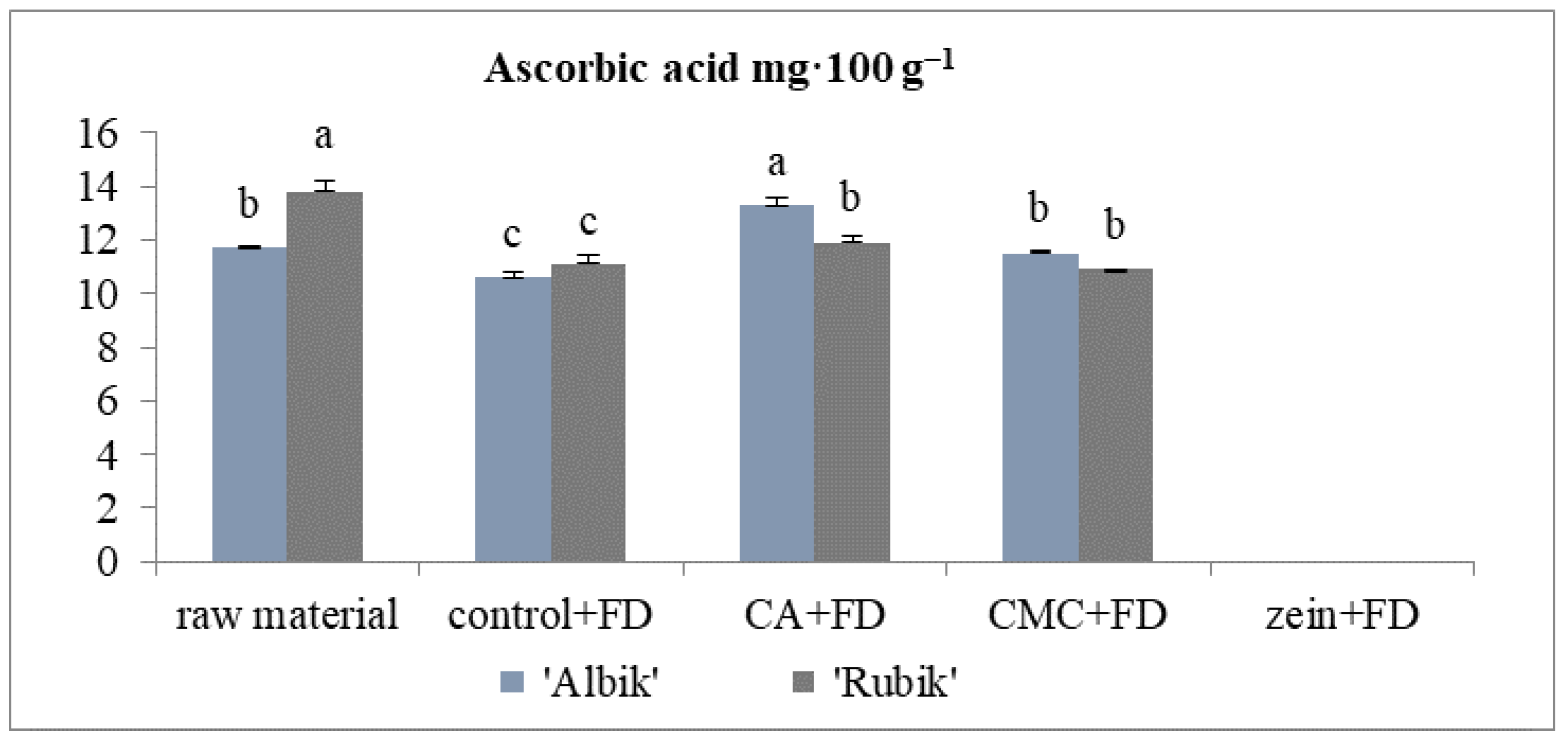
The results of L-ascorbic acid content in Jerusalem artichoke cultivars ‘Albik’ and ‘Rubik’ slices treated with edible coatings are shown in Figure 2. The average L-ascorbic acid content in the tested Jerusalem artichoke cultivars was: 11.7 mg·100 g−1 DM (‘Albik’); 13.8 mg·100 g−1 DM (‘Rubik’), respectively. After freeze-drying, a significant decrease in L-ascorbic acid content was observed in Jerusalem artichoke slices by approximately ~10% for the ‘Albik’ cultivar and ~20% for the ‘Rubik’ cultivar, compared with fresh material. In our study, treating Jerusalem artichoke slices with edible coatings (CMC) and CA had a positive effect on inhibiting the loss of L-ascorbic acid content after the freeze-drying process compared with slices in the control sample. The higher L-ascorbic acid content was observed in both cultivars, although, in the case of the ‘Rubik’ cultivar, these changes were not statistically significant. In these studies, the use of a protein coating (zein) on freeze-dried Jerusalem artichoke slices degraded the L-ascorbic acid content (Figure 2).

3.1.3. Results of Phenolic Compounds

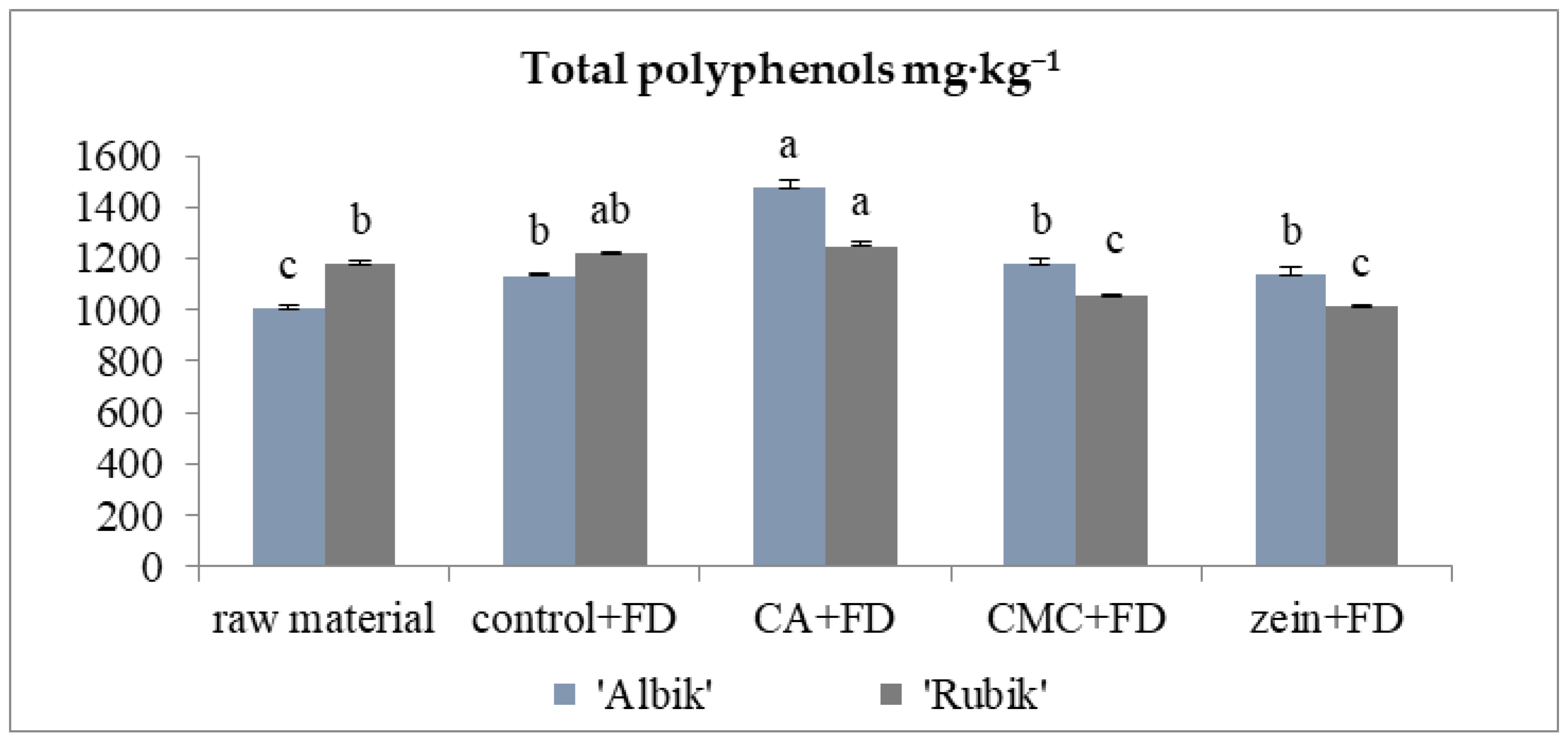
In our study, the content of phenolic compounds in fresh tubers of the tested cultivars ‘Albik’ and ‘Rubik’ was, respectively, 1003 mg·100 g−1 DM; 1177 mg·100 g−1 DM (Figure 3). After the freeze-drying process, a higher content of these compounds was observed by approximately ~13% (‘Albik’) and ~3.3% (‘Rubik’). Treatment of Jerusalem artichoke slices of the ‘Albik’ cultivar with edible coatings (CMC, zein and CA) before freeze-drying resulted in an increase in the content of polyphenolic compounds. In the case of the ‘Albik’ cultivar, a significant increase in the content of these compounds was observed, in relation to fresh and freeze-dried Jerusalem artichoke slices. In the case of the ‘Rubik’ cultivar, a significant increase in the content of these compounds was observed only after treating Jerusalem artichoke slices with CA. The content of phenolic compounds in Jerusalem artichoke with CMC and zein coating was significantly lower than in the fresh material and the freeze-dried control sample.

3.1.4. Results of Sensory Analysis

To assess sensory differences among the samples, a principal component analysis (PCA) was performed. PCA is a dimensionality reduction method that transforms the original variables (sensory attributes) into new, uncorrelated variable principal components. This analysis enables the identification of key sensory attributes differentiating the samples, as well as the grouping of samples based on similarities and differences in their sensory profiles.
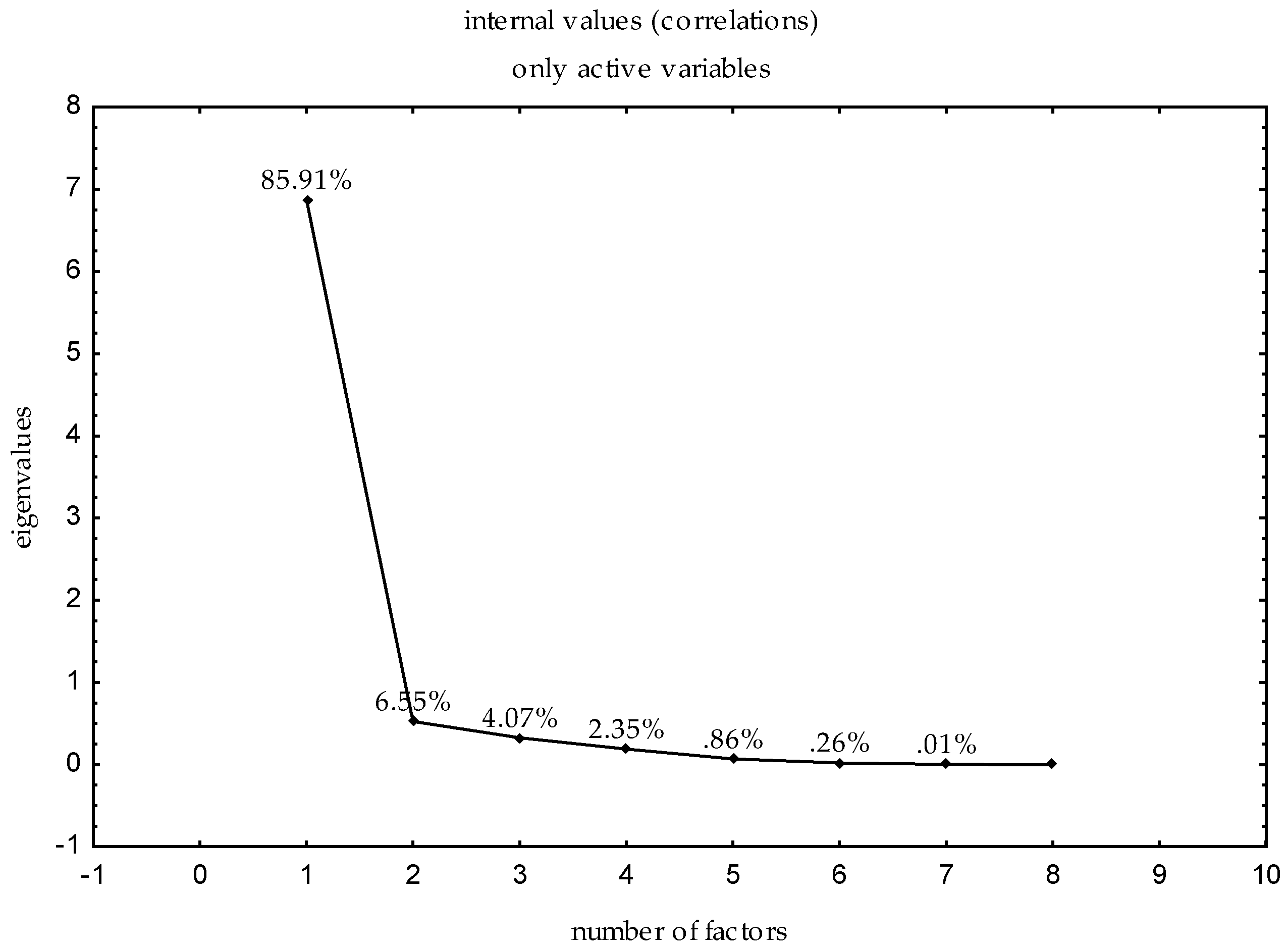
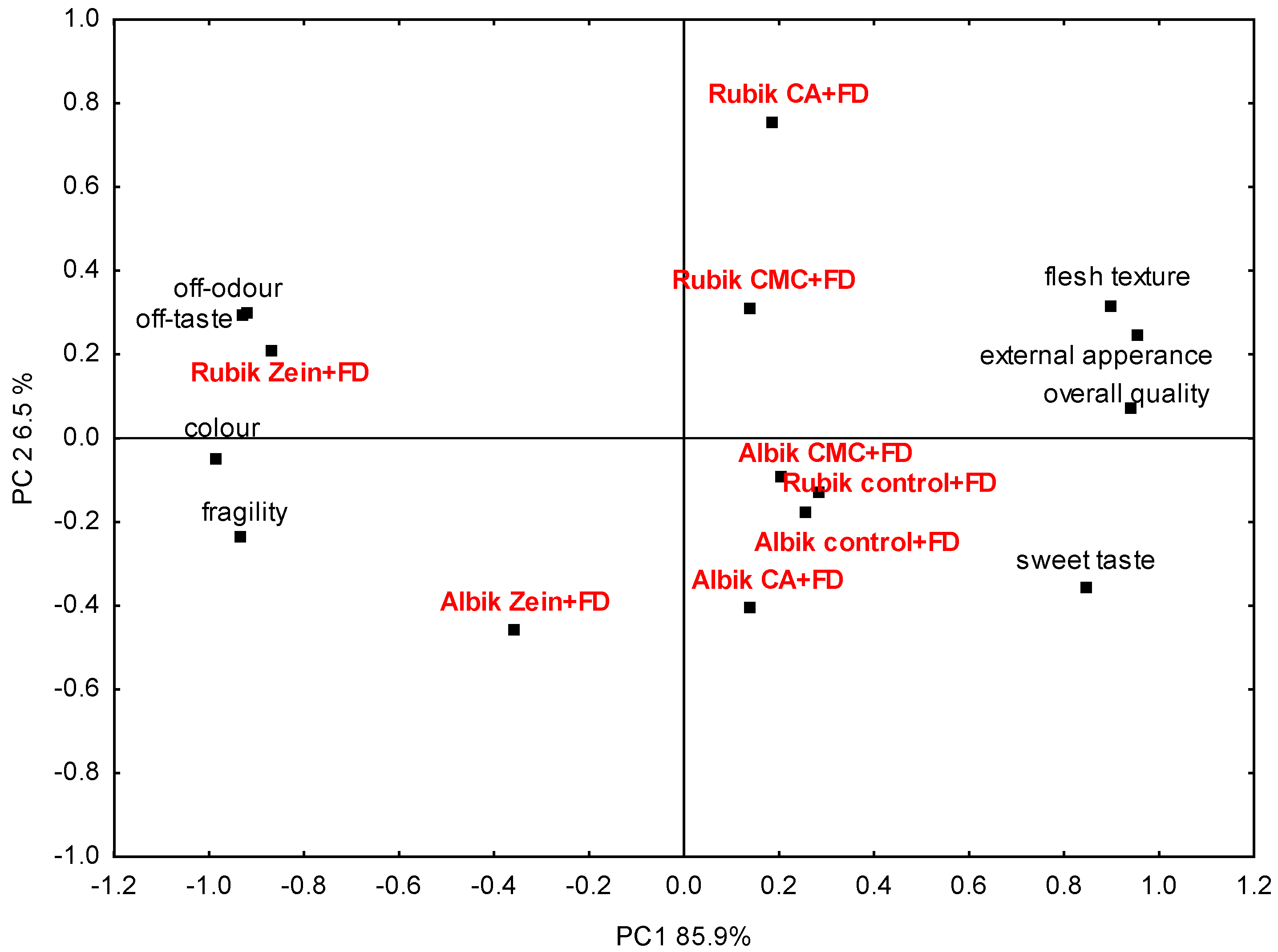
The sensory space was defined by the first two principal components, which together explained 92.4% of the total variance, indicating that the projection retained nearly all relevant information. The diagram shows a scree plot obtained as a result of principal component analysis (PCA), which illustrates the contribution of individual components, explaining the total variability of the sensory data. The horizontal axis (X) shows successive principal components, while the vertical axis (Y) shows the percentage of variance explained by each of them (Figure 4).
The analysis of the correlation between variables (quality descriptors) and factors confirms that the two-dimensional PCA space (PC1 and PC2) is sufficient to describe the sensory data. The first component is clearly dominant and accounts for most of the data variability. Very high positive loads are observed for characteristics such as external appearance (0.96), flesh texture (0.90), sweet taste (0.85), and overall quality (0.94). At the same time, high negative correlations occur for off-odor (−0.92), color (−0.98), fragility (−0.93), and off-taste (−0.93). This means that PC1 describes the overall sensory quality of the product, contrasting desirable characteristics (good appearance, proper texture, sweet taste, high overall quality) with undesirable characteristics (off-odor, off-taste, fragility, unacceptable color). This component can be interpreted as the main indicator of sensory acceptability. The second component shows a much smaller but still significant contribution explaining the variability. The highest positive loadings are for flesh texture (0.32), off-odor (0.31), and off-taste (0.29), while negative values are observed for sweet taste (−0.34) and fragility (−0.24). PC2 can be interpreted as a dimension that differentiates samples in terms of the balance between desirable sweetness and the presence of undesirable taste and odor sensations and textural characteristics. The remaining components contribute little information and are not critical for the interpretation of sensory analysis results (Table 2).
Analysis of the PCA biplot for the sensory quality of Jerusalem artichoke samples showed that the application of edible coatings and citric acid had a greater influence on sample differentiation (distribution across all four quadrants) than cultivar differences. Overall quality was positively associated with texture-related descriptors, namely external appearance and flesh texture (vectors oriented in the same direction along PC1). Samples (‘Albik’ CMC + FD; ‘Rubik’ CMC + FD; ‘Albik’ control + FD and ‘Rubik’ control + FD) located near the vectors representing overall quality, sweet taste, flesh texture, and external appearance were characterized by the highest sensory quality. Freeze-dried Jerusalem artichoke samples coated with the polysaccharide CMC (both cultivars) exhibited a highly attractive appearance, delicate and crisp texture, and received the highest scores for overall quality compared with the other treatments. Descriptors located opposite the overall quality vector in the PCA space corresponded to color, fragility, and off-taste and off-odor. Jerusalem artichoke samples of both ‘Albik’ and ‘Rubik’ coated with zein solution clustered near these descriptors and showed the lowest sensory quality. Panelists reported an intense off-taste and off-odor in these samples, resulting from the zein coating, which retained a characteristic corn-like smell and taste. Freeze-dried zein-coated samples of both cultivars were a notably darker color and exhibited a very hard, cardboard like texture, markedly different from the CMC-treated and control samples (Figure 5).

3.1.5. Results of Image Texture Analysis

The means of selected image texture parameter HMean for different color channels extracted from different samples of the ‘Albik’ Jerusalem artichoke, including raw material and freeze-dried (FD) samples treated with various edible coatings, such as zein, CMC, and citric acid solutions, were compared (Table 3). The raw material was characterized by the statistically significantly lowest values of HMean texture across all analyzed channels. All texture parameter values were higher for freeze-dried samples compared with the raw sample and were different depending on edible coating, indicating changes in texture features due to the drying and pretreatment process. The freeze-dried sample with citric acid generally exhibited the highest texture values, suggesting that this treatment has the most significant effect on image texture.
Table 4 summarizes the image texture means of the Jerusalem artichoke samples belonging to the cultivar ‘Rubik’. Generally, freeze-dried samples, without and with edible coating, had higher values of texture parameters compared with the raw material. In most cases, differences were statistically significant. Only for the BHMean texture, ‘Rubik’ slices of raw material were in the same homogeneous group as slices treated with zein solution and freeze-dried. This suggests that freeze-drying, regardless of treatment, significantly affects the texture characteristics of Jerusalem artichoke slices. However, treatment with zein solution and freeze-drying resulted in obtaining the most similar samples to the raw material.
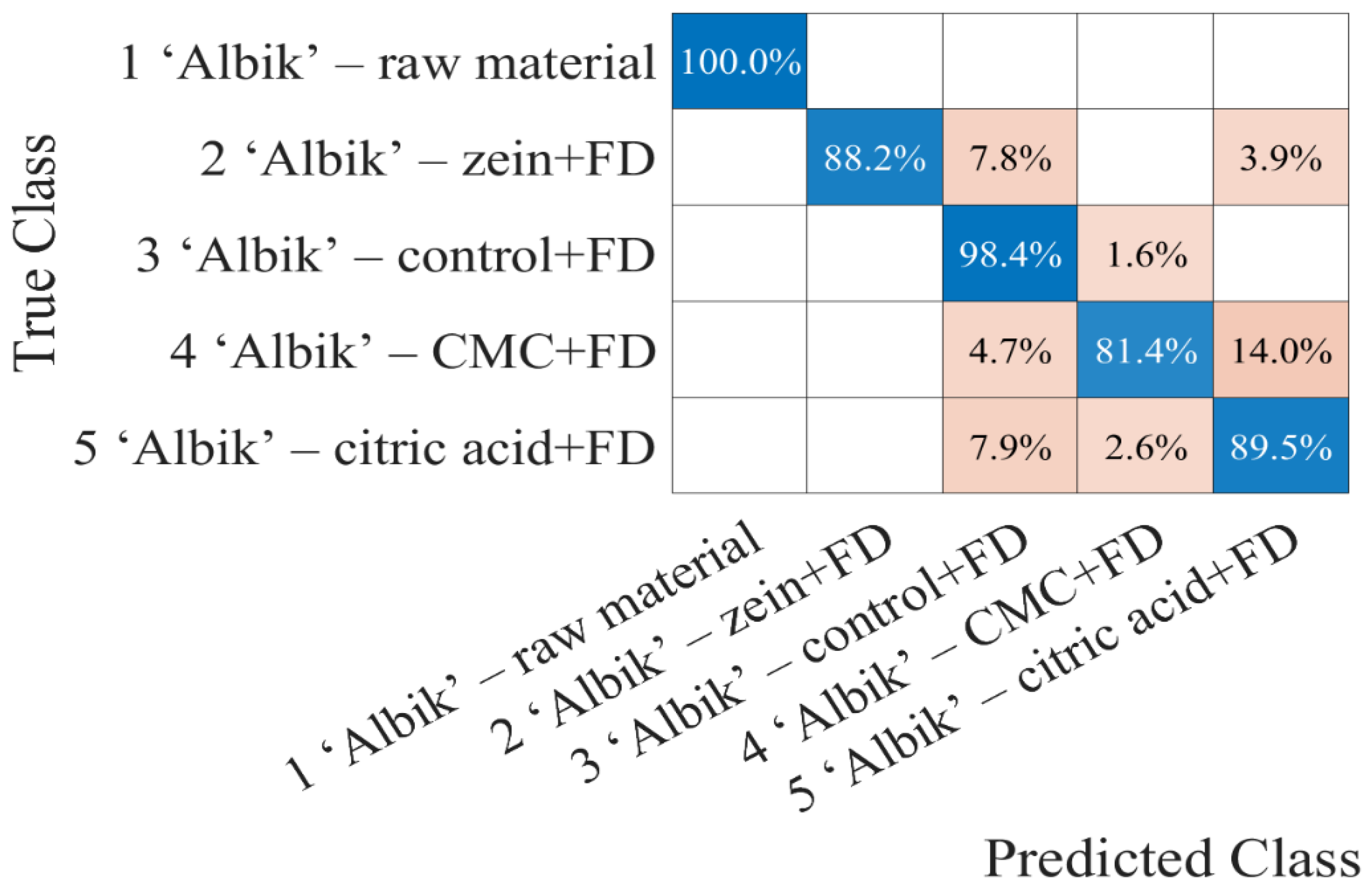
Image textures were used to develop models to classify Jerusalem artichoke slices belonging to raw material, the freeze-dried sample without coating, and freeze-dried samples treated previously with zein, CMC (carboxymethylcellulose), or citric acid edible coating solutions. For the ‘Albik’ cultivar, the most successful model was built using the quadratic SVM algorithm. It classified slice samples with an average accuracy reaching 91.5% (Figure 6). Slices of raw material were completely different in the selected image textures used to build a model and were distinguished from other samples with 100.0% accuracy. The lowest accuracy of 81.4% was obtained for the sample prepared using edible coating—CMC combined with freeze-drying.
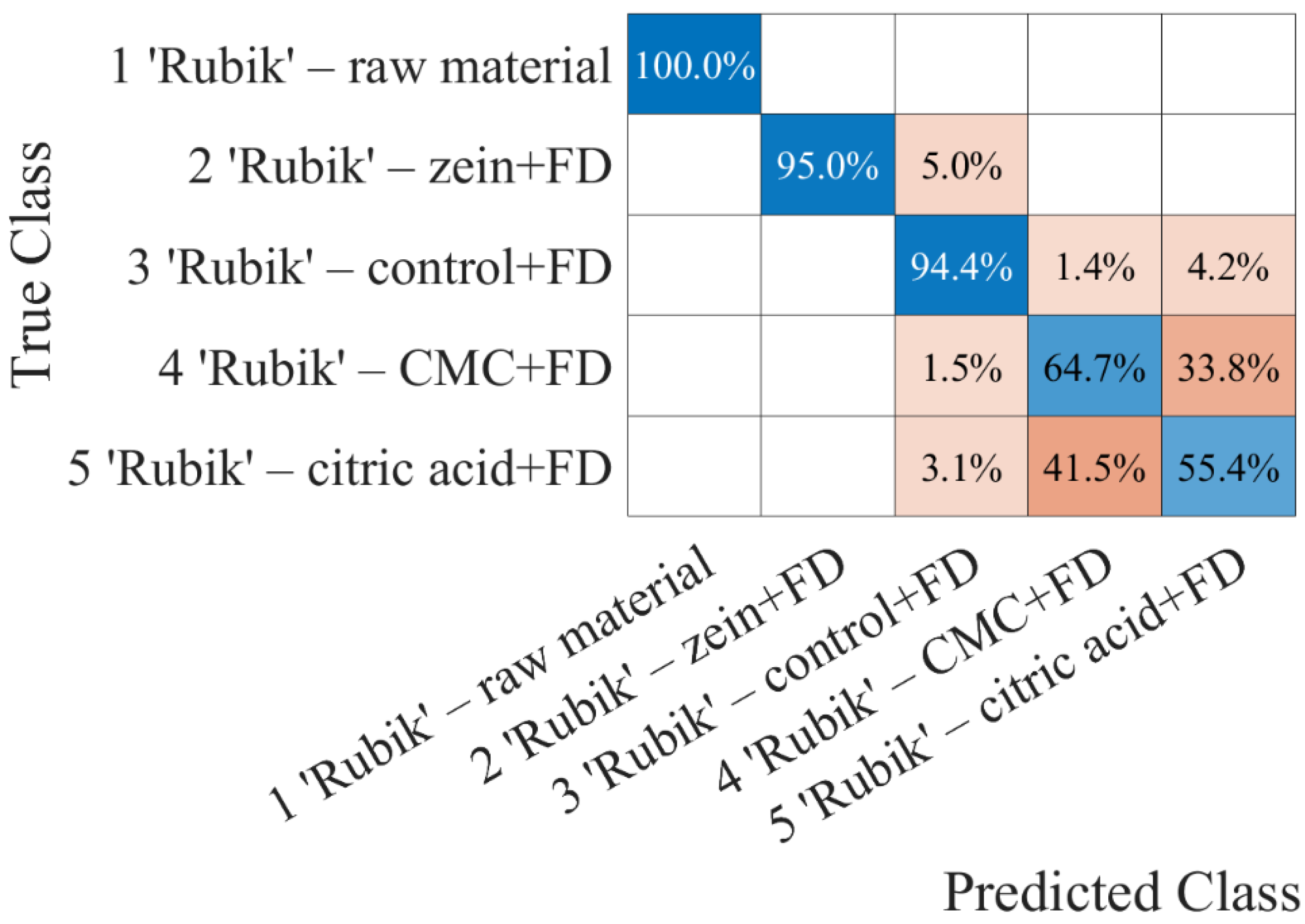
In the case of ‘Rubik’ Jerusalem artichoke, the average accuracy of the classification of slice samples was up to 81.9% for a model built using the linear SVM algorithm (Figure 7). Jerusalem artichoke raw slices were distinguished from all freeze-dried samples, without and with edible coating, with an accuracy of 100%, whereas samples treated with citric acid and CMC and then freeze-dried were classified with very low accuracies, 55.4% and 64.7%, respectively. These samples were also the most similar to each other, which was reflected in the highest percentages of misclassified cases.

4. Discussion

The obtained results revealed an interesting difference in inulin content between the fresh samples and the freeze-dried samples. Fresh samples in both ‘Rubik’ and ‘Albik’ cultivars were lower in inulin than the freeze-dried samples (23% lower for both cultivars before freeze-drying compared with the corresponding freeze-dried control). The results show that the extraction of inulin after freeze-drying treatment is higher than that of fresh material. Our values (Table 1) of 44–45 g 100 g−1 DM and 58–61% g 100 g−1 DM inulin content for fresh and freeze-drying samples, respectively, are both higher than those reported by others in the literature [48,49]. However, in both cases, the samples had different drying protocols to ours (oven dried at 80 °C for 24 h [48] and 60 °C for 12 h [49]). It has been shown that inulin is thermally unstable via glycosidic hydrolysis [50], and it is supposed that the process of lyophilization eliminates the thermal glycosidic hydrolysis of inulin, resulting in higher levels of inulin compared with the thermally dried samples. Brkljača et al. 2014 [39] reported an inulin content between 8 and 13% by fresh weight basis (12 accessions) using the direct detection of inulin by HPLC, utilizing light scattering detection, and Matias et al. 2011 [47] reported an inulin content of 14–17% by fresh weight basis (cultivar undisclosed), utilizing LC-MS. These analytical methodologies are very close to ours, and the analyses were performed on fresh tubers that were not exposed to a drying step. Our values are in very good agreement with those of Brkljača et al. [39] and Matias et al. [47]. Given the good agreement in inulin content between our analysis and that of Brkljača et al. [39] and Matias et al. [47], these correlations may add weight to the hypothesis that drying by lyophilization may cause less degradation of inulin than at elevated temperatures. It should be emphasized that the application of coatings had no significant effect on the inulin content in freeze-dried Jerusalem artichoke slices.
Compared to Danilchenko et al. [51], who found a sucrose content at 5% (cultivar Swojecki), and Matias et al. [47], who found a sucrose content at 1% (cultivar undisclosed) by fresh mass basis, our results of 1.6–2.1% are comparable.
Leroy et al. [52] found fructose at a 0.1% dry weight basis, comparable to our values of 0.3–1.2%, while Matias et al. [47] found fructose at 0.9% fresh weight basis, comparable to our values of 0.1–0.3%.
The content of antioxidant compounds, such as vitamin C and polyphenols, in plant materials is desirable because products containing them can be considered health-promoting. The content of vitamin C and phenolic compounds in Jerusalem artichoke tubers varies and depends on the variety, stage of maturity, agrotechnical and climatic conditions, and storage [48,53,54,55]. The obtained results, especially those regarding the increase in polyphenolic compound content in Jerusalem artichoke slices after freeze-drying, are not easy to explain and therefore require further research. Changes in the content of chemical components may be related to complex physicochemical and biological reactions that occur during the freeze-drying process Maillard reaction products may have formed during freeze-drying, potentially leading to an overestimated phenolic compound content using the Folin–Ciocalteu method. These changes may also be caused by changes in the volume of the freeze-dried material and a decrease due to the loss of osmotic pressure caused by the evaporation of internal moisture, which was also observed in our study. Furthermore, tissue shrinkage also occurs in plant material, which is associated with the loss of vacuolar pressure and cell wall damage, which can lead to changes in the texture of plant products and changes in nutrient content [56,57].
The obtained results showed that the coatings used had a significant effect on the ascorbic acid (Figure 2) and total polyphenol content (Figure 3) of freeze-dried Jerusalem artichoke slices. The treatment of Jerusalem artichoke slices with citric acid (CA) had the greatest effect on the preservation of L-ascorbic acid and total polyphenols. Applying a citric acid coating immediately after peeling or cutting can stabilize L-ascorbic acid content, may contribute to its stabilization in the plant material, and protect against degradation, as observed in our studies. Although citric acid is not an antioxidant, its presence in the environment helps preserve other antioxidants, including ascorbic acid. Citric acid also inhibits enzymes that degrade vitamin C and may reduce browning reactions associated with vitamin C loss [58]. It also has chelating properties that limit the oxidation process leading to vitamin C degradation [59]. Furthermore, citric acid lowers environmental pH, cell membrane permeability, and disrupts transport, anion accumulation, or lowers internal cellular pH [60]. Research by Marghmaleki et al. 2021 [59] showed that fruits coated with citric acid retain higher levels of vitamin C for longer periods compared with uncoated controls, extending shelf life. In turn, a CMC coating helps preserve vitamin C by creating a barrier that reduces exposure to oxygen, slowing the oxidation and degradation of ascorbic acid. It may also limit the weight loss of plant material and inhibit enzymes that contribute to the loss of this nutrient. When combined with other compounds, such as citric acid, calcium chloride, or ascorbic acid, its ability to preserve vitamin C is further enhanced [61,62], as observed in studies by Saba and Sogvar [61]. This is probably why, in our study, the better preservation of L-ascorbic acid was observed after the application of a citric acid and CMC coating. The higher content of total polyphenols after the application of citric acid coating to plant material may be related to their better availability from fruits and vegetables by supporting their solubility and preventing their degradation [63], which was also observed in our studies. Furthermore, citric acid may aid in their preservation by inhibiting the action of certain enzymes, such as polyphenol oxidase, thereby increasing their total content. It also acts as an antioxidant synergist and protects polyphenols from oxidation. Citric acid can stabilize the polyphenol content in plant material, even when combined with other methods or coatings, and may lead to increased antioxidant activity in the final product [63,64,65].
According to the literature, principal component analysis is a commonly used technique to reduce the dimensions of complex sensory data and facilitate the interpretation of the relationship between organoleptic characteristics and the technologies used [66].
The results of the PCA analysis (Figure 5) confirm that the use of edible coatings (CMC and zein) and CA prior to freeze-drying had a significant effect on the sensory profile of Jerusalem artichoke samples. Polysaccharide and protein coatings are currently an important area of scientific research as an effective strategy for reducing transpiration, slowing down oxidation processes and stabilizing the surface of plant raw materials during the drying process. The latest scientific publications show that properly designed biopolymer coatings can improve bioactive ingredients retention (e.g., vitamins and phenolic compounds), reduce discoloration and have a positive effect on the sensory parameters of products subjected to freeze-drying [67,68]. In the case of Jerusalem artichoke (Helianthus tuberosus L.), coatings based on carboxymethylcellulose (CMC) and corn protein (zein) have a functionally justified application. CMC, as a hydrophilic biopolymer with good film-forming properties, forms semipermeable films that directly limit the process of transpiration from the surface of plant tissue, facilitate the control of gas exchange, which translates into a reduction in weight loss, and prevents color changes during the freeze-drying process [69]. Studies conducted on apple slices and other plant materials have shown that CMC-based coatings can modify the drying kinetics and color parameters of the product [70]. Some studies reported only a slight effect on selected sensory characteristics, such as texture, while other studies indicated a reduction in color changes, especially in the case of prior osmotic treatment [69,70]. In summary, CMC forms hydrophilic coatings, which may affect the rehydration process and the final texture of the product after freeze-drying. However, the scale of these effects is strongly dependent on the thickness of the coating, its homogeneity and the specific interactions between the biopolymer and the structural properties of the raw material [70]. Zein, on the other hand, thanks to its relative hydrophobicity and good ability to form continuous films, reduces the penetration of oxygen and water vapor, helping to protect the structure of plant tissue and reducing the intensity of oxidative processes after drying [71]. In this study, Jerusalem artichokes coated with zein were characterized by a high intensity of flavor and aroma that was not very acceptable to the sensory panel. These results are consistent with reports in the literature [72], emphasizing that certain components of edible coatings can affect the aroma and flavor profile not only of plant products but also of meat, leading to modifications in aroma intensity or the appearance of unacceptable foreign odors. The mechanism of these changes may be related, among other things, to the volatile properties of the coating components, their ability to bind or release aromatic compounds, and possible chemical reactions occurring on the surface of the raw material during drying [72].

5. Conclusions

This study provides a comprehensive evaluation of the effects of edible coatings such as zein, carboxymethylcellulose (CMC), and citric acid (CA) on the quality of freeze-dried Jerusalem artichoke (Helianthus tuberosus L.) slices from ‘Albik’ and ‘Rubik’ cultivars. Freeze-drying enhanced inulin extraction efficiency compared with fresh samples, exceeding values reported for thermal drying and highlighting its advantage as a dehydration method. CMC and CA coatings effectively minimized L-ascorbic acid losses, improved polyphenol retention, and enhanced sensory attributes such as texture, appearance, and overall acceptability, demonstrating strong potential for practical application in functional food production. Zein preserved structural features similar to raw material but negatively affected sensory quality, limiting its practical use. Image texture analysis revealed elevated HMean values in coated samples, with CA inducing the most pronounced structural changes. Machine learning classification (SVM) accurately distinguished raw and treated samples (91.5% for ‘Albik’, 81.9% for ‘Rubik’), highlighting the discriminative impact of coatings. These findings indicate that polysaccharide- and acid-based solutions, when combined with freeze-drying, optimize bioactive compound preservation, sensory quality, and product differentiation, supporting their application in high-value, health-promoting food products.

Author Contributions

Conceptualization, A.W.; methodology, A.W., J.S.-G., E.R., N.J.D., J.A.Z. and M.M.-F.; software, A.W., J.S.-G., E.R., N.J.D., J.A.Z. and M.M.-F.; validation, A.W., J.S.-G., E.R., N.J.D. and M.M.-F.; formal analysis, A.W., J.S.-G., E.R. and N.J.D.; investigation, A.W., J.S.-G., E.R., N.J.D., J.A.Z. and M.M.-F.; resources, M.S., A.S.H. and A.S.; data curation, A.W., J.S.-G., E.R. and N.J.D.; writing—original draft preparation, A.W., J.S.-G., E.R., N.J.D. and J.A.Z.; writing—review and editing, A.W., J.S.-G., E.R., N.J.D., J.A.Z. and M.M.-F.; visualization, A.W., J.S.-G., E.R., N.J.D., J.A.Z. and M.M.-F.; supervision, A.W. and M.M.-F.; project administration, A.W.; funding acquisition, M.M.-F. All authors have read and agreed to the published version of the manuscript.

Funding

This research was funded by the Polish Ministry of Science and Higher Education, grant number 5.9.22 “The use of edible coatings and nanoemulsions to maintain quality and microbiological purity and extend the shelf life of whole and cut fruit and vegetables”.

Institutional Review Board Statement

Not applicable.

Informed Consent Statement

Not applicable.

Data Availability Statement

Data supporting the results presented in this publication are available upon request from the corresponding author.

Conflicts of Interest

The authors declare no conflicts of interest.

References

  1. Stachowiak, B.; Nowak, J.; Górna, B.; Szambelan, K. Topinambur—Roślina o szerokim zastosowaniu. Zagadnienia Doradz. Rol. 2023, 2, 54–66. [Google Scholar]
  2. Lv, S.Q.; Wang, R.X.; Xiao, Y.M.; Li, F.C.; Mu, Y.W.; Lu, Y.; Gao, W.T.; Yang, B.; Kou, Y.X.; Zeng, J.; et al. Growth, yield formation, and inulin performance of a non-food energy crop, Jerusalem artichoke (Helianthus tuberosus L.), in a semiarid area of China. Ind. Crops Prod. 2019, 134, 71–79. [Google Scholar] [CrossRef]
  3. Mu, Y.; Zhang, B.; Lv, S.; Li, F.; Zhao, C. The Role of Inulin in Maintaining Antioxidant Capacity and Enzymatic Activities of Jerusalem artichoke (Helianthus tuberosus L.) Cultivars During Cold Storage. Antioxidants 2025, 14, 1109. [Google Scholar] [CrossRef] [PubMed]
  4. Skiba, D.; Sawicka, B. Wpływ właściwości genetycznych na zawartość wybranych składników mineralnych w bulwach Helianthus tuberosus L. Herbalism 2016, 2, 128–137. [Google Scholar] [CrossRef]
  5. Biel, W.; Witkowicz, R.; Piątkowska, E.; Podsiadło, C. Proximatecomosition, minerals and antioxidant activity of artichoke leaf extracts. Biol. Trace Elem. Res. 2020, 194, 589–595. [Google Scholar] [CrossRef]
  6. Sawicka, B.; Bienia, B.; Krochmal-Marczak, B. Pro-Health Importance of Jerusalem artichoke [Helianthus tuberosus]. In Ziołolecznictwo, Biokosmetyki i Żywność Funkcjonalna; Wawer, I., Trziszka, T., Eds.; PWSZ Krosno: Krosno, Poland, 2013; pp. 363–380. [Google Scholar]
  7. Rubel, A.; Iraporda, C.; Novosad, R.; Cabrera, F.A.; Genovese, D.B.; Manrique, G.D. Inulin rich carbohydrates extraction from Jerusalem artichoke (Helianthus tuberosus L.) tuber and application of different drying methods. Food Res. Int. 2018, 103, 226–233. [Google Scholar] [CrossRef]
  8. Mendez-Yanez, A.; Ramos, P.; Morales-Quintana, L. Human health benefits through daily consumption of Jerusalem artichoke (Helianthus tuberosus L.) tubers. Horticulturae 2022, 8, 620. [Google Scholar] [CrossRef]
  9. Mystkowska, I.; Zarzecka, K.; Dadej, A.; Kosińska, B.; Ginter, A. Topinambur (Helianthus tuberosus L.) źródło substancji prozdrowotnych. Herbalism 2022, 1, 183–189. [Google Scholar] [CrossRef]
  10. Cieślik, E.; Gębusia, A. Topinambur (Helianthus tuberosus L.)—Bulwa o właściwościach prozdrowotnych. Postępy Nauk Rol. 2010, 3, 91–103. [Google Scholar]
  11. Gupta, D.; Chaturvedi, N. Prebiotic Potential of Underutilized Jerusalem artichoke in Human Health: A comprehensive review. Int. J. Environ. Agric. Biotechnol. 2020, 5, 97–103. [Google Scholar] [CrossRef]
  12. Qin, Y.Q.; Wang, L.Y.; Yang, X.Y.; Xu, Y.J.; Fan, G.; Fan, Y.G.; Ren, J.N.; An, Q.; Li, X. Inulin: Properties and Health Benefits. Food Funct. 2023, 14, 2948–2968. [Google Scholar] [CrossRef]
  13. Li, J.; Jia, S.; Yuan, C.; Yu, B.; Zhang, Z.; Zhao, M.; Liu, P.; Li, X.; Cui, B. Jerusalem artichoke inulin supplementation ameliorates hepatic lipid metabolism in type 2 diabetes mellitus mice by modulating the gut microbiota and fecal metabolome. Food Funct. 2022, 13, 11503–11517. [Google Scholar] [CrossRef] [PubMed]
  14. Gupta, D.; Chaturvedi, N. Comparative study on proximate and mineral composition of unprocessed and processed underutilized Jerusalem artichoke tuber flour. Int. J. Pharm. Sci. Res. 2020, 11, 4648–4654. [Google Scholar] [CrossRef]
  15. Wang, Z.; Ling, N.; Guo, C.; Tian, H.; Gao, M.; Li, W.; Ji, C. Deciphering Inulin from Jerusalem artichoke: Extraction, Structural Characteristics, Bioactivities, Structure-Activity Relationship, Modifications, Pharmacokinetics and Applications. Phytomedicine 2025, 147, 157219. [Google Scholar] [CrossRef]
  16. Mystkowska, J.; Zarzecka, K. Wartość odżywcza i prozdrowotna słonecznika bulwiastego (Helianthus tuberosus L.), Borgis. Postępy Fitoter. 2013, 2, 123–126. [Google Scholar]
  17. Szala-Rycaj, J.; Szewczyk, A.; Zagaja, M.; Kaczmarczyk-Ziemba, A.; Maj, M.; Andres-Mach, M. The Influence of Topinambur and Inulin Preventive Supplementation on Microbiota, Anxious Behavior, Cognitive Functions and Neurogenesis in Mice Exposed to the Chronic Unpredictable Mild Stress. Nutrients 2023, 15, 2041. [Google Scholar] [CrossRef]
  18. Difonzo, G.; de Gennaro, G.; Caponio, G.R.; Vacca, M.; dal Poggetto, G.; Allegretta, I.; Immirzi, B.; Pasqualone, A. Inulin from Globe Artichoke Roots: A Promising Ingredient for the Production of Functional Fresh Pasta. Foods 2022, 11, 3032. [Google Scholar] [CrossRef] [PubMed]
  19. Chauhan, D.S.; Vashisht, P.; Bebartta, R.P.; Thakur, D.; Chaudhary, V. Jerusalem artichoke: A comprehensive rewiev of nutritional composition, helath benefits and emerging trends in food applications. Compr. Rev. Food Sci. Food Saf. 2025, 24, e70114. [Google Scholar] [CrossRef]
  20. Diez, S.; Tarifa, M.C.; Salvatori, D.M.; Franceschinis, L. Functional Ingredients Based on Jerusalem artichoke: Technological Properties, Antioxidant Activity, and Prebiotic Capacity. Biol. Life Sci. Forum 2024, 40, 24. [Google Scholar] [CrossRef]
  21. Sawicka, B.; Skiba, D.; Pszczołkowski, P.; Aslan, I.; Sharifi-Rad, J.; Krochmal-Marczak, B. Jerusalem artichoke (Helianthus tuberosus L.) as a medicinal plant and its natural products. Cell. Mol. Biol. 2020, 66, 160–177. [Google Scholar] [CrossRef]
  22. Díaz, A.; Bomben, R.; Dini, C.; Viña, S.Z.; García, M.A.; Ponzi, M.; Comelli, N. Jerusalem artichoke tuber flour as a wheat flour substitute for biscuit elaboration. LWT-Food Sci. Technol. 2019, 108, 361–369. [Google Scholar] [CrossRef]
  23. Blancas-Benitez, F.J.; Montaño-Leyva, B.; Aguirre-Güitrón, L.; Moreno-Hernández, C.L.; Fonseca-Cantabrana, Á.; Romero-Islas, L.d.C.; González-Estrada, R.R. Impact of Edible Coatings on Quality of Fruits: A Review. Food Control 2022, 139, 109063. [Google Scholar] [CrossRef]
  24. Miranda, M.; Bai, J.; Pilon, L.; Torres, R.; Casals, C.; Solsona, C.; Teixidó, N. Fundamentals of Edible Coatings and Combination with Biocontrol Agents: A Strategy to Improve Postharvest Fruit Preservation. Foods 2024, 13, 2980. [Google Scholar] [CrossRef]
  25. Sharma, P.; Shehin, V.P.; Kaur, N.; Vyas, P. Application of Edible Coatings on Fresh and Minimally Processed Vegetables: A Review. Int. J. Veg. Sci. 2019, 25, 295–314. [Google Scholar] [CrossRef]
  26. Armghan Khalid, M.; Niaz, B.; Saeed, F.; Afzaal, M.; Islam, F.; Hussain, M.; Mahwish; Muhammad Salman Khalid, H.; Siddeeg, A.; Al-Farga, A. Edible Coatings for Enhancing Safety and Quality Attributes of Fresh Produce: A Comprehensive Review. Int. J. Food Prop. 2022, 25, 1817–1847. [Google Scholar] [CrossRef]
  27. Eshetu, A.; Ibrahim, A.M.; Forsido, S.F.; Kuyu, C.G. Effect of Beeswax and Chitosan Treatments on Quality and Shelf Life of Selected Mango (Mangifera indica L.) Cultivars. Heliyon 2019, 5, e01116. [Google Scholar] [CrossRef] [PubMed]
  28. Yanti, N.A.; Ahmad, S.W.; Ramadhan, L.O.A.N.; Walhidayah, T. Antimicrobial and Antioxidant Activity of Bacterial Cellulose-Based Edible Film from Sago Liquid Waste Incorporated with Spices. IOP Conf. Ser. Earth Environ. Sci. 2023, 1271, 012061. [Google Scholar] [CrossRef]
  29. Gammage, S.; Marangoni, A.G. Safety of edible coatings on fruits and vegetables. Compr. Rev. Food Sci. Food Saf. 2025, 24, e70108. [Google Scholar] [CrossRef] [PubMed]
  30. Mouzakitis, C.K.; Sereti, V.; Matsakidou, A.; Kotsiou, K.; Biliaderis, C.G.; Lazaridou, A. Physicochemical properties of zein-based edible films and coatings for extending wheat bread shelf life. Food Hydrocoll. 2022, 132, 107856. [Google Scholar] [CrossRef]
  31. Maria Leena, M.; Yoha, K.S.; Moses, J.A.; Anandharamakrishnan, C. Edible coating with resveratrol loaded electrospun zein nanofibers with enhanced bioaccessibility. Food Biosci. 2020, 36, 100669. [Google Scholar] [CrossRef]
  32. Moreno, M.A.; Vallejo, A.M.; Ballester, A.R.; Zampini, C.; Isla, M.I.; López-Rubio, A.; Fabra, M.J. Antifungal edible coatings containing Argentinian propolis extract and their application in raspberries. Food Hydrocoll. 2020, 107, 105973. [Google Scholar] [CrossRef]
  33. Pillai, A.R.S.; Eapen, A.S.; Zhang, W.; Roy, S. Polysaccharide-based edible biopolymer coatings for fruit preservation: A review. Foods 2024, 13, 1529. [Google Scholar] [CrossRef] [PubMed]
  34. Panahirad, S.; Naghshiband-Hassani, R.; Bergin, S.; Katam, R.; Mahna, N. Improvement of postharvest quality of plum (Prunus domestica L.) using polysaccharide-based edible coatings. Plants 2020, 9, 1148. [Google Scholar] [CrossRef] [PubMed]
  35. Arnold, M.; Gramza-Michalowska, A. Enzymatic browning in apple products and its inhibition treatments: A comprehensive review. Compr. Rev. Food Sci. Food Saf. 2022, 21, 5038–5076. [Google Scholar] [CrossRef]
  36. Bao, X.; Min, R.; Zhou, K.; Traffano-Schiffo, M.V.; Dong, Q.; Luo, W. Effects of vacuum drying assisted with condensation on drying characteristics and quality of apple slices. J. Food Eng. 2023, 340, 111286. [Google Scholar] [CrossRef]
  37. Nair, S.S.; Trafiałek, J.; Kolanowski, W. Edible packaging: A technological update for the sustainable future of the food industry. Appl. Sci. 2023, 13, 8234. [Google Scholar] [CrossRef]
  38. Malakar, S. Active edible coating combined with novel pre-treatment technique for drying of foods: Mechanistic insights, enhancing drying performance and product quality. Food Biosci. 2024, 60, 104527. [Google Scholar] [CrossRef]
  39. Brkljača, J.; Bodroža-Solarov, M.; Krulj, J.; Terzić, S.; Mikić, A.; Jeromela, A.M. Quantification of inulin content in selected accessions of Jerusalem artichoke (Helianthus tuberosus L.). Helia 2014, 37, 105–112. [Google Scholar] [CrossRef]
  40. Tsao, R.; Yang, R. Optimization of a new mobile phase to know the complex and real polyphenolic composition: Towards a Total Phenolic Index Using High-Performance Liquid Chromatography. J. Chromatogr. A 2003, 1018, 29–40. [Google Scholar] [CrossRef]
  41. EN ISO 13299:2016; Sensory Analysis—Methodology—General Guidance for Establishing a Sensory Profile. International Organization for Standardization: Geneva, Switzerland, 2016.
  42. PN ISO 8589:2010; General Guidance on the Design of Sensory Analysis Laboratories. Polish Committee for Standardization: Warsaw, Poland, 2010.
  43. PN ISO 8586-1:1986; Sensory Analysis—General Guidelines for the Selection, Training and Monitoring of Assessors. Polish Committee for Standardization: Warsaw, Poland, 1986.
  44. Szczypiński, P.M.; Strzelecki, M.; Materka, A. MaZda—A Software for Texture Analysis. In Proceedings of the International Symposium on Information Technology Convergence (ISITC 2007), Jeonju, Republic of Korea, 23–24 November 2007; pp. 245–249. [Google Scholar] [CrossRef]
  45. Szczypiński, P.M.; Strzelecki, M.; Materka, A.; Klepaczko, A. MaZda—A software package for image texture analysis. Comput. Methods Programs Biomed. 2009, 94, 66–76. [Google Scholar] [CrossRef]
  46. Strzelecki, M.; Szczypinski, P.; Materka, A.; Klepaczko, A.A. Software tool for automatic classification and segmentation of 2D/3D medical images. Nucl. Instrum. Methods Phys. Res. Sect. A Accel. Spectrometers Detect. Assoc. Equip. 2013, 702, 137–140. [Google Scholar] [CrossRef]
  47. Matías, J.; González, J.; Royano, L.; Barrena, R.A. Analysis of sugars by liquid chromatography-mass spectrometry in Jerusalem artichoke Tubers for bioethanol production optimization. Biomass Bioenergy 2011, 35, 2006–2012. [Google Scholar] [CrossRef]
  48. Danilcenko, H.; Jariene, E.; Slepetiene, A.; Sawicka, B.; Zaldariene, S. Distibution od biactive compounds in tuber of organically grown Jerusalem artichoke during the growing period. Acta Sci. Pol. Hortorum Cultus 2017, 16, 97–107. [Google Scholar] [CrossRef]
  49. Sennoi, R.; Puttha, R. Inulin content of Jerusalem artichoke (Helianthus tuberosus L.) tubers stored at 5 °C in a refrigerator for different durations. Aust. J. Crop Sci. 2021, 15, 1395–1398. [Google Scholar] [CrossRef]
  50. Böhm, A.; Kaiser, I.; Trebstein, A.; Henle, T. Heat-induced degradation of inulin. Eur. Food Res. Technol. 2005, 220, 466–471. [Google Scholar] [CrossRef]
  51. Danilcenko, H.; Jariene, E.; Aleknaviciene, P.; Gajewski, M. Quality of Jerusalem artichoke (Helianthus tuberosus L.) tubers in relation to storage conditions. Not. Bot. Hort. Agrobot. Cluj-Napoca 2008, 36, 23–27. [Google Scholar] [CrossRef]
  52. Leroy, G.; Grongnet, J.F.; Mabeau, S.; Corre, D.L.; Baty-Julien, C. Changes in inulin and soluble sugar concentration in artichokes (Cynara scolymus L.) during storage. J. Sci. Food Agric. 2010, 90, 1203–1209. [Google Scholar] [CrossRef]
  53. Koczoń, P.; Niemiec, T.; Bartyzel, B.J.; Gruczyńska, E.; Bzducha-Wróbel, A.; Koczoń, P. Chemical changes that occur in Jerusalem artichoke silage. Food Chem. 2019, 295, 172–179. [Google Scholar] [CrossRef] [PubMed]
  54. Showkat, M.M.; Flack-Ytter, A.B.; Staetkvern, K.O. Phenolic acids in Jerusalem artichoke (Helianthus tuberosus L.): Plant organ dependent antioxidant activity and optimized extraction from leaves. Molecules 2019, 24, 3296. [Google Scholar] [CrossRef] [PubMed]
  55. Terzić, S.; Atlagić, J.; Maksimović, I.; Zeremski, T.; Petrović, S.; Dedić, B. Influence of photoperiod on vegetation phases and tuber development in artichoke (Helianthus tuberosus L.). Arch. Biol. Sci. 2012, 64, 175–182. [Google Scholar] [CrossRef]
  56. Joardder, M.U.H.; Karim, A.; Kumar, C.; Brown, R.J. Effect of cell wall properties of plant tissue on porosity and shrinkage of dried apple. Int. J. Food Proper. 2015, 18, 2327–2337. [Google Scholar] [CrossRef]
  57. Xiao, M.; Yi, J.; Bi, J.; Zhao, Y.; Peng, J.; Hou, C.; Lyu, J.; Zhou, M. Modification of cell wall polysaccharides during drying process affects texture properties of apple chips. J. Food Qual. 2018, 4510242. [Google Scholar] [CrossRef]
  58. Sapers, G.M.; Miller, R.L. Heated ascorbic/citric acid solution as browning inhibitor for pre-peeled potatoes. J. Food Sci. 2006, 60, 762–766. [Google Scholar] [CrossRef]
  59. Najafi Marghmaleki, S.; Mortazavi, S.M.H.; Saei, H.; Mostaan, A. The effect of alginate-based edible coating enriched with citric acid and ascorbic acid on texture, appearance and eating quality of apple fresh-cut. Int. J. Fruit Sci. 2021, 21, 40–51. [Google Scholar] [CrossRef]
  60. Parish, M.E.; Beuchat, L.R.; Suslow, T.V.; Harris, L.J.; Garrett, E.H.; Farber, J.N.; Busta, F.F. Methods to reduce/eliminate pathogens from fresh and fresh-cut produce. Compr. Rev. Food Sci. Food Saf. 2003, 2, 161–173. [Google Scholar] [CrossRef]
  61. Koushesh Saba, M.; Sogvar, O.B. Combination of carboxymethylcellulose-based coatings with calcium and ascorbic acid impacts in browning and quality of fresh-cut apples. LWT-Food Sci. Technol. 2016, 66, 165–171. [Google Scholar] [CrossRef]
  62. Kohli, D.; Srivastava, A.; Kumar, S.; Upadhyay, S.; Kaur, G. Effect of edible coating on quality of fresh cut sliced papaya. Int. J. Food Sci. Nutr. 2018, 3, 64–66. [Google Scholar]
  63. Salas-Pérez, L.; Delgado, J.M.G.; Preciado-Rangel, P.; Fuentes, J.A.G.; Garay, A.V.A.; Castruita, M.Á.S. Aplicación de ácido cítrico incrementa la calidad y capacidad antioxidante de germinados de lenteja. Rev. Mex. Cienc. Agrícolas 2018, 9, 4301–4309. [Google Scholar] [CrossRef]
  64. Jiang, Y.; Pen, L.; Li, J. Use of citric acid for shelf life and quality maintenance of fresh-cut Chinese water chestnut. J. Food Eng. 2004, 63, 325–328. [Google Scholar] [CrossRef]
  65. Preciado-Rangel, P.; Gaucín-Delgado, J.M.; Salas-Pérez, L.; Chavez, E.S.; Mendoza-Vllarreal, R.; Ortiz, J.C.R. Efecto Del Ácido Cítrico Sobre Los Compuestos Fenólicos, Los. Rev. Fac. Cienc. Agrar. 2018, 50, 119–127. [Google Scholar]
  66. Castura, J.C.; Varela, P.; Næs, T. Evaluation of complementary numerical and visual approaches for investigating pairwise comparisons after principal component analysis. Food Qual. Prefer. 2023, 107, 104843. [Google Scholar] [CrossRef]
  67. Ma, M.; Liu, Y.; Zhang, S.; Yuan, Y. Edible coating for fresh-cut fruit and vegetable preservation: Biomaterials, functional ingredients, and joint non-thermal technology. Foods 2024, 13, 3937. [Google Scholar] [CrossRef] [PubMed]
  68. Mariño-Cortegoso, S.; Lestido-Cardama, A.; Sendón, R.; Rodríguez Bernaldo de Quirós, A.; Barbosa-Pereira, L. The state of the art and innovations in active and edible coatings and films for functional food applications. Polymers 2025, 17, 2472. [Google Scholar] [CrossRef]
  69. Ballesteros, L.F.; Teixeira, J.A.; Cerqueira, M.A. Active carboxymethylcellulose-based edible coatings for the extension of fresh goldenberries shelf-life. Horticulturae 2022, 8, 936. [Google Scholar] [CrossRef]
  70. Rahimi, J.; Singh, A.; Adewale, P.O.; Adedeji, A.A.; Ngadi, M.O.; Raghavan, V. Effect of carboxylmethyl cellulose coating and osmotic dehydration on freeze drying kinetics of apple slices. Foods 2013, 2, 170–182. [Google Scholar] [CrossRef] [PubMed]
  71. Tian, R.; Yuan, S.; Jiang, J.; Kuang, Y.; Wu, K.; Sun, S.; Chen, K.; Jiang, F. Improvement of mechanical, barrier properties, and water resistance of konjac glucomannan/curdlan film by zein addition and the coating for Cherry tomato preservation. Int. J. Biol. Macromol. 2024, 276, 134132. [Google Scholar] [CrossRef]
  72. Nunes, C.; Silva, M.; Farinha, D.; Sales, H.; Pontes, R.; Nunes, J. Edible coatings and future trends in active food packaging fruits and traditional sausages’ shelf life increasing. Foods 2023, 12, 3308. [Google Scholar] [CrossRef]
Figure 1. Exemplary images of Jerusalem artichoke slices of ‘Albik’ and ‘Rubik’ cultivars; control—without edible coating; zein, CMC, CA—treatment with edible coating solutions before freeze-drying (FD).
Applsci 16 01951 g001
Figure 2. The content of L-ascorbic acid in Jerusalem artichoke slices depending on the type of coating used. Note: means in the column for each cultivar marked with the same letter are not different according to Tukey’s HSD test (p = 0.05).
Applsci 16 01951 g002
Figure 3. The total content of polyphenols in Jerusalem artichoke slices depending on the type of coating used. Note: means in the column for each cultivar marked with the same letter are not different according to Tukey’s HSD test (p = 0.05).
Applsci 16 01951 g003
Figure 4. Screen diagram formed based on results of sensory evaluation of freeze-dried Jerusalem artichoke.
Applsci 16 01951 g004
Figure 5. PCA biplot of similarities and differences in sensory profiles of freeze-dried Jerusalem artichoke.
Applsci 16 01951 g005
Figure 6. Confusion matrix of the classification of Jerusalem artichoke slice samples of ‘Albik’ cultivar based on selected image textures using quadratic SVM algorithm; control—without edible coating; zein, CMC, citric acid—treatment with edible coating solutions before freeze-drying; FD—freeze-drying; blue mark—correctly classified cases, orange mark—incorrectly classified cases.
Applsci 16 01951 g006
Figure 7. Confusion matrix of the classification of ‘Rubik’ Jerusalem artichoke slices using a model built based on selected image textures using linear SVM algorithm; control—without edible coating; zein, CMC, citric acid—treatment with edible coating solutions before freeze-drying; FD—freeze-drying; blue mark—correctly classified cases, orange mark—incorrectly classified cases.
Applsci 16 01951 g007
Table 1. Sugar and inulin content of fresh and freeze-dried slices of Jerusalem artichoke (dry weight basis).
SampleSucrose
g 100 g−1
Glucose
g 100 g−1
Fructose
g 100 g−1
Total Sugars *
g 100 g−1
Inulin
g 100 g−1
‘Albik’ raw material6.48 c ± 1.80.48 a ± 0.10.26 c ± 0.27.22 b ± 2.145.4 b ± 3.8
‘Albik’ control + FD7.44 bc ± 0.6-0.60 b ± 0.18.04 ab ± 0.758.8 a ± 0.5
‘Albik’ CA + FD7.75 abc ± 1.3-1.07 a ± 0.18.82 ab ± 1.460.9 a ± 0.3
‘Albik’ CMC + FD9.33 a ± 1.3-0.69 b ± 0.110.02 a ± 1.259.3 a ± 0.6
‘Albik’ zein + FD8.30 ab ± 1.0-0.95 a ± 0.19.26 a ± 0.857.5 a ± 1.4
‘Rubik’ raw material8.71 b ± 1.50.50 a ± 0.30.71 d ± 0.19.91 b ± 1.244.4 a ± 0.3
‘Rubik’ control + FD7.44 c ± 0.7-0.99 c ± 0.18.43 c ± 0.657.3 a ± 7.8
‘Rubik’ CA + FD9.49 a ± 0.6-0.72 d ± 0.110.21 b ± 0.655.4 a ± 1.3
‘Rubik’ CMC + FD9.76 a ± 0.8-1.20 a ± 0.110.96 a ± 0.655.6 a ± 0.2
‘Rubik’ zein + FD8.97 b ± 0.9-1.04 b ± 0.110.01 b ± 0.851.0 a ± 0.8
a, b, c, d—the same letters in the columns mean no statistical differences between results for each cultivar (Tukey’s test, ANOVA). *—sum of sucrose, glucose and fructose.
Table 2. Correlation coefficients between sensory quality descriptors and principal components (factors) obtained by principal component analysis (PCA) of freeze-dried Jerusalem artichoke.
Correlation of Quality Descriptors with Variable Factors
quality descriptorsFactor 1Factor 2Factor 3Factor 4Factor 5Factor 6Factor 7
external appearance0.960.250.020.02−0.11−0.10−0.01
off-odor−0.920.310.18−0.080.15−0.02−0.01
color−0.98−0.050.11−0.140.00−0.030.01
flesh texture0.900.320.24−0.18−0.030.030.01
fragility−0.93−0.240.02−0.25−0.12−0.01−0.01
sweet taste0.85−0.340.410.040.000.02−0.01
off-taste−0.930.290.070.13−0.140.07−0.01
overall quality0.940.06−0.23−0.220.010.05−0.01
Table 3. The mean values of selected image texture features of different Jerusalem artichoke slice samples of ‘Albik’ cultivar.
‘Albik’ SlicesImage Textures
RHMeanGHMeanBHMeanLHMeanaHMeanXHMeanYHMeanZHMean
raw material196.35 ± 8.93 a191.99 ± 8.13 a170.31 ± 7.67 a204.88 ± 6.62 a125.35 ± 0.17 a126.69 ± 11.87 a135.47 ± 12.50 a108.91 ± 10.39 a
zein + FD224.91 ± 11.70 b216.84 ± 13.77 b188.53 ± 26.20 b224.60 ± 11.45 b125.78 ± 0.38 b169.55 ± 19.94 b180.33 ± 20.70 b141.37 ± 31.57 b
control + FD229.81 ± 8.03 bc225.67 ± 7.37 c209.79 ± 7.22 c231.64 ± 6.09 c126.01 ± 0.14 c183.24 ± 11.79 c194.42 ± 12.32 b169.44 ± 11.35 c
CMC + FD232.67 ± 10.28 c229.86 ± 8.93 c217.11 ± 7.74 cd234.85 ± 7.35 c126.04 ± 0.17 c191.14 ± 13.90 cd202.69 ± 14.51 bd182.02 ± 12.22 d
CA + FD234.33 ± 9.48 c231.25 ± 9.95 c219.11 ± 11.48 d235.99 ± 7.93 c126.18 ± 0.14 d193.98 ± 16.04 d205.46 ± 16.90 d185.64 ± 17.96 d
control—without edible coating; zein, CMC, CA—treatment with edible coating solutions before freeze-drying; FD—freeze-drying; a, b, c, d—the same letters in the columns mean no statistical differences between samples.
Table 4. The mean values of selected image textures of Jerusalem artichoke slice samples of ‘Rubik’ cultivar.
‘Rubik’ SlicesImage Textures
RHMeanGHMeanBHMeanLHMeanaHMeanXHMeanYHMeanZHMean
raw material188.40 ± 8.78 a183.06 ± 7.80 a157.24 ± 7.07 a197.70 ± 6.37 a125.14 ± 0.42 a113.34 ± 10.70 a121.54 ± 11.39 a92.12 ± 8.77 a
zein + FD210.83 ± 16.14 b201.14 ± 17.48 b165.38 ± 28.95 a212.22 ± 14.47 b125.47 ± 0.70 b143.61 ± 25.15 b153.25 ± 26.08 b110.30 ± 32.96 b
control + FD226.78 ± 14.02 c221.23 ± 12.60 c201.74 ± 11.14 b228.20 ± 10.29 c125.95 ± 0.27 c175.74 ± 20.55 c186.61 ± 21.50 c156.52 ± 17.40 c
CMC + FD237.71 ± 12.04 d233.63 ± 10.88 d217.87 ± 9.46 c237.79 ± 8.86 d126.00 ± 0.15 c198.25 ± 18.01 d210.31 ± 18.92 d184.13 ± 15.55 d
CA + FD239.02 ± 8.48 d234.79 ± 8.15 d218.88 ± 8.29 c238.71 ± 6.65 d126.03 ± 0.12 c200.33 ± 13.50 d212.47 ± 14.19 d185.93 ± 13.21 d
a, b, c, d—the same letters in the columns mean no statistical differences between samples.
Disclaimer/Publisher’s Note: The statements, opinions and data contained in all publications are solely those of the individual author(s) and contributor(s) and not of MDPI and/or the editor(s). MDPI and/or the editor(s) disclaim responsibility for any injury to people or property resulting from any ideas, methods, instructions or products referred to in the content.