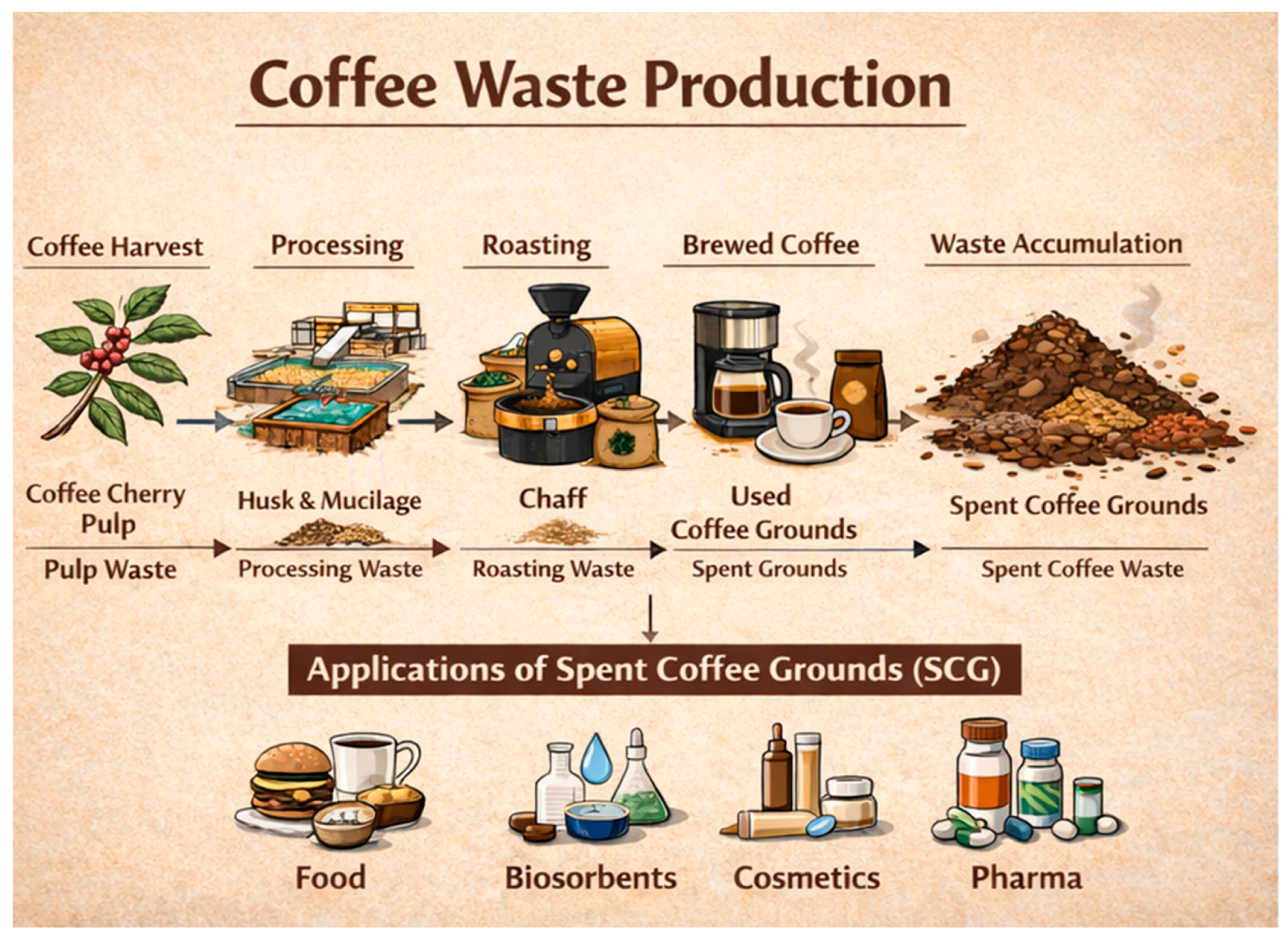
Life After Brewing—Finding New Purposes for Spent Coffee Grounds: A Review


Abstract
1. Introduction
2. SCG Composition
3. Research Methodology
4. Applications in the Food Industry Sector
5. Applications as Sorbents
6. Applications in the Beauty Industry
7. Potential Applications in the Pharmaceutical Industry and Future Health-Related Prospects
8. Conclusions
Author Contributions
Funding
Institutional Review Board Statement
Informed Consent Statement
Data Availability Statement
Acknowledgments
Conflicts of Interest
References
- Johnson, K.; Liu, Y.; Lu, M. A Review of Recent Advances in Spent Coffee Grounds Upcycle Technologies and Practices. Front. Chem. Eng. 2022, 4, 838605. [Google Scholar] [CrossRef]
- Annisa Innayatuhibbah, G.; Siti Rahayu, E.; Ferichani, M. Export competitiveness of Indonesian coffee in the United States market. Sci. Horiz. 2024, 27, 125–135. [Google Scholar] [CrossRef]
- Yu, I.K.M.; Chan, O.Y.; Zhang, Q.; Wang, L.; Wong, K.-H.; Tsang, D.C.W. Upcycling of Spent Tea Leaves and Spent Coffee Grounds into Sustainable 3D-Printing Materials: Natural Plasticization and Low-Energy Fabrication. ACS Sustain. Chem. Eng. 2023, 11, 6230–6240. [Google Scholar] [CrossRef]
- Mata, T.M.; Martins, A.A.; Caetano, N.S. Bio-Refinery Approach for Spent Coffee Grounds Valorization. Bioresour. Technol. 2018, 247, 1077–1084. [Google Scholar] [CrossRef]
- Lee, K.-T.; Shih, Y.-T.; Rajendran, S.; Park, Y.-K.; Chen, W.-H. Spent Coffee Ground Torrefaction for Waste Remediation and Valorization. Environ. Pollut. 2023, 324, 121330. [Google Scholar] [CrossRef]
- Cruz, R.; Cardoso, M.M.; Fernandes, L.; Oliveira, M.; Mendes, E.; Baptista, P.; Morais, S.; Casal, S. Espresso Coffee Residues: A Valuable Source of Unextracted Compounds. J. Agric. Food Chem. 2012, 60, 7777–7784. [Google Scholar] [CrossRef]
- Fernandes, A.S.; Mello, F.V.C.; Thode Filho, S.; Carpes, R.M.; Honório, J.G.; Marques, M.R.C.; Felzenszwalb, I.; Ferraz, E.R.A. Impacts of Discarded Coffee Waste on Human and Environmental Health. Ecotoxicol. Environ. Saf. 2017, 141, 30–36. [Google Scholar] [CrossRef]
- Janissen, B.; Huynh, T. Chemical Composition and Value-Adding Applications of Coffee Industry by-Products: A Review. Resour. Conserv. Recycl. 2018, 128, 110–117. [Google Scholar] [CrossRef]
- Bijla, L.; Ibourki, M.; Bouzid, H.A.; Sakar, E.H.; Aissa, R.; Laknifli, A.; Gharby, S. Proximate Composition, Antioxidant Activity, Mineral and Lipid Profiling of Spent Coffee Grounds Collected in Morocco Reveal a Great Potential of Valorization. Waste Biomass Valor. 2022, 13, 4495–4510. [Google Scholar] [CrossRef]
- Andrade, C.; Perestrelo, R.; Câmara, J.S. Bioactive Compounds and Antioxidant Activity from Spent Coffee Grounds as a Powerful Approach for Its Valorization. Molecules 2022, 27, 7504. [Google Scholar] [CrossRef]
- Austen, L.I.; Dugmore, T.I.J.; Matharu, A.S.; Hurst, G.A. Byproduct Valorization: From Spent Coffee Grounds to Fatty Acid Ethyl Esters. J. Chem. Educ. 2023, 100, 327–335. [Google Scholar] [CrossRef]
- Jooste, T.; García-Aparicio, M.P.; Brienzo, M.; Van Zyl, W.H.; Görgens, J.F. Enzymatic Hydrolysis of Spent Coffee Ground. Appl. Biochem. Biotechnol. 2013, 169, 2248–2262. [Google Scholar] [CrossRef]
- Lee, Y.-G.; Cho, E.-J.; Maskey, S.; Nguyen, D.-T.; Bae, H.-J. Value-Added Products from Coffee Waste: A Review. Molecules 2023, 28, 3562. [Google Scholar] [CrossRef]
- Bravo, J.; Monente, C.; Juániz, I.; De Peña, M.P.; Cid, C. Influence of Extraction Process on Antioxidant Capacity of Spent Coffee. Food Res. Int. 2013, 50, 610–616. [Google Scholar] [CrossRef]
- Pyrzynska, K. Useful Extracts from Coffee By-Products: A Brief Review. Separations 2024, 11, 334. [Google Scholar] [CrossRef]
- Ribeiro, R.C.; Mota, M.F.S.; Silva, R.M.V.; Silva, D.C.; Novaes, F.J.M.; Da Veiga, V.F.; Bizzo, H.R.; Teixeira, R.S.S.; Rezende, C.M. Coffee Oil Extraction Methods: A Review. Foods 2024, 13, 2601. [Google Scholar] [CrossRef]
- Shang, Y.-F.; Xu, J.-L.; Lee, W.-J.; Um, B.-H. Antioxidative Polyphenolics Obtained from Spent Coffee Grounds by Pressurized Liquid Extraction. S. Afr. J. Bot. 2017, 109, 75–80. [Google Scholar] [CrossRef]
- Bejenari, V.; Marcu, A.; Ipate, A.-M.; Rusu, D.; Tudorachi, N.; Anghel, I.; Şofran, I.-E.; Lisa, G. Physicochemical Characterization and Energy Recovery of Spent Coffee Grounds. J. Mater. Res. Technol. 2021, 15, 4437–4451. [Google Scholar] [CrossRef]
- Dórea, J.G.; Da Costa, T.H.M. Is Coffee a Functional Food? Br. J. Nutr. 2005, 93, 773–782. [Google Scholar] [CrossRef]
- Jeszka-Skowron, M.; Zgoła-Grześkowiak, A.; Grześkowiak, T. Analytical Methods Applied for the Characterization and the Determination of Bioactive Compounds in Coffee. Eur. Food Res. Technol. 2015, 240, 19–31. [Google Scholar] [CrossRef]
- Angeloni, S.; Freschi, M.; Marrazzo, P.; Hrelia, S.; Beghelli, D.; Juan-García, A.; Juan, C.; Caprioli, G.; Sagratini, G.; Angeloni, C. Antioxidant and Anti-Inflammatory Profiles of Spent Coffee Ground Extracts for the Treatment of Neurodegeneration. Oxidative Med. Cell. Longev. 2021, 2021, 6620913. [Google Scholar] [CrossRef] [PubMed]
- Zainol, M.K.; Mohd Subri, I.; Izzwan, Z.A.; Mohd Zin, Z.; Ahmad, F.; Mamat, H. Antioxidative Properties and Proximate Analysis of Spent Coffee Ground (SCG) Extracted Using Ultrasonic-Methanol Assisted Technique as a Potential Functional Food Ingredient. Food Res. 2020, 4, 636–644. [Google Scholar] [CrossRef] [PubMed]
- Panusa, A.; Zuorro, A.; Lavecchia, R.; Marrosu, G.; Petrucci, R. Recovery of Natural Antioxidants from Spent Coffee Grounds. J. Agric. Food Chem. 2013, 61, 4162–4168. [Google Scholar] [CrossRef] [PubMed]
- Shazly, A.B.; Fouad, M.T.; Elaaser, M.; Sayed, R.S.; Abd El-Aziz, M. Probiotic Coffee Ice Cream as an Innovative Functional Dairy Food. Food Process. Preserv. 2022, 46, e17253. [Google Scholar] [CrossRef]
- Wongsiridetchai, C.; Chiangkham, W.; Khlaihiran, N.; Sawangwan, T.; Wongwathanarat, P.; Charoenrat, T.; Chantorn, S. Alkaline Pretreatment of Spent Coffee Grounds for Oligosaccharides Production by Mannanase from Bacillus Sp. GA2(1). Agric. Nat. Resour. 2018, 52, 222–227. [Google Scholar] [CrossRef]
- Mussatto, S.I.; Carneiro, L.M.; Silva, J.P.A.; Roberto, I.C.; Teixeira, J.A. A Study on Chemical Constituents and Sugars Extraction from Spent Coffee Grounds. Carbohydr. Polym. 2011, 83, 368–374. [Google Scholar] [CrossRef]
- Shaikh-Ibrahim, A.; Curci, N.; De Lise, F.; Sacco, O.; Di Fenza, M.; Castaldi, S.; Isticato, R.; Oliveira, A.; Aniceto, J.P.S.; Silva, C.M.; et al. Carbohydrate Conversion in Spent Coffee Grounds: Pretreatment Strategies and Novel Enzymatic Cocktail to Produce Value-Added Saccharides and Prebiotic Mannooligosaccharides. Biotechnol. Biofuels Bioprod. 2025, 18, 2. [Google Scholar] [CrossRef]
- Hyeon, G.-W.; Lee, G.B.; Kang, D.J.; Lee, S.E.; Seong, K.M.; Park, J.-E. Optimization of Activated Carbon Synthesis from Spent Coffee Grounds for Enhanced Adsorption Performance. Molecules 2025, 30, 2557. [Google Scholar] [CrossRef]
- Sakouhi, F.; Saadi, C.; Omrani, I.; Boukhchina, S.; Solana, R.R. Quality Parameters and Lipid Composition of Oil Extracted from Spent Coffee Grounds: A Promising Alternative to Vegetable Oils Used for Consumption and Cosmetic Purposes. Eur. J. Lipid Sci. Technol. 2024, 126, 2300230. [Google Scholar] [CrossRef]
- Meerasri, J.; Sothornvit, R. Novel Development of Coffee Oil Extracted from Spent Coffee Grounds as a Butter Substitute in Bakery Products. Food Process. Preserv. 2022, 46, e16687. [Google Scholar] [CrossRef]
- Marto, J.; Gouveia, L.F.; Chiari, B.G.; Paiva, A.; Isaac, V.; Pinto, P.; Simões, P.; Almeida, A.J.; Ribeiro, H.M. The Green Generation of Sunscreens: Using Coffee Industrial Sub-Products. Ind. Crops Prod. 2016, 80, 93–100. [Google Scholar] [CrossRef]
- Wang, L.; Yang, X.; Li, Z.; Lin, X.; Hu, X.; Liu, S.; Li, C. Sensory Characteristics of Two Kinds of Alcoholic Beverages Produced with Spent Coffee Grounds Extract Based on Electronic Senses and HS-SPME-GC-MS Analyses. Fermentation 2021, 7, 254. [Google Scholar] [CrossRef]
- Sampaio, A.; Dragone, G.; Vilanova, M.; Oliveira, J.M.; Teixeira, J.A.; Mussatto, S.I. Production, Chemical Characterization, and Sensory Profile of a Novel Spirit Elaborated from Spent Coffee Ground. LWT Food Sci. Technol. 2013, 54, 557–563. [Google Scholar] [CrossRef]
- Masino, F.; Montevecchi, G.; Calvini, R.; Foca, G.; Antonelli, A. Sensory Evaluation and Mixture Design Assessment of Coffee-Flavored Liquor Obtained from Spent Coffee Grounds. Food Qual. Prefer. 2022, 96, 104427. [Google Scholar] [CrossRef]
- Solberg, S.B.; Solberg, S.Ø. Spent Coffee Grounds as a Sustainable Coffee Flavouring Ingredient in Muffins. Explor. Foods Foodomics 2025, 3, 101066. [Google Scholar] [CrossRef]
- Ali, H.S.; Farouk Man, A.; Kamil, M.M.; Hussein, M.S.A. Formulation of Nutraceutical Biscuits Based on Dried Spent Coffee Grounds. Int. J. Pharmacol. 2018, 14, 584–594. [Google Scholar] [CrossRef]
- Vázquez-Sánchez, K.; Martinez-Saez, N.; Rebollo-Hernanz, M.; Del Castillo, M.D.; Gaytán-Martínez, M.; Campos-Vega, R. In Vitro Health Promoting Properties of Antioxidant Dietary Fiber Extracted from Spent Coffee (Coffee arabica L.) Grounds. Food Chem. 2018, 261, 253–259. [Google Scholar] [CrossRef]
- Oliveira Batista, J.; Car Cordeiro, C.; Klososki, S.J.; Mongruel Eleutério Dos Santos, C.; Leão, G.M.C.; Pimentel, T.C.; Rosset, M. Spent Coffee Grounds Improve the Nutritional Value and Technological Properties of Gluten-Free Cookies. J. Culin. Sci. Technol. 2023, 21, 994–1004. [Google Scholar] [CrossRef]
- Koay, H.Y.; Azman, A.T.; Mohd Zin, Z.; Portman, K.L.; Hasmadi, M.; Rusli, N.D.; Aidat, O.; Zainol, M.K. Assessing the Impact of Spent Coffee Ground (SCG) Concentrations on Shortbread: A Study of Physicochemical Attributes and Sensory Acceptance. Future Foods 2023, 8, 100245. [Google Scholar] [CrossRef]
- Mudalal, S.; Sawafta, K.; Zaqdah, M.; Jaayssa, R.; Saidi, S.; Rahhal, B.; Ayyad, Z.; Abu-Khalaf, N. Sustainable Cookies Enriched With Spent Coffee Grounds: A Study on Nutritional, Textural, and Sensory Properties. J. Food Process. Preserv. 2025, 2025, 7439017. [Google Scholar] [CrossRef]
- Papageorgiou, C.; Dermesonlouoglou, E.; Tsimogiannis, D.; Taoukis, P. Enrichment of Bakery Products with Antioxidant and Dietary Fiber Ingredients Obtained from Spent Coffee Ground. Appl. Sci. 2024, 14, 6863. [Google Scholar] [CrossRef]
- López-Silva, M.; García-Valle, D.E. Ice Cream Cone Fortified with Spent Coffee Ground: Chemical Composition, Quality and Sensory Characteristics, and in Vitro Starch Digestibility. Food Chem. 2024, 459, 140288. [Google Scholar] [CrossRef] [PubMed]
- Nzekoue, F.K.; Khamitova, G.; Angeloni, S.; Sempere, A.N.; Tao, J.; Maggi, F.; Xiao, J.; Sagratini, G.; Vittori, S.; Caprioli, G. Spent Coffee Grounds: A Potential Commercial Source of Phytosterols. Food Chem. 2020, 325, 126836. [Google Scholar] [CrossRef] [PubMed]
- Choe, U. Valorization of Spent Coffee Grounds and Their Applications in Food Science. Curr. Res. Food Sci. 2025, 10, 101010. [Google Scholar] [CrossRef]
- European Food Safety Authority. EFSA Explains Risk Assessment: Caffeine; Publications Office: Luxembourg, 2015. [Google Scholar]
- Garcia-Serna, E.; Martinez-Saez, N.; Mesias, M.; Morales, F.; Castillo, M. Use of Coffee Silverskin and Stevia to Improve the Formulation of Biscuits. Pol. J. Food Nutr. Sci. 2014, 64, 243–251. [Google Scholar] [CrossRef]
- Tala, W.; Chantara, S. Use of Spent Coffee Ground Biochar as Ambient PAHs Sorbent and Novel Extraction Method for GC-MS Analysis. Env. Sci. Pollut. Res. 2019, 26, 13025–13040. [Google Scholar] [CrossRef]
- Sołtysik, M.; Majchrzak-Kucęba, I.; Wawrzyńczak, D. A Coffee-Based Bioadsorbent for CO2 Capture from Flue Gas Using VSA: TG-Vacuum Tests. Energies 2025, 18, 3965. [Google Scholar] [CrossRef]
- Milanković, V.; Tasić, T.; Pašti, I.A.; Lazarević-Pašti, T. Resolving Coffee Waste and Water Pollution—A Study on KOH-Activated Coffee Grounds for Organophosphorus Xenobiotics Remediation. J. Xenobiot. 2024, 14, 1238–1255. [Google Scholar] [CrossRef]
- Rocha, B.C.D.S.; Moraes, L.E.Z.D.; Santo, D.E.; Peron, A.P.; Souza, D.C.D.; Bona, E.; Valarini, O. Removal of Bentazone Using Activated Carbon from Spent Coffee Grounds. J. Chem. Technol. Biotech. 2024, 99, 1342–1355. [Google Scholar] [CrossRef]
- Milanković, V.; Tasić, T.; Pejčić, M.; Pašti, I.; Lazarević-Pašti, T. Spent Coffee Grounds as an Adsorbent for Malathion and Chlorpyrifos—Kinetics, Thermodynamics, and Eco-Neurotoxicity. Foods 2023, 12, 2397. [Google Scholar] [CrossRef]
- Davila-Guzman, N.E.; Cerino-Córdova, F.J.; Loredo-Cancino, M.; Rangel-Mendez, J.R.; Gómez-González, R.; Soto-Regalado, E. Studies of Adsorption of Heavy Metals onto Spent Coffee Ground: Equilibrium, Regeneration, and Dynamic Performance in a Fixed-Bed Column. Int. J. Chem. Eng. 2016, 2016, 9413879. [Google Scholar] [CrossRef]
- Młynarczykowska, A.; Orlof-Naturalna, M. Biosorption of Copper (II) Ions Using Coffee Grounds—A Case Study. Sustainability 2024, 16, 7693. [Google Scholar] [CrossRef]
- Kim, M.-S.; Kim, J.-G. Adsorption Characteristics of Spent Coffee Grounds as an Alternative Adsorbent for Cadmium in Solution. Environments 2020, 7, 24. [Google Scholar] [CrossRef]
- Cuccarese, M.; Brutti, S.; De Bonis, A.; Teghil, R.; Di Capua, F.; Mancini, I.M.; Masi, S.; Caniani, D. Sustainable Adsorbent Material Prepared by Soft Alkaline Activation of Spent Coffee Grounds: Characterisation and Adsorption Mechanism of Methylene Blue from Aqueous Solutions. Sustainability 2023, 15, 2454. [Google Scholar] [CrossRef]
- Araya-Sibaja, A.M.; Quesada-Soto, T.; Vega-Baudrit, J.R.; Navarro-Hoyos, M.; Valverde-Cerdas, J.; Romero-Esquivel, L.G. Spent Coffee Ground-Based Materials Evaluated by Methylene Blue Removal. Processes 2025, 13, 1592. [Google Scholar] [CrossRef]
- Akindolie, M.S.; Choi, H.J. Surface Modification of Spent Coffee Grounds Using Phosphoric Acid for Enhancement of Methylene Blue Adsorption from Aqueous Solution. Water Sci. Technol. 2022, 85, 1218–1234. [Google Scholar] [CrossRef]
- Humayro, A.; Harada, H.; Naito, K. Adsorption of Phosphate and Nitrate Using Modified Spent Coffee Ground and Its Application as an Alternative Nutrient Source for Plant Growth. J. Agric. Chem. Environ. 2021, 10, 80–90. [Google Scholar] [CrossRef]
- Torboli, A.; Foladori, P.; Lu, M.; Gialanella, S.; Maines, L. Spent Coffee Ground Biochar for Phosphate Adsorption in Water: Influence of Pyrolysis Temperature and Iron-Coating Activation Method. Clean. Eng. Technol. 2024, 23, 100839. [Google Scholar] [CrossRef]
- Figueroa Campos, G.A.; Perez, J.P.H.; Block, I.; Sagu, S.T.; Saravia Celis, P.; Taubert, A.; Rawel, H.M. Preparation of Activated Carbons from Spent Coffee Grounds and Coffee Parchment and Assessment of Their Adsorbent Efficiency. Processes 2021, 9, 1396. [Google Scholar] [CrossRef]
- Ribeiro, H.; Marto, J.; Raposo, S.; Agapito, M.; Isaac, V.; Chiari, B.G.; Lisboa, P.F.; Paiva, A.; Barreiros, S.; Simões, P. From Coffee Industry Waste Materials to Skin-friendly Products with Improved Skin Fat Levels. Eur. J. Lipid Sci. Technol. 2013, 115, 330–336. [Google Scholar] [CrossRef]
- Kanlayavattanakul, M.; Lourith, N.; Chaikul, P. Valorization of Spent Coffee Grounds as the Specialty Material for Dullness and Aging of Skin Treatments. Chem. Biol. Technol. Agric. 2021, 8, 55. [Google Scholar] [CrossRef]
- Rodrigues, R.; Oliveira, M.B.P.P.; Alves, R.C. Chlorogenic Acids and Caffeine from Coffee By-Products: A Review on Skincare Applications. Cosmetics 2023, 10, 12. [Google Scholar] [CrossRef]
- Lourith, N.; Xivivadh, K.; Boonkong, P.; Kanlayavattanakul, M. Spent Coffee Waste: A Sustainable Source of Cleansing Agent for a High-Performance Makeup Remover. Sustain. Chem. Pharm. 2022, 29, 100826. [Google Scholar] [CrossRef]
- Costa, C.; Marques, M.; Martins, A.M.; Gonçalves, L.; Pinto, P.; Ribeiro, H.M.; Marto, J.; Paiva, A. Upcycling Spent Coffee Grounds into Bioactive Extracts Using New Natural Deep Eutectic Systems for Sustainable Topical Formulations. ACS Sustain. Chem. Eng. 2025, 13, 1906–1915. [Google Scholar] [CrossRef]
- Choi, H.-S.; Park, E.D.; Park, Y.; Suh, H.J. Spent Coffee Ground Extract Suppresses Ultraviolet B-Induced Photoaging in Hairless Mice. J. Photochem. Photobiol. B Biol. 2015, 153, 164–172. [Google Scholar] [CrossRef]
- Delgado-Arias, S.; Zapata-Valencia, S.; Cano-Agudelo, Y.; Osorio-Arias, J.; Vega-Castro, O. Evaluation of the Antioxidant and Physical Properties of an Exfoliating Cream Developed from Coffee Grounds. J. Food Process Eng. 2020, 43, e13067. [Google Scholar] [CrossRef]
- Szaferski, W.; Janczarek, M. Preparation of Cosmetic Scrub Bases from Coffee Waste and Eco-Friendly Emulsifiers. Cosmetics 2025, 12, 31. [Google Scholar] [CrossRef]
- Ratmelya, D.S.; Reveny, J.; Harahap, U. Test Anti-Aging Activity in a Face Scrub Preparation That Contains Coffee-Grade Active Charcoal (Coffea arabica L.) with the Addition of Vitamin E. Sci. Pharm. Sci. 2022, 5, 74–82. [Google Scholar] [CrossRef]
- Maysarah, H.; Desiyana, L.S.; Nurzuhra, S.; Illian, D.N. Utilization of Spent Arabica Coffee Grounds as Raw Material for Activated Charcoal in Liquid Bath Soap Formulation. Pharm. Sci. Res. 2023, 10, 5. [Google Scholar] [CrossRef]
- Iriondo-DeHond, A.; Cornejo, F.S.; Fernandez-Gomez, B.; Vera, G.; Guisantes-Batan, E.; Alonso, S.G.; Andres, M.I.S.; Sanchez-Fortun, S.; Lopez-Gomez, L.; Uranga, J.A.; et al. Bioaccesibility, Metabolism, and Excretion of Lipids Composing Spent Coffee Grounds. Nutrients 2019, 11, 1411. [Google Scholar] [CrossRef]
- Ren, Y.; Wang, C.; Xu, J.; Wang, S. Cafestol and Kahweol: A Review on Their Bioactivities and Pharmacological Properties. Int. J. Mol. Sci. 2019, 20, 4238. [Google Scholar] [CrossRef]
- Acevedo, F.; Rubilar, M.; Scheuermann, E.; Cancino, B.; Uquiche, E.; Garcés, M.; Inostroza, K.; Shene, C. Spent Coffee Grounds as a Renewable Source of Bioactive Compounds. J Biobased Mat. Bioenergy 2013, 7, 420–428. [Google Scholar] [CrossRef]
- Calheiros, D.; Dias, M.I.; Calhelha, R.C.; Barros, L.; Ferreira, I.C.F.R.; Fernandes, C.; Gonçalves, T. Antifungal Activity of Spent Coffee Ground Extracts. Microorganisms 2023, 11, 242. [Google Scholar] [CrossRef]
- Badr, A.N.; El-Attar, M.M.; Ali, H.S.; Elkhadragy, M.F.; Yehia, H.M.; Farouk, A. Spent Coffee Grounds Valorization as Bioactive Phenolic Source Acquired Antifungal, Anti-Mycotoxigenic, and Anti-Cytotoxic Activities. Toxins 2022, 14, 109. [Google Scholar] [CrossRef] [PubMed]
- Zengin, G.; Sinan, K.I.; Mahomoodally, M.F.; Angeloni, S.; Mustafa, A.M.; Vittori, S.; Maggi, F.; Caprioli, G. Chemical Composition, Antioxidant and Enzyme Inhibitory Properties of Different Extracts Obtained from Spent Coffee Ground and Coffee Silverskin. Foods 2020, 9, 713. [Google Scholar] [CrossRef] [PubMed]
- Bijla, L.; Hmitti, A.; Fadda, A.; Oubannin, S.; Gagour, J.; Aissa, R.; Laknifli, A.; Sakar, E.H.; Gharby, S. Valorization of Spent Coffee Ground as a Natural Antioxidant and Its Use for Sunflower Oil Shelf-life Extension. Eur. J. Lipid Sci. Technol. 2024, 126, 2300115. [Google Scholar] [CrossRef]
- Vandeponseele, A.; Draye, M.; Piot, C.; Chatel, G. Study of Influential Parameters of the Caffeine Extraction from Spent Coffee Grounds: From Brewing Coffee Method to the Waste Treatment Conditions. Clean. Technol. 2021, 3, 335–350. [Google Scholar] [CrossRef]
- Nakkong, K.; Tangpromphan, P.; Jaree, A. The Design of Three-Zone Simulated Moving Bed Process for the Separation of Chlorogenic and Gallic Acids Extracted from Spent Coffee Grounds. Waste Biomass Valor. 2021, 12, 2389–2405. [Google Scholar] [CrossRef]
- Tangpromphan, P.; Palitsakun, S.; Jaree, A. Three-Zone Simulated Moving Bed for the Separation of Chlorogenic Acid and Caffeine Fractions in the Liquid Extract of Spent Coffee Grounds. Heliyon 2023, 9, e21340. [Google Scholar] [CrossRef]
- Sarghini, F.; Marra, F.; De Vivo, A.; Vitaglione, P.; Mauriello, G.; Maresca, D.; Troise, A.D.; Echeverria-Jaramillo, E. Acid Hydrolysis of Spent Coffee Grounds: Effects on Possible Prebiotic Activity of Oligosaccharides. Chem. Biol. Technol. Agric. 2021, 8, 67. [Google Scholar] [CrossRef]
- Simões, J.; Madureira, P.; Nunes, F.M.; Do Rosário Domingues, M.; Vilanova, M.; Coimbra, M.A. Immunostimulatory Properties of Coffee Mannans. Mol. Nutr. Food Res. 2009, 53, 1036–1043. [Google Scholar] [CrossRef]
- Magengelele, M.; Malgas, S.; Pletschke, B.I. Bioconversion of Spent Coffee Grounds to Prebiotic Mannooligosaccharides–an Example of Biocatalysis in Biorefinery. RSC Adv. 2023, 13, 3773–3780. [Google Scholar] [CrossRef]


| Product Type | SCG Part Used | Preparation | Results | Ref. |
|---|---|---|---|---|
| Fermented beverage & distilled spirit | Water extract | Fermentation of SCG extract with sucrose, citric acid, and a strain of Saccharomyces cerevisiae | The fermented beverage had an ethanol content of 12.5%, which increased to 50.5% after distillation. Both products retained coffee aroma, but only the fermented beverage had said flavor. | [32] |
| Distilled spirit | Water extract | Fermentation of SCG extract with sucrose, potassium metabisulfite, CaCO3, and a strain of Saccharomyces cerevisiae | The spirit had an ethanol content of 40%. It was characterized as having a pleasant coffee taste and aroma. | [33] |
| Coffee-flavored liquor | Ethanol extract | The extract was mixed with glucose syrup | The liquor had an alcohol content of about 21% and was described as having a pleasant coffee smell. | [34] |
| Flavoring agent in muffins | Solid fraction | Dried SCG equated to 10% of the flour mass used for baking | The addition of SCG gave the baked goods a coffee taste, though it also increased bitterness. The texture remained unaffected, while the fiber content increased. | [35] |
| Additive in nutraceutical biscuits | Solid fraction | Unprocessed SCG equated to 6% of the flour mass used for baking | The presence of SCG enhanced the fiber content but did not impact fat levels, while the protein content decreased. | [36] |
| Fiber source in biscuits | Solid fraction | The dietary fiber was extracted from oven-dried SCG by ohmic heating | SCG addition increased fiber and fat contents and enhanced the antioxidant capacity of the biscuits. | [37] |
| Additive in gluten-free cookies | Solid fraction | Oven-dried SCG were incorporated during baking | Adding SCG increased the fiber, protein, and fat contents and improved the texture of the baked goods. | [38] |
| Additive in shortbread | Solid fraction | Dried SCG equated to 10% of the flour mass used for baking | Incorporating SCG increased the fiber and protein contents as well as antioxidant properties, while decreasing calories and the carbohydrate content. Smaller amounts of SCG did not affect the taste of the baked goods. | [39] |
| Nutritional additive in cookies | Solid fraction | Unprocessed SCG equated to 10% of the flour mass used for baking | The cookies had significantly higher fiber and fat contents compared to the control samples but had a less acceptable texture. Additionally, they were lower in sodium and higher in potassium. | [40] |
| Fiber-rich ingredient in bakery products | Solid fraction | The SCG were freeze-dried and defatted with n-hexane | The product had a pleasant coffee flavor, acceptable texture, and improved shelf life. | [41] |
| Ice cream cones | Solid fraction | Unprocessed SCG equated to 20% of the flour mass used for baking | The resistant starch content of cones increased; however, the addition of SCG negatively impacted the cones’ texture. | [42] |
| Butter substitute in cookies | Lipid fraction | Lipid fraction was extracted from oven-dried SCG using ethanol. The oil was separated after freezing the extract | The antioxidant properties of the cookies increased. The cookies were deemed acceptable and healthier; however, higher amounts of coffee oil negatively impacted the flavor, aroma, and texture of the baked goods. | [30] |
| Sorbent Type | Preparation | Results | Sorbent’s Specific Surface Area (m2 g−1) | Functional Groups’ Bands on FT-IR Spectra | Maximum Adsorption Capacity (mgx g−1) | Ref. |
|---|---|---|---|---|---|---|
| Biochar for polycyclic aromatic hydrocarbon (PAH) removal from ambient air | SCG underwent pyrolysis at 300 °C | The SCG-based and commercial sorbents had similar adsorption capacities for high-molecular-weight PAH, but the first one was less efficient with low-molecular-weight pollutants. | 4.58 | C-H stretching (860–680 cm−1), C=C bending (1700–1500 cm−1), C=O stretching (1750–1680 cm−1), O-H stretching (3923–3367 cm−1 | - * | [47] |
| Biosorbent for CO2 capture from flue gas | Dried SCG were carbonized for 45 min at 700 °C, then activated with KOH. | The sorbent exhibited good stability, selectivity, and regenerability. However, its adsorption capacity decreased as the temperature increased. | 18 | C=O stretching (1700 cm−1) O-H stretching (3400 cm−1) | 113.7 (25 °C) | [48] |
| Activated carbon for bentazone (herbicide) removal from aqueous solutions | After pyrolysis at 600 °C, coffee waste was chemically activated using ZnCl2, calcined, and washed with 0.1 M HCl solution | The ecotoxicity study was carried out to evaluate the efficiency of adsorption, proving the sorbent’s effectiveness. | 564.37 | CH2- stretching (2848 cm−1), C=O stretching (1724 cm−1) | 279.3 | [50] |
| Sorbent for the remediation of malathion and chlorpyrifos (organophosphate pesticides) from water | Oven-dried SCG were rinsed with HCl, NaOH, and water, then dispersed in 50% ethanol solution | The sorbent was deemed safe and showed comparable adsorption capacities to those of previously tested biowaste-based adsorbents. | Determination not possible | O-H stretching (3307 cm−1), sp2 C-H (3010 cm−1), sp3 C-H stretching (2924 cm−1), C=O stretching (1745 cm−1 C=N stretching (1635 cm−1), aromatic vibrations (1521 cm−1 and 1441 cm−1), C-N deformations (1237 cm−1) C-O deformations (1152 cm−1) | 7.16 (malathion) 7.00 (chlopyrifos) | [51] |
| Cd2+, Cu2+, and Pb2+ removal from aqueous solutions | Dried SCG were activated with NaOH | The sorbent exhibited greater adsorption capacity than commercial activated carbon and was efficient for heavy metal remediation in the synthetic multicomponent solution; however, its capacity in the presence of other contaminants remains unknown. | - * | - * | Cd 13.5 Cu 14.6 Pb 66.2 | [52] |
| Removal of Cu2+ from aqueous solutions | SCG were dried but did not undergo any further treatment | The sorbent demonstrated efficiency of over 85% and could be regenerated with HCl solution. | - * | - * | 25.3 | [53] |
| Sorbent for Cd2+ removal from solutions | SCG did not undergo any pretreatment | The FT-IR absorption spectrometry analysis proved that SCG had a higher amount of organic functional groups, with the potential of working as adsorption sites, than the commercial zeolite. It demonstrated a higher adsorption capacity. | 7.5 | O-H stretching (3400 cm−1), CH2- stretching (2950 cm−1) C-H stretching (2920–2880 cm−1), C=O stretching (1745–1740 cm−1 and 1058–1033 cm−1), S=O stretching (1200–900 cm−1) | 19.32 | [54] |
| Activated carbon for methylene blue (cationic dye) removal from aquatic solutions | SCG underwent soft alkaline activation using 1 M NaOH solution and carbonizing at 300 °C | Adsorption capacity was comparable to that of activated carbon prepared from other bio-sources. | - * | C≡C stretching (2300 cm−1), aromatic C-H stretching (780–880 cm−1), C=C stretching, C-H bending and/or N-H bending (1600–1400 cm−1) | 142.8 (pH 6) | [55] |
| Sorbent for methylene blue removal from aquatic solutions | SCG were extracted with hot water, activated with 6 M HNO3 solution, and ultrasonicated, then neutralized with NaOH | Acidic activation generated smaller pores and led to the increase in carboxyl groups in the sorbent, improving adsorption efficiency. | - * | C=O stretching (1710–1740 cm−1), N=O stretching (1540 cm−1), C-O stretching (1315, 1160, and 1030 cm−1) | 165.5–221.5 | [56] |
| Phosphorylated sorbent for methylene blue removal | Dried SCG were activated using a mixture of 85% H3PO4 solution and phosphorus pentoxide. The pH was neutralized with 1 M NaOH solution | Phosphorylation increased the surface area of the sorbent. The presence of anionic groups led to high removal efficiency of the cationic dye. | 662.38 | Aromatic OH and N-H (805–910 cm−1), P=O and C=O (1007–1110 cm−1), (RO)3P=O (1300–1500 cm−1), C=C (625–730 cm−1) | 188.68 (pH 7) | [57] |
| Removal of phosphate and nitrate from aquatic solutions | Dried SCG were activated with 0.04 M Ca(OH)2, then washed with distilled water until pH value reached 7.5 | The modified sorbent had greater porosity than the non-treated SCG. The sorbents demonstrated optimal capacity in acidic solutions. | - * | O-H stretching (3600–3200 cm−1), C-H stretching (2923–2852 cm−1), C=O stretching (1567 cm−1) | Phosphate 36.74 (pH 3) Nitrate 20.21 (pH range 1–3) | [58] |
| Phosphate remediation from aqueous systems | Dried SCG were pyrolyzed at 300–550 °C, then washed with CH2Cl2 to remove PAHs and rinsed with distilled water. Biochar was functionalized with 1 M FeCl3 solution | Adsorption capacity grew as the Fe/biochar mass ratio or pyrolysis temperature increased. Phosphates and other oxyanions demonstrate high affinities towards iron hydroxides. | - * | O-H bending (1351 cm−1), O-H stretching (3682 cm−1) | 0.87 | [59] |
| Activated carbon for monocarboxylic acids removal from coffee wastewater | Oven-dried SCG were mixed with CaCO3 and calcinated for 1 h at 850 °C, then washed with 2 M HCl solution. After rinsing with deionized water until neutral pH, the sorbent was dried again | The sorbent demonstrated similar adsorption efficiency to that of a commercial one. SCG sorbent showed greater affinity towards the removal of hydrophobic compounds. | 167 | Not detected | Lactic acid 14.73 | [60] |
| Cosmetic Type | Preparation | Results | Ref. |
|---|---|---|---|
| Oil-in-water cream | Oven-dried SCG underwent supercritical CO2 extraction. The cream contained purified water, propylene glycol, and 10% SCG oil extract. | SCG oil incorporation decreased the pH value of the cream, making it suitable for skin application. The SCG cream was non-irritating to the skin and significantly increased hydration. It had an acceptable texture and application. | [61] |
| Anti-ageing and skin-brightening beauty products | The oil was extracted from oven-dried SCG using n-hexane. The extract underwent complexation using urea and ethanol to obtain SCG oil rich in linoleic acid. | The extract exhibited antimelanogenic properties and decreased UV-induced melanin production. The oil rich in linoleic acid had high cellular antioxidant activity and boosted cellular collagen production. | [62] |
| Make-up remover | The oil was extracted from SCG using n-hexane. | Makeup remover containing 40% coffee oil was deemed most efficient, with approximately 95% removal efficacy. The remover was approved as safe for the skin. | [64] |
| An additive in topical formulations | SCG extract was obtained using natural deep eutectic systems with a mixture of proline, glycerol, and water. | The extract exhibited high antioxidant activity and showed the ability to protect the skin from oxidative stress. The oil-in-water formulation was safe for use and increased skin hydration. | [65] |
| An additive to prevent premature photoaging of the skin | The defatted SCG were extracted with 70% ethanol and administered orally to hairless mice. | SCG extract administration in mice inhibited UV-induced photoaging and reduced wrinkle formation. | [66] |
| Water-in-oil sunscreen | Oven-dried SCG underwent supercritical CO2 extraction. The cream contained 35% SCG oil extract. | The product offered good protection against UVB radiation, had satisfactory antioxidant and rheological properties, and was safe to use. | [31] |
| Exfoliating body cream | The cream contained cetyl alcohol, stearic acid, lanolin, water, glycerine, dimethicone, crystal oil, sodium nipagin, and 6% dried SCG. | The cream had a high content of polyphenols and antioxidants and demonstrated a satisfactory exfoliating capacity. | [67] |
| Oil-in-water cosmetic scrub | The scrub contained apricot kernel oil emulsifier, almond oil, castor oil, and 10% dried SCG. | The scrub was deemed skin-friendly and had a natural coffee aroma. | [68] |
| Anti-ageing face scrub | Dehydrated SCG were carbonized at 450 °C and activated with HCl solution. After washing out the acid, the charcoal was dehydrated again. Besides SCG-based activated charcoal, the scrub contained cetyl alcohol, stearic acid, glycerine, triethanolamine, propylene glycol, methylparaben, propylparaben, and distilled water. | The scrub did not irritate the skin and had a safe pH value. It had a coffee aroma, boosted skin hydration, and reduced the number of pores and wrinkles. | [69] |
| Liquid bath soaps | Dehydrated SCG were carbonized at 450 °C and activated with HCl solution. After washing out the acid, the charcoal was dehydrated again. The bath soap contained cocamidopropyl betaine, sodium lauryl sulfate, and SCG-based activated charcoal. | The soap had a pH value that was safe for skin application and did not cause any irritation. | [70] |
| Type of Extract with Health-Promoting Potential | Preparation | Results | Ref. |
|---|---|---|---|
| Cafestol and kahweol extract | SCG underwent direct saponification with an ethanol solution of KOH, followed by diethyl ether extraction. | The concentrations of cafestol and kahweol in SCG after saponification were relatively high. | [73] |
| Tocopherols and phytosterol extract | Oven-dried SCG were extracted with a mixture of chloroform and methanol. | The main phytosterols found in SCG oil were β-sitosterol, stigmasterol, campesterol, and Δ5-avenesterol, with only traces of cholesterol. Out of the tocopherol isomers, the analysis confirmed the presence of α-tocopherol and β-tocopherol in SCG oil. | [29] |
| Phytosterol extract | Oven-dried SCG were mixed with HCl solution and ultrasonicated, then saponified using KOH and ethanol. Finally, the samples were extracted with n-hexane. | Four phytosterols were detected: β-sitosterol, stigmasterol, campesterol, and cycloartenol. Total phytosterol content was comparable to that in cereals, making it a valuable source of those compounds. | [43] |
| Extracts for the treatment of neurodegenerative diseases | Oven-dried SCG were extracted with 50% methanol. | The extracts presented anti-inflammatory and antioxidant activities and reduced the levels of intracellular reactive oxygen species. | [21] |
| Bioactive extracts with antifungal properties | SCG were extracted with a 70% ethanol solution. | The extract showed antifungal bioactivity towards skin infection-related fungi and antiproliferative bioactivity and cytotoxicity against cancer cell lines, indicating the possibility of creating SCG-based treatments for skin infections and cancer. | [74] |
| Bioactive extracts with antifungal and anti-mycotoxigenic properties | SCG were extracted using isopropanol. | The extract exhibited antifungal and anti-mycotoxigenic properties. Therefore, SCG could be employed as an ecological source of natural preservatives for the food industry. | [75] |
| Antioxidant extract with enzyme-inhibitory properties | SCG were extracted with an ethanol–water solution. | The extract was deemed suitable for use as a food additive due to its high antioxidant activity and good enzyme inhibitory properties. It is also rich in bioactive compounds and can be used in the production of pharmaceuticals. | [76] |
| Antioxidant additive for shelf-life extension | Antioxidant compounds were extracted from SCG using absolute ethanol. | The addition of SCG extract improved sunflower oil’s oxidative stability and shelf life. | [77] |
| Caffeine extract | SCG were extracted using a 40% ethanol solution. The extract was purified via liquid–liquid extraction of the alkalized aqueous phase with ethyl acetate. | Caffeine was recovered with a purity of 93.4% through extraction with ethyl acetate. | [78] |
| Chlorogenic and gallic acids extracts | SCG were defatted with n-hexane and extracted using an 80% acetonitrile solution. Chlorogenic and gallic acids were separated using a three-zone simulated moving bed system. | In the optimized conditions, the relative purity of chlorogenic acid was 99.27% and of gallic acid—98.43%. | [79] |
| Caffeine and chlorogenic acid extracts | Oven-dried SCG were extracted with water. Caffeine and chlorogenic acid were separated using three-zone simulated moving. | In the optimized conditions, the purities of caffeine and chlorogenic acid were 99.45% and 98.88%, respectively. | [80] |
| Polysaccharide extracts with prebiotic properties | Oven-dried SCG were pretreated with NaOH, then underwent supercritical carbon dioxide extraction and enzymatic saccharification. | The obtained polysaccharides enhanced growth and improved the biofilm-forming capacity of the beneficial Bacilli and Lactobacilli strains. | [27] |
| Oligosaccharide extract with prebiotic properties | SCG were defatted using n-hexane, then underwent acid-catalyzed extraction using HCl solution. | The extract exhibited prebiotic activity on the strains of Lactobacilli. | [81] |
| Mannan extract with prebiotic properties | SCG were extracted using water, imidazole, and sodium hydroxide, then underwent acetylation. | Obtained mannans exhibited similar immunostimulatory activity to that of commercially available mannans. | [82] |
| Mannan extract | SCG were pretreated with NaOH. The oligosaccharides were produced enzymatically using an endo-1,4-β-mannanase from the Bacillus subtilis strain. | The mannooligosaccharides showed prebiotic properties, such as growth enhancement of beneficial bacteria with the ability to produce short-chain fatty acids. | [83] |
Disclaimer/Publisher’s Note: The statements, opinions and data contained in all publications are solely those of the individual author(s) and contributor(s) and not of MDPI and/or the editor(s). MDPI and/or the editor(s) disclaim responsibility for any injury to people or property resulting from any ideas, methods, instructions or products referred to in the content. |
© 2026 by the authors. Licensee MDPI, Basel, Switzerland. This article is an open access article distributed under the terms and conditions of the Creative Commons Attribution (CC BY) license.
Share and Cite
Wachowska, G.A.; Biesaga, M. Life After Brewing—Finding New Purposes for Spent Coffee Grounds: A Review. Appl. Sci. 2026, 16, 1904. https://doi.org/10.3390/app16041904
Wachowska GA, Biesaga M. Life After Brewing—Finding New Purposes for Spent Coffee Grounds: A Review. Applied Sciences. 2026; 16(4):1904. https://doi.org/10.3390/app16041904
Chicago/Turabian StyleWachowska, Gaja Anna, and Magdalena Biesaga. 2026. "Life After Brewing—Finding New Purposes for Spent Coffee Grounds: A Review" Applied Sciences 16, no. 4: 1904. https://doi.org/10.3390/app16041904
APA StyleWachowska, G. A., & Biesaga, M. (2026). Life After Brewing—Finding New Purposes for Spent Coffee Grounds: A Review. Applied Sciences, 16(4), 1904. https://doi.org/10.3390/app16041904