1. Introduction
There are several variables influencing the long-term deformations of cementitious composites. Drying shrinkage is caused by exposure to ambient temperature and humidity and is more noticeable in cases where a rapid moisture loss occurs [
1]. Besides ambient conditions, factors such as the type of mortar/concrete and its composition [
2,
3,
4,
5,
6], water retention ability of these materials [
4,
7,
8], compressive strength [
9,
10], curing method and time, and geometry [
10] influence the drying shrinkage. Along with all these parameters, the level of the applied load and the age of the material at the time of loading need to be considered in the investigations regarding creep [
11,
12,
13,
14].
In the case of masonry as a composite material, the long-term deformations may be more complex because of the anisotropy and the interaction between the expansion/shrinkage of the masonry units and the shrinkage of the mortar. Regarding the masonry units, water absorption and permeability, type, firing temperature in case of clay bricks, age, moisture state, and compressive strength are additional parameters that may influence the long-term behaviour of masonry [
3,
15,
16,
17,
18]. Additionally, masonry anisotropy and water transfer between the masonry unit and mortar play an important role in the level of long-term deformation once the units and mortar are cast together [
10,
19,
20,
21].
Due to the variety of parameters involved in the long-term behaviour of building materials, large experimental campaigns with a high number of specimens are usually required to investigate this behaviour. Consequently, the required investment in strain/displacement sensors and acquisition systems is quite relevant, i.e., the high number of deformation measurement tools needed, the desired data acquisition system, and the long time allocation of these to the experiments result in very high costs for research projects. The scientific challenge is not merely reducing cost, but developing a metrological framework that reconciles three conflicting requirements: (i) high precision, comparable to conventional sensors such as Linear Variable Displacement Transducers (LVDTs) and dial gauges; (ii) discrete monitoring capability to allow for massive scalability (high number of specimens); and (iii) physical compatibility with moisture-sensitive phenomena (preserving moisture exchange between the material surface and the environment).
Optical measurement, which is considered one of the safe and reliable measurement solutions, could be a practical solution to overcome this gap [
22]. Besides being cost-effective, this solution is simple to use, adaptable to a wide range of measurement points and capable of performing full-field measurements. Additionally, it can be used as a non-contact measurement solution, avoiding the need for wiring for data or power transmission, which can mitigate some issues when dealing with a high number of sensors in a confined space [
22,
23,
24,
25,
26,
27,
28].
In general, optical measurement solutions are classified into two categories: those employing laser beams and those working with white light. Laser Doppler vibrometry, Electronic Speckle Pattern Interferometry (ESPI), and Digital Speckle Shearography (DSS) are examples of laser-based solutions. On the other hand, white light is used in the second class of optical solutions, known as image-based measurements. Image-based measurement is a technique utilised to extract the displacement, deformation, and entire geometry of a body using images [
25]. The development of the digital image-based measurements began in the 1980s [
29]. This measurement solution requires image processing and numerical computations to measure the deformations of a body. These measurements are based on finding the features and optical targets in the images and tracking them to identify deformations. Image-based methods can be broadly categorised into Digital Image Correlation (DIC), target-based photogrammetry, and emerging low-cost vision systems [
24,
25,
28,
30,
31]. DIC is the most established technique in this category and is widely regarded as a benchmark method in experimental mechanics, capable of full-field strain measurement with high precision and accuracy [
32,
33]. A number of studies have further extended DIC capabilities to high temperature conditions, large deformations, and improved computational efficiency [
34,
35]. Despite these advances, DIC presents specific limitations for large-scale long-term monitoring. First, standard DIC typically requires a speckle pattern covering the specimen surface; applying such patterns (usually via painting) can block surface pores, interfering with the moisture exchange between the material and the environment, essential for moisture-driven deformations. Second, DIC usually requires a fixed camera setup to maintain a consistent coordinate system. In campaigns involving tens or hundreds of specimens, acquiring individual cameras for each sample is economically unfeasible. Conversely, moving a single high-end camera between specimens introduces complex recalibration requirements [
25,
30].
Alternatively, target-based photogrammetry and recent smartphone-based monitoring systems have gained popularity for structural health monitoring due to their cost-effectiveness and portability [
22,
26]. These methods typically track artificial targets or natural features to measure displacement. While effective for detecting millimetre-level movements in large structures like bridges, these low-cost systems often lack the micrometre-level resolution and metrological traceability required for laboratory material characterisation. Furthermore, without a physical reference frame, they remain sensitive to camera positioning errors during discontinuous data acquisition [
36,
37].
Recent research has highlighted the importance of explicitly quantifying measurement uncertainty and ensuring traceability when optical methods are applied to micro-level deformation measurements. Advancing image processing, sub-pixel interpolation, and super-resolution techniques have significantly improved displacement resolution. However, the achievable accuracy remains strongly dependent on calibration procedures, image quality, experimental configuration, and processing choices, and therefore, it requires uncertainty evaluation when used for micrometre-scale laboratory measurements [
22,
23,
28,
30,
33].
Consequently, a distinct gap in the current state-of-the-art is recognised: the lack of a validated, open-source optical solution that combines the low cost and scalability of consumer-grade vision sensors with the high precision and metrological rigour comparable to conventional sensors. The current study aims to address this gap by proposing and validating an innovative discrete optical solution, rigorously evaluated and validated according to the Guide to the expression of Uncertainty in Measurement (GUM) framework [
38]. In this work, the point tracking approach is used, in which the displacement of the optical target(s) attached to the specimen’s body is tracked and analysed to determine the deformation of the specimen [
25]. The proposed solution takes advantage of 3D printing technology, microscopic scale imaging, and artificial vision as a tool for image processing.
Unlike low-cost DIC and smartphone-based photogrammetry systems, which rely on a fixed camera reference frame and are sensitive to repositioning and surface preparation, the proposed solution introduces a physically self-calibrating sliding ruler attached to the specimen. This feature enables discontinuous monitoring with a single portable microscope, preserves surface permeability to moisture, and eliminates the need for camera-specific recalibration. In addition, the system is rigorously validated within a GUM-compliant metrological framework, providing traceable micrometre-scale uncertainty quantification that is largely absent from existing low-cost optical approaches.
In the following sections, a detailed explanation of the concept and methodological aspects of the proposed solution is provided.
2. Development of the Proposed Solution
In this section, the purpose of the development of this optical measurement solution, its use, and its associated methodology are addressed.
2.1. Targeted Application and Measurement Features
The measurement solution is being developed as a part of research focused on long-term deformations of masonry. To investigate all the relevant factors mentioned in
Section 1 affecting the long-term behaviour of masonry, more than 1000 measurement tools were needed for such an experimental campaign. This raised the problem of the availability of such measurement devices and ultimately was the precursor needed to tackle this issue. Besides the possibility of mass production, the new solution should be cost-effective, applicable to long-term experiments (independent from conventional data acquisition systems, DAQs), comparable to conventional sensors such as LVDTs and dial gauges in terms of instrumental uncertainty, and preferably open-source.
On the other hand, considering the expected long-term deformation of the masonry material described in the literature, the strain to be measured in the masonry material under study, composed of clay bricks and lime/cement mortars, should range from 0.1 to 1.8 mm/m [
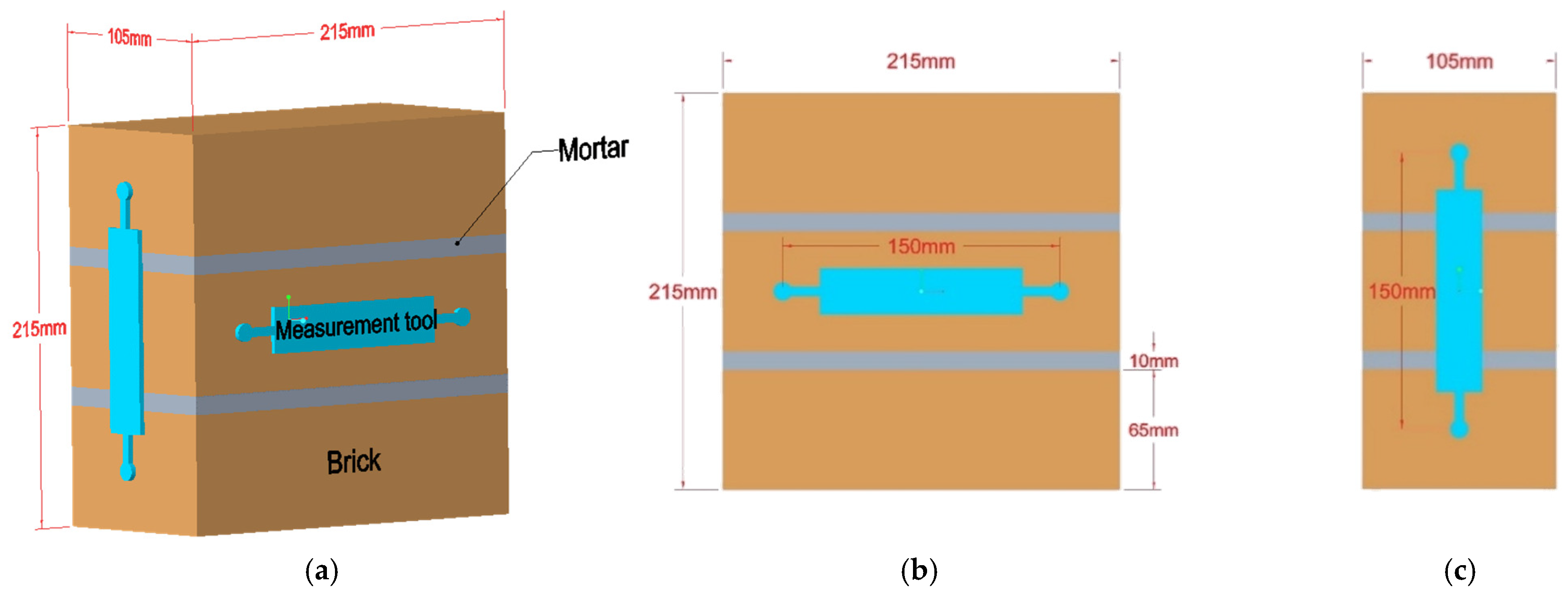
20]. However, since the developed solution is based on the length change rather than strain, the values cannot be dimensionless; they must be expressed in units of length. For this purpose, the measurement length (the length of the measurement tools) should be determined based on the dimensions of the specimens, which include three bricks with the standard dimensions of 65 mm × 102 mm × 215 mm stacked on top of each other with a mortar joint of 10 mm in between, being studied in the research project (
Figure 1).
Finally, the expected length change ranges from 0.015 to 0.270 mm over a measurement length of 150 mm. The gauge length of 150 mm was selected to: (i) fit the available clear surface between joints and edges of the masonry prism; and (ii) provide a deformation magnitude that remains within the microscope field-of-view while still being representative of the global prism response. For other specimen geometries, the same approach can be applied by adapting the gauge length and the sliding-ruler geometry accordingly [
39].
The required and aimed features are as follows:
- (a)
Mass production and cost-effectiveness: the possibilities of making measurement tools with different materials, such as steel, aluminium, and plastic, were considered. 3D printing technology, being the most economical option with the possibility of quick production, was adopted as the most appropriate option for producing the measurement tools.
- (b)
Independent from DAQ: to avoid the need for continuous data acquisition that requires a specific DAQ system, a non-continuous, image-based measurement approach was proposed, utilising a USB microscope. Therefore, the only necessary equipment to record the data would be a USB microscope and a regular computer.
- (c)
Comparable accuracy: to validate whether the proposed solution has acceptable accuracy compared to common measurement solutions, a series of calibration tests was performed at the Portuguese National Laboratory for Civil Engineering (LNEC) to determine the instrumental measurement uncertainty of the proposed solution. The tests and the calculations are discussed in detail later in this article.
- (d)
Open-source: since an image-based methodology is employed to develop the desired measurement solution, the images collected using the USB microscope may be processed with a motion analysis software, an image processing software, or a self-made code. However, considering that one of the features targeted for this solution is to be open-source, this objective is addressed by taking advantage of a Python code [
40].
2.2. Methodology and Description of the Solution
As previously mentioned, the proposed solution is composed of different parts: (i) measurement tools; (ii) microscopic scale imaging; and (iii) an image processing tool. The design and production of measurement tools rely on 3D printing technology. On the other hand, Python code is used for image processing. This section aims to describe each of the components of the measurement system in detail.
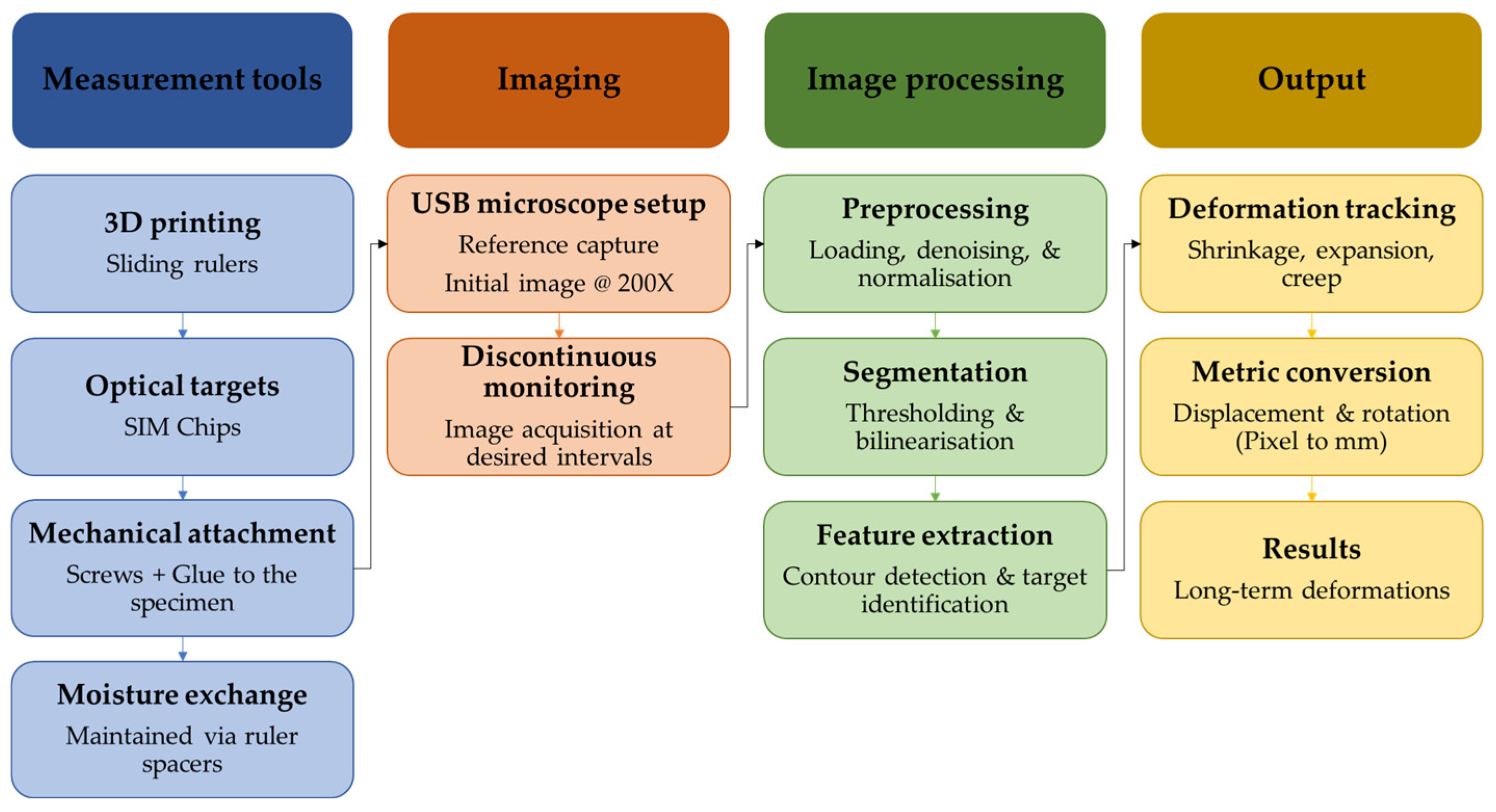
The integrated interaction between the measurement tools (3D printed hardware), the image acquisition process, and the analysis steps is visually mapped in the operational flowchart shown in
Figure 2.
2.2.1. Measurement Tools
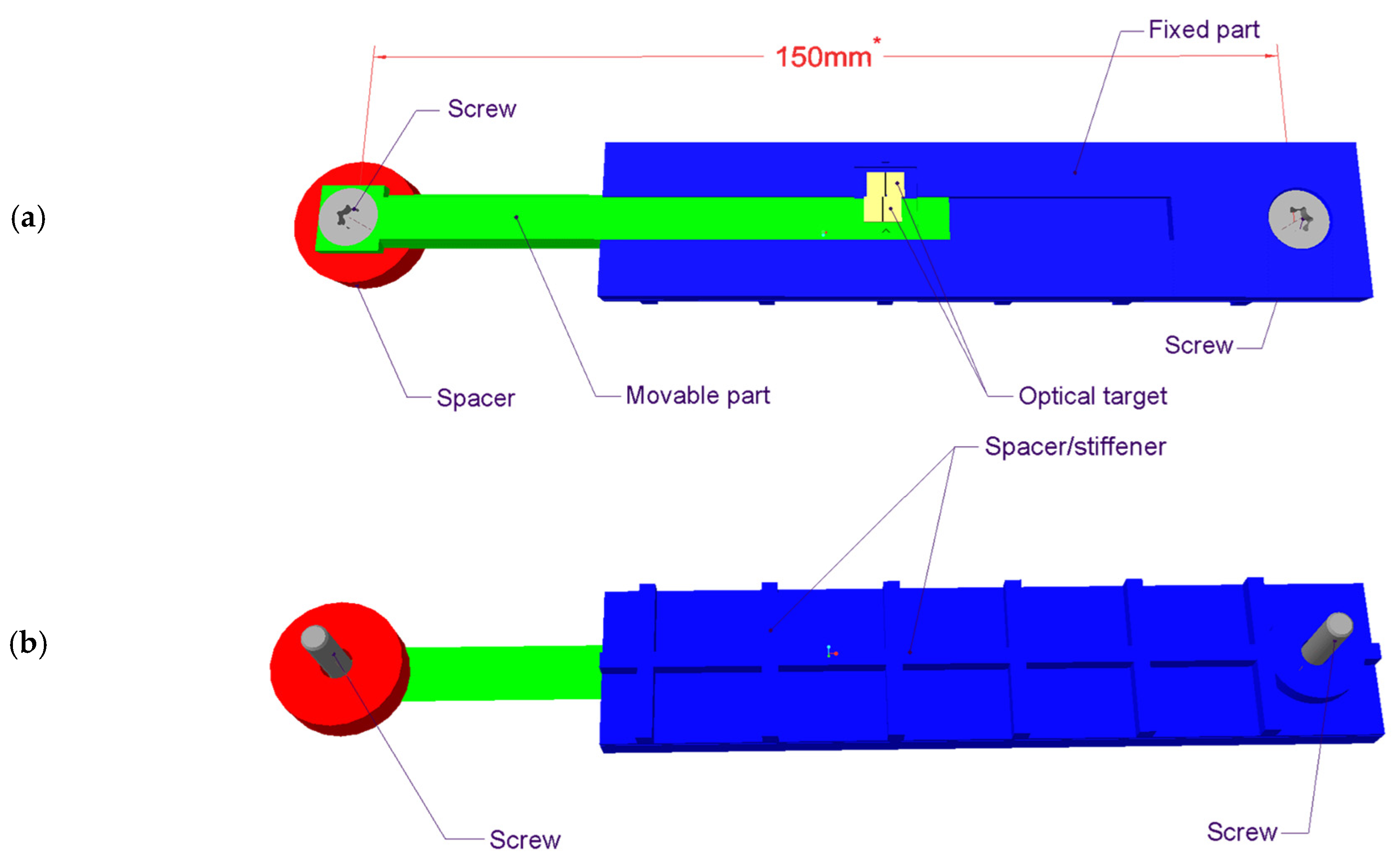
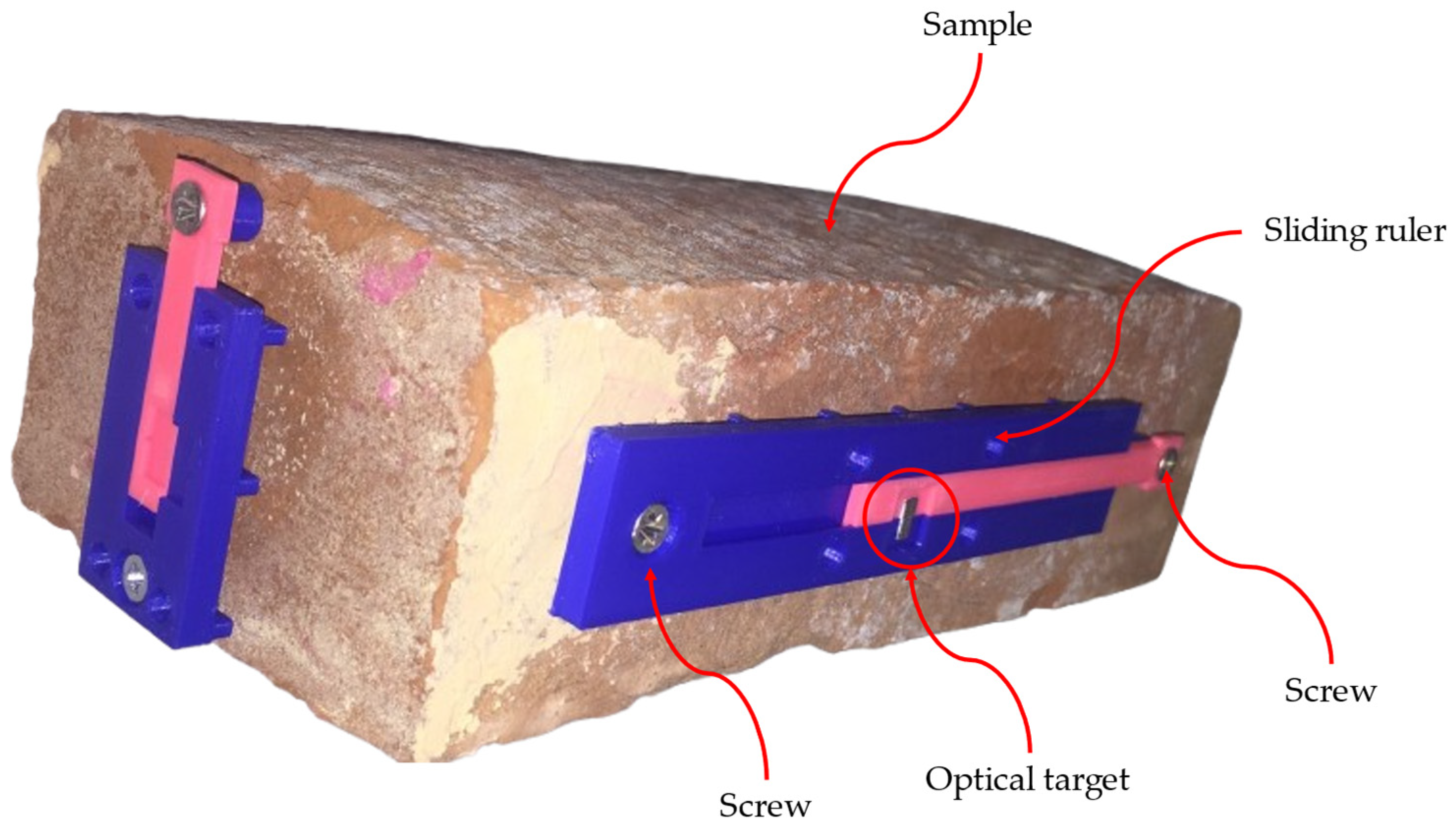
To design the measurement tools, the same working principle of a calliper has been followed, in which the two ends of a calliper slide linearly against each other to measure the distance between two specific points (
Figure 3). The design of the physical sliding ruler specifically addresses the limitations of continuous optical monitoring. Unlike standard DIC, which tracks deformation relative to a camera’s sensor frame, the sliding ruler establishes a local, physical reference frame (the relative distance between the holes where the fixed and movable ruler segments are screwed to the specimen). This feature renders the system self-calibrating regarding camera position, allowing a single operator to monitor an unlimited number of specimens using one portable USB microscope. Furthermore, the ruler setup eliminates the need for surface treatment (speckle patterns), ensuring that the masonry surface remains permeable to moisture, which is a critical factor for the accuracy of long-term deformation monitoring. To leave a gap between the sliding ruler and the specimen (required to allow the moisture transfer between the specimen and environment), some stiffeners/spacers were designed on the sliding ruler’s fixed part at the face in contact with the specimen (blue part in
Figure 3). To prevent bending of the sliding ruler due to the gap between the specimen and the movable part of the sliding ruler, a small spacer (red part in
Figure 3) is used under the movable part to align both parts (fixed and movable).
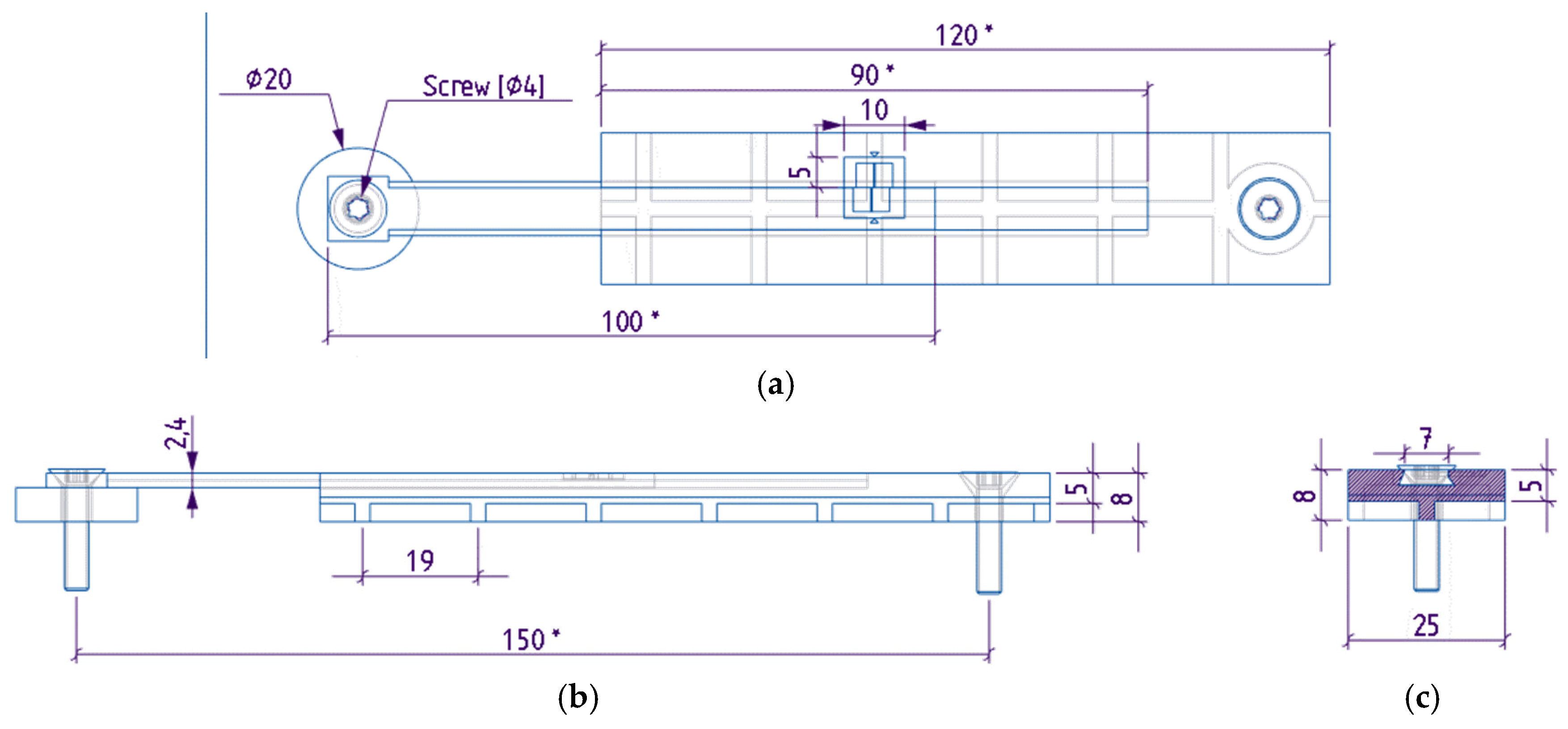
Figure 4 represents detailed dimensions of the sliding rulers.
The design and production of measurement rulers rely on Fused Deposition Modelling (FDM) 3D printing technology. For this study, the parts were produced using a Prusa i3 MKS+ printer. The printing was performed with a 0.2 mm layer height and 15% infill, with a maximum dimensional tolerance of 0.2 mm. As explained earlier, the final printed products consist of a fixed part with integrated spacers to allow moisture exchange with the environment, and a movable part that slides linearly in response to specimen deformation. PolyLactic Acid (PLA) filament was used to build these parts due to its affordability, ease of use in 3D printing, and recyclability. However, it has a relatively high Coefficient of Thermal Expansion (CTE), up to 70 × 10
−6 °C
−1 [
41,
42], which could introduce dimensional changes while used in environments with fluctuating temperatures. In this research, this is not an issue due to the controlled and monitored ambient conditions. Yet, for the applications in real construction environments, particularly those exposed to thermal variations, materials with lower thermal sensitivity such as aluminium or stainless steel can be used to manufacture the sliding rulers. Alternatively, compensation strategies can be considered using reference markers or tracking the temperature variations. For this purpose, the theoretical thermal sensitivity of the PLA sliding rulers can be quantified. For the 150 mm gauge length and a coefficient of thermal expansion of 70 × 10
−6 °C
−1, a 1 °C temperature change would induce a length change of ~0.0105 mm. However, under the controlled conditions (∆T ≤ ±0.1 °C), this contributes a maximum potential drift of ~0.001 mm, which is within the validated uncertainty band, discussed in
Section 3.
Different methods such as glueing and/or screwing can be used to connect the sliding rulers to the specimen. However, to ensure better repeatability at the connection point and prevent long-term detachment or adhesive creep (which can occur with surface-mounted sensors over months of testing), a mechanical connection was preferred. Stainless steel screws were used, and the drilled holes on the specimen were filled with concrete glue Sikadur -31+. Given the large cross-sectional area of the masonry specimens, these small shallow holes have a negligible effect on the global stiffness or creep behaviour of the specimen. In practice, this assumption is supported by the small hole diameter/depth relative to the specimen cross-section and by placing the attachment points away from edges and bed joints to avoid localised cracking or stress concentrations. The combination of stainless steel (corrosion resistance) and concrete glue (an epoxy adhesive) ensures a rigid, permanent connection that prevents screw loosening over long-term monitoring periods. After installation, the sliding ruler can slide linearly in response to the deformation of the specimen, occurring between the two screws that serve as reference measurement points.
Because the sliding ruler is intended for long-term campaigns, potential time-dependent effects such as creep/relaxation of the 3D-printed polymer parts, adhesive creep at the SIM-chip interface, and frictional evolution at the sliding interface may contribute to slow drift if parasitic stresses develop. In the present work, these effects are minimised by the kinematic concept (free sliding along the measurement axis) and by rigid mechanical anchorage at the screw points; nevertheless, a dedicated zero-drift stability test on a constant-length reference is recommended as future work to quantify any long-term instrumental drift under representative environmental conditions.
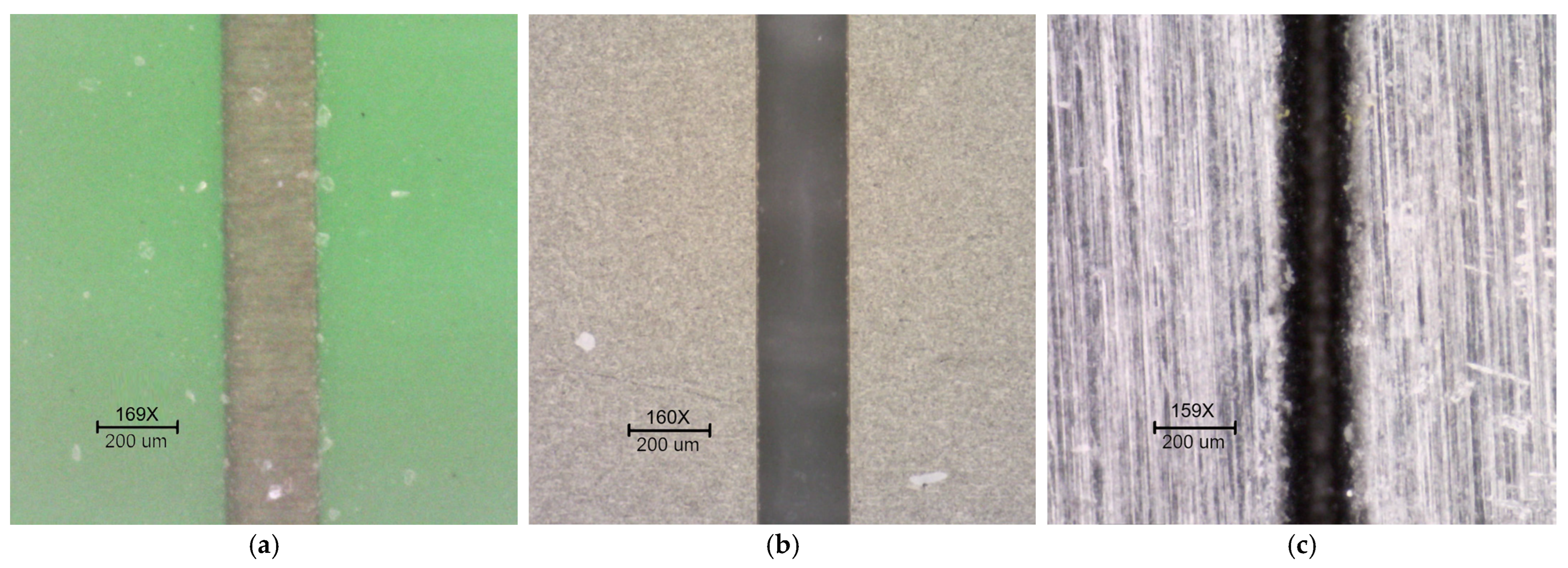
Due to the use of 3D printing technology and the image-based nature of the measurement solution, the use of graduated rulers (like a real calliper) is not feasible for this work. Therefore, an optical target is required to be installed on the sliding ruler. Different materials and technologies, such as laser engraving, SIM chips (SIM card of a common cell phone), and Printed Circuit Boards (PCBs) from various electronic devices, were tested. SIM chips were identified as the most appropriate material because they feature very sharp, clear, and straight lines in images taken at 150×~200× magnification (
Figure 5), resulting in higher and regular contrast (between the optical target and the surrounding region) during image processing. Notably, during material selection, various used SIM chips (including some several years old) were tested, and it was observed that the lines on these SIM chips remained optically stable, with no noticeable degradation in sharpness or contrast.
SIM chips, used as optical targets, must be securely attached to both the fixed and movable parts of the sliding ruler to prevent any small displacements. Since both contact surfaces (the top surface of the sliding ruler and the bottom surface of the SIM chip) are made of plastic, super glue is used to affix the SIM chips.
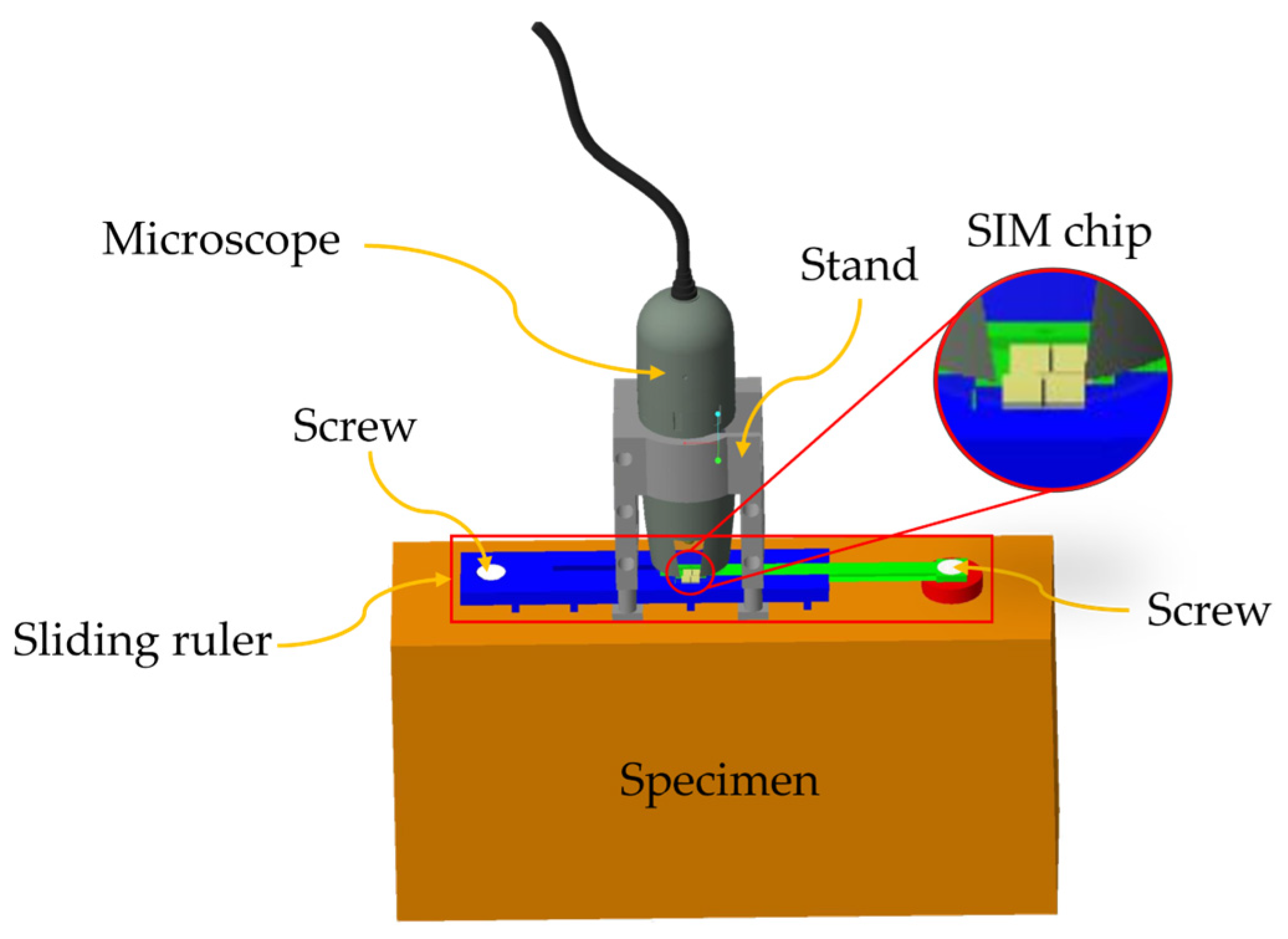
The long-term deformation measurements performed using the proposed system do not involve the application of any external mechanical loading, particularly in case of shrinkage and expansion. The measured deformations arise naturally from these time-dependent phenomena. The role of the proposed solution is exclusively to monitor the relative displacement between two fixed points on the specimen over time. During testing, the sliding ruler is mechanically attached to the specimen and remains in place throughout the monitoring period. At predefined time intervals, images of the optical targets are acquired using a portable USB microscope mounted on a positioning stand (
Figure 6). The microscope is connected to a standard computer, and no continuous data acquisition system is required. The collected images are subsequently processed offline using a Python-based image processing code to extract relative displacement values.
2.2.2. USB Microscope
After reviewing the USB microscopes available on the market, the Dino-Lite Edge USB microscope was selected for the experiments due to its versatile magnification range of 10×~220×, high number of pixels (2592 × 1944 pixels or 5 megapixels) which provides a linear spatial resolution close to 7.7 × 10
−4 mm/pixel, considering its field-of-view of 2 mm × 1.5 mm (at 200× magnification), and favourable quality/price ratio [
43].
To facilitate image processing, it is crucial to avoid touching the sliding ruler and to maintain a relatively consistent distance between the optical target and the microscope across different images. To ensure this, a stand for the microscope was designed and 3D printed. This stand prevents the user from contacting the sliding ruler during image capture and helps maintain a consistent distance between the microscope and the sliding ruler in sequential images.
It is relevant to note that due to the self-calibrating nature of the image processing Python code, described in the following subsection, capturing the images from the exact same angle and distance is not strictly necessary. As long as the optical targets are visible, the code can detect them and process the data. In discontinuous monitoring, the dominant practical disturbance is typically operator repositioning (stand placement, tilt, focus) rather than sensor electronic noise. For this reason, in addition to the calibration bench tests, a remove-and-replace repositioning repeatability test is recommended to quantify the added uncertainty introduced by typical image acquisition variability.
Images are captured in the desired time intervals with the appropriate magnification (150~200×) once the sliding ruler is attached to the specimen, as illustrated in
Figure 7.
2.2.3. Python Code
Once the images are collected, they are processed using Python Imaging Library (PIL) and OpenCV [
44], with a focus on the regions corresponding to the fixed and the movable parts of the sliding ruler, where the optical target is installed. The following steps outline the image processing workflow:
- (a)
Image loading: Images are loaded using the cv2.imread() function, which reads an image from a specified path and returns it as a NumPy [
45] array.
- (b)
Denoising: The loaded image is denoised using cv2.bilateralFilter(). This function effectively reduces noise while preserving edges fairly sharp, which is crucial for accurate contour detection.
- (c)
Grayscale conversion and Normalisation: The image is converted from the default format “BGR” (blue-green-red) to “GRAY” (greyscale) format using the cv2.cvtColor() function, simplifying subsequent processing. To minimise the influence of microscope lighting, the grayscale value is normalised to a consistent mean using the getdata() and putdata() PIL functions.
- (d)
Thresholding and Binarisation: The greyscale image is then thresholded using cv2.convertScaleAbs() and cv2.threshold() to convert it into a binary (black-and-white) format, facilitating accurate contour extraction.
- (e)
Contour detection: Using cv2.findContours(), contours are identified from the binary image. These contours are used to locate and track the optical target.
- (f)
Filtering and contour approximation: Only the relevant contours corresponding to the optical target (SIM) are retained by filtering based on contour area (cv2.contourArea()). The edges of the SIM are then approximated using cv2.approxPolyDP(), which simplifies the contour to a polygon. Convexity defects are also corrected using cv2.convexHull() to ensure closed and accurate boundaries.
- (g)
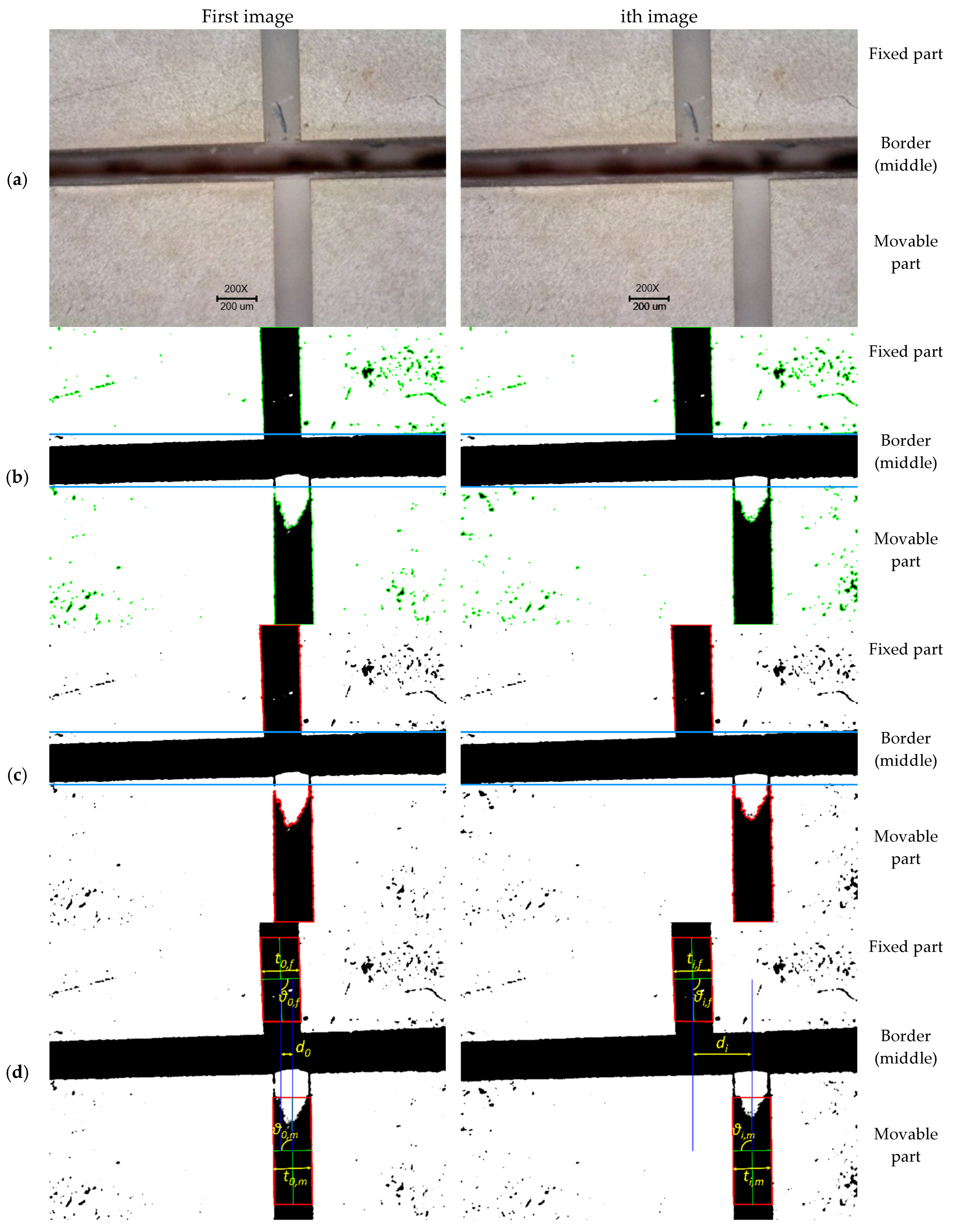
Target analysis: With the contours of the optical target identified, the system calculates the thickness and the angle of the black target line of the SIM on both the fixed and movable parts of the image.
- (h)
Displacement and rotation calculation: Knowing the position and the orientation of the optical target in each part, it is straightforward to calculate the relative translation and rotation between two (fixed and movable) parts and track the movement of the whole sliding ruler in the sequential images in terms of pixels. Finally, knowing the real thickness of the optical target line in terms of mm, the relative movement (rotation angle, R, and displacement, d) can be expressed in terms of rad and mm, respectively, following Equations (1) and (2):
where θ is the angle between the optical target and the horizontal axis, subscripts i and 0 refer to the i
th and the reference (first) images, respectively, and the subscripts m and f correspond to the movable and the fixed parts of each picture.
where t
mm is the actual thickness of the SIM line in mm, d
i and d
0 are the distances between the movable and fixed parts detected in, respectively, the i
th and the reference images in terms of pixels. The average thickness of the optical targets (movable and fixed) in each image is considered to be t
i,pixel, thickness in terms of pixels, in the calculations.
The image processing steps, including the symbols used in the equations are shown schematically in
Figure 8.
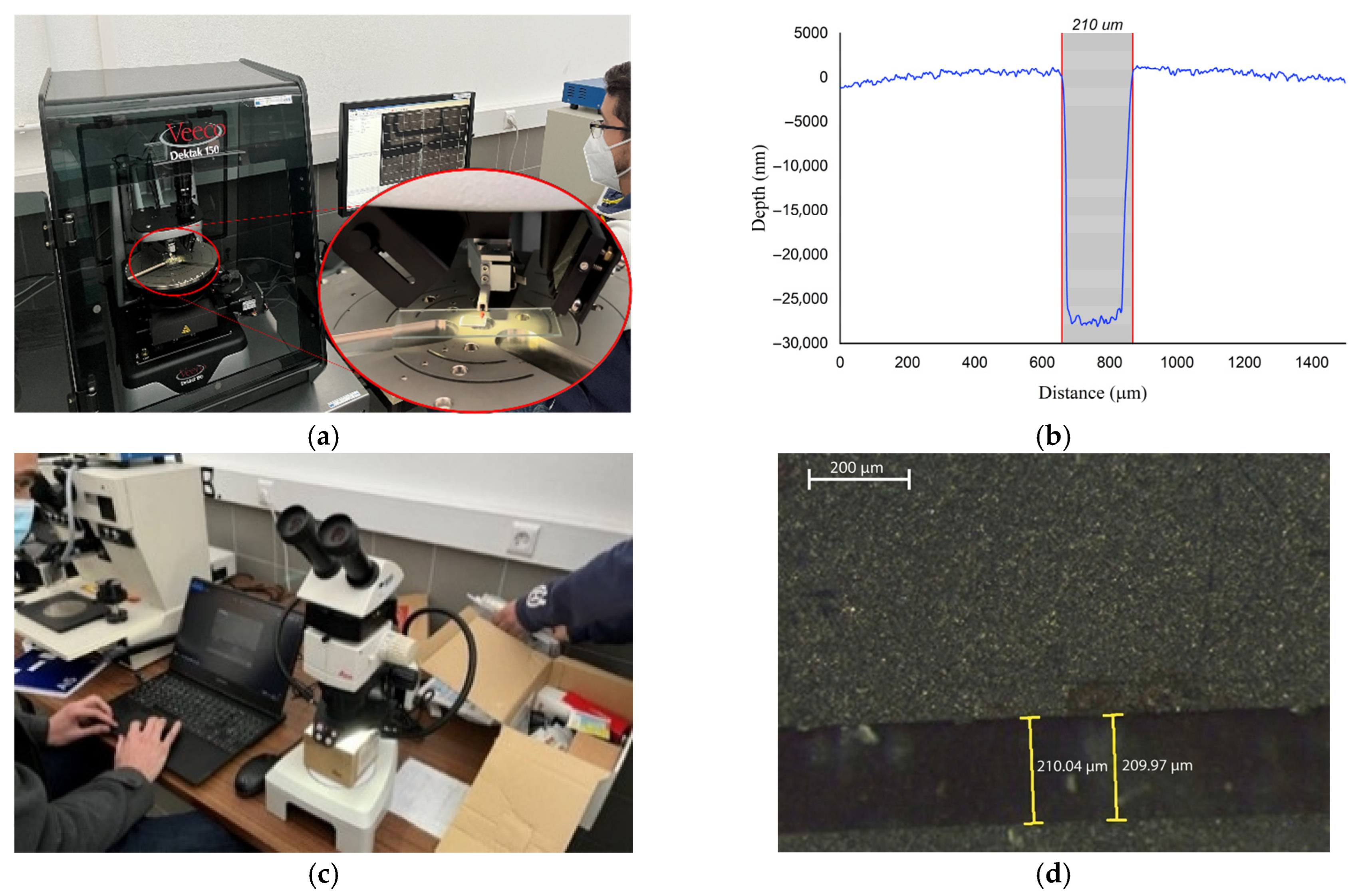
As mentioned in step (h), to have an image scale coefficient, relating virtual (in pixels) and real (in mm) dimensions, the real thickness of the lines on the SIM should also be measured. For this purpose, different types of measurements including optical and mechanical measurements were carried out. First, a surface scanner machine (Veeco Dektak 150), available in the Department of Electronics of the University of Minho (
Figure 9a) was used to measure three randomly chosen SIMs. The results for the same samples were then confirmed by using an optical microscope Leica (
Figure 9c), available in the same department. The results, which are presented in
Table 1, are in good agreement with each other and the thickness of the lines was consistent in the 3 samples, considering that all the samples were from the same brand. Although a slight deviation was observed in sample O_03, which can arise from optical thresholding sensitivity, the overall consistency with a Coefficient of Variation (CoV) of 0.7% was satisfactory. The average thickness is adopted as the reference scale, 0.20934 mm for the image processing code. With the thickness of the lines measured, it is possible to establish a scale coefficient for the measurements in the proposed system (mm/pixel ratio).
3. Validation of the Proposed Solution
The proposed instrumental approach should be metrologically validated, demonstrating its SI traceability and instrumental uncertainty, to be considered as a rigorous and reliable measurement solution for deformations. The validation tests were conducted in two phases: (a) calibration tests, aiming at obtaining the overall measurement uncertainty of the proposed solution; and (b) repeatability tests, which assess the instrumental repeatability.
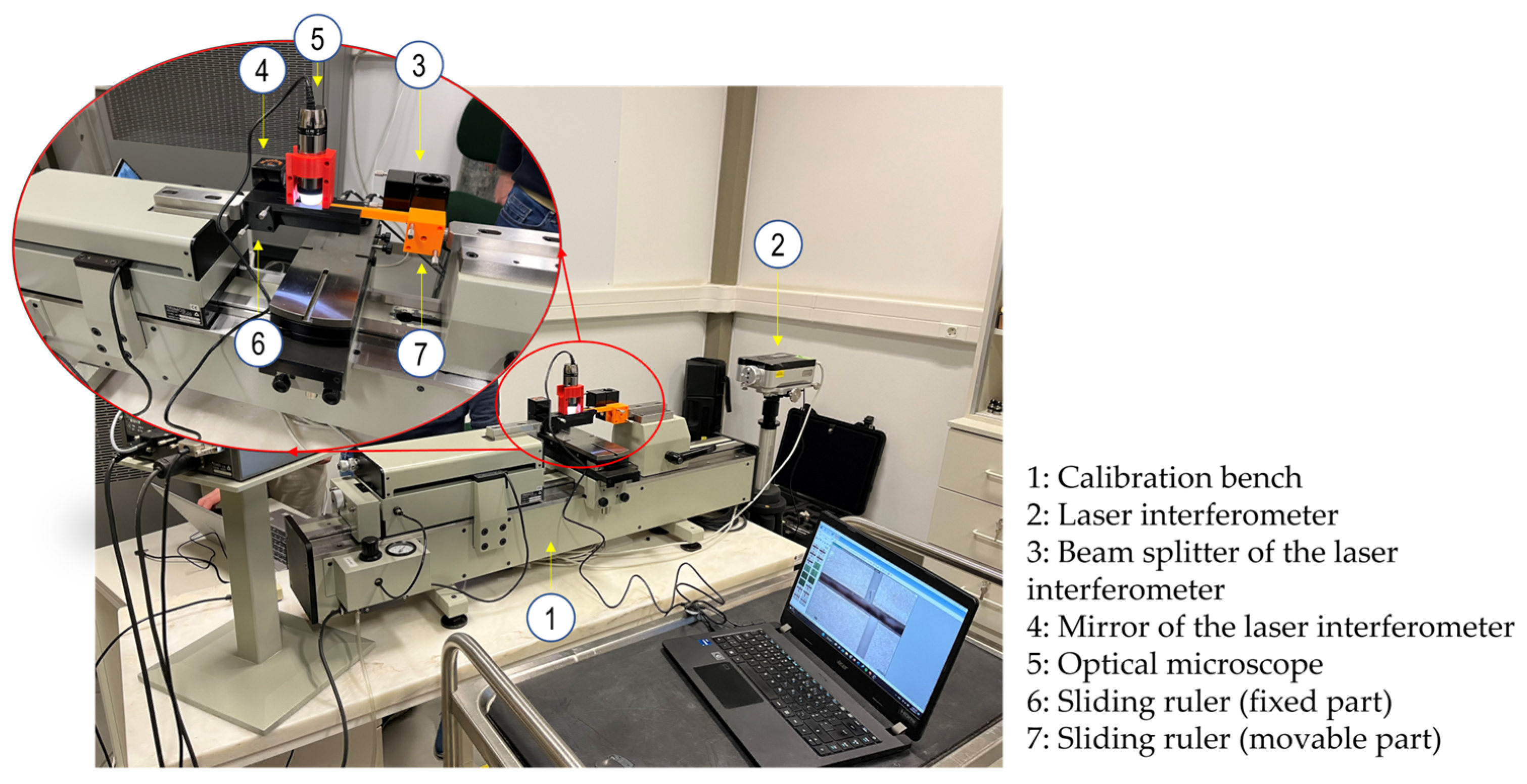
As outlined in
Figure 10, the tests were performed on a unidimensional calibration bench featuring the proposed optical system, including 3D printed parts and a microscope, being compared against a Renishaw/XL-80 interferometric laser system as the reference measurement standard. The same displacement was applied to the movable part of the sliding ruler and the laser mirror, while recording the simultaneous readings and reference values (), before comparing the results. This process was employed to derive the necessary metrological characteristics required for calculating the instrumental measurement uncertainty. It is important to note that all validation tests were conducted under controlled environmental conditions, with a temperature maintained at 23.3 ± 0.1 °C and a relative humidity below 65%, and the controlled displacement loading is only applied during the validation tests, where the proposed system is mounted on a unidirectional calibration bench and subjected to imposed displacements simultaneously measured by a laser interferometer reference system.
3.1. Uncertainty of the Systematic Errors
To calculate the instrumental uncertainty of the measurement solution, it is necessary to first identify its main uncertainty components, namely, random and systematic (or residual) errors. These components are then combined using the Law of Propagation of Uncertainty (LPU) described in GUM [
38].
Generally, measurement imperfections result in errors. Errors are divided into two categories: random and systematic. Random errors arise from unpredictable temporal and spatial variations due to uncontrollable factors, while systematic errors stem from consistent biases. Though random errors, which have an expected value of zero, cannot be eliminated, they can be minimised by increasing the number of observations. Systematic errors, although reducible, require quantification to minimise their impact. If the magnitude of systematic errors is significant compared to the desired measurement accuracy, corrections or correction factors should be applied. After such rectifications, the expected value of a systematic error is considered to be zero [
38].
In this context, the systematic error is defined as the difference between the reading from the proposed solution and the reference value from the interferometric laser system. Residual error refers to the difference between the corrected readings (after adjusting for systematic error) and the reference values, as detailed in Equations (3) and (4), respectively.
where E
sys, l, L, E
res, and l
cr are systematic error, uncorrected reading, reference value, residual error, and corrected reading, respectively.
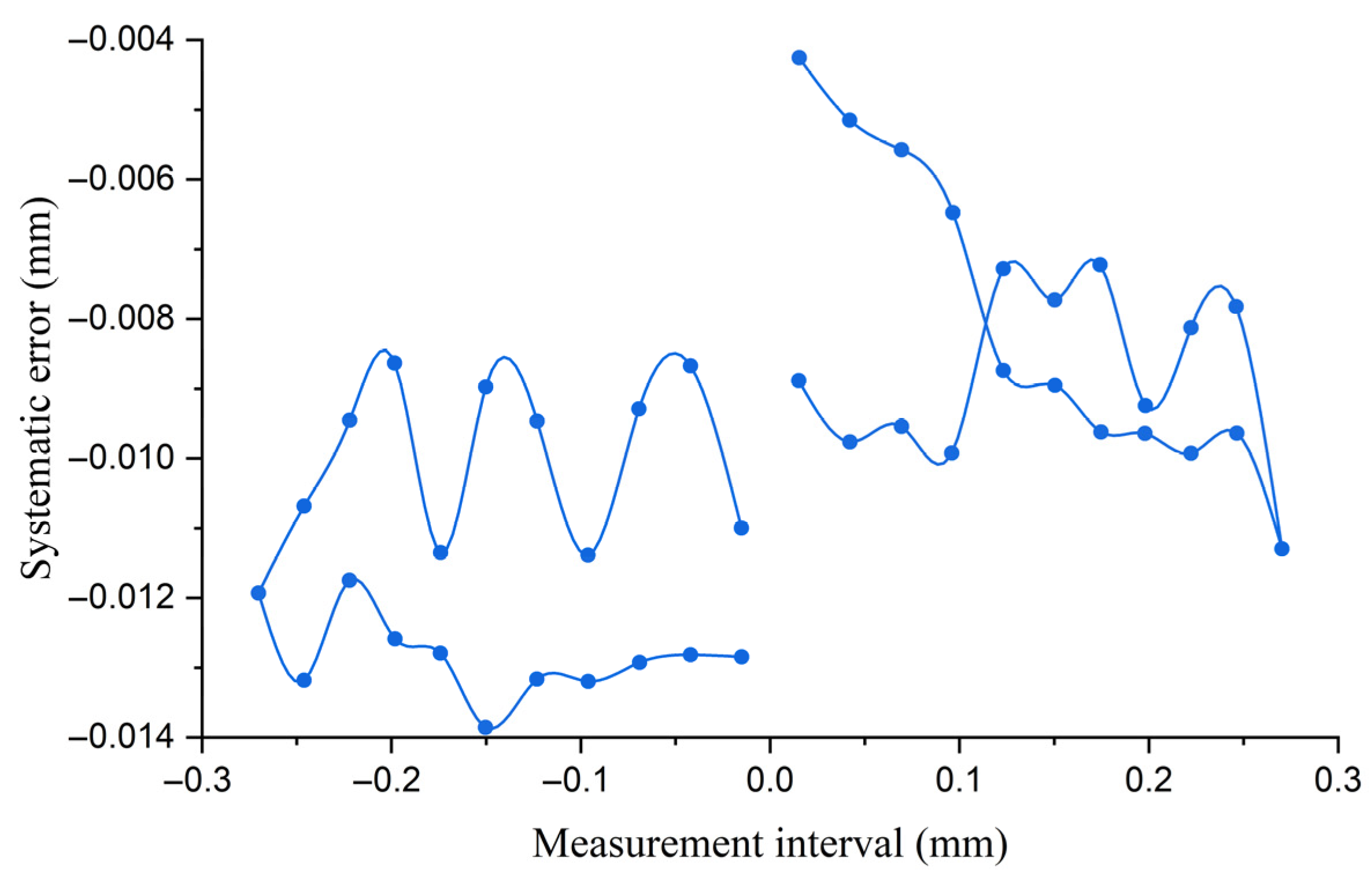
The calibration tests were conducted in both negative and positive displacement directions within an interval ranging from 0.015 mm to 0.270 mm. This interval was subdivided into ten increments, each representing approximately 10% of the maximum expected displacement (ranging between 0.024 mm and 0.027 mm). Specifically, the measurements started at zero, increased to +0.270 mm in increments between 0.024 and 0.027 mm, then returned to zero following the same incremental steps. This procedure was repeated for the negative direction (0 to −0.270 to 0 mm) as well. Following these tests and the calculation of the systematic errors, as illustrated in
Figure 11, a linear correction of the results was carried out to derive the residual errors.
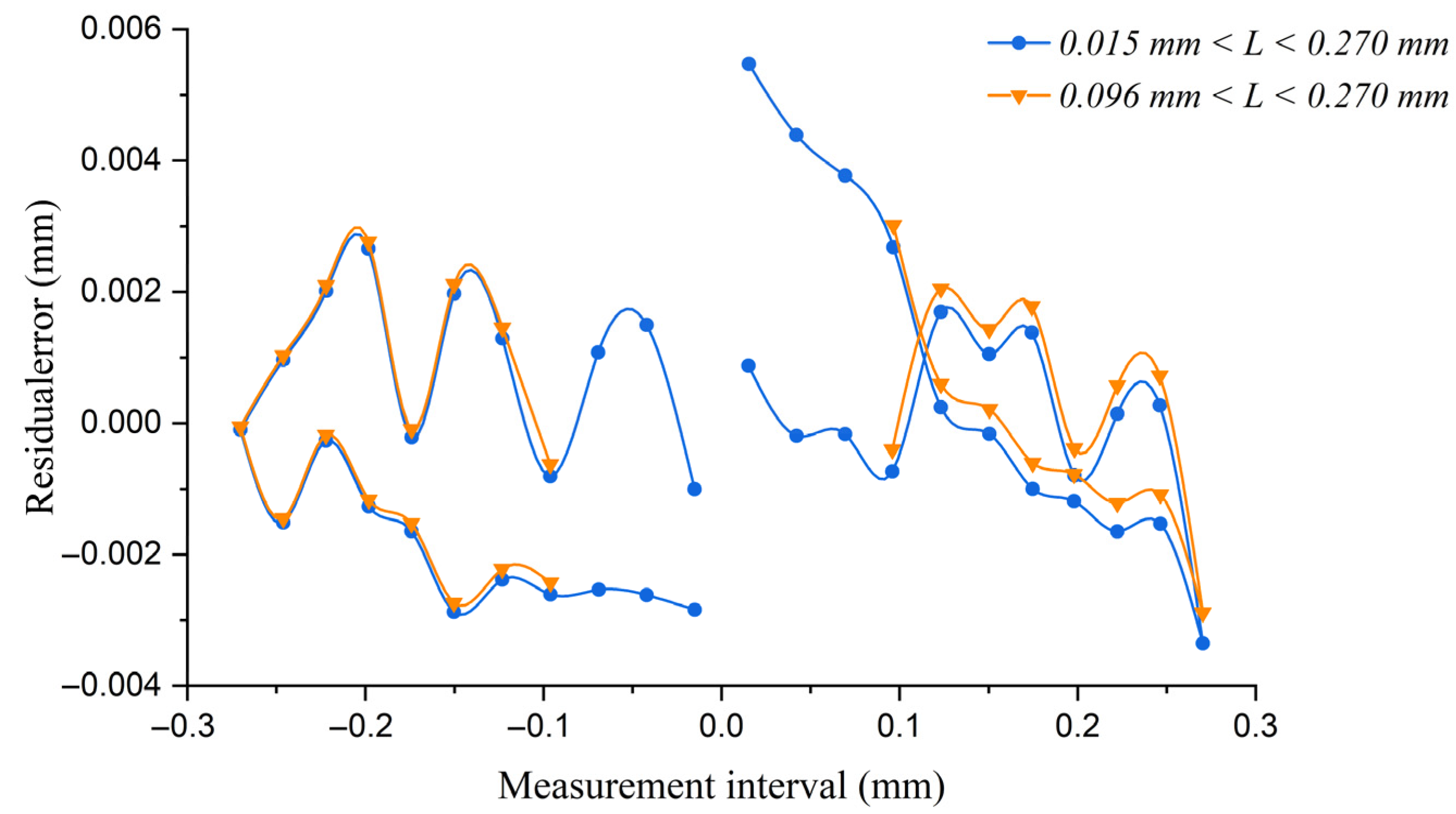
The scatter of these residual errors is depicted in
Figure 12. It is observed that absolute values less than 0.096 mm exhibit the highest residual errors. Consequently, special attention has been given to measurements greater than 0.096 mm, and calculations for these values were meticulously repeated. The higher residual scatter at small |L| values is consistent with the lower signal-to-noise ratio of the displacement estimate in this range: small translations are more sensitive to thresholding variability, slight differences in focus/illumination, and any micro-stick–slip friction in the sliding interface. For practical long-term monitoring, this implies that the most reliable use is either ensuring consistent imaging conditions and minimising slider friction or interpreting very small increments close to zero as being within the instrumental uncertainty band unless confirmed by repeated readings.
The standard deviation of the residual errors was calculated to represent the systematic measurement uncertainty component. Meanwhile, the expanded uncertainty was determined by multiplying the standard deviation by a coverage factor to achieve a 95% confidence interval, considering effective degrees of freedom of 41 for the interval between 0.015 mm and 0.270 mm, and 35 for the interval between 0.096 mm and 0.270 mm, respectively. A detailed summary of these calculations is presented in
Table 2.
3.2. Uncertainty of the Random Errors
This type of uncertainty accounts for various sources encountered during validation tests. Typically, the measurement uncertainty related to random errors arises from the calibration apparatus itself, the measurement resolution of the system being calibrated (the USB microscope in this case), and the system’s repeatability.
3.2.1. Calibration Apparatus
A Renishaw XL-80 interferometric laser system has been used to calibrate the proposed measurement solution. Like other types of calibration apparatuses, three factors influence the uncertainty of this system: (i) instrumental uncertainty; (ii) drift; and (iii) thermal effects. The uncertainty of the calibration apparatus is calculated to be 7.2 × 10
−7 × L using Equation (5), as described in the following subsections.
where u(L)
app is the measurement uncertainty of the calibration apparatus, u(L)
ins is the instrumental measurement uncertainty of the reference standard (interferometric laser system), u(L)
d is the instrumental drift of the reference standard, and u(L)
T considers the thermal effects.
Instrumental Uncertainty of the Reference Standard
The interferometric laser system, typically used as a reference standard to calibrate displacement transducers and other measurement instruments, exhibits a high level of accuracy. The instrumental standard uncertainty of this specific model used in this research is expressed as 2.5 × 10⁻⁷ × L for each measurement, assuming a Gaussian distribution, where L is the dimensional value measured by the interferometric laser system.
Instrumental Drift
Drift refers to an undesirable and gradual shift in the output of the interferometric laser system over time, primarily due to device ageing. This contributes additional uncertainty to the measurements performed by the system. Instrumental drift of the interferometric laser system is considered as 0.1 × 10⁻⁶ × L for each measurement, assuming a rectangular distribution based on the manufacturer’s data.
Thermal Effects
Thermal effects encompass the impact of temperature variations on the accuracy and stability of measurements made on the calibration bench. The uncertainty value of the thermal effects for each measurement can be calculated from Equation (6), considering a rectangular distribution.
where
is the temperature change during calibration (measured as 0.1 °C in the current campaign), α is the CTE of the system (equal to
°C
−1, considering the steel calibration bench), and L is the dimensional measurement performed by the system.
3.2.2. Measurement Resolution
In metrology, measurement resolution refers to the lowest distinct increment or detail that a device can consistently measure. This concept is crucial since it can strongly contribute to the measurement accuracy. Resolution determines an instrument’s ability to distinguish between small differences in the values being measured. For the current research, the resolution of the proposed measurement solution is assumed to be 0.1 × 10⁻⁴ mm. This uncertainty component can be represented by a rectangular distribution, considering a semi-amplitude of 0.5 × 10⁻⁵ mm.
3.2.3. Repeatability
The repeatability tests were performed in both positive and negative displacement directions, having a setpoint equal to 50% of the maximum expected displacement for the material to be studied (0.270 mm).
Therefore, repeatability testing steps were 0 mm and −0.135 mm, and 0 mm and +0.135 mm for the negative and positive displacement directions, respectively. Each step was repeated five times.
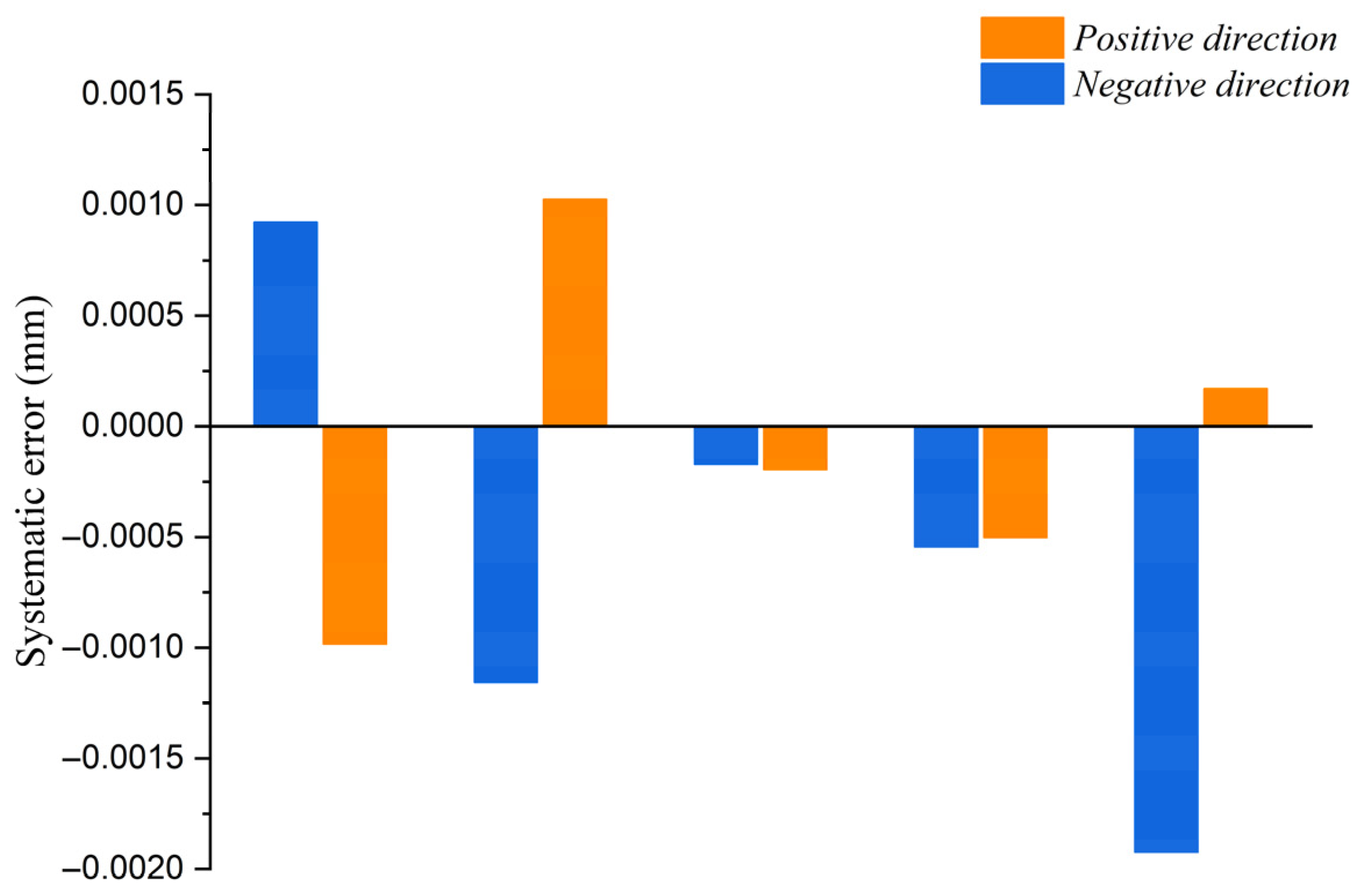
After conducting the repeatability tests, calculations were performed for both negative and positive displacement directions. The repeatability for each direction was determined by calculating the standard deviation of the systematic errors from the measurements conducted in the same direction (
Figure 13). The overall system repeatability was defined as the maximum repeatability observed in both directions (
Table 3).
3.3. Instrumental Uncertainty
Once the two main components, residual error and calibration uncertainty, are determined, they are combined by using LPU to calculate the instrumental uncertainty of the proposed measurement solution. A summary of these calculations is provided in
Table 4.
The results indicate that the 95% expanded instrumental uncertainty is 0.0042 mm for a measurement interval between 0.015 mm and 0.270 mm, and 0.0034 mm for a measurement interval between 0.096 mm and 0.270 mm. In both cases, the number of effective degrees of freedom is equal to 44 and the corresponding coverage factor is 2.06, for a 95% confidence level. The data in
Table 4 reveal that systematic (residual) errors significantly contribute to the instrumental uncertainty of the proposed solution, compared to the calibration process itself. However, the instrumental uncertainty achieved by the proposed method is comparable to that of conventional sensors such as LVDTs and dial gauges (
Table 5). Given its cost-effectiveness and open-source nature, this method is considered a viable and effective measurement solution.
4. Discussion
The results obtained from the tests provide important insights into the accuracy of the proposed measurement solution and, at the same time, reveal its limitations.
4.1. Validation Results
The combination of low residual errors and repeatability values indicates a low level of uncertainty. Notably, the expanded uncertainty in the more relevant measurement range for the long-term deformations in masonry was determined to be 0.0034 mm. This level of uncertainty is significantly lower than the expected magnitude of the deformations in the material under study over extended periods due to phenomena such as moisture expansion, shrinkage, and creep.
The ability of the proposed solution to detect very small displacements, a few micrometres, ensures that the gradual deformations can be reliably captured without being significantly influenced by instrumental errors. The repeatability results, showing an overall standard deviation of 0.00048 mm, confirm the system’s stability under repeated measurements. This is an important feature for long-term monitoring, where consistency over time is critical for drawing conclusions about material behaviour.
Compared to conventional solutions such as LVDTs and dial gauges, which offer similar accuracy but higher costs, the proposed solution offers a considerable advantage. Being modular, open-source, and cost-effective makes it suitable for deployment in multi-point monitoring setups, particularly in laboratory conditions where budget constraints or specific limitations, such as geometric restrictions, limit the use of conventional solutions.
Furthermore, the detailed quantification and separation of uncertainty sources (systematic or residual errors, calibration instrument performance, resolution, and environmental influences) highlight the robustness of the validation process. The accurate control of testing conditions (23.3 °C ± 0.1 °C and relative humidity < 65%) minimised thermal and ambient influences, supporting the reliability of the validation protocol.
From a broader perspective, validation of this measurement solution contributes directly to the reliability of experimental studies on long-term deformations of building materials. By ensuring that the instrumental uncertainty is considerably below the deformation magnitude of the material under investigation, this work enhances the reliability of subsequent time-dependent deformation measurements, such as moisture expansion, shrinkage, and creep tests. It sets a solid foundation for further studies requiring accurate, stable, and affordable displacement monitoring over extended durations.
The instrumental uncertainty of the developed system is 0.0042 mm which is an empirical result derived from the calibration tests, where both the proposed and reference measurement methods, record the same displacements. This uncertainty value already incorporates the net effect of influencing factors present during the test, including the dimensional changes in the PLA sliding rulers under the controlled temperature with fluctuation of less than 0.1 °C. The validation thus confirms the suitability of the system for the intended laboratory application.
The broader scientific implication of this validated methodology lies in its potential to enhance the statistical reliability of material science research. Long-term deformation studies of construction materials, particularly in masonry, often suffer from high scatter due to material heterogeneity. Conventional sensor costs often force researchers to limit the number of specimens, thereby reducing statistical power. By reducing the cost per data point while maintaining instrumental uncertainty below 0.004 mm (comparable to LVDTs), this methodology removes the economic barrier to numerous-specimen testing. This shift allows for a more rigorous probabilistic characterisation of long-term deformations, leading to more accurate constitutive models for structural design, considering the long-term behaviour of building materials.
4.2. Limitations
The validation presented herein establishes the system’s instrumental uncertainty under controlled, single-operator conditions. To fully characterise its operational reproducibility for broader use, future work should include a formal assessment across multiple days, different operators, and varying microscope refocusing conditions. Such a study would be essential for standardising the protocol for large-scale or multi-user experimental campaigns.
The minimum detectable deformation is determined by the system’s expanded uncertainty, established here as 0.0042 mm. The maximum measurable deformation is currently constrained by the microscope’s field-of-view, which is approximately 2.0 mm at the magnification of 200×. The system’s linearity and uncertainty at displacements approaching this limit were not explicitly tested in this calibration campaign, as the target application required a lower range (typically less than 1.8 mm for the studied material). Characterisation over the full field-of-view of the microscope would be necessary to confirm linearity at the extremes of the system’s capacity and is recommended for future studies intending to use the system for larger displacement measurements.
Regarding field application, as mentioned earlier in
Section 2.2 the primary challenge is the thermal sensitivity of the current 3D-printed material. PLA exhibits a relatively high thermal expansion (~70 × 10
−6 °C
−1), which could introduce significant errors under uncontrolled outdoor temperature fluctuations. To address this for in situ monitoring, two specific mitigation strategies are recommended: (i) manufacturing the sliding rulers from materials with low thermal sensitivity, such as aluminium; and (ii) implementing a dummy reference ruler to track and computationally compensate for thermal expansion. Similarly, the short-term effects of friction conditions on the sliding mechanism of the rulers, under controlled laboratory conditions, are encompassed within the instrumental uncertainty determined from the validation tests, as mentioned in
Section 3.1. However, for long-term campaigns, particularly in uncontrolled environments, the stability of the friction coefficient, potentially affected by dust or humidity was not explicitly characterised and needs to be investigated in future work.
While the current setup relies on the microscope’s built-in LED lighting to ensure consistent image quality, protective casings would be required to shield the optical targets from dust and weathering in outdoor environments.
5. Economic Aspects
The estimated investment desired for an experimental campaign utilising 50 measurement tools is presented in
Table 5 as an example, based on the available prices for the equipment on the European market. The cost estimates assume that each sensing channel includes the required accessories and logging capability (e.g., DAQ, cabling, and fixtures for LVDTs), while labour costs are excluded. In this analysis, two types of widely used measurement solutions, including LVDT and dial gauge, which are prevalent in the field and have a comparable range of measurement uncertainty, are compared with the proposed measurement solution.
To ensure a comparison that is not biassed by the wide ranges of costs and uncertainty for conventional solutions (LVDT and dial gauge), the cost and uncertainty are linked based on the rationale that for each solution, the lowest uncertainty value corresponds to the highest cost within its range.
LVDTs are known for their accuracy while dial gauges are renowned for their simplicity and ease of use; however, both methods require significant investment when used in extensive experimental campaigns. On the other hand, the proposed measurement solution presents a cost-effective alternative by minimising the initial and ongoing costs associated with long-term experimental campaigns.
To evaluate the cost-effectiveness of different solutions, the Economic-Precision Index (EPI) is introduced. This index, defined as the inverse of the product of the unit price and uncertainty of each solution, captures the balance between measurement uncertainty and economic feasibility. Since both higher cost and higher uncertainty are undesirable, a higher EPI value signifies a more advantageous trade-off between the two critical factors. The EPI metric is particularly useful as it simultaneously considers both economic and precision related considerations. While a lower cost is preferable, it should not come at the expense of increased measurement uncertainty. By taking the inverse of the cost-uncertainty product, a single value is obtained that reflects the overall efficiency of a measurement solution.
As presented in
Table 5, the average EPI values for LVDTs and dial gauges are 0.53 and 0.7, respectively, whereas the proposed solution achieves an EPI of 4.17. The significantly higher EPI value of the proposed solution highlights its superior balance between precision and affordability, demonstrating its effectiveness compared to LVDTs and dial gauges for practical applications.
6. Conclusions
This paper proposes an innovative, cost-effective, and open-source measurement solution designed to quantify the long-term deformation of building materials. By combining microscopic images, 3D printing technology, and artificial vision, this system offers a highly portable and customisable alternative to conventional solutions such as LVDTs and dial gauges. Its image-based nature avoids the need for dedicated data acquisition systems, reducing complexity and enabling easy deployment across multiple monitoring points. Additionally, the Python-based image processing code accurately detects the optical target in the images and converts displacement measurements from pixels to metric units. Its open-source release not only promotes accessibility but also fosters collaboration and further enhancement by the research community.
The study demonstrates that low-cost hardware can be successfully combined with metrological rigour when supported by a robust physical reference frame and appropriate calibration procedures. The proposed solution has been metrologically validated at LNEC, using a highly accurate laser interferometer measurement system as the reference standard, resulting in an expanded uncertainty of 0.0042 mm at a 95% confidence level. This uncertainty is at least one order of magnitude lower than the expected long-term deformations of masonry materials investigated in this study, confirming that the errors (resulting from the instrumental uncertainty) do not mask the physical phenomena of interest. The uncertainty analysis further showed that systematic residual errors dominate the total uncertainty, while the contribution of the calibration apparatus itself remains negligible, highlighting the effectiveness of the adopted calibration and correction strategy.
These outcomes confirm the system’s suitability for reliable monitoring of long-term deformations such as moisture expansion, shrinkage, and creep in building materials under controlled climatic conditions. The achieved repeatability indicates that discontinuous measurements, when performed with a self-calibrating measurement solution, can provide accuracy comparable to continuous sensor-based solutions such as LVDTs and dial gauges. While the validation presented herein is limited to controlled laboratory conditions, extending the method to uncontrolled environments requires additional measures for thermal compensation, environmental protection, and repositioning robustness.
A key outcome of this work is the system’s ability to monitor moisture-sensitive materials without interfering with their moisture transfer with the environment. Unlike conventional DIC approaches that require non-breathable speckle patterns, the 3D-printed sliding rulers preserve moisture exchange at the specimen surface, ensuring that the measured deformations remain representative of true material response. The use of the thickness of the SIM chip’s line as an internal scale reference was shown to effectively neutralise common sources of variability in portable microscopy, such as changes in camera angle or stand height. This intrinsic self-calibrating characteristic is central to the robustness of the proposed discontinuous measurement solution.
From an economic and experimental design perspective, the introduction of the Economic–Precision Index (EPI) demonstrates that the proposed system offers a substantially more efficient balance between accuracy and cost than traditional LVDTs or dial gauges in large-scale campaigns. This finding implies that the primary limitation in studies on long-term deformations of construction materials is no longer measurement accuracy, but rather the implementation of acquisition and data management workflows capable of handling large specimen populations.
Beyond its target application, this solution presents significant potential for broader implementation in civil engineering research and practice if future work can explore alternative materials with reduced thermal expansion for long-term in situ applications, as well as compensation strategies for the potential temperature-induced effects in uncontrolled environments. Its modular design allows for easy scaling in large experimental campaigns, while its low cost makes it particularly attractive for academic research, long-term deformation assessments, and projects in resource-constrained settings. With further adaptations such as adjustments for uncontrolled climatic conditions, protection for outdoor usage, and integration into automated image capture workflows, it could also be applied in Structural Health Monitoring (SHM) and deformation tracking in built heritage structures.
Overall, the proposed solution addresses a key gap in the field by offering a validated, accurate, and affordable displacement measurement solution. It enables researchers and engineers to carry out extensive long-term deformation monitoring without compromising accuracy, promoting a deeper understanding and improved design of durable and sustainable building materials.




 ,
,