1. Introduction
Reliability and maintenance are crucial in the food manufacturing industry, where continuous equipment operation is essential for ensuring food safety and product quality. Due to strict regulations and the perishable nature of products, even minor equipment failures can cause significant issues, resulting in production delays, product spoilage, and safety risks [
1,
2]. In essence, in food manufacturing, equipment reliability and maintainability are critical not only for financial efficiency but also for ensuring public health and regulatory compliance.
To navigate through all expectations, as well as enhance and sustain productivity and quality, food manufacturers are increasingly adopting robust maintenance strategies, hygienic equipment design, and data-driven technologies to maintain operations and meet industry standards. For instance, focusing on three interrelated strategies—reliability, availability, and maintainability—in the ice cream industry indicated the importance of pinpointing failure modes to enhance productivity and product quality [
3]. Similarly, using a reliability-centered maintenance model, a mass-consumption food company proved that prioritizing maintainability, especially ease and accessibility of cleaning, improved overall equipment effectiveness [
4].
Focusing more narrowly on conveyor system reliability, there are works that provide extensive analysis of the mechanical triggers for deviation, which accounts for 70–80% of all conveyor failures, as well as a theoretical foundation explaining why a belt moves toward the side with higher tension [
5,
6]. In line with the deviation mechanism of belts, some studies established a mechanical model of the belt to analyze the root causes of lateral movement and how uneven stress distribution across the belt width interacts with dynamic operating conditions to create staggering patterns [
7,
8]. Moreover, there are studies that deal with various approaches, ranging from Lean Manufacturing techniques to predictive maintenance, machine learning, and digital twins, all of which aim to improve the reliability of processing machines in food manufacturing [
9,
10,
11,
12,
13]. Modularity is also highlighted as a core pillar for sustainability and safety in food packaging and processing [
14,
15].
Another considerable example mainly focuses on a systematic literature review with an emphasis on frameworks [
16]. DMADV is a structured Six Sigma framework primarily used for designing new products, services, or processes from the ground up. Also known as DFSS (Design for Six Sigma), its goal is to ensure that a new design meets customer requirements (explicitly including reliability) and achieves a high level of quality right from its launch. However, as described later in the methods and materials section, there is limited work when it comes to the application of the DMADV framework in the food manufacturing industry, especially in terms of integrating reliability and maintainability.
The existing limited works do not employ the DMADV in its entirety. It was found that either Design and Verify, Verify alone, or a combination of one or more of stages are used, but lack full implementation. Otherewise, equipment reliability is not the focal area. Instead, integrating DMADV with techniques such as quality function deployment, failure mode, and effect analysis successfully improved the Sigma level. It also resulted in reduction of defects and downtime [
17]. Similarly, the application of DMADV in the supply chain and the pharmaceutical industry also provided operational gains in terms of cost savings and process capability [
18,
19]. However, although none of the above works focused on reliability as an integral part of the DMADV framework, there is an attempt to use the Define, Measure, Analyze, Improve, and Control (DMAIC) framework, which is a better fit for non-product or equipment design-related efforts [
20]. In other words, this paper is contributing to a novel framework that has received noticeable applications in other industries but still lacks complete implementation in the food processing sector.
The redesign of the depositor system was initiated to address long-standing reliability and maintenance issues at a food manufacturer in East Tennessee. The existing system used a short, wide, tension-driven belt that frequently misaligned, leading to inconsistent product application, excessive downtime, and quality concerns. The legacy design also lacked features that support hygienic standards, making cleaning and disassembly labor-intensive. Wider belts, while necessary for some product formats, are more prone to lateral drift, which underscores the importance of self-tracking mechanisms and proper roller alignment to minimize misalignment and downtime, with emphasis on V-Rib and crowned rollers [
21,
22].
Persistent belt tracking issues, extended repair times, and sanitation challenges rendered the original depositor inefficient. Frequent belt replacements, operator hazards during maintenance, and compliance risks from poor cleanability prompted the need for a more robust and hygienic design. Sanitation in food manufacturing relies on smooth, corrosion-resistant materials, tool-free disassembly, and minimal crevices. Guidelines from the US Food and Drug Administration and the Meat Institute emphasize stainless steel construction, external bearing configurations, and modular designs [
23,
24].
Additionally, improving the mean time to repair (MTTR), mean time to failure (MTTF), and overall system reliability were prioritized performance objectives. Designing with maintenance in mind, for instance having easily removable parts that enable thorough cleaning, reduces unexpected downtime [
25,
26]. In addition, in terms of maintenance techniques, predictive maintenance, modularity, and accessible parts streamline repairs while external bearings, visible tensioning aids, and light, removable subassemblies were identified as key enablers of efficient maintenance in manufacturing [
27,
28].
The purpose of this study is to redesign a belt-style depositor machine using the DMADV framework to overcome persistent operational failures including belt mistracking, excessive maintenance downtime, and hygienic design flaws. By evaluating three modular prototypes (V-Rib, Crowned Roller, and Pin Drive) against strict food-grade performance targets, the study aimed to develop a self-tracking, sanitation-compliant system that enhances production efficiency and product consistency in a regulated manufacturing environment. The primary goals were to reduce MTTR by at least 50%, improve MTTF by 70%, and increase system reliability from 4.93% to 17.02% over a 230-day period. The redesigned depositor also aimed to simplify sanitation processes and enhance distribution accuracy across production lines. The key innovations and contributions are concisely listed below.
This study provided a thorough implementation of the DMADV framework as a comprehensive approach that addresses not only reliability requirements but also hygienic designs and regulatory compliance requirements.
Instead of reliance on one product, the DMADV framework was implemented across multiple products to select the best overall design.
After evaluating three modular prototypes, namely, V-Rib, Crowned Roller, and Pin Drive, which were created using 3D SolidWorks and compared against strict food-grade performance targets, the V-Rib belt was selected.
Using a real case study, the DMADV has proven to be highly suitable for food manufacturing process equipment design due to its strong emphasis on upfront requirement definition, process capability, and risk reduction.
In this section, an overview of the problem was described and supported by relevant works from the literature. Also, the primary goals and key innovations and contributions were pinpointed with specific metrics over a bounded time limit. In the remaining sections,
Section 2 is presented followed by
Section 3 and
Section 4. Finally, the key inferences drawn from the study are presented in
Section 5, where direction for future work is also described to help future researchers and practitioners in the areas of reliability and maintainability in general, and more specifically in the food manufacturing industry.
2. Materials and Methods
2.1. Theoretical Framework
While the DMAIC is commonly applied for process or systems improvement for an existing piece of equipment or system, the DMADV, also known as the design for Six Sigma, is a framework used to help in decision-making whenever the interest is in designing new items or equipment (in this case, the redesign of a depositor). This method ensures a data-driven approach to process improvement by focusing on designing and optimizing a new system rather than making incremental modifications to an existing one.
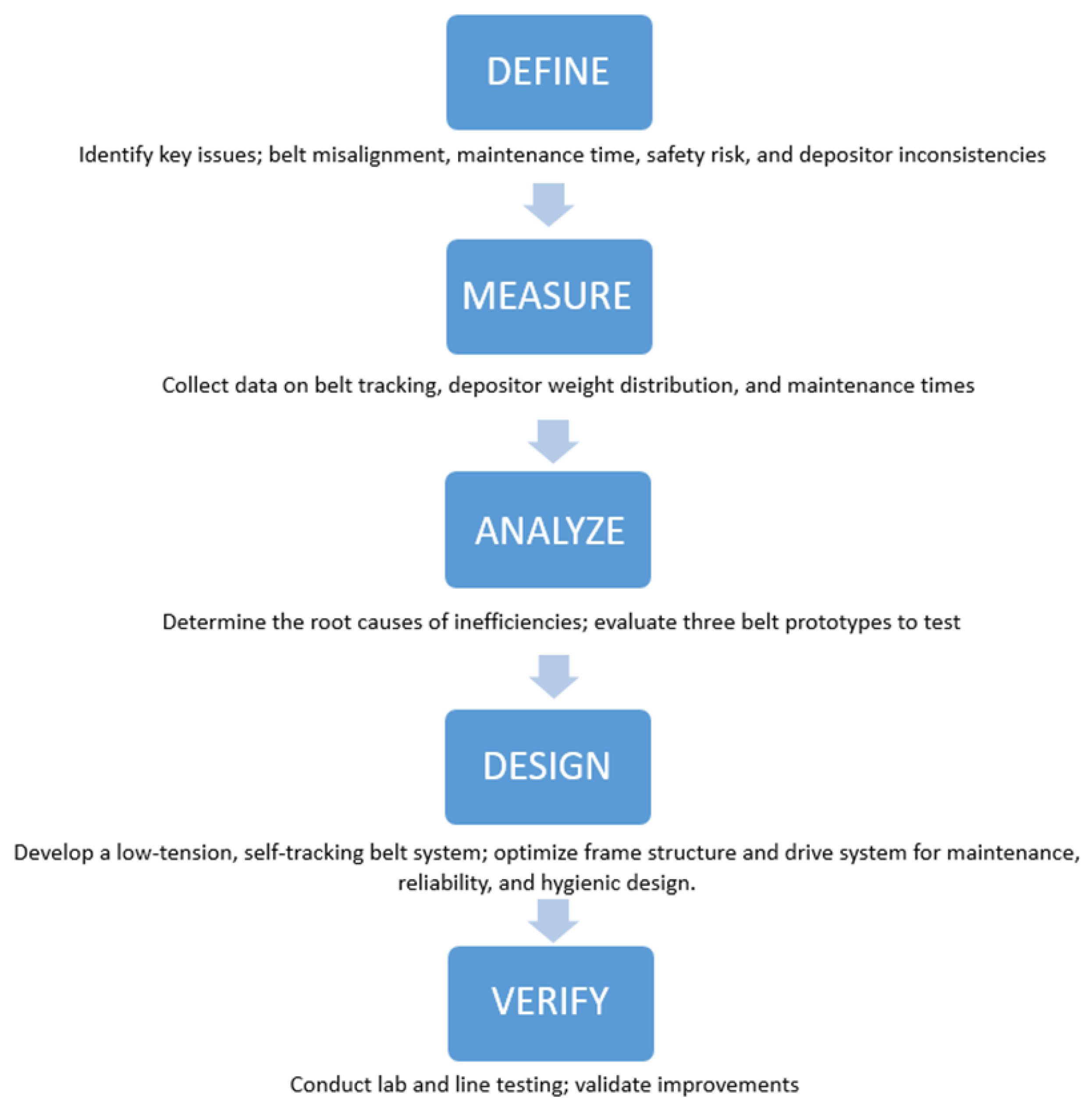
The Define phase establishes the project objectives by identifying key challenges such as frequent belt misalignment, extended maintenance downtimes, safety risks, and inconsistent distribution. During the Measure phase, baseline data was collected from the existing depositor. This data includes belt replacement times, distribution patterns, and maintenance accessibility. A standardized testing plan utilizing fabricated catch pans will be implemented to quantify the depositor’s weight distribution across the width of the belt.
The Analyze phase examines the root causes of inefficiencies. Preliminary observations, pending further analysis, are expected to indicate that the high-tension belt system is highly susceptible to misalignment, requiring extensive tracking adjustments. Based on existing knowledge of this machine, three belt and drive prototypes will be used for testing: the V-Rib Style, Crown Roller Style, and Pin Drive Style belts. These prototypes will be evaluated under controlled conditions within the pilot lab.
The
Design phase focuses on developing a self-tracking belt system to mitigate known issues. Finally, the
Verify phase is dedicated to testing the final design. The theoretical framework based on the DMADV method is illustrated in
Figure 1.
This research is a combination of descriptive and analytical methods. The descriptive aspect of the study aimed to quantify the distribution of product from the depositor and measure any improvements in maintenance efficiency through testing. For simplicity and ease of grasp by production personnel, as well as to narrow the scope of the study, descriptive statistics are the primary focus instead of detailed inferential statistics. However, there is an opportunity to explore advanced statistical analysis for future process monitoring. An analytical component was used, involving the interpretation of the data to determine which prototypes performed the best. We specifically examined how different belt styles influenced tracking, feasibility of belt replacement, and consistency of product distribution. The qualitative component of the research involved direct observations of maintenance processes, operator feedback, equipment cleaning, etc. These observations were then used in supporting the quantitative findings. Through these combinations of qualitative and quantitative methods, the best-performing depositor was effectively identified. This provided insight into the improvements achieved by the new design.
2.2. Data Collection
Considering accessibility and ease of data collection, a purposive sampling strategy was used. This ensures that the collected data is relevant and applicable to the objectives of the study. The sampling method focused on capturing quantitative data related to product distribution and maintenance times, while a qualitative approach will be used for observations regarding the ease of operation and cleaning procedures.
Samples were taken from the old equipment on the production line and from the prototypes in the lab, where controlled testing is conducted. The sampling population includes three different depositor prototypes and one original piece of equipment: the V-Rib Style Belt and Drive with a 1-inch nose bar, the Crowned Roller Style with a knife-edge nose bar (0.125 radius), and the Pin Drive Belt Style with a 1-inch nose bar. The old equipment utilizes a high-tension crowned roller drive with a knife-edge nose bar. For each prototype, multiple data points were collected to measure the following:
Average product weight deposited, which measures to assess whether the depositor maintains or improves its current distribution.
Standard deviation in depositor distribution that evaluates the consistency of the application of product across the belt width.
Data range, which refers to the variation between minimum and maximum deposit weights per deposit, will be recorded to identify inconsistencies and to compare product specifications provided by the company.
After the data collection is completed, data analysis was conducted and results obtained using statistical functions in Microsoft Excel, instead of depending on advanced statistical software or tools, so that the work can be easily replicated for similar analysis in other food manufacturing industries. Another important tool used for creating and visualizing the designs is 3D SolidWorks 2024.
3. Results
3.1. Overview
This section provides a comprehensive analysis of the redesigned belt depositor system and how it successfully addressed the primary challenges identified in navigating the DMADV phases. The analysis focuses on key performance metrics, including improvements in belt tracking, reductions in maintenance and downtime, enhanced ease of cleaning, and the consistency of product distribution. Through testing, data collection, and comparative analysis, the effectiveness of the implemented solutions was evaluated and validated. Each of these areas aligns with key findings from the literature review, demonstrating how established best practices in machine reliability, hygiene, and maintenance were incorporated into the final design.
3.2. Primary Issues and Designs
The most significant problem with the previous depositor system (belt) was its consistent tracking issues. The short, wide, high-tension belt would frequently become misaligned, leading to inconsistent product deposition, product loss, and frequent downtimes for adjustments or repairs. These tracking problems contributed to excessive wear in the belt, requiring frequent replacements and challenging realignment efforts by maintenance personnel.
To address the primary issue, a V-rib style belt with a 1-inch nose bar was used. This belt design enables self-tracking by guiding the belt along a structured groove, eliminating the need for constant manual realignment. A K6-sized rib was centered on the wide belt, and a matching groove was incorporated into each roller and slider bed to allow the belt to self-align throughout the entire system. Both the drive roller and the tail roller were made from stainless steel tubing, with ¼ inch of rubber lagging applied to the outside. The groove was cut into this lagging material, which also provides greater grip strength to help drive the belt.
The V-Rib system was tested under various operational conditions to assess its ability to remain aligned, even when the rollers were deliberately skewed nearly half an inch from side to side. The results showed that the belt consistently maintained proper tracking and significantly reduced the need for maintenance intervention. In comparison, the alternative designs tested, including the Crown Roller and Pin Drive systems, required more tedious adjustments and longer setup times, making them less favorable solutions.
The crowned roller setup still relied on the crown of the roller to center the belt. Furthermore, significantly more tension was required to force the belt to the center. Without the aid of a tracking device, the belt could easily drift to one side or the other, something that could happen simply by skewing the tail roller or tensioner just 1/8 inch out of alignment.
The pin drive system used a similar belt material; however, holes were cut along both edges of the belt to align with pins located on the outer edge of the roller drive. The idea was that the pins would insert into the holes and prevent the belt from walking from side to side. That said, the system still relied on tension to drive the belt, not the pins themselves. One issue we observed was that the pins did not always align with the holes, which caused wear on the belt. Additionally, the setup process was more complicated and tedious.
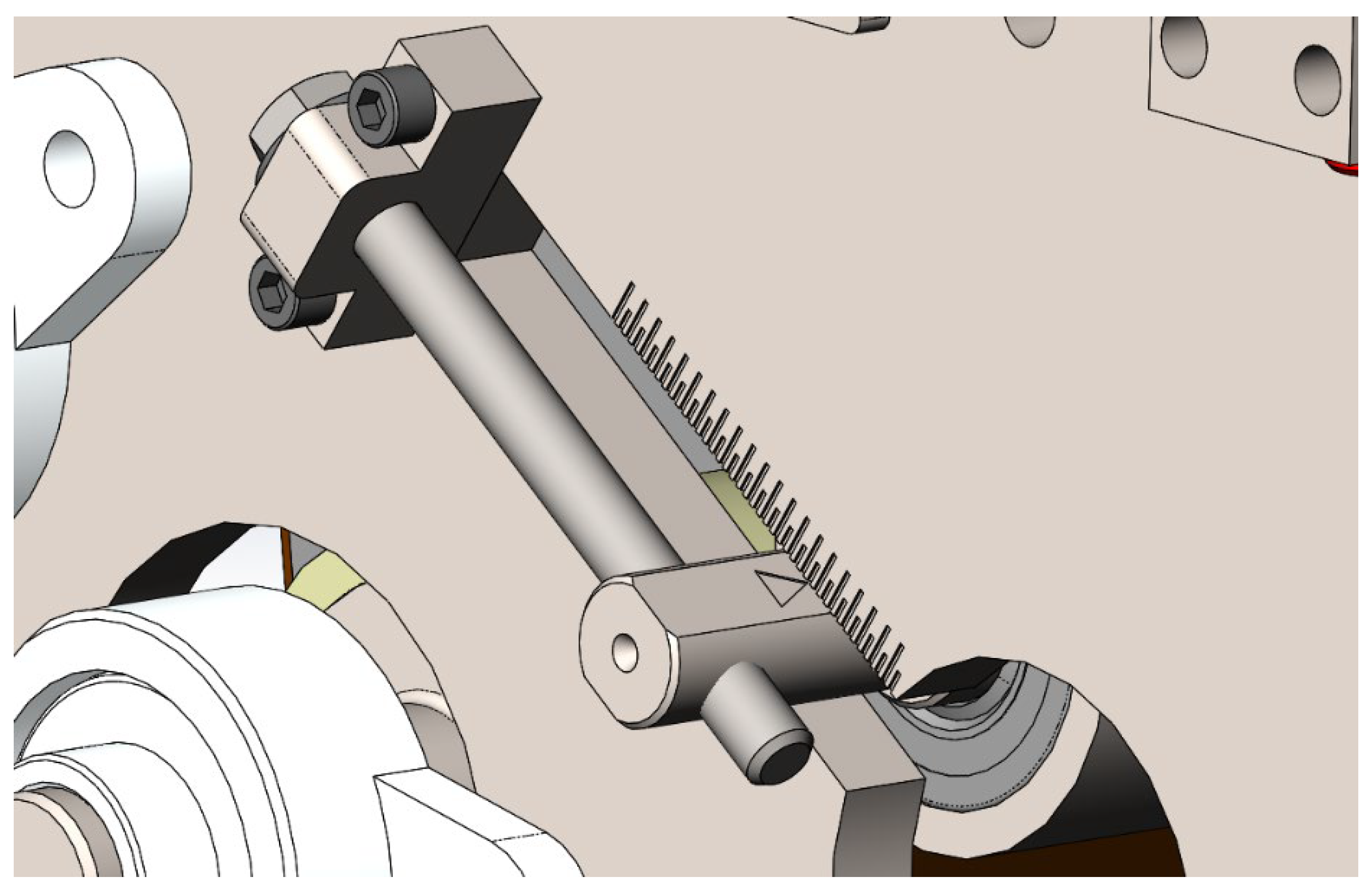
Tensioning the belt was facilitated by adding visible alignment notches onto both sides of the side plates, as shown in
Figure 2. The tensioning roller shaft was then marked with an arrow to indicate which notch it was on, and it could then be easily matched from side to side. Colors are used as visual aids to indicate where the arrow points. It is worth noting that during the study, the style of belt and drive did not play a significant role in affecting the distribution of product. Rather, the true effect on distribution came from the style and size of the nose bar required by the distinctive style belts.
3.3. Key Insights
As described above, one of this study’s contributions is the effective implementation of the DMADV framework. Therefore, it is paramount that the key findings and discussions (see next section) are described in relation to the framework. Design: The objective of this study was to find a suitable and sustainable design to be able to replace an old design that was unable to meet the desired productivity, quality, and hygienic standards for a specific production line (e.g., cookie production). Measure: Initial data was gathered to determine what maintenance and reliability looks like in measurable units (e.g., MTTR, MTTF). Analysis and Design: Three designs were selected and analyzed as discussed above. Complete work is beyond the scope of this study, but while we are waiting for further investigations and rollouts to similar production lines, initial standard operating procedures are developed as guidelines for technicians to utilize to monitor and maintain the depositor system with the new design in mind. Verify: The new design is piloted on a single production line as of the end of this study, and it was proven reliable.
The feedback loop involving maintenance and production teams is inseparable from the numerical results, as real improvements come from listening to frontline feedback, testing multiple solutions, and keeping the teams in mind at every step of the design process. For example, running each prototype under the same settings in the pilot lab, using consistent catch pan data collection, and bringing in maintenance and operations/production teams for hands-on trials resulted in real-time suggestions. In nearly every test, the V-Rib setup had the tightest standard deviation for products B and C and the most consistent distribution, even when we pushed the roller alignment out of spec to test tracking reliability.
The most impactful change was shifting away from a high-tension, short-wide belt design, which had long been a source of downtime and frustration, and moving toward V-Rib, self-tracking system. Not only did this belt track reliably under stress, but it also eliminated the need for frequent manual adjustments and saved significant time during belt changes. Additionally, design changes focused on modularity and ergonomics, such as lightweight slider beds, slotted roller supports, and external bearings, can simplify maintenance and dramatically reduce safety risks. These changes cut average belt replacement time from 2 h to about 30 min. Just as importantly, the sanitary design updates made the equipment easier to clean without disassembly fatigue, helping meet food safety expectations without overburdening the cleaning team.
All these findings are expected to contribute to the implementation of future designs and optimization of belt style depositors. The implemented solutions align closely with concepts explored in the literature review, particularly regarding conveyor system functionality, hygienic design, and maintenance reliability [
29,
30,
31].
Additional findings in terms of reduction of downtimes, improved equipment accessibility for maintenance and cleaning, consistency in product distributions, and the comparison of metrics are discussed next.
4. Discussion
4.1. Maintenance and Downtime
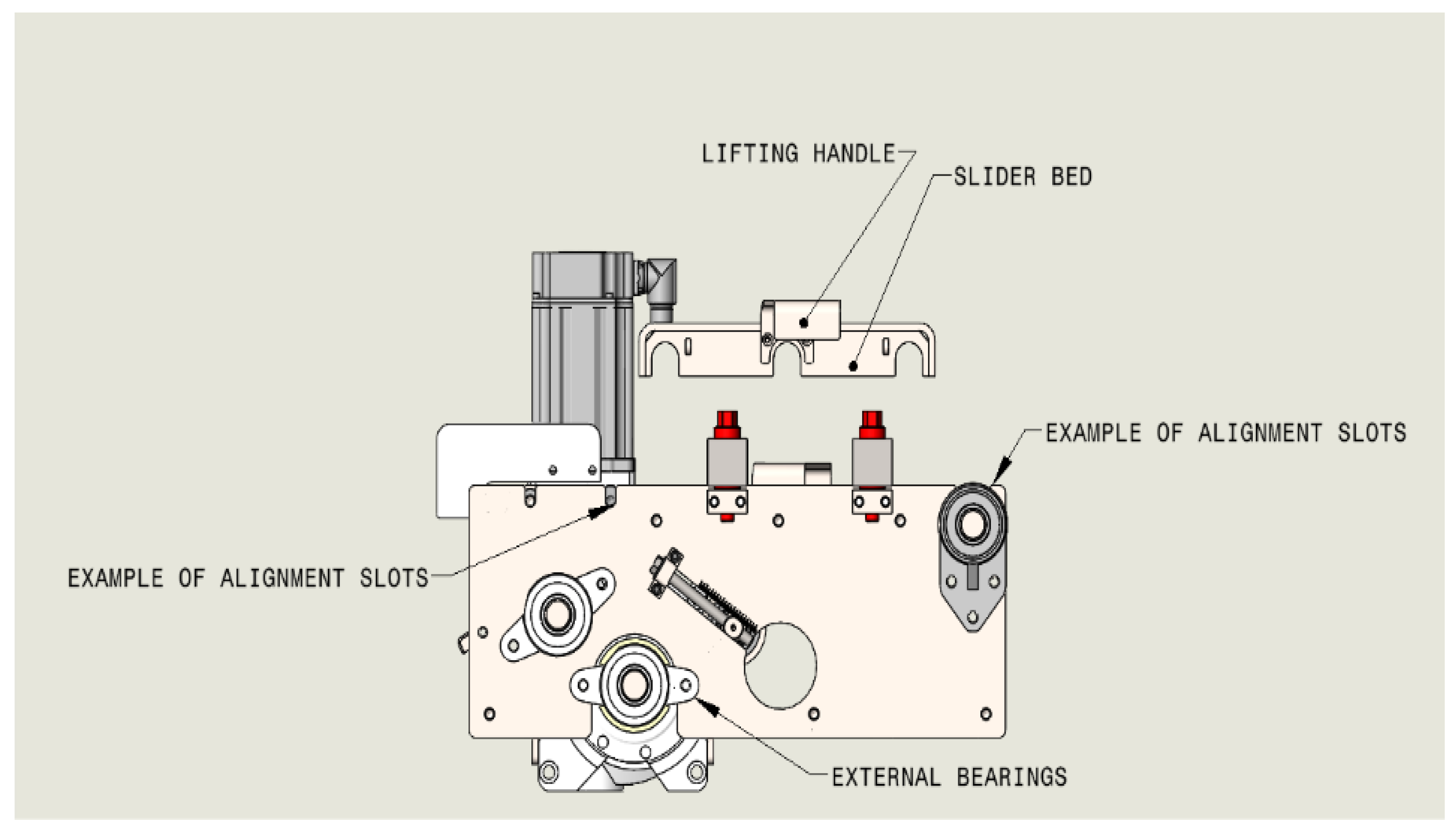
The original design included a large, solid stainless steel slider bed that was heavy and cumbersome to remove, which made thorough cleaning difficult for plant sanitation teams. Because of this, residue could accumulate in hard-to-reach areas, which increases the risk of contamination. The slider bed weight reduction and mounting design allow operators to remove and reinstall the beds easily without the need for additional tools or labor-intensive processes. Testing showed that the new design drastically improved sanitation efforts, allowing for more frequent and efficient cleaning, which is essential in food production environments.
The equipment was also improved by incorporating a removable product hopper that requires no tools to take off. The previous hopper was bolted to the machine and was not able to be removed by operators or cleaning crews without the use of tools. This design allows the hopper to sit freely upon two adjustable mounts and can be easily lifted off by two people for cleaning or maintenance purposes.
External bearings also offer a benefit to the sanitary design of this equipment. These types of bearings are seen as more sanitary than internal roller bearings, because their design makes them easier to clean and less likely to become contaminated. These features meet the safety standards provided by the U.S. Food and Drug Administration’s regulation 21 CFR 110, which is applicable for food processing equipment.
Figure 3 shows the ease of accessibility for maintenance operations.
4.2. Consistency of Product
Inconsistent belt tracking in the old system led to variations in the flow of the product, leading to product waste and rework. Through careful optimization of belt designs and nose bar configurations, a V-Rib Style Belt with a 1-inch nose bar, a Crown Roller Style Belt with a knife edge nose bar (0.125 inch radius), and a Pin Drive Belt with a 1-inch nose bar were all tested in a controlled lab. Testing was conducted using all three designs, depositing the same product for each test. For each prototype and specific product deposited, we collected sets of data to calculate average, standard deviation (S. Dev), and range. This allowed us to compare how each prototype performed in comparison with each other and with the product specifications set forth by the organization.
For testing on the line and in the lab, we used stainless steel catch pans to collect the product as it passed under the conveyor. Each product type had its corresponding pan, sized to represent the surface area of the product receiving the deposit. Running the pans under the depositor, we divided the width of the belt into numbered rows corresponding to how the different products are spaced on the production line. This also allowed for repeatability when placing the pans.
Below are the results showing each product running through the depositor.
Table 1 compares the results of each prototype. The V-Rib column shows that it came out on top within more categories than any of the other prototypes. For that reason, the v-rib belt and 1 inch nose bar were chosen for the new piece of equipment.
After the belt style was selected and incorporated into the final equipment design, it was installed on the production line to replace the old depositor. To validate product distribution, the equipment needed to undergo a live line test to ensure it met the performance specifications established internally by the organization. While initial testing on the prototype had confirmed compliance, it was necessary to validate the results on the final production unit, under normal conditions.
Following installation, we conducted a four-hour line test under normal operating conditions, with a full flow of product moving through the processing area.
Table 2 and
Table 3 show each lane and the weight collected. Below that is the average weight, standard deviation, min, max, and range for each individual lane. The data is displayed in two tables for ease of presentation and clarity. The average target weight across all lanes for this test was 0.66 g over a four-hour run period with 92 samples taken. These descriptive statistics are considered sufficient for this current study, as they are found to be easily understood by production personnel and other practitioners in the food manufacturing sector. However, for future process monitoring, other statistical process control tools such as x¯-R chart and x¯-s can be included to visualize and continuously monitor the process averages, along with the ranges in given sets of data and the corresponding standard deviations using control charts.
4.3. Comparison of Metrics
To quantify the improvements made by the new design, selected metrics such as belt tracking adjustments, changeover time, maintenance complexity, cleaning time, consistency of product flow, or distribution were used. The results are summarized as shown in
Table 4 below.
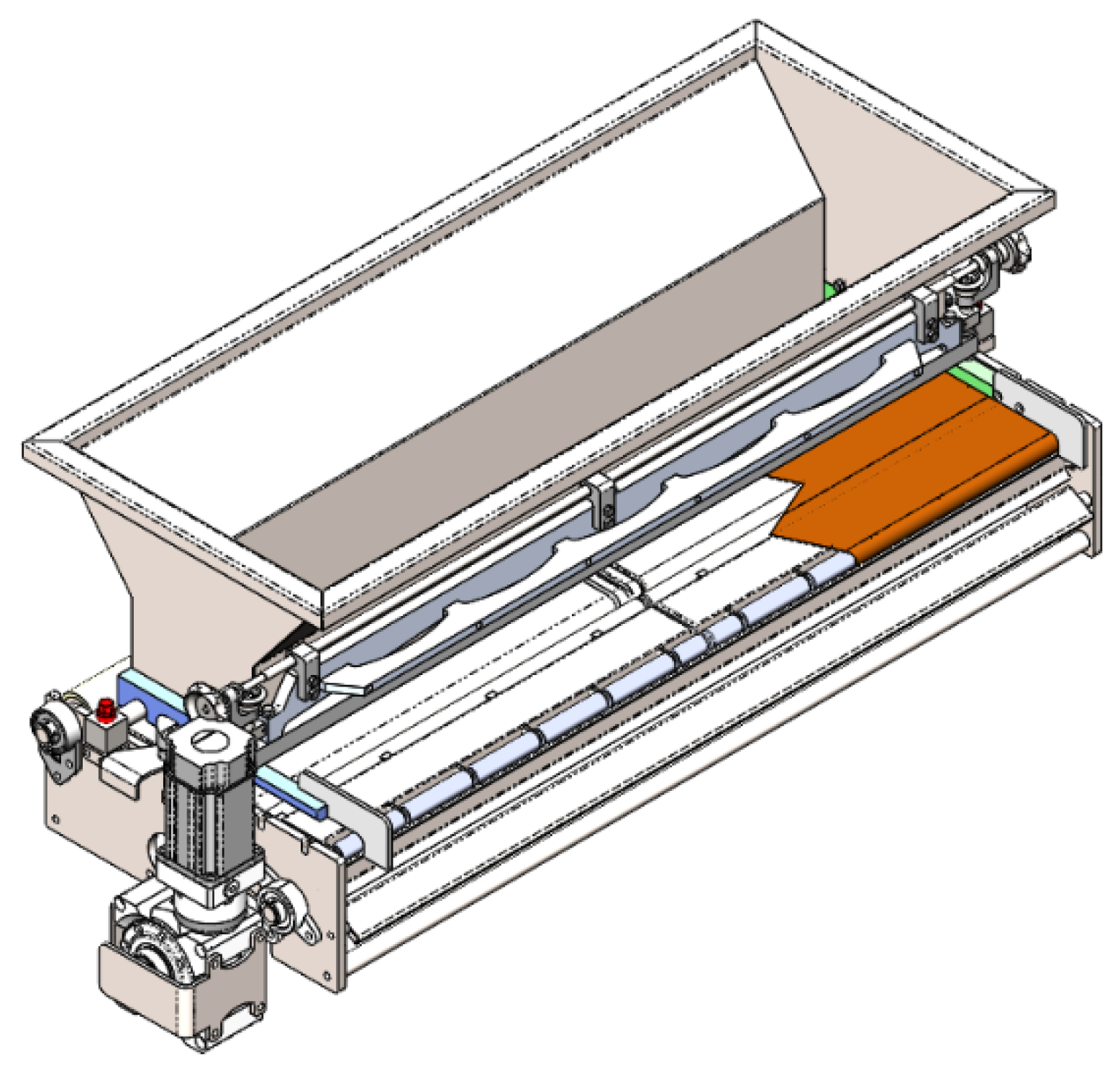
To provide an illustration of the belt-style depositor system along with the subcomponents, subassemblies, or metrics discussed above, the depositor system is shown in
Figure 4, which was created in 3D SolidWorks 2024. It includes, for instance, a removable hopper, maintenance callout parts, slider bed groove profile, etc. Dimensions are kept confidential here but typically range from 60–70 inches wide and 20–25 inches high. The orange color indicates the section of the best where product is deposited.
To further the insights of the above gains, it is paramount to compare the DMADV framework applied for this case study with other applications. For instance, as briefly mentioned in the introduction section, DMADV was previously applied along with other techniques such as quality function deployment and failure mode and effects analysis. The primary focus was on design phase validation rather than long-term system reliability. On the contrary, this study provided a thorough implementation of the DMADV with the intent of providing a holistic approach addressing not only reliability requirements but also hygienic designs and regulatory compliance requirements. Furthermore, instead of reliance on a single product, the DMADV framework was implemented across multiple products to select the best overall design. Also, this case study relies mainly on quantitative analysis using descriptive statistics, instead of heavy dependence on qualitative judgments.
In summary, maintenance efficiency was improved; downtimes were reduced with significant reduction in changeover times, as the improved system is self-tracking. Though generalizing the application of the DMADV framework to the food manufacturing sector requires analysis of multiple locations with similar settings in terms of production and process capabilities with reliability in mind, the above results align hygienic and regulatory requirements for the case study in a specific food manufacturing company. The next section discusses the key findings, contributions, and direction for future work, further building on the discussions.
5. Conclusions
The redesigned system met or exceeded expectations across all performance objectives. Tracking was stabilized, belt changeover times were cut by over 75%, maintenance accessibility improved, and food safety compliance was enhanced through easier cleaning and modular design. These gains were not just the result of a new belt style, but rather a combination of listening to maintenance and production input, incorporating hygienic design standards, and methodically testing each configuration. The V-Rib belt with a 1-inch nose bar stood out due to its ability to self-track without complex adjustments. Its performance across tracking, cleaning, and product distribution made it an obvious choice for final deployment.
Going forward, continued evaluation of the drive system and long-term wear will help optimize the design further using model-based condition monitoring or in-depth application of reliability-centered maintenance strategies [
32,
33]. One of the statistical process control tools that can be used for continuous process monitoring is control charts, such as
−R chart and
-s, to visualize and continuously monitor the process average along with the ranges in given data and the corresponding standard deviations. However, based on the current data and feedback from the organization’s production and maintenance operator, we are confident that this new depositing system will not only improve day-to-day reliability, but it will serve as a standard to follow future depositor upgrades across other lines.
While the initial results from both the pilot plant and production line have been very promising, a few remaining items will require additional monitoring and exploration in the future. For example, long-term wear data should continue to be collected to evaluate how the belt, groove, and drive system hold up over extended use. For this evaluation, the design of experiments would be one approach that would be used, focusing on various features of the implemented design by manipulating different parameters.
Though this study compared three distinct prototypes (V-Rib, Crowned Roller, Pin Drive) as packages, it did not isolate how individual factors (e.g., belt tension vs. belt material) interact to affect performance. Moreover, the DMADV framework led to a final system (design) choice, but it did not necessarily find the optimal setpoints for that system (e.g., the ideal motor speed vs. belt load for maximum hygiene and minimum wear). These limitations are opportunities for future studies, especially using the design of experiments based on factorial design on drive reliability and wear, response surface methodology for hygiene and efficiency, etc.
Structurally, it is proven that DMADV is highly suitable for food manufacturing process equipment design due to its strong emphasis on upfront requirement definition, process capability, and risk reduction. However, DMADV is most effective when complemented by dedicated reliability engineering frameworks such as Physics-of-Failure analysis, reliability growth modeling, and accelerated life testing methodologies. Future studies may further focus on applications to reliability-critical developments.