1. Introduction
Thermal spring microbial mats are laminated organo-mineral biofilms composed of extracellular polymeric substances (EPSs) and microbially mediated silica and carbonate precipitates, forming naturally integrated organic–inorganic architectures. While these systems have been extensively investigated in ecological and geobiological contexts, several studies have also described them as intrinsically hybrid organo-mineral systems in which EPS-mediated biomineralization governs mechanical coherence and laminated structure. However, these investigations have largely focused on biological, ecological, or sedimentological implications rather than on material performance. Their intrinsic organo-mineral structure also positions them as potential precursors for applied, bio-derived composite materials. The EPS-rich matrix provides macroscopic cohesion and acts as a natural binding phase, while in situ mineral precipitation contributes intrinsic reinforcement within the laminated framework [
1,
2].
In recent years, increasing attention has been directed toward microbially derived and bio-based materials—such as bacterial cellulose, fungal mycelium, and algal composites—as renewable alternatives to fossil-derived materials [
3,
4]. These systems are valued for their sustainability, biodegradability, and reduced environmental footprint [
5]. In contrast to engineered biocomposites assembled from externally processed fibers and synthetic matrices, geothermal microbial mats form through biological self-assembly and in situ biomineralization, resulting in mixed organic–inorganic composite architectures formed without external assembly steps. Despite this, their structure–property relationships and material response under processing and handling conditions have rarely been evaluated from an applied composite materials perspective. The intrinsic mineralogical heterogeneity of geothermal microbial mats provides a natural basis for structure property differentiation within these systems. Silica-rich mats, often associated with abundant diatom frustules, can be interpreted as mineral-stiffened composite domains, whereas carbonate-rich mats may yield more compliant and flexible EPS–carbonate networks, resulting in distinct mechanical and surface responses [
6,
7]. In addition, the hierarchical micro- to nano-scale porosity inherent to these materials can influence density, permeability, and thermal response properties that are particularly relevant for low-load and non-structural composite applications.
From a sustainability and materials innovation standpoint, the valorization of geothermal microbial mats aligns with circular bioeconomy principles. Unlike conventional agricultural fibers or synthetic polymers derived from non-renewable resources, microbial mats regenerate naturally in geothermal environments driven by Earth’s internal heat and geochemical fluxes, requiring minimal external inputs [
8]. This positions them as a low-impact and rapidly renewable extremophilic biomass source suitable for materials-oriented exploration of hybrid composite systems. Despite extensive prior work on the ecology, microbiology, and geochemistry of thermal microbial mats, their interpretation as mixed organo-mineral composite materials with tunable structure–performance relationships remains underexplored. Previous studies have predominantly examined these systems as biological or geobiological entities, rather than as material systems in which mineral phase distribution, EPS continuity, and microstructural organization govern composite behavior. The novelty of the present work lies in explicitly reframing thermophilic microbial mats as naturally pre-assembled hybrid composites, in which extracellular polymeric substances (EPSs) function as a continuous organic matrix and in situ silica and carbonate phases act as intrinsic mineral reinforcement.
Building on this materials-oriented perspective, the present study investigates thermal microbial mats from the Comanjilla geothermal system (Mexico) through controlled processing and surface conditioning. Specifically, the objectives are to (i) characterize the mineralogical and structural features governing their organo-mineral architecture; (ii) develop a mild tanning and polymeric reinforcement protocol to enhance cohesion and handling stability; (iii) fabricate membrane-like composite prototypes; and (iv) analyze structure–property relationships by comparing silica-rich and carbonate-rich mats and evaluating the effect of polymer reinforcement on mechanical, thermal, and physicochemical response under laboratory conditions. By reframing thermophilic microbial mats as naturally pre-assembled organo-mineral composite systems, this work aims to clarify the relationship between microstructure, mineral composition, and material performance, establishing a foundation for bio-derived hybrid composites suitable for low-load and non-structural applications.
2. Study Area
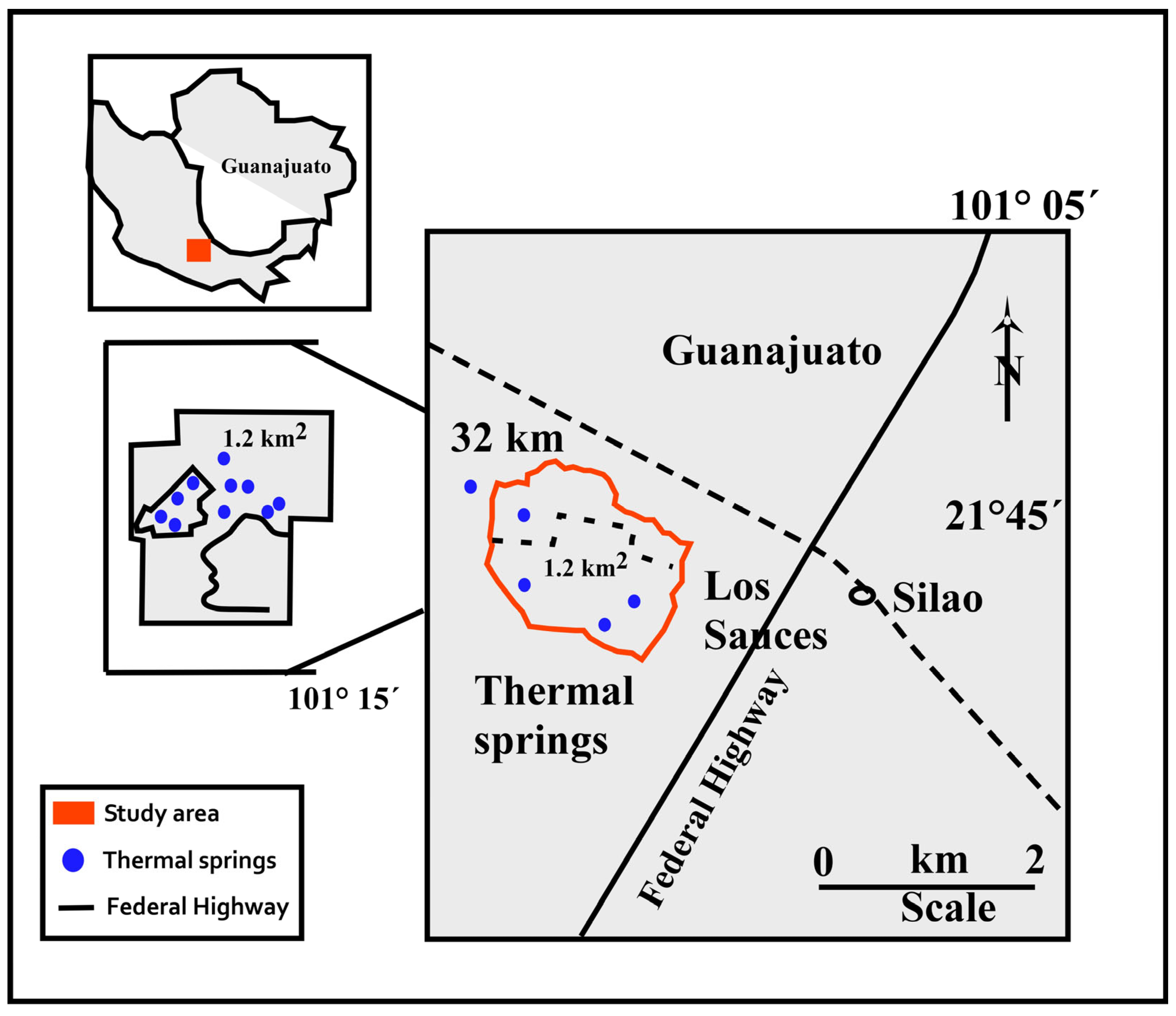
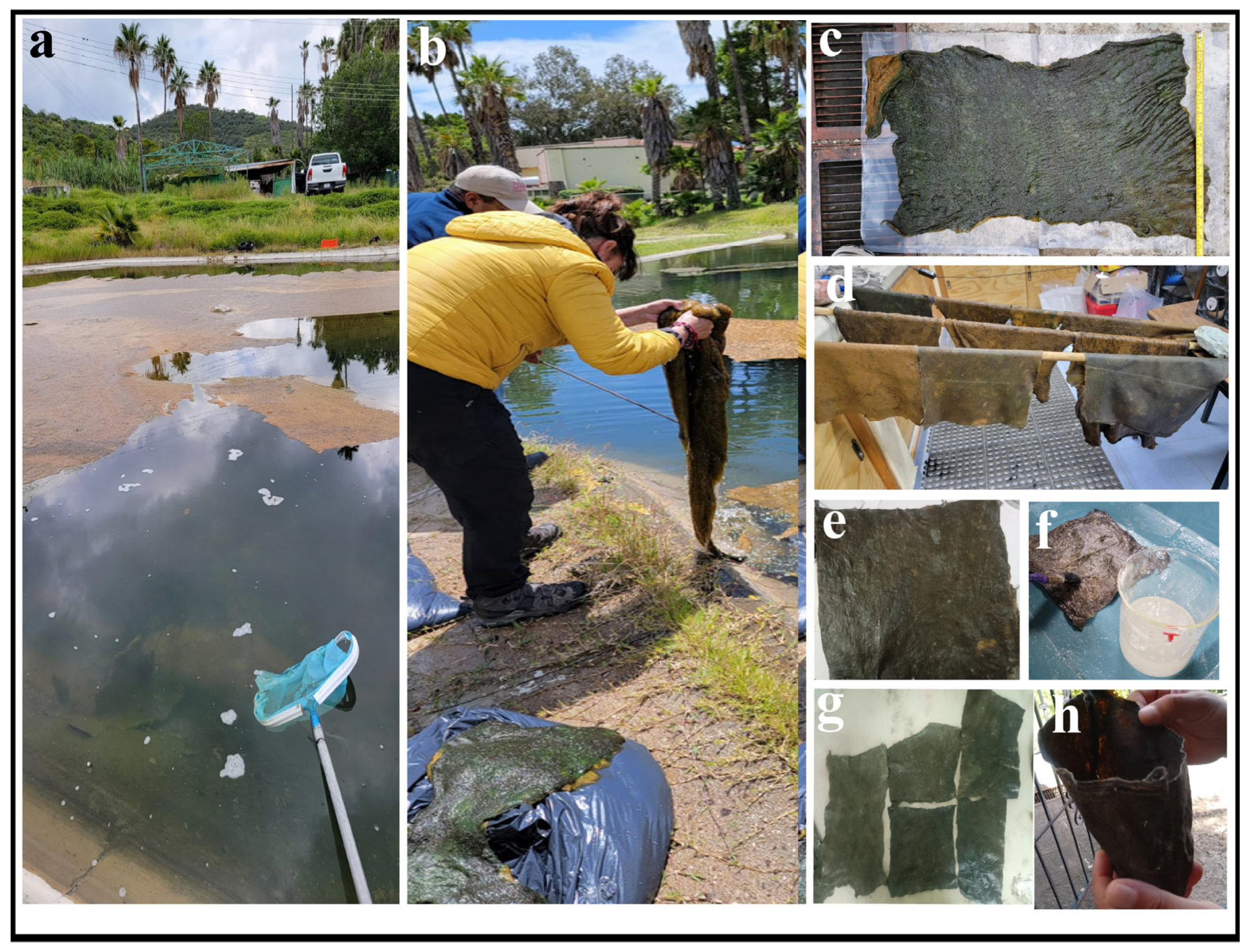
The study was conducted at the Comanjilla geothermal springs, located in Guanajuato, central Mexico (≈21.03° N, 101.47° W) (
Figure 1). This hydrothermal system is characterized by strongly alkaline waters (pH ≈ 9.1), emergent temperatures approaching 100 °C, and moderate salinity (electrical conductivity ≈ 704 µS cm
−1). Geothermal fluids are enriched in dissolved silica, carbonate species, sulfur compounds, and trace elements, promoting the formation of laminated thermal microbial mats typically 3–5 mm thick.
The extreme physicochemical conditions of the system favor the development of EPS-rich organo-mineral matrices in which microbially mediated silica and carbonate phases precipitate in situ. These processes result in naturally laminated materials with intrinsic mineral reinforcement and compositional heterogeneity. While diverse thermophilic microorganisms contribute to EPS production and mineral structuring, the present study focuses on the resulting organo-mineral architecture rather than on microbial taxonomy.
This combination of geothermal chemistry and biomineralization generates a naturally structured organo-mineral fabric with hierarchical lamination and spatial variability in mineral composition. As such, the Comanjilla geothermal system provides a suitable natural setting for evaluating extremophilic microbial mats as precursors for bio-derived organo-mineral composite materials. Importantly, the coexistence of silica-rich and carbonate-rich mat end-members enables comparative investigation of structure–composition–property relationships under naturally defined mineralogical conditions.
3. Material and Methods
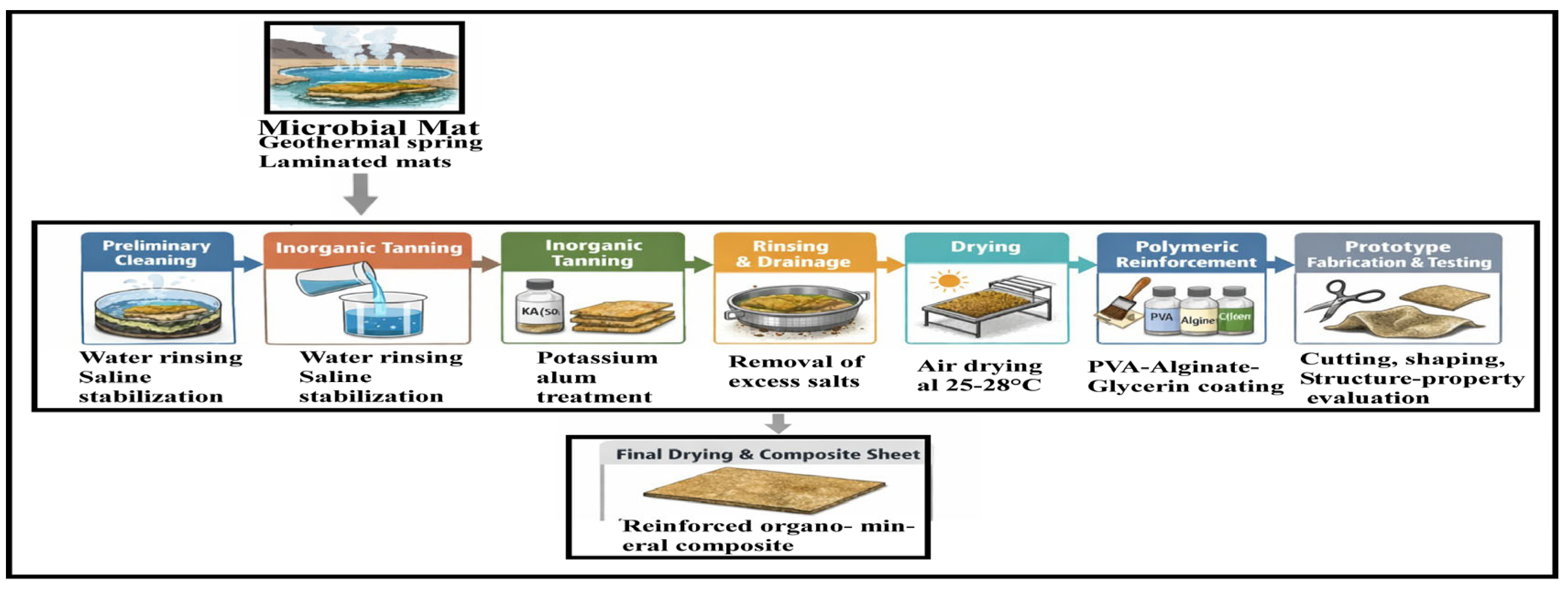
A schematic overview of the composite preparation process is provided in
Figure 2. All experimental procedures were designed to investigate relative material behavior and structure–property relationships within geothermal microbial mat-derived composites. The applied methods support a comparative, materials-oriented evaluation under laboratory conditions and are not intended to address standardized industrial or product-specific testing protocols.
3.1. Geochemical and Mineralogical Characterization
Geothermal water was collected from the Comanjilla springs using sterile polyethylene containers during microbial mat sampling campaigns. In situ measurements of temperature (°C), pH, electrical conductivity (µS cm
−1), and total dissolved solids (ppm) were obtained using a multiparameter probe (Hanna Instruments, Woonsocket, RI, USA). Major ions (Ca
2+, Mg
2+, Na
+, K
+, Cl
−, SO
42−, and HCO
3−) were quantified following standard APHA protocols [
9].
The elemental composition of microbial mats and associated geothermal precipitates was determined using energy-dispersive X-ray fluorescence (EDXRF) with a Rigaku NEX CG spectrometer (Rigaku Corporation, Tokyo, Japan) equipped with a Pd-anode X-ray tube (50 W, 50 kV–2 mA) and operated under a helium atmosphere. This technique enabled the quantification of major, minor, and trace elements (e.g., Si, Al, Ca, Mg, S, Fe, Cu, Pb, As, Hg) without the need for acid digestion. Prior to analysis, samples were dried, homogenized and finely ground in an agate mortar to ensure analytical reproducibility.
Mineralogical phases were characterized by X-ray diffraction (XRD) using a Rigaku Ultima IV diffractometer (Rigaku Corporation, Tokyo, Japan) with CuKα radiation (λ = 1.5406 Å). Samples were powdered and sieved through a 230-mesh screen prior to analysis. Diffractograms were interpreted using Jade software (version 9.0, Materials Data Inc., Livermore, CA, USA) and the ICDD PDF-2 database, enabling identification of crystalline silica phases (opal-A, quartz), carbonate minerals (calcite, aragonite), oxides, and accessory phases.
Micromorphology and elemental micro-distribution were examined using scanning electron microscopy (SEM) with a JEOL JSM-6010PLUS/LA (JEOL Ltd., Tokyo, Japan) operating at 15 kV in low-vacuum mode without conductive coating. SEM–EDS analysis provided semi-quantitative elemental mapping (Si, Ca, Mg, Fe, Al, S, C, O, and trace elements), as well as detailed examination of diatom frustules, EPS–mineral interfaces, and carbonate–silica microstructures within the organo-mineral matrix.
All mineralogical, chemical, and microstructural analyses were conducted at the LICAMM Laboratory of the University of Guanajuato.
3.2. Microbial Mat Sampling
Microbial mats were collected from representative zones of the Comanjilla geothermal springs, including both spring emergence points and adjacent flow channels. Sampling included the surface layer and underlying strata (approximately 3–5 cm) to obtain organo-mineral material preserving the native laminated structure. Mats were carefully detached using sterile plastic nets to avoid structural disruption and were transferred into high-resistance polyethylene bags (20 kg capacity). Each bag was labeled with a sample code, collection date and time, site description, and GPS coordinates.
To prevent desiccation and contamination, samples were hermetically sealed and transported in insulated containers at 4–8 °C with gel ice packs, ensuring processing within 24 h after collection. Duplicate samples were collected for quality control. In situ measurements of temperature (°C), pH, electrical conductivity (µS cm−1), and total dissolved solids (ppm) were recorded at each sampling point. Macroscopic structure, color stratification, and geological context were documented photographically to support subsequent physicochemical and microstructural analyses.
3.3. Preliminary Cleaning of Microbial Mats
Freshly collected microbial mats were washed three times with distilled water to remove loose sediments and soluble salts while preserving their structural integrity. Cleaned fragments were examined under a stereomicroscope to confirm the removal of visible impurities. To preserve the integrity of the EPS-rich matrix and laminated structure, samples were subsequently immersed in an isotonic saline solution (0.9% NaCl) for 10–15 min.
Excess solution was drained aseptically, and the microbial mat composites were transferred to sterile containers for temporary storage prior to further processing. Wet weight, turbidity, and the electrical conductivity of successive rinses were recorded as indicators of cleaning efficiency and process reproducibility.
3.4. Preparation of the Tanning Solution
The tanning solution was prepared using potassium alum (KAl(SO4)2·12H2O) at a concentration of 5–10% (w/v). Alum was selected as a mild inorganic crosslinking agent to promote ionic interactions and matrix stabilization within complex organic networks. Alum treatment was applied as an ionic crosslinking step to enhance cohesion and handling properties of the organo-mineral composite matrix, functioning as a materials processing step rather than as biochemical modification.
3.5. Rinsing After Tanning
Tanned microbial mat composites were removed from the solution using sterile forceps and rinsed three times with 200–300 mL of distilled water to eliminate residual salts and unbound tanning agents. Electrical conductivity and pH of the rinses were monitored after each wash until values approached those of distilled water, indicating adequate removal of soluble residues. When necessary, the rinsed suspensions were passed through a sterile 100 µm nylon mesh to remove fine precipitates and particulate matter.
After rinsing, samples were placed on sterile absorbent paper to drain excess water, and qualitative observations of color, texture, and surface uniformity were documented. Prior to tanning, microbial mats were cut into standardized 30 × 30 cm sections to facilitate handling, ensure reproducibility of treatment conditions, and allow for consistent comparison across samples.
3.6. Drying Process
Rinsed microbial mat composites were dried under shaded conditions with natural ventilation at a controlled temperature of 25–28 °C. Samples were rotated every 6–8 h during the first 48 h to ensure uniform dehydration, and absorbent paper was replaced periodically to prevent moisture accumulation. Stainless steel grids were used to enhance airflow around the samples and avoid localized degradation.
Drying was continued until a constant weight was achieved in two consecutive measurements taken 24 h apart. Direct sunlight and temperatures exceeding 40 °C were avoided to prevent thermal or photochemical degradation of organic polymers within the EPS-rich matrix. Once fully dried, samples were stored in kraft paper bags with silica gel and maintained in a cool, ventilated environment until further analysis or processing.
3.7. Polymeric Reinforcement Treatment
A polymeric blend consisting of polyvinyl alcohol (PVA), sodium alginate, and glycerin was applied to enhance the cohesion, mechanical integrity, and surface stability of the tanned microbial mat composites. PVA (50 g) was dissolved in 625 mL of distilled water at 90 °C under continuous stirring. In a separate container, 2.5 g of sodium alginate was dissolved in 250 mL of distilled water, followed by the addition of 1.5 g of glycerin as a plasticizer. The two solutions were combined at 60 °C and mixed until a homogeneous blend was obtained.
The resulting polymeric mixture was applied evenly to both sides of the tanned mats using a soft brush to ensure uniform surface coverage. Treated samples were subsequently dried at 25–28 °C for 48 h. This reinforcement process produced a thin, cohesive polymeric film that increased surface cohesion and resistance to handling-induced damage, while maintaining sufficient flexibility and preventing brittle behavior.
The polymeric blend was applied to enhance cohesion and surface stabilization rather than to achieve complete waterproofing. This reinforcement step was intended to improve handling properties, surface cohesion, and structural integrity of the composite materials under low-load conditions.
3.8. Evaluation of Physical Properties
Physical and mechanical evaluations were conducted to assess structure–property relationships within the composite systems. Once dried, the treated microbial mat composites were evaluated using a combination of qualitative, semi-quantitative, and quantitative tests to characterize their structural integrity and material behavior under laboratory conditions.
3.8.1. Flexibility
Flexibility was assessed qualitatively by manually bending and folding the dried samples. Resistance to deformation and the degree of elastic recovery were documented and classified as low, moderate, or high. Visual and tactile observations were conducted following principles adapted from standard bending behavior assessments used for flexible polymeric and sheet-like materials [
10], allowing for comparative evaluation of the ability of the treated microbial mat composites to recover their original shape after deformation.
3.8.2. Firmness and Mechanical Strength
Mechanical behavior was evaluated through uniaxial tensile testing using a handheld dynamometer under controlled manual loading conditions. The maximum force sustained prior to permanent deformation or fracture was recorded. Measurements were conducted in triplicate (
n = 3) and reported as mean values to enable comparison among samples [
11].
The tensile tests were used to evaluate differences in mechanical response between carbonate-rich and silica-rich organo-mineral composite samples. The resulting tensile values provide insight into internal cohesion and relative mechanical behavior within the composite systems.
3.8.3. Surface Texture
Surface texture was examined through qualitative tactile inspection and visual evaluation under natural and artificial light. Characteristics such as smoothness, roughness, surface irregularities, and homogeneity were documented. Representative photographs were taken to illustrate macroscopic patterns and surface features of the treated samples. Qualitative assessments of surface softness, roughness, and uniformity were conducted following established visual and tactile inspection methods for polymeric and composite sheet materials [
12]. These observations were used to compare surface characteristics among samples and to relate texture variations to differences in mineral composition and EPS-rich matrix structure.
3.8.4. Porosity
Porosity was indirectly estimated through gravimetric water absorption tests as a proxy for pore volume and connectivity. Dried samples were immersed in distilled water for a defined period, and the percentage of absorbed water relative to sample volume was calculated. Macroscopic observations and stereoscopic microscopy were used to qualitatively complement the assessment of pore distribution and connectivity within the composite structure.
The methodology was adapted from standardized water absorption tests for polymeric and composite materials [
13]. The results were used to evaluate the influence of the EPS-rich matrix and mineral composition on fluid uptake behavior in the treated organo-mineral composite samples.
3.8.5. Permeability and Water Resistance
Permeability was evaluated using filtration-based assays in which a known volume of water was applied to the samples under a controlled pressure gradient. The amount of liquid passing through the material over time was quantified to estimate relative resistance to water penetration.
The testing approach was adapted from established methods for permeability assessment in membrane and composite materials [
14]. The results were used to compare the influence of mineral composition and surface reinforcement on fluid transport behavior across the treated organo-mineral composite samples.
3.8.6. Water Absorption and Swelling Behavior
Water absorption and swelling were measured to evaluate the hydrophilic response and dimensional stability of the treated microbial mat composites. Rectangular specimens (2 × 2 cm) were oven-dried at 60 °C for 24 h and weighed to obtain the dry weight (W1) and initial thickness (t1). Samples were then immersed in distilled water at 25 ± 2 °C for 2 h, blotted to remove surface moisture, reweighed (W2), and remeasured (t2).
Water absorption (%) and swelling ratio (%) were calculated as follows:
where
W1 and
W2 correspond to dry and wet sample weights, and
t1 and
t2 represent the respective sample thicknesses. All measurements were conducted in triplicate and reported as mean ± standard deviation. The procedures followed [
15,
16], adapted for EPS-rich biopolymer and organo-mineral composite materials.
The observed water absorption and swelling behavior reflect intrinsic characteristics of EPS-dominated organo-mineral matrices. These responses are consistent with the hydrogel-like behavior typical of polysaccharide-rich composite systems and are associated with their porous structure and hydrophilic functional groups.
3.8.7. Durability
Durability was evaluated through abrasion resistance testing using repeated friction against abrasive surfaces under controlled pressure and defined cycle numbers. Mass loss, formation of microfractures, and changes in surface texture were recorded following established procedures [
17]. All tests were conducted at 25–28 °C and 50–60% relative humidity.
Abrasion response was used as an indicator of surface integrity and handling durability under laboratory conditions. Observed changes in mass and surface morphology reflect the hybrid organo-mineral nature of the composites and provide insight into the relationship between surface structure, mineral composition, and resistance to mechanical wear.
3.8.8. Thermal Analysis (DSC-TGA)
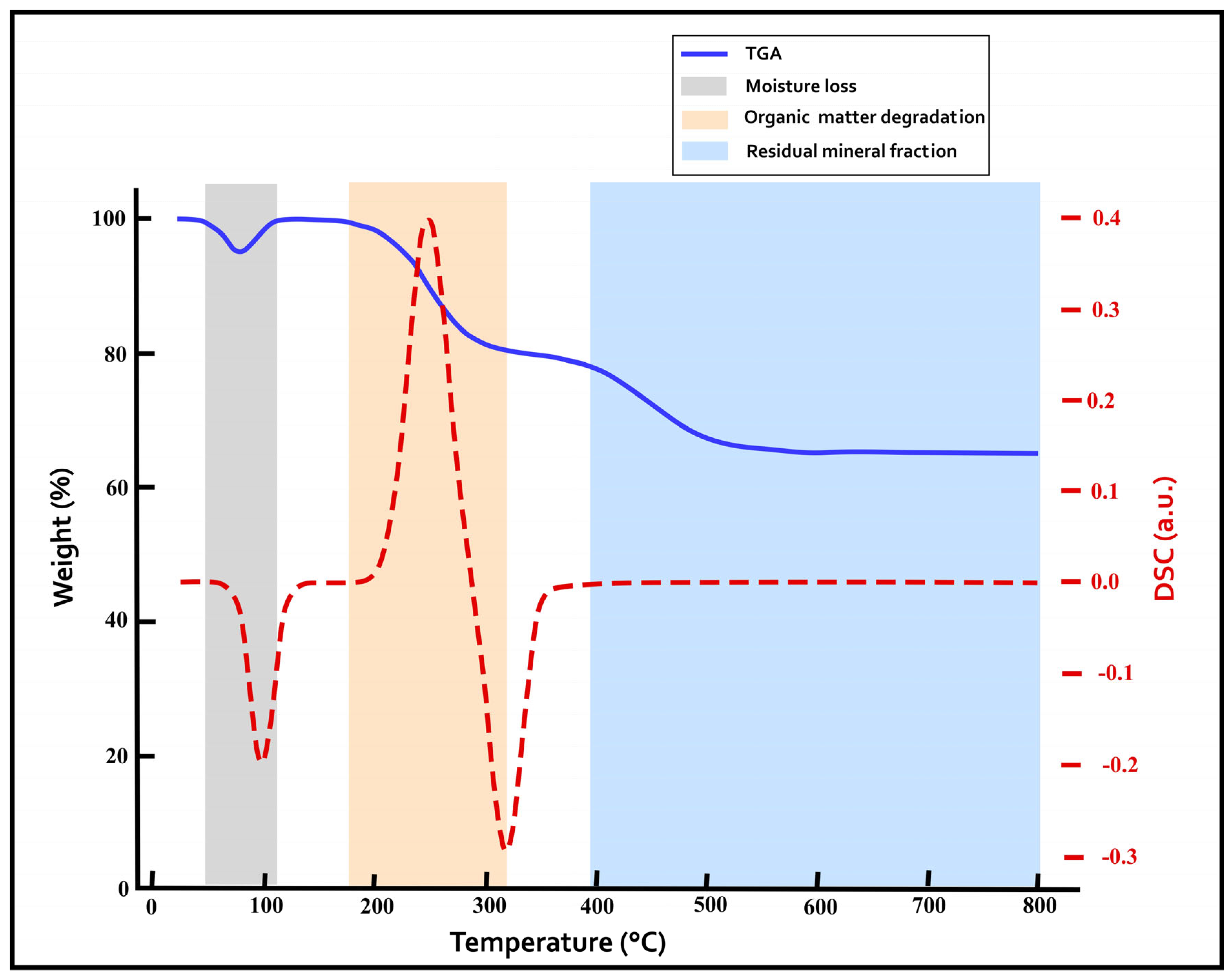
Thermal properties were assessed through simultaneous thermogravimetric analysis (TGA) and differential scanning calorimetry (DSC). Approximately 10 mg of dried organo-mineral composite samples were heated from 25 °C to 800 °C under a nitrogen atmosphere at a constant rate of 10 °C min−1. Thermal events were analyzed to identify (i) evaporation of moisture and low-molecular-weight volatiles; (ii) thermal decomposition of organic components, including EPS, polysaccharides, and proteins; and (iii) stabilization of the inorganic mineral residue at high temperatures.
The combined TGA–DSC profiles provided insight into the relative proportions of organic and mineral phases and their contributions to the thermal behavior of the composites. Thermal events were interpreted to evaluate the relative contributions of organic (EPS and biopolymers) and inorganic (silica and carbonate) components to composite thermal response.
4. Results and Discussion
4.1. Geochemical Conditions Relevant to Organo-Mineral Composite Formation
The physicochemical characterization of the Comanjilla geothermal spring (
Table 1) revealed an extreme alkaline environment capable of sustaining specialized thermophilic microbial mats. The water exhibited a strongly alkaline pH (9.1) and emergent temperatures approaching 100 °C. Electrical conductivity (704 µS cm
−1) and total dissolved solids (569 ppm) indicated moderate salinity, consistent with alkaline geothermal springs reported worldwide [
18,
19].
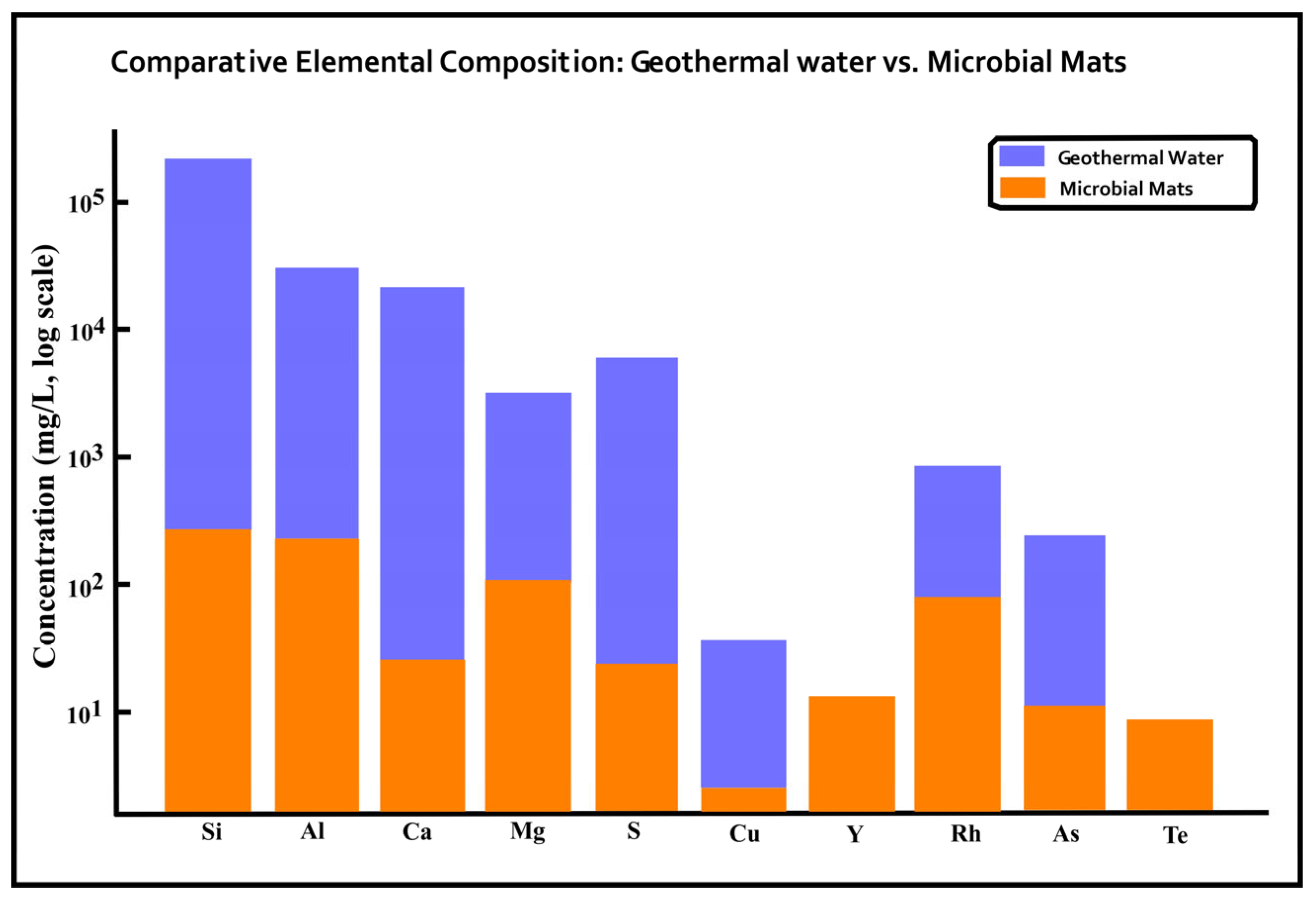
Elemental analysis showed elevated dissolved silicon (307 ppm) and aluminum (238 ppm), reflecting intense water–rock interaction with silicate-rich lithologies under alkaline conditions [
20]. This geochemical setting provides a sustained mineral supply that favors silica precipitation and contributes to the organo-mineral imprint preserved in the associated microbial mats (
Figure 3).
Major dissolved ions included magnesium (112 ppm) and calcium (26.2 ppm), together with sulfur species (25.5 ppm), supporting conditions conducive to carbonate formation and mixed silica–carbonate precipitation within the mat matrix. Minor and trace elements are characteristic of hydrothermal systems and are reported here as environmental variables that may influence biomineralization [
21,
22,
23,
24,
25].
The oxide composition of associated solid precipitates was dominated by SiO2 (68.6%), followed by Al2O3, CaO, and MgO, with minor contributions from Fe2O3 and SO3. This assemblage is consistent with active silica and carbonate precipitation under alkaline geothermal conditions and supports the development of laminated organo-mineral structures observed in the mats.
Overall, the combination of high temperature, pronounced alkalinity, and silica- and carbonate-forming chemistry defines a physicochemical framework that promotes EPS-mediated biomineralization and the formation of mineral-rich laminated architectures. This context supports interpreting the mats as naturally pre-assembled organo-mineral composite systems in which water chemistry governs mineral phase availability and, consequently, microstructure and material response.
4.2. Physicochemical Characteristics of Microbial Mats
Microbial mats at Comanjilla exhibited an average thickness of ~5 mm and a well-defined laminated architecture with alternating strata, reflecting coupled EPS production and mineral precipitation. This stratification produces a hierarchically organized organo-mineral framework directly relevant to composite-like behavior, including phase distribution, porosity, and local stiffness gradients [
26,
27,
28,
29]. Such vertical organization arises from steep gradients in oxygen availability, sulfide concentration, light penetration, and nutrient fluxes [
28,
29].
Mature mats exhibited high biomass accumulation rates, consistent with previous reports of rapid microbial growth in alkaline geothermal systems [
8,
30]. This sustained accumulation results in thick, cohesive EPS-rich matrices that provide a continuous organic phase capable of binding and stabilizing mineral precipitates at the composite scale.
Elemental analysis of the microbial mats revealed strong enrichment in silica (225,000 ppm), accompanied by elevated concentrations of aluminum (31,700 ppm), calcium (21,400 ppm), and sulfur (5990 ppm), with lower levels of magnesium (3200 ppm) and copper (40 ppm) (
Table 2). This composition reflects extensive water–rock interaction and promotes silica supersaturation and carbonate precipitation within the EPS-rich matrix [
31]. The abundance of siliceous diatom frustules, particularly
Achnanthes brevipes var. intermedia and
Sellaphora disjuncta, is consistent with high dissolved silica availability, while calcium enrichment favors the formation of calcite and aragonite within the laminated structure. Together, these phases act as intrinsic mineral reinforcement within the organic matrix.
Trace elements, including rhodium, tellurium, thallium, arsenic, lead, and mercury, were also detected at concentrations characteristic of reducing geothermal environments. In this study, trace metal presence is interpreted as an inherent feature of the hydrothermal setting that contributes to microbial adaptation and mineral incorporation. Detailed evaluation of metal mobility, leaching behavior, and potential detoxification mechanisms is beyond the scope of this work and is identified as a priority for future studies.
The oxide composition of the mats was dominated by SiO2 (69.5%), followed by Al2O3, CaO, and MgO, with minor contributions from Fe2O3 and sulfur-bearing phases. This mineral assemblage reflects the strong coupling between geothermal water chemistry and organo-mineral matrix formation. From a materials perspective, silica- and carbonate-rich phases contribute stiffness, abrasion resistance, and dimensional stability, while the EPS-rich organic phase governs lamination, cohesion, and flexibility.
Overall, the coexistence of an EPS-dominated organic matrix and compositionally variable mineral phases highlights the microbial mats as naturally pre-assembled organo-mineral composite systems. Their laminated architecture and mineralogical heterogeneity provide a robust basis for examining structure–composition–property relationships, supporting their investigation as bio-derived composite precursors.
4.3. Microbial Diversity and Structural Role in Organo-Mineral Composite Formation
The microbial assemblage present in the Comanjilla hydrothermal system is considered in this study primarily through its contribution to extracellular polymeric substance (EPS) production and biomineral structuring, which together generate the laminated organo-mineral architecture of the mats. Previous studies have documented the presence of siliceous diatom frustules (e.g.,
Achnanthes brevipes var. intermedia and
Sellaphora disjuncta) and thermophilic bacterial taxa in these systems [
31,
32]. In the present work, microbial diversity is examined in terms of its materials-relevant role in establishing matrix continuity and intrinsic mineral reinforcement.
EPS plays a central structural role by binding mineral particles, stabilizing lamination, and forming a continuous organic matrix that integrates silica- and carbonate-rich phases. Although detailed biochemical characterization of EPS was beyond the scope of this study, its function as a cohesive, load-distributing matrix in geothermal organo-mineral systems is well established. Accordingly, EPS is treated here as the dominant matrix-forming component governing cohesion, hydration response, and stress accommodation within the hybrid composite framework.
Geochemical conditions exert a strong control on mineral phase distribution within the EPS-rich matrix. High dissolved silica availability favors the development of silica-rich domains, including preserved diatom-derived silica, whereas alkaline, carbonate-forming conditions promote calcite and aragonite precipitation. This naturally occurring mineralogical continuum from silica-dominated to carbonate-dominated assemblages generates spatial heterogeneity in stiffness, compliance, and surface response, providing a compositional basis for evaluating structure–property relationships in the derived organo-mineral composite samples.
Overall, the Comanjilla microbial mats are interpreted as naturally integrated organo-mineral composite precursors, in which EPS continuity and microbially influenced biomineralization jointly govern the resulting hybrid architecture. This materials-oriented interpretation provides the framework for evaluating the processed mats as bio-derived organo-mineral composite materials in the following section, with emphasis on comparative structure–property relationships associated with mineralogical composition (silica-rich versus carbonate-rich end-members) and reinforcement treatments.
4.4. Composite-like Material Response of Tanned Microbial Mats (Structure–Property Relationships)
This section evaluates the processed microbial mats as bio-derived organo-mineral composite materials, with emphasis on comparative structure–property relationships between carbonate-rich and silica-rich end-members, as well as the effects of polymer reinforcement. The discussion focuses on handling stability, cohesion, permeability, and thermal response as functions of mineralogical composition and matrix structure.
To provide an integrated overview of the main structure–property relationships identified in this study,
Table 3 summarizes the key microstructural features and corresponding mechanical, water-interaction, and thermal responses of the different composite systems. The following subsections present a detailed discussion of these properties in relation to composite architecture and phase distribution.
4.4.1. Flexibility
The carbonate-rich (CT) organo-mineral composite samples exhibited moderate flexibility while retaining structural integrity during repeated bending cycles (
Table 4). The EPS-rich matrix, reinforced by the PVA–alginate–glycerin coating, enabled partial recovery following deformation. This response is consistent with viscoelastic behavior typical of hydrated, polysaccharide-rich composite systems, in which hydrogen bonding, polymer entanglement, and gel-like networks facilitate reversible strain accommodation [
33,
34,
35].
The observed bending response reflects the combined contribution of organic and inorganic phases within the composite system. The EPS-dominated matrix contributes compliance and damping capacity, while dispersed carbonate phases and minor silica inclusions act as intrinsic mineral reinforcement, increasing stiffness and dimensional stability. This hybrid response is consistent with that reported for other bio-based composite systems such as bacterial cellulose sheets, alginate–PVA films, and mycelium-derived composites, which exhibit intermediate flexibility due to mixed organic–mineral reinforcement mechanisms [
4,
37,
38]. In contrast, silica-rich samples (
Section 4.4.2) displayed reduced flexibility and increased rigidity, highlighting the influence of mineralogical composition on bending behavior.
Overall, the combination of moderate flexibility and structural consistency highlights the role of EPS continuity and mineral phase distribution in governing bending response and handling stability within the organo-mineral composite systems.
4.4.2. Firmness and Mechanical Strength
The carbonate-rich (CT) organo-mineral composite samples exhibited consistent firmness during manual pressing and handling tests (
Table 4). This behavior reflects the combined contributions of microbial biomass, extracellular polymeric substances (EPSs), and mineral phases (silica and carbonates), which together form a cohesive hybrid composite matrix. The EPS-rich fraction functions as a continuous biopolymeric matrix that distributes applied stress, while dispersed mineral phases act as intrinsic microfillers, enhancing compressive resistance and dimensional stability [
33,
39].
Handling tests showed that the CT composites resisted tearing and maintained structural coherence under light manual pressure. This response is comparable to that reported for other experimental bio-based composite systems, including bacterial cellulose mats, mycelium-derived materials, and alginate–PVA composites, in which firmness arises from hydrogen bonding, polymer–mineral interactions, and reinforcement of hydrated biopolymer networks [
4,
37].
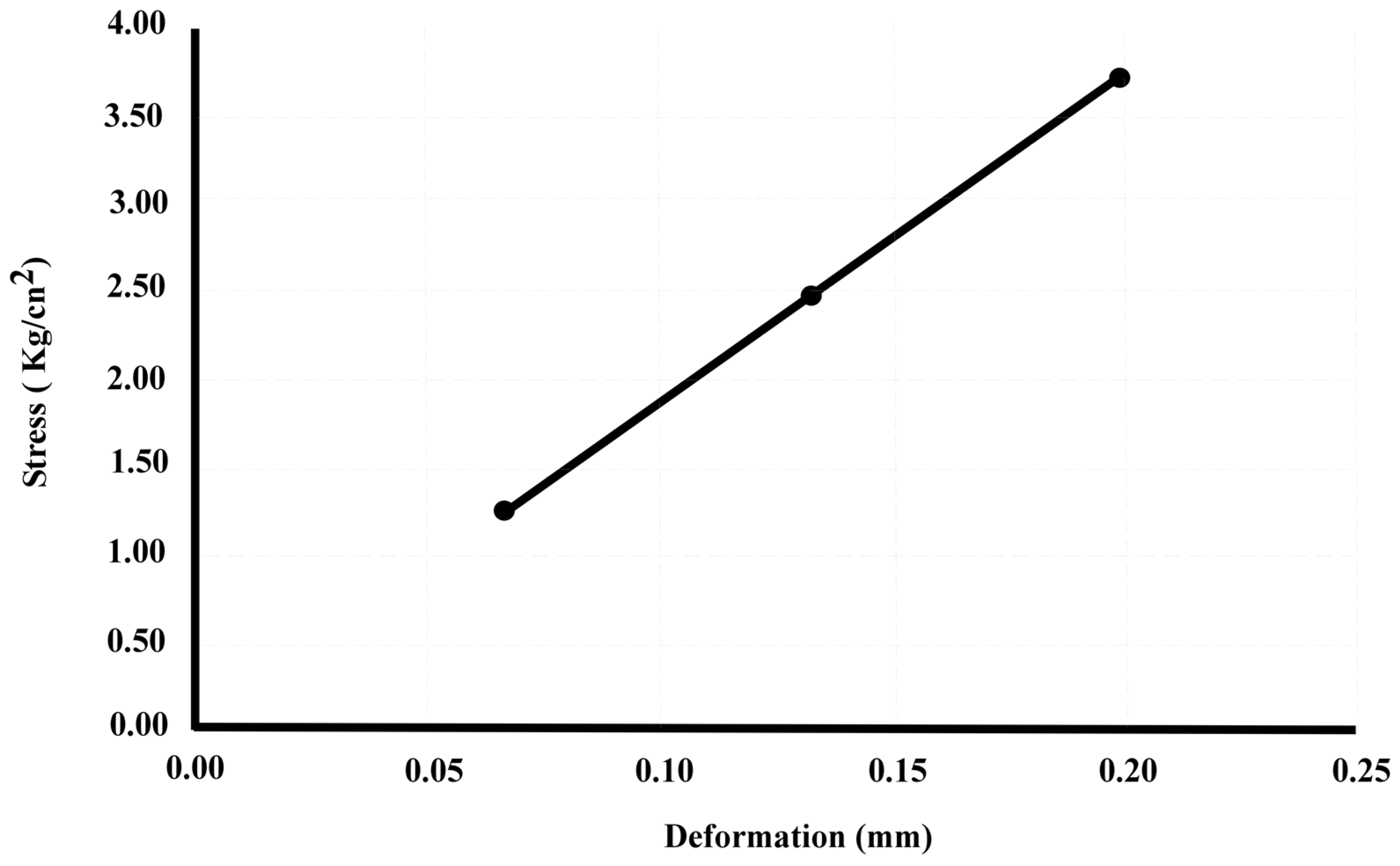
Representative stress–strain curves obtained from uniaxial tensile testing of the carbonate-rich organo-mineral composite samples are shown in
Figure 4. The curves display an initial quasi-linear elastic region followed by fracture at relatively low strain, consistent with an EPS-dominated matrix reinforced by rigid mineral inclusions. The absence of an extended plastic deformation regime reflects limited polymer chain mobility and distinguishes the mechanical response from that of fibrous, collagen-based materials such as natural leather.
The measured tensile values therefore represent the cohesive strength of a dried, mineral-reinforced biopolymeric matrix and provide comparative insight into relative mechanical behavior among organo-mineral composite samples. Tensile response is interpreted as an indicator of internal cohesion and handling resistance governed by EPS-mediated matrix continuity and mineral reinforcement, rather than by fiber entanglement or hierarchical bundle architectures typical of fibrous materials.
Overall, the observed firmness and mechanical behavior highlight the central role of EPS continuity and mineral phase distribution in governing cohesion, dimensional stability, and handling performance within geothermal microbial mat-derived organo-mineral composite systems.
4.4.3. Surface Texture
The carbonate-rich (CT) organo-mineral composite samples exhibited a slightly rough and heterogeneous surface texture arising from the spatial distribution of extracellular polymeric substances (EPSs), siliceous diatom frustules, and carbonate microstructures within the composite matrix (
Table 4). This microtextured surface reflects the intrinsic architecture of geothermal microbial mats, in which EPS filaments, biomineral precipitates, and siliceous diatom valves collectively generate irregular relief and surface complexity at multiple length scales [
26,
33].
Comparable surface heterogeneity has been reported for other experimental bio-based composite systems, including bacterial cellulose sheets, mycelium-derived composites, and biomineralized films, where biologically driven structuring leads to visually distinctive and non-uniform surfaces [
4,
38]. In the CT composites, the interplay between the organic matrix (EPS and polymeric reinforcement) and inorganic phases (silica and carbonates) produces a matte, naturally patterned finish and moderate surface roughness characteristic of hybrid organo-mineral composites.
This intrinsic surface variability represents a material characteristic associated with composite microstructure. The observed texture is closely linked to the underlying porosity and hierarchical organization of the composite system, influencing frictional behavior and tactile response. Such surface features reflect the coupling between EPS continuity, mineral phase distribution, and surface morphology.
Overall, the surface texture of the CT organo-mineral composites reflects the preserved biological and mineralogical organization of the original microbial mats and provides further evidence of the relationship between microstructure and macroscopic material behavior in naturally pre-assembled organo-mineral composite systems.
4.4.4. Porosity
Microscopic observations and manual handling tests indicated that the carbonate-rich (CT) organo-mineral composite samples exhibit moderate porosity, allowing for controlled air exchange and limited fluid penetration while maintaining overall structural cohesion (
Table 4). This porous architecture arises from the natural organization of extracellular polymeric substances (EPS), siliceous diatom frustules, and carbonate–silica inclusions, which together generate an interconnected network of voids within the hybrid composite matrix.
Comparable porous microstructures have been widely documented in microbial mats and microbial cellulose systems, where EPS filaments and biomineral scaffolds act as templates that promote diffusion pathways and internal connectivity [
33,
38]. In the CT composites, the coexistence of organic and inorganic phases produces a balance between permeability and dimensional stability. Mineral phases, particularly silica and carbonates, contribute local rigidity that limits pore collapse during handling or under light mechanical stress, while the EPS-rich matrix preserves connectivity between pore domains.
The observed porosity reflects an inherent structural feature of the organo-mineral composite system. This interconnected pore architecture directly influences moisture interaction, permeability, and swelling behavior, as discussed in
Section 4.4.5 and
Section 4.4.6.
Overall, porosity represents a defining characteristic of the CT organo-mineral composites, reflecting the preserved biological and mineralogical organization of the original microbial mats and contributing to controlled fluid transport and structural coherence within the composite framework.
4.4.5. Permeability and Water Resistance
Water interaction tests demonstrated that the carbonate-rich (CT) organo-mineral composite samples are permeable to liquids, a response consistent with their EPS-rich matrix, moderate porosity, and interconnected composite architecture (
Table 4). This behavior reflects the intrinsic hydrophilicity of microbial extracellular polymeric substances (EPS), which retain water through hydrogen bonding and the formation of hydrated, gel-like networks [
33].
Comparable moisture interaction behavior has been widely reported for other experimental bio-based composite systems, including bacterial cellulose and alginate-based microbial materials, in which polysaccharide-dominated matrices promote hydration and fluid diffusion [
40,
41,
42,
43]. In the CT composites, permeability and water interaction therefore represent inherent material characteristics of EPS-dominated organo-mineral composite systems.
The observed permeability reflects partial preservation of structural features characteristic of natural microbial mats, in which hydration and porosity are integral to matrix stability and function [
26]. The applied reinforcement treatment improved cohesion, handling stability, and surface integrity while maintaining controlled fluid transport through the composite structure.
Overall, the permeability and water interaction behavior of the CT organo-mineral composites highlight the combined influence of EPS continuity, porosity, and mineral phase distribution on fluid transport within bio-derived composite materials.
4.4.6. Water Absorption and Swelling Behavior
After 2 h of immersion at room temperature, the carbonate-rich (CT) organo-mineral composite samples exhibited a water uptake of 131.4% relative to their dry weight and a swelling ratio of approximately 100%, reflected by an increase in thickness from 0.1 mm (dry) to 0.2 mm (wet) (
Table 4). This pronounced hydration response is attributed to the strongly hydrophilic nature of the composite system, driven by the abundance of extracellular polymeric substances (EPSs) and the polyvinyl alcohol–sodium alginate–glycerin reinforcement matrix, which together facilitate rapid water diffusion through the porous organo-mineral network.
Comparable levels of water absorption and swelling have been widely reported in polysaccharide-rich bio-based composite systems, including alginate–PVA films and bacterial cellulose materials, where water uptake commonly ranges between 100 and 150% depending on polymer composition, crosslinking density, and hydrogen-bonding interactions [
36,
37]. In such systems, swelling primarily arises from reversible hydration of polymer chains.
Despite the high degree of water uptake observed in the CT composites, the material retained structural cohesion following immersion, indicating that the combined contributions of microbial EPS, polymer additives, and mineral inclusions form a stable hybrid composite network capable of accommodating hydration-induced expansion.
The observed swelling behavior reflects an intrinsic hydrogel-like response of EPS-dominated organo-mineral composite systems. This hydration response provides insight into the role of EPS continuity, porosity, and mineral phase distribution in regulating reversible dimensional changes.
Overall, the water absorption and swelling results highlight the influence of EPS–mineral interactions on hydration dynamics and dimensional response within geothermal microbial mat-derived composites.
4.4.7. Durability
Durability assessments indicated that the carbonate-rich (CT) organo-mineral composite samples maintained structural cohesion during routine handling operations, including bending, cutting, and stitching (
Table 4). These observations indicate that the hybrid composite matrix, reinforced by extracellular polymeric substances (EPSs) and polymer additives, provides sufficient mechanical integrity to withstand basic fabrication and manipulation processes at the prototype scale.
The ability of the CT composites to endure cutting and stitching without tearing reflects effective stress distribution within the fibrous EPS-rich network, a behavior commonly reported for microbial- and polysaccharide-derived composite systems [
44]. Comparable handling resistance has been documented for other experimental bio-based composites such as bacterial cellulose sheets, alginate-based materials, and mycelium-derived systems, which similarly exhibit moderate mechanical robustness despite limited tensile strength [
4,
38,
45].
The observed durability reflects baseline handling resistance governed by EPS continuity, polymer reinforcement, and mineral phase distribution within the composite architecture. Within this context, the CT organo-mineral composites demonstrate sufficient resistance to mechanical manipulation to support prototype fabrication and repeated handling.
Overall, the durability results highlight the role of composite architecture in maintaining cohesion and structural integrity during manipulation, providing a basis for further optimization and systematic evaluation of durability-related properties.
4.4.8. Thermal Properties (DSC–TGA)
The thermal behavior of the carbonate-rich (CT) organo-mineral composite samples is shown in
Figure 5 and
Table 5 through simultaneous thermogravimetric analysis (TGA) and differential scanning calorimetry (DSC). The TGA profile revealed three main thermal events corresponding to sequential moisture loss, decomposition of organic constituents, and stabilization of the inorganic fraction.
The first thermal event, observed between 50 °C and 110 °C, corresponds to the release of physically adsorbed water and low-molecular-weight volatiles, resulting in an 8–10% mass loss. This behavior is characteristic of hydrophilic, polysaccharide-rich composite systems such as alginate-based materials, bacterial cellulose, and PVA-containing bio-based composites, which retain bound water through extensive hydrogen bonding interactions [
36,
37].
A second major mass loss stage occurred between 180 °C and 320 °C, accounting for approximately 35–40% mass loss. This region is associated with the thermal degradation of polysaccharides, proteins, and extracellular polymeric substances (EPSs) forming the organic matrix of the microbial-derived composite. The corresponding endothermic DSC peak near 250 °C reflects cleavage of glycosidic and peptide bonds, a thermal signature commonly reported for microbial- and polysaccharide-based composite materials [
38,
45].
Above 400 °C, the TGA curve reached a stable plateau, leaving a substantial inorganic residue of approximately 45–50%. This residue is primarily composed of thermally stable mineral phases, including silica (SiO2) and calcium carbonate (CaCO3), consistent with the mineralogical composition of the original microbial mats. The high mineral fraction confirms the organo-mineral character of the composite system and reflects the strong influence of geothermal biomineralization processes on material composition.
Overall, the DSC–TGA results provide compositional insight into the relative contributions of organic and inorganic phases within the CT organo-mineral composite systems. The observed thermal behavior represents a thermal fingerprint of the hybrid EPS–mineral framework and highlights the role of mineral phase content in governing thermal stability and residue formation.
4.4.9. Morphological Characteristics of the Microbialite Mats (SEM–EDS)
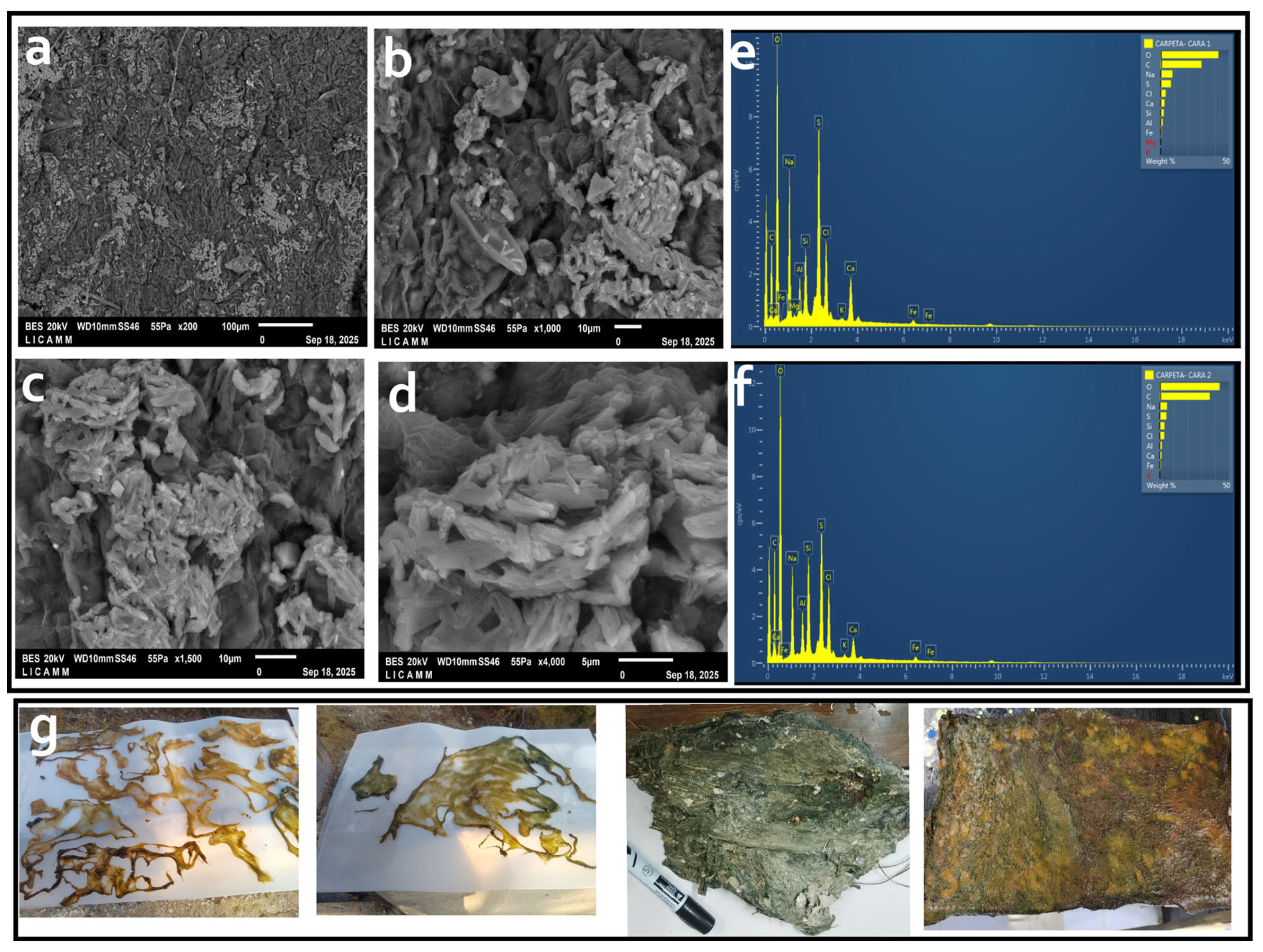
SEM–EDS analysis revealed a heterogeneous, multilayered microstructure composed of porous, laminated, and agglutinated domains arising from the association of microbial extracellular polymeric substances (EPSs), diatom frustules, and mineral precipitates (
Figure 6). The analyzed surfaces displayed stratified organic–mineral architectures in which microbial filaments and EPS matrices acted as nucleation and binding sites for carbonate and silica deposition, accounting for the laminated macroscopic structure characteristic of hydrothermal microbial mats [
31].
High-resolution SEM images showed abundant siliceous frustules of
Achnanthes brevipes var. intermedia and
Sellaphora disjuncta embedded within the mineral framework. Many frustules exhibited partial coatings of calcite overgrowths and silica nanocrystals, consistent with ongoing or preserved biomineralization processes. Preservation of valve ornamentation and pore structures reflects sustained silica availability in the hydrothermal fluids, in agreement with the elevated dissolved Si concentrations measured in the system [
31,
32].
The microbialite surfaces also contained amorphous mineral aggregates intimately associated with EPS, forming microlaminations capable of trapping suspended particles and promoting continued mineral accretion. Mineralized filamentous microbial remnants were frequently observed, supporting the role of cyanobacteria and heterotrophic bacteria in stabilizing the carbonate–silica framework through EPS production and microbially mediated mineral deposition processes [
31].
SEM–EDS elemental mapping showed that the microbialites were dominated by Si, Ca, O, and C, with localized enrichment in Al, Fe, and Mg, consistent with the association of siliceous, carbonate, and EPS-rich domains within the organo-mineral matrix (
Figure 6).
Trace elements, including Cu and Zn, as well as minor concentrations of Y, Te, and Re, were identified by bulk elemental analysis using energy-dispersive X-ray fluorescence (EDXRF) and are therefore not resolved at the microscale by SEM–EDS. The presence of these elements reflects geochemical inputs characteristic of the hydrothermal system and their incorporation within stable mineral phases.
In some diatom frustules, localized Fe and Al enrichment within the silica matrix was observed by SEM–EDS, suggesting early diagenetic substitution processes typical of siliceous hydrothermal deposits [
31]. Overall, the SEM–EDS observations demonstrate that the microbialites function as intrinsically assembled organo-mineral composite systems, in which microbial activity governs mineral precipitation, accretion, and structural stabilization. The coexistence of rigid silica-rich domains and more compliant carbonate–EPS regions generates spatial heterogeneity in microstructure and mechanical response, providing a structural basis for the differences in flexibility, firmness, porosity, and deformation behavior observed in the derived composite samples.
5. Effect of PVA–Alginate–Glycerin Treatment on Mechanical and Water Interaction Properties
The application of the PVA–alginate–glycerin coating enhanced the mechanical cohesion and surface stability of the microbial mat–derived organo-mineral composite samples. Following treatment, the materials exhibited increased rigidity, improved handling stability, and a more uniform surface morphology while retaining sufficient flexibility for bending and manual manipulation. The applied polymeric layer acted as a reinforcing film that integrated with the underlying hybrid composite matrix, partially reducing surface roughness and limiting localized pore collapse.
These modifications resulted in a relative increase in tensile resistance and dimensional stability compared with untreated samples, consistent with reinforcing effects previously reported for PVA–alginate-based composite systems [
36,
37]. The improvement in mechanical response is attributed to the complementary roles of the polymer components: polyvinyl alcohol provides structural reinforcement through extensive hydrogen bonding; alginate contributes film continuity and ionic crosslinking; and glycerin functions as a plasticizer, enhancing elasticity and mitigating brittle behavior.
Water interaction analyses indicated a reduction in liquid uptake following polymer treatment relative to untreated microbial mats. Visual wetting observations showed the formation of a semi-continuous surface layer that limited direct water penetration without achieving full hydrophobicity. This behavior is consistent with previous studies reporting that PVA–alginate blends form cohesive, semi-permeable films when applied to mineral-rich or bio-based substrates [
46,
47].
The coating therefore moderates water interaction by regulating surface wetting and diffusion pathways within the composite structure. At the molecular level, the reinforcing effect of the PVA–alginate–glycerin treatment can be explained by physical and chemical interactions among the polymeric components and the EPS-rich organo-mineral matrix. Polyvinyl alcohol (PVA) contains abundant hydroxyl groups capable of forming extensive hydrogen-bonding networks with polysaccharide chains present in extracellular polymeric substances (EPSs), as well as with alginate backbones. Sodium alginate contributes carboxylate groups that can participate in hydrogen bonding and ionic interactions with multivalent cations associated with mineral phases in the composite matrix.
Glycerin acts as a low-molecular-weight plasticizer, inserting between polymer chains, reducing intermolecular stiffness, and increasing segmental mobility, thereby preventing brittle behavior and enhancing flexibility. These combined interactions promote interfacial adhesion between the polymer coating and the underlying organo-mineral composite, resulting in improved cohesion, surface integrity, and handling stability. While spectroscopic techniques such as FTIR could provide direct confirmation of these interactions, the present study focuses on structure–property relationships inferred from processing response, mechanical behavior, and water interaction, and detailed spectroscopic characterization is identified as a priority for future work.
Overall, the PVA–alginate–glycerin treatment functions as an effective reinforcement strategy that enhances cohesion, handling stability, and controlled water interaction in microbial mat–derived organo-mineral composite systems. These results highlight the role of polymer–EPS–mineral interactions in tuning composite architecture and performance and provide a basis for further optimization of processing parameters and material design.
6. Prototype Fabrication and Preliminary Performance Evaluation
Following the tanning and reinforcement stages, the microbial mat-derived organo-mineral composite samples were processed into prototype-scale forms to evaluate handling behavior, shaping capability, and structural stability under controlled laboratory conditions. Homogeneous fragments free of visible impurities were selected and conditioned under controlled temperature and relative humidity (25–28 °C; 50–60% RH) to minimize warping and dimensional instability during fabrication.
Conditioned sheets were cut using sterilized blades or metal dies to obtain uniform edges while minimizing mechanical disruption of the composite matrix. Flat prototype forms were gently tensioned over rigid or flexible supports to achieve consistent thickness and surface regularity. For three-dimensional shaping trials, a semi-wet forming approach was applied, in which samples were lightly moistened to enhance malleability, shaped over predefined forms, and subsequently air-dried to promote gradual structural stabilization. Assembly steps were performed using biodegradable cotton threads and bio-based adhesive formulations to maintain material compatibility within the organo-mineral composite system.
All prototype forms were shade-dried on ventilated grids to constant mass. Morphological attributes, including shape retention, surface texture, color uniformity, and dimensional stability, were documented qualitatively. The resulting prototypes exhibited material behavior strongly influenced by the mineralogical composition of the source microbial mats. Silica-rich samples displayed higher rigidity and abrasion resistance during handling, whereas carbonate-rich samples exhibited greater flexibility and conformability during shaping.
These observations indicate that variations in the silica-to-carbonate ratio within the compositional range examined in this study contribute to differences in mechanical response and surface characteristics, acting as an intrinsic compositional variable governing stiffness and compliance (
Figure 7). In particular,
Figure 7 illustrates contrasting deformation and handling responses between silica-rich and carbonate-rich prototypes, supporting the interpretation that mineralogical end-member composition influences mechanical response. Such behavior is consistent with previous studies of biomineralized microbial matrices, in which mineral phase distribution governs mechanical behavior in hybrid organic–mineral composite systems [
31,
32].
Handling and manipulation tests showed that the reinforced composite samples maintained cohesion during bending, cutting, and repeated handling. The application of the PVA–alginate–glycerin coating further improved surface stability, reduced material fragmentation, and enhanced resistance to localized deformation, consistent with trends reported for reinforced polysaccharide-based composite systems.
Overall, the prototype-scale fabrication experiments demonstrate the formability and handling stability of geothermal microbial mat-derived organo-mineral composite systems. These observations provide insight into the combined influence of mineralogical composition and polymer reinforcement on shaping behavior and structural response at the prototype scale.
Comparative Evaluation and Application Perspective
A qualitative comparative assessment of the geothermal microbial mat-derived organo-mineral composites reveals distinct material responses governed by mineralogical composition and biologically derived architecture. Silica-rich samples exhibit increased rigidity and resistance to surface abrasion, whereas carbonate-dominated samples display greater flexibility and elastic recovery. These contrasting behaviors arise from differences in the relative contributions of siliceous microstructures and carbonate–EPS networks within the composite framework and are consistent with trends reported for other biomineralized microbial composite systems [
31,
32].
Although the overall tensile resistance of these materials is lower than that of engineered structural or textile composites, the samples maintain cohesion and dimensional stability during repeated manual manipulation and prototype-scale shaping. This behavior reflects performance governed by intrinsic composite architecture and phase distribution rather than by externally engineered reinforcement strategies.
Porosity and permeability further distinguish the microbial mat-derived composites. Interconnected pore networks enable controlled air and fluid transport while preserving matrix integrity, a characteristic intrinsic to EPS-rich organo-mineral systems and widely reported in microbial- and polysaccharide-based composite materials [
32].
When compared with polymeric or mineral-based composites prepared without microbial involvement, the materials investigated here exhibit a fundamentally different structural origin. Conventional composite systems typically rely on externally processed fibers, synthetic binders, or mechanically mixed fillers to achieve cohesion and mechanical performance. In contrast, thermophilic microbial mats constitute naturally pre-assembled organo-mineral composite frameworks, in which extracellular polymeric substances (EPSs) form a continuous organic matrix and in situ biomineralization generates finely distributed silica and carbonate phases. This biological self-assembly produces intimate organic–mineral coupling, hierarchical porosity, and laminated architectures that are difficult to replicate through purely synthetic processing routes.
Accordingly, the principal advantages of microbial mat derived composites do not lie in superior load-bearing performance, but in their intrinsic structural integration, renewable origin, and strong structure property coupling. Material behavior emerges from interactions among EPS continuity, mineral phase distribution, and hydration responsiveness, rather than from engineered fiber architectures or high-density reinforcements.
Importantly, these properties are achieved without reliance on synthetic fibers, engineered fillers, or petrochemical-derived reinforcements. Instead, material performance is governed by intrinsic interactions among EPSs, diatom frustules, and mineral precipitates formed under geothermal conditions. The high biomass productivity of thermophilic microbial mats, driven by hydrothermal energy and geochemical gradients, further distinguishes these systems as renewable organo-mineral composite precursors [
31].
With respect to biocompatibility and cytotoxicity, these properties were not evaluated in the present proof-of-concept study. While EPS-rich and polysaccharide-based matrices are generally associated with bio-derived material systems, geothermal microbial mats may contain trace metals and mineral phases inherent to hydrothermal environments. Therefore, no claims are made regarding cytocompatibility or suitability for biomedical or direct human-contact applications. Dedicated cytotoxicity assays, metal leaching studies, and surface chemistry analyses are required and are identified as essential directions for future research.
Overall, these observations support the interpretation of geothermal microbial mats as compositionally variable, naturally assembled organo-mineral composite systems. The results highlight their value not as direct substitutes for engineered composites, but as a scientifically tractable platform for exploring biologically derived structure–property relationships in sustainable composite materials research.
7. Conclusions
This study demonstrates the feasibility of transforming thermophilic microbial mats from the Comanjilla geothermal system into reinforced organo-mineral composite materials through an integrated workflow involving controlled cleaning, inorganic tanning, polymer conditioning, and prototype-scale fabrication. Physicochemical, mineralogical, and microstructural analyses show that the intrinsic organo-mineral architecture of the mats—comprising extracellular polymeric substances (EPSs), diatom frustules, carbonate precipitates, and silica phases—functions as a naturally pre-assembled composite framework that governs material structure, handling behavior, and response to processing.
Variations in mineral composition exert a measurable influence on mechanical response under laboratory-scale conditions. Silica-rich samples exhibit increased rigidity and abrasion resistance, whereas carbonate-dominated samples display greater flexibility and elastic recovery, reflecting differences in the relative contributions of siliceous microstructures and carbonate–EPS networks within the composite architecture. Thermal analysis further confirms the hybrid organo-mineral nature of the materials, highlighting the coexistence of an organic-rich matrix and a mineral-stabilized framework that collectively influence flexibility and thermal response.
Polymer conditioning using a PVA–alginate–glycerin formulation enhances surface cohesion, handling stability, and resistance to localized deformation while moderating water interaction behavior. These effects arise from complementary interactions between the polymeric additives and the underlying organo-mineral matrix and demonstrate the potential of polymer reinforcement as an effective strategy for modifying composite architecture.
The materials exhibit sufficient cohesion, formability, and stability to support laboratory-scale shaping and handling. At the same time, further investigation is required to address the chemical composition of the EPS fraction, the behavior of trace metals inherent to the geothermal environment, and the influence of controlled processing conditions on long-term mechanical and environmental performance. Future work should therefore focus on EPS chemistry, metal immobilization and leaching behavior, and quantitative evaluation of properties relevant to indirect-contact, low-load, and non-structural applications.
Overall, this work establishes geothermal microbial mats as compositionally variable, naturally assembled organo-mineral composite systems and provides a materials-oriented framework for understanding how microbial processes, biomineralization, and polymer reinforcement collectively influence composite behavior. The findings position geothermal microbial mats as a scientifically robust and renewable platform for further research within the field of sustainable, bio-derived composite materials.




 ,
,