Innovative Skin Depigmenting Strategies: A Review



Abstract
1. Introduction
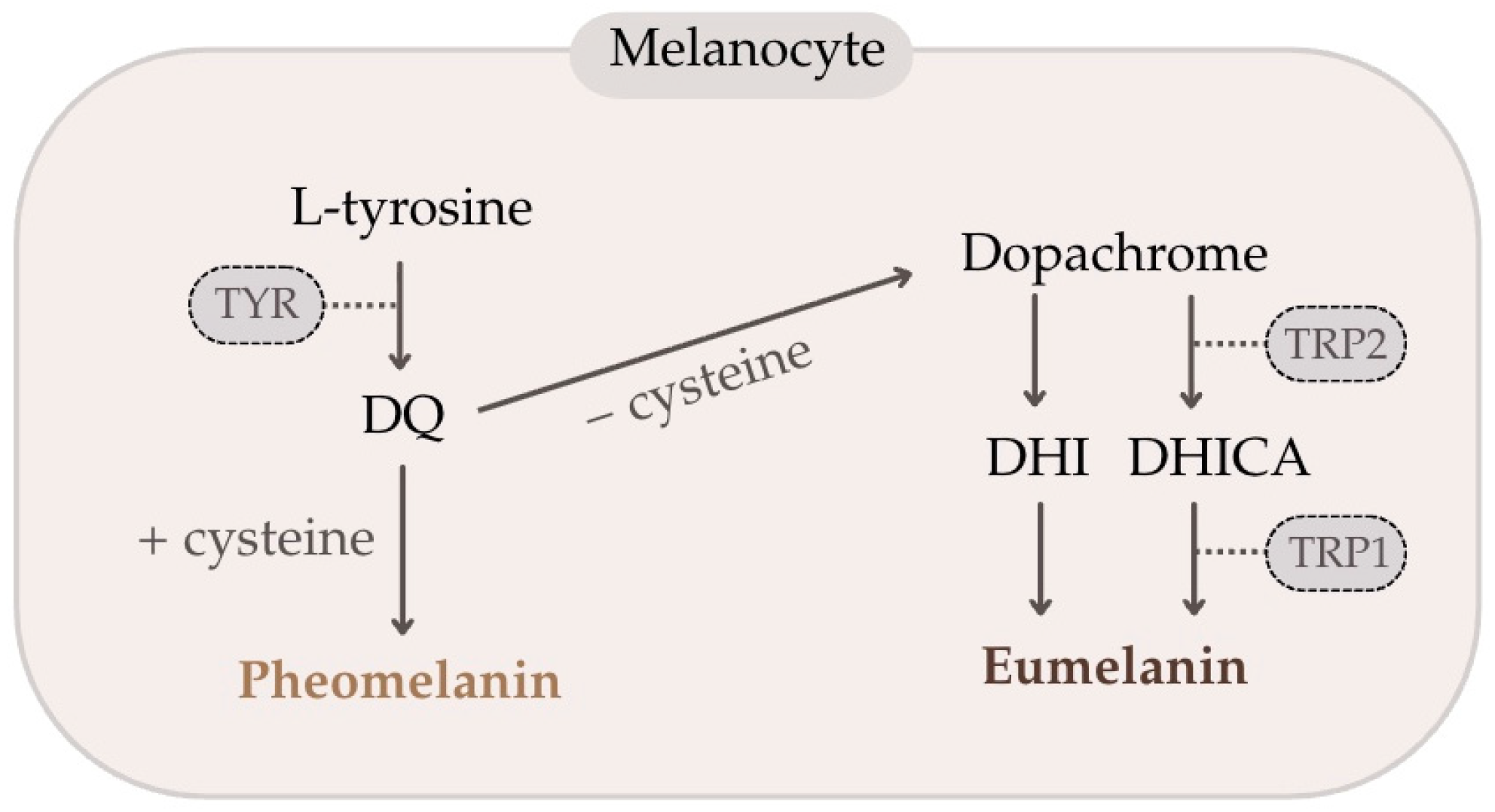
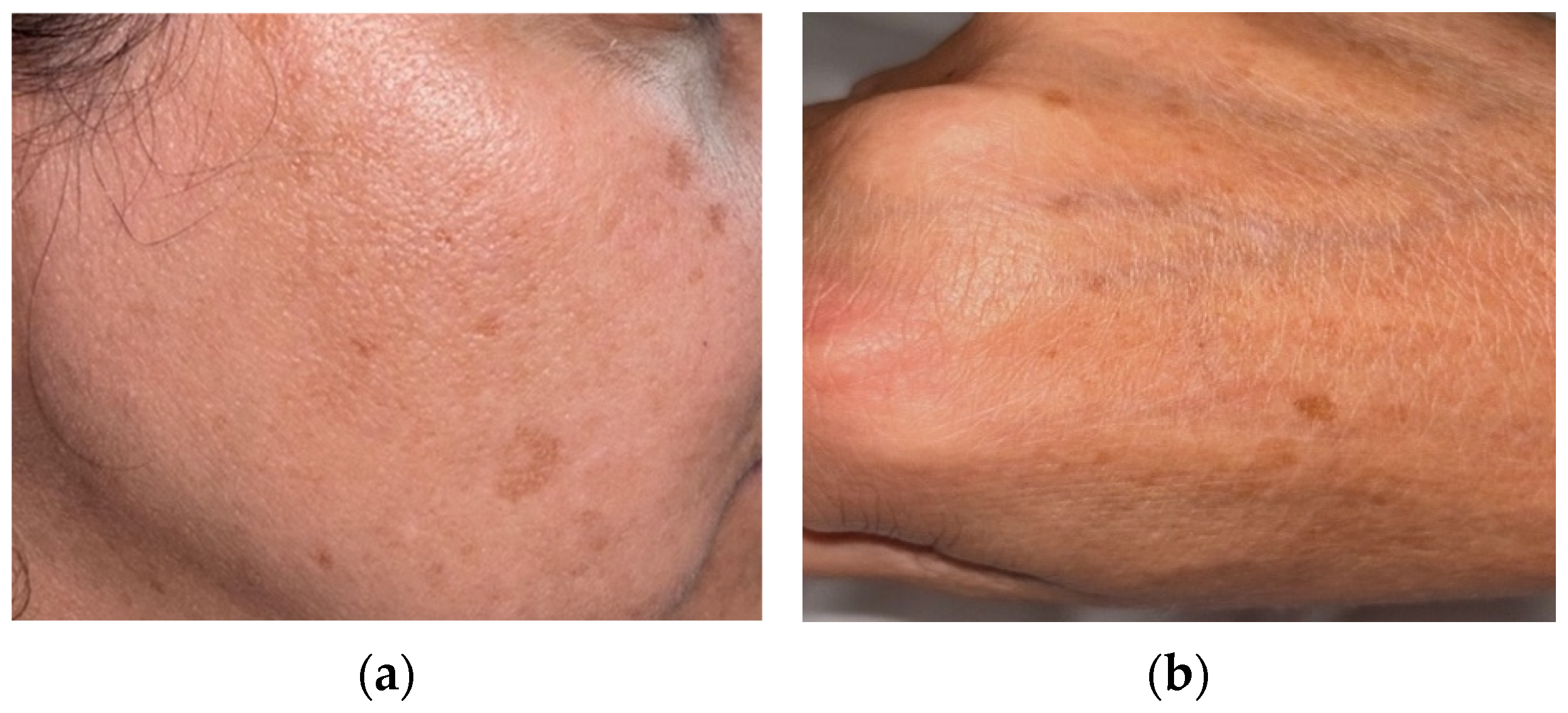
2. Molecular Pathways Underlying Principal Hyperpigmentation Types
3. Current Strategies in the Treatment of Hyperpigmentation
3.1. Main Topical Depigmenting Agents
3.2. Oral Therapies
3.3. Chemical Peels and Laser Therapy
4. Emerging Treatments and Innovative Systems to Encapsulate Depigmenting Agents
4.1. Phytochemicals
4.2. Lipid-Based Nanocarriers
4.3. Polymer-Based Nanocarriers
4.4. Inorganic Nanocarriers
4.5. Microneedling
5. Evidence from Clinical Trials on Topical Depigmenting Strategies
6. Discussion and Future Directions
7. Conclusions
Author Contributions
Funding
Institutional Review Board Statement
Informed Consent Statement
Data Availability Statement
Conflicts of Interest
Abbreviations
| AHA | α-Hydroxy acids |
| ACTH | Adrenocorticotropic hormone |
| AuNPs | Gold nanoparticles |
| AZA | Azelaic acid |
| bFGF | Basic fibroblast growth factor |
| BHA | β-hydroxy acids |
| cAMP-MITF | cyclic AMP–microphthalmia transcription factor |
| CREB | cAMP response element-binding protein |
| DAG | Diacylglycerol |
| DHI | 5,6-dihydroxyindole |
| DHICA | 5,6-dihydroxyindole-2-carboxylic acid |
| DIH | Drug-induced hyperpigmentation |
| DMN | Dissolving microneedle |
| DOPA | L-3,4-dihydroxyphenylalanine |
| DQ | Dopaquinone |
| FDA | Food and Drug Administration |
| GA | Glycolic acid |
| GSH | Glutathione |
| HA | Hyaluronic acid |
| HQ | Hydroquinone |
| IPL | Intense Pulsed Light |
| KA | Kojic acid |
| LA | Lactic acid |
| MAPK | Mitogen-activated protein kinase |
| MASI | Melasma Area and Severity Index |
| MC1R | Melanocortin-1 receptor |
| MITF | Microphthalmia transcription factor |
| MOPB | Methylophiopogonanone B |
| MSH | melanocyte-stimulating hormone |
| NLC | Nanostructured lipid carriers |
| OPN3 | Opsin-3 |
| PAR | Protease-activated receptor |
| PGA | Polyglutamic acid |
| PIH | Post-inflammatory hyperpigmentation |
| PKC | Protein kinase C |
| PL | Polypodium leucotomos |
| QC | Quality control |
| QS Nd: YAG | Q-switched neodymium-doped yttrium aluminum garnet |
| QSRL | Q-switched ruby lasers |
| ROS | Reactive oxygen species |
| SCF | Stem cell factor |
| SLN | Solid lipid nanoparticles |
| SPF | Sun protector factor |
| TCA | Trichloroacetic acid |
| TCC | Triple combination cream |
| TRP1 | Tyrosinase-related protein 1 |
| TRP2 | Tyrosinase-related protein 2 |
| TXA | Tranexamic acid |
| TYR | Tyrosinase |
| UV | Ultraviolet |
References
- Jin, R.; Luo, L.; Zheng, J. The Trinity of skin: Skin homeostasis as a neuro-endocrine-immune organ. Life 2022, 12, 725. [Google Scholar] [CrossRef]
- Nguyen, A.V.; Soulika, A.M. The dynamics of the skin’s immune system. Int. J. Mol. Sci. 2019, 20, 1811. [Google Scholar] [CrossRef]
- Li, C.; Kuai, L.; Cui, R.; Miao, X. Melanogenesis and the targeted therapy of melanoma. Biomolecules 2022, 12, 1874. [Google Scholar] [CrossRef]
- Thawabteh, A.M.; Jibreen, A.; Karaman, D.; Thawabteh, A.; Karaman, R. Skin pigmentation types, causes and treatment—A review. Molecules 2023, 28, 4839. [Google Scholar] [CrossRef] [PubMed]
- Alipour, N.; Burke, T.; Courtney, J. Skin type diversity in skin lesion datasets: A review. Curr. Dermatol. Rep. 2024, 13, 198–210. [Google Scholar] [CrossRef] [PubMed]
- Nautiyal, A.; Wairkar, S. Management of hyperpigmentation: Current treatments and emerging therapies. Pigment Cell Melanoma Res. 2021, 34, 1000–1014. [Google Scholar] [CrossRef] [PubMed]
- Fistarol, S.K.; Itin, P.H. Disorders of pigmentation. J. Dtsch. Dermatol. Ges. 2010, 8, 187–201. [Google Scholar] [CrossRef]
- Deb, A.; Sb, S.; B, S.; Hp, S.G.; Aj, R. Advancements in drug delivery for hyperpigmentation: Emerging therapies and future prospects. Cutan. Ocul. Toxicol. 2025, 44, 329–341. [Google Scholar] [CrossRef]
- Desai, S.R. Hyperpigmentation therapy: A review. J. Clin. Aesthet. Dermatol. 2014, 7, 13–17. [Google Scholar]
- Kerob, D.K.; Passeron, T.; Alexis, A.; Dreno, B.; Wei, L.; Morita, A.A.; Leok, C.; Puig, S.; Schalka, S.; Lim, H.W. Pigmentary disorders, prevalence, impact on quality of life and social stigmatization: Results of the first large international survey. J. Am. Acad. Dermatol. 2024, 91, AB280. [Google Scholar] [CrossRef]
- Taylor, A.; Pawaskar, M.; Taylor, S.L.; Balkrishnan, R.; Feldman, S.R. Prevalence of pigmentary disorders and their impact on quality of life: A prospective cohort study. J. Cosm. Dermatol. 2008, 7, 164–168. [Google Scholar] [CrossRef]
- Wang, J.Y.; Kabakova, M.; Philip, R.; Stolyar, J.; Berger-Gutierrez, R.; Jagdeo, J. The impact of hyperpigmentation on the lives of patients. J. Drugs Dermatol. 2025, 24, 668–674. [Google Scholar] [CrossRef]
- Draelos, Z.D. Skin lightening preparations and the hydroquinone controversy: Hydroquinone and skin lightening preparations. Dermatol. Ther. 2007, 20, 308–313. [Google Scholar] [CrossRef] [PubMed]
- Ghasemiyeh, P.; Fazlinejad, R.; Kiafar, M.R.; Rasekh, S.; Mokhtarzadegan, M.; Mohammadi-Samani, S. Different therapeutic approaches in melasma: Advances and limitations. Front. Pharmacol. 2024, 15, 1337282. [Google Scholar] [CrossRef] [PubMed]
- Gilchrest, B.A.; Park, H.Y.; Eller, M.S.; Yaar, M. Mechanisms of ultraviolet light-induced pigmentation. Photochem. Photobiol. 1996, 63, 1–10. [Google Scholar] [CrossRef] [PubMed]
- Nahhas, A.F.; Abdel-Malek, Z.A.; Kohli, I.; Braunberger, T.L.; Lim, H.W.; Hamzavi, I.H. The potential role of antioxidants in mitigating skin hyperpigmentation resulting from ultraviolet and visible light-induced oxidative stress. Photodermatol. Photoimmunol. Photomed. 2019, 35, 420–428. [Google Scholar] [CrossRef]
- Ogbechie-Godec, O.A.; Elbuluk, N. Melasma: An up-to-date comprehensive review. Dermatol. Ther. 2017, 7, 305–318. [Google Scholar] [CrossRef]
- Honigman, A.; Rodrigues, M. Differential diagnosis of melasma and hyperpigmentation. Dermatol. Rev. 2023, 4, 30–37. [Google Scholar] [CrossRef]
- Qu, Y.; Wang, S.; Xie, H.; Meng, X.; Cui, B.; Xiao, Z. Melasma secondary to drugs: A real-world pharmacovigilance study of the FDA adverse event reporting system (FAERS). BMC Pharmacol. Toxicol. 2025, 26, 73. [Google Scholar] [CrossRef]
- Maghfour, J.; Olayinka, J.; Hamzavi, I.H.; Mohammad, T.F. A focused review on the pathophysiology of post-inflammatory hyperpigmentation. Pigment Cell Melanoma Res. 2022, 35, 320–327. [Google Scholar] [CrossRef]
- Albahlool, A.M.; Alshehri, O.K.M.; Alrasheed, S.M.; Al Ali, M.A.; Al Sharif, A.O.R. Overview on post-inflammatory hyperpigmentation. J. Pharm. Res. Int. 2021, 33, 393–399. [Google Scholar] [CrossRef]
- Patel, A. Postinflammatory hyperpigmentation: Review of pathogenesis, prevention, and treatment. Pigment Int. 2014, 1, 59. [Google Scholar] [CrossRef]
- Lawrence, E.; Syed, H.A.; Al Aboud, K.M. Postinflammatory hyperpigmentation. In StatPearls; StatPearls Publishing: Treasure Island, FL, USA, 2025. Available online: https://www.ncbi.nlm.nih.gov/books/NBK559150/ (accessed on 15 November 2025).
- Dereure, O. Drug-induced skin pigmentation. Epidemiology, diagnosis and treatment. Am. J. Clin. Dermatol. 2001, 2, 253–262. [Google Scholar] [CrossRef] [PubMed]
- Narayanan, A.; Chandrashekhar, L. Drug-induced pigmentation. Pigment Int. 2022, 9, 82–92. [Google Scholar] [CrossRef]
- Tisack, A.; Mohammad, T.F. Drug-induced pigmentation: A review. Drugs 2024, 84, 1071–1091. [Google Scholar] [CrossRef]
- Giménez García, R.M.; Carrasco Molina, S. Drug-induced hyperpigmentation: Review and case series. J. Am. Board Fam. Med. 2019, 32, 628–638. [Google Scholar] [CrossRef]
- Camayo, T.V.; Lee, V.R.; Zhou, X.A. Drug-induced pigmentation. In StatPearls; StatPearls Publishing: Treasure Island, FL, USA, 2025. Available online: https://www.ncbi.nlm.nih.gov/books/NBK542253/ (accessed on 16 November 2025).
- Arni, C.; Preclaro, I. Drug-induced pigmentation. In Pigmentation Disorders—Etiology and Recent Advances in Treatments; IntechOpen: London, UK, 2023. [Google Scholar] [CrossRef]
- Noroozi, S.; Fadaei, F.; Rahbar, M.; Tabarrai, M.; Mansouri, P.; Shirbeigi, L. Novel preventive and therapeutic strategies for ephelides (freckles) from a Persian medicine perspective: A narrative review. J. Skin Stem Cell 2022, 9, e123335. [Google Scholar] [CrossRef]
- Plensdorf, S.; Livieratos, M.; Dada, N. Pigmentation disorders: Diagnosis and management. Am. Fam. Physician 2017, 96, 797–804. [Google Scholar]
- Couteau, C.; Coiffard, L. Overview of skin whitening agents: Drugs and cosmetic products. Cosmetics 2016, 3, 27. [Google Scholar] [CrossRef]
- Mohiuddin, A.K. Skin lightening & management of hyperpigmentation. Pharm. Sci. Anal. Res. J. 2019, 2, 180020. [Google Scholar]
- Fabian, I.M.; Sinnathamby, E.S.; Flanagan, C.J.; Lindberg, A.; Tynes, B.; Kelkar, R.A.; Varrassi, G.; Ahmadzadeh, S.; Shekoohi, S.; Kaye, A.D. Topical hydroquinone for hyperpigmentation: A narrative review. Cureus 2023, 15, e48840. [Google Scholar] [CrossRef]
- Burger, P.; Landreau, A.; Azoulay, S.; Michel, T.; Fernandez, X. Skin whitening cosmetics: Feedback and challenges in the development of natural skin lighteners. Cosmetics 2016, 3, 36. [Google Scholar] [CrossRef]
- Hameed Gatea, A. Review on analysis of interesting whitening agents in cosmetics products. IOP Conf. Ser. Mater. Sci. Eng. 2020, 928, 052001. [Google Scholar] [CrossRef]
- Phasha, V.; Senabe, J.; Ndzotoyi, P.; Okole, B.; Fouche, G.; Chuturgoon, A. Review on the use of Kojic Acid—A skin-lightening ingredient. Cosmetics 2022, 9, 64. [Google Scholar] [CrossRef]
- Petrovici, A.-G.; Spennato, M.; Bîtcan, I.; Péter, F.; Cotarcă, L.; Todea, A.; Ordodi, V.L. A comprehensive review of azelaic acid pharmacological properties, clinical applications, and innovative topical formulations. Pharmaceuticals 2025, 18, 1273. [Google Scholar] [CrossRef]
- Liyanage, A.; Liyanage, G.; Sirimanna, G.; Schürer, N. Comparative study on depigmenting agents in skin of color. J. Clin. Aesthet. Dermatol. 2022, 15, 12–17. [Google Scholar]
- Davis, E.C.; Callender, V.D. Postinflammatory hyperpigmentation: A review of the epidemiology, clinical features, and treatment options in skin of color. J. Clin. Aesthet. Dermatol. 2010, 3, 20–31. [Google Scholar]
- Chambers, C. Opinion on Kojic Acid; Scientific Committee on Consumer Products: Brussels, Belgium, 2008; pp. 1–79. [Google Scholar]
- Bergman, D.; Luke, J. Azelaic acid. J. Dermatol. Nurses Assoc. 2017, 9, 157–160. [Google Scholar] [CrossRef]
- Gillbro, J.M.; Olsson, M.J. The melanogenesis and mechanisms of skin-lightening agents-existing and new approaches: Melanogenesis and skin-lightening agents. Int. J. Cosmet. Sci. 2011, 33, 210–221. [Google Scholar] [CrossRef]
- Shin, J.W.; Park, K.C. Current clinical use of depigmenting agents. Dermatol. Sin. 2014, 32, 205–210. [Google Scholar] [CrossRef]
- Ebanks, J.P.; Wickett, R.R.; Boissy, R.E. Mechanisms regulating skin pigmentation: The rise and fall of complexion coloration. Int. J. Mol. Sci. 2009, 10, 4066–4087. [Google Scholar] [CrossRef]
- Fan, M.; Fan, X.; Lai, Y.; Chen, J.; Peng, Y.; Peng, Y.; Xiang, L.; Ma, Y. Protease-Activated Receptor 2 in inflammatory skin disease: Current evidence and future perspectives. Front. Immunol. 2024, 15, 1448952. [Google Scholar] [CrossRef] [PubMed]
- Ito, Y.; Kanamaru, A.; Tada, A. Effects of methylophiopogonanone B on melanosome transfer and dendrite retraction. J. Dermatol. Sci. 2006, 42, 68–70. [Google Scholar] [CrossRef]
- Hakozaki, T.; Minwalla, L.; Zhuang, J.; Chhoa, M.; Matsubara, A.; Miyamoto, K.; Greatens, A.; Hillebrand, G.G.; Bissett, D.L.; Boissy, R.E. The effect of niacinamide on reducing cutaneous pigmentation and suppression of melanosome transfer. Br. J. Dermatol. 2002, 147, 20–31. [Google Scholar] [CrossRef] [PubMed]
- Solano, F.; Briganti, S.; Picardo, M.; Ghanem, G. Hypopigmenting agents: An updated review on biological, chemical and clinical aspects. Pigment Cell Res. 2006, 19, 550–571. [Google Scholar] [CrossRef] [PubMed]
- Minwalla, L.; Zhao, Y.; Cornelius, J.; Babcock, G.F.; Wickett, R.R.; Le Poole, I.C.; Boissy, R.E. Inhibition of melanosome transfer from melanocytes to keratinocytes by lectins and neoglycoproteins in an in vitro model system. Pigment Cell Res. 2001, 14, 185–194. [Google Scholar] [CrossRef]
- Zuo, A.-R.; Dong, H.-H.; Yu, Y.-Y.; Shu, Q.-L.; Zheng, L.-X.; Yu, X.-Y.; Cao, S.-W. The antityrosinase and antioxidant activities of flavonoids dominated by the number and location of phenolic hydroxyl groups. Chin. Med. 2018, 13, 51. [Google Scholar] [CrossRef]
- Sharma, D.K.; Sharma, P. Augmented glutathione absorption from oral mucosa and its effect on skin pigmentation: A clinical review. Clin. Cosmet. Investig. Dermatol. 2022, 15, 1853–1862. [Google Scholar] [CrossRef]
- Shimshak, S.J.E.; Tolaymat, L.M.; Haga, C.B.; Dawson, N.L.; Gillis, M.S.; Yin, M.; Kirsch, B.; Cooper, M.; Sluzevich, J.C. A review of oral therapies for the treatment of skin hyperpigmentation. J. Cutan. Med. Surg. 2022, 26, 169–175. [Google Scholar] [CrossRef]
- Handog, E.B.; Datuin, M.S.L.; Singzon, I.A. An open-label, single-arm trial of the safety and efficacy of a novel preparation of glutathione as a skin-lightening agent in Filipino women. Int. J. Dermatol. 2016, 55, 153–157. [Google Scholar] [CrossRef]
- Peng, X.; Ma, Y.; Yan, C.; Wei, X.; Zhang, L.; Jiang, H.; Ma, Y.; Zhang, S.; Xing, M.; Gao, Y. Mechanism, formulation, and efficacy evaluation of natural products for skin pigmentation treatment. Pharmaceutics 2024, 16, 1022. [Google Scholar] [CrossRef] [PubMed]
- Singh, S.; Sharma, N.; Zahoor, I.; Behl, T.; Antil, A.; Gupta, S.; Anwer, M.K.; Mohan, S.; Bungau, S.G. Decrypting the potential of nanotechnology-based approaches as cutting-edge for management of hyperpigmentation disorder. Molecules 2022, 28, 220. [Google Scholar] [CrossRef] [PubMed]
- Tangau, M.J.; Chong, Y.K.; Yeong, K.Y. Advances in cosmeceutical nanotechnology for hyperpigmentation treatment. J. Nanopart. Res. 2022, 24, 155. [Google Scholar] [CrossRef]
- Chelliah, R.; Rubab, M.; Vijayalakshmi, S.; Karuvelan, M.; Barathikannan, K.; Oh, D.-H. Liposomes for drug delivery: Classification, therapeutic applications, and limitations. Next Nanotechnol. 2025, 8, 100209. [Google Scholar] [CrossRef]
- Roselan, M.A.; Ashari, S.E.; Faujan, N.H.; Mohd Faudzi, S.M.; Mohamad, R. An improved nanoemulsion formulation containing kojic monooleate: Optimization, characterization and in vitro studies. Molecules 2020, 25, 2616. [Google Scholar] [CrossRef]
- Duarah, S.; Durai, R.D.; Narayanan, V.B. Nanoparticle-in-gel system for delivery of vitamin C for topical application. Drug Deliv. Transl. Res. 2017, 7, 750–760. [Google Scholar] [CrossRef]
- Madawi, E.A.; Al Jayoush, A.R.; Rawas-Qalaji, M.; Thu, H.E.; Khan, S.; Sohail, M.; Mahmood, A.; Hussain, Z. Polymeric nanoparticles as tunable nanocarriers for targeted delivery of drugs to skin tissues for treatment of topical skin diseases. Pharmaceutics 2023, 15, 657. [Google Scholar] [CrossRef]
- Xiao, L.; Matsubayashi, K.; Miwa, N. Inhibitory effect of the water-soluble polymer-wrapped derivative of fullerene on UVA-induced melanogenesis via downregulation of tyrosinase expression in human melanocytes and skin tissues. Arch. Dermatol. Res. 2007, 299, 245–257. [Google Scholar] [CrossRef]
- Ertam, I.; Mutlu, B.; Unal, I.; Alper, S.; Kivçak, B.; Ozer, O. Efficiency of ellagic acid and arbutin in melasma: A randomized, prospective, open-label study. J. Dermatol. 2008, 35, 570–574. [Google Scholar] [CrossRef]
- Labouta, H.I.; Schneider, M. Interaction of inorganic nanoparticles with the skin barrier: Current status and critical review. Nanomed. Nanotechnol. Biol. Med. 2013, 9, 39–54. [Google Scholar] [CrossRef]
- Al Mohammady, A.; Kadah, A.S.; Mahran, M.A.; Elsaie, M.L. Microneedling-assisted delivery of metformin versus tranexamic acid in treating melasma: A randomized controlled study. Eur. J. Med. Res. 2025, 30, 761. [Google Scholar] [CrossRef]
- Pazyar, N.; Raeispour, M.; Yaghoobi, R.; Seyedtabib, M. Evaluation of the effectiveness of microneedling with tranexamic acid in comparison with microneedling with vitamin C in the treatment of melasma: A prospective and single-blind clinical trial. Health Sci. Rep. 2023, 6, e1636. [Google Scholar] [CrossRef]
- Jutley, G.S.; Rajaratnam, R.; Halpern, J.; Salim, A.; Emmett, C. Systematic review of randomized controlled trials on interventions for melasma: An abridged Cochrane review. J. Am. Acad. Dermatol. 2014, 70, 369–373. [Google Scholar] [CrossRef]
- Wang, T.; Wang, Y.; Wang, J.; Chen, H.; Qu, B.; Li, Z. Efficacy and safety of topical therapy with botanical products for Melasma: A systematic review and meta-analysis of randomized controlled trials. Front. Med. 2021, 8, 797890. [Google Scholar] [CrossRef]



| Disorder | Etiology | Lesion Location | Clinical Presentation | Treatment Options |
|---|---|---|---|---|
| Melasma |
UV/visible light-induced melanocyte activation, hormonal factors (e.g., pregnancy, oral contraceptives) |
Sun exposed areas, especially face |
light- to dark-brown macules/patches, symmetric |
Photoprotection; topical agents (e.g., hydroquinone, azelaic acid, kojic acid); oral agents (e.g., tranexamic acid); chemical peels; microneedling; lasers |
| PIH | Increased melanocyte stimulation secondary to inflammation/injury |
Sites of inflammation/trauma |
Brown to blue-gray macules/patches, depending on depth |
Photoprotection; topical agents (e.g., hydroquinone, retinoids, azelaic acid); chemical peels; lasers/light-based therapies |
| DIH | Accumulation of drugs or their metabolites within the dermis or epidermis | Sun-exposed areas (may involve nails and mucosae) |
Brown, blue-gray, violaceous or yellow pigmentation |
Discontinuation/substitution of the drug; photoprotection |
| Ephelides (Freckles) |
Genetic predisposition + UV-induced upregulation of melanocyte activity | Sun-exposed areas |
Small 1–3 mm red to tan/light brown, sharply demarcated macules |
Photoprotection; chemical peels; cryotherapy; laser therapy 1 |
| Solar Lentigines |
Chronic UV-induced melanocyte hyperplasia | Sun-exposed areas |
1–3 cm light yellow to dark brown, flat, well-defined patches | Topical agents (e.g., hydroquinone, retinoids); chemical peels; cryotherapy; intense pulsed light; laser therapy |
| Depigmenting Agents | Mechanism of Action | Clinical Notes |
|---|---|---|
| TXA | Inhibits tyrosinase via reduction of UV-induced plasmin activity | Effective in melasma; often combined with topical therapy |
| Melatonin | Radical scavenging and antioxidant properties; inhibits the α-MSH receptor | Usually used alone or in combination with 4% hydroquinone |
| GSH | Inhibits tyrosinase; shifts melanin synthesis toward pheomelanin formation | Oral and topical forms show comparable efficacy in melasma |
| Cysteamine hydrochloride | Scavenges hydroxyl radicals and inhibits tyrosinase activity | Improves melasma; acts as an adjunctive antioxidant |
| Nanocarrier Type | Composition | Advantages | Limitations | Examples of Encapsulated Actives |
|---|---|---|---|---|
| Solid lipid nanoparticles (SLN) | Solid lipid | Improve stability; enhanced skin permeation, controlled release | Potential polymorphic transitions of lipids; long-term instability | KA, HQ, N-Acetyl-D-Glucosamine |
| Nanostructured lipid carriers (NLC) | Solid liquid lipid | Higher drug-loading capacity; lower drug expulsion | Trans-Resveratrol, Deoxyarbutin | |
| Liposomes | Phospholipid bilayers | Increase skin deposition; increase bioavailability; biodegradable | Low encapsulation efficiency; physicochemical instability; low encapsulation efficiency | Arbutin; AZA; 4-n-butylresorcinol; |
| Niosomes | non-ionic surfactants generally combined with cholesterol | Greater chemical stability; high biocompatibility; low toxicity; low production cost | Physical instability and aggregation; potential leakage or hydrolysis of the encapsulated compounds | Arbutin, KA |
| Microemulsions | aqueous phase + oil phase, separated by a surfactant layer | Facilitate greater absorption of bioactive compounds | Possible risk of irritation due to high surfactant levels; low viscosity, spreadability and reduced bioavailability | Ascorbic acid |
| Nanoemulsions | Enhance penetration and stability; suitable for topical applications | KA esters, AZA, kojic monooleate |
| NCT ID | Reg. Year/Status | Formulation | Enrollment | Main Findings/Adverse Effects |
|---|---|---|---|---|
| NCT01542138 |
2012 (COMPLETED) | Desonide cream (0.05%) Vs. niacinamide cream (4%) Vs. placebo | 28 (F) | Results not yet reported |
| NCT02730819 |
2016 (COMPLETED) | Topical cream (2013-MCN-333) containing tazarotene (0.075%), AZA (20%), tacrolimus (0.1%) and microfine zinc oxide (10%) | 19 (F/M) | Median MASI reduction: −11.7 units (full range: −15.3 to −3.6); all participants showed clinical improvement from baseline; mild and transient adverse effects observed |
| NCT02905903 |
2016 (COMPLETED) | TCA (20%, 25%, 30%, 35%) | 30 (F/M) | Results not yet reported |
| NCT03392623 |
2018 (COMPLETED) | 50 SPF sunscreen Vs. niacinamide (4%) Vs. retinoic acid (0.025%) | 28 (F) | Results not yet reported |
| NCT03926845 |
2019 (COMPLETED) | Topical cream containing isobutylamido-thiazolyl-resorcinol (0.2%) Vs. placebo | 200 (F/M) | Results not yet reported |
| NCT03982849 |
2019 (COMPLETED) | Silymarin cream (0.7%) Vs. HQ cream (4%) | 92 (F) | Results not yet reported |
| NCT03933774 |
2019 (COMPLETED) | Tretinoin cream (0.05%) Vs. placebo | 25 (F/M) |
Both sides showed a reduction in hyperpigmentation (the difference between tretinoin-treated and placebo-treated areas was not statistically significant); local irritation was reported only on tretinoin-treated sites |
| NCT05119413 |
2021 (COMPLETED) | New trio (thiamidol + retinoid + topical steroid) Vs. Kligman formula (HQ + retinoid + topical steroid) | 40 (F/M) | Results not yet reported |
| NCT05471947 |
2022 (COMPLETED) | TCA (15%) + GA (3%) | 20 (F/M) | Results not yet reported |
| NCT05704114 |
2023 (COMPLETED) | Tazarotene lotion (0.045%) | 20 (F/M) | Results submitted, pending quality control (QC) review |
| NCT05790577 |
2023 (COMPLETED) | Metformin (30%) + nicotinamide lotion (2%) Vs. Kligman Formula (HQ + retinoid + topical steroid) | 88 (F/M) | Results not yet reported |
| NCT05969587 |
2023 (COMPLETED) | Cysteamine cream (5%) Vs. HQ cream (4%) + betamethasone valerate cream (0.06%) | 28 (F/M) | Results not yet reported |
| NCT05986123 |
2023 (RECRUITING) | Topical cream containing a combination of niacinamide, arbutin, Scutellaria baicalensis root extract, Centella asiatica extract and Camellia sinensis leaf extract | 25 2 (F/M) | Study ongoing; results not yet available |
| NCT05998200 |
2023 (RECRUITING) | Serum with low concentration of AHA (1% GA and LA) and PGA | 34 2 (F/M) | Study ongoing; results not yet available |
| NCT06080035 |
2023 (COMPLETED) | Topical Cetyl Tranexamate Mesylate | 22 (F/M) | Results not yet reported |
| NCT06153134 |
2023 (RECRUITING) | Curcuma xanthorriza Roxb. cream (10%) Vs. KA cream (2%) | 15 2 (F/M) | Study ongoing; results not yet available |
| NCT06213987 |
2024 (COMPLETED) | Tretinoin cream (0.025%) Vs. placebo | 20 (F/M) | Results not yet reported |
| NCT07062120 |
2025 (COMPLETED) | Salicylic acid peel (30%) + 10% nicotinamide cream (Vs. peel alone, cream alone, placebo) | 56 (F/M) | Results not yet reported |
| NCT06780644 |
2025 (NOT YET RECRUITING) | TCC of flucinolone acetonide (0.01%), HQ (4%), tretinoin (0.05%) Vs. TCC of mometasone furoate (0.1%), HQ (4%), tretinoin (0.05%) | 56 2 (F) | Study ongoing; results not yet available |
| NCT06833996 |
2025 (COMPLETED) | Bakuchiol cream Vs. placebo | 22 (F/M) | Results not yet reported |
| NCT06957834 |
2025 (COMPLETED) | Eflornithine hydrochloride cream (11.5%) Vs. HQ cream (2%) | 20 (F/M) | Results not yet reported |
| NCT07060157 |
2025 (NOT YET RECRUITING) | Resveratrol Gel (1%) Vs. TCA (20%) | 41 2 (F/M) | Study ongoing; results not yet available |
| NCT07133204 |
2025 (COMPLETED) | Cream infused with organic extract of Scutellaria baicalensis. | 38 (F/M) | Results not yet reported |
Disclaimer/Publisher’s Note: The statements, opinions and data contained in all publications are solely those of the individual author(s) and contributor(s) and not of MDPI and/or the editor(s). MDPI and/or the editor(s) disclaim responsibility for any injury to people or property resulting from any ideas, methods, instructions or products referred to in the content. |
© 2026 by the authors. Licensee MDPI, Basel, Switzerland. This article is an open access article distributed under the terms and conditions of the Creative Commons Attribution (CC BY) license.
Share and Cite
Carneiro, R.; Lopes, C.M.; Amaral, M.H. Innovative Skin Depigmenting Strategies: A Review. Appl. Sci. 2026, 16, 1735. https://doi.org/10.3390/app16041735
Carneiro R, Lopes CM, Amaral MH. Innovative Skin Depigmenting Strategies: A Review. Applied Sciences. 2026; 16(4):1735. https://doi.org/10.3390/app16041735
Chicago/Turabian StyleCarneiro, Rita, Carla M. Lopes, and Maria Helena Amaral. 2026. "Innovative Skin Depigmenting Strategies: A Review" Applied Sciences 16, no. 4: 1735. https://doi.org/10.3390/app16041735
APA StyleCarneiro, R., Lopes, C. M., & Amaral, M. H. (2026). Innovative Skin Depigmenting Strategies: A Review. Applied Sciences, 16(4), 1735. https://doi.org/10.3390/app16041735