1. Introduction
The rapid advancement of advanced driver assistance systems (ADAS) has markedly enhanced both driving safety and convenience. In alignment with this progress, the European Union (EU) has mandated the installation of ADAS in all newly manufactured vehicles starting in 2024 and has introduced stricter driver monitoring regulations [
1]. Specifically, UN ECE Regulation No. 79 [
2] stipulates that if a driver fails to maintain control of the steering wheel for 15 s, a visual warning must be displayed; at 30 s, an auditory alert is required; and after 60 s, the ADAS functionality must be suspended.
Conventional hands-off detection (HOD) mechanisms primarily rely on torque sensors, which identify driver disengagement based on torque variations in the steering column. While the implementation of this torque-based detection methodology in existing vehicle systems appears to be relatively straightforward, it presents several inherent limitations. A salient constraint lies in its dependence on deliberate steering input from the driver, a condition that may not be satisfied during typical lane-keeping scenarios. Furthermore, empirical studies have reported that torque-based systems are prone to misclassifying holding behavior [
3]. For example, a driver maintaining physical contact with the steering wheel may still trigger a hands-off alert if the applied torque falls below a predefined threshold. Such misclassifications, often manifested as false positives or false negatives, have been shown to reduce driver confidence and compromise the functional reliability of ADAS.
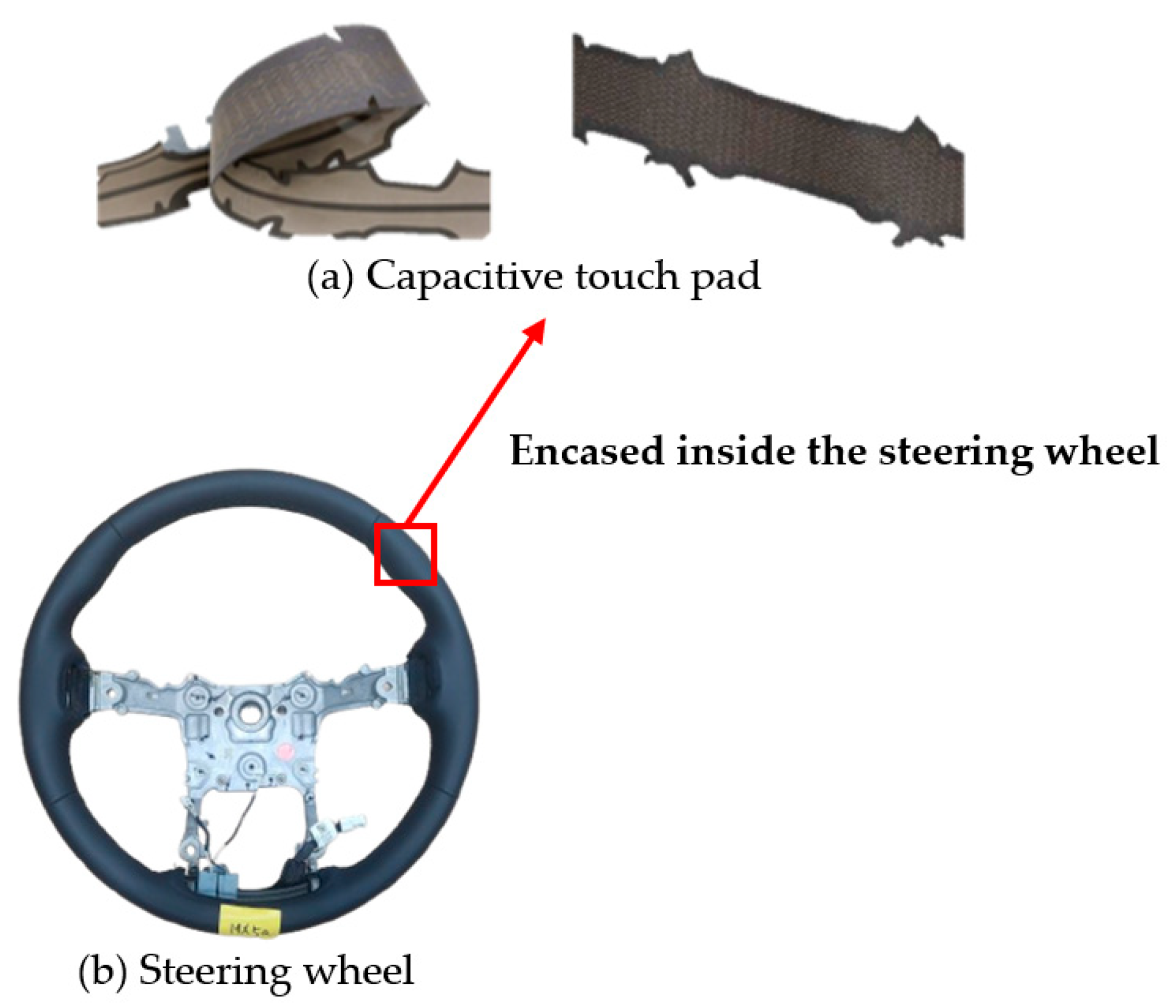
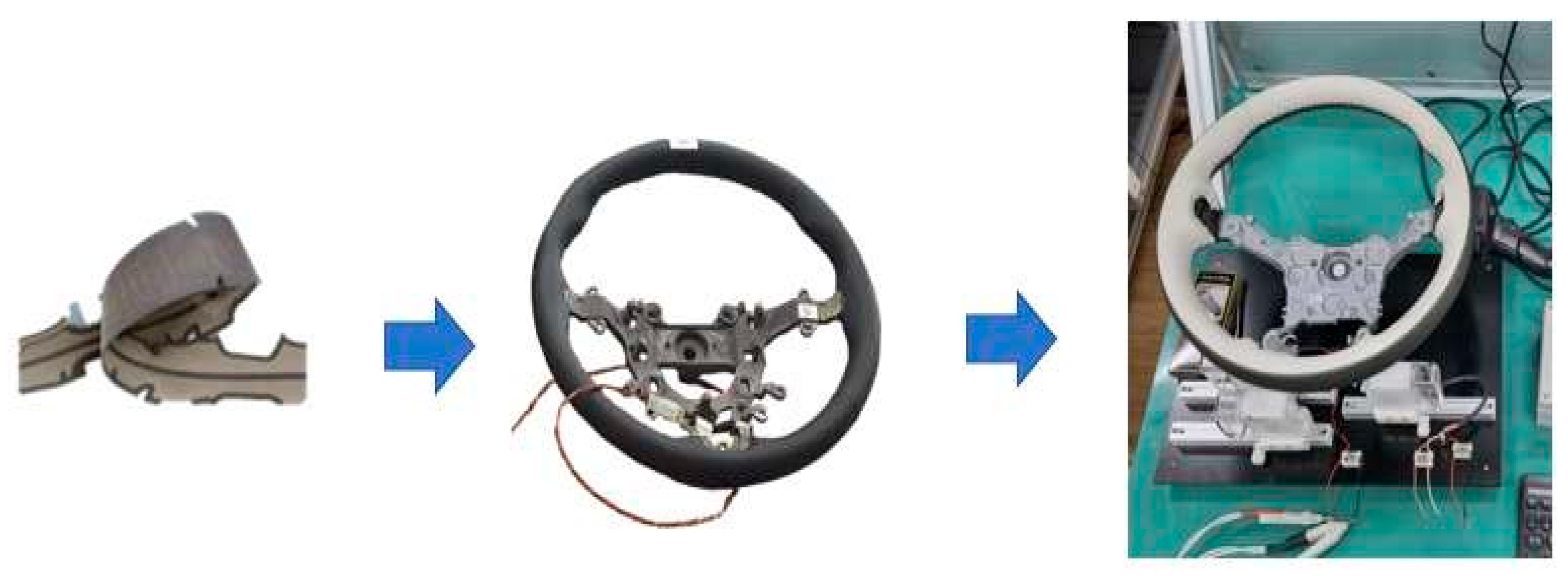
To overcome these limitations, capacitive sensing technologies have emerged as an alternative solution for HOD systems. These technologies detect variations in surface electric charge induced by direct manual interaction with the steering wheel, enabling continuous and passive monitoring of driver engagement. As illustrated in
Figure 1, the capacitive touch pad is physically integrated into the steering wheel structure to enable real-time operation.
However, the manufacturing process of capacitive touch pads typically involves multiple manual procedures, including substrate printing, plating, lamination, and mechanical assembly. These processes are susceptible to various defects, such as delamination, electrode misalignment, irregular pattern etching, and surface abrasion. Such structural or microstructural defects are generally difficult to detect through visual inspection and have been closely associated with operational failures. For instance, defective touch pads may fail to recognize hand contact during active steering or, conversely, falsely indicate contact when the steering wheel is unattended. These malfunctions degrade the reliability of driver-monitoring systems and may ultimately lead to regulatory noncompliance.
Ensuring the consistent performance of capacitive HOD systems and compliance with international safety standards therefore necessitates the adoption of high-fidelity diagnostic methodologies. Given that HOD systems perform safety-critical functions directly related to driver monitoring, even minor defects in sensing components can result in substantial degradation of overall system reliability.
Despite these requirements, research on capacitive-based HOD systems has predominantly focused on improving hand detection accuracy, contact position recognition, or sensor fusion with vehicle dynamics and driver-related signals. Within this research trend, the capacitive touch pad itself—despite being the core sensing component of HOD systems—has rarely been examined from the perspective of fault or defect detection. Most prior studies implicitly assume fault-free operation of the touch pad, while systematic investigations into manufacturing-induced defects, such as electrode disconnections, coating failures, or internal structural abnormalities, remain limited. Moreover, real-time diagnostic frameworks specifically designed to detect capacitive touch pad defects during the production process have not been sufficiently explored in the existing literature.
To address this critical research gap, the present study proposes a real-time defect detection approach based on charge-oriented capacitance analysis, explicitly tailored for capacitive touch pads used in HOD applications. The proposed method enables accurate and non-destructive identification of touch pad defects at the manufacturing stage. Owing to its scalable and non-invasive characteristics, the proposed capacitance-based diagnostic framework is capable of detecting latent defects not only on the surface but also within internal circuit layers. When deployed in production environments, this approach has the potential to reduce steering wheel replacement frequency, minimize inspection-related material waste, and improve overall manufacturing throughput and cost efficiency, thereby enhancing the long-term reliability of capacitive HOD systems and supporting compliance with regulatory requirements.
The key contributions of this paper are as follows:
Development of a real-time defect detection system for capacitive touch pads in ADAS and HOD systems
Implementation of a charge-based capacitance analysis method for detecting pad defects with high accuracy
Design and development of a GUI-based monitoring system for visualizing real-time defect detection results
Analysis of various defect types in capacitive touch pads, including plating defects, pattern deformation, and friction defects
Enhancement of defect detection performance through the integration of low-noise amplifiers (LNA) and optimized signal processing
Data-driven analysis of capacitive touch pad defect patterns and derivation of optimal defect detection thresholds
2. Related Works
2.1. Principle and Limitations of Torque-Based Hands-Off Detection
Torque-based hands-off detection (HOD) systems determine driver hand contact by measuring the mechanical input applied to the steering wheel through torque sensors installed in the steering shaft or steering column. In general, these systems infer the contact state based on the magnitude or temporal variation patterns of the measured torque signal, using whether the torque exceeds a predefined threshold as the primary decision criterion.
This approach requires minimal additional hardware, as torque sensors are already integrated into electric power steering (EPS) systems, and can be readily incorporated into existing vehicle control architectures. Owing to its relatively simple implementation and low system complexity, torque-based HOD has been widely adopted in both passenger vehicles and commercial vehicles, and its practical applicability has been reported in numerous prior studies [
4,
5,
6,
7].
Despite these advantages, torque-based HOD systems are often designed under the assumption that deliberate steering input from the driver is clearly present, which leads to several limitations in real-world driving environments. For example, under low-torque driving conditions—such as highway cruising or when lane-keeping assistance is active—drivers may maintain stable hand contact with the steering wheel while generating little to no measurable torque. In such cases, the torque signal may fail to reach the predefined threshold, resulting in the hand-contact state being misinterpreted as a hands-off condition.
Furthermore, torque signals are influenced not only by driver input but also by various external factors. Road surface irregularities, potholes, the traversal of speed bumps, vehicle vibrations, and mechanical backlash within the steering system can induce torque fluctuations unrelated to driver hand contact, thereby degrading the reliability of torque-based HOD decisions. Because these disturbances occur irregularly depending on driving conditions, stable contact-state discrimination based on a single threshold becomes inherently challenging.
As a result, torque-based HOD systems exhibit a fundamental limitation in that they do not directly measure driver hand contact but instead rely on indirect physical quantities manifested within the steering system. This structural characteristic constrains the ability of torque-based approaches to achieve consistent detection performance across diverse driving scenarios, indicating that torque-based methods alone are insufficient for realizing highly reliable driver monitoring.
2.2. Capacitive-Based HOD Technologies and Electrode Structure Studies
As an alternative to overcome the fundamental limitations of torque-based approaches, capacitive-based hands-off detection (HOD) technologies have been proposed to directly measure electrical property variations induced by driver hand contact [
8,
9]. Unlike torque-based methods, capacitive sensing can detect hand contact independently of the magnitude or direction of steering input, thereby enabling more stable detection performance under low-torque driving conditions such as highway cruising or lane-keeping assistance. Owing to these characteristics, capacitive sensors have recently attracted considerable attention as a core sensing modality in driver monitoring systems.
Existing studies on capacitive-based HOD have primarily focused on enhancing sensor sensitivity, improving signal-to-noise ratio, and increasing the accuracy of hand contact position recognition. To this end, various approaches have been reported, including optimization of electrode layouts within the steering wheel, adoption of differential measurement techniques, advancement of signal processing algorithms, and design of shielding structures to suppress external electromagnetic interference [
10,
11,
12,
13]. Collectively, these efforts have established a technical foundation for robust hand contact detection under varying environmental and noise conditions.
In particular, recent studies have introduced π-model capacitive sensors based on simplified electrode structures, demonstrating that multiple hand contact positions on the steering wheel can be effectively distinguished using a limited number of electrodes [
14]. Prototype-based experimental evaluations reported high position recognition accuracy and low cross-sensitivity, indicating the feasibility of reducing system complexity and cost without compromising sensing performance. These findings further strengthened the potential for practical in-vehicle deployment of capacitive-based HOD sensors.
Despite these advances, most existing capacitive-based HOD studies have been conducted under the implicit assumption that the sensors are manufactured correctly and operate in a fault-free condition. Consequently, the impact of manufacturing-induced defects—such as electrode disconnections, coating imperfections, pattern nonuniformity, or internal interlayer abnormalities—on sensing performance has received relatively limited attention. Moreover, diagnostic perspectives aimed at detecting such defects at an early stage have rarely been incorporated into performance evaluation frameworks.
As a result, while substantial progress has been made in improving the structural efficiency and sensing accuracy of capacitive HOD sensors, systematic approaches for assessing and managing the structural and electrical integrity of the capacitive touch pad itself remain insufficiently explored. This observation suggests that, beyond enhancing sensing performance, further research is required to develop diagnostic technologies capable of identifying defects in capacitive touch pads at an early stage in order to ensure the practical reliability of capacitive-based HOD systems.
2.3. Data Fusion–Based HOD Approaches
To compensate for the inherent limitations of standalone capacitive sensing under varying driving conditions and noise environments, a number of studies have investigated data fusion–based HOD approaches that combine capacitive signals with additional vehicle or driver-related information. Representative works have integrated capacitive measurements with vehicle dynamics parameters such as steering angle, vehicle speed, and motor torque to improve the stability of hand-contact detection. In parallel, several studies have explored the use of driver physiological signals, including heart rate and skin conductance, as supplementary information for assessing driver engagement [
15,
16,
17,
18].
These data fusion–based approaches have demonstrated improved robustness compared to single-sensor methods by mitigating misdetections caused by specific driving conditions or environmental disturbances. By jointly considering multiple sources of information, prior studies have reported enhanced consistency in HOD performance across a wider range of operating scenarios.
In addition to system-level information fusion, sensor-level techniques have also been proposed to improve the reliability of capacitive measurements. Differential measurement techniques have been employed to suppress common-mode noise and reduce capacitance fluctuations induced by environmental variations. Furthermore, advances in flexible electrode fabrication technologies have improved conformity to steering wheel geometries, thereby enhancing the spatial resolution of hand contact position recognition [
19]. These approaches have contributed to improved sensor robustness against external factors such as temperature variation, humidity, and electromagnetic interference.
Nevertheless, existing data fusion–based HOD studies primarily focus on algorithmic and system-level performance enhancement. In most cases, the capacitive sensing hardware itself is assumed to operate correctly, and potential defects within the capacitive touch pad are not explicitly considered. Manufacturing-induced issues such as electrode disconnections, structural degradation, or internal layer abnormalities are rarely incorporated into the evaluation framework.
As a result, while data fusion strategies have contributed to improved HOD performance under diverse operating conditions, they do not fundamentally address reliability degradation caused by defects in the capacitive sensor hardware. This limitation highlights the need for complementary diagnostic approaches that directly assess the structural and electrical integrity of capacitive touch pads, particularly at the manufacturing stage, to ensure long-term reliability of capacitive-based HOD systems.
2.4. Trends in Fault Detection at the Steering System Level
Alongside the advancement of HOD technologies, considerable research efforts have been devoted to fault detection aimed at ensuring the overall reliability and safety of steering systems. In particular, electric power steering (EPS) systems have attracted significant attention, as sensor or actuator failures within these systems can directly affect vehicle controllability and driving safety.
A representative research direction involves the use of hardware-in-the-loop (HIL) environments to emulate various fault scenarios in EPS systems. Prior studies have employed HIL platforms to artificially inject faults into key components such as torque sensors, angle sensors, and motor drive units, and to analyze the resulting system responses under controlled conditions [
20,
21]. This approach enables systematic evaluation of fault detection strategies while reducing the risks and costs associated with full-scale vehicle experiments.
In addition, observer-based techniques have been widely investigated for detecting abnormalities in steering systems. These methods typically rely on residual analysis between model-based estimates and measured signals to identify deviations indicative of sensor or actuator faults. Complementary to this, algorithmic approaches targeting early anomaly detection in torque sensor signals and steering-related measurements have been proposed. Several studies have also explored data-driven strategies for detecting sensor irregularities, including unsupervised methods applied to torque measurements and real-time sensor fault compensation schemes in steer-by-wire (SbW) systems [
22].
Collectively, these studies have contributed to improving the functional robustness and fault tolerance of steering systems by focusing on system-level sensors and control signals. However, most existing fault detection frameworks treat the steering system as an integrated control unit and primarily target signals such as steering torque, steering angle, or motor current.
In contrast, the capacitive touch pad employed in capacitive-based HOD systems—despite being a critical sensing component for driver monitoring—has rarely been considered a direct subject of fault diagnosis. In particular, manufacturing-induced defects such as electrode disconnections, interlayer abnormalities, or coating degradation are typically outside the scope of conventional steering system fault detection research. As a result, a clear gap remains between system-level fault diagnosis approaches and component-level reliability assessment of capacitive touch pads, highlighting the need for dedicated diagnostic methodologies targeting the core sensing elements of capacitive HOD systems.
2.5. Limitations of Existing Studies and Research Motivation
Existing studies on hands-off detection (HOD) have primarily advanced along several directions, including torque-based and capacitive-based sensing techniques, data fusion strategies, and fault detection at the steering system level. These efforts have contributed to improving detection accuracy, enhancing system robustness, and ensuring the functional safety of driver monitoring systems.
Nevertheless, despite the increasing adoption of capacitive-based HOD systems, limited attention has been paid to the reliability and defect diagnosis of the capacitive touch pad itself, which constitutes the core sensing component of such systems. Most prior studies implicitly assume that the touch pad is properly manufactured and operates under fault-free conditions, focusing instead on sensor performance optimization or algorithmic enhancements.
As a result, manufacturing-induced defects—such as electrode disconnections, coating degradation, pattern non-uniformity, or internal structural abnormalities—have not been systematically investigated in the context of capacitive HOD systems. Furthermore, although fault detection approaches targeting steering systems have been reported, these methods predominantly address system-level sensors and control signals rather than the capacitive touch pad used for driver hand detection.
This lack of attention to touch-pad-level defects represents a critical limitation from both reliability and quality management perspectives. If latent defects introduced during the manufacturing process are not identified in advance, defective touch pads may be deployed in vehicles, potentially leading to degraded driver monitoring performance or failure to meet regulatory requirements.
Accordingly, there is a clear need for diagnostic methodologies that directly target capacitive touch pads at the manufacturing stage. Such approaches are essential for ensuring the long-term reliability of capacitive-based HOD systems and for establishing robust quality assurance processes. Addressing this gap provides the primary motivation for the present study, which focuses on the development of a precise and non-destructive defect detection framework for capacitive touch pads.
3. Methodology
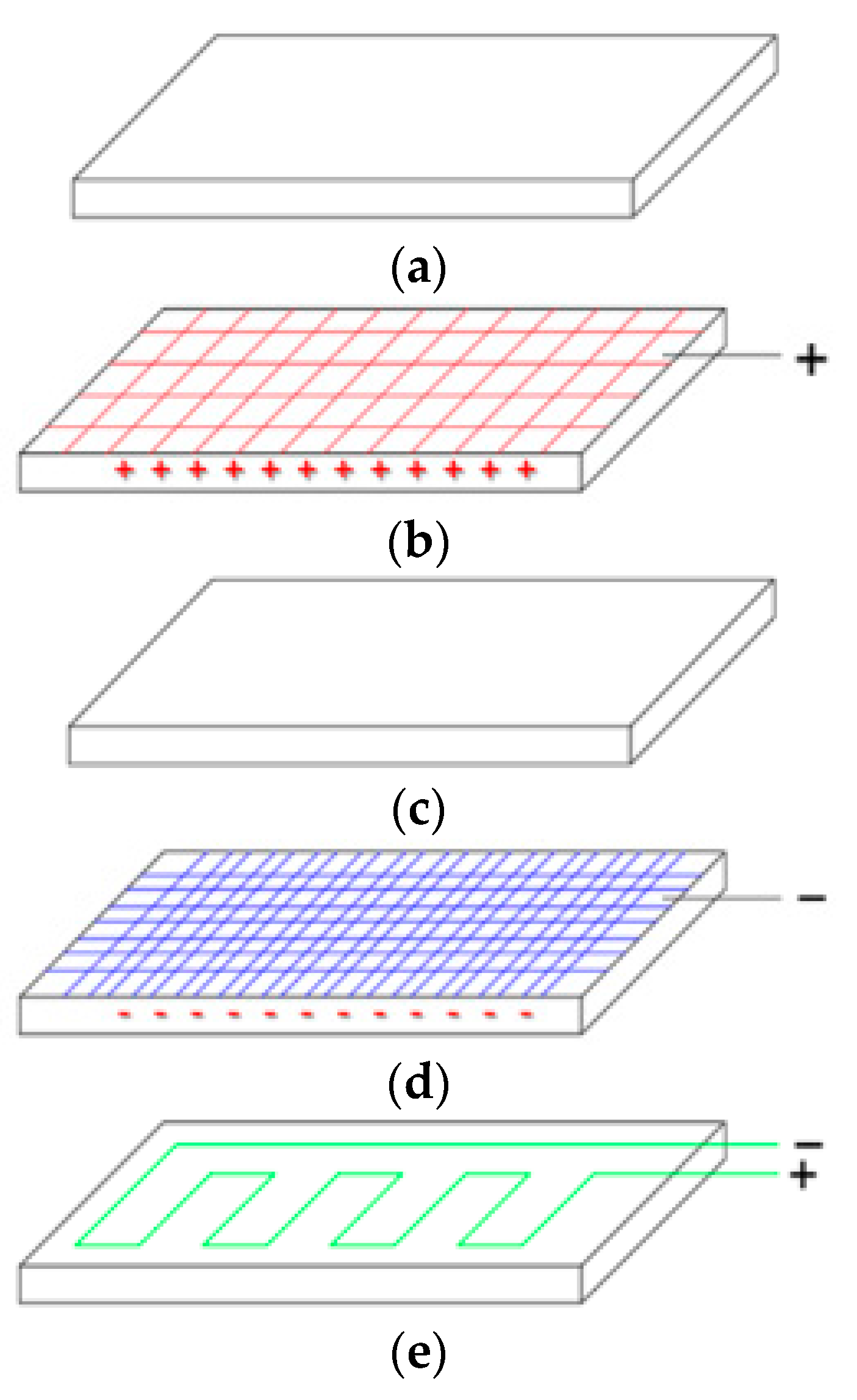
A small electrostatic current was applied to the pad, and the electrostatic effect generated within the fiber was measured and quantified as charge. Subsequently, a comparative analysis of the capacitance values of normal pads and defective pads was conducted to identify any discrepancies, thereby enabling precise defect identification. This charge-based measurement and discrimination process is performed during the in-line inspection cycle, allowing inspection to be carried out in conjunction with the manufacturing process without introducing additional delay. The structural configuration of the capacitive touch pad is illustrated in
Figure 2. The outermost layer is the cover layer, which functions to protect the internal structure from external environmental factors. After this layer is the sensing layer, which utilizes capacitance variations to detect alterations in contact with the surface. This layer plays a pivotal role in determining whether the driver is holding the steering wheel and is directly connected to the HOD function [
23]. The insulation layer, located beneath the sensing layer, serves two primary functions: it enhances the electric field and prevents charge transfer between layers. Furthermore, the insulation layer contributes to maintaining the electrical stability of the sensing layer. The electromagnetic shielding layer plays a pivotal role in this regard, as it functions by obstructing external electromagnetic interference. This, in turn, ensures the accuracy of internal electrical signals.
3.1. Defect Detection Technology for Capacitive Touch Pads
The capacitive touch pad detects user touch by measuring capacitance, which represents the ability to store electric charge. The fundamental capacitance relationship can be expressed as follows:
where
denotes capacitance, charge quantity
represents the accumulated charge, and
indicates the potential difference.
By analyzing the factors that cause variations in capacitance, criteria can be established to distinguish between normal and defective capacitive touch pads. To this end, the capacitance of the touch pad is defined for two states: free space, where the hand is not in contact with the pad, and the presence of a dielectric, where the hand is in contact with the pad.
In Equations (2) and (3), represents the permittivity of free space, represents the electrode area, represents the distance between the two electrodes, and represents the relative permittivity of the dielectric.
In this paper, we analyzed touch detection based on charge quantity in order to more accurately detect defects on capacitive touch pads.
In this model, represents the measured charge, represents the varying capacitance, and represents the applied voltage.
3.2. Main Control Board and Signal Processing
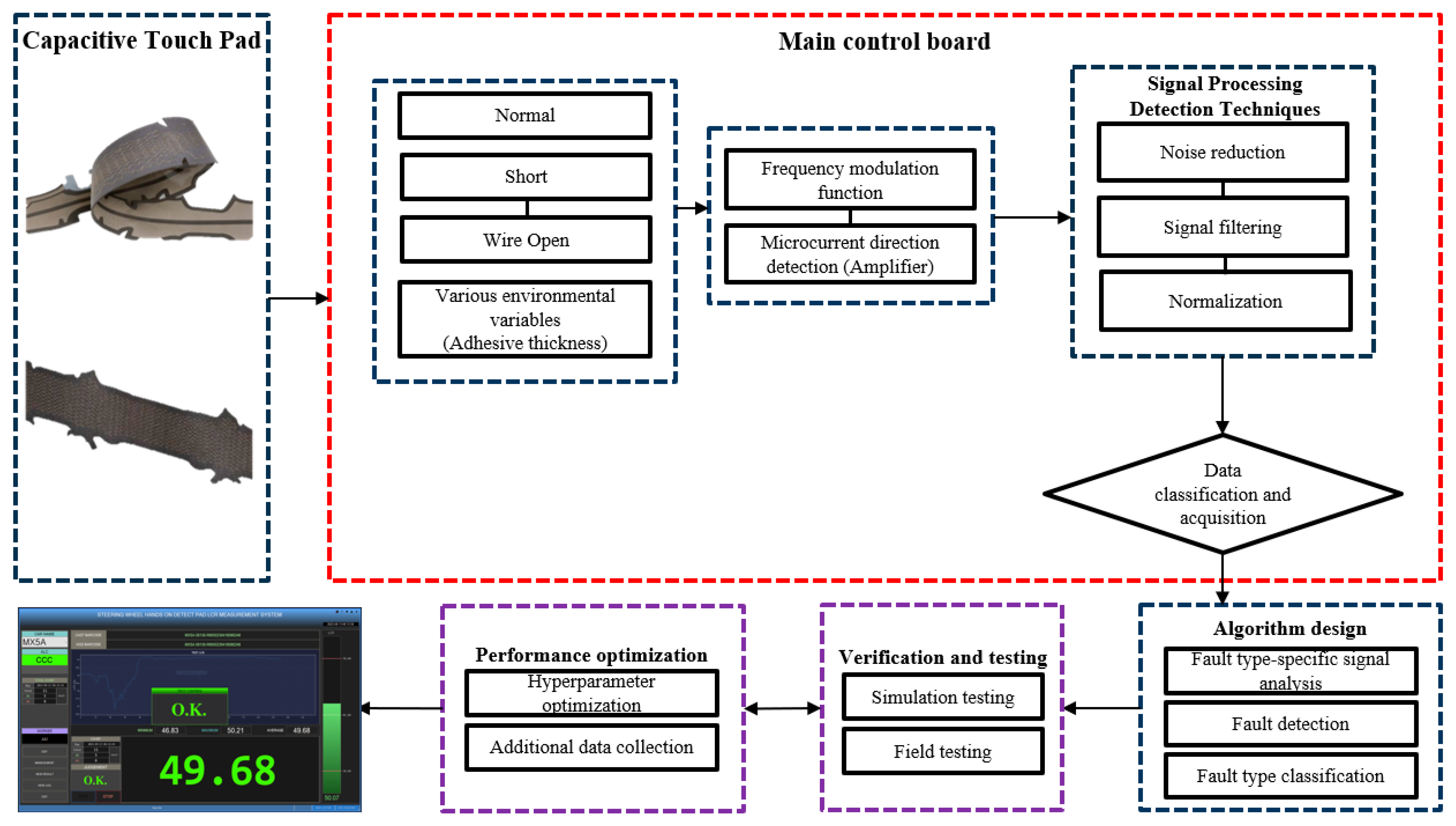
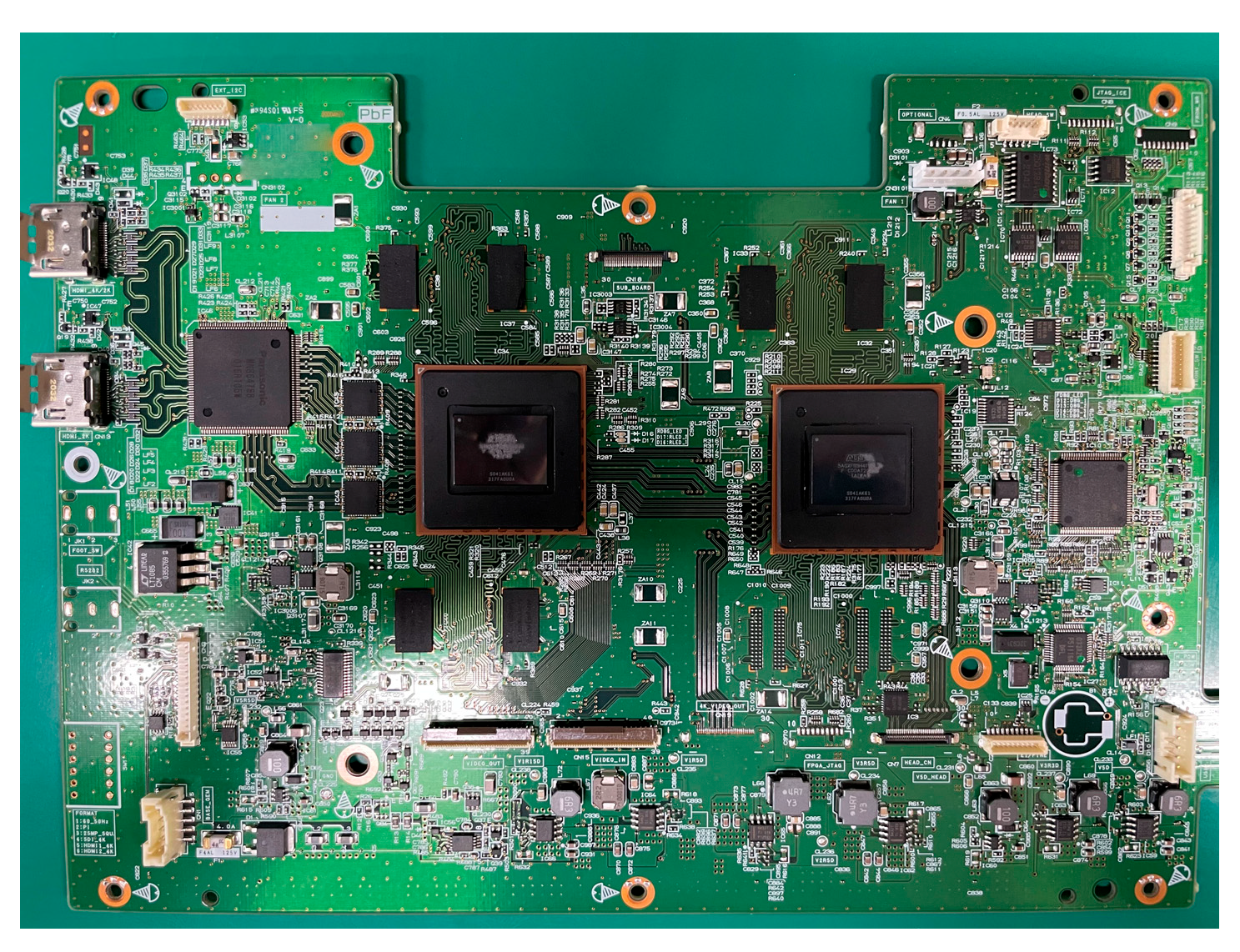
The main control board is a core device designed to detect defects in capacitive touch pads in real time. This module collects minute capacitance variations generated in the touch pad, converts them into charge, and immediately determines their normality by comparing them with predefined reference values. Previously, there was no systematic method dedicated to inspecting defects in capacitive touch pads, and, in particular, pattern deformation or plating unevenness occurring during the manufacturing stage could not be detected. The main control board developed in this paper successfully overcomes these limitations by incorporating a charge-based detection algorithm at the hardware level and automating the entire process of signal amplification, conversion, filtering, and judgment in a single module. This approach facilitates the immediate detection of defects during the manufacturing process, as opposed to the conventional post-inspection methods. Consequently, it enhances product reliability and optimizes quality management efficiency. The system has been engineered to amplify the minute capacitive signals generated by the touch pad using the AMP module, as illustrated in
Figure 3. This process suppresses noise and then transmits the processed signals to the main control board. Capacitive signals are inherently very small and vulnerable to external interference. Therefore, signal stabilization during the preprocessing stage is essential to ensure the accuracy of subsequent data processing steps. The AMP module comprises a LNA and an operational amplifier (OP-AMP). The LNA is designed to minimize noise at the input stage while increasing the signal-to-noise ratio (SNR). The OP-AMP functions as a unity-gain buffer, a technique that serves to lower the sensor output impedance. This, in turn, prevents signal distortion caused by the load effect of the downstream circuit. Furthermore, the device incorporates a level shifter that adjusts the DC offset of the signal, thereby enabling stable operation within the ADC input range. This processing enables the maintenance of the signal at a constant reference voltage without distortion, while extracting minute capacitance changes without being obscured by noise. The stabilization of signals has been demonstrated to enhance the accuracy of ADC conversion and enable precise defect identification by subsequent charge-based judgment algorithms [
24].
The amplified signal is converted into digital data by an analog-to-digital converter (ADC) and subsequently transmitted to the control board after undergoing a filtration process. The digitized capacitance data is processed to calculate the
. This quantity is then compared with a predefined threshold value to determine whether the touch pad is functioning properly or if there is a defect. However, discrepancies in the amount of adhesive utilized during the manufacturing process can result in alterations to the capacitance value. Consequently, a designated tolerance range has been established to compensate for such variations and ascertain the presence of any defects.
At this stage, reference charge (
) denotes the reference charge quantity in the normal state,
represents the measured charge quantity, and
denotes the allowable error ratio. In the event that
falls within the prescribed error range, the product is deemed to be within normal parameters. Conversely, if
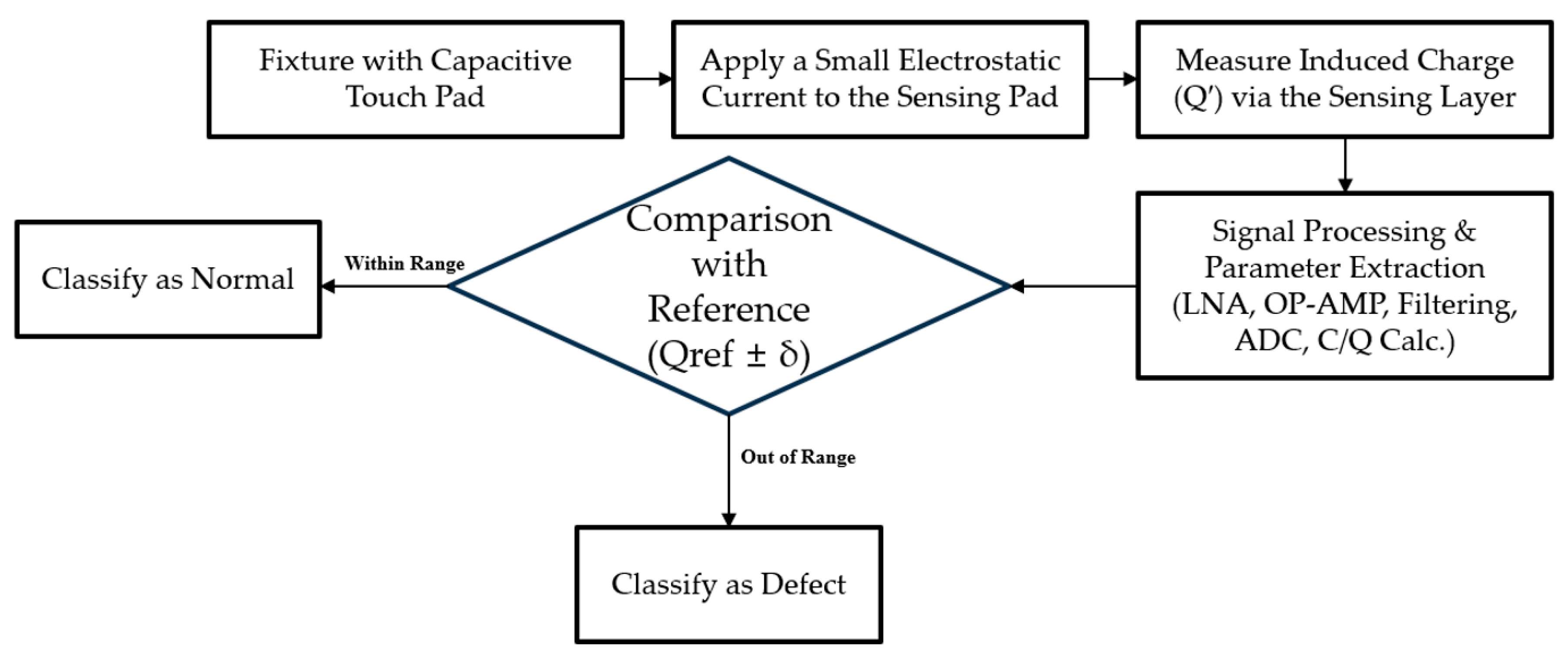
lies outside this range, the product is designated as defective. Furthermore, the detected defect information is visualized in real time through a graphical user interface (GUI) system, which can be utilized for quality control during the manufacturing process. The proposed Q-based capacitance measurement algorithm, the signal processing chain composed of LNA and OP-AMP stages, the noise filtering procedure, and the tolerance (
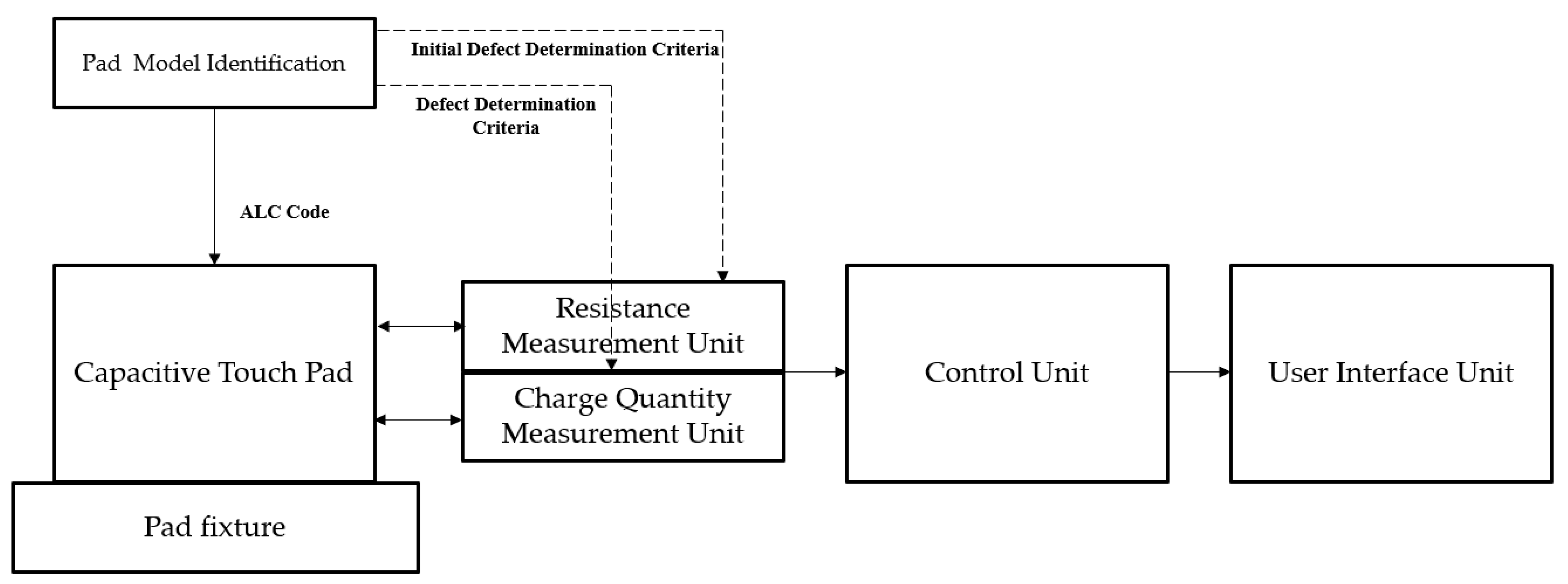
) estimation method were described in detail, and they were illustrated through the charge-based defect determination framework in
Figure 4 and the integrated system architecture in
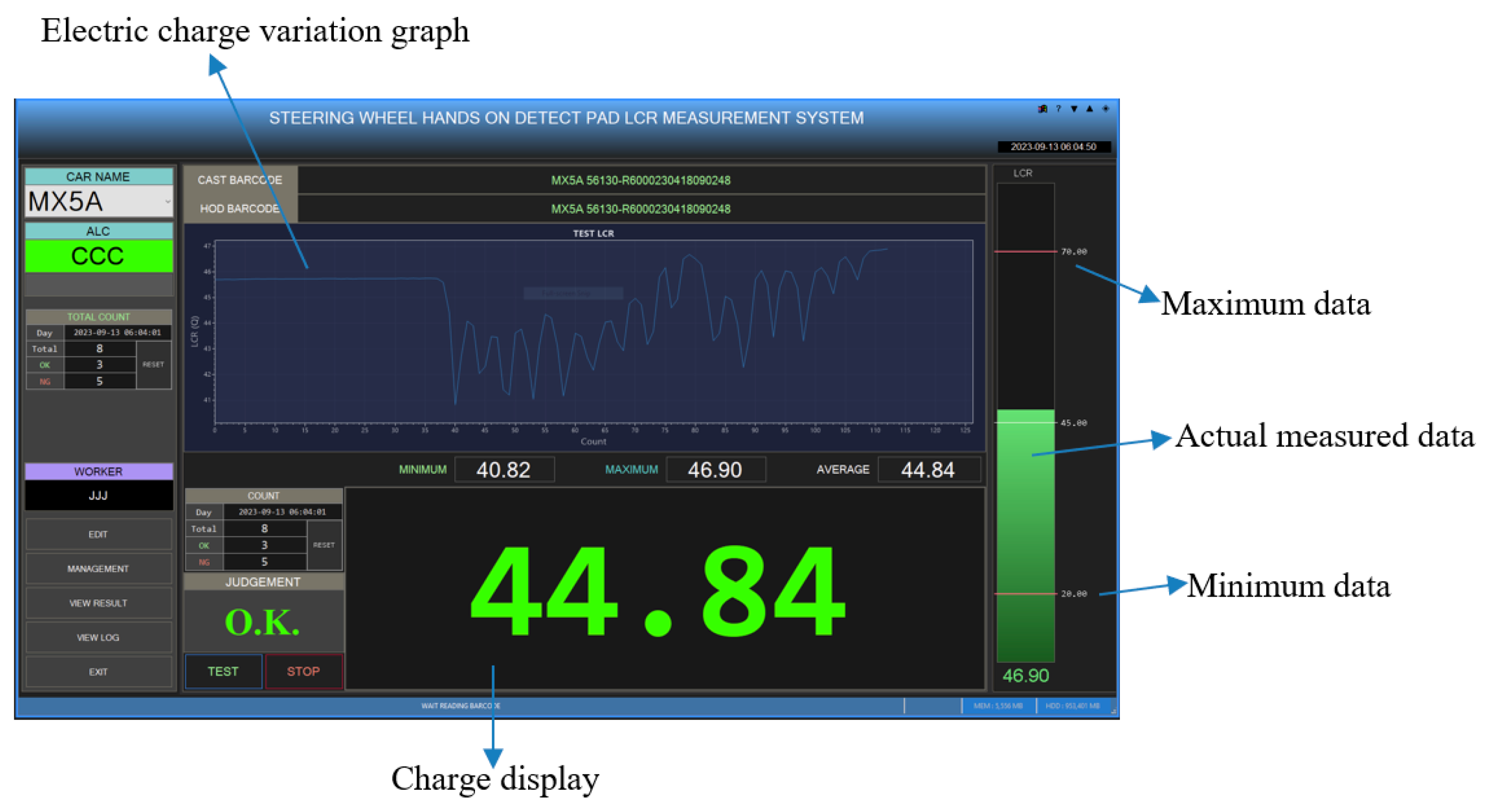
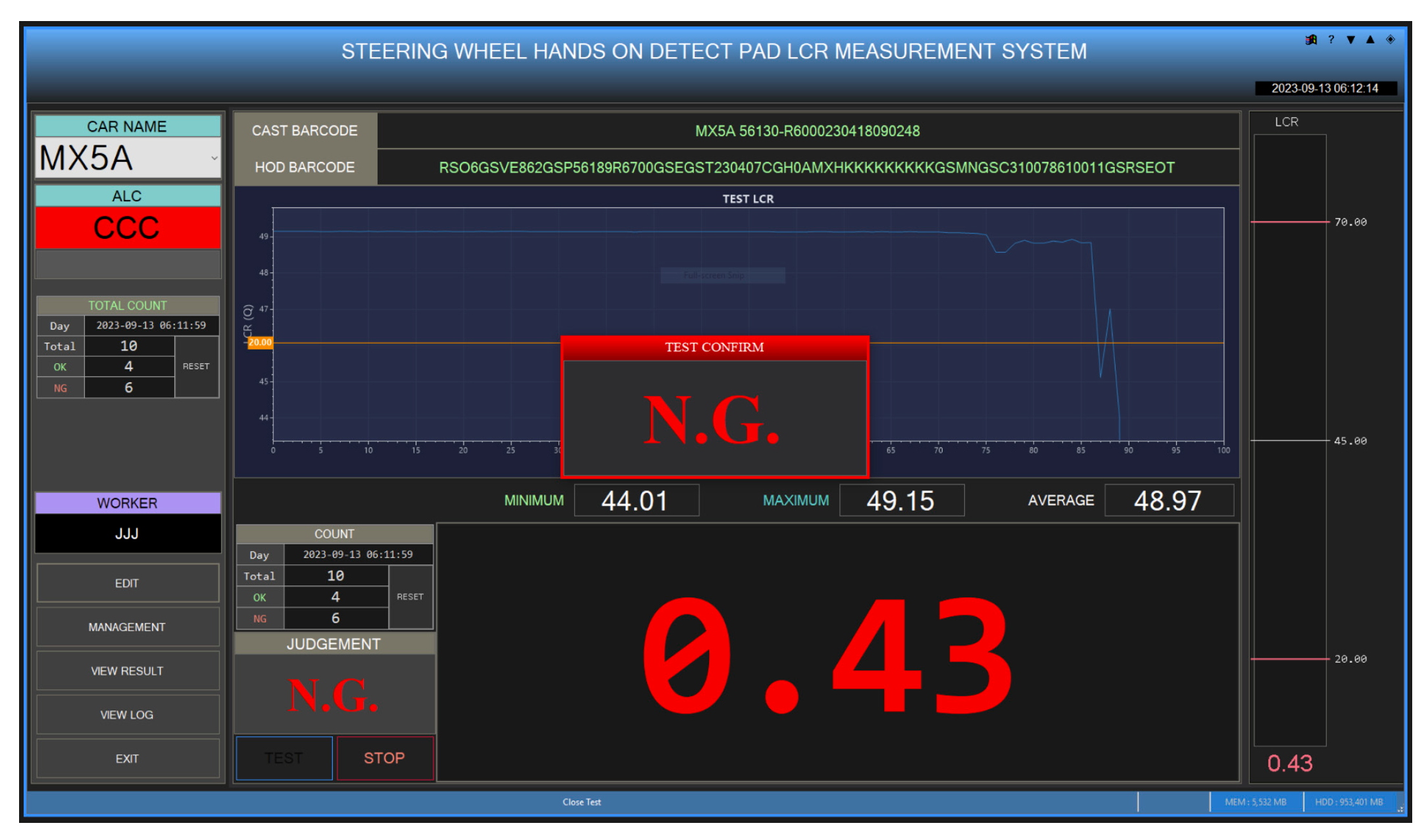
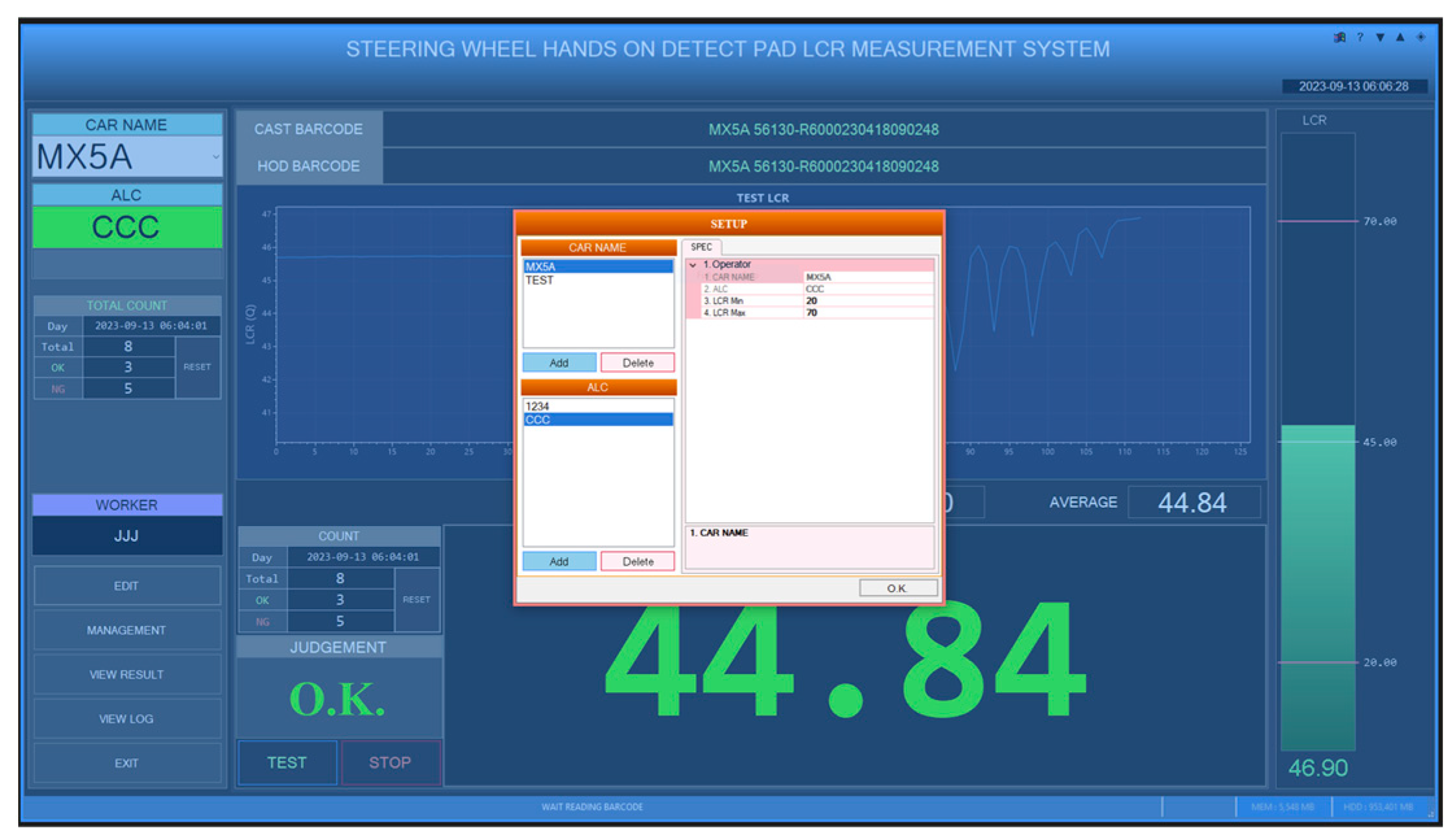
Figure 5. The GUI system displays the measured charge quantity data in a graph and provides warning signals when abnormalities are detected, thereby improving the efficiency of defect detection. The defect detection process is further delineated in
Figure 6,
Figure 7 and
Figure 8. As illustrated in
Figure 6, a normal charge measurement is characterized by a measured charge quantity that falls within the acceptable range. Conversely,
Figure 7 depicts an abnormal charge measurement, where the measured value exceeds the specified threshold, thereby indicating a defect. To compensate for capacitance changes caused by the use of adhesive in the manufacturing process, a specific acceptable range for defect classification was established as illustrated in
Figure 8. The overall structure of the defect detection system is illustrated in
Figure 9, which provides a comprehensive representation of the entire process.
4. Failure Types and Causes of Capacitive Touch Pads
Capacitive touch pads are key input devices that detect touch based on changes in capacitance and are widely applied in HOD and ADAS technologies. However, defects occurring during the manufacturing process and accumulated damage over time can lead to performance degradation and reduced durability. This paper analyzes the major types of failures that can occur in capacitive touch pads, along with their causes and effects, as summarized in
Table 1.
4.1. Pad Friction Defect
The pad friction defect refers to a phenomenon in which the touch sensitivity decreases in certain areas due to inconsistent surface friction on the touch pad. This issue primarily occurs when the surface coating is uneven or has worn out over time.
4.2. Plating Defect
Plating defects refer to a phenomenon where signal transmission issues occur due to non-uniform electrode plating inside the touch pad. This defect typically arises when the electrode plating thickness is inconsistent, foreign substances are introduced during the manufacturing process, or oxidation occurs. Additionally, prolonged use can lead to the peeling of the plating layer, further contributing to this issue.
4.3. Pattern Deformation Defect
Pattern deformation defect occurs when the fine wiring inside the touch pad is either improperly formed or damaged. This issue primarily arises when alignment errors occur during the manufacturing process. Additionally, the use of low-quality materials or external impacts can cause the wiring to break or become damaged, leading to signal instability and potential malfunction of the touch pad.
4.4. Scratch Defect
Scratch defects refer to physical damage to the surface of the touch pad. This issue primarily occurs due to friction or pressure during the manufacturing process or when the user scratches the touch pad with a sharp object. It can also result from the manual assembly process of capacitive touch pads, where fine surface defects are more likely to form due to handling conditions.
4.5. Press Gap Defect
Press gap defect occurs when the gap between the touch pad and the internal electrode is inconsistent, leading to a decline in touch detection performance. This issue primarily arises when uneven pressure is applied during the assembly process, causing certain areas to be excessively compressed or loosely assembled. Additionally, temperature-induced expansion or contraction of the touch pad material can also alter the gap, further contributing to this defect.
5. Capacitive Touch Pad Defect Detection Process
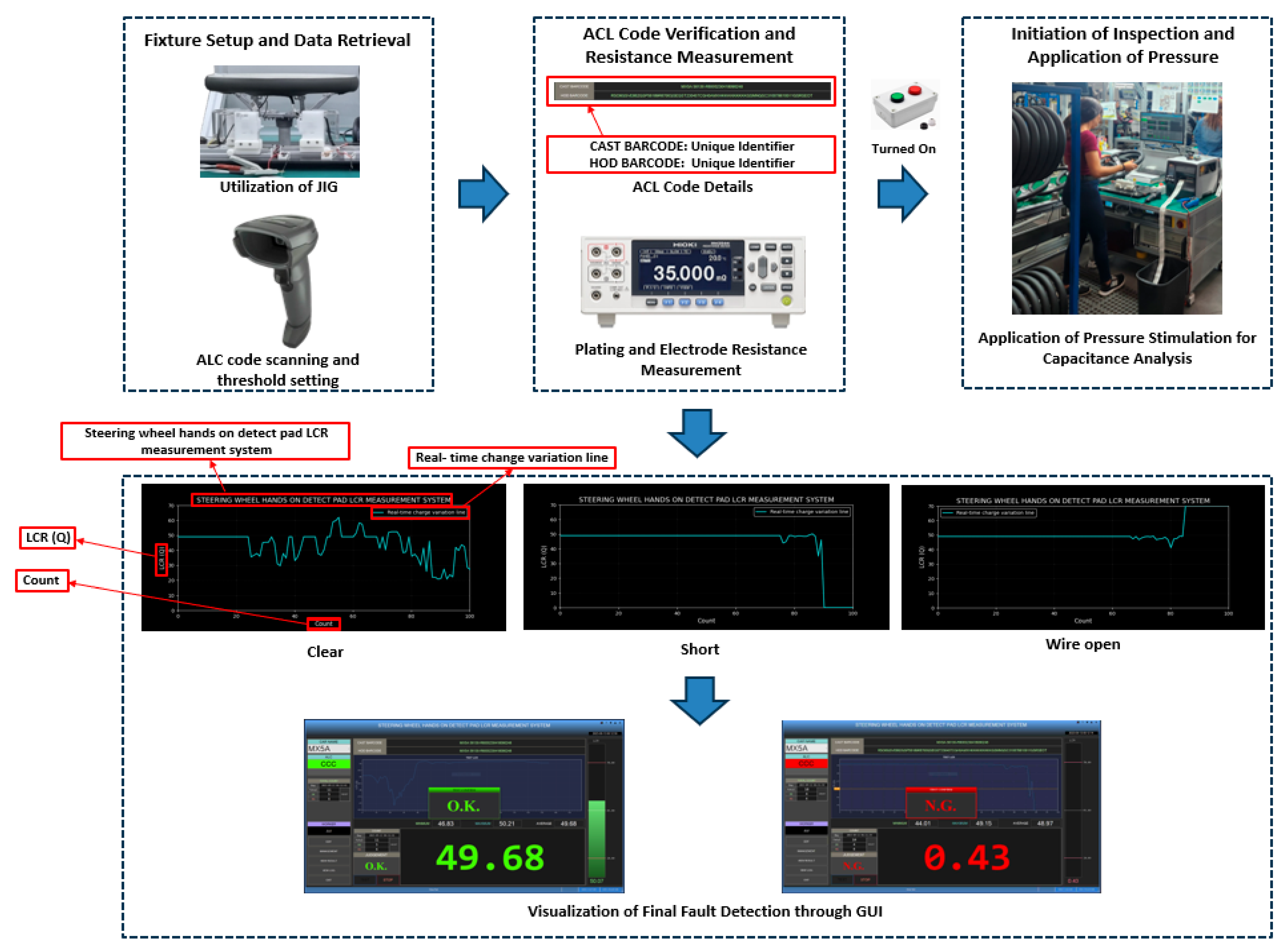
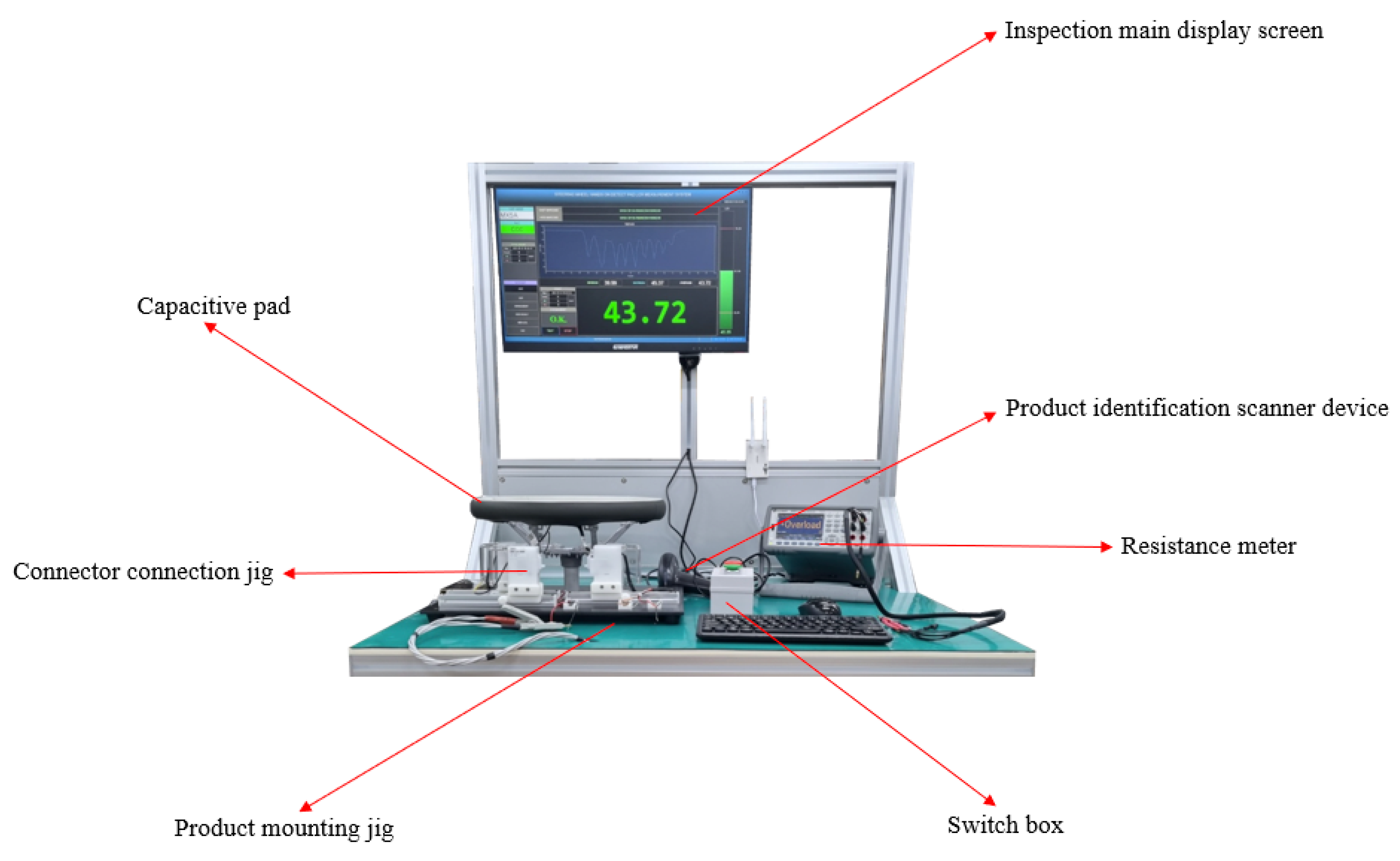
To enhance the efficiency of defect detection, the test product is fixed using a JIG, as illustrated in
Figure 10.
The JIG maintains the touch pad in a fixed position, thereby ensuring a stable measurement environment during repeated tests and minimizing measurement errors. After mounting the product on the JIG, the ALC code is scanned to identify the product name, and the appropriate threshold value is automatically applied to that product. Given that each product exhibits distinct capacitance characteristics due to the presence of electrical noise in the surrounding environment, the ALC code recognition method is employed to retrieve the standard threshold value for each product, thereby enabling a precise inspection. Subsequently, the plating condition and electrode resistance inside the touch pad are measured to determine whether there are any initial defects.
Typically, normal capacitive touch pads exhibit a plating resistance that approaches 0, thereby facilitating expeditious identification of plating defects through measurement of the resistance. Products that demonstrate successful completion of the resistance test proceed to the subsequent primary inspection process, which involves the utilization of a switch box. As illustrated in
Figure 11, the fabrication of this detector involved the use of a three-dimensional measuring instrument (NFEC-2019-01-253277) installed at the KBSI Future Mobility Platform Reliability Center (Gunsan) to precisely verify the geometric configuration and dimensional accuracy of the detector frame and sensor placement structure. This verification process ensured that the device maintained its intended reference axes, spacing, and alignment, thereby securing consistent geometric fidelity and enhancing the reliability of subsequent inspection and data acquisition procedures. The GUI system displays the real-time capacitance and charge analysis results visually. Upon completion of the inspection, the operator initiates the termination of the process by pressing the switch box, thereby initiating the automatic save of all measurement data.
Figure 12 provides a schematic representation of the comprehensive defect detection process, illustrating the manner in which each step contributes to the precise identification of defects. This system enhances product reliability by identifying defects that could not be detected using conventional methods. Furthermore, it establishes a foundation for ongoing quality enhancement by facilitating manufacturing process improvements and defect pattern analysis based on accumulated data.
7. Conclusions
In this paper, we developed a capacitance-based defect detection system that effectively identifies defects in capacitive touch pads, thereby greatly improving the reliability of ADAS and hands-off detection (HOD) technologies. When implemented in a practical production environment, the proposed system was applied to over 240,000 touch pads and demonstrated stable performance under real-world manufacturing conditions. It is noteworthy that, prior to this work, a systematic method for inspecting defects in capacitive touch pads was not widely available in industrial practice. Conventional visual inspection methods were largely limited to the detection of superficial cosmetic defects, while microscopic defects—such as internal pattern deformation or electrode gaps—were difficult to detect during the production stage. Through the integration of a charge-based defect detection algorithm, a high-precision signal processing structure, and a GUI-based real-time visualization framework, this paper demonstrated that such latent defects can be quantitatively distinguished and reliably identified within the manufacturing process. Consequently, this work possesses considerable academic and industrial significance, as it goes beyond incremental improvements in detection accuracy and effectively extends the boundary between previously undetectable and detectable defect domains. Moreover, the successful deployment of the proposed system on actual large-scale production lines highlights its applicability to long-term quality control and manufacturing process enhancement based on accumulated inspection data. These capabilities contribute to reduced defect rates, elimination of unnecessary post-processing steps, and overall improvement in manufacturing productivity, while also supporting compliance with international regulatory standards such as UN ECE R79 and strengthening the global competitiveness of ADAS and HOD systems. At the same time, the proposed inspection framework has several inherent limitations. Very small or early-stage defects may remain within the predefined acceptable charge range and may not be detected, reflecting an inherent trade-off between defect sensitivity and robustness against normal process variations aimed at preventing false detections. Because this acceptable charge range is defined in advance, the corresponding reference values and decision thresholds must be re-established whenever new vehicle models or touch pad geometries are introduced. In addition, in large-scale mass-production environments, constructing complete ground-truth labels for all defect types is inherently challenging, which limits the extent to which defect detection performance can be quantitatively evaluated under practical manufacturing conditions. Future research will extend the proposed framework by leveraging accumulated inspection data to address the identified limitations. Specifically, additional analysis perspectives compatible with practical manufacturing environments will be introduced through the repeated inspection results and capacitance response characteristics obtained in this study, enabling a more refined interpretation of defect behavior. This extension involves examining the temporal evolution of capacitance responses, measurement-to-measurement consistency, and deviation behaviors relative to normal operating conditions observed during repeated inspections. Furthermore, artificial intelligence and machine learning techniques will be gradually incorporated to enhance defect prediction and pattern analysis capabilities as response patterns continue to accumulate. Such developments are expected to support durability assessment under diverse operating and environmental conditions and to further strengthen the commercialization potential of the proposed system. Ultimately, the developed defect detection system is expected to advance the quality control paradigm of manufacturing processes and establish itself as a core technology that ensures the long-term reliability of ADAS and HOD technologies.