Review

A Survey on Quantum Machine Learning Applications in Medicine and Healthcare

by
Radosław Idzikowski
*,
Mateusz A. Kucharski
,
Konrad Pempera
and
Michał Jaroszczuk
Department of Control and Quantum Computing, Wrocław University of Science and Technology, 50-370 Wrocław, Poland
*
Author to whom correspondence should be addressed.
Appl. Sci. 2026, 16(3), 1630; https://doi.org/10.3390/app16031630
Submission received: 7 January 2026 / Revised: 28 January 2026 / Accepted: 4 February 2026 / Published: 5 February 2026
(This article belongs to the Section Quantum Science and Technology)

Abstract

Quantum machine learning (QML) is an emerging field combining quantum computing and artificial intelligence, with promising applications in medicine and healthcare. This survey reviews more than 60 studies published between 2018 and 2025, highlighting a sharp increase in research activity, especially in the last three years. We address seven core research questions related to publication trends, the use of real quantum hardware versus simulators, quantum architectures overview, dataset types, medical domains, algorithmic frameworks, and reported results. Our analysis shows that most QML research in healthcare is conducted on simulators due to limited hardware access, and it relies on small datasets. Quantum convolutional neural network (QCNN) architectures dominate image-based medical tasks such as tumor detection, pneumonia diagnosis, and ECG interpretation, while feature-based datasets are mainly analyzed with variational quantum classifiers and quantum support vector machines. Despite hardware constraints, QML models often match or surpass classical machine learning approaches in accuracy, frequently reaching 95–99%. However, these performance statements should be qualified to recognize experimental limitations and avoid excessive optimism and should not be interpreted as definitive proof of quantum superiority at this stage. Additionally, issues with reproducibility and reporting of hardware details persist, which is a significant research gap. This review emphasizes the need for standardized benchmarks, more real hardware testing, and architecture-aware algorithm design. With the potential for accelerated diagnostics and personalized healthcare, QML represents a strategic direction for future medical research.

1. Introduction

Recently, there has been a significant increase in interest in artificial intelligence (AI), accompanied by a growing demand for computational resources. Possible solutions for this challenge lie in quantum computing—a field currently experiencing rapid technological development. The non-standard representation of information in qubit may be an essential key to acceleration of algorithms based on quantum machine learning (QML) [1]. However, the era of quantum computing is currently in its infancy, a stage of development that researchers call Noisy Intermediate-Scale Quantum (NISQ). This makes it possible to create the first works on quantum topics, but their practical application is limited due to hardware capabilities [2]. This fact is consistent with the conclusion from an initial review of existing studies—particularly surveys and comparative works—that most QML experiments are conducted on quantum simulators rather than real quantum hardware. This tendency comes from the early development stage of quantum hardware and the limited accessibility of quantum processors [3].
A growing body of literature reports diverse applications of QML across various scientific and engineering domains such as 6G communication networks [4], chemistry and physics [5], and medicine and healthcare [6,7]. One of the more interesting applications is the medical field, as with the current workload of medical workers, there is a real need to support them in assessing medical data in order to classify disease entities.
While recent surveys have explored QML in broad contexts [8] or focused on specific medical niches like drug discovery [9], there remains a lack of comprehensive analysis regarding the practical viability of these models on current hardware. Unlike previous reviews that primarily categorize algorithms theoretically, this study specifically differentiates itself by critically evaluating the gap between simulated results and real hardware execution. We provide a granular analysis of the architectures employed relative to specific data modalities and assess the actual scale of quantum circuits used in the literature, offering a more realistic perspective on the state of QML in healthcare during the NISQ era.
The primary objective of this paper is to analyze the evolution of the usage of real quantum hardware in QML-based studies, with a particular focus on the types of quantum architectures employed. To our knowledge, no comprehensive overview of this kind exists in the literature. In many articles, information on the hardware used is vague or difficult to extract. Given the rapid increase in the number of publications on QML, this study narrows its scope to applications in healthcare, where the potential benefits of quantum-enhanced machine learning are auspicious. A detailed analysis of the medical conditions explored, the specific datasets utilized, and the QML tools and frameworks used was carried out. This approach provides a clearer understanding of the current trends and methodological practices in applying quantum techniques to real-world healthcare challenges.
The structure of this article is organized as follows: Section 1 provides an introduction to the topic and outlines the contribution of this work. Then, in Section 2, the main objectives of this article are presented, along with the research methodology. Afterwards, in the following sections, the answers to the research questions are presented. Subsequently, an analysis of the growing popularity of the research trend in the area discussed is presented in Section 3, the identification of the most widely used datasets is carried out in Section 4, and the most explored medical fields are analyzed in Section 5. An overview of the dimensions of quantum machines and the answer to the question of whether they are actually used or whether simulators are the main basis of work are presented in Section 6. Finally, the scope of the technologies and network architectures applied in the reviewed studies is checked in Section 7, along with an analysis of what types of data a given technology is used for, with a presentation of the results in Section 8. This article concludes with a summary in Section 9 and suggestions for future research directions.

2. Research Methodology

Identifying current advances in quantum machine learning requires making certain initial assumptions. It is necessary to answer questions that are within the scope of this literature review so that it can be valuable for future research in the field. Specific applications, such as medicine and healthcare, as well as emerging quantum technology, should be taken into account. After brainstorming and reviewing the work to see the current state of the research, we set the following research questions (RQs):
RQ1:
How many articles have been published on the described topic for a given year, starting from the earliest work?
RQ2:
What type of data is described in the works and used to train the quantum neural network?
RQ3:
In which areas of medicine is quantum machine learning used? Why were these areas chosen by the researchers?
RQ4:
Do the authors use real quantum computers to conduct their research or rely on simulators running on traditional machines?
RQ5:
What is the size of the machines used (how many qubits do they have) in the analyzed works?
RQ6:
What libraries, frameworks and architectures are most commonly used in quantum machine learning for medical applications?
RQ7:
What are the results of applying QML to medical applications?
Since there are not many works on quantum machine learning for medical applications, due to the relatively new nature of the problem, we had to adopt the following review methodology. Google Scholar, arXiv and Scopus databases were used to search for papers covering the period from the earliest available records up to 12 December 2025. Access to some articles was provided through resources available at the Wrocław University of Science and Technology, while some of them were open access. The papers published as arXiv preprints were also considered since the research niche is so new and researchers need to present their findings quickly. To ensure quality and minimize bias, particularly for non-peer-reviewed preprints, we implemented a basic quality assessment. First, we focused on studies utilizing professional medical datasets, explicitly excluding image-based experiments relying on trivial dimensions (e.g., four-pixel images), while accepting studies using low-dimensional feature vectors. Second, we rejected papers where QML was merely mentioned without actual algorithmic implementation. Finally, we excluded studies that lacked methodological transparency, specifically those failing to provide a sufficient description of the quantum circuit or simulation environment.
The search was carried out using the following examination keywords: quantum medicine, quantum machine learning, quantum neural network, quantum deep learning, quantum convolutional neural network, hybrid quantum machine learning, quantum prediction, and quantum classification. Many of the papers found were related to the described field but did not fit into this review and were rejected. We adopted the following selection criteria:
1.
The papers had to clearly address medical applications. Due to the low number of papers on this topic, we did not limit the application to a specific field of medicine.
2.
The manuscripts had to solve a problem using quantum-enabled machine learning. We accepted papers that used both simulators and actual quantum devices, as we assume that not all researchers have an access to physical quantum devices.
3.
We rejected papers in which quantum machine learning was only mentioned and the paper focused on traditional computer architectures.
4.
All selected works had to be written in English.
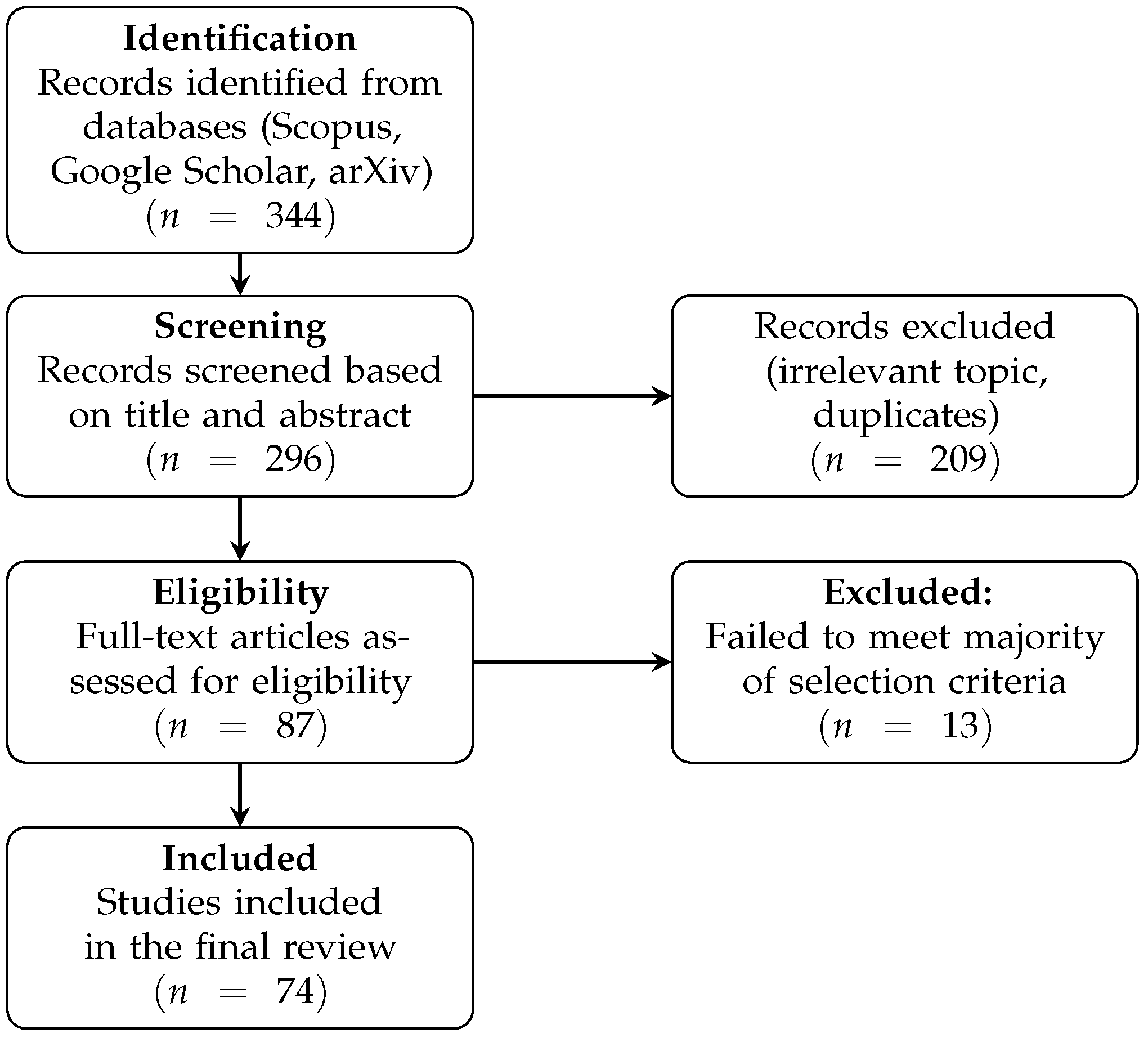
For this review, more than 300 scientific papers were identified according to the criteria listed above. Of these papers, many were not suitable for inclusion in this review because of the lack of actual use of quantum algorithms. The detailed selection process, including the number of records identified, screened, and finally included, is illustrated in the flow diagram in Figure 1. Nevertheless, 72 papers were considered for inclusion in the review, of which 64 were mentioned.

3. Timeline of Related Works

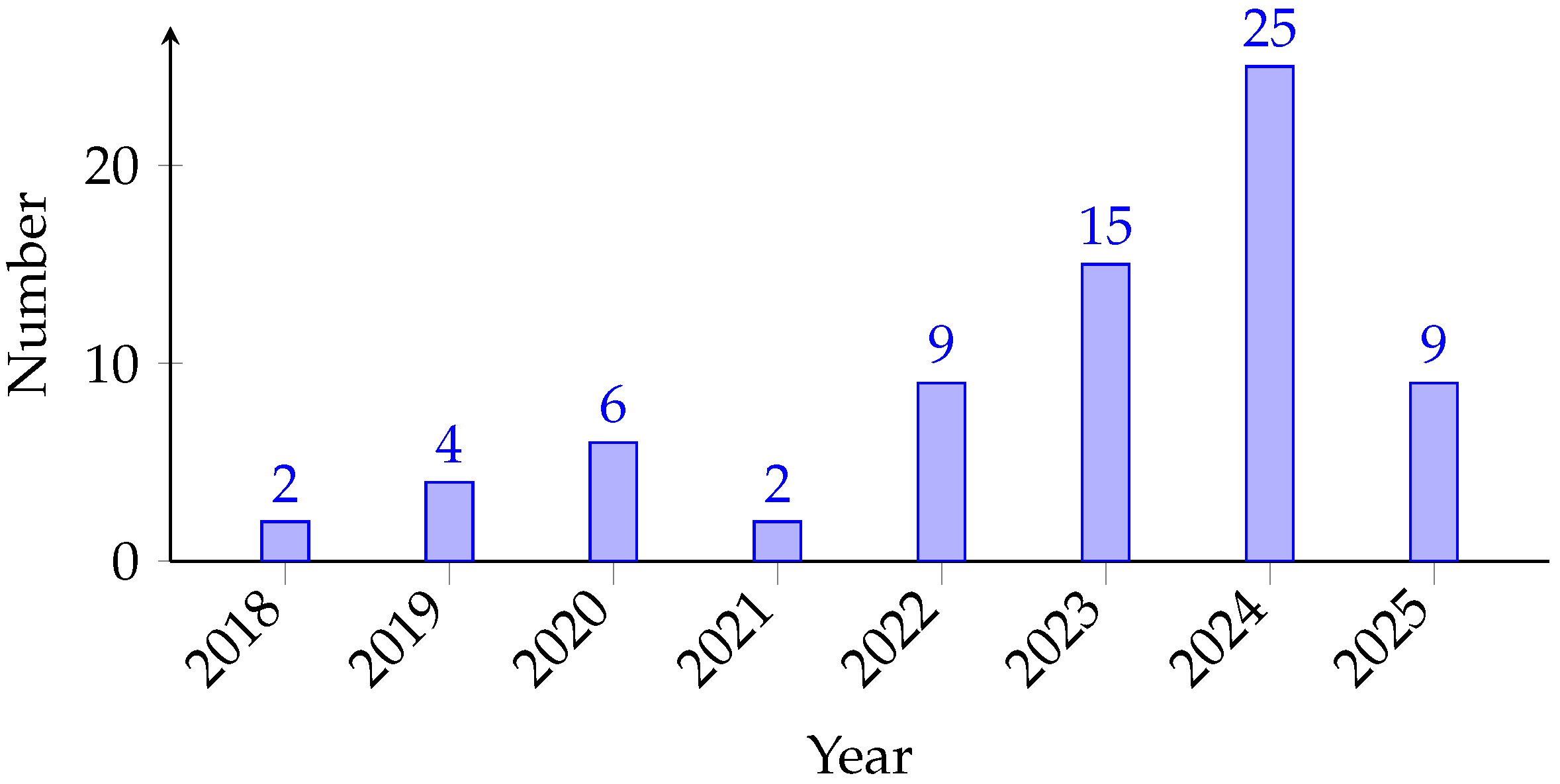
Quantum machine learning (QML), similar to classical machine learning, has a wide range of applications, including the field of medicine. In recent years, numerous publications have focused on comparing these two paradigms [10]. In response to RQ1, an illustration in Figure 2 is given, presenting a clear upward trend of interest, despite the relatively narrow scope of the topic. Although the first related publication dates back to 2004 [11], it is only recently, with the growing accessibility and commercialization of quantum hardware, that the number of QML-related publications has started to increase significantly.
The vast majority of these articles were published between 2022 and 2024, highlighting the reliability and relevance of the topic. In our review of 72 studies published between 2018 and 2025, as many as 58 (≈81%) appeared in just the last three years (2022–2025), confirming a rapid acceleration of interest.
This upward trajectory is not merely coincidental but closely mirrors key technological and methodological milestones in the quantum domain. The initial emergence of studies (2018–2020) aligns with the broader availability of cloud-based quantum computing services (e.g., IBM Quantum Experience) and the demonstration of quantum supremacy arguments [12], which catalyzed general scientific interest. However, the sharp acceleration observed from 2022 onwards can be attributed to the maturation of hybrid quantum–classical frameworks. The development of accessible software libraries such as PennyLane [13] and Qiskit lowered the barrier to entry for non-physicists, allowing medical researchers to implement variational quantum circuits (VQCs) without deep hardware knowledge. This period also marks the consolidation of the “NISQ era” mindset, where researchers shifted focus from full fault-tolerant algorithms to practical, noise-resilient hybrid models feasible on currently available simulators and small-scale devices.
The most cited works include foundational proposals such as design of variational circuits [3], hybrid quantum–classical models [14] and quantum convolutional architectures [15], which serve as the basis for many recent applied studies in healthcare. The growing interest in QML applications in medicine is largely driven by the increasing availability of medical imaging datasets [16,17], the need for rapid diagnostics [18], and the demand for more efficient processing of large-scale biological data such as genomic sequences and electronic health records (EHRs). Most QML studies in the medical domain focus on computer vision tasks, including tumor classification [19], pneumonia detection [20], or interpretation of electrocardiogram (ECG) signals [21]. However, the scope of applications is rapidly expanding to include predictive analytics in cardiology [22], mental health assessment [23] and personalized medicine based on molecular data [24].

4. Dataset Types

Medical data is inherently challenging and complex to analyze due to its dependence on numerous factors, which are often external and interrelated. Another difficulty lies in heterogeneity, which varies depending on the specific medical application. Therefore, RQ2 is posed to check which type of data is taken into account in QML in medical applications. The datasets can include structured feature-based attributes [25], time series data from monitoring devices, or image data intended for computer vision tasks [26].
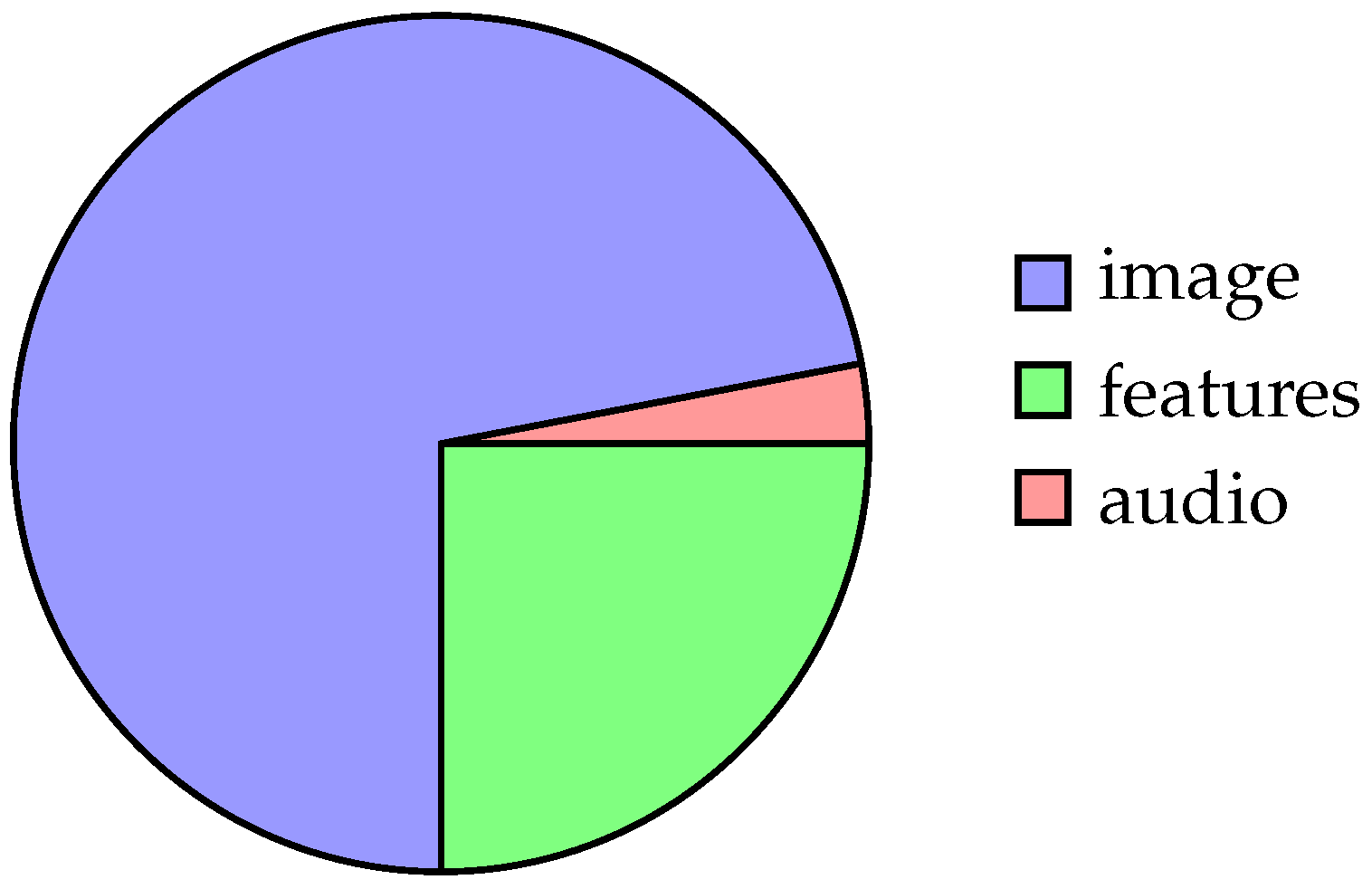
The distribution of data types in the reviewed studies is illustrated in Figure 3. As shown, a significant majority—72.8% of the analyzed publications—focus on computer vision problems, such as the analysis of magnetic resonance imaging (MRI) [17,27], X-ray [28], computer tomography (CT) scans [29], or ECG signal images [21]. Approximately one in four studies addresses feature-based data analysis (24.3%): for example, using blood test parameters to predict the risk of developing diabetes [30]. Only two publications explored the use of audio data, the first analyzing cough sounds recorded to detect COVID-19 infection [31] and the second focusing on laryngeal cancer detection [32].
In addition to selecting an appropriate algorithm and medical condition, the choice of the dataset plays a crucial role in the effectiveness of QML applications. The literature offers several publicly available, preprocessed datasets tailored to specific diagnostic tasks. For instance, the Heart Disease dataset contains 303 patient records [33], while the Wisconsin Breast Cancer dataset includes 569 cases [34,35]. For brain-related diagnoses, researchers often utilize the OASIS and NFBS datasets, which contain 2842 and 125 MRI scans, respectively [36].

Data Complexity, Preprocessing, and Clinical Representation

While the reported performance of QML models is often high, a critical analysis of the datasets reveals a significant gap between experimental setups and clinical reality. The primary constraint in the NISQ era is the limited number of qubits, which necessitates aggressive preprocessing and dimensionality reduction [2,3]. Real-world medical images (e.g., DICOM X-rays or 3D MRI volumes) typically have resolutions exceeding 2000 × 2000 pixels, which is currently impossible to encode directly into quantum circuits without significant information loss. Consequently, most reviewed studies rely on downsampled benchmarks such as MedMNIST ( 28 × 28 pixels) [37,38] and resized variants of clinical datasets (e.g., 32 × 32 or 128 × 128 ) [19,20] or employ Principal Component Analysis (PCA) to reduce feature vectors to match available qubits [16,37].
This reduction has two major implications. First, clinical complexity is often underrepresented; fine-grained pathological details that are crucial for diagnosis may be lost during downsampling [37]. Second, the high accuracy rates (95–99%) reported in many studies must be interpreted in the context of these simplified, lower-dimensional manifolds, which are easier to classify than raw, noisy clinical data. Furthermore, the class imbalance characteristic of real medical datasets where positive cases are rare is often mitigated in QML studies by using balanced subsets (e.g., reducing the number of negative samples) to stabilize training [17]. While this aids algorithmic convergence, it does not fully reflect the challenge of deploying these models in real screening scenarios where prevalence is low. Thus, while current QML demonstrates strong potential on exemplary or preprocessed medical datasets, its scalability to full-resolution, highly imbalanced clinical data remains an open challenge.

5. Medical Applications

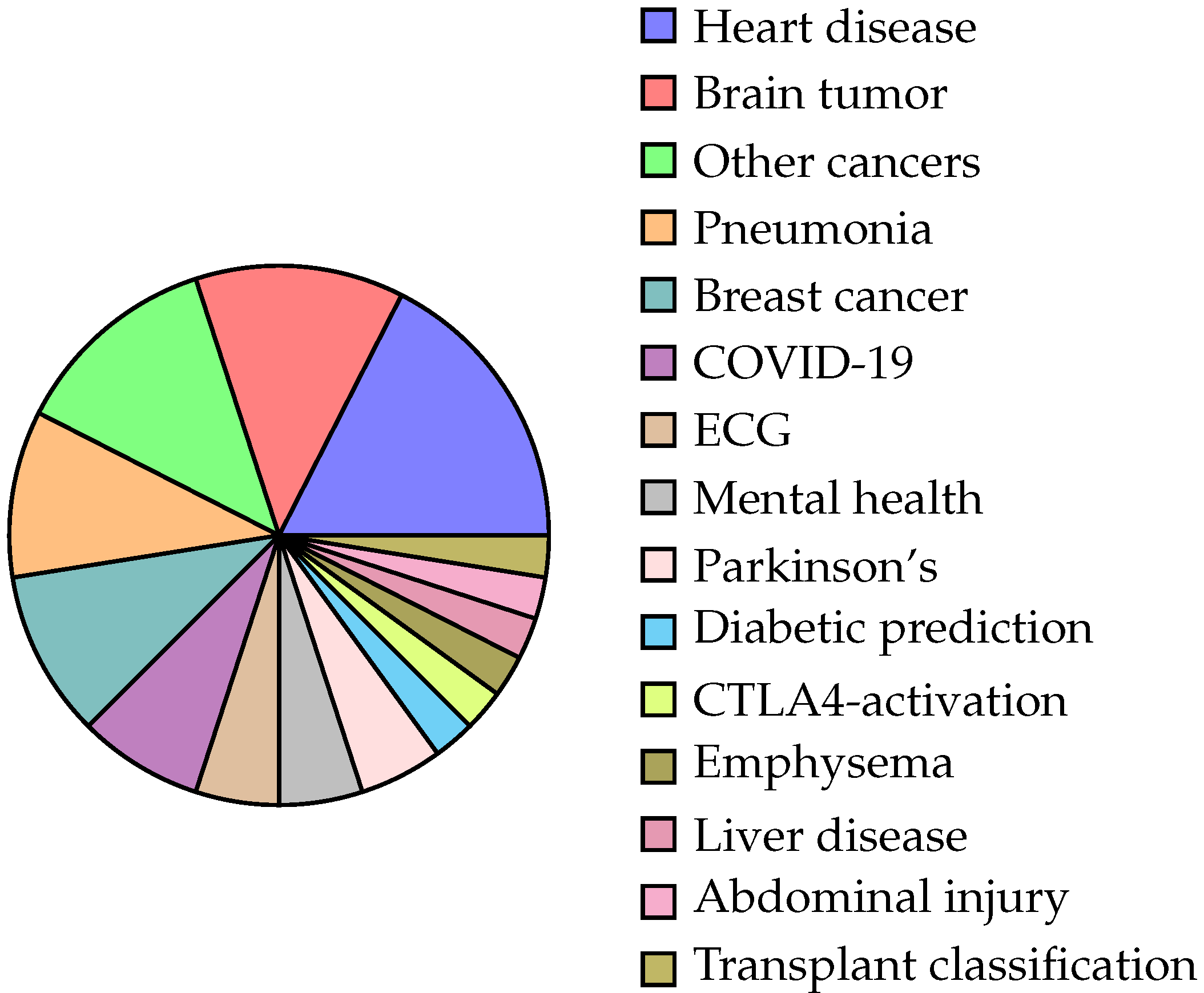
The type of medical data analyzed in QML studies is determined primarily by the specific use case, as different diagnostic procedures are required for different diseases. In the reviewed set of publications, we identified 15 distinct medical conditions, for which their proportional distribution is shown in Figure 4 as an answer to RQ3. The four most extensively explored areas are, in the following order, heart disease, brain tumors, pneumonia, and breast cancer. COVID-19 [18] ranks fifth, likely due to the impact of the recent pandemic.
The popularity of these four main conditions can be attributed to several factors. Heart disease remains one of the leading causes of death worldwide, prompting extensive research into early detection methods using machine learning and now QML [39]. Pneumonia is a critical condition that can be identified through chest X-rays—making it a suitable target for computer vision approaches [20,40], which dominate QML in medical applications.
Brain tumors, particularly gliomas and meningiomas, are often diagnosed using MRI scans, providing high-quality datasets that are well-suited for quantum-enhanced image analysis [41]. Mammography, commonly used in breast cancer diagnosis, also lends itself well to computer vision techniques, and has begun to appear in early QML-based diagnostic studies [26,42]. Recent work further expands this area by introducing hybrid or noise-aware QML architectures for medical imaging, including hybrid quantum–classical neural networks (HQCNNs) [43] and noise-aware quantum neural networks (NQNNs) [38].
If all types of cancer were grouped together, the number of related studies would increase significantly. However, the analysis of cancers that affect different organs often relies on entirely different diagnostic methods. These include CT scans for the detection of ovarian tumors [44], feature vectors representing drug response data for cancer treatment [45], or MRI scans, particularly for brain tumors [46]. Recent research also highlights the potential of QML for stroke prediction based on medical imaging, as demonstrated by QBrainNet [27]. This diversity in diagnostic modalities makes it challenging to generalize findings or directly transfer insights between studies.
It is crucial to note that the dominance of these specific specialties is driven not only by clinical value but also by data availability and architectural constraints. Cardiology and neurology lead the field largely because of the availability of standardized, high-quality open-source datasets (e.g., Heart Disease UCI, OASIS, BraTS), which are easily accessible to computer science researchers [47]. Conversely, less-studied fields often lack such curated public data due to privacy concerns or rarity. Furthermore, the shortcomings of current NISQ architectures restrict the exploration of complex domains. Conditions requiring the analysis of ultra-high-resolution pathology slides or massive genomic sequences are currently ill-suited for quantum processors that struggle with high dimensionality [48]. As a result, researchers gravitate towards problems that can be effectively represented on small qubit registers (e.g., downsampled MRI slices or small feature vectors), creating a bias where “hardware-compatible” diseases are studied more frequently than those that might urgently need new computational paradigms.

6. The Size of Quantum Machines and Simulators Usage

Aiming to answer the scheduled RQ4 and RQ5, we came to the not surprising conclusion that the vast majority of proposed algorithms are not tested using real quantum computers. Most experiments rely on simulators provided by toolmakers such as Qiskit Aer [49,50], Pennylane or Cirq [51,52], or IBM’s own cloud-based simulators [53]. As a result, researchers are limited by the number of qubits they are able to simulate and usually focus on hybrid QNNs with a single quantum layer within the network, while the rest uses conventional methods.
This trend is further reflected in recent publications. The HQCNN architecture proposed by Shahjalal et al. [43] follows the paradigm of hybrid models with shallow quantum circuits, making it feasible to run on contemporary simulators. Similarly, Rahman and Zhuang introduce NQNN [38], a noise-aware quantum neural network specifically designed to remain performant in low-qubit, noise-dominated settings. Even more advanced medical applications, such as QBrainNet for stroke prediction [27], operate in regimes with limited quantum resources, highlighting that low-qubit models remain the standard.
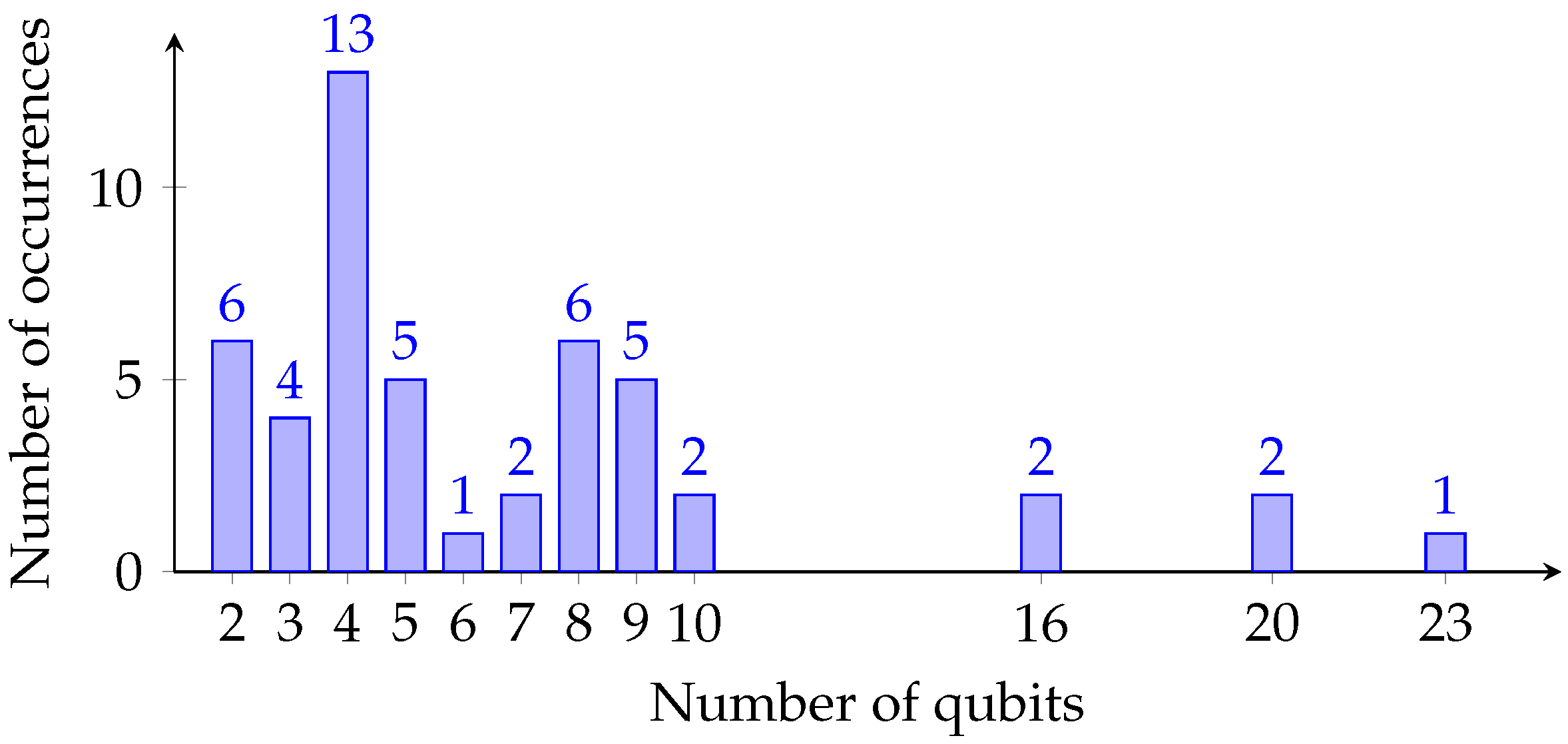
This is why, as illustrated in Figure 5, the most common number of qubits used is four, which is sufficient to process 2 × 2 pixel patches [19]. However, there are also examples of much larger quantum circuits being used, using 16 [54], 20 [51], and even 23 qubits [22].
In particular, Mathur et al. [37] performed experiments using a real quantum device (ibmq guadalupe), applying quantum neural networks to medical image classification tasks. Their work used the MedMNIST dataset (RetinaMNIST and PneumoniaMNIST) with 28 × 28 images and achieved 58.25% and 75.25% accuracy for RetinaMNIST and 83.65% and 80.77% for PneumoniaMNIST depending on the quantum model used. This example demonstrates that, while rare, real quantum hardware is beginning to be used in practical machine learning research.

7. Architectures and Technologies

When analyzing the number of studies tested on real quantum devices, it is worth checking which architectures and technologies are used the most often (RQ6). Interestingly, one of the most promising architectures used in quantum-enhanced image analysis is the quantum convolutional neural network (QCNN) implemented with a VQC [15]. This is also the most widely used approach due to its versatility—convolutional layers utilizing kernels enable effective feature extraction, which is especially important when the number of available qubits is limited [55]. Hybrid approaches have also gained considerable attention in recent years. For higher-resolution images such as CT scans [56], HQCNNs are employed, where some layers are classically executed on conventional hardware. This trend is further reinforced by recent works such as HQCNN [43], which explicitly leverage quantum layers only in feature extraction modules while relying on classical CNN components for deeper processing. Similarly, noise-aware quantum neural networks such as NQNN [38] address one of the key limitations of NISQ-era devices by optimizing architectures to remain robust against quantum noise while still using shallow circuits compatible with currently available simulators.
QCNNs continue to be successfully applied in a range of medical imaging tasks, including analysis of cancer genomic characteristics in the Cancer Genome Atlas [24] or small-scale datasets such as MNIST [57]. Moreover, various modifications of the QCNN architecture can be found in the literature, such as Variational Quantum Neural Networks (VQNNs) [58]—a variation of the VQC quantum circuit with added gates—Fully Connected networks (FC-QCNNs) [51], or the Hybrid Quantum–Classical Convolutional Neural Network with War Strategy Optimization (HQCCNN-WSO) [59]. Recent models such as QBrainNet [27] further demonstrate hybrid or variational-style architectures applied to brain image analysis, using compact PQC blocks designed to fit within low-qubit constraints.
These models have been shown to achieve competitive performance while remaining compatible with the qubit limitations imposed by current simulators. For instance, in a recent study that involved facial emotion recognition tasks using datasets such as KDEF and FER13, a QCNN-based VQC model reached up to 81.95% accuracy [23], highlighting the potential of such architectures in tasks requiring spatial feature extraction. Additional studies confirm the effectiveness of QCNN-VQC combinations in medical domains such as breast cancer classification and lung X-ray diagnostics [28,60,61]. This suggests that even within the constraints of simulated environments, architecture-aware design such as VQC can deliver notable benefits in medical applications where image data is prevalent.
A recurring issue in many of the reviewed works is the omission of hardware characteristics, with several publications focusing purely on theoretical implementations without disclosing the specifications of the quantum hardware or simulator. This trend persists across hybrid models such as HQCNN, NQNN, and even QBrainNet, where experiments are presented without detailed backend descriptions. This was also a recurring trend in our analysis—a significant portion of the surveyed studies either failed to specify the simulation environment or only vaguely referenced the type of simulator used, with little to no detail on backend constraints, such as qubit noise or circuit depth. This lack of transparency limits reproducibility and makes it difficult to assess the real-world feasibility of the proposed models. Such results are consistent with previous observations in the field, which emphasize a persistent gap between theoretical models and practical hardware-level testing [3,62,63,64].
Another more pressing issue noted during the survey was the lack of details on the circuit structure. Ideally, the whole circuit with used gates, feature mapping and details on transpilation would be provided; however, this is often not the case. Transpilation is not really mentioned, likely due to the focus on running circuits in simulated environments that do not use any preconfigured topology that would reflect a real quantum computer. The information on this, as well as the gates used, is essential due to the fact that each gate used adds noise and the transpilation process lengthens the circuit even further. Some papers only provide conceptual flow charts for the circuit, some provide only explanations in text, and some do not provide any information. This issue was worsened by the general lack of repository access, as only four papers provided a github link in the publication.
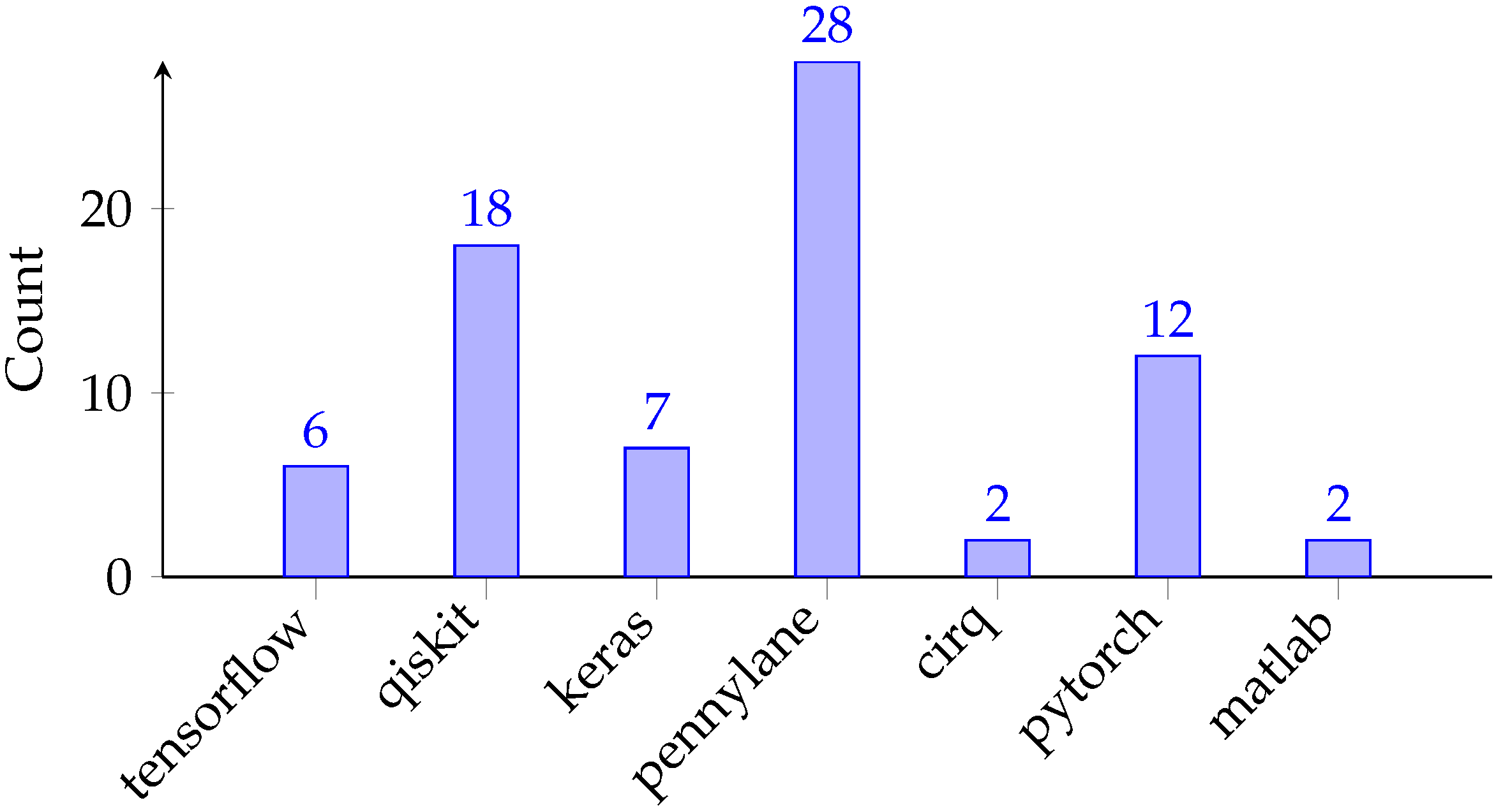
The variety of programming tools available to researchers in quantum computing is still quite limited. This is primarily due to the small number of accessible quantum computers, and the limitation is even more pronounced in the context of machine learning. The main library introduced by the largest provider of real quantum computers and access to them is Python Qiskit [65]. The user would most likely need to use it, directly or indirectly, to run their calculations on IBM’s hardware. Other programming frameworks aim to give users alternative options; however, they ultimately must provide Qiskit-based plugins to communicate with real hardware. The most popular among the research covered in this paper is the PennyLane library [66], proving to be even more popular than pure Qiskit, as seen in Figure 6, with PyTorch [67], Keras [68], and TensorFlow [69] providing alternatives. The main problem researchers may encounter when using most platforms is the extremely rapid development of the Qiskit library, which often results in incompatibilities with plugins from other frameworks. While this mostly affects code execution on real IBM devices, it typically does not impact local simulators—the environment in which most research over the past five years has been conducted, with notable exceptions such as [18,37], which were tested using IBM hardware.
Based on the issues mentioned in this section, the team would like to propose a list of elements to include in an article on QML research that are important for clarity and algorithm reproducibility:
  • Was the described circuit deployed on real quantum hardware or in a simulated environment?
    -
    If a real quantum computer was used, what were its characteristics—architecture, gate fidelity, etc.?
    -
    If a simulated environment was used, did it simulate noise, and if so, how was it modeled?
    -
    If a simulated environment was used, what were the computer specifications?
  • What number of qubits were used?
  • How was the circuit composed and what gates were used?
  • What feature mapping was used?
  • What number of shots was chosen?
  • What transpilation method was used?
  • Was the network structure fully quantum or hybrid?
  • What optimization algorithm was used?
  • What programming tools were utilized, and what were their versions?
  • Ideally, a repository link would be provided.
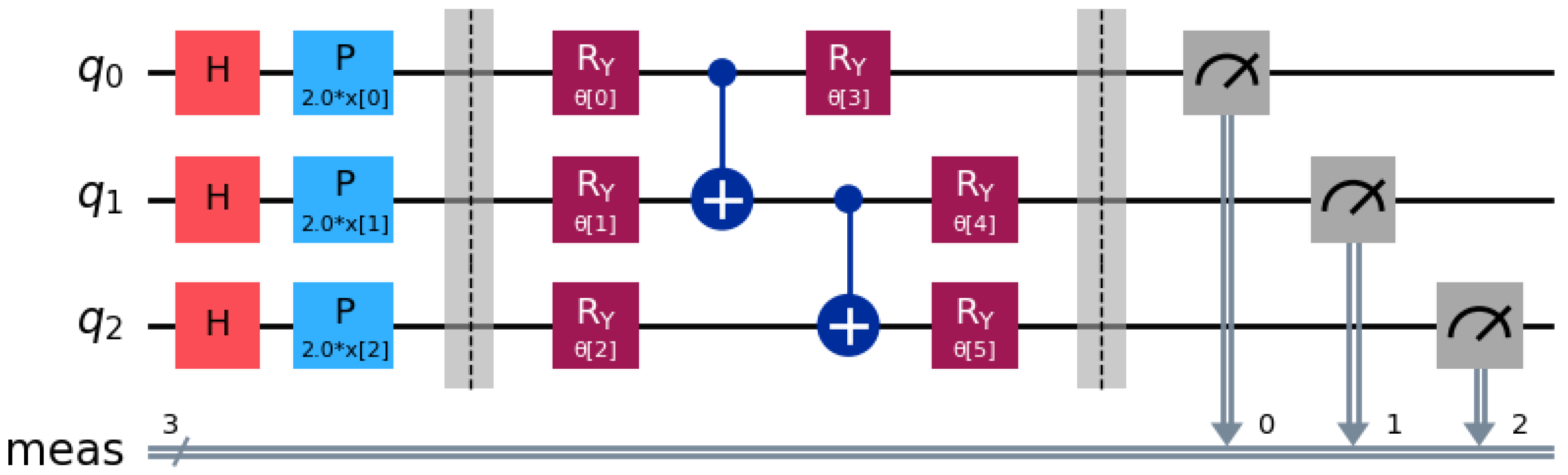
For QML, regardless of whether simulators or real quantum computers are used, constructing an appropriate quantum circuit called an ansatz is one of the most critical elements. Using the Qiskit library, designing such a circuit directly from Python code is possible. A simple example ansatz on three qubits is shown in Figure 7. This ansatz represents the concept behind the usage of quantum circuit as a neural network. It is split using barriers into three sections: The first one is responsible for providing feature input—in this case, three numerical features; the second represents neural connections—each gate contains information on the spin angle, which can be used as weights and tuned in the training process; finally, the third part conducts measurements of the qubit state, which is then, after many repetitions, interpreted as an output. Note that this is just an example with a single “layer”, and real quantum networks will have to use much deeper circuits. However, this type of circuit structure, usually with a ZZFeatureMap input (entangled version of the one presented in Figure 7), is the most common design used by researchers to create a QNN. It is an ansatz introduced by Qiskit called RealAmplitudes [70].
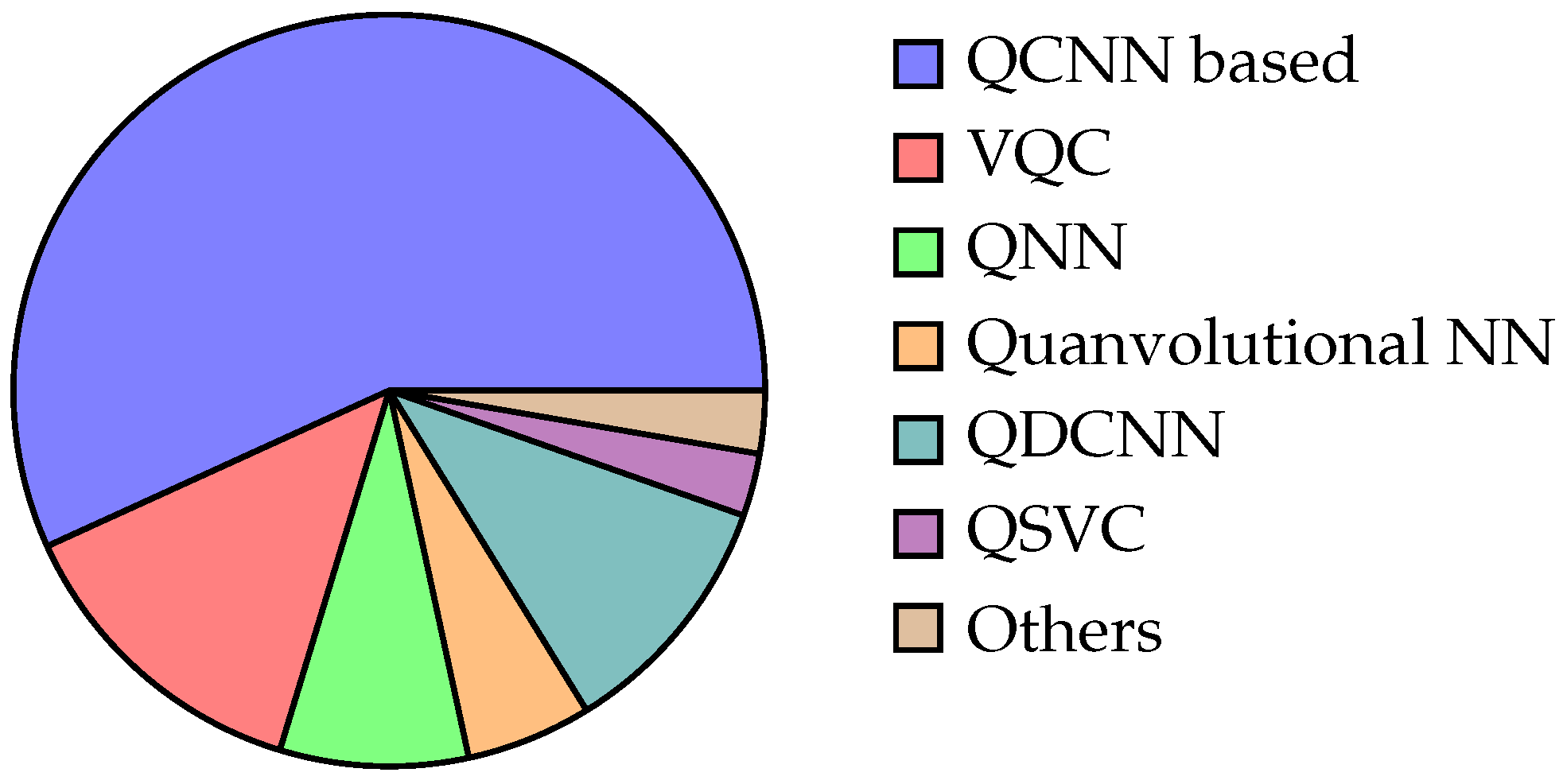
Answering to question RQ6, this review reveals clear differences in the popularity of specific quantum technologies depending on the type of data being processed. Figure 8 shows the distribution of the approaches applied in studies focusing on image-based data. QCNNs and their variants clearly dominate this area, accounting for 56.8% of all analyzed works. This prevalence aligns with the nature of medical imaging tasks, where spatial processing and hierarchical feature extraction are essential. Recent contributions such as HQCNN [43] and QBrainNet [27] further demonstrate the growing presence of hybrid and shallow post-quantum cryptography (PQC)-based architectures in imaging applications. Other notable approaches include quantum deep convolutional neural networks or quantum-inspired CNNs (10.8%), variational quantum classifiers and related parameterized quantum circuits (13.5%), and quanvolutional neural networks (5.4%). QNNs without convolutional layers represent 8.1% of the studies, while quantum support vector classifiers (QSVCs) and similar methods appear rarely (2.7%).
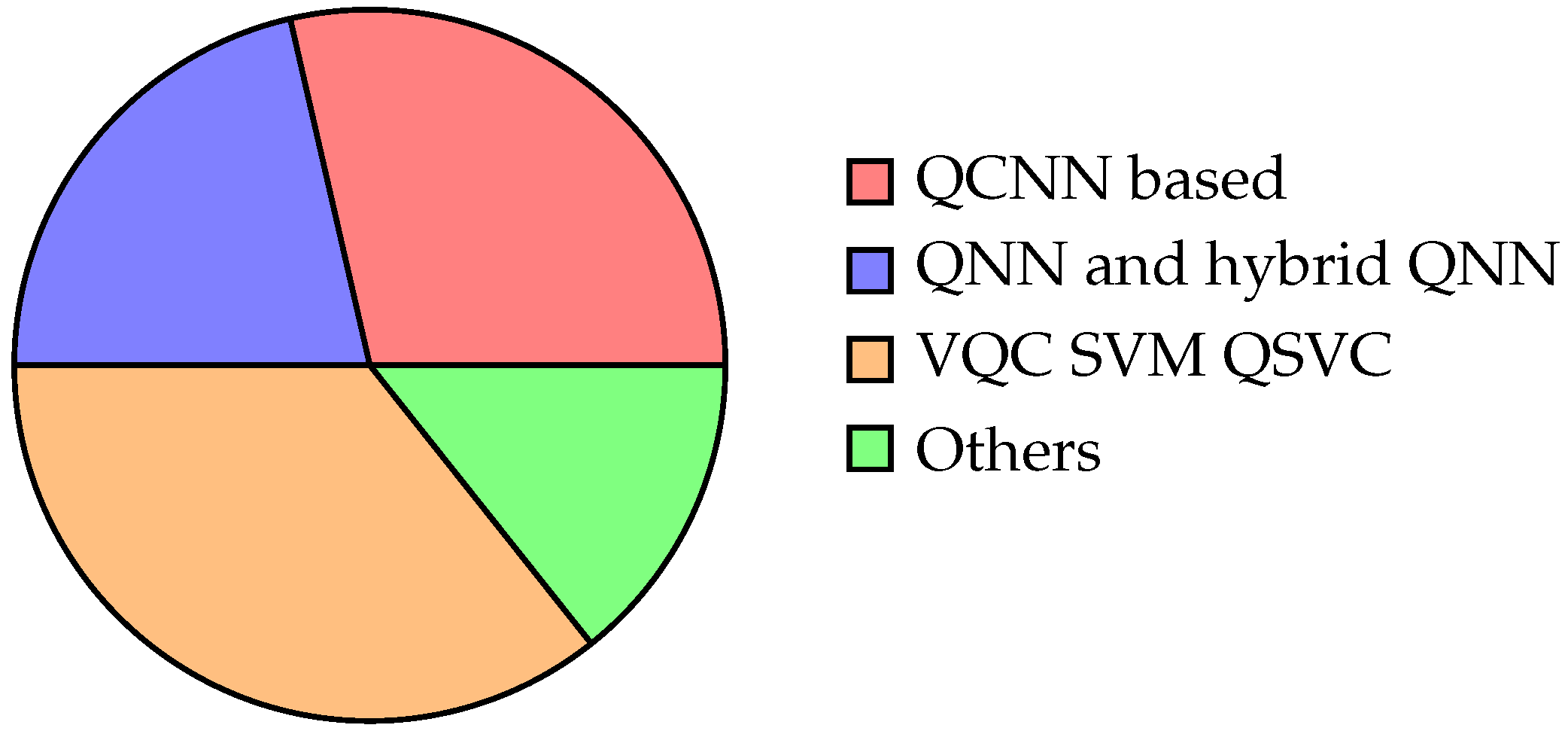
In contrast, Figure 9 summarizes the distribution of quantum technologies in studies that use feature-based (non-image) medical datasets. Here, variational quantum classifiers, quantum SVMs, and related PQC-based models constitute the largest share (35.7%), reflecting their suitability for structured tabular or biomarker-based datasets. Noise-aware architectures such as NQNN [38] also fall into this category, as they primarily target non-image data under realistic noise constraints. QCNNs and their hybrids remain relevant (28.6%), although their benefits for non-spatial data are less pronounced than in imaging. QNNs and hybrid QNNs account for 21.4%, while the remaining 14.3% employ other or mixed quantum techniques.
This distribution highlights a trend: QCNN architectures dominate in quantum medical imaging research, whereas PQC-based classifiers are more prevalent in feature-based clinical datasets, with hybrid or noise-aware models such as HQCNN, NQNN, and QBrainNet bridging the gap between image and non-image modalities.

8. Analysis of the Results

Leaving aside technical aspects such as the aforementioned architectures and technologies, it is worth examining whether the use of quantum algorithms yields satisfactory results to answer RQ7. For traditional approaches, numerous studies have already shown that ML algorithms can classify data with high accuracy and support human factors. For the studies reviewed, the results provided by the authors are summarized in Table 1.
The collected results clearly demonstrate high efficiency in classifying medical data, with the worst-case result exceeding 70%. Of particular note are studies such as [14], where the QCNN achieved almost 100% accuracy, outperforming classical CNN models. Similarly, in [20], quantum approaches provided results that are about 4% better than classical ones, while in [22], the quantum solution outperformed the classical solution by 0.6%. In other cases, such as [42], quantum models achieved 96.1% accuracy compared to 92.8% for conventional CNNs, and [31] reported 96.4% for quantum models, although the performance dropped to 60.3% in the presence of noise.
It must be noted that these high accuracy metrics must be interpreted with significant caution. As discussed in Section 4, many of these results are obtained on simplified or downsampled datasets (e.g., 28 × 28 pixels or PCA-reduced features) [16,72] that do not reflect the complexity of real-world clinical pathology. Furthermore, the reliance on noise-free simulators or idealized noise models [17,53] often leads to overoptimistic performance estimates that may not hold on physical NISQ hardware. Consequently, while some studies report slight improvements over classical baselines (e.g., 0.6–4%), these should be viewed as tentative proof-of-concept demonstrations rather than definitive evidence of quantum advantage. The lack of standardized benchmarks across the field further complicates direct comparisons, making quantum superiority a goal for future fault-tolerant eras rather than a currently realized achievement.
Recent works expanding into hybrid or noise-aware quantum architectures also report promising levels of accuracy. QBrainNet [27], a quantum-enhanced model for the prediction of stroke from medical imaging, achieved 96% precision and an AUC-PR of 0.97%, indicating a strong discriminative capacity in clinically relevant diagnostic tasks. Similarly, the noise-aware NQNN architecture [38] reached a precision of 80.25% in OrganCMNIST despite operating under a 10% quantum noise model, highlighting the importance of designing QML architectures that are robust to device noise in realistic NISQ-era conditions. These examples confirm that quantum models can deliver strong performance not only for small or simplified datasets but also in more challenging real-world scenarios.
It should also be noted that some studies do not directly report classification results for quantum models but instead focus on preparing data or methodologies for subsequent classical analysis, as in [25]. Such contributions remain valuable, as they help establish integrated workflows that combine quantum and classical processing.
Importantly, the machine learning time for quantum machines is suggested in the literature to be potentially shorter than for neural networks trained on conventional hardware, which may be a potential benefit of this technology [16]. However, among the reviewed works [14,20,74], most authors focus primarily on classification accuracy rather than providing direct comparisons of training times. As a result, concrete evidence for accelerated learning using quantum models in practical medical tasks remains limited, and further experimental validation is needed.

9. Conclusions

The conducted analysis confirms the broad applicability of quantum machine learning (QML) and highlights the significant potential of these methods in medicine and healthcare. The reviewed articles demonstrate that QML techniques can provide competitive results even with the severe limitations imposed by the current state of development of quantum technologies.
One of the key arguments supporting further research in this area is the need to transition from simulated environments to real quantum hardware. Although quantum simulators are a very valuable source of environment for testing and prototyping new models, they often do not reflect the challenges associated with real quantum systems, such as qubit decoherence, quantum noise, gate errors or limited connectivity. Moreover, with the usage of simulators, it is not possible to use the benefits of quantum technology, such as shorter computation times or the ability to process multiple problems simultaneously. In future research, it is worth focusing on testing the proposed solutions on real devices, which will allow the assessment of their performance and reliability under real conditions.
Another important direction for future research involves adapting QML algorithms to specific quantum computing architectures. This adaptation will be essential to achieve high-precision results and significantly accelerate the training process. As quantum hardware continues to evolve, architecture-aware algorithm design is expected to play a pivotal role in unlocking the full capabilities of QML in practical medical applications.
In addition, an important aspect for the further development of quantum computing in medicine is the creation of standardized benchmark files. The lack of such data makes it impossible to directly compare and objectively evaluate implemented solutions. Training data currently used in conventional machine learning may be too complex at the current stage of development of quantum technologies, and acquiring new data is a challenge due to the protection of personal data in medicine and the complex nature of the data.
As a final conclusion, it can be said with certainty that it is important to design new solutions and test them on real hardware and real data, as stable quantum physical solutions are already available. This approach can significantly accelerate the process of using QML in medical applications. This is especially important because current work shows promising results in improving the precision of disease diagnosis or creating personalized treatment strategies. Our survey shows that with usage and growing development of quantum technologies, it will be possible in the future to beat the challenges that are currently impossible to solve.
From a short-term perspective, future research should focus on medical application areas that are well aligned with the capabilities of NISQ devices. Promising directions include medical imaging feature reduction, genomics and proteomics classification with low-dimensional representations, clinical decision support based on small, structured datasets, and signal-based diagnostics such as electrocardiography. These domains allow the use of hybrid quantum–classical approaches and shallow quantum circuits, which are more robust to hardware noise and limited qubit counts. In parallel, the development of standardized benchmark datasets tailored to quantum machine learning—characterized by reduced dimensionality, clear clinical relevance, and privacy-preserving design—should be treated as a priority to enable fair comparisons of algorithms across platforms. Finally, algorithmic development should emphasize architecture-aware designs, including noise-resilient variational circuits, connectivity-aware ansatz, and co-design strategies that explicitly incorporate hardware constraints such as decoherence times, gate fidelities, and qubit topology.

Author Contributions

Conceptualization, R.I., M.A.K. and K.P.; methodology, R.I., M.A.K. and K.P.; software N/A; validation, R.I., M.A.K., K.P. and M.J.; formal analysis, R.I., M.A.K., K.P. and M.J.; investigation, R.I., M.A.K., K.P. and M.J.; resources, R.I., M.A.K., K.P. and M.J.; data curation, R.I., M.A.K. and K.P.; writing—original draft preparation, R.I., M.A.K., K.P. and M.J.; writing—review and editing, K.P. and M.J.; visualization, R.I. and M.A.K.; supervision, R.I.; project administration, R.I. All authors have read and agreed to the published version of this manuscript.

Funding

This research received no external funding.

Institutional Review Board Statement

Not applicable.

Informed Consent Statement

Not applicable.

Data Availability Statement

The data that supports the findings of this study is available from the corresponding author upon reasonable request.

Conflicts of Interest

The authors declare no conflicts of interest.

Abbreviations

The following abbreviations are used in this manuscript:
QMLQuantum Machine Learning;
QCNNQuantum Convolutional Neural Network;
AIArtificial Intelligence;
NISQNoisy Intermediate-Scale Quantum;
RQResearch Question;
EHRsElectronic Health Records;
HQCNNsHybrid Quantum–Classical Neural Networks;
NQNNsNoise-Aware Quantum Neural Networks;
VQCsVariational Quantum Circuits;
QSVCsQuantum Support Vector Classifiers.

References

  1. Ramezani, S.B.; Sommers, A.; Manchukonda, H.K.; Rahimi, S.; Amirlatifi, A. Machine learning algorithms in quantum computing: A survey. In Proceedings of the 2020 International Joint Conference on Neural Networks (IJCNN), Glasgow, UK, 19–24 July 2020; IEEE: New York, NY, USA, 2020; pp. 1–8. [Google Scholar]
  2. Brooks, M. Beyond quantum supremacy: The hunt for useful quantum computers. Nature 2019, 574, 19–21. [Google Scholar] [CrossRef]
  3. Cerezo, M.; Verdon, G.; Huang, H.Y.; Cincio, L.; Coles, P.J. Challenges and opportunities in quantum machine learning. Nat. Comput. Sci. 2022, 2, 567–576. [Google Scholar] [CrossRef]
  4. Nawaz, S.J.; Sharma, S.K.; Wyne, S.; Patwary, M.N.; Asaduzzaman, M. Quantum machine learning for 6G communication networks: State-of-the-art and vision for the future. IEEE Access 2019, 7, 46317–46350. [Google Scholar] [CrossRef]
  5. Sajjan, M.; Li, J.; Selvarajan, R.; Sureshbabu, S.H.; Kale, S.S.; Gupta, R.; Singh, V.; Kais, S. Quantum machine learning for chemistry and physics. Chem. Soc. Rev. 2022, 51, 6475–6573. [Google Scholar] [CrossRef]
  6. Chakraborty, S. A Study on Quantum Neural Networks in Healthcare 5.0. arXiv 2024, arXiv:2412.06818. [Google Scholar]
  7. Fatunmbi, T.O. Integrating quantum neural networks with machine learning algorithms for optimizing healthcare diagnostics and treatment outcomes. World J. Adv. Res. Rev. 2023, 17, 1059–1077. [Google Scholar] [CrossRef]
  8. Biamonte, J.; Wittek, P.; Pancotti, N.; Rebentrost, P.; Wiebe, N.; Lloyd, S. Quantum machine learning. Nature 2017, 549, 195–202. [Google Scholar] [CrossRef]
  9. Cao, Y.; Romero, J.; Aspuru-Guzik, A. Potential of quantum computing for drug discovery. IBM J. Res. Dev. 2018, 62, 6:1–6:20. [Google Scholar] [CrossRef]
  10. Al-Jumaili, S.; Al-Jumaili, A.; Alyassri, S.; Duru, A.D.; Uçan, O.N. Recent Advances on Convolutional Architectures in Medical Applications: Classical or Quantum? In Proceedings of the 2022 International Symposium on Multidisciplinary Studies and Innovative Technologies (ISMSIT), Ankara, Turkey, 20–22 October 2022; IEEE: New York, NY, USA, 2022; pp. 800–805. [Google Scholar]
  11. Vatan, F.; Williams, C. Optimal quantum circuits for general two-qubit gates. Phys. Rev. A At. Mol. Opt. Phys. 2004, 69, 032315. [Google Scholar] [CrossRef]
  12. Arute, F.; Arya, K.; Babbush, R.; Bacon, D.; Bardin, J.C.; Barends, R.; Biswas, R.; Boixo, S.; Brandao, F.G.S.L.; Buell, D.A.; et al. Quantum supremacy using a programmable superconducting processor. Nature 2019, 574, 505–510. [Google Scholar] [CrossRef]
  13. Bergholm, V.; Izaac, J.; Schuld, M.; Gogolin, C.; Ahmed, S.; Ajith, V.; Alam, M.S.; Alonso-Linaje, G.; AkashNarayanan, B.; Asadi, A.; et al. Pennylane: Automatic differentiation of hybrid quantum-classical computations. arXiv 2018, arXiv:1811.04968. [Google Scholar]
  14. Liu, J.; Lim, K.H.; Wood, K.L.; Huang, W.; Guo, C.; Huang, H.L. Hybrid quantum-classical convolutional neural networks. Sci. China Phys. Mech. Astron. 2021, 64, 290311. [Google Scholar] [CrossRef]
  15. Oh, S.; Choi, J.; Kim, J. A tutorial on quantum convolutional neural networks (QCNN). In Proceedings of the 2020 International Conference on Information and Communication Technology Convergence (ICTC), Jeju Island, Republic of Korea, 21–23 October 2020; IEEE: New York, NY, USA, 2020; pp. 236–239. [Google Scholar]
  16. Rashmi, R.; Snekhalatha, U.; Krishnan, P.T.; Dhanraj, V. Fat-based studies for computer-assisted screening of child obesity using thermal imaging based on deep learning techniques: A comparison with quantum machine learning approach. Soft Comput. 2023, 27, 13093–13114. [Google Scholar] [CrossRef]
  17. Alsharabi, N.; Shahwar, T.; Rehman, A.U.; Alharbi, Y. Implementing magnetic resonance imaging brain disorder classification via AlexNet–quantum learning. Mathematics 2023, 11, 376. [Google Scholar] [CrossRef]
  18. Rao, G.E.; Rajitha, B.; Srinivasu, P.N.; Ijaz, M.F.; Woźniak, M. Hybrid framework for respiratory lung diseases detection based on classical CNN and quantum classifiers from chest X-rays. Biomed. Signal Process. Control 2024, 88, 105567. [Google Scholar] [CrossRef]
  19. Khan, M.A.Z.; Innan, N.; Galib, A.A.O.; Bennai, M. Brain tumor diagnosis using quantum convolutional neural networks. arXiv 2024, arXiv:2401.15804. [Google Scholar] [CrossRef]
  20. Kulkarni, V.; Pawale, S.; Kharat, A. A classical–quantum convolutional neural network for detecting pneumonia from chest radiographs. Neural Comput. Appl. 2023, 35, 15503–15510. [Google Scholar] [CrossRef]
  21. Prabhu, S.; Gupta, S.; Prabhu, G.M.; Dhanuka, A.V.; Bhat, K.V. QuCardio: Application of quantum machine learning for detection of cardiovascular diseases. IEEE Access 2023, 11, 136122–136135. [Google Scholar] [CrossRef]
  22. Babu, S.V.; Ramya, P.; Gracewell, J. Revolutionizing heart disease prediction with quantum-enhanced machine learning. Sci. Rep. 2024, 14, 7453. [Google Scholar] [CrossRef]
  23. Hossain, S.; Umer, S.; Rout, R.K.; Al Marzouqi, H. A deep quantum convolutional neural network based facial expression recognition for mental health analysis. IEEE Trans. Neural Syst. Rehabil. Eng. 2024, 32, 1556–1565. [Google Scholar] [CrossRef]
  24. Nguyen, P.N. Biomarker discovery with quantum neural networks: A case-study in CTLA4-activation pathways. BMC Bioinform. 2024, 25, 149. [Google Scholar] [CrossRef] [PubMed]
  25. Safriandono, A.N.; Setiadi, D.R.I.M.; Dahlan, A.; Rahmanti, F.Z.; Wibisono, I.S.; Ojugo, A.A. Analyzing Quantum Feature Engineering and Balancing Strategies Effect on Liver Disease Classification. J. Future Artif. Intell. Technol. 2024, 1, 51–63. [Google Scholar] [CrossRef]
  26. Matic, A.; Monnet, M.; Lorenz, J.M.; Schachtner, B.; Messerer, T. Quantum-classical convolutional neural networks in radiological image classification. In Proceedings of the 2022 IEEE International Conference on Quantum Computing and Engineering (QCE), Broomfield, CO, USA, 18–23 September 2022; IEEE: New York, NY, USA, 2022; pp. 56–66. [Google Scholar]
  27. Priyadharshini, M.; Murugesh, V.; Mahesh, T.R.; Albalawi, E.; Saidani, O.; Algarni, A. QBrainNet: Harnessing Enhanced Quantum Intelligence for Advanced Brain Stroke Prediction from Medical Imaging. Front. Med. 2025, 12, 1677234. [Google Scholar] [CrossRef] [PubMed] [PubMed Central]
  28. Yousif, M.; Al-Khateeb, B.; Garcia-Zapirain, B. A new quantum circuits of quantum convolutional neural network for X-ray images classification. IEEE Access 2024, 12, 65660–65671. [Google Scholar] [CrossRef]
  29. Sünkel, L.; Martyniuk, D.; Reichwald, J.J.; Morariu, A.; Seggoju, R.H.; Altmann, P.; Roch, C.; Paschke, A. Hybrid quantum machine learning assisted classification of COVID-19 from computed tomography scans. In Proceedings of the 2023 IEEE International Conference on Quantum Computing and Engineering (QCE), Bellevue, WA, USA, 17–22 September 2023; IEEE: New York, NY, USA, 2023; Volume 1, pp. 356–366. [Google Scholar]
  30. Gupta, H.; Varshney, H.; Sharma, T.K.; Pachauri, N.; Verma, O.P. Comparative performance analysis of quantum machine learning with deep learning for diabetes prediction. Complex Intell. Syst. 2022, 8, 3073–3087. [Google Scholar] [CrossRef]
  31. Esposito, M.; Uehara, G.; Spanias, A. Quantum machine learning for audio classification with applications to healthcare. In Proceedings of the 2022 13th International Conference on Information, Intelligence, Systems & Applications (IISA), Corfu, Greece, 18–20 July 2022; IEEE: New York, NY, USA, 2022; pp. 1–4. [Google Scholar]
  32. Sachane, M.N.; Patil, S.A. Hybrid QDCNN-DNFN for Laryngeal Cancer Detection Using Image and Voice Analysis in Federated Learning. Sens. Imaging 2024, 26, 1. [Google Scholar] [CrossRef]
  33. Pitchal, P.; Ponnusamy, S.; Soundararajan, V. Heart disease prediction: Improved quantum convolutional neural network and enhanced features. Expert Syst. Appl. 2024, 249, 123534. [Google Scholar] [CrossRef]
  34. Mishra, N.; Bisarya, A.; Kumar, S.; Behera, B.K.; Mukhopadhyay, S.; Panigrahi, P.K. Cancer detection using quantum neural networks: A demonstration on a quantum computer. arXiv 2019, arXiv:1911.00504. [Google Scholar] [CrossRef]
  35. Qu, Z.; Li, Y.; Tiwari, P. QNMF: A quantum neural network based multimodal fusion system for intelligent diagnosis. Inf. Fusion 2023, 100, 101913. [Google Scholar] [CrossRef]
  36. Islam, M.; Hasan, M.J.; Mahdy, M. CQ CNN: A Hybrid Classical Quantum Convolutional Neural Network for Alzheimer’s Disease Detection Using Diffusion Generated and U Net Segmented 3D MRI. arXiv 2025, arXiv:2503.02345. [Google Scholar]
  37. Mathur, N.; Landman, J.; Li, Y.Y.; Strahm, M.; Kazdaghli, S.; Prakash, A.; Kerenidis, I. Medical image classification via quantum neural networks. arXiv 2021, arXiv:2109.01831. [Google Scholar]
  38. Rahman, M.; Zhuang, J. NQNN: Noise-aware Quantum Neural Networks for Medical Image Classification. In Proceedings of the 28th International Conference, Daejeon, Republic of Korea, 23–27 September 2025. [Google Scholar]
  39. Maheshwari, D.; Ullah, U.; Marulanda, P.A.O.; Jurado, A.G.O.; Gonzalez, I.D.; Merodio, J.M.O.; Garcia-Zapirain, B. Quantum machine learning applied to electronic healthcare records for ischemic heart disease classification. Hum. Cent. Comput. Inf. Sci 2023, 13, 1–18. [Google Scholar]
  40. Yumin, D.; Wu, M.; Zhang, J. Recognition of pneumonia image based on improved quantum neural network. IEEE Access 2020, 8, 224500–224512. [Google Scholar] [CrossRef]
  41. Ajlouni, N.; Özyavaş, A.; Takaoğlu, M.; Takaoğlu, F.; Ajlouni, F. Medical image diagnosis based on adaptive Hybrid Quantum CNN. BMC Med. Imaging 2023, 23, 126. [Google Scholar] [CrossRef]
  42. Xiang, Q.; Li, D.; Hu, Z.; Yuan, Y.; Sun, Y.; Zhu, Y.; Fu, Y.; Jiang, Y.; Hua, X. Quantum classical hybrid convolutional neural networks for breast cancer diagnosis. Sci. Rep. 2024, 14, 24699. [Google Scholar] [CrossRef] [PubMed]
  43. Shahjalal; Fahim, J.K.; Paul, P.C.; Hossain, M.R.; Ahmed, M.T.; Chakraborty, D. HQCNN: A Hybrid Quantum-Classical Neural Network for Medical Image Classification. arXiv 2025, arXiv:2509.14277. [Google Scholar] [CrossRef]
  44. Kodipalli, A.; Fernandes, S.L.; Dasar, S.K.; Ismail, T. Computational framework of inverted fuzzy C-means and quantum convolutional neural network towards accurate detection of ovarian tumors. Int. J. E-Health Med. Commun. 2023, 14, 1–16. [Google Scholar] [CrossRef]
  45. Sagingalieva, A.; Kordzanganeh, M.; Kenbayev, N.; Kosichkina, D.; Tomashuk, T.; Melnikov, A. Hybrid quantum neural network for drug response prediction. Cancers 2023, 15, 2705. [Google Scholar] [CrossRef]
  46. Prasad, S.S.; Rao, B.C.; Rao, M.K.; Kumar, K.R.; Vara Prasad, S.D.; Ramesh, C. Medical image segmentation using an optimized three-tier quantum convolutional neural network trained with hybrid optimization approach. Multimed. Tools Appl. 2024, 83, 38083–38108. [Google Scholar] [CrossRef]
  47. Gupta, R.S.; Wood, C.E.; Engstrom, T.; Pole, J.D.; Shrapnel, S. A systematic review of quantum machine learning for digital health. Npj Digit. Med. 2025, 8, 237. [Google Scholar] [CrossRef]
  48. Ranga, D.; Rana, A.; Prajapat, S.; Kumar, P.; Kumar, K.; Vasilakos, A.V. Quantum Machine Learning: Exploring the Role of Data Encoding Techniques, Challenges, and Future Directions. Mathematics 2024, 12, 3318. [Google Scholar] [CrossRef]
  49. Shahwar, T.; Mallek, F.; Rehman, A.U.; Sadiq, M.T.; Hamam, H. Classification of Pneumonia via a Hybrid ZFNet-Quantum Neural Network Using a Chest X-ray Dataset. Curr. Med. Imaging 2024, 20, e15734056317489. [Google Scholar] [CrossRef] [PubMed]
  50. Wang, X.; Ali, S.; Arcaini, P.; Veeraragavan, N.R.; NygÃĨrd, J.F. Quantum Neural Network Classifier for Cancer Registry System Testing: A Feasibility Study. arXiv 2024, arXiv:2411.04740. [Google Scholar] [CrossRef]
  51. Ullah, U.; Jurado, A.G.O.; Gonzalez, I.D.; Garcia-Zapirain, B. A fully connected quantum convolutional neural network for classifying ischemic cardiopathy. IEEE Access 2022, 10, 134592–134605. [Google Scholar] [CrossRef]
  52. Zhang, S.; Wang, A.; Li, L. Quantum-convolution-based hybrid neural network model for arrhythmia detection. Quantum Mach. Intell. 2024, 6, 75. [Google Scholar] [CrossRef]
  53. Mishra, N.; Bisarya, A.; Kumar, S.; Maouaki, W.E.; Mukhopadhyay, S.; Behera, B.K.; Panigrahi, P.K.; De, D. Breast cancer detection using quantum convolutional neural networks: A demonstration on a quantum computer. medRxiv 2020. medRxiv:2020.06.21.20136655. [Google Scholar] [CrossRef]
  54. Tayba, M.N.; Maruf, A.; Rivas, P.; Baker, E.; Orduz, J. Using quantum circuits with convolutional neural network for pneumonia detection. In Proceedings of the Southwest Data Science Conference, Waco, TX, USA, 25–26 March 2022; pp. 1–12. [Google Scholar]
  55. Felefly, T.; Roukoz, C.; Fares, G.; Achkar, S.; Yazbeck, S.; Meyer, P.; Kordahi, M.; Azoury, F.; Nasr, D.N.; Nasr, E.; et al. An explainable MRI-radiomic quantum neural network to differentiate between large brain metastases and high-grade glioma using quantum annealing for feature selection. J. Digit. Imaging 2023, 36, 2335–2346. [Google Scholar] [CrossRef]
  56. Islam, M.M.; He, J.S. Abdominal Trauma Detection using Hybrid Quantum Machine Learning. In Proceedings of the 2024 IEEE International Conference on Big Data (BigData), Washington, DC, USA, 15–18 December 2024; IEEE: New York, NY, USA, 2024; pp. 4497–4506. [Google Scholar]
  57. Kim, J.; Huh, J.; Park, D.K. Classical-to-quantum convolutional neural network transfer learning. Neurocomputing 2023, 555, 126643. [Google Scholar] [CrossRef]
  58. Zhu, Y.; Bouridane, A.; Celebi, M.E.; Konar, D.; Angelov, P.; Ni, Q.; Jiang, R. Quantum face recognition with multi-gate quantum convolutional neural network. IEEE Trans. Artif. Intell. 2024, 5, 6330–6341. [Google Scholar] [CrossRef]
  59. Harshavardhan, A.; Sudalaikani, S.; Saravanakumar, M.; Saritha, S.; Rao, P.K.V. Enhanced Bone Cancer Detection in MRI Scans via a Hybrid Quantum-Classical Convolutional Neural Network and War Strategy Optimization. In Proceedings of the 2024 4th International Conference on Ubiquitous Computing and Intelligent Information Systems (ICUIS), Gobichettipalayam, India, 12–13 December 2024; IEEE: New York, NY, USA, 2024; pp. 632–637. [Google Scholar]
  60. Matondo-Mvula, N.; Elleithy, K. Breast cancer detection with quanvolutional neural networks. Entropy 2024, 26, 630. [Google Scholar] [CrossRef]
  61. Stein, S.; Mao, Y.; Ang, J.; Li, A. Qucnn: A quantum convolutional neural network with entanglement based backpropagation. In Proceedings of the 2022 IEEE/ACM 7th Symposium on Edge Computing (SEC), Seattle, WA, USA, 5–8 December 2022; IEEE: New York, NY, USA, 2022; pp. 368–374. [Google Scholar]
  62. Chow, J.C. Quantum Computing and Machine Learning in Medical Decision-Making: A Comprehensive Review. Algorithms 2025, 18, 156. [Google Scholar] [CrossRef]
  63. Rani, S.; Pareek, P.K.; Kaur, J.; Chauhan, M.; Bhambri, P. Quantum machine learning in healthcare: Developments and challenges. In Proceedings of the 2023 IEEE International Conference on Integrated Circuits and Communication Systems (ICICACS), Raichur, India, 24–25 February 2023; IEEE: New York, NY, USA, 2023; pp. 1–7. [Google Scholar]
  64. Flöther, F.F. The state of quantum computing applications in health and medicine. Res. Dir. Quantum Technol. 2023, 1, e10. [Google Scholar] [CrossRef]
  65. Munshi, M.; Gupta, R.; Jadav, N.K.; Polkowski, Z.; Tanwar, S.; Alqahtani, F.; Said, W. Quantum machine learning-based framework to detect heart failures in Healthcare 4.0. Softw. Pract. Exp. 2024, 54, 168–185. [Google Scholar] [CrossRef]
  66. Baral, B.; Roy, T.D. Integrating Quantum Principles with Classical Transfer Learning Approaches for Pneumonia Detection from Chest Radiographs. In Proceedings of the 2024 4th International Conference on Sustainable Expert Systems (ICSES), Kaski, Nepal, 15–17 October 2024; IEEE: New York, NY, USA, 2024; pp. 1042–1049. [Google Scholar]
  67. Oviesi, S.; Tarokh, M.J.; Momeni, M.K. Quantum neural network-assisted learning for small medical datasets: A case study in emphysema detection. J. Supercomput. 2025, 81, 308. [Google Scholar] [CrossRef]
  68. Swathi, G.; Altalbe, A.; Kumar, R.P. QuCNet: Quantum-inspired convolutional neural networks for optimized thyroid nodule classification. IEEE Access 2024, 12, 27829–27842. [Google Scholar] [CrossRef]
  69. Jahin, M.A.; Masud, M.A.; Mridha, M.; Aung, Z.; Dey, N. KACQ-DCNN: Uncertainty-aware interpretable kolmogorov-arnold classical-quantum dual-channel neural network for heart disease detection. arXiv 2024, arXiv:2410.07446. [Google Scholar] [CrossRef]
  70. Quantum, I. Qiskit Doc. Realamplitudes Ansatz. 2025. Available online: https://quantum.cloud.ibm.com/docs/en/api/qiskit/qiskit.circuit.library.RealAmplitudes (accessed on 7 January 2026).
  71. Mewada, H.; Pires, I.M.; Rahevar, M.; Khatri, N. Quantum Convolutional Neural Network for Bone Fracture Classification from X-Ray Images. Procedia Comput. Sci. 2025, 256, 1143–1150. [Google Scholar] [CrossRef]
  72. Li, Y.; Zhou, R.G.; Xu, R.; Luo, J.; Hu, W. A quantum deep convolutional neural network for image recognition. Quantum Sci. Technol. 2020, 5, 044003. [Google Scholar] [CrossRef]
  73. Lusnig, L.; Sagingalieva, A.; Surmach, M.; Protasevich, T.; Michiu, O.; McLoughlin, J.; Mansell, C.; de’Petris, G.; Bonazza, D.; Zanconati, F.; et al. Hybrid quantum image classification and federated learning for hepatic steatosis diagnosis. Diagnostics 2024, 14, 558. [Google Scholar] [CrossRef]
  74. Henderson, M.; Shakya, S.; Pradhan, S.; Cook, T. Quanvolutional neural networks: Powering image recognition with quantum circuits. Quantum Mach. Intell. 2020, 2, 2. [Google Scholar] [CrossRef]
Figure 1. Flow diagram of the study selection process.
Applsci 16 01630 g001
Figure 2. Number of publications related to quantum machine learning (QML) in medicine from 2018 to the third quarter of 2025, illustrating the growing research interest in this field.
Applsci 16 01630 g002
Figure 3. Distribution of data types used in QML applications in medicine and healthcare shows that majority of research is done using images—which, due to their size, are not a perfect type for small quantum circuits.
Applsci 16 01630 g003
Figure 4. Distribution of medical conditions addressed in QML-related studies—it seems that scientists tackled varied topics in medicine; however, heart disease shares the highest interest.
Applsci 16 01630 g004
Figure 5. Distribution of the number of qubits used in the analyzed studies shows that most scientists used very small circuits that can be easily simulated and deployed on small quantum computers.
Applsci 16 01630 g005
Figure 6. Tools and frameworks used in the reviewed papers. Pennylane seems to be the easiest for scientists to familiarize with, but as it is a third-party framework, it might be problematic to deploy such work on quantum hardware.
Applsci 16 01630 g006
Figure 7. A simple ansatz for 3 qubits, containing three Hadamard gates, three phase gates, six RY gates, and two CNOT gates. This type of circuit, or a variation with a ZZFeatureMap, is the most commonly used structure for a QNN in checked sources.
Applsci 16 01630 g007
Figure 8. Distribution of quantum technologies in image-based QML studies.
Applsci 16 01630 g008
Figure 9. Distribution of quantum technologies in feature-based QML studies.
Applsci 16 01630 g009
Table 1. Best results reported in all cited articles.
ArticleBest ResultArticleBest ResultArticleBest Result
[14]almost 100%[58]91%[33]95%
[16]84.4%[51]84.6%[35]97%
[17]94%[59]99%[36]97.5%
[18]98,1%[46]98%[49]97.5%
[19]97.8%[37]84%[50]92.1%
[20]74.6%[22]95.3%[52]98.2%
[21]97.3%[23]81.95%[53]98.9%
[26]85%[28]86,7%[54]82%
[30]95%[31]96,4%[60]87.2%
[32]89,1%[39]94%[65]85%
[40]96%[41]97.75%[68]97.7%
[42]96.1%[44]84.4%[69]92%
[55]77%[71]96%[72]99%
[73]97%[66]97.8%[74]98%
Disclaimer/Publisher’s Note: The statements, opinions and data contained in all publications are solely those of the individual author(s) and contributor(s) and not of MDPI and/or the editor(s). MDPI and/or the editor(s) disclaim responsibility for any injury to people or property resulting from any ideas, methods, instructions or products referred to in the content.