1. Introduction
Acoustic emission (AE) is a technique for non-destructive testing (NDT) which detects growing defects in a tested object based on ultrasonic waves emitted by the defect. The ultrasonic waves are detected using sensors attached to the surface of the tested object at fixed positions. Since acoustic emission relies entirely on naturally emitted ultrasonic waves, in contrast to waves induced by transducer pulsing, it is a passive technique. Further characterization of the source based on the detected signals can provide information regarding the location and the type of the source. Moreover, because every application of acoustic emission faces its own challenges (e.g., [
1,
2,
3,
4,
5,
6]), a variety of analysis techniques exist. The signals resulting from an AE test can be recorded entirely but can also be summarized in the form of signal parameters. To characterize the AE sources detected during a test, the signals are grouped into source events according to their time of arrival at the sensors. Subsequent analysis of the test results can be performed using the signal parameters or can also be performed using the entire signals. To extract information from entire waveforms, it is possible to use modal analysis [
7], moment tensor analysis [
8], advanced source localization [
6] or classification according to source type or location [
9].
Depending on the geometry of the tested object, the propagation of the ultrasonic waves from a source to the sensors occurs in different wave modes. In very thick structures, pressure, shear and Rayleigh waves can be distinguished. In plate-like structures, symmetrical and anti-symmetrical Lamb modes of different orders can be identified. In between those scenarios, trailing waves are expected, as plate thicknesses become too high for Lamb waves [
10]. Different wave modes travelling in the same object are associated with different particle movements. Furthermore, they may also travel at a different velocity, exhibit different dispersion [
11,
12] and experience different frequency-dependent attenuation [
13]. Of each possible wave mode in an object, AE sources can emit several with different amplitudes. For plate-like structures, the amplitude ratio between the zero-order symmetrical wave (S
0) and the zero-order anti-symmetrical wave (A
0) has been observed to depend on the depth of a source buried in the plate [
14], the source mechanism [
15], the crack orientation of a crack [
16] and its cracking mode [
17]. The wave modes can thus provide valuable clues regarding the source of detected acoustic emissions.
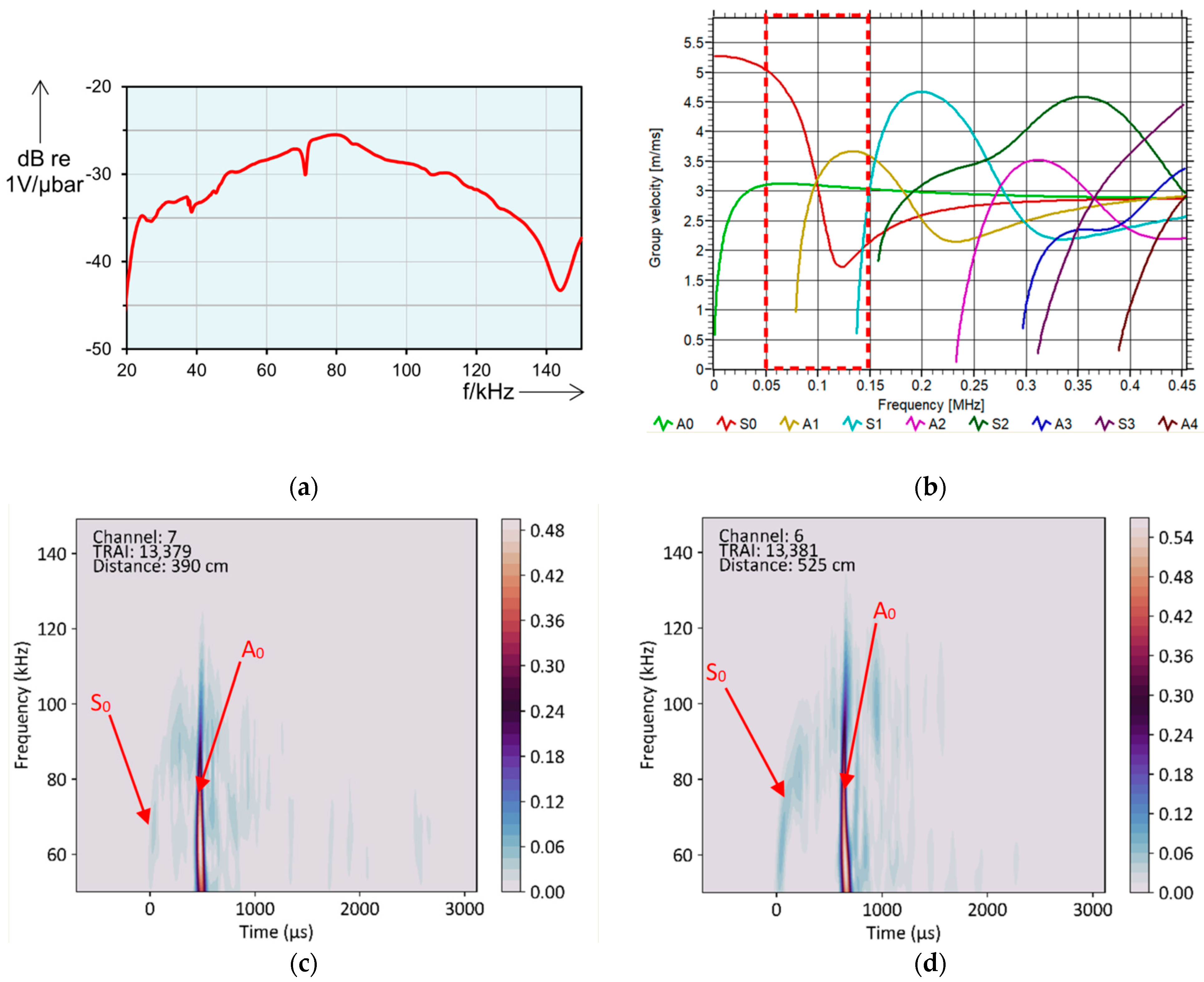
Since sensors used for acoustic emission only measure out-of-plane vibrations, the resulting signals are the combination of all wave modes in the wave. The wave modes can be separated manually by comparing a time-frequency representation of the signal to the dispersion curves predicted or approximated for the tested object. Since a dispersive wave mode propagates at different velocities depending on the frequency, different frequency components arrive at the sensor at different times. It is therefore possible to recognize the dispersion curves in the time-frequency representation of the signal [
18,
19]. Dispersion curves for different wave modes can be predicted using Vallen Dispersion [
12] for plate-like structures or using GUIGUW [
20] or DISPERSE [
21] for more complex geometries.
Because acoustic emission tests can lead to large numbers of signals, manual mode recognition becomes very tedious. Therefore, methods are needed for automating wave mode recognition. Specifically for acoustic emission, the challenge of wave mode recognition has been approached in different ways in the past. When the acoustic emissions are measured using arrays of closely spaced sensors, the wave modes can be recognized from a 2D-FFT (two-dimensional fast Fourier transform) [
22,
23,
24]. Alternatively, a frequency filter can be used to separate wave modes, if the modes tend to occupy separate frequency ranges throughout the considered dataset. For example, in ref. [
25] a frequency filter was used to separate the flexural (anti-symmetric) mode below 200 kHz from the extensional (symmetric) mode between 400 kHz and 800 kHz. When this is not possible, the similar approach was proposed in [
26] to decrease the temporal overlap between wave modes by applying an empirical mode decomposition to a signal and selecting one intrinsic mode function. This was, however, found “not sufficiently accurate” in [
27], where the variational mode decomposition was proposed to replace the empirical mode decomposition.
In many datasets, the wave modes do have overlapping frequency ranges. For such datasets, other solutions are needed. A method that can handle some overlap of frequency ranges of different wave modes was proposed in [
28]. It is a combined approach using frequency ranges while also relying on the amplitudes of different modes in different frequency ranges. The S
0 mode was identified by specifically looking for the first “non-negligible” component at 300 kHz and the A
0 by finding the highest amplitude arrival in a “low frequency range”. A set of proposed methods exist that do not rely on any separation of the frequency ranges of the considered wave modes. Those methods infer the arrival time of different plate waves based on the evolution of a function that is applied to the separate signals similar to those used for onset detection (e.g., [
29,
30]). By comparing different onset detection criteria, the zero-order Lamb modes could be identified in a dataset consisting of Hsu–Nielsen sources and signals obtained by finite element modelling (FEM) [
31]. Using a single onset-detection method, both zero-order Lamb modes could be identified relying on a positive versus negative changes in cumulative Shannon entropy for a low-amplitude S
0 mode and a high amplitude A
0 mode, respectively [
32]. Although not strictly an onset-detection method, the use of the instantaneous phase and derived instantaneous frequency can offer a similar solution, as was shown in [
33].
Alternatively, mode-dependent parameters such as the amplitude ratio between two modes can be estimated directly by comparing measured signals to a database with signals of known amplitude ratio [
14]. In this case, the database was established by FEM.
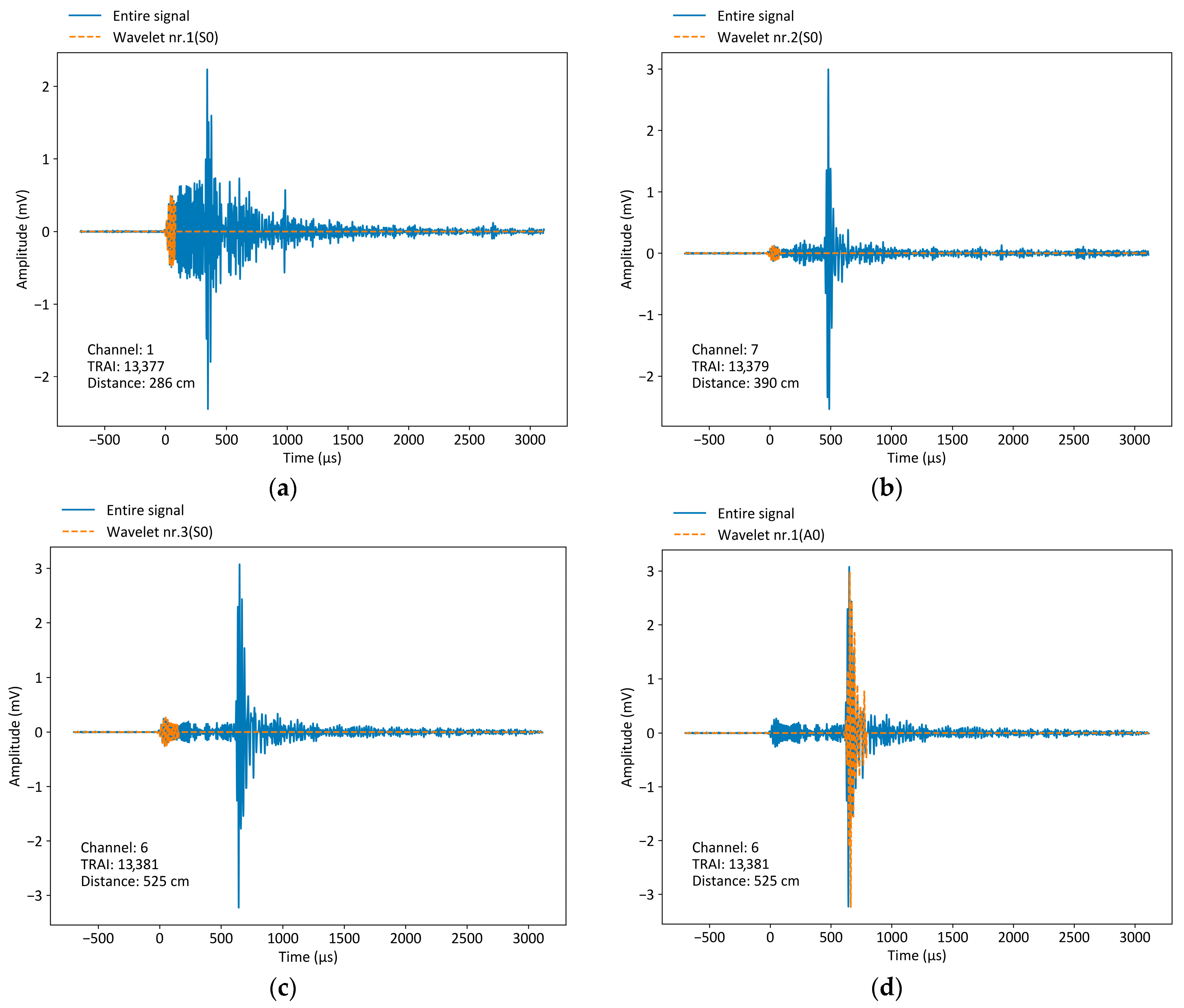
In previous work [
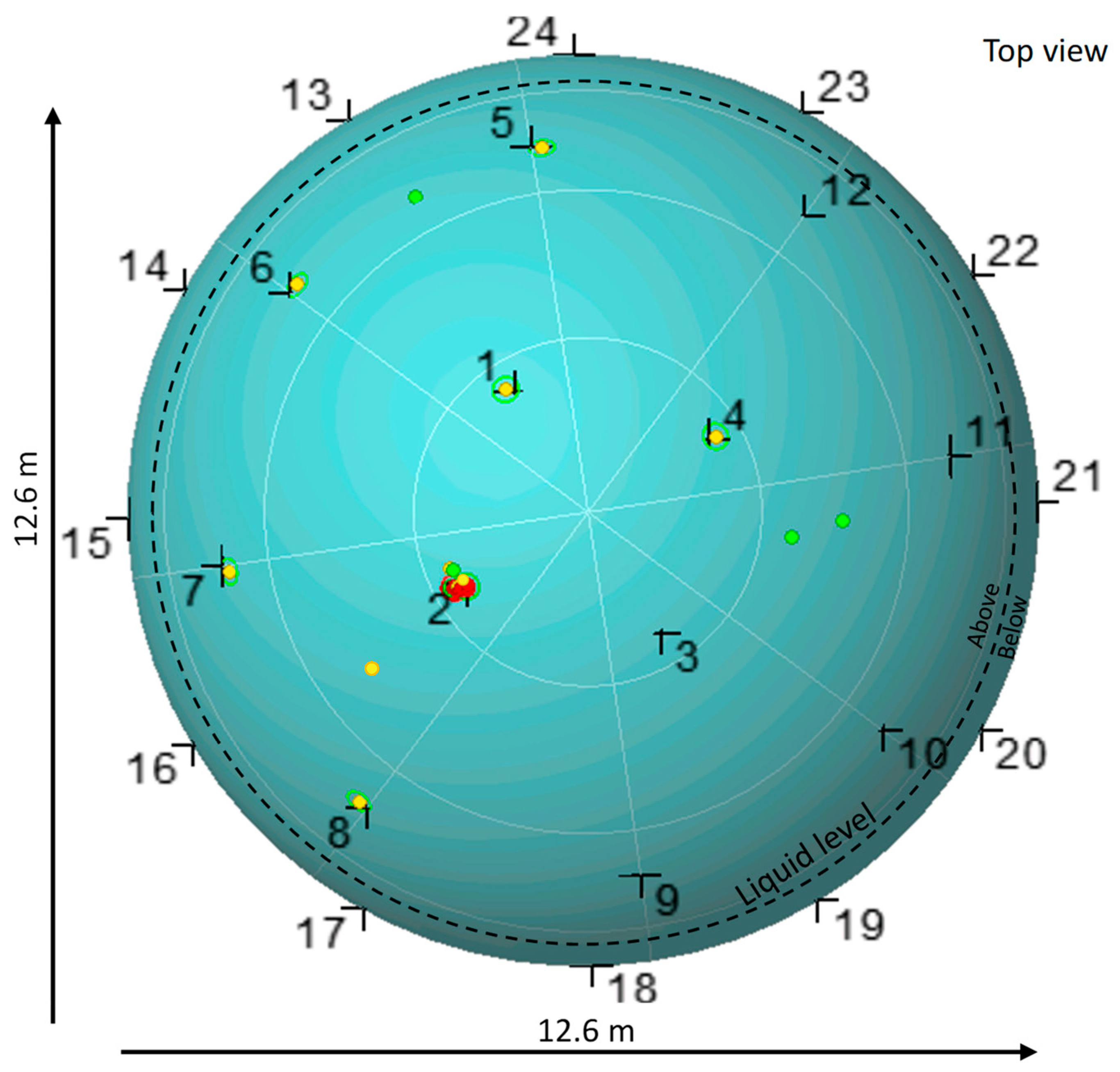
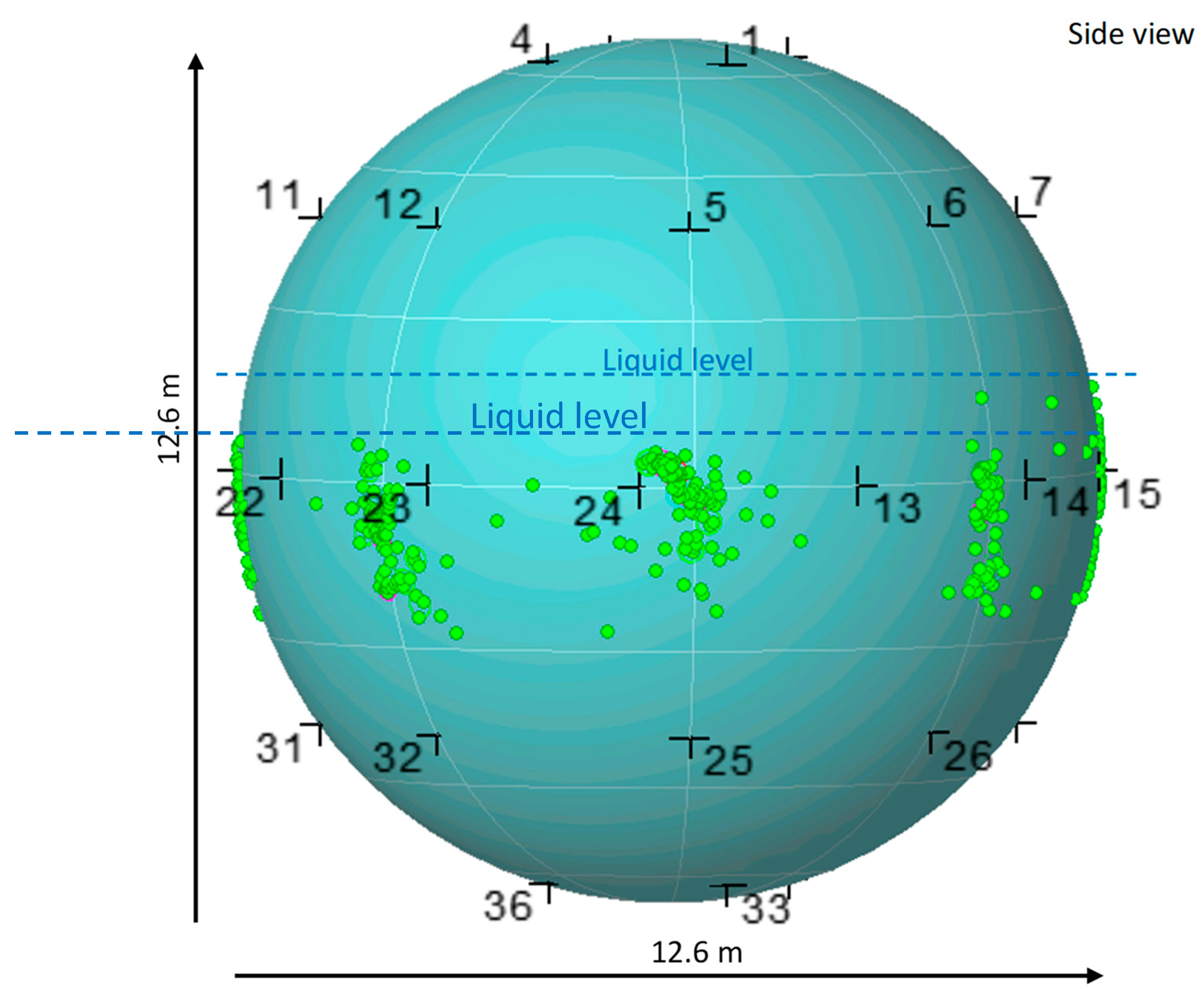
34], a new method was proposed for automatically determining the onset of different Lamb modes based on cross-correlating signals with one of a limited number of manually selected reference wavelets. The performance of this method applied to a dataset recorded on a stainless-steel plate in a laboratory environment was promising. However, its applicability in an industrial setting was not investigated. Therefore, in this study, the results of using a similar method for automatic determination of the arrival times of wave modes are presented for an industrial gas storage sphere. The application of the method to a sphere introduces additional challenges. Firstly, larger propagation distances are possible and the distances between sensors are considerably larger than on a lab plate. Secondly, some of the sensors of which the signals are considered are placed above the liquid phase level in the sphere whereas others are below. Finally, for natural sources, the exact source positions are unknown. To account for these challenges, the method was adapted in order to enable analysis of a dataset collected on site from an industrial spherical gas storage tank.
3. Results
As mentioned before, the mode recognition technique was tested on a dataset consisting of 211 hits in total. Of those hits, 29 were due to a Hsu–Nielsen source, 40 due to a sensor pulse, 39 due to impact by a metallic object and 103 due to natural sources. The result was assessed for each hit and each mode by comparison to manual mode recognition. Manual mode recognition was performed as described in the introduction, with calculating the expected travel times for each mode as verification, in analogy to [
34]. A result was considered successful if manual and (semi-)automatic mode recognition found the same arrival time for a mode in a signal.
Ambiguity may arise when assessing results for signals in which the waves from two separate source events occurred within the sampled time range. Each mode can then occur twice, excluding reflections. For those cases, an automatic recognition result was assessed as successful if the first appearance of a mode in a signal was found. An overview of the observed success rates for recognition of the start of a mode for each source type is shown in
Table 1. In brackets, there is a 95% confidence interval (Wilson score interval) obtained based on the number of signals and the observed success rates. The use of the Wilson score interval is motivated by the observed success rates close to 100%. It does, however, assume that the different observations are independent, which is uncertain for signals from the same event.
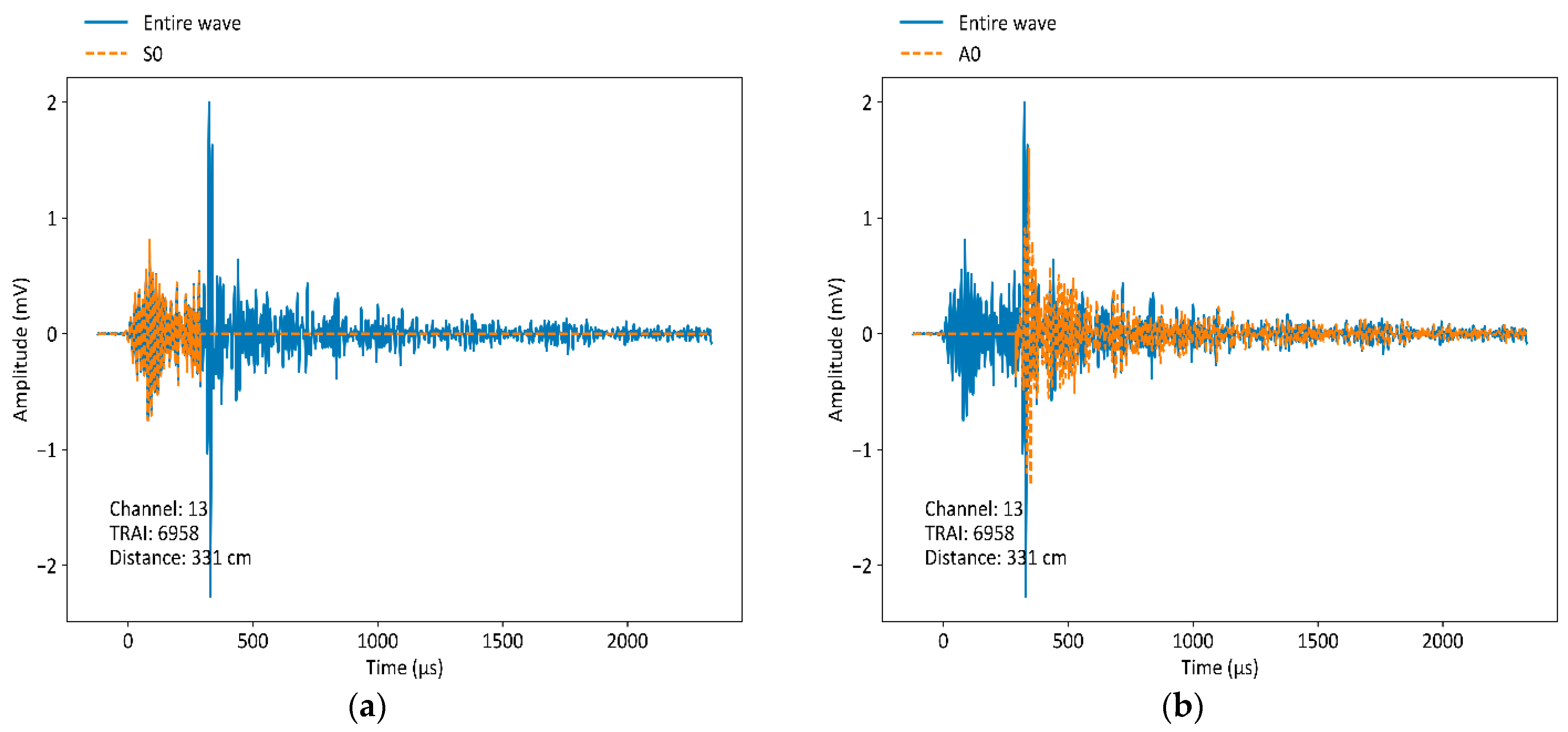
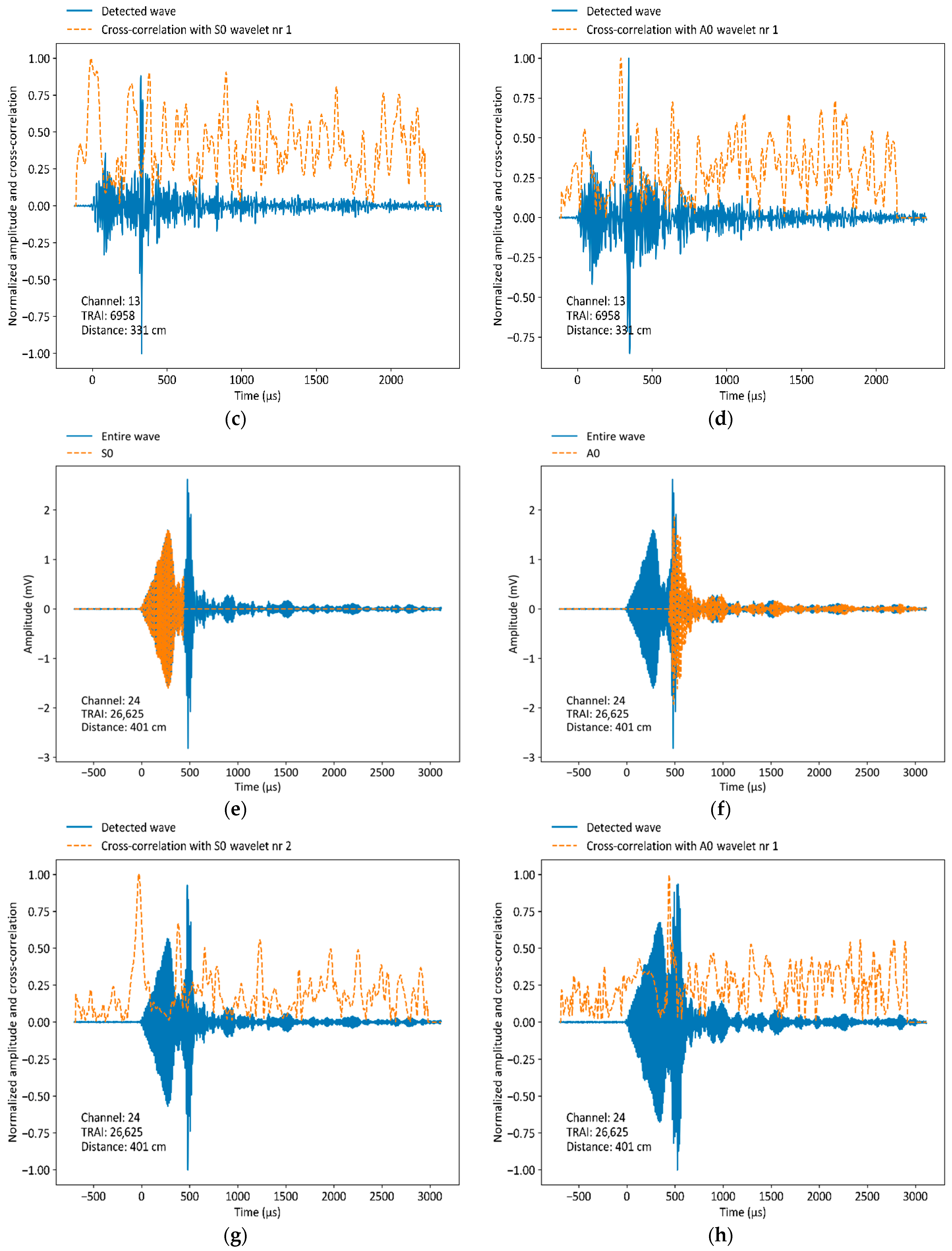
Figure 5a,b provide examples of successful mode recognition for a natural source for S
0 and A
0, respectively.
Figure 5c,d show the cross-correlations with the respective reference wavelets. In analogy,
Figure 5e,f show examples of recognized S
0 and A
0, respectively, for a signal due to a sensor pulse, and
Figure 5g,h show the corresponding cross-correlations. Note that the resulting A
0 is not identical to the corresponding part of the entire wave; see
Figure 5b,f. This difference is caused by the band-stop filter that is applied to limit the influence of other modes on the recognition of the A
0 mode. However, since the main outcome of the mode recognition method is (the start of) the time range that the mode covers, whether to apply the same band-stop filter to present the resulting recognized mode is a matter of preference. The pulse signal in
Figure 5e–h was emitted above the liquid level and detected below the liquid level, which may have contributed to the relatively high amplitude of the S
0 mode.
Although the success rates are high for all source types, the method did not provide correct mode recognition for all signals. Every signal and mode for which there was disagreement between manual and automatic mode recognition is considered as unsuccessful. Four categories of errors that prevented successful automatic mode recognition were observed. The first type of error, which accounts for 43% of all errors, is related to the selection of the wrong cross-correlation peak. The second type, accounting for 31% of all errors, is caused by a too low cross-correlation for the correct peak. The third error category, which caused 18% of all errors, occurred due to the number of peaks being too high. Finally, 9% of all errors were related to the absence of the targeted mode in the sampled signal. In one case, the error did not fit into any of the above categories. This error was due to inaccurate positioning of the correct peak, as it was reported in [
34]. The contribution of different error types to the error count is similar for A
0 versus S
0. For S
0, errors related to absence of the mode are slightly more frequent. This distribution of errors across these four categories is similar for natural sources. Natural sources are the main contributors to the overall error count.
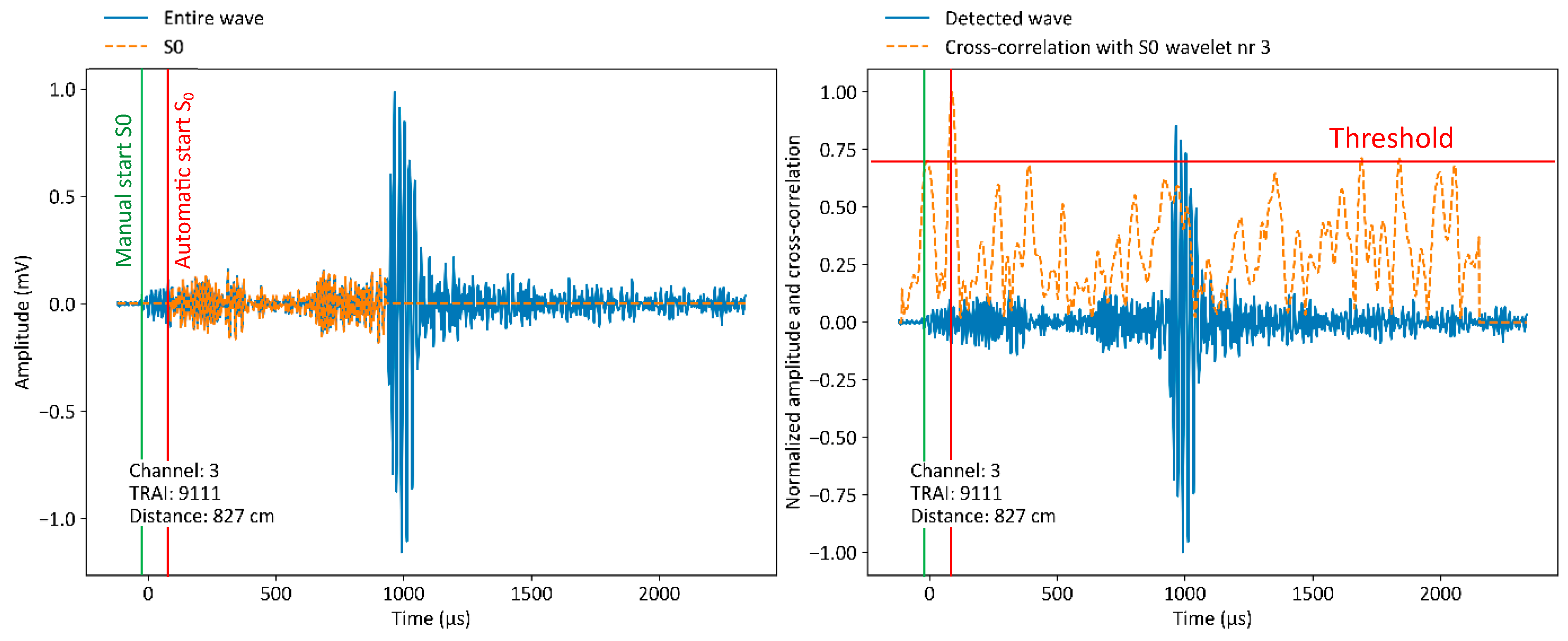
The first error category is illustrated in
Figure 6, which shows an example signal from a natural source in
Figure 6 (left) and the corresponding cross-correlations in
Figure 6 (right). It can be observed that the start of the S
0 mode is recognized too late due to the selection of the wrong cross-correlation peak. In this case, the wrong peak is a second peak that occurs a very short time after the first (correct) peak. The automatic mode recognition method selected this second peak because it leads to a better match with the expected velocity.
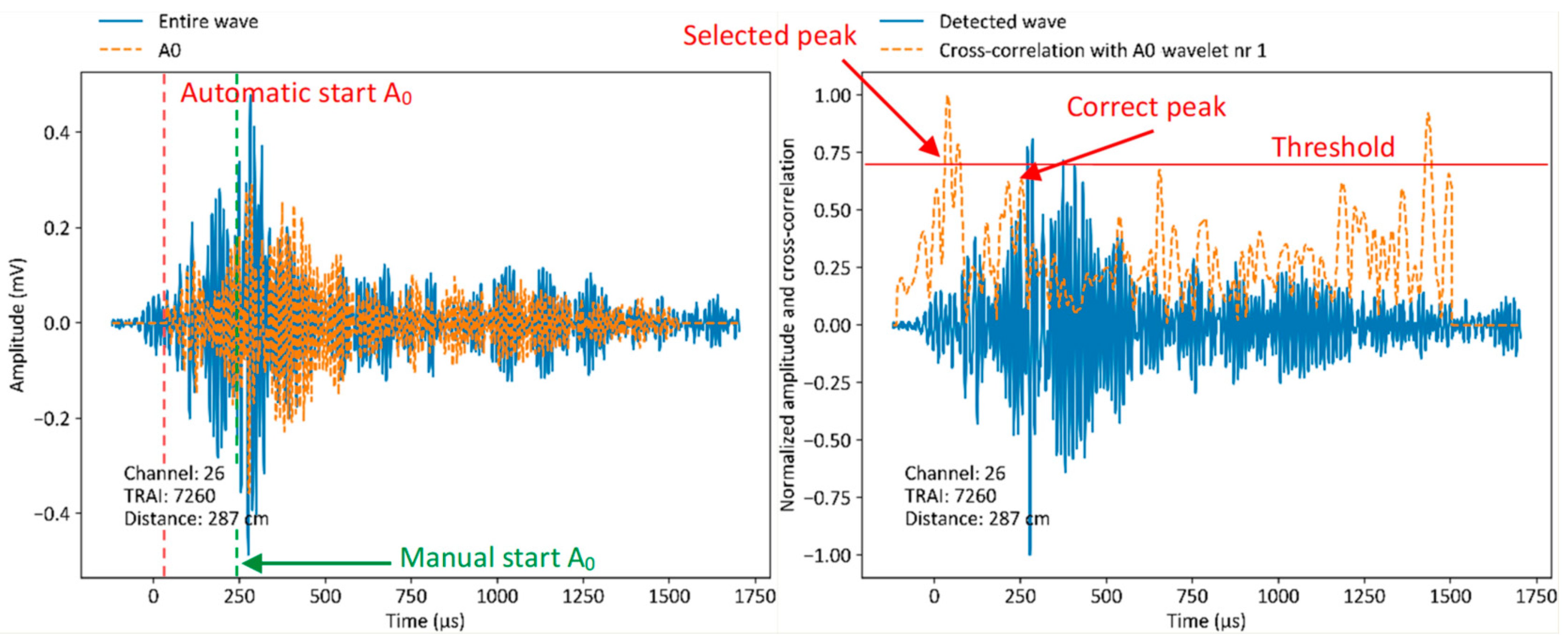
The second type of error is related to the low cross-correlation value of the desired cross-correlation peak. For such cases, the filtering applied to limit the number of considered cross-correlation peaks can be too aggressive. An example of this type of error is shown in
Figure 7, in this case for a signal from a natural source shown with the recognition result in
Figure 7 (left) and with the corresponding cross-correlations in
Figure 7 (right). Errors of this type are a direct consequence of an insufficient match between the reference wavelet and the targeted mode. It commonly coincides with an overlapping of competing modes or interference with the second arrival of the same mode.
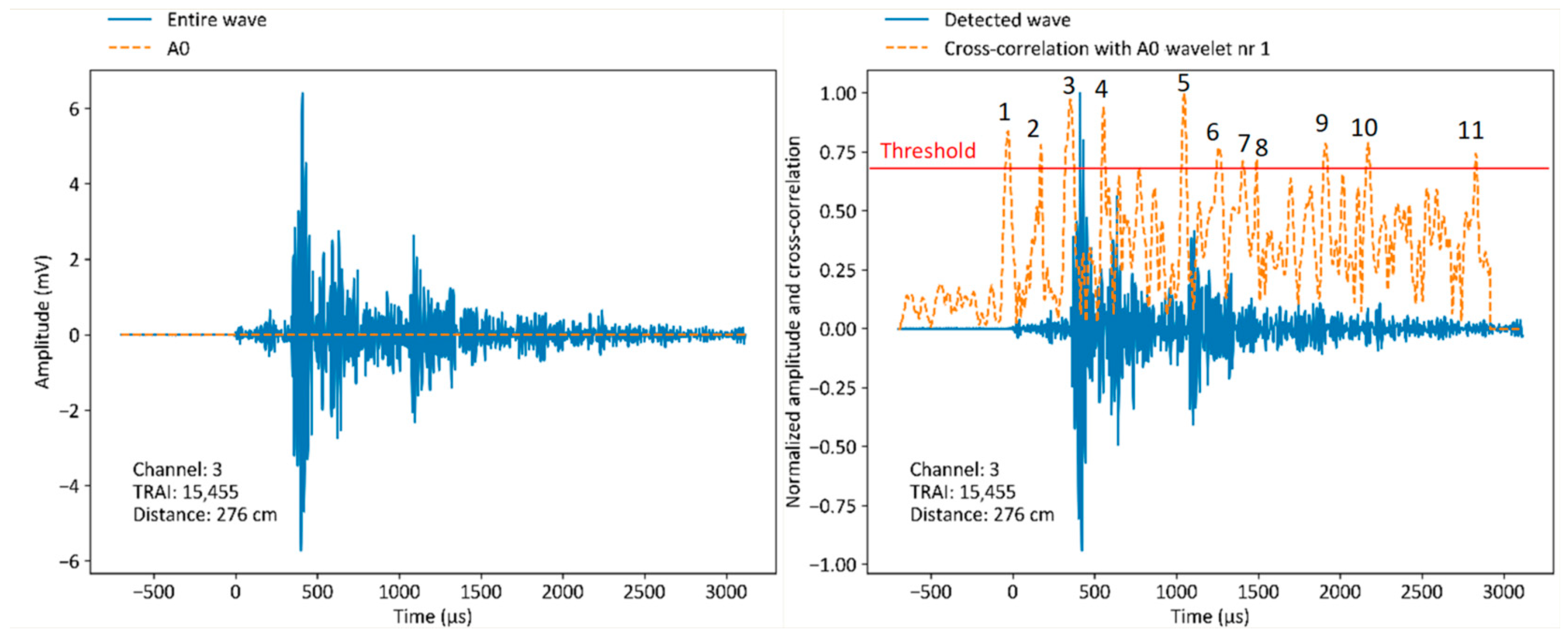
The third type of error is related to the maximum limit imposed on the number of cross-correlation peaks after filtering. If the number of peaks exceeds ten for a certain hit, the considered mode is not detected. An example is illustrated in
Figure 8 for a signal due to impact by a metallic object. The automatic recognition result (no recognition) is shown in
Figure 8 (left) and the corresponding cross-correlations in
Figure 8 (right).
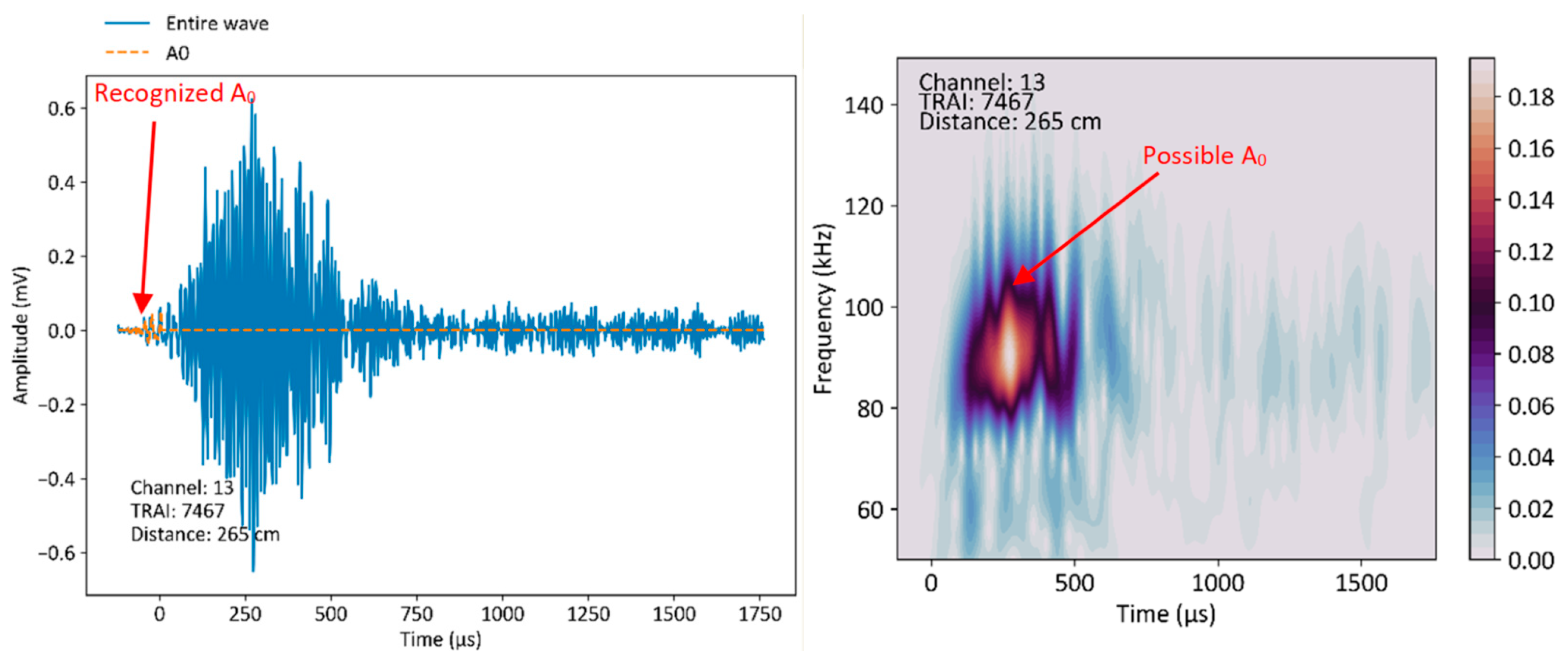
Finally,
Figure 9 (left) shows an example of the fourth error type, which is related to a mode being invisible in the sampled signal, in this case from a natural source. This type of error, just as the previous two, was also observed in previous work [
34]. As is visible from
Figure 9 (right), the S
0 mode in this case is dominant and eclipses any possible A
0 mode that may be present. The desired result would have been not to indicate any A
0. However, for this to occur, cross-correlation with the A
0 reference wavelet would have needed to give rise to at least 10 peaks. As described previously, for signals for which this maximum of 10 peaks is exceeded, the considered mode will not be recognized. This is not the case for the example in
Figure 9.
4. Discussion
When combined, the errors due to a too low magnitude of the best cross-correlation peak and those due to too many peaks represent 49% of the overall error count. Although different in effect, they both have a poor match between the wavelet and the targeted mode as the root cause. In the case of too many cross-correlation peaks, an alternative cause could be a high number of repetitions of the same mode in the signal. However, more than two repetitions were not observed in any signal in the studied dataset. Errors due to too many cross-correlation peaks may be further limited by reducing the considered time range. This, however, may come at the cost of an increased probability to partially or entirely exclude one mode from the considered time range, depending on the possible propagation distances.
Wrong peak selection also stands for a considerable share (43%) of the overall error count. An improved peak selection would increase the effectiveness of the overall method. A possible improvement can be provided by taking into consideration the time difference between different wave modes in the same signal. This information is not used in the method currently presented. Using the time difference between different wave modes in the same signal would explicitly rely on both modes to be present in the signal. The currently presented method does not include a systematic strategy to handle signals where one of the wave modes is entirely absent. If explicitly assuming the presence of both Lamb modes strongly improves the performance of the automated mode recognition, the limitation to only signals with both modes present may therefore be acceptable.
Finally, the choice of using Hsu–Nielsen sources as a source of reference wavelets for mode recognition of other source types is not obvious. However, a practical benefit of using Hsu–Nielsen sources as a basis for automatic mode recognition would arise when applying mode recognition in real time, since the type of natural source is not known beforehand. For automatic mode recognition during post-analysis, one could expect a benefit from selecting reference wavelets from the same source type as the signals to be analyzed. The highest cross-correlations between a reference wavelet and the targeted mode are expected when the reference signal is more similar to the analyzed signal. Whereas artificial sources are commonly selected due to their reproducibility, considerable variation between different sources is possible, especially for natural signals. This means that one natural source does not necessarily produce suitable reference wavelets for mode recognition for a different natural source, even if both the reference wavelet and the analyzed signal are caused by the same source type. One possible type of variation between signals from different source types is the frequency content. Hsu–Nielsen sources, however, are broad-band sources and therefore at least have a frequency overlap with each of the natural sources. Nevertheless, for natural sources with sufficient reproducibility, the selection of reference wavelets from the natural sources can be an alternative. A future improvement could be to select reference wavelets from different narrow-band sources and to use the frequency overlap between signal and reference wavelet to select a suitable reference wavelet.
5. Conclusions and Future Work
Analysis of wave modes can yield valuable information regarding the source of acoustic emissions. When closely spaced sensor arrays for recognition with 2D-FFT are unavailable, the choice of automatic mode recognition method depends on the dataset. Each of the methods mentioned in the literature review as well as the method applied in this publication relies on assumptions to recognize wave modes. The most common assumptions concern systematic differences in amplitudes or frequency range. In this paper, the recently developed method for (semi-) automatic mode recognition has been adapted and applied to a dataset obtained from a gas storage sphere. The assumption at the basis of the method in this work requires wave modes to resemble reference wavelets selected from the same dataset. This assumption is more general and should allow broader applicability. As a drawback, this method requires source localization as input, whereas other mode recognition methods have been proposed as a basis for source localization.
Compared to the initial method, three further adaptations have been added to this method. The reference wavelet for the A0 mode was subjected to a band-stop filter to suppress possible overlap with the S0 mode. Furthermore, the loss function for selection of a set of cross-correlation peaks has been adapted to limit the influence of strongly deviating hypothetical velocities. Additionally, a maximum number of cross-correlation peaks after filtering has been set to limit the number of possible combinations and thereby also to limit the probability of coincidentally matching hypothetical velocities.
The performance of the adapted method was assessed by comparison of the automatic results to manual mode recognition. This assessment was performed for a total of 211 signals. Signals caused by the following four types of sources were considered: Hsu–Nielsen sources, pulsing sensors, impact by a metallic object and “natural sources”. Compared to the other artificial sources, the impact by a metallic object gives rise to more complex signals and is therefore expected to be more difficult to analyze. The “natural sources” occurred during a pressure test on the gas storage sphere and are localized near the legs of the sphere. The success rate, which is the percentages of cases for which manual and automatic recognition come to the same conclusion regarding the start of a mode, was determined for each source type. The success rates range from 97% for both modes for Hsu–Nielsen sources to 74% and 90%, respectively, for the recognition of A0 and S0 due to impact by a metallic object. For natural sources, the A0 was identified correctly in 73% of the signals and the S0 for 85%. Errors leading to unsuccessful mode recognition were classified into four categories. Close to 43% of the errors were related to selection of the wrong cross-correlation peak, where a different cross-correlation peak would have led to a correct result. Further analysis of these errors and potential correlations with the propagation distance above and below the liquid level will enable possible improvements to the method. Nonetheless, the currently presented success rates show the application of the present method to a gas storage sphere as a first step in enabling the exploitation of the possibilities of modal analysis on a systematic basis, in a first instance for analyzing test results for spherical storage tanks.
Future work on the method applied in this work should focus both on its performance and its applicability to a broader range of tested objects. Currently, the wave modes are recognized independently from each other. An aspect that is currently not used is the time difference between different modes in the same signal. Taking the time difference between different modes into account might improve performance whenever both modes are reliably visible in the signals. The method applied in this work takes the increasing effect of dispersion into account based on different reference wavelets. For each signal, a distance estimate is used to select a reference wavelet. Application of this method to anisotropic materials might therefore require an extended set of reference wavelets and a more elaborated criterion for wavelet selection. Similar challenges may arise when applying this method to objects with more complex geometries since the propagation distance may no longer be sufficient to determine the dispersion expected for each signal.