Review

Autoimmune Protocol Diet (AIP) for Food Allergies: A Novel Immunonutrition Approach

by
Eleni C. Pardali
and
Maria G. Grammatikopoulou
*
Immunonutrition Unit, Department of Rheumatology and Clinical Immunology, Faculty of Medicine, School of Health Sciences, University of Thessaly, Biopolis, GR-41223 Larissa, Greece
*
Author to whom correspondence should be addressed.
Appl. Sci. 2026, 16(3), 1364; https://doi.org/10.3390/app16031364
Submission received: 23 December 2025 / Revised: 21 January 2026 / Accepted: 26 January 2026 / Published: 29 January 2026

Featured Application

This work provides an exploratory framework for the potential implementation of the Autoimmune Protocol (AIP) diet in food allergies, highlighting its proposed mechanistic basis, interactions with immune regulation, and overlap with food allergens, as well as the rationale for its possible relevance in this context.

Abstract

The prevalence of allergies is increasing worldwide. In addition to pharmacological treatment, dietary management represents an established component of food allergy care. Elimination diets have long been recognized as an effective therapy for certain conditions, including food allergies. The Autoimmune Protocol (AIP) diet, a restrictive elimination diet originally developed for patients with autoimmune diseases, has gained popularity recently. Its underlying rationale, centered on immune regulation, intestinal epithelial barrier function, and gut dysbiosis, suggests potential relevance to food allergies. Moreover, the AIP excludes most of the major food allergens, which may support symptom reduction and facilitate the identification of individual dietary triggers. The role of histamine in allergic responses further highlights the AIP’s potential applicability in cases of histamine intolerance, where reducing the overall histamine burden could be beneficial. This narrative review aimed to synthesize the limited available evidence on the AIP and explore its potential implementation, mechanisms, and limitations in the context of food allergies.

1. Introduction

Allergy-related conditions are increasingly prevalent worldwide, presenting a growing public health concern due to their impact on quality of life, healthcare utilization, and nutritional status [1,2]. These conditions encompass a range of immune-mediated reactions, ranging from classic immunoglobulin E (IgE)-mediated food allergies to non-IgE-mediated hypersensitivities, as well as mixed phenotypes involving both immediate and delayed immune mechanisms [3]. While pharmacologic and immunologic interventions remain central to the management of allergies, there is mounting recognition that dietary factors play a critical role in modulating immune responses, gut barrier integrity, and microbial composition, particularly in food allergies [3].
Diet and nutrition are key environmental factors with a pivotal role in controlling immune response, modulating inflammation, and influencing gut barrier integrity [4]. Elimination diets constitute one of the most widely applied dietary strategies in the management of allergies [3]. Clinical practice guidelines recommend targeted food elimination in conditions such as food protein-induced enterocolitis syndrome (FPIES), allergic proctocolitis, and select cases of atopic dermatitis or chronic urticaria, particularly when standard IgE-based testing is insufficient to identify causative foods [3]. Beyond their role in identifying triggers, elimination diets may reduce antigenic load and histamine overload, thereby mitigating inflammation and allowing the gut and immune system to recover. This highlights their relevance for both IgE- and non-IgE-mediated responses. For example, in patients with atopic dermatitis and food sensitivities, dietary elimination has been associated with reductions in specific IgE antibody levels and lymphocyte proliferative response, suggesting meaningful immunologic effects after the removal of triggering foods [5]. Furthermore, meta-analytic evidence indicates that intolerance to histamine and other biogenic amines may contribute to inflammatory flares in conditions such as atopic dermatitis [6].
In this context, the Autoimmune Protocol (AIP) diet represents a promising, structured elimination approach. Originally designed for autoimmune diseases, AIP involves a comprehensive elimination of potentially pro-inflammatory or immunogenic foods, coupled with a focus on nutrient density, gut-supportive foods, and a systematic reintroduction phase [7,8]. Although primarily studied in the context of autoimmunity, the principles of the AIP overlap with mechanisms relevant to allergic and hypersensitivity conditions. Allergy-related disorders such as food allergies, atopic dermatitis, chronic spontaneous urticaria, and eosinophilic esophagitis share immune, epithelial, and barrier-related mechanisms that can be influenced by dietary exposures [7,9,10]. However, to date, there is a lack of controlled clinical studies examining this application, creating a clear gap in the literature. Investigating whether the AIP diet can modulate immune and histamine-related pathways, improve symptom burden, and enhance quality of life in individuals with food allergies could provide important insights into dietary mechanisms and structured elimination protocols across immune-mediated conditions.
This review aimed to synthesize the theoretical rationale, existing evidence, and future research potential for elimination diets, with particular attention to the possible role of the AIP in allergy management and food intolerances.

2. Materials and Methods

A comprehensive search was conducted using a combination of MeSH terms and free-text keywords through PubMed, clinicaltrials.gov, and citation tracking, including “Autoimmune Protocol diet,” “AIP,” “elimination diet,” “food allergies,” and “allergies.” The search was limited to articles published in English and Spanish, with no date restrictions.
Figures were created by the authors using Canva (Canva Pty Ltd., Sydney, Australia), with all graphical elements used in accordance with Canva Pro licensing terms [11].

3. Mechanistic Basis for Diet in Allergic Reactions

Immune-mediated reactions to food can be classified based on the involvement of IgE-mediated and/or other immune responses to ingested antigens [12], including IgE-mediated food allergy as well as non-IgE-mediated disorders such as celiac disease, eosinophilic esophagitis, and eosinophilic gastroenteritis [10].

3.1. The Gut Barrier and Oral Tolerance

A growing body of evidence supports a mechanistic link between gut microbiota composition, intestinal barrier integrity, and the development or exacerbation of food allergies and other hypersensitivity reactions. Food antigens penetrate the intestinal epithelium barrier due to tight junction barrier impairment, leading to increased permeability, the known “leaky gut” [13,14]. Leaky gut is driven by inflammation, infection, stress, medications, or dysbiosis, allowing for an increased passage of dietary antigens to the underlying immune cells and lymphoid tissue [15]. The disruption of the epithelial barrier facilitates allergen entry and promotes both primary and secondary allergic sensitization [16], whereas in a healthy gut, antigen presentation by tolerogenic CD103+ dendritic cells induces Foxp3+ regulatory T cells (Tregs) to maintain oral tolerance [17]. Upon allergen exposure, food antigens cross-link IgE bound to the high-affinity receptor for the Fc region of IgE (FcεRI) on mast cells, triggering immediate degranulation and subsequently activating allergen-specific T cells, which drive the recruitment of eosinophils and basophils and sustain the late-phase and chronic inflammatory response [16]. Food antigens stimulate intestinal immune cells, generating antigen-specific CD4+ helper type 2 (Th2) cells, under the influence of interleukin-4 (IL-4) and IL-13 [18,19], activating B cells to produce IgE, which enter the systemic circulation and target peripheral organs [20]. Mediators released from activated mast cells (histamine, tryptase, prostaglandins, leukotrienes, and cytokines) disrupt tight junctions and mucosal integrity, worsening antigen translocation and symptom severity [21]. Mast cell activation thus contributes to both acute allergic reactions and chronic inflammatory processes affecting the gastrointestinal (GI) tract, skin, airways, and vasculature [22]. In adults with atopic dermatitis, food sensitization is significantly more prevalent and is associated with greater disease severity, elevated total IgE levels, and an increased burden of food-specific IgEs [23].

3.2. Non-IgE Mast Cell Activation

Mast cells can also be activated independently of IgE [24]. When the epithelial barrier is impaired, several microbial products and environmental allergens gain access to underlying mucosal tissues [25]. Mast cells express an array of pattern-recognition receptors (PRRs), including Toll-like receptors, C-type lectin receptors, Nod-like receptors, and retinoic acid-inducible gene-I-like (RIG-I–like) receptors, enabling them to directly sense pathogen-associated molecular patterns (PAMPs) from food antigens, bacteria, viruses, and fungi [26].

3.3. Role of the Gut Microbiota

The intestinal microbiome plays a fundamental role in shaping immune homeostasis and oral tolerance. Commensal bacteria produce metabolites, most notably short-chain fatty acids (SCFAs) such as butyrate, acetate, and propionate, that promote regulatory immune pathways, support epithelial integrity, and suppress inflammatory responses [27,28]. SCFAs such as butyrate support epithelial integrity, promote Treg development, and suppress Th2-driven allergic pathways [29,30,31]. Decreased production of SCFAs is consistently associated with increased risk of food allergy, atopic diseases, and food intolerances [32]. On the other hand, early-life dysbiosis, particularly reduced abundance of Bifidobacterium species, has been associated with increased risk of allergy [33]. Patients presenting food allergies demonstrate lower SCFAs levels [32], while experimental studies have demonstrated that supplementation with Bifidobacterium strains can attenuate food allergy responses in animal models [34]. Clinical evidence further suggests that the modulation of maternal and infant microbiota may influence allergic outcomes later in life [35]. Notably, probiotic administration during pregnancy has been associated with a reduced incidence of allergic disease in the offspring, an effect that correlates with shifts in gut microbial composition and increased SCFA levels [35]. In therapeutic settings, combining immune-based approaches with microbiome modulation appears particularly promising. For example, oral immunotherapy supplemented with Lactobacillus rhamnosus has been shown to markedly improve rates of clinical unresponsiveness in children with peanut allergy [36].
Collectively, the severity and phenotype of food-induced reactions are shaped by multiple interacting factors, including allergen dose, resistance to digestion, epithelial permeability, immune activation pathways, and microbiome-derived metabolic signals [16].

3.4. Link Between Allergies and Autoimmunity

Growing epidemiological and clinical evidence suggests that patients with allergy-related diseases exhibit a significantly increased long-term risk of developing autoimmune disorders. Associations have been reported with systemic lupus erythematosus, Sjögren’s syndrome, vitiligo, rheumatoid arthritis, psoriasis, pernicious anaemia, inflammatory bowel disease (IBD), celiac disease, autoimmune thyroiditis, type 1 diabetes, and multiple sclerosis [37,38,39,40,41].

4. Histamine Intolerance

In addition to immune-mediated food allergies, gut dysbiosis may increase susceptibility to non-IgE-mediated food hypersensitivities, such as histamine intolerance (HIT), through alterations in microbial metabolic pathways involved in the production and degradation of bioactive dietary compounds. Histamine is a biogenic amine that plays a pivotal role in both inflammation and allergy [42]. Under normal conditions, histamine is degraded primarily by diamine oxidase (DAO) in the extracellular space and, to a lesser extent, by histamine-N-methyltransferase (HNMT) intracellularly [43]. Reduced activity of these enzymes leads to HIT, a non-IgE-mediated food hypersensitivity that may coexist with IgE-mediated allergic diseases [43]. Impaired histamine degradation may result from genetic polymorphisms or pharmacologic inhibition of DAO activity [44]; however, emerging evidence suggests that intestinal inflammation, gut microbiota dysbiosis, and increased intestinal permeability may also play pivotal roles [45,46]. Unlike IgE-mediated food allergies, routine allergy testing in HIT is typically negative, and symptom severity is dose-dependent rather than allergen-specific [47,48]. Clinically, HIT presents with symptoms that can mimic allergic reactions, such as flushing, urticaria, headache, gastrointestinal discomfort, tachycardia, and nasal congestion [43].
HIT has been reported to co-occur alongside several autoimmune diseases, including IBD [49] and celiac disease [50].
Current management strategies for HIT primarily include DAO supplementation and adherence to a low-histamine diet [51,52,53]. Clinical studies report symptom improvement in more than 70% of affected individuals following dietary intervention [54,55]. Low-histamine diets are conceptually based on the avoidance of histamine-containing foods, as dietary histamine is mainly generated through bacterial decarboxylation of the amino acid histidine [56]. Consequently, foods prone to microbial spoilage or fermentation tend to accumulate higher histamine levels due to the histaminogenic activity of bacteria [57]. Despite their reported efficacy, the practical implementation of low-histamine diets remains challenging because of variability in histamine content among foods, the absence of standardized threshold values and food labeling, and inconsistencies across dietary guidelines [58].

5. Elimination Diets for Allergies

Elimination diets remain the cornerstone in managing both IgE- and non-IgE-mediated food allergies [3]. By removing allergenic foods, these diets reduce antigen exposure, allowing the gastrointestinal tract to repair and attenuating immunological sensitization [59,60]. This reduction in antigenic load decreases mast cell and basophil activation, lowers Th2-driven inflammation, and limits antigen translocation across a compromised epithelial barrier, thereby reducing both acute and chronic allergic response [61]. Notably, studies comparing patients with persistent food allergies to those who achieved clinical resolution have failed to reveal differences in serum food-specific IgE levels between the two groups [62]. Such observations suggest that clinical improvement may reflect restoration of the gut barrier and immune regulation. Based on the foundations of the elimination diet, this mucosal “healing” will further help identify and confirm individualized food triggers through the reintroduction of eliminated foods, while minimizing the risk of renewed sensitization [61].
In the European Union (EU), the foods most commonly implicated in IgE-mediated allergic reactions are collectively referred to as the “top 14” allergens and include cereals containing gluten (wheat, rye, and barley), crustaceans, eggs, fish, peanuts, soybeans, milk, nuts, celery, mustard, sesame seeds, sulphur dioxide and sulphites, lupin, and molluscs [63]. Several types of elimination diets are used in allergies, based on the number of foods excluded. Specifically, there is a 6-food elimination diet (SFED), a 4-food elimination diet (FFED), a 1-food elimination diet (OFED), and a targeted elimination diet (TED) [64].
The SFED removes the most common food antigens: dairy, wheat or gluten, eggs, legumes, nuts, and seafood [64]. The efficacy of the elimination diets on eosinophilic esophagitis ranges from 63.9% in SFED to 44.3% in FFED [64]. A number of patients reach 69% the identifying a single allergen, 24% find two allergens, and 4% three allergens [65]. A recent meta-analysis of ten randomized controlled trials demonstrated small improvements in eczema severity, pruritus, and sleep, with low certainty of evidence and no clear advantage of empiric versus testing-guided elimination strategies [66]. In a prospective observational study of children with non-IgE-mediated GI food allergies, growth parameters improved following initiation of elimination diets when adequate energy and protein intake were achieved, and when hypoallergenic formulas and micronutrient supplementation were provided [67].

6. The Autoimmune Protocol Diet

The AIP is an elimination diet derived from the Paleolithic dietary framework; however, it differs substantially in its underlying rationale, implementation, and the range of foods excluded [7]. The conceptual foundation of the AIP builds on hypotheses proposed by Professor Loren Cordain [68,69,70], suggesting that certain dietary components may impair intestinal barrier integrity, thereby facilitating translocation of dietary and microbial antigens across the gut epithelium, while promoting immune activation through mechanisms such as molecular mimicry [69].
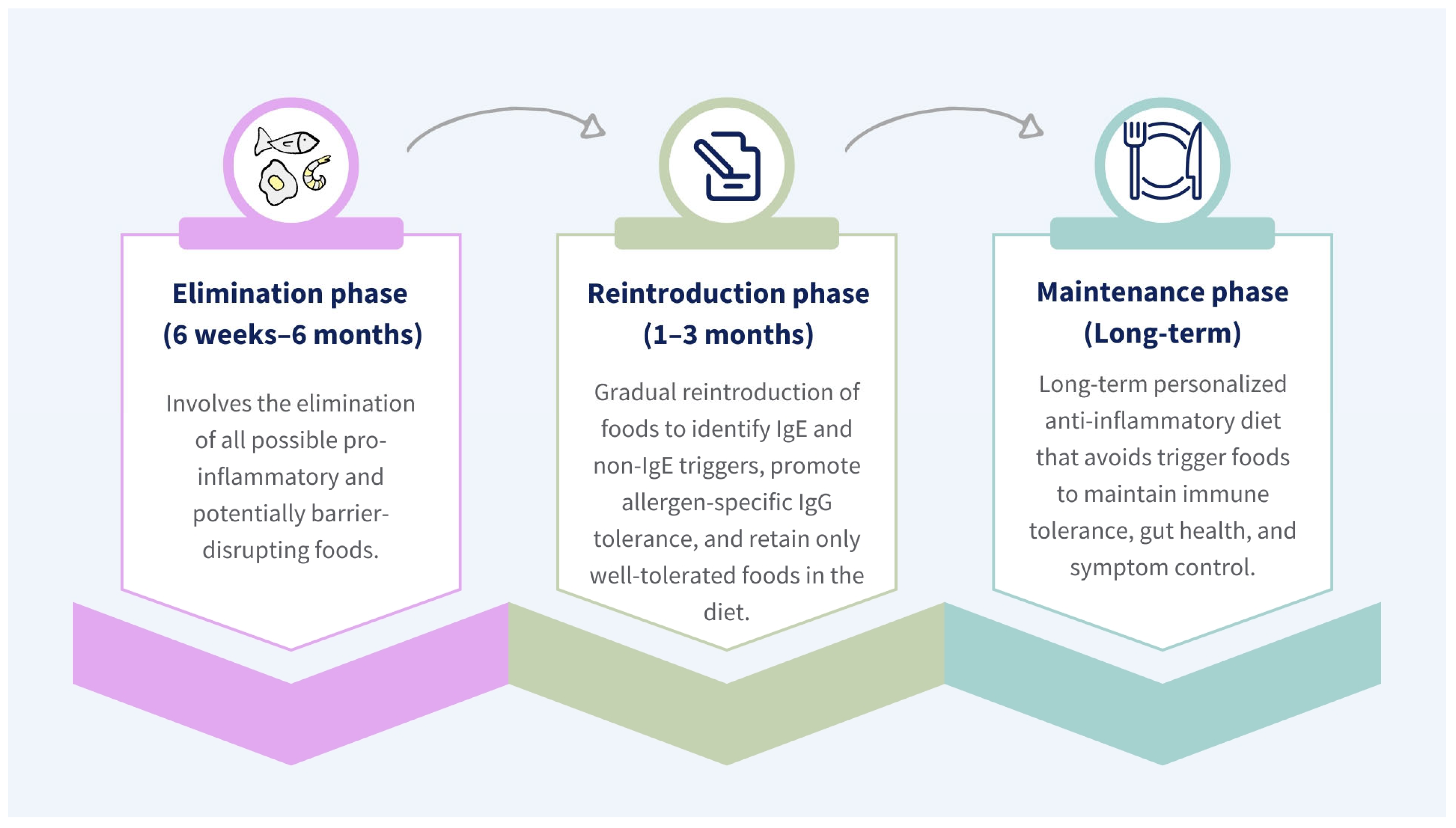
The AIP, as currently practiced, was formally developed in the year 2013 [8]. It is structured into three distinct phases: (i) an elimination phase, (ii) a systematic reintroduction phase, and (iii) a maintenance phase [8]. The central hypothesis underlying this approach is that exposure to specific dietary antigens may enhance immune activation, enabling translocation of both food-derived and gut microbial antigens to peripheral tissues, resulting in sustained antigenic stimulation of the immune system [69]. By temporarily removing putative dietary triggers, the AIP aims to reduce antigenic load and support restoration of intestinal barrier function [7,8]. This process is hypothesized to decrease peripheral immune activation and, consequently, alleviate symptom burden. The subsequent reintroduction phase is designed to identify individual food sensitivities, while preserving dietary diversity and long-term nutritional adequacy.
The AIP diet has gained much attention as a therapeutic dietary approach, although the supporting evidence remains limited. Its implementation in autoimmune diseases has been explored primarily in Hashimoto thyroiditis [71,72], IBD [73,74,75], and rheumatoid arthritis [76], while a study in individuals with IgA nephropathy (IgAN) is currently ongoing [77]. Notably, mechanistic biomarkers directly reflecting intestinal barrier integrity or mucosal immune modulation have rarely been assessed [73,74,75]. Among the few available measures, fecal calprotectin remained largely unchanged in patients with IBD following intervention with the AIP [73,74,75].

7. Implementing the AIP Diet on Food Allergies

Both allergy-related conditions and the AIP share a mechanistic foundation in gut barrier integrity. The AIP holds promise in improving epithelial barrier function, strengthening tight junctions, and reducing intestinal inflammation [7,8]. Thus, it is hypothesized that these effects may also translate into improvements in allergy symptomatology (Figure 1).

7.1. Elimination Phase

The AIP can be applied systematically in the management of allergy-associated conditions, following its classical phases. During the first phase, the elimination phase, several foods are excluded completely from the diet [7,8]. Compared with the EU “top 14” allergens, the AIP has a broader spectrum of food eliminations. It restricts dairy, eggs, wheat (including gluten), nuts, soy, lupin, mustard, and celery, which directly overlap with several common IgE-mediated allergens. In addition, the protocol eliminates chemical additives, artificial colors and flavorings, and highly processed foods commonly available on supermarket shelves, thereby reducing cumulative exposure to multiple low-dose allergens and non-nutritive compounds that may contribute to low-grade immune activation.
As a result, even minimal exposure to potential allergens is avoided. However, additional foods such as nightshades, coffee, alcohol, and various seeds are not classified as major allergens. Although elimination of these non-allergenic foods may not directly alleviate allergic symptoms, their exclusion is intended to promote mucosal healing, thereby supporting gut barrier integrity and potentially benefiting both IgE- and non-IgE-mediated allergic responses. For example, gluten-containing grains and certain food additives may increase intestinal permeability via zonulin-mediated disruption of tight junctions [78,79,80]. Exclusion of dairy, legumes, and eggs may reduce antigenic load and minimize mast cell priming in susceptible individuals [81]. The emphasis on nutrient-dense foods, such as omega-3–rich fish, lean meats, and diverse vegetables, may support regulatory immune pathways (e.g., Treg differentiation) and reduce Th2/Th17 inflammation [82].
This phase may last from 6 weeks to 6 months [8], a duration chosen in part because plasma B cells have lifespans ranging from days to several months, and immunoglobulin G (IgG) antibodies have a half-life of approximately 21 days [83,84]. B-cells contribute to food allergen tolerance by producing allergen-specific IgG antibodies [8]. Based on this framework, reducing antigen exposure during the elimination phase is theorized to minimize mast cell degranulation, enhance epithelial tight junction integrity, and decrease the release of inflammatory mediators (Table 1).

7.2. Reintroduction Phase

During the reintroduction phase, previously eliminated foods are gradually reintroduced in a structured, symptom-guided manner to identify individual triggers [7,8]. Usually, foods are typically reintroduced one at a time, often with an interval of approximately 3–4 days between each new food to allow for adequate symptom monitoring and stabilization. For allergy management, this process allows careful assessment of both IgE-mediated reactions and non-IgE-mediated sensitivities, while also offering the potential to promote protective IgG responses after mucosal recovery. Controlled reintroduction after mucosal healing may also promote tolerance induction via allergen-specific IgG (“blocking antibodies”), reducing the risk of new sensitizations, while enhancing immune regulation [85].
Reintroduction practices within the AIP are largely individualized, and there is currently no universally accepted protocol, even in autoimmune diseases [7,8]. The most common approach is to reintroduce foods that patients prefer or those considered less likely to provoke adverse reactions, in order to gradually expand dietary variety [7,8]. For practical guidance, foods have been categorized into four groups based on their likelihood of being tolerated: group 1 includes egg yolks, legumes, seed oils, and nut oils; group 2 includes nuts and seeds, cocoa, egg whites, and alcohol; group 3 includes cashews, pistachios, eggplant, coffee, and fermented dairy; and group 4 includes all dairy, white rice, nightshades, alcohol, and gluten-free grains [7,8]. However, due to the absence of controlled studies in populations with food allergies, the reintroduction should be conducted cautiously and under medical supervision, particularly in individuals with IgE-mediated allergies, to prevent severe reactions and ensure safe monitoring of symptoms.

7.3. Maintenance Phase

The maintenance phase emphasizes a nutrient-dense, anti-inflammatory diet that supports epithelial and immune homeostasis [7,8]. Foods that maintain gut barrier function, promote beneficial microbiota, and supply essential micronutrients are prioritized. This phase is personalized and ongoing, designed to minimize allergic reactions while ensuring nutritional adequacy and quality of life.

8. Implementing the AIP Diet on Histamine Intolerance

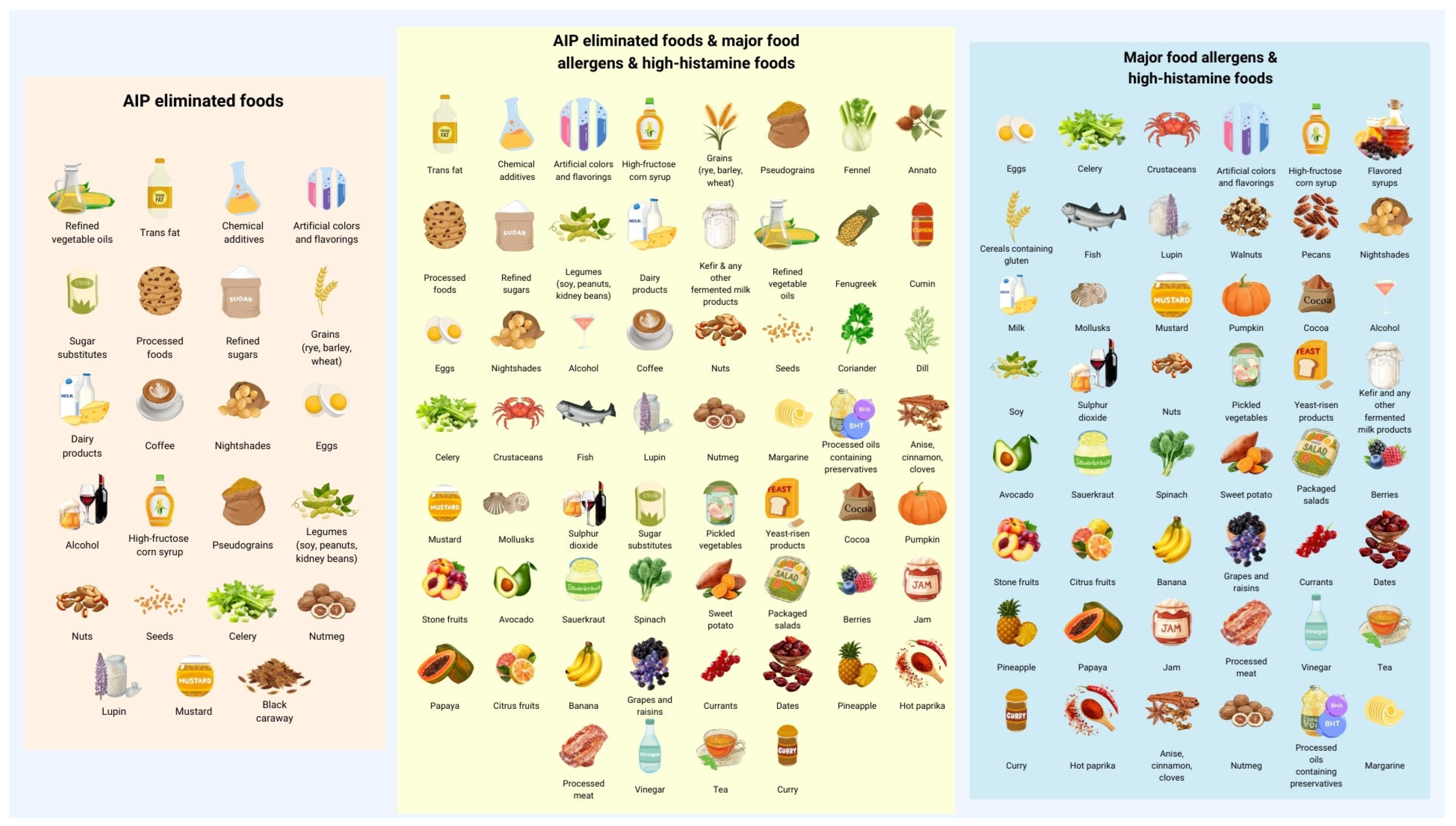
The AIP diet may offer mechanistic benefits in HIT. Common high-histamine foods excluded both in the AIP and in a low-histamine diet contain aged cheese, fermented foods (including dairy), alcohol, yeast-risen breads and baked products, certain fruits and vegetables like tomatoes, eggplant, strawberries, that are either high in histamine or can trigger histamine release, as well as nuts, chocolate, coffee, and tea [7,53,86]. A low-histamine diet further emphasizes the consumption of fresh, minimally processed foods and the avoidance of histamine accumulation from food storage, aging, and microbial fermentation [51]. Table 2 provides a list of foods that are allowed under both the AIP and the low-histamine diet, and Figure 2 presents three separate food lists of excluded foods in (i) the AIP; (ii) AIP, food allergies and low-histamine diet; and (iii) food allergies and low-histamine diet.
Selective emphasis on minimally processed whole foods supports a low-histamine approach by limiting dietary sources of biogenic amines and reducing substrate for histamine-producing bacteria, which may shift gut microbiota towards a composition yielding fewer histamine-secreting strains and greater abundance of beneficial taxa [51]. Additionally, the anti-inflammatory nature of the AIP tampers down systemic cytokine levels [7]. As a result, it reduces mast cell priming, thereby mitigating the amplification of histamine-mediated symptoms [87].
Nutrient-rich foods included in the AIP also provide cofactors such as vitamin B6 [88], copper [89], and vitamin C [90], which may support DAO activity and histamine degradation. While the AIP does not correct intrinsic enzyme deficiencies, it mechanistically reduces total histamine burden and intestinal permeability. Thus, by potentially reducing histamine overload, the AIP might act as a complementary dietary strategy for patients with HIT or a combination of allergies and HIT. For patients with food allergies, however, the implementation should remain individualized and supervised by healthcare professionals, ensuring strict avoidance of allergens, careful food preparation, and prevention of cross-contamination.

9. Clinical Considerations and Limitations

9.1. Limitations

The AIP research has several limitations. To date, only a few structured studies have been conducted, primarily in patients with autoimmune diseases [71,72,73,74,75,76]. Some patients with ileal strictures had experienced small bowel obstruction due to the increased intake of fiber [73,74,75]. Also, some patients exhibited dietary deficiencies in folate, vitamin B12, or riboflavin [71]. No consensus exists regarding oral nutrient supplementation in order to address these deficiencies, given the elimination of numerous foods [7]. However, all published studies lacked dietitian supervision [71,73,74,75].
Certain populations are particularly vulnerable and should avoid the AIP diet due to insufficient evidence. These include pregnant or lactating women, children, and pediatric patients with food allergies, as broad elimination diets can impair growth, nutritional adequacy, and proper allergy management during critical developmental periods [7]. Patients undergoing, or being considered for, oral or other allergen immunotherapies should not initiate the AIP concurrently, as dietary restrictions and non-standardized reintroduction could interfere with treatment protocols, immune monitoring, or safety assessments. Likewise, individuals with a history of anaphylaxis, exercise-induced food-dependent anaphylaxis, or reactions to trace allergens should avoid unsupervised elimination diets. The AIP’s broad exclusions and subsequent reintroductions are not designed to ensure allergen safety in high-risk individuals. Patients with specific medical conditions requiring tightly controlled diets should also refrain from following the AIP.
Successful implementation of the AIP requires careful guidance to maintain nutritional balance and prevent deficiencies, particularly given the lack of standardized recommendations for protein intake or long-term maintenance. The elimination and reintroduction phases require individualized planning, including decisions on duration, sequencing of foods, and timing of re-challenges. Many individuals report temporary withdrawal symptoms, including headaches, fatigue, irritability, or skin flare-ups, especially following the removal of habituated foods like caffeine [7]. Additionally, the restrictive nature of the diet may limit social participation and negatively impact quality of life. The AIP is not intended as a permanent dietary pattern, and prolonged adherence to the elimination phase increases the risk of malnutrition, with no long-term safety or efficacy data currently available [7].

9.2. Conceptual Comparison Between AIP Reintroduction and Allergy Immunotherapy

The reintroduction phase of the AIP bears limited resemblance to principles underlying allergen immunotherapy, in that both approaches involve controlled exposure to dietary antigens following a period of avoidance [7,85]. In both cases, the intent is to evaluate or promote immune tolerance rather than continued exclusion. However, the mechanisms, objectives, and clinical frameworks of these two approaches differ substantially. Allergen immunotherapy is a medically supervised intervention designed to induce immunological tolerance through repeated administration of defined allergen doses, leading to well-characterized immunomodulatory effects such as increased regulatory T-cell activity, shifts from Th2 to Th1 (type helper 1) responses, and changes in allergen-specific IgE and IgG4 levels [91,92,93]. In contrast, the AIP reintroduction phase is not intended to induce immune tolerance and desensitization but rather to identify foods that are individually tolerated or poorly tolerated following a period of dietary restriction [7]. Thus, while the AIP reintroduction phase may superficially resemble graded exposure, it should not be interpreted as a form of allergy immunotherapy. Instead, it is more accurately described as a structured dietary assessment strategy aimed at personalized food selection rather than immune desensitization.

10. Future Research Directions

10.1. Implications and Next Steps

Primarily, future research is warranted to assess the efficacy of the AIP in individuals with diagnosed food allergies (IgE-mediated vs. non-IgE-mediated, or single-allergen vs. multiple-allergen) and/or HIT through controlled clinical trials. Currently, there is no evidence of implementing this dietary pattern in these populations, although it is essential in order to elucidate whether the AIP has clinical applicability. Such studies should evaluate symptom outcomes, immunological markers, and histamine-related biomarkers to determine whether an AIP-based elimination produces measurable improvements compared with the standard dietary approaches. Furthermore, it is important to assess changes in quality of life, as individuals with food allergies, including children and their families or caregivers, have been reported to experience reduced quality of life, particularly among those disproportionately affected by adverse social determinants of health [94,95,96]. Economic barriers, food insecurity, healthcare access, education, and structural inequities may influence the feasibility and effectiveness of AIP-based dietary interventions.
Given the substantial overlap between AIP exclusions, top regulated food allergens, and low-histamine dietary restrictions, future studies should systematically characterize which components of the AIP diet are most relevant to allergic and histamine-mediated responses. Mechanistic research is also required to elucidate the pathways linking food allergens and histamine-related food responses to immune and inflammatory dysregulation, including mast cell signaling, sensitization, and histamine metabolism.
Furthermore, considering the role of histamine as both an immune and neuroactive mediator [42], future investigations should also explore the potential relevance of AIP-based dietary interventions in neuroinflammatory and neurological conditions commonly associated with dietary triggers. These include migraine, attention-deficit/hyperactivity disorder (ADHD), autism spectrum conditions, and anxiety or panic disorders. Thus, research focusing on the gut–brain axis may provide insight into the role of histamine receptor signaling (H1–H4) in neurological symptom expression.
In parallel, further research is warranted in gastrointestinal and functional disorders where HIT and food-related immune activation frequently overlap. Conditions such as IBD, functional dyspepsia, and small intestinal bacterial overgrowth (SIBO) represent relevant clinical contexts for evaluating the effects of AIP-related dietary exclusions. As a forward-looking research direction, studies could also explore targeted strategies to modify histamine-producing bacterial populations through dietary interventions, probiotics, or even bacteriophage therapy. Additionally, research should examine the reintroduction phase of the AIP diet in these populations to determine whether structured food reintroduction can reduce symptom recurrence or assist in identifying individual triggers. This may be particularly relevant in HIT, where threshold-based responses vary widely among individuals.

10.2. Potential Applications of the AIP

In cases where standard dietary management is insufficient or poorly tolerated, the AIP diet could be adapted as a structured nutritional framework. The protocol’s phased elimination and systematic reintroduction approach may provide a methodical strategy for identifying triggering foods while minimizing unnecessary long-term nutritional restriction.
The AIP diet may also support the development of more equitable dietary interventions by taking social determinants of health into account during nutrition counseling and care planning. Consideration of coordinated care among allergists, gastroenterologists, and dietitians may support the development of tailored interventions that account for allergen exposure, histamine-related risk, and individual socioeconomic constraints.
More broadly, this work could lead to better dietary education resources and integrative nutritional strategies that address both allergenic and histamine-mediated pathways. In this context, clearer nutrition labeling for histamine content in foods could further improve patient adherence and safety, helping individuals make informed dietary choices. By placing the AIP diet within the context of food allergies and HIT, this research has the potential to broaden its clinical relevance while remaining grounded in evidence-based practice.

11. Conclusions

Elimination diets have long been considered a strategy for allergy management. The AIP diet may serve as a potential supportive approach by helping identify food triggers, reducing histamine load, and improving epithelial gut barrier function. This rationale is grounded in immune activity, gut barrier integrity, and microbiome–dysbiosis interactions. However, implementing the AIP diet for food allergies can be risky without expert supervision. Moreover, current research is limited to none, and well-organized clinical studies are needed to determine whether this hypothesis has clinical relevance. Until such evidence is available, the clinical use of the AIP in food allergies remains uncertain and cannot be routinely recommended. Any implementation should be limited to carefully supervised settings, with close monitoring of nutritional status and clinical outcomes.

Author Contributions

Conceptualization, M.G.G. and E.C.P.; methodology, E.C.P.; investigation, E.C.P.; resources, M.G.G.; data curation, E.C.P.; writing—original draft preparation, E.C.P.; writing—review and editing, E.C.P. and M.G.G.; visualization, E.C.P.; supervision, M.G.G.; project administration, M.G.G. All authors have read and agreed to the published version of the manuscript.

Funding

This research received no external funding.

Institutional Review Board Statement

Not applicable.

Informed Consent Statement

Not applicable.

Data Availability Statement

No new data were created or analyzed in this study.

Conflicts of Interest

The authors declare no conflicts of interest.

Abbreviations

The following abbreviations are used in this manuscript:
ADHDAttention-deficit/hyperactivity disorder
AIPAutoimmune Protocol
CD103+Cluster of Differentiation 103-positive
DAODiamine oxidase
EUEuropean Union
FcεRIFc epsilon RI
FFEDFour-food elimination diet
Foxp3+Forkhead box P3-positive
GIGastrointestinal
HNMTHistamine-N-methyltransferase
HITHistamine intolerance
IBDInflammatory bowel disease
IL-13Interleukin-13
IL-4Interleukin-4
IgAImmunoglobulin A
IgANIgA nephropathy
IgEImmunoglobulin E
IgGImmunoglobulin G
OFEDOne-food elimination diet
PAMPsPathogen-associated molecular patterns
PRRsPattern-recognition receptors
RIG-I–likeRetinoic acid-inducible gene-I-like
SFEDSix-food elimination diet
TEDTargeted elimination diet
Th1T helper type 1 cell
Th2T helper type 2 cell
Th17T helper type 17 cell
TregsRegulatory T cells
SCFAsShort-chain fatty acids
SIBOSmall intestinal bacterial overgrowth

References

  1. Loh, W.; Tang, M.L.K. The Epidemiology of Food Allergy in the Global Context. Int. J. Environ. Res. Public Health 2018, 15, 2043. [Google Scholar] [CrossRef]
  2. Abbafati, C.; Abbas, K.M.; Abbasi, M.; Abbasifard, M.; Abbasi-Kangevari, M.; Abbastabar, H.; Abd-Allah, F.; Abdelalim, A.; Abdollahi, M.; Abdollahpour, I.; et al. Global, Regional, and National Incidence, Prevalence, and Years Lived with Disability for 354 Diseases and Injuries for 195 Countries and Territories, 1990–2017: A Systematic Analysis for the Global Burden of Disease Study 2017. Lancet 2020, 396, 1204–1222. [Google Scholar] [CrossRef]
  3. NIAID-Sponsored Expert Panel; Boyce, J.A.; Assa’ad, A.; Burks, A.W.; Jones, S.M.; Sampson, H.A.; Wood, R.A.; Plaut, M.; Cooper, S.F.; Fenton, M.J.; et al. Guidelines for the Diagnosis and Management of Food Allergy in the United States: Report of the NIAID-Sponsored Expert Panel. J. Allergy Clin. Immunol. 2010, 126, S1–S58. [Google Scholar] [CrossRef]
  4. Wastyk, H.C.; Fragiadakis, G.K.; Perelman, D.; Dahan, D.; Merrill, B.D.; Yu, F.B.; Topf, M.; Gonzalez, C.G.; Van Treuren, W.; Han, S.; et al. Gut-Microbiota-Targeted Diets Modulate Human Immune Status. Cell 2021, 184, 4137–4153.e14. [Google Scholar] [CrossRef] [PubMed]
  5. Agata, H.; Kondo, N.; Fukutomi, O.; Shinoda, S.; Orii, T. Effect of Elimination Diets on Food-Specific IgE Antibodies and Lymphocyte Proliferative Responses to Food Antigens in Atopic Dermatitis Patients Exhibiting Sensitivity to Food Allergens. J. Allergy Clin. Immunol. 1993, 91, 668–679. [Google Scholar] [CrossRef] [PubMed]
  6. Fischer, K.; Jones, M.; O’Neill, H.M. Prevalence of Intolerance to Amines and Salicylates in Individuals with Atopic Dermatitis: A Systematic Review and Meta-Analysis. Nutrients 2025, 17, 1628. [Google Scholar] [CrossRef] [PubMed]
  7. Pardali, E.C.; Gkouvi, A.; Gkouskou, K.K.; Manolakis, A.C.; Tsigalou, C.; Goulis, D.G.; Bogdanos, D.P.; Grammatikopoulou, M.G. Autoimmune Protocol Diet: A Personalized Elimination Diet for Patients with Autoimmune Diseases. Metab. Open 2025, 25, 100342. [Google Scholar] [CrossRef]
  8. Ballantyne, S. The Paleo Approach: Reverse Autoimmune Disease and Heal Your Body; Victory Belt Publishing: Las Vegas, NV, USA, 2013; ISBN 1936608391. [Google Scholar]
  9. Sun, N.; Ogulur, I.; Mitamura, Y.; Yazici, D.; Pat, Y.; Bu, X.; Li, M.; Zhu, X.; Babayev, H.; Ardicli, S.; et al. The Epithelial Barrier Theory and Its Associated Diseases. Allergy Eur. J. Allergy Clin. Immunol. 2024, 79, 3192–3237. [Google Scholar] [CrossRef]
  10. Yu, W.; Freeland, D.M.H.; Nadeau, K.C. Food Allergy: Immune Mechanisms, Diagnosis and Immunotherapy. Nat. Rev. Immunol. 2016, 16, 751–765. [Google Scholar] [CrossRef]
  11. Canva. Available online: https://www.canva.com/ (accessed on 22 January 2026).
  12. Gargano, D.; Appanna, R.; Santonicola, A.; De Bartolomeis, F.; Stellato, C.; Cianferoni, A.; Casolaro, V.; Iovino, P. Food Allergy and Intolerance: A Narrative Review on Nutritional Concerns. Nutrients 2021, 13, 1638. [Google Scholar] [CrossRef]
  13. Akdis, C.A. Does the Epithelial Barrier Hypothesis Explain the Increase in Allergy, Autoimmunity and Other Chronic Conditions? Nat. Rev. Immunol. 2021, 21, 739–751. [Google Scholar] [CrossRef]
  14. Suzuki, T. Regulation of Intestinal Epithelial Permeability by Tight Junctions. Cell. Mol. Life Sci. 2013, 70, 631–659. [Google Scholar] [CrossRef]
  15. Macura, B.; Kiecka, A.; Szczepanik, M. Intestinal Permeability Disturbances: Causes, Diseases and Therapy. Clin. Exp. Med. 2024, 24, 232. [Google Scholar] [CrossRef]
  16. Valenta, R.; Hochwallner, H.; Linhart, B.; Pahr, S. Food Allergies: The Basics. Gastroenterology 2015, 148, 1120–1131.e4. [Google Scholar] [CrossRef]
  17. Fukaya, T.; Uto, T.; Mitoma, S.; Takagi, H.; Nishikawa, Y.; Tominaga, M.; Choijookhuu, N.; Hishikawa, Y.; Sato, K. Gut Dysbiosis Promotes the Breakdown of Oral Tolerance Mediated through Dysfunction of Mucosal Dendritic Cells. Cell Rep. 2023, 42, 112431. [Google Scholar] [CrossRef]
  18. Poulsen, L.K.; Hummelshoj, L. Triggers of IgE Class Switching and Allergy Development. Ann. Med. 2007, 39, 440–456. [Google Scholar] [CrossRef]
  19. Deo, S.; Mistry, K.; Kakade, A.; Niphadkar, P. Role Played by Th2 Type Cytokines in IgE Mediated Allergy and Asthma. Lung India 2010, 27, 66. [Google Scholar] [CrossRef]
  20. Mu, Q.; Kirby, J.; Reilly, C.M.; Luo, X.M. Leaky Gut As a Danger Signal for Autoimmune Diseases. Front. Immunol. 2017, 8, 598. [Google Scholar] [CrossRef] [PubMed]
  21. De Benedetto, A.; Rafaels, N.M.; McGirt, L.Y.; Ivanov, A.I.; Georas, S.N.; Cheadle, C.; Berger, A.E.; Zhang, K.; Vidyasagar, S.; Yoshida, T.; et al. Tight Junction Defects in Patients with Atopic Dermatitis. J. Allergy Clin. Immunol. 2011, 127, 773–786.e7. [Google Scholar] [CrossRef] [PubMed]
  22. Moon, T.C.; Befus, A.D.; Kulka, M. Mast Cell Mediators: Their Differential Release and the Secretory Pathways Involved. Front. Immunol. 2014, 5, 569. [Google Scholar] [CrossRef] [PubMed]
  23. Blicharz, L.; Samborowska, E.; Zagożdżon, R.; Czuwara, J.; Zych, M.; Roszczyk, A.; Zaremba, M.; Dadlez, M.; Samochocki, Z.; Olszewska, M.; et al. Food Sensitization Is Associated with Atopic Dermatitis Severity, Gut-Derived Metabolites and Leaky Gut in Adults. Clin. Transl. Allergy 2025, 15, e70094. [Google Scholar] [CrossRef]
  24. Mathias, C.B.; Rovatti, J.; Polukort, S. IL-10 Enhances IgE-Independent IL-33-Mediated Mast Cell Cytokine Production. J. Immunol. 2017, 198, 145.8. [Google Scholar] [CrossRef]
  25. Arroyo Hornero, R.; Hamad, I.; Côrte-Real, B.; Kleinewietfeld, M. The Impact of Dietary Components on Regulatory T Cells and Disease. Front. Immunol. 2020, 11, 253. [Google Scholar] [CrossRef]
  26. McAlpine, S.M.; Enoksson, M.; Lunderius-Andersson, C.; Nilsson, G. The Effect of Bacterial, Viral and Fungal Infection on Mast Cell Reactivity in the Allergic Setting. J. Innate Immun. 2011, 3, 120–130. [Google Scholar] [CrossRef] [PubMed]
  27. Chun, J.; Toldi, G. The Impact of Short-Chain Fatty Acids on Neonatal Regulatory T Cells. Nutrients 2022, 14, 3670. [Google Scholar] [CrossRef]
  28. Mann, E.R.; Lam, Y.K.; Uhlig, H.H. Short-Chain Fatty Acids: Linking Diet, the Microbiome and Immunity. Nat. Rev. Immunol. 2024, 24, 577–595. [Google Scholar] [CrossRef] [PubMed]
  29. Smith, P.M.; Howitt, M.R.; Panikov, N.; Michaud, M.; Gallini, C.A.; Bohlooly-Y, M.; Glickman, J.N.; Garrett, W.S. The Microbial Metabolites, Short-Chain Fatty Acids, Regulate Colonic Treg Cell Homeostasis. Science 2013, 341, 569–573. [Google Scholar] [CrossRef]
  30. Furusawa, Y.; Obata, Y.; Fukuda, S.; Endo, T.A.; Nakato, G.; Takahashi, D.; Nakanishi, Y.; Uetake, C.; Kato, K.; Kato, T.; et al. Commensal Microbe-Derived Butyrate Induces the Differentiation of Colonic Regulatory T Cells. Nature 2013, 504, 446–450. [Google Scholar] [CrossRef] [PubMed]
  31. Fukuda, S.; Toh, H.; Hase, K.; Oshima, K.; Nakanishi, Y.; Yoshimura, K.; Tobe, T.; Clarke, J.M.; Topping, D.L.; Suzuki, T.; et al. Bifidobacteria Can Protect from Enteropathogenic Infection through Production of Acetate. Nature 2011, 469, 543–547. [Google Scholar] [CrossRef]
  32. Szukalska, I.; Ziętek, M.; Brodowski, J.; Szczuko, M. The Association Between Short-Chain Fatty Acids and the Incidence of Food Allergies—Systematic Review. Nutrients 2025, 17, 3117. [Google Scholar] [CrossRef]
  33. Björkstén, B.; Sepp, E.; Julge, K.; Voor, T.; Mikelsaar, M. Allergy Development and the Intestinal Microflora during the First Year of Life. J. Allergy Clin. Immunol. 2001, 108, 516–520. [Google Scholar] [CrossRef]
  34. Kim, J.-H.; Jeun, E.-J.; Hong, C.-P.; Kim, S.-H.; Jang, M.S.; Lee, E.-J.; Moon, S.J.; Yun, C.H.; Im, S.-H.; Jeong, S.-G.; et al. Extracellular Vesicle–Derived Protein from Bifidobacterium Longum Alleviates Food Allergy Through Mast Cell Suppression. J. Allergy Clin. Immunol. 2016, 137, 507–516.e8. [Google Scholar] [CrossRef]
  35. Enomoto, T.; Sowa, M.; Nishimori, K.; Shimazu, S.; Yoshida, A.; Yamada, K.; Furukawa, F.; Nakagawa, T.; Yanagisawa, N.; Iwabuchi, N.; et al. Effects of Bifidobacterial Supplementation to Pregnant Women and Infants in the Prevention of Allergy Development in Infants and on Fecal Microbiota. Allergol. Int. 2014, 63, 575–585. [Google Scholar] [CrossRef] [PubMed]
  36. Tang, M.L.K.; Ponsonby, A.-L.; Orsini, F.; Tey, D.; Robinson, M.; Su, E.L.; Licciardi, P.; Burks, W.; Donath, S. Administration of a Probiotic with Peanut Oral Immunotherapy: A Randomized Trial. J. Allergy Clin. Immunol. 2015, 135, 737–744.e8. [Google Scholar] [CrossRef]
  37. Grygiel-Górniak, B.; Rogacka, N.; Rogacki, M.; Puszczewicz, M. Antinuclear Antibodies in Autoimmune and Allergic Diseases. Rheumatology 2017, 55, 298–304. [Google Scholar] [CrossRef]
  38. Krishna, M.T.; Subramanian, A.; Adderley, N.J.; Zemedikun, D.T.; Gkoutos, G.V.; Nirantharakumar, K. Allergic Diseases and Long-Term Risk of Autoimmune Disorders: Longitudinal Cohort Study and Cluster Analysis. Eur. Respir. J. 2019, 54, 1900476. [Google Scholar] [CrossRef]
  39. Alonso, A.; Hernán, M.A.; Ascherio, A. Allergy, Family History of Autoimmune Diseases, and the Risk of Multiple Sclerosis. Acta Neurol. Scand. 2008, 117, 15–20. [Google Scholar] [CrossRef]
  40. Lu, Z.; Zeng, N.; Cheng, Y.; Chen, Y.; Li, Y.; Lu, Q.; Xia, Q.; Luo, D. Atopic Dermatitis and Risk of Autoimmune Diseases: A Systematic Review and Meta-Analysis. Allergy Asthma Clin. Immunol. 2021, 17, 96. [Google Scholar] [CrossRef] [PubMed]
  41. Lamminsalo, A.; Lundqvist, A.; Virta, L.J.; Gissler, M.; Kaila, M.; Metsälä, J.; Virtanen, S.M. Cow’s Milk Allergy in Infancy and Later Development of Type 1 Diabetes–Nationwide Case-Cohort Study. Pediatr. Diabetes 2021, 22, 400–406. [Google Scholar] [CrossRef]
  42. White, M.V. The Role of Histamine in Allergic Diseases. J. Allergy Clin. Immunol. 1990, 86, 599–605. [Google Scholar] [CrossRef] [PubMed]
  43. Maintz, L.; Novak, N. Histamine and Histamine Intolerance. Am. J. Clin. Nutr. 2007, 85, 1185–1196. [Google Scholar] [CrossRef]
  44. Lieberman, P. The Basics of Histamine Biology. Ann. Allergy Asthma Immunol. 2011, 106, S2–S5. [Google Scholar] [CrossRef]
  45. Enko, D.; Meinitzer, A.; Mangge, H.; Kriegshaüser, G.; Halwachs-Baumann, G.; Reininghaus, E.Z.; Bengesser, S.A.; Schnedl, W.J. Concomitant Prevalence of Low Serum Diamine Oxidase Activity and Carbohydrate Malabsorption. Can. J. Gastroenterol. Hepatol. 2016, 2016, 4893501. [Google Scholar] [CrossRef] [PubMed]
  46. Sánchez-Pérez, S.; Comas-Basté, O.; Duelo, A.; Veciana-Nogués, M.T.; Berlanga, M.; Latorre-Moratalla, M.L.; Vidal-Carou, M.C. Intestinal Dysbiosis in Patients with Histamine Intolerance. Nutrients 2022, 14, 1774. [Google Scholar] [CrossRef]
  47. Reese, I.; Ballmer-Weber, B.; Beyer, K.; Fuchs, T.; Kleine-Tebbe, J.; Klimek, L.; Lepp, U.; Niggemann, B.; Saloga, J.; Schäfer, C.; et al. German Guideline for the Management of Adverse Reactions to Ingested Histamine. Allergo J. Int. 2017, 26, 72–79. [Google Scholar] [CrossRef]
  48. Hrubisko, M.; Danis, R.; Huorka, M.; Wawruch, M. Histamine Intolerance—The More We Know the Less We Know. A Review. Nutrients 2021, 13, 2228. [Google Scholar] [CrossRef] [PubMed]
  49. Kanta, D.; Katsamakas, E.; Gudiksen, A.M.B.; Jalili, M. Histamine Metabolism in IBD: Towards Precision Nutrition. Nutrients 2025, 17, 2473. [Google Scholar] [CrossRef] [PubMed]
  50. Schnedl, W.J.; Mangge, H.; Schenk, M.; Enko, D. Non-Responsive Celiac Disease May Coincide with Additional Food Intolerance/Malabsorption, Including Histamine Intolerance. Med. Hypotheses 2021, 146, 110404. [Google Scholar] [CrossRef]
  51. Sánchez-Pérez, S.; Comas-Basté, O.; Duelo, A.; Veciana-Nogués, M.T.; Berlanga, M.; Vidal-Carou, M.C.; Latorre-Moratalla, M.L. The Dietary Treatment of Histamine Intolerance Reduces the Abundance of Some Histamine-Secreting Bacteria of the Gut Microbiota in Histamine Intolerant Women. A Pilot Study. Front. Nutr. 2022, 9, 1018463. [Google Scholar] [CrossRef]
  52. Comas-Basté, O.; Latorre-Moratalla, M.L.; Rabell-González, J.; Veciana-Nogués, M.T.; Vidal-Carou, M.C. Lyophilised Legume Sprouts as a Functional Ingredient for Diamine Oxidase Enzyme Supplementation in Histamine Intolerance. LWT 2020, 125, 109201. [Google Scholar] [CrossRef]
  53. San Mauro Martin, I.; Brachero, S.; Garicano Vilar, E. Histamine Intolerance and Dietary Management: A Complete Review. Allergol. Immunopathol. 2016, 44, 475–483. [Google Scholar] [CrossRef] [PubMed]
  54. Lackner, S.; Malcher, V.; Enko, D.; Mangge, H.; Holasek, S.J.; Schnedl, W.J. Histamine-Reduced Diet and Increase of Serum Diamine Oxidase Correlating to Diet Compliance in Histamine Intolerance. Eur. J. Clin. Nutr. 2019, 73, 102–104. [Google Scholar] [CrossRef]
  55. Rosell-Camps, A.; Zibetti, S.; Pérez-Esteban, G.; Vila-Vidal, M.; Ferrés-Ramis, L.; García-Teresa-García, E. Histamine Intolerance as a Cause of Chronic Digestive Complaints in Pediatric Patients. Rev. Española Enfermedades Dig. 2013, 105, 201–207. [Google Scholar] [CrossRef]
  56. Latorre-Moratalla, M.L.; Comas-Basté, O.; Bover-Cid, S.; Vidal-Carou, M.C. Tyramine and Histamine Risk Assessment Related to Consumption of Dry Fermented Sausages by the Spanish Population. Food Chem. Toxicol. 2017, 99, 78–85. [Google Scholar] [CrossRef]
  57. Sánchez-Pérez, S.; Comas-Basté, O.; Rabell-González, J.; Veciana-Nogués, M.T.; Latorre-Moratalla, M.L.; Vidal-Carou, M.C. Biogenic Amines in Plant-Origin Foods: Are They Frequently Underestimated in Low-Histamine Diets? Foods 2018, 7, 205. [Google Scholar] [CrossRef] [PubMed]
  58. Sánchez-Pérez, S.; Comas-Basté, O.; Veciana-Nogués, M.T.; Latorre-Moratalla, M.L.; Vidal-Carou, M.C. Low-Histamine Diets: Is the Exclusion of Foods Justified by Their Histamine Content? Nutrients 2021, 13, 1395. [Google Scholar] [CrossRef] [PubMed]
  59. Gill, P.A.; Inniss, S.; Kumagai, T.; Rahman, F.Z.; Smith, A.M. The Role of Diet and Gut Microbiota in Regulating Gastrointestinal and Inflammatory Disease. Front. Immunol. 2022, 13, 866059. [Google Scholar] [CrossRef]
  60. Järvinen, K.M.; Westfall, J.E.; Seppo, M.S.; James, A.K.; Tsuang, A.J.; Feustel, P.J.; Sampson, H.A.; Berin, C. Role of Maternal Elimination Diets and Human Milk IgA in the Development of Cow’s Milk Allergy in the Infants. Clin. Exp. Allergy 2014, 44, 69–78. [Google Scholar] [CrossRef]
  61. Groetch, M.; Venter, C. Nutritional Management of Food Allergies. J. Food Allergy 2020, 2, 131–141. [Google Scholar] [CrossRef]
  62. Pastorello, E.A.; Stocchi, L.; Pravettoni, V.; Bigi, A.; Schilke, M.L.; Incorvaia, C.; Zanussi, C. Role of the Elimination Diet in Adults with Food Allergy. J. Allergy Clin. Immunol. 1989, 84, 475–483. [Google Scholar] [CrossRef]
  63. World Health Organization (WHO). In Brief: Priority Food Allergens. Available online: https://www.who.int/publications/i/item/B09009 (accessed on 15 December 2025).
  64. Mayerhofer, C.; Kavallar, A.M.; Aldrian, D.; Lindner, A.K.; Müller, T.; Vogel, G.F. Efficacy of Elimination Diets in Eosinophilic Esophagitis: A Systematic Review and Meta-Analysis. Clin. Gastroenterol. Hepatol. 2023, 21, 2197–2210.e3. [Google Scholar] [CrossRef]
  65. Zalewski, A.; Doerfler, B.; Krause, A.; Hirano, I.; Gonsalves, N. Long-Term Outcomes of the Six-Food Elimination Diet and Food Reintroduction in a Large Cohort of Adults with Eosinophilic Esophagitis. Am. J. Gastroenterol. 2022, 117, 1963–1970. [Google Scholar] [CrossRef]
  66. Oykhman, P.; Dookie, J.; Al-Rammahy, H.; de Benedetto, A.; Asiniwasis, R.N.; LeBovidge, J.; Wang, J.; Ong, P.Y.; Lio, P.; Gutierrez, A.; et al. Dietary Elimination for the Treatment of Atopic Dermatitis: A Systematic Review and Meta-Analysis. J. Allergy Clin. Immunol. Pract. 2022, 10, 2657–2666.e8. [Google Scholar] [CrossRef]
  67. Meyer, R.; De Koker, C.; Dziubak, R.; Godwin, H.; Dominguez-Ortega, G.; Chebar Lozinsky, A.; Skrapac, A.-K.; Gholmie, Y.; Reeve, K.; Shah, N. The Impact of the Elimination Diet on Growth and Nutrient Intake in Children with Food Protein Induced Gastrointestinal Allergies. Clin. Transl. Allergy 2016, 6, 25. [Google Scholar] [CrossRef] [PubMed]
  68. Cordain, L.; Eaton, S.B.; Sebastian, A.; Mann, N.; Lindeberg, S.; Watkins, B.A.; O’Keefe, J.H.; Brand-Miller, J. Origins and Evolution of the Western Diet: Health Implications for the 21st Century. Am. J. Clin. Nutr. 2005, 81, 341–354. [Google Scholar] [CrossRef] [PubMed]
  69. Cordain, L.; Toohey, L.; Smith, M.J.; Hickey, M.S. Modulation of Immune Function by Dietary Lectins in Rheumatoid Arthritis. Br. J. Nutr. 2000, 83, 207–217. [Google Scholar] [CrossRef]
  70. Cordain, L. Cereal Grains: Humanity’s Double-Edged Sword. World Rev. Nutr. Diet. 1999, 84, 19–73. [Google Scholar] [CrossRef]
  71. Abbott, R.D.; Sadowski, A.; Alt, A.G. Efficacy of the Autoimmune Protocol Diet as Part of a Multi-Disciplinary, Supported Lifestyle Intervention for Hashimoto’s Thyroiditis. Cureus 2019, 11, e4556. [Google Scholar] [CrossRef]
  72. Ihnatowicz, P.; Gębski, J.; Drywień, M.E. Effects of Autoimmune Protocol (AIP) Diet on Changes in Thyroid Parameters in Hashimoto’s Disease. Ann. Agric. Environ. Med. 2023, 30, 513–521. [Google Scholar] [CrossRef]
  73. Konijeti, G.G.; Kim, N.; Lewis, J.D.; Groven, S.; Chandrasekaran, A.; Grandhe, S.; Diamant, C.; Singh, E.; Oliveira, G.; Wang, X.; et al. Efficacy of the Autoimmune Protocol Diet for Inflammatory Bowel Disease. Inflamm. Bowel Dis. 2017, 23, 2054–2060. [Google Scholar] [CrossRef]
  74. Chandrasekaran, A.; Molparia, B.; Akhtar, E.; Wang, X.; Lewis, J.D.; Chang, J.T.; Oliveira, G.; Torkamani, A.; Konijeti, G.G. The Autoimmune Protocol Diet Modifies Intestinal RNA Expression in Inflammatory Bowel Disease. Crohn’s Colitis 360 2019, 1, otz016. [Google Scholar] [CrossRef]
  75. Chandrasekaran, A.; Groven, S.; Lewis, J.D.; Levy, S.S.; Diamant, C.; Singh, E.; Konijeti, G.G. An Autoimmune Protocol Diet Improves Patient-Reported Quality of Life in Inflammatory Bowel Disease. Crohn’s Colitis 360 2019, 1, otz019. [Google Scholar] [CrossRef]
  76. McNeill, J.; Zinn, C.; Mearns, G.; Grainger, R. What Is the Efficacy of the Autoimmune Protocol (AIP) Diet in People with Rheumatoid Arthritis? A Mixed-Methods Pilot Intervention Study. Med. Sci. Forum 2023, 18, 10. [Google Scholar]
  77. NCT07022574. Autoimmune Protocol Diet Intervention on Proteinuria in IgA Nephropathy Patients. ClinicalTrials.Gov. Available online: https://www.clinicaltrials.gov/study/NCT07022574 (accessed on 23 December 2025).
  78. Sturgeon, C.; Fasano, A. Zonulin, a Regulator of Epithelial and Endothelial Barrier Functions, and Its Involvement in Chronic Inflammatory Diseases. Tissue Barriers 2016, 4, e1251384. [Google Scholar] [CrossRef]
  79. Drago, S.; El Asmar, R.; Di Pierro, M.; Clemente, M.G.; Tripathi, A.; Sapone, A.; Thakar, M.; Iacono, G.; Carroccio, A.; D’Agate, C.; et al. Gliadin, Zonulin and Gut Permeability: Effects on Celiac and Non-Celiac Intestinal Mucosa and Intestinal Cell Lines. Scand. J. Gastroenterol. 2006, 41, 408–419. [Google Scholar] [CrossRef]
  80. Lerner, A.; Matthias, T. Changes in Intestinal Tight Junction Permeability Associated with Industrial Food Additives Explain the Rising Incidence of Autoimmune Disease. Autoimmun. Rev. 2015, 14, 479–489. [Google Scholar] [CrossRef]
  81. Waserman, S.; Watson, W. Food Allergy. Allergy Asthma Clin. Immunol. 2011, 7, S7. [Google Scholar] [CrossRef]
  82. Issazadeh-Navikas, S.; Teimer, R.; Bockermann, R. Influence of Dietary Components on Regulatory T Cells. Mol. Med. 2012, 18, 95–110. [Google Scholar] [CrossRef]
  83. Wilders-Truschnig, M.; Mangge, H.; Lieners, C.; Gruber, H.J.; Mayer, C.; März, W. IgG Antibodies against Food Antigens Are Correlated with Inflammation and Intima Media Thickness in Obese Juveniles. Exp. Clin. Endocrinol. Diabetes 2008, 116, 241–245. [Google Scholar] [CrossRef]
  84. Mankarious, S.; Lee, M.; Fischer, S.; Pyun, K.H.; Ochs, H.D.; Oxelius, V.A.; Wedgwood, R.J. The Half-Lives of IgG Subclasses and Specific Antibodies in Patients with Primary Immunodeficiency Who Are Receiving Intravenously Administered Immunoglobulin. J. Lab. Clin. Med. 1988, 112, 634–640. [Google Scholar]
  85. MacGlashan, D. Blocking Antibodies in Immunotherapy: Quality versus Quantity. J. Allergy Clin. Immunol. 2019, 144, 1177–1179. [Google Scholar] [CrossRef]
  86. Joneja, J.M.V. Dealing with Food Allergies: A Practical Guide to Detecting Culprit Foods and Eating a Healthy, Enjoyable Diet; Bull Publishing Company: Boulder, CO, USA, 2003; ISBN 092352164X. [Google Scholar]
  87. Haque, T.T.; Frischmeyer-Guerrerio, P.A. The Role of TGFβ and Other Cytokines in Regulating Mast Cell Functions in Allergic Inflammation. Int. J. Mol. Sci. 2022, 23, 10864. [Google Scholar] [CrossRef]
  88. Martner-Hewes, P.; Hunt, I.; Murphy, N.; Swendseid, M.; Settlage, R. Vitamin B-6 Nutriture and Plasma Diamine Oxidase Activity in Pregnant Hispanic Teenagers. Am. J. Clin. Nutr. 1986, 44, 907–913. [Google Scholar] [CrossRef]
  89. Ionescu, G.; Kiehl, R. Cofactor Levels of Mono- and Diamine Oxidase in Atopic Eczema. Allergy 1989, 44, 298–300. [Google Scholar] [CrossRef]
  90. Jarisch, R.; Weyer, D.; Ehlert, E.; Koch, C.H.; Pinkowski, E.; Jung, P.; Kähler, W.; Girgensohn, R.; Kowalski, J.; Weisser, B.; et al. Impact of Oral Vitamin C on Histamine Levels and Seasickness. J. Vestib. Res. 2014, 24, 281–288. [Google Scholar] [CrossRef]
  91. Muraro, A.; Tropeano, A.; Giovannini, M. Allergen Immunotherapy for Food Allergy: Evidence and Outlook. Allergol. Sel. 2022, 6, 285–292. [Google Scholar] [CrossRef]
  92. Schofield, A. A Case of Egg Poisoning. Lancet 1908, 171, 716. [Google Scholar] [CrossRef]
  93. Qin, L.; Tang, L.-F.; Cheng, L.; Wang, H.-Y. The Clinical Significance of Allergen-Specific IgG4 in Allergic Diseases. Front. Immunol. 2022, 13, 1032909. [Google Scholar] [CrossRef]
  94. Valero-Moreno, S.; Torres-Llanos, R.; Pérez-Marín, M. Impact of Childhood Food Allergy on Quality of Life: A Systematic Review. Appl. Sci. 2024, 14, 10989. [Google Scholar] [CrossRef]
  95. Protudjer, J.L.P.; Davis, C.M.; Gupta, R.S.; Perry, T.T. Social Determinants and Quality of Life in Food Allergy Management and Treatment. J. Allergy Clin. Immunol. Pract. 2025, 13, 745–750. [Google Scholar] [CrossRef]
  96. Antolín-Amérigo, D.; Manso, L.; Caminati, M.; de la Hoz Caballer, B.; Cerecedo, I.; Muriel, A.; Rodríguez-Rodríguez, M.; Barbarroja-Escudero, J.; Sánchez-González, M.J.; Huertas-Barbudo, B.; et al. Quality of Life in Patients with Food Allergy. Clin. Mol. Allergy 2016, 14, 4. [Google Scholar] [CrossRef] [PubMed]
Figure 1. The three phases of the AIP on allergies. IgE: immunoglobulin E; IgG: immunoglobulin G.
Applsci 16 01364 g001
Figure 2. Comparison of food exclusions among elimination diet approaches, including AIP, AIP plus major food allergens & high-histamine foods, and major food allergens plus high-histamine foods. AIP: autoimmune protocol.
Applsci 16 01364 g002
Table 1. AIP phases and mechanistic rationale.
AIP PhaseDurationKey ActionsMechanistic Effects Relevant to AllergyClinical Outcome
Elimination6 weeks–
6 months
Remove pro-inflammatory and potentially barrier-disrupting foods↓ Gut inflammation, ↑ epithelial tight junction integrity, ↓ mast-cell priming, ↓ Th2/Th17 activation, ↑ Treg differentiation, ↑ SCFA productionReduced symptom severity, minimized acute allergic reactions, stabilized immune thresholds
ReintroductionSymptom-guidedGradual reintroduction of eliminated foodsIdentify individual IgE- and non-IgE triggers, promote allergen-specific IgG (“blocking antibodies”), monitor barrier and immune recoveryPersonalized allergen identification, improved tolerance, reduced risk of new sensitizations
MaintenanceOngoingNutrient-dense, anti-inflammatory dietSustain gut barrier function, support beneficial microbiota, maintain Treg activity, prevent mast-cell hyperreactivityLong-term allergy management, reduced flare frequency, improved quality of life
AIP: autoimmune protocol; IgE: immunoglobulin E; SCFA: short-chain fatty acid; Treg: regulatory T cell; Th2: T helper type 2 cell; Th17: T helper type 17 cell. ↓: reduced; ↑: increased.
Table 2. Foods allowed in both the AIP and low-histamine diet.
Food CategoryFoods That Are Allowed in Both the AIP Diet and Histamine Intolerance Management
Animal proteinsFresh, unprocessed meats (beef, chicken, lamb, pork, turkey, wild game)
Freshly caught low-histamine fish (cod, tilapia, halibut, mahi mahi, snapper, trout, salmon [with caution])
Oils & FatsCoconut oil, olive oil, avocado oil/butter
Herbs & spicesFresh or dried non-seed herbs (thyme, oregano, basil, rosemary, dill, ginger, sage, chives, bay leaf, peppermint, mint, turmeric)
FruitMost fresh, ripe fruits that are low in histamine (apples, pears, blueberries, cranberries, melon, papaya, mango [moderate])
VegetablesFresh, low-histamine vegetables (broccoli, zucchini, carrots, lettuce, cabbage, kale, collard greens, turnips, radishes, watercress)
SweetenersHoney, maple syrup, coconut sugar, date sugar
Non-dairy fermented foodsNone
BeveragesHerbal teas (chamomile, mint), plain mineral water
AIP: autoimmune protocol.
Disclaimer/Publisher’s Note: The statements, opinions and data contained in all publications are solely those of the individual author(s) and contributor(s) and not of MDPI and/or the editor(s). MDPI and/or the editor(s) disclaim responsibility for any injury to people or property resulting from any ideas, methods, instructions or products referred to in the content.