Article

Research Trends in Thermal Surveys and Thermomechanical Modeling of Landslides

1
Department of Earth and Environmental Sciences, University of Bari Aldo Moro, VIA E. Orabona N. 4, 70125 Bari, Italy
2
Institute of Hydrogeology, Engineering Geology and Applied Geophysics, Faculty of Science, Charles University, Albertov 6, 128 00 Prague, Czech Republic
3
Mermec Engineering Srl Noci (BA), 70015 Noci, Italy
*
Authors to whom correspondence should be addressed.
Appl. Sci. 2026, 16(3), 1312; https://doi.org/10.3390/app16031312
Submission received: 7 January 2026 / Revised: 22 January 2026 / Accepted: 26 January 2026 / Published: 28 January 2026

Abstract

Landslides are complex geological phenomena that pose significant hazards to human life, infrastructure, and the environment. Understanding their mechanisms requires reliable data and advanced analytical methods. Thermal surveys offer valuable insights into surface temperature variations and moisture distribution, supporting the detection of precursory signs of slope instability. Numerical modeling, in turn, enables the simulation of physical processes that control landslide activation and propagation, as well as the prediction of potential landslide-affected zones. This study presents a bibliometric analysis of Scopus-indexed publications from January 2005 to March 2025, focusing on the integration of thermal surveys and numerical modeling in landslide research. The results highlight a steady increase in publications over the past two decades, reflecting growing interest in these innovative approaches. China and Italy are the leading contributors in terms of the number of publications, while Italy achieved the highest citation impact, with 445 total citations. These findings highlight the emerging research trends, showing the potential of combining thermal and thermo-numerical methods to enhance landslide monitoring and mitigation strategies.

1. Introduction

The term landslide refers to the gravity-driven movement of soil, rock, or debris [1]. Various terms have been used interchangeably with landslide, including slope failure and mass movement [2]. Landslides are complex natural phenomena that pose significant hazards to human life, infrastructure, and the environment. Landslide movement can occur through various mechanisms such as sliding, falling, toppling, spreading, or flowing [3]. Understanding and monitoring these processes is crucial for managing slope instability, especially in areas where landslides threaten communities, transportation corridors, and ecosystems [4]. Effective monitoring allows for researchers to analyze kinematic behaviors, identify predisposing and triggering factors, measure current activity, and evaluate potential future risks. These insights are crucial for developing early warning systems and informing land-use policies to mitigate hazards [5].
Many techniques have been developed for landslide monitoring, which are characterized by distinct temporal and spatial resolutions [6,7,8,9]. Conventional in situ contact-based methods, such as inclinometers, topographic Robotized Total Stations, extensometers, GNSS, and advanced interferometry, still remain fundamental tools for measuring both surface and subsurface displacements with high accuracy [10]. Recent technological developments, including automated probes and high-precision GPS systems, have significantly enhanced continuous monitoring capabilities, providing more robust datasets on landslide dynamics and their temporal evolution [11,12]. However, despite their precision, in situ techniques often provide limited spatial coverage, so that they are less effective for analyzing large or spatially heterogeneous landslides [8].
In contrast, remote sensing techniques employing terrestrial, aerial, or satellite platforms enable wide-area assessments of unstable slopes with high spatial and temporal resolution [13,14]. These methods offer valuable complementary information to the in situ measurements, although they can be limited by logistical challenges, high costs, and restricted acquisition frequency [15]. The recent development of UAV-based remote sensing has mitigated many of these constraints, offering cost-effective, high-resolution, and flexible data acquisition over adequately large areas [16,17]. UAVs also allow for frequent, on-demand monitoring campaigns, making them ideal for capturing the temporal evolution of active landslides [18]. For digital photogrammetry, UAVs equipped with optical cameras have been successfully employed to map and analyze slope instabilities and their kinematic patterns in different geological settings [18,19,20,21,22,23]. Moreover, the increasing adoption of UAVs for landslide monitoring has led to important scientific and technological developments. UAVs can now be equipped with a wide range of sensors, including infrared cameras that are capable of acquiring data across several spectral bands [24].
The application of infrared thermography (IRT) has shown particularly promising results for monitoring and characterizing unstable slopes. As a non-contact method, IRT leverages the fact that all bodies emit thermal radiation [25]. This technology was initially developed for military applications during World War II [26], but over the decades, it has evolved into a versatile tool for geoscientific investigations. An IRT camera, which is sensitive to far-infrared radiation (FIR), captures the thermal radiation pattern of a surface, which depends on its temperature, emissivity, atmospheric absorption, and reflected radiation from the surroundings. The key advantage of IRT lies in its ability to perform safe, non-invasive, and rapid measurements without direct contact, making it particularly suitable for monitoring unstable slopes [27].
Thermal imaging has been utilized to investigate temperature variations and their relationship with moisture distribution, seepage zones, surface deformations, and mechanical properties, thereby providing insights into the driving factors controlling slope instability processes [28,29]. Thermal surveys, for instance, have been used to study a landslide near the Ghiaia dei Risi village in the Oltrepò Pavese area (Northern Italy), where thermogram analysis revealed significant spatio-temporal changes within the depletion zone [30]. Pappalardo et al. [31] further demonstrated the usefulness of integrating IRT data with DInSAR outcomes for evaluating the distribution and intensity of activity in complex landslides, confirming the potential of such combined approaches over wide areas. Other studies have focused on the application of IRT to rock masses, highlighting its utility for geomechanical characterization and thermal monitoring, even in underground environments [16,32,33,34,35].
Parallel to these advancements in monitoring, numerical modeling has emerged as a crucial tool for simulating landslide processes from a physical and mechanical perspective, assessing slope stability and predicting potential failure mechanisms under varying geological and environmental conditions [36,37]. Heat transfer in the ground is a well-known phenomenon in geotechnical engineering [38]. There has been growing interest in exploiting the ground as a heat source or sink for the climatization of buildings by integrating heat exchangers into shallow and deep foundations [39]. However, thermal gradients can alter pore-water pressures, water retention, and soil suction, affecting mechanical stresses and deformations [40]. Thermo-hydro-mechanical (THM) coupling is also studied in fracture and fault mechanics to understand the mechanisms through which faults and landslide shear zones weaken [41]. Numerical simulations indicate that accounting for THM coupling produces more accurate interpretations of the behavior of geomaterials. Although THM-coupled modeling has been traditionally reserved to unravel fault and rock avalanche behaviors, thermal effects are significant even in conditions typical of shallow and slow-moving landslide bodies, both in rock and soil formations [42,43,44,45].
Recent studies have demonstrated the benefits of integrating thermal and numerical approaches to improve the understanding of landslide mechanisms. By combining surface thermal anomalies detected through IRT with numerical simulations of stress–strain behavior, researchers can better characterize failure processes, identify critical zones, and refine stability assessments [38]. Despite these advances, no comprehensive bibliometric synthesis has examined the evolution of research integrating thermal surveys and numerical modeling in landslide studies. Such an overview can be important for identifying research trends, collaboration patterns, and emerging themes in this rapidly developing field.
Therefore, the primary objectives of this work are to explore the existing literature related to landslide research regarding the integration of thermal and numerical modeling techniques and to identify the emerging themes and influential contributors in the field, providing an overview of the current state of research and potential knowledge gaps that can inform future studies on landslide monitoring and modeling.

2. Materials and Methods

A bibliometric analysis of thermal surveys and numerical modeling was conducted in 2025 to evaluate the existing scientific knowledge on thermal monitoring, infrared imaging, heat distribution, and their applications in landslide assessment. The aim of the proposed study was to identify the state of the art in this developing theme by using a four-step methodology, encompassing a detailed search strategy, the application of inclusion and exclusion criteria, a systematic extraction of information, and a quantitative analysis of the resulting data [46]. The preliminary phase entailed a comprehensive search of scientific papers on thermal surveys. Given the multidisciplinary aspects of the selected research fields, engineering, environmental studies, and remote sensing, the Scopus database was chosen as the main indexing resource to obtain the literature published between 2005 and March 2025. Scopus is recognized as a comprehensive database and is deemed appropriate in bibliometric research [47].

2.1. Search Scheme and Platform

The first step of the analysis involved identifying relevant research articles from a major scientific database. Scopus was chosen as it provides wide coverage of peer-reviewed publications in various fields and offers an in-depth bibliometric metadata that can be used in a quantitative study [48,49]. The inclusion criteria were restricted to articles written in English.
The following query was executed in Scopus, yielding an initial set of 180 records:
(TITLE-ABS-KEY (“landslide”* OR {slope instability OR rock fall} AND “Thermal” OR {infrared imaging* or Airborne or UAV survey} AND “Temperature” * OR thermography* OR {Numerical model}) AND LANGUAGE (english) AND PUBYEAR > 2000 AND PUBYEAR < 2025 AND DOCTYPE (ar OR re)).
The retrieved articles were then manually screened to ensure their relevance to the research topic. The screening process focused on identifying papers that explicitly addressed landslide studies by using thermal methods, numerical modeling, or a combination of both.

2.2. Inclusion and Exclusion Criteria

The query was designed to cover the latest advancements in thermal imaging, temperature analysis, and the numerical modeling (Table 1) of landslides. To fully represent the range of thermal imaging applications, other keywords were added to capture the technologies which are commonly used in the monitoring and analysis of slope stability, e.g., infrared, UAV survey, and airborne thermal measurements.
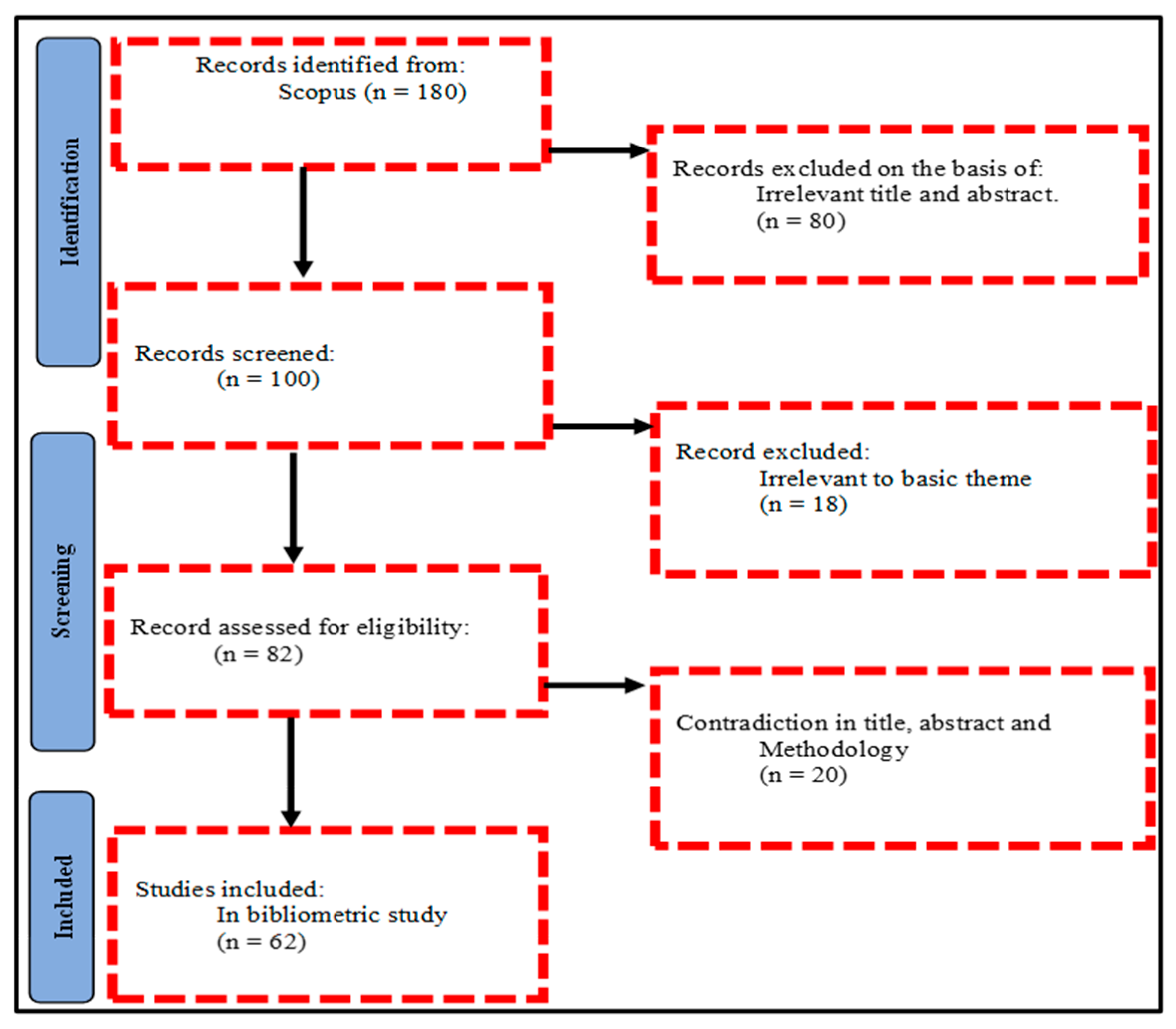
After removing duplicates and applying preliminary filters, 100 of the 180 records underwent screening of titles and abstracts. During this phase, 18 records were excluded as irrelevant to the basic theme. The remaining 82 records then underwent a full-text eligibility assessment. In this process, studies not directly related to landslides, thermal methods, or numerical modeling were excluded, as were publications where discrepancies existed between the title, abstract, and main content, in order to ensure methodological rigor and consistency in line with systematic review standards [50]. Additional articles were omitted due to a lack of alignment with the central themes of this analysis: specifically, those that focused on thermal approaches or numerical models outside the framework of slope stability. Based on the entire screening and eligibility requirements, a total of 62 studies were incorporated in the analysis (Figure 1).

2.3. Bibliometric Workflow in RStudio

RStudio (4.5.1) is an integrated development environment (IDE) for the R programming language, which is commonly used in statistical computing and data visualization. It enables researchers to format, manage, and visualize bibliometric data using Bibliometrix, the network analysis package, the co-citation mapping package, and thematic clusters [51]. The analysis began by exporting the chosen publications from Scopus in the BibTeX format. This file was loaded into RStudio, and bibliographic metadata were processed and analyzed using Bibliometrix, which automatically parses the BibTex file and structures the information (authors, journals, affiliations, keywords, references, citations) into structured bibliometric data. The dataset characteristics were quantified by using core analytical functions, including bibliometric data, stored processed data, and biblioAnalysis, which are functions that compute indicators of scientific production, author productivity, journal activity, institutional output, and citation performance. Graphical outputs were created using visualization tools to illustrate publication trends, annual production, author productivity curves and citation patterns. The package can also be used to apply the Law of Lotka, which is the distribution of author productivity, and the Law of Bradford, which identifies core journals [52,53]. These laws facilitate the understanding of structural tendencies in specific environments and allow for the identification of the most influential authors and journals. Based on the aforementioned processes, RStudio allowed us to create reproducible and high-quality bibliometric graphs.

2.4. Mapping of Keywords by VOSviewer

VOSviewer (v.1.6.20) is a bibliometric network building and visualization tool that allows building co-authorship, co-citation, and keyword co-occurrence networks [54]. VOS uses text-mining on titles and abstracts and computes the frequency and strength of co-occurrence of terms. Network maps generated through the software and its clustering and visualization features revealed the key themes of research and conceptual groupings in the research. This introduced an extra interpretation dimension by showing the thematic structure and relationships among keywords.

3. Results

3.1. Article Type, Theme, and Source Analysis

In this work, 62 documents on thermal imaging and numerical modeling found in various academic journals and other indexed publications were considered. These included 52 research articles and nine reviews (Table 2).
The analysis of fundamental themes represented in these documents identified 23 articles associated with thermal imaging, with a focus on the increased application of remote sensing technologies to track landslide activity and surface temperature changes. Moreover, 20 articles were devoted to thermo-hydro-mechanical modeling of landslides, which shows the incorporation of thermal, moisture transfer, and mechanical processes into the slope stability studies. The other 19 were laboratory experiments and field research articles that demonstrated a variety of methodological approaches to the nature of how thermal effects affect landslides.
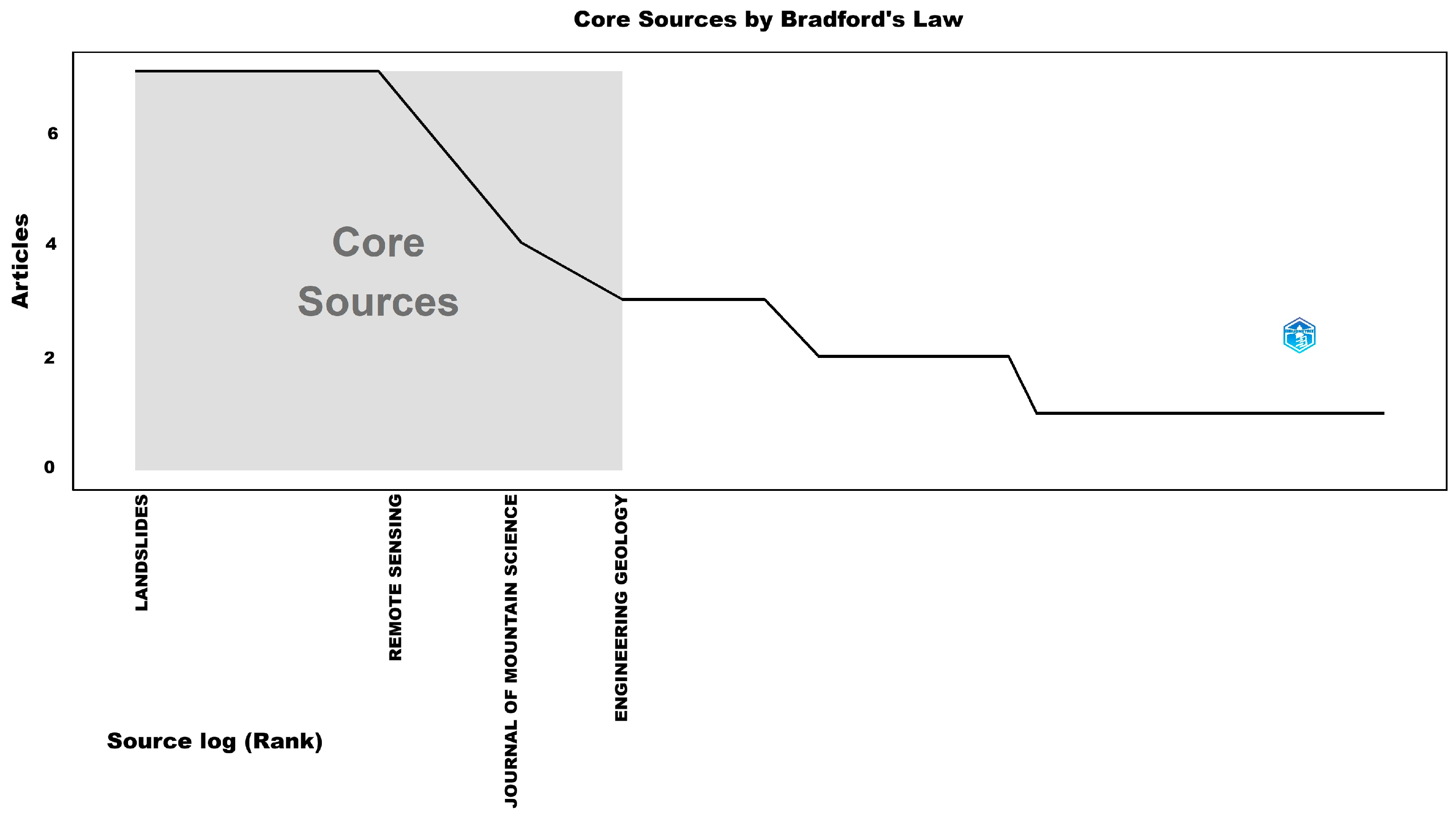
The distribution of articles across journals adheres to Bradford’s Law, which describes the uneven dispersion of scientific literature among journals, where a small number of journals account for a large proportion of publications on a given topic. As illustrated in Figure 2, journals are ranked on the x-axis, according to decreasing productivity, while the y-axis represents the number of published articles. The shaded region highlights the core zone, consisting of the most productive journals in the research topic under investigation. Specifically, Landslides and Remote Sensing each published seven articles, making them the most influential sources. This is followed by the Journal of Mountain Science with four articles and Engineering Geology with three articles. Together, these four journals constitute the core sources, contributing the highest concentration of articles in the field. Beyond the core zone, the curve shows a marked decline in publication output, with subsequent journals contributing three or fewer articles, and eventually only one article per journal in the outer zones.

3.2. Most Productive Countries and Institutions

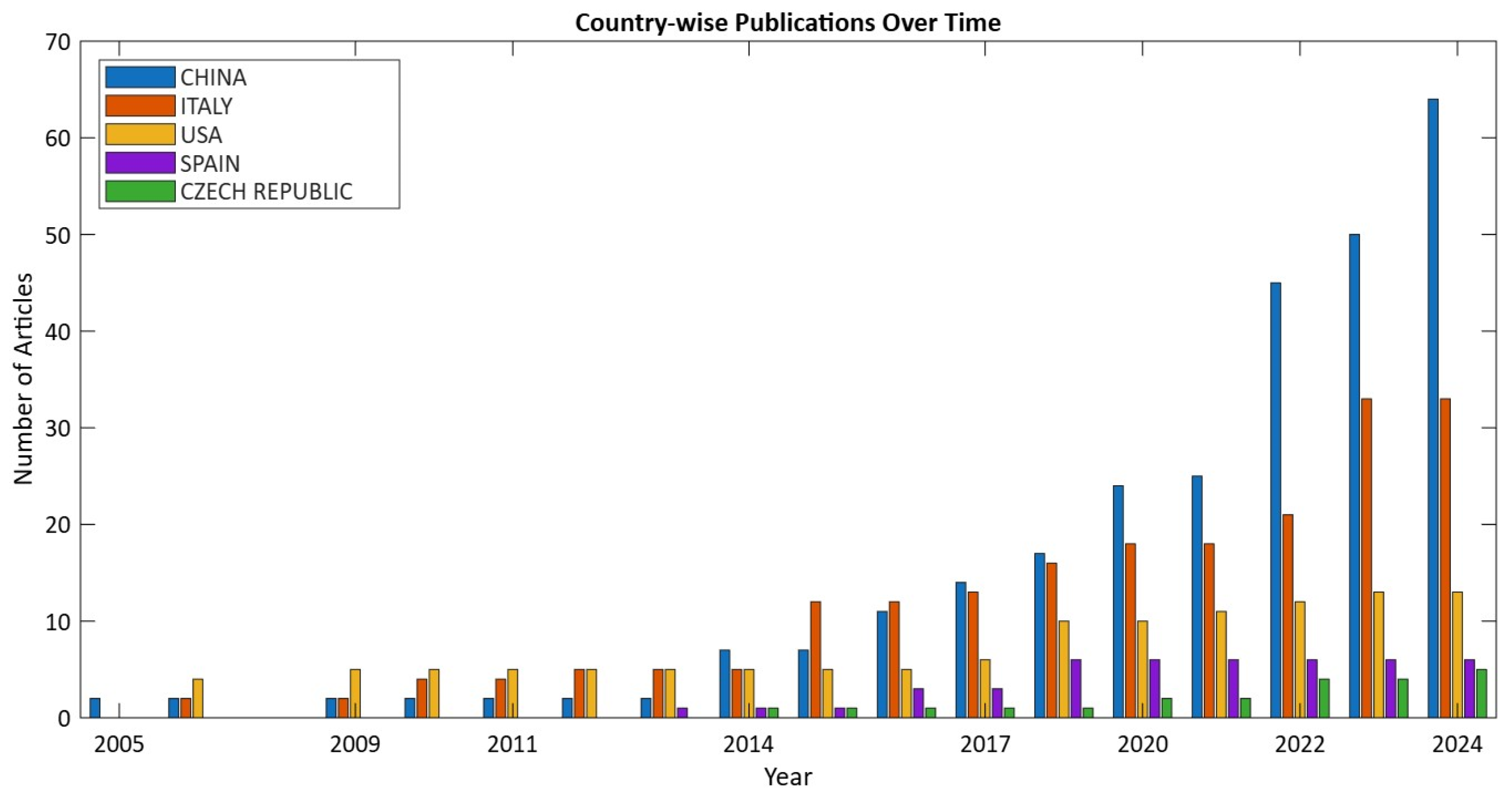
The analysis of the scientific output demonstrates that the distribution of research output is concentrated in a limited number of countries and institutions. Figure 3 illustrates the temporal evolution of publication production by country from 2005 to 2024 (the last complete year). China clearly dominates the field, exhibiting a rapid and sustained increase in publications after 2015 and accounting for approximately 65% of the total output by 2024, highlighting its leading role in driving global research output. The second country is Italy, then USA, Spain, and the Czech Republic, making up a small proportion together. Overall, the distribution of publications by country provides important insights into global research dynamics, the concentration of scientific expertise, and the emergence of key centers of competence worldwide.
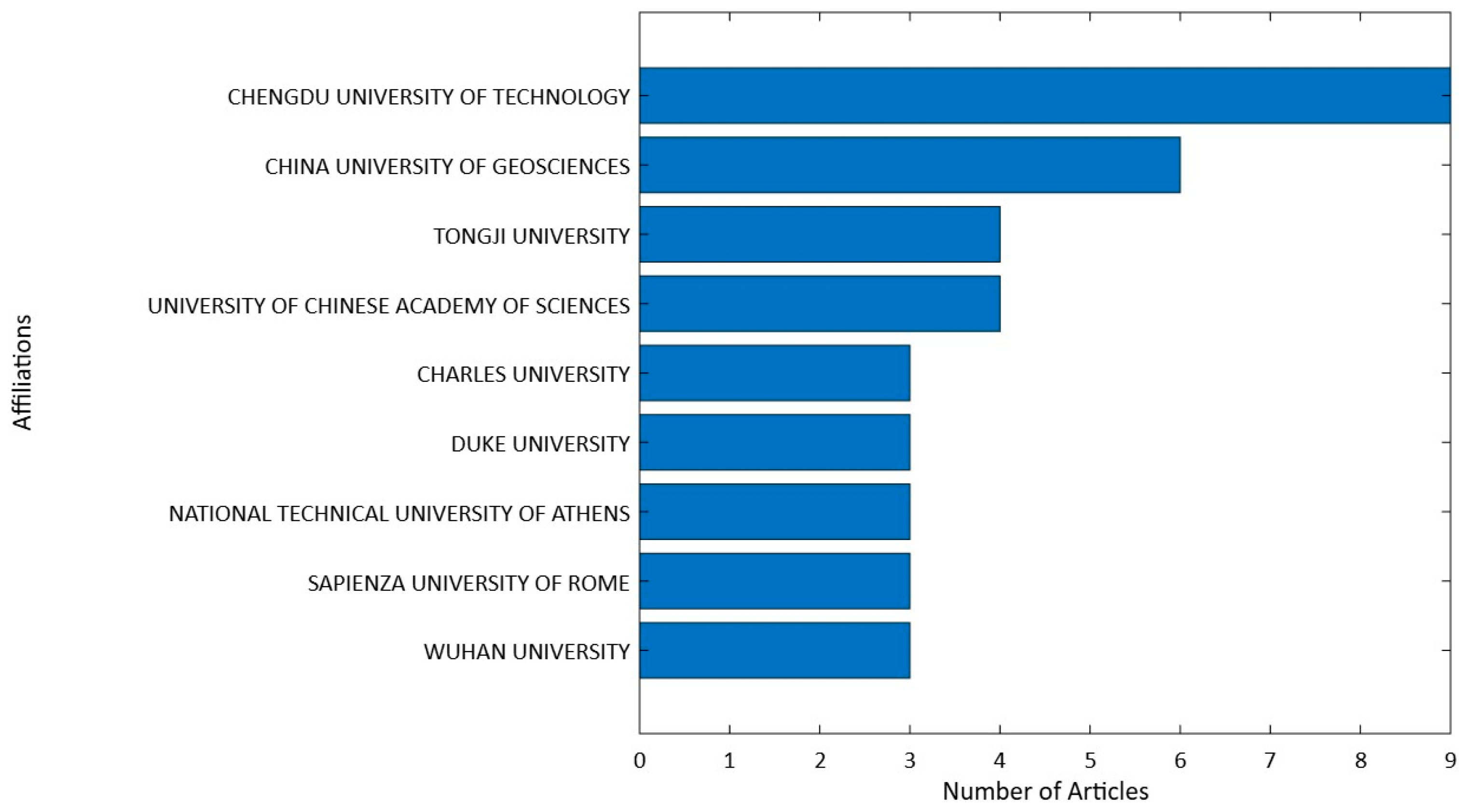
At the institutional level, the research is highly concentrated within a small number of leading universities. Chengdu University of Technology in China is the most prolific affiliation, with nine articles published, and the China University of Geosciences comes right behind with six publications. Shanghai Jiao Tong University is placed in the third position with four articles. Several other institutions including Charles University, National Technical University of Athens, Sapienza University, and Wuhan University contributed three publications each (Figure 4).
The country-level and institutional analyses offer a picture of scientific productivity: not only the location of the research activity but the principal centers of output as well. Such insights can give an idea of how particular nations and organizations are becoming the movers and shakers in the field and are creating networks of collaboration.

3.3. Annual Scientific Production

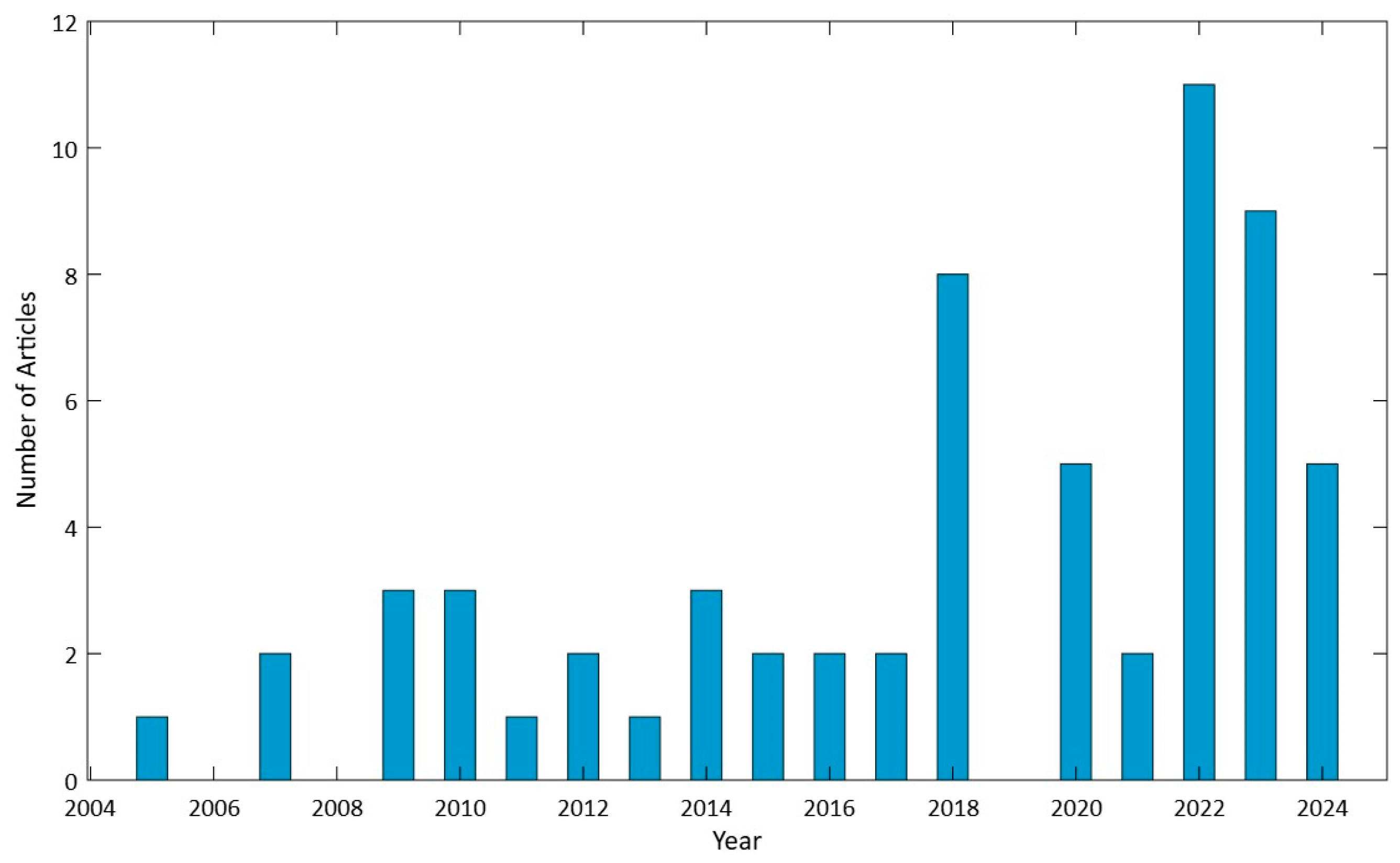
Based on the bibliometric data, the annual scientific production generally showed an upward trend in the examined period. Publications were infrequent until 2016, with zero to three articles annually. A steep increase occurs in 2017–2018 and then again beyond 2020, reaching the highest point in 2022, when over 10 articles concerning the relationship between temperature and landslides were published. Later, productivity slightly decreased, although they remained higher if compared with the early years of the dataset (Figure 5). Overall, the analysis shows an increasing level of research interest in the issue.

3.4. Authors’ Contribution and Productivity

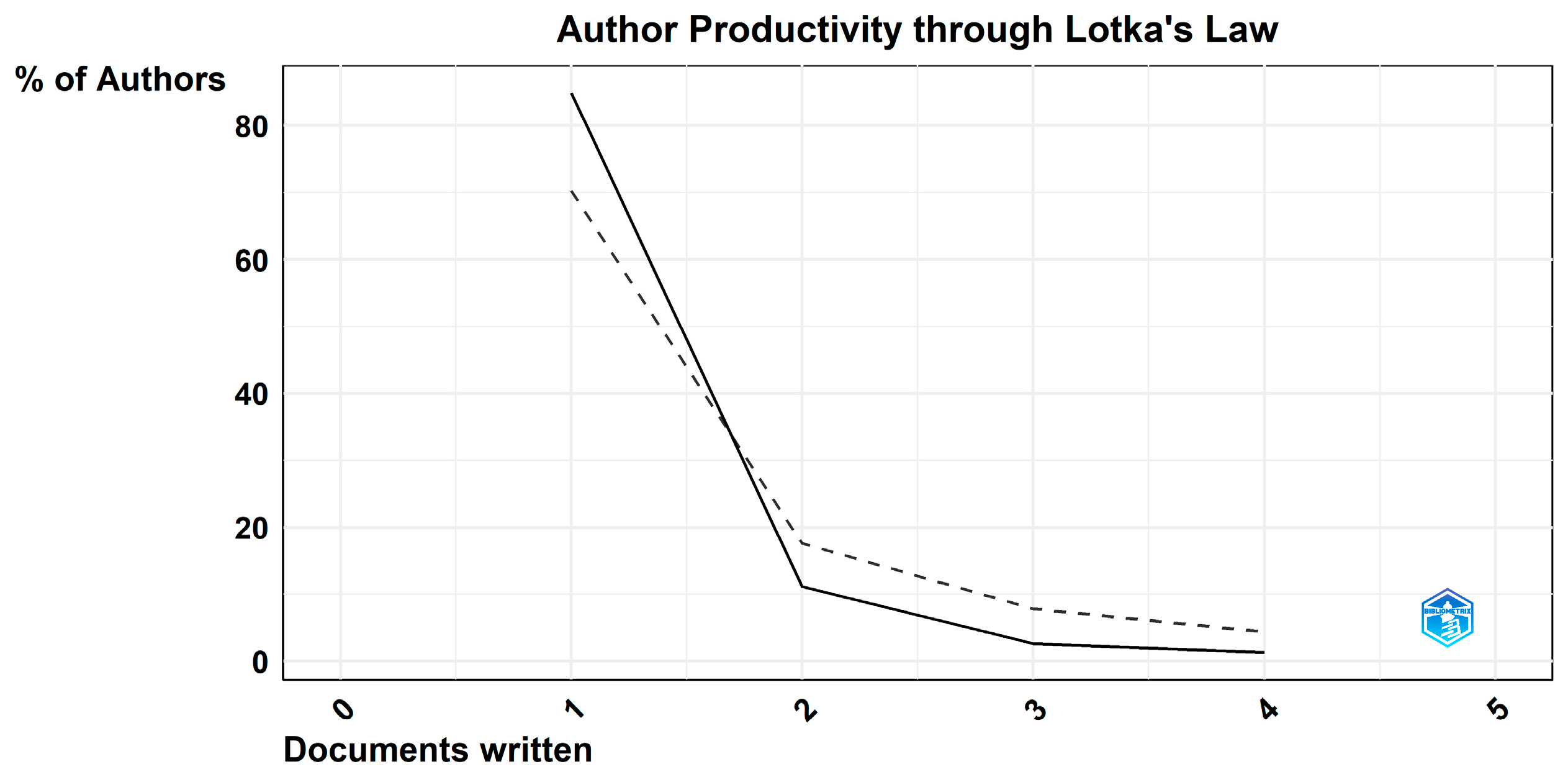
Figure 6 illustrates author productivity based on Lotka’s Law, which states the frequency of publication by an author within a scientific field. The distribution shows that approximately 82–85% of authors contributed only one publication, representing the dominant share of the author population. Authors with two publications account for about 10–12%, while those producing three or more articles represent less than 5% of the total contributors. The observed productivity pattern (solid line) closely matches the theoretical Lotka distribution (dashed line)—there is a strong inverse relationship between the number of publications and the number of contributing authors. This highly skewed structure indicates that research output in the field is concentrated among a small core of prolific authors, whereas the majority of contributors participate occasionally.
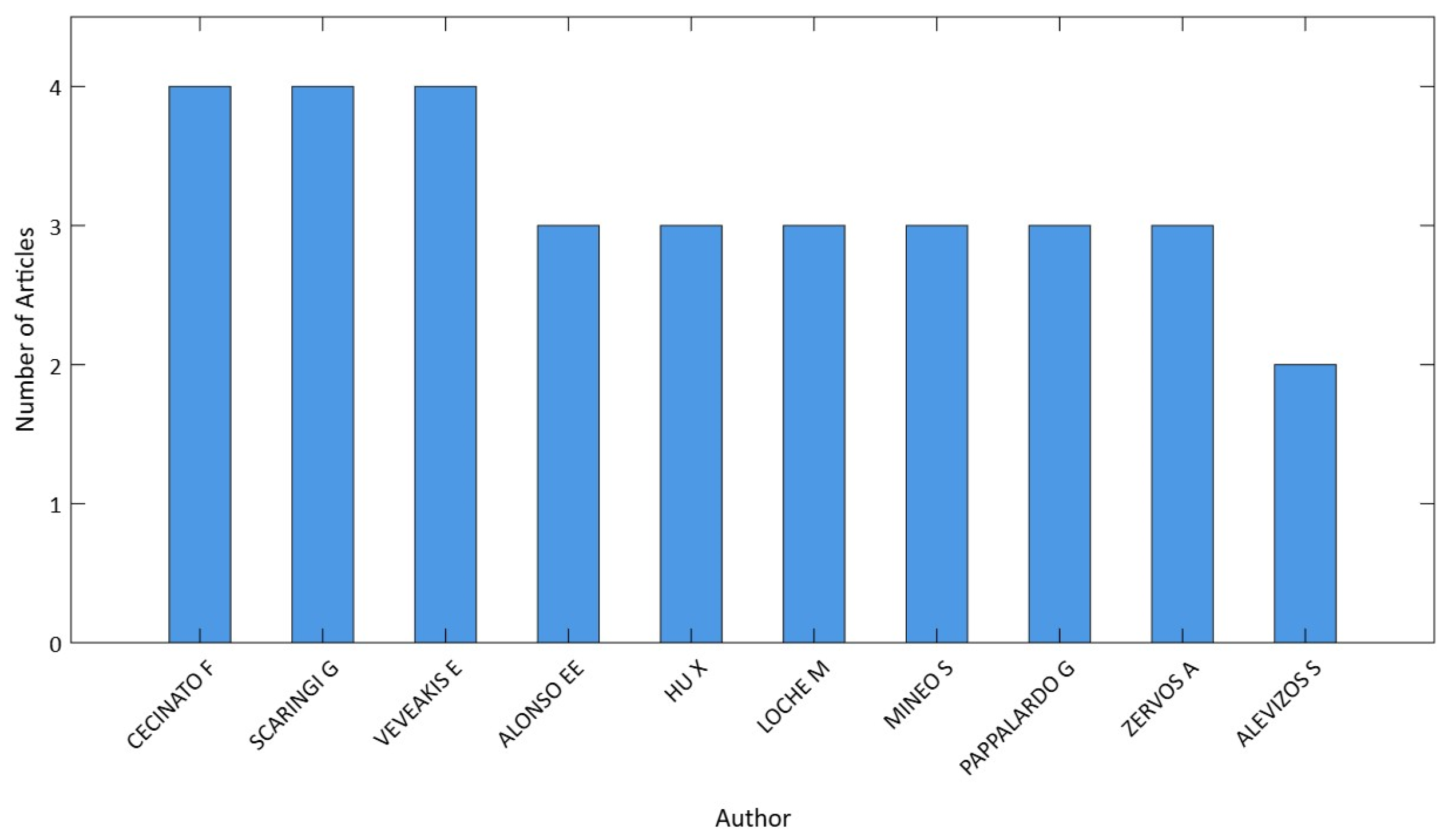
The analysis of authors’ productivity highlights Cecinato F., Scaringi G., and Veveakis E. as the most prolific authors (four documents each). They are followed by Alonso E.E., Hu X., Loche M., Mineo S., Pappalardo G., and Zervos A., with three and two publications, respectively. The results indicate that a small group of researchers has a high percentage of the overall research output, which demonstrates the concentration of expertise and scientific activity in the field (Figure 7).

3.5. Document Citation Analysis

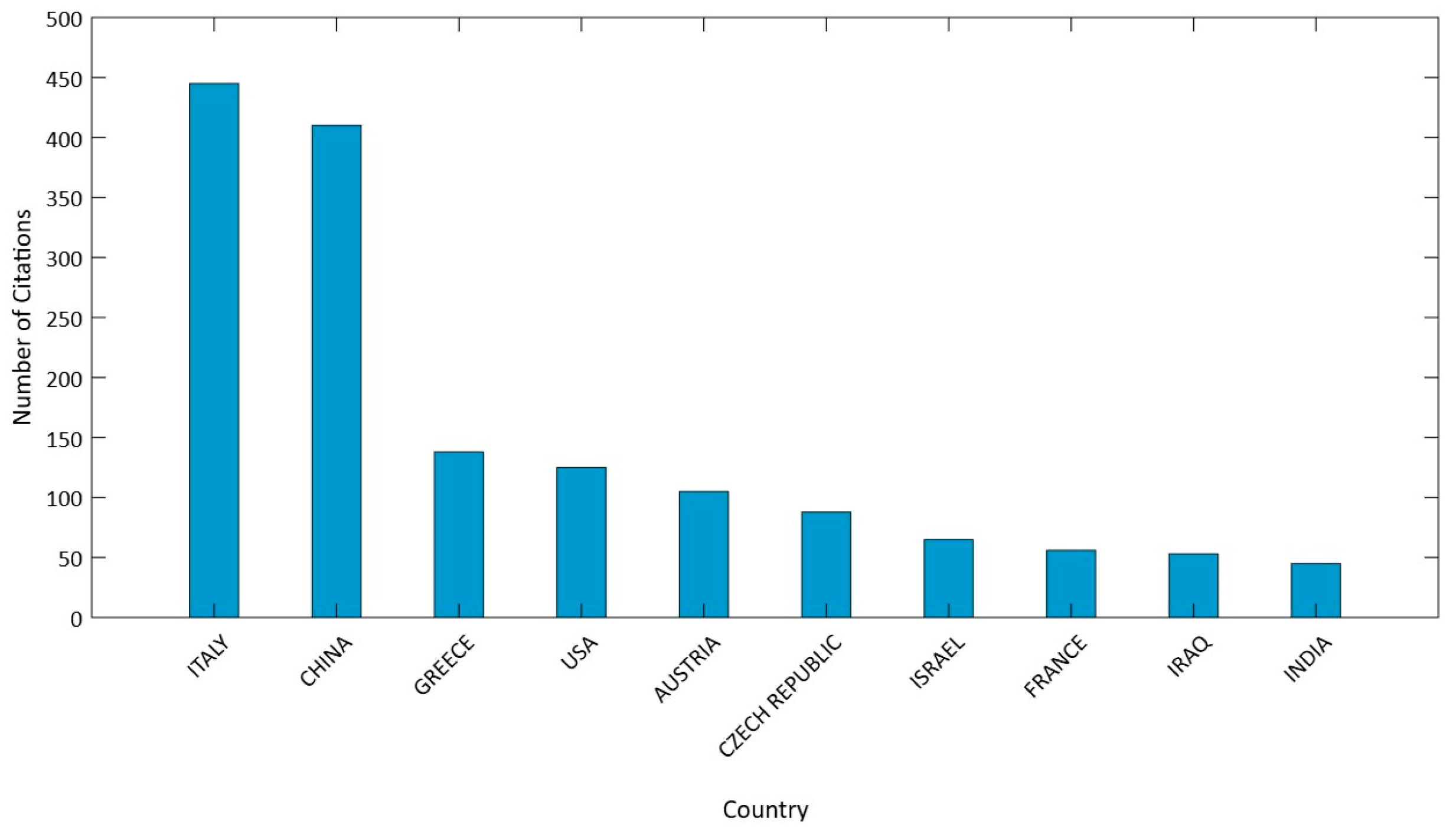
Despite being a developing area of research, the novelty and significance of thermal studies are evident in the citation patterns of the related publications. Over time, as this field has advanced, the average citation rates increased, reflecting increased recognition and impact. Citation analysis has been used to evaluate the effects and the research outputs in various countries (Figure 8). The total citation distribution reflects interesting disparities in the impact of research activity in the different countries. Italy is the most influential country, having 445 citations, followed by China with 410, Greece with 138, the United States with 125, Austria with 105, and Czech Republic with 88 citations. The remaining countries contribute a lower but still meaningful level of scholarly impact. Overall, the citation distribution highlights a strong concentration of research within a limited number of countries.

3.6. Emerging Research Trends in Thermography-Based Landslide Studies

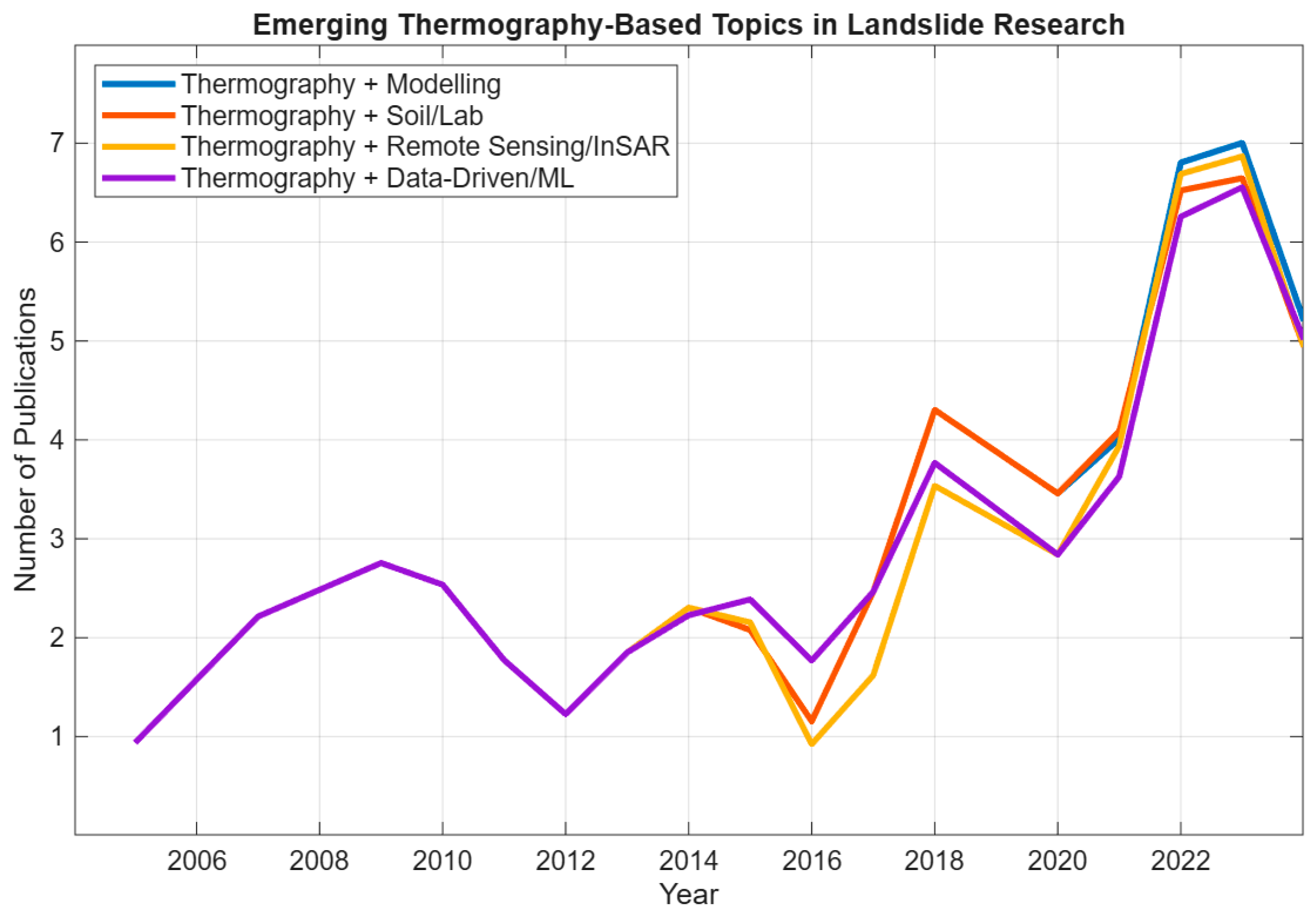
The analysis compares publication trends across four thematic areas: thermography integrated with numerical modeling, soil and laboratory testing, remote sensing/InSAR, and data-driven or machine-learning approaches. After 2016, all themes exhibit a noticeable growth, with a particularly strong increase between 2021 and 2023, suggesting an increasing interest in merging advanced analytical and monitoring approaches with thermal procedures. According to the trend analysis, thermography with modeling is the most popular research area, with the most consistent publication growth being over the recent period (Figure 9).

3.7. Co-Occurrence Keyword Exploration

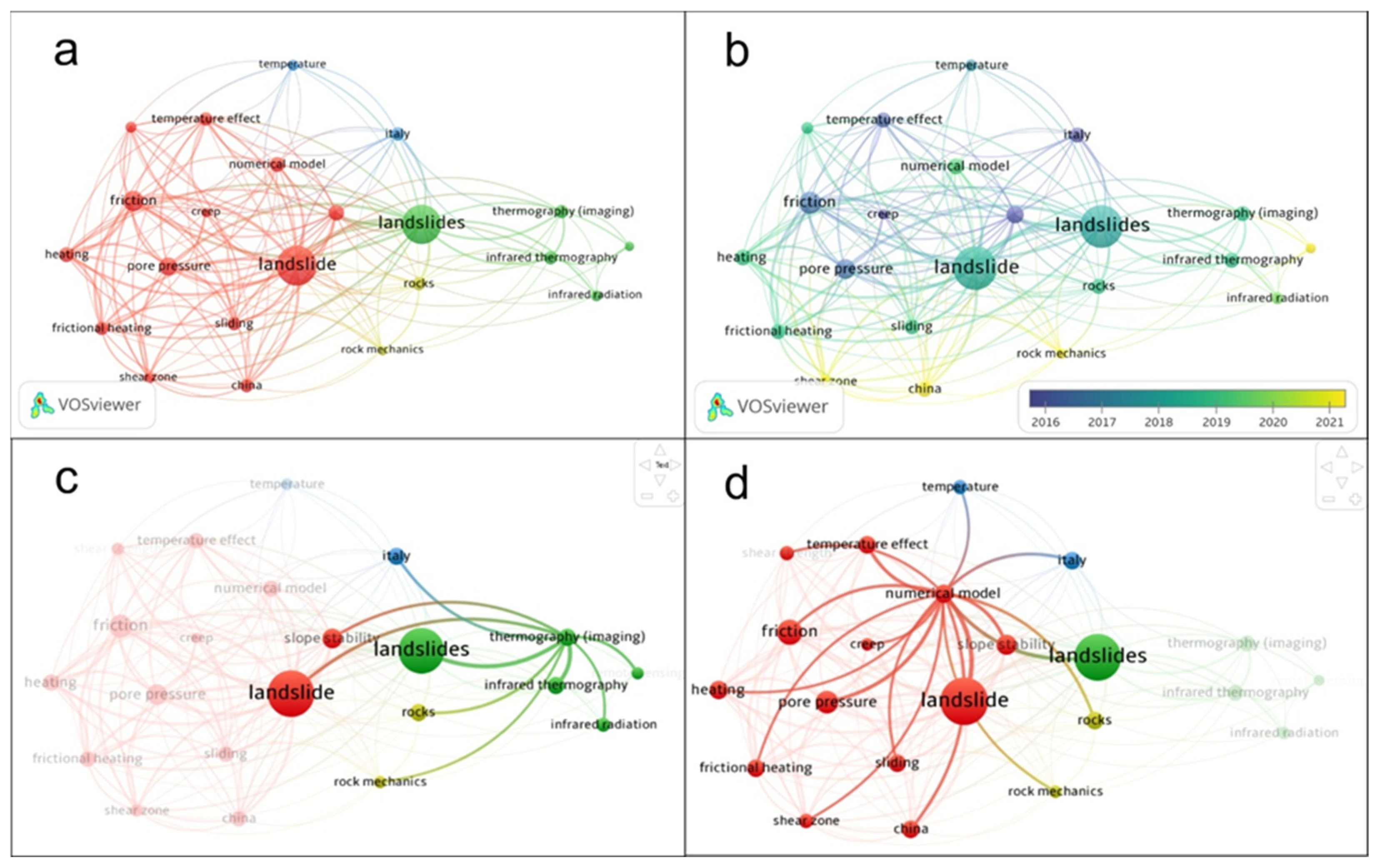
A co-occurrence analysis of keywords was conducted using VOSviewer (version 1.6.20), examining 876 keywords extracted from the 62 articles. Among these, 22 keywords appeared at least five times, forming 22 nodes and 160 links with a total link strength of 488. In the network visualization shown in Figure 10, node size corresponds to the frequency of term occurrence, while the proximity of nodes represents the co-occurrence rate across publications.

3.7.1. Thermo-Mechanical Modeling of Landslides (Red Cluster)

The most widespread and highly connected cluster is the red one, which covers the research that examines the mechanical and thermal processes governing landslide deformation. The keywords that can be seen in this cluster are landslide, pore pressure, shear zone, temperature effect, creep, sliding, heating, frictional heating, numerical model, and China (Figure 10a).
The fact that landslide co-occurs with friction, pore pressure, and temperature effect shows that the larger part of these studies is focused on the thermo-mechanical coupling and the effects of heat on the shear strength and slope stability. Keywords such as numerical model and heating indicate that the focus of this group is on simulation methods that model the heat production caused by the frictional sliding and the temperature dependence of the material behavior in the understanding of the internal landslide processes. The emergence of China as a node suggests that this field has case studies and research product accumulation in the region. In general, this cluster represents the fundamental scientific research involving the integration of thermal physics and geomechanics to study landslide initiation, movement, and post-failure processes.

3.7.2. Infrared Thermography and Thermal Remote Sensing (Green Cluster)

The green cluster is made of keywords that concentrate on the way of thermal imaging and infrared-based observation to detect or characterize landslide features. In particular, keywords that are specifically oriented to such topics are landslide, infrared thermography, infrared radiation, thermography (imaging), rock, and rock mechanics (Figure 10a). This group includes papers that use infrared thermography (or thermal cameras, satellite, UAV, or ground-based) to detect temperature change along slope and rock cliff surfaces. The temperature patterns are compared in space and time to determine thermal anomalies that could be related to active deformation, groundwater seepage, or structural heterogeneities. The integration of infrared thermography and rock mechanics allows us to associate surface thermal indications with the physical condition or the mechanical properties of rock materials. This group of keywords is more rigorous from a methodological point of view, if compared with the red cluster, as it focuses on measurement and monitoring methods instead of making a simulation of the physical processes.

3.7.3. Inter-Cluster Relationships

The modeling-based cluster is dominant in the organization of landslide research, which is reflected by the thick ties of the network. By contrast, temperature-related keywords represent a more peripheral cluster that has lower co-occurrence, thus indicating a weak integration of modeling strategies and infrared-based research. They are both related to each other through the blue cluster (temperature and regional studies), which can be thought of as a bridge between the modeling and monitoring methods. The spatial map mainly shows that, despite few studies focusing on the relationships between temperature and landslides treated by means of both analytical and observational perspectives, there is still a lack of clear integration between these two approaches (Figure 10c,d). Geotechnical research is mainly focused on process-based modeling and thermo-mechanical behavior, whereas remote sensing research is focused on empirical temperature observation and image-based analysis as a sign of a discipline boundary. Thus, the bibliometric framework highlights an important research potential: the combination of numerical modeling approaches with infrared thermal measurements, aimed at developing a multi-scale, data-combined knowledge of the influence of temperature on landslide processes.

3.7.4. Temporal Evolution of Landslide Research

Figure 10b shows the chronological progression in temperature-related landslide research. The purple/blue cluster (2016–2017) indicates the first research that was mainly concentrated on the fundamentals of landslide mechanics, with the keywords being friction, pore pressure, creep, and temperature effect. This primarily addresses how thermal changes affect the shear resistance and displacement along slip surfaces. The green cluster (2018–2019) indicates a shift in interest towards studies focusing on frictional heating, heating, sliding, and numerical modeling. The research in this period was focused on conceptual research and computer modeling of landslide triggering. Finally, the yellow group (2020–2021) indicates new studies focusing on infrared thermography, temperature, and rock mechanics, as well as the development of high-resolution observation techniques and site-specific studies.

4. Discussion

The bibliometric study proposed here is a detailed examination of 62 research articles published between January 2005 and March 2025 that address thermal and numerical modeling applications in landslide analysis and geohazard assessment. With the support of bibliometric software, the research demonstrates that the scientific use of thermal monitoring and numerical modeling for landslides is rapidly expanding. This growth demonstrates a worldwide effort to enhance the knowledge of landslide behavior and early warning systems by adopting numerical models and thermal surveys as research tools. In the period under scrutiny, most publications concerning the use of thermal and numerical applications in landslide research were published in China, Italy, the USA, and the Czech Republic. Italy has the highest number of citations at 445 citations, while China follows, with 410 citations. These results emphasize the significance and impact of few key research institutions and authors in these nations, as well as their contribution to the development of the landslide study in terms of thermal monitoring and numerical modeling. This has been observed in other bibliometric works, where a limited number of active institutions disproportionately shape global research output [55].
The findings are also consistent with Lotka’s and Bradford’s laws, which represent the hierarchy of the structure of scientific productivity. The work reveals that few authors and journals generate most of the publications regarding the thermal use in landslide research, which is a typical concentration pattern for a growing emergent or high-specialty scientific area. These bibliometric outcomes imply that the domain of thermal-based landslide studies is still at the starting point, with only limited research groups and methodological approaches that still need to be structured.
The thematic mapping also indicates that the application of thermal methods in landslide studies is still sporadic, with poor integration between thermal imaging, numerical modeling, and consequent susceptibility assessment. Such multi-disciplinary interaction is constrained and hinders methodological development. In fact, although landslide science is becoming increasingly technological, it is still largely compartmentalized, with a lack of integration between remote sensing, modeling, and monitoring applications [5].
The keyword co-occurrence analysis, based on VOSviewer visualizations of term frequency and connectivity, complements these findings by revealing recurring research tendencies. Thermo-mechanical modeling emerges as the dominant theme, while infrared thermography and temperature monitoring are primarily explored empirically, often with limited integration with modeling approaches.
The increasing number of publications and recurring themes reflects a gradual shift toward interdisciplinary maturity in the field, suggesting the adoption of multi-sensor, multi-scale, and process-based approaches. Combining thermal data with geotechnical, hydrological, and remote sensing methods has great potential to enhance the knowledge of thermo-hydrological phenomena and slope instability processes. Recent studies have shown that thermal imaging with the use of UAV techniques, in addition to geophysical and hydrological data, can be more effective to improve the time and space resolution of the landslide hazard evaluation [56], hence representing a crucial step towards reliable early-warning and monitoring systems.
Overall, the growth trend indicates that research on thermal and numerical applications in landslide studies is moving beyond an experimental phase into a stage of increased scientific recognition and methodological refinement. Future research should focus on integrating surface and subsurface thermal measurements with numerical and hydrological models to develop multifaceted analytical frameworks for landslide forecasting, monitoring, and management. This approach aligns with modern trends in hazard science, emphasizing the combination of diverse monitoring techniques and process-based models to achieve effective risk management. Consequently, while still in an early phase of development, thermal-based approaches hold substantial interdisciplinary potential and may play a key role in advancing comprehensive landslide monitoring and prediction systems, ultimately enabling more accurate hazard assessment and early-warning capabilities.

Limitations

Several limitations should be acknowledged. First, the bibliometric analysis was restricted to publications indexed in the Scopus database, which may not fully represent the entire body of global research on thermal and numerical approaches for landslide investigation. Although Scopus provides extensive coverage of high-quality peer-reviewed journals, some relevant studies that are indexed exclusively in other databases may have been omitted. This reliance on a single database may introduce a degree of selection bias and could influence bibliometric indicators such as publication volume, citation patterns, keyword co-occurrence, and collaboration networks. Consequently, certain regional contributions or emerging research themes may be underrepresented, potentially affecting the comprehensiveness of the results. In addition, the inclusion criteria were limited to English-language peer-reviewed publications. As a result, studies published in other languages, as well as preprints and non-peer reviewed materials, were excluded. While this approach improves data consistency and reliability, it may also limit the visibility of locally focused research and early-stage scientific developments. Furthermore, the heterogeneity of publication types, research objectives, and regional emphases may constrain the generalization of the findings. Bibliometric results primarily reflect quantitative trends rather than qualitative scientific contributions and therefore should be interpreted as indicators of research evolution, rather than definitive assessments of scientific impact.
Despite these limitations, the analysis reveals several meaningful patterns. The observed upward trend in publication output corresponds closely with the increasing availability and affordability of advanced sensing technologies, including infrared thermography, UAV-based platforms, and automated monitoring systems, which have significantly enhanced landslide investigation capabilities in engineering geology. Similar growth trajectories have been reported in bibliometric studies across geohazard research domains, where technological innovation plays a decisive role in shaping scientific directions and research priorities. To further enhance robustness, future studies could integrate multi-database retrieval strategies and complementary systematic review methods, enabling a more exhaustive and balanced understanding of advances in thermal and numerical landslide research.

5. Conclusions

This study gives a thorough review of the literature on landslide research through thermal surveys and numerical modeling, with major trends and gaps in the current research. The current bibliometric study of the publications published between 2005 and the first quarter of 2025 shows an increased use of thermal surveys and numerical modeling in the landslide investigation. Publication trends show steady growth, which reflects increasing scientific interest in these innovative methods; China and Italy are the most actively published, and Italy is the largest source of citations, which points to the contributions of the emergent and established research communities.
Considering this bibliometric analysis, landslide research using thermal approaches is still in its early stages, but it is rapidly gaining scientific relevance. Although there is significant progress, this study is characterized more by small groups of countries, institutions, and authors, which portrays unequal research conditions worldwide, as well as a concentration found in early-stage scientific disciplines. This analysis shows a limited integration of thermal data with numerical, geotechnical, or hydrological models, leaving a gap in understanding the thermal and hydrological mechanisms that contribute to slope instability.
Future directions include the focus on thermal datasets over time, the combination of surface temperature measurements with subsurface temperature measurements, and numerical models with standardized multi-sensor frameworks. By addressing the current limitations and supporting interdisciplinary integration, future research can transform thermal-based techniques into crucial instruments for successful landslide monitoring and hazard mitigation.

Author Contributions

J.N.: Writing—original draft, writing—review and editing, data curation, formal analysis, investigation, software, visualization. P.L.: Supervision, validation, writing—review and editing. G.S.: Supervision, validation, writing—review and editing, funding. M.P.: Project administration, resources, supervision. C.C.: Project administration, resources, supervision. All authors have read and agreed to the published version of the manuscript.

Funding

This research was conducted as part of a PhD program at the Department of Earth and Environmental Sciences, University of Bari Aldo Moro, Italy, under the doctoral research project entitled “Landslide susceptibility assessment by integration of thermal surveys and numerical modelling”. GS acknowledges support from the Czech Science Foundation (GA ČR) through grant no. 24-12316S.

Data Availability Statement

The original contributions presented in this study are included in the article. Further inquiries can be directed to the corresponding authors.

Acknowledgments

The authors used artificial intelligence to help them organize sentences and paragraphs and check grammar and spelling in preparation for this work. Following its use, the author thoroughly reviewed and edited the content, taking full responsibility for the final version of this publication.

Conflicts of Interest

Cosimo Cagnazzo is employed by the company Mermermec Engineering Srl. The remaining authors declare that the research was conducted in the absence of any commercial or financial relationships that could be construed as a potential conflict of interest. All authors declare that they have no known competing financial interests or personal relationships that could have appeared to influence the work reported in this paper.

References

  1. Cruden, D. A Simple Definition of a Landslide. Bull. Eng. Geol. Environ. 1991, 43, 27. [Google Scholar] [CrossRef]
  2. Highland, L.M.; Bobrowsky, P. The Landslide Handbook—A Guide to Understanding Landslides; U.S. Geological Survey: Reston, VA, USA, 2008. [CrossRef]
  3. Hungr, O.; Leroueil, S.; Picarelli, L. The Varnes Classification of Landslide Types, an Update. Landslides 2014, 11, 167–194. [Google Scholar] [CrossRef]
  4. Corominas, J.; van Westen, C.; Frattini, P.; Cascini, L.; Malet, J.-P.; Fotopoulou, S.; Catani, F.; Van Den Eeckhaut, M.; Mavrouli, O.; Agliardi, F.; et al. Recommendations for the Quantitative Analysis of Landslide Risk. Bull. Eng. Geol. Environ. 2014, 73, 209–263. [Google Scholar] [CrossRef]
  5. Guzzetti, F.; Gariano, S.L.; Peruccacci, S.; Brunetti, M.T.; Marchesini, I.; Rossi, M.; Melillo, M. Geographical Landslide Early Warning Systems. Earth-Sci. Rev. 2020, 200, 102973. [Google Scholar] [CrossRef]
  6. Calò, F.; Ardizzone, F.; Castaldo, R.; Lollino, P.; Tizzani, P.; Guzzetti, F.; Lanari, R.; Angeli, M.-G.; Pontoni, F.; Manunta, M. Enhanced Landslide Investigations Through Advanced DInSAR Techniques: The Ivancich Case Study, Assisi, Italy. Remote Sens. Environ. 2014, 142, 69–82. [Google Scholar] [CrossRef]
  7. Curioni, S.; Gattinoni, P.; Leonelli, G. Integrating Dendrogeomorphology into Stress–Strain Numerical Models: An Opportunity to Monitor Slope Dynamic. Geosciences 2024, 14, 129. [Google Scholar] [CrossRef]
  8. Chae, B.-G.; Park, H.-J.; Catani, F.; Simoni, A.; Berti, M. Landslide Prediction, Monitoring and Early Warning: A Concise Review of State-of-the-Art. Geosci. J. 2017, 21, 1033–1070. [Google Scholar] [CrossRef]
  9. Alonso-Pandavenes, O.; Torrijo Echarri, F.J.; Garzón-Roca, J. Sustainable Management of Landslides in Ecuador: Leveraging Geophysical Surveys for Effective Risk Reduction. Sustainability 2024, 16, 10797. [Google Scholar] [CrossRef]
  10. Lollino, P.; Giordan, D.; Allasia, P.; Fazio, N.L.; Perrotti, M.; Cafaro, F. Assessment of Post-Failure Evolution of a Large Earthflow through Field Monitoring and Numerical Modelling. Landslides 2020, 17, 2013–2026. [Google Scholar] [CrossRef]
  11. Crosta, G.B.; di Prisco, C.; Frattini, P.; Frigerio, G.; Castellanza, R.; Agliardi, F. Chasing a Complete Understanding of the Triggering Mechanisms of a Large Rapidly Evolving Rockslide. Landslides 2014, 11, 747–764. [Google Scholar] [CrossRef]
  12. Guo, Z.; Yin, K.; Gui, L.; Liu, Q.; Huang, F.; Wang, T. Regional Rainfall Warning System for Landslides with Creep Deformation in Three Gorges Using a Statistical Black Box Model. Sci. Rep. 2019, 9, 8962. [Google Scholar] [CrossRef]
  13. Bianchini, S.; Solari, L.; Bertolo, D.; Thuegaz, P.; Catani, F. Integration of Satellite Interferometric Data in Civil Protection Strategies for Landslide Studies at a Regional Scale. Remote Sens. 2021, 13, 1881. [Google Scholar] [CrossRef]
  14. Li, X.; Guo, C.; Chen, W.; Wei, P.; Jin, F.; Yan, Y.; Liu, G. Deformation Mechanisms and Rainfall Lag Effects of Deep-Seated Ancient Landslides in High-Mountain Regions: A Case Study of the Zhongxinrong Landslide, Upper Jinsha River. Remote Sens. 2025, 17, 687. [Google Scholar] [CrossRef]
  15. Plank, S.; Singer, J.; Minet, C.; Thuro, K. Pre-Survey Suitability Evaluation of the Differential Synthetic Aperture Radar Interferometry Method for Landslide Monitoring. Int. J. Remote Sens. 2012, 33, 6623–6637. [Google Scholar] [CrossRef]
  16. Barla, G.; Antolini, F.; Gigli, G. 3D Laser Scanner and Thermography for Tunnel Discontinuity Mapping. Geomech. Tunn. 2016, 9, 29–36. [Google Scholar] [CrossRef]
  17. Filice, F.; Pezzo, A.; Lollino, P.; Perrotti, M.; Ietto, F. Multi-Approach for the Assessment of Rock Slope Stability Using in-Field and UAV Investigations. Bull. Eng. Geol. Environ. 2022, 81, 502. [Google Scholar] [CrossRef]
  18. Giordan, D.; Adams, M.S.; Aicardi, I.; Alicandro, M.; Allasia, P.; Baldo, M.; De Berardinis, P.; Dominici, D.; Godone, D.; Hobbs, P.; et al. The Use of Unmanned Aerial Vehicles (UAVs) for Engineering Geology Applications. Bull. Eng. Geol. Environ. 2020, 79, 3437–3481. [Google Scholar] [CrossRef]
  19. Peternel, T.; Kumelj, Š.; Oštir, K.; Komac, M. Monitoring the Potoška Planina Landslide (NW Slovenia) Using UAV Photogrammetry and Tachymetric Measurements. Landslides 2017, 14, 395–406. [Google Scholar] [CrossRef]
  20. Rossi, G.; Tanteri, L.; Tofani, V.; Vannocci, P.; Moretti, S.; Casagli, N. Multitemporal UAV Surveys for Landslide Mapping and Characterization. Landslides 2018, 15, 1045–1052. [Google Scholar] [CrossRef]
  21. Conforti, M.; Mercuri, M.; Borrelli, L. Morphological Changes Detection of a Large Earthflow Using Archived Images, LiDAR-Derived DTM, and UAV-Based Remote Sensing. Remote Sens. 2021, 13, 120. [Google Scholar] [CrossRef]
  22. Godone, D.; Allasia, P.; Borrelli, L.; Gullà, G. UAV and Structure from Motion Approach to Monitor the Maierato Landslide Evolution. Remote Sens. 2020, 12, 1039. [Google Scholar] [CrossRef]
  23. Mineo, S.; Pappalardo, G.; Onorato, S. Geomechanical Characterization of a Rock Cliff Hosting a Cultural Heritage through Ground and UAV Rock Mass Surveys for Its Sustainable Fruition. Sustainability 2021, 13, 924. [Google Scholar] [CrossRef]
  24. Melis, M.T.; Da Pelo, S.; Erbì, I.; Loche, M.; Deiana, G.; Demurtas, V.; Meloni, M.A.; Dessì, F.; Funedda, A.; Scaioni, M.; et al. Thermal Remote Sensing from UAVs: A Review on Methods in Coastal Cliffs Prone to Landslides. Remote Sens. 2020, 12, 1971. [Google Scholar] [CrossRef]
  25. Usamentiaga, R.; Venegas, P.; Guerediaga, J.; Vega, L.; Molleda, J.; Bulnes, F.G. Infrared Thermography for Temperature Measurement and Non Destructive Testing. Sensors 2014, 14, 12305–12348. [Google Scholar] [CrossRef]
  26. Shannon, H.R.; Sigda, J.M.; Van Dam, R.L.; Hendrickx, J.M.H.; McLemore, V.T. Thermal Camera Imaging of Rock Piles at the Questa Molybdenum Mine, Questa, New Mexico. J. Am. Soc. Min. Reclam 2005, 2005, 1015–1028. [Google Scholar] [CrossRef]
  27. Loche, M.; Racek, O.; Petružálek, M.; Scaringi, G.; Blahůt, J. Infrared Thermography Reveals Weathering Hotspots at the Požáry Field Laboratory. Sci. Rep. 2024, 14, 14682. [Google Scholar] [CrossRef] [PubMed]
  28. Loche, M.; Scaringi, G.; Blahůt, J.; Melis, M.T.; Funedda, A.; Da Pelo, S.; Erbì, I.; Deiana, G.; Meloni, M.A.; Cocco, F. An Infrared Thermography Approach to Evaluate the Strength of a Rock Cliff. Remote Sens. 2021, 13, 1265. [Google Scholar] [CrossRef]
  29. Racek, O.; Balek, J.; Loche, M.; Vích, D.; Blahůt, J. Rock Surface Strain In Situ Monitoring Affected by Temperature Changes at the Požáry Field Lab (Czechia). Sensors 2023, 23, 2237. [Google Scholar] [CrossRef]
  30. Vivaldi, V.; Bordoni, M.; Mineo, S.; Crozi, M.; Pappalardo, G.; Meisina, C. Airborne Combined Photogrammetry—Infrared Thermography Applied to Landslide Remote Monitoring. Landslides 2023, 20, 297–313. [Google Scholar] [CrossRef]
  31. Pappalardo, G.; Mineo, S.; Angrisani, A.C.; Di Martire, D.; Calcaterra, D. Combining Field Data with Infrared Thermography and DInSAR Surveys to Evaluate the Activity of Landslides: The Case Study of Randazzo Landslide (NE Sicily). Landslides 2018, 15, 2173–2193. [Google Scholar] [CrossRef]
  32. Pappalardo, G.; Mineo, S.; Zampelli, S.P.; Cubito, A.; Calcaterra, D. InfraRed Thermography Proposed for the Estimation of the Cooling Rate Index in the Remote Survey of Rock Masses. Int. J. Rock Mech. Min. Sci. 2016, 83, 182–196. [Google Scholar] [CrossRef]
  33. Fiorucci, M.; Marmoni, G.M.; Martino, S.; Mazzanti, P. Thermal Response of Jointed Rock Masses Inferred from Infrared Thermographic Surveying (Acuto Test-Site, Italy). Sensors 2018, 18, 2221. [Google Scholar] [CrossRef]
  34. Grechi, G.; Fiorucci, M.; Marmoni, G.M.; Martino, S. 3D Thermal Monitoring of Jointed Rock Masses through Infrared Thermography and Photogrammetry. Remote Sens. 2021, 13, 957. [Google Scholar] [CrossRef]
  35. Mineo, S.; Caliò, D.; Pappalardo, G. UAV-Based Photogrammetry and Infrared Thermography Applied to Rock Mass Survey for Geomechanical Purposes. Remote Sens. 2022, 14, 473. [Google Scholar] [CrossRef]
  36. Uribe, F.; Fuentes, M.; Campos, J. Modeling of the 2007 Aysén Tsunami Generated by the Punta Cola and North Mentirosa Island Landslides. Coasts 2025, 5, 19. [Google Scholar] [CrossRef]
  37. Takabatake, T.; Takemoto, R. Numerical Modeling of Tsunamis Generated by Subaerial, Partially Submerged, and Submarine Landslides. GeoHazards 2024, 5, 1152–1171. [Google Scholar] [CrossRef]
  38. Scaringi, G.; Loche, M. A Thermo-Hydro-Mechanical Approach to Soil Slope Stability under Climate Change. Geomorphology 2022, 401, 108108. [Google Scholar] [CrossRef]
  39. Amatya, B.L.; Soga, K.; Bourne-Webb, P.J.; Amis, T.; Laloui, L. Thermo-Mechanical Behaviour of Energy Piles. Géotechnique 2012, 62, 503–519. [Google Scholar] [CrossRef]
  40. Rotta Loria, A.F.; Laloui, L. The Interaction Factor Method for Energy Pile Groups. Comput. Geotech. 2016, 80, 121–137. [Google Scholar] [CrossRef]
  41. Di Toro, G.; Han, R.; Hirose, T.; De Paola, N.; Nielsen, S.; Mizoguchi, K.; Ferri, F.; Cocco, M.; Shimamoto, T. Fault Lubrication during Earthquakes. Nature 2011, 471, 494–498. [Google Scholar] [CrossRef]
  42. Racek, O.; Morcioni, A.; Blahut, J.; Apuani, T.; Stepanek, P.; Scaringi, G. Atmospheric warming drives shallow rock slope instability via irreversible joint opening. Landslides 2025, 1–14. [Google Scholar] [CrossRef]
  43. Dhakal, O.P.; Loche, M.; Dahal, R.K.; Scaringi, G. Influence of temperature on the residual shear strength of landslide soil: Role of the clay fraction. Bull. Eng. Geol. Environ. 2025, 84, 394. [Google Scholar] [CrossRef]
  44. Loche, M.; Scaringi, G. Assessing the influence of temperature on slope stability in a temperate climate: A nationwide spatial probability analysis in Italy. Environ. Model. Softw. 2025, 183, 106217. [Google Scholar] [CrossRef]
  45. Loche, M.; Scaringi, G. Temperature and shear-rate effects in two pure clays: Possible implications for clay landslides. Results Eng. 2023, 20, 101647. [Google Scholar] [CrossRef]
  46. Sumarsono, S.; Muflihah, N.; Afiatna, F.A.N.F. The Internet of Things Research in Agriculture: A Bibliometric Analysis. Int. J. Agric. Syst. 2024, 12, 1–20. Available online: https://pasca.unhas.ac.id/ojs/index.php/ijas/article/view/5025 (accessed on 25 January 2026).
  47. Safeer, S.; De Mastro, G.; Pulvento, C. IoT Based Climate Smart Agriculture Succeeded by Blockchain Database—A Bibliometric Analysis. Front. Sustain. Food Syst. 2024, 8, 1406871. [Google Scholar] [CrossRef]
  48. Falagas, M.E.; Pitsouni, E.I.; Malietzis, G.A.; Pappas, G. Comparison of PubMed, Scopus, Web of Science, and Google Scholar: Strengths and Weaknesses. FASEB J. 2008, 22, 338–342. [Google Scholar] [CrossRef]
  49. Mongeon, P.; Paul-Hus, A. The Journal Coverage of Web of Science and Scopus: A Comparative Analysis. Scientometrics 2016, 106, 213–228. [Google Scholar] [CrossRef]
  50. Braun, V.; Clarke, V. Is thematic analysis used well in health psychology? A critical review of published research, with recommendations for quality practice and reporting. Health Psychol. Rev. 2023, 17, 695–718. [Google Scholar] [CrossRef]
  51. Aria, M.; Cuccurullo, C. Bibliometrix: An R-Tool for Comprehensive Science Mapping Analysis. J. Informetr. 2017, 11, 959–975. [Google Scholar] [CrossRef]
  52. Coile, R.C. Lotka’s frequency distribution of scientific productivity. J. Am. Soc. Inf. Sci. 1977, 28, 366–370. [Google Scholar] [CrossRef]
  53. Brookes, B.C. “Sources of Information on Specific Subjects” by S.C. Bradford. J. Inf. Sci. 1985, 10, 173–175. [Google Scholar] [CrossRef]
  54. van Eck, N.J.; Waltman, L. Software Survey: VOSviewer, a Computer Program for Bibliometric Mapping. Scientometrics 2010, 84, 523–538. [Google Scholar] [CrossRef] [PubMed]
  55. Tollefson, J. China Declared World’s Largest Producer of Scientific Articles. Nature 2018, 553, 390. [Google Scholar] [CrossRef]
  56. Bardi, F.; Frodella, W.; Ciampalini, A.; Bianchini, S.; Ventisette, C.; Gigli, G.; Fanti, R.; Basile, G.; Casagli, N. Integration between Ground Based and Satellite SAR Data in Landslide Mapping: The San Fratello Case Study. Geomorphology 2014, 223, 45–60. [Google Scholar] [CrossRef]
Figure 1. Prisma flow chart presenting inclusion and exclusion criteria for articles.
Applsci 16 01312 g001
Figure 2. Distribution of research output, interpreted according to Bradford’s Law.
Applsci 16 01312 g002
Figure 3. Country-wise outputs over time.
Applsci 16 01312 g003
Figure 4. Annual publication output of top research institutions.
Applsci 16 01312 g004
Figure 5. Yearly trends in the total number of research publications.
Applsci 16 01312 g005
Figure 6. Contribution of leading authors to landslide research publications.
Applsci 16 01312 g006
Figure 7. Top 10 most prolific authors.
Applsci 16 01312 g007
Figure 8. Country-wise total citations.
Applsci 16 01312 g008
Figure 9. Emerging thermography-based topics in landslide research and their temporal evolution.
Applsci 16 01312 g009
Figure 10. Keyword co-occurrence and thematic analysis in landslide research: (a) network visualization of keyword co-occurrence, highlighting main terms and their relationships. (b) Overlay visualization showing temporal trends of keywords, based on the average publication year. (c,d) Cluster visualization revealing distinct thematic groups, showing no integration between infrared thermography and numerical modeling studies.
Applsci 16 01312 g010
Table 1. Main components used for online database querying.
ComponentAbbr.Explanation
ThermalTA thermal survey is used to measure and analyze the temperature distribution of various surfaces or components within a system. It typically involves using thermal imaging cameras or infrared thermometers to capture thermal data.
Numerical modelingNNumerical modeling refers to the use of mathematical models and computational algorithms to simulate and analyze complex systems or phenomena.
TemperatureTempTemperature is an essential parameter to evaluate the impact of thermal variations on hydro-mechanical behaviors of geomaterials, potentially affecting slope stability.
Table 2. Overview of article types and themes.
TypeTheme
ResearchReviewThermal imagingThermo-hydro-mechanical modelingField/Laboratory experiments
539232019
Disclaimer/Publisher’s Note: The statements, opinions and data contained in all publications are solely those of the individual author(s) and contributor(s) and not of MDPI and/or the editor(s). MDPI and/or the editor(s) disclaim responsibility for any injury to people or property resulting from any ideas, methods, instructions or products referred to in the content.