Article

Improved Daily Nighttime Light Data as High-Frequency Economic Indicator

1
School of Labor and Human Resources, Renmin University of China, Beijing 100872, China
2
School of Artificial Intelligence, Beihang University, Beijing 100191, China
*
Author to whom correspondence should be addressed.
Appl. Sci. 2026, 16(2), 947; https://doi.org/10.3390/app16020947
Submission received: 25 December 2025 / Revised: 14 January 2026 / Accepted: 15 January 2026 / Published: 16 January 2026
(This article belongs to the Collection Space Applications)

Abstract

Daily nighttime light (NTL) observations made by remote sensing satellites can monitor human activity at high temporal resolution, but are often constrained by residual physical disturbances. Even in standard products, such as NASA’s Black Marble VNP46A2, factors related to sensor viewing geometry, lunar illumination, atmospheric conditions, and seasonality can introduce noise into daily radiance retrievals. This study develops a locally adaptive framework to diagnose and correct residual disturbances in daily NTL data. By estimating location-specific regression models, we quantify the residual sensitivity of VNP46A2 radiance to multiple disturbance factors and selectively remove statistically significant components. The results show that the proposed approach effectively removes statistically significant residual disturbances from daily NTL data in the VNP46A2 product. An application for COVID-19 containment periods in China demonstrates the effectiveness of the proposed approach, where corrected daily NTL data exhibit enhanced temporal stability and improved interpretability. Further analysis based on event study approaches demonstrates that corrected daily NTL data enable the identification of short-run policy effects that are difficult to detect with lower-frequency indicators. Overall, this study enhances the suitability of daily NTL data for high-frequency socioeconomic applications and extends existing preprocessing approaches for daily NTL observations.

1. Introduction

Nighttime light (NTL) data have become an important remote sensing source for capturing artificial illumination on the Earth’s surface. Elvidge et al. [1] demonstrated that stable NTLs observed from space can be used to detect human settlements and related socioeconomic activities. The Defense Meteorological Satellite Program’s Operational Linescan System (DMSP/OLS) was the first satellite platform equipped with NTL sensors. It also provides the earliest global observations of artificial lighting at night [1,2].
A new satellite series carrying the Visible Infrared Imaging Radiometer Suite (VIIRS) was launched after traditional DMSP/OLS. Compared with DMSP/OLS, VIIRS significantly improved spatial resolution, radiometric calibration accuracy, and dynamic range. These improvements enable more accurate and consistent measurement of nighttime illumination at the global scale [3]. Based on the VIIRS platform, newer launched satellites have further increased the spatial resolution of nighttime light data and expanded their application potential. The Luojia-1 satellite [4,5,6] and the SDGSAT-1 mission [7,8] improved spatial resolution approximately to 130 m and 10–40 m, respectively, broadening the scope of NTL data applications in urban studies, economic analyses, and environmental monitoring.
Since Doll et al. [9] first pointed out that NTL data are strongly correlated with economic outcomes, a growing number of studies have documented robust relationships between NTL intensity and various measures of economic activity [10,11,12]. Henderson et al. [10] were among the first to formally incorporate NTL data into the estimation of GDP growth rates. Building on this approach, Hu et al. [12] examined the relationship between NTL and GDP using a more refined statistical framework. Chen et al. [13] showed that NTL data can be effectively used for within-country GDP estimation.
Most macroeconomic and policy evaluation studies rely on low-frequency data, including surveys and official statistics, which are typically available only at annual or monthly intervals. There is often a substantial delay between data collection and public release, which hinders the timely identification of turning points in economic activity. As a result, when governments implement intensive or frequently adjusted policies, traditional statistical data may fail to provide sufficient evidence for assessing their short-term effects. Although NTL data are inherently available at much higher temporal frequencies, most existing studies [10,12,13] aggregate NTL observations to the annual or monthly level, thereby leaving the potential of high-frequency NTL data largely unexplored. These limitations have motivated increasing challenges in combining high-frequency, near-real-time, and sensitive data sources for policy evaluation [14].
In response to the limitations of traditional low-frequency economic statistics, recent studies have increasingly employed high-frequency data to track economic activity in near real time. The economics literature primarily relies on different types of high-frequency data. Many studies use private-sector transaction and account data such as bank accounts, credit card transactions, and payroll records to measure consumption, income, and employment at daily or weekly frequencies [14,15]. A growing body of work exploits mobile device location data to construct high-frequency indicators of population mobility [16,17,18,19]. Researchers also use sector-specific high-frequency data, including online job postings, administrative employment records, logistics flows, and online prices, to capture real-time dynamics in labor markets, production, and inflation [20,21]. Other high-frequency data sources used in the literature include electricity consumption [22] and truck flow data [23]. Compared with these alternative data sources, daily NTL data offer several distinct advantages. First, NTL observations are globally available and spatially consistent. Second, they are openly accessible due to the open-data policies of NTL satellite missions such as DMSP/OLS, VIIRS, Luojia-1, and SDGSAT-1, making them particularly suitable for large-scale and reproducible economic analysis.
Noise constitutes one of the most critical challenges in the use of NTL data, particularly at the daily frequency; while daily NTL observations provide the opportunity to track short-term urban dynamics, the increase in temporal resolution is accompanied by a disproportionate amplification of measurement noise. Wang et al. [24] and Wu et al. [25] identify four dominant sources of such noise. First, sensor viewing geometry introduces substantial angular effects due to the 16-day repeat cycle of the Suomi-NPP satellite. Li et al. [26] and Tan et al. [27] report multi-view differences exceeding 30% over downtown pixels, while Wu and Li [25] quantify viewing geometry as the single largest contributor to variability in the Normalized Difference between Hot spots and Dark spots (NDHD). Second, moonlight illumination effects stem from the fact that lunar irradiance reaching the Earth’s surface varies by nearly two orders of magnitude over the course of a synodic month. Wu and Li [25] show that near-full-moon conditions significantly elevate top-of-atmosphere (TOA) radiance and further reveal a positive synergistic interaction between moonlight and viewing angle. Third, seasonal factors related to vegetation phenology and snow cover modulate surface albedo. Levin [28] documents predictable seasonal brightness fluctuations in monthly composites, and Wu and Li [25] trace the same pattern in daily data, with reduced radiance in spring and summer and enhanced radiance in winter. Fourth, atmospheric effects including residual cloud and aerosol contamination generate extreme outliers [24]. These findings highlight that daily NTL variability without effective mitigation is dominated by coordinated physical noise rather than actual changes in urban activity.
In recent years, NASA and a growing body of related studies have devoted efforts to removing various sources of disturbance and noise from daily NTL observations. The VNP46A2 dataset is NASA’s daily moonlight- and atmosphere-corrected global NTL product produced from VIIRS/NPP observations, providing gap-filled, BRDF-adjusted radiance measurements at approximately 500 m spatial resolution with multiple quality flags and ancillary layers for scientific use as part of the Black Marble suite [29]. VNP46A2 incorporates a series of preprocessing steps, including lunar illumination correction, atmospheric correction, stray-light removal, and cloud and snow masking. Despite these corrections, previous studies have shown that sensor viewing geometry, season factors, and residual invalid pixels persist, introducing considerable temporal noise into daily NTL time series [24,30]. Hu et al. [31] developed the Self-Filtering and Angular Correction (SFAC) algorithm, which applies self-adjusting filters and nadir-based angular normalization to mitigate view-angle-driven radiance fluctuations. Hao et al. [32] proposed a robust spatiotemporal framework to reconstruct missing daily NTL observations using weighted interpolation and recurrent learning models. Pei et al. [30] further constructed the HDNTL dataset by integrating refined angular correction with controlled spatiotemporal interpolation, which provides a denoised and temporally continuous daily NTL product for more than 600 global cities.
The existing literature has some limitations. As emphasized by Wu et al. [25] and Wang et al. [24], raw NTL observations such as those contained in the Black Marble VNP46A1 product are subject to multiple sources of disturbance; while the higher-level product VNP46A2 applies systematic corrections relative to VNP46A1, notable residual noise remains, particularly that arising from sensor viewing geometry and seasonal factors. Existing correction algorithms including SFAC and HDNTL implicitly assume that the baseline corrections embedded in VNP46A2 are reliable and that remaining disturbances can be removed through globally or semi-globally defined procedures. However, using an evaluation strategy similar to that of Wu and Li [25], we systematically assess the locally aggregated VNP46A2 series and find that its built-in corrections frequently exhibit both under-correction and over-correction, with substantial spatial heterogeneity across regions. Thus, we develop an econometric framework to test locally aggregated VNP46A2 time series, identify statistically significant disturbance components, and adjust for them selectively. The model corrects residual viewing-angle and seasonal effects not fully filtered by VNP46A2 and addresses under- and over-corrections (e.g., from moonlight and clouds) in the product. The method removes statistically significant disturbance factors, which helps ensure reliability and reduces the risk of introducing new artifacts.
While previous studies focus on producing globally consistent and universally applicable corrected datasets [30], our approach relies on regression coefficients estimated from local econometric models and assumes locally stable disturbance effects. Our goal is not to generate globally uniform nighttime light time series, but to produce locally valid, high-quality daily NTL sequences suitable for economic analysis.
This design is motivated by the use of daily NTL data in high-frequency policy evaluation. Estimating short-term policy effects across locations and over time typically use event study or difference-in-differences frameworks [33], which depend on the assumption that observed outcome variations reflect genuine economic responses rather than systematic physical noise. By removing statistically significant physical influences from local NTL series, we ensure that econometric model identification is not affected by non-economic factors. Thus, daily NTL data can be used to reliably estimate policy effects rather than artifacts driven by observation conditions.
The following section describes the econometric framework. The framework diagnoses residual disturbances in daily NTL data and constructs locally corrected series. We then use an event study approach to evaluate high-frequency policy effects.

2. Method

2.1. Econometric Diagnosis and Local Correction of Residual Disturbances in Daily NTL Data

This study develops an econometric framework to correct residual physical disturbances in the VNP46A2 daily NTL product. We first identify which physical factors remain statistically influential using a regression-based diagnostic model based on the VNP46A2 data. Then, we correct only those disturbance components that are empirically significant.
The correction procedure includes three main steps. First, we construct disturbance-factor indicators that capture major physical influences on daily nighttime radiance, including lunar illumination, sensor viewing geometry, cloud contamination, and seasonal effects. Second, we estimate a local regression model to measure the residual sensitivity of VNP46A2 radiance to these factors. Third, based on the estimated coefficients, we remove only statistically significant disturbance components to obtain a locally corrected daily NTL series suitable for following economic analysis.

2.1.1. Construction of Disturbance Factor Indicators

We compile a generalized set of disturbance variables from VNP46A2 and its auxiliary layers. These include lunar illumination fraction (moon), sensor-viewing zenith angle (vza), and viewing azimuth angle (vaa); their interaction term ( vza × vaa ), cloud-contamination indicators (cloud), a long-term day trend (daytrend), and seasonal dummy variables (spring_dummy, summer_dummy, autumn_dummy and winter_dummy) capture intra-annual environmental variation. By including both periodic and non-periodic factors, the framework enables a comprehensive assessment of physically plausible noise sources affecting daily radiance retrievals.

2.1.2. Econometric Identification of Residual Disturbance Effects

For each spatial unit, i, we estimate a local regression model using its own time series of daily observations:
y t ( i ) = α ( i ) + k D β k ( i ) X k , t ( i ) + ε t ( i ) ,
where y t ( i ) denotes the VNP46A2 nighttime radiance observed for spatial unit i on day t (in the diagnostic regression, y t ( i ) is measured in levels, whereas in the economic application models (Equations (5) and (6)), it refers to the logarithm of nighttime light intensity; we keep the notation the same for simplicity). The term α ( i ) is a unit-specific intercept that captures time-invariant local characteristics, including persistent differences in baseline illumination intensity across spatial units.
The vector X k , t ( i ) represents a set of disturbance variables indexed by k D . The set D includes the lunar illumination fraction (moon), the sensor-viewing zenith angle (vza), and the viewing azimuth angle (vaa), as well as their interaction term ( vza × vaa ), cloud-contamination indicators (cloud), a long-term day trend (daytrend), and seasonal dummy variables (spring_dummy, summer_dummy, and autumn_dummy). The winter dummy is omitted to avoid perfect multicollinearity.
The coefficients β k ( i ) are estimated separately for each spatial unit i and quantify the local residual sensitivity of nighttime radiance to disturbance factor k. A statistically significant β k ( i ) indicates that the corresponding physical influence has not been fully removed by the built-in correction procedures of the VNP46A2 product. A statistically significant coefficient suggests that the corresponding disturbance remains present in the NTL series for a given spatial unit, or reflects potential over-correction by the processing algorithm, depending on its sign.
The error term ε t ( i ) captures idiosyncratic variation in nighttime radiance that is not explained by the modeled disturbance factors.

2.1.3. Local Correction of Statistically Significant Disturbances

Based on the estimates from Equation (1), we construct a locally corrected NTL series by removing only statistically significant disturbance components. For each unit i, the corrected series is defined as:
y t , corr ( i ) = y t ( i ) k S ( i ) β ^ k ( i ) X k , t ( i ) ,
where S ( i ) D denotes the subset of disturbance factors whose estimated coefficients are statistically significant for spatial unit i, and β ^ k ( i ) represents the corresponding coefficient estimate obtained from Equation (1). This correction is fully local and allows both the magnitude and the direction of the adjustment to vary across spatial units.
Seasonal effects are treated separately due to their structured intra-annual periodicity. Rather than subtracting seasonal dummy effects directly, we decompose the series by seasonal-trend decomposition using the LOESS (STL) algorithm [34] as follows:
y t ( i ) = T t ( i ) + S t ( i ) + R t ( i ) ,
where T t ( i ) denotes the long-term trend component, S t ( i ) denotes the seasonal component, and R t ( i ) denotes the irregular residual component. The corrected series is then obtained by removing the estimated seasonal component:
y t , corr ( i ) = y t ( i ) S t ( i ) .
Seasonal decomposition is applied independently to each spatial unit i so that seasonal patterns are removed locally. All correction terms in Equations (2)–(4) are constructed directly from the locally estimated relationships in Equation (1). This ensures consistency between the diagnostic regression and the following correction procedure.

2.2. The Improved Daily NTL Data for High-Frequency Economic Analysis

Building on the locally corrected daily NTL series, we now turn to their use in high-frequency economic analysis. While the previous section focuses on identifying and mitigating residual physical disturbances in the VNP46A2 product, the purpose of this section is to examine whether the resulting corrected data can serve as reliable outcome variables for evaluating short-term economic responses to policy interventions. In contrast to conventional applications that rely on monthly or annual indicators, daily NTL data enable the identification of rapid and transient economic effects; however, this is only if the case variations in the series primarily reflect economic activity rather than observation-related noise. This section introduces econometric frameworks based on high-frequency panel data and applies them to assess dynamic policy impacts using the corrected daily NTL measures.
We consider a theoretical setting characterized by the following assumptions.
  • First, the economic outcome of interest can be proxied by local NTL intensity. The daily NTL observations across multiple spatial units forms a panel dataset that cross-sectional units correspond to geographically localized economic activities.
  • Second, the policies of interest operate at high temporal frequency. The policy implementation and adjustment can be dated precisely at the daily or weekly level.
  • Third, policy timing may be misaligned across units. Different locations may experience policy at different dates caused by decentralized decision-making, heterogeneous exposure to shocks or staggered implementation schedules.
  • Fourth, we allow for policies to exit and re-enter within the same unit. A given location may experience multiple policy episodes over time. We interest on identifying the short-run impact of policy interventions, and we assume that repeated policy occurrences within a unit do not alter the interpretation of these short-term effects.
These assumptions describe a broad class of empirical scenarios. One example is the evaluation of government responses to public health crises such as COVID-19. Epidemics are typically characterized by multi-point outbreaks, rapid changes in local conditions, and policy responses that vary over time and across locations. Local governments may impose, relax, and reimpose containment measures as conditions change. Another similar application is the assessment of short-term economic shocks from political violence, such as armed conflicts or terrorist attacks. The events occur randomly across space and time and may affect the same location multiple times. Except for these examples, the proposed framework is applicable to a wide range of empirical settings involving short-lived, spatially localized, and repeatedly occurring shocks. For example, natural disasters such as earthquakes, floods, typhoons, or wildfires generate abrupt disruptions to economic activity and infrastructure, with well-defined onset dates and heterogeneous recovery paths across locations. Daily NTL data can be used to trace the immediate impact and short-run recovery dynamics following such events. Another potential application is the evaluation of large-scale infrastructure disruptions, including power outages, transportation shutdowns, or supply-chain interruptions, where economic activity responds sharply over short horizons. The framework is also relevant for analyzing temporary policy interventions beyond public health, such as short-term environmental regulations, emergency production controls, or localized security measures, which may be implemented, lifted, and reinstated multiple times. In all these cases, the combination of high-frequency NTL data and event-based econometric designs provides a flexible tool for identifying dynamic economic responses that are difficult to capture using conventional low-frequency indicators.
Daily NTL data combined with event study models provide a flexible econometric framework. Event study designs are specifically suited to estimate dynamic treatment effects. As emphasized by Miller [33], event study models re-index the calendar time into event time, which aligns units relative to the occurrence of the policy or shock of interest and enables direct estimation of short-run dynamics.
In this study, we employ two baseline event study specifications, corresponding to different data structures.
Let y t , corr ( i ) denote the locally corrected (log) daily NTL intensity for spatial unit i on day t, constructed according to Equations (2)–(4). Policy interventions may occur multiple times for the same spatial unit. Let E k , t ( i ) denote an event–time indicator equal to one if there exists a policy event for unit i occurring at time τ such that t τ = k , and zero otherwise.
(1)
Time-varying difference-in-differences with multiple events.
We construct event–time indicators relative to each occurrence of the policy and estimate:
y t , corr ( i ) = k = K L γ k E k , t ( i ) + α ( i ) + δ t + X t ( i ) β + ε t ( i ) ,
where the summation indexes all event occurrences, τ , for spatial unit i. The coefficients γ k capture the average short-run effect k periods relative to policy onset, allowing for multiple policy entries and exits within the same unit. The period k = 1 is omitted as the reference category.
(2)
Timing-based event study with multiple events and an explicit window.
When all spatial units are eventually exposed to the policy and no permanent control group exists, identification relies on variation in the timing of policy events. We estimate:
y t , corr ( i ) = k = K L γ k E k , t ( i ) + α ( i ) + δ t + ε t ( i ) ,
where τ indexes all policy event dates for spatial unit i within the sample period. The event–time window [ K , L ] restricts attention to short-run dynamics, and the coefficient for k = 1 is omitted for normalization. Observations outside the event–time window are excluded from estimation. In this timing-based specification, identification relies on the assumption that calendar time shocks are orthogonal to treatment timing, so that earlier- and later-treated units provide valid counterfactuals for one another.
Because policy interventions may occur multiple times for the same unit, the event study specifications estimate partial effects rather than cumulative or total effects [33]. Specifically, the coefficient γ k captures the average short-run effect of a single policy event k periods after its occurrence, holding constant the influence of other past and future events for the same unit. This interpretation corresponds to a marginal effect conditional on the full event history and does not incorporate feedback effects of current interventions on the likelihood or timing of subsequent events. This partial effect framework is well suited to settings in which policy measures may enter, exit, and re-enter over time, and where the primary interest lies in identifying localized, short-term economic responses rather than long-run cumulative impacts. The estimated dynamic effects should be interpreted as the immediate response of economic activity to policy interventions and the abstraction from potential interactions across multiple policy episodes.

3. Results and Discussions

3.1. The Improved Daily NTL Data

3.1.1. Data Preparation for Demonstration and Result Illustration

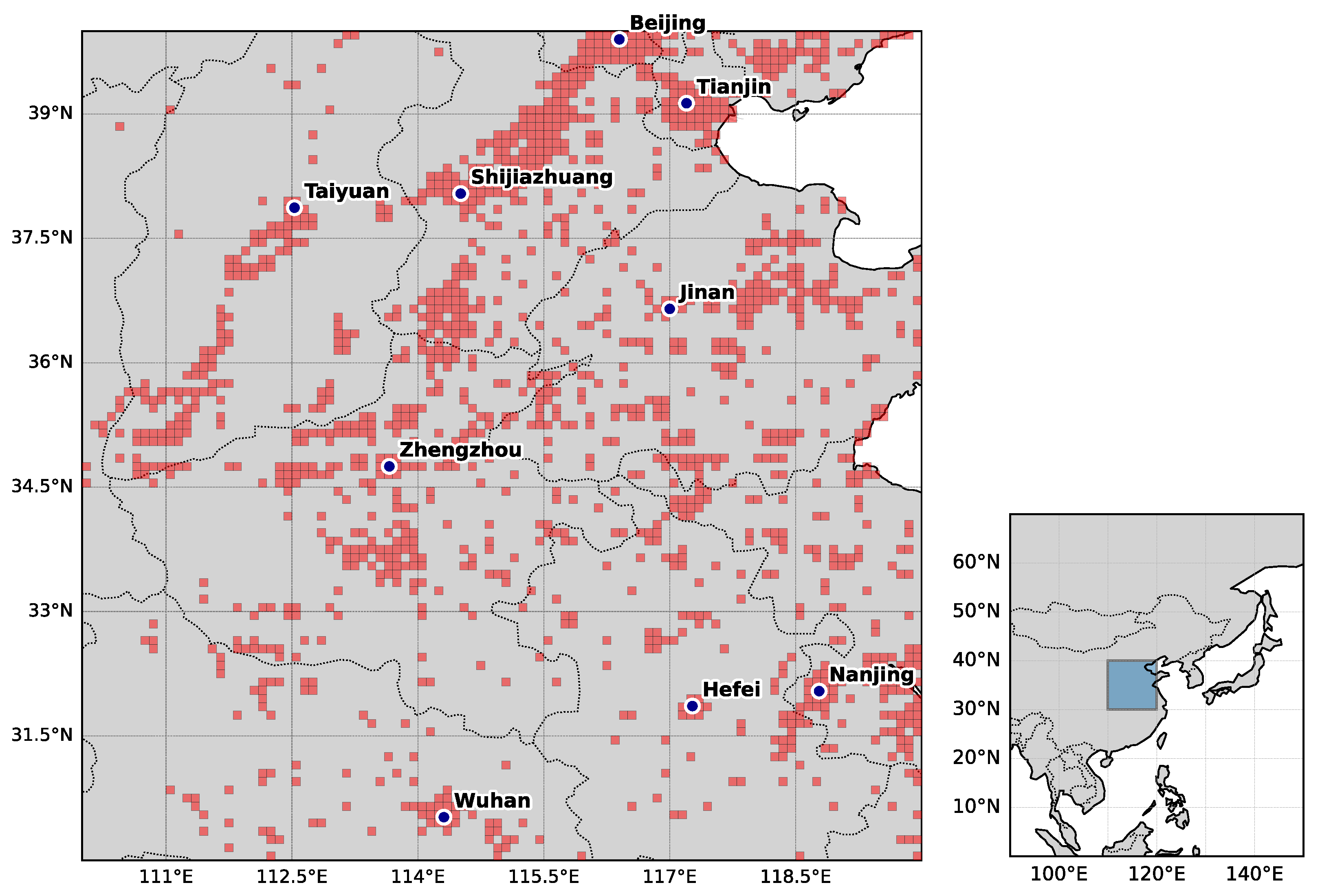
Our analysis focuses on populated human settlement areas in China. Specifically, we construct a set of 1430 rectangular grid cells with a spatial resolution of 0.1 × 0.1° in the WGS-84 geographic coordinate system (corresponding to approximately 10 km in the north–south direction and 8–9 km in the east–west direction within the study region in China). Figure 1 illustrates the spatial distribution of all sampled grid cells. The total area covers parts of North China, East China, and Central China. The selection of these grid cells is based on built-up area distribution to ensure that the observed NTL data can reflect human economic and social activities instead of natural surface characteristics. The original NTL data are obtained from the Gap_Filled_DNB_BRDF band in NASA’s Black Marble VNP46A2 daily NTL product. The NTL data are provided in raster format, with radiance values measured in units of nW · cm 2 · sr 1 , representing the intensity of artificial lighting observed at night. The original data are collected at a daily temporal resolution. In this study, we use spatially averaged NTL radiance values within each 0.1 × 0.1° grid cell. For each grid cell and each day, the mean radiance of all valid VIIRS pixels within the cell is calculated, excluding pixels affected by missing values. A total of 1430 grid cells with valid daily observations are retained, and each grid cell–day combination is treated as an individual data point. The NTL data used in the analysis are therefore not single-point measurements but spatially averaged values that reflect aggregated human activity levels over the observation period.
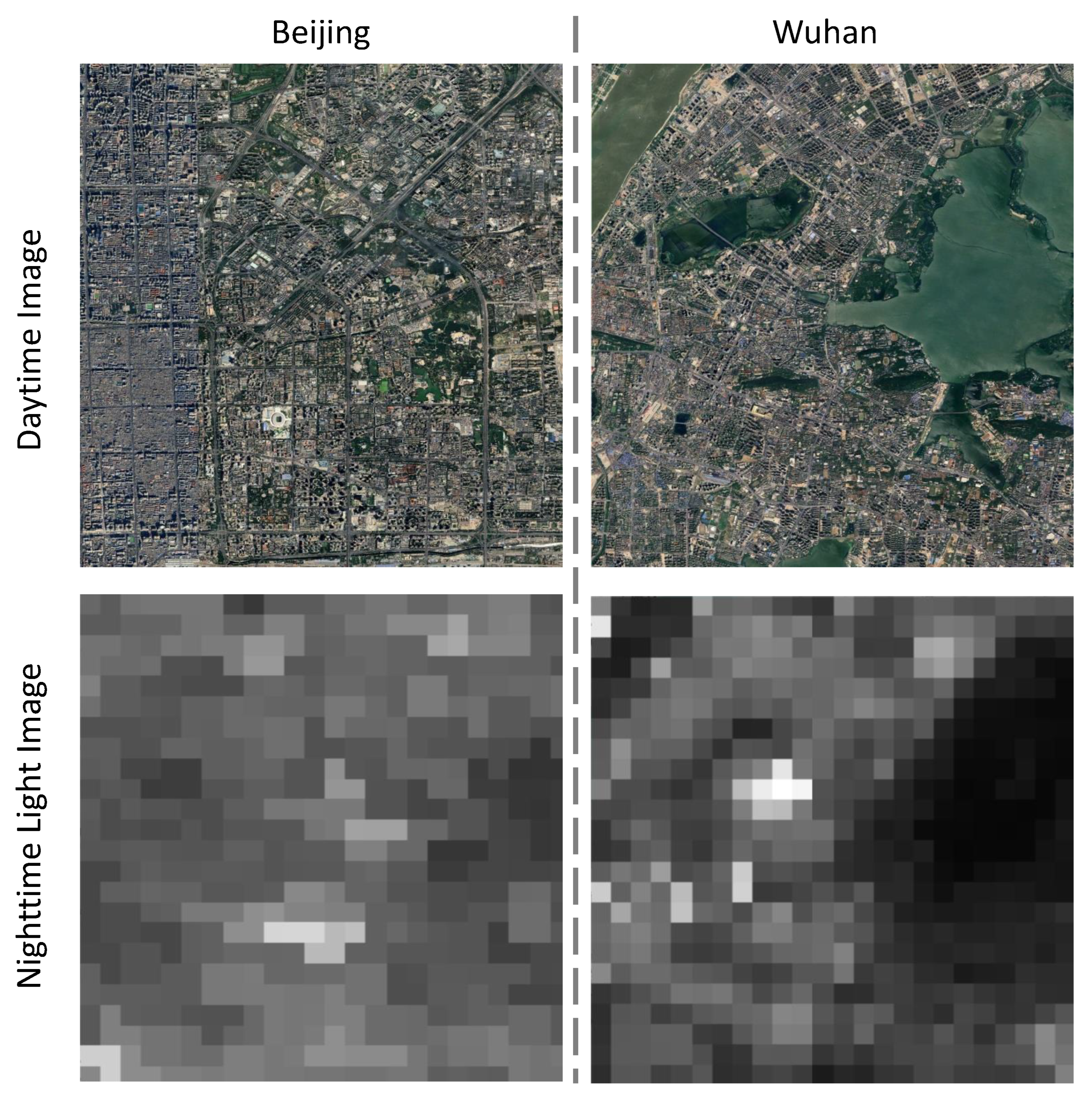
To further provide an intuitive illustration of how NTL data capture the spatial distribution of economic activity, we present a data example shown in Figure 2 based on two selected grid cells. The first grid cell covers the area between 39.9–40.0° N and 116.4–116.5° E, corresponding to the central urban area of Beijing. The second grid cell spans 30.5–30.6° N and 114.3–114.4° E, located in the central district of Wuhan. For each grid cell, we display the NTL imagery observed by VIIRS in the early hours of 25 January 2020, together with the corresponding daytime remote sensing imagery from Google Earth. This example visually demonstrates how NTL intensity reflects the spatial distribution of economic activity at an approximate spatial scale of 750 m. In both cases, stronger illumination is associated with areas of more intensive economic and commercial activity. For instance, within the selected Beijing grid cell, the brightest area corresponds to the Sanlitun commercial district, one of the most vibrant business and entertainment centers in the city. It is also noteworthy that the NTL observations correspond to the eve of the Chinese Spring Festival in 2020. At that time, Wuhan had already entered a citywide lockdown due to the COVID-19 outbreak, while Beijing announced similar containment measures shortly thereafter. This contrast highlights the ability of high-resolution nighttime light data to capture localized economic conditions under distinct policy environments.
For each grid cell showed in Figure 1, we extract attribute values from both the VNP46A1 and VNP46A2 datasets. Continuous variables (e.g., radiance, viewing angles, lunar illumination) are aggregated using the mean value within each grid cell, while categorical or discrete variables (e.g., seasonal indicators or quality flags) are summarized using the modal value. Table 1 shows the detail of how these variables are pre-processed.
Using the aggregated daily time series for each grid cell, we independently estimate the econometric model described in Equation (1) to test whether the VNP46A2 NTL data remain statistically sensitive to a set of physical and observational factors, including lunar illumination, sensor viewing geometry, cloud contamination, and seasonal effects. In principle, the VNP46A2 product has already applied algorithmic corrections to remove moonlight and cloud effects, while retaining viewing-angle and seasonal variations. Therefore, under an ideal correction scenario, the estimated coefficients associated with moonlight and cloud variables should be statistically insignificant.
We assess the presence of residual effects by examining the statistical significance of each explanatory variable’s coefficient in the regression model (1). A statistically significant coefficient indicates that the corresponding physical factor continues to influence on the observed VNP46A2 nighttime radiance.

3.1.2. Regression Results

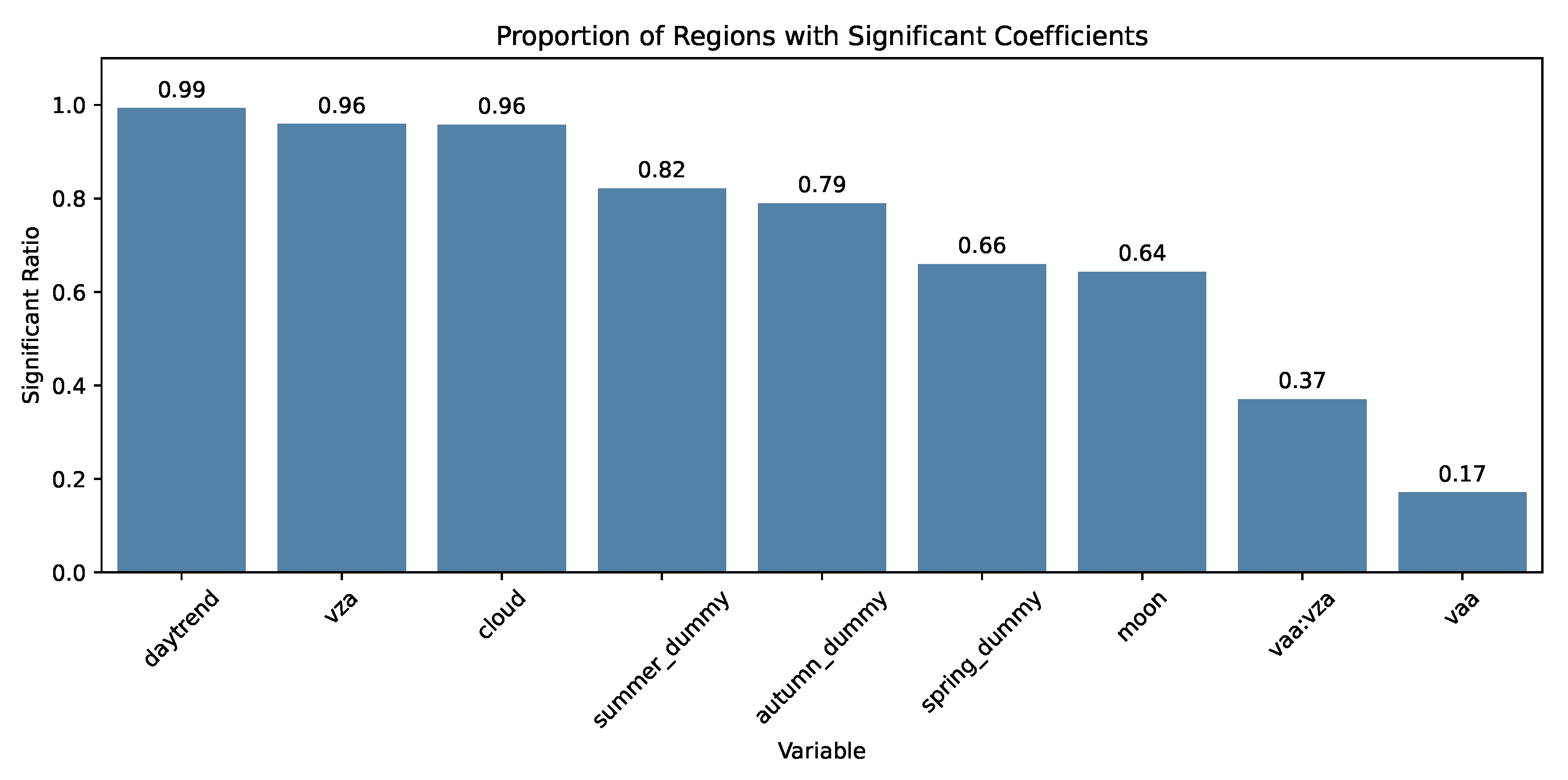
Figure 3 summarizes the regression outcomes from all 1430 grid cells. This figure reports the proportion of grid cells in which the estimated coefficient remains statistically significant at conventional confidence levels for each category of physical or observational factor. Each bar corresponds to one disturbance variable, including lunar illumination, sensor viewing geometry (VZA, VAA, and their interaction), cloud contamination, long-term temporal trend, and seasonal indicators. A higher proportion indicates that the corresponding physical factor remains influential in a larger fraction of regions, suggesting incomplete removal by the built-in VNP46A2 correction procedures.
The results show several patterns. First, a substantial fraction of grid cells exhibits statistically significant sensitivities to sensor-viewing zenith angle, cloud cover, seasonal indicators, lunar illumination, and viewing azimuth angle. Moreover, in a non-negligible subset of regions, the interaction between viewing zenith angle and viewing azimuth angle is also statistically significant, suggesting a synergistic angular effect that has not been fully eliminated by the VNP46A2 correction procedures.
Despite the explicit lunar correction implemented in VNP46A2, nearly 70% of the sampled grid cells still display statistically significant moonlight effects. This result indicates that lunar contamination has not been completely removed and that residual moonlight influences remain pervasive across human settlement areas.
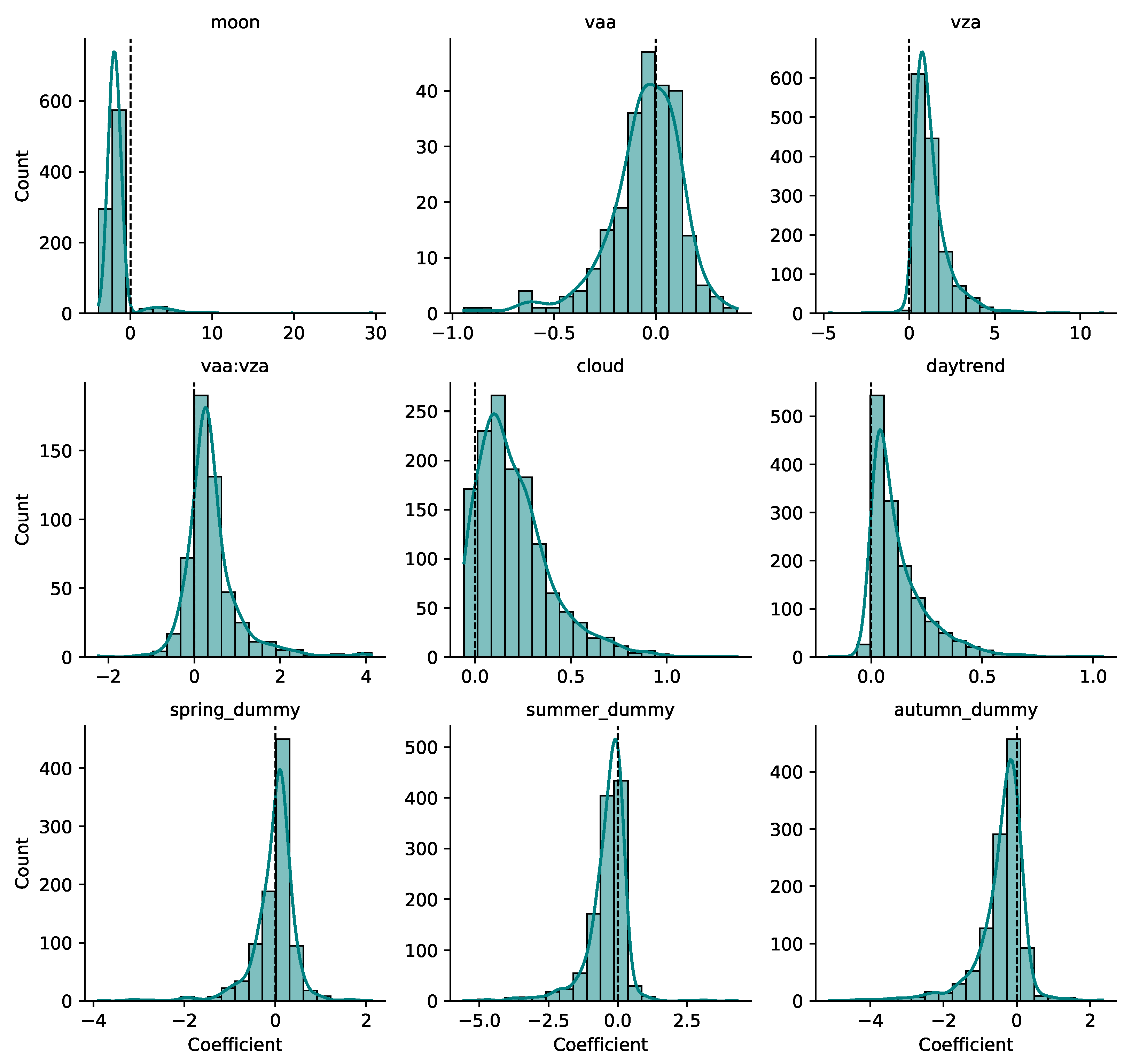
Figure 4 further characterizes these residual effects. The figure presents the histogram distributions of regression coefficients for each statistically significant variable across all grid cells. Differences in distributional shape, central tendency, and sign provide evidence on the magnitude and direction of residual sensitivities in the VNP46A2 product, including potential under-correction and over-correction of specific physical disturbance factors.
The distributions shown in Figure 4 reveal several features. The coefficients associated with lunar illumination are predominantly negative. This pattern implies that the VNP46A2 correction may over-correct moonlight effects in artificial surfaces. The algorithm embedded in VNP46A2 may subtract excessive radiance attributed to lunar illumination, thereby biasing the output NTL values. Residual moonlight influences may persist across human settlement areas for several reasons. First, moonlight correction algorithms are typically under assumptions of relatively homogeneous surface reflectance, whereas urban areas exhibit pronounced spatial heterogeneity in surface materials and geometry. Moonlight reflected from complex urban surfaces leads to location-specific residual effects that are not fully captured by globally applied correction parameters. Second, sensor viewing geometry further amplifies residual moonlight sensitivity in urban regions. Off-nadir observations increase the contribution of vertical and oblique surfaces, such as building walls and elevated structures, whose radiative response to lunar illumination differs from that of flat ground surfaces. Because viewing angles vary systematically over time and space, the interaction between urban morphology and observation geometry can generate persistent, statistically detectable, lunar-related variations in daily NTL series.
The coefficients for viewing zenith angle are mainly positive. Larger off-nadir angles are associated with higher observed nighttime radiance. A possible explanation is that, under oblique viewing geometries, a greater fraction of vertical building facades and elevated light sources enters the sensor’s field of view. Therefore, the recorded radiance increases.
Cloud cover generally exhibits a positive but relatively small effect on NTL values. This pattern suggests a mild over-correction of cloud-related attenuation in VNP46A2, whereby residual cloud presence slightly inflates observed radiance rather than suppressing it.
Regarding seasonal effects, with winter serving as the reference category, NTL values in summer and autumn are lower in most regions, consistent with the existing literature. This seasonal asymmetry is commonly attributed to vegetation-induced reductions in surface reflectance during the growing season and the enhancement of reflectance due to snow cover in winter. However, we also identify a non-trivial subset of regions where this pattern is reversed, with higher NTL values observed in summer. The underlying mechanisms for this deviation remain unclear and warrant further investigation.
The coefficient distributions shown in Figure 4 indicate that residual physical factors introduce structured variation into the observed radiance series. This distortion can inflate short-run volatility, generate spurious temporal patterns aligned with lunar cycles, viewing geometry, or seasonal transitions, and obscure true economic signals. Moreover, the heterogeneity in coefficient magnitudes and signs across spatial units implies that these residual effects vary unevenly across locations, potentially biasing cross-sectional comparisons and attenuating or exaggerating estimated policy effects in panel regressions. Such distributional features violate the implicit assumption that measurement error is random and time-invariant, thereby weakening identification in high-frequency event study and difference-in-differences frameworks. These considerations underscore the necessity of diagnosing and removing statistically significant residual effects before using daily NTL data for economic analysis.

3.1.3. Illustrative Example: A Single Grid Cell

This section illustrates the regression-based diagnostic and correction procedure at a finer scale. We select a representative grid cell centered at (38.65° N, 115.35° E), which aims to provide a clear and informative illustration of how the proposed framework operates when multiple sources of residual physical disturbance are simultaneously present. As shown in Figure 3, different proportions of grid cells exhibit statistically significant sensitivities to different physical factors, and a non-negligible subset of grid cells is affected by several types of disturbances at the same time. We therefore select a grid cell that displays statistically significant coefficients for multiple disturbance factors, including lunar illumination, sensor viewing geometry, cloud contamination, and seasonal effects. This grid cell is representative in the sense that it belongs to the group of locations where diverse residual effects coexist, so that it is suited for illustrating both the nature of residual disturbances in the original data and the effectiveness of the proposed local correction procedure.
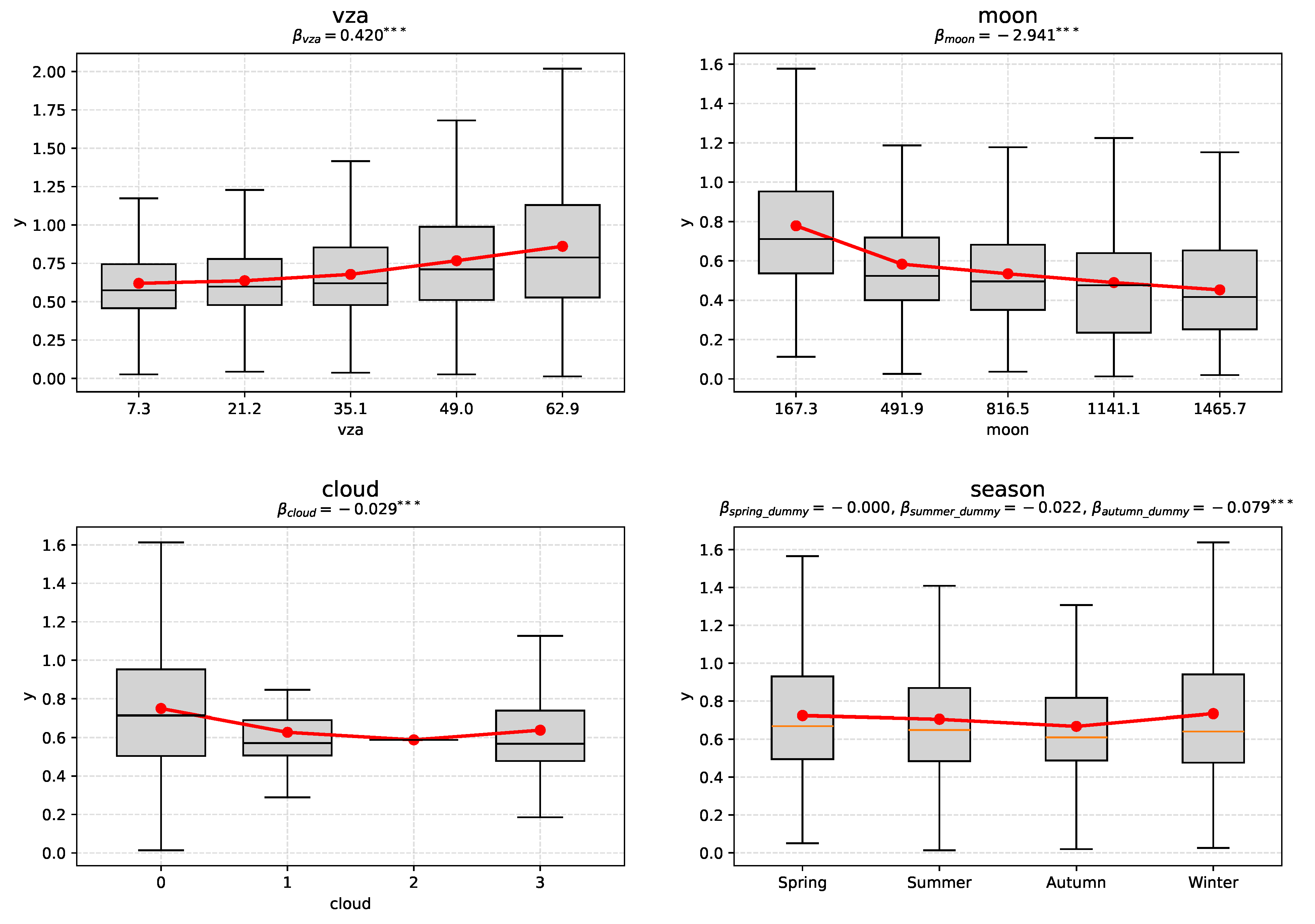
Figure 5 displays boxplots of NTL values across different bins of lunar illumination, cloud cover, and viewing zenith angle. We annotate the corresponding regression coefficient estimates, standard errors, and significance levels on each panel. The grid cell follows a typical pattern where NTL values decrease with increasing lunar illumination, increase with higher cloud indices, and rise with larger viewing zenith angles.
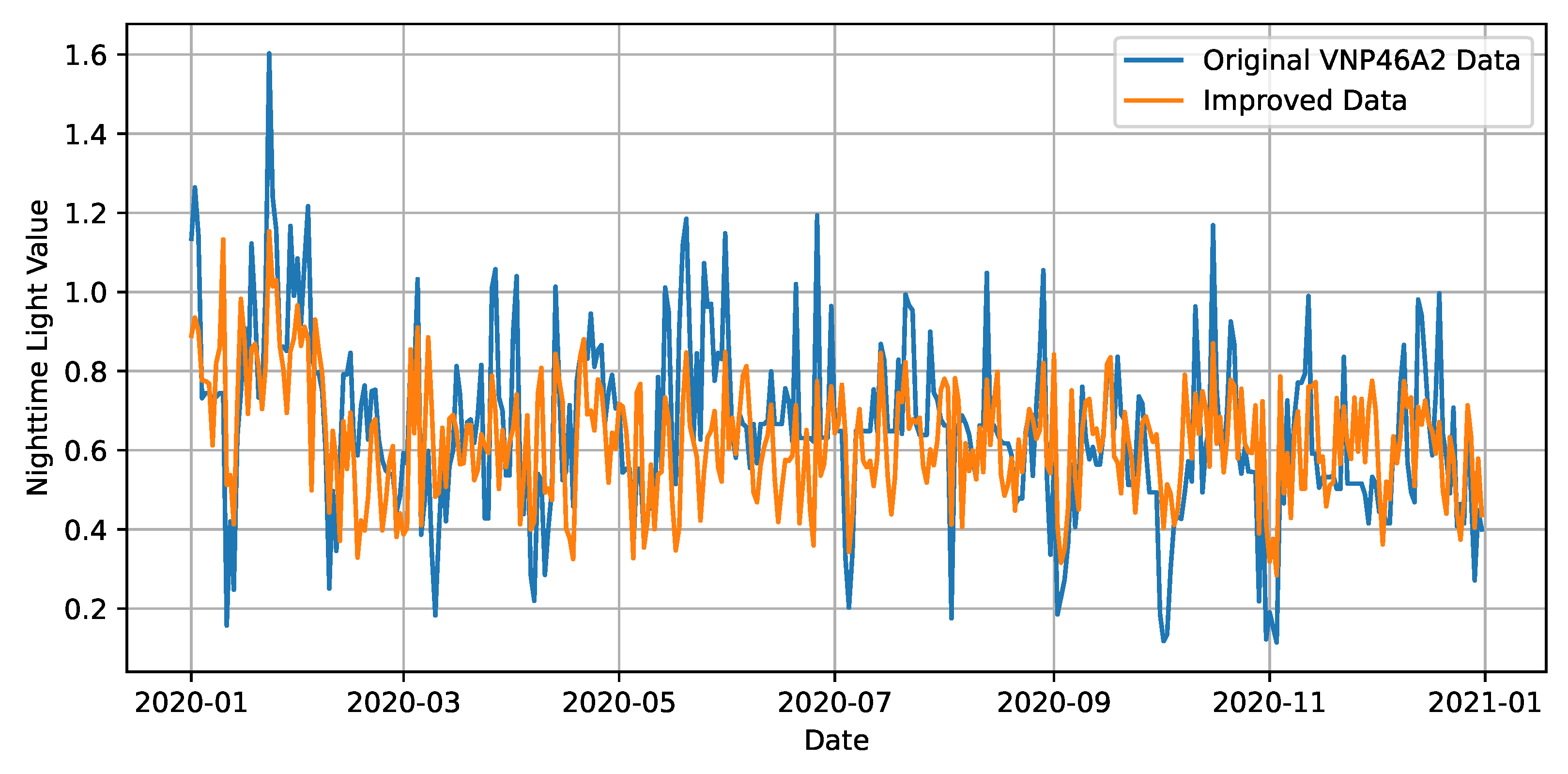
Figure 6 shows the result after applying the proposed correction algorithm defined by Equations (2) and (4). We re-estimate the econometric model using the corrected data and summarize the regression coefficients and significance levels before and after correction in Table 2. The results confirm that most previously significant physical effects are no longer statistically significant after correction.

3.1.4. Comparison for Short-Period Event Detection

Based on the preceding analysis, which demonstrates that the locally corrected NTL series substantially reduce residual physical noise and stabilize high-frequency variation, this subsection designs an experiment to evaluate whether such improvements translate into enhanced event-detection performance. Specifically, we exploit a large, externally imposed shock that is expected to generate a broadly synchronous impact on NTL across regions, and compare the ability of corrected and uncorrected daily NTL data to capture this effect. The nationwide lockdowns in China during the early 2020 COVID-19 outbreak provides a clear test case. The intervention of Chinese government had a well-defined onset and affected the economy. This setting allows us to assess whether the proposed correction framework improves the sensitivity and interpretability of daily NTL data in detecting short-term disruptions.
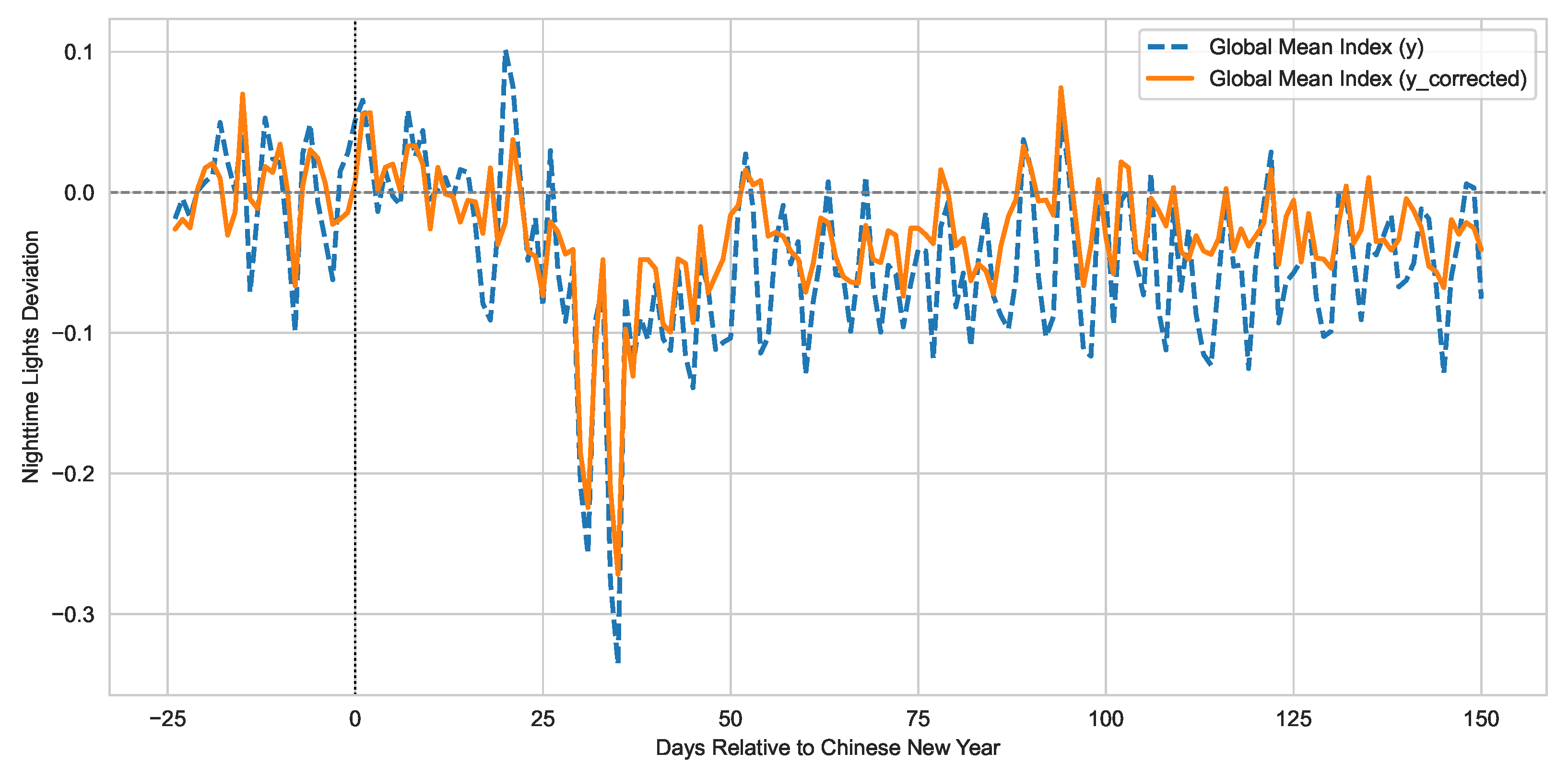
For each grid cell, we compute the relative change in NTL values over the period from 30 days before the Chinese New Year to 90 days after the Chinese New Year in 2020 (with the Chinese New Year falling on 25 January 2020). These changes are benchmarked against the historical average for the corresponding lunar calendar periods from 2014 to 2019 (with the Chinese New Year falling on 31 January 2014; 19 February 2015; 8 February 2016; 28 January 2017; 16 February 2018; and 5 February 2019). The NTL level in the 30 days before the Chinese New Year is shifted to a common baseline. Since the outbreak of COVID-19 and the implementation of nationwide lockdown policies coincided almost exactly with the Chinese New Year, this construction isolates the incremental NTL variation attributable to lockdown measures by netting out the regular holiday-related shutdown and subsequent reopening cycle associated with the holiday.
Figure 7 presents the resulting “pandemic monitoring index”. The index shows a pronounced decline in NTL following the onset of lockdown, reaching a trough approximately one month later, and then gradually recovering. The economic impact becomes most evident roughly two weeks after the Chinese New Year, a period that would normally correspond to the resumption of production and work. Around the eighth week after the holiday, the index approaches historical levels but remains persistently below them thereafter.
A comparison of the uncorrected VNP46A2 data and the corrected series shows clear differences. The index based on uncorrected data has large fluctuations that are unlikely to reflect real economic changes and instead come from residual physical disturbances. As a result, it is mainly interpretable at the weekly level. In contrast, the index based on corrected NTL data is more stable and better reflects daily economic dynamics.

3.2. Economic Application Example: Dynamic Policy Effects During COVID-19

This subsection provides an economic application illustrating how the corrected daily NTL data can be used for evaluation of rapid policy changes. We examine the economic effects of China’s COVID-19 containment policies, addressing three closely related questions: Does containment measure the exerted measurable economic impacts? Do these impacts differ across policy stages? Does China’s experience over the course of the pandemic offer insights that may be informative beyond its specific institutional context? Although China ultimately lifted its pandemic control measures at the end of 2022, the policy responses implemented during the preceding three years evolved substantially over time in both intensity and scope. The economic effects of these policies are inherently dynamic. Capturing such time-varying effects requires outcome measures capable of reflecting short-run economic fluctuations, which motivates the use of high-frequency NTL data in this application.
The study focus on China’s National Development Zones (CNDZs), which are geographically delineated and highly industrialized areas accounting for more than 11.5% of national GDP. Economic activities within CNDZs are spatially concentrated. Therefore, CNDZs are particularly suitable for measurement using NTL data. During the COVID-19 pandemic, these zones experienced heterogeneity in the timing and intensity of lockdown measures across outbreak waves. Therefore, the panel NTL data generated from CNDZs contain rich cross-sectional and temporal variation for identifying policy effects. The development zone data comes from the China Development Zone Audit Announcement Directory (2018) approved by the State Council and the Development of China [35]. The Geographic Information System (GIS) data of the national development zones is provided by Geographic College of Urban and Environmental Science, Peking University [36]. We use these GIS boundaries to construct panel NTL series for each development zone by aggregating daily radiance observations within the corresponding buffer areas.
The analysis is based on daily NTL observations derived from the VIIRS Day/Night Band, which provide high-frequency radiance measurements suitable for tracking short-run economic fluctuations.
Unlike conventional monthly or annual indicators, the daily VIIRS NTL data allow us to construct a panel of repeated observations over time, in which each spatial unit is observed on a daily basis throughout the sample period.
For each development zone, daily NTL values are constructed by spatially aggregating VIIRS radiance observations within the corresponding GIS-defined buffer area, so that the outcome variable represents an average daily radiance level rather than a single pixel or point observation. After data correction procedure described in Section 2.1.3, the final analysis sample consists of 552 development zones observed repeatedly at a daily frequency over the study period. This high-frequency panel dataset forms the core outcome variable used in the subsequent analyses. Descriptive statistics for the dataset can be seen in Appendix A.1.
Our main control variables include air quality indicators for each development zone. Air quality data are sourced from the China National Environmental Monitoring Center and the Beijing Environmental Protection Monitoring Center. From these sources, we extract daily measures of the Air Quality Index (hereinafter referred to as AQI), PM2.5, and PM10 concentrations. Descriptive statistics for these variables can also be seen in Appendix A.1.
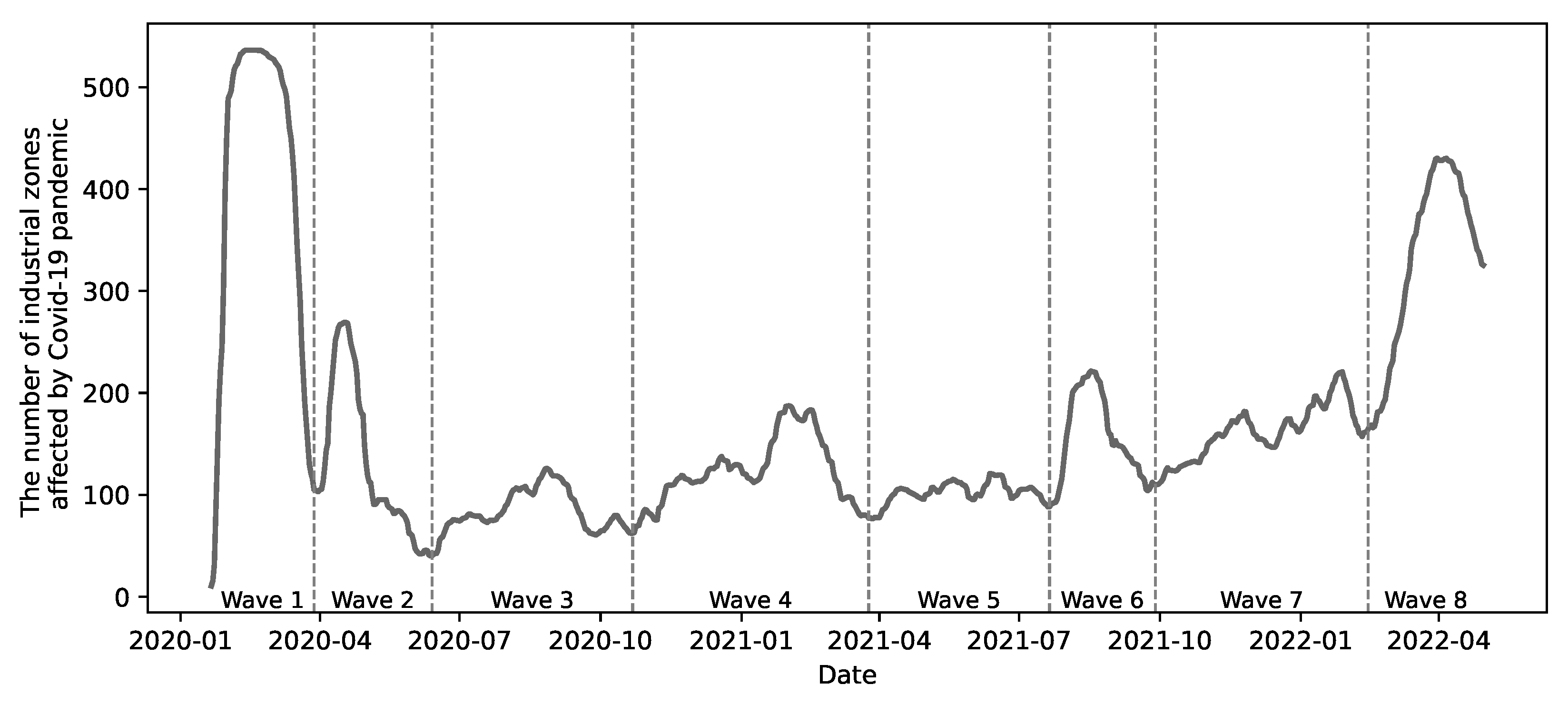
The analysis covers the period from January 2020 to April 2022, during which China implemented multiple rounds of epidemic control policies under evolving frameworks. Figure 8 summarizes the eight major pandemic waves during the sample period by plotting the number of CNDZs located in prefecture-level cities with newly confirmed COVID-19 cases. An industrial zone is defined as being affected when its host city reports new confirmed cases, which under China’s prevention and control regulations triggers local containment and response policies until new cases fall to zero. The eight waves are identified manually based on pronounced changes in the national daily number of newly confirmed cases.
We then estimate the economic impacts of lockdown policies using the corrected daily NTL data for 552 CNDZs. The empirical strategy follows the high-frequency event study and time-varying DiD frameworks introduced in Section 2.2. In addition to the main specifications reported below, Appendix A.2 presents complementary event study estimates that aggregate event–time effects at the weekly level, providing additional evidence on the robustness of the baseline results and supporting the parallel trends assumption.
For pandemic Waves 2–8, policy interventions are staggered across locations, and in each wave there exist development zones that have not yet entered a policy response window, providing a valid control group. Wave 1 constitutes a special case, as the initial nationwide response occurred almost simultaneously and coincided with the Chinese Spring Festival; the identification strategy for this wave is therefore modified and discussed separately. Detail can be seen in Appendix A.3.
To summarize the economic effects at the wave level, we slightly modify the baseline event study specification by restricting all event–time indicators within a given wave to share a common coefficient. This yields an average treatment effect (ATE) for each pandemic wave, which captures the mean short-term impact of lockdown policies during the corresponding response period. Detailed regression results underlying these estimates are reported in Appendix A.3.
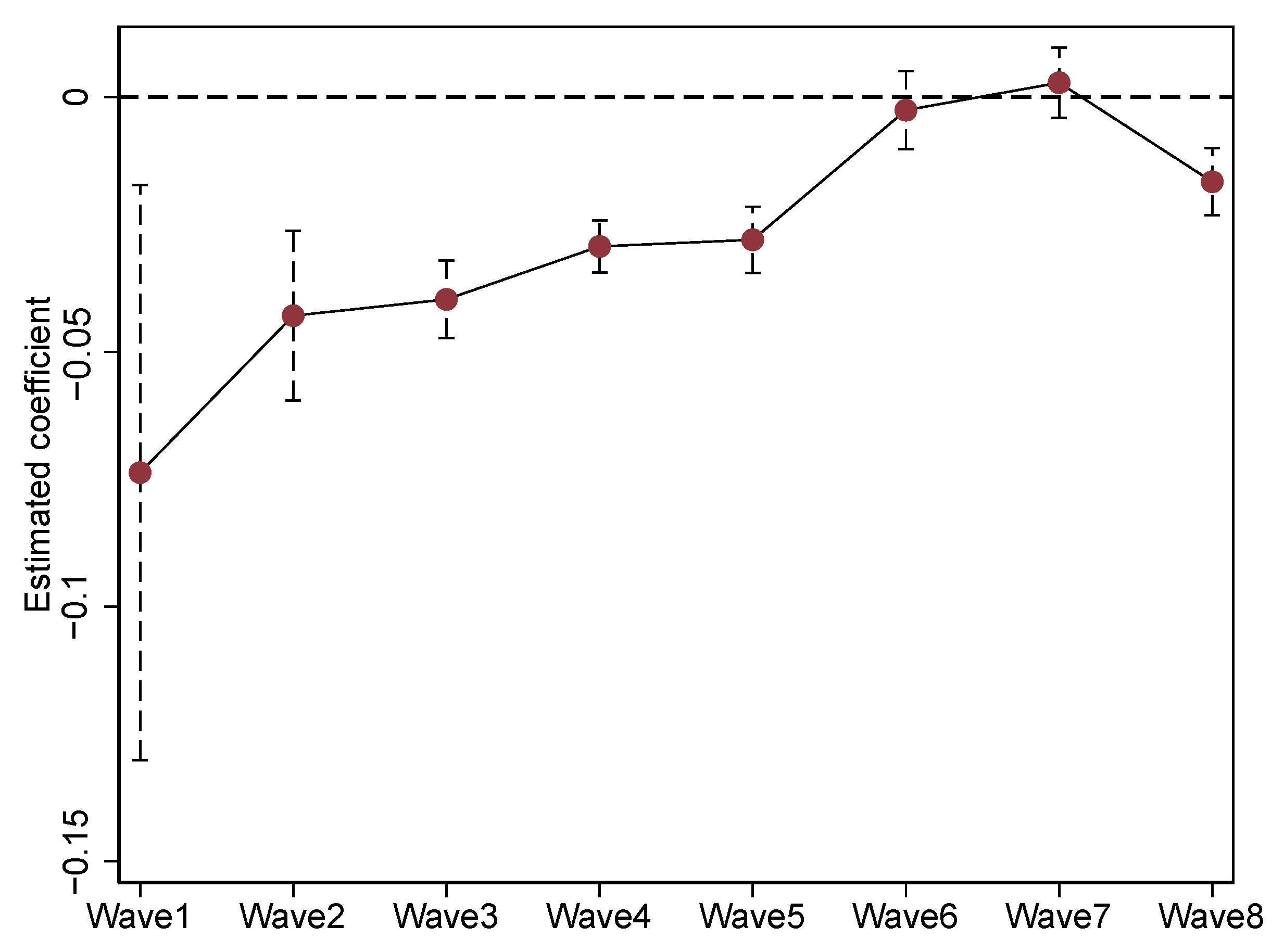
Figure 9 presents the estimated ATEs across the eight pandemic waves. The first wave is associated with the initial nationwide response, which exhibits a large and statistically significant decline in NTL intensity. In subsequent waves (Waves 2–5), the magnitude of the negative effects declines steadily, with the estimated ATE shrinking from approximately 4.29 % to 2.80 % . The attenuation may reflect adaptive policy adjustments by the government to better balance the epidemic control and economic production.
During Waves 6 and 7, the estimated effects are no longer statistically significant. This result confirms that government’s efforts to reduce the marginal impact of epidemic control policies on industrial production were effective during this period. However, this pattern reverses during the eighth wave in early 2022, when NTL intensity declines again by approximately 1.66 % . A possible explanation is that, as the virus became more transmissible, previously effective containment strategies gradually lost effectiveness and result in larger economic disruptions.
Overall, this application illustrates the ability of the corrected daily NTL data to trace how policy effects emerge, attenuate, disappear, and reappear over relatively short horizons. Such dynamic analysis would not be feasible without the use of high-frequency NTL data.

4. Conclusions

This study advances both the remote sensing and applied economics literature. We develop an econometrically motivated framework to improve daily NTL data and demonstrate its value for high-frequency economic analysis. The correction strategies do not aim to prioritize physical consistency or visual smoothness. Instead, the objective of the improved daily NTL series is to ensure econometric reliability.
We propose a regression-based diagnostic and correction procedure that identifies residual physical disturbance factors that remain statistically influential even after standard preprocessing in existing products. The approach avoids over-correction by selectively removing only those components that are empirically significant at the local level. From an econometric perspective, these residual physical factors act as omitted variables. Their removal directly mitigates omitted-variable bias and strengthens the identifying assumptions underlying event study designs.
Our findings indicate that officially released daily NTL products do not fully eliminate the influence of several physical disturbance factors. This does not imply that such data products are unreliable or unsuitable for scientific use. Rather, these datasets have to balance multiple objectives, including data continuity, computational efficiency, and global applicability. We therefore strongly recommend further data processing guided by the diagnostic framework proposed in this study when daily NTL data are used for economic applications.
The economic application further shows that Chinese governments increasingly managed to achieve a better balance between epidemic control and economic activity during 2020–2021, although this balance was disrupted in 2022.

Author Contributions

Data curation, X.Y.; Formal analysis, X.Y.; Funding acquisition, Z.Z. and K.H.; Investigation, X.Y.; Methodology, X.Y., Z.Z. and K.H.; Project administration, Z.Z.; Software, K.H.; Writing—original draft, X.Y.; Writing—review and editing, Z.Z. and K.H. All authors have read and agreed to the published version of the manuscript.

Funding

This research was supported in part by the Open Fund of Hubei Luojia laboratory (No. 250100015), in part by the Project of National Key Laboratory of Electromagnetic Energy (6142217040101), and in part by the Youth Talent Support Program of Beihang University (YWF-23-L-1244).

Institutional Review Board Statement

Not applicable.

Informed Consent Statement

Not applicable.

Data Availability Statement

Dataset available on request from the authors.

Conflicts of Interest

The authors declare no conflicts of interest.

Abbreviations

The following abbreviations are used in this manuscript:
NTLNighttime Light
VIIRSVisible Infrared Imaging Radiometer Suite
DMSP/OLSDefense Meteorological Satellite Program/Operational Linescan System
VNP46A1VIIRS Nighttime Lights, Daily At-Sensor Top-of-Atmosphere Radiance Product
VNP46A2VIIRS Nighttime Lights, Daily Moonlight- and Atmosphere-Corrected Product
BRDFBidirectional Reflectance Distribution Function
SFACSelf-Filtering and Angular Correction
HDNTLHigh-Definition Nighttime Light dataset
STLSeasonal-Trend Decomposition using LOESS
GISGeographic Information System
CNDZChina National Development Zone
DiDDifference-in-Differences
ATEAverage Treatment Effect
AQIAir Quality Index
PM2.5Particulate Matter with diameter ≤ 2.5 µm
PM10Particulate Matter with diameter ≤ 10 µm
VZAViewing Zenith Angle
VAAViewing Azimuth Angle

Appendix A. Detailed Regression Results for the Economic Application Example

Appendix A.1. Data Description

This appendix reports descriptive statistics for the main variables used in the empirical analysis. Table A1 summarizes the distribution of nighttime light intensity, air quality indicators, epidemiological variables, and policy-related measures across all observations in the sample. These statistics provide an overview of the scale, dispersion, and variation in the data and serve as background information for the regression analyses presented in the main text.
Table A1. Descriptive statistics for main variables.
VariableMeanStd. Dev.MinimumMaximum
NTL intensity21.6515.010175.10
Air Quality Index (AQI)71.9740.030500
PM2.535.1529.540906
PM1059.7046.0102768
New confirmed cases (infected)1.81963.65012,523
Marketization degree (mkt)7.4801.7920.6209.780
Duration of first-level response (flr)43.4319.222799
Lockdown days2.7819.146056
Notes: Nighttime light intensity is measured in digital number (dn). “Lockdown days” refers to the total number of days during which a city was subject to lockdown measures within the sample period.

Appendix A.2. The Baseline Regression

This subsection provides additional event study evidence for the economic application discussed in Section 3.2, which examines the short-term economic effects of COVID-19 containment policies on China’s National Development Zones (CNDZs) using daily NTL data.
Specifically, we estimate the average dynamic effect of all pandemic-related policy events during the study period using the timing-based event study model described in Equation (6). The estimation sample includes all instances in which a development zone enters a local pandemic control or zero-COVID policy response.
Relative to Equation (6), the specification is modified by allowing all observations within the same calendar week to share a common coefficient. That is, event–time indicators are defined at the weekly level rather than the daily level, so that the estimated coefficients capture weekly average treatment effects.
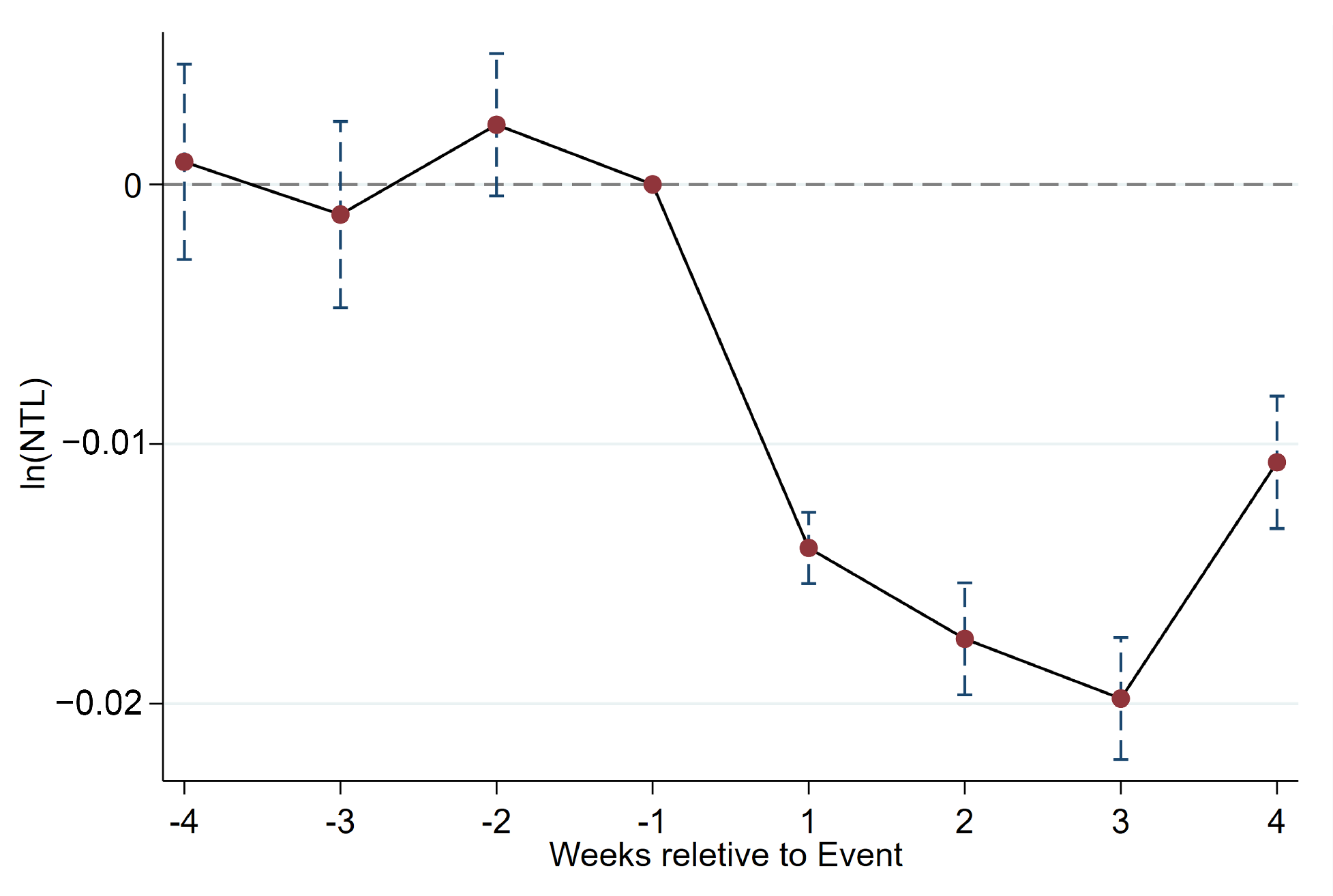
Figure A1 reports the resulting event study estimates. The post-event coefficients are predominantly negative, confirming that the implementation of pandemic control measures is associated with a statistically meaningful decline in nighttime light intensity within development zones.
Equally important, the estimated coefficients for all pre-event weeks are statistically indistinguishable from zero. In particular, none of the coefficients corresponding to weeks prior to policy implementation differ significantly from zero at conventional confidence levels. This finding provides direct support for the parallel trends assumption underlying the DiD framework used in the main analysis. Together, these results indicate that the estimated negative effects are unlikely to be driven by pre-existing differential trends across development zones.
Figure A1. Event study estimates of the effects of lockdown policies on nighttime light intensity. The horizontal axis reports weeks relative to policy implementation, and the vertical axis shows estimated changes in ln ( NTL ) . Points represent coefficient estimates, vertical bars indicate confidence intervals, and the dashed horizontal line denotes zero effect.
Applsci 16 00947 g0a1

Appendix A.3. Detailed Regression Results by Pandemic Waves

This subsection reports the detailed regression results underlying Figure 9 in the main text, which summarizes the estimated economic effects of COVID-19 containment policies across eight major pandemic waves in China.
For Waves 2–8, we employ the time-varying DiD specification given in Equation (5). In these waves, the timing of local outbreaks and corresponding policy responses varies substantially across prefecture-level cities, generating staggered treatment adoption across development zones. Identification therefore relies on cross-sectional and temporal variation in policy timing.
Wave 1 is treated separately for two reasons. First, the initial outbreak and associated lockdown measures were implemented almost simultaneously across regions. Second, the onset of these measures coincided closely with the Chinese Spring Festival, which is characterized by large and predictable seasonal fluctuations in economic activity. To address these issues, we construct a difference-in-differences model that uses the same relative period around the Spring Festival in 2019 as a parallel-time control group. This design differences out the regular holiday-related shutdown and reopening cycle and isolates the incremental economic impact attributable to the pandemic and the unprecedented containment measures during the first wave.
For all waves, the analysis window is defined as the period from the initiation of a local zero-COVID policy response until one week after the elimination of new local cases. Within each such window, we impose the restriction that all event–time indicators share a common coefficient. As a result, the estimated treatment effect corresponds to the average effect over the entire policy-response window, rather than to a sequence of time-varying effects within that window.
Table A2 reports the estimated coefficients, standard errors, and model statistics for each wave. The results closely mirror the patterns shown in Figure 9: a large and statistically significant negative effect during Wave 1, a gradual attenuation of negative effects during Waves 2–5, statistically insignificant effects during Waves 6 and 7, and a renewed negative impact during Wave 8 associated with the spread of the Omicron variant. These detailed regression results further reinforce the conclusion that the economic effects of pandemic control policies evolved substantially across different stages of the pandemic.
Table A2. Average treatment effects of pandemic control policies on nighttime light intensity.
Panel 1: Early and Medium Stages of Pandemic Control (Wave 1–Wave 4)
VariableWave 1Wave 2Wave 3Wave 4
Lockdown policy−0.0737 **−0.0429 ***−0.0100 **−0.0293 ***
(0.0288)(0.0085)(0.0039)(0.0026)
Constant2.8460 ***3.030 ***3.131 ***3.228 ***
(0.093)(0.0084)(0.0154)(0.0033)
Month fixed effectsYesYesYes
AQI controlYesYesYes
Observations15,1606416754912,981
R 2 0.0030.0290.0910.133
Number of units530276176256
Panel 2: Later stages of pandemic control (Wave 5–Wave 8)
VariableWave 5Wave 6Wave 7Wave 8
Lockdown policy−0.0280 ***−0.00260.0028−0.0166 ***
(0.0033)(0.0039)(0.0035)(0.00336)
Constant3.287 ***3.254 ***3.216 ***3.006 ***
(0.0037)(0.0035)(0.0041)(0.0107)
Month fixed effectsYesYesYesYes
AQI controlYesYesYesYes
Observations8806767213,10213,940
R 2 0.0900.0440.0430.019
Number of units175230318460
Notes: Robust standard errors are reported in parentheses. ***, **, and * denote statistical significance at the 1%, 5%, and 10% levels, respectively. “–” indicates that the corresponding control variables are not included in the specification.

References

  1. Elvidge, C.D.; Baugh, K.E.; Kihn, E.A.; Kroehl, H.W.; Davis, E.R. Mapping city lights with nighttime data from the DMSP Operational Linescan System. Photogramm. Eng. Remote Sens. 1997, 63, 727–734. [Google Scholar]
  2. Elvidge, C.D.; Baugh, K.E.; Dietz, J.B.; Bland, T.; Sutton, P.C.; Kroehl, H.W. Radiance calibration of DMSP-OLS low-light imaging data of human settlements. Remote Sens. Environ. 1999, 68, 77–88. [Google Scholar] [CrossRef]
  3. Elvidge, C.D.; Baugh, K.; Zhizhin, M.; Hsu, F.C.; Ghosh, T. VIIRS night-time lights. Int. J. Remote Sens. 2017, 38, 5860–5879. [Google Scholar] [CrossRef]
  4. Li, X.; Zhao, L.; Li, D.; Xu, H. Mapping urban extent using Luojia 1-01 nighttime light imagery. Sensors 2018, 18, 3665. [Google Scholar] [CrossRef] [PubMed]
  5. Zhang, G.; Wang, J.; Jiang, Y.; Zhou, P.; Zhao, Y.; Xu, Y. On-orbit geometric calibration and validation of Luojia 1-01 night-light satellite. Remote Sens. 2019, 11, 264. [Google Scholar] [CrossRef]
  6. Zhang, C.; Pei, Y.; Li, J.; Qin, Q.; Yue, J. Application of luojia 1-01 nighttime images for detecting the light changes for the 2019 spring festival in western cities, China. Remote Sens. 2020, 12, 1416. [Google Scholar] [CrossRef]
  7. Guo, B.; Hu, D.; Zheng, Q. Potentiality of SDGSAT-1 glimmer imagery to investigate the spatial variability in nighttime lights. Int. J. Appl. Earth Obs. Geoinf. 2023, 119, 103313. [Google Scholar] [CrossRef]
  8. Li, C.; Chen, F.; Wang, N.; Yu, B.; Wang, L. SDGSAT-1 nighttime light data improve village-scale built-up delineation. Remote Sens. Environ. 2023, 297, 113764. [Google Scholar] [CrossRef]
  9. Doll, C.H.; Muller, J.P.; Elvidge, C.D. Night-time imagery as a tool for global mapping of socioeconomic parameters and greenhouse gas emissions. AMBIO J. Hum. Environ. 2000, 29, 157–162. [Google Scholar] [CrossRef]
  10. Henderson, J.V.; Storeygard, A.; Weil, D.N. Measuring economic growth from outer space. Am. Econ. Rev. 2012, 102, 994–1028. [Google Scholar] [CrossRef]
  11. Donaldson, D.; Storeygard, A. The view from above: Applications of satellite data in economics. J. Econ. Perspect. 2016, 30, 171–198. [Google Scholar] [CrossRef]
  12. Hu, Y.; Yao, J. Illuminating economic growth. J. Econom. 2022, 228, 359–378. [Google Scholar] [CrossRef]
  13. Chen, X.; Nordhaus, W.D. VIIRS nighttime lights in the estimation of cross-sectional and time-series GDP. Remote Sens. 2019, 11, 1057. [Google Scholar] [CrossRef]
  14. Chetty, R.; Friedman, J.N.; Stepner, M. The economic impacts of COVID-19: Evidence from a new public database built using private sector data. Q. J. Econ. 2024, 139, 829–889. [Google Scholar] [CrossRef]
  15. Baker, S.R.; Farrokhnia, R.A.; Meyer, S.; Pagel, M.; Yannelis, C. How does household spending respond to an epidemic? Consumption during the 2020 COVID-19 pandemic. Rev. Asset Pricing Stud. 2020, 10, 834–862. [Google Scholar] [CrossRef]
  16. Allcott, H.; Boxell, L.; Conway, J.; Gentzkow, M.; Thaler, M.; Yang, D. Polarization and public health: Partisan differences in social distancing during the coronavirus pandemic. J. Public Econ. 2020, 191, 104254. [Google Scholar] [CrossRef] [PubMed]
  17. Goolsbee, A.; Syverson, C. Fear, lockdown, and diversion: Comparing drivers of pandemic economic decline 2020. J. Public Econ. 2021, 193, 104311. [Google Scholar] [CrossRef] [PubMed]
  18. Berry, C.R.; Fowler, A.; Glazer, T.; Handel-Meyer, S.; MacMillen, A. Evaluating the effects of shelter-in-place policies during the COVID-19 pandemic. Proc. Natl. Acad. Sci. USA 2021, 118, e2019706118. [Google Scholar] [CrossRef] [PubMed]
  19. Glaeser, E.L.; Gorback, C.; Redding, S.J. JUE insight: How much does COVID-19 increase with mobility? Evidence from New York and four other US cities. J. Urban Econ. 2022, 127, 103292. [Google Scholar] [CrossRef]
  20. Forsythe, E.; Kahn, L.B.; Lange, F.; Wiczer, D. Where have all the workers gone? Recalls, retirements, and reallocation in the COVID recovery. Labour Econ. 2022, 78, 102251. [Google Scholar] [CrossRef]
  21. Lourenço, N.; Rua, A. The Daily Economic Indicator: Tracking economic activity daily during the lockdown. Econ. Model. 2021, 100, 105500. [Google Scholar] [CrossRef]
  22. Arora, V.; Lieskovsky, J. Electricity Use as an Indicator of US Economic Activity; Technical Report; ZBW-Leibniz Information Centre for Economics: Kiel, Germany, 2016. [Google Scholar]
  23. Chen, J.; Chen, W.; Liu, E.; Luo, J.; Song, Z. The economic cost of locking down like China: Evidence from city-to-city truck flows. J. Urban Econ. 2025, 145, 103729. [Google Scholar] [CrossRef]
  24. Wang, Z.; Román, M.O.; Kalb, V.L.; Miller, S.D.; Zhang, J.; Shrestha, R.M. Quantifying uncertainties in nighttime light retrievals from Suomi-NPP and NOAA-20 VIIRS Day/Night Band data. Remote Sens. Environ. 2021, 263, 112557. [Google Scholar] [CrossRef]
  25. Wu, Y.; Li, X. Exploring the drivers of variations in daily nighttime light time series from the perspective of periodic factors. IEEE Geosci. Remote Sens. Lett. 2024, 21, 3000905. [Google Scholar] [CrossRef]
  26. Li, X.; Ma, R.; Zhang, Q.; Li, D.; Liu, S.; He, T.; Zhao, L. Anisotropic characteristic of artificial light at night–Systematic investigation with VIIRS DNB multi-temporal observations. Remote Sens. Environ. 2019, 233, 111357. [Google Scholar] [CrossRef]
  27. Tan, X.; Zhu, X.; Chen, J.; Chen, R. Modeling the direction and magnitude of angular effects in nighttime light remote sensing. Remote Sens. Environ. 2022, 269, 112834. [Google Scholar] [CrossRef]
  28. Levin, N. The impact of seasonal changes on observed nighttime brightness from 2014 to 2015 monthly VIIRS DNB composites. Remote Sens. Environ. 2017, 193, 150–164. [Google Scholar] [CrossRef]
  29. Wang, Z.; Román, M.O.; Shrestha, R.; Yao, T.; Kalb, V. Black Marble User Guide (Collection 2.0); Technical Report; NASA Goddard Space Flight Center: Greenbelt, MD, USA, 2024. [Google Scholar]
  30. Pei, Z.; Zhu, X.; Hu, Y.; Chen, J.; Tan, X. A high-quality daily nighttime light (HDNTL) dataset for global 600+ cities (2012–2024). Earth Syst. Sci. Data 2025, 17, 5675–5691. [Google Scholar] [CrossRef]
  31. Hu, Y.; Zhou, X.; Yamazaki, D.; Chen, J. A self-adjusting method to generate daily consistent nighttime light data for the detection of short-term rapid human activities. Remote Sens. Environ. 2024, 304, 114077. [Google Scholar] [CrossRef]
  32. Hao, X.; Liu, J.; Heiskanen, J.; Maeda, E.E.; Gao, S.; Li, X. A robust gap-filling method for predicting missing observations in daily Black Marble nighttime light data. GISci. Remote Sens. 2023, 60, 2282238. [Google Scholar] [CrossRef]
  33. Miller, D.L. An introductory guide to event study models. J. Econ. Perspect. 2023, 37, 203–230. [Google Scholar] [CrossRef]
  34. Cleveland, R.B.; Cleveland, W.S.; Terpenning, I. STL: A Seasonal-Trend Decomposition Procedure Based on Loess. J. Off. Stat. 1990, 6, 3. [Google Scholar]
  35. China Development Zone Audit Bulletin Directory. Available online: https://www.ndrc.gov.cn/xxgk/zcfb/gg/201803/t20180302_961203.html?code=&state=123 (accessed on 2 May 2025).
  36. Geographic Data Sharing Infrastructure. Available online: https://geodata.pku.edu.cn/index.php?c=content&a=show&id=1161# (accessed on 2 May 2025).
Figure 1. Spatial distribution of the 1430 study grids.
Applsci 16 00947 g001
Figure 2. Illustrative example of NTLt data and daytime imagery. The lower panels show VIIRS NTL observations in the early hours of 25 January 2020, for selected grid cells in central Beijing (39.9–40.0° N, 116.4–116.5° E) and central Wuhan (30.5–30.6° N, 114.3–114.4° E). The upper panels display the corresponding daytime remote sensing images from Google Earth Pro 7.3.6.10441 (64-bit).
Applsci 16 00947 g002
Figure 3. Proportion of spatial units with statistically significant coefficients for each disturbance factor. The horizontal axis reports the share of sample regions in which the locally estimated coefficient β ^ k ( i ) is statistically significant at conventional confidence levels in the diagnostic regression.
Applsci 16 00947 g003
Figure 4. Distributions of locally estimated regression coefficients for statistically significant disturbance variables. Each panel reports the histogram of coefficient estimates β ^ k ( i ) across spatial units for which the corresponding variable is statistically significant in the local diagnostic regression. Vertical dashed lines indicate zero.
Applsci 16 00947 g004
Figure 5. Boxplots and regression annotations for grid cell (38.65° N, 115.35° E). Panels show boxplots of nighttime radiance across bins of viewing zenith angle, lunar illumination, cloud-contamination categories, and seasons. Red lines indicate bin means. Reported coefficients correspond to locally estimated regression parameters. Note: ***, **, and * denote statistical significance at the 1%, 5%, and 10% levels.
Applsci 16 00947 g005
Figure 6. Nighttime light time series for the example grid cell before and after local correction. The figure compares the original VNP46A2 daily nighttime light series with the locally corrected series.
Applsci 16 00947 g006
Figure 7. Pandemic monitoring index based on NTL data.
Applsci 16 00947 g007
Figure 8. The eight waves of the COVID-19 pandemic in China from January 2020 to April 2022. The figure shows the number of industrial zones affected during each wave over time. Data are compiled from daily COVID-19 situation reports released by the National Health Commission of China.
Applsci 16 00947 g008
Figure 9. Estimated average treatment effects of lockdown policies on NTL intensity across COVID-19 waves. Points represent the estimated average treatment effects (ATEs) for each wave, measured as changes in ln ( NTL ) , and vertical bars indicate corresponding confidence intervals. The horizontal dashed line denotes zero effect.
Applsci 16 00947 g009
Table 1. Pre-processing of variables extracted from VNP46A1 and VNP46A2.
Variable (Unit)SymbolSourceOriginal
Variable Name
Grid-Level
Aggregation
Normalization
Nighttime light radiance
( nW · cm 2 · sr 1 )
yA2Gap_Filled_DNB_BRDF
-Corrected_NTL
MeanNone
Lunar irradiance ( nW · cm 2 )moonA2DNB_Lunar_IrradianceMean ÷ 10 4
Viewing azimuth angle (degree)vaaA1Sensor_AzimuthMean ÷ 10 2
Viewing zenith angle (degree)vzaA1Sensor_ZenithMean ÷ 10 2
Cloud contamination
(0–3: cloud-free to fully cloudy)
cloudA1QF_Cloud_MaskModeNone
Long-term day trend (days)daytrendDerivedExact ÷ 10 2
Spring indicatorspring_dummyDerivedExactNone
Summer indicatorsummer_dummyDerivedExactNone
Autumn indicatorautumn_dummyDerivedExactNone
Winter indicatorwinter_dummyDerivedExactNone
Notes: Variables are first aggregated to specific grid cells. Continuous variables are summarized using grid-level mean values, while categorical or discrete variables are summarized using the modal value. A1 and A2 denote variables sourced from the VNP46A1 and VNP46A2 products, respectively. Reported normalization factors refer only to user-defined rescaling applied for numerical stability in regression analysis; product-level scale factors embedded in the original datasets are omitted for brevity. Seasonal dummy variables are constructed based on the day of year, with spring defined as days 60–149, summer as days 150–242, autumn as days 243–334, and winter as days 335–365 and 1–59.
Table 2. Regression results before and after correction.
Before CorrectionAfter Correction
Intercept0.0444 ***0.00429 ***
(0.00145)(0.00012)
moon−2.9407 ***−0.0121
(0.1119)(0.00905)
vaa0.009500.00002
(0.01068)(0.00086)
vza0.4200 ***−0.00070
(0.02417)(0.00196)
vaa × vza−0.11080.00873
(0.2858)(0.02313)
cloud−0.02881 ***0.0001
(0.0002)(0.0002)
daytrend0.1248 ***0.1240 ***
(0.0036)(0.0032)
spring_dummy−0.00020.0004
(0.0117)(0.0009)
summer_dummy−0.0223 *0.0001
(0.0118)(0.0010)
autumn_dummy−0.0786 ***−0.0011
(0.0117)(0.0009)
Notes: Standard errors are reported in parentheses. Bold coefficients indicate statistical significance. *** p < 0.01 , ** p < 0.05 , * p < 0.1 .
Disclaimer/Publisher’s Note: The statements, opinions and data contained in all publications are solely those of the individual author(s) and contributor(s) and not of MDPI and/or the editor(s). MDPI and/or the editor(s) disclaim responsibility for any injury to people or property resulting from any ideas, methods, instructions or products referred to in the content.