Article

Design of a Robot Vacuum Gripper Manufactured with Additive Manufacturing Using DfAM Method

by
Bálint Leon Seregi
1,*,
Adrián Bognár
2 and
Péter Ficzere
1
1
Department of Railway Vehicles and Vehicle System Analysis, Faculty of Transportation Engineering and Vehicle Engineering, Budapest University of Technology and Economics, 3 Műegyetem Embankment, 1111 Budapest, Hungary
2
Department of Innovative Vehicles and Materials, GAMF Faculty of Engineering and Computer Science, John von Neumann University, 10 Izsáki Street, 6000 Kecskemét, Hungary
*
Author to whom correspondence should be addressed.
Appl. Sci. 2026, 16(2), 935; https://doi.org/10.3390/app16020935
Submission received: 23 December 2025 / Revised: 12 January 2026 / Accepted: 14 January 2026 / Published: 16 January 2026
(This article belongs to the Special Issue Optimized Design and Analysis of Mechanical Structure)

Abstract

This study presents a Design for Additive Manufacturing (DfAM)–driven redesign of an industrial robot vacuum gripper for Fused Deposition Modeling (FDM), focusing on the systematic transformation of a multi-part, machined aluminum assembly into a lightweight, support-minimized polymer component suitable for continuous industrial operation. Beyond a practical redesign, the work contributes a geometry-centered DfAM methodology that links internal channel topology, overhang control, and functional interfaces to manufacturability, vacuum performance, and cost efficiency. The development follows three iterative design revisions, progressing from a geometry-adapted baseline toward a fully DfAM-optimized solution. A key innovation is the introduction of support-free internal vacuum channels with triangular cross-sections, enabling complete elimination of soluble support material within enclosed cavities. This redesign reduces the internal vacuum volume by 44%, leading to faster vacuum response while maintaining functional suction performance. The optimized overhang angles, filleted load paths, and DfAM-compliant suction cup seats significantly reduce post-processing requirements and improve structural robustness. Experimental validation under industrial operating conditions confirms that the final design achieves reliable vacuum performance and mechanical durability. Compared to the original configuration, the optimized gripper demonstrates a substantial reduction in manufacturing complexity, with printing time reduced by approximately 50% and total part cost decreased by 26%, primarily due to eliminated tooling, reduced support material, and simplified post-processing. The presented results demonstrate that DfAM principles, when applied systematically at both global and internal geometry levels, can yield quantifiable functional and economic benefits. The findings provide transferable design guidelines for support-free internal channels and functional interfaces in FDM-manufactured vacuum components, offering practical reference points for researchers and practitioners developing end-use additive manufacturing solutions in industrial automation.

1. Introduction

Additive manufacturing offers flexibility and design freedom, particularly beneficial in low-volume production and custom components. Its advantages—such as cost reduction, minimized downtime, and design simplification—are increasingly exploited for functional components integrated into production machinery. However, AM parts’ mechanical and thermal characteristics, process limitations, and design requirements differ from traditional subtractive manufacturing technologies. With the greater design freedom offered by additive manufacturing technologies, it is possible to create complex geometries that are specifically optimized for minimal weight while maintaining the same functional performance. This technology provides significant support for the automation goals known from Industry 4.0, especially when used for functional components such as robot grippers [1]. The task of a gripper is to grasp an object and allow a robot arm to move it stably to another position [2]. Grippers can be categorized based on their operating principle: pneumatic, electric (motorized), hydraulic, temperature-controlled, or magnetically controlled. They can also be classified by geometry: finger-type, claw-type, immersion-type, and vacuum suction cup types. The most common types are pneumatically controlled, finger-style grippers [3]. With the emergence of printable elastomers, the development trend is shifting toward so-called soft grippers, printed from TPU and operated pneumatically [4]. The demand for 3D-printed grippers has increased in recent years because it can significantly reduce both costs and production time [3]. Among additive manufacturing technologies, FDM is the most frequently used for producing such grippers, ahead of PolyJet and SLA technologies. Which technology is best depends on the gripper’s operating principle, geometry, load, and operating conditions. Parts manufactured using Material Jetting and Vat Photo-Polymerization technologies have weaker mechanical properties but offer good surface quality. With material extrusion and powder bed fusion, parts with more favorable mechanical properties can be produced; however, their surface quality is much poorer (without postprocessing), which can be problematic depending on the object to be gripped. It is important to understand the limitations and advantages of these technologies (referring back to Design for Additive Manufacturing), especially the material properties, in order to choose the best option for the design.
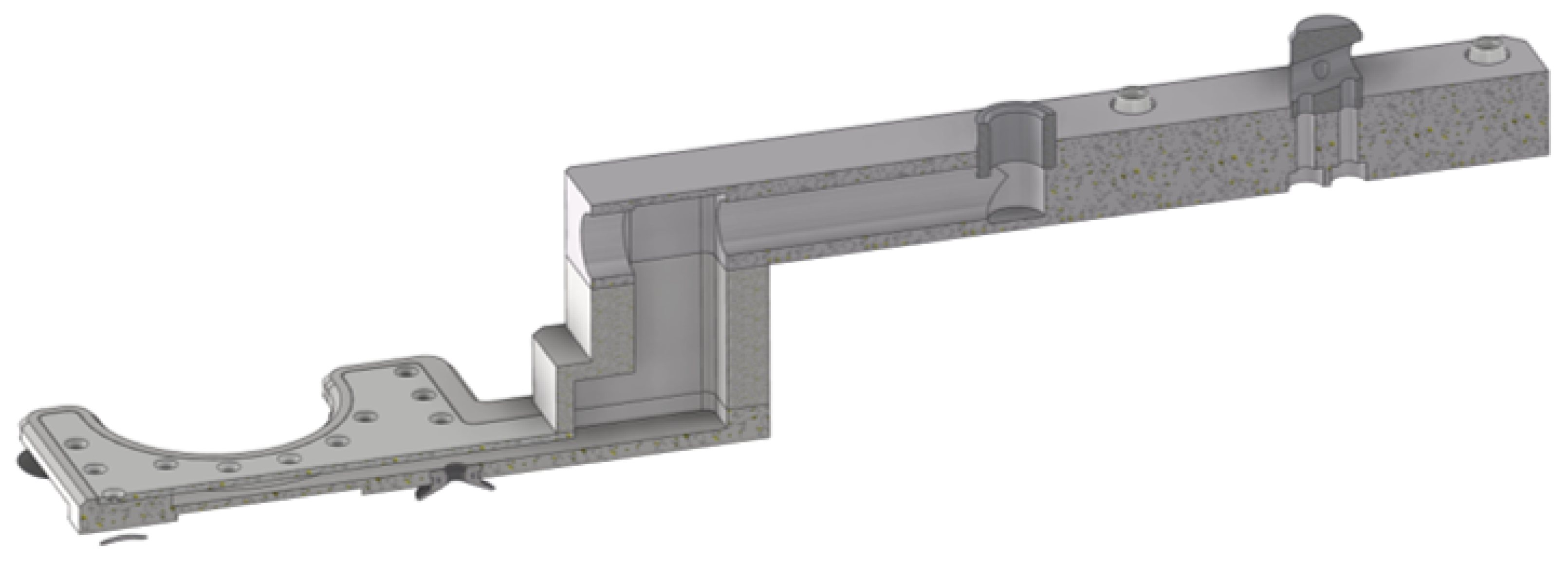
In this work, the is focus on the design of a pneumatically controlled vacuum suction cup gripper. To anticipate the reason: the gripper must handle a medical product that has a fabric and plastic film surface. Vacuum suction cup grippers are typically used in cleanroom (sterile) manufacturing (in healthcare, automotive, and aerospace industries), and due to the shape and material of the product, this type provides the most secure grip on the product—even despite its breathable fabric surface and high flexibility. Vacuum suction cup solutions are generally not capable of lifting heavy products, as their effectiveness heavily depends on the quality the geometry of the gripped surface [4,5]. However, the weight of the product to be handled in this case is not significant, so this is not a concern. From the perspective of the gripper, the goal is not the additive manufacturing of the suction cup itself, but rather the printing of the entire assembly using FDM technology. Nevertheless, current development trends are showing increasingly efficient vacuum suction cup geometries using additive technologies [6,7,8]. This work applies Design for Additive Manufacturing principles to develop a vacuum gripper head optimized for Fused Deposition Modeling, replacing a multi-part aluminum assembly (Figure 1) similar to other works [9,10,11].

2. Methodology

The original design (Tatabánya, Hungary) consisted of seven distinct aluminum components that required high-precision machining and sealing to ensure airtightness (Figure 1). Due to a broad product portfolio which the machine has to be able to produce, the geometry of the head had to be changed each time in case of product change. The frequent tool changes were necessary, increasing downtime and operational costs. The objective of the redesign was to minimize the part count and total weight while retaining full functionality, ultimately simplifying assembly and maintenance procedures. The new design had to comply with the design constraints, like the position of the center of mass relative to the robot reference point, be as light as possible and create enough vacuum to transfer the product in a defined time window.

2.1. Requirements and Limitations

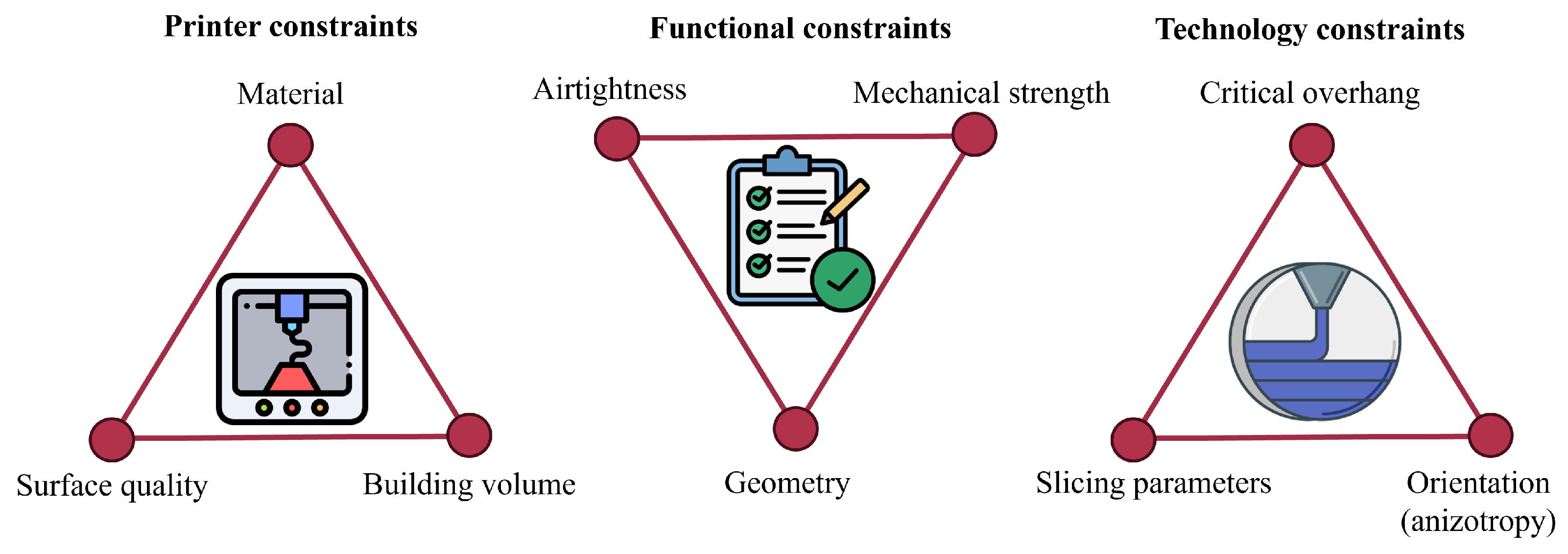
To make the new design successful the requirements and limitation had to be defined. We can separate these design limitations as three design constraints (see Figure 2). The first kind of constraint is the 3D printers configuration which can the usable materials, the surface quality and the maximum size of the parts because of the build volume. Another constraint group is related to the function of the part. In this case the geometry has to be considered (deadzone limitations and achievable airtightness level and mechanical strength with the consideration of anisotropy. The last group of constraints are related to the technology itself. We have to consider the limitations and characteristic of the FDM technology such as critical overhang angles, anisotropy direction caused by the orientation and the slicing parameters (layer height, number of wall, infill pattern and density etc.).
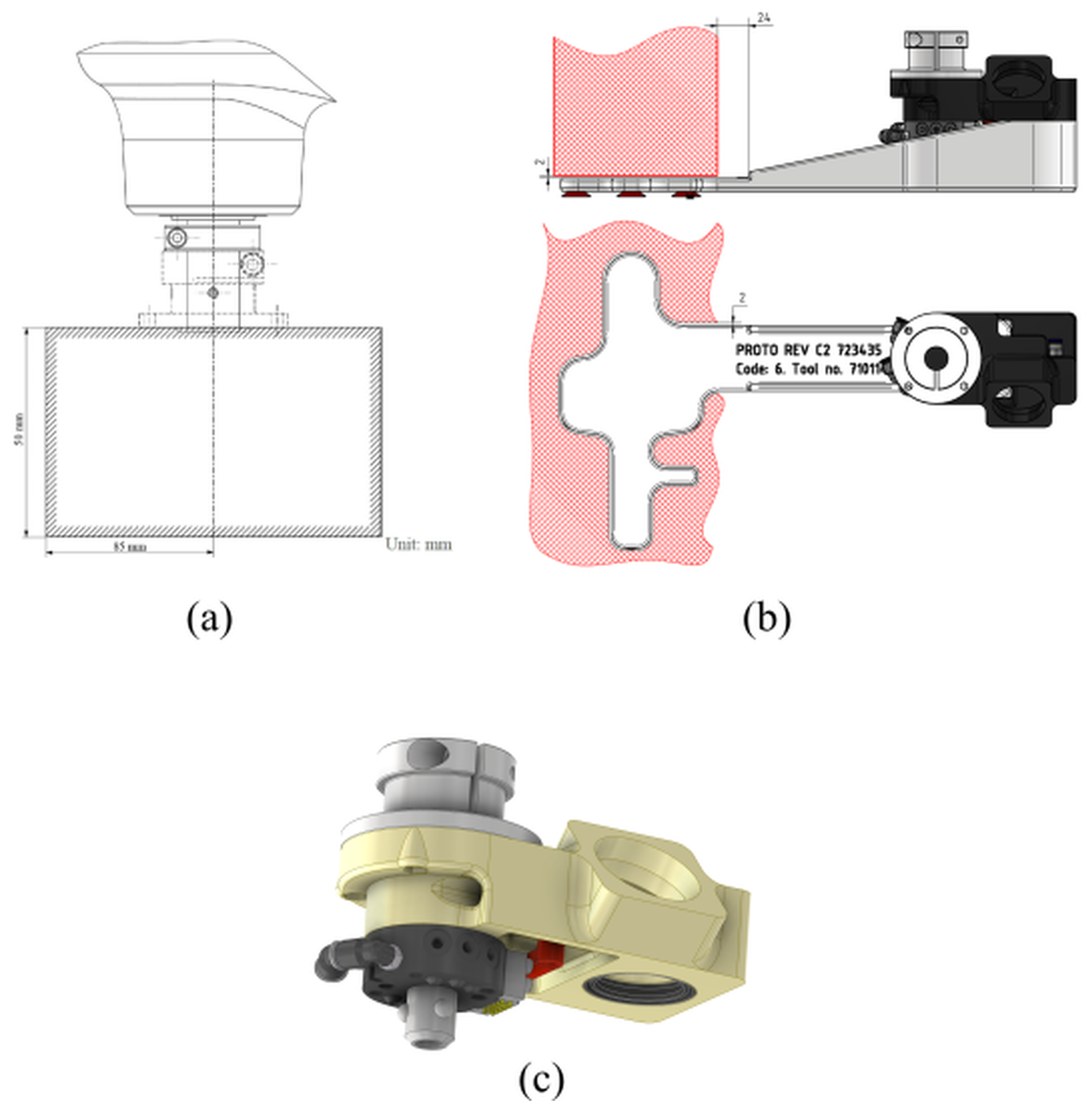
The geometry of the part had strict limitations for several reasons. the most crucial one was to place the suction cup close to the edges of the transferable product to prevent sagging and delamination. The sequence of the machine is to place the vacuum head above a film and under a contour cutting knife. When the knife is lowered to cut the contour of the product, there is just enough space between the cutting support and the knife die to have the vacuumhead hold the freshly cut product. On the other hand, the design space was limited due to the contour stamping die around the part. Precise fixing of the toolhead was neccessary to avoid any angle errors in the cantilever causing contact between the part and the stamp knifes. Choosing the printing parameters were also an imporant aspect, as it can highly affect the airtightness and flow resistance inside the channels and also the overall durability of the part [12,13,14]. Besides the aforementioned deadzones as a geometric requirement (see Figure 3b), the position of the center of mass of the toolhead has to be inside a give volume specified by the manufacturer (see Figure 3a). For the fast and automatic tool changes a universal connecting method is neccessary for all heads which was defined by a custom adapter designed prior to the project (see Figure 3c).

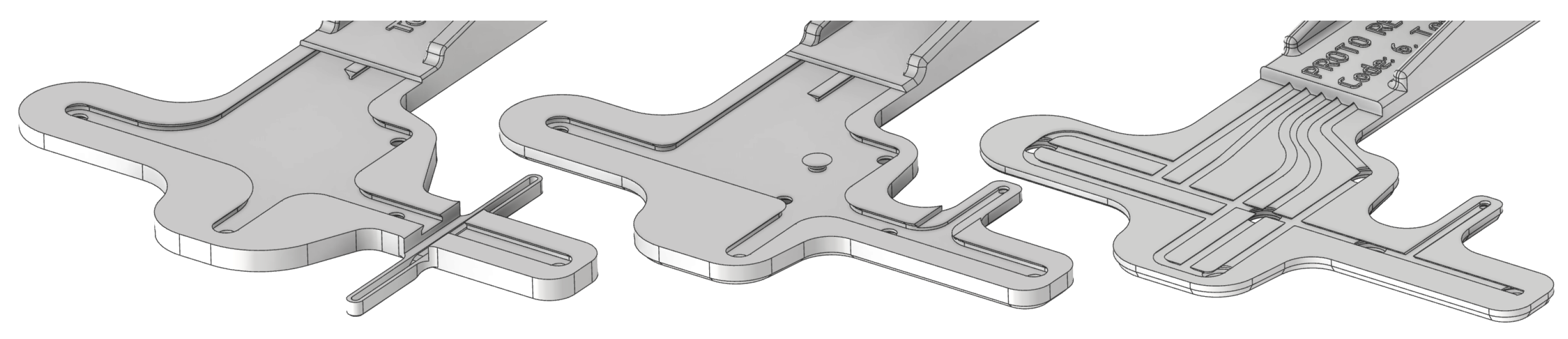
2.2. Revision A

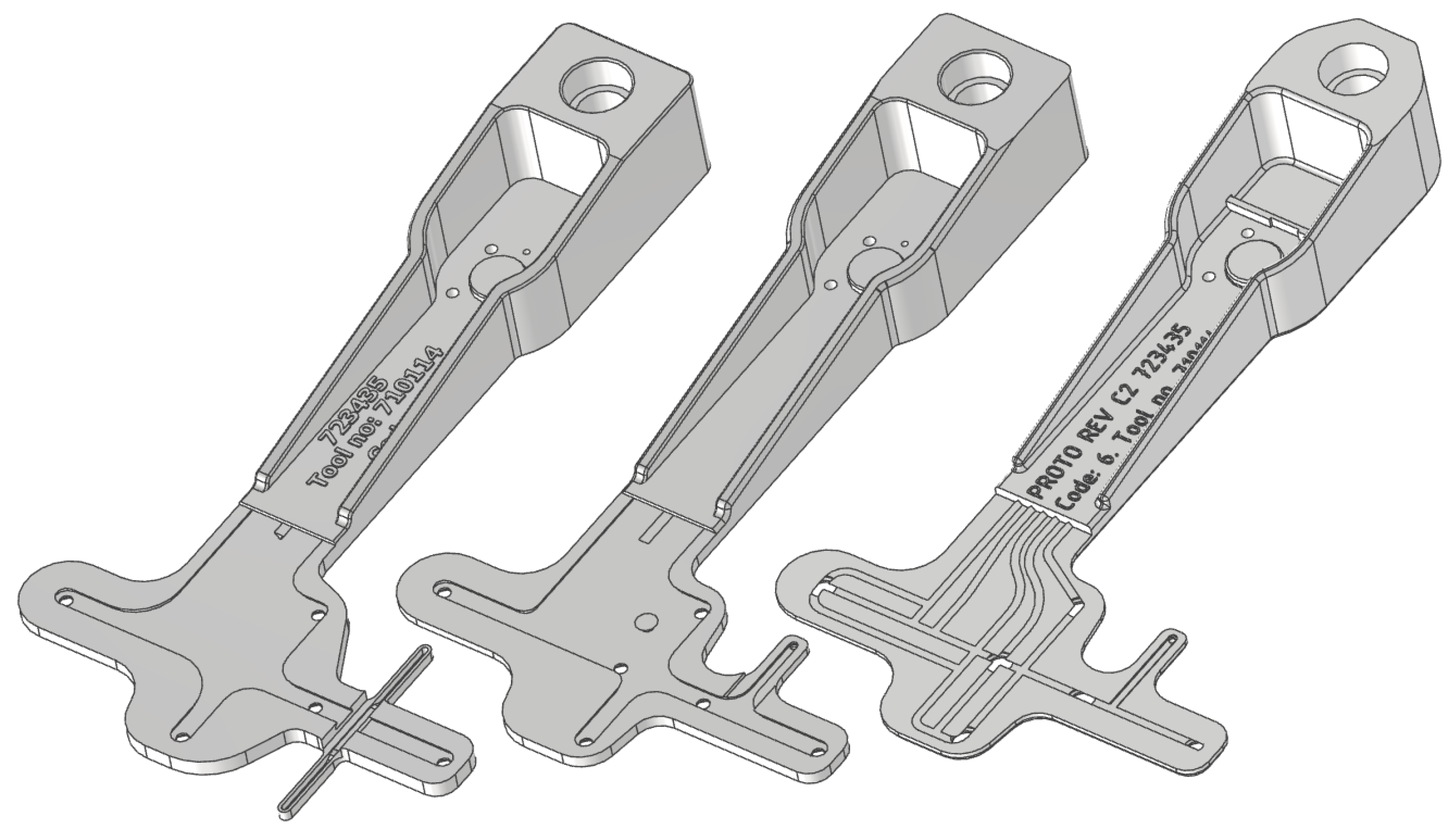
The first revision (Figure 4 left part), termed Revision A, aimed to adapt the existing assembly for FDM manufacturing without fundamentally altering its form. The redesign consolidated the assembly into six printed components, thereby reducing part count and assembly complexity. ASA material was used with adaptive layer heights set at 0.1778 mm and a 30% double-dense infill pattern to ensure structural rigidity (for the full slicing profile see Table A1) [16]. ASA was selected as the manufacturing material based on both availability and cost–performance considerations. The materials accessible for production were limited to ABS, ASA, PA12CF, and ULTEM. Among these options, ULTEM and PA12CF exhibit significantly higher material and processing costs compared to ABS and ASA, making them economically less favorable for the intended industrial application. Although ABS can provide mechanical properties comparable to those of ASA, it was not selected due to its substantially higher warping tendency during FDM processing. This increased susceptibility to thermal deformation can adversely affect dimensional accuracy and manufacturing reliability, particularly for elongated geometries and enclosed internal features. In contrast, ASA offers similar strength characteristics while demonstrating improved thermal stability and reduced warping behavior, thereby enabling more consistent and robust production. The functional testing revealed several limitations. Cracks developed under pressure cycles due to fatigue, and soluble support removal proved difficult in certain internal cavities (Figure 4 left). In several cases, during the support-dissolution process, the flow rate of the solvent through the part was sufficiently high to suggest that no residual support material remained within the vacuum chamber. Nevertheless, during subsequent use of the print head, a noticeable reduction in suction performance was observed, and upon opening the part it became evident that certain channels were fully or partially clogged with undissolved support material (see the examples in Figure 5). This indicates that evaluating the dissolution progress based solely on solvent flow rate is not an adequate method. Additionally, the flushing process itself presents challenges: as the fluid preferentially follows the path of least resistance, channels that still require dissolution are exposed to substantially lower flow, making their complete cleaning more difficult.

2.3. Revision B

To address these shortcomings, Revision B (Figure 4 middle part) introduced reinforcing ribs and increased wall thicknesses to enhance mechanical performance. The layer height was increased to 0.254 mm, reducing the total print time by approximately 50%. Wall thicknesses were increased to 2.794 mm. The infill density was raised to 35% to achieve the higher stiffness and energy absorption (for the full slicing profile see Table A1) [17,18]. These changes improved durability and manufacturability; however, post-processing and internal support removal remained challenges (Figure 4 and Figure 6 middle part).

2.4. Applying the DfAM

2.4.1. Internal Channel Geometry and Layout

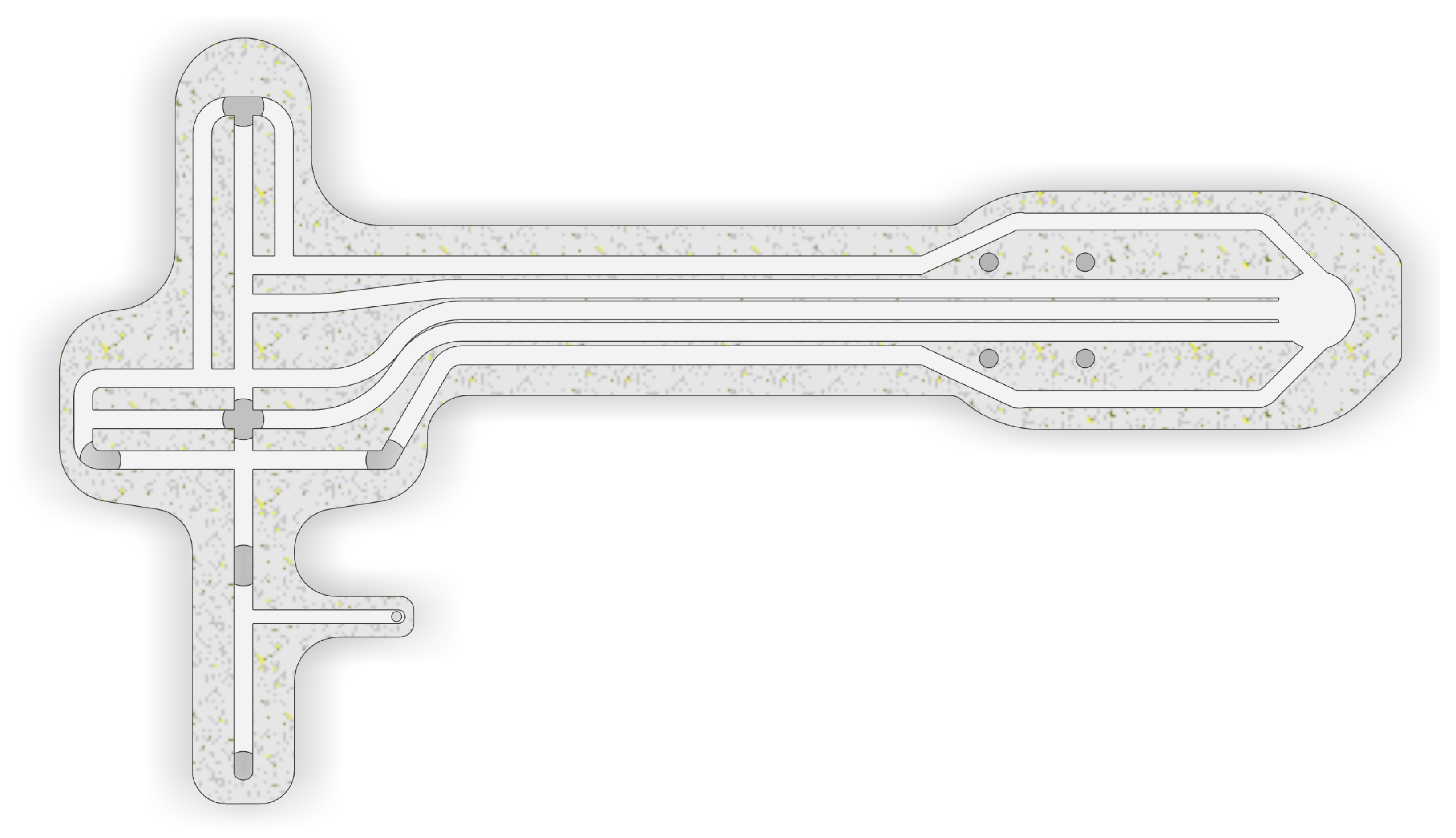
The first and most prominent issue was the removal of support material. In addition to incurring extra costs, this resulted in post-processing times that were several times longer than the actual manufacturing duration. To reduce this, it was necessary to examine the geometric features responsible for necessitating these support structures. The primary feature in question was the internal vacuum chamber. This raised the question: if the chamfers applied along the vertical walls of the vacuum chamber serve to prevent support material deposition in those areas, why could this not be applied to the entire cavity? According to feedback from the production site, due to the nature of the transferred product (fabric-based item) fibers could detach over long operational hours and potentially accumulate in the narrow channels, raising concerns about clogging. This concern was acceptable, however, in the absence of tangible evidence, the most heavily used but already decommissioned head was requested for examination purposes. The upper cover wall of the head section was removed to inspect the nature and extent of the contamination. It was determined that the level of build-up was minimal and that its character resembled fine dust rather than an agglomerated hard material. Therefore, it was concluded that blockage of the small cross-section channels are unlikely. When defining the layout of the internal vacuum channels, a primary design objective was to ensure that each suction cup was connected through the shortest possible flow path in order to minimize pressure losses and response time during vacuum generation. Short and direct channel routes contribute to faster evacuation of the suction cups and more stable gripping performance (Figure 7). In parallel, a dedicated venting channel was incorporated into the design to facilitate rapid pressure equalization during product release. This channel enables atmospheric pressure to be restored as quickly as possible in the vicinity of the suction cups once the vacuum is disengaged, thereby improving release dynamics and reducing the risk of delayed detachment or unintended product adhesion.
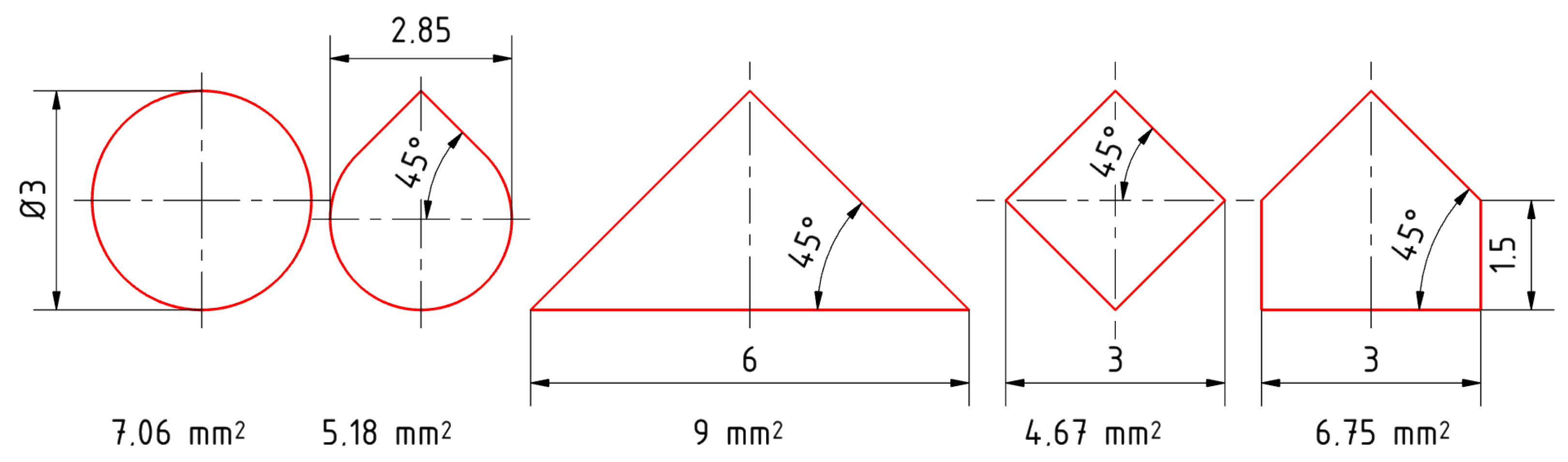
In the case of the channels, there were limitations regarding the cross-sectional sizes that could be used. To ensure vacuum tightness, the thickness of the upper cover layer needed to be maintained at a minimum of 2 mm, while the lower cover required a thickness of 5 mm for both vacuum retention and structural strength (these values were established from initial test results). Consequently, a channel height of 3 mm was feasible. At the start of the design process, all the known geometries for support-free holes, which are illustrated in Figure 8. were outlined. Among the proposed solutions, the triangular cross-section provided the largest area, followed by a house-shaped profile and the teardrop shape commonly used for horizontally oriented holes in FFF processes. From a flow perspective, it was important to ensure that the cross-sections were not excessively small, since FDM technology also has a minimum feature size it can reliably produce. Furthermore, the geometry of the cross-section inherently introduces a certain amount of flow resistance, which had to be considered [19,20]. The central vacuum system connected to the robot was significantly overestimated, so the increased suction demand caused by the smaller vacuum chamber did not pose a problem. Based on this, the triangular cross-section was selected, with its dimensions shown in Figure 8 (third section).

2.4.2. Overhang Angles and Fillets

Surfaces that fall below the critical overhang angle relative to the build direction must be supported. This can be done either with model material or with dedicated soluble or breakaway support material. For printed parts, surfaces that form an angle of less than 47 degrees with the horizontal (the build plate) will invariably require support, which leads to additional material consumption and increased manufacturing time. Internal passages or horizontally oriented holes can also be supported using soluble support material; however, the additional time required for dissolving the supports adds several hours to the post-processing phase besides the increased labor requirement. It is also important to carefully consider which geometric features require support because removing the support material involves applying some stress to the part. Therefore, thin or very fragile features should ideally be designed in a way that does not require support, or the feature itself should be strengthened if only breakaway supports are to be used. The undersides of protruding flanges should be designed with sloped walls, making the flange stronger and eliminating the need for support. The critical overhang angle varies by material, but as a rule of thumb, 45 degrees is generally acceptable.
Incorrect leveling of the build plate can introduce dimensional inaccuracies in the first few layers of the printed parts. When the nozzle is positioned too close to the build plate during the first layer, the extruded strand becomes wider, leading to the so-called “elephant’s foot” effect visible on the sidewalls near the base of the part. If the part has generous dimensional tolerances on its external surfaces, the elephant’s foot can be controlled by incorporating a 60-degree chamfer over a height of at least 3–4 layers. Another factor influencing the lower surface of the part is warping-induced detachment from the build plate. This is caused by insufficient adhesion to the build plate and Z-direction warping due to thermal stresses accumulating at sharp corners of the part. Such warping caused by thermal stress can be mitigated by applying Z-direction fillets, as localized hot spots arise from both the toolpath and the geometry of the part. In Revision B of the vacuum head, a chamfer was already applied to the lower cover layer to ensure dimensional accuracy, and during printing, the part typically lifted from the raft due to thermal stresses. For this reason, a chamfer of approximately 6 mm was applied to the rear edge. By Revision C, it became apparent that the part’s mass needed to be reduced, so the large rear rectangular shape was replaced with generous fillets, which also significantly reduced the risk of deformation caused by thermal stresses. Additional fillets were added at the bases of the ribs to enhance both strength and dimensional accuracy. This created a smoother transition between the upper cover layer and the ribs, improving vacuum retention as well.

2.4.3. Connector Positioning

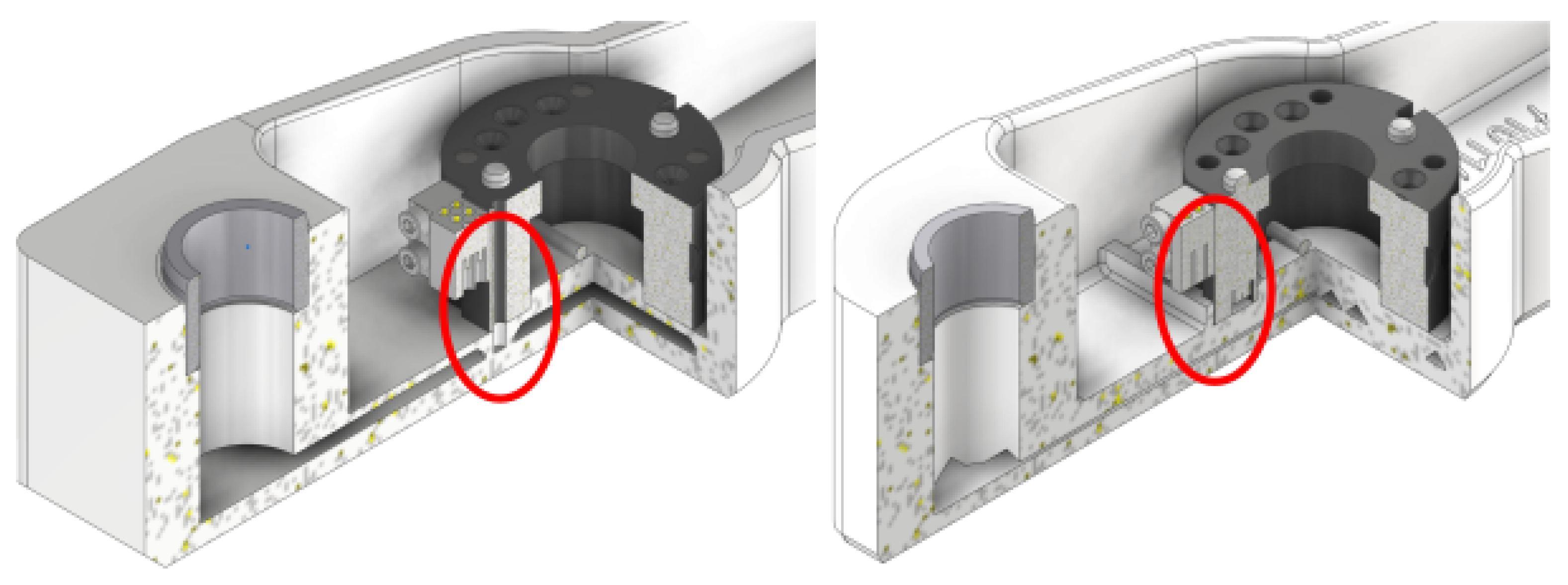
For attachment to the robot, a pneumatic Schunk quick tool changer adapter is used, with the side mounted on the tool secured to the part using four screws. Since it is essential for the head to be correctly positioned, the relative position of this mounting interface must also be fixed. In the first version, this was achieved with a positioning pin. However, the hole for this pin, which guided the part into place, intersected one of the central vacuum channels. As a result, it would have only been possible to use one less central channel. To avoid this, a connector alignment was implemented using a rib. The rib follows the shape of the flat shoulder on the connector, so when the screws are tightened, the connector sits precisely aligned (Figure 9 right configuration). This is also crucial because a sealing ring (simmering) needs to sit on the vacuum outlet bushing. This seal can only properly seat on the protruding bushing and ensure airtightness if the relative position is correct.

2.4.4. Suction Cup Hole Geometry

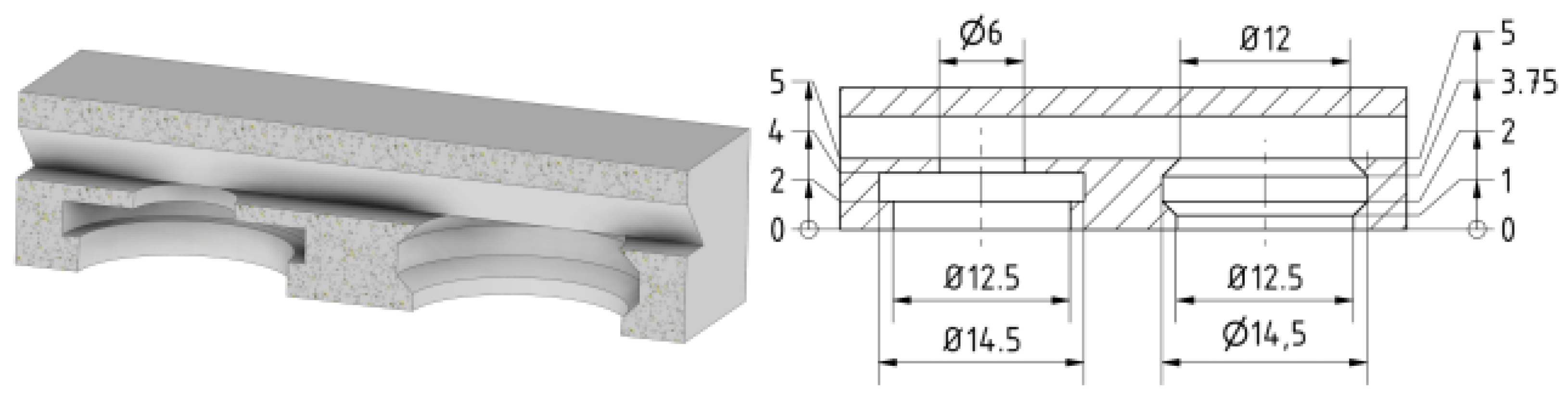
In the original geometry, the holes for the vacuum cups were designed to accommodate soluble supports, with the holes following the contour surface of the cup (see Figure 10 left hole). Now that the vacuum chamber itself is support-free, the support structures that require additional washing also need to be addressed. A test piece was created using the original hole geometry and manually attempted to remove the supports. Complete removal was not successful in every hole, and even where it was, it required considerable effort. To reduce the need for post-processing, a DfAM-compliant hole geometry that does not require supports was developed, while still allowing the vacuum cup to seat deeply into the socket without any leakage between the hole wall and the rubber. It was iterated with small test pieces, using various wall heights and diameters, until the geometry shown in Figure 10. right hole, which provided a connector surface that is easy to assemble while maintaining the original height of the cup.
When vacuum is applied, the cup is pressed tightly against the wall, resulting in no or minimal leakage around the cup during suction. Since the peeling force is linearly proportional to the generated vacuum level, it is essential to ensure the best possible seal. Therefore, the cup must undergo minimal deformation in its seated position within the hole [21]. From a post-processing perspective, some support material still remains inside the hole, as a few small horizontal regions persist at the intersection between the channel and the hole. However, the amount of support required is minimal and fragile enough to be easily removed by hand. When the raft is peeled off from the bottom of the part, these structures also detach, so it is rarely necessary to reach into the hole to remove supports. The elevated temperature of the support material further facilitates this detachment. After the print program finishes, the printer maintains the chamber at an elevated temperature, making it easier to remove the supports from freshly printed parts compared to when they have fully cooled.

2.4.5. Center of Mass

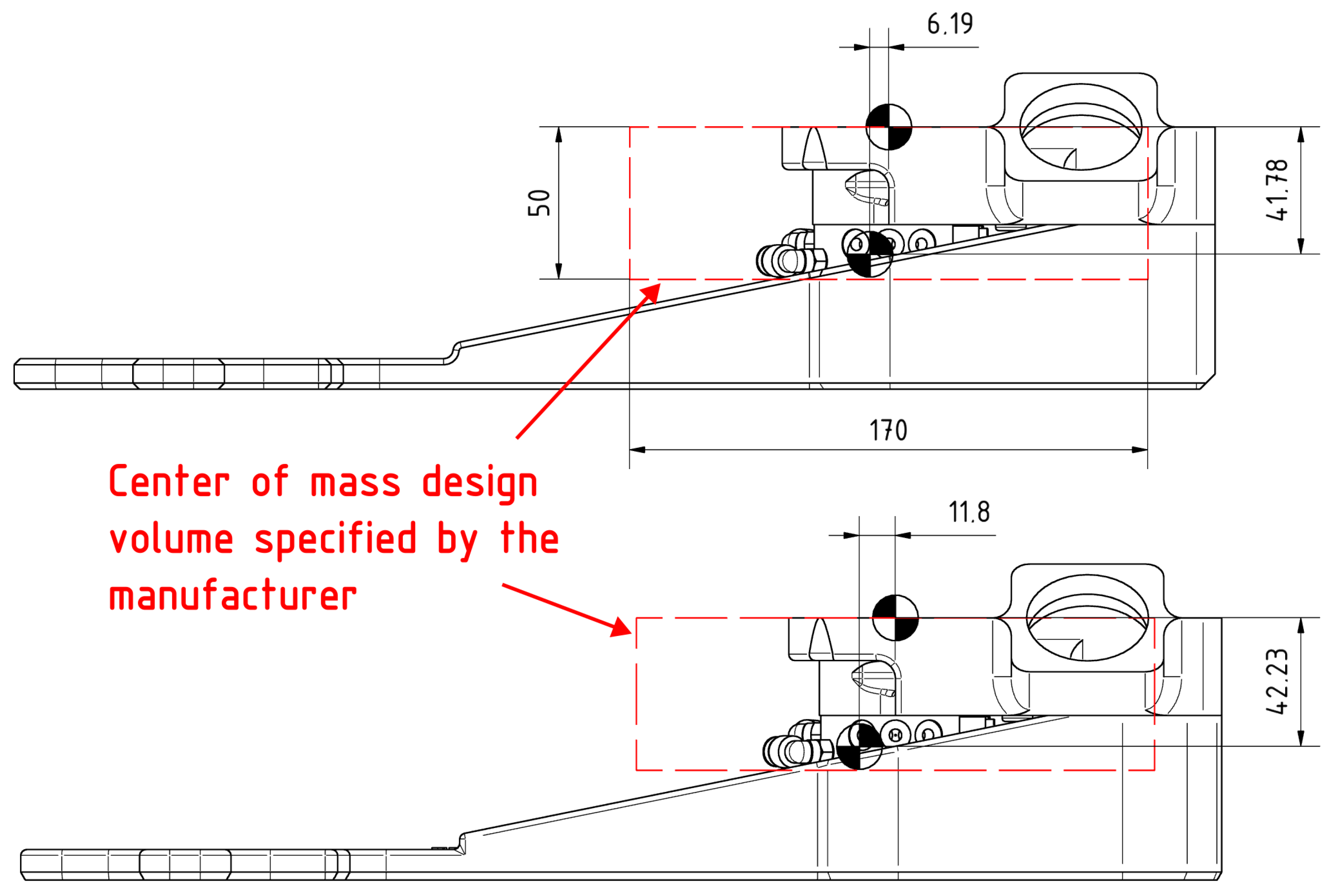
As it was mentioned in the robot’s limitations that the center of mass of the entire robot head must be located within a volume specified by the manufacturer, relative to the robot’s work point. This is a cylindrical volume with a diameter of 170 mm and a height of 50 mm. Since the CAD model can only calculate mass for solid bodies, the part was measured after manufacturing and provided the corresponding material density so the program can calculate with the actual mass. For comparison, in Figure 11, the positions of the center of mass for Revision B and Revision C are shown. The height of the point changed only slightly, but in the longitudinal direction, it changed more significantly. The reason for this is that the smaller channels result in more wall surface area, which is thicker due to vacuum retention, meaning more material is placed in the head section than in the original version. Since the center of mass remained within the distance specified by the manufacturer, there is no need to modify the robot’s program, and it does not need to be slowed down, maintaining a speed of 30 steps/min.

2.5. Revision C

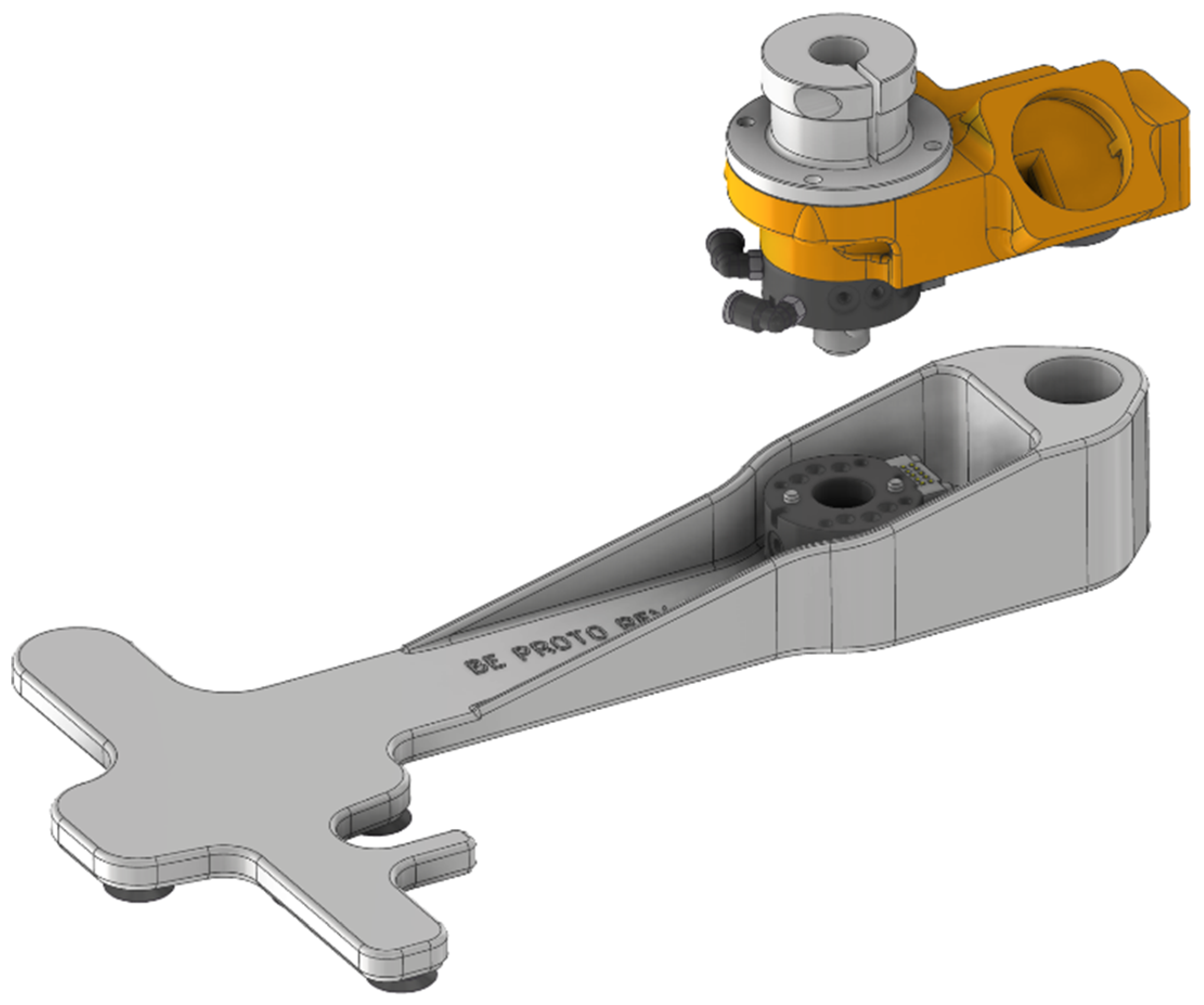
The final redesign (see Figure 12), Revision C, fully leveraged DfAM methodologies. Internal vacuum channels were reimagined with triangular cross-sections, eliminating the need for support material within these features and reducing the internal vacuum volume by 44%, resulting in faster vacuum response times. Overhangs and undercuts were mitigated through the use of chamfers and fillets, which simultaneously minimized support requirements and improved mechanical performance. The flange for robot attachment was redesigned to include integrated alignment features, avoiding interference with vacuum channels and ensuring precise assembly positioning. Additionally, the vacuum cup seats were reconfigured using geometries that allowed for secure mounting without requiring support structures, simplifying assembly and improving reliability.

3. Results and Discussion

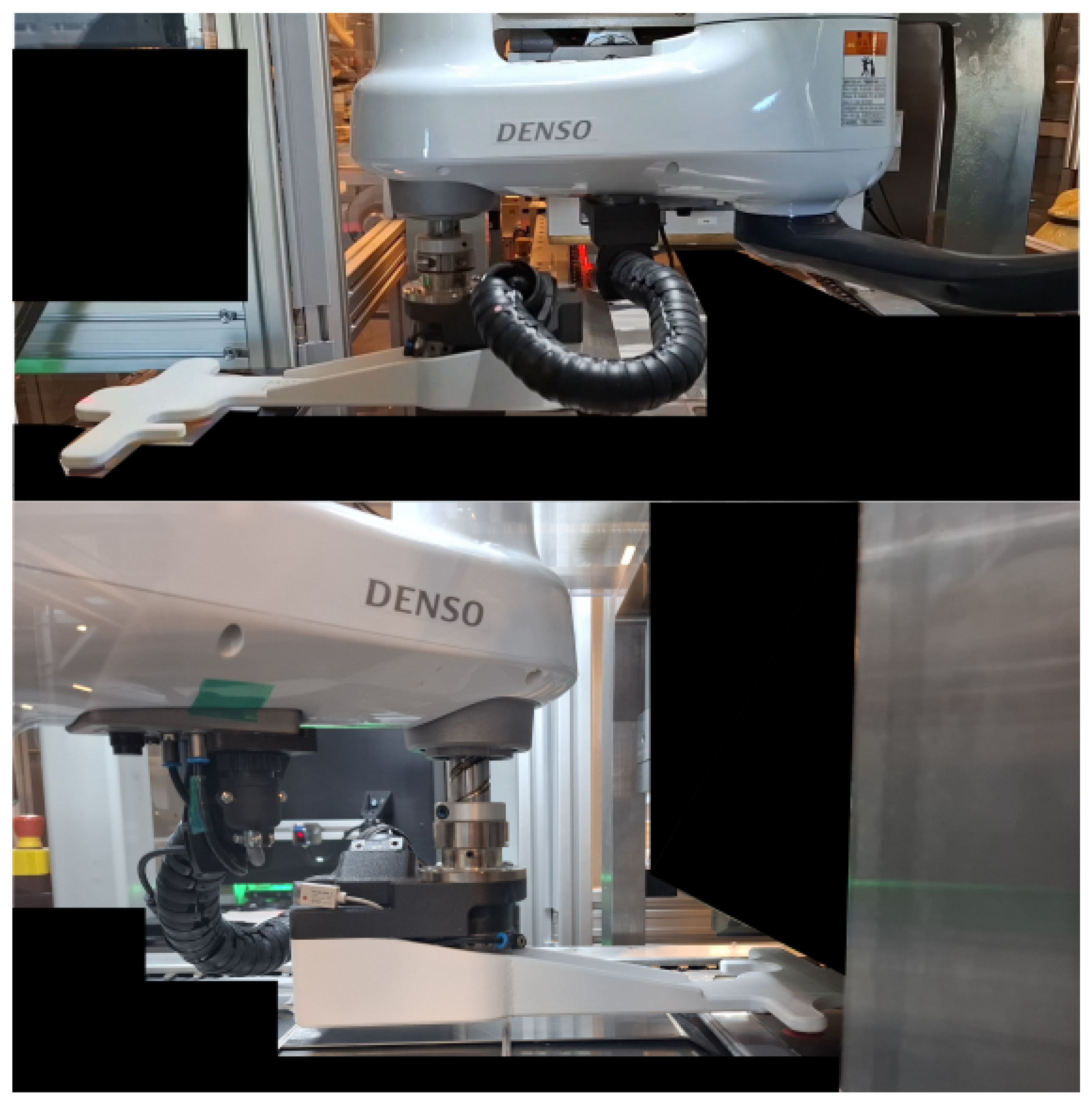
The final design demonstrated marked improvements over the original configuration. Functional testing confirmed that vacuum performance was maintained despite the smaller internal volume. The weight reduction facilitated faster robot movements and decreased inertia. Manufacturing time was significantly reduced, and the optimized geometry minimized both material consumption and support structure usage. Post-processing efforts were drastically reduced, enhancing production efficiency. The gripper proved durable under operational conditions, and its modular, easily integrable design facilitated straightforward replacement and maintenance. The final revision (revision C) can be seen in Figure 13 fully assembled during work. The sensitive parts were blacked out due to a nondisclosure agreement.

Economic Impact

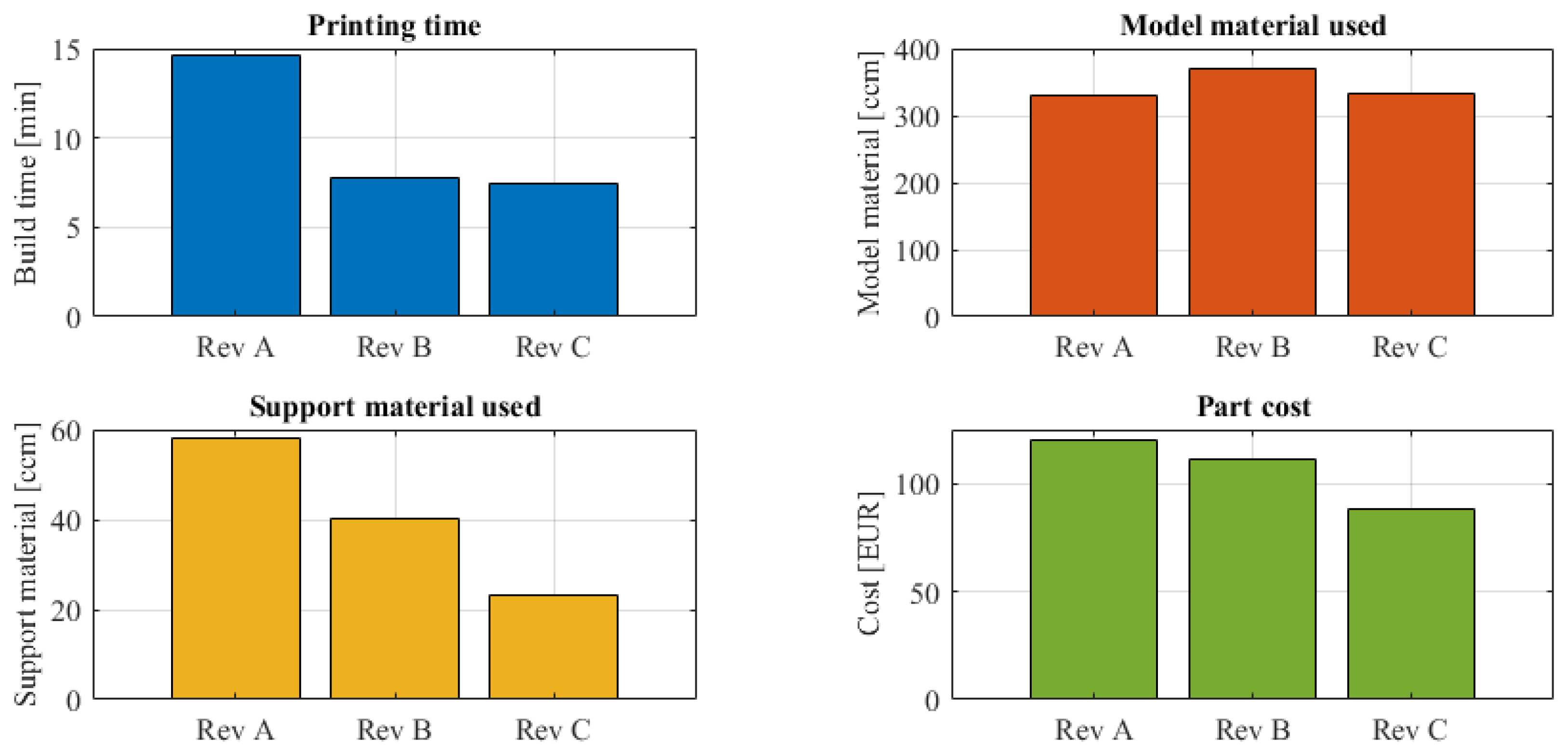
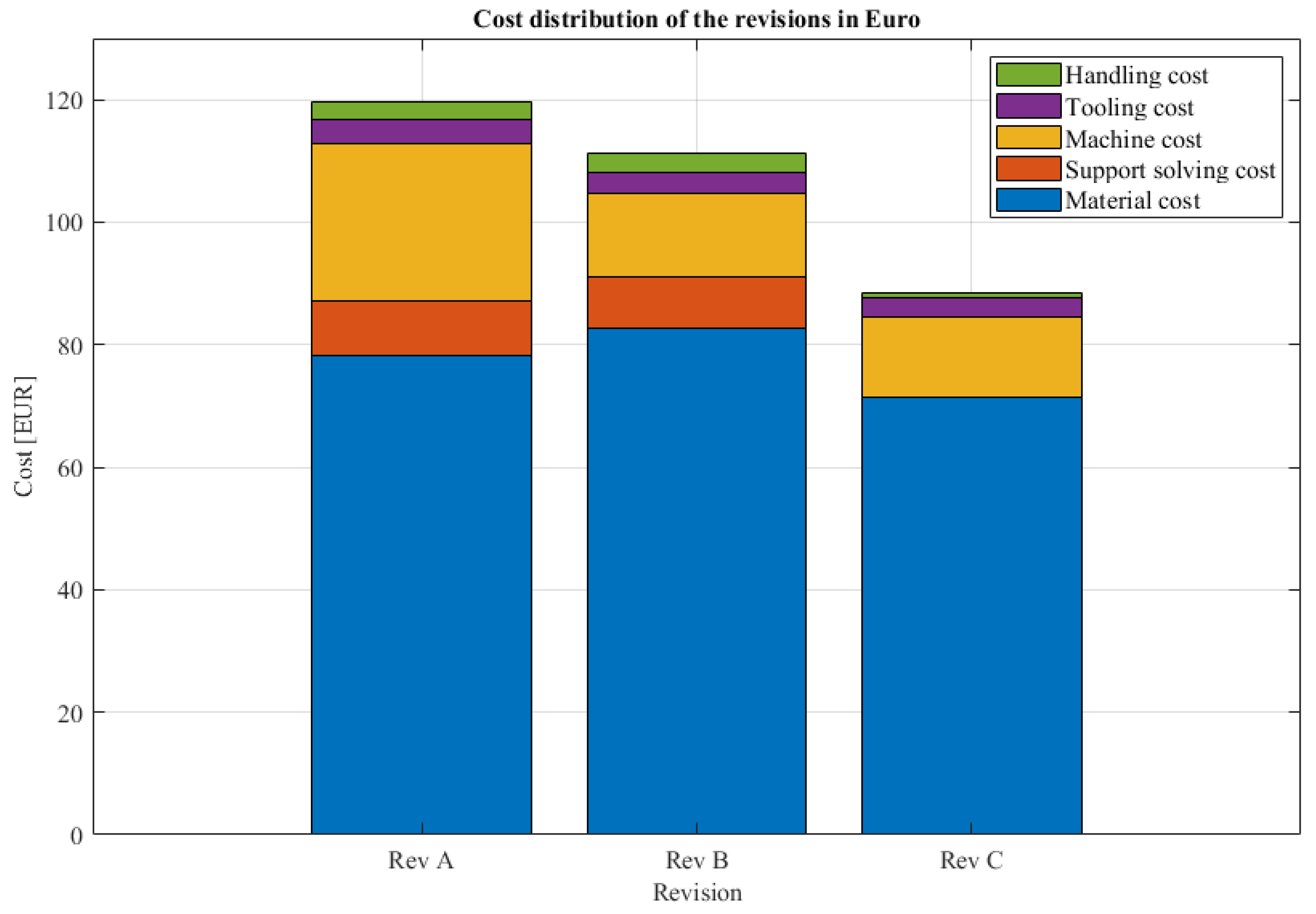
A detailed cost analysis revealed substantial savings achieved through the redesign. A refined cost calculation was used developed in a previous work [22]. Material costs decreased due to reduced volume and optimized geometry. Machine costs, measured as operational time per part, were halved as a result of faster print cycles. Tooling costs, previously driven by complex machined aluminum components, were eliminated through integrated, single-part design features. Labor costs associated with post-processing and assembly were also reduced due to the simplified structure and diminished need for support removal. Overall, the unit cost per vacuum gripper head dropped significantly, underscoring the economic viability of applying DfAM in industrial settings. The outputs of the slicer and the final part cost can be seen in Figure 14. The distribution of the total cost of a part are shown on Figure 15.
Figure 14. The manufacturing costs and material requirements of the three revisions. Exact data can be found in Table 1.
Applsci 16 00935 g014
Table 1. Cost components and slicer outputs used for the cost calculation and their results.
Rev ARev BRev C
Printing time [h]14.677.727.40
Model material volume [ccm]330.48371.08332.06
Support material volume [ccm]58.2340.2423.39
Model material cost [EUR]66.1974.3266.51
Support material cost [EUR]12.168.404.88
Total material cost [EUR]78.3582.7371.39
Solvable supp. Volume [ccm]34.8416.850.00
Support removal price [EUR]8.668.430.00
Total machine cost [EUR]25.8813.6213.06
Total tooling cost [EUR]3.843.483.16
Total worker cost [EUR]3.033.030.76
Total cost per part [EUR]119.77111.2988.37
Figure 15. Cost distribution of the three revisions Exact data can be found in Table 1.
Applsci 16 00935 g015

4. Conclusions

The application of Design for Additive Manufacturing (DfAM) principles in redesigning the robot vacuum gripper head resulted in substantial and quantifiable technical and economic improvements compared to the original machined assembly. By systematically exploiting the design freedom afforded by FDM technology, multiple functions were integrated into a single, monolithic component, leading to a significant reduction in part count, assembly complexity, and manufacturing overhead while maintaining reliable vacuum performance under industrial operating conditions.
A key outcome of the study is the demonstrated effectiveness of geometry-driven DfAM strategies at the internal feature level. The introduction of support-free internal vacuum channels with triangular cross-sections enabled complete elimination of soluble support material in enclosed cavities, which in turn reduced post-processing time and improved manufacturing robustness. Additionally, the reduction of internal vacuum volume by 44% resulted in faster pressure response during both gripping and release phases, highlighting the direct relationship between internal topology and functional performance in vacuum-based end effectors.
From a manufacturing and economic perspective, the optimized design achieved approximately a 50% reduction in printing time and a 26% decrease in total part cost, primarily driven by reduced support material usage, shortened machine time, and minimized manual post-processing. These results confirm that DfAM-oriented redesign can yield measurable cost benefits even for end-use components operating in demanding industrial environments.
Long-term operational data further support the robustness of the final design. At the time of writing, the optimized gripper head has been in continuous operation for approximately ten months in a three-shift production regime, processing an average of 7000 parts per shift without observable performance degradation. This sustained operation demonstrates that the DfAM-optimized component is not merely a functional prototype, but a durable end-use tool suitable for high-throughput industrial automation.
Beyond the presented case study, the findings provide transferable design guidelines for FDM-manufactured vacuum components, particularly regarding support-free internal channel geometries, overhang management, and functional interface integration. The work demonstrates that DfAM should be treated not merely as a set of geometric heuristics, but as a systematic design methodology capable of generating new functional solutions and performance gains. As such, the presented approach offers a practical and research-relevant reference for future developments of additively manufactured tooling and robotic end effectors in industrial automation.

Author Contributions

Conceptualization, B.L.S.; methodology, B.L.S.; software, B.L.S.; validation, B.L.S. and A.B.; formal analysis, B.L.S. and A.B. and P.F.; investigation, B.L.S.; resources, B.L.S.; data curation, B.L.S.; writing—original draft preparation, B.L.S.; writing—review and editing, B.L.S. and A.B. and P.F.; visualization, B.L.S.; supervision, A.B.; project administration, B.L.S. and P.F.; funding acquisition, B.L.S. All authors have read and agreed to the published version of the manuscript.

Funding

This research received no external funding.

Data Availability Statement

All necessary data required to reproduce the results are available upon reasonable request by contacting the corresponding author B.L.S.

Acknowledgments

During the preparation of this study, the authors used ChatGPT 5, for the purposes of translation and grammar correction. The authors have reviewed and edited the output and take full responsibility for the content of this publication.

Conflicts of Interest

The authors declare no conflicts of interest.

Appendix A. Slicing Parameters

Table A1. Slicing parameters of the revisions used in GrabCAD.
Rev ARev BRev C
Layer height0.1778 mm0.254 mm0.254 mm
Slicing modeAdaptiveConstantConstant
Purge towerFull heightFull heightFull height
Extrusion width 0.65 mm
Infill patternSparse—double denseSparse—double denseSparse—double dense
Infill pattern density30 %35%30%
Shell thickness1.8288 mm2.794 mm2.286 mm
Thicken thin wallsNoNoNO
Variable wall widthYesNoNo
Support patternSparseSMARTSparse
Grow supportsNoNoNo
Raft typeModel and supportModel and supportModel and support

References

  1. Elhazmiri, B.; Naveed, N.; Anwar, M.N.; Haq, M.I.U. The role of additive manufacturing in Industry 4.0: An exploration of different business models. Sustain. Oper. Comput. 2022, 3, 317–329. [Google Scholar] [CrossRef]
  2. Samadikhoshkho, Z.; Zareinia, K.; Janabi-Sharifi, F. A Brief Review on Robotic Grippers Classifications. In Proceedings of the 2019 IEEE Canadian Conference of Electrical and Computer Engineering (CCECE), Edmonton, AB, Canada, 5–8 May 2019; pp. 1–4. [Google Scholar] [CrossRef]
  3. Blanco, K.; Navas, E.; Emmi, L.; Fernandez, R. Manufacturing of 3D printed soft grippers: A review. IEEE Access 2024, 12, 30434–30451. [Google Scholar] [CrossRef]
  4. Dzedzickis, A.; Petronienė, J.J.; Petkevičius, S.; Bučinskas, V. Soft Grippers in Robotics: Progress of Last 10 Years. Machines 2024, 12, 887. [Google Scholar] [CrossRef]
  5. Gabriel, F.; Fahning, M.; Meiners, J.; Dietrich, F.; Dröder, K. Modeling of vacuum grippers for the design of energy efficient vacuum-based handling processes. Prod. Eng. Res. Dev. 2020, 14, 545–554. [Google Scholar] [CrossRef]
  6. Birglen, L.; Schlicht, T. A statistical review of industrial robotic grippers. Robot. Comput.-Integr. Manuf. 2018, 49, 88–97. [Google Scholar] [CrossRef]
  7. Mazzolai, B.; Mondini, A.; Tramacere, F.; Riccomi, G.; Sadeghi, A.; Giordano, G.; Del Dottore, E.; Scaccia, M.; Zampato, M.; Carminati, S. Octopus-inspired soft arm with suction cups for enhanced grasping tasks in confined environments. Adv. Intell. Syst. 2019, 1, 1900041. [Google Scholar] [CrossRef]
  8. Zhakypov, Z.; Heremans, F.; Billard, A.; Paik, J. An origami-inspired reconfigurable suction gripper for picking objects with variable shape and size. IEEE Robot. Autom. Lett. 2018, 3, 2894–2901. [Google Scholar] [CrossRef]
  9. Oh, Y.; Zhou, C.; Behdad, S. Part decomposition and assembly-based (Re) design for additive manufacturing: A review. Addit. Manuf. 2018, 22, 230–242. [Google Scholar] [CrossRef]
  10. Gómez-de-Gabriel, J.M.; Muñoz-Ramírez, A.J.; Palacios, M.; Parras, L. Rapid end-of-arm-tooling manufacturing of vacuum grippers. Int. J. Comput. Integr. Manuf. 2019, 32, 1231–1241. [Google Scholar] [CrossRef]
  11. Ciurezu-Gherghe, L.; Pauna, I.A.; Ilija, A.; Ogarca, A. Design and 3D Printing of a Mini Vacuum Table with FDM Technology. In Proceedings of the International Conference of Mechanical Engineering (ICOME-2022); Atlantis Press: Dordrecht, The Netherlands, 2023; pp. 489–495. [Google Scholar] [CrossRef]
  12. Shihab, A.-H.; Santori, G. 3D printing of vacuum and pressure tight polymer vessels for thermally driven chillers and heat pumps. Vacuum 2020, 171, 109017. [Google Scholar] [CrossRef]
  13. Pálfi, T.; Ficzere, P. Aerodynamic Study of Different Types of Wingtip Devices. Period. Polytech. Transp. Eng. 2025, 53, 77–86. [Google Scholar] [CrossRef]
  14. Ficzere, P. Introductory Analysis for Fatigue Testing of MEX Parts. Period. Polytech. Mech. Eng. 2025, 69, 274–277. [Google Scholar] [CrossRef]
  15. Denso Engineering-Design Notes for Robot Hands, HSR Series User’s Manual. Available online: https://www.fa-manuals.denso-wave.com/ (accessed on 1 October 2024).
  16. Stratasys Inc. ASA Material Data Sheet. 2025. Available online: https://www.stratasys.com/contentassets/a7714192bab54e88aa41e2cd5dafc885/mds_fdm_asa_0925a.pdf?v=4aa4e4 (accessed on 25 November 2025).
  17. Arikan, V. Effects of infill patterns and densities on crack propagation behavior in additive manufactured parts: A comparative study. Mater. Test. 2023, 65, 1609–1614. [Google Scholar] [CrossRef]
  18. Singh, S.; Mishra, S.B. Analysis of Printing Parameters on the Performance of Robotic Gripper Jaws. In Recent Advances in Materials and Manufacturing, Proceedings of the ISME 2023, Bengaluru, India, 13–15 July 2023; Chandrashekara, C.V., Mathivanan, N.R., Hariharan, K., Eds.; Lecture Notes in Mechanical Engineering; Springer: Singapore, 2024. [Google Scholar] [CrossRef]
  19. Saleem, K.B.; Alshara, A.K. Natural convection in a triangular cavity filled with air under the effect of external air stream cooling. Heat Transf.—Asian Res. 2019, 48, 3186–3213. [Google Scholar] [CrossRef]
  20. Sobieski, W. Estimation Methodology of Pressure Losses in Non-circular Pipes. J. Appl. Fluid Mech. 2024, 17, 1368–1378. [Google Scholar] [CrossRef]
  21. Koivikko, A.; Drotlef, D.; Dayan, C.B.; Sariola, V.; Sitti, M. 3D-printed pneumatically controlled soft suction cups for gripping fragile, small, and rough objects. Adv. Intell. Syst. 2021, 3, 2100034. [Google Scholar] [CrossRef]
  22. Seregi, B.L.; Ficzere, P. Refined cost calculation framework for FDM parts. J. Manuf. Mater. Process. 2025, 9, 321. [Google Scholar] [CrossRef]
Figure 1. The original machined design’s section with the internal vacuum channel.
Applsci 16 00935 g001
Figure 2. Design constraints and critical parameters that need to be considered due to the machine, the technology and the functionality.
Applsci 16 00935 g002
Figure 3. Limitation and requirements of the new design: (a) center of mass position limitation by the robot manufacturer [15]; (b) design space dead zones because of the tool (a punching die) around the gripper during work; (c) robot adapter design for automatic tool change.
Applsci 16 00935 g003
Figure 4. Revision A (left), revision B (middle) and revision C (right).
Applsci 16 00935 g004
Figure 5. Unwashed channel section on revision A (upper) and on a different head geometry (lower).
Applsci 16 00935 g005
Figure 6. Opened section of the head of revision A (left), revision B (middle) and revision C (right) with the internal channels.
Applsci 16 00935 g006
Figure 7. The layout of the internal vacuum channels for Revision C.
Applsci 16 00935 g007
Figure 8. The DfAM supportless section geometries compared to a circular hole with the limited section height for this part.
Applsci 16 00935 g008
Figure 9. The positioning method of the connector on revision A (left) and revision C (right). In the left red circle the pinned positioning and on the right red circle the rib positioning can be seen.
Applsci 16 00935 g009
Figure 10. The original and DfAM hole geometry for the suction cups.
Applsci 16 00935 g010
Figure 11. The position of the center of mass on the revision B (upper) and revision C (lower).
Applsci 16 00935 g011
Figure 12. Revision C full assembled with the robot adapter unit.
Applsci 16 00935 g012
Figure 13. The final version installed on the robot during the work.
Applsci 16 00935 g013
Disclaimer/Publisher’s Note: The statements, opinions and data contained in all publications are solely those of the individual author(s) and contributor(s) and not of MDPI and/or the editor(s). MDPI and/or the editor(s) disclaim responsibility for any injury to people or property resulting from any ideas, methods, instructions or products referred to in the content.