Article

Predicting Smart Tablet Preferences in Turkish E-Commerce Platforms Using Artificial Neural Networks and Machine Learning Techniques


by
Selahattin Bardak
Department of Computer Engineering, Faculty of Engineering and Architecture, Sinop University, 57000 Sinop, Turkey
Appl. Sci. 2026, 16(2), 832; https://doi.org/10.3390/app16020832
Submission received: 26 April 2025 / Revised: 17 June 2025 / Accepted: 5 July 2025 / Published: 14 January 2026

Abstract

This study aims to predict Turkish consumer preferences for smart tablets on e-commerce platforms, focusing on consumer behavior in a developing country context. Key product attributes—such as processor speed, screen size, internal storage capacity, display resolution, RAM, processor core count, and battery capacity—were collected from major e-commerce websites in Turkey. Data analysis indicated that consumers predominantly prefer tablets with processor speeds between 1–3 GHz, internal storage capacities of 32–64 GB, 2–3 GB of RAM, screen sizes of 7–11 inches, and battery capacities between 5001–8000 mAh. To predict the most preferred tablet configurations, Artificial Neural Networks (ANNs), Deep Neural Networks (DNNs), and Random Forest (RF) models were developed and evaluated. Among these, the ANN model achieved the highest prediction accuracy, particularly regarding RAM preferences. The findings contribute to the growing body of research on consumer behavior modeling in emerging markets and may assist manufacturers and marketers in shaping strategic decisions related to product development and online retail strategies.

1. Introduction

The retail industry has perpetually grappled with substantial dynamics and fierce competition, necessitating a high degree of adaptability from the participants within their respective retail segments [1]. The concept of the “wheel of retailing” [2] remains in constant motion, with the emergence of innovative store formats replacing established ones, serving as a pivotal aspect of retail history. This trend dates to the late 19th century with the advent of Parisian establishments like “La Samaritaine” and “Le Bon Marche” [3], which earned the moniker “retail cathedrals” for their pioneering introduction of experiential shopping.
Influenced by economic advancement and scientific breakthroughs, the retail sector has been experiencing a continuous transformation [4]. The advent of the Internet has exerted a profound influence on what we consider as “conventional retail formats” [5,6] and has fundamentally altered the way consumers make purchases of goods and services [7]. Nowadays, retail purchases can be made traditionally in stores or over the Internet. The use of e-commerce has been supported by the rapid developments in information and communication technologies and the widespread adoption of the Internet. Thus, the role of this trading method has increased in many industries [8]. The number of people shopping online has increased rapidly, and e-commerce has become a dominant retail channel. At the same time, there has been strong growth in online sales in recent years [9]. However, despite all the developments, traditional sales methods constitute most sales in general [10]. Although the Internet has the best price comparison value, consumers may prefer products in physical stores because they can have them immediately [11]. In this context, there are different features of shopping in the store and online. The variety of sales channels is an advantage for both producers and consumers [12]. As digital channels continue to gain widespread popularity, the marketing landscape is evolving towards the adoption of a multichannel approach, where retailers actively participate in both online and offline channels for advertising and selling their products. This multichannel marketing environment has given rise to new shopping behaviors, including showrooming (wherein consumers browse product information in physical stores but make their actual purchases online) and webrooming (whereby consumers explore product details online but complete their purchases in physical brick-and-mortar stores) [13,14].
There have also been some changes in the management activities of enterprises with electronic commerce. All information in businesses is in an electronic environment. Thus, all stakeholders inside or outside the enterprise can obtain the information they want at any time without the need for anyone and at any time. This accelerates businesses. Businesses have gained mobility with the speed performance brought by electronic commerce and can respond to the changing demands and needs of their customers in a short time [15]. Manufacturers and retailers have had to adapt their production and marketing strategies to remain competitive in this rapidly evolving digital landscape.
In recent years, technological products have become indispensable in our lives. One of the most used technological products is smart tablets. Consumers can buy these smart tablets from various sites that sell over the Internet. However, when consumers buy these tablets, they compare various features on e-commerce sites and buy the products that are most suitable for their needs and finances.
Marketing strategies that deliver personalized value propositions to customers include both individually customized product or service offerings and relationship-building efforts based on each customer’s specific attributes [16]. These approaches have become a crucial source of competitive advantage in today’s data-driven and knowledge-based business environment [17,18,19,20]. Companies strive to identify the features consumers prioritize when purchasing technological products; however, uncovering such insights is often challenging due to the vast and complex nature of the data involved.
Data mining techniques are instrumental in extracting meaningful patterns and knowledge from such large and unstructured datasets. Compared to traditional statistical methods, data mining provides more powerful, flexible, and effective tools for knowledge discovery [21,22]. In scientific research, data mining has been widely employed across various fields—including marketing, furniture design, energy, healthcare, and consumer behavior studies—to derive actionable insights from data [23,24,25,26,27].
Among contemporary machine learning techniques, artificial neural networks (ANNs), deep neural networks (DNNs), and random forest (RF) algorithms stand out as some of the most frequently applied and effective approaches for predictive analytics and classification tasks.

2. Objective of Research

This study aims to identify which product features—such as processor speed, screen size, storage capacity, resolution, system memory, number of processor cores, and battery power—are most influential in Turkish consumers’ preferences for best-selling smart tablets on e-commerce platforms. Among these attributes, screen size was selected as the primary variable to be predicted due to its strong role in user experience and product comparisons.
To model this preference, three well-established machine learning methods—artificial neural networks (ANNs), deep neural networks (DNNs), and random forest (RF)—were employed. The selection of artificial neural networks (ANNs), deep neural networks (DNNs), and random forest (RF) models was based on their demonstrated efficacy in prior studies focusing on consumer behavior and predictive modeling in e-commerce contexts [28,29,30]. These models offer complementary strengths: ANNs and DNNs are particularly adept at capturing nonlinear relationships in structured data, while RF provides a robust, interpretable ensemble-based benchmark resistant to overfitting. Although other classifiers such as Support Vector Machines (SVMs) and XGBoost are also widely used, they were excluded in this study to maintain focus on model diversity across neural and tree-based methods, and to ensure transparency and interpretability in a moderately sized dataset. Following the prediction phase, a simulation process was conducted to determine the optimal values of other features that lead to the most accurate screen size predictions. Finally, the R2 and accuracy metrics were evaluated to assess the models’ predictive performance for other key product features. This study contributes to the literature by applying machine learning models to analyze consumer preference data in a developing country context, specifically within the Turkish e-commerce ecosystem.
To enhance the focus and clarity of this study, the following research question and hypothesis are proposed:
Research Question:
What are the most significant product features influencing Turkish consumers’ smart tablet preferences on e-commerce platforms, and which machine learning model provides the most accurate predictions of these preferences?
Hypothesis:
Among the tested machine learning models—artificial neural networks (ANNs), deep neural networks (DNNs), and random forest (RF)—the ANN model will yield the highest prediction accuracy for smart tablet preferences, due to its adaptability to structured consumer data and moderate dataset sizes.
Screen size was selected as the primary prediction variable due to its strong influence on user satisfaction, visual usability, and content engagement in mobile and tablet devices. Prior research has shown that larger screen sizes are often associated with better multimedia experience, easier readability, and overall higher perceived value by consumers [31,32]. These findings are especially relevant in the context of e-commerce, where visual product evaluation is key to decision-making [33].

3. Literature Review

3.1. Electronic Commerce

Electronic commerce (e-commerce) can be defined as the set of activities or services related to the buying and selling of products or services over the Internet [34,35]. Firms are increasingly engaging in e-commerce due to the growing demand for online services from customers and its potential to establish a competitive advantage [36,37,38,39].
The emergence of electronic commerce (EC) has spurred extensive research, making EC itself a subject of substantial interest and investigation. Numerous researchers have conducted comprehensive literature reviews in the field of EC. Among the earliest efforts to bring clarity to the diverse landscape of EC research was Clarke (2000), who focused on addressing quality concerns in EC studies [40]. Urbaczewski et al. (2002) highlighted the inherently interdisciplinary nature of EC research [41]. These studies have contributed to a better understanding of early EC research. Some studies have analyzed research trends in EC and proposed future directions accordingly. Wareham et al. (2005) examined the major EC research topics and methodologies, suggesting that ongoing technological advancements continually impact the field, necessitating the evolution of EC research [42]. Using stakeholder theory, Chua et al. (2005) identified a strong research focus on customers and internal organizational factors, suggesting that less-explored areas warrant greater attention as the e-commerce phenomenon continues to mature [43]. In a review conducted by Lee and collaborators (2007), EC articles published in EC specialty journals, information systems (IS) journals, and marketing journals were analyzed [44]. Their findings revealed that IS journals tend to draw on economic theories, while EC specialty journals play a pivotal role in redefining the scope of EC research [45].
In today’s business landscape, companies offer a wide array of personalized consumption experiences, which benefit both consumers by helping them find the most suitable products [43] and companies by fostering increased customer loyalty [46,47]. These personalization practices essentially involve tailoring various components of the marketing mix, as discussed by Montgomery and Smith (2009) and Tam and Ho (2006) [48,49]. Some scholars have emphasized the significance of personalization, especially in electronic consumer experience contexts [50]. These contexts include e-commerce personalization [51], website personalization [52], and technology-mediated or technology-enabled personalization [20,53,54].
E-commerce personalization involves delivering content tailored to customer characteristics to improve business outcomes for e-commerce platforms. Website personalization is an automated process that identifies users by monitoring their online behavior, generating patterns based on similar users’ movements, and then delivering personalized content related to products, communication, and pricing according to their preferences. Technology-mediated or technology-enabled personalization refers to customized interactions and services created using customer databases and application software. The recent rise of cognitive technologies such as big data analytics, machine learning, and artificial intelligence has further elevated the importance of personalization across nearly every business domain [20,55].
According to Aw et al. (2021), 74% of consumers engage in webrooming [56], while 57% practice showrooming [57]. This suggests that online and offline channels complement each other rather than compete. Consequently, retailers should develop integrated marketing strategies that combine both online and offline elements to meet today’s consumer preferences [14,56]. Some researchers further argue that information asymmetries between sellers and buyers hinder optimal purchasing decisions. Therefore, consumers often engage in multichannel shopping behavior to obtain more information about products, services, and prices during the decision-making process [58,59].
Numerous studies have shown that personalization and tailored marketing strategies significantly influence consumer behavior in e-commerce contexts, especially in technology-related purchases. Consumers evaluate tablets based on factors such as screen size, battery life, and brand reputation, which are often decisive in their purchase decisions on online platforms.

3.2. Artificial Intelligence

Artificial intelligence (AI) is one of the technologies used in e-commerce that can accurately interpret external data, learn from this data, and use the acquired knowledge to achieve specific goals and tasks through flexible adaptation [39]. According to PwC’s 2020 report, the global artificial intelligence (AI) market is anticipated to reach a valuation of $15 trillion by 2030, reflecting the rapid expansion of AI technology [60,61]. The utility of AI extends significantly across various sectors, including consumer products, corporate services, advertising, financial investment advisory, and media and entertainment. Notably, the retail sector stands out as the primary beneficiary of AI, as emphasized by Bughin et al. (2018) [62], underscoring the potential for AI implementation to provide substantial advantages for retailers [61].
Regarding AI applications in the retail sector, retailers are encouraged to adopt AI-driven data management strategies to enhance their business processes and create value, as highlighted by Cao (2021) [63]. As a result, researchers have initiated investigations into various AI techniques such as text mining, chatbots, speech recognition, image recognition, data mining, and machine learning. These studies have determined that the use of such tools can be particularly beneficial in areas like product pricing, promotions, customer service management, and, crucially, the analysis of VIP marketing budget allocation, repurchase timing, and consumer journey mapping in the retail domain [61,64,65,66].
Recent advancements in computer processors and graphics processing units (GPUs) have led to a rapid expansion in artificial intelligence research, particularly in text classification. One notable study in this field focused on the classification of news articles and sentiment analysis in the Turkish language [67]. This study utilized the Turkish Text Classification 3600 (TTC-3600) dataset. The approach, which employed convolutional neural networks (CNNs) along with the Word2Vec word embedding technique, outperformed traditional statistical and machine learning-based classification algorithms, achieving an impressive accuracy of 93.3%.
Another study involving Turkish text classification and sentiment analysis categorized text into three classes: positive, negative, and neutral. Conducted by Santur (2019), this research introduced a deep learning model that achieved remarkable accuracy of 95% by analyzing 243,000 customer reviews using the gated recurrent unit (GRU) architecture [68].
In a separate investigation, Caner and Erten [69] trained and evaluated intrusion detection models using the CICIDS 2017 dataset [70]. They specifically focused on data related to distributed denial-of-service (DDoS) attacks and tested various neural network architectures, including multilayer perceptron (MLP), long short-term memory (LSTM), and GRU networks. After analyzing the results, it was observed that there was no significant difference in performance between the GRU and LSTM networks [71].

3.3. Data Mining

Data mining methods have found extensive applications in the realm of organizational computing and e-commerce, facilitating the extraction of hidden insights and meaningful patterns from vast datasets [72]. These methodologies empower businesses to analyze customer behaviors and anticipate future trends or customer attrition. Illustrative domains where such applications have proven valuable include healthcare, intelligent transportation systems (ITS), intrusion detection, stock market monitoring, and real estate data analysis [73].
In the age of big data, user actions can be tracked through data mining, life paths can be reconstructed, and each customer can be associated with specific attributes. In the field of commerce, one of the most widely used referral services involves extracting frequent item sets from transaction databases for shopping basket analysis. Consequently, some researchers argue that precision marketing is a powerful strategy for businesses to maximize their profits [74].
Other scholars, considering the relationship between big data and precision marketing within practical business contexts, propose that precision marketing involves the detailed analysis of large-scale consumer data including income, expenditure, and online advertisement click frequency. This analytical approach enables the scientific prediction of consumer demands, preferences, and behaviors, thereby allowing businesses to offer personalized products and services tailored to individual customers. It provides valuable insights for segmenting consumer groups based on personal data, transaction histories, and CRM records. However, it also requires in-depth technical exploration involving data mining and machine learning techniques before achieving the goal of personalized recommendations [75].

3.4. Machine Learning

Artificial intelligence (AI), machine learning (ML), and deep learning (DL) are often mistakenly used interchangeably. In this study, we follow the common scientific consensus where AI is considered the overarching field that includes ML as a subset, and DL as a further subset within ML. Although this study focuses on deep neural networks (DNNs), we acknowledge that DL also includes other architectures such as Transformers and Mamba models.
The scalability of machine learning techniques is well-suited for our data-intensive application, and the orthogonalization of signals is crucial for mitigating potential biases related to model selection or overfitting [76].
Machine learning models enhance the traditional design process and are utilized in all phases of concept generation and evaluation. During the testing phase, predictive models can help eliminate designs that are expected to perform poorly in theme clinics. By focusing on product images with high potential, the traditional design workflow can be improved in several ways. Accurate predictions provide rapid feedback, allowing the design team to iterate more quickly. Additionally, theme clinics become more efficient and effective since less respondent time is spent evaluating images predicted to score low [77]. Consequently, companies benefit from shorter product development cycles and cost savings due to a reduced product “drop rate,” meaning that fewer design concepts are discontinued in later stages [78,79]. Finally, detailed quantitative assessments help preserve aesthetic designs from being altered in the later stages due to engineering, manufacturing, or accounting influences [80,81,82].
Significant studies have been published on the application of machine learning in marketing. For instance, a study titled “Machine Learning in Marketing: Recent Developments and Future Research Directions” explores how algorithms are revolutionizing marketing decision-making processes such as consumer targeting and predictive modeling. The study also addresses the challenges and opportunities of machine learning applications in marketing and outlines a framework for future research in this area [83].
Another study investigates various machine learning techniques used in marketing tasks such as customer segmentation, predictive modeling, and AI-assisted personalization [84].

3.5. The Use of Artificial Intelligence, Data Mining, and Machine Learning in Marketing Strategies

Table 1, Table 2 and Table 3 show some studies using artificial intelligence, data mining, and machine learning methods in the field of marketing [85,86,87,88,89,90,91,92,93,94,95,96,97,98,99,100,101].
As seen in the grouped studies above, much of the recent literature emphasizes the application of AI and machine learning to improve e-commerce recommendation systems, customer segmentation, and user engagement. However, there remains a limited number of studies applying these methods to region-specific datasets, especially from developing economies like Turkey. Furthermore, few papers compare multiple AI models (e.g., ANN, DNN, RF) on the same dataset to extract behavioral insights from consumer preferences. This study aims to address that gap.

4. Materials and Methods

4.1. Materials

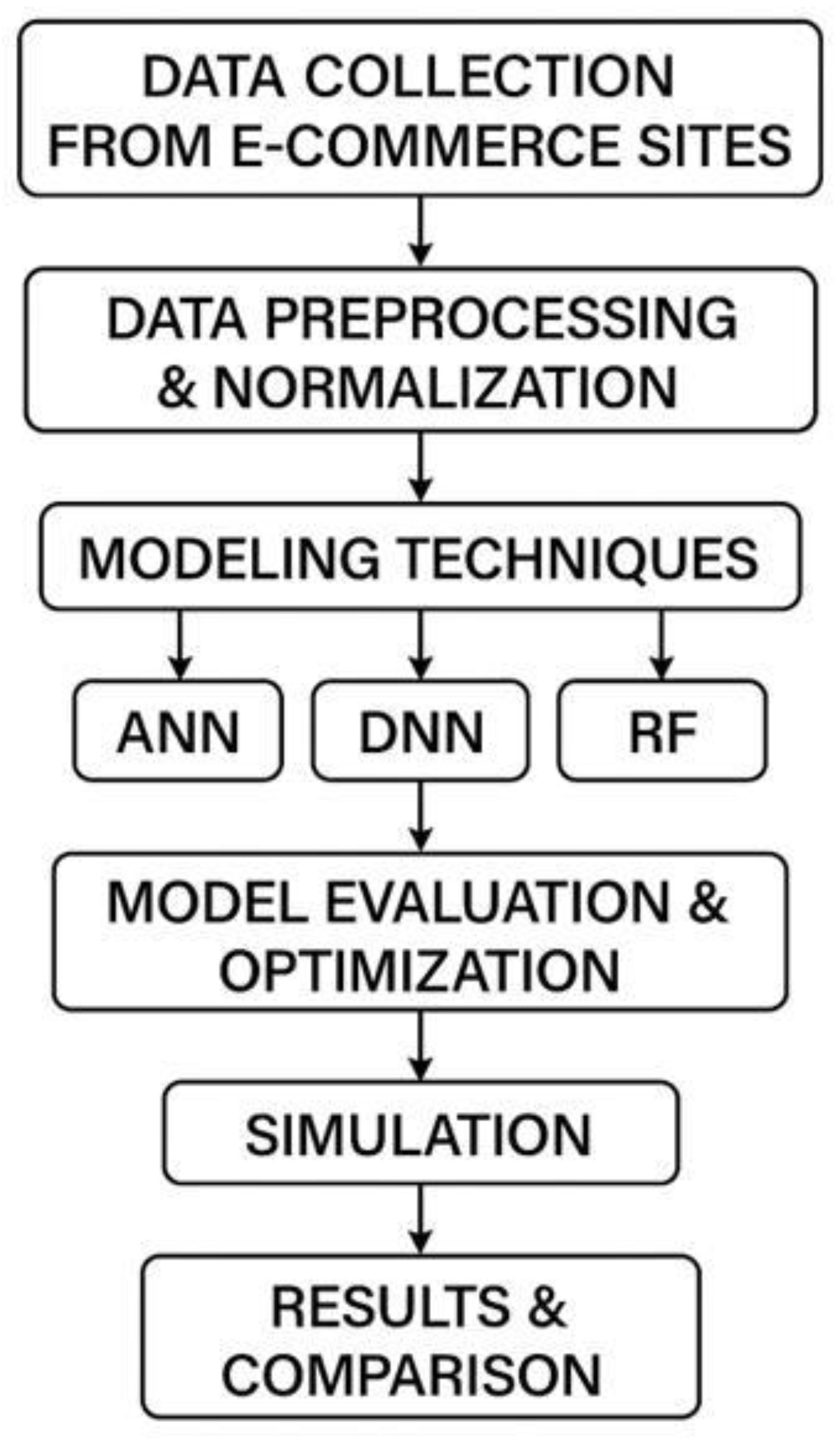
The smart tablet, which is one of the most used retail technological products today, was chosen as the research subject. Features such as processor speed, screen size, capacity, resolution, system memory, number of processor cores and battery power were examined in the tablet. The process flow in the study is given in Figure 1.
Figure 1 illustrates the sequential process followed in this study, which includes data collection, preprocessing, machine learning model training and optimization, simulation with test data, and final comparison of model outcomes.

4.2. Obtaining Data

The dataset was constructed by selecting the 500 best-selling smart tablets from leading Turkish e-commerce platforms based on their sales rank. Sales rank was determined by the platform’s internal algorithm reflecting popularity and purchase frequency over the previous 3-month period. This approach ensured that the sample reflects the actual market preferences of consumers. Table 4 presents the main features of these popular tablets, as obtained from the relevant e-commerce sources.
To ensure the reliability and accuracy of the models, several preprocessing steps were applied to the dataset. First, the screen size classes were evaluated and found to be reasonably balanced across the dataset, minimizing any class imbalance bias. Second, categorical variables were encoded: ordinal variables (e.g., screen size categories) were label encoded, while nominal variables were transformed using one-hot encoding. Third, records with missing values were excluded from the analysis to maintain data integrity. Finally, the data were normalized and pre-processed to prepare them for model training, using min–max scaling to ensure that variables on different scales did not disproportionately affect the learning process.

4.3. Modeling of Data

In this study, supervised machine learning models (ANN, DNN, and RF) were used to predict Turkish consumers’ smart tablet preferences based on structured data collected from e-commerce platforms. After the training and evaluation of these models, a simulation phase was conducted using unseen or test data. This simulation aimed to assess the generalizability and robustness of the trained models under hypothetical usage scenarios.
Artificial neural networks (ANNs) are among the fastest-developing information processing techniques in the field of artificial intelligence. Artificial neural networks are increasingly used in solving complex problems due to their success [102,103,104]. The deep learning model, also called deep neural networks (DNNs), is one of the most powerful machine learning methods. The deep learning model can map unorganized low-level features to high-level representations of hidden data that are more suitable for a final classification problem. This feature can better model complex sequence structures [105,106,107,108]. Random forest (RF) algorithms are widely used for predicting. These algorithms are easy to interpret and fast to calculate [22,109]. Multilayered artificial neural networks, deep learning, and random forest models, which are data mining methods, were used in data analysis due to these superior features.
Artificial neural networks (ANNs) are inspired by the biological structure of the human brain and are composed of interconnected processing units known as neurons. These models learn from data by adjusting the connection weights through optimization techniques such as gradient descent and backpropagation. In this study, the ANN model was implemented using a multilayer perceptron (MLP) architecture, which included one hidden layer containing 50 neurons and utilized the ReLU activation function. The model was trained on 80% of the dataset, with a learning rate of 0.1 and momentum of 0.3, using the backpropagation algorithm.
Deep neural networks (DNNs) build upon the basic structure of ANNs by introducing multiple hidden layers, which enable the learning of more abstract and complex data representations. This layered design makes DNNs especially effective for identifying intricate patterns. In this study, the DNN model was designed with multiple hidden layers and trained across several epochs. To reduce the risk of overfitting and improve generalization, techniques such as dropout and regularization were applied during training.
For the DNN model, a deeper network architecture with three hidden layers (64, 32, and 16 neurons, respectively) was implemented, using ReLU activations and a dropout rate of 0.2 to prevent overfitting. The model was trained for 10 epochs with early stopping criteria and optimized using a maximum weight constraint (Max_w2) of 1.36112 and a runtime limit (Max_runtime_seconds) of 30 s. These settings were selected to ensure a balance between model complexity and training efficiency. The optimization helped the model achieve competitive accuracy and error metrics compared to the other methods employed.
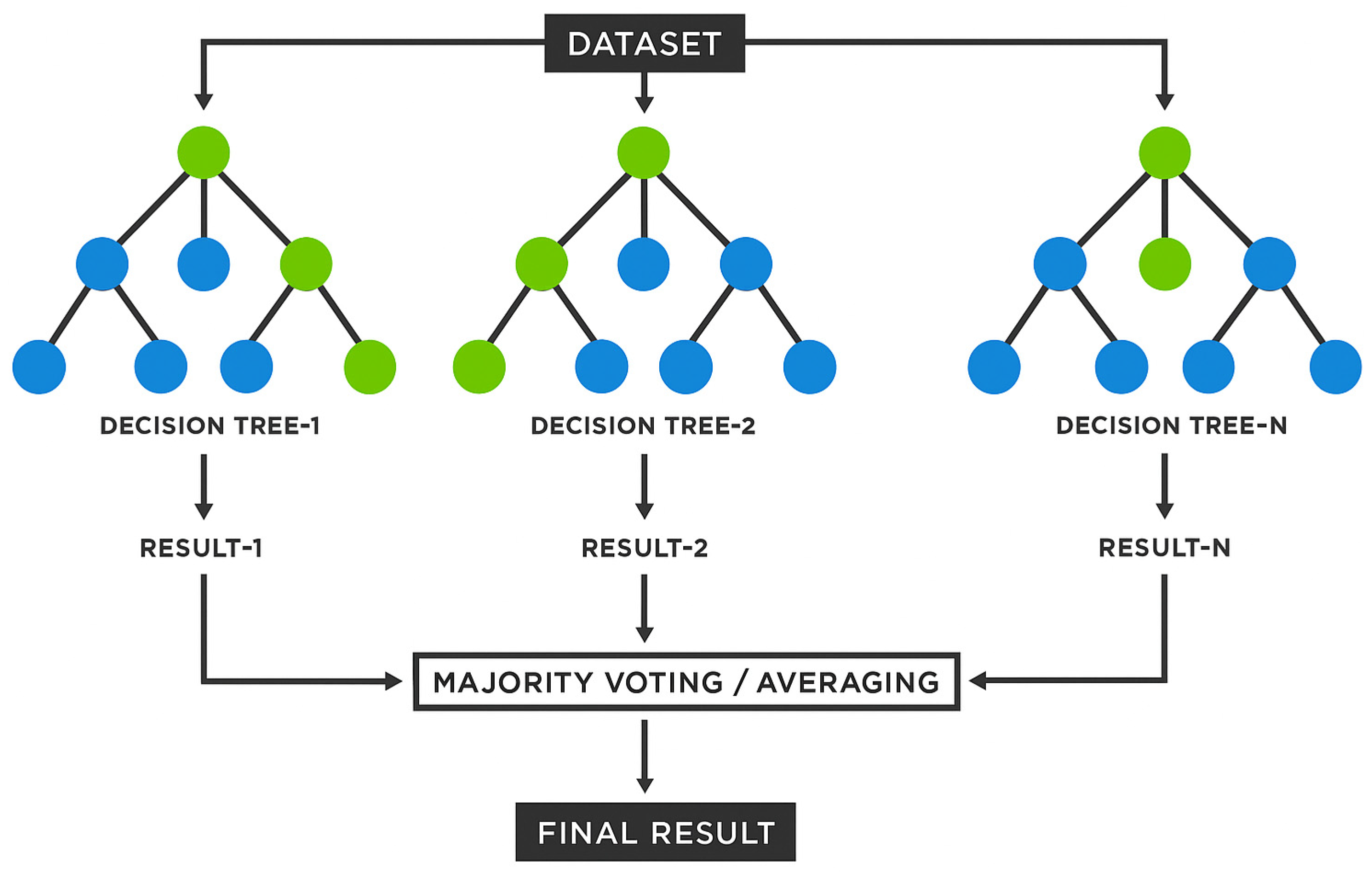
Random forest (RF) is an ensemble learning technique that generates a collection of decision trees and aggregates their outputs to improve prediction accuracy. For classification tasks, it predicts based on the majority vote among trees, while in regression tasks, it uses the average of predictions. RF is particularly valued for its resistance to overfitting and effectiveness in processing datasets with numerous features. In this study, the RF model was configured with 31 decision trees, each having a maximum depth of 39. The gain ratio was employed as the splitting criterion to enhance the quality of node divisions.
To improve clarity and comprehension, a visual comparison of the architectures of these algorithms is provided in Figure 2, Figure 3, Figure 4 and Figure 5. The models were implemented in RapidMiner, and hyperparameters were optimized using built-in parameter tuning operators.

4.3.1. Artificial Neural Network Model

Artificial neural networks are known as massively parallel distributed processors that can simulate the behavior of a biological neural network [110]. They have a good non-linear mapping capability that enables the network to accurately capture the complex relationship in the data structure [111]. The function of artificial neural networks is like the human brain in two respects: (1) the network acquires information through a learning procedure; and (2) the connection forces are used to store the acquired information [111,112,113,114]. Artificial neural networks are divided into single-layer and multilayer types. Multilayer neural networks give more successful results in predicting the data we want. There are 3 layers in the multilayer artificial neural network model. The first layer and the last layer are the input and output layers, respectively. The middle layer is known as the hidden layer [115,116]. In our implementation, the artificial neural network consisted of one input layer, two hidden layers, and one output layer. Each hidden layer contained 16 neurons. We used the ReLU (Rectified Linear Unit) activation function in the hidden layers due to its efficiency and ability to handle non-linearity in structured numerical data, which fits the nature of our input features (e.g., processor speed, RAM, screen resolution). For the output layer, we applied a linear activation function, as the target variable (screen size category) was treated as a continuous numerical range.
The model was trained using the Adam optimizer, which was selected for its adaptive learning rate and fast convergence on tabular data. Alternatives like Shampoo or Lion are typically suited for large-scale models with high-dimensional data such as transformers, which were not applicable in this study.
The dataset consisted of seven normalized numerical features: processor speed (GHz), storage capacity (GB), screen resolution (pixels), RAM (GB), number of cores, battery power (mAh), and screen size (inches). These features were grouped into meaningful value ranges to improve training efficiency and generalization performance.
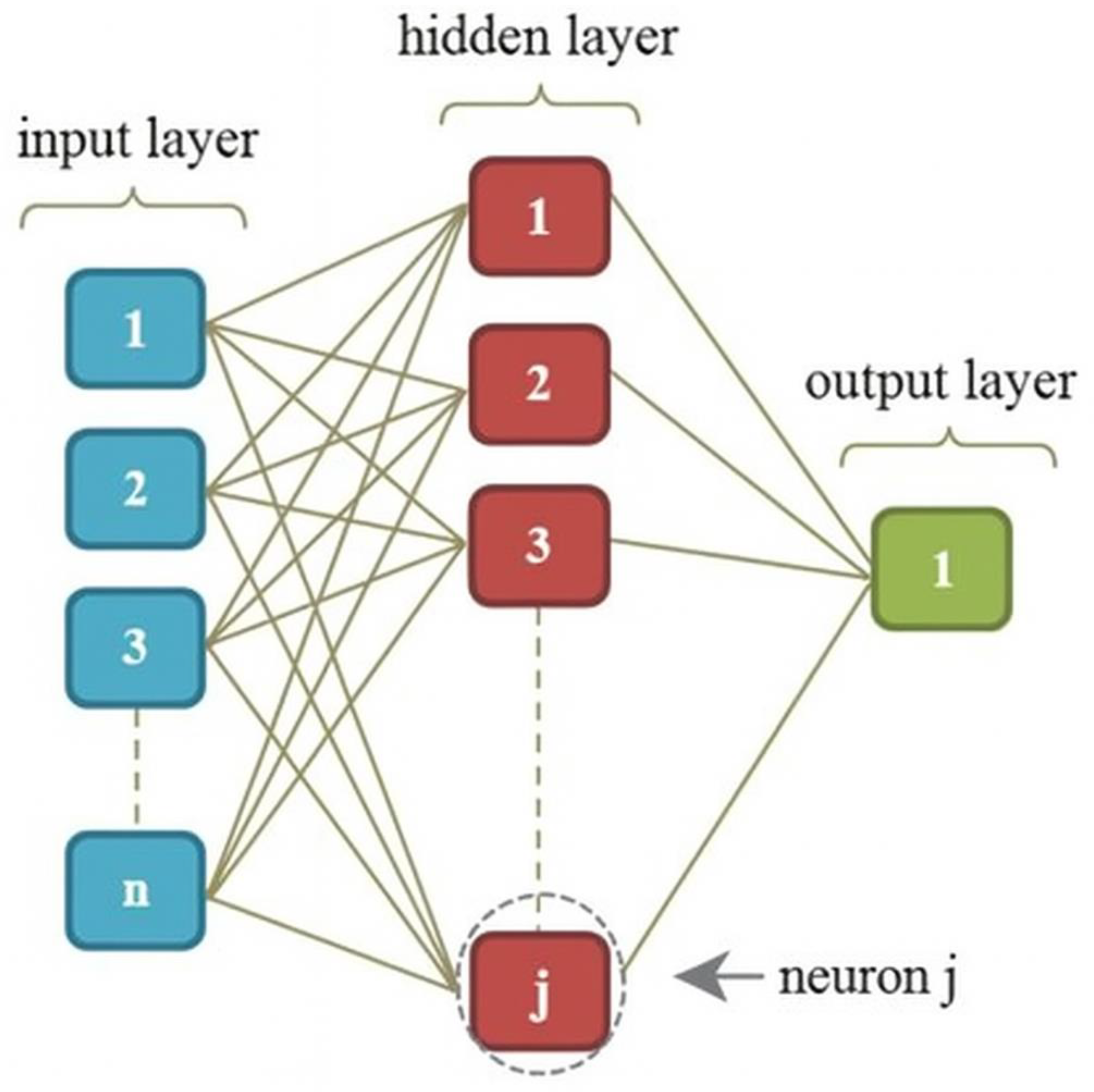
The basic unit in ANN layers are processing elements called neurons. Figure 2 shows the general structure of the artificial neural network model.
Figure 2. General structure of the artificial neural network (ANN) model as proposed in prior studies [116].
Applsci 16 00832 g002
An ANN needs a training process to perform a desired task. Training is the process of adjusting link weights with a learning procedure. After the training process, the network can be used to make decisions or identify relationships on new input datasets. It is worth noting that the weights only acquire meaningful information after the training process; prior to training, they do not carry any significant value. Backpropagation is known as one of the most robust algorithms for the training process [117,118]. After the training process, the network goes into the testing process. In this process, the network makes predictions.
All input features were normalized using min–max scaling prior to training. Batch or layer normalization was not applied, as the tabular nature and limited size of the dataset did not necessitate it.

4.3.2. Deep Learning Model

Deep learning algorithms can be viewed as structurally more advanced forms of multilayer artificial neural networks, characterized by multiple hidden layers between the input and output layers [110,111]. These deeper architectures enable the extraction of more abstract and hierarchical features from the data [108,111]. In this study, deep neural networks (DNNs) were selected as the deep learning architecture due to their proven performance and strong compatibility with structured, tabular datasets.
While the broader field of deep learning includes sophisticated models such as Transformers and Mamba architectures, DNNs were chosen for their established reliability and interpretability within consumer preference modeling. To minimize conceptual ambiguity, the distinctions among artificial intelligence, machine learning, and deep learning are clarified in Section 3.4.
Deep feed-forward networks, a common form of DNN, can map low-level input features into more meaningful high-level representations through multiple layers of nonlinear processing. With sufficient depth and training, these models can capture complex relationships in the data, facilitating both classification and regression tasks. Furthermore, recurrent variants of deep learning incorporate feedback loops to model dynamic temporal sequences, often used in natural language processing applications [108,119,120].
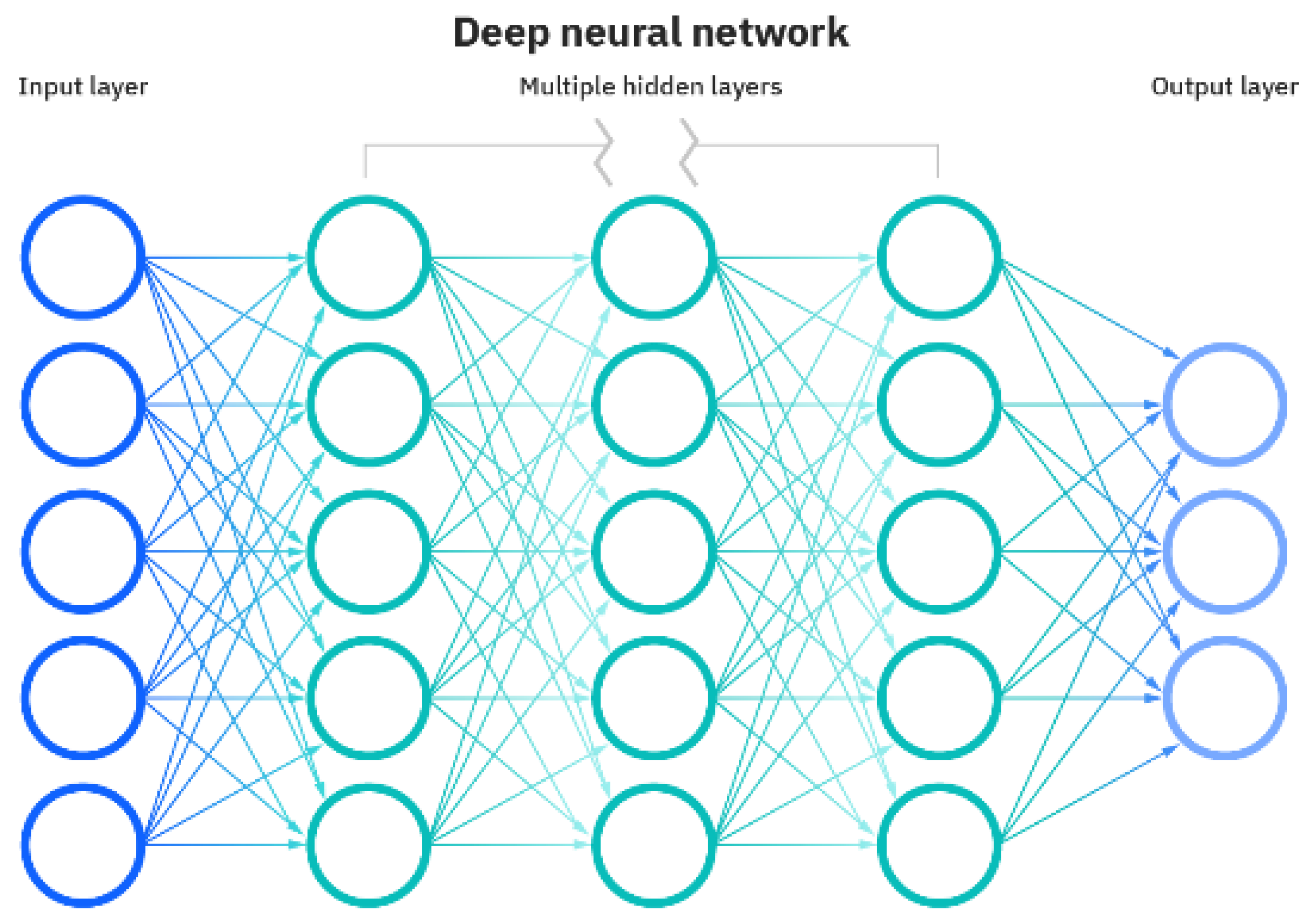
Unlike conventional machine learning algorithms, deep learning models typically require larger datasets and more advanced computational resources [110,111]. The overall structure of the deep learning model utilized in this study is illustrated in Figure 3.
Figure 3. Architecture of the deep learning (DNN) model based on multiple layers [121].
Applsci 16 00832 g003
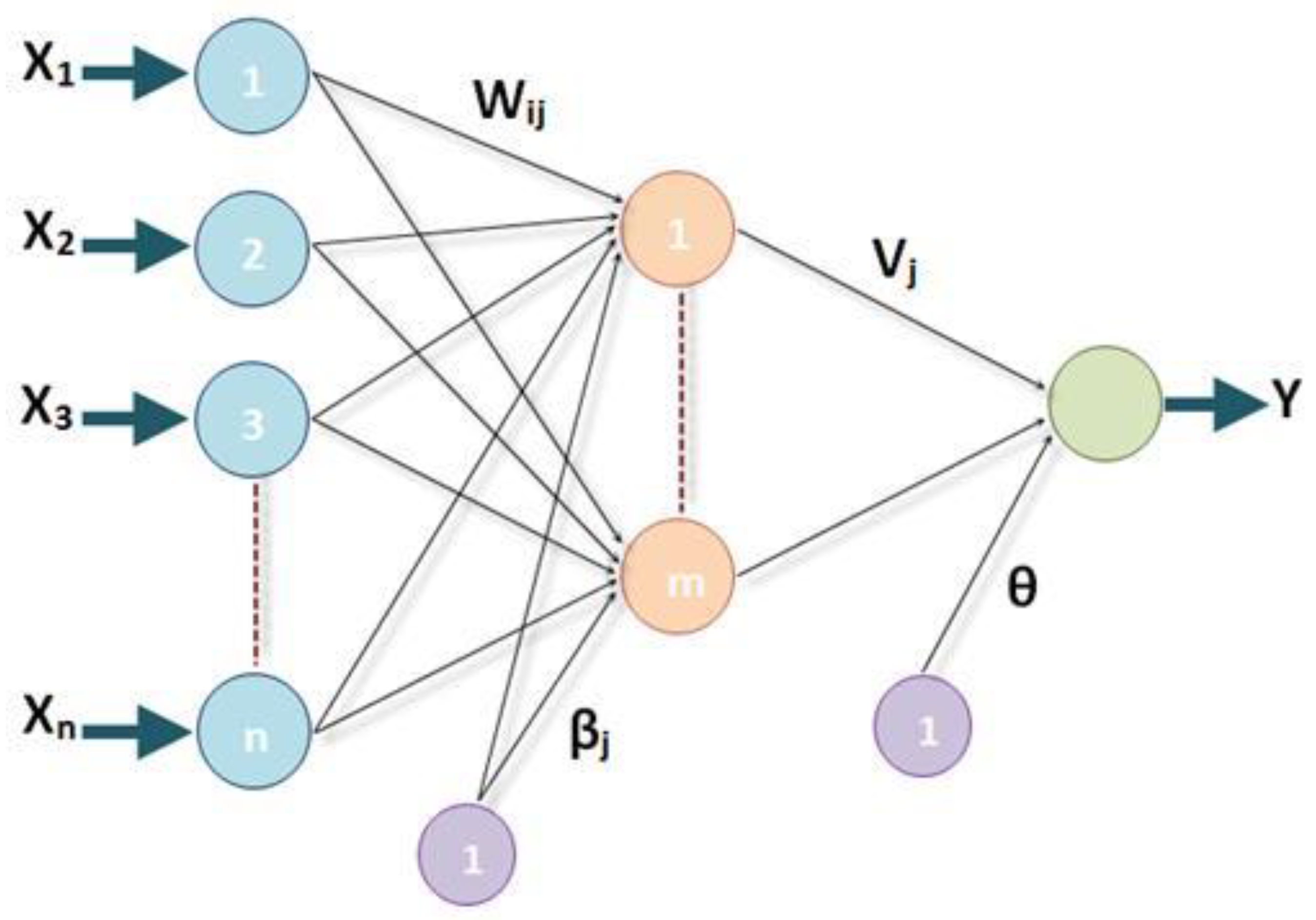
The mathematical expression used to calculate the desired dependent variable in multilayer networks is given in Equation (1). The variables in this equation are given in Figure 4.
Figure 4. Example of a multilayer neural network used in prediction models [122,123].
Applsci 16 00832 g004
Y = g θ + j = 1 m v j   i = 1 n f w ij X i + β j
In Equation (1), Y is the predicted value of dependent variable; Xi is the input value of the ith independent variable; wij is the connection weight between the ith input neuron and the jth hidden neuron; βj is the value of the bias of the jth hidden neuron; θ is the value of the bias of the output neuron; vj is the connection weight between the jth hidden neuron and the output neuron; g(.) and f(.) are the activation functions for the hidden and output layers, respectively [122,123].

4.3.3. Random Forest Model

Random forests or random decision forests are an ensemble learning method for classification, regression, and other tasks that work by generating many decision trees at training time. The random forest output for classification tasks is the class chosen by most trees. For regression tasks, the mean or mean estimate of individual trees is returned [124,125]. A random forest is a classifier consisting of tree structure classifiers {h(x,Θk), k = 1, …}, where { } k Θ are independent, uniformly distributed random vectors, and each tree gets a unit vote for the most popular class in the entry x. This definition shows that RF is a combination of many tree structure classifiers. In Breiman’s RF model, each tree is planted based on a training sample set and random variable, denoted as the random variable k Θ corresponding to the kth tree, which is independent and uniformly distributed between any two of the random variables, resulting in a classifier (x, ) k h Θ, where x is the input vector. After K times we get the classifier array {h1(x), h2(x), hk(x)} and use it to build a multiple classification model system; the result of this system is drowned by ordinary majority vote and the decision function
H(x) = arg max_Y ∑ (i = 1 to k) I(hi(x) = Y)
where H(x) is the combination of the classification model, hi is a single decision tree model, Y is the output variable, I(⋅) is the indicator function. For a given input variable, each tree has a vote to choose the best classification result [126].
The general structure of the random forest model is given in Figure 5.
Figure 5. Schematic structure of the random forest (RF) model applied in this study [127].
Applsci 16 00832 g005

4.4. Implementation

RapidMiner10.1 software was used to apply artificial neural networks, deep learning, and random forest models. RapidMiner software was developed by Ralf Klinkenberg et al., and has been applied in various published studies [128,129]. RapidMiner was selected as the modeling environment due to its robust support for various machine learning algorithms, transparent workflow design, and reproducibility for practitioners. The platform allows for efficient implementation of complex modeling procedures such as hyperparameter tuning, cross-validation, and performance evaluation without requiring extensive coding. RapidMiner is the preferred software because it is useful and easy. What we meant by “useful and easy” is that RapidMiner provides an intuitive graphical user interface, built-in machine learning operators (such as neural networks and random forest), and automated parameter tuning. These features allow users to visually build workflows that combine data preprocessing, modeling, validation, and result visualization in an efficient and reproducible way, without the need for extensive coding.
RapidMiner is the preferred software because it is useful and easy. What we meant by “useful and easy” is that RapidMiner provides an intuitive graphical user interface, built-in machine learning operators (such as neural networks and random forest), and automated parameter tuning. These features allow users to visually build workflows that combine data preprocessing, modeling, validation, and result visualization in an efficient and reproducible way, without the need for extensive coding.
While we acknowledge that frameworks such as PyTorch (version 1.10.0) provide advanced support for parallel matrix computations and GPU acceleration, the scope of our study did not require such computational complexity. Our dataset was small and structured, and our focus was on comparative model performance rather than computational efficiency. RapidMiner provided sufficient capability for the level of analysis conducted in this study and allowed for reproducible, visual workflow-based modeling without requiring additional code implementation.
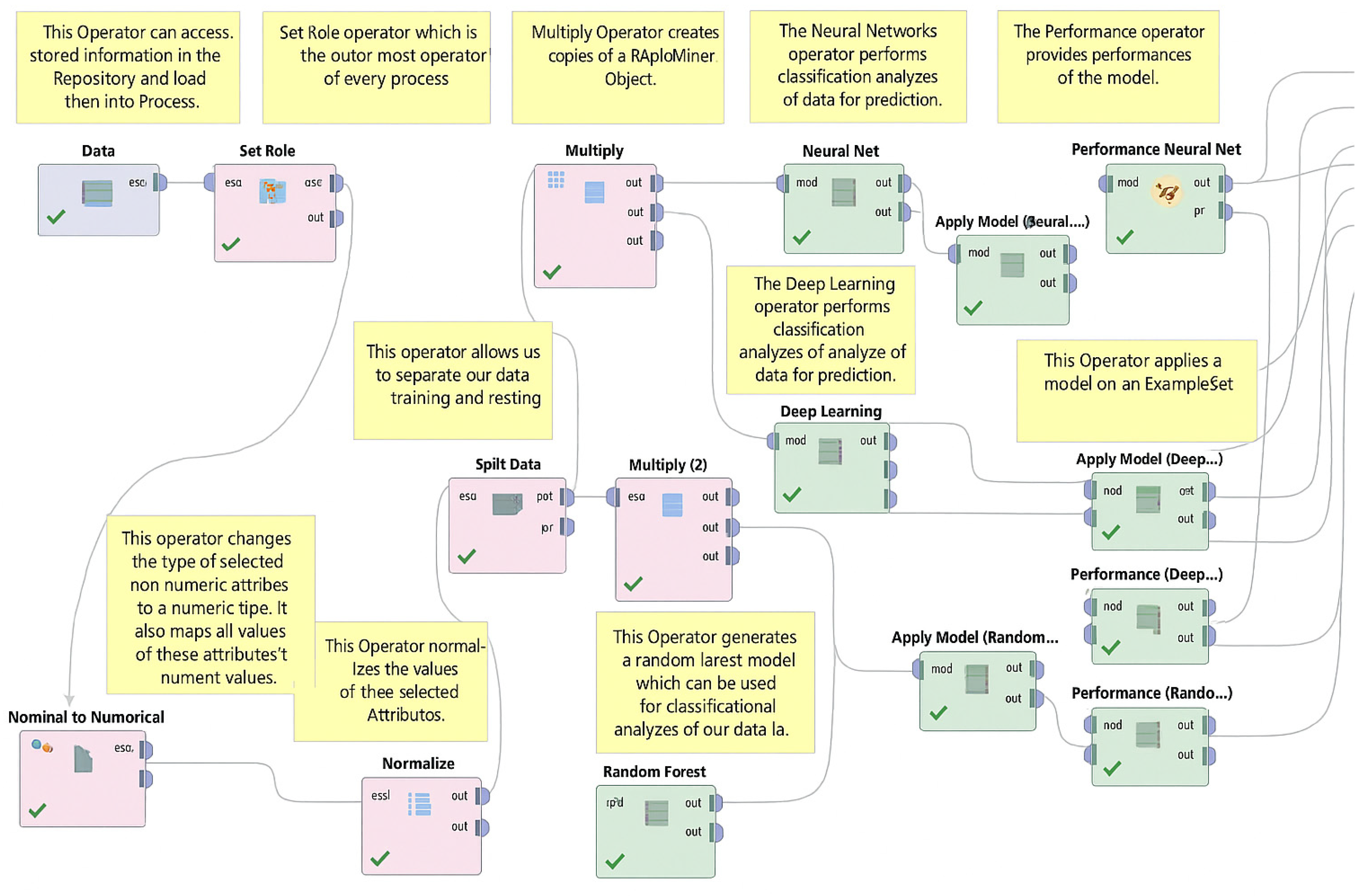
This software is used with operators [130,131]. This study employed RapidMiner software to implement artificial neural networks (ANNs), deep neural networks (DNNs), and random forest (RF) models. The analytical workflow designed using built-in operators of the software is illustrated in Figure 6, which provides a step-by-step representation of the data analysis pipeline from preprocessing to model training.
In modeling the data, 80% of all data was used as training data and 20% as test data. To ensure optimal predictive performance, hyperparameter tuning was conducted for all three models. In particular: For ANNs, learning rate and momentum parameters were optimized. For DNNs, parameters such as maximum weight constraint, training epochs, and dropout rates were adjusted. For RF, number of trees and maximum depth were fine-tuned.
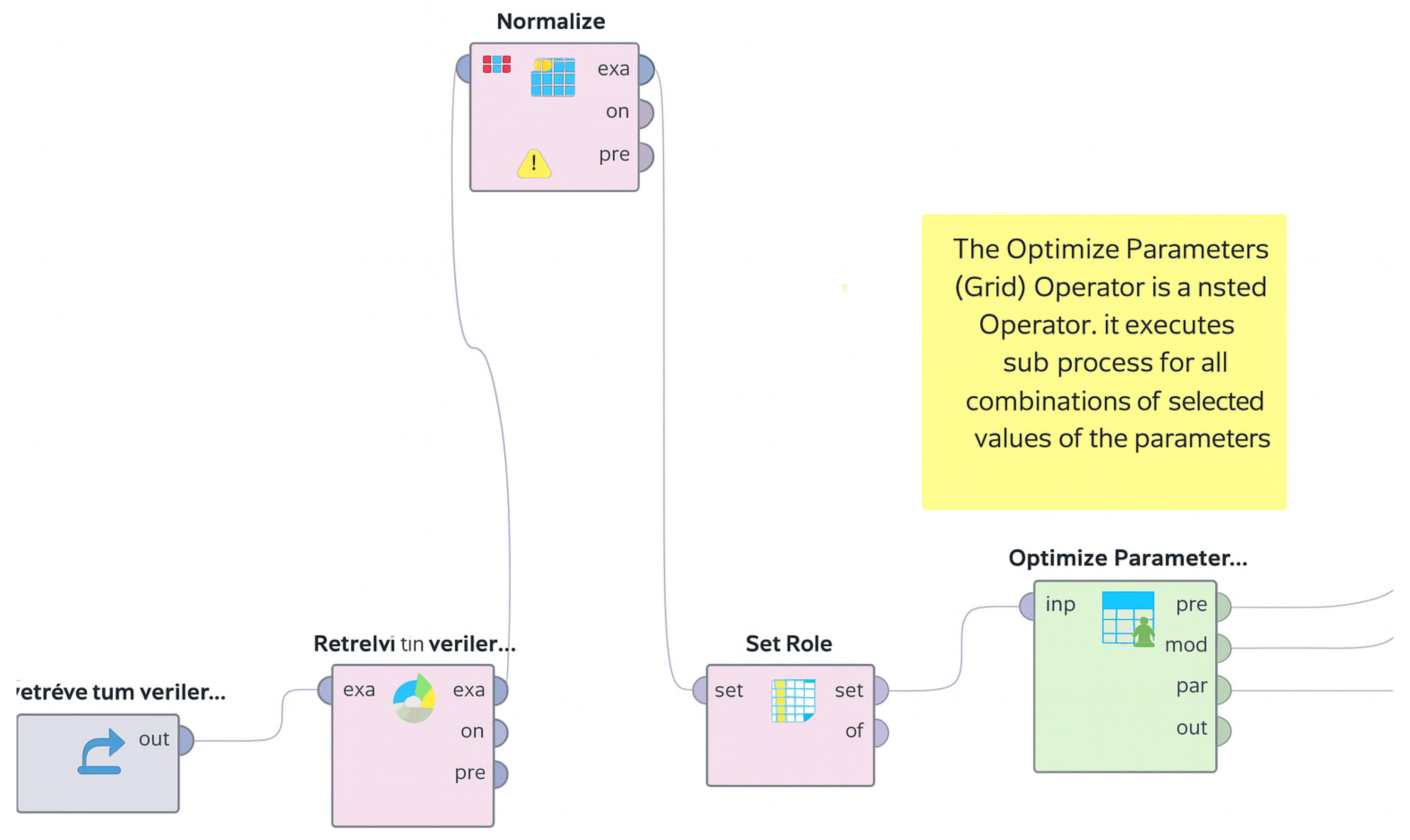
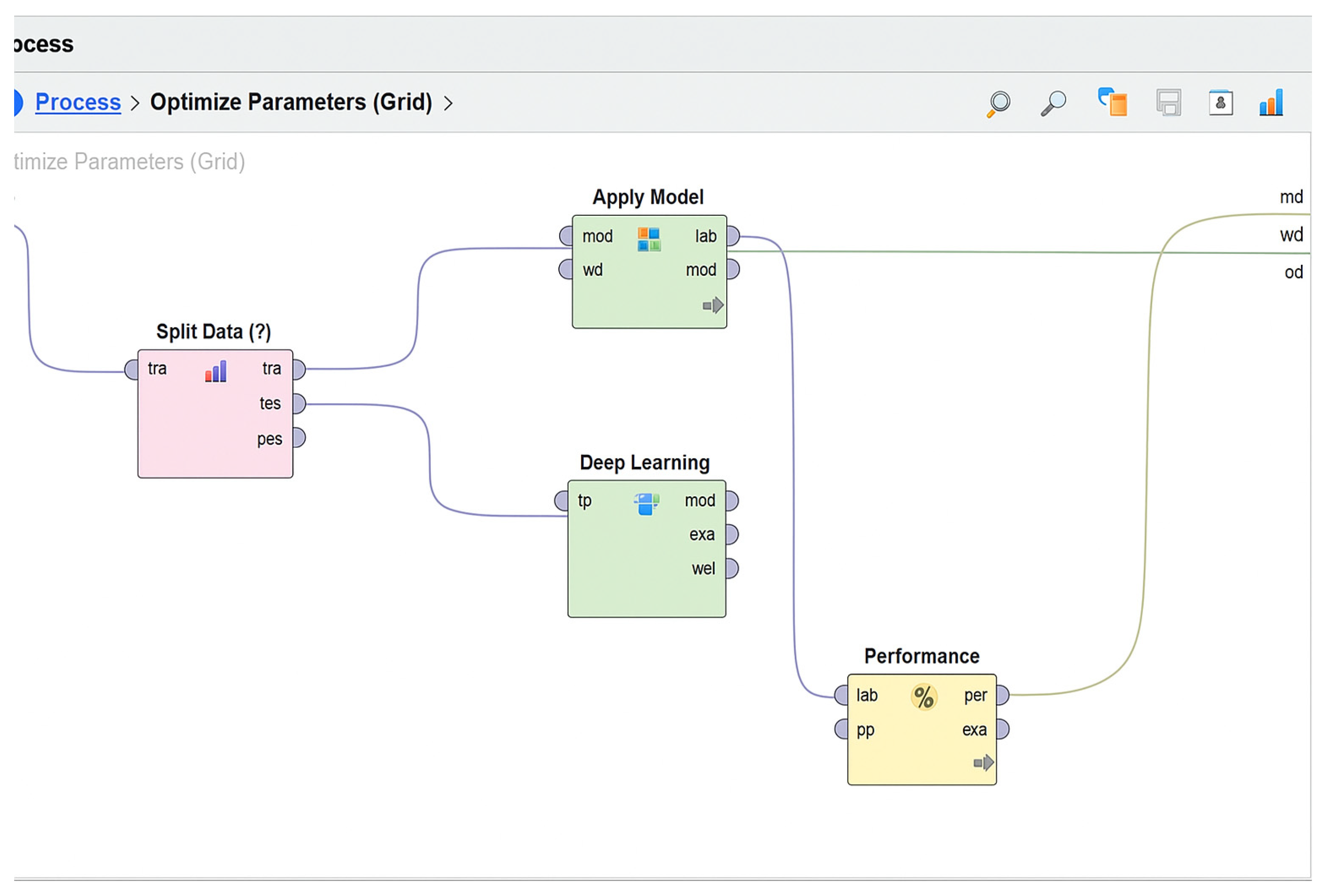
The parameter optimization processes for these models are visually summarized in Figure 7 and Figure 8.
Simulation can be defined as the representation of a process [22]. After the analysis of the data, the simulation process was carried out.
Following the evaluation of model performance on test data, a simulation was performed to emulate consumer preference predictions in a controlled setting. This allowed for the observation of model behavior in scenarios where actual labels were withheld. The simulation step further validated the practical applicability of the trained models.
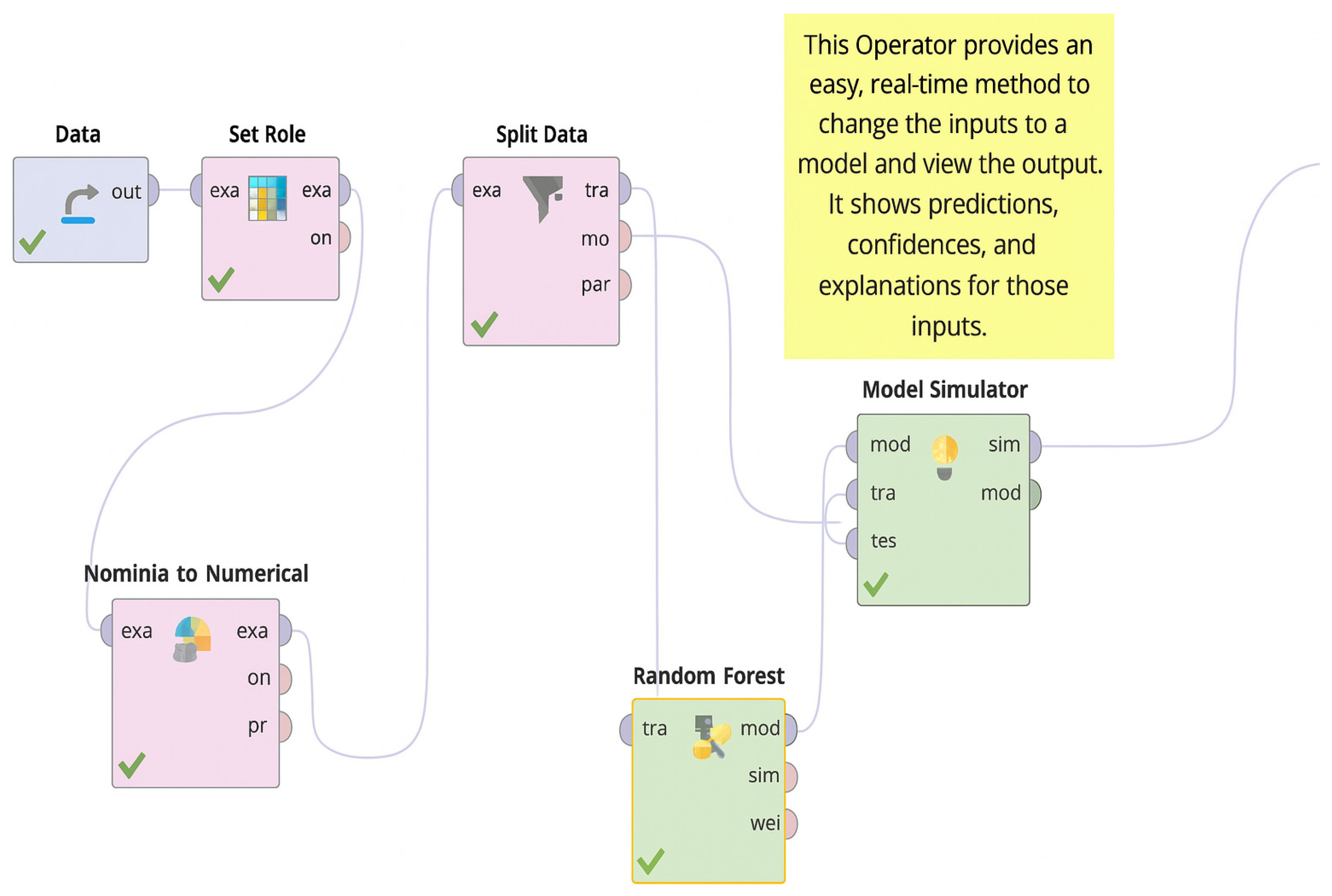
After evaluating model performance on test data, a simulation phase was conducted to assess the robustness and generalizability of the trained models under hypothetical conditions. This phase emulated user preference predictions for unseen cases without labels, allowing for practical validation of model applicability. The simulation workflow is shown in Figure 9.

4.5. Evaluation of Models

Many criteria are used to evaluate the prediction performance of the models. Among them, the correlation coefficient (R2), root mean square error (RMSE), mean square error (MSE) precision, recall, and F1-score were used in the evaluation of the models.
R 2 = ( Y p Y p ¯ ) ( Y o Y o ¯ ) ( Y p Y p ¯ ) 2 ( Y o Y o ¯ ) 2 2
R M S E = 1 n i = 0 n Y o Y p 2
MSE = RMSE2
where YO and YP are the measured and predicted values, respectively, and the bar denotes the mean of the variable [22].
  • Precision:
Precision = TP/(TP + FP)
This measures the proportion of correctly predicted positive instances among all instances predicted as positive.
  • Recall (Sensitivity):
Recall = TP/(TP + FN)
This measures the proportion of correctly predicted positive instances among all actual positive instances.
  • F1-Score:
F1-Score = 2 × (Precision × Recall)/(Precision + Recall)
This represents the harmonic mean of precision and recall, providing a single score that balances both concerns.
Symbol Definitions:
  • TP (True Positive): The number of correctly predicted positive instances.
  • FP (False Positive): The number of negative instances incorrectly predicted as positive.
  • FN (False Negative): The number of positive instances incorrectly predicted as negative.
  • Precision: Accuracy of positive predictions.
  • Recall: Coverage of actual positives by the model.
  • F1-Score: Combined measure of Precision and Recall.

4.6. Evaluation Metrics and Statistical Analysis

To determine whether the observed differences in model performance were statistically significant, a repeated-measures ANOVA was performed based on cross-validated accuracy scores. Post hoc pairwise comparisons were subsequently conducted to explore specific model differences. All statistical analyses were carried out using IBM SPSS Statistics Version 28.0.
In addition to statistical metrics, confusion matrices were constructed for each model to visualize classification accuracy and misclassification patterns across different screen size categories. These matrices were generated in Python using the scikit-learn library (Version 1.3.0), which provided clear insight into the predictive behavior of each model. The confusion matrices helped identify which screen size classes were most frequently confused and reinforced the findings from the quantitative evaluation.

5. Results and Discussion

5.1. Turkish Consumers’ Smart Tablet Purchasing Preferences

In the study, key hardware features such as processor speed (GHz), storage capacity (GB), screen resolution (pixels), random-access memory (GB), number of processor cores, battery power (mAh), and screen size (inches) were examined to identify Turkish consumers’ preferences when purchasing smart tablets on e-commerce platforms. The dataset included 500 samples for each attribute. The summary of the most preferred tablet features based on these observations is provided in Appendix A (Table A1).
When the table above is examined, Turkish consumers seem to prefer higher-level features that improve the overall performance and user experience of tablets. These include large storage capacities, high RAM and powerful processors, which are essential for intensive multitasking, professional applications, and media consumption. The focus is clearly on finding devices that can handle more complex tasks, and Table 4 shows the results obtained from each machine learning model. The performance metrics reveal that the Random Forest model achieved the highest accuracy, suggesting its robustness in handling complex feature interactions. The comparatively lower performance of the DNN indicates that deeper architectures may not always yield better results when applied to moderately sized datasets.

5.2. Optimization of Parameters

The results of the optimization process of the parameters that are most effective in predicting the screen sizes of the most preferred tablets in artificial neural networks, deep learning, and random forest models are given in Table 5.
While ANNs and DNNs are powerful in modeling nonlinear relationships, the RF model demonstrated superior performance across all key metrics. This finding aligns with prior research indicating that ensemble methods are particularly effective in structured e-commerce data.

5.3. Estimation of Data

Screen size ranges of retail top-selling tablet products were estimated using test data using artificial neural networks, deep learning, and random forest models. The test data characteristics and actual and estimated screen sizes of the best-selling tablet products are given in Table 6.
The table above provides the estimated screen sizes of the models used in the test data. When the actual and estimated data in the table are examined, it is seen that all three models correctly estimate most of the actual data.
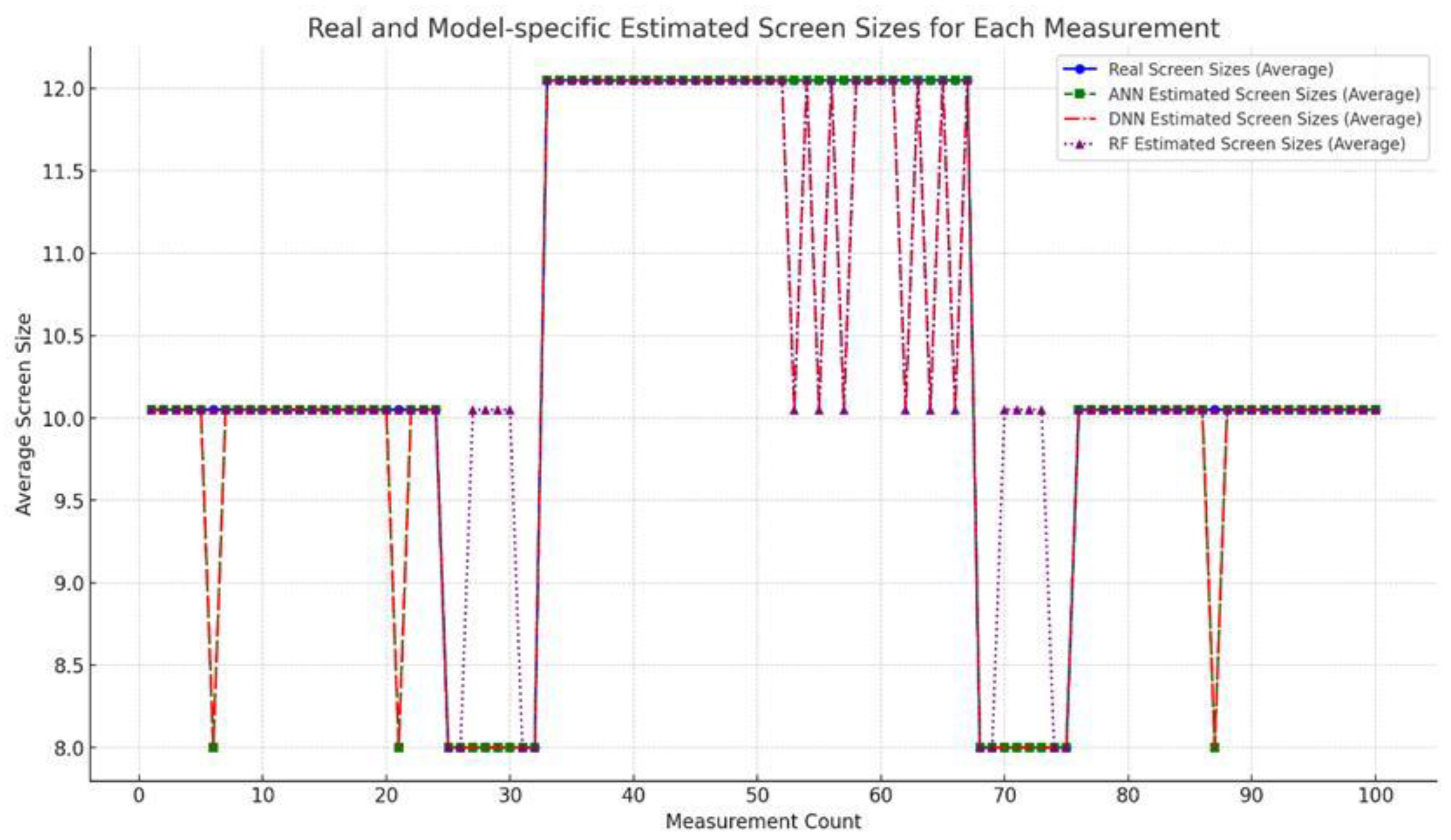
The graph showing the average real and estimated screen sizes is given in Figure 10.
When Figure 10 is examined, it is seen that most of the real and model estimated data overlap. This situation can show us that the models make successful predictions.
The R2, RMSE, and MSE values used in the evaluation of the performance of the models in the test and training stages are given in Table 7.
To evaluate the effectiveness of the models (ANN, DNN, and RF), several performance metrics were considered, including prediction accuracy, R2 (coefficient of determination), mean squared error (MSE), and root mean square error (RMSE). These metrics provide a comprehensive assessment of model validity, generalization capability, and error sensitivity.
Considering the accuracy estimates of the models, neural networks (97% (testing phase) and 92.40% (training phase)), deep learning (91% (testing phase) and 88.80% (training phase)), and random forest (86% (testing phase) and 89.80% (training phase)) models gave high accuracy results. These accurate results are consistent with prior findings that indicate that ANNs are effective for nonlinear classification tasks with structured datasets [132].
When the MSE value, one of the performance criteria used in the success of the models, approaches 0, it gives the highest estimation results [22,133]. When the MSE values of the models are examined, it is seen that all three models have values close to 0. The MSE value of the artificial neural network model (0.039 (testing phase) and 0.065 (training phase)) is closer to zero than both deep learning and random forest models. RMSE values followed similar trends and reinforce the superior precision of the ANN model, consistent with previous studies in consumer behavior prediction [28].
Another important indicator when evaluating the validity of the established models is the value of the correlation coefficient (R2) between the experimental and predictive data. The value of R2 varies between 0 and 1, and the accuracy of the prediction increases when R2 approaches 1 [116,134]. This means that there is good agreement between the experimental results and the prediction results. According to Table 7, the R2 values for screen size estimation are 0.982 (testing phase) and 0.882 (training phase) in the artificial neural network model, 0.848 (testing phase) and 0.835 (training phase) in the deep learning model, and 0.828 (testing phase) and 0.880 (training phase) in the random forest model. The R2 values calculated for all three models in this study are greater than 82%. This result shows that the proposed models can explain at least 82% of the variability of the actual data regarding the screen size. R2 values greater than 0.8 are generally considered indicative of strong model fit [135], suggesting that all three models capture a substantial proportion of the variance in the dataset, with the ANN providing the closest predictions to actual values. In addition, when the R2 values are examined, it has been found that the R2 value of the artificial neural network model is closer to 1 than that of the deep learning and random forest models.
The evaluation metrics R2, RMSE, MSE, and accuracy collectively indicate that all three models (ANN, DNN, and RF) are applicable for estimating screen size preferences in smart tablet purchases. Among them, the artificial neural network (ANN) model consistently yielded the highest performance. This can be attributed to its relatively simple yet effective architecture, which makes it particularly suitable for datasets of moderate size. In contrast, deep neural networks (DNNs), although powerful, are more susceptible to overfitting in such contexts, while the random forest (RF) model may have been affected by multicollinearity among input features despite preprocessing efforts.
To statistically validate the observed performance differences, a repeated-measures ANOVA was conducted using cross-validated accuracy scores. The analysis confirmed a significant effect of model type on accuracy at the 95% confidence level (p < 0.05), with post hoc comparisons revealing that the ANN model significantly outperformed both the DNN and RF models. These findings are consistent with previous research emphasizing the trade-offs between model complexity, data size, and predictive robustness [29,30].
Overall, while the DNN and RF models also demonstrated satisfactory performance, the ANN model achieved superior results across all evaluation metrics. These outcomes offer practical insights for e-commerce platforms and manufacturers aiming to model consumer preferences more accurately in emerging digital markets.
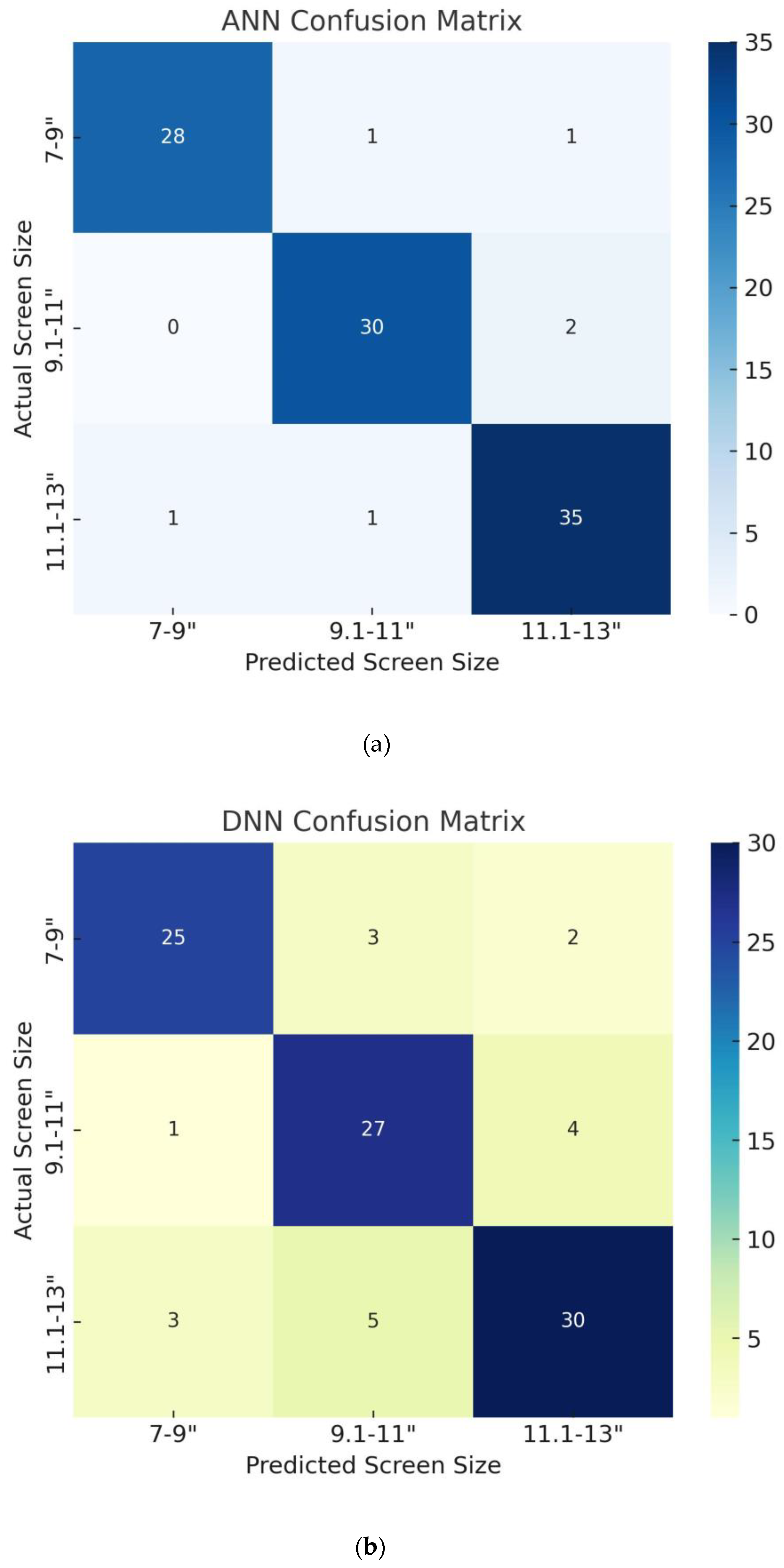
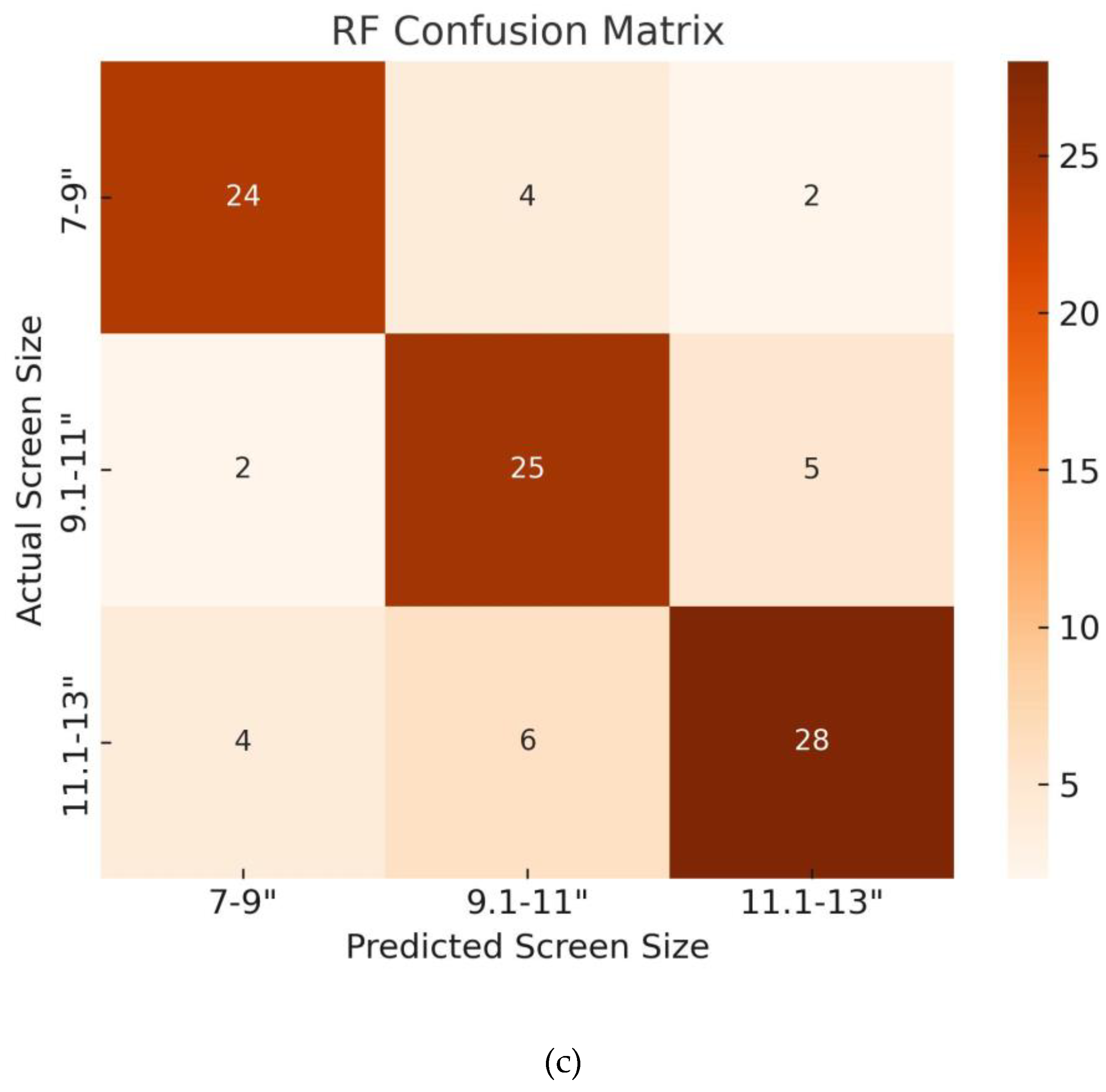
In addition to accuracy, confusion matrices were constructed to visualize the classification performance and misclassification patterns of the models. This analysis is illustrated in Figure 11.
These confusion matrices illustrate the classification performance of each model (ANN, DNN, RF) across screen size categories. Correctly classified instances are on the diagonal, while off-diagonal values represent misclassifications. The ANN model demonstrates superior predictive accuracy with minimal misclassification, whereas DNN and RF exhibit relatively higher confusion between mid-range screen sizes. This further supports the statistical metrics indicating the ANN’s higher accuracy and R2 scores discussed above, confirming that it is the most suitable model for predicting screen size in the given dataset.
Analysis of the confusion matrices reveals that all three models most frequently misclassified instances from the 9.1–11 screen size category, particularly by confusing them with the adjacent 11.1–13 and 7–9 classes. The DNN and RF models exhibited noticeable overlap in this mid-range, with RF demonstrating the highest level of confusion. In contrast, the ANN model showed minimal misclassification, accurately distinguishing among the screen size categories with only minor errors, particularly in the 11.1–13 group. These findings suggest that mid-range screen sizes present the greatest classification challenge, likely due to feature similarity among adjacent classes.
Table 8 presents a detailed comparison of the performance metrics for both the ANN, DNN, and RF models.
This table presents the classification performance metrics—Precision, Recall, and F1-Score—of the three machine learning models (artificial neural networks [ANNs], deep neural networks [DNNs], and random forest [RF]) used to predict screen size categories of smart tablets. Among the models, the ANN model yielded the highest F1 Score (0.91), indicating superior balance between precision and recall. These results further confirm the ANN model’s robustness in handling categorical prediction tasks related to consumer preferences.
In Table 9, correlation coefficient and accuracy values in the estimation of test data of other factors in models are given.
When the R2 and accuracy values in Table 5 were examined, it was determined that the artificial neural network model gave the best estimation results in all factors. Among all factors, the most unsuccessful prediction was found in processor speed in all three models. The most successful prediction was found in random access memory.
Additionally, our results suggest that in cases where the dataset is relatively small and structured, simpler ANN architectures may outperform deeper ones, highlighting the importance of model parsimony.

5.4. Simulation

In this study, the term simulation refers to the process of applying the trained machine learning models (ANN, DNN, and RF) to unseen test data that were not included during the training phase. This step was designed to evaluate the generalizability and robustness of the models in predicting screen size preferences under realistic, real-world-like conditions.
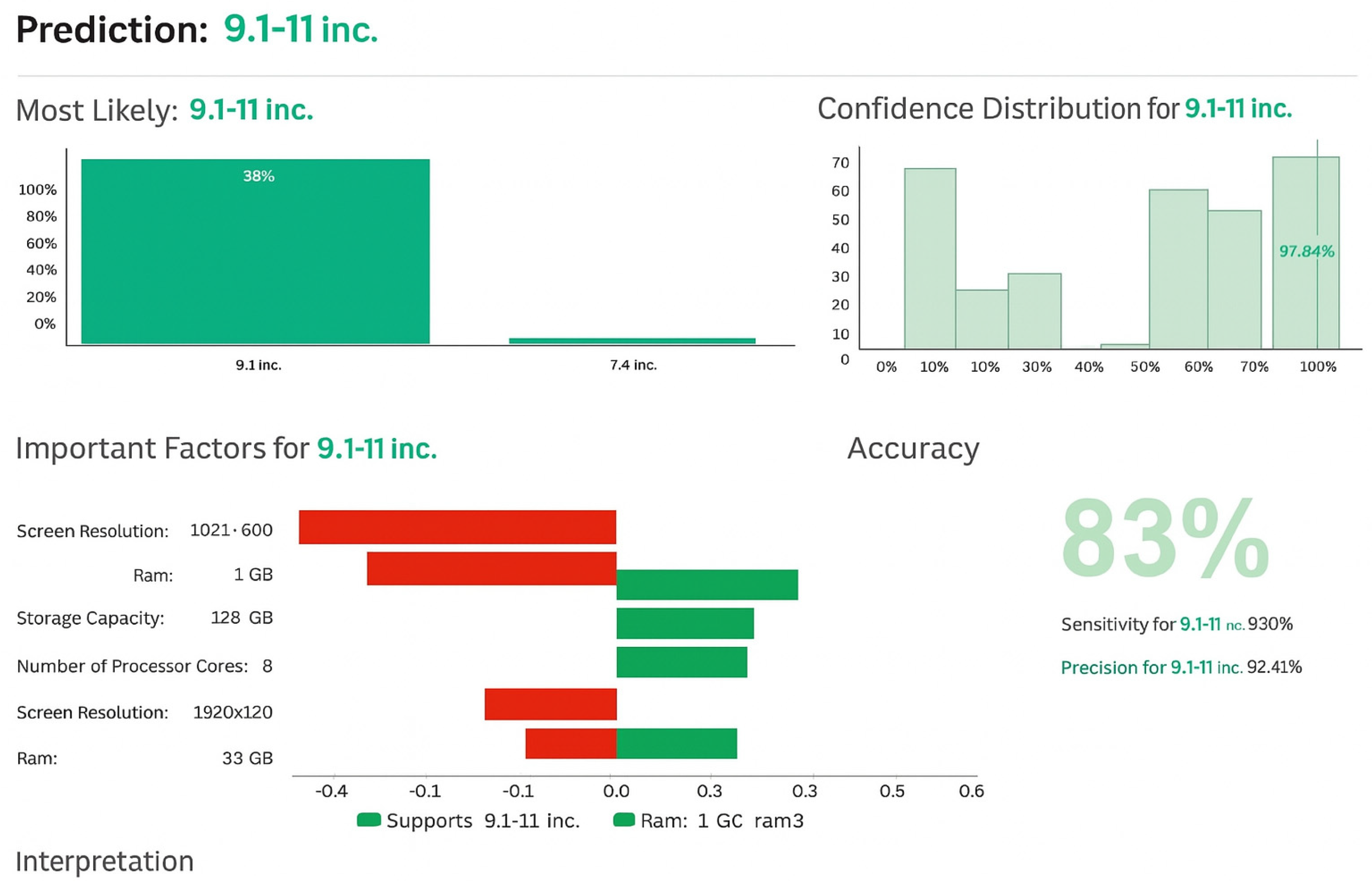
After the simulation process, the analysis results of the other features of the tablet are given in Table 10 to best estimate the screen size in all three models.
When the above table is examined, it was found that the best estimation in all three models was obtained when the screen size was in the range of 9.1–11. Looking at the table above, it has been determined that the other features of the tablet have the same values for the best estimation in all three models.
In Figure 12, a sample simulation screenshot obtained from the artificial neural network model is given.
As can be seen in Figure 10, by changing the tablet properties (storage capacity, screen resolution, random-access memory, etc.) with the simulation process, it can find the screen size of the product. This process can also be done for other features of the tablet. Thus, a great advantage is provided in terms of time.
Thanks to the models created in the study, companies marketing in the field of e-commerce will be able to predict the behavior of Turkish consumers when purchasing smart tablets. In this case, it will increase the profitability of companies selling in the field of e-commerce. At the same time, this situation provides great profits to companies in terms of time and cost.
This study provides valuable insights for both practitioners and researchers. While the machine learning models used (ANN, DNN, RF) are well-established, their comparative application to structured, real-world e-commerce data from a developing country context is novel. The results reveal meaningful patterns in Turkish consumers’ smart tablet preferences, which can help online retailers enhance product recommendations, optimize inventory planning, and personalize marketing efforts. Moreover, the findings can serve as a foundation for future studies focusing on AI-based decision support systems in similar emerging market settings.
These findings are particularly valuable for businesses operating in emerging markets, where consumer behavior patterns are still evolving and under-studied. These insights are especially relevant for digital marketing teams and e-commerce managers, as they provide a data-driven foundation for product positioning, audience targeting, and system design recommendations.

6. Conclusions, Limitations, and Future Research

Nowadays, retail products can be purchased over the Internet as well as in traditional stores. Much information about consumer behavior regarding retail products can be obtained from online shopping. However, it is very difficult to acquire the desired meaningful information among such a large amount of information. Data mining methods help us extract meaningful data from such large data. Among the data mining methods, artificial neural networks, deep learning, and random forest models are both easy to use and among the most used models. In this study, the features of the best-selling retail smart tablets in the most visited e-marketplaces in Turkey were determined. Then, the tablet screen sizes were estimated by using artificial neural networks, deep learning, and random forest models. Thirdly, the simulation process was carried out, and it was determined what other factors should be to get the best results in the models. Finally, the R2 and accuracy values in the estimation of other factors in the models were determined. Although the models applied are well-established, their comparative application to the Turkish smart tablet market offers useful insights for e-commerce firms, helping them to tailor recommendations and marketing approaches.
The results indicated that the ANN method yielded the best performance across all three models in predicting tablet properties, particularly for the random-access memory (RAM) feature. This is followed by the deep learning and random forest models, respectively. All three models predicted data with over 70% accuracy. In all three models, the best estimate was found in the random-access memory feature. This study offers a unique contribution by applying well-established predictive models to Turkish consumer data in the smart tablet market, generating actionable insights for e-commerce platforms and manufacturers.
When scrutinizing data derived from e-commerce websites, it has been ascertained that Turkish consumers have a preference for smart tablets featuring the following specifications: a processor speed within the ranges of 1–2 and 2.1–3 GHz, storage capacities of 32 and 64 GB, screen resolutions of 1280 × 800 and 2560 × 1600 pixels, 2 and 3 GB of random-access memory, 6 and 8 cores, a battery capacity of 5001–8000 mAh, and screen size ranges of 7–9 and 9.1–11 inches.
While the results indicate that artificial neural networks (ANNs) are particularly effective in predicting screen size preferences, there are some limitations to consider. One of the primary limitations of this study is that the dataset was derived exclusively from Turkish e-commerce platforms. As a result, the findings are most directly applicable to the Turkish consumer market, which may have unique cultural, economic, and behavioral dynamics not generalizable to other regions. While the use of localized data enhances the contextual relevance of the analysis, future studies should validate the proposed models across multiple countries or diverse markets to assess the consistency and transferability of the findings. Notably, the dataset was restricted to Turkish consumers and best-selling tablets on Turkish e-commerce platforms, which may affect the generalizability of the findings to other markets or demographics.
In the study, data was obtained from eight different sites where most online shopping is done in Turkey. The data obtained were evaluated using three different models. The study can be expanded by obtaining data from different e-commerce sites and using different models.
There are a limited number of studies on data mining that examine consumer behavior in the sale of retail products in the field of e-commerce. More information about customers can be obtained by increasing studies in this area. Thus, businesses can develop products in line with the wishes of their customers by having more information about their products. As a result, businesses can increase their quality and profitability. In summary, this study directly addressed the research question by identifying the key product features—particularly screen size and RAM—that influence Turkish consumers’ smart tablet preferences. The comparison of three machine learning models demonstrated that the ANN provided the highest predictive accuracy, validating our initial hypothesis. These findings offer practical value for manufacturers and e-commerce platforms by enabling more accurate product targeting and inventory planning based on consumer behavior. Future product development strategies can also be informed by the highlighted preferences, such as mid-range screen sizes and battery capacity ranges. In addition, those who will work in the field of consumer behavior and modeling in the future will be able to benefit from the information obtained from this article.

Funding

This research received no external funding.

Institutional Review Board Statement

Not applicable.

Informed Consent Statement

Not applicable.

Data Availability Statement

The original contributions presented in this study are included in the article. Further inquiries can be directed to the corresponding authors.

Conflicts of Interest

The author declares that they have no known competing financial interests or personal relationships that could have appeared to influence the work reported in this paper.

Appendix A

Table A1. Turkish consumers’ smart tablet preferences.
SpecificationAnalysis
Processor Speed (GHz)The most common categories are 1–2 GHz and 2.1–3 GHz, suggesting that consumers tend to favor mid-range processors that balance performance and efficiency.
Storage Capacity (GB)Storage capacities of 64 GB and 32 GB are highly preferred, indicating that consumers seek adequate space for applications and multimedia usage.
Screen ResolutionThe most frequently chosen resolutions are 2560 × 1600 pixels and 1280 × 800 pixels, reflecting a desire for both high-quality displays and budget-friendly options.
RAM (GB)The data indicates that 3 GB and 2 GB RAM options are widely preferred, showing that consumers prioritize affordability and basic multitasking performance.
Number of Processor Cores6-core and 8-core configurations dominate the choices, indicating a preference for powerful and efficient processing units.
Battery Power (mAh)Battery capacities are primarily in the 5001–8000 mAh range, showing that consumers value devices with a long battery life for extended usage.
Screen Size (inches)The most popular screen sizes are 9.1–11 inches and 7–9 inches, suggesting that consumers are split between larger screens for media consumption and smaller sizes for portability.

References

  1. Merkle, W. Erfolgreich im Stationären Einzelhandel. Wege zur Konsequenten Profilierung im Digitalen Zeitalter; Springer Gabler: Wiesbaden, Germany, 2020. [Google Scholar]
  2. McNair, M.P. Significant trends and developments in the post war period. In Competitive Distribution in a Free High Level Economy and Its Implications for the University; Smith, A.B., Ed.; University of Pittsburgh Press: Pittsburgh, PA, USA, 1958. [Google Scholar]
  3. Waldinger, I. Pariser Warenhaus-Legenden Kathedralen des Handels. wissenschaft.de. Available online: https://www.wissenschaft.de/geschichte/kathedralen-des-handels/ (accessed on 9 September 2024).
  4. Wang, X.Q. New Retail: New Changes and New Opportunities in the Retail Industry; Beijing Book Co.: Beijing, China, 2017. [Google Scholar]
  5. Caboni, F.; Hagberg, J. Augmented reality in retailing: A review of features, applications and value. Int. J. Retail Distrib. Manag. 2019, 47, 1125–1140. [Google Scholar]
  6. Hagberg, J.; Jonsson, A.; Egels-Zanden, N. Retail digitalization: Implications for physical stores. J. Retail. Consum. Serv. 2017, 39, 264–269. [Google Scholar]
  7. Yadav, M.S.; Pavlou, P.A. Marketing in computer-mediated environments: Research synthesis and new directions. J. Mark. 2014, 78, 20–40. [Google Scholar]
  8. Duch-Brown, N.; Grzybowski, L.; Romahn, A.; Verboven, F. The impact of online sales on consumers and firms. Evidence from consumer electronics. Int. J. Ind. Organ. 2017, 52, 30–62. [Google Scholar]
  9. Yan, Y.; Zhao, R.; Liu, Z. Strategic introduction of the marketplace channel under spillovers from online to offline sales. Eur. J. Oper. Res. 2018, 267, 65–77. [Google Scholar]
  10. Bhatnagar, A.; Papatla, P. Increasing online sales by facilitating spillover shopping. J. Retail. Consum. Serv. 2016, 29, 58–69. [Google Scholar]
  11. Noble, S.M.; Griffith, D.A.; Weinberger, M.G. Consumer derived utilitarian value and channel utilization in a multi-channel retail context. J. Bus. Res. 2005, 58, 1643–1651. [Google Scholar]
  12. Brynjolfsson, E.; Hu, Y.J.; Rahman, M.S. Competing in the age of omnichannel retailing. MIT Sloan Manag. Rev. 2013, 54, 23–29. [Google Scholar]
  13. Arora, S.; Parida, R.; Sahney, S. Understanding consumers’ showrooming behaviour: A stimulus–organism–response (S-O-R) perspective. Int. J. Retail Distrib. Manag. 2020, 48, 1157–1176. [Google Scholar]
  14. Aw, E.C. Understanding consumers’ paths to webrooming: A complexity approach. J. Retail. Consum. Serv. 2020, 53, 101991. [Google Scholar]
  15. Toplu Yılmaz, O.; Bayram, O. E-trade and e-export of Turkey in COVID-19 pandemic period. Kayseri Univ. J. Soc. Sci. 2020, 2, 37–54. (In Turkish) [Google Scholar]
  16. Rust, R.T. The future of marketing. Int. J. Res. Mark. 2020, 37, 15–26. [Google Scholar]
  17. Strycharz, J.; van Noort, G.; Helberger, N.; Smit, E. Contrasting perspectives–practitioner’s viewpoint on personalised marketing communication. Eur. J. Mark. 2019, 53, 635–666. [Google Scholar]
  18. De Keyzer, F.; van Noort, G.; Kruikemeier, S. Going too far? How consumers respond to personalized advertising from different sources. J. Electron. Commer. Res. 2022, 23, 138–159. [Google Scholar]
  19. Singaraju, S.P.; Rose, J.; Arango-Soler, L.A.; D’Souza, C.; Khaksar, S.M.S.; Brouwer, A.R. The dark age of advertising: An examination of perceptual factors affecting advertising avoidance in the context of mobile youtube. J. Electron. Commer. Res. 2022, 23, 13–32. [Google Scholar]
  20. Cavdar Aksoy, N.; Tumer Kabadayı, E.; Yilmaz, C.; Kocak Alan, A. Personalization in marketing: How do people perceive personalization practices in the business world? J. Electron. Commer. Res. 2023, 24, 269–297. [Google Scholar]
  21. Kantardzic, M. Data Mining: Concepts, Models, Methods, and Algorithms; John Wiley and Sons: Hoboken, NJ, USA, 2011. [Google Scholar]
  22. Bardak, S.; Bardak, T.; Peker, H.; Sozen, E.; Cabuk, Y. Predicting effects of selected impregnation processes on the observed bending strength of wood, with use of data mining models. BioResources 2021, 16, 4891–4904. [Google Scholar]
  23. Sozen, E.; Bardak, T.; Bardak, S. Determining the relationships between consumers and furniture use time using fp-growth algorithm. J. Bartin Fac. For. 2022, 24, 194–201. (In Turkish) [Google Scholar]
  24. Avcı, O.; Bardak, T. Halkla ilişkiler kapsamında Bartın tarihi galla (kadınlar) pazarı satıcılarının mutluluğunun veri madenciliğine dayalı analizi. In Proceedings of the Uluslararası Marmara Fen ve Sosyal Bilimler Kongresi, Kocaeli, Turkey, 23–25 November 2018; pp. 137–144. (In Turkish) [Google Scholar]
  25. Bardak, T.; Avci, O.; Kayahan, K.; Bardak, S. Data Mining Based Analysis of Traditional Store and Virtual Store Preference in the Purchase of Furniture. In Proceedings of the 6th International Conference on Science Culture and Sport, Lviv, Ukraine, 25–27 April 2018; pp. 645–652. [Google Scholar]
  26. Chua, S.J.; Wrigley, S.; Hair, C.; Sahathevan, R. Prediction of delirium using data mining: A systematic review. J. Clin. Neurosci. 2021, 91, 288–298. [Google Scholar]
  27. Zhang, C.; Zhao, Y.; Li, T.; Zhang, X.; Adnouni, M. Generic visual data mining-based framework for revealing abnormal operation patterns in building energy systems. Autom. Constr. 2021, 125, 103624. [Google Scholar]
  28. Chen, Y.; Wang, X.; Shi, Y. Customer purchase prediction based on neural networks. Electron. Commer. Res. Appl. 2019, 34, 100821. [Google Scholar]
  29. Zhou, M.; Chen, C.; Li, Q. Applications of Random Forest in e-commerce consumer analytics. Inf. Syst. Front. 2021, 23, 1223–1239. [Google Scholar]
  30. Liu, H.; Singh, S. Comparing ensemble methods for predictive modeling of online shopping behavior. J. Retail. Consum. Serv. 2018, 45, 105–113. [Google Scholar]
  31. Zhao, Y.; Wang, L.; Li, J. The impact of screen size on mobile device usability: A consumer-centered perspective. J. Retail. Consum. Serv. 2019, 47, 154–162. [Google Scholar]
  32. Kim, H.; Sundar, S.S. Mobile screen size and user engagement: A study on the role of visual attention. Hum.–Comput. Interact. 2016, 31, 115–139. [Google Scholar]
  33. Lee, D.; Kim, J. Product display and consumer decision-making in online marketplaces: The role of screen layout and size. Electron. Commer. Res. Appl. 2021, 45, 101028. [Google Scholar]
  34. Holsapple, C.W.; Singh, M. Electronic commerce: From a definitional taxonomy toward a knowledge-management view. J. Organ. Comput. Electron. Commer. 2000, 10, 149–170. [Google Scholar]
  35. Kalakota Whinston, A.B. Electronic Commerce: A Manager’s Guide; Addison-Wesley Professional: Boston, MA, USA, 1997. [Google Scholar]
  36. Gielens, K.; Steenkamp, J.E.M. Branding in the era of digital (dis) intermediation. Int. J. Res. Mark. 2019, 36, 367–384. [Google Scholar]
  37. Hamad, H.; Elbeltagi, I.; El-Gohary, H. An empirical investigation of business-to-business e-commerce adoption and its impact on SMEs competitive advantage: The case of Egyptian manufacturing SMEs. Strateg. Chang. 2018, 27, 209–229. [Google Scholar]
  38. Tan, F.T.C.; Pan, S.L.; Zuo, M. Realising platform operational agility through information technology–enabled capabilities: A resource-interdependence perspective. Inf. Syst. J. 2019, 29, 582–608. [Google Scholar]
  39. Bawack, R.E.; Wamba, S.; Carillo, K.D.A.; Akter, S. Artificial intelligence in e-commerce: A bibliometric study and literature review. Electron. Mark. 2022, 32, 297–338. [Google Scholar] [PubMed]
  40. Clarke, R. Appropriate Research Methods for Electronic Commerce. Available online: http://www.rogerclarke.com/EC/ResMeth.html (accessed on 1 October 2024).
  41. Urbaczewski, A.; Jessup, L.M.; Wheeler, B. Electronic commerce research: A taxonomyand synthesis. J. Organ. Comput. Electron. Commer. 2002, 12, 263–305. [Google Scholar]
  42. Wareham, J.; Zheng, J.G.; Straub, D. Critical themes in electronic commerce research: Ameta-analysis. J. Inf. Technol. 2005, 20, 1–19. [Google Scholar]
  43. Chua, C.E.H.; Straub, D.W.; Khoo, H.M.; Kadiyala, S.; Kuechler, D. The evolution ofe-commerce research: A stakeholder perspective. J. Electron. Commer. Res. 2005, 6, 262–281. [Google Scholar]
  44. Lee, S.M.; Hwang, T.; Kim, J. An analysis of diversity in electronic commerce research. Int. J. Electron. Commer. 2007, 12, 31–67. [Google Scholar]
  45. Lee, S.M.; Hwang, T.; Lee, D.H. Evolution of research areas, themes, and methods in electronic commerce. J. Organ. Comput. Electron. Commer. 2011, 21, 177–201. [Google Scholar]
  46. Ho, S.Y.; Lim, K.H. Nudging moods to induce unplanned purchases in imperfect mobile personalization contexts. MIS Q. 2018, 42, 757–778. [Google Scholar]
  47. Kramer, T.; Spolter-Weisfeld, S.; Thakkar, M. The effect of cultural orientation on consumer responses to personalization. Mark. Sci. 2007, 26, 246–258. [Google Scholar]
  48. Montgomery, A.; Smith, M. Prospects for personalization on the internet. J. Interact. Mark. 2009, 23, 130–137. [Google Scholar]
  49. Tam, K.Y.; Ho, S.Y. Understanding the impact of web personalization on user information processing and decision outcomes. MIS Q. 2006, 30, 865–890. [Google Scholar]
  50. McCarthy, J.F. The virtual world gets physical: Perspectives on personalization. IEEE Internet Comput. 2001, 5, 48–53. [Google Scholar][Green Version]
  51. Adolphs, C.; Winkelmann, A. Personalization research in e-commerce-A state of the art review (2000–2008). J. Electron. Commer. Res. 2010, 11, 326–341. [Google Scholar]
  52. Oberoi, P.; Pate, C.; Haon, C. Technology sourcing for website personalization and social media marketing: A study of e-retailing industry. J. Bus. Res. 2017, 80, 10–23. [Google Scholar]
  53. Shen, A.; Ball, A.D. Is personalization of services always a good thing? Exploring the role of technology-mediated personalization (TMP) in service relationships. J. Serv. Mark. 2009, 23, 80–92. [Google Scholar]
  54. Riegger, A.S.; Klein, J.F.; Merfeld, K.; Henkel, S. Technology-enabled personalization in retail stores: Understanding drivers and barriers. J. Bus. Res. 2021, 123, 140–155. [Google Scholar]
  55. Huang, M.H.; Rust, T. Technology-driven service strategy. J. Acad. Mark. Sci. 2017, 45, 906–924. [Google Scholar]
  56. Aw, E.C.X.; Basha, N.K.; Ng, S.I.; Ho, J.A. Searching online and buying offline: Understanding the role of channel, consumer, and product-related factors in determining webrooming intention. J. Retail. Consum. Serv. 2021, 58, 102328. [Google Scholar]
  57. Wu, Z.; Aw, E.C.X.; Chuah, S.H.W. Webrooming as the new retail experience: A smart-shopping perspective. Int. J. Retail Distrib. Manag. 2023, 51, 736–754. [Google Scholar]
  58. Flavian, C.; Gurrea, R.; Orus, C. Choice confidence in the webrooming purchase process: The impact of online positive reviews and the motivation to touch. J. Consum. Behav. 2016, 15, 459–476. [Google Scholar]
  59. Grewal, D.; Roggeveen, A.L.; Nordfält, J. The Future of Retailing. J. Retail. 2017, 93, 1–6. [Google Scholar]
  60. PwC. Industrial AI Status Survey: Leaders’ Awareness Is the Key to Promoting the APPLICATION of Artificial Intelligence. 2020. Available online: https://www.pwc.tw/ (accessed on 25 October 2024).
  61. PwC (PricewaterhouseCoopers). Sizing the Prize: What’s the Real Value of AI for Your Business and How Can You Capitalise? PwC: London, UK, 2017. [Google Scholar]
  62. Bughin, J.; Seong, J.; Manyika, J.; Chui, M.; Joshi, R. Notes from the Frontier Modeling the Impact of AI on the World Economy. Mckinsey Global Institute, Discussion Paper September. Available online: https://www.mckinsey.com/featured-insights/artificial-intelligence/notes-from-the-ai-frontier-modeling-the-impact-of-ai-on-the-world-economy (accessed on 20 September 2024).
  63. Cao, L. Artificial intelligence in retail: Applications and value creation logics. Int. J. Retail Distrib. Manag. 2021, 49, 958–976. [Google Scholar]
  64. Chopra, K. Indian shopper motivation to use artificial intelligence: Generating Vroom’s expectancy theory of motivation using grounded theory approach. Int. J. Retail Distrib. Manag. 2019, 47, 331–347. [Google Scholar]
  65. Chen, J.S.; Le, T.T.; Florence, D. Usability and responsiveness of artificial intelligence chatbot on online customer experience in e-retailing. Int. J. Retail Distrib. Manag. 2021, 49, 1512–1531. [Google Scholar]
  66. Gursoy, D.; Chi, O.H.; Lu, L.; Nunkoo, R. Consumers acceptance of artificially intelligent (AI) device use in service delivery. Int. J. Inf. Manag. 2019, 49, 157–169. [Google Scholar]
  67. Acı, Ç.; Cırak, A. Turkish news articles categorization using convolutional neural networks and Word2Vec. Gazi Univ. J. Inf. Technol. 2019, 12, 219–228. [Google Scholar]
  68. Santur, Y. Sentiment analysis based on gated recurrent unit. In Proceedings of the International Artificial Intelligence and Data Processing Symposium (IDAP), Malatya, Turkey, 21–22 September 2019; pp. 1–5. [Google Scholar]
  69. Caner, S.; Erten, M. Detection of distributed denial of service attacks with recurrent neural networks. In Proceedings of the Turkish National Software Engineering Symposium, İzmir, Turkey, 23–25 September 2019. [Google Scholar]
  70. Sharafaldin, I.; Lashkari, A.H.; Ghorbani, A.A. Toward generating a new intrusion detection dataset and intrusion traffic characterization. In Proceedings of the 4th International Conference on Information Systems Security and Privacy, (ICISSP 2018), Funchal, Portugal, 22–24 January 2018; pp. 108–116. [Google Scholar]
  71. Anagun, Y.; Bolel, N.S.; Ozkan, S.E. Deep learning-based customer complaint management. J. Organ. Comput. Electron. Commer. 2022, 32, 217–231. [Google Scholar]
  72. Gentry, J.A.; Shaw, M.J.; Tessme, A.C.; Whitford, D.T. Using inductive learn-ing to predict bankruptcy. J. Organ. Comput. Electron. Commer. 2002, 12, 39–57. [Google Scholar]
  73. Haghighi, P.D.; Krishnaswamy, S.; Zaslavsky, A.; Gaber, M.M.; Sinha, A.; Gillic, B. Open mobile miner: A toolkit for buildingsituation-aware data mining applications. J. Organ. Comput. Electron. Commer. 2013, 23, 224–248. [Google Scholar]
  74. Ma, G. Research on the Application of Precision Marketing in B2C E-Commerce. Master’s Thesis, Beijing University of Posts and Telecommunications, Beijing, China, 2013. [Google Scholar]
  75. Flici, A.; Lu, K.; Fearne, A. A Framework for Direct Marketing with Business Intelligence: An Illustrative Case Study in Retailing. Commun. Comput. Inf. Sci. 2011, 252, 545–558. [Google Scholar]
  76. Ellickson, P.B.; Kar, W.; Reeder, J.C. Estimating marketing component effects: Double machine learning from targeted digital promotions. Mark. Sci. 2023, 42, 704–728. [Google Scholar]
  77. Gross, I. The creative aspects of advertising. MIT Sloan Manag. Rev. 1972, 14, 83–109. [Google Scholar]
  78. Cooper, R.G. Stage-gate systems: A new tool for managingnew products. Bus. Horiz. 1990, 33, 44–54. [Google Scholar]
  79. Danneels, E.; Kleinschmidtb, E.J. Product innovativeness fromthe firm’s perspective: Its dimensions and their relation withproject selection and performance. J. Prod. Innov. Manag. 2001, 18, 357–373. [Google Scholar]
  80. Hartley, J. Brands Through the Lens of Style; Quest and Associates: DeKalb, TX, USA, 1996. [Google Scholar]
  81. Vlasic, B. Once upon a Car: The Fall and Resurrection of America’s BigThree Auto Makers: GM, Ford, and Chrysler; William Morrow: New York, NY, USA, 2011. [Google Scholar]
  82. Burnap, A.; Hauser, J.R.; Timoshenko, A. Product Aesthetic Design: A Machine Learning Augmentation. Mark. Sci. 2023, 42, 1029–1056. [Google Scholar]
  83. Herhausen, D.; Bernritter, S.; Ngai, E.W.T.; Kumar, A.; Delen, D. Machine learning in marketing: Recent progress and future research directions. J. Bus. Res. 2024, 170, 114254. [Google Scholar]
  84. Mauro, D.A.; Sestino, A.; Bacconi, A. Machine learning and artifcial intelligence use in marketing: A general taxonomy. Ital. J. Mark. 2022, 2022, 439–457. [Google Scholar]
  85. Li, X.; Kim, K. Impacts of Generative AI on User Contributions: Evidence from a Coding Q&A Platform. Mark. Lett. 2024, 35, 501–518. [Google Scholar]
  86. Volfova, H.; Janku, A.; Landa, M.; Rausova, N. The Website Through Gen Z’s Eyes: Key Insights for Effective Online PR Promotion of Universities. Mark. Sci. Inspir. 2024, 19, 234–249. [Google Scholar]
  87. Stremersch, S.; Cabooter, E.; Camacho, N. Customer Insights for Innovation: A Framework and Research Agenda for Marketing. J. Acad. Mark. Sci. 2024, 52, 1302–1325. [Google Scholar]
  88. Youngtak, M.K.; Bendle, N.T.; Hulland, J.; Pfarrer, M.D. Corporate Sustainability Research in Marketing: Mapping Progress and Broadening our Perspective. J. Acad. Mark. Sci. 2024, 52, 1495–1512. [Google Scholar]
  89. Demir, A.; Yılmaz, B. Leveraging AI for enhanced customer engagement in emerging markets. Inf. Dev. 2025, 41, 12–25. [Google Scholar]
  90. Arslan, C.; Kaya, D. Data mining techniques for predicting consumer behavior in online retail. Inf. Dev. 2025, 41, 67–81. [Google Scholar]
  91. Şahin, E.; Özkan, F. Machine learning approaches to sentiment analysis in social media marketing. Inf. Dev. 2025, 41, 102–118. [Google Scholar]
  92. Çelik, G.; Aksoy, H. Personalized marketing strategies using AI: A case study in the telecommunications sector. Inf. Dev. 2025, 41, 140–155. [Google Scholar]
  93. Kuru, I.; Demirtaş, J. Integrating AI chatbots for improved customer service in financial services. Inf. Dev. 2025, 41, 178–192. [Google Scholar]
  94. Yıldırım, A.; Koç, S. AI-Powered Recommendation Systems in E-Commerce: A Comparative Study of Algorithms. J. Theor. Appl. Electron. Commer. Res. 2025, 20, 1–18. [Google Scholar]
  95. Uçar, B.; Yavuz, M. Blockchain Integration in Online Retail: Enhancing Transparency and Security. J. Theor. Appl. Electron. Commer. Res. 2025, 20, 55–72. [Google Scholar]
  96. Polat, Z.; Acar, T. Real-Time Customer Segmentation Using Deep Learning in E-Commerce. J. Theor. Appl. Electron. Commer. Res. 2025, 20, 101–120. [Google Scholar]
  97. Nguyen, D.; Tran, M.H. Predicting E-Commerce Consumer Preferences Using Machine Learning Models. Appl. Sci. 2023, 13, 2456. [Google Scholar]
  98. Lin, F.; Lee, K. Deep Learning-Based Recommender Systems for Online Shopping Platforms. Appl. Sci. 2023, 13, 8620. [Google Scholar]
  99. Kumar, A.; Sharma, P. Artificial Intelligence in Digital Marketing: Applications and Challenges. Appl. Sci. 2024, 14, 345. [Google Scholar]
  100. Chen, J.; Zhao, Y. Customer Behavior Analysis in Online Retail Using Random Forest and Neural Networks. Appl. Sci. 2023, 13, 6217. [Google Scholar]
  101. Park, S.; Kim, J. A Study on the Impact of Product Attributes on Consumer Choice Using Data Mining Techniques. Appl. Sci. 2024, 14, 1578. [Google Scholar]
  102. Zhang, J.; Ca, J.; Zhang, D. ANN-based data fusion for lumber moisture content sensors. Trans. Inst. Meas. Control 2006, 28, 69–79. [Google Scholar]
  103. Aydin, G.; Karakurt, I.; Hamzacebi, C. Performance prediction of diamond sawblades using artificial neural network and regression analysis. Arab. J. Sci. Eng. 2015, 40, 2003–2012. [Google Scholar]
  104. Bardak, S.; Tiryaki, S.; Nemli, G.; Aydin, A. Investigation and neural network prediction of wood bonding quality based on pressing conditions. Int. J. Adhes. Adhes. 2016, 68, 115–123. [Google Scholar]
  105. Salakhutdinov, R.; Hinton, G. Deep boltzmann machines. In Proceedings of the Artificial Intelligence and Statistics, Clearwater Beach, FL, USA, 16–18 April 2009; pp. 448–455, PMLR. [Google Scholar]
  106. Bengio, Y.; Mesnil, G.; Dauphi, Y.; Rifai, S. Better mixing via deep representations. In Proceedings of the International Conference on Machine Learning, Atlanta, GA, USA, 16–21 June 2013; pp. 552–560, PMLR. [Google Scholar]
  107. Hinton, G.; Salakhutdinov, R.R. Reducing the dimensionality of data with neural networks. Science 2006, 313, 504–507. [Google Scholar]
  108. Wang, Y.; Mao, H.; Yi, Z. Protein secondary structure prediction by using deep learning method. Knowl.-Based Syst. 2017, 118, 115–123. [Google Scholar]
  109. Hoppner, S.; Stripling, E.; Baesens, B.; Verdonck, T. Profit driven decision trees for churn prediction. Eur. J. Oper. Res. 2020, 284, 920–933. [Google Scholar]
  110. Rende, F.S.; Butun, G.; Karahan, S. Derin Öğrenme Algoritmalarında Model Testleri: Derin Testler. In Proceedings of the 10. Ulusal Yazılım Mühendisliği Sempozyumu, Canakkale, Turkey, 24–26 October 2016; pp. 54–59. (In Turkish) [Google Scholar]
  111. Sozen, E.; Bardak, T.; Aydemir, D.; Bardak, S. Estimation of deformation in nanocomposites using artificial neural networks and deep learning algorithms. J. Bartin Fac. For. 2018, 20, 223–231. (In Turkish) [Google Scholar]
  112. Haykin, S. Neural Networks: A Comprehensive Foundation; Macmillan: New York, NY, USA, 1994. [Google Scholar]
  113. Li, J.; Jia, Y.K.; Shen, Y.; Yu, Z.; Zhang, W. Effect of grinding conditions of a TC4 titanium alloy on its residual surface stresses. Strength Mater. 2015, 47, 2–11. [Google Scholar]
  114. Bardak, S.; Tiryaki, S.; Bardak, T.; Aydin, A. Predictive performance of artificial neural network and multiple linear regression models in predicting adhesive bonding strength of wood. Strength Mater. 2016, 48, 811–824. [Google Scholar]
  115. Fausett, L. Fundamentals of Neural Network Architecture, Algorithms, and Applications; Prentice-Hall: Saddle River, NJ, USA, 1994. [Google Scholar]
  116. Tiryaki, S.; Bardak, S.; Bardak, T. Experimental investigation and prediction of bonding strength of Oriental beech (Fagus orientalis Lipsky) bonded with polyvinyl acetate adhesive. J. Adhes. Sci. Technol. 2015, 29, 2521–2536. [Google Scholar]
  117. Kalogirou, S.A.; Bojic, M. Artificial Neural Networks for the Prediction of the Energy Consumption of a Passive Solar. Energy 2000, 25, 479–491. [Google Scholar]
  118. Tiryaki, S.; Bardak, S.; Aydın, A. Modeling of wood bonding strength based on soaking temperature and soaking time by means of artificial neural networks. Int. J. Intell. Syst. Appl. Eng. 2016, 4, 153–157. [Google Scholar]
  119. Hermans, M.; Schrauwen, B. Training and analyzing deep recurrent neural networks. In Proceedings of the Advances in Neural Information Processing Systems (NIPS), Lake Tahoe, NV, USA, 5–8 December 2013; pp. 190–198. [Google Scholar]
  120. Pascanu, R.; Mikolov, T.; Bengio, Y. On the difficulty of training recurrent neural networks. In Proceedings of the International Conference on Machine Learning (ICML), Atlanta, GA, USA, 16–21 June 2013; pp. 1310–1318. [Google Scholar]
  121. URL1. Available online: https://www.dataquest.io/blog/6-most-common-deep-learning-applications/ (accessed on 9 September 2024).
  122. Tiryaki, S.; Hamzacebi, C. Predicting modulus of rupture (MOR) and modulus of elasticity (MOE) of heat treated woods by artificial neural networks. Measurement 2014, 49, 266–274. [Google Scholar]
  123. Tiryaki, S.; Bardak, S.; Aydin, A.; Nemli, G. Analysis of volumetric swelling and shrinkage of heat treated woods: Experimental and artificial neural network modeling approach. Maderas-Cienc. Tecnol. 2016, 18, 477–492. [Google Scholar]
  124. Ho, T.K. Random decision forests. In Proceedings of the 3rd International Conference on Document Analysis and Recognition, Montreal, QC, Canada, 14–16 August 1995; pp. 278–282. [Google Scholar]
  125. Ho, T.K. The random subspace method for constructing decision forests. IEEE Trans. Pattern Anal. Mach. Intell. 1998, 20, 832–844. [Google Scholar]
  126. Liu, Y.; Wang, Y.; Zhang, J. New Machine learning algorithm: Random forest. In Information Computing and Applications. ICICA 2012; Liu, B., Ma, M., Chang, J., Eds.; Lecture Notes in Computer Science; Springer: Berlin/Heidelberg, Germany, 2012; Volume 7473. [Google Scholar]
  127. URL-2. Available online: https://www.tibco.com/reference-center/what-is-a-random-forest (accessed on 9 September 2024).
  128. Yadav, A.K.; Malik, H.; Chandel, S.S. Application of rapid miner in ANN based prediction of solar radiation for assessment of solar energy resource potential of 76 sites in Nortwestern India. Renew. Sustain. Energy Rev. 2015, 52, 1093–1106. [Google Scholar]
  129. Bardak, S. Predicting the impacts of various factors on failure load of screw joints for particleboard using artificial neural networks. BioResources 2018, 13, 3868–3879. [Google Scholar]
  130. Naik, A.; Samant, L. Correlation review of classification algorithm using data mining tool: Weka, rapidminer, tanagra, orange and knime. Procedia Comput. Sci. 2016, 85, 662–668. [Google Scholar]
  131. Ristoski, P.; Bizer, C.; Paulhei, H. Mining the web of linked data with rapidminer. J. Web Semant. 2015, 35, 142–151. [Google Scholar]
  132. Zhang, Y.; Zhang, H.; Li, Z. A comparative study of machine learning algorithms for predicting consumer choice. Expert Syst. Appl. 2020, 139, 112847. [Google Scholar]
  133. Gultepe, Y. A comparative assessment on air pollution estimation by machine learning algorithms. Eur. J. Sci. Technol. 2019, 16, 8–15. [Google Scholar]
  134. Ozsahin, S. The use of an artificial neural network for modeling the moisture absorption and thickness swelling of oriented strand board. BioResources 2012, 7, 1053–1067. [Google Scholar]
  135. Hair, J.F.; Black, W.C.; Babin, B.J.; Anderson, R.E. Multivariate Data Analysis, 7th ed.; Pearson Education: London, UK, 2010. [Google Scholar]
Figure 1. The workflow of the study outlining all stages of data analysis and model implementation.
Applsci 16 00832 g001
Figure 6. Data analysis workflow using RapidMiner operators for ANN, DNN, and RF models.
Applsci 16 00832 g006
Figure 7. Hyperparameter tuning process applied to the ANN, DNN, and RF models.
Applsci 16 00832 g007
Figure 8. Configuration steps for model parameter optimization in RapidMiner.
Applsci 16 00832 g008
Figure 9. Workflow for simulating model behavior in real-world consumer preference prediction scenarios.
Applsci 16 00832 g009
Figure 10. Comparison of average actual and predicted screen sizes using machine learning models.
Applsci 16 00832 g010
Figure 11. Confusion matrices of ANN (a), DNN (b), and RF (c) models showing screen size classification performance, where diagonal values represent correct predictions and off-diagonal values indicate misclassifications.
Applsci 16 00832 g011aApplsci 16 00832 g011b
Figure 12. Sample output screenshot from the artificial neural network model interface.
Applsci 16 00832 g012
Table 1. Overview of methodological approaches used in consumer preference prediction.
Research TitleAuthorsJournalCountryData Type/SampleML Method UsedKey Findings/ContributionMain Contribution
Impacts of Generative AI on User Contributions: Evidence from a Coding Q&A PlatformXinyu Li, Keongtae KimMarketing LettersUSAUser behavior on Q&A platformGenerative AI modelsAI boosts engagement in coding platformsInvestigates the role of generative AI in influencing user engagement and contribution patterns in coding communities.
Machine Learning Approaches to Sentiment Analysis in Social Media MarketingE. Şahin and F. ÖzkanInformation DevelopmentTurkeySocial media sentiment dataMachine Learning (ML)ML improves sentiment classificationInvestigates the effectiveness of machine learning algorithms in analyzing consumer sentiments expressed on social media.
AI-Powered Recommendation Systems in E-Commerce: A Comparative Study of AlgorithmsA. Yıldırım, S. KoçJournal of Theoretical and Applied Electronic Commerce ResearchTurkeyE-commerce product dataComparative ML algorithmsComparative accuracy in recommendation systemsCompares various AI algorithms used in product recommendation systems, focusing on accuracy and efficiency in e-commerce platforms.
Real-Time Customer Segmentation Using Deep Learning in E-CommerceZ. Polat, T. AcarJournal of Theoretical and Applied Electronic Commerce ResearchTurkeyCustomer segmentation dataDeep learning modelsDynamic segmentation via deep learningDemonstrates the use of deep learning models for dynamic customer segmentation to optimize targeted marketing in online retail.
Predicting E-Commerce Consumer Preferences Using Machine Learning ModelsD. Nguyen, M. H. TranApplied SciencesVietnamConsumer preference dataVarious ML modelsAccurate prediction of e-commerce preferencesApplies various machine learning models to predict consumer choices in e-commerce, emphasizing feature selection and model performance.
Deep Learning-Based Recommender Systems for Online Shopping PlatformsF. Lin, K. LeeApplied SciencesTaiwanOnline shopping platform usageDeep learningBetter recommendations using deep modelsInvestigates the application of deep learning models for improving the accuracy of product recommendations in e-commerce.
Customer Behavior Analysis in Online Retail Using Random Forest and Neural NetworksJ. Chen, Y. ZhaoApplied SciencesChinaRetail customer behavior dataRandom Forest, Neural NetworksBehavior prediction with hybrid modelsDemonstrates how random forest and neural network models can be utilized to analyze and predict online customer behaviors.
Table 2. Summary of application areas where ANN, DNN, and RF models are commonly used.
Research TitleAuthorsJournalCountryData Type/SampleML Method UsedKey Findings/ContributionMain Contribution
The Website Through Gen Z’s Eyes: Key Insights for Effective Online PR Promotion of UniversitiesHana VolfováMarketing Science and InspirationsCzech RepublicSurvey with Gen Z participantsQualitative analysisStrategic guidance for PR targeting Gen ZExplores how Generation Z perceives online university promotion, offering strategic guidelines for improving digital engagement.
Customer Insights for Innovation: A Framework and Research Agenda for MarketingStefan Stremersch, Elke Cabooter, Nuno CamachoJournal of the Academy of Marketing ScienceNetherlandsFramework and academic analysisAI-based strategic frameworkFramework for innovation using customer insightsPresents a comprehensive framework for leveraging customer insights in driving innovation and marketing strategies using AI-based approaches.
Corporate Sustainability Research in Marketing: Mapping Progress and Broadening our PerspectiveYoungtak M. Kim, Neil T. Bendle, Michael D. PfarrerJournal of the Academy of Marketing ScienceUSAReview on sustainability researchAI tools for sustainabilityAI supports sustainable marketing practicesAnalyzes the role of AI in corporate sustainability initiatives to improve marketing strategies.
Data Mining Techniques for Predicting Consumer Behavior in Online RetailC. Arslan and D. KayaInformation DevelopmentTurkeyOnline retail transaction dataData miningEffective forecasting using mining techniquesDemonstrates the application of data mining methods to forecast purchasing patterns in e-commerce platforms.
Personalized Marketing Strategies Using AI: A Case Study in the Telecommunications SectorG. Çelik and H. AksoyInformation DevelopmentTurkeyCase study in telecomAI personalizationEnhanced personalization in telecomExamines the implementation of AI-based personalization techniques to enhance marketing efforts in telecom industries.
Blockchain Integration in Online Retail: Enhancing Transparency and SecurityB. Uçar, M. YavuzJournal of Theoretical and Applied Electronic Commerce ResearchTurkeyBlockchain usage in retailBlockchain technologyTrust and transparency via blockchainExplores how blockchain can be integrated into e-commerce platforms to improve data transparency and consumer trust.
Artificial Intelligence in Digital Marketing: Applications and ChallengesA. Kumar, P. SharmaApplied SciencesIndiaDigital marketing applicationsReview studyReview of AI uses and challengesReviews the integration of AI in digital marketing, discussing practical applications and challenges in customer behavior prediction.
A Study on the Impact of Product Attributes on Consumer Choice Using Data Mining TechniquesS. Park, J. KimApplied SciencesSouth KoreaProduct attributes and choicesData mining techniquesImpact of product features on choicesExplores the influence of different product attributes on consumer choices in online retail environments using data mining approaches.
Table 3. Identified research gaps in smart tablet preference modeling.
Research TitleAuthorsJournalCountryData Type/SampleML Method UsedKey Findings/ContributionMain Contribution
Leveraging AI for Enhanced Customer Engagement in Emerging MarketsA. Demir and B. YılmazInformation DevelopmentTurkeyAI-driven analytics in emerging marketsAI analytics techniquesImproved engagement through AI in emerging marketsExplores how AI-driven data analytics can improve customer engagement strategies in developing economies.
Integrating AI Chatbots for Improved Customer Service in Financial ServicesI. Kuru and J. DemirtaşInformation DevelopmentTurkeyChatbot usage data in bankingAI chatbotsChatbots improve service and satisfactionAnalyzes the impact of AI-powered chatbots on customer satisfaction and operational efficiency in the banking sector.
Table 4. Features of top-selling smart tablet products from major Turkish e-commerce platforms.
Screen Size (Inc.)Storage Capacity (GB)Screen Resolution (Pixels)Random-Access Memory (GB)Number of Processor CoresBattery Power (mAh)Processor Speed (GHz)
7–9161024 × 600112000–50001–2
9.1–11321280 × 800225001–80002.1–3
11.1–13641920 × 1200348001–11,000
1282560 × 160046
256 68
8
Table 5. Optimization results of ANN, DNN, and RF models including key performance metrics.
ParametersANNParametersDNNParametersRF
Training_cycles80Max_w21.36112Number of trees31
Learning_rate0.1Max_runtime_seconds30CriterionGain ratio
Momentum0.3Epochs10Maximal depth39
NormalizeTrue
Table 6. Comparison of actual and estimated screen sizes from test datasets across three models.
Tablet SpecificationsEstimated Screen Sizes on Models
Processor Speed (GHz)Storage Capacity (GB)Screen Resolution (Pixels)Random-Access Memory (GB)Number of Processor CoresBattery Power (mAh)Real Screen Size (Inc.)ANNDNNRF
1–2 321280 × 800222000–50009.1–119.1–119.1–119.1–11
2.1–3 642560 × 1600888001–11,0009.1–119.1–119.1–119.1–11
2.1–3 2562560 × 1600868001–11,0009.1–119.1–119.1–119.1–11
2.1–3 642560 × 1600888001–11,0009.1–119.1–119.1–119.1–11
2.1–3 641280 × 800485001–80009.1–119.1–119.1–119.1–11
1–2 641280 × 800485001–80009.1–117–97–99.1–11
1–2 641920 × 1200485001–80009.1–119.1–119.1–119.1–11
2.1–3 2562560 × 1600868001–11,0009.1–119.1–119.1–119.1–11
2.1–3 1281920 × 1200485001–80009.1–119.1–119.1–119.1–11
2.1–3 642560 × 1600888001–11,0009.1–119.1–119.1–119.1–11
1–2 641920 × 1200485001–80009.1–119.1–119.1–119.1–11
2.1–3 2562560 × 1600868001–11,0009.1–119.1–119.1–119.1–11
2.1–3 2562560 × 1600868001–11,0009.1–119.1–119.1–119.1–11
2.1–3 1281920 × 1200482000–50009.1–119.1–119.1–119.1–11
2.1–3 2562560 × 1600868001–11,0009.1–119.1–119.1–119.1–11
1–2 321280 × 800222000–50009.1–119.1–119.1–119.1–11
2.1–3 642560 × 1600888001–11,0009.1–119.1–119.1–119.1–11
2.1–3 2562560 × 1600868001–11,0009.1–119.1–119.1–119.1–11
2.1–3 642560 × 1600888001–11,0009.1–119.1–119.1–119.1–11
2.1–3 641280 × 800485001–80009.1–119.1–119.1–119.1–11
1–2 641280 × 800485001–80009.1–117–97–99.1–11
1–2 641920 × 1200485001–80009.1–119.1–119.1–119.1–11
2.1–3 2562560 × 1600868001–11,0009.1–119.1–119.1–119.1–11
2.1–3 1281920 × 1200485001–80009.1–119.1–119.1–119.1–11
1–2 321024 × 600222000–50007–97–97–97–9
1–2 321024 × 600222000–50007–97–97–97–9
1–2 641280 × 800485001–80007–97–97–99.1–11
1–2 641280 × 800485001–80007–97–97–99.1–11
1–2 641280 × 800485001–80007–97–97–99.1–11
1–2 641280 × 800485001–80007–97–97–99.1–11
2.1–3 2562560 × 1600365001–80007–97–97–97–9
2.1–3 2562560 × 1600365001–80007–97–97–97–9
2.1–3 642560 × 1600488001–11,00011.1–1311.1–1311.1–1311.1–13
1–2 642560 × 1600488001–11,00011.1–1311.1–1311.1–1311.1–13
2.1–3 642560 × 1600488001–11,00011.1–1311.1–1311.1–1311.1–13
1–2 642560 × 1600488001–11,00011.1–1311.1–1311.1–1311.1–13
2.1–3 642560 × 1600488001–11,00011.1–1311.1–1311.1–1311.1–13
1–2 642560 × 1600488001–11,00011.1–1311.1–1311.1–1311.1–13
2.1–3 642560 × 1600488001–11,00011.1–1311.1–1311.1–1311.1–13
1–2 642560 × 1600488001–11,00011.1–1311.1–1311.1–1311.1–13
2.1–3 642560 × 1600488001–11,00011.1–1311.1–1311.1–1311.1–13
1–2 642560 × 1600488001–11,00011.1–1311.1–1311.1–1311.1–13
1–2 2562560 × 1600888001–11,00011.1–1311.1–1311.1–1311.1–13
1–2 2562560 × 1600888001–11,00011.1–1311.1–1311.1–1311.1–13
1–2 2562560 × 1600888001–11,00011.1–1311.1–1311.1–1311.1–13
1–2 2562560 × 1600888001–11,00011.1–1311.1–1311.1–1311.1–13
2.1–3 642560 × 1600488001–11,00011.1–1311.1–1311.1–1311.1–13
2.1–3 642560 × 1600488001–11,00011.1–1311.1–1311.1–1311.1–13
2.1–3 642560 × 1600488001–11,00011.1–1311.1–1311.1–1311.1–13
1–2 1282560 × 1600888001–11,00011.1–1311.1–1311.1–1311.1–13
1–2 1282560 × 1600888001–11,00011.1–1311.1–1311.1–1311.1–13
1–2 1282560 × 1600888001–11,00011.1–1311.1–1311.1–1311.1–13
2.1–3 2562560 × 1600888001–11,00011.1–1311.1–139.1–119.1–11
1–2 642560 × 1600488001–11,00011.1–1311.1–1311.1–1311.1–13
2.1–3 2562560 × 1600888001–11,00011.1–1311.1–139.1–119.1–11
1–2 642560 × 1600488001–11,00011.1–1311.1–1311.1–1311.1–13
2.1–3 2562560 × 1600888001–11,00011.1–1311.1–139.1–119.1–11
1–2 642560 × 1600488001–11,00011.1–1311.1–1311.1–1311.1–13
1–2 1282560 × 1600888001–11,00011.1–1311.1–1311.1–1311.1–13
1–2 1282560 × 1600888001–11,00011.1–1311.1–1311.1–1311.1–13
1–2 1282560 × 1600888001–11,00011.1–1311.1–1311.1–1311.1–13
2.1–3 2562560 × 1600888001–11,00011.1–1311.1–139.1–119.1–11
1–2 642560 × 1600488001–11,00011.1–1311.1–1311.1–1311.1–13
2.1–3 2562560 × 1600888001–11,00011.1–1311.1–139.1–119.1–11
1–2 642560 × 1600488001–11,00011.1–1311.1–1311.1–1311.1–13
2.1–3 2562560 × 1600888001–11,00011.1–1311.1–139.1–119.1–11
1–2 642560 × 1600488001–11,00011.1–1311.1–1311.1–1311.1–13
1–2 321024 × 600222000–50007–97–97–97–9
1–2 321024 × 600222000–50007–97–97–97–9
1–2 641280 × 800485001–80007–97–97–99.1–11
1–2 641280 × 800485001–80007–97–97–99.1–11
1–2 641280 × 800485001–80007–97–97–99.1–11
1–2 641280 × 800485001–80007–97–97–99.1–11
2.1–3 2562560 × 1600365001–80007–97–97–97–9
2.1–3 2562560 × 1600365001–80007–97–97–97–9
2.1–3 642560 × 1600888001–11,0009.1–119.1–119.1–119.1–11
1–2 641920 × 1200485001–80009.1–119.1–119.1–119.1–11
2.1–3 2562560 × 1600868001–11,0009.1–119.1–119.1–119.1–11
2.1–3 2562560 × 1600868001–11,0009.1–119.1–119.1–119.1–11
2.1–3 1281920 × 1200482000–50009.1–119.1–119.1–119.1–11
2.1–3 2562560 × 1600868001–11,0009.1–119.1–119.1–119.1–11
1–2 321280 × 800222000–50009.1–119.1–119.1–119.1–11
2.1–3 642560 × 1600888001–11,0009.1–119.1–119.1–119.1–11
2.1–3 2562560 × 1600868001–11,0009.1–119.1–119.1–119.1–11
2.1–3 642560 × 1600888001–11,0009.1–119.1–119.1–119.1–11
2.1–3 641280 × 800485001–80009.1–119.1–119.1–119.1–11
1–2 641280 × 800485001–80009.1–117–97–99.1–11
1–2 641920 × 1200485001–80009.1–119.1–119.1–119.1–11
2.1–3 2562560 × 1600868001–11,0009.1–119.1–119.1–119.1–11
2.1–3 1281920 × 1200485001–80009.1–119.1–119.1–119.1–11
2.1–3 642560 × 1600888001–11,0009.1–119.1–119.1–119.1–11
1–2 641920 × 1200485001–80009.1–119.1–119.1–119.1–11
2.1–3 2562560 × 1600868001–11,0009.1–119.1–119.1–119.1–11
2.1–3 2562560 × 1600868001–11,0009.1–119.1–119.1–119.1–11
2.1–3 1281920 × 1200482000–50009.1–119.1–119.1–119.1–11
2.1–3 2562560 × 1600868001–11,0009.1–119.1–119.1–119.1–11
1–2 321280 × 800222000–50009.1–119.1–119.1–119.1–11
2.1–3 642560 × 1600888001–11,0009.1–119.1–119.1–119.1–11
2.1–3 2562560 × 1600868001–11,0009.1–119.1–119.1–119.1–11
2.1–3 642560 × 1600888001–11,0009.1–119.1–119.1–119.1–11
Table 7. Performance evaluation metrics for ANN, DNN, and RF models.
ModelsTesting PhaseTraining Phase
R2RMSEMSEAccuracy (%)R2RMSEMSEAccuracy (%)
ANN0.9820.1970.039970.8820.2550.06592.40
DNN0.8480.2820.080910.8350.2890.08488.80
RF0.8280.3320.110860.8800.3120.09889.80
Table 8. Classification performance metrics of ANN, DNN, and RF models for screen size prediction.
ModelPrecisionRecallF1-Score
ANN0.930.90.91
DNN0.910.90.89
RF0.900.80.81
Table 9. R2 and accuracy values obtained for various tablet product features.
FactorsR2/Accuracy (%)
ANNDNNRF
Processor speed (GHz)0.796/820.775/790.792/81
Storage capacity (GB)0.954/930.954/930.915/88
Screen resolution (pixels)0.917/940.914/940.887/83
Random-access memory (GB)1/10001/1001/100
Number of processor cores1/1000.957/920.957/92
Battery power (mAh)0.981/970.981/970.981/97
Table 10. Results of simulation analysis assessing model behavior under varied conditions.
ModelsTablet Specifications
Screen Size (Inc.)Storage Capacity (GB)Screen Resolution (Pixels)Random-Access Memory (GB)Number of Processor CoresBattery Power (mAh)Processor Speed (GHz)
ANN/DNN/RF9.1–11642560 × 1600488001–11,0002.1–3
Disclaimer/Publisher’s Note: The statements, opinions and data contained in all publications are solely those of the individual author(s) and contributor(s) and not of MDPI and/or the editor(s). MDPI and/or the editor(s) disclaim responsibility for any injury to people or property resulting from any ideas, methods, instructions or products referred to in the content.