Article

The Effect of Gingival Color on the Accuracy of Different Intraoral Scanners in Partially Edentulous Patients: An In Vitro Study

by
Burak AK
1,*,
Damla Eda Yapıcı Gülbey
1,
Büşra Üstün
2 and
Özgür Ozan Tanrıkut
2
1
Department of Periodontology, Faculty of Dentistry, Mersin University, Mersin 33343, Turkey
2
Department of Prosthodontics, Faculty of Dentistry, Mersin University, Mersin 33343, Turkey
*
Author to whom correspondence should be addressed.
Appl. Sci. 2026, 16(2), 798; https://doi.org/10.3390/app16020798
Submission received: 9 December 2025 / Revised: 27 December 2025 / Accepted: 5 January 2026 / Published: 13 January 2026
(This article belongs to the Special Issue Recent Advances in Digital Dentistry and Oral Implantology)

Featured Application

Gingival color and scanning distance affect the accuracy and precision of intraoral scanners and should be considered when taking longer edentulous area digital impressions.

Abstract

Objective: This in vitro study evaluated the accuracy and precision of five intraoral scanners (IOSs) by examining the interaction between gingival model color and linear measurement distances. Materials and Methods: Seven color-distinct models were scanned to obtain absolute deviation data from six linear distances between four reference points. Measurements were analyzed using Zeiss Inspect software v2025.3.3.4. Due to non-normal data distribution, all factors (Scanner, Model, Pair) and their interactions were assessed using Aligned Rank Transform (ART) ANOVA. Accuracy was defined as median absolute deviation, and precision as the coefficient of variation (CV%). Results: Statistical analysis identified significant differences in absolute deviation across all main factors and their three-way interactions (p < 0.001). The Medit i700 and Trios 5 demonstrated the lowest overall median deviation (0.09 mm), followed closely by Trios 3 (0.10 mm), with no statistically significant differences among them. The P5 model yielded lower deviations, while extreme colors increased variability. In terms of precision, values varied significantly based on specific interactions; the highest precision was recorded for the Shining scanner on the White model (A–C pair, CV: 7.33%), whereas the lowest precision was observed for the Sirios scanner on the Black model (A–D pair, CV: 158.10%). Conclusions: Within the limitations of this in vitro study, deviation values varied according to gingival color and pair distance. Gingival colors with a higher pink saturation (P5) and shorter distances yielded lower deviations, whereas extreme colors and longer distances were associated with reduced precision.

1. Introduction

Intraoral scanners (IOSs) have been widely adopted in dental practices due to their advantages in impression procedures, such as enhanced patient comfort, reduced chairside time, and streamlined clinical workflows [1]. Prior to the introduction of IOSs, ideal impression materials were expected to demonstrate accuracy (trueness and precision), dimensional stability, elastic recovery, hydrophilicity, high tear strength, detailed reproduction at 20–50 μm, and appropriate working and setting times for clinical use [2]. The transition to digital impressions has replaced material-based inaccuracies with technical challenges, including scanning strategy deviations and stitching errors [3].
Current evidence indicates that IOS accuracy is influenced by multiple factors, including ambient lighting, hardware resolution, operator proficiency, and specific target characteristics such as surface translucency, dentition status, arch width, and scan body geometry [4,5]. Additionally, optical surface properties, including reflectivity and color, are critical determinants of scan accuracy [6]. Intraoral scanners also face clinical limitations, such as soft tissue mobility, saliva contamination, and restricted access in posterior regions. These factors can negatively affect scanning accuracy, particularly in edentulous or partially edentulous cases.
Extended edentulous spans may increase stitching errors and cumulative deviations due to the limited availability of stable anatomical reference points [6,7]. Giménez-González et al. reported that both linear and angular deviations increase significantly with the size of the edentulous area [8]. Similarly, Waldecker et al. compared different intraoral scanners on fully and partially dentate maxillary models in an in vitro study. The authors found that scanner type was a determining factor in accuracy, and that the opening angle problem was mainly influenced by dentition status [9]. These findings indicate that even when some reference geometry is present, scanning performance remains highly dependent on scanner-specific optical acquisition technology.
Scanning accuracy is sensitive to variations in surface color and gloss characteristics [10]. Variation in gingival (gum) color, influenced by demographics (age, sex, ethnicity) and clinical parameters (keratinization, tissue thickness, hygiene habits), presents a significant challenge for optical impressions [11,12,13]. Gingival shades naturally range from pale pink to dark pink, with additional hues such as pink-red and yellowish-red tones [14]. However, the impact of gingival color on intraoral scanner (IOS) accuracy remains insufficiently investigated, as most existing studies focus on single IOS systems and fully dentate arch models [15].
The aim of this in vitro study was to evaluate the combined and interactive effects of intraoral scanner type, gingival model color, and measurement distance on the accuracy and precision of digital impressions from partially dentate models. This study specifically assessed the interaction among scanner type, gingival color, and measurement distance. The null hypothesis states that gingival color does not significantly affect scanning trueness or precision, and no significant differences would be observed among the tested scanners.

2. Materials and Methods

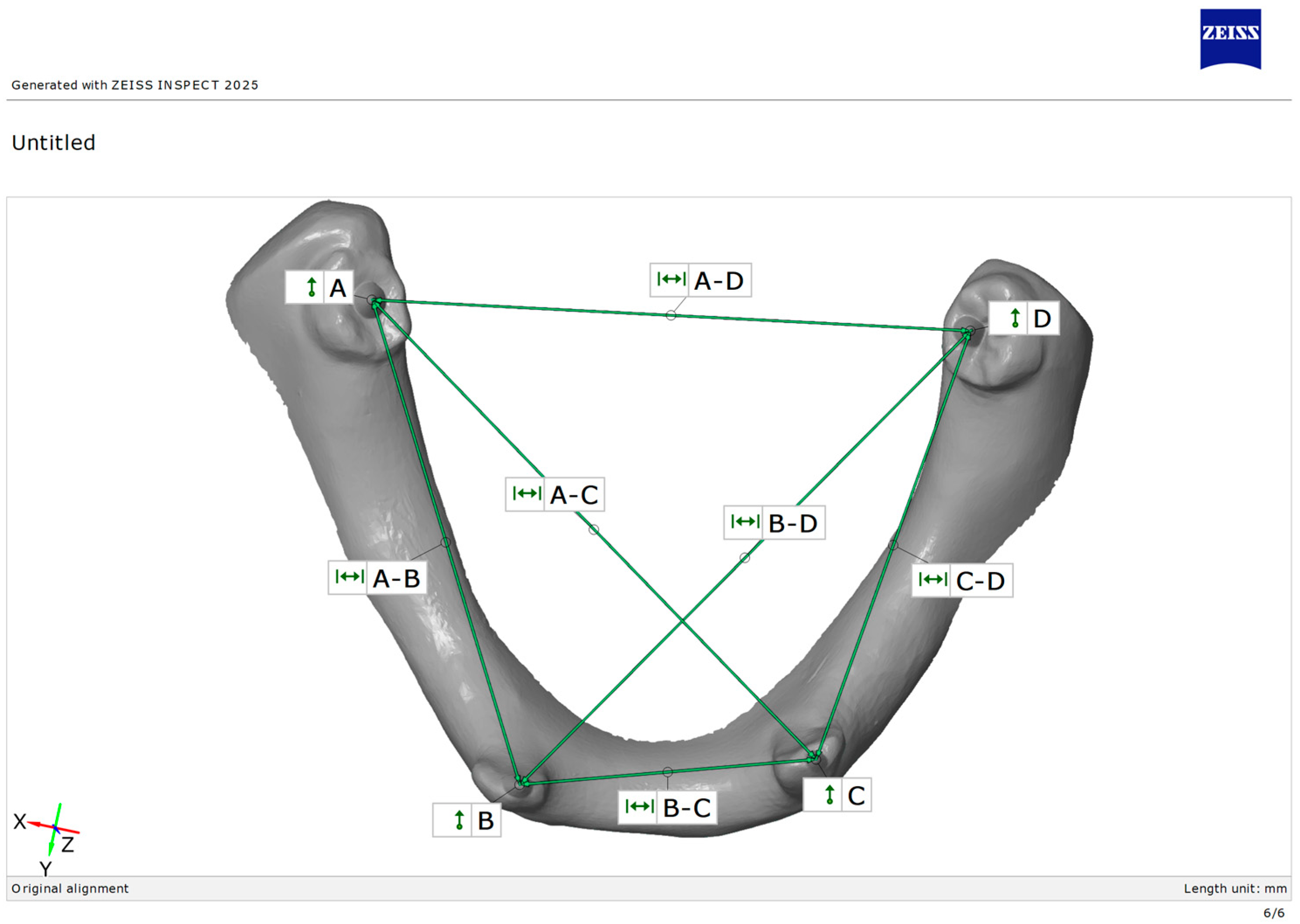
To simulate a partially edentulous clinical scenario, a phantom jaw model was prepared in which all teeth were digitally removed, except for teeth 37, 33, 43, and 47 (Integra phantom jaw; Birleşik Grup Dental, Kahramankazan, Ankara, Turkey). Digital tooth extraction and closure of the remaining gaps were performed using Blue Sky Plan software (v4.9.4; Blue Sky Bio, LLC, Libertyville, IL, USA). Mesh refinement was achieved using model editing and surface smoothing tools to ensure uniform surface geometry. Finally, four conical reference objects of identical dimensions were positioned on the cusps of teeth 37, 33, 43, and 47 (Figure 1).
Previous studies have shown that intraoral scanners may have reduced accuracy when capturing spherical geometries; therefore, conical reference markers have been preferred over spherical reference markers. The use of conical shapes aims to minimize scanning errors caused by unfavorable light angles [16,17].
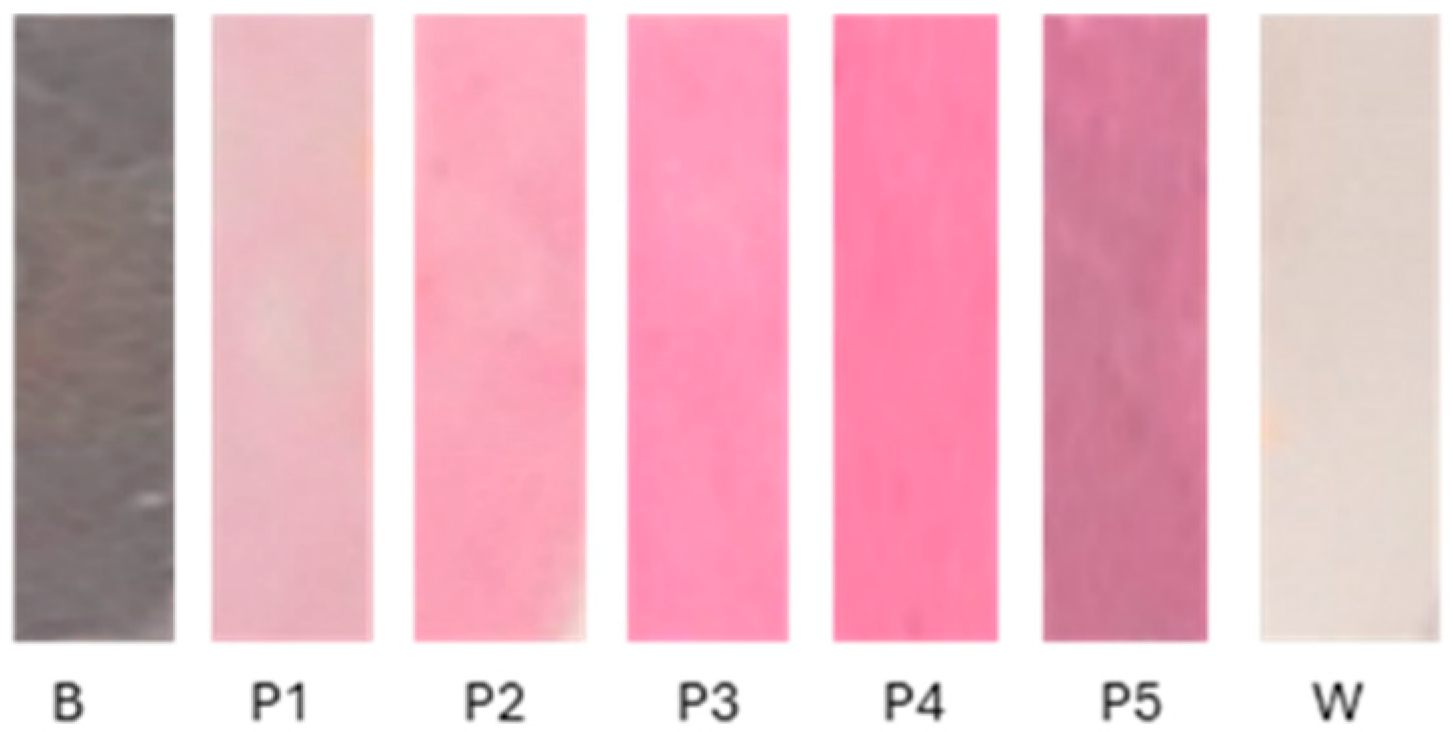
The reference models were fabricated using an Elegoo Mars 4 DLP 3D printer (Elegoo Inc., Shenzhen, China). A white standard SLA (stereolithography) resin (Anycubic, Shenzhen, China) served as the base material. It was mixed with a pink epoxy-based pigment to produce five experimental gingival color groups (P1–P5) with progressively increasing color saturation (Figure 2). Additionally, a White (W) model was created from an unpigmented base resin to represent an extremely high-reflectance optical condition. A Black (B) model was fabricated using Anycubic black standard SLA resin (Anycubic, China) to simulate an extremely low-reflectance optical condition. These non-physiological colors were used as optical reference points to evaluate scanner behavior under conditions of maximum reflection and absorption, rather than mimicking clinical gingival tissues. All printed models were washed and finished using the Anycubic Wash & Cure 3.0 device according to the manufacturer’s instructions.
CIE L*a*b* color measurements of the prepared models were performed using a SpectroShade Micro device (MHT Optic Research AG, Niederhasli, Switzerland), with all corresponding values presented in Supplementary Material S1.
Five IOSs were evaluated: Medit i700 (Medit Corp., Seoul, Republic of Korea), Shining 3D Elite (Shining 3D Tech. Co., Ltd., Hangzhou, China), SIRIOS (Straumann, Basel, Switzerland), 3Shape TRIOS 3, and 3Shape TRIOS 5 (3Shape A/S, Copenhagen, Denmark). All scans were performed by a single operator (ÖOT), an experienced prosthodontist with over five years of clinical experience in intraoral scanning. The scans were conducted under controlled environmental conditions with consistent lighting, temperature, and humidity throughout all scanning sessions. A dedicated scanning booth was not used, which represents a limitation of the present in vitro study.
Each partially edentulous model was scanned four times with each intraoral scanner. To obtain reference data, all models were additionally digitized using a high-precision laboratory scanner (3Shape E2; 3Shape A/S, Copenhagen, Denmark), and these scans were accepted as reference models. All datasets were exported in polygon file format (PLY).
All intraoral scanner (IOS) software versions applied during data acquisition are listed in Supplementary Material S2.

2.1. Two-Dimensional Evaluation

Two-dimensional linear measurements were performed between four reference points (A, B, C, and D), resulting in six measurement pairs (A–B, A–C, A–D, B–C, B–D, and C–D). Measurements were obtained using Zeiss Inspect Optical 3D software (v2025.3.3.4; Carl Zeiss GOM Metrology GmbH, Braunschweig, Germany). For each measurement, the absolute deviation (|Δ|) was calculated by subtracting the reference scan value from the corresponding test scan value and converting the result to an absolute number, thereby eliminating directional bias [18].

2.2. Statistics

Statistical analysis was conducted using R software (v4.4.1). Data normality was assessed using the Shapiro–Wilk test. Because the data did not follow a normal distribution, comparisons were performed using Aligned Rank Transform (ART) ANOVA (ARTool package v0.11.2) to evaluate the effects of scanner, model, pair, and their interactions. Post hoc multiple comparisons were conducted with Bonferroni correction. The Wilcoxon signed-rank test was used to compare repeated measurements that did not meet normality assumptions. Measurement reliability was assessed using the intraclass correlation coefficient (ICC). Quantitative data are presented as the median (minimum–maximum) and mean ± standard deviation. The significance level was set at p < 0.05.

3. Results

The Aligned Rank Transform (ART) ANOVA revealed that all of the main factors (scanner, model, and pair) had a statistically significant effect on absolute deviation values (p < 0.001). In addition, all two-way interactions (Scanner × Model, Scanner × Pair, Model × Pair) and the three-way interaction (Scanner × Model × Pair) were also statistically significant (p < 0.001) (Table 1).
To improve clarity, the results of the multiple-comparison analyses are presented separately by scanner type (Table 2A), model color (Table 2B), and measurement pair (Table 2C). Detailed interaction-level data are provided in Table S2, Supplementary Material S3.
When data were pooled across model colors and measurement pairs, statistically significant differences among scanners were observed (Table 2A). Under these aggregated conditions, the Medit i700 and Trios 5 scanners demonstrated the lowest median absolute deviation (0.09 mm), followed by Trios 3 (0.10 mm). However, all three scanners were in the same statistical group. The Shining and Sirios scanners exhibited higher median deviation values. These findings represent general performance trends rather than scanner behavior under specific color–distance combinations.
Analysis by model color, regardless of scanner and pair, revealed significant differences in median absolute deviation values (p < 0.001) (Table 2B). The P5 model showed lower deviations, while lighter (P1, White) and darker (Black) models exhibited higher deviations.
With respect to measurement pairs, the shortest distances (B–C) showed the lowest deviations, whereas the longest distance (A–D) consistently exhibited the highest deviation values (Table 2C).
Analysis of the scanner–model interaction revealed statistically significant differences in median absolute deviation values (p < 0.001). Based on the values aggregated across measurement pairs, the highest deviation was observed for the Sirios–P3 interaction (median: 0.19 mm), whereas the lowest deviations were recorded for the Medit–P2 (median: 0.07 mm) and Sirios–P2 (median: 0.09 mm) interactions (Table S2, Supplementary Materials S3).
The interaction between scanner and measurement pair significantly affected the median absolute deviation values (p < 0.001). Based on the values aggregated across model colors, the highest deviation was observed for the Sirios scanner with the A–B pair (median: 0.14 mm), whereas the lowest deviation was recorded for the Medit scanner with the B–D pair (median: 0.03 mm) (Table S2, Supplementary Materials S3).
Analysis of the three-way interaction among scanner, model color, and measurement pair revealed statistically significant differences in median absolute deviation values (p < 0.001). Based on the interaction-level data, the highest deviation was observed for the Sirios scanner with the P3 model and A–B pair, whereas the lowest deviation was recorded for the Shining scanner with the P5 model and C–D pair (Table S2, Supplementary Materials S3). However, post hoc multiple-comparison analyses did not demonstrate statistically significant pairwise differences between these specific interaction combinations.
The coefficient of variation (CV) measures the extent to which absolute deviation values vary; a low CV indicates high precision and consistent measurements [19,20]. On the other hand, very high CV values (over 100%) indicate substantial variability between repeated scans, suggesting that precision is unstable even if the median deviation appears acceptable.
The results for the absolute deviation parameter indicate that scanner, model, and pair combinations significantly affect accuracy. In contrast, the coefficient of variation (CV) reflects precision, describing the consistency of repeated measurements for each scanner–model–pair combination.
Regarding precision, the lowest coefficient of variation (CV: 7.33%), indicating the highest precision, was observed for the Shining scanner in the White A–C pair. Conversely, the highest CV value (158.10%), indicating the lowest precision, was recorded for the Sirios scanner in the Black A–D pair(Table 3).
To assess intra-examiner reproducibility, repeated measurements (m1 and m2) were performed for the same model pairs (Table 4). The median absolute values were 43.250 for m1 and 43.248 for m2. The Wilcoxon signed-rank test showed a statistically significant difference between the two measurements (p = 0.032), with more negative ranks (36) than positive ranks (24). However, the intraclass correlation coefficient (ICC) analysis demonstrated excellent agreement between repeated measurements (p < 0.001), indicating high consistency despite a small systematic difference.

4. Discussion

This study rejected the null hypothesis by showing that scanner type, gingival color, and scanning distance significantly affect digital impression accuracy. While subsequent comparisons did not reveal specific pairwise differences, clear numerical trends emerged. This lack of significance is common in multifactorial nonparametric analyses with overlapping data distributions. The P5 model provided optimal optical conditions, while very light or very dark surfaces consistently increased deviations in IOS scans.
Intraoral scanning is based on optical physics; that is, accuracy depends on the interaction between light, surface color, and acquisition technology [1,19,20,21]. While confocal systems reduce noise through spatial filtering, the high number of images required can lead to stitching errors [20,22]. Conversely, triangulation-based systems are faster but more susceptible to surface irregularities [23]. Beyond these hardware differences, we hypothesized that chromatic aberration could cause different light refraction in different gingival colors [24]. These small optical discrepancies likely accumulate over long scanning times [23]. This is consistent with Zhou et al., who confirmed that color variations significantly affect accuracy even in telecentric optical systems [20,25]. Unlike previous research limited to confocal technology, this study expands this assessment to include scanners using triangulation and intraoral photogrammetry (IPG).
Daikoku et al.’s findings regarding surface uniformity are consistent with our results. In their study, they used scanning powder to create a monochromatic pattern and observed no significant difference between scanners; this result is also consistent with our analysis. However, they noted that clinically significant deviations persisted in certain local areas. This means that a monochromatic surface balances overall performance but does not eliminate local errors associated with powder-free scanning [17].
Among the devices tested, Trios 3 achieved high overall accuracy rates with no statistically significant differences compared with Trios 5 and Medit i700. This is consistent with Resende et al., who highlighted its reliability under optimal conditions [26]. However, its performance was affected by color. Şenol et al. reported that Trios 3 had higher accuracy in scans using a purple rubber dam [5]. Similarly, our study showed smaller deviations in the purple-like P5 model compared to lighter tones. Since healthy gingival color ranges from light pink to purple, our P5 model simulated this darker spectrum [14]. Although the scanner uses telecentric optics, focus stacking technology appears to be sensitive to the light reflectivity of gingival tones or scanning speed during the acquisition of fast full-arch scans [20,27]. In studies investigating this issue, it has been suggested that the use of scanning spray can improve accuracy on surfaces with high reflectivity [21].
Regarding Trios 5, a new-generation scanner, recent studies have reported improved performance compared to its predecessor [28]. However, our findings show that inherent reconstruction from sequential focal-plane images can still lead to depth stacking deviations [20]. Although the device performed well in certain colors, it showed significant variability in challenging scenarios. This points to potential limitations in the stitching algorithms during comprehensive full-arch scanning. Comparisons in previous studies have shown that Medit i700 has superior linear accuracy compared to Trios 5 [29]. In contrast, the present study observed that both devices exhibited identical median deviations (0.09 mm) with no statistically significant difference. This discrepancy is likely due to methodological differences. For example, the use of cone-shaped markers in our study may present different geometric challenges to those encountered with spherical markers used in previous research.
For the triangulation-based Medit i700, the acquisition method is sensitive to color variations due to light absorption physics [20]. The scanner performed similarly to Trios 5 in terms of accuracy and achieved excellent accuracy in the P5 model, indicating that ideal surface conditions yield high-precision results. However, the device showed significant trueness inconsistencies and highlighted precision challenges in certain color–distance combinations. This aligns with the findings of Jamjoom et al., who indicated the device’s sensitivity to surface modifications [30].
Shining Elite distinguishes itself by combining a structured light system with intraoral photogrammetry [31]. Unlike extraoral stereophotogrammetry systems [32], this method involves image stitching, which we hypothesized makes it sensitive to ambient light and color [33]. Although it ranked lowest in overall accuracy, the device showed high precision in the White model. This indicates that the optical technology produces highly reproducible data in opaque models. In contrast, its low accuracy in the P1 model suggests that clinical reliability depends on optimizing surface color and scanning distance.
Similarly, the Sirios scanner uses structured light technology and recorded comparable overall deviations [34,35,36]. While achieving high accuracy in the P5 model, it performed poorly in the P3 model and recorded the highest variability in the Black model at long distances. These observations are consistent with those of Murakami et al., who reported that deviations increased significantly as scanning volume expanded [37]. Our results confirm that, despite theoretical hardware advantages, the scanner’s performance is compromised, particularly on dark surfaces, in long edentulous areas.
Laboratory scanners provide higher accuracy because they have wide fields of view and controlled scanning conditions [38]. Therefore, a 3Shape E2 laboratory scanner was used to generate reference models.
Intraoral scanning accuracy is affected by factors such as operator proficiency, scanner technology, calibration, scanning strategy, and speed [4,39,40,41]. To minimize these variables, standardized conditions and a uniform scanning pattern were used by a single experienced clinician in this study. Translucency and ambient lighting are closely linked to the optical properties of color [27,42]. Previous research has shown that standard room lighting has less effect on accuracy compared to high-intensity dental chair lighting [16,43]. Therefore, to simulate a realistic clinical environment, we performed all scans under controlled room lighting and avoided direct sunlight or high-intensity lighting.
This study evaluated the effect of extreme surface colors on scanning accuracy and precision. Black surfaces have low light reflectivity, while white surfaces have high reflectivity. The findings show that these optical properties significantly affect data acquisition, and the effect varies depending on scanner technology. In the Black model group, the Sirios scanner showed lower accuracy compared to the White model, supporting the hypothesis that low reflectivity can interfere with the stitching process in structured light systems. The highest deviations were recorded in the A–B distance, where the Medit and Sirios scanners showed the largest measurement errors. In contrast, Trios 5 and Trios 3 recorded the best accuracy for this specific distance. Trios 5 showed higher precision on low-reflectivity surfaces. These results are consistent with the literature, suggesting that dark surfaces may provide better accuracy for certain devices such as Trios 5 [5]. However, dark color tones and long scanning distances present significant sensitivity issues for the other technologies we examined. For example, Sirios showed the lowest sensitivity in the A–D pair of the Black model; this is likely due to insufficient light reflection at long distances.
In the White model, Medit i700 and Trios 3 demonstrated high trueness values compared to other scanners. Shining and Sirios scanners recorded the highest overall deviations on white surfaces. Although it is known that high reflectivity on glossy surfaces compromises accuracy [43], the Shining scanner recorded the highest precision on the White model’s A–C pair. This shows that there is high sensitivity between the white surface and the scanner optics at short distances, despite a lower overall trueness for the same pair.
These results demonstrate that confocal-based imaging can handle over-reflection scenarios with less deviation than structured light-based triangulation systems. A critical finding is the occurrence of maximum deviation in the White model with the Sirios scanner. These results point to significant stitching errors under high-reflectivity conditions. Consequently, these findings highlight that the reliability of intraoral scanners is determined not only by their average accuracy but also by their sensitivity to over-reflection points and the interaction between surface optical properties and scanning distance.
The effect of scanning distance and surface color was further evaluated by comparing the A–B and C–D distances. While Pattamavilai and Ongthiemsak (2024) used symmetrical distances for accuracy assessments [44], this study adjusted the A–B distance to be approximately 4 mm longer than the C–D distance to evaluate the effect of edentulous soft tissue color. The fact that maximum deviations consistently occurred in the A–B distance indicates that scanning accuracy is affected by a complex interaction between tissue color and the length of the scanning path.
Previous clinical and spectrophotometric studies have shown that natural gingiva covers a broad but structured color space. L* values typically range from approximately 30 to 70, while a* values increase towards darker shades [12,45]. In this study, Lab* values of reference models were measured using the SpectroShade Micro instrument. This instrument is widely preferred in gingival color research due to its wide aperture, low sensitivity to metamerism, and excellent repeatability [45]. Based on these clinically reported ranges, P1-P5 models were generated to represent a graded continuum of gingival color. P1 corresponds to lighter shades, while P5 represents approximately darker, more saturated gingiva. White and Black models were included only as optical extreme conditions, consistent with methodological recommendations [46].
Statistically significant differences across all models examined indicate that scanner performance depends on the color characteristics of the object. Among the shades tested, the P5 model exhibited the lowest overall median absolute deviation. This suggests that this pink color value of the gingival tone provides highly favorable optical conditions for data acquisition. Specifically, the Medit and Sirios scanners achieved the highest accuracy in the P5 model. This demonstrates that successful data acquisition can be achieved when scanner performance is optimized for localized surface conditions and short scanning distances.
However, the P1, White, and Black models exhibited significantly higher deviations compared to the P5 and P2 models. The P1 shade represents very light-colored gingival tissues. This color showed a high median absolute deviation, which we considered clinically significant due to increased light reflection or insufficient object contrast during data acquisition. These results suggest that P5-toned gingival tissues provide more favorable optical conditions. It is recommended that clinicians consider the impact of soft tissue color on scanner reliability and adapt scanning strategies for very light or very dark tissues to maintain restorative accuracy.

Limitations

This study has several limitations, primarily stemming from its in vitro design. The experimental setup did not simulate dynamic clinical factors such as saliva, blood contamination, patient movement, or intraoral moisture that could affect optical imaging in real-world settings. Additionally, while environmental conditions and operator variables were strictly standardized to ensure internal validity, this may not fully represent the variability seen in clinical practice. The evaluation was limited to five scanners and focused only on pink gingival tones. Since optical sensors typically use the RGB (red, green, blue) color model, future research should examine a wider color gamut to better understand sensor-specific responses. Including more scanners with different technologies would provide a more comprehensive perspective on how color affects digital impressions in different clinical scenarios. Therefore, these results should be viewed as an assessment of scanner performance under idealized conditions, rather than as direct predictors of clinical outcomes.

5. Conclusions

Regarding the limitations of this in vitro study, the accuracy and precision of intraoral scanners were significantly affected by the interaction between scanner technology, gingival color, and scanning distance. The P5 model provided more favorable conditions for both accuracy and precision, while excessive surface colors, particularly in longer edentulous areas, were associated with reduced stitching performance. These findings suggest that scanner performance is largely context-dependent and should not be generalized to different color and distance conditions. Gingival color and edentulous span length should be considered in intraoral scanner impressions, and scanning strategies may need to be adjusted in the presence of excessive gingival tones or large edentulous areas. Further in vivo studies are needed to validate these observations under clinical conditions.

Supplementary Materials

The following supporting information can be downloaded at: https://www.mdpi.com/article/10.3390/app16020798/s1, CIE L*a*b* color measurement data of the prepared models are presented in Supplementary Material S1. All intraoral scanner (IOS) software versions used during data acquisition are listed in Supplementary Material S2. The results of the multiple-comparison analyses are summarized in a detailed comparison table, with comprehensive interaction-level data provided in Supplementary Material S3.

Author Contributions

Conceptualization, B.A.; methodology, B.A.; software, B.A. and D.E.Y.G.; validation, Ö.O.T.; formal analysis, D.E.Y.G.; investigation, B.Ü. and Ö.O.T.; writing—original draft preparation, B.A. and D.E.Y.G.; writing—review and editing, B.A. and D.E.Y.G.; supervision, B.A. All authors have read and agreed to the published version of the manuscript.

Funding

This study was supported by the Scientific Research Projects Unit of Mersin University (Project Protocol No. 2017-1-AP1-2209).

Institutional Review Board Statement

Not applicable.

Informed Consent Statement

Not applicable.

Data Availability Statement

The data presented in this study are available on request from the corresponding author.

Acknowledgments

The authors thank Eistatistik (www.eistatistik.com) for their valuable assistance with the statistical analysis (accessed on 4 November 2025). The authors thank the Scientific Research Projects Unit of Mersin University for supporting this study. During the initial preparation of this manuscript, the authors utilized Gemini and Grammarly to improve the draft of the manuscript. The authors have reviewed and edited the output and take full responsibility for the content of this publication.

Conflicts of Interest

The authors declare no conflicts of interest.

Abbreviations

The following abbreviations are used in this manuscript:
IOSIntraoral scanner
ARTAligned Rank Transform
CVCoefficient of variation
ICCIntraclass correlation coefficient
WWhite model
BBlack model
ÖOTÖzgür Ozan Tanrıkut

References

  1. Mangano, F.; Gandolfi, A.; Luongo, G.; Logozzo, S. Intraoral scanners in dentistry: A review of the current literature. BMC Oral Health 2017, 17, 149. [Google Scholar] [CrossRef]
  2. Burgess, J.O. Clinical Materials Review: Impression Material Basics. Inside Dent. 2005, 1, 1–9. [Google Scholar]
  3. Ender, A.; Mehl, A. In-vitro evaluation of the accuracy of conventional and digital methods of obtaining full-arch dental impressions. Quintessence Int. 2015, 46, 9–17. [Google Scholar] [CrossRef]
  4. Alkadi, L. A Comprehensive Review of Factors That Influence the Accuracy of Intraoral Scanners. Diagnostics 2023, 13, 3291. [Google Scholar] [CrossRef]
  5. Şenol, A.A.; Kaya, B.D.; Bal, E.; Cengiz, H.B.; Korkut, B.; Atali, P.Y. Influence of the cut-out-rescan procedure and rubber dam color on the trueness of intraoral scanners: A laboratory evaluation. Am. J. Dent. 2025, 38, 178–184. [Google Scholar]
  6. Rutkūnas, V.; Gečiauskaitė, A.; Jegelevičius, D.; Vaitiekūnas, M. Accuracy of digital implant impressions with intraoral scanners. A systematic review. Eur. J. Oral Implantol. 2017, 10, 101–120. [Google Scholar] [PubMed]
  7. Marques, S.; Ribeiro, P.; Falcão, C.; Lemos, B.F.; Ríos-Carrasco, B.; Ríos-Santos, J.V.; Herrero-Climent, M. Digital impressions in implant dentistry: A literature review. Int. J. Environ. Res. Public Health 2021, 18, 1020. [Google Scholar] [CrossRef] [PubMed]
  8. Gimenez-Gonzalez, B.; Hassan, B.; Özcan, M.; Pradíes, G. An In Vitro Study of Factors Influencing the Performance of Digital Intraoral Impressions Operating on Active Wavefront Sampling Technology with Multiple Implants in the Edentulous Maxilla. J. Prosthodont. 2017, 26, 650–655. [Google Scholar] [CrossRef] [PubMed]
  9. Waldecker, M.; Bömicke, W.; Behnisch, R.; Rammelsberg, P.; Rues, S. In-vitro accuracy of complete arch scans of the fully dentate and the partially edentulous maxilla. J. Prosthodont. Res. 2022, 66, 538–545. [Google Scholar] [CrossRef]
  10. Gkavela, G.; Nørrisgaard, P.E.; Rahiotis, C. Level of Agreement Between Plaque Detection with Clinical Assessment and Assessment on Intraoral Scanner. Dent. J. 2024, 12, 395. [Google Scholar] [CrossRef]
  11. Sarmast, N.; Angelov, N.; Ghinea, R.; Powers, J.; Paravina, R. Color Compatibility of Gingival Shade Guides and Gingiva-Colored Dental Materials with Healthy Human Gingiva. Int. J. Periodontics Restor. Dent. 2018, 38, 397–403. [Google Scholar] [CrossRef]
  12. Ho, D.K.; Ghinea, R.; Herrera, L.J.; Angelov, N.; Paravina, R.D. Color Range and Color Distribution of Healthy Human Gingiva: A Prospective Clinical Study. Sci. Rep. 2015, 5, 18498. [Google Scholar] [CrossRef]
  13. Naranjo, M.J.; Gómez-Polo, M.; Gómez-Polo, C.; Celemin-Viñuela, A. Study of attached gingiva space color according to gender and age in Caucasian population. J. Esthet. Restor. Dent. 2023, 35, 834–841. [Google Scholar] [CrossRef]
  14. Heydecke, G.; Schnitzer, S.; Türp, J.C. The color of human gingiva and mucosa: Visual measurement and description of distribution. Clin. Oral Investig. 2005, 9, 49–57. [Google Scholar] [CrossRef]
  15. Şen, N.; Isler, S. Influence of Gingival Color and Finish Line Location on the Accuracy of Intraoral Scans for Complete-Arch Tooth Preparation. Int. J. Prosthodont. 2025, 1–16. [Google Scholar] [CrossRef]
  16. Revilla-León, M.; Gohil, A.; Barmak, A.B.; Gómez-Polo, M.; Pérez-Barquero, J.A.; Att, W.; Kois, J.C. Influence of ambient temperature changes on intraoral scanning accuracy. J. Prosthet. Dent. 2023, 130, 755–760. [Google Scholar] [CrossRef] [PubMed]
  17. Daikoku, E.; Shimazaki, K.; Fukazawa, S.; Ozeki, H.; Takafuji, K.; Kon, K.; Kondo, H. The effect of the presence or absence of scanning powder on the accuracy of intraoral scanners. In Proceedings of the 55th Annual Scientific Meeting of the Japan Society of Oral Implantology, Fukuoka, Japan, 24–26 October 2025; pp. 1–233. [Google Scholar]
  18. Kuhr, F.; Schmidt, A.; Rehmann, P.; Wöstmann, B. A new method for assessing the accuracy of full arch impressions in patients. J. Dent. 2016, 55, 68–74. [Google Scholar] [CrossRef]
  19. Thongma-Eng, P.; Amornvit, P.; Silthampitag, P.; Rokaya, D.; Pisitanusorn, A. Effect of Ambient Lights on the Accuracy of a 3-Dimensional Optical Scanner for Face Scans: An in Vitro Study. J. Healthc. Eng. 2022, 2022, 2637078. [Google Scholar] [CrossRef]
  20. Osman, R.B.; Alharbi, N.M. Influence of scan technology on the accuracy and speed of intraoral scanning systems for the edentulous maxilla: An in vitro study. J. Prosthodont. 2023, 32, 821–828. [Google Scholar] [CrossRef] [PubMed]
  21. Logozzo, S.; Zanetti, E.M.; Franceschini, G.; Kilpelä, A.; Mäkynen, A. Recent advances in dental optics—Part I: 3D intraoral scanners for restorative dentistry. Opt. Lasers Eng. 2014, 54, 203–221. [Google Scholar] [CrossRef]
  22. Wesemann, C.; Kienbaum, H.; Thun, M.; Spies, B.C.; Beuer, F.; Bumann, A. Does ambient light affect the accuracy and scanning time of intraoral scans? J. Prosthet. Dent. 2021, 125, 924–931. [Google Scholar] [CrossRef] [PubMed]
  23. Diker, B.; Tak, Ö. Accuracy of Digital Impressions Obtained Using Six Intraoral Scanners in Partially Edentulous Dentitions and the Effect of Scanning Sequence. Int. J. Prosthodont. 2021, 34, 101–108. [Google Scholar] [CrossRef] [PubMed]
  24. Hecht, E. Optics; Pearson Education, Addison-Wesley: Boston, MA, USA, 2002; ISBN 9780321188786. [Google Scholar]
  25. Zhou, Y.; Fu, L.; Zhang, Z.; Tang, X. Effect of tooth color on the accuracy of intraoral complete arch scanning under different light conditions using a zirconia restoration model. J. Prosthet. Dent. 2024, 131, 145.e1–145.e8. [Google Scholar] [CrossRef]
  26. Resende, C.C.D.; Barbosa, T.A.Q.; Moura, G.F.; do Nascimento Tavares, L.; Rizzante, F.A.P.; George, F.M.; das Neves, F.D.; Mendonça, G. Influence of operator experience, scanner type, and scan size on 3D scans. J. Prosthet. Dent. 2021, 125, 294–299. [Google Scholar] [CrossRef]
  27. Li, H.; Lyu, P.; Wang, Y.; Sun, Y. Influence of object translucency on the scanning accuracy of a powder-free intraoral scanner: A laboratory study. J. Prosthet. Dent. 2017, 117, 93–101. [Google Scholar] [CrossRef] [PubMed]
  28. Dönmez, M.B.; Çakmak, G.; Schimmel, M.; Bayadse, M.; Yilmaz, B.; Abou-Ayash, S. Scan accuracy of recently introduced wireless intraoral scanners in different fixed partial denture situations. J. Dent. 2025, 153, 105558. [Google Scholar] [CrossRef] [PubMed]
  29. Baresel, I.; Baresel, J. Full arch accuracy of intraoral scanners with different acquisition technologies: An in vitro study. J. Dent. 2025, 156, 105703. [Google Scholar] [CrossRef]
  30. Jamjoom, F.Z.; Aldghim, A.; Aldibasi, O.; Yilmaz, B. In vitro evaluation of the impact of intraoral scanner, scanning aids, and the scanned arch on the scan accuracy of edentulous arches. J. Prosthodont. 2024, 1–9. [Google Scholar] [CrossRef]
  31. Nulty, A.B. An In Vivo Comparison of Trueness and Precision of Two Novel Methods for Improving Edentulous Full Arch Implant Scanning Accuracy: A Pilot Study. Dent. J. 2024, 12, 367. [Google Scholar] [CrossRef]
  32. Pozzi, A.; Agliardi, E.; Lio, F.; Nagy, K.; Nardi, A.; Arcuri, L. Accuracy of intraoral optical scan versus stereophotogrammetry for complete-arch digital implant impression: An in vitro study. J. Prosthodont. Res. 2024, 68, 172–180. [Google Scholar] [CrossRef]
  33. Nulty, A.B. A comparison of full arch trueness and precision of nine intra-oral digital scanners and four lab digital scanners. Dent. J. 2021, 9, 75. [Google Scholar] [CrossRef]
  34. Straumann Group. Straumann Group Acquires AlliedStar, an Intraoral Scanner Provider in China; Straumann Holding AG: Basel, Switzerland, 2023; Available online: https://www.straumann.com/content/dam/data/media-release/en/2023/c6d0c389-f410-49a0-88e7-a1be681d5567/Straumann_Group_Media+release_AlliedStar_EN.pdf (accessed on 7 December 2025).
  35. AlliedStar Medical Equipment Co., Ltd. Straumann SIRIOS—FDA GUDID Device Identifier. Available online: https://fda.report/GUDID/06973993441584 (accessed on 7 December 2025).
  36. Straumann. Straumann SIRIOSTM—Product Information Brochure; Institut Straumann AG: Basel, Switzerland, 2025; Available online: https://www.straumann.com/content/dam/media-center/straumann/en/documents/brochure/product-information/490.950-en_low.pdf (accessed on 7 December 2025).
  37. Takahiro, M.; Takahiro, M.; Goro, F.; Tatsuro, M.; Atsushi, O.; Hidekazu, N.; Kazunori, U.; Takehito, M.; Jyoji, T. Effect of the Scanning Range of Scanbodies Using a Wireless Intraoral Scanner on the Reproducibility of Implant Position. J. Jpn. Soc. Oral Implantol. 2025, 38, 68–126. [Google Scholar]
  38. Chen, W.; Wang, L.; Lin, C. Comparative Analysis of Intra-Oral and Lab Scanner Performance in Full-Arch Dentistry. Int. J. Dent. Res. Allied Sci. 2021, 1, 42–51. [Google Scholar] [CrossRef]
  39. Sezer, T.; Sezer, A.B. Effects of Operator Experience and Scanning Distance on Intraoral Scanner Accuracy. Necmettin Erbakan Univ. Dis Hekim. Derg. (NEU Dent. J.) 2024, 6, 36–44. [Google Scholar] [CrossRef]
  40. Latham, J.; Ludlow, M.; Mennito, A.; Kelly, A.; Evans, Z.; Renne, W. Effect of scan pattern on complete-arch scans with 4 digital scanners. J. Prosthet. Dent. 2020, 123, 85–95. [Google Scholar] [CrossRef] [PubMed]
  41. Renne, W.; Ludlow, M.; Fryml, J.; Schurch, Z.; Mennito, A.; Kessler, R.; Lauer, A. Evaluation of the accuracy of 7 digital scanners: An in vitro analysis based on 3-dimensional comparisons. J. Prosthet. Dent. 2017, 118, 36–42. [Google Scholar] [CrossRef]
  42. Revilla-León, M.; Subramanian, S.G.; Att, W.; Krishnamurthy, V.R. Analysis of Different Illuminance of the Room Lighting Condition on the Accuracy (Trueness and Precision) of an Intraoral Scanner. J. Prosthodont. 2021, 30, 157–162. [Google Scholar] [CrossRef]
  43. Tawfik, M.H.A.; El Torky, I.R.; El Sheikh, M.M. Effect of saliva on accuracy of digital dental implant transfer using two different materials of intraoral scan bodies with different exposed lengths. BMC Oral Health 2024, 24, 1428. [Google Scholar] [CrossRef]
  44. Pattamavilai, S.; Ongthiemsak, C. Accuracy of intraoral scanners in different complete arch scan patterns. J. Prosthet. Dent. 2024, 131, 155–162. [Google Scholar] [CrossRef]
  45. Gómez-Polo, C.; Montero, J.; Martín Casado, A.M. Explaining the Colour of Natural Healthy Gingiva. Odontology 2024, 112, 1284–1295. [Google Scholar] [CrossRef]
  46. Hernández, A.D.; Martín Casado, A.M.; Gómez-Polo, M.; Viñuela, A.C.; Gómez-Polo, C. Degree of Standardisation in Ceramic Gingival Systems. Materials 2023, 16, 6710. [Google Scholar] [CrossRef] [PubMed]
Figure 1. Partially edentulous phantom model.
Applsci 16 00798 g001
Figure 2. Color shades of the reference models.
Applsci 16 00798 g002
Table 1. Comparison of absolute deviation values according to scanner, model, and pair factors.
Test Statisticsp *
Scanner22.252<0.001
Model15.799<0.001
Pair54.924<0.001
Scanner × Model6.456<0.001
Scanner × Pair6.793<0.001
Model × Pair3.841<0.001
Scanner × Model × Pair1.851<0.001
* Art ANOVA. The median was used for comparison.
Table 2. (A). Comparison of median absolute deviation values according to scanner type, pooled across model colors and measurement pairs. (B). Comparison of median absolute deviation values according to model color, pooled across scanners and measurement pairs. (C). Comparison of median absolute deviation values according to measurement pairs, pooled across scanners and model colors.
(A)
ScannerMedian (Min–Max)Statistical Grouping
Medit i7000.09 (0–0.56)a
Shining 3D Elite0.13 (0–0.38)b
Sirios0.13 (0–1.21)c
Trios 30.10 (0–0.54)a
Trios 50.09 (0–0.56)a
(B)
Model ColorMedian (Min–Max)Statistical Grouping
P10.14 (0–0.50)c
P20.09 (0–0.56)b
P30.12 (0–0.57)bc
P40.10 (0–0.73)bc
P50.05 (0–0.54)a
Black0.12 (0–0.56)c
White0.13 (0–1.21)c
(C)
Measurement PairMedian (Min–Max)Statistical Grouping
A–B0.13 (0–1.21)b
A–C0.14 (0–1.09)b
A–D0.15 (0–0.56)a
B–C0.05 (0–0.27)c
B–D0.09 (0–0.42)b
C–D0.09 (0–0.48)b
(A) Data are presented as median (minimum–maximum). Different letters indicate statistically significant differences between scanners (ART ANOVA with Bonferroni correction, p < 0.05). (B) Data are presented as median (minimum–maximum). Different letters indicate statistically significant differences between model colors (ART ANOVA with Bonferroni correction, p < 0.05). (C) Data are presented as median (minimum–maximum). Different letters indicate statistically significant differences between measurement pairs (ART ANOVA with Bonferroni correction, p < 0.05).
Table 3. Evaluation of coefficients of variation (CV) based on scanner, model, and pair factors *.
Pair ModelScanner
MeditShiningSiriosTrios3Trios5
A–BP120.6427.4635.5287.6059.61
P254.7779.7257.2581.46100.20
P367.5425.9354.28108.8012.67
P437.2163.4575.0349.8270.97
P575.2859.78123.0425.7873.22
Black66.0318.2536.6171.8052.61
White62.4724.8895.9060.5950.97
A–CP151.6876.7264.8041.3625.52
P242.4954.7081.4866.71121.81
P384.728.6849.2422.4141.46
P440.5224.5367.5679.7864.28
P591.4326.1089.2287.3578.74
Black56.3423.8031.3427.24108.34
White83.087.3372.7624.1779.26
A–DP177.6529.5340.4841.3428.86
P2146.4810.6026.1543.98131.67
P338.6363.5837.7039.6285.03
P485.6551.3229.7265.7145.14
P574.1822.3661.5984.6194.94
Black114.1434.90158.1047.0471.91
White67.7834.2257.8525.4624.23
B–CP119.6722.0920.8518.1528.57
P298.7158.1019.5155.01105.45
P343.5747.3939.9866.50119.28
P485.3561.4497.8825.9129.42
P577.5143.7190.0765.2995.36
Black54.4146.2853.5987.0792.49
White84.49109.5376.4721.8586.21
B–DP188.6320.8767.9844.5385.66
P272.7417.8866.8784.6279.76
P366.8323.0846.8083.5121.45
P4104.9130.22121.7088.1398.71
P5121.4533.4564.2553.3365.83
Black99.8825.2771.0481.1973.45
White50.1315.9256.6634.0384.94
C–DP127.5717.4531.72101.9232.19
P249.0711.63102.3566.9251.01
P384.1228.4045.8695.9319.19
P472.2923.2670.3143.5624.04
P582.8036.1954.8451.9045.12
Black57.9019.9039.6451.4596.23
White48.3213.2432.9987.8491.52
* A low coefficient of variation indicates minimal variation, whereas a high coefficient of variation indicates greater variation.
Table 4. Comparison of m values derived from measurements.
Mean ± SDMedian (Min: Max)Test Statisticp xICC (95% CI)/P
1st measurement (m1)40.984 ± 9.60043.250 (23.01: 50.49)−2.1420.0321 (1:1)/<0.001
2nd measurement (m2)40.975 ± 9.60243.248 (22.95: 50.51)
x Wilcoxon test; mean ± SD (standard deviation); median (min–max); ICC: intraclass correlation coefficient (95% CI (confidence interval)).
Disclaimer/Publisher’s Note: The statements, opinions and data contained in all publications are solely those of the individual author(s) and contributor(s) and not of MDPI and/or the editor(s). MDPI and/or the editor(s) disclaim responsibility for any injury to people or property resulting from any ideas, methods, instructions or products referred to in the content.