You are currently viewing a new version of our website. To view the old version click .
Applied Sciences
  • Article
  • Open Access

31 October 2025

Accuracy of Miniscrew Insertion with Fully Guided Dynamic Navigation Versus Freehand: An In Vitro Experimental Study

,
,
,
,
,
,
,
and
1
Department of Dentistry, Faculty of Medicine and Health Sciences, University of Barcelona, 08907 Barcelona, Spain
2
Group of Dental and Maxillofacial Pathology and Therapeutics, IDIBELL Research Institute, 08908 Barcelona, Spain
3
Clínica Dental Dents. Av. Prat de la Riba 77, 25004 Lleida, Spain
*
Author to whom correspondence should be addressed.
This article belongs to the Special Issue Recent Advances in Digital Dentistry and Oral Implantology

Abstract

The placement of miniscrews in orthodontics enhances dental and skeletal movements with reduced need for patient cooperation but may lead to complications such as incorrect positioning or damage to adjacent teeth. Computer-assisted surgery techniques have shown improved accuracy and reduced risks. This study aimed to compare the accuracy of the X-Guide® dynamic navigation system with the freehand method for orthodontic miniscrew insertion and to assess the influence of screw position and side on accuracy. The main hypothesis was that the X-Guide® system would yield superior accuracy in the primary variable (3D apical deviation) compared to the freehand technique. Secondary hypotheses were that the X-Guide® system would also demonstrate superior accuracy in the secondary parameters (3D entry deviation, angular deflection, apical depth, and 2D entry deviation) and that screw position and side would not significantly affect any of the outcomes. An in vitro, randomized, and blinded experimental design was used with 10 maxillary models divided into two groups: experimental (X-Guide®) and control (freehand). In each model, six miniscrews were planned using cone beam computed tomography (CBCT): three were inserted freehand and three with navigation. A trained novice clinician performed all insertions. Post-placement CBCT scans were used to compare 3D deviations between planned and actual positions. Wilcoxon signed-rank tests and Friedman’s ANOVA were applied. In conclusion, the results supported the main hypothesis regarding the primary variable: the X-Guide® system significantly improved miniscrew placement accuracy in terms of 3D apical deviation, even when used by a novice operator. However, the results partially rejected the secondary hypotheses related to precision, showing a significant improvement in 3D entry deviation with dCAS, but not in angular deflection or 2D measured parameters. Furthermore, the results supported the secondary hypothesis regarding screw position, which did not affect the outcomes. Nevertheless, with dCAS, a significantly greater deviation was found on the right side for 3D entry deviation, 2D entry deviation, and angular deflection.

1. Introduction

In orthodontic treatments, enough anchorage to carry out dental or skeletal movements is essential. Miniscrews are currently a widely used temporary anchoring system for this purpose. They reduce reliance on patient collaboration and provide direct or indirect anchoring. In recent years, their use in daily orthodontic practice has increased dramatically [1]. However, as with any surgical procedure, complications may arise when inserting miniscrews [2,3]. Among these, the most common are poor placement, loosening, miniscrew breakage, and injury to adjacent teeth. Complications during miniscrew placement mainly involve root contact, which can lead to serious outcomes like root resorption, root perforation, or pulpal injury [4,5]. Additionally, there is the risk of displacement [6] or invasion of neighboring anatomical spaces, such as the maxillary sinus or nasal cavity, which increase the risk of complications, such as fistulae [7,8], along with potential cortical bone microdamage and miniscrew fracture due to excessive torque. To ensure an optimal surgical technique and to prevent complications, planning with models, either physical or virtual, and diagnostic imaging techniques is necessary [4]. Although orthopantomography is still widely used for diagnosis [5], three-dimensional (3D) imaging modalities such as cone beam computed tomography (CBCT) have become increasingly available in clinical practice [9]. The 3D planning assists the clinician in determining the optimal site for the miniscrew insertion in narrow interradicular spaces or areas with limited bone availability. This planning can be transferred to the patient using a conventional freehand method (non-guided computer-assisted surgery, non-guided CAS) or computer-assisted surgery (CAS) [2,10], either static (sCAS), dynamic (dCAS), or robotic (rCAS) [11,12,13,14]. In sCAS, a preoperatively computer-aided designed and manufactured (CAD/CAM) surgical guide directs the insertion [12,15,16,17]. Its main limitation lies in space limitations and the possibility of splint misfit, which may go undetected or be difficult to correct during the surgery [15,16].
In contrast, dCAS, also known as dynamic navigation system, allows real-time visualization of the position and angulation of the surgical drills and the miniscrew [18]. Thus, the insertion of the miniscrew can be corrected intraoperatively. An example of dCAS is the X-Guide® system (X-Guide®, X-Nav Technologies®, LLC, Lansdale, PA, USA). Several studies have shown a significant improvement of accuracy of dental implant insertion and increased patient safety with dCAS [18,19]. This accuracy might be particularly relevant in the case of miniscrews, which are often placed in areas with narrow safety margins. Navigation-assisted surgery for orthodontic miniscrew placement shows promising results, though current data remain limited [12,20].
Given the existing variability in clinical outcomes and the need for greater precision, especially when placing miniscrews in complex anatomical areas, further research is warranted. Therefore, the working hypothesis was the following: the main hypothesis was that the X-Guide® system would increase accuracy in 3D apical deviation (main outcome) in comparison with the freehand technique. Secondary hypotheses were that the X-Guide® system would also demonstrate superior accuracy in the secondary outcomes (3D entry deviation, angular deflection, apical depth, and 2D entry deviation), and that screw position and side would not significantly affect accuracy.

2. Materials and Methods

2.1. Study Design

A blinded, randomized in vitro experimental design was designed to compare accuracy of orthodontic miniscrew placement using the X-Guide® dynamic navigation system (test group) versus conventional freehand insertion (control group). The study adhered to the CRIS (Checklist for Reporting In Vitro Studies) guidelines [21].
Sample size calculation was performed using G*Power software version 3.1.9.6 (Heinrich—Heine Universität, Düsseldorf, Germany). Based on a recent randomized clinical trial by Jorba-García et al. [22], a mean 3D apical deviation of 2.49 mm (SD = 1.43) was expected when using a freehand approach. If an improvement of 1 mm is considered clinically relevant, with a 1:1 allocation ratio, a significance level of 0.05, and a statistical power of 80%, 52 miniscrews were required. Because of the limited experience of the operator, 30 miniscrews were allocated to each group, resulting in a total sample of 60 miniscrews.

2.2. Planning and Miniscrew Insertion

The main objective of this study was to compare the accuracy attained by a novice operator. Therefore, a last-year dental student was chosen (DMC). One month before the experimental study, D.M.-C. attended several dCAS procedures with the X-Guide® system, and was trained with models by experienced clinicians.
Ten identical models of maxilla were manufactured (BoneModels™; Castelló, Spain). Models had radiopaque resin teeth, and the mucosa and gingiva were simulated with latex. Interradicular space between molars and premolars was 3 mm. A cone beam computed tomography (CBCT) scan and an intraoral scan (IOS) of each model were acquired using a markerless technique. Preoperative and postoperative CBCT images were obtained with the Planmeca ProMax® 3D Mid (Planmeca, Helsinki, Finland) using the same parameters: 90 Kv, 10 mA, 13.9 s, 1245 DAP [mGy·cm2], and 0.4 voxel size. The IOS was obtained with a 3Shape scanner (3Shape A/S; Copenhagen, Denmark). The same intraoral scanner was used for all procedures. The resulting STL and DICOM files were imported and overlaid with the DTX® Studio software (version 3.6). The combined file was transferred to the X-Guide® system’s integrated trolley and planning of the optimal position of the miniscrew was carried out with the X-Guide® software (D.M.-C. and T.M.-M.). Three 1.6 × 11.5 mm miniscrews (DSP Biomedical Group, Campo Largo, Paraná, Brazil) were planned in each side of the model: in the buccal bone distal to the second molar, buccally between the maxillary first molar and second premolar, and palatally between the roots of the maxillary first premolar and second premolar. Planning was checked by 2 experienced operators (V.R.-R., M.C.-R.). Once the planning was approved, 3 miniscrews per model were placed freehand and 3 with the X-Guide® dCAS. Another researcher (C.D.-l.-R.-G.) generated blocks using RStudio 2024.12.1. (Posit PBC; Boston, MA, USA) that randomly allocated the 6 miniscrews in each model to each side (left or right), position (distal to the maxillary second molar, buccally between the maxillary first molar and the second premolar, or palatally between the maxillary first premolar and the second premolar), and technique (freehand or guided). The 10 randomization sequences allocating the 6 implants of each model to side, position, and technique were given in closed envelopes to the operator (D.M.-C.).
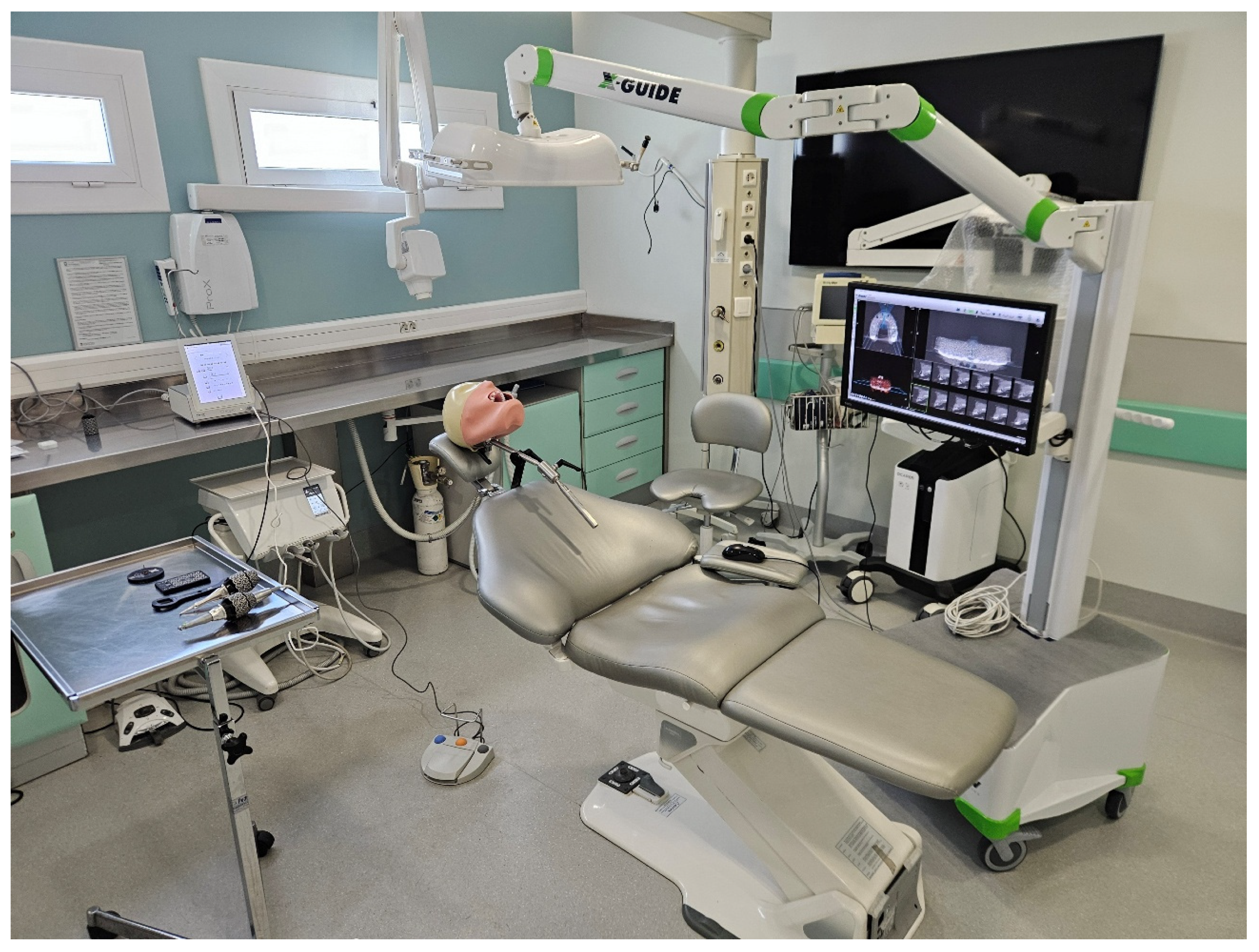
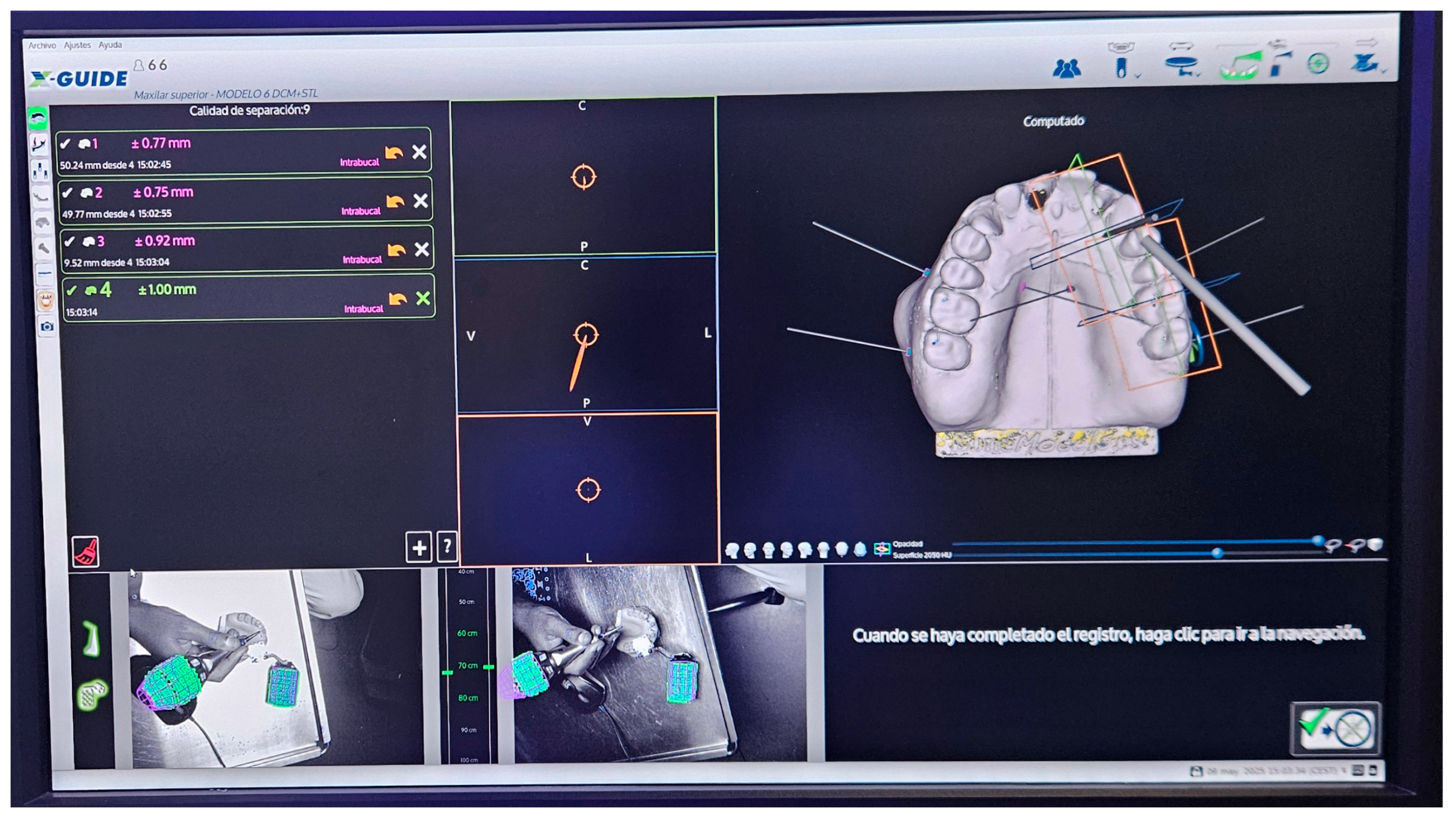
To simulate the clinical scenario, the maxillary models were positioned on phantom heads (Frasaco GmbH, Tettnang, Germany) (Figure 1). Subsequently, the operator (D.M.-C.) performed a markerless tracing registration process by selecting 3 reference points on the CBCT reconstruction displayed on the X-Guide screen: the distopalatal cusp of tooth 17, the mesiobuccal cusp of tooth 16, and the buccal cusp of tooth 24. A fourth point, the mesiopalatal cusp of tooth 26, was added to enhance registration accuracy. These anatomical landmarks were then physically touched on the model using a probe equipped with optical markers (X-Mark®, X-Nav Technologies, LLC, Lansdale, PA, USA). This process enabled precise alignment of the model with the navigation system, allowing real-time visualization of the probe’s position on the screen. The accuracy of the registration could be verified prior to initiating the surgical procedure (Figure 2). Next, the handpiece was registered, and the length of the miniscrew was calibrated using a registration plate (Go Plate®, X-Nav Technologies, LLC, Lansdale, PA, USA). In the test group, the miniscrew was then inserted in a fully guided manner, using the X-Guide dCAS system with its progression monitored in real time on the screen. If any inaccuracies were detected during miniscrew insertion, recalibration and system checks were performed. For freehand placement, the operator referred to the preoperative planning displayed on the monitor and inserted the miniscrew as closely as possible to the planned trajectory, without guidance, but still using the handpiece. Neither angulation nor insertion torque was standardized across samples.
Figure 1. Placement of the maxillary model on a phantom to closely replicate a realistic clinical setting.
Figure 2. Real-time visualization of the probe’s position on the screen of the X-Guide® dynamic navigation system.
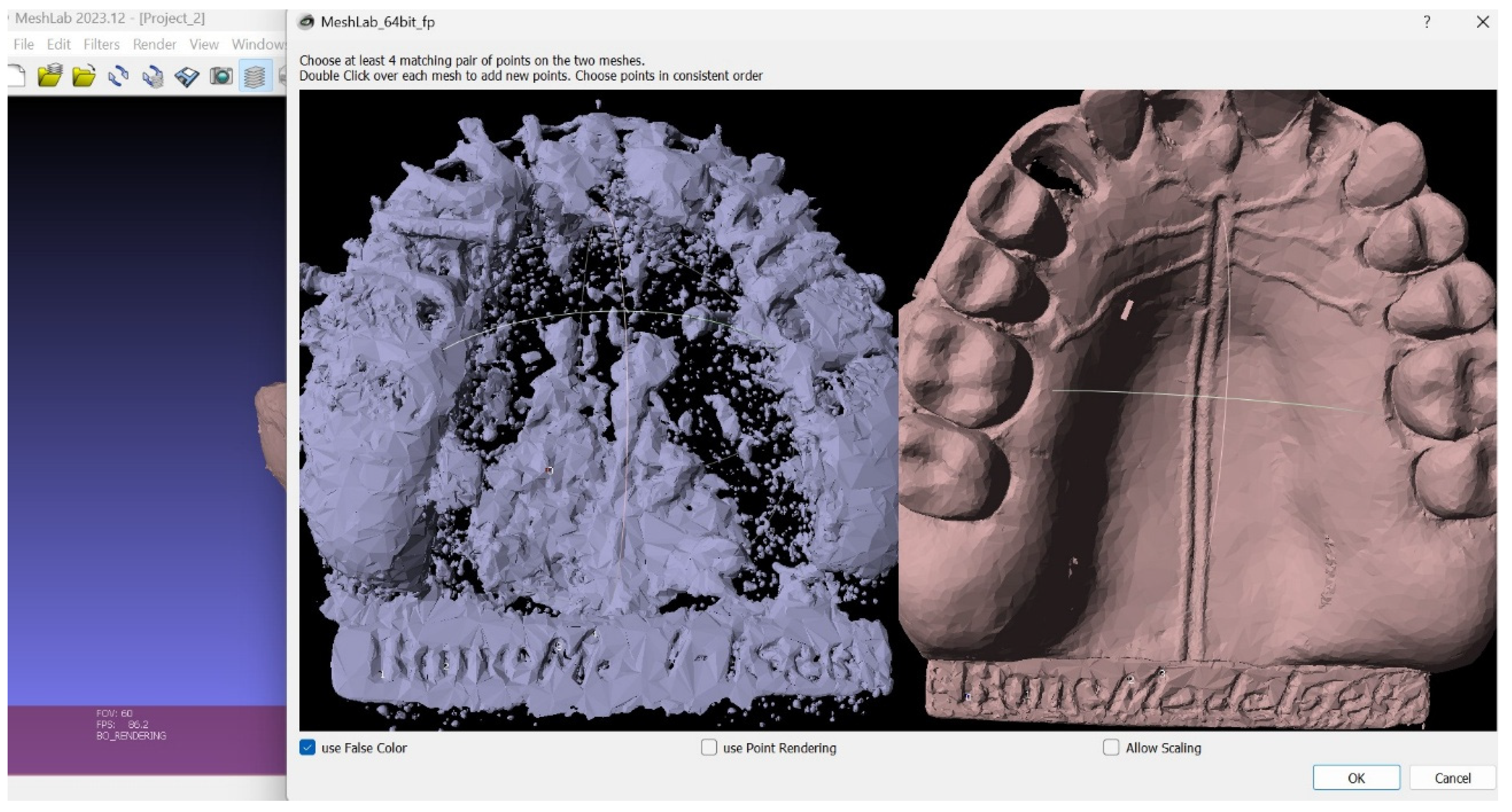
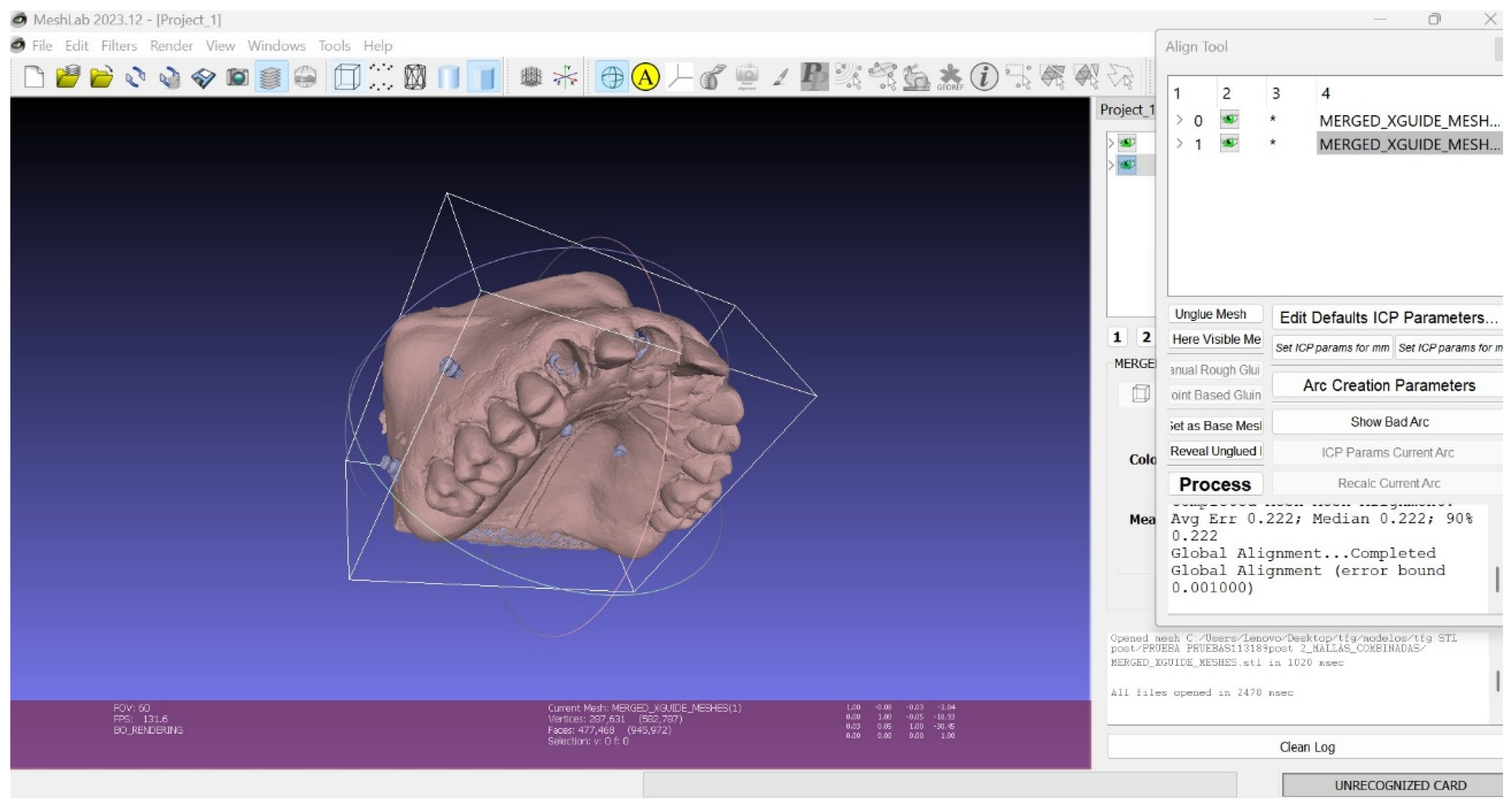
Once the 6 miniscrews were placed in each model, a second CBCT was performed with the same device and parameters. A researcher (O.C.-F.) who had not participated in planning and ignored the insertion technique and order (dCAS or freehand) exported the preoperative and the postoperative CBCTs from the X-Guide® to the MeshLab® 2023.12 software (Visual Computing Lab, Istituto di Scienza e Tecnologie dell’Informazione del Consiglio Nazionale delle Ricerche; Pisa, Italy) in STL format (Figure 3). The same blinded researcher overlapped CBCTs using MeshLab®, imported them again in STL format to the X-Nav® software, and measured the target variables with it (Figure 4).
Figure 3. CBCT and STL exported from the X-Guide® software to STL format.
Figure 4. Overlapping of the preoperative CBCT and the final CBCT with MeshLab®.

2.3. Variables

The variables used have been adapted from a systematic review and meta-analysis [22]. They were registered by O.C.-F., who did the overlap of CBCTs and measured deviations.
The main outcome variable was the 3D apical deviation (mm): deviation between the planned position and the final position of the apex of the implant in the three dimensions of space (x, y, z).
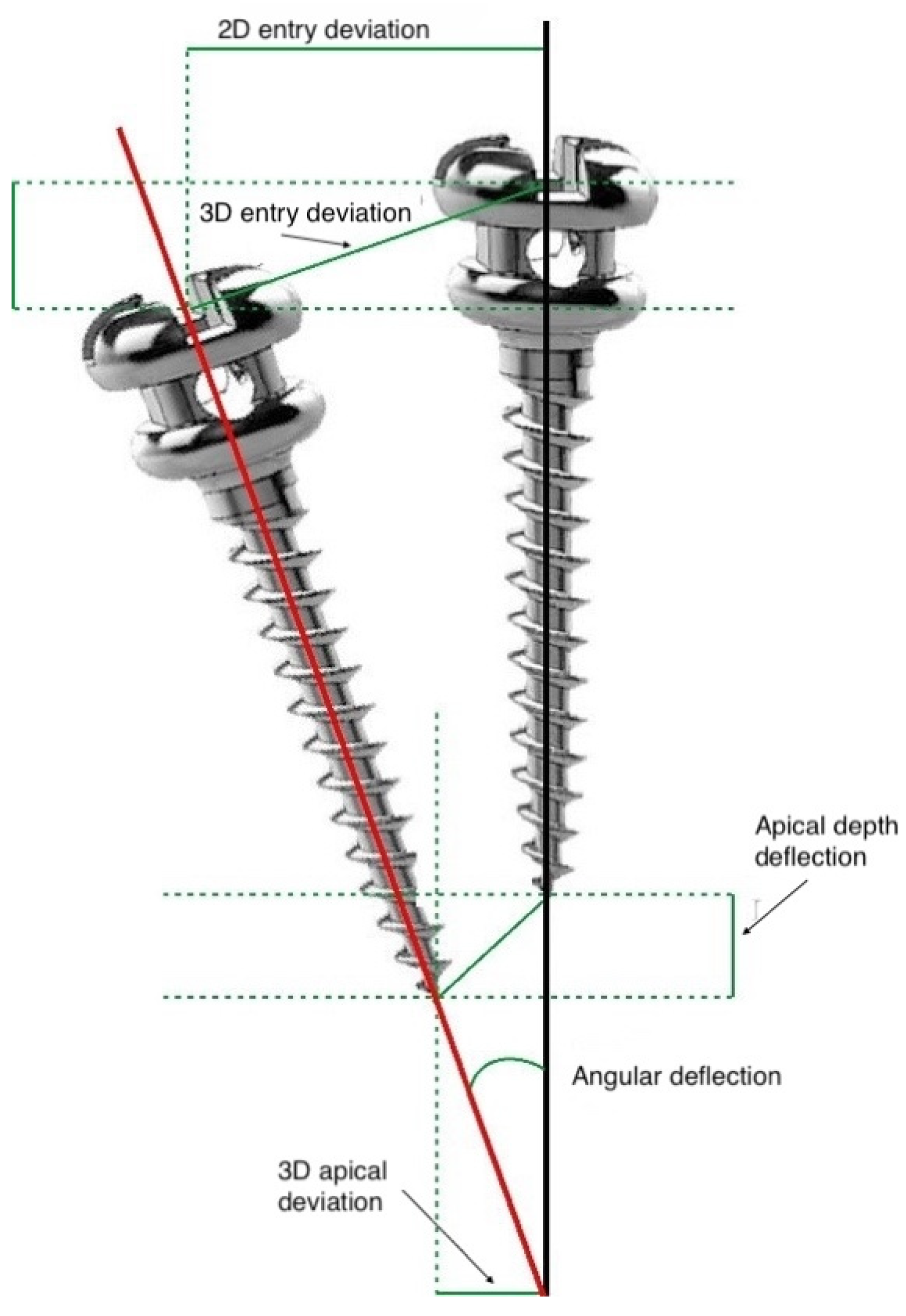
The secondary outcome variables (depicted in Figure 5) were as follows:
Figure 5. Measurement of the outcome variables (main variable, 3D apical deviation; secondary variables, 2D entry deviation, 3D entry deviation, apical depth deflection, angular deflection).
  • 2D entry deviation (mm): deviation between the planned position and the final position of the miniscrew platform in the x and y dimensions of the space in an occlusal view, without considering the deviation in depth (z-axis).
  • 3D entry deviation (mm): deviation between the planned position and the final position of the miniscrew platform in the three dimensions of space (x, y, z).
  • Apical depth deviation (mm): vertical distance between the planned position and the final position of the miniscrew apex (z-axis).
  • Angular Deflection: angle between the center axes of the planned position and the end position of the miniscrew.
Other analyzed secondary variables included screw position and side.

2.4. Statistical Analysis

Statistical analysis was carried out by another researcher (E.V.-C.) not involved in the miniscrew planning, placement, and measurement. All analyses were conducted using SPSS software version 27 (SPSS Inc., Chicago, IL, USA) with a significance level at α = 0.05. Miniscrews placed within the same model were considered paired data. Given the sample size, nonparametric tests were selected: related-samples Wilcoxon signed-rank tests were used to compare differences among technique (X-Guide® or freehand), and side (left or right). Related-samples Friedman’s two-way analysis of variance by ranks was applied to test differences across miniscrew positions (buccal interradicular, palatal interradicular, and retromolar). Effect sizes were estimated using rank biserial correlation (rrb) for Wilcoxon’s tests and Kendall’s coefficient of concordance (W) for Friedman’s tests. The effect of anatomical position and site on accuracy was a secondary aim of the study, and the sample size was calculated based on the primary objective. Nevertheless, we performed a separate analysis to assess deviations according to anatomical side (left vs. right) and position (buccal, palatal, distal) in both dCAS and freehand implant insertion.

3. Results

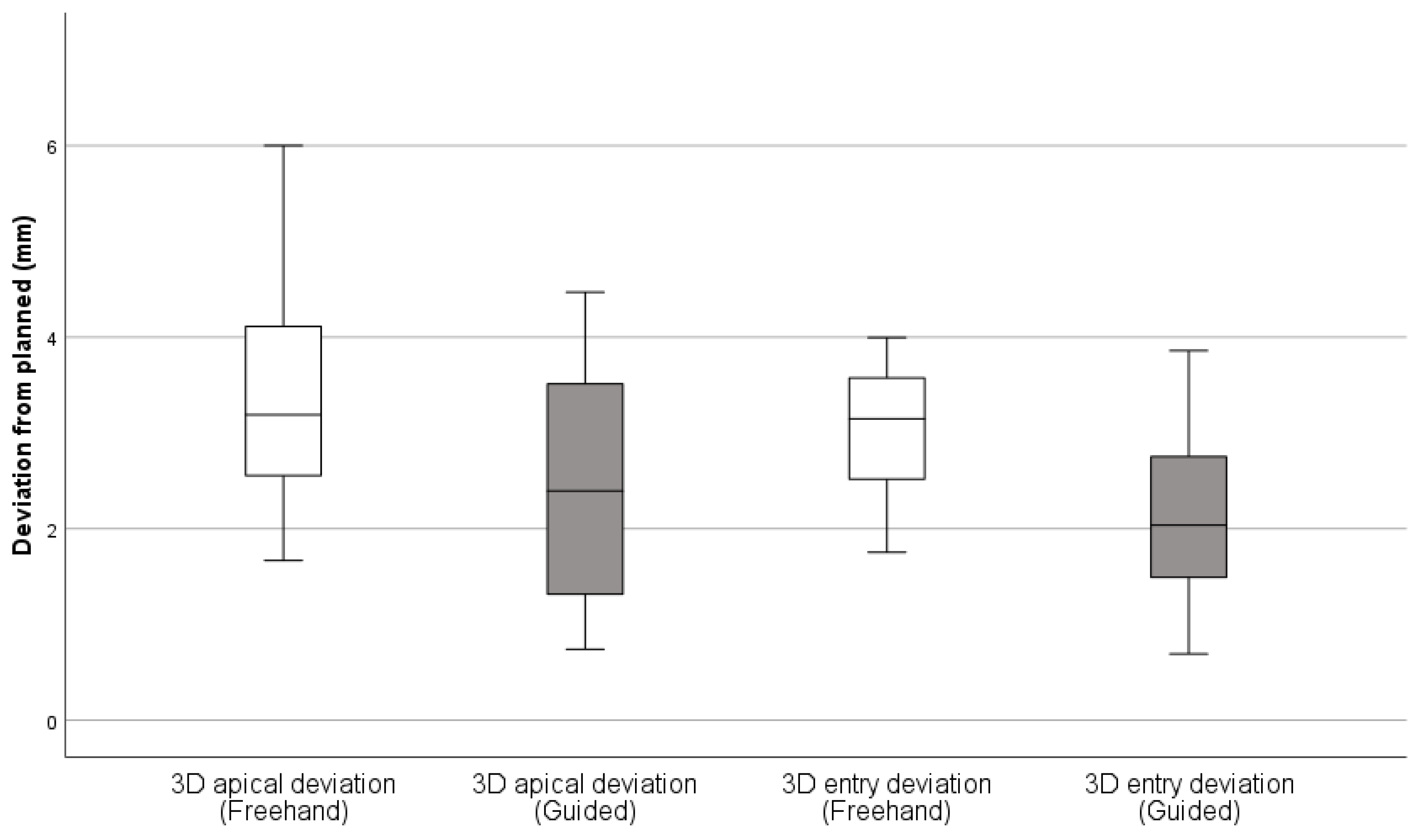
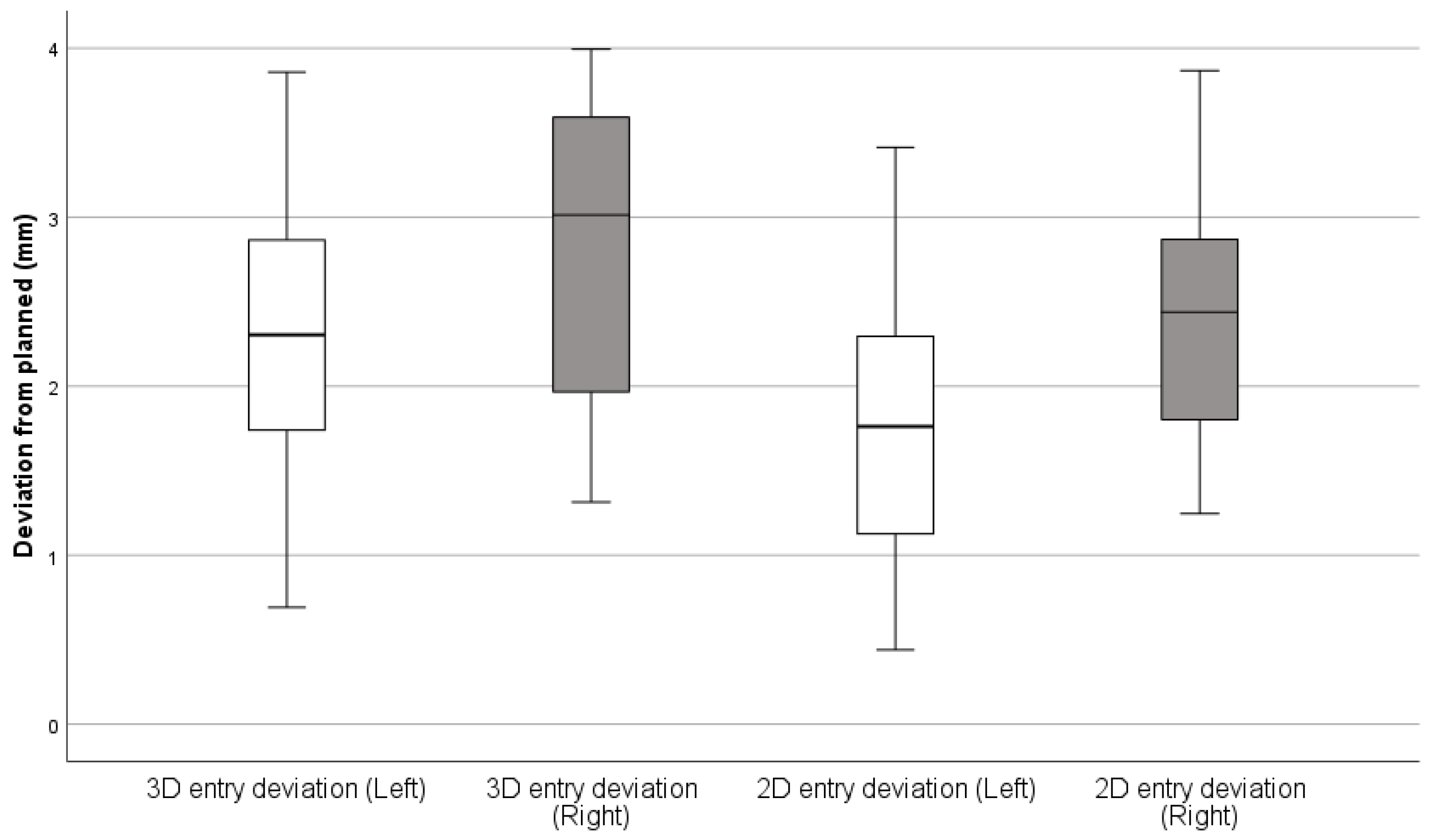
Outlier values were identified in three initial models, which were excluded from the analysis. The mean and standard deviation (SD) of linear deviations at the entry point and tip of the miniscrew, as well as angular deflection of the miniscrew axis, are displayed in Table 1. The dynamic navigation group showed significantly higher accuracy in 3D apical deviation and 3D entry deviation (Figure 6). The left side showed slightly less 2D and 3D entry deviation than the right side (Table 2, Figure 7). The lineal deviations and angular deflections were similar in the three positions (Table 3). No statistically significant differences were observed among the three anatomical positions in either guided or non-guided surgery (p > 0.05). No significant differences were found between sides for 3D apical deviation or apical depth in either surgical modality (p > 0.05). In contrast, deviation was significantly greater on the right side with guided surgery for 3D entry deviation (Z = −2.970, p = 0.003, rrb = −0.824), 2D entry deviation (Z = −2.201, p = 0.028, rrb = −0.610), and angular deflection (Z = −1.992, p = 0.046 rrb = −0.553). A summary comparison of placement accuracy comparing guided and non-guided techniques is presented in Table 4.
Table 1. Comparison of deviation between freehand and guided miniscrew insertion. The results are expressed as mean ± standard deviation. Significance was calculated with the Wilcoxon signed-rank test. Z is the standardized W statistic. rrb is the rank biserial correlation. Significant differences are marked with an asterisk. Effects are medium to large.
Figure 6. Boxplots showing 3D apical deviation (mm) and 3D entry deviation (mm) in the freehand-placed miniscrews and the fully guided miniscrews (shaded boxplots). The fully guided group had significantly higher accuracy than the freehand group. The X-Guide® Dynamic Navigation group achieved significantly higher accuracy (lower deviation) in both 3D apical deviation (p < 0.001) and 3D entry deviation (p < 0.001) compared to the freehand group. Differences between techniques were analyzed using the Wilcoxon signed-rank test for related samples. The line within the box represents the median, and the whiskers extend to the minimum and maximum values that are not outliers. There were no outliers.
Table 2. Comparison of deviation between left and right side. The operator was right-handed. The results are expressed as mean ± standard deviation. Significance was calculated with the Wilcoxon signed-rank test. Z is the standardized W statistic. rrb is the rank biserial correlation. Significant differences are marked with an asterisk. Effects were medium to large.
Figure 7. Boxplots showing 3D entry deviation (mm) and 2D entry deviation (mm) comparing the left side (non-shaded boxplots) with the right side (shaded boxplots). The left side had significantly higher accuracy. The left side achieved significantly higher accuracy (lower deviation) in both 3D entry deviation (p < 0.05) and 2D entry deviation (p < 0.05) compared to the right side. Differences between sides were analyzed using the Wilcoxon signed-rank test for related samples. The line within the box represents the median, and the whiskers extend to the minimum and maximum values that are not outliers. There were no outliers.
Table 3. Comparison of deviation among the 3 mesio-distal positions. Distal 7: buccally distal to the second molar. Buccal 6/5: buccally between the roots of the first molar and second premolar. Palatal 5/4: between the roots of the first and second premolars. The results are expressed as mean ± standard deviation. Significance was calculated with related-samples Friedman’s two-way analysis of variance by ranks. W is Kendall’s coefficient of concordance. There were no significant differences. Effects were small.
Table 4. Summary comparison of placement accuracy outcomes.

4. Discussion

In this study, the insertion of all orthodontics miniscrews was planned with a CBCT. Half of them were placed with the X-Guide® navigation system and the other half were inserted freehand. The dCAS with the X-Guide® system was more accurate in two key variables: the main outcome variable, 3D apical deviation, and a secondary outcome variable, 3D entry deviation. 3D apical deviation is a critical variable, as the tip of the miniscrew may impinge on neighboring structures. This can lead to increased failure rates, root damage (a crucial risk factor for miniscrew failure) [4,5], and potential complications such as periradicular lesions, pulpal injury [23,24], or external root resorption, depending on the extent of root contact. Previous studies have also identified significant differences in 3D apical deviation when using dCAS [25,26]. Similarly, dCAS is significantly more accurate (less apical deviation) than sCAS and non-guided surgery for implant placement [25,26]. The fact that other studies [27] did not report higher accuracy at the implant apex might be because in implant surgery, apical depth can be adequately estimated with calibrated burs. Apical accuracy is clinically relevant, especially in narrow interradicular spaces [24] or close to the nasal cavity or the maxillary sinus, where perforation has been reported and can lead to complications ranging from minor, spontaneously healing perforations to significant adverse outcomes such as oronasal fistula development (necessitating surgical closure) [7,8]. Therefore, dCAS systems, which provide real-time, intra-operative feedback, can be of great assistance in preventing these complications. A 2 mm safety margin should still be applied, as deviations of more than 1 mm were observed in the current study. Future research should aim to standardize measurement protocols and explore the influence of training, anatomical variability, and device-specific factors on apical outcomes.
A significant improvement in 3D entry point deviation was observed with X-Guide® dCAS in our study, which is consistent with reports using Navident® dCAS (ClaroNav Technology Inc., Toronto, Canada) [20]. This finding is critical for preventing root injury in narrow spaces [24]. During insertion of temporary anchorage devices, Chen et al. reported less deviation at the platform center with sCAS in comparison with dCAS, which performed similarly to the freehand technique in position and angle [28]. However, a drawback of sCAS is the reliance on prefabricated templates, which do not allow for intraoperative adjustments [27]. The stent should allow easy inspection of the surgical site, in order to detect inaccuracies related to misfit. These inaccuracies might be easier to detect with dCAS: it gives the clinician the ability to visualize and modify the insertion path in real time, and check whether the clinical scenario matches the planning. Another advantage of dCAS is the space required for the drills: in patients with limited opening or access, it might be difficult or impossible to drive the burs through the sleeves. Axial orientation is particularly important in posterior or tuberosity miniscrews. Due to their anatomical location, placement using a surgical guide might be unfeasible. Although in the present studies there were no significant differences between the locations of the screws, in a real clinical scenario distal areas might be more difficult to reach than in vitro.
We did not find significant differences in angular deflection, apical depth deviation, 2D entry deviation, or 2D apical deviation. In vivo and in vitro studies conducted in edentulous areas have reported statistically significant differences in angular deflection during implant and miniscrew placement [29]. Conversely, in agreement with previous studies, our findings did not demonstrate such differences, which may be attributed to the presence of teeth in the examined areas [28]. Therefore, when placing miniscrews freehand (although they were planed digitally), the existing dentition may provide anatomical landmarks that guide the operator, thereby minimizing angular deflection discrepancies in comparison with dCAS.
When using the markerless technique, four reference points were selected within the X-Guide® software, without using a physical radiographic marker [30]. This approach offers greater flexibility and simplifies the imaging protocol; however, it also presents some limitations. For instance, even minor movements of the tracking sensor placed on the patient’s mouth can lead to navigation inaccuracies, often requiring a full re-registration of the patient and system devices. To minimize this risk, it is recommended to continuously verify the accuracy of the registration throughout the procedure by touching a recognizable anatomical landmark visible in the virtual image. This real-time validation ensures that the navigation remains reliable and helps detect any misalignment early, thereby preventing potential errors in miniscrew placement [27]. Thus, the markerless workflow demands a high level of operator vigilance and familiarity with the software environment. Unlike traditional marker-based systems, which offer more rigid reference structures, markerless navigation relies heavily on consistent sensor stability and precise point selection during setup. As such, incorporating routine verification steps and establishing standardized protocols for sensor placement and patient positioning may enhance overall reliability and reduce the likelihood of technical complications [28], although this entails an increase in surgical time. In patients with fixed orthodontic appliances, metallic brackets and bands generate noise in the CBCT and might lead to inaccuracies in the 3D model. Potential errors can also arise with fixed appliances because of registration point changes due to tooth movements, or the use of wax to place the tracker, which decreases its stability [28].
In our study, the miniscrew position (buccal, palatal, or distal) did not significantly affect accuracy. Using dCAS, statistically significant differences in miniscrew positions among different palatal types have been reported, particularly in cases with high and pronounced palatal vaults [31,32]. In our study, the models presented similarly pronounced palatal vaults and substantial soft tissue thickness. Nevertheless, with dCAS, a significantly greater deviation was found on the right side for 3D entry deviation, 2D entry deviation, and angular deflection. These results suggest a potential influence of the side on the accuracy of guided implant placement, particularly at the entry point and in angular deviation. This differs from other studies, where higher deviations were found on the left side or in the molar area [20,33]. Interestingly, this greater deviation on the right side may be related to ergonomic factors during insertion, which might be more noticeable in novice clinicians. For a right-handed operator, access and visibility on the left side of the model may be more favorable, especially when using a dynamic navigation system that requires simultaneous hand-eye coordination and real-time feedback. In the initial cases performed with the dCAS system, a deviation from the pre-defined trajectory was observed as the miniscrew passed through the gingiva and approached the bone. This real-time visualization enabled immediate feedback and correction of the insertion angle. As a result, both the freehand and dCAS systems benefited from this dynamic adjustment, which likely contributed to the absence of statistically significant differences between both systems in miniscrew position from the third model on. These findings highlight the potential advantage of dCAS in adapting to anatomical variability and enhancing placement accuracy.
The present study contributes new data supporting the potential of dCAS to enhance orthodontic miniscrew placement precision. By enabling real-time intraoperative adjustments, these systems may offer objective improvements in accuracy and represent a promising alternative to static guidance methods. The significantly higher accuracy achieved by the X-Guide® system in 3D apical deviation is the most critical finding for clinical practice. Avoiding root contact and penetration of vital anatomical structures (such as the maxillary sinus or nasal floor) is the paramount concern when inserting miniscrews. Dynamic navigation directly addresses this by providing the clinician with real-time, intra-operative visual feedback that continually displays the planned trajectory and the actual position of the drill. This immediate feedback assists in preventing critical errors, allowing the operator to correct deviations instantly before they result in iatrogenic injury. The system can help maintain the necessary 2 mm safety margin from roots. Furthermore, by improving placement predictability and accuracy, dynamic navigation is expected to enhance patient safety in vivo by dramatically reducing the risk of complications that necessitate surgical or endodontic intervention. While chair time may initially be longer due to setup and training, the increased confidence and reduced risk of failure can ultimately lead to a more efficient and safer overall clinical workflow.
Some studies have linked the success rate of miniscrews to their length [34,35,36], but no statistically significant differences have been found in placement accuracy with dCAS of miniscrews of different lengths [32]. To minimize confounding variables, all miniscrews used in our study had the same length.
A limitation of our study was the exclusion of the three initial models that showed higher overall inaccuracy, suggesting that the operator did better after 18 insertions. Other studies have highlighted the learning curve in miniscrews surgery [22,25]. Lim et al. even reported a progressive improvement in both stability and accuracy after the placement of at least 20 miniscrews [37]. Being familiar with the system reduces the human error when using dCAS [28]. Interestingly, in our study, a progressive improvement in placement accuracy was attained from the third model, suggesting a rapid learning curve facilitated by the X-Guide® system. This reinforces the potential of dynamic navigation not only as a clinical tool but also as a valuable educational resource, enabling novice practitioners to achieve greater precision in a relatively short time frame. An additional model was excluded due to technical errors during the CBCT/STL superimposition process, which has also been identified as a potential source of bias in in vitro studies with dCAS [31]. Moreover, miniscrews insertion with dCAS is operator-dependent as there is a correlation between the operator experience and the reduction in operative time [38]. Navigated surgery requires previous theoretical instruction and hands-on training. It tends to increase overall treatment time due to the need for thorough planning and precise calibration of all instruments involved. Nevertheless, this technology represents a valuable educational resource for emerging professionals, as it facilitates the correct positioning of the contra-angle handpiece and fosters a deeper understanding of individual anatomical variations. These discrepancies highlight the importance of following a protocol with calibration procedures and standardize operator experience when designing studies of emerging technologies such as dCAS. Specifying the operator’s experience facilitates the comparison between the studies and increases the reliability of outcomes.
The dCAS may enhance apical and entry precision in certain contexts. Its effectiveness can rely on operator expertise and the system’s calibration. No significant differences have been found between different dCAS systems [22], but more studies are required. In the present research, realistic anatomical models and a phantom head were used with the aim of reproducing the clinical scenario. However, the in vitro design limits the external validity and the direct applicability of the findings to a real clinical setting.
The findings of this in vitro investigation should be interpreted considering several limitations. Firstly, the experimental setup had fidelity limitations, particularly the absence of bone and soft tissue elasticity, which could affect insertion accuracy. Secondly, the study’s scope was constrained using a single miniscrew design and a single, novice operator. Future research should aim to increase the clinical applicability of these findings by including multiple operators with varying experience levels and comparing different screw geometries to assess their influence on placement outcomes.
Finally, the results obtained can only be extrapolated to the maxilla, particularly to the buccal and palatal interradicular areas, and the retromolar area. They cannot be extrapolated directly to the mandible or other anatomical locations without additional studies.

5. Conclusions

Guided surgery using the X-Guide® system used by a novice operator has shown improved accuracy in the placement of orthodontic miniscrews in the maxilla in comparison with the freehand technique. Although the left side showed higher accuracy, there were no significant differences related to the position (buccal, palatal, distal). Dynamic navigation is a promising tool to increase safety when placing orthodontic miniscrews in anatomically challenging regions, and particularly training novice operators.

Author Contributions

Conceptualization, C.D.-l.-R.-G., A.J.-G., T.M.-M., O.C.-F., M.C.-R., E.V.-C. and R.F.; Formal analysis, C.D.-l.-R.-G., T.M.-M., O.C.-F.,and M.C.-R.; Investigation, C.D.-l.-R.-G., D.M.-C., T.M.-M., O.C.-F. and M.C.-R.; Methodology, C.D.-l.-R.-G., D.M.-C., A.J.-G., V.R.-R., T.M.-M., O.C.-F., M.C.-R., E.V.-C. and R.F.; Resources, E.V.-C. and R.F.; Supervision, E.V.-C. and R.F.; Validation, E.V.-C.; Visualization, C.D.-l.-R.-G., D.M.-C., T.M.-M. and O.C.-F.; Writing—original draft, C.D.-l.-R.-G.; Writing—review and editing, D.M.-C., A.J.-G., V.R.-R., O.C.-F., M.C.-R., E.V.-C. and R.F. All authors have read and agreed to the published version of the manuscript.

Funding

This research did not receive any specific grant from funding agencies in the public, commercial, or not-for-profit sectors.

Institutional Review Board Statement

Not applicable.

Data Availability Statement

The datasets used and/or analyzed during the current study are available from the corresponding author on reasonable request.

Acknowledgments

The authors would like to thank Bonemodels SL (Castelló, Spain) for providing the models for this study.

Conflicts of Interest

The authors declare the following financial interests/personal relationships which may be considered as potential competing interests: The authors declare that they have no known competing financial interests or personal relationships directly related to this study. However, they would like to declare the following interests outside the submitted work: Dr. Octavi Camps-Font reports grants and non-financial support from Avinent (Santpedor, Spain), and non-financial support from Nobel Biocare (Zürich, Switzerland) outside the submitted work. Dr. Rui Figueiredo reports grants, personal fees, and non-financial support from MozoGrau (Valladolid, Spain), Avinent (Santpedor, Spain), Inibsa Dental (Lliçà de Vall, Spain), Dentaid SL (Cerdanyola del Vallés, Spain), non-financial support from Nobel Biocare (Zürich, Switzerland), personal fees from Geistlich Pharma AG (Wolhusen, Switzerland), BioHorizons Iberica (Madrid, Spain), Araguaney Dental (Barcelona, Spain), Septodont (Saint-Maur-des-fossés, France), and Laboratorios Silanes (Mexico city, Mexico) outside the submitted work. Dr. Figueiredo has also participated as a principal investigator in a randomized clinical trial sponsored by Mundipharma (Cambridge, UK) and in another clinical trial as a sub-investigator for Menarini Richerche (Florence, Italy). Dr. Eduard Valmaseda-Castellón reports grants, personal fees, and non-financial support from MozoGrau (Valladolid, Spain), Avinent (Santpedor, Spain), Inibsa Dental (Lliçà de Vall, Spain), Dentaid SL (Cerdanyola del Vallés, Spain), and personal fees from BioHorizons Iberica (Madrid, Spain) and Laboratorios Silanes (Mexico City, Mexico) outside the submitted work. Dr. Eduard Valmaseda-Castellón has also participated as a principal investigator in a randomized clinical trial sponsored by Geistlich Pharma AG (Wolhusen, Switzerland) and in another clinical trial as a sub-investigator for Mundipharma (Cambridge, UK).

Abbreviations

The following abbreviations are used in this manuscript:
CBCTcone beam computed tomography
CAScomputer-assisted surgery
sCASstatic computer-assisted surgery
dCASdynamic computer-assisted surgery
rCASrobotic computer-assisted surgery
CAD/CAMcomputer-aided designed and manufactured
2Dtwo dimensional
3Dthree dimensional
SDstandard deviation

References

  1. Yin, Y.; Wang, Z.; Huang, L.; Zhao, Y.; Guan, Q.; Xu, H.; Han, X. Orthodontic maximum anchorages in malocclusion treatment: A systematic review and network meta-analysis. J. Evid.-Based Med. 2021, 14, 295–302. [Google Scholar]
  2. Inchingolo, A.M.; Malcangi, G.; Costa, S.; Fatone, M.C.; Avantario, P.; Campanelli, M.; Piras, F.; Patano, A.; Ferrara, I.; Di Pede, C.; et al. Tooth Complications after Orthodontic Miniscrews Insertion. Int. J. Environ. Res. Public Health 2023, 20, 1562. [Google Scholar]
  3. Kravitz, N.D.; Kusnoto, B. Risks and complications of orthodontic miniscrews. Am. J. Orthod. Dentofac. Orthop. 2007, 131, S43–S51. [Google Scholar] [CrossRef] [PubMed]
  4. Hwang, Y.-C.; Hwang, H.-S. Surgical repair of root perforation caused by an orthodontic miniscrew implant. Am. J. Orthod. Dentofac. Orthop. 2011, 139, 407–411. [Google Scholar] [CrossRef] [PubMed]
  5. Kuroda, S.; Yamada, K.; Deguchi, T.; Hashimoto, T.; Kyung, H.-M.; Yamamoto, T.T. Root proximity is a major factor for screw failure in orthodontic anchorage. Am. J. Orthod. Dentofac. Orthop. 2007, 131, S68–S73. [Google Scholar] [CrossRef] [PubMed]
  6. Do, J.; Kwon, I.J. Navigation-Guided Surgical Removal of an Orthodontic Miniscrew Accidentally Displaced into the Prevertebral Space. J. Craniofac. Surg. 2024, 35, e688–e690. [Google Scholar]
  7. Jia, X.; Chen, X.; Huang, X. Influence of orthodontic mini-implant penetration of the maxillary sinus in the infrazygomatic crest region. Am. J. Orthod. Dentofac. Orthop. 2018, 153, 656–661. [Google Scholar] [CrossRef]
  8. Motoyoshi, M.; Sanuki-Suzuki, R.; Uchida, Y.; Saiki, A.; Shimizu, N. Maxillary sinus perforation by orthodontic anchor screws. J. Oral Sci. 2015, 57, 95–100. [Google Scholar] [CrossRef]
  9. Guarnieri, R.; Grenga, C.; Altieri, F.; Rocchetti, F.; Barbato, E.; Cassetta, M. Can computer-guided surgery help orthodontics in miniscrew insertion and corticotomies? A narrative review. Front. Oral Health 2023, 4, 1196813. [Google Scholar]
  10. Venkatesh, E.; Elluru, S.V. Cone beam computed tomography: Basics and applications in dentistry. J. Istanb. Univ. Fac. Dent. 2017, 51, S102–S121. [Google Scholar] [CrossRef]
  11. Graf, T.; Keul, C.; Wismeijer, D.; Güth, J.F. Time and costs related to computer-assisted versus non-computer-assisted implant planning and surgery. A systematic review. Clin. Oral Implant. Res. 2021, 32, 303–317. [Google Scholar] [CrossRef]
  12. Santmartí-Oliver, M.; Jorba-García, A.; Moya-Martínez, T.; De-La-Rosa-Gay, C.; Camps-Font, O. Safety and Accuracy of Guided Interradicular Miniscrew Insertion: A Systematic Review and Meta-Analysis. J. Clin. Med. 2024, 13, 7697. [Google Scholar] [CrossRef]
  13. Suzuki, E.Y.; Suzuki, B. Accuracy of Miniscrew Implant Placement With a 3-Dimensional Surgical Guide. J. Oral Maxillofac. Surg. 2008, 66, 1245–1252. [Google Scholar] [CrossRef]
  14. Mihit, F.Z.M.; Zubizarreta-Macho, Á.; Montiel-Company, J.M.; Martínez, A.A. Systematic review and network meta-analysis of the accuracy of the orthodontic mini-implants placed in the inter-radicular space by image-guided-based techniques. BMC Oral Health 2023, 23, 383. [Google Scholar] [CrossRef]
  15. Hang, J.; Guentsch, A. Are Sleeves Necessary in Static Computer-Assisted Implant Surgery? A Comparative In Vitro Analysis. Clin. Oral Implant. Res. 2025, 36, 117–126. [Google Scholar] [CrossRef] [PubMed]
  16. El Kholy, K.; Lazarin, R.; Janner, S.F.M.; Faerber, K.; Buser, R.; Buser, D. Influence of surgical guide support and implant site location on accuracy of static Computer-Assisted Implant Surgery. Clin. Oral Implant. Res. 2019, 30, 1067–1075. [Google Scholar] [CrossRef] [PubMed]
  17. D’haese, J.; Ackhurst, J.; Wismeijer, D.; De Bruyn, H.; Tahmaseb, A. Current state of the art of computer-guided implant surgery. Periodontology 2000 2017, 73, 121–133. [Google Scholar] [CrossRef]
  18. Jaemsuwan, S.; Arunjaroensuk, S.; Kaboosaya, B.; Subbalekha, K.; Mattheos, N.; Pimkhaokham, A. Comparison of the accuracy of implant position among freehand implant placement, static and dynamic computer-assisted implant surgery in fully edentulous patients: A non-randomized prospective study. Int. J. Oral Maxillofac. Surg. 2023, 52, 264–271. [Google Scholar] [CrossRef]
  19. Yimarj, P.; Subbalekha, K.; Dhanesuan, K.; Siriwatana, K.; Mattheos, N.; Pimkhaokham, A. Comparison of the accuracy of implant position for two-implants supported fixed dental prosthesis using static and dynamic computer-assisted implant surgery: A randomized controlled clinical trial. Clin. Implant. Dent. Relat. Res. 2020, 22, 672–678. [Google Scholar] [CrossRef]
  20. Moya-Martínez, T.; Figueiredo, R.; Jorba-García, A.; Bara-Casaus, J.J.; Rojas-Vizcaya, F.; De-La-Rosa-Gay, C.; Sánchez-Torres, A.; Valmaseda-Castellón, E. Accuracy of a dynamic guided surgery system for orthodontic miniscrew placement: An experimental in vitro study. Angle Orthod. 2025, 95, 629–638. [Google Scholar] [CrossRef]
  21. Krithikadatta, J.; Datta, M.; Gopikrishna, V. CRIS Guidelines (Checklist for Reporting In-vitro Studies): A concept note on the need for standardized guidelines for improving quality and transparency in reporting in-vitro studies in experimental dental research. J. Conserv. Dent. 2014, 17, 301–304. [Google Scholar] [CrossRef]
  22. Jorba-García, A.; González-Barnadas, A.; Camps-Font, O.; Figueiredo, R.; Valmaseda-Castellón, E. Accuracy assessment of dynamic computer–aided implant placement: A systematic review and meta-analysis. Clin. Oral Investig. 2021, 25, 2479–2494. [Google Scholar] [CrossRef] [PubMed]
  23. McCabe, P.; Kavanagh, C. Root perforation associated with the use of a miniscrew implant used for orthodontic anchorage: A case report. Int. Endod. J. 2012, 45, 678–688. [Google Scholar] [CrossRef] [PubMed]
  24. Er, K.; Bayram, M.; Taşdemir, T. Root canal treatment of a periradicular lesion caused by unintentional root damage after orthodontic miniscrew placement: A case report. Int. Endod. J. 2011, 44, 1170–1175. [Google Scholar] [CrossRef] [PubMed]
  25. Block, M.; Emery, R.; Lank, K.; Ryan, J. Implant Placement Accuracy Using Dynamic Navigation. Int. J. Oral Maxillofac. Implant. 2017, 32, 92–99. [Google Scholar] [CrossRef]
  26. Emery, R.W.; Merritt, S.A.; Lank, K.; Gibbs, J.D. Accuracy of Dynamic Navigation for Dental Implant Placement—Model-Based Evaluation. J. Oral Implant. 2016, 42, 399–405. [Google Scholar] [CrossRef]
  27. Stefanelli, L.; Mandelaris, G.; DeGroot, B.; Gambarini, G.; De Angelis, F.; Di Carlo, S. Accuracy of a Novel Trace-Registration Method for Dynamic Navigation Surgery. Int. J. Periodontics Restor. Dent. 2020, 40, 427–435. [Google Scholar] [CrossRef]
  28. Chen, Y.-C.; Lin, H.-Y.; Kok, S.-H.; Chang, H.-H.; Lin, C.-P. Accuracy and safety of real-time navigation during insertion of temporary anchorage devices—A randomized clinical trial. J. Dent. Sci. 2025, 20, 1168–1174. [Google Scholar] [CrossRef]
  29. Stefanelli, L.; Graziani, U.; Pranno, N.; Di Carlo, S.; Mandelaris, G. Accuracy of Dynamic Navigation Surgery in the Placement of Pterygoid Implants. Int. J. Periodontics Restor. Dent. 2020, 40, 825–834. [Google Scholar] [CrossRef]
  30. Jorba-García, A.; Bara-Casaus, J.J.; Camps-Font, O.; Figueiredo, R.; Valmaseda-Castellón, E. The influence of radiographic marker registration versus a markerless trace registration method on the implant placement accuracy achieved by dynamic computer-assisted implant surgery. An in-vitro study. J. Dent. 2024, 146, 105072. [Google Scholar] [CrossRef]
  31. Wexler, A.; Tzadok, S.; Casap, N. Computerized navigation surgery for the safe placement of palatal implants. Am. J. Orthod. Dentofac. Orthop. 2007, 131, S100–S105. [Google Scholar] [CrossRef]
  32. Brilli, D.; Cauli, I.; Cassetta, M. How palatal vault morphology and screw length influence the accuracy of dynamic computer-guided orthodontic miniscrew insertion. A prospective clinical study. J. Dent. 2024, 146, 105093. [Google Scholar] [CrossRef]
  33. Jorba-García, A.; Bara-Casaus, J.J.; Camps-Font, O.; Sánchez-Garcés, M.Á.; Figueiredo, R.; Valmaseda-Castellón, E. Accuracy of dental implant placement with or without the use of a dynamic navigation assisted system: A randomized clinical trial. Clin. Oral Implant. Res. 2023, 34, 438–449. [Google Scholar] [CrossRef] [PubMed]
  34. Afrashtehfar, K.I. Patient and miniscrew implant factors influence the success of orthodontic miniscrew implants: Question: In orthodontic patients, what are the prognostic factors affecting the success rates of miniscrew implants inserted into the buccal posterior region? Evid.-Based Dent. 2016, 17, 109–110. [Google Scholar] [CrossRef] [PubMed]
  35. Chatzigianni, A.; Keilig, L.; Reimann, S.; Eliades, T.; Bourauel, C. Effect of mini-implant length and diameter on primary stability under loading with two force levels. Eur. J. Orthod. 2011, 33, 381–387. [Google Scholar] [CrossRef] [PubMed]
  36. Möhlhenrich, S.; Heussen, N.; Modabber, A.; Bock, A.; Hölzle, F.; Wilmes, B.; Danesh, G.; Szalma, J. Influence of bone density, screw size and surgical procedure on orthodontic mini-implant placement—Part B: Implant stability. Int. J. Oral Maxillofac. Surg. 2021, 50, 565–572. [Google Scholar] [CrossRef]
  37. Lim, H.-J.; Choi, Y.-J.; Evans, C.A.; Hwang, H.-S. Predictors of initial stability of orthodontic miniscrew implants. Eur. J. Orthod. 2011, 33, 528–532. [Google Scholar] [CrossRef]
  38. Brilli, D.; Giansanti, M.; Cassetta, M. Does the operator’s generational cohort influence the accuracy of orthodontic miniscrews insertion in the palatine vault in dynamic computer-guided surgery? A randomized prospective study. Oral Maxillofac. Surg. 2025, 29, 120. [Google Scholar] [CrossRef]
Disclaimer/Publisher’s Note: The statements, opinions and data contained in all publications are solely those of the individual author(s) and contributor(s) and not of MDPI and/or the editor(s). MDPI and/or the editor(s) disclaim responsibility for any injury to people or property resulting from any ideas, methods, instructions or products referred to in the content.

Article Metrics

Citations

Article Access Statistics

Multiple requests from the same IP address are counted as one view.