1. Introduction
Bridges are among the most critical assets of transportation infrastructure because their functional failure can immediately disrupt mobility, logistics, and emergency response, while their structural failure may lead to severe safety consequences [
1]. Ensuring an adequate level of bridge safety therefore requires systematic condition assessment, timely maintenance planning, and transparent prioritization of interventions [
2]. In practice, the technical condition of bridges is commonly derived from periodic inspection reports, where experts evaluate the condition of principal components (e.g., substructure, superstructure, deck) and summarize the overall state using discrete ratings or codes [
3]. However, inspection-based assessment inherently contains uncertainty: many defects are described linguistically, measurement accuracy varies, and the final rating can depend on inspector experience and local practices. As a result, classical deterministic approaches may oversimplify the decision process by applying hard thresholds or linear aggregation rules that do not reflect the gradual and non-linear nature of deterioration [
4]. This motivates the use of computational decision-support methods that can (i) represent uncertainty explicitly, (ii) integrate heterogeneous indicators, and (iii) provide reproducible and interpretable condition indices for bridge management.
In recent years, significant research efforts have focused on bridge damage prediction using data-driven and machine-learning-based approaches, including neural networks, support vector machines, and hybrid models combining physical and statistical features. These methods are typically aimed at predicting localized damage states or future deterioration trends based on sensor data or historical measurements. However, their application at the network level is often limited by data availability, heterogeneity of inspection records, and uncertainty inherent in expert-based assessments.
Related approaches to structural condition and damage identification include stiffness-based methods for steel truss bridges, where changes in structural stiffness are used to localize and quantify damage, such as partial-model-based damage identification and stiffness separation techniques, which complement data-driven and fuzzy-based assessment frameworks [
5]. Stiffness-based damage identification methods, such as partial-model-based approaches and stiffness separation techniques, focus on detecting localized structural degradation through changes in mechanical properties and are particularly effective for detailed damage localization in steel truss bridges. In contrast, the proposed fuzzy logic and ANN-based framework addresses a complementary task by integrating heterogeneous inspection ratings into a unified condition indicator, enabling rapid, system-level assessment suitable for large bridge inventories and decision-support applications under data uncertainty [
6].
A well-established direction for addressing uncertainty in infrastructure assessment is fuzzy set theory and fuzzy inference. Fuzzy approaches are particularly suited to inspection data because they naturally operate with linguistic concepts (e.g., “low,” “medium,” “high”) and allow for smooth transitions between condition states. In bridge engineering, fuzzy logic has been applied both to condition rating and to decision-making tasks such as maintenance prioritization and risk evaluation. For example, Tarighat et al. [
7] proposed a fuzzy bridge deck condition rating method emphasizing the vagueness of linguistic inspection descriptions and the ability of fuzzy inference to formalize such assessments into consistent ratings. In a broader decision-making context, Wang et al. [
8] formulated bridge risk assessment as a fuzzy group decision-making problem, showing that fuzzy linguistic modeling improves realism when experts cannot provide precise numerical judgments. Moreover, fuzzy decision-support has been integrated into bridge information management systems to support maintenance, repair, and replacement decisions, illustrating the practical value of fuzzy indices in operational workflows [
9]. These studies indicate that fuzzy logic can provide an interpretable “white-box” mechanism for mapping inspection-based component ratings into a robust overall condition assessment.
In parallel with fuzzy logic, data-driven methods-particularly machine learning-have gained momentum in bridge condition assessment and deterioration prediction [
10]. Neural networks can learn complex non-linear relations between bridge attributes, inspection indicators, and condition ratings, and they are increasingly used to forecast condition evolution or reproduce expert ratings [
11,
12]. For instance, recent research has proposed neural-network-based methods to improve bridge condition rating prediction beyond traditional Markov-chain-only approaches, demonstrating the value of learning-based models for capturing dependencies in inspection data [
13]. Nevertheless, neural models require careful hyperparameter selection (architecture depth/width, regularization, learning rate, optimizer, batch size, etc.), which strongly affects convergence stability and generalization [
14]. Systematic hyperparameter optimization is therefore essential to avoid unstable training, overfitting, or suboptimal accuracy—especially when the dataset is heterogeneous and includes rare extreme-condition cases [
15].
To address hyperparameter selection efficiently, Bayesian Optimization has become a widely used strategy for tuning machine learning models because it explores the hyperparameter space intelligently via a surrogate model and an acquisition function, reducing the number of expensive training evaluations. The foundational work by Snoek et al. [
16] demonstrated “practical Bayesian optimization” for machine learning hyperparameters and remains a key reference for this approach. Recent reviews further confirm the growing role of advanced optimization techniques in hyperparameter tuning, particularly for deep learning architectures where manual tuning is time-consuming and computationally costly [
17,
18]. In the bridge domain, where decisions are safety-critical and resources are limited, combining interpretable fuzzy logic with accurately tuned neural predictors can offer a balanced solution: fuzzy inference provides transparent rule-based integration of inspection indicators, while the ANN can support consistent and scalable prediction of the integrated condition index across a large asset inventory.
Despite extensive research on fuzzy logic and machine learning for bridge assessment, several practical gaps remain [
19,
20]. First, bridge agencies often rely on long-term inspection archives, but transforming heterogeneous component ratings into a single integrated indicator suitable for digital asset management is non-trivial due to uncertainty and interdependence between structural components. Second, pure machine learning approaches can be highly accurate yet insufficiently interpretable for engineering decision-making, while purely expert-rule approaches may be limited in scalability. Third, hyperparameter tuning is frequently underreported or performed heuristically, which reduces reproducibility and may lead to suboptimal model performance. Consequently, there is a need for an assessment pipeline that (i) systematically converts inspection component ratings into an integrated bridge condition indicator under uncertainty, and (ii) trains a predictive model for that indicator with transparent and reproducible hyperparameter selection.
From an infrastructure management perspective, there remains a need for methods that support rapid, consistent, and interpretable condition assessment at the network level, rather than detailed damage localization at the individual component level.
Long-term inspection data are inherently heterogeneous, as they are collected by different experts, at different times, and under varying regulatory and operational conditions, which introduces subjectivity and uncertainty into the evaluation process. Fuzzy logic provides a natural framework for formalizing such uncertainty while preserving expert reasoning.
Ukraine represents a representative case of large-scale bridge networks operating under diverse environmental, structural, and maintenance conditions, making it suitable for evaluating practical condition assessment frameworks based on long-term inspection data.
The goal of this study is to develop a hybrid, inspection-data-driven methodology for quantifying bridge technical condition by (1) computing an integrated Bridge Condition Assessment indicator using a fuzzy inference system and (2) training an artificial neural network to predict this indicator with high accuracy, supported by Bayesian hyperparameter optimization.
To achieve this goal, the study addresses the following tasks:
- a.
Data acquisition and preparation: collect output data from real bridge inspection reports gathered over more than 15 years across different regions of Ukraine, and perform completeness checking, standardization, and normalization to a unified rating scale.
- b.
Fuzzy logic modeling: build a Mamdani-type fuzzy inference system that computes the integrated Bridge Condition Assessment indicator from five key inspection-based inputs: substructure condition, superstructure condition, deck condition, overall structural condition, and channel/channel protection condition.
- c.
Hyperparameter optimization: apply Bayesian Optimization to tune ANN hyperparameters to minimize the loss function and improve generalization, relying on a systematic optimization procedure rather than manual trial-and-error.
- d.
Model training and evaluation: train, validate, and test multiple ANN variants and compare them using established regression metrics (MSE, MAE, MAPE, R2) to identify the best-performing configuration.
- e.
Practical assessment demonstration: demonstrate how the trained model reproduces the integrated condition indicator and analyze prediction behavior across the rating spectrum, including potential limitations at extreme condition levels.
The novelty of the proposed work lies in the following aspects:
- −
Integrated fuzzy-condition indicator tailored to inspection practice: instead of using rigid deterministic aggregation, the study formalizes expert reasoning through a Mamdani fuzzy inference system, enabling smooth and interpretable mapping from five component ratings to a single bridge condition indicator. This approach aligns with prior fuzzy research in bridge assessment but is here embedded as a dedicated preprocessing/label-generation step for subsequent data-driven modeling.
- −
Hybrid fuzzy logic + ANN pipeline: the methodology combines the interpretability of fuzzy rules with the scalability of neural prediction, supporting consistent condition estimation across an asset inventory while retaining a clear engineering interpretation of how component states influence the final assessment.
- −
Reproducible hyperparameter tuning via Bayesian Optimization: the ANN is not tuned heuristically; instead, Bayesian optimization is used to identify an effective hyperparameter set systematically, consistent with best practices in modern machine learning optimization.
The practical significance of this study is that it provides a deployable decision-support framework for bridge asset management. The fuzzy inference model offers an interpretable mechanism for converting inspection component ratings into a unified Bridge Condition Assessment index, which can be directly incorporated into digital bridge passports, databases, and maintenance prioritization workflows. This direction is consistent with earlier efforts to embed fuzzy decision support into bridge information management systems, but the present study additionally enables automated prediction of the integrated indicator through a tuned ANN model. The resulting workflow can reduce subjectivity, improve rating consistency, and support transparent prioritization of interventions—especially valuable when bridge networks must be managed under constrained budgets and with varying data quality.
2. Methods
2.1. Data Collection
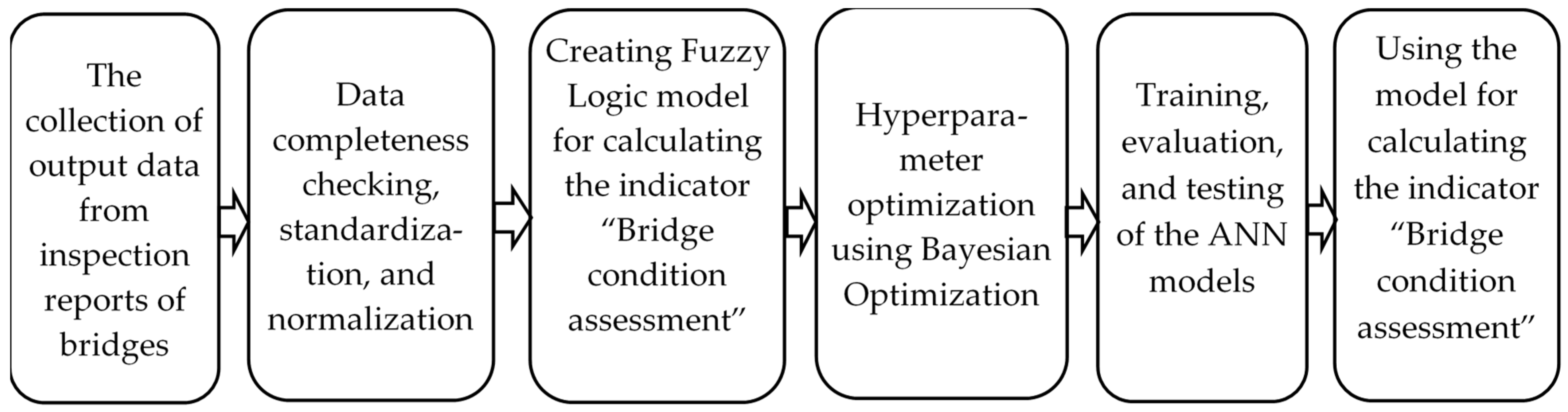
The schematic visualization of the methodology used in this study is shown in
Figure 1.
The present study focuses exclusively on reinforced concrete bridge structures. All inspection records used in this research correspond to bridges for which the structural components are consistently defined and assessed. Bridge types with fundamentally different structural systems, such as cable-stayed, suspension, or rigid frame bridges, were not included in the dataset to ensure methodological consistency of the fuzzy inference framework.
The output data were collected from real inspection reports of bridge structures conducted over a period of more than 15 years across various regions of Ukraine [
21,
22]. These inspections covered bridges located on national, regional, and local road networks and were performed by certified structural inspectors in accordance with national standards and engineering procedures [
23]. Each report contained detailed quantitative and qualitative assessments of individual structural elements, descriptions of identified defects, and expert conclusions regarding the operational suitability of the bridge [
24]. As a result, a comprehensive and representative dataset was formed, reflecting a broad spectrum of technical conditions—from newly constructed or recently renovated bridges to structures exhibiting significant deterioration, distress, and long-term degradation. The dataset comprises inspection records of reinforced concrete bridges with varying service durations. For each bridge, the type of structural system and the approximate service life at the time of inspection were recorded. The condition ratings were assigned by qualified bridge inspectors following standard inspection procedures, and these expert-based scores constitute the primary input for the proposed fuzzy inference system.
The full dataset consists of 447 inspection records collected from 71 unique bridge structures over a period spanning from 2006 to 2021. For several bridges, multiple inspection records are available, reflecting repeated assessments conducted at different time points, with an average of 6.3 inspections per bridge. After data completeness checking, 21 records (4.7%) containing missing or inconsistent values were excluded from further analysis. The remaining records were normalized to a unified 0–9 rating scale.
Table 1 shows the distribution of bridge condition assessment levels.
The dataset reflects typical operational conditions, where severely deteriorated bridges (Condition 1) are rare due to maintenance interventions, which naturally results in class imbalance.
Although inspection data were collected from different regions of Ukraine, no explicit regional factor was introduced into the assessment model. As shown in
Table 1, the distribution of bridge condition levels across regions is relatively consistent, reflecting the use of unified inspection standards, similar environmental exposure, and comparable maintenance practices nationwide. Within this context, structural condition is primarily governed by bridge age, structural configuration, and accumulated deterioration mechanisms rather than by regional location.
For the development of the fuzzy assessment model, five key parameters were selected based on expert validation and their proven relevance in predicting structural performance and reliability.
Table 2 shows the output and input parameters.
All inspection parameters were normalized to a unified 0–9 scale, which directly corresponds to the original component-level rating systems used in bridge inspections, enabling consistent aggregation and comparison across different inspection records.
The initial stages of working with data are among the most important steps in building a model and include verifying the completeness and accuracy of the dataset—specifically, ensuring that all input variables contain non-zero or non-missing values, checking that the dataset does not include anomalous or noisy observations, and performing data standardization and normalization. Each parameter was normalized within a standardized numerical scale ranging from 0 to 9, which ensured compatibility with the Fuzzy Logic Toolbox environment and enabled consistent interpretation of structural states. Taken together, these indicators represent the most critical components influencing the safety and serviceability of bridges: the integrity of load-bearing elements, the condition of traffic-carrying components, and the stability of hydraulic and erosion-protection systems.
Given the variability of defect types, differences in operating environments, and inherent subjectivity in engineering evaluations, traditional deterministic methods often fail to capture the full spectrum of uncertainties associated with bridge inspections. To address these limitations, the integral indicator “Bridge condition assessment” was computed using a fuzzy logic approach.
2.2. Fuzzy Logic
Each of the five input parameters was described using triangular membership functions corresponding to linguistic terms such as “low,” “middle,” and “high,” reflecting expert interpretations of structural condition. The resulting FIS model transforms diverse and sometimes subjective condition ratings into a unified numerical indicator that reliably characterizes the general technical state of a bridge [
25]. Because the underlying dataset spans a broad temporal and geographic range, the model effectively captures real-world degradation patterns and responds appropriately to critical structural deficiencies. This makes the proposed fuzzy logic-based approach a powerful tool for decision support in bridge management, maintenance prioritization, and long-term infrastructure planning. Furthermore, the model can be seamlessly integrated into digital bridge passports, automated monitoring platforms, or asset management systems, enhancing the objectivity, transparency, and consistency of structural condition evaluation [
26].
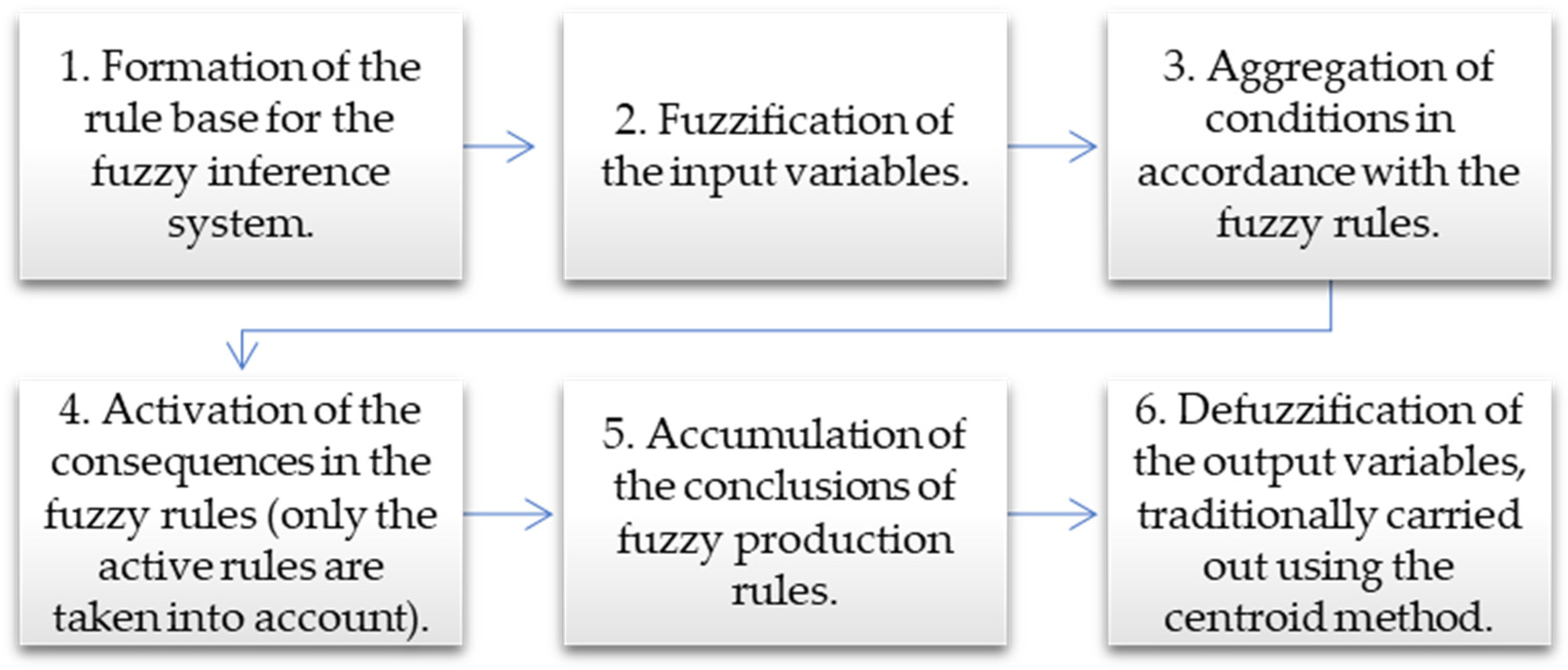
To calculate the indicator of “Bridge condition assessment” the Mamdani algorithm was employed—one of the earliest and most widely used algorithms in fuzzy inference systems [
27]. The Mamdani algorithm includes the steps shown in
Figure 2.
Thus, the application of fuzzy logic in the process of forming the “Bridge Condition Rating” is not only justified but also essential given the nature of the parameters under investigation. It provides a comprehensive representation of the system by accounting for multiple, often contradictory factors and allows one to avoid the simplifications inherent in traditional analytical methods.
2.3. Bayesian Optimization
To achieve high task performance, model parameters must be tuned during training. Training is performed by adjusting the model parameters to optimize a specific metric that reflects task performance [
28]. The choice of this metric depends on the type of task: for example, classification and regression require different quality measures. In addition, the function used as the training objective must possess suitable mathematical properties. One of the most important properties is differentiability, which enables the use of gradient-based optimization methods [
29].
Before training a neural network, it is necessary to define a set of model configuration settings, data-processing parameters, and training procedure settings—collectively known as hyperparameters. Hyperparameters strongly influence the convergence speed, training stability, and final model performance. Architectural hyperparameters define the structure of the network, including the number of layers, the number of neurons in each layer, the types of layers used (Dense, Dropout, Convolutional, LSTM, etc.), and the activation functions (ReLU, Tanh, ELU, Swish, and others). Another group consists of training parameters that govern the optimization process, such as the learning rate, choice of optimizer (SGD, Adam, RMSprop), batch size, and the number of epochs. Regularization parameters, which help prevent overfitting, form a separate category and include dropout rate, L1/L2 regularization (weight decay), and early stopping mechanisms [
30].
Hyperparameter optimization is one of the key stages in developing effective machine learning models, including neural networks. Regardless of the model architecture-whether a simple multilayer perceptron, a convolutional network, or a recurrent network-proper hyperparameter selection can significantly improve model performance, reduce overfitting risk, and accelerate convergence.
In the present study, hyperparameter optimization was performed using Bayesian Optimization, which is a powerful approach for the automated tuning of machine learning model hyperparameters, including neural networks. The sequence of steps involved in Bayesian Optimization is as follows [
16]:
Initial Trials. The algorithm randomly selects several combinations of hyperparameters and evaluates the objective function (for example, the validation error).
Modeling the Loss Function. A surrogate model is created to approximate the dependency between the error and the hyperparameters. This model attempts to predict where in the hyperparameter space better values may be located, taking into account both the expected mean performance and the uncertainty of the prediction.
Selecting a New Point. The algorithm uses an acquisition function to determine which new combination of hyperparameters should be evaluated next.
Iteration. A new point is selected, the loss function is evaluated, and the surrogate model is updated. This process continues until a predefined stopping criterion is met.
Bayesian Optimization was implemented using a Gaussian Process surrogate model combined with the Expected Improvement acquisition function.
2.4. Artificial Neural Network
Artificial Neural Network (ANN) models are trained using a prepared dataset and supervised learning algorithms [
31]. The dataset was divided into training, validation, and testing subsets in a 70/15/15 ratio at the inspection-record level. Because multiple inspection records may correspond to the same bridge at different time points, this split does not strictly prevent the presence of data from the same bridge in more than one subset. Consequently, the reported performance metrics may partially reflect within-bridge similarity. This aspect is acknowledged as a limitation of the present study. To evaluate the models, the following performance metrics were used: Mean Squared Error (MSE) and Mean Absolute Error (MAE), while Mean Absolute Percentage Error (MAPE) and the coefficient of determination (R
2) were applied for comparing the models with one another [
32].
Mean Squared Error (MSE) was used as the loss function:
where
represents the output predicted by the model and
denotes the actual target output.
The prediction accuracy was assessed using Mean Absolute Error (MAE):
The MAPE indicator is defined as follows:
The interpretation of MAPE is based on the accuracy level of the model. If MAPE does not exceed 10%, the model is considered highly accurate, as the errors are minimal and do not significantly influence the reliability of the prediction. When MAPE falls within the range of 10% to 20%, the accuracy is classified as good, indicating an acceptable degree of deviation between predicted and actual values. If MAPE exceeds 20% but remains below 50%, the model’s accuracy is regarded as sufficient—such results may be used for approximate estimations, although the error level becomes noticeable. However, if MAPE exceeds 50%, the accuracy of the model is considered inadequate, and such predictions require revising the model, adjusting parameters, or modifying the methodology, as the error level is too high for practical application [
33].
R
2 is a statistical indicator used to predict future outcomes or to test hypotheses:
where
is the mean output value estimated by the model.
The R
2 indicator reflects the degree of determination of the model, that is, the proportion of variance in the output variable that the model is able to explain. If the value of R
2 ≥ 0.75, this indicates strong determination, meaning the model fits the data well and has high predictive capability. In the range of 0.50 ≤ R
2 < 0.75, the level of determination is considered moderate: the model explains a substantial portion of the variance but still requires improvement. When 0.25 ≤ R
2 < 0.50, the determination is weak, indicating limited ability of the model to reproduce the dependencies within the data. If R
2 < 0.25, the determination is evaluated as very weak, and such a model is practically unable to explain the variation of the output variable [
34].
After completing all stages of testing and validation, the model is deployed in a production environment for further use in practical tasks, such as assessing the technical condition of new structures. Deployment includes integrating the model into existing software platforms or infrastructure management information systems. To ensure reliability and reproducibility of the results, mechanisms for automated processing of new input data are developed, as well as tools for real-time monitoring of prediction quality. Additionally, the model can be periodically updated using newly collected data, allowing the system to adapt to changing operational conditions and expand its functionality as more statistical information becomes available.
3. Results
3.1. The Calculation of the Indicator “Bridge Condition Assessment” Using Fuzzy Logic
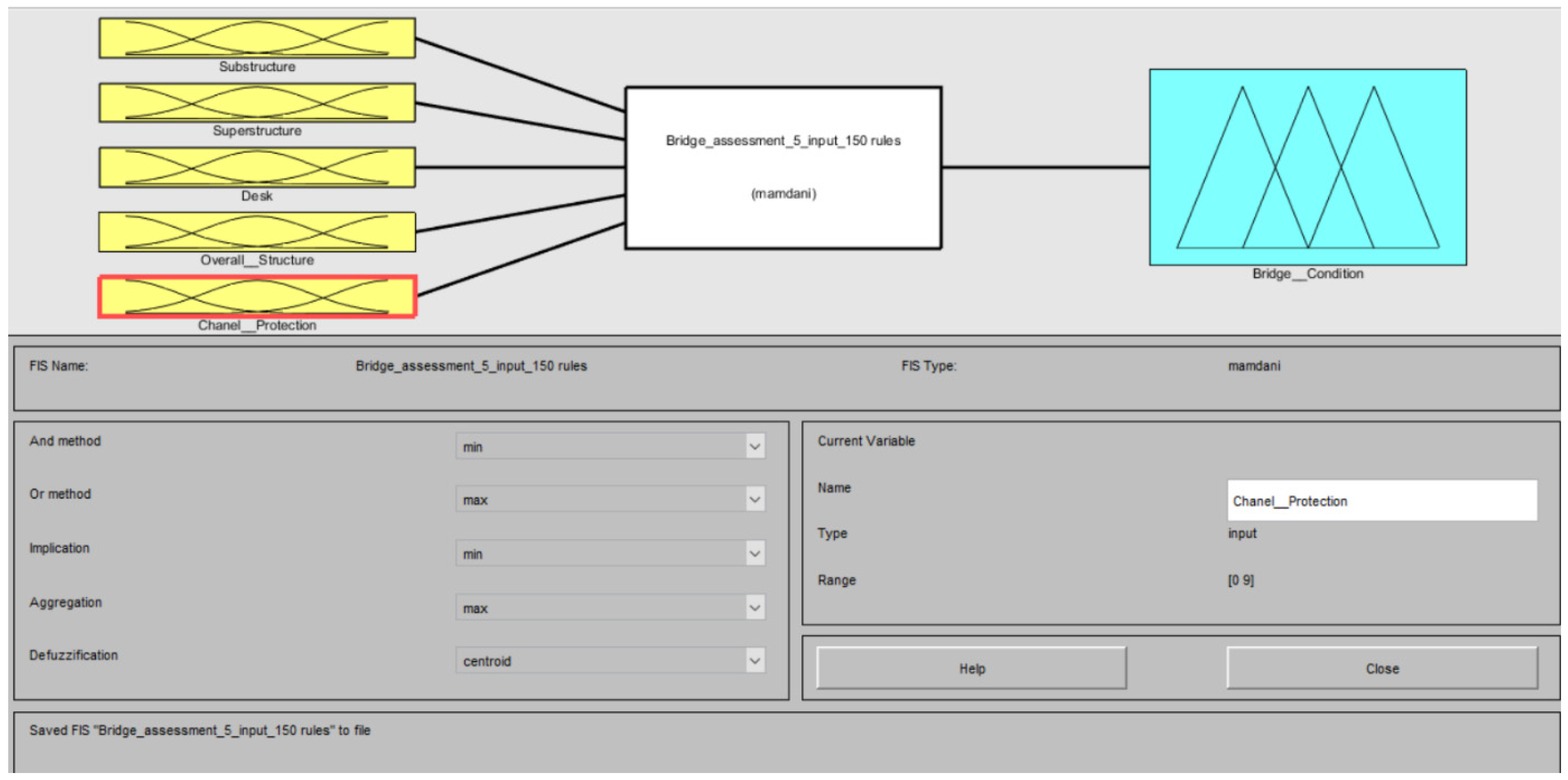
The Bridge Condition Assessment parameter was calculated using fuzzy logic tools implemented in the Fuzzy Logic Toolbox of the MATLAB R2014 software environment.
Figure 3 presents the five input parameters used for evaluating the condition of the bridge.
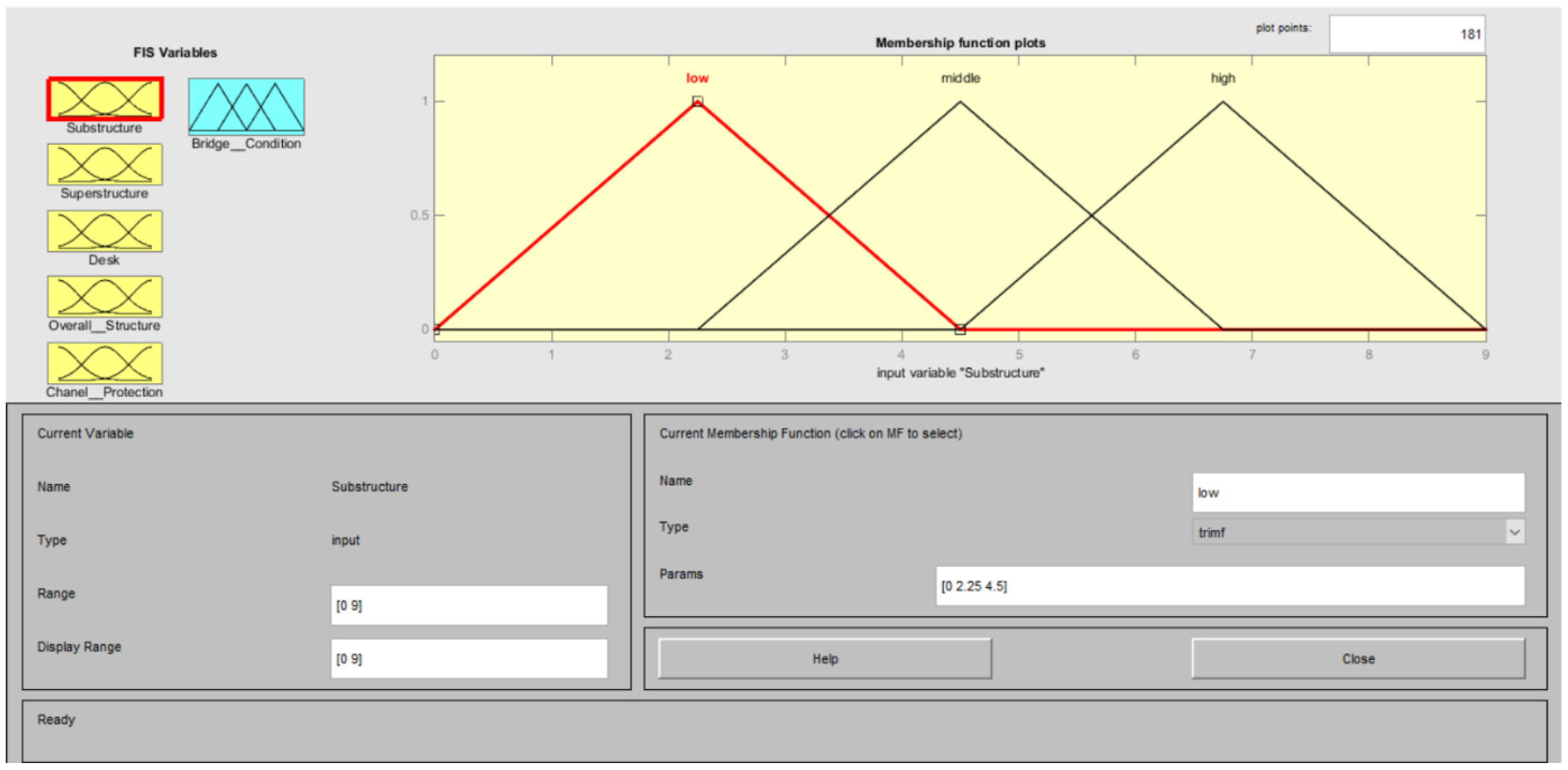
The description of the input parameters is illustrated using the Substructure variable as an example. Its range of values is [0, 9] and it is represented on the
X-axis in the membership function plot (
Figure 4). The threshold values used to define the membership functions of the structural state parameters were established based on standard bridge inspection rating practices and expert judgment. The adopted linguistic categories reflect commonly used condition ranges in reinforced concrete bridge inspections and were selected to ensure consistency with engineering interpretation of inspection scores. This approach allows expert knowledge to be formalized while maintaining compatibility with practical assessment standards.
The Substructure variable is described by three triangular membership functions of the trimf type, which are used to classify its numerical values into the linguistic terms “low”, “middle”, and “high”. The “low” membership function is defined by the parameters [0, 2.25, 4.5] and corresponds to low values of the variable. The “middle” function, with parameters [2.25, 4.5, 6.75], represents a medium condition level, while the “high” function, defined by the interval [4.5, 6.75, 9], reflects high values of the indicator. This configuration ensures smooth transitions between linguistic categories and enables an appropriate representation of uncertainty in the input data.
This means that Substructure values close to 2.25 are interpreted as a low condition, a value of 5 has zero membership in the “low” set, strong membership in the “middle” set, and weak membership in the “high” set, while a value of 8 has zero membership in both “low” and “middle” and strong membership in “high”.
During the fuzzy inference process, the system evaluates the value of each linguistic variable using fuzzy logic rules, transforming the input data into an output linguistic variable. Subsequently, the inference results are aggregated based on the defined rule base. The system processes multiple rules simultaneously and combines them into a final decision using the fuzzy inference mechanism. The fuzzy rule base was constructed using an expert-driven approach reflecting standard engineering reasoning applied during bridge inspections. The rules were formulated to prioritize the condition of load-bearing structural components, while functional and environmental parameters were treated as modifying factors. A reduced but representative subset of all possible rule combinations was selected to ensure sufficient coverage of practical scenarios while avoiding redundancy. This resulted in a total of 150 fuzzy rules (there are in
Supplementary Materials). The Mamdani inference method was used, which is based on the classical IF–THEN logical structure and employs the AND operator as the logical connective.
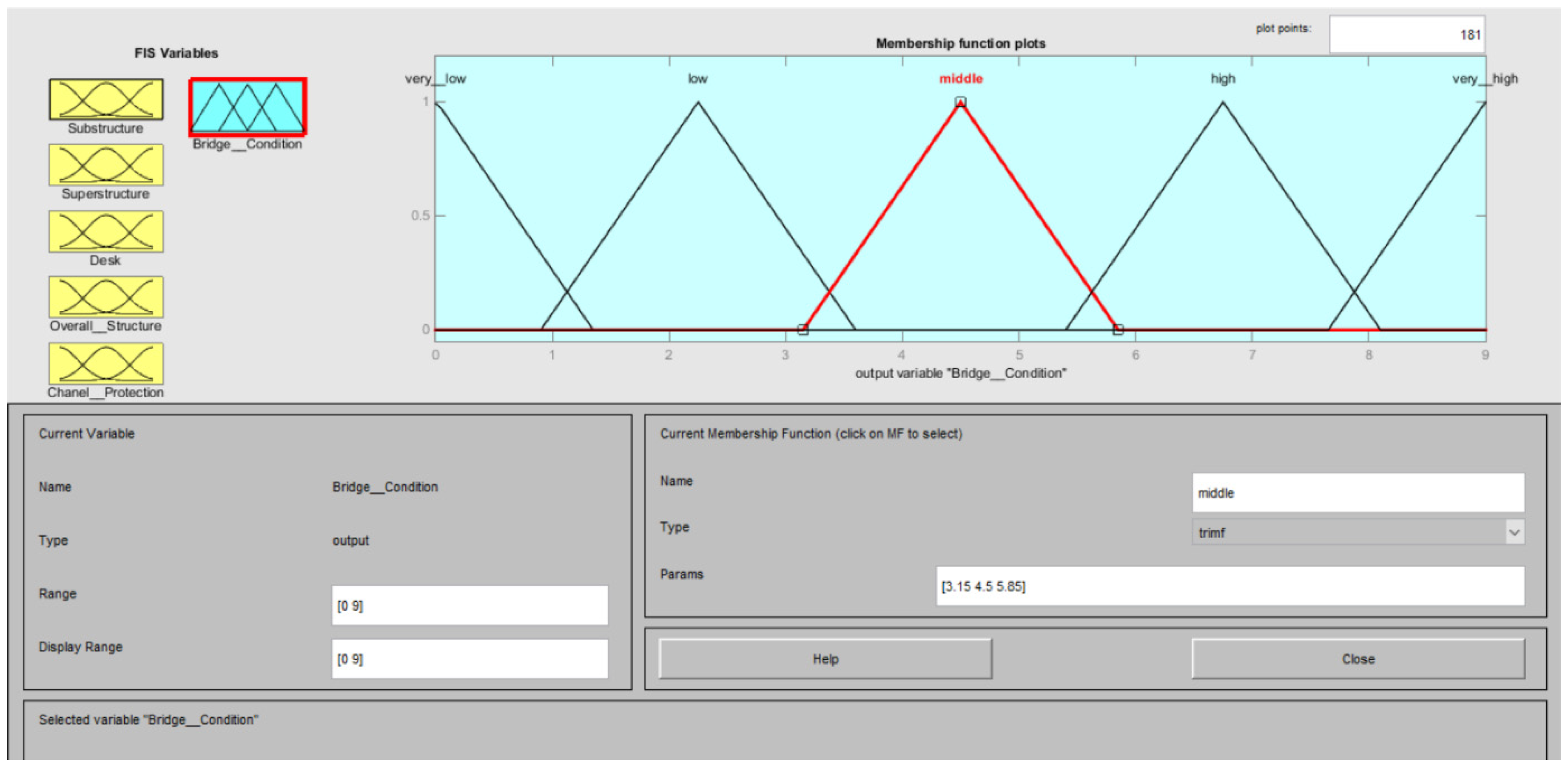
The Bridge condition assessment parameter is the sole output variable of the model and represents an integrated evaluation of the overall technical condition of the bridge, derived from the fuzzy inference results (
Figure 5). The output variable Bridge_Condition is described by a set of linguistic terms, each associated with a triangular membership function, providing smooth transitions between qualitative condition states. Specifically, the very_low term is defined by the parameters [−1.35, 0.0, 1.35], low by [0.9, 2.25, 3.6], middle by [3.15, 4.5, 5.85], high by [5.4, 6.75, 8.1], and very_high by [7.65, 9, 10.35]. The output membership functions were extended slightly beyond the nominal [0, 9] range to reduce boundary effects during aggregation and centroid defuzzification and to preserve smooth behavior at the extremes. The resulting defuzzified bridge condition assessment values are subsequently interpreted within the 0–9 rating scale. This configuration of membership functions allows for an adequate interpretation of the defuzzification results, ensuring a clear yet flexible classification of the bridge’s technical condition across a wide range of possible values.
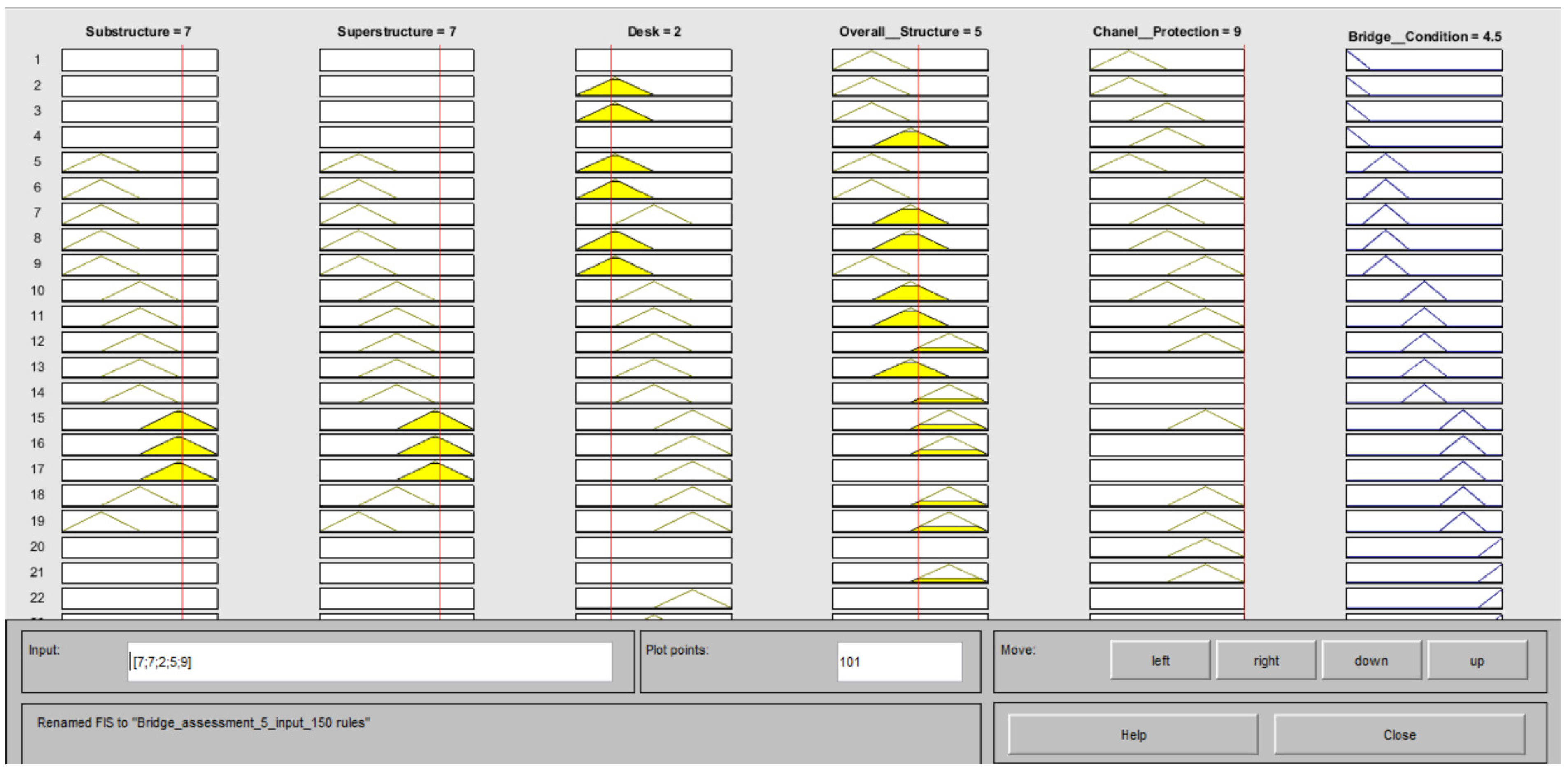
Figure 6 presents the results of applying the model to calculate the output variable Bridge_Condition.
The Substructure and Superstructure parameters have high values (7) and are therefore considered to be in good condition. The Deck has a value of 2, which is very low, indicating that the bridge roadway is in poor condition and exhibits serious deficiencies. The Overall Structure parameter equals 5, corresponding to a moderate condition. Channel Protection is rated at 9, indicating a very good level of channel protection. Despite the high values of most structural components, the poor condition of the Deck significantly influenced the overall bridge assessment. As a result, through the activation of the corresponding fuzzy rules, the system determined a Bridge Condition value of 4.5, which corresponds to a below-average or moderate overall condition.
3.2. The Optimization of Hyperparameters Using the Bayesian Optimization Algorithm
In accordance with the hyperparameter optimization approach presented in
Section 2, a Bayesian optimization algorithm was applied to optimize the artificial neural network. This approach enabled efficient exploration of the hyperparameter space and identification of the parameter combination that minimizes the model loss function. Based on the computational results, the optimal values of the key hyperparameters were determined, namely: an L2 regularization coefficient of 0.0069, a learning rate of 0.00078, and an optimal hidden-layer structure consisting of 64 neurons in the first hidden layer, 32 neurons in the second, and 16 neurons in the third hidden layer. This configuration provided the best balance between the model’s generalization capability and the stability of the training process, confirming the effectiveness of Bayesian optimization for tuning the ANN architecture.
3.3. Training, Validation, and Testing ANN Models
At the next stage of the study, six ANN model variants with identical architectures but different activation functions and optimization algorithms were developed. The activation functions included sigmoid, softmax, ReLU, and tanh, while SGD and ADAM were used as optimization algorithms.
Table 3 presents the results of the performance analysis of the ANN models based on a comparison of MAPE and R
2 metrics.
All models demonstrated high surrogate performance in reproducing the fuzzy-based Bridge Condition Assessment indicator, characterized by high R2 values and low MAPE errors. In addition to MAPE and R2, RMSE and MAE were used to provide a more robust evaluation of model performance, particularly for lower condition levels where relative errors may be inflated. The class-wise error analysis confirms that higher deviations for Condition 1 are primarily associated with its limited representation in the dataset. Given the ordinal nature of the condition scale, the reported metrics are interpreted as indicative of relative approximation accuracy rather than strict point-wise prediction performance.
The analysis indicates that the use of the ADAM optimizer resulted in higher efficiency compared to SGD. In particular, Model 3 achieved the best overall performance, exhibiting the lowest MAPE value and the highest coefficient of determination (R2). In this model, the ReLU activation function was applied in the hidden layers, while ADAM was used as the optimizer. The best results were recorded at the 100th training epoch, with MAPE = 0.2% and R2 = 0.982.
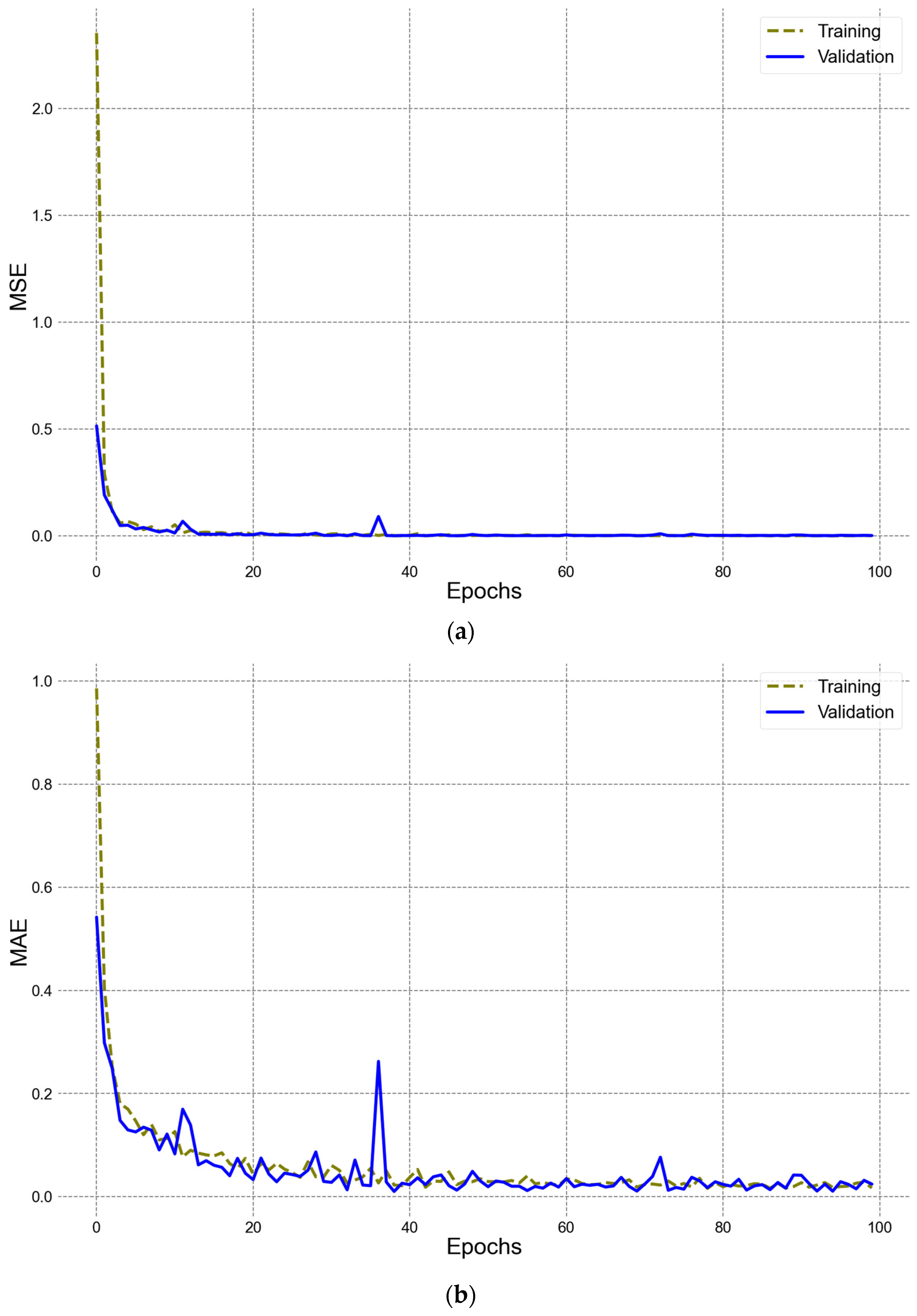
Figure 7 presents a comparison of the mean squared error (MSE) and mean absolute error (MAE) for the training and validation datasets of the model.
Figure 7a illustrates the distribution of the mean squared error, where the maximum values reached 5.070 for the training dataset and 0.777 for the validation dataset, while the minimum values were 0.002 and 0.001, respectively.
Figure 7b presents a comparison of the mean absolute error: the maximum values for the training and validation datasets were 1.532 and 0.650, respectively, whereas the minimum values were 0.031 and 0.028.
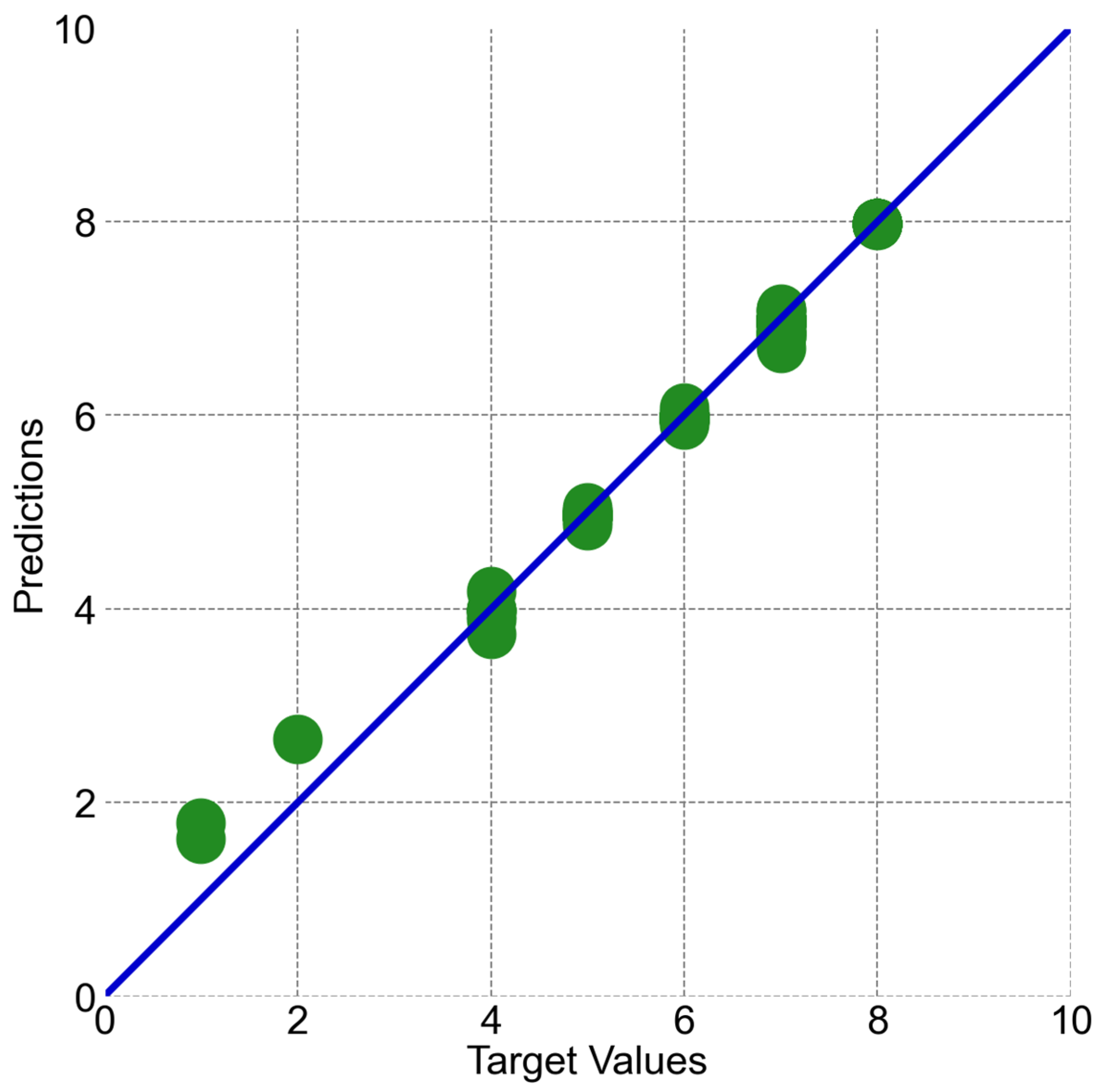
Figure 8 shows the distribution of the predicted and target values for Model 3.
The figure shows that, across the entire range of target condition assessment values, the model reproduces the fuzzy-based Bridge Condition Assessment values with high accuracy, as the vast majority of the ANN outputs closely follow the regression line.
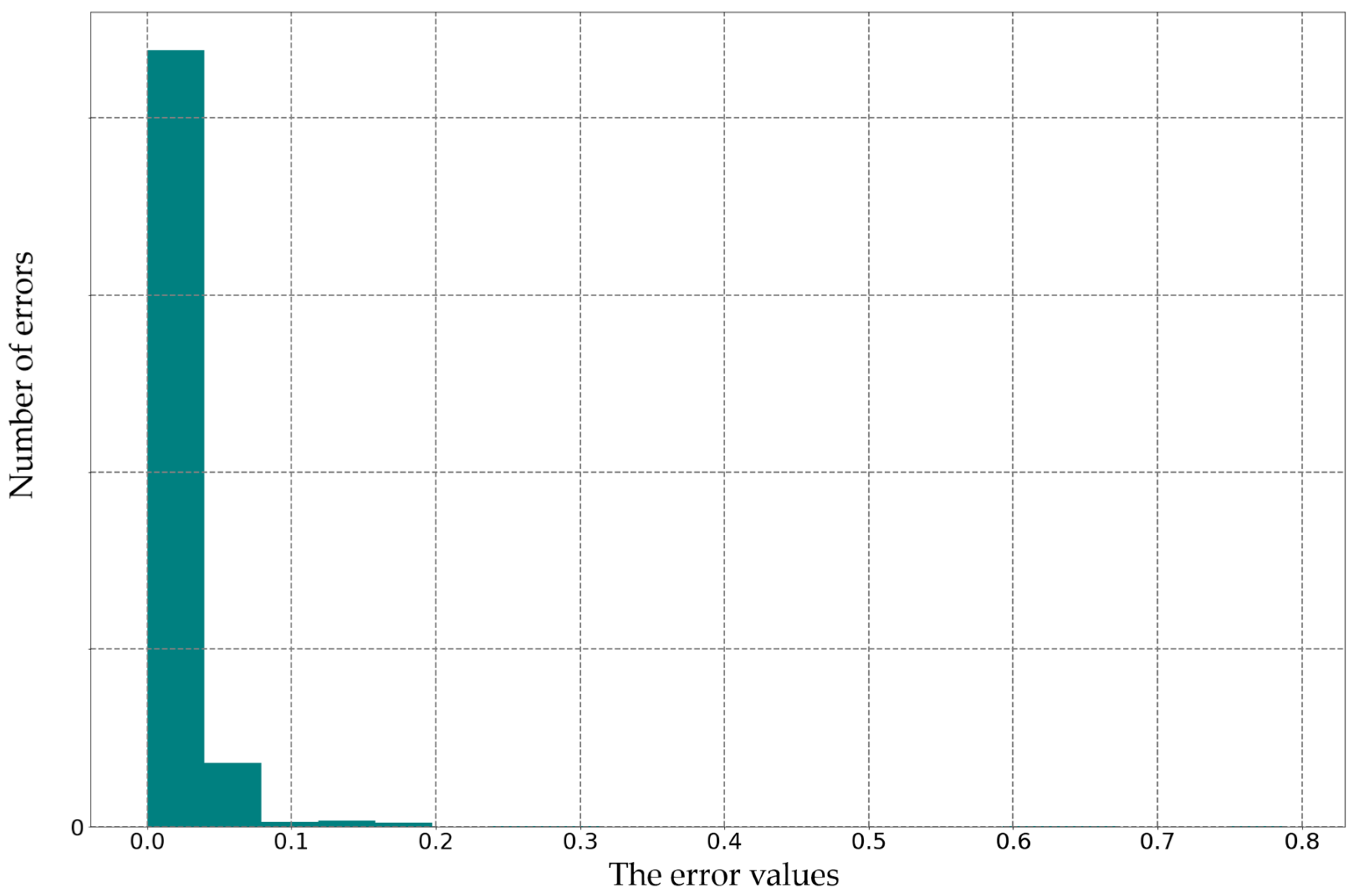
The histogram shown in
Figure 9 illustrates the error distribution for Model 3.
The majority of error values fall within the range from 0.0 to 0.025, indicating a high level of model accuracy in most instances. A small number of isolated errors are observed in the range from 0.025 to 0.1, which may indicate the presence of outliers or situations in which the model failed to generalize properly. The distribution is slightly right-skewed, which is characteristic of well-trained models, where most predictions are close to the true values, with only occasional deviations.
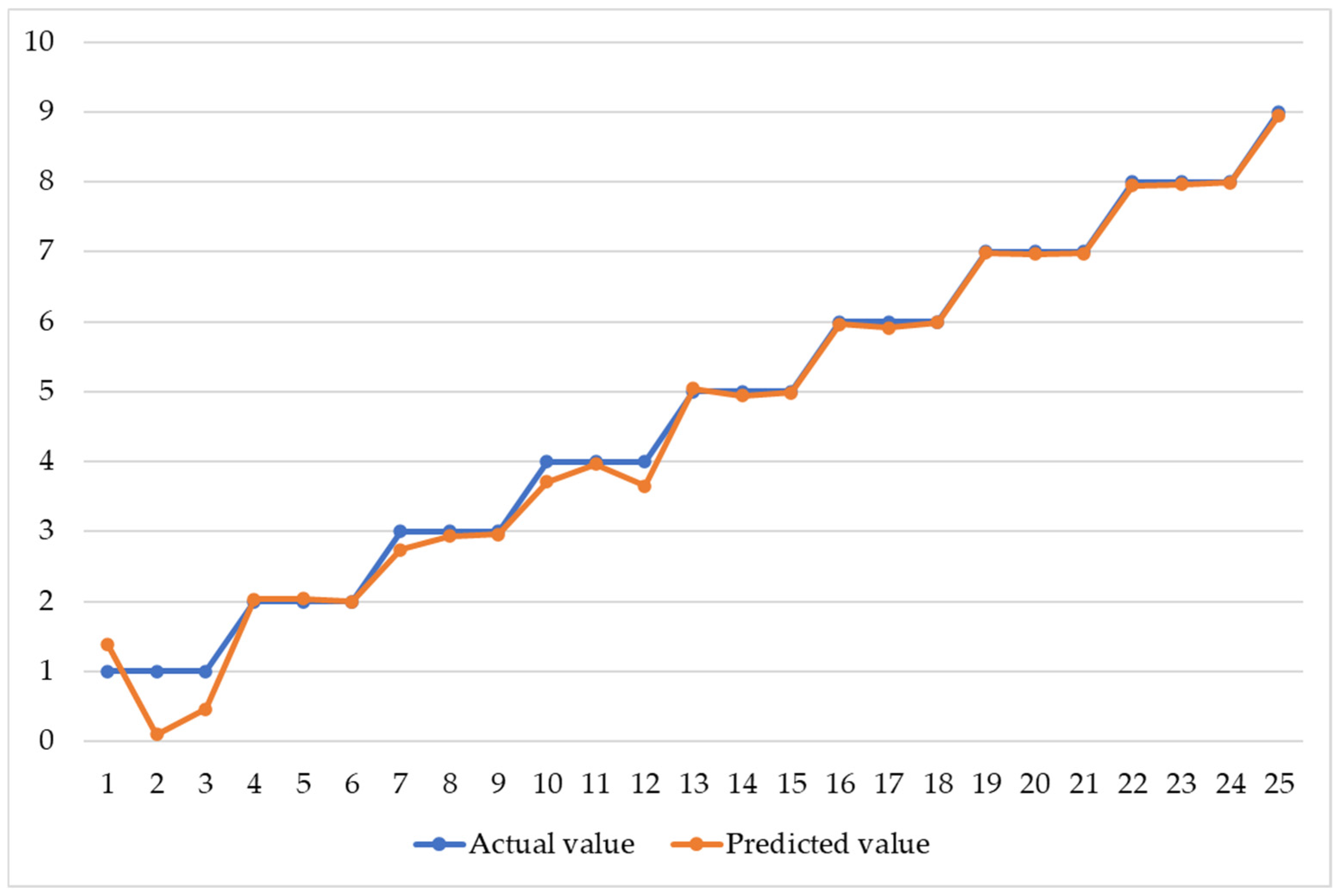
The final stage of the study focuses on evaluating how the trained model predicts the Bridge Condition Assessment indicator and on comparing the predicted values with the actual ones. The dataset used for this evaluation consisted of 25 records, including two samples for each assessment level from 1 to 8 and one sample for level 9 (
Figure 10).
The analysis of the obtained results allows the following conclusions to be drawn:
- a.
Condition 1. The predicted values range from 0.1037 to 1.383, and the deviations are high, amounting to 38.3%, 53.71%, and 89.63%. The model demonstrates low accuracy in assessing objects classified as Condition 1. This is likely due to an insufficient number of such cases in the training dataset or because their specific characteristics are poorly represented by the input features.
- b.
Condition 2. The predicted values are very close to each other (2.033, 2.041, and 1.9992). The deviations are minimal and fall within the range of 0.04% to 2.05%. The model predicts this class very accurately, indicating that the data corresponding to Condition 2 are well represented and clearly described.
- c.
Condition 3. The deviations are small and lie within the range of 1.25% to 8.74%. Overall, the prediction accuracy is high, although one case (8.74%) may indicate some variability in the data structure.
- d.
Condition 4. The deviations range from 0.91% to 7.12% and 8.74%. The model demonstrates a moderate level of accuracy, with two less precise predictions. This may suggest that the data for this class are somewhat mixed or not clearly separable in the feature space.
- e.
Condition ranges 5–9. The deviations are predominantly below 1–2%, and in some cases even less than 0.1%. For Conditions 5–9, the model performs very accurately and consistently. This likely indicates that these classes are well represented in the training dataset or are clearly separated in the input feature space.
A general conclusion can be drawn that the model demonstrates high prediction accuracy for most condition classes, particularly in the range from 2 to 9. Condition 1 is the most challenging for the model and is characterized by significant errors, which may be caused by data imbalance, insufficient representation of this class in the dataset, or limited discriminative power of the features for this condition.
4. Discussion and Conclusions
The results obtained in this study confirm that the combined use of fuzzy logic and artificial neural networks constitutes an effective and robust framework for assessing the technical condition of bridge structures under conditions of uncertainty and incomplete information. The fuzzy logic-based model successfully integrates five key inspection indicators into a single comprehensive Bridge Condition Assessment index, allowing expert knowledge and linguistic reasoning to be formally incorporated into the decision-making process. This is particularly important for bridge management tasks, where inspection data are often subjective, heterogeneous, and influenced by the individual inspectors’ experience.
The fuzzy-based Bridge Condition Assessment indicator is conceptually consistent with conventional engineering condition rating practices, as it aggregates component-level inspection scores into an integrated measure reflecting expert judgment. Similar to standard inspection procedures, the proposed indicator emphasizes the condition of load-bearing components while accounting for functional and environmental factors. The use of fuzzy logic allows expert knowledge and linguistic reasoning commonly applied by inspectors to be formalized and combined in a transparent manner, providing an interpretable link between individual inspection parameters and the resulting overall condition assessment.
It should be emphasized that, in the proposed framework, the artificial neural network is trained to approximate the Bridge Condition Assessment indicator generated by the fuzzy inference system using the same set of input variables. Consequently, the ANN functions as a surrogate model of the fuzzy system rather than as an independent predictor of an external ground-truth bridge condition. The very low prediction errors obtained in this study therefore primarily reflect the ANN’s ability to accurately emulate the non-linear fuzzy mapping. This surrogate formulation is intentional and aimed at improving computational efficiency, scalability, and practical integration of the fuzzy-based assessment into automated decision-support systems.
The obtained results are consistent with earlier research showing that fuzzy logic is particularly suitable for bridge condition assessment because it can explicitly represent linguistic ratings and uncertainty inherent to visual inspections. For instance, Sasmal and Ramanjaneyulu [
35] proposed a fuzzy logic-based procedure for condition rating of existing reinforced concrete bridges, emphasizing the ability of fuzzy inference to translate subjective inspection information into a systematic quantitative rating, which aligns with the rationale of using a Mamdani-type FIS in the present study. Similarly, Tarighat et al. [
7] demonstrated that fuzzy inference can be effectively used for bridge deck condition rating and that the method supports consistent decision-making when inspection inputs are uncertain—an effect also observed in our example where a single weak component (Deck) noticeably reduced the overall index despite otherwise high component ratings. Beyond component-level rating, Kawamura et al. [
36] developed a condition-state evaluation framework for reinforced concrete bridges grounded in visual inspection and technical specifications, highlighting the practical need to combine heterogeneous indicators into an interpretable overall assessment; the present work follows a comparable objective but implements integration via fuzzy rules and defuzzification for smoother transitions between condition states.
Recent publications [
37] continue this direction by employing fuzzy multi-criteria evaluation schemes for bridge condition grading under uncertainty, indicating sustained research interest in fuzzy frameworks for infrastructure assessment.
In addition, ANN-based prediction of bridge component ratings (especially deck-related indices) using large inspection databases has been explored to support maintenance planning; this literature context strengthens the relevance of our ANN results demonstrating very high R
2 and low MAPE for most classes [
38]. Finally, the presented study is also coherent with recent ANN-based bridge-component quantification research in the context of infrastructure condition assessment, reinforcing the feasibility of deploying trained models for consistent and repeatable decision-making in practice [
39].
The fuzzy inference system demonstrated high sensitivity to critical structural components, as illustrated by the example case in which a poor deck condition significantly reduced the overall bridge rating despite favorable values of the substructure, superstructure, and channel protection. This behavior confirms the adequacy of the rule base and the effectiveness of the Mamdani inference mechanism in capturing non-linear interactions between structural elements. The smooth transitions between linguistic terms ensured by triangular membership functions further contribute to realistic modeling of gradual degradation processes typical for bridge structures.
The integration of Bayesian optimization into the ANN training process proved to be a key factor in achieving accurate approximation of the fuzzy-based indicator. The optimized hyperparameter configuration enabled the model to balance generalization capability and training stability, which is reflected in the very low MAPE values and high coefficients of determination obtained for most ANN variants. In particular, the model employing ReLU activation functions and the ADAM optimizer achieved superior performance, confirming findings commonly reported in the literature regarding the efficiency of adaptive optimization algorithms for regression tasks.
The detailed analysis of prediction errors revealed that the model performs consistently well for bridge condition classes ranging from 2 to 9, with deviations predominantly below 1–2%. This indicates that the proposed approach is highly reliable for assessing bridges in fair to good condition, which constitute the majority of operational bridge stock. However, the noticeably higher prediction errors observed for Condition 1 highlight an important limitation of the model. These errors are most likely attributable to data imbalance and insufficient representation of severely deteriorated bridges in the training dataset. This finding emphasizes the importance of balanced datasets and suggests that future studies should focus on enriching the dataset with additional examples of critically damaged structures or introducing class-weighting strategies during model training.
The reduced assessment accuracy observed for bridges in poor condition is primarily associated with structural and data-related factors. Bridges classified in the lowest condition levels are typically older reinforced concrete structures with long service durations and cumulative deterioration mechanisms, such as corrosion, fatigue, and material degradation. In addition, such bridges are underrepresented in inspection datasets due to maintenance interventions or restrictions, which increases uncertainty in both fuzzy aggregation and surrogate modeling. Consequently, the proposed framework is most reliable for routine network-level assessment, while detailed evaluation of severely deteriorated bridges may require complementary inspection or analysis methods.
The proposed framework has not yet been validated against independent agencies, regions, or external decision variables, which limits direct generalization of the results and represents an important direction for future research.
In summary, the hybrid fuzzy logic and ANN framework presented in this study offers a scientifically sound and practically applicable solution for bridge condition assessment. Future research should focus on expanding the dataset, improving the representation of extreme condition classes, and integrating real-time monitoring data to further enhance the robustness and applicability of the proposed approach.



 ,
,