1. Introduction
Cellulose nanomaterials (CNMs) are emerging advanced biomaterials composed of nanoscale cellulose fibers derived from renewable resources. Their low density, high mechanical strength, biodegradability, large surface area, and versatile functionalization make them attractive for diverse innovative applications [
1]. However, despite substantial scientific progress, industrial deployment remains limited because standardized methodologies for evaluating CNM quality are not yet sufficiently established to support reliable market entry.
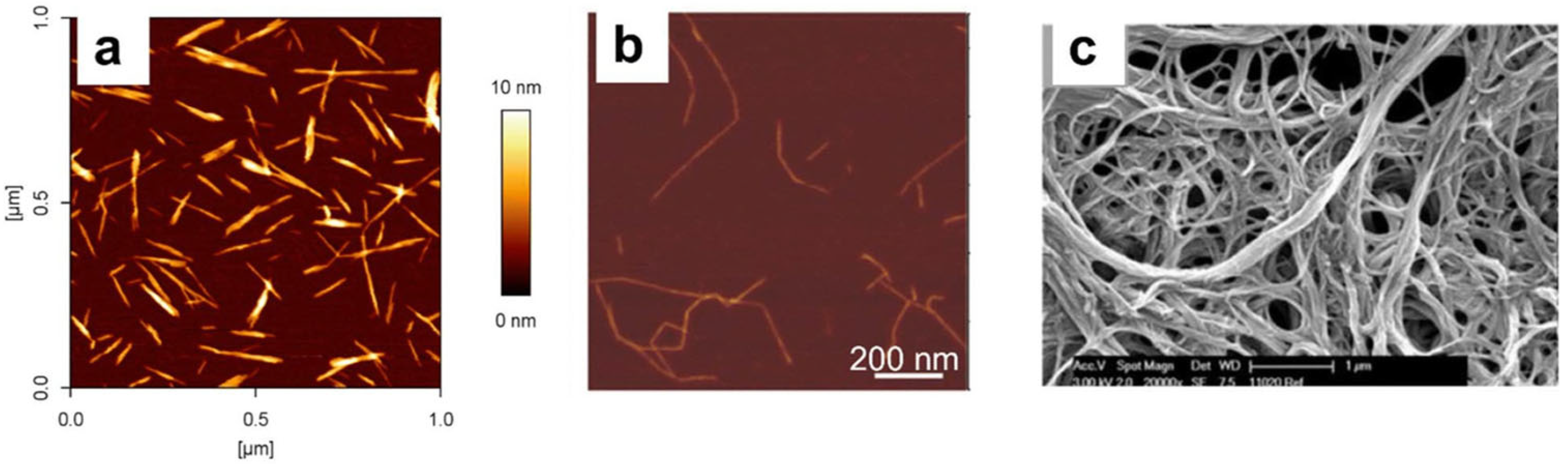
CNMs occur in three principal morphological types—cellulose nanocrystals (CNCs) [
2], individualized cellulose nanofibrils (iCNFs) [
3], and entangled cellulose nanofibrils (eCNFs) [
1]—each exhibiting distinct structural features as shown in
Figure 1 [
4]. These variations complicate particle size and shape characterization [
5] and hinder the development of reproducible quality metrics, even with advances in CNM characterization research [
6]. As industrial interest grows, reliable and comparable evaluation becomes indispensable.
This paper examines CNM standardization through four classes of ISO standards: terminology, test method, testing, and specification standards. Terminology standards provide unified technical definitions for CNMs using domain-specific vocabulary [
7], supported by general terminology standards [
8]. Several test method standards specify validated measurement procedures [
9,
10,
11,
12,
13,
14]. However, testing standards remain at an early stage for CNCs [
15] and iCNFs [
16], and none exist for eCNFs—reflecting both measurement challenges and still-emerging industrial applications. Moreover, CNMs are not yet suited for specification standards, which define fixed acceptance ranges for mature materials, because their structure–property relationships and intended application domains are not yet sufficiently established.
Accordingly, CNM quality evaluation must advance through testing standards, which specify application-relevant characteristics and associated measurement methods without prescribing acceptance thresholds. These standards effectively bridge scientific research results with industrial needs by enabling transparent and reproducible evaluation during early-stage commercialization.
To address these needs, this study introduces two original contributions. First, it presents a structured standardization framework that clarifies how terminology, test method, testing, and eventual specification standards evolve in tandem with the industrialization of CNMs and collectively support reliable quality evaluation. Second, it proposes scenario-based methodologies that offer operational, project-level guidance for developing coherent and reproducible testing standards—an aspect not addressed in prior CNM standardization studies.
This paper is therefore positioned as a conceptual and methodological contribution, rather than an experimental investigation, and is intended for researchers, engineers and standardization experts involved in the development and deployment of CNMs and other emerging advanced materials. Together, these contributions move beyond earlier work focused mainly on material characterization by presenting a system-level, industry-oriented pathway that supports early-stage commercialization and enables an orderly transition toward mature industrial deployment.
2. Structured Standardization Frameworks for CNM Industrialization
Standardization provides a foundational basis for the industrial deployment of cellulose nanomaterials (CNMs). This chapter outlines a structured, stepwise framework in which terminology standards, test method standards, testing standards, and specification standards are developed in a forward-moving progression, with a central emphasis on the role of testing standards.
By contrasting testing standards and specification standards, this chapter clarifies their sequential and complementary functions within this linear progression. Testing standards establish reliable procedures for evaluating CNM quality, enabling early access to market and helping bridge the gap between research outcomes and industrial use. Specification standards, developed at a later stage, define required performance levels and quality thresholds, thereby supporting consistent material quality and facilitating broader and more stable market expansion.
As emerging materials advance technologically and achieve wider industrial adoption, the types of standards required also advance in parallel with these developments. This chapter examines this sequential transition and positions CNM standards along this linear pathway toward full industrial deployment.
2.1. Production Chain
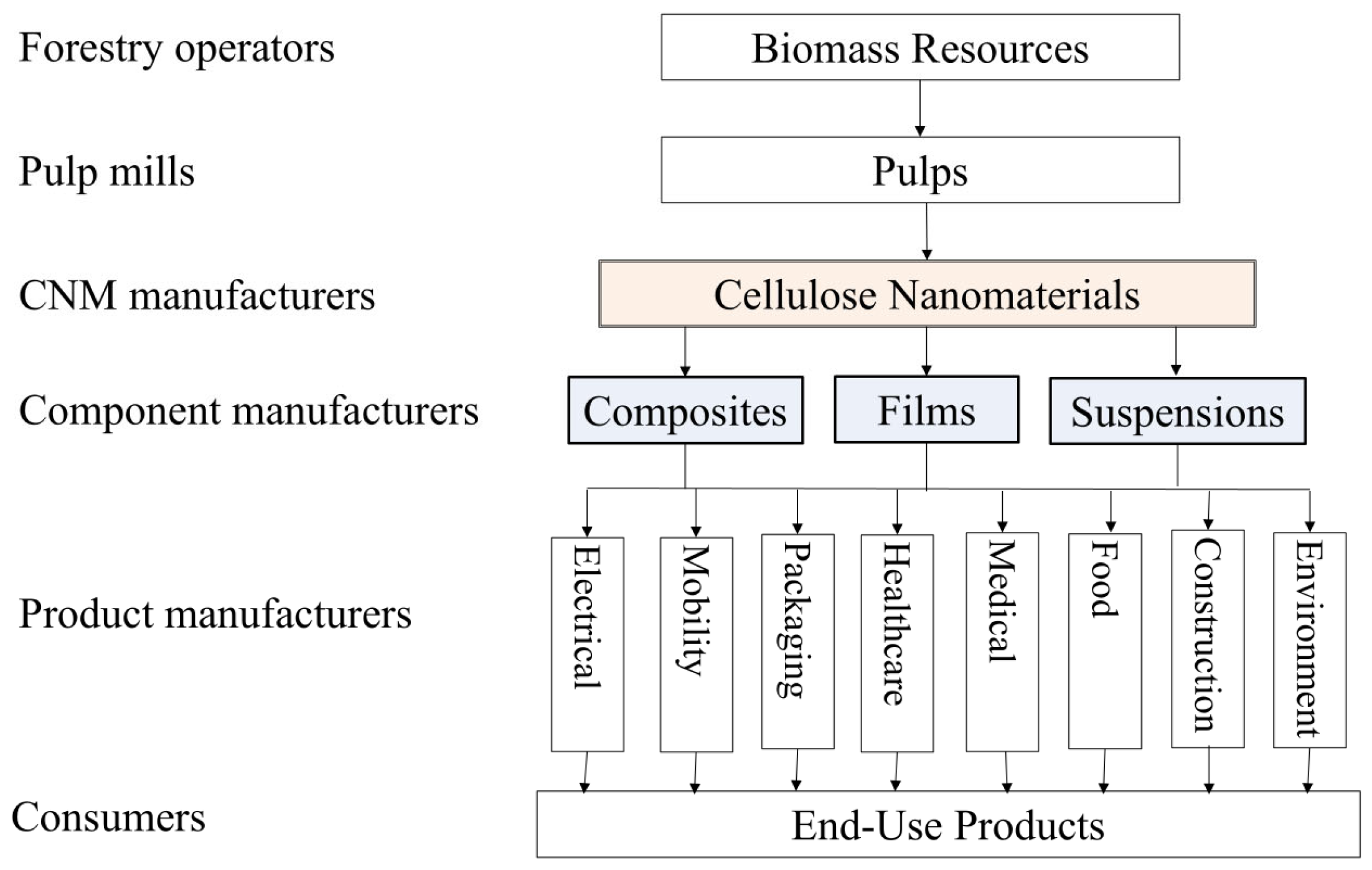
This section provides an overview of the production chain of CNMs, extending from biomass resources to CNM-enabled end-use products. While standardization can support reliable and efficient transactions at every interface within this chain, the primary focus of this paper is on the interactions between CNM manufacturers and component manufacturers, where material characteristics and measurement practices have the most direct impact on downstream processing and performance evaluation.
Figure 2 summarizes the major stakeholders and material flows in the CNM production chain. Cellulose-rich biomass resources—such as wood and agricultural residues—are first processed into pulps. Through mechanical and chemical treatments, these pulps are subsequently converted into cellulose nanomaterials with nanoscale structures and functional properties. At this stage, CNM manufacturers play a central role in establishing material characteristics, validating measurement methods, and supplying CNMs to downstream industries.
The CNMs produced by these manufacturers are then incorporated into intermediate components—including composites, films, and suspensions—by component manufacturers who rely on consistent material descriptions and reproducible measurement methods to ensure predictable performance in their products. These components support a broad range of application sectors, such as electronics, mobility, packaging, healthcare, food, construction, and environmental technologies.
In this context, standardization is essential for enabling transparent communication, compatible measurement practices, and reliable material evaluation between CNM manufacturers and downstream industries. The structured standardization framework described in the subsequent sections is therefore centered on this critical interface, where testing standards and specification standards most directly influence industrial deployment.
2.2. Process of Standards Development
Standardization ensures that emerging materials such as CNMs can be reliably evaluated and effectively used, enabling early-stage market access and industrial deployment.
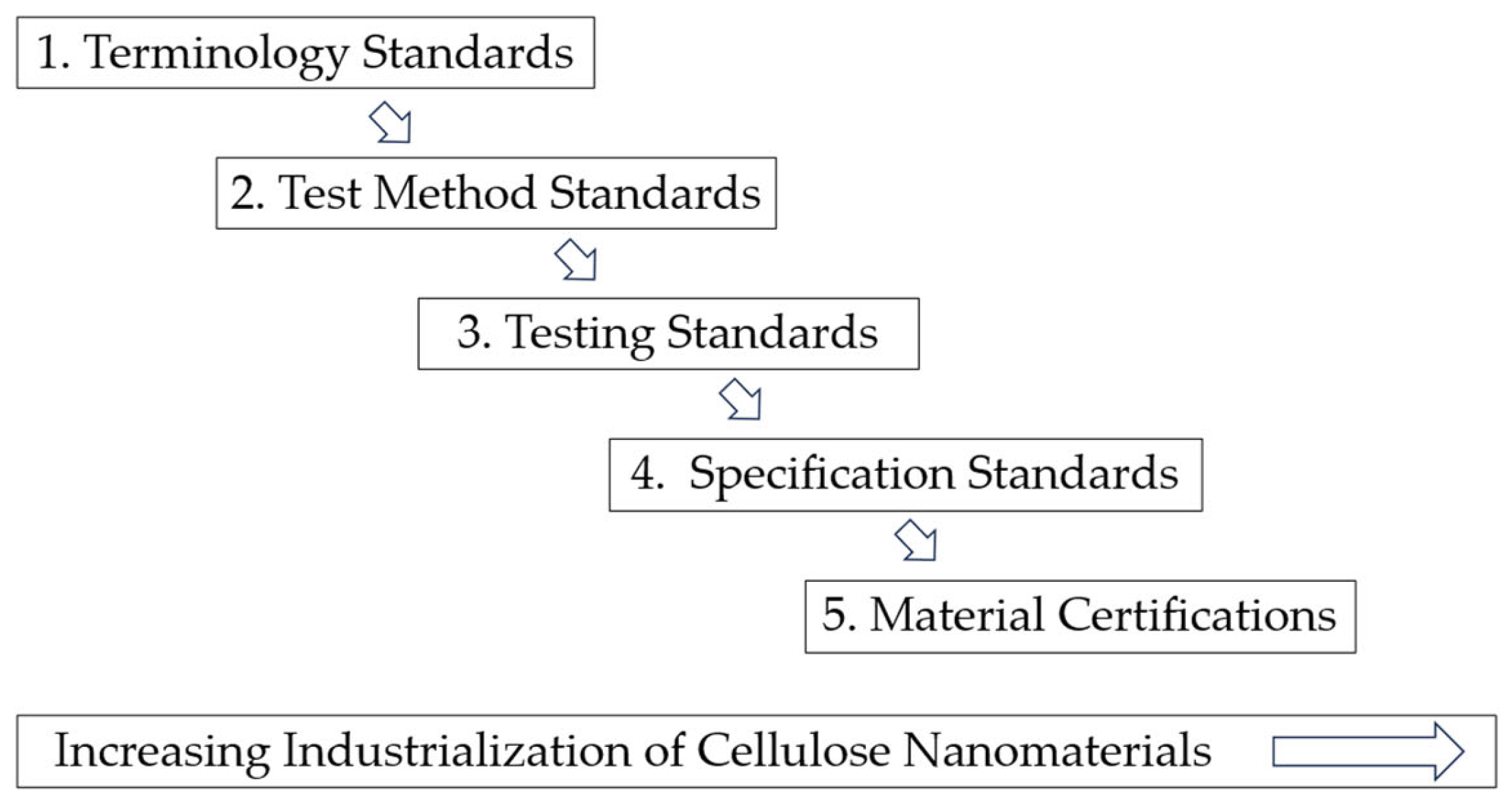
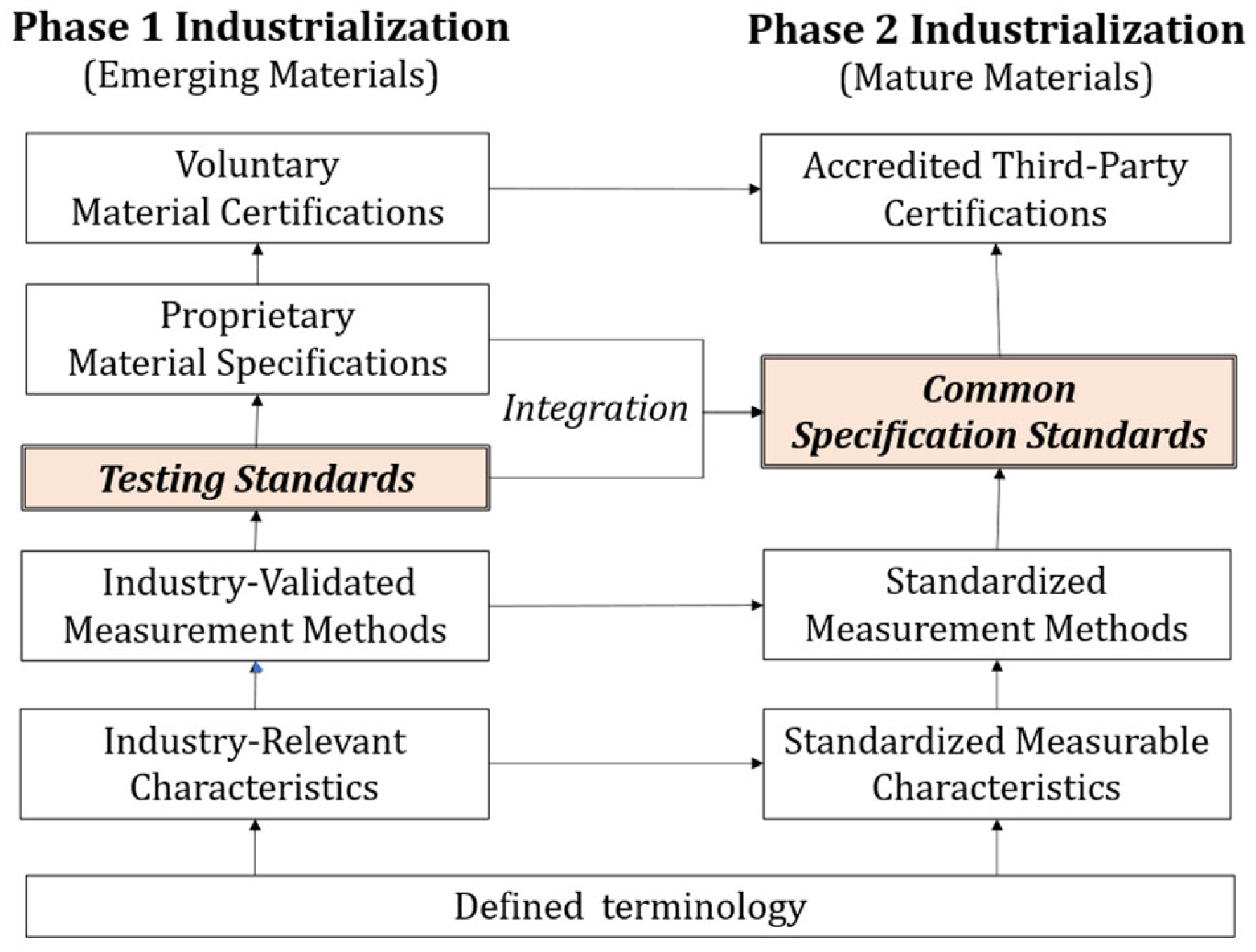
Figure 3 illustrates a stepwise progression from terminology and test method standards to testing standards, specification standards, and ultimately, material certifications.
In this paper, the following types of standards are defined to clarify their distinct roles in the standardization process:
A terminology standard specifies an agreed technical language in the CNM field. It provides a common conceptual foundation and supports communication among stakeholders, as well as the development of all subsequent standards.
A test method standard specifies, in short, how to measure. It is an agreed document that defines a measurement procedure designed to determine particular characteristics of CNMs under defined conditions. Its primary role is to ensure consistency and technical validity of measurement.
A testing standard specifies, in short, what to measure and which method to apply. It is an agreed document that specifies which characteristics of CNMs are to be measured and identifies the applicable measurement methods and procedures. It enables the evaluation and comparison of CNM quality for intended applications, but does not define acceptance criteria for characteristic values.
A specification standard defines acceptable ranges or limits for characteristic values of CNMs for intended applications, based on results obtained using the corresponding testing standard.
Finally, a material certification attests conformity of CNMs with the specified requirements defined in a specification standard, thereby supporting the reliable supply of quality-assured CNM products.
The structure shown in
Figure 3 illustrates how the systematic development of terminology standards, test method standards, testing standards, and specification standards forms a logical and sequential pathway toward material certification, thereby facilitating the industrial deployment of CNMs.
2.3. Testing Standards Versus Specification Standards
Testing standards and specification standards serve distinct yet complementary roles in supporting the industrial deployment of cellulose nanomaterials (CNMs). As summarized in
Table 1, a testing standard specifies the application-relevant measurable characteristics to be evaluated together with the associated measurement and evaluation procedures, without prescribing acceptance criteria. Such standards are well suited to emerging materials in early-stage competitive markets, where measurement–performance relationships and intended application domains are still evolving and where material morphology and processing behavior often display substantial variability. By enabling transparent, reproducible, and comparable evaluation of CNM quality, testing standards help build confidence among stakeholders and facilitate early-stage market access.
In contrast, a specification standard defines formal requirements—that is, the acceptable ranges of characteristics and the associated conditions for demonstrating compliance—for materials intended for commercial use in mature industrial markets. These standards play a central role in ensuring reliable supply, supporting quality assurance, and enabling accredited certifications and fair commercial transactions. For CNMs, however, introducing specification standards prematurely would risk setting requirements without sufficient technical justification when the linkages between material structure, processing behavior, and end-use performance are still under development.
Testing standards therefore provide the essential common basis for evaluating material characteristics during the transition from characterization research to specification setting. They offer a harmonized platform for quality assessment, ensuring that evaluation practices are consistent across manufacturers and users. Because testing standards do not define acceptance criteria, individual manufacturers remain free to develop their own proprietary or application-specific specifications, while relying on shared and comparable measurement procedures. In this way, testing standards enable consistent communication in procurement and technical discussions without constraining manufacturers’ ability to highlight the performance characteristics of their materials.
2.4. Role of Testing Standards in Market Transactions
Testing standards play a critical role in ensuring transparent, reliable, and efficient market transactions, particularly for emerging materials that remain in the early stages of industrialization. By providing a shared technical foundation for manufacturers, users, and regulators, they foster trust, reduce information asymmetry, and support early-stage market access and growth.
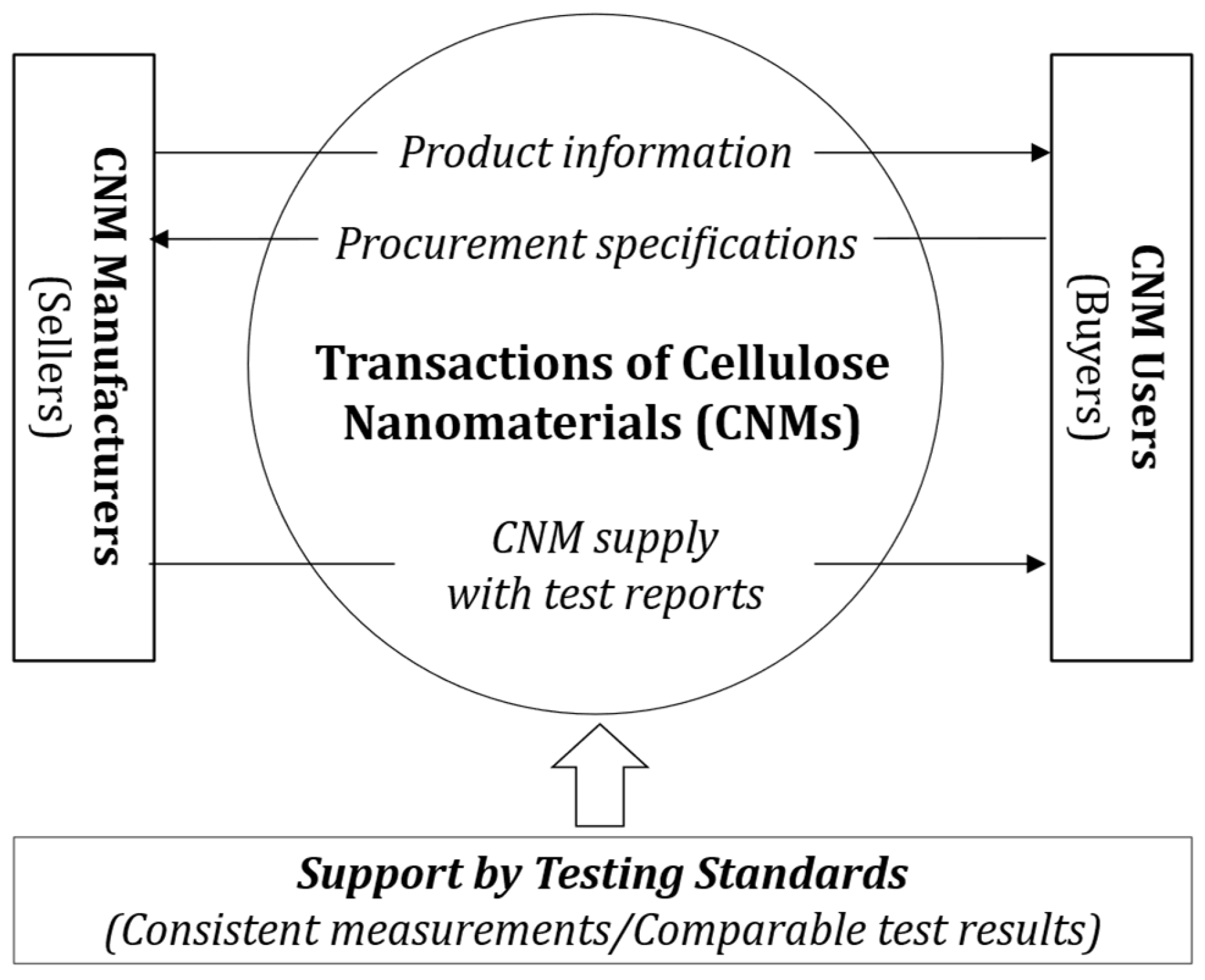
Figure 4 illustrates the central role of testing standards in transactions involving CNMs. In practice, users review product information supplied by manufacturers or develop procurement specifications that reflect their intended processing routes or performance requirements. Once a supply arrangement is agreed upon, manufacturers deliver materials accompanied by test reports.
In this context, testing standards ensure that test results are generated, interpreted, and communicated in a consistent manner across manufacturers and users. Such consistency enhances transparency and comparability in market exchanges, thereby supporting fair transactions, informed decision-making, and reliable material supply throughout the production and supply chains of CNMs.
2.5. Integrated Framework for CNM Standardization Toward Industrialization
This section presents an integrated view of the progression of CNM standardization toward industrialization, which constitutes the first original contribution of this study. The framework provides a system-level architecture linking terminology, test method, testing, and specification standards to the staged industrialization of CNMs, while the development scenarios introduced in
Section 3 function as project-level methodologies for testing-standard development, thereby operationalizing the framework and guiding the formulation of individual testing standards in practice.
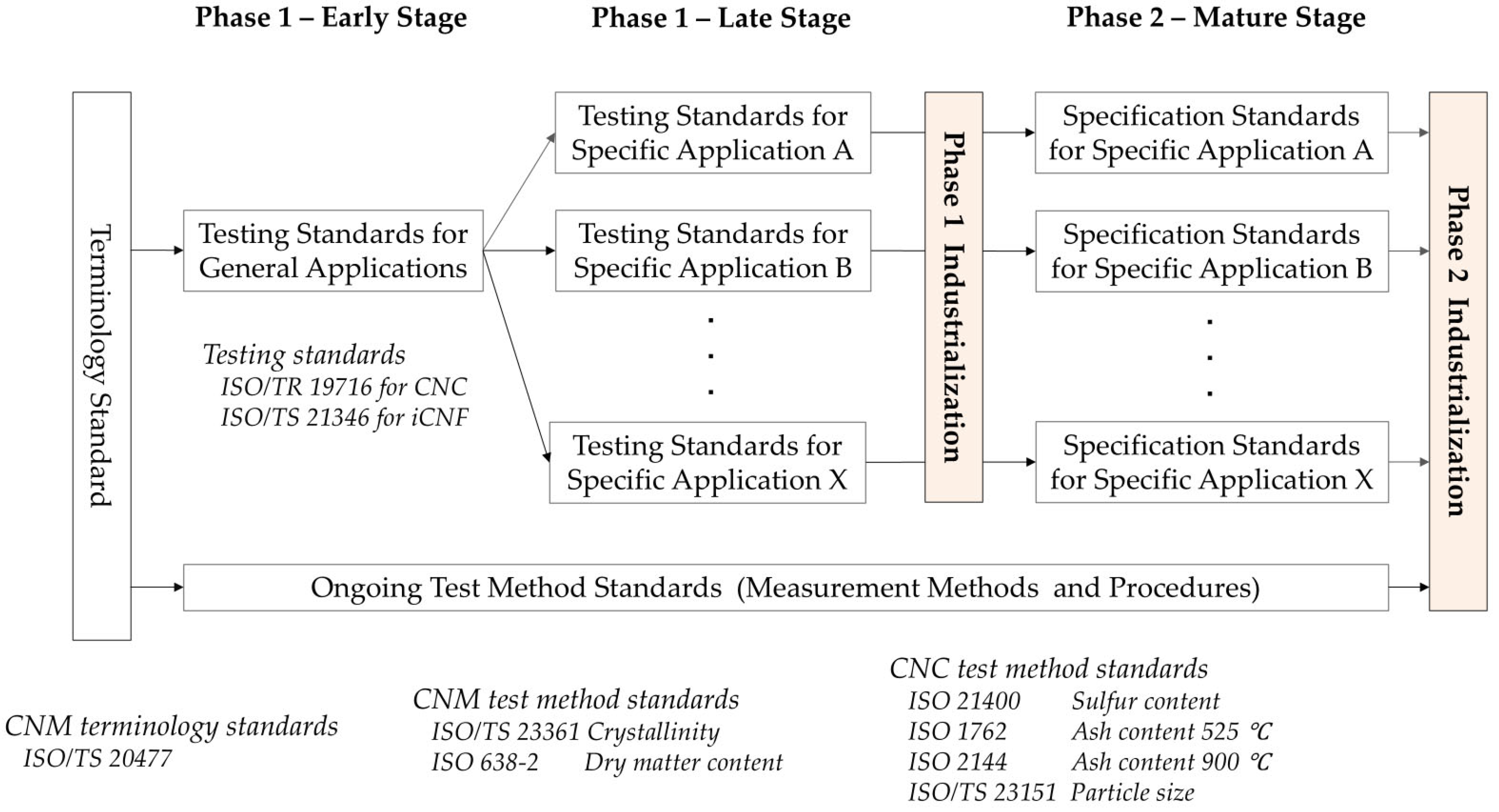
Figure 5 presents this integrated framework, showing how terminology, test method, testing, and specification standards collectively support CNM industrialization. In this framework, terminology standards form the foundational layer, enabling consistent communication. Test method standards provide validated measurement procedures that support the establishment of testing standards. Testing standards act as the critical bridge, linking material characterization with industrial performance. As markets mature, these testing standards evolve into specification standards that define acceptable performance ranges for commercial transactions. Relevant ISO standards published to date are also mapped in the figure.
As shown in
Figure 5, testing standards fall into two major categories:
generic testing standards, applicable across broad applications, and
application-specific testing standards, tailored to defined product sectors.
Industrialization progresses through the following stages:
Phase 1—Early Stage: establishment of generic testing standards;
Phase 1—Late Stage: introduction of application-specific testing standards;
Phase 2—Mature Stage: establishment of specification standards that ensure reliable supply and market transparency.
In Phase 1, generic testing standards are crucial for the systematic evaluation of CNM properties and the identification of promising industrial uses. As application domains become defined, application-specific testing standards enable transparent and reproducible evaluation, supporting the late stage of Phase 1. In Phase 2, specification standards define acceptable characteristic ranges and performance thresholds, marking the transition to large-scale commercialization and strengthened market confidence.
To contextualize the current position of CNM standardization,
Table 2 compares CNMs with steels as a representative mature material. For steels, approximately one hundred specification standards for individual products are supported by around two hundred relevant test method standards. This large disparity in both the number and roles of established standards indicates that CNM standardization remains at a very early stage of development. In particular, the establishment of testing standards is essential, as these are expected to evolve into specification standards as industrial maturity progresses.
Building on this contrast, an important practical implication emerges: industries aiming to commercialize CNMs cannot rely on downstream performance data in the way that mature materials such as steels can. Instead, they must establish testing standards early to stabilize procurement and quality-control practices, reduce transaction costs, and prevent the emergence of divergent in-house specifications. Developing such testing standards is therefore not only a scientific requirement but also an operational necessity for constructing reliable and transparent CNM production chains.
2.6. Transition from Testing Standards to Specification Standards
The transition from testing standards to specification standards, illustrated in
Figure 5, requires a stepwise evolution that parallels both the technical development and industrial maturation of CNMs. As shown in
Figure 6, this progression begins with defined terminology, which provides a common technical language for accurately identifying and classifying material types, measurable characteristics, and associated measurement concepts. While
Figure 6 depicts a typical pathway observed in emerging material systems, the relative timing, emphasis, and degree of formalization of each transition may vary across industries, applications, and national contexts.
Building on this foundation, manufacturers of emerging CNMs identify industry-relevant characteristics and develop industry-validated measurement methods that, although not yet standardized, are widely trusted in practice and collectively form the scientific basis for early material evaluation and quality assessment.
Testing standards formalize these early practices by specifying characteristics defined with respect to intended applications, together with their associated measurement and evaluation procedures. During this phase, manufacturers may also develop proprietary material specifications tailored to their own products, while relying on testing standards to ensure that evaluation results remain transparent, reliable, and comparable across manufacturers and users.
As industrial use cases become clearer and accumulated datasets increasingly clarify the linkages between measurable characteristics and material performance, proprietary specifications developed during early industrialization can be integrated into shared specification standards. Such standards define acceptable ranges of standardized characteristics and are supported by measurement methods that are validated and widely adopted across the production chains described in
Section 2.1. This integration represents the shift from the evaluation-oriented role of testing standards—established through the terminology, characteristics, and measurement concepts discussed in
Section 2.2,
Section 2.3 and
Section 2.4—toward requirement-based, performance-oriented material definition consistent with the standardization framework outlined in
Section 2.5.
In mature industries, common specification standards form the basis for accredited material certification, thereby further strengthening market transparency and enabling stable and reliable supply chains. Thus, the evolution from testing standards to specification standards—grounded in defined terminology, progressively standardized characteristics, and harmonized measurement methods—constitutes a coherent pathway linking scientific characterization with industrial quality assurance, while accommodating variations in the industrialization patterns of different emerging materials.
2.7. Testing Standards in Bridging the Gap Between Research and Market
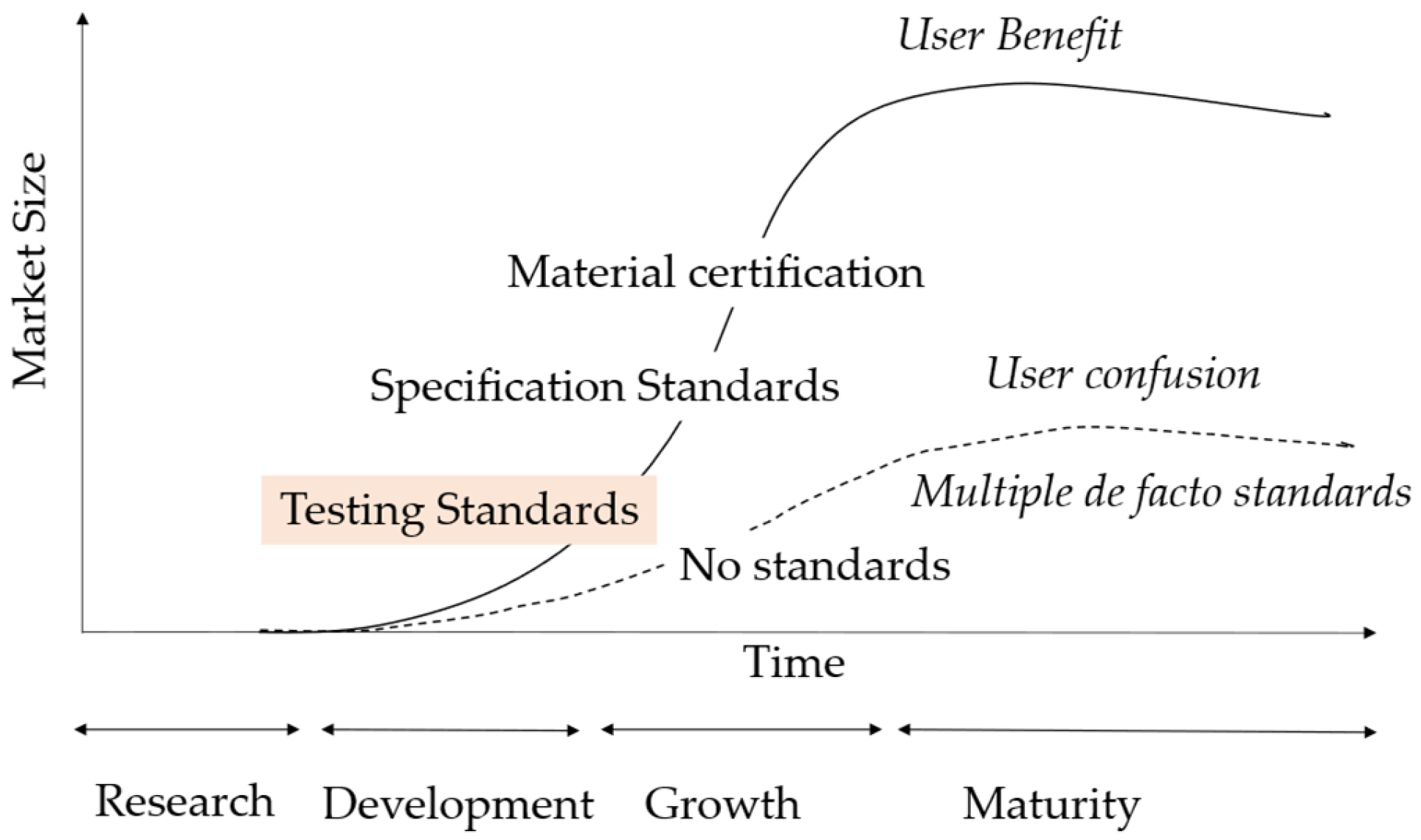
A staged standardization process can facilitate the progressive growth of CNM markets. As illustrated in
Figure 7, market evolution may advance in parallel with the corresponding phases of standardization. During the transition from the research phase to early market formation, testing standards provide the foundational framework for comparable material evaluation. At this stage, specification standards remain premature because measurement techniques, product convergence, and performance benchmarks have not yet stabilized or achieved inter-industry consensus. Introducing specifications too early risks non-representative criteria and may unintentionally constrain technological diversity, whereas testing standards support market entry while preserving flexibility for refinement.
Testing standards are typically established through the integration of peer-reviewed scientific findings and accumulated industrial experience. Research papers supply scientific justification for the adopted methods, contributing to reproducibility, inter-laboratory consistency, and transparent reporting. Industrial practice complements this foundation by demonstrating operational feasibility in real use cases, thereby forming the necessary infrastructure for consistent evaluation of CNM quality and performance.
The citation of research papers within standards provides a pathway for transferring academic knowledge into industrial and societal implementation. Testing standards thus function as a mechanism that links scientific progress to early-stage market adoption, while specification standards become appropriate only once measurement techniques, reference datasets, and performance thresholds have been sufficiently validated.
In the absence of such frameworks, diverse in-house evaluation procedures emerge across suppliers, increasing communication burdens, transaction costs, and uncertainty for users. Testing standards therefore constitute essential infrastructure for orderly and scalable CNM deployment, supporting the transition toward mature commercial markets.
3. Scenario-Based Development of CNM Testing Standards
The second original contribution of this study is the introduction of development scenarios as project-level methodologies dedicated to the creation of CNM testing standards. While the framework in
Section 2 defines the overall architecture of CNM standardization, scenarios provide the practical mechanisms for developing individual testing standards in that architecture.
The previous chapter outlined how terminology, test method, testing, and specification standards are positioned along the industrialization pathway of CNMs. While that framework clarifies the system-level roles and sequencing of different types of standards, the practical development of individual testing standards requires a more detailed methodological tool. To fulfill this need, this chapter introduces the concept of a scenario.
A scenario is a sequentially structured process that organizes stakeholder involvement, material characteristics, measurement techniques, and validation tasks into an ordered pathway, providing guidance throughout the planning, conduct, and evaluation of testing-standard development. Whereas the framework identifies which types of standards are required and how they relate to industrialization stages, a scenario specifies the concrete, sequential tasks necessary to develop a specific testing standard.
Thus, scenarios function as actionable pathways within the broader standardization framework. By integrating technical requirements with organizational coordination, they ensure that testing standards are developed coherently, efficiently, and in alignment with industrial needs.
The following sections describe the internal and external structures of scenarios, clarifying their complementary roles in supporting the development and international adoption of CNM testing standards.
3.1. Internal Structure of a Scenario
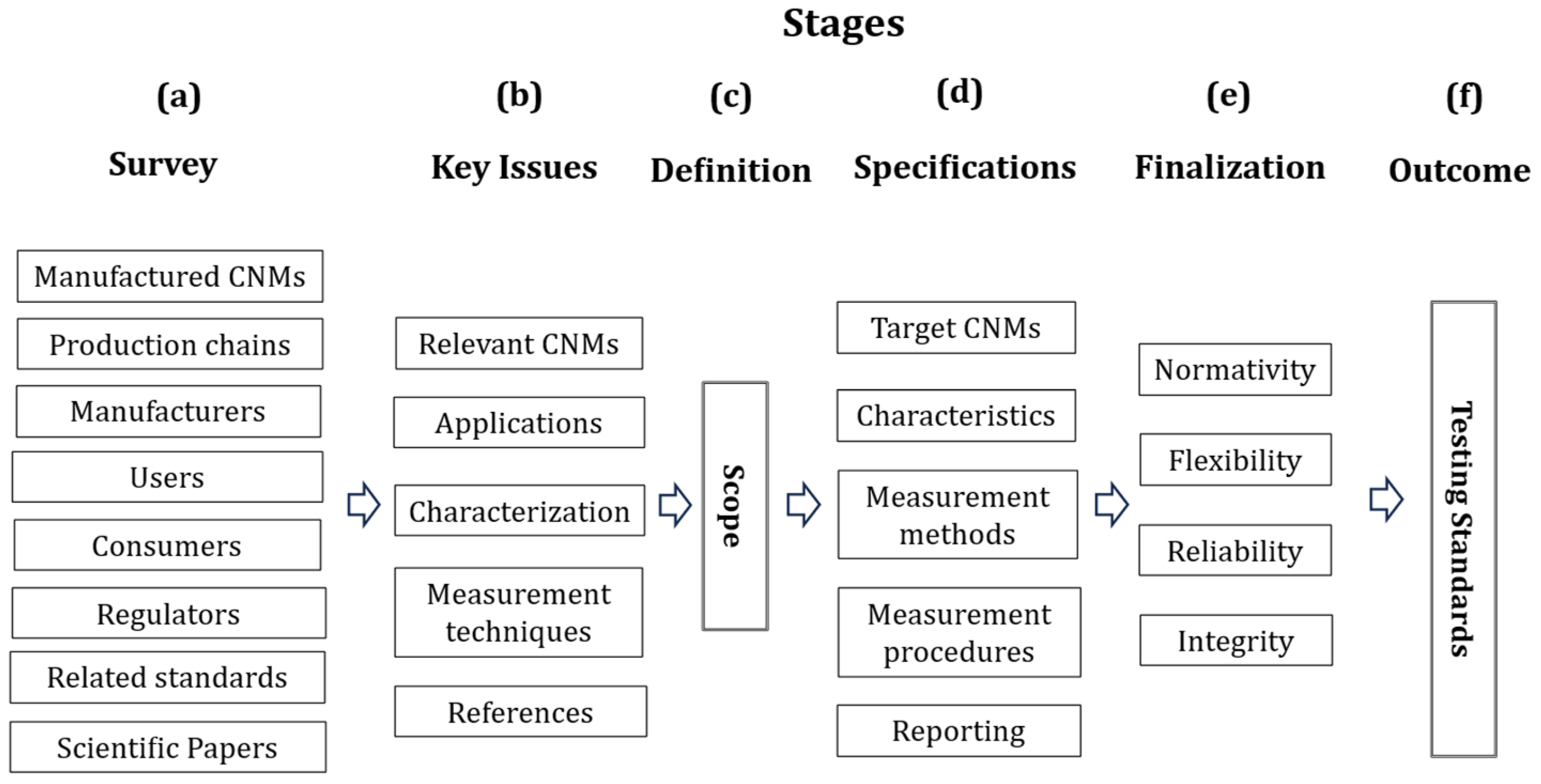
Figure 8 illustrates the internal structure of a scenario, which organizes the sequential technical tasks required to develop a testing standard. This structure is adapted from a generic framework for emerging advanced materials [
17] and refined for application to cellulose nanomaterials. The identified tasks collectively ensure that the resulting testing standard is scientifically robust, practically applicable, and aligned with industrial needs.
The internal scenario structure consists of six stages:
- (a)
Survey: Collection of information on manufactured CNMs, production chains, users, regulators, existing standards, and scientific literature.
- (b)
Key Issues: Identification of standardization priorities, including target material types, characterization needs, and appropriate measurement techniques.
- (c)
Definition: Establishment of the scope by specifying target CNMs, intended applications, and relevant characteristics—linking key issues with technical specification.
- (d)
Specifications: Development of detailed specification items, including measurable characteristics, measurement methods, procedures, and reporting requirements.
- (e)
Finalization: Refinement of the draft through stakeholder review to ensure normativity, flexibility, reliability, and practical utility.
- (f)
Outcome: Publication of the finalized document as a testing standard, establishing a reliable foundation for CNM quality evaluation.
3.2. External Structure of a Scenario
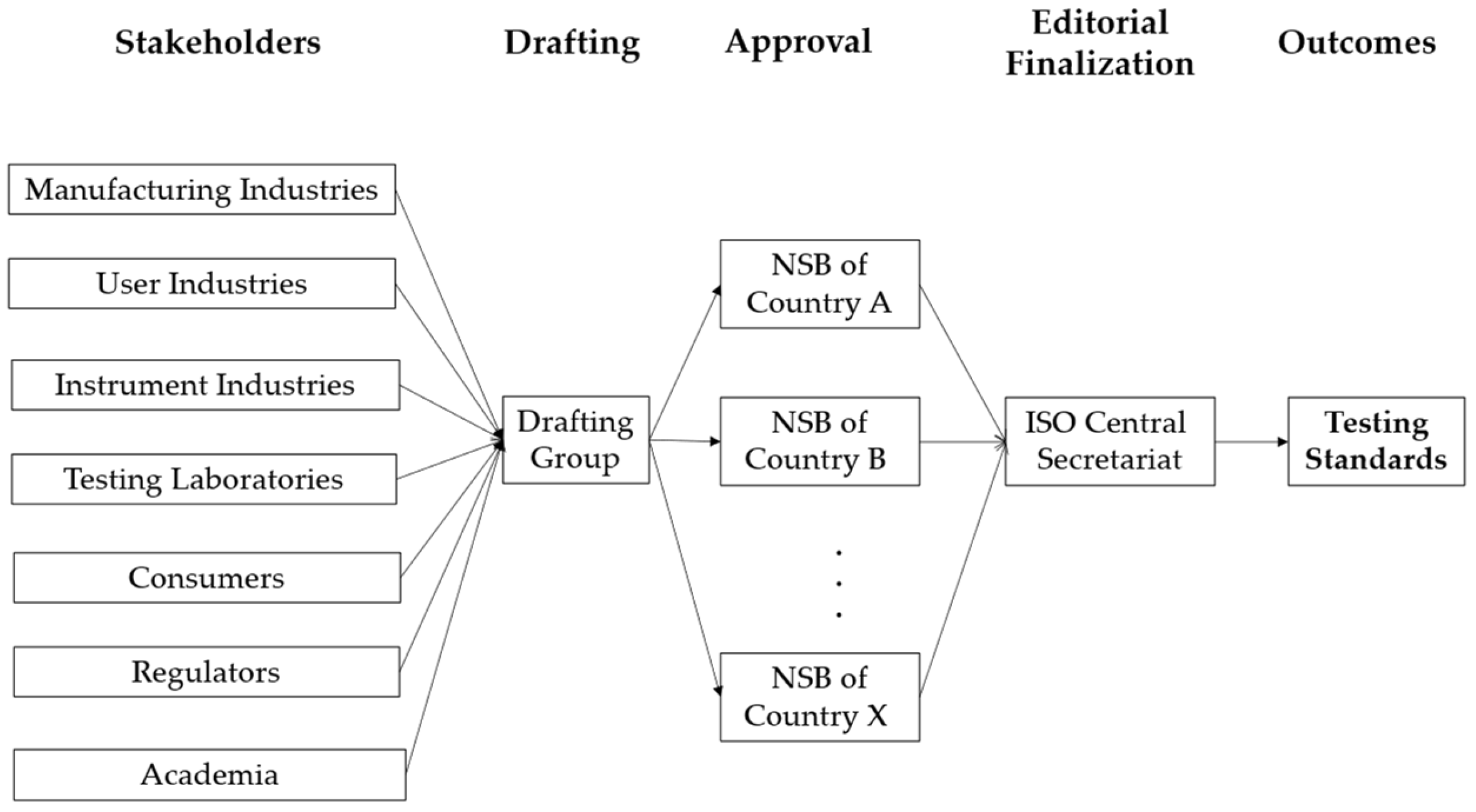
Figure 9 illustrates the external structure of a scenario, which characterizes the collaborative and consensus-building processes that complement the internal technical tasks. This structure is designed in this study to model the organizational flow typically required for developing internationally harmonized testing standards for cellulose nanomaterials (CNMs). The scenario progresses through the following stages:
Engagement of manufacturers, users, regulators, testing laboratories, instrument developers, and academia. These stakeholders provide technical knowledge, industrial requirements, and practical constraints that collectively shape the scope and content of the testing standard.
- (b)
Drafting:
Preparation of a draft standard within an ISO working group, where stakeholder input is consolidated into a coherent and technically sound document. This step ensures that the proposed testing framework reflects both scientific validity and industrial practicality.
- (c)
Approval:
Circulation of the draft for review, commenting, and voting by National Standards Bodies (NSBs). This stage establishes international consensus and ensures that the document satisfies globally accepted requirements for clarity, feasibility, and applicability.
- (d)
Finalization:
Editorial processing by the ISO Central Secretariat to ensure conformity with the ISO/IEC Directives, including consistency in terminology, clause structure, and normative referencing.
- (e)
Outcomes:
Publication of an internationally recognized testing standard that enables consistent evaluation, supports transparent market transactions, and provides a reliable foundation for the industrial deployment of CNMs.
This external structure ensures that testing standards developed through the internal scenario tasks are internationally harmonized, broadly accepted, and aligned with industrial and regulatory needs.
4. Positioning of CNM Standards in the Framework
Building on the standardization frameworks presented in
Section 2, this chapter positions existing ISO standards for cellulose nanomaterials (CNMs) within the staged pathways toward industrial deployment. By referencing
Figure 5, current terminology, test method, and testing standards are mapped to the progress of standardization. This analysis clarifies both the achievements to date and the remaining gaps that hinder the transition toward application-specific testing and specification standards.
The results show that standardization for CNMs has established terminology, continues to develop test method foundations and has begun developing generic testing standards for CNCs and iCNFs. At the same time, the absence of testing standards for eCNFs and the lack of application-specific standards across all CNM categories represent key challenges. These findings validate the standardization framework and indicate a strategic roadmap for advancing reliable industrial deployment.
4.1. Terminology Standards
ISO Technical Committee 229 (ISO/TC 229) initiated terminology standardization in the mid-2010s. ISO/TS 20477, first published in 2017 and revised in 2023 [
7], defines key nano-cellulose terms—including cellulose nanocrystal (CNC), cellulose nanofibril (CNF), and individualized cellulose nanofibril (iCNF). This unified vocabulary supports technical communication and enables efficient development of test method and testing standards.
As illustrated in
Figure 5, the early establishment of terminology standards aligns with the initial phase of industrial standardization. Continued revision efforts are expected as technologies advance and industrial applications expand.
4.2. Test Method Standards
Test method standards define validated measurement techniques for quantifying key CNM properties. While ensemble-based measurements are broadly applicable, microscopic particle-size evaluation becomes increasingly challenging from CNCs to iCNFs and especially to eCNFs due to their progressively complex morphologies.
Current ISO standards address several ensemble-level characteristics, including:
Microscopy-based particle-size measurement is standardized only for CNCs [
14], as fibril boundaries in iCNFs and eCNFs are not clearly identifiable.
These test method standards ensure reproducible and traceable results across industries and underpin both testing standards and specification standards throughout the industrialization process illustrated in
Figure 5.
4.3. Testing Standards for CNCs, iCNFs, and eCNFs
Testing standards prescribe the evaluation framework needed for transparent quality evaluation in commercial transactions. They define the target material, required characteristics, associated measurement methods, and reporting rules.
ISO has published generic testing standards for CNCs and iCNFs, reflecting their early stages of industrialization. In contrast, no testing standards currently exist for eCNFs due to measurement limitations and still-emerging application requirements, underscoring a key priority for future standardization efforts.
4.3.1. Cellulose Nanocrystals
ISO/TR 19,716 [
15] provides a comprehensive testing guideline that addresses the composition, morphology, and surface properties of CNCs. Although it does not stipulate requirements or recommendations, it serves as a valuable reference for selecting characterization parameters and measurement methods appropriate for specific quality assessment needs.
With the increasing industrial utilization of CNCs, this Technical Report is expected to provide the basis for future ISO Technical Specifications and ultimately International Standards that prescribe requirements and recommendations for CNC quality evaluation.
4.3.2. Individualized Cellulose Nanofibrils
ISO/TS 21,346 [
16] establishes a framework for the quality evaluation of iCNFs by classifying measured characteristics into
In this standard, the core characteristics are specified as morphology and size, dry matter content, crystal structure, optical transmittance, type and content of surface functional groups, and viscosity. Morphology and size are counting indicators obtained by TEM or AFM; however, they are generally observed qualitatively rather than quantitatively. By contrast, all other characteristics are ensemble indicators, with optical transmittance and viscosity in particular providing dimensional information on iCNFs at the bulk level.
Quantitative microscopic particle size metrics, such as width, height, and length, are treated as optional characteristics because their measurement is labor intensive and insufficiently representative of bulk materials.
This Technical Specification provides the foundation for early-stage industrial deployment of iCNFs and is expected to evolve toward application-specific standards as industrial needs become better defined.
4.3.3. Entangled Cellulose Nanofibrils
eCNFs form highly entangled fibril networks with broad size distributions and ill-defined fibril boundaries. These complexities impede direct dimensional characterization and delay standardization efforts. Despite increasing market interest, ISO has not yet initiated eCNF testing standards.
Ensemble-based characterization methodologies are expected to serve as the starting point for future standards as applications develop.
5. Discussion and Future Priorities in CNM Standardization
5.1. Methodological Challenges
A central challenge unique to CNFs—especially eCNFs—is the pronounced heterogeneity arising from mechanical and chemically assisted fibrillation processes. Partially fibrillated, bundled, and highly individualized fibrils coexist along a broad continuum, and their three-dimensional network architectures vary substantially among different production routes and processing histories. As the field advances, future eCNF standards may need to consider methodologies capable of describing microscopic network-level structural features—such as mesh size, bundle-thickness distributions, and entanglement density—although the extent to which such counting-based indicators can serve as practical standardization metrics remains a subject of ongoing discussion in the research community.
In parallel, multi-method approaches that integrate image analysis, optical scattering, and rheological estimation are increasingly viewed as promising pathways toward quantitative, scalable, and morphology-representative indicators. Ensemble-based approaches enable continuous (rather than categorical) representation of CNF morphology and thus offer a practical means of evaluating materials with inherently complex and heterogeneous structures.
Building on these methodological advantages, ensemble-based indicators remain prioritized for early-stage standardization of eCNFs, where reproducibility, representativeness, and industrial applicability are essential. As industrial use cases become clearer, these generic ensemble-based evaluation frameworks are expected to evolve into application-specific testing standards that capture performance-relevant characteristics—for example, transparency for coating applications, rheological performance for thickening or extending functions, or network connectivity for electrical or barrier applications. Identifying and validating such performance-relevant characteristics remains an essential prerequisite for enabling the transition from generic to application-specific testing standards.
5.2. Current Status and Future Priorities
The current status of CNM standardization and the corresponding future priorities are summarized in
Table 3. As measurement practices continue to mature and industrial demand increases, these efforts are expected to facilitate a transition from generic testing standards to application-specific testing standards in late Phase 1, and ultimately to specification standards in mature Phase 2 of industrialization.
5.3. Approach to eCNF Generic Testing Standards
To move beyond the abstract scenarios outlined in
Section 3.1, this section presents an illustrative example of a possible practical pathway toward developing a generic eCNF testing standard. It is based both on the current state and future expectation of measurement technologies and market deployment. Although current activities remain exploratory due to the limited availability of established methods at the pre-Phase 1 stage, the framework below illustrates how an internal standardization scenario may eventually be translated into an implementable testing scheme.
The objective here is to bridge the future priorities identified in
Section 5.2 with an implementation-oriented approach by clarifying measurable characteristics, candidate test methods, and their relevance to industrial requirements. This section also draws on the perspective presented in Reference [
5], which discusses priority-setting in CNF size measurement and feasibility constraints during the early stages of method development.
In industrial practice, eCNF is predominantly supplied as an aqueous suspension, since drying typically induces irreversible fibril aggregation and reduces re-dispersibility. Accordingly,
Table 4 and
Table 5 are tentatively proposed as an illustrative technical basis for a future ISO generic testing standard for aqueous eCNF suspensions.
Table 4 identifies core characteristics and methods required for general applicability, while
Table 5 provides optional characteristics for application-specific selection. As several candidate methods remain under development, additional refinement and industrial validation will likely be required before formal standardization can proceed.
Taken together,
Table 4 and
Table 5 outline an intended structure of a future ISO generic testing standard for eCNF. The mandatory items establish the minimum dataset required to ensure baseline product comparability across suppliers, while the optional items allow customization for specific industrial uses without compromising cross-comparability. In this context, the framework does not prescribe performance criteria or acceptance thresholds; rather, it provides a harmonized measurement basis from which individual stakeholders may derive their own specifications.
In practical terms, the framework can be conceptualized in three layers:
By distinguishing essential comparability requirements from optional application-specific elements, this structure provides the flexibility required in the early stages of industrialization while avoiding premature convergence on a single specification. As measurement technologies and relevant markets mature, selected optional items may progressively transition into the core requirements, supporting a possible staged evolution—from a generic testing framework to application-specific testing standards, and potentially to specification standards in later industrial phases.
5.4. Measurement Methods and Procedures for Reproducible and Comparable Results
An important aspect of a testing standard is its robustness, namely the extent to which measurement results are reproducible and comparable across different laboratories, instruments, and operators when measurements are conducted in accordance with specified methods and procedures. In the context of CNMs, this robustness must be achieved despite inherent material heterogeneity and evolving measurement technologies. The appropriate selection of measurement methods and procedures is therefore essential for the reliable assessment of CNM quality.
As a fundamental requirement, a testing standard may require manufacturers of CNMs to provide users with detailed information on the test methods (i.e., the measurement methods and procedures) used to determine material characteristics, regardless of whether those methods and procedures are standardized or non-standardized. When a standardized test method is used, it must be clearly identified. When non-standardized test methods are used, the testing standard may require manufacturers to provide detailed descriptions of the test methods applied, thereby supporting informed interpretation and appropriate use of the reported data.
To enhance transparency and comparability, a testing standard may require manufacturers to report relevant information on uncertainty in the measurement results, including at least repeatability and reproducibility. Where relevant reference materials are available, their application is recommended.
The selection of measurement methods and procedures should be based primarily on their validity, maturity, and applicability.
Validity is supported by peer-reviewed scientific literature and is further confirmed through interlaboratory comparisons (round-robin tests) at an industrially relevant level. A standardized test method is generally validated for its intended target material and characteristic. Reference materials provide additional support for validation and enable traceability and consistency of measurement results.
Maturity reflects the availability, robustness, and cost of commercial instrumentation, as well as the level of operator expertise required. Measurement procedures that rely on highly specialized or non-commercial instruments, or that require exceptional operator skills, are generally unsuitable for widespread industrial adoption, even if they are scientifically sound. Indicators of maturity include regulatory use, adoption in international or national standards, and implementation in consortia or industry-led standardization activities.
Applicability is evaluated based on whether a measurement procedure is sufficiently standardized and whether it can be applied directly to the target CNMs or to closely related materials. Applicability also includes consideration of sample preparation, measurement conditions, and relevance to intended industrial applications.
The drafting group for a testing standard—as illustrated in the drafting stage of
Figure 9 in the external scenario—evaluates the industrial acceptability of candidate measurement methods and procedures based on the above criteria—validity, maturity, and applicability. When these criteria are sufficiently satisfied, the drafting group may specify the measurement methods and procedures as normative requirements. When the criteria are only partially satisfied, such methods may be included as recommended or informative provisions.
5.5. Comparison of CNM and Other Nanomaterial Standardization Pathways
A comparison with other nanomaterial classes further clarifies the positioning of CNM standardization.
Figure 10 illustrates the hierarchical landscape of ISO nanomaterial testing standards [
15,
16,
17,
18,
19,
20,
21,
22,
23,
24,
25,
26,
27,
28,
29,
30,
31,
32,
33,
34] as of 2025, organized by material specificity and application specificity. Current CNM testing standards remain at an intermediate stage—where the target materials are well defined, but the intended industrial applications are still non-specific. In contrast, several other nanomaterials have advanced to application-specific testing standards supported by clear performance requirements and established value chains. This comparison indicates that a coherent CNM standardization strategy—linking morphological indicators, multi-method evaluation, and performance-driven testing frameworks—can guide CNMs toward sector-aligned testing standards and, ultimately, toward specification standards that support mature commercialization.
5.6. Standardization Pathways: Emerging vs. Mature Materials
A comparison with steels (
Table 2) further highlights a fundamental difference in the standardization pathways of emerging versus mature materials. In the case of steels, the direct progression from test method standards to specification standards has been enabled by long-established measurement practices already linked to product performance and regulatory requirements. Consequently, dedicated testing standards are minimal in such mature systems.
In contrast, CNMs lack a validated measurement–performance linkage that is necessary for establishing specification standards. Their diverse morphologies and emerging industrial use cases require an intermediate step—testing standards—that define and assess application-relevant performance indicators before acceptable performance ranges can be reasonably established.
Together, these findings indicate that CNM standardization cannot follow the conventional pathway of mature materials. Instead, a structured standardization framework and scenario-based methodologies illustrated in
Figure 5,
Figure 8 and
Figure 9 are essential to establish robust testing standards and subsequently transition to specification standards as industrial maturity progresses. This provides a practical and internationally consistent pathway that strengthens market confidence and facilitates the industrial deployment of CNMs.
5.7. Implications for Key Stakeholders
From a practical perspective, the proposed framework and scenario-based methodologies offer distinct implications for key stakeholder groups. For CNM manufacturers, they provide a rational basis for designing internal quality evaluation schemes that are compatible with future international testing standards and for communicating material performance to downstream users in a transparent manner. For user industries, the framework clarifies how to interpret CNM test reports and how to formulate procurement specifications that remain flexible at an early stage yet are aligned with emerging testing standards. For standardization bodies and experts, the scenario structures suggest a systematic approach to prioritizing new work items, organizing drafting activities, and linking CNM-specific standards to the broader architecture of nanomaterial testing and specification standards. In this way, the study aims to serve as a practical reference for coordinating research, industrial development, and standardization efforts in the CNM field.
6. Conclusions
This study presents a structured standardization framework designed to support the industrial deployment of cellulose nanomaterials (CNMs), with a particular focus on testing standards. The framework systematically links terminology, test method, testing, and specification standards along a staged industrialization pathway and highlights testing standards as the essential bridge connecting scientific characterization with industrial performance requirements.
By positioning existing ISO CNM standards within this structured pathway, the study clarifies both current achievements and the critical gaps—particularly the urgent need for application-relevant testing standards for CNCs, iCNFs, and especially eCNFs. As industrial priorities become more clearly defined, such testing standards are expected to evolve from generic to application-specific forms and eventually provide the technical basis required for developing specification standards that support mature commercialization.
The scenario-based methodologies introduced in this study—defined through their internal and external structures—offer practical project-level guidance specifically for developing consistent, transparent, and reproducible testing standards. These methodologies strengthen the rigor and coherence of testing-standard development and enhance the capacity of such standards to support transparent market transactions and foster confidence among user industries.
Overall, the standardization approach developed in this paper provides a coherent and internationally harmonized pathway for advancing CNM industrialization. While the focus is intentionally limited to CNMs, the conceptual insights derived from the structured framework and scenario methodology may also support standardization strategies for other advanced biomaterials—particularly in domains where robust testing standards serve as a key prerequisite for early-stage industrial adoption.