Next Article in Journal
An Auditable and Trusted Lottery System in the Cloud
Next Article in Special Issue
Phytochemical Composition, Biological Activity and Application of Cymbopogon citratus In Vitro Microshoot Cultures in Cosmetic Formulations
Previous Article in Journal
Numerical Investigation of Micromechanical Failure Evolution in Rocky High Slopes Under Multistage Excavation
Previous Article in Special Issue
Formulation and Characterization of Hydrogel Based on Pectin, Collagen, Alginate and Myrtus communis Essential Oil for Applications in Skin Regeneration
 
 
Due to scheduled maintenance work on our servers, there may be short service disruptions on this website between 11:00 and 12:00 CEST on March 28th.
Article

In Vitro and In Silico Assessment of the Anticancer Potential of Ethyl Acetate/Water Extract from the Leaves of Cotinus coggygria Scop. in HepG2 Human Hepatocarcinoma Cells

by
Inna Sulikovska
1,*,
Vera Djeliova
2,
Ani Georgieva
1,*,
Elina Tsvetanova
3,
Liudmil Kirazov
1,
Anelia Vasileva
4,
Vanyo Mitev
4,
Ivaylo Ivanov
4 and
Mashenka Dimitrova
1
1
Institute of Experimental Morphology, Pathology and Anthropology with Museum, Bulgarian Academy of Sciences, Acad. G. Bonchev Str., 25, 1113 Sofia, Bulgaria
2
Institute of Molecular Biology “Acad. R. Tsanev”, Bulgarian Academy of Sciences, Acad. G. Bonchev Str., 21, 1113 Sofia, Bulgaria
3
Institute of Neurobiology, Bulgarian Academy of Sciences, Acad. G. Bonchev Str., 23, 1113 Sofia, Bulgaria
4
Department of Medical Chemistry and Biochemistry, Medical University of Sofia, Zdrave Str., 2, 1431 Sofia, Bulgaria
*
Authors to whom correspondence should be addressed.
Appl. Sci. 2026, 16(2), 740; https://doi.org/10.3390/app16020740
Submission received: 30 November 2025 / Revised: 23 December 2025 / Accepted: 7 January 2026 / Published: 11 January 2026

Abstract

Cotinus coggygria Scop., a member of the Anacardiaceae family, is known for its antiseptic, anti-inflammatory, and antitumor properties. In the present study, the ethyl acetate/water leaf extract of C. coggygria was evaluated for antioxidant and anticancer activities. The extract exhibited strong radical-scavenging potential, effectively neutralizing DPPH, ABTS•+, and superoxide radicals in a concentration-dependent manner. The cytotoxic effects of the extract on human hepatocellular carcinoma HepG2 cells were also investigated. Flow cytometry revealed significant S-phase cell cycle arrest, while fluorescent microscopy and annexin V-FITC/PI staining demonstrated induction of apoptosis. DNA damage was confirmed by alkaline comet assay. Molecular docking was used to evaluate the binding affinity and inhibitory potential of penta-O-galloyl-β-D-glucose, a representative of gallotannins found in C. coggygria extracts, towards cyclin-dependent kinase 2 and checkpoint kinase 1. A high inhibition ability was demonstrated, which could explain the observed cell cycle block. Collectively, these findings suggest that C. coggygria extract exerts strong antioxidant capacity and selective antiproliferative activity in HepG2 cells. The anticancer effects of C. coggygria extract were associated with DNA damage, cell cycle arrest, disruption of mitochondrial membrane potential, and apoptosis induction. The results show the potential of the herb as a natural therapeutic agent for hepatocellular carcinoma.

1. Introduction

Cotinus coggygria Scop. (smoke tree) is a flowering deciduous shrub, a member of Anacardiaceae family. It is widespread in Southeast Europe and is considered to be endemic to the Balkan Peninsula. The plant has a long history of application in folk medicine as an anti-inflammatory, antimicrobial, antifebrile, and wound healing remedy. Decoctions of the herb are used in both traditional and modern medicine to relieve the symptoms of gastrointestinal, urinary and liver diseases, asthma, hemorrhoids, and diabetes [1,2]. Various uses of the herb are presently associated with the chemical composition of extracts obtained from the leaves, flowers, and/or heartwood of C. coggygria by means of different solvents or solvent systems. In addition, it is shown that the secondary metabolites content depends largely on the geographic region and environmental conditions [3]. Thus, in our previous study we found 19 hitherto unidentified compounds in the leaves of C. coggygria of Bulgarian origin [4].
Many recent in vitro studies are devoted to the evaluation of the antitumor potential of extracts from different parts of C. coggygria to a number of human tumor cell lines originating from breast, colorectal, skin, lung, and other carcinomas as well as lymphomas [2,5,6]. Most of those studies are focused on flavonols and flavonoids as components possessing a significant antitumor potential in various cell types. Noticeably, less attention is paid to tannins, which are essential constituents of the secondary metabolites in the smoke tree. Only penta-O-galloyl glucose (PGG) makes an exception since its antitumor properties have been extensively studied [7].
Recently, we obtained an extract from the leaves of C. coggygria of Bulgarian origin, using the biphasic system ethyl acetate/water (pH 3.0) [4]. Chemical composition of the extract was studied by LH-HRMS. It was found that this type of extraction concentrates high molecular hydrolysable gallotannins (HGT) with 5 to 9 gallic acid residues. In this extract, the amount of PGG was minor, whereas the quantities of hexa-, hepta-, and octa-O-galloyl glucoses were considerable. We also found that the above extract is an efficient and highly selective inhibitor of prolyl oligopeptidase (POP, E.C. 3.4.21.26.) [4]—an enzyme, connected with tumorigenesis which inhibitors are proposed as antitumor agents [8]. The study of antitumor activity of the same preparation revealed a low IC50 and promising selectivity indices (SI) compared to the BJ cells (non-tumorigenic human fibroblasts), for HeLa cells (cervical carcinoma, IC50 = 4.53 µg/mL, SI = 11.78) and HepG2 cells (hepatocellular carcinoma, IC50 = 21.03 µg/mL, SI = 2.54) [9]. Previously, it was shown that PGG possesses a substantial antitumor activity towards a variety of hepatocellular carcinoma cell lines in vitro [7]. The same substance (PGG), extracted from Paeonia lactiflora, was documented to have an antiproliferative effect on HepG2 cells with IC50 = 160 μg/mL [10]. From those results, it becomes clear that the HGTs in our extract have a higher antitumor potential in HepG2 cells than PGG alone. To the best of our knowledge, the effect of other HGTs with more than 5 gallic acid residues has not been studied thus far in hepatocellular carcinoma cells.
Based on the above studies, we hypothesized that the ethyl acetate/water (pH 3.0) extract from the leaves of C. coggygria, which is rich in HGTs, is a promising candidate for application as an alternative natural therapeutic in hepatocellular carcinoma.
The aim of the present study was to evaluate the anti-proliferative activity of the ethyl acetate/water extract from C. coggygria leaves in human hepatocellular carcinoma cells (HepG2) and to study the mechanisms contributing to its anticancer activity. The results may help to identify the extract as a possible auxiliary agent in treatment of hepatic cancers.

2. Materials and Methods

2.1. Materials

Crushed dried leaves from C. coggygria grown in Bulgaria were purchased from Dicrassin Ltd. (Sofia, Bulgaria) [11]. The ethyl acetate/water (pH 3.0) extract was obtained exactly as described before [4].
Prolyl oligopeptidase’s fluorogenic substrate benzyloxycarbonyl-glycyl-prolyl-4-methylcoumarin-7-amide (Z-Gly-Pro-AMC) was from Bachem (Bubendorf, Switzerland).
The cell lines HepG2 (human hepatocellular carcinoma), BALB/3T3, and clone A31 (mouse embryo fibroblast) were supplied from the American Type Cultures Collection (ATCC, Manassas, VA, USA), and HaCaT cells were obtained from the CLS Cell Lines Service (Eppelheim, Germany). Cell culture reagents and disposable consumables were products of Orange Scientific, (Braine-l’Alleud, Belgium).
All the other chemicals, kits, and consumables used in this study were from Sigma-Aldrich (Schnelldorf, Germany), unless otherwise stated below.

2.2. Methods

2.2.1. Extraction

The ethyl acetate/water (pH 3.0) extract was obtained exactly as described before [4]. Briefly, dry and powdered leaves from C. coggygria (5 g) were treated with a mixture of 30 mL ethyl acetate and 10 mL water acidified with 150 μL 1 M aq. HCl to pH 3.0 by stirring for 2 h at room temperature. The mixture was filtered, the filtrate was collected, and the residue was further extracted twice with 25 mL ethyl acetate for 2 h. Combined organic phases were dried with anhydrous Na2SO4, and the solvent was removed on rotary evaporator at 40 °C. The presence of water during extraction is crucial for the yield. Using ethyl acetate alone leads to a dramatic reduction in the yield [4].

2.2.2. Antioxidant Capacity Assays

The antioxidant activity of the ethyl acetate/water extract of C. coggygria was evaluated using DPPH, NBT, and ABTS assays. For each of the test methods, vitamin C was used as a positive control substance, and the percentage inhibition was calculated using the following formula:
Antioxidant activity (%) = [(Ac − As)/Ac] × 100
Ac—absorbance of the control
As—absorbance of the sample
DPPH Radical Scavenging Assay (DPPH)
Scavenging potential against stable DPPH radical (2-diphenyl-2-picrylhydrazyl hydrate) was conducted according to Brand-Williams [12]. The extract of C. coggygria in different final concentrations (0.5; 1; 2; 0.4; 8; 15.6; 31.25; 62.5; 125; 25; 500; 1000 µg/mL) was added in 1 mM DPPH solution at a ratio 1:1. The samples were shaken well, and after 30 min incubation at a room temperature the mixture’s absorbance was measured at 517 nm. Methanol sample served as blank, while composition of methanol and DPPH radical solution served as control. Scavenging activity of the extract was calculated as percentage inhibition vs. control as follows:
Superoxide Anion Radical Generating System (O2●−)
Evaluation of scavenging capacity against superoxide anion radicals (O2●−) was performed by the method of Beauchamp and Fridovich [13]. Tested extract from C. coggygria at different final concentrations (2.08; 4.17; 8.33; 16.67; 33.33 µg/mL) was added in a medium containing 50 mM potassium phosphate buffer, pH 7.8; 1.17 × 10⁻⁶ M riboflavin; 0.2 mM methionine; 2 × 10⁻⁵ M KCN; and 5.6 × 10⁻⁵ M nitro-blue tetrazolium (NBT). After photochemical generation of O2●− radicals with UV lamping at 7 min in the presence of the extract, the reduction of NBT by O2●− to a blue formazan product was read at 560 nm. Antioxidant capacity was expressed as percentage inhibition vs. control.
ABTS Radical Scavenging Assay (ABTS+●)
Free-radical scavenging activity of C. coggygria extract against ABTS•+ was determined by the method described by Re et al. [14], with slight modification. Appropriate increasing concentrations of the tested extract were added in mixed solution of diluted ABTS and methanol. After 15 min of incubation at 37 °C, the decolorization of the reaction mixture from blue to yellow was measured at 734 nm against methanol. The blank contains ABTS solution, and cation scavenger ability of the extract is expressed as percentage inhibition of ABTS•+.

2.2.3. Cells Culturing

The HepG2 human hepatocellular carcinoma cell line (HB-8065) and the BALB/3T3 mouse embryo fibroblast cell line, clone A31 (CCL-163), were sourced from the American Type Culture Collection (ATCC, Manassas, VA, USA). The human keratinocyte cell line HaCaT (CVCL_0038) was purchased from CLS Cell Lines Service (Eppelheim, Germany). All cell lines were routinely maintained in high-glucose Dulbecco’s Modified Eagle’s Medium (DMEM, 4.5 g/L glucose) supplemented with 10% fetal bovine serum and standard concentrations of antibiotics. Cultures were kept in a humidified incubator at 37.5 °C with 5% CO2 and grown as monolayers in 25 cm2 flasks until reaching approximately 80% confluence. Cells were then detached by trypsinization using 0.25% trypsin–EDTA.

2.2.4. Cell Viability Assay

The cytotoxicity of the C. coggygria extract was assessed using the BALB/3T3 Neutral Red Uptake (NRU) assay. BALB/3T3 cells were exposed to varying concentrations of the extract (8 to 1000 μg/mL) for 24 h. Antiproliferative activity of the extract against HepG2 and HaCaT cells was evaluated using the neutral red uptake assay. Cells were seeded in 96-well plates at a density of 1 × 10³ cells per 100 µL per well and exposed to the extract at concentrations ranging from 1.56 to 200 µg/mL for 48 h. Doxorubicin served as the positive cytostatic control. Following incubation, cells were treated with Neutral Red solution, washed, and destained with an ethanol/acetic acid mixture. Absorbance was then measured at 540 nm using a TECAN microplate reader (TECAN, Grödig, Austria).
Cell viability was calculated using the following formula:
Cell viability (%) = (Absorbance of treated cells/Absorbance of control cells) × 100

2.2.5. Inhibition Assay for POP

Cultured cells were treated with 8.4 µg/mL (equal to IC20), 14.7 µg/mL (IC35), or 27.76 µg/mL (IC50) ethyl acetate/water extract of C. coggygria, pre-dissolved in DMSO (dimethyl sulfoxide) for 24 h. Then, the cells were washed with PBS, separated, and suspended in 0.1 M sodium/potassium phosphate buffer, containing 0.1 M sodium chloride, 1 mM EDTA, and 5 mM dithiotreitol (pH 7.4). The suspension was homogenized for 15 min on a MSE (London, UK) homogenizer at room temperature (RT). After a centrifugation at 3000 rpm for 20 min, the supernatant was separated and incubated with 80 μM (final concentration) of the POP fluorogenic substrate Z-Gly-Pro-AMC (pre-dissolved in DMSO). Fluorescence at 460 nm was measured every 2 min for an hour. The kinetic curves were built for every extract concentration, from which the initial rate of the enzyme reaction was determined. The results were presented as percentage remaining POP activity from the enzyme activity in non-treated with the extract control cells (100%). Data processing was performed using the program EnzFilter V2.

2.2.6. Flow Cytometric Analysis of the Cell Cycle

Cells were exposed to 25 µg/mL or 50 µg/mL C. coggygria extract for 24 h, with untreated cells used as controls. After treatment, cells were trypsinized, centrifuged at 1000 rpm for 10 min, washed with 1 × PBS, and fixed by the dropwise addition of ice-cold ethanol. Fixed samples were stored at −20 °C for at least 12 h. Before analysis, cells were washed with 1× PBS, incubated with RNase A (20 µg/mL, 30 min), and stained with propidium iodide (20 µg/mL). Cells in different cycle phases (sub-G1, G1, S, G2/M) were quantified using a BD FACSCalibur™ flow cytometer (Franklin Lakes, NJ, USA), acquiring 10,000 events per sample. Data were analyzed in FlowJo™ v10.8 and reported as mean ± SD from three independent replicates.

2.2.7. Fluorescent Microscopy

Cells were cultured on 13 mm-diameter cover glasses in 24-well plates and treated for 48 h with extract sample at 25 µg/mL and 50 µg/mL the concentrations. To observe morphological changes, native preparations of control and treated HepG2 cells were stained with fluorescent dyes acridine orange (AO 5 µg/mL) and ethidium bromide (EtBr 5 µg/mL) in PBS and images were taken immediately with a fluorescence microscope. Nuclear morphology was assessed by staining with the DNA-binding dye 4′,6-diamidino-2′-phenylindole dihydrochloride (DAPI). Cells were fixed in methanol and subsequently incubated with DAPI (1 µg/mL in methanol) for 15 min in the dark. Fluorescent images were acquired using a Leica DM 5000B fluorescence microscope (Wetzlar, Germany).

2.2.8. Flow Cytometric Analysis of Apoptosis

Apoptosis induction by the ethyl acetate/water extract of C. coggygria was assessed using an annexin V-FITC/PI kit. HepG2 cells (1 × 10⁵ cells/well) were treated with 25 µg/mL of the extract for 24 h, with untreated cells as controls. Cells were then collected, washed with 1 × PBS, and resuspended in binding buffer. For staining, 5 µL annexin V-FITC and 5 µL PI were added to 100 µL of each cell suspension. After 15 min incubation at room temperature, 10,000 events per sample were acquired using a BD LSR II flow cytometer. Data were analyzed using FACS Diva 6.1.1 software.

2.2.9. Alkaline Comet Assay

The assay was conducted following previously described protocols [15,16]. Briefly, a cell suspension (~1 × 10⁶ cells/mL) in 1× PBS (30 µL) was mixed with 120 µL of 0.75% low-melting point (LMP) agarose. Two drops (60 µL) of the mixture were transferred to a pre-coated with 1.5% (w/v) normal-melting point agarose microscope slide. The gels were covered with coverslips and kept for 5 min at 4 °C in dark. The coverslips were then removed, and the slides were placed in standard lysis solution (2.5 M NaCl, 100 mM EDTA, 10 mM Tris base, pH 10–10.5, with added 1 mL Triton X-100 and 10 mL DMSO added before use) for at least 1 h in a Coplin jar at 4 °C in dark. Following lysis, slides were transferred to an electrophoresis tank containing cold (4 °C) alkaline buffer (0.3 M NaOH and 1.0 mM Na2EDTA, pH > 13) and incubated for 20–40 min. Electrophoresis was then carried out at 25 V (~1 V/cm) for 30 min at pH > 13 and 4 °C. Slides were neutralized by washing in cold 400 mM Tris-HCl (pH 7.5), rinsed with cold distilled water, drained, and stained with silver nitrate according to the method of Nadin et al. [17]. Comets were filmed on a Leica DM 5000B microscope (Wetzlar, Germany) and analyzed with the CaspLab free software version 1.2.2. [18,19]. For each sample, 100 cells were randomly selected, and DNA damage was quantified as percentage of DNA in the comet tail. Cells were classified into five categories according to Noroozi et al. [20]: class 0 (1–5%); class 1 (5–25%); class 2 (>25–50%); class 3 (>50–75%); and class 4 (>75–90%). The DNA damage index (DDI) was calculated using the formula DDI = 0 × n0 + 1 × n1 + 2 × n2 + 3 × n3 + 4 × n4, where n0–n4 represented the number of cells in each respective damage class.

2.2.10. Mitochondrial Membrane Potential (ΔΨm) Assessment

HepG2 cells were seeded in 24-well plates and treated with C. coggygria extract for 24 or 48 h. After treatment, cells were incubated with JC-1 dye (5 μg/mL) for 20 min at 37 °C in the dark. Fluorescence images were taken using a fluorescence microscope (Leica DM 5000B, Leica Microsystems, Wetzlar, Germany). The changes in the mitochondrial membrane potential was quantified with ImageJ software version 1.50i by measuring the mean fluorescence intensity of red (JC-1 aggregates) and green (JC-1 monomers) channels, and the red/green (R/G) ratio was calculated. A decrease in the R/G ratio indicated mitochondrial depolarization.

2.2.11. Molecular Docking

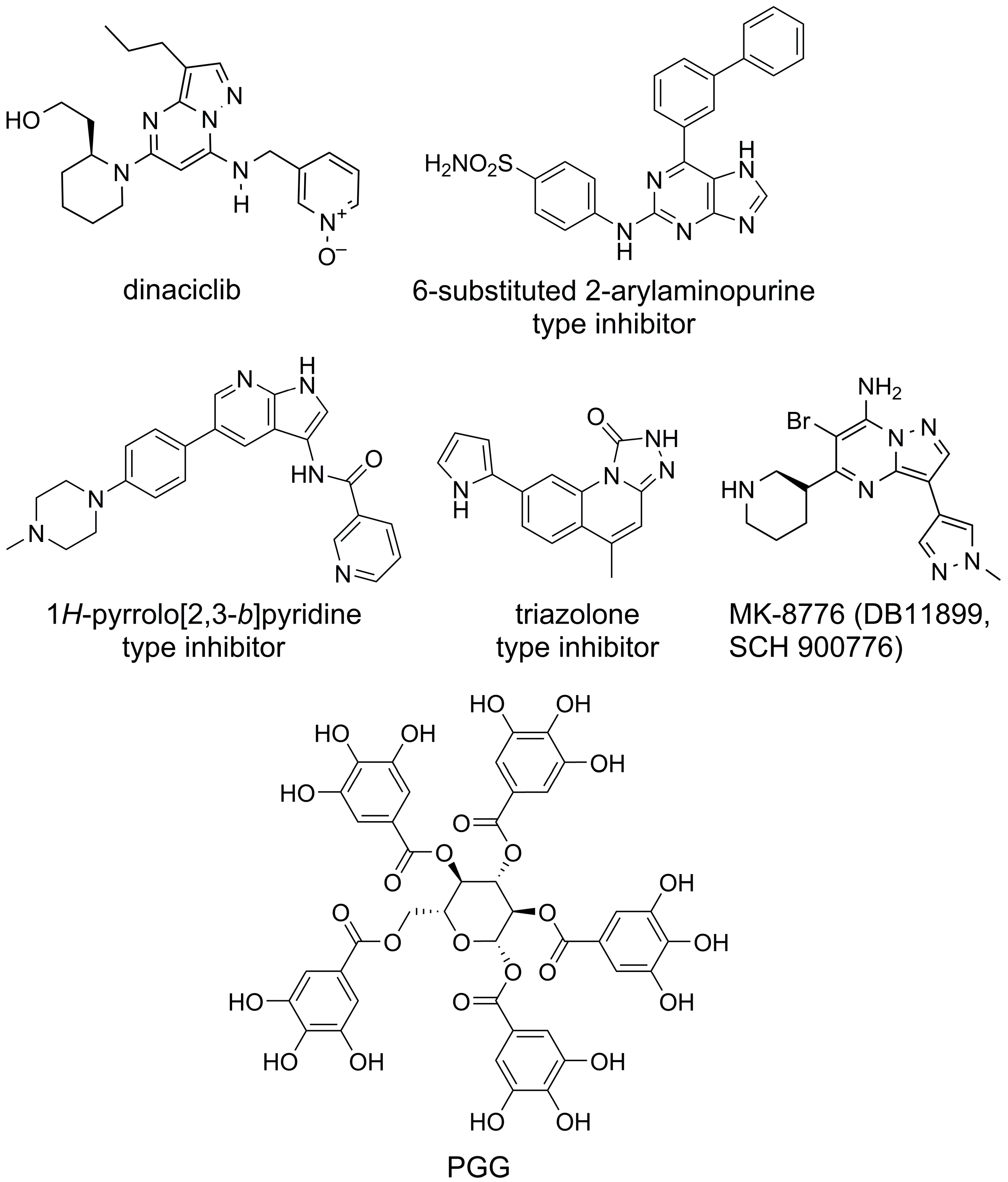
Molecular docking method was used to explore the potential binding affinity of penta-O-galloyl-β-D-glucose (PGG), as an important representative of hydrolysable gallotannins found in the extracts from C. coggygria, into the ATP-binding sites of cyclin-dependent kinase 2 (CDK2) and checkpoint kinase 1 (Chk1). The crystal structures of the CDK2 and Chk1 were retrieved from the Protein Data Bank (PDB) [21]. When selecting the three-dimensional structures of the enzymes for modeling, we based our choice on two principles: crystal structures with different ligands, including inhibitors or activators of the corresponding enzyme, and the highest possible resolution of protein structures (Table 1). Pubchem (CID 65238) was the source of PGG structure, which was generated as a sdf (structure data file). For the purpose, a SMILES code (Simplified Molecular Input Line Entry System) obtained by the program BIOVIA Draw v21.1 from the sdf file was applied [22]. Highly effective and selective inhibitors of the two enzymes were used as positive controls for docking studies. Dinaciclib is a highly potent CDK2 inhibitor with an IC50 = 1 nM, which is in phase 2 clinical trials for melanoma [23,24]. The Chk1 inhibitor MK-8776 (DB-11899; SCH 900776) has an IC50 = 3 nM, is specific to this enzyme compared to Chk2 and is in phase 2 clinical trials [25]. The inhibition of Chk1 was supposed to result in tumor cells bypassing Chk1-dependent cell cycle arrest and a block of cell cycle in S and G2/M phases [26]. Chemical structures of PGG, as well as those of different ligands (including inhibitors) used as positive controls in the crystal structures of enzymes, are shown in Figure 1.
To simplify the docking process, all the ions, water molecules and ligands were removed using BIOVIA Discovery Studio Visualizer v25.1.0.142884 [27]. Then, the docking online tool SwissDock ‘’https://www.swissdock.ch/ (accessed on 8 November 2025)’’ was applied to predict the possible molecular interactions between the target protein and the smaller molecule [28]. SwissDock 2 proposes two docking methods of which Attracting Cavities 2.0 (AC2) was our choice. When using AC, the rough energy landscape of the macromolecule is replaced by a smooth attracting energy landscape generated by virtual attracting points surrounding the macromolecular surface. Then, the sampling algorithm for docking is constituted of simple rotations, translations, and geometry optimizations of the ligand in the smooth landscape. Optimizations in the so called “mold” are followed by optimizations in the actual protein energy landscape and an implicit solvation treatment. The scoring function of AC is composed of the CHARMM force field terms and the fast-analytical continuum treatment of the solvation (FACTS) model [29].
We also utilized an alternative docking tool CB-Dock2 ‘’https://cadd.labshare.cn/cb-dock2/index.php (accessed on 5 November 2025)’’ which is a web server for cavity detection-guided protein–ligand blind docking [30]. CB-Dock2 is an improved version of the protein-ligand blind docking tool that inherits the curvature-based cavity detection procedure and the AutoDock Vina-based molecular docking procedure in CB-Dock server. CB-Dock2 performs highly automatic protein–ligand blind docking by cavity detection and docking [31].
Table 1. Target proteins and their ligands.
EnzymePDBResolution (Å)LigandsReferences
CDK21HCK1.90ATP[32]
CDK24KD11.70Dinaciclib[33]
CDK21FIN2.30Cyclin A[34]
CDK25NEV2.97Cyclin A and 6-substituted 2-arylaminopurine type inhibitor[35]
CDK2
(Phospho-
Thr160)
4EOM2.10Cyclin A and ATP[36]
Chk17AKM1.98ATPγS[37]
Chk11ZYS1.701H-pyrrolo[2,3-b]pyridine type inhibitor[38]
Chk12YEX1.30Triazolone type inhibitor[39]

2.2.12. Statistical Analyses

Data from all chemical and biological assays are presented as mean ± standard deviation (SD) from three independent replicates. Statistical analysis was performed using one-way analysis of variance (ANOVA) with GraphPad Prism 8.0 software, and differences were considered statistically significant at p < 0.05.

3. Results and Discussion

3.1. Antioxidant Activity

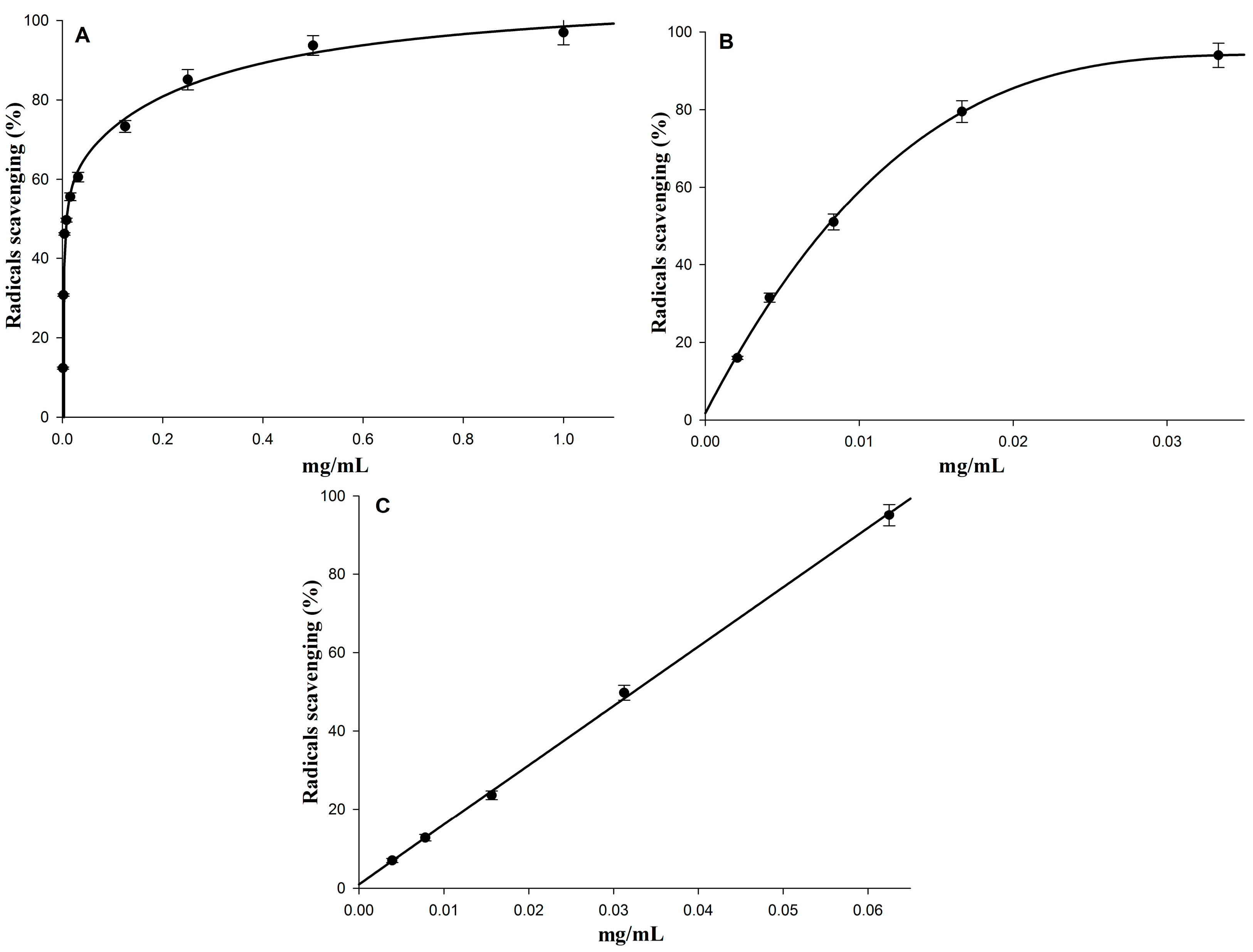
The antioxidant potential of the ethyl acetate/water (pH 3.0) leaf extract of C. coggygria was evaluated using three complementary assays: DPPH, NBT, and ABTS•+ radical scavenging tests (Figure 2). All experiments were performed in triplicate. The IC50 values (the extract concentration required to scavenge 50% of the radicals) are provided in Table 2. Vitamin C was used as a reference substance.
Figure 2A illustrates the percentage inhibition of DPPH radicals by C. coggygria extract across a concentration range of 0.5 to 1000 μg/mL. The extract exhibited a concentration-dependent increase in radical-scavenging activity, surpassing that of the reference antioxidant, vitamin C (Table 2). At the lowest concentration (0.5 μg/mL), the extract inhibited approximately 10% of DPPH radicals, while at the highest concentration (1000 μg/mL), inhibition reached 100%. The dose–response relationship was nonlinear, with a steep, near-linear increase in radical scavenging observed at lower concentrations, followed by a plateau at higher concentrations. The calculated IC50 value was 7 ± 0.61 μg/mL. These findings are consistent with previous reports highlighting the strong antioxidant potential of C. coggygria extracts. In a comprehensive analysis, Sukhikh et al. reported an antioxidant capacity of 145.09 mg ascorbic acid equivalents per gram of dry extract, with pronounced radical-scavenging activity in DPPH assays, as well as notable iron-reducing ability and inhibition of lipid peroxidation [5]. Similarly, methanol extracts prepared from leaves and flowers of C. coggygria demonstrated substantial DPPH radical-scavenging activity, as documented by Savikin et al. [40]. These studies corroborate the high antioxidant potential observed in the present investigation and support the role of phenolic compounds as the principal contributors to radical neutralization.
The scavenger activity of C. coggygria against superoxide radical anion was investigated in a concentration range from 2 to 33 μg/mL. The results are shown in Figure 2B. At the lowest applied concentration of 2 μg/mL, the inhibitory effect of the extract was 16%, and at the highest reached 94%. The dependence was nonlinear, with the curve smoothly tending to the final inhibition value. The calculated IC50 was 8.1 ± 0.34 μg/mL.
The extract was further evaluated for its radical-scavenging activity against ABTS•+ over a concentration range of 1.95 to 62.5 μg/mL (Figure 2C). At the lowest concentration, inhibition was 7%, while the highest concentration (62.5 μg/mL) resulted in 95% inhibition. Beyond this concentration, no further change in absorbance was observed, indicating reaction completion. The relationship between extract concentration and ABTS•+ scavenging was linear, with a correlation coefficient of 0.9997, and the calculated IC50 value was 33.4 ± 2.9 μg/mL. These results are consistent with previous studies demonstrating the antioxidant potential of C. coggygria. Sukhikh et al. reported a TEAC value of 0.46 ± 0.02 mM Trolox equivalent per gram of fresh mass for ethanol extracts of C. coggygria against ABTS•+ [5]. Similarly, Shagun et al. observed a scavenging activity of 55.43 ± 0.4% for 0.5 mL of C. coggygria essential oil [41].
Antioxidant activity, especially in the DPPH test, in which free radical scavenging occurs primarily through hydrogen transfer from the antioxidant, depends on the presence of free hydroxyl groups in the antioxidant molecule. C. coggygria extract mainly contains hydrolyzable gallotannins (oligo-O-galloyl glucoses), which are rich in hydroxyl groups, explaining the high antioxidant potential of this extract.
Recent studies have further expanded the range of antioxidant assays applied to C. coggygria leaf extracts. For instance, Şeker Karatoprak et al. employed a comprehensive panel including DPPH, ABTS, FRAP, metal-chelating, β-carotene bleaching, and lipid peroxidation inhibition assays, demonstrating that methanol extracts of C. coggygria possess broad-spectrum antioxidant activity [42]. These findings corroborate the high antioxidant potential observed in the present study and underscore the versatility of the extract in neutralizing different types of reactive species.
Interestingly, the test using the second method applied gave a close IC50 of 8 μg/mL, even though it is based on a different principle—donating an electron to gain oxygen. In the body, O2•- is itself not considered particularly dangerous, but it produces highly reactive hydroxyl radicals that completely alter cell metabolism and can lead to a number of diseases. Therefore, its timely neutralization could stop the chain of reactions at an early stage. When using ABTS•+ as a test substance, the IC50 value obtained is nearly five times higher than that obtained using DPPH. The most likely reason for this significant difference is that the reaction rate of ABTS•+ with the antioxidant may be slow, and more time is required to complete the reaction. It should be noted, however, that there is no uniform standard regarding incubation time.
Presently, the formation of moderate quantities of ROS is well known to happen in tumor cells, since ROS provoke mutations in more DNA molecules and promote tumor growth and progression. Additionally, tumor cells develop different protective mechanisms of excessive ROS scavenging because they can lead to cells’ death by apoptosis/necrosis. This dual role of ROS in tumor progression is now widely recognized [43,44]. On the other hand, some natural antioxidants possessing many oxygen-containing groups (like OH-groups in HGT) can form stable radicals inside the cells, which increases the ROS concentration and can lead to cell cycle arrest and apoptosis. For example, it is shown that PGG induces a “senescence-like” S-phase block in human hepatoma cells (including HepG2 cell line) by provoking a high intracellular ROS formation [45]. Obviously, HGTs (of which PGG is a well-studied representative) possess both anti- and pro-oxidant activities depending on the tumor cells metabolism. Although the other HGTs are not studied in this regard, it seems reasonable to suggest that they have a similar effect in HepG2 cells. It should also be noted that some natural antioxidants are still widely used in small quantities as dietary supplements for the prevention of cancer [46]. In this respect, our extract seems to be promising as a component of food additives.

3.2. Assessment of Cytotoxicity and In Vitro Anticancer Activity of C. coggygria Extract

3.2.1. Cytotoxicity Evaluation

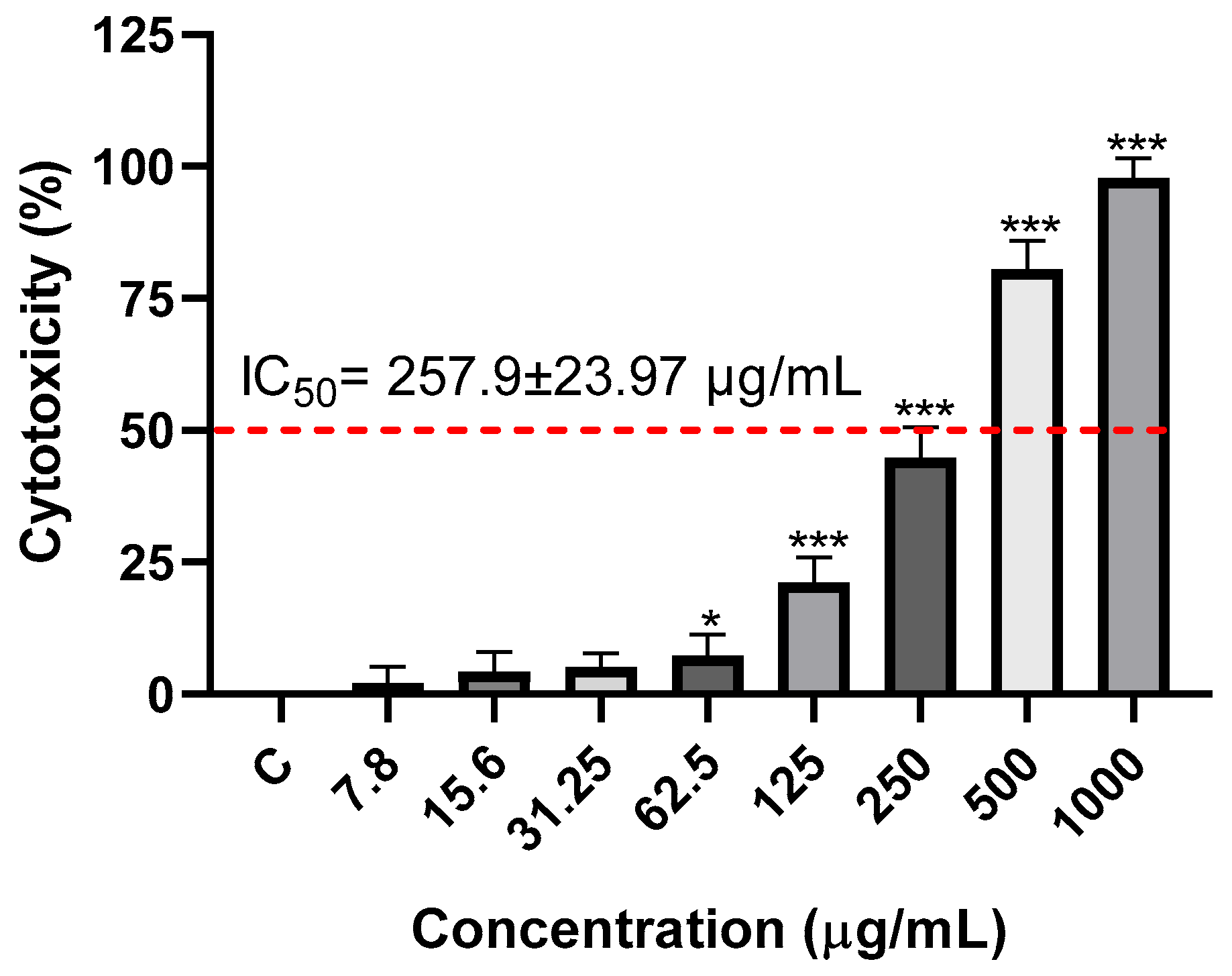
The in vitro cytotoxicity of the tested extract was evaluated using the BALB/3T3 Neutral Red Uptake (NRU) assay to assess its effect on cell viability. The results of this evaluation are presented in Figure 3.
As shown in the figure, the extract exhibited a concentration-dependent reduction in cell viability. Low concentrations (7.8–62.5 µg/mL) did not produce significant cytotoxic effects, with cell viability remaining close to that of the untreated control. A moderate but significant decrease in viability was observed at 125 µg/mL. At higher concentrations (250–1000 µg/mL), cytotoxicity increases dramatically, with viability dropping significantly below 50%, especially at concentrations like 500 µg/mL and 1000 µg/mL. The IC50 value was determined to be 257.9 ± 23.97 µg/mL, indicating moderate cytotoxic activity.

3.2.2. In Vitro Anticancer Activity

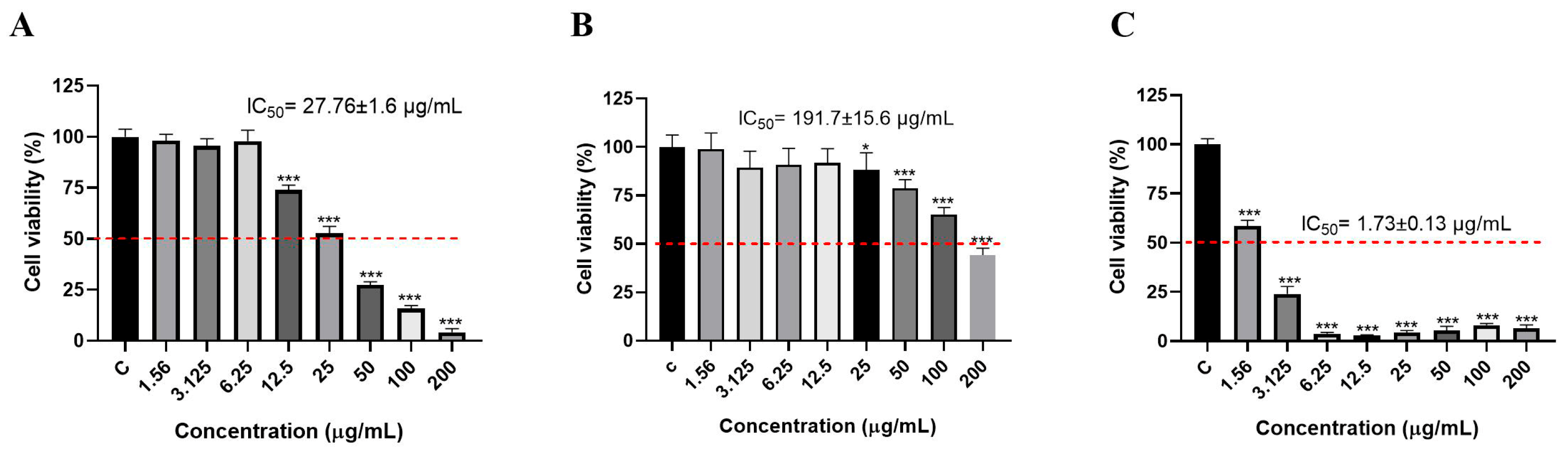
Building on our previous findings that the ethyl acetate/water extract of C. coggygria is enriched in high-molecular hydrolysable gallotannins and exhibits promising antitumor potential, we next investigated its effects on human hepatocellular carcinoma HepG2 cells in greater detail [4,9]. The ethyl acetate/water fraction of C. coggygria was evaluated for cytotoxicity in HepG2 and HaCaT cells after 48 h using the neutral red uptake assay (Figure 4A–C). The extract reduced HepG2 viability in a clear dose-dependent manner, with significant decreases beginning at 12.5 μg/mL (p < 0.001). The IC50 value of 27.76 ± 1.6 μg/mL indicates moderate cytotoxic activity toward hepatocellular carcinoma cells.
HaCaT keratinocytes were substantially less sensitive to the extract, maintaining viability above 80% up to 25 μg/mL and showing significant reductions only at higher concentrations (≥50 μg/mL). The IC50 of 191.7 ± 15.6 μg/mL demonstrates markedly lower toxicity toward non-malignant cells, suggesting a degree of selectivity for cancer cells.
Doxorubicin, used as a positive control, showed strong cytotoxicity in HepG2 cells with an IC50 of 1.73 ± 0.13 μg/mL, as expected for a potent chemotherapeutic agent. Although the plant extract is less potent than Doxorubicin, its preferential activity toward HepG2 over HaCaT cells highlights its potential as a source of bioactive compounds with selective anticancer properties. These findings support further investigation into the active constituents and their mechanisms of action.

3.3. Inhibition Assay for POP

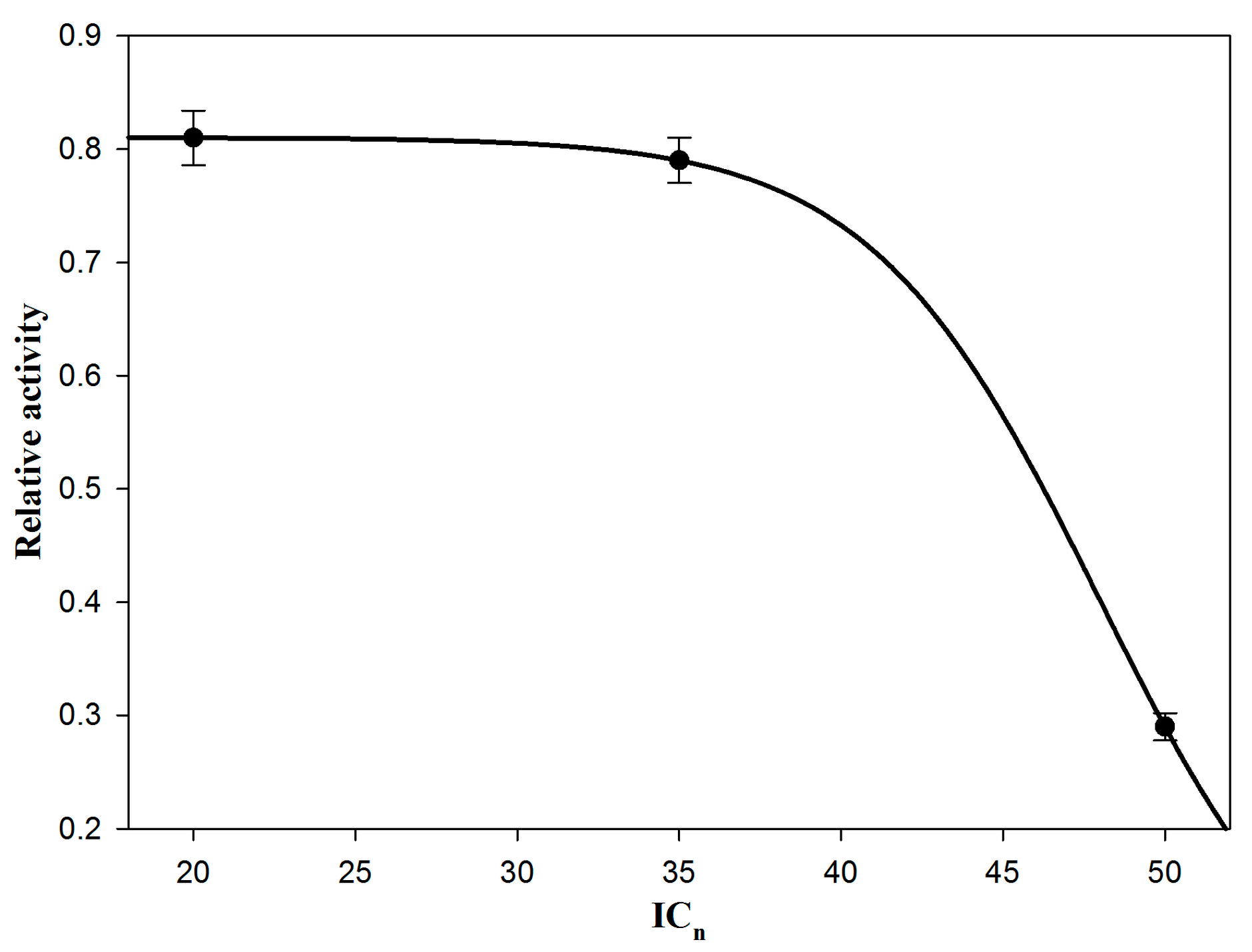
POP is a serine endopeptidase belonging to the family of post-proline cleaving proteases. It is involved in a number of physiological processes by regulating the expression of various genes in cells. Additionally, it is found that POP is up-regulated during the tumorigenesis of many types of tumors [47]. Moreover, the enzyme affects positively cells’ proliferation and also angiogenesis of solid tumors [48,49]. Since in our previous paper we showed that the extract of C. coggygria is a powerful and selective POP inhibitor (IC50 = 0.12 μg/mL), we decided to test this inhibitory activity in a living HepG2 cell [4]. Although the high molecular HGT are lipid soluble, it is uncertain whether they can enter the cell membrane and reach the cytosolic POP to suppress its activity. Results of this experiment are given in Figure 5.
From the figure, it is seen that at IC20 the POP activity is inhibited by 20%. From IC20 to IC35 it does not change considerably, though it continues to decrease. However, at IC50 the remaining enzyme activity is less than 30% of the one in non-treated controls.
The role of POP in hepatocellular carcinoma is not fully elucidated. It is shown that the enzyme levels increase during steatosis in patients with metabolic dysfunction-associated fatty liver disease. Moreover, its inhibitor KYP-2047 suppresses the transition from steatosis to steatohepatitis and also to more serious diseases like hepatic cancers [50]. This activity of the POP inhibitor is attributed to the attenuation of oxidative stress and liver inflammation, improvement of lipids metabolism, and activation of autophagy associated pathways like Pin1. Moreover, these findings are demonstrated in the HepG2 cell line. Thus, it is reasonable to suppose that the native inhibitors in the C. coggygria extract also contribute to its antitumor activity in HepG2 cells.

3.4. FACS Analysis of the Cell Cycle

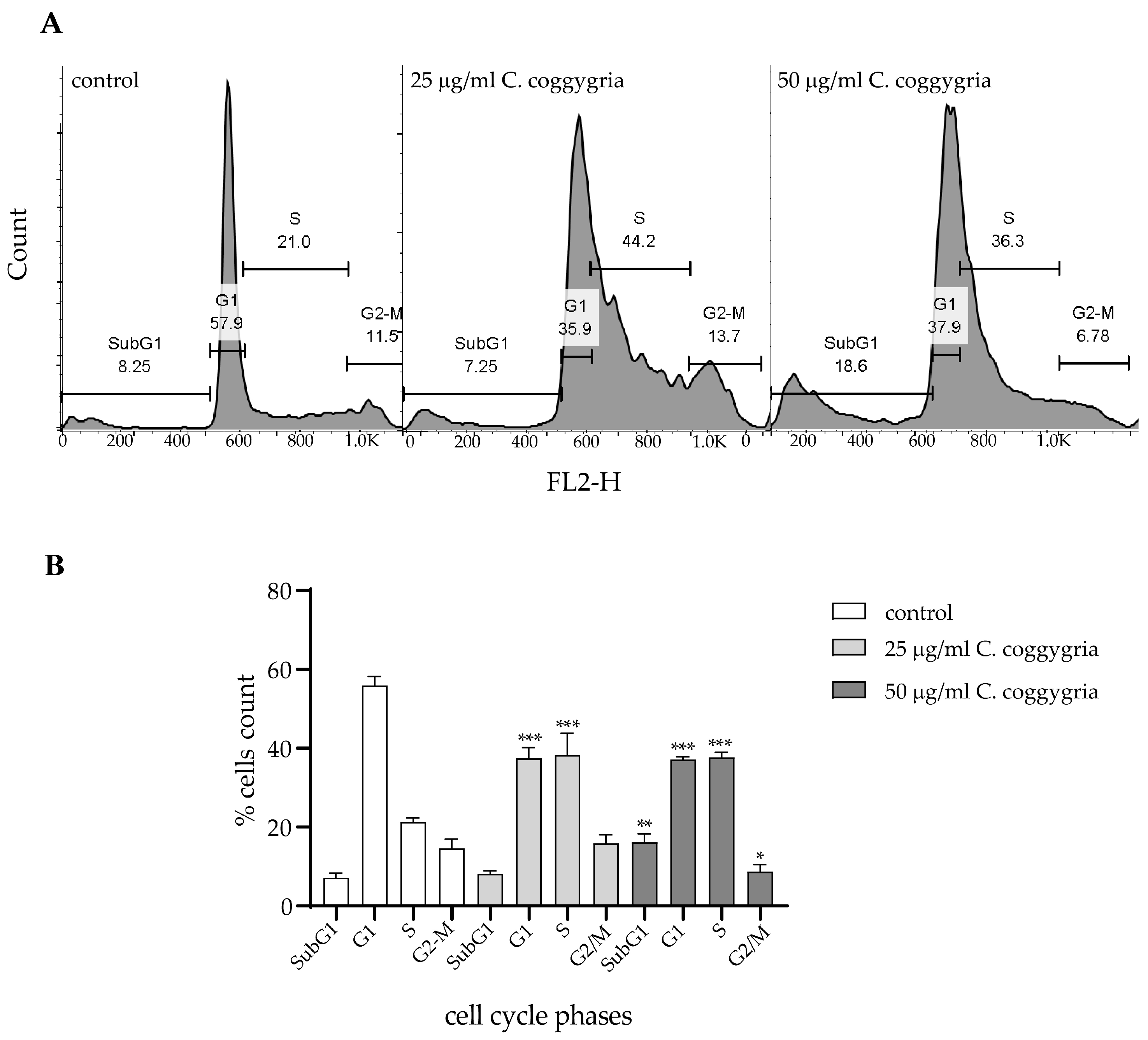
To further clarify the mechanisms underlying the cytotoxic effects of the C. coggygria extract on HepG2 cells, we next examined its impact on cell cycle progression using FACS analysis. Since the IC50 value was determined after 48 h of exposure, sub-cytotoxic and moderately cytotoxic concentrations (25 and 50 µg/mL) were selected for a 24 h treatment to capture early cell cycle disturbances prior to overt cell death. Untreated HepG2 cells served as controls. The resulting DNA content profiles and quantitative distribution of cells across the G1, S, and G2/M phases are presented in Figure 6A,B. In control cells, 57.9% of the population resides in the G1 phase (2N). Treatment with the C. coggygria extract led to a reduction in the proportion of cells in G1, accompanied by a pronounced, dose-dependent accumulation of cells in the S phase and a concomitant decrease in the G2/M population. These alterations indicate an interference with DNA synthesis and suggest an S-phase arrest. At the higher treatment concentration (50 µg/mL), an increase in the Sub-G1 population—representing cells with reduced DNA content—was also observed, which is consistent with the onset of DNA fragmentation.
An S-phase arrest has similarly been reported in MCF-7 human breast carcinoma cells treated with an aqueous ethanol extract of C. coggygria leaves [51]. Retention of cells in S phase may result from DNA mutations or the accumulation of DNA strand breaks, which halt progression until cellular repair mechanisms are activated. When such damage cannot be adequately repaired, the cells may undergo programmed cell death.
The observed disturbances in cell cycle progression may be at least partially attributed to the inhibition of prolyl oligopeptidase (POP). A G0/G1 arrest has been documented in human gastric cancer cells exposed to the synthetic POP inhibitor SUAM-14746 [48]. In that study, the authors also reported increased levels of p27kip1 and pRb2/p130, both of which act as suppressors of cyclin-dependent kinases (CDKs), thereby restricting cell cycle progression and limiting tumor cell proliferation.

3.5. Fluorescence Microscopy Analyses

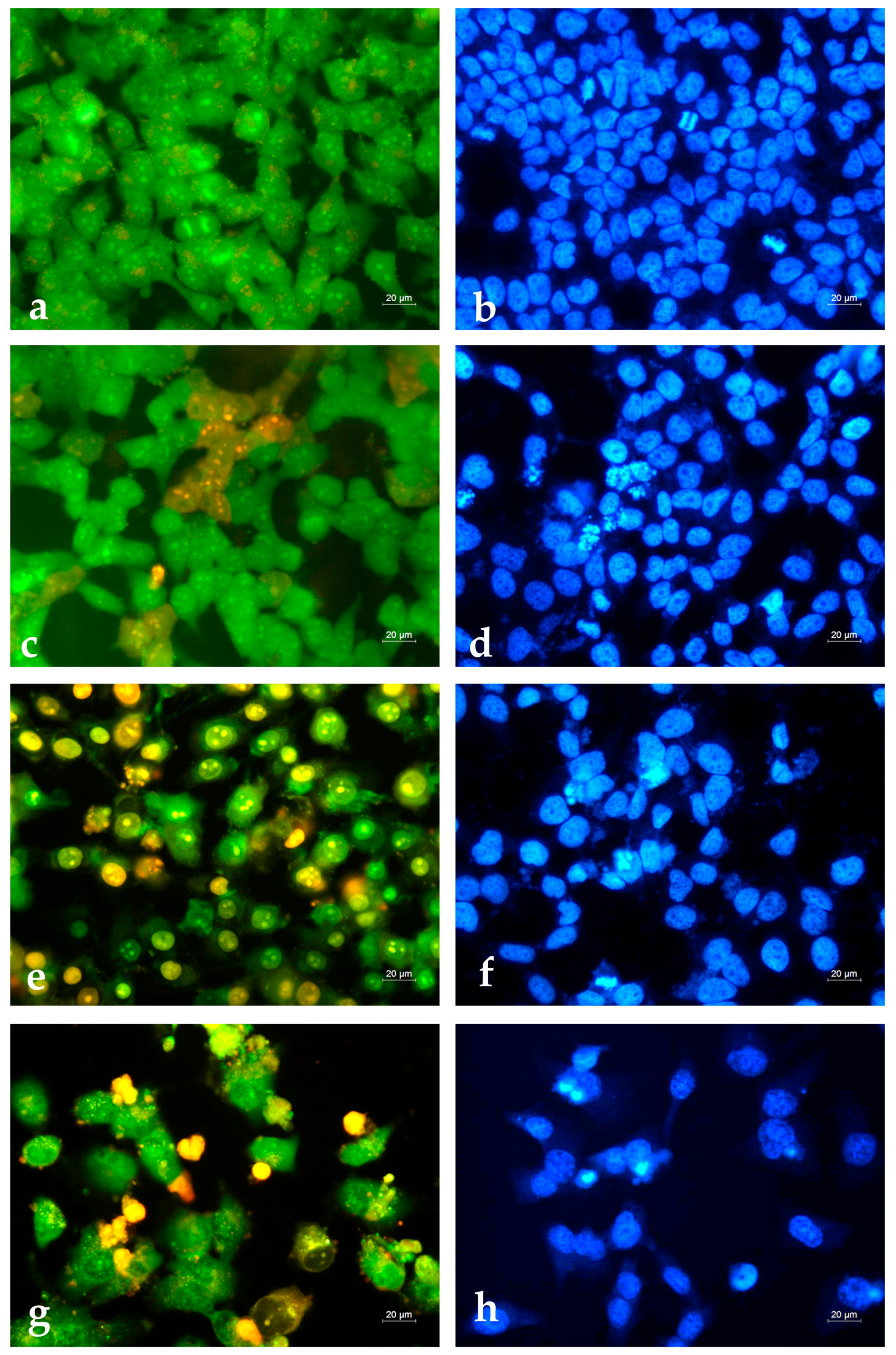
The effects of the ethyl acetate/water extract of C. coggygria on HepG2 cell morphology were examined by fluorescence microscopy (Figure 7). Untreated cells exhibited normal morphology, with intact plasma membranes and uniform nuclear staining, as revealed by both AO/EB and DAPI staining (Figure 7a,b).
Exposure to the extract at 25 µg/mL induced moderate cytological changes (Figure 7c,d), including chromatin condensation, nuclear fragmentation, and the appearance of early apoptotic cells, characterized by bright green staining with acridine orange and partial membrane blebbing. At 50 µg/mL, more pronounced alterations were observed (Figure 7e,f), including increased numbers of cells with fragmented nuclei, dense chromatin, and orange/red staining indicative of late apoptosis or secondary necrosis. These findings suggest a dose-dependent induction of apoptotic processes by the extract.
The cytological changes observed with the extract were comparable, though slightly less pronounced, than those seen in HepG2 cells treated with 2 µg/mL doxorubicin (positive control, Figure 7g,h), which displayed extensive chromatin condensation, nuclear fragmentation, and membrane permeability consistent with advanced apoptosis.
These results are consistent with the observed S-phase arrest and DNA damage reported in earlier assays. The nuclear fragmentation and chromatin condensation detected by DAPI staining, along with AO/EB fluorescence patterns, indicate that the cytotoxicity of the C. coggygria extract is mediated at least in part through apoptotic pathways. The dose-dependent increase in apoptotic features aligns with the DNA damage and comet assay data, supporting the interpretation that the extract induces progressive cell death via apoptosis in HepG2 cells.
Overall, fluorescence microscopy confirms that the ethyl acetate/water extract from C. coggygria exerts cytotoxic effects in a dose-dependent manner, promoting morphological hallmarks of apoptosis. These observations provide further evidence of its potential as a selective anticancer agent and complement the mechanistic insights obtained from cell cycle analysis.

3.6. Apoptosis Assay

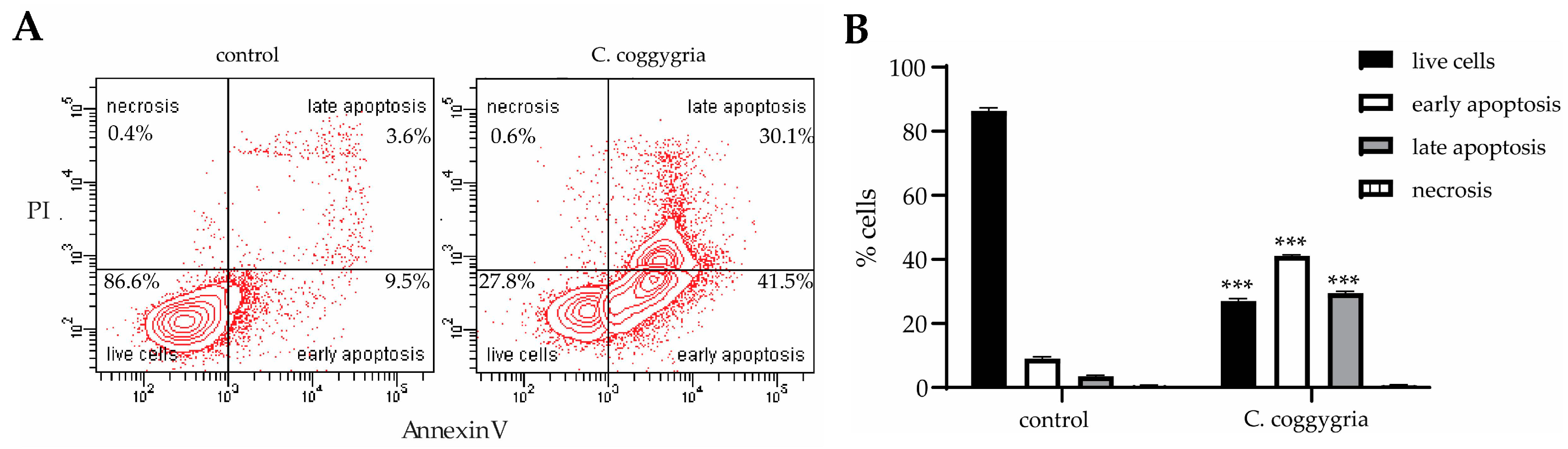
The pro-apoptotic activity of the ethyl acetate/water extract of C. coggygria was evaluated in HepG2 cells using annexin V-FITC/PI dual staining, a widely applied method for discriminating viable, early apoptotic, late apoptotic, and necrotic cells based on phosphatidylserine externalization and membrane integrity loss [52]. The analysis revealed a marked shift in cell population distributions following treatment with 25 µg/mL of the extract (Figure 8).
In the untreated control population, the majority of cells (86.6%) remained viable and double-negative for annexin V and PI, indicating a low level of spontaneous cell death under the experimental conditions. Treatment with C. coggygria resulted in a pronounced decrease in cell viability to 27.8%, demonstrating notable cytotoxic effects of the extract. The reduction in viable cells, together with the predominance of apoptotic over necrotic death, suggests that the extract triggers regulated apoptotic pathways rather than nonspecific membrane disruption. Similar data have been found with other flavonoid-rich plant extracts, including tannins and gallic acid, which are characteristic of C. coggygria [42,53]. A substantial increase in both early (41.5%) and late apoptosis (30.1%) was detected in C. coggygria-treated cells compared with the control group (9.5% and 3.6%, respectively). This finding strongly indicates that the extract initiates a programmed cell death response. Similar levels have been reported for other C. coggygria extracts that have shown proapoptotic activity against various tumor cell lines, including MCF-7 and A549 [53].
Many phytoactive components of the plant—for example, the flavonoids fisetin, quercetin, gallic acid, and myricetin—are known inducers of caspase activation, mitochondrial dysfunction, and ROS-induced cellular stress [54,55]. Their presence in the extract could explain the observed predominant apoptotic effect.
Additionally, the higher rate of early apoptosis suggests that the process begins relatively early after treatment and activates mechanisms including caspase-3/7 pathways and intrinsic mitochondrial signaling—mechanisms also described for other polyphenolic plant extracts [56]. The increase in late apoptosis further demonstrates progression of the apoptotic cascade.
Necrotic cell death remained low in both the control (0.4%) and treated (0.6%) groups, indicating that necrosis does not substantially contribute to the extract’s cytotoxicity. This supports the notion that C. coggygria exerts a selective apoptotic rather than necrotic effect—a characteristic advantage for potential anticancer agents, as apoptosis avoids inflammation and collateral tissue damage [51].
Taken together, the presented data demonstrate that the ethyl acetate/water extract of C. coggygria exerts a potent pro-apoptotic effect in HepG2 cells, characterized by dramatic decrease in viable cells, significant elevation in early and late apoptosis, and minimal induction of necrosis.
These observations are in line with previous findings reporting cytotoxic and pro-apoptotic properties of C. coggygria and its polyphenolic constituents [57,58]. The extract’s ability to induce apoptosis in hepatocellular carcinoma cells suggests that it may represent a promising source of bioactive compounds with potential anticancer applications.

3.7. Genotoxicity Assay

Genotoxicity assays are inherently challenged by the occurrence of cell death, which is often accompanied by DNA degradation and may artificially increase the apparent level of DNA damage. Therefore, the concentration of a test compound must be carefully adjusted to avoid excessive cytotoxicity. For the comet assay, cytotoxicity thresholds are generally considered acceptable up to 20–30% cell death [59]. It should also be noted that the IC50 value is time dependent, as even low concentrations may exert substantial effects when exposure is prolonged.
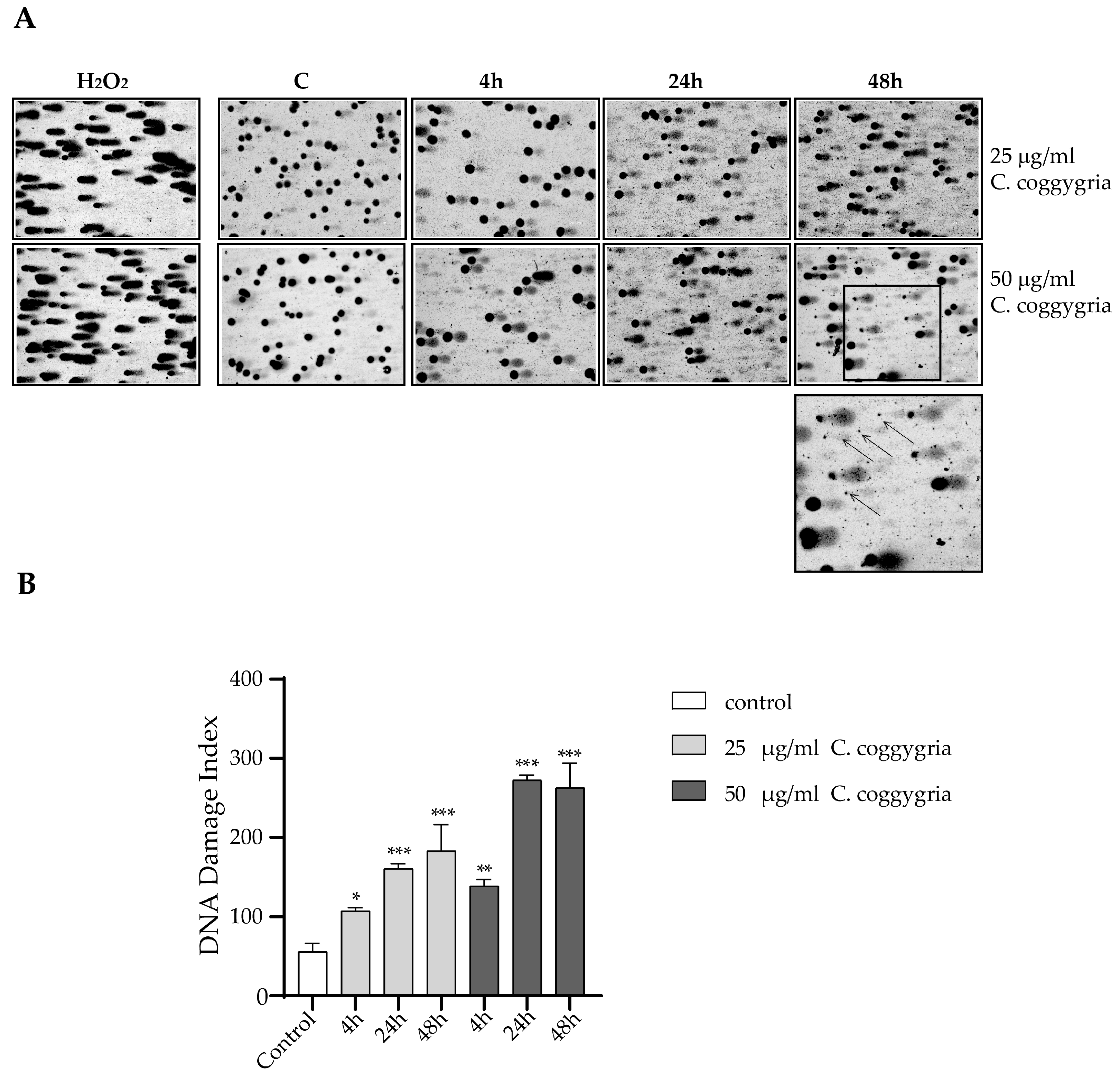
The genotoxic potential of the C. coggygria extract was assessed using the alkaline comet assay in HepG2 cells treated with 25 or 50 μg/mL for 4, 24, and 48 h. Untreated cells served as the negative control, while 150 μM H2O2 for 3 min was used as a positive control. Microscopic examination (Figure 9A) revealed that control cells exhibited intact nuclei with minimal DNA migration. In contrast, extract-treated cells displayed a clear concentration- and time-dependent increase in DNA tail length and intensity, indicating accumulation of DNA strand breaks. At 50 μg/mL, hedgehog-type comets appeared as early as 24 h. These structures, characterized by extensive DNA dispersion and low nuclear integrity, are typically associated with apoptotic or necrotic cells [60,61]. However, some reports warn that hedgehog comets may also arise from severe DNA damage independent of programmed cell death [62]. In the present study, the apoptotic nature of these highly damaged cells was supported by flow-cytometric analysis, confirming that the hedgehog comets predominantly reflect late-stage apoptosis. Their increased abundance at 48 h is consistent with progressive DNA fragmentation and terminal cell death. Cells with extremely small nuclei and faint tails (highlighted by arrows in Figure 9A) were excluded from the analysis, as they could not be reliably quantified. The strong and uniform DNA degradation observed in the H2O2-treated positive controls confirmed the robustness of the assay and the effectiveness of the silver-staining procedure.
The DNA damage index (Figure 9B) corroborated the microscopic observations. At 25 μg/mL, DNA damage increased gradually across the 4–48 h exposure period. At 50 μg/mL, a more pronounced rise in DNA damage was detected at 24 and 48 h, demonstrating a clear dose- and time-dependent genotoxic response to the extract. Statistical analysis confirmed significant differences relative to the control (p < 0.05; p < 0.01; p < 0.001).
These results align with earlier findings regarding the genotoxic and pro-apoptotic activities of C. coggygria extracts in cancer cells. Gospodinova et al. reported induction of DNA damage, S-phase arrest, apoptosis, and reduced colony formation in MCF-7 breast cancer cells following extract treatment [51]. Our data extend these observations to HepG2 hepatocellular carcinoma cells, suggesting that DNA damage may be a general mechanism contributing to the extract’s antiproliferative effects across different tumor models.
Studies in normal tissues also provide relevant context. Matić et al. observed in vivo genotoxicity of C. coggygria methanol extract in rat liver and bone marrow only at high doses (1000–2000 mg/kg bw), while no significant effects were detected at 500 mg/kg bw [63]. Interestingly, genotoxicity at 72 h was slightly lower than at 24 h, possibly reflecting activation of DNA repair pathways or clearance of heavily damaged cells. These findings highlight that the extract’s genotoxicity is dose-dependent and may be more pronounced in cancer cells than in normal tissues.
Overall, the dose- and time-dependent formation of comet tails, including hedgehog structures, indicates that the C. coggygria extract induces substantial DNA damage in HepG2 cells. The progression toward extensive DNA fragmentation with prolonged exposure supports the involvement of apoptosis and, potentially, secondary necrosis. Together with previous observations in other cancer models, these findings underscore the extract’s potential as a DNA-damaging agent with anticancer properties while emphasizing the need for careful evaluation of its effects on normal cells.

3.8. Mitochondrial Staining by JC1

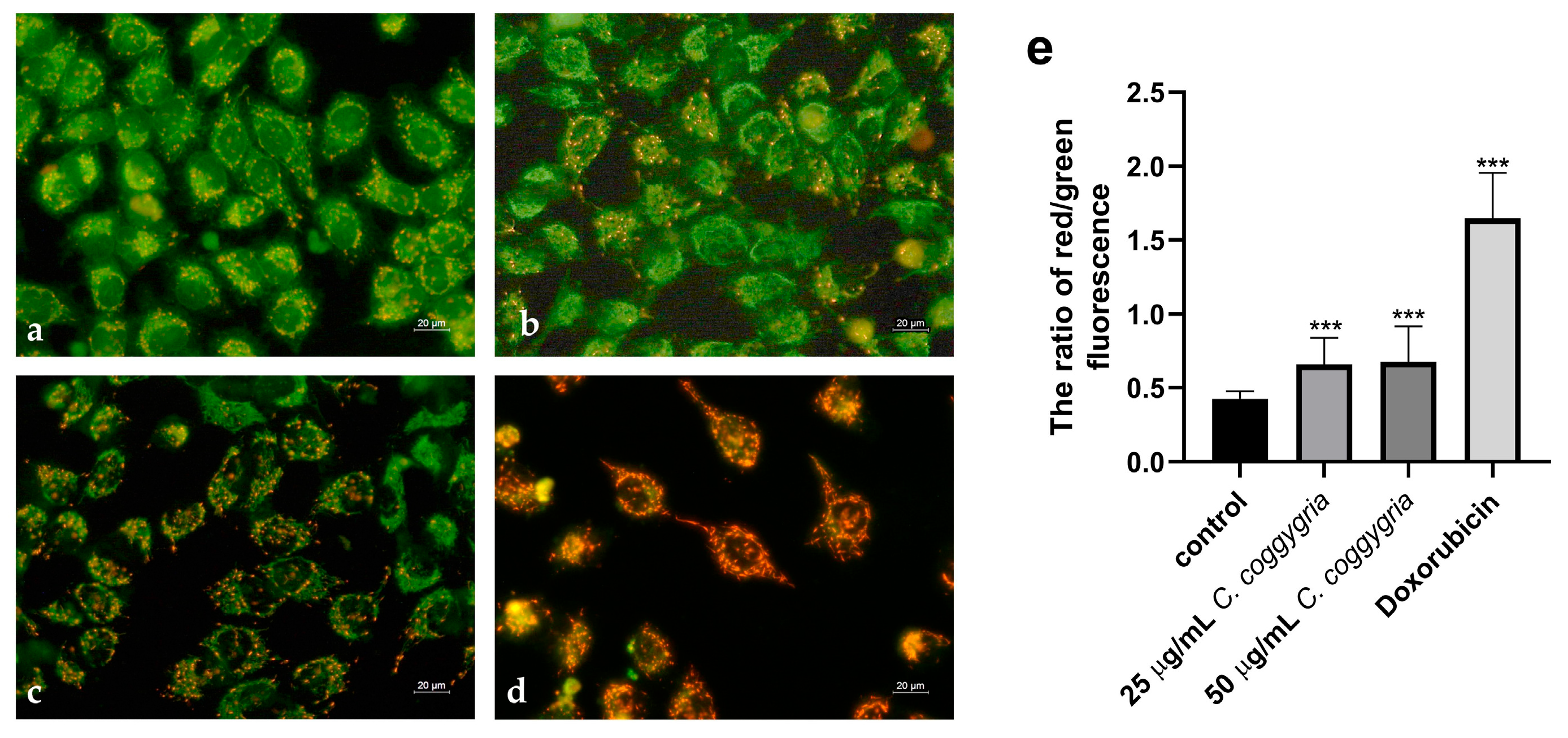
Mitochondrial membrane potential (ΔΨm) was evaluated in HepG2 cells following treatment with C. coggygria extract using JC-1 staining, which differentiates healthy mitochondrial polarization (red JC-1 aggregates) from lower potential states (green monomers). In untreated control cells (Figure 10a), fluorescence was predominantly green with only sparse red puncta, indicating basal ΔΨm typical of non-stressed hepatocellular carcinoma cells. Treatment with 25 µg/mL of the extract (Figure 10b) produced a slight but noticeable increase in red punctate fluorescence, suggesting an early elevation in mitochondrial hyperpolarization. Increasing the concentration to 50 µg/mL (Figure 10c) further enhanced the red/green fluorescence ratio, demonstrating a clear dose-dependent shift toward JC-1 aggregate formation.
Quantitative analysis (Figure 10e) confirmed these observations, with both extract concentrations significantly increasing the red/green fluorescence ratio compared to the control (*** p < 0.001). Although the extract-induced hyperpolarization was moderate, it followed a consistent concentration-dependent pattern, indicating that mitochondrial alterations constitute part of the cellular response to C. coggygria treatment. In contrast, the positive control doxorubicin (Figure 10d) produced intense orange–red mitochondrial fluorescence and a markedly elevated fluorescence ratio, reflecting strong mitochondrial hyperpolarization associated with its well-known pro-apoptotic activity.
These findings together suggest that C. coggygria extract modulates mitochondrial function and may initiate early apoptotic signaling in HepG2 cells. The observed increase in ΔΨm is consistent with early apoptotic hyperpolarization—a phenomenon that often precedes mitochondrial depolarization, cytochrome c release, and activation of downstream caspase cascades. Such effects align with the known bioactivity of the plant’s phenolic and flavonoid constituents, which have been reported to influence mitochondrial integrity and promote apoptotic cell death in cancer models.
Overall, the concentration-dependent increase in ΔΨm indicates that mitochondrial involvement is a key component of the cytotoxic mechanism of C. coggygria extract in HepG2 cells. While the extract produced a milder effect than doxorubicin, its capacity to alter mitochondrial dynamics supports its potential as a complementary anticancer agent capable of engaging intrinsic apoptotic pathways.

3.9. Ligand–Protein Docking Study

Molecular docking is a computer modeling method that predicts the preferred orientation of one molecule (ligand) relative to another (receptor) when they form a stable complex, as well as the energy and binding mode of the resulting complex. This method plays a significant role in drug discovery and development, since it allows the simulation of interactions between small molecules and their biological targets, such as proteins or nucleic acids [64]. Currently, molecular docking is an indispensable tool in structural biology and medicinal chemistry for solving a wide range of problems.
In our previous work [4], we found that the main components in C. coggygria extracts are HGTs (oligo-O-galloyl glucoses) from penta-O-galloyl glucose (PGG) to nona-O-galloyl glucose. As it was mentioned above, PGG is the most studied representative of HGTs due to its well documented antitumor activity in various human tumor cells in vitro. From the earlier reports, it becomes clear that the substance provokes G1-phase and S-phase arrests in many cell types, as does also the ethyl acetate/water extract of C. coggygria leaves. There are different results about the mechanisms underlying these blocks, which have been recently summarized by Wen et al. [7]. According to certain studies, PGG cannot directly affect the CDKs activities; however, it inhibits the cyclin/CDK complexes by activating their natural inhibitors [65,66]. Therefore, we decided to check the theoretical possibility for PGG to be also a natural inhibitor of the CDK enzymes, serving as parts of the corresponding checkpoints, by using molecular docking methods.
The aim of this study was to estimate the potential of PGG as an inhibitor of CDK2 and Chk1. Preliminary data about the binding affinity of OGG were also presented below. In Table 3, the docking score (binding affinity) of PGG to CDK2 and Chk1 is presented in comparison to the one of known enzymes’ inhibitors selected to serve as positive controls.
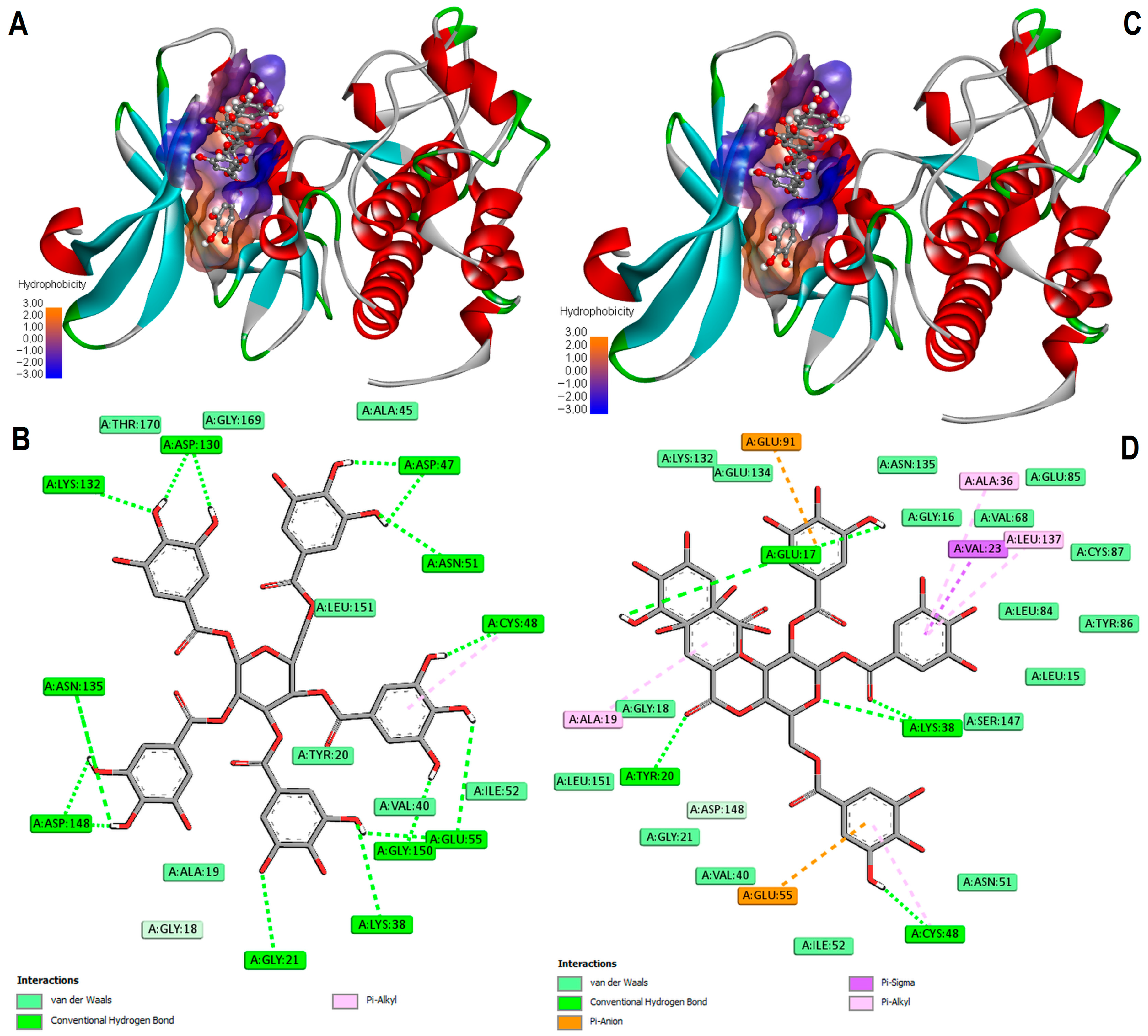
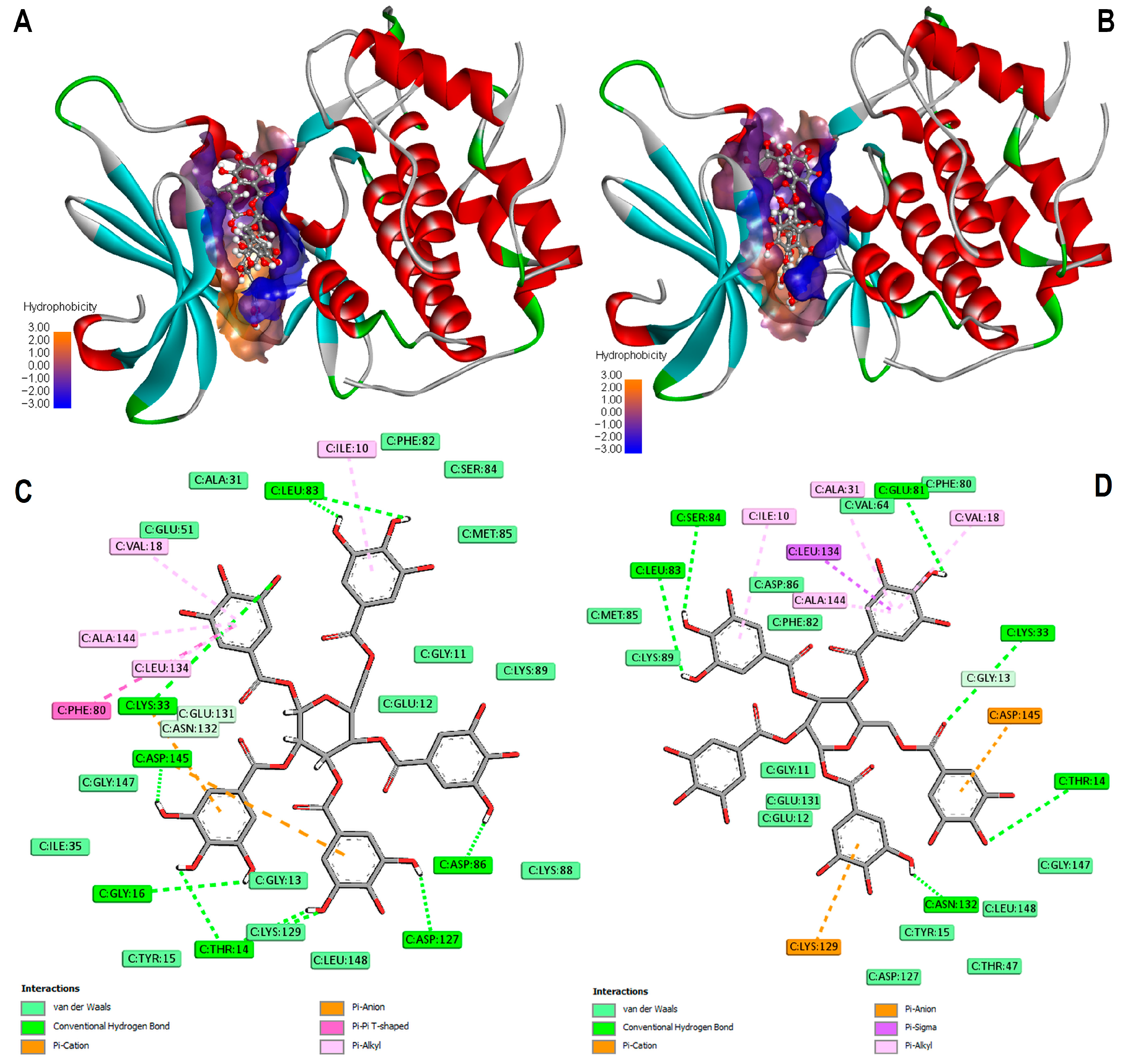
The binding affinity of PGG, obtained by both docking tools, was visibly higher than the one of dinaciclib, when CDK2 is in a complex with cyclin (PDB ID: 1FIN, 5NEV, and 4EOM). The conformational change in CDK2 provoked by the cyclin binding is a key step for the enzyme activation. The next step is a phosphorylation of CDK2/cyclin dimer at Thr160 by the CDK-activating kinase, which causes the conformational modifications of CDK2 and is actually the final step for the kinase to reach its complete activation state [i20]. However, the docking results show that the affinity of PGG to CDK2/cyclin A complex (PDB ID: 1FIN) and Thr160-phosphorylated CDK2/cyclin A complex (PDB ID: 4EOM) is the same (−10.1 kcal/mol) according to the calculations using SwissDock2 and very close when using CB-Dock2 (−8.9 kcal/mol and −9.1 kcal/mol, respectively). Furthermore, the position of PGG in the active center of CDK2 differs when using the two docking simulations. This is illustrated for the CDK2 complex (PDB ID: 4EOM) with PGG in Figure 11 and for the CDK2 complex (PDB ID: 1FIN) with PGG in the Supplementary Figure S1. We believe that those results are due to the fact that phosphorylation of Thr160 does not lead to a significant conformational change in the hydrophobic part of the enzyme’s active site (Supplementary Figure S2) [67]. Similar results with two docking simulations (−9.6 and −9.2 kcal/mol) were obtained for the binding affinity of PGG with the CDK2 complex with cyclin A and 2-arylaminopurine type inhibitor (PDB ID: 5NEV).
Another result is obtained for the affinity of PGG as compared to that of dinaciclib when using 3D structure of the enzyme in complex with this inhibitor (PDB ID: 4KD1). Both types of molecular docking simulations show that dinaciclib as positive control binds better (−9.4 and −9.5 kcal/mol) than PGG (−7.9 and −8.2 kcal/mol). Furthermore, the values obtained for the energies of the complexes acquired from the two docking simulations are practically identical. This is probably due to the low degree of conformational flexibility of the dinaciclib molecule. However, the CDK2 molecule can go through a number of structural modifications to fit and bind inhibitors. Such changes can happen even when it is already assembled and fully activated [67]. Superimposed structures of the CDK2-dinaciclib complex and CDK2-ATP complex (PDB ID: 1HCK) show a minor difference in the enzyme backbone but significant differences in the orientation of the amino acids’ side chains in the active site (Supplementary Figure S3). This may be the reason for the qualitatively different results of docking calculations using these two structures.
For Chk1 the docking score for binding affinity of PGG at the catalytic site of enzyme varies from −9.4 to −10.0 kcal/mol for docking simulations with SwissDock2 and from −8.7 to −9.0 kcal/mol for docking simulations with CB-Dock2. For the structure of Chk1 (PDB ID: 7AKM) in a complex with adenosine 5′-(γ-thio)-triphosphate (ATPγS), the docking scores indicated higher affinity of PGG to the enzyme relative to the inhibitor used as a positive control. The values of binding energies from the two docking simulations differ significantly: −9.6 kcal/mol from SwissDock2 and −8.7 kcal/mol from CB-Dock2. The binding positions of PGG in the ATP-binding site obtained by the two methods also differ significantly (Figure 12).
The results obtained from the docking using SwissDock2 show that the affinity of PGG to Chk1 in complex with 1H-pyrrolo[2,3-b]pyridine type inhibitor (PDB ID: 1ZYS) and Chk1 in complex with triazolone type inhibitor (PDB ID: 2YEX) was higher than the binding affinity of MK-8776 as a positive control. With these enzyme structures and using CB-Dock2 for simulation, the docking score for PGG and MK-8776 is equal.
Like CDK2, CDK1 can also undergo structural changes in order to bind better to a particular inhibitor. The superimposed structures of Chk1 with PDB IDs 7AKM and 1ZYS show that there is practically no difference in the folding of the protein molecule. In these structures, in the active site of the enzyme there is a significant difference in the spatial position of the side chain of Tyr20. This residue in the complex of Chk1 with 1H-pyrrolo[2,3-b]pyridine type inhibitor is closely located to the pyridine moiety in the structure of the inhibitor. In the complex of PGG with Chk1 (PDB ID: 1ZYS), obtained by molecular docking using the SwissDock2, the side chain of Tyr20 is located next to one of the aromatic residues in the ligand structure.
Superposition of structures of Chk1 complex with triazolone type inhibitor (PDB ID: 1YEX) and Chk1 complex with ATPγS (PDB ID: 7AKM) demonstrates that the position of protein backbones are different in two fragments of the β-sheet structure: Gly16-Val23 and Ala26-Ala34. In the X-ray structure of Chk1 complex with 5-methyl-8-(1H-pyrrol-2-yl)[1,2,4]triazolo[4,3-a]quinolin-1(2H)-one, the fragment Gly16-Gly18 is in a close vicinity to the inhibitor molecule. Structures of the complexes of Chk1 with PGG, obtained by molecular docking using the two simulations, indicate that the ligand contacts with the fragment Gly16-Val23 (Figure S4). Based on the X-ray structures and the results of molecular docking, we can conclude that the binding of a ligand to the active site (ATP-binding site) of the enzyme can cause its conformational change, so that a maximum number of favorable contacts are formed between the target and the ligand.
In our previous studies on the composition of the ethyl acetate/water extract from C. coggygria leaves, we showed that octa-O-galloyl glucoses (OGGs) are the main HGT represented by three isomers [4]. Thus, we were interested in modeling the interaction of OGG with the two enzymes to determine the likelihood for this HGT to be their inhibitor. For this purpose, we used two structures of CDK2 (CDK2-cyclin complex-PDB ID: 4EOM and CDK2-ATP complex-PDB ID: 1HCK) and one of CDK1 (PDB ID: 1ZYS). The structures of possible five OGG isomers were downloaded from PubChem in sdf file format. To predict the possible molecular interactions between the target enzymes and OGG isomers, we used docking tool CB-Dock2. The results obtained from the calculations for CDK2 show that the binding affinities of the OGG isomers to the enzyme are in the range from −8.4 to −9.5 kcal/mol. These values were very close (or higher) than the molecular docking score showing the binding affinity of dinaciclib as a positive control (Table 3). Similar results were obtained when docking the isomers to Chk1. The affinities of the OGG isomers to this enzyme are in the range from −8.5 to −9.6 kcal/mol. These values are comparable to or exceed the affinity of the synthetic inhibitor (MK-8776) used as a positive control (Table 3). The obtained molecular docking results give us a reason to assume that PGG, and OGG, are potential inhibitors of both enzymes.
Further studies for experimental validation of the molecular docking findings are needed to confirm that PGG or the extract directly inhibits these kinases in the living cells. A limitation of our study is that it was performed in in vitro and in silico conditions, and additional in vivo studies on experimental animals would be necessary for assessment of therapeutic safety and efficacy of C. coggygria. Additionally, identification and isolation of the main bioactive constituents of the extract and more detailed mechanistic, toxicokinetic, and pharmacokinetic studies would provide a basis for further development of novel anticancer therapeutics.

4. Conclusions

In the present paper, the biological activity of an ethyl acetate/water extract from the leaves of Cotinus coggygria Scop. of Bulgarian origin was characterized regarding its antioxidant activity and antitumor action towards the human hepatocellular carcinoma HepG2 cell line. Additionally, the mechanisms underlying the extract-induced cell cycle arrest and resulting pro-apoptotic effect were further analyzed by molecular docking. The extract showed a high antioxidant activity, suggesting its potential uses in food additives and medicines to prevent the negative consequences of ROS formation. In addition, a high antiproliferative effect of the extract on HepG2 cells with very good selectivity as compared to the nontumorigenic HaCaT cells was demonstrated. The detected anticancer effects were underlain by extensive DNA damage, inhibition of the POP enzyme, disruption of mitochondrial function, substantial S-phase cell cycle arrest, and induction of apoptosis. The molecular docking suggested the inhibition of the CDK2 complex with cyclin A and Chk1 by PGG, found in the extract as a potential mechanism of the anticancer effects in hepatocellular carcinoma cells. Overall, these findings deepen the understanding of the biological activity of C. coggygria extract and support its potential as a natural candidate for the development of new therapeutic strategies against hepatocellular carcinoma.

Supplementary Materials

The following supporting information can be downloaded at https://www.mdpi.com/article/10.3390/app16020740/s1, Figure S1. Docking results for the PGG in CDK2 (PDB ID: 1FIN) ATP-binding site. Ribbon diagram depicting the crystal structure of the protein. Enzyme surface in contact with ligand is colored by hydrophobicity. PGG is shown as ball and sticks colored. Panels (A) and (B) displays the binding of PGG in active site of CDK2, generated using docking tools SwissDock2 and CB-Dock2, respectively. The relevant 2D models for molecular interactions of PGG with enzyme are presented in panels (C) and (D). Visualized using BIOVIA Discovery Studio Visualizer v25.1.0.142884; Figure S2. (A) Superimposed ribbon diagram of the structure of CDK2 (PDB ID: 4EOM) in cyan and CDK2 (PDB ID: 1FIN) in gold.; Figure S3. (A) Superimposed ribbon diagram of the structure of CDK2 (PDB ID: 4KD1) in violet and CDK2 (PDB ID: 1HCK) in light green. (B) Superimposition of both structures, presented with stick model; Figure S4. Docking results for the PGG in Chk1 (PDB ID: 1YEX) ATP-binding site. Ribbon diagram depicting the crystal structure of the protein. Enzyme surface in contact with ligand is colored by hydrophobicity. PGG is shown as ball and sticks colored. Panels (A) and (B) displays the binding of PGG in active site of Chk1, generated using docking tools SwissDock2 and CB-Dock2, respectively. The relevant 2D models for molecular interactions of PGG with enzyme are presented in panels (C) and (D). Visualized using BIOVIA Discovery Studio Visualizer v25.1.0.142884.

Author Contributions

Conceptualization, M.D., I.I., and V.M.; methodology, M.D., I.S., A.G., E.T., V.D., A.V., I.I., and L.K.; software, I.S., V.D., and I.I.; validation, M.D., I.I., I.S., and V.M.; formal analysis, I.S., A.G., E.T., A.V., V.D., and I.I.; investigation, I.S., A.G., E.T., A.V., V.D., and I.I.; resources, M.D. and I.I.; data curation, M.D. and I.I.; writing—original draft preparation, M.D., I.S., V.D., and I.I.; writing—review and editing, M.D., I.I., and I.S.; visualization, I.S., A.G., V.D., I.I., and L.K.; supervision M.D. and V.M.; project administration, M.D. and V.M.; funding acquisition, M.D. and V.M. All authors have read and agreed to the published version of the manuscript.

Funding

This research was funded by BULGARIAN NATIONAL SCIENCE FUND grant number KP-06-N31/1 and by the European Union-NextGenerationEU, through the National Recovery and Resilience Plan of the Republic of Bulgaria, project № BG-RRP-2.004-0004-C01.

Institutional Review Board Statement

Not applicable.

Informed Consent Statement

Not applicable.

Data Availability Statement

The original contributions presented in the study are included in the article, further inquiries can be directed to the corresponding authors.

Conflicts of Interest

The authors declare no conflicts of interest.

References

  1. Matic, S.; Stanic, S.; Mihailovic, M.; Bogojevic, D. Cotinus coggygria Scop.: An overview of its chemical constituents, pharmacological and toxicological potential. Saudi J. Biol. Sci. 2016, 23, 452–461. [Google Scholar] [CrossRef]
  2. Antal, D.S.; Ardelean, F.; Jijie, R.; Pinzaru, I.; Soica, C.; Dehelean, C. Integrating ethnobotany, phytochemistry, and pharmacology of Cotinus coggygria and Toxicodendron vernicifluum: What predictions can be made for the European smoketree? Front. Pharmacol. 2021, 12, 662852. [Google Scholar] [CrossRef]
  3. Ciocan, A.-G.; Tecuceanu, V.; Enache-Preoteasa, C.; Mitoi, E.M.; Helepciuc, F.E.; Vassu Dimov, T.; Simon-Gruita, A.; Cogălniceanu, G.C. Phenological and environmental factors’ impact on secondary metabolites in medicinal plant Cotinus coggygria Scop. Plants 2023, 12, 1762. [Google Scholar] [CrossRef] [PubMed]
  4. Ivanov, I.; Vasileva, A.; Tasheva, D.; Dimitrova, M. Isolation and characterization of natural inhibitors of post-proline specific peptidases from the leaves of Cotinus coggygria Scop. J. Ethnopharmacol. 2023, 314, 116508. [Google Scholar] [CrossRef] [PubMed]
  5. Sukhikh, S.; Noskova, S.; Pungin, A.; Ivanova, S.; Skrypnik, L.; Chupakhin, E.; Babich, O. Study of the biologically active properties of medicinal plant Cotinus coggygria. Plants 2021, 10, 1224. [Google Scholar] [CrossRef]
  6. Pašić, I.; Novaković, M.; Tešević, V.; Milosavljević, S.; Petrović, N.; Stanojković, T.; Matić, I.Z. Exploring the anticancer potential of extracts and compounds from the heartwood of Cotinus coggygria Scop. wild growing in Serbia. BMC Complement. Med. Ther. 2025, 25, 36. [Google Scholar] [CrossRef]
  7. Wen, C.; Dechsupa, N.; Yu, Z.; Zhang, X.; Liang, S.; Lei, X.; Xu, T.; Gao, X.; Hu, Q.; Innuan, P.; et al. Pentagalloyl glucose: A review of anticancer properties, molecular targets, mechanisms of action, parmacokinetics, and safety profile. Molecules 2023, 28, 4856. [Google Scholar] [CrossRef]
  8. Jackson, K.W.; Christiansen, V.J.; Yadav, V.R.; Silasi-Mansat, R.; Lupu, F.; Awasthi, V.; Zhang, R.R.; McKee, P.A. Suppression of tumor growth in mice by rationally designed pseudopeptide inhibitors of fibroblast activation protein and prolyl oligopeptidase. Neoplasia 2015, 17, 43–54. [Google Scholar] [CrossRef]
  9. Iliev, I.; Ivanov, I.; Todorova, K.; Tasheva, D.; Dimitrova, M. Cotinus coggygria non-volatile fraction affects the survival of human cultured cells. Acta morphol. anthropol. 2021, 28, 13–18. [Google Scholar]
  10. Kant, R.; Yen, C.-H.; Lu, C.-K.; Lin, Y.-C.; Li, J.-H.; Chen, Y.-M.A. Identification of 1,2,3,4,6-Penta-O-galloyl-β-D-glucopyranoside as a Glycine N-Methyltransferase Enhancer by High-Throughput Screening of Natural Products Inhibits Hepatocellular Carcinoma. Int. J. Mol. Sci. 2016, 17, 669. [Google Scholar] [CrossRef]
  11. Dicrassin Ltd. and Bilkolechenie.bg. Available online: https://bilkolechenie.bg/ (accessed on 20 March 2023).
  12. Brand-Williams, W.; Cuvelier, M.; Berset, C. Use of a free radical method to evaluate antioxidant activity. LWT-Food Sci. Technol. 1995, 28, 25–30. [Google Scholar] [CrossRef]
  13. Beauchamp, C.; Fridovich, I. Superoxide dismutase: Improved assays and an assay applicable to acrylamide gels. Anal. Biochem. 1971, 44, 276–287. [Google Scholar] [CrossRef] [PubMed]
  14. Re, R.; Pellegrini, N.; Proteggente, A.; Pannala, A.; Yang, M.; Rice-Evans, C. Antioxidant activity applying an improved ABTS radical cation decolorization assay. Free Radic. Biol. Med. 1999, 26, 9–10. [Google Scholar] [CrossRef]
  15. Collins, A.; Møller, P.; Gajski, G.; Vodenkova, S.; Abdulwahed, A.; Anderson, D.; Bankoglu, E.E.; Bonassi, S.; Boutet-Robinet, E.; Brunborg, G.; et al. Measuring DNA modifications with the comet assay: A compendium of protocols. Nat. Protoc. 2023, 18, 929–989. [Google Scholar] [CrossRef]
  16. Singh, N.P.; Tice, R.R.; Stephens, R.E.; Schneider, E.L. A microgel electrophoresis technique for the direct quan-titation of DNA damage and repair in individual fibroblasts cultured on microscope slides. Mutat. Res. 1991, 252, 289–296. [Google Scholar] [CrossRef] [PubMed]
  17. Nadin, S.B.; Vargas-Roig, L.M.; Ciocca, D.R. A silver staining method for single-cell gel assay. J. Histochem. Cytochem. 2001, 49, 1183–1186. [Google Scholar] [CrossRef]
  18. Konca, K.; Lankoff, A.; Banasik, A.; Lisowska, H.; Kuszewski, T.; Gozdz, S.; Koza, Z.; Wojcik, A. A cross platform public domain PC image-analysis program for the comet assay. Mutat. Res. 2003, 534, 15–20. [Google Scholar] [CrossRef]
  19. Garcia, O.; Romero, I.; González, J.E.; Mandina, T. Measurements of DNA damage on silver stained comets using free Internet software. Mutat. Res. Genet. Toxicol. Environ. Mutagen. 2007, 627, 186–190. [Google Scholar] [CrossRef]
  20. Noroozi, M.; Angerson, W.J.; Lean, M.E.J. Effects of flavonoids and Vitamin C on oxidative DNA damage to human lymphocytes. Am. J. Clin. Nutr. 1998, 67, 1210–1218. [Google Scholar] [CrossRef]
  21. Protein Data Bank. RCSB PDB: The Research Collaboratory for Structural Bioinformatics Protein Data Bank. Available online: https://www.rcsb.org/ (accessed on 10 November 2022).
  22. BIOVIA Draw. Available online: https://biovia-draw-2021.software.informer.com/21.1/ (accessed on 11 April 2022).
  23. Parry, D.; Guzi, T.; Shanahan, F.; Davis, N.; Prabhavalkar, D.; Wiswell, D.; Seghezzi, W.; Paruch, K.; Dwyer, M.; Doll, R.; et al. Dinaciclib (SCH 727965), a novel and potent cyclin-dependent kinase inhibitor. Mol. Cancer Ther. 2010, 9, 2344–2353. [Google Scholar] [CrossRef]
  24. Lao, C.D.; Moon, J.; Ma, V.T.; Fruehauf, J.P.; Flaherty, L.E.; Bury, M.J.; Martin, W.G.; Gross, H.; Akerley, W.; Hopkins, J.O.; et al. Southwest Oncology Group S0826: A phase 2 trial of SCH 727965 (NSC 727135, dinaciclib) in patients with stage IV melanoma. Cancer 2025, 131, e35587. [Google Scholar] [CrossRef] [PubMed]
  25. Massey, A.J.; Stokes, S.; Browne, H.; Foloppe, N.; Fiumana, A.; Scrace, S.; Fallowfield, M.; Bedford, S.; Webb, P.; Baker, L.; et al. Identification of novel, in vivo active Chk1 inhibitors utilizing structure guided drug design. Oncotarget 2015, 6, 35797. [Google Scholar] [CrossRef]
  26. Rundle, S.; Bradbury, A.; Drew, Y.; Curtin, N.J. Targeting the ATR-CHK1 axis in cancer therapy. Cancers 2017, 9, 41. [Google Scholar] [CrossRef]
  27. BIOVIA Discovery Studio Visualizer. Available online: https://discover.3ds.com/discovery-studio-visualizer-download (accessed on 30 April 2025).
  28. Bugnon, M.; Röhrig, U.F.; Goullieux, M.; Perez, M.A.; Daina, A.; Michielin, O.; Zoete, V. SwissDock 2024: Major enhancements for small-molecule docking with Attracting Cavities and AutoDock Vina. Nucleic Acids Res. 2024, 52, W324–W332. [Google Scholar] [CrossRef]
  29. Röhrig, U.F.; Goullieux, M.; Bugnon, M.; Zoete, V. Attracting cavities 2.0: Improving the flexibility and robustness for small-molecule docking. J. Chem. Inf. Model. 2023, 63, 3925–3940. [Google Scholar] [CrossRef]
  30. Liu, Y.; Yang, X.; Gan, J.; Chen, S.; Xiao, Z.X.; Cao, Y. CB-Dock2: Improved protein–ligand blind docking by integrating cavity detection, docking and homologous template fitting. Nucleic Acids Res. 2022, 50, W159–W164. [Google Scholar] [CrossRef]
  31. Yang, X.; Liu, Y.; Gan, J.; Xiao, Z.X.; Cao, Y. FitDock: Protein–ligand docking by template fitting. Brief. Bioinform. 2022, 23, bbac087. [Google Scholar] [CrossRef]
  32. Schulze-Gahmen, U.; De Bondt, H.L.; Kim, S.H. High-resolution crystal structures of human cyclin-dependent kinase 2 with and without ATP: Bound waters and natural ligand as guides for inhibitor design. J. Med. Chem. 1996, 39, 4540–4546. [Google Scholar] [CrossRef]
  33. Martin, M.P.; Olesen, S.H.; Georg, G.I.; Schönbrunn, E. Cyclin-dependent kinase inhibitor dinaciclib interacts with the acetyl-lysine recognition site of bromodomains. ACS Chem. Biol. 2013, 8, 2360–2365. [Google Scholar] [CrossRef] [PubMed]
  34. Jeffrey, P.D.; Russo, A.A.; Polyak, K.; Gibbs, E.; Hurwitz, J.; Massagué, J.; Pavletich, N.P. Mechanism of CDK activation revealed by the structure of a cyclin A–CDK2 complex. Nature 1995, 376, 313–320. [Google Scholar] [CrossRef] [PubMed]
  35. Coxon, C.R.; Anscombe, E.; Harnor, S.J.; Martin, M.P.; Carbain, B.; Golding, B.T.; Hardcastle, I.R.; Harlow, L.K.; Korolchuk, S.; Matheson, C.J.; et al. Cyclin-dependent kinase (CDK) inhibitors: Structure–activity relationships and insights into the CDK2 selectivity of 6-substituted 2-arylaminopurines. J. Med. Chem. 2017, 60, 1746–1767. [Google Scholar] [CrossRef] [PubMed]
  36. Echalier, A.; Cot, E.; Camasses, A.; Hodimont, E.; Hoh, F.; Jay, P.; Sheinerman, F.; Krasinska, L.; Fisher, D. An integrated chemical biology approach provides insight into Cdk2 functional redundancy and inhibitor sensitivity. Chem. Biol. 2012, 19, 1028–1040. [Google Scholar] [CrossRef]
  37. Day, M.; Parry-Morris, S.; Houghton-Gisby, J.; Oliver, A.W.; Pearl, L.H. Structural basis for recruitment of the CHK1 DNA damage kinase by the CLASPIN scaffold protein. Structure 2021, 29, 531–539. [Google Scholar] [CrossRef] [PubMed]
  38. Protein Data Bank. Available online: https://www.rcsb.org/structure/1ZYS (accessed on 15 November 2022).
  39. Oza, V.; Ashwell, S.; Brassil, P.; Breed, J.; Ezhuthachan, J.; Deng, C.; Grondine, M.; Horn, C.; Liu, D.; Lyne, P.; et al. Synthesis and evaluation of triazolones as checkpoint kinase 1 inhibitors. Bioorg. Med. Chem. Lett. 2012, 22, 2330–2337. [Google Scholar] [CrossRef] [PubMed]
  40. Šavikin, K.; Zdunić, G.; Janković, T.; Stanojković, T.; Juranić, Z.; Menković, N. In vitro cytotoxic and antioxidative activity of Cornus mas and Cotinus coggygria. Nat. Prod. Res. 2009, 23, 1731–1739. [Google Scholar] [CrossRef]
  41. Shagun, S.; Sujata, B.; Manjul, S. Chemical profiling, antioxidant and antibacterial properties of Cotinus coggygria essential oil from Western Himalaya. Int. J. Pharmacog. Phytochem. Res. 2016, 8, 1183–1186. [Google Scholar]
  42. Şeker Karatoprak, G.; Kılıç, G.; Çelik, İ.; İlgın, S.; Köngül Şafak, E.; Koşar, M. Comprehensive analysis on Cotinus coggygria Scop. leaves: Phytochemical characterization, biological profile and docking studies. Stud. Univ. Babeș-Bolyai Chem. 2023, 68, 71–92. [Google Scholar] [CrossRef]
  43. Perillo, B.; Di Donato, M.; Pezone, A.; Di Zazzo, E.; Giovannelli, P.; Galasso, G.; Castoria, G.; Migliaccio, A. ROS in cancer therapy: The bright side of the moon. Exp. Mol. Med. 2020, 52, 192–203. [Google Scholar] [CrossRef]
  44. Brandl, N.; Seitz, R.; Sendtner, N.; Müller, M.; Gülow, K. Living on the Edge: ROS Homeostasis in Cancer Cells and Its Potential as a Therapeutic Target. Antioxidants 2025, 14, 1002. [Google Scholar] [CrossRef]
  45. Yin, S.; Dong, Y.; Li, J.; Lu, J.; Hu, H. Penta-1,2,3,4,6-O-galloyl-β-D-glucose induces senescence-like terminal S-phase arrest in human hepatoma and breast cancer cells. Mol. Carcinog. 2011, 50, 592–600. [Google Scholar] [CrossRef]
  46. Fagbohun, O.F.; Gillies, C.R.; Murphy, K.P.J.; Rupasinghe, H.P.V. Role of Antioxidant Vitamins and Other Micronutrients on Regulations of Specific Genes and Signaling Pathways in the Prevention and Treatment of Cancer. Int. J. Mol. Sci. 2023, 24, 6092. [Google Scholar] [CrossRef]
  47. Myöhänen, T.T.; Pyykkö, E.; Männistö, P.T.; Carpen, O. Distribution of prolyl oligopeptidase in human peripheral tissues and in ovarian and colorectal tumors. J. Histochem. Cytochem. 2012, 60, 706–715. [Google Scholar] [CrossRef] [PubMed]
  48. Suzuki, K.; Sakaguchi, M.; Tanaka, S.; Yoshimoto, T.; Takaoka, M. Prolyl oligopeptidase inhibition-induced growth arrest of human gastric cancer cells. Biochem. Biophys. Res. Commun. 2014, 443, 91–96. [Google Scholar] [CrossRef]
  49. Myöhänen, T.T.; Tenorio-Laranga, J.; Jokinen, B.; Vázquez-Sánchez, R.; Moreno-Baylach, M.J.; García-Horsman, J.A.; Männistö, P.T. Prolyl oligopeptidase induces angiogenesis both in vitro and in vivo in a novel regulatory manner. Br. J. Pharmacol. 2011, 163, 1666–1678. [Google Scholar] [CrossRef] [PubMed]
  50. Zhang, J.-B.; Li, M.-T.; Lin, S.-Z.; Cheng, Y.-Q.; Fan, J.-G.; Chen, Y.-W. Therapeutic Effect of Prolyl Endopeptidase Inhibitor in High-fat Diet-induced Metabolic Dysfunction-associated Fatty Liver Disease. J. Clin. Transl. Hepatol. 2023, 11, 1035–1049. [Google Scholar] [CrossRef] [PubMed]
  51. Gospodinova, Z.I.; Zupkó, I.; Bózsity, N.; Manova, V.I.; Georgieva, M.S.; Todinova, S.J.; Taneva, S.G.; Ocsovszki, I.; Krasteva, M.E. Cotinus coggygria Scop. induces cell cycle arrest, apoptosis, genotoxic effects, thermodynamic and epigenetic events in MCF7 breast cancer cells. Z. Naturforschung C 2020, 76, 129–140. [Google Scholar] [CrossRef]
  52. Vermes, I.; Haanen, C.; Steffens-Nakken, H.; Reutelingsperger, C. A novel assay for apoptosis using Annexin, V. J. Immunol. Methods 1995, 184, 39–51. [Google Scholar] [CrossRef]
  53. Pollio, A.; Zarrelli, A.; Romanucci, V.; Di Mauro, A.; Barra, F.; Pinto, G.; Crescenzi, E.; Roscetto, E.; Palumbo, G. Polyphenolic Profile and Targeted Bioactivity of Methanolic Extracts from Mediterranean Ethnomedicinal Plants on Human Cancer Cell Lines. Molecules 2016, 21, 395. [Google Scholar] [CrossRef]
  54. Wendlocha, D.; Kubina, R.; Krzykawski, K.; Mielczarek-Palacz, A. Selected Flavonols Targeting Cell Death Pathways in Cancer Therapy: The Latest Achievements in Research on Apoptosis, Autophagy, Necroptosis, Pyroptosis, Ferroptosis, and Cuproptosis. Nutrients 2024, 16, 1201. [Google Scholar] [CrossRef]
  55. Chand, P.; Kumar, H.; Jain, R.; Jain, A.; Jain, V. Flavonoids as omnipotent candidates for cancer management. S. Afr. J. Bot. 2023, 158, 334–346. [Google Scholar] [CrossRef]
  56. Fulda, S.; Debatin, K.M. Extrinsic versus intrinsic apoptosis pathways in anticancer chemotherapy. Oncogene 2006, 25, 4798–4811. [Google Scholar] [CrossRef]
  57. Gospodinova, Z.; Bózsity, N.; Nikolova, M.; Krasteva, M.; Zupkó, I. Antiproliferative properties against human breast, cervical and ovarian cancer cell lines, and antioxidant capacity of leaf aqueous-ethanolic extract from Cotinus coggygria Scop. Acta Med. Bulg. 2017, 44, 20–25. [Google Scholar] [CrossRef]
  58. Danjolli-Hashani, D.; Selen-Isbilir, S. Cytotoxic effect of Cotinus coggygria extract on Hep3B cancer cell line. Nat. Prod. Res. 2023, 37, 4004–4007. [Google Scholar] [CrossRef]
  59. Azqueta, A.; Stopper, H.; Zegura, B.; Dusinska, M.; Møller, P. Do cytotoxicity and cell death cause false positive results in the in vitro comet assay? Mutat. Res. Genet. Toxicol. Environ. Mutagen. 2022, 881, 503520. [Google Scholar] [CrossRef]
  60. Gedik, C.M.; Ewen, S.W.B.; Collins, A.R. Single-cell gel electrophoresis applied to the analysis of UV-C damage and its repair in human cells. Int. J. Radiat. Biol. 1992, 62, 313–320. [Google Scholar] [CrossRef] [PubMed]
  61. Olive, P.L.; Banáth, J.P. The comet assay: A method to measure DNA damage in individual cells. Nat. Protoc. 2006, 1, 23–29. [Google Scholar] [CrossRef]
  62. Collins, A.R. The comet assay for DNA damage and repair. Mol. Biotechnol. 2004, 26, 249–261. [Google Scholar] [CrossRef]
  63. Matić, S.; Stanic, S.; Bogojević, D.; Solujić, S.; Grdović, N.; Vidaković, M.; Mihailović, M. Genotoxic potential of Cotinus coggygria Scop. stem extract in vivo. Genet. Mol. Biol. 2011, 34, 298–303. [Google Scholar] [CrossRef]
  64. Shirsath, P.K.; Ahirrao, S.A.; Wankhede, N.B.; Suryawanshi, S.N.; Mairal, P.B.; Tufail, D.; Nikam, M.B. Molecular docking a gateway to rational drug design and precision medicine. Int. J. Pharm. Res. Appl. 2025, 10, 2054–2061. [Google Scholar] [CrossRef]
  65. Chen, W.-J.; Chang, C.-Y.; Lin, J.-K. Induction of G1 Phase Arrest in MCF Human Breast Cancer Cells by Pentagalloylglucose through the Down-Regulation of CDK4 and CDK2 Activities and Up-Regulation of the CDK Inhibitors p27Kip and p21Cip. Biochem. Pharmacol. 2003, 65, 1777–1785. [Google Scholar] [CrossRef]
  66. Chai, Y.; Lee, H.-J.; Shaik, A.A.; Nkhata, K.; Xing, C.; Zhang, J.; Jeong, S.-J.; Kim, S.-H.; Lü, J. Penta-O-galloyl-β-D-glucose Induces G1 Arrest and DNA Replicative S-Phase Arrest Independently of P21 Cyclin-Dependent Kinase Inhibitor 1A, P27 Cyclin-Dependent Kinase Inhibitor 1B and P53 in Human Breast Cancer Cells and Is Orally Active against Triple-Negative Xenograft Growth. Breast Cancer Res. 2010, 12, R67. [Google Scholar] [PubMed]
  67. Li, Y.; Zhang, J.; Gao, W.; Zhang, L.; Pan, Y.; Zhang, S.; Wang, Y. Insights on structural characteristics and ligand binding mechanisms of CDK2. Int. J. Mol. Sci. 2015, 16, 9314–9340. [Google Scholar] [CrossRef] [PubMed]
Figure 1. Chemical structures of different ligands, including inhibitors used as positive controls and the testing compound PGG.
Applsci 16 00740 g001
Figure 2. Antioxidant activity of C. coggygria extract according to (A) DPPH-test, (B) NBT-test, (C) ABTS-test.
Applsci 16 00740 g002
Figure 3. Cytotoxic effect of the tested extract on BALB/3T3 cells determined by the NRU assay. Cell viability is expressed as a percentage of untreated control (C). Data are shown as mean ± SD (n = 3). * p < 0.05, *** p < 0.001 vs. control. The dashed line indicates 50% viability.
Applsci 16 00740 g003
Figure 4. Assessment of the antiproliferative activity of ethyl acetate/water extract from the leaves of C. coggygria in HepG2 and HaCaT cells after a 48 h application: (A) HepG2 cells treated with the extract; (B) HaCaT cells treated with the extract; (C) positive control—HepG2 cells treated with Doxorubicin. Data are shown as the mean ± SD, (n = 6). As a negative control, non-treated cells of both lines were used. Statistics: one-way ANOVA with Bonferroni post hoc; * p < 0.05, *** p < 0.001.
Applsci 16 00740 g004
Figure 5. Inhibition of POP in HepG2 cells by extract of C. coggygria at three concentrations equal to IC20, IC35, and IC50. Relative activity is given in parts of a unit, whereas the enzyme activity in non-treated cells (controls) is accepted to be equal to 1.0. Each point is calculated as a mean of three independent experiments.
Applsci 16 00740 g005
Figure 6. Effects of the ethyl acetate/water (pH 3.0) extract from C. coggygria on the cell cycle distribution of HepG2 cells, assessed by FACS analysis. (A) Representative histograms of untreated control cells and cells treated with 25 µg/mL or 50 µg/mL of the extract. (B) Bar graph summarizing the percentages of cells in each phase of the cell cycle, based on three independent experiments. * p < 0.05, ** p < 0.01, *** p < 0.001.
Applsci 16 00740 g006
Figure 7. Cytomorphological changes in HepG2 cells induced by the ethyl acetate/water (pH 3.0) extract of C. coggygria. Cells were untreated (negative control, (a,b)), treated with 25 µg/mL extract (c,d), 50 µg/mL extract (e,f), or 2 µg/mL doxorubicin (positive control, (g,h)). AO/EB staining images are shown in panels (a,c,e,g); DAPI staining images are shown in panels (b,d,f,h). Fluorescence microscopy, 40× objective.
Applsci 16 00740 g007
Figure 8. Effect of the ethyl acetate/water (pH 3.0) extract from C. coggygria on the apoptosis/necrosis of HepG2 cells. (A) Representative dot plots for the control cells (non-treated) and cells treated with extract in concentration 25 µg/mL for 24 h. (B) Bar graph of the quantitative analysis. Data are given as mean ± SD from three independent experiments. Statistics: one-way ANOVA, followed by Bonferroni test, *** p < 0.001 compared to the untreated control.
Applsci 16 00740 g008
Figure 9. Estimations of the extent of DNA damage in HepG2 cells treated with the extract, by using the comet assay in alkaline conditions. (A) Microphotographs of DNA fragmentation; from left to right: positive control (cells treated with H2O2), untreated cells; cells treated with the extract for 4 h, 24 h and 48 h; (B) calculated DNA damage index, presented as mean ± SD from three independent experiments. Standard deviation is shown with error bars; * p < 0.05, ** p < 0.01, *** p < 0.001.
Applsci 16 00740 g009
Figure 10. Assessment of mitochondrial membrane potential in HepG2 cells by JC-1 staining after treatment with C. coggygria extract. Cells were untreated (a), treated with 25 µg/mL extract (b), 50 µg/mL extract (c), or 2 µg/mL doxorubicin ((d), positive control). Panel (e) shows the quantitative analysis of the red/green fluorescence ratio. Data are given as mean ± SD from three independent experiments. Statistics: one-way ANOVA, followed by Bonferroni test, *** p < 0.001 compared to the untreated control. Red fluorescence indicates polarized mitochondria (JC-1 aggregates), and green fluorescence indicates depolarized mitochondria (JC-1 monomers). Scale bar = 20 µm.
Applsci 16 00740 g010
Figure 11. Docking results for the PGG in CDK2 (PDB ID: 4EOM) ATP-binding site. Ribbon diagram depicting the crystal structure of the protein. Enzyme surface in contact with ligand is colored by hydrophobicity. PGG is shown as ball and sticks colored. Panels (A,B) displays the binding of PGG in active site of CDK2, generated using docking tools SwissDock2 and CB-Dock2, respectively. The relevant 2D models for molecular interactions of PGG with enzyme are presented in panels (C,D). Visualized using BIOVIA Discovery Studio Visualizer v25.1.0.142884.
Applsci 16 00740 g011
Figure 12. Docking results for the PGG in Chk1 (PDB ID: 7AKM) ATP-binding site. Ribbon diagram depicting the crystal structure of the protein. Enzyme surface in contact with ligand is colored by hydrophobicity. PGG is shown as ball and sticks colored. Panels (A,B) displays the binding of PGG in active site of Chk1, generated using docking tools SwissDock2 and CB-Dock2, respectively. The relevant 2D models for molecular interactions of PGG with enzyme are presented in panels (C,D). Visualized using BIOVIA Discovery Studio Visualizer v25.1.0.142884.
Applsci 16 00740 g012
Table 2. Radical scavenging effect (IC50) of ethyl acetate/water (pH 3.0) extract from the C. coggygria.
MaterialsIC50 µg/mL
DPPHABTSNBT
C. coggygria
extract
7 ± 0.6133.4 ± 2.98.1 ± 0.34
Vitamin C21.22 ± 0.7339.14 ± 2.813.95 ± 0.94
Table 3. Binding energies of PGG and synthetic inhibitors in ATP-binding site of CDK2 and Chk1 obtained from molecular docking. Positive control for CDK2 is dinaciclib and for Chk1-MK-8776 (DB-11899, SCH 900776).
EnzymePDB Molecular Docking Score (kcal/mol)
PGGPositive Control
SwissDock2CB-Dock2SwissDock2CB-Dock2
CDK21HCK−9.2−9.3−8.5−8.6
CDK24KD1−7.9−8.2−9.4−9.5
CDK21FIN−10.1−8.9−8.4−8.3
CDK25NEV−9.6−9.2−8.9−9.0
CDK2
(Phospho-
Thr160)
4EOM−10.1−9.1−8.4−8.6
Chk17AKM−9.6−8.7−8.2−8.1
Chk11ZYS−10.0−9.0−8.5−8.9
Chk12YEX−9.4−8.8−8.4−8.8
Disclaimer/Publisher’s Note: The statements, opinions and data contained in all publications are solely those of the individual author(s) and contributor(s) and not of MDPI and/or the editor(s). MDPI and/or the editor(s) disclaim responsibility for any injury to people or property resulting from any ideas, methods, instructions or products referred to in the content.