


Abstract
The avalanche speed is an important indicator for measuring the intensity of avalanches, and its measurement method is relatively complex. In practical engineering, empirical formulas based on statistics are usually adopted. However, research on the applicability of existing calculation methods in different regions is still insufficient, and further verification and improvement are urgently needed. Based on the integrated space–air–ground field survey data, this study uses RAMMS::AVALANCHE to conduct dynamic numerical simulations of 78 avalanche events in the Qiet’ akesu Gully of the Wenquan to Horgos transportation corridor in the Western Tianshan Mountains during the winter of 2023–2024, analyses the avalanche movement process, and compares the calculation results of the numerical tests of avalanche movement speed with empirical formulas. The results indicate that the velocities calculated using Formula A and Formula B are generally overestimated, approaching approximately 1.5 times the reference value. The mean absolute percentage error of Formula A (19.46%) is lower than that of Formula B (48.27%). In contrast, Formula C exhibits a significantly lower mean absolute percentage error (8.42%) compared with the other two methods, and its results remain stably around one-half of the reference value. Based on these findings, a comprehensive estimation strategy is proposed: twice the value calculated by Formula C is adopted as the primary reference, while two-thirds of the value from Formula A is taken into consideration, and the larger of the two is selected as the final estimated velocity. This strategy ensures the robustness of the results while effectively avoiding the potential overestimation or underestimation associated with reliance on a single empirical formula. This study provides a scientific basis for highway route selection and the placement of avalanche mitigation measures in high-altitude mountainous areas, and offers technical support for the construction and operational safety of infrastructure along the G219 Wenquan–Horgos transportation corridor.
1. Introduction
Against the backdrop of global warming, natural disasters in the cryosphere occur frequently [1,2,3,4,5,6]. As a kind of mountain natural disaster, avalanches are characterised by strong destructiveness, great impact force, and difficulty in prediction, which seriously threaten human lives and infrastructure in mountainous areas [7,8,9,10,11,12]. To reduce the hazards of avalanches, scholars at home and abroad have formed avalanche engineering prevention and control types such as stabilisation, mitigation, prevention, and blocking through continuous research and engineering practice [13]. However, it is difficult to accurately obtain key dynamic parameters closely related to engineering protection design, such as avalanche movement speed, avalanche run-out distance, and avalanche impact force, which limits the construction and optimisation of efficient avalanche protection systems. Therefore, an in-depth study of avalanche dynamic characteristics has important scientific value for improving the effectiveness of avalanche prevention and control in mountainous areas.
The movement speed of avalanches is a key indicator for measuring avalanche size, and accurately estimating their speed is crucial for ensuring the safety of avalanche protection structures [14,15,16]. To this end, extensive research has been conducted on avalanche speed measurement. YOICHI ITO [17] measured particle velocity and airflow velocity in the powder cloud of artificially released avalanches using a snow particle counter; Emmanuel Thibert [18] calculated avalanche speed based on the moving distance and propagation time of avalanches; L. Rammer [19] measured avalanche speed at a full-scale avalanche test site using pulsed Doppler radar and continuous-wave radar, and verified the results by comparing them with data from photoelectric speed sensors and video measurements; Emma Suriñach [20] estimated the front velocity of avalanches based on seismic wave spectra; Vilajosana [21] measured and analysed the velocity during avalanche flow through scaled snow trough experiments. Although these methods are relatively accurate, they generally have problems such as high cost and susceptibility to weather conditions, visibility, measurement range, as well as the internal structure of avalanches and the reflection characteristics of electromagnetic waves. In addition, these technologies often require complex preprocessing procedures such as image processing and signal processing, making it difficult to popularise them in practical engineering applications outside the field of scientific research. In engineering practice, statistically based empirical formulas are usually used to predict avalanche speeds. These methods are easy to operate and can provide timely estimates of speed magnitudes for preliminary engineering design, risk zoning, and the formulation of emergency plans. However, due to the different factors considered by different calculation methods, their calculation results vary greatly, and their applicability in specific regions still needs further research and verification. The construction of the G219 Highway from Wenquan to Horgos in the Tianshan Mountains of China crosses the complex mountainous area in the western part of the Tianshan Mountains, involving complex alpine canyon areas. Avalanche disasters are densely distributed along the route, with frequent avalanches in winter that are highly destructive, posing a significant threat to the construction and operation safety of the Wenquan to Horgos transportation corridor along G219 [22,23,24,25,26]. Therefore, studying the applicability of avalanche speed calculation methods for this specific region can not only deepen the understanding of the local avalanche disaster-causing mechanism but also provide direct guidance for the precise layout of avalanche prevention projects along the route and the formulation of targeted risk management strategies.
This study focuses on the RAMMS::AVALANCHE model as its core, combining a high-precision Digital Elevation Model (DEM) of the study area, historical avalanche event records, and underlying surface classification data to conduct numerical simulations of avalanche dynamics. Numerical simulations of avalanche dynamics were performed on 78 avalanche events that occurred in the Qiet’ akesu Gully of the Western Tianshan Mountains at the end of the winter of 2023–2024, thereby obtaining the movement processes of these avalanche events. On this basis, three commonly used calculation methods for avalanche speed are selected to conduct a comparative analysis between the avalanche speed simulation results and various theoretical calculation results. It aims to determine the applicability of different calculation methods in the West Tianshan corridor under complex terrain and specific snow conditions. To deepen the understanding of the avalanche movement laws in this area and provide a reference for avalanche engineering prevention, risk management, and disaster prevention and mitigation work.
2. Overview of the Study Area
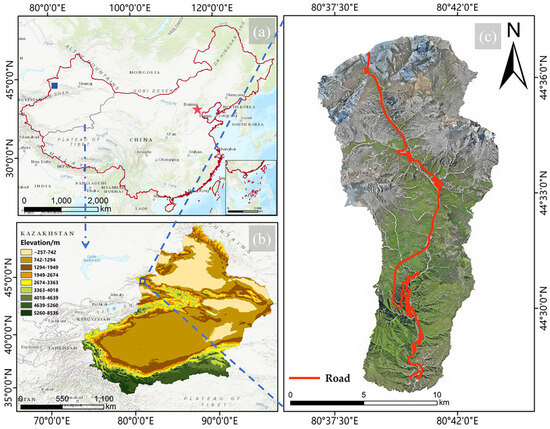
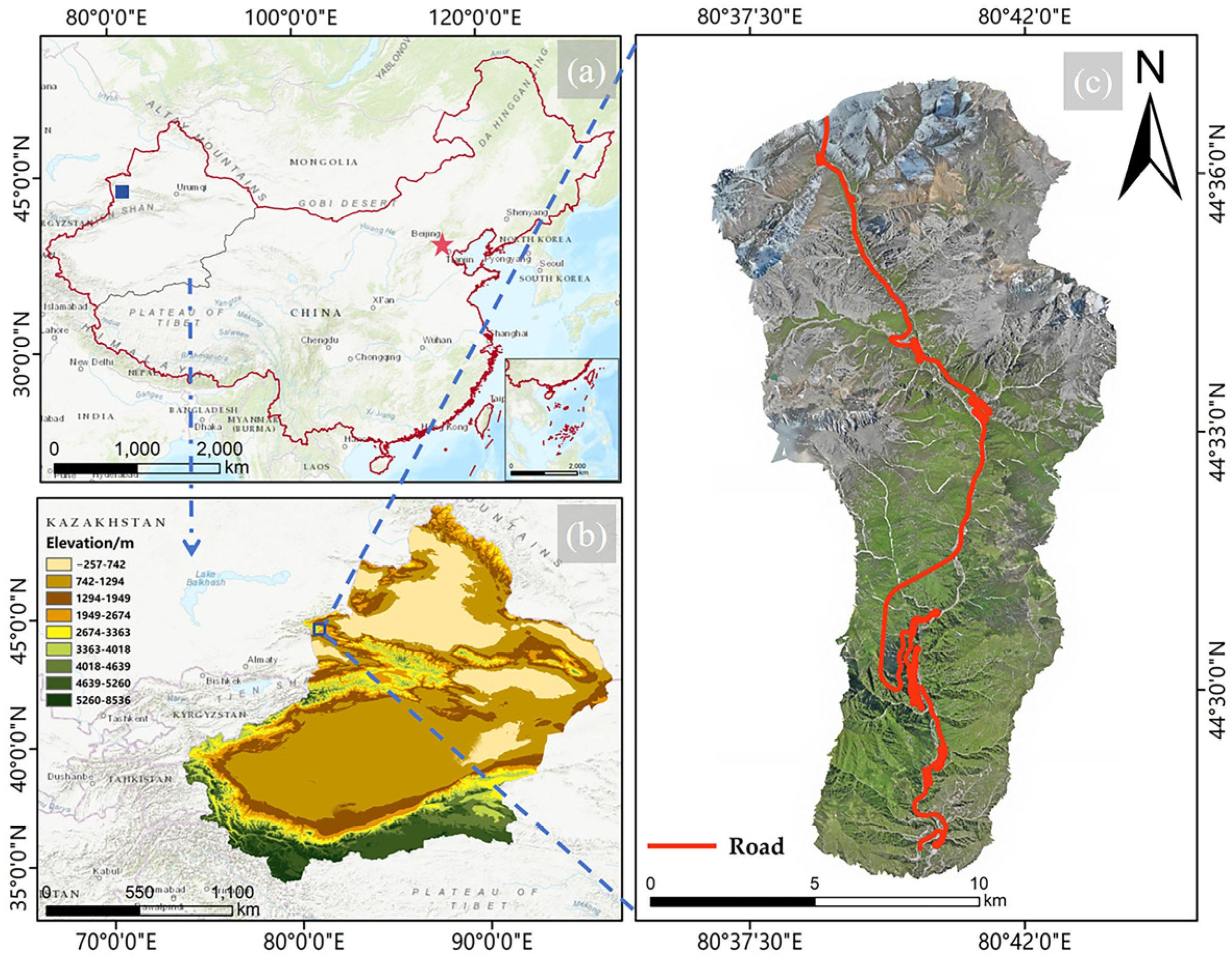
The study area is located between 80°39′–80°41′ E and 44°28′–44°31′ N, situated in the Qiet’ akesu Gully along the northern slope of the Tianshan Mountains. It is a critical section of the G219 highway, connecting Wenquan and Horgos (Figure 1). The region is characterised by steep terrain with significant topographic variations, predominantly consisting of north–south-oriented U-shaped deep valleys. Additionally, due to the blocking effect of the northern and southern branches of the Tianshan Mountains, moist air from the west is strongly uplifted, causing localised precipitation. This results in abundant rainfall and high humidity, providing a sufficient material base for avalanches. For example, during late winter and early spring, observational data indicate an average snow depth of 56.48 cm and an average relative humidity of 65.94%. The coupling of high-water-content snow layers with steep terrain makes the area a high-risk zone for avalanches, posing a significant threat to the safety of the transportation corridor.
Figure 1.
Location of study area: (a) The study area is located in Xinjiang, China. The red five-pointed star represents Beijing, the capital of China, and the blue square represents the research area; (b) Elevation map of the study area; (c) Study area boundaries and transportation corridors.
3. Data and Methods
3.1. Data
3.1.1. Digital Elevation Model (DEM)
In this study, a DJI Mavic 3E enterprise-grade UAV was employed for data acquisition, with the maximum flight altitude set to 1500 m, a lateral and forward overlap rate of 70%, and a flight height of 200 m. A 30 m resolution Digital Elevation Model (DEM) was integrated into the mission planning, and the terrain-following flight mode was utilised to ensure consistent ground-relative altitude for all aerial images, thereby improving mapping accuracy. During the flight, positional accuracy was corrected using GNSS (Global Navigation Satellite System) equipment combined with PPK (Post-Processing Kinematic) differential processing, ensuring that the absolute position of each aerial image was aligned within the same control network. After image acquisition, the data were processed using Metashape (version 2.2.0) software to generate a DEM with a spatial resolution of 0.4 m.
3.1.2. Video Monitoring Data
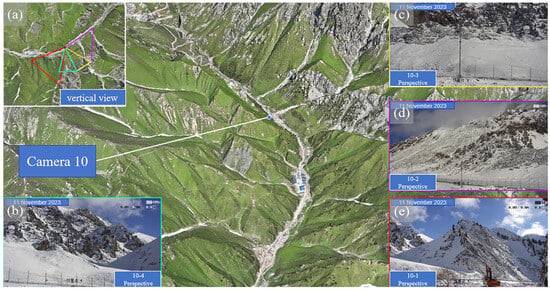
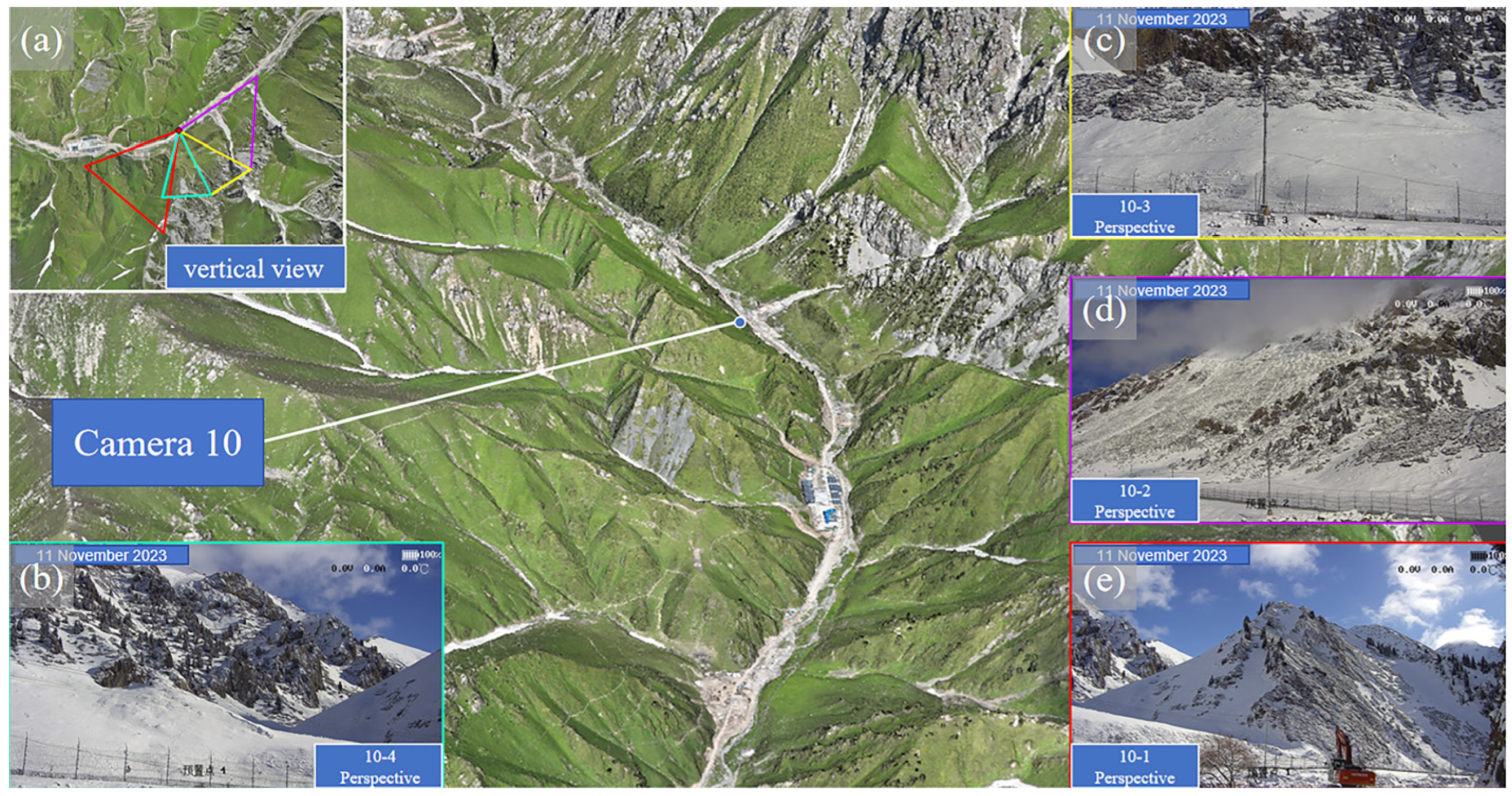
To comprehensively obtain snowpack and avalanche information within the observation area, the research team deployed 15 automatic high-definition avalanche monitoring cameras across the study region in 2023. The monitoring system combined fixed long-range camera positions with timed rotating dome cameras. The preset monitoring viewpoints (Figure 2) were determined based on local topography, geomorphology, and vegetation conditions. Data were recorded every 30 min, allowing real-time capture of key dynamics during avalanche events. In addition, snow stakes were installed around the observation sites to continuously monitor snow depth. These measurements were cross-checked with snow-depth sensor data from nearby meteorological stations to ensure consistency and reliability of the observations.
Figure 2.
Schematic diagram of preset view angles for avalanche video monitoring stations in the region: (a) Top view; (b) Perspective 1; (c) Perspective 2; (d) Perspective 3; (e) Perspective 4.
3.1.3. Meteorological Monitoring Data
A total of five meteorological monitoring stations were installed within the study area. Each station was equipped with a W10 wind speed sensor, a W20 wind direction sensor, a T200B weighing-type rain and snow measurement system, an HMP155 air temperature and humidity sensor, a CS106 atmospheric pressure sensor, and a SnowVUE10 digital snow-depth sensor. These instruments enabled real-time monitoring of key meteorological parameters, including wind speed, wind direction, precipitation, snow depth, atmospheric pressure, air temperature, and relative humidity. Data were recorded at 10 min intervals and stored on local memory cards.
3.1.4. Field Survey Data
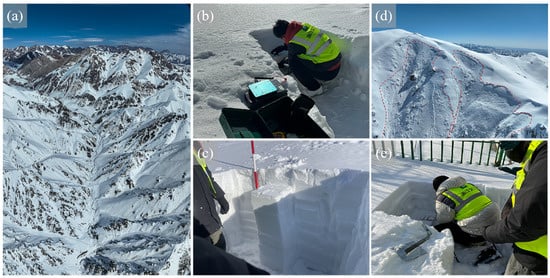
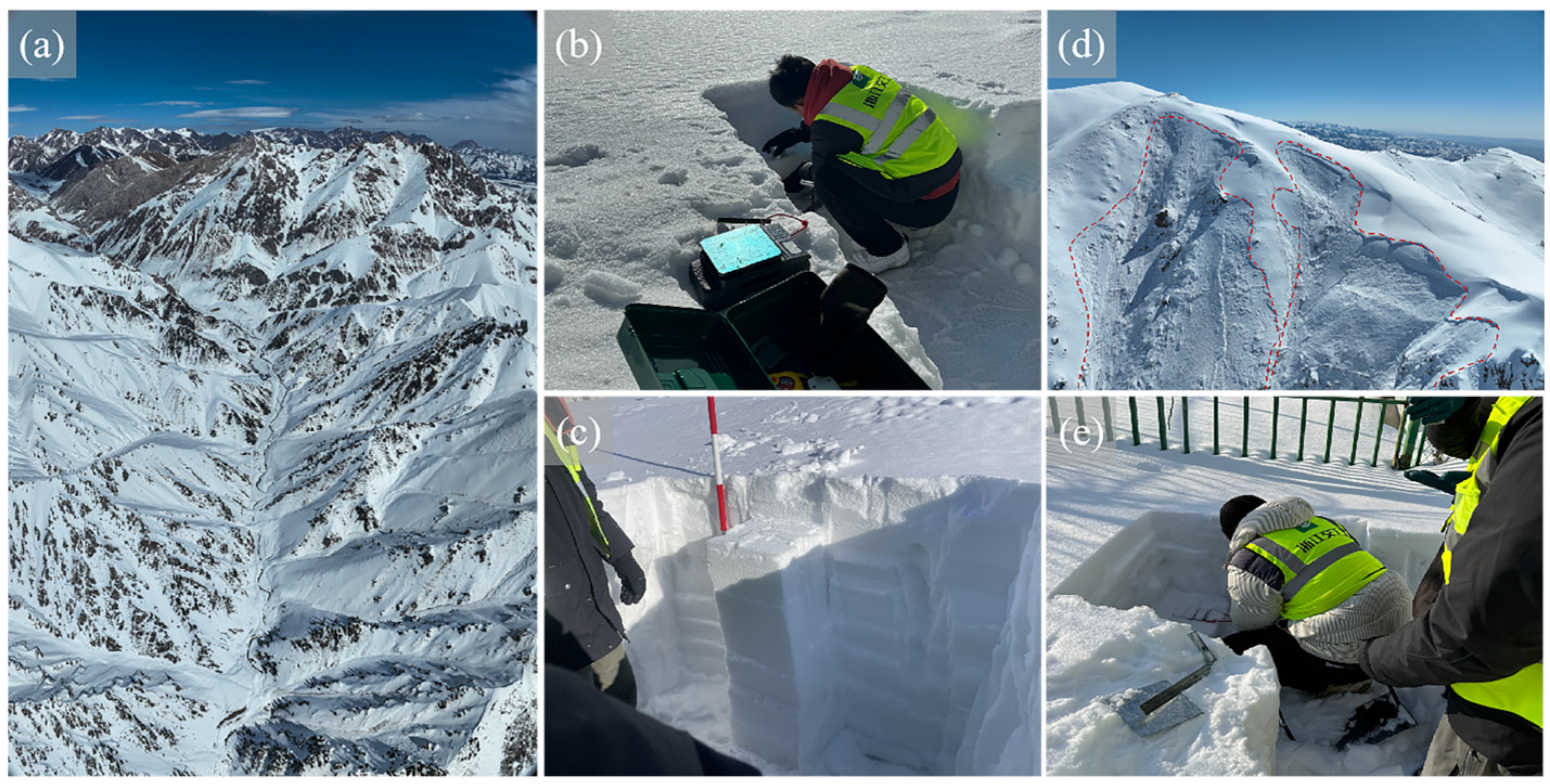
Focusing on the G219 Wenquan–Horgos transportation corridor, the research team conducted a systematic field investigation of avalanche events that occurred during the 2023–2024 period. The survey primarily included point-based avalanche distribution mapping, UAV-based avalanche site photogrammetry, snow density and surface moisture observations, and measurements of avalanche deposits (Figure 3). Statistical results show that a total of 78 avalanche events were recorded within the study area during this period. The runout distances of avalanche deposits varied significantly, with the longest reaching approximately 1900 m and the shortest about 70 m.
Figure 3.
Schematic diagram of preset view angles for avalanche video monitoring stations in the region: (a) Drone aerial images; (b) Determination of snow density by ring knife sampling method; (c) Snow depth profile measurement; (d) Aerial photography illustration of avalanche formation area; (e) Snow shear strength test.
3.2. Methods
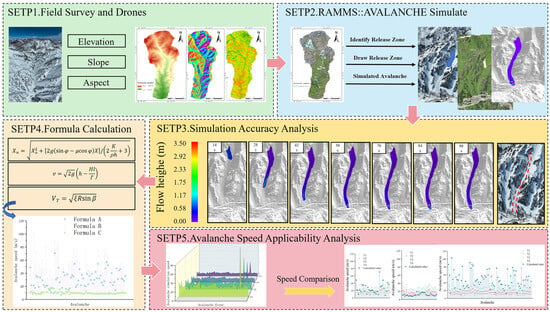
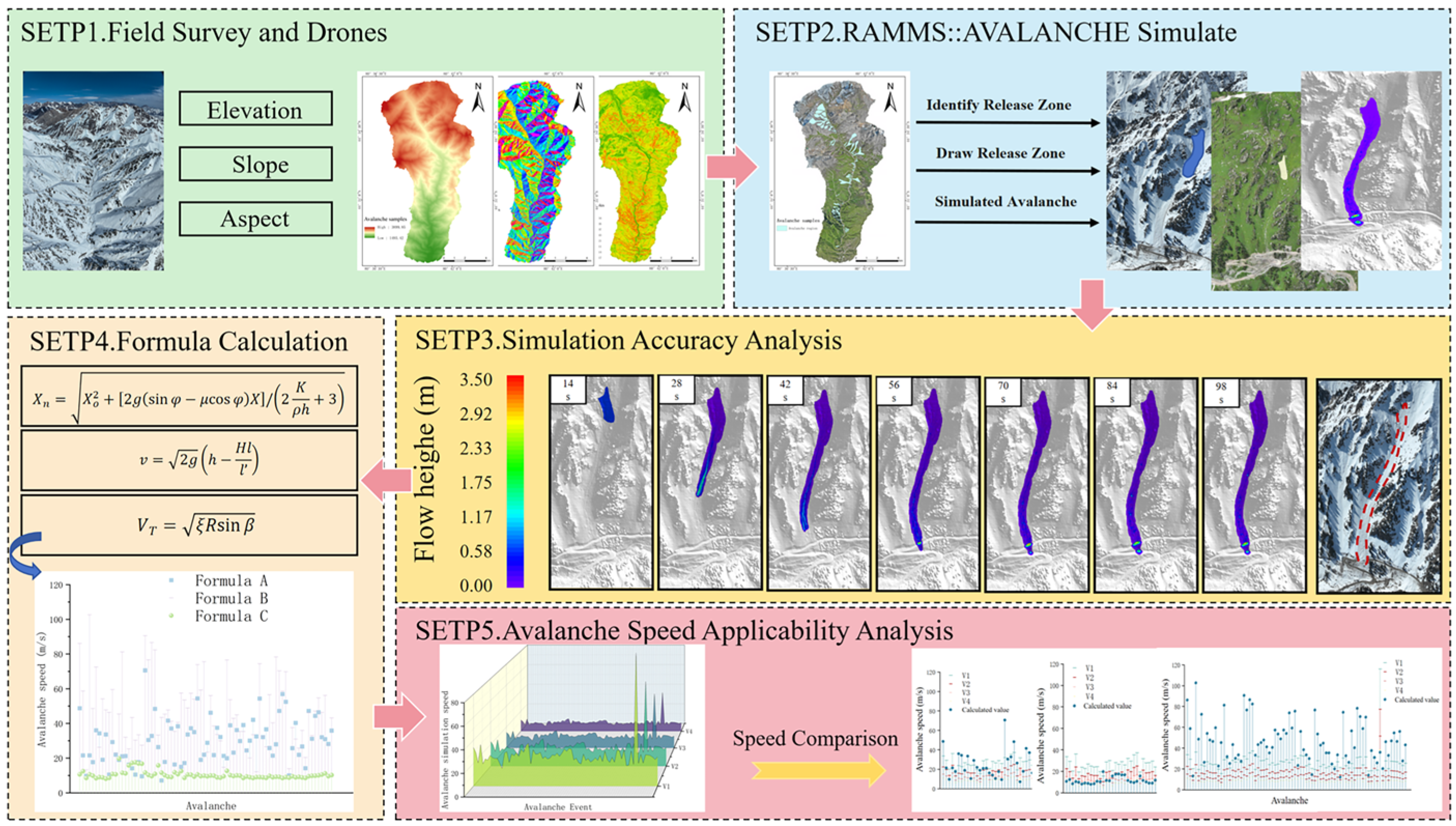
This study establishes a three-tier logical framework of “data foundation-simulation verification-comparative analysis” (Figure 4). Based on field investigations and UAV imagery, a fundamental database of avalanche distribution and characteristics within the study area was developed. Subsequently, the RAMMS::AVALANCHE model was applied to perform dynamic simulations of 78 avalanches in the region, and the reliability of the simulation results was verified using field-measured physical parameters. Subsequently, three widely recognised typical empirical methods commonly used in engineering practice were selected to calculate the corresponding avalanche speed. For ease of presentation, the study designates these three calculation formulas as Formula A (Ma, 1974) [27], Formula B (Xu, 2024) [28], and Formula C (Qiu, 2005) [1]. By systematically comparing the empirical results with the model simulations, the applicability and limitations of each method within the study area were comprehensively evaluated.
Figure 4.
Overview of Research Technical Route and Methodological Framework.
3.2.1. RAMMS::AVALANCHE
RAMMS::AVALANCHE (version 1.8.27) is a professional avalanche simulation software developed by the Swiss Federal Institute for Snow and Avalanche Research. It can simulate the flow process of avalanches in complex three-dimensional terrain and predict the path, impact force, flow velocity of avalanches, and the distribution of snow accumulation areas. Moreover, existing studies have proven that this model shows high accuracy in simulating various types of avalanches [29,30]. This model is based on the two-parameter Voellmy–Salm–Gruber friction law, which divides the friction coefficient into the dry Coulomb friction coefficient proportional to the normal stress and the turbulent friction coefficient. The expression for frictional resistance is as follows:
In the equations, represents the density; is the gravitational acceleration; represents the bevel angle; represents the flow height; represents the turbulent friction coefficient; represents normal stress; represents the dry Coulomb friction coefficient, as a vector .
RAMMS::AVALANCHE uses the three-dimensional volume method to numerically simulate the flow, accumulation, and impact processes of avalanches, which mainly includes the following operation steps: first, use drone aerial images to generate high-resolution DEM, and complete coordinate unification and range cropping in ArcMap (version 10.8) to ensure coverage of the formation area, movement area, and accumulation area; then, according to the results of on-site investigations, delineate the location of the avalanche formation area and set the avalanche release volume; Finally, the appropriate dry Coulomb friction coefficient and turbulent friction coefficient are determined by identifying the underlying surface type of the study area [31]. The specific parameter selections are shown in Table 1.
Table 1.
RAMMS::AVALANCHE model parameter values.
3.2.2. Avalanche Speed Calculation
The study uses the local maximum avalanche speed Vmax from the calculation results of the RAMMS::AVALANCHE numerical simulation as the benchmark reference, and quantifies the characteristic velocities of avalanche points (3/2 Vmax, Vmax, 2/3 Vmax, 1/2 Vmax) into four-level standards V1–V4. Calculate the avalanche movement speed using three empirical formulas, respectively. Through systematic comparative analysis of the consistency between the calculation results of each method and the four-level speed standards, further judge the accuracy of the calculation methods, thereby evaluating the applicability of the avalanche calculation methods in the Wenquan to Horgos transportation corridor along the G219 line. Finally, form a speed calculation system suitable for avalanche protection projects in transportation corridors, providing a quantitative basis for reducing engineering survey costs and improving the accuracy of avalanche disaster assessment.
- Formula A
Ma Zhenghai et al. [27] regarded an avalanche as a rocket moving from a high-potential energy area to a low-potential energy area along a mountain slope, and there are certain similarities between the two in terms of physical processes. First, the mass of a rocket decreases with time due to the continuous consumption of fuel during its movement, while an avalanche body continuously entrains natural snow along its path through basal erosion during its sliding, resulting in a dynamic increase in its mass. Second, a rocket operates in an air fluid, while an avalanche body moves in two media: snow layers and air. After simplifying the two movement processes, respectively, the avalanche motion equation can be expressed similarly using the rocket motion equation. The derived formula for avalanche velocity is as follows:
In the equations, represents the final speed of an avalanche; represents the avalanche initiation speed; represents the slope angle; represents the thickness of the snow layer removed by an avalanche, taking the average value; represents the snow layer resistance coefficient; represents the average density of natural snow cover; represents the dynamic friction coefficient (Table 2); represents the avalanche runout distance.
Table 2.
Reference table for the friction coefficient of Formula A.
The derivation of this formula provides an in-depth analysis of the entrainment effect of snow during avalanche motion. Throughout the entire avalanche process, the surrounding natural snowpack is progressively incorporated into the moving avalanche mass in the direction of travel. By examining the temporal variation in the avalanche mass, the rate of mass increase is related to factors such as the density, thickness, and width of the entrained snow layers, as well as the travel (runout) distance; these relationships are then combined to establish the avalanche dynamic equation.
- 2.
- Formula B
The Coulomb friction model can provide predictive results for avalanche velocity and impact distance in most cases, and is therefore commonly used in the estimation of macroscopic avalanche dynamics [28]. By considering the presence or absence of basal friction, the upper and lower theoretical limits of the maximum velocity can be estimated. The maximum front velocity of the avalanche changes with the square root of the total vertical drop. The formula for the movement velocity of the avalanche body is expressed as follows:
In the equations, represents gravitational acceleration; represents the height difference from the avalanche formation area to the accumulation area; represents the height difference from the avalanche formation area to the calculated position along the avalanche path; represents the horizontal projection length of the avalanche path from the formation area to the limit boundary of the accumulation zone; represents the horizontal projection length from the avalanche formation area to the calculation position.
- 3.
- Formula C
This formula is based on the relationship between the forces acting on the avalanche and its velocity. The avalanche velocity depends on the gravitational driving force of the snow parallel to the slope and the following resistances: basal dynamic friction, which decreases with increasing velocity; viscous shear force within the moving snow, which is proportional to the velocity; basal disturbance resistance, which is proportional to the square of the velocity; and the resistance generated by the additional snow incorporated into the avalanche after snow fracture, which is independent of velocity [1]. Considering that the equation based on the above complex relationships cannot yield practical solutions, the simplified expression is as follows:
In the equations, represents the disturbance friction coefficient, encompassing all factors proportional to the square of the velocity (Table 3); represents the hydraulic radius, which is equal to the height of the flowing snow on a clear slope; represents the slope angle.
Table 3.
Recommended Friction Coefficient Values.
4. Results
4.1. RAMMS::AVALANCHE Reconstruction
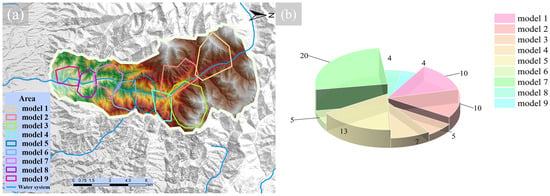
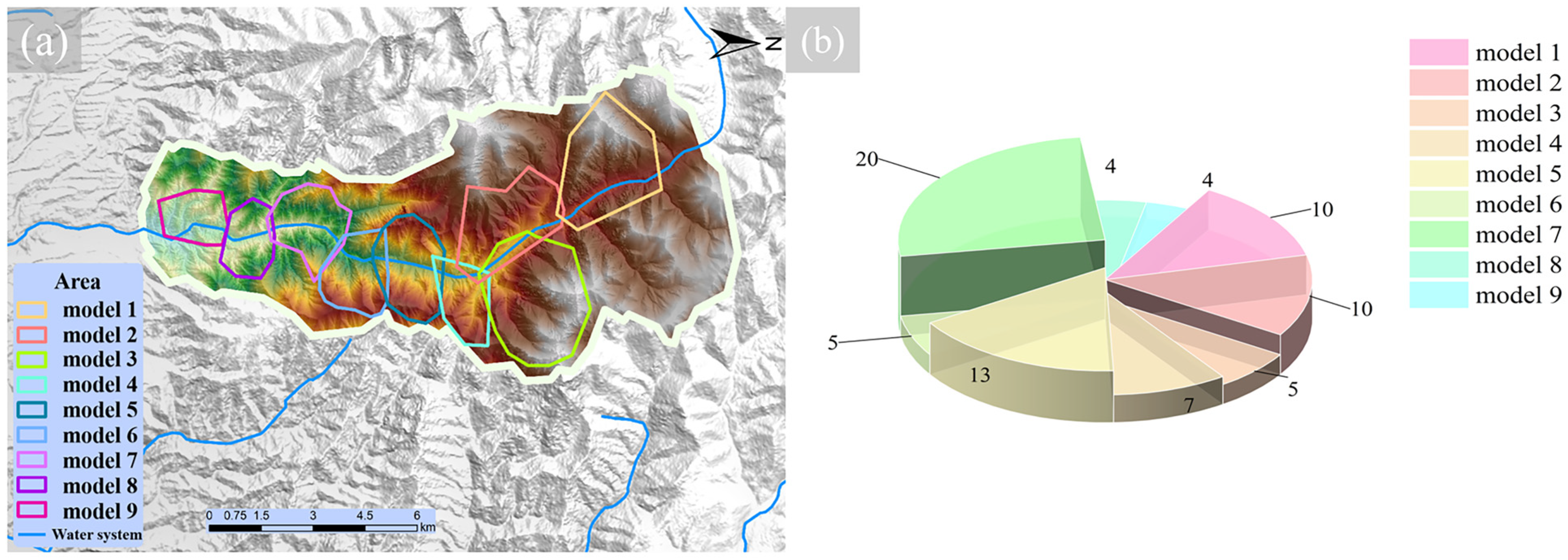
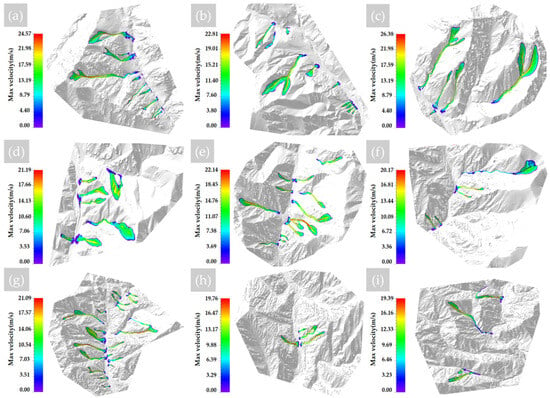
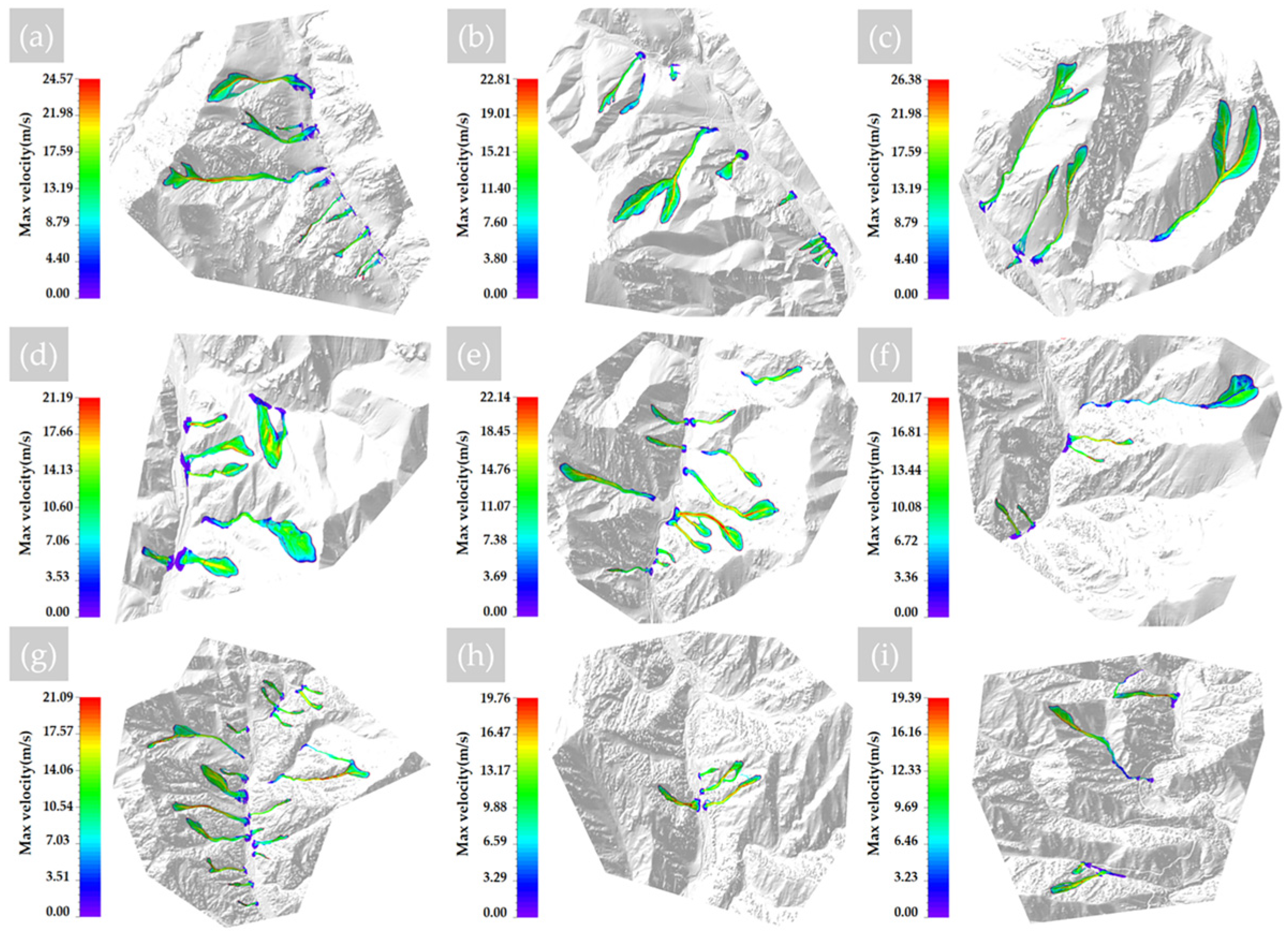
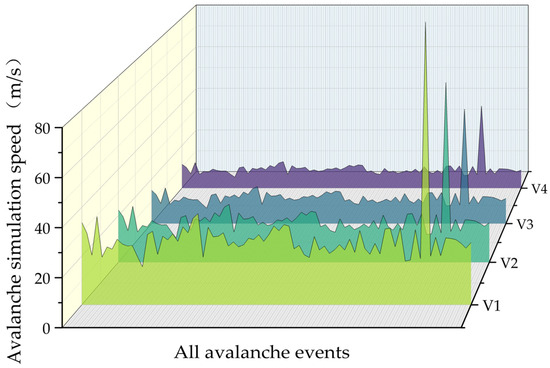
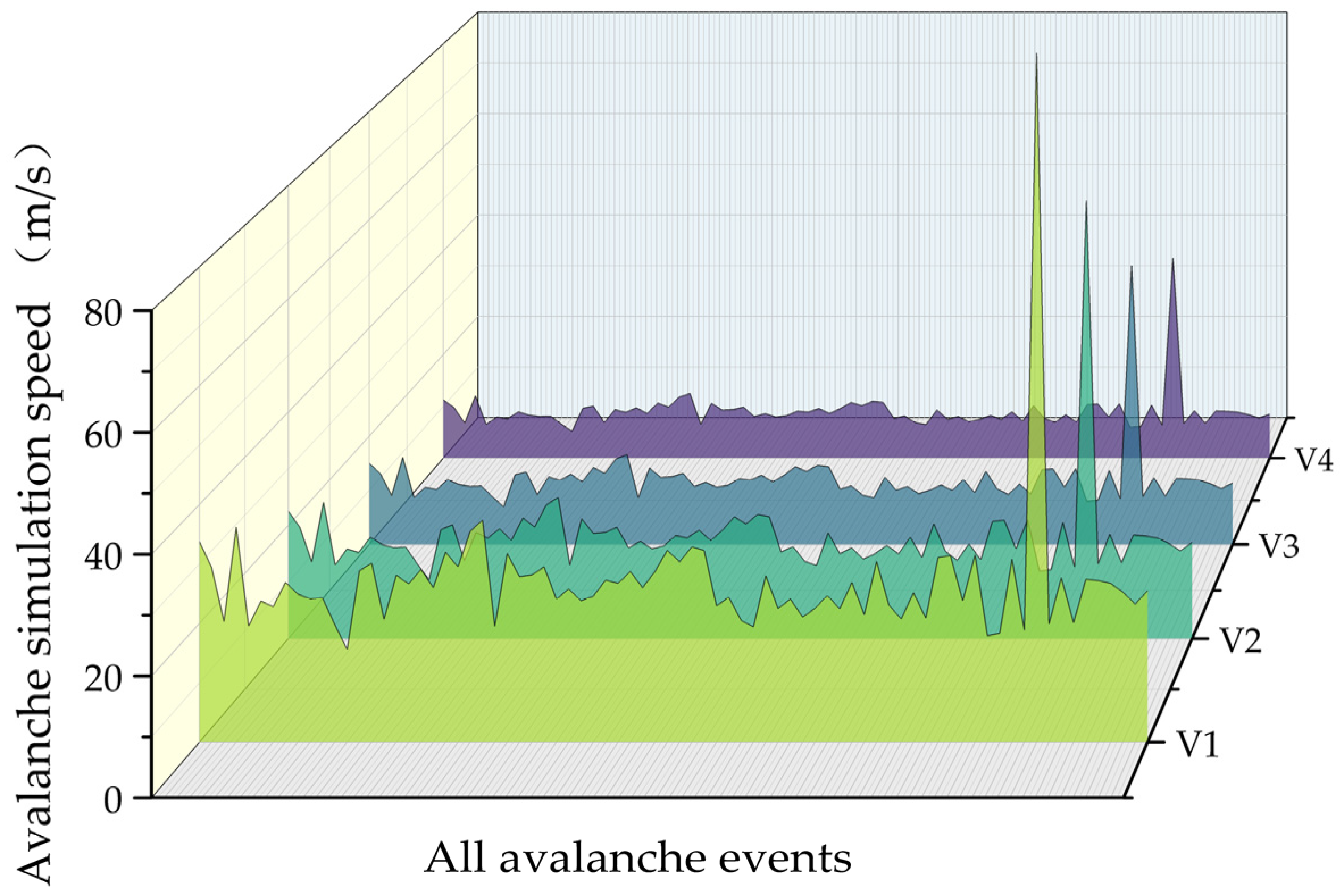
Based on the aerial images taken by drones, a large area of approximately 30 km in length and 10 km in width along the G219 Line Wenquan to Horgos Transportation Corridor was divided into nine regions according to the distribution of avalanches, which were named model 1 to model 9, respectively (Figure 5). Based on this, RAMMS::AVALANCHE was used to simulate 78 avalanche events that occurred in 2023–2024, obtaining the avalanche movement process (Figure 6) and its maximum speed (Figure 7).
Figure 5.
Distribution of avalanches in the study area: (a) Schematic diagram of avalanche simulation zoning; (b) Number of avalanches in the avalanche simulation partition.
Figure 6.
Numerical simulation results of avalanches, Numerical simulation results of avalanches, where colours represent the local maximum flow velocity of the avalanche during the simulation period: (a) model 1; (b) model 2; (c) model 3; (d) model 4; (e) model 5; (f) model 6; (g) model 7; (h) model 8; (i) model 9.
Figure 7.
Avalanche speed simulation results: The X-axis represents the sequence of 78 avalanche events, the Z-axis represents the speed levels V1–V4, and the Y-axis represents the simulated speed values in m/s.
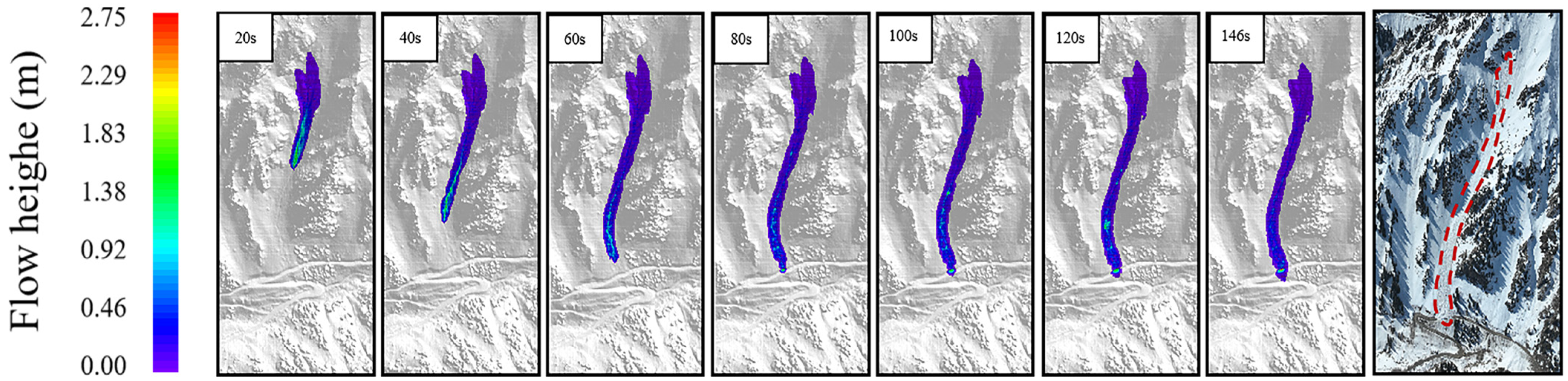
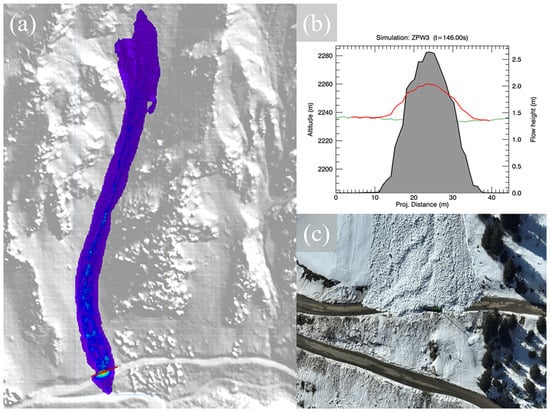
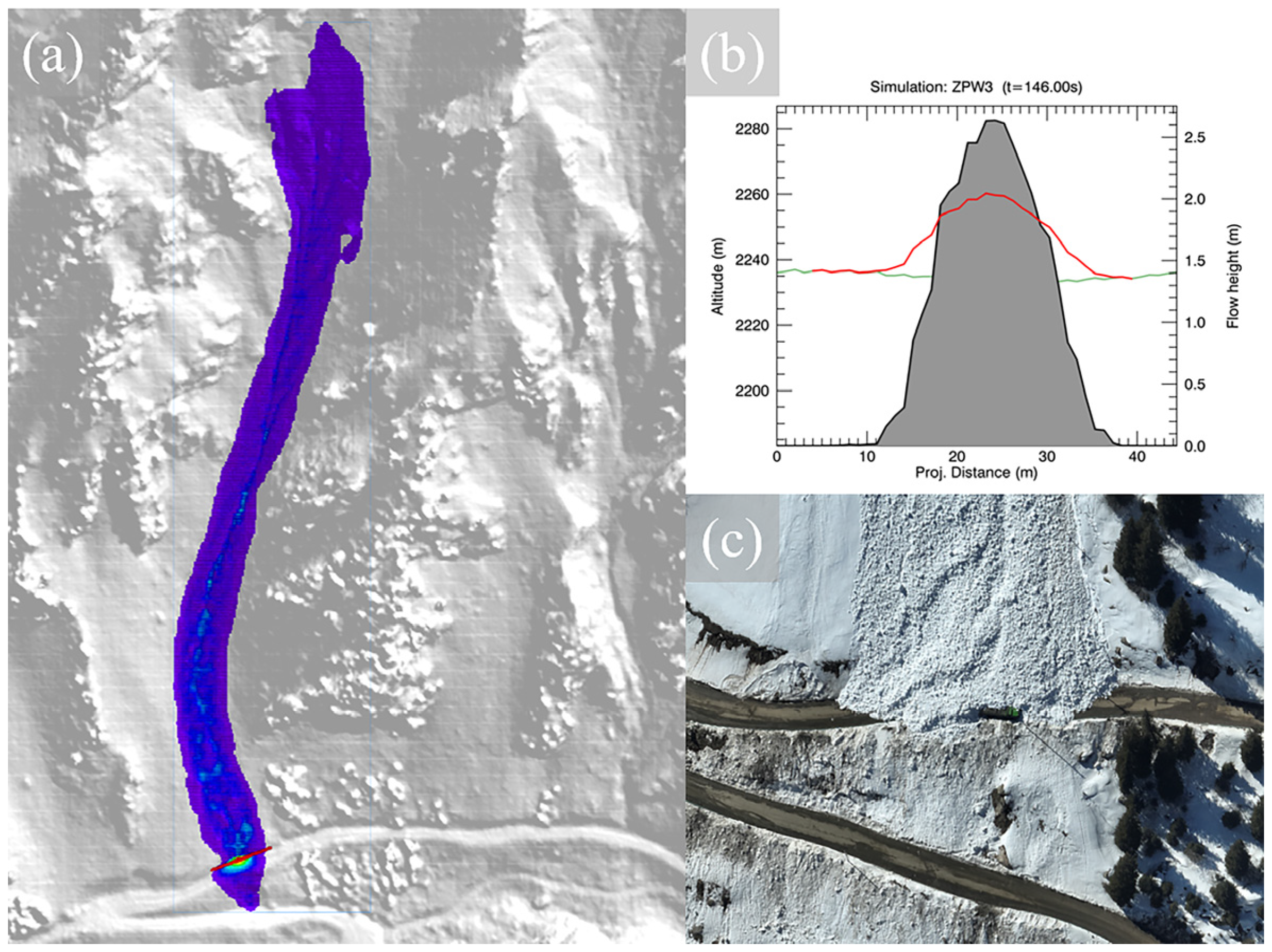
To verify the reliability of the RAMMS::AVALANCHE simulation, this study selected a typical avalanche event with complete observation records as the verification object and compared the simulation results with field survey data (Figure 8). This avalanche event has detailed process images and field measurement data, providing a reliable basis for model verification. The simulation results show that the entire avalanche process lasted approximately 146 s: after the avalanche initiated, it accelerated rapidly along the slope, with the flow velocity reaching a peak at about 40 s, then gradually sliding into the valley bottom and expanding. After 80 s, the avalanche entered a stable phase and began to accumulate, with the flow velocity significantly decreasing and the erosion and carrying effects gradually weakening; finally, a stable accumulation body was formed between approximately 120–146 s, with a maximum thickness of about 2.5 m. By comparing the simulated flow trajectories and accumulation ranges with the on-site measured results, it is further concluded that their coincidence degree reaches 95%, meeting the expected similarity standards. This indicates that the RAMMS::AVALANCHE model has a high level of reproducibility and reliability in simulating the avalanche motion process.
Figure 8.
Comparison chart of the entire avalanche event simulation process and the actual scene. The red dashed line represents the range of avalanche movement.
The results of on-site image comparison (Figure 9) further indicate that the simulated final accumulation range is generally consistent with the measured avalanche coverage area, but there are local deviations. The deviations mainly stem from the blocking of part of the snow flow by large vehicles parked on the road on the day of the avalanche, resulting in local thickening and flow direction disturbance of the accumulation body on the windward side of the vehicles. However, such details were not fully reflected in the macroscopic calculations of the model. In general, the RAMMS::AVALANCHE model shows high accuracy and applicability on the macroscopic scale in terms of avalanche movement range, accumulation location, and morphology.
Figure 9.
Avalanche accumulation range and maximum flow height: (a) The entire process of avalanche simulation; (b) Simulate the maximum flow height profile. Filled grey area active parameter (scale on right side). Red line active parameter (multiplied by 50) added to the profile (altitude, scale on the left side). Green line track profile (altitude, scale on the left side); (c) Comparison of on-site measured accumulation ranges.
4.2. Avalanche Speed Calculation
4.2.1. Formula A
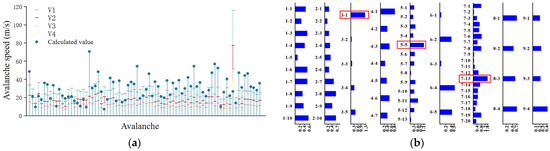
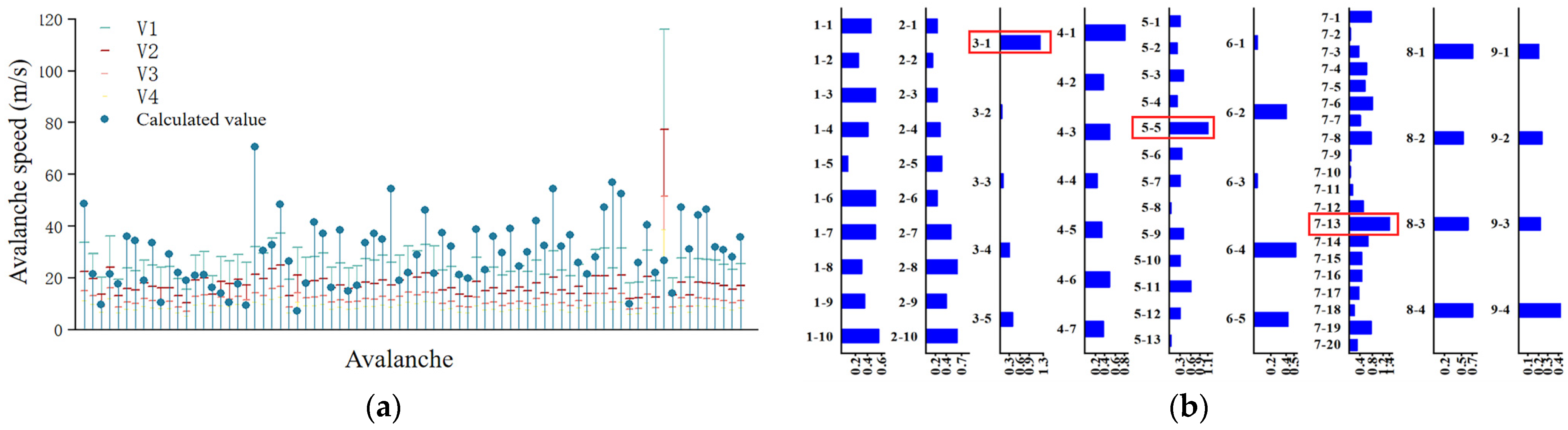
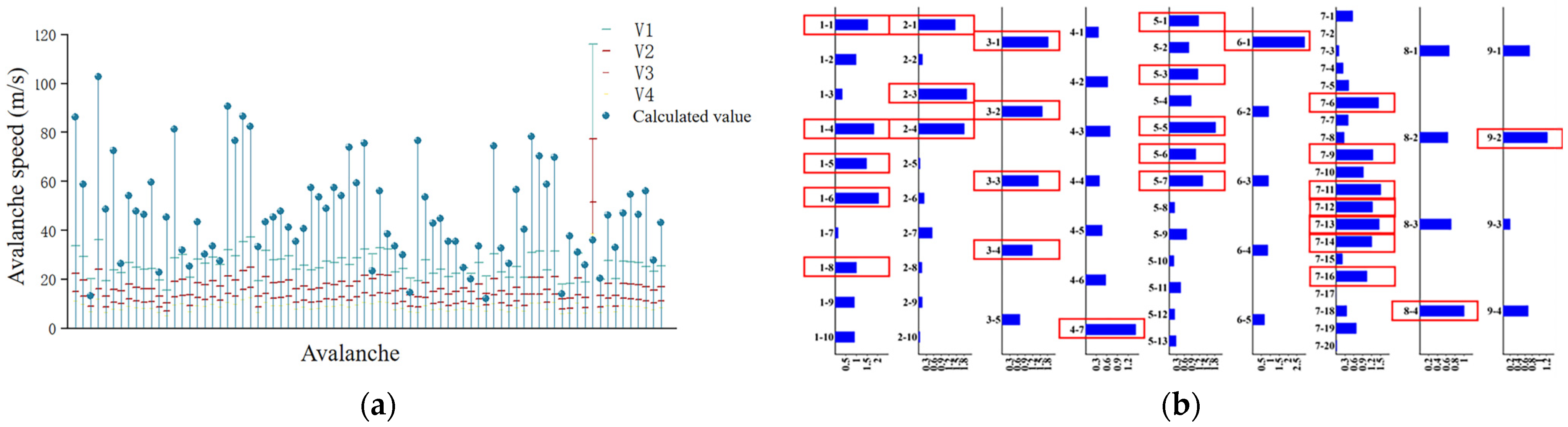
Based on Formula (2), the maximum avalanche velocities within the study area were calculated (Figure 10a). The results indicate that the computed velocities are generally overestimated and tend to be closer to the V1 reference values, which is 2/3 of the maximum avalanche velocity calculated by the RAMMS::AVALANCHE model. Under different velocity standards, the theoretical results of Formula A exhibit substantial fluctuating errors when compared with the actual observations. Statistical analysis (Table 4) shows that the percentage error of this formula ranges from a minimum of 19.46% to a maximum of 81.63%, indicating considerable uncertainty in its estimations. In particular, Avalanches 3-1, 5-5, and 7-13 display exceptionally large deviations (Figure 10b). The overall overestimation may stem from the formula’s use of avalanche runout distance without accounting for path curvature, channel constriction and expansion, or lateral divergence. By simplifying a complex three-dimensional path into a single scalar distance—and by using average values for snow density and snow-layer thickness—the formula fails to capture the incremental mass changes along the avalanche path that dilute momentum during motion, ultimately leading to an overestimation of avalanche velocity.
Figure 10.
Avalanche velocity results computed using Formula A: (a) Schematic of avalanche velocity results computed by Formula A.; (b) Error Results of Formula A (Compared with V1). Note: Red boxes indicate anomalous error values.
Table 4.
Error between the results of Formula A and the simulation results.
4.2.2. Formula B
Based on Formula (3), the maximum avalanche velocities within the study area were calculated (Figure 11a). The results show that the computed velocities are generally overestimated, with considerable deviation from the reference values (Figure 11b). Statistical analysis (Table 5) indicates that the maximum mean percentage error reaches 161.13%. This substantial discrepancy is likely since the formula accounts only for the conversion of gravitational potential energy using geometric elevation difference and horizontal distance, while neglecting factors such as frictional resistance and air drag. In essence, it assumes that the avalanche descends along a perfectly smooth slope and ignores terrain-induced energy dissipation. As a result, the computed velocities approach idealised theoretical values and deviate substantially from the actual dynamic behaviour of real avalanche flows.
Figure 11.
Avalanche velocity results computed using Formula B: (a) Schematic of avalanche velocity results computed by Formula B.; (b) Error Results of Formula B (Compared with V1). Note: Red boxes indicate anomalous error values.
Table 5.
Error between the results of Formula B and the simulation results.
4.2.3. Formula C
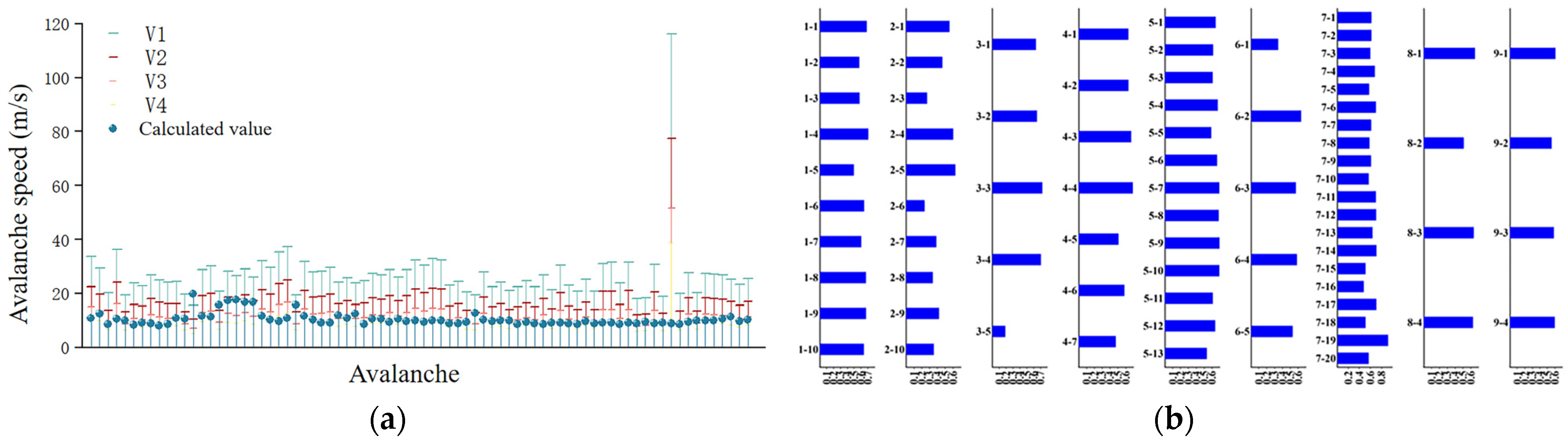
Based on Formula (4), the maximum avalanche velocities within the study area were calculated (Figure 12a). This formula demonstrates significantly better stability compared to Formula A and Formula B, with smaller errors (Figure 12b). Statistical analysis (Table 6) reveals that the maximum mean percentage error is 25.38%, with a minimum of only 8.42%. The computed results are primarily close to V4, which is stabilised at approximately half of the maximum avalanche velocity calculated by the RAMMS::AVALANCHE model. Therefore, in practical engineering calculations, the velocity can be first doubled and then combined with a safety factor to estimate the peak avalanche velocity.
Figure 12.
Avalanche velocity results computed using Formula C: (a) Schematic of avalanche velocity results computed by Formula C.; (b) Error Results of Formula C (Compared with V4).
Table 6.
Error between the results of Formula C and the simulation results.
5. Discussion
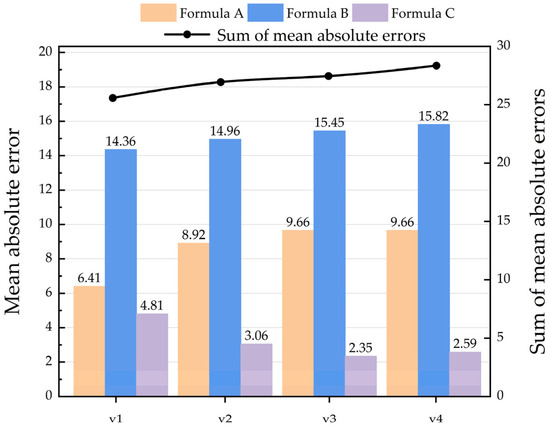
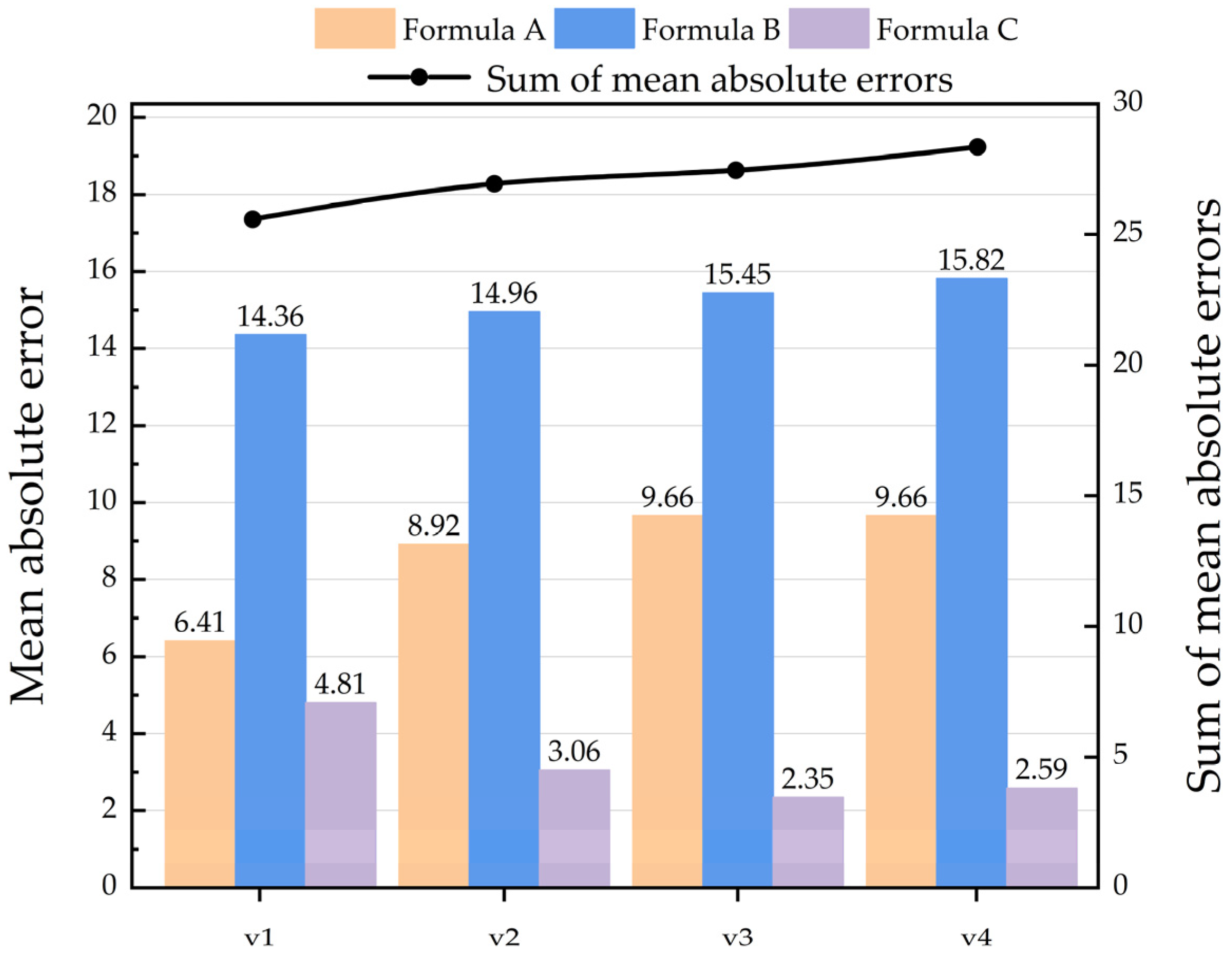
This study evaluated the accuracy of avalanche velocity estimation by comparing the results obtained from Formula A, Formula B, Formula C, and the RAMMS::AVALANCHE numerical simulations in the study area (Figure 13). The results indicate that although empirical formulas can, to some extent, reflect the actual dynamic processes of avalanches under certain conditions, significant discrepancies still exist when compared with the RAMMS::AVALANCHE simulation results. These errors mainly originate from differences in theoretical assumptions, energy dissipation mechanisms, and terrain sensitivity. Formula B oversimplifies the effects of friction and flow morphology, neglecting the influence of underlying surface conditions and snow type along the avalanche path, which results in large deviations in complex terrain and renders it unsuitable for application in the present study area. Although Formula A incorporates certain dynamic adjustments, it is still based on idealised assumptions, leading to an overestimation of avalanche velocities for large-scale events. In contrast, Formula C integrates constraints from both energy conservation and resistance dissipation, allowing it to better approximate real avalanche processes, particularly in capturing frontal velocity and path evolution characteristics. However, as demonstrated by the study of B. Sovilla [32], the omission of snow density in this formula also leads to an underestimation of the calculated velocities.
Figure 13.
Average absolute error of avalanche speed calculation methods.
In addition, commonly used empirical formulas exhibit systematic biases in estimating the velocities of different types of avalanches (e.g., dry-snow versus wet-snow avalanches). Gauer [33] pointed out that conventional models tend to underestimate the frontal velocity of high-speed dry-snow avalanches, whereas Takeuchi [34] demonstrated that wet-snow avalanches generally propagate at lower velocities and that empirical formulas have limited capability to distinguish between these two types. In contrast, Takeuchi [35], based on a large-scale dry slab avalanche in the Myoko Makunosawa valley, Japan, reported that the velocity of dry-snow avalanches can reach 40–60 m/s, which far exceeds the estimation range of some traditional empirical formulas. Furthermore, chute experiments conducted by Upadhyay [36] indicated that the frontal velocity of wet-snow avalanches is generally lower than 12 m/s, with tail velocities even lower (3–5 m/s). These studies collectively demonstrate that, due to the higher water content and enhanced frictional effects, wet-snow avalanches exhibit significantly lower velocities than dry-snow avalanches. This further highlights the limitations of empirical formulas in adequately resolving the velocity differences between dry- and wet-snow avalanches, thereby explaining the relatively large deviations observed in the empirical results of this study. Specifically, the velocities calculated using Formula A and Formula B are generally higher than those obtained from the RAMMS simulations, with large errors, and tend to approach approximately 3/2 of the simulated values. In contrast, Formula C yields systematically lower results but remains relatively stable at about one-half of the simulated values. Under large-scale avalanche conditions and in complex terrain, such errors in empirical formulas may lead to either overestimation or underestimation of avalanche velocities, thereby affecting the effectiveness of avalanche mitigation measures. Based on these considerations, a combined estimation strategy is proposed, in which twice the value of Formula C is adopted as the primary reference, while two-thirds of the value from Formula A is considered as a supplementary reference. The larger of the two is finally selected as the representative estimate of avalanche velocity.
In summary, each of the three empirical formulas has its own strengths and limitations. Formula A and Formula B simplify several key physical processes and are therefore suitable for rapid estimation or application in relatively simple terrain conditions. In contrast, Formula C shows more robust performance in dynamic and complex terrain and under variable snow conditions. Nevertheless, all three formulas exhibit a certain degree of deviation in their results. For complex terrain and diverse snow conditions, numerical simulation methods provide more accurate and reliable predictions of avalanche velocity. Future research should focus on improving the applicability of empirical formulas so that they can better adapt to changing terrain and climatic conditions. At the same time, integrating the advantages of numerical simulations with empirical formulas will offer more precise support for avalanche prevention and mitigation engineering.
6. Conclusions
Based on field survey data from the Qiet’ akesu Gully along the G219 Wenquan–Horgos transportation corridor, this study simulated and reconstructed 78 avalanche events and calculated avalanche velocities using multiple methods. By comparing the computed results with the standard reference value, only analyse the applicability of the three calculation methods in this region. The following main conclusions were drawn:
- There are significant differences in the estimation accuracy of the various velocity calculation methods. Formula B exhibits the largest error, with the average absolute error ranging from 14.36 to 15.82 and the maximum percentage error reaching 161.13%. Formula A follows, with an error range of 6.41 to 9.94 and a maximum percentage error of 81.63%. Formula C has the smallest error, with the average absolute error ranging from 2.16 to 5.25, and the average percentage error is only 8.42%.
- Under complex terrain conditions, the three empirical formulas adopted in this study demonstrate considerable uncertainty, with their calculated results showing relatively large deviations from those produced by the RAMMS::AVALANCHE numerical model in the study area. To improve the reliability of velocity estimation, a comprehensive estimation strategy is proposed: twice the value calculated by Formula C is taken as the primary reference, while two-thirds of the value calculated by Formula A is considered as a supplementary reference. The larger of the two is finally selected as the representative avalanche velocity. This approach ensures the robustness of the results while effectively avoiding the potential overestimation or underestimation associated with reliance on a single empirical formula.
- Future research should further refine the limitations of existing empirical formulas and explore their integration with the RAMMS::AVALANCHE numerical simulation framework. Empirical formulas may serve as useful references during route selection and preliminary engineering design, whereas numerical simulations can provide detailed reconstructions of avalanche velocities under complex terrain conditions and diverse snow types by comprehensively accounting for snow physical properties and topographic influences. Integrating these two approaches is expected to substantially enhance the reliability of avalanche velocity predictions, thereby providing stronger technical support for disaster prevention engineering design and risk assessment.
Author Contributions
Conceptualisation, P.Z., B.W. and X.Q.; Methodology, J.L., P.Z., S.Y., B.W. and X.Q.; Software, P.Z., S.Y. and X.Q.; Validation, S.Y. and X.Q.; Investigation, S.Y. and B.W.; Resources, B.W.; Data curation, P.Z. and B.W.; Writing—original draft, J.L. and P.Z.; Writing—review and editing, J.L., B.W. and X.Q.; Visualisation, P.Z., S.Y. and X.Q.; Supervision, J.L., S.Y. and X.Q.; Project administration, J.L.; Funding acquisition, J.L. All authors have read and agreed to the published version of the manuscript.
Funding
This research was funded by Key R&D Project of the Autonomous Region: 2024B03042-3; Key R&D Project of the Autonomous Region: 2023B03004-1; Research Project on the Prevention and Control Techniques of Snow Disasters on Highways in High-altitude and Cold Mountainous Areas: XJJJZKX-FWCG-202312-0504; Key Scientific and Technological Project of the Ministry of Transport on “Research on the Causes, Distribution Characteristics, Engineering Governance, and Complete Key Technologies for Snow Removal and Traffic Maintenance of Ice and Snow Disasters on Expressways in the Tianshan Region”: 2022-ZD6-090; “Open Competition Mechanism to Select the Best Candidates” Scientific and Technological Project of Xinjiang Communications Investment Group for 2021: KY2022021501; Scientific and Technological Project of the Department of Transport: 2022-ZD-006; Key Scientific and Technological Project Commissioned by Enterprises: 2025-XJ202508TS01.
Institutional Review Board Statement
Not applicable.
Informed Consent Statement
Not applicable.
Data Availability Statement
The original contributions presented in the study are included in the article; further inquiries can be directed to the corresponding author.
Conflicts of Interest
The authors Jie Liu, Pengwei Zan and Bin Wang were employed by Xinjiang Academy of Transportation Sciences Co., Ltd. The authors Senmu Yao and Xiaowen Qiang were employed by Xinjiang Transport Planning Survey and Design Institute Co., Ltd. The paper reflects the views of the scientists and not the company. The authors declare that the research was conducted in the absence of any commercial or financial relationships that could be construed as a potential conflict of interest.
References
- Qiu, J. Avalanche, 1st ed.; Xinjiang Science and Technology Press: Urumqi, China, 2005; pp. 94–101. [Google Scholar]
- Laute, K.; Beylich, A.A. Potential Effects of Climate Change on Future Snow Avalanche Activity in Western Norway Deduced from Meteorological Data. Geogr. Ann. Ser. A Phys. Geogr. 2018, 100, 163–184. [Google Scholar] [CrossRef] [Scilit]
- Hao, J.; Huang, F.; Liu, Y.; Amobichukwu, C.A.; Li, L. Avalanche Activity and Characteristics of Its Triggering Factors in the Western Tianshan Mountains, China. J. Mt. Sci. 2018, 15, 1397–1411. [Google Scholar] [CrossRef] [Scilit]
- Schweizer, J. On recent advances in avalanche research. Cold Reg. Sci. Technol. 2017, 144, 1–5. [Google Scholar] [CrossRef] [Scilit]
- Ye, S.; Huang, M.; Chen, Z.; Jiang, W.; Luo, X.; Zhu, J. Monitoring Wet-Snow Avalanche Risk in Southeastern Tibet with a UAV-Based Multi-Sensor Framework. Remote Sens. 2025, 17, 3698. [Google Scholar] [CrossRef] [Scilit]
- Zhuang, Y.; Dash, R.K.; Bühler, Y.; Chen, R.; Bartelt, P. Fluidization and Snow Cover Effects in Rock-Ice-Snow Avalanches: Lessons from Piz Cengalo, Fluchthorn, and Piz Scerscen Events. Comput. Geotech. 2025, 186, 107456. [Google Scholar] [CrossRef] [Scilit]
- Rakhymberdina, M.; Denissova, N.; Bekishev, Y.; Daumova, G.; Konečný, M.; Assylkhanova, Z.; Kapasov, A. Investigation of the Regularities of the Influence of Meteorological Factors on Avalanches in Eastern Kazakhstan. Atmosphere 2025, 16, 723. [Google Scholar] [CrossRef] [Scilit]
- Li, Y.; Yang, Z.; Cheng, Q.; Qiang, X.; Liu, J. Avalanche Susceptibility Mapping with Explainable Machine Learning: A Case Study of the Kanas Scenic Transportation Corridor in the Altay Mountains, China. Appl. Sci. 2025, 15, 11631. [Google Scholar] [CrossRef] [Scilit]
- Fromm, R.; Schönberger, C. Estimating the Danger of Snow Avalanches with a Machine Learning Approach Using a Comprehensive Snow Cover Model. Mach. Learn. Appl. 2022, 10, 100405. [Google Scholar] [CrossRef] [Scilit]
- Xie, S.; Lai, Y.; Wu, L. Process of a Rock Avalanche-Debris Flow in the Southeast Tibetan Plateau. J. Rock Mech. Geotech. Eng. 2025, in press, S1674775525004810. [Google Scholar] [CrossRef] [Scilit]
- Yue, P.; Pei, B.; Zhang, J.; Huang, N. Dynamic Process of Dry Snow Slab Avalanche Formation: Theory, Experiment and Numerical Simulation. Geosciences 2025, 15, 201. [Google Scholar] [CrossRef] [Scilit]
- Mayer, S.; Hendrick, M.; Michel, A.; Richter, B.; Schweizer, J.; Wernli, H.; Van Herwijnen, A. Impact of Climate Change on Snow Avalanche Activity in the Swiss Alps. Cryosphere 2024, 18, 5495–5517. [Google Scholar] [CrossRef] [Scilit]
- Hao, J.; Li, L. Research progress and prospect of snow avalanche disaster prevention and control. J. Glaciol. Geocryol. 2022, 44, 762–770. [Google Scholar]
- Keshari, A.K.; Satapathy, D.P.; Kumar, A. The Influence of Vertical Density and Velocity Distributions on Snow Avalanche Runout. Ann. Glaciol. 2010, 51, 200–206. [Google Scholar] [CrossRef] [Scilit]
- McClung, D.; Mears, A. Dry-flowing avalanche run-up and run-out. J. Glaciol. 1995, 41, 359–372. [Google Scholar] [CrossRef] [Scilit]
- McClung, D.; Hoeller, P. Probabilistic Estimates of Extreme Snow Avalanche Runout Distance. Geosciences 2025, 15, 278. [Google Scholar] [CrossRef] [Scilit]
- Ito, Y.; Naaim-Bouvet, F.; Nishimura, K.; Bellot, H.; Thibert, E.; Ravanat, X.; Fontaine, F. Measurement of Snow Particle Size and Velocity in Avalanche Powder Clouds. J. Glaciol. 2017, 63, 249–257. [Google Scholar] [CrossRef] [Scilit]
- Thibert, E.; Bellot, H.; Ravanat, X.; Ousset, F.; Pulfer, G.; Naaim, M.; Hagenmuller, P.; Naaim-Bouvet, F.; Faug, T.; Nishimura, K.; et al. The Full-Scale Avalanche Test-Site at Lautaret Pass (French Alps). Cold Reg. Sci. Technol. 2015, 115, 30–41. [Google Scholar] [CrossRef] [Scilit]
- Rammer, L.; Kern, M.A.; Gruber, U.; Tiefenbacher, F. Comparison of Avalanche-Velocity Measurements by Means of Pulsed Doppler Radar, Continuous Wave Radar and Optical Methods. Cold Reg. Sci. Technol. 2007, 50, 35–54. [Google Scholar] [CrossRef] [Scilit]
- Suriñach, E.; Flores-Márquez, E.L.; Roig-Lafon, P.; Furdada, G.; Tapia, M. Estimation of Avalanche Development and Frontal Velocities Based on the Spectrogram of the Seismic Signals Generated at the Vallée de La Sionne Test Site. Geosciences 2020, 10, 113. [Google Scholar] [CrossRef] [Scilit]
- Vilajosana, I.; Llosa, J.; Schaefer, M.; Surinâch, E.; Vilajosana, X. Wireless Sensors as a Tool to Explore Avalanche Internal Dynamics: Experiments at the Weissflühjoch Snow Chute. Cold Reg. Sci. Technol. 2011, 65, 242–250. [Google Scholar] [CrossRef] [Scilit]
- Qin, Q.; Li, X.; Hao, J.; Zhang, B.; Li, Q.; Gong, Z. Zoning of avalanche hazard and its spatial and temporal patterns in the Tianshan Mountains of Chinas. J. Nat. Disasters 2023, 32, 117–124. [Google Scholar] [CrossRef]
- Qiang, X.; Huang, J.; Guo, Q.; Yang, Z.; Wang, B.; Liu, J. Dynamic Evolution and Triggering Mechanisms of the Simutasi Peak Avalanche in the Chinese Tianshan Mountains: A Multi-Source Data Fusion Approach. Remote Sens. 2025, 17, 2755. [Google Scholar] [CrossRef] [Scilit]
- Wang, X.; Liu, J.; Guo, Q.; Wang, B.; Yang, Z.; Cheng, Q.; Xie, H. Avalanche Hazard Dynamics and Causal Analysis Along China’s G219 Corridor: A Case Study of the Wenquan–Khorgas Section. Atmosphere 2025, 16, 817. [Google Scholar] [CrossRef] [Scilit]
- Hao, J.; Cui, P.; Zhang, X.; Li, L. The triggering mechanisms for different types of snow avalanches in the continental snow climate of the central Tianshan Mountains. Sci. China Earth Sci. 2022, 65, 2308–2321. [Google Scholar] [CrossRef] [Scilit]
- Chen, G.; Hao, J.; Li, L.; Wang, Y.; Zhang, F.; Li, C.; Zhang, Y. Synergistic Effects of Warming and Heavy Snowfall Accumulation on the Increased Risk of Large-Scale Snow Avalanches in the Western Tianshan Mountains. Adv. Clim. Change Res. 2025, 16, 1259–1270. [Google Scholar] [CrossRef] [Scilit]
- Ma, Z.; Wang, Z. Research on Snow Hazard Prevention and Control for Mountain Roads, 1st ed.; Science and Technology Department of Xinjiang Uygur Autonomous Region: Urumqi, China, 1974; pp. 219–230. [Google Scholar]
- Xu, X.; Tian, Y.; Sun, Q.; Sun, Y.; Zhang, S. Progress review on experimental technique, rheological model and dynamic simulation of snow avalanche. Mech. Eng. 2024, 46, 907–918. [Google Scholar]
- Martini, M.; Baggio, T.; D’Agostino, V. Comparison of two 2-D numerical models for snow avalanche simulation. Sci. Total Environ. 2023, 896, 165221. [Google Scholar] [CrossRef] [Scilit]
- Teich, M.; Fischer, J.-T.; Feistl, T.; Bebi, P.; Christen, M.; Grêt-Regamey, A. Computational Snow Avalanche Simulation in Forested Terrain. Nat. Hazards Earth Syst. Sci. 2014, 14, 2233–2248. [Google Scholar] [CrossRef] [Scilit]
- Viglietti, D.; Letey, S.; Motta, R.; Maggioni, M.; Freppaz, M. Snow Avalanche Release in Forest Ecosystems: A Case Study in the Aosta Valley Region (NW-Italy). Cold Reg. Sci. Technol. 2010, 64, 167–173. [Google Scholar] [CrossRef] [Scilit]
- Sovilla, B.; Bartelt, P. Observations and Modelling of Snow Avalanche Entrainment. Nat. Hazards Earth Syst. Sci. 2002, 2, 169–179. [Google Scholar] [CrossRef] [Scilit]
- Gauer, P. Comparison of Avalanche Front Velocity Measurements and Implications for Avalanche Models. Cold Reg. Sci. Technol. 2014, 97, 132–150. [Google Scholar] [CrossRef] [Scilit]
- Takeuchi, Y.; Yamanoi, K.; Endo, Y.; Murakami, S.; Izumi, K. Velocities for the Dry and Wet Snow Avalanches at Makunosawa Valley in Myoko, Japan. Cold Reg. Sci. Technol. 2003, 37, 483–486. [Google Scholar] [CrossRef] [Scilit]
- Takeuchi, Y.; Torita, H.; Nishimura, K.; Hirashima, H. Study of a Large-Scale Dry Slab Avalanche and the Extent of Damage to a Cedar Forest in the Makunosawa Valley, Myoko, Japan. Ann. Glaciol. 2011, 52, 119–128. [Google Scholar] [CrossRef] [Scilit]
- Upadhyay, A.; Kumar, A.; Chaudhary, A. Velocity Measurements of Wet Snow Avalanche on the Dhundi Snow Chute. Ann. Glaciol. 2010, 51, 139–145. [Google Scholar] [CrossRef] [Scilit]

Disclaimer/Publisher’s Note: The statements, opinions and data contained in all publications are solely those of the individual author(s) and contributor(s) and not of MDPI and/or the editor(s). MDPI and/or the editor(s) disclaim responsibility for any injury to people or property resulting from any ideas, methods, instructions or products referred to in the content. |
© 2026 by the authors. Licensee MDPI, Basel, Switzerland. This article is an open access article distributed under the terms and conditions of the Creative Commons Attribution (CC BY) license.