1. Introduction
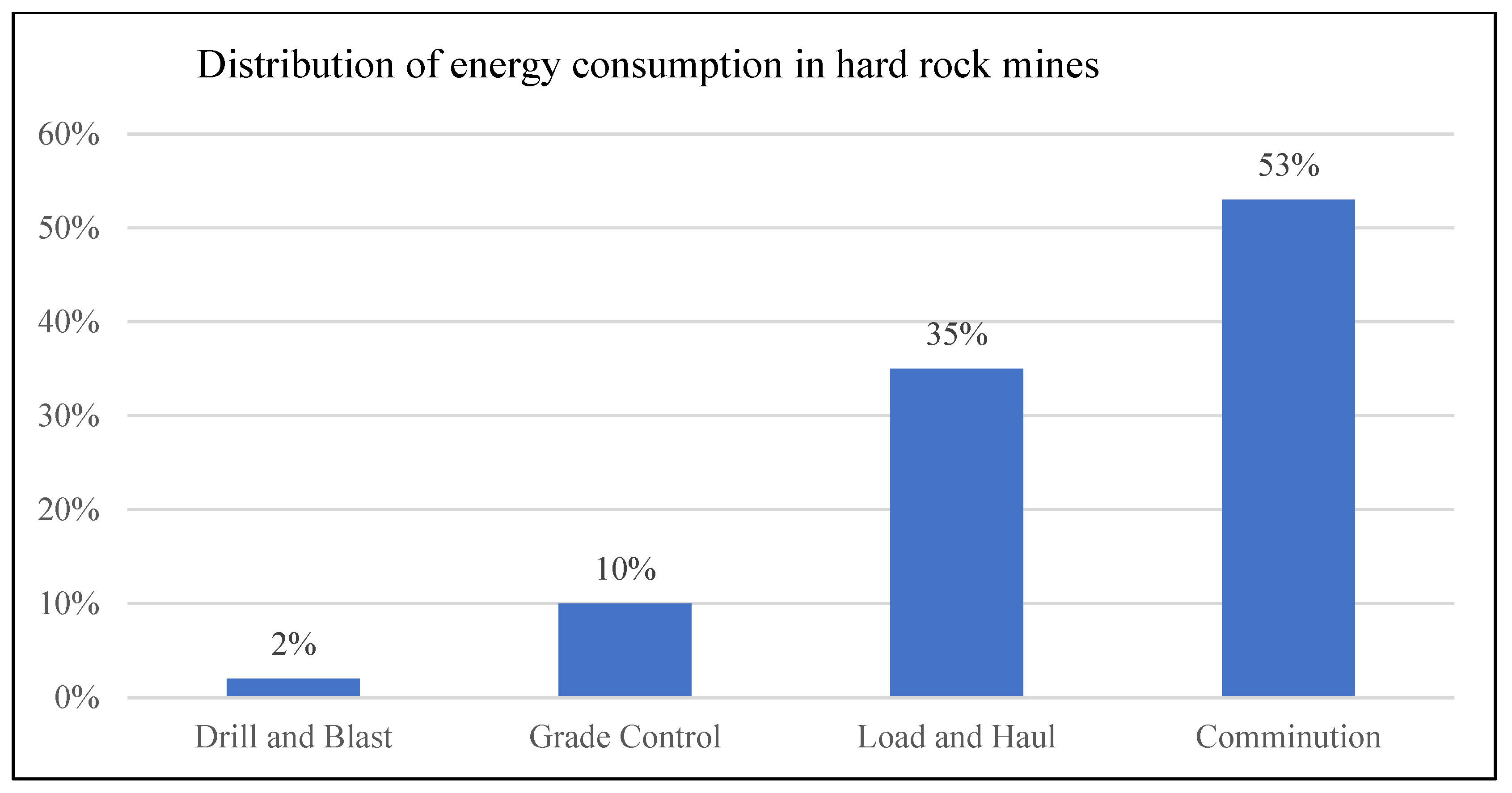
In the mining industry, particle size reduction (i.e., comminution) is the most energy-demanding activity. It begins with blasting and is commonly followed by one or more stages of crushing and milling (grinding). Energy consumption increases by orders of magnitude along the comminution circuit.
Figure 1 shows general information on this increase in energy demand, while
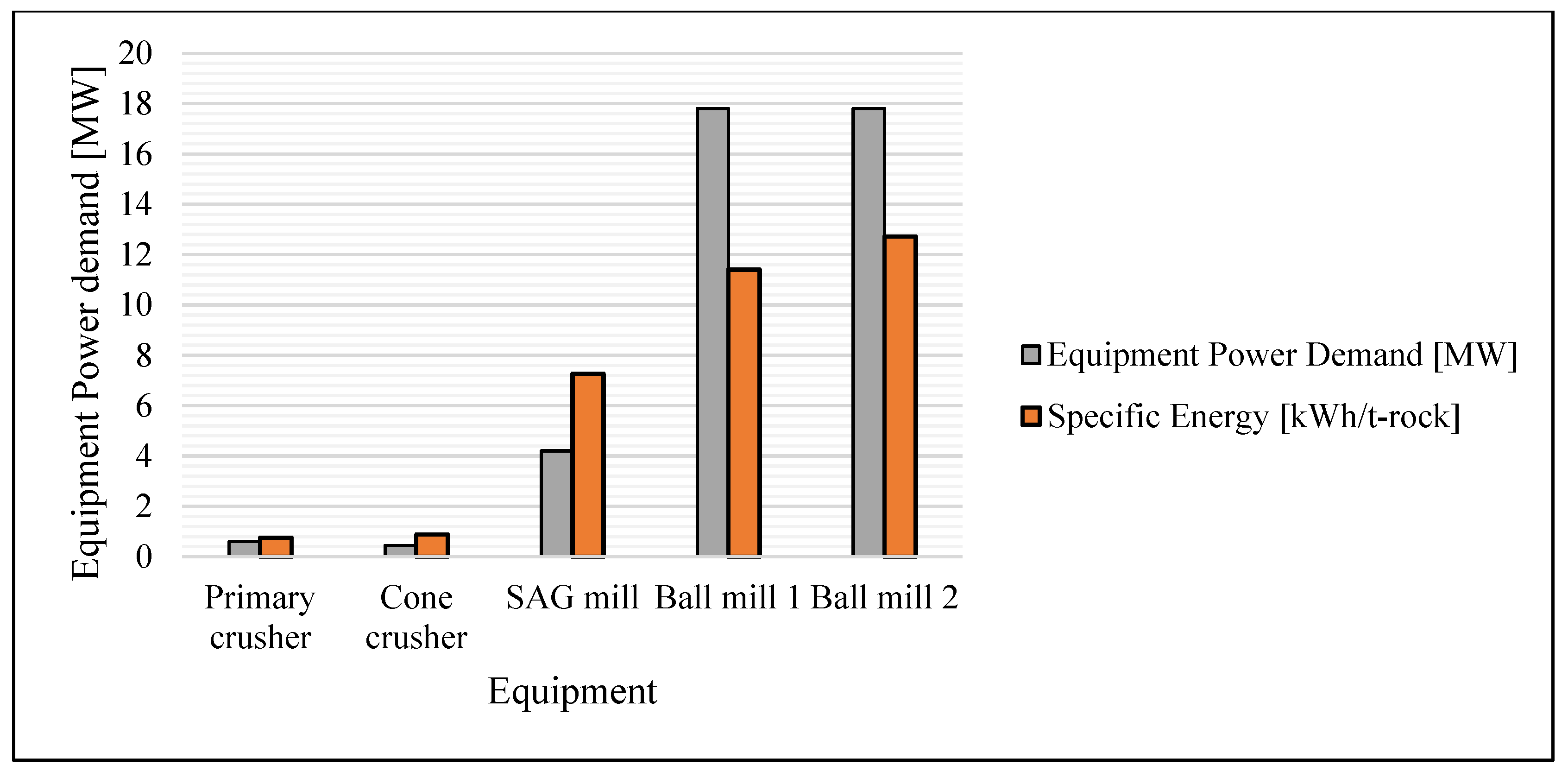
Figure 2 shows a real example of a Pb-Zn production plant: real data confirm this increase by orders of magnitude both in terms of the specific energy required to process the ore and in terms of the energy demand of the equipment.
Reference [
3] reports similar trends, noting that “in the American mining industry, […] grinding is responsible for 40% of the electricity used in mines”. The work [
1] previously cited in
Figure 1 points out the following advantages from better fragmentation of ore:
An increase in the ore recovery ratio.
A decrease in energy waste (mainly due to increasing the temperature of the material instead of fragmenting it).
A decrease in greenhouse emissions (comminution accounts for over 60% of the entire mining process).
As blasting is the least energy-consuming phase of comminution, it offers a significant opportunity to benefit downstream processes and reduce the overall energy demand of the mining operation.
Table 1 summarizes these benefits.
Recent reviews and experimental studies have confirmed that blast fragmentation exerts a strong influence on downstream comminution performance, affecting not only particle size distribution but also crushing efficiency, mill throughput, and overall energy consumption in mineral processing circuits [
4,
5].
Beyond macroscopic fragmentation, multiple authors have emphasized that blasting can modify the internal condition of rock fragments, inducing damage and microcracking that may alter their mechanical resistance during subsequent crushing and grinding stages [
6,
7].
Regarding macroscopic rock fragmentation and its effects on downstream operations, the literature is abundant (see, for example, [
8,
9,
10,
11,
12,
13,
14,
15,
16,
17]). Over the years, several prediction models for the particle size distribution of the blasted muck pile that obtain good fitting with sieving have been presented, for example, the KUZ-RAM [
18,
19] and the SWEBREC [
20], among other studies [
21]. In more recent years, the fragmentation–energy fan saw light [
22] was developed, which considers the percentiles of the particle size distribution (fragmentation) vis-a-vis the specific charges (energy in a log–log graph: they fit well in a fan fashion, where straight lines tend to converge to a focal point (fan)).
The microscopic weakening of grinding resistance through blast-induced microfracturing has been less extensively addressed in scientific literature. The study [
23] pioneered the research: through microscopic analysis and laboratory tests, they showed that increasing the Powder Factor (P.F.) achieves significant reductions in the Bond Work Index (WI, [
24]) due to the presence of microfractures in the material. Studies contained in [
25,
26] reported and discussed a wide selection of these.
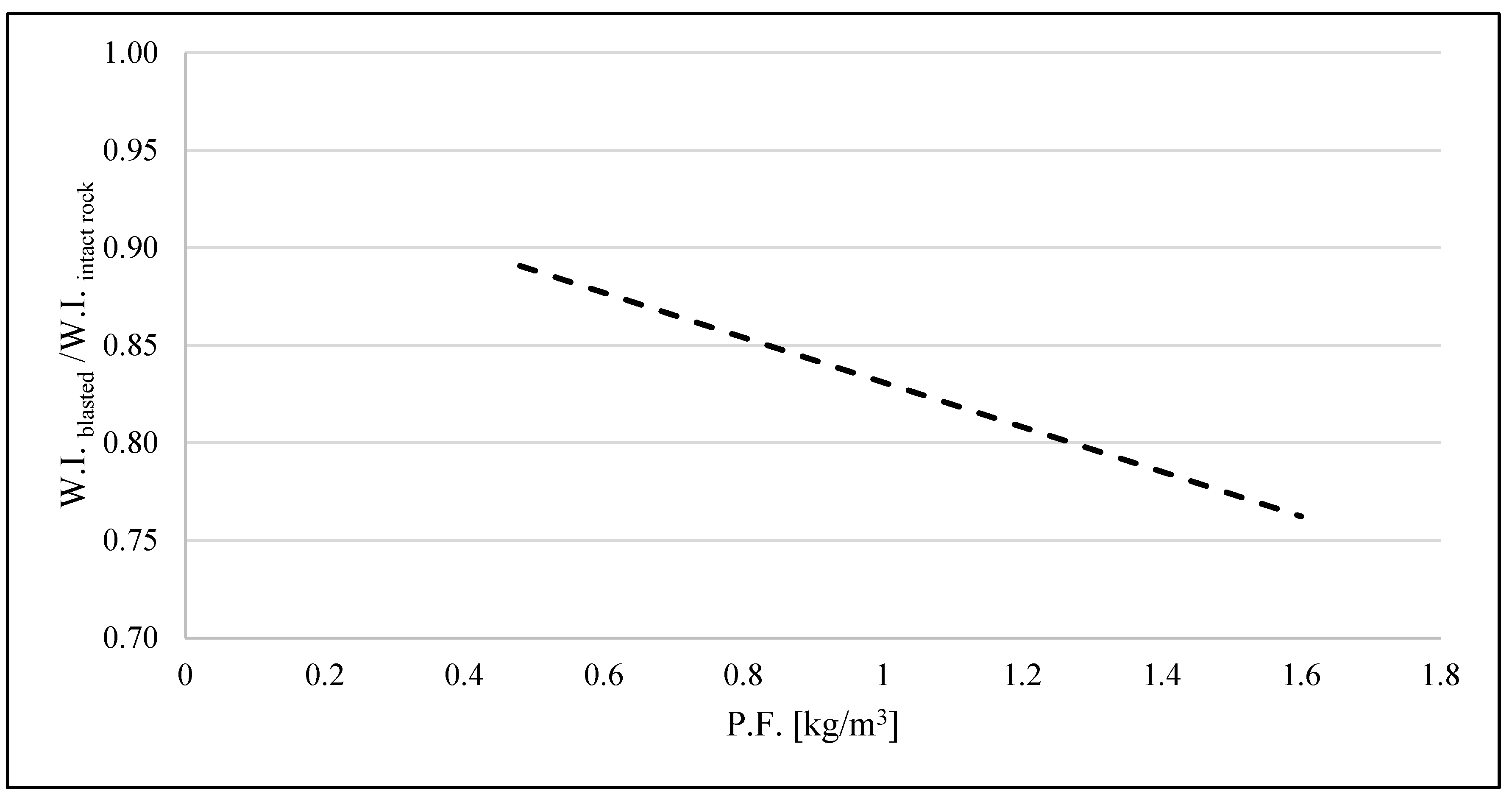
Figure 3 shows a general trend line obtained from the results of experimental blasts at small scale.
Table 2 shows the results of how increasing the blasting energy at the mine benefits the comminution circuits at a plant, at industrial scale.
This work focuses on experimental observations investigating the size–resistance relationship between blast-induced microfracturing and fragment size. The analysis is exploratory in nature, as it is based on a single lithology and a limited number of blast events, and is intended primarily to generate hypotheses rather than to support broad generalizations.
2. Materials and Methods
The rock used in the present study was a copper-bearing andesitic lava containing 1–4% Cu. It had a porphyritic texture, with plagioclase phenocrystals of 1–10 mm and epidote and amphiboles alterations of 1–3 mm. Its mechanical properties are reported in
Table 3.
The samples came from production blasts at the Experimental and School Mine of the Universidad Catolica del Norte: a small-scale mining operation near Antofagasta, in the II Region of Northern Chile. The specific blasts origin of the fragments studied here were a series of unconventional ones to widen the tunnel; therefore, it was not possible to determine a specific explosive charge (P.F., kg/m3). Details of the characterization of this rock are given in the following Sections.
Due to the unconventional geometry of the tunnel widening blasts, a precise determination of the Powder Factor (P.F.) was not possible. However, based on the explosive charge and the estimated blasted volume, the P.F. can be approximated to approximately 1.3 kg/m3. This value should be interpreted as an order-of-magnitude estimate rather than a precise operational parameter.
For the evaluation of the influence of the particle size on the weakening of rock, we used the tests shown in
Table 4, where the rationale and the standards employed are detailed.
2.1. Point Load Strength Test
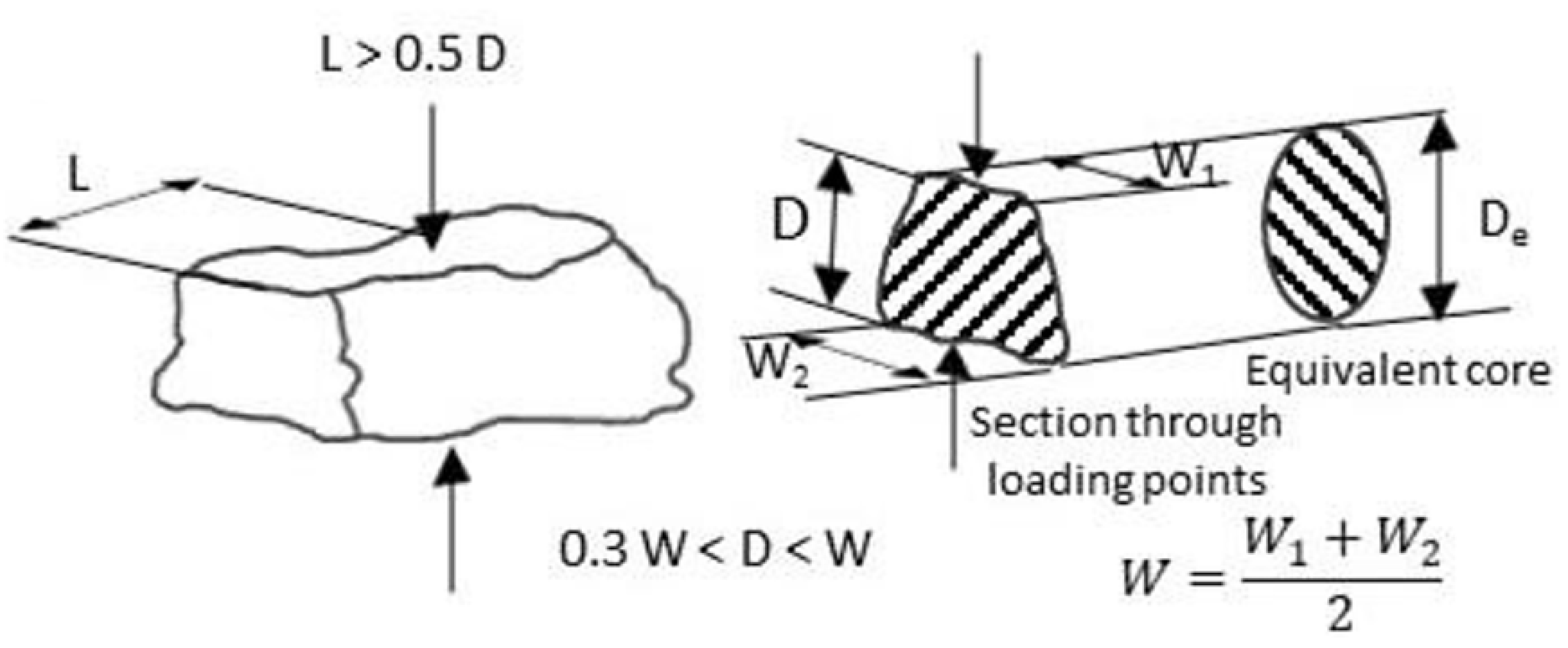
The point load strength test is used to estimate the σc of rocks without having to prepare perfectly machined cylindrical samples. Irregular fragments were used to perform this test, according to the indications of ISRM —ASTM. The geometric conditions that this test must meet for each fragment are that: (i) that the cross-sectional area must be greater than 500 mm
2, (ii) the relationship between the distance D and the width of the cross-section W must be between 0.3 and 1 (0.3 < D/W < 1), and (iii) along the perpendicular to the cross-section, the distance from the point of application of the load to the free face must be greater than half of D (L > 0.5 D), as shown in
Figure 4.
The procedure for estimating σ
c consists of calculating the corrected point load index, Is (50) (Equation (1)), and multiplying it by a factor F that varies between 0 and 1 (Equation (2)). To determine the value of factor F, it was used the Brook size correction, according to Equations (3) and (4).
where I
s(50) is the corrected point load index (MPa), P is the breaking load (kN), D
e is the equivalent diameter of the fragment (mm), T500 is the point load index (MPa), A is the area of the loaded section (mm
2), and L is the distance between the contact points and the free face in a direction perpendicular to the cross-section (mm).
Samples for Point Load Tests
The rock fragments were collected from muck piles produced by two blasts carried out at the Experimental and School mine. These fragments were prepared so that they had flat faces. For this, a control group was cut by saw, thus providing a better contact surface at the loading points. The samples were classified according to the blast with the following nomenclature:
First blast (T1).
Second blast (T2).
Thirty-one samples were obtained for the first blast (T1) and thirty samples for the second blast (T2).
We used a Franklin press (Digital Rock Strength Index Apparatus, manufacturer: Controls Group). To validate the test it is used the breaking shape of the samples: the samples that broke into one or two breaking planes were considered valid, as shown in
Figure 5.
Both regularly and irregularly shaped samples of different sizes were used.
2.2. Work Index Tests
The Work Index (WI) is the value calculated in kWh/t required to reduce a material of infinite particle size by 80% passing 100 microns, which is approximately equivalent to 65% passing 200 mesh. The WI establishes the resistance to size reduction in a given material, being an indicator of the mechanical efficiencies of different equipment along the comminution processes. The WI can be determined using the following equation, as cited in [
24]:
where
Pi: sieve mesh through which 100% of the product’s weight passes.
P80: sieve mesh through which 80% of the product’s weight passes.
F80: sieve mesh through which 80% of the product’s weight passes.
Gbp: grindability index in g/revolutions for the considered cut-off mesh.
Materials and Methods for WI Testing
The rock fragments collected for this part of the study came from a single blast. The fragments were classified into four groups according to the particle size:
The selected fragment size classes were chosen to represent distinct fragmentation domains commonly observed in industrial blasting operations. The 5–20 cm size range corresponds to fragments typically generated under moderate blast energy and commonly processed through primary crushing, whereas the 20–25 cm range represents coarser fragments associated with lower local energy dissipation. By grouping fragments within these size intervals, the study aims to isolate the influence of particle size as a proxy for local blast conditioning intensity, while minimizing variability related to lithology and mineral composition.
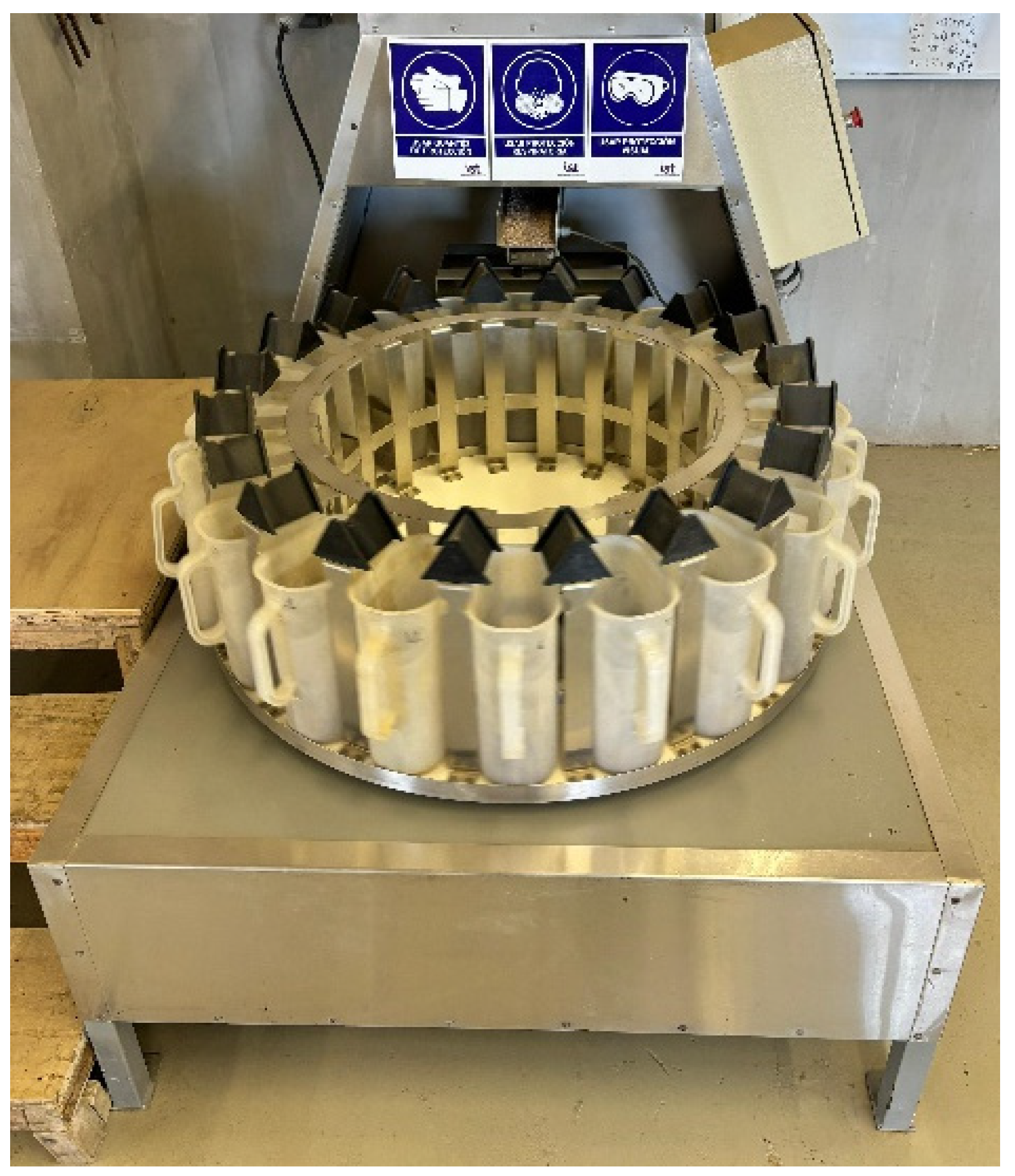
Each of the groups of fragments corresponded to about 10 kg of material. All the groups were crushed separately to obtain a particle size finer than 6#. Each 10 kg sample was homogenized and quartered into 20 sub-samples through a rotary sampler, shown in
Figure 6.
Then, one of the sub-samples was subjected to a granulometric analysis using a series of Tyler mesh sieves. This analysis was performed with the following mesh sizes: 8#, 14#, 20#, 30#, 40#, 50#, 70#, 100#, 140#, 200#, 325#, −325#.
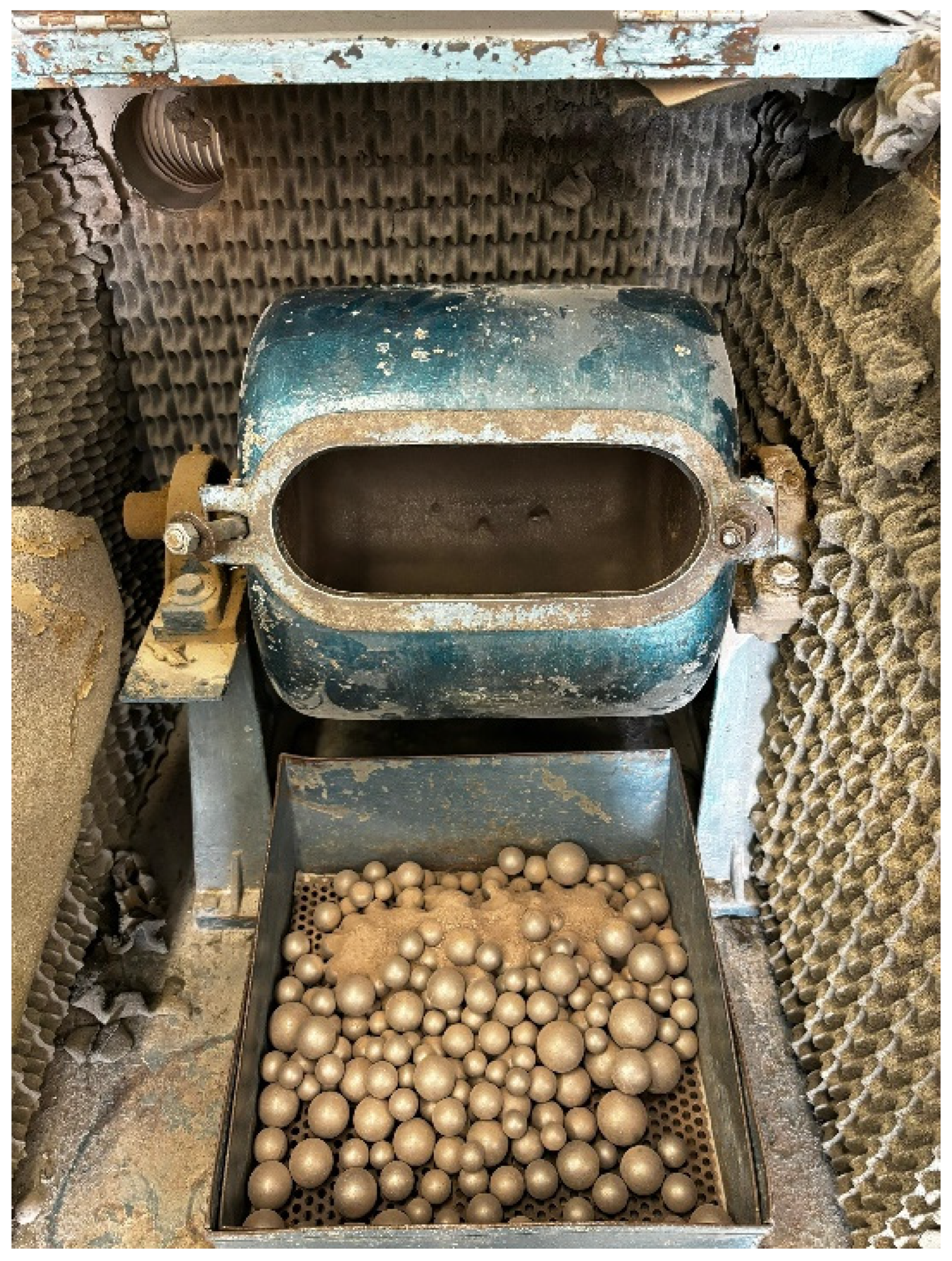
To obtain the Work Index values, tests were carried out in a Bond ball mill (
Figure 7, details in
Table 5).
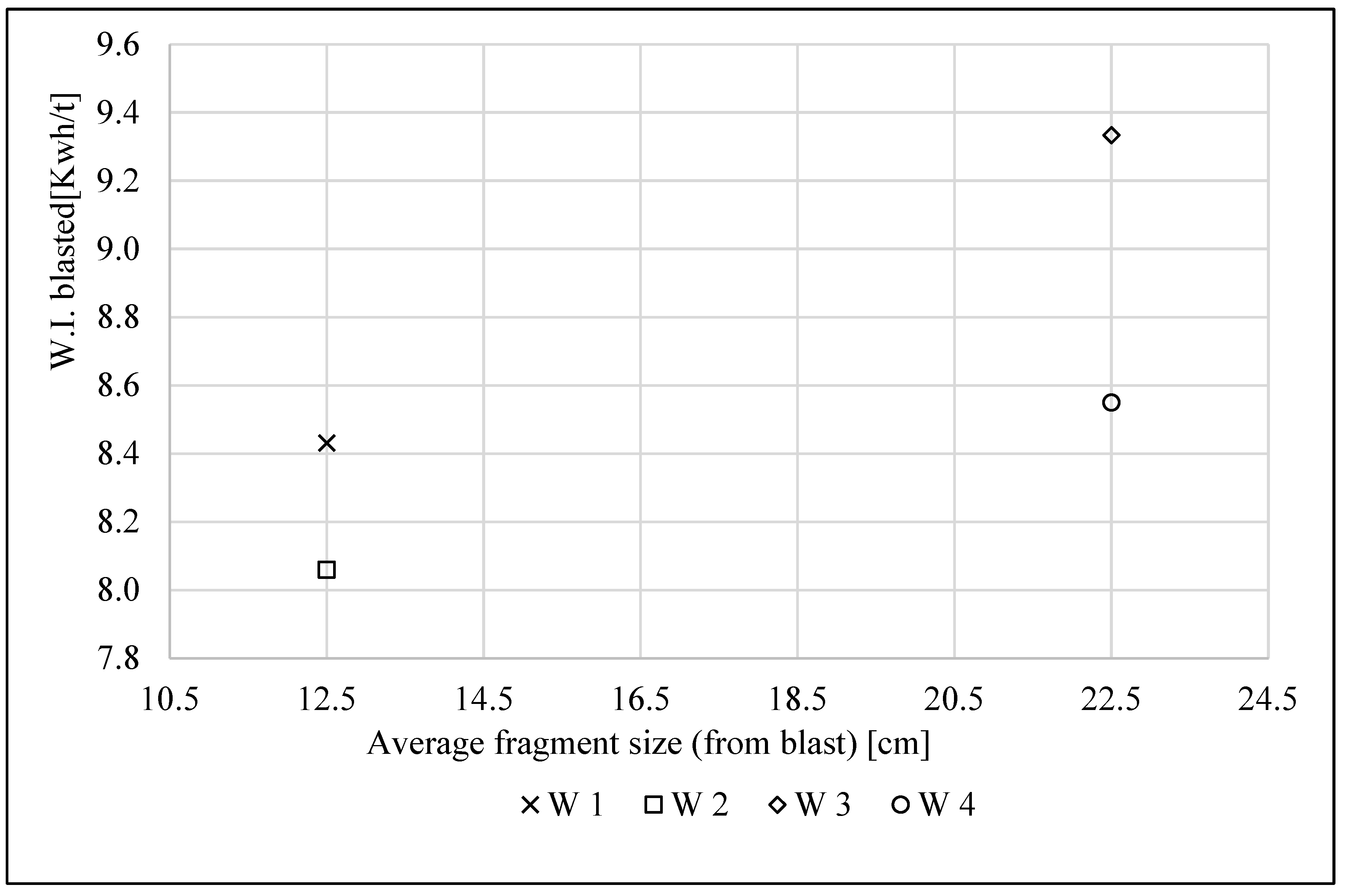
An average of fragment size was considered for each group to generate the correlation shown in
Section 3.2, in the graph in Figure 15. For groups one and two, a value of 12.5 cm was averaged, since the sizes of their fragments ranged from 5 to 20 cm; for groups three and four, a value of 22.5 cm was averaged, since the sizes ranged from 20 to 25 cm.
2.3. Microscopic Analysis: Fracture Density
Microfractures were identified and quantified based on direct optical observation of polished briquettes. A microfracture was defined as a visible discontinuity within the mineral matrix that was not associated with pre-existing grain boundaries or polishing effect. For each image, the number of microfractures intersecting the observed particle area was manually counted. The metric “number of microfractures” was selected as a primary indicator due to its robustness against scale distortion and its suitability for comparative analysis across different zoom levels, whereas fracture length and connectivity were considered more sensitive to magnification-related bias.
Fracture density is the number of fractures in each area. For practical cases,
Diameter of the visual field of the microscope
The actual diameter of the observed surface is calculated by dividing the diameter of the field of view by the magnification of the objective and eventually by the tube factor, where the formula is
: diameter of the visual field in the plane of the specimen.
: field number in millimeters.
: objective lens zoom.
: tube lens magnification factor.
Samples
The samples came from the same blast used for WI testing. Approximately five kilograms of samples were collected and sieved.
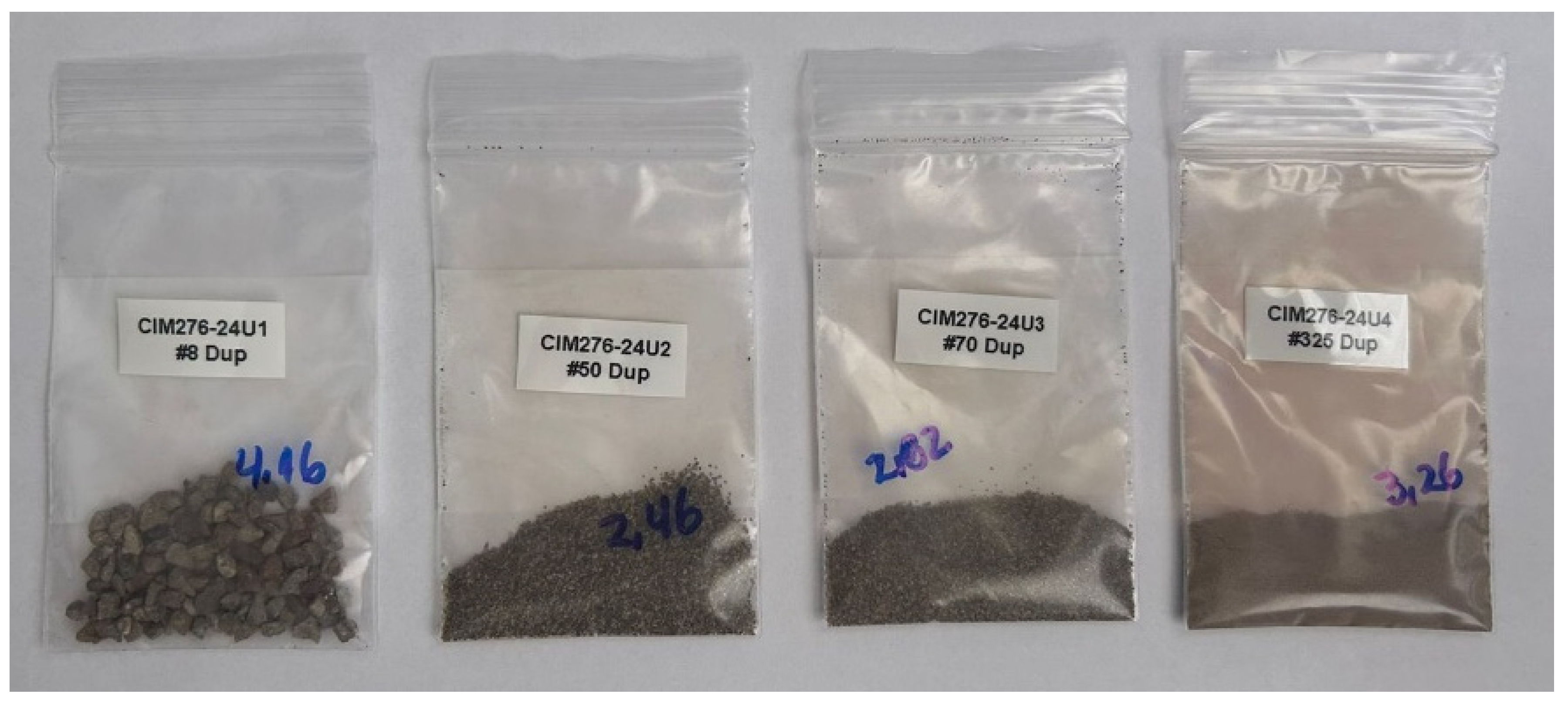
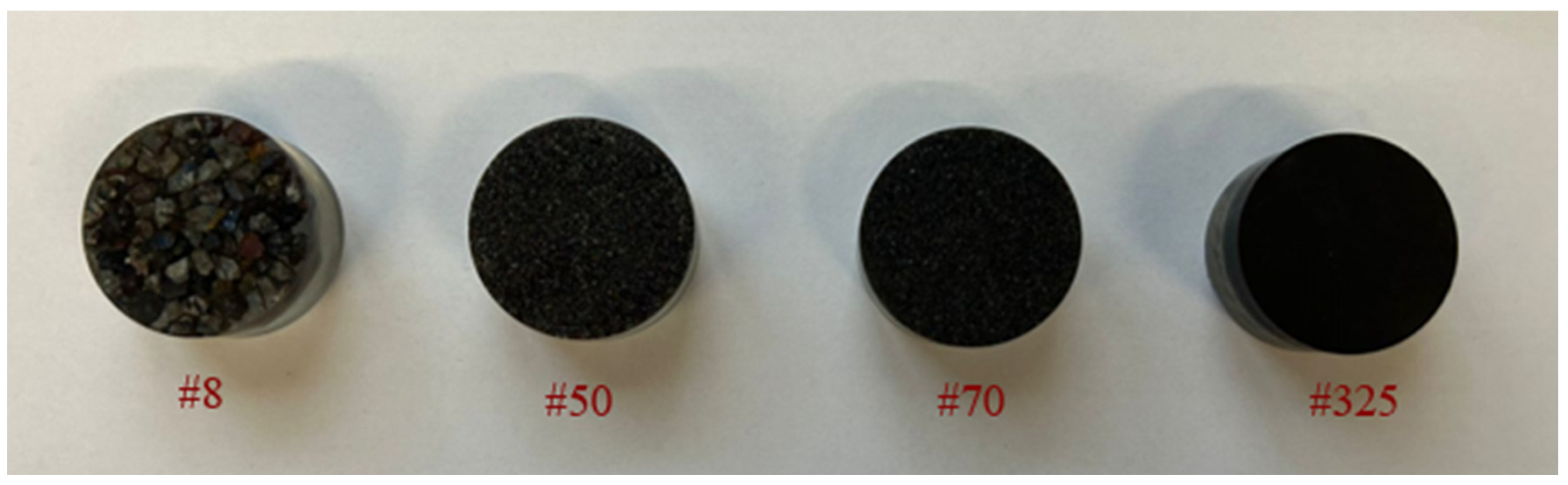
Once the samples were separated by size, four mesh sizes were selected (
Figure 8).
In order to carry out a correct observation under the microscope, the selected samples were placed in polished briquettes (
Figure 9).
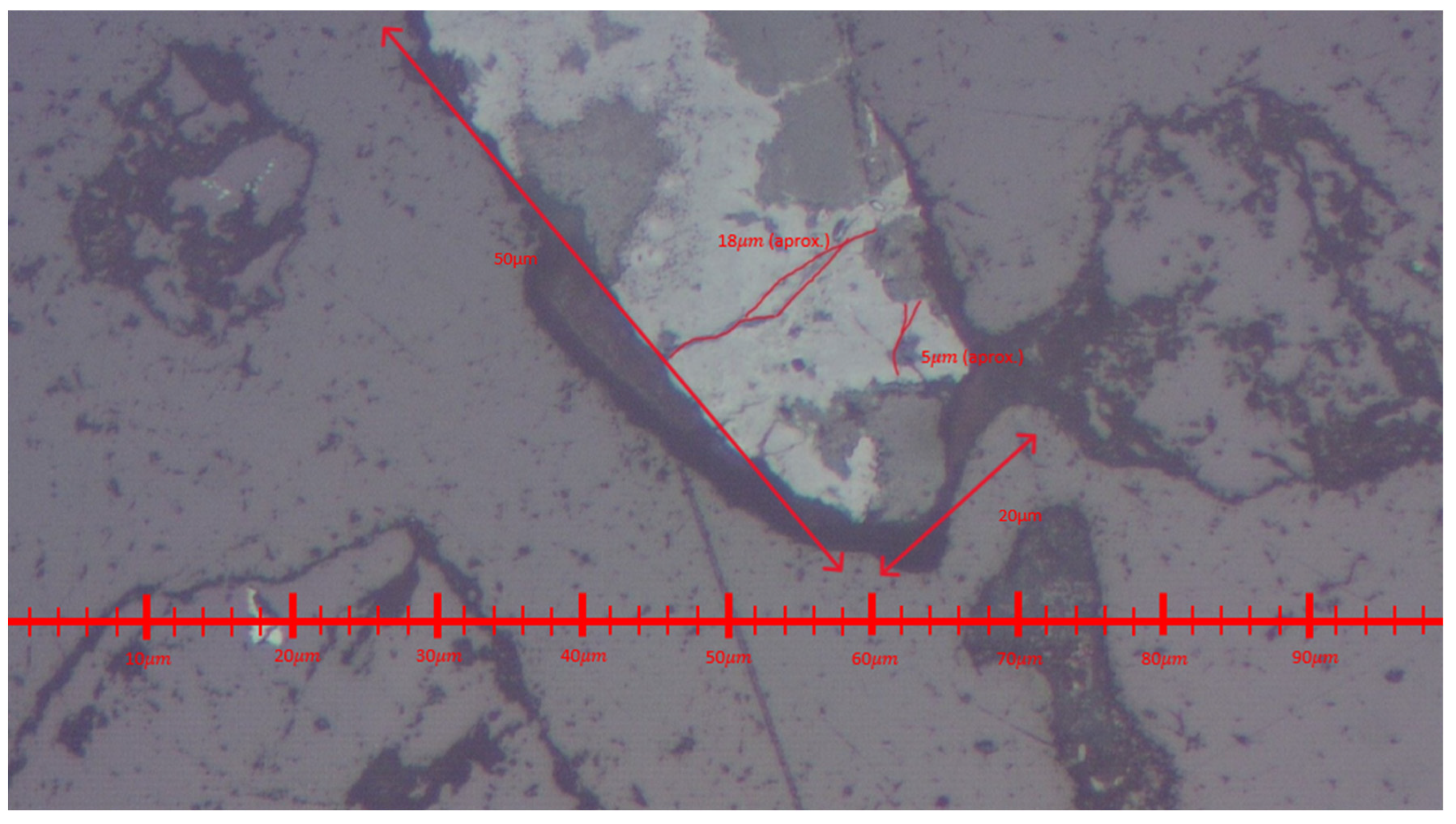
The polished briquettes were placed under an MCS-IM100 Microscope, obtaining images such as the one shown in
Figure 10. Between four and five images were necessary for each zoom (
Table 6); hence, for each mesh sample to be representative, a total of 26 were pictures taken.
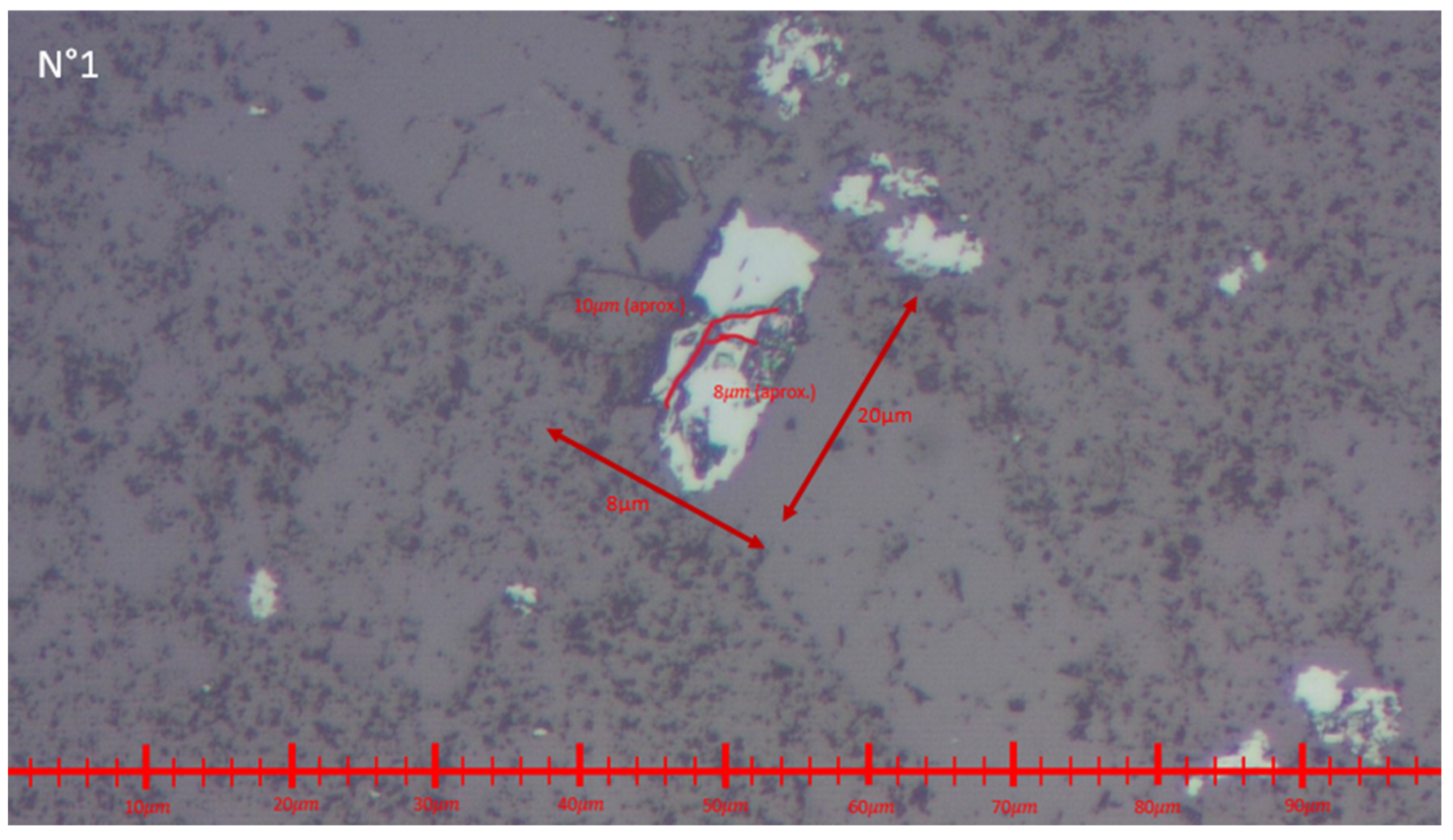
Figure 11 shows an example of a visual diameter with two scale references.
The area of observation corresponds to the maximum width multiplied by the length of particle in the sample (
Figure 12): this is a way of standardizing the calculation of the area for all the samples.
3. Results
3.1. Results of the Point Load Tests
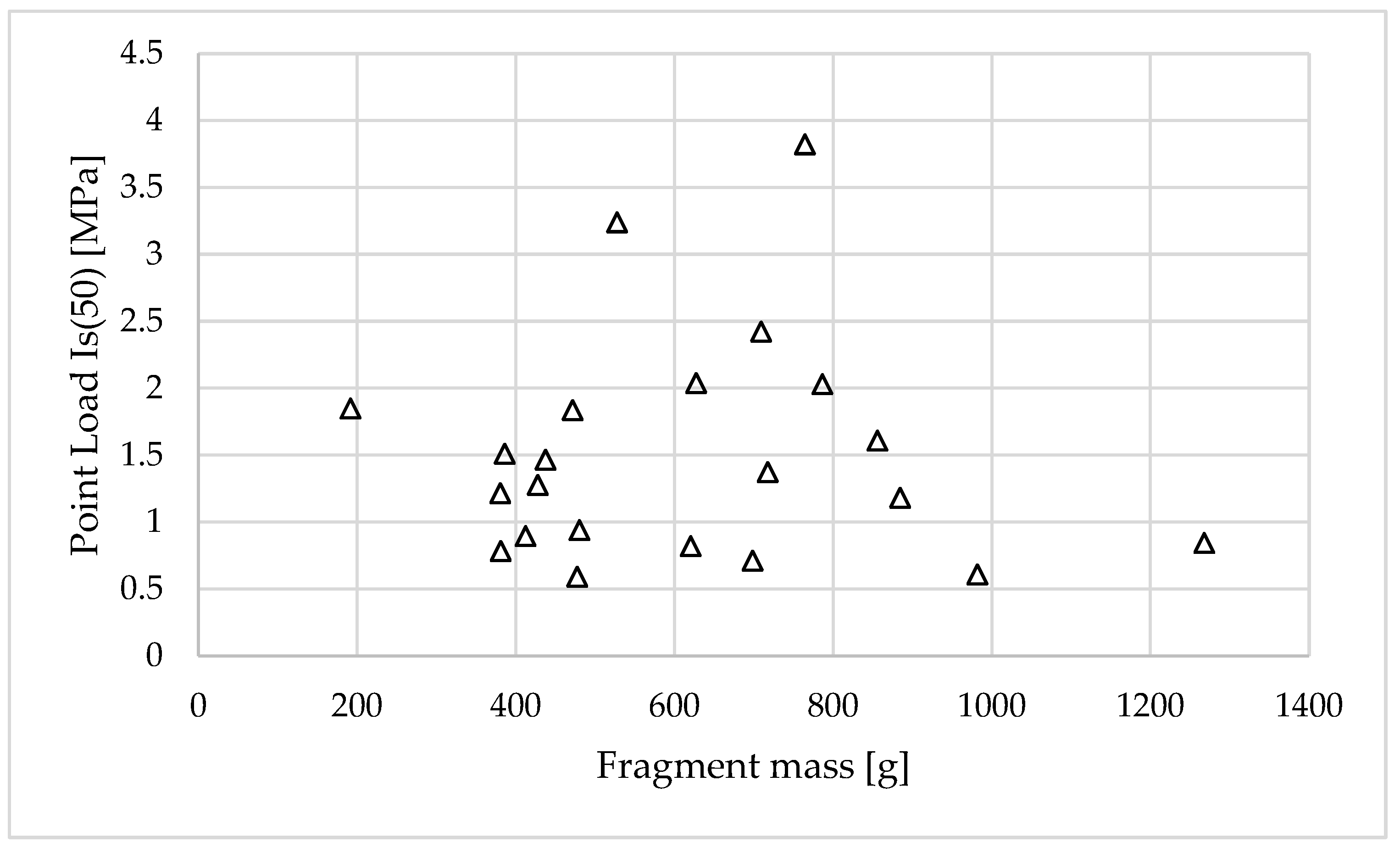
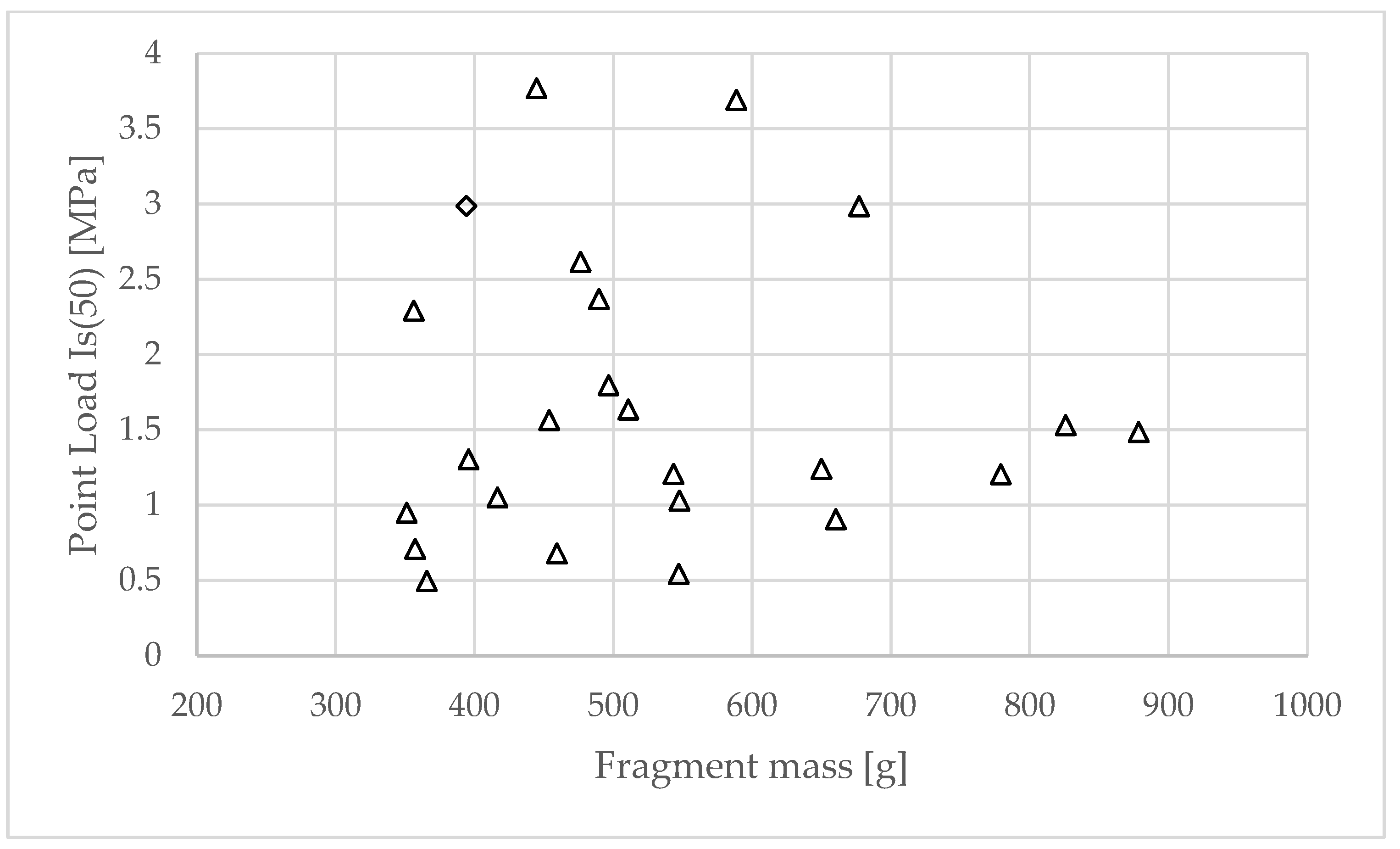
Figure 13 and
Figure 14 show the graphs of resistance to simple compression, with respect to the mass of the samples for blast 1 and blast 2. A quantitative correlation analysis was conducted to evaluate the relationship between charge mass (g) and uniaxial compressive strength (σc, MPa), as visual inspection of the data did not indicate a clear trend. To ensure a robust assessment, three complementary statistical methods were applied: Pearson’s correlation coefficient to evaluate linear relationships, Spearman’s rank correlation coefficient to assess monotonic, non-parametric associations, and Kendall’s tau, which is a rank-based metric suitable for small sample sizes.
For Blast 1, the results indicate consistently weak correlations between charge mass and uniaxial compressive strength. Pearson’s correlation coefficient yielded a value of r = −0.076 with a p-value of 0.764, indicating the absence of a linear relationship. Similarly, Spearman’s rank correlation coefficient resulted in ρ = 0.125 with a p-value of 0.622, while Kendall’s tau was τ = 0.111 with a p-value of 0.550. In all cases, the correlation coefficients are close to zero, and the corresponding p-values are well above the conventional significance level of 0.05.
A similar behavior was observed for Blast 2. Pearson’s correlation coefficient resulted in r = −0.113 with a p-value of 0.645, again indicating no linear correlation between charge mass and UCS. Spearman’s rank correlation coefficient yielded ρ = −0.089 with a p-value of 0.716, while Kendall’s tau was τ = −0.088 with a p-value of 0.629. As in Blast 1, all correlation coefficients are exceedingly small in magnitude and statistically non-significant.
Overall, the results from both Blast 1 and Blast 2 demonstrate that there is no statistically significant correlation between charge mass and uniaxial compressive strength in the analyzed datasets. From a statistical perspective, the null hypothesis of no association cannot be rejected in either case, confirming that variations in charge mass are not directly related to UCS under the evaluated blasting conditions.
3.2. Results of the W.I. Tests
Figure 15 illustrates the relationship between the average fragment size obtained after blasting and the corresponding Work Index (W.I.) for the four tests (W1–W4). Two distinct granulometric groups can be identified: W1–W2, with an average fragment size of 12.5 cm, and W3–W4, with an average fragment size of 22.5 cm. The results show that the group characterized by coarser fragmentation systematically exhibits higher W.I. values, indicating increased comminution energy demand.
To support the visual interpretation, quantitative indicators were evaluated. Pearson’s correlation coefficient indicates a positive linear association between fragment size and W.I. (r = 0.75), while rank-based measures show an even stronger monotonic relationship (Spearman’s ρ = 0.89; Kendall’s τ = 0.82). Although the associated p-values are above the conventional significance threshold due to the limited sample size (n = 4), the magnitude and consistency of the correlation coefficients suggest a meaningful association.
A linear regression analysis further supports this trend, yielding a positive slope of 0.0695 kWh/t per centimeter of fragment size and an R2 value of 0.56. This indicates that more than half of the variability in W.I. can be explained by differences in average fragment size. Overall, these results quantitatively support the interpretation that coarser blast fragmentation leads to higher specific energy consumption during subsequent comminution stages.
Comparable trends relating blast fragmentation characteristics to variations in grindability and Work Index have been reported in independent experimental and industrial studies, supporting the interpretation that fragmentation size and blast-induced damage jointly influence comminution energy demand [
27,
28].
3.3. Results from the Microscopic Analysis
The number of microfractures was adopted as the primary quantitative indicator because it is less affected by magnification-dependent distortions than length- or continuity-based metrics and provides a more consistent basis for comparison across different observation scales.
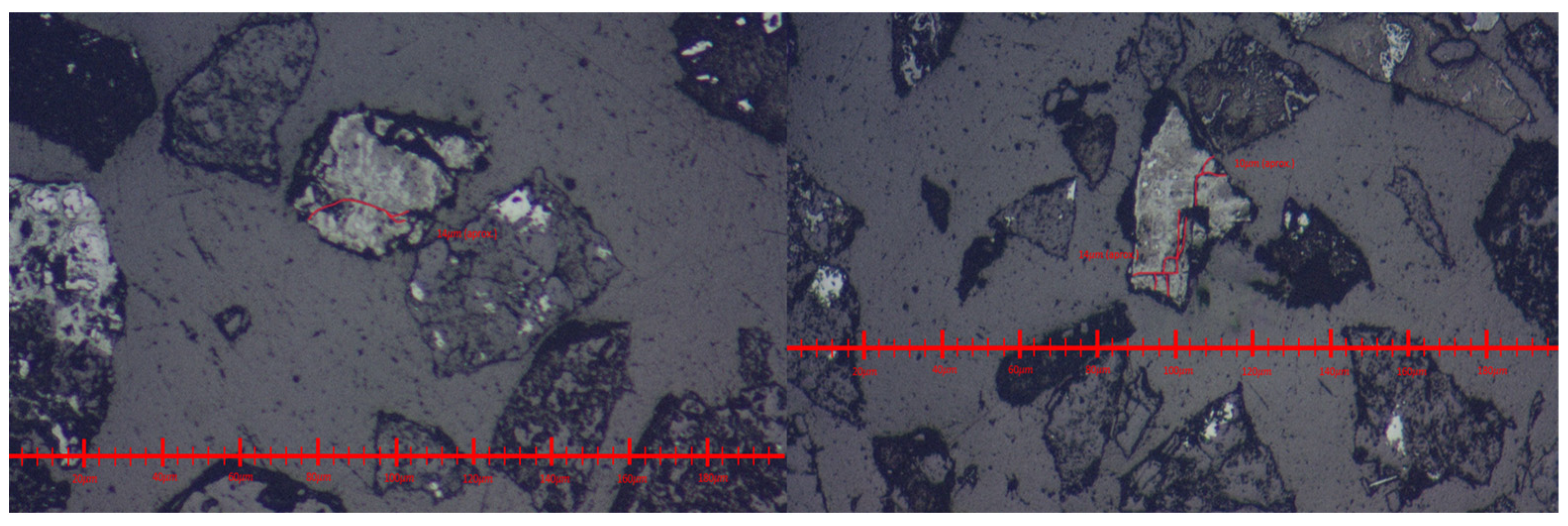
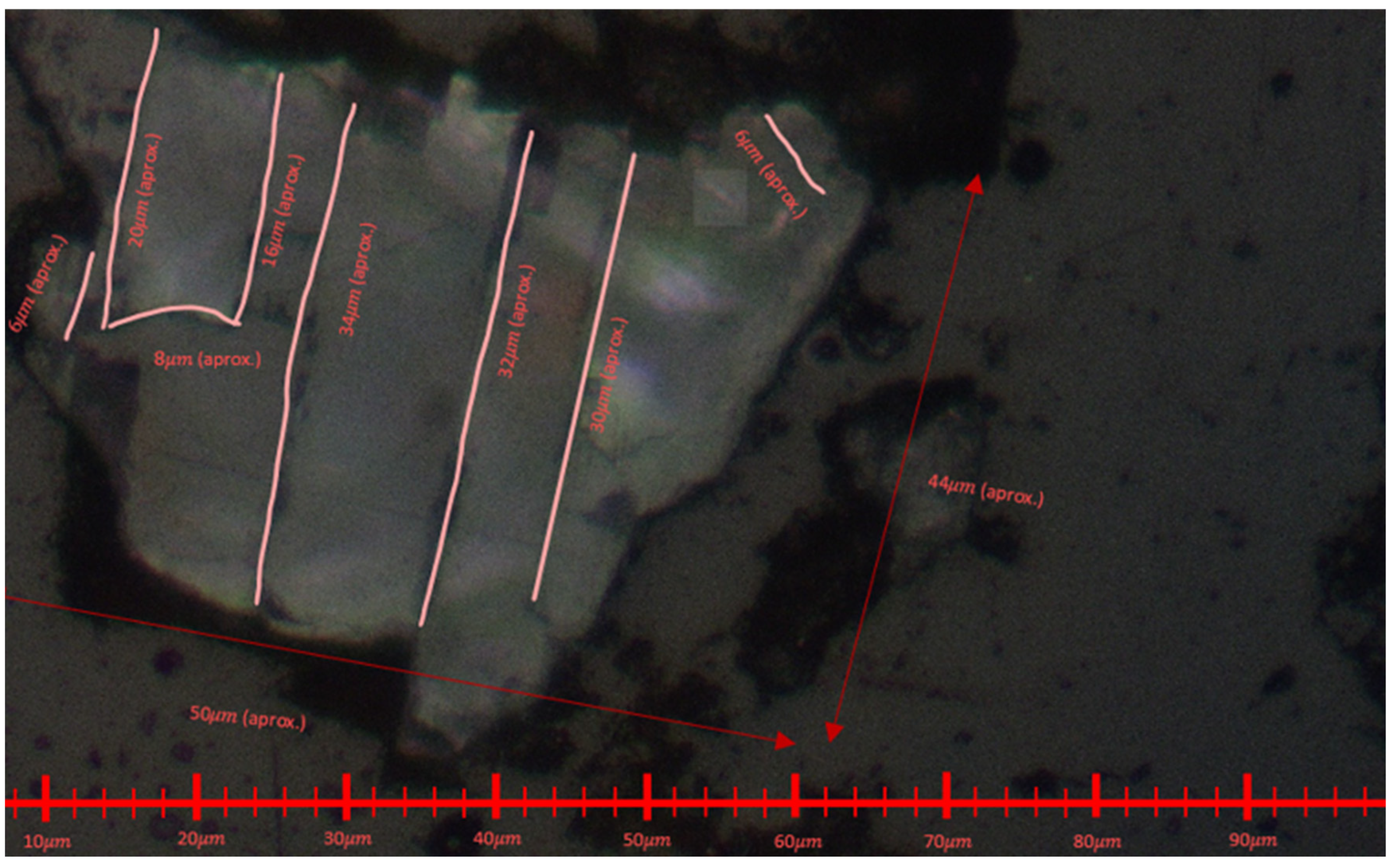
Figure 16 presents a representative microscopic image of the blasted samples, revealing a network of induced microfractures. Based on previous studies, laboratory-scale crushing and sample preparation are generally considered insufficient to generate significant microfracturing when compared with blast-induced damage.
Therefore, these discontinuities are not characteristic of the intact mineral fabric and were consistently observed in all analyzed samples, regardless of particle size. This indicates that the observed microfractures were generated by the explosive action rather than by pre-existing geological features.
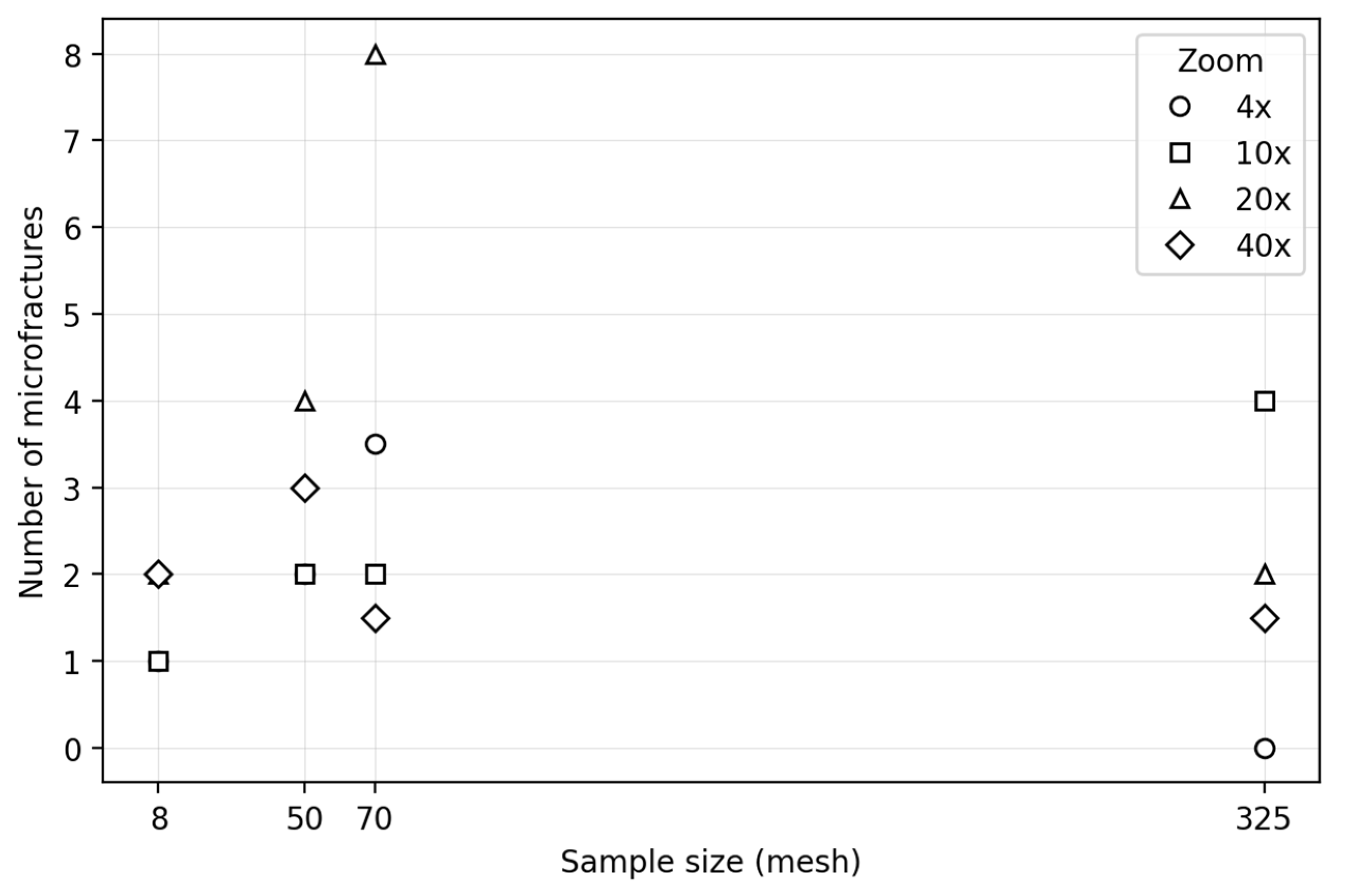
To quantitatively assess the relationship between particle size and microfracturing, the number of microfractures was analyzed as a function of sample size (mesh) at different microscope zoom levels (4×, 10×, 20×, and 40×). The results are summarized in
Figure 17, where all zoom levels are presented jointly using different symbols to highlight scale effects.
A positive association between sample size and the number of microfractures is clearly observed at intermediate zoom levels (10× and 20×). In this range, larger particles (mesh #70 and #325) systematically exhibit a higher number of microfractures compared with smaller particles (mesh #8 and #50). These zoom levels provide a suitable balance between resolution and field of view, allowing a representative characterization of the spatial distribution of microfractures.
This observation is consistent with previous microscopy-based studies showing that blast-induced microcracking can be heterogeneously distributed within rock fragments and that its quantitative characterization is strongly dependent on observation scale and resolution [
28,
29].
At low zoom (4×), the relationship between particle size and the number of microfractures is less pronounced. This behavior is attributed to limited resolution, which restricts the detection of fine discontinuities and reduces measurement sensitivity. Conversely, at high zoom (40×), the apparent correlation degrades despite the higher resolution. In this case, the reduced field of view leads to a loss of spatial representativeness, as only localized fracture segments are captured, preventing a reliable assessment of the overall fracture distribution.
Overall, the results demonstrate that the correlation between particle size and microfracturing exists but is strongly dependent on the observation scale. The consistency of the positive trend at intermediate zoom levels, combined with its systematic degradation at low and high zooms, highlights the importance of scale-aware analysis in microscopic characterization. Although the limited number of samples constrains formal statistical inference, the use of quantitative indicators and the consistency of trends across zoom levels provide robust support for the proposed interpretation of blast-induced microfracturing.
4. Discussion
It is important to emphasize that the present study is based on samples collected from a single mine, a single lithology, and a limited number of blasting events. Consequently, the results should be interpreted within this restricted context, and the proposition that the Work Index may vary within a blasted rock volume should be regarded as a working hypothesis rather than a definitive conclusion.
Given the reduced sample size, the statistical analysis should be interpreted as exploratory rather than confirmatory. Nevertheless, the consistency of the observed trends across independent indicators supports the proposed physical interpretation of blast-induced microfracturing.
The objective of this work is not to generalize blast-induced weakening behavior across different lithologies, but to investigate the existence of a size-dependent relationship between blast-induced microfracturing and mechanical resistance under controlled and well-characterized conditions. The findings are therefore intended to support hypothesis generation and to motivate further investigations under different geological and operational settings.
The absence of a rigorously quantified Powder Factor represents an important limitation of the present study. Although an approximate value of 1.3 kg/m3 was estimated, this parameter was not used for quantitative correlation. Instead, fragment size was adopted as an indirect proxy for local blast conditioning intensity, under the assumption that coarser fragments reflect zones of lower effective explosive energy dissipation. This approach is consistent with previous experimental and field observations reported in the literature.
The use of fragment size as a proxy for local blast conditioning is further supported by studies indicating that regions subjected to lower effective explosive energy tend to generate coarser fragments with reduced internal damage, whereas finer fragments are typically associated with higher local energy dissipation and increased microcracking [
30].
The results provide insight into how macroscopic and microscopic methods can be used to investigate size-dependent blast-induced pre-conditioning of rock. At the macroscopic scale, point load testing showed no correlation between particle size and strength, indicating that this test is not sensitive to size-dependent weakening effects. At the microscopic scale, both the Bond ball mill tests, and optical microscopy revealed a consistent size-dependent weakening of the blasted material, confirming that these methods are suitable for capturing microscopic blast-induced damage.
The results obtained provide some insights into how to investigate the macroscopic and microscopic effects of the size-dependent pre-conditioning of rock via blasting. Our macroscopic approach used the point load test (PLT) to investigate the influence of particle size on the weakening of blasted rock. The results showed no correlation between PLT strength and particle size. This indicates that, at least using PLT, size-dependent weakening cannot be detected at the macroscopic scale. This helps to rule out this type of test when investigating this topic.
For microscopic effects, we used the Bond ball mill test to calculate the Work Index and microscopic observations to measure the length of blast-induced fractures in the blasted rock. The results from both tests were consistent: apparent microscopic weakening of the blasted material is size-dependent. This confirms that these two methods are effective for measuring the microscopic size dependence of rock pre-conditioning by blasting.
Regarding the interpretation of the results, the size dependence of blast-induced rock weakening should be considered very preliminary. The interpretation suggests that a hypothesis can be formulated whereby the blasted Work Index is not constant within a given volume of blasted rock.
This interpretation must be discussed considering other variables, such as lithology. For example, small-scale blast tests in granite reported in the literature [
31], combined with subsequent measurements of the blasted Work Index using ball milling, indicate that blast effectiveness decreases at smaller particle sizes and that it is improbable to induce microfracturing at a scale smaller than that of the mineral grains. Independent experimental investigations have similarly reported that the effectiveness of blast-induced microcracking is constrained by lithology and mineral grain size, with diminishing effects observed when fragment dimensions approach the characteristic scale of the mineral fabric [
32]. The effects of microcracking therefore depend on lithology. In the present study, the observed fractures predominantly crosscut mineral grains, mainly plagioclase phenocrysts.
The influence of the crushing stage on microfracture generation should also be considered. Laboratory-scale jaw crushing applies predominantly static loads, which are generally insufficient to generate microfractures in the material. This interpretation is supported by previous studies (and the references cited therein) [
23,
31,
32,
33,
34], which do not consider the crushing stage to be a disturbance factor affecting the rock prior to milling.
Future work will extend the present analysis by incorporating samples from additional blasting events at the same mine and by including direct measurements of the Powder Factor, enabling a more comprehensive evaluation of blast-induced weakening mechanisms.
5. Conclusions
In the mining industry, grinding (milling) is responsible for the highest energy consumption in the mine–plant system. Several studies show that blasting with higher energy and more effective blast timing can reduce this consumption.
There is an equilibrium between grinding and blasting costs. The benefits of blasting lie in reducing particle size and the internal resistance of rock grains. This work investigated the correlation between particle size, microfracturing, and grinding resistance.
The research analyzed blasted rock using three tests:
Macroscopic testing via point loading.
Microscopic mechanical testing via Bond ball milling.
Microscopic optical observations of microfractures.
The macroscopic analysis, conducted using point load testing, showed no statistically significant correlation between fragment size and derived uniaxial compressive strength. This result shows that tests at a centimetric are not sensitive to the presence or intensity of blast-induced microfracturing. Consequently, this technique is not suitable for detecting size-dependent weakening mechanisms associated with explosive damage and should not be relied upon for evaluating blast pre-conditioning effects relevant to grinding performance.
In contrast, the microscopic mechanical response, quantified through Bond ball mill Work Index tests, revealed a clear size-dependent trend. Coarser blasted fragments systematically exhibited higher Work Index values, indicating greater resistance to grinding and higher specific energy consumption during milling. Although based on a limited dataset, the consistency of this trend suggests that fragment size may affect microscopic blast conditioning, with finer fragments being more conditioned by blast energy.
Microscopic optical observations corroborate the mechanical findings. The density of blast-induced microfractures increased with particle size when analyzed at appropriate observation scales (10×–20× magnification). The optical results agree with the mechanical ones: the internal damage state of blasted rock might be size-dependent. The results also highlight the influence of observation scale on fracture quantification: insufficient resolution obscures microcracks, whereas excessively high magnification reduces spatial representativeness.
Taken together, the mechanical and microscopic evidence indicate that the Work Index of blasted rock may not be constant within a given blast volume but may vary as a function of fragment size. Given the limited number of tests, these are very preliminary results. Nevertheless, if confirmed by a larger set of experimental data, one might change assumption of a single representative Work Index for blasted material and suggest that blast-induced heterogeneity can persist into the comminution stage, directly influencing energy demand.
The conclusions of this study are necessarily preliminary, as they are based on a single lithology, a limited number of blasts, and an approximate estimation of the Powder Factor. Nevertheless, the consistency observed between independent mechanical and microscopic indicators provides a basis for hypothesis generation. Future research should extend this approach to multiple lithologies, well-controlled blasting parameters, and larger datasets, with the objective of quantifying the variability of the Work Index within blasted rock.
Author Contributions
Conceptualization, J.S.; methodology, J.S., S.F., J.O. and G.P.; software, J.S., S.F., J.O. and G.P.; validation, J.S. and T.M.; formal analysis, J.S., S.F., J.O. and G.P.; investigation, J.S., S.F., J.O. and G.P.; resources J.S. and T.M.; data curation J.S., S.F., J.O. and G.P.; writing—original draft preparation, J.S.; writing—review and editing, J.S. and T.M. visualization, J.S. and T.M.; supervision, J.S. and T.M.; project administration, J.S. and T.M.; funding acquisition, J.S. and T.M. All authors have read and agreed to the published version of the manuscript.
Funding
This research received no external funding.
Institutional Review Board Statement
Not applicable.
Informed Consent Statement
Not applicable.
Data Availability Statement
The data presented in this study are available on request from the corresponding author. The data are not publicly available due to ongoing research.
Acknowledgments
In preparing this manuscript, artificial intelligence (AI) tools were employed solely to assist in language editing and stylistic refinement. Specifically, GPT-5 (OpenAI) and Microsoft 365 Copilot were used to improve clarity, grammar, and readability. No AI tools were used for data analysis, interpretation, or generation of scientific content. All AI-assisted outputs were critically reviewed and edited by the authors to ensure accuracy and consistency with the study’s methodology and findings. The authors accept full responsibility for the content of this publication.
Conflicts of Interest
The authors declare no conflicts of interest.
References
- Zhang, Z.X.; Sanchidrián, J.A.; Ouchterlony, F.; Luukkanen, S. Reduction of fragment size from mining to mineral processing: A review. Rock Mech. Rock Eng. 2023, 56, 747–778. [Google Scholar] [CrossRef]
- Magdalena, R.; Valero, A.; Palacios, J.L.; Valero, A. Mining energy consumption as a function of ore grade decline: The case of lead and zinc. J. Sustain. Min. 2021, 20, 109–121. [Google Scholar] [CrossRef]
- Purhamadani, E.; Bagherpour, R.; Tudeshki, H. Energy consumption in open-pit mining operations relying on reduced energy consumption for haulage using in-pit crusher systems. J. Clean. Prod. 2021, 291, 125228. [Google Scholar] [CrossRef]
- Kinyua, E.M.; Jianhua, Z.; Kasomo, R.M.; Mauti, D. A review of the influence of blast fragmentation on downstream processing of metal ores. Miner. Eng. 2022, 186, 107743. [Google Scholar] [CrossRef]
- Nikkhah, A.; Vakylabad, A.B.; Rezai, B.; Pourrahimian, Y. An evaluation of the impact of ore fragmentation by blasting on mining performance. Minerals 2022, 12, 258. [Google Scholar] [CrossRef]
- Khademian, A.; Bagherpour, R. Alteration of mineral grindability due to the application of different explosives in blasting operations. Miner. Eng. 2017, 111, 174–181. [Google Scholar] [CrossRef]
- Nielsen, K.; Malvik, T. Grindability enhancement by blast-induced microcracks. Powder Technol. 1999, 105, 52–56. [Google Scholar] [CrossRef]
- Mackenzie, A.S. Optimum blasting. In Proceedings of the 28th Annual Minnesota Mining Symposium, Duluth, MN, USA, 14–16 January 1967; Volume 28, pp. 181–188. [Google Scholar]
- Clerici, C.; Mancini, R. Blasting operations in quarrying: Mutual influence between blasting and fragmentation. In Proceedings of the Congress on Ornamental Stones and Industrial Minerals Mining; Politecnico di Torino: Torino, Italy, 1974; Volume 1. [Google Scholar]
- Scott, A. (Ed.) Open Pit Blast Design: Analysis and Optimization; Julius Kruttschnitt Mineral Research Centre (JKMRC), University of Queensland: Brisbane, Australia, 1996; 338p. [Google Scholar]
- Božić, B. Control of fragmentation by blasting. Rud.-Geol.-Naft. Zb. 1998, 10, 49–57. [Google Scholar]
- Sastry, V.; Chandar, K. Influence of the initiation system on blast results: Case studies. Fragblast 2004, 8, 207–220. [Google Scholar] [CrossRef]
- Morin, M.A.; Ficarrazzo, F. Monte Carlo simulation as a tool to predict blasting fragmentation based on the Kuz–Ram model. Comput. Geosci. 2006, 32, 352–359. [Google Scholar] [CrossRef]
- Mansfield, S.; Schoeman, J.L. Blasting solutions for rapid mine expansion. In Proceedings of the Annual Conference of the International Society of Explosives Engineers; ISEE: Cleveland, OH, USA, 2010; Volume 36. [Google Scholar]
- Seccatore, J.; De Tomi, G.; Munaretti, E.; Dompieri, M. Blasting fragmentation management: An innovative approach using complexity analysis. REM Rev. Esc. Minas 2011, 64, 525–530. [Google Scholar] [CrossRef]
- Cardu, M.; Dompieri, M.; Seccatore, J. Complexity analysis of blast-induced vibrations in underground mining: A case study. Int. J. Min. Sci. Technol. 2012, 22, 125–132. [Google Scholar] [CrossRef]
- Dompieri, M.; Seccatore, J.; De Tomi, G.; Nader, B. An innovative approach to mine blast fragmentation management using complexity analysis: Three case studies. In Proceedings of the 7th International Conference on Intelligent Processing and Manufacturing of Materials (IPMM), Foz do Iguaçu, Brazil, 2–3 September 2012. [Google Scholar]
- Cunningham, C.V.B. The Kuz–Ram model for prediction of fragmentation from blasting. In Proceedings of the 1st International Symposium on Rock Fragmentation by Blasting, Luleå, Sweden, 22–26 August 1983; Luleå University of Technology: Luleå, Sweden, 1983; pp. 439–453. [Google Scholar]
- Cunningham, C.V.B. The Kuz–Ram fragmentation model—20 years on. In Proceedings of the Brighton Conference; European Federation of Explosives Engineers: Brighton, UK, 2005; pp. 201–210. [Google Scholar]
- Ouchterlony, F.; Olsson, M.; Nyberg, U.; Andersson, P.; Gustavsson, L. Constructing the fragment size distribution of a bench blasting round using the Swebrec function. In Rock Fragmentation by Blasting; CRC Press: London, UK, 2006; pp. 332–344. [Google Scholar]
- Ryu, D.W.; Shim, H.J.; Han, C.Y.; Ahn, S.M. Prediction of rock fragmentation and design of blasting patterns based on three-dimensional spatial distribution of rock factors. Int. J. Rock Mech. Min. Sci. 2009, 46, 326–332. [Google Scholar]
- Ouchterlony, F.; Sanchidrián, J.A.; Moser, P. Percentile fragment size predictions for blasted rock and the fragmentation–energy fan. Rock Mech. Rock Eng. 2017, 50, 751–779. [Google Scholar] [CrossRef]
- Nielsen, K.; Kristianen, J. Blasting–crushing–grinding: Optimization of an integrated comminution system. In Rock Fragmentation by Blasting; CRC Press: London, UK, 1996; pp. 472–480. [Google Scholar]
- Bond, F.C. Crushing and grinding calculations. In A Review of Attrition and Attrition Test Methods; Bemrose, C.R., Bridgwater, J., Eds.; Powder Technol. 1987, 49, 97–126.
- Seccatore, J. A review of the benefits for comminution circuits offered by rock blasting. REM Rev. Esc. Minas 2019, 72, 133–138. [Google Scholar] [CrossRef]
- Seccatore, J.E.; Cardu, M.; Marin, T. Influence of blasting charge distribution on the energy required for rock comminution. J. S. Afr. Inst. Min. Metall. 2024, 124, 407–414. [Google Scholar] [CrossRef]
- Michaux, S.; Djordjevic, N. Influence of explosive energy on the strength of rock fragments and SAG mill throughput. Miner. Eng. 2005, 18, 439–448. [Google Scholar] [CrossRef]
- Xu, Z.; Liu, Q.; Li, H.; Zhang, Y. Study on the mechanism of static blasting-induced hard rock fracturing using experiments and numerical simulation. Appl. Sci. 2023, 13, 11310. [Google Scholar] [CrossRef]
- Li, X.; Liu, K.; Sha, Y.; Yang, J.; Hong, Z. Numerical investigation on blast-induced rock fragmentation with different stemming structures. Geomech. Geophys. Geo-Energy Geo-Resour. 2023, 9, 112. [Google Scholar] [CrossRef]
- Kulatilake, P.H.S.W.; Shou, G.; Huang, T.H.; Morgan, R.M. New peak shear strength criteria for anisotropic rock joints. Int. J. Rock Mech. Min. Sci. 1995, 32, 673–697. [Google Scholar] [CrossRef]
- Losaladjome Mboyo, H.; Huo, B.; Mulenga, F.K.; Mabe Fogang, P.; Kalenga Kaunde Kasongo, J. Assessing the impact of surface blast design parameters on the performance of a comminution circuit processing a copper-bearing ore. Minerals 2024, 14, 1226. [Google Scholar] [CrossRef]
- Bearman, R.A.; Briggs, C.A.; Kojovic, T. The application of rock mechanics parameters to the prediction of comminution behaviour. Miner. Eng. 1997, 10, 255–264. [Google Scholar] [CrossRef]
- Katsabanis, P.D.; Kelebek, S.; Pelley, C.; Pollanen, M. Blasting effects on the grindability of rocks. In Proceedings of the 30th Annual Conference on Explosives and Blasting Technique, New Orleans, LA, USA, 1–4 February 2004. [Google Scholar]
- Katsabanis, P.D.; Kim, S.; Tawadrous, A.; Sigler, J. Effect of powder factor and timing on the impact breakage of rocks. In Proceedings of the 34th Annual Conference on Explosives and Blasting Technique, New Orleans, LA, USA, 27–30 January 2008. [Google Scholar]
Figure 1.
Progressive increase in energy demand with decreasing particle size along the comminution stages. Adapted from [
1].
Figure 1.
Progressive increase in energy demand with decreasing particle size along the comminution stages. Adapted from [
1].
Figure 2.
Data from a real case: increase in power demand and specific energy. Data from [
2].
Figure 2.
Data from a real case: increase in power demand and specific energy. Data from [
2].
Figure 3.
Reduction in the Work Index of blasted rock with increasing specific explosive charge at laboratory scale. Analysis of data from [
19,
23,
24].
Figure 3.
Reduction in the Work Index of blasted rock with increasing specific explosive charge at laboratory scale. Analysis of data from [
19,
23,
24].
Figure 4.
Geometrical conditions of rock fragments for testing irregular shapes (ISRM).
Figure 4.
Geometrical conditions of rock fragments for testing irregular shapes (ISRM).
Figure 5.
Block failure models that are considered valid after point loading (ISRM).
Figure 5.
Block failure models that are considered valid after point loading (ISRM).
Figure 6.
Rotary sampler.
Figure 6.
Rotary sampler.
Figure 7.
Laboratory Bond ball mill.
Figure 7.
Laboratory Bond ball mill.
Figure 8.
Selected samples: particles retained at #8, #50, #70, and #325.
Figure 8.
Selected samples: particles retained at #8, #50, #70, and #325.
Figure 9.
Polished briquettes for each sample.
Figure 9.
Polished briquettes for each sample.
Figure 10.
Microscopic vision of a blasted sample.
Figure 10.
Microscopic vision of a blasted sample.
Figure 11.
Visual representation of the diameters obtained.
Figure 11.
Visual representation of the diameters obtained.
Figure 12.
Representation of the calculation of the area of each sample.
Figure 12.
Representation of the calculation of the area of each sample.
Figure 13.
UCS (derived from point load) vs. size (mass) of the fragment for blast 1: there is no correlation.
Figure 13.
UCS (derived from point load) vs. size (mass) of the fragment for blast 1: there is no correlation.
Figure 14.
UCS (derived from point load) vs. size (mass) of the fragment for blast 2: there is no correlation.
Figure 14.
UCS (derived from point load) vs. size (mass) of the fragment for blast 2: there is no correlation.
Figure 15.
Correlation between fragment size (from blast) and the W.I.: the Work Index increases with the increase in the particle size. The W number corresponds to the group of samples mentioned above.
Figure 15.
Correlation between fragment size (from blast) and the W.I.: the Work Index increases with the increase in the particle size. The W number corresponds to the group of samples mentioned above.
Figure 16.
Visible network of microfractures induced by the explosive.
Figure 16.
Visible network of microfractures induced by the explosive.
Figure 17.
Number of microfractures as a function of sample size and microscope zoom. Overlapping at approximately (8, 2).
Figure 17.
Number of microfractures as a function of sample size and microscope zoom. Overlapping at approximately (8, 2).
Table 1.
Benefits offered by blasting for comminution.
Table 1.
Benefits offered by blasting for comminution.
| What Comminution Needs | What Blasting Offers |
|---|
| Small particle size | A particle size distribution adjustable to a desired range via varying the drill and blast parameters. |
| Low internal resistance of the grains | A system of microfractures, invisible to the naked eye, that “softens” the material, reducing the internal resistance |
Table 2.
Selected studies showing the effects on comminution with the increase in blasting energy- Data from [
25,
26].
Table 2.
Selected studies showing the effects on comminution with the increase in blasting energy- Data from [
25,
26].
| Blasting Changes | Effects on Comminution |
|---|
| P.F. + 240%, specific priming (delays/t) + 400% | Stops at the primary crusher −79%, electricity consumption at primary crusher −27%,
total production costs −34% |
| P.F. + 40% (D&B costs + 40%) | Mill throughput + 16%,
grinding costs −19% |
| P.F. + 42% | Excavator productivity + 14%,
crusher throughput + 30%,
grinding throughput + 10% |
| P.F. + 25% | Mill energy −10% |
| P.F. + 33% | Comminution energy at SAG mill −29%, total greenhouse emissions −20% |
| P.F. + 65% | SAG mill throughput + 14% |
Table 3.
Mechanical properties of the tested rock.
Table 3.
Mechanical properties of the tested rock.
| Density [t/m3] | UCS [MPa] | Rock Mass RMR |
|---|
| 2.46 | 31.9 | 65 |
Table 4.
Tests used during this study.
Table 4.
Tests used during this study.
| Test | Reason |
|---|
| Point load test | Evaluating the effect of microfractures on the macroscopic scale |
| Bond’s Work Index test via ball mill | Evaluating the reduction in the resistance to grinding of the rock due to effect of the microfractures |
| Microscopic measurement of fractures | Optical observation |
Table 5.
Details of the Bond Ball Mill tests. Pi: mesh through which 100% of the product’s weight passes; P80: mesh through which 80% of the product’s weight passes; F80: mesh through which 80% of the feed’s weight passes; Gbp: grindability index; Wi: Work Index; W number corresponds to the group of samples mentioned above.
Table 5.
Details of the Bond Ball Mill tests. Pi: mesh through which 100% of the product’s weight passes; P80: mesh through which 80% of the product’s weight passes; F80: mesh through which 80% of the feed’s weight passes; Gbp: grindability index; Wi: Work Index; W number corresponds to the group of samples mentioned above.
| Sample Group | Pi | P80 | F80 | Gbp | Wi |
|---|
| µm | µm | µm | g/rev | KWh/t |
|---|
| W1 | 212 | 150 | 3350 | 1.7 | 132.4 |
| W2 | 212 | 150 | 3350 | 1.8 | 126.6 |
| W3 | 212 | 150 | 3350 | 1.5 | 146.6 |
| W4 | 212 | 150 | 3350 | 1.7 | 134.2 |
Table 6.
Diameter of the visual fields used for the study.
Table 6.
Diameter of the visual fields used for the study.
| Lens Zoom | Diameter of the Visual Field (µm) |
|---|
| 4× | 500 |
| 10× | 200 |
| 20× | 100 |
| 40× | 50 |
| Disclaimer/Publisher’s Note: The statements, opinions and data contained in all publications are solely those of the individual author(s) and contributor(s) and not of MDPI and/or the editor(s). MDPI and/or the editor(s) disclaim responsibility for any injury to people or property resulting from any ideas, methods, instructions or products referred to in the content. |