1. Introduction
Research into acoustic field measurements within industrial workspaces has confirmed that low-frequency ultrasonic technological devices are primary sources of ultrasonic noise and may present notable health risks to workers. These devices, typically operating in the frequency range of 18 to 40 kHz, use high-power ultrasonic vibrations to support or enhance industrial processes such as cleaning, welding, drilling, and emulsifying [
1,
2]. Among these, ultrasonic cleaners are widely implemented. Constructed from acid-resistant stainless steel, they use piezoelectric transducers to generate high-frequency vibrations that induce cavitation in cleaning fluids. Peak sound pressure levels (SPLs) for such devices are typically concentrated near the nominal operating frequency, often around 20 kHz [
3].
Numerous studies have demonstrated that airborne ultrasound can penetrate the human body via both the auditory system and, to a limited extent, the skin despite the absence of specific ultrasonic receptors. This phenomenon is partially comparable to electromagnetic or ionizing radiation exposure in terms of penetration pathways [
2,
4,
5]. Consequently, ultrasonic noise has the potential to produce both auditory and non-auditory physiological effects.
One challenge in studying the auditory effects of ultrasonic exposure is that it rarely occurs in isolation. Audible noise often coexists in industrial environments [
1]. This co-exposure complicates the determination of whether observed hearing changes are attributable to ultrasonic components, audible noise, or their combined interaction.
Lawton’s comprehensive review of very-high-frequency (VHF) and ultrasonic noise concludes that such sounds are less hazardous to hearing than equally intense conventional wideband noise, particularly with respect to producing threshold shifts within the standard audiometric range [
4]. As he states, “Very high frequency noise has not been observed to produce hearing impairment in the conventional audiometric frequencies up to 8 kHz. Therefore, VHF noise has been judged to be somewhat less damaging than an equal level and duration of conventional wideband noise. However, more recent occupational studies [
6,
7] indicate that combined exposure to high-level audible noise and ultrasonic components may still contribute to additional high-frequency auditory effects compared with audible noise alone. These findings do not contradict Lawton’s conclusions. Rather, they suggest that while VHF/ultrasonic noises are relatively less damaging, they may nonetheless play a contributory role in cochlear stress when present alongside intense audible noise. This deterioration becomes especially evident in the 4–14 kHz frequency range, despite no significant differences in the conventional hearing threshold range up to 3 kHz [
6,
7].
Additional evidence points toward nonlinear acoustic phenomena in the ear, where exposure to ultrasonic frequencies can generate subharmonics within the audible range [
8]. These subharmonic frequencies can achieve SPLs comparable to the primary frequency and are suspected to contribute to hearing damage, especially in the high-frequency range (e.g., 9–14 kHz). Ultrasonic welding devices may also emit impulsive noise during operation, further aggravating auditory risk [
9].
Measurement inconsistencies across research setups are a recognized challenge in the ultrasonic range. CIOP-PIB investigations have shown that factors such as the use of microphone protection grids and small changes in microphone position can introduce significant differences in measured SPLs within the 20–40 kHz, up to ~5 dB for microphone protection grids and up to ~6 dB due to microphone positioning effects [
10]. This variability undermines the comparability of exposure data across studies and highlights the need for standardized methodologies.
The 1984 IRPA interim guidelines [
2] on airborne ultrasound exposure, still the most widely cited framework, were developed based on limited empirical evidence. They set SPL limits across one-third octave bands from 20 to 100 kHz for both occupational and general public exposure. However, a recent ICNIRP review [
11] found that while the biological mechanisms considered in those guidelines (auditory impacts, skin heating, non-specific symptoms, and physiological responses) remain relevant, the dosimetric foundation and empirical robustness of those limits are scientifically outdated. Specifically, ICNIRP concludes that the IRPA exposure limits may be either too low or too high and cannot be validated without additional research, particularly concerning extended high-frequency hearing and non-auditory outcomes such as annoyance and physiological stress reactions [
11].
Research on ultrasonic and very-high-frequency (VHF) noise indicates that although airborne ultrasound is often outside conscious perception, it can influence cognitive functioning depending on intensity, audibility, and exposure duration. Laboratory studies show that inaudible ultrasound near 21.5 kHz can subtly activate frontal cognitive-control networks and alter reaction times during working-memory tasks [
12], while intense 40 kHz ultrasound around 120 dB SPL appears to have no measurable effect on reaction time or attention in short-term exposure [
13]. In contrast, audible high-frequency tones (13–20 kHz) are consistently rated as unpleasant, distracting, and capable of impairing concentration, particularly among individuals reporting sensitivity to ultrasonic noise [
14]. A randomized, double-blind study using an inaudible 20 kHz tone found no direct cognitive impairment, though a notable nocebo effect emerged, with symptoms driven more by expectation than by exposure [
15]. In a 28-night field trial, chronic exposure to low-level ultrasound did not degrade cognitive performance but produced structural brain changes in frontal regions associated with executive control, suggesting possible long-term neural effects despite preserved behavior [
16]. Occupational observations further support these findings: workers exposed to ultrasonic welding and cleaning devices frequently report fatigue, headaches, irritability, and difficulty concentrating, with a subset stating that ultrasonic noise interferes with work tasks [
5].
Thus, the current scientific consensus, as summarized in the recent ICNIRP statement [
11], emphasizes that existing guidelines rely on insufficient empirical evidence. Specifically, ICNIRP identifies critical data gaps regarding the effects of high-intensity ultrasound on hearing thresholds in the extended high-frequency range and the lack of objective, controlled studies on cognitive and behavioral outcomes. Without modern empirical data, it remains unclear whether current occupational limits are sufficient to prevent subtle auditory damage or functional impairment. Therefore, the primary objective of this study was to address these gaps by quantifying the acute effects of airborne ultrasonic noise exposure at current occupational limits. Specifically, the study aimed to measure Temporary Threshold Shifts (TTS) in the extended high-frequency range (up to 16 kHz) and to objectively assess changes in cognitive performance (reaction time and attention) under controlled laboratory conditions.
2. Methodology
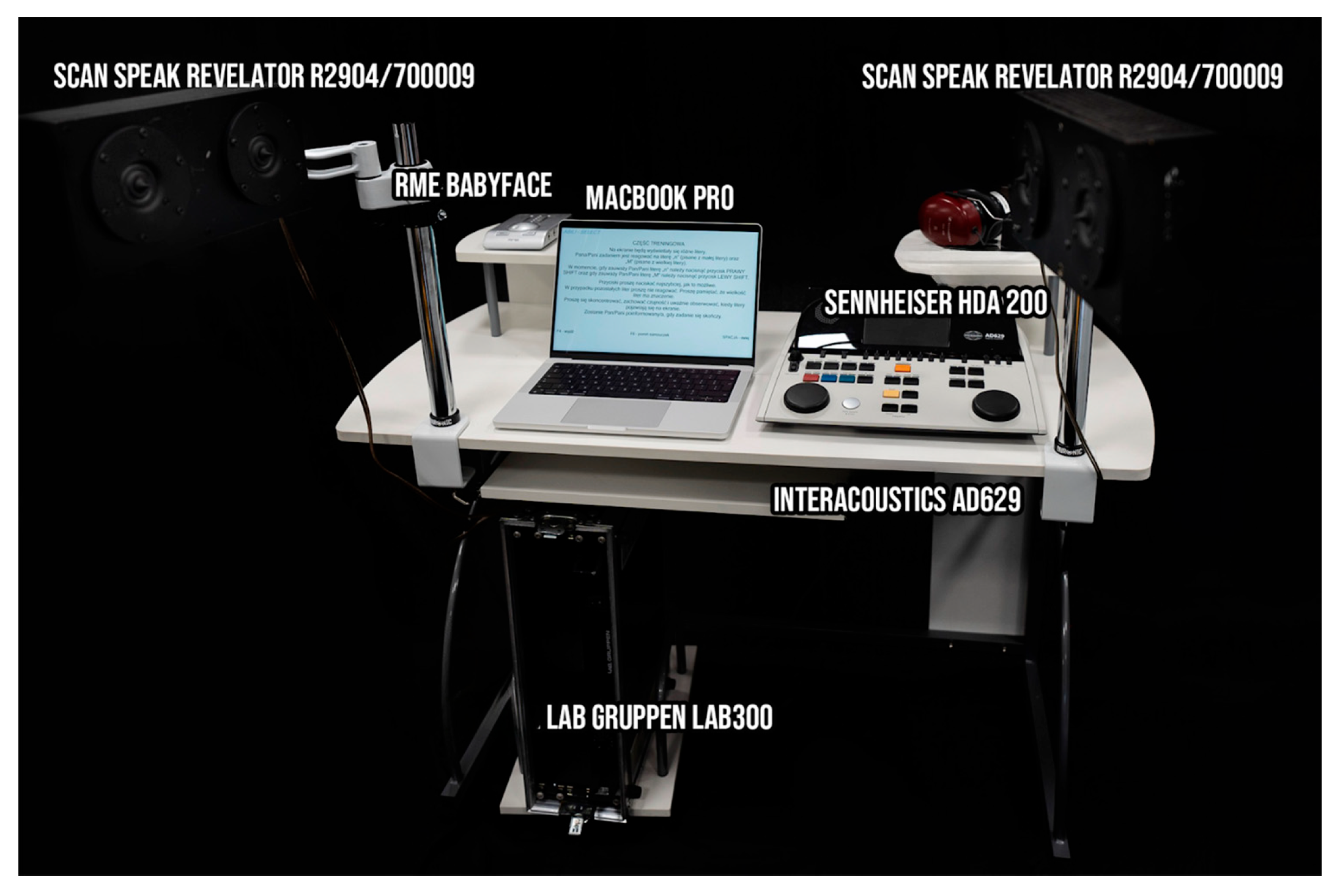
To facilitate controlled testing of ultrasonic noise exposure under simulated occupational conditions, a mobile research station was designed and constructed. The station was equipped with instrumentation for pure-tone audiometry (PTA), the standard method for assessing auditory threshold levels. Audiometric assessments were performed using the Interacoustics AD629 diagnostic audiometer (Middelfart, Denmark) in conjunction with Sennheiser HDA 200 headphones (Wedemark, Germany), ensuring compatibility with extended high-frequency testing protocols [
17].
The primary aim of the study was to assess temporary threshold shifts (TTS) induced by exposure to airborne ultrasonic noise. Hearing thresholds were measured bilaterally, both prior to and following noise exposure, across two frequency ranges: the standard range (1–8 kHz) and the extended high-frequency range (9–16 kHz). Threshold detection followed the bracketing method in accordance with EN ISO 8253-1 [
18], using 1 dB step increments and initiating measurements consistently with the right ear. All assessments were carried out within the custom-built mobile research environment developed for this study phase (
Figure 1).
Acoustic conditions at the test station were continuously monitored using a Svantek SVAN 979 precision (Warsaw, Poland) sound level meter fitted with a G.R.A.S. 40BF ¼″ microphone (Holte, Denmark), ensuring accurate SPL verification during exposure sessions.
Given the size and heterogeneity of the target occupational population (estimated at approximately 50,000 workers operating ultrasonic devices), probabilistic sampling was deemed impractical. Instead, a purposive non-random sampling strategy was adopted, selecting participants based on predefined inclusion criteria such as age, sex, and audiometric status. The sample size (N = 20) was determined based on the availability of the specific target population and the operational constraints of the research station. While a formal power calculation was not performed a priori, this sample size is comparable to previous experimental studies investigating acute auditory effects of noise. Participants were recruited through open advertisements addressed to university students and office workers. In addition to the medical criteria mentioned above, candidates underwent an initial otoscopic examination. Exclusion criteria included any visible ear abnormalities, cerumen impaction, or current upper respiratory tract infections. No participants were excluded after the final screening stage.
The final study cohort consisted of 20 individuals (12 males, 8 females) aged between 18 and 35 years, all of whom met the eligibility criteria regarding auditory health and general medical status. Participants were selected based on specific criteria, including the absence of significant hearing loss, no chronic ear diseases, no history of head trauma, and no use of medications that could affect hearing. The mobile research station employed sound signals developed during the first phase of the study. An ultrasonic cleaner (Sonic-0.5IS by Polsonic (Warsaw, Poland)) was used as the noise source, and its emission was reproduced under laboratory conditions using Scan-Speak Revelator R2904/700009 (Herning, Denmark) loudspeakers and a Lab Gruppen LAB300 laboratory amplifier (Kungsbacka, Sweden). A 14″ Apple MacBook Pro (Apple Inc., Cupertino, CA, USA) and an RME Babyface audio interface by RME Intelligent Audio Solutions (Haimhausen, Germany) were also used. Previous research by Dudarewicz et al. [
6,
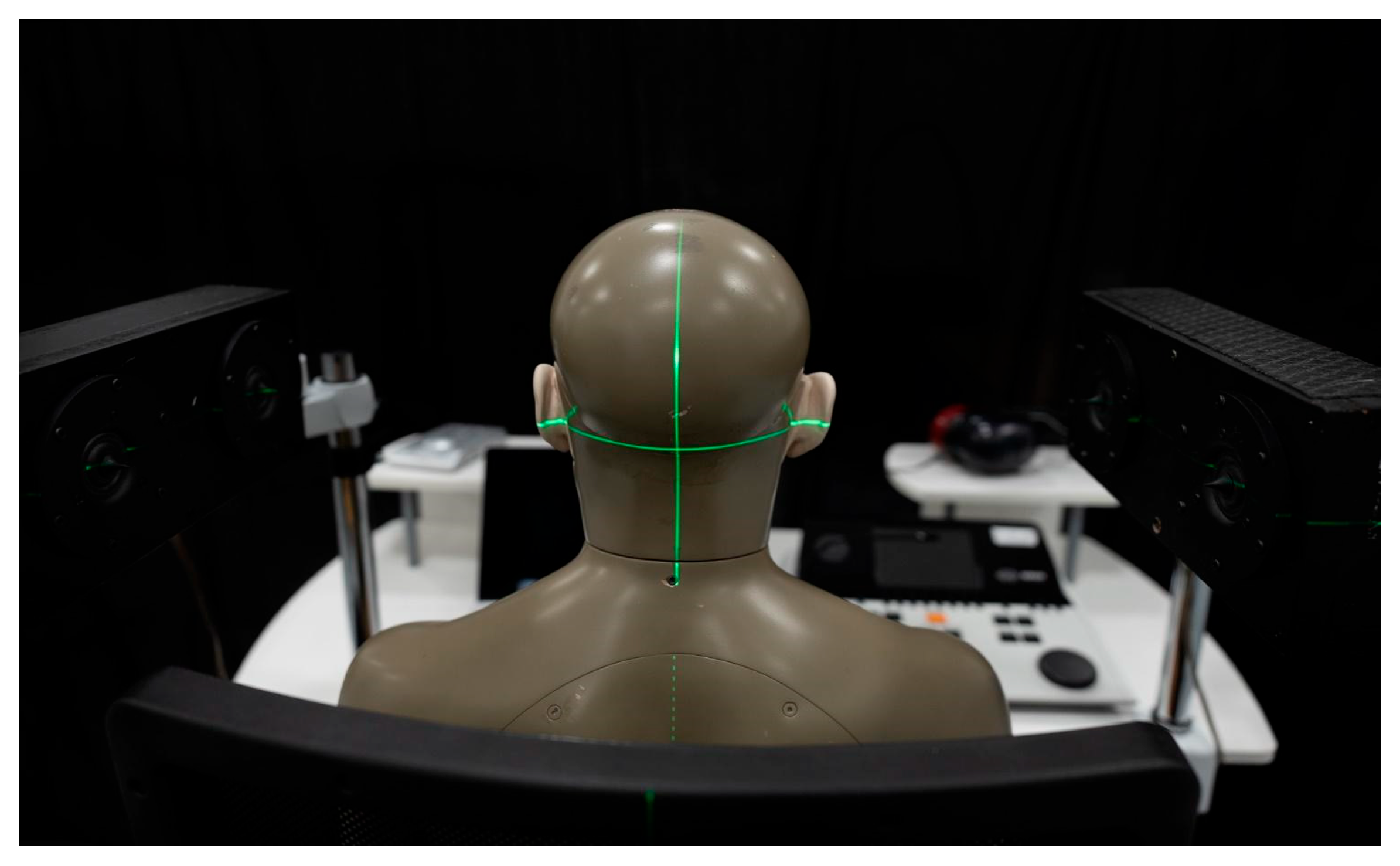
7] indicated that the co-existence of audible noise in industrial settings complicates the assessment of ultrasonic risks. Therefore, to isolate the specific effects of ultrasonic components, the audible part of the noise spectrum was filtered out in this study. Due to the highly directional characteristics of the loudspeakers in the ultrasonic frequency range, their positioning was carefully adjusted using laser levels and monitored with a sound level meter (
Figure 2).
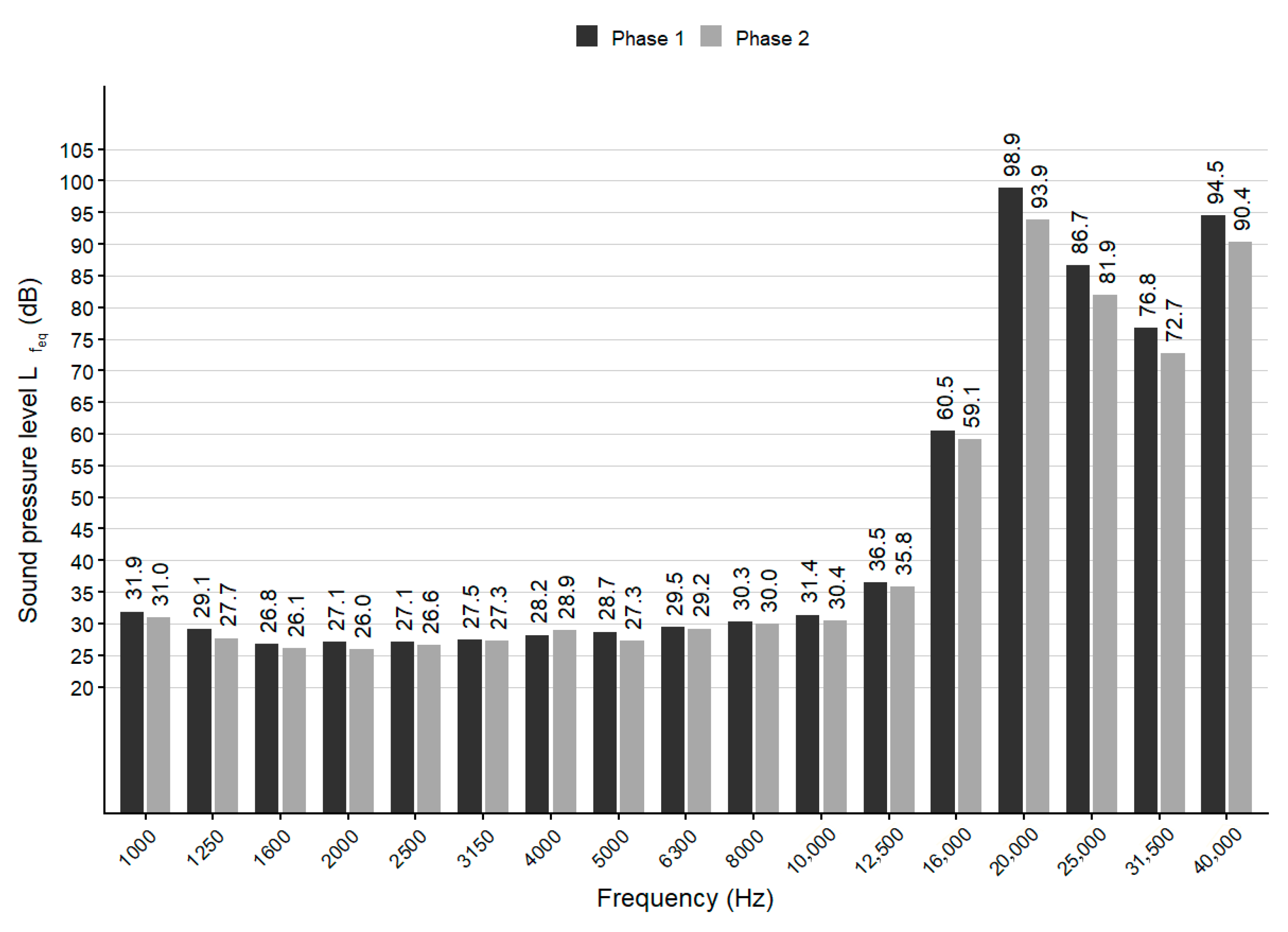
The study was conducted in two phases: the first phase involved exposure to ultrasonic noise at sound pressure levels corresponding to the permissible limits at 20 kHz in Poland [
19], while in the second phase, the exposure levels were reduced by 5 dB relative to those limits, with both phases referenced to an 8-h workday (
Figure 3).
At the developed test station, 20 individuals were exposed for one hour to a steady-state ultrasonic noise emitted by the ultrasonic cleaner in each phase. Audiometric measurements were conducted by a qualified audiologist in a sound-isolated environment strictly adhering to standardized protocols (EN ISO 8253-1). Hearing thresholds were assessed immediately prior to exposure (to establish the session baseline) and immediately after exposure (to measure TTS). The cognitive performance tasks (Abilitest) were administered during the one-hour exposure block, ensuring they did not delay the post-exposure audiometry. The study followed a repeated-measures design, with the two experimental phases separated by a washout period of at least one week. This interval ensured complete auditory recovery between sessions and served to validate that any observed threshold shifts were indeed temporary, as participants were required to return to their initial baseline levels before proceeding to the next phase.
The study in second phase also employed the Abilitest test battery [
20], which includes tools for assessing various aspects of cognitive performance. The following tests were used:
Abili-Time: A simple reaction time task. Participants were instructed to press the spacebar upon seeing the word “STOP” on the screen. The test included a training phase and a main phase with 30 random stimuli (2–10 s intervals).
Abili-Select: A choice reaction time test evaluating selective attention and response inhibition. Participants responded to letters appearing on the screen according to specific instructions (e.g., pressing a designated key for a particular letter). A total of 90 stimuli were presented at random intervals (1.5–2.5 s).
All test results were collected using standardized procedures, ensuring consistent conditions for all participants. Cognitive performance was assessed during exposure and compared to the Abilitest standardized reference values (N = 221) [
20] to evaluate deviation from population norms. The Abilitest battery [
20] was selected to provide objective, standardized metrics of psychomotor processing speed and selective attention—domains known to be sensitive to environmental stressors. The Abilitest battery was specifically selected over other cognitive screening tools for two primary reasons. First, it provides precise, computerized measurement of reaction times with millisecond accuracy, which is essential for detecting the subtle psychomotor delays associated with environmental stress. Second, and most critically for this study design, it offers valid, standardized normative data for the relevant population. This allowed for a robust comparison of the exposed group against established reference values, mitigating the limitations associated with the lack of a pre-exposure baseline.
Research indicates that exposure to acoustic stress can increase cognitive load and induce mental fatigue, manifesting as slowed reaction times and reduced vigilance [
21]. Since subjective complaints associated with high-frequency and ultrasonic noise exposure often include fatigue, headaches, and difficulty concentrating [
5,
14,
15], the assessment of simple and choice reaction times served as an operational indicator of these potential neurobehavioral effects. The Abili-Time task was used to measure basic alertness and motor speed, while Abili-Select assessed executive control and the ability to inhibit responses to distractor stimuli.
Statistical analysis was performed to evaluate the changes in hearing thresholds before and after exposure [
22]. First, the Shapiro–Wilk test was applied to assess the normality of the data distribution for each frequency. For frequencies where the data followed a normal distribution (
p > 0.05), Student’s
t-test for dependent samples was used to determine the significance of the threshold shifts. For frequencies where the distribution deviated from normality (
p ≤ 0.05), the non-parametric Wilcoxon signed-rank test was employed.
3. Results
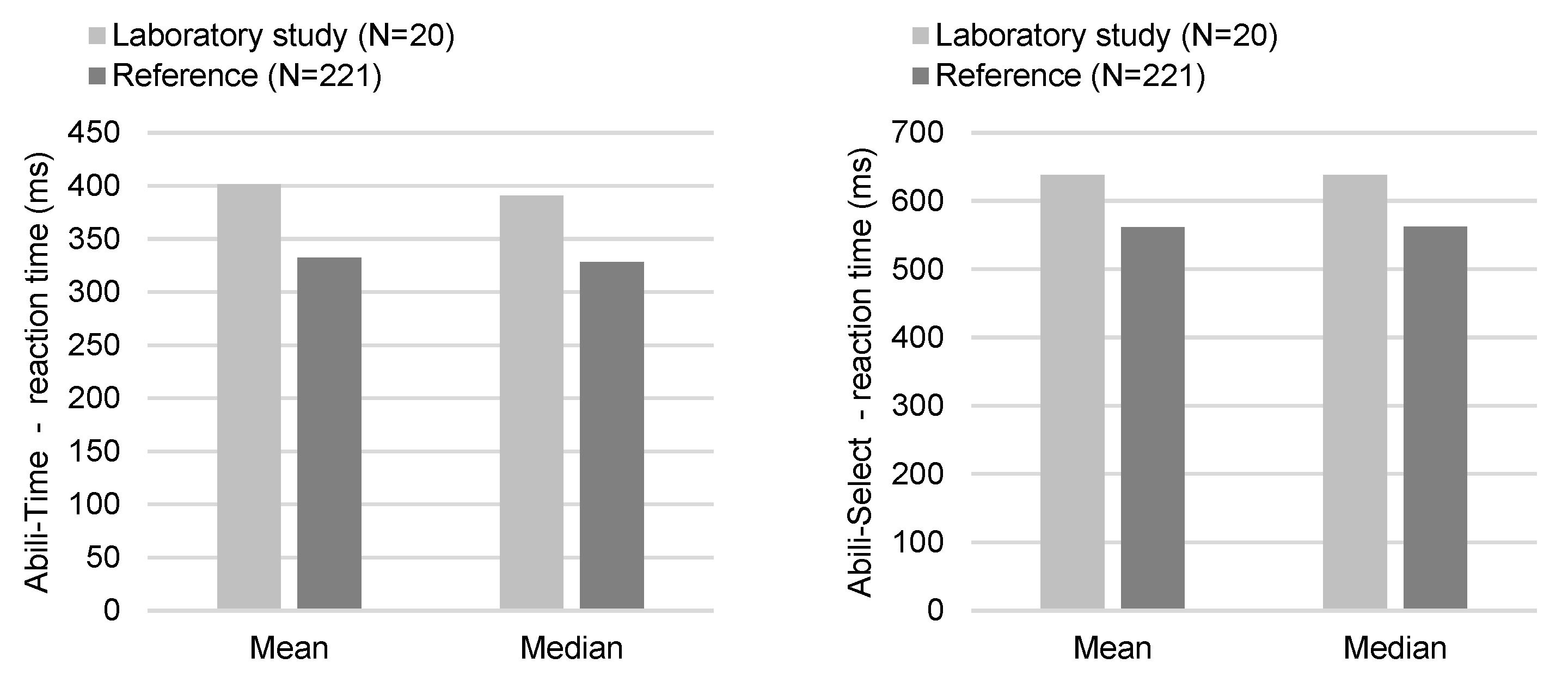
Reaction time values (
Figure 4) obtained from the Abilitest battery during ultrasonic noise exposure were compared with standardized reference values derived from a general population under noise-free conditions. The analysis revealed that reaction times measured during exposure were notably longer than the reference norms: approximately 20% longer for the simple reaction task (Abili-Time) and approximately 13% longer for the selective attention task (Abili-Select). The occurrence of errors and omissions remained infrequent. The distributions of reaction times exhibited moderate symmetry.
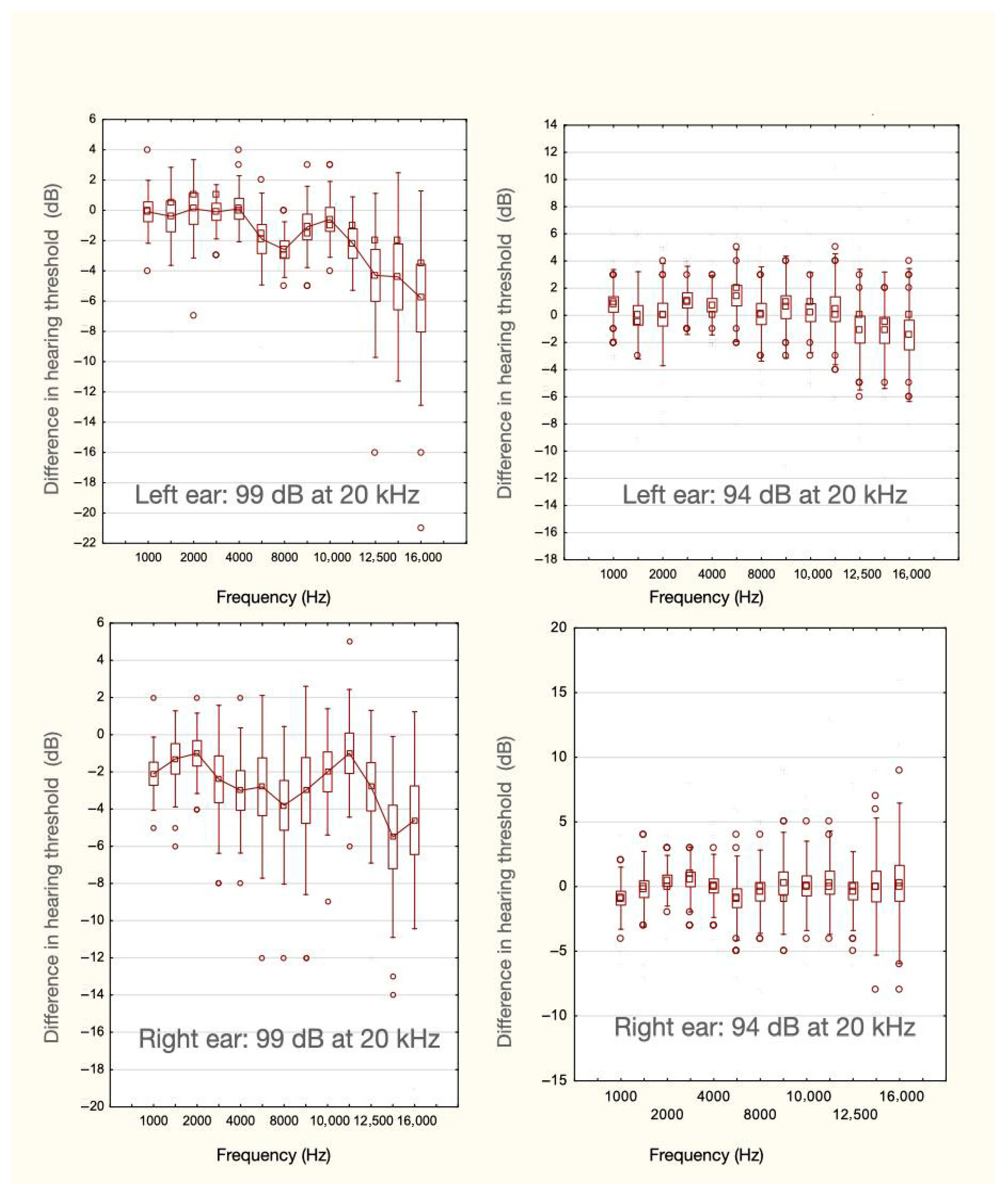
The differences in hearing thresholds (ΔHL) are presented in
Table 1 and
Table 2 and
Figure 5. In Phase 1 (Permissible Limit), statistically significant mean threshold shifts were observed in the left ear at 8 kHz (−2.6 dB,
p = 0.001), 12.5 kHz (−4.3 dB,
p = 0.033), and 16 kHz (−5.8 dB,
p = 0.029). In the right ear, significant shifts were observed at 1 kHz (−2.1 dB,
p = 0.008), 4 kHz (−3.0 dB,
p = 0.020), 14 kHz (−5.5 dB,
p = 0.010), and 16 kHz (−4.6 dB,
p = 0.034).
In Phase 2 no statistically significant differences in hearing thresholds were observed for any frequency in either the left or right ear (all p > 0.05).
4. Discussion
The primary finding of this study is the confirmation of a dose-dependent auditory effect of airborne ultrasound. While the reduced exposure level (5 dB below the permissible limit) resulted in no significant changes, exposure at the current permissible occupational limit induced statistically significant Temporary Threshold Shifts (TTS) in the extended high-frequency range. These shifts were observed only at the higher exposure level (simulating the maximum allowed workplace noise), and not at 5 dB below that limit, indicating a dose-dependent auditory effect. Although the magnitude of the TTS was modest and hearing thresholds recovered, the occurrence of any significant shift in such a short-term exposure challenges the longstanding assumption that ultrasonic frequencies are innocuous to human hearing within regulated limits.
This results of this paper provide direct evidence that even occupational-limit ultrasound exposure can measurably fatigue the auditory system in the high-frequency range. The observed TTS at 8 kHz and 16 kHz supports the hypothesis that high-intensity ultrasound places stress on the basal region of the cochlea. While the magnitude of these shifts was temporary, their presence after only one hour of exposure challenges the assumption that airborne ultrasound is biologically inert at these levels. These findings align with the “subharmonic generation” hypothesis [
8], which posits that nonlinear motion of the tympanic membrane or middle ear structures under high-intensity ultrasonic loading may generate subharmonics in the audible range, potentially causing damage to hair cells. Although this study did not directly measure intracochlear mechanics, the pattern of threshold shifts observed here is consistent with such a nonlinear focal stress mechanism. Such shifts, if repeated chronically, could accumulate into permanent threshold shifts over time—an alarming possibility given that traditional hearing conservation programs do not even assess frequencies above 8 kHz. Notably, the affected frequencies in this study (8 and 16 kHz) lie at the upper end of or just beyond the conventional audiometric range, which might explain why standard hearing tests in ultrasonic-noise workers often failed to detect any changes. By means of extended high-frequency audiometry, early indicators of cochlear stress were identified that would otherwise remain undetected in routine examinations.
A critical contribution of this work is the isolation of the ultrasonic stimulus. Previous epidemiological studies [
5,
6,
7] have consistently reported high-frequency hearing deficits in workers, but these findings were often confounded by the simultaneous presence of industrial audible noise. By reproducing the ultrasonic spectrum in a controlled laboratory environment while filtering out audible components, this study provides stronger evidence that the observed high-frequency fatigue is directly attributable to the ultrasonic energy itself, rather than acting merely as a covariate of audible noise.
Such data strengthen the inference that ultrasound contributes to auditory risk, beyond what would be predicted by normal aging or equivalent conventional noise exposure. There is also experimental evidence of acute effects in real-world scenarios: for instance, dental clinicians using ultrasonic scalers have shown significant temporary threshold shifts in standard audiometry immediately after a workday, accompanied by reports of mild tinnitus or ear fullness [
7]. Collectively, these studies, together with presented controlled laboratory evidence of TTS, refute the earlier notion that “inaudible” high-frequency sound is harmless. Instead, they indicate that even if ultrasound is not consciously heard, it can still induce auditory fatigue via cochlear overstimulation or possibly via intermodulation distortion products that fall into the audible range. The older hypothesis that any hearing hazards of ultrasound were due solely to audible by-products no longer appears sufficient—ultrasound itself (especially at high intensities) is now implicated in subtle auditory damage.
The divergence in results between the two exposure phases is particularly instructive for regulatory policy. The absence of significant threshold shifts at the reduced exposure level (5 dB below the current limit) suggests that a relatively modest reduction in permissible values could significantly mitigate auditory risk. This supports the argument that current international guidelines [
2,
11], which often permit higher levels for short durations, may be insufficiently protective against the specific spectral characteristics of modern ultrasonic machinery. Consequently, these findings argue for a re-evaluation of the ‘safe’ exposure envelope, particularly emphasizing the need to account for extended high-frequency sensitivity in occupational standards.
In addition to auditory effects, the study revealed a notable degradation in cognitive performance. The observed lengthening of reaction times during exposure—occurring in the absence of subjective annoyance—suggests that ultrasonic noise imposes a “hidden” cognitive load. This aligns with the neurophysiological model proposed by Jafari [
21] regarding acoustic stress, where neural resources are diverted to filter out environmental stressors, thereby reducing the capacity for vigilance and executive control. The degradation in performance indicates that ultrasonic noise can adversely affect concentration and psychomotor speed, which may translate to reduced productivity or even safety risks in real workplaces (e.g., slower reaction could delay a machinery operator’s response to a hazard). These findings broaden the scope of ultrasound’s impact beyond the ear, dovetailing with anecdotal and clinical observations of “ultrasonic sickness” symptoms. Individuals exposed to high-frequency noise have long reported a constellation of diffuse symptoms, including headache, fatigue, tinnitus, nausea, dizziness, difficulty concentrating, and a sense of ear pressure, even in the absence of overt hearing loss [
4]. Early investigations from the 1960s–1970s noted such complaints in workers near powerful ultrasonic sources, but these effects were often hard to quantify and were sometimes dismissed as psychosomatic or as side-effects of audible sound components.
The present work suggests that at sufficiently high amplitudes (approaching 110 dB), even inaudible ultrasound can produce detectable cognitive effects. Thus, there may be an exposure threshold above which the human body’s response, whether through annoyance, hormonal stress, or neural interference, becomes significant. This results of this paper underscore that performance impairments (slowed reactions, potentially lapses in attention) should be recognized as part of the risk profile of ultrasonic noise. In occupational contexts, such effects could translate into increased error rates or accident risk, especially in tasks requiring sustained attention or quick reflexes. Even a 20% slowdown in reaction time can be critical in scenarios like operating machinery or responding to alarms. This evidence, therefore, places ultrasonic noise in the category of not just a potential hearing hazard but also a cognitive ergonomics concern.
Despite these strengths, there are important limitations to consider. The sample size (N = 20) and the healthy-young-adult demographic limit the generalizability. A larger sample including older workers or those with longer occupational tenures would provide more insight into inter-individual variability and susceptibility. The exposures in this experiment were acute (a single session at each level for each participant, on the order of minutes/hours), whereas real occupational exposure involves repeated doses over months and years. A temporary shift and short-term performance change were demonstrated. However, the potential accumulation of these effects or full overnight recovery of the auditory system was not investigated. Repeated daily exposure might lead to progressively larger temporary threshold shifts or incomplete recovery, eventually causing permanent threshold shift, a phenomenon that could not be confirmed in this study due to its acute exposure design. Although efforts were made to ensure that the ultrasonic noise was as “pure” as possible, the presence of audible-frequency by-products cannot be entirely ruled out. Many ultrasonic devices emit some energy in lower harmonics (for instance, an ultrasonic cleaner at 40 kHz might produce a weak 10 kHz component due to nonlinearities or vibrations of the tank). If such components were present, they could contribute to the effects observed (especially the 8 kHz TTS). Additionally, it should be noted that full blinding of the examiner to the exposure condition was not feasible within the current experimental setup. While standardized audiometric protocols were strictly adhered to in order to minimize influence, the examiner’s awareness of the exposure phase represents a methodological limitation.
A significant limitation of the cognitive assessment was the absence of pre-exposure baseline measurements due to the time constraints of the experimental protocol. Consequently, participant performance measured during exposure was compared to standardized normative data (N = 221) [
20] rather than to individual baselines. While this comparison highlights a deviation from expected population norms under ultrasonic stress, it limits the ability to isolate the effect of noise from individual variability. Future studies should employ a repeated-measures design with a sham-exposure control condition to definitively establish causality. The cognitive tests primarily measured attention and reaction speed; other cognitive domains (memory, decision-making accuracy, etc.) were not tested. It is possible that ultrasonic noise affects some mental functions and not others. For instance, the tasks used were relatively simple. More complex cognitive tasks (e.g., multi-step logical reasoning or tasks under time pressure) might show different sensitivity to noise. Fatigue and learning effects are also considerations. Participants performed multiple trials, and although the order of exposure levels might have been counter-balanced, there is potential for practice effects or tiredness influencing performance. It was attempted to mitigate this (the Abilitest includes practice trials to stabilize performance), but it remains a factor to consider in interpreting the reaction time changes. There is the question of perceptual awareness. While ultrasonic noise is generally inaudible, some participants may have experienced a feeling of pressure or heard faint high-pitched byproducts (especially at the high exposure level). If so, they might have been consciously or subconsciously distracted or stressed by it, which could affect both hearing and cognition. In an ideal design, a sham exposure condition (device present but not emitting ultrasound) would be included to verify that participants are truly blind to the presence of ultrasound. In this case, the difference between “high” and “low” ultrasound (5 dB difference) may not have been perceptible, but zero-noise placebo condition was not included.
5. Conclusions
This controlled laboratory study showed that a one-hour exposure to airborne ultrasonic noise at sound pressure levels corresponding to the current occupational permissible limit at 20 kHz produced small but statistically significant temporary threshold shifts in high-frequency hearing (8 and 16 kHz), whereas exposure 5 dB below this limit did not.
During exposure to ultrasonic noise, participants also exhibited longer reaction times in simple and selective attention tasks compared with standardized normative data obtained under quiet conditions, suggesting a possible impact of ultrasound on psychomotor speed and attention. However, because individual pre-exposure baselines and a sham-exposure condition were not included, these cognitive results should be interpreted cautiously and regarded as hypothesis-generating rather than definitive evidence of impairment.
From an occupational health perspective, the findings indicate that ultrasonic noise should be explicitly considered in hearing conservation and risk assessment programs, particularly in workplaces where sound pressure levels approach existing permissible limit values. The clear difference between the two exposure conditions suggests that even a 5 dB reduction below the permissible limit may substantially reduce the likelihood of measurable auditory changes. In practice, this supports monitoring ultrasonic frequency bands, striving to keep exposures as far below the limit as reasonably achievable, and being attentive to worker reports of fatigue, headache, or difficulty concentrating when operating ultrasonic devices.
Finally, the study underscores the need for further research to refine safe exposure conditions for airborne ultrasound. Future work should involve larger and more diverse study populations, a broader range of ultrasonic spectra and exposure durations, and repeated-measures designs with sham conditions and individual cognitive baselines. Longitudinal follow-up, ideally including extended-high-frequency audiometry, is required to determine whether repeated temporary shifts at current limit levels can contribute to permanent high-frequency hearing loss or persistent changes in cognitive performance. Such evidence will be essential for informing any future revisions of occupational exposure limits for ultrasonic noise.