Deformation Behaviour and Failure Prediction of Additively Manufactured Lattices: A Review and Analytical Approach

 , , and
Abstract
1. Introduction
2. A Primer on Bioinspired Cellular or Lattice Designs
- Wang et al. [58] reviewed a suggested four-layer dielectric absorption honeycomb design that uses a genetic algorithm to produce incidence angle insensitive reflection loss in the 4–18 GHz frequency region. Their algorithm programme could be tailored towards the design of smart material-driven honeycomb-configured stealth inlets used in future propulsion systems. Moat et al. [59] conducted experimental and numerical studies on the mechanical properties of additive-produced honeycombs with shapes drawn from the ‘hat’ class of aperiodic tiling. They observed that by tailoring the tiling parameters, a customisable Poisson’s ratio between the range of 0.45 and 0.006 is attainable. Investigating the influence of different materials on the mechanical properties of these honeycombs could identify material-specific behaviour and extend their engineering uses. Qin et al. [60] used numerical analysis and experimental testing to show the feasibility of the suggested node-locked multi-cell honeycomb design concept, in addition to investigating the influence of different design parameters on the resulting structures’ capabilities to absorb energy. The new design strategy of a multicellular structure for absorbing energy was proven to be cost-efficient. Further research on the prospect of incorporating additional features into the multi-cell honeycomb architecture, such as thermal insulation, acoustic damping, or electromagnetic shielding, to build multifunctional structures with multiple uses.
- Audibert et al. [61] generated an algorithm that adopted a bio-inspired strategy based on the bone structure to optimise the design of mechanical parts. The suggested method was found to be useful based on experimental test results. Extending Audibert et al.’s algorithm through the incorporation of more biological principles or optimisation strategies. This could enhance its capacity to generate optimal designs for a broader range of mechanical parts and applications. Barba et al. [62] used powder bed fusion with a minimum strut thickness of 250 μm to achieve the lowest resolution possible with their technology for bone-inspired parts. Some lattice topologies that required careful attention to sensitive features were reported to be challenging to work with successfully from the outset. Design more effective process control and monitoring strategies for detecting and minimising manufacturing flaws such as porosity, warping, or distortion in bone-inspired lattice structures during printing. This could include incorporating in situ sensor technology or real-time feedback control systems to guarantee consistent quality of parts.
- Natural nacre typically exhibits a tensile strength of 80–135 MPa and a toughness of 1–3 MJ/m3; Wang et al. [63] developed artificial nacre using alumina micro-platelets, graphene oxide nanosheets, and polyvinyl alcohol (Al2O3/GO-PVA). This artificial nacre outperformed natural material, achieving a strength of 143 ± 13 MPa and toughness of 9.2 ± 2.7 MJ/m3. The authors credited the improved efficiency to the hierarchical structures comprising micro-platelets (Al2O3) and nanosheets of varying length scales. The generated films of Al2O3/GO-PVA had a tensile strength 2.8 times greater than Al2O3/PVA films and a toughness about 6 times higher than GO-PVA films, indicating that the three-component composite is advantageous for harmonising strength and toughness. Exploring new strategies for functionalising and modifying the surfaces of alumina micro-platelets and graphene oxide nanosheets to customise their interactions with the polyvinyl alcohol matrix and improve the general characteristics of the composite. This could entail using chemical treatments, surface coatings, or the inclusion of groups of functional parts that enhance compatibility and adhesion of the constituents, and strength of the final structures formulated. Finnemore et al. [64] produced artificial nacre through a layer-by-layer deposition technique in combination with a crystallisation step that mimics the mineral tablet-forming process in natural nacre. Nanomechanical analysis using nanoindentation showed identical deformation behaviour in artificial and organic nacre. Under loads that cause cracking and shear failure in monolithic calcite and aragonite, respectively, the manufactured nacre exhibited a pile-up behaviour and plastic deformation, which reduced fracturing. Generate multiscale modelling and simulation techniques for predicting the mechanical properties and structural performance of artificial nacre based on its microstructural characteristics and composition. This requires integrating features such as atomistic, mesoscale, and continuum-level models to capture in detail the complex interactions and mechanisms leading to deformation of the structure at different length/size and time scales.
- Li et al. [56] built a water collector with micro bionic branch spines and a customisable wettability feature, which was followed by manufacture of the composite material to be followed by post-processing. This built cactus-inspired structure was found to have a remarkable water collection performance. The spiny spine which had a sharp angle of 10° showed the greatest water-collecting capacity when compared to different tip angles (20°, 30°, 40°, and 50°). At the same time, superhydrophobic nanomaterials were sputter-coated onto the surface of the designed structure, and it was observed that the water-collecting capacity of the cactus-simulated thorn with a superhydrophobic coating was far greater than that of the 3D printed cactus-simulated thorn with no coating. Extended studies should be conducted towards enhancing the geometry and wettability of the miniature bionic branch spines to maximise their water collection capacity. This could include investigating a broader range of spine shapes, such as variations in length, curvature, and spacing, as well as different types of surface treatments or coatings that control wettability as well as improving the water collecting capacity. Wang et al. [65] integrated the water collection mechanisms of the cactus spine and Sarracenia plant to attain drop-by-drop capture and rapid water transfer. The peculiar trichome’s multilayer microchannel structuring that was observed in the bioinspired hybrid structure allowed for a threefold faster water transfer as compared to the capacity of the cactus spines or spider silk. Examination of the prospect of using the bioinspired hybrid structure for multiple applications beyond water harvesting, including anti-fog coatings, self-cleaning surfaces, or microfluidic devices for biomedical diagnostics is proposed. For better performance and adaptability in different environments and industries, this would involve incorporating additional features or surface treatments to the structure.
3. Stress–Strain Curves for Cellular or Lattice Structures
3.1. Two-Stage Stress–Strain Curve for Cellular or Lattice Designs
3.2. A Novel Mechanism of Deformation Added to the Two-Stage Behaviour of Cellular or Lattice Designs
4. Analytical Modelling of Ductile Failure of Cellular Structural Members Based on Both the Tresca and Von Mises Criterion for Ductile Materials
4.1. Proposed Model Combining Direct, Buckling and Bending Deformation of Cellular or Lattice Structures
4.2. Suggestions on the Application of Tresca and Von Mises Failure Criteria to the Deformation Behaviour of Cellular or Lattice Designs
5. Prospective Routes for Optimising Lattice or Cellular Designs Using Models for Their Deformation Behaviour
6. Anticipated Drawbacks and New Insights in Adapting Models for the Deformation Behaviour of Cellular or Lattice Structures Towards Advanced Structural Design for Additive Manufacturing
7. Conclusions
- The different mechanical properties of various biological structures facilitate a wide range of designs for bioinspired lattice components that are matched to various engineering applications.
- The models built for predicting the behaviour of cellular structures can do so, but their accuracy becomes limited at particular microscales because of computational constraints, or in attempting to predict the behaviour at numerous scales concurrently. In light of this, the existing deformation behaviour models for cellular structures struggle to predict material properties such as nonlinearity, anisotropy, or viscoelasticity.
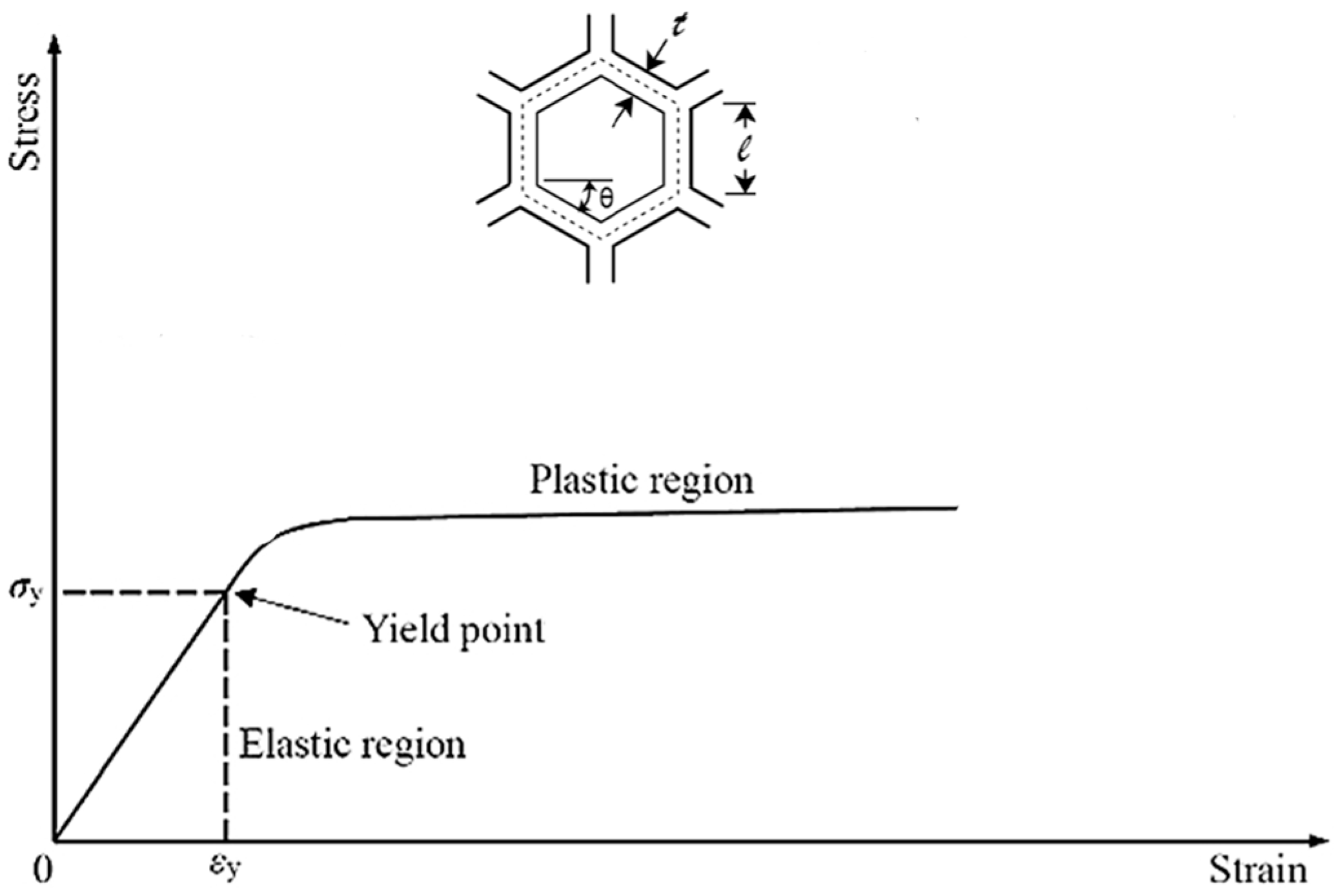
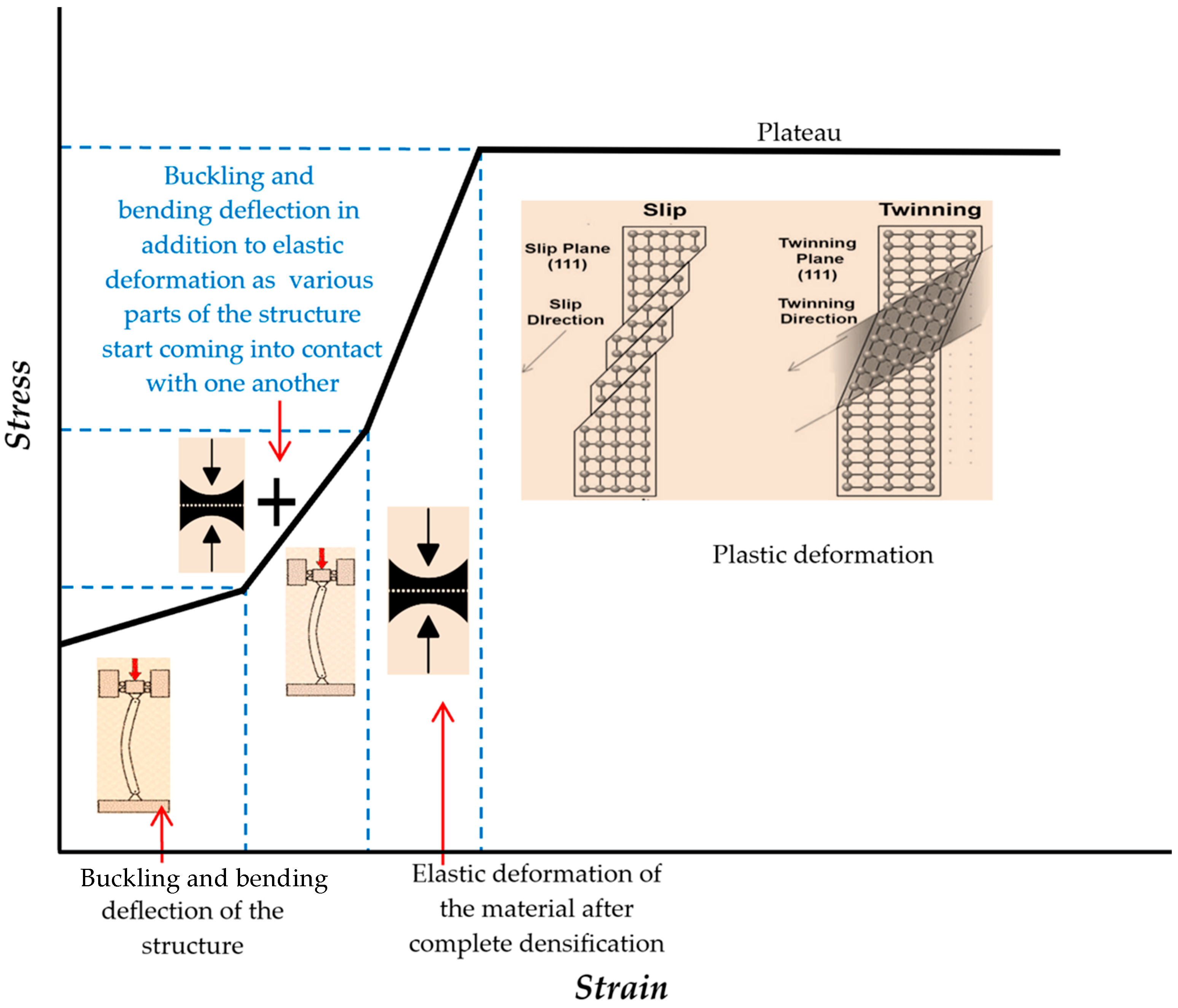
- The proposed stress–strain curve for cellular designs revealed four stages of deformation: first buckling and bending of the structure, elastic deformation during densification while buckling and bending continue, full elastic deformation, and lastly plastic deformation forming a plateau.
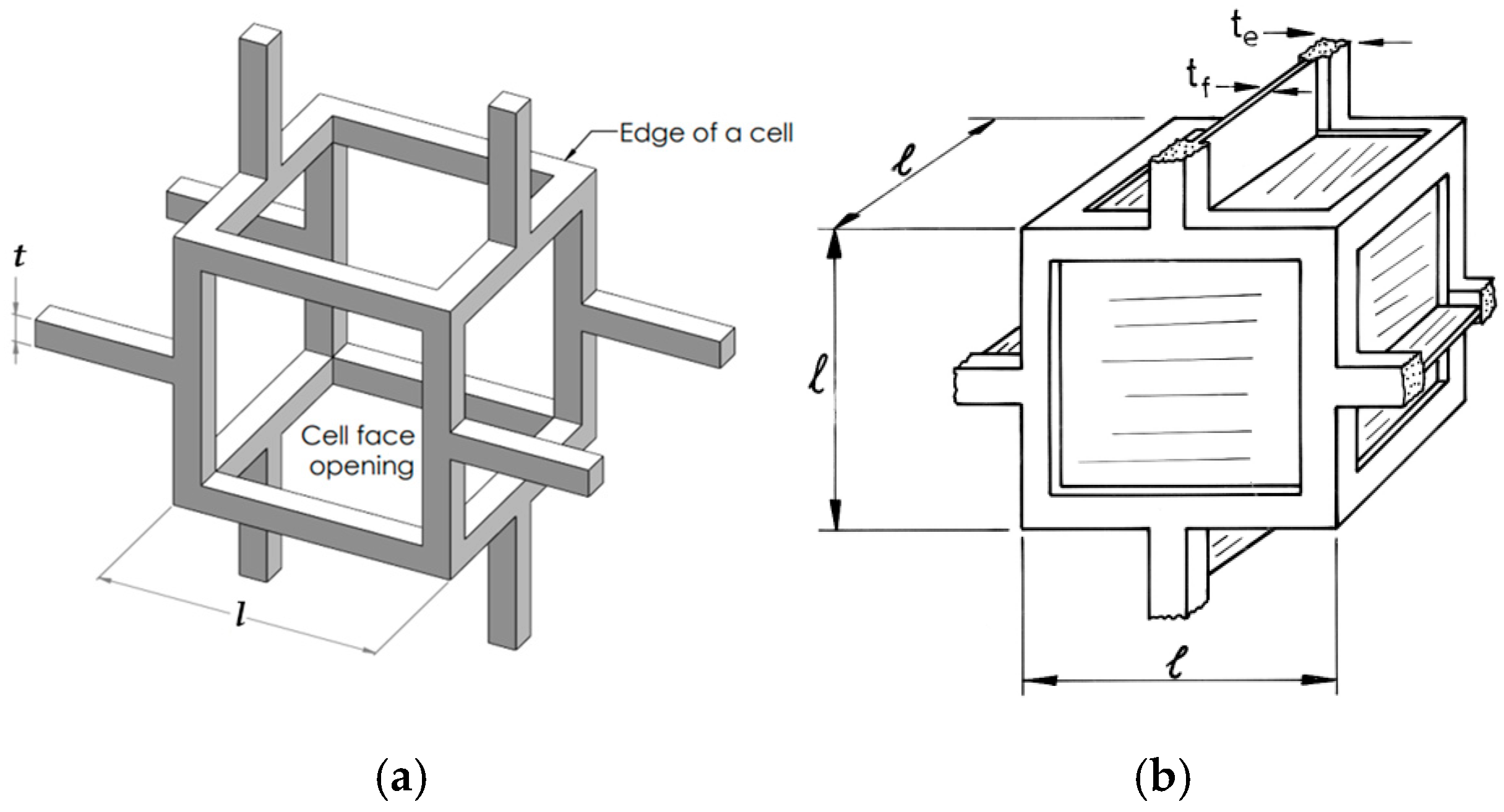
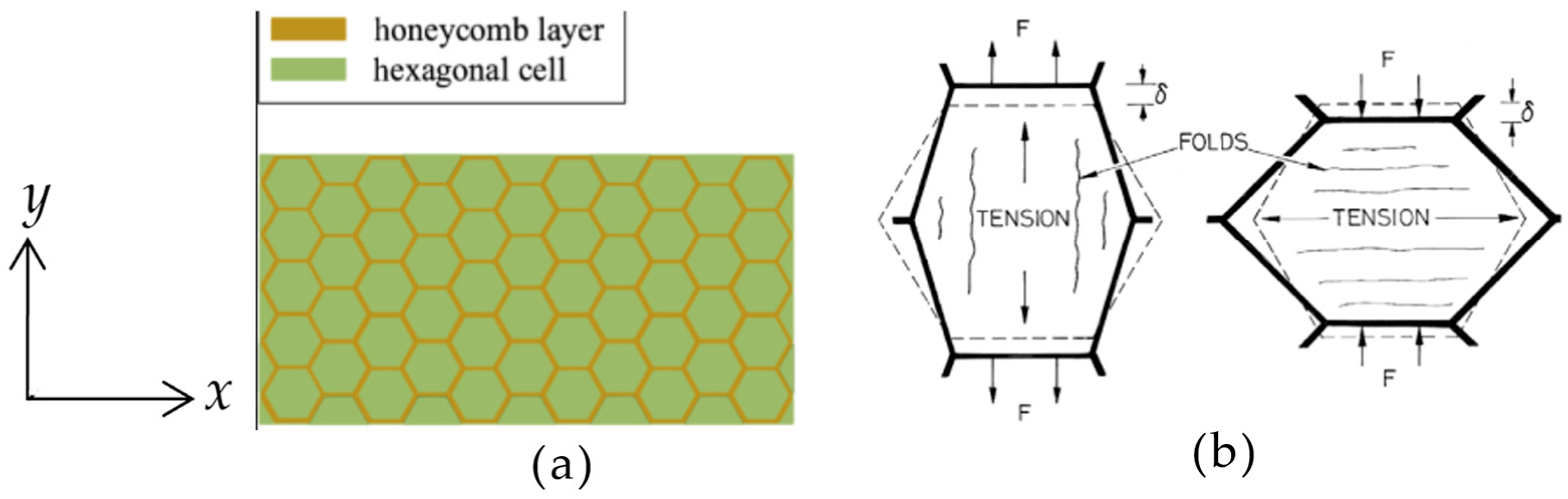
- Lattice structures in various engineering applications are typically built using open and closed cellular geometries.
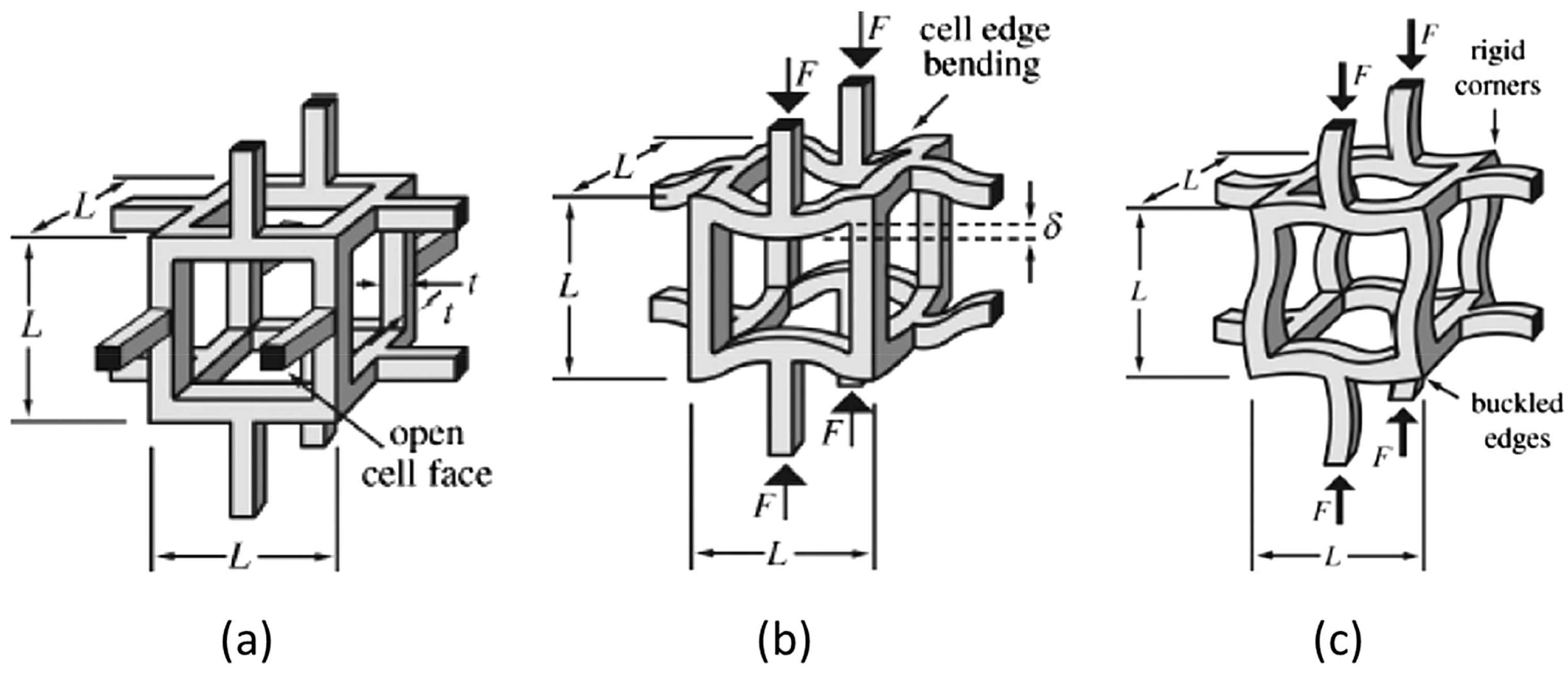
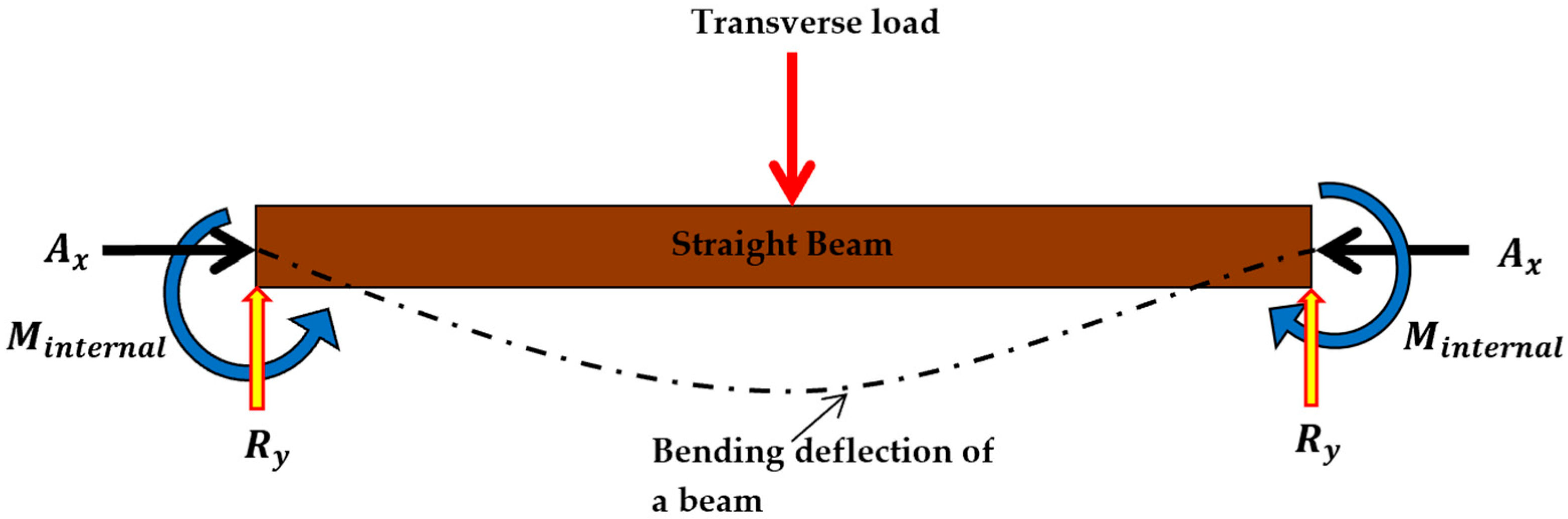
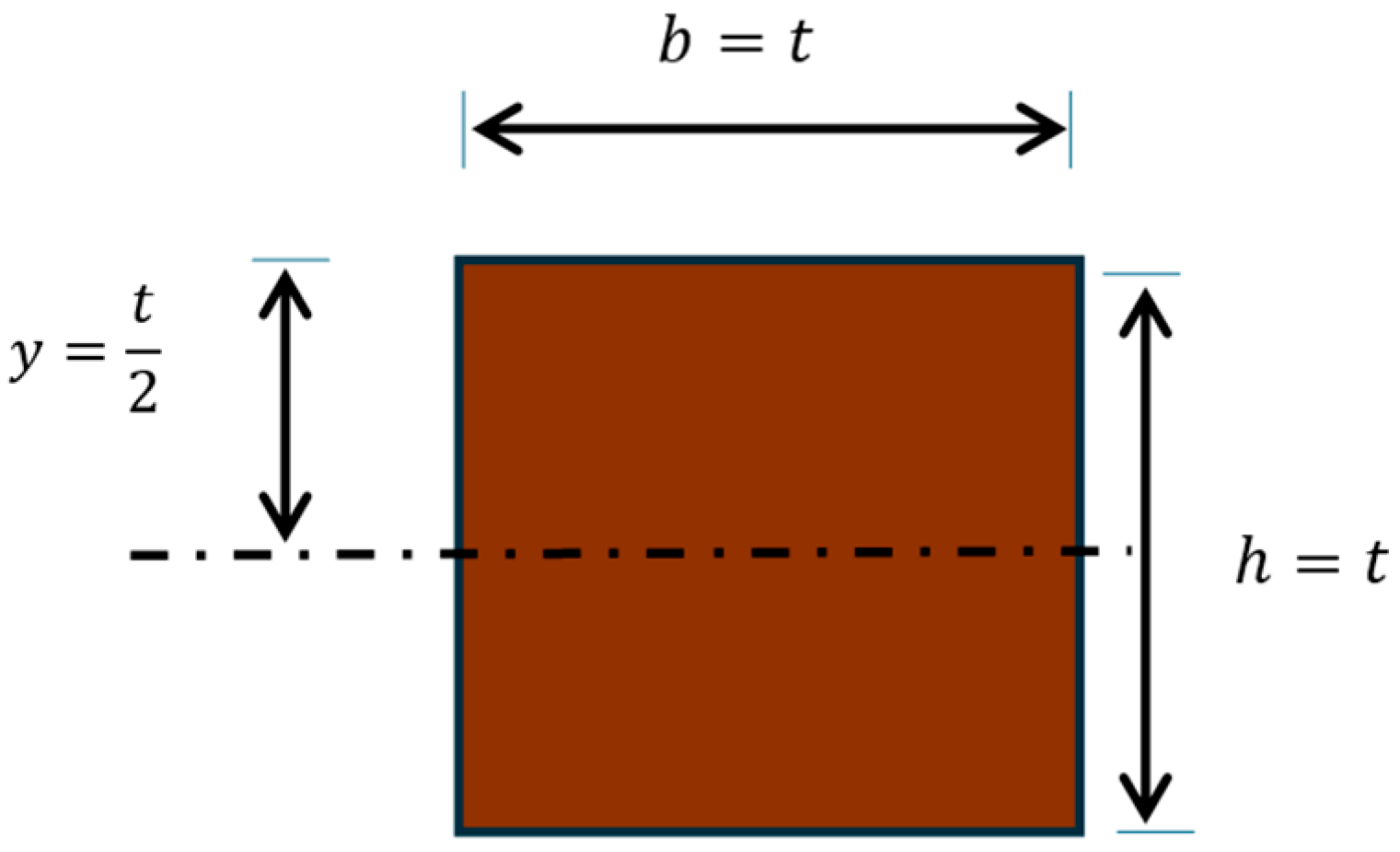
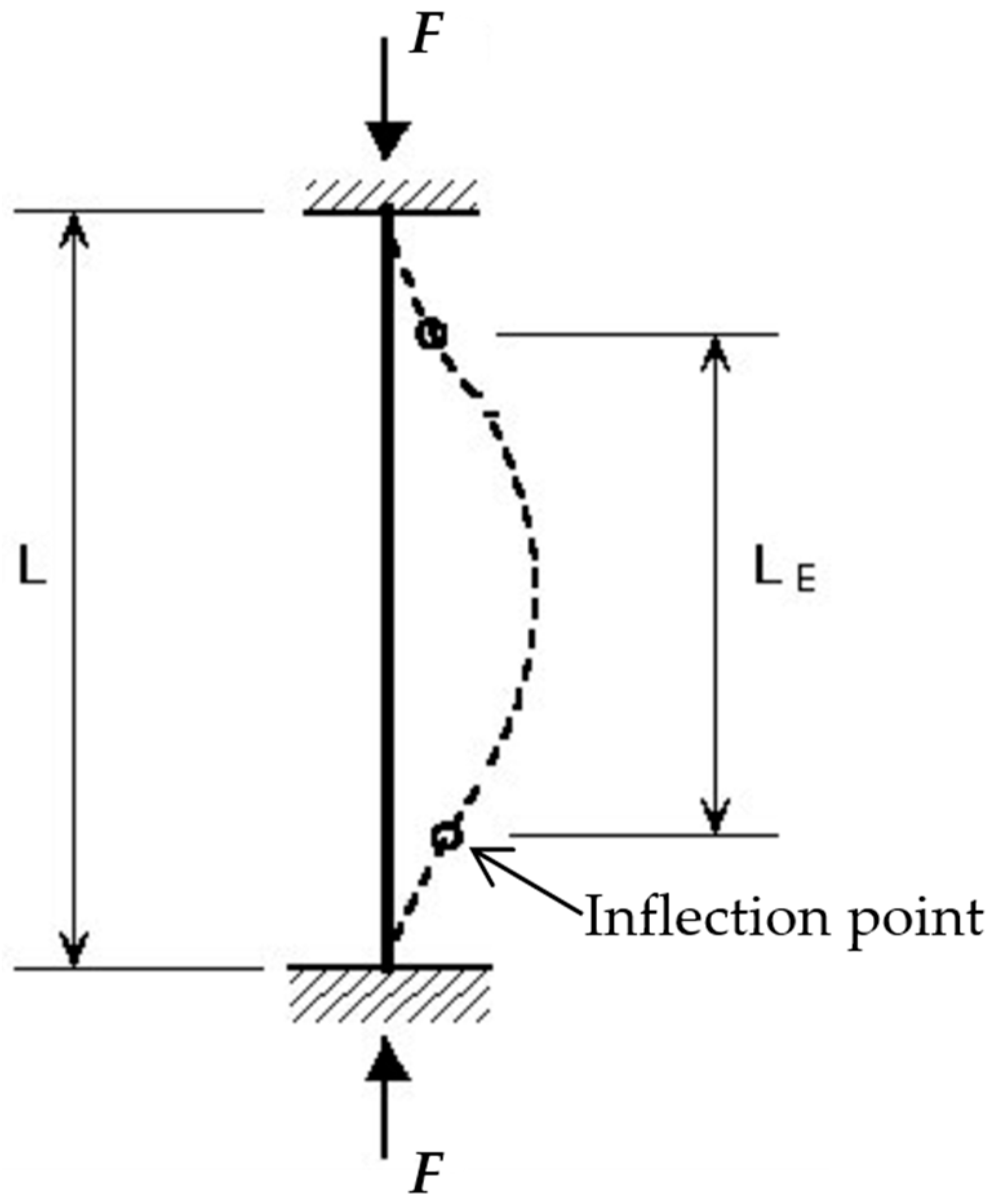
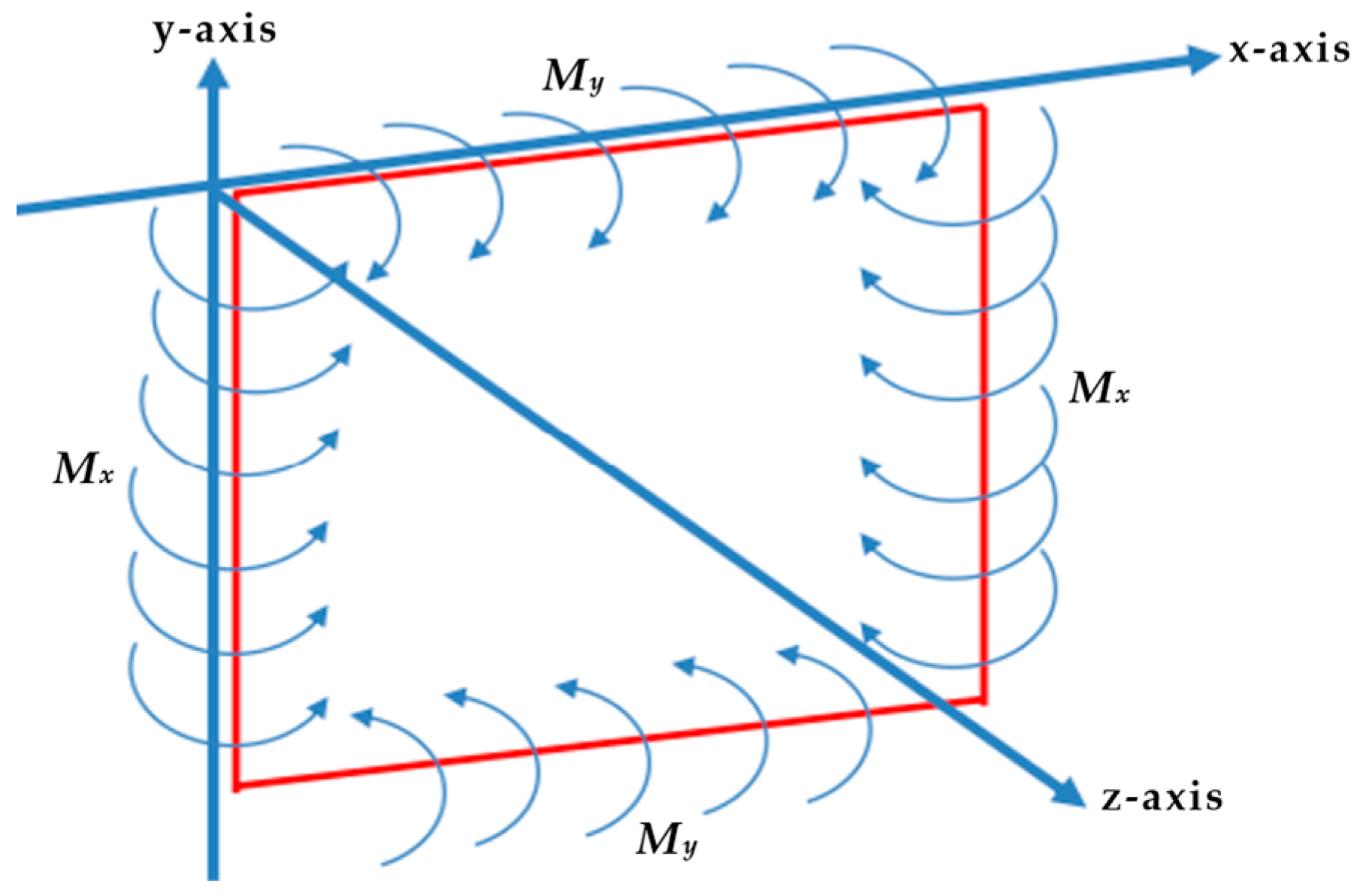
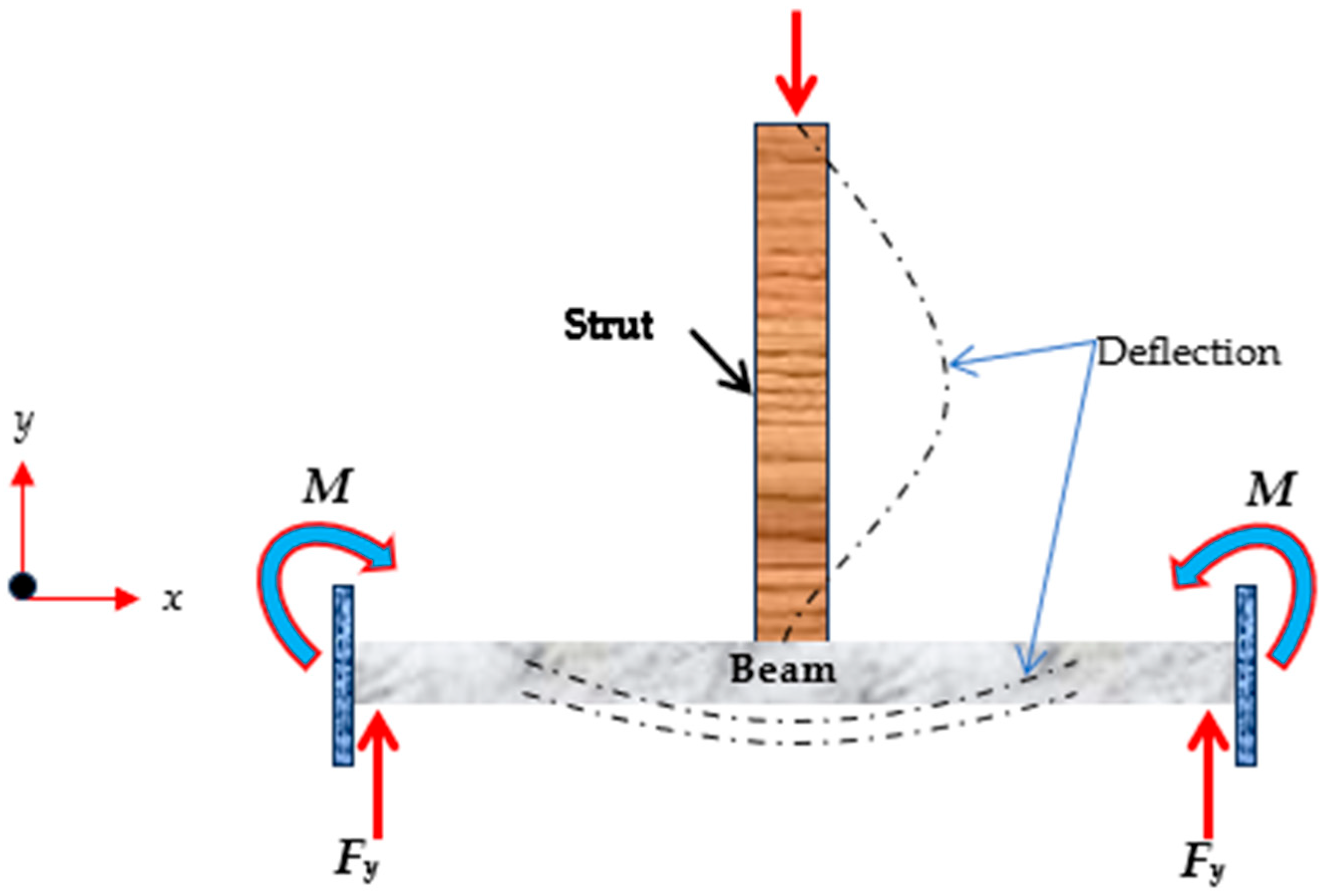
- There are four cases of deformation likely to occur in cellular structures, namely, buckling deformation, bending deflections, transverse shear, and direct deformation.
- The combined deformation mechanisms prevailing in a loaded lattice structure are best addressed by considering the arising stresses and failure for all of them simultaneously. Thus, the increasing order of direct, bending and buckling failure stresses for the basic model (Figure 10) adopted in this paper.
- There is an absence of analytical models in the literature describing the application of the Tresca and von Mises failure criteria on lattice structures.
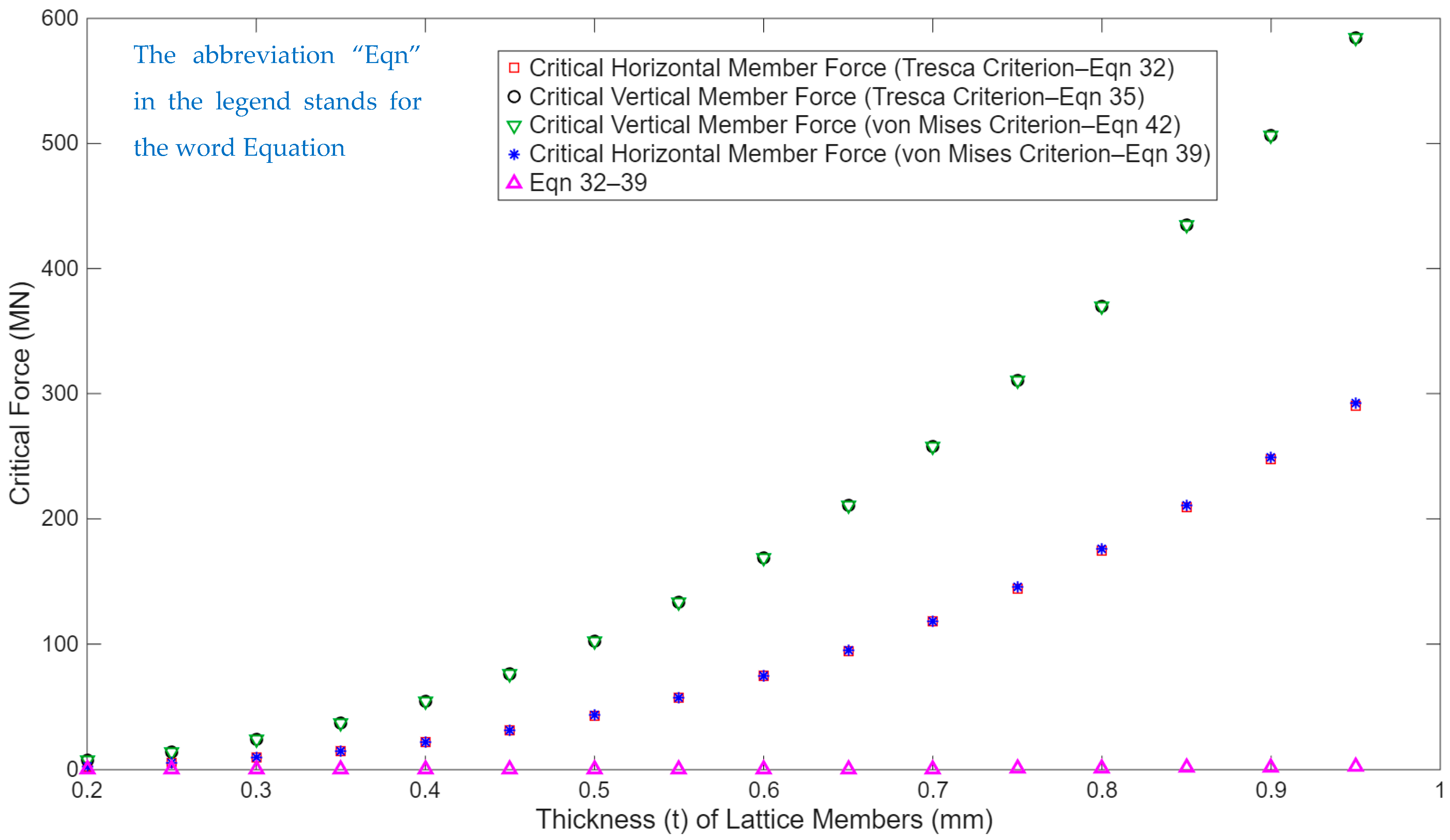
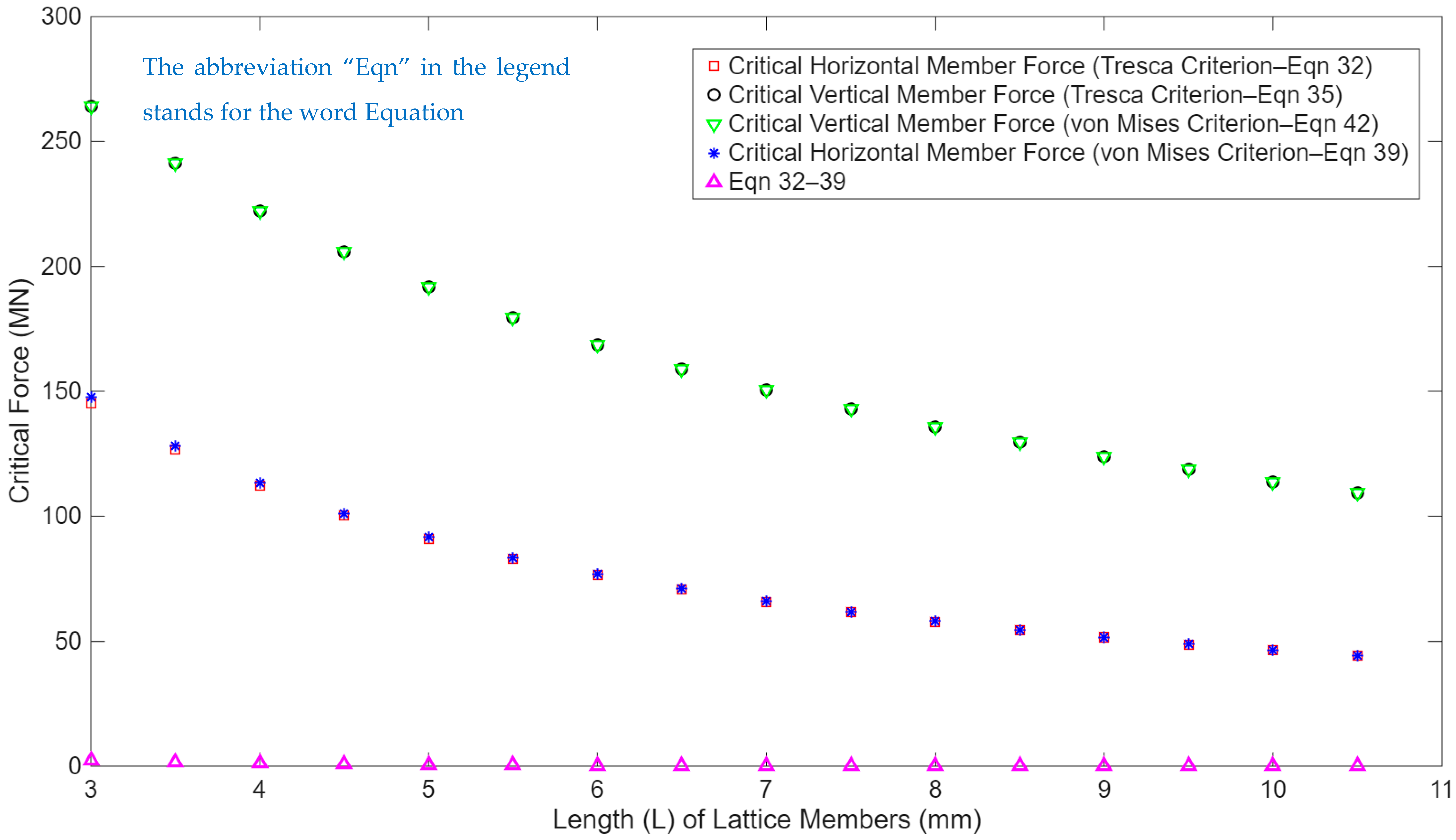
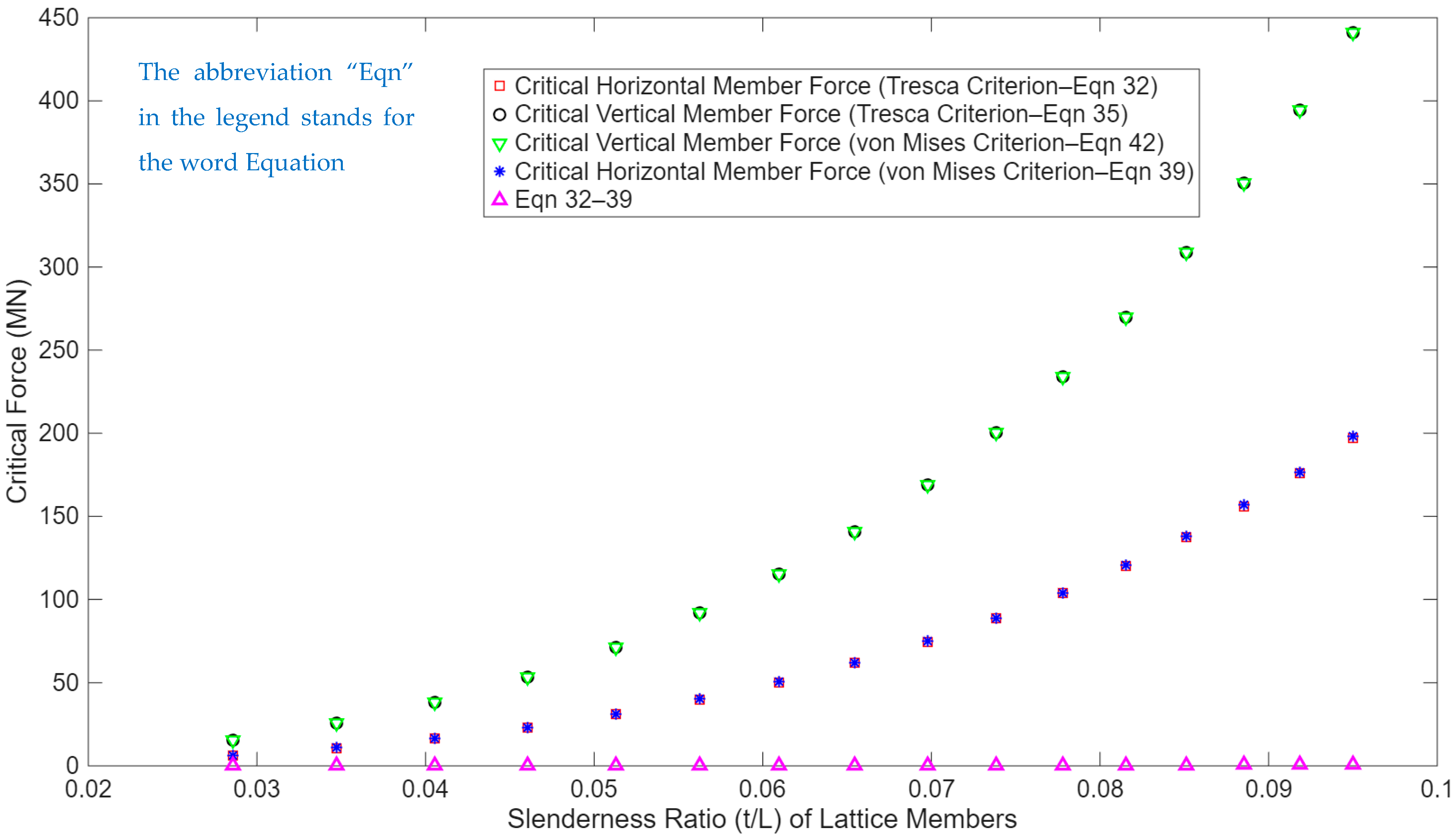
- The analysis of the curves showed a nonlinear relationship between lattice member thickness, length and slenderness ratio on the one hand and critical force on the other.
- The large increases in critical forces in both the horizontal and vertical members are good for optimal design of lattices, which requires balancing of desired critical forces against exponential weight-penalties incurred by increasing thickness of lattice member.
- Integrating updated deformation behaviour models and optimisation methodologies is expected to improve the effectiveness in designs of lightweight, high-performance lattice structures adopted in a wide range of engineering applications as well as realising the full capabilities of AM technologies.
Author Contributions
Funding
Institutional Review Board Statement
Informed Consent Statement
Data Availability Statement
Conflicts of Interest
References
- Yeo, S.J.; Oh, M.J.; Yoo, P.J. Structurally controlled cellular architectures for high-performance ultra-lightweight materials. Adv. Mater. 2019, 31, 1803670. [Google Scholar] [CrossRef]
- Du Plessis, A.; Razavi, N.; Benedetti, M.; Murchio, S.; Leary, M.; Watson, M.; Bhate, D.; Berto, F. Properties and applications of additively manufactured metallic cellular materials: A review. Prog. Mater. Sci. 2022, 125, 100918. [Google Scholar] [CrossRef]
- Nazir, A.; Abate, K.M.; Kumar, A.; Jeng, J.Y. A state-of-the-art review on types, design, optimization, and additive manufacturing of cellular structures. Int. J. Adv. Manuf. Technol. 2019, 104, 3489–3510. [Google Scholar] [CrossRef]
- Du Plessis, A.; Broeckhoven, C.; Yadroitsava, I.; Yadroitsev, I.; Hands, C.H.; Kunju, R.; Bhate, D. Beautiful and functional: A review of biomimetic design in additive manufacturing. Addit. Manuf. 2019, 27, 408–427. [Google Scholar] [CrossRef]
- Korkmaz, M.E.; Gupta, M.K.; Robak, G.; Moj, K.; Krolczyk, G.M.; Kuntoğlu, M. Development of lattice structure with selective laser melting process: A state of the art on properties, future trends and challenges. J. Manuf. Process. 2022, 81, 1040–1063. [Google Scholar] [CrossRef]
- Song, W.; Mu, Z.; Zhang, Z.; Wang, Y.; Hu, H.; Ma, Z.; Huang, L.; Wang, Z.; Zhang, B.; Li, Y.; et al. Cross-scale biological models of species for future biomimetic composite design: A review. Coatings 2021, 11, 1297. [Google Scholar] [CrossRef]
- Fratzl, P.; Dunlop, J.; Weinkamer, R. (Eds.) Materials Design Inspired by Nature: Function Through Inner Architecture; Royal Society of Chemistry: London, UK, 2015. [Google Scholar]
- Yu, H.; Zhang, J.; Zhang, S.; Han, Z. Bionic structures and materials inspired by plant leaves: A comprehensive review for innovative problem-solving. Prog. Mater. Sci. 2023, 139, 101181. [Google Scholar] [CrossRef]
- Siddique, S.H.; Hazell, P.J.; Wang, H.; Escobedo, J.P.; Ameri, A.A. Lessons from nature: 3D printed bio-inspired porous structures for impact energy absorption—A review. Addit. Manuf. 2022, 58, 103051. [Google Scholar] [CrossRef]
- Chatterjee, A.; Mishra, A.; Sharma, S.; Bhagchandani, R.K. Review on lightweight materials, additive manufacturing techniques and design optimization of an airplane. In AIP Conference Proceedings; AIP Publishing: New York, NY, USA, 2022; Volume 2653. [Google Scholar]
- Pan, C.; Han, Y.; Lu, J. Design and optimization of lattice structures: A review. Appl. Sci. 2020, 10, 6374. [Google Scholar] [CrossRef]
- Zhang, W.; Xu, J. Advanced lightweight materials for Automobiles: A review. Mater. Des. 2022, 221, 110994. [Google Scholar] [CrossRef]
- Almansoori, H.N.A. Applications of 3D-Printing in Spacecraft Structures. Master’s Thesis, Khalifa University, Abu Dhabi, Saudi Arabia, 2022. [Google Scholar]
- Xiong, C.; Dai, K.; Luo, Y.; Yang, Z.; Qiu, K.; Tang, X. Proposal and application of onshore lattice wind turbine support structure and integrated multi-scale fatigue assessment method. Eng. Struct. 2024, 302, 117314. [Google Scholar] [CrossRef]
- Zhang, Q.; Yang, X.; Li, P.; Huang, G.; Feng, S.; Shen, C.; Han, B.; Zhang, X.; Jin, F.; Xu, F.; et al. Bioinspired engineering of honeycomb structure–Using nature to inspire human innovation. Prog. Mater. Sci. 2015, 74, 332–400. [Google Scholar] [CrossRef]
- Velasco-Hogan, A.; Xu, J.; Meyers, M.A. Additive manufacturing as a method to design and optimize bioinspired structures. Adv. Mater. 2018, 30, 1800940. [Google Scholar] [CrossRef]
- Libonati, F.; Buehler, M.J. Advanced structural materials by bioinspiration. Adv. Eng. Mater. 2017, 19, 1600787. [Google Scholar] [CrossRef]
- Ramakrishna, D.; Bala Murali, G. Bio-inspired 3D-printed lattice structures for energy absorption applications: A review. Proc. Inst. Mech. Eng. Part L J. Mater. Des. Appl. 2023, 237, 503–542. [Google Scholar] [CrossRef]
- Ren, L.; Wang, Z.; Ren, L.; Han, Z.; Liu, Q.; Song, Z. Graded biological materials and additive manufacturing technologies for producing bioinspired graded materials: An overview. Compos. Part B Eng. 2022, 242, 110086. [Google Scholar] [CrossRef]
- Dal Poggetto, V.F. Bioinspired acoustic metamaterials: From natural designs to optimized structures. Front. Mater. 2023, 10, 1176457. [Google Scholar] [CrossRef]
- Gao, Z.; Wang, H.; Sun, H.; Sun, T.; Wu, Y.; Leung, C.L.A.; Wang, H. Additively manufactured high-energy-absorption metamaterials with artificially engineered distribution of bio-inspired hierarchical microstructures. Compos. Part B Eng. 2022, 247, 110345. [Google Scholar] [CrossRef]
- Yuan, X.; Chen, M.; Yao, Y.; Guo, X.; Huang, Y.; Peng, Z.; Xu, B.; Lv, B.; Tao, R.; Duan, S.; et al. Recent progress in the design and fabrication of multifunctional structures based on metamaterials. Curr. Opin. Solid State Mater. Sci. 2021, 25, 100883. [Google Scholar] [CrossRef]
- Nazir, A.; Gokcekaya, O.; Billah, K.M.M.; Ertugrul, O.; Jiang, J.; Sun, J.; Hussain, S. Multi-material additive manufacturing: A systematic review of design, properties, applications, challenges, and 3D printing of materials and cellular metamaterials. Mater. Des. 2023, 226, 111661. [Google Scholar] [CrossRef]
- Letov, N.; Velivela, P.T.; Sun, S.; Zhao, Y.F. Challenges and opportunities in geometric modelling of complex bio-inspired three-dimensional objects designed for additive manufacturing. J. Mech. Des. 2021, 143, 121705. [Google Scholar] [CrossRef]
- Huang, W.; Restrepo, D.; Jung, J.Y.; Su, F.Y.; Liu, Z.; Ritchie, R.O.; McKittrick, J.; Zavattieri, P.; Kisailus, D. Multiscale toughening mechanisms in biological materials and bioinspired designs. Adv. Mater. 2019, 31, 1901561. [Google Scholar] [CrossRef] [PubMed]
- Giorgio, I.; Spagnuolo, M.; Andreaus, U.; Scerrato, D.; Bersani, A.M. In-depth gaze at the astonishing mechanical behaviour of bone: A review for designing bio-inspired hierarchical metamaterials. Math. Mech. Solids 2021, 26, 1074–1103. [Google Scholar] [CrossRef]
- Wu, M.S. Strategies and challenges for the mechanical modelling of biological and bio-inspired materials. Mater. Sci. Eng. C 2011, 31, 1209–1220. [Google Scholar] [CrossRef]
- Naleway, S.E.; Porter, M.M.; McKittrick, J.; Meyers, M.A. Structural design elements in biological materials: Application to bioinspiration. Adv. Mater. 2015, 27, 5455–5476. [Google Scholar] [CrossRef]
- Zhang, W.; Xu, J.; Yu, T.X. Dynamic behaviours of bio-inspired structures: Design, mechanisms, and models. Eng. Struct. 2022, 265, 114490. [Google Scholar] [CrossRef]
- Lin, E.; Li, Y.; Ortiz, C.; Boyce, M.C. 3D printed, bio-inspired prototypes and analytical models for structured suture interfaces with geometrically tuned deformation and failure behaviour. J. Mech. Phys. Solids 2014, 73, 166–182. [Google Scholar] [CrossRef]
- Tuninetti, V.; Narayan, S.; Ríos, I.; Menacer, B.; Valle, R.; Al-lehaibi, M.; Kaisan, M.U.; Samuel, J.; Oñate, A.; Pincheira, G.; et al. Biomimetic lattice structures design and manufacturing for high stress, deformation, and energy absorption performance. Biomimetics 2025, 10, 458. [Google Scholar] [CrossRef]
- Chen, Y.; Dang, B.; Wang, C.; Wang, Y.; Yang, Y.; Liu, M.; Bi, H.; Sun, D.; Li, Y.; Li, J. Intelligent designs from nature: Biomimetic applications in wood technology. Prog. Mater. Sci. 2023, 139, 101164. [Google Scholar] [CrossRef]
- Shashwat, S.; Zingre, K.T.; Thurairajah, N.; Kumar, D.K.; Panicker, K.; Anand, P.; Wan, M.P. A review on bioinspired strategies for an energy-efficient built environment. Energy Build. 2023, 296, 113382. [Google Scholar] [CrossRef]
- Yao, H.B.; Fang, H.Y.; Wang, X.H.; Yu, S.H. Hierarchical assembly of micro-/nano-building blocks: Bio-inspired rigid structural functional materials. Chem. Soc. Rev. 2011, 40, 3764–3785. [Google Scholar] [CrossRef]
- Brown, C.P.; Whaite, A.D.; MacLeod, J.M.; Macdonald, J.; Rosei, F. With great structure comes great functionality: Understanding and emulating spider silk. J. Mater. Res. 2015, 30, 108–120. [Google Scholar] [CrossRef]
- Holland, C.; Numata, K.; Rnjak-Kovacina, J.; Seib, F.P. The biomedical use of silk: Past, present, future. Adv. Healthc. Mater. 2019, 8, 1800465. [Google Scholar] [CrossRef]
- Bakhshandeh, B.; Nateghi, S.S.; Gazani, M.M.; Dehghani, Z.; Mohammadzadeh, F. A review on advances in the applications of spider silk in biomedical issues. Int. J. Biol. Macromol. 2021, 192, 258–271. [Google Scholar] [CrossRef] [PubMed]
- Gu, Y.; Yu, L.; Mou, J.; Wu, D.; Zhou, P.; Xu, M. Mechanical properties and application analysis of spider silk bionic material. e-Polymers 2020, 20, 443–457. [Google Scholar] [CrossRef]
- Wei, J.; Pan, F.; Ping, H.; Yang, K.; Wang, Y.; Wang, Q.; Fu, Z. Bioinspired additive manufacturing of hierarchical materials: From biostructures to functions. Research 2023, 6, 0164. [Google Scholar] [CrossRef] [PubMed]
- Ding, Z.; Klein, T.; Barner-Kowollik, C.; Mirkhalaf, M. Multifunctional nacre-like materials. Mater. Horiz. 2023, 10, 5371–5390. [Google Scholar] [CrossRef]
- Barthelat, F. Biomimetics for next generation materials. Philos. Trans. R. Soc. A Math. Phys. Eng. Sci. 2007, 365, 2907–2919. [Google Scholar] [CrossRef] [PubMed]
- Li, M.; Li, C.; Blackman, B.R.; Eduardo, S. Mimicking nature to control bio-material surface wetting and adhesion. Int. Mater. Rev. 2022, 67, 658–681. [Google Scholar] [CrossRef]
- Zhang, S.; Huang, J.; Chen, Z.; Lai, Y. Bioinspired special wettability surfaces: From fundamental research to water harvesting applications. Small 2017, 13, 1602992. [Google Scholar] [CrossRef]
- Zhu, H.; Guo, Z.; Liu, W. Biomimetic water-collecting materials inspired by nature. Chem. Commun. 2016, 52, 3863–3879. [Google Scholar] [CrossRef]
- Sharma, V.; Kumar, S.; Reddy, K.L.; Bahuguna, A.; Krishnan, V. Bioinspired functional surfaces for technological applications. J. Mol. Eng. Mater. 2016, 4, 1640006. [Google Scholar] [CrossRef]
- Available online: https://ashevillebeecharmer.com/honey-tips/honeycomb-edible/ (accessed on 15 April 2024).
- Ivchenko, A.V.; Sharonov, N.; Ziatdinov, R. New conceptual design of the adaptive compliant aircraft wing frame. Eng. Sci. Technol. Int. J. 2019, 22, 1149–1154. [Google Scholar] [CrossRef]
- Fratzl, P.; Weinkamer, R. Nature’s hierarchical materials. Prog. Mater. Sci. 2007, 52, 1263–1334. [Google Scholar] [CrossRef]
- Available online: https://aerospaceamerica.aiaa.org/departments/inspired-by-fish/ (accessed on 17 April 2024).
- Available online: https://www.greenbiz.com/article/how-our-bones-inspire-architecture-chairs-and-cars (accessed on 17 April 2024).
- Available online: https://www.mcgill.ca/newsroom/channels/news/unbreakable-glass-inspired-seashells-333730 (accessed on 18 April 2024).
- Yan, J.; Zhou, T.; Peng, J.; Wang, H.; Jiang, L.; Cheng, Q. Sustainable liquid metal-induced conductive nacre. Sci. Bull. 2024, 69, 913–921. [Google Scholar] [CrossRef]
- Restrepo, V.; Martinez, R.V. Bioinspired fabrication of reconfigurable elastomeric cementitious structures using self-healing mechanical adhesives interfaces. Mater. Des. 2021, 205, 109691. [Google Scholar] [CrossRef]
- Available online: https://www.theguardian.com/lifeandstyle/2018/oct/06/how-to-take-cuttings-cacti-alys-fowler (accessed on 18 April 2024).
- Available online: https://www.ajupress.com/view/20211008100320681 (accessed on 18 April 2024).
- Li, X.; Yang, Y.; Liu, L.; Chen, Y.; Chu, M.; Sun, H.; Shan, W.; Chen, Y. 3D-printed cactus-inspired spine structures for highly efficient water collection. Adv. Mater. Interfaces 2020, 7, 1901752. [Google Scholar] [CrossRef]
- Xiao, L.; Xu, X.; Feng, G.; Li, S.; Song, W.; Jiang, Z. Compressive performance and energy absorption of additively manufactured metallic hybrid lattice structures. Int. J. Mech. Sci. 2022, 219, 107093. [Google Scholar] [CrossRef]
- Wang, B.X.; Xu, C.; Duan, G.; Xu, W.; Pi, F. Review of broadband metamaterial absorbers: From principles, design strategies, and tunable properties to functional applications. Adv. Funct. Mater. 2023, 33, 2213818. [Google Scholar] [CrossRef]
- Moat, R.J.; Clarke, D.J.; Carter, F.; Rust, D.; Jowers, I. A class of aperiodic honeycombs with tuneable mechanical properties. Appl. Mater. Today 2024, 37, 102127. [Google Scholar] [CrossRef]
- Qin, R.; Wang, X.; Lu, J.; Li, Q.; Niu, H.; Zhang, X.; Chen, B. Node-locked multi-cell honeycomb for efficient energy absorption. Int. J. Mech. Sci. 2024, 268, 109028. [Google Scholar] [CrossRef]
- Audibert, C.; Chaves-Jacob, J.; Linares, J.M.; Lopez, Q.A. Bio-inspired method based on bone architecture to optimize the structure of mechanical workspieces. Mater. Des. 2018, 160, 708–717. [Google Scholar] [CrossRef]
- Barba, D.; Alabort, E.; Reed, R.C. Synthetic bone: Design by additive manufacturing. Acta Biomater. 2019, 97, 637–656. [Google Scholar] [CrossRef]
- Wang, J.; Qiao, J.; Wang, J.; Zhu, Y.; Jiang, L. Bioinspired hierarchical alumina–graphene oxide–poly (vinyl alcohol) artificial nacre with optimized strength and toughness. ACS Appl. Mater. Interfaces 2015, 7, 9281–9286. [Google Scholar] [CrossRef]
- Finnemore, A.; Cunha, P.; Shean, T.; Vignolini, S.; Guldin, S.; Oyen, M.; Steiner, U. Biomimetic layer-by-layer assembly of artificial nacre. Nat. Commun. 2012, 3, 966. [Google Scholar] [CrossRef] [PubMed]
- Wang, J.; Yi, S.; Yang, Z.; Chen, Y.; Jiang, L.; Wong, C.P. Laser direct structuring of bioinspired spine with backward microbarbs and hierarchical microchannels for ultrafast water transport and efficient fog harvesting. ACS Appl. Mater. Interfaces 2020, 12, 21080–21087. [Google Scholar] [CrossRef] [PubMed]
- Gupta, S.; Gnanamoorthy, R.; Kandasubramanian, B. Additive manufacturing of topology optimized multi-functional cellular framework for enhanced energy absorption. Prog. Addit. Manuf. 2025, 10, 8865–8893. [Google Scholar] [CrossRef]
- Al Rifaie, M.; Abdulhadi, H.; Mian, A. Advances in mechanical metamaterials for vibration isolation: A review. Adv. Mech. Eng. 2022, 14, 16878132221082872. [Google Scholar] [CrossRef]
- Qiu, N.; Ding, Y.; Guo, J.; Fang, J. Energy dissipation of sand-filled TPMS lattices under cyclic loading. Thin-Walled Struct. 2025, 209, 112848. [Google Scholar] [CrossRef]
- Alshihabi, M.; Bilge, T.; Kayacan, M.Y.; Farooq, M.U.; Ali, S. A novel approach to recoil pad enhancement in rifles via topological design with material extrusion and SLA. Front. Mech. Eng. 2025, 11, 1653341. [Google Scholar] [CrossRef]
- Tuninetti, V.; Castro, J.; Valle, R.; Bustos, F.; Saggionetto, E.; Garrido, C.; Oñate, A.; Salas, A.; Lanziotti, C.; Pincheira, G.; et al. Ultrahigh Damping Efficiency in Laser Powder Bed Fusion Kelvin Metamaterials for Hysteretic Applications. Adv. Eng. Mater. 2025, e202502470. [Google Scholar] [CrossRef]
- Alkhatib, S.E.; Xu, S.; Lu, G.; Karrech, A.; Sercombe, T.B. Rate-dependent behaviour of additively manufactured topology optimised lattice structures. Thin-Walled Struct. 2024, 198, 111710. [Google Scholar] [CrossRef]
- Gibson, L.J.; Ashby, M.F.; Schajer, G.S.; Robertson, C.I. The mechanics of two-dimensional cellular materials. Proc. R. Soc. Lond. A Math. Phys. Sci. 1982, 382, 25–42. [Google Scholar] [CrossRef]
- Zhong, H.; Song, T.; Li, C.; Das, R.; Gu, J.; Qian, M. The Gibson-Ashby model for additively manufactured metal lattice materials: Its theoretical basis, limitations and new insights from remedies. Curr. Opin. Solid State Mater. Sci. 2023, 27, 101081. [Google Scholar] [CrossRef]
- Ashby, M.F.; Evans, A.; Fleck, N.A.; Gibson, L.J.; Hutchinson, J.W.; Wadley, H.N.G.; Delale, F. Metal foams: A design guide. Appl. Mech. Rev. 2001, 54, B105–B106. [Google Scholar] [CrossRef]
- Chibinyani, M.I.; Dzogbewu, T.C.; Maringa, M.; Muiruri, A. Lattice Structures Built with Different Polygon Hollow Shapes: A Review on Their Analytical Modelling and Engineering Applications. Appl. Sci. 2024, 14, 1582. [Google Scholar] [CrossRef]
- Chibinyani, M.I.; Dzogbewu, T.C.; Maringa, M.; Muiruri, A.M. Quasi-static crushing of DMLS-produced Ti6Al4V hierarchical honeycombs. Mater. Des. 2025, 260, 114993. [Google Scholar] [CrossRef]
- Avalle, M.; Belingardi, G.; Ibba, A. Mechanical models of cellular solids: Parameters identification from experimental tests. Int. J. Impact Eng. 2007, 34, 3–27. [Google Scholar] [CrossRef]
- Kucewicz, M.; Baranowski, P.; Małachowski, J.; Popławski, A.; Płatek, P. Modelling, and characterization of 3D printed cellular structures. Mater. Des. 2018, 142, 177–189. [Google Scholar] [CrossRef]
- Gibson, I.J.; Ashby, M.F. The mechanics of three-dimensional cellular materials. Proc. R. Soc. Lond. A Math. Phys. Sci. 1982, 382, 43–59. [Google Scholar] [CrossRef]
- Reda Taha, M.; Ayyub, B.M.; Soga, K.; Daghash, S.; Heras Murcia, D.; Moreu, F.; Soliman, E. Emerging technologies for resilient infrastructure: Conspectus and roadmap. ASCE-ASME J. Risk Uncertain. Eng. Syst. Part A Civ. Eng. 2021, 7, 03121002. [Google Scholar] [CrossRef]
- Case, J.; Chilver, A.H. Strength of Materials and Structures: An Introduction to the Mechanics of Solids and Structures; Elsevier: Amsterdam, The Netherlands, 2013. [Google Scholar]
- Falzon, B.G.; Aliabadi, M.F. Buckling and Postbuckling Structures: Experimental, Analytical and Numerical Studies; World Scientific: Singapore, 2008; Volume 1. [Google Scholar]
- Wadee, M.A.; Bai, L. Cellular buckling in I-section struts. Thin-Walled Struct. 2014, 81, 89–100. [Google Scholar] [CrossRef]
- Ren, R.; Ma, X.; Yue, H.; Yang, F.; Lu, Y. Stiffness enhancement methods for thin-walled aircraft structures: A review. Thin-Walled Struct. 2024, 201, 111995. [Google Scholar] [CrossRef]
- Armstrong, C. Mechanics of Engineering Materials; Prentice Hall: Hoboken, NJ, USA, 1987. [Google Scholar]
- Crawford, R.J.; Martin, P.J. Plastics Engineering; Butterworth-Heinemann: Oxford, UK, 2020. [Google Scholar]
- Khan, M.; Haq, M.R.U.; Ahmed, Y.S.; Nazir, A. Advanced Mechanical Metamaterials: Hybrid Lattice Structures, Design Strategies, Multifunctionality, and Challenges for Additive Manufacturing. Adv. Eng. Mater. 2025, 27, 2500308. [Google Scholar] [CrossRef]
- Chibinyani, M.I.; Dzogbewu, T.C.; Maringa, M.; Muiruri, A.M. Numerical modelling of DMLS Ti6Al4V (ELI) polygon structures. Results Mater. 2023, 20, 100456. [Google Scholar] [CrossRef]
- Tuninetti, V.; Jaramillo, A.F.; Riu, G.; Rojas-Ulloa, C.; Znaidi, A.; Medina, C.; Mateo, A.M.; Roa, J.J. Experimental Correlation of Mechanical Properties of the Ti6Al4V Alloy at Different Length Scales. Metals 2021, 11, 104. [Google Scholar] [CrossRef]
- Valle, R.; Pincheira, G.; Tuninetti, V.; Fernandez, E.; Uribe-Lam, E. Design and Characterization of Asymmetric Cell Structure of Auxetic Material for Predictable Directional Mechanical Response. Materials 2022, 15, 1841. [Google Scholar] [CrossRef]
- Guzmán, C.F.; Tuninetti, V.; Gilles, G.; Habraken, A.M. Assessment of damage and anisotropic plasticity models to predict Ti6Al4V behavior. Key Eng. Mater. 2015, 651, 575–580. [Google Scholar] [CrossRef]
- Moletsane, M.G.; Yadroitsava, I.; Yadroitsev, I.; Krakhmalev, P.; Kazantseva, N.; Du Plessis, A. Tensile properties and microstructure of direct metal laser-sintered Ti6Al4V (ELI) alloy. S. Afr. J. Ind. Eng. 2016, 27, 110–121. [Google Scholar] [CrossRef]
- Van Zyl, I.; Yadroitsava, I.; Yadroitsev, I. Residual stress in Ti6Al4V objects produced by direct metal laser sintering. S. Afr. J. Ind. Eng. 2016, 27, 134–141. [Google Scholar] [CrossRef]
- Thamae, M.; Maringa, M.; du Preez, W. A Comparative Analysis of Low and High SiC Volume Fraction Additively Manufactured SiC/Ti6Al4V (ELI) Composites Based on the Best Process Parameters of Laser Power, Scanning Speed and Hatch Distance. Materials 2024, 17, 2606. [Google Scholar] [CrossRef]
- Dzogbewu, T.C.; du Preez, W.B. Additive manufacturing of Ti-based intermetallic alloys: A review and conceptualization of a next-generation machine. Materials 2021, 14, 4317. [Google Scholar] [CrossRef]
- Ge, J.; Pillay, S.; Ning, H. Post-process treatments for additive-manufactured metallic structures: A comprehensive review. J. Mater. Eng. Perform. 2023, 32, 7073–7122. [Google Scholar] [CrossRef]
- Pal, S.; Velay, X.; Saleem, W.; Rathore, M.F. Investigating the anisotropic effects on machining behavior and performance of as-built selective laser melting processed Ti6Al4V alloy. Prog. Addit. Manuf. 2025, 10, 7141–7153. [Google Scholar] [CrossRef]
- Bedford, A.; Liechti, K.M. Criteria for Failure and Fracture. In Mechanics of Materials; Springer: Cham, Switzerland, 2020; pp. 823–893. [Google Scholar] [CrossRef]
- Cunha, A.; Yanik, Y.; Olivieri, C.; da Silva, S. Tresca vs. von Mises: Which failure criterion is more conservative in a probabilistic context? J. Appl. Mech. 2023, 91, 111008. [Google Scholar] [CrossRef]
- Barsanescu, P.D.; Comanici, A.M. von Mises hypothesis revised. Acta Mech. 2017, 228, 433–446. [Google Scholar] [CrossRef]
- David Müzel, S.; Bonhin, E.P.; Guimarães, N.M.; Guidi, E.S. Application of the finite element method in the analysis of composite materials: A review. Polymers 2020, 12, 818. [Google Scholar] [CrossRef]
- Erdemir, A.; Guess, T.M.; Halloran, J.; Tadepalli, S.C.; Morrison, T.M. Considerations for reporting finite element analysis studies in biomechanics. J. Biomech. 2012, 45, 625–633. [Google Scholar] [CrossRef] [PubMed]
- Liang, L.; Liu, M.; Martin, C.; Sun, W. A deep learning approach to estimate stress distribution: A fast and accurate surrogate of finite-element analysis. J. R. Soc. Interface 2018, 15, 20170844. [Google Scholar] [CrossRef]
- Gao, J.; Luo, Z.; Li, H.; Gao, L. Topology optimization for multiscale design of porous composites with multi-domain microstructures. Comput. Methods Appl. Mech. Eng. 2019, 344, 451–476. [Google Scholar] [CrossRef]
- Maconachie, T.; Leary, M.; Lozanovski, B.; Zhang, X.; Qian, M.; Faruque, O.; Brandt, M. SLM lattice structures: Properties, performance, applications and challenges. Mater. Des. 2019, 183, 108137. [Google Scholar] [CrossRef]
- Ojha, M.; Singh, K.P.; Chakraborty, P.; Verma, S. A review of multi-objective optimisation and decision making using evolutionary algorithms. Int. J. Bio-Inspired Comput. 2019, 14, 69–84. [Google Scholar] [CrossRef]
- Deb, K. Multi-objective optimisation using evolutionary algorithms: An introduction. In Multi-Objective Evolutionary Optimisation for Product Design and Manufacturing; Springer: London, UK, 2011; pp. 3–34. [Google Scholar]
- De Buck, V.; López, C.A.M.; Nimmegeers, P.; Hashem, I.; Van Impe, J. Multi-objective optimisation of chemical processes via improved genetic algorithms: A novel trade-off and termination criterion. In Computer Aided Chemical Engineering; Elsevier: Amsterdam, The Netherlands, 2019; Volume 46, pp. 613–618. [Google Scholar]
- Hartloper, A.R.; de Castro e Sousa, A.; Lignos, D.G. Constitutive modeling of structural steels: Nonlinear isotropic/kinematic hardening material model and its calibration. J. Struct. Eng. 2021, 147, 04021031. [Google Scholar] [CrossRef]
- De Angelis, F.; Cancellara, D.; Grassia, L.; D’Amore, A. The influence of loading rates on hardening effects in elasto/viscoplastic strain-hardening materials. Mech. Time-Depend. Mater. 2018, 22, 533–551. [Google Scholar] [CrossRef]
- Swain, D.; Selvan, S.K.; Thomas, B.P.; Asraff, A.K.; Philip, J. A full-range stress-strain model for metallic materials depicting non-linear strain-hardening behavior. J. Strain Anal. Eng. Des. 2021, 56, 291–312. [Google Scholar] [CrossRef]
- Ren, X.; Xiao, L.; Hao, Z. Multi-property cellular material design approach based on the mechanical behaviour analysis of the reinforced lattice structure. Mater. Des. 2019, 174, 107785. [Google Scholar] [CrossRef]
- Obadimu, S.O.; Kourousis, K.I. Compressive behaviour of additively manufactured lattice structures: A review. Aerospace 2021, 8, 207. [Google Scholar] [CrossRef]
- Hanks, B.; Berthel, J.; Frecker, M.; Simpson, T.W. Mechanical properties of additively manufactured metal lattice structures: Data review and design interface. Addit. Manuf. 2020, 35, 101301. [Google Scholar] [CrossRef]
- Asami, K.; Roth, S.; Krukenberg, M.; Röver, T.; Herzog, D.; Emmelmann, C. Predictive modeling of lattice structure design for 316L stainless steel using machine learning in the L-PBF process. J. Laser Appl. 2023, 35, 042046. [Google Scholar] [CrossRef]
- Goh, G.D.; Sing, S.L.; Yeong, W.Y. A review on machine learning in 3D printing: Applications, potential, and challenges. Artif. Intell. Rev. 2021, 54, 63–94. [Google Scholar]
- Pais, A.; Alves, J.L.; Jorge, R.N.; Belinha, J. Multiscale homogenization techniques for TPMS foam material for biomedical structural applications. Bioengineering 2023, 10, 515. [Google Scholar] [CrossRef] [PubMed]
- Luo, T.; Wang, L.; Liu, F.; Chen, M.; Li, J. Modal response improvement of periodic lattice materials with a shear modulus-based FE homogenized model. Materials 2024, 17, 1314. [Google Scholar] [CrossRef]
- Feng, C.; Yang, R.; Niu, B.; Meng, X. DDSM: Design-Oriented Dual-Scale Shape-Material Model for Lattice Material Components. Materials 2022, 15, 7428. [Google Scholar] [CrossRef]
- Dal Fabbro, P.; Rosso, S.; Ceruti, A.; Boscolo Bozza, D.; Meneghello, R.; Concheri, G.; Savio, G. Analysis of a preliminary design approach for conformal lattice structures. Appl. Sci. 2021, 11, 11449. [Google Scholar] [CrossRef]
- Ráž, K.; Chval, Z.; Pereira, M. Lattice structures—Mechanical description with respect to additive manufacturing. Materials 2024, 17, 5298. [Google Scholar] [CrossRef]
- Debreceni, A.; Buri, Z.; Bodzás, S. Linking Process Parameters, Structure, and Properties in Material Extrusion Additive Manufacturing of Polymers and Composites: A Review. J. Manuf. Mater. Process. 2025, 9, 286. [Google Scholar] [CrossRef]
- Dai, S.; Zhu, K.; Wang, S.; Deng, Z. Additively manufactured materials: A critical review on their anisotropic mechanical properties and modeling methods. J. Manuf. Process. 2025, 141, 789–814. [Google Scholar] [CrossRef]
- Guo, X.; Wang, E.; Yang, H.; Zhai, W. Mechanical characterization and constitutive modeling of additively-manufactured polymeric materials and lattice structures. J. Mech. Phys. Solids 2024, 189, 105711. [Google Scholar] [CrossRef]
- Tang, T.; Wang, L.; Zhu, M.; Zhang, H.; Dong, J.; Yue, W.; Xia, H. Topology Optimization: A Review for Structural Designs Under Statics Problems. Materials 2024, 17, 5970. [Google Scholar] [CrossRef]
- Zhao, D.; Wang, H. Topology optimization of compliant mechanisms considering manufacturing uncertainty, fatigue, and static failure constraints. Processes 2023, 11, 2914. [Google Scholar] [CrossRef]
- da Silva, G.A.; Emmendoerfer, H., Jr. Fail-safe stress-constrained manufacturing error tolerant topology optimization. Comput. Methods Appl. Mech. Eng. 2024, 421, 116817. [Google Scholar] [CrossRef]
- Somnic, J.; Jo, B.W. Homogenization methods of lattice materials. Encyclopedia 2022, 2, 1091–1102. [Google Scholar] [CrossRef]
- Cunha, F.G.; Santos, T.G.; Xavier, J. In situ monitoring of additive manufacturing using digital image correlation: A review. Materials 2021, 14, 1511. [Google Scholar] [CrossRef]
- Mousa, M.A.; Yussof, M.M.; Hussein, T.S.; Assi, L.N.; Ghahari, S. A digital image correlation technique for laboratory structural tests and applications: A systematic literature review. Sensors 2023, 23, 9362. [Google Scholar] [CrossRef] [PubMed]
- AbouelNour, Y.; Gupta, N. In-situ monitoring of sub-surface and internal defects in additive manufacturing: A review. Mater. Des. 2022, 222, 111063. [Google Scholar] [CrossRef]
- Ngo, T.D.; Kashani, A.; Imbalzano, G.; Nguyen, K.T.; Hui, D. Additive manufacturing (3D printing): A review of materials, methods, applications and challenges. Compos. Part B Eng. 2018, 143, 172–196. [Google Scholar] [CrossRef]
- Sun, J.; Gu, H.; Zhang, J.; Dai, G.; Li, B.; Sun, Z.; Liang, Z. Compressive Mechanical Properties of Lattice Structures with Varied Structural Parameters Prepared by Stereolithography. Materials 2025, 18, 3898. [Google Scholar] [CrossRef]
- Tymrak, B.M.; Kreiger, M.; Pearce, J.M. Mechanical properties of components fabricated with open-source 3-D printers under realistic environmental conditions. Mater. Des. 2014, 58, 242–246. [Google Scholar] [CrossRef]
- Chacón, J.M.; Caminero, M.A.; García-Plaza, E.; Núnez, P.J. Additive manufacturing of PLA structures using fused deposition modelling: Effect of process parameters on mechanical properties and their optimal selection. Mater. Des. 2017, 124, 143–157. [Google Scholar] [CrossRef]
- Chen, H.; Guo, L.; Zhu, W.; Li, C. Recent advances in multi-material 3D printing of functional ceramic devices. Polymers 2022, 14, 4635. [Google Scholar] [CrossRef]
- DebRoy, T.; Wei, H.L.; Zuback, J.S.; Mukherjee, T.; Elmer, J.W.; Milewski, J.O.; Beese, A.M.; Wilson-Heid, A.; De, A.; Zhang, W. Additive manufacturing of metallic components–process, structure and properties. Prog. Mater. Sci. 2018, 92, 112–224. [Google Scholar] [CrossRef]
- Guo, Z.; Ma, Y.; Ali, T.; Yang, Y.; Hou, J.; Li, S.; Wang, H. Enhanced Compressive Properties of Additively Manufactured Ti6Al4V Gradient Lattice Structures. Metals 2025, 15, 230. [Google Scholar] [CrossRef]



| Selected Biological Cellular Structures | Engineering Uses of Some Selected Biomimetic Structures |
|---|---|

|  Aircraft honeycomb wing structure with the integrated mechatronic nodes [47]  Non-pneumatic tyre-embedded hexagonal spokes [15] |

|  Wing structure inspired by fish bones [50]  Bone-inspired chair [51] |

|  Nacre-inspired conductive material [53]  Nacre-inspired structures with self-healing elastomeric, cementitious, or mechanical adhesives [54] |

|  Cactus-spine-inspired sweat sensor [56]  Cactus-spine-inspired water collector [57] |
| AM Process | Typical Materials | Fabrication Limits for Cellular Structures | Process-Induced Characteristics | Implications for Deformation Behaviour Modelling |
|---|---|---|---|---|
| Stereolithography (SLA) [11,132,133] | Photopolymer resins |
|
|
|
| Fused Deposition Modelling (FDM) [134,135] | Thermoplastics (PLA, ABS, PETG, Nylon) |
|
|
|
| PolyJet [136] | Photopolymers, multi-material systems |
|
|
|
| Laser Powder Bed Fusion (LPBF) [137,138] | Metals (Ti6Al4V, Al alloys, steels) |
|
|
|
Disclaimer/Publisher’s Note: The statements, opinions and data contained in all publications are solely those of the individual author(s) and contributor(s) and not of MDPI and/or the editor(s). MDPI and/or the editor(s) disclaim responsibility for any injury to people or property resulting from any ideas, methods, instructions or products referred to in the content. |
© 2026 by the authors. Licensee MDPI, Basel, Switzerland. This article is an open access article distributed under the terms and conditions of the Creative Commons Attribution (CC BY) license.
Share and Cite
Chibinyani, M.I.; Dzogbewu, T.C.; Maringa, M.; Muiruri, A.M. Deformation Behaviour and Failure Prediction of Additively Manufactured Lattices: A Review and Analytical Approach. Appl. Sci. 2026, 16, 1061. https://doi.org/10.3390/app16021061
Chibinyani MI, Dzogbewu TC, Maringa M, Muiruri AM. Deformation Behaviour and Failure Prediction of Additively Manufactured Lattices: A Review and Analytical Approach. Applied Sciences. 2026; 16(2):1061. https://doi.org/10.3390/app16021061
Chicago/Turabian StyleChibinyani, Munashe Ignatius, Thywill Cephas Dzogbewu, Maina Maringa, and Amos Mwangi Muiruri. 2026. "Deformation Behaviour and Failure Prediction of Additively Manufactured Lattices: A Review and Analytical Approach" Applied Sciences 16, no. 2: 1061. https://doi.org/10.3390/app16021061
APA StyleChibinyani, M. I., Dzogbewu, T. C., Maringa, M., & Muiruri, A. M. (2026). Deformation Behaviour and Failure Prediction of Additively Manufactured Lattices: A Review and Analytical Approach. Applied Sciences, 16(2), 1061. https://doi.org/10.3390/app16021061