Article

Possibility of Using Concrete Construction Demolition Waste in the Geopolymer Precursor Composition


by
Mateusz Sitarz
1,2,
Cornelius Ngunjiri Ngandu
3,4,*,
Gábor Mucsi
3 and
Izabela Hager
1
1
Chair of Building Materials Engineering, Faculty of Civil Engineering, Cracow University of Technology, ul. Warszawska 24, 31-155 Kraków, Poland
2
Interdisciplinary Center for Circular Economy, Cracow University of Technology, ul. Warszawska 24, 31-155 Kraków, Poland
3
Institute of Raw Material Preparation and Environmental Technology, Faculty of Earth and Environmental Science and Engineering, Miskolc University, 3515 Miskolc, Borsod-Abaúj-Zemplén, Hungary
4
Department of Civil and Environmental Engineering, Faculty of Engineering and Technology, Egerton University, Egerton, Nakuru 536-20115, Kenya
*
Author to whom correspondence should be addressed.
Appl. Sci. 2026, 16(2), 1050; https://doi.org/10.3390/app16021050
Submission received: 15 December 2025 / Revised: 1 January 2026 / Accepted: 15 January 2026 / Published: 20 January 2026

Abstract

The construction sector faces the dual challenge of reducing energy consumption and mitigating the environmental burden of construction and demolition waste (CDW). Geopolymers offer a low-carbon alternative to Portland cement, yet their performance depends strongly on precursor composition. This study presents an extensive investigation of precursor chemistry, mechanical performance and phase composition, focusing on the partial substitution of ground granulated blast furnace slag (GGBFS) with mechanically activated CDW powder (15% and 30% by weight) alongside fly ash (FA). The oxide composition, amorphous content and particle size distribution were analyzed, using XRF, XRD and laser diffraction to evaluate the reactivity. Mortar samples were subsequently synthesized and tested for compressive and flexural strength, ultrasonic pulse velocity, density and porosity. The results demonstrate that while mechanically activated CDW incorporation decreases early strength compared with GGBFS-rich systems, compressive strengths above 45 MPa were attained at 28 days, with continuous improvement to >69 MPa for aged composites. The relationship between precursor chemistry, precursor sizes and mechanical performance highlights the feasibility of CDW valorization in geopolymer binders, contributing to energy efficiency, circular economy strategies and sustainable construction materials.

1. Introduction

Concrete is among the most utilized resources globally; however, cement production results in significant levels of carbon emission, hence a need to develop sustainable construction materials. Large scale utilization of waste-based geopolymer concrete could provide carbon neutral construction materials, while addressing the challenge of solid waste management. Due to economic and technological development and improved living standards, coupled with population growth and urbanization, construction and demolition waste has been a significant solid waste stream in recent years. According to [1], construction and demolition waste represented one third of all waste produced in the European Union, being the largest waste stream. Europe’s circular economy action plan (CEAP) presents ambition for improved construction and demolition waste recycling, drawing upon improved waste management for supporting construction and demolition waste recycling and reuse, maintaining and providing value to material that would otherwise be backfilled or landfilled value [1]. It is imperative that construction and demolition waste is up-cycled in order to be more beneficial economically, technically and environmentally and the utilization of processed construction and demolition waste as a geopolymer precursor offers the possibilities. Precursor properties and alkaline affect the properties of geopolymer products.
In a study by [2], the compressive strength for a construction and demolition waste + cement-based geopolymer binder varied with curing time and the alkaline + sodium to precursor ratio; the binder’s strength for 90% construction and demolition waste-based geopolymer binder was significantly lower at 1 and 7 days compared with the cement-based binder that is attributed to low reactivity due to the highly crystalline nature of construction and demolition waste, but it increased significantly at 28 days. In a study by [3], the mechanical strength increase in hybrid systems with fly ash, boiler slag and Portland cement and activation agent compared with a geopolymer binder was attributed to the larger quantity of binding gel, with a densified matrix geopolymer, and also the presence of Na, Ca, Si, O and Al elements. In the study by [2], on CDW-incorporated concrete (33.9 MPa compressive strength), at 28 days, good mechanical performance with a homogeneous interface transitional zone was observed between the CDW binder and aggregates. In a study by [4], the geopolymer binder was obtained by the use of construction and demolition waste precursors; also, with fly ash or metakaolin, the compressive strengths were below the preliminary expectation but compared well with the data from past studies, showing the possibility of utilization of CDW and industrial by-products for construction material production.
The strengths can reduce with an increase in less active precursor content [5]. In a study by [6], the incorporation of geopolymer waste in a new geopolymer binder, utilization of highly reactive alkaline solution or an increase in the metakaoline amount can compensate for the low waste reactivity. It is possible to adopt construction and demolition waste as a precursor, but its semi-crystalline nature necessitates the utilization of active additions or reactive alumina sources to improve its strengths [7]. In a study by [8], with an increase in the waste concrete powder in fly ash/concrete waste-based geopolymer binder, the compressive strength increased up to 50%. In a study by [8], the increase in the fly ash/concrete waste-based geopolymer binder’s compressive strength with increasing NaOH molarity was attributed to higher Na+ amounts that attacked the solid phase surface; hence, this increased the Si and Al dissolution to liquid phases. In a study by [9], the compressive strengths for a geopolymer binder varied with alkali and sodium silicates concentration increased initially, then decreased; also, the coal fly-ash-based geopolymer binders had higher strengths compared to the cement–sand-waste-based ones. In a study by [10], a waste concrete powder-based geopolymer binder produced higher 28-day compressive strengths compared with measured brick and aluminum dross-based binders; however, in findings by [11], the geopolymer binder with a brick waste precursor produced a higher compressive strength compared with mixes with increasing waste concrete, which was attributed to the calcinated aluminosilicate in bricks. In a study by [12], brick and tile waste precursors attained a higher optimum compressive strength for geopolymer materials, compared with concrete waste. The geopolymerization of bricks and tile could be achieved more easily due to the significant amounts of SiO2 and Al2O3 and lower CaO. In a study by [13], the slag, tiles and, to a lesser extent, brick waste-based geopolymer binders were effectively activated by alkali, resulting in the higher strength of those mixes compared with the concrete waste-based mixes. In a study by [14], with comparison to cement-based concrete, the granulated blast furnace slag (GGBFS) and fly ash (FA)-based geopolymer recycled aggregate concrete had lower mass loss, lower crack propagation and more residual compressive strength after the sulfate attack test. Study by [14], compressive strength for geopolymetric recycled aggregates concrete increased with an increase in GGBFS content, which was attributed to the synergetic effect of GGBFS and FA, with GGBFS having a reduced detrimental effect on neat FA, and increased binding between the GGBFS and FA phases and between the geopolymer matrix and recycled aggregates.
In a study by [11], the setting time of geopolymer binders decreased with an increase in Na2O, which was attributed to the acceleration of the activation reaction and increasing concrete waste proportion. In a study by [15], the setting time for concrete slurry waste-based geopolymer binder, was mainly affected by the blast-furnace slag and activators’ content. Factors that trigger an alkali–silica reaction (ASR)-induced damage include reactive silica (reactive to Na or K hydroxides) from the aggregate, sufficient alkalis (such as Na2O or K2O) and sufficient moisture. The addition of slag can control ASR [16]. In a study by [17], concrete with alkali-reactive recycled concrete aggregates had similar or higher expansions than virgin aggregate-based concretes; the deterioration levels in the source concrete elements had a minimal impact on the reactivity of produced recycled concrete aggregates.
According to [18], concrete had statistically different ultrasonic velocities, compressive strengths and strength predictions under low, medium and elevated temperatures. The ultrasonic velocity strength estimates an accuracy decrease for high strength (>M40); also, for dense concretes, the velocities decrease, not increase [19]. A study by [20] showed that the ultrasonic velocities for geopolymer concrete differed from cement concrete even for the same strength levels; hence, the quality cannot be evaluated based on the cement concrete table. In a study by [21] on the geopolymer binder, the correlation between ultrasonic velocity and compressive strength was high for up to 28 days, but reduced significantly at 90 days, which was attributed to crack development. In a study by [22], an ultrasonic velocity correction based on the hardening environment, cement hydration process phase, moisture and ambient temperature was developed, as illustrated in Equations (1) and (2):
Vact = Vmean · Kv
Kv = f(c,t,W,T)
where
Vact: Calculated ultrasonic velocity; Vmean: measured ultrasonic velocity; Kv: correction co-efficient; c: environment temperature and humidity; t: age; W: moisture; and T: temperature.
In a study by [23], for the cement-based CDW samples, the apparent densities decreased with the increasing CDW content; hence, the water-accessible porosity (open porosity) and water absorption increased. Also, in a study by [19], >44% CDW waste-based geopolymer binders had reduced bulk density and increased water absorption and porosities (total and mercury intrusion porosimetry-MIP). Material with high porosity and small pore sizes could be suitable for thermal and acoustic insulation [24]. According to [25], the presence of CaO in the precursor can enhance improvement in geopolymer matrix microstructure development, with increased reduction in the permeable void over time.
GGBFS and FA by-products are proven construction binders with adequate quality. Effective utilization of mechanically activated concrete CDW could further promote sustainability goals in terms of the demand of construction material, resource recovery, up-cycling and solid waste management. Therefore, there is a need to evaluate the mechanical and durability performance of concrete CDW-incorporated binders within a GGBFS and FA precursor hybrid system. The aim of this study is to investigate the impact of the mechanically activated concrete CDW precursor within a GGBFS-FA-CDW precursor system on mechanical properties and the porosity of hardened geopolymer composites.

2. Materials and Methods

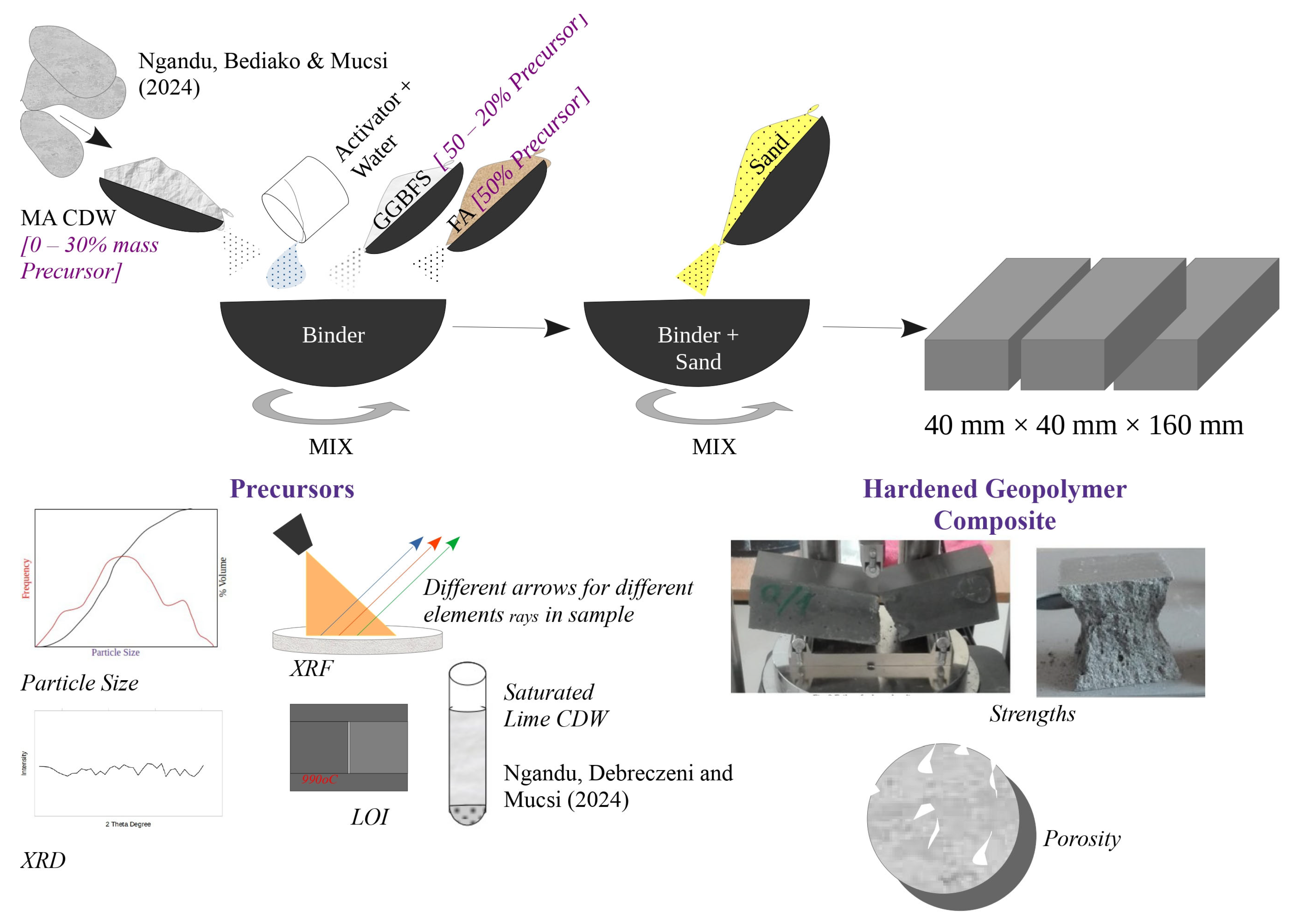
In this research, ground granulated blast furnace slag (GGBFS) and fly ash (FA) were used as the main components of the geopolymer precursor and the general methodology and materials is presented in Figure 1.
The possibility of partially replacing GGBFS with concrete construction demolition waste (CDW) was investigated. The concrete construction demolition waste (CDW) powder was derived from concrete waste from a company in Hungary. CDW size fractions were delivered based on raw material sizes, including the following: 45–80 mm, 22–45 mm and 0–22 mm. Jaw crushing (for coarser fractions, i.e., 45–80 mm, 22–45 mm) was conducted [26]. The entire <4 mm fractions for the 3 fractions, with almost similar XRF chemical compositions [26], was utilized as a binder raw material, irrespective of the size fraction. Also, in a comparative test with equal ratio of the 3 fractions, the particle size resulted in an almost similar-sized distribution. Mechanical activation was conducted by a Retsch® planetary mill (Retsch GmbH, Haan, Germany), by a batched process, with a speed of 128 revolutions per minute, and a material-to-steel grinding media of 10%. Table 1 shows the chemical composition of the slag, fly ash determined by X-ray fluorescence (XRF) using the EDX-7200 SHIMADZU® spectrometer (Kyoto, Japan) and CDW determined by Rigaku® Supermini 200 WDXRF instrument (Rigaku Corporation, Tokyo, Japan), for the materials ground with the same range of grinding parameters and the same raw materials as those in this study, without differing raw material fraction ratios. The analysis of other parameters indicated that, irrespective of the raw material proportions, unground XRFs and sizes were quite similar, also 60 min ground XRD. Based on various tests, milling had an impact on XRF, but ≥15 min milling did not have a significant impact on chemical compositions and LOI (ranged 9.7–10.9), with raw materials having higher values [26]. Particle size and homogeneity are important factors, having a different surface composition compared with their bulk [28]; hence, the ground CDW* with an initial ratio difference were arguably more representative compared with the raw CDW. The loss of ignition values are also given.
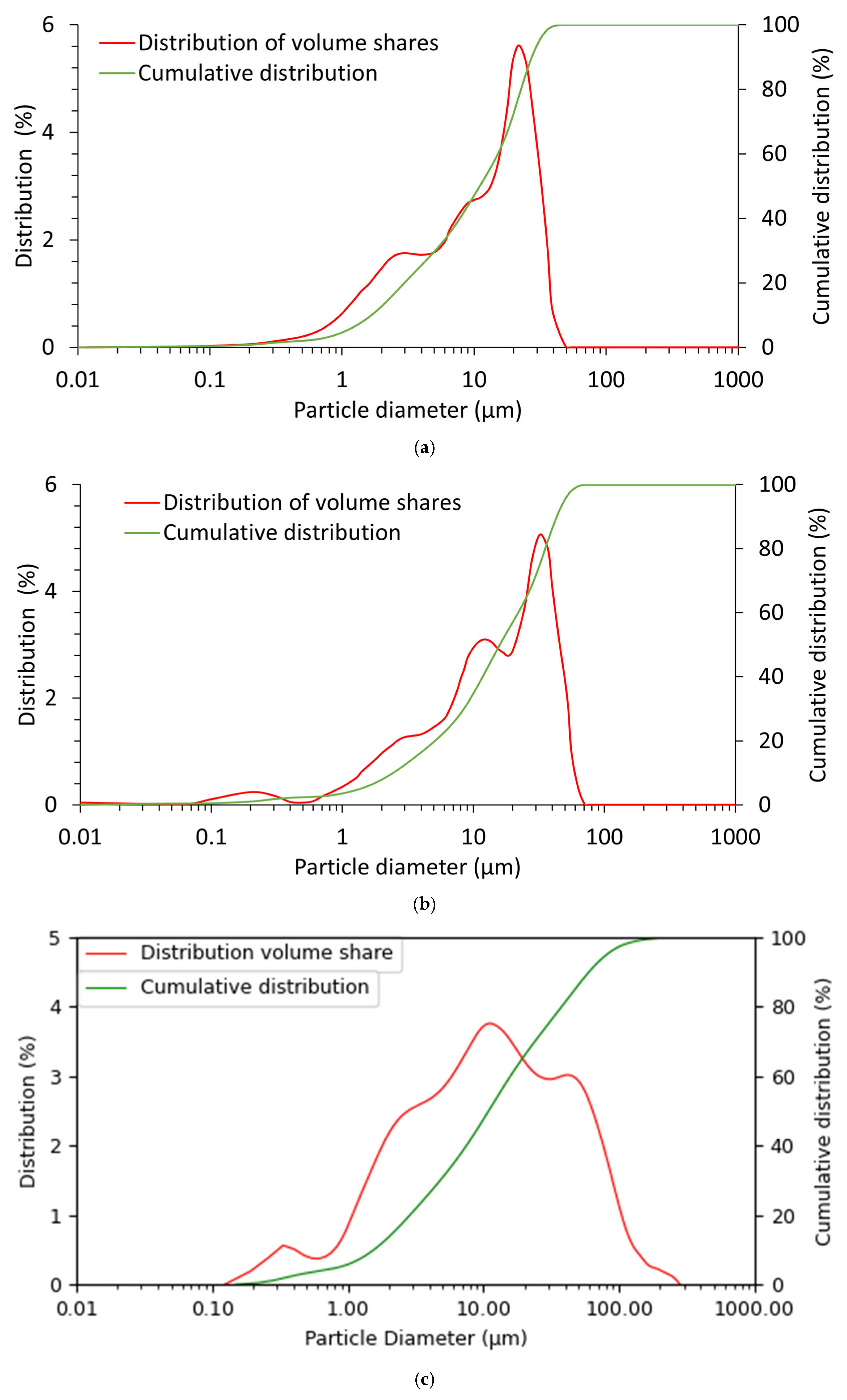
A laser diffraction instrument, Anton Paar PSA (Graz, Austria), was used for the slag and fly ash measurements and the CDW measurement was performed by a HORIBA LA-950V2 laser (HORIBA, Ltd., Kyoto, Japan) diffraction particle size analyzer in wet mode, using distilled water as the dispersing media. Figure 2c shows a representative of the particle sizes and distribution estimates for CDW, in batches, of a mixture of those ground for 60 and 120 min. In Figure 2, the median particle sizes for the precursors are around 10–20 µm, with the CDW having higher <1 µm volumes, above 5%, and a higher frequency at finer particles compared with FA and GGBFS. The results of the saturate lime test for CDW used in this study—15 titrations—were 149.3 and 144.9 ΣCaO (mg/g), which were significantly higher than those for raw and other grinding durations, hence the improved reactivity [27].
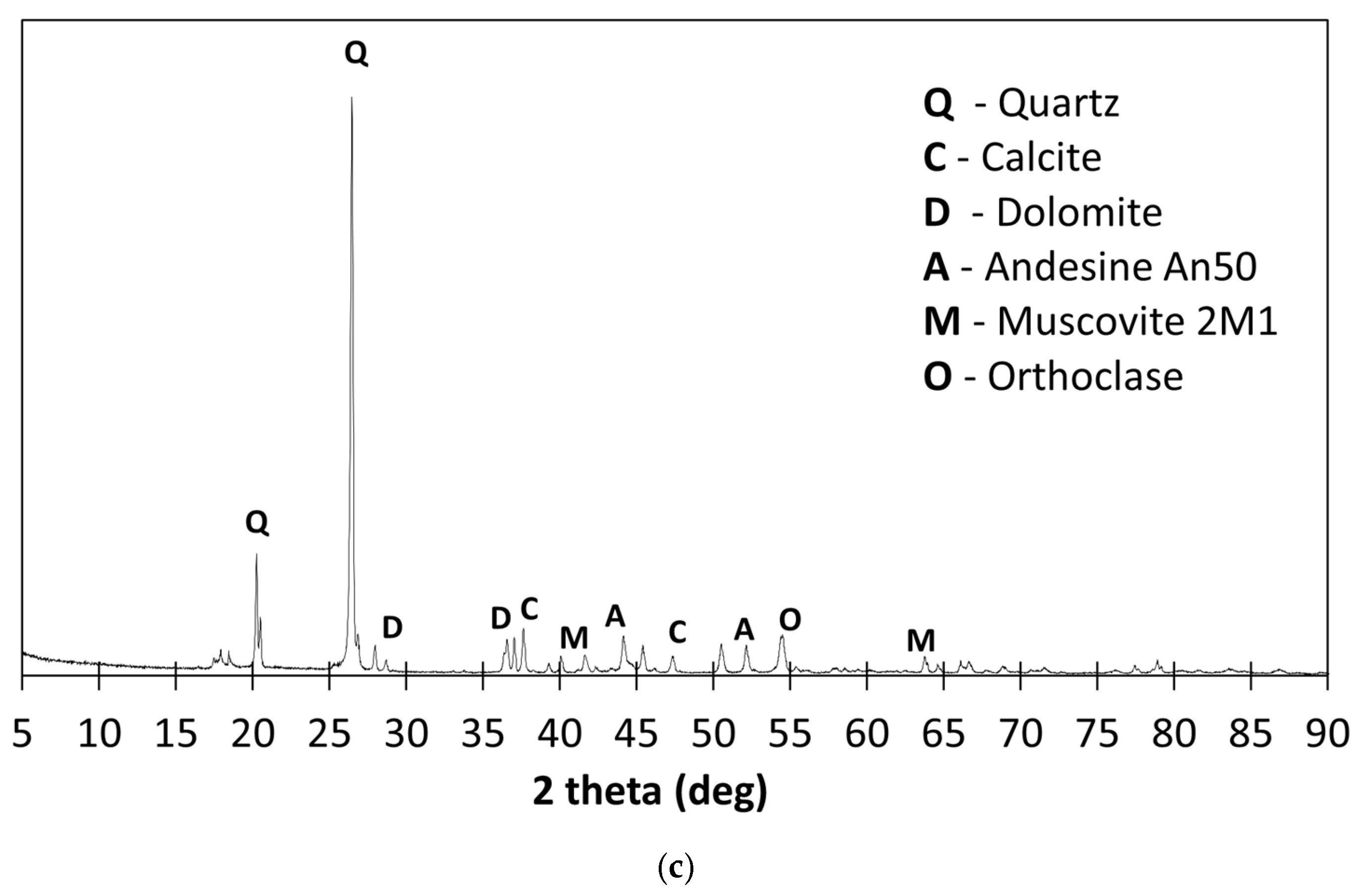
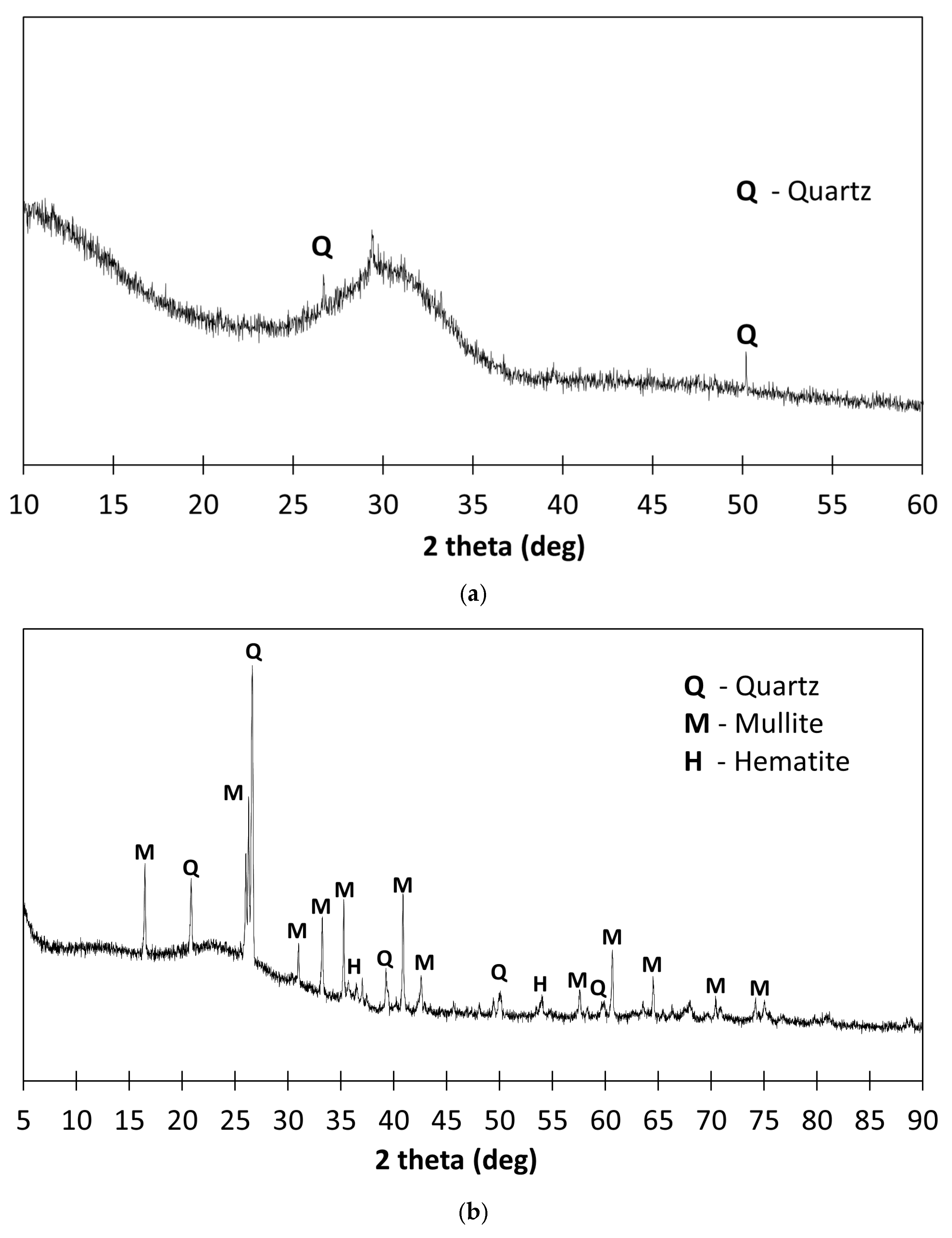
Figure 3 is the X-ray diffraction (XRD) for FA, GGBF and CDW. The CDW shows a crystalline nature. Also, Table 2 is the mineralogy for CDW ground for 60 min, based on the XRD analysis. The main phases are the crystalline, including quartz and calcite at more than 70%, and amorphous phase of 13.7%, as shown in Figure 3 for the 60 min ground sample.
The composition of the geopolymer precursor was modified by partially replacing GGBFS with mechanically activated concrete CDW powder in amounts of 15% and 30% by the weight of its precursors. Geopolymer synthesis was carried out with an alkaline activator. Quartz sand with a maximum grain size of up to 2 mm was also used to prepare the geopolymer mortar.
The alkaline activation agent for the study was the sodium silicate solution Geosil® 14517 (Woellner, Ludwigshafen, Germany). Table 3 is the chemical composition, according to the manufacturer.
Table 4 shows the composition of the prepared geopolymer mortars per cubic meter of mix. Each mix contains the same weight ratio of alkaline solution to precursor, and sand to precursor. The variable component is the amount of concrete construction demolition (CDW) powder added to 0, 15 or 30% of the precursor amount. The respective mixtures were from the same batch: 3 samples for compressive strength and 2 samples for flexural strength.
The evolution of the physical properties (density and ultrasonic pulse velocity) and mechanical properties (compressive and flexural tensile strength) of the hardened mortars was investigated over different durations. To determine the flexural tensile strength, each specimen was subjected to a three-point flexure test at a constant loading rate of 50 N/s. The 40 mm × 40 mm × 160 mm molds were used for flexural strength tests, similar dimensions as defined in [29,30], and the compressive strength was tested on 40 mm × 40 mm × 40 mm cubes. Also, the dimensions were measured before crushing, for more accurate size determination. The bending halves were then tested for compressive strength by using the standard procedure for cement mortars, with a constant load rate of 2400 N/s. These tests were carried out on two specimens at 3, 28 and aged strength development in the proximity of 90 days.
Ultrasonic pulse velocities (UPV) were measured in geopolymer samples of different ages, all of which were subjected to compression testing. Based on [21,31] data, at 90 days, a correction factor on pulse velocities of 1.088 and 1.06 for other >80 MPa strengths were adopted, based on Equation (1). Measurements were made using a Portable Ultrasonic Non-Destructive Digital Indicating Tester PUNDIT plus (Proceq, Schwerzenbach, Switzerland). Cylindrical transducers with a nominal frequency of 54 kHz were used.
Porosimetry tests were carried out, using the mercury intrusion porosimetry method (MIP) for the aged sample. The Quantachrome PoreMaster automatic pore size analyzer (Anton Paar QuantaTec Inc., Boynton Beach, FL, USA) was used. The chemical compositions of the precursors and alkaline solutions for the geopolymer binders were determined

3. Results

3.1. Apparent Density

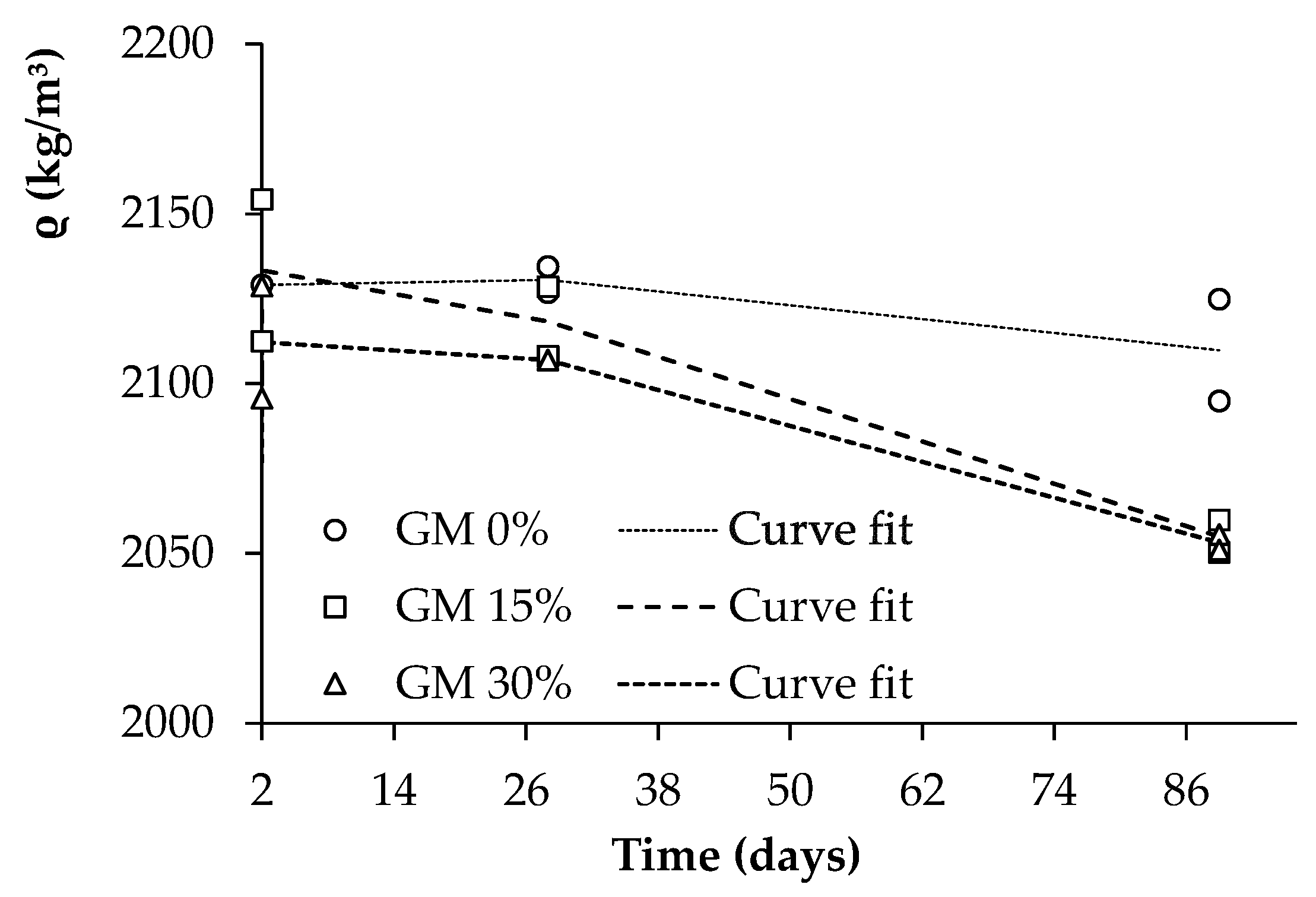
The apparent densities are presented in Figure 4; with respect to time, the apparent densities were between 2050 and 2131 kg/m3. At 28 days, the average apparent density was 2130.6 ± 3.9 kg/m3 and after, the longer-term aging density was 2109.8 ± 15 kg/m3 for GM 0%. The lowest density was 2053.2 ± 2.3 kg/m3 for aged GM 30%. Generally, there were higher apparent densities at 28 days compared with the aged samples, as the addition of CDW affected the densities of the binder.

3.2. Compressive Strengths

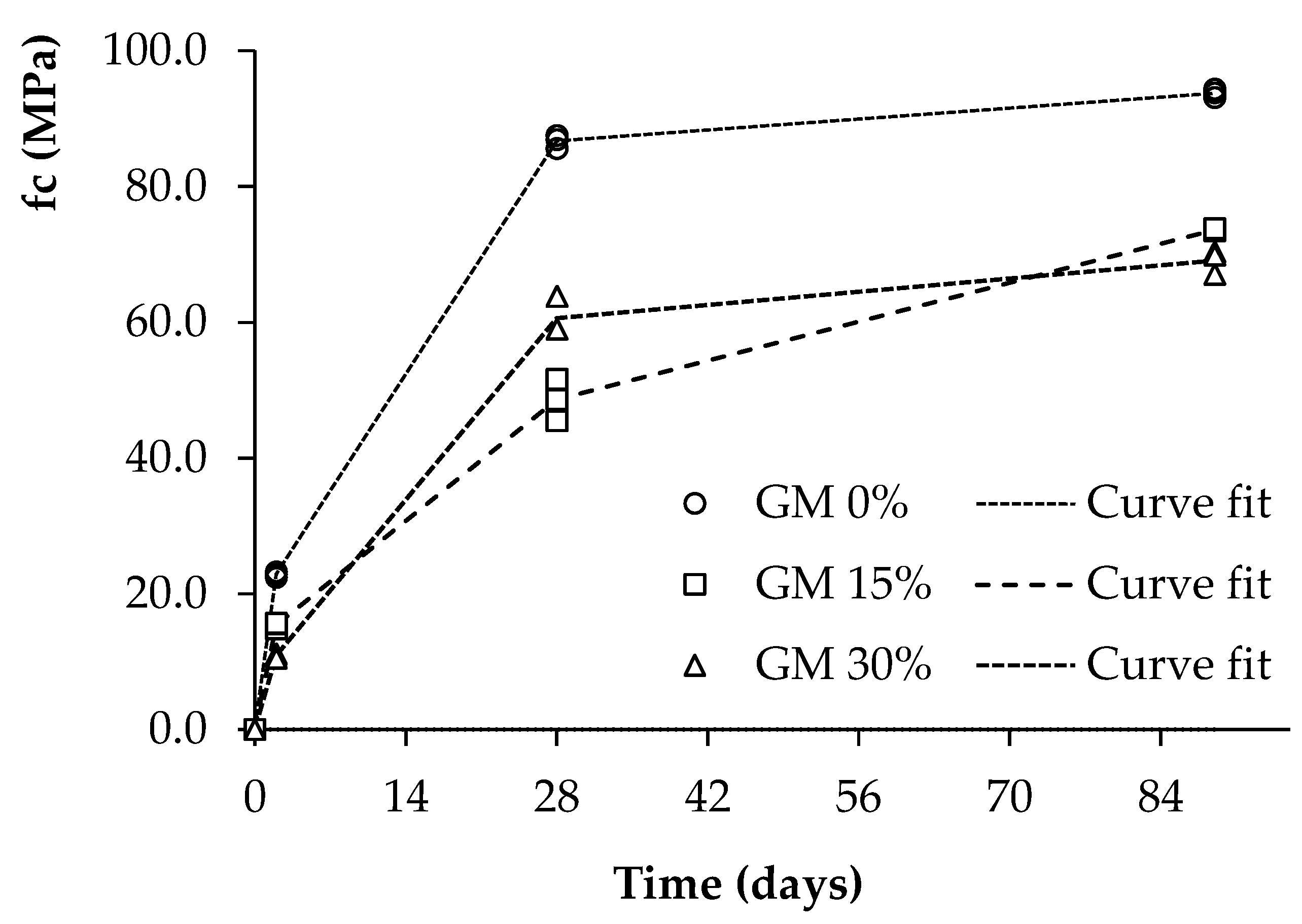
Figure 5 is the compressive strength as a function of time. All the samples had increasing strengths with time. The GM 0%, GM 15% and GM 30% attained compressive strengths of 93.7 ± 0.51 MPa, 73.65 ± 0.14 MPa and 69.1 ± 1.46 MPa, respectively, for the aged samples. At 28 days, the GM 0%, GM 15% and GM 30% attained compressive strengths of 86.7 ± 0.8 MPa, 48.6 ± 2.49 and 60.6 ± 2.29 MPa, respectively. On day 2, the strengths were 22.86 ± 0.33 MPa, 15.34 ± 0.35 MPa and 10.9 ± 0.27 MPa for GM 0%, GM 15% and GM 30%, respectively. Between 2 and 28 days, all the samples had higher strength increases compared with >28 days strengths, with the GM 30%, GM 0% and GM 15% attaining 456%, 279% and 216.5%, respectively. Beyond 28 days, the strength increases for GM 0%, GM 15% and GM 30% were 8.11%, 51.65% and 14%, respectively; hence, there was a significantly lower rate of strength increase beyond 28 days. The CDW-incorporated geopolymer composites had more strength increases over time at ≥28 days and significantly lower early strengths. In a study by [3], there was a similar trend for the compressive strength: the binder’s strength for the 90% construction and demolition waste-based geopolymer binder was significantly lower at 1 and 7 days compared with the cement-based binder, which was arguably due to the lower reactivity that was due to the highly crystalline nature of construction and demolition waste, Figure 3c, but increased significantly at 28 days.
Similarly, ref. [14] studied the 7-day compressive strength increase with increasing GGBFS content. This phenomenon is arguably due to the high calcium content in GGBFS compared with CDW, based on the XRF composition in Table 1. Also, the decline in strength could be attributed to its crystalline nature, including large amounts of quartz in CDW compared to a GGBFS that is more amorphous in nature, as illustrated in XRD studies Figure 3 and Table 2. Particularly, the delayed strength development at 2 days for CDW-based geopolymer composites was possibly affected to a higher extent by this CDW’s XRD and XRF natures. According to [32]’s study, the addition of Ca from GGBFS contributed to higher strength for a fly ash–GGBFS-based geopolymer. Also, in [33]’s study, a higher GGBFS content resulted in a compact structure, and hence a better mechanical performance. Ca salts provide a heterogeneous nucleation center in the initial paste solution. The addition of CaO and CaCO3 increased the strengths for the alkaline-activated system [34]. Also, the hydrated gel of GGBFS aided in the reduction in the negative effect of neat fly ash and also increased the binding of the GGBFS and fly ash phases and the geopolymer matrix and aggregate because of the microstructure’s compactness.
Reduced strengths of CDW-incorporated geopolymer mixes, particularly for aged samples, could also be attributed to higher LOI of CDW compared to GGBFS and fly ash.

3.3. Flexural Strengths

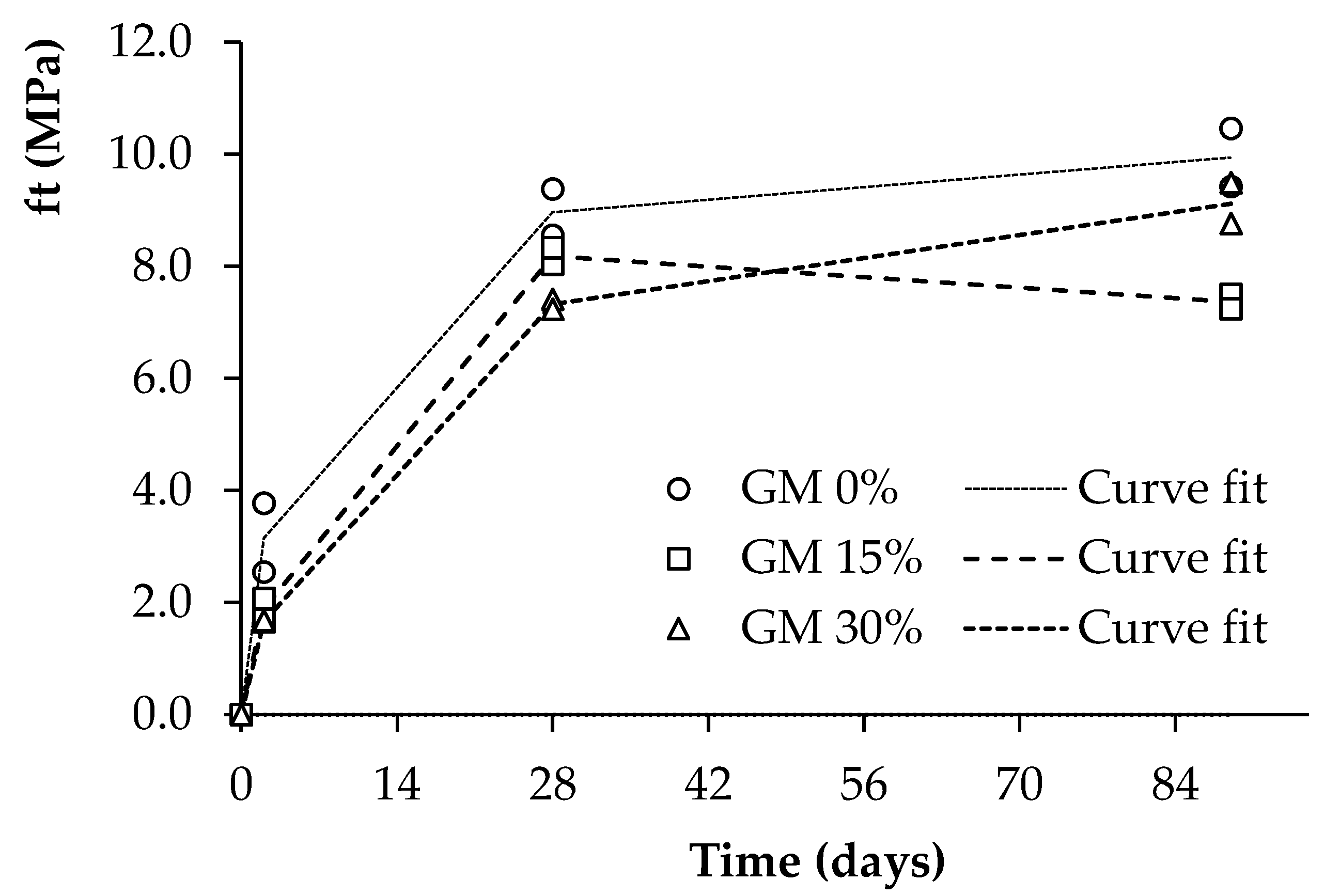
The flexural strengths are presented in Figure 6, with respect to time, with the GM 0% having higher strengths compared with the CDW-based geopolymer mix samples. Generally, there was an increase in flexural strengths with aging. The GM 0% attained flexural strengths of 9 ± 0.26 MPa at 28 days to 9.9 ± 0.52 MPa after aging, while GM 15% were 8.2 ± 0.15 MPa to 7.4 ± 0.13 MPa, respectively, and those of GM 30% were 7.3 ± 0.09 to 9.1 ± 0.36 MPa; hence, the highest strengths were almost 10 MPa. The % flexural to compressive strengths in all cases were less than 17%. Flexural strengths increased significantly up to 28 days as compared to >28 days, which is comparable to the compressive strength trends generally. The strengths between 2 and 28 days increased by 184%, 333% and 344.5% for GM 0%, GM 15% and GM 30%, respectively. Beyond 28 days, strengths increased by 10.86% and 23.03% for GM 0% and GM 30%, respectively. Similarly to the compressive strengths, there was a generally higher increase rate of CDW-incorporated geopolymer composite strengths, for later age, compared with GM 0%, which showed much better strength development at 2 days.

3.4. Ultrasonic Pulse Velocity

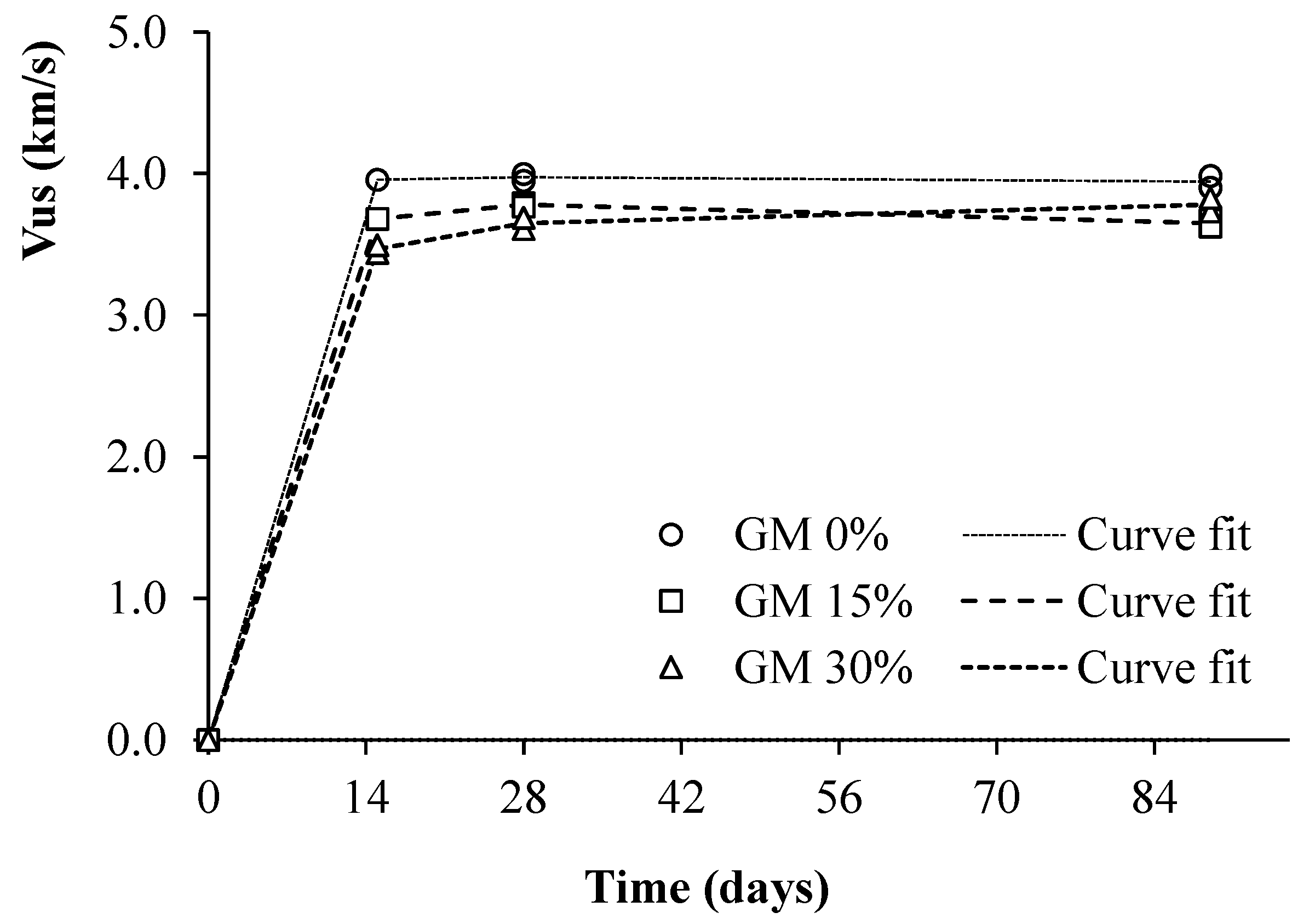
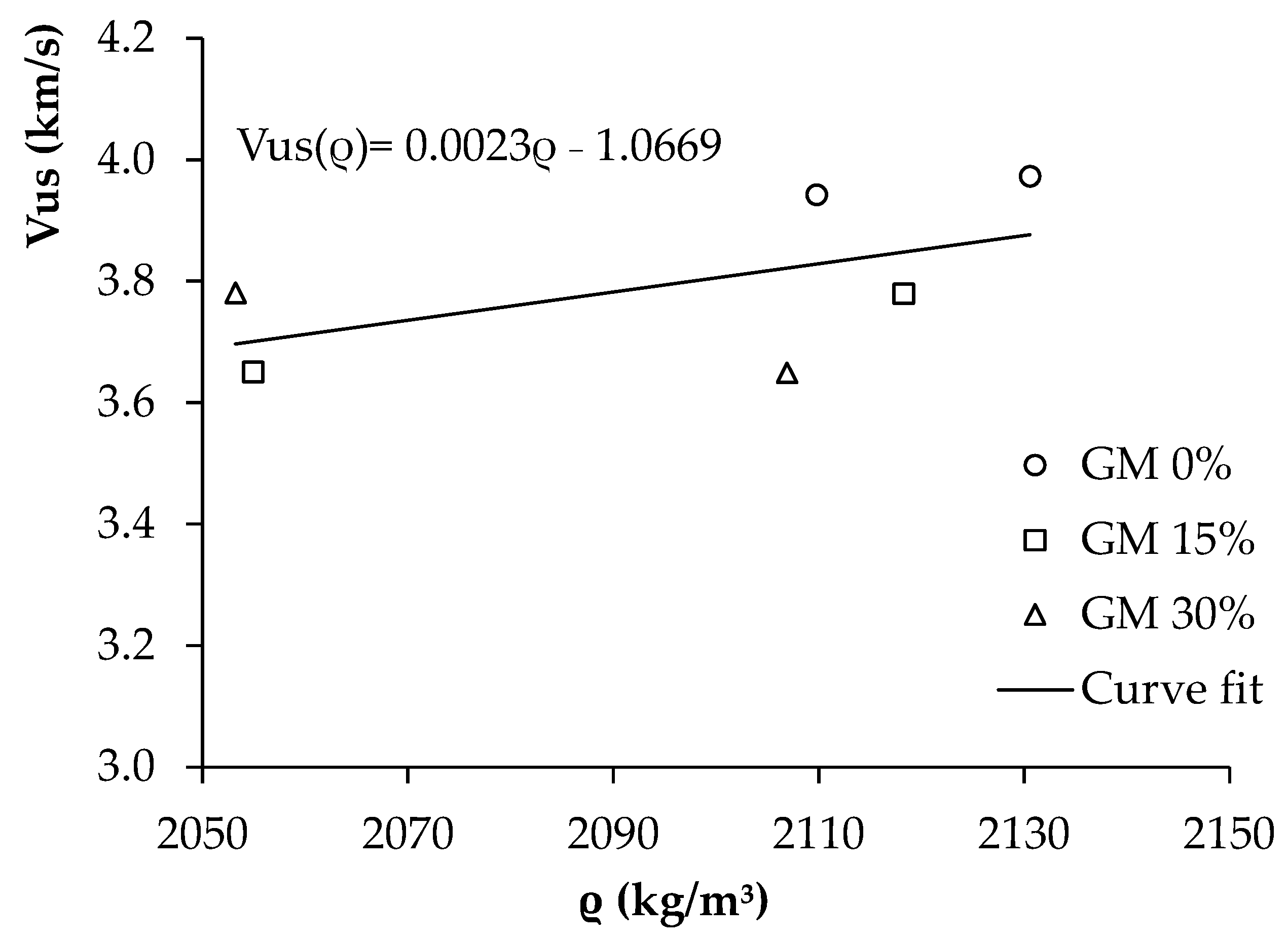
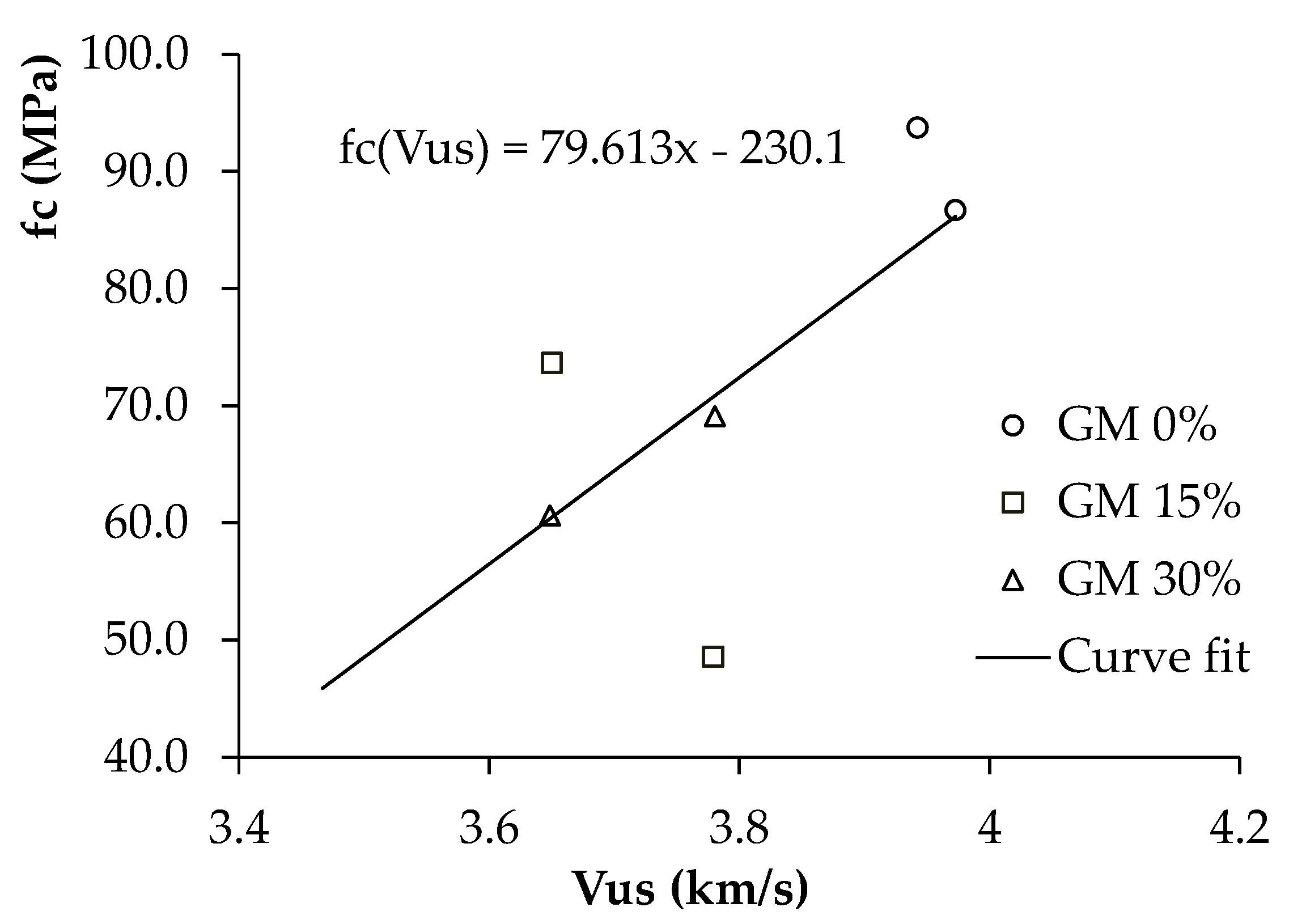
The results of the factored ultrasonic pulse velocity measurements are shown in Figure 7. In Figure 8 is the factored ultrasonic pulse velocity as a function of apparent density with factored ultrasonic pulse velocity. Figure 9 is the compressive strength as a function of factored ultrasonic pulse velocity. According to [35]’s study on cement aggregate concrete, the compressive strength trends were not necessarily consistent with the ultravelocity; however, in [36]’s study of geopolymer-based mixes, the trends were consistent. Inconsistencies could be attributed to physical, microstructure and non-homogeneousness of waste material, particularly CDW.

3.5. Porosity

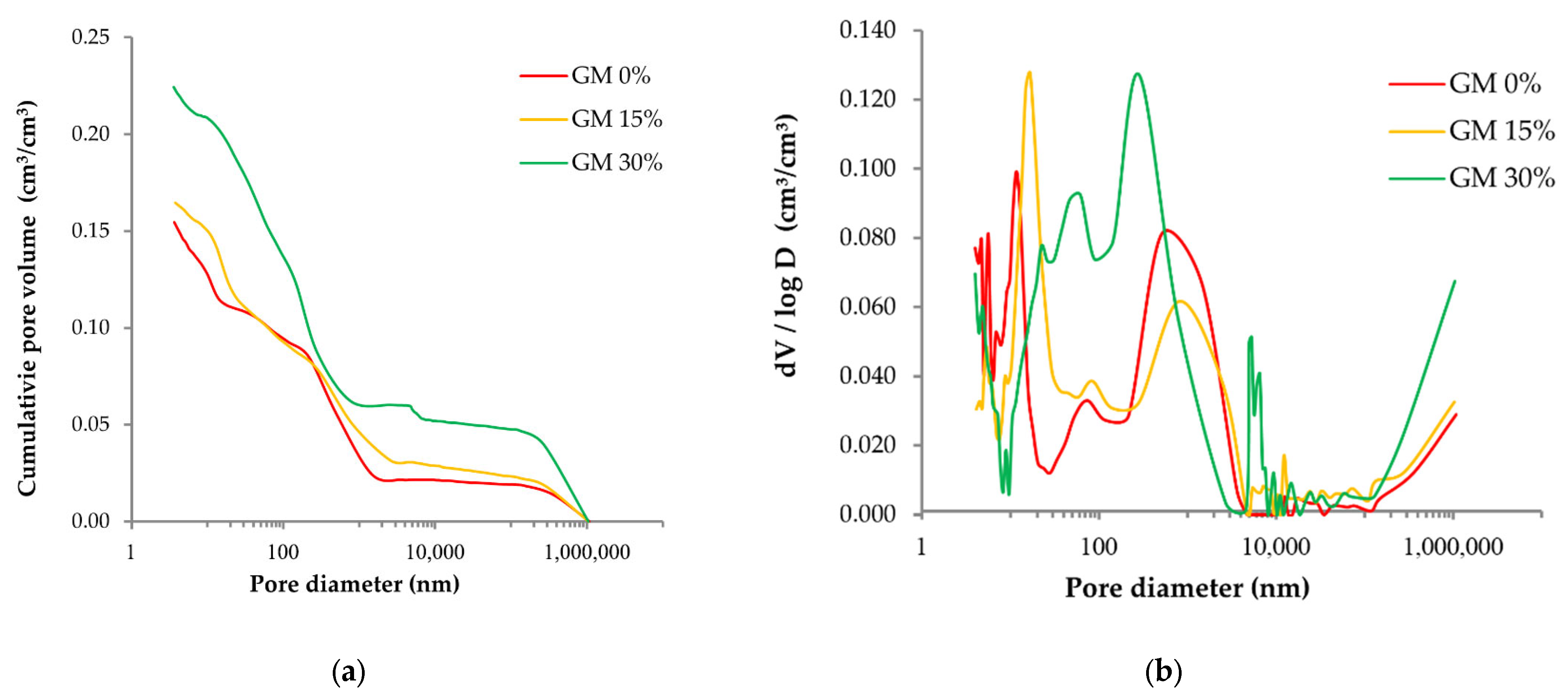
Using mercury intrusion porosimetry (MIP), the porosity of the investigated composites was analyzed. Figure 10a presents the cumulative pore volume curves, while Figure 10b shows the corresponding pore size distribution.
The analysis of the cumulative pore volume curves revealed clear differences among the mixtures containing GM 0%, GM 15% and GM 30%. The GM 30% composite exhibited the highest total porosity, reaching approximately 22%. The remaining composite showed similar and clearly lower total porosity values of about 15–16%. The pore size distribution (Figure 10b) indicates that the incorporation of CDW affects not only the overall porosity but also the modal (dominant) pore diameters. GM 0% displays a relatively flat, broad distribution with moderate peaks in the range of the medium and larger pores. GM 15% is characterized by a pronounced narrow peak in the region of the smaller pores, indicating an increase in the volume of fine pores compared with GM 0%. GM 30% exhibits several distinct peaks in the range of tens to several hundreds of nanometers, along with an additional peak in the region of larger pores (on the order of thousands of nanometers), suggesting an increase in both mesoporous and macroporous fractions.
The increasing CDW content leads to a rise in cumulative pore volume and shifts the pore size distribution toward a greater proportion of medium and large pores (i.e., more meso- and macropores), while simultaneously preserving an increase in the fraction of fine pores in the case of GM 15%.

3.6. Chemical Composition for Geopolymer Composites

Table 5 are the molar ratios of the initial mix, based on the precursors’ XRF chemical composition in Table 1. The molar ratio of SiO2/Al2O3 ranged between 4.65 for GM 0% and 5.58 for GM 30%. According to [13], high SiO2/Al2O3 molar ratios enable the formation of strong and dense Si-O-Al and Si-O-Si bonds. However, other factors and/or limiting ranges can influence this. In a study by [37] on metakaolin and fly-ash-based geopolymer binders, the highest compressive strength was obtained at SiO2/Al2O3 of 3.67, and the increase in this ratio resulted in a decrease in strength, while in [13], for various CDW and industrial by-product-based geopolymer binders, the SiO2/Al2O3 of >7 produced higher strengths.
The molar ratios for SiO2/CaO were 2.48, 3.16 and 4.18 for GM 0%, GM 15% and GM 30%, respectively; hence, GM 0% had a higher Ca/Si ratio. High strengths of >69 MPa were attained for aged geopolymer composites, showing that the ratios of 4.6–5.6, 1.6–2.4, 4.3–5.2 and 2.5–4.2 for SiO2/Al2O3, SiO2/(Al2O3 + CaO), SiO2/(Al2O3 + Fe2O3) and SiO2/CaO could be viable for the production of structural geopolymer concrete. However, the factors of unreactive compounds and the types of precursors should be taken into consideration.

4. Discussion

Based on the compressive strengths attained after 28 days of 86.7, 48.6 and 60.6 MPa for the GM 0%, GM 15% and GM 30%, all specimen attained above 45 MPa compressive strengths at 28 days, which increased further with aging to >69 MPa, and ultrasonic velocities above 3 km/s, with a general decline in strengths for the CDW-incorporated geopolymer composites and no significant trends/differences for the apparent densities. The general decline in strength could possibly be due to the XRD graph. The CDW showed a significantly higher crystalline phase, with sharper and more defined crystalline peaks compared with the GGBFS, which was without sharp peaks or a defined XRD shape. According to [38]’s research on partial cement replacement, the increased strength was attributed to the filler effect of fine CDW particles. The CDW had more volumes of <1 µm particle size and generally finer particle distribution. Hence, though they are highly crystalline, unreactive small particles, particularly from hard ground quartz, may have contributed to attaining the respective strength levels, including higher compressive strength for 28 days in GM 30% compared with GM 15%, which was against the general trend. This could be due to the mechanical activation of CDW that reduced the particle size to higher <1 µm volumes as fillers. Part of the concrete CDW from mortar (fine aggregate) and concrete (coarse aggregate) can improve the strength, due to the micro-hardness and density, which are higher than paste waste [39]. Favorable interfacial bonding for CDW contributes to higher strength [40]. Milling of CDW increased reactivity [27], and hence contributed to the average compressive strengths of >48 Mpa compressive strengths at 28 days. Generally, an increasing trend occurred for flexural and compressive strengths with aging. Hence, the CDW-GGBFS-based geopolymer binder is a potential material for the production of low-carbon concrete for structural use.
Similarly to conventional cement concrete, the flexural strengths were significantly lower compared with the compressive strength: hence the need for bending reinforcement for structural use. The interface bonding between the reinforcement fibers and geopolymer matrix is a crucial factor for flexural strength [41]. In a study by [41], bamboo fiber had a good bond with the geopolymer composite due to their surface roughness and enhanced flexural strength. According to [42], the direction of the fabric can have an impact on the properties of geopolymer composites and with a horizontal orientation for the applied load, greater resistance was achieved compared with a vertical orientation. In a study by [43], glass microfibers at 2% mass were the optimum, with a better adhesive bond between the matrix and microfibers; hence, this enhanced the fracture toughness, compressive strength and Young’s modulus. In a study by [44], ultra-high performance concrete optimum metakaolin addition improved fracture toughness, flexural strength and post-cracking performance, with reduced porosity and improved fiber distribution. Therefore, the bending, toughness and flexural properties for this study could be improved by the incorporation of optimum clay-based additives and fiber in the geopolymer composition matrix.
According to [45]’s study about 25% calcium substitution in alkaline-activated material, improved early polycondensation increased the highly polymerized Si3 and Si4 fraction, and produced compact, continuous networks, but a further increase in calcium resulted in weaker Si-O-(Si/Al) linkage and a fragmented network, an indication that optimum Ca2+ promoting framework formation, but an excess suppressed cross-linking. In a study by [46], for slag/fly ash geopolymer composites with an increased mineral content of the clay-enhanced reactive components’ reactivity, montmorillonite-dominated clay enhanced the matrix’s compactness and compressive strength but had poorer water resistance. Hence, further studies on the GGBFS-FA-CDW geopolymer in this study with an additive clay system could further improve geopolymerization, mechanical performance and durability. In the presence of calcium hydroxide, geopolymer gel formed highly aluminum-coordinated structures, due to more formation of calcium silicate hydrate with an aluminum substitute (CASH), resulting in a reduction in the total Si, hence the promotion of Si-O-Al over Si-O-Si bonds [47]. Increasing the calcium hydroxide to 10% resulted in increased strength at an ambient temperature [47]. Generally better mechanical properties for higher GGBFS-based geopolymer binders could be due to a higher Ca2+ content, which is arguably closer to the optimum reactive content, compared to mechanically activated CDW-based XRF compositions and the higher reactivity of amorphous GGBFS. An increased slag content with higher Ca2+ ions accelerates the Ca2+ ions dissolution and hastens polycondensation products [48]. In a study by [48], high-calcium system geopolymer mix had a dense gel body structure, with numerous adsorbed particles.
The high LOI in CDW at 10.6%, based on XRF, could negatively affect the durability of the resultant concrete, and could explain the reduction in strengths, for aged CDW-incorporated CDW geopolymer materials. Techniques to mitigate this, such as pretreatment, should be explored. The loss of ignition (LOI) value of 9.27% for concrete powder was attributed to the amorphous materials [10] study by [15]; the concrete slurry waste had LOI and SiO2 values of 16.38% and 39.35%, and the LOI values from [11]’s studies were 13.07% for waste concrete, and the LOI values were 9.1% and 21.59% for CDW in [2] and [13]’s studies, respectively. Significant amounts of LOI and SiO2 in concrete slurry waste can be attributed to carbon/organic content and sand, respectively (He et al., 2020 [49], as cited in [15]).
Based on XRF, the SiO2/Al2O3 and SiO2/CaO for composites without CDW were 4.65 and 2.48, respectively, with an increasing trend as the CDW content increased for the initial mix.
The incorporation of CDW into the geopolymer matrix leads to significant modifications in the pore structure of the mortar. CDW likely increases the irregularity of particle packing within the mixture, resulting in a greater number of interparticle voids and, consequently, an increase in both macro- and mesopores. In addition, the intrinsic porosity of the CDW grains may contribute to internal pores, which can increase the fraction of fine pores in certain samples (as observed for GM 15%). For the lower CDW content (15%), an increase in fine pores is evident. It is likely that the finer CDW fractions fill existing voids while simultaneously introducing their own fine pores, which explains the sharp dV/dlogD peak in the region of small diameters. At a higher CDW content (30%), spatial effects and a reduced packing efficiency begin to dominate, leading to an increase in pore volume associated with larger pore diameters (broadening of the peak in the range of hundreds to thousands of nanometers) and an overall rise in porosity. These findings are consistent with observations reported in the literature regarding the addition of recycled raw materials. Moderate additions of fine recycled fractions can fill pores and densify the structure, thereby altering the pore size distribution, whereas higher additions tend to increase the macroporosity, due to poorer packing efficiency. The increased porosity due to the CDW addition in the geopolymer composite can hence explain the decline in the aged strengths with the incorporation of CDW.

5. Conclusions

The CDW-incorporated samples, though highly crystalline, resulted in compressive strengths of >45 MPa at 28 days to >69 MPa with age and a fairly good ultra-velocity value >3 km/s, with no significant differences in the apparent densities. Hence, though highly crystalline, unreactive small particles, a higher <1 µm volume compared with GGBFS due to mechanical activation may have contributed to attaining the respective strength levels, acting as fillers, and supplementing the reactive phases. To stop the decline in mechanical performance for CDW-based geopolymer composites, the study recommends techniques such as curing at an elevated temperature or the incorporation of a dissolution catalyst to improve the strengths of CDW-based geopolymer mixes.
Based on the XRD results, the crystalline nature of CDW compared with GGBFS can explain the general decline in compressive strength in increased CDW-based geopolymer samples. Also, the strength decline for increased CDW-incorporated geopolymer composites could be attributed to the increased porosity of CDW-based geopolymer composites.
There was variance in the XRF chemical composition ratios for the initial mixes, which arguably impacted the mechanical performance for the geopolymer composites. Based on the chemical composition of the precursor and alkaline activator, the chemical composition ratios of geopolymer composites were computed. Those are just indicative, since the three precursors have different properties—such as size distribution, durability (LOI), shapes and different XRD patterns—and thus different reactive and unreactive phases and also the impact of a finer fill material.
Based on this study, mechanically activated CDW-incorporated geopolymer composites could offer possibilities as feasible sustainable materials, and using further controls of chemical composition, physical properties and thermal adjustments can improve their viability.
In the context of practical applications, the mechanically activated CDW content should be limited to levels at which the desired properties (e.g., strength and low permeability) remain acceptable. The increased cumulative pore volume observed for the GM 30% mortar leads to higher water absorption and reduces the material’s density, which in turn results in lower mechanical strength and diminished durability under exploitation conditions. Based on previous studies, the study recommends further evaluation with clay-based additives and fibers for the improvement of the mechanical properties and durability of the FA-GGBFS-CDW geopolymer composite, hence their sustainable utilization.
The conducted research confirms that incorporating mechanically activated concrete demolition waste (CDW) into geopolymer precursors is a promising strategy for developing low-emission, resource-efficient construction materials. The results indicate that, despite the limited reactivity of CDW, favorable mechanical performance and a beneficial pore structure can be achieved. This demonstrates a tangible potential to improve resource efficiency and reduce the energy intensity of material production. The proposed approach aligns with the key directions in contemporary research on materials that support emission reduction and the implementation of circular economy principles aimed at minimizing the environmental impact of the construction sector. The findings show that the deliberate design of geopolymers incorporating CDW can simultaneously enhance process energy efficiency, lower the carbon footprint of materials, and promote the adoption of circular economy strategies in modern construction.

Author Contributions

Conceptualization, G.M.; methodology, M.S. and I.H.; software, C.N.N.; validation, M.S., I.H. and G.M.; formal analysis, G.M.; investigation, C.N.N. and M.S.; resources, C.N.N.; data curation, C.N.N.; writing—original draft preparation, C.N.N. and M.S.; writing—review and editing, G.M.; visualization, M.S.; supervision, I.H. and G.M.; project administration, C.N.N.; funding acquisition, I.H. All authors have read and agreed to the published version of the manuscript.

Funding

This research received no external funding.

Institutional Review Board Statement

Not applicable.

Informed Consent Statement

Not applicable.

Data Availability Statement

The original contributions and/or data processing presented in this study are included in the article. Further inquiries can be directed to the corresponding authors.

Acknowledgments

Thanks to individuals that made contributions in the laboratory or provided opinions on the research.

Conflicts of Interest

The authors declare no conflicts of interest.

Abbreviations

The following abbreviations are used in this manuscript:
GGBFSGranulated blast furnace slag
FAFly ash (FA)
CDWConstruction and demolition waste
LOILoss of ignition
ρApparent density (kg/m3)
GM 0%, GM 15%, GM 30%CDW content as % of precursor at 0, 15 and 30%
fcCompressive strength (MPa)
VusUltra sonic velocity (km/s)
ftTensile strength (MPa)
CASHCalcium silicate hydrate with aluminum substitute
ASRAlkali–silica reaction

References

  1. European Commission; Directorate General for Internal Market, Industry, Entrepreneurship and SMEs. Development and Implementation of Initiatives Fostering Investment and Innovation in Construction and Demolition Waste Recycling Infrastructure; Publications Office: Luxembourg, 2018. [Google Scholar]
  2. Robayo-Salazar, R.A.; Valencia-Saavedra, W.; Mejía De Gutiérrez, R. Construction and Demolition Waste (CDW) Recycling—As Both Binder and Aggregates—In Alkali-Activated Materials: A Novel Re-Use Concept. Sustainability 2020, 12, 5775. [Google Scholar] [CrossRef]
  3. Rivera, J.F.; Mejia, J.M.; Mejia De Gutierrez, R.; Gordillo, M. Hybrid Cement Based on the Alkali Activation of By-Products of Coal. Rev. De La Constr. 2014, 13, 31–39. [Google Scholar] [CrossRef]
  4. Figiela, B.; Brudny, K.; Lin, W.-T.; Korniejenko, K. Investigation of Mechanical Properties and Microstructure of Construction- and Demolition-Waste-Based Geopolymers. J. Compos. Sci. 2022, 6, 191. [Google Scholar] [CrossRef]
  5. Wang, X.; Yang, W.; Liu, H.; Zhu, P.; Zong, N.; Feng, J. Strength and Microstructural Analysis of Geopolymer Prepared with Recycled Geopolymer Powder. J. Wuhan Univ. Technol.-Mater. Sci. Ed. 2021, 36, 439–445. [Google Scholar] [CrossRef]
  6. Gharzouni, A.; Vidal, L.; Essaidi, N.; Joussein, E.; Rossignol, S. Recycling of Geopolymer Waste: Influence on Geopolymer Formation and Mechanical Properties. Mater. Des. 2016, 94, 221–229. [Google Scholar] [CrossRef]
  7. Vásquez, A.; Cárdenas, V.; Robayo, R.A.; De Gutiérrez, R.M. Geopolymer Based on Concrete Demolition Waste. Adv. Powder Technol. 2016, 27, 1173–1179. [Google Scholar] [CrossRef]
  8. Ahmari, S.; Ren, X.; Toufigh, V.; Zhang, L. Production of Geopolymeric Binder from Blended Waste Concrete Powder and Fly Ash. Constr. Build. Mater. 2012, 35, 718–729. [Google Scholar] [CrossRef]
  9. Pathak, A.; Jha, V.K. Synthesis of Geopolymer from Inorganic Construction Waste. J. Nepal Chem. Soc. 2013, 30, 45–51. [Google Scholar] [CrossRef]
  10. Udvardi, B.; Román, K.; Kurovics, E.; Géber, R.; Kocserha, I. Preparation and investigation of geopolymers generated from construction, demolition and industrial wastes. In Proceedings of the Materials Characterisation 2019, Lisbon, Portugal, 22–24 May 2019; pp. 49–59. [Google Scholar]
  11. Allahverdi, A.; Kani, E.N. Construction Wastes as Raw Materials for Geopolymer Binders. Int. J. Civ. Eng. 2009, 7, 154–160. [Google Scholar]
  12. Komnitsas, K.; Zaharaki, D.; Vlachou, A.; Bartzas, G.; Galetakis, M. Effect of Synthesis Parameters on the Quality of Construction and Demolition Wastes (CDW) Geopolymers. Adv. Powder Technol. 2015, 26, 368–376. [Google Scholar] [CrossRef]
  13. Zaharaki, D.; Galetakis, M.; Komnitsas, K. Valorization of Construction and Demolition (C&D) and Industrial Wastes through Alkali Activation. Constr. Build. Mater. 2016, 121, 686–693. [Google Scholar] [CrossRef]
  14. Xie, J.; Zhao, J.; Wang, J.; Wang, C.; Huang, P.; Fang, C. Sulfate Resistance of Recycled Aggregate Concrete with GGBS and Fly Ash-Based Geopolymer. Materials 2019, 12, 1247. [Google Scholar] [CrossRef] [PubMed]
  15. Gao, Y.; Duan, K.; Xiang, S.; Zeng, W. Basic Properties of Fly Ash/Slag -Concrete Slurry Waste Geopolymer Activated by Sodium Carbonate and Different Silicon Sources. Front. Mater. 2021, 8, 751585. [Google Scholar] [CrossRef]
  16. Folliard, K.J.; Thomas, M.D.A.; Kurtis, K.E. Guidelines for the Use of Lithium to Mitigate or Prevent Alkali-Silica Reaction (Asr); U.S. Department of Transportation: Washington, DC, USA, 2003. [Google Scholar]
  17. Piersanti, M.; Shehata, M.H. A Study into the Alkali-Silica Reactivity of Recycled Concrete Aggregates and the Role of the Extent of Damage in the Source Structures: Evaluation, Accelerated Testing, and Preventive Measures. Cem. Concr. Compos. 2022, 129, 104512. [Google Scholar] [CrossRef]
  18. Kim, W.; Jeong, K.; Lee, T. Statistical Reliability Analysis of Ultrasonic Velocity Method for Predicting Residual Strength of High-Strength Concrete under High-Temperature Conditions. Materials 2024, 17, 1406. [Google Scholar] [CrossRef]
  19. Construction Diagnostic Centre Pvt. Ltd. Ultrasonic Pulse Velocity Test. Ultrasonic Pulse Velocity Test: IS 516 Part 5-Sec 1-2018/ASTM C797-22/EN-12504-4-2021. Available online: https://ndtconcrete.com/non-destructive-testing/ultrasonic-pulse-velocity-test/ (accessed on 2 October 2025).
  20. Nikoloutsopoulos, N.; Sotiropoulou, A.; Kakali, G.; Tsivilis, S. Physical and Mechanical Properties of Fly Ash Based Geopolymer Concrete Compared to Conventional Concrete. Buildings 2021, 11, 178. [Google Scholar] [CrossRef]
  21. Dener, M.; Altunhan, U.; Benli, A. A Green Binder for Cold Weather Applications: Enhancing Mechanical Performance of Alkali-Activated Slag through Modulus, Alkali Dosage, and Portland Cement Substitution. Arch. Civ. Mech. Eng. 2024, 24, 176. [Google Scholar] [CrossRef]
  22. Lencis, U.; Udris, A.; Kara De Maeijer, P.; Korjakins, A. Methodology for Determining the Correct Ultrasonic Pulse Velocity in Concrete. Buildings 2024, 14, 720. [Google Scholar] [CrossRef]
  23. Capasso, I.; D’Angelo, G.; Del Río Merino, M.; Campanile, A.; Caputo, D.; Liguori, B. CDW-Based Geopolymers: Pro and Cons of Using Unselected Waste. Polymers 2025, 17, 570. [Google Scholar] [CrossRef]
  24. Servadei, F.; Natali Murri, A.; Papa, E.; Medri, V.; Landi, E. Thermal Behavior of Construction and Demolition Waste-Based Geopolymer. Constr. Build. Mater. 2024, 452, 138969. [Google Scholar] [CrossRef]
  25. Nuaklong, P.; Wongsa, A.; Sata, V.; Boonserm, K.; Sanjayan, J.; Chindaprasirt, P. Properties of High-Calcium and Low-Calcium Fly Ash Combination Geopolymer Mortar Containing Recycled Aggregate. Heliyon 2019, 5, e02513. [Google Scholar] [CrossRef] [PubMed]
  26. Ngandu, C.N.; Bediako, J.K.; Mucsi, G. Processing of Concrete Construction and Demolition Waste. In Book of Extended Abstracts of the 18th European Symposium on Comminution & 2024; Faitli, E.J., Rácz, Á., Eds.; Hungarian Chemical Society: Miskolc, Hungary, 2024; pp. 229–232. ISBN 978-615-6018-25-0. [Google Scholar]
  27. Ngandu, C.; Debreczeni, Á.; Mucsi, G. Pozzolanic Reactivity of Mechanically Activated Construction and Demolition Waste. In Proceedings of the 15th FIB International PhD Symposium in Civil Engineering, Budapest, Hungary, 28–30 August 2024; Balázs, G.L., Sólyom, S., Foster, S., Eds.; Fédération International du Béton (FIB), Budapest University of Technology and Economics: Budapest, Hungary, 2024; pp. 1135–1141. [Google Scholar]
  28. Guthrie, J.M. XRF Technical Overview. Available online: https://archaeometry.missouri.edu/xrf_technical.html (accessed on 20 December 2025).
  29. EN 196-1:2016; Methods of Testing Cement. Part 1, Determination of Strength. BSI: London, UK, 2016.
  30. ASTM C348-21; Test Method for Flexural Strength of Hydraulic-Cement Mortars. C01 Committee ASTM International: West Conshohocken, PA, USA, 2021. [CrossRef]
  31. Karatas, M.; Dener, M.; Mohabbi, M.; Benli, A. A Study on the Compressive Strength and Microstructure Characteristic of Alkali-Activated Metakaolin Cement. Matéria (Rio De Jan.) 2019, 24, e12507. [Google Scholar] [CrossRef]
  32. Hager, I.; Sitarz, M.; Mróz, K. Fly-Ash Based Geopolymer Mortar for High-Temperature Application—Effect of Slag Addition. J. Clean. Prod. 2021, 316, 128168. [Google Scholar] [CrossRef]
  33. Sitarz, M.; Urban, M.; Hager, I. Rheology and Mechanical Properties of Fly Ash-Based Geopolymer Mortars with Ground Granulated Blast Furnace Slag Addition. Energies 2020, 13, 2639. [Google Scholar] [CrossRef]
  34. Lee, W.K.W.; Van Deventer, J.S.J. The Effect of Ionic Contaminants on the Early-Age Properties of Alkali-Activated Fly Ash-Based Cements. Cem. Concr. Res. 2002, 32, 577–584. [Google Scholar] [CrossRef]
  35. Kumar, P.; Singh, N. Influence of Recycled Concrete Aggregates and Coal Bottom Ash on Various Properties of High Volume Fly Ash-Self Compacting Concrete. J. Build. Eng. 2020, 32, 101491. [Google Scholar] [CrossRef]
  36. Şahin, F.; Uysal, M.; Canpolat, O.; Aygörmez, Y.; Cosgun, T.; Dehghanpour, H. Effect of Basalt Fiber on Metakaolin-Based Geopolymer Mortars Containing Rilem, Basalt and Recycled Waste Concrete Aggregates. Constr. Build. Mater. 2021, 301, 124113. [Google Scholar] [CrossRef]
  37. Szabó, R.; Mucsi, G. Effect of SiO2, Al2O3 and Na2O Content and Fly Ash Fineness on the Structure and Mechanical Properties of Fly Ash Based Geopolymer. Recycl. Sustain. Dev. 2019, 12, 61–68. [Google Scholar] [CrossRef]
  38. Mucsi, G.; Halyag Papné, N.; Ulsen, C.; Figueiredo, P.O.; Kristály, F. Mechanical Activation of Construction and Demolition Waste in Order to Improve Its Pozzolanic Reactivity. ACS Sustain. Chem. Eng. 2021, 9, 3416–3427. [Google Scholar] [CrossRef]
  39. Wu, H.; Yang, D.; Xu, J.; Liang, C.; Ma, Z. Water Transport and Resistance Improvement for the Cementitious Composites with Eco-Friendly Powder from Various Concrete Wastes. Constr. Build. Mater. 2021, 290, 123247. [Google Scholar] [CrossRef]
  40. Li, S.; Gao, J.; Li, Q.; Zhao, X. Investigation of Using Recycled Powder from the Preparation of Recycled Aggregate as a Supplementary Cementitious Material. Constr. Build. Mater. 2021, 267, 120976. [Google Scholar] [CrossRef]
  41. Ayawanna, J.; Poowancum, A. Enhancing Flexural Strength of Metakaolin-Based Geopolymer Reinforced with Different Types of Fibers. Sustain. Chem. Pharm. 2024, 37, 101439. [Google Scholar] [CrossRef]
  42. Alomayri, T.; Shaikh, F.U.A.; Low, I.M. Effect of Fabric Orientation on Mechanical Properties of Cotton Fabric Reinforced Geopolymer Composites. Mater. Des. 2014, 57, 360–365. [Google Scholar] [CrossRef]
  43. Alomayri, T. The Microstructural and Mechanical Properties of Geopolymer Composites Containing Glass Microfibres. Ceram. Int. 2017, 43, 4576–4582. [Google Scholar] [CrossRef]
  44. Liu, Z.; Qi, X.; Ke, J.; Shui, Z. Enhancing the Toughness of Ultra-High Performance Concrete through Improved Fiber-Matrix Interface Bonding. Constr. Build. Mater. 2025, 491, 142616. [Google Scholar] [CrossRef]
  45. Cui, Y.; Chen, S.; Li, L.; Wang, X.; Liu, J. Atomistic Insights into the Hydration Behavior of N-A-S-H Gel via Ca2+ Substitution: A Molecular Dynamics Simulation Study. J. Non-Cryst. Solids 2026, 673, 123892. [Google Scholar] [CrossRef]
  46. Luo, B.; Su, Y.; Hu, X.; Chen, Z.; Chen, Y.; Ding, X. Strength Behavior and Microscopic Mechanisms of Geopolymer-Stabilized Waste Clays Considering Clay Mineralogy. J. Clean. Prod. 2025, 530, 146877. [Google Scholar] [CrossRef]
  47. Kim, E.H. Understanding Effects of Silicon/Aluminum Ratio and Calcium Hydroxide on Chemical Composition, Nanostructure and Compressive Strength for Metakaolin Geopolymers. Ph.D. Thesis, University of Illinois at Urbana-Champaign, Urbana, IL, USA, 2012. [Google Scholar]
  48. Li, Y.; Dong, Y.; El-Naggar, M.R.; Wang, F.; Zhao, Y. The Influence of Particle Size and Calcium Content on Performance Characteristics of Metakaolin- and Fly-Ash-Based Geopolymer Gels. Gels 2024, 10, 639. [Google Scholar] [CrossRef]
  49. He, X.; Zheng, Z.; Ma, M.; Su, Y.; Yang, J.; Tan, H.; Wang, Y.; Strnadel, B. New Treatment Technology: The Use of Wet-Milling Concrete Slurry Waste to Substitute Cement. J. Clean. Prod. 2020, 242, 118347. [Google Scholar] [CrossRef]
Figure 1. Materials, method and tests for geopolymer composite [26,27].
Applsci 16 01050 g001
Figure 2. The particle size distribution for (a) GGBFS; (b) FA and (c) CDW.
Applsci 16 01050 g002
Figure 3. The XRD for (a) GGBFS; (b) FA and (c) CDW, 60 min grinding.
Applsci 16 01050 g003aApplsci 16 01050 g003b
Figure 4. Apparent density (kg/m3) as a function of time (days) for geopolymer composites with varying CDW-GGBFS content.
Applsci 16 01050 g004
Figure 5. Compressive strengths (MPa) as a function of time (days) for geopolymer composites with varying CDW-GGBFS content.
Applsci 16 01050 g005
Figure 6. Flexural strengths (MPa) as a function of time (days) for geopolymer composites with varying CDW-GGBFS content.
Applsci 16 01050 g006
Figure 7. Ultra-sonic pulse velocity (km/s) as a function of time (days) for geopolymer composites with varying CDW-GGBFS content.
Applsci 16 01050 g007
Figure 8. Ultra-sonic pulse velocity (km/s) as a function of apparent density (kg/m3) for geopolymer composites with varying CDW-GGBFS content.
Applsci 16 01050 g008
Figure 9. Compressive strength (MPa) as a function of ultra-sonic pulse velocity (km/s) for geopolymer composites with varying CDW-GGBFS content.
Applsci 16 01050 g009
Figure 10. Mercury intrusion porosimetry for (a) cumulative pore volume and (b) pore size distribution.
Applsci 16 01050 g010
Table 1. Main chemical composition of the GGBFS, FA and CDW*.
Chemical Content (% Mass)GGBFSFACDW*
SiO241.651.964.26
CaO39.12.615.92
Al2O38.631.94.23
MgO6.81.41.12
Fe2O30.645.21.32
LOI<3<510.60
others3.267.02.55
* CDW: Grounded CDW for 60 minutes for the 3 raw material fraction, equal ratios.
Table 2. Mineralogy for CDW, 60 min grinding based on XRD analysis.
Mineral Composition (%)Phase Name
63.66Quartz
10.81Calcite
0.22Dolomite
7.8Andesine An50
1.55Muscovite 2M1
2.25Orthoclase
13.7amorphous
Table 3. Composition of alkaline activator.
Woellner Geosil® 34417Characteristic
16.74Na2O content (wt.%)
27.5SiO2 content (wt.%)
1.552Density (g/cm3)
470Viscosity (mPa·s)
1.64Weight ratio (WR = wt.% SiO2/wt.% Na2O)
1.70Molar ratio (MR = mol SiO2/mol Na2O)
Table 4. Geopolymer mortar compositions per 1 m3 of the mix.
GM 0%GM 15%GM 30%Component (kg)
237.9236.0234.1Alkaline solution
112.7111.8110.9Water
375.6372.6369.7Fly ash (FA)
375.6260.8147.9GGBFS
0.0111.8221.8CDW powder
1126.91117.91109.0Sand (0–2 mm)
0.220.220.22Solution to Binder
0.100.100.10Water to Binder
1.021.021.02Sand to Binder
Table 5. Molar ratios, based on precursors’ XRF in the initial geopolymer composite.
GM 0%GM 15%GM 30%
SiO2/Al2O34.655.105.58
SiO2/(Al2O3 + CaO)1.621.952.39
SiO2/(Al2O3 + Fe2O3)4.334.735.15
SiO2/(CaO)2.483.164.18
Disclaimer/Publisher’s Note: The statements, opinions and data contained in all publications are solely those of the individual author(s) and contributor(s) and not of MDPI and/or the editor(s). MDPI and/or the editor(s) disclaim responsibility for any injury to people or property resulting from any ideas, methods, instructions or products referred to in the content.