Article

Numerical Simulation of Thermal Radiation Transmission in Complex Environment Based on Ray Tracing

1
Northwest Institute of Nuclear Technology, Xi’an 710024, China
2
National Key Laboratory of Intense Pulsed Radiation Simulation and Effect, Xi’an 710024, China
*
Author to whom correspondence should be addressed.
Appl. Sci. 2026, 16(2), 1038; https://doi.org/10.3390/app16021038
Submission received: 16 December 2025 / Revised: 13 January 2026 / Accepted: 19 January 2026 / Published: 20 January 2026
(This article belongs to the Section Applied Physics General)

Abstract

Thermal radiation from high-yield airbursts constitutes a major damage mechanism. To address thermal radiation transmission in complex environments, a ray-tracing-based computational model is developed. This model incorporates atmospheric attenuation, fireball dynamic evolution, building shadowing, and ground/building reflections. Numerical results demonstrate that building shadowing and ground/building reflections significantly alter the thermal radiation distribution in such environments. The impact of ground and building reflections is directly related to surface reflectivity. At a reflectivity of 0.3, reflected radiation can reach 43% of the direct component. While multi-reflection effects are negligible at low reflectivity, they become significant at higher reflectivity values and must be considered in calculations.

1. Introduction

Thermal radiation produced by a strong explosion in the air is an important factor in weapon damage. In recent years, the thermal radiation effects of fuel air explosives (FAE) have attracted widespread attention [1,2,3,4,5]. Compared with FAE, the radius and temperature of fireballs formed by strong explosions in air are significantly increased, and the corresponding damage effects of the thermal radiation are also more serious [6,7,8,9].
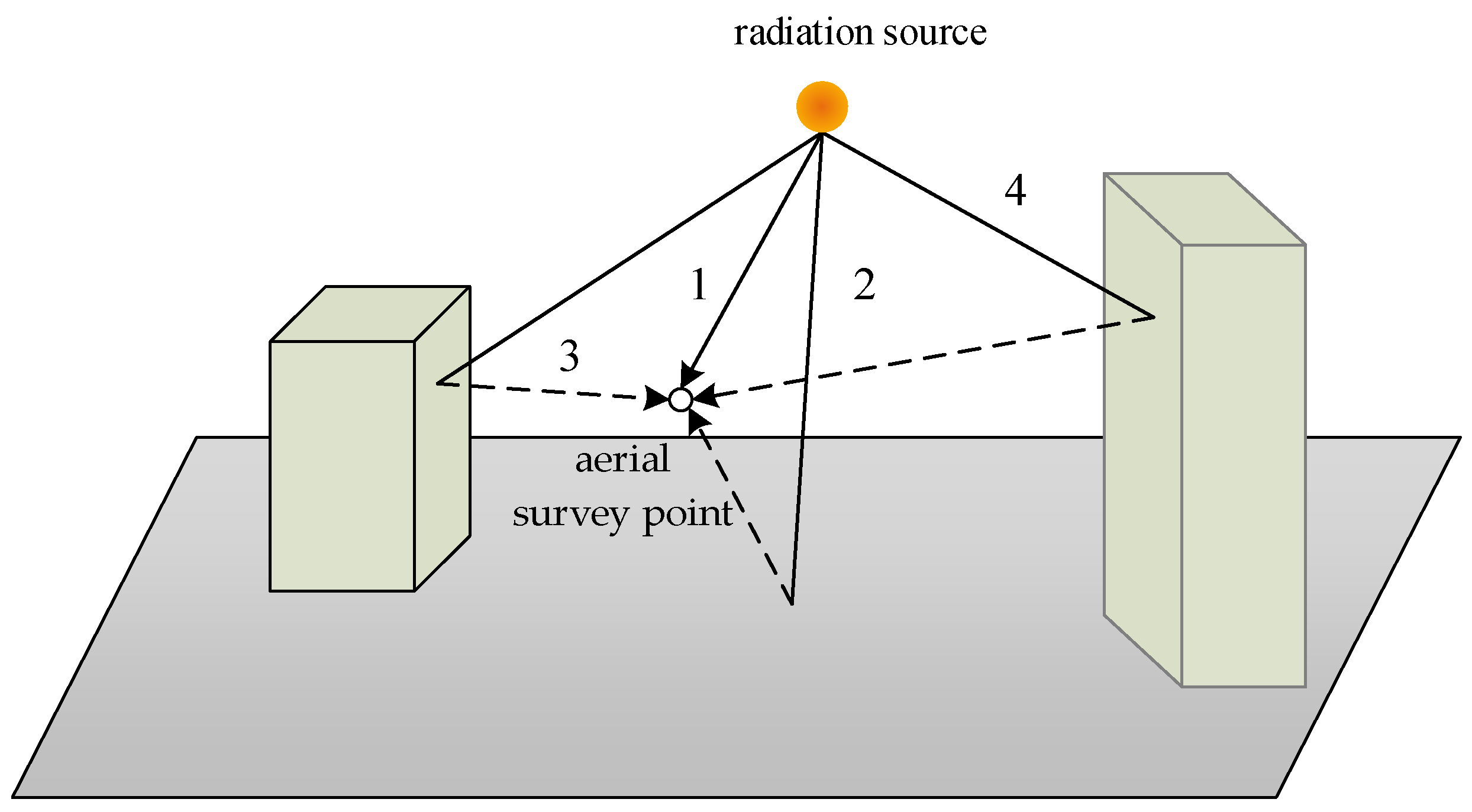
From the perspective of damage effects, the primary parameter characterizing thermal radiation damage is the thermal radiation energy per unit area [3,4,6]; therefore, accurately obtaining the thermal radiation energy at the target location is a prerequisite for evaluating thermal radiation damage effects. The propagation of thermal radiation energy from the explosion source to the target location involves a complex spatial transmission process, which includes both geometric attenuation and atmospheric attenuation. Moreover, in complex environments, additional factors—such as occlusion (shadowing) caused by intervening objects and terrain features, as well as surface reflection effects—must also be considered. A schematic diagram of the transmission of thermal radiation in a complex environment is shown in Figure 1. For the aerial survey point, the thermal radiation mainly derives from the following aspects: first, directly from the fireball, mainly the burst center and the atmospheric attenuation in the straight path of the measuring point; second, ground reflection, which is determined by ground reflection characteristics and atmospheric attenuation along the transmission path; third, the reflection from the surface of the adjacent building (not limited to the building surface, as other surface reflections are similar).
Significant research has already been conducted on geometric and atmospheric attenuation effects [10,11]. For instance, Glasstone, S. [10] derived an analytical formula for the atmospheric attenuation of thermal radiation energy from strong explosions at arbitrary locations, though without accounting for wavelength dependence. Gao Y. et al. [12] employed a multi-spectral atmospheric transmission model to analyze the transmission characteristics of thermal radiation across different spectral bands.
Regarding occlusion and surface reflection effects in complex scenarios, Glasstone, S. [10] theoretically evaluated the influence of ground reflection on thermal radiation energy at aerial locations; however, their model approximated the thermal radiation source as a point source, deviating from the actual extended (area) source nature of real explosion fireballs. Marrs [11] used numerical simulations to investigate the spatial distribution of thermal radiation energy under dynamically evolving fireball conditions with building occlusion, but their study did not account for surface reflections from the ground or structures.
The spatial propagation of thermal radiation energy can be analyzed by solving the radiative transfer equation to obtain the distribution of thermal radiation energy at different positions. According to different solution strategies, existing methods can be divided into two main categories: rigorous numerical solutions and statistical simulations.
Rigorous solution methods aim to directly obtain exact or high-precision numerical solutions of the radiative transfer equation, primarily including the Discrete Ordinates Method (DOM) [13], the Spherical Harmonics Expansion Method [14], the Method of Characteristics [15], and Spectral Methods [16]. Although these solution strategies can provide high-precision results, computational complexity increases dramatically with dimensionality. This leads to significant challenges, particularly when dealing with complex geometric boundaries and strongly anisotropic scattering media, where computational resource requirements often become a limiting factor.
In contrast, the Monte Carlo (MC) method, as a representative statistical simulation technique, simulates the radiative transfer process by tracking the random walk paths of numerous photon packets. This approach can naturally handle arbitrarily complex geometric structures, anisotropic scattering phase functions, and inhomogeneous media. Its computational error depends only on the number of simulated photons and is unaffected by problem dimensionality. Consequently, the Monte Carlo method has found widespread application in atmospheric radiative transfer [17], wavefront sensing [18], beam propagation in disordered media [19], and other related fields.
To accurately determine the distribution of thermal radiation energy in complex environments under strong explosion conditions, this paper develops a numerical simulation method for thermal radiation energy transport based on ray-tracing algorithms [20,21,22,23]. The proposed method comprehensively accounts for key physical processes, including the dynamic evolution of the thermal radiation source, geometric attenuation, atmospheric attenuation, occlusion by buildings, and reflections from ground and building surfaces. To enhance computational efficiency in complex scenarios, strategies such as octree-based spatial search and large-scale parallel computing are employed. Building upon this framework, numerical simulations of thermal radiation energy distribution in representative complex environments are conducted. These simulations quantitatively analyze the magnitude and spatial extent of the influence exerted by ground and building surfaces on thermal radiation energy. The results provide critical technical support for accurately assessing thermal damage effects on targets exposed to thermal radiation from explosions.

2. Methods

In complex environments, it is unrealistic to model the whole space directly and solve a three-dimensional radiation transfer equation with multiple complex boundaries [14,24]. Accordingly, the ray-tracing method, with strong adaptability to the computational model’s geometric complexity, becomes a more suitable option. Through the ray-tracing method [20,21,22], the calculation of shadowing effect, ground, and building reflections can be realized. Atmospheric attenuation is characterized by the transmittance on the transmission path, which can be calculated using the theoretical method or other radiation transfer tools [25].

2.1. Ray-Tracing Procedure

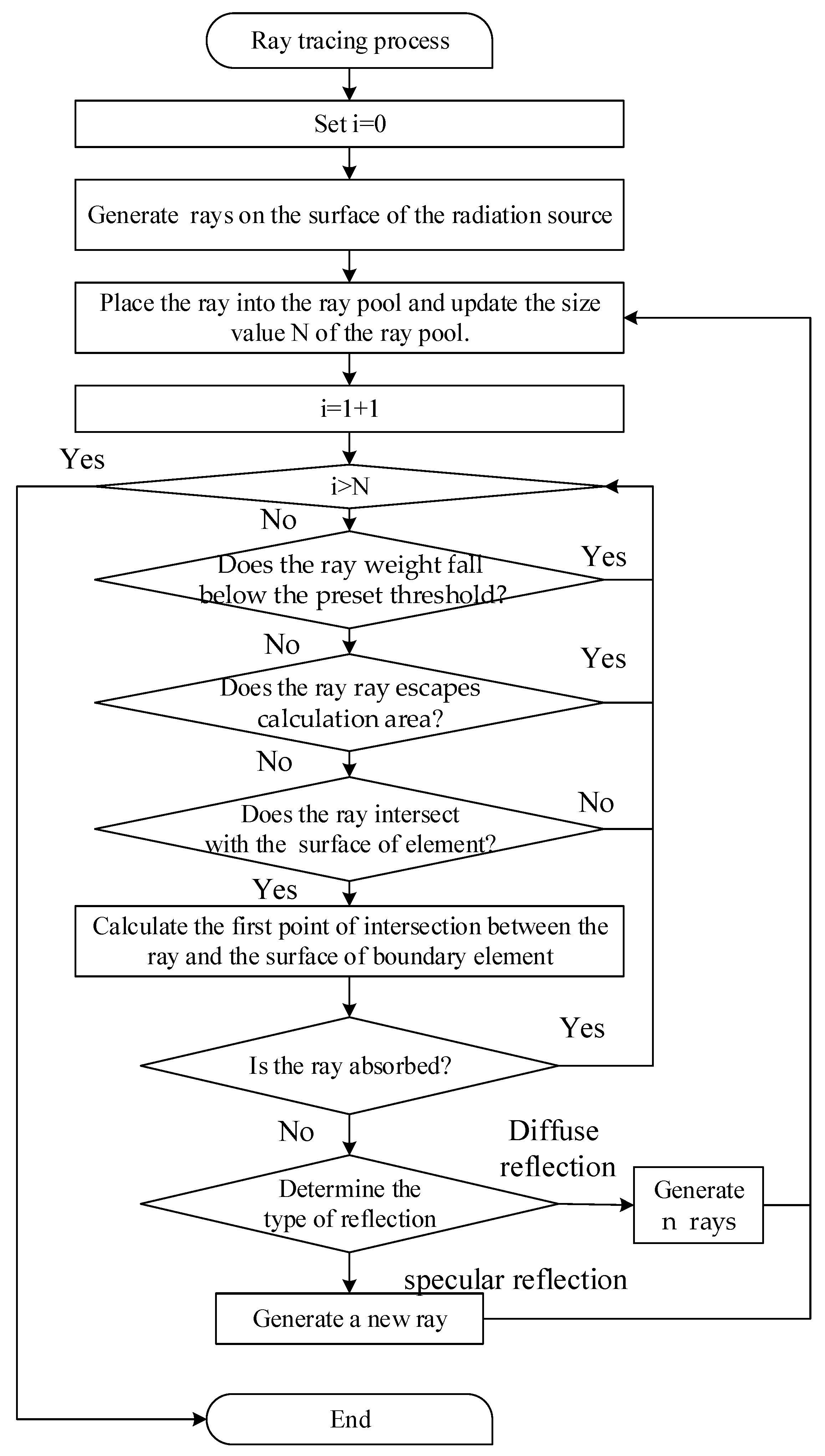
The essence of the ray-tracing method is to track the reflection, scattering, or transmission of each ray from the source when it reaches the target according to the principle of geometrical optics. This method has strong adaptability to complex computing environments and natural parallel characteristics. The ray-tracing implementation process for thermal radiation transmission is shown in Figure 2.

2.1.1. Ray Generation

Rays emitted from the fireball source, which can be regarded as a black body due to its high temperature, have a cosine distribution in the chosen direction. Hence, a multi-step sampling approach is introduced to meet these requirements. The initial parameters of rays are as follows: position l 0 x 0 , y 0 , z 0 , direction d 0 ( n x , n y , n z ) , initial radiance P ( λ ) , initial weight w 0 , and wavelength λ. Typically, the initial weight w 0 is set to 1, while other parameters are generated via a multi-step sampling approach [26].
Initial Position Sampling
A local Cartesian coordinate system is established, with the sphere’s center as the origin. For a fireball with radius r , uniformly distributed random numbers η 0 and η 1 within [0, 1] are sampled. The position coordinates p 0 ( x 0 , y 0 , z 0 ) are calculated using Formula (1).
x 0 = r s i n θ c o s φ y 0 = r s i n θ s i n φ z 0 = r c o s θ                   w h e r e         θ = cos 1 ( 1 2 η 0 ) φ = 2 π η 1
Initial Direction Sampling
The source’s local coordinate system is defined such that the z-axis aligns with the vector from the sphere’s center to the photon’s initial position p 0 , and two random numbers, η 2 and η 3 , are uniformly sampled within [0, 1]. The ray’s direction vector d 0 ( n x , n y , n z )   in the local coordinate system is then determined via Formula (2).
n x = s i n θ c o s φ n y = s i n θ s i n φ n z = c o s θ     w h e r e         θ = sin 1 ( η 2 ) φ = 2 π η 3
Ray Wavelength Sampling
Since the optical properties of the transmitting medium are usually spectrally selective when the radiation energy is transmitted in the atmospheric environment, the wavelength of the rays must be sampled according to the spectral characteristics of the thermal radiation source.
Let P t o t a l denote the total radiative power of the source over the wavelength range λ m i n to λ m a x , and N denote the total number of rays to be tracked. The source’s spectral radiance distribution is denoted as f ( λ ) , and its cumulative distribution function (CDF) F ( η ) is computed. A random number η 4 [ 0 , 1 ] is sampled. The ray’s wavelength λ and associated radiance P ( λ ) are calculated by Formulas (3) and (4).
λ s = λ m i n + F ( η 4 ) ( λ m a x λ m i n )
P λ s = ( λ m a x λ m i n ) f ( λ s ) λ m i n λ m a x f ( λ ) d λ P t o t a l N

2.1.2. Surface Reflection Treatment

Two different types of reflections are considered in the model, including specular reflection and diffuse reflection. For specular reflection, if the weight of the incident ray is w and the surface reflectivity is ρ , the energy absorbed by the surface is w × ( 1 ρ ) , and the weight of the reflected ray decreases to w × ρ . Meanwhile, the direction of the reflected ray n r f is determined by the law of reflection based on the incident ray direction n i n and the surface normal n s u r f at the intersection point, as shown in the following equation:
n r f = n i n 2 n s u r f · n i n n s u r f
For diffuse reflection, the fraction of energy absorbed by the surface is the same as in specular reflection, w × ( 1 ρ ) . However, the characteristics of the reflected rays are more complex. When a ray undergoes diffuse reflection at a surface, n   new rays are generated at the intersection point. The directions of these new rays follow Lambert’s cosine law (with each ray generated using the same method as described in the first step of the ray generation procedure). The weight of each newly generated ray is attenuated to w × ρ / n .

2.1.3. Octree Search for Quick Calculation

For complex models with a large spatial scale and complex structure, a large number of computational grids is usually necessary to describe them effectively. Tracing the ray directly and finding its termination position (described below) will require a large number of calculations for the solution of the intersection between the line and plane. Therefore, the octree technique is introduced to reduce computational expense and improve the efficiency.
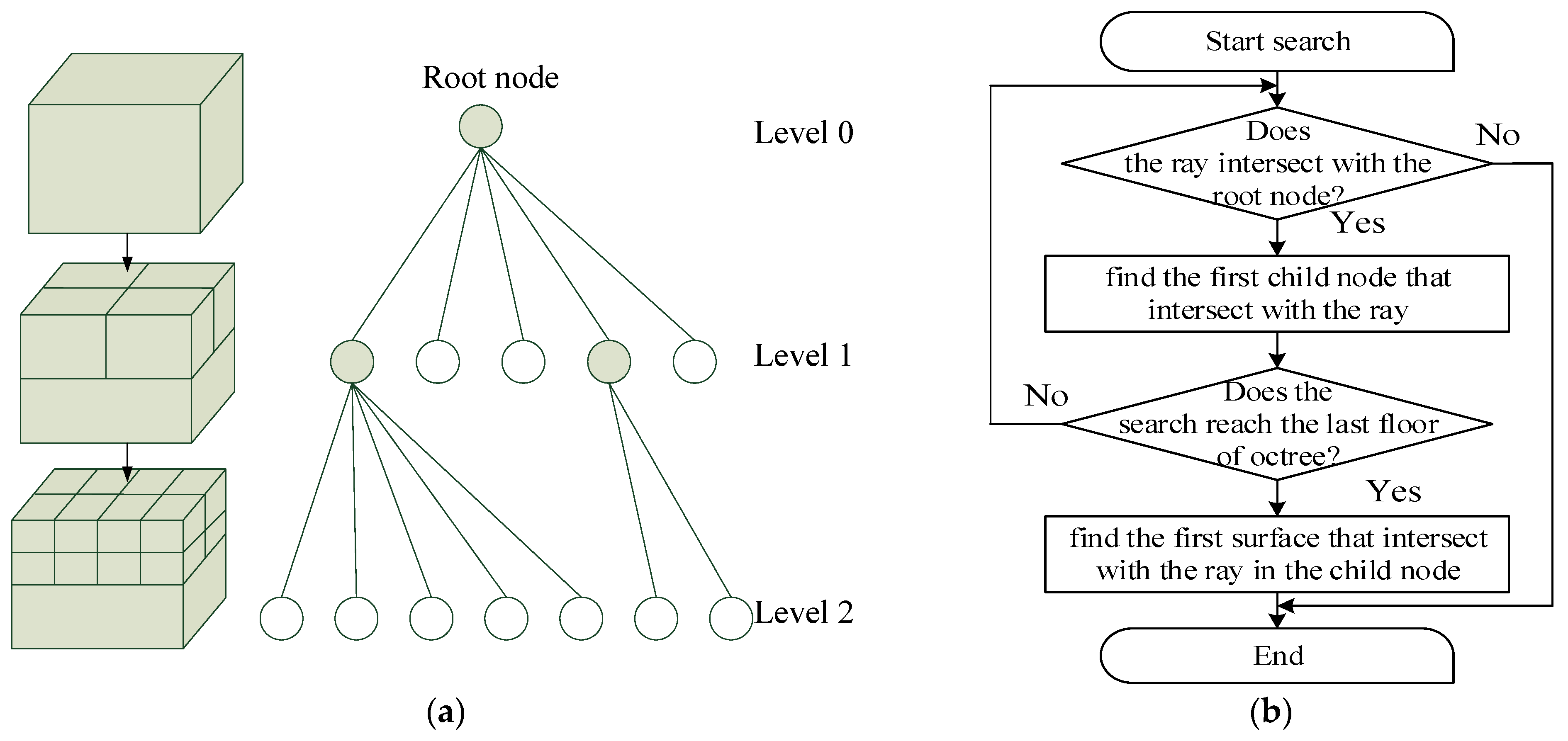
In the computational model, an octree is a tree-like data structure used to describe a three-dimensional space (shown in Figure 3a), in which each node represents the volume element of a cube. Each node has eight child nodes, and the sum of the volume elements represented by the child nodes is equal to that of the parent node. Taking the center point of a node as the bifurcation position, if the spatial volume contained by a child node is larger than a preset threshold, the node is further divided. In ray-tracing, we first use the octree technique to group the computing grid cells and then track the rays according to the flow shown in Figure 3b.

2.1.4. Ray Termination

In the ray-tracing process, there are three kinds of conditions for the ray termination, including the following:
Ray weight w is less than the preset threshold w t h r e s h o l d . This is mainly used to determine whether a ray needs to be tracked after multiple reflections;
Ray escapes calculation area;
Ray is absorbed completely by the surface, which is mainly used for the special case where the surface reflectivity is 0.

2.2. Initial Condition

The source of thermal radiation, known as a fireball, is a typical surface source, and evolves dynamically in the process of thermal radiation transmission. In order to obtain a precise simulation, the parameters of the source are calculated by the actual explosion conditions and are updated during the calculation. The main characteristics of the light source include the radius, height, and radiation power, which are calculated using the analytic function given in the paper [11].
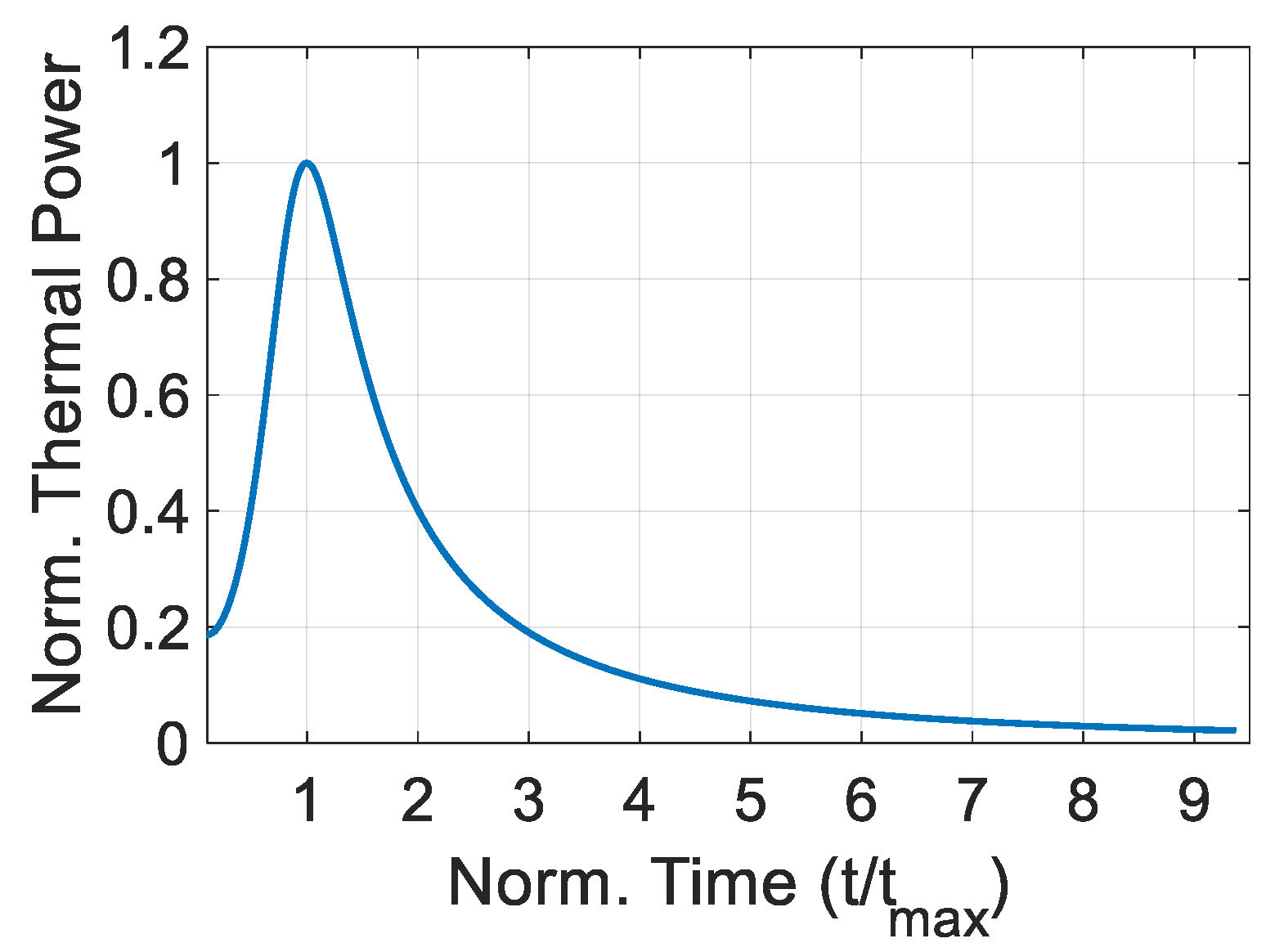
A typical power history calculated for the thermal radiation of a strong explosion in air burst is shown in Figure 4, where time t = t / t m a x and t m a x is the time of peak power. The accuracy of the power curve is estimated to be ±25% [11].
The reflection effect of ground and buildings on thermal radiation is related to its reflection characteristics. Factors affecting ground reflection include type, surface coverings, and incident angle. In most cases, the ground can be approximated to the Lambert body, and the reflected light follows the cosine distribution. Therefore, the reflectivity is independent of the incidence angle, and is only affected by the ground type. The reflection of the building surface is related to its material properties. For surfaces such as a glass curtain wall, specular reflection should be adopted, and the reflectivity is relatively large; for other surfaces, the Lambert reflection is also used, with a mean reflectivity of 0.5.

3. Results and Discussion

3.1. Model Verification

3.1.1. Calculation of the Angle Coefficient for Spherical Source to Plane

For an ideal spherical source, the angular coefficient of radiation to a particular plane can be calculated analytically, as shown in the following formula:
F = 1 4 π tan 1 1 Y 2 + Z 2 + Y 2 Z 2 0.5 Y = D L 1 Z = D L 2
where D is the distance from the center of the source to the receiving plane ( D > r 0 ), r 0 is the radius of the light source, and the size of the rectangular receiving plane is L 1   ×   L 2 . The normal of the plane points to the source center.
Given r 0   = 30   m and L 1 =   L 2 = 100   m , the angle coefficients of a spherical symmetric source to receiving plane for different distances are calculated by Formula (3) and the numerical simulation method described above. A comparison between them is shown in Table 1.
It can be seen that the results of the program are in accordance with the theoretical values, and the relative error is within 3% (with accuracy increasing as ray number increases), which verifies the reliability of the ray-tracing module.

3.1.2. Analysis of Building Shadowing Under Point Source

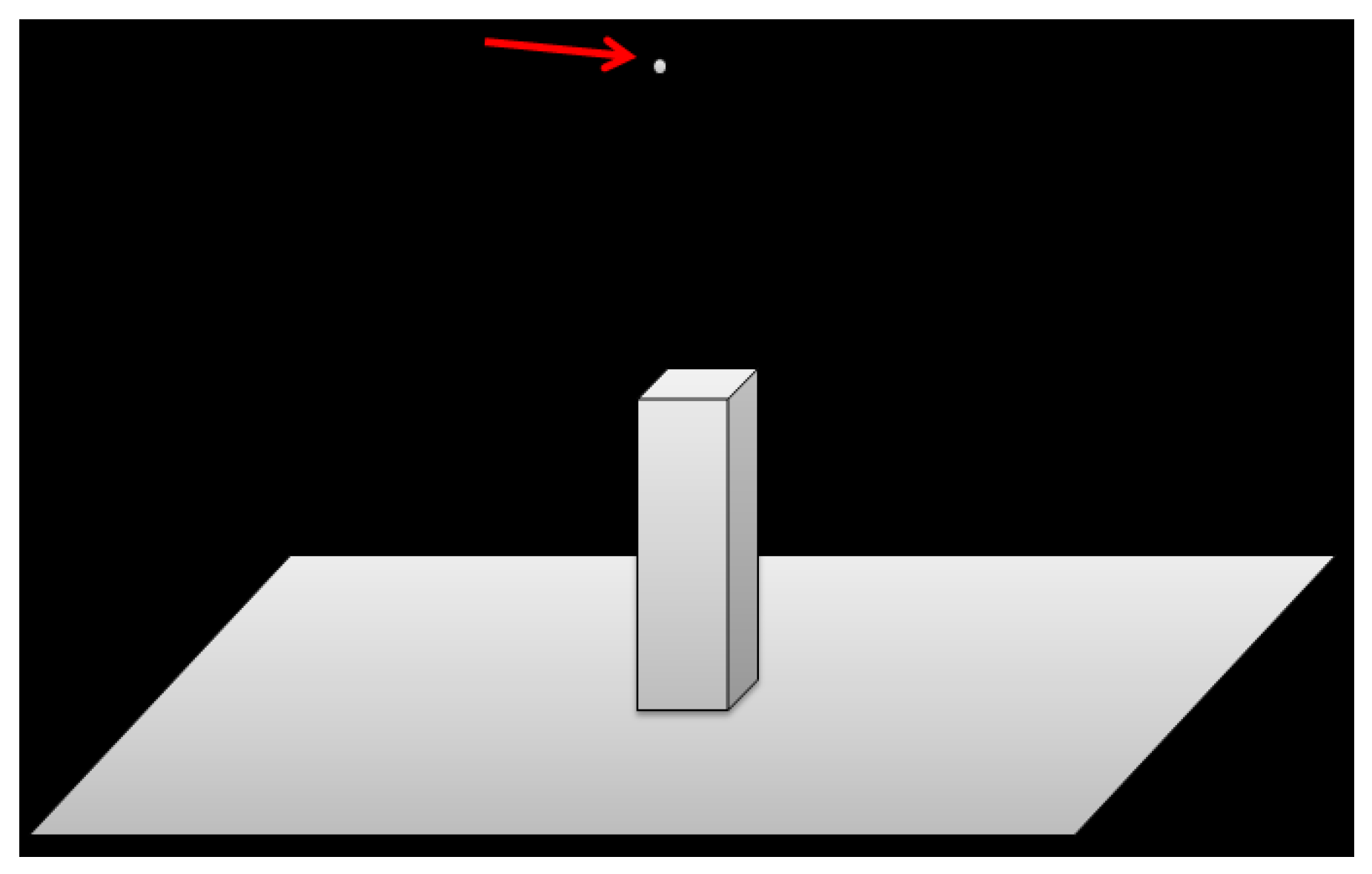
Building shadowing has a significant effect on the transmission of thermal radiation. For spherical sources in multiple buildings, it is hard to calculate the shadowing effect analytically, which is inconvenient for model verification. Thus, a model of the point source with a single building is used instead, and reflection is not considered. The point source transmission model is shown in Figure 5.
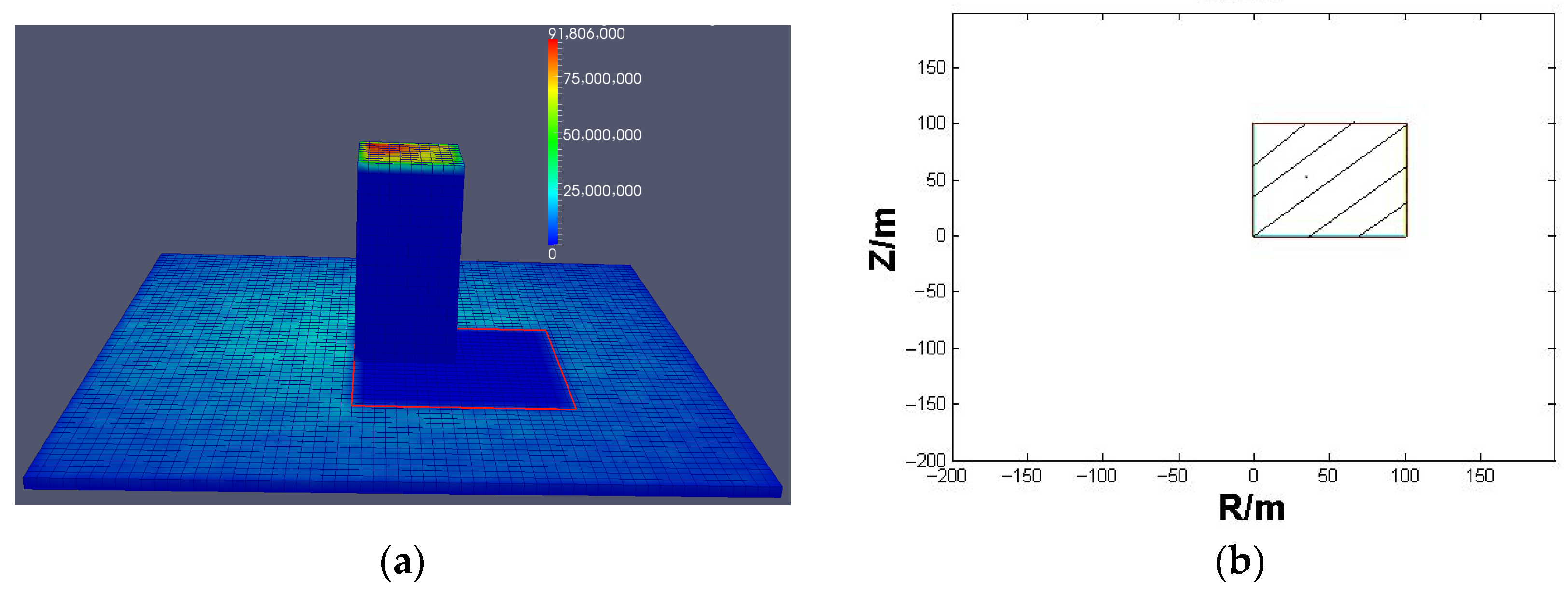
In Cartesian coordinates, the point source is at ( 0 , 0 , 200 ) (unit: m). The building is a rectangular body described by eight vertices, and the coordinates are as follows: ( 0,0 , 50 ) , ( 50,50,0 ) , ( 50,0 , 0 ) , ( 0,0 , 100 ) , ( 0,50,100 ) , ( 50,50,100 ) , ( 50 , 50,100 ) . Thermal radiation energy drops to zero in the building’s shadow, whereas in unshadowed regions, it exceeds zero (with magnitude being position-dependent). The shadowing, area calculated by numerical simulation, is shown in Figure 6a. To verify the correctness of the calculation results, we analytically calculated the shaded area on the ground, formed by the building’s obstruction of light under the same conditions based on geometric relationships. The shaded area resulting from the obstruction is a square with vertices at (0,0,0), (0,100,0), (100,100,0), and (100,0,0), as shown in Figure 6b. Through calculation of the areas of both shaded regions, the consistency between them demonstrates the correctness of the numerical algorithm proposed in this paper.

3.2. Complex Environment Analysis

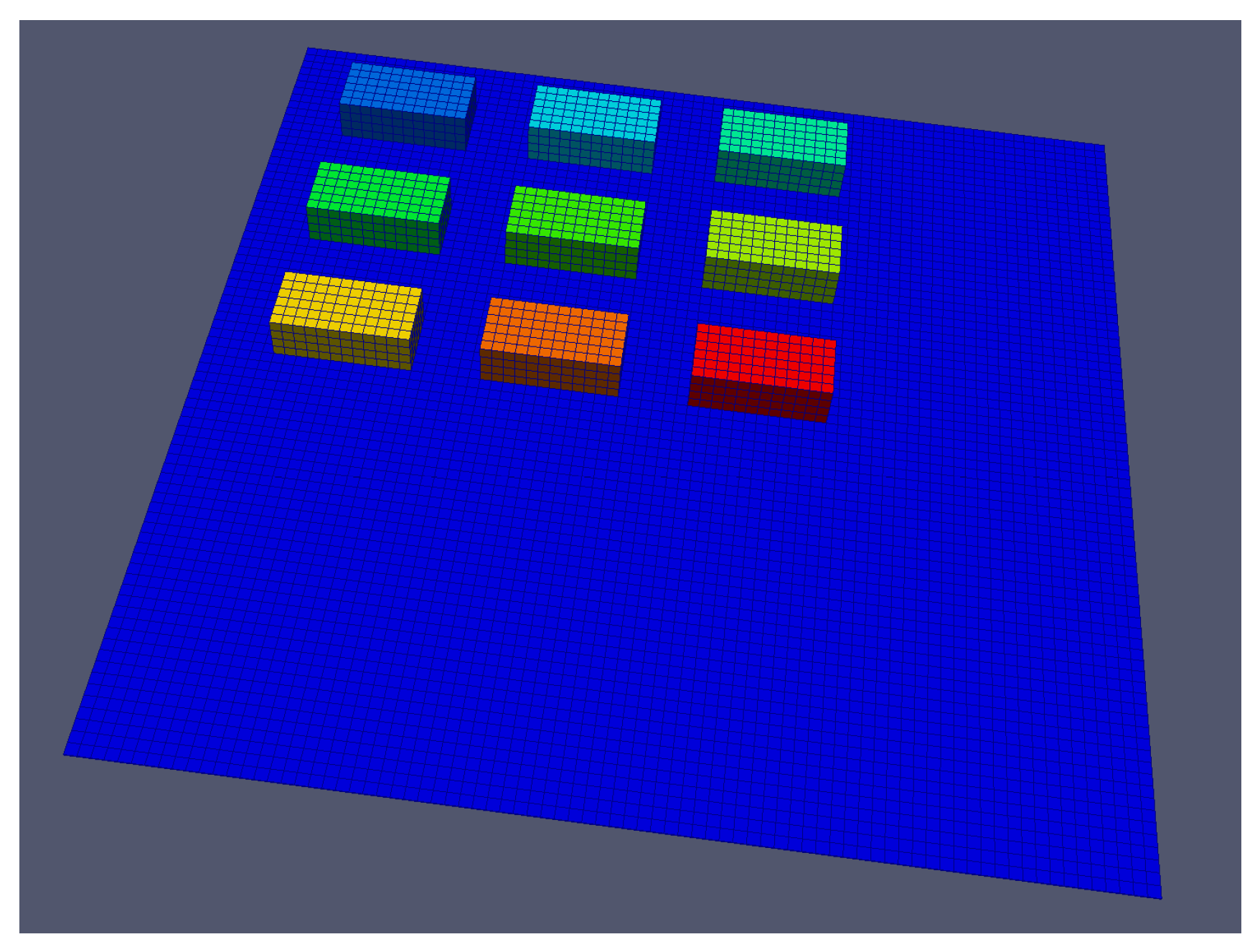
In order to obtain the main characteristics of thermal radiation transmission, a 3   ×   3 building model was constructed, with all buildings being equal in size. The explosive point was located ( 0 , 0 , 500 ) , and a range of 2   k m   ×   2   k m was calculated. Each building measured 300 m × 150 m × 100 m. The domain was discretized using hexahedral cells, resulting in a total of 15,392 computational elements. The meshing results are shown in Figure 7.
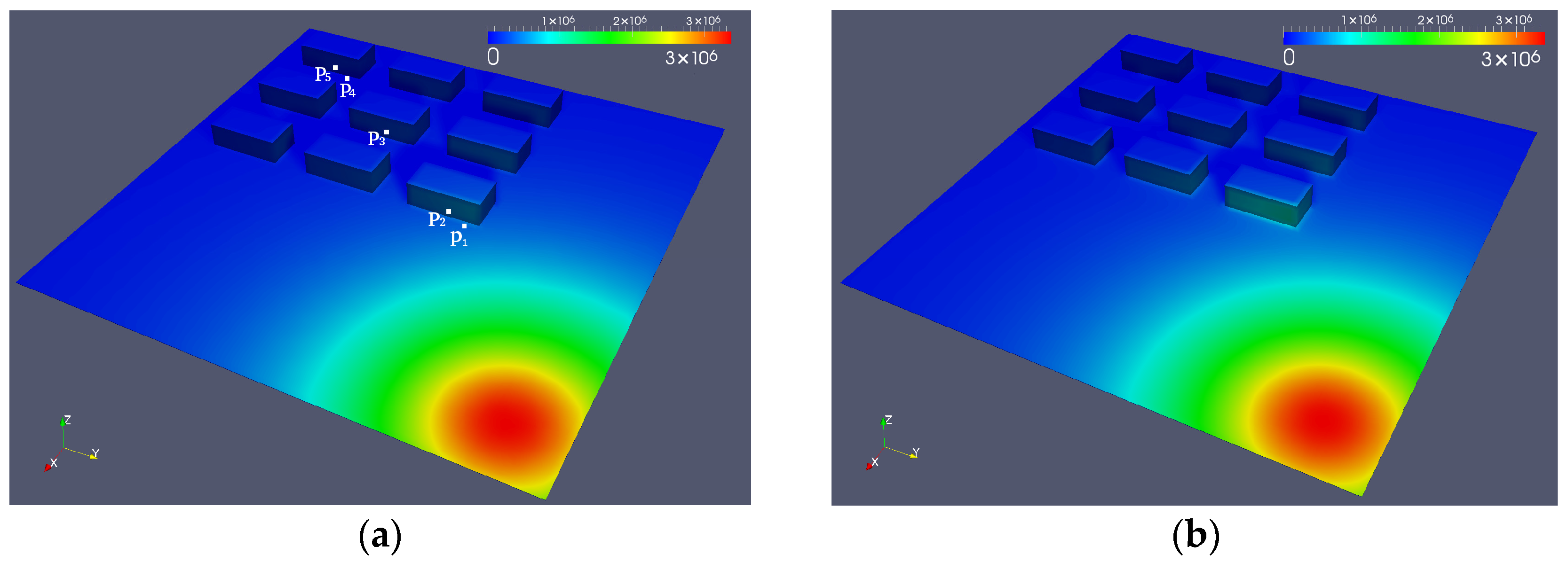
Figure 8 presents a comparison of the influence of ground and building reflections on ray-tracing calculation results. Specifically, Figure 8a shows the calculated thermal radiation intensity when both the ground and buildings have no reflection (i.e., a reflectivity of 0). Figure 8b displays the thermal radiation intensity results when the ground reflectivity is 0.9 and the building reflectivity is 0.5. As can be seen from the figures, when neither the ground nor the buildings reflect light, the spatial distribution of thermal radiation intensity decreases with increasing distance from ground zero projection, and the thermal radiation intensity is zero in areas obstructed by buildings. When the reflective effects of both the ground and building surfaces are considered, the thermal radiation intensity at the junction between buildings and the ground is higher than that in adjacent areas closer to ground zero due to reflective enhancement, which is a result of the reflective effect of the building surfaces. Overall, the numerical model established in this paper reasonably calculates both the shading effect of buildings and the surface reflective enhancement effect.
To quantitatively analyze the impact of reflection, five points (P1, P2, P3, P4, P5) with progressively increasing ground projection distances from the explosion center were selected, as shown in in Figure 8a (specific locations are shown in Figure 8a). The thermal radiation intensity was calculated for ground reflectivity values of 0, 0.1, 0.2, 0.3, and 0.9, respectively.
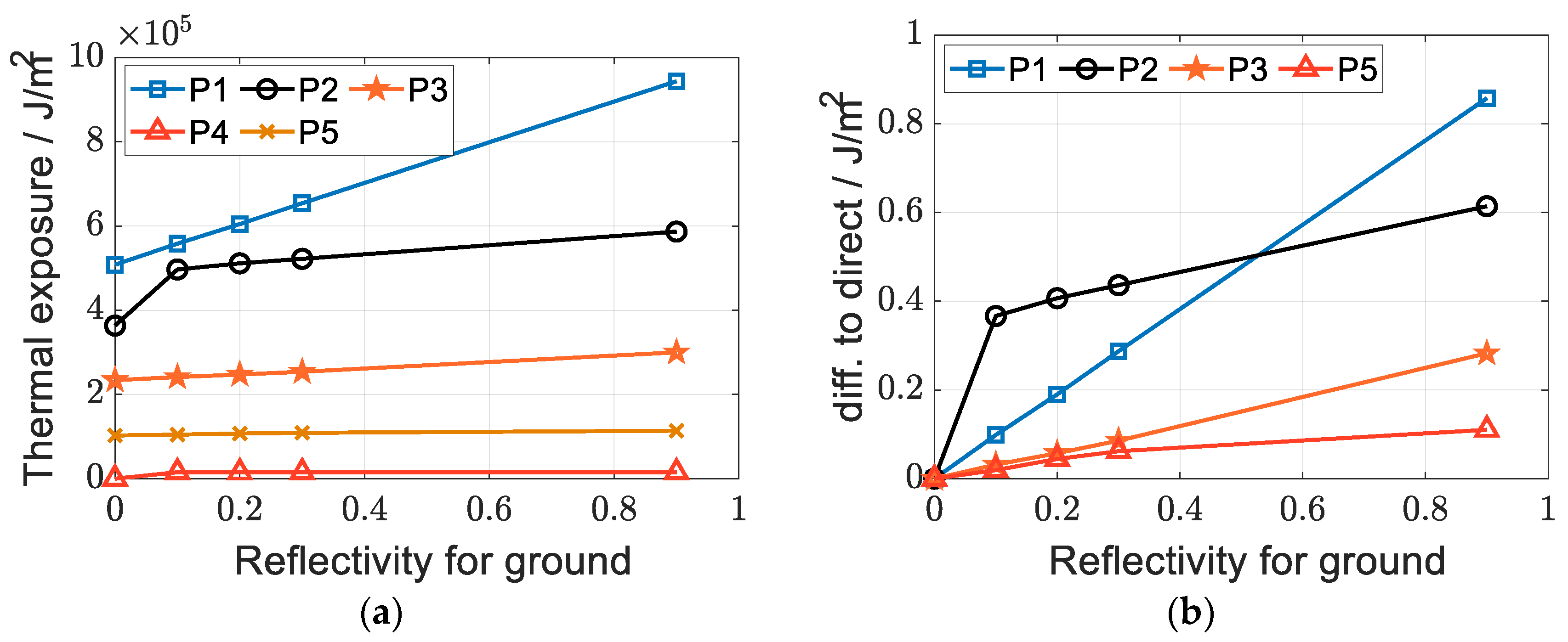
The comparison of thermal radiation intensity under different ground reflectivity conditions is shown in Figure 9a. To quantitatively analyze the enhancement effect of reflection, the thermal radiation intensity at a ground reflectivity of 0 was used as the baseline. The difference between the thermal radiation intensity under different ground reflectivity conditions and that at zero reflectivity was taken as the numerator, and their ratio was used as an indicator to analyze the enhancement effect of surface reflection on thermal radiation intensity. Figure 9b presents the calculated thermal radiation enhancement ratios for each measurement point under different reflectivity conditions. Since point P4 is located in the shadow region, its thermal radiation intensity without reflection is zero and cannot serve as the denominator in the reflection enhancement ratio calculation. Therefore, it is not displayed in Figure 9b.
As shown in Figure 9, reflection contributes greatly to the thermal exposure at these points, and with an increase in reflectivity, the ratio of thermal radiation caused by the reflection on the direct part increases. When the reflectivity is 0.3, the reflection can reach 28~43% if the measuring point (such as P 1 and P 2 ) is close to the burst center, while it is about 5~8% for points far away (such as P 3 , P 4 , and P 5 ). It can be seen that at a position far from the explosion center under low surface reflectivity, it may be feasible to only consider the direct part of the thermal radiation.
In ray-tracing, the computational expense will be greatly increased due to the calculation of multiple reflections. In theoretical calculations, only a single reflection is usually considered as an approximation. To evaluate whether it is necessary to consider multiple reflections, the ray-tracing method is used to calculate thermal radiation at different points considering single reflection and multiple reflections, respectively. A comparison between them is shown in Table 2. Obviously, there is little difference between multiple reflections and a single reflection when reflectivity is 0.1. When the reflectivity reaches 0.3, using the multi-reflection model increases thermal radiation by about 6% compared to the single-reflection model. With the increase in reflectivity, the contribution of multiple reflectance increases further. From this point of view, when the reflectivity of the ground and buildings is large, the calculation of thermal radiation transmission should consider multiple reflections; in the case of low reflectivity, ignoring multiple reflections will not strongly affect the accuracy of calculations, which provides a feasible way for us to further improve the efficiency of the computational model.
According to the results, the ray-tracing method used here is applicable to the calculation of thermal radiation transmission in complex environments. Although the number and size of buildings in the model are still different from the actual situation, there are no essential difficulties in extending the model to larger scales.

4. Conclusions

Based on ray-tracing, a numerical simulation method for the transmission of thermal radiation produced by a strong explosion in a complex environment is established. In the calculation, fireball parameters, including radius, height, and radiation power, are calculated and updated according to the time taken for ray-tracing. Two types of reflection are considered for ground and building reflection effects, and the octree search is used to realize the fast judgment of the intersection between the rays and the surface. Atmospheric attenuation is characterized by the transmittance on the transmission path. Calculation of the thermal radiation transmission under the given explosion conditions shows that building shadowing, ground, and building reflection have a great influence on the distribution of thermal radiation in complex environments. The reflection effect of ground and buildings is related to the reflectivity. Under the condition that the reflectivity is 0.3, the reflected thermal radiation can reach 43% of the direct part. Multi-reflection effects can be neglected when the reflectivity is small; a high reflectivity would need to be considered in the calculation. The above conclusions can provide references for applications such as the selection of important reflective surfaces and the improvement in computational efficiency in numerical calculations of thermal radiation transfer under complex conditions.

Author Contributions

Conceptualization, Y.G. and Z.L.; methodology, X.Z. and Z.L.; software, X.Z., Y.L., Z.P. and Z.L.; validation, H.Y., Z.P. and Z.L.; formal analysis, Y.G. and H.Y.; investigation, Z.L.; data curation, Z.L. and Y.L.; writing—original draft preparation, Z.L. and X.Z.; writing—review and editing, Y.G., Z.L. and Y.L.; visualization, Z.L. and X.Z.; funding acquisition, Z.L. All authors have read and agreed to the published version of the manuscript.

Funding

This research was supported by Open Research Fund of National Key Laboratory of Intense Pulsed Radiation Simulation and Effect, grant number NKLIPR2510.

Institutional Review Board Statement

Not applicable.

Informed Consent Statement

Not applicable.

Data Availability Statement

The data presented in this study are available in the article.

Conflicts of Interest

The authors declare no conflicts of interest.

References

  1. Orson, J.A.; Bagby, W.F.; Perram, G.P. Infrared Signatures from Bomb Detonations. Infrared Phys. Technol. 2003, 44, 101–107. [Google Scholar] [CrossRef]
  2. Wang, F. Study on Thermal Radiation Damage Effects of Fuel Air Explosive. Ph.D. Thesis, Nanjing University of Science and Technology, Nanjing, China, 2010. [Google Scholar]
  3. Abbasi, T.; Abbasi, S.A. The Boiling Liquid Expanding Vapour Explosion (BLEVE): Mechanism, Consequence Assessment, Management. J. Hazard. Mater. 2007, 141, 489–519. [Google Scholar] [CrossRef] [PubMed]
  4. High, R.W. The Saturn Fireball. Ann. N. Y. Acad. Sci. 1968, 152, 441–451. [Google Scholar] [CrossRef]
  5. Kiciński, W.; Trzciński, W. Calorimetry Studies of Explosion Heat of Non-Ideal Explosives. J. Therm. Anal. Calorim. 2009, 96, 623–630. [Google Scholar] [CrossRef]
  6. Donahue, L.K. Afterburning of TNT Detonation Products in Air. Master’s Thesis, Dalhousie University, Halifax, NS, Canada, 2007. [Google Scholar]
  7. Dorofeev, S.B.; Sidorov, V.P. Fireballs from Deflagration and Detonation of Heterogeneous Fuel-Air Clouds. Fire Saf. J. 1995, 25, 323–326. [Google Scholar] [CrossRef]
  8. Roberts, A.F. Thermal Radiation Hazards from Releases of LPG from Pressurised Storage. Fire Saf. J. 1981, 4, 197–212. [Google Scholar] [CrossRef]
  9. Zhang, X.; Wang, B.; Li, J.; Yuan, L.; Liu, Y.; Han, X. Research Progress of Nuclear Explosion Photothermal Radiation. Mod. Appl. Phys. 2025, 16, 020101. [Google Scholar]
  10. Glasstone, S. The Effects of Nuclear Weapons, 3rd ed.; United States Department of Defense: Arlington County, VA, USA; The Energy Research and Development Administration: Port Hueneme, CA, USA, 1977.
  11. Marrs, R.E.; Moss, W.C.; Whitlock, B. Thermal Radiation from Nuclear Detonations in Urban Environments; Lawrence Livermore National Laboratory: Livermore, CA, USA, 2007.
  12. Gao, Y.; Quan, Q.; Chen, Z.; Tian, Z.; Liu, F.; Zhang, X. Calculation and Analysis of Atmospheric Transmission of Thermal Radiation from Strong Explosion. Mod. Appl. Phys. 2014, 5, 191–195. [Google Scholar]
  13. Emde, C.; Buras-Schnell, R.; Kylling, A.; Mayer, B.; Gasteiger, J.; Hamann, U.; Kylling, J.; Richter, B.; Pause, C.; Dowling, T.; et al. The libRadtran Software Package for Radiative Transfer Calculations (Version 2.0.1). Geosci. Model Dev. 2016, 9, 1647–1672. [Google Scholar] [CrossRef]
  14. Xue, D.; Zhang, F.; Shi, Y.-N.; Iwabuchi, H.; Li, J.; Hu, S.; Han, W. The δ-Six-Stream Spherical Harmonic Expansion Adding Method for Solar Radiative Transfer. J. Quant. Spectrosc. Radiat. Transf. 2020, 243, 106818. [Google Scholar] [CrossRef]
  15. Sun, J.; Eichholz, J.A. Splitting Methods for Differential Approximations of the Radiative Transfer Equation. Appl. Math. Comput. 2018, 322, 140–150. [Google Scholar] [CrossRef]
  16. Czuprynski, K.; Han, W. Energy Dependent Radiative Transfer Equation and Energy Discretization. J. Comput. Appl. Math. 2017, 323, 147–158. [Google Scholar] [CrossRef]
  17. Buras, R.; Mayer, B. Efficient Unbiased Variance Reduction Techniques for Monte Carlo Simulations of Radiative Transfer in Cloudy Atmospheres: The Solution. J. Quant. Spectrosc. Radiat. Transf. 2011, 112, 434–447. [Google Scholar] [CrossRef]
  18. Jiang, Z.; Gong, S.; Dai, Y. Monte-Carlo Analysis of Centroid Detected Accuracy for Wavefront Sensor. Opt. Laser Technol. 2005, 37, 541–546. [Google Scholar] [CrossRef]
  19. Nikitin, A.; Galaktionov, I.; Sheldakova, J.; Kudryashov, A.; Baryshnikov, N.; Denisov, D.; Karasik, V.; Sakharov, A. Absolute Calibration of a Shack-Hartmann Wavefront Sensor for Measurements of Wavefronts; SPIE: Bellingham, WA, USA, 2019; Volume 10925. [Google Scholar]
  20. Wu, J.; Yang, K.; Zhang, N. Atmosphere Transmission in Detection of Nuclear Explosion Light Radiation. J. Appl. Opt. 2008, 29, 816–820. [Google Scholar]
  21. Abakumova, A.A.; Malinova, T.P.; Medennikov, P.A.; Pavlov, N.I. Reverse Ray Tracing Method for Estimating the Illumination from Outside the Field of View of Optical Systems. J. Opt. Technol. 2018, 85, 32–35. [Google Scholar] [CrossRef]
  22. Asselineau, C.-A.; Zapata, J.; Pye, J. Integration of Monte-Carlo Ray Tracing with a Stochastic Optimisation Method: Application to the Design of Solar Receiver Geometry. Opt. Express 2015, 23, A437–A443. [Google Scholar] [CrossRef] [PubMed]
  23. Modest, M.F. Radiative Heat Transfer; University of California: Berkeley, CA, USA, 2003. [Google Scholar]
  24. Evans, K.F. The Spherical Harmonics Discrete Ordinate Method for Three-Dimensional Atmospheric Radiative Transfer. J. Atmospheric Sci. Boston 1998, 55, 429–446. [Google Scholar] [CrossRef]
  25. Zhdanova, D.D.; Keldysh, M.V.; Vavilov, S.I.; Garbul’, A.A.; Vavilov, S.I.; Mayorov, V.A.; Potemin, I.S.; Sokolov, V.G. Indeterminate Ray Tracing in Problems of the Analysis of Light Scattering and the Design of Illuminating Systems. J. Opt. Technol. 2014, 81, 322–326. [Google Scholar] [CrossRef]
  26. Li, Z.; Gao, Y.; Zhang, X.; Lei, Y.; Yan, H. Analysis of Radiative Transfer Characteristics of a Spherical Continuous-Spectrum Light Source Under Rainfall Conditions. Photonics 2025, 12, 901. [Google Scholar] [CrossRef]
Figure 1. Schematic diagram of the spatial transmission of thermal radiation. 1 represents direct light rays; 2 represents light rays reflected from the ground surface; 3 and 4 represent light rays reflected from building surfaces.
Applsci 16 01038 g001
Figure 2. Ray-tracing implementation procedure.
Applsci 16 01038 g002
Figure 3. (a) Diagram of octopus tree structure and (b) search procedure.
Applsci 16 01038 g003
Figure 4. Typical power history for thermal radiation of a strong explosion in air burst.
Applsci 16 01038 g004
Figure 5. Model for calculating the shadowing effect under a point source with a single building. The white dot indicated by the red arrow is a point source, and the cuboid represents a single building.
Applsci 16 01038 g005
Figure 6. Comparison of shadowing effect between calculated by (a) numerical simulation and (b) the theoretical calculation method. The red box indicates the boundary of the shaded area; the rectangle represents the theoretically calculated shaded area.
Applsci 16 01038 g006
Figure 7. Meshing results for the calculation region. Building colors are used solely to distinguish different buildings and carry no other meaning.
Applsci 16 01038 g007
Figure 8. Distribution of thermal radiation under shelter of 3   ×   3 buildings with different conditions: (a) no reflection; (b) ground reflectivity 0.9 and building reflectivity 0.5.
Applsci 16 01038 g008
Figure 9. (a) Thermal exposure and (b) the ratio of reflection to the direct part under different reflectivity levels.
Applsci 16 01038 g009
Table 1. Angular coefficient of spherical source to rectangular plane.
D (m)Theoretical CalculationNumerical Simulation Relative Error (%)
500.073790.07405−0.35
600.065740.06755−2.75
700.058550.057901.11
800.052180.050902.46
900.046580.045901.46
Table 2. Comparison of thermal exposure calculated under a single reflection and multiple reflections.
ρ g = 0.1 ,   ρ b = 0.5 ρ g = 0.3 ,   ρ b = 0.5 ρ g = 0.9 ,   ρ b = 0.5
Single Reflection
( J / c m 2 )
Multi-Reflection
( J / c m 2 )
Increase
(%)
Single Reflection
( J / c m 2 )
Multi-Reflection
( J / c m 2 )
Increase
(%)
Single Reflection
( J / c m 2 )
Multi-Reflection
( J / c m 2 )
Increase
(%)
P1558,158558,1580.0636,000654,0282.8889,470943,7886.1
P2496,772496,7720.0490,193522,0296.5490,001586,71319.7
P3240,860241,3030.2244,766253,9243.7273,515299,9939.7
P415,225.815,303.60.514,666.414,832.41.114,540.114,870.72.3
P5104,369104,5530.2105,118108,9173.6103,143113,86910.4
Disclaimer/Publisher’s Note: The statements, opinions and data contained in all publications are solely those of the individual author(s) and contributor(s) and not of MDPI and/or the editor(s). MDPI and/or the editor(s) disclaim responsibility for any injury to people or property resulting from any ideas, methods, instructions or products referred to in the content.