


Abstract
Gliomas are a significant health problem with a lot of imaging challenges. The role of imaging is no longer limited to only providing anatomic details, but with the advancement of Magnetic Resonance Imaging (MRI) techniques, it now permits the assessment of the freedom of water molecule movement, the microvascular structure, the hemodynamic characteristics, and the chemical makeup of certain metabolites of lesions. These advanced imaging techniques include diffusion-weighted imaging, diffusion tensor imaging, dynamic contrast-enhanced MRI, Magnetic Resonance (MR) perfusion, MR angiography, and magnetic resonance spectroscopy. their role in the diagnosis, classification, and post-treatment follow-up of gliomas, as well as their application in radiogenomics and glioma analysis with the aid of artificial intelligence, is presented and discussed.
1. Introduction
The broad category of gliomas constitutes 24.5% of all primary brain and other central nervous system tumors and 80.9% of all malignant tumors. Glioblastoma (World Health Organization [WHO] grade 4) represents 14.3% of all tumors and 49.1% of malignant tumors [1]. The WHO classification systems of CNS tumors were published in 1979, 2000, 2007, 2016, and the last revised system was published in 2021 [2]. The grading of gliomas mainly relies on histological features, including cellularity, nuclear atypia, mitotic activity, vascularity, and necrosis, observed on light microscopy with the aid of immunohistochemistry. Recently, advancements in genetics and molecular knowledge of gliomas have shown the value of improving the correlation between diagnosis and prognosis; for example, mutations of the gene encoding for isocitrate dehydrogenase 1 (IDH1) are very common in low-grade gliomas but rare in glioblastoma. According to the latest 2021 WHO classification of gliomas, there are a total of six families of tumors: adult-type diffuse glioma, pediatric-type high-grade diffuse glioma, pediatric-type low-grade diffuse glioma, circumscribed astrocytic glioma, glioneuronal and neuronal tumors, and ependymal tumors. The types of tumors present in each tumor family have been categorized based on their molecular and genetic characteristics as well as their biological behavior. Adult-type diffuse gliomas include astrocytoma (grades 2, 3, and 4), IDH-mutant oligodendroglioma (grade 2 or 3), IDH-mutant and 1p/19q-codeleted gliomas, and IDH-wild-type gliomas (grade 4/Glioblastoma (GBM) [2].
Imaging plays an integral role in intracranial tumor diagnosis and management. Magnetic resonance imaging (MRI) is the modality of choice in the evaluation of intracranial tumors. The role of MRI in the workup of brain tumors can be broadly divided into tumor diagnosis and classification, treatment planning, and post-treatment follow-up. In recent years, apart from tumor recurrence and radiation necrosis, new post-treatment entities such as pseudoprogression and pseudoresponse have been recognized during glioma treatment [3,4].
Conventional and various advanced MR imaging techniques are currently used in clinical practice, with the latter offering more than the anatomic information provided by the conventional MRI sequences by generating microstructural tumor data and information on chemical composition. The current and more commonly used advanced techniques include diffusion-weighted imaging (DWI), along with measurement of the apparent diffusion coefficient (ADC), diffusion tensor imaging (DTI), dynamic contrast enhancement (DCE), dynamic susceptibility contrast (DSEI) perfusion, arterial spin labeling (ASL) perfusion, and magnetic resonance spectroscopy (MRS) [3,4].
For the purposes of this review, we searched the PubMed database for studies published on advanced MR imaging techniques for the diagnosis of gliomas, focusing on the role of the most commonly used advanced MRI techniques. We evaluated the utility of each technique for glioma classification, clinical decision-making, differentiation between post-treatment-related changes on follow-up, prediction of glioma molecular profile, and overall prognosis.
Literature Search Strategy
A narrative literature search was performed using the PubMed database to identify studies on advanced MRI techniques in glioma imaging. The focus was placed on diffusion, perfusion, metabolic, and emerging quantitative MRI techniques with demonstrated or potential clinical relevance in glioma diagnosis, treatment planning, and follow-up.
2. Basic Principles of Conventional and Advanced MR Imaging
2.1. Conventional MRI Techniques
The most common conventional techniques used for the assessment of intracranial tumors include T1-weighted (T1W), T2-weighted (T2W), fluid-attenuated inversion recovery (FLAIR), T2*-weighted gradient echo (T2*W), and T1W after contrast administration sequences [5]. These sequences offer valuable anatomic detail, and the intravenous contrast agent administration of gadolinium permits the detection of the tumor areas with blood–brain barrier damage. Using conventional imaging, we can detect the size and location of a lesion and evaluate the presence of edema, necrosis, hemorrhage, tumor heterogeneity, and cystic components, as well as the presence of mass effect. Nevertheless, many important limitations of brain tumor imaging persist. For example, it is difficult to differentiate glioma grades (low-grade versus high-grade tumors, or oligodendroglioma versus astrocytoma). Moreover, the appearance of treatment-related changes cannot differentiate residual or recurrent tumors and radiation necrosis [6]. Gliomas are difficult to distinguish from metastasis, abscess, and tumefactive multiple sclerosis [7]. These limitations are important to diagnosis, treatment approaches, and patient prognosis. Usually, high-grade gliomas (HGGs) show hypointense signals on T1W and hyperintense signals on T2W images, heterogeneous contrast enhancement, necrosis, hemorrhage, and edema of surrounding brain [5]. A common feature of HGGs is contrast enhancement, but it remains a nonspecific finding, because nearly a third of HGGs do not show enhancement, while almost 50% of low-grade oligodendrogliomas show some enhancement [1]. The presence of enhancement is a common feature of glioblastoma (GBM) (WHO grade 4), but a lot of other pathologies have a similar appearance, such as lymphoma, abscess, and tumefactive multiple sclerosis. Lymphoma and GBM are highly infiltrative tumors and can cross into the contralateral hemisphere via the corpus callosum [7]. According to the updated 2016 World Health Organization guidelines, oligodendrogliomas are genetically characterized by the presence of the isocitrate dehydrogenase (IDH) mutation and 1p/19q codeletion. Tumors with histologic features of oligodendroglioma and mutated IDH, but without 1p/q19 codeletion, are classified as astrocytomas [2]. Unfortunately, there is overlapping of conventional MR imaging findings between oligodendroglioma and astrocytoma. Oligodendrogliomas have been described as near the cortex and containing calcifications, but these features are rarely present, so its diagnosis is difficult [8]. Although conventional structural MR imaging lacks the capability to absolutely establish tumor grade and histologic subtypes of gliomas, in the case of IDH-mutant astrocytomas, the diagnostic T2/FLAIR mismatch sign is a validated feature that can aid in the differential diagnosis of these gliomas. This sign is observed when there is a hyperintense signal on T2-weighted imaging with complete suppression of the signal on FLAIR imaging. The hyperintense signal seen on T2-weighted imaging appears to correspond to edema, demyelination, and other neurodegenerative changes [9,10,11]. While conventional MRI is excellent in providing detailed structural evaluation of brain tumors (Figure 1), advanced MR techniques (Figure 2, Figure 3, Figure 4 and Figure 5) give important information about tumor cellularity, infiltration, neoangiogenesis, treatment response, and a better way to understand the underlying tumor biology [8]. The most commonly used advanced MR techniques include diffusion-weighted imaging (DWI), diffusion tensor imaging (DTI), perfusion-weighted imaging (PWI), and MRS [3].
Figure 1.
(a) T2-weighted and (b) fluid-attenuated inversion recovery (FLAIR) images demonstrate the solid tumor component (arrow) and the central necrotic area (curved arrow). (c) Pre-contrast T1-weighted and (d) post-contrast T1-weighted images show disruption of the blood–brain barrier with heterogeneous contrast enhancement of the solid tumor component (arrow) and absence of enhancement within the necrotic region (curved arrow).
Figure 2.
(a) Apparent diffusion coefficient (ADC) map demonstrates reduced ADC values within the solid tumor component (arrow), consistent with increased cellularity, and elevated ADC values within the necrotic region (curved arrow). (b) Color-coded fractional anisotropy (FA) map and (c) diffusion tensor imaging (DTI) tractography reveal disruption and infiltration of adjacent white matter tracts by the tumor (arrows).
Figure 3.
(a) Relative cerebral blood volume (rCBV), (b) relative cerebral blood flow (rCBF), and (c) arterial spin labeling (ASL) perfusion maps demonstrate increased perfusion within the solid tumor components (arrows), reflecting tumor neoangiogenesis.
Figure 4.
Single-voxel proton MR spectroscopy acquired with a short echo time (TE) demonstrates a markedly increased choline-to-N-acetylaspartate (Cho/NAA) ratio (>5.18) within the solid tumor region, indicative of high cellular proliferation. Prominent lipid peaks are also observed, reflecting cell membrane breakdown and necrosis.
Figure 5.
Representative MRI sequences from a patient with glioblastoma. Axial T2-weighted (a) and FLAIR (b) images demonstrate a large heterogeneous intra-axial mass with central necrosis, extensive surrounding vasogenic edema, and associated mass effect. The FA map (c) shows marked reduction and disruption of anisotropy within the lesion and adjacent white matter tracts, consistent with tumor infiltration. The ADC map (d) demonstrates heterogeneous diffusion with relatively low ADC in hypercellular solid components and higher ADC in necrotic or cystic regions and surrounding edema. Post-contrast T1-weighted imaging (e) shows irregular, heterogeneous enhancement of the solid tumor component. DSC perfusion cerebral blood flow (CBF) map (f) and arterial spin labeling (ASL) perfusion (g) demonstrate markedly increased perfusion within the solid portion of the lesion, reflecting hypervascularity. MR spectroscopy (h) reveals elevated choline, reduced N-acetylaspartate, and a lipid/lactate peak, findings characteristic of a high-grade glioma.
2.2. Diffusion-Weighted and Diffusion Tensor Imaging
DWI and DTI are pulse sequences sensitized to the random movement of water molecules within tissues. Water molecules that remain stationary between gradient applications are refocused and contribute to signal generation, whereas moving molecules lose phase coherence, resulting in signal attenuation. Areas of restricted diffusion appear with a high signal on a DWI map and a low signal on an ADC map [12,13].
In DWI, the b-value is used to determine the sensitivity of the sequence to the diffusion of water molecules. Low b-values (0–1000 s/mm2) detect relatively free water movement, while very high b-values (2000–3000 s/mm2) highlight areas where diffusion is restricted. For the calculation of ADC values in brain tumors, b-values of 0 and 1000 s/mm2 are typically used [14]. Moreover, the number of diffusion directions used for tract visualization should be greater than 6, and ideally between 15 and 32, to ensure reliable and anatomically accurate visualization of white matter tracts. Increasing the number of directions enhances the precision of anisotropic diffusion measurements, which is critical for evaluating fiber orientation, connectivity, and structural changes.
ADC measurements reflect tumor microstructure, and several tumor characteristics may influence ADC values. Cystic and necrotic areas demonstrate increased water mobility and high ADC values, whereas solid tumor regions with increased cellularity restrict extracellular diffusion and exhibit low ADC values [4]. The microstructure of brain tissue may give various directions in ADC, known as anisotropic or as isotropic diffusion [13]. The directional variations in ADC in three-dimensional space are assessed from diffusion data acquired by using a great number of multiple-gradient directions. Since diffusion is more dominant parallel to rather than transverse to myelinated nerve fibers, DTI allows for the imaging of white matter tracts, and the degree of diffusional anisotropy may be shown as color-coded, three-dimensional directional maps of nerve fibers named tractographies [5].
According to a meta-analysis involving 414 patients, DWI can be useful in distinguishing tumor progression from treatment-related abnormalities. Specifically, the mean ADC value in patients with tumor progression was calculated to be 1.13 × 10⁻³ mm2/s, while in those with treatment-related abnormalities, it was 1.38 × 10⁻³ mm2/s, and this difference was found to be statistically significant [14]. Another group of researchers reported that lower ADC values are more associated with high-grade gliomas and poorer prognosis, highlighting the potential of DWI in the differential diagnosis of gliomas [13]. Some researchers have also noted that higher b-values, such as 3000 s/mm2, can help in the differentiation between HGGs and LGGs in DWI by increasing contrast and reducing the T2 shine-through effect because HGGs appear as more conspicuous hyperintense areas, while LGGs often demonstrate hypointensity in high-b-value DWI [15,16].
DTI tractography reveals the relationship between tumors and major white matter tracts. DTI is useful for detecting the invasive growth patterns of high-grade tumors such as GBM and gives information for surgical planning [17]. Other hopeful applications of diffusion imaging, such as diffusion kurtosis imaging and functional diffusion maps, are under investigation and may provide additional insights into complex brain tumor tissue environments [18,19,20,21]. Functional diffusion maps utilize DWI and ADC to compare the ADC values before and after the treatment of tumors to evaluate the early response to treatment by performing a voxel-by-voxel analysis of changes in ADC values [22]. A high volume of tissue exhibiting decreased ADC has been associated with lower survival rates and earlier disease recurrence compared to patients with a lower volume of tissue showing ADC reduction. This finding is attributed to the fact that a large decrease in ADC likely reflects an increase in tumor cell density, indicative of ineffective treatment [23].
Despite their clinical significance and the capabilities that they offer, diffusion-based techniques have certain limitations. First, ADC values vary depending on the clinical characteristics of each patient, the magnetic field, and the protocol followed for acquiring the sequences during the examination. For example, each hospital uses different protocols and may choose to calculate ADC values based on higher b-values, which could result in lower ADC values compared to those derived using the standard b-value of 1000 s/mm2 [14]. Additionally, there can often be artifacts that hinder the quality and accuracy of the image, and many times, even on the same magnetic resonance imaging machine with the exact same protocol, the ACD values differ. For this reason, although DWI may play some role in the diagnosis of brain tumors, it does not seem able to be utilized for their accurate and safe differential diagnosis [13,14]. Therefore, while DWI and DTI provide valuable complementary information, they cannot be used as standalone tools for the accurate and safe differential diagnosis of gliomas, and should be interpreted in conjunction with other advanced MRI techniques and clinical data [13,14].
2.3. Perfusion Imaging
Brain tumor growth patterns are characterized by the delivery of oxygen (O2) and nutrients and removal of waste via diffusion processes. If this method is insufficient to support cell mitotic activity and continued tumor growth, stress from hypoxia and hypoglycemia produces factors that initiate the development of neoangiogenesis [24]. Tumors with neoangiogenesis exhibit irregular arteriovenous shunts, multiple blind-ending vessels, areas of hypoperfusion, and necrosis. Advanced MR perfusion techniques enable the non-invasive assessment and quantification of these microvascular abnormalities, thereby providing insight into glioma biology.
Clinically, perfusion imaging contributes to tumor grading, treatment planning, and evaluation of therapeutic response [25]. Examples of procedures of perfusion imaging include dynamic susceptibility contrast (DSC), DCE imaging with intravenous injection of gadolinium-based contrast agents, and arterial spin labeling (ASL), which uses magnetic labeling of endogenous protons in blood to assess blood flow volume without contrast injection [26,27].
Despite their clinical utility, perfusion techniques have important limitations. Susceptibility artifacts may degrade image quality, particularly in lesions containing blood products or located near bone–air interfaces. In addition, all contrast-based techniques require intravenous contrast administration, limiting their applicability in patients with renal impairment or contrast allergy, whereas ASL, although non-contrast, remains less widely available and standardized [28,29].
2.4. Dynamic Susceptibility Contrast Perfusion
DSC perfusion MRI is the most widely used perfusion technique in the evaluation of brain tumors. A series of dynamic T2*W images are acquired during the rapid intravenous injection of a gadolinium-based contrast agent. As it passes through the brain, the contrast produces a relative decrease in signal intensity, reflecting the concentration of intravascular contrast. Analysis of these signal changes enables the generation of parametric maps of cerebral blood volume (CBV), cerebral blood flow (CBF), and mean transit time (MTT). DSC calculations are based on intravascular contrast. In brain tumors, areas of blood–brain barrier breakdown result in leaks of contrast which produce a T1 contrast effect leading to falsely low measurements of CBV. This T1 shine-through effect can be minimized by using algorithm-based leakage correction methods [25]. There is widespread use of DSC in clinical settings, along with proposals for standardized techniques in order to estimate tumor neoangiogenesis [27]. Ongoing efforts toward protocol standardization and harmonized post-processing aim to improve reproducibility and facilitate its integration into multiparametric MRI frameworks for glioma assessment.
2.5. Dynamic Contrast-Enhanced Perfusion
DCE uses dynamic T1W acquisition during contrast administration to measure changes in signal intensity from intravascular and extravascular contrast leakage from blood–brain barrier damage. This technique gives us a highly accurate determination of whether the glioma is high or low grade, provides moderate accuracy in detecting recurrence or moderate treatment-related changes, and offers a better visualization of the heterogeneity of brain lesions, making it a useful tool for diagnosis [25]. From a biological standpoint, DCE-derived parameters reflect alterations in tumor microvascular integrity and permeability, which are closely associated with glioma grade and aggressiveness. Compared with susceptibility-based techniques, DCE-MRI is less affected by magnetic susceptibility artifacts, making it particularly useful for evaluating gliomas containing intratumoral blood products or post-operative hemorrhage [26].
Clinical applications of DCE use semi-quantitative and quantitative analytic methods, usually attempting to quantify the degree of change in signal intensity relative to baseline, producing three main quantitative analytic imaging biomarkers: estimates of the vascular fraction (vp), extravascular extracellular space fraction (ve), and the transfer contrast coefficient (Ktrans) [27]. These kinetic parameters can provide correlations with the microvascular environment and can be useful in identifying blood–brain barrier abnormalities, aiding in the differential diagnosis of gliomas and determining their prognosis [28]. Despite its diagnostic potential, the widespread clinical implementation of DCE-MRI remains limited by relatively long acquisition times and increased demands on post-processing, which may restrict its routine use in busy clinical settings [30].
2.6. Arterial Spin Labeling
ASL differs from other methods of MR perfusion imaging because it does not depend on contrast administration but on magnetic labeling of blood flowing into tissues of interest. This non-invasive approach allows for relatively accurate absolute measurement of cerebral blood flow (CBF), along with timing parameters that reflect the velocity of blood delivery to the tissue [31]. In a review series on advanced MRI techniques in patients with gliomas [31,32], arterial spin labeling is referred as a contrast-free technique for measuring cerebral blood flow, with attention to labeling approaches, temporal parameters, and signal-to-noise constraints, and is positioned as a useful complementary option in patients who cannot receive contrast agents. The review also explores proton MR spectroscopy, emphasizing practical aspects such as voxel selection and spectral reliability, as well as the diagnostic value of metabolite ratios, most notably choline-to-N-acetylaspartate and lipid/lactate peaks, for tumor characterization, evaluation of infiltrative disease, and distinction between recurrence and therapy-related changes. In addition, emerging techniques, including chemical exchange saturation transfer imaging and quantitative relaxometry, are presented as promising tools for probing tumor microenvironmental and molecular features. ASL can be useful in the diagnosis and classification of gliomas, as well as in the planning of surgical interventions or biopsy procedures. From a pathophysiological perspective, ASL-derived CBF values provide information about tumor vascularity and metabolic activity [33]. Clinically, ASL has shown utility in glioma diagnosis and grading, as well as in surgical and biopsy planning. This technique allows us to detect the area of the tumor with the highest blood flow, corresponding to the metabolic center, thus enabling the surgeon to obtain a more accurate histopathological diagnosis by targeting the biopsy to that point.
Additionally, the significantly increased CBF in gliomas can aid in differentiating them from metastatic lesions, non-cancerous lesions, and primary central nervous system lymphomas. Also, between HGGs and LGGs, it has generally been observed that HGGs have a high signal in ASL, while the latter have a lower signal than that of the average perfusion. Finally, it has been observed that in patients with GBM, ASL can be useful in predicting their prognosis, as it has been noted that high tumor signal intensity on ASL has been correlated with lower survival rates and shorter progression-free periods.
Although ASL is currently less widely used than contrast-based perfusion techniques such as DCE, its non-invasive nature and ability to provide quantitative perfusion metrics suggest a promising role in future multiparametric MRI protocols for glioma assessment [31,33].
2.7. MR Spectroscopy
The signals on MRS are generated from free protons, which are most plentiful in water. Furthermore, the MRI signal is also affected, but to a lesser degree, by protons bound to macromolecules, which are found in low concentrations in biologic tissues. These bound protons have specific small frequency peaks in ppm (parts per millions), which allows separation when acquiring data, each representing specific macromolecular component if sufficient suppression of the water signal can be achieved. MRS is a sensitive technique for detecting such components in low concentrations [34]. There are single and multivoxel MRS techniques for detecting metabolite concentrations. Metabolites detected by MRS include N-acetyl aspartate (NAA), choline (Cho), creatine (Cr), lactate, and lipids. The peak of NAA means neuronal integrity; choline is a marker of membrane turnover, while creatine is a marker of energy metabolism and internal cell control. Lactate is a product of non-oxidative glycolysis, seen in necrosis and hypoxia, and lipids are a marker of cellular membrane necrosis. All these metabolites give the biochemical profile of brain tumors [35].
Clinically, MRS contributes to the differentiation between neoplastic and non-neoplastic lesions, as well as between residual or recurrent tumor and radiation-induced necrosis. It can also be used to evaluate treatment response by comparing pre- and post-treatment metabolic spectra [36]. It has been shown that when the spectroscopy shows a Cho/NAA ratio > 2 and high peaks of lipids and lactate, the tumor is high grade. However, the differentiation between a primary brain lesion and a metastatic one remains unclear in the literature, and opinions are divided.
A major disadvantage of this technique is the absence of a specific spectrum for each tumor type, making it difficult to provide an accurate diagnosis, as spectra from different brain pathologies often overlap. Additionally, susceptibility artifacts may degrade spectral quality in tumors with hemorrhagic components or in lesions located near bone or at the skull base, restricting accurate evaluation [34]. The improvement of the parameters required for MRS can help in the future to optimize the analysis and reduce the artifacts, increasing the diagnostic accuracy of the technique.
2.8. MR Angiography
MR angiography (MRA) is a non-invasive technique for imaging blood vessels, and is divided into dark-blood and bright-blood techniques. The dark-blood technique is utilized for specific clinical questions, primarily for imaging stenoses or thromboses in the arterial and venous networks, respectively, as well as for imaging the heart and the course of the vessels. In contrast, the bright-blood techniques have a broader application, and among them, the most widespread is time-of-flight. (TOF). TOF can provide imaging of vascular structures without the administration of a paramagnetic substance, utilizing the signal enhancement relative to the background resulting from blood flow. Gradient echo sequences are commonly employed to minimize signal loss related to blood flow and improve vessel conspicuity [37].
The use of MRA for the differential diagnosis and histological differentiation of gliomas is not widely disseminated. Nevertheless, some researchers argue that MRA can be utilized for the identification of pathological neovascularization that is often associated with malignant processes [36]. It was found that the use of TOF-MRA can be employed for the characterization of blood vessels around the GBM area, as it can differentiate the tumor’s neo-vessels from the vessels of normal brain tissue [32,38]. The use of a 7 Tesla (7T) magnetic field in vitro and in vivo in mouse glioma models can help in the separation of pathological from normal vessels [39]. Similar results were presented by Radbruch et al., who used TOF-MRA in the same magnetic field in patients with GBM and demonstrated that it is possible to visualize and differentiate pathological arteries from those of the normal parenchyma [40]. Furthermore, some researchers suggest that using algorithms to measure the angles of vessels around the tumor also has the potential to define the tumor’s margins [32].
MRA cannot provide the information offered by conventional MRI and thus cannot currently be used for the analysis and histological distinction of gliomas. The use of higher magnetic fields such as 7T seems to enhance the capabilities of MRA and may help in the evaluation of gliomas [32,41]. Although ultra-high-field imaging appears to enhance the sensitivity of MRA for detecting tumor-related vascular changes, its high cost, limited availability, and primarily research-oriented use preclude widespread clinical implementation [32]. Consequently, at present, MRA plays a limited and largely investigational role in the imaging assessment of glioma
2.9. Chemical Exchange Saturation Transfer (CEST) MRI
Multipool CEST MRI is a novel technique that enables the quantification of metabolites present at low concentrations by exploiting exchangeable protons within those target molecules (e.g., cellular proteins). To generate the contrast, a radiofrequency saturation pulse is applied to saturate the protons of the target molecules. These saturated protons then exchange with unsaturated water protons, which leads to a reduction in the signal. The reduction in the water signal in MRI can be measured, and the difference between images acquired with and without saturation provides information on the concentration of the target metabolite or protein. Amide proton transfer (APT) is a subcategory of CEST that specifically targets amide groups and allows quantification of protein concentration in tissues [42]. A characteristic clinical application of APT in glioma imaging is the determination of IDH mutation status. The APT signal measurements can reliably distinguish IDH-wild-type from IDH-mutant gliomas and can further differentiate alpha-thalassemia/mental retardation syndrome X-linked (ATRX) loss versus retention in grade II and III IDH-mutant tumors [43]. This distinction reflects the fact that IDH-wild-type gliomas have higher APT signal than IDH-mutant gliomas [43,44]. Moreover, APT signal has been shown to correlate significantly with the Ki-67 index [43]. CEST MRI has also been investigated for the determination of MGMT promoter methylation status, due to ATP’s higher signal in gliomas with unmethylated MGMT, enabling molecular subtyping of gliomas [43]. Finally, CEST MRI can differentiate diffuse gliomas with Lys-27-Met mutations in histone 3 genes H3K27M, a mutation which is associated with poorer prognosis and shorter survival even before surgical intervention [45]. Overall, multipool CEST MRI is a highly promising technique for both grading and molecular classification of gliomas.
2.10. T1 Mapping
The quantitative T1 (qT1) mapping technique enables the creation of absolute qT1 maps, which contain the exact relaxation time values (T1) for each voxel. This allows for the accurate measurement of changes before and after the administration of paramagnetic contrast agents [46]. This technique has been employed by several research groups for evaluating blood–brain barrier (BBB) disruptions associated with tumor infiltration, as well as for predicting tumor prognosis and detecting early recurrence [46,47]. Müller et al. reported that T1 maps can reveal a “cloudy”-enhancing area located around the central tumor mass, which likely corresponds to infiltrative cancer cells extending into the surrounding tissue in patients with glioblastoma. The researchers assessed patients before and after treatment and found that a reduction of approximately 21.64% in the cloudy-enhancing region on qT1 maps was associated with a longer progression-free survival. T1 mapping also enables the distinction between necrotic tissue and tumor-associated edema, helping differentiate vasogenic edema from tumor infiltration, due to the different signal characteristics observed on T1 maps. In a preliminary study, Cao et al. demonstrated that the longitudinal relaxation time in the rotating frame (T1ρ) measured using T1 mapping can differentiate between LGGs and HGGs. HGGs showed higher T1ρ values both in the peritumoral edema and in the solid tumor area. Moreover, they found that T1ρ values in peritumoral edema and tumor location in the frontal lobe were significantly associated with the presence of IDH1 mutation [48].
All in all, T1 mapping is a quantitative MRI technique that can be effectively utilized in the imaging of gliomas, offering valuable information not available through conventional MRI sequences. However, it is not yet fully validated for all tumor types and requires both hardware and software that may not be available in all imaging centers. Moreover, it depends on patient cooperation, as the need of multiple images at different inversion or saturation times extends the duration of the examination.
2.11. Intravoxel Incoherent Motion (IVIM)
IVIM is an MRI technique that utilizes endogenous tracers to calculate perfusion by using DWI databases and multiple b-values without the need for a contrast agent. This technique allows for simultaneous assessment of diffusion and tissue microcirculation [49]. Through specialized software, it measures three parameters: the diffusion coefficient (D), the pseudodiffusion coefficient (D*), and the perfusion fraction (f), and generates corresponding maps. The values of these parameters have been utilized to evaluate patient response to treatment, predict prognosis, and for glioma classification [50,51].
In patients with HGGs, the f values were used to differentiate between residual or recurrent tumors and post-treatment changes and were compared with rCBV values from DSC images. Researchers showed a positive correlation between the two values, indicating that IVIM can be used as an alternative technique [52]. Puig et al. showed that the f and D* values in the contrast-enhancing region in newly diagnosed GBM patients could predict six-month survival. They suggested cut-off values of 9.86% for f and 21.712 × 10⁻³/s for D*, highlighting that these IVIM parameters could serve as future biomarkers for patient prognosis [50]. Gu et al. applied IVIM parameters in patients with gliomas and found that those with HGG and IDH-wild-type gliomas had higher D* values compared to patients with LGGs and IDH-mutant gliomas, respectively. They also discovered that the D and f values were significantly higher in patients with IDH-mutant gliomas [51].
IVIM is a promising technique; however, its use in routine clinical practice is not yet established, as it requires significant examination time, specialized software, and the results of the parameters vary depending on the b-values and the strength of the magnetic field. As a result, establishing specific cut-off values is not yet reliable.
3. Advanced MR Imaging of Gliomas Classification
3.1. Glioma Grade Classification
The non-invasive differentiation of LGG from HGG is of paramount importance for proper patient management, and several advanced MRI techniques have been evaluated towards this scope. Both perfusion and diffusion imaging can predict glioma grade with high accuracy. High-grade tumors exhibit increased relative cerebral blood volume (rCBV) values and a cut-off value of 0.63 has been reported to have a 100% sensitivity and a 94.4% specificity [4]. The ADC index outperforms FA values [51]. In a recent study, 72 patients with gliomas, 27 with low-grade and 45 with high-grade, were studied using synthetic magnetic resonance imaging (sy-MRI), three-dimensional pseudo-continuous arterial spin labeling (pCASL), and DWI on a 3.0 T MR scanner; the results showed that there was a significant difference between LGGs and HGGs on T1, proton density (PD), CBF, ADC, enhancement quality (EQ), and proportion enhancing (PE). Among all previous parameters, the ADC values had the highest discrimination ability. The best performance for the differentiation of low- from high-grade gliomas was the combination of T1, PD, CBF, and ADC, with a sensitivity of 95.5% and a specificity of 100% [53]. In another recent study, Li et al. evaluated the potential of diffusional variance decomposition (DIVIDE) for the assessment of glioma grades, molecular features, and microstructural characterization. The authors evaluated several parametric maps such as fractional anisotropy (FA), mean diffusivity (MD), anisotropic mean kurtosis (MKA), isotropic mean kurtosis (MKI), total mean kurtosis (MKT), MKA/MKT, and microscopic fractional anisotropy (μFA). The MKT best distinguished low- from high-grade gliomas (AUC 0.86) and FA best discriminated IDH-wild-type from mutated tumors (AUC 0.881). Apart from FA, all other diffusion metrics were significantly correlated with the Ki-67 proliferation labeling index [54].
MRS permits the quantification of tumor metabolites non-invasively by analyzing their spectra. The most frequent measured metabolites include N-acetyl aspartate (NAA), choline (Cho), creatine (Cr), myo-inositol (mIns), lactate, lipids, and certain amino acids. Nevertheless, in a meta-analysis that included thirty articles and a total of 1228 patients, MRS demonstrated moderate diagnostic performance in distinguishing LGGs from HGGs. Among the various metabolites and ratios, the Cho/NAA ratio exhibited the highest sensitivity and specificity compared to the Cho/Cr or NAA/Cr ratio [55].
3.2. Correlation with Glioma Molecular Profile
Since genetic testing requires a tissue sample for analysis, a non-invasive technique that could provide a diagnosis would be of great importance, especially for tumors for which resection is not recommended. For example, IDH mutations have been associated with longer survival compared to IDH-wild-type tumors for both GBMs and LGGS. The median survival of IDH-wild-type GMB is 15 months compared to 31 months for IDH-mutant tumors. Similarly, IDH-wild-type anaplastic astrocytomas have a median survival of 20 months, whereas the IDH-mutant gliomas have a median survival of 65 months [56].
Prediction of isocitrate dehydrogenase 1 (IDH1) genotype and 1p/19q codeletion status is important in gliomas for the assessment of individual prognosis and response to therapy. Various advanced MRI techniques have been evaluated towards this scope. In a study of 215 patients with various glioma grades, the diffusion metrics of diffusion tensor imaging, diffusion kurtosis imaging, neurite orientation dispersion, density imaging, and mean apparent propagator were evaluated, and histogram analysis was performed in both the areas of the entire tumor and peritumoral edema. The results showed that all these parameters had moderate-to-good diagnostic performance for the assessment of IDH1 and 1p/19q codeletion status [57].
The development of reproducible MRI parameters that could predict molecular subtype and risk stratification in glioma would be of paramount importance. A recent study correlated the contrast enhancement pattern, presence of necrosis, tumor margins, edema, T2/FLAIR mismatch, internal cyst formation, and CBV higher than normal cortex with five risk groups: oligodendroglioma IDH-mutant and 1p19q codeleted; diffuse astrocytoma grade—2–3 IDH-mutant; diffuse astrocytoma grade—2–3 IDH-wild-type; GBM IDH-mutant; and GBM IDH-wild-type. The highest diagnostic performance was reported for GBM IDH-wild-type with predominant enhancement, followed by diffuse astrocytoma IDH-mutant with T2/FLAIR mismatch sign and no necrosis. On the contrary, GBM IDH-mutant and diffuse astrocytoma IDH-wild-type were difficult to distinguish [58].
The O6-methylguanine-DNA methyltransferase (MGMT) gene, located on chromosome 10q26.3, encodes for a DNA repair enzyme that counteracts the lethal effects of alkylating chemotherapeutic drugs. Assessment of the MGMT status in gliomas is of therapeutic importance. The methylated MGMT promoter is correlated with better overall survival in gliomas treated with temozolomide. Furthermore, MGMT promoter methylation status has been associated with glioma pseudoprogression being more common in cases of methylated MGMT promoter [59]. In a recent meta-analysis, the diagnostic performance of radiomics using machine learning algorithms for prediction of MGMT promoter status was performed. The results extrapolated from fifteen studies showed that the pooled sensitivity and specificity of machine learning were 85% and 84% in the training cohort and 84% and 78% in the validation cohort [60].
The phosphatase and tensin homolog located on chromosome 10 (PTEN) is a common tumor-suppressor gene and plays a critical role in cell cycle regulation, angiogenesis, migration, invasion, and stem cell regulation in gliomas [61]. The mutation status is associated with disease prognosis and response to therapy. A study that included 244 patients investigated the combination of both deep convolutional neural network (CNN) and radiomic features extracted from MRI for the pretreatment prediction of the PTEN mutation status in glioma. The results showed that combining radiomics with CNN had the highest accuracy (86%). The CNN model alone had an accuracy of 81% and radiomics alone had an accuracy of 66% [62].
Diffuse midline glioma, H3K27-altered (DMG-A), is a specific entity that constitutes the most frequent of diffuse intrinsic pontine gliomas. Similar tumors can be found elsewhere in the midline, such as the thalamus and brainstem. These are aggressive tumors with unfavorable prognosis and, according to the WHO 2021 classification, are considered as grade 4 tumors regardless of histological features. In a recent study, the DSC, ADC, and conventional MRI findings were compared between DMG-A and H3K27-wild-type counterparts (DMG-W). Normalized rCBV (nrCBF) and normalized corrected rCBV (ncrCBV) values were significantly lower in DMG-A compared with DMG-W. On diffusion imaging, the normalized maximum ADC (nADCmax) was significantly higher in DMG-A compared to DMG-W. The combination of at least two parameters among nrCBF < 1.11, nADCmax ≥ 2.48, and positive T2-FLAIR mismatch sign exhibited the highest diagnostic performance [59].
4. Tumor Infiltration
Advanced MRI techniques can detect tumor infiltration in patients with gliomas due to their ability to evaluate perfusion, metabolism, and microstructural changes in both the tumor and peritumoral areas [63]. DTI can visualize white matter tracts and identify which of them are infiltrated based on reduced fractional anisotropy (FA) and elevated mean diffusivity (MD) in affected tracts [64]. However, white matter tract infiltration has not been consistently correlated with the risk of recurrence in glioma patients [63]. IVIM parameters can be used to assess peritumoral edema and identify regions of cellular infiltration, due to the elevation of f and D* values in infiltrated tissues [49]. The BBB disruption and peritumoral infiltration can also be detected using T1 mapping, which can highlight cloudy-enhancing regions corresponding to potentially infiltrated tumor cells [46,47]. MRS is also widely used to detect infiltrated areas. A reduction in NAA and/or increase in Cho in patients with HGG has been associated with higher probability of tumor infiltration and the presence of glioblastoma [65]. Croteau et al. reported a positive correlation between Cho/nCho and Cho/NAA ratios and MIB-1, a proliferation index related to tumor aggressiveness [66]. It is worth mentioning that the Cho/NAA ratio has shown the strongest association with tumor infiltration and recurrence. Perfusion sequences such as DSE, DSC, and ALS can also be used to detect infiltration. In DSC imaging, elevated rCBV indicates areas of high microvascular density and tumor invasion. Hu et al. pointed out that increased rCBV may predict the likelihood of tumor progression in patients with HGG [67]. Moreover, in HGGs, rCBV has been positively associated with the MIB-1 proliferation index. Tang et al., in their review, argued that rCBV may predict tumor infiltration with greater accuracy than other metabolic biomarkers, including MRS [63]. ALS can also be used to estimate CBV without the use of contrast agents. High CBV values measured with ALS have been associated with the presence of tumor infiltration in HGG. Furthermore, the kinetic parameters of DCE can detect BBB disruption and increased vascular permeability in the peritumoral region, which may correspond to areas of infiltrating tumor cells [63]. Finally, CEST MRI, and particularly APT imaging, can detect tumor infiltration by identifying elevated signals in regions with high concentrations of mobile tumor proteins [42,43].
5. Post-Therapeutic Surveillance
5.1. Radiation Necrosis Versus Tumor Recurrence
External-beam radiotherapy is the main adjuvant treatment after surgical resection of HGG [68]. Nevertheless, radiotherapy has several side-effects that can be divided into acute, early, and late/delayed. Radiation necrosis usually occurs 6 months to 2 years after radiation, although there have also been cases recorded after more than 5 years. In about one third of cases, radiation necrosis produced a mass effect resembling tumor recurrence. Differentiation of recurrent tumors from radiation necrosis constitutes a challenge and definite diagnosis can be made after stereotactic biopsy or repeat excision [3,4]. A recent meta-analysis of 17 high-quality studies assessed the diagnostic accuracy of DWI in differentiating glioma recurrence from post-treatment-related changes. The results exhibited a sensitivity of 82%, specificity of 83%, positive likelihood ratio of 4.9, negative likelihood ratio of 0.21, and diagnostic odds ratio of 23 [69]. Another study including 70 glioblastoma patients with suspected tumor recurrence compared the ADC, volume transfer constant (Ktrans), and rCBV. The overall diagnostic accuracy was 85.8% for rCBV, 75.5% for Ktrans, and 71.3% for ADC values. When combining rCBV (with a cut-off value of 2.2) with Ktrans (with a cut-off value of 0.08 min−1), the overall diagnostic accuracy reached 92.8% [70].
5.2. Pseudoprogression
During the radiological follow-up of patients with glioma, new or increasing areas of contrast enhancement may occur within the tumor resection bed or in its vicinity, suggesting the presence of progressive disease. However, in nearly one fourth of patients, this enhancement may represent treatment-related changes or an entity characterized as pseudoprogression. Pseudoprogression has been reported to occur in nearly two thirds of cases within the first 3 months after completing treatment [4]. This entity has been reported to occur due to tissue overresponse to treatment and involves endothelium disruption, blood–brain barrier (BBB) breakdown, and oligodendroglial injury [71]. The O6-methylguanine-DNA methyltransferase (MGMT)-methylated tumors have been predominantly associated with pseudoprogression. A recent study comprising 34 post-treatment HGG patients evaluated the added value of diffusion kurtosis imaging (DKI) in combination with DSC for the detection of pseudoprogression. The best diagnostic accuracy was 88.2%, corresponding to the combination of relative mean kurtosis (rMK) with rCBV. The diagnostic accuracy of each parameter was 82.4% for rMK, 70.6% for relative axial kurtosis (rKa), 82.4% for rCBV, and 73.5% for relative mean transit time (rMTT) [72]. Another recent meta-analysis of 24 studies with 900 glioblastoma patients compared the diagnostic performance of diffusion and perfusion imaging in differentiating pseudoprogression from true progression. The highest sensitivity and specificity were found for DWI (88% [confidence interval {CI} = 83–92%] and 85% [CI = 78–91%], respectively). Perfusion imaging had a sensitivity of 85% (CI = 81–89%) and a specificity of 79% (CI = 74–84%). Nonetheless, no significant difference was demonstrated between the imaging techniques [73].
5.3. Pseudoresponse
Bevacizumab, a humanized monoclonal antibody against VEGF, has been used for glioma treatment in several trials. By inhibiting angiogenesis, this agent minimizes the disruption of BBB, thus leading to decreased contrast enhancement on T1-weighted MRI and tumor edema on fluid-attenuated inversion recovery (FLAIR) MRI [74,75]. Although anti-VEGF agents may increase progression-free survival, the overall survival exhibits only a modest increase, with several patients developing a non-enhancing diffuse infiltrative tumor progression [74]. Ratai et al. evaluated 13 patients with recurrent GBM on anti-VEGF treatment in combination with either temozolomide or irinotecan. NAA/Cho ratio was found to be associated with treatment response and could serve as a biomarker for the distinction between response and pseudoresponse [76].
6. Predicting Prognosis
The non-invasive identification of prognostic variables in glioma patients is of paramount importance and could enhance prognostic accuracy, detect patients who are in need of closer follow-up or could benefit from aggressive treatments, and aid in selection of more homogeneous experimental populations in clinical trials [77]. By using diffusion kurtosis imaging in 33 glioblastoma patients, Li et al. found that the mean kurtosis value in the contrast-enhanced gross tumor volume before radiation therapy was significantly prognostic of overall survival. This parameter also remained significant in the multivariate analysis after adjusting for age, MGMT methylation status, and extent of resection [78].
The myo-inositol-to-total-choline (Ins/Cho) ratio on MR spectroscopy has been reported to correlate with glioblastoma, harboring the wild-type IDH, progression-free survival (PFS), and overall survival. The PFS and overall survival was significantly longer for patients with low (<0.9) Ins/Cho ratio. A total of 15 of the 16 patients with an Ins/Cho ratio higher than 0.9 experienced tumor recurrence within 12 months, whereas only 6 of the 11 patients with a low Ins/Cho ratio had recurrence within the same period [79].
7. The New Era of Advanced MR Imaging
Advanced MR imaging can be a very useful tool for the diagnosis and analysis of gliomas with the help of radiomics and artificial intelligence (AI). Radiomics is a continuously evolving field of medicine that involves the computational processing of radiological images with the aim of extracting quantified data that can be utilized for the creation of databases to improve diagnosis and prognosis prediction. For this purpose, multiple parameters from a single area of interest are analyzed and combined either automatically or with the help of AI to generate personalized insights for each patient. The use of MRI is essential for radiomics because through morphological, textural, and functional characteristics extracted from its sequences along with genomic data, we can achieve a more accurate diagnosis, predict the response to treatment, and determine the prognosis for each patient. In particular, ADC values and perfusion MR techniques provide useful data for the creation of automatic diagnostic models, which are very useful for the creation of databases [80,81].
Machine learning and deep learning are the two categories of AI that have been most widely utilized for brain tumor diagnosis and have applications in the radiomics research of gliomas [82]. These techniques utilize the data and features of radiological images obtained using MRI and process them for the purpose of creating databases. Subsequently, these databases allow for the automated identification of the tumor, comparison with genomics data to determine the type of tumor, and the combination of imaging findings with clinical data to predict prognosis and treatment response [81,82]. The combined use of advanced MR imaging techniques, radiomics, and AI seems to be able to help in the future with the better management and care of patients with gliomas. In a recent review article, Jin et al. described the growing role of machine learning and deep learning techniques in automated tumor segmentation and prediction of radiomic features. Among machine learning techniques, convolutional neural networks have been used more extensively. These ML-based algorithms and techniques allow comparison of spatial and textural patterns that are difficult to quantify visually. Despite this, the application of ML and deep learning methods may not currently be directly applicable to clinical practice due to large heterogeneity in imaging acquisition protocols and differences in the workflow. Identification of these limitations may allow for their use in clinical practice in the near future [82].
Table 1 summarizes the major advanced MRI techniques discussed, linking technical outputs to tumor biology and clinical needs, while highlighting key limitations that currently restrict broader clinical adoption.
Table 1.
Overview of advanced MRI techniques and AI–radiomics on gliomas and their clinical relevance.
8. Future Directions
The integration of advanced MRI techniques into routine clinical decision making for patients with gliomas is widespread but remains neither fully standardized nor universally predefined. Important unmet clinical needs persist, including reliable non-invasive tumor grading, accurate differentiation between treatment-related changes and true tumor progression, standardized assessment of tumor infiltration, and the development of robust imaging biomarkers for molecular characterization and prognostic evaluation.
A major limitation across advanced MRI techniques is the lack of standardized acquisition protocols and universally accepted quantitative thresholds, which hinders reproducibility and limits multicenter implementation. In addition, many promising techniques remain confined to research settings due to prolonged acquisition times, complex post-processing requirements, and limited external validation.
Future research should focus on the development of standardized multiparametric MRI protocols that integrate diffusion, perfusion, metabolic imaging, and emerging molecular imaging biomarkers. Within this framework, radiomics and artificial intelligence are expected to play a pivotal role, as they are increasingly incorporated into clinical practice. The extraction of large numbers of quantitative imaging features from multiparametric MRI sequences, combined with machine learning and deep learning algorithms, enables the identification of complex imaging patterns that are not discernible through conventional visual assessment. At the same time, the growing integration of artificial intelligence tools into radiology workflows is expected to enhance diagnostic accuracy, reduce interobserver variability, and facilitate the translation of advanced MRI techniques from research applications into routine clinical use.
Ultimately, prospective multicenter studies and coordinated harmonization efforts are required to transform advanced MRI techniques, together with radiomics and artificial intelligence, from research tools into clinically actionable biomarkers for modern, personalized glioma management.
9. Conclusions
Advanced MRI provides several important non-invasive insights for glioma management, including the assessment of glioma grade, treatment-induced effects, molecular tumor status, and prognosis. In particular, the integration of advanced MRI techniques such as diffusion, perfusion, and spectroscopy allows more detailed characterization of cellular density and more accurate differentiation between true tumor progression and treatment-related changes. From a neurosurgical perspective, these techniques support more optimal surgical planning for both biopsy and tumor resection and enable more accurate delineation of tumor margins, including identification of white matter tracts, eloquent regions, and tumor areas with increased mitotic activity. For diagnostic specialists, combining diffusion, perfusion, and spectroscopy findings increases diagnostic confidence, allows more reliable longitudinal follow-up, and supports clearer communication within the multidisciplinary team. As imaging methods become more standardized and artificial intelligence tools are gradually introduced into everyday practice, advanced MRI is expected to play an increasingly important role in guiding more individualized care for patients with gliomas.
Author Contributions
Conception and design: A.K.Z., G.A.A., S.V. and M.I.A.; Methodology: A.K.Z., E.R., M.L. and L.A.; Formal analysis: A.K.Z., E.R., M.L. and L.A.; Investigation: A.K.Z., G.A.A., L.A. and M.I.A.; Drafting the article: A.K.Z., E.R., M.L. and L.A.; Critically reviewing & editing the article: A.K.Z., E.R., M.L., G.A.A., S.V. and M.I.A.; Study supervision: S.V. and M.I.A. All authors have read and agreed to the published version of the manuscript.
Funding
This research received no external funding.
Institutional Review Board Statement
Not applicable.
Data Availability Statement
All data generated or analyzed during this study are included within the article.
Conflicts of Interest
The authors declare no conflicts of interest.
Abbreviations
| ADC | Apparent Diffusion Coefficient |
| AI | Artificial Intelligence |
| APT | Amide Proton Transfer |
| ASL | Arterial Spin Labeling |
| BBB | Blood–Brain Barrier |
| CBF | Cerebral Blood Flow |
| CBV/rCBV | Cerebral Blood Volume/Relative Cerebral Blood Volume |
| CNN | Convolutional Neural Network |
| CEST | Chemical Exchange Saturation Transfer |
| Cho | Choline |
| CNS | Central Nervous System |
| Cr | Creatine |
| DCE | Dynamic Contrast-Enhanced MRI |
| DSEI/DSC | Dynamic Susceptibility Contrast (Perfusion) |
| DTI | Diffusion Tensor Imaging |
| DWI | Diffusion-Weighted Imaging |
| FA | Fractional Anisotropy |
| FLAIR | Fluid-Attenuated Inversion Recovery |
| GBM | Glioblastoma |
| HGG | High-Grade Glioma |
| IDH | Isocitrate Dehydrogenase |
| IVIM | Intravoxel Incoherent Motion |
| LGG | Low-Grade Glioma |
| MGMT | O6-Methylguanine-DNA Methyltransferase |
| MR | Magnetic Resonance |
| ML/DL | Machine Learning/Deep Learning |
| MRA | Magnetic Resonance Angiography |
| MRI | Magnetic Resonance Imaging |
| MRS | Magnetic Resonance Spectroscopy |
| MTT | Mean Transit Time |
| NAA | N-Acetyl Aspartate |
| PFS | Progression-Free Survival |
| rCBF | Relative Cerebral Blood Flow |
| TE | Echo Time |
| T1W/T2W | T1-Weighted/T2-Weighted |
| TOF | Time-of-Flight (MRA) |
| WHO | World Health Organization |
References
- Ostrom, Q.T.; Cioffi, G.; Waite, K.; Kruchko, C.; Barnholtz-Sloan, J.S. CBTRUS Statistical Report: Primary Brain and Other Central Nervous System Tumors Diagnosed in the United States in 2014–2018. Neuro-Oncology 2021, 23, iii1–iii105. [Google Scholar] [CrossRef] [Scilit]
- Louis, D.N.; Perry, A.; Wesseling, P.; Brat, D.J.; Cree, I.A.; Figarella-Branger, D.; Hawkins, C.; Ng, H.K.; Pfister, S.M.; Reifenberger, G.; et al. The 2021 WHO Classification of Tumors of the Central Nervous System: A summary. Neuro-Oncology 2021, 23, 1231–1251. [Google Scholar] [CrossRef] [Scilit]
- Alexiou, G.A.; Tsiouris, S.; Kyritsis, A.P.; Voulgaris, S.; Argyropoulou, M.I.; Fotopoulos, A.D. Glioma recurrence versus radiation necrosis: Accuracy of current imaging modalities. J. Neuro-Oncol. 2009, 95, 1–11. [Google Scholar] [CrossRef] [Scilit]
- Zikou, A.; Sioka, C.; Alexiou, G.A.; Fotopoulos, A.; Voulgaris, S.; Argyropoulou, M.I. Radiation Necrosis, Pseudoprogression, Pseudoresponse, and Tumor Recurrence: Imaging Challenges for the Evaluation of Treated Gliomas. Contrast Media Mol. Imaging 2018, 2018, 6828396. [Google Scholar] [CrossRef] [Scilit]
- Overcast, W.B.; Davis, K.M.; Ho, C.Y.; Hutchins, G.D.; Green, M.A.; Graner, B.D.; Veronesi, M.C. Advanced imaging techniques for neuro-oncologic tumor diagnosis, with an emphasis on PET-MRI imaging of malignant brain tumors. Curr. Oncol. Rep. 2021, 23, 34. [Google Scholar] [CrossRef] [Scilit] [PubMed]
- Verma, N.; Cowperthwaite, M.C.; Burnett, M.G.; Markey, M.K. Differentiating tumor recurrence from treatment necrosis: A review of neuro-oncologic imaging strategies. Neuro-Oncology 2013, 15, 515–534. [Google Scholar] [CrossRef] [Scilit]
- Bao, S.; Watanabe, Y.; Takahashi, H.; Tanaka, H.; Arisawa, A.; Matsuo, C.; Wu, R.; Fujimoto, Y.; Tomiyama, N. Differentiating between Glioblastoma and Primary CNS Lymphoma Using Combined Whole-tumor Histogram Analysis of the Normalized Cerebral Blood Volume and the Apparent Diffusion Coefficient. Magn. Reson. Med. Sci. 2019, 18, 53–61. [Google Scholar] [CrossRef] [Scilit]
- Smits, M. Imaging of oligodendroglioma. Br. J. Radiol. 2016, 89, 20150857. [Google Scholar] [CrossRef] [Scilit] [PubMed]
- Broen, M.P.G.; Smits, M.; Wijnenga, M.M.J.; Dubbink, H.J.; Anten, M.H.M.E.; Schijns, O.E.M.G.; Beckervordersandforth, J.; Postma, A.A.; van den Bent, M.J. The T2-FLAIR mismatch sign as an imaging marker for non-enhancing IDH-mutant, 1p/19q-intact lower-grade glioma: A validation study. Neuro-Oncology 2018, 20, 1393–1399. [Google Scholar] [CrossRef] [Scilit] [PubMed]
- Patel, S.H.; Poisson, L.M.; Brat, D.J.; Zhou, Y.; Cooper, L.; Snuderl, M.; Thomas, C.; Franceschi, A.M.; Griffith, B.; Flanders, A.E.; et al. T2-FLAIR Mismatch, an Imaging Biomarker for IDH and 1p/19q Status in Lower-grade Gliomas: A TCGA/TCIA Project. Clin. Cancer Res. 2017, 23, 6078–6085. [Google Scholar] [CrossRef] [Scilit]
- Sanvito, F.; Le, V.L.; Oshima, S.; Teraishi, A.; Yao, J.; Telesca, D.; Raymond, C.; Pope, W.B.; Nghiemphu, P.L.; Lai, A.; et al. Quantification of T2-FLAIR Mismatch in Nonenhancing Diffuse Gliomas Using Digital Subtraction. AMJNR Am. J. Neuroradiol. 2024, 45, 188–197. [Google Scholar] [CrossRef] [Scilit]
- Auer, T.A. Advanced MR techniques in glioblastoma imaging-upcoming challenges and how to face them. Eur. Radiol. 2021, 31, 6652–6654. [Google Scholar] [CrossRef] [Scilit] [PubMed]
- Baliyan, V.; Das, C.J.; Sharma, R.; Gupta, A.K. Diffusion weighted imaging: Technique and applications. World J. Radiol. 2016, 8, 785–798. [Google Scholar] [CrossRef] [Scilit]
- van den Elshout, R.; Scheenen, T.W.J.; Driessen, C.M.L.; Smeenk, R.J.; Meijer, F.J.A.; Henssen, D. Diffusion imaging could aid to differentiate between glioma progression and treatment-related abnormalities: A meta-analysis. Insights Imaging 2022, 13, 158. [Google Scholar] [CrossRef] [Scilit]
- Zeng, Q.; Ling, C.; Shi, F.; Dong, F.; Jiang, B.; Zhang, J. Glioma infiltration sign on high b-value diffusion-weighted imaging in gliomas and its prognostic value. J. Magn. Reson. Imaging 2018, 48, 643–651. [Google Scholar] [CrossRef] [Scilit] [PubMed]
- Ellingson, B.M.; Cloughesy, T.F.; Zaw, T.; Lai, A.; Nghiemphu, P.L.; Harris, R.; Lalezari, S.; Wagle, N.; Naeini, K.M.; Carrillo, J.; et al. Functional diffusion maps (fDMs) evaluated before and after radiochemotherapy predict progression-free and overall survival in newly diagnosed glioblastoma. Neuro-Oncology 2012, 14, 333–343. [Google Scholar] [CrossRef] [Scilit]
- Johnson, D.R.; Guerin, J.B.; Giannini, C.; Morris, J.M.; Eckel, L.J.; Kaufmann, T.J. 2016 Updates to the WHO Brain Tumor Classification System: What the Radiologist Needs to Know. Radiographics 2017, 37, 2164–2180. [Google Scholar] [CrossRef] [Scilit] [PubMed]
- Ellingson, B.M.; Malkin, M.G.; Rand, S.D.; Connelly, J.M.; Quinsey, C.; LaViolette, P.S.; Bedekar, D.P.; Schmainda, K.M. Validation of functional diffusion maps (fDMs) as a biomarker for human glioma cellularity. J. Magn. Reson. Imaging 2010, 31, 538–548. [Google Scholar] [CrossRef] [Scilit]
- Mukherjee, P.; Berman, J.I.; Chung, S.W.; Hess, C.P.; Henry, R.G. Diffusion tensor MR imaging and fiber tractography: Theoretic underpinnings. AJNR Am. J. Neuroradiol. 2008, 29, 632–641. [Google Scholar] [CrossRef] [Scilit]
- Mohsen, L.A.; Shi, V.; Jena, R.; Gillard, J.H.; Price, S.J. Diffusion tensor invasive phenotypes can predict progression-free survival in glioblastomas. Br. J. Neurosurg. 2013, 27, 436–441. [Google Scholar] [CrossRef] [Scilit]
- Hempel, J.M.; Schittenhelm, J.; Bisdas, S.; Brendle, C.; Bender, B.; Bier, G.; Skardelly, M.; Tabatabai, G.; Castaneda Vega, S.; Ernemann, U.; et al. In vivo assessment of tumor heterogeneity in WHO 2016 glioma grades using diffusion kurtosis imaging: Diagnostic performance and improvement of feasibility in routine clinical practice. J. Neuroradiol. 2018, 45, 32–40. [Google Scholar] [CrossRef] [Scilit]
- Hamstra, D.A.; Chenevert, T.L.; Moffat, B.A.; Johnson, T.D.; Meyer, C.R.; Mukherji, S.K.; Quint, D.J.; Gebarski, S.S.; Fan, X.; Tsien, C.I.; et al. Evaluation of the functional diffusion map as an early biomarker of time-to-progression and overall survival in high-grade glioma. Proc. Natl. Acad. Sci. USA 2005, 102, 16759–16764. [Google Scholar] [CrossRef] [Scilit]
- Hamstra, D.A.; Galbán, C.J.; Meyer, C.R.; Johnson, T.D.; Sundgren, P.C.; Tsien, C.; Lawrence, T.S.; Junck, L.; Ross, D.J.; Rehemtulla, A.; et al. Functional diffusion map as an early imaging biomarker for high-grade glioma: Correlation with conventional radiologic response and overall survival. J. Clin. Oncol. 2008, 26, 3387–3394. [Google Scholar] [CrossRef] [Scilit] [PubMed]
- Hanahan, D.; Weinberg, R.A. The hallmarks of cancer. Cell 2000, 100, 57–70. [Google Scholar] [CrossRef] [Scilit]
- Okuchi, S.; Rojas-Garcia, A.; Ulyte, A.; Lopez, I.; Ušinskienė, J.; Lewis, M.; Hassanein, S.M.; Sanverdi, E.; Golay, X.; Thust, S.; et al. Diagnostic accuracy of dynamic contrast-enhanced perfusion MRI in stratifying gliomas: A systematic review and meta-analysis. Cancer Med. 2019, 8, 5564–5573. [Google Scholar] [CrossRef] [Scilit] [PubMed]
- Geer, C.P.; Simonds, J.; Anvery, A.; Chen, M.Y.; Burdette, J.H.; Zapadka, M.E.; Ellis, T.L.; Tatter, S.B.; Lesser, G.J.; Chan, M.D.; et al. Does MR perfusion imaging impact management decisions for patients with brain tumors? A prospective study. AJNR Am. J. Neuroradiol. 2012, 33, 556–562. [Google Scholar] [CrossRef] [Scilit] [PubMed]
- Boxerman, J.L.; Schmainda, K.M.; Weisskoff, R.M. Relative cerebral blood volume maps corrected for contrast agent extravasation significantly correlate with glioma tumor grade, whereas uncorrected maps do not. AJNR Am. J. Neuroradiol. 2006, 27, 859–867. [Google Scholar]
- Keil, V.C.; Gielen, G.H.; Pintea, B.; Baumgarten, P.; Datsi, A.; Hittatiya, K.; Simon, M.; Hattingen, E. DCE-MRI in Glioma, Infiltration Zone and Healthy Brain to Assess Angiogenesis: A Biopsy Study. Clin. Neuroradiol. 2021, 31, 1049–1058. [Google Scholar] [CrossRef] [Scilit]
- Galldiks, N.; Kaufmann, T.J.; Vollmuth, P.; Lohmann, P.; Smits, M.; Veronesi, M.C.; Langen, K.J.; Rudà, R.; Albert, N.L.; Hattingen, E.; et al. Challenges, limitations, and pitfalls of PET and advanced MRI in patients with brain tumors: A report of the PET/RANO group. Neuro-Oncology 2024, 26, 1181–1194. [Google Scholar] [CrossRef] [Scilit]
- Welker, K.; Boxerman, J.; Kalnin, A.; Kaufmann, T.; Shiroishi, M.; Wintermark, M.; American Society of Functional Neuroradiology MR Perfusion Standards Practice Subcommittee of the ASFNR Clinical Practice Committee. ASFNR recommendations for clinical performance of MR dynamic susceptibility contrast perfusion imaging of the brain. AJNR Am. J. Neuroradiol. 2015, 36, E41–E51. [Google Scholar] [CrossRef] [Scilit]
- Hangel, G.; Schmitz-Abecassis, B.; Sollmann, N.; Pinto, J.; Arzanforoosh, F.; Barkhof, F.; Booth, T.; Calvo-Imirizaldu, M.; Cassia, G.; Chmelik, M.; et al. Advanced MR Techniques for Preoperative Glioma Characterization: Part 2. J. Magn. Reason. Imaging 2023, 57, 1676–1695, Erratum in J. Magn. Reason. Imaging 2024, 59, 1468. https://doi.org/10.1002/jmri.28934. [Google Scholar] [CrossRef] [Scilit] [PubMed]
- Hirschler, L.; Sollmann, N.; Schmitz-Abecassis, B.; Pinto, J.; Arzanforoosh, F.; Barkhof, F.; Booth, T.; Calvo-Imirizaldu, M.; Cassia, G.; Chmelik, M.; et al. Advanced MR Techniques for Preoperative Glioma Characterization: Part 1. J. Magn. Reson. Imaging 2023, 57, 1655–1675. [Google Scholar] [CrossRef] [Scilit]
- Griffith, B.; Jain, R. Perfusion Imaging in Neuro-Oncology: Basic Techniques and Clinical Applications. Magn. Reson. Imaging Clin. N. Am. 2016, 24, 765–779. [Google Scholar] [CrossRef] [Scilit]
- Weinberg, B.D.; Kuruva, M.; Shim, H.; Mullins, M.E. Clinical Applications of Magnetic Resonance Spectroscopy in Brain Tumors: From Diagnosis to Treatment. Radiol. Clin. N. Am. 2021, 59, 349–362. [Google Scholar] [CrossRef] [Scilit]
- Alexiou, G.A.; Zikou, A.; Tsiouris, S.; Goussia, A.; Kosta, P.; Papadopoulos, A.; Voulgaris, S.; Tsekeris, P.; Kyritsis, A.P.; Fotopoulos, A.D.; et al. Comparison of diffusion tensor, dynamic susceptibility contrast MRI and (99m)Tc-Tetrofosmin brain SPECT for the detection of recurrent high-grade glioma. Magn. Reson. Imaging 2014, 32, 854–859. [Google Scholar] [CrossRef] [Scilit] [PubMed]
- Olsen, K.I.; Schroeder, P.; Corby, R.; Vucic, I.; Bardo, D.M.E. Advanced magnetic resonance imaging techniques to evaluate CNS glioma. Expert Rev. Neurother. 2005, 5, S3–S11. [Google Scholar] [CrossRef] [Scilit] [PubMed]
- Kuo, A.H.; Nagpal, P.; Ghoshhajra, B.B.; Hedgire, S.S. Vascular magnetic resonance angiography techniques. Cardiovasc. Diagn. Ther. 2019, 9, S28–S36. [Google Scholar] [CrossRef] [Scilit]
- Strumia, M.; Reichardt, W.; Staszewski, O.; Heiland, D.H.; Weyerbrock, A.; Mader, I.; Bock, M. Glioma vessel abnormality quantification using time-of-flight MR angiography. Magn. Reson. Mater. Phys. Biol. Med. 2016, 29, 765–775. [Google Scholar] [CrossRef] [Scilit]
- Doblas, S.; He, T.; Saunders, D.; Pearson, J.; Hoyle, J.; Smith, N.; Lerner, M.; Towner, R.A. Glioma morphology and tumor-induced vascular alterations revealed in seven rodent glioma models by in vivo magnetic resonance imaging and angiography. J. Magn. Reson. Imaging 2010, 32, 267–275. [Google Scholar] [CrossRef] [Scilit]
- Radbruch, A.; Eidel, O.; Wiestler, B.; Paech, D.; Burth, S.; Kickingereder, P.; Nowosielski, M.; Bäumer, P.; Wick, W.; Schlemmer, H.-P.; et al. Quantification of Tumor Vessels in Glioblastoma Patients Using Time-of-Flight Angiography at 7 Tesla: A Feasibility Study. PLoS ONE 2014, 9, e110727. [Google Scholar] [CrossRef] [Scilit]
- Aleid, A.M.; Alrasheed, A.S.; Aldanyowi, S.N.; Almalki, S.F. Advanced magnetic resonance imaging for glioblastoma: Oncology-radiology integration. Surg. Neurol. Int. 2024, 15, 309. [Google Scholar] [CrossRef] [Scilit]
- Maralani, P.J.; Chan, R.W.; Lam, W.W.; Oakden, W.; Oglesby, R.; Lau, A.; Mehrabian, H.; Heyn, C.; Chan, A.K.; Soliman, H.; et al. Chemical Exchange Saturation Transfer MRI: What Neuro-Oncology Clinicians need to know. Technol. Cancer Res. Treat. 2023, 22. [Google Scholar] [CrossRef] [Scilit]
- Zhu, H.; Li, Y.; Ding, Y.; Liu, Y.; Shen, N.; Xie, Y.; Yan, S.; Liu, D.; Zhang, X.; Li, L.; et al. Multi-pool chemical exchange saturation transfer MRI in glioma grading, molecular subtyping and evaluating tumor proliferation. J. Neurooncol. 2024, 169, 287–297. [Google Scholar] [CrossRef] [Scilit] [PubMed]
- Paech, D.; Windschuh, J.; Oberhollenzer, J.; Dreher, C.; Sahm, F.; Meissner, J.E.; Goerke, S.; Schuenke, P.; Zaiss, M.; Regnery, S.; et al. Assessing the predictability of IDH mutation and MGMT methylation status in glioma patients using relaxation-compensated multipool CEST MRI at 7.0 T. Neuro-Oncology 2018, 20, 1661–1671. [Google Scholar] [CrossRef] [Scilit] [PubMed]
- Chen, Y.; Zhao, B.; Zhu, C.; Bie, C.; He, X.; Zheng, Z.; Song, X. Assessing the predictability of the H3K27M status in diffuse glioma patients using frequency importance analysis on chemical exchange saturation transfer MRI. Magn. Reson. Imaging 2023, 103, 54–60. [Google Scholar] [CrossRef] [Scilit] [PubMed]
- Nöth, U.; Tichy, J.; Tritt, S.; Bähr, O.; Deichmann, R.; Hattingen, E. Quantitative T1 mapping indicates tumor infiltration beyond the enhancing part of glioblastomas. NMR Biomed. 2019, 33, e4242. [Google Scholar] [CrossRef] [Scilit]
- Müller, A.; Jurcoane, A.; Kebir, S.; Ditter, P.; Schrader, F.; Herrlinger, U.; Tzaridis, T.; Mädler, B.; Schild, H.H.; Glas, M.; et al. Quantitative T1-mapping detects cloudy-enhancing tumor compartments predicting outcome of patients with glioblastoma. Cancer Med. 2017, 6, 89–99. [Google Scholar] [CrossRef] [Scilit]
- Cao, M.; Ding, W.; Han, X.; Suo, S.; Sun, Y.; Wang, Y.; Qu, J.; Zhang, X.; Zhou, Y. Brain T1ρ mapping for grading and IDH1 gene mutation detection of gliomas: A preliminary study. J. Neurooncol. 2019, 141, 245–252. [Google Scholar] [CrossRef] [Scilit]
- Puig, J.; Sánchez-González, J.; Blasco, G.; Daunis-I-Estadella, P.; Federau, C.; Alberich-Bayarri, Á.; Biarnes, C.; Nael, K.; Essig, M.; Jain, R.; et al. Intravoxel incoherent Motion Metrics as potential biomarkers for survival in glioblastoma. PLoS ONE 2016, 11, e0158887. [Google Scholar] [CrossRef] [Scilit]
- Tunlayadechanont, P.; Panyaping, T.; Chansakul, T.; Hirunpat, P.; Kampaengtip, A. Intravoxel incoherent motion for differentiating residual/recurrent tumor from post-treatment change in patients with high-grade glioma. Neuroradiol. J. 2023, 36, 657–664. [Google Scholar] [CrossRef] [Scilit]
- Zikou, A.; Alexiou, G.; Argyropoulou, M. Advanced MR Imaging Techniques in the Diagnosis of Intraaxial Brain Tumors. In Neurooncology–Newer Developments; Agrawal, A., Ed.; IntechOpen: London, UK, 2016. [Google Scholar] [CrossRef] [Scilit]
- Gu, T.; Yang, T.; Huang, J.; Yu, J.; Ying, H.; Xiao, X. Evaluation of gliomas peritumoral diffusion and prediction of IDH1 mutation by IVIM-DWI. Aging 2021, 13, 9948–9959. [Google Scholar] [CrossRef] [Scilit] [PubMed] [PubMed Central]
- Ge, X.; Wang, M.; Ma, H.; Zhu, K.; Wei, X.; Li, M.; Zhai, X.; Shen, Y.; Huang, X.; Hou, M.; et al. Investigated diagnostic value of synthetic relaxometry, three-dimensional pseudo-continuous arterial spin labelling and diffusion-weighted imaging in the grading of glioma. Magn. Reson. Imaging 2022, 86, 20–27. [Google Scholar] [CrossRef] [Scilit] [PubMed]
- Li, S.; Zheng, Y.; Sun, W.; Lasič, S.; Szczepankiewicz, F.; Wei, Q.; Han, S.; Zhang, S.; Zhong, X.; Wang, L.; et al. Glioma grading, molecular feature classification, and microstructural characterization using MR diffusional variance decomposition (DIVIDE) imaging. Eur. Radiol. 2021, 31, 8197–8207. [Google Scholar] [CrossRef] [Scilit]
- Wang, Q.; Zhang, H.; Zhang, J.; Wu, C.; Zhu, W.; Li, F.; Chen, X.; Xu, B. The diagnostic performance of magnetic resonance spectroscopy in differentiating high-from low-grade gliomas: A systematic review and meta-analysis. Eur. Radiol. 2016, 26, 2670–2684. [Google Scholar] [CrossRef] [Scilit]
- Yan, H.; Parsons, D.W.; Jin, G.; McLendon, R.; Rasheed, B.A.; Yuan, W.; Kos, I.; Batinic-Haberle, I.; Jones, S.; Riggins, G.J.; et al. IDH1 and IDH2 mutations in gliomas. N. Engl. J. Med. 2009, 360, 765–773. [Google Scholar] [CrossRef] [Scilit] [PubMed]
- Gao, A.; Zhang, H.; Yan, X.; Wang, S.; Chen, Q.; Gao, E.; Qi, J.; Bai, J.; Zhang, Y.; Cheng, J. Whole-Tumor Histogram Analysis of Multiple Diffusion Metrics for Glioma Genotyping. Radiology 2022, 302, 652–661. [Google Scholar] [CrossRef] [Scilit] [PubMed]
- Nam, Y.K.; Park, J.E.; Park, S.Y.; Lee, M.; Kim, M.; Nam, S.J.; Kim, H.S. Reproducible imaging-based prediction of molecular subtype and risk stratification of gliomas across different experience levels using a structured reporting system. Eur. Radiol. 2021, 31, 7374–7385. [Google Scholar] [CrossRef] [Scilit]
- Kurokawa, R.; Kurokawa, M.; Baba, A.; Ota, Y.; Kim, J.; Capizzano, A.; Srinivasan, A.; Moritani, T. Dynamic susceptibility contrast-MRI parameters, ADC values, and the T2-FLAIR mismatch sign are useful to differentiate between H3-mutant and H3-wild-type high-grade midline glioma. Eur. Radiol. 2022, 32, 3672–3682. [Google Scholar] [CrossRef] [Scilit]
- Huang, H.; Wang, F.F.; Luo, S.; Chen, G.; Tang, G. Diagnostic performance of radiomics using machine learning algorithms to predict MGMT promoter methylation status in glioma patients: A meta-analysis. Diagn. Interv. Radiol. 2021, 27, 716–724. [Google Scholar] [CrossRef] [Scilit]
- Alexiou, G.A.; Voulgaris, S. The role of the PTEN gene in malignant gliomas. Neurol. Neurochir. Pol. 2010, 44, 80–86. [Google Scholar] [CrossRef] [Scilit]
- Chen, H.; Lin, F.; Zhang, J.; Lv, X.; Zhou, J.; Li, Z.C.; Chen, Y. Deep Learning Radiomics to Predict PTEN Mutation Status from Magnetic Resonance Imaging in Patients with Glioma. Front. Oncol. 2021, 11, 734433. [Google Scholar] [CrossRef] [Scilit]
- Tang, P.L.Y.; Romero, A.M.; Jaspers, J.P.M.; Warnert, E.A.H. The potential of advanced MR techniques for precision radiotherapy of glioblastoma. Magn. Reson. Mater. Phys. Biol. Med. 2022, 35, 127–143. [Google Scholar] [CrossRef] [Scilit]
- El-Serougy, L.; Razek, A.A.K.A.; Ezzat, A.; Eldawoody, H.; El-Morsy, A. Assessment of diffusion tensor imaging metrics in differentiating low-grade from high-grade gliomas. Neuroradiol. J. 2016, 29, 400–407. [Google Scholar] [CrossRef] [Scilit]
- Guo, J.; Yao, C.; Chen, H.; Zhuang, D.; Tang, W.; Ren, G.; Wang, Y.; Wu, J.; Huang, F.; Zhou, L. The relationship between Cho/NAA and glioma metabolism: Implementation for margin delineation of cerebral gliomas. Acta Neurochir. 2012, 154, 1361–1370. [Google Scholar] [CrossRef] [Scilit]
- Croteau, D.; Scarpace, L.; Hearshen, D.; Gutierrez, J.; Fisher, J.L.; Rock, J.P.; Mikkelsen, T. Correlation between Magnetic Resonance Spectroscopy Imaging and Image-guided Biopsies: Semiquantitative and Qualitative Histopathological Analyses of Patients with Untreated Glioma. Neurosurgery 2001, 49, 823–829. [Google Scholar] [CrossRef] [Scilit]
- Hu, L.; Baxter, L.; Smith, K.; Feuerstein, B.; Karis, J.; Eschbacher, J.; Coons, S.; Nakaji, P.; Yeh, R.; Debbins, J.; et al. Relative Cerebral Blood Volume Values to Differentiate High-Grade Glioma Recurrence from Posttreatment Radiation Effect: Direct Correlation Between Image-Guided Tissue Histopathology and Localized Dynamic Susceptibility-Weighted Contrast-Enhanced Perfusion MR Imaging Measurements. Am. J. Neuroradiol. 2008, 30, 552–558. [Google Scholar] [CrossRef] [Scilit]
- Stupp, R.; Mason, W.P.; van den Bent, M.J.; Weller, M.; Fisher, B.; Taphoorn, M.J.; Belanger, K.; Brandes, A.A.; Marosi, C.; Bogdahn, U.; et al. Radiotherapy plus concomitant and adjuvant temozolomide for glioblastoma. N. Engl. J. Med. 2005, 352, 987–996. [Google Scholar] [CrossRef] [Scilit] [PubMed]
- Du, X.; He, Q.; Zhang, B.; Li, N.; Zeng, X.; Li, W. Diagnostic accuracy of diffusion-weighted imaging in differentiating glioma recurrence from posttreatment-related changes: A meta-analysis. Expert Rev. Anticancer Ther. 2022, 22, 123–130. [Google Scholar] [CrossRef] [Scilit] [PubMed]
- Nael, K.; Bauer, A.H.; Hormigo, A.; Lemole, M.; Germano, I.M.; Puig, J.; Stea, B. Multiparametric MRI for Differentiation of Radiation Necrosis from Recurrent Tumor in Patients with Treated Glioblastoma. AJR Am. J. Roentgenol. 2018, 210, 18–23. [Google Scholar] [CrossRef] [Scilit] [PubMed]
- Brandes, A.A.; Tosoni, A.; Spagnolli, F.; Frezza, G.; Leonardi, M.; Calbucci, F.; Franceschi, E. Disease progression or pseudoprogression after concomitant radiochemotherapy treatment: Pitfalls in neurooncology. Neuro-Oncology 2008, 10, 361–367. [Google Scholar] [CrossRef] [Scilit]
- Shi, W.; Qu, C.; Wang, X.; Liang, X.; Tan, Y.; Zhang, H. Diffusion kurtosis imaging combined with dynamic susceptibility contrast-enhanced MRI in differentiating high-grade glioma recurrence from pseudoprogression. Eur. J. Radiol. 2021, 144, 109941. [Google Scholar] [CrossRef] [Scilit]
- Tsakiris, C.; Siempis, T.; Alexiou, G.A.; Zikou, A.; Sioka, C.; Voulgaris, S.; Argyropoulou, M.I. Differentiation Between True Tumor Progression of Glioblastoma and Pseudoprogression Using Diffusion-Weighted Imaging and Perfusion-Weighted Imaging: Systematic Review and Meta-analysis. World Neurosurg. 2020, 144, e100–e109. [Google Scholar] [CrossRef] [Scilit]
- Nowosielski, M.; Wiestler, B.; Goebel, G.; Hutterer, M.; Schlemmer, H.P.; Stockhammer, G.; Wick, W.; Bendszus, M.; Radbruch, A. Progression types after antiangiogenic therapy are related to outcome in recurrent glioblastoma. Neurology 2014, 82, 1684–1692. [Google Scholar] [CrossRef] [Scilit] [PubMed]
- Thompson, E.M.; Frenkel, E.P.; Neuwelt, E.A. The paradoxical effect of bevacizumab in the therapy of malignant gliomas. Neurology 2010, 76, 87–93. [Google Scholar] [CrossRef] [Scilit] [PubMed]
- Ratai, E.M.; Zhang, Z.; Snyder, B.S.; Boxerman, J.L.; Safriel, Y.; McKinstry, R.C.; Bokstein, F.; Gilbert, M.R.; Sorensen, A.G.; Barboriak, D.P. Magnetic resonance spectroscopy as an early indicator of response to anti-angiogenic therapy in patients with recurrent glioblastoma: RTOG 0625/ACRIN 6677. Neuro-Oncology 2013, 15, 936–944. [Google Scholar] [CrossRef] [Scilit]
- Alexiou, G.A.; Voulgaris, S.; Tsiouris, S.; Fotopoulos, A.D.; Kyritsis, A.P. The role of 99mTc-tetrofosmin brain SPECT in intracranial meningiomas. Clin. Nucl. Med. 2012, 37, 583. [Google Scholar] [CrossRef] [Scilit] [PubMed]
- Li, Y.; Kim, M.M.; Wahl, D.R.; Lawrence, T.S.; Parmar, H.; Cao, Y. Survival Prediction Analysis in Glioblastoma with Diffusion Kurtosis Imaging. Front. Oncol. 2021, 11, 690036. [Google Scholar] [CrossRef] [Scilit]
- Kumon, M.; Nakae, S.; Murayama, K.; Kato, T.; Ohba, S.; Inamasu, J.; Yamada, S.; Abe, M.; Sasaki, H.; Ohno, Y.; et al. Myoinositol to Total Choline Ratio in Glioblastomas as a Potential Prognostic Factor in Preoperative Magnetic Resonance Spectroscopy. Neurol. Med.-Chir. 2021, 61, 453–460. [Google Scholar] [CrossRef] [Scilit]
- Singh, G.; Manjila, S.; Sakla, N.; True, A.; Wardeh, A.H.; Beig, N.; Vaysberg, A.; Matthews, J.; Prasanna, P.; Spektor, V. Radiomics and radiogenomics in gliomas: A contemporary update. Br. J. Cancer 2021, 125, 641–657. [Google Scholar] [CrossRef] [Scilit]
- Fan, H.; Luo, Y.; Gu, F.; Tian, B.; Xiong, Y.; Wu, G.; Nie, X.; Yu, J.; Tong, J.; Liao, X. Artificial intelligence-based MRI radiomics and radiogenomics in glioma. Cancer Imaging 2024, 24, 36. [Google Scholar] [CrossRef] [Scilit]
- Jin, W.; Fatehi, M.; Abhishek, K.; Mallya, M.; Toyota, B.; Hamarneh, G. Artificial intelligence in glioma imaging: Challenges and advances. J. Neural Eng. 2020, 17, 021002. [Google Scholar] [CrossRef] [Scilit] [PubMed]
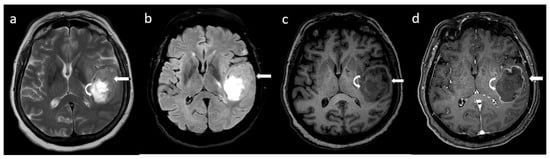
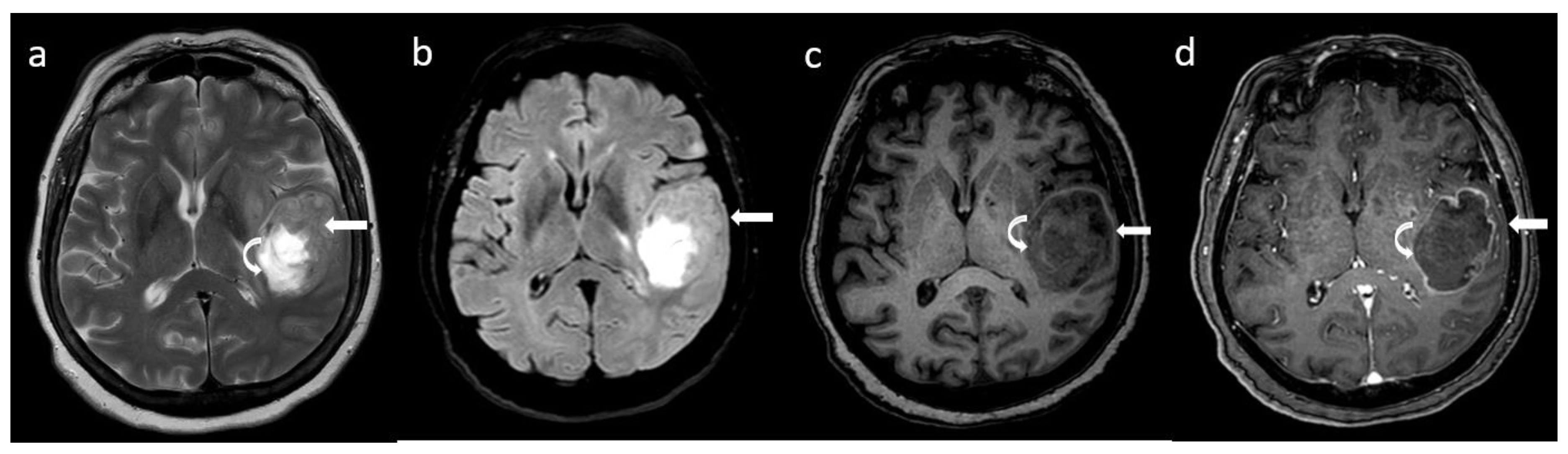
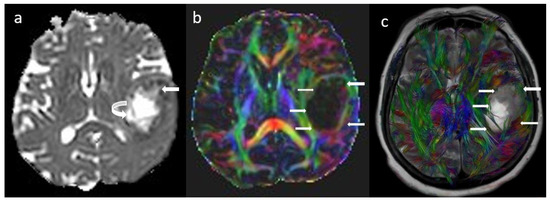
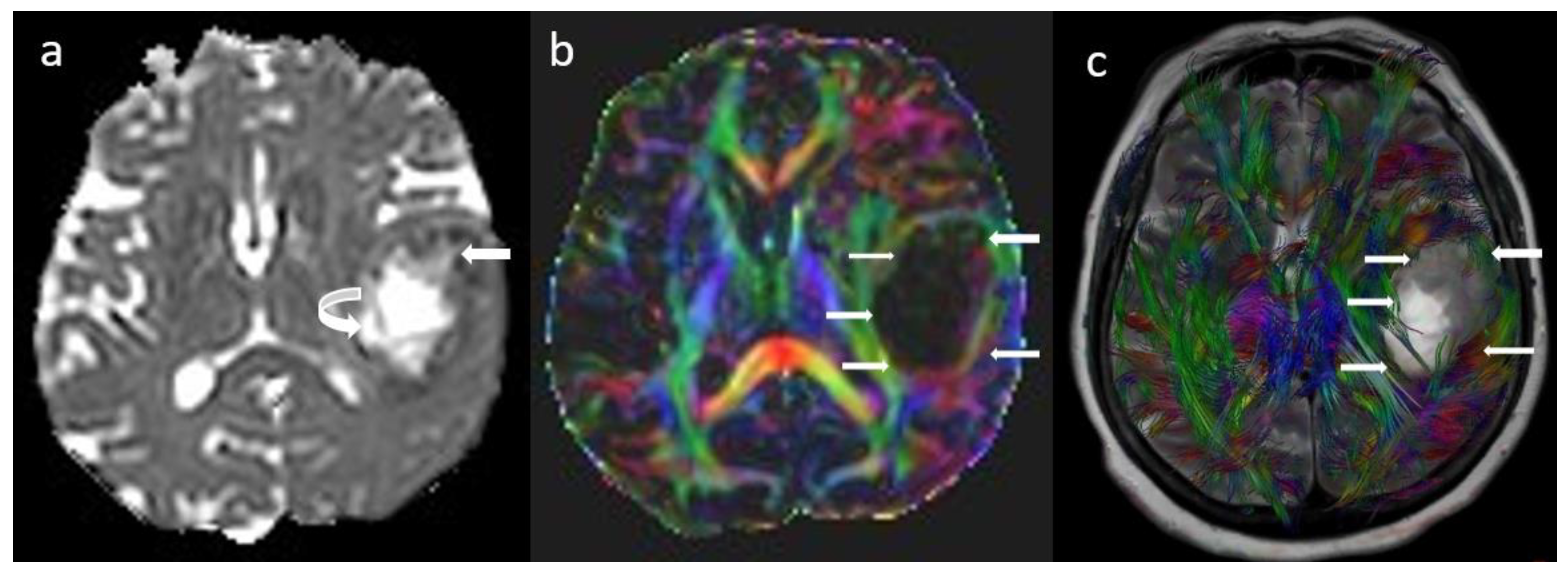
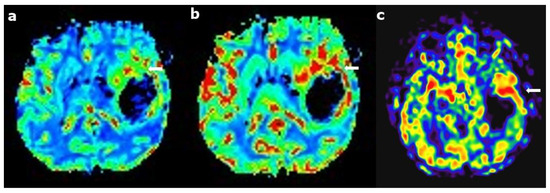
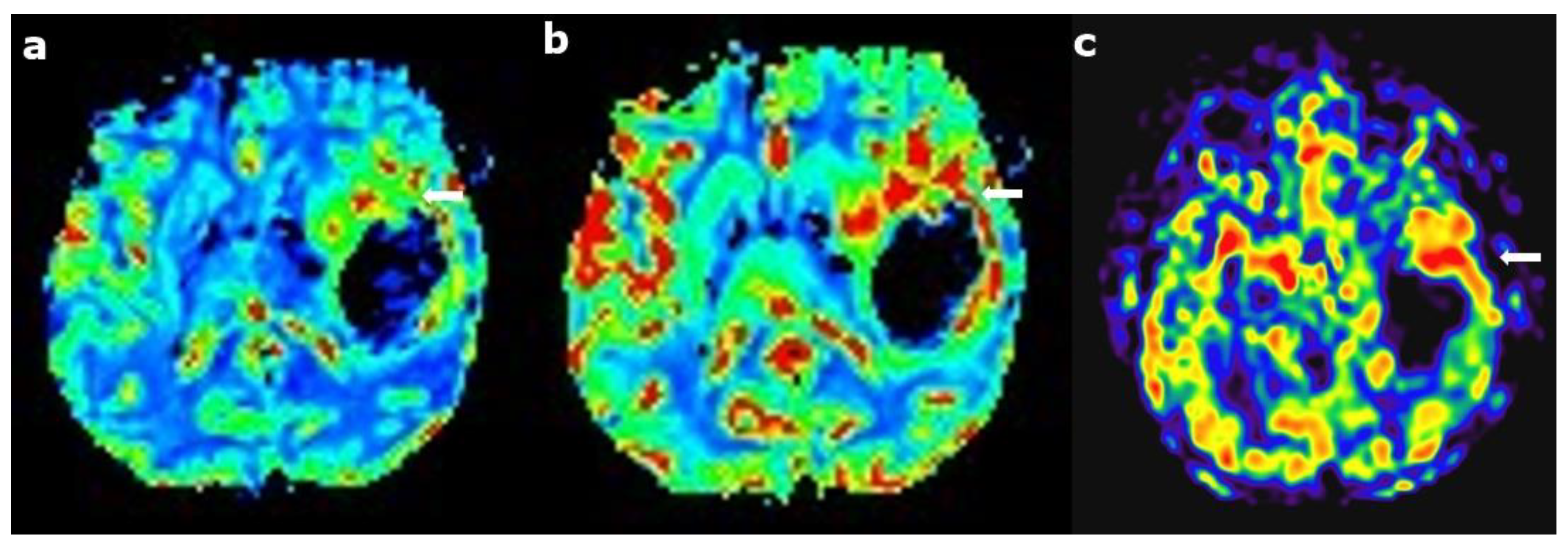
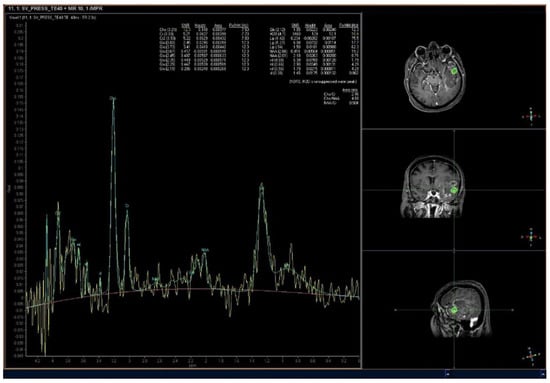
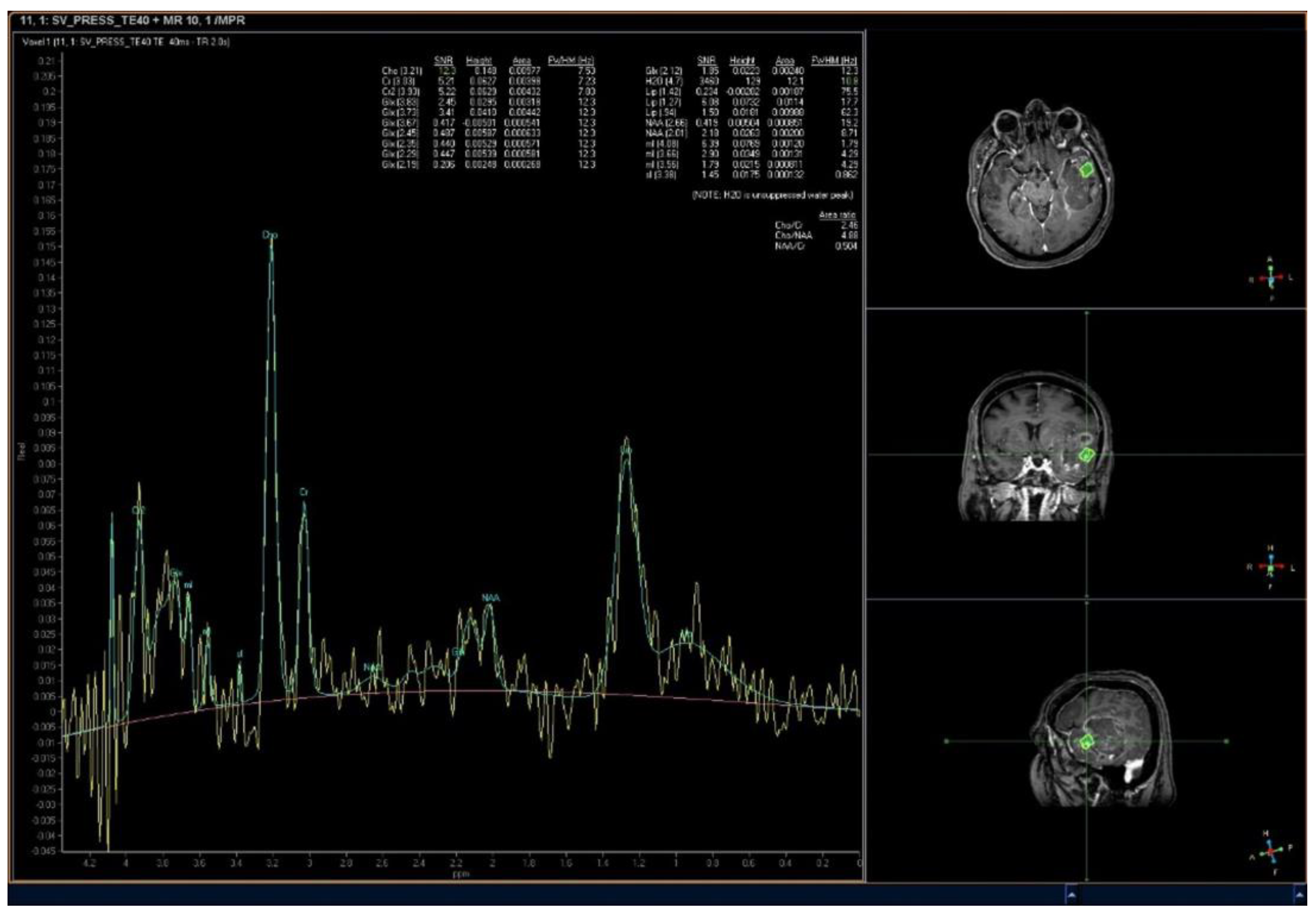
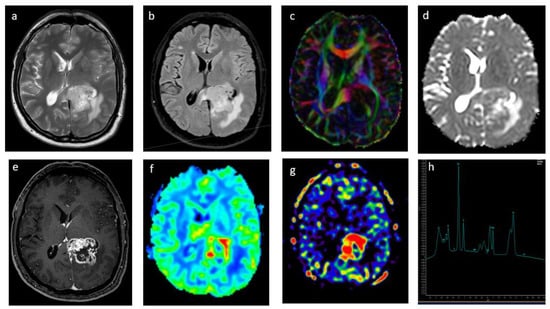
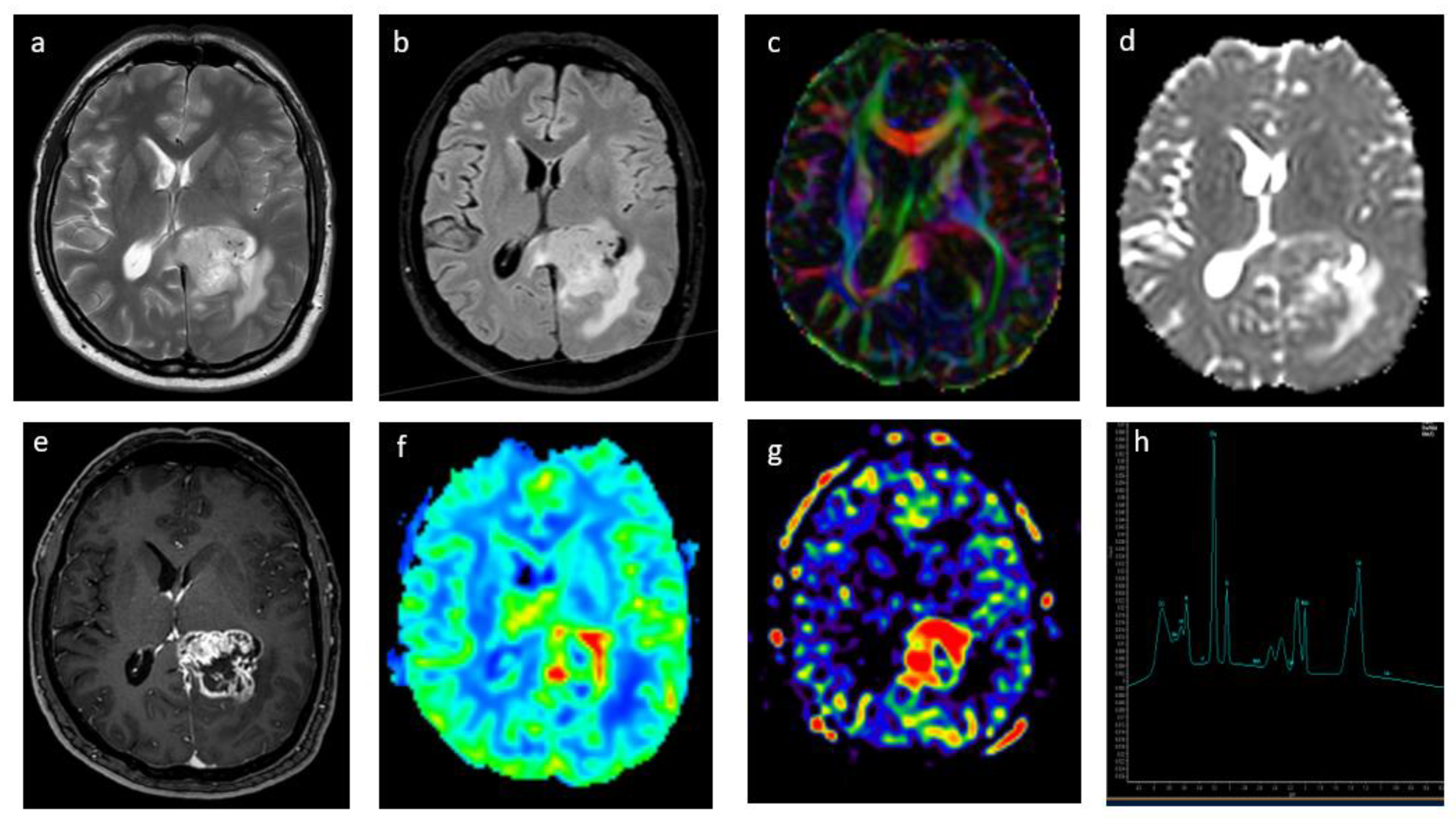

Disclaimer/Publisher’s Note: The statements, opinions and data contained in all publications are solely those of the individual author(s) and contributor(s) and not of MDPI and/or the editor(s). MDPI and/or the editor(s) disclaim responsibility for any injury to people or property resulting from any ideas, methods, instructions or products referred to in the content. |
© 2026 by the authors. Licensee MDPI, Basel, Switzerland. This article is an open access article distributed under the terms and conditions of the Creative Commons Attribution (CC BY) license.