Effect of Resin Precursor Solid Content on the Properties of Fiber-Reinforced Phenolic-Resin Aerogel Composites
 ,
,
Abstract
1. Introduction
2. Experimental
2.1. Raw Materials
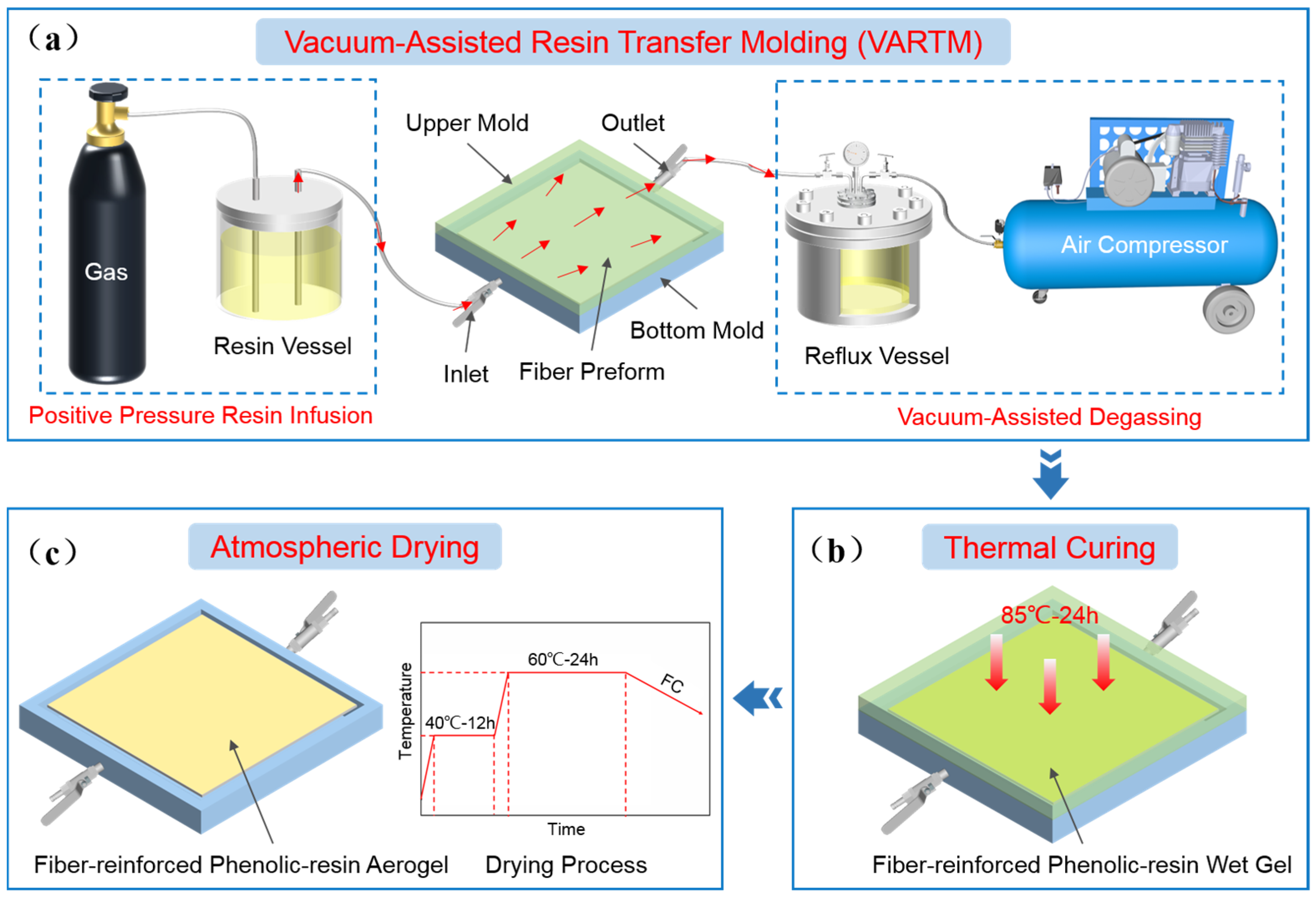
2.2. Preparation of NF/PRA Composites
2.3. Ablation Testing
2.4. Characterization
3. Results and Discussion
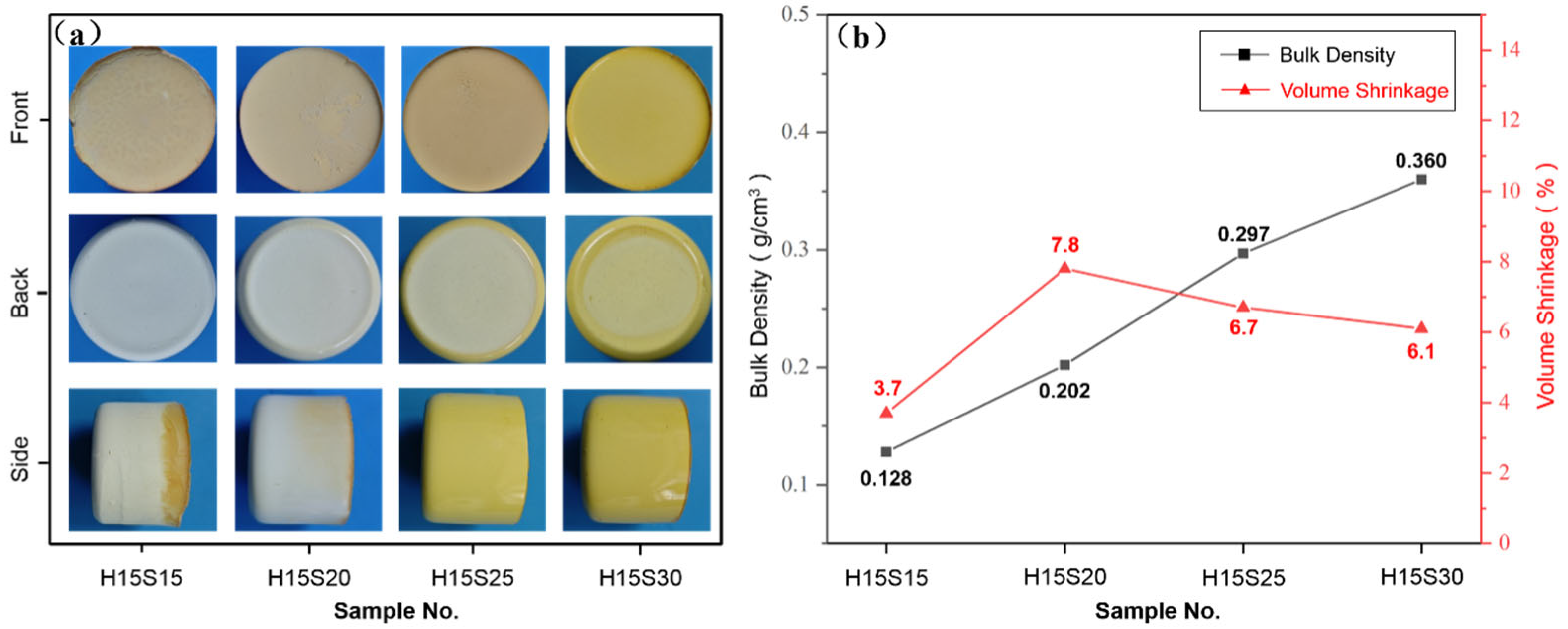
3.1. Macroscopic Morphologies and Physical Properties of PRA
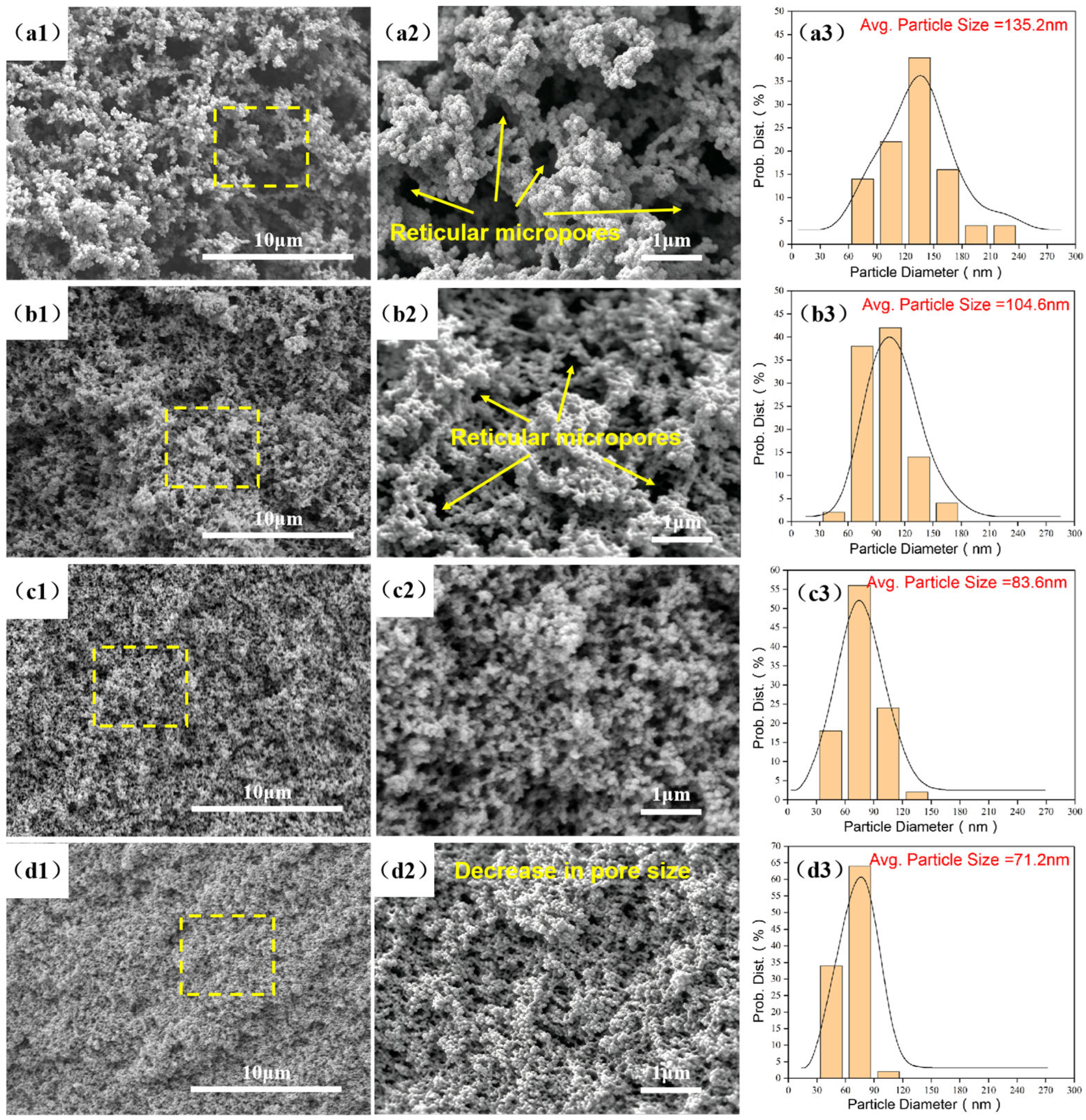
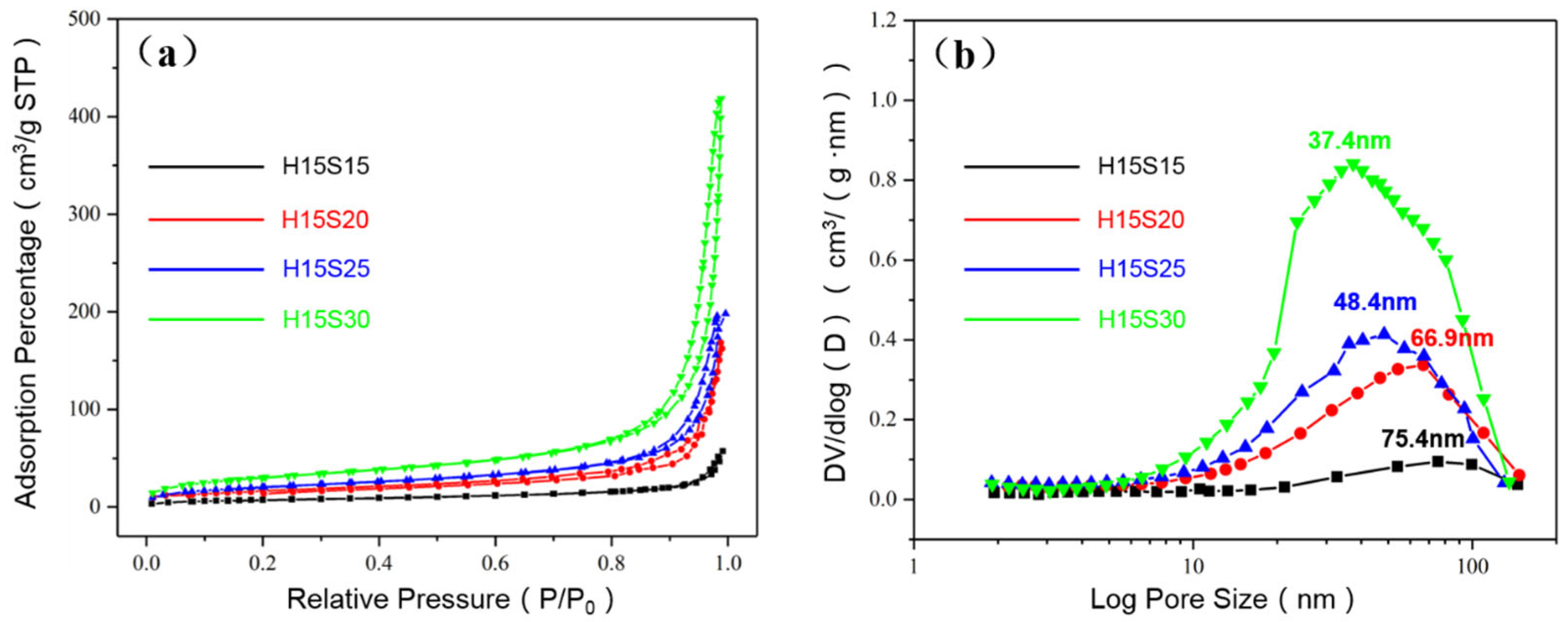
3.2. Microstructures and Particle Size Distribution of PRA
3.3. Morphology of NF/PRA Composites
3.4. Mechanical Properties of NF/PRA Composites
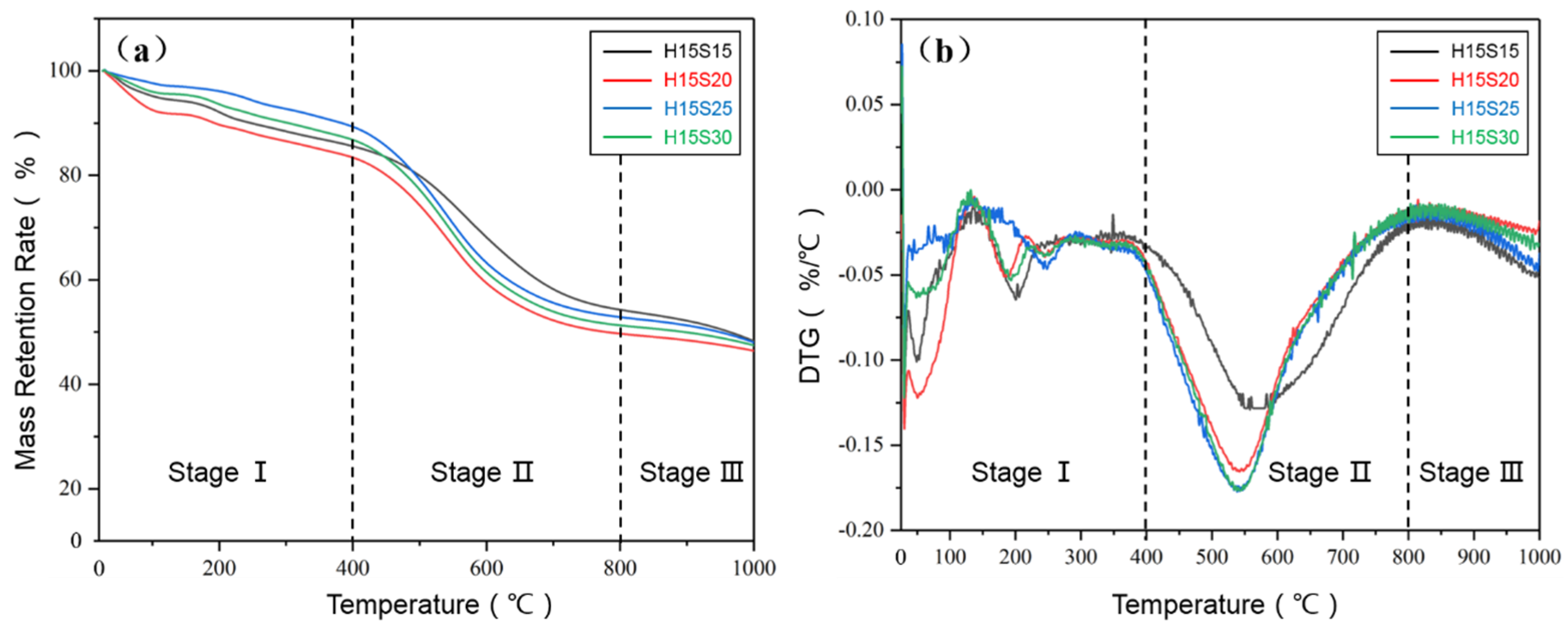
3.5. Thermophysical Properties of NF/PRA Composites
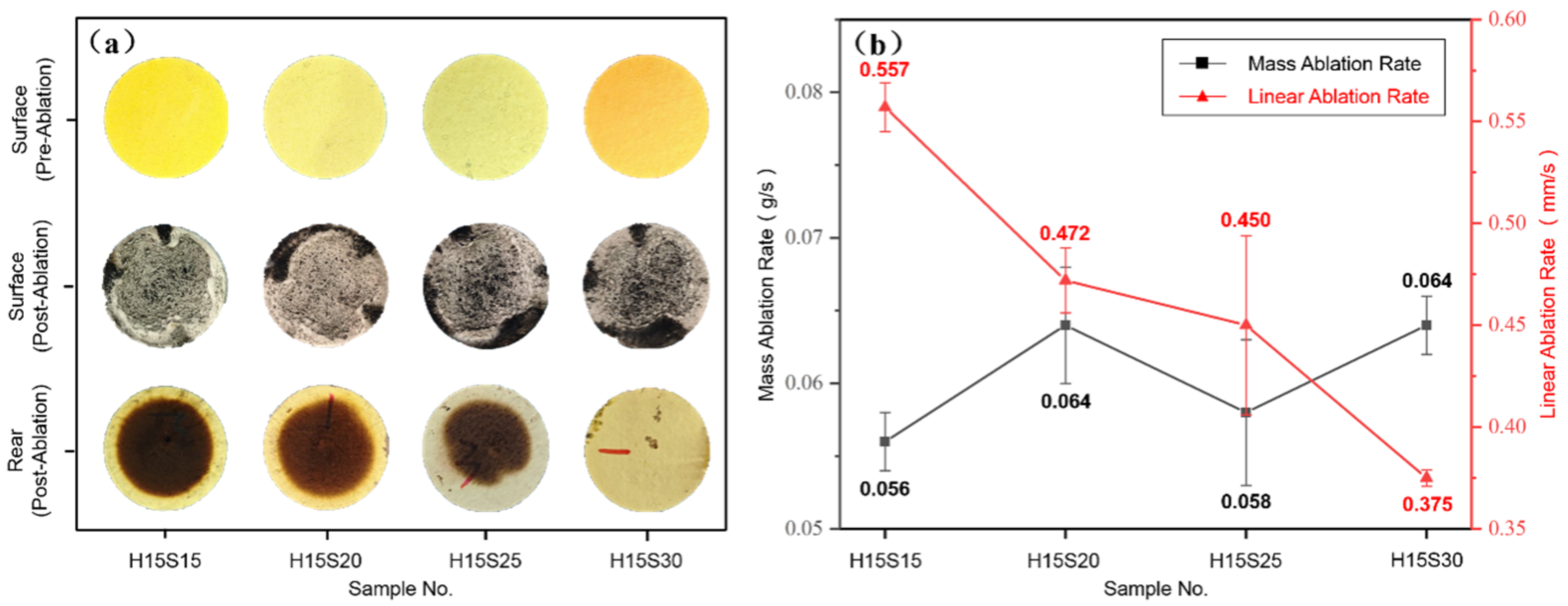
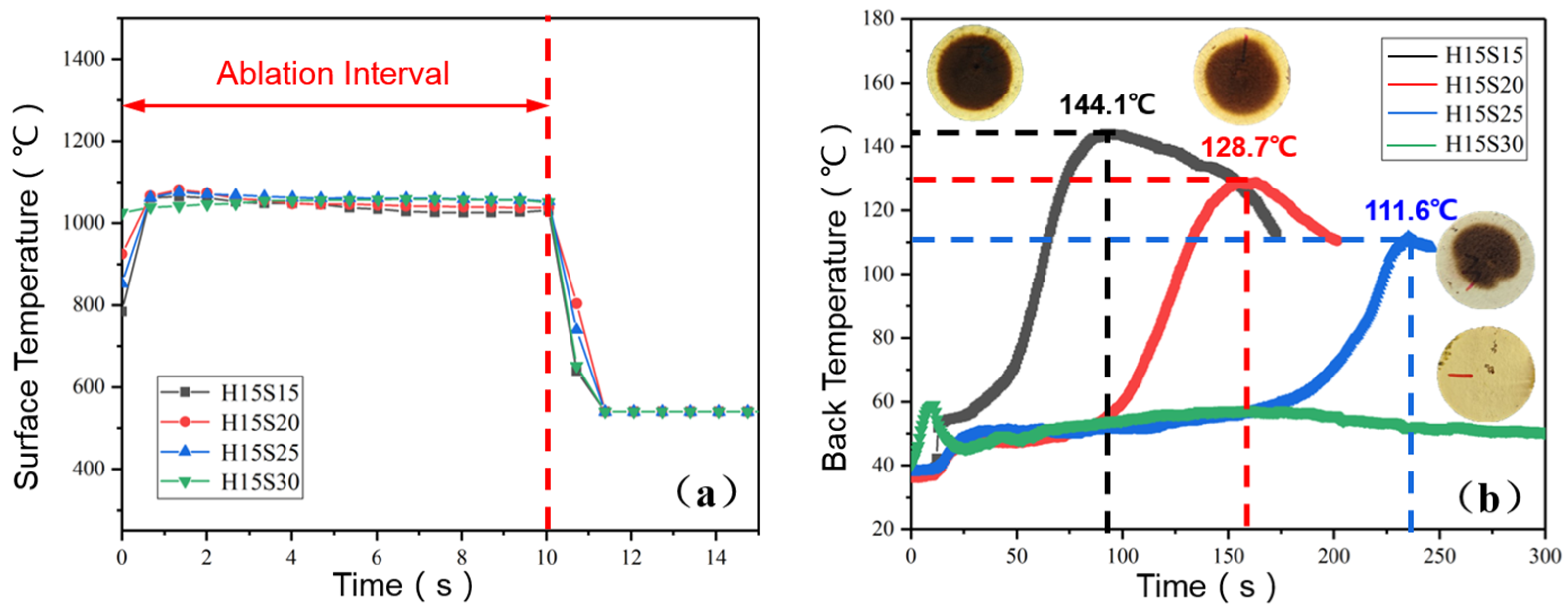
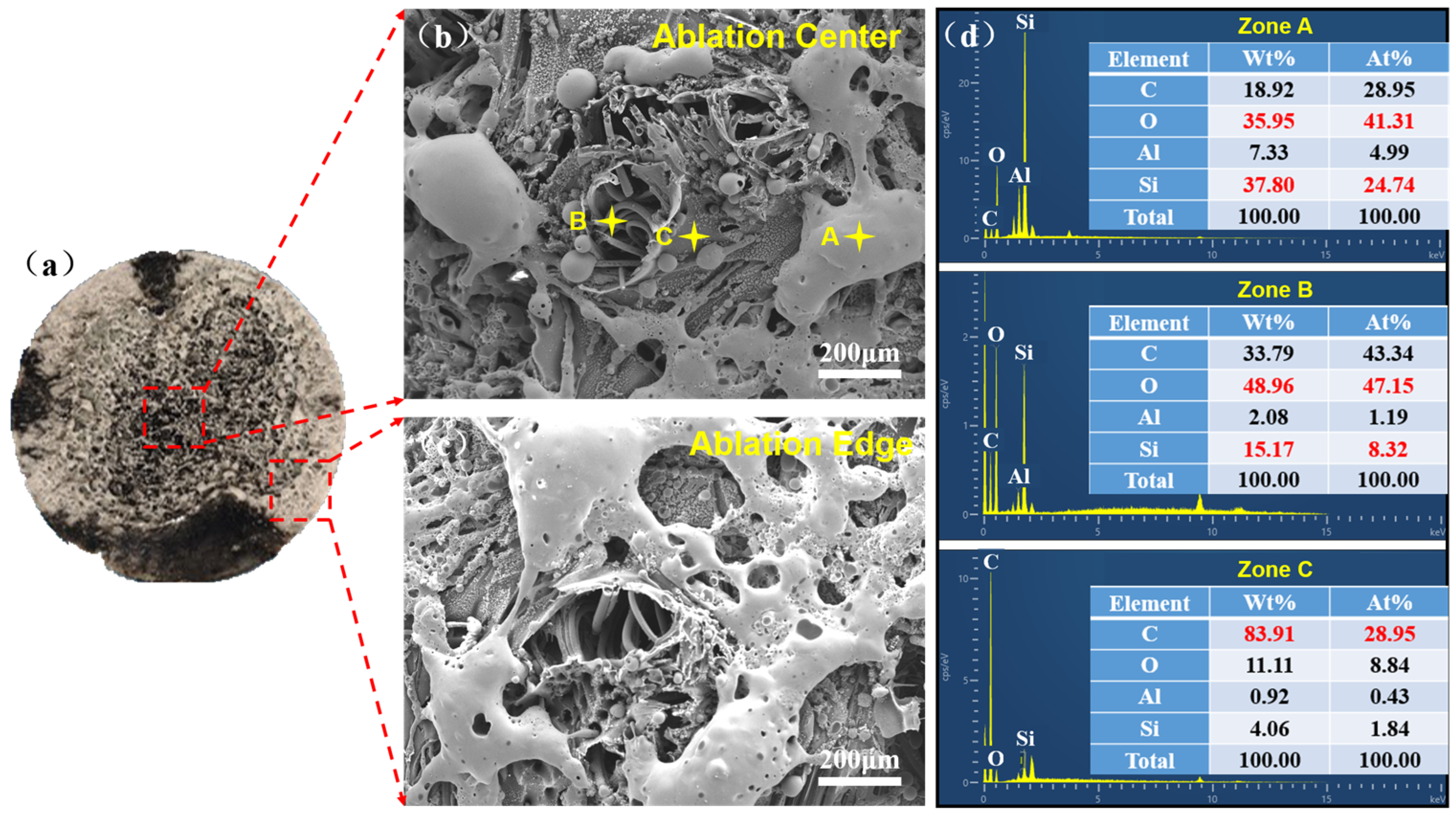
3.6. Thermal Insulation and Ablation Resistance of NF/PRA Composites
4. Conclusions
- (1)
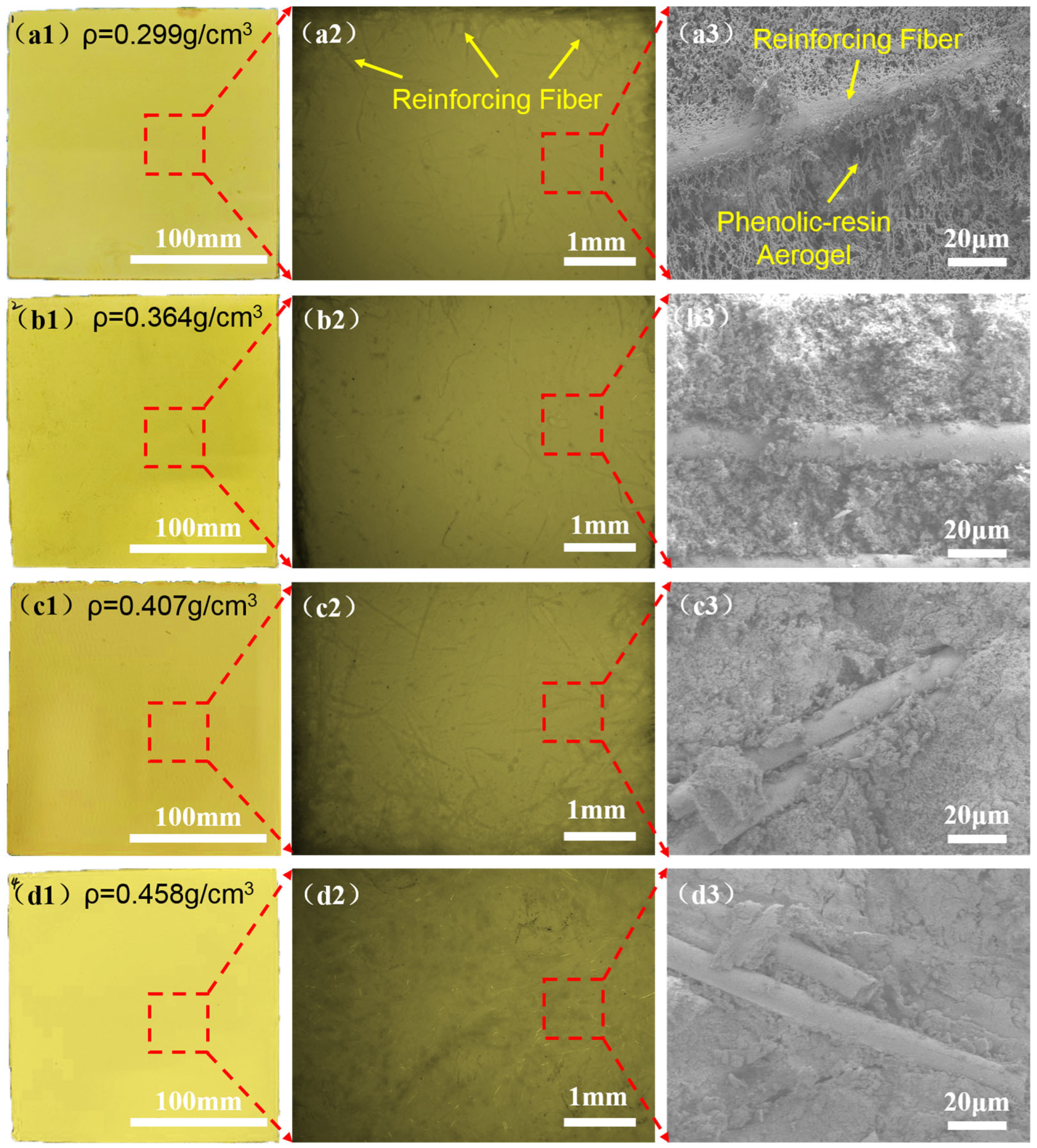
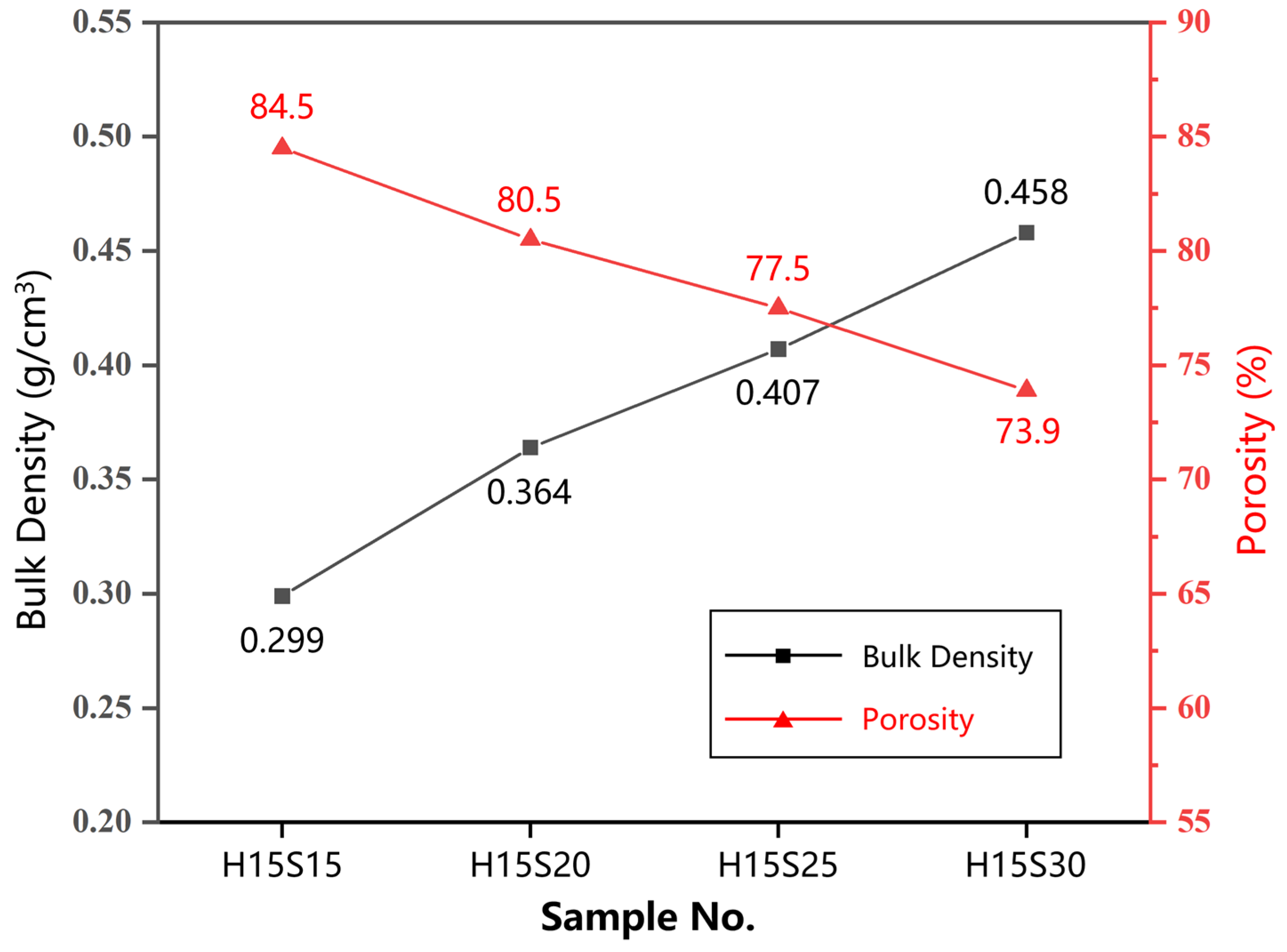
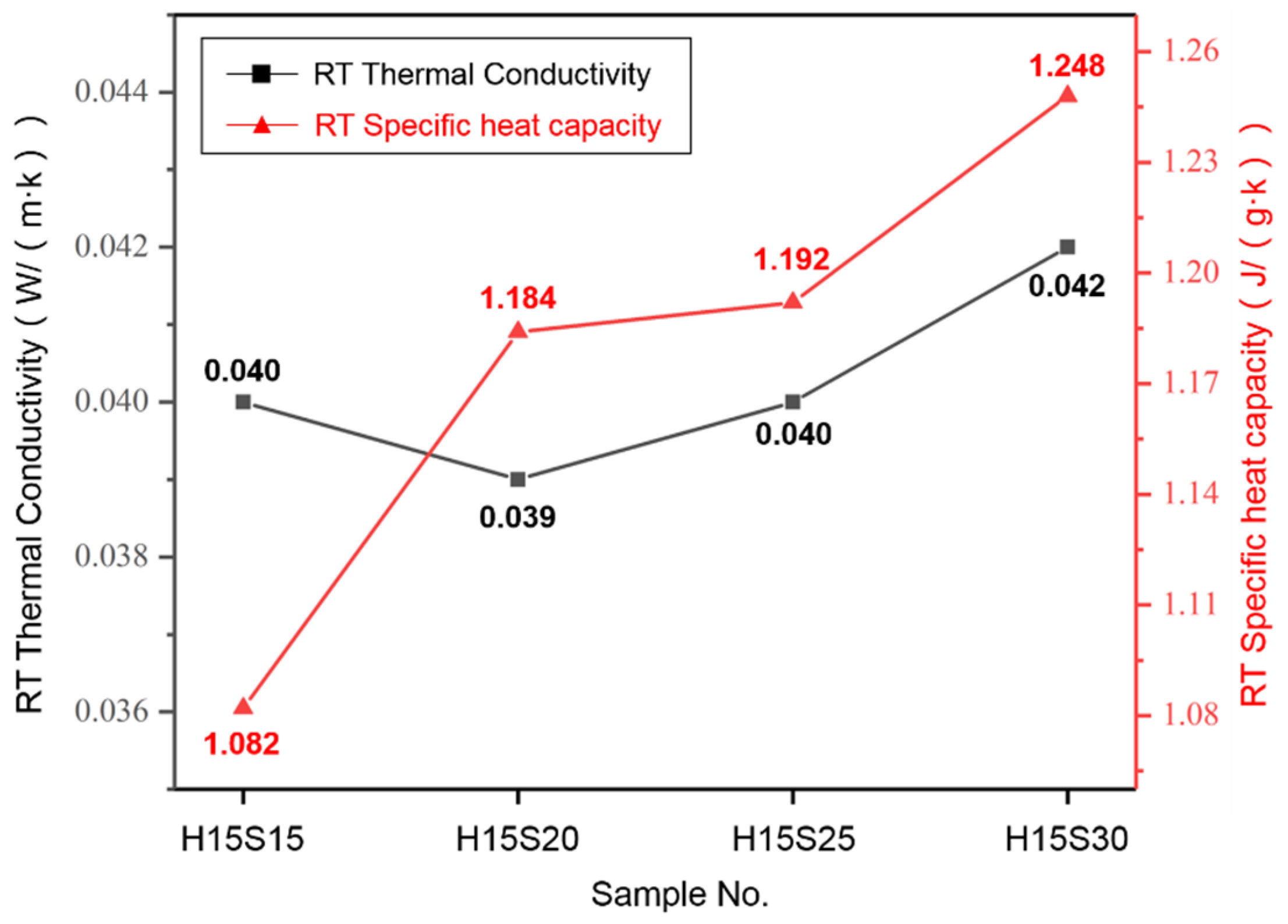
- The solid content of the resin precursor is a crucial parameter that determines the microstructure of PRA. Within the studied range, a higher precursor solid content yielded a denser three-dimensional nano-network structure in PRA, with the average pore size decreasing progressively from 75.4 to 37.4 nm. Correspondingly, the bulk density of the composites steadily increased from 0.299 to 0.458 g/cm3. The abundant mesopores in the composites served as the structural basis for the ultra-low thermal conductivity of NF/PRA.
- (2)
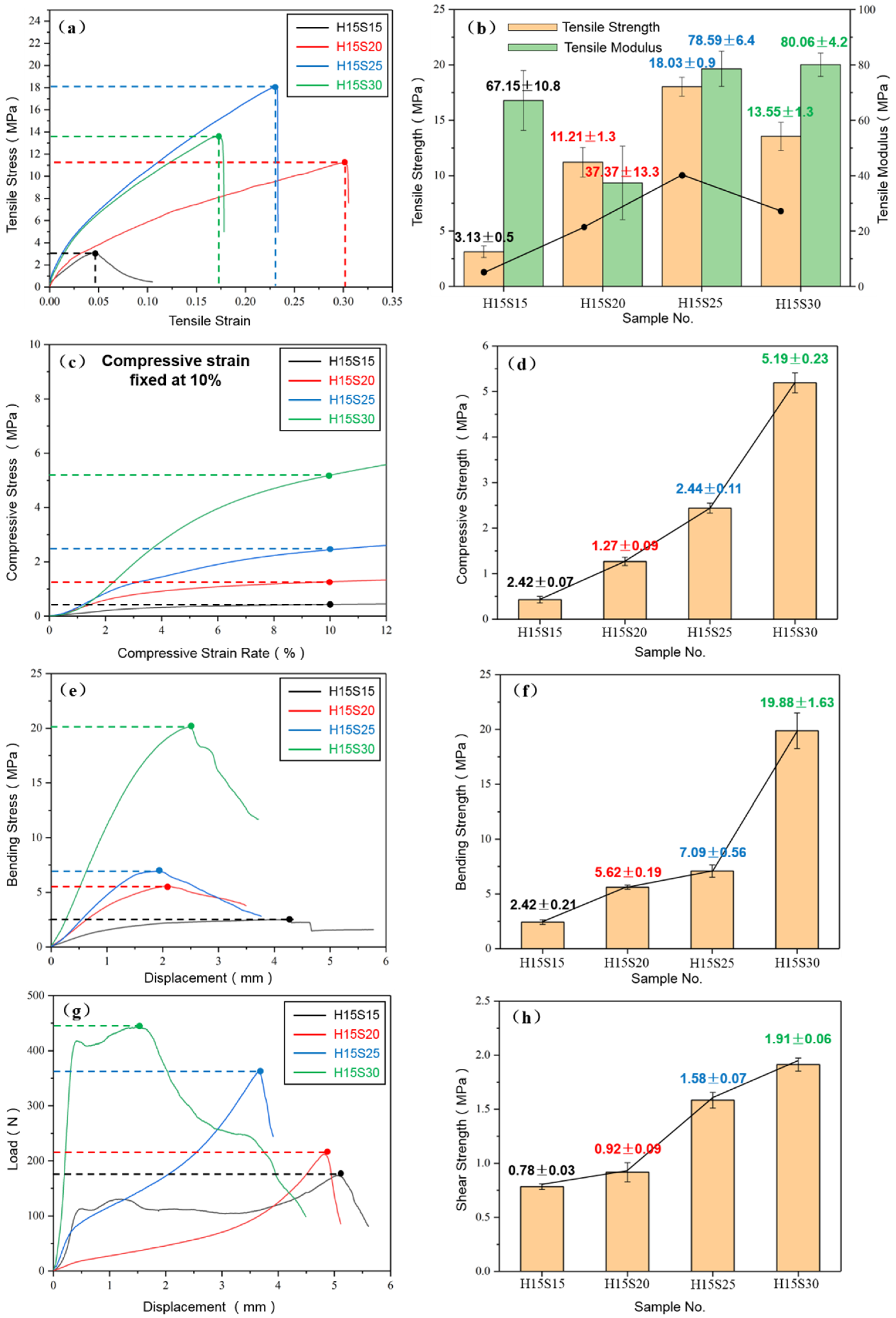
- The resin precursor solid content also significantly affected the mechanical characteristics of NF/PRA. The tensile strength initially increased and subsequently decreased as the solid content increased, with the H15S25 sample reaching a maximum of 18.03 MPa. The inherent brittleness of the PRA matrix with a high solid content is believed to limit further improvement in tensile strength. By contrast, the compressive, flexural, and shear properties were less sensitive to material brittleness, and they increased monotonically with increasing resin precursor solid content, with the H15S30 sample delivering the best mechanical performance in these regards.
- (3)
- Increasing the resin precursor solid content synergistically enhanced both thermal insulation and ablation resistance of the NF/PRA composites. Under 4300 kW/m2 OAF for 10 s, the H15S30 sample achieved a linear ablation rate as low as 0.375 mm/s, which was 32.7% less than that of H15S15. The back-face temperature of H15S30 remained below 60 °C, which was over 58% less than that of H15S15.
- (4)
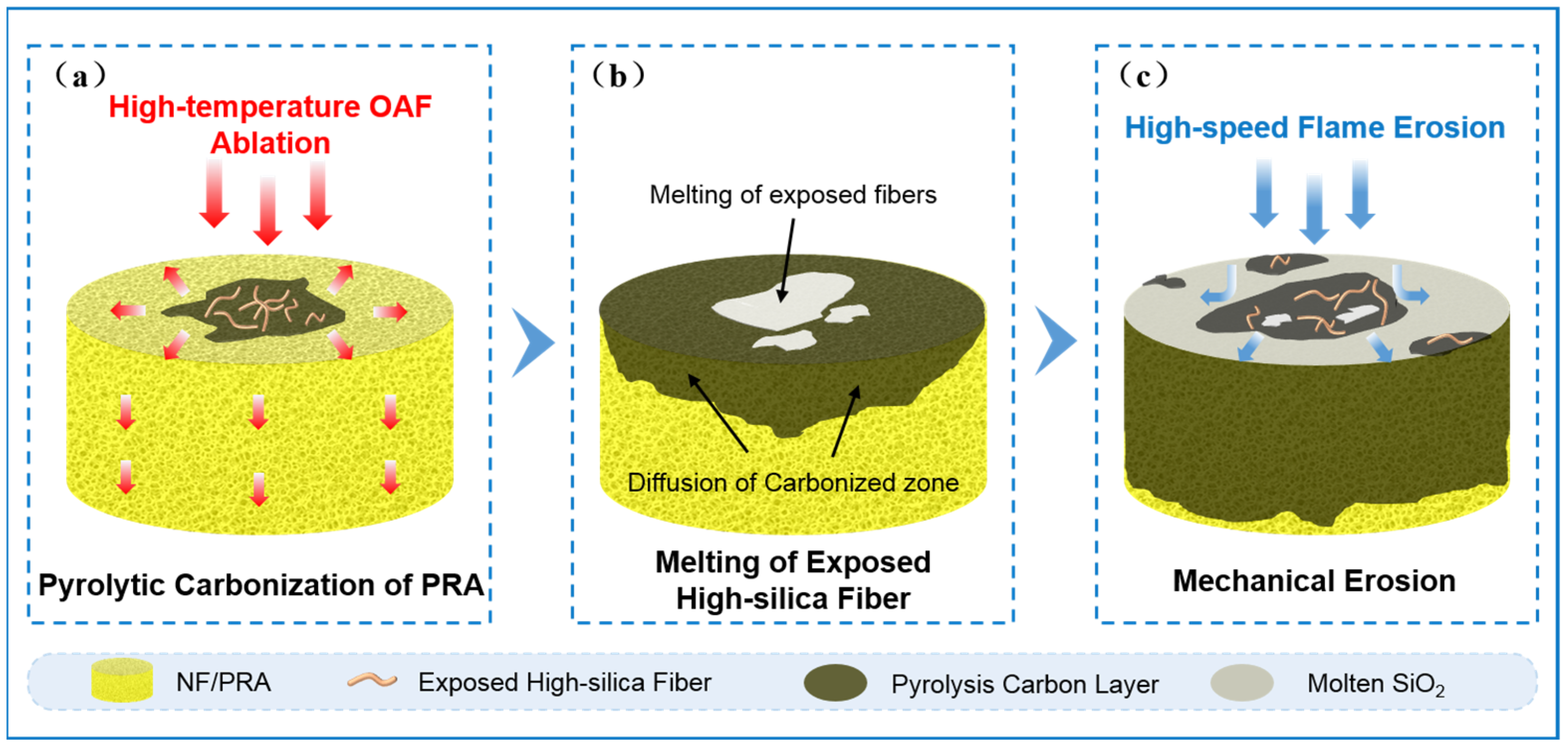
- Ablation proceeded through three stages—pyrolytic carbonization of the PRA matrix, melting of exposed high-silica fibers, and mechanical scouring by the flame flow—with layer-by-layer spallation of the amorphous carbon and SiO2-rich molten phases governing the damage.
- (5)
- The established processing–structure–property relationships, together with the cost-effective VARTM and atmospheric-pressure drying route, provide a reference for tailoring NF/PRA composites as lightweight ablation thermal protection materials for hypersonic vehicles, re-entry spacecraft, and rocket propulsion systems.
Author Contributions
Funding
Institutional Review Board Statement
Informed Consent Statement
Data Availability Statement
Conflicts of Interest
References
- Li, L.; Ren, Z.Y.; Wang, P.; Luo, Y.; Su, Z.; Cai, H.X.; Tian, H.; Niu, B.; Long, D.H. Research progress on lightweight resin-based thermal protection materials. Air Space Def. 2024, 7, 58–75. [Google Scholar]
- Zhu, Z.F.; Huang, H.Y. Research progress of low-density resin-based thermal protection materials. Mater. China 2019, 38, 1086–1092. [Google Scholar]
- Feng, Z.H.; Li, J.N.; Tian, Y.L.; Shi, J.; Zhang, J.; Xu, L.; Pan, L. Research progress of advanced composite materials for aerospace applications. Acta Mater. Compos. Sin. 2022, 39, 4187–4195. [Google Scholar]
- Pekala, R.; Alviso, C.; Lu, X.; Gross, J.; Fricke, J. New organic aerogels based upon a phenolic-furfural reaction. J. Non-Cryst. Solids 1995, 188, 34–40. [Google Scholar] [CrossRef] [Scilit]
- Xu, J.G. Preparation and Microstructure Performance of Quartz Fiber/Phenolic Aerogel Composites for Thermal Protection. Ph.D. Thesis, Harbin Institute of Technology, Harbin, China, 2022. [Google Scholar]
- Lachaud, J.; Cozmuta, I.; Mansour, N.N. Multiscale approach to ablation modeling of phenolic impregnated carbon ablators. J. Spacecr. Rocket. 2010, 47, 910–921. [Google Scholar] [CrossRef] [Scilit]
- Natali, M.; Puri, I.; Kenny, J.M.; Torre, L.; Rallini, M. Microstructure and ablation behavior of an affordable and reliable nanostructured phenolic impregnated carbon ablator (PICA). Polym. Degrad. Stab. 2017, 141, 84–96. [Google Scholar] [CrossRef] [Scilit]
- Liu, X.; Sun, J.; Yuan, F.; Ye, C.; Zhang, R. Lightweight, flexible, and heat-insulated phenolic impregnated carbon ablator (PICA) with adjustable flexibility and high compressive resilience property. J. Appl. Polym. Sci. 2022, 139, 51712. [Google Scholar] [CrossRef] [Scilit]
- Zhang, J.; Fang, G.D.; Yang, L.W.; Li, W.; Hong, C.-Q.; Meng, S.-H. Comparison of ablative and compressive mechanical behavior of several PICAlike ablative materials. Sci. China Technol. Sci. 2020, 63, 1478–1486. [Google Scholar] [CrossRef] [Scilit]
- Jin, X.; Xu, J.; Pan, Y.; Wang, H.; Ma, B.; Liu, F.; Yan, X.; Wu, C.; Huang, H.; Cheng, H.; et al. Lightweight and multiscale needle quartz fiber felt reinforced siliconoxycarbide modified phenolic aerogel nanocomposite with enhanced mechanical, insulative and flame-resistant properties. Compos. Sci. Technol. 2021, 217, 109100. [Google Scholar] [CrossRef] [Scilit]
- Jin, X.Y.; Liu, C.; Huang, H.; Pan, R.; Wu, C.; Yan, X.; Wang, H.; Pan, Y.; Hong, C.; Zhang, X. Multiscale, elastic, and low-density carbon fibre / siliconoxycarbide-phenolic interpenetrating aerogel nanocomposite for ablative thermal protection. Compos. Part B Eng. 2022, 245, 110212. [Google Scholar] [CrossRef] [Scilit]
- Zhang, H.; Qian, Z.; Niu, B.; Zhang, Y.; Long, D. Mechanical properties and fracture mechanisms of low-density fiber preforms reinforced phenolic aerogel composites. Acta Mater. Compos. Sin. 2022, 39, 3663–3673. [Google Scholar]
- Cheng, H.M.; Fan, Z.H.; Hong, C.Q.; Zhang, X. Lightweight multiscale hybrid carbon-quartz fiber fabric reinforced phenolic-silica aerogel nanocomposite for high temperature thermal protection. Compos. Part A Appl. Sci. Manuf. 2021, 143, 106313. [Google Scholar] [CrossRef] [Scilit]
- Noroozi, M.; Panahi-Sarmad, M.; Bahramian, A.R. Thermal insulation behavior of functionally graded aerogel: The role of novolac molecular-weight. Polymer 2019, 178, 121575. [Google Scholar] [CrossRef] [Scilit]
- Payanda Konuk, O.; Alsuhile, A.A.A.M.; Yousefzadeh, H.; Ulker, Z.; Bozbag, S.E.; García-González, C.A.; Smirnova, I.; Erkey, C. The effect of synthesis conditions and process parameters on aerogel properties. Front. Chem. 2023, 11, 1294520. [Google Scholar] [CrossRef] [Scilit]
- Zhao, D.; Wan, K.; Wan, X.; Liu, Y.; Li, J.; Shi, M. High Structural Stability, High Compressive Strength, Excellent Thermal Insulation and Mechanism of Needled Quartz Fiber Felt/Phenolic Aerogel Composites. Polymers 2026, 18, 705. [Google Scholar] [CrossRef] [Scilit]
- GJB 323B-2018; Test Methods for Ablation of Ablation Materials. Commission of Science, Technology and Industry for National Defence: Beijing, China, 2018.
- Clyne, T.W.; Hull, D. An Introduction to Composite Materials; Cambridge University Press: Cambridge, UK, 2019. [Google Scholar]
- GB/T 1447-2005; Test Method for Tensile Properties of Fiber Reinforced Plastics. China Standards Press: Beijing, China, 2005.
- GB/T 1448-2005; Test Method for Compressive Properties of Fiber-Reinforced Plastics. China Standards Press: Beijing, China, 2005.
- GB/T 1449-2005; Test Method for Flexural Properties of Fiber-Reinforced Plastics. China Standards Press: Beijing, China, 2005.
- GB/T 1450.2-2005; Test Method for Punch Shear Strength of Fiber Reinforced Plastics. China Standards Press: Beijing, China, 2005.
- GB/T 10295-2008; Determination of Steady-State Thermal Resistance and Related Properties of Thermal Insulation Materials—Heat Flow Meter Method. China Standards Press: Beijing, China, 2008.
- ASTM C 1784-20; Standard Test Method for Using a Heat Flow Meter Apparatus for Measuring Thermal Storage Properties of Phase Change Materials and Products. ASTM International: West Conshohocken, PA, USA, 2020.
- Song, H.; Xu, C.X.; Wang, X.N.; Liu, T.; Su, L.J.; Sun, K.; Guo, H.; Li, W.J. Effect of different resin precursor ratios on properties of inorganic phenolic aerogel insulation composites. Mater. Rep. 2020, 34, 1525–1527. [Google Scholar]
- Sha, R.; Dai, J.; Wang, B.; Sha, J. Improving pore characteristics, mechanical properties and thermal performances of near-net shape manufacturing phenolic resin aerogels. Polymers 2024, 16, 1593. [Google Scholar] [CrossRef] [Scilit]
- Wang, Z.; Kong, Y.; Nie, M.; Liu, K.; Liu, Q.; Shen, X. Hydrophobic phenolic/silica aerogel composites with high fire safety and strength for efficient thermal insulation. RSC Adv. 2025, 15, 43095–43105. [Google Scholar] [CrossRef] [Scilit]
- Zhang, D.M.; Ye, J.R.; Liu, K.; Zhou, H. Effects of void micro-characteristics on the mechanical behavior of CFRP by micromechanical method. Acta Mater. Compos. Sin. 2013, 30, 118–123. [Google Scholar]
- Cao, J.; Wang, P.; Cai, H.; Niu, B.; Zhang, Y.; Long, D. Lightweight nitrogen-doped phenolic aerogels with flame-retardant and thermal-insulation properties. ACS Appl. Polym. Mater. 2023, 5, 10276–10288. [Google Scholar] [CrossRef] [Scilit]
- Anklam, T.; Tannert, R. Hydrophobic Aerogels and Xerogels based on Trimethoxybenzene-Formaldehyde. Macromol. Rapid Commun. 2025, 46, 2400691. [Google Scholar] [CrossRef] [Scilit]
- Zhan, Y.; Zhang, C.; Li, L.; Huang, M.; Chen, S.; Jiang, Y.; Feng, J.; Hu, Y.; Feng, J. A Novel Phenolic Resin Aerogel Modified by SiO2-ZrO2 for Efficient Thermal Protection and Insulation. Gels 2025, 11, 1018. [Google Scholar] [CrossRef] [Scilit]
- Liu, T.; Jiang, W.; Qian, H.; Shi, X.; Chen, J.; Cao, Q.; Li, N.; Huang, Y.; Jiang, B. Nitrogen-Coordinated borate esters induced entangled heterointerface toward multifunctional Silicone/Phenolic binary aerogel composites. Chem. Eng. J. 2024, 482, 149061. [Google Scholar] [CrossRef] [Scilit]
- Liu, J.; Cao, Y.; Qian, Z.; Liu, R.; Zhou, C.; Pan, H.; Zhang, Y.; Niu, B.; Long, D. Preparation and properties of rigid nanoporous phenolic resin-based composites. Acta Mater. Compos. Sin. 2023, 40, 5601–5610. [Google Scholar]
- Balaji, R.; Sasikumar, M. A Study on the Effect of Cenosphere on Thermal and Ablative Behavior of Cenosphere Loaded Ceramic/Phenolic Composites. Polymer 2014, 55, 6634–6639. [Google Scholar] [CrossRef] [Scilit]
- Bessire, B.K.; Lahankar, S.A.; Minton, T.K. Pyrolysis of Phenolic Impregnated Carbon Ablator (PICA). ACS Appl. Mater. Interfaces 2014, 7, 1383–1395. [Google Scholar] [CrossRef] [Scilit]
- Zheng, S.; Tang, J.; Zhao, J.; Liu, H.; Xu, D.; Li, K.; Wen, D.; Zhu, B. In-situ formation of surface “self-protective” graphitic layer on phenolic resin-based thermal protection composites. Compos. Sci. Technol. 2024, 257, 110819. [Google Scholar] [CrossRef] [Scilit]
- Wang, J.; Jiang, H.; Jiang, N. Study on the Pyrolysis of Phenol-Formaldehyde (PF) Resin and Modified PF Resin. Thermochim. Acta 2009, 496, 136–142. [Google Scholar] [CrossRef] [Scilit]
- Costa, L.; Di Montelera, L.R.; Camino, G.; Weil, E.; Pearce, E. Structure-charring Relationship in Phenol-Formaldehyde Type Resins. Polym. Degrad. Stab. 1997, 56, 23–35. [Google Scholar] [CrossRef] [Scilit]
- Bi, W.; Li, D.; Kong, G.; Wang, K.; Liu, W.; Shao, M.; Yu, Q.; Wei, H.; Sun, X. Research progress on pyrolysis mechanism of phenolic resins. Eng. Plast. Appl. 2025, 53, 206–212. [Google Scholar]
- Chen, Y.; Tao, R.; Mao, Y. Thermal reaction based mesoscale ablation model for phase degradation and pyrolysis of needle-punched composite. Compos. Sci. Technol. 2024, 258, 110898. [Google Scholar] [CrossRef] [Scilit]
- Tao, X.; Wan, Y.G.; Zhang, R.Y.; Zhang, Y.Q.; Wang, Y.; Yu, X.L.; Wang, M.C. Facile synthesis and properties of highly porous quartz fiber-reinforced phenolic resin composites with high strength. Materials 2024, 17, 2486. [Google Scholar] [CrossRef] [Scilit]



| Sample No. | Mass of Each Precursor/g | Curing Agent Ratio HMTA/(HMTA + PR) (%) | Solid Cont. (%) | Fiber Preform | ||
|---|---|---|---|---|---|---|
| PR | HMTA | etOH | ||||
| H15S15 | 12.75 | 2.25 | 85.0 | 15 | 15 | High Silica fiber 200 × 200 × 12 mm |
| H15S20 | 18.1 | 3.2 | 85.0 | 15 | 20 | |
| H15S25 | 24.1 | 4.3 | 85.0 | 15 | 25 | |
| H15S30 | 31.0 | 5.5 | 85.0 | 15 | 30 | |
| Sample No. | SBET (m2/g) | Vmeso (cm3/g) | Mean Mesopore Diameter (nm) |
|---|---|---|---|
| H15S15 | 27.0 | 0.08 | 75.4 |
| H15S20 | 57.7 | 0.26 | 66.9 |
| H15S25 | 75.4 | 0.30 | 48.4 |
| H15S30 | 110.1 | 0.63 | 37.4 |
| Material | Density (g/cm3) | Thermal Conductivity at RT (W/(m·K)) | Compressive Strength (MPa) | Linear Ablation Rate (mm/s) | Ref. |
|---|---|---|---|---|---|
| this work (H15S30) | 0.458 | 0.042 | 5.19 (Z direction) | 0.375 * | — |
| C-QF/PSi | 0.460–0.505 | 0.112–0.196 | 5.96–17.01 | 0.017 # | [13] |
| NQF/PR | 0.263–0.484 | 0.051–0.070 | 0.24–7.45 (Z direction) | N/R | [16] |
| NQF/PR | 0.372–0.397 | 0.085–0.095 | 0.67–1.04 (Z direction) | N/R | [41] |
Disclaimer/Publisher’s Note: The statements, opinions and data contained in all publications are solely those of the individual author(s) and contributor(s) and not of MDPI and/or the editor(s). MDPI and/or the editor(s) disclaim responsibility for any injury to people or property resulting from any ideas, methods, instructions or products referred to in the content. |
© 2026 by the authors. Licensee MDPI, Basel, Switzerland. This article is an open access article distributed under the terms and conditions of the Creative Commons Attribution (CC BY) license.
Share and Cite
Bai, Y.; Song, K.; Wang, X.; Yu, L.; Huang, A.; Huang, J.; He, Q.; Peng, D.; Zhang, M.; Li, Z. Effect of Resin Precursor Solid Content on the Properties of Fiber-Reinforced Phenolic-Resin Aerogel Composites. Appl. Sci. 2026, 16, 8626. https://doi.org/10.3390/app16178626
Bai Y, Song K, Wang X, Yu L, Huang A, Huang J, He Q, Peng D, Zhang M, Li Z. Effect of Resin Precursor Solid Content on the Properties of Fiber-Reinforced Phenolic-Resin Aerogel Composites. Applied Sciences. 2026; 16(17):8626. https://doi.org/10.3390/app16178626
Chicago/Turabian StyleBai, Yixin, Kaiqiang Song, Xuan Wang, Lei Yu, Anwei Huang, Jianchao Huang, Qingbing He, Dong Peng, Min Zhang, and Zhongsheng Li. 2026. "Effect of Resin Precursor Solid Content on the Properties of Fiber-Reinforced Phenolic-Resin Aerogel Composites" Applied Sciences 16, no. 17: 8626. https://doi.org/10.3390/app16178626
APA StyleBai, Y., Song, K., Wang, X., Yu, L., Huang, A., Huang, J., He, Q., Peng, D., Zhang, M., & Li, Z. (2026). Effect of Resin Precursor Solid Content on the Properties of Fiber-Reinforced Phenolic-Resin Aerogel Composites. Applied Sciences, 16(17), 8626. https://doi.org/10.3390/app16178626