1. Introduction
As modern life becomes increasingly digitalized and individuals are exposed to intense physical and psychological demands within routine daily life, many people seek alternative experiences that provide novelty, meaning, and personal fulfillment [
1]. In this context, nature sports have evolved beyond being merely recreational activities and have become important experiences through which individuals explore themselves [
2], test their personal limits [
3], and construct a sense of meaning in life [
4]. Activities characterized by risk, uncertainty, adventure, and heightened stimulation are considered multidimensional experiences that influence not only physical performance but also psychological resilience, motivational tendencies, and sensation-seeking behaviors [
5,
6].
Within this framework, curiosity and exploration represent an important psychological tendency reflecting individuals’ desire to seek novelty, investigate the unknown, and engage in diverse life experiences [
7]. According to Próchniak [
8], curiosity and exploration can be understood as a motivational orientation that drives individuals away from monotonous routines toward novel and stimulating experiences. In the context of nature sports, this tendency is associated with experiencing different environments [
9], testing physical limits, and establishing a closer connection with nature. Activities such as mountaineering, trekking, camping, rafting, and rock climbing provide opportunities that satisfy individuals’ exploration needs [
10]. Previous research on sensation seeking has shown that individuals who seek novelty and intense stimulation are more likely to engage in risk-oriented behaviors, become bored with routine activities more quickly, and actively seek new experiences [
11,
12,
13]. Accordingly, curiosity and exploration may be conceptually related to sensation-seeking tendencies, as both constructs involve the pursuit of novelty, stimulation, and challenging experiences.
Participation in nature sports is often driven not only by physical activity motives but also by deeper psychological needs such as freedom, self-realization, novel experiences, personal growth, and emotional satisfaction [
10,
14]. Recent studies in sport sciences, recreation, and sport management have similarly demonstrated that psychological factors play a central role in individuals’ engagement in nature-based activities [
3,
15,
16]. In this regard, sensation seeking has become an important construct in the nature sports literature because it reflects individuals’ tendency to pursue intense sensory experiences, risk-oriented activities, and extraordinary situations [
17,
18]. Zuckerman [
17] conceptualized sensation seeking as a personality trait associated with risk-taking behaviors and suggested that individuals with high sensation-seeking tendencies are more likely to participate in extreme and nature-based sports. Within nature sports settings, sensation seeking is commonly associated with experiencing adrenaline, pushing personal boundaries, achieving feelings of freedom, and escaping routine life [
19,
20]. Therefore, individuals with stronger curiosity and exploration tendencies may also display higher levels of sensation-seeking behavior.
However, explaining participation in nature sports solely through sensation seeking may not fully capture the motivational processes underlying sustained participation. One of the most important psychological mechanisms supporting long-term behavioral engagement is intrinsic motivation. Intrinsic motivation refers to engaging in an activity for the inherent satisfaction, enjoyment, and interest derived from the activity itself, rather than for external rewards or pressures, and it is considered a central component of Self-Determination Theory [
21,
22]. According to Deci and Ryan [
23], individuals are intrinsically motivated when their basic psychological needs for autonomy, competence, and relatedness are satisfied. In the context of nature sports, participants are often motivated by experiential satisfaction, freedom, enjoyment, and opportunities for self-development rather than by external rewards. Previous studies have shown that individuals with higher intrinsic motivation tend to maintain participation for longer periods [
24], experience greater psychological satisfaction [
25], and derive more enjoyment from leisure activities [
26]. Therefore, intrinsic motivation may play an important role in explaining leisure time motivation among nature sports participants.
Leisure time motivation is defined as a multidimensional construct reflecting the reasons individuals participate in leisure activities [
27]. This construct encompasses motives such as psychological relaxation [
28], social interaction [
29], achievement and competence [
30], self-development, and enjoyment. Within nature sports contexts, leisure time motivation has been associated with connecting with nature [
31], reducing stress [
32], experiencing freedom, and psychological renewal [
33]. Strong leisure time motivation is considered essential for sustained participation in nature sports activities [
34]. Consequently, understanding the psychological factors associated with leisure time motivation has become increasingly important for recreation planning and sport management practices [
35].
The present study is theoretically grounded in Self-Determination Theory [
23], which emphasizes intrinsic motivation as an important factor associated with sustained engagement in activities. From this perspective, nature sports may provide a motivational context in which individuals experience autonomy through voluntary participation, competence through skill development and manageable challenges, and relatedness through shared participation with others. Although these basic psychological needs were not directly measured in the present study, Self-Determination Theory provides a useful conceptual framework for understanding why nature-based activities may be experienced as intrinsically rewarding.
The scientific problem addressed in this study concerns the limited understanding of how individual tendencies toward exploration, novelty, and stimulation are associated with leisure time motivation among nature sports participants. Previous research has examined curiosity and exploration, sensation seeking, intrinsic motivation, and leisure time motivation in relation to leisure, recreation, sport, and nature-based activity contexts [
10,
17,
20,
24,
25,
27,
35,
36]. However, it remains unclear whether exploratory and sensation-seeking tendencies are related to leisure time motivation directly or whether these relationships are also indirectly associated with intrinsic motivation within a single structural model.
More specifically, three research gaps can be identified. First, existing research on nature sports has often examined curiosity and exploration or sensation seeking as separate psychological tendencies, while fewer studies have integrated them into a unified analytical framework. This limits understanding of how exploratory and stimulation-seeking tendencies may jointly relate to motivation in nature-based recreational contexts. Second, previous studies have frequently emphasized direct associations between personality-related tendencies and participation motivation, whereas less attention has been given to indirect relationships involving intrinsic motivation. As a result, it remains unclear whether intrinsic motivation may serve as a theoretically meaningful link between curiosity and exploration, sensation seeking, and leisure time motivation. Third, many of the scales used to assess the constructs included in this model were originally developed for general leisure, personality, or work-related contexts. Therefore, examining their reliability, validity, and structural performance among nature sports participants is important for determining whether these constructs can be meaningfully assessed within this specific recreational setting.
The proposed relationship between curiosity and exploration and intrinsic motivation can be theoretically explained through Self-Determination Theory, which emphasizes autonomy, competence, and internally rewarding engagement as important conditions for intrinsic motivation [
21,
22,
23]. Curiosity and exploration involve the active pursuit of novelty, complexity, uncertainty, and challenging experiences [
7,
36]. In nature sports, these tendencies may be particularly relevant because participants encounter changing environments, opportunities for discovery, and challenges that can support feelings of competence, personal growth, and experiential involvement [
8,
9,
10]. Therefore, curiosity and exploration may be theoretically associated with intrinsic motivation when nature-based activities are experienced as voluntary, interesting, and personally meaningful.
Similarly, sensation seeking may be theoretically related to intrinsic motivation when stimulation, novelty, and challenge are experienced as enjoyable and voluntarily chosen. Sensation-seeking theory conceptualizes this construct as a tendency to seek varied, novel, complex, and intense experiences, including those involving risk or heightened arousal [
17,
18]. Previous research on adventure and nature-based sports has shown that participants may be attracted by challenge, uncertainty, intense emotional experiences, freedom, and self-transcendence [
19,
20]. From a Self-Determination Theory perspective, such experiences may be linked to intrinsic motivation when they satisfy participants’ needs for autonomy and competence and are perceived as meaningful rather than externally imposed [
21,
22,
23]. Thus, curiosity and exploration and sensation seeking can be conceptualized as individual tendencies that may be associated with intrinsically motivated participation when the activity context provides opportunities for autonomy, competence, enjoyment, and meaningful engagement.
By addressing these gaps, the present study contributes to the literature in three ways. First, it integrates curiosity and exploration, sensation seeking, intrinsic motivation, and leisure time motivation into a single structural model of nature sports participation. Second, it tests intrinsic motivation as an indirect explanatory link between exploratory and sensation-seeking tendencies and leisure time motivation, thereby extending the application of Self-Determination Theory to nature-based recreational contexts. Third, it evaluates the psychometric adequacy of the measurement model in a sample of nature sports participants, which is important because some of the instruments were originally developed in broader leisure or work-related contexts.
Accordingly, the research question guiding this study was: To what extent are curiosity and exploration and sensation seeking associated with leisure time motivation among nature sports participants, and does intrinsic motivation mediate these relationships? Therefore, the aim of this study was to examine the relationships among curiosity and exploration, sensation seeking, intrinsic motivation, and leisure time motivation among nature sports participants within the theoretical perspectives of Self-Determination Theory and Sensation-Seeking Theory. In particular, the study aimed to test whether intrinsic motivation mediates the relationships between curiosity and exploration, sensation seeking, and leisure time motivation.
Accordingly, the following hypotheses were proposed:
H1. Curiosity and exploration are positively associated with intrinsic motivation among nature sports participants.
H2. Sensation seeking is positively associated with intrinsic motivation among nature sports participants.
H3. Intrinsic motivation is positively associated with leisure time motivation among nature sports participants.
H4. Curiosity and exploration are positively associated with leisure time motivation among nature sports participants.
H5. Sensation seeking is positively associated with leisure time motivation among nature sports participants.
H6. Intrinsic motivation mediates the relationship between curiosity and exploration and leisure time motivation.
H7. Intrinsic motivation mediates the relationship between sensation seeking and leisure time motivation.
2. Materials and Methods
2.1. Study Design
This study was conducted using a quantitative, cross-sectional, and correlational research design. The purpose of the study was to examine the relationships among curiosity and exploration, sensation seeking, intrinsic motivation, and leisure time motivation in individuals participating in nature sports. Because of the cross-sectional design, the findings should be interpreted as associations among variables rather than as evidence of causal effects. Correlational research designs are commonly used to determine the direction and strength of relationships among variables [
37].
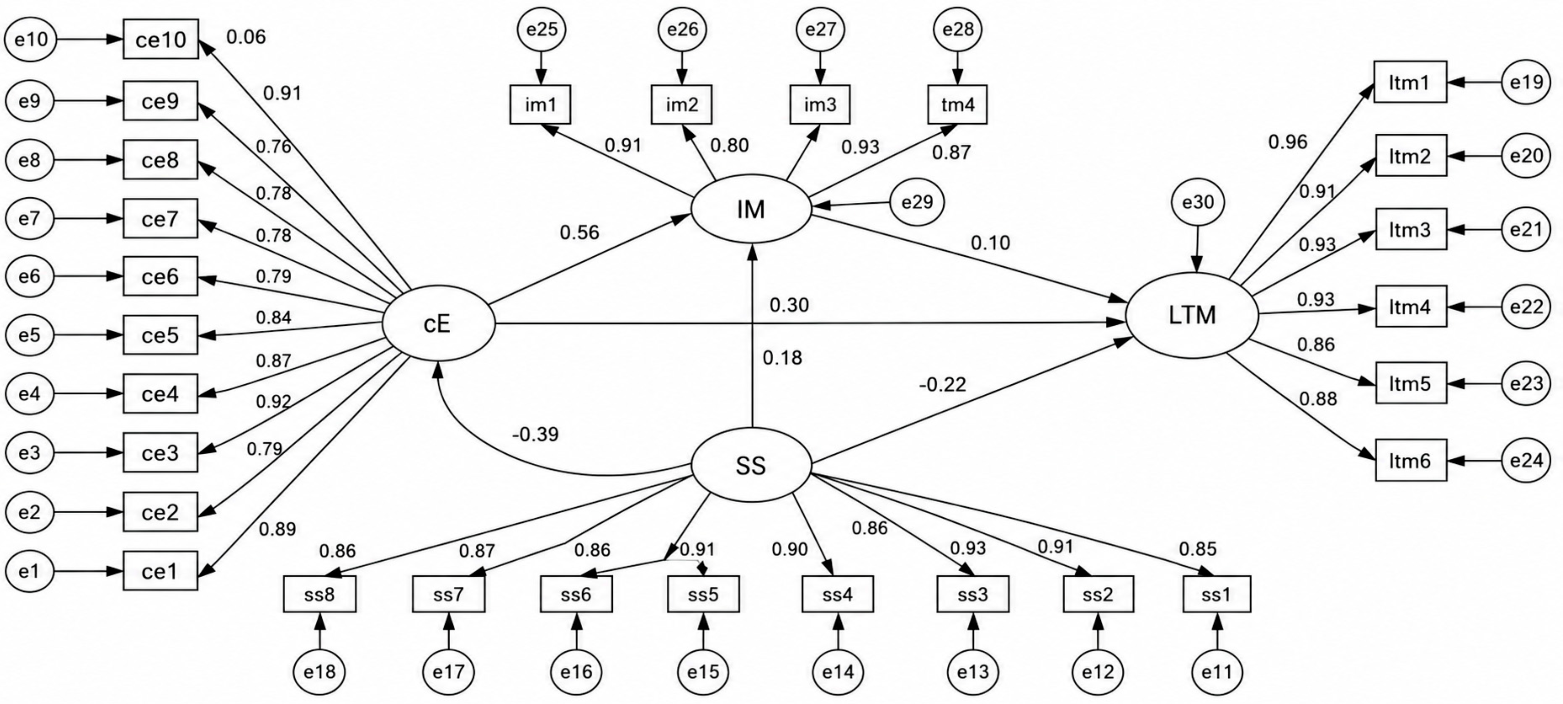
Given the presence of multiple latent constructs, the intention to test both direct and indirect relationships among these constructs within a single framework, and the need to evaluate the overall fit of the proposed model, Structural Equation Modeling (SEM) was selected as the primary analytical technique. SEM enables researchers to assess both the measurement model through Confirmatory Factor Analysis (CFA) and the structural relationships among latent variables simultaneously. Accordingly, a structural regression model was employed, allowing the measurement and structural models to be evaluated concurrently.
The theoretical framework of the study was grounded in Self-Determination Theory [
23]. Within this framework, the associations of curiosity and exploration and sensation seeking with intrinsic motivation, as well as the relationship between intrinsic motivation and leisure time motivation, were conceptually examined. The proposed structural model, developed in line with Self-Determination Theory, was empirically tested using SEM analysis.
2.2. Participants and Sampling
The study population consisted of individuals engaged in nature sports in Van Province, Batman Province, and members of the Batman University Nature Sports Community. A convenience sampling approach was used. Potential participants were identified through local nature sports communities in Van and Batman provinces and through the Batman University Nature Sports Community. The online questionnaire link was distributed electronically to individuals who were potentially eligible for the study. No random sampling procedure was applied.
To be eligible for participation, individuals were required to actively participate in nature-based recreational activities, particularly trekking, at least once per month. A total of 525 questionnaires were initially submitted. Of these, 12 responses were excluded before analysis because they did not meet the inclusion criteria or were incomplete, repeated, or inconsistent. The final analytical sample therefore consisted of 513 participants.
The inclusion criteria for participation were as follows: (1) being 18 years of age or older, (2) residing in Van Province or Batman Province or being a member of the Batman University Nature Sports Community, (3) participating in trekking or similar nature-based recreational activities at least once per month, (4) voluntarily agreeing to participate in the study, (5) completing the data collection form in full, and (6) declaring that they had not been diagnosed with any psychological disorder.
Because participants were recruited through an online convenience sampling procedure within a limited geographical and community-based sampling frame, the sample should be considered a regional convenience sample. Therefore, it was not intended to be statistically representative of all nature sports participants in Türkiye.
2.3. Data Collection Procedure
Data were collected using an online questionnaire administered via Google Forms (Google LLC, Mountain View, CA, USA) between March and June 2026. The questionnaire link was distributed electronically through Facebook (Meta Platforms, Inc., Menlo Park, CA, USA) groups and pages associated with local nature sports communities in Van and Batman provinces and the Batman University Nature Sports Community.
Participants completed the questionnaire individually and under unsupervised conditions using their own electronic devices. Before accessing the questionnaire, participants were provided with information about the purpose of the study, the voluntary nature of participation, anonymity, confidentiality of responses, eligibility criteria, and the approximate time required to complete the survey. Completion of the questionnaire required approximately 10–15 min. No fixed time limit was established.
No technical restriction limiting responses to one submission per participant was applied. However, the dataset was checked for incomplete, repeated, or inconsistent entries before analysis. Incomplete questionnaires were defined as forms with missing required responses or forms submitted without completing all sections. Incorrectly completed questionnaires were defined as responses that did not meet the eligibility criteria, contained inconsistent eligibility-related answers, or appeared to be repeated submissions. Only eligible and fully completed questionnaires were included in the final dataset.
2.4. Data Collection Instruments
Data were collected using a questionnaire consisting of two sections. The first section included items designed to obtain demographic information and participation-related data from the participants, while the second section comprised measurement instruments assessing the main variables of the study. The instruments used in the study were the Sensation Seeking Scale, the Curiosity and Exploration Inventory-II, the Intrinsic Motivation Scale, and the Leisure Time Motivation Scale.
The Turkish versions of the standardized scales previously validated in the literature were used in the present study. No new translation or back-translation procedure was conducted because Turkish adaptations of these instruments were already available. The scales were administered in their Turkish-adapted forms. For the Intrinsic Motivation Scale, participants were instructed to interpret work-related terms in relation to their participation in trekking and nature-based recreational activities, as described below.
2.4.1. Demographic Information Form
A demographic information form developed by the researchers was used to collect descriptive and participation-related data. The form included questions regarding gender, age, daily leisure time, frequency of participation in nature hiking activities per month, perceived income level, duration of involvement in nature sports, and primary reasons for participating in nature sports.
2.4.2. Sensation Seeking Scale (SSS)
The Sensation Seeking Scale developed by Hoyle et al. [
11] and adapted into Turkish by Çelik and Turan [
38] was used to determine the sensation-seeking levels of individuals participating in nature sports. The scale consists of 8 items and is structured as a 5-point Likert-type measure. In the Turkish adaptation study, the scale was reported to have a unidimensional structure, and no reverse-coded items were included. The items are rated on a scale ranging from “1 = strongly disagree” to “5 = strongly agree.”
2.4.3. Curiosity and Exploration Inventory-II (CEI-II)
To assess participants’ curiosity and exploration tendencies, the Curiosity and Exploration Inventory-II developed by Kashdan et al. [
39] and adapted into Turkish by Acun et al. [
40] was employed. The scale consists of 10 items and includes two subdimensions: stretching and embracing. The items are rated using a 5-point Likert-type scale ranging from “1 = strongly disagree” to “5 = strongly agree.”
2.4.4. Intrinsic Motivation Scale (IMS)
The Intrinsic Motivation Scale was originally developed to measure employees’ intrinsic motivation levels among two different employee groups in Norway [
41,
42]. The Turkish adaptation of the scale was conducted by Dev et al. [
43]. The scale consists of four items and uses a 5-point Likert-type response format ranging from “1 = strongly disagree” to “5 = strongly agree.” Since the original scale was developed within a work-related context, participants in the present study were instructed to interpret the terms “work,” “job,” and “tasks” as referring to their participation in trekking and nature-based recreational activities. Accordingly, all responses were provided with reference to their experiences in nature sports participation.
2.4.5. Leisure Time Motivation Scale (LTMS)
The Leisure Time Motivation Scale developed by Pelletier et al. [
44,
45] and adapted into Turkish by Güngörmüş [
46] was used to assess participants’ leisure time motivation levels. The items in the scale are evaluated on a 7-point Likert-type scale ranging from “1 = strongly disagree” to “7 = strongly agree.”
2.5. Statistical Analysis
The data analyses were conducted using IBM SPSS Statistics version 31.0 and IBM SPSS Amos version 31.0 (IBM Corporation, Armonk, NY, USA) for descriptive statistics and preliminary analyses, and for confirmatory factor analysis and structural equation modeling, respectively. Prior to the main analyses, the dataset was screened for missing data, incomplete responses, and outliers. Normality was assessed using skewness and kurtosis coefficients, with values within ±2 considered acceptable [
47,
48]. Multicollinearity among the independent variables was evaluated using Variance Inflation Factor (VIF) values, with values below 5 interpreted as indicating no serious multicollinearity problem [
49].
To evaluate the validity and reliability of the measurement model, Confirmatory Factor Analysis (CFA) was conducted. Factor loadings, Composite Reliability (CR), Average Variance Extracted (AVE), Cronbach’s alpha, and McDonald’s omega were examined. Factor loadings above 0.50 were considered acceptable indicators of convergent validity [
50], and CR values above 0.70 were interpreted as indicating satisfactory internal consistency [
51]. Discriminant validity was assessed using the Fornell–Larcker criterion by comparing the square root of the AVE values with inter-construct correlations.
Following the confirmation of the measurement model, the structural model was tested using Structural Equation Modeling (SEM) with Maximum Likelihood Estimation [
52]. Model fit was evaluated using the chi-square/degrees of freedom ratio (χ
2/df), Root Mean Square Error of Approximation (RMSEA), Comparative Fit Index (CFI), Goodness of Fit Index (GFI), Normed Fit Index (NFI), Tucker–Lewis Index (TLI), Adjusted Goodness of Fit Index (AGFI), and Standardized Root Mean Square Residual (SRMR). The fit criteria recommended by Hu and Bentler [
53] and Kline [
54] were adopted.
The proposed hypotheses were tested using standardized path coefficients (β), standard error values, Critical Ratio (C.R.) statistics, confidence intervals, and p-values. Statistical significance was evaluated at the p < 0.05 level. Direct, indirect, and total associations obtained from the structural model were examined to evaluate the relationships among the variables. Mediation analyses were conducted to determine whether intrinsic motivation mediated the relationships between curiosity and exploration, sensation seeking, and leisure time motivation. The significance of indirect effects was evaluated using a bootstrap resampling procedure with 5000 bootstrap samples. Bias-corrected 95% confidence intervals were calculated for indirect and total effects. An indirect effect was considered statistically significant when the confidence interval did not include zero.
2.6. Ethical Considerations
The study was conducted in accordance with the ethical principles of the Declaration of Helsinki. Ethical approval was obtained from the Batman University Measurement and Evaluation Ethics Sub-Committee. Participation in the study was voluntary and anonymous.
Before accessing the questionnaire, participants were provided with information about the purpose of the study, eligibility criteria, the voluntary nature of participation, anonymity, confidentiality of responses, and the right to withdraw before submitting the survey. Explicit informed consent was obtained electronically. Participants could proceed to the questionnaire only after confirming that they had read the study information and voluntarily agreed to participate. No personally identifying information was collected.
4. Discussion
The present study investigated the structural relationships among curiosity and exploration, sensation seeking, intrinsic motivation, and leisure time motivation in individuals participating in nature sports. The findings showed that intrinsic motivation was centrally positioned within the tested structural model and was significantly associated with the links between exploratory tendencies, sensation-seeking behaviors, and leisure time motivation.
From the perspective of Self-Determination Theory, the positive associations of curiosity and exploration and sensation seeking with intrinsic motivation can be interpreted in light of previous theoretical and empirical research on self-determined engagement. Self-Determination Theory proposes that intrinsic motivation is supported when individuals experience activities as autonomous, competence-enhancing, and inherently satisfying [
21,
23]. This interpretation is also consistent with research on adventure and outdoor recreation showing that participation is motivated by multiple psychologically meaningful experiences, including challenge, skill development, personal agency, engagement with nature, and intrinsically rewarding states, rather than by risk or excitement alone [
3,
15,
20]. In addition, research on curiosity and exploration has linked exploratory tendencies with positive subjective experiences and opportunities for personal growth [
36]. Taken together, this literature provides a theoretical basis for understanding why individuals with stronger exploratory and stimulation-seeking tendencies may also report stronger intrinsic motivation in nature-based activities.
The significant indirect associations observed through intrinsic motivation are also consistent with previous research emphasizing the importance of intrinsic and self-determined forms of motivation in leisure and recreational participation. Tsorbatzoudis et al. [
24] demonstrated the relevance of intrinsic and extrinsic motivational orientations in recreational sport participation, while Walker et al. [
25] showed that satisfaction of basic psychological needs during leisure is closely related to intrinsic motivation. Accordingly, the present findings extend this literature by demonstrating significant indirect associations of exploratory and sensation-seeking tendencies with leisure time motivation through intrinsic motivation within the tested structural model. However, because the present study was cross-sectional, these indirect associations should not be interpreted as evidence of a causal or temporal mechanism. Moreover, autonomy, competence, and relatedness were not directly measured; therefore, Self-Determination Theory should be regarded as a theoretical framework for interpreting the observed associations rather than as a mechanism directly tested in this study.
The descriptive findings provide additional context for this interpretation. Entertainment and enjoyment were the most frequently reported reasons for participation in nature sports in the present sample. Previous research has similarly shown that outdoor and adventure recreation is characterized by multiple coexisting motives, including enjoyment, challenge, exploration, freedom, nature-related experiences, and opportunities for personal development [
3,
9,
15,
20,
55]. Thus, the motivational profile observed in the present sample appears broadly consistent with previous research on nature-based and adventure participation. Nevertheless, these descriptive findings should not be interpreted as direct evidence of the satisfaction of autonomy, competence, or relatedness, because these psychological needs were not directly assessed in the present study.
The findings related to the measurement model demonstrated that the constructs included in the study exhibited satisfactory reliability and generally acceptable validity levels. The high Cronbach’s alpha and McDonald’s omega coefficients indicated strong internal consistency among the scales [
56,
57]. In addition, the AVE and CR values generally supported the convergent validity and composite reliability of the measurement model [
50,
51]. However, the discriminant validity results should be interpreted with some caution. Although discriminant validity was supported for most constructs, the intrinsic motivation construct showed partial overlap with leisure time motivation, as its MSV value slightly exceeded its AVE value and the square root of AVE for intrinsic motivation was slightly lower than its correlation with leisure time motivation. This overlap may be theoretically understandable because intrinsic motivation reflects internal enjoyment and satisfaction, which are closely related to broader leisure time motivation. Nevertheless, intrinsic motivation and leisure time motivation were retained as distinct constructs because they represent different theoretical concepts, were assessed using separate validated instruments, and demonstrated satisfactory reliability, composite reliability, and standardized factor loadings. Therefore, the measurement model was considered acceptable overall, although the association between intrinsic motivation and leisure time motivation should be interpreted in light of their conceptual proximity.
One of the main findings of the study was that curiosity and exploration were positively associated with intrinsic motivation. This result suggests that individuals who are more willing to seek novelty, explore unfamiliar experiences, and engage in diverse activities also tend to report higher intrinsic motivation toward nature sports participation. Previous research on outdoor and adventure participation has emphasized experiences and motives related to challenge, freedom, personal development, and psychologically meaningful engagement [
3,
15,
20]. Similarly, Kashdan et al. [
36] suggested that curiosity and exploration tendencies are related to voluntary engagement and intrinsic interest in activities. The present findings are consistent with these theoretical perspectives and indicate that exploratory tendencies may be considered psychological correlates of intrinsic motivation in nature sports settings. However, because of the cross-sectional design, these results should not be interpreted as evidence that curiosity and exploration causally increase intrinsic motivation.
The results further revealed that curiosity and exploration were positively associated with leisure time motivation. This finding suggests that individuals who actively seek new experiences and opportunities for discovery also tend to report stronger motivation to engage in leisure activities. Previous research has characterized outdoor and adventure participation as involving exploration, challenge, skill development, and opportunities for personal growth [
3,
15,
20], which may help contextualize the observed association between curiosity and exploration and leisure time motivation. This finding is consistent with previous research indicating that curiosity is associated with engagement, persistence, and active participation in leisure and recreational activities [
36]. Accordingly, the support found for H4 indicates that curiosity and exploration were associated with leisure time motivation both directly and indirectly through intrinsic motivation within the tested structural model.
The findings also showed that sensation seeking was positively associated with both intrinsic motivation and leisure time motivation. This result indicates that individuals who seek stimulation, novelty, excitement, and risk also tend to report greater motivational involvement in nature sports activities. Zuckerman [
17] conceptualized sensation seeking as a personality characteristic associated with risk-oriented and stimulating experiences, while Brymer and Schweitzer [
20] argued that nature sports participants are often motivated by the desire to challenge themselves, experience freedom, and pursue intense emotional experiences. In this context, the findings of the present study are consistent with previous literature suggesting that sensation-seeking tendencies are related to participation and motivational engagement in adventure and nature-based sports. However, unlike approaches that emphasize sensation seeking mainly as a risk- or adrenaline-oriented trait, the present model indicates that sensation seeking should be interpreted together with intrinsic motivation and curiosity-related tendencies when explaining leisure motivation in nature sports contexts. The significant direct association between sensation seeking and leisure time motivation is consistent with sensation-seeking theory and previous research emphasizing the role of stimulation, novelty, and intense experiences in adventure and nature-based participation [
17,
20]. Therefore, the findings provide support for H5 and highlight the relevance of sensation-seeking tendencies for leisure-related motivational outcomes.
Another important finding of the study was the positive association between intrinsic motivation and leisure time motivation. This finding suggests that leisure motivation is related not only to external rewards or social expectations but also to individuals’ internal satisfaction, enjoyment, and voluntary engagement. According to Self-Determination Theory, intrinsic motivation is an important component of sustained behavioral participation [
21]. Therefore, individuals who report greater enjoyment and personal meaning in nature sports may also report stronger leisure time motivation. Previous research similarly demonstrated that intrinsically motivated individuals tend to maintain participation for longer periods and experience higher levels of psychological satisfaction in recreational activities [
24,
25]. These findings provide support for H3.
The mediation analyses showed significant indirect associations of both curiosity and exploration and sensation seeking with leisure time motivation through intrinsic motivation. These findings indicate a statistical pattern consistent with partial mediation within the tested structural model and should not be interpreted as evidence of a causal or temporal process. The theoretical relevance of intrinsic motivation in these associations is supported by Self-Determination Theory, which conceptualizes intrinsic motivation as engagement driven by inherent interest, enjoyment, and satisfaction and emphasizes the motivational importance of autonomy and competence [
21,
23]. Empirical research in leisure contexts has further shown that satisfaction of basic psychological needs is associated with stronger intrinsic motivation during leisure participation [
25], while research on recreational sport has demonstrated the relevance of intrinsic motivational orientations for participation [
24]. Thus, the present indirect associations are broadly consistent with an established literature linking intrinsically regulated motivation with meaningful leisure and recreational engagement.
The indirect association involving curiosity and exploration can also be interpreted in relation to previous research on exploratory tendencies. Kashdan et al. [
36] described curiosity and exploration as psychological tendencies that facilitate engagement with novel experiences, positive subjective experiences, and opportunities for personal growth. In the context of outdoor and adventure activities, previous studies have similarly identified exploration, challenge, skill development, and psychologically rewarding experiences as important components of participation [
3,
15]. The present findings are therefore consistent with the possibility that individuals with stronger exploratory tendencies may experience nature-based activities as more inherently interesting and rewarding, which may be reflected in stronger intrinsic motivation and, in turn, stronger leisure time motivation. Because the data are cross-sectional, however, this proposed interpretation represents theoretical consistency with previous literature rather than a demonstrated temporal mechanism.
A complementary interpretation applies to sensation seeking. Sensation-seeking theory emphasizes the tendency to seek novel, varied, complex, and intense experiences [
17]. However, research on adventure and extreme sports indicates that participation cannot be explained solely by risk or thrill seeking. Brymer and Schweitzer [
20], for example, highlighted the importance of experiences related to freedom and personally meaningful engagement, while broader research on adventure sport motivation has identified multiple motives extending beyond sensation and risk [
3]. The significant indirect association through intrinsic motivation in the present study is consistent with this broader perspective, suggesting that stimulation-seeking tendencies may coexist with intrinsically rewarding aspects of participation. At the same time, the persistence of significant direct associations between curiosity and exploration, sensation seeking, and leisure time motivation indicates partial rather than full statistical mediation. This pattern is consistent with the multidimensional nature of motivation in outdoor and adventure recreation reported in previous research [
3,
9,
15]. Intrinsic motivation should therefore be interpreted as one theoretically relevant component of these associations rather than as the sole explanatory mechanism.
However, the present findings also suggest a more nuanced interpretation of motivational involvement in nature sports. Sensation seeking was not the only relevant factor in the tested model; curiosity and exploration also showed meaningful associations with intrinsic motivation and leisure time motivation. This pattern is consistent with research suggesting that participation in outdoor and adventure activities reflects multiple motives and experiential processes rather than a single motivation based primarily on risk or stimulation [
3,
15,
20]. Accordingly, motivation for nature sports may be associated not only with the search for excitement and novelty but also with exploration, challenge, personal growth, and intrinsically rewarding engagement [
3,
20,
36].
The findings also extend previous studies on intrinsic motivation and leisure participation. Prior research has shown that intrinsically motivated individuals tend to maintain participation for longer periods and experience greater psychological satisfaction in recreational activities [
24,
25]. The present study is consistent with these findings, as intrinsic motivation showed the strongest association with leisure time motivation. At the same time, the current model goes beyond earlier direct-effect approaches by examining intrinsic motivation as an indirect explanatory link between exploratory and sensation-seeking tendencies and leisure time motivation. Because previous studies have rarely tested this integrated model among nature sports participants, direct contradictions with earlier findings are difficult to establish. Rather, the present results should be understood as extending existing scholarship by demonstrating that the pattern of associations among curiosity and exploration, sensation seeking, intrinsic motivation, and leisure time motivation is consistent with the proposed Self-Determination Theory-based framework.
The SEM results indicated that the proposed structural model showed an adequate fit to the observed data and was theoretically consistent with the proposed conceptual framework. This supports the interpretation that the observed pattern of associations among curiosity and exploration, sensation seeking, intrinsic motivation, and leisure time motivation is coherent with the Self-Determination Theory-based model tested in the present study. However, the adequacy of model fit should be interpreted together with the cross-sectional design and the limitations related to sampling and self-reported data.
4.1. Practical Implications
The findings of this study may have practical relevance for different stakeholders involved in nature sports and recreational participation. Although the cross-sectional design does not allow causal conclusions, the observed associations among curiosity and exploration, sensation seeking, intrinsic motivation, and leisure time motivation suggest several ways in which nature-based programs may be designed to support meaningful and motivating participation.
For nature sports instructors and outdoor activity guides, the findings suggest the value of designing sessions that include novelty, exploration, and manageable challenge. In practice, this may involve introducing varied routes, unfamiliar natural environments, progressive task difficulty, and opportunities for participants to make choices during the activity. Guides may also support intrinsic motivation by emphasizing enjoyment, personal discovery, skill development, and reflection rather than focusing only on physical performance or risk.
For nature sports clubs and recreational organizations, the results indicate the importance of offering diversified programs that address both exploratory and stimulation-seeking tendencies. Programs may include beginner-friendly trekking activities, advanced challenge-based routes, group exploration events, and activities that combine physical challenge with learning about natural environments. Such program diversity may help participants with different motivational profiles find activities that feel enjoyable, meaningful, and personally relevant.
For university sport communities, the findings suggest that nature sports programs may be particularly useful when they combine social interaction, autonomy, and experiential learning. University-based programs could include peer-led outdoor activities, orientation walks for new members, progressive skill-building workshops, and group reflection sessions after activities. These elements may help young participants perceive nature sports not only as physical activity but also as a context for social connection, self-development, and intrinsically rewarding leisure engagement.
For recreation planners and local institutions, the findings highlight the importance of creating accessible and varied nature-based recreational opportunities. This may include developing safe trekking routes with different difficulty levels, providing information about route characteristics, supporting organized community-based nature activities, and promoting programs that encourage voluntary participation, exploration, and enjoyment. Such initiatives may help broaden participation in nature sports and support psychologically meaningful leisure experiences.
Overall, the practical implications of the study suggest that nature sports programs should not be designed solely around physical participation or risk-based excitement. Instead, programs may benefit from integrating opportunities for curiosity, exploration, manageable challenge, social connection, and intrinsic enjoyment. These implications should be interpreted cautiously, as further longitudinal and intervention-based research is needed to determine whether specific program features directly increase intrinsic motivation or leisure time motivation.
4.2. Limitations
Several limitations of the present study should be acknowledged. First, the cross-sectional design limits the ability to establish causal relationships among the variables. Therefore, the findings should be interpreted within a correlational framework. Second, the data were collected using self-report measures, which may increase the possibility of social desirability bias and subjective response tendencies.
Another limitation concerns the use of online convenience sampling and the geographically limited sampling frame. Participants were recruited from Van Province, Batman Province, and the Batman University Nature Sports Community, which restricts the representativeness of the sample. Therefore, the findings should not be generalized to all nature sports participants in Türkiye. In addition, the sample consisted mainly of young adults, suggesting that the relationships among the variables may differ across age groups, regions, cultural settings, and levels of experience in nature-based sports. The Intrinsic Motivation Scale was originally developed within a work-related context. Although the scale items were adapted for nature sports participation and the validity and reliability findings were acceptable, future validation work is needed to examine its use in different recreational and cultural contexts.
Another limitation concerns the measurement properties of the Turkish-adapted scales in the present sample. Although previously validated Turkish versions of the scales were used, measurement invariance across demographic subgroups was not tested. Therefore, the stability of the measurement model across gender, age groups, student versus non-student participants, or different levels of experience in nature sports cannot be fully confirmed.
In addition, although sociodemographic and participation-related characteristics such as gender, age, participation frequency, and experience in nature sports were collected and reported descriptively, they were not included as control variables in the structural model. Therefore, the observed relationships should be interpreted without adjustment for these participant characteristics.
Because all variables were assessed using self-report questionnaires, the possibility of common method bias and subjective response tendencies cannot be fully excluded.
4.3. Future Research Directions
Future studies should consider longitudinal or experimental designs to examine the temporal ordering and potential causal relationships among curiosity and exploration, sensation seeking, intrinsic motivation, and leisure time motivation. Such designs would help determine whether changes in intrinsic motivation are associated with subsequent changes in leisure time motivation over time.
Future research may also extend the proposed model by incorporating additional psychological variables, such as self-efficacy, psychological resilience, flow experience, life satisfaction, perceived autonomy, competence, and relatedness. Including direct measures of the basic psychological needs proposed by Self-Determination Theory would allow researchers to test more precisely how these needs are associated with intrinsic motivation and leisure-related motivation in nature sports contexts. Cross-cultural studies and studies involving more diverse age groups and recreational populations would also provide a deeper understanding of how motivational processes in nature sports participation may differ across social and cultural settings.
5. Conclusions
The present study provides a structural interpretation of how curiosity and exploration, sensation seeking, intrinsic motivation, and leisure time motivation are associated among nature sports participants. Rather than treating exploratory tendencies, stimulation-seeking tendencies, and leisure motivation as separate constructs, the study integrates them into a single theoretical model grounded in Self-Determination Theory and Sensation-Seeking Theory.
The main theoretical contribution of the study lies in showing that intrinsic motivation may represent an important explanatory link within this model. The findings suggest that curiosity and exploration and sensation seeking are associated with leisure time motivation both directly and indirectly through intrinsic motivation. The partial mediation pattern indicates that intrinsically rewarding experiences, enjoyment, interest, and voluntary engagement may help explain part of these relationships, while other factors, such as novelty, challenge, stimulation, social interaction, and personal growth, may also be relevant. Therefore, intrinsic motivation should be understood as an important but not exclusive theoretical link between individual tendencies and leisure-related motivation.
The study also contributes to the literature by applying this integrated model to nature sports participants, a context in which motivation is shaped not only by physical activity but also by exploration, environmental experience, challenge, and personal meaning. The results support the usefulness of examining nature sports participation through a broader psychological framework that includes both personality-related tendencies and motivational processes.
From a practical perspective, the findings may inform outdoor recreation organizations, nature sports clubs, university sport communities, instructors, guides, and local recreation planners. Programs may benefit from incorporating varied routes, opportunities for discovery, progressive levels of challenge, skill-development activities, group-based exploration, and reflective elements that support enjoyment and personal meaning. Such strategies may help create nature-based recreational experiences that are not limited to physical participation or risk-based excitement, but also support curiosity, intrinsic enjoyment, and psychologically meaningful leisure engagement.
Overall, the value of this study lies in connecting theoretical explanation with practical relevance. The findings suggest that leisure time motivation in nature sports is associated with both exploratory and sensation-seeking tendencies and with intrinsic motivation. However, because the study used a cross-sectional design and a regional convenience sample, these conclusions should be interpreted as associations within the tested structural model rather than as evidence of causal effects. Future longitudinal and intervention-based studies are needed to verify whether specific program features can strengthen intrinsic motivation and support sustained participation in nature sports.




 ,
,