1. Introduction
Fibromyalgia (FM) is a chronic condition characterised by widespread pain, persistent fatigue, sleep disturbances and cognitive difficulties, including impaired memory and concentration [
1,
2]. Despite advances in the understanding of FM pathophysiology, its clinical management remains challenging. Pharmacological treatments generally provide modest benefits, and current clinical guidelines emphasize the importance of multidisciplinary approaches combining exercise, patient education, and lifestyle-related strategies as core components of long-term management [
3].
Within this context, plant-based dietary patterns have emerged as a promising therapeutic strategy. Diets rich in vegetables, fruits, legumes, whole grains, nuts, and seeds have been associated with improvements in cardiometabolic health and inflammatory status, factors that may be relevant to the management of FM [
4,
5,
6]. More recently, randomized controlled trials have begun to explore the potential role of plant-based dietary interventions in FM, although evidence in this population remains scarce [
7]. However, long-term adherence to these dietary strategies may be challenging due to several perceived barriers, including concerns regarding nutritional adequacy and the risk of nutrient deficiencies, together with insufficient nutritional knowledge and limited culinary skills to plan and prepare balanced plant-based meals [
8,
9,
10].
In addition, social, practical, and behavioural factors may represent a major challenge for the successful implementation of plant-based dietary interventions. Key factors influencing adherence include lack of social support, difficulties navigating social eating situations, time constraints, established dietary habits, attachment to animal-based foods, and concerns about food availability and affordability. Collectively, they may further compromise the long-term sustainability of these dietary patterns [
8,
9,
10].
In nutritional interventions, adherence is a key mediator of clinical effectiveness, as the potential benefits of a dietary pattern depend on participants’ ability to implement and maintain it over time [
11]. This issue may be particularly relevant in FM, a chronic condition in which sustained lifestyle changes are likely required to achieve meaningful and durable benefits. However, little is known about the factors that determine adherence to a vegan Mediterranean diet in individuals with FM. Moreover, it remains unclear whether greater adherence to this dietary pattern is associated with greater improvements in clinical outcomes. Addressing these questions may help optimize future dietary interventions and facilitate their integration into routine clinical practice.
The FIBROVEG randomized controlled trial previously demonstrated that a vegan Mediterranean diet improved lipid profile, including triglycerides and low-density lipoprotein cholesterol (LDL-c), while also improving key FM-related symptoms such as pain and fatigue, compared with a traditional Mediterranean diet [
12]. Building upon these findings, we hypothesized that higher adherence to the prescribed dietary intervention would be associated with greater improvements in cardiometabolic and clinical outcomes and that adherence would be lower among participants assigned to the vegan Mediterranean diet than among those following the traditional Mediterranean diet. Therefore, this secondary analysis aimed to quantify overall adherence to the prescribed dietary intervention, identify determinants of dietary adherence, including diet satisfaction and perceived implementation barriers, and explore potential relationships between adherence and changes in clinical outcomes in women with FM, generating hypotheses for future studies.
2. Material and Methods
2.1. FIBROVEG Study
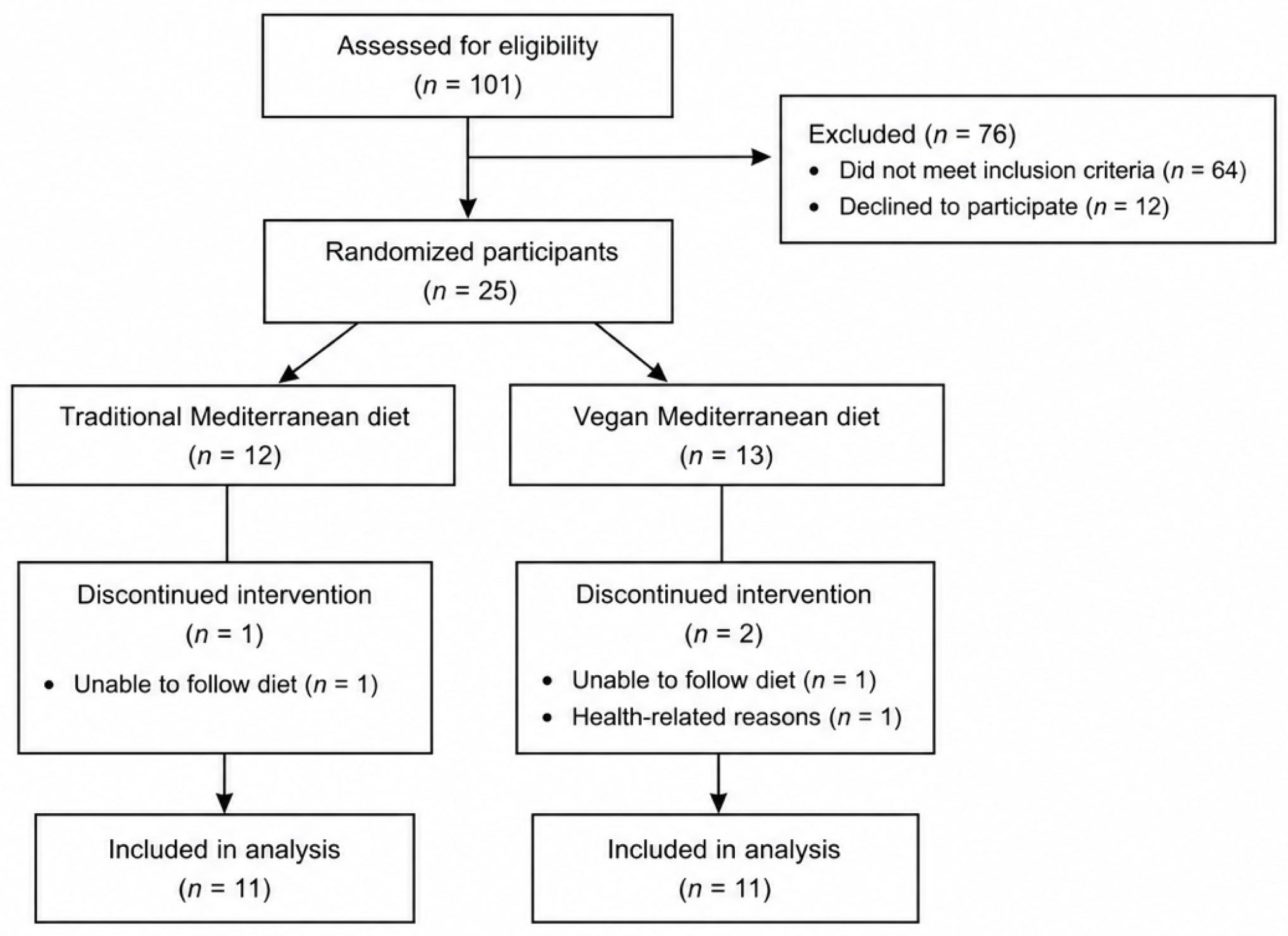
This secondary analysis was based on data from the FIBROVEG randomized controlled trial, which has been described previously [
12]. Briefly, women with FM were randomly assigned to follow either a vegan Mediterranean diet or a traditional Mediterranean diet for six weeks. Both dietary interventions were isocaloric, individually tailored, and matched for macronutrient distribution, differing primarily in the replacement of animal-based protein and fat sources with plant-based alternatives in the vegan Mediterranean diet group. Outcome assessments were conducted at baseline and post-intervention, and questionnaires assessing diet satisfaction, self-efficacy, and perceived barriers to adherence were administered at week 6.
2.2. Participant Recruitment and Eligibility
Sample size estimation was performed using G*Power software (version 3.1.9.7; Heinrich Heine University Düsseldorf, Germany) based on LDL-c, the primary outcome of the original FIBROVEG trial [
12]. As this study represents a secondary analysis of the original trial, the sample size was determined by the parent study rather than by the objectives of the present analyses. Calculations were informed by the minimum clinically important difference for LDL-c reported in previous meta-analyses. Assuming an expected between-group effect size of 0.50, a statistical power of 80%, and a two-sided significance level of 0.05, a minimum of 22 participants was required. To compensate for an anticipated dropout rate of 10%, the target sample size was increased to 24 participants. This estimate was considered conservative, as the primary analyses were based on linear mixed-effects models that accounted for repeated measurements and within-subject correlations, thereby improving statistical efficiency.
Participants were recruited through advertisements disseminated by the Fibromyalgia Patients Association (AFIBROM, Madrid, Spain) and social media platforms. Eligible participants were women aged 18–50 years with a clinical diagnosis of FM according to the American College of Rheumatology criteria, who were non-smokers, consumed less than one standard alcoholic drink per day, and had maintained stable pharmacological treatment for at least four weeks before enrolment. Participants receiving medications that could influence the primary outcomes, including weight-loss, lipid-lowering, or antihypertensive drugs, were not eligible for participation. Exclusion criteria included pregnancy, breastfeeding, menopausal status, physical limitations that could interfere with the functional assessments, and the presence of concomitant inflammatory diseases. Eligibility was assessed through a study-specific screening procedure, including a detailed evaluation of medical history and lifestyle characteristics. Before enrolment, participants were fully informed about the study procedures and the potential risks and discomforts associated with participation, after which written informed consent was obtained. The study protocol was approved by the Ethics Committee of Universidad Francisco de Vitoria (approval No. 57/2024), conducted in accordance with the Declaration of Helsinki and its subsequent amendments, and registered at ClinicalTrials.gov (NCT06804460).
2.3. Dietary Interventions
Participants were randomly assigned to either the vegan Mediterranean diet or the traditional Mediterranean diet using a block randomization procedure to ensure balanced allocation between groups. The randomization sequence was generated by an independent researcher using the online platform Research Randomizer, based on a unique identification code assigned to each participant. Allocation concealment was maintained until the assignment of participants to the intervention groups. The researcher who generated the allocation sequence was also responsible for implementing the randomization procedure. Before starting the intervention, all participants underwent a nutritional assessment conducted by a registered dietitian, including anthropometric measurements and an evaluation of habitual dietary intake. Basal metabolic rate was estimated using the Harris–Benedict equation and multiplied by the corresponding physical activity factor to estimate total daily energy expenditure. Based on these calculations, individualized isocaloric meal plans were developed for each participant with the aim of maintaining body weight throughout the six-week intervention while ensuring a comparable macronutrient distribution between dietary groups.
The traditional Mediterranean diet was designed according to established Mediterranean dietary principles and emphasized a high intake of minimally processed plant foods, moderate consumption of fish, poultry, low-fat dairy products, and eggs, and limited consumption of red and processed meats, while excluding sweets [
13]. Olive oil was the principal source of added fat, and animal-derived foods accounted for approximately 60% of total protein intake. The vegan Mediterranean diet retained the core characteristics of the Mediterranean dietary pattern but excluded all animal-derived products, including meat, fish, dairy products, and eggs. In this dietary approach, plant protein intake was increased primarily through foods traditionally present in the Mediterranean diet, particularly legumes and nuts, rather than through the incorporation of novel or alternative products (
Supplementary Table S1). To prevent vitamin B12 deficiency, participants assigned to the vegan Mediterranean diet received cyanocobalamin supplementation (1000 µg) twice weekly throughout the intervention period [
14].
Participants followed their assigned dietary pattern for six weeks. Dietary intake was monitored using three 24-h dietary recalls collected at week 6, including two non-consecutive weekdays and one weekend day. Participants reported all foods and beverages consumed, including alcoholic beverages, portion sizes, cooking methods, and timing of consumption. In addition, photographs of meals were requested to improve the accuracy of dietary assessment. Dietary data were analysed using specialized nutritional analysis software (Dietopro, Valencia, Spain;
https://dietopro.com) [
15]. Throughout the intervention, participants received weekly individualized support from the research team, together with continuous communication to answer questions, provide dietary guidance, and encourage compliance with the assigned dietary protocol.
2.4. Dietary Adherence Score
A study-specific dietary adherence score was developed a priori for this trial based on the dietary targets established for each intervention group, as no validated instrument was available to quantify adherence to the prescribed dietary interventions. The score included seven key dietary domains reflecting the main components of the traditional Mediterranean diet and the vegan Mediterranean diet: fruit intake, vegetable intake, cereals, olive oil, nuts/seeds, legumes, and discretionary foods (including sweets, processed meat and red meat, according to the corresponding dietary prescription).
For each dietary component, participants received 2 points when the prespecified dietary target was achieved, 1 point when intake was within 50% of the target threshold (partial adherence), and 0 points otherwise. For components with minimum intake recommendations, partial adherence was defined as achieving at least 50% of the prescribed target. For components with maximum intake recommendations, partial adherence was defined as exceeding the prescribed limit by no more than 50%. For components with target intake ranges, full adherence required intake within the recommended range, whereas partial adherence corresponded to intakes falling within 50% of the nearest range boundary. This simple scoring system was selected to distinguish full, partial, and non-adherence while maintaining a practical and easily interpretable measure of compliance across all dietary components. Detailed scoring criteria are provided in
Supplementary Table S2.
The overall adherence score was calculated as the unweighted sum of the seven dietary component scores, ranging from 0 to 14 points, with higher values indicating greater compliance with the prescribed dietary intervention. To facilitate interpretation, adherence was additionally expressed as a percentage of the maximum possible score:
2.5. Questionnaires
2.5.1. Multidimensional Fatigue Inventory
Fatigue, one of the hallmark symptoms of FM, was evaluated using the validated Spanish version of the Multidimensional Fatigue Inventory (MFI) [
16]. The MFI is a self-administered questionnaire comprising 20 items grouped into five dimensions: general fatigue, physical fatigue, mental fatigue, reduced activity, and reduced motivation. Each dimension includes four items scored on a 5-point Likert scale ranging from 1 (“strongly disagree”) to 5 (“strongly agree”). Item scores were summed to obtain a total score ranging from 20 to 100, with higher scores reflecting greater fatigue severity [
17,
18].
2.5.2. Fibromyalgia Impact Questionnaire
The impact of fibromyalgia was evaluated using the validated Spanish version of the Fibromyalgia Impact Questionnaire (FIQ) [
19]. This disease-specific, self-administered instrument comprises 10 domains assessing physical functioning, work status, pain, fatigue, morning tiredness, stiffness, anxiety, and depression during the previous week. Total scores range from 0 to 100, with higher values indicating a greater impact of the disease and more severe symptoms.
2.5.3. Dietary Adherence Questionnaires
Diet satisfaction was evaluated using the validated 28-item Diet Satisfaction Questionnaire (D-Sat28), a self-administered instrument developed to assess participants’ perceptions of their dietary experience across different domains [
20]. The questionnaire includes five dimensions: healthy lifestyle, eating out, cost, preoccupation with food, and planning and preparation. Each item is rated on a 5-point Likert scale ranging from 1 (“strongly disagree”) to 5 (“strongly agree”), with higher scores reflecting greater satisfaction with the prescribed diet.
Perceived barriers to adherence were assessed at week 6 using a questionnaire previously employed by other researchers [
4] in similar studies. Participants were presented with a list of potential barriers associated with following the prescribed dietary pattern and were asked to indicate, in a dichotomous manner (yes/no), all barriers experienced during the previous weeks. The questionnaire included 13 potential barriers covering nutritional, practical, behavioral, and social aspects of dietary implementation, including busy lifestyle, food cost, limited cooking skills, unfamiliar foods, time required for meal preparation, established eating habits, and perceived satiety.
2.6. Cardiometabolic and Inflammatory Assessments
Laboratory assessments were performed at baseline and after the 6-week intervention following an overnight fast of at least 8 h. Capillary blood samples were obtained by fingertip puncture for the determination of low-density lipoprotein cholesterol (LDL-c) and triglyceride (TG) concentrations using a point-of-care multi-parameter analyser (Biochemical Systems International, Arezzo, Italy). White blood cell counts (neutrophils, eosinophils, lymphocytes, and monocytes) were assessed with the HemoCue
® WBC System (Ängelholm, Sweden). The neutrophil-to-lymphocyte ratio (NLR) was then calculated by dividing the neutrophil count by the lymphocyte count and used as a marker of systemic inflammation [
21].
2.7. Statistical Analysis
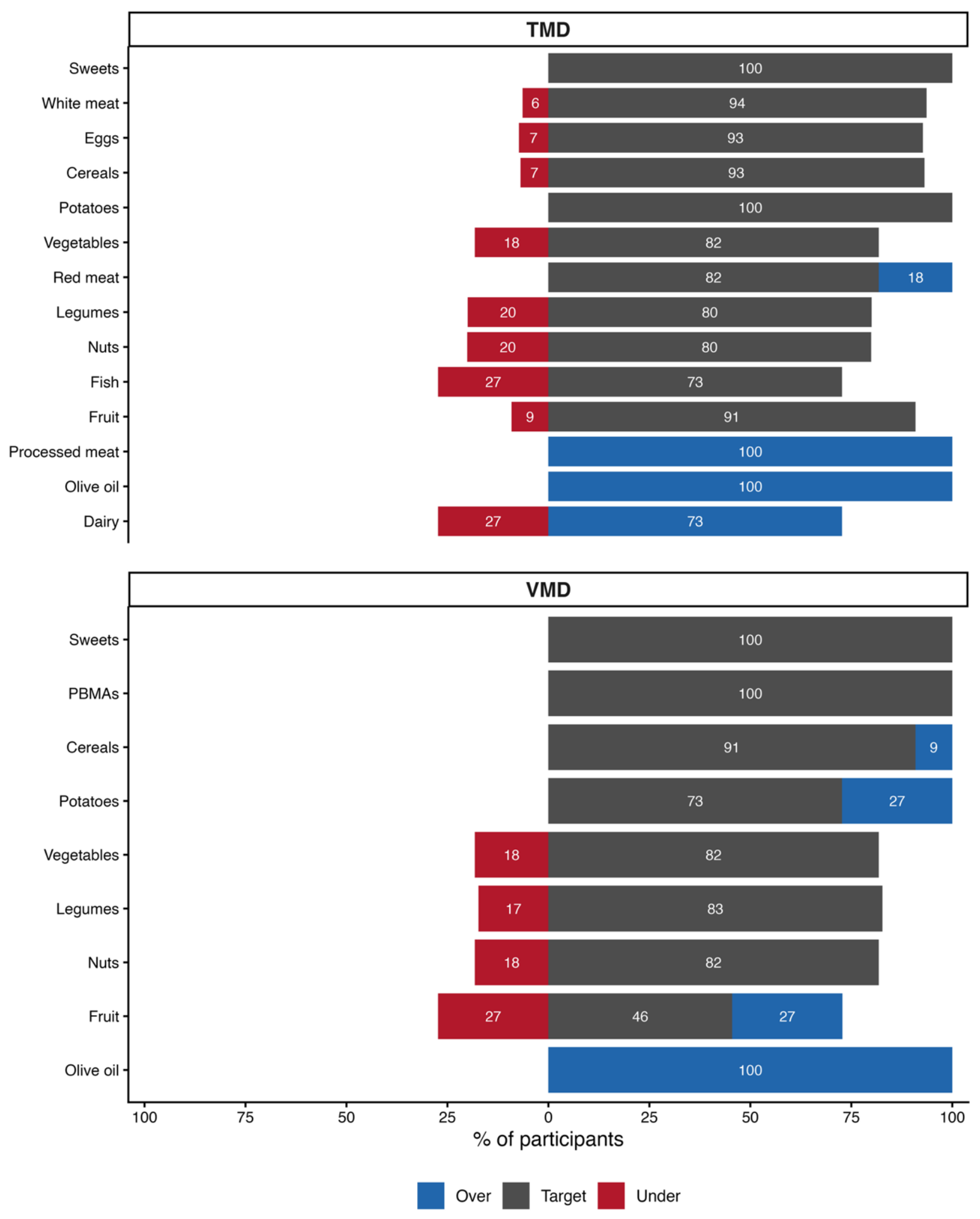
Statistical analyses were performed using R statistical software (version 4.5.2) and RStudio (version 2025.09.2+418). Continuous variables are presented as mean ± standard deviation (SD), whereas categorical variables are reported as frequencies and percentages. Overall adherence scores were summarized descriptively for each intervention group. Food-group adherence patterns were characterized by the proportion of participants whose intake fell below, within, or above the predefined targets for each dietary pattern.
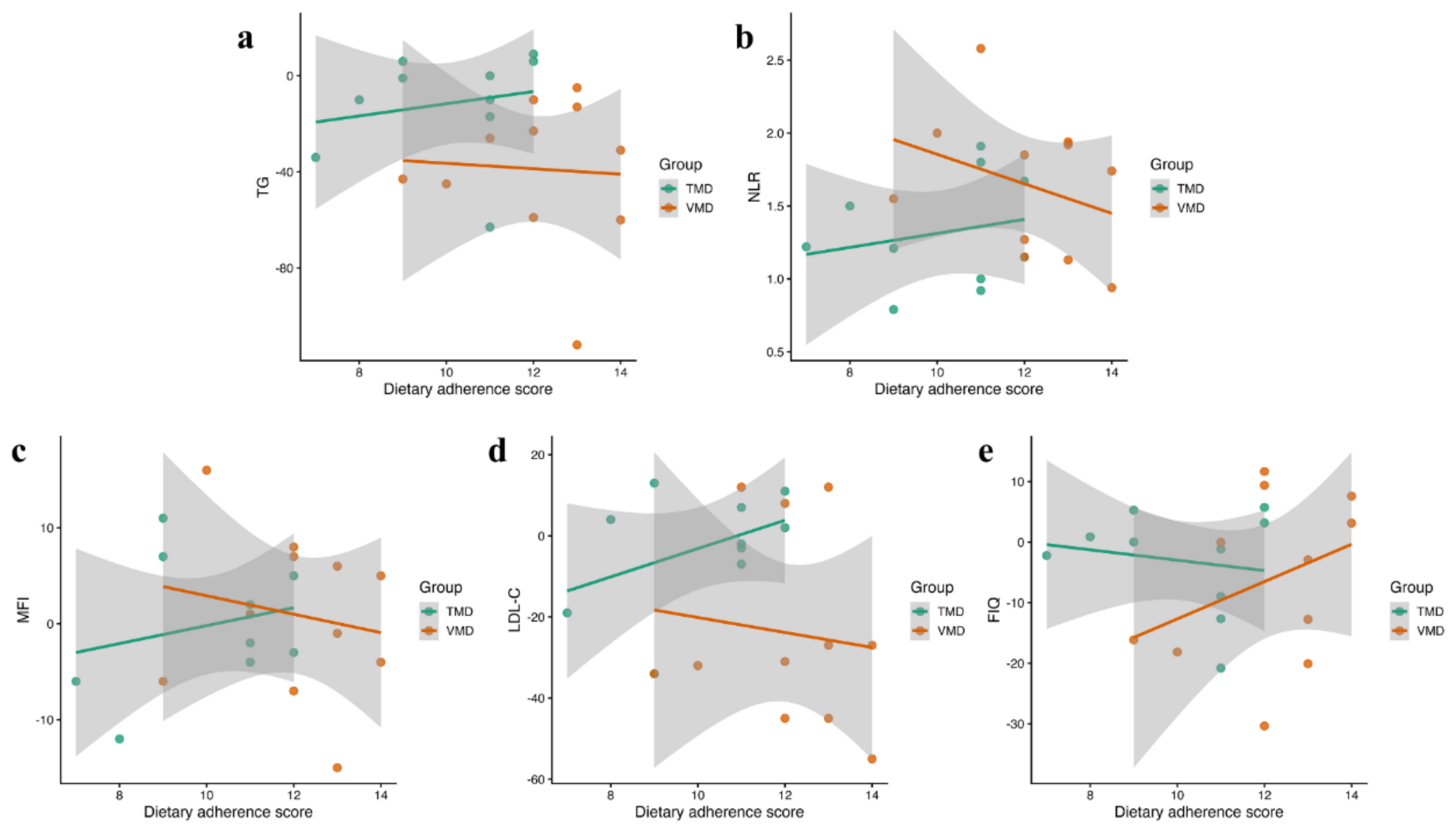
Associations between adherence scores and potential determinants, including diet satisfaction and perceived implementation barriers, were examined separately within each intervention group using Spearman rank correlation coefficients (ρ). Correlation analyses were performed separately because the adherence score was defined according to the dietary targets specific to each dietary intervention, and the aim was to explore the relationship between adherence and clinical response within each dietary pattern rather than across interventions. Exploratory analyses were also conducted to examine the relationship between adherence scores and changes in clinical outcomes from baseline to post-intervention, including LDL-c, TG, NLR, FIQ and MFI total score. Ninety-five percent confidence intervals (CI) were estimated using bias-corrected and accelerated (BCa) bootstrap resampling with 10,000 iterations. To account for multiple testing, false discovery rate (FDR) adjusted
p-values were additionally calculated using the Benjamini–Hochberg procedure and are presented in
Supplementary Table S3. Given the limited sample size of this secondary analysis, these correlation analyses were considered exploratory and hypothesis-generating rather than confirmatory. More complex pooled or multivariable models simultaneously accounting for diet group and adherence were not considered appropriate because of the limited sample size. All tests were two-sided, and statistical significance was established at
p < 0.05.
4. Discussion
Overall, our findings partially supported our hypotheses. Greater adherence was associated with more favourable cardiometabolic and clinical outcomes, whereas adherence to the vegan Mediterranean diet was higher than initially hypothesized. An important finding of this study is that, in women with fibromyalgia following a vegan Mediterranean diet, adherence varied between participants and correlated with changes in selected clinical outcomes despite the structured nature of the intervention. These findings suggest that adherence should be considered a clinically relevant component of plant-based dietary interventions in women with fibromyalgia, not only as a measure of feasibility but also as a potential determinant of therapeutic response.
Participants assigned to the vegan Mediterranean diet achieved high adherence, reaching 86.4% of the maximum attainable adherence score. This finding is noteworthy because previous intervention studies have identified several factors that may compromise the long-term implementation of vegan dietary patterns, including reduced confidence in maintaining the diet and practical challenges associated with its adoption [
22]. The successful adoption of plant-based dietary patterns may also depend not only on participants’ baseline dietary habits but also on the level of support provided during the intervention. Previous studies have suggested that individuals with dietary patterns already rich in fruits, vegetables, nuts, seeds, and whole-grain bread may find the transition easier [
23]. This issue may be particularly relevant in women with fibromyalgia, who have been reported to consume suboptimal amounts of several foods that characterize healthy dietary patterns [
24]. Nevertheless, our findings suggest that these barriers do not necessarily preclude successful implementation when structured support is provided. In line with previous evidence in individuals with chronic diseases [
25], the individualized dietary counselling, regular follow-up, and continuous support implemented throughout the intervention may have facilitated the high adherence observed in the present study.
Despite the high adherence observed, participants assigned to the vegan Mediterranean diet reported several implementation barriers, particularly a busy lifestyle, the time required for meal preparation, and unfamiliarity with some prescribed foods. Interestingly, these perceived difficulties did not appear to compromise objective adherence, suggesting that implementation barriers and actual adherence may represent distinct dimensions of the dietary experience. We have identified multiple barriers to the adoption of plant-based dietary patterns, including limited food preparation skills [
10,
26], concerns about nutritional adequacy [
8,
10,
27], restricted availability of plant-based products [
10], established eating habits and attachment to animal-source foods [
8] and practical barriers such as convenience, social support and perceived stigma [
27]. In contrast, the barriers identified in our study were predominantly practical and related to the day-to-day feasibility of implementing the diet. This may reflect the structured nature of the intervention, whereby individualized dietary counselling and regular follow-up may have alleviated concerns regarding nutritional adequacy and allowed participants to focus primarily on the practical aspects of dietary implementation. Interestingly, diet satisfaction was not associated with adherence in either intervention group, suggesting that participants’ subjective perceptions of the diet did not necessarily translate into objective dietary compliance under the structured conditions of the intervention.
Another noteworthy observation was that olive oil intake exceeded the prescribed amount in both intervention groups. This may suggest that olive oil was an easily adopted component of the dietary interventions under the structured conditions of this study, in contrast to other dietary components that were perceived as more challenging. Although this finding could have implications for the design of future Mediterranean-based dietary interventions, its potential contribution to adherence or clinical outcomes cannot be determined from the present secondary analysis and warrants further investigation.
An important finding of this study was that greater adherence to the vegan Mediterranean diet was associated with larger improvements in LDL-c, NLR, and fatigue, whereas no significant associations were observed for triglycerides or overall FM impact. However, due to the cross-sectional nature of this correlation at the end of the intervention, the direction of this relationship cannot be established. In this context, the expected physiological effects depend on the consistent replacement of animal-derived foods with nutritionally adequate plant-based foods, together with sufficient intake of legumes, whole grains, fruits, vegetables, nuts and seeds. Therefore, limited adherence may attenuate the contrast between intervention and control diets and lead to an underestimation of the potential effect of the dietary pattern [
28]. Such findings may also help explain the heterogeneous effects reported across previous studies [
29,
30,
31,
32]. Although differences between studies are often attributed to population characteristics, intervention duration, dietary composition, or comparator groups, variability in the actual implementation of the prescribed diet is less frequently quantified and may represent an important source of between-study heterogeneity [
33,
34]. This issue may be particularly relevant in nutritional interventions, in which the effectiveness of the intervention depends not only on the prescribed dietary pattern itself, but also on participants’ ability to successfully implement and maintain it over time [
35]. Consequently, differences in adherence may represent an important, yet frequently overlooked, source of variability when interpreting the effectiveness of plant-based dietary interventions.
This study has several strengths. It was based on a randomized controlled trial, which enhances the internal validity of the findings. Both dietary interventions were individualized, isocaloric, and matched for macronutrient composition, allowing a more specific assessment of the role of the contribution of dietary pattern independent of energy intake or major macronutrient differences. In addition, participants received regular counselling and regular follow-up throughout the intervention from a registered dietitian, which may have facilitated the high adherence observed. Another strength is the use of a predefined adherence score based on food-group targets specific to each dietary pattern, together with the assessment of diet satisfaction and perceived barriers, providing a comprehensive characterization of both objective and subjective aspects of dietary implementation. However, some limitations should also be considered. Although the sample size was adequate for the primary outcome of the original trial, it was not determined to evaluate the correlation analyses performed in this secondary study. Consequently, the limited number of participants per intervention group may have reduced the ability to detect moderate associations. Therefore, these findings should be considered exploratory and hypothesis-generating. Cardiometabolic outcomes were assessed using a point-of-care device, which may provide less precise measurements than certified laboratory methods. The six-week duration precludes conclusions regarding long-term adherence and the sustainability of the observed clinical effect. This short follow-up may have limited the ability to detect associations between adherence and outcomes that are slower to respond to dietary interventions, particularly overall FM impact. In addition, the inclusion of only women with fibromyalgia aged 18–50 years limits the generalizability of the findings to men, older adults, and other populations. Dietary intake, satisfaction, and perceived barriers were self-reported and may be subject to recall or social desirability bias. Moreover, perceived barriers were assessed using a previously published questionnaire that has not undergone formal psychometric validation, and the dichotomous response format may not fully capture the intensity or relative importance of individual barriers. Residual confounding may also have influenced the observed correlations, as factors such as baseline motivation, self-efficacy, or other unmeasured behavioural characteristics could have affected both adherence and clinical response. Although false discovery rate-adjusted p-values were calculated as a sensitivity analysis, these exploratory findings should still be interpreted with caution and confirmed in larger, adequately powered studies. Furthermore, adherence was assessed using dietary records rather than objective biomarkers, which may have limited the precision of dietary exposure assessment.




 ,
,