Article

Centralized Evolutionary Optimization and Decentralized Agent-Based Scheduling for Open-Pit Mine Dispatching

1
Faculty of Engineering and Architecture, Arturo Prat University, Iquique 1110939, Chile
2
Department of Mathematics/Informatics, University of Bremen, 28359 Bremen, Germany
3
College of Architecture and Urban Planning, Tongji University, Shanghai 200092, China
*
Author to whom correspondence should be addressed.
Appl. Sci. 2026, 16(15), 7595; https://doi.org/10.3390/app16157595
Submission received: 29 April 2026 / Revised: 1 June 2026 / Accepted: 9 June 2026 / Published: 31 July 2026
(This article belongs to the Special Issue Surface and Underground Mining Technology and Sustainability)

Abstract

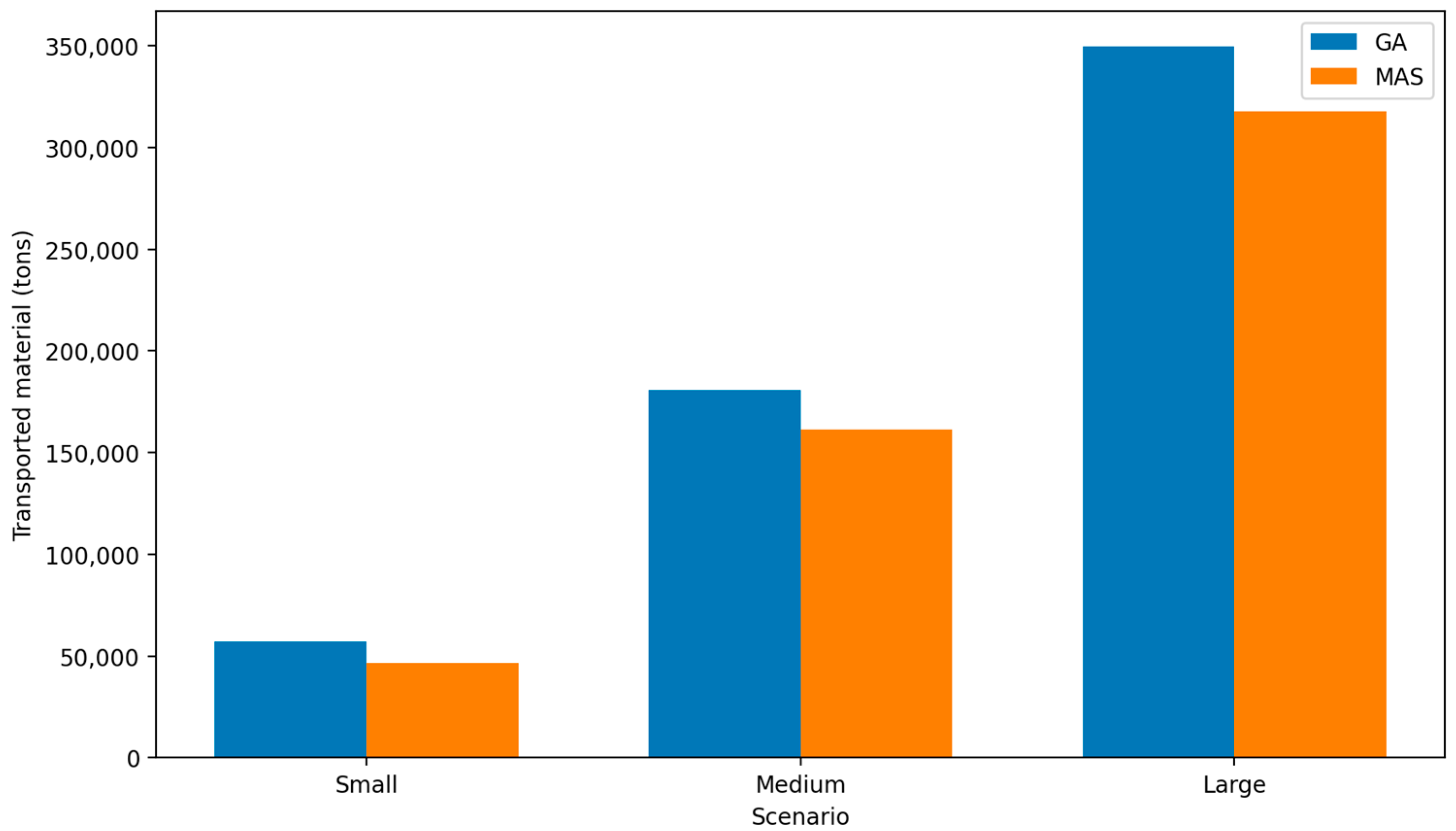
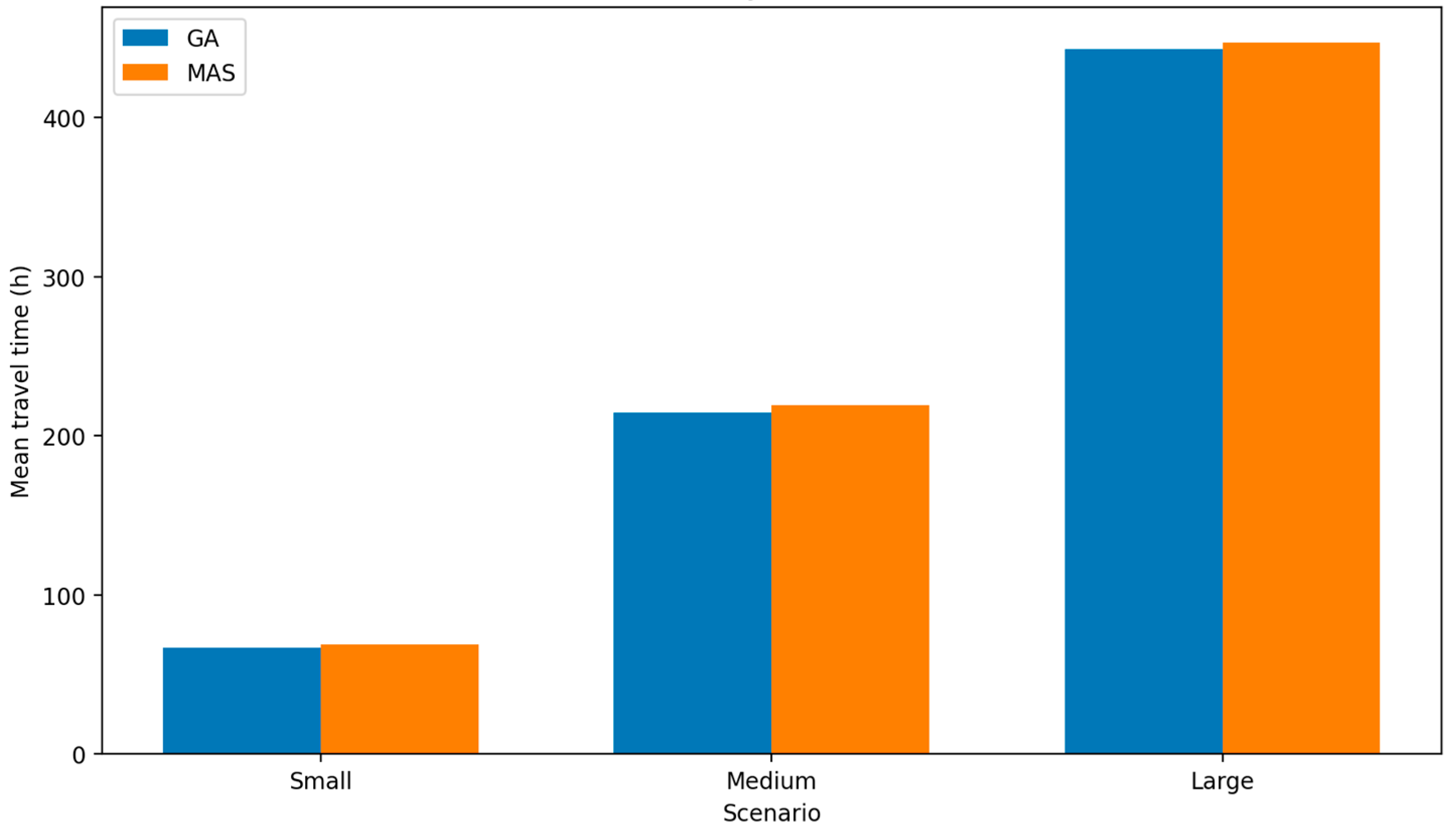
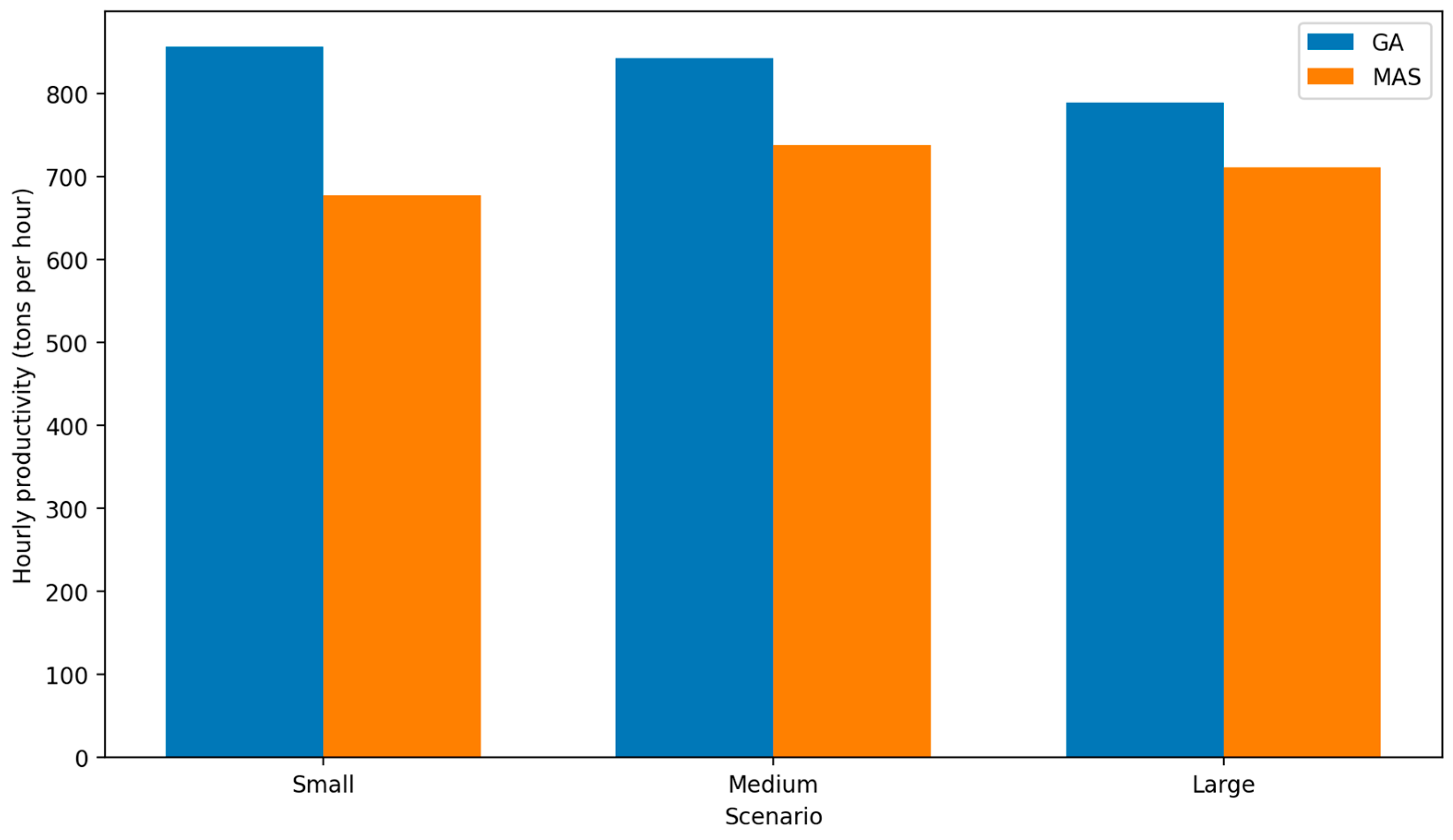
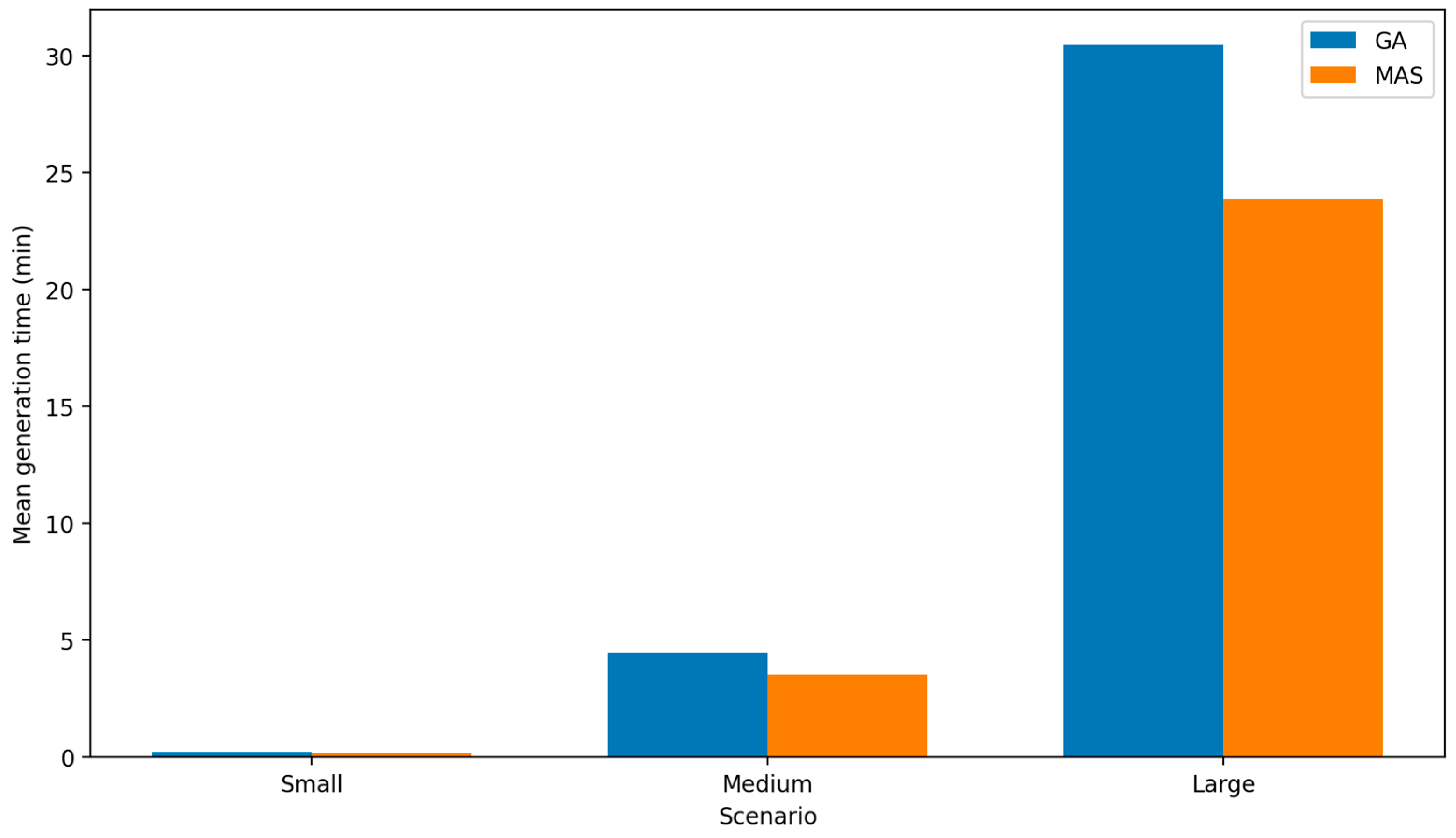
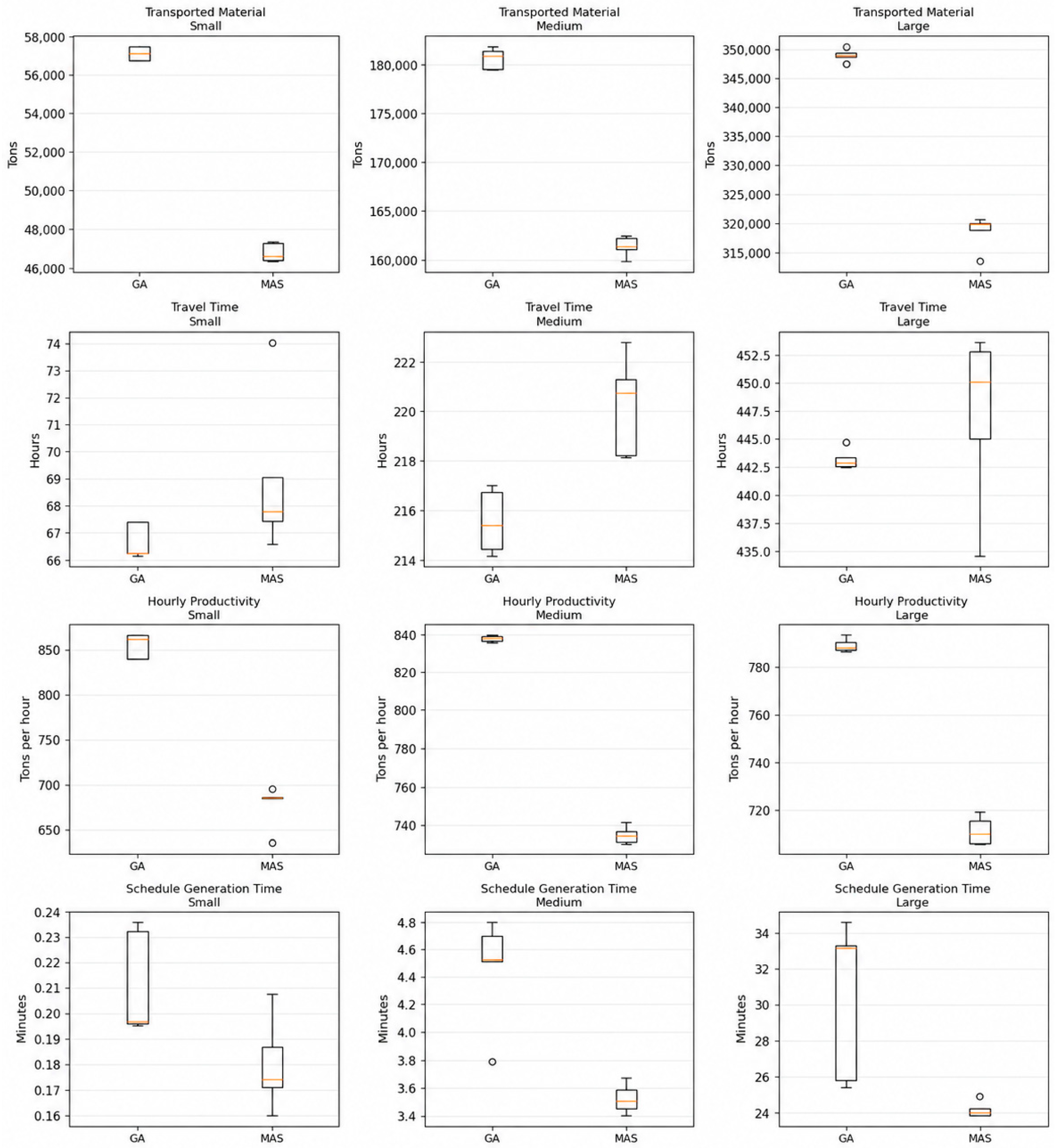
Truck dispatching in open-pit mining is an important process with a direct impact on productivity, equipment utilization, and hauling cost. While this problem is often treated as a sequence of isolated allocation decisions, a scheduling perspective makes it possible to coordinate truck movements and resource interactions over time. This paper compares two different approaches for schedule generation in open-pit mine dispatching: a centralized Genetic Algorithm (GA) and a decentralized Multi-Agent System (MAS). Both approaches were assessed using simulated instances based on real operational data from a Chilean open-pit copper mine. The evaluation considered transported material, travel time, hourly productivity, schedule generation time, and stability over repeated runs. The results indicate that the GA achieved higher average values in the main operational indicators. In particular, the GA achieved improvements of up to 22.4% in transported material and up to 26.4% in hourly productivity, while also showing lower average travel times. However, the MAS showed a computational advantage, reducing schedule generation time by up to 21.6%. These findings apply to static offline schedule-generation conditions; the relative advantages of the GA and MAS may differ in dynamic environments requiring repeated rescheduling, online adaptation, or real-time responses to operational disruptions.
Keywords: genetic algorithm; multi-agent systems; scheduling problem; truck dispatching genetic algorithm; multi-agent systems; scheduling problem; truck dispatching