1. Introduction
Autism Spectrum Disorder (ASD) is characterized by significant difficulties in social interaction and communication [
1]. Particularly in children with high-functioning autism [High-Functioning ASD (HFASD)], social skills are impaired despite typical cognitive abilities, with evident deficits in the understanding of nonverbal cues and reciprocal social responsiveness [
2]. Traditional interventions, such as Applied Behavior Analysis (ABA) and structured social skills programs (e.g., Program for Education and Enrichment of Relational Skills-PEERS), can improve social skills; however, they are often time-consuming, costly, and difficult to access for many families [
3,
4]. The cost of intensive therapy can reach tens of thousands of dollars annually per child, while waiting lists for specialists are long, creating a need for alternative solutions [
5]. Children with HFASD who do not receive appropriate intervention are at risk of social withdrawal and future adjustment difficulties [
6], highlighting the importance of developing innovative and more accessible methods for social skills training.
In recent years, digital technologies such as Virtual Reality (VR), Augmented Reality, and wearable devices have emerged as promising intervention tools for children with ASD. VR provides a safe and controlled environment in which children can practice social skills without the unpredictable stressors of the real world [
7]. Studies indicate that training in virtual scenarios is both feasible and effective: children with ASD can become familiar with social situations through repeated practice in VR, gradually improving their social responses [
8]. For example, a comparative study on emotional skills training showed that the group of children trained using VR achieved recognition and use of emotions equally quickly—or even faster—than a group receiving traditional therapist-led training [
9]. Indeed, a recent meta-analysis of 33 studies demonstrated significant improvements in individuals with ASD through VR interventions, with a large overall effect size (Hedge’s g ≈ 0.74). The strongest effects were observed in practical daily living skills (g = 1.15), while moderate effect sizes were reported for cognitive skills (g ≈ 0.45), emotion regulation/recognition (g ≈ 0.46), and social-communication skills (g ≈ 0.69). Similarly, a systematic review documented that most studies agree on the effectiveness of VR in enhancing social skills, providing moderate evidence of improvement, although further research is required to fully establish VR as a complementary therapeutic method.
Other forms of digital intervention also enhance social skills. Wearable Augmented Reality devices have been used successfully; notably, the Superpower Glass program (via smart glasses such as Google Glass) helped children with ASD recognize facial expressions and improve their social interaction [
9]. In a randomized clinical trial, children who used this system demonstrated significantly higher scores in socialization (Vineland subscale) compared to the control group, with an average increase of approximately 4.6 points—an outcome comparable to that of traditional therapies [
10]. This represents the first evidence that a wearable digital intervention can effectively improve the social behavior of children with ASD, highlighting the potential of home-based digital technologies as a complement to conventional therapy [
11]. At the same time, the use of virtual characters (avatars) on computers has been proposed as a method for training nonverbal communication in individuals with ASD. Virtual characters provide a fully controlled yet ecologically valid social environment, allowing children to practice eye contact, facial expressions, and other skills in a safe manner [
11]. Review studies support that such virtual environments can function as valuable educational and therapeutic tools for enhancing the social abilities of children with ASD [
12].
Recent advances in generative artificial intelligence have significantly improved the realism and interactivity of virtual characters, leading to the emergence of talking avatars, controllable avatars, and AI-driven digital humans [
13]. Unlike traditional scripted avatars, these systems can generate synchronized facial expressions, lip movements, head poses, gaze behaviors, and natural speech in real time, enabling more realistic and adaptive social interactions. Recent open-source frameworks, including EchoMimicV3 [
13], Audio2Face-3D [
14], Wav2Lip [
15] and NAVAGEN [
16], demonstrate that modern avatar generation models can produce highly expressive and temporally consistent digital humans from speech, text, or video inputs. These technologies have the potential to enhance ecological validity and user engagement in Virtual Reality interventions by creating more natural communication partners capable of responding dynamically to users’ verbal and non-verbal behaviors. Consequently, AI-powered digital humans represent a promising direction for future VR-based interventions targeting social communication skills in children with Autism Spectrum Disorder (ASD).
More recently, the concept of the Metaverse—shared virtual worlds where multiple users interact through avatars—has been introduced into special education. Platforms such as Pan and Hamilton (2018) enable the creation of digital spaces where children can practice social interactions in realistic scenarios with peers [
17]. In a recent effort, researchers developed a metaverse-based social skills training program for children with ASD, combining wearable biosensors to record emotional responses. Participants engaged in weekly 60-min sessions over four weeks in a virtual classroom environment via a metaverse platform, while biometric data (e.g., heart rate) were simultaneously collected [
18]. This program was considered promising, as it was easily accessible from home and low-cost, enabling the early management of intense emotions (such as anxiety or anger) through wearable sensors [
19].
Overall, the literature indicates that digital interventions can provide more engaging, interactive, and personalized learning experiences compared to traditional methods, leading to more effective improvements in social skills in real-world contexts [
20,
21]. However, challenges remain—such as the cost of equipment and the broader availability of such solutions—that need to be addressed. Future research should focus on overcoming these limitations, improving the realism of virtual environments, and expanding access to these technologies, so that they can become sustainable complementary interventions for all children with ASD [
18,
20].
2. Study Aim
Although previous studies have demonstrated the potential of Virtual Reality (VR) interventions for improving social skills in children with Autism Spectrum Disorder (ASD), several limitations remain. Much of the existing literature has focused on emotion recognition, simple social interactions, or highly structured therapist-led activities. Furthermore, relatively few studies have examined the use of school-based VR environments that combine interactions with both teachers and peers, while also evaluating the transfer of acquired skills to novel virtual contexts. The evidence regarding the feasibility and effectiveness of immersive VR interventions that simulate realistic classroom and playground situations therefore remains limited.
To address this gap, the present pilot study investigates the implementation of a VR-based social skills intervention for children with moderate- to high-functioning ASD. The intervention was developed around a virtual school environment consisting of two ecologically valid settings: a classroom and a playground. Through interactions with teacher and peer avatars, participants were provided with repeated opportunities to practice social communication, conversational turn-taking, social reciprocity, and appropriate responses to common school-based social situations.
The primary research questions of our study are as follows:
Can a VR-based school simulation improve social communication performance in children with ASD?
Can acquired social communication skills be generalized to a novel virtual environment featuring different avatars and contextual characteristics?
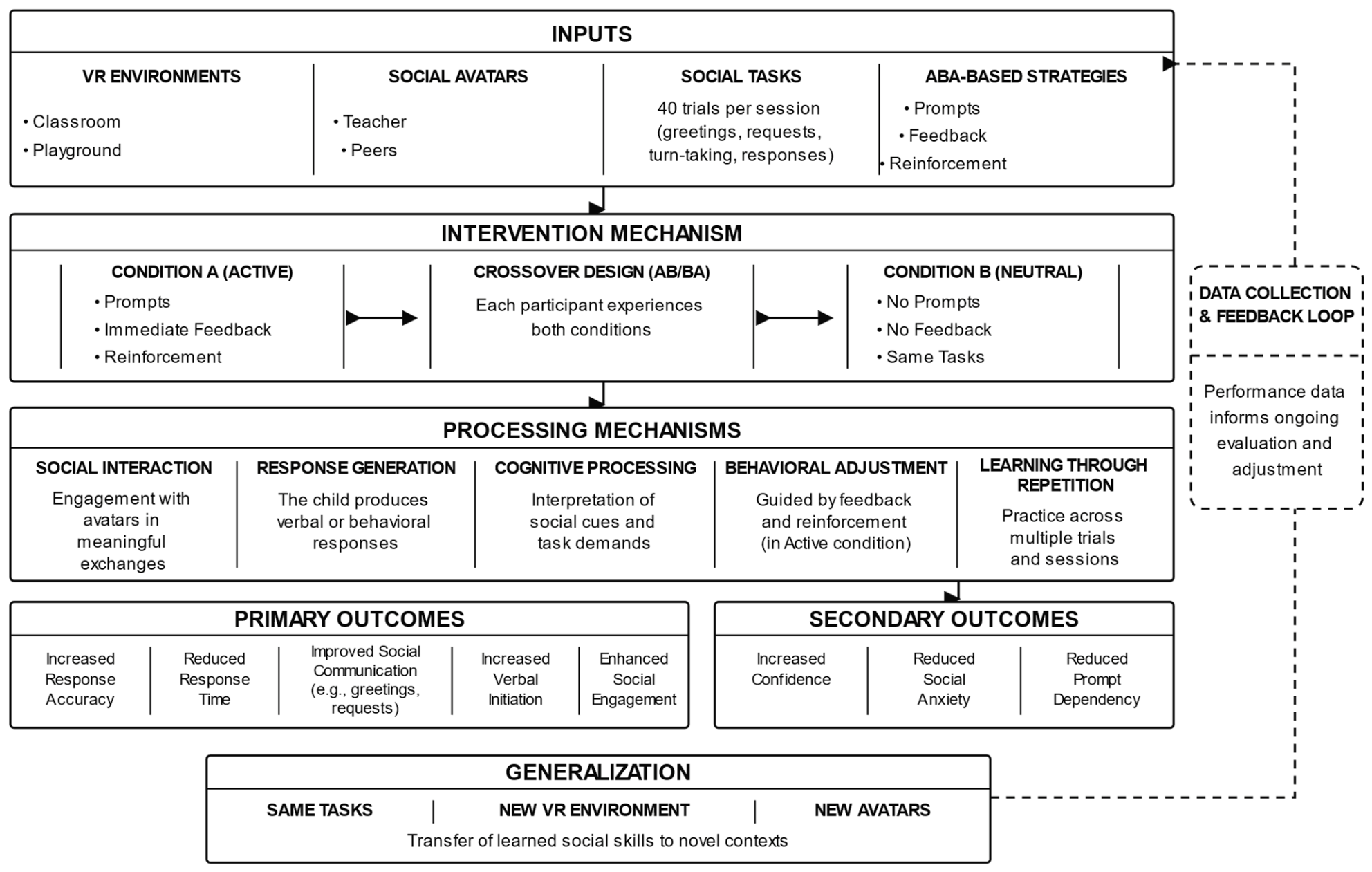
The study aims to evaluate the feasibility, acceptability, and preliminary effectiveness of this intervention while providing initial evidence to support future large-scale investigations of VR-based social skills training for children with ASD. The methodology of the intervention is described, the results are presented at a descriptive level, and the findings are discussed in relation to the existing literature on digital interventions and social skills development. The conceptual framework of this study is summarized in the diagram shown in
Figure 1.
3. Methodology
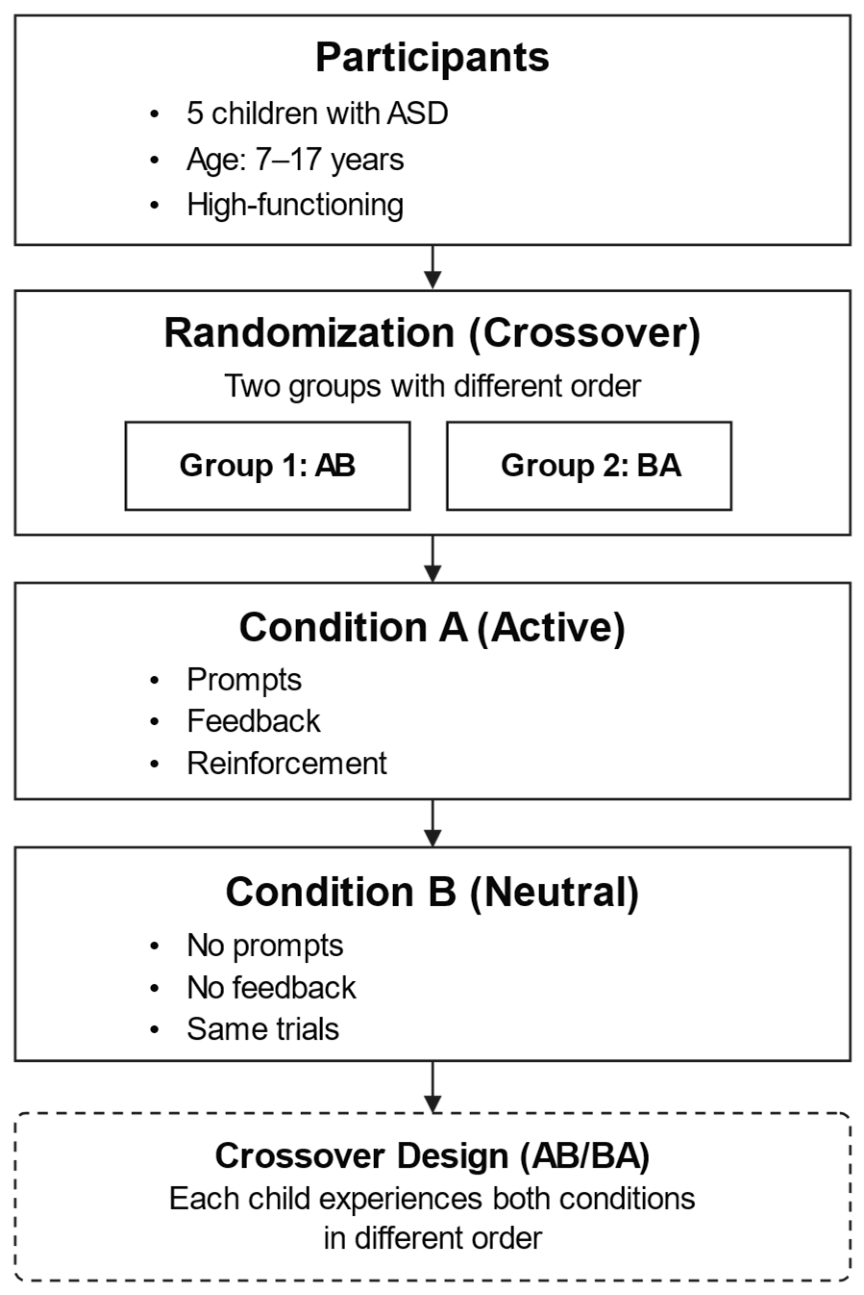
The experimental design of the study is based on a randomized crossover protocol (AB/BA), suitable for small samples and N = 5 approaches, aiming at within-subject comparison of the effectiveness of the VR intervention in children with ASD. The sample consists of five children aged 7–17 years with a diagnosis of ASD, who participate in two different experimental conditions: Active (A), in which full instructional prompts, corrective guidance, and social reinforcement are provided; Neutral (B), in which the content and sequence of trials remain the same but without any guidance or reinforcement, functioning as a control condition. The random assignment of children into two groups (AB and BA) allows for the control of potential order effects and learning transfer, as each child is exposed to both conditions in reverse order.
Participants were assigned to two intervention sequence groups following an AB/BA counterbalanced design (see
Figure 2). The AB group consisted of Andreas, Alexandros, and Katerina, who received Intervention A during the first phase and Intervention B during the second phase. The BA group consisted of Aggelos and Aigeas, who received the interventions in the reverse order, beginning with Intervention B and subsequently receiving Intervention A. This allocation allowed the examination of possible sequence effects while ensuring that all participants were exposed to both intervention conditions.
Although no formal inter-rater reliability coefficient (e.g., Cohen’s Kappa) was calculated, both evaluators independently reviewed all recorded sessions using predefined identical coding criteria. Disagreements were subsequently resolved through discussion until consensus was achieved before the final dataset was established. At this point, it should be acknowledged that the absence of a formal statistical measure of inter-rater agreement represents a limitation of the present study. However, due to the exploratory nature of the present pilot feasibility study, our approach is also considered appropriate.
Standardized psychometric instruments, such as the Social Responsiveness Scale (SRS), Vineland Adaptive Behavior Scales, or the Social Skills Improvement System (SSIS), were not included because the primary objective of this pilot study was to evaluate the feasibility and implementation of the proposed Virtual Reality intervention rather than to conduct a comprehensive assessment of participants’ overall social functioning. Instead, behavioral performance was evaluated using a predefined binary (0/1) coding procedure, which is commonly employed in Applied Behavior Analysis (ABA) and pilot intervention studies to objectively record the occurrence of target behaviors while minimizing subjectivity. Future large-scale studies should combine behavioral observations with standardized psychometric measures to strengthen the external validity of the findings.
4. Study Design
Each participant completed a total of six sessions, each lasting approximately 45 min. The intervention was delivered twice per week, following a structured and consistent training schedule. Participants were randomly assigned to one of two crossover sequences (AB or BA) in order to control potential order effects. Children assigned to the AB group completed two sessions under Condition A followed by two sessions under Condition B, whereas children assigned to the BA group completed the same conditions in the reverse order.
Condition A (Active) included instructional prompts, corrective guidance, and positive social reinforcement throughout the intervention. In contrast, Condition B (Neutral) involved the presentation of the same social communication tasks, verbal stimuli, and virtual scenarios without prompts, corrective feedback, or reinforcement. This crossover arrangement allowed each participant to experience both conditions and served as a within-subject comparison of performance across intervention phases.
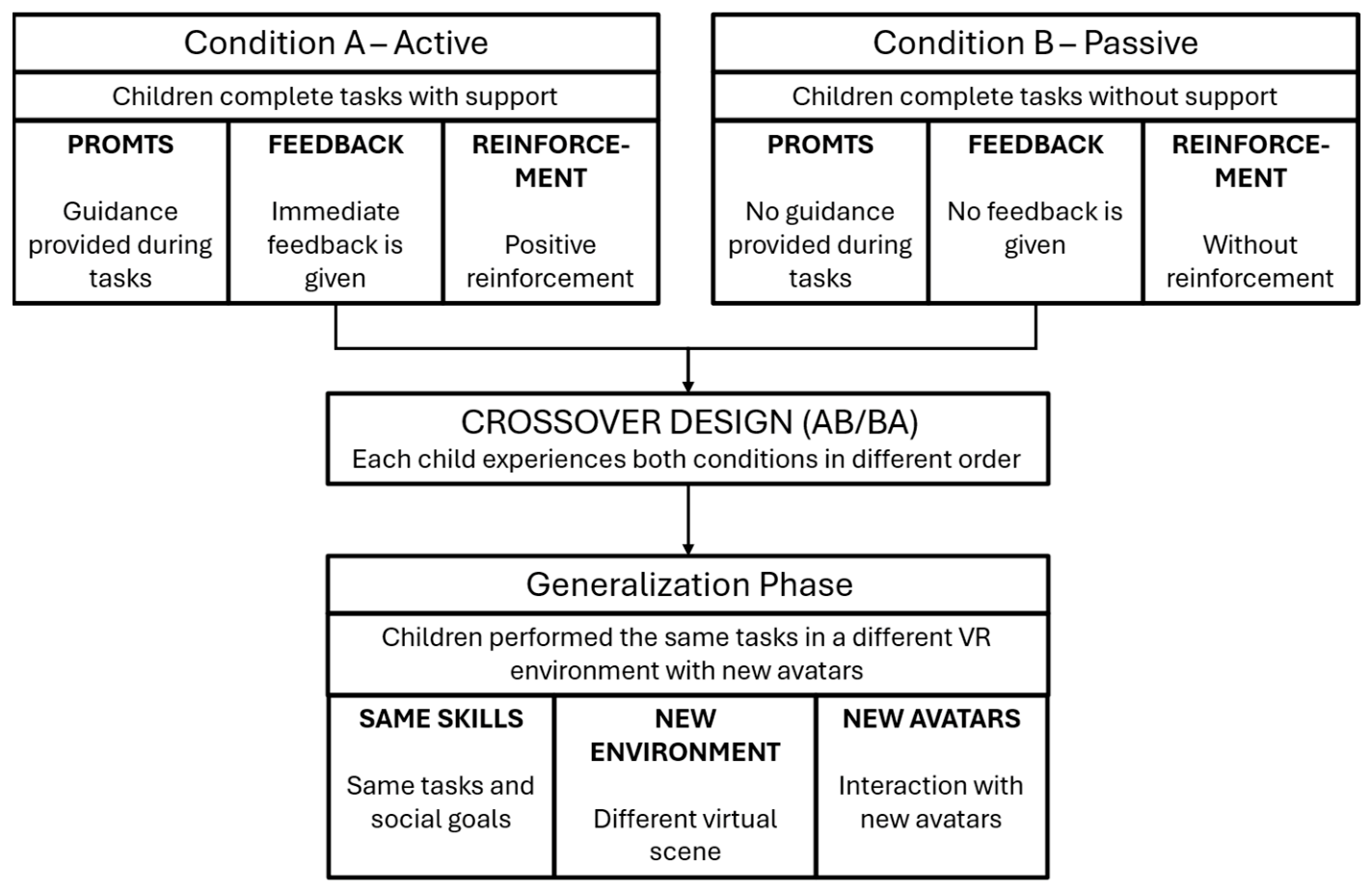
Following the completion of the four intervention sessions, a Generalization session was conducted after a seven-day interval. During this phase, participants were exposed to the same verbal stimuli, communication tasks, and social objectives; however, the virtual environment and avatars were modified. Specifically, children interacted in a different virtual school setting featuring novel virtual characters. This procedure was designed to evaluate whether the acquired social communication skills could be transferred to unfamiliar contexts and interaction partners (
Figure 3).
Approximately ten days after the Generalization phase, a Follow-up session was conducted to assess the maintenance and retention of acquired social communication skills over time. The purpose of this phase was to determine whether participants were able to maintain their performance gains in the absence of continued intervention. Through all sessions, participants engaged in two structured virtual reality scenarios embedded within a simulated school environment: a virtual classroom and a virtual playground. The classroom scenario focused on teacher–student interactions through structured question-and-answer activities, while the playground scenario emphasized peer interaction, conversational turn-taking, social reciprocity, and spontaneous communication.
The intervention was implemented in two structured VR environments: a virtual classroom and a virtual school playground. Each session lasted approximately 45 min and consisted of 40 social communication trials in total, including 20 trials in the classroom scenario and 20 trials in the playground scenario. The duration of each session included participant preparation, familiarization with the VR environment, completion of all communication tasks, and behavioral observation by the therapist/researcher.
In the classroom scenario, participants interacted with an avatar teacher who presented a series of social and classroom-related questions. Following an initial greeting (“Hello”), the teacher avatar presented 21 structured communication tasks, including questions such as “What do you do if you want to answer a question?”, “How do you ask permission to drink water?”, “What do you say when someone gives you your pencil?”, and “What do you do when you want to go to the bathroom?”. These tasks were designed to assess and promote appropriate classroom behavior, social communication with adults, requesting skills, politeness, listening skills, problem-solving, and self-advocacy within a school context. The scenario concluded with a positive closing statement delivered by the teacher avatar.
In the playground scenario, participants interacted with two peer avatars engaged in a structured question-and-answer activity. Each trial consisted of a question posed by Avatar 1 followed by a model response provided by Avatar 2 after a brief delay of approximately 2–3 s. Example questions included “What is your favorite color?”, “How do you ask to join a game?”, “What do you do when someone falls down?”, and “What do you say when someone helps you?”. Participants were encouraged to provide their own response before or after observing the modeled peer response, depending on the intervention condition. These tasks targeted conversational turn-taking, social reciprocity, peer interaction, emotional expression, appropriate social responses, and participation in group activities.
The progression of all trials was controlled by the therapist/researcher through a dedicated monitoring interface. The therapist initiated each trial using a “Next Trial” button, activated avatar dialogues, monitored participant responses in real time, and recorded behavioral observations. This procedure ensured that all participants received the same sequence and number of tasks while maintaining consistency across sessions.
The primary dependent variables included social response accuracy, response latency, spontaneous verbal initiation, prompt dependency, and social engagement. Additional observational measures included self-regulation difficulties, task avoidance behaviors, and the ability to transfer acquired skills during the Generalization session. Skill transfer was evaluated by examining whether participants could successfully apply the same social communication skills in a novel VR environment with different avatars following a seven-day interval. Retention of acquired skills was subsequently assessed during a Follow-up session conducted approximately ten days later.
In the pilot study, five children (4 boys, 1 girl) aged 7–17 years with a diagnosis of high-functioning ASD participated. All children had an intelligence quotient (IQ) above 90, adequate verbal ability, and the capacity to understand instructions. Parents provided informed consent for participation. There was no control group, as the study primarily aimed to explore the feasibility and acceptability of the intervention (see
Table 1).
A virtual school environment was created using virtual reality software. The environment included a typical classroom and a school playground, with graphics and sounds that realistically simulated corresponding real-life conditions. In the virtual classroom, there was a teacher avatar and desks with student avatars, while in the virtual playground there were peer avatars interacting with each other. All participants completed the intervention using a Meta Quest 2 (Meta Platforms, Inc., Menlo Park, CA, USA) head-mounted display (HMD), providing a fully immersive virtual reality experience. Short breaks were allowed when necessary if a participant experienced fatigue. However, all intervention sessions were completed using the same VR headset and identical software configuration. Communication with the virtual characters was achieved through a combination of pre-recorded voice messages and interactive choices that the participant could select.
Table 2 summarizes the details of the VR software.
The intervention protocol consisted of six sessions for each participant. Two sessions were conducted under Condition A (Active), two sessions under Condition B (Neutral), followed by one Generalization session and one Follow-up session. Each session lasted approximately 45 min and included two structured virtual reality scenarios within the simulated school environment: a classroom setting and a playground setting.
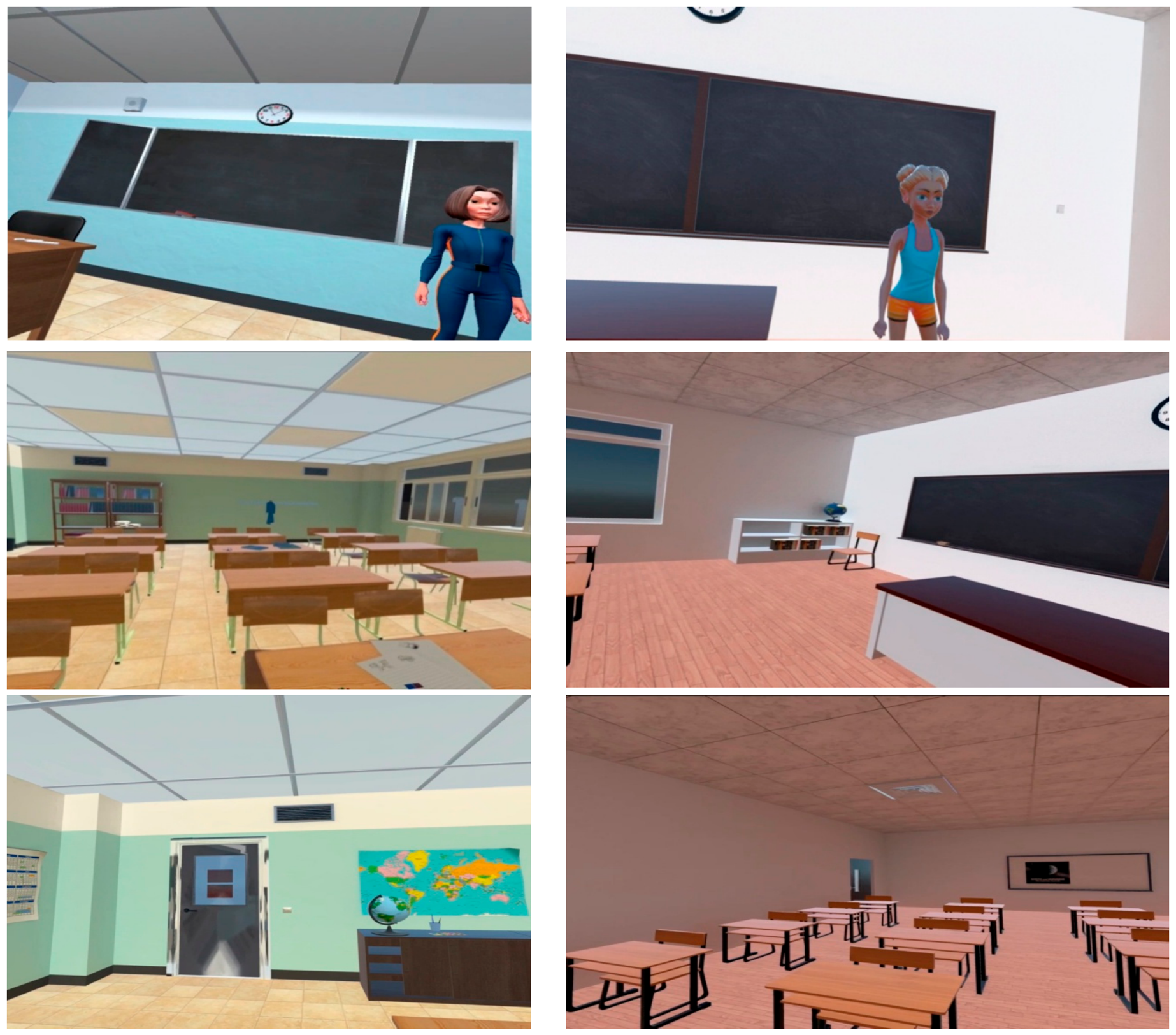
Classroom Scenario (Question-and-Answer with Teacher): In the virtual classroom, the teacher avatar posed 20 questions to the child on general knowledge and everyday school-related topics (e.g., “What did you do over the weekend?”, “What is your favorite subject?”). The child was asked to respond verbally to each question. The scenario aimed to practice conversational skills in an educational context, encouraging the child to maintain eye contact with the teacher (through her avatar) and to respond appropriately. The teacher avatar provided positive feedback or mild corrections depending on the response (e.g., praise for extended answers, repetition of the question if the child remained silent). This scenario was designed to mimic a real teacher–student interaction, helping the child practice initiating speech, listening to questions, and formulating responses. Screenshots of the VR intervention in the Classroom scenario are shown in
Figure 4, and indicative video links are provided in
Appendix B.
- 2.
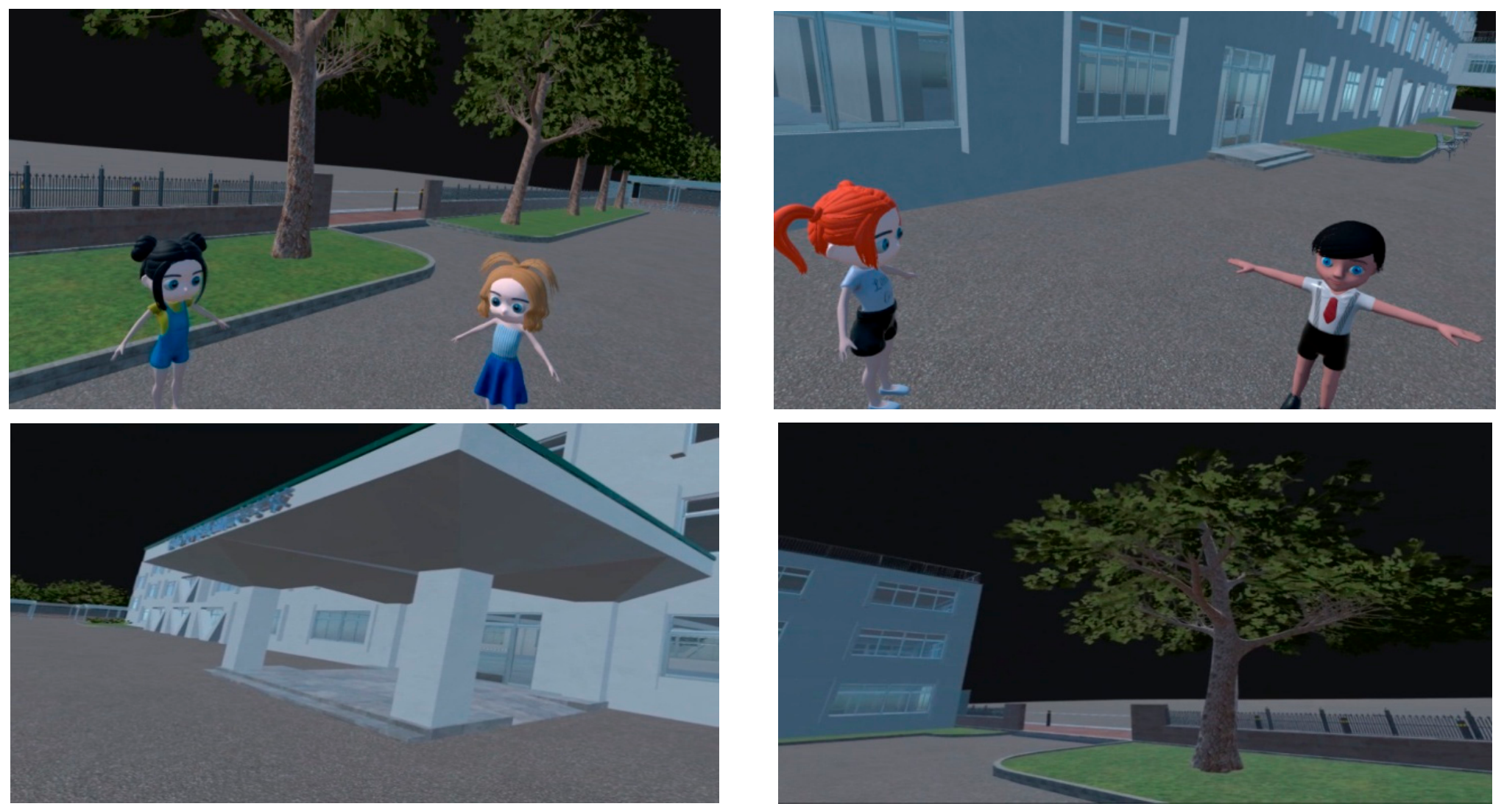
Recess Scenario (Question-and-Answer Game with Peers): In the virtual playground, the child participated in a “question-and-answer” game with two peer avatars. The characters (either controlled by the computer or by a researcher) took turns asking the child questions—a total of 20 simple social-approach questions—such as “What food do you like the most?” or “Do you want to play tag?” After each response, the peer avatars reacted (e.g., by asking a follow-up question or making a comment). This scenario aimed to teach interaction with peers in an informal context: the child practiced responding to peers, engaging in brief conversations during recess, and participating in a question-and-answer game, thereby practicing turn-taking and social reciprocity.
Throughout both VR scenarios, all avatar actions, verbal interactions, and trial transitions were controlled by the therapist/researcher through a dedicated monitoring interface. The therapist was responsible for initiating each trial, activating avatar dialogues (see
Appendix A), managing the sequence of interactions, and ensuring the standardized delivery of the intervention across participants. This approach allowed real-time supervision of the session while maintaining consistency in the presentation of stimuli and social communication tasks for all children. Screenshots of the VR intervention in the Recess scenario are shown in
Figure 5 and indicative video links are provided in
Appendix B.
In the recess scenario, the question-and-answer game with the peer avatars generated enthusiasm among the children. All participants responded to almost all of the virtual peers’ questions. In several cases, the children spontaneously took the initiative to ask questions themselves (e.g., “Do you like this game?”), even though this was not explicitly required—an indication that they felt comfortable enough to initiate social interaction beyond the guided framework. The peer avatars responded positively, which appeared to enhance the children’s confidence. One participant (17 years old), who was initially hesitant, began to make jokes with a peer avatar toward the end, laughing and engaging more naturally. A younger child (8 years old) required some initial guidance from the facilitator (e.g., prompting “now you can answer your friend’s question as well”), but soon began responding independently.
During the Generalization phase, the children were assessed in two environments (classroom and playground) that were similar but not identical to those used in the A–B–Post-test phases (as shown in the right columns of
Figure 4 and
Figure 5). The questions were exactly the same; however, the setting and avatars were different. This procedure was designed to examine whether participants could transfer previously acquired social communication responses to a modified virtual context in which the environment and avatars differed while the social communication tasks remained unchanged. Therefore, the findings should be interpreted as preliminary evidence of performance transfer within virtual environments rather than generalization to real-world school interactions.
Throughout the session, a therapist/researcher was present within the virtual setting and could intervene if the child encountered difficulties or required guidance. The sessions were video-recorded (screen and audio) for subsequent qualitative analysis. No formal psychometric scales were used due to the exploratory nature of the study; instead, the evaluation of progress was based on researchers’ observations, particularly focusing on the children’s responses across all phases of the procedure.
To enhance the reliability of the observational data, the recorded sessions and behavioral responses were independently reviewed by a second evaluator, a licensed child psychologist with experience in ASD interventions. The second evaluator assessed participants’ social responses, engagement, communication behaviors, and interaction patterns across the VR sessions. Any discrepancies in interpretation were discussed collaboratively until consensus was achieved, thereby strengthening the credibility and consistency of the qualitative observations and behavioral coding procedures.
Although no formal inter-rater reliability coefficient (e.g., Cohen’s Kappa) was calculated, all recorded sessions were independently reviewed by two evaluators using the same coding criteria. Any discrepancies in the evaluation of participants’ responses were thoroughly discussed and resolved through a consensus process prior to the final data analysis. This procedure contributed to improving the consistency and reliability of the qualitative assessment; however, the absence of a formal inter-rater reliability measure should be considered a limitation of the present pilot study.
Behavioral performance was evaluated using a binary scoring system (on/off coding). For each trial, the participant’s response was coded as either successful (1) or unsuccessful (0) based on predefined criteria related to the appropriateness and relevance of the social response. A response was considered successful when the participant produced an appropriate verbal or behavioral answer that matched the social situation presented within the VR scenario. Responses that were absent, inappropriate, unrelated to the question, or required excessive prompting were coded as unsuccessful. The total number of successful responses was calculated for each session and converted into a correct response ratio, allowing comparisons across the intervention phases, Generalization, and Follow-up sessions. This binary coding procedure was selected due to the exploratory nature of the pilot study and to maximize scoring consistency between evaluators.
5. Data Analysis
The present study adopts a mixed-methods data analysis approach, combining quantitative and qualitative techniques to examine participants’ behavioral changes during the Virtual Reality (VR) intervention. Given the pilot nature of the study and the small sample size (N = 5), the analysis focuses primarily on within-subject comparisons, aiming to identify patterns and trends of improvement rather than to establish statistical generalizability.
Quantitative data focused primarily on response accuracy, which was assessed through a binary coding procedure (0 = unsuccessful response, 1 = successful response). The total number of successful responses was calculated for each participant and converted into a correct response ratio across intervention phases. Additional qualitative observations included participant engagement, communication behaviors, and indicators of self-regulation difficulties.
The processing and analysis of quantitative data were conducted using the programming language Python 3.12, employing data analysis libraries such as Pandas (
https://pandas.pydata.org/) and NumPy (
https://numpy.org/). The dataset was first organized into structured data frames, where each row corresponded to a trial and each column represented a specific variable (e.g., response time, accuracy, prompt usage). Subsequently, descriptive statistical measures (e.g., means, standard deviations, and session-based trends) were calculated to evaluate changes in participants’ performance across experimental conditions (Active vs. Neutral) and study phases (Baseline, Intervention, Generalization, and Follow-up).
Due to the within-subject crossover design (AB/BA), each participant served as their own control, allowing for direct comparison between the Active and Neutral conditions while minimizing the influence of inter-individual variability. The quantitative analysis focused primarily on changes in response accuracy across intervention phases, as measured by the correct response ratio derived from the binary coding procedure (0 = unsuccessful response, 1 = successful response). Performance trends were examined across the Intervention, Generalization, and Follow-up phases in order to evaluate changes in social communication performance over time.
In parallel with the quantitative analysis, qualitative data were analyzed through systematic observation of the recorded sessions (video and audio). An observational framework was developed to assess key dimensions of social interaction, including: (a) initiation of communication (e.g., spontaneous question-asking), (b) maintenance of dialogue, (c) level of engagement and attention, and (d) emotional expression (e.g., tone of voice, use of humor, and expressive behavior). These qualitative indicators were examined across sessions to identify patterns of behavioral progression.
Particular emphasis was placed on the Generalization phase, where participants’ ability to transfer acquired skills to a novel VR environment was assessed. In this phase, the verbal stimuli remained constant, while the environment and avatars were modified. Successful generalization was indicated by maintained response accuracy, reduced hesitation, and continued autonomous participation without additional prompting.
Finally, brief post-session parent interviews were incorporated as a supplementary qualitative data source, providing external validation of observed behavioral changes. Parents were asked to report their impressions regarding their child’s engagement, comfort, and perceived improvement in communication during the intervention.
Overall, the data analysis is exploratory and descriptive in nature, aiming to provide preliminary evidence regarding the feasibility, acceptability, and potential behavioral impact of VR-based social skills training. The findings are interpreted with caution, taking into account the limitations of the study, including the small sample size and the absence of standardized psychometric measures.
6. Results
In summary, the results of the pilot intervention are encouraging. The simulated school experience through VR was feasible and well accepted by children with ASD, who demonstrated increased engagement in social interactions within the virtual environment. Their tolerance and participation remained high throughout the session, and trends of improvement were observed in verbal expression, interaction with peers, and confidence during social communication. Nevertheless, the experience from this pilot implementation provides valuable insights into both the benefits and the challenges associated with such digital interventions.
All children successfully completed both intervention scenarios, with no dropouts or significant discomfort. The children showed strong interest in the virtual environment and actively participated in the activities. In the classroom scenario, most children were able to respond to all 20 questions posed by the teacher avatar. Initially, some children provided one-word or very brief responses; however, as the activity progressed, a gradual improvement was observed in both the length and content of their responses. For example, some participants moved from one-word answers to short sentences or additional information toward the end of the session. When the teacher avatar asked for clarification or follow-up questions, the children generally responded appropriately, indicating their ability to maintain a basic level of dialogue.
Response times: At the beginning, some children required more time (a few seconds of silence) before responding to simple questions, possibly due to hesitation or unfamiliarity with the environment. Toward the end of the session, these delays decreased for most participants, suggesting increased comfort and familiarity with the question-and-answer process.
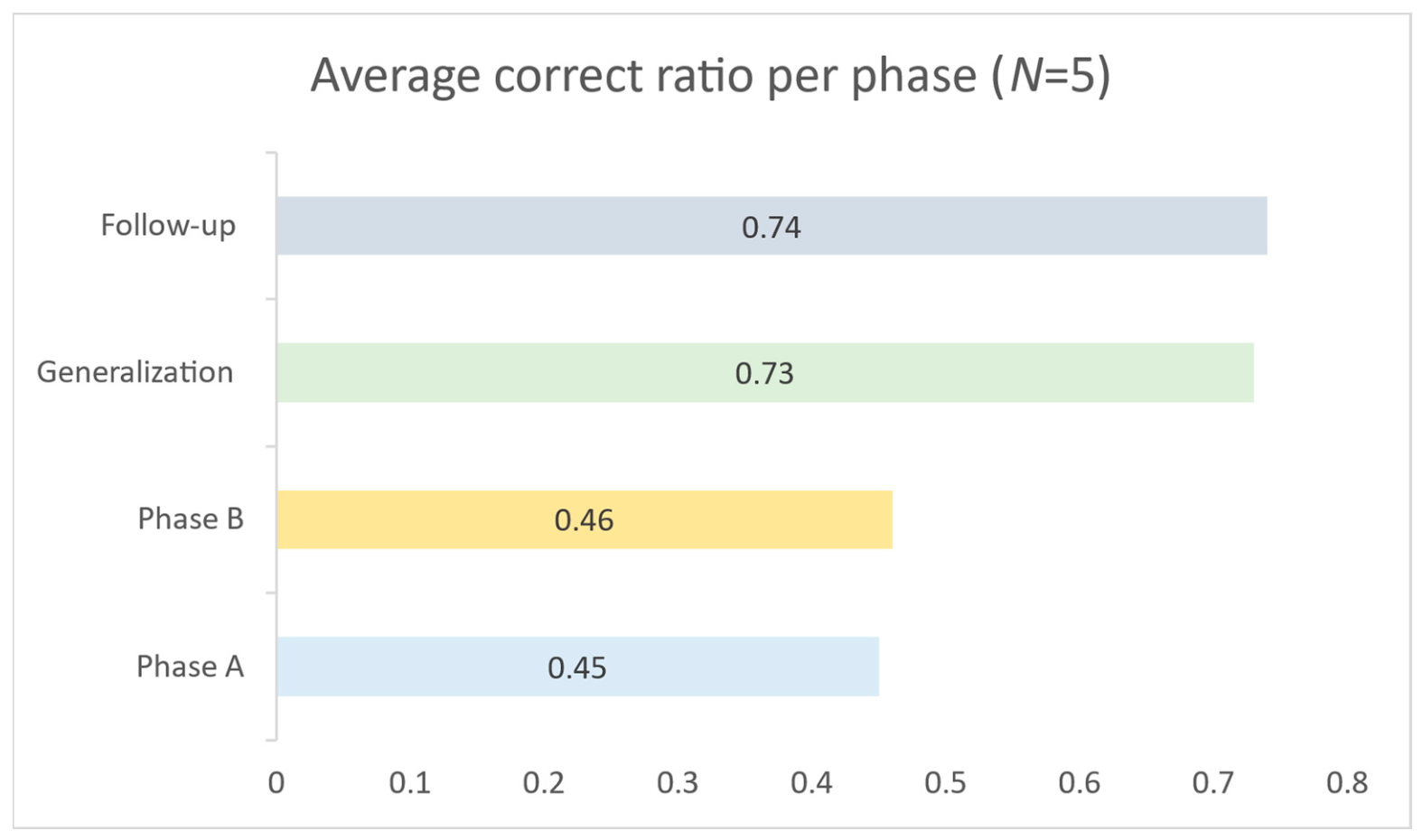
The results of the present pilot study indicate a clear and progressive improvement in participants’ performance in terms of social response accuracy throughout the Virtual Reality (VR) intervention. The analysis of the average correct response ratio per phase revealed that during the Active phase (A), the mean performance was 0.45, while in the Neutral phase (B) it was 0.46, indicating comparable baseline performance across conditions. However, a substantial increase was observed during the Generalization phase (GE), where the mean correct response ratio rose to 0.73, and this improvement was maintained during the Follow-up phase (F), reaching 0.74. The correct response ratio was calculated by dividing the number of successful responses by the total number of trials completed during each phase. Therefore, a score of 0.45 indicates that participants responded correctly to approximately 45% of the presented social communication trials.
In terms of absolute improvement, performance increased by 0.28 points from Phase A to the Generalization phase (0.45 to 0.73) and by 0.29 points from Phase A to the Follow-up phase (0.45 to 0.74). Similarly, from Phase B to the Generalization phase, performance increased by 0.26 points (0.46 to 0.73), and by 0.27 points from Phase B to the Follow-up phase (0.46 to 0.74). These findings suggest a meaningful enhancement in the accuracy of social responses following the VR-based intervention. The mean results are shown graphically in a bar chart in
Figure 6, as well as in
Table 3.
Descriptive statistics revealed a progressive increase in social response accuracy across the intervention phases. During the Active phase (A), participants achieved a mean correct response ratio of 0.45 (SD = 0.12), while during the Neutral phase (B) the mean correct response ratio was 0.46 (SD = 0.14). Performance improved substantially during the Generalization phase (GE), reaching a mean correct response ratio of 0.73 (SD = 0.12), and remained stable during the Follow-up phase (F), with a mean correct response ratio of 0.74 (SD = 0.10). These findings indicate that participants responded correctly to approximately 45–46% of the social communication trials during the initial intervention phases and approximately 73–74% during the Generalization and Follow-up phases. Additional descriptive statistics across Study phases are displayed in
Table 4.
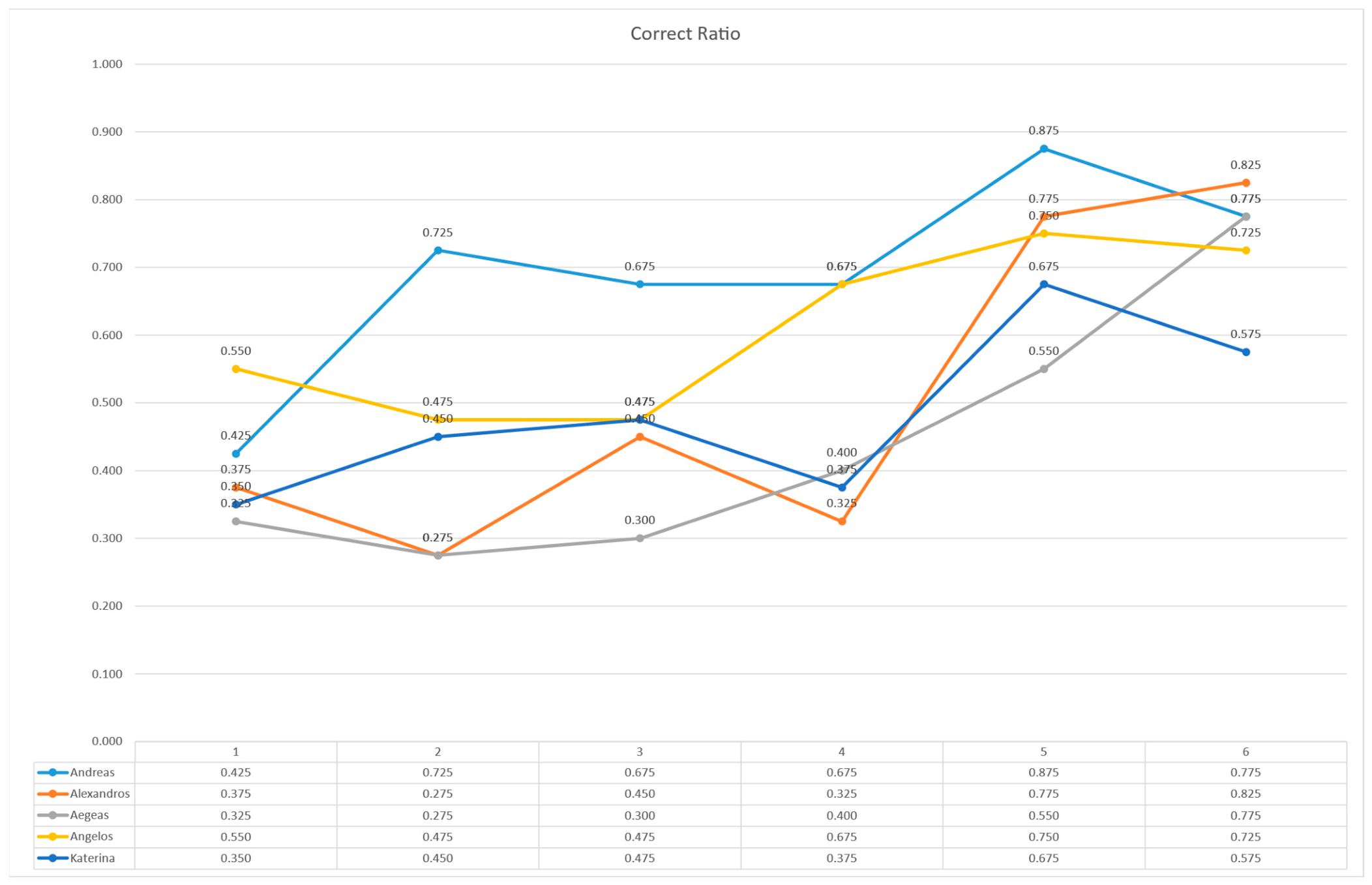
The session-by-session analysis further supports this trend, as all participants demonstrated gradual improvement over time. Although minor fluctuations were observed across intermediate sessions, the overall trajectory was consistently upward, with the most pronounced gains occurring after the transition to the Generalization phase. Participants who initially produced brief or less accurate responses progressively improved both the correctness and consistency of their answers.
Figure 7 portrays the Session-by-Session changes in social response across study phases for each participant.
Importantly, the observed improvement was not limited to the trained context but extended to a novel virtual environment, as evidenced by the increased performance during the Generalization phase. The maintenance of high performance during the Follow-up phase further suggests that participants developed functional social response skills rather than merely memorizing responses. “Overall, these findings provide preliminary evidence regarding the feasibility of the intervention and suggest that repeated participation in the VR-based program may contribute to improvements in social communication skills. However, the present pilot study was not designed to determine the independent therapeutic effect of prompts, feedback, and reinforcement.
7. Discussion
The present pilot study demonstrates that the use of a virtual school environment for practicing social skills in children with high-functioning autism is feasible and potentially beneficial. Our findings, although limited due to the small sample size and the absence of a control group, are consistent with previous research supporting the effectiveness of digital technologies in this domain. We observed that children showed increasing comfort and initiative in social interaction within the virtual environment—an observation aligned with findings from other studies indicating that VR interventions can enhance social participation and confidence in children with ASD. For example, participants’ responses in both the question-and-answer tasks and the social game as the session progressed reflect findings by Frolli et al. (2022), where the VR-trained group achieved faster use of complex socio-emotional skills compared to traditional training [
22].
It should be noted that the present pilot study was not designed to determine the superiority of the Active condition over the Neutral condition. The crossover (AB/BA) design was primarily adopted to examine the feasibility of the intervention and to explore behavioral changes across successive phases rather than to perform a statistical comparison between intervention conditions. The similar performance observed during the Active and Neutral phases should, therefore, not be interpreted as evidence that prompts, feedback, and reinforcement were ineffective. Instead, the progressive improvement observed during the Generalization and Follow-up phases suggests that repeated exposure to the VR-based intervention may have contributed to the gradual development and maintenance of social communication skills. Future studies with larger samples and adequately powered randomized controlled designs are required to isolate the specific contribution of instructional prompts, corrective feedback, and reinforcement.
Furthermore, our participants showed improvement in peer interaction, even in an informal context, which is consistent with meta-analytic findings suggesting moderate to high effectiveness of VR interventions in enhancing social communication. Notably, the observed pattern of improvement emerged across the six-session intervention protocol, including the subsequent Generalization and Follow-up phases. Other studies with longer intervention durations have documented significant improvements in social skills following VR-based training programs—for instance, Yuan and Ip (2018) reported statistically significant increases in emotional expression and social adaptation scores among primary school students after training across multiple VR scenarios [
23]. Our qualitative results appear to follow the same direction, suggesting that even brief exposure to a well-designed virtual program can yield immediate behavioral benefits for children with HFASD.
A particularly interesting aspect of our intervention is its focus on group social interaction: the child was required to interact not only with an adult (teacher) but also with peers (classmates), even if these were avatars. This dimension—simultaneous interaction with multiple individuals in a virtual environment—has only recently been explored in the literature. Recent initiatives introduced a metaverse-based social skills program in which multiple children with HFASD interacted with each other via avatars in a shared virtual space. The findings of that study—a 4-week pilot RCT—showed that participants significantly improved their social competence and reduced behavioral problems, while the intervention proved feasible for home use [
24]. Although smaller in scale, our study provides complementary evidence that group-based social training within a virtual school setting is promising. We observed that children were able to interact with more than one virtual interlocutor, manage turn-taking, and engage in social “play” with peers. These findings suggest that skills practiced in multi-user VR (Metaverse) environments may be more transferable to real-life group social situations (e.g., playground interactions) than one-to-one training exclusively with a therapist or a single avatar.
Additionally, our study supports the view that digital interventions can function as a complement to traditional therapies, offering solutions to practical issues such as accessibility and cost. As highlighted by Voss et al. (2019), digital technologies enable the delivery of interventions at home and their integration into daily routines, enhancing the generalization of social skills [
25]. In our case, the virtual school functioned as a social learning laboratory where children could make mistakes, receive feedback, and learn without the fear of negative consequences or peer judgment that might occur in a real classroom [
26]. This protected practice environment may explain why some participants felt comfortable enough to take initiative (e.g., asking their own questions to peer avatars)—behaviors that they might not attempt in a real playground [
27]. This phenomenon, namely the transfer of learning from a safe virtual context to real life, is a central goal of such interventions and has also been emphasized by other researchers [
28]. In our case, there were indications of transfer (e.g., a child discussing in real school a topic encountered in the virtual classroom), although more rigorous investigation with long-term follow-up is required to confirm this.
Despite these positive aspects, several limitations must be acknowledged. Our sample was very small (N = 5) and heterogeneous in age, limiting generalizability. The absence of a control group prevents us from isolating the effect of the intervention from potential confounding factors or the Hawthorne effect (improvement due to attention received). Additionally, no quantitative instruments (e.g., Social Responsiveness Scale) were used—a deliberate choice given the exploratory nature of the study, but one that limits the strength of the evidence. Evaluation relied on observation and reports, introducing potential observer bias. Although the intervention consisted of six sessions, its overall duration was limited; therefore, longer-term maintenance and generalization of the observed changes remain uncertain. It remains unclear whether the observed benefits would be maintained over time or whether repeated sessions are required for stabilization and generalization. Finally, although the wide age range suggests applicability across developmental stages, scenario adaptation by age group may be necessary, since adolescents may require more complex social challenges, while younger children may benefit from simpler ones. This aspect was not sufficiently explored in the present study.
Overall, our findings contribute to the growing body of literature supporting digital and VR-based interventions as tools for social skills training in ASD. In particular, they confirm the engagement and immersion that such environments can provide for children with autism, as also noted by Calderone et al. (2024), who reported that children find virtual environments enjoyable and that VR may reduce the stigma of therapy by making it feel more like a game [
28]. This aspect is crucial: the more positive the child’s experience, the more likely they are to participate repeatedly and benefit from the intervention. Moreover, the use of avatars may reduce the anxiety associated with direct face-to-face interaction, functioning as an intermediate step. Georgescu et al. (2014) noted that virtual characters, whether autonomous agents or avatars controlled by real individuals, provide a flexible platform for testing social interactions in real time, with adjustable difficulty and content [
29]. Our results practically confirm this principle: the virtual environment allowed us to overcome certain challenges present in real-life social interaction experiments, offering greater control (e.g., peer avatars consistently behaved in socially appropriate ways, which cannot be guaranteed in real peer interactions).
Finally, it is important to consider the technological requirements and practical implementation. Our pilot intervention was conducted in a laboratory setting with researcher supervision. The next step would be to evaluate whether it can be implemented at home or within school settings without direct specialist supervision, relying instead on parents or educators. This relates to the issue of accessibility: although VR equipment is becoming more affordable, it remains a barrier for many families. Alternatively, the use of standard computers or tablets with 3D environments (without full immersion) may provide a lower-cost solution, albeit with reduced immersion. The literature highlights the need to make such interventions sustainable and widely accessible, which requires innovation in design to reduce both cost and technical complexity. Additionally, the integration of wearable biosensors, as explored in [
18], offers an exciting perspective: real-time monitoring of indicators such as heart rate or galvanic skin response could allow the system to adapt dynamically, for example, by reducing task difficulty or alerting a facilitator when the child becomes emotionally overwhelmed. Such adaptive interventions would be particularly beneficial for children with ASD, given the frequent presence of anxiety in social situations. Detecting increases in stress could enable the system to pause or simplify interactions, allowing the child to continue without negative experiences.
The results of the present pilot intervention provide consistent evidence of a progressive improvement in participants’ social response accuracy across sessions and phases. Specifically, the average correct response ratio increased from 0.45 in the Active phase and 0.46 in the Neutral phase to 0.73 during the Generalization phase and 0.74 in the Follow-up phase. This represents an absolute improvement of approximately 0.28–0.29 points, indicating a meaningful enhancement in performance following the VR-based intervention. Importantly, this improvement was observed across all participants, despite individual differences in initial performance levels, suggesting a consistent intervention effect.
The session-by-session analysis further supports this pattern, as all children demonstrated a gradual upward trajectory in their performance, with minor fluctuations but a clear overall trend of improvement. The most pronounced gains were observed after the transition to the Generalization phase, where participants were required to apply previously learned responses in a novel virtual context. The maintenance of high performance during the final phase suggests that the observed improvements were not limited to task familiarity but reflect the acquisition of more stable and functional social response skills.
Given the exploratory nature of this pilot study and the very small sample size (N = 5), no inferential statistical analyses (e.g., confidence intervals, effect sizes, or permutation tests) were performed. The results are therefore presented descriptively and should be interpreted as preliminary evidence regarding the feasibility and potential usefulness of the intervention rather than definitive evidence of treatment efficacy. Future studies with larger samples will enable more robust statistical analyses and participant-level modeling. Given the exploratory design, the limited sample size, and the absence of a control group, the study primarily demonstrates the feasibility and acceptability of the proposed VR intervention, while suggesting its potential to enhance social communication skills. Larger randomized controlled studies are required before firm conclusions regarding clinical effectiveness can be drawn.
Moreover, the crossover (AB/BA) design was selected because it is appropriate for exploratory pilot studies with small samples, allowing each participant to serve as his or her own control. Nevertheless, this design is inherently associated with potential carryover and practice effects, as repeated exposure to the same VR tasks may have contributed to increased familiarity with the virtual environment and improved performance over time. Consequently, part of the observed improvement may reflect both intervention-related learning and repeated task exposure. Future studies employing larger samples, parallel-group randomized controlled designs, or extended washout periods will be important to better isolate the specific effects of the intervention.
Taken together, these findings indicate that the VR intervention was associated with both improvement and retention of social communication performance, as well as successful transfer of skills across different virtual environments. Although the results should be interpreted with caution due to the small sample size and the exploratory nature of the study, the consistency of the observed trends across participants provides preliminary support for the effectiveness of the intervention.
8. Conclusions
Digital technologies—from virtual and augmented reality to metaverse platforms and smart wearable devices—are emerging as valuable tools for supporting the development of social skills in children with high-functioning autism. In this study, we presented a pilot application of virtual reality within a school context, where children were able to safely practice classroom and recess interactions. The qualitative results were encouraging, indicating improvements in social responsiveness and high levels of engagement among participants. These findings are consistent with the current literature documenting the positive effects of digital interventions on the social functioning of individuals with ASD. At the same time, we acknowledge that we are still in the early stages of understanding how to optimally leverage these technologies.
Future research should focus on conducting larger, controlled studies to quantitatively evaluate the effectiveness of such interventions. It is important to examine the long-term maintenance of benefits and their transfer to everyday life, for example, whether improvements observed in VR scenarios translate into better social relationships at school or at home. It would also be valuable to compare different digital intervention approaches, for instance immersive VR versus tablet-based games, or peer-avatar interactions versus adult-avatar interactions, to determine which elements are most effective. Furthermore, personalization will play a key role: systems should adapt to each child’s profile (difficulties, preferences, level of functioning), potentially through artificial intelligence that dynamically modifies scenarios. Finally, practical implementation issues must be addressed, including cost reduction, the development of user-friendly software for non-specialists (parents, educators), and ensuring ethical use (e.g., data protection, informed consent, avoidance of excessive screen/VR exposure) as these solutions transition from research to real-world application.
Finally, the integration of emerging digital technologies into interventions for children with ASD offers unprecedented opportunities to create rich, controlled, and engaging learning experiences. Our pilot study contributes to this growing field, suggesting that even a virtual “recess in the schoolyard” can serve as a step toward improving real-life social interactions. Through systematic research and interdisciplinary collaboration (among psychologists, educators, and technology experts), it is possible to develop effective, accessible, and safe digital interventions that will help children with high-functioning autism develop their social skills and ultimately improve their quality of life within society.
The findings of the present pilot study suggest an overall trend toward improved social response performance following the VR-based intervention. This trend was observed across all participants, indicating a generally positive pattern of change despite individual differences in baseline abilities.
Importantly, participants were able to maintain their performance during the Follow-up phase, indicating that the acquired skills were not limited to immediate task engagement but showed signs of retention over time. In addition, the successful performance observed during the Generalization phase suggests that the learned behaviors were transferable to a novel virtual context, reflecting the development of more flexible and functional social communication skills.
This pilot study provides preliminary evidence supporting the feasibility and acceptability of a school-based VR intervention for children with ASD. The observed improvements suggest that the intervention may facilitate the development of social communication skills; however, these findings should be interpreted cautiously and confirmed in larger randomized controlled trials before definitive conclusions regarding effectiveness can be established.
Overall, these findings provide preliminary support for the potential effectiveness of VR-based interventions in enhancing social response abilities in children with ASD. However, given the exploratory nature of the study, further research with larger samples and controlled designs is required to confirm and extend these results.