Review

Physiological, Nutritional and Technological Approaches to Assessing Sarcopenia in Older Adults

by
Marta Kończak
1,*,
Izabela Bolesławska
2,*,
Paweł Jagielski
3,
Dominika Kusyk
1 and
Sławomira Drzymała-Czyż
2
1
Student Scientific Society in Bromatology and Dietetics, Poznan University of Medical Sciences, 60-806 Poznan, Poland
2
Department of Bromatology, Poznan University of Medical Sciences, 60-806 Poznan, Poland
3
Department of Nutrition and Drug Research, Institute of Public Health, Faculty of Health Sciences, Jagiellonian University Medical College, 31-066 Cracow, Poland
*
Authors to whom correspondence should be addressed.
Appl. Sci. 2026, 16(14), 7338; https://doi.org/10.3390/app16147338
Submission received: 8 June 2026 / Revised: 15 July 2026 / Accepted: 16 July 2026 / Published: 22 July 2026
(This article belongs to the Special Issue Application of Nutrition and Clinical Exercise Physiology)

Abstract

Sarcopenia is an age-related progressive decline in skeletal muscle mass, strength, and physical performance that increases the risk of falls, disability, and reduced quality of life among older adults. Its pathogenesis is multifactorial and involves chronic low-grade inflammation, hormonal disturbances, insulin resistance, and mitochondrial dysfunction, leading to an imbalance between muscle protein synthesis and degradation. The aim of this study was to summarise current knowledge regarding the mechanisms underlying sarcopenia, contemporary diagnostic methods, and the effectiveness of modern nutritional and exercise-based strategies, with particular emphasis on technologies supporting patient monitoring. This study is a structured narrative review conducted across PubMed, Scopus, and Web of Science databases, with the literature search completed on 1 March 2026. Separate searches were performed for thematic sections, including pathophysiology, diagnosis, physical activity, nutritional interventions, plant-derived compounds, and digital health technologies. While the core search focused on publications from 2023–2025, specific time-bound deviations were applied: the search for plant-derived compounds was extended back to 2020, and combined interventions were searched up to March 2026 to ensure the inclusion of the most recent evidence. The review included 53 peer-reviewed primary studies (RCTs and observational) and secondary literature (reviews and meta-analyses) involving individuals aged ≥60 years. The most robust evidence supports multicomponent interventions, particularly the synergy between resistance training and adequate protein intake (1.2–1.5 g/kg/day), often supplemented with leucine, vitamin D, omega-3 fatty acids, and creatine. Such strategies effectively counteract anabolic resistance by combining mechanical loading with the stimulation of the mTORC1 signalling pathway, leading to significant improvements in muscle mass, strength, and physical function. While isolated protein or micronutrient supplementation shows limited effectiveness in the absence of exercise, their role as supportive elements in multimodal strategies is well-documented. Furthermore, emerging digital health technologies—including wearable sensors and telerehabilitation—are proving essential for clinical practice, enabling precise, continuous monitoring of physical activity and gait parameters under free-living conditions, which enhances both patient adherence and long-term therapeutic outcomes.

1. Introduction

Sarcopenia, defined as a syndrome characterised by the loss of muscle mass, strength and function, is recognised as a condition of significant clinical importance [1]. Sarcopenia increases the risk of falls, hospitalisation, disability and a reduced quality of life in older people [2]. Epidemiological reviews indicate that its prevalence increases with age and may reach as high as 50% of the elderly population [3].
The pathophysiology of sarcopenia is multifactorial and involves chronic, low-grade inflammation (‘inflammaging’), hormonal disorders, insulin resistance and mitochondrial dysfunction [4,5,6,7,8,9,10,11,12,13]. Elevated levels of pro-inflammatory cytokines, such as IL-6 and TNF-α, exacerbate muscle protein catabolism [4,5,6], whilst reduced levels of anabolic hormones, including IGF-1, and the presence of insulin resistance limit muscle protein synthesis [7,8,9]. Furthermore, mitochondrial dysfunction leads to increased oxidative stress and disturbances in cellular energy homeostasis, which contributes to the loss of muscle mass and function [10,11,12,13].
Physical activity plays a key role in maintaining muscle mass and function. Studies have shown that resistance and multi-component training programmes significantly improve muscle strength (including grip strength and knee extension) as well as physical performance (walking speed, TUG test, sit-to-stand) in older adults with sarcopenia [9,14,15]. Regular training not only slows the rate of muscle strength and physical function loss, but may also partially counteract anabolic resistance and support the effective utilisation of IGF-1 [9,14,15].
Proper nutrition is a key element in the prevention and treatment of sarcopenia. Data from systematic reviews and meta-analyses indicate that an increased protein intake (1.2–1.5 g/kg body weight/day), particularly protein rich in leucine, supports the maintenance of muscle mass and strength in older adults [16,17]. Leucine, by activating the mTORC1 pathway, stimulates muscle protein synthesis and enhances the anabolic response of muscles, particularly when combined with resistance training [18,19,20,21]. There is also growing evidence that omega-3 fatty acids (EPA and DHA), thanks to their anti-inflammatory and anabolic effects, may support muscle function and reduce muscle mass loss in older adults [22,23,24]. In addition, active forms of vitamin D, particularly when combined with a high-protein diet, may improve muscle function and reduce the risk of falls [25]. A growing body of evidence suggests that the progression of sarcopenia may also be modulated by multi-component interventions involving micronutrients, antioxidants, creatine and components that influence the gut microbiome [26,27,28,29,30,31,32,33]. These mechanisms include, among others, the reduction of oxidative stress and chronic inflammation, the improvement of mitochondrial function, and the modulation of muscle anabolic pathways [28,32,33,34,35]. However, the available clinical evidence remains inconsistent.
Advances in modern technology are enabling increasingly accurate assessments of muscle mass and function. This is crucial both for the diagnosis of sarcopenia and for monitoring the effectiveness of therapeutic interventions in older people. Dual-energy X-ray absorptiometry (DXA) remains the gold standard for assessing lean muscle mass and body composition, enabling precise measurement of whole-body and segmental muscle mass [36]. Alternatively, bioelectrical impedance analysis (BIA), particularly in multi-frequency versions, is widely used as a rapid, non-invasive screening tool for assessing muscle mass in outpatient settings, and its results correlate strongly with DXA measurements, especially after appropriate calibration of methods and analysis algorithms [37,38].
Currently, an increasing number of studies also point to the usefulness of muscle ultrasound in the quantitative assessment of muscle mass—muscle thickness and cross-sectional area (e.g., of the rectus femoris or gastrocnemius) are reliable and reproducible parameters that correlate with reference measurements and can be used in clinical practice and epidemiological studies [39,40].
Furthermore, advances in mobile and sensor technology enable the real-time monitoring of physical activity via wearables (e.g., step count, walking time, movement dynamics), which supplements static measurements of muscle mass with functional data and facilitates the assessment of a patient’s response to training and rehabilitation interventions in the context of everyday activities [41].
Despite the growing number of studies on the role of a high-protein diet, supplementation with selected nutrients, and resistance training in the prevention and treatment of sarcopenia, there is still a lack of integrated studies combining nutritional interventions, physical activity, and modern technologies for monitoring muscle mass and function within a single, coherent management model. The integration of these areas may hold the key to a more precise and personalised therapeutic strategy for older adults.
The aim of this review is to present the current knowledge on sarcopenia in older adults, with particular emphasis on: pathophysiological mechanisms, diagnostic methods and muscle monitoring, as well as effective nutritional and training strategies. Particular emphasis has been placed on the integration of a technological approach with nutritional and training interventions.

2. Search Strategy and Study Selection

This study is a structured narrative review aimed at summarizing the current evidence regarding the pathophysiology, diagnosis, and nutritional and technological management of sarcopenia in older adults. Separate literature searches were conducted for each major thematic section, including pathophysiology, diagnosis, physical activity, nutritional interventions, plant-derived compounds, and digital health technologies.
The search strategy was tailored to the scope of each section while maintaining a common core search based on the terms “sarcopenia” AND “older adults”. Additional keywords were selected according to the specific topic of each section. The full database-specific search strategies are presented in Supplementary Table S1.
A structured literature search was performed to identify the most relevant and up-to-date scientific evidence. Both primary studies (RCTs and observational studies) and secondary literature (systematic reviews and meta-analyses) were included [42].
The literature search was conducted in peer-reviewed indexed databases (PubMed, Scopus, and Web of Science) and restricted to publications available up to March 2026, which corresponds to the final date of manuscript submission.
The majority of literature searches were conducted for the period January 2023 to December 2025, reflecting the core evidence base for sarcopenia research in older adults.
Two topic-specific deviations from this timeframe were applied and explicitly justified. First, for plant-derived compounds, the search was extended back to 2020 due to the limited number of high-quality clinical studies in this area and the need to capture foundational and early clinical evidence. Second, for combined interventions (resistance training combined with protein supplementation), the search was extended up to March 2026 to include the most recently published trials and ensure maximal currency of evidence at the time of manuscript submission.
The inclusion criteria for the review were studies involving individuals aged ≥60 years with sarcopenia or at risk of sarcopenia, assessment of muscle mass, strength or physical function, nutritional and/or exercise interventions, and monitoring of changes in muscle mass or function, published in peer-reviewed scientific journals.
Articles concerning animals only, studies involving younger adults, case reports, and publications published outside the designated timeframes for each specific category were excluded.
The structured literature search was completed on 1 March 2026. References published thereafter were included only where appropriate to provide contextual background or to support the discussion and were not part of the structured literature search. A total of 53 publications met the eligibility criteria and were included in the narrative review and the summary tables.
Selected publications were analysed in terms of: population, type of intervention, duration, functional outcomes and muscle mass. Where possible, data from primary studies were compiled into comparative tables covering the effects of protein, leucine, vitamin D and omega-3 supplementation, as well as exercise interventions. Data from the selected publications were systematically collated, and the results were presented in both narrative and tabular form.
For clarity, the tables summarise: the type of intervention, the study population, muscle parameters, outcomes, and the potential objectives of the intervention. For technological studies, figures were created illustrating the measurement protocols for muscle mass and function (DXA, BIA, ultrasound, wearable devices). Given the narrative nature of this review, no formal assessment of methodological quality or risk of bias of the included studies was performed. Because this study is a structured narrative review, no formal evidence grading framework was applied. The qualitative star rating presented in the tables is intended solely to facilitate comparison between interventions and reflects the authors’ synthesis of the available literature.

3. The Pathophysiology of Sarcopenia in Older People

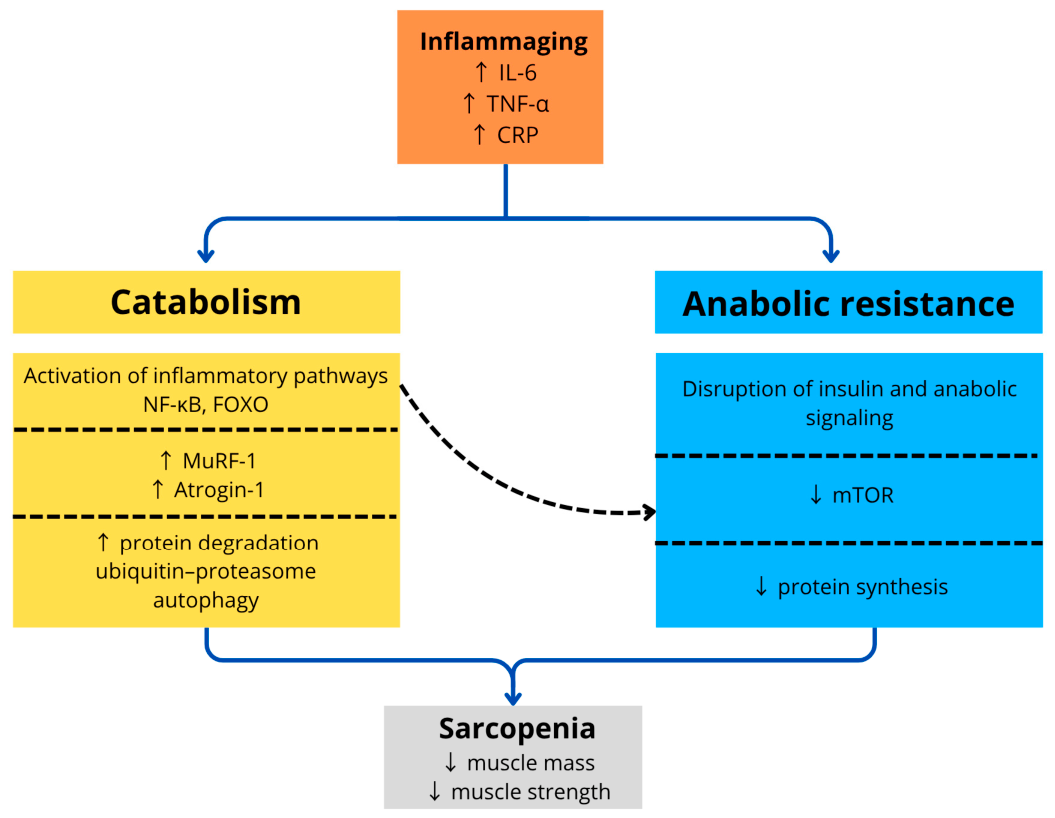
Sarcopenia is a multifactorial pathophysiological syndrome resulting from the complex interaction of biological, metabolic and environmental processes, including an imbalance between the synthesis and degradation of muscle proteins, hormonal changes and chronic, low-grade activation of the inflammatory response [6,32,33,34,35,39,40,41,43,44,45,46,47,48,49,50] (Figure 1).

3.1. Chronic Inflammation (‘Inflammaging’)

The ageing process is associated with persistent, chronic inflammation, referred to as ‘inflammaging’, which is considered one of the key pathophysiological mechanisms underlying sarcopenia. Numerous studies have shown that older people have elevated levels of pro-inflammatory cytokines, such as interleukin-6 (IL-6), tumour necrosis factor alpha (TNF-α) and C-reactive protein (CRP), whose levels correlate with reduced muscle mass and strength and impaired functional capacity [32,33,34].
Factors contributing to the development of inflammaging include immunosenescence, the accumulation of senescent cells secreting a pro-inflammatory secretory phenotype (SASP), mitochondrial dysfunction, increased oxidative stress, and disturbances in the gut microbiota and coexisting visceral obesity. These factors lead to chronic activation of the immune system and the persistence of a systemic, chronic low-grade inflammatory response [32,33,34].
Persistent inflammation promotes muscle protein catabolism through the activation of degradation pathways dependent on the ubiquitin–proteasome system and autophagy, as well as through the inhibition of anabolic signalling (including the IGF-1/Akt/mTOR axis). It has been shown that TNF-α and IL-6 can activate transcription factors such as NF-κB, leading to increased expression of ubiquitin ligases (e.g., MuRF-1, atrogin-1), resulting in enhanced degradation of myofibrillar proteins [6,33]. Furthermore, chronic inflammation exacerbates oxidative stress, disrupts mitochondrial function and impairs the activation and proliferation of satellite cells, which further limits the regenerative capacity of skeletal muscle and contributes to the progression of sarcopenia [34,35].
Elevated levels of IL-6 and CRP also show a significant correlation with frailty, suggesting that chronic inflammation constitutes a common pathophysiological mechanism underlying both conditions [32,33,36,37]. Importantly, inflammatory markers also have prognostic significance—higher concentrations are associated with a greater risk of frailty progression and functional decline in older adults, whilst effective clinical interventions can lead to their reduction [32,34,36,37,38].
A growing body of evidence also suggests that inflammaging may exacerbate anabolic resistance by impairing the muscle response to anabolic stimuli and physical activity. Chronic activation of inflammatory pathways interferes with the phosphorylation of components of the mTORC1 cascade, leading to reduced muscle protein synthesis following protein intake, particularly in older adults with elevated inflammatory markers [6,35].
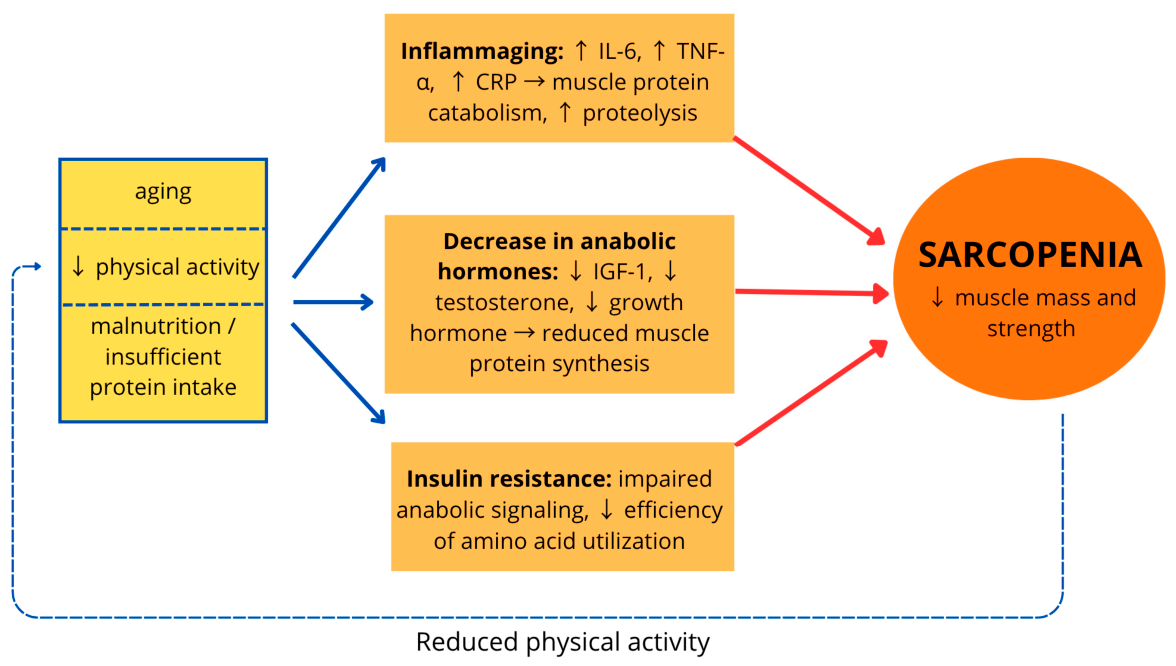
In light of current scientific evidence, chronic low-grade inflammation is considered one of the key mechanisms contributing to the development and progression of sarcopenia. However, its effects occur in close interaction with hormonal changes, metabolic disturbances, mitochondrial dysfunction, physical inactivity and nutritional status, reflecting the multifactorial nature of age-related muscle loss. At the same time, progressive loss of muscle mass and the associated decline in physical activity may further exacerbate systemic inflammation, creating a self-perpetuating cycle. Therefore, inflammation should be viewed both as an important pathogenic mechanism and as a consequence of disease progression. Consequently, interventions aimed at reducing inflammation through appropriate nutrition and physical activity may help interrupt this vicious cycle, although their effectiveness is likely to depend on simultaneous improvement in muscle function and physical activity levels [6,32,33,34,35] (Figure 2).

3.2. Hormonal and Metabolic Changes in Sarcopenia

As we age, multifaceted hormonal and metabolic changes occur which directly affect the balance between the synthesis and breakdown of muscle proteins, contributing to the development and progression of sarcopenia. One of the fundamental mechanisms is the decline in levels of anabolic hormones, such as insulin-like growth factor-1 (IGF-1), testosterone and growth hormone, which is observed in older adults and shows a significant correlation with reduced muscle mass and strength [7,39,40]. Reduced IGF-1 concentrations are associated with impaired anabolic muscle response and reduced capacity for muscle fibre regeneration, which may accelerate muscle mass loss in older adults. In older populations with sarcopenia, significant correlations have been found between lower IGF-1 levels and the severity of muscle mass and function loss, suggesting its important role in regulating muscle anabolism in the course of sarcopenia [8,41]. Furthermore, mechanistic analyses of IGF-1 signalling show that its activity promotes protein synthesis and the proliferation of satellite cells in skeletal muscle, and that its disruption may limit the ability to regenerate muscle in the ageing body [43].
The loss of androgens, including endogenous testosterone, with age reduces the anabolic signals that lead to muscle protein synthesis. Epidemiological studies indicate that lower testosterone concentrations are associated with reduced muscle mass and strength in older adults, although clinical data are heterogeneous and require further verification in larger prospective studies. In population-based studies of elderly men, reduced testosterone levels correlated with lower muscle mass and poorer grip strength scores, indicating its role in maintaining muscle homeostasis [44,45]. Furthermore, literature reviews suggest that androgens influence the anabolic response of muscles by modulating the IGF-1/Akt/mTOR pathway and activating androgen receptors in muscle tissue, although the results are not uniform and further data from randomised controlled trials are needed [46]. The phenomenon of anabolic resistance may partly result from impaired activation of the IGF-1/Akt/mTOR signalling pathway and coexisting insulin resistance.
Insulin resistance is frequently observed as part of the ageing process, particularly in individuals with obesity and metabolic syndrome, which has significant implications for muscle protein metabolism. Insulin primarily acts in an anti-catabolic manner by inhibiting muscle proteolysis, whilst its effect on protein synthesis depends on the simultaneous availability of amino acids. In states of insulin resistance, these processes are disrupted—insulin resistance limits the muscles’ ability to utilise anabolic signals, leading to a weakened protein synthesis response in post-exercise and post-meal reactions in older adults [47].
Mechanistically, anabolic resistance is also observed in older adults, defined as a reduced ability of muscles to activate the key anabolic mTORC1 pathway and an impaired response to supplied amino acids and insulin, resulting in lower efficiency of muscle protein synthesis compared to younger individuals [9,48,49]. This condition is closely linked to the presence of insulin resistance and a general reduction in anabolic signalling in ageing muscles, which contributes to the progression of sarcopenia [48,49].
There is also growing evidence to support the role of mitochondrial dysfunction in the pathogenesis of sarcopenia. Ageing leads to impaired mitochondrial biogenesis, reduced oxidative phosphorylation capacity and ATP production, and increased oxidative stress in muscles, which is associated with changes in mitochondrial dynamics and impaired mitochondrial quality control [11,50]. These changes are associated with impaired muscle metabolic function, reduced ability to adapt to exercise, and increased insulin resistance, which correlates with reduced muscle mass and strength in older adults [51,52].
Mitochondrial dysfunction may also induce increased production of reactive oxygen species (ROS), leading to further damage to muscle proteins and lipids, an intensification of catabolic processes, and disturbances in mitochondrial dynamics (fusion/fission), which are observed in the context of ageing and sarcopenia. Increased mtROS production and mitochondrial bioenergetic disturbances have been described as key pathogenic mechanisms in sarcopenia, associated with a decline in ATP production and muscle function in older adults [13,53,54]. Dysfunction of mitochondrial quality control, including disturbances in the fusion/fission balance and mitophagy, has also been linked to the accumulation of damaged mitochondria and impaired muscle regenerative function [50,55].
In summary, hormonal changes (decreases in IGF-1 and androgens), insulin resistance and mitochondrial dysfunction act synergistically, disrupting anabolic signalling and the muscles’ ability to maintain protein balance. These mechanisms do not act independently but interact closely with chronic inflammation, physical inactivity, nutritional status and other age-related biological processes, collectively contributing to the development and progression of sarcopenia.

3.3. Low Levels of Physical Activity

The lack of mechanical stimulation of the muscles is one of the key factors contributing to the development of sarcopenia in older people. Physical inactivity and chronic sedentary behaviour lead to a weakening of anabolic signalling in skeletal muscles, a reduction in the rate of muscle protein synthesis (MPS) and an acceleration of muscle mass loss, as described by Tezze et al. (2023) [9].
The results of observational studies and meta-analyses indicate that higher levels of total physical activity, including moderate- and high-intensity activity, are associated with a significantly lower risk of sarcopenia. This effect is mediated by beneficial effects on muscle mass, strength and functional fitness, as suggested by Sánchez-Sánchez et al. (2024) [56].
Resistance training (RT) is considered the most effective non-pharmacological intervention for the prevention and treatment of sarcopenia. Prospective and meta-analytical studies conducted by Zhou et al. (2025) [15] (older women with sarcopenia) and Govindasamy et al. (2025) [57] have shown that even moderate-intensity programmes lead to a significant increase in muscle strength, lean body mass and improved functional capacity.
These mechanisms include activation of the mTOR pathway, increased muscle protein synthesis, and neuromuscular adaptations. Although activation of mTOR signalling is considered one of the principal anabolic mechanisms underlying resistance exercise, muscle adaptation is influenced by multiple interacting factors, including age, nutritional status, inflammation, hormonal milieu and metabolic health. Consequently, resistance exercise helps counteract so-called ‘anabolic resistance’, defined as the reduced ability of skeletal muscles to increase protein synthesis in response to amino acid intake and exercise stimulation, which intensifies with age and under conditions of inactivity (Tezze et al., 2023) [9].
Endurance (aerobic) training exerts its effects through distinct yet complementary mechanisms, such as improved muscle perfusion, enhanced mitochondriogenesis and a reduction in chronic low-grade inflammation, which promotes improved muscle metabolism and endurance. Because chronic inflammation also contributes to anabolic resistance and muscle catabolism, reducing inflammation may help interrupt this vicious cycle and enhance the response to exercise and nutritional interventions. These mechanisms were described by Tezze et al. (2023) [9].
Multicomponent interventions, comprising resistance training combined with an endurance component and nutritional support, appear to have an additive effect in terms of increasing muscle strength and improving physical function. A network meta-analysis conducted by Zhao et al. (2025) [58] showed that combining resistance training with protein supplementation was most effective in improving muscle strength and functional parameters in older adults with sarcopenia [58].
The major pathophysiological mechanisms contributing to sarcopenia in older adults, together with their molecular characteristics, effects on skeletal muscles, and potential targets for intervention, are summarised in Table 1.
Furthermore, reducing sedentary time and increasing daily informal physical activity (e.g., number of steps) is associated with maintaining muscle mass and slowing functional decline [56].
Prolonged immobilisation or a significant reduction in physical activity leads to an exacerbation of ‘anabolic resistance’, which accelerates atrophic processes [9]. Physical inactivity promotes the intensification of catabolic processes and disrupts the regulation of muscle proteinostasis, leading to a predominance of muscle protein degradation over synthesis [9,15].
Based on current guidelines and the available scientific evidence, Table 2 summarises practical recommendations for planning resistance training in older adults with sarcopenia. The recommendations cover the key parameters of a training programme, such as frequency, intensity, volume, type of exercise, load progression, programme duration and the role of supervised training. The values presented are indicative and should be adapted to the patient’s clinical condition, functional capacity and comorbidities.
A summary of the types of physical activity, their mechanisms of action and the clinical parameters monitored is presented in Table 3.

3.4. Nutritional and Lifestyle Interventions in Sarcopenia

An optimal supply of nutrients is crucial for maintaining muscle protein balance and the effective regeneration of muscle fibres in the ageing body. In older people, insufficient protein intake is frequently observed, which is associated with reduced stimulation of muscle protein synthesis and an increase in anabolic resistance [65,66].
Current recommendations suggest that older adults increase their daily protein intake to approximately 1.2–1.5 g/kg body weight per day, particularly in cases of coexisting sarcopenia or chronic diseases [17]. The quality of dietary protein is also of key importance, particularly its content of branched-chain amino acids (BCAAs), especially leucine. Leucine is a key activator of the mTOR signalling pathway; however, the anabolic response depends on several interacting factors, including physical activity, age, inflammatory status, insulin sensitivity and overall protein availability [18,65]. Supplementation with leucine-enriched whey protein may improve muscle parameters (mass, strength, function), particularly when combined with resistance training [18,67], significantly more effectively than supplementation alone, suggesting a synergistic effect between mechanical stimulation and amino acid supply [68,69]. However, protein intake recommendations should be individualized in older adults with chronic comorbidities. According to the ESPEN Practical Guideline on Clinical Nutrition and Hydration in Geriatrics, higher protein intakes are generally appropriate for older adults; however, in patients with chronic kidney disease (CKD), intake should be adjusted according to disease stage and current nephrology guidelines. Similarly, nutritional management should be individualized in patients with advanced liver disease or heart failure, as altered metabolism, fluid balance disturbances, and frequent coexisting renal dysfunction may necessitate modification of protein intake and close clinical monitoring [70,71].
Available evidence consistently supports the combination of resistance training with adequate protein intake. Leucine, vitamin D and omega-3 fatty acids may provide additional benefits, particularly in individuals with nutritional deficiencies or increased risk of sarcopenia. However, direct evidence demonstrating additive benefits when these nutrients are combined with resistance training and adequate protein intake remains limited [18,65,72].
There is growing evidence in the literature that other dietary components may modulate the progression of sarcopenia through various biological mechanisms. Creatine supplementation is one of the best-studied methods of supporting muscle function in older adults, particularly when combined with resistance training. Creatine increases phosphocreatine stores in muscles, which supports rapid ATP regeneration during intense exercise, and may also help improve anabolic signalling and muscle adaptations. Meta-analyses and systematic reviews indicate that creatine, when combined with strength training in older adults, increases muscle strength and lean body mass compared to resistance training alone or a placebo, making it a promising adjunct to support the treatment of sarcopenia in this population [73]. The available evidence also suggests that the greatest benefits of creatine supplementation are observed precisely when combined with progressive resistance training, whilst the effectiveness of its use without concurrent physical activity remains less clear. However, caution should be exercised in patients with chronic kidney disease (CKD), particularly in its advanced stages, where supplementation should be tailored to the patient’s clinical condition and carried out whilst monitoring kidney function. Similarly, in individuals with advanced liver disease or heart failure, the available data on the safety and efficacy of creatine supplementation remain limited. Consequently, its routine use in these patient groups is not currently recommended, and the decision to initiate supplementation should be made on a case-by-case basis, under appropriate medical supervision [74,75,76,77].
Vitamin D is one of the most extensively studied micronutrients in the context of sarcopenia, due to its wide-ranging effects on the musculoskeletal system. Vitamin D deficiency is common in older adults and is associated with reduced muscle strength, impaired physical function and an increased risk of falls [70].
From a mechanistic perspective, vitamin D may influence mitochondrial function, the regulation of oxidative stress and calcium signalling in muscles, although the results of clinical interventions involving vitamin D supplementation alone are mixed. In populations without vitamin D deficiency, supplementation with vitamin D alone has no effect on muscle mass and strength; however, in populations with a history of deficiency or as part of a multimodal strategy (e.g., combined with training or other nutrients), it may help maintain muscle function. Therefore, the role of vitamin D in sarcopenia should not be interpreted as an independent anabolic intervention. Rather, vitamin D appears to support muscle function primarily in individuals with deficiency or as part of multimodal interventions, where improvements are likely driven predominantly by resistance exercise and adequate protein intake [69,71].
Omega-3 fatty acids (EPA and DHA) have anti-inflammatory properties and may enhance the anabolic response of skeletal muscle. Their potential benefits are likely related to modulation of chronic low-grade inflammation, which is considered one of several interacting mechanisms involved in the pathogenesis and progression of sarcopenia [72]. Meta-analyses of randomised clinical trials suggest a possible improvement in muscle mass and strength in older adults at increased risk of sarcopenia following the introduction of omega-3 fatty acid supplementation [22].
The gut microbiome is recognised as an important component of the gut–muscle axis, influencing inflammation, metabolism and nutrient absorption. Systematic reviews of randomised trials indicate that probiotic supplementation in older adults may improve muscle strength (e.g., grip strength) and physical function (e.g., walking speed) compared with placebo, although evidence regarding a direct effect on muscle mass is still limited. The results also suggest potential benefits of prebiotics on muscle strength, but further high-quality research is needed in this area [74,75].
Population-based studies also indicate that dietary patterns rich in vitamins, minerals and compounds with antioxidant properties are associated with greater muscle mass and a lower risk of sarcopenia [78]. Similarly, antioxidant supplementation (including vitamins C and E, carotenoids and polyphenols), particularly when combined with resistance training, may help improve muscle strength and physical fitness, although the available research findings remain mixed [79].
A growing body of research also points to the importance of B vitamins—particularly vitamins B6, B9 (folic acid) and B12—for maintaining muscle health. Population-based data suggest that lower intake or deficiency of these vitamins is associated with reduced muscle mass, poorer muscle strength and reduced physical fitness. Prospective studies also indicate that vitamin B12 deficiency may increase the risk of developing sarcopenia in older people [80,81,82].
Numerous observational studies and systematic reviews also suggest the role of minerals in the context of multimodal interventions, particularly in improving the performance of activities of daily living and overall fitness, especially when used in combination with other nutrients and non-pharmacological interventions [83].
In literature reviews extending beyond the period covered by this analysis, van Dronkelaar et al. (2023) [84] reported that magnesium and selenium intake was significantly associated with better muscle mass, strength and physical function, as well as a lower prevalence of sarcopenia in older adults; however, most of the available data comes from observational studies and is inconsistent.
Findings regarding other minerals, such as calcium, iron, phosphorus and potassium, are scarce and often inconclusive. In review analyses, the lack of strong clinical evidence suggests that their impact on muscle mass and strength may be limited or dependent on nutritional status and the presence of deficiencies [84].
When interpreting the available evidence regarding nutritional interventions, it should be recognised that most clinical studies have been conducted in community-dwelling older adults with relatively preserved functional capacity. Consequently, the effectiveness of nutritional strategies may vary according to baseline nutritional status, functional capacity and the burden of comorbidities. Future studies should therefore include more heterogeneous and clinically vulnerable populations to strengthen the evidence base and improve the generalisability of current nutritional recommendations for older adults with sarcopenia.
It therefore appears that, in the context of sarcopenia, a holistic approach is key, combining an appropriate diet rich in protein, micronutrients and antioxidants with the judicious use of supplements such as creatine or probiotics, alongside regular physical activity, particularly resistance training. Such a combination may maximise anabolic effects, reduce oxidative stress and modulate inflammation, which translates into better maintenance of muscle mass, strength and physical function in older adults. A summary of the potential of vitamins and minerals in the prevention and treatment of sarcopenia is presented in Table 4.

3.5. The Potential of Herbs and Plant Compounds in the Prevention and Treatment of Sarcopenia

However, it should be emphasized that the level of evidence for plant-derived compounds remains substantially lower than that for resistance exercise and adequate protein intake, which constitute the cornerstone of sarcopenia management.
In recent years, there has been growing interest in the use of bioactive plant compounds as potential agents supporting muscle homeostasis. In contrast to the well-documented role of protein or vitamin D, data on herbs and phytochemicals remain limited, though they are steadily expanding. Among plant-derived compounds, the strongest clinical evidence currently supports curcumin, whereas evidence for most other phytochemicals remains limited and is largely based on preclinical studies.
One of the best-studied plant compounds in the context of sarcopenia is curcumin, the main polyphenol extracted from Curcuma longa.
Among plant-derived compounds, curcumin, the main polyphenol extracted from Curcuma longa, is currently the most studied in clinical settings in the context of sarcopenia. A randomised clinical trial involving older adults reported that 12-week supplementation with a bioavailable form of curcumin (Cureit™) significantly improved handgrip strength and weight-lifting performance in a group of older adult patients compared with placebo [76]. However, this finding is based on a single randomized clinical trial with a relatively small sample size and therefore requires confirmation in larger studies. The authors suggest that these mechanisms may result from anti-inflammatory effects and the modulation of oxidative stress. A systematic review also highlighted the potential role of curcumin in regulating NF-κB and AMPK pathways and mitochondrial function, although it pointed to the need for further clinical trials with greater statistical power [77].
There is also a growing body of evidence regarding plant polyphenols in the broadest sense. A systematic review and meta-analysis of clinical trials assessed the effect of polyphenol supplementation on sarcopenia parameters in older adults. A moderate improvement in muscle mass indices was observed, while the effect on muscle strength remained inconclusive [85] (Medoro et al.). The authors suggest that the action of polyphenols may be linked to a reduction in chronic low-grade inflammation and an improvement in mitochondrial function, which is of particular significance in the pathogenesis of age-related sarcopenia. Flavonoids and other specific polyphenolic compounds, including catechins, ellagic acid and fisetin, represent promising candidates for the prevention of sarcopenia due to their antioxidant and anti-inflammatory properties and their ability to modulate cellular signalling pathways involved in muscle metabolism [86,87]. However, the current evidence is largely preclinical and requires confirmation in well-designed randomised clinical trials [88,89].
Promising results have also been reported for traditional Chinese medicine. A recent meta-analysis of randomized clinical trials suggested that traditional Chinese herbal medicines were associated with improvements in muscle mass, handgrip strength, and physical function, including SPPB scores, in older adults with sarcopenia [88]. However, the included interventions were highly heterogeneous and often multimodal in nature, whilst the methodological quality of the included studies was variable. Therefore, these findings should be interpreted with caution.
In summary, current evidence suggests that selected herbs and plant-derived compounds, particularly curcumin and polyphenols, may support the prevention and management of sarcopenia through their antioxidant and anti-inflammatory properties. Although traditional Chinese herbal medicines have also shown promising results, the available clinical evidence remains limited and heterogeneous. Consequently, robust conclusions regarding their efficacy in older adults cannot yet be drawn. The available clinical evidence remains limited, heterogeneous and of variable methodological quality. Future studies should employ standardised plant preparations, uniform diagnostic criteria for sarcopenia, and adequately powered randomised clinical trial designs to better establish their clinical role. Overall, plant-derived compounds should currently be regarded as adjunctive and experimental interventions in the context of sarcopenia, pending confirmation from high-quality, adequately powered randomized clinical trials [89].
A summary of the potential of herbs and plant compounds in the prevention and treatment of sarcopenia is presented in Table 5.
Among plant-based ingredients, curcumin appears to have the most robust clinical evidence, with randomised clinical trials suggesting improvements in muscle strength. Polyphenols as a group may have a modest effect on muscle mass; however, their effects on muscle function and strength appear less consistent. In the case of Chinese herbal formulas, the clinical data are positive, but their methodological heterogeneity limits the possibility of a clear assessment of efficacy.
Most other phytochemicals (flavonoids, resveratrol, botanical blends) are based mainly on preclinical data, indicating a need for further well-designed randomised clinical trials.

4. Technologies for Assessing Muscle Mass and Function

The assessment of muscle mass and function is crucial in the diagnosis of sarcopenia and in monitoring the effects of physical and nutritional interventions in older adults. Various methods are used in clinical and research practice, including DXA (Dual-energy X-ray Absorptiometry), BIA (Bioelectrical Impedance Analysis), muscle ultrasonography, and modern wearable devices (wearables). Each of these methods has specific advantages and limitations, which influences the choice of tool depending on the purpose of the study.
Several international consensus statements have proposed diagnostic criteria for sarcopenia, differing mainly in the recommended cut-off values, target populations, and diagnostic algorithms. The EWGSOP2 criteria are currently the most widely used in Europe, whereas the AWGS consensus provides population-specific thresholds for Asian populations. The FNIH Sarcopenia Project introduced outcome-based cut-off values using the ASM/BMI index, although these criteria are used less frequently in routine clinical practice [90,91]. A comparison of the main diagnostic frameworks is presented in Table 6.

4.1. DXA—Dual-Energy X-Ray Absorptiometry

DXA is recognised as the gold standard for assessing body composition, including muscle mass. It enables the accurate determination of lean body mass on a segmental basis for the upper and lower limbs, which is important in the diagnosis of sarcopenia. The method is characterised by high repeatability and accuracy; however, its limitations include the need for access to laboratory equipment and exposure to small doses of ionising radiation [92].

4.2. BIA—Bioelectrical Impedance Analysis

BIA measures the electrical resistance of tissues in response to the flow of a low-intensity current, which allows for the estimation of muscle mass and body hydration. It is a quick, non-invasive and easy-to-use method, also available in the form of portable devices. A limitation of BIA is its sensitivity to hydration status, body position and skin temperature, which may affect the accuracy of the results [92,93].

4.3. Muscle Ultrasonography

Ultrasonography (USG) allows for the assessment of muscle thickness, cross-sectional area (CSA) and echogenicity, providing information on muscle structure and quality. The method is safe, non-invasive and suitable for use in outpatient settings. A limitation is the requirement for operator experience and lower standardisation compared to DXA [94].

4.4. Wearables

Wearable devices, such as smartwatches and IMU sensors, enable the monitoring of physical activity, step count, grip strength (in some models) and movement dynamics. Their advantage lies in the ability to provide continuous monitoring in everyday life, which allows for the assessment of functional muscle activity and sedentary behaviour. A limitation is the lower precision in muscle mass measurements and the need to validate measurement algorithms [95,96]. A summary of muscle mass measurement methods is presented in Table 7.

4.5. Assessment of Muscle Function in Older Adults

In addition to assessing muscle mass, it is equally important to assess muscle function, which includes muscle strength, endurance, mobility and the ability to perform activities of daily living—all of these parameters are crucial for the diagnosis of sarcopenia and for evaluating the effectiveness of physical interventions. The literature recommends a comprehensive approach combining measurements of strength, gait and functional fitness tests, which are strongly correlated with the risk of falls, disability and the general health of older adults [97].

4.5.1. Muscle Strength

The most commonly used indicator of muscle strength is handgrip strength, measured using a hand dynamometer (e.g., JAMAR, Smedley) or a vigorimeter, which allows the assessment of the ability to generate force in the upper limbs. The significance of handgrip strength stems from its role as a simple predictor of muscle function and the risk of adverse outcomes, including falls and mortality in the older adult population [98].
The grip strength test is particularly recommended in diagnostic guidelines for sarcopenia, often in combination with other functional tests, such as the 5-Repetition Sit-to-Stand Test (5RSTS) or the Timed Up and Go Test (TUG) [92].

4.5.2. Mobility and Physical Fitness Tests

An assessment of muscle function usually also includes tests to evaluate mobility, balance and walking speed:
  • Timed Up and Go (TUG)—a test measuring the time it takes a person to stand up from a chair, walk 3 m, turn around and sit down again; considered a simple and reliable indicator of mobility and muscle function in older adults, as well as the risk of falls [99].
  • Gait speed—a measurement of walking speed over a short distance (e.g., 4 m), widely used as an indicator of general fitness and a predictor of adverse health outcomes; a value below 0.8 m/s is generally considered to indicate reduced physical function [100]
  • Short Physical Performance Battery (SPPB)—a more comprehensive test combining three components: balance, gait speed and 5-repetition Sit-to-Stand, which allows for the assessment of overall lower body fitness [101]

4.5.3. Sit-to-Stand (STS)

The Sit-to-Stand test, particularly its five-rep version (5TSTS), is a recognised method for assessing lower limb function and overall muscular endurance and rhythm in older adults. Reviews have shown that a longer 5TSTS completion time correlates with poorer lower limb function and overall physical fitness [102].

4.5.4. Isometric Strength of the Lower Limbs

In addition to standard tests, isometric knee extension strength measured using a dynamometer is a recognised indicator of muscle strength in situations where standard strength tests (e.g., grip strength) are difficult to perform. Studies have shown that this measurement correlates well with other components of sarcopenia and may be useful in diagnosis [103].

4.5.5. Other Methods and Indicators

In the context of a comprehensive assessment of muscle function, tools utilising wearable devices (wearables/IMUs) and other balance tests are also being developed, which can be used to monitor gait quality, dynamic balance and activities of daily living in natural settings [95].

5. Integration of Nutrition, Training and Technological Monitoring

Contemporary approaches to the prevention and treatment of sarcopenia involve combining dietary and training interventions with monitoring technologies, with the aim of improving muscle adaptation and potentially increasing participant engagement. Multicomponent interventions encompassing both nutrition and physical activity may provide greater benefits for muscle mass, strength and physical function compared with single-component approaches, as suggested by recent meta-analyses and clinical trials [104,105].

5.1. Synergy Between Nutritional and Training Interventions

Systematic reviews and meta-analyses indicate that combining amino acid/leucine/protein supplementation with resistance training can significantly improve measures of strength and muscle function in older adults with sarcopenia, compared with training or supplementation alone.
A meta-analysis by Xie et al. (2026) [105] comprising 9 RCTs showed that resistance training with amino acid supplementation significantly improves muscle strength and function (handgrip strength, gait speed, SPPB, 5TSTS), but does not significantly affect muscle mass indices.
In contrast, a network analysis by Yan et al. (2025) [106] involving 21 RCTs indicates that the combination of training and protein supplementation yields the greatest benefits for function (handgrip, gait speed) and for appendicular skeletal muscle mass, although the effects on total muscle mass are more moderate.
A network analysis conducted by Yan et al. (2025) [106], comprising 21 randomised controlled trials (1215 participants), showed that the combination of resistance training and protein supplementation yielded greater benefits in terms of grip strength, gait speed (both usual and maximal gait speed) and appendicular skeletal muscle mass compared to training alone or supplementation alone in older women with sarcopenia [106].
In a 12-week, multicentre, randomised clinical trial by Sun et al. (2025) [107], an intervention comprising a multi-component supplement (MT-ONS: protein, β-hydroxy-β-methylbutyrate and vitamin D3) combined with a resistance training programme and home-based activity led to significant improvements in grip strength, walking speed, functional test scores (SPPB and chair-stand) and quality of life in older adults with sarcopenia compared with the control group. Because vitamin D was administered as part of a multi-component intervention together with protein, HMB and resistance training, the specific contribution of vitamin D to the observed benefits cannot be determined. Therefore, the reported improvements should be interpreted as the effect of the combined intervention rather than of vitamin D supplementation alone.
These results suggest that the combination of nutrition (amino acid/protein supplementation) and resistance training may offer greater benefits in the comprehensive treatment of sarcopenia, particularly in terms of physical function and muscle strength, than the use of either of these elements alone. This is presented in Table 8.

5.2. The Role of Technology in Monitoring Responses to Interventions

Modern technologies for monitoring physical activity offer new possibilities for assessing the effectiveness of exercise and dietary interventions in older adults with sarcopenia or at risk of developing it [41]. Wearable devices such as smartwatches, activity trackers and IMU sensors enable continuous monitoring of activity levels, including step count, walking intensity, sitting time and functional parameters, which can support participants’ adherence to the programme and provide data on the body’s response to interventions in everyday conditions, outside the laboratory [108].
Research findings suggest the importance of wearable technology in improving parameters related to muscle mass and function in older adults. Wu and Manga (2025) [41] conducted a randomised controlled trial in which a 12-week walking programme supported by wearable devices significantly increased muscle mass, grip strength and lower limb function compared to the control group. Devices such as smartwatches and fitness trackers (e.g., Garmin Vivosmart HR, Apple Watch) provided participants with real-time feedback and monitored steps and activity intensity, which helped improve training and physical outcomes in older adults [41].
Similar results are reported in the study by Ho et al. (2024) [108], which used an activity tracker as part of a strategy to gradually increase daily step counts among older adults. After an 8-week intervention, participants wearing a tracker with step targets showed improvements in indicators related to sarcopenia, such as overall physical activity, muscle mass index and muscle strength, compared to the control group.
Furthermore, wearable technologies and digital platforms are increasingly described in research as tools supporting the customisation of home workouts and the remote monitoring of activity. An example is the description of the ‘GYM—Grow Your Muscle’ digital platform, which combines a mobile app, video exercises and a wearable device to collect data on muscle activity and heart rate, enabling remote monitoring of the progress of a home exercise programme in people with sarcopenia [109].
Furthermore, the literature indicates a growing interest in the use of sensors to assess gait parameters and other functional indicators, which may be helpful in evaluating responses to interventions. A study conducted by Shin et al. (2025) [110] analysed various gait parameters (such as double support time, vertical oscillation, cadence, stride length) recorded using wearable sensors and found significant associations with limb muscle mass, grip strength and functional test results (SPPB, 5-repetition Sit-to-Stand) in older adults [110].
Research into the use of mobile apps and telerehabilitation in sarcopenia is ongoing. A protocol has been published for a randomised trial evaluating real-time multicomponent remote rehabilitation compared with self-rehabilitation in older adults with sarcopenia [111], indicating a growing interest in integrating technology with training interventions and monitoring of muscle function. Although the results of this RCT have not yet been published, there are specific studies suggesting the effects of telerehabilitation based on mobile applications. A randomised study by Zhang et al. (2025) [112] showed that a 4-week, mobile app-based telerehabilitation programme, comprising resistance exercises, improved muscle strength, balance and functional ability in older adults with sarcopenia in a manner comparable to traditional in-person rehabilitation [106]. Furthermore, studies such as that by He et al. (2024) [113] indicate that remote training programmes utilising AI for posture analysis (3D human pose estimation) may be as effective as traditional methods, highlighting the potential of advanced technologies in monitoring and implementing interventions for older adults with sarcopenia.
In summary, technologies for monitoring muscle activity and function—in particular wearable devices and digital applications—are a valuable tool in the assessment and optimisation of exercise and nutrition programmes for older adults, providing real-time data and improving adherence to recommendations. Their use can contribute to more personalised and effective support in the prevention and treatment of sarcopenia. A summary of examples of the use of wearable technologies and apps in monitoring exercise and nutrition interventions in older adults is presented in Table 9.
Despite these promising findings, several limitations should be acknowledged. Most studies evaluating wearable devices and telerehabilitation in older adults with sarcopenia have been of relatively short duration, typically ranging from 4 to 12 weeks, limiting conclusions regarding long-term adherence and sustainability of clinical benefits. Furthermore, the algorithms used to estimate physical activity, gait characteristics, and functional performance continue to evolve and require further validation, particularly in frail older populations with altered gait patterns and functional impairments. Therefore, although wearable technologies represent valuable adjuncts for monitoring interventions, additional large-scale longitudinal studies are needed before their routine implementation in clinical practice.
An important aspect emerging from the available evidence is the demographic profile of the populations included in the analysed studies. Most clinical trials evaluating nutritional and exercise interventions were conducted in community-dwelling older adults who were generally relatively well-functioning. In contrast, institutionalised older adults and individuals with multiple comorbidities remain substantially underrepresented in clinical research. Moreover, although large population-based studies, such as NHANES, provide valuable epidemiological data, their findings cannot be directly extrapolated to intervention studies conducted in patients with clinically diagnosed sarcopenia. These differences should be considered when interpreting the available evidence, as the response to nutritional and exercise interventions may depend on baseline functional status, comorbidity burden and inflammatory state. Future studies should therefore include more heterogeneous and clinically vulnerable populations to improve the generalisability of current recommendations.

6. Strengths and Limitations

This review provides a comprehensive overview of the current state of knowledge on sarcopenia, covering its pathophysiology, diagnosis, nutritional strategies, physical activity-based interventions, and the role of modern technologies in supporting diagnosis and treatment. A key strength of this work is its interdisciplinary approach to the subject matter and the integration of the latest guidelines and research findings, which enables the presentation of current management options in a way that is useful for both the scientific community and clinical practice.
Despite its broad scope, this review has certain limitations. First and foremost, it is narrative in nature, aiming to synthesise research findings from various fields. Consequently, it does not involve the formal procedure of literature search, selection and evaluation characteristic of systematic reviews. Accordingly, a formal assessment of the methodological quality and risk of bias of the included studies was beyond the scope of this review.
Furthermore, the conclusions presented reflect the state of knowledge available at the time of manuscript preparation. Given the rapid progress in research on sarcopenia and the swift emergence of new data concerning diagnostics, nutritional interventions, exercise programmes and digital technologies, some of the information presented may require updating as new research findings are published.
When interpreting the results presented in this review, the limitations of the available scientific evidence should also be taken into account. The data on dietary and technological interventions for the treatment of sarcopenia remain heterogeneous. The included studies differed in terms of study design, sample size, the diagnostic criteria for sarcopenia used, intervention protocols, follow-up duration and the endpoints assessed, which makes it difficult to compare their results directly. Although randomised controlled trials and meta-analyses provide valuable evidence regarding selected interventions, the level of certainty of the available data varies depending on the intervention under analysis. Furthermore, many intervention studies have primarily involved community-dwelling older adults with relatively preserved functional capacity, whereas institutionalised older adults and individuals with multiple comorbidities remain underrepresented in clinical trials. Consequently, caution is warranted when extrapolating the available evidence to these more vulnerable populations. Furthermore, most studies on wearables and telerehabilitation were short-term in nature, and the algorithms used still require further validation. In addition, older people with multiple comorbidities, such as chronic kidney disease, heart failure or advanced liver disease, remain under-represented in clinical trials, which limits the ability to formulate clear recommendations for these patient groups.
The scope of this study covered a broad spectrum of issues related to sarcopenia; consequently, certain areas—such as a detailed analysis of specific dietary strategies, specific training protocols or the validation process for digital solutions—have been discussed in summary form. Overall, this review provides a comprehensive synthesis of the current evidence and may serve as a valuable resource for clinicians and researchers, as well as a basis for future research on the diagnosis and management of sarcopenia.

7. Summary

Sarcopenia is a significant public health issue in ageing populations, leading to a decline in physical function, an increased risk of falls and hospitalisation, and a reduced quality of life. Its pathogenesis is multifactorial and involves the interaction of chronic low-grade inflammation (inflammaging), hormonal disturbances, insulin resistance, mitochondrial dysfunction, low physical activity and nutritional deficiencies. These mechanisms do not operate independently but interact dynamically throughout the ageing process, contributing to an imbalance between muscle protein synthesis and degradation and partly explaining the heterogeneity of clinical presentation and response to interventions observed among older adults. Importantly, chronic low-grade inflammation appears to play a dual role in sarcopenia: it contributes to disease development while also being further amplified by progressive muscle loss and reduced physical activity, creating a self-perpetuating cycle that may be interrupted through appropriately targeted exercise and nutritional interventions.
Current evidence suggests that resistance training combined with adequate protein intake represents the most consistently supported strategy for the prevention and treatment of sarcopenia. Additional nutritional components, including leucine, vitamin D and omega-3 fatty acids, may provide supportive benefits; however, evidence for additive effects beyond resistance training and adequate protein intake remains limited.
Recent systematic reviews and meta-analyses suggest that combining resistance training with protein or amino acid supplementation is more effective than single-component interventions. A network analysis conducted by Yan, Huang, Zhong and Du (2026) [106] suggests greater effectiveness of combined interventions that combining resistance training with protein supplementation appeared more effective than using these interventions separately in terms of improving grip strength, walking speed and limb muscle mass in older women. Similar observations were reported by Xie, Yan and Tao (2026) [105], whose meta-analysis showed that adding amino acid supplementation to resistance training was associated with improvements in grip strength, walking speed and the results of functional tests, such as the Short Physical Performance Battery and the Five Times Sit-to-Stand test, with the synergistic effect being more pronounced in relation to functional parameters than to muscle mass alone.
A growing body of evidence also points to the potential role of other bioactive compounds, including creatine, antioxidants, probiotics and selected plant compounds (e.g., polyphenols or curcumin); however, their use requires further research, particularly in the elderly population with diagnosed sarcopenia.
Modern approaches increasingly focus on the development of diagnostic and monitoring methods for sarcopenia. Techniques such as DXA, BIA and ultrasound enable the assessment of muscle mass and quality, whilst wearable devices allow for the continuous monitoring of physical activity and muscle function in everyday life. The integration of these tools with exercise and nutritional interventions, may support more precise, personalised care, and ongoing assessment of treatment effectiveness. The results of primary studies are consistent with finding of systematic reviews, as exemplified by the study by Wu and Manga (2025), in which a 12-week walking programme was associated with increased muscle mass and grip strength, and devices providing feedback likely enhanced engagement by wearable technology contributed to increased muscle mass and grip strength, and devices providing feedback likely increased engagement with the programme [41]. Similarly, Ho et al. (2024) demonstrated that integrating activity trackers into strategies for increasing step counts can enhance physical activity levels and improve markers of muscle mass and strength [108]. Telemonitoring and telerehabilitation are becoming key elements of modern practice, as suggested by Zhang et al. (2025), who reported improvements in balance and muscle strength following the use of a mobile app [112], and by He et al. (2024), who found that remote training programmes based on 3D human pose estimation technology and artificial intelligence may achieve outcomes comparable to those of traditional rehabilitation [113]. Furthermore, research by Shin, Kweon and Choi (2025) suggests significant correlations between gait parameters recorded by wearable sensors and muscle mass, as well as functional test results, indicating a potential role for these sensors in assessing response to intervention [110].
Despite a relatively high degree of consistency in reported improvements of consistency in the results regarding improvements in physical function, a comparative analysis reveals inconsistencies regarding the impact on muscle mass, which may be partly explained by the short duration of the intervention and differences in protein dosage and training intensity. Research gaps include the lack of large-scale studies simultaneously integrating nutritional, training, technological and behavioural components, as well as insufficient assessment of the cost-effectiveness of wearable systems and the absence of long-term follow-up exceeding one year. It should be noted, however, that standard recommendations regarding high protein intake (≥1.2 g/kg body weight/day) and resistance training are not universal and require particular attention in patients with chronic kidney disease (CKD), liver failure or heart failure. In the case of CKD, the nutritional strategy should be adapted to KDIGO guidelines to avoid accelerating disease progression, whereas in patients with liver cirrhosis, the intervention must prevent muscle mass loss whilst monitoring the risk of encephalopathy.
These limitations also apply to exercise, as some patients are unable to perform traditional resistance training due to pain or reduced physical capacity, making wearable technologies and alternative methods—such as neuromuscular electrical stimulation or isometric training–key supportive tools. Ultimately, the management model for sarcopenia appears to require a flexible approach aimed at maintaining function and slowing of disease progression, whilst taking into account the patient’s individual metabolic and functional limitations.
In summary, available evidence suggests that effective prevention and management of sarcopenia likely require a holistic approach combining physical activity, a well-balanced diet and modern monitoring technologies. Future research should focus on optimising integrated intervention models and identifying the most effective therapeutic strategies tailored to the individual needs of older adults.
Overall, the strength of evidence varies substantially across interventions, with resistance training combined with adequate protein intake supported by the most consistent effects on muscle strength and physical performance, whereas other nutritional supplements, pharmacological adjuncts, and plant-derived compounds show heterogeneous and generally lower-certainty evidence, particularly regarding long-term clinical outcomes in older adults with sarcopenia.

Supplementary Materials

The following supporting information can be downloaded at: https://www.mdpi.com/article/10.3390/app16147338/s1, Table S1: Database-specific search strategies and literature search timeframes.

Author Contributions

Conceptualization, M.K. and I.B.; methodology, M.K., I.B., P.J., D.K. and S.D.-C.; investigation, M.K. and I.B.; writing—original draft preparation, M.K. and I.B.; writing—review and editing, P.J., D.K. and S.D.-C.; visualization, M.K. and I.B.; supervision, S.D.-C.; project administration, M.K. and I.B. All authors have read and agreed to the published version of the manuscript.

Funding

This research received no external funding.

Data Availability Statement

No new data were created or analyzed in this study. Data sharing is not applicable to this article.

Conflicts of Interest

The authors declare no conflicts of interest.

References

  1. Cruz-Jentoft, A.J.; Bahat, G.; Bauer, J.; Boirie, Y.; Bruyère, O.; Cederholm, T.; Cooper, C.; Landi, F.; Rolland, Y.; Sayer, A.A.; et al. Sarcopenia: Revised European Consensus on Definition and Diagnosis. Age Ageing 2019, 48, 16–31. [Google Scholar] [CrossRef] [Scilit] [PubMed]
  2. Beaudart, C.; Zaaria, M.; Pasleau, F.; Reginster, J.-Y.; Bruyère, O. Health Outcomes of Sarcopenia: A Systematic Review and Meta-Analysis. PLoS ONE 2017, 12, e0169548. [Google Scholar] [CrossRef] [Scilit] [PubMed]
  3. Wang, L.; Chao, J.; Zhang, N.; Li, X.; Li, J.; Jin, S.; Tan, G.; Chen, T.; Wu, Y. Prevalence and Factors Associated with Sarcopenia in Community-Dwelling Older Adults: A Systematic Review and Meta-Analysis. Gerontology 2025, 72, 110–125. [Google Scholar] [CrossRef] [Scilit] [PubMed]
  4. Franceschi, C.; Garagnani, P.; Parini, P.; Giuliani, C.; Santoro, A. Inflammaging: A New Immune–Metabolic Viewpoint for Age-Related Diseases. Nat. Rev. Endocrinol. 2018, 14, 576–590. [Google Scholar] [CrossRef] [Scilit] [PubMed]
  5. Bektas, A.; Schurman, S.H.; Sen, R.; Ferrucci, L. Aging, Inflammation and the Environment. Exp. Gerontol. 2018, 105, 10–18. [Google Scholar] [CrossRef] [Scilit] [PubMed]
  6. Kunz, H.E.; Lanza, I.R. Age-Associated Inflammation and Implications for Skeletal Muscle Responses to Exercise. Exp. Gerontol. 2023, 177, 112177. [Google Scholar] [CrossRef] [Scilit] [PubMed]
  7. Jiang, J.-J.J.; Chen, S.-M.; Chen, J.; Wu, L.; Ye, J.-T.; Zhang, Q. Serum IGF-1 Levels Are Associated with Sarcopenia in Elderly Men but Not in Elderly Women. Aging Clin. Exp. Res. 2022, 34, 2465–2471. [Google Scholar] [CrossRef] [Scilit] [PubMed]
  8. Widajanti, N.; Soelistijo, S.; Hadi, U.; Thaha, M.; Aditiawardana; Widodo; Firdausi, H.; Nurina, Y.; Asikin, M.; Srinowati, H.; et al. Association between Sarcopenia and Insulin-Like Growth Factor-1, Myostatin, and Insulin Resistance in Elderly Patients Undergoing Hemodialysis. J. Aging Res. 2022, 2022, 1327332. [Google Scholar] [CrossRef] [Scilit] [PubMed]
  9. Tezze, C.; Sandri, M.; Tessari, P. Anabolic Resistance in the Pathogenesis of Sarcopenia in the Elderly: Role of Nutrition and Exercise in Young and Old People. Nutrients 2023, 15, 4073. [Google Scholar] [CrossRef] [Scilit] [PubMed]
  10. Miao, Y.; Xie, L.; Song, J.; Cai, X.; Yang, J.; Ma, X.; Chen, S.; Xie, P. Unraveling the Causes of Sarcopenia: Roles of Neuromuscular Junction Impairment and Mitochondrial Dysfunction. Physiol. Rep. 2024, 12, e15917. [Google Scholar] [CrossRef] [Scilit] [PubMed]
  11. Affourtit, C.; Carré, J.E. Mitochondrial Involvement in Sarcopenia. Acta Physiol. 2024, 240, e14107. [Google Scholar] [CrossRef] [Scilit] [PubMed]
  12. Alizadeh Pahlavani, H.; Laher, I.; Knechtle, B.; Zouhal, H. Exercise and Mitochondrial Mechanisms in Patients with Sarcopenia. Front. Physiol. 2022, 13, 1040381. [Google Scholar] [CrossRef] [Scilit] [PubMed]
  13. Huang, Y.; Wang, C.; Cui, H.; Sun, G.; Qi, X.; Yao, X. Mitochondrial Dysfunction in Age-Related Sarcopenia: Mechanistic Insights, Diagnostic Advances, and Therapeutic Prospects. Front. Cell Dev. Biol. 2025, 13, 1590524. [Google Scholar] [CrossRef] [Scilit] [PubMed]
  14. Yan, R.; Chen, Y.; Zhang, R.; He, J.; Lin, W.; Sun, J.; Li, D. Optimal Resistance Training Prescriptions to Improve Muscle Strength, Physical Function, and Muscle Mass in Older Adults Diagnosed with Sarcopenia: A Systematic Review and Meta-Analysis. Aging Clin. Exp. Res. 2025, 37, 320. [Google Scholar] [CrossRef] [Scilit] [PubMed]
  15. Zhou, Y.; Wen, K.; Zhang, X.; Sun, Y. Effects of Resistance Training on Muscle Mass, Strength, and Physical Function in Older Women with Sarcopenia: A Systematic Review and Meta-Analysis. Front. Public Health 2025, 13, 1735899. [Google Scholar] [CrossRef] [Scilit] [PubMed]
  16. He, W.; Connolly, E.D.; Cross, H.R.; Wu, G. Dietary Protein and Amino Acid Intakes for Mitigating Sarcopenia in Humans. Crit. Rev. Food Sci. Nutr. 2025, 65, 2538–2561. [Google Scholar] [CrossRef] [Scilit] [PubMed]
  17. Cui, H.; Wang, Z.; Wu, J.; Liu, Y.; Zheng, J.; Xiao, W.; He, P.; Zhou, Y.; Wang, J.; Yu, P.; et al. Chinese Expert Consensus on Prevention and Intervention for Elderly with Sarcopenia (2023). Aging Med. 2023, 6, 104–115. [Google Scholar] [CrossRef] [Scilit] [PubMed]
  18. Kamińska, M.S.; Rachubińska, K.; Grochans, S.; Skonieczna-Żydecka, K.; Cybulska, A.M.; Grochans, E.; Karakiewicz, B. The Impact of Whey Protein Supplementation on Sarcopenia Progression among the Elderly: A Systematic Review and Meta-Analysis. Nutrients 2023, 15, 2039. [Google Scholar] [CrossRef] [Scilit] [PubMed]
  19. Lee, S.Y.; Lee, H.J.; Lim, J.-Y. Effects of Leucine-Rich Protein Supplements in Older Adults with Sarcopenia: A Systematic Review and Meta-Analysis of Randomized Controlled Trials. Arch. Gerontol. Geriatr. 2022, 102, 104758. [Google Scholar] [CrossRef] [Scilit] [PubMed]
  20. Ijaz, A.; Ain, H.B.U.; Tufail, T.; Mariam, R.; Noreen, S.; Amjad, A.; Ikram, A.; Arshad, M.T.; Abdullahi, M.A. Enhancing Muscle Quality: Exploring Leucine and Whey Protein in Sarcopenic Individuals. J. Cachexia Sarcopenia Muscle 2025, 16, e70060. [Google Scholar] [CrossRef] [Scilit] [PubMed]
  21. Walrand, S.; Le Bacquer, O. Dietary Leucine Intake and Sarcopenia: From Isolated Supplementation to Combined Strategies. Curr. Opin. Clin. Nutr. Metab. Care 2026, 29, 75–80. [Google Scholar] [CrossRef] [Scilit] [PubMed]
  22. Tseng, P.-T.; Zeng, B.-Y.; Zeng, B.-S.; Liao, Y.-C.; Stubbs, B.; Kuo, J.S.; Sun, C.-K.; Cheng, Y.-S.; Chen, Y.-W.; Chen, T.-Y.; et al. Omega-3 Polyunsaturated Fatty Acids in Sarcopenia Management: A Network Meta-Analysis of Randomized Controlled Trials. Ageing Res. Rev. 2023, 90, 102014. [Google Scholar] [CrossRef] [Scilit] [PubMed]
  23. Kim, Y.; Park, Y. Intake of Omega-3 Polyunsaturated Fatty Acids and Fish Associated with Prevalence of Low Lean Mass and Muscle Mass among Older Women: Analysis of Korea National Health and Nutrition Examination Survey, 2008-2011. Front. Nutr. 2023, 10, 1119719. [Google Scholar] [CrossRef] [Scilit] [PubMed]
  24. Moon, G.K.; Bu, S.Y. Effects of Omega-3 Fatty Acid Supplementation on Skeletal Muscle Mass and Strength in Adults: A Systematic Review. Clin. Nutr. Res. 2023, 12, 304–319. [Google Scholar] [CrossRef] [Scilit] [PubMed]
  25. Xiong, A.; Li, H.; Lin, M.; Xu, F.; Xia, X.; Dai, D.; Sun, R.; Ling, Y.; Qiu, L.; Wang, R.; et al. Effects of Active Vitamin D Analogues on Muscle Strength and Falls in Elderly People: An Updated Meta-Analysis. Front. Endocrinol. 2024, 15, 1327623. [Google Scholar] [CrossRef] [Scilit] [PubMed]
  26. Ferrucci, L.; Fabbri, E. Inflammageing: Chronic Inflammation in Ageing, Cardiovascular Disease, and Frailty. Nat. Rev. Cardiol. 2018, 15, 505–522. [Google Scholar] [CrossRef] [Scilit] [PubMed]
  27. Li, C.-W.; Yu, K.; Shyh-Chang, N.; Jiang, Z.; Liu, T.; Ma, S.; Luo, L.; Guang, L.; Liang, K.; Ma, W.; et al. Pathogenesis of Sarcopenia and the Relationship with Fat Mass: Descriptive Review. J. Cachexia Sarcopenia Muscle 2022, 13, 781–794. [Google Scholar] [CrossRef] [Scilit] [PubMed]
  28. Bian, A.-L.; Hu, H.-Y.; Rong, Y.-D.; Wang, J.; Wang, J.-X.; Zhou, X.-Z. A Study on Relationship between Elderly Sarcopenia and Inflammatory Factors IL-6 and TNF-$\alpha$. Eur. J. Med. Res. 2017, 22, 25. [Google Scholar] [CrossRef] [Scilit] [PubMed]
  29. Bellanti, F.; Lo Buglio, A.; Vendemiale, G. Mitochondrial Impairment in Sarcopenia. Biology 2021, 10, 31. [Google Scholar] [CrossRef] [Scilit] [PubMed]
  30. Xu, Y.; Wang, M.; Chen, D.; Jiang, X.; Xiong, Z. Inflammatory Biomarkers in Older Adults with Frailty: A Systematic Review and Meta-Analysis of Cross-Sectional Studies. Aging Clin. Exp. Res. 2022, 34, 971–987. [Google Scholar] [CrossRef] [Scilit] [PubMed]
  31. Kang, M.-G.; Jung, H.-W.; Kim, B.-J. A Link between Systemic Low-Grade Inflammation and Frailty in Older Adults: Clinical Evidence from a Nationwide Population-Based Study. Korean J. Intern. Med. 2024, 39, 1011–1020. [Google Scholar] [CrossRef] [Scilit] [PubMed]
  32. Byrne, T.; Cooke, J.; Bambrick, P.; McNeela, E.; Harrison, M. Circulating Inflammatory Biomarker Responses in Intervention Trials in Frail and Sarcopenic Older Adults: A Systematic Review and Meta-Analysis. Exp. Gerontol. 2023, 177, 112199. [Google Scholar] [CrossRef] [Scilit] [PubMed]
  33. Barone, M.; Baccaro, P.; Molfino, A. An Overview of Sarcopenia: Focusing on Nutritional Treatment Approaches. Nutrients 2025, 17, 1237. [Google Scholar] [CrossRef] [Scilit] [PubMed]
  34. Coggins, C.; Patel, S.; Nigam, S.; Rai, V. Hormonal Changes during Aging and Their Effects on Quality of Life. Explor. Endocr. Metab. Dis. 2025, 2, 101447. [Google Scholar] [CrossRef] [Scilit]
  35. Chu, R.; Li, M.; Xie, Y.; Du, Y.; Ni, T. Exercise Interventions and Serum IGF-1 Levels in Older Adults with Frailty and/or Sarcopenia: A Systematic Review and Meta Analysis. Front. Public Health 2025, 13, 1660694. [Google Scholar] [CrossRef] [Scilit]
  36. Wu, W.; Liu, M.; Zeng, Q.; Tang, C.; Huo, J. Research Progress on Evaluation Methods for Skeletal Muscle Mass Assessment in Sarcopenia (Review). Oncol. Lett. 2025, 30, 423. [Google Scholar] [CrossRef] [Scilit] [PubMed]
  37. Sales, W.B.; Mâcedo, S.G.G.F.; Gonçalves, R.S.D.S.A.; de Andrade, L.E.L.; Ramalho, C.S.T.; de Souza, G.F.; Maciel, Á.C.C. Use of Electrical Bioimpedance in the Assessment of Sarcopenia in the Older Adults: A Scoping Review. J. Bodyw. Mov. Ther. 2024, 39, 373–381. [Google Scholar] [CrossRef] [Scilit] [PubMed]
  38. Kim, Y.; Beom, J.; Lee, S.Y.; Jang, H.C.; Kim, K.; Kim, M.; Shim, G.Y.; Won, C.W.; Lim, J.-Y. Comparison of Bioelectrical Impedance Analysis and Dual-Energy X-Ray Absorptiometry for the Diagnosis of Sarcopenia in the Older Adults with Metabolic Syndrome: Equipment-Specific Equation Development. Aging Clin. Exp. Res. 2024, 37, 12. [Google Scholar] [CrossRef] [Scilit] [PubMed]
  39. Zhao, R.; Li, X.; Jiang, Y.; Su, N.; Li, J.; Kang, L.; Zhang, Y.; Yang, M. Evaluation of Appendicular Muscle Mass in Sarcopenia in Older Adults Using Ultrasonography: A Systematic Review and Meta-Analysis. Gerontology 2022, 68, 1174–1198. [Google Scholar] [CrossRef] [Scilit] [PubMed]
  40. Tang, X.; Huang, S.; Huang, L.; Feng, Z.; Wang, Z.; Yue, J.; Qiu, L. Ultrasound-Derived Muscle Assessment System for Older Adults: A Promising Muscle Mass Estimation Tool. Age Ageing 2022, 51, afac298. [Google Scholar] [CrossRef] [Scilit] [PubMed]
  41. Wu, C.-E.; Manga, Y.B. Impact of Wearable-Assisted Walking on Sarcopenia and Body Composition in Older Adults. BMC Geriatr. 2025, 25, 466. [Google Scholar] [CrossRef] [Scilit] [PubMed]
  42. Nowak, J.K.; Walkowiak, J. Study Designs in Medical Research and Their Key Characteristics. J. Med. Sci. 2023, 92, e928. [Google Scholar] [CrossRef] [Scilit]
  43. Yoshida, T.; Delafontaine, P. Mechanisms of IGF-1-Mediated Regulation of Skeletal Muscle Hypertrophy and Atrophy. Cells 2020, 9, 1970. [Google Scholar] [CrossRef] [Scilit] [PubMed]
  44. Shigehara, K.; Kato, Y.; Izumi, K.; Mizokami, A. Relationship between Testosterone and Sarcopenia in Older-Adult Men: A Narrative Review. J. Clin. Med. 2022, 11, 6202. [Google Scholar] [CrossRef] [Scilit] [PubMed]
  45. Hosoi, T.; Yakabe, M.; Hashimoto, S.; Akishita, M.; Ogawa, S. The Roles of Sex Hormones in the Pathophysiology of Age-Related Sarcopenia and Frailty. Reprod. Med. Biol. 2024, 23, e12569. [Google Scholar] [CrossRef] [Scilit] [PubMed]
  46. Zhang, W.; Cui, Z.; Shen, D.; Gao, L.; Li, Q. Testosterone Levels Positively Linked to Muscle Mass but Not Strength in Adult Males Aged 20–59 Years: A Cross-Sectional Study. Front. Physiol. 2025, 16, 1512268. [Google Scholar] [CrossRef] [Scilit] [PubMed]
  47. Liu, Z.-J.; Zhu, C.-F. Causal Relationship between Insulin Resistance and Sarcopenia. Diabetol. Metab. Syndr. 2023, 15, 46. [Google Scholar] [CrossRef] [Scilit] [PubMed]
  48. Pérez-Castillo, Í.M.; Rueda, R.; Pereira, S.L.; Bouzamondo, H.; López-Chicharro, J.; Segura-Ortiz, F.; Atherton, P.J. Age-Related Anabolic Resistance: Nutritional and Exercise Strategies, and Potential Relevance to Life-Long Exercisers. Nutrients 2025, 17, 3503. [Google Scholar] [CrossRef] [Scilit] [PubMed]
  49. Aragon, A.A.; Tipton, K.D.; Schoenfeld, B.J. Age-Related Muscle Anabolic Resistance: Inevitable or Preventable? Nutr. Rev. 2023, 81, 441–454. [Google Scholar] [CrossRef] [Scilit] [PubMed]
  50. Jeong, I.; Cho, E.-J.; Yook, J.-S.; Choi, Y.; Park, D.-H.; Kang, J.-H.; Lee, S.-H.; Seo, D.-Y.; Jung, S.-J.; Kwak, H.-B. Mitochondrial Adaptations in Aging Skeletal Muscle: Implications for Resistance Exercise Training to Treat Sarcopenia. Life 2024, 14, 962. [Google Scholar] [CrossRef] [Scilit] [PubMed]
  51. Zhu, Y.; Zhou, X.; Zhu, A.; Xiong, S.; Xie, J.; Bai, Z. Advances in Exercise to Alleviate Sarcopenia in Older Adults by Improving Mitochondrial Dysfunction. Front. Physiol. 2023, 14, 1196426. [Google Scholar] [CrossRef] [Scilit] [PubMed]
  52. Kamarulzaman, N.T.; Makpol, S. The Link between Mitochondria and Sarcopenia. J. Physiol. Biochem. 2025, 81, 1–20. [Google Scholar] [CrossRef] [Scilit] [PubMed]
  53. Xu, H.; Brown, J.L.; Bhaskaran, S.; Van Remmen, H. Reactive Oxygen Species in the Pathogenesis of Sarcopenia. Free Radic. Biol. Med. 2025, 227, 446–458. [Google Scholar] [CrossRef] [Scilit] [PubMed]
  54. Lei, Y.; Gan, M.; Qiu, Y.; Chen, Q.; Wang, X.; Liao, T.; Zhao, M.; Chen, L.; Zhang, S.; Zhao, Y.; et al. The Role of Mitochondrial Dynamics and Mitophagy in Skeletal Muscle Atrophy: From Molecular Mechanisms to Therapeutic Insights. Cell. Mol. Biol. Lett. 2024, 29, 59. [Google Scholar] [CrossRef] [Scilit] [PubMed]
  55. Marzetti, E.; Calvani, R.; Coelho-Junior, H.J.; Landi, F.; Picca, A. Defective Mitochondrial Quality Control in the Aging of Skeletal Muscle. Mech. Ageing Dev. 2025, 228, 112112. [Google Scholar] [CrossRef] [Scilit] [PubMed]
  56. Sánchez-Sánchez, J.L.; He, L.; Morales, J.S.; de Souto Barreto, P.; Jiménez-Pavón, D.; Carbonell-Baeza, A.; Casas-Herrero, Á.; Gallardo-Gómez, D.; Lucia, A.; del Pozo Cruz, B.; et al. Association of Physical Behaviours with Sarcopenia in Older Adults: A Systematic Review and Meta-Analysis of Observational Studies. Lancet Healthy Longev. 2024, 5, e108–e119. [Google Scholar] [CrossRef] [Scilit] [PubMed]
  57. Govindasamy, K.; Rao, C.R.; Chandrasekaran, B.; Parpa, K.; Granacher, U. Effects of Resistance Training on Sarcopenia Risk Among Healthy Older Adults: A Scoping Review of Physiological Mechanisms. Life 2025, 15, 688. [Google Scholar] [CrossRef] [Scilit] [PubMed]
  58. Zhao, R.; Dong, Y.; Zheng, Q.; Yao, J. Exercise and Nutrition Strategies for Sarcopenia in Older Adults: Evidence from a Network Meta-Analysis Based on EWGSOP and AWGS Criteria. Front. Nutr. 2025, 12, 1685014. [Google Scholar] [CrossRef] [Scilit] [PubMed]
  59. American College of Sports Medicine. Progression Models in Resistance Training for Healthy Adults. Med. Sci. Sports Exerc. 2009, 41, 687–708. [Google Scholar] [CrossRef] [Scilit] [PubMed]
  60. Kraemer, W.J.; Adams, K.; Cafarelli, E.; Dudley, G.A.; Dooly, C.; Feigenbaum, M.S.; Fleck, S.J.; Franklin, B.; Fry, A.C.; Hoffman, J.R.; et al. Progression Models in Resistance Training for Healthy Adults. Med. Sci. Sports Exerc. 2002, 34, 364–380. [Google Scholar] [CrossRef] [Scilit] [PubMed]
  61. Fragala, M.S.; Cadore, E.L.; Dorgo, S.; Izquierdo, M.; Kraemer, W.J.; Peterson, M.D.; Ryan, E.D. Resistance Training for Older Adults: Position Statement From the National Strength and Conditioning Association. J. Strength Cond. Res. 2019, 33, 2019–2052. [Google Scholar] [CrossRef] [Scilit] [PubMed]
  62. Grgic, J.; Garofolini, A.; Orazem, J.; Sabol, F.; Schoenfeld, B.J.; Pedisic, Z. Effects of Resistance Training on Muscle Size and Strength in Very Elderly Adults: A Systematic Review and Meta-Analysis of Randomized Controlled Trials. Sports Med. 2020, 50, 1983–1999. [Google Scholar] [CrossRef] [Scilit] [PubMed]
  63. Lu, L.; Mao, L.; Feng, Y.; Ainsworth, B.E.; Liu, Y.; Chen, N. Effects of Different Exercise Training Modes on Muscle Strength and Physical Performance in Older People with Sarcopenia: A Systematic Review and Meta-Analysis. BMC Geriatr. 2021, 21, 708. [Google Scholar] [CrossRef] [Scilit] [PubMed]
  64. Gómez-Redondo, P.; Valenzuela, P.L.; Morales, J.S.; Ara, I.; Mañas, A. Supervised Versus Unsupervised Exercise for the Improvement of Physical Function and Well-Being Outcomes in Older Adults: A Systematic Review and Meta-analysis of Randomized Controlled Trials. Sports Med. 2024, 54, 1877–1906. [Google Scholar] [CrossRef] [Scilit] [PubMed]
  65. Chang, M.C.; Choo, Y.J. Effects of Whey Protein, Leucine, and Vitamin D Supplementation in Patients with Sarcopenia: A Systematic Review and Meta-Analysis. Nutrients 2023, 15, 521. [Google Scholar] [CrossRef] [Scilit] [PubMed]
  66. Jang, Y.J. The Effects of Protein and Supplements on Sarcopenia in Human Clinical Studies: How Older Adults Should Consume Protein and Supplements. J. Microbiol. Biotechnol. 2023, 33, 143–150. [Google Scholar] [CrossRef] [Scilit] [PubMed]
  67. Li, M.-L.; Zhang, F.; Luo, H.-Y.; Quan, Z.-W.; Wang, Y.-F.; Huang, L.-T.; Wang, J.-H. Improving Sarcopenia in Older Adults: A Systematic Review and Meta-Analysis of Randomized Controlled Trials of Whey Protein Supplementation with or without Resistance Training. J. Nutr. Health Aging 2024, 28, 100184. [Google Scholar] [CrossRef] [Scilit] [PubMed]
  68. Whaikid, P.; Piaseu, N. The Effectiveness of Protein Supplementation Combined with Resistance Exercise Programs among Community-Dwelling Older Adults with Sarcopenia: A Systematic Review and Meta-Analysis. Epidemiol. Health 2024, 46, e2024030. [Google Scholar] [CrossRef] [Scilit] [PubMed]
  69. Zhang, L.; Liu, G.; Huang, X.; He, F. Effects of Protein Supplementation on Muscle Mass, Muscle Strength, and Physical Performance in Older Adults with Physical Inactivity: A Systematic Review and Meta-Analysis. BMC Geriatr. 2025, 25, 228. [Google Scholar] [CrossRef] [Scilit]
  70. Fuentes-Barría, H.; Aguilera-Eguía, R.; Angarita-Davila, L.; Rojas-Gómez, D.; Alarcón-Rivera, M.; López-Soto, O.; Maureira-Sánchez, J.; Bermúdez, V.; Rivera-Porras, D.; Contreras-Velázquez, J.C. Vitamin D and Sarcopenia: Implications for Muscle Health. Biomedicines 2025, 13, 1863. [Google Scholar] [CrossRef] [Scilit] [PubMed]
  71. Kressel, H.; Matsakas, A. Current Research on Vitamin D Supplementation against Sarcopenia: A Review of Clinical Trials. Int. J. Sports Med. 2023, 44, 843–856. [Google Scholar] [CrossRef] [Scilit] [PubMed]
  72. Therdyothin, A.; Phiphopthatsanee, N.; Isanejad, M. The Effect of Omega-3 Fatty Acids on Sarcopenia: Mechanism of Action and Potential Efficacy. Mar. Drugs 2023, 21, 399. [Google Scholar] [CrossRef] [Scilit] [PubMed]
  73. Liu, S.; Huang, N.; Wu, W.; OuYang, X.; Luo, Y.; Zhong, Y.; Wang, M.; Xiao, L. The Impact of Creatine Supplementation Associated with Resistance Training on Muscular Strength and Lean Tissue Mass in the Aged: A Systematic Review and Meta-Analysis. Eur. Rev. Aging Phys. Act. 2025, 22, 26. [Google Scholar] [CrossRef] [Scilit] [PubMed]
  74. Besora-Moreno, M.; Llauradó, E.; Valls, R.M.; Pedret, A.; Solà, R. Effects of Probiotics, Prebiotics, and Synbiotics on Sarcopenia Parameters in Older Adults: A Systematic Review and Meta-Analysis of Randomized Controlled Trials. Nutr. Rev. 2025, 83, e1693–e1708. [Google Scholar] [CrossRef] [Scilit] [PubMed]
  75. Handajani, Y.S.; Turana, Y.; Hengky, A.; Hamid, G.; Schroeder-Butterfill, E.; Kristian, K. Probiotics Supplementation or Probiotic-Fortified Products on Sarcopenic Indices in Older Adults: Systematic Review and Meta-Analysis from Recent Randomized Controlled Trials. Front. Aging 2024, 5, 1307762. [Google Scholar] [CrossRef] [Scilit] [PubMed]
  76. Varma, K.; Amalraj, A.; Divya, C.; Gopi, S. The Efficacy of the Novel Bioavailable Curcumin (Cureit) in the Management of Sarcopenia in Healthy Elderly Subjects: A Randomized, Placebo-Controlled, Double-Blind Clinical Study. J. Med. Food 2021, 24, 40–49. [Google Scholar] [CrossRef] [Scilit] [PubMed]
  77. Saud Gany, S.L.; Chin, K.-Y.; Tan, J.K.; Aminuddin, A.; Makpol, S. Curcumin as a Therapeutic Agent for Sarcopenia. Nutrients 2023, 15, 2526. [Google Scholar] [CrossRef] [Scilit] [PubMed]
  78. Liu, Y.; Liu, X.; Duan, L.; Zhao, Y.; He, Y.; Li, W.; Cui, J. Associations of Micronutrient Dietary Patterns with Sarcopenia among US Adults: A Population-Based Study. Front. Nutr. 2024, 11, 1301831. [Google Scholar] [CrossRef] [Scilit] [PubMed]
  79. Wang, Y.; He, Z.; Long, C.; Li, Y.; Yuan, Y.; Huang, T. Systematic Review and Meta-Analysis of Antioxidants with or without Exercise Training Improving Muscle Condition in Older Adults. Sci. Rep. 2025, 15, 34356. [Google Scholar] [CrossRef] [Scilit] [PubMed]
  80. Qiu, Y.; Zhao, F.; Zheng, X.; Wang, X. The Association between Dietary Vitamins and the Risk of Sarcopenia in Adults Aged 20–59: A Study Based on the NHANES Database. Front. Nutr. 2025, 12, 1535190. [Google Scholar] [CrossRef] [Scilit] [PubMed]
  81. Choi, S.; Chon, J.; Lee, S.A.; Yoo, M.C.; Chung, S.J.; Shim, G.Y.; Soh, Y.; Won, C.W. Impact of Vitamin B12 Insufficiency on the Incidence of Sarcopenia in Korean Community-Dwelling Older Adults: A Two-Year Longitudinal Study. Nutrients 2023, 15, 936. [Google Scholar] [CrossRef] [Scilit] [PubMed]
  82. Zhao, J.; Lu, Q.; Zhang, X. Associations of Serum Vitamin B12 and Its Biomarkers with Musculoskeletal Health in Middle-Aged and Older Adults. Front. Endocrinol. 2024, 15, 1387035. [Google Scholar] [CrossRef] [Scilit] [PubMed]
  83. Ogawa, M.; Sato, Y.; Nagano, F.; Yoshimura, Y.; Kuzuya, M. Mineral Supplementation in Patients with Frailty and Sarcopenia-a Systematic Review. Geriatr. Gerontol. Int. 2024, 24, 850–858. [Google Scholar] [CrossRef] [Scilit] [PubMed]
  84. van Dronkelaar, C.; Fultinga, M.; Hummel, M.; Kruizenga, H.; Weijs, P.J.M.; Tieland, M. Minerals and Sarcopenia in Older Adults: An Updated Systematic Review. J. Am. Med. Dir. Assoc. 2023, 24, 1163–1172. [Google Scholar] [CrossRef] [Scilit] [PubMed]
  85. Medoro, A.; Scapagnini, G.; Davinelli, S. Polyphenol Supplementation and Sarcopenia: A Systematic Review and Meta-Analysis of Clinical Trials. J. Frailty Aging 2024, 13, 432–440. [Google Scholar] [CrossRef] [Scilit] [PubMed]
  86. Yoon, Y.E.; Ju, S.H.; Kim, Y.; Lee, S.-J. Natural Flavonoids for the Prevention of Sarcopenia: Therapeutic Potential and Mechanisms. Int. J. Mol. Sci. 2025, 26, 7458. [Google Scholar] [CrossRef] [Scilit] [PubMed]
  87. Bagherniya, M.; Mahdavi, A.; Shokri-Mashhadi, N.; Banach, M.; Von Haehling, S.; Johnston, T.P.; Sahebkar, A. The Beneficial Therapeutic Effects of Plant-Derived Natural Products for the Treatment of Sarcopenia. J. Cachexia Sarcopenia Muscle 2022, 13, 2772–2790. [Google Scholar] [CrossRef] [Scilit] [PubMed]
  88. Zhang, Y.; Liu, K.; Zhan, Y.; Zhao, Y.; Chai, Y.; Ning, J.; Pan, H.; Kong, L.; Yuan, W. Impact of Chinese Herbal Medicine on Sarcopenia in Enhancing Muscle Mass, Strength, and Function: A Systematic Review and Meta-Analysis of Randomized Controlled Trials. Phytother. Res. 2024, 38, 2303–2322. [Google Scholar] [CrossRef] [Scilit] [PubMed]
  89. Salvadori, L.; Mandrone, M.; Manenti, T.; Ercolani, C.; Cornioli, L.; Lianza, M.; Tomasi, P.; Chiappalupi, S.; Di Filippo, E.S.; Fulle, S.; et al. Identification of Withania Somnifera-Silybum Marianum-Trigonella Foenum-Graecum Formulation as a Nutritional Supplement to Contrast Muscle Atrophy and Sarcopenia. Nutrients 2020, 13, 49. [Google Scholar] [CrossRef] [Scilit] [PubMed]
  90. Koo, B.K. Assessment of Muscle Quantity, Quality and Function. J. Obes. Metab. Syndr. 2022, 31, 9–16. [Google Scholar] [CrossRef] [Scilit] [PubMed]
  91. Studenski, S.A.; Peters, K.W.; Alley, D.E.; Cawthon, P.M.; McLean, R.R.; Harris, T.B.; Ferrucci, L.; Guralnik, J.M.; Fragala, M.S.; Kenny, A.M.; et al. The FNIH Sarcopenia Project: Rationale, Study Description, Conference Recommendations, and Final Estimates. J. Gerontol. Med. Sci. 2014, 69, 547–558. [Google Scholar] [CrossRef] [Scilit] [PubMed]
  92. Li, L.; Xia, Z.; Zeng, X.; Tang, A.; Wang, L.; Su, Y. The Agreement of Different Techniques for Muscle Measurement in Diagnosing Sarcopenia: A Systematic Review and Meta-Analysis. Quant. Imaging Med. Surg. 2024, 14, 2177–2192. [Google Scholar] [CrossRef] [Scilit] [PubMed]
  93. Juby, A.G.; Davis, C.M.J.; Minimaana, S.; Mager, D.R. Addressing the Main Barrier to Sarcopenia Identification: Utility of Practical Office-Based Bioimpedance Tools Vs. Dual Energy X-Ray Absorptiometry (DXA) Body Composition for Identification of Low Muscle Mass in Older Adults. Can. Geriatr. J. 2023, 26, 493–501. [Google Scholar] [CrossRef] [Scilit] [PubMed]
  94. Yang, F.; Zhu, L.; Cao, B.; Zeng, L.; Yuan, Z.; Tian, Y.; Li, Y.; Chen, X. Accuracy of Ultrasound Measurements of Muscle Thickness in Identifying Older Patients With Sarcopenia and Its Impact on Frailty: A Systematic Review and Meta-Analysis. J. Am. Med. Dir. Assoc. 2025, 26, 105419. [Google Scholar] [CrossRef] [Scilit] [PubMed]
  95. Perez-Lasierra, J.L.; Azpíroz-Puente, M.; Alfaro-Santafé, J.-V.; Almenar-Arasanz, A.-J.; Alfaro-Santafé, J.; Gómez-Bernal, A. Sarcopenia Screening Based on the Assessment of Gait with Inertial Measurement Units: A Systematic Review. BMC Geriatr. 2024, 24, 863. [Google Scholar] [CrossRef] [Scilit] [PubMed]
  96. Carrier, B.; Melvin, A.C.; Outwin, J.R.; Wasserman, M.G.; Audet, A.P.; Soldes, K.C.; Kozloff, K.M.; Lepley, A.S. Wearables for Health Monitoring: Body Composition Estimates of Commercial Smartwatch and Clinical Bioelectrical Impedance Device. Front. Sports Act. Living 2025, 7, 1644082. [Google Scholar] [CrossRef] [Scilit] [PubMed]
  97. Wang, C.; Jiao, X.; Liang, J.; Lu, A. The Impact of Muscle Mass, Strength, and Physical Functioning on Postural Balance in Older Adults with Sarcopenia. Clinics 2025, 80, 100784. [Google Scholar] [CrossRef] [Scilit] [PubMed]
  98. Hanna Deschamps, E.; Herrmann, F.R.; De Macedo Ferreira, D.; Silva, M.; Graf, C.E.; Mendes, A. Two Methods of Handgrip Strength Assessment in Sarcopenia Evaluation: Associations with in-Hospital Mortality in Older Adults. Clin. Interv. Aging 2025, 20, 1619–1634. [Google Scholar] [CrossRef] [Scilit] [PubMed]
  99. Wiktorek, T.; Irzmański, R.; Kilon, M. Ocena stanu funkcjonalnego i jakości życia pacjentów po 60. roku życia. Med. Og. Nauk. Zdr. 2023, 29, 115–122. [Google Scholar] [CrossRef] [Scilit]
  100. de Souza, A.F.; de Oliveira, D.C.; Ramírez, P.C.; de Oliveira Máximo, R.; Luiz, M.M.; Delinocente, M.L.B.; Steptoe, A.; de Oliveira, C.; da Silva Alexandre, T. Low Gait Speed Is Better than Frailty and Sarcopenia at Identifying the Risk of Disability in Older Adults. Age Ageing 2025, 54, afaf104. [Google Scholar] [CrossRef] [Scilit] [PubMed]
  101. Exter, S.H.; Koenders, N.; Wees, P.; Berg, M.G.A. A Systematic Review of the Psychometric Properties of Physical Performance Tests for Sarcopenia in Community-Dwelling Older Adults. Age Ageing 2024, 53, afae113. [Google Scholar] [CrossRef] [Scilit] [PubMed]
  102. Park, T.S.; Shin, M.-J. Comprehensive Assessment of Lower Limb Function and Muscle Strength in Sarcopenia: Insights from the Sit-to-Stand Test. Ann. Geriatr. Med. Res. 2024, 28, 1–8. [Google Scholar] [CrossRef] [Scilit] [PubMed]
  103. Pérez-Ros, P.; Barrachina-Igual, J.; Pablos, A.; Fonfria-Vivas, R.; Cauli, O.; Martínez-Arnau, F.M. Diagnostic Accuracy of Isometric Knee Extension Strength as a Sarcopenia Criteria in Older Women. BMC Geriatr. 2024, 24, 988. [Google Scholar] [CrossRef] [Scilit] [PubMed]
  104. Yang, Y.; Pan, N.; Luo, J.; Liu, Y.; Ossowski, Z. Exercise and Nutrition for Sarcopenia: A Systematic Review and Meta-Analysis with Subgroup Analysis by Population Characteristics. Nutrients 2025, 17, 2342. [Google Scholar] [CrossRef] [Scilit] [PubMed]
  105. Xie, C.; Yan, R.; Tao, R. Combined Resistance Training and Amino Acid-Based Supplementation for Sarcopenia in Older Adults: A Systematic Review and Meta-Analysis. BMC Musculoskelet. Disord. 2026, 27, 35. [Google Scholar] [CrossRef] [Scilit] [PubMed]
  106. Yan, R.; Huang, W.; Zhong, Y.; Du, X. Comparative Effectiveness of Exercise, Protein Supplementation, and Combined Interventions for Sarcopenia Management in Women: A Network Meta-Analysis. Nutrients 2025, 17, 2392. [Google Scholar] [CrossRef] [Scilit] [PubMed]
  107. Sun, J.; He, M.; Chen, M.; Chen, Y.; Yuan, W.; Song, F.; Ren, L.; Shen, H.; Zhang, J.; Shen, X.; et al. Effects of Combined Nutritional Supplementation and Exercise on Proxy Measures of Muscle Mass, Strength, and Function in Older Adults with Sarcopenia: A 12-Week Multicentre RCT. Nutr. J. 2025, 24, 180. [Google Scholar] [CrossRef] [Scilit] [PubMed]
  108. Ho, M.-H.; Peng, C.-Y.; Liao, Y.; Yen, H.-Y. Efficacy of a Wearable Activity Tracker With Step-by-Step Goal-Setting on Older Adults’ Physical Activity and Sarcopenia Indicators: Clustered Trial. J. Med. Internet Res. 2024, 26, e60183. [Google Scholar] [CrossRef] [Scilit] [PubMed]
  109. Bonato, M.; Marmondi, F.; Mastropaolo, C.; Inzaghi, C.; Cerizza, C.; Galli, L.; Banfi, G.; Cinque, P. A Digital Platform for Home-Based Exercise Prescription for Older People with Sarcopenia. Sensors 2024, 24, 4788. [Google Scholar] [CrossRef] [Scilit] [PubMed]
  110. Shin, J.; Kweon, H.J.; Choi, J. Assessment of Gait Parameters Using Wearable Sensors and Their Association With Muscle Mass, Strength, and Physical Performance in Korean Older Adults: Cross-Sectional Study. JMIR Form. Res. 2025, 9, e63928. [Google Scholar] [CrossRef] [Scilit] [PubMed]
  111. Wang, K.; Peng, L.; You, M.; Shen, B.; Li, J. Real-Time Multicomponent Remote Rehabilitation versus Self-Rehabilitation for Sarcopenia: A Randomized Controlled Trial Protocol. J. Orthop. Surg. Res. 2025, 20, 701. [Google Scholar] [CrossRef] [Scilit] [PubMed]
  112. Zhang, L.; Ge, Y.; Zhao, W.; Shu, X.; Kang, L.; Wang, Q.; Liu, Y. A 4-Week Mobile App–Based Telerehabilitation Program vs Conventional In-Person Rehabilitation in Older Adults With Sarcopenia: Randomized Controlled Trial. J. Med. Internet Res. 2025, 27, e67846. [Google Scholar] [CrossRef] [Scilit] [PubMed]
  113. He, S.; Meng, D.; Wei, M.; Guo, H.; Yang, G.; Wang, Z. Proposal and Validation of a New Approach in Tele-Rehabilitation with 3D Human Posture Estimation: A Randomized Controlled Trial in Older Individuals with Sarcopenia. BMC Geriatr. 2024, 24, 586. [Google Scholar] [CrossRef] [Scilit] [PubMed]
Figure 1. Pathophysiology of Sarcopenia in Older Adults. Block colours: orange—pathophysiological factors; arrows: direction of influence on the decline in muscle mass and strength. The various pathophysiological mechanisms interact closely with one another.
Applsci 16 07338 g001
Figure 2. The effect of inflammaging on muscle protein degradation and anabolic resistance.
Applsci 16 07338 g002
Table 1. Major pathophysiological mechanisms of sarcopenia in older adults and potential targets for intervention.
MechanismMolecular/Physiological ProcessesEffects on MusclesLiterature/Research FindingsPotential Targets for Intervention
Inflammaging↑ IL-6, ↑ TNF-α, ↑ CRP, NF-κB activation, SASP, oxidative stressProtein catabolism, impaired satellite cell regenerationTezze et al. (2023) [9]; Zhao et al. (2025) [58]Anti-inflammatory diet (omega-3, polyphenols), physical activity, reduction of visceral fat mass
Decline in anabolic hormones↓ IGF-1, ↓ testosterone, ↓ growth hormoneReduced muscle protein synthesis, anabolic resistanceZhao et al. (2025) [58]Resistance training, protein/leucine supplementation, hormone therapy in some cases
Insulin resistanceAkt/mTOR signaling abnormalitiesImpaired anabolic response to protein and exerciseLi et al. (2022) [27]; Affourtit & Carré (2024) [11]Weight control, low-glycemic diet, endurance and resistance exercise
Mitochondrial dysfunctionFusion/fission disorders, ↑ mtROS, ↓ ATPImpaired muscle performance, increased protein degradationJeong et al. (2024) [50]; Xu et al. (2025) [53]; Marzetti et al. (2025) [55]Endurance and interval training, antioxidant supplementation, omega-3 fatty acids, improved protein intake
Table 2. Evidence-based resistance training prescription for older adults with sarcopenia.
ParameterRecommendationClinical NotesEvidence Source
Frequency2–3 sessions/weekNon-consecutive days recommended[1,59,60,61]
Intensity~60–80% 1RM40–50% 1RM in frail/initial training phases[1,59,60,61,62,63]
Volume (sets & reps)1–3 sets of 8–12 repetitionsApplied to major muscle groups[59,60,61,62]
Exercise typeMulti-joint resistance exercisese.g., squat, leg press, chest press[59,60,61]
ProgressionGradual overload (≈2–10% when tolerated)Based on functional capacity and adaptation[59,60,61]
Program duration≥12 weeksMost RCTs show significant improvements after 12–24 weeks[1,61,62,63]
SupervisionRecommended in frail older adultsImproves safety, adherence, and technique[1,61,63,64]
1RM—one-repetition maximum (the maximum load that can be lifted once with correct technique); RCTs—randomized controlled trials.
Table 3. Physical activity in the prevention and treatment of sarcopenia.
Type of ActivityType of EvidenceDemographic Characteristics of the PopulationMechanism of ActionEffects on MusclesLiterature/Research FindingsPotential Intervention TargetsParameters Monitored
Resistance training (RT)Systematic reviews, meta-analyses, scoping reviewsOlder adults (≥60 years), including healthy individuals and those diagnosed with sarcopenia/frailtymTOR stimulation, ↑ protein synthesis, neuromuscular adaptations, counteracting anabolic resistance↑ muscle mass, ↑ strength, ↑ physical functionZhou et al. (2025) [15]; Govindasamy et al. (2025) [57]; Tezze et al. (2023) [9]Improvement in muscle mass and strength, counteracting anabolic resistanceGrip strength, knee extension strength, functional tests (TUG, sit-to-stand)
Endurance (aerobic) trainingReviews, clinical physiology studiesOlder adults (≥60 years), community-dwelling individualsImproved muscle perfusion, ↑ mitochondriogenesis, ↓ inflammation↑ muscular endurance, improved metabolismTezze et al. (2023) [9]Increased endurance, support for mitochondrial functionVO2max, walking time, number of steps
Multi-component training (RT + aerobic/with a nutritional component)Network meta-analysisOlder adults (≥60 years) fulfilling EWGSOP/AWGS criteria for sarcopeniaCombination of anabolic and metabolic mechanisms↑ muscle mass, strength, and enduranceZhao et al. (2025) [58]Comprehensive improvement of muscle functionFunctional tests, body composition, muscle strength
Daily/“informal” activityObservational studies, systematic reviewsOlder adults (≥60 years), general population across various activity levelsReduction of sedentary behavior, low-level mechanical stimulationMaintenance of muscle mass, reduction of functional declineSánchez-Sánchez et al. (2024) [56]Prevention of mass and strength lossStep count, activity time, movement dynamics (wearables)
Table 4. Summary of nutritional and lifestyle interventions for the management of sarcopenia in older adults.
InterventionAuthors’ Overall Assessment of Evidence Consistency (*)Type of EvidenceTarget PopulationMechanism of ActionMain Effects on MusclePotential Intervention TargetsMonitored ParametersKey References
Combined interventions (protein + leucine + resistance training ± vitamin D/omega-3)⭐⭐⭐⭐⭐Systematic reviews, meta-analyses, consensus statementsOlder adults with sarcopenia or at high risk (mainly ≥60 years; community-dwelling)Synergistic anabolic and anti-catabolic effectsGreatest improvements in muscle mass, strength and physical functionPotential synergistic support of muscle strength and physical function through combined anabolic and anti-inflammatory mechanismsMuscle mass, muscle strength, physical performance, inflammatory and anabolic markersChang & Choo (2023) [65]; Kamińska et al. (2023) [18]; Li et al. (2024) [67]; Whaikid & Piaseu (2024) [68]; Zhang et al. (2025) [69]; Tseng et al. (2023) [22]; Therdyothin et al. (2023) [72]
Resistance training + adequate protein intake⭐⭐⭐⭐⭐Meta-analyses, systematic reviews, RCTsOlder adults ≥ 60 yearsMechanical loading combined with stimulation of muscle protein synthesisGreatest improvements in muscle mass, strength and functionCounteracting anabolic resistanceDXA, BIA, grip strength, gait speed, physical performanceChang & Choo (2023) [65]; Kamińska et al. (2023) [18]; Li et al. (2024) [67]
High-quality protein (especially leucine-rich whey protein/BCAAs)⭐⭐⭐⭐Systematic reviews, meta-analyses, clinical trialsOlder adults with sarcopenia or age-related muscle lossmTOR activation, ↑ muscle protein synthesis, ↓ proteolysis↑ muscle mass, ↑ muscle strength, improved function (especially with RT)Maintenance/increase of muscle mass and strength; reduction of anabolic resistanceMuscle mass (DXA/BIA/ultrasound), grip strength, physical performanceChang & Choo (2023) [65]; Kamińska et al. (2023) [18]; Li et al. (2024) [67]; Jang et al. (2023) [66]
Creatine + resistance training⭐⭐⭐⭐Meta-analysis and RCTsOlder adults undergoing resistance training or with sarcopenia↑ phosphocreatine stores, ATP regeneration, improved anabolic adaptations↑ lean body mass, ↑ muscle strengthEnhancement of resistance-training adaptationsLean body mass, muscle strength, physical performanceLiu et al. (2025) [73]
Vitamin D (primarily in deficient individuals or as part of multimodal interventions)⭐⭐⭐Narrative reviews, clinical studiesOlder adults with vitamin D deficiency, frailty or sarcopeniaCalcium homeostasis, mitochondrial function, oxidative stress regulation↑ muscle strength and physical function (mainly in deficient individuals)Maintenance of muscle function, fall preventionMuscle strength, balance tests, serum 25(OH)DFuentes-Barría et al. (2025) [70]; Kressel & Matsakas (2023) [71]
Omega-3 fatty acids (EPA/DHA)⭐⭐⭐Network meta-analysis, narrative reviewOlder adults with sarcopenia or impaired muscle functionAnti-inflammatory effects, enhanced anabolic signalling↑ muscle mass, ↑ muscle strength, improved physical functionEnhancement of anabolic response, reduction of inflammationMuscle mass, limb strength, physical performance, inflammatory markersTseng et al. (2023) [22]; Therdyothin et al. (2023) [72]
Antioxidants (vitamins C, E, carotenoids, polyphenols)⭐⭐⭐Meta-analysisOlder adults with sarcopenia or at risk↓ oxidative stress, mitochondrial protection↑ muscle strength and physical performance (particularly with exercise)Reduction of oxidative stressMuscle strength, physical performanceWang et al. (2025) [79]
Probiotics⭐⭐⭐Meta-analysis of RCTsOlder adults ≥60 years (community and clinical populations)Gut–muscle axis modulation, ↓ inflammation↑ muscle strength, ↑ physical performanceImprovement of physical performance via microbiome modulationGrip strength, gait speed, physical performanceBesora-Moreno et al. (2025) [74]; Handajani et al. (2024) [75]
Prebiotics⭐⭐Review and limited RCTsOlder adultsGut–muscle axis modulationPossible improvement in physical performanceModulation of gut microbiotaPhysical performanceBesora-Moreno et al. (2025) [74]
Vitamin B12 (correction of deficiency; evidence mainly observational for sarcopenia prevention)⭐⭐Prospective and observational studiesOlder adults with vitamin B12 deficiencyNeuromuscular function, homocysteine metabolismLower deficiency associated with lower sarcopenia risk; limited evidence for supplementationCorrection of deficiency, maintenance of neuromuscular functionSerum vitamin B12, muscle strength, muscle massChoi et al. (2023) [81]; Zhao et al. (2024) [82]
Vitamin B12 biomarkers⭐⭐Clinical observational studiesMiddle-aged and older adultsHomocysteine metabolismPositive associations with muscle mass and strengthIdentification of deficiency-related riskSerum vitamin B12, muscle mass, muscle strengthZhao et al. (2024) [82]
Micronutrient-rich dietary patterns⭐⭐Population-based studies (NHANES)General adult populationSynergistic antioxidant and metabolic effects↓ risk of sarcopenia, ↑ muscle massPrevention of sarcopeniaDietary assessment, muscle massLiu et al. (2024) [78]
Dietary vitamin intake (population-based studies, e.g., NHANES)⭐⭐NHANES analysisAdultsEnergy metabolism, homocysteine regulation↓ risk of low muscle mass, ↑ physical functionPrevention of muscle lossDietary intake assessment, muscle functionQiu et al. (2025) [80]
Calcium/Iron/Phosphorus/PotassiumSystematic reviewsOlder adultswith heterogeneous nutritional statusEffects dependent on nutritional status and deficienciesInconsistent or inconclusive effectsCorrection of nutritional deficienciesNutritional assessment, muscleOgawa et al. (2024) [83]; van Dronkelaar et al. (2023) [84]
Isolated protein supplementation (without resistance training)⭐–⭐⭐Systematic reviews and meta-analysisOlder adults with physical inactivity and/or sarcopeniaAmino acid supply without sufficient mechanical stimulus (persistent anabolic resistance)Small or inconsistent improvements in muscle mass and functionDemonstrates the need to combine supplementation with resistance trainingMuscle mass, muscle strength, physical performanceZhang et al. (2025) [69]
Adopted evidence strength scale ⭐⭐⭐⭐⭐—very strong evidence, ⭐⭐⭐⭐—strong evidence, ⭐⭐⭐—moderate evidence, ⭐⭐—limited evidence, ⭐—very limited or inconsistent evidence. *—The star rating reflects the authors’ qualitative assessment of the overall consistency and quantity of the available evidence based on the reviewed literature. It does not represent a formal evidence grading system or a systematic assessment of methodological quality or risk of bias.
Table 5. The potential of herbs and plant compounds in the prevention and treatment of sarcopenia.
Ingredient/HerbStudy CharacteristicsType of Evidence (Author, Year)Main Observed EffectsProposed MechanismsDemographic Characteristics of the PopulationAuthors’ Overall Assessment of Evidence Consistency (*)
Curcumin (Curcuma longa)Dose: standardized bioavailable curcumin (Cureit™); fixed daily supplementation in RCT; e.g., 500–1000 mg/day (where reported)
Duration: 12 weeks (RCT)
Population: healthy older adults (~≥60 years)
Comparator: placebo
Main results: improved grip strength and physical performance
Randomized placebo-controlled trial + narrative review (Varma et al. (2021) [76]; Gany et al. (2023) [77])↑ grip strength, ↑ muscle performance↓ NF-κB, ↓ oxidative stress, AMPK modulation, improved mitochondrial functionRCT: n = 30 (15 curcumin, 15 placebo); healthy older adults (elderly population, approximately >60 years); 90-day intervention⭐⭐⭐⭐
Polyphenols (overall)Dose: heterogeneous across included RCTs; dose varied across studies/not consistently reported
Duration: variable (weeks–months)
Population: older adults with sarcopenia/pre-sarcopenia
Comparator: placebo or control
Main results: improved muscle mass; inconsistent effects on strength
Systematic review and meta-analysis of clinical trials (Medoro et al., 2024 [85])↑ muscle mass; effect on strength inconclusiveAnti-inflammatory effect, improved mitochondrial function7 interventional studies included; 5 RCTs pooled in meta-analysis (227 participants); adults ≥ 50 years diagnosed with sarcopenia; predominantly older adults⭐⭐⭐
Flavonoids (catechins, fisetin, quercetin)Dose: not standardized (preclinical + limited clinical data)
Duration: not applicable/heterogeneous
Population: mainly experimental and animal models
Comparator: control conditions in preclinical studies
Main results: potential anabolic and antioxidant effects
Narrative review (Yoon et al., 2025 [86])Potential improvement in anabolic parametersAMPK, SIRT1, mitochondrial biogenesisNo original study population; evidence derived predominantly from cell culture and animal models, with limited clinical studies⭐⭐
Chinese herbal formulas (TCM)Dose: heterogeneous herbal formulations across RCTs
Duration: variable; duration varied (4–24 weeks across trials)
Population: older adults with sarcopenia
Comparator: placebo or standard care
Main results: improvements in muscle mass, strength and physical function
Systematic review and meta-analysis of RCTs (Zhang et al., 2024 [88])↑ muscle mass, ↑ grip strength, ↑ SPPBMultifaceted anti-inflammatory and anabolic effects17 randomized controlled trials; 1440 participants; predominantly adults ≥ 60 years with diagnosed sarcopenia; studies conducted mainly in China⭐⭐⭐
Herbal blends (Withania + Silybum + Trigonella)Dose: formulation-based supplement (experimental)
Duration: preclinical exposure (in vitro/experimental)
Population: cell/animal models
Comparator: control experimental conditions
Main results: anti-atrophy and anabolic pathway activation
Preclinical study (Salvadori et al., 2020 [89])↓ Type II fiber degradation, activation of anabolic pathwaysActivation of Akt/p38 MAPK, myogeninNo human participants; in vitro muscle cell models and experimental animal studies⭐⭐
Resveratrol, catechins (narrative reviews)Dose: not standardized (review-level evidence)
Duration: not applicable
Population: mixed preclinical + limited human data
Comparator: varies across included studies
Main results: potential anti-inflammatory and anti-atrophic effects
Narrative review (Bagherniya et al., 2022 [87])Potential improvement in endurance and reduction of atrophySIRT1, AMPK, antioxidant effectsNo original study cohort; summarizes preclinical studies together with selected clinical trials in older adults⭐⭐
Adopted evidence strength scale ⭐⭐⭐⭐—moderately strong clinical evidence (≥1 RCT + systematic review), ⭐⭐⭐—limited but positive clinical data, ⭐⭐—mainly preclinical data or small clinical trials. *—The star rating reflects the authors’ qualitative assessment of the overall consistency and quantity of the available evidence based on the reviewed literature. It does not represent a formal evidence grading system or a systematic assessment of methodological quality or risk of bias.
Table 6. Comparison of major diagnostic criteria for sarcopenia.
CriterionEWGSOP2 (2019)AWGS 2019FNIH Sarcopenia Project
Target populationEuropean older adultsAsian older adultsNorth American population
Initial screeningSARC-FSARC-F, calf circumference, SARC-CalFnone
Muscle strengthGrip <27 kg men; <16 kg women OR Chair stand >15 sGrip <28 kg men; <18 kg women OR Chair stand ≥12 sGrip <26 kg men; <16 kg women
Muscle massASM/height2 < 7.0 men; <5.5 women (DXA)ASM/height2 < 7.0 men; <5.4 women (DXA)ASM/BMI < 0.789 men; <0.512 women
Physical performanceGait speed ≤ 0.8 m/s, SPPB ≤ 8, TUG etc.Gait speed < 1.0 m/s, SPPB ≤ 9, 5STS ≥ 12 sMainly used for severity
Diagnostic algorithmLow strength → confirm with low muscle mass → severity by performanceSimilar, adapted for AsiansSimultaneous low strength + low muscle mass
AdvantagesMost widely used in Europe; simple algorithmBetter adapted to Asian body compositionStrong outcome-based cut-offs
LimitationsEuropean cut-offs may not apply globallyMainly validated in Asian populationsLess commonly used clinically; ASM/BMI not routinely measured
EWGSOP2—European Working Group on Sarcopenia in Older People 2; AWGS—Asian Working Group for Sarcopenia; FNIH—Foundation for the National Institutes of Health; SARC-F—Strength, Assistance with walking, Rise from a chair, Climb stairs, and Falls questionnaire; SARC-CalF—SARC-F combined with calf circumference measurement; ASM—appendicular skeletal muscle mass; DXA—dual-energy X-ray absorptiometry; BMI—body mass index; SPPB—Short Physical Performance Battery; TUG—Timed Up and Go test; 5STS—Five-Times Sit-to-Stand test.
Table 7. Summary of muscle mass measurement methods.
MethodAuthor (Year)ParameterAdvantagesLimitationsApplication in Research/Training
DXALi et al. (2024) [92]Lean body mass, segmental muscle massHigh accuracy and reproducibility, gold standardExpensive, laboratory access required, ionizing radiationSarcopenia diagnosis, clinical trials, assessment of training effects
BIALi et al. (2024) [92]; Juby et al. (2023) [93]Muscle mass, body composition, water contentFast, non-invasive, portable, inexpensiveSensitive to hydration, temperature, body positionPopulation studies, monitoring changes in training or nutritional interventions
Muscle ultrasonographyYang et al. (2025) [94]Muscle thickness, CSA, echogenicitySafe, mobile, muscle quality assessmentRequires operator experience, lower standardizationFunctional studies, assessment of muscle adaptation after training, local diagnostics
WearablesPerez-Lasierra i wsp. (2024) [95]; Carrier et al. (2025) [96]Physical activity, movement dynamics, step count, grip strength (optional)Monitoring in daily life, continuous function measurementLimited accuracy of muscle mass, dependent on algorithmsAssessment of functional activity, sedentary behavior, effectiveness of lifestyle interventions
Table 8. Combined interventions in the prevention and treatment of sarcopenia: resistance training with nutritional supplementation and monitoring of muscle function.
Combined InterventionType of EvidenceDemographic Characteristics of the EvidenceMechanism of ActionEffects on Muscles/FunctionAuthor (Year)Potential Intervention TargetsMonitored Parameters
Resistance training + amino acid supplementation/leucineSystematic review + meta-analysisOlder adults with sarcopenia or age-related muscle decline; community-dwelling and clinical populations; predominantly ≥60 yearsmTOR activation, ↑ protein synthesis, ↓ proteolysis, stimulation of muscle strength↑ grip strength, ↑ walking speed, improved SPPB scores, ↓ time in the 5× Sit-to-Stand testXie, Yan & Tao (2026) [105]Maximizing muscle strength and function, improving mobilityGrip strength, walking speed, SPPB, 5× Sit-to-Stand
Resistance training + protein supplementationNetwork meta-analysisOlder women with sarcopenia or low muscle mass; postmenopausal and elderly female populations; intervention trials comparing exercise and supplementation strategiesSynergistic anabolic and adaptive effects↑ grip strength, ↑ walking speed (usual and max), ↑ limb muscle massYan et al. (2025) [106]Comprehensive improvement in strength, function, and muscle mass in older womenGrip strength, walking speed, appendicular skeletal muscle mass (DXA/BIA)
Resistance training + multi-component supplementation (protein + HMB + vitamin D3) + household activitiesMulticentre randomized controlled trial (12-week intervention)Older adults diagnosed with sarcopenia; community-based multicentre sample; structured exercise + nutrition program; ~12-week follow-upEnhancement of the anabolic muscle response, reduction of catabolism↑ grip strength, ↑ walking speed, improvement in physical function and quality of lifeSun et al. (2025) [107]Improvement in physical function, quality of life, and body composition indicesGrip strength, walking speed, SPPB, physical function, quality of life (questionnaires)
Table 9. Examples of the use of wearable technology and apps in monitoring exercise and dietary interventions in older adults.
Author (Year)Type of Intervention/DeviceParameters MonitoredPopulationOutcomesComments/Application
Wu & Manga, (2025) [41]Walking program + smartwatches/Garmin Vivosmart HR, Apple WatchNumber of steps, walking intensity, muscle mass, grip strength, lower limb functionOlder adults with sarcopeniaImprovement in muscle mass, grip strength, and lower limb functionWearable provides real-time feedback, adherence monitoring
Ho et al. (2024) [108]Gradual increase in step count + activity trackerStep count, daily activity, muscle mass index, muscle strengthSeniors at risk of sarcopeniaIncreased activity, improved muscle strength and massMotivation for daily activity, progress tracking
Bonato et al. (2024) [109]“GYM—Grow Your Muscle” platform (app + wearable)Heart rate, exercise duration, muscle activityOlder adults with sarcopeniaRemote progress monitoring, improved program adherenceIntegration into home workouts, real-time feedback
Shin et al. (2025) [110]Wearable sensors (IMU)Gait parameters: double support time, cadence, step length, vertical oscillation; SPPB, 5×STS, muscle massOlder adultsCorrelation of gait parameters with muscle mass and functionAssessment of physical function and intervention effectiveness
Zhang et al. (2025) [112]Tele-rehabilitation program + mobile appMuscle strength, balance, activities of daily living (ADL)Seniors with sarcopeniaImprovements in strength, balance, and ADL comparable to traditional rehabilitationRemote monitoring and exercise guidance
He et al. (2024) [113]AI + 3D human pose estimationPosture and movement analysis, exercise form assessmentOlder adultsResults comparable to traditional programsAdvanced monitoring of training quality and safety
Disclaimer/Publisher’s Note: The statements, opinions and data contained in all publications are solely those of the individual author(s) and contributor(s) and not of MDPI and/or the editor(s). MDPI and/or the editor(s) disclaim responsibility for any injury to people or property resulting from any ideas, methods, instructions or products referred to in the content.