Article

Enhanced Soft Actor–Critic with Dual-Path Channel Attention for UAV Autonomous Navigation in Complex Environments


1
School of Information Science and Engineering, Shenyang Ligong University, Shenyang 110159, China
2
School of Computer Science and Engineering, Northeastern University, Shenyang 110819, China
*
Author to whom correspondence should be addressed.
Appl. Sci. 2026, 16(14), 7159; https://doi.org/10.3390/app16147159
Submission received: 22 June 2026 / Revised: 9 July 2026 / Accepted: 13 July 2026 / Published: 17 July 2026

Abstract

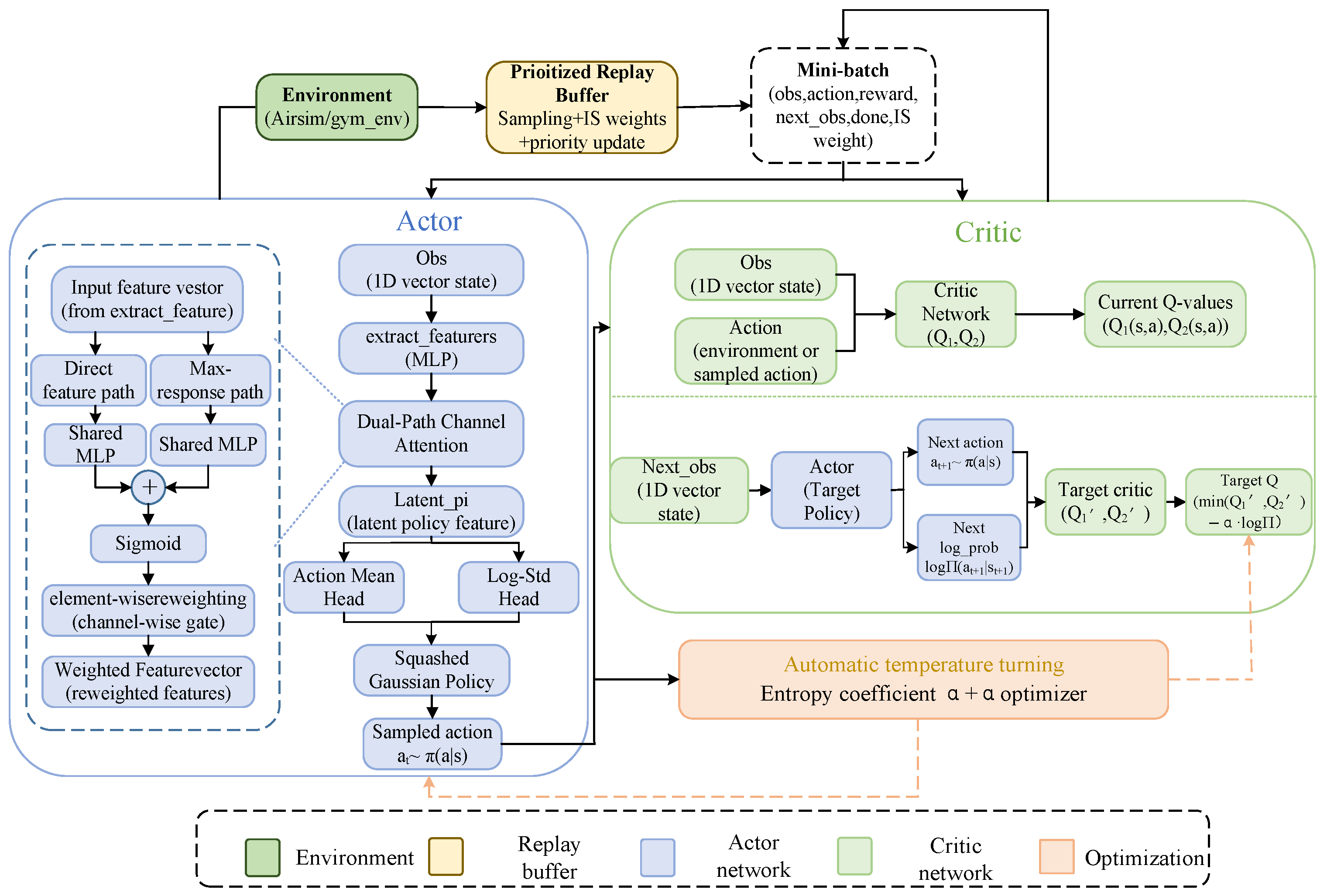
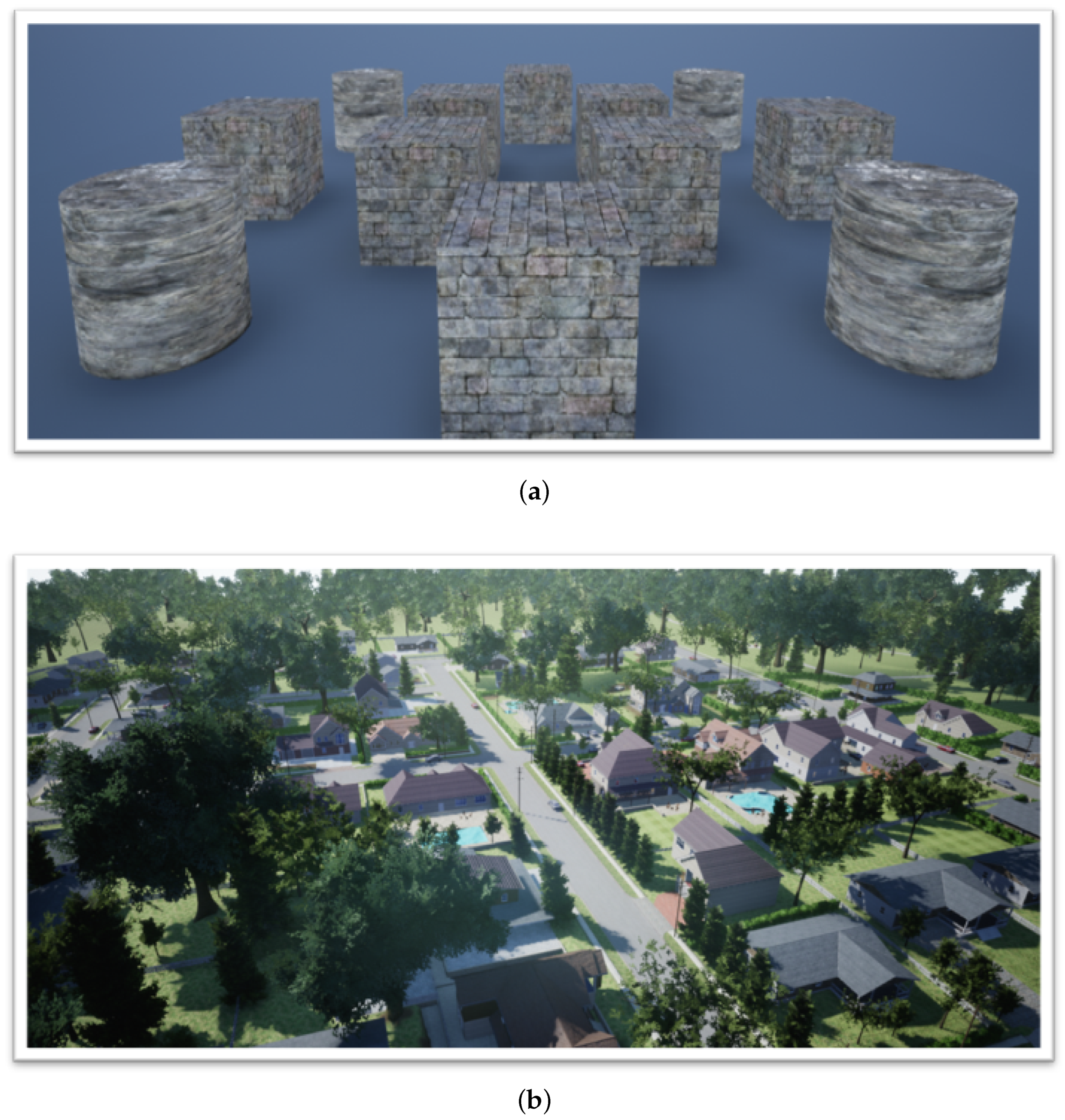
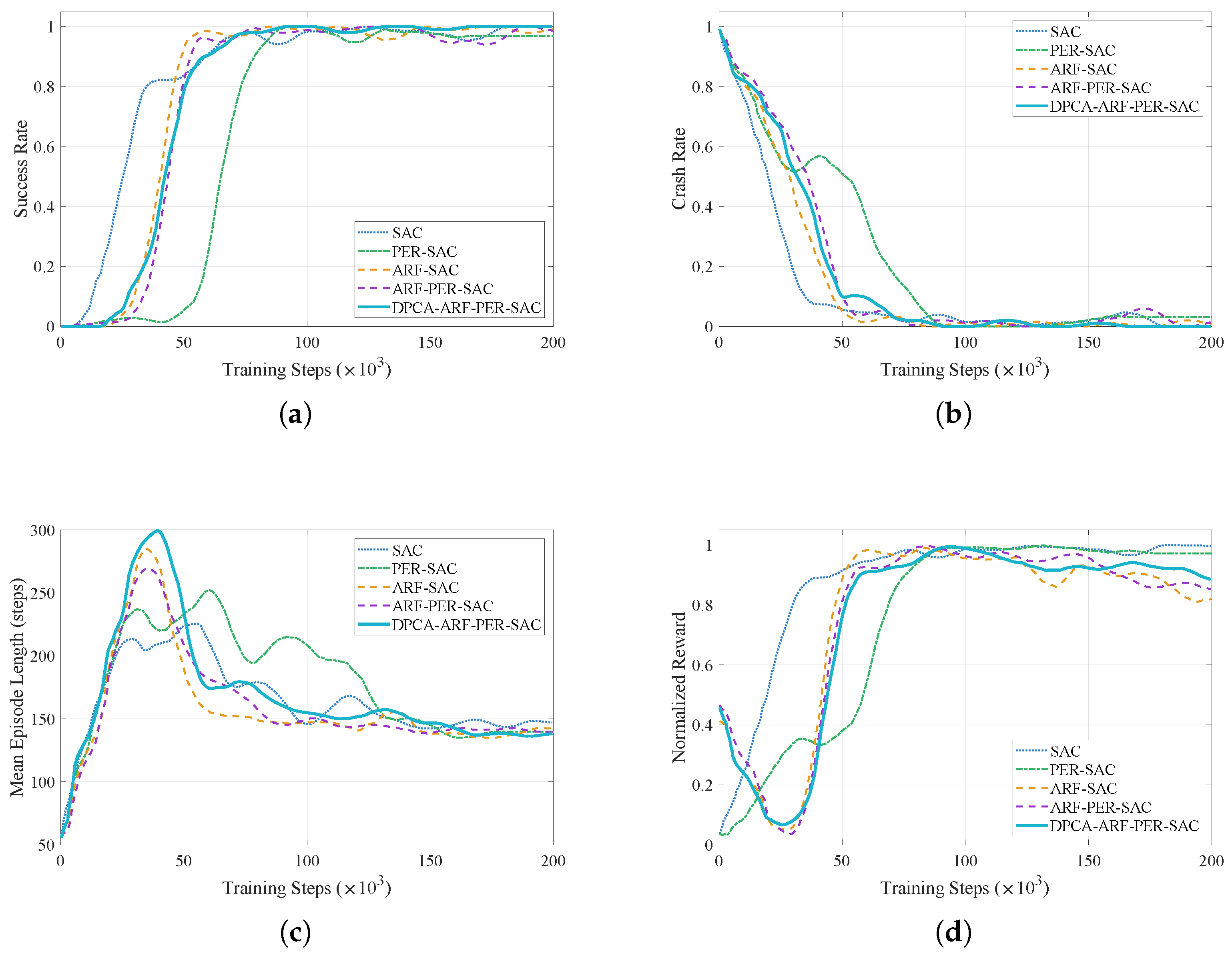
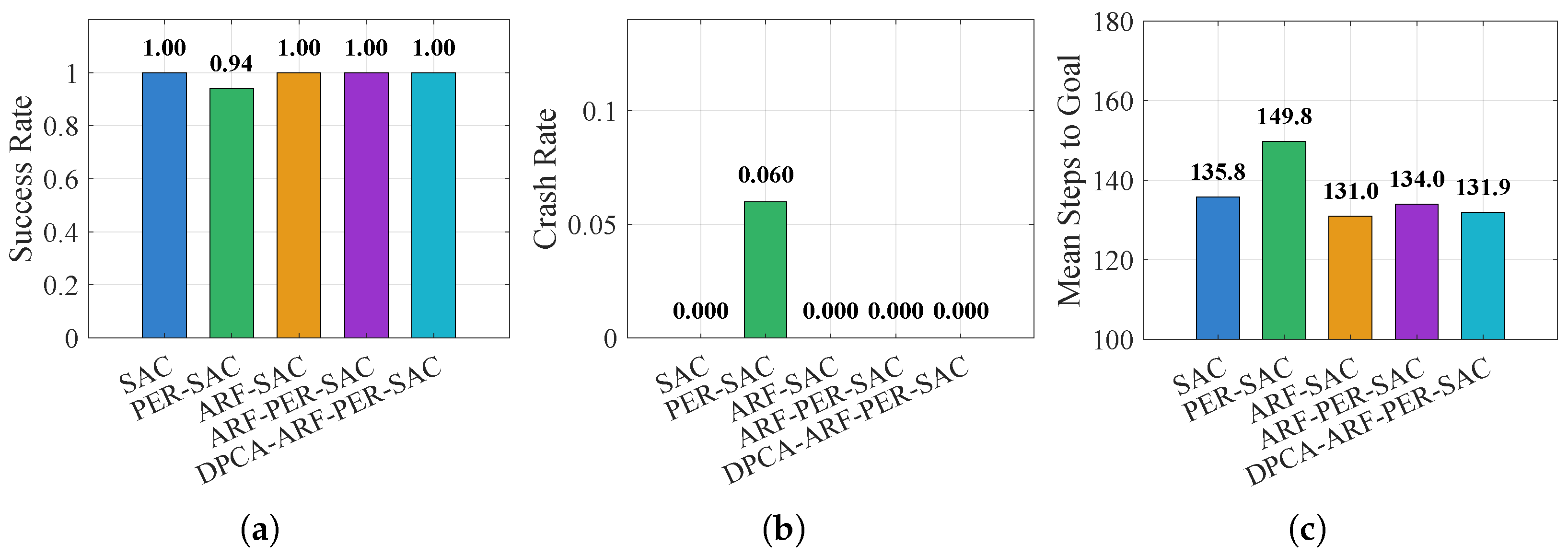
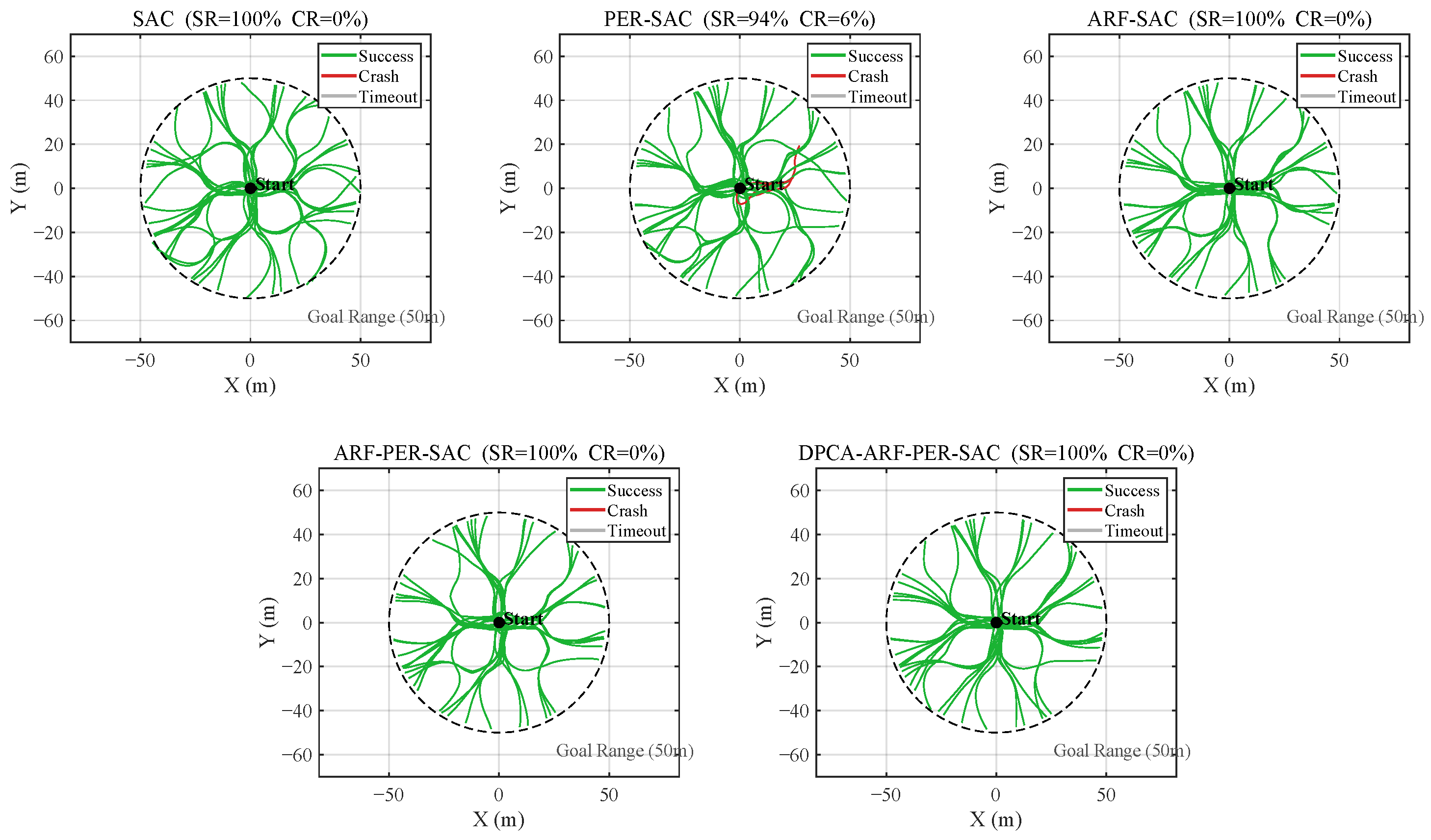
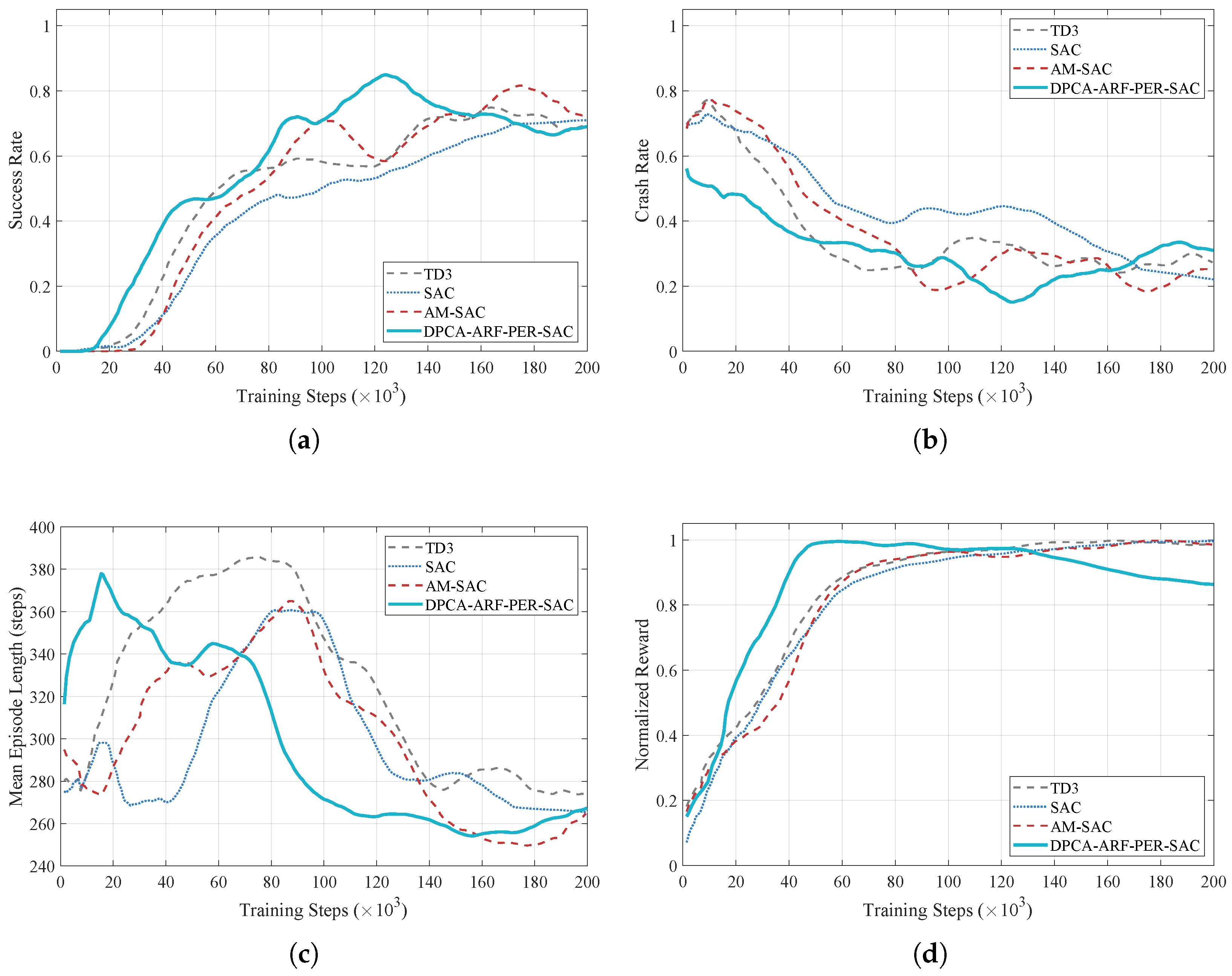
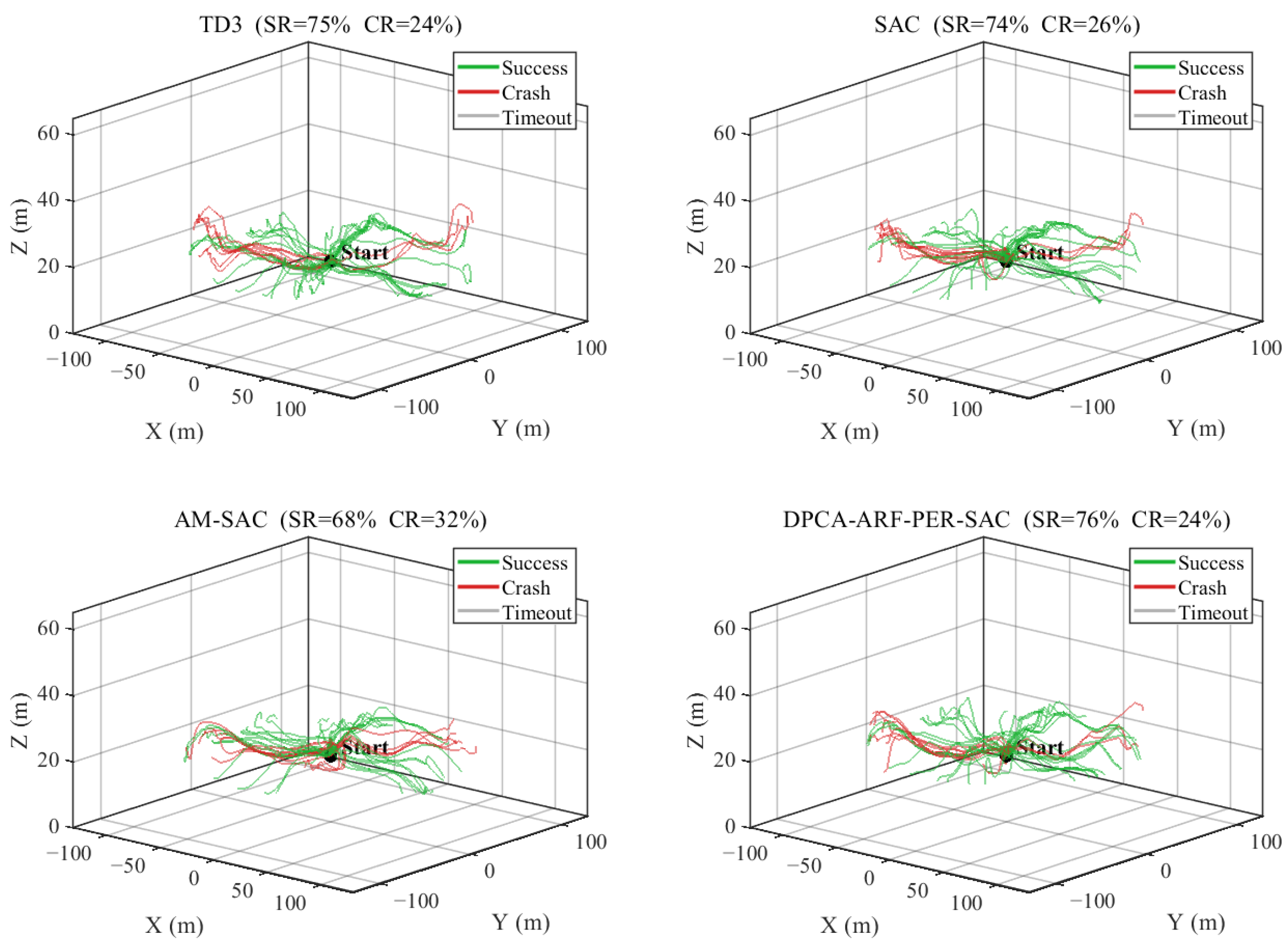
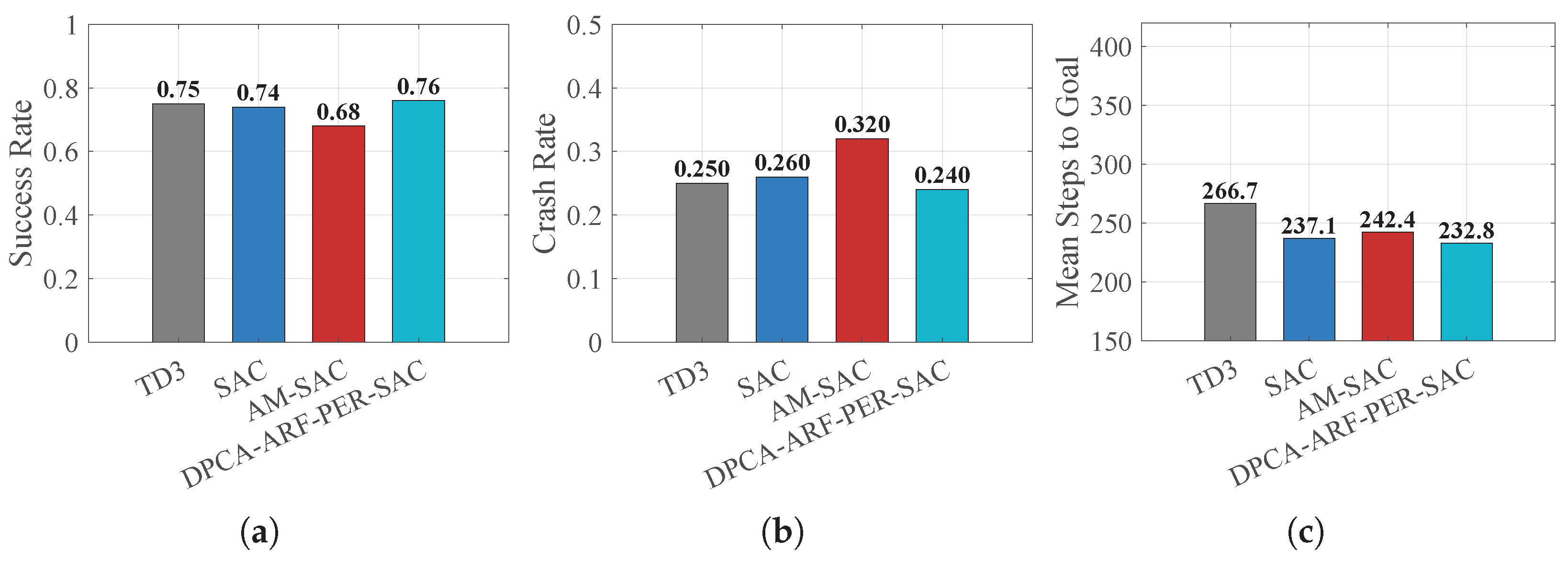
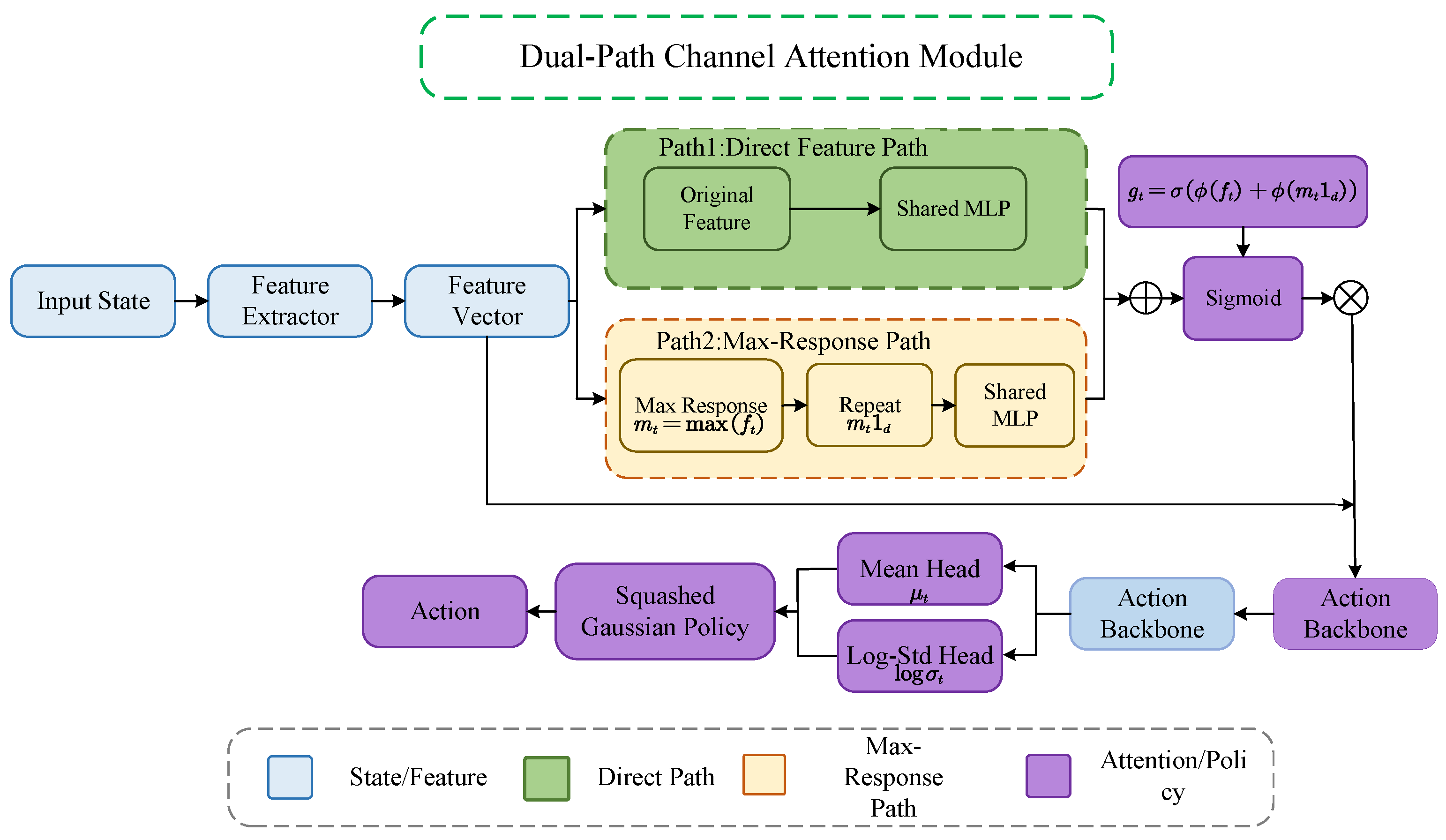
In complex and unknown environments, unmanned aerial vehicle (UAV) autonomous navigation still faces issues such as insufficient representation of state characteristics, fixed reward guidance, and low efficiency in utilizing key experience samples. To address these problems, this paper proposes an improved soft actor–critic (SAC) method that integrates dual-path channel attention (DPCA), adaptive reward feedback (ARF), and prioritized experience replay (PER); this method is named DPCA-ARF-PER-SAC. The proposed DPCA module is introduced into the actor network to recalibrate one-dimensional navigation state features and enhance the representation ability of key decision-making information. At the same time, the ARF mechanism can dynamically adjust the reward weights according to the training progress, while PER is used to improve the utilization efficiency of key samples. The experiments are conducted in a two-stage structure, including module-level ablation verification in the two-dimensional (2D) SimpleAvoid scenario and main performance comparison in the three-dimensional (3D) NH_center scenario. The experimental results show that the success rate of this method reaches 1.00 in the 2D scenario, and the collision rate is 0.00. In the 3D scenario, the success rate is 0.76, the collision rate is 0.24, and the average episode length is 232.8 steps. Compared with the baseline SAC, the success rate is increased by 2 percentage points, the collision rate is reduced by 2 percentage points, and the average episode length is reduced by 4.3 steps. Compared with twin delayed deep deterministic policy gradient (TD3), SAC, and representative reinforcement learning methods such as attention-mechanism SAC (AM-SAC) based on attention mechanism enhancement, the proposed DPCA-ARF-PER-SAC method shows more balanced performance in task completion, navigation safety, and path efficiency. These results indicate that DPCA-ARF-PER-SAC provides a more robust navigation strategy for complex 3D UAV autonomous navigation tasks.
Keywords: unmanned aerial vehicle (UAV) autonomous navigation; obstacle avoidance; path planning; soft actor–critic (SAC); deep reinforcement learning; dual-path channel attention (DPCA); adaptive reward feedback (ARF); prioritized experience replay (PER) unmanned aerial vehicle (UAV) autonomous navigation; obstacle avoidance; path planning; soft actor–critic (SAC); deep reinforcement learning; dual-path channel attention (DPCA); adaptive reward feedback (ARF); prioritized experience replay (PER)