Article

Growth Rate of Greek Basil Plants and Accumulation of Secondary Metabolites Under Different Container Cultivation Conditions


by
Magdalena Walasek-Janusz
1,
Rafał Papliński
1,*,
Magdalena Kowalska
2,
Milena Kaczmarczyk
2,
Gabriela Tomulik
2,
Marlena Kokoszka
2,
Agata Szabat
2,
Gabriela Bernat
2,
Gabriela Śrótwa
2,
Oliwia Łatecka
2,
Zofia Przybyła
2,
Jakub Laurentowski
2,
Angelika Latkowska
2,
Barbara Mysiak
1 and
Renata Nurzyńska-Wierdak
1
1
Department of Vegetable and Herb Crops, Faculty of Horticulture and Landscape Architecture, University of Life Sciences in Lublin, Doświadczalna 54, 20-280 Lublin, Poland
2
Inter-Faculty Scientific Club “Herba Medica”, Department of Vegetable and Herb Crops, Faculty of Horticulture and Landscape Architecture, University of Life Sciences in Lublin, Doświadczalna 54, 20-280 Lublin, Poland
*
Author to whom correspondence should be addressed.
Appl. Sci. 2026, 16(14), 7145; https://doi.org/10.3390/app16147145
Submission received: 8 June 2026 / Revised: 1 July 2026 / Accepted: 14 July 2026 / Published: 16 July 2026

Abstract

Common basil is a plant with high environmental requirements and is of great importance both in amateur and large-scale cultivation. One method of obtaining fresh basil is container cultivation. The study aimed to determine the feasibility of growing Greek basil in autumn under temperate climate conditions in containers with diameters of 9, 10, and 11 cm, under cover (polytunnel and unheated greenhouse), as well as in the risky field cultivation due to the risk of frost. The highest yield (23.8 g·plant−1) was obtained in greenhouse cultivation in the smallest containers. The plants growing in the greenhouse were characterized by the highest content of chlorophyll a (72.77 mg·100 g−1 FW), chlorophyll a + b (105.1 mg·100 g−1 FW), and carotenoids (20.87 mg·100 g−1 FW). Fifty-three compounds of basil essential oil were identified and characterized, with growth conditions (location/pot) modifying its chemical composition. The highest essential oil content (0.30%) was found in plants grown in the greenhouse in the largest pots. Methyl eugenol (35.96–69.85%) and eugenol (7.29–28.12%) dominated in the tested essential oil, followed by linalool (1.90–9.77%), α-trans-bergamotene (3.78–7.20%), (E)-β-farnesene (2.39–3.74%), and 1,8-cineole (1.49–5.22%). The conducted studies confirm the possibility of harvesting aromatic basil raw material rich in biocomponents from autumn cultivation in containers in the field and under cover.

1. Introduction

Common basil (Ocimum basilicum L.) is a plant belonging to the Lamiaceae family, probably originating from tropical regions of Asia [1]. O. basilicum is characterized by great morphological and biochemical diversity; it includes numerous subspecies, varieties, and forms [2,3]. Greek basil (O. basilicum var. minimum) is the most widely cultivated basil in Greece. It is distinguished by its small leaves and characteristic spherical shape. It is a valuable source of bioactive compounds, including cineole, estragole, and especially lin-alool, which have high biological activity [4]. Nowadays, basil is successfully grown both in temperate climate zones and in subtropical and intertropical regions, which means that it is widely cultivated all over the world [5,6,7]. In Europe, the main areas where basil is cultivated include the Mediterranean region, especially the areas of Spain, France, Italy, Hungary, but also Germany, Ukraine, and Bulgaria [1,2]. Moreover, its cultivation has become increasingly popular in Poland [5,8]. However, in the Mediterranean zone, it is mainly cultivated in the soilless system [9]. The growth and biomass production of basil and biosynthesis of active substances depend on the production environment conditions [10,11,12]. The optimum temperature for the growth and biosynthesis of basil essential oil is 25 °C. Temperature also affects the composition of basil essential oil. At 25 °C, there was an increased accumulation of eugenol and cis-ocimene, while at 15 °C, higher amounts of camphor and trans-β-farnesene were found. However, no effect of temperature on the content of 1,8-cineole and linalool was observed [11]. Environmental stress is one of the major factors influencing the production and composition of plant secondary metabolites [4,5,10]. Al-Huqail et al. [12] demonstrated that temperature and water stress inhibit the growth of sweet basil plants; in particular, total chlorophyll levels were significantly reduced in response to high temperature treatment.
Plants of the O. basilicum L. species feature a very large morphological diversity as well as vast differences in the content of active compounds, including pigments and essential oils [1,7,10,12]. Pigments and essential oils are important bioactive substances used for preventive and therapeutic purposes. The place of cultivation can influence not only the size of the basil yield, but also its chemical composition. Kopsell et al. [13] demonstrated that sweet basil accumulates high levels of nutritionally important carotenoids in both field and greenhouse environments. In both environments, there were positive correlations between carotenoids and chlorophyll. In turn, Cris et al. [14] demonstrated that Greek basil plants grown in the field had higher chlorophyll and carotenoid content in their leaves than plants grown in greenhouses. The composition, content, and bioactivity of essential oils are influenced by a number of internal factors (species, chemotype, variety, development phase) and external factors (climate, agrotechnical treatments, drying and extraction conditions) [15,16,17,18]. Zawiślak et al. [17] demonstrated that the highest levels of secondary metabolites among plants of the Ocimum genus were found in the O. basilicum var. minimum “Minette” variety. During full flowering, dried Greek basil herb contained 1.73% essential oil, 1.4% flavonoids, and 0.55% tannins. Our previous studies [19] also demonstrated a high content of essential oil (1.57%) in dried Greek basil herb. Essential oil extracted from basil herb is one of the most common oils and is used as a flavoring agent in food and beverages and as a fragrance in pharmaceutical and industrial products. Linalool was the main component of O. basilicum var. minimum oil, but there were quantitative differences in the content of this component [20,21,22]. Kirci et al. [23] found in the essential oil of the Greek basil variety Minette: 51.3% linalool and 12.3% eugenol, as well as 6.2% ter-pinen-4-ol. The results of Šovljanski et al. [2] study confirm that essential oils from O. basilicum var. genovese and var. minimum are an important source of bioactive compounds, especially linalool, with high biological activity. In turn, Özcan and Chalchat [7] report that the main compounds in O. basilicum var. minimum essential oil were geranyl acetate (69.48%), terpinen-4-ol (2.35%), and octan-3-yl acetate (0.72%), with linalool present in trace amounts.
In Europe, basil is one of the most popular plants, which is used both as a spice, an ornamental plant, and as a medicinal raw material [2,8,19,21]. Basil exhibits anticonvulsant, antihyperlipidemic, anti-inflammatory, antioxidant, antiplatelet, antithrombotic, antibacterial, insecticidal, immunomodulatory, and cytotoxic properties. It is an extremely valuable source of bionutrients that are very beneficial for human health [1,6]. For example, the essential oil of basil, particularly terpenes such as linalool, 1,8-cineole, and eugenol, has been shown to modulate central nervous system function and to exhibit anticonvulsant and hypnotic activities [21]. Basil also contains numerous phenolic compounds and flavonoids with strong antioxidant properties, which may help protect against the adverse effects of oxidative stress. In addition to these bioactive compounds, basil synthesizes a wide range of secondary metabolites, including carotenoids. Among them, β-carotene is the predominant carotenoid and an important source of provitamin A, playing a crucial role in maintaining normal vision, particularly under low-light conditions, and supporting overall eye health [2]. The essential oil and extracts of the O. basilicum L. herb have the potential to have antibacterial, antifungal, and even antiviral effects (including high potential in terms of action against SARS-CoV-2) [1,20]. Recently, there has been a significant increase in interest in basil cultivation, especially in container systems, which can provide fresh raw material year-round. Therefore, an experiment was conducted with small-leaved basil (O. basilicum var. minimum), also known as “Greek basil,” in container cultivation to determine yield, plant growth rate, and the accumulation of active compounds in the above-ground parts. An additional goal was to determine the feasibility of growing basil later than usual in temperate climates. For this purpose, basil was grown between August and October under three cultivation conditions: in the open field, in a tunnel, and in a greenhouse. The aim was to determine which cultivation method—outdoor, greenhouse, or protected out-of-season cultivation—maximizes the yield of the plant’s final products.

2. Materials and Methods

2.1. Description of the Station’s Location

The field experiment with O. basilicum var. minimum was conducted at the Agricultural Experimental Farm in Felin (51°13′37″ N 22°37′58″ E, 214 m above sea level) of the University of Life Sciences in Lublin, located in central-eastern Poland.

2.2. Details of Field Experiment

The experiment was designed as a two-factor experiment, in a completely randomized design where the first factor was the cultivation site (3 levels: field, tunnel, greenhouse) and the second factor was the pot size (3 levels: small, medium, and large pots). The experimental unit was one pot. Seeds of a Greek cultivar of O. basilicum var. minimum (World of Flowers sp. z o.o., Warsaw, Poland) were used for the research, which were sown in seedling boxes with a peat substrate in a non-heated greenhouse in the second decade of August. Seedlings grown from the seeds were planted in pots having various diameters (9, 10, and 11 cm) filled with peat substrate (Torf KLASMANN Substrat TS1, Klasmann–Deilmann, Milanówek, Poland) according to the following scheme: 3 plants per pot 9 cm in diameter, 4 plants per pot 10 cm in diameter, and 5 plants per pot 11 cm in diameter. To provide compounds essential for the proper plant growth, a one-time root fertilization was applied in the form of a 0.2% Florovit solution containing 3.0% total nitrogen, 2.3% amide nitrogen, 0.7% nitrate nitrogen, 2.4% potassium expressed as K2O, 0.006% total copper (Cu), 0.03% total iron (Fe), 0.015% total manganese (Mn), 0.0017% total molybdenum (Mo), and 0.013% total zinc (Zn); solution pH 3.3–3.4 (GRUPA INCO S.A., Góra Kalwaria, Poland). When the plants had developed roots, in the first decade of September, all pots were divided into 20-pot batches intended for further cultivation under various conditions: in the field, in a greenhouse, and in a foil tunnel. The plants were cultivated in a 30 × 20 cm spacing. In the greenhouse variant of the experiment (Photo S1), the plants were regularly irrigated and grown under controlled temperature conditions in a non-heated greenhouse until the first ten days of October, when they were cut. The plants grown in the low foil tunnel were protected by the foil from the night-time temperature drops (Photo S2), while during the day, especially in the afternoon, they were exposed to stress caused by high temperatures recorded in September 2023; therefore, they were irrigated throughout this period. Similar was the case with the plants grown in the field (Photo S3), which were covered with non-woven fabric at night. Approximately 3 weeks after planting, the plants grown in the greenhouse, a tunnel, and in the field were cut at a height of approx. 2 cm above the root crown. No additional mineral fertilization of the plants was applied during cultivation. The experiment was conducted from the second decade of August to the first decade of September. In all cultivation variants, air temperature was continuously monitored using Onset HOBO temperature data loggers (Mera Sp. z o.o., Warsaw, Poland, BoxCar Pro 4.3). The plant material consisted of fresh herbs of Greek basil (Ocimum basilicum var. minimum) cultivated under three production systems: open-field, greenhouse, and plastic tunnel conditions. A total of 30 plants were grown and subsequently used for the analyses from each cultivation system. Throughout the cultivation period, no symptoms of disease or fungal infection were observed. Therefore, no fungicides or other plant protection products were applied during the experiment.

2.3. Plant Yield and Growth Rate

Plant yield (g·pot−1) was computed per pot of respective diameter (9, 10, and 11 cm) and also per single plant (g). The plant growth rate was determined by measuring plant height (mm) once a week.

2.4. Determination of Dry Matter Content

The dry matter content of the plant material was determined according to the methodology provided in the Polish Pharmacopoeia V [24]. To this end, a 1 g sample was weighed into an earlier dried 50 mL beaker of a known mass, on an analytical scale. Then, the beaker with the sample was dried at 105 °C for 2 days using a dryer with natural circulation (Pol-Eko, Wodzisław Śląski, Poland). Afterward, the beaker was transferred to a desiccator, cooled therein for 15 min, and then weighed again. Then, the sample was dried and weighed again. The drying process was completed when the difference between the subsequent measurements did not exceed 0.001 g. The dry matter content was calculated as the difference between the mass of the tested sample before and after drying, and expressed as a percentage.

2.5. Determination of Pigment Content

The basil herb samples were determined for the contents of chlorophyll a, chlorophyll b, and carotenoids using a UV-Vis Hitachi U-2900 spectrophotometer (PerkinElmer, Waltham, MA, USA), following the methodology posited by Litchtenhaler and Buschmann [25]. To this end, a sample (0.5 g) of fresh plant material was thoroughly ground in a mortar using a small dose of 80% acetone (Chempur, Piekary Śląskie, Poland). The solution obtained was quantitatively transferred to a 25 mL measuring flask through a glass funnel with cotton wool. The resulting precipitate was rinsed several times with 80% acetone and filled with the same solvent. Next, absorbance measurements were conducted at the following wavelengths: λ = 663 nm for chlorophyll a (Ca), λ = 646 nm for chlorophyll b (Cb), and λ = 470 nm for carotenoids (Cc). The contents of individual pigments (mg·mL−1) were computed from the formulas presented below and expressed in mg·100 g−1 of fresh weight (mg·100 g−1 FW):
Ca (mg mL−1) = 12.25 A663 − 2.79 A646
Cb (mg mL−1) = 21.50 A646 − 5.10 A663
Cc (mg mL−1) = (100 A470 − 1.82 Ca − 85.02 Cb)/198

2.6. Determination of the Content and Chemical Composition of Essential Oils

The analysis used samples of fresh basil herb, 20 g of above-ground parts obtained from field cultivation, grown in a tunnel, and in an unheated greenhouse. The fresh raw material, chopped with scissors, was placed in a round-bottom flask, and 450 mL of distilled water was added. The hydrodistillation of the oils was carried out in a Clevenger apparatus for 3 h. After this time, the essential oils obtained were brought to a micro scale, and the content was read in mL. The samples obtained were placed in a refrigerator and stored in the dark at 2 °C.
The chemical composition of the obtained essential oils was determined using gas chromatography coupled with mass spectrometry (GC/MS). Essential oil was diluted 100 times using n-hexane to achieve a 1 mL volume, then an aliquot of 100 μL of C12 and C19 as an internal standards mixture solution (1 mg/mL in toluene) was added to the diluted oil. Samples prepared in this way were subjected to GC-MS and GC-FID determinations. GC-MS: ITMS Varian 4000 GC-MS/MS (Varian Inc., Palo Alto, CA, USA) equipped with a CP-8410 autoinjector and a 30 m × 0.25 mm VF-5 ms column (Varian Inc., Palo Alto, CA, USA), film thickness 0.25 μm, carrier gas He 0.5 mL/min, injector and detector temperature were, respectively, at 250 and 200 °C, respectively; split ratio 1: 50; inject volume 5 μL. A temperature gradient was applied (50 °C for 1 min, then incremented by 4 °C/min to 250 °C, 250 °C for 10 min); ionization energy 70 eV; mass range: 40–870 Da; scan time 0.80 s. Retention indices (Kovats′a) were calculated using a series of n-alkanes C6–C40. The qualitative analysis was made based on MS spectra, comparing them with the spectra of the NIST spectra library [26] and with mass spectra of reference compounds. Literature data confirmed the identification of the compounds. Essential oil components are reported as a relative percentage of the total oil by peak area. Values ≥ 0.1 were considered significant.
All chemical analyses were performed in triplicate.

2.7. Statistical Analysis

The obtained results are presented as means and were analyzed statistically by ANOVA according to a completely randomized design, and the average values were compared using the HSD Tukey’s test at the probability level α = 0.05. The statistical analysis of the results was carried out with the Statistica 13.3 PL package (Statsoft, Inc., Tulsa, OK, USA).

3. Results

3.1. Plant Growth and Development Environment (Temperature Course)

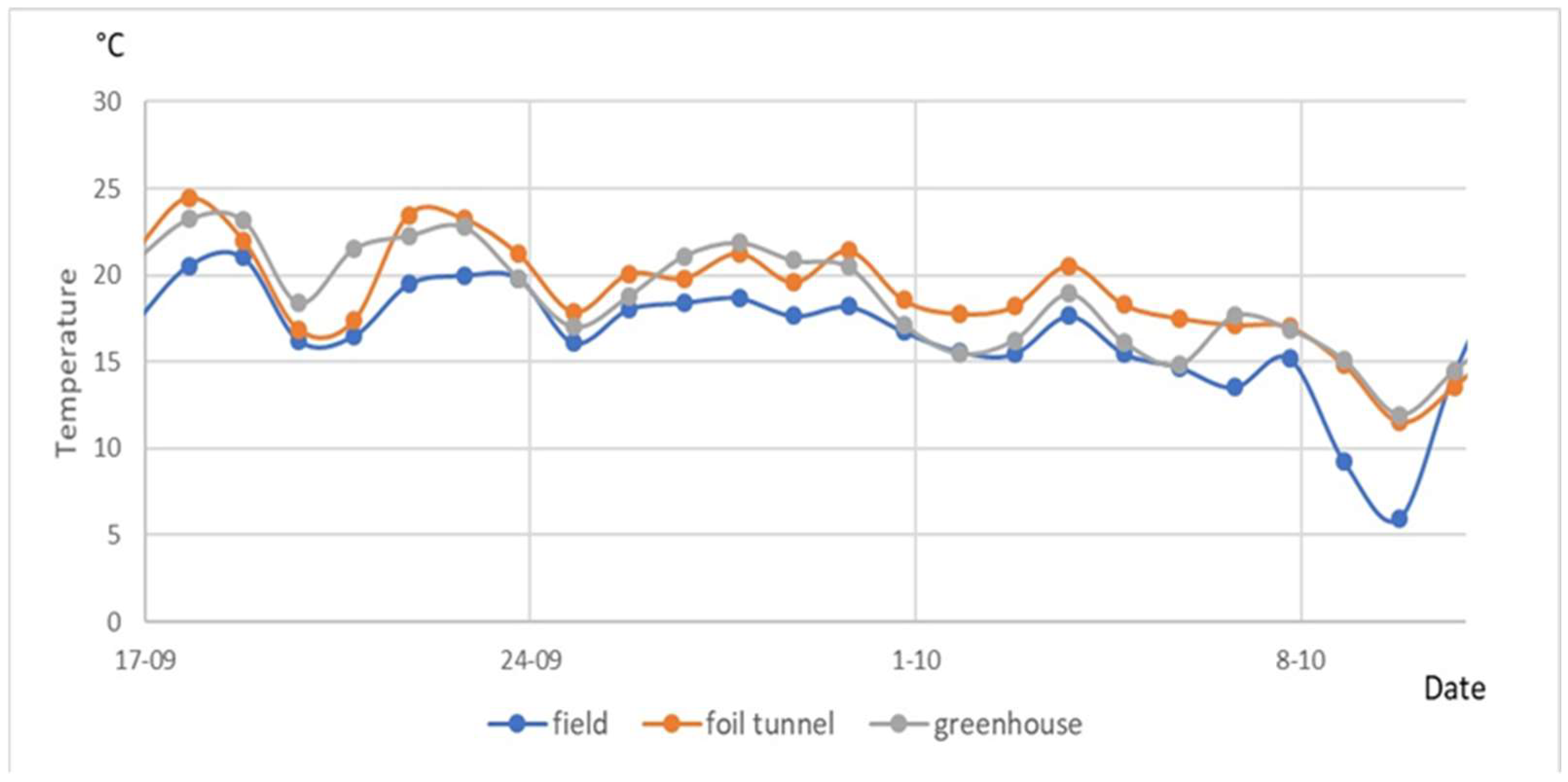
In the present experiment, all basil plants received comparable amounts of water and nutrients to provide optimal growing conditions. The cultivation systems differed in several microclimatic factors associated with open-field, greenhouse, and plastic tunnel production. Among these factors, air temperature (Figure 1 and Figure S1) was monitored and is considered one of the environmental variables that may have contributed to the observed differences in plant growth and development.
Over the study period, the greatest fluctuations in the average daily air temperature were noted in the field cultivation (17.5 °C), whereas temperature fluctuations in the greenhouse and foil tunnel were similar (11.3–12.9 °C) (Figure 1). In terms of temperature course, the recorded fluctuations were even greater, as the highest temperature was noted in mid-September in the foil tunnel (41.05 °C) and the lowest one at the beginning of October (0.73 °C). The greatest temperature differences were recorded in the foil tunnel (36.48 °C), followed by field conditions (31.61 °C), and the smallest ones—in the greenhouse (29.44 °C).

3.2. Plant Yield and Growth Rate

During plant growth within 4-week cultivation under different conditions, the highest plant yield per pot was obtained for the plants grown in the 11 cm diameter pots, with the highest biomass per plant noted for the plants cultivated in 9 cm pots in the greenhouse (23.8 g·plant−1). The highest mean plant yield, reaching 71.0 g·pot−1, was produced from basil cultivation in the greenhouse (Table 1).
The growth rate of plants was determined by measuring plant height. The results of measurements demonstrated the fastest growth rate at the initial stage of plant growth, whereas the slowest one at the terminal stage of cultivation (Table S1). Greenhouse conditions turned out to be optimal for small-leaved basil plant growth, as indicated by the greatest daily gains in plant height noted under these conditions, with the greatest mean increase determined for the plants grown in the 10-cm diameter pots in the greenhouse (5.21 mm) (Table S1, Figure S2). The poorest plant growth was observed at the terminal stage of cultivation under field conditions (mean height gain 2.63 mm).

3.3. Dry Matter Content of Basil Herb

The dry matter content varied depending on the basil cultivation method; the results are presented in Table 2.
The lowest statistically significant mean dry matter content of basil herb (8.57%) was determined for the plants grown in the 9-cm diameter pots. Considering the basil cultivation site, the field cultivation and tunnel cultivation caused a significant increase in the dry matter content (9.73% and 9.35%, respectively), compared to the greenhouse cultivation, where the dry matter content of basil herb reached 7.96%. Generally, the dry matter content of basil herb differed significantly, ranging from 7.70 to 10.50%, depending on the cultivation site and pot diameter.

3.4. Pigment Content in Basil Herb

Pigments (chlorophyll a, chlorophyll b, carotenoids) content and significant differences between the means in the basil herb are presented in Table 3.
The contents of individual compounds were found to differ significantly depending on the cultivation site (field, foil tunnel, greenhouse) and pot diameter. The chlorophyll a content ranged from 52.11 to 77.43 mg·100 g−1 FW. A significantly higher mean content of this pigment was determined in the plants grown in the greenhouse. In turn, basil cultivation in the foil tunnel and under field conditions, as well as the diameters of pots, caused no significant changes in its content. Given the experimental combinations tested, significant differences were only found between the plants grown in the field in pots with a 9 cm diameter (52.11 mg·100 g−1 FW), the plants grown in the tunnel in pots with a 11 cm diameter (54.35 mg·100 g−1 FW), and those cultivated under greenhouse conditions in pots with a 11 cm diameter (77.43 mg·100 g−1 FW).
Significant differences in chlorophyll b content were demonstrated depending on the experimental factors tested. This pigment content was affected by both the site of cultivation and pot diameter. Significantly, the highest content of chlorophyll b was determined in the plants from field cultivation (42.22 mg·100 g−1 FW), and significantly the lowest one in the plants grown in the foil tunnel (25.75 mg·100 g−1 FW). Significant differences were also found between the plants cultivated in pots of various diameters. Significantly, the lowest chlorophyll b content was determined in the plants grown in 9 cm diameter pots (30.95 mg·100 g−1 FW), and significantly the highest one in those grown in 11 cm diameter pots (37.61 mg·100 g−1 FW) (Figure S3). The content of this pigment determined in basil plant in the entire experiment ranged from 24.82 mg·100 g−1 FW (tunnel, 10 cm diameter pots) to 44.78 mg·100 g−1 FW (field, 10 cm diameter pots).
The total content of chlorophylls identified in basil herb was also observed to fluctuate depending on the experimental factors. Only the pot diameters caused no significant differences in their values. Considering the cultivation site, significantly the highest total chlorophyll content (105.1 mg·100 g−1 FW) was determined in the plants grown in the greenhouse, whereas significantly the lowest one in those cultivated in the foil tunnel (85.16 mg·100 g−1 FW). In the case of combinations of the experimental factors (cultivation site × pot diameter), the lowest total content of chlorophyll a and b was determined in the plants grown in 11-cm diameter pots in the tunnel (79.23 mg·100 g−1 FW), whereas the highest one was in the plants grown in the same pots in the greenhouse (121.8 mg·100 g−1 FW) (Figure S4).
The content of carotenoids in the analyzed basil herb differed significantly as affected by the cultivation site. Significantly, the highest content of these pigments was determined in the plants grown in the greenhouse (20.87 mg·100 g−1 FW), and the lowest one (12.97 mg·100 g−1 FW) in the plants cultivated under field conditions. Pot diameter did not cause any significant changes in the carotenoid content of the basil herb. Among all tested combinations of experimental factors (cultivation size × pot diameter), significantly the lowest carotenoid content was determined in the plants from field cultivation in pots with 9 and 10 cm diameters (11.88 and 12.52 mg·100 g−1 FW, respectively), whereas significantly the highest content of these pigments was assayed in the plants grown in the greenhouse also in pots having diameters of 9 and 10 cm (22.13 and 21.93 mg·100 g−1 FW, respectively).
The analysis of the percentage contents of plant pigments allowed noticing similar dependencies as those observed in the quantitative analysis. Considering the pot size, the percentage content of individual pigments was similar in all variants tested (Figure S4). In turn, some differences may be noted considering the cultivation site, namely, the percentage contents of individual pigments were similar in the plants grown in the tunnel and in the greenhouse (chlorophyll a: 19–18%; chlorophyll b: 25–26%; carotenoids: 57–58%), whereas the plants cultivated under field conditions had an increased content of chlorophyll b (38%), and lower contents of chlorophyll a (11%) and carotenoids (51%).

3.5. Essential Oil Content and Composition in Basil Herb

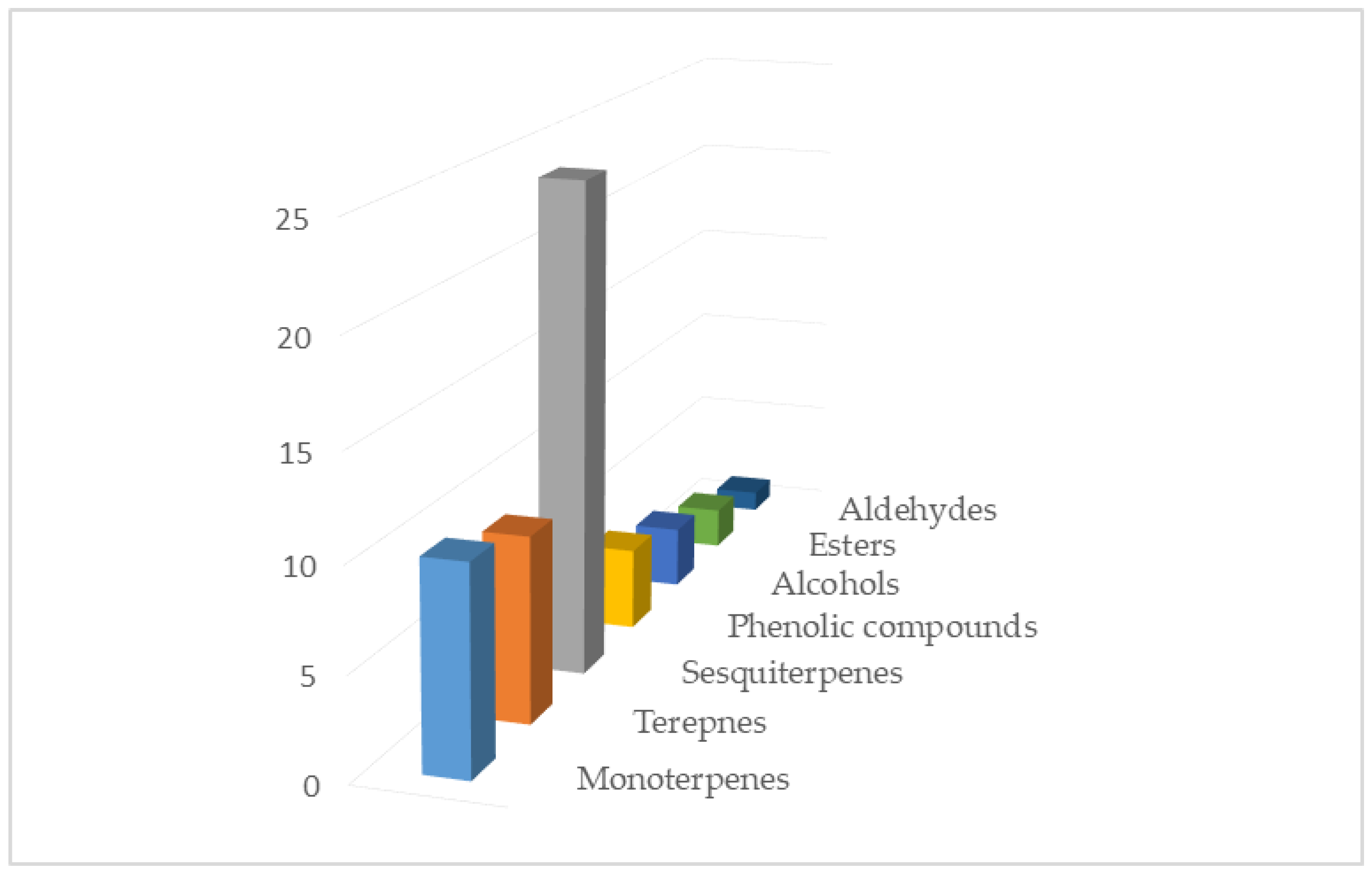
The composition of basil essential oil was rich: 53 compounds were identified and characterized, with growing conditions (location and amount of substrate in the pot) modifying its chemical composition. Terpene compounds dominated in terms of quantity in the tested Greek basil essential oil, with sesquiterpene compounds being the most abundant. In terms of quality, phenolic compounds dominated (Figure 2, Table 4).
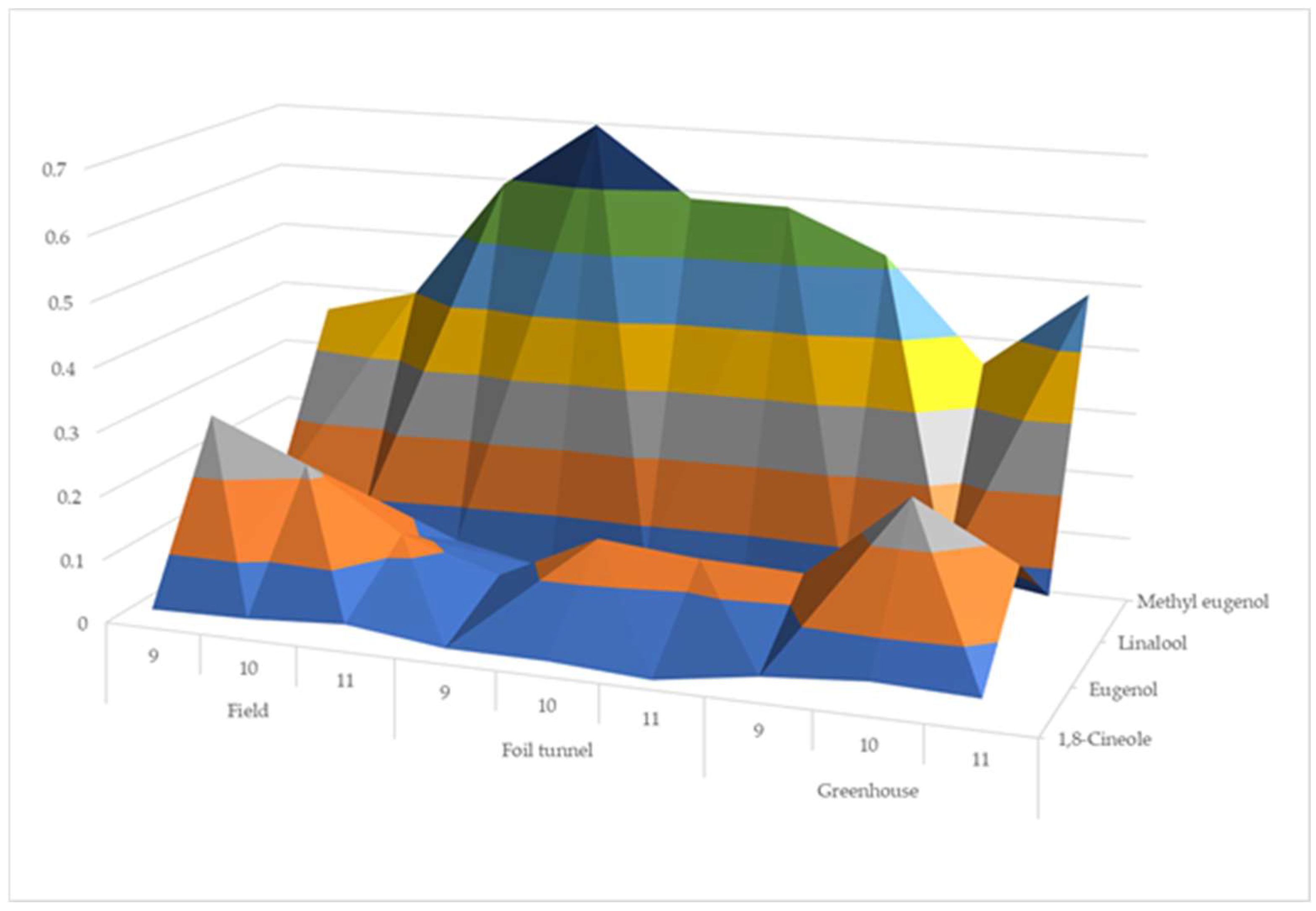
The highest essential oil content (0.30%) was found in basil plants grown in a greenhouse in the largest pots; on average, greenhouse and field conditions proved to be more favorable for plants in terms of essential oil accumulation than tunnel conditions (0.21, 0.22, and 0.15%, respectively), which has been statistically proven (Table 4). Plants grown in small and large pots accumulated significantly more essential oil than those grown in medium-sized pots. Figure 3 shows the content of the four dominant compounds of essential oil in the tested Greek basil plants. The tested essential oils were dominated by methyl eugenol (35.96–69.85%) and eugenol (7.29–28.12%), followed by linalool (1.90–9.77%), α-trans-bergamotene (3.78–7.20%), (E)-β-farnesene (2.39–3.74%) and 1,8-cineole (1.49–5.22%) (Table 4, Figures S5–S9).
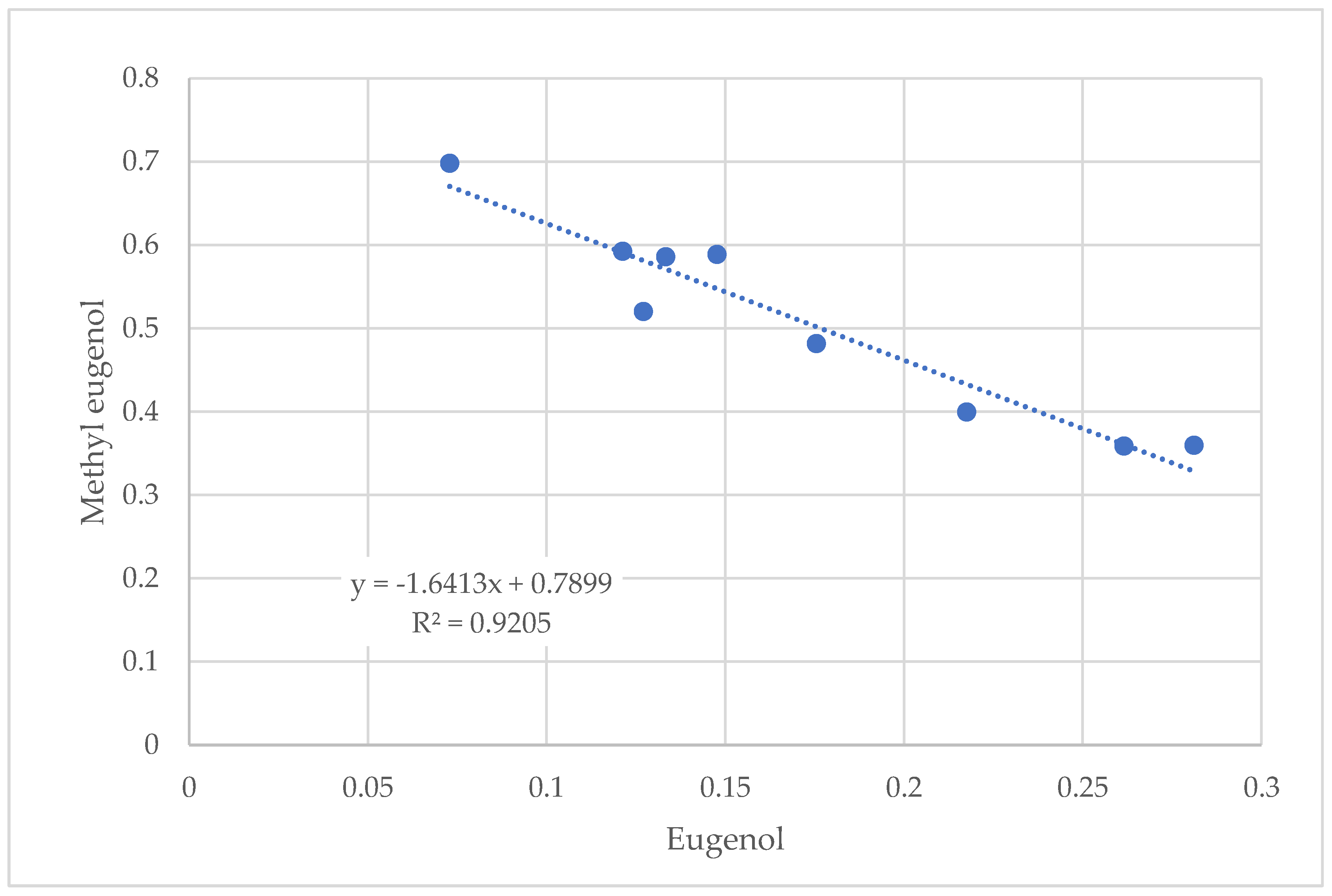
Of the major compounds present in the Greek basil essential oil, methyl eugenol accounted for by far the largest proportion; the levels of the other major components varied significantly (Table S2). Methyl eugenol was also found in the highest concentration in the essential oil of plants grown in the smallest pots in the tunnel. In turn, the highest levels of linalool and eugenol were found in the essential oil of plants grown in the field in the smallest pots. The essential oil of plants grown in a tunnel in the largest pots had the highest amount of α-trans-bergamotene and (E)-β-farnesene. The essential oil of plants grown in a greenhouse in medium-sized pots was distinguished by the highest content of 1,8-cineole. Statistical analysis of the combinations of essential oil components and basil growing locations used in the study indicates that methyl eugenol is the predominant component in all growing locations compared to the other essential oil components; however, the significantly highest concentration of this compound was found in tunnel-grown basil (Table S3). The content of individual components of essential oil extracted from basil plants varied depending on the place of cultivation and the different amounts of substrate used (pot size). The growing conditions for basil (as determined by pot size in the study) significantly affected the levels of the individual major components of the essential oil extracted from the basil plants. Only the level of α-trans-bergamotene did not differ significantly; in all other cases, pot size affected the levels of the individual components of the essential oil (Table S4). The graph illustrating changes in the content of selected essential oil components shows a clear correlation between the content of eugenol and methyl eugenol (Figure 4). In order to confirm these relationships, statistical methods were used to prove the existence of a significant correlation between the content of eugenol and methyl eugenol in basil essential oil.

4. Discussion

4.1. Plant Yield and Growth Rate

According to many researchers, one of the main and possibly the most important factors in basil cultivation is the date and temperature conditions of planting. Basil can be grown both from seedlings produced in a greenhouse and from direct sowing [5,15,17,19]. The temperature and relative humidity conditions in the greenhouse caused a decrease in the growth and physiological performance indicators of Greek basil [10]. In the present experiment, seeds were sown in seed boxes in the second half of August in a non-heated greenhouse, and then the seedlings were replanted and left in the initial period of growth in the greenhouse. Once the plants had developed roots, they were divided into 3 groups and cultivated in the field, in a greenhouse, and in a foil tunnel. According to literature data, basil has high thermal demands for germination, as the seeds require temperatures from 25 to 30 °C, while the plants need temperatures from 20 to 25 °C during the vegetation period [1,11,12]. The conducted study indicates that the most similar conditions to those optimal for basil growth were achieved in greenhouse and field cultivation, while too high temperatures were recorded in the foil tunnel. In the present experiment, the lowest temperatures were recorded in the field cultivation (1–33 °C), whereas the highest ones were in the tunnel cultivation (5–41 °C). Although air temperature was monitored throughout the experiment, it should be regarded as only one of several environmental factors differing among the cultivation systems. Open-field, greenhouse, and plastic tunnel cultivation also vary with respect to light conditions, relative humidity, air circulation, wind exposure, and evapotranspiration, all of which may influence plant growth and secondary metabolite biosynthesis. Therefore, the observed differences among cultivation systems should be interpreted as the combined effect of these microclimatic conditions rather than temperature alone.
Research by Žlabur et al. [28] showed that the 1.4-fold higher yield of basil (O. basilicum L.) could be achieved by cultivation in a floating system compared to soil cultivation in the open field. Similar results were obtained in the present study, where a higher average plant yield was achieved upon basil cultivation in the non-heated greenhouse (2 times higher yield; 71.0 g·plant−1) and in a foil tunnel (1.2 times higher yield; on average 48.2 g·plant−1) compared to the field cultivation. In turn, an experiment performed by Bojko et al. [29] showed the highest basil yield obtained in a non-heated greenhouse using 10 cm diameter pots, which was 18.9 g per 1 pot obtained from seedling replanting. In this study, the yield of plants grown also from re-planted seedlings was higher compared to the findings reported by Bojko et al. [29] in all the conditions tested, which confirms the aptly-selected sowing date and the proper cultivation method, including the appropriate selection of the substrate. In addition, the present study results show that the yield mass increased with the increase in the amount of substrate in the pot, which is closely related to the pot diameter. Similar results were obtained in experiments with marjoram, thyme, and lemon balm herbs cultivated in containers [30]. Moreover, literature data indicate that the relationship between the yield of fresh herbs and the amount of substrate is not always explicit and is often related to the species of the cultivated plant [31]. It has been confirmed that the highest yield of basil can be obtained using a fertile substrate rich in nutrients [32,33].

4.2. Dry Matter and Pigment Content

In the present study, the fastest growth rate of basil plants was determined in the initial phase of their growth (2.72–6.54 mm), and the largest differences were recorded in this respect during basil cultivation in greenhouse conditions (6.54 and 5.98 mm on average). The greenhouse conditions proved to be the most optimal for basil growth due to smaller temperature fluctuations and a higher water content. Sweet basil is a typical warm-climate plant. Chang et al. [11] reported that basil plant height, dry weight, and number of shoots, as well as the content and composition of essential oil, were strongly dependent on the temperature regime during the last 2 weeks of growth. The present experiment also showed that the growth rate of the plants was inversely proportional to the diameter of the pots, because the largest growth of plants throughout the cultivation period was determined in 9 cm diameter pots; however, these differences were insignificant. These results confirm the results obtained in the cultivation of rocket in containers [34]. The highest average dry matter content was obtained for the plants grown in the pots with a diameter of 10 cm (9.49%) and for those cultivated in the field conditions (9.73%), whereas the lowest dry matter content was determined for the plants grown in the greenhouse (7.96%), which may be related to the fact that the greenhouse offered the most optimal temperature conditions, while in the field and tunnel cultivation systems the plants were exposed to stress related to vast temperature fluctuations. The dry matter content was shown to differ significantly depending on both pot size and cultivation site. In turn, experiments with rocket grown in containers did not show any correlation between the dry matter content and the amount of substrate [34], which was also confirmed in this study. In this case, the temperature conditions proved to be decisive. In the case of pigment content, taking into account the combinations tested in the experiment, significant differences were found between the plants grown in the field in 9 cm diameter pots (52.11 mg 100 g−1 FW), those grown in a tunnel in 11 cm diameter pots (54.35 mg 100 g−1 FW) and those cultivated in the green-house in 11 cm diameter pots (77.43 mg 100 g−1 FW). The lowest average contents of chlorophyll a and carotenoids were obtained for the basil plants grown in the field, which is consistent with the results obtained by Žlabur et al. [28]. Slightly different results regarding the content of chlorophyll a and b were reported by Kopsell et al. [13] and Crișan et al. [14], who found an increased chlorophyll content of plants grown in field conditions compared to plants from a greenhouse; however, these authors studied multiple basil varieties, and the greenhouse conditions were subject to more strict control. The content of carotenoids in basil plants and the effect of cultivation under cover on the increase in their content in the analyzed plant material were similar to those reported by the above-mentioned authors [13,14].

4.3. Essential Oil Content and Composition

Basil essential oils are used for many purposes. The essential oil accumulates in the leaves and flowers, and its high economic value is attributed to the components of phenylpropanoids and terpenoids (and their oxidized analogs) [1,35]. Four international commercial types of basil oil have been described, named: European Sweet Basil Type, Réwnion Basil Type, Methyl Cinnamate Type, and Eugenol Type [36]. The composition of Greek basil essential oil is very interesting and offers a wide range of applications. The most commonly mentioned main components of Greek basil essential oil (approximately 70%) are linalool [2] and geranyl acetate [7]. The basil plants we examined presented the eugenol/methyl eugenol chemotype. Despite the high environmental variability of the composition of basil essential oil, these differences should rather be attributed to genetic variability. Nevertheless, it is worth noting two components that dominate in the essential oils we tested: eugenol and methyl eugenol. Eugenol is a hydroxyphenylpropene naturally occurring in the essential oils of several plants in the Lamiaceae, Lauraceae, Myrtaceae, and Myristicaceae families. Eugenol is a clear to light yellow liquid with a refreshing and pungent aroma. It is the main component of clove oil (72–90%), known for its powerful antiseptic, analgesic, anti-inflammatory, and anesthetic properties, and also widely used in food and cosmetics as a flavoring agent. Eugenol is a very interesting bioactive compound with a broad spectrum of antimicrobial activity, both against planktonic and sessile cells belonging to food-degrading microorganisms, as well as human pathogens [37,38]. It has been found that eugenol, despite its low content in essential oils from noble laurel, has the greatest effect on radical scavenging activity [39]. One of the derivatives of eugenol is methyl eugenol, which is a component of some essential oils. It is typically used in massage oils and alternative medicine, as well as a flavoring agent for jellies, baked goods, chewing gum, candies, puddings, sauces, and ice cream. It is also used as an ingredient in perfumes, cosmetics, toiletries, and detergents. Methyl eugenol has been used as an anesthetic and even as an insect repellent in combination with insecticides. The conversion of eugenol to methyleugenol is an O-methylation process in which a hydroxyl group is converted to a methoxy group [40]. On the other hand, however, methyl eugenol has been classified as probably carcinogenic to humans. Humans are mainly exposed to low concentrations of methyl eugenol through food consumption or through the skin when using personal hygiene products. The use of methyl eugenol as a flavoring substance has recently been banned in the European Union and the USA. It is still present in various foodstuffs and consumer products due to its natural occurrence in herbs and spices [41,42,43]. The presence of eugenol, even in varying amounts depending on the cultivation method, should be considered important in relation to the potential biological activity of Greek basil. In our research, the content of eugenol and methyl eugenol varied depending on the location and method of cultivation. The highest levels of eugenol were found in plants grown in the field, while the highest levels of methyl eugenol were found in plants grown in tunnels. In both cases, these were plants growing in the smallest pots. Chang et al. [11] found a three-fold higher essential oil content in fresh leaves of sweet basil plants grown at 25 °C or 30 °C, compared to plants grown at 15 °C. Temperature also influenced the chemical composition of the essential oil studied. Warm conditions (25 °C) resulted in greater accumulation of eugenol and cis-ocimene, while lower temperatures (15 °C) resulted in greater amounts of camphor and trans-farnesene. However, no effect of temperature was found on the content of 1,8-cineole and linalool. The effect of three different methods of harvesting holy basil (O. tenuiflorum L.) on the yield of essential oil and the content of individual components, including methyl eugenol, was demonstrated [44]. It can therefore be assumed that higher eugenol content and its conversion to methyl eugenol occur more intensively under the influence of environmental stress. Understanding the conversion reaction of eugenol to methyl eugenol is one of the interesting topics of discussion. The reaction mechanism begins with the bonding of H by –OH [40]. An interesting trend was also observed: with lower eugenol content, there was a higher content of methyl eugenol. This could suggest that the eugenol methylation reaction occurs more intensively at lower eugenol concentrations. However, it should be noted that other components of essential oil may also play an important role in this process.

5. Conclusions

The growth of Greek basil, biomass production, and its bioactive components depend on the production environment conditions. The highest yield and growth were obtained for plants grown in pots in a greenhouse compared to those from the field and foil tunnel cultivation systems. Moreover, the plants grown in a greenhouse had the highest content of chlorophyll a (72.77 mg·100 g−1 FW), total chlorophyll a and b, and carotenoids (105.1 and 20.87 mg·100 g−1 FW, respectively). The essential oil from Greek basil represented the eugenol/methyleugenol chemotype, and its content and composition depended on the plant growth conditions. Plants grown in the field accumulated the highest essential oil content (0.22%), while those grown in a polytunnel had the highest content of methyleugenol (62.44%) in the essential oil. The results obtained support the value of growing basil in containers in unheated greenhouses/tunnels, particularly in temperate climates. Growing in larger pots proved to be more beneficial for the yield and weight of above-ground plant parts; however, it had no significant effect on the amount of pigments and essential oil. Our preliminary research shows that Greek basil can also be successfully grown at later dates (August-October), under less favorable environmental conditions. Further research should be aimed at assessing the biological activity of basil and other herbal plants grown in containers outside the main season (for example, as a catch crop).

Supplementary Materials

The following supporting information can be downloaded at: https://www.mdpi.com/article/10.3390/app16147145/s1, Photo S1. Basil plants cultivated in a greenhouse; Photo S2. A low plastic tunnel used to cover basil at night; Photo S3. Basil plants grown in the field and in a tunnel (covered at night); Figure S1. Temperature changes during the growing season. Figure S2. Growth rate of plants grown in containers of various sizes. Figure S3. The proportion of the analysed pigments in plants originating from containers of different capacities (%). Figure S4. The proportion of the analysed pigments in plants originating from different growing locations (%). Figure S5. Chromatogram of Greek basil essential oil: From top to bottom—field cultivation; pots 9 and 10; Figure S6. Chromatogram of basil essential oil: From top to bottom—field cultivation; pots 11 and tunnel cultivation; pots 9; Figure S7. Chromatogram of essential oil from basil grown in the foil tunnel: From top to bottom—pots 10 and 11; Figure S8. Chromatogram of basil essential oil: From top to bottom—cultivation in the tunnel in pots 11 and in a greenhouse in pots 9; Figure S9. Chromatogram of basil essential oil from greenhouse cultivation: From top to bottom—pots 10 and 11; Table S1. The rate of average daily growth of basil plants depending on the method and place of cultivation (mm); Table S2. Significant correlations between selected components of basil essential oil (average for all factors); Table S3. Significant correlations between selected components of basil essential oil grown using different methods (location); Table S4. Significant correlations between selected components of basil essential oil grown using different methods (pot size).

Author Contributions

Conceptualization, R.P. and M.W.-J.; methodology, R.P. and M.W.-J.; Software, M.W.-J., R.P. and G.T.; validation, R.P. and M.W.-J.; formal analysis, R.P., M.W.-J., M.K. (Magdalena Kowalska), M.K. (Milena Kaczmarczyk), G.T., M.K. (Marlena Kokoszka), A.S., G.B., G.Ś., O.Ł., Z.P., J.L., A.L. and B.M.; investigation, R.P. and M.W.-J.; resources, R.P. and M.W.-J.; data curation, R.P., M.W.-J., M.K. (Magdalena Kowalska), M.K. (Milena Kaczmarczyk), G.T., M.K. (Marlena Kokoszka), A.S., G.B., G.Ś., O.Ł., Z.P., J.L., A.L. and B.M.; writing—original draft preparation, M.W.-J. and R.N.-W.; writing—review and editing, R.P., M.W.-J. and R.N.-W.; visualization, R.P.; supervision, M.W.-J., R.P. and B.M.; project administration, R.P. and M.W.-J.; funding acquisition, R.P. and M.W.-J. All authors have read and agreed to the published version of the manuscript.

Funding

This research was funded by the Ministry of Science and Higher Education in Poland, grant number SKN/SP/569569/2023.

Institutional Review Board Statement

Not applicable.

Informed Consent Statement

Not applicable.

Data Availability Statement

The raw data supporting the conclusions of this article will be made available by the authors on request.

Conflicts of Interest

The authors declare no conflicts of interest.

References

  1. Azizah, N.S.; Irawan, B.; Kusmoro, J.; Safriansyah, W.; Farabi, K.; Oktavia, D.; Doni, F.; Miranti, M. Sweet basil (Ocimum basilicum L.)—A review of its botany, phytochemistry, pharmacological activities, and biotechnological development. Plants 2023, 12, 4148. [Google Scholar] [CrossRef] [PubMed]
  2. Šovljanski, O.; Saveljić, A.; Aćimović, M.; Šeregelj, V.; Pezo, L.; Tomić, A.; Ćetković, G.; Tešević, V. Biological profiling of essential oils and hydrolates of Ocimum basilicum var. genovese and var. minimum originated from Serbia. Processes 2022, 10, 1893. [Google Scholar] [CrossRef]
  3. Mulugeta, S.M.; Pluhár, Z.; Radácsi, P. Phenotypic variations and bioactive constituents among selected Ocimum species. Plants 2024, 13, 64. [Google Scholar] [CrossRef] [PubMed]
  4. Neamah, W.H.; Hasan, F.A.; Hachim, A.J. Studying the response of Greek basil Ocimum basilicum var. minimum to treatment with high doses of selenium. Eur. J. Theor. Appl. Sci. 2024, 2, 265–276. [Google Scholar] [CrossRef] [PubMed]
  5. Kosecka, D.; Jadczak, D.; Grzeszczuk, M.; Berova, M. Effect of sowing date on the yielding of sweet basil cultivated for a bunch harvest in climatic conditions of western Pomeranian region of Poland. J. Int. Sci. Publ. Agric. Food 2014, 2, 99–105. [Google Scholar]
  6. Purushothaman, B.; Prasanna Srinivasan, R.; Suganthi, P.; Ranganathan, B.; Gimbun, J.; Shanmugam, K.A. Comprehensive review on Ocimum basilicum. J. Nat. Remedies 2018, 18, 71–85. [Google Scholar] [CrossRef]
  7. Özcan, M.; Chalchat, J.C. Essential oil composition of Ocimum basilicum L. and Ocimum minimum L. in Turkey. Czech J. Food Sci. 2002, 20, 223–228. [Google Scholar] [CrossRef]
  8. Jadczak, D.; Błaszczuk, A.; Rekowska, E. Effect of covering on the content of macroelements in yield of (Ocimum basilicum L.) cultivated for bunch harvest. J. Elementol. 2006, 11, 135–141. [Google Scholar]
  9. Saha, S.; Monroe, A.; Day, M.R. Growth, yield, plant quality and nutrition of basil (Ocimum basilicum L.) under soilless agricultural systems. Ann. Agric. Sci. 2016, 61, 181–186. [Google Scholar] [CrossRef]
  10. Juárez-Rosete, C.R.; Bugarín-Montoya, R.; Ávila-Villarreal, G.M.; Aguilar-Castillo, J.A. Growth and development of Greek basil variety Medinette in greenhouses and shade netting. ECORFAN J.-Repub. Cameroon 2022, 8, 22–27. [Google Scholar] [CrossRef]
  11. Chang, X.; Alderson, P.; Wright, C. Effect of temperature integration on the growth and volatile oil content of basil (Ocimum basilicum L.). J. Hortic. Sci. Biotechnol. 2005, 80, 593–598. [Google Scholar] [CrossRef]
  12. Al-Huqail, A.; El-Dakak, R.M.; Sanad, M.N.; Badr, R.H.; Ibrahim, M.M.; Soliman, D.; Khan, F. Effects of climate temperature and water stress on plant growth and accumulation of antioxidant compounds in sweet basil (Ocimum basilicum L.) leafy vegetable. Scientifica 2020, 2020, 3808909. [Google Scholar] [CrossRef] [PubMed]
  13. Kopsell, D.A.; Kopsell, D.E.; Curran-Celentano, J. Carotenoid and chlorophyll pigments in sweet basil grown in the field and greenhouse. Hort. Sci. 2005, 40, 1230–1233. [Google Scholar] [CrossRef]
  14. Crișan, I.; Bunea, A.; Vârban, D.; Cordea, M.I.; Horga, V.; Vînătoru, C.; Stoie, A.; Vârban, R. Variation in the photosynthetic leaf pigments of different basil (Ocimum spp.) genotypes under varying conditions at the flowering stage. Horticulturae 2024, 10, 740. [Google Scholar] [CrossRef]
  15. Nurzyńska-Wierdak, R.; Zawiślak, G. Substancje bioaktywne oraz aktywność antyoksydacyjna bazylii pospolitej (Ocimum basilicum L.) i melisy lekarskiej (Melissa officinalis L.). Ann. UMCS Sec. EEE Hortic. 2016, 26, 43–51. [Google Scholar]
  16. Bączek, K.; Kosakowska, O.; Gniewosz, M.; Gientka, I.; Węglarz, Z. Sweet basil (Ocimum basilicum L.) productivity and raw material quality from organic cultivation. Agronomy 2019, 9, 279. [Google Scholar] [CrossRef]
  17. Zawiślak, G.; Walasek-Janusz, M.; Zalewska, E.D.; Gruszecki, R. Studies on the yield and chemical composition of the herb of plants of the genus Ocimum depending on the development stage of the plant. Agronomy 2022, 12, 2710. [Google Scholar] [CrossRef]
  18. Abdelmohsen, U.R.; Elmaidomy, A.H. Exploring the therapeutic potential of essential oils: A review of composition and influencing factors. Front. Nat. Prod. 2025, 4, 1490511. [Google Scholar] [CrossRef]
  19. Nurzyńska-Wierdak, R. Morphological and chemical variability of Ocimum basilicum L. (Lamiaceae). Mod. Phytomorphol. 2013, 3, 115–118. [Google Scholar]
  20. Telci, I.; Elmastas, M.; Sahin, A. Chemical composition and antioxidant activity of Ocimum minimum essential oils. Chem. Nat. Compd. 2009, 45, 568–571. [Google Scholar] [CrossRef]
  21. Skalicka-Woźniak, K.; Ludwiczuk, A.; Widelski, J.; Filipe, J.J.; Asakawa, Y.; Głowniak, K. Volatile constituents of Ocimum minimum herb cultivated in Portugal. Nat. Prod. Commun. 2009, 4, 1383–1386. [Google Scholar] [CrossRef] [PubMed]
  22. Botelho, A.d.S.; Ferreira, O.O.; de Oliveira, M.S.; Cruz, J.N.; Chaves, S.H.d.R.; do Prado, A.F.; Nascimento, L.D.d.; da Silva, G.A.; Amarante, C.B.d.; Andrade, E.H.d.A. Studies on the phytochemical profile of Ocimum basilicum var. minimum (L.) Alef. essential oil, its larvicidal activity and in silico interaction with acetylcholinesterase against Aedes aegypti (Diptera: Culicidae). Int. J. Mol. Sci. 2022, 23, 11172. [Google Scholar] [CrossRef] [PubMed]
  23. Kirci, D.; Tabanca, N.; Blythe, E.; Demirci, B. Phytochemical variations in Ocimum basilicum L. cultivars: Essential oil composition and multivariate chemotype differentiation. Rec. Nat. Prod. 2025, 19, 688–701. [Google Scholar] [CrossRef]
  24. Farmakopea Polsa V; Urząd Rejestracji Produktów Leczniczych, Medycznych i Produktów Biobójczych: Warszawa, Poland, 1990.
  25. Lichtenthaler, H.K.; Buschmann, C. Chlorophylls and carotenoids: Measurement and characterization by UV-VIS spectroscopy. In Current Protocols in Food Analytical Chemistry; John Wiley Sons: Hoboken, NJ, USA, 2001; Volume 1. [Google Scholar] [CrossRef]
  26. NIST/EPA/NIH. Mass Spectral Library with Search Program (Data Version: NIST 08, Software Version 2.0f); National Institute of Standards and Technology: Gaithersburg, Maryland, 2005.
  27. Van Den Dool, H.A.N.D.; Kratz, P.D. A generalization of the retention index system including linear temperature pro-grammed gas-liquid partition chromatography. J. Chromatogr. 1963, 11, 463–471. [Google Scholar] [CrossRef] [PubMed]
  28. Žlabur, J.Š.; Opačić, N.; Žutić, I.; Voća, S.; Poštek, M.; Radman, S.; Uher, S.F. Valorization of nutritional potential and specialized metabolites of basil cultivars depending on cultivation method. Agronomy 2021, 11, 1048. [Google Scholar] [CrossRef]
  29. Bojko, K.; Czajka, J.; Meller, E.; Szymańska, J. Wpływ rodzaju podłoża i metody uprawy na plonowanie bazylii pospolitej (Ocimum basilicum L.). Ann. UMCS Sec. EEE Hortic. 2016, 26, 33–41. [Google Scholar]
  30. Nurzyńska-Wierdak, R.; Rożek, E.; Bolanowska, K. Plon i jakość ziela melisy, majeranku oraz tymianku w zależności od sposobu uprawy w pojemnikach. Ann. UMCS Sec. EEE Hortic. 2012, 22, 1–11. [Google Scholar]
  31. Nurzyńska-Wierdak, R.; Rożek, E.; Bolanowska, K. Wzrost oraz plon roślin trybuli, rokietty i pietruszki w zależności od sposobu uprawy. Ann. UMCS Sec. EEE Hortic. 2012, 22, 1–12. [Google Scholar]
  32. Frąszczak, B.; Knaflewski, M.; Ziombra, M. Wpływ światła i temperatury na długość okresu wegetacji kilku gatunków roślin przyprawowych w uprawie pojemnikowej. Fol. Hort. 2006, 1, 118–121. [Google Scholar]
  33. Majkowska-Gadomska, J.; Kulczycka, A.; Mikulewicz, E.; Dobrowolski, A. Wybrane cechy fitometryczne bazylii pospolitej uprawianej w doniczkach o różnej objętości podłoża. Acta Agrophysica 2017, 24, 279–288. [Google Scholar]
  34. Nurzyńska-Wierdak, R. Plon Oraz Skład Chemiczny Liści Rokietty i Kalarepy w Zależności od Nawożenia Azotowo-potasowego. Rozpr. Nauk. AR W Lublinie 307, 2006, 30. Available online: https://up.lublin.pl/nauka/wydawnictwo/rozprawy-naukowe/zeszyty-397-290/ (accessed on 13 July 2026).
  35. Ipsilandis, C.G.; Greveniotis, V.; Deligeorgidis, N.P.; Pampouktsi, P.; Tsakiropoulos, I.; Boudouroglou, N. Fertilizer application in basil (Ocimum basilicum) cultivation in Greece. Med. Aromat. Plants 2020, 9, 345. [Google Scholar] [CrossRef]
  36. Petropoulos, G.; Vlachou, A.M. GLC analysis and comparison of the flavor of different populations of basil. Food Flavors Gener. Anal. Process Influ. 1995, 37, 849–855. [Google Scholar] [CrossRef]
  37. Marchese, A.; Barbieri, R.; Coppo, E.; Orhan, I.E.; Daglia, M.; Nabavi, S.F.; Izadi, M.; Abdollahi, M.; Nabavi, S.M.; Ajami, M. Antimicrobial activity of eugenol and essential oils containing eugenol: A mechanistic viewpoint. Crit. Rev. Microbiol. 2017, 43, 668–689. [Google Scholar] [CrossRef] [PubMed]
  38. Nisar, M.F.; Khadim, M.; Rafiq, M.; Chen, J.; Yang, Y.; Wan, C.C. Pharmacological properties and health benefits of eugenol: A comprehensive review. Oxidative Med. Cell. Longev. 2021, 1, 2497354. [Google Scholar] [CrossRef] [PubMed]
  39. Nenadis, N.; Papapostolou, M.; Tsimidou, M.Z. Suggestions on the contribution of methyl eugenol and eugenol to bay laurel (Laurus nobilis L.) essential oil preservative activity through radical scavenging. Molecules 2021, 26, 2342. [Google Scholar] [CrossRef] [PubMed]
  40. Kurniawan, M.A.; Matsjeh, S.; Triono, S. Conversion of eugenol to methyleugenol: Computational study and experimental. AIP Conf. Proc. 2017, 1823, 020109. [Google Scholar] [CrossRef]
  41. Cartus, A.T.; Herrmann, K.; Weishaupt, L.W.; Merz, K.H.; Engst, W.; Glatt, H.; Schrenk, D. Metabolism of methyleugenol in liver microsomes and primary hepatocytes: Pattern of metabolites, cytotoxicity, and DNA-adduct formation. Toxicol. Sci. 2012, 129, 21–34. [Google Scholar] [CrossRef] [PubMed]
  42. Tremmel, R.; Herrmann, K.; Engst, W.; Meinl, W.; Klein, K.; Glatt, H.; Zanger, U.M. Methyleugenol DNA adducts in human liver are associated with SULT1A1 copy number variations and expression levels. Arch. Toxicol. 2017, 91, 3329–3339. [Google Scholar] [CrossRef] [PubMed]
  43. Riboli, E.; Beland, F.A.; Lachenmeier, D.W.; Marques, M.M.S.D.; Phillips, D.; Schernhammer, E. Carcinogenicity of aspartame, isoeugenol, and methyleugenol. Lancet Oncol. 2023, 10, 1470–2045. [Google Scholar] [CrossRef] [PubMed]
  44. Kothari, S.K.; Bhattacharya, A.K.; Ramesh, S. Essential oil yield and quality of methyl eugenol rich Ocimum tenuiflorum L. f. (syn. O. sanctum L.) grown in south India as influenced by method of harvest. J. Chromatogr. A 2004, 1054, 67–72. [Google Scholar] [CrossRef] [PubMed]
Figure 1. Mean air temperature during the experiment.
Applsci 16 07145 g001
Figure 2. Groups of compounds of Greek basil essential oil (quantitative summary; %).
Applsci 16 07145 g002
Figure 3. The dominant compounds of Greek basil essential oil in different cultivation variants.
Applsci 16 07145 g003
Figure 4. Correlations between the levels of the dominant components of basil essential oil.
Applsci 16 07145 g004
Table 1. Basil plant yield depends on the cultivation method and site (g).
SitePot DiameterYIELD *
(Per Pot)
Plant Weight
(Per Plant)
Field930.3 a10.1 ab
1035.4 a8.85 a
1156.3 c10.6 ab
Mean38.1 A9.94 A
Foil
tunnel
940.3 ab13.4 bc
1051.3 b12.8 abc
1153.1 bc10.6 ab
Mean48.2 B12.2 B
Greenhouse971.4 de23.8 d
1063.9 cd15.9 c
1176.4 e15.2 c
Mean71.0 C17.6 C
943.1 A14.37 B
1051.6 B12.9A B
1164.6 C12.75 A
* The yield and weight refer to the above-ground part of the plant (herb). The same letters indicate no significant differences.
Table 2. Dry matter content of basil herb depending on cultivation method and site (%).
Site
Pot DiameterFieldFoil
Tunnel
GreenhouseMean
99.57 abcd8.43 abc7.70 a8.57 A
109.96 cd10.50 d8.02 ab9.49 B
119.65 bcd9.10 abcd8.17 abc8.97 AB
Mean9.73 B9.35 B7.96 A
Explanation: The same letters indicate no significant differences.
Table 3. Chlorophyll and carotenoids content in basil herb depending on the cultivation method and site (mg 100 g−1 FW).
SitePot Diameter (cm)Chlorophyll aChlorophyll bChlorophyll a + bCarotenoids
Field952.11 a38.37 ab90.49 ab11.88 a
1060.37 ab44.78 b105.1 ab12.52 a
1159.28 ab43.52 b102.8 ab14.51 ab
Mean57.25 A42.22 A99.48 AB12.97 A
Foil
tunnel
966.16 ab27.56 a93.73 ab19.68 cd
1057.69 ab24.82 a82.51 a17.67 bc
1154.35 a24.88 a79.23 a17.77 bc
Mean59.40 A25.75 B85.16 A18.37 B
Greenhouse970.94 ab26.92 a97.87 ab22.13 d
1069.94 ab25.81 a95.76 ab21.93 d
1177.43 b44.44 b121.8 b18.53 bcd
Mean72.77 B32.39 C105.1 B20.87 C
963.07 A30.95 A94.03 A16.94 A
1062.67 A31.80 AB94.47 A17.37 A
1163.68 A37.61 B101.3 A17.90 A
Explanation: The same letters indicate no significant differences.
Table 4. Chemical composition of Greek basil essential oil (%).
Compound RIPlace of Cultivation
RT
[min]
FieldFoil TunnelGreenhouse
Pot Diameter
910119101191011
α-Pinene6.95932.90n.i.0.470.190.760.26n.i.0.190.280.19
Camphene7.46949.55n.i.n.i.0.560.25n.i.n.i.0.590.880.62
Sabinene8.16972.700.550.850.240.140.770.370.220.290.25
β-Pinene8.33978.150.900.140.420.220.160.530.390.510.46
1-Octen-3-ol8.41980.900.920.420.41n.i.0.19n.i.n.i.0.370.23
Myrcene8.67989.450.820.120.200.120.770.480.220.260.22
n-Octanal9.181005.40n.i.n.i.0.43n.i.n.i.n.i.n.i.n.i.n.i.
α-Phellandrene9.241007.30n.i.n.i.0.45n.i.n.i.n.i.n.i.n.i.n.i.
δ-3-Carene9.321009.700.420.560.170.570.67n.i.0.160.120.13
α-Terpinene9.601017.70n.i.n.i.0.310.19n.i.n.i.n.i.n.i.n.i.
Limonene10.021029.950.160.150.240.140.160.700.230.270.25
1,8-Cineole10.151033.503.143.334.322.472.411.493.955.224.67
(E)-β-Ocimene10.601046.700.760.960.150.740.640.500.200.140.12
γ-Terpinene11.031059.000.440.330.540.460.250.280.470.420.48
cis-Sabinene hydrate11.481072.150.140.140.160.760.980.690.180.130.93
Terpinolene11.981086.500.330.440.620.330.340.190.610.560.63
Linalool12.491101.459.778.934.981.904.232.895.678.696.32
Camphor14.221150.600.870.870.840.540.890.540.890.990.89
δ-Terpineol15.031173.550.130.140.980.580.980.720.880.150.87
Borneol15.101175.550.260.260.18n.i.0.140.880.190.320.26
Terpinen-4-ol15.381183.450.870.680.790.660.800.710.790.830.73
α-Terpineol15.901198.250.870.780.640.420.660.520.670.790.65
Methyl chavicol15.971200.350.690.850.170.170.130.160.75n.i.n.i.
Octanol acetate16.391212.550.590.560.570.130.910.18n.i.n.i.n.i.
Bornyl acetate18.931286.701.231.251.140.580.750.560.700.860.92
Thymol19.231295.250.87n.i.n.i.0.49n.i.n.i.n.i.n.i.0.52
α-Cubebene20.981348.500.760.840.640.350.440.530.610.590.55
Eugenol21.221356.0028.1221.7512.137.2914.7713.3412.7126.1517.55
α-Copaene21.921377.250.120.140.730.540.570.130.120.120.14
β-Cubebene22.311389.250.730.120.760.890.530.890.130.930.89
β-Elemene22.361390.800.960.860.460.440.550.680.590.820.61
Methyl eugenol22.791404.1035.9639.9659.2369.8558.8958.5851.9935.8948.14
α-cis-Bergamotene23.111414.400.390.55n.i.0.520.490.710.660.580.54
(E)-Caryophyllene23.341421.600.180.240.220.290.300.330.250.180.21
α-trans-Bergamotene23.731434.354.275.893.785.154.857.206.955.165.44
α-Guaiene23.821437.000.480.210.930.670.940.150.120.450.12
”cis-Muurola-3,5-diene
+ trans-Muurola-3,5-diene”
24.151447.750.970.110.330.340.510.560.660.410.63
(E)-β-Farnesene24.331453.602.442.782.743.323.143.743.662.393.51
α-Humulene24.471458.000.931.191.591.731.281.781.280.941.15
Germacrene D25.261483.401.742.151.261.851.171.641.801.631.72
β-Selinene25.511491.450.740.130.620.110.890.11n.i.n.i.n.i.
Bicyclogermacrene25.711497.950.921.590.580.640.710.860.830.850.83
α-Bulnesene25.891503.850.900.890.450.410.600.720.660.880.64
Germacrene A26.071509.900.440.450.290.320.350.430.380.440.37
γ-Cadinene26.241515.651.791.200.350.280.450.670.840.950.68
δ-Cadinene26.381520.500.850.730.630.520.910.110.740.840.15
β-Sesquiphellandrene26.541525.800.160.220.150.240.190.300.250.180.24
(E)-γ-Bisabolene26.621528.400.260.250.280.430.360.460.47n.i.n.i.
1,10-di-epi-Cubenol29.271619.250.290.260.120.580.110.170.160.300.16
epi-α-Cadinol30.031646.352.422.181.560.480.950.861.331.761.38
α-Eudesmol30.411659.900.260.210.230.130.180.150.130.170.17
Intermedeol30.681669.80n.i.0.440.480.390.570.420.450.420.48
Total (%) 100.00100.00100.00100.00100.00100.00100.00100.00100.00
Essential oil content (%) 0.250.200.210.140.150.160.150.180.30
Mean 0.22 b0.15 a0.21 b
The table indicates the content of the dominant components used for further analysis. RT–retention time; RI—retention indices (from temperature-programming), using the definition of Van den Dool and Kratz [27]; n.i.—compound not identified. Dominant marked with background, The same letters indicate no significant differences.
Disclaimer/Publisher’s Note: The statements, opinions and data contained in all publications are solely those of the individual author(s) and contributor(s) and not of MDPI and/or the editor(s). MDPI and/or the editor(s) disclaim responsibility for any injury to people or property resulting from any ideas, methods, instructions or products referred to in the content.