Article

Main Controlling Factors of Slurry Migration During Grouting at the Top of Ordovician Limestone Aquifer

1
Mining Research Branch, China Coal Research Institute, Beijing 100013, China
2
State Key Laboratory of Intelligent Coal Mining and Strata Control, Beijing 100013, China
3
China Coal Technology & Engineering Group Coal Mining Research Institute, Beijing 100013, China
4
Coal Mining and Designing Department, Tiandi Science and Technology Co., Ltd., Beijing 100013, China
*
Author to whom correspondence should be addressed.
Appl. Sci. 2026, 16(14), 7090; https://doi.org/10.3390/app16147090
Submission received: 31 May 2026 / Revised: 25 June 2026 / Accepted: 8 July 2026 / Published: 15 July 2026
(This article belongs to the Special Issue Hydrogeology and Regional Groundwater Flow)

Abstract

Floor Ordovician karst confined water inrush severely restricts safe exploitation of lower coal seams across North China-type coal basins. Surface directional drilling regional grouting serves as the dominant aquiclude reconstruction technology for water hazard mitigation, yet existing research lacks quantitative decoupling and hierarchical sensitivity quantification of medium intrinsic attributes and controllable grouting parameters. To resolve this knowledge gap, this work delineates five core governing variables: porous medium permeability, matrix porosity, injection pressure, slurry dynamic viscosity and slurry bulk density. A coupled Darcy–Bingham two-phase flow numerical framework based on the COMSOL Multiphysics fluid–solid interaction module is constructed—combined with L25(56) orthogonal experimental design to quantitatively characterize the gradient response law of slurry effective diffusion volume against multi-factor perturbation. Variance analysis (ANOVA) demonstrates a hierarchical control sequence: porous medium permeability > matrix porosity > grouting pressure > slurry dynamic viscosity > slurry bulk density. Medium permeability, porosity and injection pressure dominate slurry migration behavior with diffusion volume perturbation amplitudes ranging 2–191%; whereas, rheological and density parameters exert secondary marginal effects limited within 1–8%. Fracture hydraulic theoretical interpretation reveals permeability acts as the primary groutability discriminant index, and injection pressure exhibits prominent marginal diminishing effect with an efficiency threshold of 8 MPa. This study establishes a quantitative parameter optimization framework for Ordovician top aquiclude reconstruction engineering, providing theoretical support for targeted grouting parameter regulation and risk reduction in blind high-pressure injection.

1. Introduction

1.1. Current Research Progress

Coal is the core basic energy supporting industrial development in China [1]. With continuous deep mining, high-pressure confined water inrush from Ordovician limestone floor becomes increasingly severe. Coalfields in Hebei, Henan, Anhui, Shandong, Inner Mongolia all face this hazard, covering about 57 billion tons of threatened coal reserves [2,3,4,5,6]. Traditional passive drainage measures cannot eliminate long-term water risk, so coal mines widely adopt surface directional drilling grouting to reconstruct aquicludes and realize active water hazard prevention [7].
A large number of scholars have carried out research on Ordovician limestone grouting mechanism. Zhao Qingbiao et al. explained the slurry diffusion mechanism of horizontal hole grouting in fractured aquifers through rock mechanics and hydrodynamics, provided formulas for hole spacing calculation, and proposed bottom-sealing slurry control technology under karst or fault conditions [8]. Liu Qisheng et al. studied ground directional drilling and water jet technology to construct grouting water-plugging walls to control water hazards and protect water resources [9]. Xu Changyu and Han Lijun studied the solidification mechanism of grouting slurry under dynamic water conditions [10]. Xie Zhigang et al., based on water source dewaterability and hydraulic connection, proposed a source-based karst water hazard control technology, using water drainage and pressure reduction combined with ground regional grouting to control floor karst water hazards [11]. Chen Juntao et al. used COMSOL to study slurry diffusion characteristics of long horizontal holes in limestone with different permeabilities [12]. Liu Zhaoxing studied the fracture initiation mechanism of grouting under fixed combinations of water–cement ratio, in situ stress, and angle between fractures and maximum principal stress at the top of the Ordovician limestone [13]. Zhang Qingsong, Wang Pengcheng et al., through theoretical analysis, numerical simulation, and model tests, concluded that the viscosity of fast-setting slurries evolves with time and space, deriving temporal and spatial distribution equations for viscosity and pressure in the diffusion zone [14,15]. Wang Yunhao et al. used numerical methods to study the optimal position of directional horizontal drilling for grouting in the Ordovician limestone to guide optimization of ground regional treatment design [16]. Existing studies have enriched qualitative cognition of grouting engineering, but obvious theoretical deficiencies still exist.

1.2. Systematic Research Gaps of Existing Literature

  • Single-factor research limitation: Most previous works only discuss the influence of one single variable, failing to simultaneously decouple and quantitatively compare the relative weight of medium inherent hydraulic parameters and artificial grouting parameters. The hierarchical control relationship between rock matrix and slurry properties is unclear.
  • Lack of quantitative perturbation characterization: Current research only describes qualitative trend of slurry diffusion, without standardized quantitative calculation of diffusion volume variation amplitude caused by each factor gradient, which cannot provide direct quantitative reference for field parameter adjustment.
  • Insufficient discussion on homogeneous medium simplification: Most numerical models simplify fractured karst rock into homogeneous porous media, but rarely discuss the potential deviation brought by ignoring random fractures and preferential flow channels.
  • Missing decoupling explanation of slurry dual parameters: Cement slurry has inherent positive correlation between density and viscosity, while previous orthogonal tests directly take them as independent variables without reasonable controlled-variable design verification, which reduces experimental rationality.
In general, systematic research on the multi-factor coupled slurry migration law of Ordovician top aquiclude reconstruction is insufficient. Grouting belongs to concealed underground engineering; karst fracture distribution varies greatly in different mining blocks, creating difficulties for unified quantitative analysis. Meanwhile, adjustable grouting parameters significantly affect slurry diffusion, while relevant comparative research is scarce. On this basis, this paper establishes coupled fluid–solid numerical model and carries out orthogonal statistical analysis to systematically reveal the dominant control mechanism of slurry transport in Ordovician fractured media, and provide quantitative theoretical support for field grouting parameter optimization.

2. Theoretical Definition of Grout Migration Controlling Variables

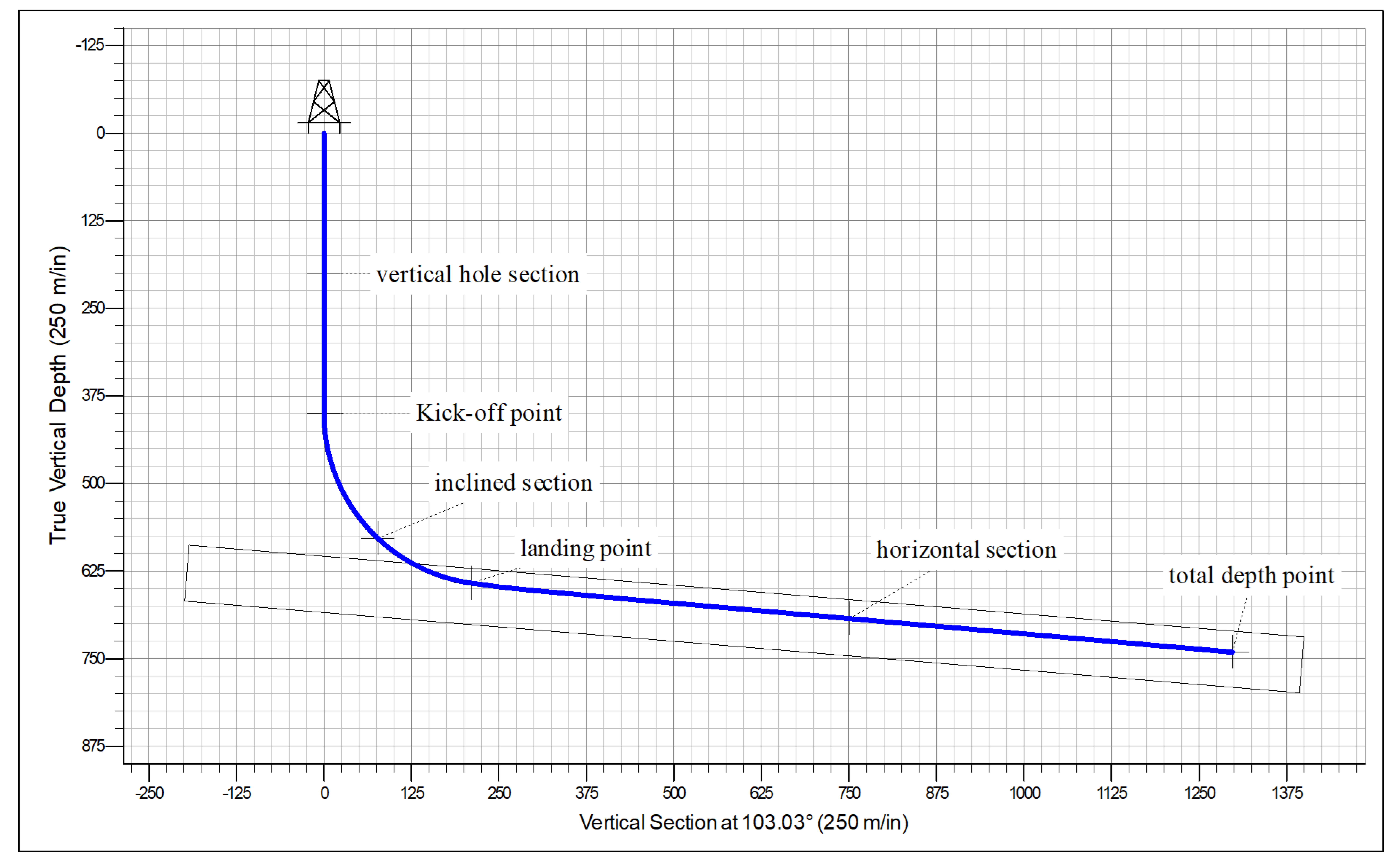
Ground regional treatment technology involves constructing directional boreholes in the Ordovician limestone injected medium and performing surface grouting to form a grouting modification zone, sealing water-conducting channels and fractures to prevent floor water hazards [17], as shown in Figure 1. Thus, grouting results are closely related to the injected medium conditions and grouting parameters.

2.1. Porosity of Porous Media

Porosity (n) is defined as the ratio of the total pore volume to the total volume of the porous medium, expressed as:
n = V v V b
where V v is the total pore volume, and V b is the total volume of the porous medium.
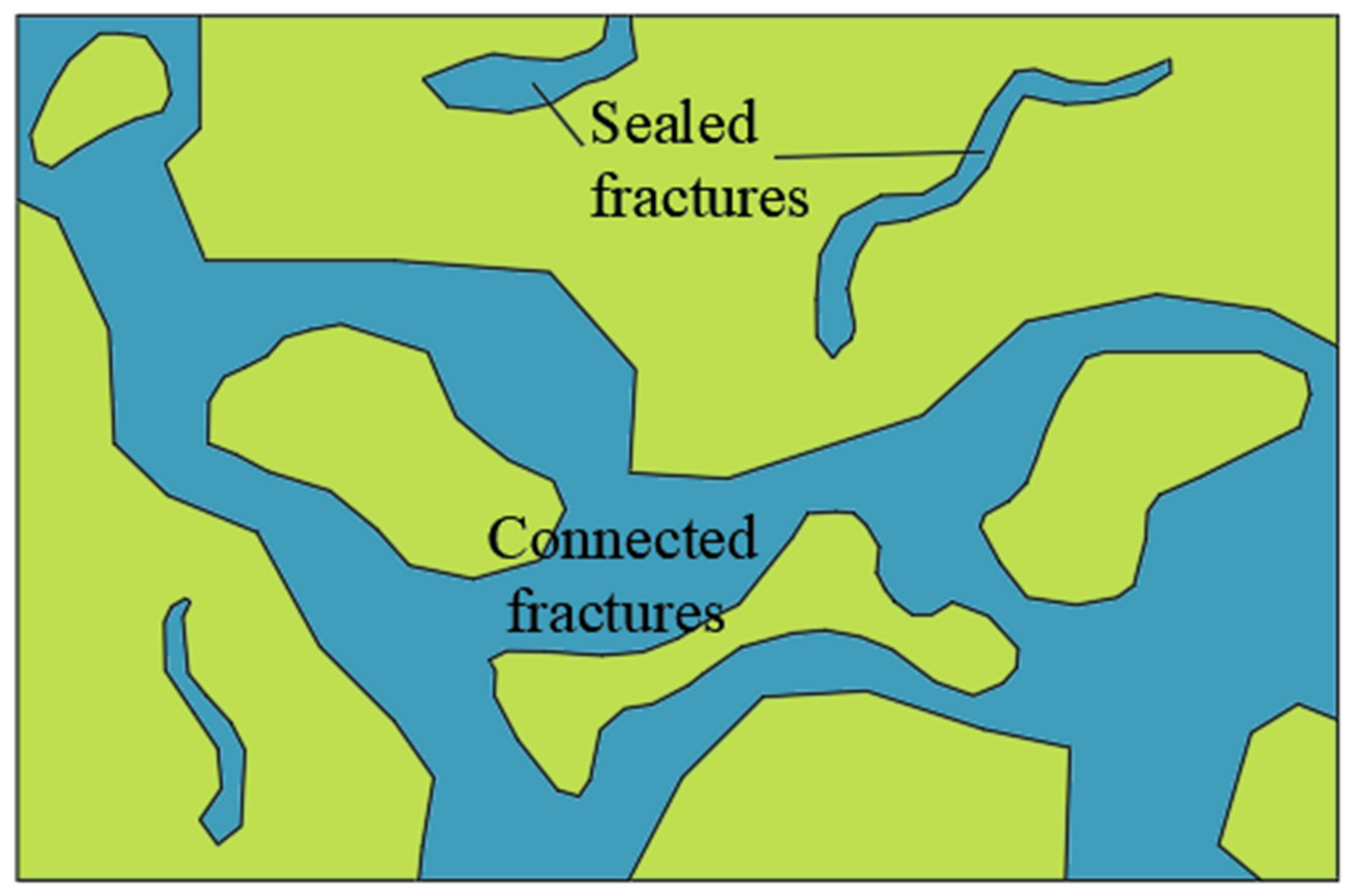
Pores in porous media are classified as connected pores and closed pores. Connected pores are interconnected through throats, forming a fracture network that allows the passage of slurry and groundwater. Sealing such fractures is the practical objective of grouting. Closed pores are isolated and do not connect with other pores. If their volume is small and they contain no water, they pose little threat of floor water inrush (Figure 2). Locally, isolated closed fractures are unlikely to significantly alter the groundwater flow field or cause major water inrush hazards. Even if intercepted by directional boreholes, effective slurry diffusion over a large area is difficult. Regionally, closed fractures are embedded within the connected fracture network. Their distance from connected fractures varies, and the internal cementation fillings often have low strength. Under the scouring, erosion, and high-pressure fracturing effects of slurry flowing through connected fractures, closed fractures may become integrated into the connected network. Moreover, the presence of closed fractures reduces the density, integrity, and strength of the rock mass, implying a reduced capacity to resist water pressure and subsequent mining-induced damage, thereby promoting water inrush to some extent. Additionally, porosity serves as an indicator of water storage capacity and, to a degree, the ultimate limitation on groutability and grout take. Therefore, porosity is selected as one of the main controlling factors in this study.

2.2. Permeability of Porous Media

Permeability (k) characterizes the ability of a rock formation to allow fluid passage and depends on the rock’s properties. Its relationship with the hydraulic conductivity coefficient is:
K = ρ g μ
where K is the hydraulic conductivity coefficient (m/s), ρ is the fluid density (kg/m3), g is the gravitational acceleration (m/s2), and μ is the dynamic viscosity (Pa·s).
The objective conditions restricting fluid passage during the transformation of the Ordovician limestone aquifer into an aquiclude include the spatial development characteristics of the fracture network, such as connectivity, fracture aperture, geometry, surface roughness, and cementation type. High permeability implies easier slurry-driven water displacement, faster slurry diffusion, and a wider diffusion range. Permeability is a crucial determinant of grouting efficiency and effectiveness. Therefore, permeability is selected as one of the main controlling factors.

2.3. Slurry Density

In addition to the inherent constraints of the injected medium, the physical properties of the slurry, which can be manually adjusted, significantly influence slurry migration and diffusion. Single-fluid cement slurry and cement-based mixed slurries are commonly used. Slurry density is often used as an indicator for controlling grouting parameters. The density of mixed slurry is calculated as:
ρ m = m w + m i V w + V i
where ρ m is the density of the mixed slurry (kg/m3), m w is the mass of added water (kg), m i is the total mass of grouting admixtures (kg), V w is the volume of added water (m3), and ∑Vi is the total volume of grouting admixtures (m3).
Different mixed slurries, such as single-fluid cement slurry, cement–fly ash slurry, and cement–clay slurry, can be prepared by adjusting the types of admixtures. By varying the proportions of each component, slurries with different densities can be obtained, allowing control of the grouting process.

2.4. Slurry Dynamic Viscosity

Dynamic viscosity is the ratio of internal shear stress to velocity gradient during fluid flow. It is a proportionality coefficient related to fluid type, temperature, and pressure. Under constant temperature and pressure, it remains constant. A higher velocity gradient results in greater shear stress and greater energy loss.
Dynamic viscosity characterizes the rheological properties of the slurry and reflects its internal resistance to flow. When the slurry diffuses from the directional borehole into the Ordovician injection medium, certain flowability is required. A high dynamic viscosity necessitates a higher surface grouting pressure to drive diffusion, adversely affecting equipment management, injection formation preservation, and mine roadway maintenance. In grouting operations, slurry rheological properties can be adjusted by modifying the slurry type, water–cement ratio, or solid–phase ratio [18,19].

2.5. Grouting Pressure

In summary, during ground regional grouting, effective slurry diffusion over a certain range can be achieved by adjusting the slurry type and properties, subject to the objective constraints of the porosity and permeability of the Ordovician limestone aquifer. In practice, directional boreholes are spaced at regular intervals, generally not exceeding 60 m. Additionally, considering construction schedule requirements, grouting must achieve a certain effective range within a given timeframe. Rapid and effective slurry diffusion is achieved by pressurizing the slurry with a surface grouting pump. Therefore, grouting pressure is a major factor influencing slurry diffusion.

3. Orthogonal Experimental Design

3.1. Factor Level Design

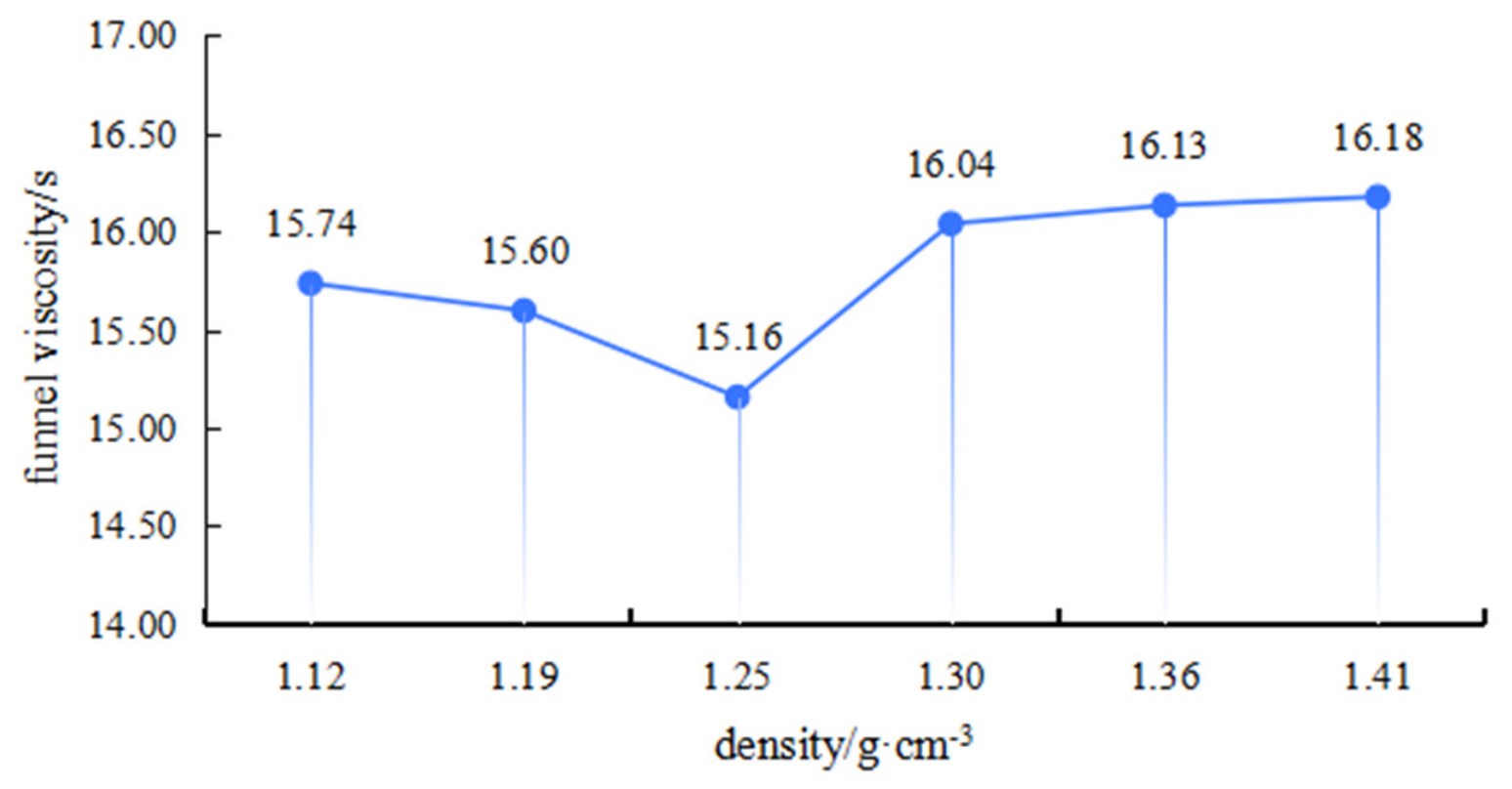
Five main controlling factors influencing slurry migration in ground regional control of the Ordovician limestone aquifer were selected, with five levels for each factor. The value ranges of each parameter are derived from in situ tests and empirical data obtained from the Aogui Water Injection Grouting Project in the Yima Mining Area. While density and viscosity typically exhibit a positive correlation, actual test results may show a decrease in viscosity with increasing density, as demonstrated by the single-liquid cement slurry viscosity test results in Figure 3. Additionally, in engineering practice, the rheological properties of the slurry can be adjusted by modifying the water–cement ratio or adding retarders/water reducers. Therefore, both parameters can be treated as independent variables.
The factor values are as follows:
  • Grouting pressure: 2, 5, 8, 11, and 13.5 MPa;
  • Slurry density: 1180, 1240, 1300, 1360, and 1400 kg/m3;
  • Slurry dynamic viscosity: 3, 3.5, 4, 5, and 6 mPa·s;
  • Porous media permeability: 6.6 × 10⁻¹³, 1.2 × 10⁻¹², 6.6 × 10⁻¹², 1.2 × 10⁻¹¹, and 6.6 × 10⁻¹¹ m2;
  • Porous media porosity: 0.05, 0.1, 0.2, 0.3, and 0.4.
The orthogonal experimental method was used to study the influence of each factor level. An L25(56) orthogonal table was selected. The experimental grouping is presented in Table 1.

3.2. Numerical Model Setup

The COMSOL Multiphysics software was used, employing its fluid–solid coupling module, to simulate slurry migration in the Ordovician porous medium.

3.2.1. Basic Assumption

The grouting project for the Ao-Hui aquifer involves a complex process characterized by intricate karst fracture networks and multi-physical field coupling. During fluid migration, the grout is influenced by various factors, including fluid properties, environmental conditions, grouting parameters, and the physical characteristics of the injected medium. The interaction among these factors results in nonlinear, non-steady-state, and non-uniform grouting behavior, which represents a significant bottleneck hindering the advancement of grouting technology. To better analyze the mechanisms of fluid flow and diffusion during grouting, the simulation experiments presented in this study adhere to the following assumptions:
(1)
The movement of serous fluid is continuous.
(2)
The slurry is an isotropic fluid that is incompressible; its specific gravity remains constant during flow, and the flow velocity remains stable.
(3)
The serous side wall satisfies the no-slip boundary condition.
(4)
The slurry diffusion mechanism follows complete displacement diffusion, without accounting for mixing between water and slurry at the aqueous–solvent interface.
(5)
The flow of slurry is laminar flow.

3.2.2. Governing and Constitutive Equations

The Darcy–Bingham two-phase coupled flow model was employed to describe the displacement behavior of grout and water in fractured porous media.
Mass conservation equation:
ρ t + · ( ρ ν ) = 0
where ρ is the fluid density; and v is the velocity vector.
Equation of momentum conservation:
ρ ν t · · ( ν 2 ) = ρ F + · p
where F is the volume force source term; and p is the pressure.
Energy conservation equation:
E t + · [ ( E + p ) · ν ] = ρ F ν + · ( τ + υ ) + · ( k T )
where E represents the internal energy; τ denotes the stress tensor; T stands for temperature; and k signifies the thermodynamic coefficient.
Brinkman equation:
ρ ε p μ t = · [ p I + μ ε p ( μ + ( μ ) T ) ] μ k + β ρ μ μ
where ε p denotes the porosity of the porous medium; I is a unit tensor; β is a constant associated with both the fluid and the porous medium; μ is the kinematic viscosity of the liquid, and k represents the permeability of the porous medium.

3.2.3. Initial Boundary Conditions

The inlet boundary conditions include mass flow inlet conditions, pressure inlet conditions, and velocity inlet conditions. The pressure inlet condition is the most commonly used type of inlet boundary condition, as it defines pressure-related properties of fluid flow at the inlet and applies to both compressible and incompressible flows. Therefore, this simulation experiment adopted the pressure inlet condition as the internal boundary condition by specifying a known grouting pressure value.
The outlet boundary conditions include pressure outlet boundary conditions and mass outlet boundary conditions. Since physical model experiments are conducted within the porous medium itself, there is no scenario where fluid flows through the porous medium and leaks out; therefore, the outlet boundary condition is set as a zero-flow boundary.

3.2.4. Convergence Criterion

Iterative computation terminates when two consecutive calculation steps satisfy dual residual thresholds: pressure relative residual < 1 × 10⁻⁶, flow velocity relative residual < 1 × 10⁻⁵, and incremental grout diffusion volume < 0.1 m3.

3.2.5. Model Building

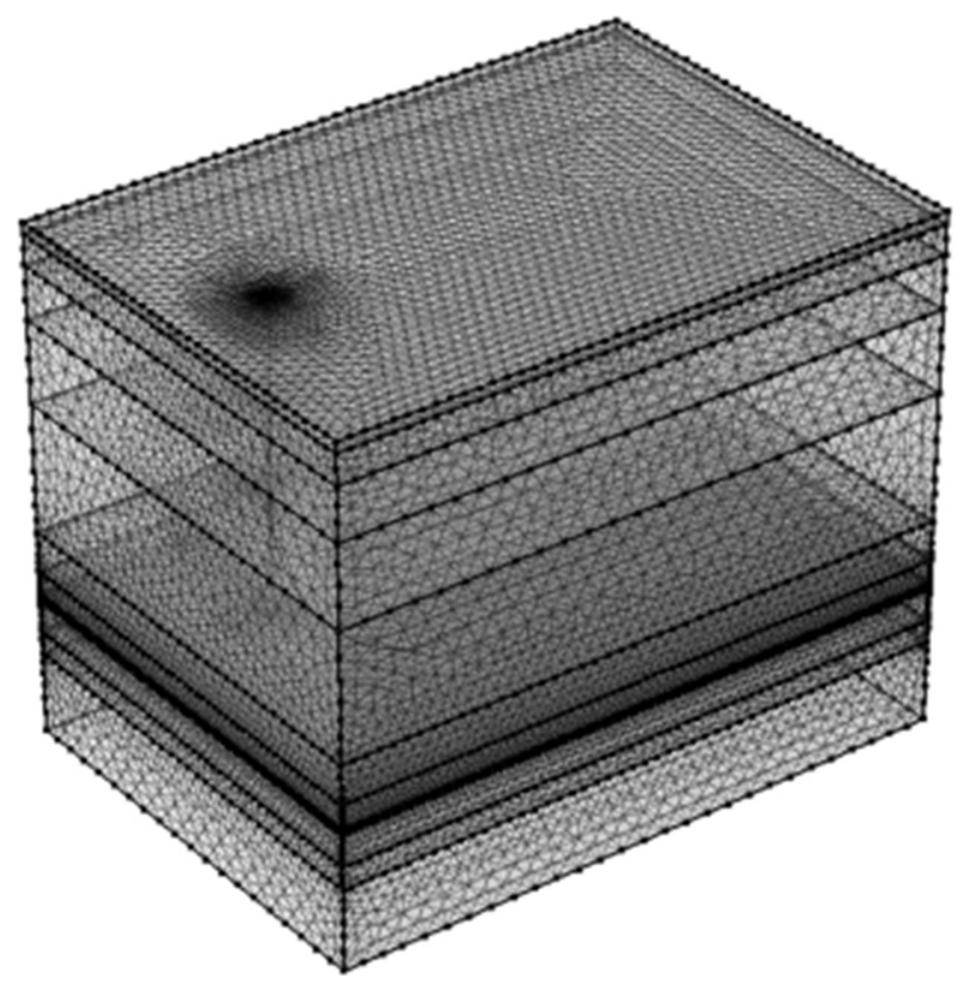
A numerical model with a width of 1400 m, length of 1000 m, and height of 1128 m was established. The model contained 2,178,941 domain elements, 118,145 boundary elements, and 4019 edge elements. The finite element triangular mesh generation principle was applied, and the built-in meshing module was used to process the solution domain. The simulated borehole structure comprised a first-section bit diameter of 311.15 mm, a second-section bit diameter of 215.9 mm, and a third-section horizontal-section bit diameter of 152.4 mm (Figure 4).

4. Results

4.1. Porosity of Porous Media

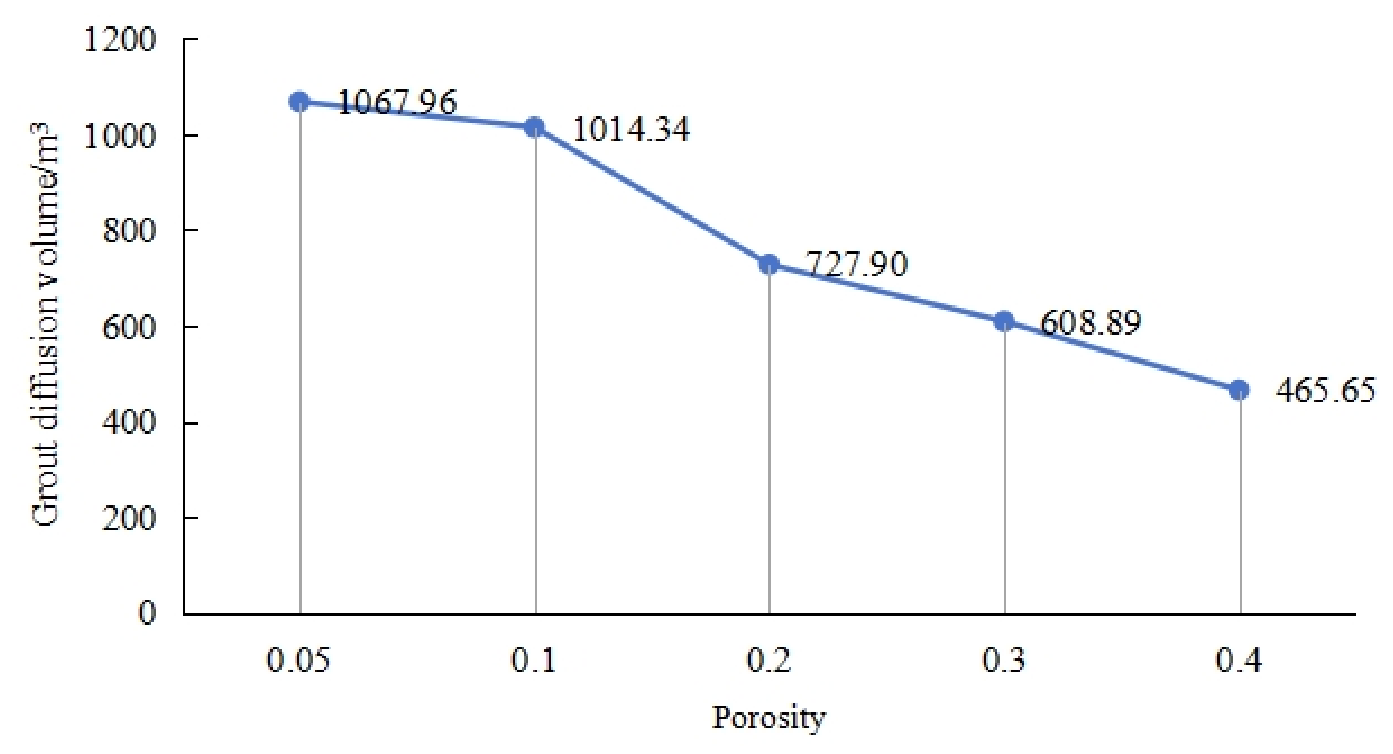
As shown in Figure 5, the slurry diffusion volume decreases with increasing porosity. The most significant decrease of 286.44 m3 (28%) occurs when porosity increases from 0.1 to 0.2. A decrease of 143.23 m3 (24%) occurs from 0.3 to 0.4. When porosity increases from 0.05 to 0.2 and 0.3, the decreases are 5% and 16%, respectively. Analysis shows that when porosity is low, the diffusion range of grout increases, indicating that under constant conditions, grout spreads over a larger volume within the narrow fracture network of rock. However, in practical applications, such fracture development requires more precise grout particle size; otherwise, fracture blockage may occur, leading to elevated grouting pressure and forced interruption of the grouting process.

4.2. Permeability of Porous Media

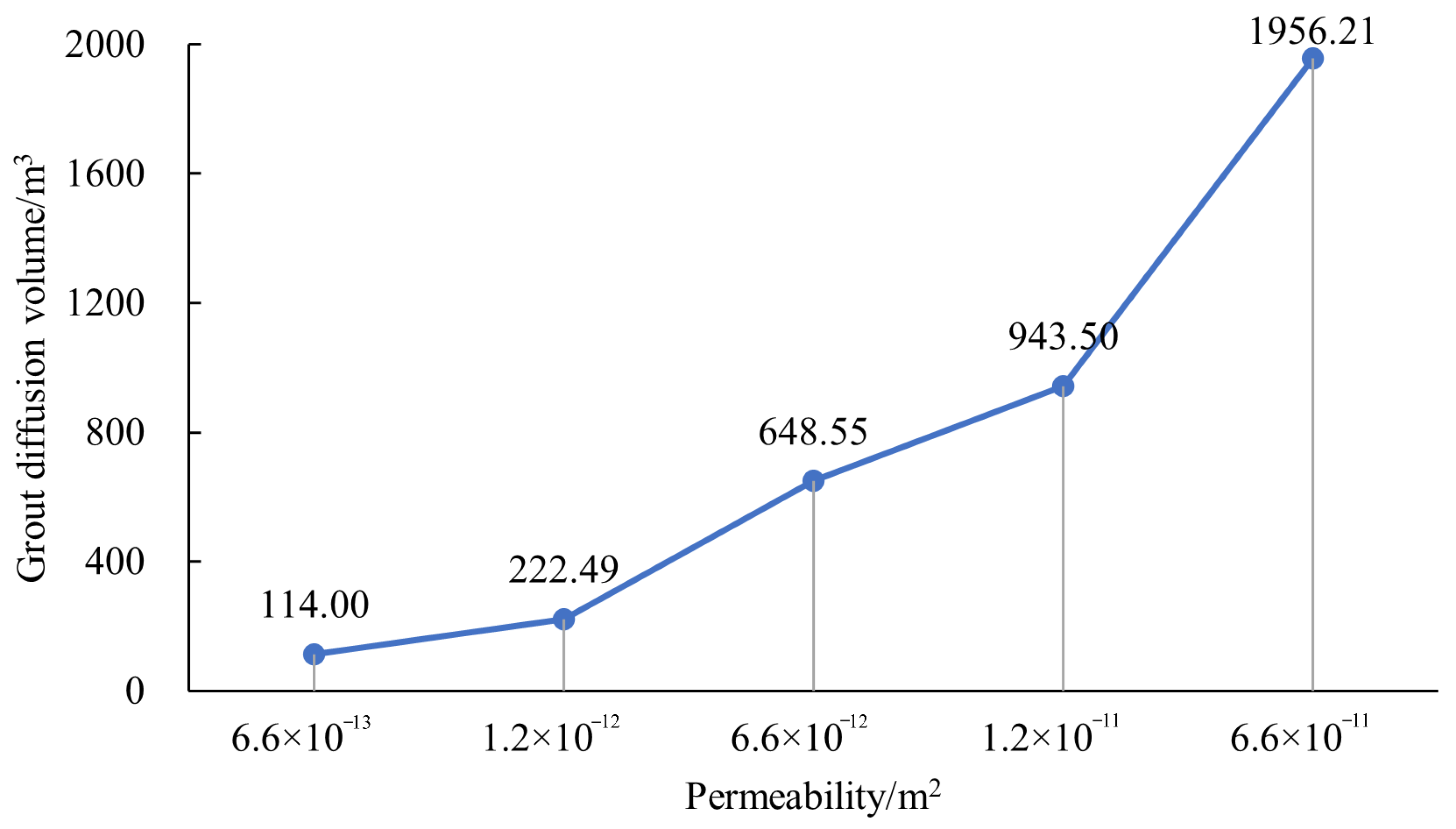
As shown in Figure 6, the slurry diffusion volume increases with increasing permeability, and the increment grows. When permeability increases from the lowest to higher levels, the increments in slurry diffusion volume are 108.49 m3, 426.06 m3, 294.95 m3, and 1012.70 m3, respectively. At a permeability of 6.6 × 10⁻¹² m2, the diffusion volume increases by 191% compared with that at 1.2 × 10⁻¹² m2. The largest absolute increase occurs when permeability increases from 1.2 × 10⁻¹¹ m2 to 6.6 × 10⁻¹¹ m2, indicating that higher permeability offers greater tolerance for slurry properties and facilitates slurry diffusion.
Practical grouting applications in the Yima mining area have also demonstrated that as the permeability of the grouting medium increases in karst formations, the required grouting volume correspondingly rises, consistent with the trends observed in numerical simulations.

4.3. Slurry Density

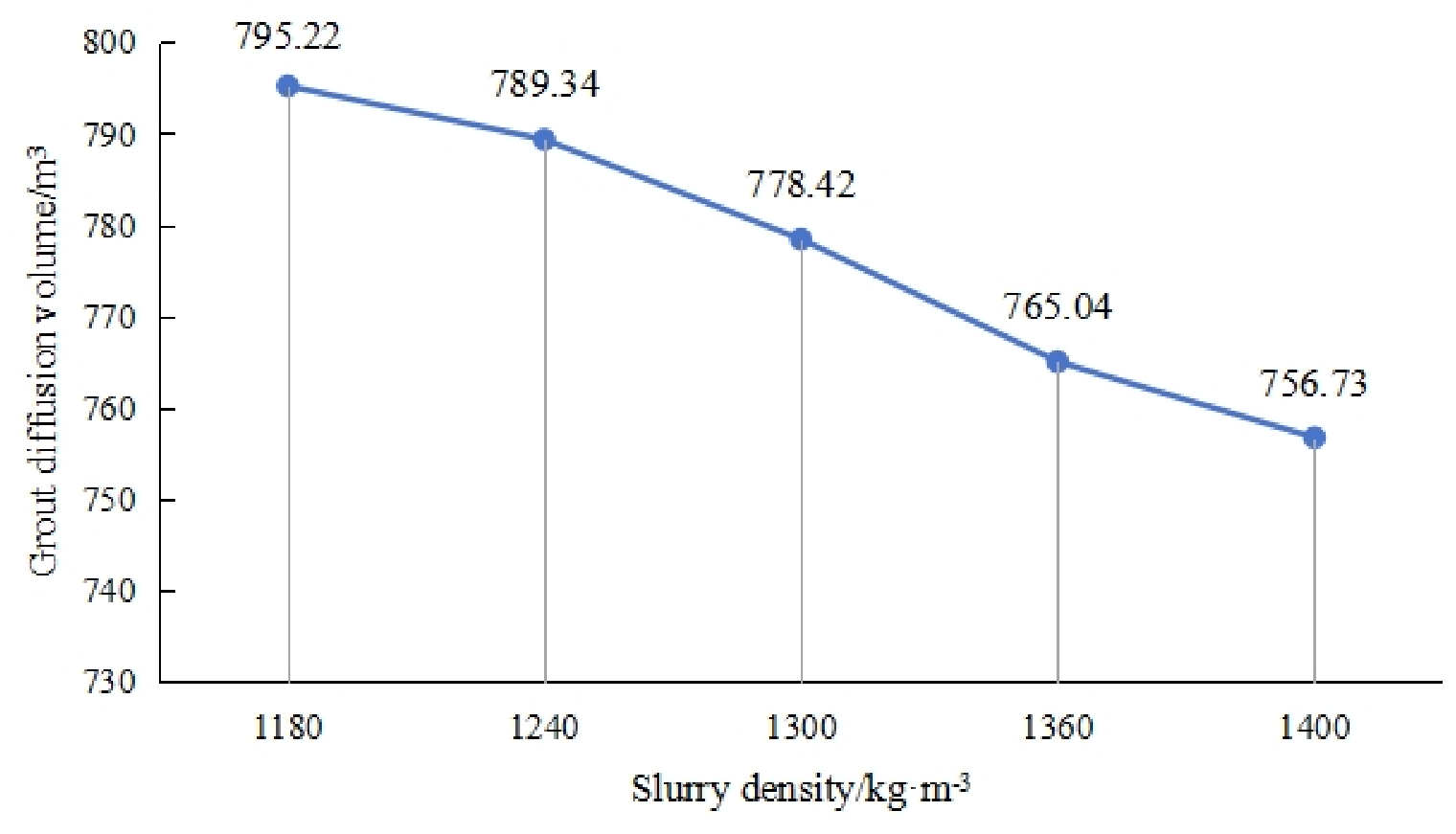
The slurry diffusion volume shows an approximately linear decreasing trend with increasing slurry density, but the overall decrease is small (1–2%), without the large amplitude observed for permeability and porosity. This suggests that slurry density has no substantial effect on slurry diffusion (Figure 7). Most grouting slurries are non-Newtonian fluids. Higher slurry density implies higher viscosity and greater internal shear stress, requiring greater driving force for migration [20]. Practical grouting operations also indicate that, under constant porous medium conditions, maintaining a stable slurry density or making small adjustments has little effect on grout take, especially in well-permeable fracture zones, where high-density grouting is often feasible.

4.4. Slurry Dynamic Viscosity

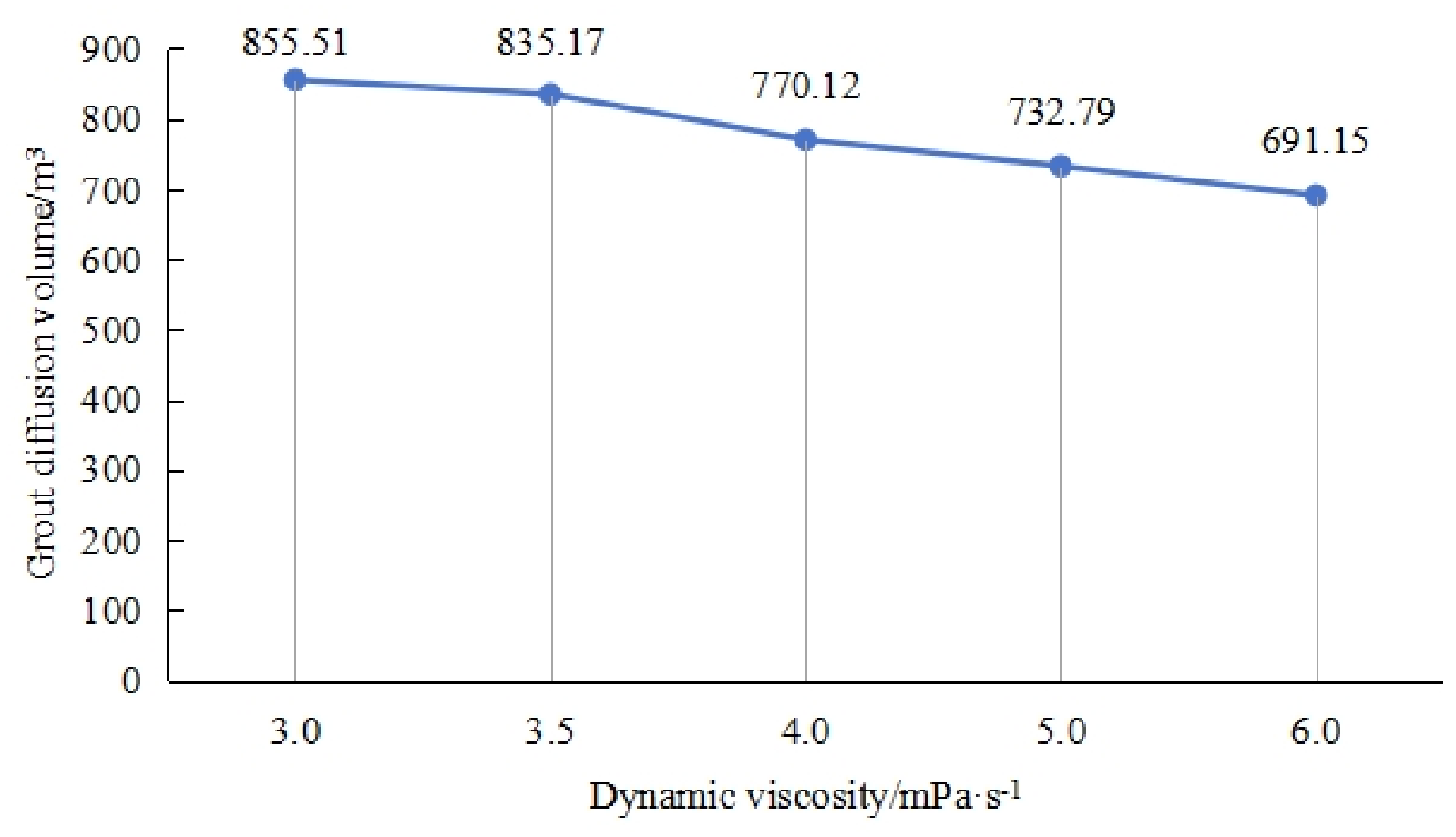
Higher dynamic viscosity implies greater viscous resistance, requiring higher shear stress for flow to occur. The slurry diffusion volume decreases with increasing viscosity, indicating a reduced flow range and potentially compromised grouting effectiveness (Figure 8). As viscosity increases, the decreases in diffusion volume are 2%, 8%, 5%, and 6%, respectively, showing stable amplitude variations similar to those of slurry density. In practice, high-viscosity slurries are often used in well-permeable fracture zones or when additives such as sodium silicate are introduced. Good permeability reduces flow resistance, mitigating the hindering effect of viscosity on slurry migration.

4.5. Grouting Pressure

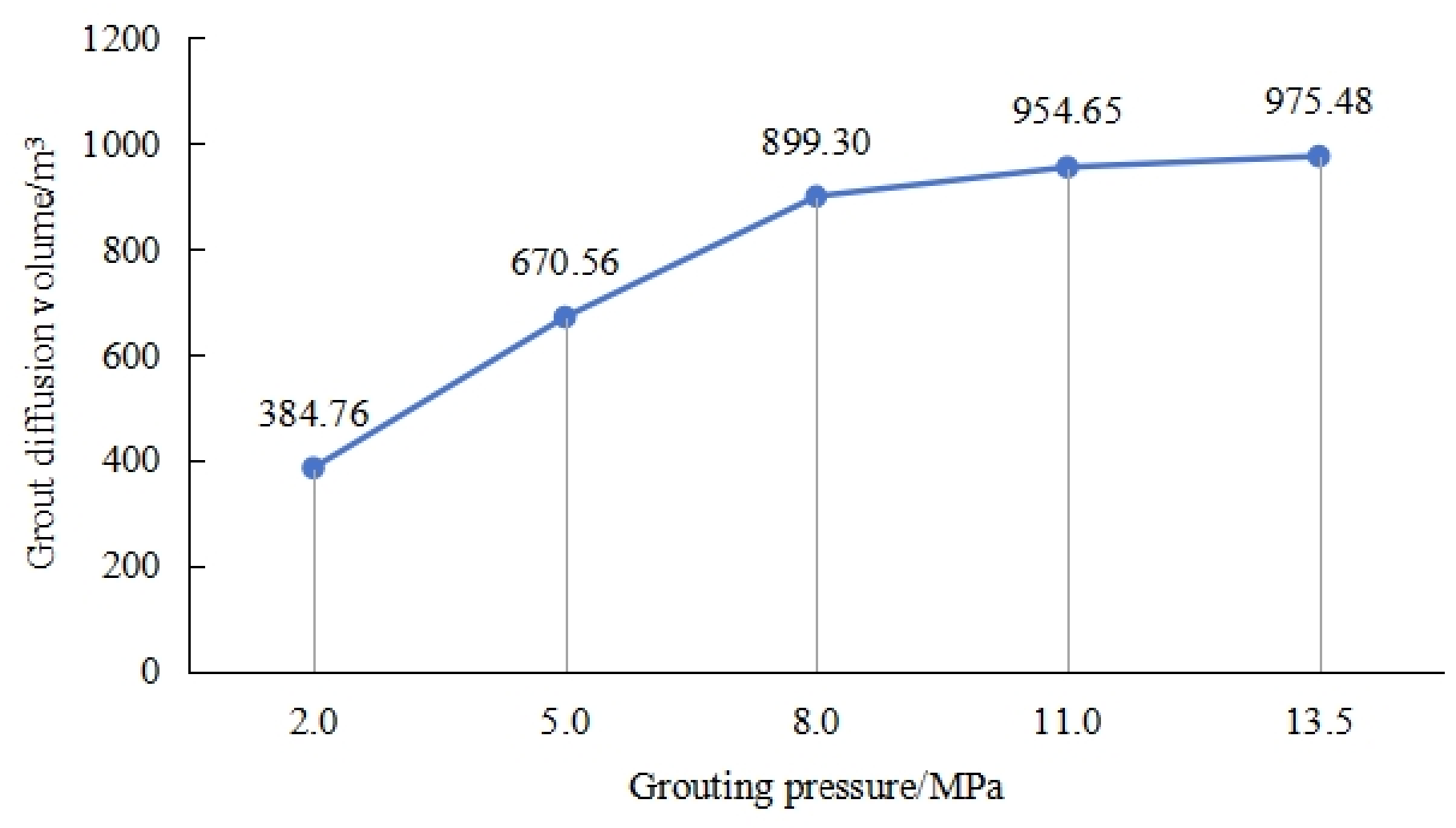
The slurry diffusion volume increases with grouting pressure, but the growth rate slows. The increments from low to high pressure levels are 74%, 34%, 6%, and 2%, respectively. In the low-pressure stage (below 8 MPa), increasing grouting pressure significantly affects slurry migration. In the high-pressure stage, the effect diminishes, although the total grout take continues to increase (Figure 9). When the primary fracture network has poor permeability or the grout take has reached saturation, high-pressure grouting is necessary to achieve effective diffusion and to displace water and seal fractures.

5. Discussion

5.1. Analysis of Variance (ANOVA) Statistical Results

The variance analysis results (Table 2) show significance values of 0.944 (>0.05) for slurry density and 0.154 (>0.05) for slurry dynamic viscosity, indicating no significant effect on the experimental results. The significance values for grouting pressure (0.002 < 0.05), permeability (<0.001), and porosity (0.001 < 0.05) indicate significant effects.
Therefore, the order of influence strength on slurry migration and diffusion is: permeability > porosity > grouting pressure > slurry dynamic viscosity > slurry density. Permeability, porosity, and grouting pressure are the primary factors influencing slurry diffusion range, resulting in slurry diffusion volume fluctuations of 2% to 191%; whereas, the effects of slurry dynamic viscosity and density are relatively minor, causing fluctuations of only 1% to 8%. Adjusted determination coefficient R2 = 0.986, which proves the regression model can explain 98.6% of total data variance and verifies the reliability of orthogonal test results.

5.2. Core Governing Mechanism Interpretation

Through numerical simulations and orthogonal experiments, this study systematically analyzed five main controlling factors of slurry migration during grouting at the top of the Ordovician limestone aquifer. The results indicate that the permeability and porosity of the injected medium constitute the objective foundation determining slurry diffusion capacity, while grouting pressure is the most significant controllable driving force. This finding is generally consistent with the conclusions of Zhao et al. [8]. regarding the grouting diffusion mechanism in horizontal boreholes within fractured aquifers. However, this study further quantifies the order of influence strength of each factor, filling a gap in the quantitative comparison of multiple factors in existing research.
It is noteworthy that the influence of permeability is significantly stronger than that of porosity. This phenomenon can be explained from the perspective of fracture hydraulics: permeability essentially reflects the “efficiency” of fluid transmission through the fracture network; whereas, porosity represents the storage space. During the slurry-driven water displacement process, the key factor is whether the fluid can rapidly pass through fracture channels and occupy the original water space. This depends primarily on the connectivity and transmissive capacity of the fractures, rather than the purely volumetric pore space. Therefore, permeability should be considered the primary indicator for evaluating the groutability of grouting-modified blocks.
Another finding with significant engineering implications is that grouting pressure has the most pronounced effect on increasing the slurry diffusion range at pressures below 8 MPa (an increase of 74%), beyond which the marginal benefit declines sharply (only 2–6% at higher pressure stages). This suggests that, in practical engineering, blindly increasing grouting pressure not only may increase equipment load and the risk of formation damage but also yields limited gains in diffusion. Therefore, it is recommended that field operations prioritize the optimization of permeability and slurry rheological parameters, reserving high-pressure grouting strategies for blocks with poorly developed primary fractures or where grout take has approached saturation.
In contrast to grouting pressure, the influence of slurry density and dynamic viscosity on the diffusion range is only 1–8%, categorizing them as secondary factors. This conclusion is consistent with some field observations: in well-permeable fracture zones, even high-density or high-viscosity slurries can maintain acceptable diffusion capacity. However, it should be noted that the conclusions of this study apply within the tested range of conditions (density 1180–1400 kg/m3, viscosity 3–6 mPa·s). If the slurry viscosity is excessively high (e.g., >10 mPa·s) or if fast-setting slurries are used, their spatiotemporal evolution characteristics may render viscosity the dominant factor, as highlighted by Zhang et al. [14,15].

5.3. Research Limitations and Prospective Work

Simplification deviation of homogeneous porous medium: The numerical model adopts homogeneous hypothesis to realize controlled-variable single-factor analysis, but natural Ordovician limestone has random fracture distribution and preferential flow channels, which will bring certain deviation to slurry migration path prediction. Follow-up research can establish discrete fracture network (DFN) numerical model to quantitatively evaluate the prediction error caused by homogenization.
Lack of physical and field verification: This study only relies on orthogonal numerical simulation to obtain results, without indoor large-scale fracture physical model test and on-site tracer grouting calibration. Subsequent work will carry out physical model and field monitoring tests to correct numerical diffusion volume data.
In summary, this study provides a quantitative ranking of controlling factors and a basis for parameter optimization in grouting modification projects at the top of the Ordovician limestone aquifer, offering practical guidance for improving grouting efficiency and reducing engineering costs.

6. Conclusions

(1)
Slurry migration at the top of the Ordovician limestone aquifer is constrained by the original fracture development of the injected medium. Connected and closed fractures jointly constitute the regional fracture network. Porosity and permeability serve as fundamental indicators for assessing groutability and grout take, representing the objective constraints on slurry migration and diffusion. Permeability exerts a more significant influence than porosity.
(2)
Under conditions of primary fracture development, grouting parameters, as human-controllable factors, can be adjusted to regulate slurry flowability by varying grouting pressure, slurry dynamic viscosity, and slurry density. Grouting pressure is the main driving force for overcoming frictional and viscous resistance within fractures and also promotes fracture expansion, extension, and connection. Its influence on slurry migration is more significant than that of slurry dynamic viscosity and density.
(3)
The variance analysis results indicate that the influence strength of factors on slurry migration and diffusion follows the order: permeability > porosity > grouting pressure > slurry dynamic viscosity > slurry density. Permeability, porosity, and grouting pressure cause more significant and drastic variations in the slurry diffusion range, with amplitudes ranging from 2% to 191%. In contrast, slurry dynamic viscosity and density yield amplitude variations in only 1% to 8%.

Author Contributions

Conceptualization, Z.Z., X.Y. and Z.F.; methodology, Z.Z., X.Y. and Y.Z.; software, Z.F. and W.H.; formal analysis, Z.Z., Z.F., F.Z. and L.C.; investigation, X.Y.; Data curation, Z.Z.; writing—original draft, Z.Z.; writing—review and editing, Z.Z., X.Y. and Y.Z.; project administration, Z.Z. and Z.F.; funding acquisition, Z.Z. All authors have read and agreed to the published version of the manuscript.

Funding

CCTEG Coal Mining Research Institute: KCYJY-2023-QN-03.

Institutional Review Board Statement

Not applicable.

Informed Consent Statement

Not applicable.

Data Availability Statement

The original contributions presented in this study are included in the article. Further inquiries can be directed to the corresponding author.

Acknowledgments

During the writing of this paper, we extend our sincere gratitude to Xu Wentao for his insightful explanations of scientific concepts, and to all authors for their contributions.

Conflicts of Interest

Authors Zhiwei Zhang, Xiwen Yin, Yujun Zhang, Zhenli Fan, Fengda Zhang, Lutong Cao were employed by the company CCTEG Coal Mining Research Institute and Tiandi Science and Technology Co., Ltd. Wanli He was employed by the company Tiandi Science and Technology Co., Ltd. The authors declare that the research was conducted in the absence of any commercial or financial relationships that could be construed as a potential conflict of interest.

References

  1. Ge, S.; Fan, J.; Liu, S.; Song, M.; Xian, Y.; Wang, B.; Teng, T. Low carbon modern coal-based energy technology system and development strategy. J. China Coal Soc. 2024, 49, 203–223. [Google Scholar]
  2. Xuan, Y. Status and countermeasures for prevention and control of coal mine water disasters in Anhui Province. Saf. Coal Mines 2010, 41, 117–119. [Google Scholar]
  3. Bai, H.; Miao, X. Hydrogeological characteristics and water prevention theory and technology in Late Paleozoic coalfields. J. China Univ. Min. Technol. 2016, 45, 1–10. [Google Scholar]
  4. Hu, W. Characteristics of deep karst and coal mine karst water disasters in eastern North China. Coal Geol. Explor. 2010, 38, 23–27. [Google Scholar]
  5. Liu, Z.; Dong, S.; Nan, S.; Zhang, D.; Liu, D. Micro-CT analysis of void characteristics at the top of middle Ordovician limestone in the Hanxing mining area. J. Min. Saf. Eng. 2021, 38, 343–352. [Google Scholar]
  6. Zhang, Y.; Zhang, Z.; Li, Y. Study on the mechanism of confined water mining lifting in coal seam floor with a hidden fault. J. Min. Saf. Eng. 2023, 40, 17–24. [Google Scholar]
  7. Dong, S.; Liu, Q.; Wang, H.; Guo, X.; Liu, Z.; Zheng, S.; Nan, S.; Liu, J.; Zhao, Z.; Shi, Z. Theoretical framework and key technology of advance regional control of water inrush in coal seam floor. Coal Geol. Explor. 2023, 51, 185–195. [Google Scholar]
  8. Zhao, Q.; Zhao, B.; Fu, Y.; Nan, S.; Zhao, Z. Research on key technology to control Ordovician limestone water disaster on surface region of deep mining depth mine. Coal Sci. Technol. 2016, 44, 14–20. [Google Scholar]
  9. Liu, Q.; Liu, Z.; Liu, Z.; Chen, B. Water Hazard Control Technology Based on Integral Drilling and Controllable Grouting in Coal Mines. Mine Water Environ. 2021, 41, 119–125. [Google Scholar] [CrossRef]
  10. Xu, C.; Han, L. Formation Mechanism of Slurry Consolidated Body in Different Grouting Media under Dynamic Water Conditions by the Test-simulation Method. KSCE J. Civ. Eng. 2023, 27, 169–180. [Google Scholar] [CrossRef]
  11. Xie, Z.; Han, F.; Chen, S.; Ding, H.; Sun, G.; Xu, G. Reconstruction of karst aquifer system in lower group coal seam floor and source-separated karst water hazard control technology in Huainan Coalfield. Coal Sci. Technol. 2026, 54, 308–319. [Google Scholar] [CrossRef]
  12. Chen, J.; Zhu, J.; Zhang, C.; Jia, D.; Zhang, Y.; Fu, Z.; Liu, L.; Wang, E. Slurry diffusion characteristics of open-hole grouting in limestones with different permeability. J. Xi’an Univ. Sci. Technol. 2023, 43, 667–674+742. [Google Scholar]
  13. Liu, Z. Experimental study on fracture initiation mechanism of split grouting fissure in Ordovician limestone top. J. Min. Saf. Eng. 2023, 40, 204–214. [Google Scholar]
  14. Wang, P.; Yan, X.; Sun, X.; Liu, Z.; Duan, Y.; Ning, Z.; He, J. Permeation grouting mechanism of fast-setting chemical slurry considering spatiotemporal evolution of viscosity. Rock. Soil Mech. 2024, 45, 3668–3680. [Google Scholar]
  15. Zhang, Q.; Zhang, L.; Zhang, X.; Liu, R.; Zhu, M.; Zheng, D. Grouting diffusion mechanism in horizontal fractured rock mass considering spatiotemporal variation of slurry viscosity. Chin. J. Rock. Mech. Eng. 2015, 34, 1198–1210. [Google Scholar]
  16. Wang, Y.; Zheng, Y.; Ji, X.; Zhang, C.; Chen, J.; Zhang, M.; Zhang, Y. Influencing factors of grout diffusion in directional grouting and determination method of grouting position. J. Saf. Sci. Technol. 2026, 1, 5–13. [Google Scholar]
  17. Zhao, Q. Ordovician limestone karst water disaster regional advanced governance technology study and application. J. China Coal Soc. 2014, 39, 1112–1117. [Google Scholar]
  18. Liu, W.; Wu, H.; Shen, J. Based on Box-Behnken method superfine cement grouting material ratio and performance optimization model. Coal Sci. Technol. 2024, 52, 146–158. [Google Scholar]
  19. Zhao, B.; Chen, P.; Zhai, D.; Zhang, J.; Wei, Q. Influence of particle gradation and timeliness on rheological properties of filling slurry. Saf. Coal Mines 2023, 54, 117–127. [Google Scholar]
  20. Tong, T. A Study of the Diffusion Radius of Bingham Fluid Grouting in a Fractured Rock Mass; Chongqing Jiaotong University: Chongqing, China, 2024. [Google Scholar]
Figure 1. Schematic diagram of directional trajectory.
Applsci 16 07090 g001
Figure 2. Schematic diagram of fracture types.
Applsci 16 07090 g002
Figure 3. The relationship between the viscosity and density of single-phase cement slurry.
Applsci 16 07090 g003
Figure 4. Three-dimensional numerical model.
Applsci 16 07090 g004
Figure 5. Relationship between porosity of porous media and grout diffusion volume.
Applsci 16 07090 g005
Figure 6. Relationship between permeability of porous media and grout diffusion volume.
Applsci 16 07090 g006
Figure 7. Relationship between slurry density and grout diffusion volume.
Applsci 16 07090 g007
Figure 8. Relationship between grout dynamic viscosity and grout diffusion volume.
Applsci 16 07090 g008
Figure 9. Relationship between grouting pressure and grout diffusion volume.
Applsci 16 07090 g009
Table 1. Orthogonal experimental scheme.
No.Grouting Pressure (MPa)Density (kg/m3)Dynamic Viscosity (mPa·s)Permeability (m2)Porosity
12118036.6 × 10−130.05
2212403.51.2 × 10−120.1
32130046.6 × 10−120.2
42136051.2 × 10−110.3
52140066.6 × 10−110.4
6511803.56.6 × 10−120.3
75124041.2 × 10−110.4
85130056.6 × 10−110.05
95136066.6 × 10−130.1
105140031.2 × 10−120.2
118118046.6 × 10−110.1
128124056.6 × 10−130.2
138130061.2 × 10−120.3
148136036.6 × 10−120.4
15814003.51.2 × 10−110.05
1611118051.2 × 10−120.4
1711124066.6 × 10−120.05
1811130031.2 × 10−110.1
191113603.56.6 × 10−110.2
2011140046.6 × 10−130.3
2113.5118061.2 × 10−110.2
2213.5124036.6 × 10−110.3
2313.513003.56.6 × 10−130.4
2413.5136041.2 × 10−120.05
2513.5140056.6 × 10−120.1
Table 2. Analysis of variance table.
SourceType III Sum of SquaresdfMean SquareFSignificance
Corrected Model13,607,271.8 a20680,363.58887.388<0.001
Intercept15,091,391.34115,091,391.341938.386<0.001
Grouting Pressure1,255,451.7884313,862.94740.3140.002
Slurry Density5200.48641300.1220.1670.944
Slurry Dynamic Viscosity94,597.353423,649.3383.0380.154
Permeability10,909,032.2242,727,258.055350.298<0.001
Porosity1,342,989.9074335,747.47743.1240.002
Error31,142.17547785.544
Total28,729,805.2725
Corrected Total13,638,413.9324
R2 = 0.998 (Adjusted R2 = 0.986)
Disclaimer/Publisher’s Note: The statements, opinions and data contained in all publications are solely those of the individual author(s) and contributor(s) and not of MDPI and/or the editor(s). MDPI and/or the editor(s) disclaim responsibility for any injury to people or property resulting from any ideas, methods, instructions or products referred to in the content.