1. Introduction
Climate change mitigation requires substantial greenhouse gas (GHG) emission reductions across all productive sectors. Among them, the energy sector is the largest global contributor, accounting for approximately 73.2% of total anthropogenic GHG emissions [
1]. Within this broad category, freight transport represents one of the most challenging subsectors to decarbonize due to its strong dependence on high-energy-density fuels, intensive duty cycles, and the need for continuous long-distance operation. Heavy-duty road freight transport remains predominantly reliant on diesel-based technologies, which has made it responsible for approximately 16.2% of transport-related global emissions, while also generating significant local air pollutants such as nitrogen oxides (NOx) and particulate matter (PM). These emissions contribute not only to climate change, but also to air quality deterioration and associated public health impacts, particularly in densely populated urban and industrial areas [
2,
3].
In Chile, road freight transport is a strategic activity for mining, forestry, industrial production, ports, and national logistics integration [
4]. However, the sector depends almost entirely on fossil fuels. According to official government background information, more than 90% of heavy trucks in Chile operate with diesel engines, while land transport contributes significantly to national GHG emissions [
5]. Beyond climate impacts, diesel freight transport also affects public health. Fine particulate matter and combustion pollutants are associated with respiratory and cardiovascular diseases. Therefore, decarbonizing heavy transport is not only an environmental necessity but also a public health priority [
6].
In this context, Chile has established a target of reducing the country’s emissions by 30% by 2030 and achieving carbon neutrality by 2050 [
5,
7]. The transportation sector will play a critical role in future emission reduction strategies. To achieve carbon neutrality by 2050, electromobility is expected to contribute nearly 20% of the total emission reductions associated with the energy sector. In this context, Chile recognizes transport electrification as a major opportunity to transform the transportation sector toward more sustainable economic, social, and environmental practices. Furthermore, electromobility contributes to greater energy independence and security by reducing dependence on imported fossil fuels while leveraging the country’s abundant renewable energy resources for electricity generation, thereby enhancing both environmental and economic benefits. Currently, Chile possesses an estimated renewable energy potential of 2375 GW at competitive costs, equivalent to approximately 70 times the total installed capacity of the current Chilean National Electric System [
8].
Within the field of electromobility, battery electric trucks have emerged as a relevant solution for urban freight and short-range logistics. Nevertheless, in long-haul transport their deployment may face limitations related to battery weight, charging time, and reduced range under high payload conditions [
9,
10]. In this context, hydrogen fuel cell electric vehicles (FCEVs) are increasingly recognized as a promising alternative for heavy-duty transport due to their high energy density, fast refueling capability, and suitability for long-range and high-payload operation [
11]. Compared to battery-electric trucks, FCEVs can reduce operational limitations associated with extended charging times and battery weight, making them particularly attractive for freight logistics and continuous-duty applications. Furthermore, when hydrogen produced from renewable energy sources is employed (denominated like green hydrogen), FCEVs enable significant reductions in GHG emissions [
12,
13]. Although FCEVs are generally lighter than equivalent battery-electric trucks, especially in long-haul and high-payload applications, they remain heavier than conventional diesel vehicles, highlighting potential challenges associated with logistics and infrastructure adaptation [
14].
Green hydrogen, produced through water electrolysis powered by renewable electricity, offers the possibility of a low-carbon fuel supply with fast refueling capability and long operational range. Chile possesses exceptional renewable energy resources, particularly high solar irradiation in the Atacama Desert and strong wind potential in Patagonia, creating highly favorable conditions for competitive green hydrogen production. According to the updated Chilean National Green Hydrogen Strategy 2026–2030, the country seeks to accelerate the deployment of a domestic hydrogen economy focused on hard-to-abate sectors such as mining, heavy-duty transport, industry, and synthetic fuel production, while simultaneously consolidating its position as a global exporter of green hydrogen and its derivatives [
15].
From a technological perspective, the integration of renewable-based electrolysis systems, advanced power electronic converters, and FCEVs enables in Chile a sustainable pathway for decarbonizing long-haul freight transport and other hard-to-abate sectors. Furthermore, the progressive reduction in renewable electricity costs, combined with improvements in electrolyzer efficiency and fuel cell technologies, is expected to enhance the techno-economic competitiveness of hydrogen-powered heavy-duty transportation over conventional diesel fleets. In this context, Chile’s strategy prioritizes not only export-oriented hydrogen markets but also domestic applications in mining, logistics, and heavy transport, where high vehicle autonomy, rapid refueling capability, and continuous-duty operation are critical operational requirements [
16].
Despite the significant progress achieved in national decarbonization policies and the increasing international interest in hydrogen-based transportation systems, several uncertainties remain regarding the large-scale implementation of hydrogen FCEV trucks under Chilean operating conditions. In particular, critical aspects related to hydrogen production costs, refueling infrastructure deployment, fleet scalability, operational autonomy, and total cost of ownership (TCO) continue to represent major barriers for the widespread adoption of this technology in the heavy-duty freight sector. Furthermore, while FCEVs have demonstrated strong potential for reducing GHG emissions in long-haul transport applications, their economic competitiveness against conventional diesel fleets remains highly dependent on variables such as hydrogen price, annual mileage, infrastructure utilization factor, and future reductions in electrolyzer and fuel cell system costs.
In this context, Chile represents a particularly relevant case study due to its extensive freight transport activity, strong dependence on diesel-powered logistics, and exceptional renewable energy potential for low-carbon hydrogen production. Additionally, the recent incorporation of hydrogen-powered heavy-duty trucks into the Chilean market provides an opportunity to evaluate the real operational and economic feasibility of these technologies under local transport, energy, and regulatory conditions. Therefore, this study aims to evaluate the technical, environmental, and economic feasibility of green hydrogen heavy-duty trucks recently introduced in Chile compared to conventional diesel freight vehicles. The analysis focuses on operational performance, greenhouse gas emission reduction potential, and total cost of ownership under different hydrogen price and infrastructure deployment scenarios, providing insights to support future public policies and strategic investments for the decarbonization of the Chilean freight transport sector.
2. Environmental Situation and Freight Transport Emissions in Chile
The transport sector represents a strategic subsector within the Chilean energy system, where GHG emissions are primarily associated with the combustion of fossil fuels required for freight and passenger mobility. Within this sector, heavy-duty freight transport constitutes a particularly complex challenge due to its high energy demand, long operational distances, and continuous-duty requirements, which limit the direct adoption of conventional low-carbon alternatives. In Chile, a geographically extensive country characterized by dispersed productive centers and multiple strategic ports, heavy-duty trucks with gross vehicle weights of up to 45 tons play a critical role in national logistics, export activities, and supply chain reliability. According to the Chilean Ministry of Public Works regulations, freight transportation is a key component of economic connectivity, particularly for mining, agriculture, forestry, and port operations.
According to the Chilean National Automotive Association [
17] and the National Statistics Institute [
18], the country currently operates approximately 230,000 heavy-duty trucks, which are responsible for transporting more than 1.7 billion tonnes of goods annually through the national road network. Road freight remains the dominant freight transport mode in Chile, accounting for over
of domestic freight movements. This intense operational activity results in substantial diesel consumption, estimated at approximately 3.5–4.0 billion liters per year, highlighting the strategic importance of decarbonizing this segment of the transport sector.
Despite economic fluctuations, the heavy-duty vehicle market has experienced sustained growth in recent years, driven by increasing freight demand and the need for reliable logistics systems. In Chile, annual heavy-duty truck registrations increased substantially following the pandemic-related slowdown, reaching historical highs in 2021–2022 before declining during 2023 as a consequence of national economic deceleration and reduced activity in sectors such as construction (
Table 1 [
17,
18,
19]). Nevertheless, the long-term strategic importance of freight transportation remains unchanged. In parallel, the sector is progressively shifting toward sustainability-oriented operational models focused on reducing carbon intensity, improving energy efficiency, and complying with emerging environmental regulations.
The social and economic relevance of freight transport in Chile is also reflected in its labor impact and logistical importance. The National Confederation of Truck Owners groups approximately 250,000 workers, while the sector currently faces a significant shortage of professional drivers. During recent national emergencies and supply chain disruptions, freight transportation demonstrated its essential role in maintaining the continuity of food distribution, industrial operations, and commercial activities across the country. This dependency on road freight transport is strongly associated with Chile’s territorial configuration, where trucks remain the dominant transport mode connecting industrial centers, urban areas, and maritime export infrastructure.
However, the extensive use of diesel-powered heavy-duty vehicles also generates significant environmental and social impacts. In addition to their contribution to atmospheric pollution, heavy-duty trucks are associated with increased emissions of particulate matter and nitrogen oxides, which directly affect urban air quality and public health. Prolonged exposure to transport-related emissions and noise pollution has been linked to respiratory and cardiovascular diseases, as well as reductions in quality of life and productivity in communities located near high-traffic logistics corridors. Consequently, the modernization of the freight transport sector has become not only an environmental priority but also a social and economic necessity.
Aligned with the Chilean National Green Hydrogen Strategy and upcoming energy efficiency regulations expected to enter into force by 2028, the transformation of the heavy-duty transport sector represents a strategic opportunity to accelerate national decarbonization objectives while strengthening energy security and industrial competitiveness. Achieving these goals will require the systematic characterization of freight transport operations, infrastructure planning, and long-term investment strategies capable of supporting the large-scale integration of low-carbon transport technologies within the Chilean logistics network.
Environmental Impacts Associated with Freight Transport Emissions in Chile
Chile is one of the countries most exposed to climate-related environmental degradation due to its geographic and climatic characteristics. According to the Climate Risk Atlas platform [
20], central regions of the country present the highest projected reductions in precipitation levels and the greatest risk of vegetation diversity loss during the 2035–2065 period. These conditions are strongly associated with progressive desertification and soil degradation processes, which threaten essential ecosystem services such as water regulation, agricultural productivity, and ecosystem stability. In regions where economic activity and freight transport corridors are highly concentrated, these environmental pressures may become more critical due to the continued dependence on fossil fuel-based logistics systems.
In parallel, rising temperatures represent another major environmental challenge for Chilean ecosystems. According to the Long-Term Climate Strategy [
21], the national average temperature has increased between 1 °C and 2 °C in recent decades, generating significant pressure on natural habitats and biodiversity. Indeed, northern Chile is expected to experience the highest increases in average temperature, while central regions exhibit elevated risks of fauna diversity loss. These thermal alterations may induce species migration, habitat fragmentation, and local biodiversity loss, directly affecting the ecological functionality of both terrestrial and aquatic ecosystems.
Additionally, the increasing frequency and intensity of heat waves constitute a growing concern for both environmental and public health systems. In [
20] projections indicate that central and northern regions of Chile will experience the highest relative increases in heat-wave-related risks between 2035 and 2065. These extreme thermal conditions are associated with higher mortality and morbidity rates linked to cardiovascular and respiratory diseases, particularly in densely populated urban and industrial areas exposed to elevated atmospheric pollution levels.
Overall, the environmental impacts associated with Chile’s current transport and energy systems extend beyond atmospheric emissions, affecting biodiversity conservation, water availability, ecosystem resilience, and public health conditions. Consequently, the transition toward low-carbon freight transport technologies, including electromobility and green hydrogen-based heavy-duty vehicles, represents a strategic pathway for reducing environmental pressures while supporting national adaptation and decarbonization objectives. In particular, the deployment of green hydrogen in long-haul freight transport may contribute to reducing dependence on diesel fuel and mitigating the environmental impacts associated with one of the country’s most energy-intensive sectors.
3. Regulatory Framework Supporting Freight Transport Decarbonization in Chile
Chile has progressively adopted an international and national regulatory framework that supports the transition toward low-emission transport systems, particularly in strategic sectors such as heavy-duty freight transportation. This regulatory structure provides institutional stability and long-term projections for the deployment of electromobility and green hydrogen technologies, establishing the technical, environmental, and economic foundations required to accelerate the decarbonization of the transport sector.
At the international level, Chile has subscribed to several climate-related agreements focused on GHG mitigation and sustainable energy transition. Among these, the Paris Agreement constitutes the main regulatory milestone, establishing commitments to limit global temperature increase below 2 °C, preferably 1.5 °C, through Nationally Determined Contributions (NDCs). In response to these commitments, Chile updated its climate targets in 2020 and subsequently introduced the NDC 3.0 framework for the 2025–2035 period, reinforcing absolute emission reduction objectives and prioritizing strategic sectors such as energy and transportation. Additional international agreements, including the Kyoto Protocol and the United Nations Framework Convention on Climate Change (UNFCCC), have also contributed to the development of national mitigation strategies and long-term decarbonization planning.
At the national level, Chile has implemented multiple policies and planning instruments aimed at achieving carbon neutrality by 2050 while strengthening energy security and sustainable economic development. One of the most relevant initiatives is the Long-Term Climate Strategy (ECLP [
22]), published in 2021, which establishes the national decarbonization roadmap and defines adaptation and resilience objectives under a low-emission development model. Complementarily, the National Energy Policy 2050 (PEN [
23]) promotes a reliable, competitive, and sustainable energy system, emphasizing renewable energy integration, transport electrification, energy efficiency, and green hydrogen development as central pillars of the future energy matrix.
In parallel, the Long-Term Energy Planning (PELP [
24]) framework approved in 2025 incorporates a 30-year energy outlook aligned with both the ECLP and the updated NDC commitments. This plan prioritizes the gradual retirement of coal-based power generation, the expansion of renewable energy systems, large-scale energy storage deployment, and the integration of green hydrogen as a strategic energy vector for hard-to-abate sectors such as mining and freight transportation.
Energy efficiency policies also play a key role in supporting transport sector transformation. The Energy Efficiency Law, enacted in 2021 [
25], establishes minimum efficiency standards for new vehicles, promotes energy management systems for large energy consumers, and supports the modernization of the national vehicle fleet through cleaner and more efficient technologies. Likewise, the National Energy Efficiency Plan 2022–2026 [
26] introduces specific measures for transport electrification, sustainable mobility, and technological modernization across productive sectors.
4. Transition to Green Hydrogen Trucks: Electromobility and Green Hydrogen
Chile’s National Green Hydrogen Strategy, initially published in 2020 and updated through the 2025–2030 Action Plan, positions the country as one of the most promising locations for the development of a competitive green hydrogen industry. Supported by exceptional solar and wind resources, Chile has adopted a long-term vision that combines large-scale hydrogen production with the progressive development of domestic demand in strategic sectors such as mining, industrial heat, synthetic fuels, and heavy-duty transportation. This approach seeks not only to create an export-oriented industry but also to validate hydrogen applications under real operating conditions, thereby accelerating technology adoption and reducing implementation risks.
The deployment of hydrogen mobility in Chile has received significant support from both public and private stakeholders. In recent years, the government has launched dedicated funding programs, fiscal incentives, and demonstration initiatives to stimulate domestic hydrogen consumption. A notable example is the allocation of industrial cluster projects in the Biobío Region aimed at creating anchor demand for green hydrogen and associated applications, including heavy transport and industrial uses. These initiatives are designed to de-risk early investments, promote regional value chains, and facilitate the integration of hydrogen technologies into productive sectors with high decarbonization potential.
Electromobility policies have also evolved to incorporate hydrogen-based technologies as a complement to battery electric vehicles. While battery-electric buses and urban delivery fleets have experienced rapid deployment, hydrogen-powered buses and trucks are increasingly recognized as strategic solutions for high-utilization and long-distance operations. The Electromobility Agreement 2025 has strengthened collaboration among more than 170 companies, public agencies, and academic institutions, focusing on infrastructure development, technical training, regulatory adaptation, and safety standards. This collaborative ecosystem provides a robust foundation for scaling up zero-emission transport technologies across the country.
In Chile, hydrogen-based freight transport is still at an early demonstration stage; however, recent pilot initiatives provide an initial indication of the technical configurations and deployment pathways currently being pursued for heavy-duty applications. The most advanced case publicly reported to date is the Marval Clean Logistics/HidroHaul initiative [
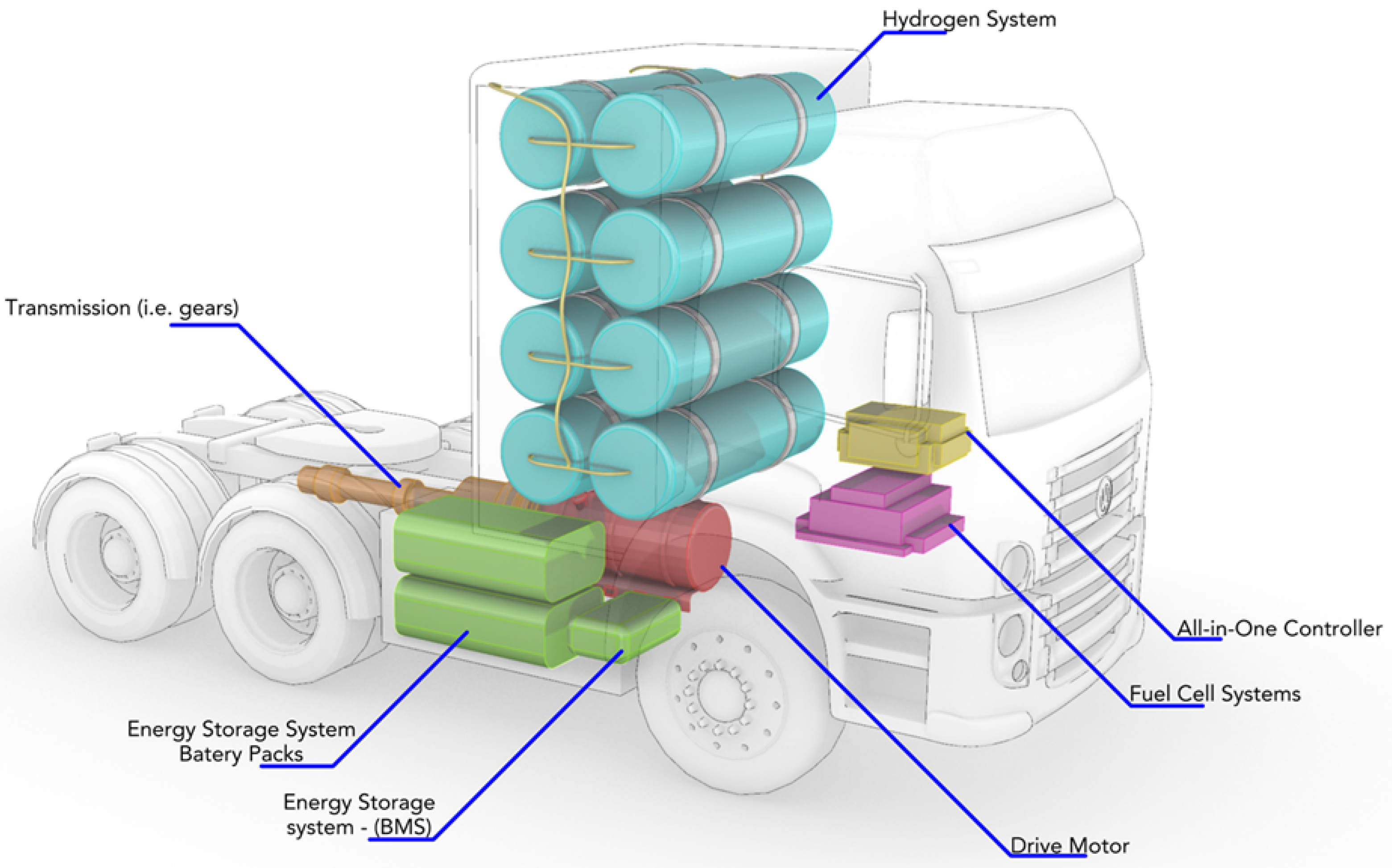
27], under which the first FC heavy-duty truck homologated for operation in Chile has been introduced for logistics applications associated with Walmart Chile. According to the information disclosed by the project partners and public agencies, the vehicle is a long-haul FC electric truck equipped with a 120 kW FC system, approximately 75 kg of onboard hydrogen storage, and a reported driving range of up to 750 km, while maintaining a freight capacity comparable to conventional diesel units, with a gross combined weight of approximately 49 tons (
Figure 1). The pilot is linked to freight distribution operations from Walmart’s logistics facilities in the Metropolitan Region, with expected routes toward central Chile and an initial operating radius of approximately 300 km in its first validation phase. A second relevant initiative is HyLog–Biobio: Zero Emissions Transport [
28], led by Marval, which is particularly important because it addresses not only the vehicle but also the regional hydrogen logistics infrastructure required for heavy-duty deployment. In contrast to a single-vehicle pilot, HyLog–Biobio is structured around the implementation of an industrial hydrogen refueling station intended to enable hydrogen demand in freight transport in the Biobio region, a territory with strong port, industrial and logistics activity. Public project information indicates that the hydrogen refueling infraestructure is designed to store, compress and dispense up to 350 tH
2/year, supplying heavy-duty trucks with an expected range of around 700 km. Publicly available information from both initiatives indicates that they are intended to generate operational evidence under real logistics conditions, including long-haul freight, urban distribution, yard operations, and refrigerated cargo applications. However, despite the relevance of these projects as pioneering hydrogen-based freight pilots in Chile, detailed operational indicators—such as annual mileage, measured duty cycles, hydrogen consumption under local operating conditions, and long-term fleet availability—have not yet been publicly disclosed. As a result, their current contribution is more robust in terms of demonstrating technical feasibility and deployment pathways than in providing a sufficiently mature empirical basis for direct techno-economic calibration.
From a techno-economic perspective, the competitiveness of hydrogen trucks depends on multiple variables, including hydrogen production cost, station utilization factor, vehicle capital expenditure, annual mileage, and policy incentives. Consequently, Chile’s current strategy places strong emphasis on pilot-scale deployments and demand creation mechanisms that allow these variables to be validated under local conditions. This practical approach is essential for identifying the operational thresholds under which hydrogen fuel cell trucks can become economically competitive with diesel-powered fleets.
Overall, the integration of green hydrogen into Chile’s electromobility strategy reflects a broader national effort to couple climate policy, industrial development, and energy security. By promoting real-world pilot applications and targeted incentives for domestic consumption, Chile is creating the institutional and technical conditions necessary to assess the role of hydrogen in decarbonizing heavy-duty freight transport and other hard-to-abate sectors.
5. Methodology
This study evaluates the technical and economic feasibility of FCEVs relative to conventional diesel trucks under Chilean operating conditions. The methodology integrates technical performance indicators, fuel consumption, total cost of ownership (TCO), emissions abatement metrics, and sensitivity analyses to identify the operating and market conditions under which hydrogen-powered freight transport becomes competitive.
The research was structured in two stages aligned with the specific objectives of the study. The first stage focuses on the comparative assessment of operational and economic performance between hydrogen and diesel trucks. The second stage determines the hydrogen price thresholds and key variables that enable economic competitiveness in the heavy-duty transport sector.
5.1. Case Study Definition and Input Parameters
A representative long-haul freight application was defined based on a Class N3 truck with a gross vehicle weight of approximately 49 tons operating in intercity transport. The reference vehicle was assumed to travel 100,000 km annually, which is consistent with intensive freight operations in Chile.
The average fuel economy of the diesel truck was set to 2.56 km/L, while the hydrogen truck was assumed to achieve 8.5 kg H2/100 km based on published manufacturer data and international field reports. Three fleet sizes were evaluated (10, 50, and 100 trucks) to quantify the impact of infrastructure utilization and economies of scale on overall project economics.
Three fuel price scenarios were considered:
Current scenario (2025): hydrogen price of 5.0 USD/kg and diesel price of 1.03 USD/L.
Intermediate scenario: hydrogen price of 3.0 USD/kg and diesel price of 1.20 USD/L.
Target scenario (2030): hydrogen price of 2.0 USD/kg and diesel price of 1.20 USD/L.
In Chile, and particularly in the Biobio region, hydrogen supply for mobility applications is not necessarily expected to originate exclusively from water electrolysis. Several emerging initiatives are evaluating the use of hydrogen streams already available as by-products or residual outputs from the chemical industry. Therefore, restricting the analysis to an electrolyzer-based supply chain would not adequately represent all plausible hydrogen supply pathways in the local context. To maintain the focus of the study on the operational techno-economic performance of FCEVs, hydrogen price was treated as an exogenous variable, allowing the assessment to remain technology-neutral with respect to the upstream hydrogen production route.
5.2. Fuel Consumption and Annual Fuel Cost
Annual fuel consumption was estimated as:
where
is the annual fuel consumption (kg H
2/year or L diesel/year),
is the annual driving distance (km/year), and
R is the vehicle fuel economy (km/kg or km/L). The annual fuel cost is determined by:
where
P is the unit fuel price.
5.3. Total Cost of Ownership (TCO)
The economic comparison was based on the total cost of ownership (TCO), expressed in USD/km over a 10-year project horizon:
where CAPEX includes the vehicle acquisition cost and, when applicable, allocated infrastructure investment; OPEX includes annual fuel and maintenance costs; and
n is the analysis period in years. This formulation enables a normalized comparison of both technologies under different market and operating assumptions.
5.4. Abatement Cost
The economic cost of emissions mitigation was evaluated using the Carbon Abatement Cost (CAC):
where
is the difference in cumulative 10-year costs between hydrogen and diesel trucks, and
is the total
emissions avoided during the same period.
Diesel emissions were estimated using an emission factor of 2.71 kg /L. A positive CAC indicates an additional cost to reduce emissions, whereas a negative CAC indicates that hydrogen trucks provide both economic savings and emissions reductions.
It should be noted that the CAC assessment was based on operational emissions and did not include upstream life-cycle emissions associated with hydrogen production, storage, transport, and refueling infrastructure. This approach was adopted because hydrogen supply pathways in Chile remain diverse and may include both electrolytic hydrogen and industrial hydrogen streams. Consequently, the reported CAC values should be interpreted as operational indicators, while pathway-specific life-cycle assessments are recommended for future studies.
5.5. Break-Even Hydrogen Price
The hydrogen price at which hydrogen trucks achieve cost parity with diesel trucks was determined using an optimization tool. The optimization objective was defined as:
The hydrogen price was treated as the decision variable and constrained between 1.5 and 10 USD/kg.
5.6. Considerations for Sensitivity Analysis
A deterministic sensitivity analysis was conducted to identify the variables with the greatest influence on hydrogen truck competitiveness. Four key parameters were varied by ±10% around the base case:
The normalized sensitivity coefficient was calculated as follows:
where
quantifies the relative impact of each variable
on the total cost of ownership. The results were presented using tornado diagrams to visualize the ranking and magnitude of the most influential parameters.
6. Study Results
This section presents the results of the techno-economic assessment of FCEVs compared with conventional diesel trucks under Chilean operating conditions. The analysis is organized into five main components:
Comparative operational and economic performance based on total cost of ownership (TCO).
TCO analysis under alternative macroeconomic scenarios.
The impact of fleet size on economic feasibility.
Sensitivity analysis to identify the most influential parameters.
The carbon abatement cost (CAC) as an indicator of climate mitigation efficiency.
The evaluation was based on operational data from commercially available vehicles, including the Hyundai XCIENT Fuel Cell, which has accumulated more than 10 million km in fleet operation in Switzerland, and the Feichi Technology Truck used in the Chilean project leading by Walmart-Marval companies. Diesel benchmarks were represented by internationally recognized models such as the Mercedes-Benz Actros, Volvo FH540, and Scania R500. These data were cross-validated using recent international studies and aligned with the objectives of Chile’s National Green Hydrogen Strategy and the updated NDC 3.0 framework [
15].
The results identify the economic break-even points at which hydrogen-powered trucks become competitive with diesel technology and define the operational and policy conditions required to accelerate the decarbonization of heavy-duty freight transport in Chile.
6.1. Operational and Economic Performance
6.1.1. Base Parameters
The analysis presented in
Table 2 was based on two groups of reference vehicles: conventional diesel trucks (Mercedes-Benz Actros, Volvo FH540, Scania R500, and Chevrolet EXZ) and hydrogen fuel cell trucks (Hyundai XCIENT Fuel Cell, Feichi Technology Truck, Toyota T680 FCEV, and Nikola TRE FCEV). All vehicles correspond to Class 8 tractor units with gross vehicle weights between 40 and 49 tons, consistent with Chilean freight transport regulations.
The selected parameters are consistent with ranges reported in international literature and with the technical specifications of commercially available vehicles. The hydrogen consumption assumption is aligned with operational data from the Hyundai XCIENT fleet and the Feichi Technology Truck prototype operating in Chile. On the other hand, given the limited long-term operational experience of heavy-duty FCEVs, particularly under Chilean conditions, reliable degradation models and replacement schedules remain uncertain and highly dependent on operating profiles. Therefore, fixed maintenance costs and service lifetimes were adopted to ensure consistency and comparability across technologies while avoiding the introduction of speculative assumptions.
6.1.2. TCO Calculation Example
The total cost of ownership (TCO) represents the complete life-cycle cost of operating a vehicle and is expressed in USD/km. For the 2025 baseline scenario, a representative diesel truck yields the following values:
Vehicle CAPEX: USD 150,000.
Annual diesel consumption: 39,000 L.
Fuel cost over 10 years: USD 401,700.
Maintenance cost over 10 years: USD 123,000.
Total OPEX: USD 524,700.
Total life-cycle cost: USD 674,700.
TCO: 0.674 USD/km.
This procedure was applied to all vehicle models and scenarios to ensure a consistent comparison between technologies.
From
Table 3, under current conditions the TCO ranges from 0.63 to 0.71 USD/km for diesel trucks and from 0.93 to 0.99 USD/km for hydrogen trucks, with weighted average values of 0.68 and 0.95 USD/km, respectively.
6.2. TCO Analysis Under Alternative Scenarios
6.2.1. Current Scenario (2025)
The current scenario presented in
Table 4 reflects the 2025 market conditions in Chile, characterized by limited hydrogen availability and an assumed hydrogen price of 5.0 USD/kg.
Under these conditions, hydrogen trucks exhibit a TCO approximately 39.7% higher than diesel trucks, corresponding to an additional cost of about USD 277,200 over a 10-year period.
The cost differential is primarily explained by the vehicle acquisition cost. The hydrogen truck CAPEX exceeds that of the diesel counterpart by USD 270,000, accounting for virtually the entire cost premium. In contrast, both technologies show similar operating costs, confirming that the current economic barrier is mainly associated with the initial investment rather than operational expenses.
These results indicate that hydrogen trucks are not economically competitive under current market conditions without substantial CAPEX support mechanisms, such as direct subsidies, concessional financing, or carbon pricing policies.
6.2.2. Intermediate Scenario (2027–2029)
The intermediate scenario assumes increasing domestic hydrogen production, resulting in a hydrogen price of 3.0 USD/kg and a diesel price of 1.20 USD/L, as summarized in
Table 5.
Under this scenario, the TCO gap decreases to approximately 3.6%, equivalent to about USD 27,000 over 10 years. Hydrogen trucks become significantly more attractive from an operational standpoint, with fuel and maintenance costs substantially lower than those of diesel trucks.
This scenario represents a critical economic inflection point. Although hydrogen trucks remain marginally more expensive, the difference becomes sufficiently small that regulatory incentives, corporate decarbonization commitments, and access to green financing could enable widespread adoption.
6.2.3. Target Scenario (2030)
The target scenario assumes a hydrogen price of 2 USD/kg, consistent with optimistic strategic objectives of Chile’s National Green Hydrogen Strategy.
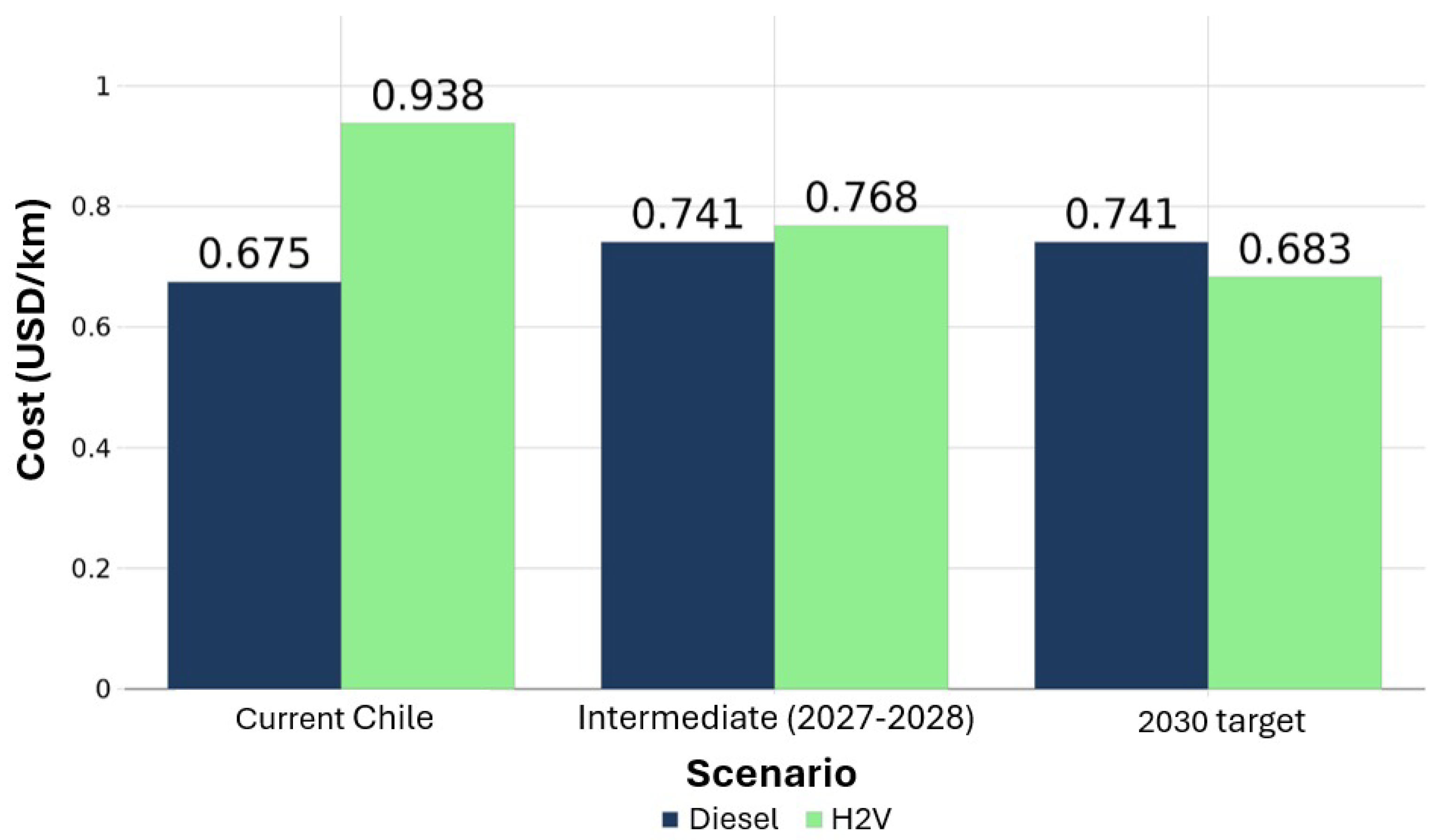
In this case, hydrogen trucks achieve a TCO of approximately 0.68 USD/km, compared with 0.74 USD/km for diesel trucks, representing an economic advantage of 7.8% without requiring direct subsidies, as presented in
Table 6.
This result indicates that, once low-cost renewable hydrogen becomes available at scale, hydrogen-powered heavy-duty trucks can outperform diesel technology on both environmental and economic grounds. In addition to supporting Chile’s climate targets, this scenario could strengthen national competitiveness by leveraging the country’s renewable resources to reduce logistics costs and stimulate new industrial opportunities linked to hydrogen technologies.
Figure 2 presents the TCO values obtained for the three evaluated scenarios. The results highlight the significant cost reduction projected for the 2030 target scenario and the narrow cost gap observed in the intermediate scenario.
6.3. Impact of Fleet Size on TCO
A critical aspect often overlooked in hydrogen mobility assessments is the impact of hydrogen refueling infrastructure on the total cost of ownership (TCO). Unlike diesel fueling, hydrogen requires dedicated infrastructure whose capital cost must be allocated across the served fleet. As a result, station utilization becomes a key determinant of economic viability, particularly during the early deployment stage. In this study, the capital investment required for the hydrogen refueling station (HRS) was included in the TCO framework as a fleet-level CAPEX component. Specifically, the HRS investment was aggregated with the vehicle acquisition costs and amortized over the cumulative vehicle-kilometers traveled by the fleet during the 10-year assessment horizon. As a result, larger fleets exhibit more favorable economics due to economies of scale, whereby the fixed infrastructure costs are distributed across a higher volume of transport activity.
A reference HRS with a dispensing capacity of 800 kg H2/day and a capital cost of USD 2.0 million was considered. This capacity is consistent with medium-scale stations reported by the U.S. Department of Energy and the National Renewable Energy Laboratory. Assuming a representative vehicle consumption of 8.5 kg H2/100 km, the station can supply approximately 10,000 vehicle-km per day. Under a nominal utilization of 200 km/day per truck, the station can fully support a fleet of 50 hydrogen trucks.
For larger fleets, additional infrastructure investment is required. The station CAPEX was therefore modeled as USD 2.0 million for fleets up to 65 trucks, USD 3.0 million for an 80-truck fleet, and USD 4.0 million for a 100-truck fleet.
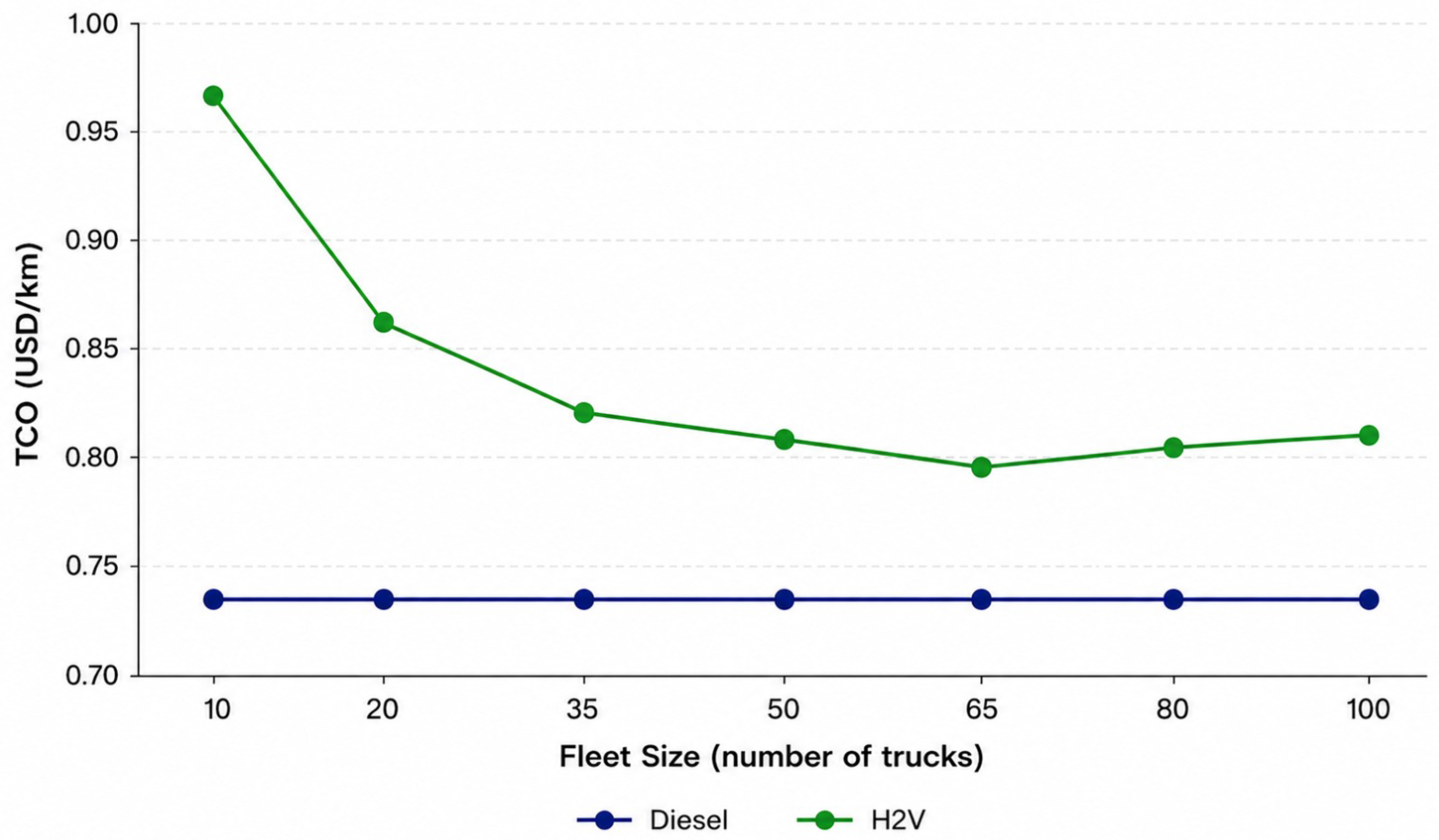
Figure 3 presents the TCO as a function of fleet size under the intermediate scenario (H
2 = 3.0 USD/kg; diesel = 1.2 USD/L). Under these conditions, hydrogen trucks do not reach cost parity with diesel across the evaluated range. The minimum cost gap occurs for a fleet of approximately 65 trucks, where the TCO difference decreases to 7.8%. For a 50-truck fleet, the cost premium remains close to 9%. These results indicate that although economies of scale substantially reduce the infrastructure burden, hydrogen trucks remain marginally more expensive under intermediate hydrogen prices.
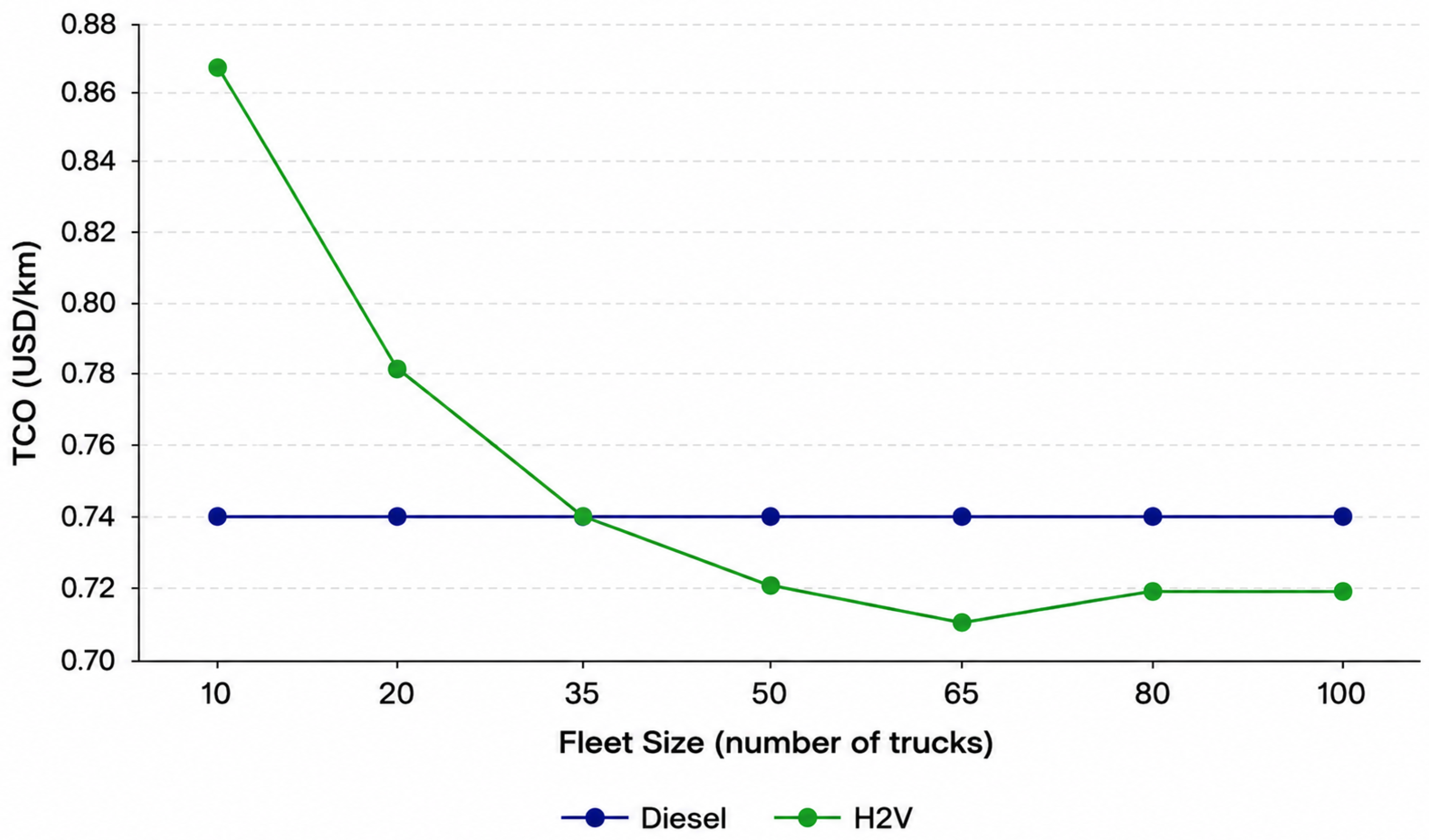
In the 2030 target scenario (
Figure 4), the economics improve significantly. Cost parity is reached at approximately 35 trucks, where the TCO of hydrogen trucks (0.74 USD/km) becomes nearly identical to that of diesel trucks (0.741 USD/km). For larger fleets, the TCO stabilizes in the range of 0.71–0.72 USD/km, providing a modest economic advantage over diesel. These findings demonstrate that infrastructure utilization and fleet aggregation are decisive factors for achieving competitive hydrogen-based freight transport.
6.3.1. Effect of Annual Mileage
Annual vehicle utilization is another critical parameter affecting hydrogen truck competitiveness. Higher mileage distributes the elevated vehicle CAPEX over a greater number of kilometers, reducing the normalized cost per kilometer.
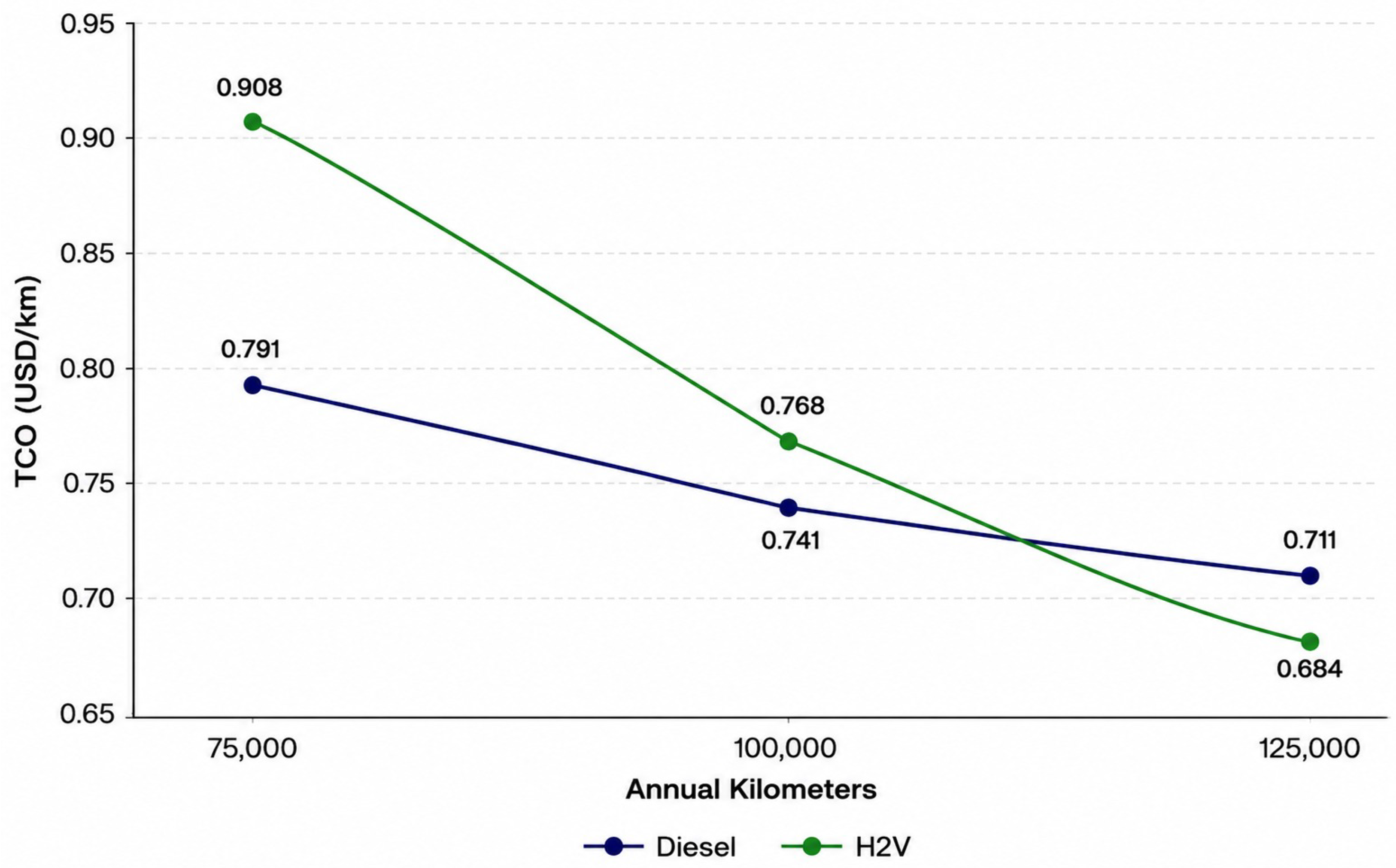
Figure 5 compares the TCO under three utilization levels: 75,000 km/year, 100,000 km/year, and 125,000 km/year, assuming the intermediate fuel price scenario. As expected, the TCO of both technologies decreases as annual mileage increases. However, the relative benefit is more pronounced for hydrogen trucks due to their higher capital cost and lower variable operating costs.
The results indicate that cost parity is achieved at approximately 112,500 km/year. This threshold suggests that hydrogen fuel cell trucks are particularly well suited for high-utilization applications such as mining logistics, interregional freight corridors, and export-oriented transport operations, where vehicles operate under intensive and predictable duty cycles.
6.3.2. Carbon Abatement Cost
The carbon abatement cost (CAC) was used to evaluate the economic efficiency of replacing diesel trucks with hydrogen fuel cell trucks. This metric represents the incremental cost per tonne of CO2 avoided and provides a standardized indicator for comparing decarbonization strategies.
Assuming an annual diesel consumption of 39,000 L. and an emission factor of 2.71 kgCO2/L, each diesel truck emits approximately 105.7 tCO2/year. Over a 10-year service life, replacing one diesel truck with a green hydrogen truck avoids approximately 1045.2 tCO2.
Table 7 summarizes the CAC for the three fuel price scenarios.
Under current market conditions, the CAC is approximately 252 USD/tCO2, indicating that substantial policy support would be required to justify adoption based solely on emissions reduction. In the intermediate scenario, the CAC decreases to 26 USD/tCO2, which is consistent with prevailing international carbon prices and may be economically attractive for export-oriented companies subject to decarbonization commitments.
In the 2030 target scenario, the CAC becomes negative, indicating that hydrogen trucks simultaneously reduce emissions and lower operating costs. This optimal condition implies that decarbonization can be achieved without permanent subsidies once competitive hydrogen prices and sufficient infrastructure utilization are attained.
6.3.3. Temporal TCO Projection (2025–2035)
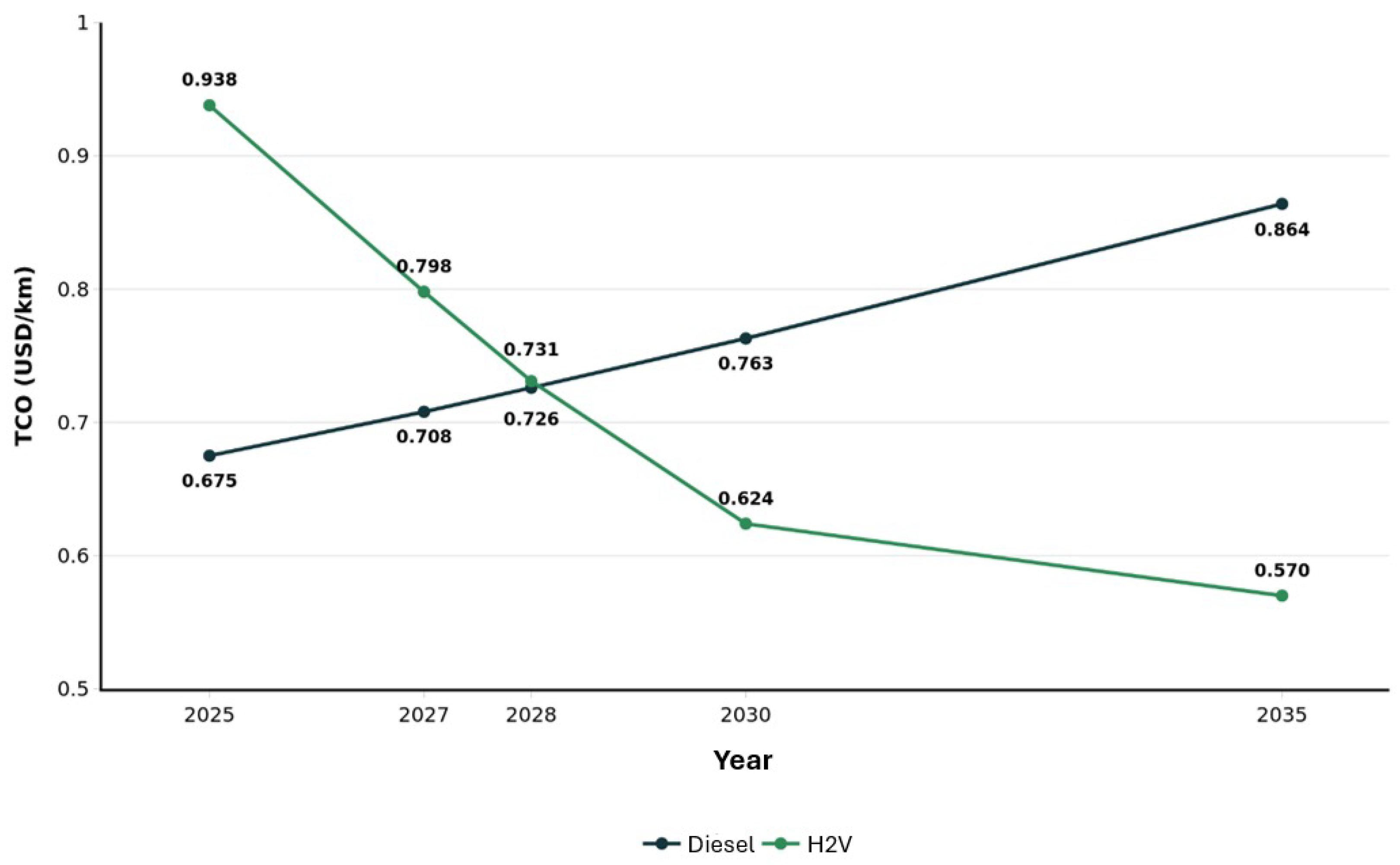
A dynamic cost projection was developed to evaluate the evolution of the TCO of diesel and green hydrogen fuel cell trucks over the 2025–2035 period, like is shown in
Table 8. The analysis captures the combined effects of changes in fuel prices and vehicle capital costs, reflecting both the expected escalation of fossil fuel costs and the progressive cost reductions associated with hydrogen production and fuel cell vehicle manufacturing.
The diesel price was assumed to increase at an annual rate of 3%, consistent with long-term inflation and fuel market trends. Under this assumption, the diesel price rises from 1.03 USD/L in 2025 to 1.38 USD/L in 2035. The capital cost of diesel trucks was also escalated at the same rate, increasing from USD 150,000 to USD 201,587 over the study horizon. In contrast, the hydrogen price was assumed to decline from 5.0 USD/kg in 2025 to 1.5 USD/kg in 2035 as a result of increasing electrolyzer deployment, lower renewable electricity costs, and scale economies in the hydrogen supply chain. In parallel, the CAPEX of hydrogen trucks was assumed to decrease by approximately 3% annually, from USD 420,000 to USD 349,848.
These assumptions lead to a pronounced convergence in the TCO of both technologies. The TCO of hydrogen trucks decreases from 0.938 USD/km in 2025 to 0.570 USD/km in 2035, whereas the TCO of diesel trucks increases from 0.675 USD/km to 0.864 USD/km over the same period. As shown in
Figure 6, the two cost trajectories intersect around 2028, marking the economic break-even point at which hydrogen-powered trucks achieve cost parity with conventional diesel vehicles.
Between 2025 and 2028, the hydrogen TCO declines by approximately 13%, while the diesel TCO increases moderately. After 2028, hydrogen trucks gain a progressively larger cost advantage as declining fuel and vehicle costs outweigh the residual capital premium. By 2035, hydrogen trucks achieve an estimated 34% lower TCO than diesel trucks (0.570 versus 0.864 USD/km), establishing a strong economic case for large-scale adoption.
This temporal trend suggests that the late 2020s represent a strategic window for transitioning from pilot-scale deployments to commercial fleet expansion. Once cost parity is reached, hydrogen fuel cell trucks can provide simultaneous economic and environmental benefits without requiring permanent subsidies. These findings are consistent with Chile’s long-term policy instruments.
6.3.4. Hydrogen Break-Even Price Analysis
The hydrogen break-even price is defined as the delivered hydrogen cost (USD/kg) at which the total cost of ownership (TCO) of a hydrogen fuel cell electric truck is equal to that of an equivalent diesel truck under a given set of operating assumptions. These assumptions include annual mileage, vehicle lifetime, fuel consumption, maintenance costs, and vehicle capital expenditure. At this threshold, the net economic benefit of switching from diesel to hydrogen is zero, and the fleet operator is economically indifferent between both technologies.
This metric provides a direct measure of the maximum hydrogen price that can be supported without requiring additional subsidies. If the market price of hydrogen is below the break-even value, hydrogen trucks become more cost-effective than diesel; if the market price exceeds this threshold, diesel remains the lower-cost alternative.
The break-even price was estimated using the Solver optimization tool, which iteratively adjusted the hydrogen price until the condition
was satisfied for each operating scenario.
Table 9 summarizes the resulting break-even prices for six representative combinations of annual mileage, vehicle efficiency, fuel prices, and hydrogen truck CAPEX. Moreover, in
Table 9, the yellow cells indicate the break-even hydrogen prices calculated using Solver, while the green cells represent the input variables varied in the sensitivity analysis.
The calculated break-even prices range from 1.89 to 3.95 USD/kg, demonstrating that hydrogen competitiveness is highly sensitive to fleet-specific operating conditions. This result confirms that there is no universal hydrogen price at which fuel cell trucks become economically viable. Instead, the competitiveness threshold depends primarily on vehicle utilization, hydrogen consumption, and the capital cost of the vehicle.
In the base case (Scenario 1), corresponding to 100,000 km/year, the break-even hydrogen price is 2.68 USD/kg. This value is above the cost target of 1.5–2.0 USD/kg established in Chile’s National Green Hydrogen Strategy, indicating that hydrogen trucks would achieve a favorable economic margin if national cost reduction targets are met.
Higher annual mileage substantially improves competitiveness. In Scenario 2, with 120,000 km/year, the break-even price increases to 3.21 USD/kg, reflecting the accelerated recovery of the vehicle CAPEX through greater asset utilization. This operating profile is representative of mining and long-haul freight applications, where hydrogen technology is expected to be most competitive.
Conversely, lower annual mileage reduces the economically acceptable hydrogen price. In Scenario 3, with 80,000 km/year, the break-even price decreases to 1.89 USD/kg, indicating that lower-utilization applications require significantly cheaper hydrogen to reach cost parity.
Vehicle CAPEX has a similarly strong influence. In Scenarios 4 and 5, where hydrogen truck CAPEX decreases to 350 and 280 kUSD, respectively, the break-even hydrogen price increases to 2.92 and 3.95 USD/kg. This result reflects the reduced contribution of capital cost to the TCO, which increases tolerance to higher hydrogen prices.
Finally, vehicle efficiency remains a critical parameter. In Scenario 6, hydrogen consumption increases to 11 kg/100 km, reducing the break-even price to 1.91 USD/kg. This demonstrates that lower drivetrain efficiency directly tightens the economic conditions required for competitiveness.
Overall, the analysis indicates that fleets operating more than 100,000 km/year with hydrogen truck CAPEX in the range of 350–400 kUSD can remain economically competitive at hydrogen prices between 2.68 and 3.21 USD/kg. These thresholds are consistent with, and in several cases exceed, Chile’s projected hydrogen cost targets for 2030, suggesting that hydrogen fuel cell trucks can become economically viable even under moderate deviations from expected cost trajectories.
6.3.5. Sensitivity Analysis
A deterministic sensitivity analysis was conducted to identify the parameters with the greatest influence on the economic competitiveness of hydrogen fuel cell trucks. Each key variable was independently varied by ±10% relative to the base-case assumptions defined for the intermediate scenario, while all remaining parameters were held constant.
The evaluated variables included hydrogen price, vehicle capital cost, annual mileage, hydrogen consumption, and diesel price. For each perturbation, the resulting variation in the total cost of ownership (TCO) was calculated and normalized using the sensitivity coefficient defined in the
Section 5. From a mathematical perspective, a
variation in hydrogen consumption and hydrogen price produces an equivalent direct effect on the fuel cost component of the TCO. Nevertheless, both parameters were retained in the sensitivity analysis because they represent different sources of uncertainty. Hydrogen consumption is associated with vehicle efficiency and operational conditions, whereas hydrogen price reflects market dynamics and the evolution of the hydrogen supply chain. Moreover, additional factors, including maintenance costs, discount rates, fuel cell degradation, hydrogen refueling station operating expenses, financing conditions, and infrastructure utilization rates, may also influence the economic performance of FCEVs. However, reliable estimates for these parameters remain highly uncertain and context-dependent, particularly given the early stage of hydrogen mobility deployment in Chile. To avoid introducing speculative assumptions on the analysis, the sensitivity assessment focused on the variables with the greatest expected impact on TCO.
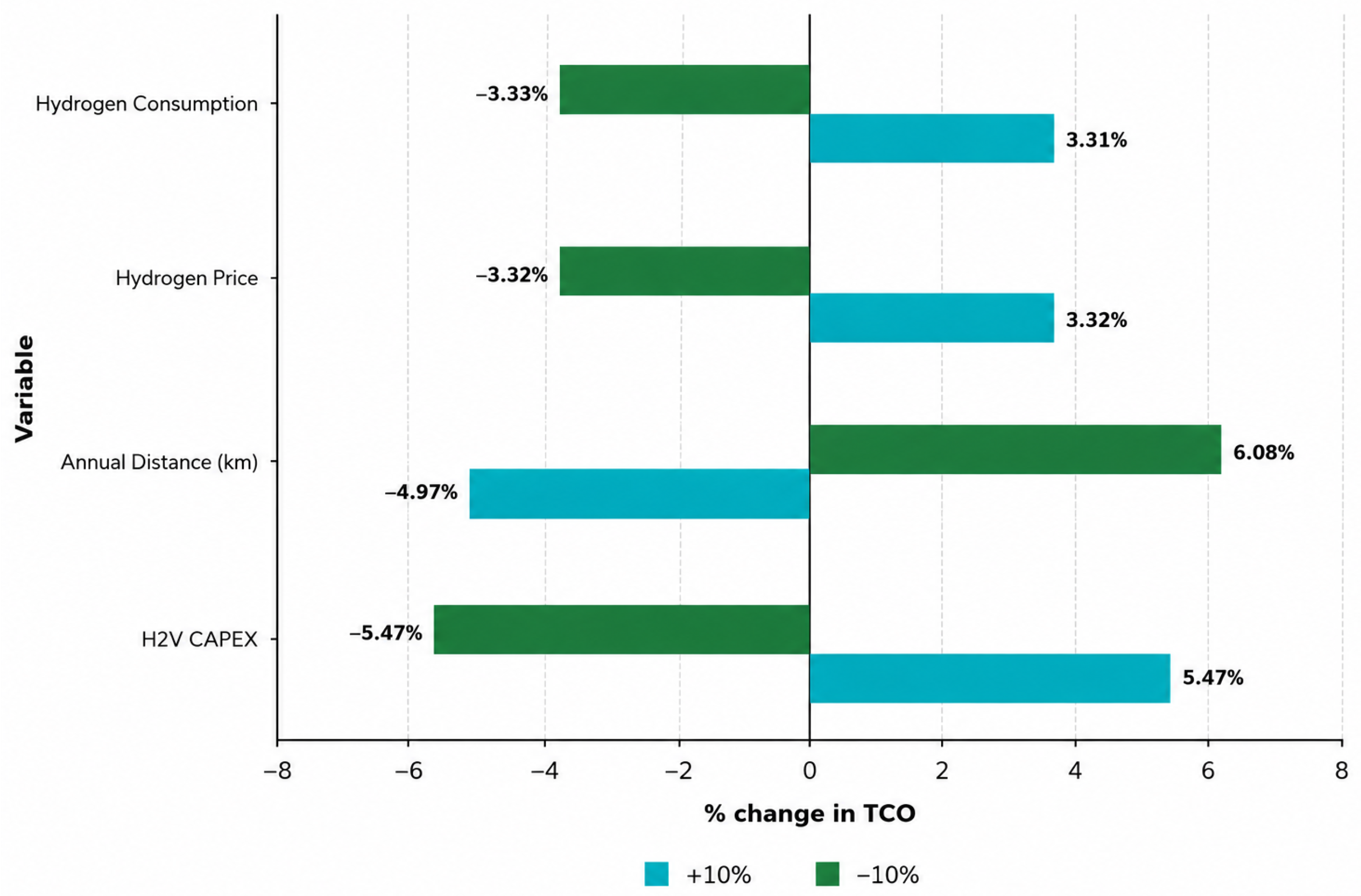
The results are presented as a tornado diagram in
Figure 7, which ranks the variables according to their relative impact on the TCO of hydrogen trucks. This representation provides a direct visualization of the most influential techno-economic drivers and highlights the parameters that should be prioritized in policy design, investment decisions, and technology development.
The analysis confirms that hydrogen price is the dominant factor affecting competitiveness, followed by vehicle CAPEX and annual mileage. In contrast, maintenance costs and moderate variations in diesel price have a comparatively smaller effect on the overall TCO. These findings indicate that the most effective strategies for accelerating hydrogen adoption in heavy-duty transport are those aimed at reducing the delivered cost of green hydrogen, lowering vehicle acquisition costs through scale effects or targeted incentives, and prioritizing high-utilization applications that maximize asset productivity.
From a policy perspective, the sensitivity analysis demonstrates that hydrogen fuel cell trucks can achieve economic competitiveness under a relatively narrow set of conditions. Consequently, public support mechanisms should focus on the variables with the highest leverage on cost parity, thereby maximizing the economic and environmental impact of early deployment programs.
7. Implementation Requirements for Hydrogen Truck Deployment in Chile
7.1. Technical and Infrastructure Requirements
The deployment of hydrogen truck fleets in Chile requires access to commercially available FCEV and dedicated hydrogen refueling infrastructure. In the short term, vehicles are expected to be imported from established international manufacturers, supported by local service agreements and specialized maintenance capabilities. Hydrogen refueling stations should be strategically located along major freight corridors, with spacing typically below 300 km to ensure operational continuity.
Hydrogen supply can be provided through centralized or on-site electrolysis systems powered by renewable electricity. Integrated configurations combining renewable generation, electrolysis, compression, storage, and dispensing offer the greatest potential for minimizing delivered hydrogen cost and ensuring full traceability of renewable origin. Moreover, the integration of complementary technologies, such as battery energy storage systems, hybrid renewable configurations, grid-connected electrolyzers, demand-side management strategies, and hydrogen buffer storage, can play a critical role in mitigating renewable intermittency and improving the reliability of hydrogen supply.
7.2. Financial Requirements
The transition to hydrogen mobility requires significant upfront investment in vehicles, refueling stations, and hydrogen production assets. Chile has mobilized public financing instruments through CORFO and international institutions such as the Inter-American Development Bank (IDB) and CAF to support early-stage deployment. Available mechanisms include CAPEX grants, concessional loans, and risk-sharing instruments.
The economic results presented in this study indicate that, under the intermediate scenario, hydrogen trucks are 3.6% more expensive than diesel trucks. Consequently, relatively modest investment incentives—such as CAPEX support covering approximately 10% of the vehicle cost differential—could be sufficient to close the remaining competitiveness gap and stimulate initial market adoption.
7.3. Regulatory and Safety Framework
Large-scale deployment requires a clear and harmonized regulatory framework governing vehicle certification, hydrogen storage, refueling systems, and transport of compressed hydrogen. Chile has made significant progress through the National Green Hydrogen Strategy and sector-specific technical studies; however, additional regulations are needed to establish safety protocols, technical standards, and streamlined permitting procedures for hydrogen mobility infrastructure.
7.4. Institutional Coordination
Hydrogen mobility deployment requires coordinated action among public agencies, industry, and academia. The Ministry of Energy provides strategic direction through the National Green Hydrogen Strategy, while the Ministry of Environment ensures alignment with national climate commitments. CORFO plays a central role in designing and administering financing instruments, and the Superintendence of Electricity and Fuels is responsible for technical standards and safety oversight.
A formal public–private coordination platform is recommended to prioritize logistics corridors, identify infrastructure opportunities, and consolidate operational and cost data from pilot projects. This collaborative approach is essential to reduce uncertainty and accelerate the scaling of hydrogen-based freight transport.
7.5. Energy and Environmental Conditions
Chile’s exceptional solar and wind resources provide a structural advantage for producing low-carbon hydrogen at internationally competitive costs. This comparative advantage is particularly relevant for freight corridors linked to mining operations, ports, and industrial hubs, where renewable generation potential and transport demand are geographically aligned.
To fully capture this opportunity, long-term power purchase agreements, coordinated territorial planning, and integration between renewable energy projects and hydrogen production facilities are required. These conditions will be critical for ensuring a stable supply of cost-competitive green hydrogen and enabling the long-term economic viability of hydrogen fuel cell trucks in Chile.
8. Discussion
The techno-economic assessment developed in this study is particularly relevant in the Chilean context, where climate commitments, evolving environmental regulations, and increasing pressure from international markets are converging to accelerate freight transport decarbonization. Heavy-duty road transport accounts for a significant share of transport-related emissions in Chile and remains one of the most difficult sectors to decarbonize due to its high energy demand, long operating distances, and continuous-duty requirements.
A primary contribution of this study is the quantification of hydrogen truck competitiveness using operating and cost assumptions representative of Chilean conditions. Unlike many international studies that conclude that hydrogen fuel cell trucks remain structurally more expensive than diesel alternatives, the present analysis shows that under realistic domestic scenarios—characterized by hydrogen prices between 2 and 3 USD/kg and fleet sizes above 50 vehicles—cost parity can be achieved between 2028 and 2030. This finding is consistent with Chile’s comparative advantage in low-cost renewable electricity and supports the strategic rationale for public and private investment in hydrogen mobility.
A second contribution is the estimation of fleet-specific hydrogen break-even prices using an optimization-based approach. By explicitly solving for the hydrogen price at which the total cost of ownership (TCO) of hydrogen and diesel trucks becomes equal, the analysis provides actionable thresholds rather than broad qualitative ranges. This methodology offers a practical decision-support tool for fleet operators, investors, and policymakers evaluating project feasibility under different operating conditions.
The sensitivity analysis further demonstrates that vehicle CAPEX is the most influential variable affecting competitiveness, followed by annual mileage and hydrogen price. This result has direct policy implications, indicating that measures targeting the reduction of upfront investment costs—such as purchase subsidies, concessional financing, and accelerated depreciation—are likely to be more effective than fuel subsidies alone during the early deployment phase.
The carbon abatement analysis also highlights Chile’s strategic advantage. Under the intermediate scenario, the estimated carbon abatement cost is approximately 26 USD/tCO2, significantly lower than values commonly reported in international studies for hydrogen mobility. In the 2030 target scenario, the abatement cost becomes negative, indicating that hydrogen trucks can simultaneously reduce emissions and lower total operating costs. This outcome positions Chile as a highly attractive environment for cost-effective transport decarbonization and for the development of internationally competitive green logistics solutions.
From an international perspective, the results differ from those reported in Europe, North America, and Asia, where hydrogen mobility often remains dependent on long-term subsidies due to higher renewable electricity costs and less favorable resource conditions. In Chile, competitiveness is driven primarily by structural advantages in renewable energy availability rather than by permanent public support. This distinction is particularly relevant for export-oriented sectors seeking to reduce the carbon intensity of their supply chains.
Despite these favorable results, several limitations must be acknowledged. The analysis relies on assumptions regarding future fuel prices, inflation, and continued policy support. Vehicle costs remain subject to global supply chain dynamics, and operational data from hydrogen truck deployments in Chile are still limited. Although the Hyundai XCIENT platform and the Feichi Technology pilot provide valuable references, large-scale operational experience remains scarce.
The study also identifies four critical implementation gaps. First, Chile requires a more comprehensive regulatory framework covering vehicle certification, hydrogen transport, and refueling station safety. Second, specialized technical training is needed to support operation and maintenance of fuel cell vehicles and hydrogen infrastructure. Third, access to capital remains a major barrier for fleet operators, particularly during the market formation stage. Fourth, additional operational data are required to validate long-term reliability, maintenance costs, and real-world fuel consumption under Chilean duty cycles.
Overall, the results indicate that Chile has the technical, economic, and institutional conditions to become an early adopter of hydrogen fuel cell trucks in Latin America. If the projected reductions in hydrogen cost and vehicle CAPEX are achieved, hydrogen mobility can evolve from a pilot-scale technology to a commercially competitive solution for decarbonizing heavy-duty freight transport and enhancing the international competitiveness of Chilean exports.





 ,
,