Effects of Pin Arrangement on Rubber Melt Mixing in a Pin-Barrel Cold-Feed Extruder: Finite Element Analysis and MEA-BP-Based Flow-Field Parameter Prediction



Abstract
1. Introduction
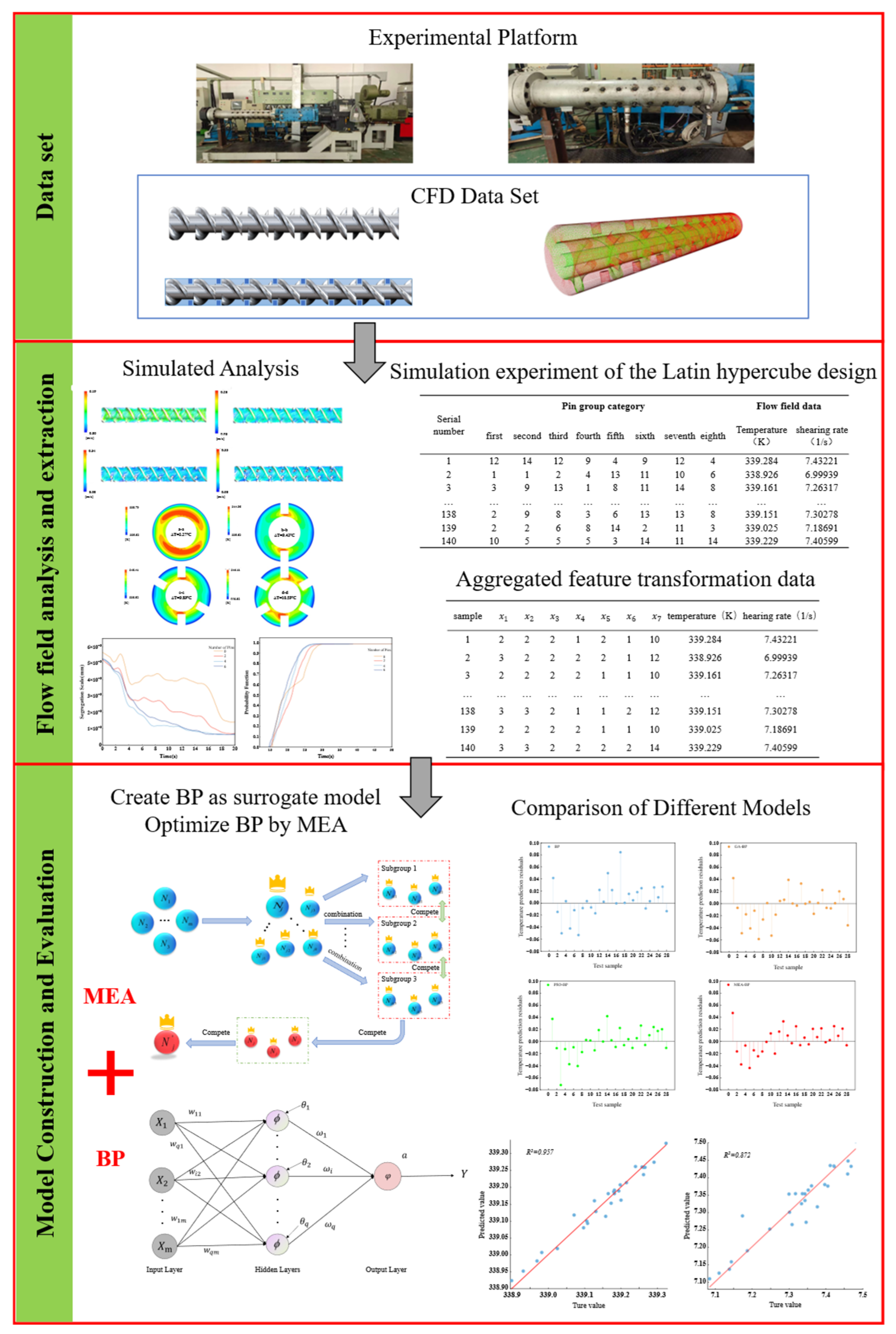
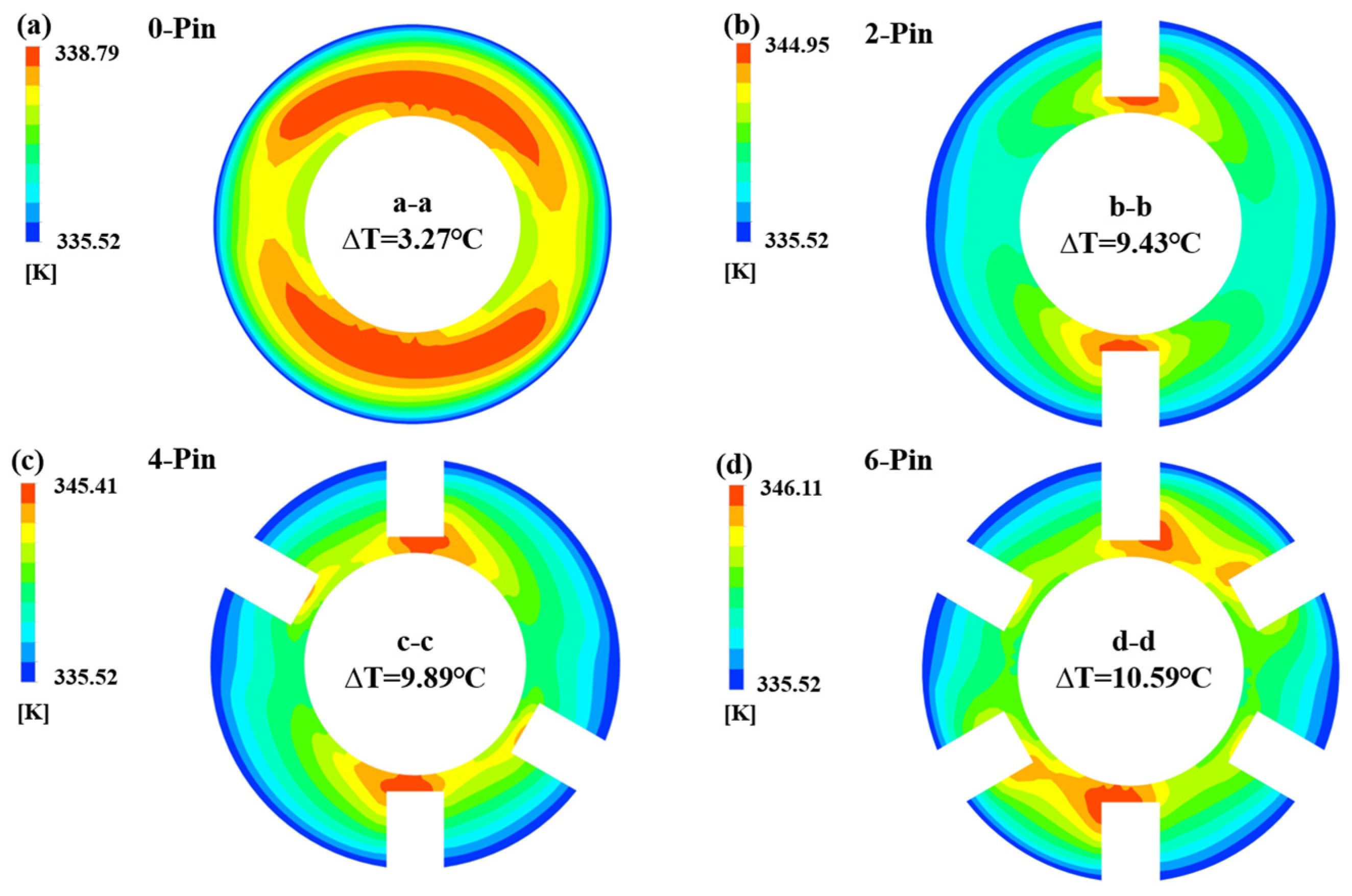
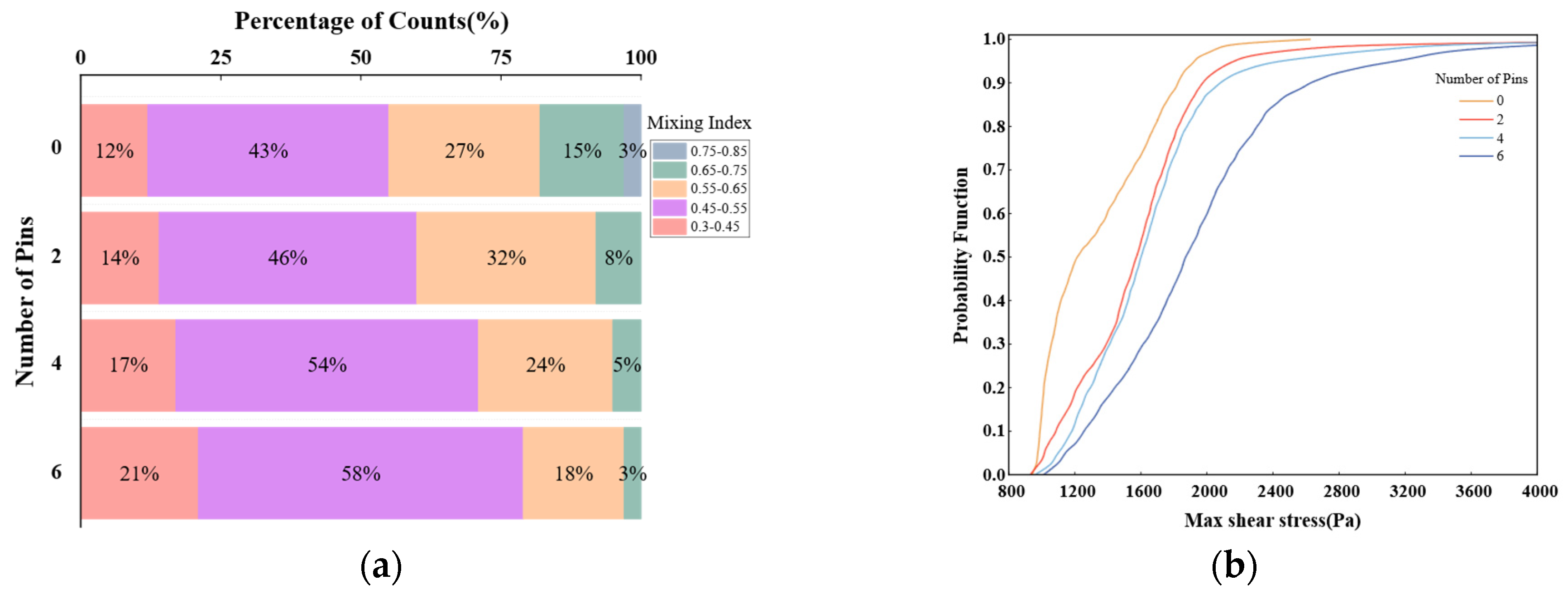
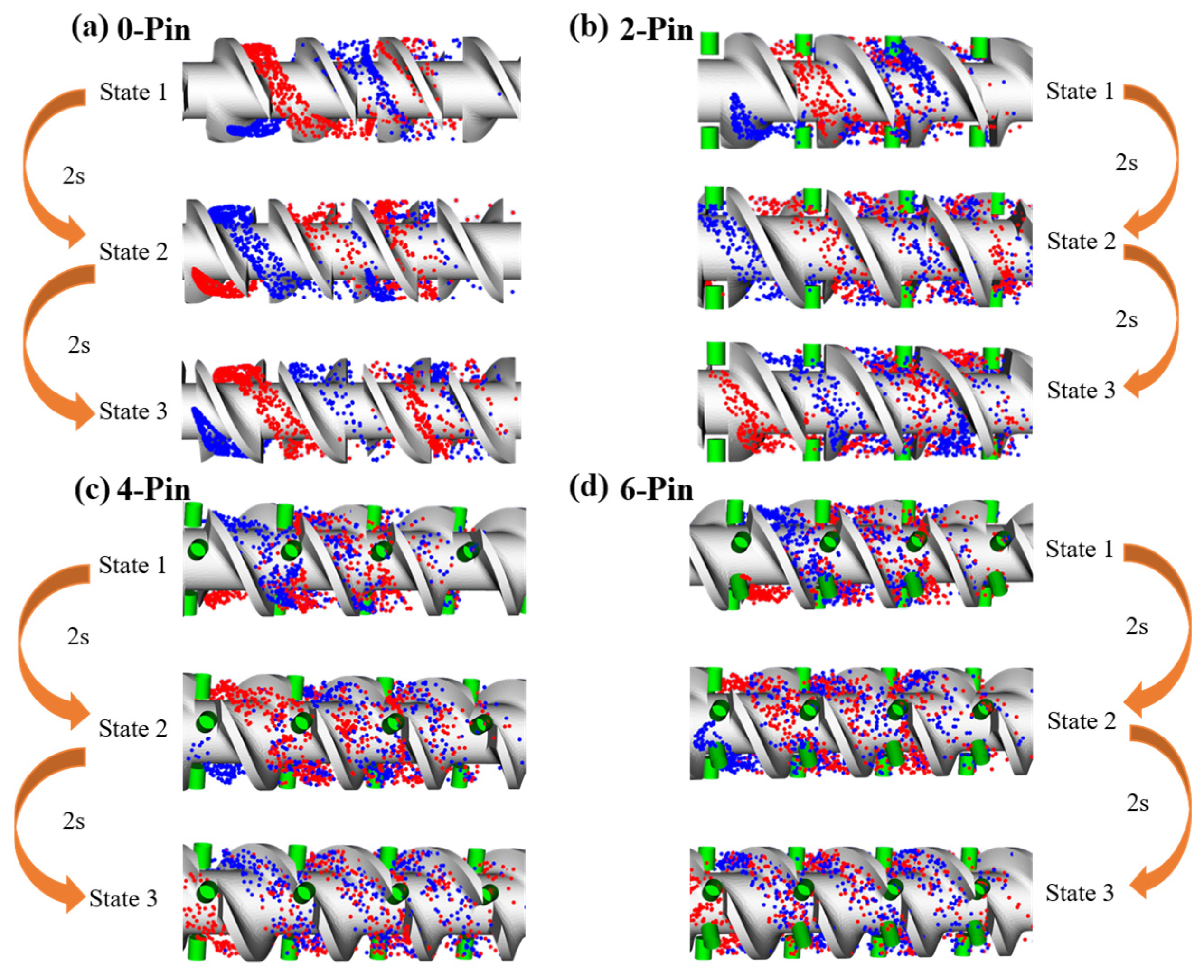
- A three-dimensional non-isothermal transient finite element method, validated against measured temperatures, was used to compare the flow-field temperature and streamline characteristics of four configurations containing 0, 2, 4, and 6 pins per group; subsequently, the mixing performance of each configuration was systematically analyzed using kinematic indices, including the mixing index and scale of segregation, together with particle tracing.
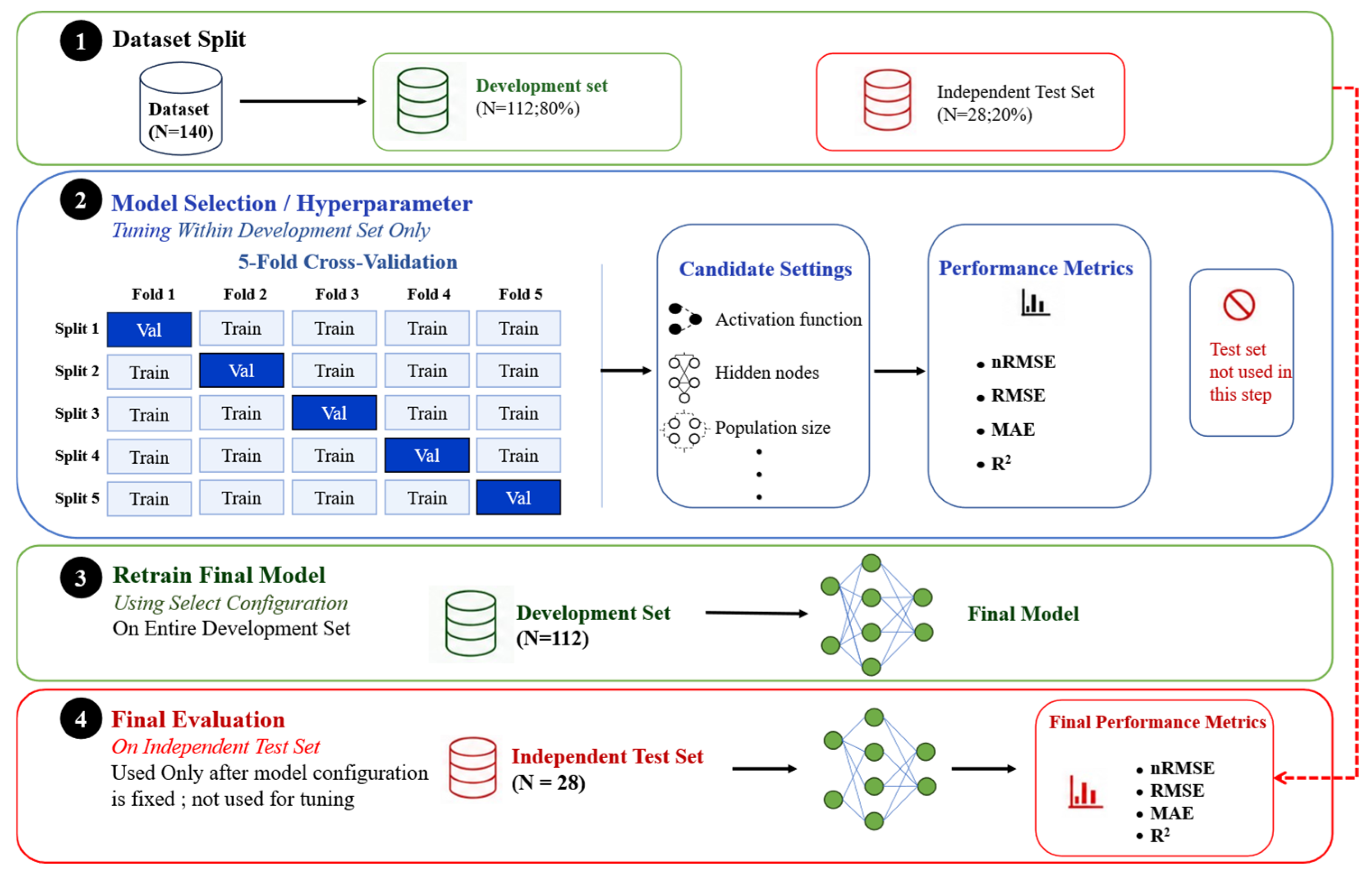
- Latin hypercube design was used to generate 140 pin arrangement schemes, and finite element simulations were performed to construct the flow-field dataset. Furthermore, a physical aggregation feature encoding method was proposed to transform discrete arrangement patterns into low-dimensional feature vectors, thereby avoiding artificial ordinal assumptions in categorical encoding.
- An MEA-BP model was developed for the rapid prediction of volume-averaged melt temperature and average shear rate. Unlike GA-BP, which employs selection, crossover, and mutation, and PSO-BP, which uses velocity–position updates, MEA optimizes the initial weights and biases of the BP network through convergence and alienation operations. The four models were compared under identical data partitioning, network settings, and evaluation protocols to assess the effects of different optimization mechanisms on predictive performance and run-to-run stability.
2. Experimental Methods and Analysis of Mixing Characteristics Under Different Pin Arrangements
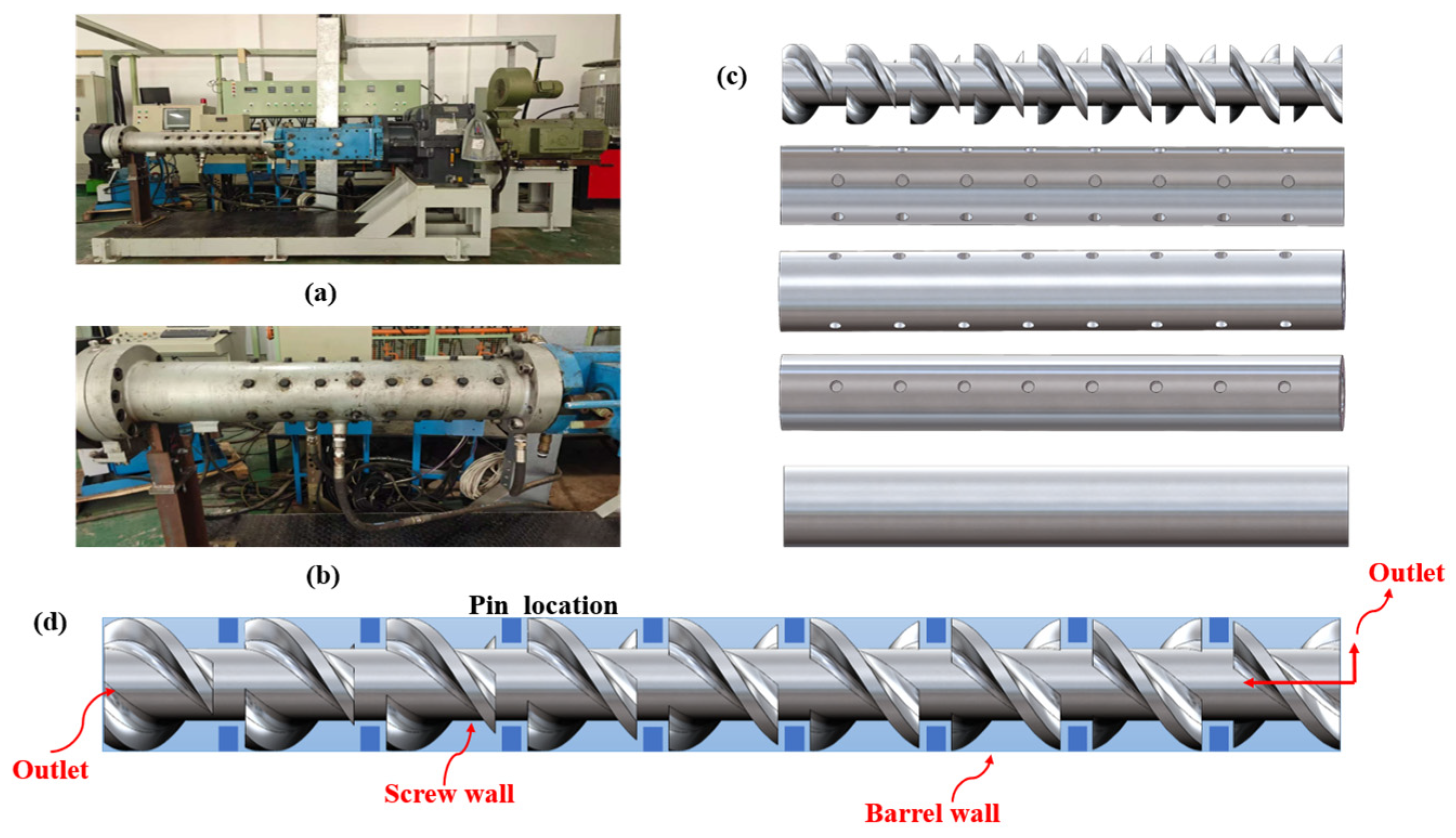
2.1. Experimental Setup and Fluid-Domain Modeling of the Pin Barrel
2.2. Flow-Field Mathematical Model and Boundary Conditions
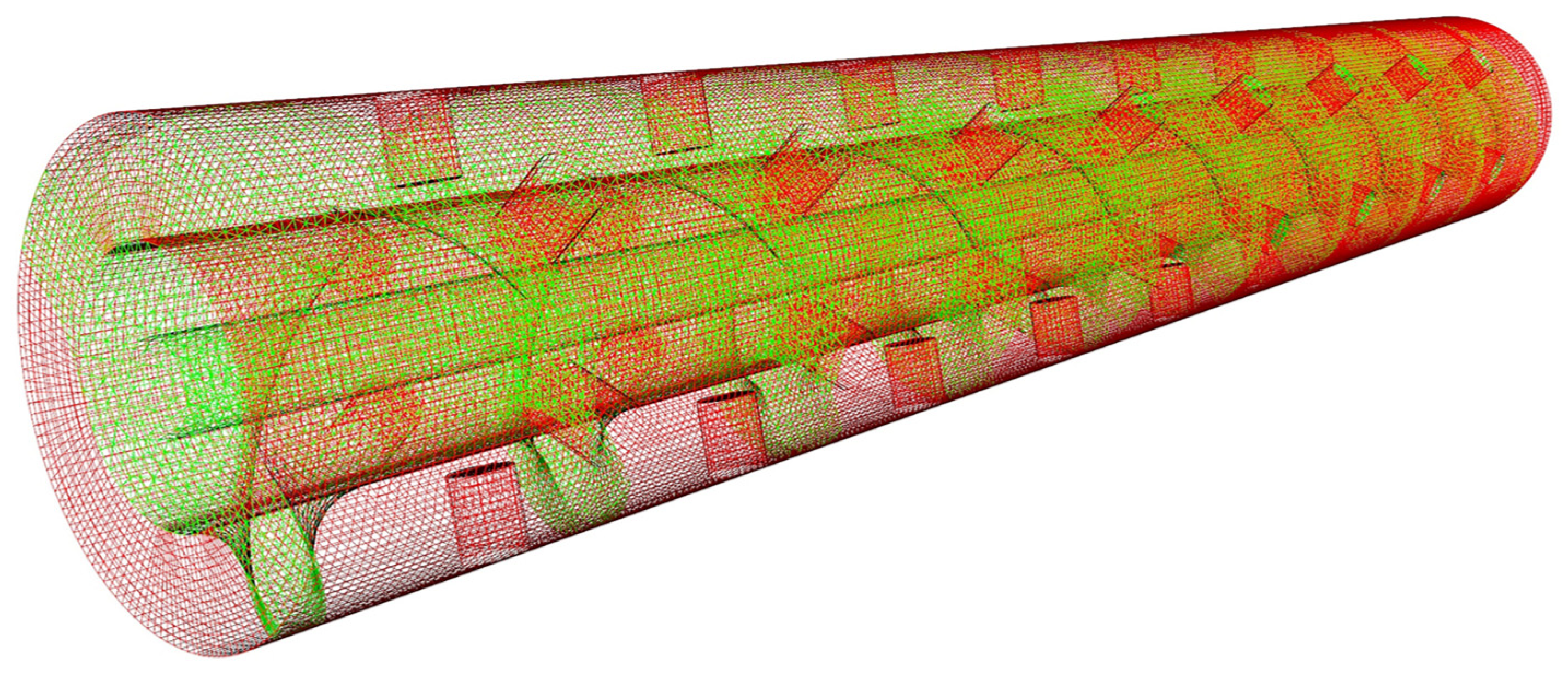
2.3. Numerical Modeling and Mesh-Independence Validation
2.4. Melt Mixing Characteristics and Particle-Tracing Analysis Under Different Pin Arrangements
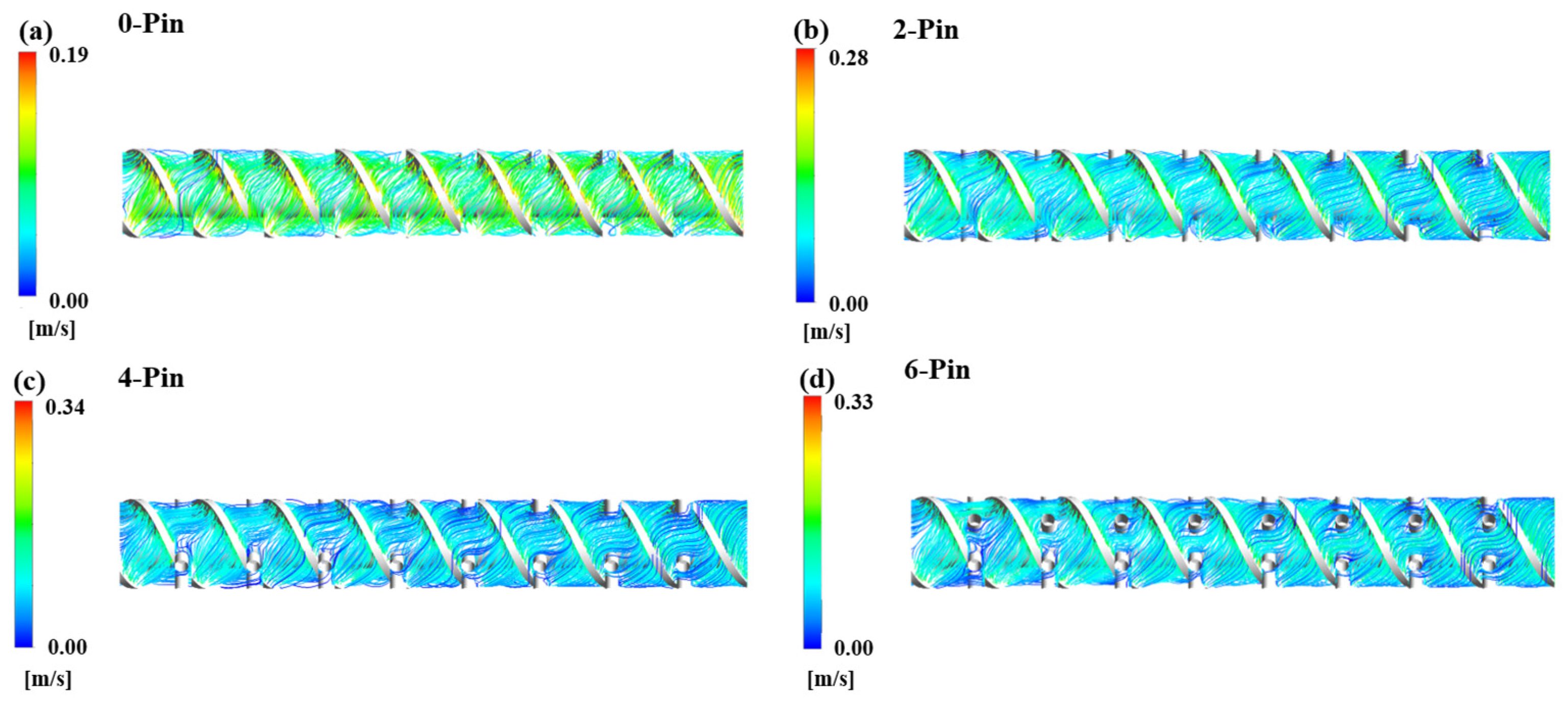
2.4.1. Comparative Analysis of Melt Flow-Field Characteristics
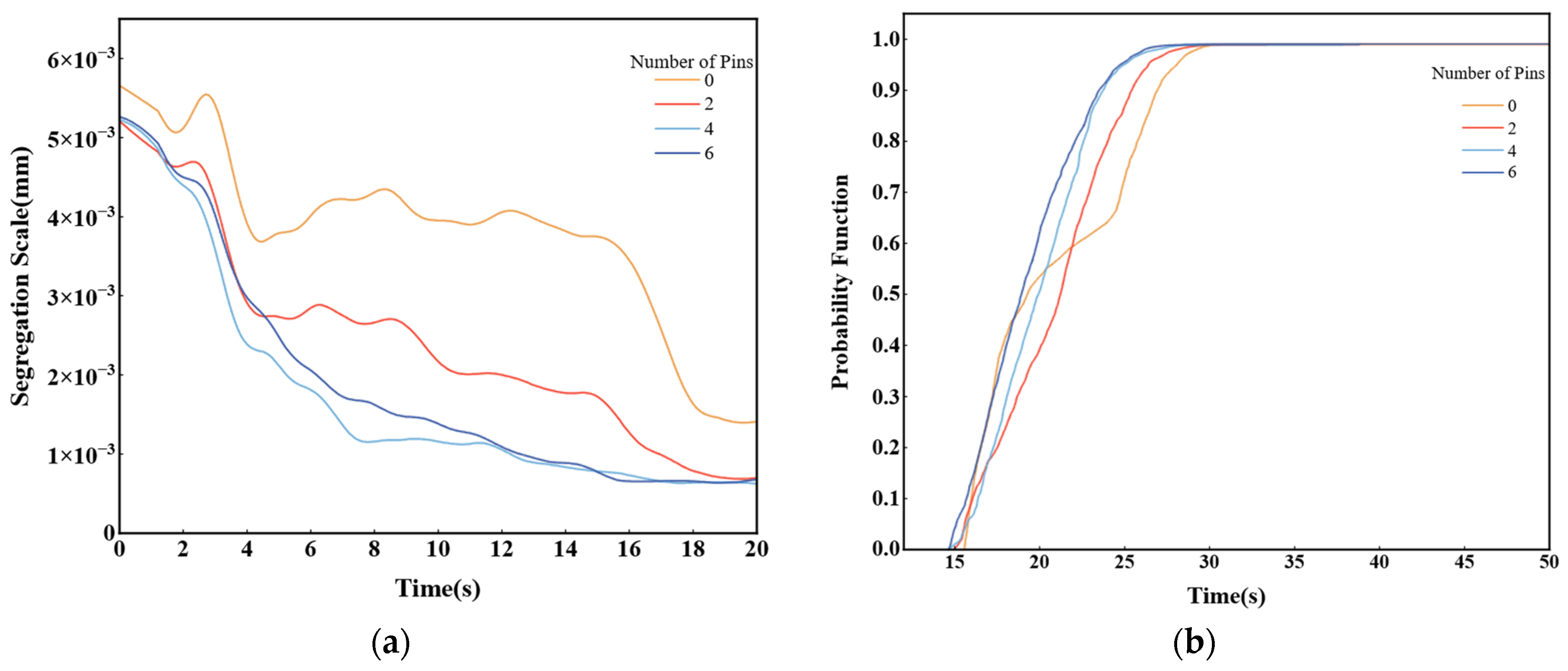
2.4.2. Tracer-Particle Trajectory Analysis
3. Principles and Methodology of the MEA-BP Prediction Model
3.1. Mind Evolutionary Algorithm (MEA)
- Step 1: A certain number of individuals are randomly generated in the solution space. Their scores are calculated according to the scoring function, superior individuals and temporary individuals with higher scores are selected, and their positions and scores are recorded on the local bulletin board.
- Step 2: Taking the superior individual and the temporary individuals as centers, new individuals with potential advantages are generated, thereby forming a certain number of superior subpopulations and temporary subpopulations for the subsequent screening stage.
- Step 3: New winners are generated through competition within each subpopulation, and this process is referred to as convergence. During convergence, the variance of the normal distribution is used as an adaptive adjustment function to search for high-scoring individuals within the subpopulation and assign the corresponding score to the group to which they belong. The variance of the distances among the winning individuals published on the global bulletin board is defined by the following formula:where and are selectable constants, and is the evolutionary distance between the winning individuals of two generations.
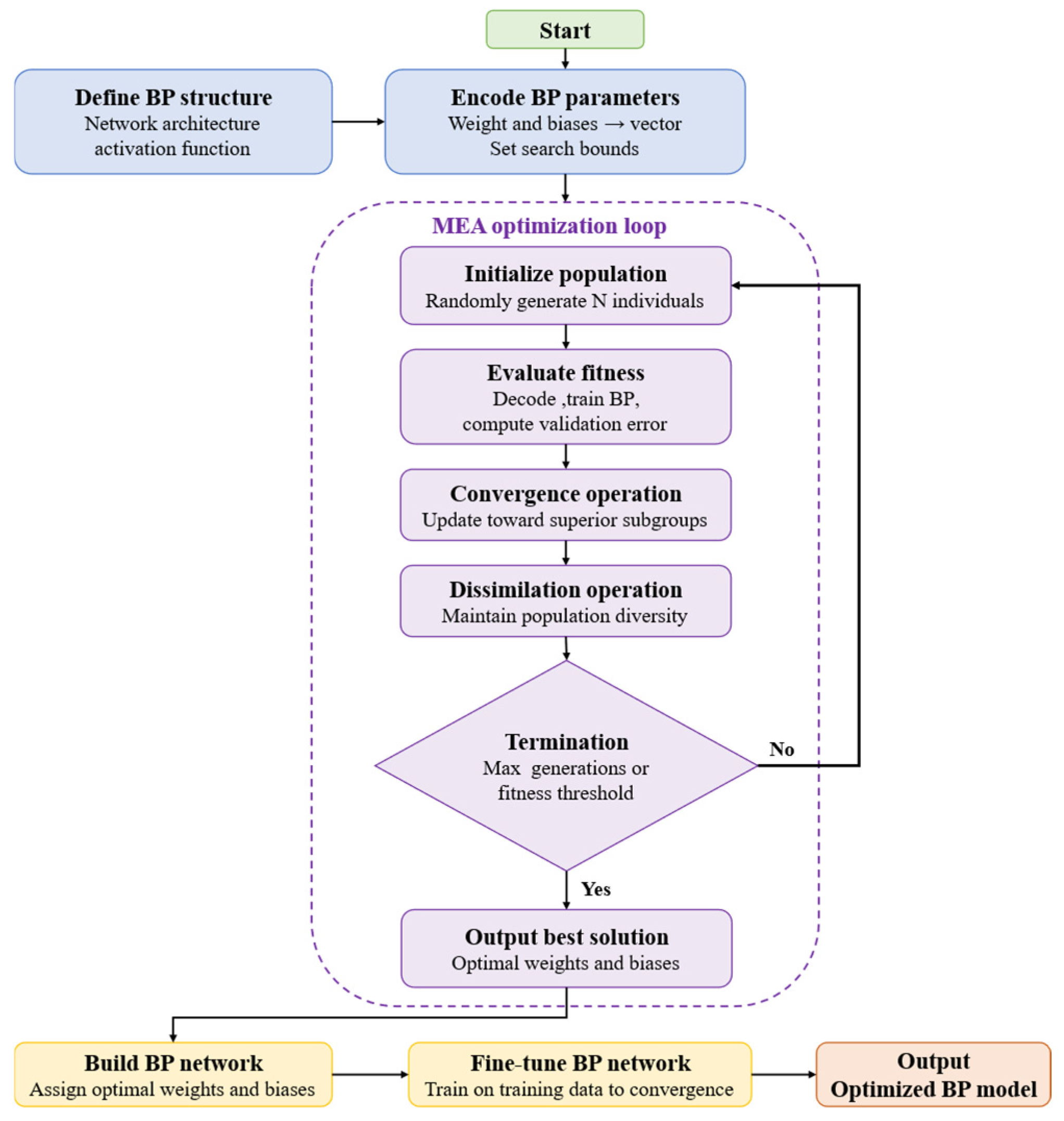
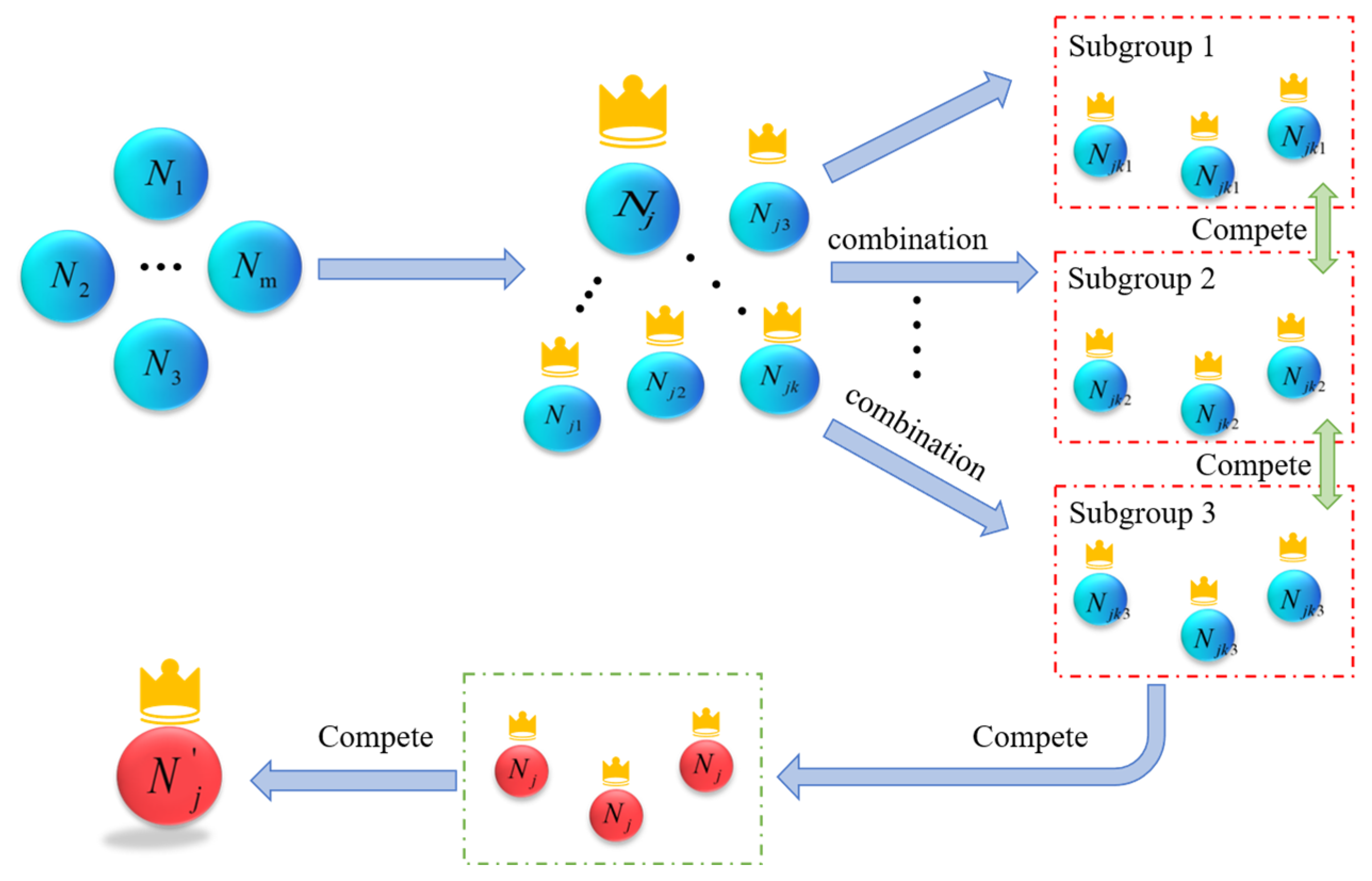
- Step 4: When no new winning individuals are generated in any subpopulation, the scores of all subpopulations are calculated and recorded on the bulletin board. The subpopulations then compete again through operations such as replacing, recombining, or discarding low-scoring subpopulations, and participate once more in global selection until the globally optimal individual A is obtained. The overall evolutionary process of MEA is shown in Figure 11.
3.2. BP Neural Network
3.3. MEA-Optimized BP Neural Network
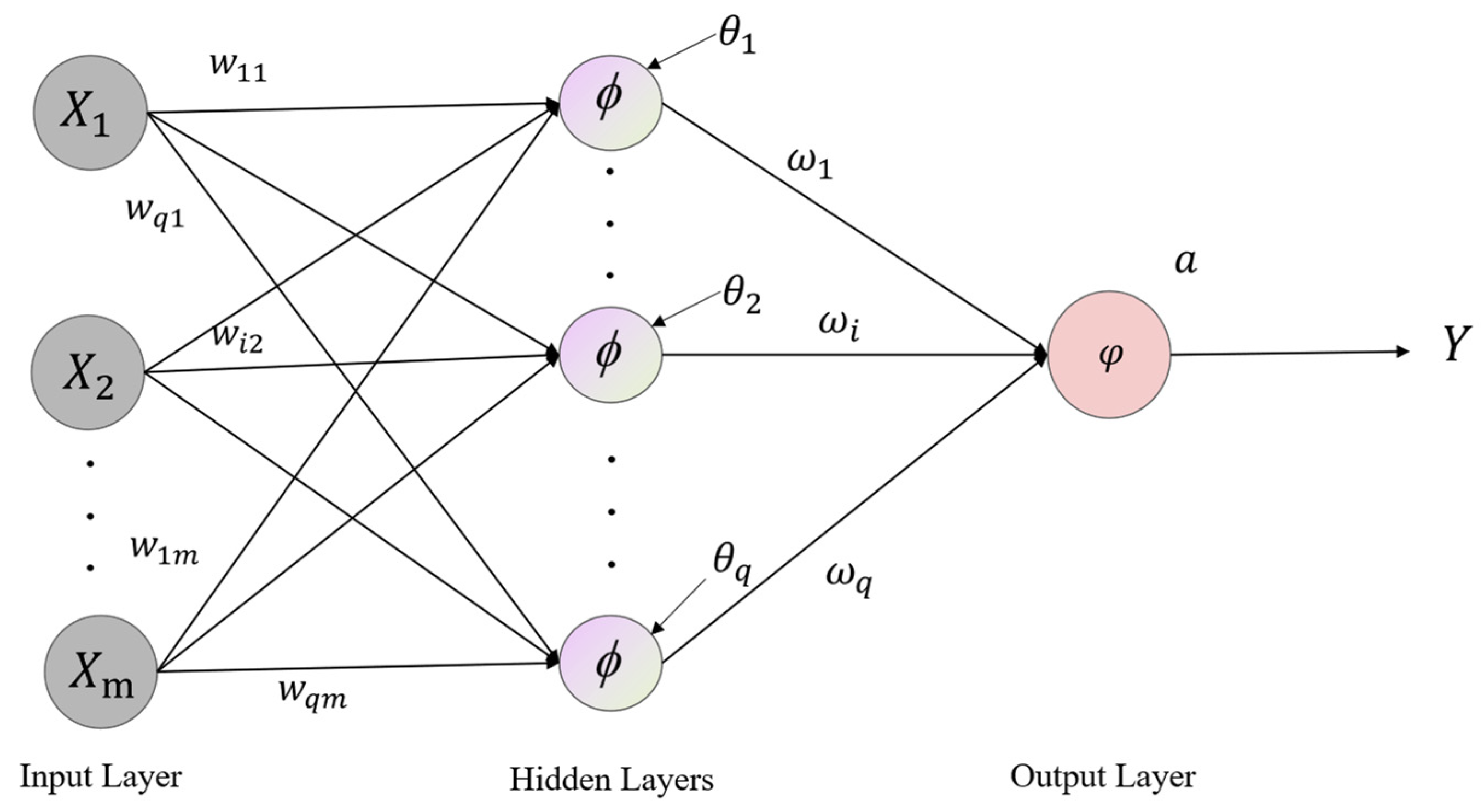
- Data preparation and network configuration: Construct the training and test datasets, and specify the topological structure of the BP neural network.
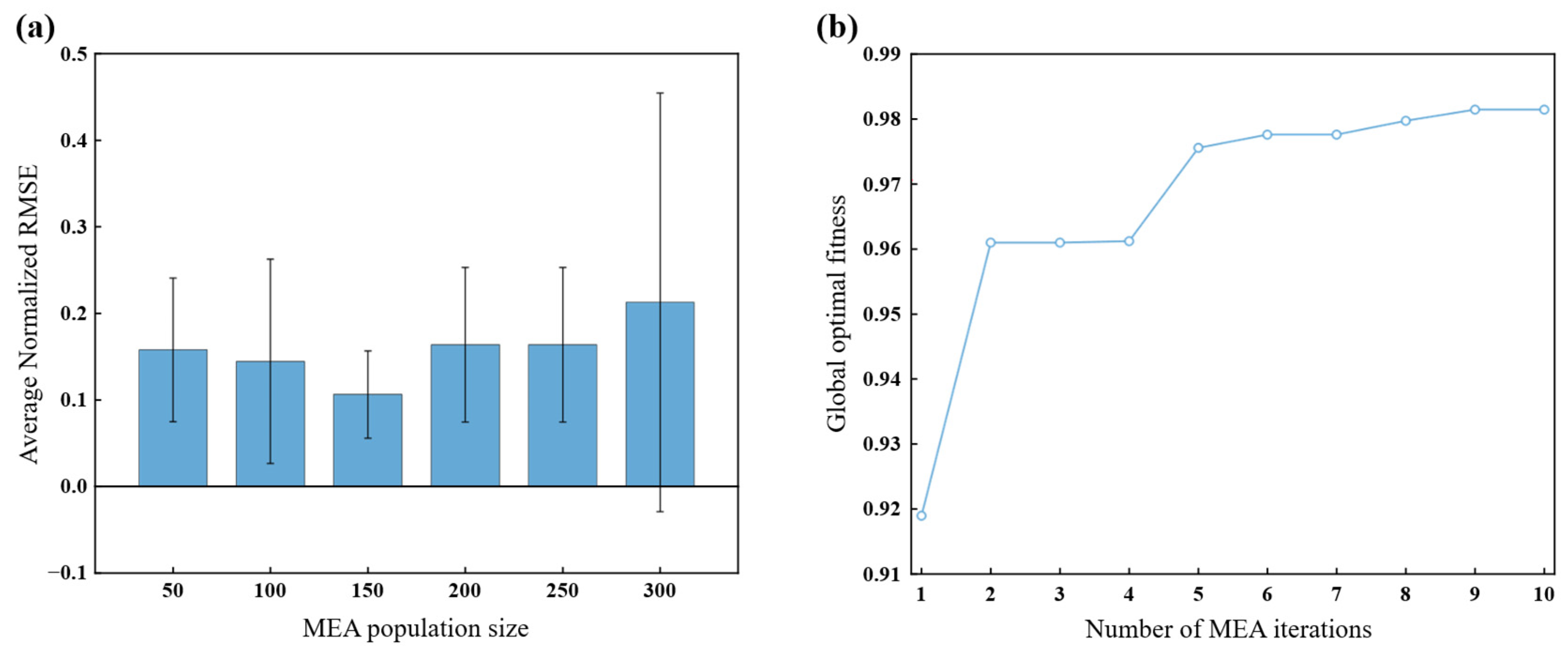
- MEA parameter initialization: Set the principal control parameters of the algorithm, including the iteration limit, total population size, and the number of individuals assigned to the superior and temporary subpopulations.
- Population initialization and candidate evaluation: Construct the initial population using random sampling, assess the fitness of all individuals, and assign the best-performing candidates to the superior and temporary groups.
- Formation of subpopulations: Construct two categories of subpopulations around the selected candidates, with the superior and temporary individuals serving as the centers of the corresponding groups.
- Convergence and alienation operations: Search for local optima through internal evolution within each subpopulation, and then promote competition among subpopulations so that well-performing groups are retained while inferior groups are removed.
- Iterative search for the optimal solution: Continue the convergence and alienation processes until the maximum number of iterations is attained or the fitness value of the best candidate stabilizes.
- Initialization of network parameters: Decode the best candidate retained on the bulletin board to determine the initial weights and thresholds of the BP neural network.
- BP neural network training: the BP network is trained using the optimal initial parameters until the stopping criterion is satisfied, and the final prediction results are then output.
4. Development and Performance Evaluation of the MEA-BP-Based Flow-Field Parameter Prediction Model
4.1. Design of Pin-Arrangement Schemes and Dataset Construction
4.2. Feature Encoding and Data Normalization
4.3. Evaluation Metrics and Hyperparameter Optimization for the MEA-BP Model
4.4. Predictive-Performance Evaluation and Stability Validation of the Model
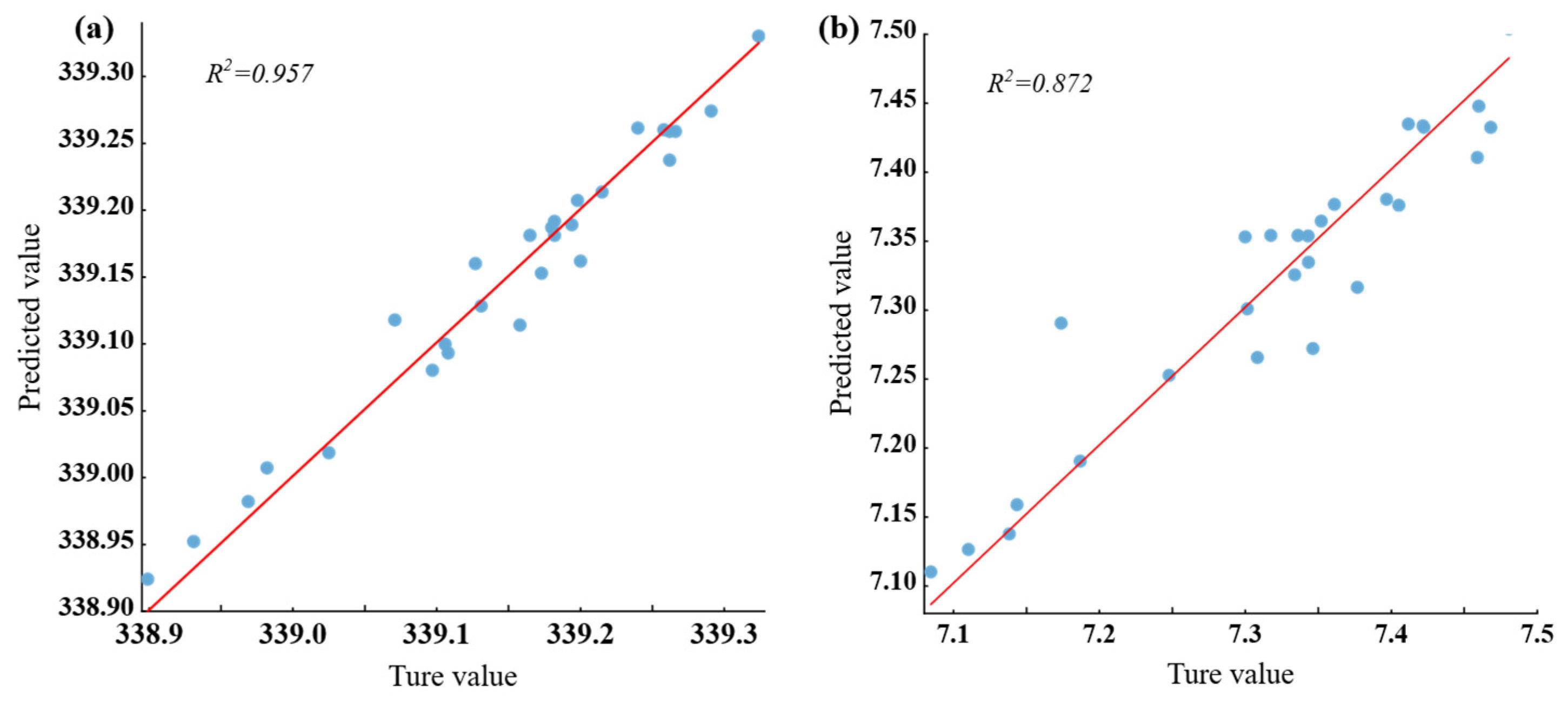
4.4.1. Comparative Analysis of Different Feature Encoding Methods
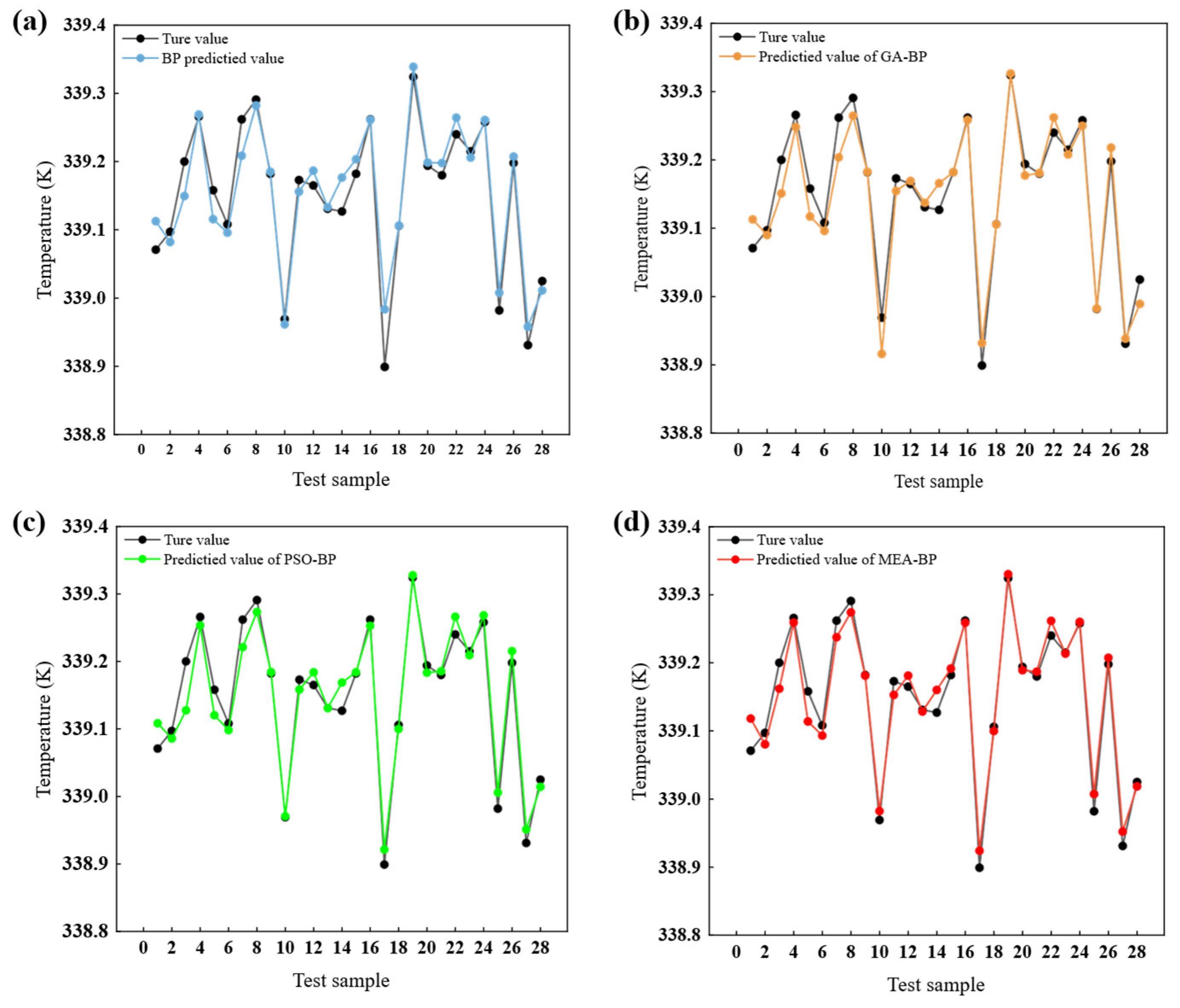
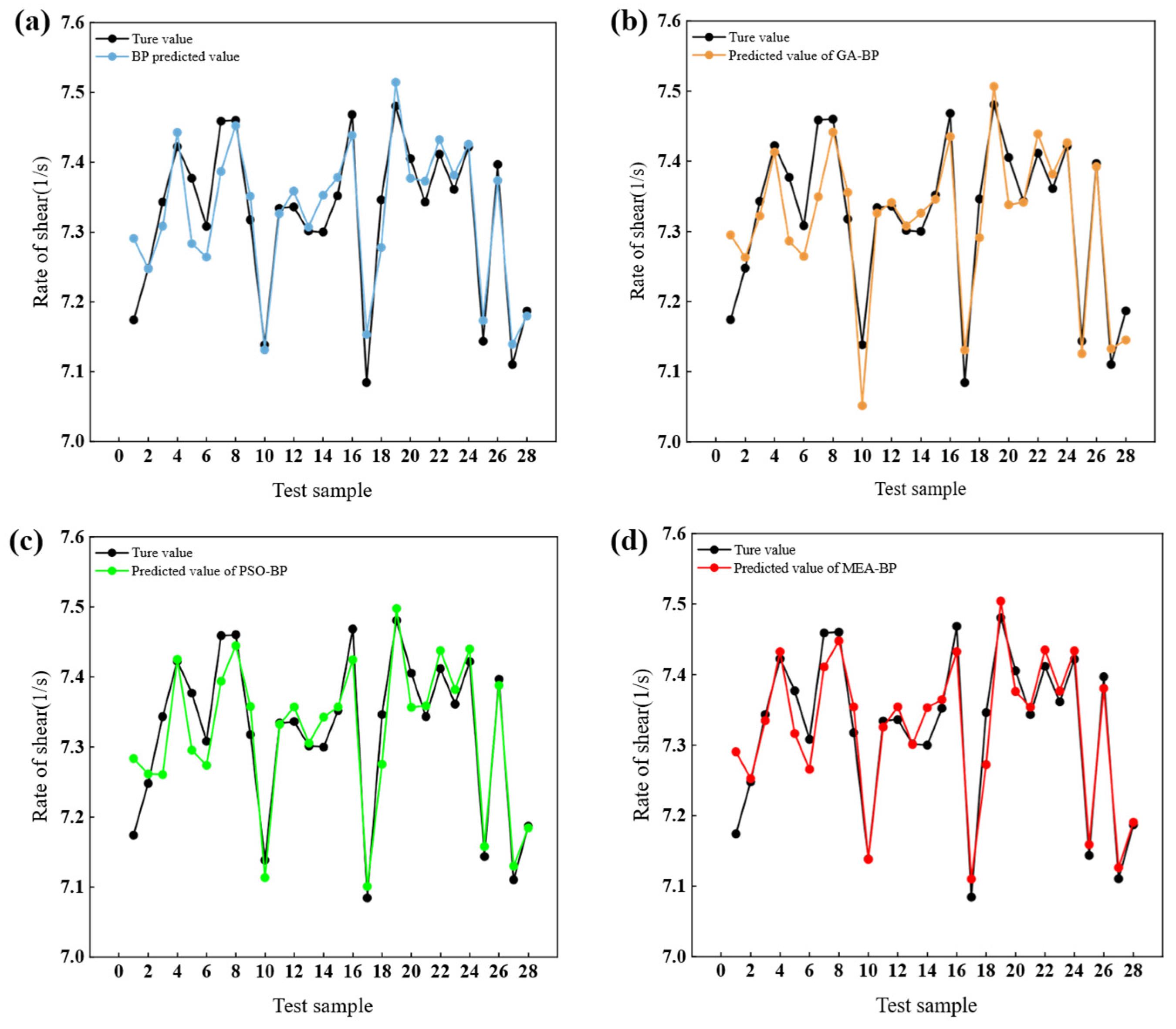
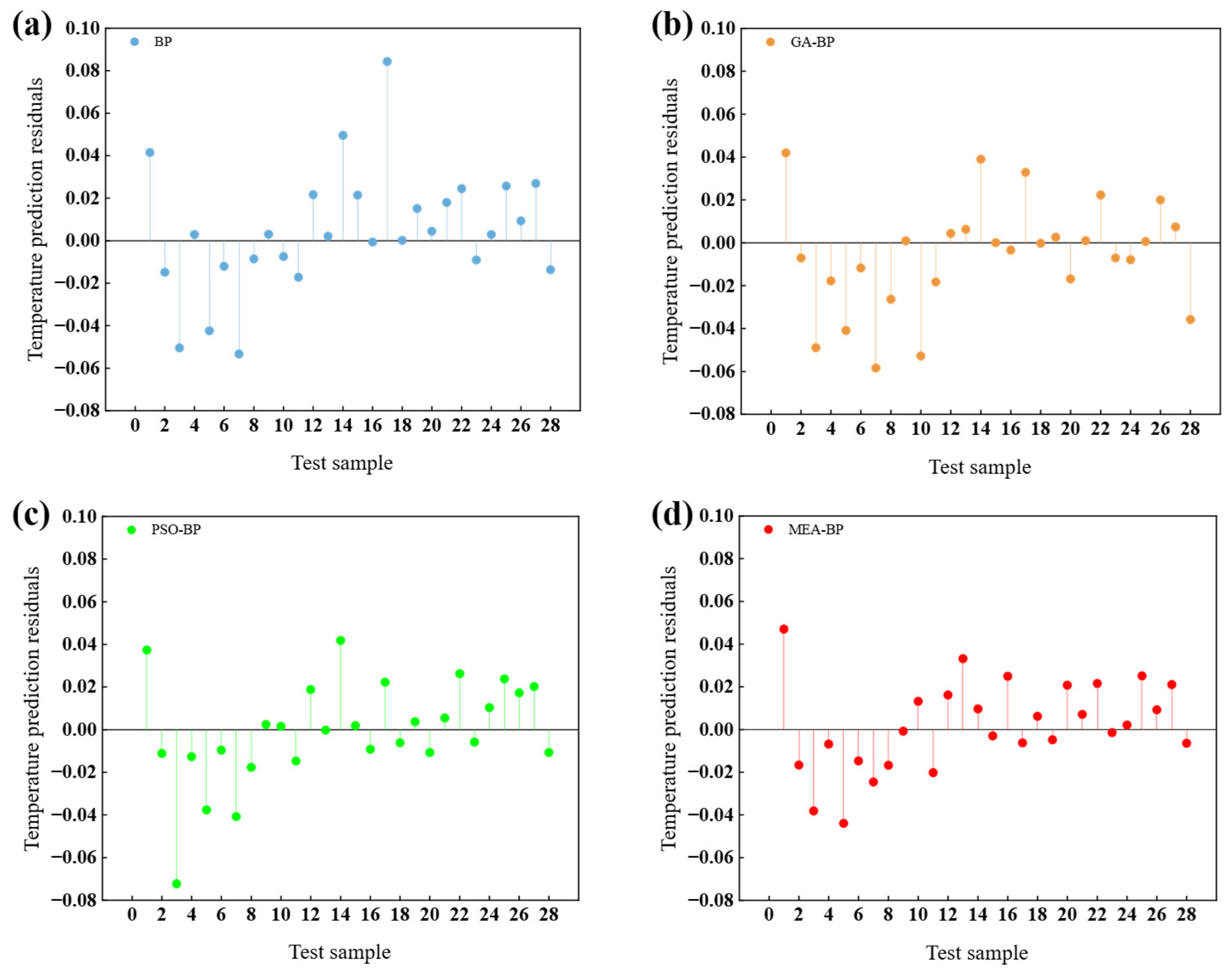
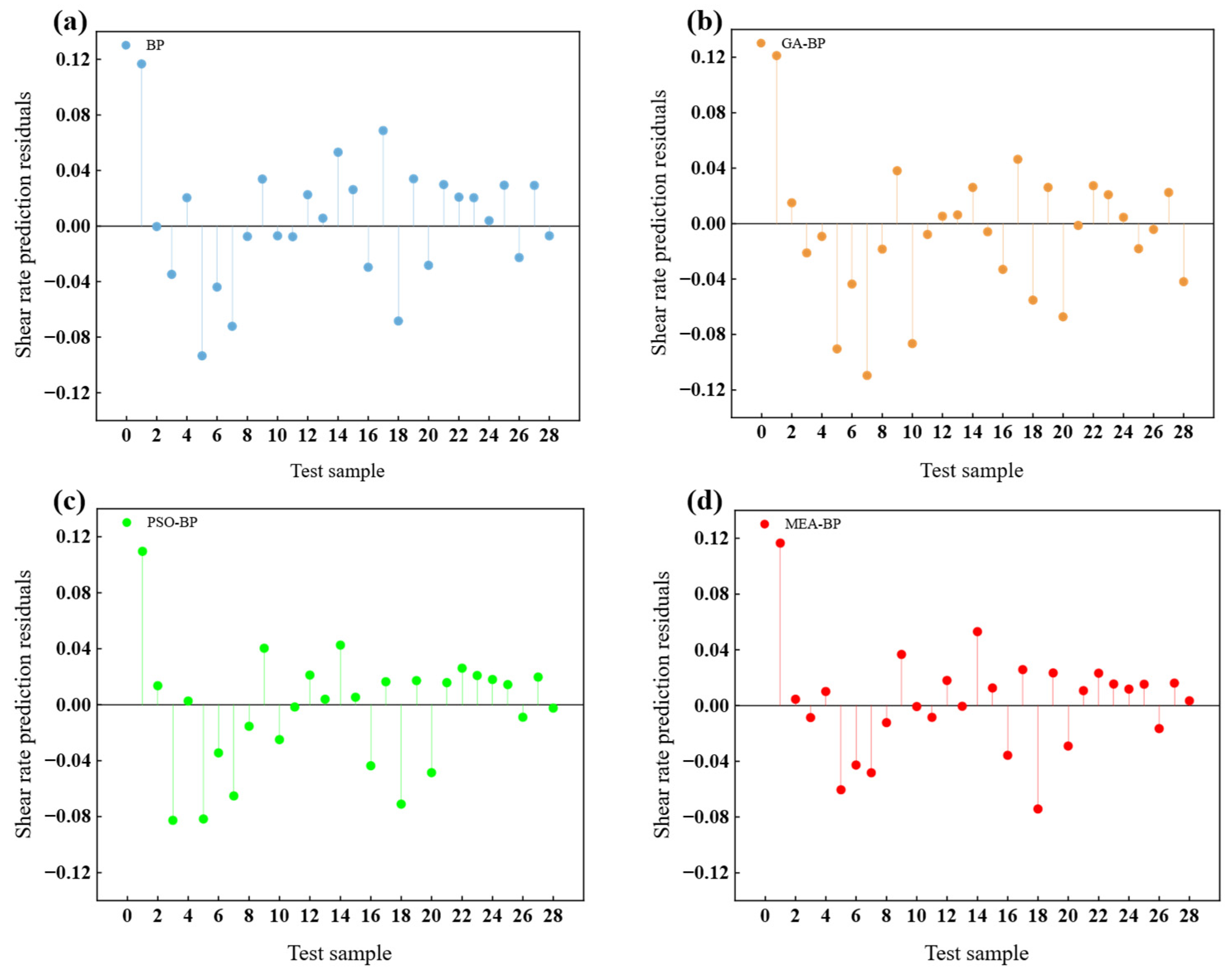
4.4.2. Evaluation of Predictive Performance and Stability
5. Conclusions and Future Work
Author Contributions
Funding
Institutional Review Board Statement
Informed Consent Statement
Data Availability Statement
Conflicts of Interest
References
- Saputra, R.; Walvekar, R.; Khalid, M.; Mubarak, N.M.; Sillanpää, M. Current progress in waste tire rubber devulcanization. Chemosphere 2021, 265, 129033. [Google Scholar] [CrossRef] [PubMed]
- Bigio, D.; Young, D. The effect of fluid decoupling on viscous mixing. Polym. Eng. Sci. 1993, 33, 1270–1278. [Google Scholar] [CrossRef]
- Rauwendaal, C. (Ed.) Mixing in Polymer Processing; M. Dekker: New York, NY, USA, 1991. [Google Scholar]
- Yao, W.G.; Takahashi, K.; Koyama, K.; Dai, G.C. Design of a new type of pin mixing section for a screw extruder based on analysis of flow and distributive mixing performance. Chem. Eng. Sci. 1997, 52, 13–21. [Google Scholar] [CrossRef]
- Yabushita, Y.; Brzoskowski, R.; White, J.L.; Najakima, N. Flow of rubber compound in a pin barrel screw extruder. Int. Polym. Process. 1989, 4, 219–224. [Google Scholar] [CrossRef]
- Shin, K.-C.; White, J.L. Basic studies of extrusion of rubber compounds in a pin barrel extruder. Rubber Chem. Technol. 1993, 66, 121–138. [Google Scholar] [CrossRef]
- Brzoskowski, R.; White, J.L.; Szydlowski, W.; Nakajima, N.; Min, K. Modelling flow in pin-barrel screw extruders. Int. Polym. Process. 1988, 3, 134–140. [Google Scholar] [CrossRef]
- Schöppner, V.; Schadomsky, M.; Hopmann, C.; Lemke, F. Investigations of the mixing behaviour of pin-type rubber extruders. AIP Conf. Proc. 2016, 1713, 130003. [Google Scholar] [CrossRef]
- Wang, Z.; Pan, Y.; Liu, Y.; Huang, J.; Wang, N.; Hu, X. Investigations of the elongational deformation induced by pins in pin-barrel cold-feed extruders. Adv. Polym. Technol. 2022, 2022, 3513804. [Google Scholar] [CrossRef]
- Yao, W.G.; Tanifuji, S.; Takahashi, K.; Koyama, K. Mixing efficiency in a pin mixing section for single-screw extruders. Polym. Eng. Sci. 2001, 41, 908–917. [Google Scholar] [CrossRef]
- Zhou, H.; Zhang, J.; Lim, S.E.; Ferraris, E.; Le Ferrand, H. Rationalising the onset of bistability in polylactic acid (PLA) bilayer laminates using fused filament fabrication (FFF). Virtual Phys. Prototyp. 2026, 21, e2618395. [Google Scholar] [CrossRef]
- Lubura, J.D.; Kojić, P.; Pavličević, J.; Ikonić, B.; Omorjan, R.; Bera, O. Prediction of rubber vulcanization using an artificial neural network. Hem. Ind. 2021, 75, 277–283. [Google Scholar] [CrossRef]
- Uruk, Z.; Kiraz, A. Artificial intelligence based prediction models for rubber compounds. J. Polym. Eng. 2023, 43, 113–124. [Google Scholar] [CrossRef]
- Yuan, Z.; Niu, M.-Q.; Ma, H.; Gao, T.; Zang, J.; Zhang, Y.; Chen, L.-Q. Predicting mechanical behaviors of rubber materials with artificial neural networks. Int. J. Mech. Sci. 2023, 249, 108265. [Google Scholar] [CrossRef]
- Robin, E.; Le Cam, J.-B.; Delahaye, G.; Ruellan, B.; Di Cesare, N.; Canévet, F. A first proposal for fatigue life prediction of carbon black filled natural rubber at different temperatures with an artificial neural network. Strain 2025, 61, e70001. [Google Scholar] [CrossRef]
- Sui, C.; Qiao, D.; Wu, Y.; Zhu, H.; Lan, H.; Yang, W.; Guo, Q. Study of the effect of retarder and expander on the strength and cracking performance of rubber concrete based on back propagation neural network. Materials 2023, 16, 6976. [Google Scholar] [CrossRef] [PubMed]
- Hou, H.-L.; Zhang, G.-P.; Chen, X.; Zhao, Y.-Q. Quality prediction of internal thread cold extrusion based on genetic algorithm optimized BP neural network. Adv. Mech. Eng. 2022, 14, 16878132221089148. [Google Scholar] [CrossRef]
- Xiang, K.-L.; Xiang, P.-Y.; Wu, Y.-P. Prediction of the fatigue life of natural rubber composites by artificial neural network approaches. Mater. Des. 2014, 57, 180–185. [Google Scholar] [CrossRef]
- Beklaryan, G.L.; Akopov, A.S.; Khachatryan, N.K. Optimisation of system dynamics models using a real-coded genetic algorithm with fuzzy control. Cybern. Inf. Technol. 2019, 19, 87–103. [Google Scholar] [CrossRef]
- Peng, Z.; Wu, L.; Chen, Z. NHL and RCGA based multi-relational fuzzy cognitive map modeling for complex systems. Appl. Sci. 2015, 5, 1399–1411. [Google Scholar] [CrossRef]
- Al-Itry, R.; Lamnawar, K.; Maazouz, A. Improvement of thermal stability, rheological and mechanical properties of PLA, PBAT and their blends by reactive extrusion with functionalized epoxy. Polym. Degrad. Stab. 2012, 97, 1898–1914. [Google Scholar] [CrossRef]
- Sun, Y.; Wang, S.; Huang, S.; Pan, W.; He, Y.; Jian, R. Mixing and thermal transport behavior in a pin or non-pin extruder equipped with a field synergy elongation screw. Polymers 2024, 16, 1793. [Google Scholar] [CrossRef] [PubMed]
- Pan, W.; Wang, S.; Huang, T.; Jiang, X.; Jian, R. Effect of screw design on the mixing and heat efficiencies in an extrusion system by tailoring ductile forming with field synergy principle. Appl. Therm. Eng. 2025, 262, 125291. [Google Scholar] [CrossRef]
- Sun, C.; Sun, Y.; Wei, L. Mind-evolution-based machine learning: Framework and the implementation of optimization. In Proceedings of the IEEE International Conference on Intelligent Engineering Systems (INES’98), Vienna, Austria, 17–19 September 1998; pp. 355–359. [Google Scholar]
- Guha, S.; Jana, R.K.; Sanyal, M.K. Artificial neural network approaches for disaster management: A literature review. Int. J. Disaster Risk Reduct. 2022, 81, 103276. [Google Scholar] [CrossRef]
- Zhang, Y.; Wang, X.; Zhang, J.; Chen, X.; Wu, H.; Chen, Y. Research on slope excavation stability based on PSO-BP reinforcement optimization algorithm. Appl. Sci. 2025, 15, 11726. [Google Scholar] [CrossRef]
- Xu, T.; Huang, J.; Li, Y.; Chen, T. Predicting ceramic wool diameter by motor frequency using improved BP neural network. Appl. Sci. 2023, 13, 226. [Google Scholar] [CrossRef]
- Guo, Y.; Zhao, Z.; Huang, L. SoC estimation of lithium battery based on improved BP neural network. Energy Procedia 2017, 105, 4153–4158. [Google Scholar] [CrossRef]
- Goh, A.T.C. Back-propagation neural networks for modeling complex systems. Artif. Intell. Eng. 1995, 9, 143–151. [Google Scholar] [CrossRef]
- Wang, H.; Li, S.; Zhen, S.; Liu, J.; Peng, X.; Yi, Y. Study of peak velocity of blasting vibration for raft foundation demolition based on MEA-BP algorithm. AIP Adv. 2024, 14, 085129. [Google Scholar] [CrossRef]
- Nan, J.; Zheng, J.; Jiang, B.; Li, Y.; Chen, J.; Fan, X. A multi-objective optimization design method for high-aspect-ratio wing structures based on mind evolution algorithm backpropagation surrogate model. Machines 2024, 12, 907. [Google Scholar] [CrossRef]
- Zhang, J.; Li, P.; Yin, X.; Wang, S.; Zhu, Y. Back analysis of surrounding rock parameters in Pingdingshan mine based on BP neural network integrated mind evolutionary algorithm. Mathematics 2022, 10, 1746. [Google Scholar] [CrossRef]
- Pinni, K.S.; Chandy, A.J. Investigation of non-isothermal effects in differential viscoelastic simulations of industrial-scale rubber extrusion. J. Non-Newton. Fluid Mech. 2026, 349, 105608. [Google Scholar] [CrossRef]
- Shields, M.D.; Zhang, J. The generalization of Latin hypercube sampling. Reliab. Eng. Syst. Saf. 2016, 148, 96–108. [Google Scholar] [CrossRef]
- Rodríguez, P.; Bautista, M.A.; Gonzàlez, J.; Escalera, S. Beyond one-hot encoding: Lower dimensional target embedding. Image Vis. Comput. 2018, 75, 21–31. [Google Scholar] [CrossRef]
- Wang, F.; Tian, D.; Lowe, L.; Kalin, L.; Lehrter, J. Deep learning for daily precipitation and temperature downscaling. Water Resour. Res. 2021, 57, e2020WR029308. [Google Scholar] [CrossRef]
- Pan, Y.; Wang, Y.; Zhou, P.; Yan, Y.; Guo, D. Activation functions selection for BP neural network model of ground surface roughness. J. Intell. Manuf. 2020, 31, 1825–1836. [Google Scholar] [CrossRef]
- Zhang, J.-R.; Zhang, J.; Lok, T.-M.; Lyu, M.R. A hybrid particle swarm optimization–back–propagation algorithm for feedforward neural network training. Appl. Math. Comput. 2007, 185, 1026–1037. [Google Scholar] [CrossRef]
- Zheng, D.; Qian, Z.; Liu, Y.; Liu, C. Prediction and sensitivity analysis of long-term skid resistance of epoxy asphalt mixture based on GA-BP neural network. Constr. Build. Mater. 2018, 158, 614–623. [Google Scholar] [CrossRef]
- Møller, M.F. A scaled conjugate gradient algorithm for fast supervised learning. Neural Netw. 1993, 6, 525–533. [Google Scholar] [CrossRef]









| Parameter | Symbol | Value |
|---|---|---|
| Density | ρ | 1130 kg·m−3 |
| Specific heat capacity | Cp | 1700 J·kg−1·K−1 |
| Thermal conductivity | k | 0.18 W·m−1·K−1 |
| Viscosity at an infinite shear rate | η∞ | 0 Pa·s |
| Zero shear viscosity | η0 | 178,800 Pa·s |
| Nature time | λ | 10.8 s |
| Non-Newtonian index | n | 0.4 |
| Coefficient of temperature sensibility | α | 0.0025 K−1 |
| Reference temperature | Tα | 332.87 K |
| Boundary | Flow Conditions | Thermal Conditions |
|---|---|---|
| Inlet | Fully developed, volumetric flow rate 2.04 × 10⁻⁶ m3·s−1 | 332.87 K |
| Outlet | Flow outflow | Heat outflow |
| Barrel wall | Stationary, no-slip wall | 335.52 K |
| Screw wall | Screw speed 30 r·min−1 | Insulated boundary |
| Grid Quality | Number of Mesh Elements, (×105) | Shear Rate (s−1) | Average Temperature (K) |
|---|---|---|---|
| Coarse | 2.5 | 7.79 | 339.3 |
| Medium | 3.5 | 7.87 | 339.4 |
| Fine | 4.5 | 7.96 | 338.9 |
| Screw Speed (r/min) | Simulation Data (K) | Experimental Data (K) | Difference (%) |
|---|---|---|---|
| 20 | 337.99 | 337.34 | 1.01 |
| 30 | 339.49 | 339.87 | 0.57 |
| 40 | 341.36 | 342.11 | 1.08 |
| Mode | Number of Pins | Angular Position (°) | Distribution Feature |
|---|---|---|---|
| 1 | 0 | - | No empty |
| 2 | 1 | 0° | Single pin |
| 3 | 1 | 180° | Single pin |
| 4 | 2 | 0°, 180° | Two pins |
| 5 | 2 | 60°, 240° | Two pins |
| 6 | 2 | 120°, 300° | Two pins |
| 7 | 3 | 0°, 120°, 240° | Three pins |
| 8 | 3 | 60°, 180°, 300° | Three pins |
| 9 | 4 | 0°, 60°, 180°, 240° | Four pins |
| 10 | 4 | 0°, 120°, 180°, 300° | Four pins |
| 11 | 4 | 60°, 120°, 240°, 300° | Four pins |
| 12 | 5 | 60°, 120°, 180°, 240°, 300° | Five pins |
| 13 | 5 | 0°, 60°, 120°, 240°, 300° | Five pins |
| 14 | 6 | 0°, 60°, 120°, 180°, 240°, 300° | Full pins |
| Serial Number | Pin Group Category | Flow Field Data | ||||||||
|---|---|---|---|---|---|---|---|---|---|---|
| First | Second | Third | Fourth | Fifth | Sixth | Seventh | Eighth | Temperature (K) | Shear Rate (s−1) | |
| 1 | 12 | 14 | 12 | 9 | 4 | 9 | 12 | 4 | 339.284 | 7.43221 |
| 2 | 1 | 1 | 2 | 4 | 13 | 11 | 10 | 6 | 338.926 | 6.99939 |
| 3 | 3 | 9 | 13 | 1 | 8 | 11 | 14 | 8 | 339.161 | 7.26317 |
| … | … | … | … | … | … | …. | … | … | … | … |
| 138 | 2 | 9 | 8 | 3 | 6 | 13 | 13 | 8 | 339.151 | 7.30278 |
| 139 | 2 | 2 | 6 | 8 | 14 | 2 | 11 | 3 | 339.025 | 7.18691 |
| 140 | 10 | 5 | 5 | 5 | 3 | 14 | 11 | 14 | 339.229 | 7.40599 |
| Sample | x1 | x2 | x3 | x4 | x5 | x6 | x7 | Temperature (K) | Shear Rate (s−1) |
|---|---|---|---|---|---|---|---|---|---|
| 1 | 2 | 2 | 2 | 1 | 2 | 1 | 10 | 339.284 | 7.43221 |
| 2 | 3 | 2 | 2 | 2 | 2 | 1 | 12 | 338.926 | 6.99939 |
| 3 | 2 | 2 | 2 | 2 | 1 | 1 | 10 | 339.161 | 7.26317 |
| … | … | … | … | … | … | … | … | … | … |
| 138 | 3 | 3 | 2 | 1 | 1 | 2 | 12 | 339.151 | 7.30278 |
| 139 | 2 | 2 | 2 | 2 | 1 | 1 | 10 | 339.025 | 7.18691 |
| 140 | 3 | 3 | 2 | 2 | 2 | 2 | 14 | 339.229 | 7.40599 |
| Population Size | Number of Winning Subpopulations | Number of Temporary Subpopulations | Subpopulation Size | Number of Input Nodes | Number of Hidden Nodes | Number of Output Nodes | Number of Iterations |
|---|---|---|---|---|---|---|---|
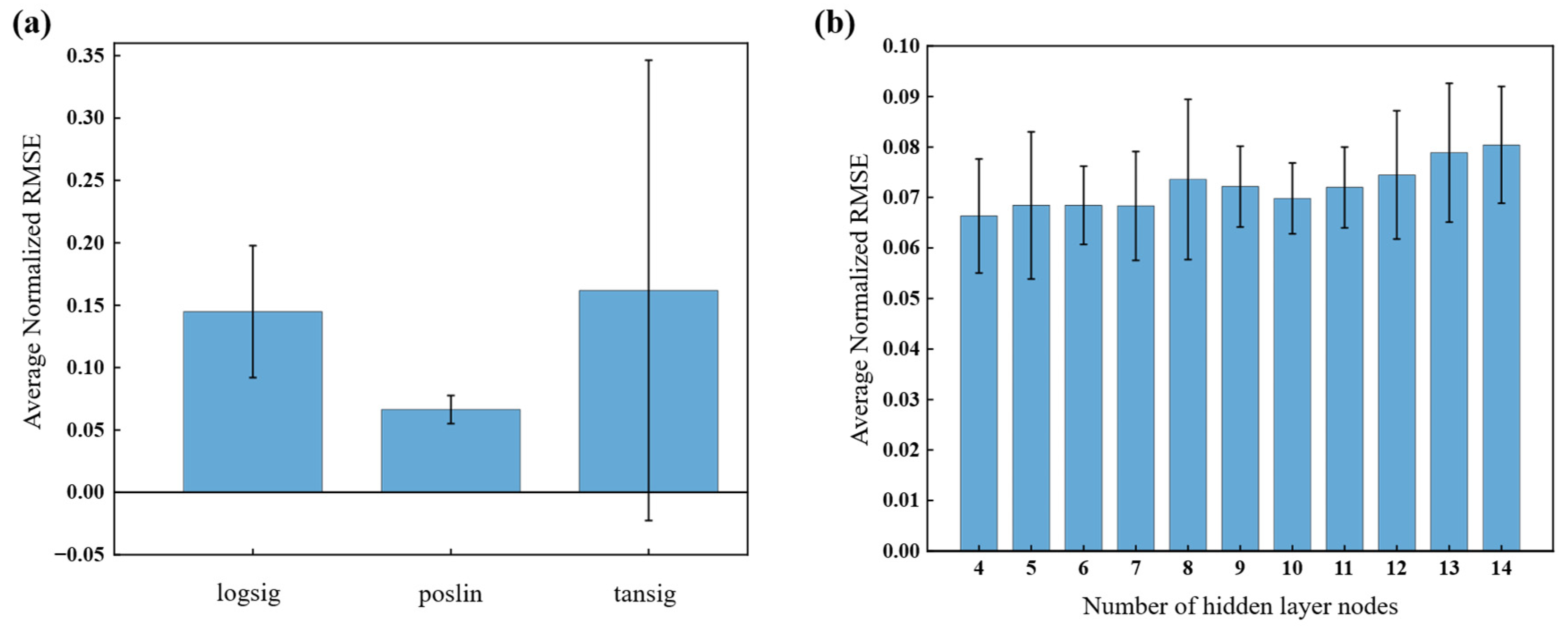
| 150 | 5 | 5 | 20 | 7 | 4 | 2 | 10 |
| Encoding Method | Input Dimension | Temperature MAE (×10−2) | Temperature RMSE (×10−2) | Temperature R2 | Shear-Rate MAE (×10−2) | Shear-Rate RMSE (×10−2) | Shear-Rate R2 |
|---|---|---|---|---|---|---|---|
| Physically aggregated | 7 | 1.74 | 2.23 | 0.957 | 2.89 | 3.99 | 0.872 |
| Sequence preserving binary | 48 | 4.28 | 5.61 | 0.583 | 4.73 | 6.76 | 0.535 |
| Model | Parameters | Numerical/Method |
|---|---|---|
| BP | Training algorithm | trainlm |
| Parameter optimization | Random initialization | |
| Maximum training times | 150 | |
| Performance objective | 1 × 10⁻⁴ | |
| GA-BP | Population size | 40 |
| Maximum number of iterations | 20 | |
| Search scope | [−3, 3] | |
| Cross probability | 0.3 | |
| Mutation probability | 0.5 | |
| PSO-BP | Particle swarm size | 60 |
| Maximum number of iterations | 20 | |
| Inertia weight | 0.6 | |
| Learning factor | c1 = 2, c2 = 2 | |
| Position/Speed Boundary | [−3, 3] |
| Model | Prediction Target | MAE (×10−2) | RMSE (×10−2) | R2 |
|---|---|---|---|---|
| BP | Temperature | 2.09 | 2.88 | 0.926 |
| Shear rate | 3.35 | 4.34 | 0845 | |
| GA-BP | Temperature | 1.90 | 2.60 | 0.941 |
| Shear rate | 3.48 | 4.74 | 0.818 | |
| PSO-BP | Temperature | 1.76 | 2.37 | 0.950 |
| Shear rate | 3.10 | 4.15 | 0.861 | |
| MEA-BP | Temperature | 1.74 | 2.23 | 0.957 |
| Shear rate | 2.89 | 3.99 | 0.872 |
| Model | Prediction Target | MAE (×10−2) | RMSE (×10−2) | R2 |
|---|---|---|---|---|
| BP | Temperature | 2.11 ± 0.15 | 2.91 ± 0.26 | 0.916 ± 0.012 |
| Shear rate | 3.41 ± 0.22 | 4.38 ± 0.34 | 0.837 ± 0.024 | |
| GA-BP | Temperature | 1.88 ± 0.04 | 2.53 ± 0.08 | 0.944 ± 0.028 |
| Shear rate | 3.39 ± 0.20 | 4.56 ± 0.42 | 0.830 ± 0.031 | |
| PSO-BP | Temperature | 1.97 ± 0.30 | 2.97 ± 0.81 | 0.921 ± 0.043 |
| Shear rate | 3.66 ± 0.71 | 5.51 ± 1.76 | 0.734 ± 0.166 | |
| MEA-BP | Temperature | 1.75 ± 0.09 | 2.28 ± 0.11 | 0.954 ± 0.005 |
| Shear rate | 2.98 ± 0.20 | 4.11 ± 0.26 | 0.863 ± 0.018 |
| Model | Number of Independent Runs | Average Time (s) | Standard Deviation (s) |
|---|---|---|---|
| BP | 5 | 5.3 | 0.9 |
| GA-BP | 5 | 6.3 | 0.6 |
| PSO-BP | 5 | 8.7 | 0.3 |
| MEA-BP | 5 | 8.8 | 0.8 |
Disclaimer/Publisher’s Note: The statements, opinions and data contained in all publications are solely those of the individual author(s) and contributor(s) and not of MDPI and/or the editor(s). MDPI and/or the editor(s) disclaim responsibility for any injury to people or property resulting from any ideas, methods, instructions or products referred to in the content. |
© 2026 by the authors. Licensee MDPI, Basel, Switzerland. This article is an open access article distributed under the terms and conditions of the Creative Commons Attribution (CC BY) license.
Share and Cite
Zhu, H.; Huang, F.; Zhu, X.; Yang, J.; Pan, J. Effects of Pin Arrangement on Rubber Melt Mixing in a Pin-Barrel Cold-Feed Extruder: Finite Element Analysis and MEA-BP-Based Flow-Field Parameter Prediction. Appl. Sci. 2026, 16, 6880. https://doi.org/10.3390/app16146880
Zhu H, Huang F, Zhu X, Yang J, Pan J. Effects of Pin Arrangement on Rubber Melt Mixing in a Pin-Barrel Cold-Feed Extruder: Finite Element Analysis and MEA-BP-Based Flow-Field Parameter Prediction. Applied Sciences. 2026; 16(14):6880. https://doi.org/10.3390/app16146880
Chicago/Turabian StyleZhu, Hongwei, Faguo Huang, Xiaofeng Zhu, Jian Yang, and Jiafang Pan. 2026. "Effects of Pin Arrangement on Rubber Melt Mixing in a Pin-Barrel Cold-Feed Extruder: Finite Element Analysis and MEA-BP-Based Flow-Field Parameter Prediction" Applied Sciences 16, no. 14: 6880. https://doi.org/10.3390/app16146880
APA StyleZhu, H., Huang, F., Zhu, X., Yang, J., & Pan, J. (2026). Effects of Pin Arrangement on Rubber Melt Mixing in a Pin-Barrel Cold-Feed Extruder: Finite Element Analysis and MEA-BP-Based Flow-Field Parameter Prediction. Applied Sciences, 16(14), 6880. https://doi.org/10.3390/app16146880