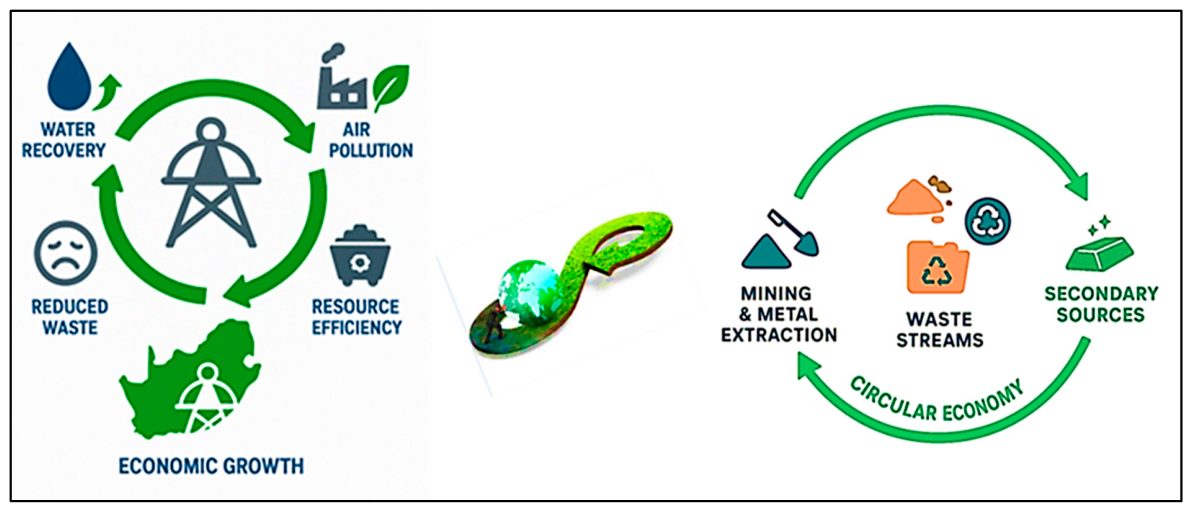
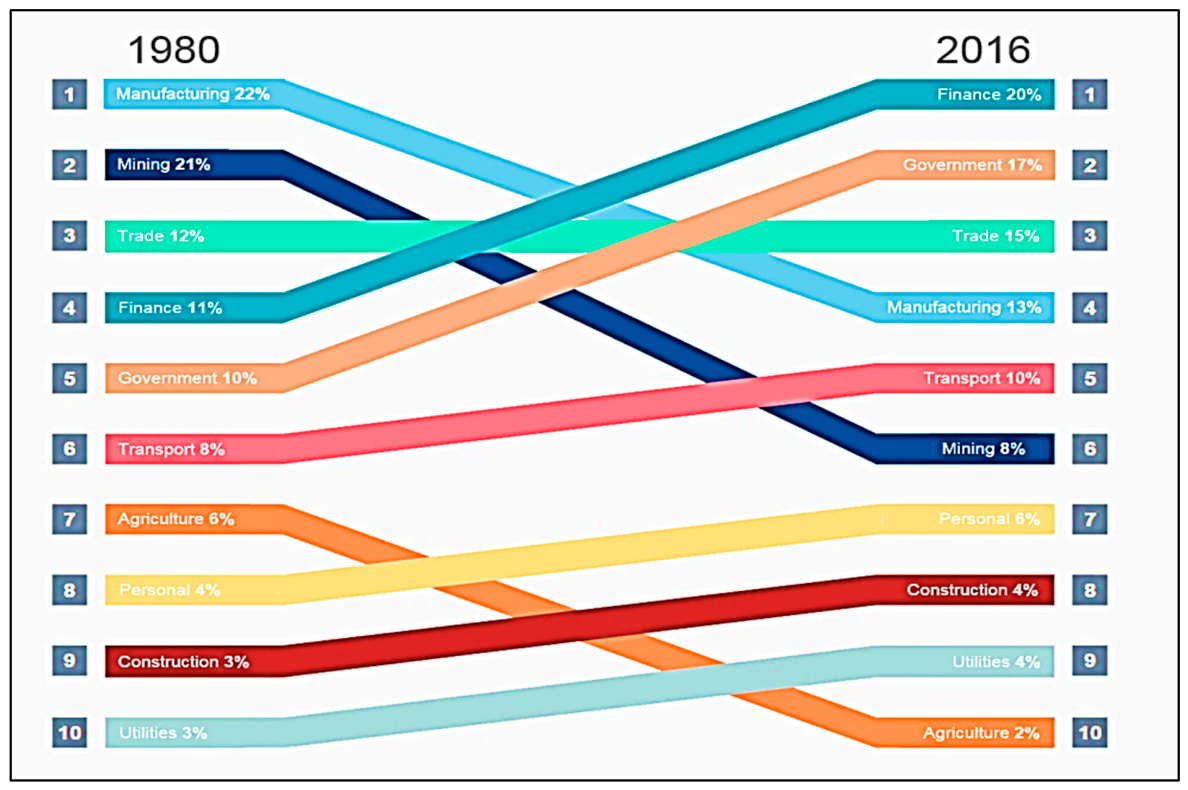
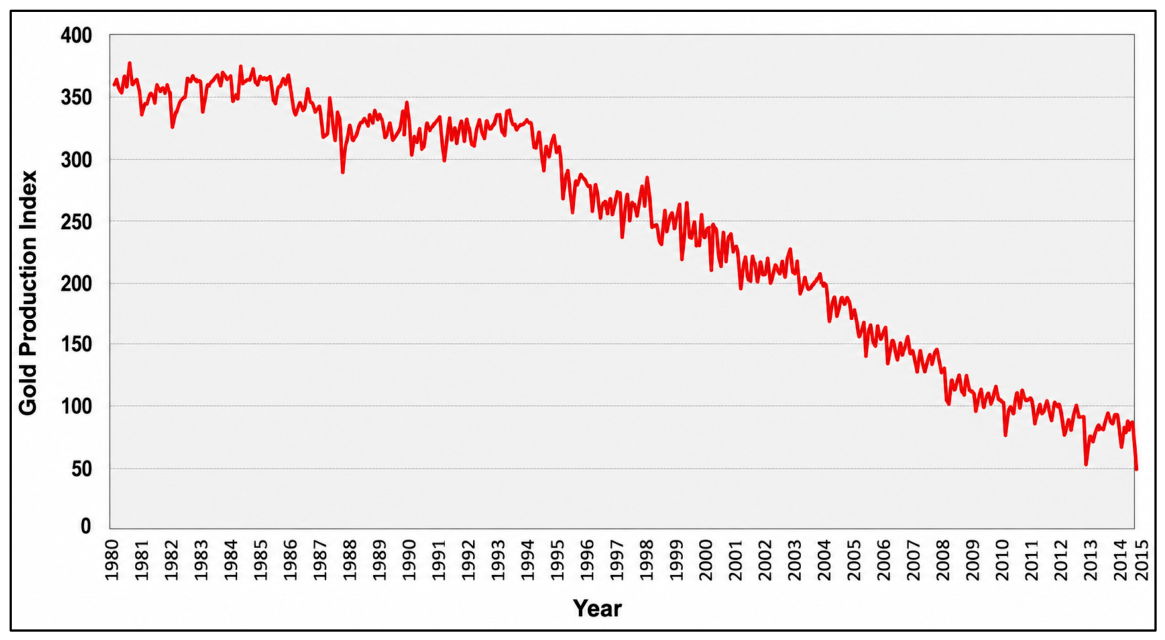
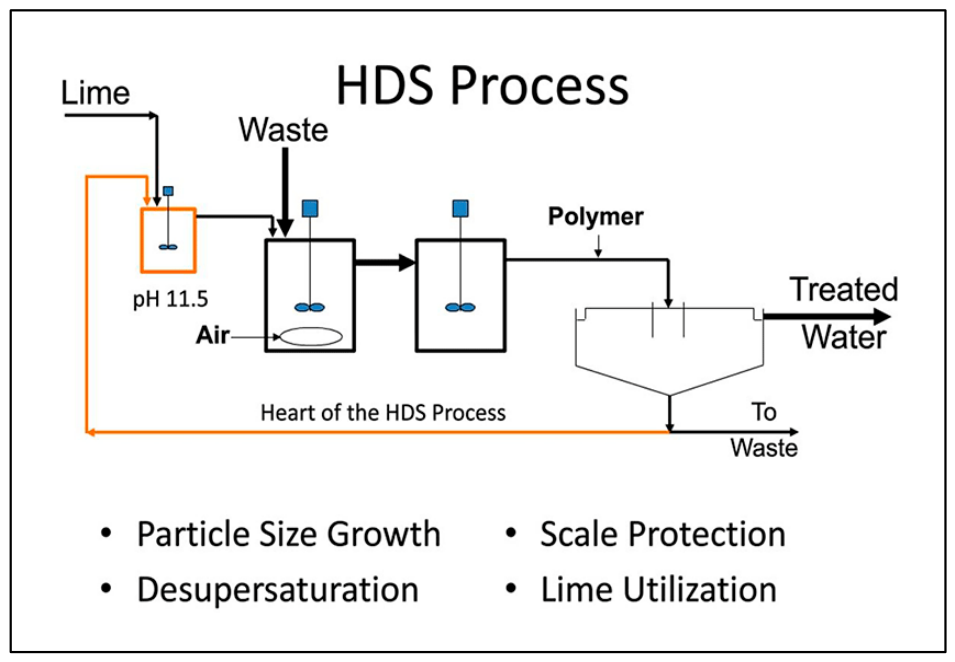
Circular Economy in the South African Mining Industry: A Sustainable Framework for Waste Prevention, Tailings Valorization, and Ecosystem Regeneration

 ,
,  ,
,  ,
, 
Abstract
1. Introduction


2. Circular Economy in the Mining Sector
3. The Circular Economy Framework
3.1. Design Out Waste—Waste Prevention Through Smart Design
3.1.1. Water Recovery
3.1.2. Sensor-Based Extraction
3.1.3. Modular Infrastructure Design
3.1.4. Coarse Particle Mining and In Situ Recovery
3.2. Keep Products and Materials in Use—Valorization of Mining Waste
3.2.1. AMD–AMD

| Country/Region | Technology/Practices | Findings and Outcomes | Applicability to South Africa | References |
|---|---|---|---|---|
| China (Shanxi Province) | Membrane Bioreactor (MBR) + Reverse Osmosis (RO) | Hybrid MBR-RO systems achieve up to 90% mine water recycling, treating high-sulfate AMD (5000–15,000 mg/L). This indicates that most wastewater is cleaned and reused, even when it contains very high sulfate levels. NF-MBR + RO yields permeate conductivity <200 μS/cm from a feed of 10,000 μS/cm, with 3.3× lower RO fouling than UF-MBR. Indicates that the treated water is nearly free of salts, starting from very salty feedwater (10,000 μS/cm), and that the system clogs much less than older ultrafiltration methods, reducing maintenance and improving efficiency. The leftover gypsum mineral from treatment can be reused in making cement, turning waste into a useful material. | For Mpumalanga coalfields (63 collieries, 200 ML/d AMD to the Olifants River), hybrid MBR-RO could cut DWS compliance costs from R450/m3 to R250/m3 while recovering 85% of process water, directly mitigating priority pollution hotspots. | [127,149,150,151] |
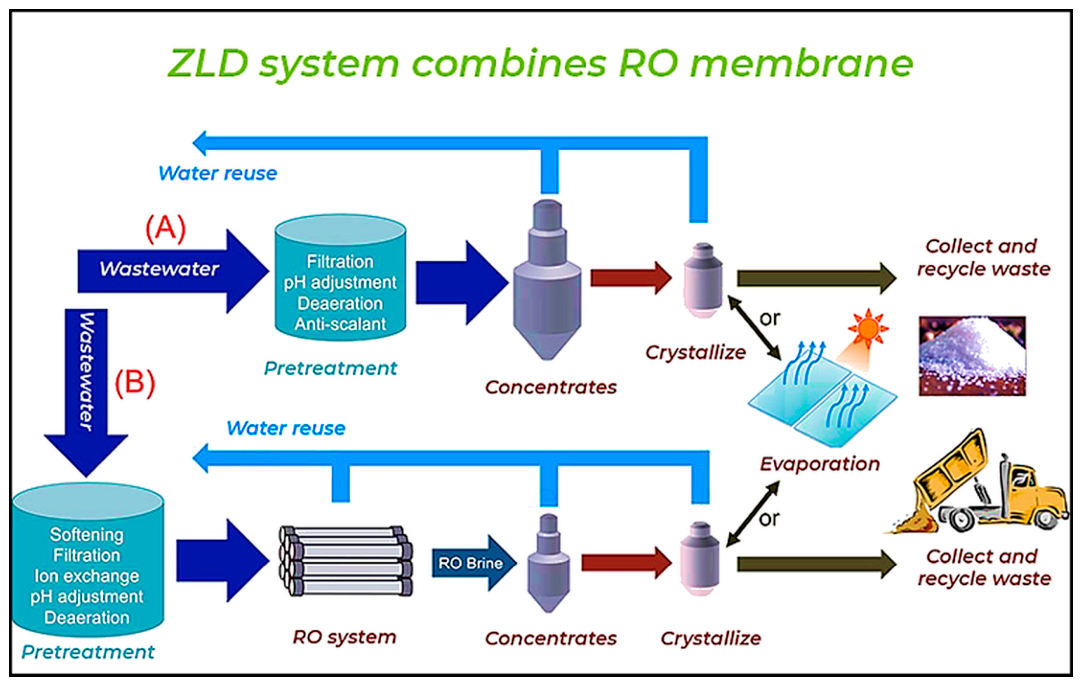
| India (Jharkhand, Coal India Limited) | Zero Liquid Discharge (ZLD) with Evaporation–Crystallization | 12 ZLD plants process 150 ML/d, achieving 100% wastewater reuse. Multi-effect evaporators recover sodium sulfate and achieve 95% volume reduction, 75% OPEX savings, and salt purity >98% in the chemical industries. The findings show that this process reuses all wastewater, recovers salts (sodium sulfate) as valuable by-products, reduces treatment costs, and minimizes discharge. Recovered salt is of high purity and can be sold to chemical industries. | Limpopo platinum mines could adopt ZLD to comply with the National Water Act Section 21 requirements. Recovery of MgSO4 from PGM-rich AMD demonstrated at Anglo Platinum Polokwane plant (90% recirculation). Supports equitable water allocation and revenue generation from by-products. | [53,152,153] |
| United States (Pennsylvania) | Constructed Wetlands and Passive Treatment | Vertical flow wetlands achieve 70% iron removal (>100 mg/L → <30 mg/L) and 60% acidity neutralization (pH 3.5 → 6.8) using sulfate-reducing bacteria over 25 years. Metal retention 85–95%. Costs $0.50–1.50/m3 versus $5–10/m3 for active treatment. Generates biodiversity corridors. It uses plants and bacteria to remove metals and reduce acidity, is low-cost, and creates a habitat suitable for abandoned mines. Magnesium sulfate (MgSO4), a by-product of PGM-rich AMD, can be sold, creating revenue and supporting water reuse. | Mpumalanga abandoned eMalahleni collieries (1200 sites) could implement wetlands 15 ML/d per site, creating ~200 low-skill jobs/ha. Supports DWS Priority 2 rehabilitation mandates and passive AMD remediation. | [154,155,156,157] |
| Australia (Mt Arthur, BHP) | Real-Time Sensor-Based Water Monitoring (IoT + SCADA) | Real-time pH/ORP/heavy metal monitoring ensures 98% regulatory compliance and 25% water reuse optimization. Predictive modeling reduced environmental incidents by 40%. These findings indicate that sensors track water quality in real time, ensure compliance, reduce spills, optimize water reuse, and lower fines. | Vaal River catchment mines could integrate DWS NAEIS with sensors to monitor AMD discharge, prevent fines (~R2 billion annually), and improve Minerals Council ESG reporting. Enhances compliance and proactive water management. | [158,159,160] |
| Europe (Germany–Ruhr Valley/Poland–Upper Silesia) | Mine Water District Heating and Industrial Reuse/ZLD-Crystallization | Germany: 50 ML/d neutralized mine water (15–20 °C) used for district heating (15 power plants), displacing 20,000 m3 municipal supply/day with 30% energy efficiency gains. Poland: ZLD-crystallization produces 25,000 tpa of NaCl, with a 95% volume reduction. The findings show that the treated mine water can be used for heating, cooling, and salt production, reducing freshwater use and cutting operational costs. | Mpumalanga’s 12 GW coal fleet could use treated AMD for cooling water, reducing regional water consumption (currently 37%) and cutting Eskom operating costs by ~R500 million/year. Enables industrial valorization of AMD while reducing freshwater abstraction. | [65,161,162,163] |
3.2.2. Re-Mining of Tailings
3.3. Regenerate Natural Systems
4. Techno-Economic Feasibility and Commercial Readiness
5. Policy Recommendations and Implementation Roadmap
6. Research Outlook
7. Conclusions
Author Contributions
Funding
Institutional Review Board Statement
Informed Consent Statement
Data Availability Statement
Acknowledgments
Conflicts of Interest
References
- Antony Jose, S.; Calhoun, J.; Renteria, O.B.; Mercado, P.; Nakajima, S.; Hope, C.N.; Sotelo, M.; Menezes, P.L. Promoting a circular economy in mining practices. Sustainability 2024, 16, 11016. [Google Scholar] [CrossRef]
- Cole, M.J.; Mudau, S.; Mohasoa, P. A sustainable approach to derelict and ownerless mines in South Africa. J. South. Afr. Inst. Min. Metall. 2025, 125, 193–208. [Google Scholar] [CrossRef]
- Upadhyay, R.K. Mining, Mineral Beneficiation, and Environment. In Geology and Mineral Resources; Springer Nature: Singapore, 2025; pp. 799–858. [Google Scholar]
- Iqbal, A.; Mashaan, N.S.; Paraskeva, T. Mining Waste in Asphalt Pavements: A Critical Review of Waste Rock and Tailings Applications. J. Compos. Sci. 2025, 9, 402. [Google Scholar] [CrossRef]
- Kanwal, Q.; Akhtar, M.S.; Al-Ghamdi, S.G. Evaluating the global processability of anthropogenic metals from mining waste. Resources 2024, 13, 126. [Google Scholar] [CrossRef]
- Araujo, F.S.; Taborda-Llano, I.; Nunes, E.B.; Santos, R.M. Recycling and reuse of mine tailings: A review of advancements and their implications. Geosciences 2022, 12, 319. [Google Scholar] [CrossRef]
- Statistics South Africa. Mining: GDP Contribution and Gold-Production Index; Stats SA: Pretoria, South Africa, 2016.
- Department of Mineral and Petroleum Resources (DMPR). South Africa’s Mining Sector Performance 2024 (Report R141/2025); Directorate Mineral Economics and Statistics: Pretoria, South Africa, 2025.
- Tadie, M.; Chingwaru, S.J.; Von der Heyden, B. An underexploited invisible gold resource in the Archean sulphides of the Witwatersrand tailings dumps. Sci. Rep. 2023, 13, 3086. [Google Scholar] [CrossRef] [PubMed]
- Department of Water and Sanitation. 2016. Available online: https://www.dws.gov.za/ (accessed on 2 March 2026).
- Baloyi, J.; Ramdhani, N.; Mbhele, R.; Ramutshatsha-Makhwedzha, D. Recent progress on AMD technological trends in South Africa: Prevention, treatment, and resource recovery. Water 2023, 15, 3453. [Google Scholar] [CrossRef]
- Askham, T.M.; Van der Poll, H.M. Water sustainability of selected mining companies in South Africa. Sustainability 2017, 9, 957. [Google Scholar] [CrossRef]
- Chimutso, T.C. Occupational Exposure to Dust and Associated Respiratory Symptoms Among Quarry Mine Workers, Roodepoort, Johannesburg, South Africa. Master’s Thesis, University of Johannesburg, Johannesburg, South Africa, 2023. [Google Scholar]
- Buyela, C.W. Occupational Health Risk Assessment in Artisanal and Small-Scale Gold Mining in Kakamega and Migori, Regions, Kenya. Doctoral Dissertation, College of Health Sciences, Jomo Kenyatta University of Agriculture and Technology (JKUAT-COHES), Nairobi, Kenya, 2024. [Google Scholar]
- Ivanova, S.; Vesnina, A.; Fotina, N.; Prosekov, A. An overview of carbon footprint of coal mining to curtail greenhouse gas emissions. Sustainability 2022, 14, 15135. [Google Scholar] [CrossRef]
- Lak, S.Z.; Rezaei, J.; Rahimpour, M.R. Health and pollution challenges of fossil fuels utilization. Encycl. Renew. Energy Sustain. Environ. 2024, 8, 155. [Google Scholar] [CrossRef]
- Saka, M.B.; Mohd Hashim, M.H.; Shehu, S.A. Mining Dust: Health Impacts, Control Measures and Future Directions. Environ. Eng. Manag. J. (EEMJ) 2025, 24, 407–422. [Google Scholar] [CrossRef]
- Kekana, H.N.; Ruhiiga, T.M.; Ndou, N.N.; Palamuleni, L.G. Environmental justice in South Africa: The dilemma of informal settlement residents. GeoJournal 2023, 88, 3709–3725. [Google Scholar] [CrossRef]
- Mphaga, K.V.; Utembe, W.; Rathebe, P.C. Radon exposure risks among residents proximal to gold mine tailings in Gauteng Province, South Africa: A cross-sectional preliminary study protocol. Front. Public Health 2024, 12, 1328955. [Google Scholar] [CrossRef] [PubMed]
- Madonsela, B.S.; Maphanga, T.; Grangxabe, X.S. Environmental Degradation from Zama-Zama Illegal Mining in South Africa: Policy Implementation and Governance Challenges. Sustainability 2025, 17, 3418. [Google Scholar] [CrossRef]
- Teisho, O. Energy and Development: An Assessment of South. Ph.D. Thesis, Department of Anthropology and Archaeology, Faculty of Humanities, University of Pretoria, Pretoria, South Africa, 2022. [Google Scholar]
- Winkler, H.; Black, A. Creating employment and reducing emissions: Options for South Africa. Dev. South. Afr. 2024, 41, 1078–1097. [Google Scholar] [CrossRef]
- Tshitangano, T.G.; Nelwamondo, T. The Health and Well-Being of Community Members Living Closer to a Coal Mine in Limpopo Province, South Africa: Perceptions of Residence. Preprints 2024. [Google Scholar] [CrossRef]
- Van Coller, C. Bioaugmentation and Biostimulation of a South African Coal-Based Technosol as a Mine Rehabilitation Strategy. Master’s Thesis, University of Cape Town, Cape Town, South Africa, 2023. [Google Scholar]
- Banda, M.F.; Matabane, D.L.; Munyengabe, A. A phytoremediation approach for the restoration of coal fly ash polluted sites: A review. Heliyon 2024, 10, e40741. [Google Scholar] [CrossRef] [PubMed]
- Adhikari, S.; Struwig, M.; Siebert, S.J. Identifying common trees and herbaceous plants to mitigate particulate matter pollution in a semi-arid mining region of South Africa. Climate 2022, 11, 9. [Google Scholar] [CrossRef]
- Cairncross, B. The Witwatersrand Goldfield, South Africa. Rocks Miner. 2021, 96, 296–351. [Google Scholar] [CrossRef]
- Cole, M.J.; Broadhurst, J.L. Sustainable development in mining communities: The case of South Africa’s West Wits Goldfield. Front. Sustain. Cities 2022, 4, 895760. [Google Scholar] [CrossRef]
- Chikande, T. Application of Fourth Industrial Revolution Technologies to Ventilation Design and Environmental Monitoring Criteria for Platinum Mining in Zimbabwe. Doctoral Dissertation, University of the Witwatersrand, Johannesburg, South Africa, 2022. [Google Scholar]
- Khan, S.; Magweregwede, F. A review of circular economy opportunities in the mining sector. J. South. Afr. Inst. Min. Metall. 2025, 125, 719–724. [Google Scholar]
- Makhathini, T.P.; Bwapwa, J.K.; Mtsweni, S. Various options for mining and metallurgical waste in the circular economy: A review. Sustainability 2023, 15, 2518. [Google Scholar] [CrossRef]
- Sun, Z.; Fan, X. Environment and Health Implications of Mine and Metallurgy Waste-Based AAMs. In Mining and Metallurgical Wastes Based Alkali-Activated Materials; Springer Nature: Singapore, 2024; pp. 215–231. [Google Scholar]
- Silva, V.U.; Nascimento, M.F.; Oliveira, P.R.; Panzera, T.H.; Rezende, M.O.; Silva, D.A.L.; de Moura Aquino, V.B.; Lahr, F.A.R.; Christoforo, A.L. Circular vs. linear economy of building materials: A case study for particleboards made of recycled wood and biopolymer vs. conventional particleboards. Constr. Build. Mater. 2021, 285, 122906. [Google Scholar] [CrossRef]
- Mbebe, N.K. Development of an Integrated Approach for Prioritization of Mine Features of Selected Abandoned Mines for Rehabilitation in the Giyani Greenstone Belt. Master’s Thesis, University of Venda, Thohoyandou, South Africa, 2022. [Google Scholar]
- Naidoo, S. Social Constructions of Water Quality in South Africa: A Case Study of the Blesbokspruit River in the Context of AMD Treatment; Springer Nature: Cham, Switzerland, 2022. [Google Scholar]
- Kasonga, T.K.; Coetzee, M.A.; Kamika, I.; Ngole-Jeme, V.M.; Momba, M.N.B. Endocrine-disruptive chemicals as contaminants of emerging concern in wastewater and surface water: A review. J. Environ. Manag. 2021, 277, 111485. [Google Scholar] [CrossRef]
- Chetty, S.; Pillay, L.; Humphries, M.S. Gold mining’s toxic legacy: Pollutant transport and accumulation in the Klip River catchment, Johannesburg. S. Afr. J. Sci. 2021, 117, 7–8. [Google Scholar] [CrossRef]
- Statistics South Africa. Gold Production Index; Stats SA: Pretoria, South Africa, 2015. Available online: https://www.statssa.gov.za (accessed on 12 March 2026).
- Luthra, S.; Mangla, S.K.; Sarkis, J.; Tseng, M.L. Resources melioration and the circular economy: Sustainability potentials for mineral, mining and extraction sector in emerging economies. Resour. Policy 2022, 77, 102652. [Google Scholar] [CrossRef]
- Kinnunen, P.; Karhu, M.; Yli-Rantala, E.; Kivikytö-Reponen, P.; Mäkinen, J. A review of circular economy strategies for mine tailings. Clean. Eng. Technol. 2022, 8, 100499. [Google Scholar] [CrossRef]
- Kandpal, V.; Jaswal, A.; Santibanez Gonzalez, E.D.; Agarwal, N. Circular economy principles: Shifting towards sustainable prosperity. In Sustainable Energy Transition: Circular Economy and Sustainable Financing for Environmental, Social and Governance (ESG) Practices; Springer Nature: Cham, Switzerland, 2024; pp. 125–165. [Google Scholar]
- Zhu, W.; Kong, D.; Ye, Q.; Zhang, X.; Tian, D.; Solangi, Y.A. Enhancing Environmental Sustainability in the Mining Industry: Circular Economy Strategies for Resource Management and Digital Integration. Land Degrad. Dev. 2025, 36, 2887–2901. [Google Scholar] [CrossRef]
- Baloyi, J.; Ramdhani, N.; Mbhele, R.; Simate, G.S. AMD from gold mining in South Africa: Remediation, reuse, and resource recovery. Mine Water Environ. 2024, 43, 418–430. [Google Scholar] [CrossRef]
- Mlalazi, N.; Mbohwa, C.; Ramuhaheli, S.; Chimwani, N. A Review of the Current State, Challenges and Emerging Trends for Sustainable Tailings Remediation in South Africa: Transforming Mine Tailings Dumps into Bioenergy Hotspots. Environ. Rev. 2025, 34, 1–16. [Google Scholar]
- Khan, S.; Maphalala, B.; Nontso, Z.; Magweregwede, F.; Godfrey, L. South Africa’s mineral resource availability as a potential driver for transitioning to a circular economy. J. South. Afr. Inst. Min. Metall. 2025, 125, 61–68. [Google Scholar]
- Joseph, R. Environmental issues in Mining: A Comprehensive Review of Challenges and Strategies for Mitigation and Rehabilitation. Min. Rev. Min. 2025, 31, 51–71. [Google Scholar] [CrossRef]
- Das, A.P.; van Hullebusch, E.D.; Akçil, A. (Eds.) Sustainable Management of Mining Waste and Tailings: A Circular Economy Approach; CRC Press: Boca Raton, FL, USA, 2024. [Google Scholar]
- Shirani Faradonbeh, R.; Shah, M.I.; Bahadori, M.; Jang, H. Toward Sustainable Mining: Exploring Alternative Mineral Resources and Innovative Extraction Techniques. Mining 2025, 5, 66. [Google Scholar] [CrossRef]
- Pandey, A.K. Sustainable water management through integrated technologies and circular resource recovery. Environ. Sci. Water Res. Technol. 2025, 11, 1822–1846. [Google Scholar] [CrossRef]
- Ilkhani, Z.; Aiouache, F. Bioleaching of Gold from Printed Circuit Boards: Potential Sustainability of Thiosulphate. Recycling 2025, 10, 87. [Google Scholar] [CrossRef]
- Kabangu, J.M.; Tapfuma, A.; Mutimutema, P.; Ndlovu, G.; Muller, E. Perspective Chapter: Sustainable Mining Futures–Valorization of Mine Waste through Circular Practices. In Sustainable Mining—Innovations, Challenges, and Future Pathways; IntechOpen: London, UK, 2025. [Google Scholar]
- Ndlovu, S.; Adewuyi, S.O. Towards sustainable metal extraction: Navigating energy and water challenges in the South African mining industry. Extr. Ind. Soc. 2025, 24, 101760. [Google Scholar] [CrossRef]
- Wadsworth, C.; Burgess, J. Water Innovations Market Demand Analysis in the Mining Sector; Water Research Commission: Pretoria, South Africa, 2022. [Google Scholar]
- Laker, M.C. Environmental impacts of gold mining—With special reference to South Africa. Mining 2023, 3, 205–220. [Google Scholar] [CrossRef]
- Mapukata, S.; Mudzanani, K.; Chauke, N.M.; Maiga, D.; Phadi, T.; Raphulu, M. AMD Treatment and Control: Remediation Methodologies, Mineral Beneficiation and Water Reclamation Strategies. In Hydrology-Current Research and Future Directions; IntechOpen: London, UK, 2024. [Google Scholar]
- Ahmadpari, H.; Sadri, S.; Radmanesh, F. Investigation of reverse osmosis technology for water quality management. In Proceedings of the 5th International Conference on Recent Innovations Chemistry and Chemical Engineering, Tehran, Iran, 24–25 September 2022. [Google Scholar]
- Matebese, F.; Mosai, A.K.; Tutu, H.; Tshentu, Z.R. Mining wastewater treatment technologies and resource recovery techniques: A review. Heliyon 2024, 10, e24730. [Google Scholar] [CrossRef] [PubMed]
- Masindi, V.; Foteinis, S.; Renforth, P.; Ndiritu, J.; Maree, J.P.; Tekere, M.; Chatzisymeon, E. Challenges and avenues for AMD treatment, beneficiation, and valorization in circular economy: A review. Ecol. Eng. 2022, 183, 106740. [Google Scholar] [CrossRef]
- Rodríguez, J.E.; Razo, I.; Lázaro, I. Water footprint for mining process: A proposed method to improve water management in mining operations. Clean. Responsible Consum. 2023, 8, 100094. [Google Scholar] [CrossRef]
- Kodialbail, V.S.; Sophia, S. Concept of zero liquid dischare—Present scenario and new opportunities for economically viable solution. In Concept of Zero Liquid Discharge; Elsevier: Amsterdam, The Netherlands, 2023; pp. 3–31. [Google Scholar]
- Liao, B.; Zeng, X.; Ling, Z.; Zhao, S.; Li, B.; Han, X. Recent Advances in Zero Discharge Treatment Technologies for Desulfurization Wastewater in Coal-Fired Power Plants: A Mini-Review. Processes 2025, 13, 982. [Google Scholar] [CrossRef]
- Soliman, M.; Eljack, F.; Kazi, M.K.; Almomani, F.; Ahmed, E.; El Jack, Z. Treatment technologies for cooling water blowdown: A critical review. Sustainability 2021, 14, 376. [Google Scholar] [CrossRef]
- Hoa Phat Eco Industrial Solutions. Zero Liquid Discharge (ZLD): Overview of the ZLD solution. Hoa Phat Eco. 2023. Available online: https://hoaphat-eco.com/en/zero-liquid-discharge-zld (accessed on 20 February 2026).
- Scholes, R.C.; Stiegler, A.N.; Anderson, C.M.; Sedlak, D.L. Enabling water reuse by treatment of reverse osmosis concentrate: The promise of constructed wetlands. ACS Environ. Au 2021, 1, 7–17. [Google Scholar] [CrossRef] [PubMed]
- Wolkersdorfer, C. Active treatment methods for mine water. In Mine Water Treatment–Active and Passive Methods; Springer: Berlin/Heidelberg, Germany, 2022; pp. 95–149. [Google Scholar]
- Schwarz, A.; Salas, L.; Nancucheo, I.; González-Vogel, A. Zero Liquid Discharge Recovery System for Maximized Tailings Water Reuse. J. Environ. Manag. 2025, 394, 127272. [Google Scholar] [CrossRef]
- Garg, A.; Chauhan, P.; Kaur, C.; Perveen, S.; Arora, P.K.; Garg, S.K.; Singh, V.P.; Srivastava, A. Bacterial bioremediation strategies for heavy metal detoxification: A multidisciplinary approach. Environ. Sustain. 2025, 8, 395–417. [Google Scholar] [CrossRef]
- Oziegbe, O.; Oziegbe, E.J.; Ojo-Omoniyi, O. Bioremediation of heavy metals in aquatic environment: A review. Clean. Chem. Eng. 2025, 11, 100193. [Google Scholar] [CrossRef]
- Jeyakumar, P.; Debnath, C.; Vijayaraghavan, R.; Muthuraj, M. Trends in bioremediation of heavy metal contaminations. Environ. Eng. Res. 2023, 28, 220631. [Google Scholar]
- Khan, Z.; Anees, A.; Khan, I.; Shahwar, D. Advancements in microalgal bioremediation of heavy metal-contaminated water: Potential challenges and prospects. In Bio-Organic Amendments for Heavy Metal Remediation; Elsevier: Amsterdam, The Netherlands, 2024; pp. 33–55. [Google Scholar]
- Rapallo, A.C.M.; zum Brock, J.; Doostdar, M.; Kuchta, K. Innovative Slab Connection to Reduce Material Use and Increase Flexibility in a “Design for Disassembly” Structure. Kreislauf-Und Ressourcenwirtschaft 2024, 63. [Google Scholar] [CrossRef]
- Gairola, S.U.; Khanduri, A.K.; Bhuvaneswari, V. Sustainable mining: Reducing waste and enhancing resource efficiency. Discov. Civ. Eng. 2025, 2, 75. [Google Scholar] [CrossRef]
- Soda, O. Morphological and Chemical Characterization of Nanoparticulate Matter by SEM/EDX Analytical Techniques. Ph.D. Thesis, University of Genoa, Genoa, Italy, 2023. [Google Scholar]
- Peukert, D.; Xu, C.; Dowd, P. Validation of a PGNAA sensor model for bulk material sorting. Miner. Eng. 2024, 217, 108950. [Google Scholar] [CrossRef]
- Thermo Fisher Scientific. Production Process & Analytics: Analytical Techniques—Detection and Penetration Characteristics. Thermo Fisher Scientific Inc. Available online: https://www.thermofisher.com (accessed on 12 March 2026).
- Leonida, C. See It, Sense It, Sort It. Eng. Min. J. 2025, 226, 40–47. [Google Scholar]
- de Jager, C.; Houghton, J. Enhancing Large Diamond Recovery: An Overview of X-ray Transmission (XRT) Technology. In Proceedings of the 12th International Kimberlite Conference Extended Abstract, Yellowknife, NT, Canada, 8–12 July 2024; Volume 12. [Google Scholar]
- Manenzhe, R. A Stepwise Study on the Characterisation and Processing of South African Platinum Group Tailings. Ph.D. Thesis, University of Cape Town, Cape Town, South Africa, 2023. [Google Scholar]
- Chingwaru, S.J. Gold Deportment and Ore Characterisation of the Historical Witwatersrand Tailings Dams with Emphasis Placed on the Sulphides. Doctoral Dissertation, Stellenbosch University, Stellenbosch, South Africa, 2024. [Google Scholar]
- Mosima, G. The Potential Viability of Emerging Technologies for Improving Water Management in South Africa: A Case Study of Selected Water Service Authorities. Doctoral dissertation, Stellenbosch University, Stellenbosch, South Africa, 2025. [Google Scholar]
- Singo, N.K.; Kramers, J.D. Feasibility of tailings retreatment to unlock value and create environmental sustainability of the Louis Moore tailings dump near Giyani, South Africa. J. South. Afr. Inst. Min. Metall. 2021, 121, 361–367. [Google Scholar] [CrossRef]
- Igogo, T.; Awuah-Offei, K.; Newman, A.; Lowder, T.; Engel-Cox, J. Integrating renewable energy into mining operations: Opportunities, challenges, and enabling approaches. Appl. Energy 2021, 300, 117375. [Google Scholar] [CrossRef]
- Ruberti, M. Pathways to greener primary lithium extraction for a really sustainable energy transition: Environmental challenges and pioneering innovations. Sustainability 2024, 17, 160. [Google Scholar] [CrossRef]
- Mudd, G.M. Platinum group elements: Critical resources for sustainable technology. In Critical Materials and Sustainability Transition; CRC Press: Boca Raton, FL, USA, 2023; pp. 68–85. [Google Scholar]
- Sithole, S.; Mulaba–Bafubiandi, A.F. Reduced Consumption of Platinum Group Metals in Automotive Industry: A Threat to South African PGM’s Industry? Needs for Proactive Palliative Remediation. In Proceedings of the 39th Johannesburg International Conference on “Chemical, Biological and Environmental Engineering” (JCBEE-23), Johannesburg, South Africa, 16–17 November 2023. [Google Scholar]
- Longhua, X. Coarse Particle Flotation. In The ECPH Encyclopedia of Mining and Metallurgy; Springer Nature: Singapore, 2024; pp. 271–272. [Google Scholar]
- Wu, C. AMD Prediction Techniques and Geochemical Modelling: Case Study on Gold Tailing Dams, West Rand, Witwatersrand Basin Area, South Africa. Ph.D. Thesis, University of the Western Cape, Cape Town, South Africa, 2021. [Google Scholar]
- Folifac, L. Optimization of High-Density Sludge Process for Maximum Value Recovery. Doctoral Dissertation, Cape Peninsula University of Technology, Cape Town, South Africa, 2022. [Google Scholar]
- Schultz, S.K. Dynamic Modelling of a Carbon-in-Leach Gold Processing Plant. Doctoral Dissertation, Stellenbosch University, Stellenbosch, South Africa, 2022. [Google Scholar]
- Du Toit, K. Economic Factors and Their Impact on Listed Platinum Mining Company Performance in South Africa. Master’s Thesis, University of Johannesburg, Johannesburg, South Africa, 2024. [Google Scholar]
- Mpanza, M.; Adam, E.; Moolla, R. A critical review of the impact of South Africa’s mine closure policy and the winding-up process of mining companies. J. Transdiscipl. Res. South. Afr. 2021, 17, 21. [Google Scholar] [CrossRef]
- Bloemhof, R.; Bothma, J. Navigating uncertainty: Towards resilient cost estimation in mine closure. In Mine Closure 2025: Proceedings of the 18th International Conference on Mine Closure, Luleå, Sweden, 23–25 September 2025; Australian Centre for Geomechanics: Perth, Australia, 2025. [Google Scholar]
- Oliveros-Sepúlveda, D.; Bascompta-Massanés, M.; Franco-Sepúlveda, G. Environmental and closure costs in strategic mine planning, models, regulations, and policies. Resources 2025, 14, 41. [Google Scholar] [CrossRef]
- Imarhiagbe, E.E.; Salami, D.A. Metal Mining in Nigeria: Critique on it’s Environmental, Socio-Impacts and Mitigation Measures. J. Energy Technol. Environ. 2024, 6, 34–45. [Google Scholar]
- Bakhtin, M.; Ibrayeva, D.; Kashkinbayev, Y.; Aumalikova, M.; Altaeva, N.; Tazhedinova, A.; Shokabayeva, A.; Kazymbet, P. Environmental Monitoring in Uranium Deposit and Indoor Radon Survey in Settlements Located near Uranium Mining Area, South Kazakhstan. Atmosphere 2025, 16, 536. [Google Scholar] [CrossRef]
- Eriez Flotation Division. The Benefits of Coarse Particle Flotation; Eriez: Erie, PA, USA, 2022; Available online: https://www.eriez.com/Documents/Literature/Brochures/Products/Flotation/FGB-104-Eriez-Benefits-of-Coarse-Particle-Flotation.pdf (accessed on 12 March 2026).
- Kromah, V.; Powoe, S.B.; Khosravi, R.; Neisiani, A.A.; Chelgani, S.C. Coarse particle separation by fluidized-bed flotation: A comprehensive review. Powder Technol. 2022, 409, 117831. [Google Scholar] [CrossRef]
- Moon, Y.B. Investigation of the Critical Coalescence Concentration and the Optimization of the Operating of Parameters for Coarse Particles Using an Aerated Fluidized BED flotation Cell-Eriez HydroFloat™. Master’s Thesis, McGill University, Montreal, QC, Canada, 2025. [Google Scholar]
- Botero, Y.L. Flotation Process of Porphyry Copper Ore to Prevent AMD from Tailings and Waste Rock: A Cleaner Production Approach; Ecole Polytechnique: Montreal, QC, Canada, 2023. [Google Scholar]
- Ozsoy, Y.; Honaker, R.Q.; Mankosa, M.; Hobert, A.; Bhambhani, T.; Lycans, S.J. Revolutionizing coarse particle flotation Part I–A comprehensive exploration method for the HydroFloat™ technology. Miner. Eng. 2025, 231, 109453. [Google Scholar] [CrossRef]
- Yang, T. Recovery of Metals from Rare-Earth-Containing Tailings and Slags: Alleviating Material Constraints in Renewable Energy Systems. Master’s Thesis, LUT University, Lappeenranta, Finland, 2025. [Google Scholar]
- Wu, W.; Kang, K.; Ye, Q.; Luo, A.; Zhang, J.; Wang, J.; Shi, S. Comprehensive Utilization of Iron Ore Tailings: A Review of Sustainable Practices and Technologies. Min. Met. Explor. 2026, 43, 413–430. [Google Scholar] [CrossRef]
- Choppala, G.; Naidu, R. Derelict Mine Sites–Australian Perspective. In Derelict Mines; CRC Press: Boca Raton, FL, USA, 2024; pp. 36–56. [Google Scholar]
- Kajastie, N. Changing Landscape of Flotation. Eng. Min. J. 2025, 226, 24–30. [Google Scholar]
- Notole, V.; Nwaila, G.T.; Safari, M.; Ndlovu, S. Investigating mineral composition of PGE low-grade ore in Bushveld igneous complex, South Africa. Miner. Eng. 2025, 234, 109682. [Google Scholar] [CrossRef]
- Lee, S.; Gibson, C.E.; Ghahreman, A. The separation of carbonaceous matter from refractory gold ore using multi-stage flotation: A case study. Minerals 2021, 11, 1430. [Google Scholar] [CrossRef]
- Carvalho, M.; Sherrel, I.; Emer, C.; Rinne, A. Enhanced coarse particle flotation: A novel approach. Physicochem. Probl. Miner. Process. 2025, 61, 211192. [Google Scholar] [CrossRef]
- Concha, J.; Hobert, D.; Lempens, P.; Zhmarin, E.; Wasmund, E. The Role of Coarse Particle Flotation in the Development of More Efficient Concentrator Plants. In Conference of Metallurgists; Springer Nature: Cham, Switzerland, 2023; pp. 563–568. [Google Scholar]
- Cronje, A.; van Laar, J.H.; van Rensburg, J.F.; Vosloo, J.C. Electricity Cost Forecasting in the South African Mining Industry: A Gap Analysis. Mining 2025, 5, 34. [Google Scholar] [CrossRef]
- Fiscor, S. Plant Engineering Evolves to Meet Environmental Needs. Eng. Min. J. 2022, 223, 38–41. [Google Scholar]
- Crompton, L.J. Assessing and Optimising Coarse Particle Flotation Using the CoarseAIR™ Separator. Ph.D. Thesis, University of Newcastle, Newcastle, Australia, 2024. [Google Scholar]
- Nkala, S. An Analysis of China’s Investments in South Africa’s Mining Sector. In Chinese Investment in Africa: Its Variegated and Contradictory Character in Relation to Land, Agriculture, Mining and Infrastructure; Springer International Publishing: Cham, Switzerland, 2024; pp. 137–157. [Google Scholar]
- Botha, R. Understanding South Africa’s mining slowdown: Policy Paper 43. In ERSA Working Paper Series; Economic Research Southern Africa: Cape Town, South Africa, 2026; p. 54. [Google Scholar]
- Fourie, P.J. Geochemical Evolution in Defunct Gold Mine Tailings and Modelling of Seepage Water Quality: An Investigation of a Typical Tailings Storage Facility in the East Rand, Johannesburg, South Africa. Doctoral Dissertation, University of the Free State, Bloemfontein, South Africa, 2022. [Google Scholar]
- Anzoom, S.J.; Bournival, G.; Ata, S. Coarse particle flotation: A review. Miner. Eng. 2024, 206, 108499. [Google Scholar] [CrossRef]
- Annandale, J.; Du Plessis, M.; Tanner, P.; Heuer, S.; Madiseng, L. Irrigation should be explored as a sustainable management solution to the AMD legacy of the Witwatersrand goldfields. Mine Water Environ. 2023, 42, 639–649. [Google Scholar] [CrossRef]
- Chadi, G.M. Environmental Impacts Resulting from Gold Mining Tailings Storage Facilities Within the West Rand Area in South Africa. Doctoral Dissertation, University of South Africa, Pretoria, South Africa, 2022. [Google Scholar]
- Magagula, M.; Atangana, E.; Oberholster, P. Assessment of the impact of coal mining on water resources in Middelburg, Mpumalanga Province, South Africa: Using different water quality indices. Hydrology 2024, 11, 113. [Google Scholar] [CrossRef]
- Mujere, J. Platinum Mining, Migrant Labour, and Community Formation in Informal Settlements in Rustenburg, South Africa, 1994–2018. In African Perspectives on South–South Migration; Routledge: Abingdon, UK, 2024; pp. 21–35. [Google Scholar]
- Windisch, J.; Gradwohl, A.; Gilbert, B.M.; Dos Santos, Q.M.; Wallner, G.; Avenant-Oldewage, A.; Jirsa, F. Toxic elements in sediment and water of the Crocodile River (West) system, South Africa, following AMD. Appl. Sci. 2022, 12, 10531. [Google Scholar]
- Christie, N.C. Assessment of the Possible Relationships and Influence of Climate Variability and Water Flow on Water Quality in Major Rivers of the Kruger National Park. Master’s Thesis, University of South Africa, Pretoria, South Africa, 2024. [Google Scholar]
- Hofmann, A. Factors responsible for Witwatersrand gold mineralisation. S. Afr. J. Geol. 2024, 127, 271–284. [Google Scholar] [CrossRef]
- Boboev, I.R.; Kholikzoda, T.; Sel’nitsyn, R.S.; Saidov, N.M.; Saidova, T.S. Material composition and diagnostic leaching tests of gold mine tailings dump (taror deposit, Tajikistan). Metallurgist 2024, 67, 1722–1730. [Google Scholar] [CrossRef]
- Kondos, P.; Choi, Y. Gold Hydrometallurgy. In Treatise on Process Metallurgy; Elsevier: Amsterdam, The Netherlands, 2025; Volume 2B, pp. 461–475. [Google Scholar]
- Li, J.; Sun, C.; Kou, J.; Wang, P.; Liu, X. Development of a gold leaching reagent as an alternative to cyanide: Synthesis and performance evaluation. Int. J. Miner. Metall. Mater. 2025, 32, 835–850. [Google Scholar] [CrossRef]
- Ubic, S. Recycling of Precious Metals from Waste Printed Circuit Boards via a Combination of Pyro and Hydrometallurgical Processes. Master’s Thesis, University of New South Wales, Sydney, Australia, 2024. [Google Scholar]
- Zhang, L.; Xu, Z.; Xiahou, M.; Gao, L.; Gao, Y.; Guo, J.; Li, C. Mechanisms of Sulfate In Situ Removal Using SRB-PRB Driven by Low-Cost Sustained-Release Carbon Source in Coal Mine Goafs: A Dynamic Column Experiment Study. Water 2025, 17, 2684. [Google Scholar]
- Wang, H.; Xu, C.; Dowd, P.A.; Wang, Z.; Faulkner, L. Modelling in-situ recovery (ISR) of copper at the Kapunda mine, Australia. Miner. Eng. 2022, 186, 107752. [Google Scholar] [CrossRef]
- Kafashi, S. Access Creation and Its Measurement in Impermeable Rock Mass for the In Situ Recovery of Metals from Ore Bodies. Doctoral Dissertation, Murdoch University, Perth, Australia, 2024. [Google Scholar]
- Nyambiya, I.; Chapungu, L.; Sawunyama, L.; Musvoto, E.V.; Nhamo, L.; Zvimba, J.N. Circular economy drivers, opportunities, and barriers, for wastewater services within low-and medium-income countries. Phys. Chem. Earth Parts A/B/C 2025, 138, 103871. [Google Scholar] [CrossRef]
- Hamraoui, L.; Bergani, A.; Ettoumi, M.; Aboulaich, A.; Taha, Y.; Khalil, A.; Neculita, C.M.; Benzaazoua, M. Towards a circular economy in the mining industry: Possible solutions for water recovery through advanced mineral tailings dewatering. Minerals 2024, 14, 319. [Google Scholar] [CrossRef]
- Faybishenko, B.; Bakhtavar, E.; Hewage, K.; Sadiq, R. Chemical composition of arsenic-based AMD in the downstream of a gold mine: Fuzzy regression and clustering analysis. J. Hazard. Mater. 2024, 465, 133250. [Google Scholar] [CrossRef] [PubMed]
- Muedi, K.L.; Masindi, V.; Brink, H.G. Recovery, Valorization, and Beneficiation of Valuable Minerals From Natural AMD and Their Respective Application in Wastewater Treatment. In Customized Technologies for Sustainable Management of Industrial Wastewater: A Circular Economy Approach; Scrivener Publishing LLC: Beverly, MA, USA, 2025; pp. 389–465. [Google Scholar]
- Mukherjee, S.; Paramanik, M.; Paramanik, S.; Dasmodak, S.; Rajak, P.; Ganguly, A. AMD: A silent threat to environmental health and its journey toward sustainable management. In Ecosystem Management: Climate Change and Sustainability; Scrivener Publishing LLC: Beverly, MA, USA, 2024; pp. 493–518. [Google Scholar]
- Nguegang, B.; Ambushe, A.A. Sustainable AMD treatment: A comprehensive review of passive, combined, and emerging technologies. Environ. Eng. Res. 2025, 30, 240592. [Google Scholar]
- Chitransh, S.; Mondal, P. Innovative approach to industrial waste utilization for AMD remediation and Spent material reuse: A cost-effective circular economy approach. J. Environ. Manag. 2025, 382, 125410. [Google Scholar] [CrossRef]
- Inam, M.A.; Usman, M.; Iftikhar, R.; Velizarov, S.; Ernst, M. Recent progress in selenium remediation from aqueous systems: State-of-the-art technologies, challenges, and prospects. Water 2025, 17, 2241. [Google Scholar] [CrossRef]
- Zhang, J.; Peng, Z.; Wang, J.; Wang, R.; Xu, H.; Mao, S.; Deng, W.; Jiang, N.; Feng, Q.; Zhou, X. Advanced recovery strategies for metallic and nonmetallic fractions from waste printed circuit boards: A comprehensive review. Sep. Purif. Rev. 2025, 54, 37–59. [Google Scholar]
- Meel, H.; Lokhande, R.D. Advancements in Coal Bed Methane Technology in India: A Global Comparative Analysis with Strategic Recommendations. In Asian Mining Congress; Springer Nature: Cham, Switzerland, 2025; pp. 569–589. [Google Scholar]
- Bhattacharya, A.K.; Roy, S.N. Wastewater management and treatment technologies with recycling and reuse issues in India leading to zero liquid discharge (ZLD). In Wastewater Assessment, Treatment, Reuse and Development in India; Springer International Publishing: Cham, Switzerland, 2022; pp. 125–157. [Google Scholar]
- Biswas, A.; Ghorai, S. Role of Sulfate-Reducing Bacteria in Sustainable Acid Mine Bioremediation. In Biohydrometallurgical Processes; CRC Press: Boca Raton, FL, USA, 2023; pp. 237–267. [Google Scholar]
- Machiels, L.; Paajanen, M.; Jones, P.T.; Binnemans, K. Near-Zero-Waste Recycling of Low-Grade Sulphidic Mining Waste for Critical-Metal, Mineral and Construction Raw-Material Production in a Circular Economy; European Commission: Brussels, Belgium, 2022. [Google Scholar]
- Cozma, P.; Bețianu, C.; Hlihor, R.M.; Simion, I.M.; Gavrilescu, M. Bio-recovery of metals through biomining within circularity-based solutions. Processes 2024, 12, 1793. [Google Scholar] [CrossRef]
- Zhang, H.; Yu, Z.; Wang, J.; Ke, Z.; Tong, L.; Tang, X.; Bai, L.; Zhang, H.; Li, G.; Liang, H. A review of inland nanofiltration and reverse osmosis membrane concentrates management: Treatment, resource recovery and future development. Crit. Rev. Environ. Sci. Technol. 2025, 55, 649–675. [Google Scholar]
- Ramabulana, M. Evaluating the Potential of the Membrane Technology for Copper Recovery from Effluents and Wastewater Generated at Copper Mines and Processing Facilities in South Africa. Master’s Thesis, University of Venda, Thohoyandou, South Africa, 2023. [Google Scholar]
- Mogashane, T.M.; Maree, J.P.; Mokoena, L.; Tshilongo, J. Research activities on AMD treatment in South Africa (1998–2025): Trends, challenges, bibliometric analysis and future directions. Water 2025, 17, 2286. [Google Scholar] [CrossRef]
- Maqabuka, A. Towards Sustainable Water Management in the Context of Coal Mining in South Africa: A Critical Reflection of the Ongoing Lephalale Coal Mining Project. Doctoral Dissertation, University of the Western Cape, Cape Town, South Africa, 2024. [Google Scholar]
- Mudau, T.C. Impact of Wastewater Treatment Works Discharges on Surface Water Quality in Emalahleni Local Municipality, Mpumalanga Province. Doctoral Dissertation, University of the Western Cape, Cape Town, South Africa, 2025. [Google Scholar]
- Zhou, C.; Shao, S.; Xiong, K.; Tang, C.Y. Nanofiltration-based membrane bioreactor operated under an ultralow flux: Fouling behavior and feasibility toward a low-carbon system for municipal wastewater reuse. ACS ES T Eng. 2023, 3, 1267–1275. [Google Scholar] [CrossRef]
- Bhavya, K.; Begum, S.; Gangagni Rao, A. Anaerobic Bioreactor Technology (ABT) for the Treatment of AMD (Acid Mine Drainage). In Biotechnological Innovations in the Mineral-Metal Industry; Springer: Cham, Switzerland, 2024; pp. 161–178. [Google Scholar]
- Shen, Z.; Zou, X.; Li, Y.; Lu, R.; Xiang, M.; Xu, K. Perspective on the sustainable development of a novel high-salinity coal mine water treatment technology. Desalination 2026, 625, 119917. [Google Scholar] [CrossRef]
- Palanivelu, K.; Shalini, S.S. Sustainable circular economy in the Indian context: Policies and best practices. In Cyclic Economy: Policies in Major Countries and the EU; De Gruyter: Berlin, Germany, 2024; p. 63. [Google Scholar]
- Radha; Sharma, N.; Prakash, S.; Kumari, N.; Sharma, D.; Laller, R.; Pundir, A.; Puri, S. From challenges to opportunities: Exploring minimum liquid discharge and zero liquid discharge strategies for wastewater management and resource recovery. In Role of Science and Technology for Sustainable Future; Springer Nature: Singapore, 2025; Volume 2, pp. 371–394. [Google Scholar]
- Nguegang, B.; Masindi, V.; Msagati, T.A.M.; Tekere, M. The treatment of AMD using vertically flowing wetland: Insights into the fate of chemical species. Minerals 2021, 11, 477. [Google Scholar]
- Kleinmann, B.; Skousen, J. The Beginnings of Passive Treatment of AMD in North America. In Proceedings of the 2022 West Virginia Mine Drainage Task Force Symposium, Morgantown, WV, USA, 4–5 October 2022; Available online: https://www.wvmdtaskforce.com/wp-content/uploads/2022/10/2022-4-kleinmann-paper-beginnings-passive-amd-2022.pdf (accessed on 17 February 2026).
- Parker, C.J. Wetland Uranium Transport via Iron-Organic Matter Flocs and Hyporheic Exchange. Ph.D. Thesis, Clemson University, Clemson, SC, USA, 2022. [Google Scholar]
- Guo, J.; Cheng, L.; Yang, M.; Wang, Z. Physicochemical characteristics and microbial community analysis of a wetland system treating AMD. Sci. Rep. 2025, 16, 3360. [Google Scholar] [CrossRef] [PubMed]
- Guo, Y.; Qu, F.; Li, W. Advancing circular economy and construction sustainability: Transforming mine tailings into high-value cementitious and alkali-activated concrete. npj Mater. Sustain. 2025, 3, 8. [Google Scholar] [CrossRef]
- Dahdah, J.; Finlayson, M.; Jirsa, S.; Lynch, B.; Whitehouse, A.; Kambanis, J.; Binwal, B.; Wolfenden, M.; Perez, J.S.; Suita, E.; et al. Heavy Metal Pollution in Water Supplies: Removal and Recovery. Syd. J. Interdiscip. Eng. 2025, 1, 1–14. [Google Scholar]
- Rahaman, T. Smart environmental monitoring systems for air and water quality management. Am. J. Adv. Technol. Eng. Solut. 2025, 1, 1–19. [Google Scholar] [CrossRef]
- Mitko, K.; Turek, M.; Dydo, P. Hybrid membrane-evaporative system for a near-ZLD utilization of coal mine brine. Desalin. Water Treat. 2021, 242, 22–30. [Google Scholar] [CrossRef]
- Vulević, T.; Dragović, N.; Radulović, L.; Todosijević, M.; Lazarevic, K.; Ristić, R.; Cathelineau, M.; Chernoburova, O. Analysis of Social Impacts of Mines and Pathways to Responsible Mining; HERAWS Project, Co-funded by the European Union: 2023. Available online: https://heraws.eu/wp-content/uploads/2025/07/Responsible-Mining-Report.pdf (accessed on 1 March 2026).
- Oppelt, L.; Wenzel, T.; Bleidiessel, M.; Heinrich, P.; Arab, A.; Wiedener, R.; Engelmann, C.; Chen, C.; Schenker, F.; Lotter, T.; et al. Seasonal heat storage in partially flooded mines—In-situ investigations at the Freiberg, Saxony, site. In Proceedings of the Der Geothermiekongress 2024 (DGK 2024), Potsdam, Germany, 22–24 October 2024; Zendo: Meyrin, Switzerland, 2025. [Google Scholar]
- Mogashane, T.M.; Mapazi, O.; Motlatle, M.A.; Mokoena, L.; Tshilongo, J. A Review of Recent Developments in Analytical Methods for Determination of Phosphorus from Environmental Samples. Molecules 2025, 30, 1001. [Google Scholar] [CrossRef] [PubMed]
- GN704 Standards; Regulations on Use of Water for Mining and Related Activities Aimed at the Protection of Water Resources (National Water Act, 1998 (Act No. 36 of 1998)). Department of Water Affairs and Forestry: Pretoria, South Africa, 1999.
- Carmignano, O.R.; Vieira, S.S.; Teixeira, A.P.C.; Lameiras, F.S.; Brandão, P.R.G.; Lago, R.M. Iron ore tailings: Characterization and applications. J. Braz. Chem. Soc. 2021, 32, 1895–1911. [Google Scholar] [CrossRef]
- South African National Standards (SANS). Available online: https://sansstandards.co.za/ (accessed on 12 February 2026).
- SANS 1200; Standardized Specification for Civil Engineering Construction. South African Bureau of Standards (SABS): Pretoria, South Africa, 1988.
- Manaviparast, H.R.; Miranda, T.; Pereira, E.; Cristelo, N. A comprehensive review on mine tailings as a raw material in the alkali activation process. Appl. Sci. 2024, 14, 5127. [Google Scholar] [CrossRef]
- Zhang, Y.; Liu, H.; Ma, T.; Chen, C.; Gu, G.; Wang, J.; Shang, X. Experimental assessment of utilizing copper tailings as alkali-activated materials and fine aggregates to prepare geopolymer composite. Constr. Build. Mater. 2023, 408, 133751. [Google Scholar] [CrossRef]
- SANS 3001; Civil Engineering Test Methods. South African Bureau of Standards (SABS): Pretoria, South Africa, 2014.
- SANS 1083; Aggregates from Natural Sources—Aggregates for Concrete. South African Bureau of Standards (SABS): Pretoria, South Africa, 2013.
- Aderinto, G.E.; Kolade, A.S.; Ikotun, B.D.; Ikotun, J.O.; Katte, V.Y.; Oyejobi, D.O. Geopolymerization of mine tailings for pavement applications: Properties, limitations and future directions. Int. J. Pavement Res. Technol. 2026, 1–30. [Google Scholar] [CrossRef]
- Boulghebar, K.; Sadok, A.H.; Brahma, A. Effect of recycled brick sand on mechanical and transfer properties of roller compacted concrete “RCC” used for dams. Matéria 2025, 30, 20240703. [Google Scholar] [CrossRef]
- SANS 1215; Concrete Masonry Units. South African Bureau of Standards (SABS): Pretoria, South Africa, 2008.
- Igamba, J. Air Pollution in South Africa: The Silent Killer that Demands Urgent Action. Greenpeace Africa. 2023. Available online: https://www.greenpeace.org/africa/en/blog/54600/air-pollution-in-south-africa-the-silent-killer-that-demands-urgent-action/ (accessed on 21 March 2026).
- Mancini, S.; Casale, M.; Tazzini, A.; Dino, G.A. Use and recovery of extractive waste and tailings for sustainable raw materials supply. Mining 2024, 4, 149–167. [Google Scholar] [CrossRef]
- Ramírez-Vargas, J.R.; Zamora-Castro, S.A.; Herrera-May, A.L.; Sandoval-Herazo, L.C.; Salgado-Estrada, R.; Diaz-Vega, M.E. A Review of Sustainable Pavement Aggregates. Appl. Sci. 2024, 14, 7113. [Google Scholar] [CrossRef]
- Adiguzel, D.; Tuylu, S.; Eker, H. Utilization of tailings in concrete products: A review. Constr. Build. Mater. 2022, 360, 129574. [Google Scholar] [CrossRef]
- Zaid, O.; Ahmed, M.; Yosri, A.M.; Alshammari, T.O. Evaluating the impact of mine tailings wastes on the development of sustainable Ultra High Performance Fiber Reinforced concrete. Sci. Rep. 2025, 15, 6285. [Google Scholar] [CrossRef] [PubMed]
- Mashifana, T.; Sebothoma, J.; Sithole, T. Alkaline activation of basic oxygen furnace slag modified gold mine tailings for building material. Adv. Civ. Eng. 2021, 2021, 9984494. [Google Scholar] [CrossRef]
- Ekolu, S.O.; Solomon, F.; Naghizadeh, A. Abandoned mine tailings and coal ash industrial wastes for sustainable production of geopolymer brick masonry: South African case study. Key Eng. Mater. 2022, 916, 130–135. [Google Scholar] [CrossRef]
- Makamu, S.; Ndlovu, G.; Ndlovu, S.; Maluleke, J. A case study of mineral processing and metal extraction from typical Witwatersrand and greenstone tailings. In Proceedings of the Tailings 2023 Conference; South African Institute of Mining and Metallurgy (SAIMM): Johannesburg, South Africa, 2023; Available online: https://www.saimm.co.za/Conferences/files/tailings-2023/17%20586_Makamu.pdf (accessed on 17 March 2026).
- Levious, S.L. Investigating the Flow of Information in a Surface Iron Ore Mining Operation. Doctoral Dissertation, University of the Witwatersrand, Johannesburg, South Africa, 2024. [Google Scholar]
- Dassanayake, C.; Mashaan, N.S.; Oguntayo, D. Mining Waste as a Resource in Construction: Applications, Benefits, and Challenges. Sustainability 2026, 18, 1361. [Google Scholar] [CrossRef]
- Annegarn, H. Abandoned and Derelict Mines of the Witwatersrand: Reclamation, Restoration and Reparation. In Derelict Mines; CRC Press: Boca Raton, FL, USA, 2025; pp. 230–248. [Google Scholar]
- DRDGOLD Limited. Annual Report/Operational Overview; DRDGOLD: Johannesburg, South Africa; Available online: https://www.drdgold.com (accessed on 12 January 2026).
- Lebepe, C. Investigation of Environmental Impacts of Disposing Coal Slurry and Discard in Mined out Pits with the Focus on Groundwater Pollution. Master’s Thesis, University of South Africa, Pretoria, South Africa, 2022. [Google Scholar]
- Ologundudu, O.T.; Msagati, T.A.; Popoola, O.E.; Edokpayi, J.N. Bisphenol A in Selected South African Water Sources: A Critical Review. ACS Omega 2025, 10, 6279–6293. [Google Scholar] [CrossRef] [PubMed]
- Essibu, J.K.; Eduah, J.O.; Narh, S.; Asomaning, S.K. Contrasting effects of Corn cob and Cocoa pod husk biochars on Heavy metal Bioavailability, Speciation, and Uptake by Maize in a Mining-Contaminated soil. W. Afr. J. Appl. Ecol. 2025, 33, 9–20. [Google Scholar]
- Centre for Environmental Rights (CER). In Pictures: What Coal Is Doing to the Mpumalanga Highveld. CER. 2015. Available online: https://cer.org.za/news/in-pictures-what-coal-is-doing-to-the-mpumalanga-highveld (accessed on 18 March 2026).
- Cornelius, M.L.U.; Ameh, A.E.; Eze, C.P.; Fatoba, O.; Sartbaeva, A.; Petrik, L.F. The behaviour of rare earth elements from South African coal fly ash during enrichment processes: Wet, magnetic separation and zeolitisation. Minerals 2021, 11, 950. [Google Scholar] [CrossRef]
- Young, R.E.; Gann, G.D.; Walder, B.; Liu, J.; Cui, W.; Newton, V.; Nelson, C.R.; Tashe, N.; Jasper, D.; Silveira, F.A.; et al. International principles and standards for the ecological restoration and recovery of mine sites. Restor. Ecol. 2022, 30, e13771. [Google Scholar] [CrossRef]
- Tibbett, M. Post-mining ecosystem reconstruction. Curr. Biol. 2024, 34, R387–R393. [Google Scholar] [CrossRef] [PubMed]
- Holcombe, S.; Worden, S.; Keeling, A. Comparative perspectives on the social aspects of mine closure and mine site transition in Canada and Australia. In Mining and Indigenous Livelihoods; Routledge: Abingdon, UK, 2024; pp. 171–197. [Google Scholar]
- MacDonald, M.L. Navigating Diamond Mine Closures: Youth Experiences and Land-Based Programs Fostering Community Resilience in the Northwest Territories. Master’s Thesis, Queen’s University, Kingston, ON, Canada, 2025. [Google Scholar]
- Issa, M.; Ilinca, A.; Rousse, D.R.; Boulon, L.; Groleau, P. Renewable energy and decarbonization in the Canadian mining industry: Opportunities and challenges. Energies 2023, 16, 6967. [Google Scholar] [CrossRef]
- Soer, A. Energy in The Arctic: Complexity and Thinking in A Social Dynamical System. In Arctic 8 Policy: Reassessing International Relations; Transnational Press London: London, UK, 2024; pp. 45–87. [Google Scholar]
- Burton, C.; Rogerson, J. The planning and establishment challenges of an urban ecotourism destination in South Africa. Stud. Periegetica 2023, 41, 45–64. [Google Scholar] [CrossRef]
- Armstrong, E.S.; Oromeng, K.V. Labours of Excavation: Reflections on “Unearthing the Collection”. J. Nat. Sci. Collect. 2024, 12, 19–36. [Google Scholar]
- Ord-Armstrong, L. Investigating Tagasastes’ Potential for Agricultural Climate Mitigation and Adaptation Within the Context of South Africa. Master’s Thesis, University of Cape Town, Cape Town, South Africa, 2025. [Google Scholar]
- Rheeder, P. Optimizing Soil Organic Carbon Stock Assessments for Spekboom Reforestation of Degraded Lands in the Eastern Cape, South Africa. Doctoral Dissertation, Stellenbosch University, Stellenbosch, South Africa, 2025. [Google Scholar]
- Du Toit, A.; MacDonald, R.; Steyn, E.; Mahlanza, Z.P.; Zulu, A.B.; De Wit, M. Review of the underutilized indigenous Portulacaria afra (spekboom) as a sustainable edible food source. Agronomy 2023, 13, 1206. [Google Scholar] [CrossRef]
- Vos, H.C.; von Holdt, J.R.; van der Merwe, H.; Samuels, I.; Schmiedel, U.; Jürgens, N.; Krenz, J.; Masubelele, M.L.; Koovarjee, B.; Fister, W.; et al. Land cover, drought, and dust emission in arid succulent karoo shrublands. Aeolian Res. 2025, 74, 101006. [Google Scholar] [CrossRef]
- Haagner, A.S.H.; van Wyk, S.J. From rehabilitation to restoration: A 12-year case study. In Mine Closure 2025: Proceedings of the 18th International Conference on Mine Closure, Luleå, Sweden, 23–25 September 2025; Australian Centre for Geomechanics: Perth, Australia, 2025. [Google Scholar]
- Skhosana, L.C. The Geochemical and Strontium Isotope Characterisation of South African Combustion Fly Ash and Their Potential Environmental Effects. Master’s Thesis, University of the Witwatersrand, Johannesburg, South Africa, 2023. [Google Scholar]
- Munyengabe, A.; Kamogelo, L.S.; Ngmenzuma, T.Y.A.; Banda, M.F. The potential of Helichsryum splendidum (thunb.) Less. For the restoration of sites polluted with coal fly ash. Plants 2024, 13, 2551. [Google Scholar] [CrossRef] [PubMed]
- Mlalazi, N.; Chimuka, L.; Simatele, M.D. The effect of compost and moringa leaf extract biostimulant on the phytoremediation of gold mine tailing in South Africa using Chrysopogon Zizanioides (l.) roberty. Nat.-Based Solut. 2025, 8, 100266. [Google Scholar] [CrossRef]
- Munir, M.A.M.; Liu, G.; Yousaf, B.; Ali, M.U.; Abbas, Q.; Ullah, H. Synergistic effects of biochar and processed fly ash on bioavailability, transformation and accumulation of heavy metals by maize (Zea mays L.) in coal-mining contaminated soil. Chemosphere 2020, 240, 124845. [Google Scholar] [CrossRef]
- Ahmed, U.A.Q.; Wagner, N.J.; Joubert, J.A. Quantification of U, Th and specific radionuclides in coal from selected coal fired power plants in South Africa. PLoS ONE 2020, 15, e0229452. [Google Scholar] [CrossRef] [PubMed]
- le Roux, R. The effect of the coal industry on indoor radon concentrations in eMalahleni, Mpumalanga Province of South Africa. Health Phys. 2022, 122, 488–494. [Google Scholar] [CrossRef] [PubMed]
- Suri, S. Fintech as a Catalyst for Sustainable Development in Food Systems. FinTech Sustain. Innov. 2025, 1–9, online first. [Google Scholar] [CrossRef]
- European Commission. Regulation (EU) 2024/1252 Establishing a Framework for Ensuring a Secure and Sustainable Supply of Critical Raw Materials (Critical Raw Materials Act); Publications Office: Brussels, Belgium, 2024. [Google Scholar]
- Department of Mineral Resources and Energy. Critical Minerals and Metals Strategy for South Africa; Department of Mineral Resources and Energy: Pretoria, South Africa, 2025.
- Idaho National Laboratory. Critical-Minerals Recovery from Mine Tailings: A Technical and Policy Assessment; Idaho National Laboratory: Idaho Falls, ID, USA, 2026.
- Australian Government Chief Scientist. Australia’s Critical Minerals Opportunity in a Circular Economy; Office of the Chief Scientist: Canberra, Australia, 2023.
- Li, W.; Jia, Z. The impact of emission trading scheme and the ratio of free quota: A dynamic recursive CGE model in China. Appl. Energy 2016, 174, 1–14. [Google Scholar] [CrossRef]
- Jin, Y.; Liu, X.; Chen, X.; Dai, H. Allowance allocation matters in China’s carbon emissions trading system. Energy Econ. 2020, 92, 105012. [Google Scholar]








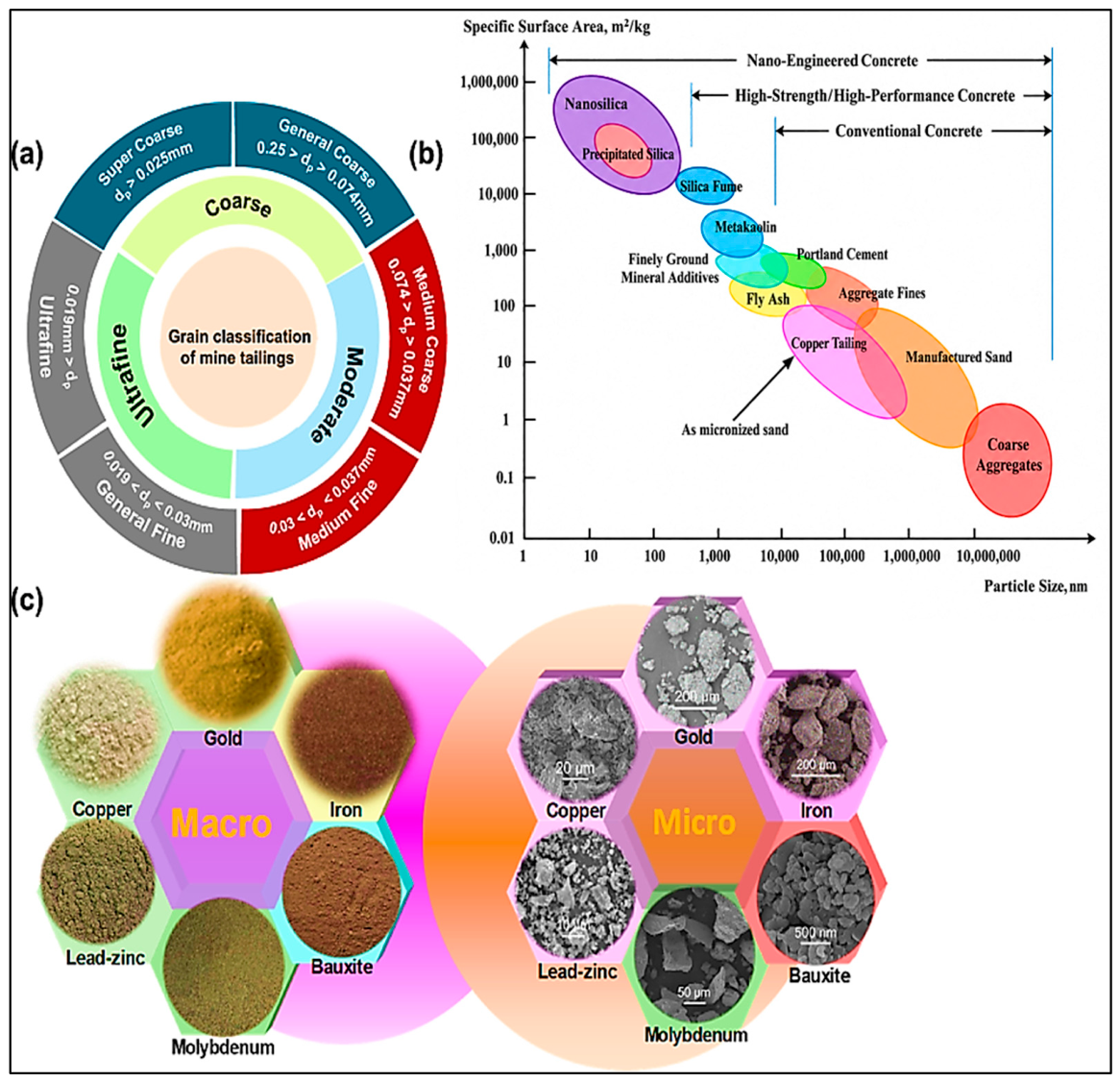
| Tailings Fraction | Valorization Product | Typical Performance | Applicable Standard | Environmental Benefit | Ref |
|---|---|---|---|---|---|
| Coarse (>4.75 mm) | Coarse aggregate (concrete, road base, pavement layers) | Substitutes virgin aggregate in bound and unbound pavement layers | SANS 1083 [172] | Reduces virgin-stone quarrying | [169,173] |
| Medium sand (0.425–4.75 mm) | Fine aggregate (concrete, mortar) | ~10–30% river-sand replacement without strength loss | SANS 1200 | Reduces river-sand extraction | [158,169] |
| Silt (75–425 µm) | Clinker raw material (Portland cement) | 15–25% limestone/silica substitution in the kiln | Blended-cement specifications | Lowers kiln emissions and virgin quarry demand | [169] |
| Ultrafine (<75 µm) | Geopolymer (alkali-activated) binder | Chemically activated binder; 10–80 MPa; ~80% lower embodied carbon | No dedicated SANS standard yet (standardization gap—see Section 5) | ~70–80% lower embodied carbon vs. Portland cement | [158,170,173,174] |
| Fine sand | Masonry mortar and plaster | Water absorption below 12% | SANS 1215 [175] (masonry units) | Construction-grade reuse | [169] |
| Specialized streams | Lightweight aggregate; iron-oxide pigment | Autoclaved cellular concrete blocks; pigments from hematite-rich tailings | Product-specific | Higher-value outputs from waste | [169] |
| Phase (Horizon) | Key Actions, Milestones and Policy Instruments | Lead Actors | International Precedent and Policy Basis | References |
|---|---|---|---|---|
| 1. Foundation (0–3 years) | Pilot BOS, RO/ZLD, and CPF units; baseline tailings and fly ash characterization (mineralogy, NORM); Water Use License applications under the National Water Act; begin drafting national tailings-valorization standards | Operators + research institutions (CSIR, universities) + SABS | EU Critical Raw Materials Act (2024) sets binding standardization and a 25% recycling target for strategic raw materials by 2030; SA Critical Minerals and Metals Strategy (2025) commits to tailings reclamation | [213,214] |
| 2. Scale-up (3–7 years) | Full-scale water recovery and tailings reprocessing; finalize tailings-product standards (SANS 1083, 1200, 3001); introduce production incentives (tax credits, royalty relief) for secondary recovery; government offtake/procurement of certified tailings products; establish carbon-credit MRV system | Operators + SABS + DMRE + DFFE + National Treasury | US production tax credits and US$1.2 billion interior commitment to tailings valorization; Abandoned Hardrock Mines Act (2024) streamlines recovery permitting; Australian green procurement specifying recycled content | [214,215,216] |
| 3. Regeneration (7–15 years) | Landscape-scale phytoremediation and Portulacaria afra (spekboom) reforestation; operationalize carbon-credit revenue; land repurposing (agriculture/eco-tourism); progressive mine closure | Communities + government + operators | The SA carbon-tax regime provides the fiscal basis for monetizing verified sequestration; the Critical Minerals and Metals Strategy (2025) embeds circular restoration | [214] |
Disclaimer/Publisher’s Note: The statements, opinions and data contained in all publications are solely those of the individual author(s) and contributor(s) and not of MDPI and/or the editor(s). MDPI and/or the editor(s) disclaim responsibility for any injury to people or property resulting from any ideas, methods, instructions or products referred to in the content. |
© 2026 by the authors. Licensee MDPI, Basel, Switzerland. This article is an open access article distributed under the terms and conditions of the Creative Commons Attribution (CC BY) license.
Share and Cite
Sedikelo, G.K.M.; Linganiso, L.Z.; Chimwani, N.; Mpongwana, N.; Yan, G.; Linganiso, E.C.; Yao, Y.; Mamphweli, S.N. Circular Economy in the South African Mining Industry: A Sustainable Framework for Waste Prevention, Tailings Valorization, and Ecosystem Regeneration. Appl. Sci. 2026, 16, 6840. https://doi.org/10.3390/app16146840
Sedikelo GKM, Linganiso LZ, Chimwani N, Mpongwana N, Yan G, Linganiso EC, Yao Y, Mamphweli SN. Circular Economy in the South African Mining Industry: A Sustainable Framework for Waste Prevention, Tailings Valorization, and Ecosystem Regeneration. Applied Sciences. 2026; 16(14):6840. https://doi.org/10.3390/app16146840
Chicago/Turabian StyleSedikelo, Gosego K. M., Linda Z. Linganiso, Ngonidzashe Chimwani, Ncumisa Mpongwana, Guochun Yan, Ella C. Linganiso, Yali Yao, and Sampson N. Mamphweli. 2026. "Circular Economy in the South African Mining Industry: A Sustainable Framework for Waste Prevention, Tailings Valorization, and Ecosystem Regeneration" Applied Sciences 16, no. 14: 6840. https://doi.org/10.3390/app16146840
APA StyleSedikelo, G. K. M., Linganiso, L. Z., Chimwani, N., Mpongwana, N., Yan, G., Linganiso, E. C., Yao, Y., & Mamphweli, S. N. (2026). Circular Economy in the South African Mining Industry: A Sustainable Framework for Waste Prevention, Tailings Valorization, and Ecosystem Regeneration. Applied Sciences, 16(14), 6840. https://doi.org/10.3390/app16146840