Article

Sedimentary Microfacies Analysis and Reservoir Prediction of Braided River Delta Reservoirs in Central Asia’s S Gas Field


1
State Key Laboratory of Oil and Gas Reservoir Geology and Exploitation, Southwest Petroleum University, Chengdu 610500, China
2
School of Geosciences and Technology, Southwest Petroleum University, Chengdu 610500, China
3
Natural Gas Geology Key Laboratory of Sichuan Province, Southwest Petroleum University, Chengdu 610500, China
4
Key Laboratory of Piedmont Zone Oil and Gas Geophysical Exploration Technology for Petroleum and Chemical Industry, Southwest Petroleum University, Chengdu 610500, China
5
PetroChina Safety and Environmental Protection Technology Research Institute, No. 1, Huanghe Street, Changping District, Beijing 102206, China
6
PetroChina International (Turkmenistan) Amu Darya Gas Company, No. 27, Chengfang Street, Xicheng District, Beijing 100032, China
7
Geological Exploration and Development Research Institute of CNPC Chuanqing Drilling Engineering Company, Chengdu 610051, China
*
Author to whom correspondence should be addressed.
Appl. Sci. 2026, 16(13), 6523; https://doi.org/10.3390/app16136523
Submission received: 28 May 2026 / Revised: 22 June 2026 / Accepted: 22 June 2026 / Published: 30 June 2026

Featured Application

The integrated core–log–seismic workflow developed in this study is directly applicable to lithologic trap screening and well placement in deep Jurassic clastic gas reservoirs of the Amu Darya Right Bank, where conventional seismic interpretation alone is insufficient to resolve thin, heterogeneous channel sands.

Abstract

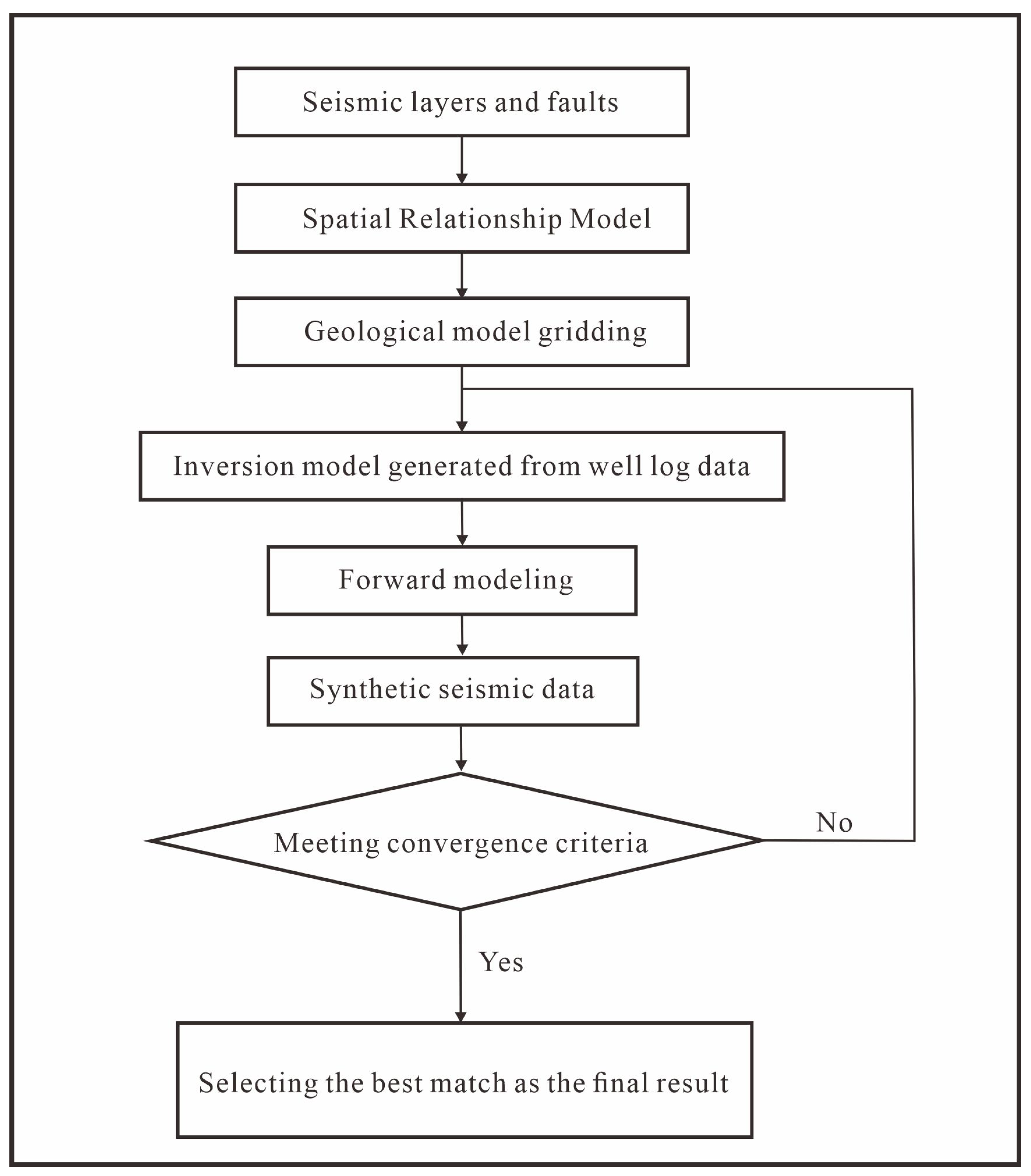
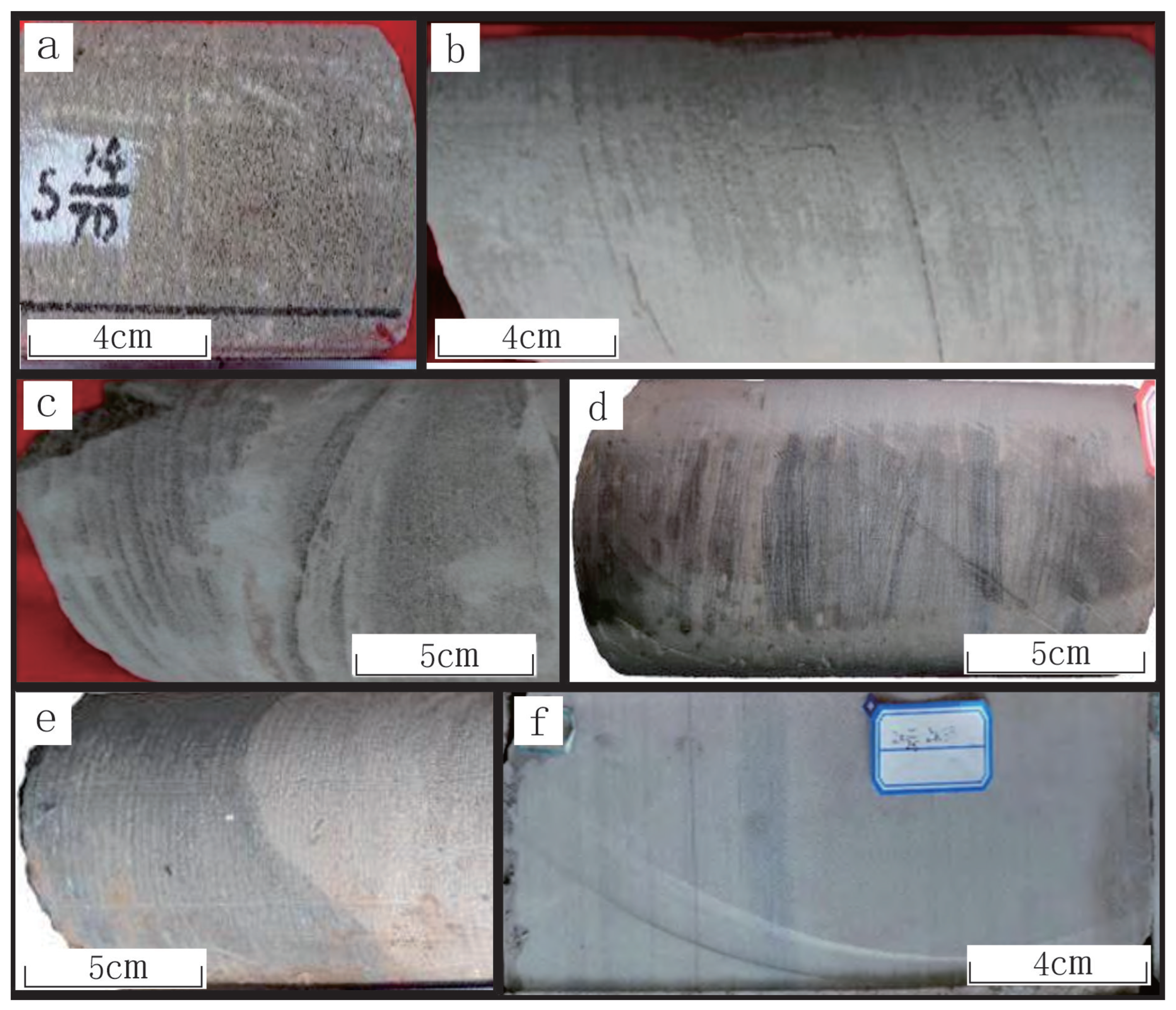
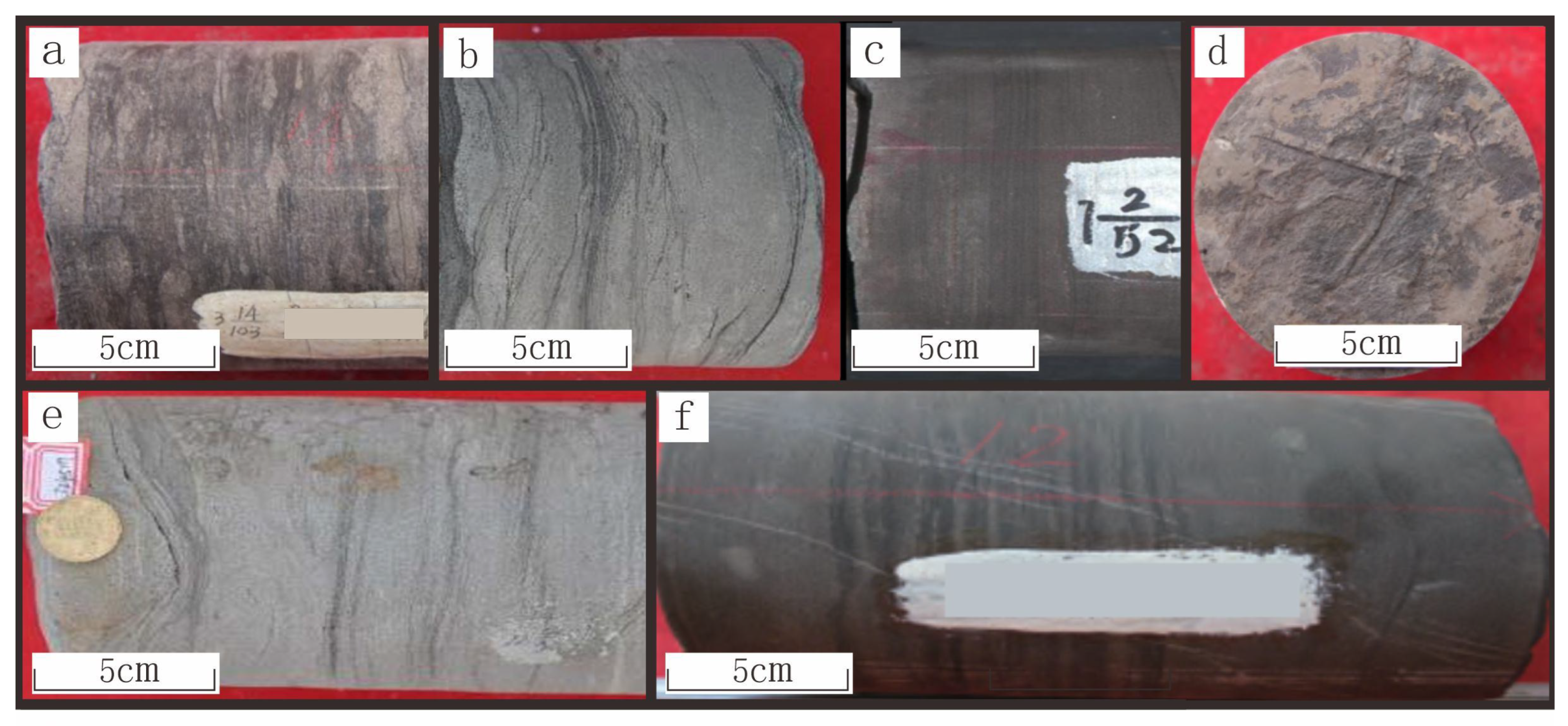
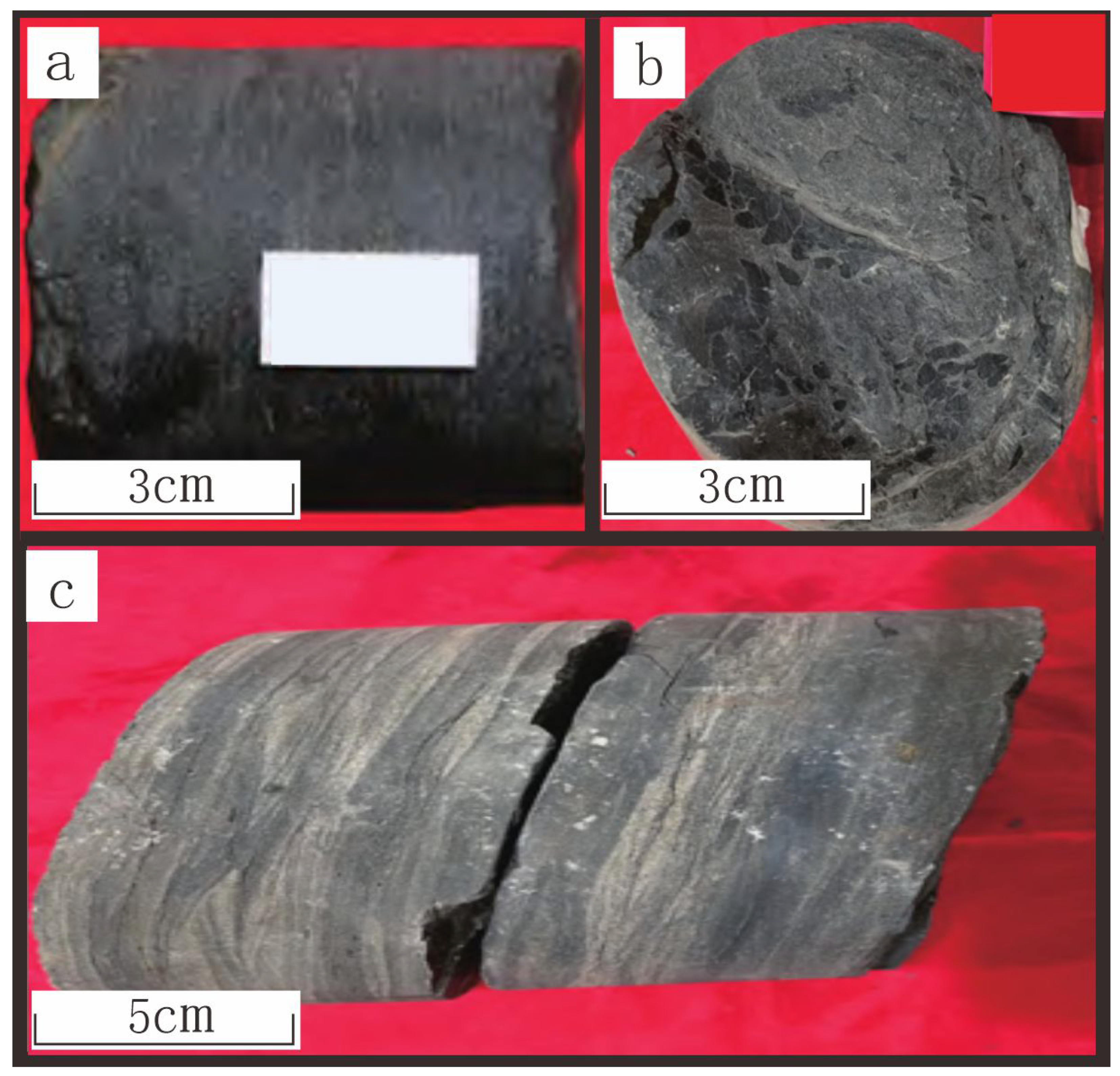
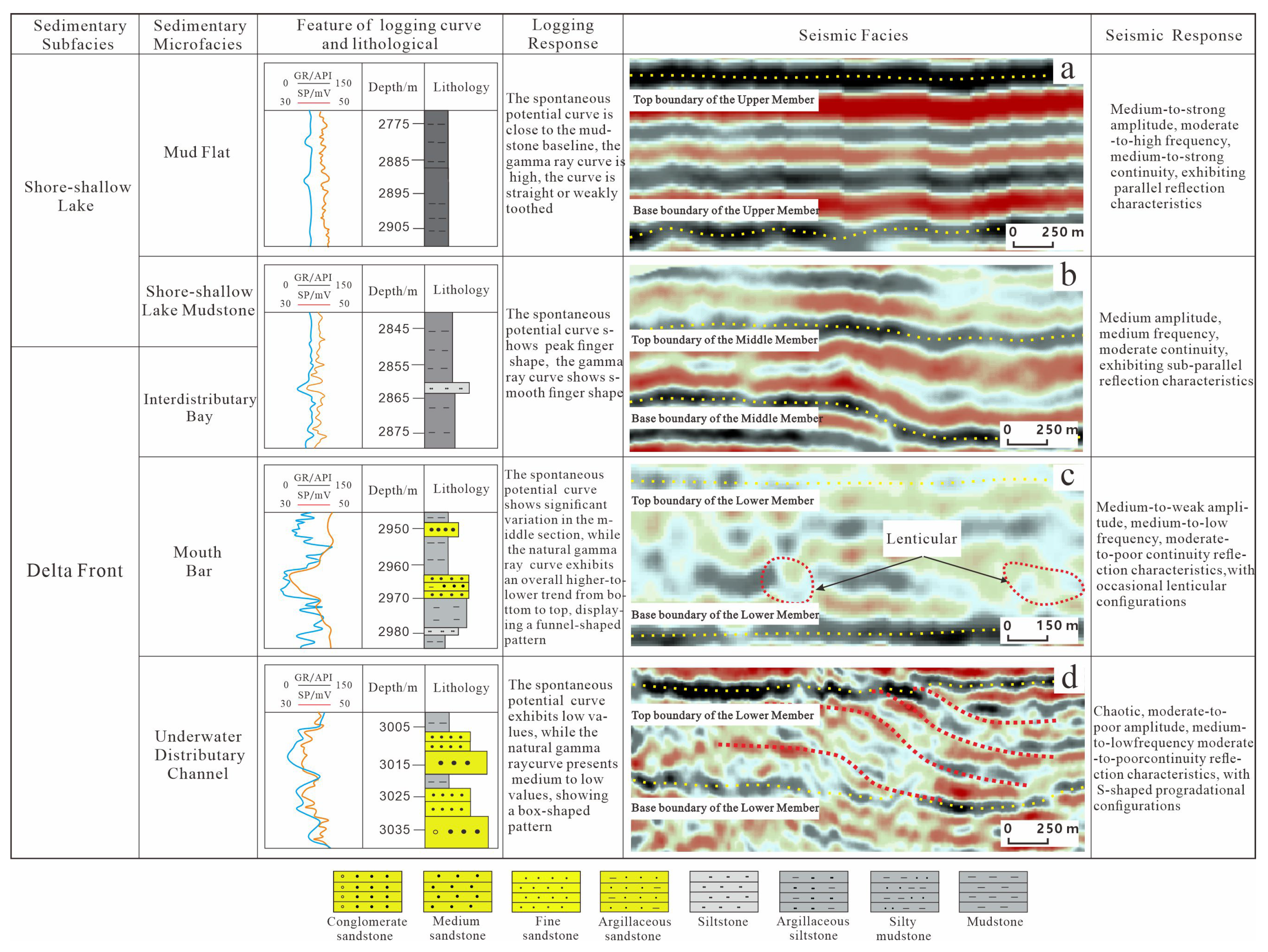
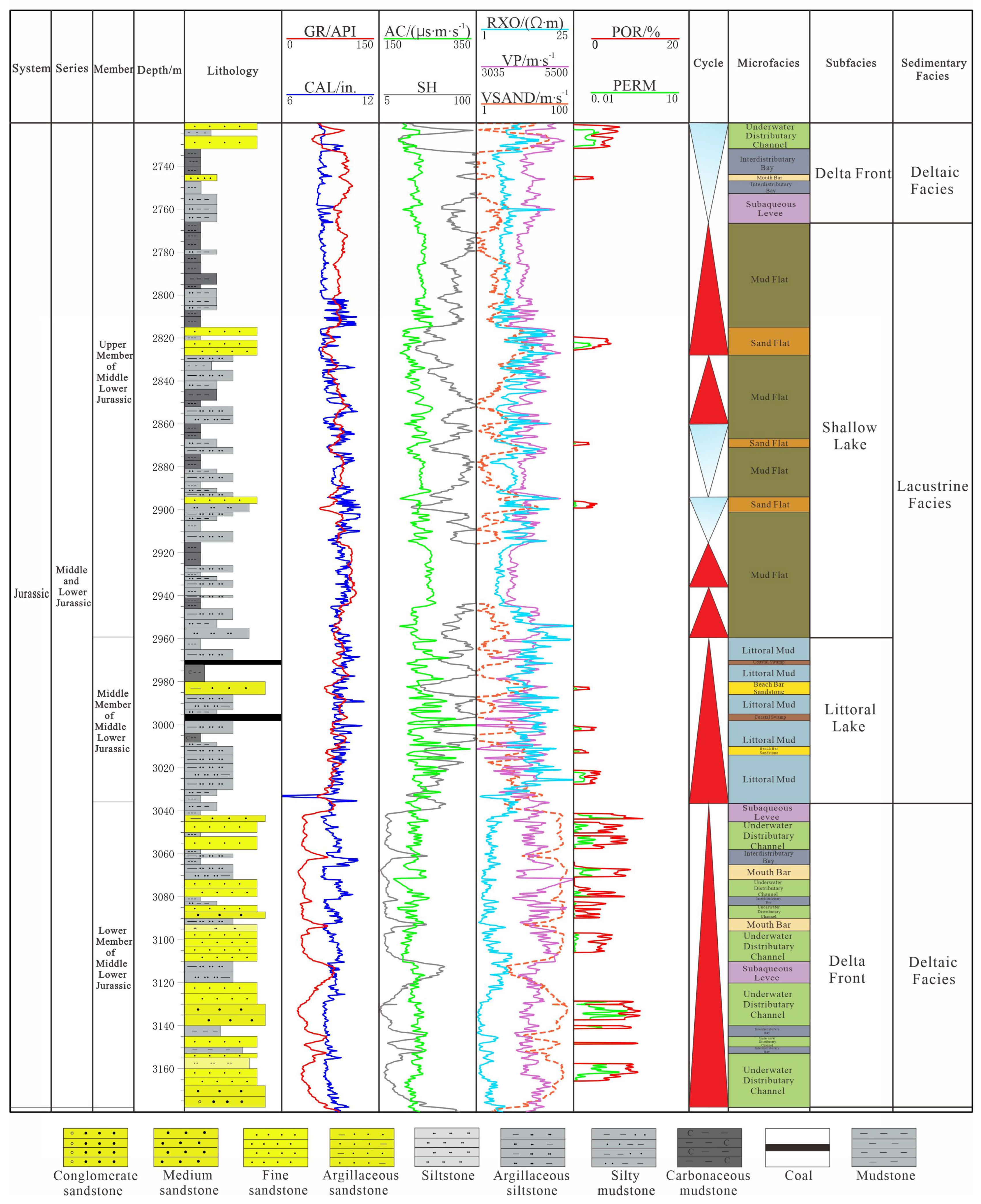
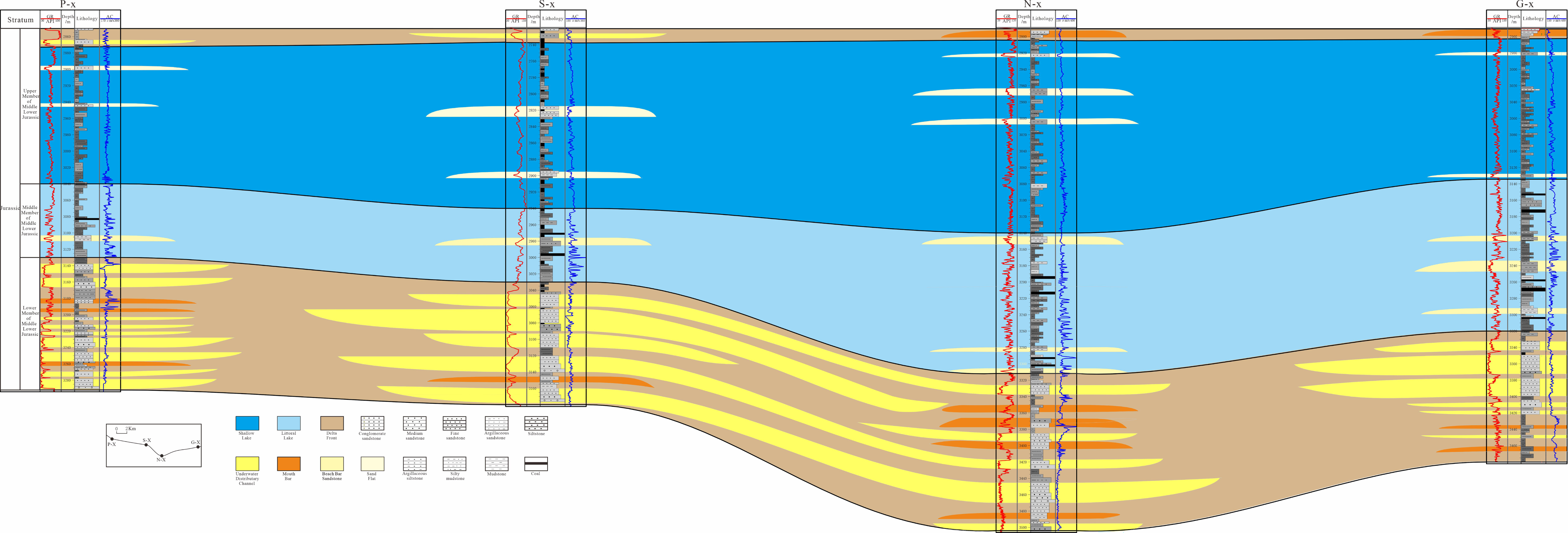
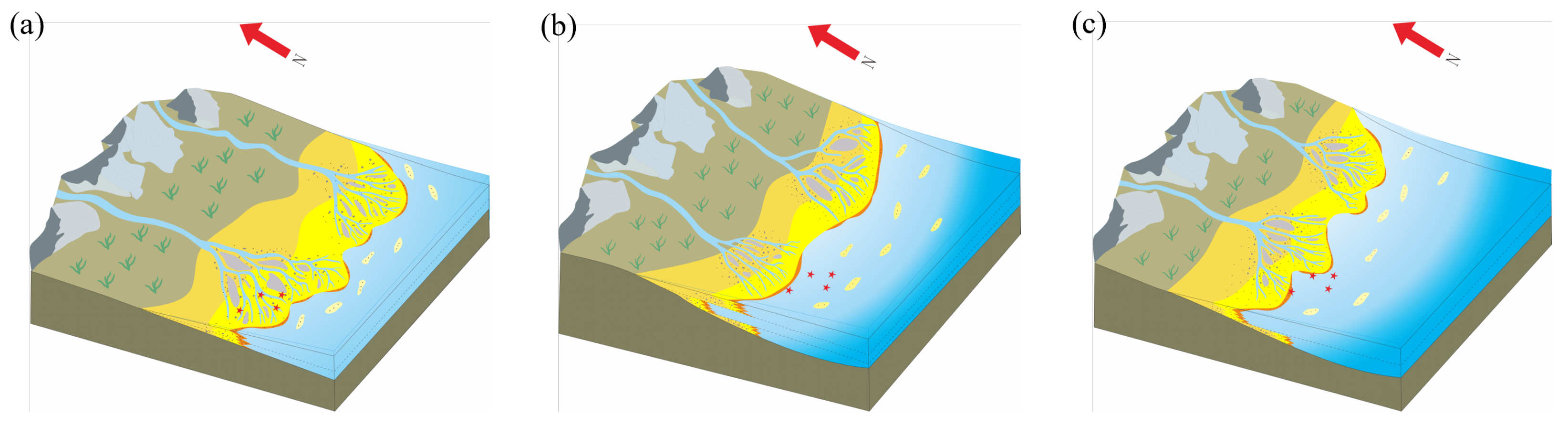
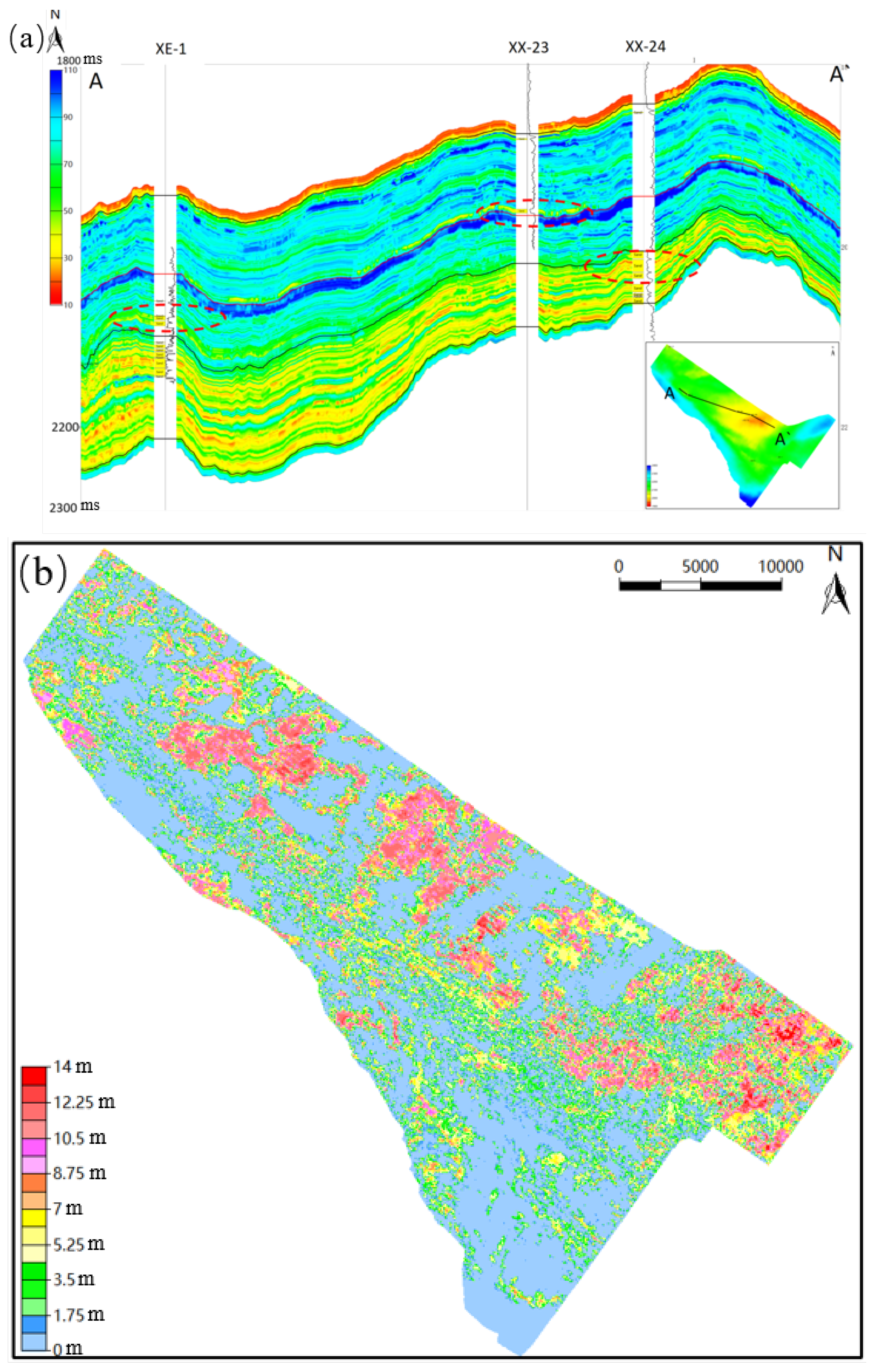
The prediction of thin-bedded, favorable sand bodies within the Middle-Lower Jurassic braided river delta–lacustrine succession of Block S (Amu Darya Right Bank) is challenging because of strong spatial heterogeneity, deep burial, and limited seismic resolution near the acoustic basement. To address this, we propose an integrated workflow that combines sedimentological characterization with geologically constrained seismic inversion. The study uses core, grain-size data, wireline logs, and 3D seismic surveys. Core–log–seismic integration first delineates three subfacies and nine numbered microfacies (MF1–MF9), with the delta front dominated by underwater distributary channels (MF1), mouth bars (MF2), and interdistributary bays (MF3). Planar microfacies distribution maps and electrofacies boundaries are then used as geological constraints for reservoir prediction. Steerable pyramid enhancement (K=4 scales, N=6 orientations) improves channel-reflection continuity, and PDF-regularized stochastic optimization inversion (λ=0.8) is performed to identify thin sand reservoirs. Sand-ratio and GR cutoffs were validated against 412 core–log contacts in five wells. Discretization sensitivity tests confirm stable inversion under 2 ms and 4 ms sampling. The results show that (1) favorable Type I and Type II reservoirs occur preferentially in MF1 and MF2 (average porosities of 12.7% and 10.1%, respectively); (2) vertically, two sand-rich progradational intervals (Lower Member and late Upper Member) are separated by a transgressive mud-prone middle–early Upper Member; and (3) inversion low-impedance anomalies delineate strip-like and lobate channel–mouth-bar sand belts with thickness up to 14 m, consistent with well control. Fault-controlled graben–horst paleotopography influenced sand fairway distribution. The workflow highlights the value of integrating sedimentary microfacies boundaries as geological constraints in seismic inversion for heterogeneous deep clastic gas reservoirs.
Keywords: Amu Darya Right Bank; Middle-Lower Jurassic; braided river delta; sedimentary microfacies; steerable pyramid; stochastic seismic inversion; reservoir prediction Amu Darya Right Bank; Middle-Lower Jurassic; braided river delta; sedimentary microfacies; steerable pyramid; stochastic seismic inversion; reservoir prediction