1. Introduction
Currently, there is great interest in the manufacturing of ultrathin steel sheets with outstanding mechanical properties. To achieve a smaller thickness, it is necessary to induce large plastic deformations, which produce changes in both the microstructure and texture, thereby affecting the microstructural and mechanical response of the material [
1,
2,
3].
Under these conditions, additional processing may be required depending on the final application requirements. Annealing can be used to relieve residual stress and improve microstructural behavior [
4,
5]. Due to these changes, it is reasonable to analyze the relationship between deformation and texture during the different stages of the process. Therefore, it is essential to analyze the microstructural phenomena that occur throughout the deformation and annealing stages.
During continuous annealing, processes such as recovery, recrystallization, and grain growth occur, aiming to improve the mechanical properties after processing [
4,
5,
6].
After applying high strain to the sheets during rolling, a deformed grain microstructure and an increased density of internal defects are expected. Subsequently, during the first stage of continuous annealing, the rearrangement and reduction of dislocation density in the deformed structure begin. This process is known as recovery. In the next stage, known as recrystallization, a new grain structure is formed from existing nuclei, promoting the development of an equiaxed grain structure [
5,
7].
The intensity of recrystallization in the microstructure depends on the available driving force (internal energy generated during deformation), temperature, and stacking fault energy (SFE), which in turn depends on the crystal lattice type. Grain growth occurs when subgrain groups reach an adequate size and misorientation, allowing them to grow and form grains. Abnormal grain growth may occur, especially if the external conditions that promote recrystallization are maintained [
5].
From a metallurgical point of view, the properties of a polycrystalline aggregate depend on its individual grains. Grains may be randomly oriented or may exhibit a preferred crystallographic orientation. The sum of the crystallographic orientations of the crystallites in a polycrystalline aggregate is known as texture [
8,
9]. Thus, texture is defined as the distribution of crystallographic orientations with respect to a sample reference frame, which influences grain-to-grain misorientations [
8,
9].
The evolution of microstructure and texture in low-carbon steels processed by plastic deformation is driven by variations in the stored energy introduced during deformation. In highly deformed steels, the stored energy is mainly associated with the generation and interaction of dislocations [
10,
11,
12,
13]. During continuous annealing processes, both mechanical properties and microstructure are significantly modified [
11,
14,
15].
Frequently, texture analysis is conducted using Electron Backscatter Diffraction (EBSD) coupled with scanning electron microscopy (SEM). Both techniques provide information on various aspects, such as texture components, grain-to-grain misorientations, grain size, and phase identification of the material [
9,
16,
17]. The EBSD technique offers advantages such as rapid data acquisition and good reproducibility.
Texture measurements using EBSD provide results in terms of Orientation Distribution Functions (ODFs), which usually represent the frequency distribution of continuum orientations in Euler space [
8,
16,
17,
18,
19]. ODFs are used to determine the main texture components in terms of the Euler angles φ, φ1, and φ2, represented in a three-dimensional view of Euler space within the Bunge convention [
8,
9,
20,
21].
Low-carbon steels are a well-known group of Fe–C alloys with a predominantly BCC ferritic microstructure, which achieve their final mechanical properties through thermomechanical treatments. Texture evolution in low-carbon steels is strongly influenced by recrystallization behavior, alloying elements, and processing conditions [
22,
23,
24]. In BCC crystals, the most important texture fibers at φ2 = 45° are the γ-fiber <111>//ND, with main components (111)[12̅1] and (111)[11̅2̅]; the α-fiber <110>//RD, with main components (111)[11̅0] and (001)[11̅0]; and the θ-fiber <100>//ND, with main components (001)[01̅0] and (001)[1̅1̅0] [
25,
26].
In the case of ultrathin low-carbon steel sheets processed by double reduction, continuous annealing treatments may be highly effective because the sheet deformation process occurs over a relatively short time. Rigorous control during the ultrathin sheet fabrication stages may result in texture modifications that influence the final properties of the processed material. However, the effect of double reduction and subsequent annealing on the final texture has not yet been thoroughly studied [
27].
Therefore, the aim of this work is to investigate the evolution of texture and mechanical properties during the double-reduction cold rolling process with the application of continuous annealing, in order to better understand the relationship between deformation, recrystallization, texture evolution, and mechanical response during processing.
2. Materials and Methods
2.1. Materials and Cold Rolling Process
A low-carbon ferritic steel sheet with an initial thickness of 2 mm, obtained from a hot rolling and pickling process, was used as the experimental material. Samples were collected directly from an industrial plant at each stage of the cold rolling and thermal treatment process to ensure representativeness and traceability of microstructural changes. The first cold reduction was performed on an industrial cold rolling mill (MESTA, Pittsburgh, PA, USA), operating at speeds of up to 800 m/min, with closed-loop tension control and automated systems to optimize flatness and thickness uniformity, achieving a thickness reduction of 76%, reducing the sheet thickness from 2 mm to approximately 0.46 mm.
After the first reduction, the sheet underwent continuous annealing (CA), which included three heating zones up to 920 °C, three soaking zones at 780 °C, four controlled cooling zones between 670 °C and 400 °C, and three forced cooling zones to below 80 °C, with tolerances of ±50 °C in critical sections. This annealing treatment allowed stress relief, ductility recovery, and microstructural homogenization after the severe first deformation. To reach a final thickness of 0.22 mm, a second cold reduction of 53% was applied, followed by a second continuous annealing under the same thermal conditions.
The final product was subjected to light mechanical tempering, achieving an elongation of 0.6–1.0%, indicating ductility recovery after the deformation and thermal processes. To evaluate the effect of post-annealing, samples from the second annealed sheet were subjected to laboratory-scale post-annealing in a Thermolyne muffle furnace [M29.1] (Thermofisher, IA, Waltham, MA, USA) at 295 °C, with a heating rate of 3 °C/min and coated with zirconium paint to prevent decarburization. Samples were treated for 2, 4, 6, 8, 10, and 12.6 h, including a sample that completed the full industrial post-annealing time of 12.6 h, followed by controlled cooling for 16 h.
This procedure allowed the study of how sequential cold reductions, industrial continuous annealing, and post-annealing at different times affect the microstructure, texture, and mechanical properties of the steel sheet, providing essential insights for optimizing cold rolling and thermal treatment processes in the steel industry.
Table 1 shows the details of the ferritic low-carbon steel reduction process sequence, as well as the variation in sheet thickness due to cold rolling.
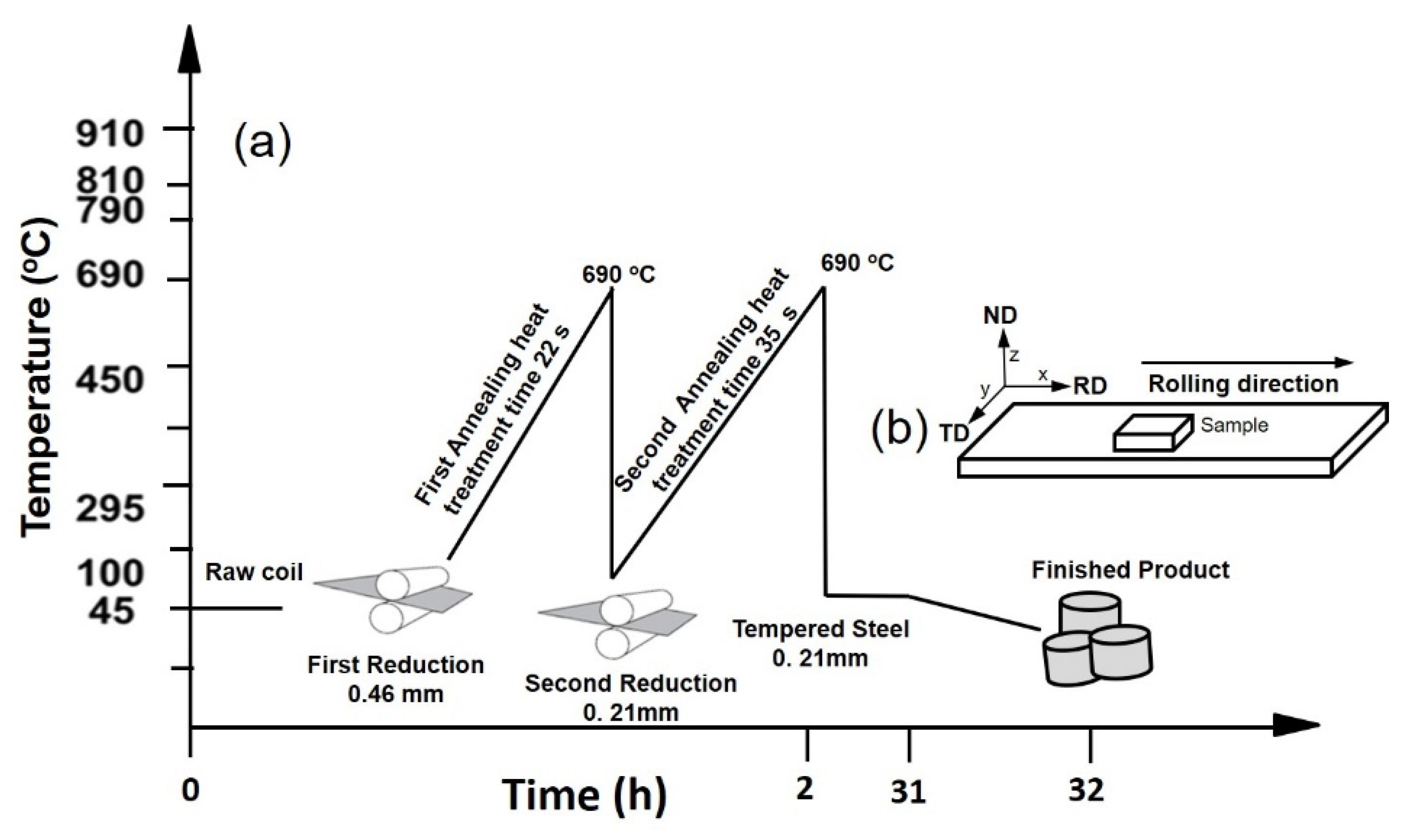
Figure 1 illustrates the steps for obtaining samples in an industrial plant and the effects of severe plastic deformation at each stage. This study represents an innovative approach, as the results reflect the actual behavior of a steel coil during cold rolling and thermal treatments, allowing a reliable evaluation of the microstructure, texture, and mechanical properties under real industrial production conditions.
2.2. Chemical Composition and Mechanical Properties
Chemical composition analysis of the samples was carried out by using optical emission spectroscopy according to the ASTM E415 standard.
From each reduction and annealing stage, samples were extracted for tensile test and microhardness Vickers measurements in accordance with ASTM E8/E8M and ASTM E384 standards, respectively. Tensile tests were carried out in a servo-hydraulic machine MTS® 810 (MTS, Eden Prairie, MN, USA) with a load capacity of 100 kN.
Samples of tensile test were cut at 90° with respect to RD, and at least three different measurements were taken for each condition. Hardness measurements were performed in perpendicular RD direction, using a Wilson® durometer (Buehler, Lake Bluff, IL, USA) with Vickers diamond indenter, 200 gf and 15 s of loaded time.
2.3. Sample Metallographic Preparation
First, 10 mm × 10 mm samples were cut from rolling-processed plates, with particular attention to traceability during the process according to rolling directions. Samples were ground on progressively finer SiC abrasive papers up to a particle size of 2400. The samples were polished until a metallographic quality specular finish was reached, using microfiber clothes and diamond paste of 0.3 and 0.1 μm.
The cleaning process of samples was conducted using a STRUERS® ultrasonic machine (Struers, Copenhagen, Denmark).
Final polishing for EBSD analysis was performed using colloidal silicon suspension with a particle size of 0.4 μm. Samples for metallography characterization were etched in a Nital 3% solution for 15 s.
2.4. Microstructure and Texture Analyses
Microstructure and texture characterization were carried out using an optical microscope VANOX® AH-3 and a scanning electron microscope Philips XL30 ESEM® (Thermofisher, Eindhoven, Netherland) equipped with an EDAX/TSL® OIM Analysis system.
Sample orientation references were defined relative to the rolling directions such that the x-axis is parallel to the rolling direction (RD), the y-axis is along the transverse direction (TD), and the z-axis corresponds to the normal direction (ND) (
Figure 1b).
Orientation Imaging Microscopy (OIM) was applied to each sample analyzed to obtain both pole figures and orientation distribution functions (ODFs). For EBSD measurements, areas of 150 µm × 200 µm were scanned at an acceleration voltage of 15 kV with a step size of 0.5 µm, which is appropriate for the grain size of ferritic low-carbon steel.
A minimum indexing rate of >90% was achieved in all scans. To ensure statistical representativeness, three separate areas per processing condition were analyzed.
Post-processing data cleanup included removal of wild spikes and grain reconstruction using standard OIM procedures.
Table 2 shows the EBSD experimental setup, EBSD was performed using a Philips XL30 ESEM
® coupled to TSL
® OIM Analysis™ software. Grain boundaries were classified as low-angle grain boundaries (LAGB, <15°) and high-angle grain boundaries (HAGB, ≥15°) based on misorientation criteria.
Orientation data were processed by assuming orthotropic sample symmetry, using harmonic series expansion with L = 16 and Gaussian smoothing of 5° to generate pole figures and ODFs within the Bunge convention.
3. Results
The following results describe the microstructural evolution of the ferritic low-carbon steel during the different stages of continuous annealing.
Table 3 presents the experimental chemical composition of the commercial ferritic low-carbon steel used in this study.
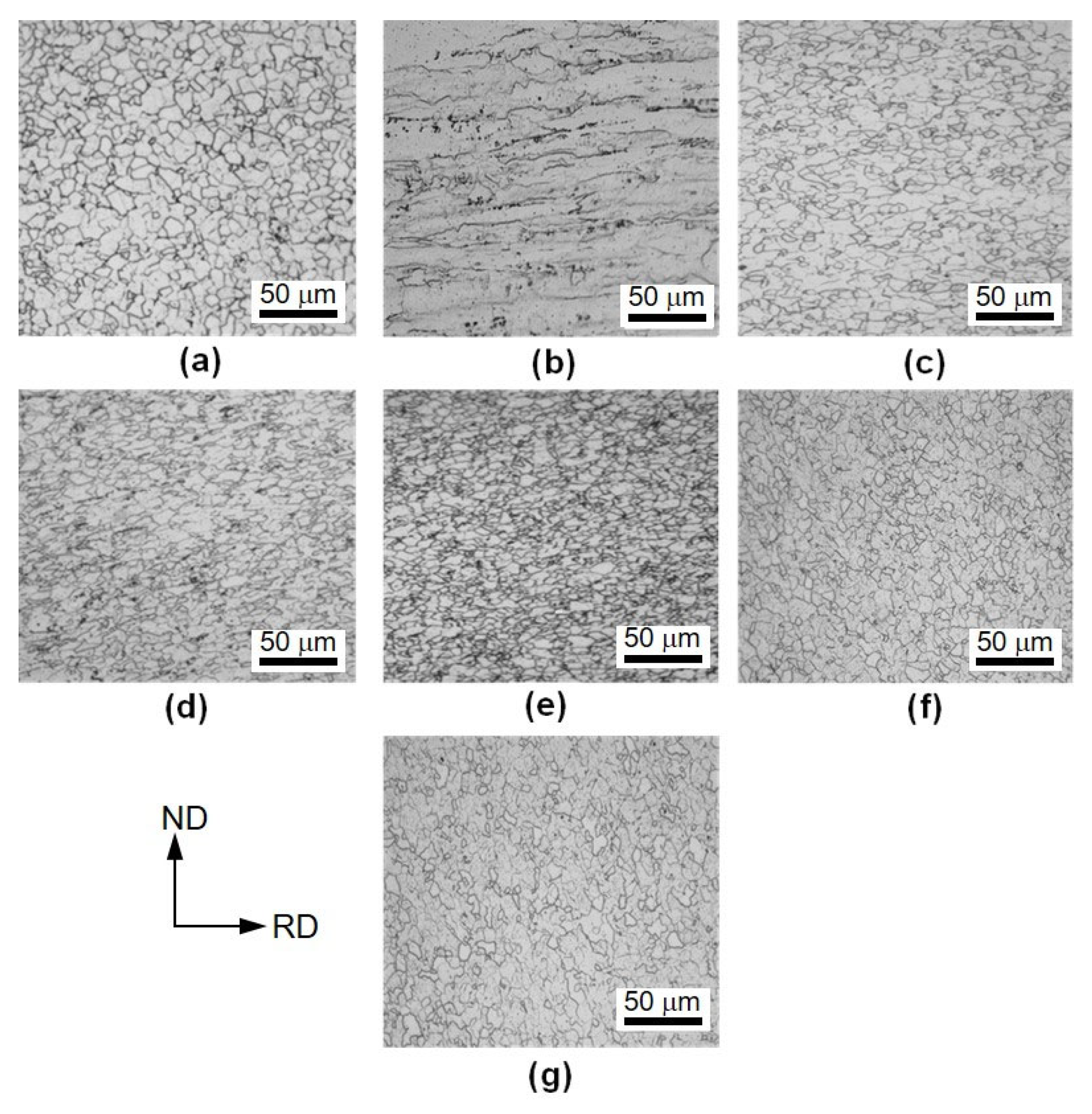
Figure 2 shows optical microscopy images of the microstructure at different stages of continuous annealing. After the first annealing stage, the microstructure exhibits elongated ferritic grains with a high density of dislocations from prior cold rolling. In the intermediate annealing stage, partial recrystallization is observed, with the appearance of more equiaxed grains and a reduction in dislocation density. The final annealing stage shows a largely equiaxed and uniform ferritic microstructure, with further decrease in internal stresses and no evidence of preferential orientation or abnormal grain growth.
These results indicate a progressive evolution of the microstructure across the annealing stages, from highly deformed elongated grains to a more uniform and stress-relieved ferritic structure.
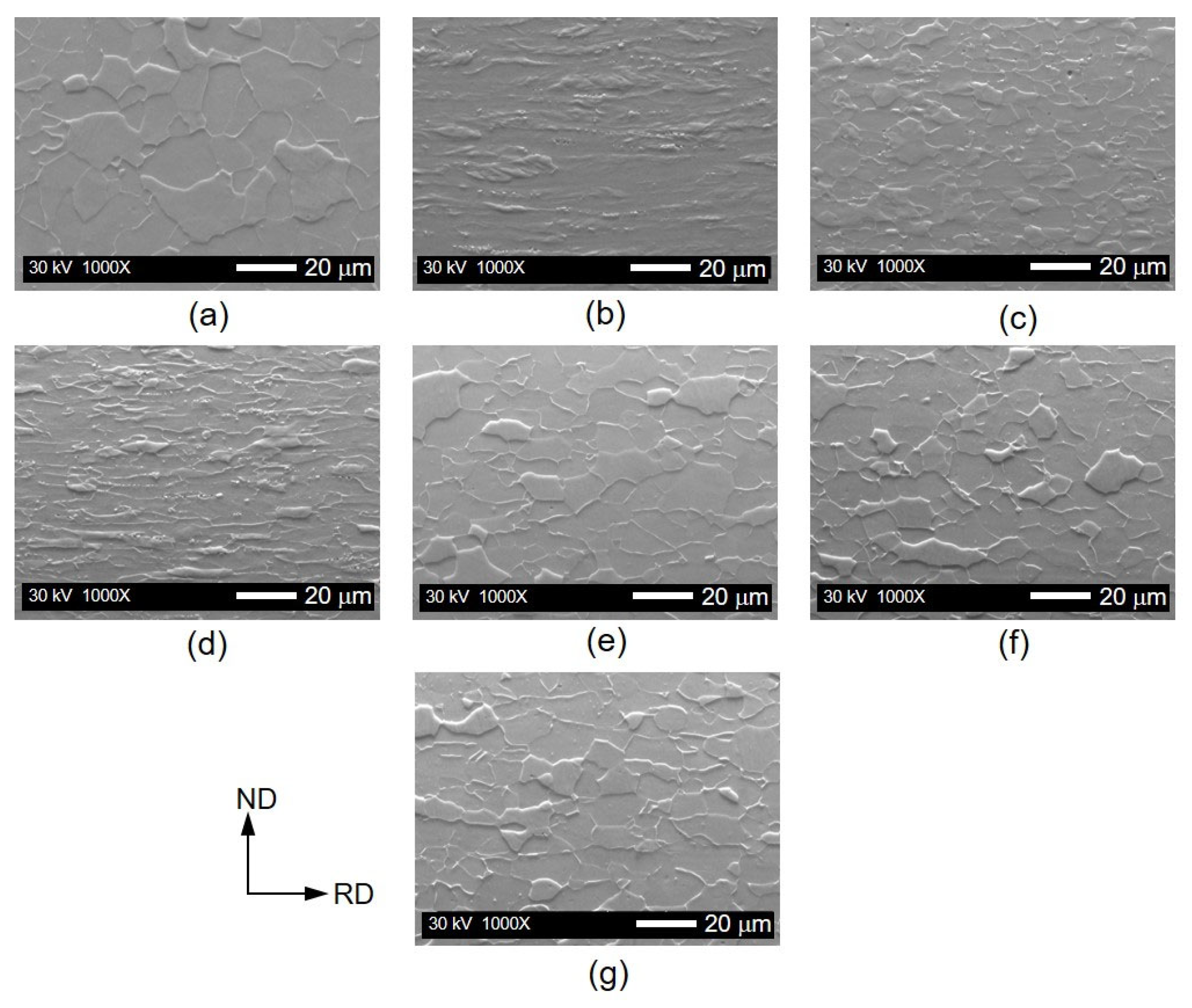
Figure 3 shows scanning electron microscopy images of the microstructure on a cross-section to RD during different stages of processing. The finished product displays a refined grain size with a light orientation tendency to the RD direction.
The microstructure shows evidence of total recrystallization appearance because of coalescence in grain boundaries.
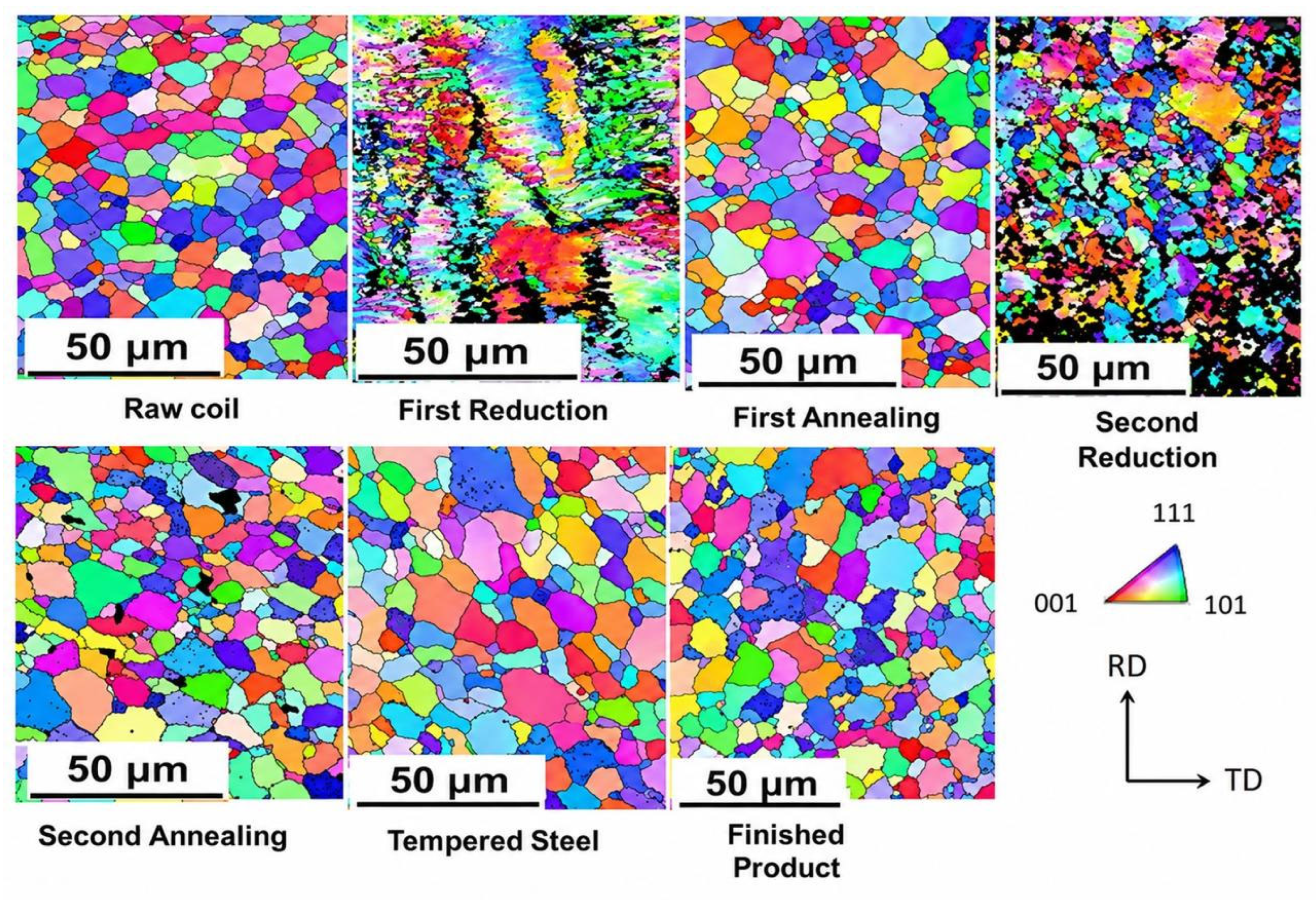
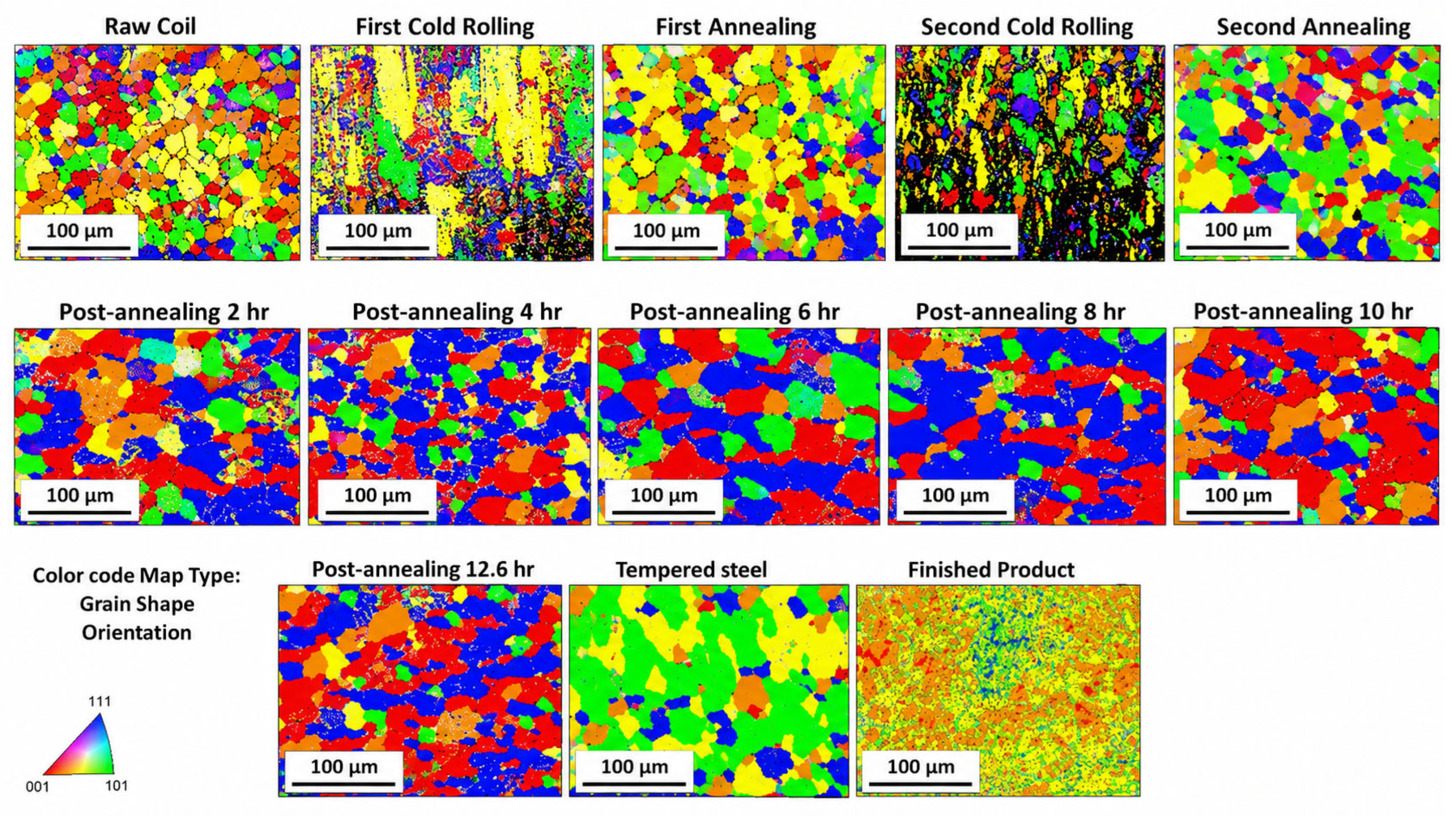
Figure 4 shows the results of orientation imaging microscopy (OIM), shown by EBSD maps from each stage during the cold rolling process on a cross-section of the ND direction. These results display a tendency on <111>//ND in the OIM of the finished product, as expected.
The evolution of the microstructural condition during the double cold-rolling and annealing process was further evaluated using Electron Backscatter Diffraction (EBSD) Image Quality (IQ) maps. The IQ parameter reflects the sharpness of Kikuchi diffraction patterns and is directly related to local crystalline quality, dislocation density, and surface condition. The IQ maps corresponding to each stage of the processing route are presented in
Figure 5.
A clear variation in image quality is observed as a function of deformation and annealing. In the raw coil condition, the IQ maps exhibit relatively homogeneous contrast, indicating a ferritic microstructure with a moderate defect density. After the first cold reduction, a significant decrease in IQ is observed, characterized by darker regions and heterogeneous contrast. This behavior is associated with the high density of dislocations and lattice distortions introduced during plastic deformation.
Following the first annealing stage, IQ values increase noticeably, and the contrast becomes more uniform. This improvement is attributed to recovery and recrystallization processes, which reduce internal stresses and restore crystallographic order. A similar behavior is observed after the second cold reduction, where IQ decreases again due to strain accumulation.
After the second annealing stage, a marked increase in IQ is observed, consistent with recrystallization and the formation of equiaxed ferritic grains. The temper rolling stage produces only minor changes in IQ, indicating that the applied deformation (0.6–1.0%) has a limited effect on the overall microstructural state.
In the final product, the IQ maps show relatively high and homogeneous values, confirming a recrystallized microstructure with low dislocation density. These results are consistent with the misorientation angle distributions and support the conclusion that recrystallization is achieved during the annealing stages. Overall, the IQ analysis provides complementary evidence of the microstructural evolution during processing, confirming the transition from deformed to recrystallized states and supporting the reliability of EBSD-based texture measurements.
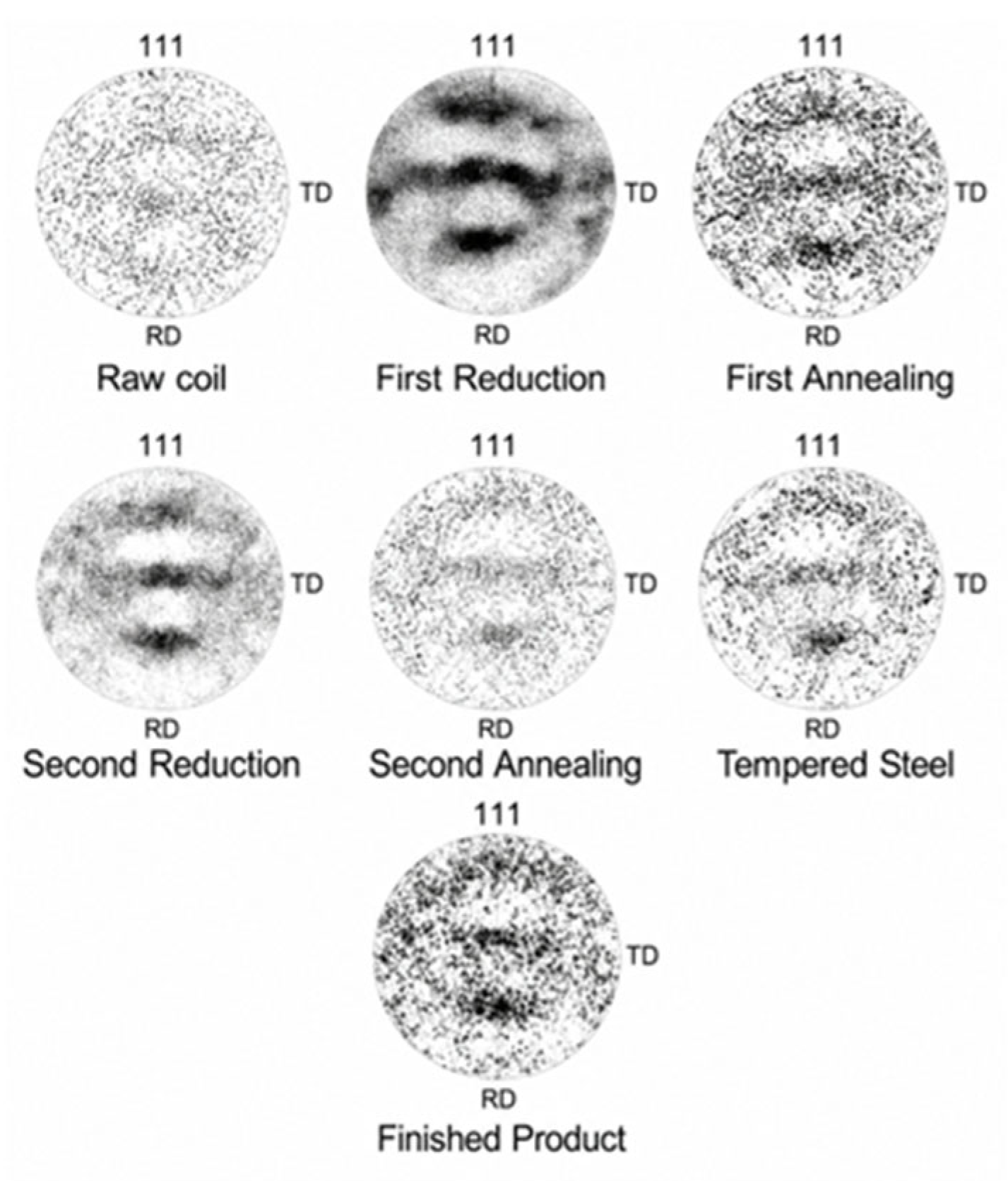
Figure 6 shows the textures through (111) pole figures (PFs) for each stage of the applied rolling process. It can be observed that in the first and second stages of reduction, the PFs show greater intensity in the preferential formation of the (111) component, suggesting that the most important texture fiber in this process is the γ-fiber [
19,
27].
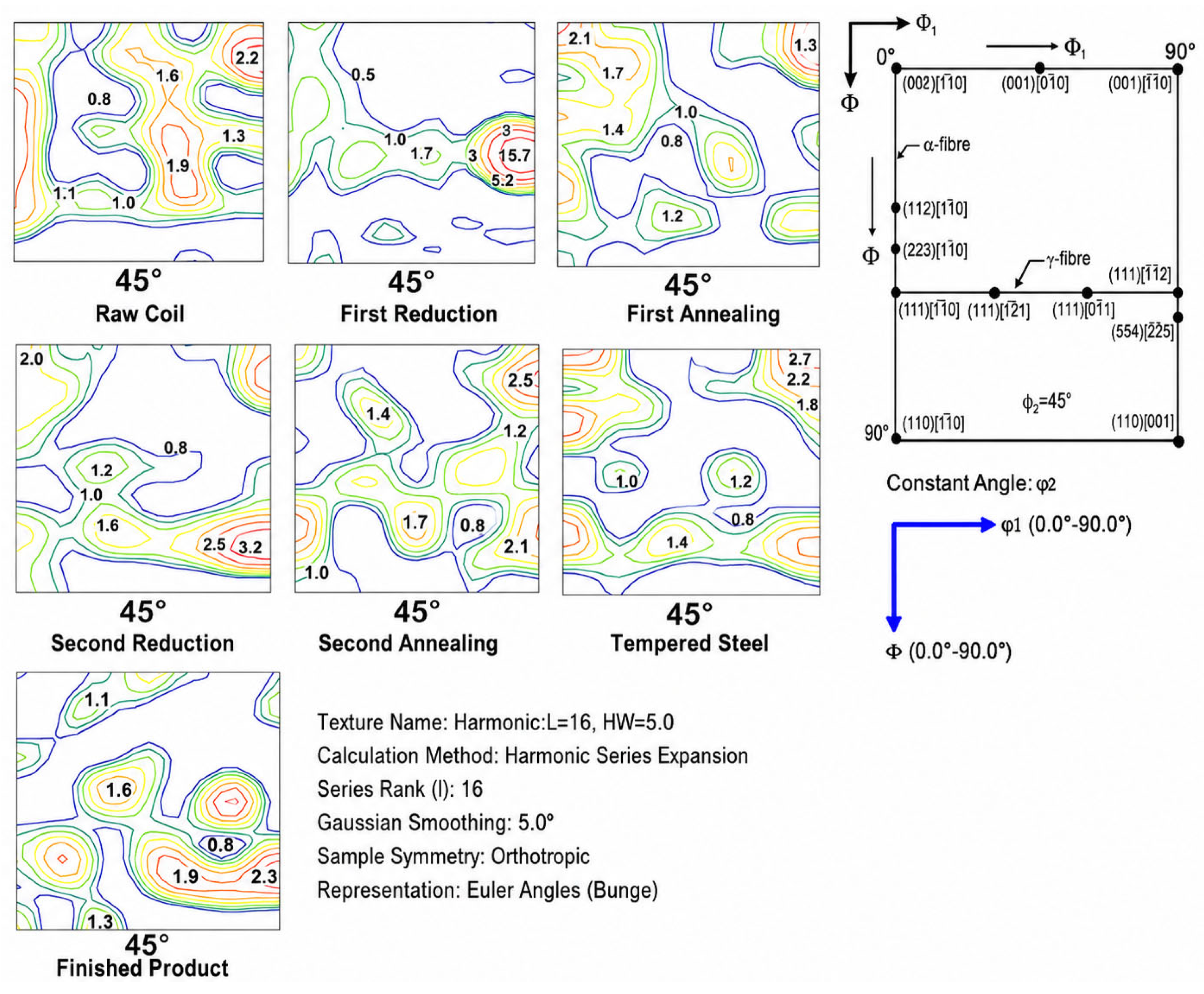
Figure 7 shows the ODF results with φ
2 = 45° for each stage of the process. The ODF corresponding to the raw coil and finished product shows the highest density in the components (001) [
] on RD θ-fiber and (111) [0
] and (111) [
] on ND γ-fiber, respectively.
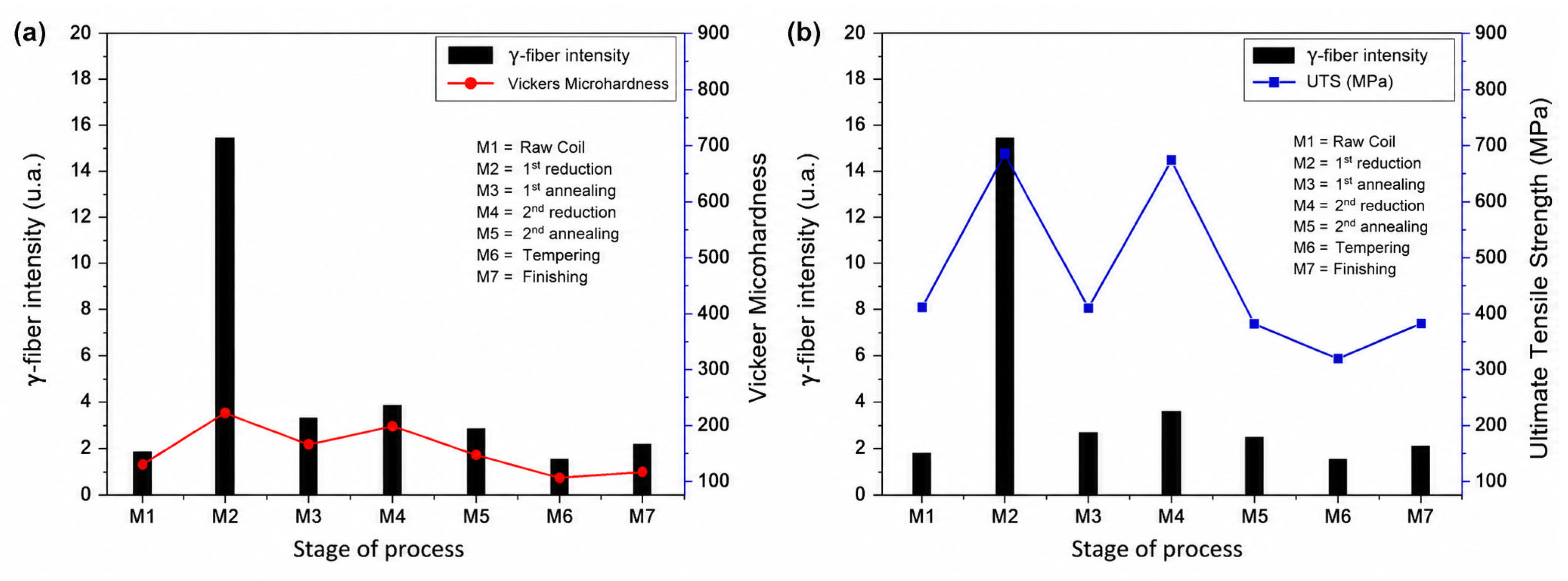
Figure 8a, b shows a comparison of γ-fiber intensity for each one of the rolling processing stages vs. Vickers microhardness and tensile strength measurements, respectively. Results show that the intensity of γ-fiber in the first and second reduction stages is higher than others processing stages.
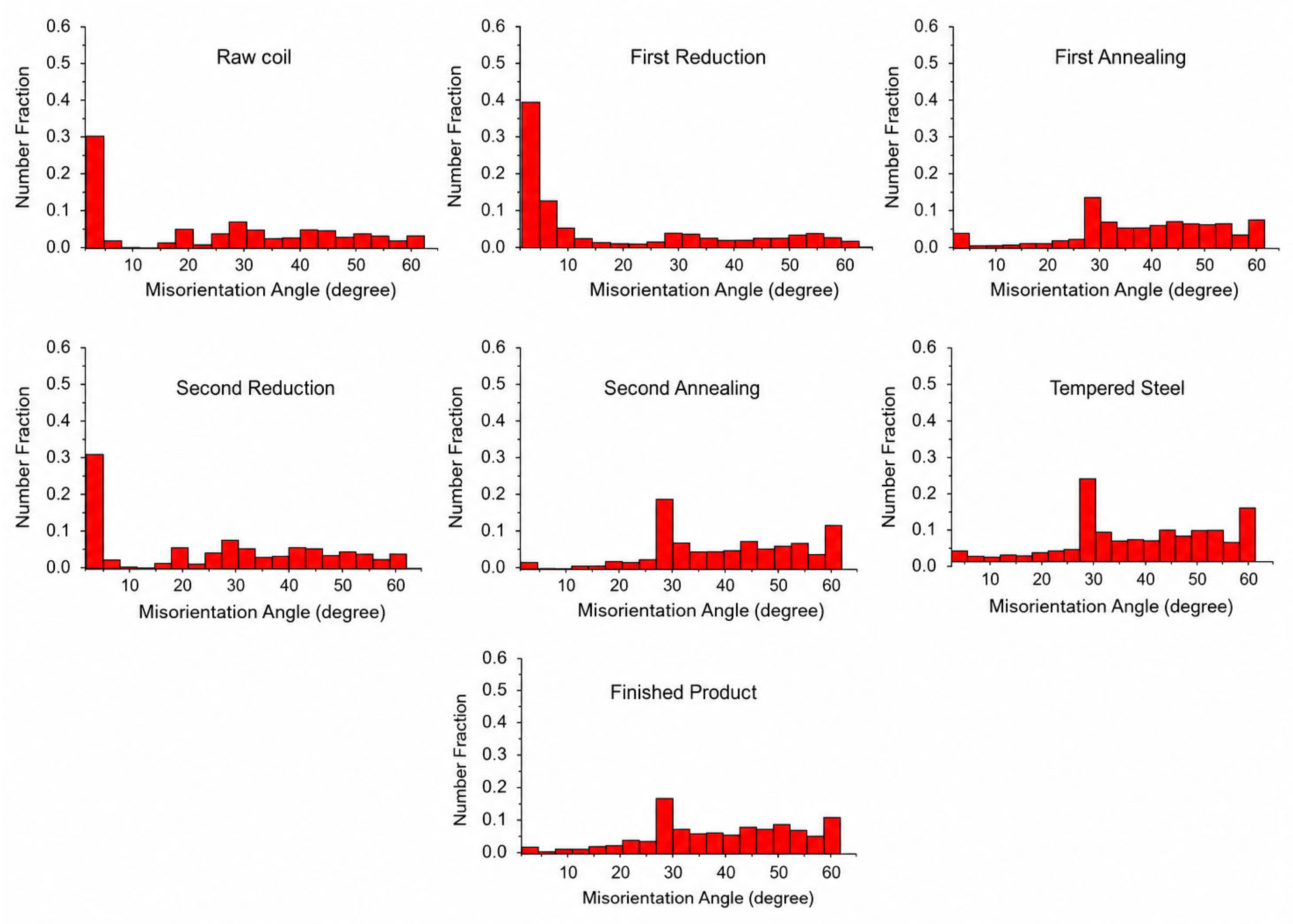
Figure 9 shows the distribution of misorientation angles during the rolling process stages. Severe deformation, such as that observed in the first and second reductions, has shown misorientation angles ≤15°, which is consistent with the substructure of dislocations into deformed grains. Recrystallized samples from the first and second annealing, just as the finishing stage, showed misorientation angles ≥ 30° with randomized values, demonstrating that the material has been completely recrystallized.
4. Discussion
The analysis of the OIM maps (
Figure 4,
Figure 5 and
Figure 6) reveals a clear evolution of microstructure and crystallographic texture throughout the deformation and annealing stages. In the as-received condition and after both annealing treatments, as well as in the tempered and final product, equiaxed grains are predominantly observed. In contrast, the first and second cold reduction stages exhibit elongated grains aligned along the rolling direction (RD), more pronounced after the first reduction, as expected. This behavior is consistent with the accumulation of plastic strain and the formation of deformation substructures during rolling, as also confirmed by optical and SEM observations (
Figure 2 and
Figure 3). The EBSD results and misorientation angle distributions (
Figure 8) indicate that recrystallization occurs progressively during the annealing stages. Deformed samples show a predominance of low-angle grain boundaries (≤15°), associated with dislocation substructures, whereas annealed and final conditions exhibit a higher fraction of high-angle grain boundaries (>30°), characteristic of recrystallized microstructures.
After the second annealing treatment, the microstructure is predominantly composed of equiaxed grains, indicating that recrystallization is nearly complete. Texture evolution during processing is governed by the interaction between deformation and recrystallization mechanisms. The pole figures and ODF sections at φ
2 = 45° (
Figure 5 and
Figure 6) show that the γ-fiber ({111}//ND) is the dominant texture component throughout the process, which is typical of ferritic steels subjected to rolling. During the first reduction (76%), an increase in γ-fiber intensity is observed, particularly in components such as (111)[1̅1̅2], which are commonly associated with deformation textures reported in low-carbon ferritic steels. Following the first annealing treatment, partial recrystallization leads to a redistribution of texture components, with an increase in θ-fiber (100}//ND) components such as (001)[110], indicating grain rotation and selective nucleation mechanisms. The second cold reduction further promotes deformation and texture evolution, resulting in the development of components such as (554)[2̅2̅5], which are characteristic of advanced deformation states in low-carbon steels. After the second annealing, the texture is characterized by the coexistence of γ-fiber and rotated components such as (554)[2̅2̅5] and (001)[1̅1̅0], suggesting recrystallization governed by preferential nucleation and growth influenced by prior deformation history. The temper rolling stage (0.6–1% strain) introduces a slight plastic deformation that modifies the distribution of minor texture components without significantly altering the dominant γ-fiber. However, a slight reduction in γ-fiber intensity is observed, confirming that even small deformation levels can influence the final texture state. From a mechanical perspective, a clear relationship between processing stages, microstructure, and properties is observed. The cold rolling stages exhibit higher Vickers microhardness (200–250 HV) and ultimate tensile strength (700–750 MPa), which are associated with strain hardening and increased dislocation density. In contrast, the final processed sheet shows lower microhardness (100–150 HV) and moderate tensile strength (400–450 MPa), reflecting the effect of recrystallization and dislocation annihilation, resulting in a softened and more stable microstructure.
The evolution of γ-fiber intensity, together with the attenuation of α-fiber (110}//RD) components, suggests a texture condition commonly associated in the literature with favorable deformation behavior in low-carbon ferritic steels. However, it is important to note that formability-related parameters such as plastic strain ratio (r-value), planar anisotropy (Δr), and strain hardening exponent (n-value) were not directly measured in this study. Therefore, any discussion regarding formability is based on established literature correlations rather than direct experimental validation.
Additionally, no significant variation in grain size was observed throughout the process, indicating that grain growth was effectively controlled during annealing. This behavior may be attributed to solute atoms and fine particles acting as pinning agents, restricting grain boundary mobility. Such mechanisms are known to influence recrystallization kinetics and contribute to microstructural stability.
Overall, the results demonstrate that the combination of double cold rolling and short-time continuous annealing enables controlled recrystallization and tailored texture evolution in ultrathin ferritic steel sheets.
This processing route establishes a consistent relationship between deformation history, microstructure refinement, texture development, and mechanical response, providing a framework for further studies focused on quantitative forming behavior.
5. Conclusions
1. Double cold rolling combined with intermediate and final annealing produced significant changes in the crystallographic texture of ultrathin low-carbon ferritic steel. EBSD, ODF, and IQ analyses revealed γ-fiber ({111}//ND) intensification and partial attenuation of α-fiber ({110}//RD) components, together with the development of additional rotated texture components such as (554) [2̅2̅5] and (001)[1̅1̅0].
2. Full recrystallization was achieved after annealing stages, as indicated by misorientation distributions dominated by high-angle grain boundaries (≥30°) and equiaxed grains observed in IQ and EBSD maps. Solute particles and light tempering influenced grain boundary mobility and final texture evolution.
3. The processed steel exhibited moderate hardness (100–150 HV) and ultimate tensile strength (400–450 MPa), indicating mechanical softening after annealing while maintaining a balanced strength level typical of recrystallized ferritic steels.
4. Although direct formability parameters (such as r-value, Δr, and n-value) were not measured, the observed γ-fiber enhancement and α-fiber attenuation are consistent with texture states reported in the literature for low-carbon ferritic steels subjected to rolling and annealing.
5. Continuous double cold rolling with optimized annealing establishes a robust route for tailoring microstructure and texture in ultrathin ferritic sheets, providing a foundation for future studies, including quantitative formability evaluation.
Author Contributions
Investigation, L.G.C.-Á., and F.A.G.-P.; Conceptualization, and methodology, M.d.J.C.-R., J.E.C.-S., F.E.-G., and A.M.G.-L.; formal analysis, L.G.C.-Á., and F.A.G.-P.; writing—original draft preparation, and writing—review and editing, L.G.C.-Á., F.A.G.-P., and J.U.-S. All authors have read and agreed to the published version of the manuscript.
Funding
This research was funded by CONACYT through grant CVU 66092.
Institutional Review Board Statement
Not Applicable.
Informed Consent Statement
Not Applicable.
Data Availability Statement
The original contributions presented in the study are included in the article, further inquiries can be directed to the corresponding author.
Acknowledgments
The authors wish to acknowledge financial support from CONACYT (Grant CVU 66092). Likewise, to acknowledge the staff of characterization facilities from CINVESTAV in Saltillo, Mexico.
Conflicts of Interest
The authors declare no conflict of interest in the preparation and publication of this article.
References
- Gobernado, P.; Petrov, R.; Ruiz, D.; Leunis, E.; Kestens, L.A.I. Texture Evolution in Si-Alloyed Ultra Low-Carbon Steels after Severe Plastic Deformation. Adv. Eng. Mater. 2010, 12, 1077–1081. [Google Scholar] [CrossRef]
- Song, R.; Ponge, D.; Raabe, D. Mechanical properties of an ultrafine grained C–Mn steel processed by warm deformation and annealing. Acta Mater. 2005, 53, 4881–4892. [Google Scholar] [CrossRef]
- Tandon, V.; Park, K.-S.; Khatirkar, R.; Gupta, A. Evolution of Microstructure and Crystallographic Texture in Deformed and Annealed BCC Metals and Alloys: A Review. Metals 2024, 14, 149. [Google Scholar] [CrossRef]
- Humphreys, F.J.; Hatherly, M. Recrystallization and Related Annealing Phenomena, 1st ed.; Pergamon (Elsevier): Oxford, UK, 1995; p. 3. [Google Scholar]
- Doherty, R.D.; Hughes, D.A.; Humphreys, F.J.; Jonas, J.J.; Juul Jensen, D.; Kassner, M.E.; King, W.E.; McNelley, T.R.; McQueen, H.J.; Rollett, A.D. Current issues in recrystallization: A review. Mater. Sci. Eng. A 1997, 238, 219–274. [Google Scholar] [CrossRef]
- Pradhan, S.K.; Kim, Y.-G.; Jeong, I.-H.; Lee, Y.-S.; Kim, Y.-J.; Baek, K.-C.; Joo, S.-M. Continuous Electric Furnace Annealing as a Sustainable Route: Influence on the Microstructure, Texture, and Mechanical Properties of Cold-Rolled Low-Carbon Steels for CO2. Materials 2026, 19, 1626. [Google Scholar] [CrossRef] [PubMed]
- Novillo, E.; Petite, M.M.; Bocos, J.L.; Iza-Mendia, A.; Gutiérrez, I. Texture and Microstructure Evolution in an ultra-low carbon steel during recrystallization. Adv. Eng. Mater. 2003, 5, 575–578. [Google Scholar]
- Suwas, S.; Ray, R.K. Crystallographic Texture of Materials; Springer: London, UK, 2014; p. 143. [Google Scholar]
- Engler, O.; Randle, V. Introduction to Texture Analysis, Macrotexture, Microtexture, and Orientation Mapping, 2nd ed.; CRC Press: London, UK, 2010; p. 456. [Google Scholar]
- Choi, S.-H.; Jin, Y.-S. Evaluation of stored energy in cold-rolled steels from EBSD data. Mater. Sci. Eng. A 2004, 371, 149–159. [Google Scholar] [CrossRef]
- He, T.; Liu, Y.D.; Wu, Y.; Jiang, Q.W.; Wang, G.; Wang, Y.D.; Zuo, L. Study on the Micro Mechanism of Recrystallization Texture Formation in Cold-rolled IF Steel sheet. Mater. Sci. Forum 2005, 495–497, 417–422. [Google Scholar] [CrossRef]
- Callister, W.D.; Rethwisch, D.G. Fundamentals of Materials Science and Engineering: An Integrated Approach; John Wiley & Sons: New York, NY, USA, 2000. [Google Scholar]
- Ayad, A.; Ramoul, M.; Rollet, A.D.; Wagner, F. Quantifying primary recrystallization from EBSD maps of partially recrystallized states of an IF steel. Mater. Charact. 2021, 171, 110773. [Google Scholar] [CrossRef]
- Hamada, J.-I.; Ono, N. Effect of microstructure before cold rolling on texture and formability of duplex stainless-steel sheet. Mater. Trans. 2010, 51, 635–643. [Google Scholar]
- Liu, H.-T.; Schneider, J.; Stöcker, A.; Franke, A.; Gao, F.; Song, H.-Y.; Liu, Z.-Y.; Kawalla, R.; Wang, G.-D. Microstructure and Texture Evolution in Non-Oriented Electrical Steels Along Novel Strip Casting Route and Conventional Route. Steel Res. Int. 2016, 87, 589–598. [Google Scholar] [CrossRef]
- Chen, Z.; Yang, Y.; Jiao, H. Some Applications of Electron Back Scattering Diffraction (EBSD). In Materials Research. Scanning Electron Microscopy; Kazmiruk, V., Ed.; InTechOpen: Rijeka, Croatia, 2012; pp. 55–72. [Google Scholar]
- Schwartz, A.J.; Kumar, M.; Adams, B.L.; Field, D.P. Electron Backscatter Diffraction in Materials Science; Springer: Boston, MA, USA; New York, NY, USA, 2009. [Google Scholar]
- Godec, M.; Jenko, M. Presentation methods of textures measurements. Mater. Tehnol. (Mater. Technol.) 2000, 34, 359–364. [Google Scholar]
- Watanabe, T.; Tsurekawa, S.; Zhao, X.; Zuo, L. The Coming of Grain Boundary Engineering in the 21st Century. In Microstructure and Texture in Steels: And Other Materials; Haldar, A., Suwas, S., Bhattacharjee, D., Eds.; Springer: London, UK, 2009; pp. 43–82. [Google Scholar]
- Hutchinson, B. Deformation microstructures and textures in steel. Philos. Trans. R. Soc. A 1999, 357, 1471–1485. [Google Scholar] [CrossRef]
- Jonas, J. Transformation textures associated with steel processing. In Microstructure and Texture in Steels and Other Materials, Proceedings of the International Conference on Microstructure and Texture in Steels and Other Materials, Jamshedpur, India, 5–7 February 2008; Springer: London, UK, 2008; p. 3. [Google Scholar]
- Inagaki, H. Fundamental Aspect of Texture Formation in Low Carbon Steel. ISIJ Int. 1994, 34, 313–321. [Google Scholar] [CrossRef]
- Timokhina, I.B.; Nosenkov, A.I.; Humphreys, A.O.; Jonas, J.J.; Pereloma, E.V. Effect of alloying elements on the microstructure and texture of warm rolled steels. ISIJ Int. 2004, 44, 717–724. [Google Scholar] [CrossRef][Green Version]
- Zhang, Z.L.; Lin, Q.Y.; Yu, Z.S. Non-equilibrium intergranular segregation in ultra-low carbon steel. Mater. Sci. Technol. 2000, 16, 305–308. [Google Scholar] [CrossRef]
- Raabe, D.; Lücke, K. Rolling and annealing textures of BCC Metals. Mater. Sci. Forum 1994, 157–162, 597–610. [Google Scholar] [CrossRef]
- Kestens, L.A.I.; Pirgazi, H. Texture formation in metal alloys with cubic crystal structures. Mater. Sci. Technol. 2016, 32, 1303–1315. [Google Scholar] [CrossRef]
- Guo, F.; Liang, R.; Hu, J.; Liu, M.; Sun, C. Microstructure, texture and magnetic properties of Fe-4.5 wt% Si electrical steel fabricated by double-pass rolling method. High Temp. Mater. Process. 2026, 45, 20250108. [Google Scholar] [CrossRef]
Figure 1.
(a) Sequence of cold rolling process. (b) Symmetry references of experimental samples.
Figure 1.
(a) Sequence of cold rolling process. (b) Symmetry references of experimental samples.
Figure 2.
Images of optical microscopy on cross-section to RD direction from different stages of processing: (a) raw coil, (b) first reduction, (c) first annealing, (d) second reduction, (e) second annealing, (f) tempered, and (g) finished product.
Figure 2.
Images of optical microscopy on cross-section to RD direction from different stages of processing: (a) raw coil, (b) first reduction, (c) first annealing, (d) second reduction, (e) second annealing, (f) tempered, and (g) finished product.
Figure 3.
Images of scanning electron microscopy—secondary electrons (SE) mode on cross-section to RD direction from different stages of processing: (a) raw coil, (b) first reduction, (c) first annealing, (d) second reduction, (e) second annealing, (f) tempered, and (g) finished product.
Figure 3.
Images of scanning electron microscopy—secondary electrons (SE) mode on cross-section to RD direction from different stages of processing: (a) raw coil, (b) first reduction, (c) first annealing, (d) second reduction, (e) second annealing, (f) tempered, and (g) finished product.
Figure 4.
EBSD orientation maps obtained at different stages of the cold rolling process. The color coding corresponds to crystallographic orientations according to the inverse pole figure (IPF) key referenced to the normal direction (ND). Similar colors indicate grains with similar crystallographic orientations, while variations in color reflect orientation changes associated with deformation during cold rolling. The final condition exhibits a pronounced tendency toward the <111>/ND texture.
Figure 4.
EBSD orientation maps obtained at different stages of the cold rolling process. The color coding corresponds to crystallographic orientations according to the inverse pole figure (IPF) key referenced to the normal direction (ND). Similar colors indicate grains with similar crystallographic orientations, while variations in color reflect orientation changes associated with deformation during cold rolling. The final condition exhibits a pronounced tendency toward the <111>/ND texture.
Figure 5.
EBSD Image Quality (IQ) maps obtained from the cross-section along the normal direction (ND) at different stages of the processing route: raw coil, first reduction, first annealing, second reduction, second annealing, tempered, and final product. The variation in IQ reflects changes in dislocation density and crystallographic order, with lower values corresponding to heavily deformed regions and higher values indicating recrystallized grains.
Figure 5.
EBSD Image Quality (IQ) maps obtained from the cross-section along the normal direction (ND) at different stages of the processing route: raw coil, first reduction, first annealing, second reduction, second annealing, tempered, and final product. The variation in IQ reflects changes in dislocation density and crystallographic order, with lower values corresponding to heavily deformed regions and higher values indicating recrystallized grains.
Figure 6.
(111) Pole figure showing textures for each stage of the rolling process.
Figure 6.
(111) Pole figure showing textures for each stage of the rolling process.
Figure 7.
ODF maps within the Bunge context at φ2 = 45° during the cold rolling process.
Figure 7.
ODF maps within the Bunge context at φ2 = 45° during the cold rolling process.
Figure 8.
(a) γ-Fiber intensity rates vs. Vickers microhardness obtained during rolling process stages. (b) γ-Fiber intensity rates vs. ultimate tensile strength obtained during rolling process stages.
Figure 8.
(a) γ-Fiber intensity rates vs. Vickers microhardness obtained during rolling process stages. (b) γ-Fiber intensity rates vs. ultimate tensile strength obtained during rolling process stages.
Figure 9.
Distribution of misorientation angle evolution during the cold rolling process.
Figure 9.
Distribution of misorientation angle evolution during the cold rolling process.
Table 1.
Thickness variation of thin plate during the reduction process (mm).
Table 1.
Thickness variation of thin plate during the reduction process (mm).
| Raw Coil | First Reduction | First Annealing | Second Reduction | Second Annealing | Tempered Steel | Finished Product |
|---|
| 2.0 | 0.46 | 0.46 | 0.22 | 0.22 | 0.22 | 0.22 |
Table 2.
EBSD was performed using Philips XL30 ESEM® coupled to TSL® OIM Analysis TM.
Table 2.
EBSD was performed using Philips XL30 ESEM® coupled to TSL® OIM Analysis TM.
| Parameter | Value |
|---|
| Area scanned | 150 µm × 200 µm |
| Step size | 0.5 µm |
| Voltage | 15 kV |
| Areas per condition | 3 independent maps |
| Indexing rate | >90% |
| Grain boundaries | LAGB < 15°; HAGB ≥ 15° |
| Symmetry | Ortotrópica, L = 16, Gaussian 5° |
Table 3.
Chemical composition of the commercial ferritic low carbon steel (%-weight).
Table 3.
Chemical composition of the commercial ferritic low carbon steel (%-weight).
| C | Si | Mn | P | S | Cr | Mo | Ni | Al | Cu | Ti | V |
|---|
| 0.04 | 0.008 | 0.154 | 0.029 | 0.015 | 0.022 | 0.003 | 0.024 | 0.020 | 0.032 | 0.001 | 0.003 |
| Disclaimer/Publisher’s Note: The statements, opinions and data contained in all publications are solely those of the individual author(s) and contributor(s) and not of MDPI and/or the editor(s). MDPI and/or the editor(s) disclaim responsibility for any injury to people or property resulting from any ideas, methods, instructions or products referred to in the content. |




 ,
,